Home Blog Page 20

Justin Powell & Adoration

0

Winslow Township’s 2026 Summer Concert and Community Celebration Series Brings Motown, Gospel, Funk, Family Events, and Cultural Celebration to New Brooklyn Park

June 13 @ 6:00 PM 11:30 PM

South Jersey’s summer entertainment calendar continues expanding in 2026 as Winslow Township officially prepares to host a season of large-scale community gatherings, live music celebrations, cultural programming, and family-focused events at New Brooklyn Park. Anchored by nationally recognized tribute acts, contemporary gospel performances, and one of the region’s signature Juneteenth celebrations, the township’s summer schedule reflects the growing importance of local outdoor music programming across New Jersey. At a time when audiences increasingly seek experiences rooted in community connection rather than high-priced commercial entertainment, Winslow Township is positioning itself as one of Camden County’s standout destinations for accessible live events this summer.

Running throughout the season at New Brooklyn Park beginning at 6 PM, the lineup combines classic soul, gospel inspiration, funk-driven dance music, and family entertainment into a series designed to appeal across generations. More importantly, the programming reflects the evolving role of municipal summer events in New Jersey. What once may have been viewed simply as local park concerts have transformed into major regional attractions capable of drawing audiences from across Camden County, Gloucester County, Burlington County, and beyond.

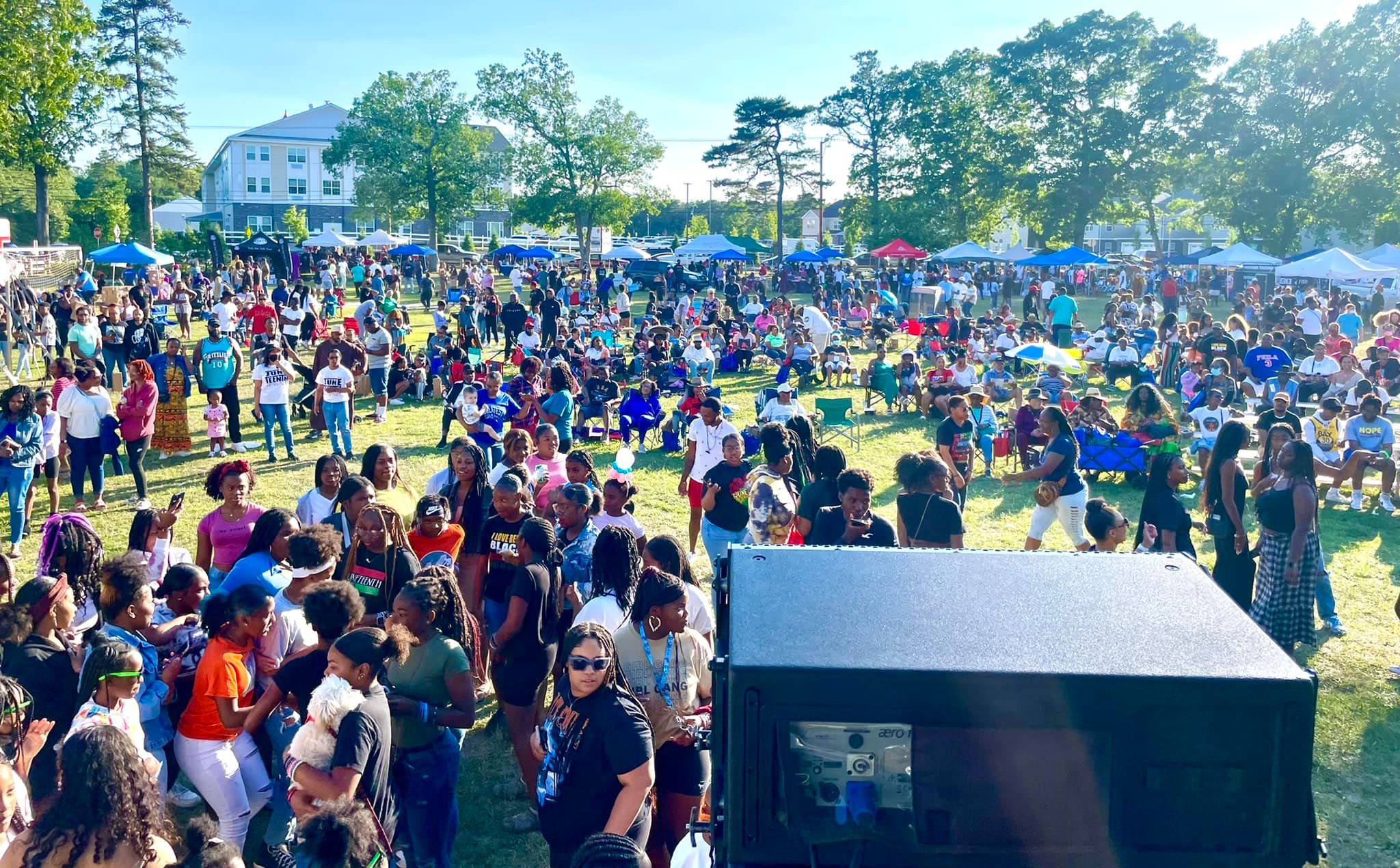
The atmosphere surrounding these events is expected to be central to their appeal. Unlike traditional ticketed venues, New Brooklyn Park offers a more relaxed and community-centered environment where residents and visitors can gather outdoors, reconnect with neighbors, enjoy food vendors and open-air entertainment, and experience live music in a setting designed to feel welcoming rather than commercialized. That format has become increasingly valuable across New Jersey, particularly as summer programming continues evolving into one of the state’s strongest forms of local cultural engagement.

The season begins June 13 with Winslow Township’s Juneteenth Celebration, an event expected to serve as both a cultural gathering and a major musical showcase. Headlining the evening is WallStreet, the acclaimed performance group known for delivering energetic tributes to Motown classics, Philadelphia soul, funk standards, and crossover R&B favorites that helped define multiple generations of American music. Their performances are built around high-energy musicianship, polished vocals, audience participation, and a setlist deeply rooted in the legacy of soul music’s golden era.

For a Juneteenth celebration specifically, the choice of music carries deeper significance. Motown and Philadelphia soul are not simply entertainment formats. They represent foundational chapters in American cultural history, reflecting decades of Black artistic innovation that transformed popular music around the world. Through artists and songs tied to Detroit’s Motown movement and Philadelphia’s legendary soul scene, WallStreet’s performance is expected to channel the celebratory spirit, resilience, and communal energy that define Juneteenth gatherings throughout the country.

Across New Jersey, Juneteenth events have continued growing in both scale and importance over recent years as communities increasingly recognize the need for public celebrations centered on cultural reflection, education, music, and collective experience. Winslow Township’s inclusion of a major live performance component reinforces the broader understanding that music has always played a central role in Black cultural expression, protest movements, celebration, and community-building throughout American history. In that context, the June 13 event becomes more than a summer concert. It becomes part of a larger statewide cultural movement honoring freedom, heritage, and artistic legacy.

The summer schedule continues July 15 with a dramatically different but equally powerful performance as Justin Powell & Adoration bring their contemporary gospel sound to New Brooklyn Park. Known for blending traditional gospel foundations with modern musical influences, the choir has built a reputation for emotionally charged performances centered on worship, inspiration, and spiritual connection. Led by Justin Powell, the ensemble combines rich vocal harmonies, passionate stage presence, and uplifting arrangements that resonate with audiences across both church and concert environments.

In recent years, contemporary gospel music has experienced renewed visibility throughout the live music world as audiences increasingly gravitate toward performances emphasizing authenticity, emotional resonance, and communal participation. Justin Powell & Adoration embody that movement by delivering concerts that function not only as entertainment experiences but also as moments of encouragement, reflection, and celebration. Their ability to connect across diverse audiences has helped the group establish a growing regional following, particularly among listeners who appreciate the intersection of faith-based music and contemporary vocal performance.

The July 15 appearance at New Brooklyn Park also reflects the broader diversity of Winslow Township’s summer programming strategy. Rather than focusing exclusively on one genre or demographic, the township has assembled a lineup that mirrors the cultural and musical range of South Jersey itself. Gospel music, especially in outdoor community settings, carries a uniquely powerful atmosphere because of the participatory nature of the performances. Audiences do not simply observe. They engage, respond, sing along, and become part of the experience itself. In a park setting during the height of summer, that energy is expected to create one of the season’s most emotionally memorable evenings.

The 2026 series concludes August 22 with Winslow Family Day featuring Let’s Groove Tonight, widely recognized as one of the country’s premier Earth, Wind & Fire tribute bands. Designed as a major family-centered celebration, the event combines live entertainment, community gathering, and dance-driven nostalgia into what is expected to be one of the largest-attended nights of the summer season. Earth, Wind & Fire’s catalog remains among the most universally recognizable in popular music history, blending funk, soul, jazz, R&B, disco, and pop into a sound that continues influencing artists across genres decades after the group first emerged.

Let’s Groove Tonight has developed a national reputation for recreating that signature sound with remarkable precision while preserving the high-energy stage presence and celebratory atmosphere associated with Earth, Wind & Fire’s legendary live performances. Horn sections, layered harmonies, dynamic rhythm arrangements, and crowd-driven interaction all contribute to performances that feel less like tribute concerts and more like full-scale celebrations of one of the most influential bands in modern music history.

For Winslow Family Day specifically, the selection is particularly fitting. Earth, Wind & Fire’s music has always functioned as multi-generational connective tissue. Their songs remain staples at festivals, weddings, family gatherings, cookouts, and public celebrations because the music naturally invites movement, participation, and joy. In an outdoor park environment filled with families, local residents, and visitors from throughout the region, the August 22 finale is expected to deliver exactly the kind of communal summer atmosphere that increasingly defines New Jersey’s strongest public entertainment programming.

What makes the entire Winslow Township summer series especially important is how it reflects larger shifts happening throughout New Jersey’s live entertainment landscape. Increasingly, local governments and community organizations are becoming key cultural curators, creating opportunities for audiences to experience high-quality live performances without the financial barriers often associated with major concert touring. These events strengthen local identity, increase regional tourism activity, support surrounding businesses, and reinforce the role that public spaces continue playing in the social and cultural life of communities across the state.

New Brooklyn Park itself becomes part of that story. Outdoor venues throughout South Jersey have increasingly emerged as essential gathering spaces where music, food, recreation, and cultural programming intersect. The accessibility of the environment encourages broader participation across age groups and economic backgrounds while preserving the relaxed atmosphere that makes summer concerts feel distinctly connected to community life rather than commercial spectacle.

For Explore New Jersey readers following the continued evolution of the state’s music and entertainment scene, Winslow Township’s 2026 summer programming stands as another example of how local communities are redefining what public live entertainment can look like. From Juneteenth celebrations and contemporary gospel performances to funk-driven family dance nights, the season captures multiple dimensions of New Jersey’s musical identity while reinforcing the importance of community-centered arts programming throughout the Garden State.

As summer unfolds across South Jersey, events like these continue proving that some of the most meaningful live music experiences are not always found inside major arenas or ticketed amphitheaters. Increasingly, they are happening inside local parks, township gathering spaces, and open-air community venues where audiences come together not just to hear music, but to celebrate culture, connection, and shared experience in ways that remain deeply rooted in the identity of New Jersey itself.

More coverage of New Jersey concerts, community events, summer festivals, live entertainment, and regional music programming can be found through the Explore New Jersey Music section as the 2026 summer season continues statewide.

Camden County Board of Commissioners

1-866-226-3362

View Organizer Website

Winslow Township at New Brooklyn Park

Sicklerville
Sicklerville, New Jersey 08081 United States
+ Google Map
(856) 216-2117
View Venue Website

Juneteenth Celebration

0

Winslow Township’s 2026 Summer Concert and Community Celebration Series Brings Motown, Gospel, Funk, Family Events, and Cultural Celebration to New Brooklyn Park

June 13 @ 6:00 PM 11:30 PM

South Jersey’s summer entertainment calendar continues expanding in 2026 as Winslow Township officially prepares to host a season of large-scale community gatherings, live music celebrations, cultural programming, and family-focused events at New Brooklyn Park. Anchored by nationally recognized tribute acts, contemporary gospel performances, and one of the region’s signature Juneteenth celebrations, the township’s summer schedule reflects the growing importance of local outdoor music programming across New Jersey. At a time when audiences increasingly seek experiences rooted in community connection rather than high-priced commercial entertainment, Winslow Township is positioning itself as one of Camden County’s standout destinations for accessible live events this summer.

Running throughout the season at New Brooklyn Park beginning at 6 PM, the lineup combines classic soul, gospel inspiration, funk-driven dance music, and family entertainment into a series designed to appeal across generations. More importantly, the programming reflects the evolving role of municipal summer events in New Jersey. What once may have been viewed simply as local park concerts have transformed into major regional attractions capable of drawing audiences from across Camden County, Gloucester County, Burlington County, and beyond.

The atmosphere surrounding these events is expected to be central to their appeal. Unlike traditional ticketed venues, New Brooklyn Park offers a more relaxed and community-centered environment where residents and visitors can gather outdoors, reconnect with neighbors, enjoy food vendors and open-air entertainment, and experience live music in a setting designed to feel welcoming rather than commercialized. That format has become increasingly valuable across New Jersey, particularly as summer programming continues evolving into one of the state’s strongest forms of local cultural engagement.

The season begins June 13 with Winslow Township’s Juneteenth Celebration, an event expected to serve as both a cultural gathering and a major musical showcase. Headlining the evening is WallStreet, the acclaimed performance group known for delivering energetic tributes to Motown classics, Philadelphia soul, funk standards, and crossover R&B favorites that helped define multiple generations of American music. Their performances are built around high-energy musicianship, polished vocals, audience participation, and a setlist deeply rooted in the legacy of soul music’s golden era.

For a Juneteenth celebration specifically, the choice of music carries deeper significance. Motown and Philadelphia soul are not simply entertainment formats. They represent foundational chapters in American cultural history, reflecting decades of Black artistic innovation that transformed popular music around the world. Through artists and songs tied to Detroit’s Motown movement and Philadelphia’s legendary soul scene, WallStreet’s performance is expected to channel the celebratory spirit, resilience, and communal energy that define Juneteenth gatherings throughout the country.

Across New Jersey, Juneteenth events have continued growing in both scale and importance over recent years as communities increasingly recognize the need for public celebrations centered on cultural reflection, education, music, and collective experience. Winslow Township’s inclusion of a major live performance component reinforces the broader understanding that music has always played a central role in Black cultural expression, protest movements, celebration, and community-building throughout American history. In that context, the June 13 event becomes more than a summer concert. It becomes part of a larger statewide cultural movement honoring freedom, heritage, and artistic legacy.

The summer schedule continues July 15 with a dramatically different but equally powerful performance as Justin Powell & Adoration bring their contemporary gospel sound to New Brooklyn Park. Known for blending traditional gospel foundations with modern musical influences, the choir has built a reputation for emotionally charged performances centered on worship, inspiration, and spiritual connection. Led by Justin Powell, the ensemble combines rich vocal harmonies, passionate stage presence, and uplifting arrangements that resonate with audiences across both church and concert environments.

In recent years, contemporary gospel music has experienced renewed visibility throughout the live music world as audiences increasingly gravitate toward performances emphasizing authenticity, emotional resonance, and communal participation. Justin Powell & Adoration embody that movement by delivering concerts that function not only as entertainment experiences but also as moments of encouragement, reflection, and celebration. Their ability to connect across diverse audiences has helped the group establish a growing regional following, particularly among listeners who appreciate the intersection of faith-based music and contemporary vocal performance.

The July 15 appearance at New Brooklyn Park also reflects the broader diversity of Winslow Township’s summer programming strategy. Rather than focusing exclusively on one genre or demographic, the township has assembled a lineup that mirrors the cultural and musical range of South Jersey itself. Gospel music, especially in outdoor community settings, carries a uniquely powerful atmosphere because of the participatory nature of the performances. Audiences do not simply observe. They engage, respond, sing along, and become part of the experience itself. In a park setting during the height of summer, that energy is expected to create one of the season’s most emotionally memorable evenings.

The 2026 series concludes August 22 with Winslow Family Day featuring Let’s Groove Tonight, widely recognized as one of the country’s premier Earth, Wind & Fire tribute bands. Designed as a major family-centered celebration, the event combines live entertainment, community gathering, and dance-driven nostalgia into what is expected to be one of the largest-attended nights of the summer season. Earth, Wind & Fire’s catalog remains among the most universally recognizable in popular music history, blending funk, soul, jazz, R&B, disco, and pop into a sound that continues influencing artists across genres decades after the group first emerged.

Let’s Groove Tonight has developed a national reputation for recreating that signature sound with remarkable precision while preserving the high-energy stage presence and celebratory atmosphere associated with Earth, Wind & Fire’s legendary live performances. Horn sections, layered harmonies, dynamic rhythm arrangements, and crowd-driven interaction all contribute to performances that feel less like tribute concerts and more like full-scale celebrations of one of the most influential bands in modern music history.

For Winslow Family Day specifically, the selection is particularly fitting. Earth, Wind & Fire’s music has always functioned as multi-generational connective tissue. Their songs remain staples at festivals, weddings, family gatherings, cookouts, and public celebrations because the music naturally invites movement, participation, and joy. In an outdoor park environment filled with families, local residents, and visitors from throughout the region, the August 22 finale is expected to deliver exactly the kind of communal summer atmosphere that increasingly defines New Jersey’s strongest public entertainment programming.

What makes the entire Winslow Township summer series especially important is how it reflects larger shifts happening throughout New Jersey’s live entertainment landscape. Increasingly, local governments and community organizations are becoming key cultural curators, creating opportunities for audiences to experience high-quality live performances without the financial barriers often associated with major concert touring. These events strengthen local identity, increase regional tourism activity, support surrounding businesses, and reinforce the role that public spaces continue playing in the social and cultural life of communities across the state.

New Brooklyn Park itself becomes part of that story. Outdoor venues throughout South Jersey have increasingly emerged as essential gathering spaces where music, food, recreation, and cultural programming intersect. The accessibility of the environment encourages broader participation across age groups and economic backgrounds while preserving the relaxed atmosphere that makes summer concerts feel distinctly connected to community life rather than commercial spectacle.

For Explore New Jersey readers following the continued evolution of the state’s music and entertainment scene, Winslow Township’s 2026 summer programming stands as another example of how local communities are redefining what public live entertainment can look like. From Juneteenth celebrations and contemporary gospel performances to funk-driven family dance nights, the season captures multiple dimensions of New Jersey’s musical identity while reinforcing the importance of community-centered arts programming throughout the Garden State.

As summer unfolds across South Jersey, events like these continue proving that some of the most meaningful live music experiences are not always found inside major arenas or ticketed amphitheaters. Increasingly, they are happening inside local parks, township gathering spaces, and open-air community venues where audiences come together not just to hear music, but to celebrate culture, connection, and shared experience in ways that remain deeply rooted in the identity of New Jersey itself.

More coverage of New Jersey concerts, community events, summer festivals, live entertainment, and regional music programming can be found through the Explore New Jersey Music section as the 2026 summer season continues statewide.

Camden County Board of Commissioners

1-866-226-3362

View Organizer Website

Winslow Township at New Brooklyn Park

Sicklerville
Sicklerville, New Jersey 08081 United States
+ Google Map
(856) 216-2117
View Venue Website

Pop 2000 Tour w/ Chris Kirkpatrick of *NSYNC, O-Town, Ryan Cabrera & LFO

0

Camden County’s Twilight Concert Series Returns to Pennsauken With One of New Jersey’s Strongest Free Summer Music Lineups of 2026

June 4 @ 7:30 PM 11:30 PM

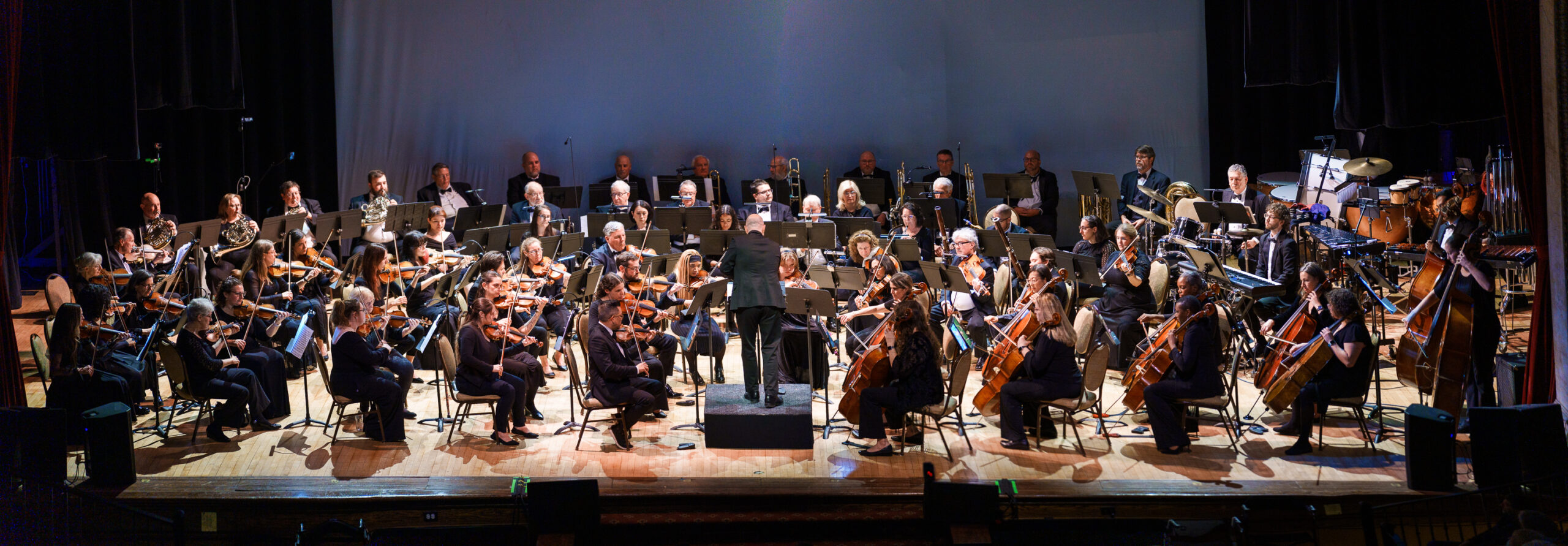
The Twilight Concert Series opens its 2026 season on June 4 with one of the summer’s biggest nostalgia-driven events as the The 2026 Twilight Concert Series comes to a powerful and elegant close on August 27 as the South Jersey Pops Orchestra returns to Jack Curtis Stadium for a grand symphonic finale celebrating more than five decades of orchestral performance excellence in the region. Since 1969, the South Jersey Pops has built a reputation as one of the area’s most respected and community-driven musical institutions, bringing together a 70-piece ensemble of professional musicians and dedicated volunteers united by a shared commitment to making live orchestral music accessible, engaging, and deeply memorable for audiences throughout South Jersey and beyond.

What makes the South Jersey Pops Orchestra especially unique is its ability to move fluidly across musical genres while maintaining the richness and emotional impact of a full symphonic performance. Their concerts often blend classical compositions with Broadway selections, cinematic scores, patriotic standards, jazz arrangements, popular music, and timeless American songbook material, creating performances that appeal to longtime orchestral enthusiasts as well as newer audiences experiencing live symphonic music for the first time. That versatility has allowed the ensemble to remain culturally relevant and widely embraced across generations for more than half a century.

As the final event of the summer concert season at Cooper River Park, the August 27 performance is expected to deliver a sweeping and celebratory atmosphere worthy of closing one of Camden County’s premier live entertainment traditions. Outdoor orchestral performances carry a cinematic energy all their own, and in the open-air setting of Jack Curtis Stadium, the South Jersey Pops Orchestra will provide a fitting conclusion to a summer defined by musical diversity, community gathering, and accessible cultural programming. The performance also serves as a reminder that some of New Jersey’s most enduring artistic organizations continue thriving not through exclusivity, but through a mission centered on public connection, musical excellence, and shared live experience.

Every summer, New Jersey proves once again that some of the best live music experiences in the region are not confined to arenas, casinos, or ticketed amphitheaters. They unfold in parks, along riverfronts, inside county spaces built for community gathering, and under open skies where families, longtime music fans, and new generations come together for nights that feel distinctly local while carrying the energy of major touring events. That tradition continues in a major way this season as the Camden County Board of Commissioners officially brings back the Twilight Concert Series at Jack Curtis Stadium in Pennsauken, one of South Jersey’s most consistent and increasingly important live music destinations.

Set against the scenic Cooper River corridor, the 2026 edition of the Twilight Concert Series arrives with a lineup that reflects exactly where live entertainment culture is right now. Nostalgia remains powerful, but audiences are no longer interested in simple throwback performances. They want immersive experiences, recognizable songs, artist interaction, and events that feel communal rather than transactional. Camden County’s programming this summer taps directly into that demand with a schedule blending pop revival tours, classic rock royalty, orchestral performances, R&B favorites, tropical celebration nights, and one of the most recognizable drummers in American rock history.

For New Jersey residents, the series has become more than another county-sponsored concert calendar. It has evolved into a defining part of the regional summer identity, particularly for South Jersey audiences looking for major entertainment without the cost and logistical burden attached to large-scale venues. The fact that these concerts remain entirely free only strengthens the cultural value of the program.

Hosted at the riverfront-adjacent Jack Curtis Stadium in Pennsauken, the Twilight Concert Series once again positions Camden County as one of the state’s strongest public supporters of accessible arts programming. At a time when ticket prices for national tours continue climbing across the live entertainment industry, programs like this have become increasingly meaningful. Families can attend together without financial barriers. Younger audiences can discover legacy artists in a live setting for the first time. Older fans reconnect with music that defined entire eras of radio, MTV, and summer nightlife. The result is a uniquely New Jersey concert atmosphere that feels both nostalgic and current at the same time.

The season officially launches June 4 with the Pop 2000s Tour, a lineup specifically designed to capture the enduring cultural impact of early-2000s pop music. Hosted by Chris Kirkpatrick of *NSYNC, the evening features performances from O-Town, LFO, and Ryan Cabrera in what is expected to be one of the largest-attended events of the series. Over the past several years, the resurgence of Y2K-era pop culture has transformed from a temporary trend into a dominant force in music and entertainment. Audiences that grew up during the TRL generation now represent a major live-event demographic, and the Twilight Concert Series opens its season by leaning directly into that momentum.

What makes nights like this work in a venue such as Jack Curtis Stadium is the atmosphere. Unlike tightly packed arena seating or corporate concert settings, the Twilight format allows audiences to experience the music in a more relaxed and communal environment. Families arrive early with lawn chairs and picnic blankets. Groups spread out along the grass before sunset. Food trucks line the surrounding areas while fans move freely through the venue rather than remaining confined to assigned seating. It creates a summer-night energy that feels authentic to South Jersey itself.

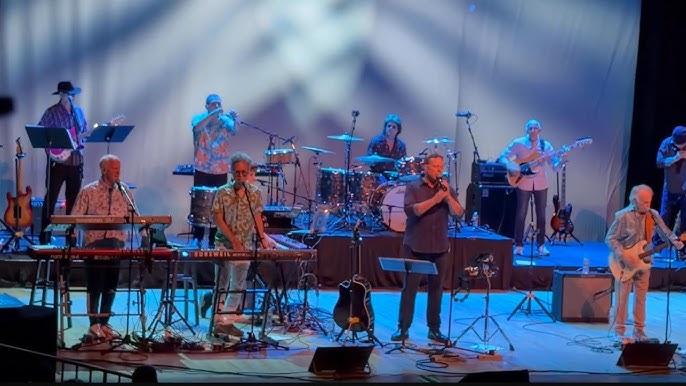
One week later, on June 11, the series pivots into classic rock territory with Max Weinberg’s Jukebox, one of the most interactive live music concepts currently touring. Weinberg, best known worldwide as the longtime drummer for Bruce Springsteen and the E Street Band, has built the Jukebox format around audience participation. Fans effectively create the setlist in real time, calling out songs spanning The Beatles, The Rolling Stones, Bruce Springsteen, Tom Petty, and other classic rock staples. That unpredictability has become central to the appeal.

For New Jersey audiences specifically, Weinberg’s appearance carries even deeper resonance. The relationship between New Jersey and Springsteen’s musical legacy remains foundational to the identity of the state’s live music culture. Even outside an official E Street Band performance, the presence of one of its defining members immediately elevates the significance of the evening. It also reinforces something the Twilight Concert Series continues to do exceptionally well: presenting artists with genuine cultural credibility rather than relying solely on tribute acts or nostalgia branding.

The July portion of the schedule continues with another major shift in genre and atmosphere. On July 9, Color Me Badd brings its signature blend of pop, R&B, and hip-hop harmony-driven songwriting to Pennsauken. Few vocal groups from the early 1990s remain as instantly recognizable to audiences across generations. Their catalog still carries enormous crossover familiarity through radio, streaming platforms, and pop-culture retrospectives, making the concert one of the season’s strongest multi-generational draws.

The following week may ultimately become one of the most emotionally significant events of the entire summer lineup. On July 16, Al Jardine & The Pet Sounds Band arrive in South Jersey for an evening deeply connected to the enduring musical legacy of The Beach Boys and the artistry of Brian Wilson. Jardine, a founding member of The Beach Boys, represents a direct living connection to one of the most transformative groups in American music history. His performances combine beloved surf-rock classics with deeper catalog selections and reflections tied to Wilson’s extraordinary songwriting influence.

In New Jersey, where classic rock audiences remain among the most passionate in the country, nights like this transcend nostalgia. They become living celebrations of American songwriting history. The emotional connection audiences maintain to records like Pet Sounds continues to span generations because the music itself remains timeless. Hearing those songs performed outdoors beside the Cooper River during peak summer season creates exactly the kind of experiential live event audiences increasingly seek today.

By August, the series broadens even further. The August 13 Paradise Island Luau transforms the concert format into a full cultural celebration built around tropical rhythms, dance traditions, and interactive crowd participation. These themed nights have become especially popular in county summer programming because they attract audiences beyond traditional concertgoers. Families, community groups, and younger attendees often engage differently with immersive performances that combine music, movement, and atmosphere into a larger event experience.

The season concludes August 27 with the South Jersey Pops Orchestra delivering what is expected to be a massive symphonic finale at Jack Curtis Stadium. Featuring film music, Broadway selections, orchestral standards, and crossover arrangements, the performance serves as both a concert and a ceremonial close to the county’s summer entertainment calendar. Large-scale orchestral performances in outdoor settings carry a distinct cinematic quality, particularly in venues positioned near water and open landscapes like Cooper River Park.

The Twilight Concert Series also reflects a much larger transformation currently happening across New Jersey’s live entertainment ecosystem. Increasingly, counties and municipalities are becoming critical drivers of cultural programming. While major touring circuits still dominate large venues across the state, local government-backed music initiatives are now filling an equally important role by creating accessible public gathering spaces centered around live performance.

Programs like the Twilight Concert Series strengthen regional tourism, drive local restaurant and small-business traffic, encourage park utilization, and reinforce community identity through shared experiences. In South Jersey especially, where audiences often travel into Philadelphia for entertainment, events like this continue proving that world-class live music experiences can thrive locally.

The venue itself has become central to that success. Jack Curtis Stadium offers an environment fundamentally different from traditional concert infrastructure. Positioned within the Cooper River Park area, the stadium combines accessibility with scenic surroundings that naturally complement summer programming. The open-lawn format keeps the experience relaxed and community-oriented while still accommodating major crowds.

Attendees are encouraged to bring lawn chairs and picnic blankets since seating remains entirely open and first-come, first-served. Outside food and picnic baskets are permitted, further reinforcing the family-oriented nature of the series. Meanwhile, rotating food truck vendors continue adding another important layer to the atmosphere, creating a festival-like experience surrounding each concert evening.

Accessibility has also remained a major strength of the series. The venue’s location at 5300 North Park Drive in Pennsauken places it within easy driving distance for residents across Camden County, Burlington County, Gloucester County, and the greater Philadelphia metropolitan area. With accessible parking and relatively straightforward transit access from Philadelphia, the series consistently attracts audiences from both sides of the Delaware River.

More importantly, the Twilight Concert Series succeeds because it understands something essential about New Jersey’s relationship with live music. This state does not treat concerts as passive entertainment. Music here has always functioned as a communal language tied to identity, memory, geography, and summer culture itself. Whether audiences are singing along to early-2000s pop anthems, classic rock staples, Beach Boys harmonies, or orchestral film scores beneath the night sky, the experience becomes bigger than the performance alone.

That is precisely why the Twilight Concert Series continues growing into one of New Jersey’s defining seasonal traditions. It merges accessibility with legitimacy. It respects audiences enough to present recognizable, culturally meaningful artists while still preserving the informal atmosphere that makes county summer concerts feel special in the first place. In an era when much of live entertainment feels increasingly expensive, overproduced, or disconnected from local communities, Pennsauken’s summer riverfront concerts continue offering something refreshingly genuine.

For Explore New Jersey readers tracking the state’s evolving music and entertainment landscape, the return of the Twilight Concert Series stands as another reminder that some of the strongest live-event programming in the region is happening directly inside local communities. From classic rock history to pop revival energy, orchestral performance, family programming, and open-air summer celebration, Camden County’s 2026 season captures the full spectrum of what New Jersey live music culture has become.

Additional information about New Jersey’s expanding live music scene, regional concerts, summer entertainment programming, and statewide arts coverage can be explored through the Explore New Jersey Music section as the 2026 summer season continues across the Garden State.

Camden County Board of Commissioners

1-866-226-3362

View Organizer Website

Winslow Township at New Brooklyn Park

Sicklerville
Sicklerville, New Jersey 08081 United States
+ Google Map
(856) 216-2117
View Venue Website

Paradise Island Luau

0

Camden County’s Twilight Concert Series Returns to Pennsauken With One of New Jersey’s Strongest Free Summer Music Lineups of 2026

August 13 @ 7:30 PM 11:30 PM

The Twilight Concert Series takes a vibrant cultural turn on August 13 as the Paradise Island Luau transforms Jack Curtis Stadium into a full-scale Polynesian celebration blending music, dance, cuisine, storytelling, and high-energy live performance. More than a traditional concert, the evening is designed as an immersive island-inspired experience where audiences are transported through authentic Pacific traditions and entertainment from the very moment the festivities begin. Set against the summer backdrop of Cooper River Park, the luau brings a completely different atmosphere to the Camden County concert calendar, expanding the series beyond mainstream music performances into a broader celebration of global cultural artistry.

Throughout the evening, attendees can expect an evolving showcase of traditional Polynesian rhythms, synchronized dance performances, interactive crowd participation, and visually striking stage production that captures the spirit and energy associated with island celebrations across Hawaii and the South Pacific. The event’s emphasis on authenticity gives the performance added depth, creating an experience that feels educational and celebratory at the same time. Families, first-time attendees, and returning concertgoers alike are expected to be drawn into the immersive atmosphere as the music, movement, and ceremonial elements unfold across the night.

One of the most anticipated moments of the entire Twilight Concert Series season will undoubtedly be the luau’s dramatic fire knife finale, a breathtaking performance tradition known for its speed, precision, athleticism, and visual intensity. In the open-air setting of Jack Curtis Stadium, the fire performance is expected to create one of the summer’s most memorable live entertainment moments. Combined with the relaxed outdoor environment, food vendors, riverfront scenery, and community-focused atmosphere of the series, the Paradise Island Luau stands out as one of the most unique and visually spectacular events on Camden County’s 2026 summer entertainment schedule.

Every summer, New Jersey proves once again that some of the best live music experiences in the region are not confined to arenas, casinos, or ticketed amphitheaters. They unfold in parks, along riverfronts, inside county spaces built for community gathering, and under open skies where families, longtime music fans, and new generations come together for nights that feel distinctly local while carrying the energy of major touring events. That tradition continues in a major way this season as the Camden County Board of Commissioners officially brings back the Twilight Concert Series at Jack Curtis Stadium in Pennsauken, one of South Jersey’s most consistent and increasingly important live music destinations.

Set against the scenic Cooper River corridor, the 2026 edition of the Twilight Concert Series arrives with a lineup that reflects exactly where live entertainment culture is right now. Nostalgia remains powerful, but audiences are no longer interested in simple throwback performances. They want immersive experiences, recognizable songs, artist interaction, and events that feel communal rather than transactional. Camden County’s programming this summer taps directly into that demand with a schedule blending pop revival tours, classic rock royalty, orchestral performances, R&B favorites, tropical celebration nights, and one of the most recognizable drummers in American rock history.

For New Jersey residents, the series has become more than another county-sponsored concert calendar. It has evolved into a defining part of the regional summer identity, particularly for South Jersey audiences looking for major entertainment without the cost and logistical burden attached to large-scale venues. The fact that these concerts remain entirely free only strengthens the cultural value of the program.

Hosted at the riverfront-adjacent Jack Curtis Stadium in Pennsauken, the Twilight Concert Series once again positions Camden County as one of the state’s strongest public supporters of accessible arts programming. At a time when ticket prices for national tours continue climbing across the live entertainment industry, programs like this have become increasingly meaningful. Families can attend together without financial barriers. Younger audiences can discover legacy artists in a live setting for the first time. Older fans reconnect with music that defined entire eras of radio, MTV, and summer nightlife. The result is a uniquely New Jersey concert atmosphere that feels both nostalgic and current at the same time.

The season officially launches June 4 with the Pop 2000s Tour, a lineup specifically designed to capture the enduring cultural impact of early-2000s pop music. Hosted by Chris Kirkpatrick of *NSYNC, the evening features performances from O-Town, LFO, and Ryan Cabrera in what is expected to be one of the largest-attended events of the series. Over the past several years, the resurgence of Y2K-era pop culture has transformed from a temporary trend into a dominant force in music and entertainment. Audiences that grew up during the TRL generation now represent a major live-event demographic, and the Twilight Concert Series opens its season by leaning directly into that momentum.

What makes nights like this work in a venue such as Jack Curtis Stadium is the atmosphere. Unlike tightly packed arena seating or corporate concert settings, the Twilight format allows audiences to experience the music in a more relaxed and communal environment. Families arrive early with lawn chairs and picnic blankets. Groups spread out along the grass before sunset. Food trucks line the surrounding areas while fans move freely through the venue rather than remaining confined to assigned seating. It creates a summer-night energy that feels authentic to South Jersey itself.

One week later, on June 11, the series pivots into classic rock territory with Max Weinberg’s Jukebox, one of the most interactive live music concepts currently touring. Weinberg, best known worldwide as the longtime drummer for Bruce Springsteen and the E Street Band, has built the Jukebox format around audience participation. Fans effectively create the setlist in real time, calling out songs spanning The Beatles, The Rolling Stones, Bruce Springsteen, Tom Petty, and other classic rock staples. That unpredictability has become central to the appeal.

For New Jersey audiences specifically, Weinberg’s appearance carries even deeper resonance. The relationship between New Jersey and Springsteen’s musical legacy remains foundational to the identity of the state’s live music culture. Even outside an official E Street Band performance, the presence of one of its defining members immediately elevates the significance of the evening. It also reinforces something the Twilight Concert Series continues to do exceptionally well: presenting artists with genuine cultural credibility rather than relying solely on tribute acts or nostalgia branding.

The July portion of the schedule continues with another major shift in genre and atmosphere. On July 9, Color Me Badd brings its signature blend of pop, R&B, and hip-hop harmony-driven songwriting to Pennsauken. Few vocal groups from the early 1990s remain as instantly recognizable to audiences across generations. Their catalog still carries enormous crossover familiarity through radio, streaming platforms, and pop-culture retrospectives, making the concert one of the season’s strongest multi-generational draws.

The following week may ultimately become one of the most emotionally significant events of the entire summer lineup. On July 16, Al Jardine & The Pet Sounds Band arrive in South Jersey for an evening deeply connected to the enduring musical legacy of The Beach Boys and the artistry of Brian Wilson. Jardine, a founding member of The Beach Boys, represents a direct living connection to one of the most transformative groups in American music history. His performances combine beloved surf-rock classics with deeper catalog selections and reflections tied to Wilson’s extraordinary songwriting influence.

In New Jersey, where classic rock audiences remain among the most passionate in the country, nights like this transcend nostalgia. They become living celebrations of American songwriting history. The emotional connection audiences maintain to records like Pet Sounds continues to span generations because the music itself remains timeless. Hearing those songs performed outdoors beside the Cooper River during peak summer season creates exactly the kind of experiential live event audiences increasingly seek today.

By August, the series broadens even further. The August 13 Paradise Island Luau transforms the concert format into a full cultural celebration built around tropical rhythms, dance traditions, and interactive crowd participation. These themed nights have become especially popular in county summer programming because they attract audiences beyond traditional concertgoers. Families, community groups, and younger attendees often engage differently with immersive performances that combine music, movement, and atmosphere into a larger event experience.

The season concludes August 27 with the South Jersey Pops Orchestra delivering what is expected to be a massive symphonic finale at Jack Curtis Stadium. Featuring film music, Broadway selections, orchestral standards, and crossover arrangements, the performance serves as both a concert and a ceremonial close to the county’s summer entertainment calendar. Large-scale orchestral performances in outdoor settings carry a distinct cinematic quality, particularly in venues positioned near water and open landscapes like Cooper River Park.

The Twilight Concert Series also reflects a much larger transformation currently happening across New Jersey’s live entertainment ecosystem. Increasingly, counties and municipalities are becoming critical drivers of cultural programming. While major touring circuits still dominate large venues across the state, local government-backed music initiatives are now filling an equally important role by creating accessible public gathering spaces centered around live performance.

Programs like the Twilight Concert Series strengthen regional tourism, drive local restaurant and small-business traffic, encourage park utilization, and reinforce community identity through shared experiences. In South Jersey especially, where audiences often travel into Philadelphia for entertainment, events like this continue proving that world-class live music experiences can thrive locally.

The venue itself has become central to that success. Jack Curtis Stadium offers an environment fundamentally different from traditional concert infrastructure. Positioned within the Cooper River Park area, the stadium combines accessibility with scenic surroundings that naturally complement summer programming. The open-lawn format keeps the experience relaxed and community-oriented while still accommodating major crowds.

Attendees are encouraged to bring lawn chairs and picnic blankets since seating remains entirely open and first-come, first-served. Outside food and picnic baskets are permitted, further reinforcing the family-oriented nature of the series. Meanwhile, rotating food truck vendors continue adding another important layer to the atmosphere, creating a festival-like experience surrounding each concert evening.

Accessibility has also remained a major strength of the series. The venue’s location at 5300 North Park Drive in Pennsauken places it within easy driving distance for residents across Camden County, Burlington County, Gloucester County, and the greater Philadelphia metropolitan area. With accessible parking and relatively straightforward transit access from Philadelphia, the series consistently attracts audiences from both sides of the Delaware River.

More importantly, the Twilight Concert Series succeeds because it understands something essential about New Jersey’s relationship with live music. This state does not treat concerts as passive entertainment. Music here has always functioned as a communal language tied to identity, memory, geography, and summer culture itself. Whether audiences are singing along to early-2000s pop anthems, classic rock staples, Beach Boys harmonies, or orchestral film scores beneath the night sky, the experience becomes bigger than the performance alone.

That is precisely why the Twilight Concert Series continues growing into one of New Jersey’s defining seasonal traditions. It merges accessibility with legitimacy. It respects audiences enough to present recognizable, culturally meaningful artists while still preserving the informal atmosphere that makes county summer concerts feel special in the first place. In an era when much of live entertainment feels increasingly expensive, overproduced, or disconnected from local communities, Pennsauken’s summer riverfront concerts continue offering something refreshingly genuine.

For Explore New Jersey readers tracking the state’s evolving music and entertainment landscape, the return of the Twilight Concert Series stands as another reminder that some of the strongest live-event programming in the region is happening directly inside local communities. From classic rock history to pop revival energy, orchestral performance, family programming, and open-air summer celebration, Camden County’s 2026 season captures the full spectrum of what New Jersey live music culture has become.

Additional information about New Jersey’s expanding live music scene, regional concerts, summer entertainment programming, and statewide arts coverage can be explored through the Explore New Jersey Music section as the 2026 summer season continues across the Garden State.

Camden County Board of Commissioners

1-866-226-3362

View Organizer Website

Winslow Township at New Brooklyn Park

Sicklerville
Sicklerville, New Jersey 08081 United States
+ Google Map
(856) 216-2117
View Venue Website

Al Jardine & The Pet Sounds Band

0

Camden County’s Twilight Concert Series Returns to Pennsauken With One of New Jersey’s Strongest Free Summer Music Lineups of 2026

July 16 @ 7:30 PM 11:30 PM

One of the most musically significant evenings of the entire Twilight Concert Series arrives July 16 when Al Jardine & The Pet Sounds Band bring a celebration of The Beach Boys’ enduring legacy to Jack Curtis Stadium in Pennsauken. As a founding member of The Beach Boys, Jardine remains directly connected to one of the most influential groups in American popular music history, and this performance goes far beyond a standard nostalgia concert. The evening is structured as both a tribute to the groundbreaking songwriting of Brian Wilson and a living continuation of the harmony-driven California sound that permanently changed the direction of rock, pop, and studio recording during the 1960s.

Audiences can expect a carefully curated setlist blending iconic Beach Boys classics with deeper album cuts, rarities, and musically ambitious selections that longtime fans rarely get the opportunity to hear performed live. Backed by The Pet Sounds Band and joined by close friends and family members connected to the group’s extended musical legacy, Jardine’s performances carry a level of authenticity and emotional resonance that few legacy touring acts can replicate. Rather than simply recreating familiar hits, the concert reflects the artistry, vocal complexity, and innovative arrangements that made Brian Wilson and The Beach Boys one of the most critically respected acts in modern music history.

For New Jersey audiences, the July 16 concert represents a rare opportunity to experience songs that have become part of the fabric of American summer culture in an outdoor riverfront setting perfectly suited to the music itself. The harmonies, surf-rock rhythms, and emotionally layered songwriting associated with The Beach Boys naturally complement the atmosphere of the Twilight Concert Series, where audiences gather under the summer sky along the Cooper River for a more communal and immersive live music experience. In many ways, the evening is expected to feel less like a conventional concert and more like a celebration of an era when songwriting, melody, and vocal craftsmanship defined the sound of American popular music.

Every summer, New Jersey proves once again that some of the best live music experiences in the region are not confined to arenas, casinos, or ticketed amphitheaters. They unfold in parks, along riverfronts, inside county spaces built for community gathering, and under open skies where families, longtime music fans, and new generations come together for nights that feel distinctly local while carrying the energy of major touring events. That tradition continues in a major way this season as the Camden County Board of Commissioners officially brings back the Twilight Concert Series at Jack Curtis Stadium in Pennsauken, one of South Jersey’s most consistent and increasingly important live music destinations.

Set against the scenic Cooper River corridor, the 2026 edition of the Twilight Concert Series arrives with a lineup that reflects exactly where live entertainment culture is right now. Nostalgia remains powerful, but audiences are no longer interested in simple throwback performances. They want immersive experiences, recognizable songs, artist interaction, and events that feel communal rather than transactional. Camden County’s programming this summer taps directly into that demand with a schedule blending pop revival tours, classic rock royalty, orchestral performances, R&B favorites, tropical celebration nights, and one of the most recognizable drummers in American rock history.

For New Jersey residents, the series has become more than another county-sponsored concert calendar. It has evolved into a defining part of the regional summer identity, particularly for South Jersey audiences looking for major entertainment without the cost and logistical burden attached to large-scale venues. The fact that these concerts remain entirely free only strengthens the cultural value of the program.

Hosted at the riverfront-adjacent Jack Curtis Stadium in Pennsauken, the Twilight Concert Series once again positions Camden County as one of the state’s strongest public supporters of accessible arts programming. At a time when ticket prices for national tours continue climbing across the live entertainment industry, programs like this have become increasingly meaningful. Families can attend together without financial barriers. Younger audiences can discover legacy artists in a live setting for the first time. Older fans reconnect with music that defined entire eras of radio, MTV, and summer nightlife. The result is a uniquely New Jersey concert atmosphere that feels both nostalgic and current at the same time.

The season officially launches June 4 with the Pop 2000s Tour, a lineup specifically designed to capture the enduring cultural impact of early-2000s pop music. Hosted by Chris Kirkpatrick of *NSYNC, the evening features performances from O-Town, LFO, and Ryan Cabrera in what is expected to be one of the largest-attended events of the series. Over the past several years, the resurgence of Y2K-era pop culture has transformed from a temporary trend into a dominant force in music and entertainment. Audiences that grew up during the TRL generation now represent a major live-event demographic, and the Twilight Concert Series opens its season by leaning directly into that momentum.

What makes nights like this work in a venue such as Jack Curtis Stadium is the atmosphere. Unlike tightly packed arena seating or corporate concert settings, the Twilight format allows audiences to experience the music in a more relaxed and communal environment. Families arrive early with lawn chairs and picnic blankets. Groups spread out along the grass before sunset. Food trucks line the surrounding areas while fans move freely through the venue rather than remaining confined to assigned seating. It creates a summer-night energy that feels authentic to South Jersey itself.

One week later, on June 11, the series pivots into classic rock territory with Max Weinberg’s Jukebox, one of the most interactive live music concepts currently touring. Weinberg, best known worldwide as the longtime drummer for Bruce Springsteen and the E Street Band, has built the Jukebox format around audience participation. Fans effectively create the setlist in real time, calling out songs spanning The Beatles, The Rolling Stones, Bruce Springsteen, Tom Petty, and other classic rock staples. That unpredictability has become central to the appeal.

For New Jersey audiences specifically, Weinberg’s appearance carries even deeper resonance. The relationship between New Jersey and Springsteen’s musical legacy remains foundational to the identity of the state’s live music culture. Even outside an official E Street Band performance, the presence of one of its defining members immediately elevates the significance of the evening. It also reinforces something the Twilight Concert Series continues to do exceptionally well: presenting artists with genuine cultural credibility rather than relying solely on tribute acts or nostalgia branding.

The July portion of the schedule continues with another major shift in genre and atmosphere. On July 9, Color Me Badd brings its signature blend of pop, R&B, and hip-hop harmony-driven songwriting to Pennsauken. Few vocal groups from the early 1990s remain as instantly recognizable to audiences across generations. Their catalog still carries enormous crossover familiarity through radio, streaming platforms, and pop-culture retrospectives, making the concert one of the season’s strongest multi-generational draws.

The following week may ultimately become one of the most emotionally significant events of the entire summer lineup. On July 16, Al Jardine & The Pet Sounds Band arrive in South Jersey for an evening deeply connected to the enduring musical legacy of The Beach Boys and the artistry of Brian Wilson. Jardine, a founding member of The Beach Boys, represents a direct living connection to one of the most transformative groups in American music history. His performances combine beloved surf-rock classics with deeper catalog selections and reflections tied to Wilson’s extraordinary songwriting influence.

In New Jersey, where classic rock audiences remain among the most passionate in the country, nights like this transcend nostalgia. They become living celebrations of American songwriting history. The emotional connection audiences maintain to records like Pet Sounds continues to span generations because the music itself remains timeless. Hearing those songs performed outdoors beside the Cooper River during peak summer season creates exactly the kind of experiential live event audiences increasingly seek today.

By August, the series broadens even further. The August 13 Paradise Island Luau transforms the concert format into a full cultural celebration built around tropical rhythms, dance traditions, and interactive crowd participation. These themed nights have become especially popular in county summer programming because they attract audiences beyond traditional concertgoers. Families, community groups, and younger attendees often engage differently with immersive performances that combine music, movement, and atmosphere into a larger event experience.

The season concludes August 27 with the South Jersey Pops Orchestra delivering what is expected to be a massive symphonic finale at Jack Curtis Stadium. Featuring film music, Broadway selections, orchestral standards, and crossover arrangements, the performance serves as both a concert and a ceremonial close to the county’s summer entertainment calendar. Large-scale orchestral performances in outdoor settings carry a distinct cinematic quality, particularly in venues positioned near water and open landscapes like Cooper River Park.

The Twilight Concert Series also reflects a much larger transformation currently happening across New Jersey’s live entertainment ecosystem. Increasingly, counties and municipalities are becoming critical drivers of cultural programming. While major touring circuits still dominate large venues across the state, local government-backed music initiatives are now filling an equally important role by creating accessible public gathering spaces centered around live performance.

Programs like the Twilight Concert Series strengthen regional tourism, drive local restaurant and small-business traffic, encourage park utilization, and reinforce community identity through shared experiences. In South Jersey especially, where audiences often travel into Philadelphia for entertainment, events like this continue proving that world-class live music experiences can thrive locally.

The venue itself has become central to that success. Jack Curtis Stadium offers an environment fundamentally different from traditional concert infrastructure. Positioned within the Cooper River Park area, the stadium combines accessibility with scenic surroundings that naturally complement summer programming. The open-lawn format keeps the experience relaxed and community-oriented while still accommodating major crowds.

Attendees are encouraged to bring lawn chairs and picnic blankets since seating remains entirely open and first-come, first-served. Outside food and picnic baskets are permitted, further reinforcing the family-oriented nature of the series. Meanwhile, rotating food truck vendors continue adding another important layer to the atmosphere, creating a festival-like experience surrounding each concert evening.

Accessibility has also remained a major strength of the series. The venue’s location at 5300 North Park Drive in Pennsauken places it within easy driving distance for residents across Camden County, Burlington County, Gloucester County, and the greater Philadelphia metropolitan area. With accessible parking and relatively straightforward transit access from Philadelphia, the series consistently attracts audiences from both sides of the Delaware River.

More importantly, the Twilight Concert Series succeeds because it understands something essential about New Jersey’s relationship with live music. This state does not treat concerts as passive entertainment. Music here has always functioned as a communal language tied to identity, memory, geography, and summer culture itself. Whether audiences are singing along to early-2000s pop anthems, classic rock staples, Beach Boys harmonies, or orchestral film scores beneath the night sky, the experience becomes bigger than the performance alone.

That is precisely why the Twilight Concert Series continues growing into one of New Jersey’s defining seasonal traditions. It merges accessibility with legitimacy. It respects audiences enough to present recognizable, culturally meaningful artists while still preserving the informal atmosphere that makes county summer concerts feel special in the first place. In an era when much of live entertainment feels increasingly expensive, overproduced, or disconnected from local communities, Pennsauken’s summer riverfront concerts continue offering something refreshingly genuine.

For Explore New Jersey readers tracking the state’s evolving music and entertainment landscape, the return of the Twilight Concert Series stands as another reminder that some of the strongest live-event programming in the region is happening directly inside local communities. From classic rock history to pop revival energy, orchestral performance, family programming, and open-air summer celebration, Camden County’s 2026 season captures the full spectrum of what New Jersey live music culture has become.

Additional information about New Jersey’s expanding live music scene, regional concerts, summer entertainment programming, and statewide arts coverage can be explored through the Explore New Jersey Music section as the 2026 summer season continues across the Garden State.

Camden County Board of Commissioners

1-866-226-3362

View Organizer Website

Winslow Township at New Brooklyn Park

Sicklerville
Sicklerville, New Jersey 08081 United States
+ Google Map
(856) 216-2117
View Venue Website

Color Me Badd

0

Camden County’s Twilight Concert Series Returns to Pennsauken With One of New Jersey’s Strongest Free Summer Music Lineups of 2026

July 9 @ 7:30 PM 11:30 PM

The Twilight Concert Series shifts into smooth harmonies and early-1990s R&B nostalgia on July 9 as Color Me Badd takes the stage at Jack Curtis Stadium in Pennsauken. Known for blending pop melodies, soulful vocal arrangements, and a distinctive “hip-hop doo-wop” style, the group became one of the defining crossover acts of their era, helping shape the sound of contemporary R&B and radio pop during a transformative moment in American music. Their arrival at the Cooper River venue brings another major multi-generational draw to Camden County’s summer concert calendar, particularly for audiences who came of age during the peak of New Jack Swing, MTV-driven pop culture, and harmony-focused vocal groups.

What made Color Me Badd stand apart from many of their contemporaries was the group’s ability to bridge multiple genres without losing their core identity. Their music fused traditional R&B vocal influences with polished pop production and street-level hip-hop energy, creating songs that worked equally well on Top 40 radio, urban contemporary stations, and mainstream television countdown programs. That crossover appeal helped establish them as one of the most recognizable vocal groups of the early 1990s, with a catalog that still resonates strongly with audiences decades later.

In the setting of the Twilight Concert Series, the July 9 performance is expected to bring a particularly energetic atmosphere to Jack Curtis Stadium. Outdoor summer concerts built around recognizable harmony-driven hits tend to create highly interactive audiences, and Color Me Badd’s music naturally lends itself to singalongs, crowd participation, and a celebratory summer-night environment. With the Cooper River backdrop, open-lawn seating, and community-centered atmosphere of the series, the concert represents another example of how Camden County continues delivering nationally recognizable entertainment experiences in an accessible and distinctly New Jersey setting.

Every summer, New Jersey proves once again that some of the best live music experiences in the region are not confined to arenas, casinos, or ticketed amphitheaters. They unfold in parks, along riverfronts, inside county spaces built for community gathering, and under open skies where families, longtime music fans, and new generations come together for nights that feel distinctly local while carrying the energy of major touring events. That tradition continues in a major way this season as the Camden County Board of Commissioners officially brings back the Twilight Concert Series at Jack Curtis Stadium in Pennsauken, one of South Jersey’s most consistent and increasingly important live music destinations.

Set against the scenic Cooper River corridor, the 2026 edition of the Twilight Concert Series arrives with a lineup that reflects exactly where live entertainment culture is right now. Nostalgia remains powerful, but audiences are no longer interested in simple throwback performances. They want immersive experiences, recognizable songs, artist interaction, and events that feel communal rather than transactional. Camden County’s programming this summer taps directly into that demand with a schedule blending pop revival tours, classic rock royalty, orchestral performances, R&B favorites, tropical celebration nights, and one of the most recognizable drummers in American rock history.

For New Jersey residents, the series has become more than another county-sponsored concert calendar. It has evolved into a defining part of the regional summer identity, particularly for South Jersey audiences looking for major entertainment without the cost and logistical burden attached to large-scale venues. The fact that these concerts remain entirely free only strengthens the cultural value of the program.

Hosted at the riverfront-adjacent Jack Curtis Stadium in Pennsauken, the Twilight Concert Series once again positions Camden County as one of the state’s strongest public supporters of accessible arts programming. At a time when ticket prices for national tours continue climbing across the live entertainment industry, programs like this have become increasingly meaningful. Families can attend together without financial barriers. Younger audiences can discover legacy artists in a live setting for the first time. Older fans reconnect with music that defined entire eras of radio, MTV, and summer nightlife. The result is a uniquely New Jersey concert atmosphere that feels both nostalgic and current at the same time.

The season officially launches June 4 with the Pop 2000s Tour, a lineup specifically designed to capture the enduring cultural impact of early-2000s pop music. Hosted by Chris Kirkpatrick of *NSYNC, the evening features performances from O-Town, LFO, and Ryan Cabrera in what is expected to be one of the largest-attended events of the series. Over the past several years, the resurgence of Y2K-era pop culture has transformed from a temporary trend into a dominant force in music and entertainment. Audiences that grew up during the TRL generation now represent a major live-event demographic, and the Twilight Concert Series opens its season by leaning directly into that momentum.

What makes nights like this work in a venue such as Jack Curtis Stadium is the atmosphere. Unlike tightly packed arena seating or corporate concert settings, the Twilight format allows audiences to experience the music in a more relaxed and communal environment. Families arrive early with lawn chairs and picnic blankets. Groups spread out along the grass before sunset. Food trucks line the surrounding areas while fans move freely through the venue rather than remaining confined to assigned seating. It creates a summer-night energy that feels authentic to South Jersey itself.

One week later, on June 11, the series pivots into classic rock territory with Max Weinberg’s Jukebox, one of the most interactive live music concepts currently touring. Weinberg, best known worldwide as the longtime drummer for Bruce Springsteen and the E Street Band, has built the Jukebox format around audience participation. Fans effectively create the setlist in real time, calling out songs spanning The Beatles, The Rolling Stones, Bruce Springsteen, Tom Petty, and other classic rock staples. That unpredictability has become central to the appeal.

For New Jersey audiences specifically, Weinberg’s appearance carries even deeper resonance. The relationship between New Jersey and Springsteen’s musical legacy remains foundational to the identity of the state’s live music culture. Even outside an official E Street Band performance, the presence of one of its defining members immediately elevates the significance of the evening. It also reinforces something the Twilight Concert Series continues to do exceptionally well: presenting artists with genuine cultural credibility rather than relying solely on tribute acts or nostalgia branding.

The July portion of the schedule continues with another major shift in genre and atmosphere. On July 9, Color Me Badd brings its signature blend of pop, R&B, and hip-hop harmony-driven songwriting to Pennsauken. Few vocal groups from the early 1990s remain as instantly recognizable to audiences across generations. Their catalog still carries enormous crossover familiarity through radio, streaming platforms, and pop-culture retrospectives, making the concert one of the season’s strongest multi-generational draws.

The following week may ultimately become one of the most emotionally significant events of the entire summer lineup. On July 16, Al Jardine & The Pet Sounds Band arrive in South Jersey for an evening deeply connected to the enduring musical legacy of The Beach Boys and the artistry of Brian Wilson. Jardine, a founding member of The Beach Boys, represents a direct living connection to one of the most transformative groups in American music history. His performances combine beloved surf-rock classics with deeper catalog selections and reflections tied to Wilson’s extraordinary songwriting influence.

In New Jersey, where classic rock audiences remain among the most passionate in the country, nights like this transcend nostalgia. They become living celebrations of American songwriting history. The emotional connection audiences maintain to records like Pet Sounds continues to span generations because the music itself remains timeless. Hearing those songs performed outdoors beside the Cooper River during peak summer season creates exactly the kind of experiential live event audiences increasingly seek today.

By August, the series broadens even further. The August 13 Paradise Island Luau transforms the concert format into a full cultural celebration built around tropical rhythms, dance traditions, and interactive crowd participation. These themed nights have become especially popular in county summer programming because they attract audiences beyond traditional concertgoers. Families, community groups, and younger attendees often engage differently with immersive performances that combine music, movement, and atmosphere into a larger event experience.

The season concludes August 27 with the South Jersey Pops Orchestra delivering what is expected to be a massive symphonic finale at Jack Curtis Stadium. Featuring film music, Broadway selections, orchestral standards, and crossover arrangements, the performance serves as both a concert and a ceremonial close to the county’s summer entertainment calendar. Large-scale orchestral performances in outdoor settings carry a distinct cinematic quality, particularly in venues positioned near water and open landscapes like Cooper River Park.

The Twilight Concert Series also reflects a much larger transformation currently happening across New Jersey’s live entertainment ecosystem. Increasingly, counties and municipalities are becoming critical drivers of cultural programming. While major touring circuits still dominate large venues across the state, local government-backed music initiatives are now filling an equally important role by creating accessible public gathering spaces centered around live performance.

Programs like the Twilight Concert Series strengthen regional tourism, drive local restaurant and small-business traffic, encourage park utilization, and reinforce community identity through shared experiences. In South Jersey especially, where audiences often travel into Philadelphia for entertainment, events like this continue proving that world-class live music experiences can thrive locally.

The venue itself has become central to that success. Jack Curtis Stadium offers an environment fundamentally different from traditional concert infrastructure. Positioned within the Cooper River Park area, the stadium combines accessibility with scenic surroundings that naturally complement summer programming. The open-lawn format keeps the experience relaxed and community-oriented while still accommodating major crowds.

Attendees are encouraged to bring lawn chairs and picnic blankets since seating remains entirely open and first-come, first-served. Outside food and picnic baskets are permitted, further reinforcing the family-oriented nature of the series. Meanwhile, rotating food truck vendors continue adding another important layer to the atmosphere, creating a festival-like experience surrounding each concert evening.

Accessibility has also remained a major strength of the series. The venue’s location at 5300 North Park Drive in Pennsauken places it within easy driving distance for residents across Camden County, Burlington County, Gloucester County, and the greater Philadelphia metropolitan area. With accessible parking and relatively straightforward transit access from Philadelphia, the series consistently attracts audiences from both sides of the Delaware River.

More importantly, the Twilight Concert Series succeeds because it understands something essential about New Jersey’s relationship with live music. This state does not treat concerts as passive entertainment. Music here has always functioned as a communal language tied to identity, memory, geography, and summer culture itself. Whether audiences are singing along to early-2000s pop anthems, classic rock staples, Beach Boys harmonies, or orchestral film scores beneath the night sky, the experience becomes bigger than the performance alone.

That is precisely why the Twilight Concert Series continues growing into one of New Jersey’s defining seasonal traditions. It merges accessibility with legitimacy. It respects audiences enough to present recognizable, culturally meaningful artists while still preserving the informal atmosphere that makes county summer concerts feel special in the first place. In an era when much of live entertainment feels increasingly expensive, overproduced, or disconnected from local communities, Pennsauken’s summer riverfront concerts continue offering something refreshingly genuine.

For Explore New Jersey readers tracking the state’s evolving music and entertainment landscape, the return of the Twilight Concert Series stands as another reminder that some of the strongest live-event programming in the region is happening directly inside local communities. From classic rock history to pop revival energy, orchestral performance, family programming, and open-air summer celebration, Camden County’s 2026 season captures the full spectrum of what New Jersey live music culture has become.

Additional information about New Jersey’s expanding live music scene, regional concerts, summer entertainment programming, and statewide arts coverage can be explored through the Explore New Jersey Music section as the 2026 summer season continues across the Garden State.

Camden County Board of Commissioners

1-866-226-3362

View Organizer Website

Winslow Township at New Brooklyn Park

Sicklerville
Sicklerville, New Jersey 08081 United States
+ Google Map
(856) 216-2117
View Venue Website

Max Weinberg’s Jukebox

0

Camden County’s Twilight Concert Series Returns to Pennsauken With One of New Jersey’s Strongest Free Summer Music Lineups of 2026

June 11 @ 7:30 PM 11:30 PM

The Twilight Concert Series continues June 11 with one of the most unique live music experiences of the entire summer as Max Weinberg’s Jukebox arrives at Jack Curtis Stadium in Pennsauken. Unlike a traditional concert built around a fixed setlist, Weinberg’s touring production turns the audience into an active part of the performance itself. Fans call out songs in real time while Weinberg and his band instantly pivot through decades of classic rock favorites spanning the 1960s through the 1980s. The result is a fast-moving, highly interactive night of music where no two performances are ever exactly alike.

For New Jersey audiences, Weinberg’s appearance carries a significance that goes far beyond the novelty of crowd-selected songs. As the legendary drummer for Bruce Springsteen and the E Street Band, Weinberg remains directly connected to one of the most important musical legacies in the history of the state. His decades behind the drum kit helped define the sound of arena rock for generations, and his presence alone brings a level of authenticity and credibility rarely found in free outdoor summer concert programming. That connection to New Jersey’s deep rock-and-roll identity makes the June 11 performance one of the most anticipated nights of the Twilight Concert Series.

Musically, Max Weinberg’s Jukebox functions as a living celebration of classic rock history. Audiences can expect performances ranging from The Beatles and The Rolling Stones to Bruce Springsteen, Tom Petty, The Who, and other defining artists whose songs continue shaping modern rock music today. Because the setlist is built entirely around audience participation, the atmosphere becomes part concert, part musical conversation between performer and crowd. In an outdoor riverfront setting like Jack Curtis Stadium, that spontaneity creates the kind of communal summer concert experience that has increasingly become a defining part of New Jersey’s live music culture.

Every summer, New Jersey proves once again that some of the best live music experiences in the region are not confined to arenas, casinos, or ticketed amphitheaters. They unfold in parks, along riverfronts, inside county spaces built for community gathering, and under open skies where families, longtime music fans, and new generations come together for nights that feel distinctly local while carrying the energy of major touring events. That tradition continues in a major way this season as the Camden County Board of Commissioners officially brings back the Twilight Concert Series at Jack Curtis Stadium in Pennsauken, one of South Jersey’s most consistent and increasingly important live music destinations.

Set against the scenic Cooper River corridor, the 2026 edition of the Twilight Concert Series arrives with a lineup that reflects exactly where live entertainment culture is right now. Nostalgia remains powerful, but audiences are no longer interested in simple throwback performances. They want immersive experiences, recognizable songs, artist interaction, and events that feel communal rather than transactional. Camden County’s programming this summer taps directly into that demand with a schedule blending pop revival tours, classic rock royalty, orchestral performances, R&B favorites, tropical celebration nights, and one of the most recognizable drummers in American rock history.

For New Jersey residents, the series has become more than another county-sponsored concert calendar. It has evolved into a defining part of the regional summer identity, particularly for South Jersey audiences looking for major entertainment without the cost and logistical burden attached to large-scale venues. The fact that these concerts remain entirely free only strengthens the cultural value of the program.

Hosted at the riverfront-adjacent Jack Curtis Stadium in Pennsauken, the Twilight Concert Series once again positions Camden County as one of the state’s strongest public supporters of accessible arts programming. At a time when ticket prices for national tours continue climbing across the live entertainment industry, programs like this have become increasingly meaningful. Families can attend together without financial barriers. Younger audiences can discover legacy artists in a live setting for the first time. Older fans reconnect with music that defined entire eras of radio, MTV, and summer nightlife. The result is a uniquely New Jersey concert atmosphere that feels both nostalgic and current at the same time.

The season officially launches June 4 with the Pop 2000s Tour, a lineup specifically designed to capture the enduring cultural impact of early-2000s pop music. Hosted by Chris Kirkpatrick of *NSYNC, the evening features performances from O-Town, LFO, and Ryan Cabrera in what is expected to be one of the largest-attended events of the series. Over the past several years, the resurgence of Y2K-era pop culture has transformed from a temporary trend into a dominant force in music and entertainment. Audiences that grew up during the TRL generation now represent a major live-event demographic, and the Twilight Concert Series opens its season by leaning directly into that momentum.

What makes nights like this work in a venue such as Jack Curtis Stadium is the atmosphere. Unlike tightly packed arena seating or corporate concert settings, the Twilight format allows audiences to experience the music in a more relaxed and communal environment. Families arrive early with lawn chairs and picnic blankets. Groups spread out along the grass before sunset. Food trucks line the surrounding areas while fans move freely through the venue rather than remaining confined to assigned seating. It creates a summer-night energy that feels authentic to South Jersey itself.

One week later, on June 11, the series pivots into classic rock territory with Max Weinberg’s Jukebox, one of the most interactive live music concepts currently touring. Weinberg, best known worldwide as the longtime drummer for Bruce Springsteen and the E Street Band, has built the Jukebox format around audience participation. Fans effectively create the setlist in real time, calling out songs spanning The Beatles, The Rolling Stones, Bruce Springsteen, Tom Petty, and other classic rock staples. That unpredictability has become central to the appeal.

For New Jersey audiences specifically, Weinberg’s appearance carries even deeper resonance. The relationship between New Jersey and Springsteen’s musical legacy remains foundational to the identity of the state’s live music culture. Even outside an official E Street Band performance, the presence of one of its defining members immediately elevates the significance of the evening. It also reinforces something the Twilight Concert Series continues to do exceptionally well: presenting artists with genuine cultural credibility rather than relying solely on tribute acts or nostalgia branding.

The July portion of the schedule continues with another major shift in genre and atmosphere. On July 9, Color Me Badd brings its signature blend of pop, R&B, and hip-hop harmony-driven songwriting to Pennsauken. Few vocal groups from the early 1990s remain as instantly recognizable to audiences across generations. Their catalog still carries enormous crossover familiarity through radio, streaming platforms, and pop-culture retrospectives, making the concert one of the season’s strongest multi-generational draws.

The following week may ultimately become one of the most emotionally significant events of the entire summer lineup. On July 16, Al Jardine & The Pet Sounds Band arrive in South Jersey for an evening deeply connected to the enduring musical legacy of The Beach Boys and the artistry of Brian Wilson. Jardine, a founding member of The Beach Boys, represents a direct living connection to one of the most transformative groups in American music history. His performances combine beloved surf-rock classics with deeper catalog selections and reflections tied to Wilson’s extraordinary songwriting influence.

In New Jersey, where classic rock audiences remain among the most passionate in the country, nights like this transcend nostalgia. They become living celebrations of American songwriting history. The emotional connection audiences maintain to records like Pet Sounds continues to span generations because the music itself remains timeless. Hearing those songs performed outdoors beside the Cooper River during peak summer season creates exactly the kind of experiential live event audiences increasingly seek today.

By August, the series broadens even further. The August 13 Paradise Island Luau transforms the concert format into a full cultural celebration built around tropical rhythms, dance traditions, and interactive crowd participation. These themed nights have become especially popular in county summer programming because they attract audiences beyond traditional concertgoers. Families, community groups, and younger attendees often engage differently with immersive performances that combine music, movement, and atmosphere into a larger event experience.

The season concludes August 27 with the South Jersey Pops Orchestra delivering what is expected to be a massive symphonic finale at Jack Curtis Stadium. Featuring film music, Broadway selections, orchestral standards, and crossover arrangements, the performance serves as both a concert and a ceremonial close to the county’s summer entertainment calendar. Large-scale orchestral performances in outdoor settings carry a distinct cinematic quality, particularly in venues positioned near water and open landscapes like Cooper River Park.

The Twilight Concert Series also reflects a much larger transformation currently happening across New Jersey’s live entertainment ecosystem. Increasingly, counties and municipalities are becoming critical drivers of cultural programming. While major touring circuits still dominate large venues across the state, local government-backed music initiatives are now filling an equally important role by creating accessible public gathering spaces centered around live performance.

Programs like the Twilight Concert Series strengthen regional tourism, drive local restaurant and small-business traffic, encourage park utilization, and reinforce community identity through shared experiences. In South Jersey especially, where audiences often travel into Philadelphia for entertainment, events like this continue proving that world-class live music experiences can thrive locally.

The venue itself has become central to that success. Jack Curtis Stadium offers an environment fundamentally different from traditional concert infrastructure. Positioned within the Cooper River Park area, the stadium combines accessibility with scenic surroundings that naturally complement summer programming. The open-lawn format keeps the experience relaxed and community-oriented while still accommodating major crowds.

Attendees are encouraged to bring lawn chairs and picnic blankets since seating remains entirely open and first-come, first-served. Outside food and picnic baskets are permitted, further reinforcing the family-oriented nature of the series. Meanwhile, rotating food truck vendors continue adding another important layer to the atmosphere, creating a festival-like experience surrounding each concert evening.

Accessibility has also remained a major strength of the series. The venue’s location at 5300 North Park Drive in Pennsauken places it within easy driving distance for residents across Camden County, Burlington County, Gloucester County, and the greater Philadelphia metropolitan area. With accessible parking and relatively straightforward transit access from Philadelphia, the series consistently attracts audiences from both sides of the Delaware River.

More importantly, the Twilight Concert Series succeeds because it understands something essential about New Jersey’s relationship with live music. This state does not treat concerts as passive entertainment. Music here has always functioned as a communal language tied to identity, memory, geography, and summer culture itself. Whether audiences are singing along to early-2000s pop anthems, classic rock staples, Beach Boys harmonies, or orchestral film scores beneath the night sky, the experience becomes bigger than the performance alone.

That is precisely why the Twilight Concert Series continues growing into one of New Jersey’s defining seasonal traditions. It merges accessibility with legitimacy. It respects audiences enough to present recognizable, culturally meaningful artists while still preserving the informal atmosphere that makes county summer concerts feel special in the first place. In an era when much of live entertainment feels increasingly expensive, overproduced, or disconnected from local communities, Pennsauken’s summer riverfront concerts continue offering something refreshingly genuine.

For Explore New Jersey readers tracking the state’s evolving music and entertainment landscape, the return of the Twilight Concert Series stands as another reminder that some of the strongest live-event programming in the region is happening directly inside local communities. From classic rock history to pop revival energy, orchestral performance, family programming, and open-air summer celebration, Camden County’s 2026 season captures the full spectrum of what New Jersey live music culture has become.

Additional information about New Jersey’s expanding live music scene, regional concerts, summer entertainment programming, and statewide arts coverage can be explored through the Explore New Jersey Music section as the 2026 summer season continues across the Garden State.

Camden County Board of Commissioners

1-866-226-3362

View Organizer Website

Winslow Township at New Brooklyn Park

Sicklerville
Sicklerville, New Jersey 08081 United States
+ Google Map
(856) 216-2117
View Venue Website

Pop 2000 Tour w/ Chris Kirkpatrick of *NSYNC, O-Town, Ryan Cabrera & LFO

0

Camden County’s Twilight Concert Series Returns to Pennsauken With One of New Jersey’s Strongest Free Summer Music Lineups of 2026

June 4 @ 7:30 PM 11:30 PM

The Twilight Concert Series opens its 2026 season on June 4 with one of the summer’s biggest nostalgia-driven events as the Pop 2000 Tour arrives at Jack Curtis Stadium featuring Chris Kirkpatrick of *NSYNC alongside O-Town, Ryan Cabrera, and LFO. More than just a retro-themed concert, the evening is designed as a full-scale celebration of the TRL era that dominated pop culture in the early 2000s, when music television, radio countdowns, and arena-ready pop hooks shaped an entire generation of listeners. For fans who grew up during the height of the boy band explosion and the crossover pop-rock movement, the lineup represents a rare opportunity to experience multiple defining artists from that era together on one stage in a relaxed outdoor summer setting.

Hosted by Chris Kirkpatrick, whose role in *NSYNC helped define one of the most commercially explosive periods in pop music history, the show taps directly into the continuing resurgence of early-2000s culture across music, fashion, streaming, and live entertainment. O-Town brings the polished vocal harmonies and chart-driven energy that made them staples of the MTV generation, while Ryan Cabrera’s acoustic-pop songwriting and radio hits helped soundtrack the mid-2000s transition from teen pop into a more emotionally driven pop-rock sound. LFO’s appearance adds another layer of recognition for audiences who still associate the group with one of the most unforgettable summer anthems of the era and the broader spirit of turn-of-the-century pop culture.

What makes the June 4 concert especially significant for South Jersey audiences is the atmosphere surrounding the performance itself. Unlike heavily commercialized arena tours, the Twilight Concert Series transforms the experience into something more communal and accessible. Fans can gather along the lawn with chairs and blankets, sing along under the night sky beside the Cooper River, and revisit a period of music that continues to hold enormous cultural influence more than two decades later. In many ways, the Pop 2000 Tour is not simply about revisiting old songs. It is about reconnecting with a specific era of music discovery, radio dominance, and shared pop culture memory that still resonates strongly with audiences throughout New Jersey and the Philadelphia region.

Every summer, New Jersey proves once again that some of the best live music experiences in the region are not confined to arenas, casinos, or ticketed amphitheaters. They unfold in parks, along riverfronts, inside county spaces built for community gathering, and under open skies where families, longtime music fans, and new generations come together for nights that feel distinctly local while carrying the energy of major touring events. That tradition continues in a major way this season as the Camden County Board of Commissioners officially brings back the Twilight Concert Series at Jack Curtis Stadium in Pennsauken, one of South Jersey’s most consistent and increasingly important live music destinations.

Set against the scenic Cooper River corridor, the 2026 edition of the Twilight Concert Series arrives with a lineup that reflects exactly where live entertainment culture is right now. Nostalgia remains powerful, but audiences are no longer interested in simple throwback performances. They want immersive experiences, recognizable songs, artist interaction, and events that feel communal rather than transactional. Camden County’s programming this summer taps directly into that demand with a schedule blending pop revival tours, classic rock royalty, orchestral performances, R&B favorites, tropical celebration nights, and one of the most recognizable drummers in American rock history.

For New Jersey residents, the series has become more than another county-sponsored concert calendar. It has evolved into a defining part of the regional summer identity, particularly for South Jersey audiences looking for major entertainment without the cost and logistical burden attached to large-scale venues. The fact that these concerts remain entirely free only strengthens the cultural value of the program.

Hosted at the riverfront-adjacent Jack Curtis Stadium in Pennsauken, the Twilight Concert Series once again positions Camden County as one of the state’s strongest public supporters of accessible arts programming. At a time when ticket prices for national tours continue climbing across the live entertainment industry, programs like this have become increasingly meaningful. Families can attend together without financial barriers. Younger audiences can discover legacy artists in a live setting for the first time. Older fans reconnect with music that defined entire eras of radio, MTV, and summer nightlife. The result is a uniquely New Jersey concert atmosphere that feels both nostalgic and current at the same time.

The season officially launches June 4 with the Pop 2000s Tour, a lineup specifically designed to capture the enduring cultural impact of early-2000s pop music. Hosted by Chris Kirkpatrick of *NSYNC, the evening features performances from O-Town, LFO, and Ryan Cabrera in what is expected to be one of the largest-attended events of the series. Over the past several years, the resurgence of Y2K-era pop culture has transformed from a temporary trend into a dominant force in music and entertainment. Audiences that grew up during the TRL generation now represent a major live-event demographic, and the Twilight Concert Series opens its season by leaning directly into that momentum.

What makes nights like this work in a venue such as Jack Curtis Stadium is the atmosphere. Unlike tightly packed arena seating or corporate concert settings, the Twilight format allows audiences to experience the music in a more relaxed and communal environment. Families arrive early with lawn chairs and picnic blankets. Groups spread out along the grass before sunset. Food trucks line the surrounding areas while fans move freely through the venue rather than remaining confined to assigned seating. It creates a summer-night energy that feels authentic to South Jersey itself.

One week later, on June 11, the series pivots into classic rock territory with Max Weinberg’s Jukebox, one of the most interactive live music concepts currently touring. Weinberg, best known worldwide as the longtime drummer for Bruce Springsteen and the E Street Band, has built the Jukebox format around audience participation. Fans effectively create the setlist in real time, calling out songs spanning The Beatles, The Rolling Stones, Bruce Springsteen, Tom Petty, and other classic rock staples. That unpredictability has become central to the appeal.

For New Jersey audiences specifically, Weinberg’s appearance carries even deeper resonance. The relationship between New Jersey and Springsteen’s musical legacy remains foundational to the identity of the state’s live music culture. Even outside an official E Street Band performance, the presence of one of its defining members immediately elevates the significance of the evening. It also reinforces something the Twilight Concert Series continues to do exceptionally well: presenting artists with genuine cultural credibility rather than relying solely on tribute acts or nostalgia branding.

The July portion of the schedule continues with another major shift in genre and atmosphere. On July 9, Color Me Badd brings its signature blend of pop, R&B, and hip-hop harmony-driven songwriting to Pennsauken. Few vocal groups from the early 1990s remain as instantly recognizable to audiences across generations. Their catalog still carries enormous crossover familiarity through radio, streaming platforms, and pop-culture retrospectives, making the concert one of the season’s strongest multi-generational draws.

The following week may ultimately become one of the most emotionally significant events of the entire summer lineup. On July 16, Al Jardine & The Pet Sounds Band arrive in South Jersey for an evening deeply connected to the enduring musical legacy of The Beach Boys and the artistry of Brian Wilson. Jardine, a founding member of The Beach Boys, represents a direct living connection to one of the most transformative groups in American music history. His performances combine beloved surf-rock classics with deeper catalog selections and reflections tied to Wilson’s extraordinary songwriting influence.

In New Jersey, where classic rock audiences remain among the most passionate in the country, nights like this transcend nostalgia. They become living celebrations of American songwriting history. The emotional connection audiences maintain to records like Pet Sounds continues to span generations because the music itself remains timeless. Hearing those songs performed outdoors beside the Cooper River during peak summer season creates exactly the kind of experiential live event audiences increasingly seek today.

By August, the series broadens even further. The August 13 Paradise Island Luau transforms the concert format into a full cultural celebration built around tropical rhythms, dance traditions, and interactive crowd participation. These themed nights have become especially popular in county summer programming because they attract audiences beyond traditional concertgoers. Families, community groups, and younger attendees often engage differently with immersive performances that combine music, movement, and atmosphere into a larger event experience.

The season concludes August 27 with the South Jersey Pops Orchestra delivering what is expected to be a massive symphonic finale at Jack Curtis Stadium. Featuring film music, Broadway selections, orchestral standards, and crossover arrangements, the performance serves as both a concert and a ceremonial close to the county’s summer entertainment calendar. Large-scale orchestral performances in outdoor settings carry a distinct cinematic quality, particularly in venues positioned near water and open landscapes like Cooper River Park.

The Twilight Concert Series also reflects a much larger transformation currently happening across New Jersey’s live entertainment ecosystem. Increasingly, counties and municipalities are becoming critical drivers of cultural programming. While major touring circuits still dominate large venues across the state, local government-backed music initiatives are now filling an equally important role by creating accessible public gathering spaces centered around live performance.

Programs like the Twilight Concert Series strengthen regional tourism, drive local restaurant and small-business traffic, encourage park utilization, and reinforce community identity through shared experiences. In South Jersey especially, where audiences often travel into Philadelphia for entertainment, events like this continue proving that world-class live music experiences can thrive locally.

The venue itself has become central to that success. Jack Curtis Stadium offers an environment fundamentally different from traditional concert infrastructure. Positioned within the Cooper River Park area, the stadium combines accessibility with scenic surroundings that naturally complement summer programming. The open-lawn format keeps the experience relaxed and community-oriented while still accommodating major crowds.

Attendees are encouraged to bring lawn chairs and picnic blankets since seating remains entirely open and first-come, first-served. Outside food and picnic baskets are permitted, further reinforcing the family-oriented nature of the series. Meanwhile, rotating food truck vendors continue adding another important layer to the atmosphere, creating a festival-like experience surrounding each concert evening.

Accessibility has also remained a major strength of the series. The venue’s location at 5300 North Park Drive in Pennsauken places it within easy driving distance for residents across Camden County, Burlington County, Gloucester County, and the greater Philadelphia metropolitan area. With accessible parking and relatively straightforward transit access from Philadelphia, the series consistently attracts audiences from both sides of the Delaware River.

More importantly, the Twilight Concert Series succeeds because it understands something essential about New Jersey’s relationship with live music. This state does not treat concerts as passive entertainment. Music here has always functioned as a communal language tied to identity, memory, geography, and summer culture itself. Whether audiences are singing along to early-2000s pop anthems, classic rock staples, Beach Boys harmonies, or orchestral film scores beneath the night sky, the experience becomes bigger than the performance alone.

That is precisely why the Twilight Concert Series continues growing into one of New Jersey’s defining seasonal traditions. It merges accessibility with legitimacy. It respects audiences enough to present recognizable, culturally meaningful artists while still preserving the informal atmosphere that makes county summer concerts feel special in the first place. In an era when much of live entertainment feels increasingly expensive, overproduced, or disconnected from local communities, Pennsauken’s summer riverfront concerts continue offering something refreshingly genuine.

For Explore New Jersey readers tracking the state’s evolving music and entertainment landscape, the return of the Twilight Concert Series stands as another reminder that some of the strongest live-event programming in the region is happening directly inside local communities. From classic rock history to pop revival energy, orchestral performance, family programming, and open-air summer celebration, Camden County’s 2026 season captures the full spectrum of what New Jersey live music culture has become.

Additional information about New Jersey’s expanding live music scene, regional concerts, summer entertainment programming, and statewide arts coverage can be explored through the Explore New Jersey Music section as the 2026 summer season continues across the Garden State.

Camden County Board of Commissioners

1-866-226-3362

View Organizer Website

Winslow Township at New Brooklyn Park

Sicklerville
Sicklerville, New Jersey 08081 United States
+ Google Map
(856) 216-2117
View Venue Website

Bayonne’s Open Mayoral Race Enters Final Stretch as Booker, Ashe-Nadrowski, and Desmond Compete to Shape the City’s Next Era

Bayonne’s mayoral race has entered its closing days with campaigns accelerating turnout operations, candidates intensifying direct voter outreach, and residents preparing to decide who will lead one of Hudson County’s fastest-evolving municipalities into its next chapter. In a political environment often defined by entrenched incumbency and established power structures, Bayonne now finds itself confronting something increasingly rare in local Hudson County politics: a truly open race with competing visions, competing personalities, and competing interpretations of what “change” actually means for the city.

The atmosphere surrounding the election reflects both urgency and transition. Longtime Mayor Jimmy Davis has moved on to become Hudson County sheriff, while interim Mayor Robert Kubert opted against seeking a full term, leaving the office without a traditional incumbent defending it. The result has created a three-way battle between Councilman Loyad Booker, former mayoral challenger Sharon Ashe-Nadrowski, and Bayonne Business Administrator Mary Jane Desmond, each presenting voters with sharply different styles of leadership and contrasting arguments about the city’s direction.

With Election Day approaching rapidly, campaign activity across Bayonne has intensified block by block, neighborhood by neighborhood, and voter by voter.

At a “Get Out The Vote” breakfast gathering Saturday morning inside the Chandelier Catering Hall, the atmosphere reflected the kind of operational focus campaigns embrace during the final hours before ballots are cast. The room was packed with supporters, organizers, volunteers, and campaign workers preparing for what may become one of the city’s most closely watched municipal elections in years.

But this was not designed as a ceremonial political gathering.

After supporters grabbed breakfast sandwiches and campaign materials, Booker delivered a message focused less on speeches and more on action. He urged supporters to vote early, mobilize neighbors, distribute literature, and maximize turnout efforts immediately.

“Get out of here,” he told the crowd, emphasizing the urgency of the moment.

The message captured the reality facing every campaign in Bayonne right now. With only days remaining before voting concludes, persuasion efforts increasingly give way to turnout strategy. Municipal elections often hinge less on broad ideological shifts and more on organization, neighborhood operations, and which campaign can physically move supporters to the polls.

That dynamic may prove especially important in a nonpartisan local election where personality, trust, familiarity, and visibility frequently matter more than formal party alignment.

Booker has attempted to frame his candidacy as the campaign of momentum and generational transition. As a sitting city council member, he enters the race with municipal experience while also attempting to position himself as part of a changing political landscape within Bayonne. His campaign operation has focused heavily on direct engagement, field organization, and voter mobilization, particularly during the final stretch.

Meanwhile, Sharon Ashe-Nadrowski has continued building on the infrastructure and recognition she developed during her previous mayoral challenge against Davis in 2022. Her campaign has blended traditional grassroots campaigning with modern digital outreach efforts, utilizing mailers, canvassing operations, automated calls, and social media engagement as it pushes to consolidate voters seeking a different direction for City Hall.

Inside Nadrowski campaign headquarters on Broadway, optimism remains measured but visible. Campaign officials described themselves as “cautiously optimistic,” a phrase commonly used in politics but one that also reflects the uncertainty surrounding open-seat local races where turnout patterns can dramatically alter outcomes.

Early voting numbers immediately became a point of interpretation between competing campaigns.

Friday marked the beginning of early voting, with approximately 800 residents casting ballots. Nadrowski supporters viewed that participation as a positive sign, arguing that higher enthusiasm levels often indicate voters motivated by dissatisfaction with the status quo and interested in political change.

But in Bayonne, the concept of “change” itself has become one of the central debates of the race.

Each candidate has attempted to claim that mantle in different ways.

Booker’s campaign argues that his leadership represents a new phase for the city capable of building forward while maintaining stability. Nadrowski’s supporters frame her candidacy as a direct opportunity to reshape local leadership after years of established political structures. Desmond’s campaign, meanwhile, has approached the election from a different angle entirely, emphasizing continuity, administrative experience, and institutional steadiness during a period of significant development and growth.

That contrast may ultimately define the election more than any single issue.

Desmond’s messaging has centered heavily on governance experience, public service, neighborhood preservation, and municipal stability. Campaign communications have emphasized her years of involvement within city operations and her focus on maintaining quality-of-life priorities while navigating Bayonne’s continuing redevelopment pressures.

The debate unfolding across Bayonne reflects broader conversations happening throughout Hudson County and many parts of New Jersey where cities balancing redevelopment, population growth, infrastructure strain, and economic transition are increasingly confronting difficult questions about identity and long-term planning.

Among the issues drawing significant attention during the campaign has been the growing controversy surrounding data centers.

What may once have sounded like an obscure zoning discussion has evolved into a politically sensitive issue carrying implications tied to development, land use, infrastructure, energy consumption, and neighborhood character. Bayonne’s city council previously approved a zoning change that would permit a data center project along New Hook Road, although any actual development proposal would still require additional approvals from local land-use authorities.

Since then, the issue has become politically charged.

The council later adopted resolutions opposing data centers, though critics questioned the practical significance of those measures. During a recent debate, Nadrowski argued the resolutions lacked substantive legal force, while opponents of large-scale data infrastructure projects continue voicing concerns about industrial expansion and future development patterns throughout the city.

The controversy reflects a larger statewide and national trend. As technology infrastructure expands rapidly across the country, municipalities increasingly face pressure to balance economic development opportunities with concerns surrounding environmental impact, electrical demand, traffic, industrialization, and local quality of life.

In Bayonne, where redevelopment has transformed significant portions of the city over the last two decades, those tensions carry particular political weight.

Development politics have also surfaced elsewhere throughout the campaign, particularly regarding fundraising and relationships with developers. Accusations that candidates are becoming too closely aligned with development interests remain a familiar theme in local New Jersey politics, especially in fast-changing urban and waterfront communities where real estate investment continues accelerating.

Still, compared to the volatility often associated with Hudson County political contests, this campaign has remained notably restrained.

That relative calm has not gone unnoticed among voters or campaign observers.

Booker himself recently emphasized the tone of the race, saying, “We’ve been respectful.”

In many ways, that statement reflects the broader mood surrounding the election. While disagreements over development, governance, zoning, and leadership style remain very real, the campaign has largely unfolded without the level of public hostility or internal party warfare sometimes associated with competitive local races in the region.

That does not mean the stakes are low.

Far from it.

Bayonne now sits at an important crossroads within Hudson County’s evolving political and economic landscape. Positioned between Jersey City and Staten Island, with growing residential demand, continuing redevelopment activity, expanding transportation relevance, and increasing regional visibility, the city is confronting decisions that will shape its long-term trajectory for decades.

Questions surrounding infrastructure, affordability, neighborhood preservation, public safety, economic growth, and development intensity are no longer abstract policy conversations. They directly affect residents navigating rising costs, shifting demographics, and rapid physical transformation throughout portions of the city.

That is why turnout may ultimately determine more than simply who occupies the mayor’s office.

It may determine how residents want Bayonne itself to evolve.

Municipal elections often receive less attention than statewide or federal races, yet they frequently have the most immediate impact on daily life. Decisions regarding zoning, development approvals, taxes, policing, recreation, traffic patterns, public works, and neighborhood planning originate at the local level. In cities experiencing active redevelopment pressure, mayoral leadership can dramatically influence both the pace and character of transformation.

Across Hudson County, political observers continue watching Bayonne closely because the race also represents a broader test of how voters are responding to changing political dynamics throughout urban New Jersey communities. Established political structures across the region have faced increasing pressure in recent years from challengers emphasizing reform, transparency, modernization, or alternative visions for growth.

At the same time, many voters remain cautious about instability or abrupt change during periods of economic uncertainty and rapid urban development.

That tension is visible throughout this race.

One campaign speaks heavily about momentum and future possibility.
Another emphasizes transformation and political change.
Another focuses on stability, experience, and continuity.

Bayonne voters now must decide which vision feels most aligned with the city they want moving forward.

Explore New Jersey continues following major political developments, municipal elections, policy debates, redevelopment battles, and statewide governance issues shaping communities throughout the region. Additional political coverage and analysis can be found through the publication’s ongoing politics coverage section, which continues tracking the evolving political landscape across New Jersey and beyond.

As Election Day approaches, the final hours of campaigning in Bayonne are likely to intensify even further. Volunteers will continue knocking on doors. Campaign literature will continue arriving in mailboxes. Phone calls, text messages, and digital outreach efforts will continue targeting undecided voters and turnout operations.

But beneath the mechanics of campaign strategy lies a broader reality.

This election is not only about choosing Bayonne’s next mayor.

It is about defining what kind of city Bayonne wants to become during one of the most consequential periods of transition it has faced in modern decades.

The Philadelphia Flyers Were Outmatched by Carolina, But South Philadelphia Still Saw Something It Has Been Waiting Years to Believe In Again

The ending hurt. There is no way around that reality in Philadelphia. A 4-0 series sweep is painful in any postseason, especially for a franchise and fanbase that had fought so hard to bring playoff hockey back to South Philadelphia after years of frustration, rebuilding, uncertainty, and organizational transition. Yet what unfolded at the end of Game 4 against the Carolina Hurricanes may ultimately become one of the most important moments of the Flyers’ modern rebuild because the reaction inside the arena said far more about the future than the final score ever could.

As the overtime loss sealed the series and the Carolina Hurricanes celebrated another step deeper into what has become a dominant postseason run, something unusual happened inside South Philadelphia. Fans stayed. They did not empty into the concourses early. They did not rain down boos. They did not turn bitter after another postseason elimination. Instead, a sold-out crowd rose to its feet and delivered a thunderous standing ovation to a young Flyers team that had reintroduced meaningful hockey to the city.

That response captured the true story of the Flyers’ 2025-26 season.

For the first time in years, Philadelphia hockey felt alive again.

The Flyers were clearly outmatched by Carolina. Anyone watching the series honestly could see the difference between a team learning how to become a contender and a team already operating as a legitimate Stanley Cup machine. The Hurricanes looked faster, deeper, calmer, and structurally superior in almost every phase of the game. Their pressure in transition suffocated Philadelphia’s breakout opportunities. Their forecheck controlled long stretches of possession. Their defensive rotations eliminated time and space. Their special teams execution exposed gaps the Flyers still need to close before they can truly enter the NHL’s elite tier.

And yet, despite all of that, there were unmistakable flashes throughout the series that suggested Philadelphia is getting closer than many expected.

That is why the mood surrounding the Flyers today feels dramatically different than it did even one year ago.

This season was never supposed to be about winning the Stanley Cup. Internally and externally, the year began with cautious optimism at best. The organization remained in the middle stages of General Manager Danny Briere’s roster reconstruction, the prospect pipeline was still developing, and the Flyers entered the season without the national expectations attached to true contenders. By February, the club still sat eight points outside of a playoff position and appeared destined for another offseason focused primarily on development and draft positioning.

Then everything changed.

Philadelphia surged after the Olympic break with one of the league’s most aggressive late-season pushes, posting an 18-7-1 stretch that transformed the entire direction of the season. Suddenly, meaningful games returned to South Philadelphia. The building regained its energy. The rivalry intensity returned. The Flyers began resembling a franchise rediscovering its identity.

That identity was never built around finesse alone. Historically, Flyers hockey has always demanded competitiveness, emotional investment, physicality, relentless pressure, and resilience. Throughout this season, the team repeatedly demonstrated those qualities even while lacking the complete roster depth of the NHL’s true heavyweights.

The opening-round playoff victory over the Pittsburgh Penguins amplified that belief across the region. For Philadelphia fans, beating Pittsburgh in the postseason will always carry emotional weight beyond a standard playoff series. It was symbolic. It validated the progress of the rebuild while simultaneously reconnecting the fanbase with the emotional edge that once defined Flyers hockey.

By the time Philadelphia reached the second round, the organization was already ahead of schedule.

Then came Carolina.

What the Hurricanes demonstrated during the series was the difference between a rising playoff team and a fully mature contender operating at championship speed. Carolina entered the matchup already looking like one of the NHL’s most complete rosters, and throughout the series they proved exactly why many around the league view them as one of hockey’s most dangerous postseason teams.

The numbers alone tell part of the story. Carolina entered the Eastern Conference semifinals undefeated in the playoffs and continued that dominance against Philadelphia. Their defensive structure limited the Flyers offensively, while their puck movement and territorial control consistently tilted games in their favor.

But beyond statistics, the eye test revealed the real separation.

Philadelphia’s penalty kill, which had shown moments of aggressiveness and structure earlier in the postseason, looked fundamentally different against Carolina’s movement. The Hurricanes’ offensive-zone rotations forced the Flyers into collapse coverage repeatedly, creating open seams and constant puck movement around the zone. Carolina’s ability to maintain possession while rotating pressure from the blue line into the circles exposed the difference in speed, spacing, and composure between the two clubs.

The Hurricanes controlled pace almost effortlessly at times.

Their forecheck in the neutral zone disrupted Philadelphia’s transition game before it could even develop. Their ability to pressure carriers without sacrificing defensive structure created prolonged offensive-zone time that wore the Flyers down over entire periods. Carolina’s defensemen activated aggressively while still recovering into position with elite discipline, a hallmark of teams that have already learned how to survive deep playoff hockey.

Philadelphia simply could not sustain enough offensive possession consistently enough to counter it.

Yet even within that imbalance, there were stretches where the Flyers showed exactly why optimism around the organization continues growing.

There were moments where the speed of the young core flashed through. Moments where Philadelphia attacked with confidence, transitioned cleanly, and forced Carolina into uncomfortable situations. The Flyers did not look intimidated by the stage. They looked inexperienced against a superior machine, which is an important distinction.

If nothing else, I realized how much I hate Sean Walker. Seeing that No. 14 for the Carolina Hurricanes next season only adds to the list of players I cannot wait to see on the other side of the ice. He just looks like a complete douche. There are certain players you circle on the schedule the second the dates come out, and Walker has officially become one of them, assuming the Flyers continue progressing this year without losing talent. His facial expressions alone make you want somebody to deal with him in a big way. So when the Flyers see Carolina again next season, that matchup already has an extra edge to it. The Hurricanes have become one of the most aggravating teams in the Eastern Conference to deal with, and players like Walker fit directly into that identity. There is no pretending otherwise. I want Philly (and Jersey) to run them out of the building(s) next year. Not just beat them. Embarrass them. Knock em around. Most of all, wiper that smirk off that face while shutting him up from speaking on the oce (aka taunting) by setting the tone physically, emotionally, and on the scoreboard from the opening puck drop. The Teams on the Division are built on grudges, and this one is already brewing before the season even starts.

Regardless, that matters because playoff experience itself remains one of the NHL’s most difficult developmental hurdles. In recent years, the teams at the top were noticable. They have been faster, bigger and with finesse. The Flyers needed to get up to that high level.

Teams do not learn how to win deep playoff series overnight. Organizations evolve through exposure, failures, adjustments, and roster maturation. Carolina itself spent years building toward becoming the powerhouse it now appears to be. What Philadelphia experienced against the Hurricanes may ultimately serve as a critical developmental checkpoint rather than a discouraging endpoint.

Young players across the roster were exposed directly to the pace, precision, and relentless detail required to compete against elite postseason hockey. That education has value that extends beyond one series result.

The emergence of younger players and developing pieces throughout the season also reinforced why fans remain invested emotionally in the direction of the organization. Philadelphia’s prospect pipeline increasingly looks capable of supporting long-term competitiveness, while the roster already contains pieces that appear foundational moving forward.

For all intents and purposes, Porter Martone’s arrival in Philadelphia has been nothing short of explosive, and it has only been, what, two months? The 19-year-old Canadian right winger, selected sixth overall by the Flyers in the 2025 NHL Entry Draft, wasted absolutely no time proving why so many scouts believed he was one of the most NHL-ready forwards in his class. Before making the jump to the professional level, Martone spent the majority of the season dominating NCAA Division I hockey with the Michigan State Spartans. As a freshman, he immediately became the centerpiece of the offense, leading the team with 25 goals and 50 points in just 35 games while establishing himself as one of the most dangerous young scorers in college hockey. His combination of size, skill, confidence, and offensive instincts made it increasingly clear that his stay at the collegiate level was never going to last long.

Everything accelerated once Michigan State’s season came to an end. On March 29, 2026, the Flyers signed Martone to a three-year entry-level contract almost immediately after the Spartans were eliminated from the NCAA regional finals. Just two days later, he made his NHL debut on the road against the Washington Capitals, beginning what quickly turned into one of the most remarkable late-season rookie surges the organization has seen in years. On April 5, he delivered his first NHL goal in dramatic fashion, scoring an overtime game-winner against the Boston Bruins. Instead of being slowly introduced into the lineup, Martone was dropped directly into the middle of a high-pressure playoff race and responded by producing 10 points in his first nine regular-season games. When the Stanley Cup Playoffs opened against the rival Pittsburgh Penguins, the teenager elevated his game even further, scoring the game-winning goal in both Game 1 and Game 2. In the process, Martone became the first teenager in NHL history to record game-winning goals in each of his first two career postseason games, instantly turning a promising rookie season into one of the league’s biggest stories.

That is why this offseason now becomes one of the most fascinating periods the organization has faced in years. The Flyers now appear close enough that every roster decision suddenly feels magnified.

The challenge facing Danny Briere and the front office is obvious. The organization likely needs additional top-end talent to truly compete with teams like Carolina, Florida, or the Rangers over a seven-game series. We will see how real Buffalo is soon enough. But again, the Flyers will need more scoring depth, additional defensive stability, and perhaps another high-impact difference-maker who could elevate the roster significantly.

At the same time, the emotional connection fans have developed with this current group creates hesitation around major roster subtraction. Philadelphia supporters finally see a team they believe in again. They see chemistry, identity, effort, and growth. Nobody wants to disrupt that momentum carelessly.

That balancing act will define the summer.

The Flyers’ 2026 NHL Draft position adds another interesting layer to the conversation. Philadelphia enters the draft holding the 21st overall selection after their playoff run, along with a streamlined set of five total picks. Previous trades involving Trevor Zegras, Sean Walker, Carl Grundström, and other roster restructuring decisions reduced the organization’s mid-round inventory, placing additional importance on maximizing value with their remaining selections.

Still, the Flyers have historically performed exceptionally well drafting in this range. Players like Claude Giroux, Travis Konecny, and Tyson Foerster emerged from similar draft positions, giving Philadelphia confidence in its scouting infrastructure.

FYI, for what it’s worth, I was at the game on May 19, 1974, when the Flyers won their first Stanley Cup. We had season tickets back then. I do not remember ever caring much about the NHL Draft until I got older. I think the two big schools back then were Boston University and Minnesota. It felt like they played for the championship every year.

We also had the WHA then, which is where we got Bernie Parent. The first time I ever saw him play was when he was with the Philadelphia Blazers which had a pink puck. The first game I ever saw was against Minnesota at that time. They had a goalie named Gump Worsley who never wore a mask, and ironically, my first game ever against them at the Spectrum ended in a shutout loss.

Early projections suggest the Flyers could target additional center depth or left-side defensive development depending on how the board falls. Prospects linked to Philadelphia in preliminary discussions include Swedish center Alex Command, offensively dynamic defenseman Xavier Villeneuve, and physical power-forward center Maddox Dagenais. Each represents a different interpretation of what the organization still needs to become a complete contender.

And that is ultimately where the Flyers now exist. Not rebuilding from the bottom anymore. Not fully arrived yet either.

Instead, Philadelphia sits in one of the most difficult but promising positions in professional sports: the verge. The verge of legitimacy. The verge of sustained playoff relevance. The verge of becoming dangerous.

This postseason proved the Flyers can compete emotionally, structurally, and culturally again. The Carolina series revealed they still need another level to compete consistently with the NHL’s elite. Both things can be true simultaneously.

In many ways, that realization may actually increase optimism around the franchise rather than diminish it. I now know what the team needs to get to that higher level.

Philadelphia fans know hockey. They understand the difference between fraudulent playoff appearances and genuine organizational growth. What they witnessed this season felt real. The team fought through adversity, exceeded expectations, reignited the building, restored playoff intensity to South Philadelphia, and earned back emotional trust from a fanbase that had become increasingly disconnected during the rebuild years.

The standing ovation after elimination was not sympathy. It was recognition. Recognition that the Flyers finally look like a team moving somewhere meaningful again.

Explore New Jersey’s continuing Philadelphia Flyers coverage has followed the organization’s evolution closely throughout the season, documenting both the growing excitement surrounding the roster and the larger cultural impact playoff hockey continues to carry throughout the region. More than anything, this postseason confirmed that meaningful Flyers hockey still matters deeply in this area. And, with zero offense intended, it is very hard for me, as a longtime Flyers fan, to write about and cover the New Jersey Devils every day.

And now, for the first time in a long time, there is legitimate reason to believe the Flyers could become one of the NHL’s most important young teams over the next several years

Cooper Gristmill Marks 200 Years as New Jersey Celebrates One of the State’s Greatest Living Historical Landmarks

Two centuries after the machinery first turned along the banks of the Black River, the Cooper Gristmill is preparing to celebrate a milestone few American historical sites ever reach. The 200th Anniversary of the Nathan Cooper Gristmill will bring together living-history demonstrations, historic trade exhibitions, craft showcases, food, music, guided experiences, and immersive tours that reconnect visitors with one of the most important surviving industrial landmarks in New Jersey history.

In an era dominated by digital speed and modern convenience, the continued operation of a fully restored, water-powered flour mill from 1826 feels almost impossible. Yet in Chester Township, the Cooper Gristmill continues to operate much as it did generations ago, preserving not only machinery and architecture, but an entire way of life that once powered local economies across the region. The anniversary celebration represents far more than a historical commemoration. It stands as a tribute to New Jersey’s industrial beginnings, agricultural roots, engineering innovation, and enduring commitment to preserving the stories that shaped the state.

Located along the Black River in Morris County, the Nathan Cooper Gristmill remains the only restored water-powered gristmill still operating in New Jersey. Built in 1826 by retired military officer General Nathan Cooper, the towering four-story stone structure was considered technologically advanced for its era and quickly became one of the region’s most productive milling operations. Today, it survives as a rare living-history museum where visitors can experience the sounds, movement, craftsmanship, and mechanical complexity of 19th-century industry in real time.

The anniversary celebration is expected to transform the historic property into a full-scale historical experience that highlights not only the mill itself, but the broader cultural environment that surrounded it during the 1800s. Historic tradespeople and craftspeople will demonstrate traditional methods that once formed the backbone of everyday American life. Blacksmithing, woodworking, milling techniques, agricultural practices, and artisan craftsmanship will allow visitors to step directly into the world that existed when the mill operated at the center of local commerce.

For Explore New Jersey readers who follow the state’s growing cultural preservation movement, the Cooper Gristmill bicentennial represents one of the most significant historical celebrations taking place anywhere in New Jersey this year. Across the state, historic landmarks are increasingly drawing attention not simply as preserved structures, but as immersive educational destinations capable of connecting modern audiences with the realities of earlier generations. The Cooper Gristmill stands among the strongest examples of that movement because it remains functional, mechanical, and alive.

The mill’s origins trace back to a period when water-powered industry shaped the development of entire communities throughout the Northeast. Long before highways, suburban growth, and corporate distribution systems transformed the region, mills served as economic engines where farmers, merchants, tradesmen, and residents converged. Flour production was not merely a business operation. It was essential infrastructure supporting agriculture, commerce, and daily survival.

The site itself predates the current structure. Milling operations existed on the property as early as the 1760s before Nathan Cooper acquired the land at auction and developed the current facility. Cooper envisioned a more sophisticated and efficient industrial operation, incorporating automation systems considered highly advanced for the early 19th century. Elevators, conveyors, gears, and massive grinding stones worked together in a remarkably intricate mechanical network powered entirely by water diverted from the Black River.

At its peak, the mill could produce nearly ten tons of flour daily, a staggering output for the era. The facility’s two enormous grinding stones, each weighing approximately 2,000 pounds, processed grain continuously as the waterwheel transferred natural river energy into industrial production. Even today, witnessing the machinery engage remains one of the most captivating demonstrations of early American engineering available anywhere in the region.

That experience continues to define visits to the site. During guided tours, a master miller dressed in historical attire activates the waterwheel and machinery, allowing visitors to watch the grinding process unfold in real time. The sounds alone create an unforgettable atmosphere. The turning gears, moving belts, vibrating woodwork, and grinding stone mechanisms offer a sensory connection to history impossible to replicate through static museum exhibits alone.

The upcoming bicentennial celebration will expand that immersive experience significantly. Throughout the day, visitors will have opportunities to explore the grounds, interact with demonstrators, observe historic techniques, and learn how the mill functioned as part of a larger agricultural and industrial network that once sustained communities across Morris County and beyond.

The event also reflects growing public interest in experiential history tourism throughout New Jersey. Increasingly, residents and travelers are seeking destinations that combine education, authenticity, outdoor recreation, and cultural engagement. The Cooper Gristmill offers all of those elements simultaneously. Positioned within Black River County Park, the site blends historical preservation with natural beauty, creating an environment that feels both educational and restorative.

The surrounding landscape remains central to the experience. The mill’s 14-acre property serves as a scenic entry point into one of the region’s most beautiful trail systems. Visitors exploring the grounds can continue directly onto the blue-blazed Black River Trail and portions of the broader Patriot’s Path network, connecting them to river corridors, wooded landscapes, and nearby destinations including Willowwood Arboretum and Bamboo Brook Outdoor Education Center.

That connection between industry and environment is part of what makes the Cooper Gristmill so historically significant. Water power represented one of America’s earliest sustainable industrial systems, harnessing the natural force of rivers to drive production long before fossil fuels dominated manufacturing. The mill demonstrates how communities once adapted directly to local geography, building economies around waterways, agricultural cycles, and natural resources.

As preservation efforts across the country continue to confront funding challenges and modernization pressures, the survival of the Cooper Gristmill becomes even more remarkable. By the early 20th century, large commercial milling operations in the Midwest had eclipsed smaller regional mills, and industrial activity at the site ceased in 1913. Like many historic industrial properties of its era, the structure could easily have disappeared through neglect or demolition.

Instead, preservationists recognized its extraordinary historical value. The Morris County Park Commission eventually acquired the property and undertook extensive restoration efforts that protected the structure and returned portions of the machinery to operational status. In 1976, the Cooper Gristmill was officially added to the National Register of Historic Places, securing recognition as one of New Jersey’s most important preserved industrial landmarks.

The bicentennial celebration now arrives at a moment when interest in local history and regional identity continues to expand throughout the state. New Jersey’s cultural institutions, museums, preserved villages, theaters, and historical sites are experiencing renewed public attention as residents increasingly seek deeper connections to the communities and traditions surrounding them. Historic preservation is no longer viewed as passive nostalgia. It has become an active part of cultural tourism, education, and community engagement.

That broader movement continues to shape coverage across Explore New Jersey’s expanding Arts & Culture section, which has increasingly highlighted the institutions, historical landmarks, museums, cultural events, and preservation projects helping define the state’s evolving identity. The Cooper Gristmill anniversary stands as one of the clearest examples of how history can remain active, relevant, and deeply engaging for modern audiences.

For families, the anniversary event offers a rare opportunity to experience history beyond textbooks or exhibit cases. Children and younger visitors will have the chance to see large-scale machinery operate physically before them while learning how grain became flour, how rivers powered industry, and how entire communities depended on systems that now seem almost unimaginable in the modern world. The educational value extends naturally from the experience itself rather than relying solely on interpretation.

For history enthusiasts, architecture lovers, preservation advocates, and cultural travelers, the bicentennial provides an opportunity to witness one of New Jersey’s most remarkable surviving industrial sites during a once-in-a-generation milestone celebration. Every turning gear and moving mechanism inside the mill serves as evidence of the craftsmanship, engineering, labor, and ingenuity that shaped early American industry.

For New Jersey itself, the Cooper Gristmill’s 200th Anniversary serves as a reminder that some of the state’s most compelling destinations are not defined by size or spectacle, but by authenticity. The mill does not recreate history artificially. It preserves it mechanically, structurally, and physically. Visitors are not simply observing the past from a distance. They are standing inside a functioning piece of it.

As the bicentennial celebration approaches, the Cooper Gristmill remains more than a preserved building beside a river. It stands as a living monument to New Jersey’s industrial heritage, agricultural foundations, and cultural resilience. Two hundred years after Nathan Cooper constructed the stone mill along the Black River, the water still turns, the machinery still moves, and the story of early New Jersey continues to unfold inside one of the state’s most extraordinary historical treasures.

Jersey Hoops Academy Expands Its 2026 Summer Basketball Training Programs as New Jersey’s Player Development Boom Reaches Another Level

Basketball development in New Jersey has entered a different era entirely, and Jersey Hoops Academy is positioning itself directly at the center of that transformation with the announcement of its expanded 2026 Summer Basketball Training Programs. Built around the idea of creating a true year-round home for athletes serious about improving every part of their game, the academy’s dedicated facility has evolved into far more than a training destination. It has become a basketball ecosystem serving youth players, high school athletes, advanced travel competitors, and aspiring collegiate prospects across the state.

As New Jersey continues to strengthen its reputation as one of the most competitive basketball regions in the country, demand for structured, professional-level player development has surged. Families are no longer searching simply for gym time or seasonal camps. They are looking for comprehensive development environments that emphasize skill progression, conditioning, basketball IQ, accountability, and long-term growth. Jersey Hoops Academy’s expanded summer programming reflects exactly where the modern basketball landscape is heading.

The academy’s growth comes at a time when basketball culture throughout New Jersey is experiencing unprecedented momentum. From youth recreation leagues to nationally ranked AAU programs, from elite high school competition to increasing college recruitment visibility, the state’s basketball infrastructure has become deeper, faster, and more sophisticated. Across communities throughout the region, the appetite for advanced training opportunities continues to expand, and organizations capable of delivering consistent, high-level instruction are becoming increasingly important to the development pipeline.

Jersey Hoops Academy’s dedicated facility was designed with that reality in mind. Instead of operating as a temporary seasonal operation, the academy has focused on building a permanent basketball home where athletes can train continuously in a professional environment specifically tailored for development. That distinction matters. Players today are competing in an environment where year-round improvement is often the difference between making a varsity roster, earning college exposure, or remaining stagnant. The academy’s approach recognizes that serious athletes require consistency, repetition, and a culture built around measurable progress.

The expanded 2026 Summer Basketball Training Programs will include a broader range of developmental options designed to serve multiple age groups and skill levels. That includes youth foundational instruction, advanced skill-development sessions, shooting labs, ball-handling programs, strength and conditioning integration, position-specific training, competitive live-play environments, and high-intensity summer clinics built around game-speed execution. Rather than offering one generalized camp model, the academy is continuing to evolve toward a layered developmental structure where players receive training specific to their current stage and long-term goals.

That individualized approach reflects the changing expectations of basketball families across New Jersey. Parents and athletes are increasingly evaluating training organizations not only on reputation, but on structure, coaching philosophy, facility quality, progression systems, and player outcomes. The modern basketball athlete is exposed to more competition and more visibility opportunities than ever before, but also faces greater pressure to improve continuously. Organizations capable of providing detailed developmental systems are separating themselves from traditional recreational models.

What makes New Jersey particularly unique in this conversation is the density of basketball talent across the state. The region consistently produces high-level players who go on to compete at major collegiate programs and professional levels, while the local high school basketball scene remains one of the most respected in the Northeast. That culture creates an environment where younger athletes are exposed to serious competition earlier than in many other regions. As a result, development timelines are accelerating, and players are beginning structured skill work at increasingly younger ages.

Jersey Hoops Academy’s expanded summer platform appears designed specifically to address that evolving environment. The academy’s model places heavy emphasis on fundamentals while also recognizing the demands of the modern game, including pace, spacing, shooting versatility, defensive adaptability, and transition decision-making. Summer training is no longer simply about staying active during the offseason. For many athletes, it has become the most important developmental period of the year.

The timing of the expansion is also significant because summer basketball in New Jersey has become one of the most competitive developmental windows in the entire youth sports calendar. Players spend the offseason preparing for school competition, AAU schedules, exposure tournaments, showcases, and recruiting opportunities. Training environments that can combine technical instruction with competitive intensity are becoming increasingly valuable because athletes are expected to perform at a higher level year-round.

Inside the academy’s structure, development is not limited to isolated drills. The broader emphasis centers on translating skill work into live-game execution. That distinction has become increasingly important as basketball training itself has evolved over the last decade. Athletes today have access to more information, more digital instruction, and more specialized training options than any previous generation. However, true development still depends on repetition under pressure, decision-making in competitive settings, and learning how skills function within actual game flow.

The academy’s expanded programming also reflects broader growth throughout New Jersey’s basketball economy. Training facilities, grassroots events, travel programs, tournaments, and regional showcases have all experienced major expansion as basketball participation continues to rise. The state’s location between major metropolitan markets further increases visibility and competition, creating an environment where players are exposed to elite-level talent on a regular basis.

For many families, that environment creates both opportunity and urgency. Athletes hoping to compete at higher levels understand that development can no longer be passive or seasonal. Organizations like Jersey Hoops Academy are responding by building infrastructure capable of supporting long-term athlete progression instead of short-term participation alone. The dedicated facility model reinforces that philosophy by creating a centralized environment where players can train consistently throughout the year with access to specialized instruction and structured programming.

The expansion also reinforces the growing importance of basketball facilities themselves within modern player development. A dedicated training environment allows for greater scheduling flexibility, expanded programming options, consistent coaching access, and the ability to create a stronger developmental culture. Rather than adapting around temporary gym availability, academies with permanent facilities can build entire systems around player progression and year-round engagement.

That level of infrastructure increasingly matters in a state where basketball remains deeply woven into community identity. Throughout New Jersey, the sport occupies a unique cultural space that extends beyond school competition. Local gyms, summer leagues, training centers, and youth tournaments continue to shape the next generation of athletes while serving as gathering points for communities passionate about basketball. The expansion of organizations focused on development reflects how deeply the sport continues to resonate across the region.

The academy’s announcement also aligns with the broader momentum surrounding basketball coverage and interest throughout the state. Explore New Jersey has continued to spotlight the evolution of basketball culture across the region through expanded coverage of player development, high school programs, professional connections, grassroots competition, and the increasing influence of year-round training environments. Readers following the latest basketball coverage can continue exploring more statewide stories, features, and updates through the publication’s dedicated basketball coverage section, which continues documenting the rapid growth of the game across New Jersey.

As summer approaches, the expansion of Jersey Hoops Academy’s programming represents more than another offseason announcement. It reflects the broader evolution of how basketball development now functions throughout New Jersey. The expectations are higher. The competition is stronger. The commitment required from athletes continues to intensify. Programs capable of combining professional instruction, dedicated infrastructure, developmental structure, and competitive culture are becoming increasingly central to the future of the game within the state.

For players entering the 2026 offseason with goals of improving their skill sets, earning roster opportunities, elevating recruiting visibility, or simply becoming more complete basketball athletes, summer development will once again define much of the year ahead. Jersey Hoops Academy’s expanded training initiative signals that the demand for serious basketball development in New Jersey is not slowing down. If anything, it is accelerating into something much larger than a traditional offseason training model.

The state’s basketball culture has always carried intensity, pride, and expectation. What is changing now is the scale of the infrastructure supporting it. Facilities like Jersey Hoops Academy are helping transform player development into a full-time ecosystem built around preparation, repetition, competition, and long-term growth. In New Jersey, basketball is no longer just a winter sport tied to school schedules. It has become a year-round pursuit, and the organizations investing in that reality are helping shape the next generation of talent throughout the region.

NJ PBS “21” Explores the Defining Question of New Jersey Life: Does Your ZIP Code Shape Your Future?

Across New Jersey, opportunity has never been distributed evenly. In one county, access to healthcare, transportation, education, fresh food, and economic mobility may define a path toward stability and growth. In another, those same systems may feel distant, inaccessible, or structurally out of reach. The realities can change dramatically within a short drive across county lines. That tension, and the deeply human stories that emerge from it, sit at the center of the ambitious NJ PBS digital documentary series “21,” a sweeping statewide examination of identity, geography, inequality, resilience, and civic transformation that is quickly becoming one of the most significant public-interest storytelling projects produced in New Jersey media today.

Produced by NJ Spotlight News, the news division of NJ PBS, the documentary initiative asks a deceptively simple question that carries enormous social and political weight: Does where you live in New Jersey affect how you live? From that premise emerges a remarkably layered portrait of the Garden State, told not through policy papers, statistics alone, or institutional analysis, but through the lives of 21 individuals representing each of New Jersey’s 21 counties.

The result is a documentary experience that feels both intensely personal and structurally revealing. Rather than attempting to define New Jersey through broad stereotypes or statewide generalizations, “21” narrows its focus to the lived experiences of residents whose stories illuminate larger systems affecting millions of people across the region. Housing access, healthcare equity, environmental conditions, education systems, labor opportunities, transportation networks, immigration policy, food insecurity, mental health access, and community representation all emerge as interconnected forces shaping daily life depending on geography.

Hosted through special editions of NJ Spotlight News with Briana Vannozzi, the series arrives at a moment when New Jersey continues to confront widening economic disparities, rising housing pressures, debates over public health investment, climate resilience challenges, and questions surrounding equitable development across urban, suburban, and rural communities. “21” does not attempt to flatten those complexities into simplistic narratives. Instead, it documents how those realities manifest on the ground through individual stories rooted in community experience.

What makes the project especially compelling is its refusal to separate civic journalism from emotional storytelling. Each documentary installment functions as both a standalone portrait and a larger chapter within a statewide mosaic. Every featured resident becomes a lens into broader systemic realities while still remaining fully human at the center of the narrative. The films generally run between six and ten minutes, but within that relatively concise runtime, the series manages to deliver extraordinary depth through immersive cinematography, grounded interviews, community context, and carefully constructed reporting.

In Burlington County, the series follows Kasey Massa, a cancer survivor whose experience with illness eventually inspired the creation of Camp No Worries, a summer camp dedicated to children battling cancer. Her story becomes more than a profile of perseverance. It becomes an examination of healthcare access, childhood trauma, emotional recovery, support systems, and the critical role community organizations play in bridging gaps that institutions alone often cannot address. Through Massa’s work, the documentary reveals how one individual can reshape a local support network for families navigating devastating medical realities.

In Hudson County, entrepreneur Shayla Cabrera emerges as one of the state’s first licensed female cannabis cultivators through her company Tia Planta. But the documentary reaches beyond the surface-level business narrative often attached to cannabis industry coverage. Cabrera’s story becomes an exploration of representation, economic access, gender equity, and the challenge of ensuring that historically marginalized communities are not excluded from emerging industries built in the aftermath of decades-long criminalization policies. Hudson County itself, long defined by immigration, density, redevelopment, and economic transition, provides the ideal backdrop for a story centered on reinvention and access.

Atlantic County’s installment introduces viewers to Cookie Till, whose work combines agriculture, food access, sustainability, and community empowerment. Operating an 80-acre regenerative farm while simultaneously addressing food insecurity in underserved communities, Till represents the intersection of environmental stewardship and public health. Her story reflects the broader challenges facing many South Jersey communities where food deserts, healthcare disparities, and economic instability continue to impact daily life. At the same time, the documentary highlights how local innovation and grassroots leadership can produce practical solutions where traditional systems have struggled.

In Cumberland County, filmmaker and advocate Edgar Aquino-Huerta brings attention to the experiences of undocumented agricultural workers and immigrant communities across South Jersey. His advocacy for labor protections, fair wages, and driver’s license access transforms the episode into a powerful examination of how immigration policy directly affects regional economies, agricultural production, transportation equity, and family stability. Cumberland County’s agricultural identity becomes inseparable from the immigrant workforce sustaining it, and the documentary refuses to ignore that reality.

Meanwhile, in Warren County, Laura Zhang Choi’s advocacy work surrounding LGBTQ+ inclusion, educational equity, and mental health access demonstrates how local leadership at the school board and community level can shape broader cultural and institutional change. Her episode reflects the evolving identity of communities often overlooked in statewide conversations about inclusion and representation. The documentary frames these issues not as abstract political debates, but as immediate questions affecting students, families, and public life.

Taken together, the 21 stories construct a portrait of New Jersey that feels unusually honest. The state often exists in national media as a shorthand stereotype, reduced to commuter culture, suburban mythology, or political caricature. “21” rejects that flattening entirely. Instead, it reveals a state defined by complexity, contradiction, resilience, and deeply localized realities. The New Jersey presented in this series is not monolithic. It is a patchwork of communities navigating dramatically different conditions while remaining connected through shared institutional systems and statewide policy decisions.

The documentary initiative also stands out because it prioritizes the concept of social determinants of life outcomes. Increasingly central in healthcare policy, sociology, and urban planning discussions, social determinants refer to the non-medical conditions influencing overall quality of life and long-term wellbeing. Factors such as education quality, environmental safety, transportation availability, economic opportunity, housing stability, healthcare proximity, nutrition access, and social support systems collectively shape outcomes long before traditional intervention systems appear.

By grounding those concepts in lived experience, “21” succeeds where many policy-driven conversations fail. It transforms data into narrative. It shows how geography becomes destiny in subtle and overt ways simultaneously. Two residents separated by county lines may experience entirely different educational systems, healthcare accessibility, economic trajectories, environmental conditions, and transportation realities despite technically living within the same state.

That framing also elevates the series beyond traditional local-interest documentary programming. “21” operates as civic journalism, regional anthropology, social analysis, and cultural preservation all at once. It documents not only where New Jersey stands today, but how its communities perceive themselves amid changing economic and political realities.

The project’s inspiration comes from “States of America,” the national documentary initiative created by filmmaker Brad Barber, which profiled one individual in every U.S. state to examine questions of identity and belonging across America. “21” adapts that concept specifically for New Jersey, but in many ways the localized focus makes the project even more powerful. New Jersey’s density, regional diversity, economic disparities, and compressed geography create an ideal environment for examining how place influences life outcomes within remarkably short physical distances.

Another important component of the project is the integration of county snapshot data published alongside the films. These companion materials expand the documentary experience into an ongoing civic resource, providing viewers with localized information concerning health metrics, economic indicators, community resources, and demographic realities. Rather than functioning solely as entertainment or passive viewing, the project actively encourages public dialogue and civic reflection.

Financial support from organizations including the Robert Wood Johnson Foundation and the PSEG Foundation underscores the broader significance attached to the initiative. The involvement of those institutions reflects growing recognition that journalism focused on health equity, social infrastructure, and community wellbeing represents an essential public service rather than a niche editorial category.

The release strategy also reflects how public media continues evolving in the digital era. While rooted in public television, “21” was designed as a multiplatform experience intended for streaming accessibility across smart televisions, mobile devices, and digital platforms through the PBS App and NJ PBS program portals. That accessibility matters. It ensures these stories can reach audiences beyond traditional broadcast schedules while expanding engagement among younger and digitally native viewers.

At a time when public trust in institutions continues to face enormous strain, projects like “21” demonstrate the enduring value of community-centered journalism that prioritizes depth over outrage and complexity over simplification. The series does not sensationalize poverty, romanticize struggle, or reduce its subjects into symbolic political avatars. Instead, it presents people as multidimensional individuals navigating systems larger than themselves while simultaneously attempting to reshape those systems from within their communities.

For New Jersey audiences, the impact of the series may ultimately come from recognition. Some viewers may see reflections of their own communities in the stories presented. Others may encounter realities vastly different from their own despite existing within the same state boundaries. That contrast is precisely the point. “21” forces viewers to reconsider assumptions about statewide identity by demonstrating how dramatically conditions can shift from county to county.

In doing so, NJ PBS and NJ Spotlight News have created something increasingly rare in modern media: a documentary series capable of informing public discourse while remaining emotionally grounded, journalistically rigorous, and deeply human. “21” is not merely documenting New Jersey. It is documenting the invisible systems shaping life across the state and asking viewers to confront how geography, policy, infrastructure, and community investment collectively determine who has access to opportunity and who continues fighting simply to be seen.

New Jersey’s Mother’s Day Wine Trail Weekend Has Become One of the State’s Most Important Spring Traditions

Every May, New Jersey’s winery industry reaches one of its defining moments of the year. Vineyards begin turning fully green again after winter dormancy. Outdoor tasting spaces reopen across the state. Music returns to patios, lawns, and vineyard stages. The weather softens just enough for long afternoons outdoors to feel restorative rather than rushed. And increasingly, Mother’s Day weekend has evolved into something far larger than a simple holiday brunch reservation. Across New Jersey wine country, it has become a statewide celebration of agriculture, hospitality, live entertainment, culinary culture, and local tourism operating together at full scale.

This year’s Mother’s Day Wine Trail Weekend, running May 8 through May 10, may be the largest and most ambitious version yet.

More than 60 wineries across New Jersey are participating in the statewide celebration, transforming vineyard properties throughout the Garden State into destinations for brunches, tasting events, live music performances, floral workshops, food truck festivals, comedy nights, and curated family gatherings designed to highlight just how far New Jersey’s wine industry has evolved over the past two decades.

That growth is impossible to ignore now.

What was once viewed nationally as a niche regional wine scene has steadily matured into one of the Northeast’s most dynamic agricultural tourism industries. Vineyards throughout New Jersey increasingly operate as year-round hospitality destinations rather than seasonal tasting rooms. Many now combine wine production with culinary programming, concerts, private events, educational experiences, outdoor recreation, and large-scale community gatherings that rival wine regions traditionally associated with California, Oregon, Virginia, or the Finger Lakes.

Mother’s Day weekend has become one of the clearest demonstrations of that transformation.

Across the state, wineries are no longer simply offering discounted tastings or standard brunch menus. They are building immersive weekend experiences designed around atmosphere, relaxation, and multi-generational social gatherings that extend far beyond wine itself. For many visitors, the weekend functions less like a single outing and more like a statewide vineyard trail connecting dozens of completely different experiences across North Jersey, Central Jersey, South Jersey, and the shore regions.

At places like Renault Winery, the scale reflects just how sophisticated portions of New Jersey wine tourism have become. Their Mother’s Day brunch service inside the Champagne and Vineyard Ballrooms combines formal dining with resort-style hospitality, blending indoor and outdoor seating experiences across one of the state’s most historic wine properties. Renault’s continued evolution into a luxury hospitality destination reflects the broader upward movement of New Jersey wine tourism overall, where vineyards increasingly function as full-scale lifestyle destinations rather than simple production facilities.

Meanwhile, smaller and more intimate wineries continue embracing a different but equally important version of the experience.

Hopewell Valley Vineyards is offering a more rustic and culinary-driven brunch atmosphere centered around vineyard comfort food, including ricotta pancakes, breakfast-style pizzas, and artisan cheese presentations that lean heavily into the property’s Tuscan-inspired environment. The appeal of places like Hopewell Valley lies partly in their ability to make visitors feel temporarily removed from suburban routines without requiring major travel commitments.

That sense of escape has become central to the success of New Jersey wine culture overall.

Increasingly, residents are searching for experiences that feel immersive without requiring flights, hotels, or major logistical planning. Vineyards have filled that role naturally because they combine landscape, hospitality, food, entertainment, and atmosphere inside settings that remain deeply connected to New Jersey’s agricultural identity.

That relationship between agriculture and experience tourism is especially visible at properties like Terhune Orchards, where the Mother’s Day Wine Trail merges vineyard tastings with orchard scenery, live music, and outdoor family gathering spaces surrounded by century-old apple trees. Terhune’s participation reinforces how interconnected New Jersey’s broader agricultural tourism economy has become, with wineries, orchards, farms, and specialty food producers increasingly operating within the same cultural ecosystem.

Throughout South Jersey, the atmosphere shifts again.

At White Horse Winery, the weekend takes on the feeling of a full-scale spring festival. Live music performances stretch across both days with rotating artists, while food trucks, specialty dessert vendors, charcuterie offerings, coffee setups, breakfast sandwiches, artisan pasta vendors, sourdough bakers, and even dog-friendly treats transform the vineyard into something resembling a temporary culinary village. The event structure reflects how wineries increasingly function as entertainment hubs capable of sustaining entire day-long experiences for visitors.

That broader entertainment model continues reshaping the economics of New Jersey wineries.

Wine remains central, but modern vineyards increasingly understand that hospitality diversity drives long-term customer loyalty. Visitors may initially arrive for tastings, but they return because of atmosphere, social connection, live entertainment, scenery, and the feeling of discovery attached to individual properties.

Nowhere is that more visible this weekend than at Working Dog Winery, where the Mother’s Day Bouquet Bar has become one of the more inventive experiences of the entire Wine Trail schedule. Rather than treating the holiday as purely transactional, the winery built an interactive floral workshop allowing guests to create personalized bouquets while spending the afternoon within the vineyard environment. The experience transforms a standard winery visit into something more tactile and emotionally memorable, especially for families and groups looking for alternatives to crowded restaurants or traditional holiday programming.

That creative flexibility is one reason New Jersey wineries continue attracting younger demographics and multi-generational audiences simultaneously.

The industry has become remarkably effective at blending traditional wine culture with more approachable experiential programming. Some visitors arrive seeking Rhône varietal tastings and technical discussions around vintages, while others simply want live music, outdoor seating, and a glass of wine with friends. Increasingly, New Jersey wineries successfully accommodate both audiences at the same time.

Properties like Unionville Vineyards continue emphasizing the production side of the industry during the weekend through specialty releases like the Hunterdon Mistral Series, showcasing the state’s growing confidence in Rhône-style varietals and serious winemaking credibility. At the same time, venues like Old York Cellars demonstrate how vineyards are increasingly blending wine culture with broader entertainment programming through events like Wine & Comedy nights featuring nationally recognized comedians alongside chef-driven dining.

That balance between seriousness and accessibility may ultimately define why New Jersey wine country has grown so dramatically.

The industry no longer operates under the assumption that visitors must already understand wine to enjoy vineyards. Instead, wineries increasingly function as open social spaces where wine acts as both centerpiece and backdrop to larger experiences involving music, food, conversation, scenery, and celebration.

Mother’s Day weekend amplifies all of those dynamics simultaneously.

Live music performances stretch from vineyard patios to lawn stages throughout the state. Food trucks line gravel parking areas beside vines beginning to emerge fully into spring growth. Families gather across picnic tables, outdoor decks, tasting bars, and orchard walkways. Some visitors arrive for formal brunch reservations while others spend entire afternoons moving casually between wineries as part of broader regional tours.

In many ways, the weekend has become a reflection of how fully New Jersey wine culture has matured.

Not as an imitation of other wine regions, but as something increasingly distinctive to the state itself — agricultural but urban-adjacent, refined without excessive pretension, deeply local yet ambitious in scale, and uniquely positioned between farm culture, entertainment culture, and hospitality tourism.

That evolution continues accelerating every year. And during Mother’s Day Wine Trail Weekend, it becomes visible everywhere from the vineyards of Hunterdon County to the wineries of Atlantic, Cape May, Mercer, Warren, Monmouth, and Cumberland Counties. Because what New Jersey has built is no longer simply a collection of wineries. It is an entire statewide wine culture.

New Jersey Brewers Take the Global Stage as Four Garden State Craft Breweries Capture Medals at the 2026 World Beer Cup

New Jersey’s craft beer industry has spent years fighting through outdated perceptions, overcrowded regional competition, shifting consumer habits, tightening distribution economics, and the lingering assumption that the country’s elite brewing scenes exist somewhere else. Colorado. Oregon. Vermont. California. Michigan. North Carolina. For decades, those states dominated the national conversation surrounding independent brewing culture while New Jersey’s rapidly growing brewery community quietly built itself town by town, taproom by taproom, and neighborhood by neighborhood across the Garden State.

That narrative continues changing in increasingly impossible-to-ignore ways.

At the 2026 World Beer Cup, widely regarded throughout the industry as the “Olympics of beer competitions,” four New Jersey breweries officially earned international recognition among the best brewers anywhere in the world. Announced in Philadelphia during the Craft Brewers Conference & BrewExpo America, the awards represented more than individual victories for a handful of breweries. They served as another major signal that New Jersey’s brewing scene has evolved into one of the country’s most creatively ambitious, technically sophisticated, and stylistically diverse regional beer cultures.

And notably, the victories did not come from one narrow style category or one concentrated brewing region. They came from breweries spread across the state producing dramatically different kinds of beer. That range may be the most important part of the story. I also happened to be wrong in a previous article because I believed there were only three awards given to New Jersey breweries. This serves as an updated correction recognizing all four award winners.

In Vineland, Wander Back Beerworks captured gold in the Munich-Style Helles category for Wander Back Lager, a deceptively difficult beer style that often separates technically refined breweries from merely trendy ones. Helles lagers demand precision rather than excess. There is nowhere for flaws to hide. No aggressive dry-hopping. No pastry-style adjunct overload. No extreme barrel-aging gimmicks. Brewing a world-class Helles requires balance, patience, restraint, clean fermentation, and deep understanding of traditional lager structure.

For many brewers, it is one of the hardest styles to execute successfully at elite competition levels. That Wander Back earned gold there says a tremendous amount about both the brewery’s discipline and the broader maturation of New Jersey brewing overall.

Meanwhile, MudHen Brewing Co. in Wildwood secured silver in the Robust Porter category for Captain Doug’s Porter, continuing the Cape May County brewery’s rise as one of South Jersey’s more dependable and stylistically versatile operations. Robust porters occupy an interesting place within modern craft beer culture. While IPA variations still dominate much of the retail landscape, darker malt-forward styles continue maintaining deep loyalty among serious beer drinkers who value layered roast character, balanced bitterness, and drinkability over sheer intensity.

Captain Doug’s Porter succeeding internationally reflects the continued appetite for breweries capable of executing traditional styles with depth and confidence rather than simply chasing social media novelty.

In Stockton, Odd Bird Brewing claimed bronze in the Experimental Beer category for House Red, perhaps the category most reflective of modern craft brewing’s increasingly boundary-pushing identity. Experimental categories reward breweries willing to rethink conventional style structures while still maintaining technical coherence. That balancing act can be difficult. Experimental beers often fail when creativity overwhelms drinkability or when concepts feel more performative than purposeful.

House Red earning recognition at the World Beer Cup suggests Odd Bird succeeded in creating something innovative without sacrificing execution.

Subculture Artisan Ales (the one I missed) in Florence added another medal to New Jersey’s total with bronze in the Historic Beer category for Burton Reynolds, a beer rooted in historical brewing traditions that many modern drinkers rarely encounter. Historic beer categories reward breweries willing to engage with brewing’s deeper cultural lineage rather than focusing solely on current market trends. That kind of brewing requires research, patience, and willingness to educate consumers about styles existing outside contemporary taproom familiarity.

Together, the four medals illustrate something larger happening statewide.

New Jersey breweries are no longer succeeding only in hyper-trendy categories or localized popularity contests. They are competing internationally across lagers, dark ales, historic styles, and experimental brewing. That diversity reflects an industry becoming increasingly confident in its own identity.

Importantly, the World Beer Cup recognition arrives during a period of significant transition throughout both New Jersey’s brewing economy and the national craft beer industry itself.

The explosive expansion phase that defined much of American craft brewing during the 2010s has slowed considerably. Competition has intensified. Distribution has become more challenging. Consumer habits continue evolving toward moderation, variety, and experience-driven drinking. Some breweries have expanded aggressively while others have struggled under tightening margins and rising operational costs.

Yet even amid those pressures, New Jersey’s brewing culture continues demonstrating resilience and adaptability.

The most dramatic example this month came with the sale of the historic Anheuser-Busch brewery site in Newark. Once one of the state’s most recognizable large-scale brewing operations, the 86-acre property near Newark Liberty International Airport officially changed hands in a massive $360 million transaction after production operations ceased earlier this year. The Goodman Group now plans to redevelop the site into a logistics and industrial center.

The closure marks the end of a major chapter in New Jersey brewing history.

For generations, the Newark brewery symbolized large-scale industrial beer production in the state. But its transformation also highlights how dramatically the definition of “beer culture” has shifted nationally. Today’s brewing identity increasingly belongs not to massive centralized facilities but to smaller independent breweries embedded directly within communities, downtowns, neighborhoods, and regional tourism economies.

That localized model now defines much of New Jersey’s beer landscape.

At the same time, stories like Brotherton Brewing Co.’s revival in Atco reflect the persistence of independent brewing communities even after closures and financial uncertainty. After shutting down in March 2025, the brewery was acquired by new ownership earlier this spring with plans to reopen under its original identity while reviving many of its established recipes.

That kind of comeback story has become increasingly meaningful within modern craft beer culture because breweries today often function as far more than production spaces alone.

They become gathering points. Neighborhood anchors. Live music venues. Community meeting spaces. Creative hubs.

The growth of beer culture across New Jersey now extends well beyond tap lists themselves.

American Craft Beer Week celebrations throughout May further reinforce how deeply breweries have integrated themselves into the broader cultural life of the state. Across North Jersey, Central Jersey, and the Shore, breweries continue hosting outdoor events, music performances, themed nights, food collaborations, gaming pop-ups, charity fundraisers, cycling festivals, and community-centered programming that increasingly resembles local arts culture as much as traditional bar business.

The upcoming Meadowlands Racetrack Beer Fest on May 16 reflects that evolution clearly. Featuring more than 60 producers, including 19 New Jersey breweries, the annual event merges racing culture, live entertainment, regional brewing, and large-scale public gathering into a single experience. Similarly, Bikes & Beers Hamilton Township combines cycling culture with independent brewing through rides and post-event celebrations centered around Bent Iron Brewing Co.

Elsewhere, Popcorn Park Animal Refuge’s Lions, Tigers & Beers fundraiser demonstrates how breweries continue integrating themselves into charitable and nonprofit ecosystems throughout the state.

Even smaller local developments reveal the depth of activity currently shaping New Jersey brewing culture.

Somers Point Brewing Company’s Flake News IPA continues building a strong regional following in Atlantic County. Montclair Brewery remains one of the state’s more culturally distinctive breweries, blending beer releases with music programming and socially conscious thematic projects, including its Lumumba Smoked Ale. Fort Nonsense Brewing Company continues experimenting with event-driven community engagement through themed arcade nights and gaming competitions that attract audiences extending beyond traditional craft beer demographics.

Meanwhile, breweries increasingly function as entrepreneurial incubators themselves.

Wet Ticket Brewing’s current hiring push for both brewing and sales staff reflects another important reality often overlooked in larger industry conversations: independent brewing remains a significant local employer within New Jersey’s small business economy. From production workers and sales teams to hospitality staff, graphic designers, musicians, event organizers, food vendors, and distribution personnel, breweries now support thousands of interconnected jobs throughout the region.

That economic footprint continues growing even as the industry itself becomes more competitive. Perhaps most importantly, the World Beer Cup victories reinforce that New Jersey breweries are no longer seeking validation from outside markets. Increasingly, they are helping define where American brewing culture itself is heading.

The state’s brewing scene now comfortably supports traditional European lager craftsmanship, experimental small-batch innovation, historically researched brewing, hop-driven modern styles, community-focused taprooms, tourism destinations, and hyperlocal neighborhood operations simultaneously. That range is precisely what mature beer cultures look like.

And in 2026, the international brewing community appears to be recognizing what New Jersey drinkers have already understood for years. The Garden State is no longer emerging as a serious beer destination. It already is one.

Lions, Tigers & Beers Returns to Popcorn Park Animal Refuge as One of New Jersey’s Most Unusual and Meaningful Summer Fundraisers

Every summer in New Jersey, countless festivals compete for attention with craft beer tastings, food trucks, live music, and outdoor entertainment. Most disappear into the seasonal calendar without leaving much of an impression beyond a crowded parking lot and a social media post. But the annual Lions, Tigers & Beers Festival at Popcorn Park Animal Refuge in Forked River occupies a very different space entirely because beneath the festival atmosphere sits something far more serious: one of the state’s longest-running animal rescue sanctuaries and one of the most distinctive wildlife refuge operations anywhere in the Northeast.

Returning for its fifth year on June 6 and 7, the Lions, Tigers & Beers fundraiser has evolved into one of Ocean County’s most recognizable nonprofit events, blending New Jersey’s thriving craft beverage culture with direct support for rescued wildlife, exotic animals, farm animals, and abused or abandoned creatures that have nowhere else to go. Unlike traditional zoos built around acquisition, breeding programs, or exhibition economics, Popcorn Park operates under an entirely different philosophy. Every animal at the refuge arrived there because something went wrong somewhere else.

That distinction matters enormously.

In an era where public scrutiny surrounding animal welfare continues growing, many people have become increasingly cautious about facilities involving lions, tigers, bears, and exotic wildlife. Questions surrounding accreditation, captivity ethics, breeding programs, and sanctuary legitimacy have become central to how modern audiences evaluate animal organizations. Popcorn Park understands those concerns because its entire existence is built around rescue rather than entertainment.

Located within the Pine Barrens of Ocean County and operated through the Associated Humane Societies, Popcorn Park Animal Refuge has spent decades functioning less like a commercial attraction and more like a permanent sanctuary for animals rescued from cruelty, neglect, injury, failed roadside zoos, illegal ownership situations, hoarding environments, exploitation, or circumstances where survival elsewhere became impossible. The refuge traces its origins back to 1977 after the rescue of an injured raccoon caught in a leg-hold trap. What began as a small rescue effort gradually evolved into a sprawling sanctuary now housing more than 200 animal residents across seven acres.

The stories behind many of those residents are often difficult to hear.

Some of the refuge’s lions and tigers arrived after being discovered in catastrophic conditions at failed private facilities and unregulated compounds. Others came from situations involving neglect, unsafe ownership, or collapsing roadside attractions unable to care for the animals they possessed. Bobcats, cougars, bears, monkeys, birds, reptiles, deer, horses, goats, and countless domestic animals have all passed through the organization over the years. Some are rehabilitated and released when possible. Many cannot ever safely return to the wild and instead spend the remainder of their lives under permanent care in Forked River.

That rescue-first identity remains central to the Lions, Tigers & Beers event itself.

While the fundraiser carries a playful name and festival atmosphere, organizers consistently emphasize that the event exists to support lifelong animal care operations that receive no federal or state funding. Veterinary treatment, habitat maintenance, feeding programs, staffing, rescue response, transportation, and ongoing medical care for exotic animals require enormous financial resources, especially for aging wildlife residents with specialized needs.

The fundraiser helps sustain that mission.

During the festival, guests move through the refuge grounds after hours while sampling craft beer, wine, cocktails, and food from dozens of participating vendors across New Jersey. But unlike many large-scale tasting events built around excess or spectacle, the environment at Popcorn Park tends to feel unusually grounded and community-oriented. The setting itself changes the atmosphere. Attendees are not walking through convention halls or parking lot fairgrounds. They are walking through an active rescue refuge where the reality of animal care remains visible throughout the experience.

That balance between entertainment and mission is part of why the event has expanded so dramatically over the last several years.

The 2026 edition introduces multiple ticket tiers, including General Admission packages featuring unlimited tastings with collectible glasses, VIP experiences with early access and exclusive animal encounters, and a newly launched Elite VIP option centered around a private hospitality experience known as The Wild Reserve. Designated driver tickets remain available as well, reinforcing the organization’s effort to make the event accessible while encouraging responsible attendance.

More than 30 breweries, beverage producers, and food vendors are expected across the weekend, alongside live music performances, games, raffles, and fundraising activities that continue supporting refuge operations. One of the festival’s biggest attractions remains its massive 50/50 raffle, which reportedly produced a winning payout exceeding $40,000 last year alone.

Yet what separates Lions, Tigers & Beers from countless other New Jersey summer festivals is the emotional context surrounding the event.

People are not simply attending for alcohol tastings or outdoor entertainment. Many arrive because they already know the refuge’s story. Others come because they increasingly prefer supporting rescue-centered animal organizations rather than conventional animal attractions. In recent years, public awareness surrounding animal welfare ethics has shifted dramatically. Consumers now routinely question whether facilities breed animals for display, purchase wildlife commercially, or prioritize visitor revenue over animal wellbeing.

Popcorn Park’s rescue-only structure directly addresses many of those concerns.

The refuge does not breed animals. It does not buy exotic wildlife for attraction purposes. It does not operate as a commercial zoo dependent on constant acquisition cycles. Instead, the organization functions as a permanent refuge for animals that often have nowhere else to go. That includes elderly animals, injured wildlife, surrendered exotic pets, and animals rescued from abusive environments where survival had become uncertain.

The facility also continues maintaining federal USDA licensing requirements while operating under the broader Associated Humane Societies nonprofit structure, which currently holds strong accountability ratings through major nonprofit evaluators. While the refuge is not accredited through the Association of Zoos and Aquariums or the Global Federation of Animal Sanctuaries, its operational identity remains firmly rooted in long-term rescue care rather than commercial exhibition.

For many attendees, that distinction creates a level of comfort that fundamentally changes how they experience the event.

The festival also arrives during a period when nonprofit animal organizations nationwide continue facing growing operational pressures. Veterinary costs have risen sharply. Rescue intake numbers remain elevated following years of post-pandemic animal abandonment issues. Staffing shortages continue affecting shelters and sanctuaries throughout the country. Simultaneously, the cost of caring for large wildlife animals remains extraordinarily high, particularly for facilities committed to lifetime sanctuary rather than short-term housing.

Events like Lions, Tigers & Beers help close that gap.

And in New Jersey, where craft beverage culture continues expanding rapidly alongside growing interest in locally focused nonprofit events, the fundraiser has gradually become one of the state’s more unique examples of mission-driven community programming.

The timing also aligns closely with broader growth throughout New Jersey’s craft brewery and independent beverage landscape. Breweries throughout the state increasingly participate in collaborative community events, charity partnerships, and local nonprofit initiatives that extend beyond simple taproom promotion. The Lions, Tigers & Beers Festival reflects that evolution clearly. Craft breweries are no longer functioning solely as beverage producers. Increasingly, they are acting as cultural anchors within local fundraising ecosystems, neighborhood revitalization efforts, and public gathering spaces.

That community energy is likely a major reason tickets continue selling rapidly year after year.

Because despite the festival branding, the live music, the tastings, and the social atmosphere, the core emotional reality remains impossible to ignore once visitors walk through the refuge itself. These animals are not props. They are survivors of abandonment, exploitation, injury, and neglect who now exist inside a permanent care environment funded almost entirely through donations, sponsorships, admissions, and fundraising support.

That reality gives the event a different kind of emotional weight.

And in a summer entertainment landscape increasingly dominated by expensive corporate festivals and disposable social media experiences, Lions, Tigers & Beers continues standing apart by offering something far more meaningful: an event where entertainment directly supports rescue, rehabilitation, lifelong sanctuary care, and the preservation of an organization that has spent nearly five decades protecting animals that had already been failed elsewhere.

For Popcorn Park Animal Refuge, the festival is not simply another weekend event on the calendar.

It is part of what keeps the refuge alive.

Movers.com Expands AI-Powered Relocation Tools as New Jersey’s Moving Industry Enters a New Era of Smart Logistics, Digital Planning, and Consumer-Controlled Relocation Services

The moving industry is undergoing one of the most significant technological transformations in its history, and a New Jersey-based company is positioning itself directly at the center of that evolution. As relocation costs rise, interstate migration patterns continue shifting, and consumers increasingly demand faster, more transparent services, companies throughout the logistics and relocation sector are racing to modernize an industry that for decades remained surprisingly resistant to technological disruption.

Now, Movers.com is expanding its digital infrastructure and AI-assisted planning systems ahead of what industry analysts expect to be one of the busiest summer moving seasons in recent years. The company’s latest rollout reflects a much broader trend reshaping the moving business nationwide, where artificial intelligence, predictive logistics, automated planning systems, and digital quote matching are rapidly changing how Americans organize relocations.

For New Jersey, the story carries additional significance because the state continues serving as one of the nation’s most active transportation, warehousing, logistics, and relocation corridors. Positioned between New York City and Philadelphia while connected to major interstate infrastructure, ports, airports, rail systems, and dense suburban development, New Jersey occupies a uniquely strategic role within the broader Northeast relocation economy.

The expansion announced by Movers.com in May 2026 highlights how rapidly consumer expectations surrounding moving services are changing. Rather than simply requesting truck estimates and basic scheduling information, modern consumers increasingly expect relocation platforms to function more like comprehensive digital planning ecosystems capable of organizing timelines, comparing services, forecasting costs, managing inventory, and simplifying logistical complexity before the first moving truck even arrives.

That shift is becoming especially important during peak moving periods when high demand, fluctuating pricing, labor shortages, fuel costs, and scheduling bottlenecks can quickly overwhelm both customers and moving companies.

Founded in 1994 by a moving industry veteran with more than three decades of relocation experience, Movers.com has evolved from a traditional moving information service into one of the industry’s largest online relocation platforms. Headquartered in North Brunswick, the company now operates as a large-scale mover-matching network connecting consumers with licensed and insured moving professionals throughout the United States and internationally.

The platform’s core business model centers around quote aggregation and relocation coordination. Consumers provide moving details including origin location, destination, home size, moving timeline, and service needs, after which the platform matches users with pre-screened moving companies capable of handling the request.

The scale of the operation has grown substantially over the years. Movers.com states that it has served more than six million customers while building a network exceeding 750 verified moving professionals across local, interstate, and international relocation markets.

Yet the newest phase of the company’s expansion may be its most important strategically because it reflects the growing integration of artificial intelligence into industries traditionally dominated by manual coordination and fragmented customer service systems.

The company’s newly announced AI-assisted preparation tools are designed to help consumers manage several of the most stressful and unpredictable components of moving logistics before formal booking even occurs. Rather than forcing customers to navigate dozens of disconnected tasks manually, the platform is increasingly attempting to automate planning workflows using predictive technology and data-driven estimation tools.

One of the most valuable applications involves inventory estimation.

Historically, one of the largest problems within residential moving has been inaccurate inventory forecasting. Consumers frequently underestimate the amount of furniture, equipment, storage, or packing volume involved in a move, which can create pricing discrepancies, scheduling conflicts, truck capacity issues, and unexpected fees later in the process.

AI-assisted inventory planning attempts to reduce those problems by helping customers generate more accurate move profiles based on home size, room configurations, household composition, and item categories. In theory, the more accurate the inventory data becomes early in the process, the more precise pricing and logistics planning can become throughout the move itself.

Cost estimation represents another area where technology is rapidly reshaping consumer expectations.

Moving expenses have become a major concern nationwide as inflation, fuel prices, labor shortages, housing transitions, and regional migration patterns continue affecting relocation costs. Consumers increasingly want transparent pricing comparisons before committing to moving contracts, particularly for long-distance and interstate relocations where expenses can escalate rapidly.

Movers.com’s expanding AI planning infrastructure attempts to streamline that process by helping users compare service categories, transportation models, timeline flexibility, storage requirements, and specialty handling costs before booking decisions are finalized.

The timing of the expansion is notable because summer remains the busiest and most competitive period for the moving industry nationally. Families frequently schedule relocations around school calendars, lease cycles, job transitions, and favorable weather conditions, creating intense logistical demand between late spring and early fall.

During peak season, price volatility and availability constraints often become major frustrations for consumers. Moving companies may become fully booked weeks in advance, while last-minute scheduling frequently results in elevated costs and limited service options.

The integration of AI-driven preparation systems may help alleviate some of those pressures by improving planning efficiency and helping customers prepare earlier in the process.

The company is also emphasizing another increasingly important issue within the moving industry: trust.

Relocation remains one of the most stressful and financially risky consumer experiences many households face. Complaints involving hidden fees, unlicensed operators, damaged property, delayed deliveries, and fraudulent moving schemes have long affected consumer confidence across parts of the industry.

Movers.com has increasingly focused on its vetting and verification systems as part of its broader positioning strategy. The platform states that member companies are pre-screened monthly to verify proper licensing and insurance requirements. That verification process has become especially important as consumers increasingly rely on online marketplaces and digital platforms rather than local word-of-mouth recommendations alone.

The company’s long-standing accreditation status also reflects the growing importance of credibility within digital service ecosystems. Movers.com has maintained accreditation through the Better Business Bureau since 2009 and also holds certification through the International Association of Movers.

Beyond standard residential moves, the company continues expanding into more specialized logistics categories that are becoming increasingly important within higher-end relocation markets.

Specialty transportation involving pianos, antiques, artwork, luxury furnishings, electronics, and corporate relocation services now represents a major segment of the broader moving economy. Those services often require specialized handling equipment, climate considerations, insurance structures, packaging systems, and scheduling coordination that go well beyond traditional residential moving operations.

That specialization is especially relevant in New Jersey and the greater Northeast corridor, where dense urban environments, high-value residential markets, luxury real estate movement, and corporate relocations create unique logistical challenges.

The relocation sector itself is becoming increasingly intertwined with larger economic and demographic shifts affecting the country.

Remote work flexibility, changing housing markets, migration away from certain urban centers, rising property taxes, and evolving workforce patterns have dramatically altered moving behavior since the pandemic years. Interstate relocation trends continue reshaping demand throughout the Sun Belt, Northeast suburbs, secondary metro regions, and exurban communities.

New Jersey sits directly within many of those transitions.

The state continues functioning simultaneously as a destination market, commuter hub, logistics corridor, and migration crossroads. Population movement between New York City, Philadelphia, suburban New Jersey, and surrounding states creates constant relocation activity affecting both residential and commercial sectors.

That activity also directly impacts construction, warehousing, real estate, infrastructure, and transportation industries throughout the region.

Increasingly, moving companies are no longer operating solely as transportation providers. They are becoming integrated logistics and planning platforms participating in a much larger ecosystem connected to housing transitions, digital commerce, migration analytics, and consumer technology.

Artificial intelligence is accelerating that evolution.

As predictive systems improve, future moving platforms may eventually coordinate everything from route optimization and truck allocation to utility transfers, storage forecasting, neighborhood recommendations, housing comparisons, insurance estimates, and automated scheduling. The industry is gradually moving toward fully integrated relocation ecosystems where planning, coordination, transportation, and digital management function through a single connected interface.

Movers.com’s latest expansion reflects how quickly that transformation is already underway.

The moving business may still involve trucks, boxes, and labor crews. But increasingly, the real competitive advantage is being determined long before moving day itself through software systems, predictive analytics, consumer transparency, and digital logistics infrastructure.

And as peak moving season approaches, the companies best positioned for the future may not simply be the ones with the largest fleets. They may be the ones building the smartest systems behind them.

For more New Jersey construction, infrastructure, logistics, housing, and development coverage, visit Explore New Jersey Construction

New Jersey’s “Financial Trendsetters: Next Generation” Turns Young Voices Into a National Conversation About Money, Confidence, and the Future of Financial Literacy

For decades, conversations surrounding money, investing, wealth-building, and financial literacy have largely been framed as adult subjects, often introduced only after people have already accumulated debt, entered the workforce, or struggled through costly financial mistakes. Schools continue debating how much personal finance education should exist inside classrooms, families often avoid discussing money openly, and entire generations have grown up entering adulthood without a clear understanding of saving, budgeting, entrepreneurship, credit, or long-term financial planning.

That reality is precisely what makes Financial Trendsetters: Next Generation feel culturally significant far beyond the release of a typical children’s book.

Published May 7, 2026 by Chester, New Jersey-based Pinkfix Productions, the collaborative project has quickly emerged as a best-selling release while simultaneously reshaping the conversation around who financial literacy is actually for and when those conversations should begin. Rather than relying on financial experts speaking to children from a distance, the book takes an entirely different approach: it hands the microphone directly to young people themselves.

The result is a collection of real-life money stories written by authors between the ages of 7 and 17 who discuss earning, saving, generosity, entrepreneurship, responsibility, confidence, and financial curiosity through their own lived experiences and perspectives.

That distinction matters enormously.

Financial Trendsetters: Next Generation succeeds because it avoids sounding like a lecture disguised as inspiration. The book does not attempt to overwhelm young readers with complicated investment terminology or abstract financial theory. Instead, it captures something far more effective and emotionally resonant: the moment young people begin understanding that money is connected to independence, creativity, opportunity, discipline, and personal decision-making.

By allowing children and teenagers to tell those stories themselves, the book creates a level of authenticity that traditional financial education materials often struggle to achieve.

The project was overseen by New Jersey financial advisor, entrepreneur, and author Jessica Weaver, whose Financial Trendsetters series has steadily expanded into a broader movement focused on financial empowerment, entrepreneurship, and wealth education. Previous installments highlighted women reshaping the financial industry and integrating purpose-driven leadership into wealth-building conversations. But Next Generation shifts the focus dramatically toward youth voices, creating what may be the series’ most socially impactful installment yet.

Importantly, the book does not present young people as passive students waiting to inherit financial wisdom from adults. It presents them as active participants already thinking about value, work, responsibility, and community in meaningful ways.

Some contributors write about first earnings and learning the satisfaction that comes from saving toward a goal. Others reflect on entrepreneurial ideas, charitable giving, or discovering the emotional realities tied to spending and financial decision-making. Together, the stories form a broader portrait of how early financial awareness develops organically when children are encouraged to think openly and honestly about money rather than treating it as a taboo subject.

That honesty is one of the book’s greatest strengths.

Too much financial literacy content aimed at younger audiences becomes either overly simplified or strangely corporate in tone, reducing money conversations into sterile lists of “good habits” detached from real life. Financial Trendsetters: Next Generation feels different because the voices inside it still sound human, curious, imperfect, and emotionally real. Readers are not encountering manufactured case studies. They are hearing directly from children and teenagers attempting to understand the relationship between money and everyday life in real time.

That perspective may ultimately be more educational than traditional instruction itself.

The timing of the book’s release also feels particularly relevant within a larger national conversation about economic anxiety, generational financial pressure, and changing attitudes toward work and opportunity. Younger generations are growing up inside an economic environment shaped by inflation concerns, rising education costs, digital entrepreneurship, creator economies, and increasingly visible conversations around wealth inequality. Even children now encounter financial discussions constantly through social media, online marketplaces, gaming ecosystems, and digital culture.

In that context, financial literacy is no longer a niche educational topic. It is becoming a foundational life skill.

What Financial Trendsetters: Next Generation recognizes is that confidence around money often begins long before adulthood. It begins when young people feel comfortable asking questions, experimenting with ideas, earning independently, making mistakes, and understanding that financial responsibility is not something reserved only for adults in suits or professional finance settings.

The New Jersey connection behind the project further reinforces the state’s growing role within entrepreneurial and educational publishing spaces.

Pinkfix Productions, headquartered in Chester, has increasingly positioned itself as a platform focused on empowerment-driven publishing and collaborative storytelling. Jessica Weaver’s work has consistently blended financial education with broader conversations around confidence, leadership, purpose, and accessibility. With Next Generation, that mission expands toward families, educators, and younger audiences in a way that feels especially timely.

The book’s success also speaks to a growing appetite for educational content that feels emotionally grounded rather than institutionally manufactured.

Parents today are increasingly searching for ways to introduce financial concepts organically without turning money into a source of fear or pressure. Educators continue looking for materials capable of making financial literacy relatable rather than intimidating. Financial Trendsetters: Next Generation appears to bridge that gap by focusing less on technical expertise and more on emotional connection, curiosity, and storytelling.

That storytelling approach may ultimately be what gives the project its lasting value.

Readers are not simply absorbing information about saving or entrepreneurship. They are watching young people process ideas surrounding independence, generosity, discipline, ambition, and responsibility through their own experiences. Those narratives create emotional accessibility that formal financial instruction often lacks.

The collaborative structure of the book also reinforces another important idea: financial empowerment is not limited to one background, personality type, or definition of success.

Each young author approaches money differently. Some are entrepreneurial. Some are cautious savers. Some are motivated by helping others. Some are fascinated by business itself. Together, those perspectives create a broader and healthier understanding of financial literacy as something deeply personal rather than rigidly formulaic.

That nuance is increasingly important as conversations surrounding wealth evolve nationally.

Financial literacy today is not simply about balancing checkbooks or memorizing investment terminology. It increasingly involves understanding opportunity, digital economies, personal values, emotional decision-making, long-term thinking, and the ability to navigate an increasingly complicated financial landscape confidently and responsibly.

Financial Trendsetters: Next Generation approaches those ideas through humanity rather than intimidation.

And in doing so, this New Jersey-connected publishing project may have created something far more influential than a standard children’s finance book. It has created an intergenerational conversation about money that feels accessible, honest, emotionally intelligent, and deeply relevant to the realities shaping young people today.

New Jersey’s School Choice Debate Intensifies as $1.3 Billion Funding Warning and Potential 240,000 Scholarships Become Center of Statewide Education Battle

A rapidly escalating education debate is beginning to reshape political conversations across New Jersey as lawmakers, policy organizations, educators, and families confront what could become one of the most consequential school funding decisions the state has faced in years. At the center of the growing controversy are two numbers now dominating education and political discussions throughout Trenton and beyond: $1.3 billion and 240,000 scholarships.

Those figures are being used by school choice advocates, several Republican legislators, and policy organizations as part of an increasingly aggressive campaign urging New Jersey to participate in a new federal school choice initiative that could dramatically alter how educational aid reaches families throughout the state. Supporters argue that refusing to participate may leave billions of dollars in federal support unavailable to New Jersey students between 2027 and 2029 while potentially limiting educational options for hundreds of thousands of families.

Opponents, meanwhile, view the debate through an entirely different lens. Critics of expanded school choice programs continue warning that large-scale voucher systems and federally driven scholarship initiatives could redirect critical resources away from traditional public school systems already struggling with budget pressures, staffing shortages, infrastructure costs, and widening educational inequality.

The result is a political and educational conflict that now extends far beyond simple funding formulas. Increasingly, the argument reflects a larger national debate about the future structure of American education itself: who controls educational dollars, how parents access alternative schooling options, what role government should play in school selection, and whether public education systems can remain financially sustainable amid growing pressure for expanded choice-based models.

The controversy intensified after advocates began publicly warning that New Jersey could potentially forfeit approximately $1.3 billion in federal support over a projected three-year period if state leadership declines participation in the new federal program.

Supporters of the initiative argue that the projected funding could translate into approximately 240,000 scholarships for New Jersey students and families based on estimated average awards of roughly $5,000 per student. The scholarship calculations have quickly become a central talking point among proponents attempting to frame the debate not merely as a budget issue, but as a direct question of educational opportunity and parental access.

The messaging has been politically strategic and highly targeted.

By emphasizing large-scale scholarship availability rather than abstract funding structures, supporters are attempting to position the program as family-centered rather than ideologically driven. Advocates argue that rising living costs, educational dissatisfaction, and increasing demand for alternative learning environments are forcing many middle-class and working-class New Jersey families to reconsider traditional school pathways.

That argument is resonating within portions of the electorate increasingly frustrated by broader affordability pressures throughout the state.

Education costs in New Jersey extend far beyond tuition alone. Property taxes remain among the highest in America, school district budgets continue expanding, and families increasingly face difficult decisions regarding housing, transportation, childcare, and academic quality. Against that backdrop, school choice supporters believe scholarship-based systems may become increasingly attractive to parents seeking flexibility within one of the country’s most expensive states.

The debate has also become politically charged because of developments outside New Jersey.

Advocates have intensified pressure on Governor Mikie Sherrill following announcements that neighboring states, including New York under Governor Kathy Hochul, intend to participate in the federal initiative. Supporters argue that if surrounding states move forward while New Jersey opts out, families and students within the region could face widening disparities in educational access and federal funding opportunities.

That interstate comparison has added urgency to the discussion because New Jersey already operates within one of the most competitive educational and economic corridors in the nation. State policymakers are acutely aware that decisions regarding schools, taxes, and educational opportunity increasingly influence broader population movement, housing demand, and long-term workforce development.

Assemblyman Mike Inganamort has emerged as one of the more visible voices advocating participation in the program, joining organizations such as the New Jersey Policy Institute in framing the issue as both an educational and economic decision.

Their argument centers heavily on the belief that educational dollars should increasingly follow students rather than remain exclusively tied to district systems. Advocates claim that broader school choice availability could create competitive pressure improving educational performance while simultaneously giving families greater control over learning environments, specialized instruction, and academic priorities.

Yet the debate becomes substantially more complicated when examined within New Jersey’s broader educational structure.

Unlike many states, New Jersey already maintains one of the nation’s most heavily funded public education systems. School spending consistently ranks near the top nationally on a per-pupil basis, while the state simultaneously struggles with significant disparities in outcomes, district efficiency, and administrative costs across different communities.

That financial complexity helps explain why the $1.3 billion figure carries additional political significance beyond the federal program itself.

Coincidentally, Republican lawmakers in New Jersey have frequently cited another $1.3 billion number in entirely separate education debates: the approximate amount of annual state aid directed toward Newark Public Schools. GOP legislators have repeatedly used that figure to criticize what they characterize as excessive spending levels that they argue have not consistently translated into sufficient academic improvement.

The repeated appearance of the same dollar figure within different education battles has intensified political messaging surrounding efficiency, accountability, and educational outcomes across the state.

Critics of existing funding models increasingly argue that New Jersey’s education system suffers not from a lack of investment, but from structural inefficiencies and administrative fragmentation that dilute the impact of massive taxpayer expenditures. Supporters of traditional public education systems counter that many districts continue operating under enormous socioeconomic pressures while serving students facing significant educational and community challenges.

The school choice debate also intersects with higher education concerns in ways that are becoming increasingly important.

The number 240,000 holds separate significance within New Jersey’s education landscape because it also approximates the number of students served annually through the state’s community college system. That overlap has sparked broader conversations regarding how future educational funding priorities could influence workforce development, career training, affordability, and post-secondary access.

Community colleges increasingly occupy a critical position within New Jersey’s economic strategy. As industries evolve and workforce demands shift toward healthcare, logistics, technology, infrastructure, advanced manufacturing, and skilled trades, two-year institutions are becoming central to discussions surrounding economic competitiveness and labor market preparation.

Some education analysts warn that large-scale K-12 funding shifts could eventually create broader downstream consequences affecting higher education budgets and workforce pipelines. Others argue that expanding educational flexibility at the K-12 level could ultimately improve college readiness and student outcomes over time.

The political timing of the debate also matters enormously.

New Jersey’s education system remains under intense scrutiny following years of pandemic disruption, learning loss concerns, enrollment fluctuations, staffing shortages, curriculum debates, and escalating mental health challenges among students. Parents across the political spectrum are more engaged with educational policy than at almost any point in recent memory.

That heightened attention has transformed education into one of the most emotionally charged and politically volatile subjects in modern state politics.

For some families, school choice represents empowerment and flexibility. For others, it represents potential destabilization of public school systems viewed as foundational civic institutions. Increasingly, both sides frame the debate in existential terms.

Supporters argue that modern education must become more adaptive, customizable, and parent-driven in response to changing student needs and technological transformation. Opponents warn that aggressive expansion of voucher-style systems risks accelerating inequality while weakening already strained public schools serving the majority of students.

Meanwhile, many families remain less focused on ideology than practicality. Across New Jersey, parents continue confronting rising educational expenses, inconsistent district performance, overcrowding concerns in some regions, declining enrollment in others, transportation issues, and growing uncertainty regarding long-term educational outcomes in a rapidly evolving economy.

The larger national context only intensifies the stakes.

Across the United States, education is increasingly becoming one of the defining battlegrounds shaping political identity, state governance, economic strategy, and cultural debate. Questions surrounding curriculum, parental rights, public funding, educational access, charter schools, private school scholarships, and federal involvement continue reshaping state politics nationwide.

New Jersey now finds itself directly in the center of that broader national transformation.

Whether the state ultimately participates in the federal school choice initiative or chooses to reject it, the debate itself is unlikely to disappear anytime soon. The political pressure surrounding the issue is growing rapidly, particularly as neighboring states make their own decisions and advocacy organizations intensify public campaigns aimed at influencing both lawmakers and voters.

What began as a policy discussion surrounding funding formulas and scholarship projections is quickly evolving into a much larger conversation about the future direction of education in New Jersey.

And increasingly, that future may depend not only on budgets and legislation, but on how families themselves redefine what educational opportunity is supposed to look like in the years ahead.

For more New Jersey education coverage, policy developments, and statewide school news, visit Sunset Daily News Education

Django à Gogo Returns to New Jersey as Maplewood Becomes the Center of the International Gypsy Jazz World

Every year, countless music festivals attempt to position themselves as immersive cultural experiences. Few actually succeed. Most become interchangeable collections of performances built around sponsorships, social media visibility, and broad branding language that often has little connection to the music itself. But occasionally, a festival develops an identity so rooted in artistry, musicianship, history, and place that it evolves beyond the normal concert circuit entirely. It becomes part performance, part preservation, part education, and part international gathering point for an entire musical tradition.

That is precisely what Django à Gogo has become.

Returning May 12 through May 17, 2026, the internationally respected festival and guitar intensive once again transforms Maplewood, New Jersey into one of the most important centers of gypsy jazz and Django Reinhardt-inspired music anywhere in North America. Produced and curated by Grammy Award-winning guitarist Stephane Wrembel, Django à Gogo has spent more than two decades building a reputation not simply as a festival, but as one of the world’s premier celebrations of Django Reinhardt’s enduring musical legacy and the global evolution of jazz manouche itself.

What makes the event remarkable is not only the level of musicianship involved, though that alone would justify its reputation. It is the fact that one of the most respected gypsy jazz gatherings in the world exists not in Paris, New Orleans, or New York City, but in suburban New Jersey, where Maplewood has quietly become an annual international meeting ground for virtuoso guitarists, improvisers, composers, educators, and devoted fans of one of jazz history’s most influential musical voices.

That New Jersey connection is central to the festival’s identity.

Though Django à Gogo concludes each year with high-profile performances in New York City venues such as Symphony Space and previously Carnegie Hall and The Town Hall, the heart of the festival remains firmly rooted in Essex County. Maplewood serves as the operational and creative headquarters for the weeklong experience, hosting the festival’s intensive guitar camp, workshops, community gatherings, jam sessions, and several of its major performances at The Woodland, the historic local venue that has increasingly become synonymous with the festival itself.

The setting matters because Django à Gogo has never functioned like a detached touring showcase dropped into different cities. It feels built into the community around it.

Throughout festival week, Maplewood transforms into something resembling an international jazz village. Musicians carrying Selmer-style guitars move between workshops and cafés. Students gather in small circles practicing rhythm patterns and improvisational techniques. Evening performances stretch into conversations, collaborations, and impromptu jams. Audience members do not simply attend concerts. They immerse themselves inside a living musical ecosystem shaped around improvisation, virtuosity, and shared reverence for Django Reinhardt’s revolutionary influence on guitar music.

That immersive atmosphere begins immediately with the festival’s opening events at The Woodland.

On May 13, Django New Orleans launches the concert series with one of the festival’s most distinctive and ambitious projects. Rather than presenting gypsy jazz strictly as historical recreation, the performance expands Reinhardt’s musical DNA into the rhythmic language and brass-driven energy of New Orleans. Led by Stephane Wrembel alongside an international ensemble featuring Josh Kaye, Adrien Chevalier, Steven Duffy, Scott Kettner, David Langlois, Nick Driscoll, Joe Boga, and vocalist Sarah King, the performance blends jazz manouche guitar traditions with second-line grooves, horns, washboard percussion, clarinet improvisation, and deep rhythmic interplay.

The result is not fusion for the sake of novelty. It is a demonstration of how flexible and alive Django Reinhardt’s musical vocabulary remains nearly a century after it first emerged.

Special guests Jean-Michel Pilc, Gismo Graf, Sébastien Felix, and legendary guitarist Angelo Debarre further elevate the evening into something closer to a summit meeting of international improvisers than a standard festival performance.

That collaborative spirit continues May 14 with Night of the Gypsies, one of the festival’s signature presentations. Built around a rotating cast of internationally respected musicians, the performance showcases the expressive depth and improvisational brilliance that define the gypsy jazz tradition itself. Wrembel joins David Gastine, Frank Anastasio, Scott Kettner, and returning guests including Debarre, Graf, Felix, Pilc, and Driscoll for an evening designed less around structured concert formalities and more around dynamic musical conversation.

The distinction matters because Django à Gogo succeeds largely through spontaneity.

While the technical precision onstage remains extraordinary, the festival never feels rigid or academic. Performances evolve organically through interplay, improvisation, rhythmic exchange, and real-time musical risk-taking. Audiences witness musicians listening and responding to one another at an elite level rather than merely reproducing arrangements.

That approach reaches an even larger scale when the festival moves into New York City for its two-night Django à Gogo All Stars residency at Symphony Space on May 15 and 16.

The first evening centers around a historic milestone: the American celebration surrounding the release of Gypsy Guitars II, the long-awaited continuation of the influential 1989 album that helped ignite the modern global Django revival movement. Angelo Debarre’s presence alone makes the evening significant within the international gypsy jazz community, but the larger ensemble elevates the performance into one of the festival’s marquee events.

The lineup reads like a world summit of contemporary Django-influenced musicianship. Stephane Wrembel, Angelo Debarre, Gismo Graf, Sébastien Félix, David Gastine, Josh Kaye, Ari Folman-Cohen, and Nick Anderson anchor the Gypsy Jazz Ensemble portion of the evening before Django New Orleans returns for a second expansive set blending European string traditions with American brass-band energy.

By May 16, the intensity escalates further.

Night of the Gypsies Part Two simultaneously celebrates the vinyl release of Django New Orleans 2 while showcasing both legendary players and younger virtuosos shaping the next phase of the genre’s evolution. The performance structure allows audiences to experience multiple dimensions of the music in a single evening, from intimate acoustic trio arrangements to large ensemble explosions driven by horns, percussion, piano, and layered improvisation.

Importantly, Django à Gogo is not only a performance festival. It is equally respected for its educational component.

The Django à Gogo Music Camp, held throughout the week in Maplewood, has developed into one of the premier gypsy jazz educational programs anywhere in the world. Limited to approximately 40 students, the intensive workshop environment creates unusually close interaction between attendees and elite-level instructors including Wrembel, Angelo Debarre, Serge Camps, Frank Anastasio, Gismo Graf, Josh Kaye, and Sébastien Felix.

Students of varying skill levels participate in focused sessions exploring rhythm technique, improvisation, phrasing, harmonic structure, accompaniment, and ensemble communication within the Django Reinhardt style. Unlike larger institutional music camps, Django à Gogo maintains a deliberately intimate structure that prioritizes access, interaction, and immersion.

The educational environment becomes especially significant given the increasingly global nature of gypsy jazz itself.

What began with Django Reinhardt’s groundbreaking work in 1930s France has evolved into a worldwide musical language interpreted differently across cultures, generations, and regions. Django à Gogo reflects that internationalism beautifully. French, German, American, Dutch, and other musical traditions intersect throughout the festival, creating a living dialogue between preservation and innovation.

Stephane Wrembel remains the central figure connecting those worlds together.

Born in France and now based in New Jersey, Wrembel has spent years establishing himself as one of the foremost interpreters and innovators working within the Django tradition. His Grammy-winning composition “Bistro Fada,” featured prominently in Woody Allen’s Midnight in Paris, introduced many listeners to his work internationally, but his deeper influence has come through his relentless commitment to expanding and preserving gypsy jazz through recording, education, performance, and curation.

That commitment is precisely why Django à Gogo has endured for more than twenty years while continuing to grow artistically rather than simply commercially.

The festival does not chase trends. It does not dilute its identity for broader accessibility. Instead, it trusts audiences to engage deeply with musicianship, improvisation, tradition, and artistic excellence. In doing so, it has built one of New Jersey’s most sophisticated and internationally respected cultural events almost entirely through authenticity and artistic credibility.

And for one remarkable week every spring, Maplewood becomes the unlikely epicenter of a global musical tradition still evolving in real time.

Django à Gogo presents Night of the Gypsies

0
Django à Gogo 2026 Continues in Maplewood With “Night of the Gypsies,” an International Gathering of Modern Gypsy Jazz Masters

May 14 @ 8:00 PM 11:30 PM

There are certain live music performances that function as concerts, and then there are performances that feel more like encounters with an entire musical tradition unfolding in real time. Django à Gogo has long operated within that second category. For more than twenty years, the internationally respected festival created by Grammy Award-winning guitarist Stephane Wrembel has transformed parts of New Jersey and New York into one of the world’s most important annual celebrations of Django Reinhardt’s legacy, attracting elite improvisers, virtuoso guitarists, and devoted audiences from across the globe.

But even within a festival already defined by extraordinary musicianship, some evenings carry a different level of anticipation.

On Thursday, May 14 at 8 PM, Django à Gogo presents Night of the Gypsies at The Woodland in Maplewood, New Jersey, bringing together an exceptional international lineup for what promises to be one of the defining performances of the 2026 festival. Built around improvisation, rhythmic interplay, virtuoso guitar work, and deeply emotional musical conversation, the evening represents the essence of what has made Django à Gogo such an enduring and respected force within the global gypsy jazz community.

At its center stands Stephane Wrembel, whose work over the past two decades has elevated not only the Django Reinhardt tradition itself, but also New Jersey’s role within the international jazz landscape.

Though globally recognized for his Grammy Award-winning composition “Bistro Fada” from Midnight in Paris, Wrembel’s deeper artistic legacy may ultimately rest in the community and cultural infrastructure he has built through Django à Gogo. The festival has become far more than a performance series. It operates as a living ecosystem of musicians, educators, composers, students, and improvisers dedicated to exploring and expanding the musical vocabulary Reinhardt introduced nearly a century ago.

Night of the Gypsies represents perhaps the purest expression of that mission.

The evening’s core ensemble features Wrembel on guitar alongside David Gastine on guitar and oud, Frank Anastasio on bass, and Scott Kettner on drums. That lineup alone would already constitute a formidable performance unit, balancing rhythmic sophistication, melodic improvisation, and a broad understanding of both traditional and contemporary gypsy jazz language. But Django à Gogo rarely stops at simple excellence.

Joining the ensemble are several internationally revered special guests whose combined reputations place the performance among the most musically significant jazz events taking place anywhere in the region this spring.

Jean-Michel Pilc brings his adventurous and deeply expressive piano work to the evening, while saxophonist Nick Driscoll expands the harmonic and textural possibilities of the ensemble beyond traditional gypsy jazz instrumentation. Most notably, the night also features guitar appearances from Gismo Graf, Sébastien Felix, and the legendary Angelo Debarre, one of the most respected living figures in the entire Django Reinhardt lineage.

Debarre’s presence alone changes the scale of the event.

For decades, Angelo Debarre has been viewed internationally as one of the defining interpreters of Django Reinhardt’s style, known for combining explosive technical precision with remarkable rhythmic aggression and emotional immediacy. His performances rarely feel academic or restrained. They feel alive, urgent, and deeply physical in the way the best improvisational music always does. Watching Debarre perform within an intimate venue like The Woodland creates the kind of musical access that larger festivals and institutional jazz presentations often cannot replicate.

That intimacy is one of the reasons Django à Gogo continues standing apart from nearly every other festival operating within the jazz world.

The Woodland’s atmosphere allows audiences to experience the interaction between musicians up close, where every improvisational exchange, rhythmic adjustment, and spontaneous musical turn becomes visible in real time. The room itself encourages listening. It encourages immersion. Unlike larger venues built around spectacle and distance, The Woodland places the audience directly inside the energy of the performance.

And Night of the Gypsies is designed entirely around that kind of interaction.

This is not a rigidly choreographed production built around exact reproductions of historic recordings. The concert thrives on improvisation, communication, and risk. Songs evolve differently each night depending on the chemistry between players, the momentum of the room, and the spontaneous decisions unfolding onstage. One performance may lean heavily into blistering guitar exchanges while another may drift toward moodier harmonic exploration or rhythmically dense ensemble interplay.

That unpredictability is central to the tradition itself.

Gypsy jazz has always existed as a deeply communal music form where listening matters as much as playing. Musicians react to one another constantly, shaping phrases, dynamics, and structures together in real time. The greatest performances often emerge not from perfection, but from tension, surprise, and instinctive communication between elite improvisers operating without safety nets.

Night of the Gypsies embraces exactly that spirit.

The inclusion of David Gastine’s oud work also subtly broadens the evening’s musical vocabulary beyond conventional gypsy jazz expectations. The oud’s tonality introduces Middle Eastern textures and phrasing into the ensemble, reinforcing Django à Gogo’s larger philosophy that Reinhardt’s influence should remain expansive rather than confined to strict stylistic preservation.

That openness has helped the festival maintain artistic relevance long after many niche genre events lose creative momentum.

Rather than treating Django Reinhardt’s work as untouchable museum material, Django à Gogo approaches it as a living language still capable of growth, reinterpretation, and cross-cultural evolution. The musicians participating each year are not merely preserving history. They are actively extending it.

Maplewood’s role in that process has become increasingly remarkable.

For one week every spring, the Essex County community becomes an international destination for musicians and listeners connected through a shared reverence for improvisation, virtuosity, and musical conversation. Students carrying guitars move between workshops. Visiting artists gather in cafés and rehearsal spaces. Informal jam sessions emerge organically after performances. The atmosphere feels less like a commercial festival and more like a temporary musical village built entirely around creativity and collaboration.

That authenticity may ultimately explain why Django à Gogo continues resonating so strongly after more than two decades.

In a live entertainment landscape increasingly dominated by branding, spectacle, algorithms, and disposable festival culture, Django à Gogo remains rooted in artistry first. Audiences attend because the musicianship matters. Because the improvisation matters. Because the experience cannot be replicated through streaming clips or social media fragments.

And on May 14 in Maplewood, Night of the Gypsies appears poised to deliver exactly the kind of unforgettable, deeply human musical encounter that has defined the festival from the beginning.

Stephane Wrembel Presents

View Organizer Website

Winslow Township at New Brooklyn Park

Sicklerville
Sicklerville, New Jersey 08081 United States
+ Google Map
(856) 216-2117
View Venue Website

Django à Gogo presents Django New Orleans

0

Django à Gogo 2026 Brings the Spirit of New Orleans and the Soul of Gypsy Jazz to Maplewood

May 13 @ 8:00 PM 11:30 PM

For more than two decades, Django à Gogo has occupied a singular place in the American music landscape. What began as a highly focused celebration of Django Reinhardt’s revolutionary guitar legacy has evolved into one of the most respected international gatherings of gypsy jazz musicians, improvisers, composers, and adventurous listeners anywhere in North America. Each spring, the festival transforms parts of New Jersey and New York into a temporary world capital for jazz manouche, where elite musicians from multiple continents gather not merely to perform repertoire, but to reinterpret, expand, and reimagine an entire musical language in real time.

In 2026, that tradition returns once again to Maplewood with a centerpiece performance that may also be one of the festival’s most ambitious artistic statements yet.

On Wednesday, May 13 at 8 PM, Django à Gogo presents Django New Orleans at The Woodland in Maplewood, New Jersey, bringing together an extraordinary ensemble led by Grammy Award-winning guitarist Stephane Wrembel for an evening designed to blur borders between gypsy jazz virtuosity, New Orleans rhythm traditions, brass band energy, and modern improvisational interplay. More than a standard concert, the performance represents a living conversation between musical cultures that were never as far apart as history sometimes suggests.

That connection sits at the center of the Django New Orleans concept itself.

Django Reinhardt’s music has always carried rhythmic urgency, swing propulsion, melodic freedom, and emotional spontaneity at its core. New Orleans music, meanwhile, thrives on collective rhythm, improvisation, communal performance, and deeply physical groove. What Django New Orleans does so effectively is reveal how naturally those traditions can coexist when placed in the hands of musicians capable of navigating both worlds authentically.

The result is not a novelty crossover project. It is a full-scale musical expansion of Reinhardt’s legacy into another foundational branch of global improvisational music.

Stephane Wrembel anchors the performance alongside guitarist Josh Kaye, violinist Adrien Chevalier, tuba player Steven Duffy, drummer Scott Kettner, washboard specialist David Langlois, saxophonist and clarinetist Nick Driscoll, trumpeter Joe Boga, and vocalist Sarah King. Together, the ensemble creates a sound built equally around virtuosity and atmosphere, where intricate guitar runs coexist with second-line rhythms, brass textures, clarinet improvisations, and deeply layered rhythmic movement.

The instrumentation alone immediately signals that this is not traditional gypsy jazz revivalism.

The inclusion of tuba, washboard, horns, and New Orleans percussion structures introduces an entirely different physicality into the music. Songs breathe differently. Rhythms move differently. The performances lean less toward formal recreation and more toward collective celebration, where improvisation becomes the connective tissue binding together multiple jazz traditions simultaneously.

That openness has become one of Django à Gogo’s defining artistic strengths over the years.

Unlike many genre festivals that treat musical tradition as something frozen in time, Django à Gogo consistently approaches Reinhardt’s influence as living material capable of evolving across generations and cultures. The festival’s best performances are rarely museum pieces. They are conversations between musicians who understand the tradition deeply enough to expand it without losing its soul.

This year’s Maplewood performance becomes even more significant through the addition of several internationally respected special guests.

Legendary pianist Jean-Michel Pilc joins the lineup alongside guitar virtuosos Gismo Graf, Sébastien Felix, and Angelo Debarre, each of whom brings a distinct interpretive voice rooted in the gypsy jazz tradition while pushing its vocabulary forward in different ways. Debarre, in particular, remains one of the most revered living guitarists associated with the Django lineage, known for a playing style that balances breathtaking technical precision with explosive rhythmic energy and emotional immediacy.

The presence of musicians of that caliber inside an intimate New Jersey venue reinforces what has made Django à Gogo such an important event internationally.

This is not a scaled-down regional festival attempting to imitate larger jazz institutions elsewhere. It is one of the genuine centers of the international gypsy jazz world, drawing musicians and audiences from across the globe into Maplewood each spring because the artistic level consistently justifies that reputation.

The Woodland itself has increasingly become central to the festival’s identity.

Located in the heart of Maplewood, the venue offers precisely the kind of atmosphere that suits Django à Gogo best: intimate enough for audiences to feel immersed in the interaction between players, yet large enough to generate the collective energy that improvisational music thrives upon. Performances there rarely feel distant or overly formal. Audiences experience the music almost inside the ensemble rather than separated from it.

That intimacy becomes especially important with a project like Django New Orleans, where interplay and rhythmic communication drive the entire performance.

The evening also reflects Stephane Wrembel’s broader influence on New Jersey’s cultural identity. Though internationally known through recordings, film work, and global touring, Wrembel has spent years quietly helping establish New Jersey as an unexpected but deeply respected hub for world-class gypsy jazz performance and education. Through Django à Gogo, he has built a bridge connecting local audiences to an international network of musicians whose work rarely appears within conventional American concert circuits.

In doing so, he has created something increasingly rare in modern music culture: an event built around artistry first.

There is no sense of disposable festival branding surrounding Django à Gogo. The audience arrives because of the music itself, because of the musicianship, and because of the opportunity to witness elite improvisers operating at an unusually high creative level inside an environment designed for listening rather than distraction.

That authenticity is precisely why the festival continues growing artistically after more than twenty years.

At a time when many music festivals increasingly prioritize spectacle, social media optics, and commercial branding over musical substance, Django à Gogo remains rooted in the idea that virtuosity, collaboration, improvisation, and cultural exchange still matter deeply to audiences searching for something more lasting than temporary entertainment.

And on May 13 in Maplewood, Django New Orleans appears poised to deliver exactly that kind of experience.

For one evening, New Jersey once again becomes the meeting point between European gypsy jazz tradition, New Orleans rhythmic spirit, international improvisation, and the timeless musical vocabulary first unleashed by Django Reinhardt nearly a century ago.

Stephane Wrembel Presents

View Organizer Website

Winslow Township at New Brooklyn Park

Sicklerville
Sicklerville, New Jersey 08081 United States
+ Google Map
(856) 216-2117
View Venue Website

The Femometer Smart Ring Air Silver Edition Signals the Next Evolution of Women’s Health Technology as Smart Wearables Become Smaller, Smarter, and More Personal

The wearable technology industry is entering a new phase, one defined less by oversized fitness devices and more by discreet, highly specialized tools designed to integrate seamlessly into everyday life. Over the past decade, smartwatches and health trackers transformed how millions of people monitor activity, sleep, heart rate, and wellness metrics. But as the market matures, consumer expectations are rapidly changing. Users no longer want bulky devices that constantly demand attention. Increasingly, they want health technology that disappears into daily routines while still delivering meaningful biometric insight.

That shift is helping drive the rapid rise of smart rings, one of the fastest-growing categories in consumer health technology. Unlike traditional wearables, smart rings focus on continuous passive monitoring through lightweight, low-profile designs that resemble jewelry rather than fitness equipment. The category has quickly become one of the most competitive segments in health tech, attracting consumers looking for wellness tracking without sacrificing comfort, aesthetics, or simplicity.

Now, the release of the Femometer Smart Ring Air Silver Edition highlights how the next stage of wearable technology may increasingly revolve around personalization, women’s health optimization, fertility monitoring, and subscription-free health ecosystems.

Announced for pre-order on May 8, 2026, the new Silver Edition expands Femometer’s growing smart ring lineup with a design intended to blend more naturally into everyday fashion and professional environments. Rather than presenting itself as a conspicuous piece of consumer electronics, the Silver Edition leans heavily into minimalist aesthetics, positioning itself as both a health tracker and an understated accessory suitable for continuous daily wear.

That design philosophy reflects a much larger trend reshaping the entire wearable industry. Consumers increasingly want devices that feel less clinical and more integrated into lifestyle and identity. Smart rings, in particular, occupy a unique space between wellness technology, fashion, personal data tracking, and preventative healthcare.

The Femometer Smart Ring Air Silver Edition enters the market at a moment when women’s health technology is receiving significantly greater attention across both the medical and consumer technology sectors. Historically, much of the wearable industry focused primarily on generalized fitness metrics dominated by step counting, calorie tracking, and basic exercise monitoring. Many women-specific health concerns, particularly fertility tracking and hormonal cycle monitoring, were often treated as secondary features rather than core product architecture.

That dynamic is changing rapidly.

Femometer has positioned the Smart Ring Air as a highly specialized device focused heavily on fertility awareness and reproductive health tracking while still offering broader wellness monitoring capabilities expected from modern wearable devices. Central to the ring’s functionality is its TriNyx Basal Body Temperature monitoring system, which uses three high-precision sensors designed to capture overnight temperature data from multiple points on the finger.

Basal body temperature tracking has long played a role in fertility awareness methods because subtle fluctuations in body temperature can help identify ovulation timing and fertile windows. Traditionally, however, accurate BBT tracking required users to manually record temperatures each morning immediately upon waking, often under highly controlled conditions.

The Smart Ring Air attempts to automate that process almost entirely.

According to the company, the ring captures more than 1,400 temperature measurements during sleep cycles each night, creating a far more continuous and detailed dataset than conventional once-daily measurements. That level of passive monitoring reflects the growing role artificial intelligence, biometric sensors, and predictive analytics are playing within consumer healthcare technology.

The emphasis on passive data collection is becoming increasingly important across the entire wearable industry. Modern consumers generally want health insights without constant manual interaction. Devices that can continuously gather information in the background while remaining comfortable enough for uninterrupted wear are rapidly becoming the preferred standard.

That comfort factor appears to be a major focus for Femometer’s engineering approach.

At approximately 3.3 grams and just 2.65 millimeters thick, the Smart Ring Air is among the lightest and thinnest smart rings currently entering the market. Weight and thickness may sound like minor specifications, but within wearable technology, they often determine whether users continue wearing a device consistently over long periods.

Wearable technology companies increasingly understand that data quality depends heavily on sustained user compliance. Even the most advanced health monitoring system becomes ineffective if users frequently remove the device because of discomfort, charging inconvenience, or lifestyle disruption.

The Silver Edition’s ultra-thin profile is intended to address exactly that challenge. By minimizing physical presence, the ring attempts to become effectively invisible during daily use, sleep, work, exercise, and travel.

Beyond fertility tracking, the device incorporates a broader suite of biometric monitoring tools now expected in premium wearable technology. Continuous heart rate tracking, heart rate variability analysis, blood oxygen monitoring, stress tracking, and detailed sleep stage analysis are all integrated into the system.

Sleep monitoring in particular has become one of the defining battlegrounds within modern health technology. As research increasingly links sleep quality to cardiovascular health, cognitive performance, hormonal regulation, metabolic function, and mental health, wearable companies are aggressively positioning sleep analytics as one of their most valuable consumer features.

The Smart Ring Air tracks deep sleep, light sleep, and REM sleep stages while also analyzing overnight physiological changes that may influence recovery and overall wellness trends.

One of the most strategically significant aspects of the product, however, may not be the hardware itself. It may be the company’s decision to eliminate subscription fees entirely.

The wearable technology industry has increasingly shifted toward subscription-based ecosystems where consumers purchase expensive hardware only to discover ongoing monthly fees are required for full data access and advanced analytics. That business model has become especially controversial within the smart ring category, where some major competitors lock premium health insights behind recurring memberships.

Femometer is taking a notably different approach by offering lifetime access to its app ecosystem and health insights without additional subscription costs.

That decision could become a major competitive differentiator as consumers grow increasingly fatigued by subscription saturation across digital products and services. Many buyers now evaluate not only the upfront cost of wearable devices but also the long-term ownership expense created by recurring platform fees.

At a pre-sale price of approximately $199.99, the Smart Ring Air Silver Edition enters the market positioned directly within the premium smart ring segment while remaining competitively priced against rivals offering similar biometric capabilities.

The device’s durability specifications also reflect how wearable companies are attempting to position smart rings as all-day, all-environment products rather than occasional-use accessories. The ring features a ceramic exterior combined with a stainless steel outer shell treated through nano-level PVD vacuum plating. It also carries an IP68 waterproof rating capable of withstanding depths up to 100 meters.

Battery life remains another critical area of competition throughout the wearable sector, and Femometer appears to be aggressively addressing one of the category’s most common frustrations: charging frequency.

The ring itself reportedly delivers up to seven days of battery life on a single charge. More importantly, its portable charging case stores enough additional power for approximately five complete recharges, extending total portable use to nearly 35 days before requiring access to a wall outlet.

That type of extended battery ecosystem significantly improves practicality for travel, work schedules, and continuous overnight monitoring. Wearable devices that require constant charging interruptions often create data gaps that reduce long-term trend accuracy.

The broader implications of products like the Smart Ring Air extend beyond individual consumer gadgets. They reflect the increasingly blurred boundaries between healthcare, personal wellness, consumer electronics, preventative medicine, and data science.

Wearable technology is steadily evolving into a form of decentralized personal health infrastructure where individuals continuously generate biometric datasets previously accessible only through clinical settings. As sensors improve and machine learning models become more sophisticated, devices like smart rings are gradually shifting from fitness accessories toward predictive wellness platforms capable of identifying patterns, trends, and early warning indicators before users may consciously notice symptoms themselves.

Women’s health technology appears especially positioned for major expansion during the next phase of that evolution. Historically underserved areas including hormonal health, fertility awareness, reproductive wellness, cycle analytics, menopause tracking, and maternal health are increasingly becoming central priorities for both startups and established health-tech companies.

The Femometer Smart Ring Air Silver Edition enters that rapidly expanding space at a moment when consumers are demanding more personalized, data-driven, and preventative approaches to wellness management.

The future of wearable technology may no longer revolve around the largest screens, the loudest notifications, or the most visible devices. Increasingly, it may belong to products designed to quietly disappear into everyday life while continuously collecting meaningful insight in the background.

And in that future, the smallest devices may ultimately become the most important.

For more technology, innovation, wearable device, and consumer tech coverage, visit Sunset Daily News Technology & Tech

New Jersey Faces an Unsettled Weather Pattern This Weekend as Rain, Thunderstorms, Cooler Temperatures, and a Persistent Great Lakes Trough Continue Shaping the State’s Slow Start to Spring

New Jersey heads into the second weekend of May caught in a weather pattern that has become increasingly familiar across the Northeast during recent weeks: periods of dry, breezy conditions interrupted by waves of unsettled weather, fluctuating temperatures, and stubbornly inconsistent spring warmth. While Saturday is expected to bring the most active conditions of the weekend with widespread rain showers and the potential for thunderstorms, Sunday should deliver a temporary rebound featuring milder temperatures and significantly improved outdoor conditions across much of the state before another cooler and wetter pattern settles back in next week.

Hourly Forecast for Saturday, May 9: Steady rain is most likely to move in by mid-afternoon, particularly between 3 PM and 7 PM, with a marginal risk for severe thunderstorms in the southern half of the state.

HourSky ConditionTemperatureChance of Rain
9 AM – 11 AMweatherIconCloudy62°F – 65°F10%
11 AM – 2 PMweatherIconLight rain67°F20%
2 PM – 5 PMweatherIconRain showers66°F – 64°F40% – 45%
5 PM – 8 PMweatherIconLight rain62°F40% – 75%
8 PM – 11 PMweatherIconRain showers59°F – 57°F35% – 65%

7-Day Forecast for New Jersey: Mother’s Day (Sunday) will offer a significant warmup and a break from the rain for most of the day before potential afternoon thundershowers.

DaySky ConditionTemperature (Hi/Lo)Chance of Rain
Sat, May 9weatherIconRain67°F / 51°F75%
Sun, May 10weatherIconLight rain78°F / 52°F70%
Mon, May 11weatherIconLight rain58°F / 43°F65%
Tue, May 12weatherIconSunny64°F / 45°F5%
Wed, May 13weatherIconLight rain64°F / 50°F35%
Thu, May 14weatherIconRain65°F / 48°F70%
Fri, May 15weatherIconLight rain68°F / 51°F25%

The broader atmospheric setup driving New Jersey’s current weather has become remarkably persistent throughout the eastern half of the country. Meteorologists continue tracking a split-flow pattern developing across the western United States that is funneling energy from the Northern Plains and Texas northeastward into the Mid-Atlantic and Great Lakes region. That upper-level configuration has repeatedly reinforced a positively tilted trough over the eastern United States, effectively locking New Jersey into a cycle of below-average temperatures, periodic rainfall, gusty winds, and delayed spring warmth.

For residents hoping for a sustained transition into early summer conditions, the pattern has been frustratingly slow to evolve. Outside of a few brief warmups where temperatures climbed into the 80s, much of New Jersey has remained several degrees below seasonal averages since late April. Yet despite the cooler temperatures, the weather has not necessarily felt consistently wet. Instead, the state has experienced alternating stretches of dry air, breezy afternoons, sporadic rainfall, and fast-moving frontal systems that prevent true atmospheric stability from settling in for long.

That pattern remains firmly in place heading into this weekend.

Saturday is expected to become the most unsettled day of the weekend statewide, with cloudy skies dominating throughout the day and rain showers becoming increasingly widespread from late morning through the afternoon hours. Current atmospheric conditions early Saturday feature temperatures in the lower 60s across much of the state, humidity levels near 67 percent, and southerly winds around 10 miles per hour helping pull additional moisture northward into the region.

Forecasters expect rain to gradually intensify during the late morning and early afternoon before the steadiest and most organized precipitation develops between roughly 3 p.m. and 7 p.m. The greatest concentration of rainfall and thunderstorm potential is expected across South Jersey and portions of Central Jersey, where atmospheric instability may briefly become strong enough to support isolated severe thunderstorms.

While widespread severe weather is not anticipated, forecasters continue monitoring the southern half of the state for localized stronger storm development capable of producing gusty winds, brief heavy downpours, and isolated lightning activity. Rainfall totals may vary considerably depending on storm placement, but areas experiencing repeated showers or thunderstorms could receive anywhere from a quarter inch to locally over one inch of rain by Saturday evening.

The timing of the rain could significantly impact outdoor events, travel plans, youth sports, and weekend activities throughout the state. Conditions during the early morning hours should remain relatively manageable with mostly cloudy skies and only isolated light rain potential. However, by late morning and midday, shower activity is expected to increase steadily across much of New Jersey.

Temperatures during Saturday’s rainfall will remain relatively cool for early May standards, generally hovering within the 60 to 65 degree range statewide. Cloud cover, persistent moisture, and limited sunshine will prevent substantial daytime warming despite southerly flow ahead of the approaching system.

Winds are expected to remain relatively light overall, though coastal sections of South Jersey and eastern coastal communities may experience slightly breezier conditions during the afternoon and evening hours as the system moves through the region.

By Saturday evening, the steadiest rain should gradually begin moving offshore, with improving conditions expected later Saturday night into early Sunday morning. Overnight temperatures are forecast to settle into the upper 40s and lower 50s statewide.

The larger story, however, may actually become Sunday’s weather turnaround.

After Saturday’s unsettled conditions, Mother’s Day is shaping up to be significantly more favorable across much of New Jersey. Sunday is expected to begin with a noticeably brighter sky pattern featuring more sunshine than clouds during the morning and midday hours before increasing cloud cover potentially returns later in the day.

Temperatures on Sunday should rebound substantially compared to Saturday. Highs are expected to reach the low-to-mid 70s across most of the state, while portions of Central and South Jersey away from immediate coastal influence may push toward the upper 70s or even briefly approach 80 degrees during the warmest part of the afternoon.

That warmer air mass will likely provide one of the more comfortable spring days New Jersey has experienced in recent weeks, especially after the prolonged stretch of below-average temperatures that has dominated much of early May.

Although an isolated afternoon or evening spring shower cannot be completely ruled out Sunday, most of the day appears generally favorable for outdoor activities, brunches, family gatherings, parks, shore visits, and community events. Winds should remain relatively light out of the southwest, helping reinforce the warmer and somewhat more humid air mass temporarily building into the region.

Yet even Sunday’s improvement appears unlikely to mark a full seasonal transition.

An early look at next week suggests New Jersey’s cooler and wetter pattern will quickly reassert itself beginning Monday and continuing through much of the upcoming workweek. Forecast guidance currently indicates another series of trough-driven systems crossing the Great Lakes and Mid-Atlantic region, bringing additional opportunities for showers along with temperatures once again trending below seasonal norms.

Monday through Thursday currently appear likely to feature daytime highs ranging from the upper 50s in North Jersey to the mid-60s across portions of South Jersey. Rain chances appear highest Monday, Wednesday, and Thursday, while Tuesday may offer the driest conditions of the week.

Friday presently looks like the mildest day during the latter half of next week, with temperatures potentially climbing back toward 70 degrees in parts of the state if cloud cover and rainfall remain limited.

The persistence of this pattern has become particularly notable from a meteorological standpoint because of the continued positioning of the eastern U.S. trough. Rather than rapidly progressing eastward, trough systems have repeatedly remained positively tilted and slow-moving, allowing cool west-to-southwest flow to dominate the Mid-Atlantic region for extended periods.

That setup has prevented prolonged heat from establishing itself across New Jersey while simultaneously limiting severe drought concerns through intermittent rainfall events. However, despite increasing rain opportunities, environmental officials continue urging caution regarding fire risk conditions across portions of the state.

The concern stems from the cumulative effects of earlier dry periods combined with breezy conditions and delayed groundwater recovery. Although rainfall frequency has gradually increased, water tables and aquifers require sustained precipitation over longer periods to fully recover from prior deficits. As a result, dry vegetation and brush conditions can still rapidly support fire spread during windy and low-humidity intervals between rain events.

That balance between improving rainfall patterns and lingering fire concerns has become one of the defining weather stories of spring 2026 across New Jersey.

For now, forecasters believe the broader pattern should remain largely intact through at least mid-May before a more noticeable warmup potentially begins developing sometime after May 16. Long-range guidance increasingly suggests the possibility of a more stable and seasonably warm pattern finally emerging during the second half of the month as upper-level atmospheric flow gradually reorganizes.

Until then, New Jersey residents remain locked into a highly transitional spring pattern where rapid weather swings, inconsistent temperatures, passing rain systems, and occasional bursts of warmth continue defining day-to-day conditions.

Saturday’s rain and storms may briefly interrupt outdoor plans across much of the state, but Sunday’s warmer rebound should provide at least a temporary reminder that summer is steadily approaching, even if the atmosphere has not fully committed to it yet.

For more New Jersey weather updates, forecasts, seasonal outlooks, and statewide coverage, visit Sunset Daily News Weather Report

America’s Labor Market Is Slowing, But April’s 115,000 New Jobs Reveal an Economy Still Fighting to Hold Its Ground as New Jersey Faces a More Uneven Recovery

The April 2026 jobs report delivered something the American economy has increasingly struggled to produce over the past year: a result that was not catastrophic. In another era, adding 115,000 jobs nationwide would have been viewed as a major warning sign for a weakening labor market and potentially the early stages of recessionary contraction. Today, however, the economic landscape has fundamentally changed. Expectations have fallen, labor force growth has slowed, hiring momentum has cooled across multiple sectors, and both Wall Street and the Federal Reserve are recalibrating what now qualifies as “stable.”

Against that backdrop, the latest employment report from the Bureau of Labor Statistics landed with cautious relief across financial markets and policy circles. Economists had widely expected payroll growth to come in somewhere between 55,000 and 65,000 jobs for April. Instead, the economy added 115,000 positions, significantly outperforming forecasts while keeping the national unemployment rate steady at 4.3%.

That number alone does not suggest a booming economy. Far from it. Compared to the explosive post-pandemic hiring surges that once delivered monthly gains of several hundred thousand jobs, April’s report reflects an economy operating at a much slower and more fragile pace. Yet within the context of 2026’s economic environment, the report represented something increasingly valuable: stability.

The modern labor market no longer requires massive monthly hiring gains to maintain equilibrium. Population growth has moderated, labor participation remains constrained, and employers across many industries have already completed the aggressive hiring cycles that followed the pandemic recovery years. In practical terms, economists now estimate that the U.S. economy may only need payroll growth near or slightly above 100,000 jobs per month to keep unemployment relatively stable.

That reality helps explain why April’s 115,000-job gain was ultimately interpreted as modestly encouraging despite historically appearing underwhelming. The labor market is undeniably cooling, but it has not collapsed. Employers are hiring more cautiously, but they are not engaging in broad-based layoffs at recessionary levels either. The economy appears increasingly stuck in a middle phase where momentum is slowing without fully breaking.

For New Jersey, however, the national picture only tells part of the story.

The Garden State enters the second quarter of 2026 facing a more volatile employment environment than many other parts of the country. While national unemployment remains at 4.3%, New Jersey’s most recently reported unemployment rate stood significantly higher at 4.9% in March, after earlier peaking at 5.2% during the first part of the year.

That difference matters because New Jersey’s economy remains uniquely exposed to several industries currently undergoing structural transitions, including finance, technology, logistics, pharmaceuticals, transportation, and professional services. At the same time, the state’s exceptionally high cost of living continues placing enormous pressure on households even when employment levels remain relatively stable.

In many ways, New Jersey has become a case study for the complicated economic conditions emerging nationwide. Official unemployment numbers alone no longer fully capture the stress many workers and families are experiencing. Employment may technically exist, but affordability continues deteriorating across housing, healthcare, transportation, insurance, taxes, and everyday expenses.

That disconnect is becoming increasingly central to national economic conversations.

April’s report reflected several warning signs beneath the surface headlines that suggest the labor market may be weaker than topline payroll numbers initially indicate. Perhaps most concerning was a sharp surge in involuntary part-time employment. The number of workers forced into part-time jobs because they could not secure full-time hours jumped by approximately 445,000 during the month.

That statistic often functions as an early indicator of economic softening. Employers frequently reduce hours before conducting broader layoffs, allowing companies to control labor costs while avoiding large-scale workforce reductions. For workers, however, involuntary part-time status can create major financial strain even when they technically remain employed.

In high-cost states like New Jersey, that dynamic becomes especially severe. Many households already struggle balancing mortgage payments, rent, childcare, transportation, and healthcare expenses even with full-time employment. Reduced hours or inconsistent schedules can quickly destabilize middle-class finances in a state where the cost of living consistently ranks among the highest in the nation.

At the sector level, the April report reinforced several economic trends that have increasingly defined the post-pandemic labor market.

Healthcare once again led national hiring growth, adding approximately 37,000 jobs. Transportation and warehousing followed closely with gains of around 30,000 jobs, reflecting continued consumer demand, supply chain activity, and logistics expansion.

Those industries remain critically important to New Jersey’s economy as well. The state’s strategic location between New York City and Philadelphia, combined with its extensive port infrastructure, warehouse corridors, and pharmaceutical presence, has helped logistics and healthcare remain relatively resilient even as other sectors slow.

Yet beneath those stronger industries, deeper concerns continue building.

The federal government shed another 9,000 jobs in April, extending a broader contraction trend affecting public sector employment. Meanwhile, layoffs within the technology sector accelerated sharply nationwide, including among companies with significant New Jersey footprints.

Artificial intelligence is increasingly emerging as a central factor reshaping employment discussions across white-collar industries. Companies throughout the technology, finance, customer service, software, and administrative sectors are aggressively implementing AI-driven systems aimed at reducing operational costs and automating functions previously handled by human employees.

For New Jersey, the implications are particularly important because of the state’s concentration of highly educated white-collar workers employed across technology, healthcare administration, financial services, pharmaceuticals, telecommunications, and corporate operations.

The concern is no longer limited to factory automation or low-skill labor displacement. Increasingly, mid-level professional positions are being reevaluated through the lens of AI efficiency and operational streamlining. That shift is quietly altering hiring patterns throughout industries once viewed as stable career pathways for suburban middle-class workers.

At the same time, wage growth appears to be moderating. Average hourly earnings increased by only 0.2 percent month-over-month in April, with annual wage growth slowing to 3.6 percent. While lower wage inflation may help ease pressure on the Federal Reserve’s long-running inflation battle, it also creates new concerns regarding consumer purchasing power.

For many New Jersey residents, wages simply are not keeping pace with overall living costs. Property taxes, utility bills, insurance premiums, commuter expenses, and housing prices continue climbing even as salary growth cools. That growing imbalance helps explain why affordability has become one of the defining political and economic themes throughout the state in 2026.

The labor force participation rate also slipped slightly to 61.8 percent in April, another subtle but important indicator that parts of the workforce remain disengaged or discouraged. Participation rates often reveal broader confidence levels within the labor market. When participation weakens, it can indicate that workers are abandoning job searches altogether or delaying reentry into the workforce due to limited opportunities or personal economic pressures.

Despite those warning signs, financial markets largely viewed April’s jobs report positively because it reduced fears of an immediate economic downturn while simultaneously lowering pressure on the Federal Reserve to maintain aggressively restrictive interest rate policies.

That balancing act now defines much of the national economic conversation. Policymakers are attempting to engineer a “soft landing” where inflation continues cooling without triggering widespread unemployment or recession. April’s numbers suggest the economy may still be narrowly threading that needle, though the margin for error appears increasingly thin.

For New Jersey businesses, the current environment creates both opportunity and uncertainty. Companies in healthcare, logistics, warehousing, and infrastructure continue seeing relatively stable demand, while sectors tied to discretionary spending, technology expansion, and speculative investment face growing caution.

Small businesses throughout the state remain especially vulnerable. Elevated borrowing costs, labor expenses, commercial rents, insurance rates, and supply costs continue squeezing margins even as consumer spending shows signs of moderation. Many employers are not necessarily eliminating jobs outright, but they are slowing hiring, freezing expansion plans, or shifting toward more temporary and flexible staffing models.

The broader question now facing economists, policymakers, and workers alike is whether the current slowdown represents a controlled normalization phase or the early stages of something more serious.

For the moment, April’s report suggests the labor market still possesses underlying resilience. Payroll growth exceeded expectations. Unemployment remained stable. Major layoffs have not yet spread across the broader economy. But the details beneath the headline numbers reveal an economy increasingly operating with less momentum, narrower margins, and growing structural pressure.

In states like New Jersey, where costs remain exceptionally high and economic expectations have historically been elevated, even modest labor market weakening can produce outsized effects on households and communities.

The American economy may not be in crisis. But it is clearly entering a period where simply remaining stable increasingly counts as a victory.

For more business, labor market, and economic coverage from across New Jersey and beyond, visit Sunset Daily News Business

Community Cat Club Expands Its Lifesaving Mission in South Jersey With The Cat Lounge in Mount Ephraim

Across South Jersey, the challenge surrounding abandoned, stray, and feral cats has quietly intensified for years. Animal shelters remain overcrowded, veterinary costs continue rising, and rescue organizations routinely face the difficult reality of operating with limited resources while demand for assistance grows faster than available support systems. Yet within that difficult landscape, smaller community-driven organizations have increasingly become some of the most important forces in animal rescue, adoption, education, and humane population control throughout New Jersey.

Few organizations illustrate that reality more clearly right now than Community Cat Club.

Founded in 2021 in Bellmawr, the South Jersey-based nonprofit rescue organization has rapidly evolved from a grassroots Trap-Neuter-Return initiative into one of the region’s more active and ambitious feline welfare organizations. Built around the philosophy that long-term solutions require both direct rescue work and proactive prevention, Community Cat Club has focused its efforts on reducing suffering through large-scale TNR operations, fostering programs, adoption placement, medical intervention, and public education surrounding responsible cat care.

Now, with the opening of its permanent headquarters and adoption center known as The Cat Lounge in Mount Ephraim, the organization is entering a significant new phase of its development — one designed not only to expand adoptions but to fundamentally reshape how local communities interact with rescue animals altogether.

Located along the Black Horse Pike corridor in Mount Ephraim, The Cat Lounge represents something notably different from the traditional shelter model many people associate with animal rescue. Rather than rows of cages or high-stress holding areas, the space was intentionally designed as a relaxed, free-roaming environment where visitors can interact naturally with adoptable cats and kittens inside a comfortable, living-room-style setting. The goal is not simply to display animals for adoption but to create meaningful connections between people and cats in an environment that reduces stress for both.

That distinction matters enormously within modern rescue work.

Traditional shelter environments, while necessary in many situations, can often make animals appear withdrawn, anxious, overstimulated, or fearful. Cats in particular tend to struggle inside loud or highly confined environments, which can complicate adoption opportunities even for highly social animals. The Cat Lounge model attempts to remove many of those barriers by allowing visitors to experience the cats’ personalities more naturally through interaction, observation, and extended visits.

The result feels less transactional and more relational.

Visitors entering the lounge encounter cats roaming freely through shared spaces, lounging near windows, climbing cat structures, socializing with one another, or quietly settling beside guests. The atmosphere encourages patience rather than urgency, allowing potential adopters to form genuine bonds before making decisions about bringing an animal home.

That environment also reflects the larger philosophy driving Community Cat Club itself.

The organization was created specifically to address the growing overpopulation crisis surrounding community cats throughout South Jersey. From the beginning, volunteers focused heavily on targeted Trap-Neuter-Return operations — widely considered one of the most effective and humane long-term strategies for stabilizing feral cat populations. TNR programs involve humanely trapping outdoor cats, transporting them for spaying or neutering, vaccinating them, and then returning healthy cats back to their managed colonies while friendly or adoptable animals enter foster or adoption programs.

Without those interventions, feral populations can expand rapidly, creating significant challenges not only for animal welfare groups but also for neighborhoods, municipalities, and overwhelmed shelters.

Community Cat Club’s volunteers have spent years working directly within South Jersey communities addressing those realities through hands-on fieldwork, colony management, emergency response efforts, and rescue operations involving abandoned animals and hoarding situations. Prevention remains central to the organization’s mission because rescue alone cannot solve overpopulation without simultaneously reducing future reproduction cycles.

The numbers illustrate the scale of that work.

Since its founding, the organization has facilitated more than 1,100 cat adoptions while supporting approximately 200 cats within foster networks at any given time. Volunteers have also assisted in more than 650 Trap-Neuter-Return procedures throughout South Jersey communities, an effort that directly impacts long-term population stabilization and reduces future suffering among outdoor cat colonies.

Those statistics reflect far more than simple rescue totals.

Every adoption represents veterinary care, foster placement, transportation coordination, socialization support, feeding, fundraising, volunteer hours, and long-term logistical planning. Rescue organizations increasingly operate as highly complex support systems involving medical coordination, emergency response, behavioral rehabilitation, adoption counseling, and public education simultaneously.

The Cat Lounge now gives Community Cat Club a centralized operational hub capable of expanding those efforts significantly.

Beyond the adoption floor itself, the Mount Ephraim facility functions as the organization’s headquarters, housing operational space, holding areas, kitten nursery support, and volunteer coordination infrastructure. The building also allows the organization to host educational programming, community events, and private gatherings designed to strengthen local involvement surrounding animal welfare issues.

Importantly, the lounge was designed not only for adoptions but for accessibility and public engagement.

Visitors are encouraged to reserve appointments online due to lounge capacity limitations designed to protect both guest experience and animal comfort. Admission donations directly support food, medical treatment, vaccinations, spay-and-neuter procedures, and rescue operations. Potential adopters can complete applications either online or during visits, while the organization also continues offering assistance programs tied to pet sterilization and community TNR efforts throughout the region.

That broader educational mission remains essential because misconceptions surrounding feral cats and rescue work remain widespread.

Many outdoor cats are not abandoned pets but part of long-established community colonies requiring structured management rather than removal alone. TNR programs help reduce fighting, spraying, disease transmission, and unchecked population growth while improving overall colony health. Organizations like Community Cat Club increasingly serve as both rescue agencies and educational resources helping communities better understand humane population management practices.

The rise of spaces like The Cat Lounge also reflects a larger cultural shift occurring within animal rescue nationally.

More rescue organizations are moving toward community-centered adoption environments designed to reduce stigma, improve socialization opportunities, and encourage more sustainable adoption relationships. Cat cafés, lounge-style rescues, and open interaction spaces have grown increasingly popular because they create calmer, more emotionally connected experiences for both adopters and animals.

In South Jersey, Community Cat Club is now helping lead that evolution locally.

The organization’s growth from a grassroots rescue effort into a permanent community-centered facility demonstrates how rapidly volunteer-driven rescue operations can expand when local support, public engagement, and mission clarity align effectively. At a time when shelters and rescues across the country continue struggling with overcrowding, rising intake numbers, veterinary shortages, and financial pressure, organizations capable of combining prevention, education, fostering, adoption, and community involvement are becoming increasingly important.

And in Mount Ephraim, that mission now has a permanent home.

The Cat Lounge represents more than simply another adoption center opening in South Jersey. It reflects the growing recognition that animal rescue succeeds best when communities themselves become active participants in the process. Through fostering, adoption, education, volunteerism, and humane intervention, organizations like Community Cat Club are not only rescuing cats but building long-term systems designed to reduce suffering before it begins.

In a region where the challenges surrounding stray and feral populations remain substantial, that work may ultimately prove as important to community health as it is to animal welfare itself.

Hoboken’s Waterfront Parks Have Redefined Urban Outdoor Living in New Jersey and Inspired a New Generation of Skyline-Facing Public Spaces Across the State

Few cities in New Jersey have transformed public outdoor space as dramatically or as successfully as Hoboken. Once defined primarily by shipping terminals, industrial piers, rail yards, and working waterfront infrastructure, the city has evolved into one of the most recognizable urban waterfront destinations on the East Coast. Central to that transformation has been Hoboken’s extraordinary network of parks stretching along the Hudson River, where innovative design, public accessibility, recreation, architecture, and some of the most breathtaking skyline views in America converge within a remarkably compact urban footprint.

What makes Hoboken’s park system so compelling is not simply the scenery. It is the way the city has integrated parks directly into everyday urban life. The waterfront is not isolated from the community. It functions as the city’s front yard, gathering space, exercise corridor, entertainment venue, playground system, and cultural hub simultaneously. Residents move seamlessly between apartment buildings, restaurants, bike paths, athletic fields, playgrounds, ferry terminals, concert spaces, and waterfront promenades in a way that few American cities have managed to accomplish so effectively.

In many ways, Hoboken has become the model for modern urban waterfront redevelopment in New Jersey. The city’s parks demonstrate how dense urban environments can still prioritize green space, recreation, public access, and community identity without sacrificing economic development or walkability. The result is one of the most dynamic and visually striking public park systems anywhere in the region.

At the center of that transformation stands Pier C Park, one of the most architecturally distinctive playground parks in New Jersey. Unlike traditional rectangular city parks, Pier C was designed as an organic island-like landscape extending into the Hudson River, connected to the waterfront by a winding pedestrian bridge that immediately separates visitors from the surrounding city grid.

The park’s layout feels intentionally imaginative. Rolling hills, curved pathways, elevated lookout areas, climbing structures, water play zones, and interactive playground elements create an environment that resembles a miniature fantasy landscape more than a conventional municipal park. Children navigate rope bridges, towers, and steep slides while adults gather along the waterfront edges overlooking Midtown Manhattan.

The design helped redefine expectations for urban playgrounds throughout the state. Rather than treating playgrounds as isolated equipment installations surrounded by asphalt or fencing, Pier C integrated architecture, landscaping, waterfront scenery, and play into one cohesive public experience. The park’s fishing pier, shaded seating areas, and panoramic skyline views ensure the space functions equally well for families, walkers, photographers, and visitors simply seeking a quiet place along the river.

Just steps away, Pier A Park provides a dramatically different but equally iconic waterfront experience. Where Pier C emphasizes playful design and layered topography, Pier A is defined by openness. The expansive green lawn extends directly into the Hudson River, creating one of the clearest uninterrupted views of the Manhattan skyline anywhere in New Jersey.

Pier A has become one of the most important gathering spaces in Hoboken. Throughout the year, residents use the park for picnics, recreation, fitness, festivals, and waterfront events. During summer months, the park transforms into a major cultural venue through outdoor programming including movie nights, concerts, and public celebrations.

The park also carries emotional and historical significance through its 9/11 memorial grove, where visitors experience direct visual connections to Lower Manhattan while reflecting on one of the defining moments in modern American history. Like much of Hoboken’s waterfront, the location merges recreation and civic identity in a way that feels authentic rather than manufactured.

Further north along the Hudson River, Sinatra Park honors Hoboken’s most famous native son while serving as one of the city’s busiest recreation and entertainment destinations. Named after Frank Sinatra, the park blends athletic space, performance venues, boating access, and public gathering areas into one active waterfront corridor.

Its amphitheater regularly hosts concerts, cultural festivals, and public events throughout the warmer months, reinforcing Hoboken’s reputation as one of New Jersey’s most active outdoor entertainment communities. Simultaneously, the park’s soccer field, kayaking facilities, and waterfront promenade create constant activity from morning through evening.

The kayak launch has become particularly symbolic of the city’s evolving relationship with the Hudson River. For generations, industrial infrastructure largely disconnected residents from direct river access. Today, parks like Sinatra Park physically reconnect the public with the waterfront through recreation and environmental engagement.

Nearby, Maxwell Place Park represents another layer of Hoboken’s transformation from industrial corridor to residential waterfront destination. Built on the site of the former Maxwell House coffee plant, the park preserves elements of the area’s industrial legacy while introducing new forms of recreation and public access.

The park’s small urban beach area has become one of its defining features, frequently used by kayakers launching directly into the Hudson River. Combined with playgrounds, seating areas, landscaped walkways, and nearby dog parks, Maxwell Place demonstrates how even relatively compact urban parks can create meaningful recreational ecosystems when carefully integrated into surrounding neighborhoods.

Yet Hoboken’s waterfront parks do not exist in isolation. Their success has helped inspire broader investments in urban parks throughout New Jersey, particularly in cities reclaiming industrial waterfronts for public use.

Just south of Hoboken, Newport Green Park has emerged as one of the most ambitious modern urban parks in the state. The park features New Jersey’s first true “urban beach,” where visitors lounge on sand directly facing the Manhattan skyline. Combined with a splash pad, playground, carousel, and large open lawns, Newport Green demonstrates how dense residential development and large-scale recreational space can successfully coexist.

The park reflects a broader trend reshaping Hudson County, where former industrial and rail infrastructure is increasingly being converted into public waterfront space designed around recreation, walkability, and quality of life.

Nearby, J Owen Grundy Park offers another striking example of urban waterfront design. Extending outward from Exchange Place into the Hudson River, the park functions almost like a floating civic plaza surrounded by skyscrapers and ferry terminals.

The location has become one of the region’s most popular public gathering spaces because of its direct views toward Lower Manhattan and the Freedom Tower. Public seating, game tables, event spaces, and performance areas create an environment where office workers, tourists, residents, and commuters all converge throughout the day.

The transformation of New Jersey’s waterfront parks extends beyond North Jersey as well.

In Camden, Wiggins Waterfront Park has become one of South Jersey’s premier riverfront destinations. Positioned along the Delaware River directly facing Philadelphia, the park features a marina, outdoor amphitheater, event spaces, and expansive promenades overlooking the Ben Franklin Bridge and Center City skyline.

The park has played a major role in Camden’s broader waterfront redevelopment strategy, helping reconnect residents and visitors to portions of the Delaware River long dominated by industrial infrastructure.

Nearby, Cramer Hill Waterfront Park reflects a newer generation of community-focused urban parks emphasizing accessibility, environmental restoration, and family recreation. Sensory-friendly playgrounds, trails, fishing areas, and panoramic skyline views have transformed the area into a major recreational asset for local neighborhoods.

Meanwhile, inland urban parks throughout New Jersey continue demonstrating how green space remains central to community identity even outside waterfront environments.

Cadwalader Park remains one of the state’s most historically important urban parks. Designed by legendary landscape architect Frederick Law Olmsted, who also designed New York’s Central Park, the park combines rolling landscapes, historic structures, recreational facilities, and museums into one of Trenton’s defining civic spaces.

Similarly, Mill Hill Park continues functioning as a downtown gathering place hosting festivals, concerts, markets, and public events along the Delaware River corridor.

For families seeking destination playgrounds, parks such as Regatta Playground and Wish Upon A Star Park have become regional attractions in their own right. Massive nautical-themed climbing structures, inclusive playground equipment, sensory-friendly design, musical play installations, and waterfront settings increasingly define the next generation of New Jersey public parks.

What ultimately connects all these locations is a larger statewide shift in how New Jersey views public outdoor space. Parks are no longer treated merely as passive green areas or isolated recreation fields. Increasingly, they are being designed as integrated social infrastructure supporting public health, tourism, economic development, environmental resilience, cultural programming, and community identity simultaneously.

Hoboken’s waterfront remains one of the clearest examples of that evolution. The city’s parks have successfully transformed former industrial shoreline into one of the most vibrant public spaces anywhere in the Northeast while preserving accessibility, walkability, and extraordinary visual character.

As more New Jersey cities continue reclaiming waterfronts, redeveloping industrial corridors, and investing in public recreation infrastructure, Hoboken’s park system increasingly serves as both blueprint and inspiration. Its success demonstrates that even in one of the nation’s most densely populated states, public space can still feel imaginative, expansive, welcoming, and deeply connected to the identity of the surrounding community.

For more coverage of New Jersey parks, waterfront destinations, recreation spaces, and outdoor attractions, visit Explore New Jersey Parks

The Ultimate Guide to New Jersey’s Most Incredible Parks, Forests, Beaches, Trails, and Historic Outdoor Destinations

New Jersey’s park system is one of the most underrated collections of outdoor destinations anywhere in the United States. While much of the national conversation surrounding parks often centers on the massive landscapes of the American West, New Jersey quietly offers something entirely different and remarkably unique: an extraordinary concentration of beaches, forests, waterfalls, mountain trails, wetlands, river corridors, historic battlefields, wildlife refuges, and urban green spaces all packed into one geographically diverse state.

Within a few hours, visitors can stand atop a mountain overlooking three states, kayak through cedar water trails in the Pine Barrens, walk beneath one of the country’s most significant waterfalls, bike along Atlantic Ocean dunes, explore Revolutionary War landmarks, or hike portions of the Appalachian Trail. Few states combine natural diversity, accessibility, history, and recreational variety the way New Jersey does.

What makes the Garden State’s parks especially compelling is their proximity to millions of people. Unlike remote wilderness destinations that require major travel planning, New Jersey’s parks are woven directly into everyday life. They exist beside cities, suburbs, shore towns, farms, and historic communities, creating an outdoor culture that remains deeply connected to the state’s identity.

From the Highlands of Sussex County to the barrier islands of the Jersey Shore, New Jersey’s outdoor destinations collectively form one of the East Coast’s most expansive recreational networks. Whether visitors are seeking hiking, camping, wildlife photography, family recreation, fishing, kayaking, history, or quiet scenic escapes, the state offers a remarkable range of experiences throughout all four seasons.

Among the most iconic destinations is Liberty State Park, a waterfront park that delivers one of the most recognizable views in America. Located along the Hudson River in Jersey City, the park provides sweeping panoramas of Lower Manhattan, Ellis Island, and the Statue of Liberty. Yet Liberty State Park represents far more than a scenic overlook. It has evolved into one of New Jersey’s defining civic gathering spaces, blending recreation, history, transportation access, and urban renewal into one of the Northeast’s most important public parks.

The park’s extensive walking and biking paths attract visitors year-round, while ferry access to Ellis Island and the Statue of Liberty makes it a gateway to American immigration history. Liberty State Park also contains the Empty Sky Memorial, New Jersey’s official September 11 memorial honoring state residents lost during the attacks. Its location directly facing the Manhattan skyline gives the memorial extraordinary emotional power, reinforcing how parks can serve not only recreational functions but also cultural and civic purposes.

Along the Jersey Shore, Island Beach State Park remains one of the most environmentally significant coastal preserves in the region. Unlike heavily commercialized shore destinations, Island Beach preserves a large portion of New Jersey’s natural barrier island ecosystem almost exactly as it existed before modern development transformed much of the coastline.

Stretching for miles along the Atlantic Ocean, the park features protected dunes, maritime forests, tidal marshes, and extensive beachfront habitats supporting migratory birds, marine life, and coastal vegetation. Visitors come for swimming, surf fishing, kayaking, birdwatching, hiking, and photography, but the park’s greatest value may be its preservation of what the Jersey Shore once looked like before widespread urbanization reshaped the coastline.

The park has become increasingly important in conversations surrounding coastal resilience, climate adaptation, and environmental conservation. As sea-level rise and intensified storms continue affecting Atlantic coastal communities, Island Beach State Park serves as both a recreational destination and a living environmental laboratory demonstrating the ecological importance of intact dune systems and natural coastal barriers.

Far to the north, High Point State Park offers an entirely different landscape experience. Located in Sussex County, the park contains the highest elevation in New Jersey, providing panoramic views extending across New Jersey, New York, and Pennsylvania. The High Point Monument itself has become one of the state’s most recognizable outdoor landmarks, standing atop Kittatinny Mountain as both a scenic overlook and memorial site.

High Point also serves as a major access point for the Appalachian Trail, attracting hikers from throughout the Northeast. Dense forests, glacial lakes, and rugged terrain give the area a dramatically different character from the rest of the state. During autumn, the region becomes one of New Jersey’s premier leaf-peeping destinations as the mountains erupt in color.

Nearby, Stokes State Forest and Hacklebarney State Park further establish North Jersey as one of the region’s top hiking and camping destinations. Stokes offers extensive backcountry trails, scenic ridges, waterfalls, and camping opportunities, while Hacklebarney is particularly known for its gorge trails, old-growth forest atmosphere, and dramatic Black River scenery.

In contrast to New Jersey’s mountain parks, the Pine Barrens region delivers one of the most unusual ecosystems in North America. Wharton State Forest stands as the largest state forest in New Jersey and one of the defining landscapes of South Jersey. The forest contains vast expanses of pine and cedar wilderness, winding rivers, historic villages, and ecological systems found nowhere else in the state.

Wharton State Forest is especially popular for canoeing and kayaking along cedar-stained rivers including the Mullica River and Batsto River. The forest also contains Batsto Village, a preserved historic iron and glassmaking community that offers visitors insight into early industrial life within the Pine Barrens.

The Pine Barrens themselves remain one of New Jersey’s most mysterious and culturally significant landscapes. Long associated with folklore, isolation, and environmental preservation, the region continues attracting hikers, campers, paddlers, photographers, and historians interested in experiencing one of the East Coast’s largest surviving wilderness corridors.

One of the state’s most visually dramatic destinations is Paterson Great Falls National Historical Park. Located directly within the urban environment of Paterson, the Great Falls plunge more than 70 feet along the Passaic River, creating one of the largest waterfalls by volume east of the Mississippi River.

The falls played a foundational role in American industrial history. Alexander Hamilton viewed the site as critical to building the country’s early manufacturing economy, helping transform Paterson into one of the nation’s first industrial centers. Today, the park combines natural spectacle with historical significance, making it one of the most distinctive national historical parks in the country.

The juxtaposition of massive waterfalls against dense urban infrastructure gives the site extraordinary visual character. Visitors experience both the power of nature and the layered history of industrial America simultaneously, something few parks anywhere in the nation can replicate.

For coastal history and maritime culture, Barnegat Lighthouse State Park remains one of the Shore’s most beloved destinations. “Old Barney,” as the lighthouse is widely known, has guided ships along the New Jersey coast since the nineteenth century and continues standing as one of the state’s most recognizable historic structures.

Visitors climb the lighthouse for expansive Atlantic views while also exploring fishing jetties, maritime habitats, and shoreline ecosystems surrounding the park. The location has become especially popular among anglers, photographers, and birdwatchers throughout the year.

Another extraordinary coastal destination is Sandy Hook within Gateway National Recreation Area. Sandy Hook combines beaches, military history, maritime heritage, biking trails, and wildlife habitats within one of the most unique recreational landscapes in the region.

The area contains historic Fort Hancock, a former Army coastal defense installation featuring preserved military buildings and coastal fortifications. Simultaneously, the peninsula offers miles of oceanfront recreation, migratory bird habitats, and some of the region’s best cycling routes.

Meanwhile, Delaware Water Gap National Recreation Area continues ranking among the Northeast’s premier outdoor destinations. The park encompasses thousands of acres surrounding the Delaware River where mountains dramatically split apart, creating one of the region’s most scenic geological features.

The area attracts hikers, rafters, kayakers, campers, and photographers year-round. Trails range from gentle riverside walks to demanding mountain ascents, while the Delaware River itself remains one of the East Coast’s most popular recreational waterways.

In Central Jersey, Cheesequake State Park occupies one of the most ecologically unusual locations in the state. The park sits at the transitional boundary between North Jersey and South Jersey ecosystems, creating a rare convergence of habitats rarely found together elsewhere.

Salt marshes, hardwood forests, pine barrens vegetation, and freshwater wetlands all exist within the same park system, making Cheesequake particularly valuable for environmental education and wildlife observation.

For families and local recreation, county parks remain equally essential to New Jersey life. Warinanco Park in Union County offers extensive recreation facilities, sports fields, walking trails, playgrounds, boating areas, and seasonal programming. Similarly, Fasola Park has become a major destination for families seeking playgrounds, open space, and community recreation.

Wildlife-focused destinations also continue expanding in popularity. Cattus Island County Park features salt marsh boardwalks, educational centers, and protected habitats supporting birdwatching and coastal ecology programs.

New Jersey’s outdoor appeal even extends into highly unconventional attractions like Diggerland USA, the country’s only construction-themed amusement park where visitors can operate heavy machinery. While fundamentally different from traditional parks, its uniqueness has helped establish it as one of South Jersey’s most unusual family attractions.

What ultimately separates New Jersey’s parks from many outdoor systems elsewhere is the extraordinary diversity compressed into a relatively small geographic footprint. Visitors can experience mountains, beaches, forests, wetlands, rivers, waterfalls, farmland, barrier islands, historic battlefields, and dense urban parks all within a single state.

As outdoor recreation continues growing nationwide, New Jersey’s parks are becoming increasingly important not only environmentally, but economically and culturally. Tourism, conservation, environmental education, wellness initiatives, and local identity all intersect within these public spaces. They are not merely recreational areas. They are essential components of the state’s infrastructure, history, and quality of life.

For residents and visitors alike, New Jersey’s parks collectively tell the story of the state itself: geographically diverse, historically layered, culturally complex, and consistently underestimated by those who have never fully explored it.

For more New Jersey parks, trails, forests, and outdoor destination coverage, visit Explore New Jersey National Parks

New Jersey’s 7th Congressional District Emerges as One of America’s Most Closely Watched Political Battlegrounds as Democrats Target Tom Kean Jr. in High-Stakes 2026 Race

New Jersey’s 7th Congressional District is once again becoming one of the most closely monitored political battlegrounds in the country, setting the stage for what is expected to be one of the most expensive, competitive, and nationally significant races of the 2026 election cycle. Stretching across portions of Union, Somerset, Morris, Sussex, Warren, and Hunterdon counties, the district has evolved into a defining test case for both parties as Democrats attempt to reclaim ground in suburban New Jersey while Republicans fight to maintain one of their most critical congressional footholds in the Northeast.

At the center of the political storm stands two-term Republican Congressman Tom Kean Jr., whose seat has officially been labeled a “Toss Up” by national election analysts as both parties intensify preparations for the June 2 primary and the November general election. What once appeared to be a district leaning toward stable Republican control has rapidly transformed into a volatile political battlefield fueled by changing demographics, economic anxiety, national political polarization, and mounting scrutiny surrounding Kean’s recent absence from Capitol Hill.

The district itself represents a uniquely complicated political landscape. CD-7 is simultaneously affluent and economically anxious, suburban yet partially rural, highly educated but politically divided. Voters here often prioritize taxes, affordability, infrastructure, healthcare access, transportation, and economic stability over ideological extremes. It is precisely that blend that has turned the district into one of the most closely studied congressional races in America heading into 2026.

For Republicans, the district remains critical because it represents one of the party’s strongest opportunities to maintain influence in a traditionally blue state increasingly shaped by suburban political realignment. For Democrats, flipping CD-7 would represent not merely a symbolic victory, but a strategic breakthrough capable of influencing the broader balance of power in Congress.

Much of the current political attention surrounding the race has focused on Congressman Kean himself. While the Republican incumbent is running unopposed in the Republican primary, his campaign enters the general election cycle under growing scrutiny following an extended absence from congressional voting activity. As of early May 2026, Kean had not cast a vote in nearly two months, with his office publicly citing a “personal health matter” while offering few additional details.

That absence has created political openings Democrats are aggressively attempting to exploit. National Democratic organizations have officially designated the district as one of their premier pickup opportunities for the 2026 cycle, placing CD-7 squarely in the national political spotlight months before the general election campaign fully begins.

Yet the Democratic side of the race remains far from settled. Four candidates are competing intensely for the party’s nomination, each attempting to position themselves as the candidate most capable of unseating Kean in November while simultaneously navigating the district’s politically moderate tendencies.

Among the candidates drawing significant attention is Rebecca Bennett, whose campaign has increasingly gained traction through a message centered on military service, leadership, and political pragmatism. Bennett, a former Navy helicopter pilot and healthcare business executive, has secured endorsements from four of the district’s six county Democratic organizations, positioning her as a leading contender heading into the final stretch of the primary campaign.

Bennett’s candidacy reflects a broader Democratic strategy emerging nationally in competitive suburban districts. Rather than leaning heavily into ideological messaging, her campaign has emphasized patriotism, competence, affordability, and crossover appeal aimed at independent voters and moderate Republicans uneasy with the current direction of national Republican politics.

During a recent meet-and-greet event attended by district voters, Bennett addressed one of the most persistent questions surrounding her candidacy: her former Republican affiliation. Rather than avoiding the topic, she confronted it directly, explaining that she grew up in Texas in a Republican household and initially registered with the same party as her parents while still a teenager.

According to Bennett, her political evolution accelerated during the rise of Donald Trump’s first presidential campaign in 2015. She described that period as politically transformative, ultimately leading her to formally identify as a Democrat and become politically active.

The exchange reflected one of the underlying dynamics shaping the district’s politics in 2026. CD-7 remains filled with voters who once identified with older generations of moderate Northeastern Republicanism but who now find themselves politically displaced by the increasingly nationalized and polarized nature of modern party politics.

Bennett has repeatedly argued that many moderate Republicans and independent voters within the district feel politically homeless. Her campaign has sought to directly appeal to those voters, particularly individuals who once aligned themselves with the late Tom Kean Sr. brand of Republican politics associated with moderation, bipartisanship, and suburban governance.

That argument has become central to Democratic messaging throughout the district. Rather than framing the race solely as a national ideological battle, candidates are increasingly attempting to localize the election around questions of responsiveness, independence, and constituent advocacy.

Bennett has specifically criticized Kean for what she characterizes as insufficient independence from the national Republican leadership and the Trump political apparatus. She has argued that Kean failed to assert meaningful opposition during attempts to reduce federal support connected to the Gateway Tunnel project, one of the region’s most important infrastructure initiatives. She has also pointed to local frustrations in Roxbury Township regarding a proposed ICE detention facility as another example of perceived congressional inaction.

The Gateway Tunnel issue in particular continues to resonate deeply throughout North Jersey political conversations. Infrastructure investment remains a defining issue for suburban commuters, businesses, and local governments throughout the region, especially as aging transportation systems continue facing mounting strain.

Bennett’s military background has also become a defining part of her campaign strategy. Democratic strategists increasingly believe military service can neutralize longstanding Republican messaging advantages surrounding patriotism and national security, particularly in suburban swing districts where voters often prioritize stability and institutional credibility over partisan rhetoric.

The Democratic field, however, remains highly competitive.

Michael Roth, a former Small Business Administration official during the Biden administration, has focused much of his campaign on middle-class affordability and tax reform. His message centers heavily on economic pressure facing suburban families, particularly in one of the nation’s most expensive states.

Tina Shah, an ICU physician and former advisor to the U.S. Surgeon General, has built her campaign around healthcare accessibility, public health policy, and independent fundraising strength. Her medical background has positioned healthcare as a central issue within the Democratic primary conversation.

Meanwhile, Brian Varela has emerged as the field’s more progressive candidate, earning support from Democratic organizations in Sussex and Warren counties while advocating for Medicare for All, campaign finance reform, and broader structural political change.

Despite their differences, all four Democratic candidates have increasingly converged around one central theme: affordability.

That focus reflects broader political realities not only within CD-7 but across New Jersey as a whole. Even in affluent communities, rising property taxes, housing costs, transportation expenses, healthcare prices, and overall cost-of-living concerns continue dominating voter conversations. Democrats believe economic messaging centered on affordability may provide their clearest path toward persuading moderate voters who previously supported Kean.

The district’s political makeup, however, remains structurally difficult for Democrats. Following post-2020 census redistricting changes, CD-7 became slightly more Republican-leaning after losing Democratic-heavy portions of Middlesex County while adding more conservative territory in Hunterdon County and surrounding areas. Current voter registration statistics continue giving Republicans a modest edge, with approximately 34 percent registered Republican compared to 31 percent Democratic registration.

That reality means Democrats likely cannot rely solely on turnout advantages. Success in November would almost certainly require meaningful crossover support from independents and moderate Republicans dissatisfied with national Republican politics or concerned about local representation.

The financial stakes surrounding the race are also rapidly escalating. Political observers expect the contest to become one of the most expensive congressional campaigns in New Jersey history, with millions of dollars already flowing into both parties’ operations months before the general election officially begins.

National political organizations view the district as too strategically important to ignore. Outside spending from party committees, political action groups, and independent expenditures is expected to intensify dramatically after the June primary concludes.

At the same time, the race reflects broader national questions about the future direction of suburban American politics. Districts like CD-7 increasingly serve as indicators of shifting voter coalitions that could shape congressional control for years to come. The district’s voters are highly educated, politically engaged, and often resistant to ideological extremes from either party. That creates an environment where candidate quality, local issues, economic credibility, and voter trust may ultimately matter more than national partisan branding alone.

For New Jersey, the significance extends beyond congressional mathematics. The race represents another chapter in the state’s ongoing political evolution, where suburban communities continue redefining their political identity amid rapid national polarization.

As the June 2 Democratic primary approaches, candidates are intensifying outreach efforts across the district, hoping to consolidate support before the contest enters what is expected to become a bruising and extraordinarily expensive general election battle. By November, New Jersey’s 7th Congressional District may once again stand at the center of the national political conversation, serving as one of the clearest indicators of where suburban American politics is heading next.

For more political coverage and New Jersey election news, visit Sunset Daily News Politics

Congress Delivers Major Blow to Bayer as Farm Bill Strips Roundup Liability Protections Amid Growing National Health Debate

A major political and legal battle surrounding pesticides, public health, corporate accountability, and agricultural regulation intensified dramatically on April 30, 2026, when the U.S. House of Representatives voted to remove controversial liability protection language from the proposed Farm, Food, and National Security Act of 2026. The decision represented a significant setback for Bayer, the parent company of Monsanto, which had spent years lobbying aggressively for federal protections tied to its Roundup herbicide and the ongoing wave of cancer-related lawsuits connected to glyphosate exposure.

The amendment removing the provision passed by a bipartisan 280–142 vote, underscoring how politically volatile the issue has become nationally as public concern surrounding pesticides, food systems, environmental safety, and long-term health risks continues expanding across both rural and suburban communities. For Bayer, the defeat arrives at an especially dangerous moment. The company already faces enormous financial pressure tied to thousands of active lawsuits alleging that prolonged exposure to Roundup contributed to various forms of cancer, particularly non-Hodgkin lymphoma. At the same time, the broader national conversation surrounding food safety and chemical regulation has become increasingly politicized, emotionally charged, and impossible for lawmakers to ignore.

At the center of the conflict was a proposed provision that would have sharply limited the ability of individual states to require warning labels or pesticide disclosures that differ from language already approved by the Environmental Protection Agency. Supporters of the provision argued that allowing individual states to establish their own pesticide warning standards could create a fragmented regulatory landscape for agricultural producers and chemical manufacturers. Critics, however, viewed the language as a direct attempt to shield Bayer from mounting legal exposure while weakening the ability of states to respond independently to public health concerns.

That criticism ultimately gained traction across party lines.

The amendment to remove the protections was led by Representative Anna Paulina Luna, a Republican from Florida, alongside Representative Chellie Pingree, a Democrat from Maine. The unusual bipartisan coalition reflected the increasingly unpredictable political alliances forming around public health and agricultural policy. While debates surrounding farming regulations traditionally split along predictable industry-versus-environmental lines, the modern conversation has become significantly more complicated. Questions surrounding food systems, chemical exposure, chronic disease, and environmental accountability now intersect with broader concerns about government transparency, corporate influence, healthcare costs, and consumer trust.

Those dynamics have become especially visible through the growing influence of the “Make America Healthy Again” movement, commonly referred to as MAHA, which played a major role in mobilizing opposition to the Bayer-backed language. Supporters of the movement argued that the proposed liability protections prioritized corporate interests over public health while limiting the ability of states to enact stronger consumer protections if federal regulators failed to act aggressively enough.

The political optics surrounding the issue became difficult for lawmakers to ignore.

Cancer concerns tied to glyphosate have remained one of the most persistent legal and reputational crises facing Bayer since the company acquired Monsanto in 2018. What initially appeared to be a manageable litigation challenge evolved into one of the most expensive corporate legal battles in modern agricultural history. Bayer has already paid more than $11 billion in settlements related to Roundup lawsuits, and earlier this year the company proposed an additional $7.25 billion settlement designed to resolve tens of thousands of remaining claims.

Even after those massive payouts, however, approximately 60,000 active lawsuits remain unresolved.

That ongoing litigation pressure is now colliding with a potentially landmark Supreme Court case that could dramatically reshape the future of pesticide liability nationwide. In late April, the Supreme Court heard oral arguments in Monsanto v. Durnell, a case focused on whether federal pesticide labeling laws preempt state-level “failure to warn” claims involving glyphosate-based products. The case could ultimately determine whether companies like Bayer can continue facing lawsuits alleging insufficient health warnings even when their labels comply with federal EPA standards.

A ruling is expected sometime this summer, and its impact could extend far beyond Bayer alone.

The case is being watched intensely not only by chemical manufacturers but also by agricultural producers, public health advocates, environmental organizations, insurers, trial attorneys, and state regulators nationwide. Depending on the Court’s decision, the ruling could either strengthen corporate protections under federal labeling authority or reaffirm the ability of states and private plaintiffs to pursue independent legal action despite existing federal approvals.

For agricultural states like New Jersey, the broader implications are especially important.

New Jersey occupies a unique position within the national agricultural conversation. Although often overshadowed by larger farming states in the Midwest and South, New Jersey maintains one of the country’s most diverse agricultural economies, ranging from produce farms and nurseries to vineyards, equine operations, organic agriculture, and specialty crops. Questions involving pesticide regulation, environmental safety, and consumer trust directly affect both agricultural producers and suburban communities throughout the state.

At the same time, New Jersey has increasingly positioned itself within broader national discussions surrounding sustainability, food transparency, environmental stewardship, and public health oversight. The state’s agricultural identity is deeply tied not only to production but also to consumer-facing trust surrounding local farming, food sourcing, and environmental responsibility. As a result, national debates surrounding pesticide liability and chemical regulation resonate particularly strongly across New Jersey’s agricultural and suburban regions alike.

The congressional vote also reflects a larger shift occurring within American agriculture overall.

For decades, major chemical manufacturers operated within a regulatory environment largely defined by federal oversight agencies and scientific review processes that remained relatively insulated from broader public debate. Today, however, agricultural policy exists inside a far more visible cultural and political environment. Social media, public health activism, environmental movements, and increased consumer awareness have fundamentally altered how agricultural products, pesticides, herbicides, and food systems are discussed publicly.

That change has created enormous pressure not only on corporations but also on lawmakers.

Increasingly, elected officials are being forced to navigate competing demands between protecting agricultural productivity, supporting large-scale food systems, responding to health concerns, and maintaining public confidence in regulatory oversight. The Bayer liability debate exposed exactly how politically difficult those balancing acts have become.

The company’s failure to secure federal liability protections does not necessarily end the fight. Bayer has already succeeded in lobbying for similar protections at the state level in places such as Georgia and North Dakota, while comparable legislation remains under consideration elsewhere. But the House vote nevertheless represented a major symbolic defeat because it demonstrated that congressional support for broad federal shielding may be far weaker than the company anticipated.

And the timing could hardly be worse.

Public scrutiny surrounding food systems and chemical exposure continues intensifying nationally just as healthcare costs, chronic illness rates, and environmental anxieties remain central public concerns. Whether scientifically justified or not in every instance, public skepticism toward large corporations and regulatory agencies has become a defining feature of modern political life. That atmosphere makes it increasingly difficult for any company associated with health controversies to secure sweeping legal protections without substantial backlash.

For Bayer, the consequences now extend far beyond the courtroom.

The company remains locked in a battle over public perception, regulatory trust, financial liability, and long-term reputational survival. The congressional defeat may not immediately alter ongoing litigation, but it reinforces a larger reality becoming impossible to ignore: the national conversation surrounding pesticides, public health, and corporate accountability has fundamentally changed.

And lawmakers across the country are beginning to respond accordingly.