State data shows violent crime and gun violence falling to some of the lowest levels on record, a trend that rarely makes the same headlines as any single dramatic case. Here is both sides of that picture, the statewide numbers and the individual stories actually driving this week’s news.
New Jersey Crime Is at Historic Lows. Here Is What Actually Made Headlines This Week Anyway.
New Jersey’s overall crime picture and its news cycle rarely tell the same story, and this week is a clear example of why. State officials reported that fatal shootings fell 31 percent and auto thefts dropped 9 percent last year, continuing a multi year decline that has pushed both violent crime and gun violence to some of the lowest levels ever recorded in the state, with major cities including Newark, Camden, and Paterson each reporting sustained, multi year drops in homicides and major theft. By most independent measures, New Jersey now ranks among the safer states in the country.
That statistical trend is real, but it is not what drives most crime coverage, which tends to focus on individual cases severe or unusual enough to cut through the news cycle. This week produced several of exactly that kind, spanning federal drug trafficking, alleged medical abuse, human trafficking, and a fatal police shooting now under state investigation. Understood together, they offer a more complete picture of where New Jersey’s public safety concerns actually sit today than either the raw statistics or any single headline could on its own.
A Record Meth Bust Ends in a Guilty Plea
The most significant drug trafficking case to resolve this week involved the largest methamphetamine seizure in New Jersey history. Marcos Cesar Acosta, 47, most recently of Chicago, pleaded guilty in federal court in Camden to conspiracy to distribute methamphetamine, admitting his role in a scheme that brought more than 260 pounds of meth, valued at roughly 6 million dollars, into the state by truck this past April. Acosta traveled from Illinois specifically to oversee the delivery, and law enforcement arrested him and a co-conspirator, Carlos Cordero-Guiterrez, after the truck arrived and officers recovered three storage boxes, a duffel bag, and a garbage bag packed with the drug from the vehicle’s cab. Acosta faces a mandatory minimum of 10 years in federal prison and a possible life sentence, with sentencing scheduled for December 17th. FBI Special Agent in Charge Stefanie Roddy said the seizure represented an immeasurable number of lives potentially protected by the operation, even beyond its record breaking dollar value.
Allegations of Abuse Inside a Mercer County Medical Practice
A civil lawsuit filed in late July has drawn renewed attention to a case that first became public in 2024. Thirty one women filed suit in Mercer County Superior Court against Dr. Bruce Pierce, a former Lawrenceville obstetrician gynecologist, and his former practice, Delaware Valley OBGYN and Infertility Group, alleging a pattern of inappropriate conduct during medical exams stretching back more than a decade. The lawsuit follows the state Board of Medical Examiners’ 2024 decision to suspend Pierce’s license after two patients testified about his conduct in a hearing, with the board finding what it called credible evidence that Pierce had sexually exploited patients under the guise of routine care. It is important to note that these remain civil allegations, and Pierce has not been criminally charged in connection with the claims. The suit separately alleges that Delaware Valley OBGYN failed to act on warning signs despite Pierce’s decades at the practice.
A Violent Trafficking Operation Unraveled in Camden
State prosecutors this week indicted four men on first degree racketeering, conspiracy to commit human trafficking, and related charges, alleging a scheme that used threats, physical violence, and drugs to force two women into commercial sex work across Camden area hotels. According to the indictment, lead defendant Keith Woodson, 40, of Camden, approached one victim as she stepped off a bus, offering to show her how to earn 1,000 dollars a day, then allegedly supplied her with narcotics, choked her until she nearly lost consciousness, and threatened to kill her and her family if she stopped complying. Woodson’s three co-defendants, Lee Byrd of Philadelphia, Raymond Cooper of Sicklerville, and Andre Lindsey of Woodlynne, are accused of transporting victims to hotels, standing watch, and collecting proceeds. All four defendants allegedly carried firearms throughout the operation. The case was investigated by the Attorney General’s Human Trafficking Unit, and no trial date has yet been set.
A 20 Million Dollar Healthcare Fraud Scheme Unwinds in Newark
Federal prosecutors in Newark have now charged six people, including a doctor and a pharmacist, in connection with a scheme that allegedly cost Medicare and Medicaid more than 20.6 million dollars. According to court documents, pharmacy owner Sherif Elmasri of Morganville paid illegal kickbacks to health care providers in exchange for issuing medically unnecessary prescriptions between October 2022 and November 2025. Five of the six defendants have already pleaded guilty, while the sixth, Ashlee Maixner of Lakehurst, has pleaded not guilty and continues to face trial on charges including conspiracy to defraud the United States and unlawfully distributing controlled substances. U.S. Attorney Robert Frazer said his office remains committed to aggressively pursuing doctors, pharmacists, and medical professionals who exploit insurance systems for personal gain.
A Fatal Police Shooting Now Under State Review
In Cumberland County, the Attorney General’s Office is investigating a fatal police involved shooting that followed an hours long standoff in Millville on August 6th. Officers responded to a reported domestic disturbance at a Hazel Boulevard residence around 8 a.m., and neighbors described officers using a loudspeaker to communicate with the man inside for several hours before the situation escalated. According to the Attorney General’s Office, Cumberland County Prosecutor’s Office Sergeant John Borelli discharged his weapon during an encounter with the man inside the home, identified as 47 year old Shaun Murphy of Millville, who was pronounced dead at the scene. Law enforcement recovered a handgun inside the residence. Under New Jersey law, any death occurring during an encounter with a law enforcement officer automatically triggers an Attorney General’s Office investigation, and officials have said no further details will be released while that inquiry remains ongoing.
Localized Flashpoints Amid the Broader Decline
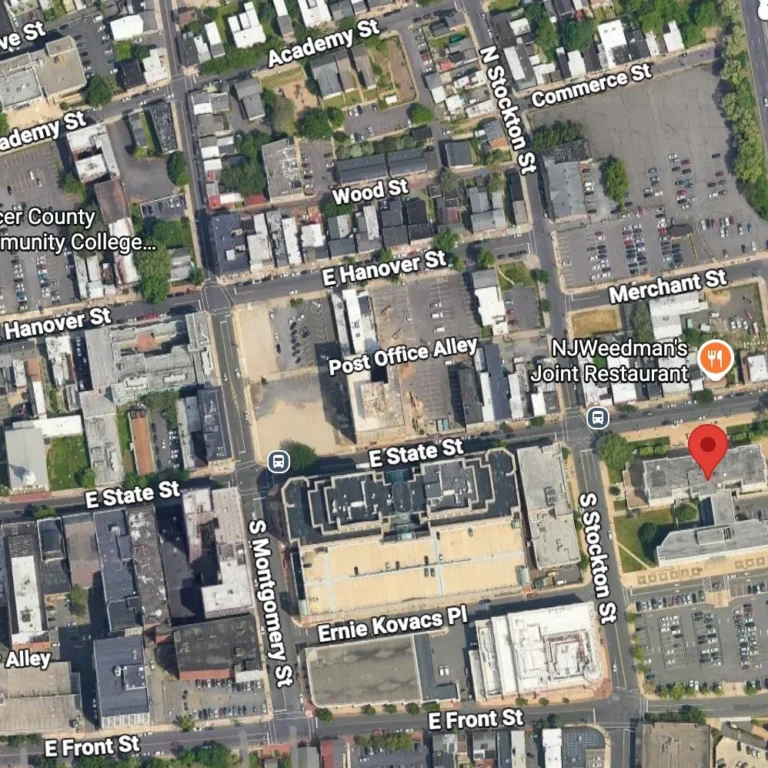
Beyond these individual cases, a handful of more contained local issues have drawn attention this summer without reflecting any broader statewide trend. Trenton implemented an emergency weekend curfew for businesses along East State Street after a summer surge in localized violence near City Hall, a response the city has used before during past periods of concentrated unrest. In Asbury Park, police are investigating hate symbols painted at multiple locations around the township, an incident being treated as a bias crime rather than a measure of general street crime. And in Paterson, an East Orange man remained hospitalized after being shot in the early hours of Saturday morning, one of several isolated shooting incidents reported around the state this week that, taken individually, do not point to any shift in New Jersey’s broader downward crime trend.
Taken together, this week’s cases illustrate a pattern that tends to hold true in most years, that a state’s aggregate crime statistics and its most visible headlines rarely move in lockstep. New Jersey’s violent crime numbers continue trending toward historic lows, even as federal and state investigators simultaneously worked through a record breaking drug bust, an alleged medical abuse case spanning decades, a violent human trafficking operation, a multimillion dollar healthcare fraud scheme, and a fatal use of force incident now under formal review, a reminder that a genuinely safer state and a genuinely active week for law enforcement are not mutually exclusive realities.
Note: Several matters described above, including the Mercer County civil lawsuit and the Camden human trafficking indictment, involve allegations that have not been resolved in court. Under the law, all defendants are presumed innocent unless and until proven guilty.