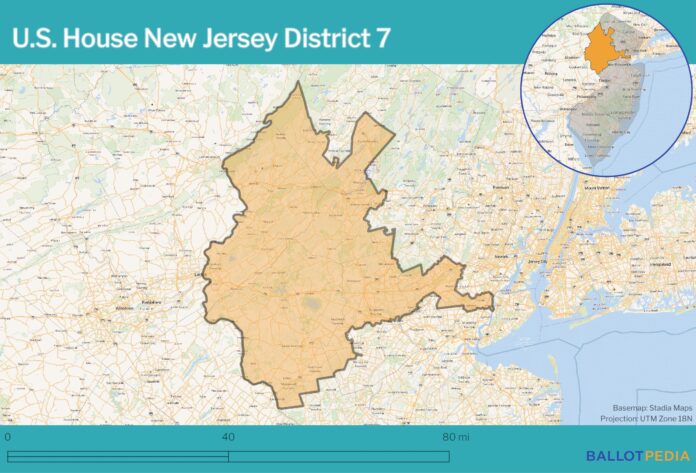

With just days remaining before voters head to the polls, New Jersey’s 7th Congressional District Democratic primary has entered its most intense phase, transforming what began as a competitive campaign into a full-scale political battle defined by aggressive mail campaigns, competing narratives, and escalating efforts to influence undecided voters.
Across communities stretching through portions of Central and Northwest New Jersey, mailboxes have become the latest front line in a race that many political observers view as one of the most important Democratic congressional primaries in the state. Campaign literature is arriving daily, sometimes multiple times a day, as candidates and outside organizations make their final push to shape voter perceptions before Election Day.
The volume of campaign mail has become so significant that it has emerged as a topic of conversation among party activists, volunteers, and voters alike.
At a recent campaign gathering in Warren County, discussion quickly turned away from traditional campaign subjects and toward the flood of political mailers arriving throughout the district. For many local Democrats, the sheer number of pieces arriving in recent weeks has become symbolic of a race entering its decisive stretch.
The contest features a crowded Democratic field seeking to represent one of New Jersey’s most closely watched congressional districts. Among the candidates competing for the nomination are Rebecca Bennett, Tina Shah, Michael Roth, and Brian Varela. While each campaign has attempted to distinguish itself through policy proposals, endorsements, and grassroots outreach, the final days of the race have increasingly been dominated by attacks, counterattacks, and efforts to define opponents before voters make their decisions.
At the center of much of the recent attention is Bennett, who has found herself the target of multiple mail campaigns coming from different directions.
One series of mailers distributed by an organization identified as Real Change has attempted to portray Bennett as being aligned with positions viewed unfavorably by portions of the Democratic electorate. Another campaign has focused on her political background, raising questions about her previous party affiliation and attempting to frame her as insufficiently aligned with Democratic priorities.
The attacks illustrate the reality of modern political campaigns, particularly in races where polling and political momentum suggest one candidate may have established an advantage.
As campaigns move into their final days, opponents frequently seek opportunities to redefine the race by raising doubts, highlighting perceived vulnerabilities, or introducing new issues designed to influence late-deciding voters.
Political strategists often view the closing week of a campaign as the most critical period for persuasion. Voters who have paid only limited attention to a race may encounter campaign messaging for the first time, while highly engaged voters are exposed to repeated communications intended to reinforce existing opinions or generate uncertainty about opponents.
The result is an environment where messaging becomes increasingly aggressive and campaigns devote substantial resources toward direct voter contact.
For Bennett, recent attacks have focused largely on ideological positioning. Mail pieces have questioned her political identity and attempted to portray her as being out of step with core Democratic values. The strategy appears designed to create hesitation among progressive and left-leaning voters who may be evaluating multiple candidates before casting ballots.
Bennett has publicly rejected the allegations and has used campaign platforms to directly address the claims. Rather than ignoring the attacks, her campaign has chosen to respond publicly, arguing that voters deserve accurate information and encouraging supporters to examine the record rather than relying on campaign literature alone.
The exchange highlights a broader trend within contemporary Democratic primaries, where debates increasingly center on questions of authenticity, ideological consistency, and perceived electability.
Unlike general elections, where candidates focus heavily on partisan contrasts, primary contests often involve more nuanced arguments regarding who best represents a party’s priorities, values, and future direction. As a result, issues of political identity frequently become central components of campaign strategy.
The intensity surrounding the 7th District race reflects the district’s broader political significance.
Over the last several election cycles, New Jersey’s 7th Congressional District has become one of the most closely monitored battlegrounds in the state. The district’s diverse mix of suburban communities, growing population centers, and politically engaged voters has made it a key target for both parties and a frequent subject of national political attention.
Winning the Democratic nomination carries substantial importance not only for the candidates themselves but also for party leaders seeking to position themselves effectively for future congressional contests.
Because of the district’s prominence, political observers have closely followed fundraising totals, endorsements, volunteer activity, and polling data throughout the campaign.
While publicly available polling has been relatively limited, the surveys that have emerged have contributed to the perception that Bennett may have established herself as a leading contender. Whether that perception accurately reflects the final outcome remains uncertain, but it has undoubtedly influenced campaign strategies during the closing days.
Historically, candidates perceived as front-runners often become primary targets for both opponents and outside organizations. Campaigns seeking to gain ground frequently focus their resources on the candidate viewed as most likely to win, hoping to alter momentum or create openings among undecided voters.
That dynamic appears increasingly visible in the final days of the CD-7 contest.
Yet political veterans caution against assuming that attack advertising automatically translates into electoral success. While negative messaging can influence voter perceptions, its effectiveness depends on numerous factors including voter engagement, message credibility, media coverage, and the targeted candidate’s ability to respond.
In some cases, repeated attacks can even generate sympathy for the targeted candidate or reinforce perceptions that opponents are acting out of political desperation.
For voters, the final days of a campaign often become an exercise in sorting through competing claims and determining which messages deserve attention. In an environment saturated with campaign advertising, endorsements, social media content, direct mail, and television appearances, many voters ultimately rely on broader impressions rather than individual pieces of campaign literature.
That reality makes grassroots organizing especially important.
Throughout the district, volunteers continue knocking on doors, making phone calls, attending community events, and engaging directly with residents. These face-to-face interactions frequently carry greater weight than campaign mailers because they allow voters to ask questions, discuss concerns, and evaluate candidates through personal conversations.
As Election Day approaches, campaigns are increasingly focused on turnout operations designed to ensure supporters actually cast ballots. Political professionals often note that in primary elections, success depends not only on persuasion but also on participation. Motivating supporters to vote can prove just as important as convincing undecided voters to choose a particular candidate.
The coming days will determine whether the late-stage mail campaigns alter the trajectory of the race or simply become another example of modern campaign tactics failing to overcome established voter preferences.
What is clear is that New Jersey’s 7th Congressional District remains one of the state’s most dynamic political battlegrounds. The flood of campaign mail, the increasingly sharp exchanges between candidates, and the heightened attention from party activists all reflect the importance of a contest that has captured the attention of political observers across the Garden State.
As candidates make their final appeals and voters prepare to cast their ballots, the race enters its final chapter with momentum, uncertainty, and the kind of political intensity that often defines competitive primaries. The mailboxes may briefly grow quiet after Election Day, but the outcome of this contest is likely to influence New Jersey politics long after the last campaign flyer is delivered.