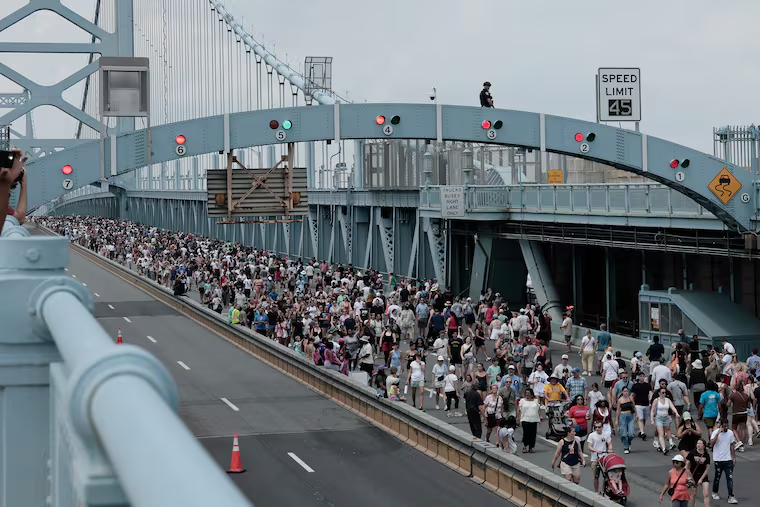
I have driven my bike across the Benjamin Franklin Bridge a handful of times over the years, though I had never once walked it, until this past Sunday, when I finally made the crossing on foot rather than on two wheels. That small personal milestone happened to fall right on the heels of something considerably bigger, as an estimated 50,000 people took over the bridge on Saturday, July 11, 2026, to celebrate its official 100th anniversary and, for one remarkable day, experience a piece of regional infrastructure most of us only ever see from behind a windshield.
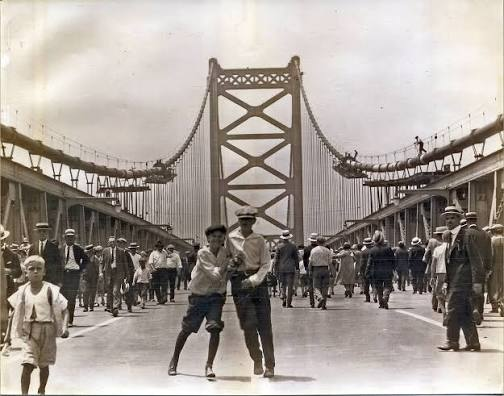
Organized jointly by the Delaware River Port Authority alongside the cities of Philadelphia and Camden, the centennial celebration shut the bridge down to vehicular traffic entirely, the first time it had closed to cars in decades. That closure gave pedestrians, runners, and families a genuinely rare opportunity most residents of the region will likely never get again, the chance to walk directly across the bridge’s main multi lane highway rather than simply driving over it without a second thought.
From 8:30 a.m. to 4 p.m., every vehicle lane sat closed, and a massive sea of people flooded onto the span instead, walking the full 1,750 foot main suspension section, stopping constantly for selfies, and taking in genuinely panoramic, car free views of the Delaware River below. For a structure most people cross in under two minutes at highway speed, spending an unhurried afternoon walking its length gave visitors an entirely different appreciation for its scale and the sheer engineering ambition required to build it in the first place.
The main celebration itself unfolded on the Camden side near the toll plazas, where organizers built out a genuinely full festival atmosphere around the bridge walk. Live bands kept the crowd entertained throughout the day, a fleet of food trucks lined the grounds, carnival rides added a genuine sense of celebration for younger attendees, and a dedicated family fun zone gave the day a distinctly community centered feel rather than a purely ceremonial one. The Delaware River Port Authority also curated a temporary pop up history museum for the occasion, showcasing a full century’s worth of architectural blueprints, vintage toll collection equipment, and historical photographs documenting the bridge’s evolution since it first opened. Perhaps the most striking unveiling of the day was a newly restored, original Winged Victory statue, one of the ornamental pieces that decorated the bridge back when it first debuted a century ago, giving visitors a direct, physical link to the structure’s earliest days.
The day’s civic centerpiece arrived when Philadelphia Mayor Cherelle Parker and Camden Mayor Victor Carstarphen met together on the New Jersey side to address the assembled crowd, framing the bridge as considerably more than a piece of transportation infrastructure. Both mayors emphasized the span’s role as a genuine physical symbol of regional unity, civic equity, and economic connection between two cities and two states that have depended on this single crossing for a hundred years of shared history, commerce, and daily life.
Understanding why this particular structure earned such a significant celebration requires looking back at its genuinely remarkable origin story. When it officially opened on July 1, 1926, under the original name Delaware River Bridge, it held the title of the longest single span suspension bridge anywhere in the world, a genuine engineering milestone for its era. The timing of that opening was no accident either, since the bridge was built specifically to help handle the enormous traffic expected for the United States Sesquicentennial Exposition, the massive celebration marking the country’s 150th birthday that same year. Behind that engineering achievement stood chief engineer Ralph Modjeski, a legendary Polish American infrastructure designer whose work helped define large scale bridge construction throughout the early twentieth century. During Saturday’s celebration, the Polish Heritage Society of Philadelphia paid direct tribute to that legacy, laying a memorial wreath on the Pennsylvania side of the bridge in Modjeski’s honor.
A few other details from the bridge’s history add genuine texture to its hundred year story. When President Calvin Coolidge formally opened the bridge back in 1926, the toll for a single vehicle crossing was just 18 cents. A full century later, that same crossing now costs $6, a striking illustration of just how much the cost of infrastructure, and the dollar itself, has changed across a hundred years of American history. The bridge didn’t even carry its current name for most of that history either. It operated as the Delaware River Bridge for nearly three decades before finally being renamed the Benjamin Franklin Bridge in 1955, a change prompted specifically by the construction of the Walt Whitman Bridge just a few miles south, which made a more distinctive name necessary to avoid ongoing confusion between the region’s two major Delaware River crossings.
Thousands of people traveled the span entirely on foot this past Saturday, celebrating the deep social, economic, and cultural connections that have linked New Jersey and Pennsylvania across an entire century of shared use. According to Delaware River Port Authority officials, the centennial celebration cements the legacy of what remains a genuinely signature piece of American public infrastructure, one that has quietly carried generations of commuters, commerce, and connection between Camden and Philadelphia since the same year the country itself was celebrating a milestone birthday of its own. For anyone who has only ever known the bridge from behind a steering wheel or, in my own case, from the seat of a bicycle, this past weekend offered a rare, genuinely unforgettable chance to finally meet it on foot.