
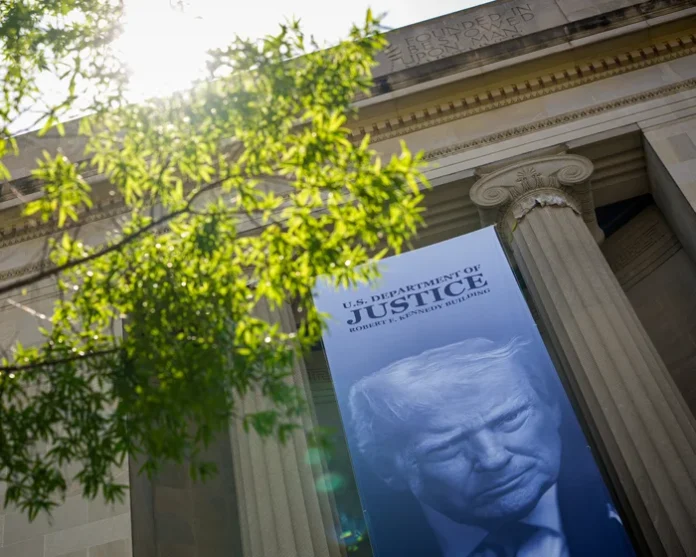

A major legal and political battle that has drawn national attention, constitutional scrutiny, and opposition from former federal judges appears to have reached a dramatic turning point. The Trump administration has reportedly abandoned plans to move forward with the controversial $1.8 billion “Anti-Weaponization Fund,” a program that critics argued represented one of the most unprecedented uses of federal settlement money in modern American history.
The development marks a significant victory for a coalition of former federal judges, constitutional scholars, elected officials, and legal advocates who challenged the legitimacy of the proposed fund. Among the most prominent figures involved in the legal opposition was former New Jersey Attorney General Matt Platkin, whose law firm played a central role in the effort to challenge the settlement and its broader implications.
For New Jersey, the story represents far more than a Washington political dispute. It highlights the growing influence of New Jersey legal leaders in shaping national constitutional debates and places one of the Garden State’s most recognizable legal figures at the center of a battle involving presidential power, federal settlements, judicial oversight, and the limits of executive authority.
The controversy emerged from a massive lawsuit filed by President Donald Trump against the Internal Revenue Service. That litigation ultimately produced a proposed settlement that included the creation of a nearly $1.8 billion fund designed to compensate individuals who claimed they had been improperly targeted by federal law enforcement and prosecutorial agencies.
Supporters of the proposal argued that the fund would provide relief to Americans who believed they had experienced government overreach during previous federal investigations and prosecutions. Critics, however, immediately questioned both the legal foundation and constitutional authority behind the arrangement.
The proposal quickly became one of the most hotly debated legal developments in the country.
Opponents argued that the fund represented an unprecedented effort to direct enormous sums of money without appropriate congressional oversight or authorization. Constitutional scholars questioned whether the executive branch possessed the authority to create and distribute such a fund through litigation settlements rather than through the traditional appropriations process established by Congress.
The controversy intensified as details surrounding the proposal became more widely known.
Legal experts from across the ideological spectrum began examining whether the settlement created a mechanism capable of bypassing traditional safeguards governing federal expenditures. Questions emerged regarding eligibility standards, oversight mechanisms, accountability procedures, and the broader constitutional implications of allowing executive branch settlements to function as vehicles for distributing billions of dollars.
Those concerns ultimately prompted an extraordinary response from the legal community.
A group of 35 former federal judges filed an amicus brief opposing the arrangement and urging greater judicial scrutiny. The bipartisan coalition included highly respected jurists from across the federal judiciary, reflecting the seriousness with which many legal observers viewed the constitutional questions at stake.
Two of the most prominent voices within that group, retired federal judges Nancy Gertner and Michael Luttig, publicly welcomed reports that the administration was abandoning the fund.
While expressing satisfaction with the apparent termination of the proposal, both judges emphasized that significant concerns remain regarding the events that led to the fund’s creation in the first place. They noted that even a complete reversal does not necessarily eliminate questions surrounding the legality of actions already taken or the broader constitutional principles implicated by the settlement.
Their comments reflect a larger reality surrounding the dispute.
For many legal observers, the controversy was never solely about the $1.8 billion itself. Instead, it became a test case examining the limits of executive authority and the role courts play in safeguarding constitutional boundaries.
That is where Matt Platkin entered the national spotlight.
The former New Jersey Attorney General served as co-counsel for the former federal judges challenging the proposal. Through Platkin LLP, he became one of the leading legal voices arguing that the settlement raised profound constitutional concerns and warranted heightened judicial review.
For observers throughout New Jersey, Platkin’s involvement represents another example of how legal figures from the state continue to play influential roles in major national disputes.
During his tenure as Attorney General, Platkin became known for aggressively pursuing litigation involving constitutional rights, consumer protections, public safety, environmental issues, and government accountability. His participation in the challenge to the Anti-Weaponization Fund extended that profile onto a national stage where questions regarding presidential authority and federal spending were being intensely debated.
The legal effort gained momentum as additional opposition emerged.
A group of law enforcement officers who defended the U.S. Capitol during the January 6 attack filed litigation seeking to block the fund. Meanwhile, dozens of congressional Democrats voiced concerns regarding the proposal’s legality and broader implications.
The growing backlash placed increasing pressure on the administration.
According to multiple reports, federal officials ultimately informed the court that the government would comply with judicial directives pausing implementation of the fund. The Department of Justice subsequently indicated that it would not proceed with establishing the program while legal challenges remained unresolved.
That announcement dramatically altered the trajectory of the dispute.
What initially appeared to be a massive federal compensation program poised for implementation suddenly became a constitutional controversy resulting in retreat, reassessment, and ongoing judicial examination.
Yet the broader legal questions remain highly relevant.
The case touches upon fundamental issues involving separation of powers, congressional authority, executive discretion, and judicial oversight. Those principles extend well beyond a single administration or political controversy. They strike at the core of how federal power is exercised and constrained within the American constitutional system.
For New Jersey residents, the story also demonstrates how state-based legal leadership continues influencing national conversations.
Throughout recent years, New Jersey attorneys, judges, lawmakers, and advocacy organizations have repeatedly found themselves at the center of major legal disputes involving immigration policy, environmental regulation, voting rights, reproductive freedom, consumer protection, and executive authority. The challenge to the Anti-Weaponization Fund represents another chapter in that ongoing tradition.
The role played by former federal judges further underscores the significance of the controversy.
Judges rarely enter public policy debates after leaving the bench unless they believe fundamental constitutional issues are at stake. The participation of 35 former federal judges signaled an extraordinary level of concern regarding the structure and legality of the proposed fund.
Their involvement transformed what might otherwise have remained a political dispute into a serious constitutional conversation.
As court proceedings continue, attention now shifts toward what comes next.
Judges overseeing the matter may still seek additional information regarding the settlement process, the legal rationale supporting the proposal, and the broader questions raised by critics. While the reported termination of the fund appears to represent a significant victory for opponents, ongoing judicial scrutiny could continue shaping the legal landscape surrounding executive settlements and federal spending authority.
For Matt Platkin and the coalition challenging the proposal, the apparent collapse of the fund represents a major milestone.
For constitutional scholars, it serves as a reminder that even the most ambitious government initiatives remain subject to legal challenge and judicial review.
And for New Jersey, it is another example of how the state’s legal community continues playing a consequential role in some of the most important constitutional and governmental debates unfolding across the nation.
What began as a settlement provision attached to a high-profile lawsuit ultimately evolved into a far-reaching examination of federal power, judicial oversight, and constitutional accountability. Whether the Anti-Weaponization Fund disappears entirely or remains the subject of additional litigation, its rise and apparent fall have already secured a place among the most closely watched legal and political battles of 2026.
















