

Across South Jersey, the challenge surrounding abandoned, stray, and feral cats has quietly intensified for years. Animal shelters remain overcrowded, veterinary costs continue rising, and rescue organizations routinely face the difficult reality of operating with limited resources while demand for assistance grows faster than available support systems. Yet within that difficult landscape, smaller community-driven organizations have increasingly become some of the most important forces in animal rescue, adoption, education, and humane population control throughout New Jersey.
Few organizations illustrate that reality more clearly right now than Community Cat Club.
Founded in 2021 in Bellmawr, the South Jersey-based nonprofit rescue organization has rapidly evolved from a grassroots Trap-Neuter-Return initiative into one of the region’s more active and ambitious feline welfare organizations. Built around the philosophy that long-term solutions require both direct rescue work and proactive prevention, Community Cat Club has focused its efforts on reducing suffering through large-scale TNR operations, fostering programs, adoption placement, medical intervention, and public education surrounding responsible cat care.
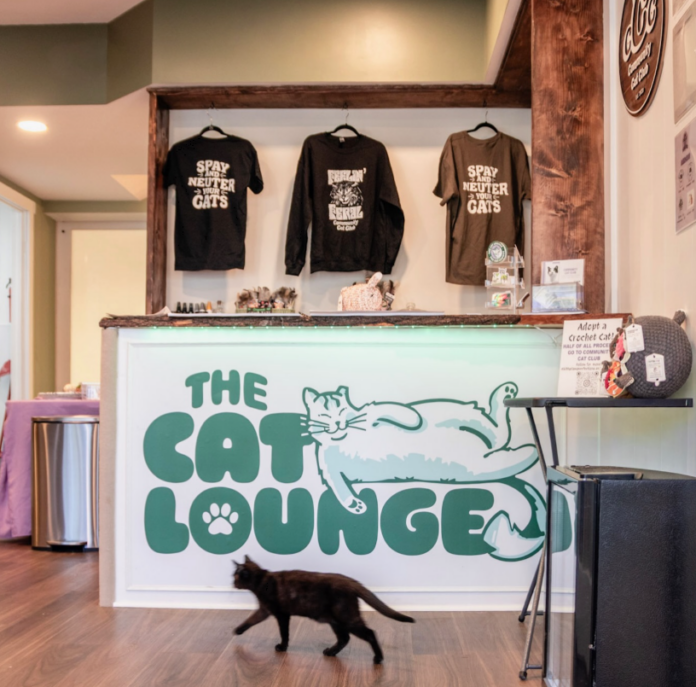
Now, with the opening of its permanent headquarters and adoption center known as The Cat Lounge in Mount Ephraim, the organization is entering a significant new phase of its development — one designed not only to expand adoptions but to fundamentally reshape how local communities interact with rescue animals altogether.
Located along the Black Horse Pike corridor in Mount Ephraim, The Cat Lounge represents something notably different from the traditional shelter model many people associate with animal rescue. Rather than rows of cages or high-stress holding areas, the space was intentionally designed as a relaxed, free-roaming environment where visitors can interact naturally with adoptable cats and kittens inside a comfortable, living-room-style setting. The goal is not simply to display animals for adoption but to create meaningful connections between people and cats in an environment that reduces stress for both.
That distinction matters enormously within modern rescue work.
Traditional shelter environments, while necessary in many situations, can often make animals appear withdrawn, anxious, overstimulated, or fearful. Cats in particular tend to struggle inside loud or highly confined environments, which can complicate adoption opportunities even for highly social animals. The Cat Lounge model attempts to remove many of those barriers by allowing visitors to experience the cats’ personalities more naturally through interaction, observation, and extended visits.
The result feels less transactional and more relational.
Visitors entering the lounge encounter cats roaming freely through shared spaces, lounging near windows, climbing cat structures, socializing with one another, or quietly settling beside guests. The atmosphere encourages patience rather than urgency, allowing potential adopters to form genuine bonds before making decisions about bringing an animal home.
That environment also reflects the larger philosophy driving Community Cat Club itself.
The organization was created specifically to address the growing overpopulation crisis surrounding community cats throughout South Jersey. From the beginning, volunteers focused heavily on targeted Trap-Neuter-Return operations — widely considered one of the most effective and humane long-term strategies for stabilizing feral cat populations. TNR programs involve humanely trapping outdoor cats, transporting them for spaying or neutering, vaccinating them, and then returning healthy cats back to their managed colonies while friendly or adoptable animals enter foster or adoption programs.
Without those interventions, feral populations can expand rapidly, creating significant challenges not only for animal welfare groups but also for neighborhoods, municipalities, and overwhelmed shelters.
Community Cat Club’s volunteers have spent years working directly within South Jersey communities addressing those realities through hands-on fieldwork, colony management, emergency response efforts, and rescue operations involving abandoned animals and hoarding situations. Prevention remains central to the organization’s mission because rescue alone cannot solve overpopulation without simultaneously reducing future reproduction cycles.
The numbers illustrate the scale of that work.
Since its founding, the organization has facilitated more than 1,100 cat adoptions while supporting approximately 200 cats within foster networks at any given time. Volunteers have also assisted in more than 650 Trap-Neuter-Return procedures throughout South Jersey communities, an effort that directly impacts long-term population stabilization and reduces future suffering among outdoor cat colonies.
Those statistics reflect far more than simple rescue totals.
Every adoption represents veterinary care, foster placement, transportation coordination, socialization support, feeding, fundraising, volunteer hours, and long-term logistical planning. Rescue organizations increasingly operate as highly complex support systems involving medical coordination, emergency response, behavioral rehabilitation, adoption counseling, and public education simultaneously.
The Cat Lounge now gives Community Cat Club a centralized operational hub capable of expanding those efforts significantly.
Beyond the adoption floor itself, the Mount Ephraim facility functions as the organization’s headquarters, housing operational space, holding areas, kitten nursery support, and volunteer coordination infrastructure. The building also allows the organization to host educational programming, community events, and private gatherings designed to strengthen local involvement surrounding animal welfare issues.
Importantly, the lounge was designed not only for adoptions but for accessibility and public engagement.
Visitors are encouraged to reserve appointments online due to lounge capacity limitations designed to protect both guest experience and animal comfort. Admission donations directly support food, medical treatment, vaccinations, spay-and-neuter procedures, and rescue operations. Potential adopters can complete applications either online or during visits, while the organization also continues offering assistance programs tied to pet sterilization and community TNR efforts throughout the region.
That broader educational mission remains essential because misconceptions surrounding feral cats and rescue work remain widespread.
Many outdoor cats are not abandoned pets but part of long-established community colonies requiring structured management rather than removal alone. TNR programs help reduce fighting, spraying, disease transmission, and unchecked population growth while improving overall colony health. Organizations like Community Cat Club increasingly serve as both rescue agencies and educational resources helping communities better understand humane population management practices.
The rise of spaces like The Cat Lounge also reflects a larger cultural shift occurring within animal rescue nationally.
More rescue organizations are moving toward community-centered adoption environments designed to reduce stigma, improve socialization opportunities, and encourage more sustainable adoption relationships. Cat cafés, lounge-style rescues, and open interaction spaces have grown increasingly popular because they create calmer, more emotionally connected experiences for both adopters and animals.
In South Jersey, Community Cat Club is now helping lead that evolution locally.
The organization’s growth from a grassroots rescue effort into a permanent community-centered facility demonstrates how rapidly volunteer-driven rescue operations can expand when local support, public engagement, and mission clarity align effectively. At a time when shelters and rescues across the country continue struggling with overcrowding, rising intake numbers, veterinary shortages, and financial pressure, organizations capable of combining prevention, education, fostering, adoption, and community involvement are becoming increasingly important.
And in Mount Ephraim, that mission now has a permanent home.
The Cat Lounge represents more than simply another adoption center opening in South Jersey. It reflects the growing recognition that animal rescue succeeds best when communities themselves become active participants in the process. Through fostering, adoption, education, volunteerism, and humane intervention, organizations like Community Cat Club are not only rescuing cats but building long-term systems designed to reduce suffering before it begins.
In a region where the challenges surrounding stray and feral populations remain substantial, that work may ultimately prove as important to community health as it is to animal welfare itself.
















