Home Blog Page 23

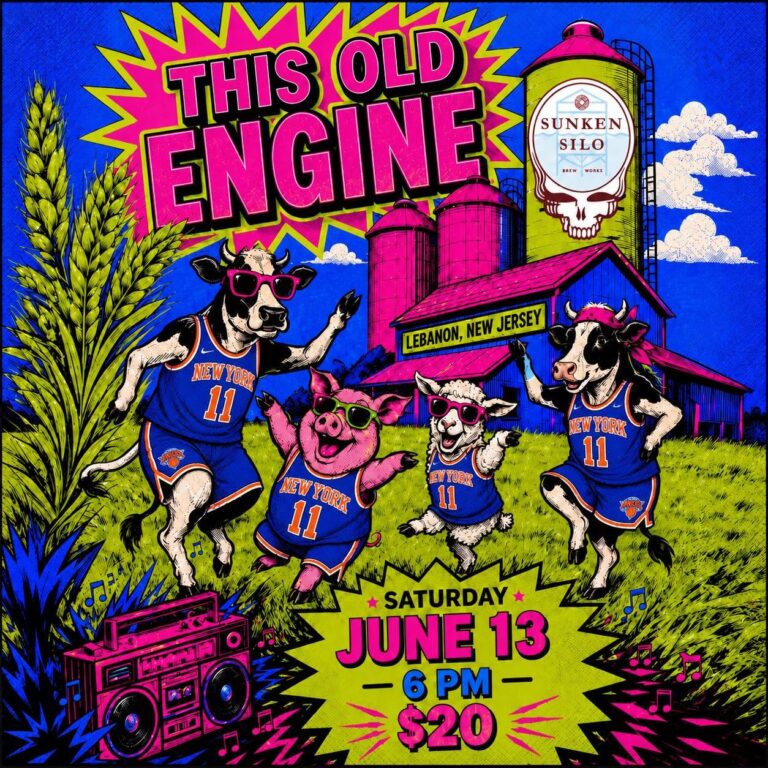
The Music Never Stops: This Old Engine Brings the Spirit of the Grateful Dead Back to Sunken Silo Brew Works

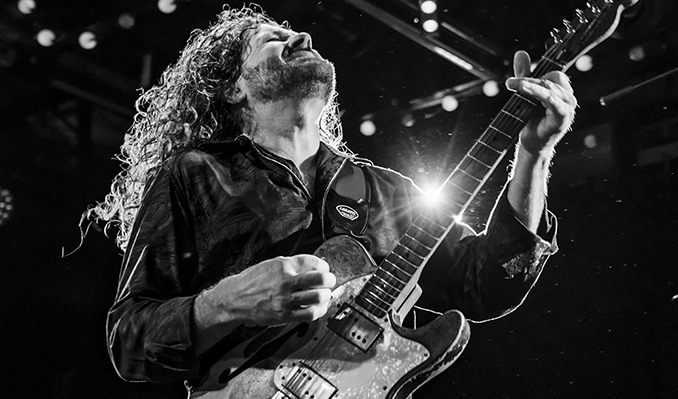
New Jersey’s live music scene has always thrived on authenticity, community, and the shared experience of discovering something magical in the moment. Few musical traditions embody those values more completely than the enduring legacy of the Grateful Dead, a band whose influence continues to echo across generations, venues, festivals, breweries, and stages throughout the Garden State. That legacy takes center stage once again on Saturday, June 13, 2026, when This Old Engine returns to Sunken Silo Brew Works in Lebanon for an evening dedicated to the music, improvisation, and communal spirit that have defined the Grateful Dead experience for more than half a century.

Set against the backdrop of one of Hunterdon County’s most unique brewery destinations, the event promises far more than a concert. It is a gathering of music lovers, Deadheads, craft beer enthusiasts, and curious newcomers coming together to celebrate a musical tradition that continues to evolve while remaining deeply connected to its roots.

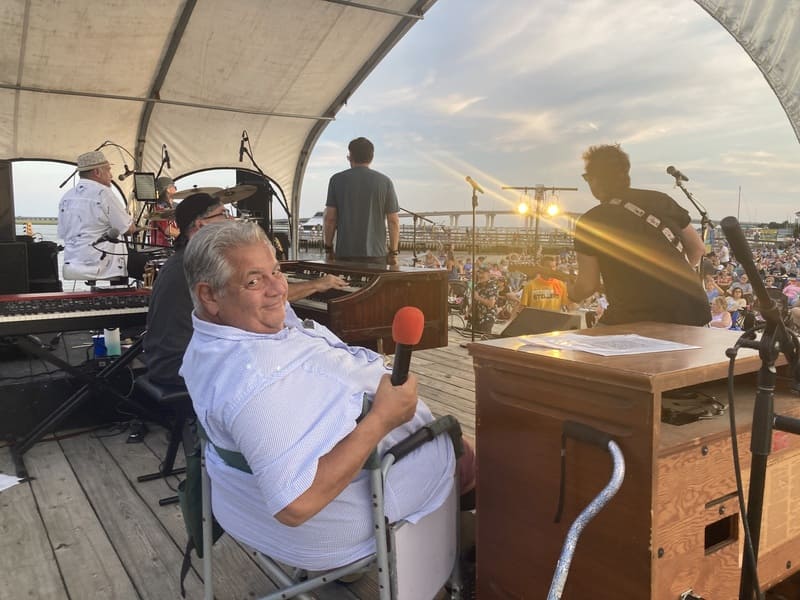
From 6:00 p.m. until 9:30 p.m., the patio at Sunken Silo Brew Works will transform into a hub of live improvisation, dancing, storytelling, and musical exploration as This Old Engine delivers an extensive evening of Grateful Dead-inspired performances. The band’s approach captures the essence of what made the original Grateful Dead such a transformative force in American music: the willingness to take risks, stretch songs into unexpected territory, and create unique performances that can never be repeated exactly the same way twice.

That philosophy remains one of the reasons Grateful Dead music continues to resonate so strongly today.

Unlike many classic rock acts whose catalogs remain frozen in time, the Grateful Dead created a body of work designed to evolve. Songs became vehicles for exploration rather than fixed arrangements. Concerts became journeys rather than recitals. Fans attended multiple shows not to hear the same performance repeated but to experience how familiar songs might transform in real time.

Bands like This Old Engine keep that tradition alive.

Rather than simply recreating recordings note for note, the group embraces the improvisational DNA that made the Grateful Dead unique. Familiar classics become launchpads for extended jams, spontaneous musical conversations, and moments of collective discovery. The result is an experience that feels both nostalgic and entirely new.

For audiences gathering at Sunken Silo, that means hearing beloved songs interpreted through the lens of musicians who understand that Grateful Dead music is not about imitation. It is about continuation.

The venue itself provides an ideal setting for such a celebration.

Nestled in the rolling landscape of Hunterdon County, Sunken Silo Brew Works has become one of New Jersey’s emerging destinations for live music, local culture, and craft brewing. The brewery’s outdoor patio creates an intimate atmosphere where audiences can enjoy performances in a relaxed setting surrounded by friends, great beer, and the natural beauty of central New Jersey.

That combination reflects a long-standing connection between the Grateful Dead community and independently owned gathering spaces. Throughout the band’s history, music was often experienced in environments that encouraged connection rather than separation. The focus was never solely on the stage. It was about the people gathered around it.

That same energy is expected to define the June 13 event.

Adding another layer to the experience is the culinary destination located next door. Metro Seafood has developed a reputation among visitors for combining fresh seafood offerings with a welcoming atmosphere that perfectly complements the brewery experience. Concertgoers will have the opportunity to pair live music with fresh oysters, signature seafood dishes, and local favorites that have become staples among regular visitors.

Together, Sunken Silo Brew Works and Metro Seafood create a destination that extends beyond a typical night out. It becomes an immersive evening where music, food, community, and local business all intersect.

The popularity of events like this reflects a broader resurgence of Grateful Dead culture throughout New Jersey and beyond.

More than three decades after the original band’s final performances, interest in Grateful Dead music remains remarkably strong. Younger audiences continue discovering the catalog, while longtime fans remain committed to exploring new interpretations and live experiences. Festivals, tribute acts, cover bands, and community gatherings dedicated to the music continue attracting enthusiastic audiences across the country.

New Jersey has played an especially important role in sustaining that culture.

From legendary concert venues and festival grounds to local breweries, theaters, and clubs, the state has become home to a thriving ecosystem of musicians dedicated to preserving and advancing the Grateful Dead tradition. Bands regularly perform throughout the region, drawing audiences who appreciate both faithful interpretations and adventurous improvisational approaches.

This Old Engine has become part of that growing movement.

Their performances appeal not only to dedicated Deadheads but also to audiences interested in experiencing live music that prioritizes creativity, spontaneity, and genuine musical interaction. In an era increasingly defined by digital consumption and algorithm-driven entertainment, events like these offer something refreshingly human and immediate.

Every performance exists only once.

Every jam unfolds differently.

Every audience contributes to the experience.

Those principles have always been at the heart of the Grateful Dead tradition.

The impact of that tradition extends beyond the stage and into radio as well. Fans throughout the region can hear This Old Engine featured on the Music Plays The Band Radio Show, a cornerstone program on The Grateful Dead Live dedicated to showcasing live performances from Grateful Dead tribute bands and cover artists.

The show serves an important role within the broader Grateful Dead community. While the original band may no longer tour, countless musicians continue carrying the music forward, introducing new audiences to classic songs while preserving the improvisational spirit that defined the band’s live performances.

Music Plays The Band highlights these artists and performances, creating a platform where listeners can discover new interpretations, emerging bands, and unique approaches to a catalog that remains endlessly adaptable.

The existence of programs like this reflects the remarkable staying power of the Grateful Dead phenomenon.

Very few bands have inspired such a vast and enduring ecosystem of performers, radio programs, festivals, communities, and cultural traditions. The music has transcended its original era, becoming something larger than any individual performance or lineup.

For many fans, attending a show by a band like This Old Engine is about more than hearing songs they love. It is about participating in a living tradition that continues evolving through each new generation of musicians and listeners.

As June 13 approaches, anticipation continues building among music fans eager to gather in Lebanon for an evening of extended jams, shared experiences, and timeless songs.

Whether you’re a lifelong Deadhead who can recite every lyric, a casual listener curious about the culture surrounding the music, or simply someone searching for an unforgettable summer evening in New Jersey, This Old Engine’s return to Sunken Silo Brew Works promises a celebration of everything that has made Grateful Dead music endure for decades.

The songs remain timeless. The improvisation remains limitless. The community remains vibrant.

And as generations of fans have said for years, the music never stops.

On June 13, in the heart of Hunterdon County, it starts once again.

New Jersey Expands CDL Training Pathways as Reentry and Veteran Workforce Initiative Addresses Critical Transportation Industry Demand

As New Jersey continues searching for innovative solutions to workforce shortages, economic mobility challenges, and transportation industry hiring demands, a growing partnership between the Francine A. LeFrak Foundation and the New Jersey Reentry Corporation is creating new opportunities for individuals seeking a second chance while helping address one of the state’s most pressing labor needs.

The expansion of the LeFrak CDL Training Initiative marks an important development in New Jersey’s transportation, workforce development, and economic opportunity landscape. Designed to provide court-involved individuals and military veterans with access to commercial driver training and career placement opportunities, the program is helping build a pipeline of qualified professional drivers while simultaneously creating pathways toward long-term financial stability and meaningful employment.

The initiative arrives at a critical moment for both New Jersey and the broader transportation industry. Across the nation, trucking companies, logistics providers, distribution centers, municipalities, and transit-related employers continue facing significant workforce shortages. At the same time, thousands of individuals attempting to reenter the workforce after involvement with the justice system often encounter barriers that limit access to stable employment.

By connecting these two realities, the expanded CDL training program offers a practical and impactful solution that benefits workers, employers, and communities alike.

Transportation remains one of the most essential components of the American economy. Every day, commercial drivers move food, medical supplies, construction materials, consumer goods, industrial equipment, and countless other products that keep businesses operating and communities functioning. From the Port Newark-Elizabeth Marine Terminal and major interstate corridors to warehouses, manufacturing facilities, and distribution hubs throughout the Garden State, New Jersey serves as one of the most important transportation and logistics centers in the United States.

The state’s strategic location places it at the crossroads of regional, national, and international commerce. Millions of consumers can be reached within a day’s drive from New Jersey, making transportation infrastructure and workforce development essential components of the state’s economic future.

That growing demand has intensified the need for skilled commercial drivers.

Commercial Driver’s License training, commonly known as CDL training, represents the foundation of a career in professional transportation. The process involves far more than simply learning how to operate a large vehicle. Successful drivers must master safety procedures, vehicle inspections, regulatory compliance, hazard awareness, cargo management, and defensive driving techniques while developing the judgment and professionalism required to operate commercial equipment safely.

Participants in CDL programs receive classroom instruction covering federal transportation regulations, logbook requirements, safety standards, vehicle systems, and operational procedures. They also complete extensive hands-on training that includes vehicle control exercises, backing maneuvers, docking procedures, road operations, emergency response techniques, and pre-trip inspection protocols.

The training culminates in state and federal testing requirements necessary to obtain a Commercial Driver’s License.

Depending on career goals, participants may pursue different license classifications. Class A licenses open doors to careers operating tractor-trailers and long-haul freight vehicles. Class B licenses prepare individuals for careers involving straight trucks, buses, and construction-related transportation equipment. Specialized endorsements can create additional opportunities in areas such as passenger transportation, hazardous materials hauling, and other niche sectors.

For many participants, earning a CDL represents far more than acquiring a professional credential.

It represents access to an industry that continues to provide strong earning potential, career advancement opportunities, and long-term job security.

That opportunity is especially significant for veterans transitioning into civilian careers and individuals rebuilding their lives following involvement with the criminal justice system.

The New Jersey Reentry Corporation has spent years focusing on strategies that help individuals successfully reintegrate into society through employment, education, healthcare access, and supportive services. The organization’s approach recognizes a fundamental reality: stable employment remains one of the most powerful predictors of successful long-term reentry.

When individuals gain access to meaningful work, they strengthen their ability to support themselves and their families, contribute to their communities, and build sustainable futures.

The LeFrak CDL Training Initiative aligns directly with those objectives.

Rather than offering temporary employment solutions, the program focuses on creating access to career pathways with long-term growth potential. Commercial transportation remains one of the few industries where individuals can enter the workforce relatively quickly, earn competitive wages, and continue advancing throughout their careers.

For veterans, the connection is equally compelling.

Many military service members already possess experience operating vehicles, following strict safety procedures, managing logistics, and working within highly structured operational environments. CDL training allows them to translate those valuable skills into civilian career opportunities while building on the discipline and professionalism developed during military service.

The transportation sector has increasingly recognized the value veterans bring to the workforce. Their experience, reliability, and adaptability often make them highly sought-after candidates within trucking, logistics, and fleet operations.

The expansion of the initiative also highlights a larger shift occurring within workforce development strategies throughout New Jersey.

Traditional employment programs often focus solely on placement metrics. Modern workforce initiatives increasingly emphasize career sustainability, economic mobility, and long-term success. This approach recognizes that meaningful workforce development requires more than helping individuals secure a job. It requires providing access to careers capable of supporting financial independence and future growth.

CDL training embodies that philosophy.

Professional drivers are essential to nearly every sector of the economy. As supply chains continue evolving and demand for freight movement increases, qualified drivers remain among the most important workers supporting commerce nationwide.

Industry analysts consistently point to transportation as one of the sectors expected to maintain strong workforce demand throughout the coming decade. E-commerce growth, population expansion, infrastructure investments, and increasing freight volumes continue driving the need for qualified commercial drivers across multiple segments of the economy.

For New Jersey, that demand carries particular importance.

The state’s extensive network of highways, ports, airports, rail connections, and distribution facilities positions it as a logistics powerhouse. Maintaining that competitive advantage requires ongoing investment in workforce development and talent pipelines capable of meeting future industry needs.

Programs like the LeFrak CDL Training Initiative help address that challenge while delivering broader social and economic benefits.

Employers gain access to trained, motivated workers prepared to enter high-demand careers. Participants gain opportunities to achieve economic stability and professional advancement. Communities benefit from reduced barriers to employment, stronger workforce participation, and expanded opportunities for residents seeking sustainable career paths.

The initiative also demonstrates how public, private, and nonprofit partnerships can work together to address complex challenges.

Workforce shortages, transportation infrastructure needs, reentry support services, and veteran employment are often discussed as separate issues. Programs like this illustrate how collaborative solutions can simultaneously address multiple priorities while generating measurable results.

As New Jersey continues investing in transportation infrastructure, supply chain resilience, workforce development, and economic growth, the importance of programs that connect people with opportunity will only increase.

The expansion of the Francine A. LeFrak Foundation and New Jersey Reentry Corporation’s CDL training effort reflects a vision of workforce development rooted in both practicality and possibility. It recognizes that economic mobility begins with access to opportunity, that industries thrive when talent pipelines are strengthened, and that careers can serve as powerful catalysts for personal transformation.

For participants entering the program, the journey begins with training, preparation, and determination. For New Jersey, it represents another step toward building a stronger workforce, a more resilient transportation sector, and a future where opportunity remains accessible to those willing to pursue it.

In an economy increasingly defined by innovation and technology, the importance of essential industries like transportation remains undeniable. Every shipment delivered, every supply chain maintained, and every community connected depends on skilled professionals behind the wheel. Through initiatives like this one, New Jersey is helping ensure that workforce remains strong while creating new roads to success for individuals seeking a fresh start and a brighter future.

Princeton-Based Claros Analytics Expands Healthcare Technology Platform as Data Integration and Predictive Modeling Become Essential to Modern Benefits Strategy

New Jersey’s reputation as a national hub for healthcare innovation continues to grow, and one of the latest examples is unfolding in Princeton, where Claros Analytics has announced a significant expansion of its platform through new integration capabilities and product enhancements designed to help employers, insurance professionals, and healthcare advisors navigate an increasingly complex benefits landscape.

As healthcare costs continue to rise and employers search for more sophisticated ways to manage risk, forecast expenses, and improve outcomes, technology companies capable of transforming raw data into actionable intelligence have become indispensable. Claros Analytics has spent the last decade building a reputation as one of the nation’s leading healthcare actuarial technology firms, and its latest platform advancements underscore a broader shift taking place across the healthcare and insurance sectors.

The announcement arrives at a pivotal moment for the healthcare industry. Organizations are no longer simply looking for historical reporting or retrospective claims analysis. They are demanding predictive insights, real-time data connectivity, and advanced modeling tools capable of helping decision-makers anticipate challenges before they emerge. The ability to accurately project healthcare spending, evaluate plan design options, and understand financial exposure has evolved from a competitive advantage into a business necessity.

From its headquarters in Princeton, Claros Analytics has positioned itself at the center of that transformation.

The company specializes in healthcare actuarial technology, developing software solutions that help employers, insurance brokers, consultants, underwriters, and healthcare organizations better understand the financial realities of health benefits programs. By combining actuarial science, predictive analytics, healthcare economics, and advanced software engineering, the firm has created tools designed to bring greater transparency and precision to one of the most challenging areas of corporate financial planning.

Healthcare benefits remain one of the largest operating expenses for employers across the country. Yet despite the size of these investments, many organizations continue to struggle with uncertainty surrounding future healthcare costs. Claims fluctuations, changing utilization patterns, demographic shifts, prescription drug spending, and evolving regulatory requirements create layers of complexity that can be difficult to forecast using traditional methods.

This is where predictive modeling has become increasingly valuable.

Rather than relying solely on historical claims information, advanced actuarial platforms can evaluate multiple variables simultaneously, generating projections that help organizations prepare for a range of possible outcomes. These models allow benefits professionals to test scenarios, evaluate potential plan changes, and assess risk with greater confidence before making strategic decisions.

The newest enhancements introduced by Claros Analytics reflect the growing demand for interconnected systems capable of delivering these insights faster and more efficiently than ever before.

Modern organizations operate within increasingly complex data environments. Information exists across multiple platforms, carriers, third-party administrators, payroll systems, benefits administrators, wellness vendors, and healthcare providers. Bringing those datasets together into a unified framework has historically required significant manual effort, creating inefficiencies and increasing the risk of errors.

Enhanced integration capabilities address this challenge by allowing data to move more seamlessly between systems. The result is a more comprehensive view of healthcare utilization, financial performance, and emerging trends.

For employers, this means access to clearer information when evaluating benefits strategies.

For brokers and consultants, it provides deeper analytical capabilities that support more informed recommendations.

For underwriters and carriers, it creates opportunities to improve risk assessment and pricing accuracy.

For employees and plan participants, it can ultimately contribute to benefits programs that are more sustainable, efficient, and responsive to evolving healthcare needs.

The implications extend beyond technology alone.

Healthcare costs have become one of the defining financial challenges facing organizations of all sizes. Whether a company employs fifty people or fifty thousand, managing benefits expenses remains a critical component of long-term financial planning. The ability to forecast costs accurately and evaluate alternative strategies can influence everything from hiring decisions and compensation planning to investment priorities and organizational growth.

One area where Claros Analytics has gained significant attention is self-funded healthcare analysis.

An increasing number of employers are exploring self-insurance models as an alternative to traditional fully insured plans. While self-funding offers potential financial advantages, it also introduces additional risk. Employers must understand not only expected claims costs but also the likelihood of catastrophic events, utilization spikes, and other variables that can dramatically impact financial outcomes.

Sophisticated modeling tools help organizations navigate these decisions with greater clarity.

Rather than relying on assumptions or incomplete information, employers can evaluate multiple scenarios and understand the financial implications of different plan designs. This data-driven approach allows leadership teams to make more informed choices regarding healthcare investments while minimizing unexpected surprises.

The growing importance of analytics within healthcare mirrors broader trends occurring across nearly every industry.

Artificial intelligence, machine learning, predictive modeling, and advanced data science are transforming how organizations operate. Businesses increasingly recognize that data is one of their most valuable strategic assets, but only if it can be converted into meaningful insights.

In healthcare, that challenge is particularly significant because of the volume and complexity of available information.

Claims records, prescription utilization, demographic trends, provider networks, treatment patterns, and regulatory requirements generate enormous amounts of data. Without sophisticated analytical tools, extracting value from that information becomes nearly impossible.

Companies like Claros Analytics are helping bridge that gap by turning complexity into clarity.

Their continued growth also highlights New Jersey’s increasingly important role within the healthcare technology ecosystem.

For decades, the state has served as a center for pharmaceutical innovation, biotechnology research, insurance operations, and healthcare administration. Today, that foundation is expanding into new areas that combine healthcare expertise with advanced technology development.

Princeton remains one of the state’s most important innovation corridors, bringing together entrepreneurs, software developers, healthcare specialists, researchers, and business leaders. Organizations operating within this environment benefit from access to world-class talent, major healthcare institutions, academic resources, and a sophisticated professional services infrastructure.

The result is a business ecosystem uniquely positioned to support healthcare technology innovation.

As healthcare organizations continue embracing digital transformation, demand for predictive analytics platforms is expected to accelerate. Employers face mounting pressure to control costs while maintaining competitive benefits packages. Insurers must navigate increasingly dynamic risk environments. Brokers and consultants require more advanced tools to support clients effectively.

Each of these challenges points toward the same conclusion: better decisions depend on better data and more powerful analytical capabilities.

The enhancements announced by Claros Analytics reflect this reality. They represent more than a product update; they illustrate how healthcare technology is evolving to meet the demands of a rapidly changing marketplace.

For New Jersey, the announcement serves as another example of the state’s growing influence in sectors where technology and healthcare intersect. Companies headquartered here are not simply participating in national conversations about healthcare innovation—they are helping shape them.

As organizations across the country confront rising healthcare costs, increasingly complex regulatory environments, and growing demands for transparency, the need for predictive intelligence will only continue to expand. The future of healthcare management is becoming increasingly data-driven, and firms capable of translating information into actionable strategy are poised to play a central role in that transformation.

From Princeton to employers nationwide, the message is becoming clear. Healthcare planning is no longer about reacting to costs after they occur. It is about anticipating challenges, evaluating opportunities, and building smarter strategies before decisions are made. With its latest integration capabilities and platform enhancements, Claros Analytics is positioning itself at the forefront of that movement, helping organizations navigate the future of healthcare with greater confidence, precision, and insight.

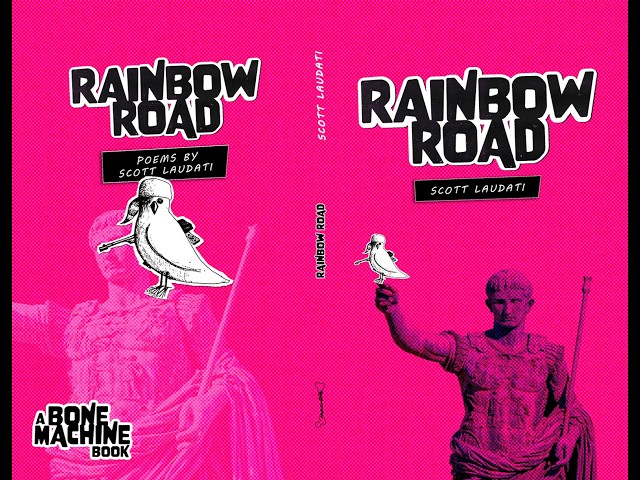
Hazlet Poet Scott Laudati Returns with “Rainbow Road,” a Cross-Country Meditation on America, Memory, and the Search for Meaning

New Jersey’s literary landscape continues to produce distinctive voices capable of capturing both the intimate and the universal, and few contemporary writers have done so with the raw honesty and unmistakable perspective of Scott Laudati. This summer, the Hazlet native prepares to unveil what may be his most ambitious and deeply personal work to date as he celebrates the release of Rainbow Road, a new poetry collection that completes a trilogy years in the making.

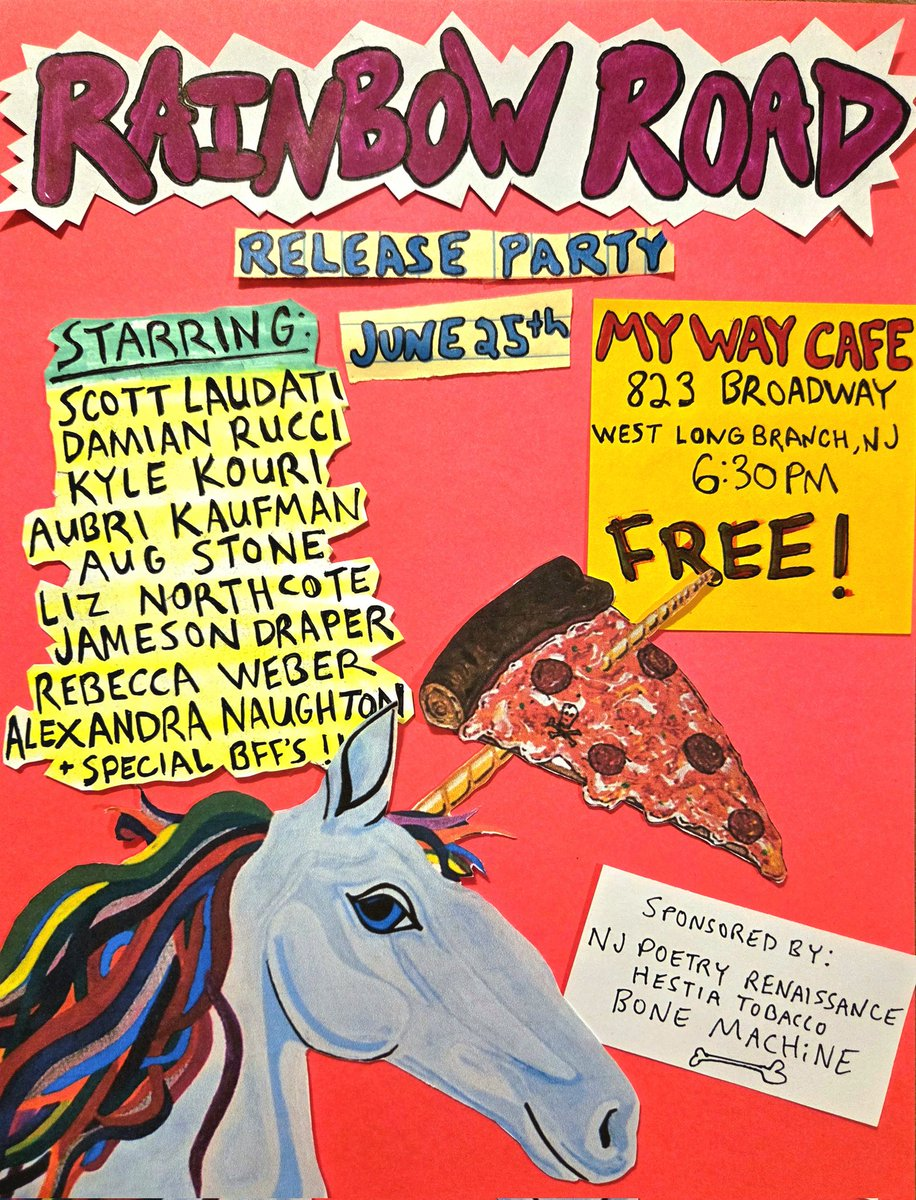
The official release arrives on June 25, 2026, and with it comes a special launch event at My Way Café in West Long Branch, bringing together readers, writers, musicians, artists, and members of the Jersey Shore creative community for an evening that promises to reflect the spirit of the book itself—unfiltered, reflective, unpredictable, and profoundly human.

For readers familiar with Laudati’s previous collections, Bone House and Camp Winapooka, the arrival of Rainbow Road represents the culmination of a literary journey that has steadily established him as one of New Jersey’s most compelling contemporary poetic voices. Rather than offering simple observations or abstract literary exercises, Laudati’s work has consistently explored the complicated terrain of identity, nostalgia, loss, friendship, addiction, love, freedom, and the ever-changing American experience.

With Rainbow Road, those themes expand beyond state lines and familiar neighborhoods into a sweeping cross-country exploration that follows the poet across thousands of miles of highways, cities, deserts, diners, roadside attractions, forgotten towns, and fleeting encounters. Yet despite the geographic scope of the collection, the emotional center remains deeply personal.

The title itself evokes movement, possibility, and uncertainty. Like the famous roadway from which it draws inspiration, Rainbow Road is less concerned with reaching a destination than documenting the journey itself. The poems travel from New York to California and back again, tracing both physical landscapes and internal terrain as Laudati examines what remains of the American dream in a rapidly changing nation.

Throughout the collection, readers encounter a uniquely American mosaic of images and experiences. There are moments of humor, loneliness, absurdity, wonder, rebellion, heartbreak, and revelation. Everyday objects and ordinary encounters become entry points into larger questions about identity and belonging. Dogs appear alongside philosophical reflections. UFOs drift through conversations about faith and imagination. Pizza slices become symbols of home and memory. Highway rest stops become stages for existential reflection.

What makes Laudati’s writing resonate is his ability to transform seemingly simple observations into layered examinations of modern life. His poetry does not speak from an ivory tower. Instead, it emerges from gas stations, apartment buildings, city streets, bars, highways, and conversations with strangers. It embraces imperfection and contradiction, understanding that the most meaningful truths often exist somewhere between certainty and doubt.

For New Jersey readers, the collection carries additional significance. While Rainbow Road travels across America, it remains anchored in the sensibility of someone shaped by the Garden State. There is a distinctly New Jersey perspective woven throughout the work—a combination of grit, humor, skepticism, resilience, and emotional honesty that reflects the state’s cultural identity.

New Jersey has long occupied a unique place in America’s literary tradition. From the industrial cities of the north to the beaches of the Jersey Shore and the suburban communities that bridge them, the state has produced generations of storytellers capable of capturing the complexities of contemporary American life. Laudati joins that tradition while bringing a distinctly modern voice to the conversation.

His work arrives during a fascinating moment for poetry itself. Once viewed as a niche literary form, poetry has experienced a significant cultural resurgence over the past decade. Social media platforms, independent publishers, spoken-word events, and grassroots literary communities have introduced new audiences to the power of the written word. Readers increasingly seek authentic voices capable of cutting through the noise of modern life, and poetry has emerged as one of the most effective vehicles for that connection.

In that environment, writers like Laudati have found audiences eager for work that feels genuine and lived-in rather than manufactured or overly polished. His poems speak directly to readers navigating uncertainty, searching for meaning, and attempting to understand their place within a rapidly changing world.

The June 25 release celebration at My Way Café reflects that same community-driven spirit. Rather than a formal literary event, the evening is expected to feel more like a gathering of artists and friends united by a shared appreciation for storytelling and creative expression. Guest readings from fellow writers, open-mic performances, and audience participation will create an atmosphere that mirrors the collaborative energy of independent literary culture.

The event also underscores the continued importance of local arts spaces throughout New Jersey. Independent cafés, bookstores, galleries, and community venues have become essential gathering places for writers and artists seeking meaningful connections beyond traditional publishing channels. They provide opportunities for emerging voices to be heard while strengthening cultural networks that enrich communities throughout the state.

For West Long Branch and the surrounding Jersey Shore region, the release party serves as another reminder of the area’s vibrant creative ecosystem. While often celebrated for music, beaches, and tourism, the Shore continues to foster a thriving literary community that contributes significantly to New Jersey’s broader cultural identity.

Following the New Jersey launch, Laudati will continue celebrating Rainbow Road with additional appearances, including a collaborative event in Connecticut. Yet the West Long Branch gathering carries special significance as a home-state celebration marking the completion of a project that has evolved over years of writing, travel, and reflection.

The publication of Rainbow Road also highlights the growing influence of independent publishers in contemporary literature. Free from many of the commercial pressures facing larger publishing houses, independent presses continue to champion unique voices and unconventional projects that might otherwise struggle to find a platform. Their commitment to artistic risk-taking has helped create a literary landscape that is more diverse, dynamic, and representative of contemporary experiences.

As readers prepare to discover Rainbow Road, they are being invited into more than a collection of poems. They are being offered a road trip through memory, geography, culture, and emotion. They are being asked to consider the stories we tell ourselves about America, the myths we inherit, and the realities we encounter when we venture beyond familiar borders.

For Scott Laudati, the release represents both an ending and a beginning. It closes a trilogy that has explored deeply personal territory while opening new possibilities for future creative work. For readers, it offers an opportunity to experience a voice that continues to evolve while remaining grounded in authenticity.

In a literary era often dominated by noise, speed, and distraction, Rainbow Road arrives as an invitation to slow down, pay attention, and embrace the messy beauty of the journey. It reminds us that the most meaningful stories are not always found at the destination. Sometimes they exist somewhere between where we started and where we thought we were going.

As June 25 approaches, New Jersey’s literary community prepares to celebrate not only the release of a new book but the arrival of a work that captures something increasingly rare—a sincere, thoughtful, and deeply human portrait of modern America through the eyes of a writer unafraid to follow the road wherever it leads.

Delaney Hall at the Center of New Jersey’s Immigration Battle as Health Concerns, Protests, and Political Tensions Escalate

The controversy surrounding Delaney Hall has entered a new and increasingly volatile phase, transforming a facility that was already at the center of New Jersey’s immigration debate into one of the most closely watched political, legal, and humanitarian flashpoints in the state.

What began as questions regarding detention conditions and oversight has rapidly expanded into a broader confrontation involving state officials, federal immigration authorities, advocacy organizations, detainees, public health inspectors, elected leaders, and an increasingly vocal coalition of activists and public figures. As new reports emerge and demonstrations continue to grow, Delaney Hall now stands at the intersection of immigration policy, public accountability, detainee welfare, and the ongoing struggle over who controls the narrative surrounding immigration enforcement in America.

The latest developments come in the wake of Governor Mikie Sherrill’s highly publicized visit and renewed calls for transparency regarding operations inside the Newark detention facility. Since then, scrutiny has intensified, fueled by allegations concerning food safety, detainee treatment, medical access, and living conditions.

Adding further pressure to an already charged environment, recent inspection findings have raised new concerns about day-to-day operations within the facility.

A state health review of kitchen operations revealed a series of deficiencies that critics argue reinforce broader concerns about conditions inside the detention center. According to inspection findings, officials documented sanitation issues, cited concerns regarding food handling practices, and identified meals being stored at temperatures that inspectors determined were outside accepted safety standards. The report also noted concerns related to food service management, including findings that supervisory personnel responsible for kitchen operations lacked required food safety training credentials.

For advocates who have been demanding increased oversight for months, the inspection findings have become a focal point in their calls for greater transparency.

Critics argue that food quality and food safety are fundamental components of detainee welfare and cannot be separated from broader discussions regarding living conditions. Supporters of expanded oversight contend that the inspection results underscore the need for independent monitoring and more frequent access to facility operations.

State officials have likewise increased pressure for access and accountability.

New Jersey Department of Corrections Commissioner Raynard Washington has publicly called for expanded inspection authority and direct access to detainee housing areas. His position reflects growing demands from state officials seeking a more comprehensive understanding of conditions beyond food service operations.

The debate over access has become one of the most contentious elements of the Delaney Hall controversy.

Federal officials have maintained that access restrictions are governed by established protocols and security requirements. State officials and advocacy organizations, meanwhile, continue to argue that meaningful oversight requires the ability to directly observe conditions throughout the facility.

The disagreement has further deepened an already tense relationship between New Jersey leadership and federal immigration authorities.

At the center of the dispute is a larger question that extends far beyond Delaney Hall itself: how much authority states should have in monitoring detention facilities operating within their borders but under federal immigration jurisdiction.

As those debates continue, public attention has intensified dramatically.

Demonstrations outside Delaney Hall have expanded in both size and visibility, drawing participation from community organizations, immigrant rights advocates, faith leaders, elected officials, labor groups, and increasingly, nationally recognized public figures.

Recent visits by high-profile supporters have amplified media coverage and brought additional attention to the facility.

Children’s educator and media personality Ms. Rachel met with families gathered outside the facility, drawing national attention to the experiences of relatives awaiting information about loved ones being held inside. Her presence highlighted the emotional dimension of the ongoing debate, particularly the impact detention policies can have on children and families.

Meanwhile, members of the internationally known punk rock band Dropkick Murphys joined demonstrations while voicing concerns regarding reports of detainee isolation and disciplinary practices. Their involvement reflects how the issue has expanded beyond local politics to become part of a larger national conversation surrounding immigration enforcement and detention conditions.

The growing involvement of public figures has elevated Delaney Hall from a regional policy dispute into a nationally recognized issue.

At the same time, political rhetoric surrounding the facility has become increasingly sharp.

Republican lawmakers and federal officials have criticized New Jersey leadership, arguing that the facility has become a political symbol in broader debates over immigration policy. Some have accused state leaders of using the controversy to advance political narratives rather than engage in constructive policy discussions.

Supporters of Governor Sherrill and other state officials reject that characterization, arguing that oversight, transparency, and detainee welfare are legitimate public concerns deserving serious attention.

The result has been an increasingly public clash between state and federal perspectives regarding immigration enforcement, detention practices, and accountability.

While political leaders continue debating policy, events inside the facility have introduced another layer of complexity.

Advocacy groups report that detainees have organized coordinated protest actions intended to draw attention to concerns regarding medical care, facility conditions, and access to services. According to organizations working with detainees and their families, participants have engaged in organized meal refusals and other forms of peaceful protest designed to raise awareness about conditions within the center.

These efforts have attracted support from national immigration advocacy networks and civil rights organizations.

A joint open letter reportedly signed by hundreds of detainees has further intensified public discussion by presenting firsthand accounts of concerns related to daily life inside the facility. Advocacy organizations argue that these testimonies provide important insight into experiences that are often difficult for the public to observe directly.

The emergence of coordinated protest activity also reflects a broader trend occurring nationwide.

Immigration detention centers across multiple states have experienced growing activism from detainees, advocacy organizations, and community coalitions seeking reforms to detention policies and conditions. Organizers say Delaney Hall has become part of a larger national movement focused on detention oversight, immigrant rights, and federal immigration enforcement practices.

For New Jersey, the implications extend beyond a single facility.

The Delaney Hall controversy has become a defining issue in the state’s broader conversation about immigration policy, public accountability, human rights, and the relationship between state governments and federal authorities.

The debate touches on complex questions that continue to divide public opinion. Supporters of stronger oversight argue that transparency is essential regardless of political affiliation or policy position. They maintain that facilities operating within New Jersey should be subject to rigorous monitoring and public accountability standards.

Others emphasize the importance of maintaining federal authority over immigration enforcement operations and caution against political interference in detention management.

Between those competing viewpoints lies a growing public demand for clear information, factual reporting, and meaningful transparency.

As protests continue, inspections remain under scrutiny, and political tensions show little sign of easing, Delaney Hall has evolved into far more than a detention center. It has become a symbol of the broader national debate over immigration enforcement, government accountability, and the treatment of individuals caught within an increasingly complex system.

The coming weeks are likely to prove critical.

Additional inspections, ongoing negotiations regarding facility access, continued demonstrations, and potential legislative responses could all shape the next chapter of the Delaney Hall story. What remains clear is that the issue has moved beyond a routine policy dispute and become one of the most consequential and closely watched public debates currently unfolding in New Jersey.

As state officials, federal authorities, advocates, and community members continue pressing their respective cases, Delaney Hall stands at the center of a conversation that reaches far beyond Newark’s city limits. The outcome will influence not only future oversight of detention facilities but also broader discussions about immigration, transparency, public trust, and the role government plays in protecting both security and human dignity.

$115 Million Workforce Academy Signals Major Opportunity for New Jersey as Data Center Construction Boom Accelerates Across America

As artificial intelligence transforms industries, cloud computing reshapes business operations, and digital infrastructure becomes as essential as roads, bridges, and utilities, a new challenge is emerging across the United States: finding enough skilled workers to build the facilities powering the modern economy.

In response to that challenge, one of the nation’s largest construction industry organizations and one of the world’s most influential technology companies have launched a workforce initiative that could reshape the future of construction careers while creating new opportunities for workers across the country. The newly announced America’s Workforce Academy, backed by a $115 million investment from Associated Builders and Contractors (ABC) and Meta Platforms, represents one of the most ambitious workforce development programs introduced in recent years.

While the academy’s initial rollout targets training centers in Indiana, Louisiana, Ohio, and Texas, the implications extend far beyond those states. For New Jersey, where technology infrastructure, workforce development, construction innovation, and data center growth continue to intersect, the initiative highlights a rapidly expanding sector that is creating unprecedented demand for skilled labor.

The announcement arrives at a critical moment for both the construction industry and the broader American economy.

Artificial intelligence has become one of the defining technologies of the decade. Every AI platform, cloud service, streaming application, financial network, healthcare database, and digital communications system relies upon a massive physical infrastructure that most consumers never see. Behind every search query, financial transaction, and AI-generated response stands an enormous network of servers, fiber connections, cooling systems, and data centers operating around the clock.

As demand for digital services continues to accelerate, companies are investing billions of dollars into new data center construction projects nationwide.

That surge in development has created a significant workforce challenge.

Across the country, contractors are reporting shortages of electricians, pipefitters, HVAC technicians, equipment operators, concrete specialists, safety professionals, fiber installation crews, and other highly skilled tradespeople needed to construct increasingly sophisticated facilities.

The workforce gap is particularly pronounced in the data center sector, where projects often require specialized knowledge, advanced safety training, and the ability to operate within highly technical environments.

Recognizing both the challenge and the opportunity, Mount Laurel-based Associated Builders and Contractors partnered with Meta to create a comprehensive solution designed to build a long-term talent pipeline.

The resulting initiative goes well beyond traditional workforce training programs.

Participants accepted into America’s Workforce Academy will receive scholarships, career preparation resources, housing support, travel assistance, safety education, and hands-on technical training. The program combines classroom instruction with practical field experience, ensuring graduates enter the workforce prepared to contribute immediately on active construction projects.

Most notably, successful participants will receive employment opportunities with contractors working on Meta-related construction projects.

That direct connection between education and employment represents one of the most innovative aspects of the program.

Too often, workforce development initiatives focus exclusively on training without establishing clear pathways into long-term careers. America’s Workforce Academy seeks to bridge that gap by creating a seamless transition from instruction to employment, helping participants move directly into high-demand positions within one of the fastest-growing sectors of the construction industry.

For New Jersey, the announcement resonates particularly strongly.

The Garden State has increasingly positioned itself as a hub for technology infrastructure, logistics, telecommunications, and advanced business operations. Its strategic location within the Northeast Corridor, proximity to major population centers, extensive fiber networks, and strong transportation infrastructure make it an attractive destination for data center investment.

Over the past several years, data center development has become a growing component of New Jersey’s commercial real estate and technology landscape.

Facilities throughout North Jersey have demonstrated how digital infrastructure has evolved into a major economic development driver. Large-scale projects require substantial capital investment while generating long-term employment opportunities across multiple sectors, including construction, engineering, maintenance, security, information technology, and facility management.

The growth trajectory shows no signs of slowing.

As artificial intelligence platforms continue expanding, companies require additional computing power, storage capacity, and network infrastructure. Every new facility creates ripple effects throughout local economies, generating opportunities for contractors, suppliers, consultants, tradespeople, and support businesses.

This is precisely why workforce development has become such a critical component of future planning.

Associated Builders and Contractors has long emphasized the importance of creating accessible pathways into construction careers. Through its national network, the organization already supports hundreds of apprenticeship programs and educational initiatives designed to prepare individuals for careers in the skilled trades.

America’s Workforce Academy builds upon that foundation while addressing one of the industry’s most urgent workforce challenges.

The initiative’s structure reflects a recognition that the future of construction requires both technical expertise and adaptability.

Today’s construction professionals are increasingly working alongside advanced technologies, digital project management systems, automated equipment, sophisticated building controls, and complex infrastructure networks. Data center construction, in particular, represents one of the most technologically advanced segments of the industry.

Workers entering these environments must understand not only traditional construction practices but also the specialized requirements associated with mission-critical facilities.

That need has created an opportunity for a new generation of skilled professionals.

Recent high school graduates, military veterans, career changers, and individuals seeking stable, well-paying careers stand to benefit from programs that provide direct access to training and employment opportunities.

The construction industry has undergone a significant transformation over the past decade. Modern construction careers increasingly combine technical knowledge, digital tools, advanced equipment, and specialized expertise. The outdated perception of construction as merely physical labor has been replaced by a recognition that today’s trades professionals often operate within highly sophisticated environments requiring continuous learning and technical proficiency.

Data center construction exemplifies that evolution.

Facilities supporting cloud computing and artificial intelligence represent some of the most complex buildings ever constructed. Their successful completion depends upon workers capable of executing projects with extraordinary precision, safety, and efficiency.

For Meta, the investment also reflects a broader strategic objective.

The company’s continued expansion in artificial intelligence, virtual reality, augmented reality, and digital infrastructure requires substantial physical assets. Building those assets demands a reliable workforce capable of meeting increasingly ambitious construction schedules.

By investing directly in workforce development, the company is helping ensure that future projects have access to the skilled labor necessary for success.

The initiative also arrives as policymakers across the country increasingly focus on infrastructure modernization and economic competitiveness.

The next decade will likely witness unprecedented investment in data centers, energy systems, telecommunications infrastructure, advanced manufacturing facilities, and technology-driven development projects. Ensuring an adequate workforce exists to support those investments will be essential to maintaining economic growth and innovation.

For New Jersey businesses, educational institutions, workforce organizations, and policymakers, programs like America’s Workforce Academy offer valuable insights into how future workforce challenges can be addressed through collaboration.

Rather than treating workforce shortages as isolated problems, the initiative demonstrates the potential of coordinated partnerships between employers, educators, industry organizations, and workforce development providers.

The model emphasizes outcomes rather than simply participation.

Its goal is not merely to train workers but to connect them directly with meaningful careers that provide long-term growth opportunities.

That distinction matters.

Successful workforce development is ultimately measured not by the number of individuals completing programs but by the number who build sustainable careers, achieve economic mobility, and contribute to growing industries.

As New Jersey continues positioning itself at the intersection of technology, infrastructure, innovation, and workforce development, initiatives like America’s Workforce Academy offer a glimpse into what the future may look like.

The artificial intelligence revolution may be driven by software, algorithms, and computing power, but its foundation remains deeply physical. Data centers must be designed, built, maintained, and expanded. Fiber networks must be installed. Electrical systems must be constructed. Facilities must be operated and upgraded.

Behind every technological breakthrough stands a skilled workforce making it possible.

America’s Workforce Academy recognizes that reality while creating new pathways into some of the nation’s most promising careers. As the digital economy continues its rapid expansion, programs that connect people with opportunity will play an increasingly important role in shaping both the workforce and the future of American infrastructure.

For New Jersey, the message is clear: the next generation of economic growth will depend not only on technology itself, but on the skilled professionals who build the physical foundation that allows innovation to thrive.

Black Crowes Newark Cancellation Raises Questions as Prudential Center Date Disappears From Summer Tour Schedule

For New Jersey concertgoers, the announcement arrived with little warning and plenty of disappointment. The scheduled June 20, 2026 appearance by the Black Crowes at Prudential Center in Newark has officially been canceled, removing one of the summer’s most anticipated classic rock events from the Garden State concert calendar and leaving fans searching for answers.

According to the official explanation, the cancellation stems from international shipping and customs complications connected to the band’s upcoming European tour schedule. Management cited issues surrounding the early shipment of production equipment and touring infrastructure overseas, creating a conflict that ultimately forced the cancellation of the Newark stop.

On paper, the explanation appears straightforward. International touring has become increasingly complex in recent years. Customs documentation, carnet requirements, shipping schedules, transportation costs, and production logistics can create significant challenges for artists moving large-scale concert equipment between continents. For major touring acts, even minor disruptions can produce cascading effects throughout an entire schedule.

Yet the cancellation has generated considerable discussion among fans and industry observers because of one critical detail: the Newark show appears to be the only casualty.

Other dates on the Black Crowes’ current tour itinerary remain intact, including several performances in the same general region. Nearby concert stops and outdoor amphitheater appearances continue to move forward as planned, leading many fans to question whether logistics alone tell the complete story behind the canceled Prudential Center appearance.

The situation has become one of the most talked-about concert developments in the New Jersey music community this month.

For fans throughout the Garden State, the Newark performance represented a rare opportunity to see one of rock’s most enduring bands in a major arena setting. Since their emergence in the late 1980s, the Black Crowes have maintained a loyal following through a blend of Southern rock, blues, hard rock, and classic American songwriting traditions.

Songs such as “Hard to Handle,” “She Talks to Angels,” “Remedy,” and numerous other staples helped establish the band as one of the defining rock acts of their generation. Even decades later, their concerts continue to attract audiences eager to experience the group’s signature blend of swagger, musicianship, and improvisational energy.

The Newark date also carried additional significance because it paired the Black Crowes with Whiskey Myers, a band whose popularity has steadily expanded through a combination of Southern rock authenticity, relentless touring, and a rapidly growing fan base.

On paper, the pairing appeared designed to attract multiple generations of rock fans.

Yet the Prudential Center presents unique challenges for any touring act.

As one of the premier arenas in the Northeast, the venue is capable of hosting nearly 20,000 concertgoers depending on stage configuration. While the building regularly accommodates major global superstars, arena bookings represent a significantly different business equation than theaters, amphitheaters, casinos, or performing arts centers.

Filling an arena requires a substantial ticket-buying audience, particularly in a region as competitive as the New York-New Jersey metropolitan area, where fans often have dozens of entertainment options competing for attention on any given weekend.

That reality has fueled speculation that factors beyond shipping logistics may have contributed to the decision.

Industry veterans often note that concert cancellations rarely stem from a single issue. Touring economics, production costs, venue expenses, staffing requirements, insurance, transportation, marketing commitments, and ticket sales all contribute to whether a show ultimately proceeds.

While the official explanation focuses on overseas shipping requirements, some observers have questioned whether broader business considerations may have played a role in the final outcome.

Adding to the conversation is the timing of the cancellation itself.

The announcement follows a period of heightened public attention surrounding the band after a widely discussed concert incident earlier this year generated headlines across entertainment media and social platforms. While artists routinely weather controversy without long-term consequences, moments that dominate online discussion can influence public perception and affect consumer behavior, particularly when ticket sales remain ongoing.

Whether those events had any measurable impact on the Newark date remains impossible to verify publicly. Nonetheless, the proximity between recent headlines and the cancellation has become part of the broader discussion among fans attempting to understand why the show disappeared from the schedule.

For New Jersey music fans, however, the immediate concern is less about speculation and more about the loss of a major summer concert opportunity.

New Jersey has long served as one of the most important live music markets in America. From arena concerts in Newark to stadium events in East Rutherford, from theater performances in Red Bank and Morristown to festival stages along the Jersey Shore, the state consistently attracts some of the biggest touring acts in the world.

The cancellation of any major show inevitably creates disappointment, particularly when fans have already made travel plans, hotel reservations, dinner reservations, or coordinated group outings around a concert experience.

Fortunately, ticket holders are expected to receive automatic refunds through primary ticketing platforms. Those who purchased through official channels should see funds returned to their original payment methods according to the timelines provided by their ticket vendors. Fans who acquired tickets through resale marketplaces or secondary brokers may need to work directly with those providers to resolve refunds and credits.

While the Newark date may be gone, the broader summer concert season throughout New Jersey remains exceptionally strong.

Across the state, amphitheaters, arenas, theaters, casinos, clubs, boardwalk venues, and outdoor festivals continue to present one of the busiest live entertainment calendars in recent memory. From legacy rock acts and contemporary chart-toppers to Americana artists, indie performers, jazz ensembles, and local favorites, New Jersey remains one of the country’s premier destinations for live music.

That larger context is important because it reinforces a reality that often gets overlooked whenever a high-profile cancellation occurs: New Jersey’s music scene remains remarkably resilient.

One canceled arena date may dominate headlines for a few days, but the overall strength of the state’s concert ecosystem continues to thrive. Every week, thousands of music fans attend performances throughout the Garden State, supporting artists at every level and helping sustain one of the most vibrant live music cultures in the nation.

The Black Crowes cancellation may ultimately remain exactly what management says it is: a logistical casualty of international touring demands. Or it may become one of those industry stories where fans continue debating the underlying reasons long after the official explanation has been issued.

Either way, the canceled Newark appearance serves as another reminder of the increasingly complicated business of modern touring. Moving artists, crews, equipment, staging, lighting, and production elements across multiple countries and continents requires extraordinary coordination. Even established acts with decades of experience are not immune to unexpected disruptions.

For now, New Jersey fans who hoped to see the Black Crowes at Prudential Center will have to look elsewhere if they want to catch the band this summer. While the Newark stop has vanished from the calendar, the conversation surrounding its cancellation continues to grow, becoming one of the more intriguing live music stories of the 2026 concert season.

In a region where live music remains woven into the cultural fabric of everyday life, any major cancellation attracts attention. When that cancellation involves a legendary rock band, a major arena, and lingering questions that extend beyond the official explanation, it becomes more than just a scheduling update—it becomes a story that music fans across New Jersey will continue discussing long after June 20 passes.

Students, Parents and Community Unite as Audubon Principal Transfer Proposal Collapses Following Powerful Grassroots Movement

In an era when discussions about public education often focus on budgets, policies, curriculum debates, and administrative decisions, a remarkable story unfolded in South Jersey that reminded communities across the state of something equally important: the power of student voices and the profound impact school leadership can have on a community.

What began as an administrative reassignment proposal quickly evolved into one of the most compelling examples of student advocacy and civic engagement seen in New Jersey this year. In Audubon, students, parents, teachers, alumni, and residents rallied together to oppose the proposed transfer of Junior-Senior High School Principal Jeff Lebb, creating a grassroots movement that ultimately persuaded the Board of Education to reverse course and keep him in place.

The outcome was not only a victory for the students who organized the effort but also a powerful lesson in civic participation, community leadership, and the unique role schools play as the heart of local neighborhoods.

The story began when the Audubon Public School District announced plans to reassign Principal Jeff Lebb from Audubon Junior-Senior High School to Mansion Avenue Elementary School. While administrative transfers are not uncommon within school systems, the reaction from the Audubon community was immediate, emotional, and unusually organized.

Within hours of the announcement, students began mobilizing.

What happened next demonstrated how quickly modern communities can unite around a shared cause. Students launched petitions, organized discussions, coordinated outreach efforts, and spread information throughout the school and broader community. Parents joined the effort. Alumni weighed in. Residents who had watched the district evolve over the years began voicing concerns about the proposed change.

The response reflected more than simple opposition to a personnel move. It revealed the extent to which many students and families believed Principal Lebb had become an important part of the culture, stability, and identity of the high school.

As support continued to grow, a petition opposing the transfer rapidly accumulated thousands of signatures. Students organized demonstrations and publicly expressed concerns that changing leadership at the junior-senior high school could disrupt momentum, relationships, and programs that had become important parts of the educational experience.

What made the movement particularly noteworthy was the leadership role students themselves assumed throughout the process.

Across New Jersey, educators frequently encourage students to become engaged citizens, participate in government, advocate for causes they believe in, and learn how public institutions function. In Audubon, students took those lessons and applied them in real time.

They organized peacefully. They communicated their concerns clearly. They participated in the democratic process. They attended public meetings. They built coalitions with parents and community members. Most importantly, they made their voices impossible to ignore.

By the time the Board of Education convened its public meeting, anticipation had grown throughout the district.

Hundreds of students, parents, educators, residents, and supporters packed the venue, transforming what might otherwise have been a routine school board session into one of the most closely watched local education meetings in recent memory.

For hours, community members shared testimony and personal stories.

Students spoke about mentorship, leadership, and the impact a principal can have on daily school life. Parents described the importance of consistency and trust within educational environments. Community members discussed the value of maintaining stability within a school that serves as a cornerstone of local life.

The public comment period became a reflection of something often overlooked in conversations about education: schools are more than buildings and administrative structures. They are communities built upon relationships.

Teachers influence students. Coaches inspire athletes. Counselors guide young people through difficult transitions. Principals shape school culture, set expectations, establish priorities, and help define the environment in which learning takes place.

The passionate response from Audubon residents demonstrated that educational leadership is often measured not only through academic outcomes but also through trust, accessibility, visibility, and community engagement.

As the evening progressed, it became increasingly clear that the proposal had become far larger than an internal staffing decision.

Instead, it had evolved into a broader conversation about transparency, communication, community involvement, and the relationship between school leadership and public trust.

Observers noted that the level of student participation was particularly striking.

Many of the students who spoke had never before addressed a public governing body. Yet they demonstrated confidence, preparation, and a clear understanding of how civic institutions function. Their willingness to participate directly in the decision-making process became one of the defining themes of the evening.

For educators across New Jersey, the events in Audubon offered a compelling example of civic education in action.

Textbooks can explain how public meetings work. Classroom discussions can explore democratic principles. But few educational experiences are more meaningful than witnessing students engage directly with the institutions that affect their lives.

As public comments concluded and board members deliberated, attention shifted toward the final decision.

After hours of testimony and community input, the Board of Education voted 9-3 to reject the transfer proposal, effectively allowing Principal Lebb to remain at Audubon Junior-Senior High School.

The decision was met with an emotional response from supporters who had spent days organizing, advocating, and participating in the process.

For many students, the outcome represented validation that their voices mattered.

For parents, it demonstrated that public engagement can influence local decision-making.

For community members, it reinforced the idea that school governance functions best when transparency, communication, and public participation remain central components of the process.

The broader significance of the Audubon story extends well beyond one principal, one school, or one district.

Across New Jersey, educational communities continue to navigate complex challenges. Schools face evolving academic expectations, staffing considerations, budget pressures, technological change, mental health concerns, and shifting demographic realities. Throughout these discussions, maintaining strong relationships between schools and the communities they serve remains essential.

The Audubon experience serves as a reminder that educational leadership is not solely about management and operations. It is also about connection.

Successful schools often thrive because students feel supported, families feel heard, teachers feel empowered, and administrators build trust over time. When those relationships are strong, communities frequently rally to protect and preserve them.

The events in Audubon also highlight an encouraging trend emerging throughout New Jersey education: students are increasingly willing to participate in civic life.

Whether addressing school policy, community issues, environmental concerns, or educational priorities, young people across the state are demonstrating a growing understanding that meaningful change often begins with engagement.

Rather than remaining passive observers, Audubon students became active participants in the process.

They organized. They advocated. They listened. They spoke. They learned how local government functions. They experienced firsthand how public institutions respond to community input.

Those lessons may ultimately prove as valuable as any classroom assignment.

The outcome also reinforces an important principle for school districts throughout New Jersey. Educational decisions are often most successful when stakeholders understand the reasoning behind them and have opportunities to contribute to the conversation. Community trust is strengthened through transparency, dialogue, and meaningful engagement.

In Audubon, those conversations became intense, emotional, and highly visible. Yet they also demonstrated the strength of a community that cares deeply about its schools and the people who lead them.

As students return their focus to academics, athletics, clubs, and preparing for the future, this chapter will likely be remembered as more than a debate over a principal’s assignment.

It will be remembered as a moment when a community came together, when students discovered the power of their collective voice, and when local government responded to an engaged and determined public.

For Audubon, the story ends with continuity in leadership.

For New Jersey, it stands as a powerful example of civic participation, educational engagement, and the enduring connection between schools and the communities they serve.

In a time when many young people are often accused of being disconnected from public life, the students of Audubon delivered a compelling reminder that the next generation is paying attention, speaking up, and prepared to shape the future of their communities.

Nothing was publicly cited as being “wrong” with Principal Jeff Lebb. The school administration did not claim he was performing poorly or facing disciplinary action.

Instead, the situation boiled down to standard district restructuring and administrative privacy:

  • In-District Reassignment: The proposal was an “in-district transfer” to place him at Mansion Avenue Elementary School, a common administrative practice to shuffle leadership.
  • Personnel Confidentiality: Under New Jersey state law, specific reasons for administrative transfers are treated as confidential personnel matters and cannot be publicly disclosed by school officials.
  • Community Backlash: Parents and students heavily criticized the administration’s decision, viewing the sudden move as a “power trip” or an unnecessary disruption to a highly trusted high school leader.

Because the public felt the high school was benefiting immensely from his direct, student-focused leadership, they issued a symbolic vote of no confidence against Superintendent Sandra Allen for trying to move him

Totowa’s Former Little Sisters of the Poor Campus Set for New Life as NJEDA Approves Major Affordable Senior Housing Redevelopment

As New Jersey continues confronting growing demand for affordable housing and senior living options, one of Passaic County’s most recognizable properties is preparing for a transformative new chapter. A significant redevelopment initiative in Totowa has received a major boost following approval from the New Jersey Economic Development Authority, paving the way for a project that will preserve a longstanding community asset while addressing one of the state’s most pressing housing needs.

The NJEDA Board has approved Aspire Program tax credits to support the redevelopment of the former Little Sisters of the Poor facility on Shepherds Lane, clearing an important milestone for a project that will ultimately deliver 141 affordable housing units dedicated exclusively to seniors.

The development represents more than just another residential project. It reflects a broader effort taking place across New Jersey as communities seek innovative ways to expand affordable housing opportunities, revitalize existing properties, and create environments that support aging populations seeking stability, accessibility, and independence.

For Totowa, the redevelopment marks a particularly meaningful transition.

For decades, the Little Sisters of the Poor facility served an important role within the community. Rather than allowing the property to sit underutilized or face an uncertain future, the site will now be repurposed into a modern affordable senior housing community that maintains the property’s legacy of service while adapting it to meet contemporary needs.

The project, known as Totowa Affordable Housing, will transform the existing structure through adaptive reuse, a development strategy increasingly embraced throughout New Jersey. Adaptive reuse projects preserve valuable buildings while reducing construction waste, minimizing environmental impact, and accelerating the delivery of much-needed housing.

Instead of demolishing and rebuilding from the ground up, developers will reimagine the facility as a residential community designed specifically for residents aged 62 and older.

When completed, the development will include 141 affordable residential units, creating one of the region’s most substantial senior housing initiatives in recent years.

The residential mix has been carefully planned to accommodate varying needs and household sizes. The community will feature eight studio apartments, 123 one-bedroom residences, and ten two-bedroom homes, in addition to a superintendent’s unit. The range of housing options reflects the diverse needs of New Jersey’s senior population, from individuals seeking efficient living arrangements to couples looking for additional space and comfort.

What makes the project particularly notable is its commitment to affordability.

Unlike many residential developments that incorporate a limited percentage of affordable units, Totowa Affordable Housing will be developed as a fully affordable community. Every residential unit will be dedicated to serving seniors seeking quality housing at attainable costs.

This distinction is especially important given the increasing challenges many older residents face throughout New Jersey.

As housing costs continue rising across the state, many seniors find themselves struggling to secure housing that balances affordability, accessibility, and quality of life. Fixed incomes, increasing healthcare expenses, and limited housing inventory have combined to create growing pressure on senior households.

Projects like this one directly address those concerns by creating stable housing opportunities specifically tailored to the needs of older adults.

Beyond the housing itself, the redevelopment is being designed to foster a comprehensive living environment focused on wellness, engagement, and community connection.

Plans call for a variety of amenities intended to support both physical and social well-being. Residents will have access to a fitness center designed to encourage active lifestyles, a library that provides opportunities for learning and recreation, multiple resident lounges that promote social interaction, and a multipurpose dining and gathering space that can host activities, events, and community programming.

These amenities reflect a growing understanding that successful senior housing extends beyond providing a place to live.

Today’s senior living communities increasingly focus on creating environments that combat isolation, encourage engagement, and support healthy aging. Thoughtfully designed common spaces help foster relationships among residents while providing opportunities for ongoing participation in community life.

The redevelopment will also include site improvements and infrastructure upgrades designed to enhance the overall property and surrounding area.

Such investments often generate benefits that extend beyond the immediate development itself. Enhanced properties contribute to neighborhood stability, support local economic activity, and reinforce community confidence in long-term growth and investment.

Leading the project is Christian Health, an organization with more than a century of experience serving seniors and managing healthcare-related facilities.

Their extensive background in senior care, housing operations, and community-based services provides a strong foundation for a development that must address both housing and quality-of-life considerations. Organizations with specialized expertise are becoming increasingly important as New Jersey seeks solutions to the complex challenges associated with an aging population.

The financial structure supporting the project further illustrates the collaborative nature of modern affordable housing development.

The NJEDA approved support through its Aspire Program, authorizing assistance of up to 60 percent of project costs, with a maximum award value of $35.3 million. The project also benefits from Low-Income Housing Tax Credits administered through the New Jersey Housing and Mortgage Finance Agency, creating a layered financing strategy that helps bridge development gaps while ensuring affordability goals remain achievable.

The Aspire Program itself has become an increasingly important tool in New Jersey’s economic development strategy.

Created through the New Jersey Economic Recovery Act of 2020, the initiative was designed to encourage transformative development projects that might otherwise struggle to move forward due to financing challenges. By providing targeted support, the program helps unlock projects that generate housing, economic activity, community improvements, and long-term public benefits.

Residential projects receiving Aspire support must include meaningful affordable housing components, reinforcing the state’s broader commitment to housing accessibility and inclusion.

The Totowa project aligns particularly well with those objectives because it combines affordable housing creation, adaptive reuse, senior services, and neighborhood revitalization within a single development.

Local leadership has also expressed strong support for the initiative.

Municipal officials view the redevelopment as both a practical and strategic investment. In addition to preserving an important property, the project assists Totowa in meeting its affordable housing obligations while simultaneously expanding housing opportunities for older residents who wish to remain in the region.

That combination of community benefit and policy alignment is increasingly important throughout New Jersey, where municipalities continue searching for effective ways to address housing requirements while preserving local character and quality of life.

The project also highlights a broader demographic reality facing the Garden State.

New Jersey’s population is aging. As larger numbers of residents enter retirement years, demand for senior-focused housing continues to grow. Communities capable of providing safe, affordable, and supportive living environments will be increasingly important over the coming decades.

Housing solutions must evolve accordingly.

The future of senior housing will depend not only on creating additional units but also on designing communities that support independence, accessibility, health, and social connection. Developments like Totowa Affordable Housing demonstrate how those goals can be pursued simultaneously through thoughtful planning and strategic investment.

For Passaic County, the redevelopment represents a significant addition to the region’s affordable housing inventory. For Totowa, it preserves a familiar property while giving it renewed purpose. For seniors seeking stable and affordable housing options, it creates opportunities that may otherwise be difficult to find in today’s competitive market.

Most importantly, the project demonstrates how adaptive reuse, public-private partnerships, and targeted economic development programs can work together to address some of New Jersey’s most pressing challenges.

As construction plans advance and redevelopment efforts move forward, the former Little Sisters of the Poor campus is preparing to begin a new chapter—one centered on community, affordability, and the belief that every New Jersey resident deserves access to safe, dignified housing throughout every stage of life.

The transformation of this historic property stands as a powerful example of how thoughtful redevelopment can honor the past while building a stronger future for generations to come.

New Jersey Devils Defining Offseason as Sunny Mehta Signals Change, Contract Decisions Loom, and Questions Persist in Goal

The New Jersey Devils entered the 2025-26 season carrying expectations unlike any they had faced in years. Armed with a talented young core, established stars, veteran additions, and playoff aspirations, the organization believed it was ready to take another significant step toward becoming a legitimate Stanley Cup contender. Instead, the season ended in disappointment, frustration, and an uncomfortable realization that potential alone is no longer enough.

Now, as the franchise turns the page toward a pivotal offseason, the Devils find themselves at a crossroads.

A new era officially began when General Manager Sunny Mehta took control of hockey operations, inheriting a roster filled with elite talent but also burdened by questions that can no longer be ignored. While the foundation remains strong, the message coming from the organization has been unmistakable: standing still is no longer an option.

The clearest indication of that reality came during a recent town hall meeting at Prudential Center, where Mehta addressed season ticket holders and outlined his vision for the franchise moving forward. The tone was candid, direct, and notably different from previous offseason conversations.

The Devils know they underachieved.

The organization knows expectations were not met.

Most importantly, leadership appears willing to make meaningful changes rather than simply hoping internal improvement solves the problem.

For a fan base that watched a promising season unravel, that honesty may have been the most encouraging development of all.

The Devils remain one of the NHL’s most talented young teams. Few organizations can match the skill level found throughout New Jersey’s roster. Yet hockey history repeatedly demonstrates that talent without balance rarely translates into championships.

That reality became painfully evident throughout the season.

While the club continued to receive elite contributions from its stars, inconsistency in the bottom six, defensive breakdowns, and unstable goaltending frequently undermined the team’s efforts. Games that should have been won slipped away. Momentum repeatedly disappeared. The Devils often looked like a contender for stretches before suddenly resembling a team still searching for its identity.

Mehta appears determined to address those shortcomings head-on.

Among the most important priorities this summer will be strengthening organizational depth. Successful playoff teams are rarely built exclusively around star power. They win because secondary contributors provide reliable production, defensive responsibility, and matchup flexibility throughout the lineup.

The Devils understand this lesson better than most.

Their championship teams of the past were defined by structure, depth, and consistency as much as by individual brilliance. Re-establishing those characteristics appears to be a central part of Mehta’s long-term strategy.

Of course, no offseason storyline has generated more discussion than the situation in goal.

For several years, Devils fans have searched for stability between the pipes. Former General Manager Tom Fitzgerald attempted to solve that issue by acquiring veteran goaltender Jacob Markstrom from Calgary, hoping his experience and previous success would provide the foundation needed for a deep playoff push.

The results never materialized as expected.

While Markstrom showed flashes of quality play during portions of his first season in New Jersey, consistency remained elusive. Last season’s performance only intensified concerns. Statistical measures painted a troubling picture, with save percentage and advanced metrics both indicating a goaltender struggling to deliver the level of performance required from a starting netminder on a playoff-caliber team.

The numbers alone tell part of the story.

More concerning was the frequency with which timely saves failed to arrive. Championship-caliber teams often receive momentum-changing performances from their goaltenders. Too often, the Devils found themselves searching for those moments without finding them.

As a result, speculation surrounding Markstrom’s future has become one of the defining narratives of the offseason.

Fans, analysts, and league observers continue debating whether a trade, buyout, or alternative solution may ultimately emerge. The situation is complicated by contractual timing, salary cap considerations, and the broader goaltending market.

Yet despite the complexity, one thing remains clear: New Jersey cannot afford uncertainty in net if it hopes to return to contention.

The challenge, of course, lies in identifying a better alternative.

Free agency offers limited certainty. Trade opportunities can be expensive. Internal options remain largely unproven. Nevertheless, if Mehta believes goaltending is preventing the Devils from maximizing their championship window, difficult decisions may become necessary.

The discussion surrounding Markstrom also reflects a broader truth about the Devils’ current position.

This is no longer a rebuilding team.

This is no longer a franchise focused primarily on future potential.

The Devils are now judged by results.

Every roster decision must be evaluated through the lens of championship aspirations rather than long-term development alone.

While goaltending dominates much of the conversation, several other important personnel matters are also shaping the organization’s summer plans.

Captain Nico Hischier remains one of the franchise’s most important players, both on and off the ice. Extension discussions have become a major topic as the Devils seek to secure the long-term future of one of the NHL’s most respected two-way centers.

Hischier embodies many of the qualities organizations seek in a captain. Leadership, consistency, defensive excellence, and professionalism have made him a cornerstone of the franchise. Locking him into a new contract would provide additional stability as the organization navigates a critical period.

Meanwhile, restricted free agent Arseny Gritsyuk continues generating excitement throughout the organization.

Reports from team leadership suggest negotiations have been positive, fueling optimism that a deal can be completed without significant obstacles. Gritsyuk represents another important piece of New Jersey’s future and serves as an example of the young talent pipeline that remains one of the organization’s greatest strengths.

The same can be said for Anton Silayev.

The highly regarded defense prospect officially signed his entry-level contract earlier this month, adding another intriguing element to the franchise’s long-term outlook. His size, mobility, and potential have generated significant enthusiasm among scouts and fans alike.

While expectations should remain measured for any young defenseman entering professional hockey, Silayev’s arrival reinforces the belief that New Jersey’s prospect system continues to produce valuable assets capable of contributing in future seasons.

Off the ice, the organization continues benefiting from the growing profile of its star players.

Jack Hughes remains one of the NHL’s most recognizable young talents and continues expanding his influence beyond hockey. Following his memorable international success and growing national profile, Hughes has become one of the faces of both the franchise and American hockey.

That visibility matters.

The Devils have spent years rebuilding their identity and reconnecting with a fan base eager for sustained success. Players like Hughes and Hischier provide the foundation not only for future victories but also for the continued growth of the franchise’s brand throughout New Jersey and beyond.

Yet star power alone will not determine whether the upcoming season becomes a success.

The true story of this offseason revolves around organizational accountability.

The Devils have acknowledged disappointment.

They have acknowledged shortcomings.

Now comes the difficult part: solving them.

Every championship contender reaches a moment when potential must become performance. For New Jersey, that moment appears to have arrived.

The roster possesses enough talent to compete with anyone in the league. The prospect pipeline remains healthy. The core remains young. The fan base remains passionate. The organizational resources remain strong.

What remains uncertain is whether the necessary adjustments can be made quickly enough to capitalize on the opportunity in front of them.

Sunny Mehta’s first offseason as general manager may ultimately define the next chapter of Devils hockey. From contract negotiations and roster construction to goaltending decisions and player development, every move will carry significant weight.

The objective is straightforward.

Return to the playoffs.

Restore consistency.

Build a deeper, more balanced roster.

Transform talent into results.

For a franchise that believes its championship window is already open, the months ahead may prove to be among the most important in recent memory. The Devils entered last season expecting to contend. This summer is about ensuring they are better equipped to do exactly that when the puck drops again.

New Jersey Moves to Modernize Midwifery Laws as Senator Britnee Timberlake’s Powerful Testimony Ignites Statewide Conversation on Maternal Healthcare

New Jersey lawmakers are taking a significant step toward modernizing healthcare regulations that have remained largely unchanged since the nineteenth century, advancing legislation that would overhaul the state’s approach to midwifery licensing and oversight. What might have otherwise been viewed as a routine legislative discussion transformed into one of the most talked-about healthcare moments of the year when State Senator Britnee Timberlake delivered a pointed and unforgettable challenge during committee proceedings that immediately resonated far beyond the walls of the State House.

As lawmakers debated legislation aimed at updating New Jersey’s midwifery framework, Timberlake, a mother of four, addressed an all-male legislative panel with a question that instantly captured attention across the state.

“How many of you have dilated 10 centimeters?”

The remark came during a tense hearing focused on maternal healthcare, patient choice, and professional oversight of midwives. More importantly, it highlighted a broader discussion that has been building throughout New Jersey and across the nation regarding who shapes maternal healthcare policy and how women’s experiences are represented in those conversations.

At the center of the debate is legislation designed to modernize New Jersey’s midwifery laws, many of which trace their origins back to a dramatically different era of healthcare. While medicine, technology, patient rights, and maternal care have evolved substantially over the last century, many regulatory structures governing midwives have remained rooted in systems created long before modern healthcare standards existed.

Supporters of reform argue that New Jersey now has an opportunity to create a framework that better reflects contemporary healthcare realities while expanding professional recognition for certified midwives and increasing access to care for families seeking alternative birthing options.

The legislation would establish an independent Midwifery Licensing Board, shifting oversight away from the current structure that places midwives under the authority of the State Board of Medical Examiners. Advocates believe the change would allow midwifery professionals to participate more directly in setting standards, shaping educational requirements, and advancing best practices specific to their field.

For many healthcare professionals, the proposal represents more than an administrative adjustment. It reflects a broader movement toward recognizing the unique role midwives play within New Jersey’s healthcare ecosystem.

Across the Garden State, midwives serve families in hospitals, birthing centers, and home birth settings. They work alongside physicians, nurses, specialists, and healthcare systems while providing individualized care that many expectant parents increasingly seek. Their role extends far beyond labor and delivery, often encompassing prenatal education, postpartum support, wellness guidance, and long-term maternal health advocacy.

Healthcare experts note that demand for personalized maternity care has steadily increased as patients seek greater involvement in decisions surrounding pregnancy and childbirth. At the same time, concerns about maternal mortality, healthcare disparities, and access to services have prompted renewed attention to alternative models of care that prioritize patient engagement and continuity of support.

New Jersey has made significant investments in maternal health initiatives in recent years, becoming a national leader in addressing maternal mortality and improving healthcare outcomes for mothers and infants. State leaders have increasingly focused on reducing disparities, expanding healthcare access, and supporting programs designed to improve birth outcomes across diverse communities.

The current legislation aligns with those broader efforts by examining whether existing regulatory structures adequately reflect modern standards of care.

The hearing itself gained widespread attention when committee discussions became increasingly contentious. According to observers, several midwives testifying before lawmakers faced aggressive questioning regarding their qualifications, professional responsibilities, and role within the healthcare system.

For Timberlake, the discussion became personal.

As a mother who relied on midwifery services during her own childbirth experiences, she offered a perspective that extended beyond policy language and regulatory frameworks. Her remarks underscored a central theme that has emerged throughout the debate: healthcare decisions surrounding pregnancy and childbirth are deeply personal experiences that often cannot be fully understood through regulatory analysis alone.

Her comments also reflected growing public expectations that women’s lived experiences should play a more prominent role in shaping maternal healthcare policy.

The response was immediate.

Healthcare advocates, women’s organizations, patient-rights groups, and maternal health professionals praised Timberlake’s willingness to challenge what many perceived as dismissive attitudes toward women’s healthcare experiences. Her statement quickly became one of the most discussed moments of the legislative session, sparking conversations throughout New Jersey regarding representation, healthcare autonomy, and the future of maternal care.

The debate surrounding midwifery regulation extends beyond New Jersey.

Across the country, states have been reevaluating licensing structures, scope-of-practice regulations, and oversight models for healthcare professionals involved in maternity care. Supporters argue that modernized regulations can improve collaboration between healthcare disciplines while expanding patient access to qualified providers.

In New Jersey, the conversation arrives at a time when healthcare systems continue adapting to changing patient expectations and workforce demands.

Hospitals, birthing centers, and private healthcare providers increasingly recognize the value of integrated care models that combine medical expertise with personalized patient support. Midwives frequently serve as important contributors within these systems, helping patients navigate pregnancy, childbirth, and postpartum recovery while maintaining close communication with broader healthcare teams.

Advocates for the legislation emphasize that the proposed reforms are not about replacing traditional medical care. Instead, they argue that modernization would strengthen professional accountability while providing greater clarity regarding education, licensing, and standards of practice.

The proposal also reflects changing attitudes toward healthcare choice.

Today’s patients expect access to information, options, and individualized care pathways. Whether choosing a hospital birth, birthing center experience, or home delivery supported by qualified professionals, many families increasingly seek the ability to make informed decisions based on their personal needs and circumstances.

For healthcare providers, the legislation represents an opportunity to establish regulatory systems that better align with current professional standards while preserving patient safety and accountability.

For lawmakers, it raises important questions about how healthcare professions evolve and how state regulations can keep pace with changing practices.

For families, however, the discussion often comes down to something much simpler: trust.

Trust in healthcare providers. Trust in professional standards. Trust in systems designed to support healthy pregnancies and safe births.

As New Jersey continues evaluating the future of maternal healthcare, the midwifery debate has become symbolic of a larger conversation unfolding throughout the state. It touches on healthcare access, professional recognition, patient choice, women’s health, and the importance of ensuring that those most directly affected by policy decisions have a meaningful voice in shaping them.

The legislation’s advancement signals growing momentum behind efforts to modernize New Jersey’s healthcare framework while recognizing the evolving role of midwives within contemporary maternal care.

Whether remembered for its policy implications or for Senator Timberlake’s headline-making remarks, the hearing ultimately accomplished something significant. It transformed an obscure regulatory discussion into a statewide conversation about childbirth, healthcare autonomy, professional respect, and the experiences of the women and families at the center of every maternal healthcare decision.

As lawmakers continue refining the proposal, New Jersey finds itself at an important crossroads. The decisions made in Trenton over the coming months could help define how maternal healthcare evolves in the state for decades to come, creating a system that reflects not only medical expertise and professional standards, but also the voices, experiences, and choices of the families it serves.

Morris County Honors Housing Leader Kelly Stephens After Three Decades of Service and Affordable Housing Advocacy

In every community, there are public servants whose work often takes place quietly behind the scenes yet profoundly impacts thousands of lives. In Morris County, few individuals embody that commitment more than Kelly A. Stephens, whose retirement as Executive Director of the Housing Authority of the County of Morris marks the conclusion of a remarkable career dedicated to affordable housing, community development, and support for some of New Jersey’s most vulnerable residents.

This week, the Morris County Board of County Commissioners formally recognized Stephens’ retirement by presenting her with a framed resolution honoring more than 30 years of service to the Housing Authority and the people of Morris County. The recognition, delivered during a public meeting at the county’s Administration and Records Building in Morristown, highlighted a career that has helped shape the housing landscape throughout one of New Jersey’s most dynamic and rapidly evolving counties.

The retirement of Kelly Stephens represents more than the departure of a longtime administrator. It marks the conclusion of a chapter defined by innovation, collaboration, compassion, and an unwavering commitment to ensuring that affordable housing remains accessible to families, seniors, individuals with disabilities, and residents facing housing insecurity.

Throughout New Jersey, communities continue to confront increasing housing challenges. Rising property values, escalating rental costs, changing demographics, and growing demand for supportive services have placed additional pressure on housing authorities and local governments. Against that backdrop, leaders like Stephens have played an increasingly important role in creating pathways toward housing stability and long-term community success.

County officials praised Stephens not only for her professional accomplishments but also for her ability to build partnerships that expanded opportunities for residents throughout Morris County.

For more than three decades, Stephens helped guide programs that connected residents with critical resources while strengthening the Housing Authority’s position as one of the county’s most important social service organizations. Under her leadership, affordable housing became more than simply providing a place to live. It became part of a broader strategy focused on wellness, independence, stability, and opportunity.

The recognition ceremony brought together county commissioners, Housing Authority leadership, staff members, and community stakeholders who have worked alongside Stephens throughout her distinguished career. The gathering reflected the deep respect she earned across multiple sectors of county government and community service organizations.

Stephens’ journey with the Housing Authority began in April 1996 when she joined the organization as a social services coordinator. What followed was a steady progression through increasingly significant leadership positions that showcased both her expertise and her dedication to public service.

Over the years, she served as social services administrator, director of operations, and deputy director before being appointed Executive Director on January 1, 2019. Each role provided opportunities to expand programs, strengthen operations, and deepen the Housing Authority’s connection to the communities it serves.

That experience gave Stephens a unique understanding of every aspect of the organization’s mission.

Rather than approaching housing solely through an administrative lens, she viewed it through the experiences of the residents themselves. She understood that stable housing often serves as the foundation upon which families build stronger futures. For seniors, affordable housing can provide independence and security. For individuals with disabilities, it can create pathways toward greater self-sufficiency and quality of life. For families facing economic hardship, it can become the first step toward stability and opportunity.

During her tenure, Stephens played an instrumental role in expanding services and strengthening partnerships throughout Morris County’s human services network.

Her work frequently involved coordination with healthcare providers, social service organizations, local governments, nonprofit agencies, and community stakeholders. These collaborations helped create comprehensive support systems that addressed not only housing needs but also health, wellness, recreation, and other quality-of-life initiatives.

As Executive Director, Stephens oversaw an extensive housing portfolio that serves residents across the county. The Housing Authority manages hundreds of residential units throughout multiple complexes, including facilities specifically designed to support elderly residents and individuals requiring additional services.

Beyond direct property management, the Housing Authority also administers critical housing assistance programs that allow residents to secure affordable housing throughout the community.

One of the most significant responsibilities under Stephens’ leadership involved the administration of the Housing Choice Voucher Program, which provides rental assistance that enables families and individuals to access housing opportunities that might otherwise remain financially out of reach.

The importance of these programs cannot be overstated.

Across New Jersey, affordable housing remains one of the most pressing issues facing communities. Demand continues to exceed supply in many regions, creating significant challenges for working families, seniors on fixed incomes, veterans, young adults entering the workforce, and residents with disabilities.

Programs administered through housing authorities often serve as essential lifelines, helping residents remain housed while maintaining connections to employment, education, healthcare, and community resources.

Under Stephens’ leadership, the Housing Authority continued evolving to meet changing community needs.

Among the most notable initiatives launched during her tenure was the Mainstream Voucher Program, which focuses on assisting individuals with disabilities who have experienced homelessness. The program reflects a growing recognition that housing solutions must often be paired with supportive services in order to achieve long-term success.

The Housing Authority also expanded its work with young adults transitioning out of foster care through the Foster Youth to Independence initiative. By partnering with state agencies and service providers, the program creates opportunities for vulnerable young adults to secure stable housing while accessing resources that support education, employment, and independent living.

These efforts represent the broader transformation occurring within affordable housing policy nationwide.

Housing authorities are increasingly being called upon to address not only housing affordability but also homelessness prevention, supportive services, healthcare coordination, workforce development, and long-term community resilience.

Stephens helped position Morris County at the forefront of many of these conversations.

Her leadership extended beyond program administration into broader discussions surrounding housing policy, regional planning, and social service coordination. Throughout her career, she became recognized as a knowledgeable advocate for affordable housing and a trusted resource for organizations working to strengthen community support systems.

That reputation recently earned additional recognition when Stephens received the Founder’s Award at the Housing Partnership Annual Gala, honoring her contributions to affordable housing and community development throughout the region.

The award served as another reminder of the lasting impact she has made over the course of her career.

Her accomplishments are rooted not only in professional expertise but also in a lifelong commitment to public service and community engagement.

A resident of Netcong, Stephens holds academic credentials in rehabilitative services and gerontology while also maintaining professional certification as a public housing manager through Rutgers University. She has contributed to local governance through service on the Netcong Board of Education and currently serves on the borough’s Planning Board.

These experiences reflect a career defined by community involvement and a belief that strong neighborhoods are built through collaboration, planning, and sustained investment in people.

As Morris County continues to grow and evolve, affordable housing will remain a central component of its future development strategy. The county’s ability to maintain diverse housing options while supporting economic growth will play an important role in preserving quality of life for residents across all demographics.

The work completed during Stephens’ tenure has helped establish a strong foundation for that future.

With her retirement, leadership of the Housing Authority now transitions to Gregory Brown, who previously served as deputy director and has been appointed Executive Director by the Housing Authority Board of Commissioners.

Brown inherits an organization strengthened by decades of thoughtful leadership, community partnerships, and strategic planning. His appointment ensures continuity while positioning the agency to address the opportunities and challenges that lie ahead.

For Stephens, retirement closes an extraordinary chapter of public service.

For Morris County, it represents an opportunity to reflect on the impact one dedicated professional can have over the course of a career.

Thousands of residents have benefited from programs she helped create, administer, or expand. Families found stability. Seniors found security. Individuals facing significant challenges found support and opportunity. Communities grew stronger because affordable housing remained accessible and effective.

Those achievements rarely generate headlines, yet they leave a lasting legacy.

As county leaders, Housing Authority staff, community partners, and residents celebrate Kelly Stephens’ retirement, they also celebrate something larger: more than three decades of leadership dedicated to ensuring that housing remains not merely a necessity, but a foundation for dignity, independence, and hope throughout Morris County.

Her career stands as a powerful example of how public service, when guided by compassion and commitment, can strengthen communities for generations to come.

New Jersey Pizza Continues to Shine as Dave Portnoy Spotlights Pompeii Pizzeria and Garwood Pizza Co. in Latest One Bite Reviews

In New Jersey, pizza is more than a meal. It is a point of pride, a neighborhood institution, a family tradition, and for many residents, a way of life. Across the Garden State, independent pizzerias continue to define local communities while simultaneously fueling one of the most passionate culinary cultures in America. From classic boardwalk slices and old-school Italian-American pies to bar pizzas and artisan creations, New Jersey remains one of the undisputed capitals of pizza excellence.

That reputation received another boost recently when Barstool Sports founder and One Bite pizza reviewer Dave Portnoy visited Union County to sample two local favorites: Pompeii Pizzeria in Clark and Garwood Pizza Co. in neighboring Garwood.

The reviews once again placed a national spotlight on the remarkable depth of New Jersey’s pizza scene, reinforcing something local residents have known for decades: some of the best pizza in America can be found right here in the Garden State.

Portnoy’s One Bite series has become one of the most influential forces in the pizza industry. What began as a simple social media concept has evolved into a cultural phenomenon capable of driving thousands of customers to independently owned restaurants. His reviews have become required viewing for pizza enthusiasts, restaurant owners, and curious food lovers alike.

While Portnoy’s scoring system remains famously unpredictable, a rating in the mid-to-upper sevens is considered a strong endorsement. Scores above 7.5 often indicate a pizzeria worthy of repeat visits and capable of standing out in highly competitive markets.

That is exactly where both Union County establishments landed.

Pompeii Pizzeria earned a score of 7.6, placing it comfortably among the many respected neighborhood pizza destinations that continue to define New Jersey’s food culture.

During his review, Portnoy focused heavily on the pie’s thin, light structure, characteristics that consistently perform well within his ranking criteria. The pizza featured a crisp crust that maintained structural integrity while avoiding the excessive flop that often lowers scores. Portnoy repeatedly noted how easy it would be to consume an entire pie because of its lightness and balance.

For pizza enthusiasts, that observation speaks volumes.

A truly great thin-crust pizza achieves a difficult balance. It must be substantial enough to support toppings and flavor while remaining light enough to encourage bite after bite. According to Portnoy’s assessment, Pompeii successfully delivered that experience.

The review also highlighted something that has long distinguished New Jersey pizzerias from their competitors elsewhere: hospitality.

In one of the lighter moments from the visit, Portnoy praised the staff for allowing him to use a restroom that was technically marked out of service.

While seemingly minor, moments like these often reveal the personality behind family-owned restaurants and neighborhood establishments. In New Jersey, personal service remains part of the dining experience, helping create loyal customer bases that span generations.

Local customers appear to agree with Portnoy’s assessment.

Many regular patrons consistently praise Pompeii’s crisp undercarriage, restrained use of grease, balanced sauce profile, and dependable execution. Those characteristics have helped establish the restaurant as a reliable destination within Clark and the surrounding communities.

Just a short drive away, Garwood Pizza Co. also found itself under the One Bite spotlight.

Portnoy awarded the Garwood establishment a 7.8 score, placing it slightly ahead of Pompeii while positioning it among the stronger recent reviews in the region.

His evaluation focused on the pie’s resemblance to a classic New Jersey bar-style pizza, a format that remains deeply woven into the state’s culinary identity. Known for its crisp texture, thin crust, and highly shareable format, bar pizza occupies a special place within New Jersey’s pizza landscape.

Portnoy described the pie as flavorful and satisfying while noting that it carried slightly more weight than some of the thinner pizzas he typically favors.

Yet the story surrounding Garwood Pizza Co. proved nearly as compelling as the pizza itself.

The owner’s journey attracted considerable attention during the review. Before opening Garwood Pizza Co., the pizza maker spent time working at another highly regarded New Jersey pizza operation. That previous experience became part of the narrative as Portnoy reflected on earlier reviews and the challenges that often accompany launching an independent restaurant.

Adding to the positive atmosphere was a recent personal milestone.

The owner had proposed to his longtime girlfriend just one day before the review, creating a celebratory environment that naturally became part of the conversation. The interaction offered viewers a reminder that behind every successful pizzeria is a story involving hard work, sacrifice, family, and personal commitment.

These stories are a defining characteristic of New Jersey’s pizza culture.

Unlike chain restaurants or corporate concepts, many of the state’s most beloved pizzerias remain family-owned businesses built by individuals who dedicate years, and often entire careers, to perfecting their craft. Customers are not simply buying pizza. They are supporting local entrepreneurs, family legacies, and community institutions.

That connection helps explain why New Jersey consistently performs so well in national pizza rankings.

The state’s pizza culture benefits from a combination of factors rarely found elsewhere. Generations of Italian-American culinary traditions remain deeply embedded throughout communities. Access to major metropolitan markets has encouraged constant innovation and competition. Local consumers possess exceptionally high standards and are unafraid to express strong opinions about crust, sauce, cheese, and technique.

The result is an environment where quality becomes essential rather than optional.

Restaurants must continually earn customer loyalty.

Those standards have helped create one of the most vibrant pizza ecosystems in the country.

Whether visiting a decades-old neighborhood institution, a modern artisan operation, a classic boardwalk slice shop, or an emerging independent concept, diners frequently discover extraordinary quality and craftsmanship. Every town seems to have its own favorite. Every community has its own pizza debates. Every region offers subtle variations that contribute to New Jersey’s broader pizza identity.

The recent One Bite reviews reinforce that reality.

Neither Pompeii Pizzeria nor Garwood Pizza Co. received astronomical scores that dominate national headlines. Instead, they received something arguably more meaningful: validation that they are producing quality pizza worthy of recognition within one of America’s most competitive food categories.

For local businesses, that recognition can have a significant impact.

One Bite reviews routinely attract new customers eager to experience highly rated pies firsthand. Visitors often travel considerable distances after seeing a favorable review, helping introduce independent restaurants to audiences that might otherwise never discover them.

For New Jersey as a whole, these reviews serve another purpose.

They continue highlighting the state’s status as a premier culinary destination.

While New York frequently dominates national pizza conversations and Chicago remains synonymous with deep dish, New Jersey quietly continues producing some of the country’s most diverse and consistently excellent pizza. The Garden State does not rely on a single style or signature format. Instead, its strength lies in variety, craftsmanship, and an unwavering commitment to quality.

That commitment is visible in places like Clark and Garwood.

It is visible in countless pizzerias stretching from Bergen County to Cape May.

It is visible in family recipes passed down through generations and in young entrepreneurs developing new interpretations of classic techniques.

Most importantly, it is visible in every carefully crafted pie that emerges from ovens across the state every day.

As Dave Portnoy continues his search for great pizza across America, New Jersey remains one of his most reliable destinations. Time and again, the state delivers quality, consistency, and memorable experiences that reinforce its standing among the nation’s pizza elite.

The latest reviews of Pompeii Pizzeria and Garwood Pizza Co. are simply the newest chapter in that ongoing story.

For New Jersey pizza lovers, however, it is hardly surprising.

The Garden State has been proving its pizza credentials for generations.

The rest of the country is simply catching up.

Tab Benoit

0

Tab Benoit Brings Louisiana Blues Fire to Atlantic City as Mardi Gras on the Boardwalk Continues a Summer Tradition of Free Live Music

July 8 @ 7:00 PM 11:30 PM

Few musical styles are as deeply connected to place as the blues.

Born from hardship, perseverance, celebration, and storytelling, the blues remains one of America’s greatest cultural exports and one of the most enduring foundations of modern music. Every genre that followed—from rock and roll to soul, funk, country, Americana, and contemporary roots music—owes a debt to the artists who transformed life experiences into unforgettable songs.

This summer, Atlantic City welcomes one of the most authentic modern torchbearers of that tradition.

On Wednesday, July 8, internationally acclaimed Louisiana blues-rock artist Tab Benoit takes center stage at Kennedy Plaza as part of the 2026 Mardi Gras on the Boardwalk concert series. Joining the evening as special guest is Sgt. Splendor, creating a dynamic double bill that promises to deliver an unforgettable night of powerful musicianship, soulful storytelling, and high-energy performance directly on the Atlantic City Boardwalk.

The concert continues the momentum of one of South Jersey’s most beloved summer traditions. Presented by Tony Mart Presents, Mardi Gras on the Boardwalk transforms Kennedy Plaza into a weekly celebration of music, culture, and community every Wednesday evening throughout the summer season. Running from June through early September, the free concert series has become one of the premier live entertainment attractions on the Jersey Shore.

For fans of roots music, blues, rock, and authentic American songwriting, the arrival of Tab Benoit represents one of the most anticipated performances of the entire season.

For more than three decades, Benoit has established himself as one of the most respected figures in contemporary blues music. Hailing from the bayous of Southwest Louisiana, he has built a career based on authenticity, exceptional musicianship, and a fierce commitment to preserving the traditions that shaped him.

Unlike many artists who blend blues influences into broader commercial formats, Benoit has remained deeply connected to the music’s roots while continuously pushing its creative boundaries. His performances reflect a unique combination of traditional Louisiana influences, modern blues-rock energy, and a personal style that is instantly recognizable.

At the center of his appeal is his remarkable guitar work.

Benoit’s playing is both technically impressive and emotionally powerful. Rather than relying on flashy displays of virtuosity, he focuses on tone, feeling, and expression. Every note carries purpose. Every solo serves the song. The result is a style that resonates equally with lifelong blues enthusiasts and newcomers discovering the genre for the first time.

His distinctive guitar sound has become one of the most celebrated signatures in modern blues.

Rich, expressive, and unmistakably Southern, it reflects the landscapes, waterways, and communities that shaped his musical upbringing. Whether performing intimate acoustic passages or unleashing electrifying solos backed by a full band, Benoit brings a level of authenticity that few contemporary artists can match.

Yet his appeal extends well beyond guitar playing.

As a vocalist, songwriter, and performer, Benoit possesses a rare ability to connect with audiences through honesty and emotion. His songs often explore themes of resilience, identity, family, culture, and the enduring spirit of the Gulf South. These stories resonate because they feel lived rather than manufactured.

Audiences recognize that sincerity immediately.

It is one of the reasons Benoit has maintained such a loyal following throughout his career.

His concerts have become renowned for their intensity and spontaneity. While grounded in blues traditions, his performances frequently expand into rock, funk, swamp music, and improvisational explorations that keep audiences fully engaged from start to finish.

That versatility makes him a perfect fit for the Mardi Gras on the Boardwalk series.

Inspired by the celebratory traditions of New Orleans and the Gulf Coast, the concert series embraces music that encourages participation, movement, and community. The atmosphere combines the festive spirit of Louisiana street celebrations with the distinctive character of Atlantic City’s oceanfront setting.

Few artists embody that spirit more naturally than Benoit.

His Louisiana roots bring an added authenticity to the Mardi Gras theme, creating a direct connection between the musical traditions of the Gulf South and the celebratory atmosphere that defines the Boardwalk series.

The July 8 performance gains additional depth through the inclusion of Sgt. Splendor as special guest.

Known for their unique blend of roots rock, Americana influences, and contemporary songwriting, Sgt. Splendor brings a compelling complement to Benoit’s blues-driven approach. Their music explores similar themes of authenticity and emotional connection while offering a distinctive perspective shaped by modern independent music traditions.

Together, the two acts create a program that highlights the broad reach of American roots music.

From Louisiana blues and Southern rock influences to contemporary Americana and singer-songwriter traditions, the evening showcases the musical diversity that continues to evolve from the foundations established by generations of artists before them.

The setting only enhances the experience.

Located directly outside historic Boardwalk Hall, Kennedy Plaza offers one of the most dramatic concert environments anywhere in New Jersey. The Atlantic Ocean provides a stunning backdrop while the Boardwalk’s energy contributes to an atmosphere unlike any traditional concert venue.

As the evening unfolds and the sun begins to set over the shoreline, audiences become part of something larger than a performance.

The concerts function as community gatherings.

Families arrive with beach chairs. Visitors discover live music while exploring the Boardwalk. Local residents return week after week to reconnect with friends and neighbors. The result is an environment where music becomes a shared experience rather than a passive activity.

That sense of connection remains central to the vision behind Mardi Gras on the Boardwalk.

Under the leadership of Carmen Marotta and Tony Mart Presents, the series has become a cornerstone of summer entertainment in Atlantic City. Drawing upon decades of experience promoting live music throughout South Jersey, the organization continues to build events that celebrate both legendary performers and emerging talent.

The Tony Mart legacy itself remains one of New Jersey’s most significant musical success stories.

The original Tony Mart nightclub in Somers Point helped shape generations of performers and audiences while becoming one of the most recognizable entertainment destinations in the region. Today, that legacy continues through large-scale public concert programs that bring world-class performances directly to local communities.

Mardi Gras on the Boardwalk represents the modern evolution of that tradition.

Each week introduces audiences to exceptional artists while reinforcing Atlantic City’s identity as a destination for live entertainment, culture, and community engagement.

The free admission model remains a critical part of that mission.

At a time when many major concert experiences have become increasingly expensive, Mardi Gras on the Boardwalk continues to provide accessible entertainment for everyone. Residents and visitors alike can experience nationally recognized performers without financial barriers, ensuring that live music remains available to audiences of all ages and backgrounds.

That accessibility strengthens both the cultural and economic impact of the series.

Concert attendees frequently extend their visits by dining at local restaurants, shopping along the Boardwalk, visiting attractions, and exploring Atlantic City’s broader entertainment offerings. The result is a program that supports local businesses while enhancing the overall visitor experience.

For Explore New Jersey readers planning their summer calendars, July 8 stands out as one of the season’s most compelling opportunities to experience authentic American music in a remarkable setting.

Tab Benoit brings a career’s worth of experience, artistry, and Louisiana soul to the Atlantic City Boardwalk. Sgt. Splendor adds another layer of musical depth. Together, they create an evening designed to celebrate everything that makes live music such a powerful force in community life.

As blues guitar echoes across Kennedy Plaza and ocean breezes sweep through the crowd, audiences will experience more than a concert.

They will experience a tradition.

A tradition rooted in storytelling.

A tradition built on connection.

A tradition that links the bayous of Louisiana to the beaches of New Jersey through the universal language of music.

For one summer evening, Atlantic City becomes the meeting place for those traditions, and the result promises to be one of the most memorable nights of the 2026 Mardi Gras on the Boardwalk season.

Tony Mart Presents

609-653-6069

View Organizer Website

Atlantic City at Kennedy Plaza

2300-, 2498 Boardwalk
Atlantic City, New Jersey 08401 United States
+ Google Map
1-609-449-7100

Tony Mart Allstars: Billy Walton, Patty Balbo, Danny Eyer, Patty Blee, and 9 more Tony Mart Allstars

0

Mardi Gras on the Boardwalk Returns to Atlantic City as Tony Mart Allstars Launch a Summer of Free Music, Community, and Jersey Shore Tradition

June 24 @ 7:00 PM 11:30 PM

Summer at the Jersey Shore has always been about more than sunshine, beaches, and boardwalks. It is about community gathering places. It is about traditions passed from one generation to the next. It is about music drifting through the ocean air as families, friends, visitors, and longtime locals come together to celebrate everything that makes the New Jersey coastline unique.

That tradition takes center stage once again as Atlantic City prepares to launch another season of one of South Jersey’s most beloved summer entertainment events.

Beginning Wednesday, June 24, Kennedy Plaza transforms into a waterfront celebration of live music, local culture, and community spirit as the acclaimed Mardi Gras on the Boardwalk concert series returns for its 2026 season. Running every Wednesday evening through September 2, the free concert series once again delivers eleven consecutive weeks of live performances directly on the Atlantic City Boardwalk, creating one of the most accessible and anticipated music experiences anywhere along the Jersey Shore.

The season opens in spectacular fashion with the Tony Mart Allstars Superstar Rock Tribute, a powerhouse showcase featuring some of the region’s most recognizable performers and musicians. Headlined by an all-star collection of Jersey Shore talent including Billy Walton, Patty Balbo, Danny Eyer, Patty Blee, and numerous special guests, the kickoff concert promises an evening dedicated to the legendary artists who shaped rock music across multiple generations.

For Atlantic City, the return of Mardi Gras on the Boardwalk represents something larger than another summer concert series. It reflects the continuing evolution of the city’s entertainment landscape while honoring a deep-rooted musical tradition that has defined the South Jersey shoreline for decades.

At the center of that tradition stands one of New Jersey’s most respected entertainment organizations.

Tony Mart Presents has become synonymous with live music throughout South Jersey. Under the leadership of veteran promoter Carmen Marotta, the organization has built a reputation for creating community-driven music experiences that bring together residents, visitors, and artists in ways that strengthen local culture while showcasing exceptional talent.

The name itself carries decades of history.

Long before large-scale summer concert series became commonplace, the original Tony Mart nightclub in Somers Point stood as one of the most important music venues on the East Coast. Throughout the 1940s, 1950s, 1960s, 1970s, and 1980s, the venue attracted major performers while serving as a cornerstone of the Jersey Shore music scene. Its influence became so iconic that it ultimately earned a place in popular culture as a filming location for the cult classic rock film Eddie and the Cruisers.

Today, that legacy lives on through a new generation of live music programming.

From the acclaimed Legacy Concerts on the Beach series in Somers Point to the massive Atlantic City boardwalk productions, Tony Mart Presents has remained committed to preserving the spirit of live performance while introducing new audiences to the excitement of outdoor summer concerts.

Mardi Gras on the Boardwalk perfectly captures that mission.

Located at Kennedy Plaza adjacent to the historic Boardwalk Hall, the concert site provides one of the most visually stunning performance settings in New Jersey. As the Atlantic Ocean stretches beyond the stage and the energy of the Boardwalk surrounds the crowd, attendees experience a unique blend of music, culture, and shoreline atmosphere that simply cannot be replicated indoors.

The setting itself contributes significantly to the event’s appeal.

Unlike traditional ticketed concerts, Mardi Gras on the Boardwalk embraces an open, welcoming environment where music becomes part of the broader community experience. Families gather with beach chairs. Visitors strolling the Boardwalk discover performances unexpectedly. Locals reconnect with friends while enjoying live entertainment in one of the region’s most recognizable public spaces.

The result feels less like a conventional concert and more like a weekly community celebration.

That spirit is particularly fitting given the series’ New Orleans-inspired identity.

The Mardi Gras theme reflects an atmosphere built around joy, music, and togetherness. Much like the famous celebrations that inspired its name, the Atlantic City series creates an environment where people from diverse backgrounds come together through a shared appreciation for live performance. The oceanfront setting adds a distinctly Jersey Shore flavor, producing an event that feels both familiar and uniquely local.

The June 24 opening concert establishes the tone for everything that follows.

The Tony Mart Allstars Superstar Rock Tribute assembles an impressive roster of veteran performers capable of delivering an evening packed with classic rock favorites, unforgettable guitar work, powerful vocals, and audience participation. Rather than focusing on a single artist or era, the concert celebrates the broader legacy of rock music itself.

Billy Walton brings his renowned guitar skills and commanding stage presence to the lineup. Patty Balbo contributes the vocal power and charisma that have made her one of South Jersey’s most respected performers. Danny Eyer and Patty Blee join an extensive roster of additional musicians who collectively represent decades of experience performing throughout New Jersey’s clubs, theaters, festivals, and concert venues.

Together, these artists create a showcase that honors some of rock music’s greatest voices while highlighting the extraordinary depth of talent that continues to thrive throughout the Jersey Shore region.

For many attendees, the opening night serves as both a concert and a reunion.

The Jersey Shore music scene has long been built on relationships between musicians, venues, audiences, and communities. Events like the Tony Mart Allstars performance celebrate those connections while introducing newer audiences to artists who have helped shape the region’s musical identity.

That sense of continuity remains one of the defining characteristics of the entire series.

Throughout its eleven-week run, Mardi Gras on the Boardwalk presents an eclectic mix of performers spanning rock, rhythm and blues, soul, funk, Americana, roots music, and contemporary interpretations of classic styles. The programming reflects the diversity of modern audiences while remaining grounded in the traditions that have made live music such an important part of New Jersey culture.

In many ways, the series functions as a living reflection of the Shore’s musical heritage.

From Atlantic City and Somers Point to Asbury Park and beyond, New Jersey has long produced artists, venues, and audiences that support live music at every level. Summer concert series help preserve that tradition by making performances accessible to everyone regardless of age, background, or economic circumstances.

That accessibility remains one of the event’s greatest strengths.

Admission is completely free.

In an era where ticket prices for major concerts continue to climb, Mardi Gras on the Boardwalk offers a reminder that exceptional live entertainment can still serve as a community resource. Families can attend together without financial barriers. Visitors can experience Atlantic City’s cultural offerings without additional costs. Local residents gain access to high-quality performances throughout the summer season.

The economic impact extends beyond the concert site itself.

As thousands of attendees visit Kennedy Plaza over the course of the season, local restaurants, shops, hotels, casinos, and Boardwalk businesses benefit from increased foot traffic and visitor activity. The series contributes to Atlantic City’s broader tourism ecosystem while reinforcing the city’s reputation as a destination for live entertainment.

That role has become increasingly important as Atlantic City continues diversifying its identity beyond gaming.

Music, arts, festivals, culinary experiences, and public events now play an essential role in attracting visitors and strengthening community engagement. Mardi Gras on the Boardwalk exemplifies how public programming can support both economic development and cultural enrichment simultaneously.

For Explore New Jersey readers planning their summer schedules, the series offers an ideal opportunity to experience one of the state’s most enduring traditions.

Whether attending opening night on June 24 or returning throughout the summer for additional performances, audiences can expect an atmosphere defined by exceptional music, oceanfront energy, and the unmistakable spirit of the Jersey Shore.

As the sun sets over Atlantic City and the first notes of the Tony Mart Allstars Superstar Rock Tribute echo across Kennedy Plaza, another season of memories begins.

For eleven weeks, music will once again fill the Boardwalk.

Families will gather.

Friends will reconnect.

Visitors will discover why live music remains one of New Jersey’s most powerful traditions.

And every Wednesday evening, Atlantic City will remind everyone exactly why summer at the Jersey Shore continues to be one of the most special experiences anywhere on the East Coast.

Tony Mart Presents

609-653-6069

View Organizer Website

Atlantic City at Kennedy Plaza

2300-, 2498 Boardwalk
Atlantic City, New Jersey 08401 United States
+ Google Map
1-609-449-7100

Ana Popovic & “Fantastafunk”

0

Ana Popovic Brings “Fantastafunk” Firepower to Atlantic City as Mardi Gras on the Boardwalk Continues Its Summer Celebration

July 1 @ 7:00 PM 11:30 PM

The Jersey Shore has long been a destination where music and summer become inseparable. From legendary clubs and beachfront festivals to boardwalk performances and community concerts, live music remains one of the defining sounds of a New Jersey summer. Along the Atlantic City Boardwalk, that tradition takes center stage once again as Mardi Gras on the Boardwalk continues its celebrated 2026 season with one of its most anticipated performances of the summer.

On Wednesday, July 1, the energy shifts into high gear when internationally acclaimed guitarist and vocalist Ana Popovic brings her explosive “Fantastafunk” production to Kennedy Plaza in Atlantic City. Joining the evening’s festivities will be the Ocean Avenue Stompers alongside special guest Brian Murray of Dogs In A Pile, creating a unique musical experience that blends world-class blues-rock, deep funk grooves, New Orleans-inspired brass traditions, and the improvisational spirit that has become synonymous with the Jersey Shore music scene.

The performance serves as the second major event of the eleven-week Mardi Gras on the Boardwalk series, a free concert program presented every Wednesday evening throughout the summer. Produced by Tony Mart Presents, the concert series has become one of South Jersey’s signature seasonal traditions, drawing thousands of music lovers to Atlantic City’s iconic Boardwalk for evenings filled with live entertainment, community celebration, and oceanfront excitement.

Few artists arriving on the Kennedy Plaza stage this summer possess a résumé as impressive as Ana Popovic.

For more than two decades, Popovic has established herself as one of the most respected guitarists and performers in contemporary blues, funk, and rock music. Originally emerging from the European blues scene before building an international following, she has developed a reputation for combining technical brilliance with high-energy performances that consistently captivate audiences across continents.

Her career has taken her to major festivals, renowned concert halls, and celebrated music venues around the globe. Along the way, she has earned recognition not simply as an exceptional guitarist, but as a complete performer capable of seamlessly blending blues traditions with modern funk, soul, jazz, and rock influences.

The Fantastafunk project represents the culmination of those influences.

Rather than presenting a traditional blues show, Popovic’s Fantastafunk experience expands into a larger musical celebration that incorporates a full ensemble featuring horns, rhythm sections, and layered arrangements designed to create an immersive concert experience. Drawing inspiration from the rich traditions of American funk, Southern soul, and New Orleans rhythm and blues, the production showcases the versatility that has made Popovic one of the most dynamic artists performing today.

Audiences can expect a performance built around infectious grooves, powerful vocals, soaring guitar solos, and the kind of musical chemistry that only develops among elite performers.

The Fantastafunk concept has become particularly popular because it transforms concerts into events. The music encourages movement, participation, and celebration while still delivering the virtuosity and musicianship that dedicated fans have come to expect from Popovic’s performances.

That spirit aligns perfectly with the atmosphere of Mardi Gras on the Boardwalk.

Inspired by the festive traditions of New Orleans, the Atlantic City concert series embraces an approach that emphasizes community gathering, shared experiences, and musical discovery. The oceanfront setting provides a spectacular backdrop while the open-air environment encourages audiences to immerse themselves fully in the performance.

The addition of the Ocean Avenue Stompers enhances that atmosphere even further.

Known for their brassy, energetic approach to live performance, the Ocean Avenue Stompers have built a reputation for bringing authentic New Orleans street parade energy to audiences throughout the region. Their combination of traditional brass band influences and contemporary performance styles creates an experience that feels equally at home on Bourbon Street or the Atlantic City Boardwalk.

Their participation transforms the evening into more than a concert.

It becomes a celebration.

The group’s ability to generate excitement through rhythm, movement, and audience interaction perfectly complements the Fantastafunk aesthetic while reinforcing the Mardi Gras identity that defines the series.

Adding another layer of excitement is the appearance of special guest Brian Murray from Dogs In A Pile.

In recent years, Dogs In A Pile has emerged as one of New Jersey’s most exciting musical success stories. The band has cultivated a rapidly growing national following thanks to its adventurous improvisational approach, diverse musical influences, and relentless touring schedule. Their connection to the Jersey Shore music community remains strong, making Murray’s appearance particularly meaningful for local audiences.

His participation underscores one of the most compelling aspects of the Mardi Gras on the Boardwalk series.

The concerts consistently bring together artists from different musical backgrounds, generations, and traditions while creating opportunities for unique collaborations that audiences might not experience elsewhere. These moments of musical crossover help distinguish the series from traditional concert programming and reinforce its role as a showcase for both established talent and emerging voices.

The July 1 event also highlights the broader mission behind Tony Mart Presents.

Under the leadership of Carmen Marotta, the organization has spent years preserving and advancing the musical culture of South Jersey through free community events and high-quality concert programming. The company’s roots trace back to the legendary Tony Mart nightclub in Somers Point, a venue that helped shape generations of musicians and music fans throughout the region.

Today, that legacy continues through events like Mardi Gras on the Boardwalk and the acclaimed Legacy Concerts on the Beach series.

These programs demonstrate that free public concerts can deliver exceptional artistic experiences while strengthening local communities and supporting regional tourism.

The economic and cultural impact of events like Mardi Gras on the Boardwalk cannot be overstated.

Each concert draws visitors to Atlantic City’s Boardwalk, benefiting local businesses, restaurants, hotels, shops, and attractions. At the same time, the events reinforce Atlantic City’s reputation as a premier entertainment destination while providing residents and visitors with accessible opportunities to experience world-class live music.

The free admission model remains particularly significant.

At a time when concert ticket prices continue to rise across the country, Mardi Gras on the Boardwalk maintains its commitment to accessibility. Families, visitors, longtime residents, and first-time attendees can all participate in the experience without financial barriers, ensuring that live music remains available to everyone.

That inclusivity has become one of the defining strengths of the series.

The audience often reflects the diversity of Atlantic City itself. Music fans arrive from throughout New Jersey, neighboring states, and beyond. Some attend specifically for the featured performers. Others discover the concerts while exploring the Boardwalk. Together, they create an atmosphere that feels welcoming, energetic, and distinctly Jersey Shore.

As July begins and summer reaches full stride, the arrival of Ana Popovic and Fantastafunk represents a major highlight on the Atlantic City entertainment calendar.

The combination of internationally recognized talent, local musical excellence, New Orleans-inspired energy, and a stunning oceanfront setting creates the ingredients for a truly memorable evening.

For music lovers seeking exceptional live performance, for families searching for a summer night out, and for visitors looking to experience one of Atlantic City’s most vibrant cultural traditions, Kennedy Plaza will be the place to be on July 1.

As the sun begins to set over the Atlantic Ocean and the sounds of brass, funk, blues, and rock fill the Boardwalk air, Mardi Gras on the Boardwalk will once again remind audiences why live music remains one of the most powerful forces in community life.

For one unforgettable summer evening, Atlantic City becomes a meeting place where international artistry, Jersey Shore tradition, and New Orleans-inspired celebration come together in perfect harmony.

And with Ana Popovic leading the charge, audiences can expect an evening that is every bit as electrifying as the summer itself.

Tony Mart Presents

609-653-6069

View Organizer Website

Atlantic City at Kennedy Plaza

2300-, 2498 Boardwalk
Atlantic City, New Jersey 08401 United States
+ Google Map
1-609-449-7100

Catie Curtis and Band

0

Catie Curtis Brings Songwriting, Activism, and Authentic Connection to Ocean Grove as Split Level Concerts Continues Its Celebrated Third Season with special guest Mike Montrey

February 13, 2027 @ 8:00 PM 11:30 PM

The greatest singer-songwriters do more than perform songs. They create conversations. They build communities. They give voice to experiences that often go unspoken while reminding audiences that music remains one of the most powerful tools for connection, understanding, and change.

For more than three decades, Catie Curtis has embodied that tradition.

On Saturday, February 13, at 8 p.m., Curtis and her band will take the stage at the Palaia Theater inside the Jersey Shore Arts Center in Ocean Grove as part of the highly anticipated third season of Split Level Concerts. Presented in partnership with Brookdale Public Radio 90.5 The Night and Musicians On A Mission, the performance promises an evening that celebrates exceptional songwriting, compelling musicianship, and the enduring power of artists who use their voices to inspire both reflection and action.

Opening for Catie Curtis and her Band in February will be Mike Montreyan acclaimed singer-songwriter, guitarist, and bandleader whose music blends Americana, folk, rock, and soul. A compelling storyteller with a powerful voice and dynamic guitar style, Montrey has spent more than two decades captivating audiences on stages throughout the country.  Band member Jen Augustine will join Mike on vocals during his set.

For audiences throughout New Jersey and beyond, Curtis represents the rare combination of accomplished performer, gifted storyteller, and fearless advocate. Her career has been built not only on memorable songs and captivating live performances but also on a steadfast commitment to authenticity, social engagement, and meaningful artistic expression.

That combination has helped establish her as one of the most respected and admired figures in contemporary folk, Americana, and singer-songwriter music.

Over the course of an extraordinary career spanning more than thirty years, Curtis has toured extensively throughout the United States and Europe, building a devoted following that continues to grow with each new generation of listeners. Her body of work includes fourteen recordings and more than a quarter-million albums sold, accomplishments that speak not only to her longevity but also to the deep connection she has forged with audiences around the world.

Yet statistics alone fail to capture what makes Curtis such a compelling artist.

Her songs resonate because they are rooted in honesty.

Whether exploring relationships, identity, family, resilience, hope, or social justice, Curtis approaches songwriting with a remarkable ability to find the universal within the personal. Her lyrics invite listeners into intimate spaces while simultaneously reflecting broader human experiences. The result is music that feels both deeply individual and profoundly relatable.

That emotional accessibility has become one of the defining characteristics of her career.

Listeners often discover that Curtis possesses an extraordinary gift for transforming everyday moments into songs that carry lasting emotional weight. She writes with clarity, empathy, and insight, allowing audiences to see their own stories reflected in her work. Her performances create a sense of shared experience that turns concerts into communal events rather than simple entertainment.

That ability to connect has helped Curtis maintain relevance across multiple decades in an industry that often rewards trends over substance.

Instead of chasing fashions, she has remained committed to authenticity.

The result is a catalog that continues to age gracefully, gaining new meaning as audiences return to it over time.

Her influence extends far beyond the stage.

Curtis has long been recognized as a passionate advocate for social justice, equality, and LGBTQ rights. Throughout her career, she has consistently used her platform to promote inclusion, understanding, and meaningful dialogue. Rather than separating art from advocacy, she has demonstrated how music can serve as both creative expression and a force for positive change.

That commitment earned her opportunities that few artists experience.

Among the many highlights of her career are multiple performances at the White House during the administration of President Barack Obama, recognition that reflected not only her artistic achievements but also her role as an important cultural voice. Those appearances underscored her ability to bring people together through music while contributing to conversations that extend beyond the boundaries of the concert stage.

For many fans, Curtis represents the best traditions of American songwriting.

She combines the storytelling instincts of folk music with contemporary perspectives, creating songs that feel timeless while remaining firmly connected to the world around us. Her work balances introspection with engagement, vulnerability with strength, and personal narratives with broader social awareness.

That balance makes her particularly well suited for the intimate environment of the Palaia Theater.

Located within the historic Jersey Shore Arts Center in Ocean Grove, the venue has become one of New Jersey’s most respected destinations for listening-room performances. The theater’s intimate atmosphere allows audiences to experience artists in a way that larger venues often cannot provide. Every lyric, every subtle musical nuance, and every story shared from the stage becomes part of a direct conversation between performer and audience.

For an artist like Curtis, whose songs thrive on emotional connection and lyrical detail, the setting provides an ideal backdrop.

Her February appearance continues the momentum of Split Level Concerts, a series that has rapidly become one of the Garden State’s most important showcases for singer-songwriters and roots-oriented performers.

Following a highly successful second season that attracted nearly 1,300 attendees across six performances, the series has established itself as a destination for audiences seeking authentic musical experiences. The focus remains firmly on exceptional songwriting, meaningful performances, and artists whose work reflects the enduring traditions of folk, Americana, rock, and acoustic music.

The third season lineup demonstrates that commitment in remarkable fashion.

The season opens with acclaimed songwriter Willie Nile before continuing with celebrated performers including John Gorka, Dan Bern, Stephen Kellogg, Abbie Gardner, Heather Maloney, and Kim Richey. Together, these artists represent a diverse spectrum of contemporary songwriting excellence while sharing a common dedication to artistic integrity.

Curtis occupies a unique place within that lineup.

Her ability to combine deeply personal songwriting with broader cultural relevance has made her one of the most important voices in contemporary Americana and folk music. She brings not only an impressive catalog of songs but also a perspective shaped by decades of artistic exploration, activism, and engagement with audiences around the world.

For concertgoers, the evening promises much more than a typical performance.

It offers an opportunity to experience an artist whose work consistently reminds listeners of music’s capacity to create understanding and empathy. In a time when many people feel increasingly disconnected from one another, Curtis continues to demonstrate how songs can bridge differences and foster meaningful human connection.

That mission aligns perfectly with the broader goals of the Jersey Shore Arts Center.

As a nonprofit cultural institution, the Arts Center remains dedicated to supporting artistic expression, arts education, and community engagement throughout the region. Revenue generated through Split Level Concerts directly supports these initiatives, helping ensure that future generations continue to have access to meaningful cultural experiences.

The series also strengthens partnerships with organizations that share a commitment to community impact.

Brookdale Public Radio 90.5 The Night continues to serve as a vital supporter of independent music and regional arts programming, while Musicians On A Mission extends the reach of each event through charitable fundraising and community outreach efforts. Together, these organizations help transform every concert into something larger than a single evening of entertainment.

They create opportunities for connection, support, and positive change.

Those values resonate deeply with Curtis’s own artistic philosophy.

Throughout her career, she has demonstrated that music can be both personal and transformative. Her songs encourage listeners to examine their own experiences while remaining open to the perspectives of others. She understands that the most powerful art often emerges from honesty, compassion, and a willingness to engage with the world as it truly exists.

That understanding has made her a beloved figure among audiences who value substance as much as style.

When Curtis and her band arrive in Ocean Grove on February 13, they will bring decades of musical excellence, thoughtful songwriting, and hard-earned wisdom to one of New Jersey’s most intimate performance spaces. Audiences can expect an evening filled with memorable songs, engaging stories, and the kind of authentic connection that has defined her career from the beginning.

As Split Level Concerts continues its mission of bringing extraordinary artists to the Jersey Shore, Curtis’s appearance stands as one of the season’s defining moments.

It is a celebration of songwriting.

It is a celebration of community.

It is a celebration of artists who remain committed to truth, empathy, and meaningful expression.

Most importantly, it is a reminder that great music does more than entertain. It helps us understand ourselves, understand each other, and imagine a better future.

For one February evening in Ocean Grove, Catie Curtis and her band will bring that vision to life, adding another unforgettable chapter to one of New Jersey’s most exciting concert series and reinforcing the enduring power of songs that speak directly to the heart.

Jersey Shore Arts Center

732-502-0050

View Organizer Website

Atlantic City at Kennedy Plaza

2300-, 2498 Boardwalk
Atlantic City, New Jersey 08401 United States
+ Google Map
1-609-449-7100

Dan Bern

0

Dan Bern Brings Wit, Wisdom, and World-Class Songwriting to Ocean Grove as Split Level Concerts Continues Its Acclaimed Third Season with special guest Redbird

January 9, 2027 @ 8:00 PM 11:30 PM

The most memorable songwriters rarely fit neatly into a single category. They challenge expectations, blend humor with heartbreak, mix social observation with personal reflection, and somehow manage to make audiences laugh, think, and feel deeply—sometimes all within the same verse. These artists become more than performers. They become storytellers, commentators, philosophers, and companions whose songs help listeners navigate the complexities of life.

For more than three decades, Dan Bern has occupied that rare territory.

On Saturday, January 9, at 8 p.m., Bern brings his extraordinary catalog of songs, stories, and observations to the historic Palaia Theater at the Jersey Shore Arts Center in Ocean Grove as part of the highly anticipated third season of Split Level Concerts. Presented in partnership with Brookdale Public Radio 90.5 The Night and Musicians On A Mission, the performance promises an evening unlike any other on the Jersey Shore music calendar.

A New Jersey native, Redbird (aka Danielle Marrone) will open the show for Dan Bern next January.  She is an acoustic performer covering all genres of music throughout the decades, while coloring each song with her signature sound. She released Breaking Through, her debut album of original music, in 2025. 

For fans of intelligent songwriting, literary lyricism, and captivating live performances, Bern’s appearance represents one of the season’s most anticipated events. It is an opportunity to experience an artist whose work has consistently defied convention while earning admiration from audiences throughout the United States and Europe.

Few contemporary songwriters possess Bern’s remarkable ability to move effortlessly between emotional extremes. His songs can be deeply reflective, wildly funny, politically observant, intensely personal, and unexpectedly profound. One moment he is delivering razor-sharp commentary on modern life, and the next he is exploring universal questions of love, loss, identity, and belonging.

That versatility has helped establish him as one of the most distinctive voices to emerge from the modern singer-songwriter tradition.

Since first gaining widespread attention during the 1990s, Bern has built a loyal and passionate following that continues to grow with each new generation of listeners. His work has often drawn comparisons to some of the most influential songwriters in American music history. Critics and fans alike have noted echoes of Woody Guthrie’s storytelling instincts, Bob Dylan’s lyrical ambition, and Elvis Costello’s sharp wit and musical curiosity.

Yet Bern’s voice remains unmistakably his own.

His songwriting is driven by a relentless curiosity about the world and an ability to find meaning in places others might overlook. He approaches songwriting not as a formula but as a form of exploration. The result is a body of work that feels remarkably alive, constantly evolving while remaining rooted in authentic human experience.

That spirit of exploration extends to his live performances.

Anyone who has seen Dan Bern in concert understands that no two shows are exactly alike. His performances combine music, storytelling, improvisation, humor, and spontaneous audience interaction in ways that make each evening unique. Songs often become launching points for observations about culture, history, politics, sports, travel, relationships, or whatever subject happens to capture his imagination in the moment.

The audience becomes part of the experience.

That connection is one of the reasons Bern remains such a compelling performer decades into his career. While many artists rely on elaborate production and carefully scripted presentations, Bern thrives in intimate settings where genuine communication takes center stage.

Few venues are better suited for that experience than the Palaia Theater.

Located inside the Jersey Shore Arts Center in Ocean Grove, the venue has quickly become one of New Jersey’s most respected listening rooms. Its intimate atmosphere allows audiences to fully engage with performers while creating a level of connection that larger venues often struggle to achieve.

Every lyric lands with clarity. Every story finds its audience. Every subtle musical moment has room to breathe.

For a songwriter like Bern, whose work relies on language, nuance, and emotional honesty, the setting provides the perfect environment.

His January appearance continues the momentum of Split Level Concerts, which has rapidly become one of the Garden State’s premier destinations for singer-songwriters, folk artists, Americana performers, and roots musicians.

The series recently concluded its most successful season yet, attracting nearly 1,300 attendees across six performances and further establishing Ocean Grove as an important stop on the regional music map. Audiences have embraced the series because it offers something increasingly rare: an opportunity to experience exceptional artists in a setting designed specifically for listening.

That commitment to artistry is reflected throughout the 2026-27 lineup.

The third season features an extraordinary collection of performers whose careers have been built on exceptional songwriting and authentic musical expression. Willie Nile launches the season in October with a special solo storyteller performance, followed by John Gorka in December. Dan Bern takes center stage in January before the series continues with acclaimed artists Catie Curtis, Stephen Kellogg, Abbie Gardner, Heather Maloney, and Kim Richey, who closes the season in June.

Together, the lineup represents a celebration of the enduring power of songwriters and the communities that support them.

Each artist brings a unique perspective, yet all share a common commitment to meaningful storytelling and musical excellence. The series serves as a reminder that great songs remain one of the most powerful forms of communication, capable of bridging generations, backgrounds, and experiences.

Bern’s inclusion in that lineup feels particularly significant because his work embodies so many of the qualities that Split Level Concerts seeks to celebrate.

His songs encourage listeners to think critically while remaining emotionally engaged. They balance humor and seriousness, intellect and instinct, observation and empathy. They challenge audiences without alienating them and entertain without sacrificing substance.

In an era increasingly dominated by short attention spans and algorithm-driven content, Bern’s approach feels refreshingly timeless.

He trusts audiences to listen.

He trusts songs to carry ideas.

And he trusts that music remains one of the best ways to explore the human experience.

That philosophy aligns perfectly with the broader mission of the Jersey Shore Arts Center.

As one of the region’s most important nonprofit cultural organizations, the Arts Center continues to provide opportunities for artistic expression, arts education, and community engagement throughout Monmouth County and beyond. Revenue generated through Split Level Concerts directly supports these efforts, helping sustain programs that enrich the cultural life of the Jersey Shore.

The concert series also strengthens partnerships with organizations committed to community impact. Collaborations with Brookdale Public Radio 90.5 The Night and Musicians On A Mission help extend the influence of the performances beyond the stage itself, creating opportunities to support charitable initiatives and strengthen local communities.

These efforts reinforce the idea that music can serve as both entertainment and catalyst.

It can bring people together.

It can inspire conversation.

It can strengthen connections.

And it can remind us of our shared humanity.

Those themes have always been central to Dan Bern’s work.

Throughout his career, he has written songs that invite listeners to see the world from new perspectives. His music celebrates curiosity, challenges assumptions, and finds beauty in unexpected places. Whether addressing personal experiences or broader cultural observations, his songs remain grounded in a deep appreciation for human complexity.

That complexity is part of what makes his performances so rewarding.

Audiences never know exactly where an evening with Dan Bern will lead. What they do know is that they will leave entertained, challenged, inspired, and perhaps seeing the world a little differently than they did before the show began.

When he takes the stage in Ocean Grove on January 9, listeners will experience one of contemporary music’s most engaging and distinctive voices in an environment perfectly suited to his artistry.

For Split Level Concerts, the evening represents another milestone in a season dedicated to celebrating songwriting at the highest level.

For the Jersey Shore Arts Center, it continues a mission centered on preserving meaningful cultural experiences.

And for audiences, it offers something increasingly valuable: a chance to spend an evening with a master storyteller whose songs continue to illuminate the humor, heartbreak, absurdity, and beauty of everyday life.

In a world that often moves too fast, Dan Bern reminds us of the value of paying attention. His songs encourage reflection, spark laughter, and create connection. On January 9, those qualities will fill the Palaia Theater, providing another unforgettable chapter in what has quickly become one of New Jersey’s most important live music series.

Jersey Shore Arts Center

732-502-0050

View Organizer Website

Atlantic City at Kennedy Plaza

2300-, 2498 Boardwalk
Atlantic City, New Jersey 08401 United States
+ Google Map
1-609-449-7100

John Gorka

0

John Gorka Brings a Master Songwriter’s Voice to Ocean Grove as Split Level Concerts Continues Its Acclaimed Third Season at the Jersey Shore Arts Center

December 5 @ 8:00 PM 11:30 PM

Some artists build careers through chart success. Others build them through longevity. Then there are the rare songwriters whose work becomes woven into the fabric of American music itself—artists whose songs are passed from generation to generation because they speak to universal truths with honesty, grace, and remarkable craftsmanship.

Few contemporary folk artists embody that tradition more completely than John Gorka.

On Saturday, December 5, at 8 p.m., one of the most respected singer-songwriters of the last four decades will take the stage at the historic Palaia Theater inside the Jersey Shore Arts Center in Ocean Grove as part of the highly anticipated third season of Split Level Concerts. Presented in partnership with Brookdale Public Radio 90.5 The Night and Musicians On A Mission, the performance promises an evening centered on exceptional songwriting, compelling storytelling, and the kind of musical intimacy that has become increasingly rare in today’s entertainment landscape.

For audiences throughout New Jersey and the greater Mid-Atlantic region, Gorka’s appearance represents far more than another concert date on a busy calendar. It is an opportunity to experience one of the defining voices of contemporary folk music in a venue specifically designed to showcase the art of songwriting.

Widely regarded as one of the most important artists to emerge from the folk revival movement of the 1980s, Gorka has spent decades building a catalog that has earned admiration from critics, fellow musicians, and audiences around the world. His songs are celebrated not only for their melodic beauty but for their emotional depth, literary quality, and remarkable ability to transform everyday moments into something profound.

Possessing a rich baritone voice instantly recognizable to generations of folk fans, Gorka has always approached songwriting with a unique combination of empathy, humor, and observation. His work explores relationships, family, memory, travel, loss, resilience, and the countless small moments that define the human experience.

What separates Gorka from many of his contemporaries is his ability to balance emotional weight with warmth and wit. His songs often feel deeply personal while simultaneously speaking to universal experiences. Audiences find themselves laughing one moment and reflecting deeply the next, guided by an artist who understands that life rarely exists in absolutes and that the most meaningful stories often contain equal measures of joy and heartbreak.

That ability has helped establish Gorka as a cornerstone of the modern folk tradition.

Throughout his career, he has released a series of critically acclaimed recordings that have become essential listening within the singer-songwriter community. His influence can be heard in countless contemporary artists who continue to draw inspiration from his thoughtful lyricism, melodic sophistication, and unwavering commitment to authentic storytelling.

Yet perhaps the greatest testament to Gorka’s enduring appeal is his reputation as a live performer.

While his recordings showcase the strength of his songwriting, it is onstage where his gifts as a communicator truly come alive. Between songs, he shares stories, observations, and humor that create an immediate bond with audiences. Every performance feels less like a formal concert and more like an evening spent with an old friend whose stories happen to be accompanied by exceptional music.

That quality makes his appearance at Split Level Concerts especially significant.

The series has quickly become one of New Jersey’s premier destinations for fans of folk, Americana, roots music, and singer-songwriters. Unlike larger venues where production elements often dominate the experience, Split Level Concerts focuses entirely on the connection between artist and audience.

The setting is ideal for performers like Gorka.

Inside the Palaia Theater, audiences experience every nuance of a performance. Every lyric lands with clarity. Every story resonates. Every musical detail receives the attention it deserves. The environment encourages listening rather than distraction, creating an atmosphere that allows songs to reveal their full emotional impact.

It is exactly the kind of setting where great songwriting thrives.

The concert also arrives during an exciting period of growth for Split Level Concerts and the Jersey Shore Arts Center.

Following a highly successful second season that attracted nearly 1,300 attendees across six performances, the series has firmly established itself as one of the most respected listening-room experiences in the region. Music lovers from throughout New Jersey increasingly view Ocean Grove as a destination for discovering artists whose work prioritizes substance, authenticity, and artistic excellence.

Season Three reflects that commitment with one of the strongest lineups in the series’ history.

The eight-show season features an extraordinary collection of singer-songwriters spanning multiple generations and musical traditions. Willie Nile opens the season with a special solo storyteller performance in October, followed by John Gorka in December. The schedule continues with acclaimed artists Dan Bern, Catie Curtis, Stephen Kellogg, Abbie Gardner, Heather Maloney, and Kim Richey, who closes the season next June.

Taken together, the lineup represents a celebration of songwriting in its many forms. From folk and Americana to roots rock and contemporary acoustic music, the season showcases artists who have dedicated their careers to creating meaningful, enduring work.

Gorka’s place within that lineup feels particularly appropriate.

His career has long served as a bridge between folk music’s rich traditions and its continued evolution. While rooted in the storytelling foundations established by earlier generations, his work remains remarkably relevant and contemporary. His songs continue to connect with audiences because they focus on experiences and emotions that transcend trends and changing cultural landscapes.

That timeless quality is one reason his music continues to resonate decades after he first emerged on the national scene.

For longtime fans, the December performance offers an opportunity to revisit songs that have become part of their lives. For newer listeners, it provides a chance to discover one of America’s most accomplished and influential singer-songwriters in an environment perfectly suited to his artistry.

The concert also highlights the broader mission of the Jersey Shore Arts Center.

Located in the heart of Ocean Grove, the nonprofit organization serves as a cultural anchor for the region, providing educational programs, visual arts initiatives, community events, and live performances throughout the year. Revenue generated through Split Level Concerts directly supports those efforts, helping sustain programming while preserving one of the Shore’s most important artistic institutions.

Beyond the music itself, the series continues to strengthen partnerships with organizations committed to community engagement and charitable giving. Through collaborations with 90.5 The Night and Musicians On A Mission, the concerts have become platforms not only for artistic expression but also for supporting important causes throughout Monmouth and Ocean counties.

These partnerships reinforce a simple but powerful idea: music has the ability to bring people together in meaningful ways.

That spirit lies at the heart of everything Split Level Concerts seeks to accomplish.

The series is not merely about presenting concerts. It is about creating shared experiences. It is about preserving spaces where artists and audiences can connect authentically. It is about celebrating creativity while strengthening community. And it is about ensuring that great songwriting continues to have a home at the Jersey Shore.

When John Gorka takes the stage on December 5, audiences will witness an artist whose career has been built on exactly those values.

His songs remind listeners that extraordinary stories often emerge from ordinary moments. They celebrate empathy, understanding, and the beauty of paying attention to the world around us. They reflect the enduring power of language, melody, and human connection.

In Ocean Grove, within the intimate surroundings of the Palaia Theater, those qualities will be on full display.

For one evening, audiences will experience the work of a master songwriter whose voice has helped define contemporary folk music. At the same time, they will participate in a concert series that continues to elevate the cultural landscape of the Jersey Shore and reaffirm the importance of live music experiences built around listening, connection, and community.

As Split Level Concerts enters its third season, John Gorka’s appearance stands as a reminder of why singer-songwriters continue to matter. Their songs help us understand ourselves, our communities, and one another. Their stories create common ground. Their music endures because it speaks directly to the heart of what it means to be human.

That tradition continues on December 5 in Ocean Grove, where one of folk music’s most beloved voices will once again prove why great songwriting never goes out of style.

Jersey Shore Arts Center

732-502-0050

View Organizer Website

Atlantic City at Kennedy Plaza

2300-, 2498 Boardwalk
Atlantic City, New Jersey 08401 United States
+ Google Map
1-609-449-7100

Willie Nile

0

Willie Nile Opens Split Level Concerts Season Three in Ocean Grove as Jersey Shore Arts Center Continues Building One of New Jersey’s Premier Singer-Songwriter Series with special guest Robinson Treacher

October 31 @ 8:00 PM 11:30 PM

There are artists who perform songs, and then there are artists who carry entire eras of music history within every lyric, every story, and every note they play. When Willie Nile walks onto a stage with nothing more than a guitar and a lifetime of experiences, audiences are not simply attending a concert. They are stepping into a living conversation with one of the most respected and enduring voices in American rock and folk music.

In what promises to be a memorable opening night, the great Willie Nile will perform a special Storytellers show at JSAC’s Palaia Theater. Robinson Treacher, an award-winning singer-songwriter who has performed extensively throughout New Jersey, will open the evening.  The first two seasons of Split Level Concerts at JSAC launched with sold-out performances, with last season’s opening show selling out weeks in advance. The pairing of Willie Nile and Robinson Treacher is sure to make this year’s opening night another highly sought-after ticket.

That experience arrives at the Jersey Shore this Halloween when Willie Nile opens the third season of Split Level Concerts at the Jersey Shore Arts Center in Ocean Grove with a special solo storyteller performance on Saturday, October 31 at 8 p.m.

The concert represents much more than the first show of a new season. It signals the continued growth of one of New Jersey’s most exciting and artistically significant concert series, a program that has rapidly become a destination for audiences seeking intimate performances from some of the finest songwriters working today.

Presented at the historic Palaia Theater inside the Jersey Shore Arts Center, the concert launches an ambitious eight-show season that once again brings together nationally recognized artists, regional music supporters, community organizations, and devoted audiences who understand the power of hearing great songs performed in an environment built around listening.

For Willie Nile, the appearance feels especially fitting.

For decades, Nile has occupied a unique place in American music. Celebrated by critics, embraced by fellow musicians, and revered by dedicated fans, he has built a career that defies trends and commercial expectations. While countless artists have come and gone, Nile has remained a constant creative force, producing songs that combine the energy of rock and roll with the heart of folk music and the observational depth of great storytelling.

Born in Buffalo and forever connected to New York City’s legendary music culture, Nile emerged as one of the most distinctive voices of his generation. The New York Times famously described him as one of the most gifted singer-songwriters to emerge from the New York scene, while critics across the Atlantic have praised his ability to blend punk urgency, poetic lyricism, and classic rock craftsmanship into something entirely his own.

Over the years, Nile has become known not only for his music but for his unwavering commitment to the ideals that originally drew so many listeners to rock and folk music in the first place. His songs celebrate resilience, community, humanity, and the enduring belief that music can still inspire change and connection.

That connection becomes even more powerful in a solo storyteller setting.

Without the full band arrangements that often accompany his performances, audiences gain direct access to the stories behind the songs. The format allows Nile to revisit memories, discuss influences, reflect on decades of touring and songwriting, and offer insights into a career that has intersected with some of the most important moments in contemporary music.

For fans, it becomes an opportunity to experience the songs in their purest form. For newcomers, it serves as an introduction to an artist whose work continues to resonate across generations.

The Halloween performance also arrives at an important moment for Split Level Concerts.

After two highly successful seasons, the series has become one of the most respected listening-room experiences in New Jersey. The recently completed second season attracted nearly 1,300 attendees across six performances, averaging more than 200 music lovers per show and establishing the program as a vital component of the Jersey Shore’s growing cultural landscape.

What separates Split Level Concerts from many live music events is its focus on songwriting.

Rather than relying on elaborate production or large-scale spectacle, the series centers on the relationship between artist and audience. Every performance is designed to highlight the craft of songwriting and the emotional connection that occurs when listeners can fully engage with the music.

The intimate setting of the Palaia Theater enhances that experience.

Unlike larger venues where distance often separates performers from audiences, the theater allows every seat to feel connected to the stage. Listeners hear every lyric, every nuance, every story, and every spontaneous moment that unfolds throughout the evening. The result is a concert experience that feels personal, immersive, and increasingly rare in today’s entertainment environment.

Willie Nile’s appearance also serves as the gateway to an extraordinary season of music.

Season Three features an impressive lineup that spans folk, Americana, roots rock, and contemporary singer-songwriter traditions. Following Nile’s opening-night performance, audiences will welcome acclaimed artists including John Gorka, Dan Bern, Catie Curtis, Stephen Kellogg, Abbie Gardner, Heather Maloney, and Kim Richey, who will close the season next June.

Collectively, the lineup reflects the artistic vision that has guided Split Level Concerts from the beginning. Rather than focusing solely on commercial popularity, organizers have assembled a roster of artists whose reputations have been built through exceptional songwriting, authentic performances, and lasting connections with audiences.

It is a philosophy that mirrors the mission of the Jersey Shore Arts Center itself.

Located in the heart of Ocean Grove, the Arts Center has become an important hub for creative expression throughout Monmouth County and beyond. Through visual arts, educational programming, community events, and live performances, the organization continues to strengthen the cultural fabric of the Jersey Shore while preserving one of the region’s most historic and treasured venues.

The impact extends beyond music.

Revenue generated through Split Level Concerts directly supports the Arts Center’s nonprofit mission, helping fund educational initiatives, community programming, facility improvements, and future arts opportunities. Every ticket purchased contributes not only to an evening of entertainment but also to the long-term sustainability of arts and culture within the region.

The concert series also continues its partnerships with Brookdale Public Radio 90.5 The Night and Musicians On A Mission, organizations that share a commitment to community engagement through music.

These collaborations have helped transform the series into something larger than a concert program. It has become a gathering place for people who believe in the value of supporting artists, strengthening communities, and preserving opportunities for meaningful cultural experiences.

That sense of community is one reason the series has grown so quickly.

Audiences return because the performances offer something increasingly difficult to find. In a world dominated by algorithms, streaming playlists, and endless digital distractions, Split Level Concerts provides a reminder of what happens when people gather together to listen, connect, and experience music in real time.

For Willie Nile, whose career has been defined by exactly those kinds of connections, the opening-night performance feels like a perfect match.

His songs have always celebrated humanity, resilience, and the power of shared experiences. They remind listeners that great music is not simply heard. It is felt. It becomes part of personal memories, community traditions, and the stories people carry throughout their lives.

On October 31, that tradition continues in Ocean Grove.

As Willie Nile takes the stage for a rare solo storyteller performance, audiences will witness an artist whose work continues to inspire listeners decades after his debut. At the same time, they will help launch a new season for a concert series that has become one of New Jersey’s most important destinations for singer-songwriters and music lovers alike.

The evening promises memorable songs, unforgettable stories, and the kind of authentic musical experience that reminds us why live music remains one of the most powerful forms of human connection.

For the Jersey Shore Arts Center, Split Level Concerts, and the growing community that surrounds them, Season Three begins with exactly the right artist: a songwriter whose career embodies everything the series was created to celebrate.

Jersey Shore Arts Center

732-502-0050

View Organizer Website

Atlantic City at Kennedy Plaza

2300-, 2498 Boardwalk
Atlantic City, New Jersey 08401 United States
+ Google Map
1-609-449-7100

Summer Baseball, Fireworks, Pork Roll, and Family Traditions: The Jersey Shore BlueClaws Turn ShoreTown Into New Jersey’s Ultimate Summer Gathering Place

Summer at the Jersey Shore has always been about traditions. Long days on the beach. Fireworks lighting up the night sky. Family gatherings. Community celebrations. Neighborhood pride. And for thousands of New Jersey residents every year, few traditions capture the spirit of the season quite like an evening at ShoreTown Ballpark.

While the Jersey Shore BlueClaws continue battling through a challenging stretch of their South Atlantic League schedule on the road against the Hudson Valley Renegades, anticipation is rapidly building back home in Lakewood. The team’s upcoming homestand promises far more than baseball. It represents a full-scale celebration of everything that makes summer in New Jersey special.

From uniquely New Jersey food traditions and heritage celebrations to fireworks spectaculars, affordable family entertainment, Father’s Day festivities, and America’s upcoming 250th birthday celebration, the BlueClaws are once again transforming ShoreTown Ballpark into one of the state’s premier summer destinations.

For many fans, minor league baseball has never been solely about wins and losses.

It is about experiences.

It is about introducing children to the game for the first time. It is about gathering with friends after work on a warm summer evening. It is about traditions passed from one generation to the next. It is about creating memories that extend far beyond the final score.

The BlueClaws have built their reputation around understanding exactly that.

For more than two decades, the organization has become one of the most successful and community-focused franchises in Minor League Baseball, creating a model that combines player development with entertainment, affordability, and local identity.

That commitment is on full display as the club prepares for one of the most anticipated stretches of its summer calendar.

The action begins on Tuesday, June 16, with one of the most fan-friendly promotions in all of professional sports.

In partnership with New Jersey Natural Gas, the BlueClaws will offer admission for just two dollars per ticket, creating one of the most affordable family entertainment opportunities available anywhere in the region.

At a time when attending professional sporting events can often require significant financial planning, the BlueClaws continue demonstrating why minor league baseball remains one of America’s great values. The promotion allows families, students, seniors, and baseball fans of all ages to experience a professional game atmosphere without breaking the household budget.

The event also serves as the perfect kickoff to a homestand loaded with signature promotions that showcase the organization’s uniquely New Jersey personality.

Perhaps no event better captures that local flavor than the return of the Jersey Shore Pork Rollers.

On Thursday, June 18, the BlueClaws will temporarily transform into one of New Jersey’s most beloved alternate identities, embracing a food debate that has united and divided Garden State residents for generations.

Pork Rollers Night has quickly become one of the franchise’s most recognizable annual events.

The evening celebrates a product deeply woven into New Jersey culture while combining baseball, humor, food, and community pride into a uniquely local experience. Special uniforms, themed promotions, and a stadium-wide menu dedicated to pork roll-inspired creations ensure that the event feels distinctly Jersey from the moment fans arrive.

The success of the Pork Rollers identity speaks to a larger trend in minor league baseball, where teams have increasingly embraced regional culture to create stronger community connections. Few franchises have executed that strategy more successfully than the BlueClaws.

The result is an event that attracts baseball fans, food enthusiasts, and curious visitors alike.

The excitement continues the following evening as ShoreTown Ballpark hosts one of the most cherished traditions of summer baseball.

Friday Night Fireworks returns on June 19 following the BlueClaws matchup against Greenville.

For countless families throughout Ocean and Monmouth Counties, BlueClaws fireworks nights have become annual traditions. The combination of baseball under the lights followed by a spectacular pyrotechnic display creates an experience that continues to draw fans from throughout the region.

There is something uniquely nostalgic about fireworks at a ballpark.

The crack of the bat, the roar of the crowd, the smell of ballpark food, and the brilliance of fireworks overhead combine to create the kind of summer memory that stays with people for years.

The BlueClaws understand that connection and have built one of the Shore’s premier fireworks programs around it.

The celebration continues on Saturday, June 20, with Irish Heritage Night.

The event combines baseball with cultural pride, live entertainment, and fan giveaways, creating another opportunity for the team to celebrate the diversity and traditions that help define New Jersey communities.

The first 1,000 fans through the gates will receive an exclusive BlueClaws Irish-themed cap, while live music performances will add an additional layer of entertainment throughout the evening.

Events like Irish Heritage Night demonstrate how the BlueClaws have evolved beyond simply hosting baseball games. ShoreTown Ballpark increasingly serves as a community gathering space where sports, music, culture, and local traditions intersect.

That approach has become central to the franchise’s identity.

The homestand concludes on June 21 with a Father’s Day celebration designed to honor one of baseball’s most enduring traditions.

Baseball and family have always shared a special connection.

For generations, fathers and children have bonded over the game, whether in backyard catch sessions, Little League practices, or summer evenings spent together at the ballpark.

The BlueClaws’ Father’s Day festivities embrace that legacy with special ticket packages, family-focused experiences, and one of the most beloved traditions in the sport: postgame catch on the field.

Following the final out, families will have the opportunity to step onto the same field where future major leaguers compete, creating a rare experience that transforms spectators into participants.

For young baseball fans, few moments are more memorable than standing on a professional field alongside their parents.

While these June events are generating excitement, the organization is already looking ahead to one of the biggest weekends of the summer.

July 3 and July 4 will bring the annual Red, White & BlueClaws celebration to ShoreTown Ballpark, coinciding with the nation’s Semiquincentennial festivities as America approaches its 250th birthday.

The significance of the occasion has inspired the BlueClaws to create an expanded celebration unlike anything the organization has previously attempted.

Massive fireworks displays will headline both evenings, while July 4 will feature one of the most ambitious fan participation events in franchise history.

In recognition of America’s 250th birthday, the BlueClaws plan to host 250 ceremonial first pitches before the game.

The initiative reflects the organization’s ongoing commitment to involving the community directly in its biggest events while celebrating an important moment in the nation’s history.

The scale of the celebration reflects the broader role the BlueClaws continue to play throughout the region.

The franchise is no longer simply a baseball team.

It is a summer tradition.

It is a community institution.

It is a gathering place where sports, entertainment, family experiences, and local culture come together under one roof.

That reputation has helped make ShoreTown Ballpark one of New Jersey’s most successful sports and entertainment venues.

Throughout the season, the facility hosts not only baseball games but also concerts, festivals, charitable events, educational programs, corporate gatherings, and community celebrations.

The result is an atmosphere that feels distinctly local while maintaining the excitement and professionalism of affiliated Minor League Baseball.

For visitors, a night at the ballpark offers far more than nine innings.

It offers a chance to experience the energy of the Jersey Shore community.

It offers affordable entertainment in an era when affordability has become increasingly valuable.

It offers traditions that bring families together.

And perhaps most importantly, it offers the simple joy of a summer evening spent with friends, family, and neighbors.

As the BlueClaws continue their road trip and prepare for their return to Lakewood, the excitement surrounding the upcoming homestand serves as a reminder of why baseball remains such an important part of New Jersey summers.

The games matter.

The standings matter.

The future major league stars developing on the field certainly matter.

But for many fans, what matters most is everything that happens around the game.

The fireworks. The music. The food. The celebrations. The memories.

And this summer, ShoreTown Ballpark appears ready to deliver all of it once again.

New Jersey’s Next Generation Takes Center Stage: Paper Mill Playhouse Celebrates Excellence at the 31st Annual Rising Star Awards

New Jersey has long been recognized as one of America’s great incubators of artistic talent. From Broadway performers and film stars to musicians, directors, playwrights, and creative innovators, the Garden State has consistently produced artists whose influence extends far beyond state borders. Every year, one event serves as the clearest reminder that the next generation of those artists is already hard at work in classrooms, rehearsal halls, auditoriums, and performing arts centers throughout New Jersey.

The 31st Annual Rising Star Awards, presented by Paper Mill Playhouse, once again transformed the spotlight toward the future of theater, honoring the extraordinary achievements of high school students, educators, directors, musicians, designers, choreographers, and production teams from across the state. Held on the historic stage of Paper Mill Playhouse in Millburn, the annual ceremony has become one of New Jersey’s most prestigious arts events, celebrating not only exceptional performances but also the collaborative spirit that makes musical theater one of the most demanding and rewarding artistic disciplines in education.

Often described as New Jersey’s equivalent of the Tony Awards, the Rising Star Awards have evolved into far more than a competition. They have become a statewide showcase of creativity, dedication, and educational excellence that reflects the strength of arts programs throughout the Garden State.

This year’s ceremony brought together representatives from 114 high schools across 19 counties, demonstrating the remarkable reach of theater education throughout New Jersey. Students, teachers, families, administrators, and arts supporters gathered to celebrate a season that featured thousands of hours of rehearsals, countless volunteer efforts, and an extraordinary level of artistic achievement from communities large and small.

Performance Winners

  • Overall Production: Madison High School (Alice by Heart)
  • Lead Actress: Chloe Geuther (Wallkill Valley Regional)
  • Lead Actor: Luciano Guidetti (Paramus High School)
  • Supporting Actress: Mya Glasofer (Eastern Regional)
  • Supporting Actor: Shaine Wilson-Gibson (Ewing High School)
  • Featured Performer: Melina Gonzalez (Jose Marti STEM)
  • Ensemble Group: “The Orphans” (Ridgewood High School)
  • Chorus: Scotch Plains-Fanwood High School [1]

Creative & Design Winners

  • Direction: Blake Spence (Madison High School)
  • Choreography: Heather Fleischman (Delaware Valley Regional)
  • Music Direction: Brent Geyer & Trey Shore (Scotch Plains-Fanwood)
  • Scenic Design: Madison High School
  • Lighting Design: Madison High School
  • Costume Design: Paul Canada (Gill St. Bernard’s)
  • Hair & Makeup: Gill St. Bernard’s
  • Student Orchestra: Summit High School

Special Awards & Scholarships

  • Inclusion Award: Moorestown High School
  • Educational Impact: NJ United Christian Academy
  • Outstanding Educator: Annie Raczko (Spotswood High)
  • Burgio Scholarship: Sydney Hain (Piscataway High)
  • Sovey Scholarship: Abigail Drake (Delaware Valley)

At the center of the evening was a powerful reminder that high school theater continues to thrive despite the challenges facing arts education programs nationwide.

The evening’s highest honor, Outstanding Overall Production of a Musical, was awarded to Madison High School for its ambitious production of Alice by Heart. The recognition capped a remarkable night for the school and its creative team, whose interpretation of the contemporary musical captivated adjudicators throughout the season.

The production’s success reflected one of the recurring themes of this year’s awards: bold artistic choices, innovative storytelling, and a willingness among New Jersey schools to challenge students with increasingly sophisticated theatrical material.

Madison High School’s achievements extended beyond the top production award. Director Blake Spence earned Outstanding Achievement in Direction, further cementing the production’s place among the most celebrated high school musicals of the year. The recognition highlighted the importance of visionary leadership in student theater, where directors are tasked not only with creating compelling productions but also with serving as educators, mentors, and advocates for young performers.

The acting categories showcased an equally impressive level of talent.

Chloe Geuther of Wallkill Valley Regional High School earned Outstanding Performance in a Female-Identified Leading Role for her portrayal of Princess Fiona in Shrek the Musical. Her performance demonstrated the technical skill, emotional depth, and stage presence increasingly associated with New Jersey’s top student performers.

In the male lead category, Luciano Guidetti of Paramus High School captured top honors for his performance as Joe Gillis in Sunset Boulevard. Taking on one of musical theater’s most complex leading roles requires a level of maturity rarely expected from high school performers, making the recognition especially significant.

Supporting performance categories reflected the remarkable depth of talent emerging throughout the state.

Mya Glasofer of Eastern Regional High School received recognition for her portrayal of Vi Moore in Footloose, while Shaine Wilson-Gibson of Ewing High School was honored for his performance as Benny in In the Heights. Both performances showcased the power of supporting characters to shape a production’s emotional impact and narrative strength.

Featured performer honors went to Melina Gonzalez of Jose Marti STEM Academy for her work in Side Show, further demonstrating the breadth of theatrical excellence represented throughout New Jersey schools.

Yet the Rising Star Awards have always been about more than individual performers.

Musical theater remains one of the most collaborative art forms in existence, requiring contributions from directors, choreographers, musicians, designers, technicians, stage managers, educators, and countless volunteers working behind the scenes.

That collaborative spirit was evident throughout the ceremony.

Heather Fleischman of Delaware Valley Regional High School earned Outstanding Achievement in Choreography for her work on The SpongeBob Musical, recognizing the creativity and precision required to bring movement and storytelling together on stage.

The music direction category highlighted another often-overlooked component of theatrical success. Brent Geyer and Trey Shore of Scotch Plains-Fanwood High School were recognized for their exceptional work guiding student musicians and vocalists, demonstrating how musical leadership serves as the foundation for every successful musical production.

Meanwhile, Summit High School’s student orchestra earned recognition for its performance in Big Fish, celebrating the young musicians whose contributions often unfold beyond the audience’s immediate focus but remain essential to a production’s success.

Technical and design achievements also received significant attention during the evening.

From costume creation and scenic construction to lighting design and sound engineering, modern high school productions increasingly mirror professional standards. The awards acknowledged students and educators who continue raising the bar in technical theater, proving that artistic excellence extends far beyond the performers visible on stage.

One of the evening’s most meaningful moments came through the presentation of special recognition awards that highlighted inclusion, educational impact, and community engagement.

Moorestown High School received the Theater for Everyone Inclusion and Access Award, reflecting a growing commitment throughout New Jersey’s arts community to ensure theater remains accessible and welcoming to all participants and audiences.

The Educational Impact Award recognized New Jersey United Christian Academy’s production of Little Women, honoring programs that demonstrate how theater can inspire personal growth, confidence, empathy, and academic development.

The Outstanding Educator Award presented to Annie Raczko of Spotswood High School underscored the critical role teachers play in shaping artistic experiences that often become life-changing moments for students.

For many participants, however, the ceremony represents more than recognition. It serves as a launching pad for future opportunities.

Scholarships remain a cornerstone of the Rising Star Awards program, helping students pursue advanced education and professional development in the performing arts. This year’s scholarship recipients included talented students from across the state who will continue building upon the foundations established through their high school theater experiences.

The impact of these awards often extends far beyond graduation.

Over the years, Rising Star alumni have gone on to perform on Broadway, work in film and television, pursue careers in arts administration, and become educators who inspire future generations of performers. The program has become an important component of New Jersey’s artistic pipeline, helping connect young talent with opportunities that shape lifelong careers.

Perhaps the most remarkable aspect of the Rising Star Awards is what they reveal about the current state of arts education in New Jersey.

At a time when creative programs often face funding pressures and competing priorities, the scale and quality of productions showcased throughout the competition demonstrate that theater remains a vital educational experience for thousands of students.

Participation in musical theater develops communication skills, collaboration, discipline, creativity, confidence, leadership, and emotional intelligence. These are skills that extend far beyond the stage and influence future success in virtually every profession.

The annual celebration also reinforces Paper Mill Playhouse’s ongoing role as one of the state’s most important cultural institutions.

As a Tony Award-winning theater with a longstanding commitment to arts education, Paper Mill continues to provide opportunities that bridge the gap between student performance and professional theater. The Rising Star Awards represent one of the clearest examples of that mission in action.

For one evening, students from every corner of New Jersey gathered under the lights of one of the state’s most respected stages to celebrate achievement, creativity, and possibility.

The awards themselves were significant. The trophies, scholarships, and accolades will undoubtedly be cherished by recipients for years to come.

But the greater story lies in what the evening represents.

Across 114 schools and 19 counties, thousands of students devoted themselves to storytelling, music, collaboration, and artistic expression. They built sets, learned choreography, rehearsed harmonies, designed costumes, operated lighting systems, mastered challenging scores, and discovered the transformative power of live performance.

The 31st Annual Rising Star Awards did more than celebrate a successful theater season. It offered a glimpse into the future of New Jersey’s creative community and demonstrated that the next generation of artists is already taking center stage.

If this year’s performances are any indication, the future of theater in New Jersey remains exceptionally bright.

Crystal Springs Resort Enters a New Era as South Street Partners Acquires One of New Jersey’s Most Iconic Four-Season Destinations

Few hospitality destinations have become as synonymous with luxury, recreation, and year-round tourism in New Jersey as Crystal Springs Resort. For more than three decades, the sprawling Sussex County property has evolved from an ambitious regional resort concept into one of the most recognized destination resorts in the Northeast, attracting golfers, families, corporate travelers, food enthusiasts, wedding parties, and vacationers from throughout the Mid-Atlantic and beyond.

Now, one of New Jersey’s most celebrated hospitality properties is preparing for a new chapter.

Crystal Springs Resort has officially been acquired by South Street Partners, a nationally recognized private investment and development firm known for owning and operating premier destination properties across the United States. While financial terms of the transaction have not been publicly disclosed, the significance of the acquisition extends well beyond the sale itself. The transaction signals a major investment in New Jersey tourism, hospitality, recreation, and economic development while positioning Crystal Springs Resort for future growth under new ownership.

For New Jersey residents and visitors alike, the announcement represents far more than a simple transfer of assets. It marks the continuation of a remarkable success story that has helped transform the northwestern corner of the state into one of the most desirable resort destinations in the region.

Located across approximately 1,400 acres in Sussex County and stretching through portions of Hamburg, Hardyston, Vernon, and Franklin, Crystal Springs Resort occupies a unique position within New Jersey’s tourism landscape. Situated roughly an hour from Manhattan and within easy driving distance of major population centers throughout New Jersey, New York, Pennsylvania, and Connecticut, the property has long benefited from its ability to offer a true resort experience without requiring air travel or extensive planning.

That accessibility has become increasingly valuable in recent years as travelers seek high-quality destinations within driving distance of major metropolitan areas.

For South Street Partners, that geographic advantage was undoubtedly one of the property’s most attractive characteristics.

The firm has built a reputation for identifying and investing in destination-oriented real estate assets that combine exceptional locations, strong operating fundamentals, and opportunities for long-term value creation. Crystal Springs Resort checks each of those boxes while adding a major Northeast presence to a portfolio that has largely focused on premier resort communities throughout the southeastern United States.

The numbers alone help explain the appeal.

Millions of residents live within a relatively short drive of the resort. Within a few hours, that population expands dramatically, creating one of the largest accessible customer bases available to any destination property in the Northeast. As travel trends continue to emphasize convenience, experiential tourism, and regional getaways, Crystal Springs is uniquely positioned to benefit from changing consumer preferences.

What makes Crystal Springs particularly distinctive is its ability to function as multiple destinations within a single property.

For some visitors, the resort is primarily a golf destination.

For others, it is a luxury spa retreat.

Many guests view it as a family vacation destination, while corporate clients utilize its extensive meeting and conference facilities. Food and wine enthusiasts are drawn by nationally recognized culinary programming, while wedding and event planners see the property as one of the most versatile venues in the state.

That diversification has become one of the resort’s greatest strengths.

Unlike seasonal tourism businesses that depend heavily on a limited operating window, Crystal Springs has successfully cultivated a four-season identity that keeps visitors returning throughout the year.

In the spring and summer months, golf dominates the landscape.

The resort’s six championship golf courses have helped establish Crystal Springs as one of the premier golf destinations in the Northeast. Ballyowen, widely regarded as one of the finest public golf experiences in New Jersey, has consistently earned national recognition and remains a bucket-list course for golfers throughout the region.

Additional courses including Crystal Springs, Wild Turkey, Black Bear, Great Gorge, and Minerals provide a diverse collection of playing experiences that appeal to golfers of every skill level.

Collectively, they have transformed the property into a destination where visitors can spend multiple days immersed in the game while enjoying the amenities of a full-service resort.

Yet golf is only part of the story.

The resort’s hospitality infrastructure rivals that of many nationally known vacation destinations.

The AAA Four Diamond Grand Cascades Lodge serves as the flagship luxury accommodation, while Minerals Resort & Spa provides a family-oriented resort experience that appeals to multigenerational travelers.

Both properties have earned strong reputations for service, comfort, and guest experience while helping establish Crystal Springs as one of New Jersey’s leading hospitality brands.

Perhaps no feature better symbolizes the resort’s year-round appeal than its celebrated Biosphere Pool Complex.

The indoor tropical environment, complete with lush foliage, water features, expansive pools, and family-friendly attractions, creates an experience that feels worlds away from everyday life. During winter months, when much of the Northeast is navigating snow and cold temperatures, the Biosphere provides a uniquely immersive escape that has become one of the resort’s signature attractions.

The wellness component of the resort has also emerged as a significant driver of growth.

Spa tourism continues to expand nationally, and Crystal Springs has positioned itself at the forefront of that trend. Its spa facilities consistently rank among New Jersey’s most respected wellness destinations, attracting guests seeking relaxation, recovery, and holistic experiences.

The culinary side of the operation has further elevated the resort’s national profile.

Restaurant Latour has become one of New Jersey’s most acclaimed dining destinations, earning recognition far beyond the state’s borders. The restaurant’s extraordinary wine program has become legendary within hospitality circles, housing one of the most celebrated wine collections in North America.

The venue’s wine cellar has maintained top-tier industry recognition for years, helping position Crystal Springs as not only a resort destination but also a culinary landmark.

That reputation reaches its peak annually during the New Jersey Food and Wine Festival, an event that has grown into one of the state’s most prestigious culinary gatherings.

Bringing together acclaimed chefs, winemakers, culinary innovators, and food enthusiasts from across the country, the festival has become a cornerstone event for New Jersey tourism and an important contributor to the state’s growing reputation as a culinary destination.

The acquisition arrives at a time when New Jersey tourism continues to experience significant momentum.

The state has increasingly diversified its tourism economy beyond traditional beach destinations and gaming markets. Outdoor recreation, luxury travel, wellness tourism, culinary experiences, sports tourism, and destination hospitality have all emerged as key growth sectors.

Crystal Springs sits at the intersection of each of those categories.

Its ability to combine outdoor adventure, luxury accommodations, wellness programming, culinary excellence, championship golf, family recreation, and corporate events under one umbrella makes it one of the most comprehensive tourism assets in the state.

The arrival of South Street Partners suggests confidence not only in Crystal Springs itself but also in New Jersey’s broader tourism future.

As travel behavior evolves and consumers continue prioritizing experience-driven destinations, properties capable of delivering diverse, high-quality experiences are increasingly positioned for long-term success.

For the thousands of employees, local businesses, tourism partners, vendors, and communities connected to Crystal Springs Resort, the transition offers an opportunity for renewed investment and continued growth.

The resort has long served as a significant economic engine for Sussex County and surrounding communities. Its impact extends beyond room bookings and visitor spending to include employment opportunities, local business partnerships, agricultural collaborations, tourism promotion, and regional economic activity.

The new ownership group now inherits not only a remarkable physical asset but also a deeply established brand that has become woven into the identity of North Jersey tourism.

As Crystal Springs Resort enters this next chapter, the challenge will not be introducing the property to the marketplace. The resort already enjoys an exceptional reputation.

Instead, the opportunity lies in building upon decades of success while finding innovative ways to enhance guest experiences, expand programming, strengthen community relationships, and reinforce the property’s standing as one of the premier destination resorts in the Northeast.

For New Jersey residents, visitors, and tourism leaders, the acquisition represents a significant moment in the evolution of one of the state’s most iconic hospitality destinations.

Crystal Springs Resort has spent decades defining what a four-season destination can look like in New Jersey. Under new ownership, its next chapter may prove to be its most ambitious yet.

Assembly Bill A2218 Places New Jersey at the Center of a Growing National Debate Over Healthcare Access, Privacy, and State Authority

As lawmakers across the United States continue to grapple with some of the most divisive policy questions of the modern era, New Jersey once again finds itself at the forefront of a rapidly evolving legal and political landscape. The latest flashpoint is Assembly Bill A2218, a sweeping piece of legislation that would significantly expand legal protections for healthcare providers, patients, and institutions involved in reproductive healthcare and gender-affirming care.

Supporters describe the measure as a necessary shield against growing attempts by other states to reach across state lines and impose legal consequences on medical professionals and patients who are operating entirely within New Jersey law. Opponents argue the bill raises serious concerns involving parental rights, religious freedoms, interstate legal conflicts, and the future limits of state authority.

Regardless of where individuals stand on the issue, one fact is undeniable: Assembly Bill A2218 represents one of the most consequential healthcare and civil rights proposals currently under consideration in Trenton.

The legislation arrives during a period of unprecedented legal fragmentation across the country. In recent years, states have adopted dramatically different approaches to reproductive rights, abortion access, gender-affirming healthcare, and related medical services. What may be legal in one state can be restricted or prohibited in another, creating an increasingly complex legal environment for patients, healthcare providers, insurers, and law enforcement agencies.

Against this backdrop, New Jersey lawmakers are considering a measure designed to establish firm protections for individuals seeking or providing medical care that is lawful within the state.

At its core, A2218 is what legal observers commonly refer to as a “shield law.”

Such laws are intended to protect residents, medical providers, and healthcare institutions from legal actions initiated by jurisdictions outside the state. In practical terms, the legislation seeks to prevent New Jersey resources, agencies, and law enforcement personnel from being used to support investigations, prosecutions, civil lawsuits, or extradition requests connected to healthcare services that are legal under New Jersey law.

The bill’s supporters argue that healthcare decisions made within New Jersey should be governed by New Jersey laws, not the laws of other states.

That principle forms the foundation of the legislation.

The proposal would establish significant legal protections surrounding reproductive healthcare services and gender-affirming treatments, including services delivered through telehealth platforms and other modern healthcare delivery systems.

The legislation also includes substantial criminal penalties for individuals who interfere with access to healthcare facilities.

Among its most notable provisions is the creation of a new criminal offense involving interference with reproductive healthcare services.

Under the proposal, actions such as intimidation, harassment, obstruction, or physically preventing patients and healthcare workers from entering or exiting medical facilities could result in criminal prosecution.

Supporters contend these provisions are necessary to protect both patients and healthcare professionals from escalating threats, intimidation campaigns, and acts of disruption that have increasingly become part of the national debate surrounding reproductive healthcare.

The bill further increases penalties when acts of interference result in physical injury.

In such cases, criminal charges could rise significantly, exposing offenders to lengthy prison sentences and substantial financial penalties.

Advocates argue these enhanced penalties send a clear message that violence and intimidation have no place in healthcare settings.

For supporters, the legislation is ultimately about safety, privacy, and certainty.

Medical providers operating in New Jersey would gain assurances that they can continue providing lawful healthcare services without fear that another state might attempt to prosecute them or seek access to confidential patient information.

Patients would receive additional privacy protections designed to prevent out-of-state investigations from reaching into New Jersey healthcare systems.

Healthcare institutions would gain greater legal clarity regarding their obligations and protections when confronted with requests originating from jurisdictions where different laws apply.

Supporters view these protections as particularly important as interstate legal disputes become more common.

They argue that healthcare providers should not face conflicting legal obligations simply because patients cross state lines to access care that is legal where it is being provided.

Many healthcare advocates also point to concerns surrounding physician recruitment and retention.

Hospitals, clinics, and medical practices throughout the country compete aggressively for qualified healthcare professionals. Supporters contend that clear legal protections can help ensure that providers feel confident practicing medicine without fear of becoming targets of politically motivated litigation originating elsewhere.

At the same time, A2218 has generated significant opposition and debate.

Critics raise a variety of concerns that extend beyond the healthcare services themselves.

One of the most frequently cited objections involves parental rights.

Some opponents worry that shield law provisions could complicate situations involving minors, family disputes, and parental involvement in healthcare decisions. They argue that legislation of this scope must carefully balance privacy protections with the rights of parents and guardians to remain informed about important medical decisions affecting their children.

Others focus on free speech concerns.

Certain religious organizations, advocacy groups, and civil liberties advocates have expressed worries that broad interference provisions could unintentionally affect lawful protest activities or create uncertainty regarding the boundaries between protected expression and prohibited conduct.

Supporters counter that the legislation specifically targets harassment, intimidation, and obstruction rather than peaceful speech or constitutionally protected expression.

The debate has also highlighted broader constitutional questions regarding the relationship between states.

The United States legal system has traditionally depended on varying levels of cooperation among states in matters involving law enforcement, court judgments, and legal proceedings.

Shield laws challenge some of those longstanding assumptions by intentionally limiting cooperation when states fundamentally disagree about the legality of certain conduct.

As more states adopt divergent policies regarding healthcare access, conflicts between state legal systems are becoming increasingly common.

New Jersey is far from alone in considering such legislation.

Several states have already enacted similar measures designed to protect healthcare providers and patients from out-of-state legal actions. Others are actively considering comparable proposals.

This emerging legal landscape reflects a broader trend in American governance where states are increasingly serving as laboratories for competing public policy approaches.

The result is a growing patchwork of laws that often differ dramatically depending on geography.

Within New Jersey, the legislation has become part of a much larger conversation about healthcare access, individual rights, privacy protections, and the role of government.

The state has historically positioned itself as a leader on a variety of healthcare and civil rights issues. Supporters argue that A2218 continues that tradition by ensuring that healthcare services legal under New Jersey law remain accessible without interference from outside jurisdictions.

Opponents maintain that the proposal raises important legal and ethical questions that deserve careful examination before moving forward.

That ongoing debate has contributed to delays and continued negotiations as lawmakers work through the details of the legislation.

Assembly Bill A2218 has already advanced through committee review, demonstrating significant legislative interest. However, its path toward final approval remains the subject of ongoing discussion among lawmakers, stakeholders, advocacy organizations, and members of the public.

What happens next could have implications extending far beyond New Jersey’s borders.

Healthcare policy has increasingly become one of the defining issues shaping state governments across the country. Legislation such as A2218 illustrates how states are responding to changing legal environments while attempting to protect residents, providers, and institutions operating within their borders.

Whether viewed as a critical safeguard or a controversial expansion of state authority, the bill highlights the increasingly complex intersection of healthcare, privacy, civil rights, interstate law, and public policy.

For New Jersey residents, healthcare providers, legal experts, and policymakers, the debate surrounding Assembly Bill A2218 represents more than a legislative dispute. It reflects a broader national conversation about who controls healthcare decisions, how states interact when their laws conflict, and what protections individuals should expect when seeking medical care in an increasingly divided legal landscape.

As discussions continue in Trenton, one thing is clear: the outcome of A2218 will help shape New Jersey’s role in one of the most significant healthcare policy debates of the decade and may serve as a model—or a warning—for states grappling with similar questions across the nation.

New Jersey’s AI Future Takes Another Leap Forward as Neurealm Expands NeuGAIN Platform with Enterprise GovernOps Solutions

Artificial intelligence has rapidly evolved from an emerging technology trend into a foundational component of modern business operations. Across industries, organizations are investing heavily in AI-driven systems to improve efficiency, strengthen security, optimize spending, and accelerate decision-making. Yet as adoption continues to grow, a new challenge has emerged. Companies are discovering that implementing artificial intelligence is only the beginning. The real challenge lies in governing it, managing it, securing it, and ensuring it delivers measurable business outcomes.

That challenge is driving the next phase of enterprise technology innovation, and a growing number of New Jersey technology leaders are positioning themselves at the center of this transformation.

The latest example comes from Neurealm, which has announced a major expansion of its NeuGAIN platform through the introduction of new GovernOps enterprise offerings designed to provide continuous governance, operational oversight, and measurable performance improvements across critical business functions.

The announcement reflects a larger shift occurring throughout the technology sector as organizations move beyond experimental AI projects and begin integrating artificial intelligence directly into core enterprise operations. As businesses increasingly rely on AI to manage infrastructure, cybersecurity, financial performance, and operational workflows, the need for continuous oversight has become just as important as the technology itself.

For New Jersey’s growing technology ecosystem, developments like these further reinforce the state’s role as a leader in digital transformation, cloud computing, enterprise software, cybersecurity, and artificial intelligence innovation.

The expansion of NeuGAIN arrives at a pivotal moment for businesses nationwide.

For years, organizations have focused on adopting cloud technologies, modernizing infrastructure, and building data-driven operational strategies. Artificial intelligence accelerated those efforts by providing tools capable of analyzing vast amounts of information, automating repetitive processes, identifying anomalies, and generating insights that would otherwise require significant human effort.

However, rapid adoption has also exposed weaknesses.

Many enterprises have discovered that AI systems operating without clear governance structures can create operational blind spots, compliance concerns, security vulnerabilities, and financial inefficiencies. As AI becomes more deeply embedded in business functions, organizations require mechanisms that ensure systems remain aligned with business objectives, regulatory requirements, and performance expectations.

This is where the concept of GovernOps enters the conversation.

GovernOps represents the convergence of governance, operations, and continuous oversight within technology environments. Rather than treating governance as a separate compliance exercise, the model embeds accountability, measurement, optimization, and risk management directly into operational workflows.

The goal is straightforward but ambitious: create environments where technology systems continuously improve performance while remaining secure, compliant, and financially efficient.

Neurealm’s expanded NeuGAIN platform is designed to support that objective through integrated offerings spanning CloudOps, FinOps+, and SecOps.

Each area addresses a growing challenge facing modern enterprises.

CloudOps focuses on optimizing cloud infrastructure and operational performance. As organizations migrate critical workloads to cloud environments, complexity increases dramatically. Multiple providers, hybrid architectures, distributed applications, and constantly changing usage patterns create management challenges that require ongoing visibility and optimization.

Organizations today are no longer simply operating servers and applications. They are managing highly dynamic ecosystems that span public cloud platforms, private infrastructure, edge computing environments, and software-as-a-service solutions.

Maintaining performance, reliability, scalability, and cost efficiency across these environments requires a level of operational intelligence that traditional management approaches often struggle to deliver.

CloudOps solutions powered by AI help organizations continuously monitor performance, identify inefficiencies, automate routine tasks, and proactively address issues before they impact operations.

The financial dimension is equally important.

FinOps has emerged as one of the fastest-growing disciplines in enterprise technology because organizations increasingly recognize that cloud spending requires the same level of oversight as any other major business investment.

While cloud environments provide flexibility and scalability, they can also introduce significant cost management challenges if usage patterns are not properly monitored.

FinOps+ expands beyond traditional cost reporting to create ongoing alignment between technology investments and business outcomes.

By combining financial visibility with operational intelligence, organizations gain a clearer understanding of how resources are being utilized, where efficiencies can be achieved, and how technology spending contributes to broader strategic objectives.

For executives and technology leaders, this level of visibility has become essential.

Every technology investment is now expected to demonstrate measurable value.

Boards of directors, investors, and stakeholders increasingly demand proof that digital transformation initiatives are producing tangible results. Platforms capable of continuously measuring performance and identifying optimization opportunities help organizations meet those expectations.

Cybersecurity remains another critical area of focus.

The rise of artificial intelligence has created new opportunities for innovation, but it has also expanded the threat landscape. Cybercriminals are increasingly leveraging AI-driven tools to identify vulnerabilities, automate attacks, and accelerate exploitation efforts.

At the same time, organizations face mounting regulatory requirements, growing data privacy concerns, and increasingly sophisticated security risks.

SecOps solutions provide the operational framework needed to address those challenges.

By integrating security monitoring, threat detection, risk analysis, compliance management, and automated response capabilities, organizations can strengthen resilience while maintaining operational efficiency.

The expansion of NeuGAIN into these areas reflects a broader reality confronting modern enterprises.

Technology environments have become too complex to manage through siloed approaches.

Cloud operations, financial management, security, governance, compliance, and business performance are no longer separate conversations. They are interconnected components of a single operational ecosystem.

Artificial intelligence has the potential to unify those functions, but only when paired with governance frameworks capable of ensuring accountability and alignment.

That is precisely why AI governance has emerged as one of the most important discussions within enterprise technology.

Across industries, leaders are asking difficult questions.

How do organizations ensure AI-generated decisions remain transparent?

How do businesses maintain compliance as regulations continue evolving?

How can executives measure whether AI investments are actually creating value?

How do security teams protect increasingly automated environments?

How can technology leaders balance innovation with responsible oversight?

The answers increasingly point toward integrated governance models rather than standalone technology deployments.

For New Jersey, these conversations carry particular significance.

The state continues to strengthen its position as a technology innovation hub supported by world-class universities, research institutions, healthcare organizations, financial services companies, telecommunications infrastructure, and a rapidly expanding startup ecosystem.

From Newark and Jersey City to Princeton and beyond, organizations are investing heavily in artificial intelligence, cloud technologies, advanced analytics, and digital transformation initiatives.

The expansion of platforms like NeuGAIN demonstrates how local and regional technology companies are responding to evolving market demands.

Rather than focusing solely on automation, the next generation of enterprise solutions emphasizes accountability, measurement, optimization, and long-term value creation.

This reflects a maturation of the AI marketplace itself.

The earliest wave of AI adoption centered on possibility.

The current wave centers on practicality.

Business leaders are increasingly interested in outcomes rather than hype. They want systems that improve productivity, strengthen security, reduce waste, support decision-making, and generate measurable returns.

Governance has become the bridge between innovation and execution.

Without governance, even the most advanced AI systems can create uncertainty.

With governance, those same systems become powerful tools for sustainable growth.

The expansion of NeuGAIN’s GovernOps capabilities illustrates how enterprise technology is evolving to meet that reality.

Organizations are no longer asking whether artificial intelligence will become a core part of their operations. That question has largely been answered.

Instead, they are asking how to manage AI responsibly, how to maximize its value, and how to ensure that technology investments remain aligned with business goals.

As enterprises continue navigating increasingly complex digital environments, platforms that combine operational intelligence with continuous governance are likely to become indispensable.

For New Jersey’s technology sector, this evolution represents both an opportunity and a responsibility.

The companies leading the next generation of AI innovation will not simply build smarter systems. They will build systems that are measurable, accountable, secure, and capable of delivering long-term business value.

The future of artificial intelligence will not be defined solely by what technology can do.

It will be defined by how effectively organizations govern it, optimize it, and transform its capabilities into meaningful outcomes.

With the expansion of NeuGAIN and its GovernOps framework, Neurealm is positioning itself squarely within that future, helping shape the next chapter of enterprise technology as businesses move from AI experimentation toward AI-powered operational excellence.

New Jersey Dental Innovation Advances Patient Care as PRODIRECT Launches Ownership Path for Next-Generation Digital Scanning Technology

The future of dental care is increasingly digital, and a New Jersey company is positioning itself at the forefront of that transformation with a program that could fundamentally change how dental practices access advanced technology.

In an industry where cutting-edge equipment often comes with significant financial barriers, long-term obligations, or restrictive placement agreements, Lyndhurst-based PRODIRECT Dental Laboratory has introduced a new model designed to give dental practices something many have never had before: a clear path to ownership.

The launch of Omni Connect marks a significant development in the evolving relationship between dental laboratories and clinical practices. Rather than requiring dentists to remain locked into indefinite scanner placement arrangements, the new program provides participating practices with the opportunity to earn full ownership of one of the industry’s most advanced digital imaging platforms, the iTero Lumina™ intraoral scanner.

For New Jersey’s healthcare and dental sectors, the announcement represents more than just the introduction of a new equipment program. It reflects the broader modernization of dentistry, where digital workflows, precision imaging, and integrated treatment planning are rapidly becoming standard components of patient care.

As practices across the Garden State continue investing in technologies that improve efficiency, accuracy, and patient experience, programs that make those technologies more accessible are drawing significant attention.

The timing is particularly noteworthy.

Dental practices nationwide are facing increasing pressure to balance rising operating costs, staffing challenges, patient expectations, and ongoing investments in technology. Digital dentistry remains one of the most important growth areas within healthcare, but acquiring advanced equipment often requires substantial capital expenditures that can be difficult for independent practices and growing multi-provider groups to justify.

For many dental offices, scanner placement programs have served as a practical solution. Yet these arrangements have traditionally come with tradeoffs.

In many cases, scanners are provided under long-term agreements that require dentists to maintain ongoing production commitments with a laboratory. While the equipment may remain physically inside the practice, ownership frequently remains with the provider of the placement program. The result is an arrangement that can continue indefinitely, often without a defined endpoint.

Industry professionals have commonly referred to these arrangements as “forever placements,” a term that reflects the reality of open-ended commitments and perpetual production requirements.

PRODIRECT’s Omni Connect initiative seeks to change that model.

Instead of viewing the scanner as permanently borrowed equipment, the program establishes a milestone-based framework through which participating practices can earn ownership of the technology.

For dental offices, that distinction is significant.

Ownership transforms the scanner from a temporary operational tool into a long-term business asset. It becomes part of the practice’s infrastructure and can continue generating value long after acquisition milestones have been achieved.

The centerpiece of the initiative is the iTero Lumina™ intraoral scanner, a system that represents one of the most advanced developments in digital dental imaging currently available.

Manufactured by Align Technology, the platform incorporates several innovations designed to improve both clinical performance and patient comfort.

Among its most notable features is Multi-Direct Capture™ technology, which utilizes direct imaging sensors within the scanner tip itself. This design allows the device to capture significantly more visual information during the scanning process, expanding the field of view and improving efficiency throughout clinical workflows.

The increased data capture capability enables practitioners to collect detailed digital impressions more quickly while reducing the need for repeated scans or patient repositioning.

In practical terms, this means improved workflows for restorative procedures, crowns, bridges, implant planning, orthodontic treatment, and comprehensive digital treatment design.

The scanner’s ergonomic design also addresses another longstanding challenge within digital dentistry.

Traditional scanning systems can sometimes be cumbersome for both clinicians and patients. The iTero Lumina™ platform incorporates a substantially smaller and lighter scanning wand compared to previous generations, helping improve accessibility during procedures while reducing patient discomfort.

The result is a technology platform designed not only for precision but also for usability.

For patients, these improvements can translate into shorter appointments, greater comfort, and more efficient treatment experiences.

For providers, the benefits include streamlined workflows, improved digital integration, and enhanced diagnostic capabilities.

One of the most compelling aspects of the system is its ability to capture highly detailed digital impressions without requiring constant contact with the tooth structure.

The scanner’s enhanced depth of field allows practitioners to collect accurate data from a greater distance, reducing procedural complexity while improving efficiency during restorative and implant-related procedures.

As dentistry continues moving away from traditional physical impressions toward fully digital workflows, capabilities like these are becoming increasingly important.

The launch of Omni Connect reflects a larger trend reshaping healthcare delivery across New Jersey and the country.

Technology adoption is no longer viewed as optional. Instead, it has become a core component of practice competitiveness, patient satisfaction, and long-term growth.

Patients increasingly expect modern treatment experiences. They want precision, convenience, transparency, and technology that supports faster diagnoses and more predictable outcomes.

Practices that successfully integrate digital systems often benefit from improved operational efficiency, stronger patient engagement, and enhanced treatment planning capabilities.

However, technology adoption remains closely tied to affordability.

Programs that lower barriers to entry while creating long-term value for providers are likely to play an increasingly important role as healthcare continues its digital transformation.

That is where PRODIRECT’s New Jersey roots become particularly relevant.

Founded in 1987 and headquartered in Lyndhurst, the company has spent nearly four decades building a reputation as a full-service dental laboratory focused exclusively on supporting dental professionals.

Operating as a 100-percent in-house laboratory, PRODIRECT serves practices throughout New Jersey and across the country while maintaining a strong commitment to quality control, workflow integration, and clinical collaboration.

Its decision to develop an ownership-focused scanner program demonstrates a deeper understanding of the challenges facing today’s dental practices.

Rather than simply providing technology, the company is attempting to align technology adoption with long-term practice growth.

The Omni Connect model also includes implementation support designed to help practices maximize the value of their investment from day one.

Participating offices receive scanner installation assistance, onboarding resources, clinical integration support, and continuing education opportunities intended to ensure that teams can fully leverage the platform’s capabilities.

Training and adoption remain critical components of successful digital transformation.

Even the most advanced technology delivers limited value if staff members are not comfortable incorporating it into everyday workflows.

By combining equipment access with education and support, the program aims to accelerate adoption while reducing common implementation challenges.

For New Jersey’s healthcare economy, developments like these reinforce the state’s position as a hub for medical innovation, healthcare services, life sciences, and professional technology solutions.

While much attention often focuses on major hospital systems, pharmaceutical research, and biotechnology initiatives, smaller healthcare-focused companies continue driving meaningful innovation throughout the state.

Dental technology represents an increasingly important component of that broader healthcare ecosystem.

As artificial intelligence, digital imaging, cloud-based collaboration, and advanced diagnostics continue reshaping clinical care, practices are looking for partners who can help them navigate complex transitions while maintaining financial sustainability.

Programs that combine technology access, education, workflow support, and ownership opportunities represent a new generation of healthcare solutions focused on long-term value rather than short-term transactions.

The introduction of Omni Connect arrives at a moment when many dental professionals are reevaluating how they invest in technology and how those investments contribute to future growth.

Ownership matters because it creates permanence.

It allows practices to build infrastructure, develop expertise, and create lasting value without remaining indefinitely tied to restrictive arrangements.

For dentists seeking greater control over their digital future, the concept is likely to resonate.

As digital dentistry continues its rapid evolution, New Jersey companies like PRODIRECT are helping shape what comes next. By challenging traditional placement models and creating new pathways to technology ownership, they are contributing to a future where advanced tools become more accessible, more practical, and more closely aligned with the long-term success of dental practices and the patients they serve.

The result is a model that reflects the direction of modern healthcare itself: technology-driven, patient-focused, and built around sustainable growth rather than temporary solutions.

New Jersey’s Power-Pop Legacy Meets a Songwriting Giant: JEM Records Announces Ambitious Bob Dylan Tribute Featuring The Weeklings, The Grip Weeds, Paul Collins and More

New Jersey’s music community has never been content to simply celebrate the past. The Garden State has built its reputation on taking the foundations laid by legendary artists and transforming them into something fresh, vibrant, and uniquely its own. This summer, one of the state’s most respected independent record labels is doing exactly that by paying tribute to one of the most influential songwriters in modern music history.

JEM Records, the New Jersey-based independent label that has spent years cultivating a reputation for thoughtful, artist-driven projects, is preparing to release what could become one of the most talked-about tribute albums of 2026. Scheduled for release on August 21, JEM Records Celebrates Bob Dylan brings together an impressive collection of artists from across the power-pop, rock, alternative, and independent music worlds to reinterpret the songs of the artist whose work changed songwriting forever.

For music fans throughout New Jersey, however, this project represents something even larger. It showcases the continued vitality of the state’s independent music scene while highlighting several of the region’s most respected artists and bands, many of whom have spent decades helping define the sound and culture of live music in the Garden State.

At a time when tribute projects can often feel routine, JEM Records has once again approached the concept with the same care and passion that has defined its ongoing celebration series. Rather than assembling predictable performances, the label has curated a collection of artists whose individual styles promise to reveal new dimensions within Dylan’s expansive catalog.

The result is a twelve-song journey through some of the most beloved, controversial, mysterious, and enduring compositions ever written.

The album opens the door to an extraordinary collection of interpretations, each handled by a different artist, each bringing their own personality to material that has influenced generations of musicians.

Songs featured on the collection include “It Ain’t Me Babe,” “Queen Jane Approximately,” “This Wheel’s On Fire,” “Rainy Day Women #12 & #35,” “Subterranean Homesick Blues,” “It’s All Over Now, Baby Blue,” “Meet Me In The Morning,” and the immortal “Mr. Tambourine Man.”

Among the most anticipated tracks is the album’s lead single, Paul Collins’ interpretation of “Stuck Inside of Mobile with the Memphis Blues Again.” Scheduled to debut on June 19, the recording launches the promotional campaign leading toward the album’s August release and gives listeners an early glimpse into the project’s creative direction.

Collins, widely regarded as one of power-pop’s foundational figures, has spent decades crafting melodic rock songs that blend classic songwriting with infectious energy. His involvement immediately signals the caliber of musicians participating throughout the collection.

The album also includes a performance of “The Mighty Quinn” by The On & On’s, while New Jersey favorites The Cynz tackle the provocative “Neighborhood Bully,” one of Dylan’s most debated compositions.

Yet what makes this release particularly significant for New Jersey music fans is the extensive involvement of artists whose roots run directly through the Garden State’s musical landscape.

The Weeklings, one of New Jersey’s most celebrated modern rock bands, are among the contributors helping bring Dylan’s songs to life. Known for their remarkable ability to channel the melodic brilliance of the British Invasion while maintaining a distinctly modern identity, The Weeklings have become fixtures throughout the state’s live music circuit.

Their performances regularly attract devoted audiences across New Jersey, and their appearances at iconic venues throughout the region have cemented their reputation as one of the state’s premier live acts.

Fans will have several opportunities to experience The Weeklings in person this summer as the group maintains a busy touring schedule that coincides with the Dylan tribute’s release campaign.

Their June appearance in Asbury Park continues the band’s long-standing relationship with one of America’s most important music cities. Additional performances on Long Beach Island and in Freehold demonstrate the broad reach of a band that continues to connect audiences across every corner of the state.

Equally important to the project is the participation of The Grip Weeds, one of New Jersey’s most respected underground rock institutions.

Hailing from Highland Park, The Grip Weeds have spent years earning national and international recognition for their unique blend of psychedelic rock, power pop, garage influences, and richly layered production. Their contributions to independent music extend well beyond performance, as the group has also established itself through recording and production work that has influenced countless artists.

For many New Jersey music fans, The Grip Weeds embody the creativity and persistence that have defined the state’s independent music culture for decades.

Another key participant, The Anderson Council, further strengthens the Garden State connection.

Named after a location deeply tied to New Brunswick’s cultural identity, the psych-pop ensemble has developed a devoted following through imaginative songwriting, adventurous arrangements, and an unmistakable sense of artistic exploration. Their inclusion reinforces the project’s commitment to showcasing artists who represent both New Jersey’s history and its future.

The tribute album itself represents the seventh installment in JEM Records’ acclaimed songwriter celebration series.

Previous projects have honored some of popular music’s most revered figures, including John Lennon, Brian Wilson, Pete Townshend, David Bowie, Ray Davies, and the songwriting partnership of Mick Jagger and Keith Richards.

Each release has approached its subject with respect while encouraging participating artists to reinterpret familiar songs through their own creative lens.

That philosophy feels particularly appropriate when applied to Bob Dylan.

Few artists in modern music have inspired more reinterpretation than Dylan. His songs have been covered by everyone from folk singers and rock bands to country performers, jazz musicians, orchestras, and punk artists. The strength of his writing has always transcended genre, allowing each generation to discover something new within the lyrics and melodies.

What makes Dylan’s catalog uniquely suited for projects like this is the elasticity of the material itself.

A Dylan song can become a rock anthem, a folk meditation, a soul ballad, a country lament, or a psychedelic exploration without losing its essential character. Great songwriting survives transformation, and Dylan’s work has demonstrated that resilience for more than six decades.

For JEM Records, the project serves as another reminder that independent labels continue to play a vital role within modern music.

While major industry attention often focuses on streaming metrics, social media trends, and blockbuster releases, independent labels remain essential stewards of musical culture. They preserve history, support artists, encourage experimentation, and create projects that celebrate songwriting itself as an art form.

That commitment has become a defining characteristic of JEM Records.

Operating entirely from New Jersey, the label has repeatedly demonstrated that meaningful musical projects can emerge far from the traditional centers of industry power. By assembling artists who share a passion for songwriting excellence, JEM continues to build a catalog that reflects both musical heritage and contemporary creativity.

The release of JEM Records Celebrates Bob Dylan also arrives during a particularly vibrant moment for New Jersey music.

From the clubs of Asbury Park to the theaters of North Jersey, from independent festivals to songwriter showcases, the state’s music scene continues to evolve while honoring the traditions that made it famous. Projects like this remind listeners that New Jersey’s influence extends beyond producing great artists. The state remains home to passionate musicians, independent labels, dedicated venues, and audiences that continue to support original music.

As August approaches, anticipation surrounding the tribute continues to build.

For longtime Dylan fans, the album offers an opportunity to hear familiar songs through new voices. For fans of the participating artists, it provides a fascinating glimpse into how those musicians engage with one of popular music’s most influential catalogs.

And for New Jersey music lovers, it serves as another powerful example of why the Garden State remains one of America’s most important musical communities.

When the first notes of Paul Collins’ “Stuck Inside of Mobile with the Memphis Blues Again” arrive this June and the full album follows in August, listeners will hear much more than a tribute record.

They will hear a celebration of songwriting, a showcase of independent artistry, and a reminder that New Jersey continues to stand at the center of some of the most compelling music being made today.

Jealousy, Violence, and Justice: Guilty Plea Brings Closure in the Murder of Cherry Hill Veterinarian Dr. Michael Anthony

The guilty plea entered this week in Camden County Superior Court marks a significant milestone in one of South Jersey’s most heartbreaking and widely followed homicide cases, bringing a measure of accountability to a tragedy that stunned both the veterinary profession and communities throughout New Jersey.

Nearly eighteen months after the fatal stabbing death of Cherry Hill veterinarian Dr. Michael Anthony, prosecutors secured a guilty plea from the man accused of carrying out the killing. Twenty-eight-year-old Cristian Custodio-Aquino of Portland, Oregon admitted responsibility for the murder and now faces a mandatory prison sentence that will keep him incarcerated for decades.

The case has drawn widespread attention not only because of the brutal nature of the crime, but because investigators revealed what prosecutors described as a deliberate, targeted act fueled by personal obsession and romantic jealousy.

The plea agreement brings an end to the criminal proceedings surrounding the killing and spares Dr. Anthony’s family, friends, colleagues, and loved ones from enduring a lengthy trial. Yet the details that emerged throughout the investigation paint a disturbing picture of premeditation, fixation, and a calculated plan that ultimately ended the life of a respected medical professional whose impact extended far beyond his veterinary practice.

For many throughout South Jersey, the case remains a painful reminder of how quickly personal conflicts can escalate into irreversible violence.

Dr. Michael Anthony was known throughout the region as a dedicated veterinarian committed to the care and well-being of animals and the families who loved them. Those who knew him described a compassionate professional whose work represented more than a career. Veterinary medicine was his calling, and his commitment to helping animals earned him the respect of clients, colleagues, and the broader community.

His death sent shockwaves throughout Camden County and beyond.

What initially appeared to be an incomprehensible act of violence gradually became clearer as investigators pieced together evidence, digital records, communications, and witness testimony that revealed a deeply personal motive behind the killing.

According to information presented by prosecutors, the defendant had previously been involved in a romantic relationship with the individual who was, at the time of the homicide, involved with Dr. Anthony.

Investigators concluded that the victim became the focus of the defendant’s anger and resentment because of that relationship.

The motive described in court was not financial. It was not random. It was not the result of a spontaneous confrontation.

Instead, authorities characterized the killing as an intentional act rooted in jealousy and personal fixation.

Perhaps most troubling was the evidence uncovered during the investigation that prosecutors cited as indicators of planning and preparation.

Court records revealed that Custodio-Aquino allegedly erased the contents of his cellphone approximately four hours before the fatal attack occurred on December 10, 2024. Investigators viewed the digital wipe as evidence of an attempt to conceal future actions and eliminate potentially incriminating information.

The discovery became one of several pieces of evidence supporting the prosecution’s argument that the homicide was carefully considered rather than impulsive.

Further evidence recovered during the investigation added another disturbing layer to the case.

After the killing, detectives discovered that the defendant had saved a screenshot containing information related to Dr. Anthony’s funeral and memorial services.

The significance of that discovery resonated throughout the investigation and subsequent court proceedings, reinforcing prosecutors’ contention that the victim had been specifically targeted and that the defendant remained focused on the aftermath of the crime even after it had been committed.

As investigators assembled evidence, prosecutors built what appeared to be an increasingly strong case for first-degree murder.

Faced with the evidence gathered by law enforcement and the potential consequences of a trial conviction, Custodio-Aquino ultimately chose to enter a guilty plea.

The plea represents more than a legal resolution.

For many families affected by violent crime, guilty pleas provide certainty in situations where lengthy trials can extend emotional trauma for months or even years. While no criminal proceeding can reverse the loss suffered by those closest to Dr. Anthony, the admission of guilt eliminates uncertainty regarding responsibility for the crime.

The agreement also guarantees a substantial prison sentence.

Under the negotiated terms presented in court, Custodio-Aquino is expected to be formally sentenced on July 9, 2026. The sentence includes thirty years in state prison without the possibility of parole.

That provision is particularly significant.

New Jersey’s criminal justice system reserves mandatory parole ineligibility periods for the most serious offenses, ensuring that individuals convicted of certain violent crimes serve substantial portions of their sentences before becoming eligible for release.

In this case, prosecutors sought and secured a resolution that requires the defendant to remain incarcerated for the full thirty-year term without any opportunity for early parole.

The sentence reflects the severity of the crime and underscores the state’s commitment to pursuing accountability in cases involving deliberate acts of lethal violence.

The case also highlights the increasingly important role digital evidence plays in modern criminal investigations.

From cell phone activity and deleted communications to electronic records and online behavior, investigators today have access to a wide range of tools that help reconstruct events leading up to crimes and establish motive, intent, and planning.

In this investigation, digital evidence became a critical component of the prosecution’s case, helping authorities establish a timeline and better understand the defendant’s actions before and after the homicide.

Law enforcement agencies throughout New Jersey continue to invest heavily in digital forensic capabilities as technology becomes increasingly intertwined with nearly every aspect of daily life.

The successful resolution of this case demonstrates how those investigative tools can assist prosecutors in building comprehensive cases that support successful prosecutions and plea agreements.

For the community, however, the legal outcome is only one part of the story.

The loss of Dr. Michael Anthony continues to be felt by family members, friends, coworkers, clients, and countless pet owners who trusted him with the care of their animals.

Veterinarians occupy a unique place within communities. They become part of family milestones, emergencies, celebrations, and difficult moments. They guide pet owners through some of life’s happiest experiences and some of its most emotional decisions.

The death of a veterinarian impacts not only immediate loved ones but often hundreds or even thousands of individuals who relied on that professional expertise and compassion.

As the case moves toward sentencing, many throughout Camden County are reflecting on both the tragedy of the loss and the importance of justice being served.

The guilty plea does not erase the pain created by the crime. It does not restore a life that was taken far too soon. It does not diminish the grief experienced by those who knew and loved Dr. Anthony.

What it does provide is accountability.

It provides an official acknowledgment of responsibility.

It provides certainty regarding the outcome of the criminal case.

And it provides a measure of closure for a community that has spent nearly two years seeking answers following a devastating act of violence.

When sentencing takes place next month, the legal chapter of this case will largely come to a close. The legacy of Dr. Michael Anthony, however, will continue to live on through the countless lives he touched, the animals he cared for, and the community that continues to remember him.

For New Jersey, the case stands as a sobering reminder of the devastating consequences of obsession, jealousy, and violence, while also demonstrating the determination of investigators, prosecutors, and the justice system to pursue accountability for victims and their families.

Hoboken Becomes New Jersey’s World Cup Living Room: Twelve Days of Soccer, Culture, Community and Celebration Take Over the Mile Square City

When the FIFA World Cup arrives in the New York and New Jersey region, the spotlight naturally falls on the stadiums, the global broadcasts, and the international stars competing on soccer’s biggest stage. Yet some of the tournament’s most memorable moments will happen far beyond the match venues themselves. They will unfold in city streets, neighborhood gathering places, waterfront plazas, local restaurants, public parks, and community celebrations where fans from every corner of the world come together to experience the energy of the game.

This summer, no New Jersey community is embracing that spirit more completely than Hoboken.

Rotating Fan Zones & Schedule: The celebrations rotate across six distinct neighborhood zones to highlight local corridors:

Date Location ZoneFeatured Matches
Sat, June 13📍 14th Street (Bloomfield to Washington)Qatar vs. Switzerland; Brazil vs. Morocco
Sun, June 14📍 Sinatra Drive (1st to 4th Streets)Germany vs. Curaçao; Netherlands vs. Japan
Fri, June 19📍 Grand Street (14th to 15th)USA Featured Match Day
Sat, June 27📍 Adams Street & 1st StreetMulti-zone group stage matches
Sun, July 19📍 1st Street & 14th StreetWorld Cup Final Mega Celebration

As the world turns its attention toward the region during the FIFA World Cup 2026, the Mile Square City is transforming itself into one of the tournament’s most vibrant fan destinations through an ambitious series of twelve days of rotating World Cup block parties, live match screenings, cultural events, and neighborhood celebrations designed to bring the excitement of the global tournament directly into the heart of the community.

Rather than creating a single centralized event, Hoboken is taking a uniquely local approach to one of the world’s most international sporting spectacles. The city’s World Cup programming will activate multiple neighborhoods simultaneously, creating six rotating pop-up fan zones that showcase everything that makes Hoboken one of New Jersey’s most dynamic destinations.

The result is not simply a watch party.

It is a citywide celebration of sport, culture, diversity, community, and the global connections that have always defined both soccer and Hoboken itself.

For generations, Hoboken has been recognized as one of New Jersey’s most culturally rich communities. Its streets reflect influences from around the world, its restaurants serve cuisines from nearly every continent, and its residents represent a remarkable cross-section of backgrounds, traditions, and experiences.

That diversity makes Hoboken a natural setting for a tournament that transcends borders unlike any other sporting event on the planet.

The World Cup is not merely a competition between national teams. It is a gathering of cultures. It is a celebration of identity. It is an opportunity for communities to share traditions, stories, food, music, and experiences while uniting around a common love of the game.

Throughout the twelve-day celebration, visitors and residents alike will find opportunities to experience that international atmosphere firsthand.

The city’s six rotating fan zones will create distinct experiences throughout Hoboken, ensuring that every neighborhood becomes part of the celebration. Streets that normally serve as everyday gathering places will be transformed into lively public spaces filled with large-screen match broadcasts, interactive soccer activities, entertainment, community programming, and opportunities for fans of all ages to participate.

At the center of each activation will be live match screenings that bring fans together to watch World Cup action in a shared environment that captures the energy typically found in soccer capitals around the globe.

Few experiences in sports rival the atmosphere of a major World Cup match watched among passionate supporters. The cheers, anticipation, celebrations, and emotional swings become amplified when experienced collectively. Every goal feels larger. Every save feels more dramatic. Every victory becomes a communal celebration.

Hoboken’s fan zones are designed to recreate that atmosphere while adding a uniquely New Jersey flavor.

Local businesses will play a major role throughout the event series, creating opportunities for restaurants, bars, cafés, retailers, and vendors to showcase the culinary and cultural diversity that has become one of Hoboken’s defining strengths.

Visitors will be able to explore a wide variety of food and beverage offerings while supporting local entrepreneurs and discovering the businesses that help make the city such a popular destination throughout the year.

The relationship between the World Cup and local business development has become an increasingly important part of tournament planning across host regions. Major international sporting events bring significant economic opportunities, but their lasting impact is often measured by how effectively local communities participate in and benefit from the excitement.

Hoboken’s approach places local businesses directly at the center of the experience.

Restaurants that already serve as neighborhood gathering places will become unofficial international headquarters for supporters from around the world. Outdoor dining spaces will take on new life as fans gather before and after matches. Local retailers will welcome visitors exploring the city between events. Food vendors and hospitality operators will find opportunities to engage with thousands of soccer enthusiasts throughout the celebration.

The economic impact is important, but so is the atmosphere.

What makes World Cup celebrations memorable is their ability to bring people together in ways few other events can achieve.

Throughout the twelve-day festival, live performances and cultural programming will complement the soccer action. Music, entertainment, community activities, and family-friendly attractions will create an environment that remains active even between matches. The goal is to ensure that the experience extends beyond the ninety minutes on the field and becomes a broader celebration of community life.

For families, the event series offers a particularly meaningful opportunity.

Soccer continues to grow at every level throughout New Jersey. Youth participation remains among the strongest in the nation, and the World Cup provides a rare opportunity for young athletes to witness firsthand the excitement and passion that make the sport a truly global phenomenon.

Interactive soccer activities, youth-oriented programming, and all-ages events will ensure that children and families can actively participate rather than simply observe.

That emphasis on accessibility reflects one of the most important aspects of Hoboken’s World Cup vision.

The city is creating a celebration designed for everyone.

Whether visitors are lifelong soccer supporters who follow international leagues year-round or casual fans experiencing World Cup excitement for the first time, the fan zones will provide opportunities to connect with the event in meaningful ways.

Whether someone is cheering for a traditional powerhouse, supporting an underdog nation, celebrating their cultural heritage, or simply enjoying a summer day with friends and family, the event creates space for everyone to participate.

This inclusive spirit mirrors the values that have made Hoboken one of New Jersey’s most beloved communities.

Despite its relatively small geographic footprint, the city has consistently demonstrated an ability to host events that feel larger than life. Its walkability, waterfront setting, vibrant dining scene, strong sense of neighborhood identity, and proximity to the broader metropolitan region make it uniquely suited to hosting large-scale public celebrations.

The World Cup provides an opportunity to showcase those strengths on an international stage.

As visitors travel throughout the region for tournament activities, Hoboken stands ready to offer an experience that combines world-class soccer enthusiasm with local character, community pride, and authentic hospitality.

For Explore New Jersey readers, the significance of these events extends beyond a single city.

The World Cup represents a historic moment for the state as a whole. Communities across New Jersey are finding creative ways to participate in the tournament experience, welcoming visitors, supporting local businesses, and celebrating the global connections that make the event so special.

Hoboken’s twelve-day festival may ultimately serve as one of the most compelling examples of how local communities can embrace a global moment while remaining true to their own identity.

As the tournament unfolds and fans gather beneath giant screens, cheer alongside neighbors, discover new restaurants, enjoy live entertainment, and celebrate unforgettable moments together, Hoboken will become more than a host city.

For twelve remarkable days, it will become New Jersey’s World Cup living room.

And in a tournament built around bringing the world together, there may be no better place to experience that spirit than in the heart of the Mile Square City.

Ramstein Summer Blonde Bock Returns to Butler as New Jersey Celebrates One of Craft Brewing’s Most Anticipated Seasonal Traditions

Every summer has its traditions in New Jersey. Along the Shore, families return to familiar boardwalks. Across the Garden State, outdoor concerts fill parks and beaches with live music. Farmers markets overflow with local produce. World Cup watch parties gather fans from every corner of the globe. And for craft beer enthusiasts, one of the most anticipated seasonal celebrations arrives in northern New Jersey when Ramstein Summer Blonde Bock makes its annual return.

On Saturday, June 13, 2026, High Point Brewing Company in Butler will once again welcome beer lovers, German beer enthusiasts, local residents, and visitors from throughout the region for the annual Ramstein Summer Blonde Bock Release Party. Scheduled from 2:00 p.m. to 6:00 p.m., the event has become much more than a product launch. It has evolved into a celebration of New Jersey’s thriving craft beer culture, a showcase of authentic German brewing traditions, and a gathering that reflects the community-centered spirit that has helped define the state’s independent brewery movement.

As New Jersey continues to establish itself as one of the East Coast’s premier destinations for craft beer, seasonal releases such as Summer Blonde Bock serve as reminders that the industry’s greatest successes often come from breweries that remain deeply committed to tradition while creating experiences that bring people together.

For High Point Brewing Company, authenticity has never been a marketing slogan. It is the foundation upon which the brewery was built.

Located in Butler, the brewery has spent decades earning a reputation as one of the nation’s leading producers of traditional German-style beer. Long before craft brewing became a mainstream phenomenon, High Point Brewing was dedicated to producing lagers and specialty beers that honored centuries-old brewing methods while introducing American drinkers to styles often overlooked by larger commercial producers.

The Ramstein brand has become synonymous with that commitment to quality. From classic German lagers and wheat beers to seasonal specialties, the brewery has consistently focused on precision, balance, and adherence to brewing traditions that originated thousands of miles away but have found a loyal audience here in New Jersey.

Among those seasonal offerings, few releases generate the anticipation of Summer Blonde Bock.

Unlike many seasonal beers that rely on aggressive hop profiles, novelty ingredients, or experimental brewing techniques, Summer Blonde Bock succeeds because of its elegance and drinkability. Brewed in the German Helles Bock tradition, the beer delivers a smooth, approachable experience while maintaining the complexity and character that serious beer enthusiasts appreciate.

Pouring with a bright golden hue, the beer showcases premium German blonde barley and noble hops, creating a profile that balances subtle malt sweetness with gentle floral and herbal notes. At 7.0 percent alcohol by volume, it offers more strength than many summer beers while retaining a crisp, refreshing finish that makes it particularly suited for warm-weather enjoyment.

It is a style rarely produced on a large scale, which only adds to its appeal.

In an industry increasingly crowded with heavily hopped IPAs, pastry stouts, and limited-release experimental brews, Summer Blonde Bock stands apart as a reminder that classic brewing traditions remain as relevant today as ever. The beer reflects patience, craftsmanship, and restraint—qualities that often distinguish truly exceptional brewing.

The annual release party gives attendees the opportunity to enjoy the beer at its freshest.

Served directly from the source, Summer Blonde Bock will be available by the glass throughout the afternoon. Guests seeking to bring the experience home can also purchase growlers and kegs while supplies last. Notably, the brewery has announced that no cans will be produced for this particular release, further emphasizing the limited and special nature of the seasonal offering.

For many craft beer fans, that exclusivity is part of the attraction.

Seasonal releases create moments. They establish traditions that encourage people to gather, reconnect, and celebrate experiences that exist for only a brief window each year. In a culture increasingly dominated by digital interactions, events like the Summer Blonde Bock Release Party offer something increasingly valuable: a genuine sense of place.

That sense of place has become one of the defining characteristics of New Jersey’s brewery scene.

Over the past decade, breweries across the state have transformed from simple production facilities into community gathering spaces. Taprooms have become social hubs where neighbors meet, families spend afternoons together, musicians perform, food vendors showcase their offerings, and visitors discover local businesses.

The Ramstein release event embraces that philosophy fully.

Guests attending the celebration will find more than just exceptional beer. The afternoon will feature live music performances that create a festive atmosphere throughout the brewery’s tasting room and biergarten. Food trucks, including local favorites such as The Little Cafee Food Truck, will provide a range of dining options that complement the brewery’s German-inspired offerings and seasonal beverages.

Adding another layer to the experience, World Cup soccer matches will be broadcast with live sound throughout the event, creating an energetic environment where sports fans can gather while enjoying one of New Jersey’s most distinctive seasonal beer releases.

The combination of craft beer, live entertainment, international soccer, local food, and community gathering reflects many of the qualities that make New Jersey such a dynamic destination during the summer months.

It also underscores how breweries have become important contributors to local tourism and economic development.

Across the Garden State, independent breweries attract visitors who often explore surrounding downtown districts, dine at local restaurants, shop at nearby businesses, and discover attractions they may not have otherwise encountered. Events like the Summer Blonde Bock Release Party generate activity that extends well beyond brewery walls, benefiting communities and helping strengthen local economies.

For Butler and the surrounding region, the event offers an opportunity to showcase one of northern New Jersey’s most respected brewing institutions while welcoming visitors from throughout the metropolitan area.

The open-house format makes the celebration especially accessible. Admission is completely free, allowing guests to come and go throughout the afternoon while experiencing the brewery at their own pace. Whether attendees are longtime Ramstein supporters, dedicated craft beer enthusiasts, casual visitors exploring New Jersey’s brewery trail, or soccer fans looking for a unique World Cup viewing experience, the event provides something for everyone.

That accessibility has become an important part of the brewery’s identity.

While craft beer has evolved dramatically over the past two decades, the most successful breweries continue to understand that great beer is ultimately about connection. It is about creating experiences that bring people together around shared interests, shared stories, and shared traditions.

The annual Summer Blonde Bock release captures that spirit perfectly.

As New Jersey’s craft brewing industry continues to grow and diversify, events like this demonstrate why local breweries remain such vital parts of their communities. They preserve traditions, support local businesses, create memorable experiences, and remind us that some of life’s best moments happen when great beer, great food, great music, and great company come together.

On June 13, the doors will open once again at High Point Brewing Company, and another chapter in a beloved New Jersey summer tradition will begin. For fans of authentic German brewing, seasonal specialties, and community-driven celebrations, the return of Ramstein Summer Blonde Bock is more than a beer release.
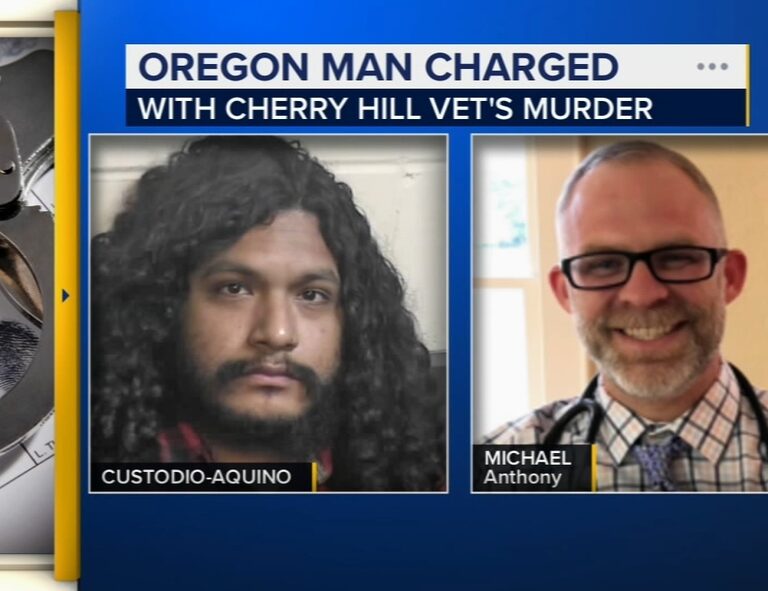
It is the official taste of summer in northern New Jersey.