
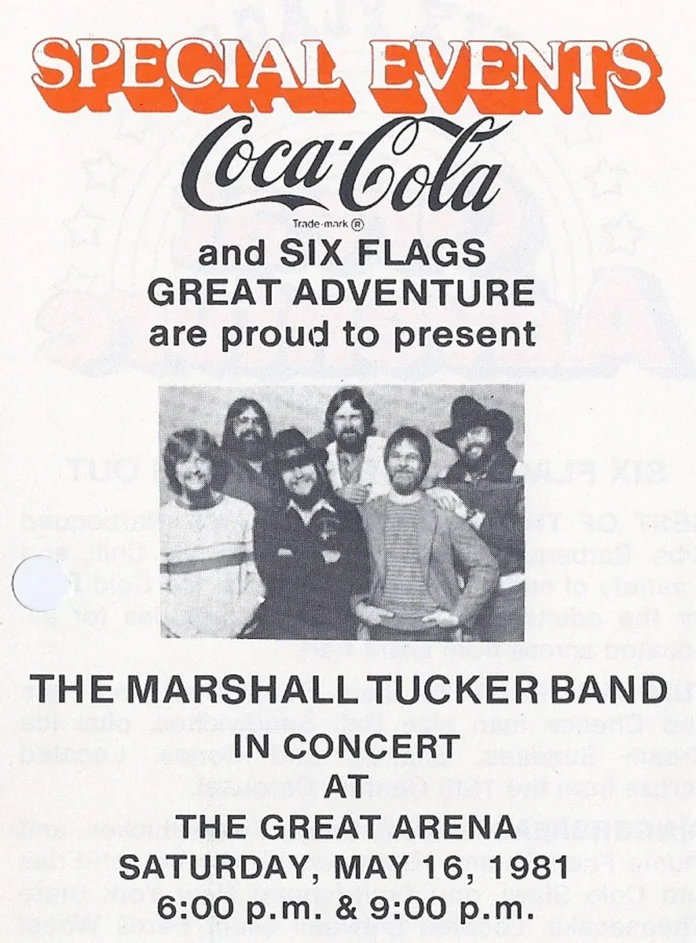

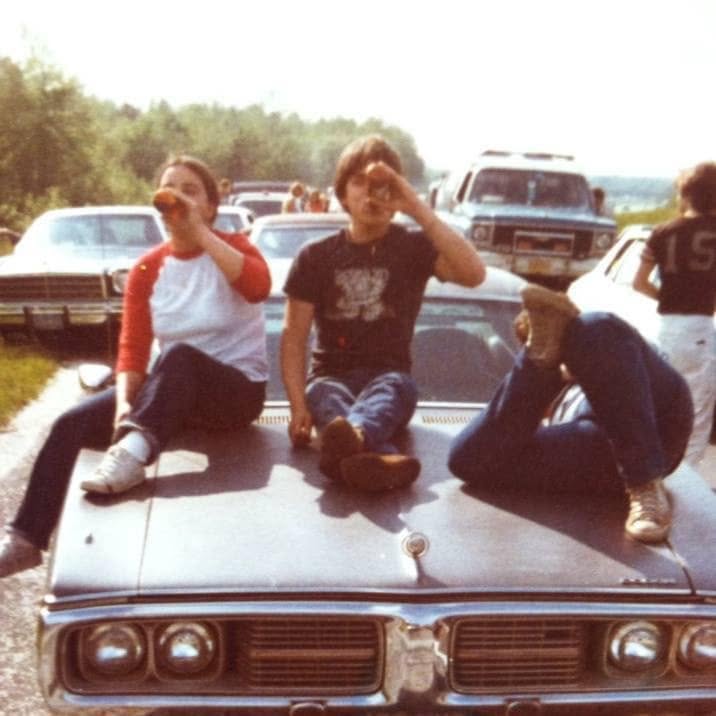
Anyone who grew up in New Jersey during a certain stretch of the late 1970s and early 1980s probably has some version of this story tucked away, a memory of piling into a car headed for Six Flags Great Adventure, only to find Route 537 already backed up for miles before the park even came into view. I’ve held onto my own fragments of that memory for years, the kind of thing that comes rushing back the moment someone mentions a band that used to play there, and it turns out that memory has a real name attached to it, and a real date. June 28, 1981. Marshall Tucker Band. The single busiest day in the entire history of Great Adventure.
Back then, concert admission came completely included with the price of a standard park ticket, a genuinely different world from how live entertainment gets priced and packaged today. Southern rock carried a fiercely loyal following throughout the tri-state area at the time, even though the genre’s biggest acts rarely booked mainstream venues in New York City or Philadelphia, leaving Great Adventure’s open-air Northern Star Arena as one of the only places regional fans could actually catch a band like Marshall Tucker live. That scarcity, combined with the band’s massive popularity, drew an unprecedented crowd of more than 50,000 fans to the arena that day, a number the park’s infrastructure was never built to handle.
The result was genuine, total gridlock. The crowd overwhelmed the park so completely that Great Adventure was forced to close its own gates and stop letting anyone else inside. Traffic backed up for miles down Route 537, spilling all the way toward the Monmouth County border, and thousands of fans who realized they’d never actually reach the parking lot simply abandoned their cars right on the shoulder of the highway, walking the rest of the way toward the park gates on foot rather than turn back home.
Marshall Tucker’s 1981 show stands as the single most extreme example of that era, but it was far from the only one. The Ramones played a famously high-energy double set at the park on June 6, 1980, as part of a high school graduation night event, giving an entire class of New Jersey teenagers a genuinely legendary send-off. Black Sabbath brought their Heaven and Hell tour, featuring Ronnie James Dio, to that same outdoor arena stage that same year. KC and the Sunshine Band’s 1977 appearance is remembered by longtime park workers as one of the very first times Great Adventure found itself completely overrun, gridlocked entirely by a wave of disco fans years before anyone associated that kind of overwhelming crowd with rock and roll specifically. The Beach Boys became something of a summer staple booking at the park, reliably pulling massive, multi-generational crowds down the back roads of Jackson year after year, while Southern rock mainstays like The Charlie Daniels Band and Molly Hatchet joined Marshall Tucker in cementing Great Adventure as the premier regional destination for the genre throughout the early 1980s. Cheap Trick and Joan Jett rounded out that golden stretch with hard-rock stadium sets that routinely filled the park to its absolute operational capacity as well.
That entire era, though, belongs firmly to the past now. Six Flags Great Adventure no longer hosts massive, standalone arena concert events on anything close to that scale, and the days of 50,000 screaming fans swarming an open-air arena for a single headlining act are simply gone. The infrastructure nightmare created by that 1981 Marshall Tucker crowd fundamentally changed how the park operates going forward, prompting strict corporate capacity limits specifically designed to ensure something like that gate-crashing, highway-blocking scenario could never happen again. The Northern Star Arena itself, originally known as the Great Arena and home to that entire run of legendary bookings, has since been officially dismantled, its stage removed entirely after the park stopped booking major concert acts there during the 2020 pandemic shutdowns and ultimately cleared the space for good.
In place of massive stadium-rock headliners, Six Flags now builds its own in-house, immersive festival atmospheres instead of paying the enormous booking fees a solo touring act commands. Boardwalk Nights, one of the park’s current entertainment offerings, integrates local bands, street acrobats, and vocal ensembles directly into the midways themselves rather than funneling guests into a single closed-off ticketed arena. When outside musical acts do appear today, they tend to anchor smaller, more targeted community events, Christian music weekends, Latin heritage celebrations, or local high school marching band showcases, rather than the kind of mainstream rock tour that once brought the surrounding highways to a complete standstill.
Walk into the park today and the energy sits almost entirely with world-record-breaking roller coasters and polished seasonal productions like Fright Fest, a genuinely different identity than the one that once drew fans willing to abandon their cars on the side of Route 537 just to catch a Southern rock show. It’s a strange thing to think about now, driving past that same stretch of road decades later, but that era of Great Adventure concerts remains a genuinely beautiful piece of Jersey history, one that stays firmly, and fondly, planted in the early 1980s.
















