
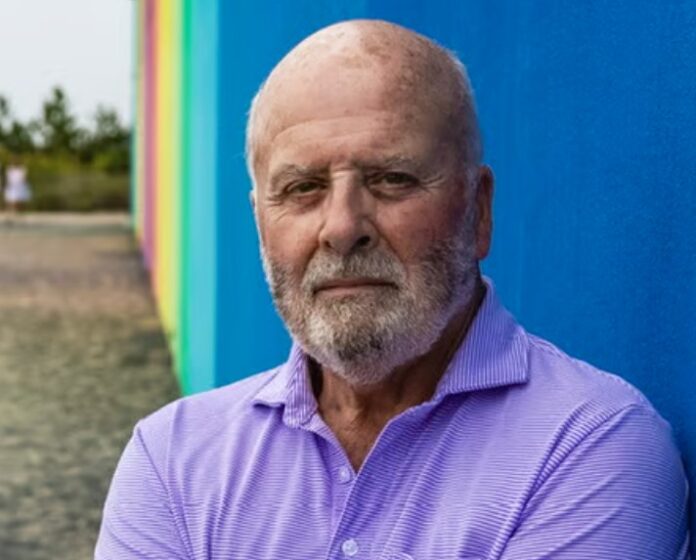

Dan Sciannameo, a longtime Asbury Park resident and real estate appraiser who spent this spring at the center of a public fight over the city’s biggest developer, has launched a mayoral campaign built almost entirely around the same frustration that got him into that fight in the first place.
The Planning Board Member Who Wouldn’t Recuse Himself Quietly Is Now Running for Mayor
Dan Sciannameo, a longtime Asbury Park resident who has served on the city’s Planning Board since 2022, announced his candidacy for mayor this week ahead of the November election, running on a platform built almost entirely around property taxes, developer accountability, and a promise to represent the whole city rather than the neighborhoods closest to the boardwalk. Sciannameo is a professional real estate appraiser whose work has focused primarily on the New York City market, giving him a technical, numbers driven vantage point on development and land use that he has leaned on heavily throughout his time on the Planning Board.
A Campaign Built Directly on the Tax Bill
Sciannameo’s announcement leaned hard into affordability as the central issue of his campaign, arguing that Asbury Park’s property tax levy has climbed sharply since 2013 even as developers who have reshaped much of the city’s waterfront continue receiving what he characterized as generous tax incentives. He drew a direct line between that public cost and the visible deterioration of the city’s most recognizable boardwalk landmarks, arguing that residents are effectively subsidizing developers who have let historic buildings continue to decay rather than restore them as originally promised.
He framed the stakes in blunt terms, describing a city increasingly out of reach for anyone who is not already wealthy and warning that continuing on the current path risks pushing out the very residents who built Asbury Park’s identity in the first place. Sciannameo has called for a fundamental shift in how the city negotiates with developers going forward, arguing that the current arrangement effectively has ordinary taxpayers working on behalf of the people building and profiting from the city’s redevelopment rather than the other way around.
A Fight With the City’s Master Developer That Made Him Recognizable
Sciannameo’s frustration with Asbury Park’s development landscape did not start with this campaign. Earlier this year, he became the center of a genuine controversy after speaking during public comment at a City Council meeting, identifying himself explicitly as a private citizen rather than a Planning Board member, and criticizing Asbury Partners and Madison Marquette, the city’s master developer for its waterfront redevelopment area, over their long delayed restoration of the historic Casino and Power Plant buildings. He argued that despite twenty four years of promises, the buildings remained unrestored even as new condominium development continued steadily throughout the same redevelopment zone, and did not hold back in his assessment of the developer’s track record, saying that if it were up to him, Asbury Partners would not get so much as a cup of coffee in the city, let alone approval to build additional condominiums along the waterfront.
Those comments led directly to a formal legal dispute. An attorney representing Asbury Partners sent a letter to the Planning Board’s counsel demanding Sciannameo recuse himself from an unrelated development application before the board, arguing his public remarks demonstrated personal bias against the developer and any of its associated projects. Board counsel ultimately advised Sciannameo to voluntarily step aside from that specific vote, and he did, reading a prepared statement into the record before recusing himself. The episode made him one of the more visible and outspoken critics of the city’s redevelopment establishment well before he ever announced a run for office, and it directly foreshadows the case his mayoral campaign is now built around.
Making the Case Beyond the Boardwalk
Sciannameo has been explicit that his campaign is not solely about the waterfront, despite that being where his highest profile public fight took place. He has emphasized repeatedly that Asbury Park extends well past the boardwalk and the railroad tracks that often serve as an informal dividing line in local development conversations, pointing specifically to the city’s West Side as a neighborhood whose residents he believes have felt consistently unheard in decisions about the city’s direction.
That framing runs through the entirety of his stated platform, that any real progress in Asbury Park needs to benefit every neighborhood rather than concentrating investment and attention in the areas closest to the ocean. Sciannameo has described the city as a single, unified community whose different neighborhoods need to rise together rather than compete for scraps of a growth story that has, in his telling, largely bypassed longtime residents. With the campaign now officially underway, that message, tying his own recent history as a developer accountability advocate to a broader promise of citywide fairness, will be the core case he makes to voters between now and the November election.
















