
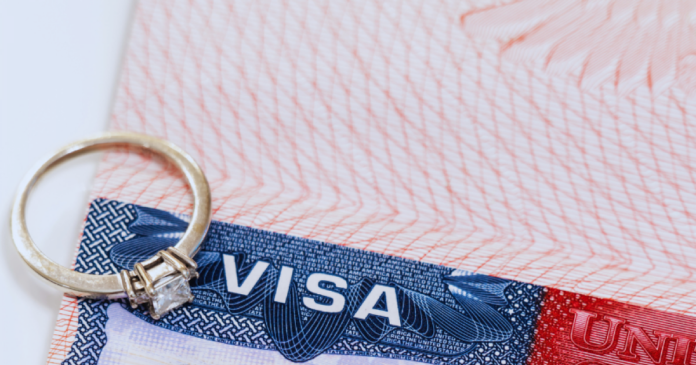

A new analysis of federal visa data shows the K-1 fiancé visa system just came off its busiest year in over a decade, with New Jersey ranking among the top dozen states for per capita arrivals, even as processing times have already begun creeping back upward in 2026.
New Jersey Welcomed 1,400 Fiancé Visa Holders Last Year, Right Before the Wait Times Started Climbing Again
New Jersey received 1,400 K-1 fiancé visa holders in 2024, according to a new analysis of federal immigration data from Manifest Law, placing the state 12th nationally for fiancé visa admissions per capita and accounting for roughly 3.1 percent of all K-1 visas issued nationwide that year. The findings arrive at a genuinely interesting inflection point for the visa category itself, coming off the strongest year for K-1 issuances in more than a decade, even as fresh data suggests the processing improvements behind that surge are already beginning to reverse.
A Record Year, Now Showing Early Cracks
The United States issued 47,579 K-1 fiancé visas in 2024, the highest annual total in more than ten years and nearly 24 percent above the previous peak recorded back in 2016. That surge followed a genuinely difficult stretch for the visa category during and immediately after the pandemic, when processing delays for the initial I-129F petition ballooned to as long as nearly two years at their worst point, driven by consular office closures and mounting USCIS backlogs. Digital filing improvements and automation at USCIS helped drive processing times down sharply through 2024 and into early 2025, bringing genuine relief to couples who had spent years in limbo waiting for a petition to clear.
That relief appears to be short lived. According to the newly released data, pending I-129F petitions climbed from 22,328 in the third quarter of 2024 to 36,875 by the first quarter of 2026, while median processing times rose back up from a low of 5.6 months to 7.5 months over that same span. The reversal does not erase the real gains made over the past two years, but it does suggest the system’s recent efficiency may prove harder to sustain than the 2024 numbers alone would suggest, a pattern worth watching closely for New Jersey couples currently in the middle of the process.
How the K-1 Process Actually Works
The K-1 fiancé visa exists to let the foreign citizen fiancé of a US citizen enter the country specifically to get married, with the couple required to legally marry within 90 days of the foreign fiancé’s arrival. That narrow timeline, combined with a genuinely demanding eligibility process, makes the K-1 one of the more procedurally involved family based immigration pathways available.
Step 1: I-129F Petition
The US citizen sponsor files a petition with USCIS to formally begin the process.
Step 2: NVC Review
Once approved, the case moves to the National Visa Center for background screening.
Step 3: Embassy Interview
The case proceeds to a mandatory in-person interview at a US embassy or consulate abroad.
Step 4: 90-Day Window
Once admitted, the couple must marry within 90 days, a deadline that cannot be extended.
Couples must also clear several substantive eligibility hurdles beyond the paperwork itself. Applicants generally need to prove they have physically met in person at least once within the two years before filing, absent a narrow cultural or religious waiver, and both parties must submit signed statements affirming a genuine, good faith intent to marry rather than a relationship entered into primarily to secure immigration status. The US citizen sponsor also has to meet specific income thresholds demonstrating they can financially support their fiancé above federal poverty guidelines. If the couple fails to marry within the 90 day window for any reason, the foreign fiancé automatically loses legal status and must leave the country or face removal proceedings, with no extension available under any circumstances. Couples who do marry within that window can immediately begin the process of adjusting status to permanent residency, the pathway toward an eventual green card.
Where New Jersey Fits Nationally
New Jersey’s per capita ranking of 12th nationally places the state solidly in the upper half of states for fiancé visa activity, translating to roughly 14.7 arrivals for every 100,000 residents. That figure reflects both New Jersey’s role as a genuinely international state with deep immigrant community ties across multiple countries of origin, and the broader reality that most K-1 arrivals nationally still concentrate heavily in a handful of large, diverse states. California, Texas, Florida, New York, and Illinois have historically accounted for roughly a third of all K-1 cases nationwide, meaning New Jersey’s 3.1 percent national share represents a meaningful presence for a state of its size relative to those larger population centers.
For couples currently navigating the process in New Jersey, the broader national trend is worth watching closely alongside the state’s own numbers. A system that spent 2024 processing petitions faster than it had in years is already showing signs of slowing back down in 2026, a reminder that immigration processing timelines, even during genuine periods of improvement, tend to remain volatile rather than settling into a permanently faster baseline.
















