
Twenty points sounds like a landslide until you remember elections happen twice. That’s the situation unfolding in New Jersey’s 11th District right now, where Analilia Mejia and Joseph Hathaway are gearing up for round two, and this time the stakes are a full term in Congress rather than a few months filling out someone else’s.
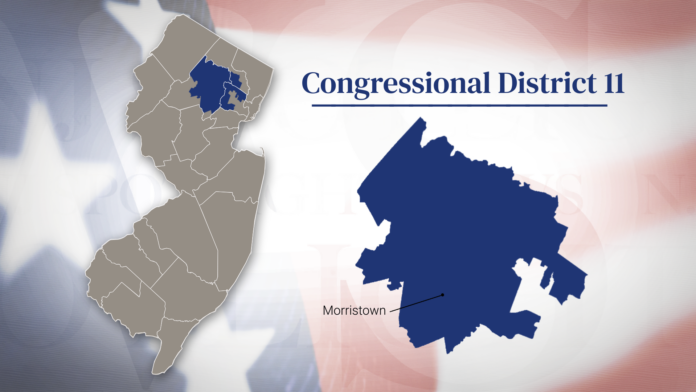
Rewind to February, and this seat was one of the more crowded, chaotic races in the state. A double digit field of candidates lined up to succeed Mikie Sherrill, and for a while it looked wide open. Then AIPAC, the American Israel Public Affairs Committee, poured serious resources into the primary and effectively sank Tom Malinowski’s comeback bid. With that lane cleared, Mejia emerged from the pack and locked up the Democratic nomination. Two months after that, she beat Hathaway comfortably in the special election, winning by roughly twenty points in a district that covers slices of Essex, Morris, and Passaic counties.
On paper, this rematch shouldn’t be close either. Democrats hold a registration advantage of around 65,000 voters across the district, and Mejia’s already proven she can win it decisively once. That combination is exactly why most political watchers have filed this race under “settled” and moved on to flashier contests elsewhere in the state. Hathaway clearly hasn’t gotten that memo, and he’s campaigning like a man who thinks the math is softer than it looks.
His argument, consistently, is that Mejia sits too far to the left for a district that’s suburban at its core, whatever its voter registration numbers say. He’s been making that case in person rather than just in press releases. Just days ago, his campaign documented stops at three small businesses in Parsippany, Lazy Café, Wash N Wag, and Gourmet Cafe, framing each visit around the same target: Mejia’s proposal to eventually raise the minimum wage to $25 an hour. Hathaway told business owners that rising costs and regulatory pressure were already squeezing them before anyone added a wage mandate into the mix.
Context matters here, and it’s worth adding some. Mejia has indeed floated a $25 federal minimum, but she’s been explicit that it’s a phased target, not a switch flipped overnight. Right now, New Jersey’s own state minimum sits close to $16 an hour, while the federal floor has been frozen at $7.25 since 2009, a number so old it predates the first iPhone update most of us remember. That federal rate only governs states that haven’t set their own higher minimum, which is exactly why the gap between New Jersey’s number and the national one is so wide in the first place.
Mejia, for her part, isn’t playing defense on any of this. She just marked one hundred days in office with a video reminding constituents, somewhat pointedly, that the clock is running on both her tenure and the countdown to November 3, which lands just under a hundred days out from that milestone. She’s framing her short time in Washington as proof of motion rather than mere presence, describing her approach as bringing leadership that answers to voters rather than donors. She’s pointed to co-sponsoring more than eighty pieces of legislation touching everything from Medicare expansion to voting rights to Supreme Court reform, and she’s highlighted introducing federal minimum wage legislation in her very first week in office, along with launching a task force focused on due process and constitutional protections. She’s also been vocal about pushing for oversight of ICE, arguing the agency has operated without enough accountability.
Whether any of that shifts a race that already broke twenty points in her favor is a fair question, and it’s genuinely an open one. Special elections and general elections don’t always behave the same way. Turnout patterns shift, off-year enthusiasm looks different from special election urgency, and a rematch gives the losing side a second data point to sharpen their message against. Hathaway’s betting that hammering the wage issue at the small business level chips away at suburban voters who lean fiscally cautious even if they lean Democratic on the ballot. Mejia’s betting that a fast, visible legislative record beats that argument before it ever fully lands. Both bets are reasonable. Only one of them wins in November.
We’ll be tracking this race and breaking down the numbers further on tomorrow’s radio show, along with what a rematch this lopsided on paper can still tell us about how the rest of the state’s competitive districts might shake out. If you’ve got questions about CD-11 or want to weigh in on what you’re hearing on the ground in Essex, Morris, or Passaic counties, that’s exactly the conversation we want to have on air.