
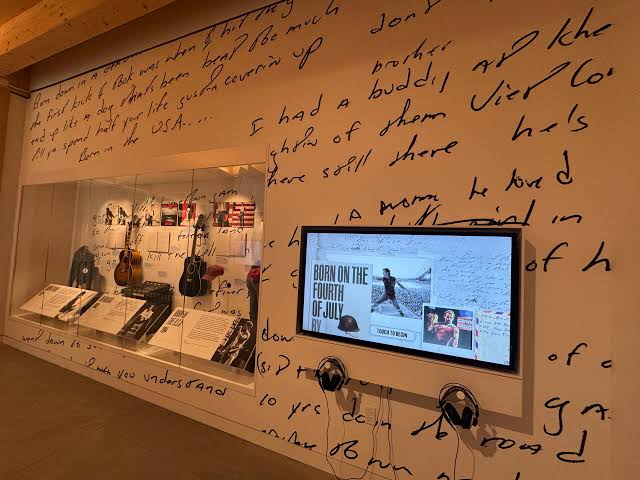

The Bruce Springsteen Center for American Music is launching The Lyric Lab, a new discussion series that treats individual songs as primary source documents, complete with archival drafts, handwritten lyric sheets, and a full room debating what the words actually mean.
The Springsteen Center Wants You to Read His Lyrics Like Poetry, Not Just Sing Along
The Bruce Springsteen Center for American Music at Monmouth University is launching a new discussion series this fall built around a genuinely different way of experiencing the Boss’s catalog. The Lyric Lab, hosted by the Center’s Director of Curatorial Affairs Melissa Kozlowski, treats individual Springsteen songs as poetry, social history, and a distinctly American form of storytelling worth examining as closely as any other primary historical document.
Treating a Song Like a Historical Document
Each Lyric Lab session focuses on a single song or a closely related cluster of tracks, tracing its origins, its evolution through early drafts, and its lasting relevance decades after its original release. Kozlowski has described the series as a chance for attendees to discover how Springsteen’s lyrics function as more than popular music, functioning simultaneously as poetry and as social history capturing a specific American moment. Sessions draw directly on the Center’s own archival holdings, including handwritten lyric sheets, early drafts, and historical records, giving attendees a genuine look at how a finished song actually came together rather than treating the final studio version as though it arrived fully formed.
Three Songs, Three Very Different Americas
The fall lineup moves through three tracks spanning nearly a decade of Springsteen’s career, each capturing a distinctly different emotional register and moment in American life.
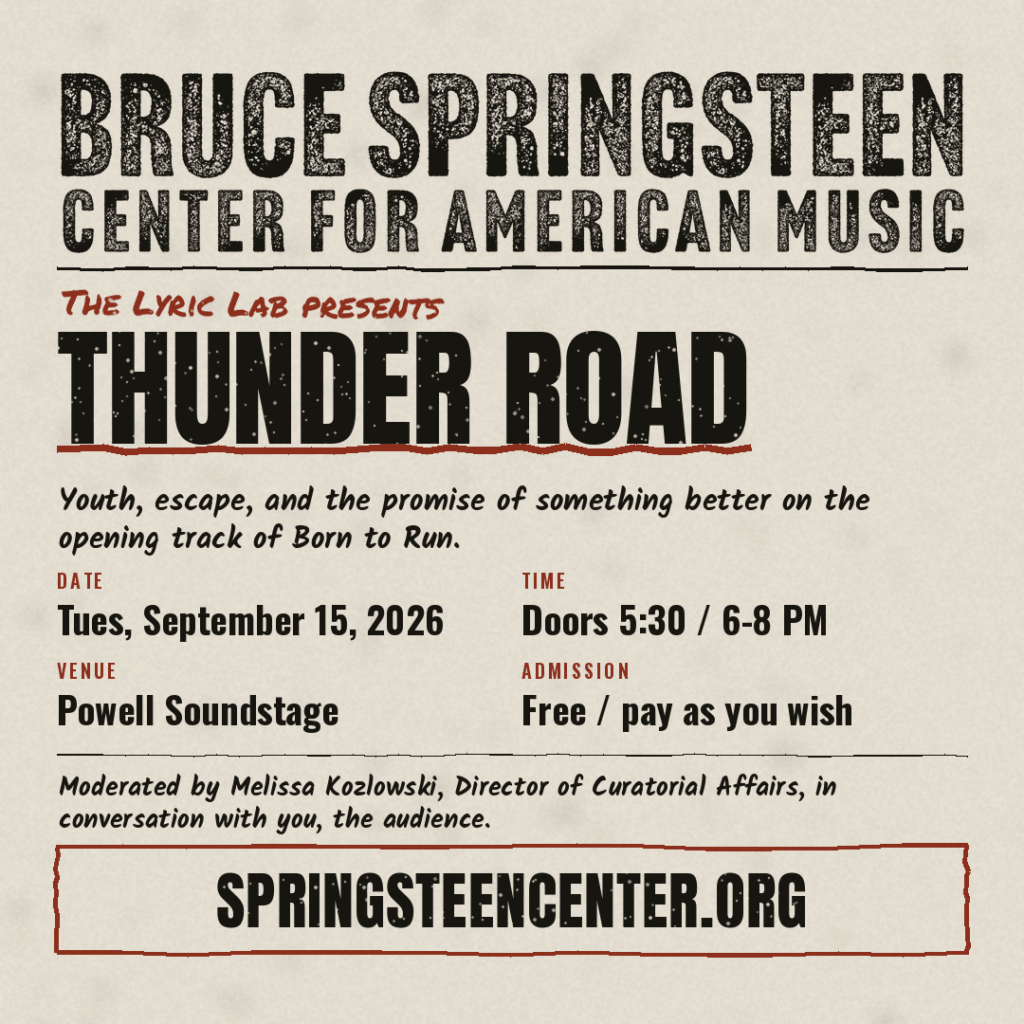
“Thunder Road”
The series opens with the 1975 Born to Run opener, examining how Springsteen transforms a front porch and an open road into a sweeping symbol of youth, escape, and uncertain promise. The session traces the song’s development through early drafts and alternate lyrics, and takes on the question that has helped make the track endure for fifty years, whether it is ultimately a song of hope, desperation, or both at once.
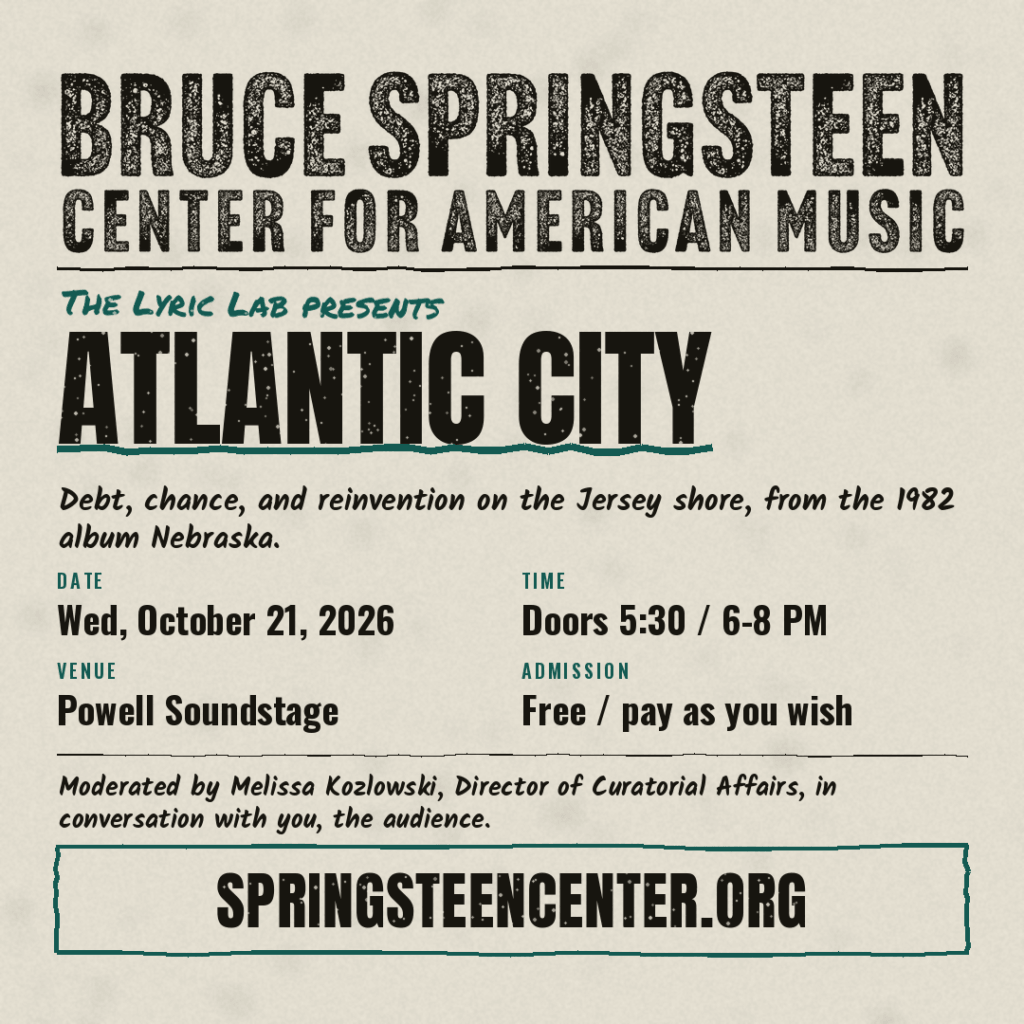
“Atlantic City”
The series shifts to the stark, acoustic landscape of 1982’s Nebraska, unpacking the economic desperation, organized crime undertones, and vanishing choices facing the song’s narrator against the backdrop of a real New Jersey city in genuine decline.
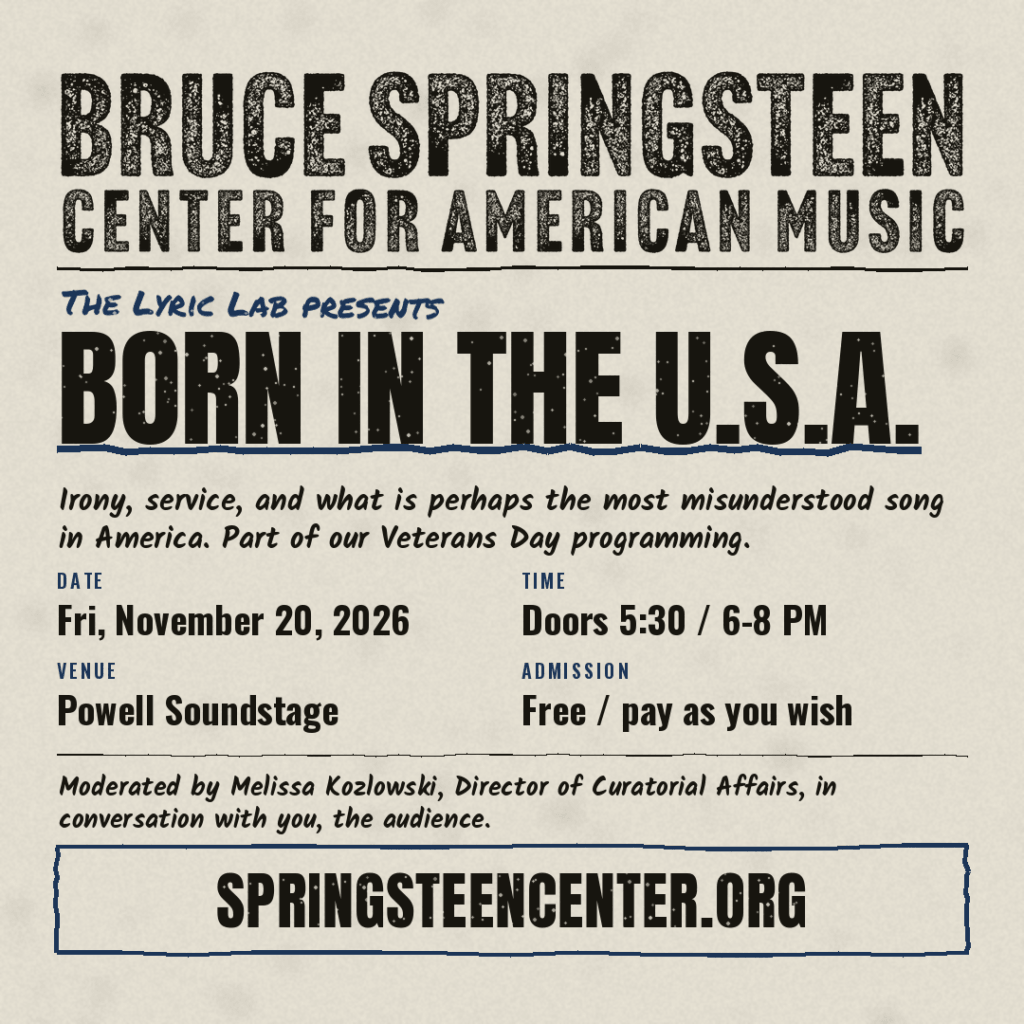
“Born in the U.S.A.”
Closing out the fall schedule, this session tackles one of the most misunderstood songs in American popular music, breaking down how Springsteen paired an arena sized anthem sound with lyrics offering a deeply critical portrait of a struggling Vietnam War veteran, a mismatch between sound and substance that has confused casual listeners since the song’s 1984 release.
All three sessions begin at 6 p.m. inside the Center’s 240 seat Powell Soundstage. Admission is free, though attendees are asked to register in advance through the Center’s own event calendar, with a pay what you wish option available at the time of registration for anyone interested in supporting the program directly.
Part of a Fast Growing Cultural Institution
The Lyric Lab arrives during the Center’s first full season since its public opening on June 13, 2026, following a formal dedication ceremony attended by Springsteen himself alongside Patti Scialfa, members of the E Street Band, and Governor Mikie Sherrill. The roughly 50 million dollar, 32,000 square foot facility, designed by COOKFOX Architects, was built to serve as considerably more than a static museum, functioning instead as a genuine hub for scholarship, education, and public programming covering the full breadth of American music history rather than Springsteen’s catalog alone. Kozlowski, who also serves as the university’s director of public history, previously developed several of the Center’s traveling exhibitions before the building itself ever opened, giving The Lyric Lab a natural extension of the kind of close, archive driven programming she has built her academic career around.
For a venue that has spent its opening months balancing large scale exhibits with genuinely intimate public programming, The Lyric Lab represents the more scholarly, conversational side of that mission, an invitation to slow down on three individual songs most fans already know by heart, and consider exactly why they have stayed so deeply embedded in American culture for as long as they have.
















