BookCAMP Magazine, published out of Glen Ridge, New Jersey by Ted Olczak of Printed Word Reviews, has landed a genuine coup for the independent publishing community, announcing that longtime Book Industry Study Group executive director Brian O’Leary will begin writing a new quarterly column for the publication following his recent retirement from BISG. The addition gives BookCAMP’s readers direct access to one of the publishing industry’s most respected voices on metadata, distribution, and the broader business mechanics of getting books into readers’ hands.
Before diving into what O’Leary brings to the magazine, it’s worth clarifying exactly what BookCAMP is, since the name overlaps with several entirely unrelated publications that share a similar title. BookCAMP by Printed Word Reviews should not be confused with BootCAMP Magazine, the internationally distributed independent fashion freepaper launched in Tokyo back in 2006, which focuses on global streetwear culture and frequently collaborates with prominent Brooklyn and New York design collectives like LQQK Studio. It also has no connection to Photo BootCAMP Magazine, a separate digital and print publication curated by Share Inspire Create that showcases the training work and portfolios of students enrolled in an online photography academy, occasionally featuring scenic imagery from the New Jersey Shore submitted by amateur photographers around the world. Nor is it related to the recurring wellness and lifestyle features on local fitness boot camps that New Jersey Monthly Magazine has run profiling operations in towns like Branchburg and Hillsborough. BookCAMP, the publication now welcoming O’Leary as a columnist, is a dedicated quarterly magazine built entirely around the business of book publishing itself, addressing the genuine challenges authors and independent publishers face navigating today’s market.
The magazine operates under the direction of Ted Olczak, a career long publishing professional who holds a master’s degree in marketing management with a concentration in book and magazine publishing from New York University. Olczak’s own résumé within the publishing world runs deep, having worked with major publishing houses including St. Martin’s Press, Workman, Chronicle Books, Candlewick, Dark Horse Comics, and Harvard Business Press, among numerous others spanning genres from children’s literature to manga to military history. Beyond BookCAMP itself, Olczak also manages marketing for the Independent Press Award and the NYC Big Book Award, and he previously helped New York Magazine launch its sister publication IN New York Magazine, giving him genuinely broad experience across both book and magazine publishing over the course of his career.
Olczak has also built BookCAMP into more than just a printed publication, expanding it into an annual live event held under the same name, bringing together independent authors, publishers, and industry experts to exchange strategies and build professional connections. That event has already featured Brian O’Leary as a speaker in his prior capacity as BISG’s executive director, where he discussed metadata and its critical, often underappreciated role in helping authors succeed in a crowded marketplace, a topic he has spent much of his career championing.
O’Leary’s broader career reflects a genuine, sustained commitment to modernizing and professionalizing the publishing industry from the inside. During his tenure at the Book Industry Study Group, he played a foundational role in helping the industry adopt better metadata standards and data driven practices, work that colleagues have credited as essential groundwork for later industry innovations. He also served in leadership with the Green Book Alliance, where his years of work on sustainability reporting directly enabled the organization’s development of its Book Carbon Calculator, a tool aimed at helping publishers understand and reduce their environmental footprint. Colleagues within that organization have spoken warmly about O’Leary’s retirement, crediting his contributions with helping shape a smarter, more connected publishing industry whose effects will continue to be felt well beyond his own departure from formal industry leadership.
With O’Leary now stepping into a recurring column for BookCAMP, readers can expect his signature focus on the practical, often technical mechanics of publishing success, the kind of metadata literacy, distribution strategy, and industry data fluency that he spent his BISG tenure trying to instill across the broader publishing community. For a magazine built specifically around helping independent authors and publishers navigate an increasingly complex market, adding a columnist with O’Leary’s depth of institutional knowledge and hands on experience represents a genuinely significant addition, one likely to give BookCAMP’s readers direct access to exactly the kind of expertise that used to require attending an industry conference or BISG working group to encounter firsthand.
The New Jersey Devils have added a genuine offensive weapon to their forward lineup, signing veteran winger Anthony Mantha to a two year contract worth $9.5 million, carrying an average annual value of $4.75 million against the salary cap through the 2027-28 season. The deal breaks down to $5.4 million in the first year and $4.1 million in the second, giving New Jersey a genuinely favorable structure given the caliber of production Mantha just delivered in Pittsburgh. General manager Sunny Mehta made the announcement, continuing what has already become one of the more active and aggressive offseasons in recent Devils memory.
Mantha arrives in New Jersey fresh off a genuine breakout campaign with the Pittsburgh Penguins, where he set career highs across every major offensive category, tallying 33 goals, 31 assists, and 64 points across 81 regular season games. That production marked his first ever 30 goal season in the NHL, a genuinely significant milestone for a player who had spent much of his career flirting with that kind of scoring output without quite reaching it. His 33 goals led the entire Penguins roster last season, while his 64 points ranked third among all Pittsburgh forwards, giving him a genuinely central role in Pittsburgh’s offense during his lone season there. Seven of those goals came on the power play, marking his best power play output in a single season since his 2018-19 campaign with Detroit, and reflecting a level of special teams production the Devils will likely look to plug directly into their own lineup.
At six foot five and 240 pounds, Mantha brings a genuinely rare combination of size and offensive skill to New Jersey’s forward group. Now 31 years old, the Quebec native was originally selected by the Detroit Red Wings in the first round, 20th overall, of the 2013 NHL Draft, and he spent parts of seven seasons within Detroit’s organization across both the NHL and AHL levels between 2014 and 2021. During his time with the Red Wings, Mantha put together back to back 20 goal seasons in 2017-18 and 2018-19, totaling 194 points on 95 goals and 99 assists across 302 regular season games in Detroit before being traded to Washington in April of 2021.
Mantha spent parts of the next three seasons with the Capitals before a March 2024 trade sent him to Vegas, and he later signed with Calgary as an unrestricted free agent that same July. Across his full NHL career, spanning five different organizations, Mantha has now accumulated 367 points on 179 goals and 188 assists across 588 regular season games since making his NHL debut with Detroit back on March 15, 2016. He also brings genuine playoff experience to New Jersey’s locker room, having appeared in 20 career Stanley Cup Playoff games across stops with Washington, Vegas, and Pittsburgh, though he has managed just seven assists and no goals across that postseason sample.
Mantha’s signing continues a genuinely aggressive pattern of roster building from Mehta this offseason, arriving as one of the final notable names still available on the free agent market weeks after most other teams had already completed the bulk of their offseason spending. The move follows Mehta’s earlier decision to trade goaltender Jacob Markstrom to Florida in exchange for Evan Rodrigues and Jesper Boqvist, along with the subsequent signing of journeyman goaltender David Rittich to compete with Nico Daws for the backup role behind the crease. Taken together, these moves reflect a front office clearly determined to reshape the roster meaningfully after New Jersey missed the playoffs the previous season, rather than simply running back the same group and hoping for different results.
Mantha’s own health history adds an important layer of context to the deal as well. He turns 32 in September and is now nearly two years removed from tearing the ACL in his right knee, an injury that forced him through a genuinely lengthy rehabilitation process before he returned to the ice. That his return culminated in a career best offensive season with Pittsburgh speaks well to how fully he’s recovered physically, even as any team signing a player with that injury history at his age necessarily takes on some level of risk regarding long term durability.
Statistically, some analysts have flagged reasons for measured optimism rather than unchecked enthusiasm about Mantha’s move to New Jersey. His career high prior to last season sat at just 48 points, recorded back in 2018-19 with Detroit when he was only 24, meaning last season’s 64 point output represented a genuinely dramatic jump rather than a continuation of an already established scoring pace. Mantha has also shot above 20 percent for three consecutive seasons now, a rate that some evaluators consider difficult to sustain indefinitely without some regression. At the same time, his underlying profile offers real reassurance as well, since only seven of his 33 goals and 13 of his 64 points last season came on the power play, meaning the bulk of his production came at even strength rather than depending heavily on favorable power play deployment he may not receive in New Jersey given the team’s existing personnel. In two of his last three seasons, Mantha has scored 20 or more goals at even strength alone, a genuinely strong indicator that his scoring touch extends well beyond simply riding a hot power play unit.
With his size, his proven scoring ability, and genuine playoff experience now added to New Jersey’s forward group, Mantha figures to compete for a top six role immediately, giving the Devils another legitimate scoring option as they look to return to the postseason after missing out last year. For a front office that has already reshaped its goaltending situation and continued adding pieces throughout the summer, locking up one of the market’s last remaining impact forwards gives New Jersey a genuinely productive final major addition heading into training camp.
NE-YO and Akon Bring the Nights Like This Tour 2026 to New Jersey for an Unforgettable Evening of R&B and Pop Hits
July 19
@
7:00 PM
–
11:30 PM
New Jersey’s summer concert season continues with one of the year’s most anticipated R&B events as NE-YO and Akon bring their Nights Like This Tour 2026 to the Garden State. Scheduled for Sunday, July 19, 2026, at 8:00 p.m., the tour unites two of the most influential artists of the past two decades for a night celebrating timeless hits, remarkable songwriting, and the enduring appeal of modern R&B and pop music.
For fans who grew up with the soundtrack of the 2000s and beyond, this concert offers far more than a nostalgic evening. It showcases two performers whose music continues to reach new audiences through streaming platforms while remaining fixtures on radio playlists, dance floors, and live concert stages around the world. Their catalogs helped define an era of contemporary music, blending R&B, hip hop, pop, and international influences into songs that continue to resonate years after their original release.
NE-YO headlines the evening with a career built upon exceptional songwriting, polished vocals, and one of the most recognizable collections of R&B hits of the modern era. Since emerging as a recording artist and songwriter, he has established himself as one of the genre’s defining voices, earning multiple Grammy Awards while writing and producing songs for some of the biggest names in popular music. His influence extends well beyond his own recordings, making him one of the industry’s most respected creative talents.
Concertgoers can expect an evening filled with signature songs including “So Sick,” “Sexy Love,” “Closer,” “Miss Independent,” “Because of You,” “Champagne Life,” and numerous other fan favorites that helped establish his remarkable career. Known for combining smooth vocals with polished choreography and engaging stage production, NE-YO continues to deliver performances that balance vocal precision with high energy entertainment.
His career as a songwriter is equally impressive. In addition to his own success, NE-YO has contributed to major recordings by artists including Beyoncé, Rihanna, Mario, Celine Dion, Carrie Underwood, and many others. That combination of writing ability and performance experience has made him one of the most influential figures in contemporary R&B for nearly two decades.
Joining him is international superstar Akon, whose unmistakable voice and global sound transformed popular music during the mid 2000s. Blending R&B, hip hop, reggae, and African musical influences, Akon developed a style that crossed cultural and geographic boundaries, resulting in worldwide commercial success. His ability to create memorable hooks and infectious melodies helped produce a remarkable string of international hits that continue to receive extensive radio and streaming play.
Fans can look forward to hearing chart topping favorites such as “Locked Up,” “Lonely,” “Smack That,” “I Wanna Love You,” “Don’t Matter,” “Beautiful,” and many more. His live performances combine powerful vocals with charismatic stage presence, creating an atmosphere that encourages audiences to sing along from beginning to end.
Beyond his own recordings, Akon has played a significant role in shaping the careers of numerous artists as a producer, songwriter, entrepreneur, and record executive. His influence extends throughout the music industry, making him one of the most recognizable and successful artists of his generation.
Together, NE-YO and Akon represent an era when R&B and pop music consistently dominated the charts while influencing fashion, culture, and mainstream entertainment. Their collaboration on the Nights Like This Tour creates an evening built around songs that continue to define playlists nearly twenty years after many were first released. For longtime fans, the concert offers an opportunity to relive some of the genre’s biggest moments. For younger audiences, it provides the chance to experience these artists performing their most celebrated songs live.
Guests attending the concert can also enhance their visit through several optional premium experiences offered at the venue. Available upgrades include Premier Parking, VIP Club Access, Party Deck seating, Shore Club Cabanas, VIP Fast Lane entry, lawn chair rentals, commemorative blankets, and an exclusive Akon Meet and Greet VIP Upgrade. These optional experiences provide additional convenience and premium amenities for concertgoers. As with most venue enhancements, these upgrades do not include admission to the concert and must be purchased separately from event tickets.
New Jersey continues to attract some of the music industry’s biggest touring productions, and the Nights Like This Tour further demonstrates the state’s reputation as a premier destination for live entertainment. Concert venues throughout the Garden State regularly welcome internationally recognized performers across every genre, giving residents and visitors access to world class performances without leaving the region.
The pairing of NE-YO and Akon creates one of the strongest R&B concert lineups of the summer, bringing together artists whose influence continues to shape contemporary music. Their catalogs remain deeply woven into the soundtrack of the past two decades, with songs that have become staples at celebrations, sporting events, clubs, weddings, and countless personal playlists around the world.
For anyone exploring New Jersey’s outstanding summer entertainment calendar, the Nights Like This Tour promises an evening filled with exceptional musicianship, unforgettable performances, and hit after hit from two artists whose music has stood the test of time. Whether you have followed their careers since the beginning or are discovering their work through today’s streaming platforms, this concert offers an opportunity to experience two of modern R&B’s most accomplished performers sharing the same stage for one memorable night.
Toto, Christopher Cross, and The Romantics Bring a Night of Classic Hits to New Jersey
July 18
@
6:30 PM
–
11:30 PM
Few concerts offer the opportunity to experience multiple generations of timeless music in one evening quite like the upcoming performance featuring Toto, Christopher Cross, and The Romantics. Scheduled for Saturday, July 18, 2026, at 6:45 p.m., this highly anticipated show brings together three celebrated acts whose songs continue to resonate with audiences decades after they first topped the charts. For New Jersey music fans, the concert represents an outstanding opportunity to hear some of the most recognizable rock and pop classics ever recorded, performed live by the artists who helped define an era.
The evening is designed to celebrate musicianship, songwriting, and enduring catalogs that have remained staples of radio, streaming playlists, and live concerts for generations. Rather than focusing on nostalgia alone, each artist continues to tour successfully because the music has proven remarkably timeless, attracting lifelong fans while continuing to find new audiences.
Headlining the evening is Toto, a band whose technical excellence and extraordinary musicianship have earned admiration throughout the music industry. Formed in Los Angeles during the late 1970s, Toto quickly became known for blending rock, pop, jazz, progressive rock, rhythm and blues, and sophisticated studio craftsmanship into a sound unlike any of their contemporaries. The band’s catalog includes numerous international hits that remain among the most recognizable songs in modern popular music.
Concertgoers can expect performances of beloved classics including “Africa,” “Rosanna,” “Hold the Line,” “I’ll Be Over You,” and many other fan favorites that have helped define Toto’s remarkable legacy. “Africa” alone has become one of the most enduring songs in popular music history, finding renewed popularity with younger audiences through streaming platforms while continuing to be celebrated by longtime listeners around the world.
Beyond their own recordings, the members of Toto have collectively contributed to thousands of albums as some of the most respected studio musicians in modern music. Their individual credits include performances with Michael Jackson, Steely Dan, Quincy Jones, Paul McCartney, Elton John, Boz Scaggs, and countless other legendary artists. That remarkable depth of experience continues to shine during every live performance, where precision musicianship meets an unmistakable passion for the music itself.
Joining Toto is Christopher Cross, whose smooth songwriting and unmistakable voice made him one of the defining artists of late 1970s and early 1980s pop music. His remarkable debut album produced a string of unforgettable hits while earning widespread critical acclaim and commercial success. Cross achieved a historic milestone by becoming the first artist to win the four most prestigious Grammy Awards in a single year, including Album of the Year, Record of the Year, Song of the Year, and Best New Artist.
Audiences can look forward to hearing enduring favorites such as “Sailing,” “Ride Like the Wind,” “Arthur’s Theme (Best That You Can Do),” and “Think of Laura.” His songs continue to stand as examples of elegant songwriting, memorable melodies, and exceptional musicianship that have remained popular across multiple generations.
Opening the evening are The Romantics, whose energetic blend of rock, new wave, and power pop continues to energize audiences decades after their biggest commercial successes. Their unmistakable hits, including “What I Like About You” and “Talking in Your Sleep,” remain fixtures on classic rock playlists and sporting event soundtracks throughout North America. Known for delivering lively performances that encourage audience participation, The Romantics provide the perfect opening act for an evening built around timeless music and memorable performances.
Together, the three artists create a concert experience that spans several styles of popular music while sharing a common emphasis on exceptional songwriting and accomplished musicianship. From arena rock and polished pop to energetic new wave, the lineup offers something for virtually every fan of classic music.
Guests attending the concert also have the opportunity to enhance their visit through a variety of optional premium experiences. Available upgrades include Premier Parking, VIP Club Access, Party Deck seating, Shore Club Cabanas, VIP Fast Lane entry, lawn chair rentals, and commemorative blankets. These amenities are available separately and are designed to provide additional convenience and comfort during the event. As with most premium venue offerings, these upgrades do not include admission to the concert and must be purchased independently of event tickets.
Events like this continue to highlight New Jersey’s position as one of the country’s premier destinations for live entertainment. Major touring artists regularly choose the Garden State for performances that draw audiences from throughout the Northeast, reflecting both the region’s passionate music community and its outstanding concert venues.
Whether you grew up listening to these iconic recordings when they first reached the charts or discovered them through streaming services and modern playlists, this concert offers an opportunity to experience songs that have become part of popular music history. Each performance showcases artists whose catalogs have transcended generations through remarkable songwriting, unforgettable melodies, and enduring appeal.
For anyone exploring New Jersey’s outstanding live music scene this summer, Toto, Christopher Cross, and The Romantics promise one of the season’s premier concert experiences. Combining legendary performers, world class musicianship, timeless songs, and an evening filled with recognizable classics, this is a show that celebrates the lasting power of great music and the excitement that only a live performance can deliver.
Jason Aldean Brings the Songs About Us Tour 2026 to New Jersey for a Night of Country Music at the Jersey Shore
July 17
@
7:30 PM
–
11:30 PM
Country music fans in New Jersey have another major concert to look forward to as Jason Aldean brings his highly anticipated Songs About Us Tour 2026 to the Garden State. Featuring a lineup of rising stars alongside one of country music’s most successful touring artists, the show promises an evening filled with chart-topping hits, high-energy performances, and the kind of large-scale live production that has made Aldean one of the genre’s biggest concert attractions.
For fans planning their summer concert calendar, this stop on the Songs About Us Tour stands out as one of New Jersey’s premier country music events. Combining established headliners with emerging talent, the tour delivers several hours of live entertainment that celebrates modern country music while showcasing artists representing the genre’s next generation.
Jason Aldean has spent more than two decades building one of the most recognizable careers in contemporary country music. Since his self-titled debut album introduced audiences to his signature blend of country, Southern rock, and arena-ready production, he has consistently remained one of the format’s biggest touring acts. Numerous platinum albums, dozens of hit singles, sold out arenas, and headline festival appearances have helped establish Aldean as one of country music’s most commercially successful performers.
His live concerts have become known for combining polished production with a straightforward performance style that places the music at the center of the experience. Fans attending the Songs About Us Tour can expect a setlist spanning every era of his career, featuring many of the songs that have become staples of country radio and live performances. Longtime listeners will recognize fan favorites alongside more recent releases, creating a concert that appeals to audiences who have followed his career for years as well as newer fans discovering his catalog.
Joining Aldean on the tour is Chase Matthew, one of country music’s fastest rising young artists. Matthew has developed a devoted following through relentless touring, streaming success, and songs that blend traditional country influences with modern production. His energetic performances and rapidly growing fan base have made him one of the genre’s emerging names to watch, and his appearance on the Songs About Us Tour provides audiences with the opportunity to experience an artist whose career continues to gain momentum.
Also appearing is singer-songwriter Mackenzie Carpenter, whose songwriting has earned recognition throughout Nashville while her own recording career continues to expand. Carpenter’s thoughtful lyrics, contemporary country sound, and engaging stage presence have positioned her among a new generation of artists helping shape the future of the genre. Her addition to the lineup brings another dimension to the evening, offering audiences an opportunity to discover music from one of country’s promising new voices.
Keeping the energy flowing throughout the event is Dee Jay Silver, widely recognized as one of country music’s premier touring DJs. Known for seamlessly blending country favorites with modern remixes and party anthems, Dee Jay Silver has become a familiar presence at major country festivals and arena tours across North America. His performances help create an entertaining atmosphere before and between live sets, ensuring the audience remains engaged from the moment the gates open until the final encore.
Concertgoers also have access to a variety of optional upgrades designed to enhance their experience. Available amenities include Premier Parking, VIP Club Access, VIP Fast Lane entry, Party Deck experiences, Shore Club Cabanas, lawn chair rentals for designated seating areas, commemorative blankets, and the Jason Aldean VIP Lounge Experience. These optional enhancements provide additional comfort, convenience, and premium hospitality for guests looking to elevate their concert experience. It is important to note that these upgrades do not include admission to the concert itself and must be purchased separately from event tickets where applicable.
Beyond the performances themselves, the Songs About Us Tour reflects the continued popularity of live country music throughout New Jersey. Major outdoor concerts consistently attract fans from across the Northeast, bringing together audiences who appreciate not only the music but also the shared experience of spending an evening with fellow country music enthusiasts. From tailgating before the show to singing along with thousands of fans during the night’s biggest hits, these events have become an important part of the region’s summer entertainment calendar.
For visitors exploring New Jersey’s live music scene, the Songs About Us Tour offers another reminder that the Garden State continues to attract nationally recognized touring productions across every genre. Country music has developed a particularly strong presence in recent years, with audiences regularly filling amphitheaters and outdoor venues to experience some of the industry’s biggest names in concert.
Whether you are a longtime Jason Aldean fan, discovering Chase Matthew and Mackenzie Carpenter for the first time, or simply looking for an unforgettable evening of live music, the Songs About Us Tour 2026 delivers an impressive lineup that reflects the depth and popularity of today’s country music landscape. With accomplished performers, outstanding production, and a variety of premium guest experiences available, this concert is positioned to be one of New Jersey’s signature live entertainment events of the season.
For country music fans throughout the Garden State and beyond, Jason Aldean’s Songs About Us Tour is more than another stop on a national tour. It is an opportunity to experience one of the genre’s most successful performers alongside some of its brightest emerging talent, all in one memorable night of live music that celebrates the enduring appeal of modern country entertainment.
Summer’s most beloved fruit is getting a genuinely refreshing new life in bottle form, as Wonder Melon joins the Wonder Juice™ family of cold pressed functional beverages with a lineup built entirely around watermelon’s naturally hydrating, nutrient rich appeal. Watermelon has long been synonymous with backyard barbecues, beach days, picnics, and every other staple of summer gathering, and Wonder Melon transforms that same iconic fruit into a genuinely plant powered beverage line that combines hydration, real flavor, and functional nutrition in every bottle.
The collection arrives in three distinct varieties under the brand’s Curiously Good label, each built to appeal to a slightly different palate. Classic Watermelon delivers exactly what its name promises, a pure, refreshing take on the fruit’s natural flavor without any unnecessary additions. Watermelon Cucumber Basil offers a considerably crisper, more herbaceous profile, bringing genuine garden fresh character into the mix alongside the watermelon base. Watermelon Lemon Cayenne rounds out the lineup with a genuinely vibrant combination of sweet watermelon, bright citrus, and a subtle cayenne kick, giving anyone craving a little heat alongside their summer refreshment a bottle built specifically for that craving. The Wonder Juice™ Collection includes four signature product lines featuring 14 vibrant varieties:
Wonder Melon™: Hydrating, antioxidant-rich watermelon beverages available in
Classic Watermelon
Watermelon Cucumber Basil
Watermelon Lemon Cayenne
These refreshing blends support hydration, heart health, and digestive wellness.
Wonder Beet™: Four nutrient-packed superfood blends:
Beet + Cherry
Beet + Berry
Beet + Veggie
Beet + Lemon + Ginger
Made with beets, a natural source of nutrients that support energy and stamina.
Wonder Lemon™: Three bright citrus blends
Lemon Basil Jalapeño
Lemon Ginger
Lemon Mint
Each variety delivers vitamin C and antioxidant support for immunity and everyday wellness.
Wonder Green™: Featuring three bold vegetable-forward blends
Clean Green
Veg8 & Cayenne
Every Wonder Melon variety is made using organic, non GMO ingredients sourced directly from organic farms, and each bottle delivers naturally occurring antioxidants and nutrients that support hydration, cardiovascular wellness, and digestive health, all without relying on any artificial ingredients. Michele Abo, General Manager of Wonder Juice™, has described the new line as a way for consumers to enjoy one of summer’s most beloved fruits in an entirely new format, whether they’re specifically celebrating National Watermelon Month or National Watermelon Day, or simply looking for a genuinely delicious way to stay hydrated throughout the season.
Wonder Melon fits within a considerably larger portfolio that Wonder Juice™ has built around cold pressed beverages made from real fruits and vegetables, each crafted to deliver naturally occurring vitamins, antioxidants, and phytonutrients suited to today’s broader wellness focused lifestyle. Whether a consumer is chasing hydration, digestive support, antioxidant rich ingredients, natural energy, immune support, or simply a bold, refreshing flavor, the brand has built its entire lineup around offering a genuinely fitting option for whatever specific wellness goal someone happens to be pursuing that day.
To help customers get the most out of the new watermelon line, celebrity chef George Duran has developed a handful of original recipes built specifically around Wonder Melon, including a Wonder Melon Limeade Slush, a layered Wonder Melon Fruit Salad Boat, a frozen Wonder Melon and Basil Slush, and a Wonder Melon Ginger Lime Mocktail, giving consumers plenty of creative ways to work the new beverages into their summer entertaining beyond simply pouring a glass straight from the bottle. The brand is encouraging fans to get similarly creative on their own as well, whether that means enjoying Wonder Melon straight from the bottle, poured over ice, blended into a smoothie, frozen into popsicles, or served alongside a backyard barbecue, poolside afternoon, or any other summer celebration.
Wonder Melon represents just one of four signature product lines that together make up the full Wonder Juice™ collection, spanning fourteen distinct varieties in total. Wonder Beet offers four nutrient packed superfood blends, including Beet and Cherry, Beet and Berry, Beet and Veggie, and Beet, Lemon, and Ginger, all built around beets themselves, a natural source of nutrients associated with supporting energy and stamina. Wonder Lemon brings three bright citrus forward blends to the lineup, Lemon Basil Jalapeño, Lemon Ginger, and Lemon Mint, each delivering vitamin C and broader antioxidant support geared toward immunity and everyday wellness. Rounding out the collection, Wonder Green stands as the newest addition to the Wonder Juice portfolio, offering bold, vegetable forward blends including Clean Green and Veg8 and Cayenne, expanding the brand’s growing lineup of nutrient dense functional beverages designed to make healthy living both genuinely delicious and easy to access.
Wonder Juice™ is available nationwide, and consumers can use the brand’s online store locator to find retailers carrying the product near them. Every bottle across the entire portfolio is built around clean ingredients, bold flavor combinations, and functional nutrition intended to support hydration, energy, immunity, digestion, and overall wellness, reflecting the brand’s broader commitment to transparency, thoughtful sourcing, and making genuinely better for you choices both easy and enjoyable for everyday consumers.
Wonder Juice™ crafts its entire beverage portfolio using one hundred percent cold pressed organic juices, relying on Fair Trade certified and non GMO ingredients throughout, and the brand never adds water or sugar to any of its products, a standard that has helped define what the company describes as a genuine redefinition of what it means to drink healthfully. That commitment extends into the brand’s packaging choices as well, with every Wonder Juice™ beverage packaged exclusively in fully recyclable glass bottles as part of the company’s broader sustainable sourcing philosophy. That combination of ethical sourcing and environmental responsibility has already earned Wonder Juice™ a Mindful Product of the Year Award, recognizing the brand’s commitment to both sustainability and ethical working conditions throughout its supply chain.
Wonder Juice™ operates under Kayco, a leading manufacturer and supplier of kosher foods headquartered in Bayonne, New Jersey. Through its Kayco Beyond division, the company sources and distributes innovative food products built to meet growing consumer demand for healthful, convenient, lifestyle focused options, and Wonder Juice™ sits alongside a genuinely diverse family of Kayco brands that includes Craize, Dorot Gardens, Mighty Sesame Co., and Absolutely Gluten Free, among several others. That Bayonne headquarters gives New Jersey a direct connection to a brand now expanding its reach nationally, with Wonder Melon serving as the latest example of the kind of clean label, functionally driven beverage innovation coming out of Kayco’s broader portfolio this summer.
Somers Point has kicked off one of its most ambitious summer stretches yet, anchored by a genuine New Orleans invasion of music and food that has already crowned new local royalty and shows no sign of slowing down through the rest of July. The season opened with the Jersey Gumbo Cook Off and Louisiana Music Festival at The Point Tiki Bar and Tropical Restaurant and Nightclub, produced jointly by The Point Nightclub and Tony Mart Presents, where a regal second line parade wound its way down Bay Avenue to crown this year’s Chef King Gumbo.
That title now belongs to Executive Chef Phil Gormley of Smithville, whose subtle yet genuinely sophisticated seafood gumbo, loaded with lobster, scallops, and a full range of savory seafood flavor, took first prize over the competition’s other entries. The win carried extra weight given who was judging. Grammy Award winning bassist Wanda Joseph, who plays with both Soul Project NOLA and the Jon Batiste Band, served as this year’s honorary guest judge, and she made clear that while Gormley’s gumbo didn’t taste like a neighborhood recipe passed down through generations, it was good enough on its own merits to earn her vote regardless.
That connection to Soul Project NOLA points directly to the next major stop on this summer’s calendar. Tomorrow night, Wednesday, July 15, the free Mardi Gras on the Boardwalk concert takes over Kennedy Plaza, opening at 7 p.m. sharp with a full headlining set from five time Grammy nominated Chicago blues royalty Shemekia Copeland, often celebrated as the reigning Queen of the Blues. Once Copeland’s set wraps, the evening shifts directly into an uptown New Orleans funk party running from 8:30 to 10 p.m., led by Soul Project NOLA itself, an all star uptown New Orleans funk and R&B outfit built from members of the Marcia Ball Band, the Jon Batiste Band, and original members of the legendary Walter Wolfman Washington Band. The pedigree behind that lineup shows in every set, tight, genuinely entertaining, and distinctly unlike anything else touring the Shore this summer. A full beverage garden will be open throughout the night for anyone looking to let the good times roll alongside the music.
The celebration continues just two days later. Friday, July 17 brings the Legacy Concerts on the Beach series back to Somers Point, opening at 7 p.m. sharp with Dead Reckoning performing their Bearly Stoned tribute to the Rolling Stones and the Grateful Dead, a set that also made an appearance at the earlier Jersey Gumbo festival at The Point. Dead Reckoning’s set serves as the opening act for one of the true legends of East Coast rock and roll, John Cafferty, who brings his Beaver Brown Band to the beach along with the original triple platinum soundtrack from Eddie and the Cruisers, the film that remains a genuine point of local pride for Somers Point. Cafferty will also debut material from his latest release, Sound Waves, an album inspired in part by encouragement from Bruce Springsteen and other admirers who pushed him to capture his sound in the studio once again. This particular Friday night carries extra significance for the area as well, marking 44 years since Eddie and the Cruisers was filmed just a few blocks away on Bay Avenue, giving Cafferty’s performance a genuinely full circle quality as he helps celebrate the legacy of Tony Mart’s in the very neighborhood where his own film history began.
Saturday, July 18 offers a lighter, family friendly change of pace with the Italian Ice Festival at the Ocean Casino, giving beachgoers a sweet, refreshing way to spend a summer afternoon between the week’s bigger musical events.
The following week brings the summer’s New Orleans theme back into full focus with Tony Mart’s New Orleans Funk Celebration, featuring George Porter, known widely to fans as King George, one of the most celebrated living legends in New Orleans music, leading his band Runnin’ Pardners in a genuine double bill alongside John Papa Gros. Together, the two will perform a tribute spanning the Meters, Dr. John, Billy Preston, the Beatles, and Allen Toussaint, a lineup of influences substantial enough that a festival built around this caliber of talent would easily command ticket prices of $100 or more at a venue like Red Rocks in Colorado or a comparable stage in Los Angeles. Here at the Jersey Shore, that same celebration unfolds entirely free, split across two separate nights. The celebration first takes the stage Wednesday, July 22 at Mardi Gras on the Boardwalk, before returning Friday, July 24 at Legacy Concerts on the Beach in Somers Point, a venue that has ranked among the very best outdoor concert destinations in the entire country for four consecutive years running.
Sandwiched right between those two New Orleans funk celebration dates, Thursday, July 23 brings a genuinely personal touch to the summer calendar, as Josie Kelly’s Public House hosts a free party celebrating Nancy and Carmen Marotta’s 70th birthday. Everyone is invited to relax, celebrate, and spend the evening alongside a genuinely strong lineup of local performers, including Billy Walton, Danny Eyer, Old School Jimmy Glenn, and Tony Teschner, with complimentary refreshments on hand to help mark the occasion.
For anyone hoping to get a deeper look behind this summer’s biggest musical moments, local radio will feature interviews this week with newly crowned Chef King Gumbo Phillip Gormley of Smithville, alongside a separate conversation with John Papa Gros himself, discussing the deep legacy of New Orleans musical history and funk ahead of Tony Mart’s upcoming celebration.
Looking two weeks further down the calendar, one of rock and roll’s true legends arrives in Somers Point, as Mitch Ryder brings a full set of 17 hit songs and three gold records to the Shore, including his iconic Devil With a Blue Dress On, a track frequently ranked among the hundred greatest songs in the history of rock and roll.
None of this summer’s programming would be possible without the continued support of the season’s sponsors, including The Point Tiki Bar and Nightclub in Somers Point, Circle Liquor Store, widely regarded as one of the finest independent liquor stores anywhere and open daily from 9 a.m. to 10 p.m., and Richard T. Gerber Insurance. With gorgeous weather forecast across the region and genuinely immense good energy carrying the season forward, Somers Point is rolling directly into the peak of summer with one of its most ambitious lineups yet, a stretch that blends award winning gumbo, genuine New Orleans musical royalty, and East Coast rock and roll history into a single, unforgettable few weeks at the Jersey Shore.
Please read the latest Sunset Daily Substack for a full review through Sunday’s broadcast episode. However, I have already seen the live feed, so spoiler alert.
Please do not read any further if you want to find out what happens during tonight’s broadcast.
New Jersey has genuine representation inside this season’s Big Brother house, with three contestants from across the state competing on Season 28 since the season premiered on July 9, 2026. The game’s opening week has already proven genuinely chaotic, upended by a massive Crossover twist that brought seasoned reality television veterans directly into the house, including Survivor legends Rick Devens and Dee Valladares alongside chaotic Big Brother 26 alum Angela Murray, reshaping the entire strategic landscape before the newer houseguests even had a chance to settle in.
Maplewood’s LaTrice Verrett, known to fans as Lala, brings a genuinely colorful personality to this season’s cast. The 57 year old boutique salesperson originally hails from Kankakee, Illinois, before relocating to Maplewood, and she stands as the oldest houseguest competing this season, memorably describing her own energy as absolutely, fantabolistic fantastic. LaTrice has leaned heavily into a social game built around a naturally protective, maternal presence within the house, successfully aligning herself with fellow houseguests Rome Seymour and Jason De Puy in an alliance called Mama’s Angels. While the veteran heavy Crossovers alliance, led by Dee, Devens, and Angela, currently dominates the house’s broader political landscape, LaTrice has managed to stay comfortably under the radar so far. That quiet positioning may not last much longer, though, since her own alliance member Jason is reportedly working to rally numbers for a direct move against the veteran players, a shift that could pull LaTrice into a genuine strategic civil war sooner rather than later.
Mallory Aurichio, a 24 year old rocket scientist from the Township of Washington in Bergen County, entered the house with a deliberate plan to weaponize her considerable intelligence while hiding behind an approachable, athletic social presence. That strategy has largely worked as intended so far, with Mallory playing a cautious, information gathering game on a season heavily shaped by older, returning competitors like Angela Murray and Rick Devens. By deliberately keeping her target profile small early on, Mallory has avoided being labeled a major dynamic threat before she’s ready to reveal her hand, and she successfully kept her name out of the primary eviction conversation during the season’s opening week.
Yash Patel, a 24 year old financial analyst representing Monroe Township in Middlesex County, has approached the entire game the way his professional background would suggest, treating Big Brother as a genuine math equation built around probability and power dynamics rather than pure social instinct. Yash currently finds himself navigating a genuinely fractured house, where smaller sub alliances including the Court Jesters and the Red Corner have rapidly formed specifically to counter the dominant veteran players. His current approach involves floating deliberately between these competing factions, a fluid, non committal positioning strategy that has become genuinely critical for his survival heading into the season’s first live eviction.
That survival question grew considerably more urgent this week, when Mallory pulled off a genuinely clutch victory, winning the season’s very first Power of Veto competition. Her win completely upended Head of Household Dee Valladares’s original strategy, since Dee had explicitly set Mallory up as her primary target for the week’s eviction, largely because Mallory had already been identified as a major physical and intellectual threat to the veteran alliance’s control of the house. By winning the veto, Mallory forced Dee entirely back to the drawing board just days into the season.
During Monday afternoon’s official veto ceremony, Mallory used her win to remove herself from the eviction chopping block entirely, a move that forced Dee to name a replacement nominee on the spot. Dee ultimately selected Ashley Trail, a 22 year old digital content creator from Dallas, deliberately targeting an unaligned houseguest in an effort to minimize any personal blowback to her own game. Dee reportedly viewed Ashley as an easy, low drama backup option, since Ashley had landed in the cluster of houseguests who failed to secure safety with the veteran players during the season’s premiere night twists. That decision shifted the week’s real danger squarely onto Yash and fellow nominee Taylor Brown instead.
Heading into tomorrow night’s live eviction, New Jersey’s three houseguests find themselves in genuinely divided positions. Mallory sits completely safe, having secured a resume defining Week One veto victory, though that same win now paints a considerable target on her back heading into next week, since proving herself a genuine competition threat means she will likely need to win Head of Household herself, or align closely with someone who does, in order to stay protected going forward. Yash, meanwhile, remains in serious danger, sitting on the final nomination block alongside Taylor Brown and replacement nominee Ashley Trail, with no safety of his own secured. LaTrice rounds out New Jersey’s trio in a genuinely comfortable position, having never been nominated at all, quietly observing the week’s chaos unfold from the sidelines while continuing to solidify her own social standing within the house. Yash’s one remaining lifeline comes in the form of the live BB Block Buster challenge airing right before tomorrow’s eviction vote, giving him one final, frantic opportunity to save himself before the house votes.
Beyond the gameplay itself, longtime fans tuning into this season’s live feeds have likely noticed something genuinely different right away, a dramatic improvement in audio quality compared to recent seasons. Anyone who has followed the feeds over the past few years will remember the genuine frustration of overlapping room noise, voices drowning in background ambient fuzz, and microphones picking up heavy fabric rustling every time a houseguest so much as adjusted their shirt. This season, CBS has invested heavily in upgrading the house’s physical audio infrastructure, installing a brand new array of 113 specialized high definition microphones throughout the space. Production has also implemented a considerably improved automated directional tracking system, one that actively dampens surrounding ambient echo whenever a houseguest whispers in a corner, isolating their voice cleanly rather than burying it in background noise.
That investment traces back directly to a genuine fan backlash two summers ago, when production removed the flashback and rewind feature from the Paramount Plus feeds, making it impossible for viewers to skip back and catch missed conversations they’d accidentally overheard. The feed watching community’s fury over that change appears to have pushed CBS to double down on making the real time, live listening experience as crystal clear and immersive as possible, a genuine effort to win frustrated viewers back rather than simply restoring the old rewind feature. For anyone following New Jersey’s own trio this season, that audio overhaul makes tracking Yash’s careful floating strategy, Mallory’s quiet information gathering, and LaTrice’s under the radar social game considerably more satisfying to watch unfold in real time.
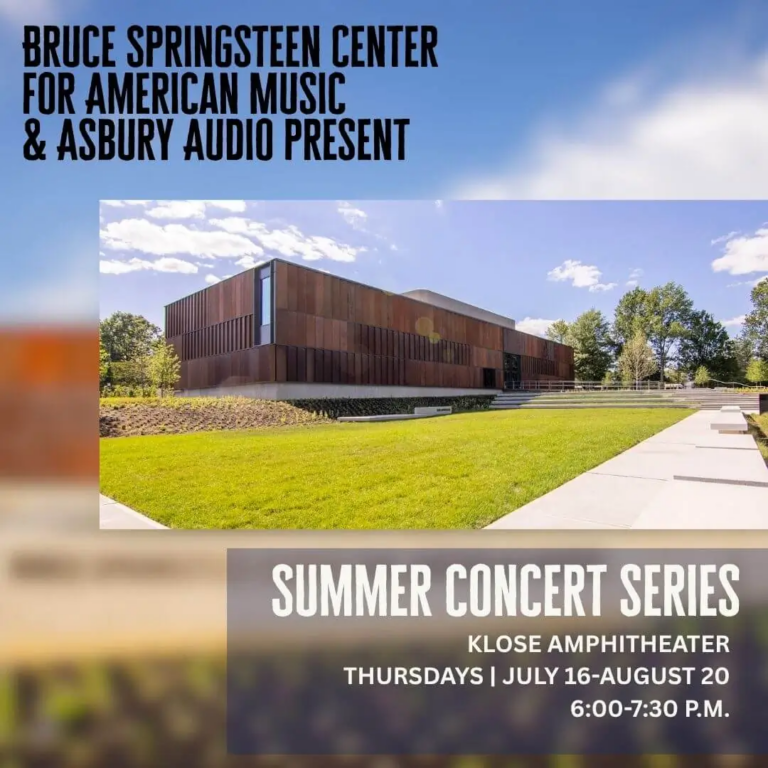
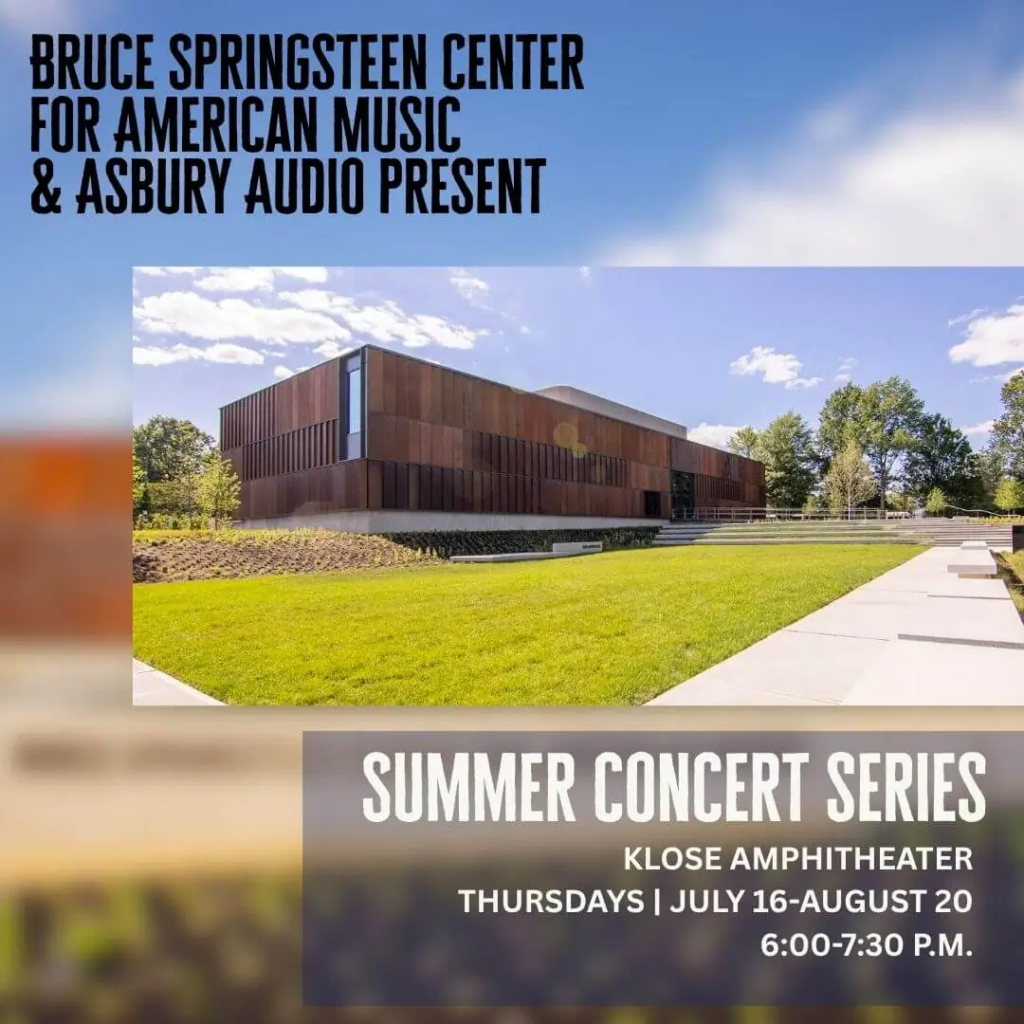
The Bruce Springsteen Center for American Music is celebrating its recent grand opening with a genuinely exciting new gift to the Jersey Shore music community, launching a brand new, completely free weekly outdoor concert series co presented with Asbury Audio. The Summer Concert Series runs every Thursday evening from 6 to 7:30 p.m., beginning tomorrow, July 16, and continuing through August 20, 2026, giving music fans a full six week run of live performances set against the backdrop of one of the Jersey Shore’s newest cultural landmarks.
The series takes place at the Klose Amphitheater, situated directly outside the newly opened 32,000 square foot Springsteen Center building on the campus of Monmouth University in West Long Branch. That location gives the concert series an especially fitting home, placing live music performances right at the doorstep of a museum built entirely around celebrating the Jersey Shore’s own musical legacy, with Bruce Springsteen’s own career serving as the institution’s namesake and central inspiration.
Given that the series was announced specifically to celebrate the museum’s recent opening, organizers are releasing the full performance lineup in waves rather than all at once. The series kicks off tomorrow, July 16, with a genuinely fitting choice of opening act, Vini “Mad Dog” Lopez and The Wonderful Winos. Lopez holds a legendary place in Jersey Shore music history as the original drummer for Bruce Springsteen’s E Street Band, making him a genuinely perfect artist to launch a concert series housed at a center dedicated to exactly the musical tradition he helped build from its earliest days. The following Thursday, July 23, brings Williams Honor to the amphitheater stage, an acclaimed country rock duo from Asbury Park whose own career carries a direct connection to Springsteen himself, having made their original stage debut performing alongside him. Remaining Thursday dates through August 20 will continue filling out with additional local and regional roots, rock, and Americana artists, giving the series a genuinely deep well of Jersey Shore musical talent to draw from across its full six week run.
For anyone planning to attend, a few practical details are worth knowing ahead of time. The concerts themselves are entirely free and open to the general public, with no pre registration or tickets required of any kind, making the series a genuinely low barrier way to experience live music at a brand new Jersey Shore venue. The amphitheater itself is set up as open lawn seating, so attendees should plan to bring their own beach chairs or blankets rather than expecting fixed seating on site.
Because the concerts happen on Thursday evenings, the Springsteen Center museum itself is extending its indoor hours until 8 p.m. on those nights specifically, giving concertgoers the option to tour the museum’s exhibits, including its current Chimes of Freedom exhibit exploring protest, patriotism, and the power of song, before the evening’s musical performance gets underway outside. It’s worth noting that while the outdoor concert series itself remains completely free, standard museum admission fees still apply for anyone who wants to head inside and explore the exhibits themselves. As with any outdoor performance series, all shows remain strictly weather permitting, so attendees should keep an eye on the forecast heading into each Thursday evening throughout the run.
With a legendary E Street Band drummer opening the series and a genuine Springsteen connected duo following the very next week, the Bruce Springsteen Center’s new Summer Concert Series offers Jersey Shore music fans a genuinely fitting way to celebrate the museum’s opening season, one free Thursday evening performance at a time, right on the grounds of the institution built to honor the music that made this stretch of the Shore famous in the first place.
Bruce Springsteen Center for American Music Launches Free Summer Concert Series at Monmouth University
July 23
@
6:00 PM
–
7:30 PM
Thursday, July 16: Kicking off the series is Vini “Mad Dog” Lopez & The Wonderful Winos. Lopez is a legendary local figure known as the original drummer for Bruce Springsteen’s E Street Band.
Music has always been at the heart of the Jersey Shore, and this summer the Bruce Springsteen Center for American Music is expanding that tradition with a brand new outdoor concert series that invites residents and visitors alike to experience live performances in one of New Jersey’s newest cultural destinations. Beginning Thursday, July 16, 2026, the Center, in partnership with Asbury Audio, will present a free weekly Summer Concert Series at the Klose Amphitheater on the campus of Monmouth University in West Long Branch.
Running every Thursday evening through August 20, the series celebrates the artists, communities, and musical traditions that have shaped New Jersey’s enduring influence on American music. The concerts are designed to create an accessible gathering place where audiences can enjoy outstanding live performances in a relaxed outdoor setting while exploring the newest addition to the state’s growing collection of cultural attractions.
The series begins with one of New Jersey’s most recognizable musical figures, Vini “Mad Dog” Lopez & The Wonderful Winos. Lopez remains an iconic part of New Jersey music history as the original drummer of Bruce Springsteen’s legendary E Street Band. His opening night performance promises to blend classic rock influences with the energy and musicianship that have made him a respected figure throughout decades of live performance.
The following Thursday, July 23, the spotlight turns to Williams Honor, the acclaimed country rock duo from Asbury Park. Known for thoughtful songwriting and polished musicianship, Williams Honor continues to build a strong following throughout the region and carries a unique connection to New Jersey’s musical heritage, having made an early career appearance alongside Bruce Springsteen. Additional performances scheduled through August 20 will showcase a rotating lineup of local and regional artists representing Americana, roots music, rock, singer songwriter traditions, and other genres that continue to define the Garden State’s vibrant music scene.
Unlike many summer concert events, the Bruce Springsteen Center’s series is completely free and open to everyone. No tickets or advance registration are required, making it one of the most accessible recurring live music events in Monmouth County this season. Guests are encouraged to arrive early, bring lawn chairs or blankets, and enjoy an evening of music in the amphitheater’s open air setting.
The concerts also provide visitors with an opportunity to experience the Bruce Springsteen Center for American Music itself. Located inside the Center’s new 32,000 square foot facility, the museum explores the broader story of American music through the lens of New Jersey’s extraordinary musical legacy. Interactive exhibits, historical collections, educational programming, and special exhibitions examine how artists have used music to reflect culture, inspire social change, and tell uniquely American stories.
Because performances take place on Thursday evenings, museum hours are extended until 8:00 PM, allowing visitors to tour the galleries before enjoying the outdoor concerts. Current exhibitions continue to explore the intersection of music, history, and American culture while highlighting the creative influences that have shaped generations of musicians.
The Klose Amphitheater offers an intimate setting where audiences can enjoy performances against the backdrop of Monmouth University’s picturesque campus. Rather than focusing on large scale production, the Summer Concert Series emphasizes musicianship, songwriting, and community, creating an atmosphere where listeners can experience live music in a comfortable and welcoming environment.
The Bruce Springsteen Center for American Music has quickly emerged as one of New Jersey’s most significant new cultural institutions. Beyond preserving the legacy of one of the state’s most celebrated artists, the Center serves as a year round destination dedicated to education, storytelling, live performance, and the continuing evolution of American music. The Summer Concert Series reflects that mission by creating opportunities for audiences to connect directly with the musicians carrying those traditions forward today.
Whether you are a lifelong Bruce Springsteen fan, someone interested in New Jersey’s remarkable musical heritage, or simply looking for an enjoyable summer evening outdoors, this concert series offers an outstanding reason to visit West Long Branch. Free admission, talented performers, an inviting outdoor venue, and access to one of the state’s newest museums combine to create an experience that highlights everything that makes New Jersey’s music scene so enduring.
For anyone planning a summer filled with concerts, cultural attractions, and memorable local experiences, the Bruce Springsteen Center for American Music Summer Concert Series deserves a place on the calendar. It is another reminder that New Jersey continues to celebrate not only its legendary musical past, but also the artists and performances shaping its future.
Bruce Springsteen Center for American Music Launches Free Summer Concert Series at Monmouth University
July 16
@
6:00 PM
–
7:30 PM
Thursday, July 16: Kicking off the series is Vini “Mad Dog” Lopez & The Wonderful Winos. Lopez is a legendary local figure known as the original drummer for Bruce Springsteen’s E Street Band.
Music has always been at the heart of the Jersey Shore, and this summer the Bruce Springsteen Center for American Music is expanding that tradition with a brand new outdoor concert series that invites residents and visitors alike to experience live performances in one of New Jersey’s newest cultural destinations. Beginning Thursday, July 16, 2026, the Center, in partnership with Asbury Audio, will present a free weekly Summer Concert Series at the Klose Amphitheater on the campus of Monmouth University in West Long Branch.
Running every Thursday evening through August 20, the series celebrates the artists, communities, and musical traditions that have shaped New Jersey’s enduring influence on American music. The concerts are designed to create an accessible gathering place where audiences can enjoy outstanding live performances in a relaxed outdoor setting while exploring the newest addition to the state’s growing collection of cultural attractions.
The series begins with one of New Jersey’s most recognizable musical figures, Vini “Mad Dog” Lopez & The Wonderful Winos. Lopez remains an iconic part of New Jersey music history as the original drummer of Bruce Springsteen’s legendary E Street Band. His opening night performance promises to blend classic rock influences with the energy and musicianship that have made him a respected figure throughout decades of live performance.
The following Thursday, July 23, the spotlight turns to Williams Honor, the acclaimed country rock duo from Asbury Park. Known for thoughtful songwriting and polished musicianship, Williams Honor continues to build a strong following throughout the region and carries a unique connection to New Jersey’s musical heritage, having made an early career appearance alongside Bruce Springsteen. Additional performances scheduled through August 20 will showcase a rotating lineup of local and regional artists representing Americana, roots music, rock, singer songwriter traditions, and other genres that continue to define the Garden State’s vibrant music scene.
Unlike many summer concert events, the Bruce Springsteen Center’s series is completely free and open to everyone. No tickets or advance registration are required, making it one of the most accessible recurring live music events in Monmouth County this season. Guests are encouraged to arrive early, bring lawn chairs or blankets, and enjoy an evening of music in the amphitheater’s open air setting.
The concerts also provide visitors with an opportunity to experience the Bruce Springsteen Center for American Music itself. Located inside the Center’s new 32,000 square foot facility, the museum explores the broader story of American music through the lens of New Jersey’s extraordinary musical legacy. Interactive exhibits, historical collections, educational programming, and special exhibitions examine how artists have used music to reflect culture, inspire social change, and tell uniquely American stories.
Because performances take place on Thursday evenings, museum hours are extended until 8:00 PM, allowing visitors to tour the galleries before enjoying the outdoor concerts. Current exhibitions continue to explore the intersection of music, history, and American culture while highlighting the creative influences that have shaped generations of musicians.
The Klose Amphitheater offers an intimate setting where audiences can enjoy performances against the backdrop of Monmouth University’s picturesque campus. Rather than focusing on large scale production, the Summer Concert Series emphasizes musicianship, songwriting, and community, creating an atmosphere where listeners can experience live music in a comfortable and welcoming environment.
The Bruce Springsteen Center for American Music has quickly emerged as one of New Jersey’s most significant new cultural institutions. Beyond preserving the legacy of one of the state’s most celebrated artists, the Center serves as a year round destination dedicated to education, storytelling, live performance, and the continuing evolution of American music. The Summer Concert Series reflects that mission by creating opportunities for audiences to connect directly with the musicians carrying those traditions forward today.
Whether you are a lifelong Bruce Springsteen fan, someone interested in New Jersey’s remarkable musical heritage, or simply looking for an enjoyable summer evening outdoors, this concert series offers an outstanding reason to visit West Long Branch. Free admission, talented performers, an inviting outdoor venue, and access to one of the state’s newest museums combine to create an experience that highlights everything that makes New Jersey’s music scene so enduring.
For anyone planning a summer filled with concerts, cultural attractions, and memorable local experiences, the Bruce Springsteen Center for American Music Summer Concert Series deserves a place on the calendar. It is another reminder that New Jersey continues to celebrate not only its legendary musical past, but also the artists and performances shaping its future.
Collingswood’s Haddon Avenue has a genuinely distinctive new food option, as Quick Bitez has officially opened inside the prominent 900 Haddon Building, bringing a healthy, grab and go convenience store concept built entirely around clean, plant based eating. The shop is the creation of Chef William Atkins, known widely as Chef Will, who spent more than 15 years building a career as a private and corporate chef before deciding to reinvent the classic corner convenience store model from the ground up.
Atkins built Quick Bitez around a simple but genuinely ambitious premise, stripping out the highly processed junk food that typically defines a corner store and replacing it entirely with clean, health conscious alternatives designed to serve people with a genuinely wide range of dietary needs. That philosophy shows up clearly across the menu itself, which centers on calorie transparent, nutrient dense, plant based meals prepared fresh rather than mass produced and shipped in from elsewhere. Grab and go options include freshly made vegan wraps, protein bowls, parfaits, fresh fruit cups, and cold pressed juices, giving customers a genuinely varied selection of clean eating options they can simply pick up and go, without needing to wait for anything to be cooked to order.
The store’s distinctive 24 Hour Vegan branding comes directly from Atkins’s curated collection of ready made, packaged vegan meals and clean ingredient snacks, built specifically for people who want genuinely intentional, diet friendly food available whenever they need it, rather than being limited to whatever happens to be open or convenient at a given moment. Beyond the walk in retail side of the business, Quick Bitez also runs a structured weekly meal prep program for customers looking for a more consistent, ongoing eating plan. The Everyday Plan offers five prepared meals per week for customers looking for a baseline level of convenient, healthy eating, while the High Performance plan steps things up considerably with ten protein focused meals designed for customers with more demanding nutritional or fitness goals.
For anyone planning to stop by the physical storefront itself, Quick Bitez keeps a fairly traditional weekday retail schedule, open Monday through Friday from 7 a.m. to 6 p.m., with the store closed entirely on Saturdays and Sundays. Customers looking for meals outside those walk in hours, or who simply prefer not to visit in person, can still place orders through online ordering, DoorDash, or Uber Eats, giving the business a genuinely flexible ordering structure that extends well beyond its physical open hours.
It’s worth understanding exactly what kind of dining experience Quick Bitez actually offers, since the concept differs meaningfully from a typical restaurant despite sharing a location inside a busy commercial building. Quick Bitez operates strictly as a grab and go convenience store rather than a traditional sit down restaurant, meaning customers walk in, select pre packaged meals directly from a cooler case, and pay at the counter, all without table service or a dedicated dining room. The best comparison is a high end, entirely vegan version of a Wawa or an airport convenience market, where everything on the shelf has been prepared fresh that same day by the chef himself, packaged, and stored in cold cases ready for immediate pickup. A customer looking for lunch can grab a chilled vegan wrap, a protein bowl, or a cold pressed juice straight off the shelf and be on their way within moments.
That format is deliberately built for speed and convenience, catering specifically to commuters and office workers based inside the 900 Haddon building and the surrounding area, who can grab their food and bring it back to their desk, home, or a nearby park rather than sitting down inside the store itself. For anyone looking for a genuinely quick, healthy lunch they can take with them, Quick Bitez offers an excellent option built specifically around that need. Diners hoping for a traditional sit down lunch experience complete with table service and a printed menu will want to look elsewhere among the other restaurants along Haddon Avenue, since that kind of leisurely dining simply isn’t what this particular concept was designed to deliver.
With its combination of chef prepared, calorie transparent food, a genuinely broad plant based menu, and the round the clock accessibility built into its own branding, Quick Bitez gives Collingswood a distinctive new option for anyone looking to eat cleanly without sacrificing the speed and convenience of a traditional corner store run.
Roxbury Township is once again at the center of a genuinely contentious federal land use fight, as the Department of Homeland Security has reversed course for a second time on whether it plans to build an immigration detention facility off Route 46 in the Morris County community. The reversal marks the latest chapter in a saga that has already produced protests, a formal township resolution, and an active lawsuit, and it arrives at a politically charged moment for the district’s congressional representative, Tom Kean Jr.
The story first surfaced around last Christmas, when reports emerged that federal officials were eyeing a vacant Roxbury warehouse as a potential ICE detention site. Those plans advanced considerably in the months that followed, with the Department of Homeland Security ultimately purchasing the warehouse outright for a reported $130 million. That purchase triggered genuine public backlash locally, with residents turning out to protest at council meetings and in the streets, eventually prompting Roxbury’s Republican controlled town council to pass a formal resolution opposing the facility. A lawsuit followed shortly after, with both the state of New Jersey and Roxbury Township named as plaintiffs challenging the project. That legal fight was placed on hold in May pending completion of an environmental study.
Weeks later, under the new leadership of Homeland Security Secretary Markwayne Mullin, the federal government reversed its position entirely, announcing there would be no ICE detention center built in Roxbury after all. Governor Mikie Sherrill responded with genuine enthusiasm, framing the reversal as another instance of New Jersey successfully pushing back against the Trump administration, drawing a direct comparison to the state’s earlier success defending funding for the Gateway Tunnel project.
That victory proved short lived. Just last week, federal officials issued yet another statement indicating plans had changed once again, putting an ICE detention center in Roxbury firmly back on the table. Roxbury Mayor Shawn Potillo responded directly on social media, reaffirming that the township’s position has remained clear and consistent throughout the entire process, committing to use every legal tool available to protect the people, property, and resources of Roxbury Township regardless of the federal government’s latest reversal. Potillo acknowledged that the news is genuinely disappointing for residents who have shown remarkable patience throughout months of uncertainty, while also making clear that the township does not know exactly what prompted Homeland Security to reconsider its position yet again, and stressed that whatever the reason, it had nothing to do with any action or request from Roxbury Township itself. The township’s lawsuit remains active regardless of the federal government’s latest position.
Asked about the situation earlier this week, Governor Sherrill offered her own theory, speculating that the federal government, having already spent $130 million acquiring the warehouse, may simply be uncertain how to proceed given that substantial financial commitment. She characterized the entire sequence of reversals as making little practical sense.
That confusion, though, may actually serve a specific political purpose, at least according to one prominent New Jersey political observer. Micah Rasmussen, director of the Rebovich Institute for New Jersey Politics, has suggested, in comments reported by Politico’s Matt Friedman, that the federal government may not genuinely intend to build an ICE facility in Roxbury at all. Instead, Rasmussen’s theory holds that raising the issue repeatedly gives Congressman Kean a fresh opportunity to publicly condemn the proposal and position himself as leading the local fight against it, a theory Rasmussen frames as speculative political analysis rather than confirmed fact.
That theory carries real weight given the political stakes involved. New Jersey’s Seventh Congressional District, which Kean represents, is widely considered the most competitive district in the state. The district leans Republican based on voter registration, yet an early poll has shown Democratic challenger Rebecca Bennett holding a lead, though that survey was conducted shortly after Bennett won her primary and during a period when Kean himself was away from Congress.
That absence adds another layer to the story. Kean only recently returned to Congress after nearly four months away, a period he has said was related to depression. His return now gives him a genuine opportunity to demonstrate renewed public engagement, and the Roxbury situation offers exactly the kind of high visibility local issue that could allow him to do so. That opportunity carries added significance given earlier criticism from Roxbury’s own town council, which released a statement several months ago suggesting that Kean, as the township’s federal representative, had not been a particularly strong advocate in the fight against the ICE facility, criticism notable in part because it came from a Republican controlled council directed at a Republican congressman.
Whether Kean seizes this renewed opportunity remains an open question. Even before his time away from Congress, Kean was not known for being especially vocal on major public issues, a pattern that has continued into this latest chapter of the Roxbury story. A call to his office seeking comment on the federal government’s latest reversal went unreturned.
The broader political backdrop extends beyond Roxbury itself as well, with President Trump recently renewing his push for the SAVE America Act at the national level, part of a wider set of policy priorities his administration continues advancing even as individual local disputes like Roxbury’s play out on their own separate track. For now, Roxbury’s residents are left waiting once again, watching a federal decision that has already reversed course twice in a matter of months, while their congressman faces a genuine test of whether his return to public life will include stepping forward on the one local issue that has already drawn direct criticism of his prior silence.
Atlantic Health Morristown Medical Center President Trish O’Keefe has been selected as Grand Marshal of the 2027 St. Patrick’s Day Parade of Morris County, an honor that brings together her decades of hospital leadership with a lifelong connection to her own Irish heritage. A third generation Irish American, O’Keefe is the daughter of Hank and Ruth O’Keefe, whose maiden name was Hennessey, with her family’s roots tracing back to County Cork on both her mother’s and father’s sides.
O’Keefe described the selection as a genuinely meaningful honor, one tied directly to a parade that celebrates Irish heritage with deep roots throughout Morris County and the surrounding region, and especially in Morristown itself, the town where she has lived and worked for many years. As grand marshal, she will lead more than 3,000 marchers down South Street in Morristown on Saturday, March 13, a parade that routinely draws between 50,000 and 70,000 spectators lining the route each year.
The Morristown parade holds genuine historical significance well beyond its size, standing as one of the largest St. Patrick’s Day parades in New Jersey and one of the oldest parades anywhere in the country. Its origins trace directly back to the brutal winter of 1779 and 1780, when General George Washington’s Continental Army endured one of the harshest encampments of the entire Revolutionary War at Jockey Hollow near Morristown. In recognition of the support his Irish militiamen provided during that difficult winter, Washington granted them the day off on March 17, an act that led directly to the very first St. Patrick’s Day parade in Morris County back in 1780, making the tradition O’Keefe now leads a genuinely direct link to the Revolutionary War era itself.
O’Keefe’s connection to the parade runs far deeper than this single honor. A member of the Irish American Association of Northwest Jersey, she has been actively involved with the parade for more than 25 years, having served in multiple roles including as a parade patron long before being named grand marshal. Her broader recognition within the Irish American community extends well beyond Morris County as well, having been named in 2022 by Irish America magazine as one of the Irish Healthcare and Lifesciences 50, a national honor recognizing Irish American leaders across the healthcare and life sciences fields. O’Keefe has spoken proudly about the values she associates with her Irish heritage, describing a deep connection to qualities like strength, perseverance, love of family, loyalty, spirituality, and a genuine ability to enjoy life.
O’Keefe’s professional career reflects a genuinely remarkable four and a half decade journey within healthcare, one that began 45 years ago when she started out as a bedside nurse. She has spent the years since dedicating herself to leadership at Atlantic Health Morristown, eventually being named president of the hospital and senior vice president of Atlantic Health in 2016. Earlier in her career, she also served for several years as Atlantic Health’s chief nurse executive, giving her direct clinical leadership experience that has clearly shaped her broader approach to hospital administration.
That leadership has earned O’Keefe substantial industry recognition over the years. She has been named to ROI-NJ’s Influencers Power list four separate times, alongside a spot on ROI-NJ’s Influencers: Women in Business, Health Care list. Over the past two years specifically, she has also earned recognition on the NJBIZ Health Care Power list, and Becker’s Hospital Review has named her one of its CNOs to Know every year from 2023 through 2026, a genuinely sustained run of national recognition within the healthcare leadership community.
For the parade committee, O’Keefe’s combination of decades long healthcare leadership and deep, sustained personal involvement in the parade itself made her a genuinely fitting choice for this year’s honor. Carl Stopper, president of the St. Patrick’s Day Parade of Morris County Inc., praised O’Keefe’s extraordinary leadership and unwavering commitment to compassionate healthcare, along with her decades of dedicated service to the people of Morristown, describing those qualities as embodying the very spirit the parade itself is built around, community service paired with genuine pride in Irish heritage. Stopper called the recognition both well deserved and deeply meaningful, and expressed genuine anticipation for celebrating O’Keefe’s accomplishments as she prepares to lead the parade down South Street this coming March.
With her selection now official, O’Keefe steps into a role that connects her own decades of hospital leadership directly to one of New Jersey’s oldest and most historically significant community traditions, one that traces its origins all the way back to General Washington’s own Continental Army and continues, nearly two and a half centuries later, to bring tens of thousands of spectators to Morristown each March to celebrate Irish heritage together.
A new Bloomfield based company is betting that clean, plant based living and genuine science education belong under the same roof, officially launching on July 14, 2026 with a genuinely distinctive dual purpose model. FlowChefs combines a whole food plant based meal prep delivery service with a specialized children’s food science STEM education program, giving New Jersey families two very different but complementary ways to build healthier habits at home.
The company’s meal delivery arm sets itself apart from the crowded vegan meal kit market through a deliberately strict ingredient philosophy. Rather than leaning on heavily processed meat substitutes the way many competing plant based meal services do, FlowChefs focuses strictly on raw, whole plant ingredients, preparing every meal completely oil free, refined sugar free, and free of any processed additives. Meals come together inside a licensed commercial kitchen under genuine chef direction, then get packaged into boxed sets and shipped directly to customers’ doors every Sunday, giving families a full week of clean eating ready to go without needing to plan or prep anything themselves. Delivery routes currently cover households across Essex and Bergen counties, with local pickup also available for residents in the City of Orange and the surrounding area, giving nearby families a lower cost alternative to full home delivery if they prefer to collect their weekly order in person.
The company’s second division takes an entirely different approach to promoting healthy eating, building a genuine STEM education program around food science specifically for middle schoolers. Rather than treating cooking classes as a simple recreational activity, FlowChefs uses the actual process of food preparation as a teaching tool for biology, chemistry, and environmental science concepts, giving kids a genuinely academic framework for understanding what happens inside their bodies when they eat. The program’s labs are built to align directly with New Jersey’s official Next Generation Science Standards, meaning students walk away with legitimate, curriculum relevant academic concepts rather than simply a fun afternoon activity disconnected from what they’re learning in school.
That academic alignment shows up clearly in how deliberately FlowChefs has designed its curriculum around real food rather than the kind of flashy, sugar and soda based experiments that typically define kids’ science classes. Instead of melting sugary candy or building a baking soda volcano, FlowChefs students work directly with real fruits, vegetables, seeds, and grains, using those actual ingredients to explore the genuine biological science behind clean eating rather than relying on artificial classroom gimmicks.
The company has tailored its STEM programming into two genuinely distinct age based tracks, each built around a different developmental stage. For the youngest participants, FlowChefs Sprouts serves children ages two through four across a six week developmental session that parents and toddlers attend together. The Sprouts program deliberately excludes any fire, knives, or actual cooking, focusing instead entirely on sensory exploration, letting toddlers touch, smell, and sort fresh, raw produce with their own hands. Through hands on activities like assembling colorful rainbow veggie dipping stations and building custom fruit skewers, the program is specifically designed to prevent picky eating and build genuinely positive sensory associations with healthy food from the earliest possible age, well before a child’s eating habits and preferences become deeply entrenched.
For older kids, the company’s Edible Science lab transforms the same kitchen space into a genuine biology and chemistry laboratory for students ages ten through fourteen. Rather than following along with a single group demonstration, students rotate independently through ten distinct, self directed learning stations, giving each participant genuine hands on control over their own experiments. Those stations cover topics including how plant cells retain water, the natural pigments responsible for a fruit or vegetable’s color, and experiments with healthy, oil free fermentation techniques, giving middle schoolers direct, tactile exposure to the actual chemistry and biology underlying the food on their plate. Beyond the pure science content, the program carries a genuine empowerment goal as well, aiming to give teenagers the confidence and practical skill to cook clean, healthy meals for themselves independently at home, rather than simply understanding the science in the abstract without ever applying it in their own kitchen.
Pricing reflects the different formats of the two programs. The toddler focused Sprouts sessions run $330 for a full six week block, while the middle school Edible Science labs operate as individual drop in sessions priced at $65 each, giving families flexibility to commit to a single session or attend multiple labs over time depending on their child’s interest and schedule.
Taken together, FlowChefs represents a genuinely thoughtful attempt to attack the same broader goal, healthier eating habits, from two completely different directions at once. Its meal delivery service gives busy adults across Essex and Bergen counties a genuinely clean, convenient way to eat well without the time commitment of daily cooking, while its STEM education programs work to instill the underlying science and confidence behind healthy eating in the next generation, starting as early as toddlerhood and continuing all the way through the critical middle school years when lifelong food habits often take their firmest shape. For a startup built entirely around the idea that health should be the foundation of everything it does, FlowChefs has built a genuinely comprehensive model, one that treats clean eating as something to both deliver ready made and actively teach from the ground up.
Vikar Technologies has announced a new integration with Plaid that brings the identity verification giant’s industry leading account opening and onboarding capabilities natively into Vikar’s own banking platform, giving the regional banks and credit unions that rely on Vikar a considerably faster, more secure way to fund new accounts and verify customer identities. The partnership represents a meaningful expansion of what Vikar’s platform can already do for the mid tier financial institutions that make up its core customer base.
Founded in 2017 and headquartered in Iselin, Vikar Technologies has built its business around solving a genuinely persistent operational headache within community and regional banking. Traditionally, when a business or individual applies for a complex commercial loan or attempts to open an institutional bank account, the process gets bogged down across fragmented internal systems, slow manual data entry, and days of back and forth compliance paperwork that can frustrate customers and slow down revenue generating relationships alike. Vikar’s platform exists specifically to unify all of those disjointed steps into a single, cloud based digital system, giving banks and credit unions a considerably more efficient way to manage the entire client relationship from first contact through ongoing account management.
The platform’s core functionality spans several genuinely essential banking operations. On the digital onboarding side, Vikar allows both individual retail consumers and multi entity commercial businesses to open and fund new financial accounts entirely digitally, removing much of the paperwork and in person friction that has traditionally defined account opening at smaller institutions. The platform also manages end to end loan origination, covering a loan’s entire lifecycle from the initial application and complex commercial underwriting process through closing, ongoing covenant tracking, and eventual renewal, giving lenders a single connected system rather than juggling separate tools across each stage of a loan’s life.
Compliance represents another core pillar of the platform, with Vikar automating the mandatory federal anti money laundering controls known as Know Your Customer and Know Your Business checks. Those automated compliance checks help institutions mitigate fraud risk securely while meeting federal regulatory requirements without needing to build out a large internal compliance staff dedicated solely to manual verification work. Rounding out the platform, Vikar has built extensive integrations with popular external financial systems, and its new partnership with Plaid stands as the latest and most significant example of that integration strategy in action. Through this new capability, Vikar embeds instant identity verification and real time bank account funding directly into its platform, allowing users to securely link their external bank accounts in a matter of seconds rather than waiting through the delays that have traditionally accompanied account verification and funding processes.
That kind of instant verification and funding capability matters enormously for the specific customer base Vikar has built its business around. The company markets its technology explicitly to mid tier financial institutions, the regional and community banks and credit unions that need to compete directly against massive multinational megabanks despite lacking the multimillion dollar internal software engineering teams those larger competitors can afford to build and maintain. By giving these smaller institutions access to the same caliber of digital onboarding, identity verification, and account funding technology that major national banks have spent years and enormous budgets developing internally, Vikar effectively levels a competitive playing field that has historically favored scale above almost everything else in retail and commercial banking technology.
Several New Jersey based financial institutions already rely on Vikar’s platform to run core parts of their own operations. Peapack Private Bank and Trust utilizes the platform to manage its commercial lending and treasury workflows, while New Jersey based BCB Bank has similarly adopted Vikar’s technology to streamline both its consumer and business account opening processes. These local implementations offer a genuine, real world proof point for exactly the kind of institution Vikar’s platform was designed to serve, community focused banks looking to modernize their digital capabilities without diverting enormous internal resources away from their core lending and deposit business.
With the new Plaid integration now built directly into its platform, Vikar Technologies is positioning its bank and credit union clients to offer exactly the kind of fast, secure, digitally native account opening experience that customers increasingly expect from any financial institution, regardless of its size. For the regional and community banks that make up Vikar’s customer base, that upgraded capability offers a genuine competitive advantage, giving smaller institutions a real shot at matching the digital experience customers have grown accustomed to at the largest national banks, without needing to build that technology from scratch themselves.
One year after bringing an entire product line back to American soil, ENSER Corporation is showing exactly how engineering expertise, hands on innovation, and genuine customization are reshaping the future of LiftTrac material handling equipment, all from a facility rooted in Cinnaminson, Burlington County. Known widely throughout the industry as ENSER Engineers, the company is a privately held industrial engineering, manufacturing, and technical staffing firm that has been in continuous operation since 1947, giving it nearly eight decades of manufacturing experience to draw on as it continues expanding its footprint within New Jersey’s industrial base.
ENSER’s own history traces back to Philadelphia, where the company originally started as a tool design shop before relocating its primary operations across the river into New Jersey in 1972. In the decades since that move, the company has steadily expanded its local infrastructure, building Cinnaminson into a genuine manufacturing and engineering hub rather than simply a regional office location. That deep New Jersey footprint puts the company squarely at the center of the state’s broader industrial identity, a role reinforced by its official status as a Preferred Resource for the New Jersey Manufacturing Extension Program. Through that partnership, ENSER collaborates directly with the state on improving workplace safety standards, strengthening supply chain logistics, and spearheading reshoring initiatives specifically designed to bring manufacturing jobs back into local New Jersey communities rather than watching that work continue drifting overseas or to lower cost states.
ENSER operates as a genuine single source partner for industrial companies, built around three distinct but tightly connected core divisions. The first, turnkey manufacturing and tooling, covers the design, construction, and fabrication of custom industrial tools, specialized manufacturing fixtures, and heavy material handling equipment. This division produced the company’s most visible recent achievement, taking over the LiftTrac product line entirely and successfully reshoring its full manufacturing operation from Arizona directly into New Jersey, a genuinely significant undertaking that required rebuilding an entire production process on new ground rather than simply relocating a few pieces of equipment.
The second division, mechanical engineering and analysis, provides end to end product design, automation engineering, and Finite Element Analysis, a computer simulation process engineers use to test exactly how complex machinery will handle real world physical stress and heat before a single physical unit ever gets built. That kind of predictive engineering work matters enormously for a product line like LiftTrac, since heavy material handling equipment has to reliably perform under genuinely demanding industrial conditions, and catching potential structural or thermal issues during the simulation phase saves considerably more time and cost than discovering them after manufacturing has already begun.
ENSER’s third division reflects something distinctive about the company’s own internal culture, a specialized engineering staffing arm built and run by engineers themselves rather than generalist recruiters. Because the company understands the technical demands of these roles from the inside, its staffing division vets and places contract or permanent mechanical, electrical, and aerospace engineers directly into heavy industry sectors including defense, aviation, energy, and medical devices, giving client companies access to genuinely qualified technical talent evaluated by people who understand exactly what the work actually requires.
The LiftTrac reshoring project brings all three of these divisions together in a single, genuinely compelling case study of what modern American manufacturing can look like when engineering expertise, staffing knowledge, and hands on production capability all operate under one roof. Rather than treating the relocation as a simple change of address, ENSER’s engineers approached the move as a genuine opportunity to re engineer the LiftTrac line for the next generation of material handling needs, applying a full year of iterative design work, customization, and manufacturing refinement to a product line that now carries the benefit of both decades of established engineering knowledge and a fresh, New Jersey based production footprint built specifically around modern manufacturing standards.
That reshoring effort fits naturally within ENSER’s broader relationship with the state’s manufacturing ecosystem. As a Preferred Resource for the New Jersey Manufacturing Extension Program, the company isn’t simply operating within New Jersey’s industrial base, it is actively helping shape the state’s broader push to bring manufacturing jobs back home, working directly alongside state officials on exactly the kind of supply chain and workplace safety improvements that make reshoring projects like LiftTrac genuinely viable in the long term rather than a one time symbolic gesture.
A full year into this reshoring effort, ENSER’s work on LiftTrac stands as a genuine proof point for what New Jersey manufacturers can accomplish when engineering rigor, technical staffing expertise, and physical production capability are all housed under a single company rather than scattered across disconnected vendors. For a firm approaching eight decades in business, the LiftTrac project represents considerably more than a single successful contract. It reflects exactly the kind of forward looking, homegrown industrial capability New Jersey’s broader manufacturing sector continues working to rebuild, one engineered, customized, and locally produced piece of equipment at a time.
New Jersey’s real estate landscape is moving on several fronts at once this month, from a significant leadership change at a growing affordable housing firm in Jersey City, to a statewide residential market defined by relentless bidding wars and surging Shore prices, to a freshly approved luxury apartment community taking shape in downtown Dover.
Restrepo & Associates Promotes James Barnett to Vice President
James Barnett has been promoted to vice president of Restrepo & Associates, stepping into a considerably larger leadership role at the affordable housing and community development firm four years after helping launch the company in the first place. In his new position, Barnett will oversee the firm’s expanding pipeline of mixed income and affordable housing initiatives across New Jersey, including a growing slate of mixed income homeownership projects taking shape in both Jersey City and South Jersey.
For founder John E. Restrepo, the promotion marks both a leadership transition and the natural next chapter of a professional relationship that has existed since the company’s founding. Restrepo has described Barnett as having been with him since the organization’s inception, and views him as representing the future of affordable housing and community development work in the state.
Among the projects Barnett will now help guide is 62 Sackett Street in Jersey City, where the firm recently secured $15 million in financing for a planned 40 unit condominium development. That mixed income project is designed to serve households earning roughly between $75,000 and $150,000 annually, placing it squarely within the income range many middle class families in Jersey City have found increasingly difficult to serve through traditional market rate housing. The firm is also advancing a second, even larger project at 311 Ocean Avenue in Jersey City’s Greenville neighborhood, where Restrepo & Associates has secured a 17,000 square foot site and plans to develop more than 50 mixed income and affordable condominium units.
Together, these two Jersey City projects reflect the firm’s broader philosophy, centered on creating genuine homeownership opportunities rather than simply expanding the rental housing stock, particularly within communities experiencing rapid development pressure and rising housing costs. Barnett has been direct about why he believes homeownership specifically needs to play a larger role in solving the state’s housing crisis, arguing that true progress comes from empowering families through homeownership so they can share directly in local economic growth rather than watching that growth benefit developers alone.
That philosophy is already visible in the firm’s completed Linden Street Homes project in Salem County, where Restrepo & Associates transformed ten abandoned properties on a distressed block into newly constructed, affordably priced homes. According to the company, those completed homes attracted buyers from across the state while returning long vacant properties to genuinely productive use. Barnett views the project as a template other municipalities, particularly across South Jersey, could replicate using their own vacant land and abandoned housing stock to attract new residents, create real homeownership opportunities, and strengthen local economies in the process.
Beyond its own development projects, Restrepo & Associates also partners with nonprofits, housing authorities, and for profit organizations pursuing affordable housing work throughout New Jersey. Barnett, working alongside a two person project management team, recently helped secure a $1.8 million award for the East Orange Housing Authority and a separate $2 million award for New Brunswick Tomorrow, funding that will support affordable housing initiatives both organizations are pursuing independently. Restrepo himself brings more than 25 years of affordable housing and community development experience to the firm, including earlier work with the Garden State Episcopal Community Development Corporation in Jersey City.
As Barnett assumes greater day to day responsibility over the company’s operations and project pipeline, Restrepo will step back into the role of Board chair, focusing his own attention on strategic growth and investment decisions going forward. Restrepo has expressed full confidence in Barnett’s ability to lead the company with both compassion and innovation as it enters this next chapter. With active projects now underway in both North and South Jersey, the leadership transition places Barnett squarely at the center of the firm’s broader effort to expand mixed income housing and homeownership opportunities across the entire state.
New Jersey’s Statewide Housing Market Remains a Bidding War Frenzy
Zooming out to the broader statewide market, New Jersey’s residential real estate scene is currently defined by an intense bidding war frenzy across its suburbs, a genuine price surge along the Jersey Shore, and aggressive new state legislation aimed at converting vacant commercial office space into desperately needed housing. Despite mortgage rates hovering in the 6 percent range, New Jersey remains one of the fastest selling housing markets anywhere in the country, a genuinely remarkable dynamic given how much higher borrowing costs have climbed compared to just a few years ago.
Commuter heavy towns across Essex and Union counties are experiencing genuinely extreme buyer competition as available inventory has effectively evaporated. Properties in towns like Maplewood and South Orange are routinely closing anywhere from 27 to 33 percent over their original asking price, numbers that reflect just how few homes are actually available relative to buyer demand in these particular commuter corridors. Along the coast, affluent buyers appear to be shrugging off elevated interest rates entirely, making Monmouth and Ocean counties the epicenter of the state’s biggest price gains. Fully half of New Jersey’s top 20 zip codes for value appreciation are located in coastal Shore towns, underscoring just how much premium buyers are currently willing to pay for coastal property despite the broader financing environment.
The statewide numbers back up that intensity. New Jersey’s average home value has climbed to $584,681, up roughly 3.3 percent year over year, while the average single family home is selling remarkably quickly, with a median of just 17 to 33 days before a listing goes pending. That kind of speed, layered on top of steep bidding war premiums in specific commuter towns, reflects a market where genuine supply constraints continue overwhelming even meaningfully higher borrowing costs.
State lawmakers have moved directly to address one piece of that supply shortage through groundbreaking legislation targeting economically stagnant commercial real estate. Under the newly advanced rules, owners of vacant suburban office parks of at least 50,000 square feet, or retail strips of at least 15,000 square feet, can now bypass local municipal zoning boards entirely in order to convert their properties into mixed use residential complexes. To qualify for that streamlined, by right conversion process, a commercial property must demonstrate a vacancy rate of at least 25 percent sustained continuously for 18 months, and any resulting development must designate at least 20 percent of its new units as legally protected affordable housing. That framework gives property owners a genuinely powerful new incentive to convert struggling commercial real estate into housing, while simultaneously guaranteeing that conversions contribute directly to the state’s affordable housing stock rather than adding only market rate supply.
On the commercial side, the market for industrial outdoor storage remains genuinely tight, with national firms including Jadian IOS and Legacy Real Estate continuing to aggressively acquire acreage in strategically located transit corridors like Franklin Township in Somerset County and Linden, land increasingly valued for fleet parking and logistics operations rather than traditional warehousing. Retail redevelopment continues moving forward as well, with the transformation of the former Monmouth Mall in Eatontown now underway, anchored by a new Whole Foods location as the centerpiece of that project’s latest phase.
Capodagli Property Company Advances Its Newest Meridia Community in Dover
Rounding out this month’s real estate news, Capodagli Property Company has received approval to move forward with its newest Meridia Living community in downtown Dover, continuing the developer’s long running strategy of building transit oriented apartment communities across New Jersey’s downtown corridors. The new Meridia community will bring luxury apartments, ground floor retail space, and upscale resident amenities to a genuinely walkable stretch of downtown Dover, extending Capodagli’s existing footprint in the Morris County town, where the company’s earlier Meridia Transit Plaza development already sits directly alongside the Dover NJ Transit train station.
That existing Dover project offers a useful preview of what residents can likely expect from this newest addition to the Meridia portfolio, having delivered more than 200 one and two bedroom units, underground parking, ground floor retail space, and amenities including a fitness center, community rooms, and dedicated party spaces, all built around direct rail access into New York City. Capodagli has built its broader Meridia Living brand around exactly this kind of transit oriented, downtown focused development strategy, with similar communities already completed in towns including Rahway, Bound Brook, West New York, Rutherford, Hackensack, Linden, and Wallington. The company’s approach consistently emphasizes walkability, direct transit access, and a genuine sense of community built into each property, a formula that has clearly resonated enough with municipalities and residents alike to justify this latest expansion into Dover’s downtown core.
Taken together, this month’s real estate developments reflect a state moving simultaneously on multiple fronts, expanding affordable homeownership opportunities through firms like Restrepo & Associates, wrestling with a red hot, supply constrained residential market from the suburbs to the Shore, and continuing to invest in exactly the kind of transit oriented downtown housing that developers like Capodagli have built their entire business model around delivering.
Downtown New Brunswick is now home to the first tangible piece of what may become one of the most significant life sciences developments anywhere in the state, as the New Jersey Innovation Hub officially opened on July 14, 2026, marking the first phase of a massive 1.5 million square foot development known as HELIX. The acronym stands for the Health and Life Science Exchange, and the broader campus has been designed from the ground up to function as a central meeting point where universities, major corporations, startups, and scientists can collaborate directly on medical research, artificial intelligence, and biotechnology, all within a single, purpose built innovation district.
The Innovation Hub itself occupies 30,000 square feet inside the campus’s first completed tower, known as H-1, and functions as a state of the art life sciences incubator managed by Portal Innovations, a venture capital and development firm that specializes in exactly this kind of shared research infrastructure. Rather than requiring an early stage biotech company to spend millions of dollars building out its own laboratory from scratch, startups can instead rent bench space directly inside the hub, gaining access to more than $2 million worth of advanced lab equipment, private office space, and direct connections to venture capital investors actively looking to fund exactly this kind of early stage research.
The hub launched with a genuinely impressive founding cohort of 16 member companies, each working on distinct, cutting edge projects spanning biotechnology, medical software, environmental technology, and life science advocacy. That opening class represents the complete initial roster for this launch phase, with Portal Innovations confirming that all 16 available slots have now been filled, though several additional companies remain in stealth mode and are expected to publicly reveal their specific medical devices and therapeutic compounds as they scale up their own lab operations inside the hub over the coming months.
The 16 founding member companies are a mix of cutting-edge biotechnology startups, medical software creators, green-tech innovators, and life science advocacy groups.
They make up the very first cohort to move into the brand-new Portal Innovations space at HELIX. The officially revealed members include:
BioNJ: New Jersey’s massive life sciences trade association, which just signed on as a primary foundational member.
Scarlet TCR: A biotech firm developing genetically engineered T-cell therapies specifically targeting human papillomavirus (HPV).
PumpKin Baby: A health-tech startup creating a specialized device that preserves frozen breast milk while actively analyzing its nutritional quality.
Thrive Genetics: A genomics company utilizing advanced DNA data to improve addiction care through early risk detection and highly personalized treatment plans.
PFA Solve: An environmental tech company developing new systems to detect, capture, and safely destroy dangerous “forever chemicals” (PFAS contaminants).
Materium Technologies: A sustainable materials company using machine learning and advanced science to develop high-performance nanocomposite films.
LeagueMed: A digital marketplace and network that connects healthcare professionals with private, vetted MedTech and Health IT investment opportunities.
Sampled: A genomics and precision medicine hub focused on helping healthcare organizations unlock the research value of biological samples and data.
Phase 1 Solutions: A clinical support company that provides hands-on guidance for first-in-human and early-stage drug development trials.
PharmaMedic: A specialized medical and regulatory consulting firm helping early biotech companies get their products safely through the FDA pipeline.
Ubuntu Research: A clinical operations company providing trial design and operational strategy support to early-stage pharmaceutical startups.
(Note: Portal Innovations has filled all 16 initial slots for the launch, with the remaining unlisted stealth-mode startups expected to publicly unveil their specific medical devices and therapeutic compounds as they scale up lab operations in the coming months). [1, 2, 3]
Among the officially revealed founding members, BioNJ, the state’s major life sciences trade association, signed on as a primary foundational member, giving the hub immediate institutional credibility within New Jersey’s broader biotech industry. Scarlet TCR is developing genetically engineered T-cell therapies specifically targeting human papillomavirus related cancers, while PumpKin Baby has built a specialized device that preserves frozen breast milk while simultaneously analyzing its nutritional quality, giving new parents a genuinely useful piece of health technology. Thrive Genetics is applying advanced DNA data toward improving addiction care through early risk detection paired with highly personalized treatment plans, and PFA Solve is tackling one of the more pressing environmental health issues of the moment, developing systems specifically designed to detect, capture, and safely destroy dangerous PFAS forever chemicals contaminating drinking water supplies.
Rounding out the founding cohort, Materium Technologies is using machine learning alongside advanced materials science to develop high performance nanocomposite films, while LeagueMed operates as a digital marketplace connecting healthcare professionals directly with vetted MedTech and Health IT investment opportunities. Sampled focuses on genomics and precision medicine, helping healthcare organizations unlock genuine research value from biological samples and associated data, and Phase 1 Solutions provides hands on clinical support specifically for first in human and other early stage drug development trials. PharmaMedic rounds out the regulatory side of the ecosystem, offering specialized medical and regulatory consulting designed to help early biotech companies navigate the FDA approval pipeline safely and efficiently, while Ubuntu Research provides clinical operations support, including trial design and broader operational strategy guidance, for early stage pharmaceutical startups still building out their own internal infrastructure.
The Innovation Hub represents only the very first visible piece of a considerably larger campus vision, one backed by a genuinely substantial public private partnership involving the state of New Jersey, Middlesex County, and several major anchor institutions. Rutgers University is moving its entire Robert Wood Johnson Medical School into this same first tower, bringing advanced Rutgers translational research teams directly into the building alongside the startups housed in the Innovation Hub itself. Perhaps even more significant for the campus’s long term identity, the legendary industrial research company Nokia Bell Labs has broken ground on plans to relocate its entire headquarters, along with a substantial 600,000 square feet of dedicated lab space, into the campus’s planned second phase, known as H-2. Beyond these two anchor tenants, major corporate partners headquartered nearby, including Johnson & Johnson and hospital network RWJBarnabas Health, are deeply embedded throughout the broader HELIX ecosystem, actively mentoring and helping fund the startups working inside the hub.
Given how many of these founding companies operate within biotechnology and medical research, a genuinely important question naturally follows regarding animal testing practices across the cohort. None of the sixteen founding startups engage in any form of testing on wildlife, and the overwhelming majority do not engage in animal testing of any kind whatsoever. Because the Innovation Hub functions primarily as an urban, early stage technology and software incubator, most of its member companies are concentrated heavily around computational data analysis, cell based laboratory research, and environmental engineering, categories of work that simply do not involve living test subjects in the first place.
For a substantial portion of the founding cohort, the absence of animal testing comes down to the basic nature of the technology itself rather than any deliberate ethical policy choice, since the underlying work has nothing to do with injecting or testing on living organisms at all. PFA Solve, for example, works exclusively with chemical systems and advanced filtration technology to safely capture and destroy PFAS contamination in drinking water, an entirely chemistry and engineering based process. Companies like Thrive Genetics and Materium Technologies rely on pure software, artificial intelligence, and existing human genome wide datasets to run virtual machine learning simulations, meaning their core research happens entirely on computers rather than in a traditional wet lab setting. PumpKin Baby similarly focuses on engineering physical hardware designed to safely preserve and analyze human breast milk, a device development process that likewise requires no animal involvement whatsoever.
A smaller subset of the cohort does rely on standard, federally required pre clinical testing methods, a genuinely necessary step for any company developing advanced medicine intended to treat serious human illness. Scarlet TCR’s work modifying human T-cells to aggressively target and destroy cervical cancer tumors represents exactly this kind of case, since verifying that these modified cells actually function correctly and destroy cancer within a complex biological system requires standard pre clinical mouse models during the earliest stages of laboratory research, a requirement the FDA mandates before any such therapy can ever be tested in human patients.
New Jersey’s own state policy reflects a genuine, deliberate priority toward reducing animal testing wherever scientifically possible. Under existing New Jersey law, any form of animal testing specifically for consumer cosmetics products is completely banned outright, one of the clearer statutory signals of the state’s broader position on the issue. Beyond that specific cosmetics ban, the state actively incentivizes startups working within its innovation ecosystem, including those housed at the new Innovation Hub, to adopt advanced non animal testing alternatives whenever federally permitted, including high tech engineered human tissue models, synthetic organoids, and increasingly sophisticated computer based modeling techniques, positioning New Jersey’s newest life sciences hub at the intersection of cutting edge medical research and a genuinely forward looking approach to research ethics.
With Rutgers relocating its medical school into the same building, Nokia Bell Labs preparing its own major campus expansion nearby, and sixteen genuinely diverse startups already at work inside the Innovation Hub itself, HELIX’s opening phase signals considerably more than a single building coming online in downtown New Brunswick. It represents the first visible step in what state and county officials clearly intend to become one of the most significant life sciences and technology hubs anywhere on the East Coast, built on a foundation that pairs genuine scientific ambition with a deliberate commitment to responsible, forward thinking research practices.
When Governor Mikie Sherrill signed New Jersey’s $60.7 billion budget for the fiscal year beginning July 1, 2026, the state’s 988 crisis hotline received flat funding of roughly $28 million, keeping the program’s existing infrastructure intact without providing any new money to expand it. That funding decision has reignited a genuinely important debate among mental health advocates, lawmakers, and fiscal policymakers over exactly how New Jersey should be paying for crisis mental health services going forward, and whether relying on the state’s annual budget process is even the right approach at all.
Understanding what flat funding actually means in practice requires separating what the $28 million allocation covers from what it deliberately leaves out. That funding represents what advocates describe as the bread and butter of New Jersey’s current 988 operations, ensuring call centers can keep answering the roughly 10,900 local calls they receive every month while also keeping the state’s mobile crisis outreach response teams operating and available. What that flat funding does not provide, though, is any new money to build the crisis stabilization centers many advocates consider the next essential step for the system. These centers would give people experiencing a severe mental health crisis a specialized place to receive care, rather than defaulting to a local hospital emergency room that may be poorly equipped to handle a psychiatric emergency and already strained by unrelated patient volume. Without new funding specifically earmarked for that expansion, New Jersey’s 988 system remains capable of maintaining its current operations but structurally unable to grow into the more comprehensive crisis response network advocates argue the state genuinely needs.
That funding gap has pushed mental health advocates and sympathetic lawmakers toward pursuing an entirely different funding mechanism, one designed to remove 988 from the yearly uncertainty of the general state budget altogether. State Senator Joe Vitale is among the lawmakers backing a pending bill that would establish a 40 cent monthly fee applied to all New Jersey phone lines, a structure deliberately modeled on how the state already funds its 911 emergency system on a permanent, dedicated basis. Under the proposal, that small telecom fee would generate an estimated $67.3 million annually, considerably more than the current flat funded budget allocation, and critically, that revenue would bypass the general state budget entirely, flowing instead into a dedicated 988 trust fund insulated from the annual political negotiations that currently determine the hotline’s funding level year to year.
Despite that funding potential, the bill has stalled amid genuine pushback within the State House. Opponents have characterized the 40 cent fee as effectively a new tax on residents already grappling with New Jersey’s notoriously high cost of living and steep property tax burden, framing even a modest per line monthly charge as one more financial obligation piled onto households already stretched thin. That characterization has proven politically potent enough to keep the bill stuck in both Assembly and Senate committees, particularly with election year dynamics making many lawmakers genuinely hesitant to support anything that could be labeled a new fee or tax, regardless of how directly the revenue would be tied to a specific, widely supported public safety service. Supporters of the bill counter that framing the fee as equivalent to a new tax overlooks how directly comparable it is to the existing 911 funding model that residents have accepted without controversy for years, and argue that a permanent, dedicated funding stream would ultimately serve residents far better than a crisis line that has to renegotiate its budget from scratch every single year.
Stepping back from the funding debate itself, the 988 Suicide and Crisis Lifeline remains the national hotline dedicated specifically to mental health emergencies, substance use crises, and other emotional crisis situations. It launched nationwide in July 2022, replacing the far more cumbersome ten digit National Suicide Prevention Lifeline with a simple, three digit number designed to be considerably easier for anyone in crisis to remember and dial quickly. Callers and texters can reach trained counselors free of charge and entirely confidentially, 24 hours a day, without triggering any automatic law enforcement involvement, a distinction that has made the service considerably more approachable for people who might otherwise hesitate to seek help during a genuine mental health emergency.
The 988 number itself belongs to a broader category of three digit shortcodes the Federal Communications Commission has designated for various forms of public use, often referred to collectively as N11 codes. Beyond 988 and the widely known 911 emergency line, several other N11 numbers serve genuinely useful, distinct purposes worth knowing. Dialing 211 connects callers to community and social services, linking residents with local resources like housing assistance, utility bill support, food pantries, and disaster relief programs. The number 311 handles non emergency municipal service requests, allowing residents to report city level issues like potholes, broken streetlights, graffiti, or missed trash pickup directly to local government without tying up emergency lines. Directory assistance remains available through 411, the traditional line for looking up local business phone numbers or residential addresses, though many providers now charge a fee for that service. Travelers can dial 511 for real time, state specific highway updates, road construction reports, transit delays, and current weather conditions affecting travel. The number 611 automatically routes callers to their own wireless or landline provider’s internal repair and billing help desk, while 711 provides a specialized Telecommunications Relay Service designed to help people who are deaf, hard of hearing, or speech disabled communicate over standard phone lines. Homeowners and contractors planning any excavation work rely on 811, the mandatory Call Before You Dig hotline used to request that underground utility lines be safely marked before digging begins. And 911 itself remains reserved strictly for immediate physical emergencies genuinely requiring police, fire, or ambulance response.
Taken together, New Jersey’s ongoing debate over how to permanently fund 988 sits within a much larger national conversation about how state governments should be building out mental health crisis infrastructure to match the same level of reliability and permanence already built into emergency services like 911. Whether New Jersey ultimately adopts the proposed phone fee, continues relying on annual flat funding, or finds some other path forward, the underlying question, how to build a crisis response system residents can count on regardless of that year’s budget politics, remains very much unresolved heading into the next legislative session.
This is a sensitive topic, and if you or someone you know is personally struggling, please reach out for support. I’m happy to help point you toward the right resources if that would be useful.
South Jersey’s most celebrated beer festival is officially back on the calendar, as the Glassboro Craft Beer Festival returns to Glassboro Town Square on Saturday, September 26, 2026. Presented by Ciconte’s Restaurant Group, the event has built a genuinely impressive national reputation over the years, having been recognized by USA Today as one of the best beer festivals anywhere in the United States, a distinction that places this South Jersey gathering among elite company on a genuinely competitive national list.
This year’s festival keeps the winning formula largely intact, taking place entirely outdoors across Glassboro’s Town Square and bringing together craft beverage enthusiasts, local businesses, and live entertainment for a full afternoon of celebration. The drink lineup itself remains the festival’s central draw, featuring nearly 100 unique craft beers pulled from more than 50 different brands and breweries spanning New Jersey and the broader Tri State region. Beer isn’t the only pour available either, since the festival also showcases local New Jersey wineries and cideries, giving attendees a genuinely well rounded tasting experience regardless of their preferred beverage.
Entertainment runs throughout the day as well, headlined by Shot of Southern, a high energy Philadelphia based country and rock cover band taking over the festival’s live music stage. Surrounding that main stage, a full lineup of regional food trucks and local artisan craft vendors will line the square, giving attendees plenty to explore between drink samples. One important note for anyone planning to attend, the festival maintains a strict 21 and older policy, with no children, toddlers, or pets permitted inside the gates under any circumstances, making this a genuinely adults only event from start to finish.
The festival runs across two distinct sessions to accommodate different types of attendees. VIP ticket holders gain access starting at noon, running through the event’s 5 p.m. close, while standard general admission attendees can enter beginning at 1 p.m., also running through 5 p.m. Organizers have set a firm last entry time of 3:30 p.m. for anyone arriving later in the day, and pouring stops entirely at 4:45 p.m., giving attendees a clear window to plan around whether they’re aiming for the full VIP experience or a shorter general admission visit.
Tickets are available for purchase in advance through the festival’s official online ticket platform, with several distinct options depending on how attendees want to experience the day. VIP tickets, priced around $75, include early entry at noon, allowing ticket holders to beat the lines that typically build up ahead of the general admission start time, along with unlimited two ounce samples across a full five hour window, a commemorative lanyard, and a custom festival pilsner cup to take home. General admission tickets offer standard entry starting at 1 p.m., unlimited two ounce samples across a four hour tasting window, and a complimentary souvenir tasting glass. For anyone attending without plans to drink, whether serving as a designated driver or simply preferring to enjoy the festival’s other offerings, non drinking tickets priced at $20 provide complete access to the festival grounds, live music, food trucks, and craft vendors, though without a tasting glass or any alcohol sampling access included.
With its combination of a nationally recognized reputation, a genuinely deep lineup of nearly 100 craft beers alongside local wine and cider options, and a full day of live music and food trucks surrounding it all, the Glassboro Craft Beer Festival continues to stand out as one of South Jersey’s premier annual gatherings for craft beverage fans. Anyone hoping to attend this September should plan to secure tickets well ahead of time through the official Glassboro Craft Beer Festival ticket platform, particularly given the event’s track record of drawing enthusiastic crowds from across New Jersey and the broader Tri State region year after year.
Glassboro Craft Beer Festival Returns to South Jersey With Award Winning Brews, Live Entertainment, and One of New Jersey’s Premier Fall Events. Every autumn, thousands of craft beverage enthusiasts make their way to Gloucester County for one of New Jersey’s most anticipated beer celebrations. The Glassboro Craft Beer Festival has established itself as one of the Garden State’s signature tasting events, bringing together breweries, wineries, cider producers, local food vendors, artisans, and live entertainment for a full day dedicated to celebrating the region’s thriving craft beverage culture.
Scheduled for Saturday, September 26, 2026, the festival returns to Glassboro Town Square, where the heart of downtown is transformed into an outdoor destination filled with tasting stations, live music, specialty food, and a vibrant community atmosphere. Organized by the Ciconte’s Restaurant Group, the festival has earned a reputation well beyond New Jersey, attracting visitors from throughout the Northeast while receiving national recognition as one of America’s premier craft beer festivals.
What distinguishes the Glassboro Craft Beer Festival is both its scale and its commitment to showcasing a diverse collection of producers. Festival attendees can sample nearly 100 different craft beverages representing more than 50 breweries and beverage makers from New Jersey and across the Tri State region. From hop forward India Pale Ales and crisp lagers to rich stouts, seasonal specialties, barrel aged selections, fruit beers, and limited releases, the event offers something for virtually every palate.
Beer may be the festival’s primary attraction, but it is far from the only one. New Jersey wineries and regional cider producers also participate, giving guests the opportunity to explore locally crafted wines and hard ciders alongside the extensive beer offerings. This broader beverage selection reflects the continued growth of New Jersey’s craft alcohol industry, which has expanded significantly over the past decade and continues to gain national attention for both quality and innovation.
The festival experience extends well beyond the tasting tents. Throughout the afternoon, visitors can enjoy live performances from Shot of Southern, the energetic Philadelphia based country and rock cover band that headlines this year’s entertainment lineup. Their high energy performance helps create an atmosphere that feels as much like an outdoor music festival as a craft beer event, encouraging guests to relax, socialize, and enjoy the day between tastings.
A wide variety of food vendors and food trucks will also line Glassboro Town Square, offering everything from classic festival favorites to gourmet specialties designed to pair perfectly with the day’s beverage selections. Local artisan vendors add another layer to the experience, showcasing handcrafted goods, specialty products, and unique merchandise that celebrates the creativity of South Jersey’s small business community.
For guests seeking the fullest festival experience, VIP admission begins at 12:00 p.m., providing an additional hour of exclusive access before general admission opens. Early entry allows visitors to explore participating breweries with shorter lines while enjoying five hours of unlimited two ounce tasting samples. VIP ticket holders also receive a commemorative festival pilsner glass and event lanyard.
General admission begins at 1:00 p.m., offering four hours of unlimited two ounce tastings along with a souvenir festival tasting glass. Festival organizers encourage guests to arrive early to maximize the experience, as final entry is scheduled for 3:30 p.m., with the final pours concluding at 4:45 p.m.
Recognizing that not every guest intends to sample alcoholic beverages, the festival also offers designated driver and non drinking admission. These tickets provide full access to the festival grounds, live entertainment, artisan vendors, and food offerings while supporting responsible transportation and encouraging groups to attend together safely.
Because the event focuses exclusively on alcoholic beverage tastings, the festival maintains a strict 21 and older admission policy. Children, infants, and pets are not permitted inside the event, helping organizers provide a safe and enjoyable experience for all attendees.
The Glassboro Craft Beer Festival has become an important showcase for New Jersey’s expanding craft beverage industry. Independent breweries, wineries, and cider producers continue to play an increasingly significant role in the state’s tourism economy, drawing visitors who appreciate locally made products, innovative brewing techniques, and opportunities to meet the people behind their favorite beverages. Events like this not only introduce attendees to new producers but also strengthen connections between local businesses and the communities they serve.
Its location in Glassboro adds another dimension to the experience. Easily accessible from throughout South Jersey, Philadelphia, and surrounding communities, the downtown setting creates a walkable festival environment where visitors can explore the town while enjoying one of the region’s largest outdoor tasting events.
Whether you are a longtime craft beer enthusiast, an occasional wine lover, or someone simply looking for one of New Jersey’s premier fall festivals, the Glassboro Craft Beer Festival delivers an outstanding combination of exceptional beverages, live entertainment, local food, artisan vendors, and community spirit. With hundreds of tasting opportunities, an energetic atmosphere, and a reputation built over years of successful events, it continues to stand among the Garden State’s most anticipated annual celebrations and remains one of South Jersey’s signature destinations for craft beverage enthusiasts each autumn.
New Jersey Devils fans have a genuine reason to circle their calendars this week, as the Hughes brothers head to Fanatics Fest NYC alongside a lineup of more than 500 athletes and celebrities descending on the Javits Center for four straight days of live sports culture. Running July 16 through 19, the festival bills itself as the world’s number one sports fan festival, and this year’s edition gives Devils fans a genuinely rare chance to meet their favorite players in person, alongside a franchise legend making a special appearance of his own.
Devils great Ken Daneyko, a three time Stanley Cup champion whose name remains synonymous with the franchise’s championship era, will host a free photo opportunity for fans on Sunday, July 19, giving longtime supporters a chance to meet one of the most beloved figures in team history without needing to buy anything extra to participate. Beyond that appearance, the broader festival promises live podcasts and panel discussions, exclusive merchandise and memorabilia available for purchase, immersive fan activations, and a steady stream of autograph and photo opportunities spread across the full four day run, giving Devils fans plenty of reasons to make the trip into the city alongside supporters of every other major sport and franchise.
The timing of this fan focused celebration could hardly feel more fitting, given just how eventful New Jersey’s offseason has already become under new general manager Sunny Mehta. Since taking over the front office, Mehta has brought a genuinely aggressive, analytics driven approach to roster construction, and the results have made for one of the more chaotic and exciting starts to July that Devils fans have experienced in years.
The single biggest move of the offseason so far was the blockbuster trade sending goaltender Jacob Markstrom and forward Angus Crookshank to the Florida Panthers. In return, New Jersey landed a genuinely substantial package, including forwards Evan Rodrigues and Jesper Boqvist, the latter returning to the organization after previously suiting up for New Jersey, along with prospect Ben Steeves. With Markstrom now gone, the Devils moved quickly to fill the crease, signing veteran goaltender David Rittich to a one year, $1 million contract, setting up a genuinely unconventional three way goaltending rotation alongside Jake Allen and newly extended young netminder Nico Daws.
Beyond the goaltending shakeup, New Jersey moved to lock down its core leadership for the long term, signing captain Nico Hischier to a massive five year contract extension worth $11.7 million annually. That extension cements Hischier as a foundational piece of the franchise’s future, standing alongside fellow young star Jack Hughes as the two players New Jersey is clearly building its next era of competitive hockey around.
The blue line underwent its own genuinely radical transformation as well. In a stunning, high stakes trade, New Jersey dealt young star defenseman Simon Nemec and forward Maxim Tsyplakov to the Calgary Flames, receiving in return two conditional first round draft picks, a 2026 second round pick, and defenseman Etienne Morin. That trade alone reshaped New Jersey’s long term draft capital considerably, giving the front office genuine flexibility to keep reshaping the roster in future seasons. The Devils didn’t stop there on defense either, signing 25 year old defenseman Vladislav Kolyachonok to a one year deal and separately trading for defenseman Declan Chisholm, giving the blue line a genuinely different look heading into the new season compared to where it stood just weeks earlier.
New Jersey’s prospect pipeline received its own significant boost as well, with top defensive prospect Anton Silayev officially signing his entry level contract. The towering six foot six Russian defenseman has generated real anticipation within the organization, and there’s genuine belief that he could see NHL ice time sooner rather than later given the level of talent he’s already shown at a young age.
Perhaps the single most eye catching storyline of the entire offseason, though, was Mehta’s decision to tender a $4.775 million offer sheet to Utah Hockey Club restricted free agent center Barrett Hayton, a genuinely rare and aggressive front office maneuver that sent real shockwaves through the league. Utah ultimately chose to match the offer, keeping Hayton on its own roster rather than letting him head to New Jersey, but the mere attempt proved something important about the direction of the new look Devils front office. Mehta and his staff are clearly willing to play ruthlessly and pursue talent through even the league’s rarest roster building tools, rather than settling for a more conventional, cautious approach to team building.
Taken together, this stretch of moves reflects a franchise genuinely being remade in real time, from a complete overhaul of the goaltending situation to a reshaped blue line, a locked in captain, a promising young prospect officially signed, and a league shaking offer sheet attempt that fell just short. For Devils fans heading into New York City this week for Fanatics Fest, the timing could hardly be better. Between meeting the Hughes brothers, getting a photo with franchise legend Ken Daneyko, and following an offseason that has already delivered this much drama before training camp has even begun, there has rarely been a more exciting moment to be a New Jersey Devils fan.
Philadelphia’s crowd came out in force last night hoping to watch one of their own claim the title, but it was St. Louis Cardinals slugger Jordan Walker who walked away with the crown, outslugging Phillies fan favorite Kyle Schwarber in the final round to win the 2026 Home Run Derby at Citizens Bank Park. Walker’s victory carries genuine historical weight beyond simply winning in front of a hostile road crowd. He became the first player in Cardinals franchise history to win the Home Run Derby, and at his current age, he stands as just the fifth youngest player ever to claim the title in the event’s long history.
Schwarber entered the derby as the unmistakable hometown favorite, and Philadelphia’s crowd made that clear throughout the night, cheering every one of his swings while directing considerably rowdier energy toward the visiting sluggers standing between him and the title. Walker, for his part, showed no signs of being rattled by that hostile environment, methodically working through the bracket and ultimately outlasting Schwarber directly in the championship round, a genuinely difficult feat given how loudly the Citizens Bank Park crowd was pulling against him all night. Schwarber was one of two Phillies representatives who took part in this year’s eight player derby field, giving the home crowd extra reason to invest emotionally in the outcome even after Walker’s win denied them the storybook local finish they were hoping for.
Walker’s win adds a genuinely compelling new chapter to the Home Run Derby’s broader history, a competition that has produced plenty of memorable moments across nearly every era of the sport. Fans still talk about Vladimir Guerrero Jr.’s dramatic 2023 showdown against Randy Arozarena, a back and forth slugfest that remains one of the most electric derby finals in recent memory, while Aaron Judge’s derby performance during his own historic rookie season remains a similarly unforgettable moment for Yankees fans. Every franchise carries its own signature derby memory at this point, and Walker’s win in front of a Philadelphia crowd desperate to see Schwarber take the crown instead now stands as a defining moment for the Cardinals organization specifically.
For fans who wanted to dig deeper into exactly how those long balls were produced, Statcast tracked every single swing throughout the night, providing real time distance and exit velocity metrics for each home run hit across the entire field. That level of granular detail has become a genuine part of the modern derby experience, giving fans watching from home the same kind of advanced data that used to be reserved strictly for team analytics departments, now presented directly alongside the broadcast itself for anyone following along.
This year’s derby also carried its own bit of broadcasting history. Rather than airing through a traditional cable sports network, the event streamed exclusively on Netflix, marking a genuinely significant shift in how one of baseball’s most popular offseason spectacles reaches its audience. That streaming exclusive gave the event a considerably different viewing experience than derbies of years past, and highlights from the night are already being packaged for fans who want to revisit the best moments, including Walker’s own derby clinching swings and Schwarber’s own impressive run through the bracket before ultimately falling just short in the final.
Placed against the full sweep of Home Run Derby history, stretching all the way back to the event’s inaugural running in 1985, this year’s Citizens Bank Park final adds a genuinely fresh chapter to an event that has evolved considerably since its earliest years. What began as a comparatively modest offseason exhibition has grown into one of the most closely watched single night spectacles in the entire sport, complete with Statcast powered analytics, exclusive streaming rights, and now a first ever Cardinals championship courtesy of Jordan Walker’s performance in front of a Philadelphia crowd that came desperately close to seeing one of its own take home the title instead.
2026 T-Mobile Home Run Derby: Stats and Facts
Jordan Walker wins it
Cardinals had zero Derby titles before Monday, and only one previous runner-up finish: Albert Pujols, who lost to Garret Anderson in 2003.
Pujols was on hand Monday night as part of the Netflix broadcast crew.
Walker was 1 year old when Pujols finished second in 2003 (Walker born May 22, 2002).
Walker was 24 years, 52 days old on Monday, making him the 5th-youngest champion in Derby history:
Juan Gonzalez, 1993 — 23 years, 265 days
Juan Soto, 2022 — 23 years, 266 days
Ruben Sierra, 1989 — 23 years, 277 days
Wally Joyner, 1986 — 24 years, 28 days
Jordan Walker, 2026 — 24 years, 52 days
Cardinals were one of 9 franchises without a Derby title. 8 remain heading into 2027 at Wrigley Field: Astros, Braves, Guardians, Padres, Pirates, Rays, Rockies, Royals.
Schwarber nearly becomes hometown hero
Schwarber nearly became the 4th player to win the Derby at his home stadium (last done by teammate Bryce Harper, Nationals, 2018).
Hit 11 home runs in the final round, first to go.
Combined for 30 home runs across three rounds, averaging 417 feet, topping out at 461 feet.
Would have been the 3rd Phillies player to win the Derby, joining Bobby Abreu (2005) and Ryan Howard (2006).
New Jersey came remarkably close to hosting even more of this summer’s FIFA World Cup than it ultimately did. The state actually bid aggressively to host a semifinal match in addition to the final itself, but FIFA reshuffled the tournament bracket during the final scheduling phase, ultimately sending semifinal hosting duties elsewhere. Even without that semifinal slot, though, New Jersey walked away with a genuinely massive share of the tournament. MetLife Stadium, officially rebranded as New York New Jersey Stadium for the duration of the World Cup, secured eight total matches across the tournament, a total tied with Los Angeles and Miami for the second most games hosted by any single stadium anywhere in the world, sitting just one match behind Dallas’s tournament leading slate of nine.
That eight game run built steadily toward this weekend’s ultimate prize. The stadium hosted five group stage matches on June 13, June 16, June 22, June 25, and June 27, followed by a single Round of 32 match on June 30 and a Round of 16 match on July 5. That entire sequence has been building directly toward the World Cup Final itself, scheduled for this Sunday, July 19, at the very same East Rutherford stadium. So while Atlanta and Dallas got to host this week’s midweek semifinal spotlight, New Jersey ultimately lands the tournament’s single biggest stage, the final match and trophy presentation, right here at home this Sunday.
With the actual World Cup Final taking place inside MetLife Stadium itself, New Jersey fans have a genuinely exciting range of ways to soak in the atmosphere without needing to travel far at all. Several well established local spots across the state are stepping up with independent, high energy watch parties built specifically for Sunday’s final, giving fans plenty of reason to celebrate right here in the Garden State.
Baseline Social Redefines the Modern Sports Bar Experience at Fort Monmouth with Dining, Entertainment, and Interactive Games Under One Roof. The evolution of the American sports bar has accelerated in recent years, with guests seeking more than a place to simply watch the game. Today’s visitors want exceptional food, premium cocktails, interactive entertainment, flexible event spaces, and an atmosphere that encourages them to stay long after the final whistle. Few destinations in New Jersey capture that evolution as completely as Baseline Social, the expansive sports bar, restaurant, and entertainment venue located in the heart of the redeveloped Fort Monmouth district in Oceanport.
Occupying more than 17,000 square feet at 675 Oceanport Way, Baseline Social has quickly established itself as one of the state’s premier destinations for sports fans, families, corporate gatherings, and groups looking for an entertainment experience that extends well beyond traditional dining. Designed as a modern social hub, the venue blends high definition sports viewing, interactive gaming, elevated American cuisine, craft cocktails, and flexible event space into a destination that appeals to guests throughout the day and well into the evening.
D’Arcy’s Tavern has proudly branded itself as the Jersey Shore’s home to soccer, and Sunday’s final looks set to prove exactly why. The venue is opening every dining room, both indoor bars, and its full outdoor parking lot tent, backed by mobile beverage trailers and outdoor food operations running throughout the entire day, giving fans genuinely comprehensive indoor and outdoor viewing options under one roof.
As anticipation continues building for the 2026 FIFA World Cup Final, D’Arcy’s Tavern is once again preparing to showcase why it has become one of New Jersey’s most respected soccer pubs. With expanded viewing areas, additional food and beverage service, outstanding Irish cuisine, exceptional hospitality, and an atmosphere that captures the excitement of the world’s biggest sporting event, the tavern is poised to deliver an unforgettable championship day experience.
Whether visitors arrive to watch the World Cup, enjoy authentic Irish comfort food, sample an expertly poured pint of Guinness, or simply experience one of the friendliest gathering places along the Jersey Shore, D’Arcy’s Tavern continues to prove that great pubs are defined not only by their food and drinks, but by the communities they bring together.
This well known soccer haven on Brighton Avenue is teaming up with its sister restaurant, Chupacabra Taqueria, to transform the surrounding area into a genuine outdoor block party for the final. Expect outdoor screens paired with food trucks lining the street, giving the match a genuinely festival like atmosphere well beyond a standard bar setup.
What truly distinguishes Jack’s Goal Line Stand is its ability to transform major sporting events into full scale community celebrations. That tradition continues with this year’s FIFA World Cup Final.
For the championship match, Jack’s is expanding well beyond its already sizable indoor footprint by partnering with neighboring sister restaurant Chupacabra Taqueria to create a large outdoor viewing experience in the heart of Long Branch’s West End district. Mobile bars, outdoor projection screens, additional seating, and local food vendors will help accommodate what is expected to be one of the largest sports gatherings of the summer along the Jersey Shore.
Rather than simply watching a match inside a restaurant, guests become part of an outdoor festival atmosphere where thousands of passionate soccer supporters can celebrate together in one of New Jersey’s most vibrant sports communities. The event reflects how Jack’s continues to evolve while maintaining the welcoming personality that has defined the establishment for years.
For fans who want their World Cup Final experience paired with actual water views, The Pig and Parrot Sandbar is bringing back its specialized LED video truck to its marina property, letting fans watch the match directly on the water in a setting few other local venues can match.
For visitors searching for one of the Jersey Shore’s premier waterfront destinations, The Pig and Parrot Sandbar delivers exactly what many hope to find when visiting the coast. It offers quality dining, vibrant nightlife, outstanding river views, welcoming hospitality, and an unmistakable island inspired atmosphere that makes every visit feel like a small escape. Whether arriving by boat, by car, or simply following the sound of live music along the Manasquan River, guests will discover one of Monmouth County’s most memorable waterfront gathering places, where great food, coastal scenery, and Jersey Shore hospitality come together in one unforgettable setting.
For fans chasing unmatched cultural energy rather than a typical sports bar atmosphere, Paterson’s own soccer corridor offers something genuinely distinctive. Spots like Saj Palestine on Broadway are hosting massive indoor and outdoor viewing parties paired with specialized menu offerings built around the day, backed by exactly the kind of intense, passionate community fan turnout that has made Paterson one of the state’s most authentic soccer watching destinations.
BlueClaws to Host Ocean County’s Official World Cup Final Watch Party, With a Free Soccer Skills Day for Kids
The Jersey Shore BlueClaws are teaming up with Ocean County Tourism to host a genuinely special day at ShoreTown Ballpark this Sunday, July 19, combining a free public watch party for the World Cup Final with a complimentary soccer skills day built specifically for kids between the ages of 6 and 13. Run in partnership with New Jersey Youth Soccer and Every Kick Counts, the event gives Ocean County families a chance to celebrate the tournament’s biggest match of the summer while giving young players a genuine hands on soccer experience earlier in the same afternoon.
The entire event is free to attend, though families hoping to have their child take part in the on field skills clinic specifically need to pre register ahead of time through the event’s registration link. Space in the clinic itself is genuinely limited, and organizers are encouraging interested families to sign up as early as possible rather than waiting until the last minute. Walk ins will only be accepted into the clinic based on whatever availability remains on the day, though every fan is welcome to attend and watch the match itself regardless of whether their child registered for the skills portion. One important logistical note for participating families, cleats of any kind are prohibited on the field, meaning kids taking part in the clinic need to wear sneakers instead.
The clinic itself will be led by instructors from New Jersey Youth Soccer alongside additional coaches from the local area, running through a full rotation of skill building stations covering shooting, passing, dribbling, and juggling, along with a genuinely fun dizzy bat shooting contest designed to add a playful, slightly chaotic twist to the standard drill format. Every participant walks away with a participation medal at the end, giving kids a tangible keepsake from their afternoon on the field regardless of their skill level coming in.
The day’s schedule runs on a tight but well organized timeline. Gates open and the skills day begins at 1 p.m., running through 2:45 p.m., giving young players a solid hour and forty five minutes on the field before the main event takes over. The World Cup Final itself kicks off at 3 p.m., broadcast on the BlueClaws‘ own 1,854 square foot video board, giving fans a genuinely massive screen to watch the tournament’s championship match unfold.
BlueClaws General Manager Bob McLane described the day as a genuinely special moment for the organization, noting how exciting it has been for everyone involved to see the World Cup come to the United States and specifically to the local region, and expressing real enthusiasm about being able to show the final on the team’s own video board. Between the match itself and the skills day running beforehand, McLane framed the combination as shaping up to be an especially memorable day at ShoreTown.
Ocean County Commissioner Jennifer Bacchione echoed that sentiment, framing the World Cup as one of the largest sporting events anywhere in the world and expressing genuine excitement about bringing that same energy directly to Ocean County. Bacchione pointed to the partnership with the BlueClaws as exactly the kind of collaboration that creates real opportunities for residents and visitors alike to come together, celebrate the world’s game, and experience what makes Ocean County such a distinctive destination in its own right. She extended an open invitation to anyone in town for the match or simply spending the weekend at the Shore, expressing hope that the event inspires visitors to explore everything the county has to offer, and looked forward to welcoming fans on July 19 for what she expects to be a genuinely unforgettable evening, one that shows why Ocean County remains a place worth visiting well beyond the final whistle.
Evan Dabby, Chief Executive Officer of New Jersey Youth Soccer, spoke to exactly why this kind of event matters so much for the broader soccer community. Dabby described the partnership with the BlueClaws as a natural fit for bringing World Cup excitement directly to ShoreTown, framing the day as precisely the kind of community celebration that makes the tournament feel special, families coming together, young players getting to see the sport represented on a genuinely big stage, and new fans experiencing soccer in a welcoming, accessible environment. Dabby expressed real enthusiasm about supporting the clinic and helping create a memorable day for players, families, and soccer fans throughout the Jersey Shore region.
Beyond the soccer clinic and the final itself, the day includes plenty of additional entertainment for families looking to make a full afternoon of it. Free inflatable rides and games will be set up around the ballpark’s warning track and portions of the concourse, giving younger siblings or non soccer playing kids their own activities to enjoy throughout the day. Food and drink will be available for purchase at the BlueClaws‘ concession stands, and both the Boardwalk and the BlueClaws Mini Golf Course will remain open throughout the event, with game tickets and mini golf rounds available for purchase for families looking to extend their visit even further.
The BlueClaws have built their reputation as the Jersey Shore’s top destination for affordable, family friendly entertainment, a reputation reinforced by the team’s recent milestone of welcoming its 9 millionth fan through the gates at ShoreTown Ballpark. Tickets for all remaining games throughout the season remain on sale, available either by phone or online. New Jersey Youth Soccer, the organization co hosting Sunday’s skills clinic, brings genuine depth and credibility to the event as well. The 501 c 3 nonprofit, affiliated with both U.S. Youth Soccer and the U.S. Soccer Federation, represents more than 100,000 players ranging from ages 5 to 19, supported by more than 10,000 coaches and thousands of additional volunteers statewide. The organization runs recreational and travel soccer programs across multiple skill levels, operates an Olympic Development Program, hosts major tournaments including the National Championship Series, Presidents Cup, and Challenge Cup, provides coach and referee training and certification, and runs TOPSoccer, a dedicated program designed specifically for children with disabilities.
With a genuinely packed schedule blending hands on youth soccer instruction, a massive video board showing the World Cup Final itself, and a full slate of additional family entertainment, the BlueClaws and Ocean County Tourism have built Sunday’s event into considerably more than a simple watch party. For Ocean County families, July 19 offers a rare chance to combine a meaningful youth soccer experience with the excitement of the tournament’s single biggest match, all within a single afternoon at ShoreTown Ballpark.
World Cup Fever Comes to Bound Brook as Brook Arts Center Hosts Free 2026 FIFA World Cup Final Watch Party. There are few sporting events capable of bringing together entire communities quite like the FIFA World Cup Final. Every four years, billions of viewers around the globe tune in to witness soccer’s biggest championship match, creating a shared experience that transcends borders, languages, and generations. On Sunday, July 19, soccer fans throughout Central New Jersey will have an opportunity to experience that excitement together when the historic Brook Arts Center in Bound Brook opens its doors for a free public watch party celebrating the 2026 FIFA World Cup Final.
Beginning at 3:00 p.m., the Brook Arts Center will transform its historic theater into one of New Jersey’s premier viewing destinations for the world’s most watched sporting event. Instead of watching from home, fans will be surrounded by fellow supporters, creating the electric atmosphere that makes championship matches unforgettable. Every goal, every save, every dramatic moment, and every celebration becomes even more memorable when experienced alongside hundreds of passionate soccer enthusiasts.
The 2026 FIFA World Cup represents a landmark moment in international sports history. Hosted across North America, the expanded tournament has captured unprecedented attention throughout the United States, helping introduce millions of new fans to the excitement, strategy, and global traditions that have made soccer the world’s most popular sport. Communities across New Jersey have embraced the tournament from its opening matches through the knockout rounds, making the championship game one of the most anticipated sporting events of the summer.
The Brook Arts Center provides a unique setting for this community celebration. Located in the heart of downtown Bound Brook, the historic theater has long served as a cultural centerpiece for Somerset County, hosting concerts, theatrical performances, films, comedy shows, community events, and special presentations throughout the year. For one afternoon, its historic auditorium will become a gathering place where sports and community intersect, allowing fans to enjoy the World Cup Final in a venue that offers far more character than a traditional sports bar or living room.
Admission to the event is completely free, making it accessible for families, longtime soccer supporters, casual fans, and anyone interested in experiencing one of the world’s premier sporting spectacles. Whether attendees have followed every match of the tournament or simply want to witness the championship, the event welcomes everyone looking to become part of an energetic and memorable afternoon.
Guests will also have access to a full selection of concessions throughout the event. Snacks, soft drinks, alcoholic beverages, and refreshments will be available for purchase, allowing visitors to settle in comfortably while enjoying every minute of the match. The combination of stadium style excitement, theater seating, and convenient food and beverage options creates an atmosphere designed for an immersive viewing experience from kickoff through the final whistle.
Accessibility is another advantage of the event. Free parking will be available at the Bound Brook Transit Lot, located at 300 East Main Street, only a short walk from the Brook Arts Center. The convenient location makes it easy for residents from throughout Somerset County and neighboring communities to attend without worrying about parking fees or complicated transportation logistics.
One of the defining characteristics of the FIFA World Cup has always been its ability to unite people from every background. Throughout New Jersey, one of the nation’s most culturally diverse states, the tournament carries particular significance. Fans representing countries from every continent proudly wear their national colors, celebrate their heritage, and share in a global event that has become as much about community as competition. Events like this watch party capture that spirit by bringing together neighbors who may support different teams but share the same appreciation for the world’s game.
The atmosphere inside the Brook Arts Center promises to reflect the passion normally found inside the world’s greatest soccer stadiums. Supporters are encouraged to wear their favorite national team jerseys, wave flags, gather with friends and family, and celebrate the championship in a setting designed to showcase every dramatic moment on the big screen. The cheers after a spectacular goal, the tension during a penalty kick, and the excitement of crowning a new world champion are all amplified when shared with an enthusiastic crowd.
For many younger fans, the 2026 FIFA World Cup will serve as the tournament that inspires a lifelong love of soccer. Watching the championship in a theater filled with energy and anticipation creates lasting memories while introducing a new generation to the excitement that has captivated billions of people around the world for decades.
The Brook Arts Center continues to demonstrate its commitment to serving as more than simply a performing arts venue. By opening its doors for major community events like the World Cup Final, the theater reinforces its role as an important gathering place where residents can celebrate cultural milestones, entertainment, and internationally significant moments together.
As the countdown to kickoff continues, the Bound Brook community is preparing for an afternoon that promises excitement, camaraderie, and world class competition. Whether you are a devoted supporter who has followed every match, a casual fan looking to experience the excitement firsthand, or a family searching for a memorable community event, the Brook Arts Center offers an exceptional opportunity to witness soccer history in one of Central New Jersey’s most distinctive venues.
When the final whistle blows and a new world champion is crowned, everyone inside the Brook Arts Center will have experienced more than simply watching a game. They will have shared in one of the greatest traditions in international sports, surrounded by fellow fans in a historic New Jersey landmark that continues to bring communities together through unforgettable events. On July 19, Bound Brook will become one of the Garden State’s gathering places for the world’s biggest sporting celebration, proving once again that great moments are always better when they are experienced together.
The Stone Pony Celebrates Summer at the Jersey Shore With Live Music, Soccer, and Unforgettable Experiences. Summer has always belonged to the Jersey Shore, and few venues have defined that tradition quite like The Stone Pony in Asbury Park. Known internationally as one of New Jersey’s most celebrated live music destinations, The Stone Pony continues to bring together concerts, community events, and unforgettable experiences that attract visitors from across the Garden State and beyond. This summer, the legendary venue adds another exciting chapter to its long history by welcoming soccer fans for a special viewing party celebrating one of the biggest sporting events on the planet while continuing its acclaimed Summer Stage concert season.
Located just blocks from the Atlantic Ocean in the heart of Asbury Park’s entertainment district, The Stone Pony has spent decades serving as a cultural landmark where generations of music fans have discovered emerging artists, celebrated legendary performers, and created lasting memories. Today, it remains one of New Jersey’s premier destinations for live entertainment, combining its historic indoor venue with the expansive Summer Stage that transforms warm weather evenings into signature Jersey Shore experiences.
On Sunday, July 19, 2026, The Stone Pony expands its summer programming by hosting a Soccer Finals Viewing Party that invites fans to experience the championship match in one of the state’s most energetic entertainment settings. Doors open at 1:00 p.m., giving guests plenty of time to settle in before the match begins at 3:00 p.m. Whether visitors arrive wearing the colors of their favorite national team or simply want to experience the excitement alongside fellow supporters, the event promises an atmosphere filled with anticipation, celebration, and community spirit.
The viewing party is being presented in partnership with the North to Shore Festival and Welcome the World Foundation, creating an event that combines international sports with local community engagement. Beyond providing a memorable setting to watch one of the world’s most anticipated sporting events, the gathering also supports an important charitable cause. A portion of ticket proceeds will benefit Growing Healthy Pantries, a statewide collaborative dedicated to improving food security throughout New Jersey. The partnership allows attendees to enjoy an afternoon of world class competition while contributing to programs that strengthen communities across the state.
The Stone Pony has long demonstrated that entertainment can bring people together in meaningful ways. Hosting international sporting events alongside nationally recognized concerts reflects the venue’s continuing evolution while preserving the welcoming atmosphere that has made it one of New Jersey’s most recognizable gathering places. The Soccer Finals Viewing Party extends that tradition by offering fans an opportunity to celebrate a global event in one of America’s most famous music venues.
While soccer takes center stage for the afternoon, live music remains the heartbeat of The Stone Pony throughout the summer season. The Summer Stage continues to attract nationally touring artists representing rock, alternative, country, pop, Americana, reggae, punk, indie, and countless other genres. Concertgoers flock to Asbury Park each year to experience performances beneath the summer sky in an environment that captures the unmistakable energy of the Jersey Shore. The combination of outstanding live music, walkable downtown attractions, nearby restaurants, beaches, and boardwalk entertainment makes every visit part of a larger destination experience.
Part of what makes The Stone Pony unique is its ability to appeal to multiple generations. Longtime fans return because of the venue’s remarkable history and legendary performances, while first time visitors discover why it continues to hold such an important place in New Jersey’s cultural landscape. The atmosphere remains authentic, energetic, and welcoming, whether guests are attending a sold out concert, discovering a rising artist, or joining thousands of fans for a major sporting event.
Visitors can also explore the venue’s latest merchandise collection, including the new Pony Football Club apparel that celebrates the summer’s global soccer excitement while adding another distinctive piece to The Stone Pony’s growing lineup of branded merchandise. It offers fans another way to commemorate both the championship event and their visit to one of New Jersey’s most iconic entertainment destinations.
Beyond the concerts and special events, The Stone Pony continues to play a significant role in Asbury Park’s thriving arts and entertainment community. Its presence has helped establish the city as one of the East Coast’s premier destinations for live music, attracting visitors who often spend the day exploring local shops, restaurants, galleries, breweries, and the beachfront before returning for an evening performance. That combination of entertainment, hospitality, and coastal atmosphere makes every visit feel like a complete Jersey Shore experience rather than simply attending a single event.
For soccer supporters, music lovers, and anyone looking to experience one of New Jersey’s signature summer destinations, The Stone Pony offers an exceptional reason to visit this season. The Soccer Finals Viewing Party provides an exciting opportunity to celebrate one of the world’s biggest sporting events while supporting an important charitable initiative, and the venue’s continuing Summer Stage schedule ensures that live music remains at the center of the experience throughout the season.
As another unforgettable summer unfolds along the Jersey Shore, The Stone Pony continues to demonstrate why it remains one of the state’s most enduring entertainment landmarks. Whether cheering during the Soccer Finals, enjoying a concert under the stars, discovering new music, or simply soaking in the vibrant atmosphere that has defined generations of unforgettable nights, visitors will find that few places capture the spirit of New Jersey quite like The Stone Pony.
Whether the plan is watching from a marina deck in Brielle, a block party street setup in Long Branch, a turf side kickoff party in Oceanport, or the culturally rich viewing scene in Paterson, New Jersey fans have no shortage of genuinely excellent ways to experience Sunday’s final without ever leaving the state. With the tournament’s biggest match of the entire summer unfolding right in East Rutherford, there has never been a better weekend to celebrate the World Cup the Jersey way, right here at home.
New Jersey is heading into one of the more genuinely dangerous stretches of summer weather the state has seen in recent memory, with heat advisories and extreme heat warnings now issued statewide as feels like temperatures track toward a punishing range between 100 and 109 degrees. Current conditions remain relatively mild by comparison, with partly sunny skies, an average temperature near 80 degrees, humidity sitting at 64 percent, and gentle southwest winds moving at around 9 miles per hour. That relative calm will not last long. A Heat Advisory takes effect today, followed by a considerably more serious Extreme Heat Warning on Wednesday specifically for central and coastal counties, as rising temperatures combine with high humidity to create genuine safety risk for anyone spending extended time outdoors. The strain on the region’s infrastructure is already visible as well, with PJM, the regional power grid operator, placing utility crews on a hot weather alert in anticipation of sharply increased electricity demand as air conditioning use spikes across the state.
New Jersey 7-Day Forecast
Day
Sky Condition
Temperature
Chance of Rain
Tue, Jul 14
Sunny
93°F / 69°F
5%
Wed, Jul 15
Partly sunny
97°F / 73°F
5%
Thu, Jul 16
Light rain
94°F / 69°F
25%
Fri, Jul 17
Partly sunny
89°F / 70°F
10%
Sat, Jul 18
Rain
80°F / 71°F
75%
Sun, Jul 19
Scattered thunderstorms
89°F / 72°F
35%
Mon, Jul 20
Partly sunny
90°F / 74°F
10%
Important Weather Notes
The Peak of the Heat (Wednesday): Wednesday will be oppressive. Ambient highs will reach 97°F, but high humidity will push heat indices past 100°F–105°F+ across the state. Limit time outdoors and stay hydrated.
Midweek Front: A cold front will pass through late Wednesday night. This will break the worst of the heat for Thursday and Friday, bringing temperatures down into the more manageable upper 80s and low 90s.
Unsettled Weekend: A slow-moving system moves in on Saturday, dropping temperatures to 80°F but bringing a heavy 75% chance of rain and widespread thunderstorms that could lead to localized flash flooding.
Looking at the week ahead, Tuesday, July 14 brings sunny skies with highs near 93 degrees and lows dropping to 69, with only a slim 5 percent chance of rain. Wednesday, July 15 marks the peak of the entire stretch, with partly sunny skies, highs reaching 97 degrees, and lows near 73, again carrying just a 5 percent rain chance despite the oppressive heat. Thursday, July 16 offers a modest step back, with light rain possible, highs near 94, and lows around 69, alongside a 25 percent chance of precipitation. Friday, July 17 continues that gradual cooling trend, with partly sunny skies, highs near 89, lows around 70, and a 10 percent rain chance. The weekend brings a genuinely significant shift in the pattern, with Saturday, July 18 turning unsettled entirely, dropping to a high of just 80 degrees but carrying a heavy 75 percent chance of rain. Sunday, July 19 continues that unsettled theme with scattered thunderstorms, a high near 89, a low around 72, and a 35 percent rain chance, before Monday, July 20 returns to a more typical summer pattern with partly sunny skies, a high of 90, a low of 74, and just a 10 percent chance of rain.
Wednesday stands out as the single most dangerous day of the entire stretch. While the ambient high is expected to reach 97 degrees, the combination of that heat with high humidity will push the actual heat index well past 100 degrees, potentially climbing into the 105 degree range or higher across parts of the state. Anyone spending time outdoors on Wednesday should genuinely limit their exposure and prioritize staying hydrated throughout the day, since heat index values in that range carry real risk of heat exhaustion and heat stroke, particularly for children, older adults, and anyone working outdoors. Relief does arrive shortly after that peak, as a cold front is expected to pass through late Wednesday night, breaking the worst of the heat and bringing Thursday and Friday temperatures back down into the more manageable upper 80s and low 90s. That relief proves short lived, though, as a slow moving weather system arrives Saturday, dropping temperatures to around 80 degrees but bringing a considerably higher 75 percent chance of rain and widespread thunderstorm activity across the region.
The broader atmospheric pattern driving this entire stretch traces back to a ridge of high pressure setting up over the northern Plains and the Dakotas this week. That ridge positions the upper level atmospheric flow directly over the Great Lakes and toward New Jersey and much of the northern Mid Atlantic and New England, a setup that tends to lock in exactly this kind of prolonged heat and humidity. That pattern is expected to hold firmly in place until a weak trough attempts to backfill into the eastern United States late Saturday night into Sunday, effectively acting as the cold front and storm system responsible for breaking the heat heading into the weekend. Forecasters are watching closely for any storm activity that might develop along what’s sometimes referred to as the ring of fire storm corridor earlier in the week, though the stormiest days of the entire stretch currently look to be concentrated in the Friday through Saturday window, with Sunday offering a genuine, if brief, reprieve from both the heat and the humidity. Otherwise, heat and humidity are expected to dominate the region right up until those weekend storms finally arrive to begin breaking the pattern down. Unfortunately, that relief looks likely to last only a day or two before the same hot, humid pattern appears poised to reload again heading into the following week.
Breaking the week down day by day, Monday, July 13 saw high temperatures max out in the 80s under mostly sunny skies with manageable humidity, light winds out of the south, and overnight lows falling back into the comfortable 60s, giving the state one more genuinely pleasant midsummer night before the heat began building in earnest. Tuesday, July 14 pushes highs into the mid to upper 90s across most of New Jersey away from the immediate coastline, with coastal areas holding closer to 90 degrees thanks to typical ocean moderation, under mixed skies leaning more sunny than cloudy and a genuinely humid feel throughout the day, with light winds out of the southwest and overnight lows staying just above 70 statewide.
Wednesday, July 15 brings the week’s most extreme conditions, with high temperatures reaching or slightly exceeding 100 degrees across many New Jersey locations, particularly across central and southern New Jersey away from the coast and closer to the Philadelphia to Trenton stretch along the I-95 corridor. Coastal areas will see somewhat more moderate conditions, still pushing well into the 90s, under mixed skies with a persistently humid feel and winds running light to breezy out of the west and southwest. Overnight lows will again hold just above 70 degrees statewide, with only the higher elevations of northern New Jersey potentially dipping into the upper 60s.
Thursday, July 16 offers genuine, if modest, relief, with high temperatures reaching into the 90s across most of the state, noticeably less intense than the Tuesday through Wednesday peak but still genuinely hot and humid, under mixed skies with light winds out of the west and southwest, and overnight lows falling into the 60 to 70 degree range from north to south. Friday, July 17 continues that gradual cooldown, with highs reaching around 90 degrees or just above for many locations, starting the day with more sun than clouds before afternoon and evening thunderstorms become possible, alongside light winds out of the west and northwest that could turn slightly breezier across southern New Jersey. Overnight lows Friday night should fall into the 65 to 73 degree range, with isolated thunderstorm activity possible continuing into Saturday morning.
Looking ahead to the weekend of July 18 and 19, forecasters are anticipating more 90 degree heat paired with genuinely unsettled thunderstorm activity, though Sunday specifically looks considerably less humid than Saturday, offering residents a real sense of relief after what promises to be a genuinely brutal week of sustained heat and oppressive humidity across the entire state.
I have driven my bike across the Benjamin Franklin Bridge a handful of times over the years, though I had never once walked it, until this past Sunday, when I finally made the crossing on foot rather than on two wheels. That small personal milestone happened to fall right on the heels of something considerably bigger, as an estimated 50,000 people took over the bridge on Saturday, July 11, 2026, to celebrate its official 100th anniversary and, for one remarkable day, experience a piece of regional infrastructure most of us only ever see from behind a windshield.
Organized jointly by the Delaware River Port Authority alongside the cities of Philadelphia and Camden, the centennial celebration shut the bridge down to vehicular traffic entirely, the first time it had closed to cars in decades. That closure gave pedestrians, runners, and families a genuinely rare opportunity most residents of the region will likely never get again, the chance to walk directly across the bridge’s main multi lane highway rather than simply driving over it without a second thought.
From 8:30 a.m. to 4 p.m., every vehicle lane sat closed, and a massive sea of people flooded onto the span instead, walking the full 1,750 foot main suspension section, stopping constantly for selfies, and taking in genuinely panoramic, car free views of the Delaware River below. For a structure most people cross in under two minutes at highway speed, spending an unhurried afternoon walking its length gave visitors an entirely different appreciation for its scale and the sheer engineering ambition required to build it in the first place.
The main celebration itself unfolded on the Camden side near the toll plazas, where organizers built out a genuinely full festival atmosphere around the bridge walk. Live bands kept the crowd entertained throughout the day, a fleet of food trucks lined the grounds, carnival rides added a genuine sense of celebration for younger attendees, and a dedicated family fun zone gave the day a distinctly community centered feel rather than a purely ceremonial one. The Delaware River Port Authority also curated a temporary pop up history museum for the occasion, showcasing a full century’s worth of architectural blueprints, vintage toll collection equipment, and historical photographs documenting the bridge’s evolution since it first opened. Perhaps the most striking unveiling of the day was a newly restored, original Winged Victory statue, one of the ornamental pieces that decorated the bridge back when it first debuted a century ago, giving visitors a direct, physical link to the structure’s earliest days.
The day’s civic centerpiece arrived when Philadelphia Mayor Cherelle Parker and Camden Mayor Victor Carstarphen met together on the New Jersey side to address the assembled crowd, framing the bridge as considerably more than a piece of transportation infrastructure. Both mayors emphasized the span’s role as a genuine physical symbol of regional unity, civic equity, and economic connection between two cities and two states that have depended on this single crossing for a hundred years of shared history, commerce, and daily life.
Understanding why this particular structure earned such a significant celebration requires looking back at its genuinely remarkable origin story. When it officially opened on July 1, 1926, under the original name Delaware River Bridge, it held the title of the longest single span suspension bridge anywhere in the world, a genuine engineering milestone for its era. The timing of that opening was no accident either, since the bridge was built specifically to help handle the enormous traffic expected for the United States Sesquicentennial Exposition, the massive celebration marking the country’s 150th birthday that same year. Behind that engineering achievement stood chief engineer Ralph Modjeski, a legendary Polish American infrastructure designer whose work helped define large scale bridge construction throughout the early twentieth century. During Saturday’s celebration, the Polish Heritage Society of Philadelphia paid direct tribute to that legacy, laying a memorial wreath on the Pennsylvania side of the bridge in Modjeski’s honor.
A few other details from the bridge’s history add genuine texture to its hundred year story. When President Calvin Coolidge formally opened the bridge back in 1926, the toll for a single vehicle crossing was just 18 cents. A full century later, that same crossing now costs $6, a striking illustration of just how much the cost of infrastructure, and the dollar itself, has changed across a hundred years of American history. The bridge didn’t even carry its current name for most of that history either. It operated as the Delaware River Bridge for nearly three decades before finally being renamed the Benjamin Franklin Bridge in 1955, a change prompted specifically by the construction of the Walt Whitman Bridge just a few miles south, which made a more distinctive name necessary to avoid ongoing confusion between the region’s two major Delaware River crossings.
Thousands of people traveled the span entirely on foot this past Saturday, celebrating the deep social, economic, and cultural connections that have linked New Jersey and Pennsylvania across an entire century of shared use. According to Delaware River Port Authority officials, the centennial celebration cements the legacy of what remains a genuinely signature piece of American public infrastructure, one that has quietly carried generations of commuters, commerce, and connection between Camden and Philadelphia since the same year the country itself was celebrating a milestone birthday of its own. For anyone who has only ever known the bridge from behind a steering wheel or, in my own case, from the seat of a bicycle, this past weekend offered a rare, genuinely unforgettable chance to finally meet it on foot.
New Jersey is officially spending more money than it expects to collect in tax revenue this year, a structural gap that state lawmakers have chosen to close by pulling directly from the state’s multibillion dollar reserve fund rather than raising income or sales taxes on residents. Governor Mikie Sherrill signed a $60.7 billion state budget into law, one built around a $1.35 billion structural deficit that lawmakers decided to cover through a deliberate drawdown of New Jersey’s cash reserves. Even after that withdrawal, the state’s projected surplus still sits at a genuinely healthy $6.08 billion, giving officials a real financial cushion even as they intentionally spend down a portion of what had been an even larger reserve.
That budgetary decision has generated real debate in Trenton over whether it represents sound fiscal management or a risky long term habit. One Republican assemblyman offered a pointed characterization of the state’s reserve strategy, arguing plainly that a fund lawmakers keep draining by well over a billion dollars each year hardly qualifies as a good savings account in the first place. That criticism reflects a broader concern among fiscal watchdogs and some lawmakers that repeatedly tapping the surplus to cover recurring expenses, rather than reserving it strictly for genuine emergencies, could leave the state considerably more exposed the next time an actual crisis hits. Supporters of the approach, including the governor’s office, have countered that the surplus remains substantial enough to absorb this year’s spending decisions without meaningfully threatening the state’s overall fiscal stability, framing the drawdown as a deliberate, responsible tradeoff rather than reckless spending.
For anyone tracking New Jersey’s housing market, this budget fight carries real, direct relevance well beyond the abstract world of state fiscal policy. The single biggest reason this year’s budget grew so large in the first place is that the state redirected a record $4.1 billion directly into property tax relief programs, including ANCHOR, Senior Freeze, and Stay NJ. That direct injection of cash keeps meaningful money in homeowners’ pockets across the state, and it carries a genuinely important secondary effect for the housing market itself, making it considerably easier for seniors to remain in their homes rather than being forced into a sudden property sale simply because rising property taxes had become unaffordable on a fixed income.
The expansion of the Stay NJ program stands out as one of the most consequential pieces of this year’s budget for homeowners specifically. Lawmakers used the state’s surplus to significantly broaden the program, and seniors earning $100,000 or less annually are now eligible for a substantial $6,500 annual property tax credit. Lowering that effective tax burden for older homeowners does more than provide simple financial relief. It also helps preserve stability across New Jersey’s suburban neighborhoods, since fewer seniors being pushed out of longtime homes by unaffordable property taxes means fewer of those homes suddenly entering the market at once, which in turn helps keep already tight local housing inventory from loosening in ways that could otherwise happen if large numbers of older residents were forced to sell simultaneously.
The budget also extends real support toward the opposite end of the housing market, with lawmakers increasing funding allocations specifically for first time homebuyer assistance programs. That expanded funding translates directly into structural down payment grants designed to help entry level buyers compete more effectively in New Jersey’s famously fierce bidding wars, where all cash investors and buyers with substantial existing equity have historically held a significant structural advantage over first time buyers relying entirely on financing. By strengthening down payment assistance, the state is attempting to level that playing field at least somewhat, giving first time buyers a genuine fighting chance in a market that has made homeownership increasingly difficult for anyone without substantial savings already in hand.
Fiscal experts have raised real concerns about whether this approach can hold up over the longer term, even while acknowledging the immediate benefits it delivers to homeowners today. Continually dipping into the state surplus to fund what are fundamentally recurring, ongoing tax credit programs, rather than genuine one time expenses, creates a structural pattern that becomes considerably harder to sustain the longer it continues. If the state’s surplus drops too far over the next two years, future lawmakers could find themselves forced into a considerably less pleasant choice, either sharply cutting back the very housing and property tax relief programs residents have come to rely on, or enacting the kind of broad tax increases this year’s budget was specifically designed to avoid in the first place.
Taken together, this year’s budget represents a genuinely consequential bet for New Jersey homeowners and the broader housing market alike. In the short term, record property tax relief funding and an expanded Stay NJ program deliver real, tangible benefits, helping seniors stay in their homes and giving first time buyers a better shot at competing in a genuinely difficult market. Whether that approach proves sustainable, though, depends heavily on how state lawmakers manage the surplus going forward, and whether this year’s drawdown turns out to be a one time, strategically timed decision or the beginning of a pattern that leaves considerably less cushion available the next time New Jersey faces a genuine fiscal emergency.
The New Jersey Supreme Court has issued a significant ruling reshaping how defendants can access information about facial recognition technology used against them during criminal investigations, establishing that such discovery requests must be evaluated on a case by case basis rather than through a single, uniform checklist applied automatically to every case involving the technology. The decision, handed down in State v. Tybear Miles on June 24, 2026, clarifies a legal question that had grown increasingly urgent as facial recognition tools become a more common feature of law enforcement investigations across New Jersey and the rest of the country.
The case itself grew out of a fatal shooting in Jersey City that led a grand jury to charge defendant Tybear Miles with first degree murder along with related weapons offenses. During their investigation, police worked with a confidential informant who reviewed surveillance footage captured near the scene, identifying two individuals by their nicknames and providing Instagram usernames connected to each of them. Investigators then ran a facial recognition search against the Instagram profile photograph associated with one of those individuals, a search that returned Miles as a match alongside several other possible candidates. Police subsequently interviewed Miles’s sister, his former girlfriend, and two additional individuals, each of whom identified him after viewing video and still images pulled from separate nearby surveillance footage. Notably, that surveillance footage showed multiple men in the area, none of it actually captured the shooting itself, and no witness ever identified Miles as the person who fired the fatal shots.
Given the central role facial recognition technology played in connecting Miles to the investigation in the first place, his defense team moved to compel discovery related to that technology, relying on the precedent set in State v. Arteaga, a 2023 Appellate Division decision that had granted a defendant in a similar situation access to thirteen specific categories of information regarding the facial recognition system used against him, including proprietary details like the technology’s underlying source code. The trial judge in Miles’s case applied that same Arteaga framework and granted the defense motion in full. The State responded by providing only limited discovery and then sought leave to appeal that ruling, an appeal the Appellate Division ultimately declined to hear.
The New Jersey Supreme Court took up the matter and issued a unanimous decision, authored by Justice Douglas Fasciale, that both reversed and affirmed different portions of the trial court’s original order. Central to the Court’s reasoning was a rejection of applying Arteaga mechanically to every case simply because facial recognition technology happened to be involved. Instead, the justices determined that what a defendant is entitled to receive through discovery depends heavily on the specific facts and circumstances of that particular case, rather than defaulting automatically to the same fixed thirteen item list regardless of context. As Justice Fasciale explained, this kind of discovery cannot be reduced to a rigid checklist, since what a given defendant is entitled to necessarily varies based on the specifics of their individual case.
Applying that case specific framework to the facts before it, the Court determined that the State was required to produce two particular categories of discovery. The first covers information identifying exactly which facial recognition tools and materials investigators actually used during the case, information the Court found directly relevant to building a fuller record regarding how reliable that particular technology actually is in this context. The second covers discovery related to precisely how the State used those specific tools and materials in the course of prosecuting Miles, information the justices found could prove relevant for challenging the reliability of witness identifications, scrutinizing the overall investigation, or even supporting an argument that someone other than Miles committed the crime. According to the Court’s opinion, this baseline information will, in the great majority of cases, represent the minimum a defendant needs in order to safeguard their constitutional right to a fair trial, even though the justices declined to establish a fixed checklist covering every possible scenario.
Where the Supreme Court parted ways with the trial judge’s original ruling involved the more sensitive, proprietary side of the facial recognition technology itself. The justices found that compelling the State to hand over proprietary information, including the actual source code underlying the software, was premature at this stage of the proceedings. Justice Fasciale explained that whether this kind of proprietary information ultimately needs to be disclosed is a question that has to wait until the case develops a more complete factual record, noting that even Miles’s own defense team had acknowledged they did not yet know whether that proprietary information would actually prove necessary to mount his defense.
Throughout its opinion, the Court was careful to acknowledge the genuinely unique challenges that come with seeking discovery of proprietary technology, recognizing that facial recognition software often involves commercially sensitive trade secrets that companies developing the technology have a legitimate interest in protecting. At the same time, the justices made clear that protecting those proprietary interests cannot come at the expense of a defendant’s constitutional right to challenge evidence used against them, striking a careful balance between those two competing concerns rather than resolving the tension entirely in favor of either side.
The Miles decision carries meaningful implications well beyond this single Jersey City case, since it establishes the framework New Jersey courts will now apply anytime facial recognition technology plays a role in a criminal investigation. Rather than granting defendants automatic access to a fixed list of thirteen categories of information simply because their case happens to involve facial recognition software, courts must now conduct a genuinely individualized analysis in each case, weighing what specific information is actually relevant to that defendant’s circumstances against what’s truly necessary to guarantee a fair trial. As facial recognition technology continues expanding its role in law enforcement investigations across New Jersey, this ruling gives both prosecutors and defense attorneys a considerably clearer, though still fact dependent, roadmap for how these discovery disputes are likely to be resolved going forward.
New Jersey’s legal industry continues to evolve as leading firms expand their capabilities to meet the increasingly sophisticated needs of businesses, developers, financial institutions, and entrepreneurs operating throughout the region. Reflecting that continued growth, Chiesa Shahinian & Giantomasi PC (CSG Law) has announced the addition of accomplished commercial litigator Jonathan Jemison as a member of the firm’s Litigation Group, further reinforcing one of the state’s most established and respected litigation practices.
The appointment represents another strategic investment by the Roseland based firm as it continues to expand the depth and breadth of its litigation team. Bringing more than twenty five years of legal experience to CSG Law, Jemison has built a distinguished career representing major domestic and international corporations, closely held businesses, emerging companies, and entrepreneurs in complex commercial disputes across New Jersey and New York.
As commercial litigation becomes increasingly multifaceted, businesses require legal counsel capable of navigating complicated contractual relationships, evolving regulatory environments, partnership conflicts, and high value business disputes. Jemison’s extensive experience across these areas positions him to immediately contribute to CSG Law’s already comprehensive litigation practice.
Throughout his career, Jemison has represented clients in a wide range of sophisticated commercial matters involving business torts, commercial real estate disputes, restrictive covenant litigation, partnership and joint venture disagreements, estate related litigation, and other complex business controversies. His work frequently involves high stakes matters where significant financial interests, corporate relationships, and long term business objectives are at issue.
Commercial litigation today extends well beyond traditional courtroom advocacy. Modern litigators must evaluate business strategy, risk management, contractual interpretation, regulatory compliance, and alternative dispute resolution while helping clients minimize disruption to ongoing operations. Jemison’s broad experience reflects that evolving role, combining courtroom advocacy with practical legal guidance designed to protect business interests throughout every stage of a dispute.
In announcing the addition, CSG Law emphasized the value Jemison brings to its growing litigation practice. Adam Derman, Chair of the firm’s Litigation Group, described him as an outstanding addition whose extensive experience and versatility will further strengthen the level of representation available to the firm’s clients.
Jemison likewise expressed enthusiasm about joining the firm and collaborating with its team of experienced attorneys while continuing to serve the litigation needs of clients throughout the region.
One area where Jemison brings particularly valuable experience is construction litigation, an increasingly important practice area as New Jersey continues to experience significant commercial, residential, mixed use, and infrastructure development. Construction projects often involve multiple parties, intricate contractual obligations, and substantial financial investments, creating legal disputes that require attorneys familiar with both the construction industry and commercial litigation.
During his career, Jemison has represented developers, property owners, contractors, and other construction professionals in disputes arising from large scale projects. These matters have included construction delays, alleged defects, payment disputes, contract termination issues, and other complex claims requiring detailed factual analysis and sophisticated legal strategy. His experience allows him to understand both the legal and operational realities that frequently accompany major construction projects.
Beyond traditional courtroom litigation, Jemison also represents clients before domestic arbitration panels, reflecting the growing importance of alternative dispute resolution within commercial practice. Arbitration continues to play a significant role in resolving business conflicts efficiently while allowing companies greater flexibility than conventional litigation. His experience in both litigation and arbitration provides clients with multiple pathways toward resolving disputes based upon the specific circumstances of each matter.
His practice spans both state and federal courts in New Jersey and New York, two of the country’s most active commercial litigation jurisdictions. Businesses operating throughout the Northeast frequently require legal counsel capable of navigating proceedings across multiple jurisdictions, particularly when commercial transactions, real estate holdings, or corporate operations extend beyond state boundaries. Jemison’s cross jurisdictional experience further enhances the firm’s ability to represent clients throughout the metropolitan region.
The move also reflects broader trends shaping New Jersey’s legal landscape. As businesses continue expanding throughout the state, law firms increasingly seek attorneys with multidisciplinary experience capable of advising clients across numerous industries and dispute types. Complex commercial litigation often intersects with real estate, construction, corporate governance, employment law, and financial transactions, making versatility an increasingly valuable asset for modern litigators.
CSG Law has long maintained a reputation as one of New Jersey’s premier full service law firms, representing clients across a broad range of industries including real estate, financial services, healthcare, manufacturing, technology, construction, energy, and higher education. The addition of an accomplished commercial litigator with extensive courtroom and arbitration experience further strengthens the firm’s ability to address increasingly sophisticated legal challenges facing today’s business community.
Before joining CSG Law, Jemison served as a partner at a global law firm, where he practiced from offices in both New Jersey and New York. That experience provided him with exposure to complex national and international commercial matters while representing clients in some of the region’s most significant business disputes.
His transition to CSG Law represents more than a personnel announcement. It reflects the continued growth of New Jersey’s legal community and the ongoing investment leading firms are making in experienced attorneys capable of delivering strategic, results driven representation across a wide range of commercial matters.
As businesses continue navigating an increasingly competitive and regulated environment, experienced litigators remain essential partners in protecting corporate interests, resolving disputes efficiently, and helping organizations manage legal risk while pursuing long term growth. Jonathan Jemison’s arrival at Chiesa Shahinian & Giantomasi reinforces that commitment and further strengthens one of New Jersey’s most respected litigation teams.
For businesses, developers, entrepreneurs, and organizations seeking experienced commercial litigation counsel, the addition of Jemison underscores CSG Law’s continued focus on providing sophisticated legal representation across New Jersey, New York, and the broader business community.