
Every year, families across New Jersey begin asking the same questions as spring fades into summer. Where can children disconnect from screens, build confidence, meet new friends, spend time outdoors, and experience something that feels larger than routine? In 2026, the answer stretches across every corner of the Garden State through a massive network of more than 900 officially registered and certified youth summer camps operating throughout New Jersey.
What makes New Jersey’s summer camp ecosystem unique is not simply its size. It is the range of experiences available within one state. Families can choose between traditional lakefront day camps, overnight wilderness programs, sports academies, arts-focused experiences, STEM enrichment camps, therapeutic and inclusion-based programs, faith-centered camps, equestrian facilities, environmental education centers, and hybrid adventure experiences that blend recreation with structured learning. From the Pine Barrens to the Skylands, from suburban Morris County to the Jersey Shore, summer camps remain one of the strongest seasonal traditions woven into New Jersey family life.
The demand continues to grow because modern parents increasingly view camp as more than childcare coverage during school vacation months. Camps have evolved into developmental environments where children gain independence, communication skills, emotional resilience, social confidence, and leadership experience in ways difficult to replicate through digital interaction or classroom structure alone. The most successful camps now balance recreation with intentional programming designed to support both personal growth and family expectations.
Across New Jersey, camp operators are preparing for what many expect to be one of the busiest enrollment seasons in recent memory. Families are registering earlier, searching more aggressively for specialty programs, and placing greater emphasis on safety certifications, staff training, transportation logistics, mental wellness support, and structured activity diversity. That shift has made official statewide databases and certified directories increasingly important for parents attempting to navigate the enormous number of available options.
Because New Jersey operates such an extensive youth camp system, it is virtually impossible to summarize every licensed facility individually within a single feature. Instead, families increasingly rely on several official statewide resources that organize, track, and verify camp operations across all 21 counties. These databases have become essential planning tools for parents seeking trusted information about active, approved, and compliant programs throughout the state.
Families searching for programs can begin with the NJ 2-1-1 Summer Camp Directory, which functions as one of the most accessible statewide indexes available to parents researching seasonal youth opportunities. Managed through public service infrastructure connected to the New Jersey Department of Human Services, the system allows users to search camps by geography, program type, and eligibility criteria.
Another critical resource is the New Jersey Department of Health Youth Camp Safety Project database, which tracks camps operating with valid state permits and required health compliance standards. For parents prioritizing safety oversight and operational accountability, this database has become one of the most important verification tools available.
Families looking for county-specific programming often turn toward the New Jersey Child Care Information System, commonly known as NJCCIS, which maintains updated listings of licensed youth camps and childcare-related seasonal programs. Meanwhile, the PerformCare NJ CSOC Provider system offers additional filtering tools for families searching for county-based services and structured support programs.
The existence of these statewide systems reflects just how expansive and organized New Jersey’s camp industry has become. Summer camps are no longer small, isolated seasonal operations. Many now function as highly sophisticated organizations with transportation systems, specialized staffing departments, healthcare personnel, aquatic safety teams, nutrition programs, athletic instruction, performing arts divisions, and advanced scheduling infrastructures comparable to major educational institutions.
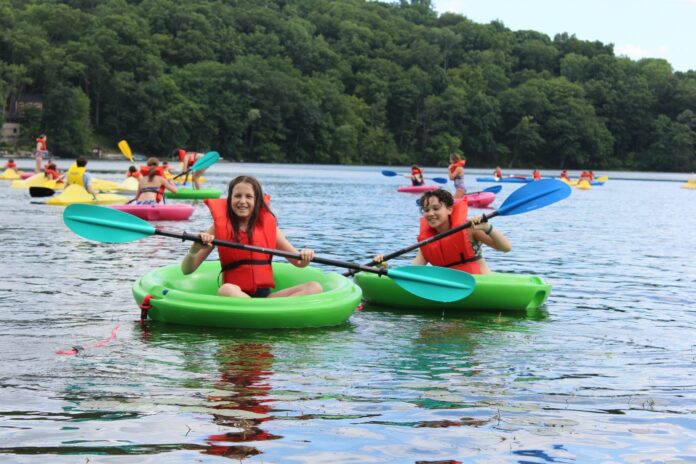
Among the most recognized traditional camps in the state is Liberty Lake Day Camp, which has built one of the strongest reputations in New Jersey’s day camp landscape. Located in Bordentown, the camp operates on a sprawling outdoor property centered around a natural lake environment that immediately distinguishes it from more urban or facility-based programs. Serving children from early elementary ages through adolescence, Liberty Lake has become known for blending traditional camp experiences with modern programming expectations. Families are increasingly drawn to camps that still emphasize outdoor exploration, water activities, athletics, nature exposure, and in-person social engagement rather than heavily digitized entertainment structures. Liberty Lake’s continued popularity reflects a broader shift among parents seeking experiences that feel physically active, immersive, and intentionally disconnected from constant screen exposure.
In northwestern New Jersey, YMCA Camp Mason continues to represent one of the state’s most recognizable overnight camp traditions. Camp Mason’s longevity speaks directly to the enduring appeal of resident camp experiences where children spend extended time away from home developing independence and confidence within highly structured outdoor environments. Programs there emphasize team-building, wilderness experiences, recreational development, and leadership growth while maintaining many of the classic overnight camp traditions that have defined American summer culture for generations. As overnight programs regain momentum nationally, Camp Mason remains positioned as one of New Jersey’s flagship resident camp destinations.
Nearby, Fairview Lake YMCA Camps continues attracting families searching for large-scale outdoor adventure experiences rooted in environmental immersion. Operating across hundreds of acres near Stillwater Township, Fairview Lake has become especially well known for its screen-free approach to programming. That philosophy resonates strongly with many modern parents who increasingly view camp as one of the few environments where children can meaningfully disconnect from constant digital stimulation. Programs centered around ranch experiences, lake recreation, hiking, waterfront activities, and outdoor teamwork continue gaining traction as families prioritize experiences that feel authentic, active, and socially engaging.
South Jersey maintains its own powerful camp identity through YMCA of the Pines, which operates some of the region’s most established traditional camp programs. Located within the Pine Barrens region, the organization has developed a reputation for combining classic camp traditions with large-scale programming flexibility. Its network includes overnight experiences, day camps, leadership tracks, and co-ed opportunities that attract families from across Burlington County and beyond. The Pine Barrens themselves create a unique environmental backdrop rarely replicated elsewhere in the Northeast, giving campers direct exposure to one of New Jersey’s most distinctive natural landscapes.
In Morris County, JCC Metrowest Camp Deeny Riback continues serving families seeking structured traditional day camp programming with strong community-centered values. Programs like Camp Deeny Riback reflect another major trend shaping New Jersey camps in 2026: multi-age continuity. Increasingly, parents want camps capable of growing with children over many years rather than serving only narrow age brackets. Camps that successfully retain families from preschool through high school leadership programs have gained enormous long-term stability because they become deeply integrated into family routines and childhood development.
Central New Jersey remains highly competitive within the day camp market, and Eagle’s Landing Day Camp continues standing out as one of the state’s most recognized co-ed programs. Located in North Brunswick, Eagle’s Landing reflects the evolution of modern traditional camp models, where classic outdoor activities now coexist with highly organized scheduling systems, advanced facilities, and expanded enrichment programming. Today’s families expect camps to balance fun with professionalism, communication, transportation reliability, and safety transparency. Camps that successfully deliver all of those expectations continue seeing strong enrollment growth.
Even camps located just outside state borders remain heavily integrated into New Jersey family life. Deerkill Day Camp, though based in New York, remains deeply connected to northern New Jersey communities through transportation networks and longstanding family participation. That cross-border relationship highlights how competitive and interconnected the regional camp market has become throughout the Northeast.
What increasingly separates New Jersey from many other states is how deeply camp culture has embedded itself into the broader identity of family life here. Summer camps are not viewed merely as optional recreational activities. For many families, they function as annual traditions tied directly to childhood memories, social development, educational continuity, and seasonal structure.
The rise of specialized camps has also dramatically expanded the industry’s reach. Alongside traditional outdoor programs, New Jersey families can now choose camps focused on robotics, coding, esports, theater, filmmaking, marine biology, culinary arts, entrepreneurship, dance, environmental science, and competitive athletics. Some programs mirror collegiate enrichment models, while others intentionally return to stripped-down outdoor simplicity emphasizing campfires, hiking trails, and unplugged recreation.
Mental wellness has become another defining priority throughout the industry. Camp operators increasingly recognize that modern children are navigating unprecedented levels of stress, social pressure, and digital overstimulation. As a result, many camps now incorporate emotional support frameworks, social skill development strategies, mindfulness activities, peer engagement systems, and structured confidence-building experiences into their daily programming.
Safety expectations have evolved as well. Parents now scrutinize staffing ratios, healthcare access, waterfront certifications, emergency preparedness protocols, background checks, transportation systems, food allergy procedures, and communication technology with far greater intensity than previous generations. The camps thriving in 2026 are the ones capable of combining warmth and tradition with operational sophistication and transparency.
Economically, the impact of New Jersey’s camp ecosystem is enormous. Camps generate seasonal employment opportunities for educators, college students, healthcare professionals, counselors, coaches, drivers, kitchen staff, maintenance personnel, and administrative workers throughout the state. Many local economies benefit significantly from summer camp operations through tourism activity, food service partnerships, equipment purchasing, transportation contracts, and hospitality spending connected to visiting families.
For many New Jersey children, camp also represents their first sustained experience building independence outside school and home environments. It is often where lifelong friendships begin, leadership abilities emerge, fears are confronted, and confidence quietly develops over time. That emotional component helps explain why families remain fiercely loyal to camp traditions across generations.
As the 2026 summer season approaches, New Jersey’s vast network of more than 900 certified youth camps stands prepared to welcome another generation of campers into one of the most active and diverse seasonal youth systems anywhere in the country. Whether families are searching for overnight wilderness adventures, traditional lakefront recreation, arts enrichment, athletic training, or structured developmental programs, the Garden State continues offering one of the broadest and most respected camp landscapes in America.
For parents beginning their search, the sheer number of options can initially feel overwhelming. Yet that same scale is precisely what makes New Jersey’s camp system remarkable. Few states offer this level of diversity, accessibility, geographic reach, and program variety within such a concentrated region. From the forests of Sussex County to the suburbs of Central Jersey and the shoreline communities farther south, summer camp remains one of the defining experiences of childhood in New Jersey, and in 2026, that tradition appears stronger than ever.