Home Blog Page 16

Morris County Prepares for a Historic Week as America’s Founding Moments Are Recreated Across New Jersey During the Nation’s 250th Anniversary Commemoration

As Americans prepare to celebrate Independence Day once again, communities throughout New Jersey are beginning to recognize that the birth of the United States was never confined to a single date on the calendar. The story of American independence unfolded over days, weeks, and months of debate, uncertainty, courage, and conviction. It was a process that transformed a collection of colonies into a nation and ultimately changed the course of world history.

Now, as the United States approaches its 250th anniversary, Morris County is inviting residents, visitors, businesses, civic organizations, schools, veterans groups, and communities throughout the Garden State to participate in a week-long commemoration that reaches beyond the traditional July 4 celebration and reconnects people with the extraordinary sequence of events that unfolded during one of the most consequential weeks in American history.

From July 2 through July 8, Morris County will serve as one of New Jersey’s focal points for a series of events honoring the milestones that occurred in 1776 when the foundations of the United States were formally established. Through public readings, community participation initiatives, patriotic illuminations, educational programs, historical reenactments, and coordinated national observances, the county is helping bring the nation’s founding story to life in a way that is both meaningful and timely.

The significance of the week begins on July 2, the date that often receives far less attention than it deserves. While Americans traditionally focus on July 4, historians have long noted that July 2 was the day the Second Continental Congress officially voted to separate the thirteen colonies from Great Britain. It was the moment when independence became a political reality rather than merely an aspiration.

Two days later, on July 4, delegates formally adopted the Declaration of Independence, creating the document that would become one of the most influential statements of political philosophy ever written. Then, on July 8, the words of the Declaration were publicly shared for the first time, transforming the revolutionary vision into a message intended not only for lawmakers and political leaders but for ordinary citizens.

Taken together, those events represent a remarkable sequence that gave birth to a nation.

Morris County’s commemoration seeks to restore public appreciation for that broader historical narrative. Rather than reducing America’s founding to a single holiday, the county’s programming emphasizes the entire journey of independence and the debates, decisions, and declarations that ultimately established the United States.

The week’s activities begin with participation in the nationwide “Light to Unite” campaign, an initiative designed to visually connect communities across the country as the nation prepares for its semiquincentennial celebration. Beginning July 2, Morris County’s historic courthouse and other county facilities will be illuminated in red, white, and blue, creating striking visual reminders of the ideals and sacrifices associated with the nation’s founding.

The campaign extends far beyond government buildings. Residents, businesses, schools, places of worship, civic organizations, community landmarks, and private homes are being encouraged to participate by displaying patriotic lighting throughout the week. The collective effort aims to create a shared visual experience that stretches across municipalities and reinforces a sense of community during a period of national reflection.

The symbolism behind the campaign is particularly meaningful at a time when Americans continue to navigate political, social, and cultural divisions. The simple act of illuminating buildings in patriotic colors serves as a reminder that despite differing viewpoints, communities remain connected through a shared history and a common commitment to democratic ideals.

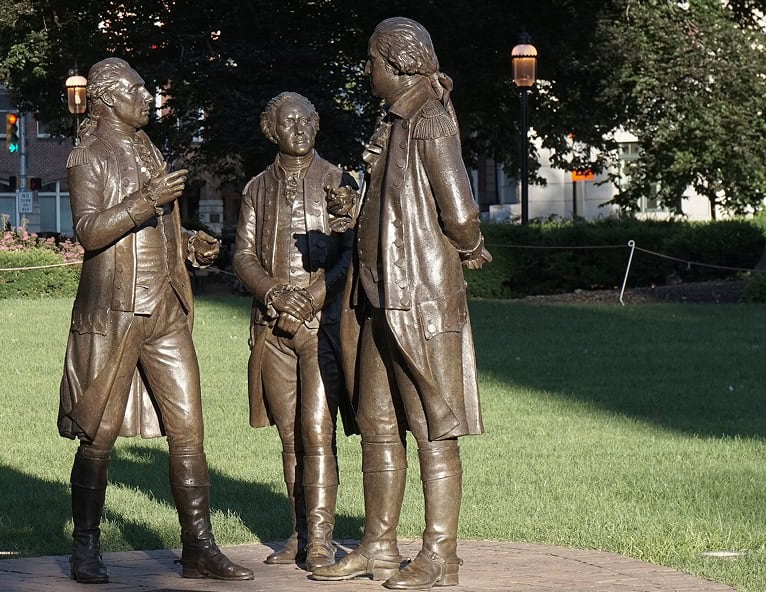
Throughout Morris County, visitors will encounter numerous reminders of the region’s deep connection to the Revolutionary War era. Few places in New Jersey possess the historical significance of Morristown and its surrounding communities. During the American Revolution, the area served as a critical military center and winter encampment location for General George Washington and the Continental Army. Today, that legacy remains visible through preserved historic sites, museums, monuments, and educational institutions that continue to tell the story of America’s fight for independence.

The culmination of the week arrives on July 8 with participation in “Sharing the Spirit of America,” a coordinated nationwide reading of the Declaration of Independence taking place simultaneously across all fifty states, Washington, D.C., and U.S. territories. The synchronized event represents one of the most ambitious public commemorations associated with the approaching America 250 anniversary and seeks to unite communities through a shared reading of the document that formally articulated the principles upon which the nation was founded.

At precisely 6 p.m. Eastern Time, Morris County officials, community leaders, and residents will gather on the lawn of the historic Morris County Courthouse in Morristown to participate in the reading alongside millions of Americans across the country. The setting itself adds considerable significance to the event. The courthouse stands as one of the county’s most recognizable historic landmarks, serving as an appropriate backdrop for a ceremony centered on constitutional ideals, democratic governance, and civic engagement.

The event is designed to be inclusive and participatory rather than merely ceremonial. Residents who cannot attend the county reading are encouraged to organize their own public readings in municipalities throughout the region. Civic groups, veterans organizations, historical societies, educational institutions, community centers, and neighborhood associations are all being invited to host synchronized readings that contribute to the larger national effort.

This decentralized approach reflects the spirit of the Declaration itself. The document was intended to communicate revolutionary ideas to ordinary citizens and inspire public participation in shaping the future of the new nation. By encouraging local readings throughout Morris County and beyond, organizers are recreating the community-based engagement that helped define the revolutionary era.

The week’s commemorations also coincide with a variety of additional historical and cultural programs occurring throughout Morris County. Among the most anticipated traditions is the annual public reading of the Declaration of Independence at Washington’s Headquarters in Morristown, where actors bring the document to life within one of the nation’s most historically significant Revolutionary War sites.

Events such as these highlight the unique role Morris County continues to play in preserving and interpreting American history. Few regions possess such a concentration of Revolutionary-era landmarks, making the county an ideal location for commemorations connected to the nation’s founding.

Beyond the major events themselves, the week offers an opportunity for reflection on the enduring relevance of the Declaration of Independence and the principles it articulated. Concepts such as liberty, self-governance, equality, representation, and civic responsibility continue to shape American public life nearly two and a half centuries after the document was first drafted and adopted.

The approaching 250th anniversary of the United States has already sparked renewed interest in historical preservation, civic education, and cultural programming throughout New Jersey. Communities across the state are embracing opportunities to revisit local history while exploring the broader national story. Morris County’s July 2–8 commemoration stands as one of the most comprehensive examples of that effort, combining education, participation, community engagement, and historical interpretation into a week-long celebration.

For visitors exploring New Jersey’s rich historical landscape this summer, the events provide an opportunity to experience history in a uniquely immersive way. Rather than simply reading about the nation’s founding, participants can stand in historic locations, hear the words of the Declaration spoken aloud, and join fellow citizens in commemorating the events that shaped the United States.

As America moves closer to its 250th birthday, these commemorations serve an important purpose. They remind us that independence was not inevitable. It was debated, challenged, defended, and ultimately secured through extraordinary determination and sacrifice. The events of July 1776 represented more than a political transition. They marked the beginning of an ongoing experiment in self-government that continues to evolve today.

For Morris County, New Jersey, and communities throughout the nation, this week of remembrance offers more than a history lesson. It provides an opportunity to reconnect with the ideals, aspirations, and democratic principles that helped create the United States while celebrating the enduring spirit that continues to unite Americans nearly 250 years later.

Randall’s Food and Wine Fest Brings a World of Flavor to Cherry Hill as The Legacy Club Continues Its Rise as One of South Jersey’s Premier Culinary Destinations

South Jersey’s dining scene has evolved dramatically over the last decade. Restaurants are no longer competing solely on menu quality or atmosphere. Today’s diners seek immersive experiences that combine exceptional food, world-class beverages, entertainment, hospitality, and a sense of discovery. The most successful venues understand that modern guests want more than dinner. They want an occasion. They want an event. They want something memorable enough to build an evening around.

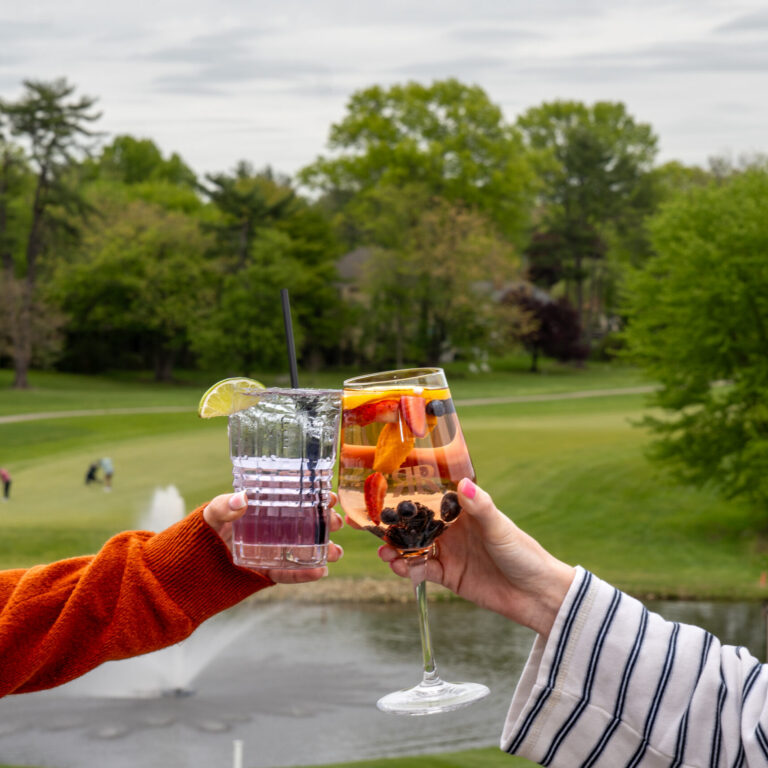
On July 29, 2026, Randall’s Restaurant at The Legacy Club in Cherry Hill will deliver exactly that experience as it hosts the first-ever Randall’s Food and Wine Fest, an ambitious culinary celebration that promises to transform one of South Jersey’s most picturesque dining destinations into an international showcase of food, wine, music, and hospitality.

The event marks another significant milestone in the continuing evolution of The Legacy Club, formerly known as Woodcrest Country Club. Since its transformation, the property has steadily expanded its reputation beyond golf, establishing itself as one of the region’s most dynamic lifestyle destinations. Randall’s Restaurant has emerged as a centerpiece of that vision, combining elevated cuisine, sophisticated surroundings, and welcoming hospitality in a setting that attracts guests from throughout New Jersey and the Philadelphia metropolitan area.

The inaugural Food and Wine Fest represents a natural extension of that mission.

Rather than presenting a traditional seated wine dinner or limited tasting experience, Randall’s is creating a large-scale culinary event designed to encourage exploration, conversation, and discovery. Guests will move throughout the property’s Courtyard and Patio spaces while experiencing carefully curated food and wine pairings inspired by some of the world’s most celebrated wine-producing regions.

The evening’s international focus immediately distinguishes it from many regional tasting events. Attendees will have the opportunity to explore wines representing France, Spain, Italy, California, New Zealand, and Australia, creating a global journey without ever leaving Cherry Hill. Each region brings its own history, personality, climate, winemaking traditions, and flavor profiles, allowing guests to compare styles while discovering new favorites along the way.

For wine enthusiasts, the event offers a rare opportunity to experience multiple wine cultures in a single evening. From the elegance and structure associated with classic French selections to the bold expressions emerging from California vineyards, and from the centuries-old traditions of Italy and Spain to the innovative approaches found throughout Australia and New Zealand, the tasting experience is designed to showcase both diversity and craftsmanship.

What elevates the evening beyond a traditional wine tasting, however, is Randall’s commitment to pairing these selections with cuisine prepared specifically for the event by the restaurant’s culinary team.

Food and wine are often discussed separately, but their greatest magic occurs when they come together. The right pairing can completely transform how flavors are perceived, creating experiences that are greater than the sum of their parts. Throughout the evening, guests will encounter thoughtfully crafted culinary stations designed to complement the wines being featured. Rather than simply offering samples, the event is structured to highlight the relationship between food and beverage, allowing guests to understand why certain combinations have endured for generations.

Adding to the experience will be an array of passed hors d’oeuvres that circulate throughout the event, ensuring that attendees continue discovering new flavors as they move from tasting station to tasting station. This approach creates a relaxed and social atmosphere that encourages conversation while maintaining a steady flow of culinary exploration.

The venue itself plays an equally important role in shaping the evening.

One of the defining characteristics of Randall’s Restaurant is its setting within The Legacy Club’s beautifully maintained grounds. The property’s outdoor spaces provide a backdrop that feels far removed from the busy commercial corridors surrounding Cherry Hill. Guests attending the Food and Wine Fest will enjoy access not only to the scenic patio and courtyard areas but also to the property’s expansive outdoor deck and stunning atrium event space.

These spaces allow the event to feel more like a destination experience than a typical tasting. As guests move between indoor and outdoor environments, they will encounter different perspectives of the property while enjoying the summer atmosphere that has become one of South Jersey’s greatest seasonal attractions.

Music will further enhance the ambiance.

Rather than relying on generic background entertainment, Randall’s has chosen a live Frank Sinatra tribute artist to provide the soundtrack for the evening. Few performers are more closely associated with sophistication, timeless style, and classic American nightlife than Sinatra. His music remains synonymous with elegant evenings, fine dining, exceptional cocktails, and memorable celebrations. Incorporating those iconic sounds into the event reinforces the atmosphere Randall’s is seeking to create: a celebration that feels simultaneously relaxed, refined, and unmistakably special.

The decision reflects the broader philosophy that has helped Randall’s distinguish itself within New Jersey’s increasingly competitive restaurant landscape. Every element of the guest experience is carefully considered. The food matters. The wine matters. The setting matters. The entertainment matters. Individually, each component contributes to the event. Together, they create something far more memorable.

The Food and Wine Fest also highlights the growing role Randall’s Restaurant plays within South Jersey’s hospitality community.

What began as a dining destination within a golf club environment has evolved into a venue capable of hosting large-scale culinary events, private celebrations, corporate functions, weddings, social gatherings, brunches, happy hours, and destination dining experiences. Its success reflects a broader shift occurring throughout New Jersey, where hospitality properties increasingly blend restaurant operations, event programming, entertainment, and lifestyle experiences into comprehensive destinations.

Guests familiar with Randall’s already understand the appeal. The restaurant’s commitment to elevated American cuisine, premium ingredients, handcrafted cocktails, and attentive service has helped build a loyal following. The Food and Wine Fest gives those guests an opportunity to experience the property in a completely different way while introducing new visitors to everything the venue has to offer.

For first-time attendees, the event serves as a showcase of Randall’s capabilities. It demonstrates not only the quality of the culinary program but also the versatility of the venue itself. The evening offers a glimpse into the atmosphere, hospitality standards, and attention to detail that have become hallmarks of The Legacy Club experience.

Importantly, the event is designed as a social gathering rather than a formal seated dinner. High-top tables and cocktail-style seating encourage interaction among guests, creating an environment where conversations develop naturally and the focus remains on exploration and enjoyment. The format reflects the evolving preferences of modern diners, who increasingly seek experiential events that blend entertainment, education, and social engagement.

For those who find themselves wanting more after the tastings conclude, Randall’s offers a simple solution. Guests can extend the evening by making dinner reservations following the event, transforming the Food and Wine Fest into the opening chapter of an even longer culinary experience.

As New Jersey’s restaurant and hospitality industries continue to evolve, events like the Randall’s Food and Wine Fest demonstrate how destinations can create meaningful experiences that go beyond traditional dining. By bringing together world-class wines, expertly crafted cuisine, live entertainment, beautiful surroundings, and genuine hospitality, Randall’s is creating more than a tasting event. It is creating a celebration of food, wine, culture, and community.

For South Jersey residents searching for one of the summer’s most anticipated culinary gatherings, July 29 promises an evening that combines international flavors with local hospitality in a setting unlike any other. It is a chance to travel the world through wine, discover new culinary pairings, enjoy live music under the summer sky, and experience firsthand why Randall’s Restaurant and The Legacy Club continue to establish themselves as one of New Jersey’s most exciting hospitality destinations.

The first Randall’s Food and Wine Fest is not simply another event on the calendar. It is a statement about where South Jersey dining is headed and a reminder that some of the most memorable culinary journeys begin right here in the Garden State.

Fleetwood Mac by Candlelight: How an Immersive Concert Experience Is Bringing One of Rock’s Greatest Songbooks to Historic Venues Across New Jersey

Some music was never meant to stay locked inside a single era.

Decades after Fleetwood Mac transformed popular music with emotionally charged songwriting, unforgettable melodies, and one of the most successful recording catalogs ever assembled, their music continues finding new audiences in new ways. The latest evolution arrives through a growing concert phenomenon that is redefining how people experience live music, blending classical performance, historic architecture, intimate atmospheres, and one of the most beloved songbooks in rock history.

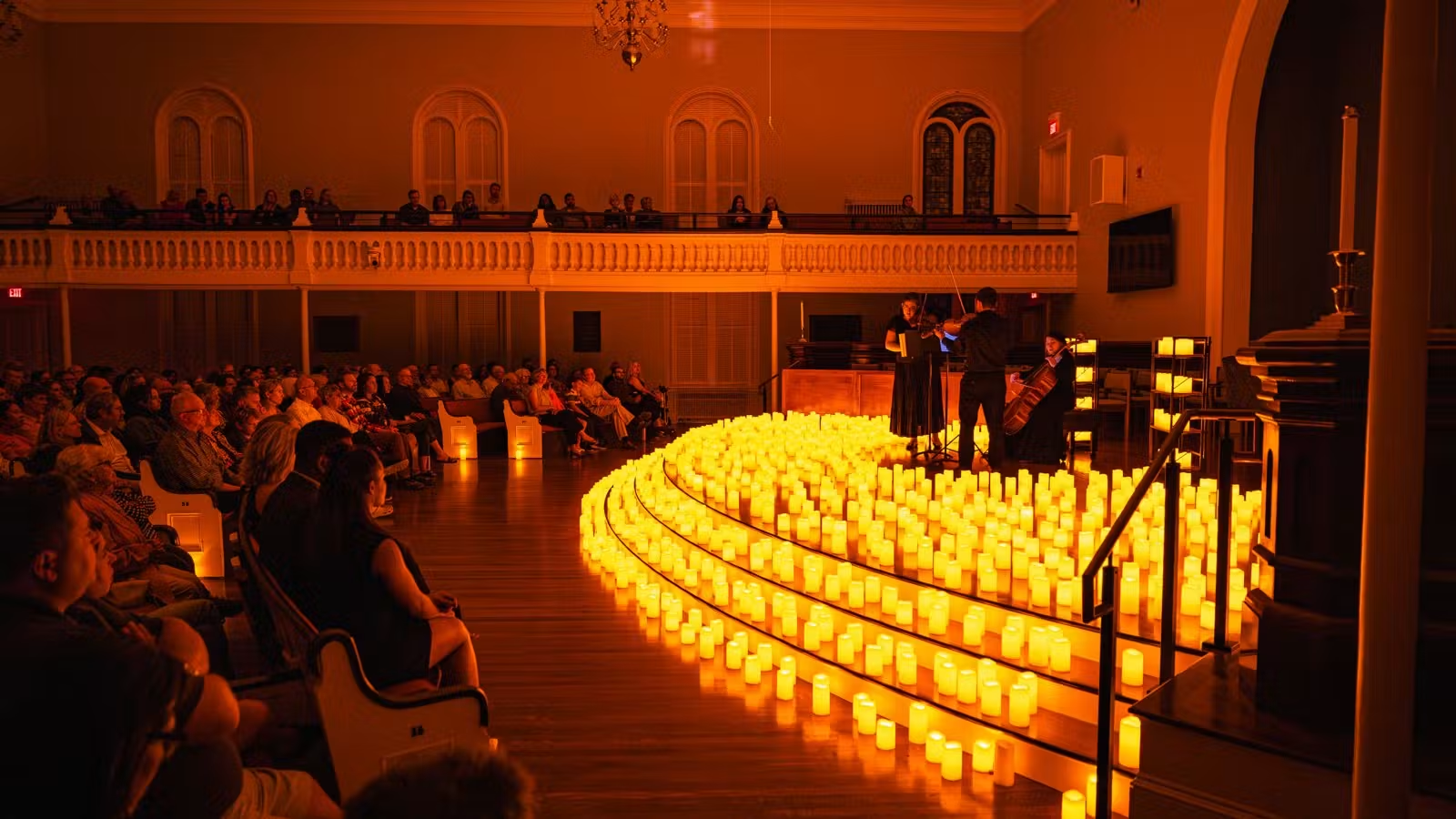
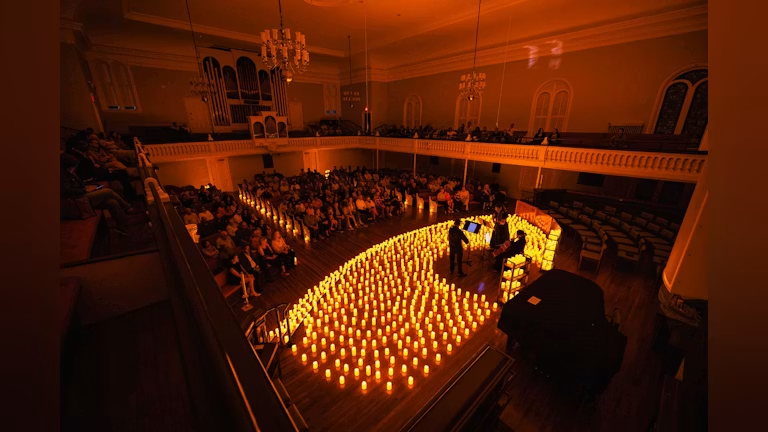
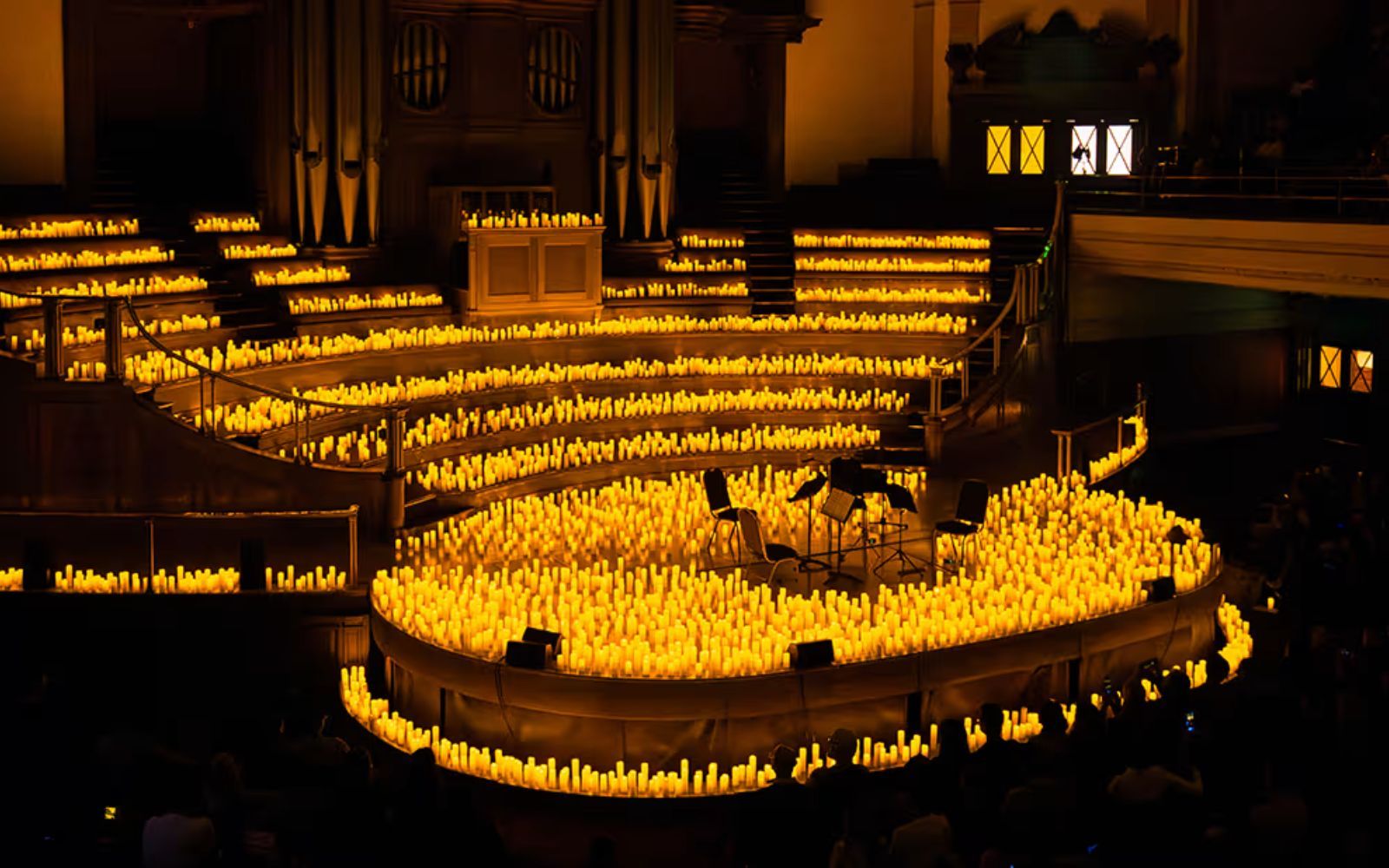
The Candlelight: Tribute to Fleetwood Mac concert series is quickly becoming one of the most distinctive live music experiences available to New Jersey audiences. Rather than attempting to recreate a traditional Fleetwood Mac concert, these performances completely reimagine the band’s legendary catalog through the lens of classical music, transforming iconic rock songs into elegant string arrangements performed under the glow of thousands of candles.

The result is not simply a tribute concert.

It is a complete sensory experience that allows audiences to hear familiar songs in ways they have never heard them before.

Across New Jersey and the greater Philadelphia region, historic churches, theaters, cultural landmarks, and architectural treasures are being transformed into candlelit concert halls where violins, violas, and cellos reinterpret some of the most recognizable songs in modern music history. Traditional stage lighting disappears. Electronic amplification is minimized. The focus shifts entirely toward atmosphere, musicianship, and emotional connection.

For New Jersey music fans, the series arrives during a period when audiences increasingly seek experiences rather than simply events. While stadium concerts and arena tours continue to thrive, there has been a noticeable shift toward immersive performances that create a deeper sense of intimacy between artist, audience, and venue.

The Candlelight format embraces that trend completely.

Upon entering one of these performances, attendees immediately encounter an environment that feels dramatically different from a conventional concert. Historic interiors become illuminated by thousands of flickering candles arranged throughout the performance space. The glow softens architectural details, enhances visual depth, and creates a calm, almost cinematic atmosphere.

The setting itself becomes part of the performance.

Every column, stained-glass window, vaulted ceiling, balcony, and decorative detail suddenly takes on new life beneath the candlelight. Historic venues that audiences may have visited dozens of times feel transformed into entirely different spaces.

For New Jersey residents, that venue component is especially significant because the state possesses an extraordinary collection of historic theaters, churches, museums, and cultural institutions that provide ideal settings for this style of presentation.

The music itself remains the centerpiece.

Fleetwood Mac’s catalog offers an almost perfect foundation for classical reinterpretation because the band’s songs were always built around strong melodic structures and emotional storytelling. When stripped of electric guitars, drums, and studio production, the core songwriting reveals itself in powerful ways.

Songs such as “Landslide” become even more intimate through string arrangements, allowing listeners to focus entirely on melody and lyrical emotion. “Dreams” takes on an elegant, almost orchestral quality. “The Chain” gains dramatic tension through layered string textures. “Go Your Own Way” reveals new harmonic dimensions. “Everywhere,” “Gypsy,” “Rhiannon,” and “Little Lies” become studies in musical craftsmanship rather than simply familiar radio hits.

Many audience members arrive expecting nostalgia.

They often leave with a renewed appreciation for the sophistication of the songwriting itself.

The transformation is particularly striking because Fleetwood Mac’s music already occupies a unique place in American culture. The band’s songs have crossed generations in a way few artists have achieved. Parents introduced the music to children. Streaming platforms introduced the catalog to younger listeners. Social media trends helped revive decades-old tracks. Films, television series, commercials, and live performances continue exposing new audiences to songs that first became popular long before many current listeners were born.

That broad appeal helps explain why these candlelight performances continue attracting such diverse audiences.

Some attendees are lifelong Fleetwood Mac fans who remember hearing the songs when they were first released. Others are younger music lovers discovering the catalog through a fresh artistic interpretation. Many simply appreciate the opportunity to experience live music in an environment that feels thoughtful, immersive, and distinctly different from traditional entertainment offerings.

Several performances are scheduled throughout the region during the coming months, providing multiple opportunities for New Jersey audiences to experience the series.

One of the most anticipated local performances arrives at the Historic Trenton Masonic Temple on August 22, 2026. Located in the heart of New Jersey’s capital city, the venue offers the type of historic architectural setting that perfectly complements the Candlelight experience. The Highline String Quartet will perform a full Fleetwood Mac tribute beginning at 6:45 PM, bringing classical precision to one of rock music’s most enduring catalogs.

The concert also highlights Trenton’s continuing role as a cultural destination. While the city’s history is often discussed through political and industrial lenses, venues such as the Historic Trenton Masonic Temple demonstrate the importance of preserving historic spaces as active centers for arts and entertainment.

Additional performances are scheduled throughout the region.

The Media Theatre for the Performing Arts in Pennsylvania hosts recurring performances through the summer, while the United Methodist Church of Summit will present a candlelit Fleetwood Mac tribute experience in one of North Jersey’s most architecturally striking worship spaces. Philadelphia’s Independence Seaport Museum also continues offering seasonal performances along the waterfront, further expanding opportunities for regional audiences.

Although each venue differs in design and atmosphere, the core concept remains remarkably consistent.

The concerts are approximately 60 minutes long. There is no elaborate production. No giant video screens. No distractions. The focus remains squarely on musicianship, venue ambiance, and emotional connection.

That simplicity may be one reason these performances have become so popular.

In an era increasingly dominated by digital stimulation and constant connectivity, audiences appear eager for experiences that encourage them to slow down and become fully present. The candlelight atmosphere naturally encourages that mindset. Conversations quiet. Phones disappear. Attention shifts toward the music.

The experience feels less like attending a concert and more like stepping into a carefully designed artistic environment.

For New Jersey’s broader music community, the success of immersive events such as these reflects a larger evolution taking place throughout the live entertainment industry. Audiences continue supporting major arena tours and festival events, but they are also embracing smaller-scale experiences that prioritize atmosphere, storytelling, and emotional engagement.

This shift creates new opportunities for historic venues throughout the state.

Many of New Jersey’s most beautiful cultural landmarks were built long before modern concert production existed. Their architecture, acoustics, and visual character were designed for intimacy rather than spectacle. Candlelight performances leverage those strengths, allowing audiences to experience familiar buildings through a new perspective while supporting local cultural institutions.

The concerts also serve as a reminder of music’s remarkable adaptability.

Fleetwood Mac’s songs were originally created within the context of rock music, yet they remain compelling when performed by a string quartet. The melodies survive. The emotions survive. The storytelling survives. Great songwriting transcends arrangement, instrumentation, and era.

That enduring quality explains why these performances continue resonating with audiences.

Whether hearing “Landslide” for the hundredth time or the very first, listeners find themselves connecting with music that feels simultaneously familiar and entirely new. The candlelit setting enhances that feeling, creating an atmosphere where nostalgia and discovery coexist.

As New Jersey’s music scene continues expanding through festivals, theaters, arenas, clubs, museums, outdoor venues, and cultural institutions, experiences like Candlelight: Tribute to Fleetwood Mac demonstrate that innovation does not always require bigger productions or louder performances. Sometimes the most memorable experiences come from simplifying the presentation, honoring the music, and allowing extraordinary songs to speak for themselves.

For Fleetwood Mac fans, classical music enthusiasts, architecture lovers, and anyone searching for a unique evening out, the Candlelight series offers something increasingly rare in modern entertainment: a chance to slow down, listen closely, and experience great music in an environment designed to inspire wonder.

In a state with a rich musical heritage and a growing appetite for immersive cultural experiences, it is easy to understand why these candlelit performances continue drawing audiences throughout New Jersey. They combine history, architecture, artistry, and timeless music into a single experience that feels both intimate and unforgettable.

And for sixty minutes beneath the glow of thousands of candles, Fleetwood Mac’s songs once again find a way to feel completely new.

Upcoming Shows Near New Jersey & Greater Philadelphia – If you are planning to attend in the local region, several options are currently scheduled for the summer and fall:

Historic Trenton Masonic Temple

  • Date & Time: Saturday, August 22, 2026, at 6:45 PM
  • Address: 100 Barrack St, Trenton, NJ 08608
  • Details: Performed by the Highline String Quartet. Tickets start at $40.50. The venue is fully ADA-compliant, and seating is first-come, first-served within your purchased zone.

Media Theatre for the Performing Arts

  • Date & Time: Saturday, July 11, 2026, at 8:45 PM
  • Address: 104 E State St, Media, PA 19063
  • Details: Performed by the Listeso String Quartet. Tickets start at $40.50. This production repeats regularly on select weekends through August.

United Methodist Church of Summit

  • Date & Time: Friday, August 7, 2026, from 7:00 PM – 10:00 PM
  • Address: 17 Kent Place Blvd, Summit, NJ 07901
  • Details: Hosted by Lumos Experiences inside a stunning historical church space.

Independence Seaport Museum

  • Date & Time: Multiple seasonal dates
  • Address: 211 S Christopher Columbus Blvd, Philadelphia, PA 19106
  • Details: Hosted by Fever along the Penn’s Landing waterfront area.

New Jersey’s Most Unexpected Summer Activity Is Happening Indoors: The Summer Sand Castle Series Brings Professional Sand Sculpting to Pompton Lakes

When most people think about sand castles in New Jersey, they picture the Jersey Shore. They imagine warm afternoons along the Atlantic Ocean, families carrying buckets and shovels across crowded beaches, and children attempting to build towers that often collapse before the tide arrives. Sand sculpting has long been associated with summer vacations, ocean breezes, and spontaneous creativity along the coastline.

This summer, however, one of New Jersey’s most unique seasonal experiences is taking that familiar tradition in an entirely different direction.

Far from the beaches of Cape May, Wildwood, Long Beach Island, and the Shore communities that have become synonymous with summer recreation, a distinctive hands-on attraction is drawing attention in North Jersey. At Pompton Craft House in Pompton Lakes, adults are discovering that world-class sand sculpting does not require a shoreline, a beach badge, or even an ocean view.

Instead, it requires imagination, artistry, technique, and a willingness to get your hands dirty.

The Summer Sand Castle Series has emerged as one of the more creative social experiences on New Jersey’s growing calendar of interactive events. Blending art, competition, entertainment, craftsmanship, and nightlife into a single evening, the program offers participants an opportunity to learn professional sand sculpting techniques from internationally recognized artist John Woodward while enjoying an atmosphere designed specifically for adults.

The concept itself feels refreshingly different.

In an era when many entertainment options revolve around screens, digital experiences, and passive participation, the Summer Sand Castle Series invites people to create something tangible. Guests gather inside Pompton Craft House around specially designed tabletop sandboxes where they spend the evening learning the methods used by professional sculptors to create the breathtaking sand installations that have become attractions at beaches, festivals, resorts, and major tourism destinations around the world.

What makes the experience particularly compelling is that participants are not simply decorating pre-made molds or following basic craft instructions. They are learning authentic sculpting techniques used by professionals who build massive exhibition pieces seen by millions of visitors annually.

Leading the workshops is John Woodward, a sculptor whose work has appeared at major destinations including Disney properties, Wildwood events, Camelback Resorts, and numerous high-profile public installations. His career has been dedicated to transforming one of the world’s simplest materials into works of art capable of captivating audiences of all ages.

During the sessions, attendees gain firsthand exposure to techniques that many people never realize exist behind professional sand sculptures.

The process begins with understanding the science behind the material itself. While casual beachgoers often assume sand castles are little more than wet piles of sand stacked into shapes, professional sculptors know that successful creations depend upon carefully balanced moisture levels and structural density. Participants learn how expert builders create the ideal sand-and-water mixture capable of supporting intricate designs while maintaining stability throughout the sculpting process.

From there, the workshop moves into the artistic techniques that separate ordinary sand piles from professional works of art.

Guests learn how large-scale sculptures are carved from solid blocks using methods that prioritize structural integrity while allowing extraordinary detail to emerge. Instead of building upward piece by piece, professional sculptors often work from the top down, gradually revealing figures, textures, architectural elements, and decorative details through careful carving and refinement.

The technique is surprisingly similar to traditional sculpture.

Rather than adding material, artists remove it. Each cut, scrape, and contour contributes to the final design. Participants quickly discover that creating a successful sculpture requires patience, vision, and an understanding of how shapes interact with one another.

Texture becomes another important focus.

One of the most impressive aspects of professional sand sculpting is the ability to create surfaces that appear remarkably lifelike. Fish scales, stone walls, flowing fabric, animal fur, architectural ornamentation, and facial expressions can all be rendered through specialized carving techniques. Workshop participants are introduced to the tools and methods that make such detail possible, providing insight into an art form many people have admired but never fully understood.

The educational component is only part of the appeal.

The Summer Sand Castle Series has been intentionally designed as a social experience for adults. Unlike family-oriented craft events or children’s workshops, the atmosphere embraces a more relaxed and interactive approach. Guests can enjoy beverages, conversation, and friendly competition while exploring their creative side.

That combination has proven increasingly popular throughout New Jersey.

Across the state, experiential entertainment continues to attract audiences seeking alternatives to traditional nightlife. Consumers are increasingly drawn toward activities that combine social interaction with hands-on participation. Cooking classes, painting events, craft workshops, brewery experiences, and creative competitions have all experienced growing popularity as people look for memorable ways to spend time with friends, partners, and colleagues.

The Summer Sand Castle Series fits naturally into that trend while offering something genuinely different.

Participants work individually or in teams of two, collaborating on original creations throughout the evening. The limited number of sandboxes creates an intimate environment where attendees can interact directly with the instructor while also observing the creativity unfolding around the room.

As the session progresses, a spirit of friendly rivalry begins to emerge.

Each group develops its own interpretation of the techniques being taught. Some focus on architectural precision. Others embrace whimsical concepts, fantasy-inspired creations, or artistic experimentation. By the end of the evening, the room becomes a miniature gallery filled with remarkably diverse sculptures created from the same basic material.

The event concludes with participant voting, allowing attendees to select their favorite creation. The winning team receives a gift certificate and, perhaps more importantly, bragging rights that extend well beyond the evening itself.

Yet the true reward may be the experience of learning a new skill while connecting with others.

In many ways, the Summer Sand Castle Series reflects broader shifts occurring throughout New Jersey’s cultural landscape. Communities increasingly value experiences that encourage creativity, collaboration, and personal engagement. Residents are seeking opportunities that feel authentic, memorable, and interactive rather than purely transactional.

Pompton Lakes has quietly become a destination for precisely those kinds of experiences.

Located in Passaic County, the community continues to attract visitors who appreciate local dining, craft beverages, community events, and distinctive programming that offers something beyond conventional entertainment. The Summer Sand Castle Series contributes to that identity while demonstrating how local businesses can transform unexpected ideas into successful attractions.

The event also highlights the diversity of experiences available throughout New Jersey during the summer months.

While the Shore remains one of the state’s defining seasonal attractions, residents increasingly recognize that unforgettable summer experiences can be found everywhere from mountain communities and lakefront destinations to historic downtowns and suburban gathering spaces. The state’s cultural and recreational offerings continue expanding in ways that appeal to a broad range of interests.

For those who have ever admired elaborate sand sculptures along the Jersey Shore and wondered how they were created, the Summer Sand Castle Series offers a rare opportunity to find out firsthand. For those simply looking for an unconventional date night, group outing, or evening with friends, it provides something equally valuable: a chance to step away from routine and create something unexpected.

As New Jersey’s summer calendar continues filling with festivals, concerts, outdoor adventures, and community celebrations, few experiences are likely to be as distinctive as spending an evening transforming simple sand into art under the guidance of a world-renowned sculptor.

It may not be the beach, but for a growing number of participants, it might just become one of the most memorable summer traditions of all.

Senator Andy Kim Challenges U.S.-Iran Agreement as Debate Over Foreign Policy, Energy Costs, and National Security Reaches New Jersey

International diplomacy often feels distant from everyday life in New Jersey, unfolding thousands of miles away in foreign capitals, military command centers, and international negotiating rooms. Yet the consequences of those decisions frequently arrive much closer to home, impacting everything from gasoline prices and consumer costs to national security priorities and economic stability. This reality was underscored once again this week as New Jersey Senator Andy Kim delivered a forceful response to reports that the United States and Iran have reached a Memorandum of Understanding aimed at ending a recent period of military conflict and escalating tensions.

The statement from Kim, one of New Jersey’s most closely watched voices on foreign affairs and national security issues, signals the beginning of what is likely to become a significant political and policy debate in Washington. While supporters of the agreement argue that diplomacy remains the best path toward stability in one of the world’s most strategically important regions, critics contend that the terms of the reported understanding raise serious concerns about long-term security, economic consequences, and America’s standing on the global stage.

For New Jersey residents, the discussion extends far beyond foreign policy theory. The Middle East remains one of the most consequential regions for global energy markets, international trade routes, and military strategy. Decisions made there can have direct effects on household budgets, transportation costs, business operations, and economic confidence throughout the Garden State.

Kim’s remarks focused on what he described as the broader costs associated with the conflict and the subsequent diplomatic resolution. According to the senator, the United States paid a substantial price before reaching the reported agreement. He argued that the conflict resulted in American casualties, strained military resources, redirected strategic attention away from other global priorities, and contributed to higher energy costs that affected families and businesses across the country.

The senator’s criticism reflects growing concerns among policymakers about the interconnected nature of modern geopolitics. In today’s global economy, instability in one region can rapidly influence markets and consumers around the world. Energy prices, supply chains, shipping routes, and investment decisions are increasingly tied to international events, making foreign policy decisions more relevant than ever to everyday Americans.

One of the central issues highlighted in the debate is the Strait of Hormuz, one of the most strategically important waterways on the planet. This narrow passage serves as a critical gateway for a substantial portion of the world’s oil and energy shipments. Any disruption to commercial traffic through the region has the potential to send ripple effects throughout global markets, affecting everything from fuel prices to manufacturing costs.

For a state like New Jersey, where millions of residents rely on automobiles for daily commuting and where transportation remains central to commerce and tourism, fluctuations in energy prices can have significant economic consequences. Higher fuel costs influence consumer spending patterns, increase operating expenses for businesses, and contribute to broader inflationary pressures that affect virtually every sector of the economy.

That reality has made energy security an increasingly important component of national security discussions.

Kim’s comments suggest concern that the reported agreement leaves unresolved questions regarding future maritime security and regional stability. Those concerns reflect a broader debate taking place among policymakers who are evaluating whether diplomatic arrangements sufficiently address long-term risks while preventing future conflicts.

The issue also intersects with ongoing discussions about America’s global strategic priorities.

Over the past decade, national security experts have increasingly emphasized the importance of the Indo-Pacific region, citing economic growth, technological competition, and evolving geopolitical dynamics. Many policymakers believe maintaining focus on that region will be critical to American interests throughout the twenty-first century.

Kim argued that military engagement in the Middle East can divert attention and resources away from those broader strategic objectives. That concern is not unique to New Jersey’s junior senator. Similar arguments have emerged across the political spectrum as policymakers seek to balance commitments in multiple regions simultaneously while managing limited resources and competing priorities.

The debate over the agreement also highlights the evolving nature of international diplomacy itself.

Modern foreign policy increasingly requires leaders to navigate complex relationships involving military considerations, economic interests, energy security, technological competition, and humanitarian concerns. Rarely do diplomatic agreements produce unanimous support, particularly when they involve adversaries with long histories of tension and conflict.

Supporters of negotiated settlements generally argue that diplomacy offers the best opportunity to reduce the risk of future violence while creating pathways toward stability. Critics often counter that agreements must be carefully structured to ensure they do not inadvertently strengthen adversaries or create unintended consequences that emerge years later.

Those competing perspectives are now playing out in public as details surrounding the reported understanding continue to emerge.

For New Jersey, the discussion carries particular relevance because of the state’s diverse economy and strategic importance within the Northeast corridor. New Jersey is home to major transportation networks, shipping infrastructure, logistics hubs, financial institutions, pharmaceutical companies, and technology firms that all operate within an increasingly interconnected global marketplace.

International events influence many of these industries directly.

Shipping companies monitor global trade routes. Manufacturers watch energy prices closely. Financial markets respond instantly to geopolitical developments. Businesses making long-term investment decisions evaluate global stability alongside domestic economic conditions.

As a result, debates taking place in Washington often resonate throughout New Jersey’s business community.

The senator’s statement also reflects a broader trend in contemporary politics, where foreign policy discussions are increasingly framed through their domestic economic implications. Rather than focusing solely on military or diplomatic outcomes, elected officials now frequently evaluate international decisions based on their impact on affordability, consumer costs, economic growth, and household finances.

This approach recognizes that voters increasingly connect global events with local consequences.

When fuel prices rise, consumers notice. When supply chains are disrupted, businesses respond. When international uncertainty affects markets, retirement accounts, investment portfolios, and economic confidence can all be influenced. Foreign policy and domestic economics are no longer separate conversations; they have become deeply intertwined.

The coming weeks will likely bring additional scrutiny of the reported agreement as lawmakers, analysts, and international observers assess its potential implications. Congressional leaders from both parties are expected to examine questions related to implementation, enforcement, regional security, and long-term strategic outcomes.

For New Jersey residents, the debate serves as a reminder that global developments often have local consequences. Decisions made on the international stage can influence energy costs, economic conditions, national security priorities, and government spending in ways that ultimately affect communities throughout the Garden State.

Whether the reported agreement ultimately delivers greater stability or generates additional controversy remains to be seen. What is already clear is that the conversation surrounding the agreement has become a significant political issue, drawing attention from lawmakers, business leaders, and citizens seeking to understand what the future may hold.

As New Jersey continues navigating challenges related to affordability, economic competitiveness, infrastructure investment, and energy policy, international developments will remain an important part of the conversation. Senator Andy Kim’s response underscores how closely those issues are connected and why decisions made far beyond New Jersey’s borders can still have profound implications for residents here at home.

The debate over the U.S.-Iran agreement is ultimately about more than diplomacy alone. It is about how America projects power, protects economic interests, secures critical trade routes, supports allies, manages risks, and balances competing priorities in a rapidly changing world. For New Jersey, those questions are not abstract policy exercises. They are part of a larger discussion about security, prosperity, and the future direction of the nation itself.

New Jersey’s Nuclear Future Moves Forward as Power NJ Act Advances Through Legislature

New Jersey’s energy future has become one of the most consequential policy discussions unfolding in Trenton today. As electricity demand rises, utility costs remain a growing concern for households and businesses, and the state continues pursuing ambitious environmental goals, lawmakers are increasingly focused on one question that could shape the Garden State’s economy for decades to come: where will New Jersey find the reliable power needed to support its future?

That question is now at the center of a significant legislative effort that is gaining momentum in the State Legislature.

A proposal widely associated with Governor Mikie Sherrill’s energy agenda has taken a major step forward as lawmakers advance legislation designed to pave the way for a new generation of nuclear energy development in New Jersey. The measure, known as the Power NJ Act, represents one of the most ambitious energy infrastructure proposals considered by the state in decades and signals a dramatic shift in how policymakers are approaching long-term power generation.

For supporters, the legislation offers a path toward greater energy independence, long-term price stability, and expanded clean-energy capacity. For critics, it raises questions about cost, construction timelines, and the financial risks associated with large-scale energy projects. Regardless of perspective, few dispute the significance of the debate.

The legislation arrives only months after Governor Sherrill initiated a major policy change that effectively ended New Jersey’s decades-long reluctance to consider new nuclear development. For years, regulatory and political barriers made the construction of new reactors highly unlikely. The administration’s decision to remove those obstacles fundamentally changed the conversation, opening the door for policymakers to explore whether nuclear energy should play a larger role in the state’s future energy portfolio.

Now, the Power NJ Act seeks to transform that policy shift into practical action.

At its core, the proposal directs state agencies to begin the process of identifying and evaluating opportunities to develop at least 1,100 megawatts of new nuclear generating capacity. While the figure may seem abstract to many residents, the implications are substantial. A project of that size could provide enough electricity to power hundreds of thousands of homes while delivering continuous energy regardless of weather conditions, time of day, or seasonal fluctuations.

The proposal reflects growing concerns about New Jersey’s future energy needs.

The state’s population continues to grow. Commercial development remains active throughout major economic corridors. New industries, particularly data centers and artificial intelligence infrastructure, are placing unprecedented demands on electric grids nationwide. At the same time, electrification initiatives involving transportation, buildings, and industrial operations are expected to increase overall electricity consumption in coming years.

Meeting those demands presents a significant challenge.

Unlike traditional fossil-fuel plants, renewable resources such as solar and wind depend heavily on environmental conditions. While renewable energy continues to play an expanding role in New Jersey’s energy strategy, many energy planners argue that reliable, around-the-clock generation remains necessary to maintain grid stability during periods of peak demand.

That reality has renewed interest in nuclear power.

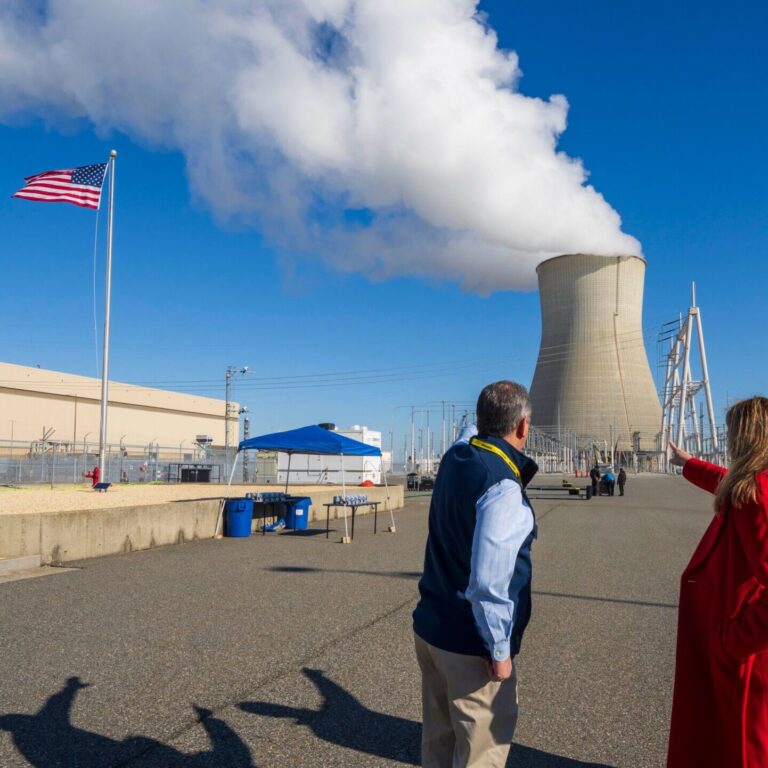
New Jersey already possesses one of the strongest nuclear energy footprints in the United States. Existing facilities in Salem County currently generate a substantial portion of the state’s electricity and provide the overwhelming majority of its carbon-free power generation. Those facilities have long served as the backbone of New Jersey’s clean-energy infrastructure, delivering continuous power without producing greenhouse gas emissions during operation.

Supporters of expansion argue that building upon that foundation is the logical next step.

Labor organizations, energy experts, and some business leaders contend that increasing nuclear capacity would reduce reliance on imported electricity while strengthening long-term energy security. Currently, New Jersey imports a significant portion of the power consumed by residents and businesses. That dependence exposes ratepayers to market volatility, regional supply constraints, and price fluctuations occurring beyond the state’s borders.

Advocates believe additional in-state generation would help mitigate those vulnerabilities.

The conversation is increasingly centered on advanced nuclear technologies rather than the massive reactor complexes commonly associated with earlier generations of nuclear development. Emerging designs known as Small Modular Reactors have attracted attention across the energy sector because of their potential to reduce construction costs, accelerate deployment schedules, and provide greater flexibility compared to traditional facilities.

Unlike conventional nuclear plants that require enormous sites and multi-decade planning horizons, these next-generation systems are designed to be constructed in modular components that can be assembled more efficiently. Supporters view the technology as a potential breakthrough capable of delivering reliable carbon-free energy while avoiding some of the challenges historically associated with nuclear construction.

The economic implications are equally significant.

Large-scale energy projects generate substantial employment opportunities throughout design, engineering, construction, operations, maintenance, manufacturing, and supporting industries. New Jersey’s skilled labor force, extensive transportation infrastructure, and existing energy expertise position the state as a potentially attractive location for future nuclear investment.

Supporters frequently point to the potential for thousands of high-paying jobs while simultaneously strengthening the state’s long-term economic competitiveness.

Yet the proposal faces meaningful opposition.

Environmental advocates and consumer organizations acknowledge the need for reliable power generation but question whether nuclear expansion represents the most effective solution. Critics point to the substantial costs historically associated with nuclear development and warn that construction overruns could ultimately be passed on to utility customers.

Those concerns are not theoretical.

Across the country, several large nuclear projects have experienced significant budget increases and schedule delays. Opponents argue that while advanced reactor technology offers promising possibilities, many designs remain relatively unproven at commercial scale. They caution that ratepayers could face financial burdens long before new facilities begin generating electricity.

Construction timelines also remain a central concern.

Even under optimistic scenarios, major energy infrastructure projects require extensive regulatory review, environmental assessments, permitting processes, engineering work, and construction efforts. Federal oversight by the Nuclear Regulatory Commission adds additional layers of review intended to ensure safety and compliance.

As a result, critics argue that nuclear expansion cannot provide immediate relief to residents currently facing elevated utility costs.

That argument resonates with consumers who have experienced rising energy bills and are seeking more immediate solutions.

The debate therefore extends beyond energy policy into broader questions about affordability, economic development, environmental stewardship, and long-term planning.

State leaders find themselves balancing competing priorities. They must address present-day affordability concerns while simultaneously preparing for future electricity demand. They must pursue environmental objectives while maintaining grid reliability. They must encourage investment while protecting consumers from excessive costs.

The Power NJ Act represents one possible pathway through those challenges.

Its advancement through legislative committees demonstrates growing interest among policymakers in reconsidering nuclear energy’s role within a modern clean-energy framework. The bipartisan support shown during early discussions suggests that nuclear power is increasingly being viewed through a different lens than in previous decades.

National energy trends reinforce that shift.

Across the United States, states are reevaluating nuclear energy as part of broader strategies to achieve carbon reduction goals while ensuring reliable electricity supplies. Technology companies, manufacturing firms, utilities, and policymakers are all grappling with the same reality: electricity demand is expected to rise significantly, and dependable generation resources will be essential.

New Jersey’s conversation reflects that broader national transformation.

What was once considered a controversial or politically difficult topic has become a mainstream policy discussion centered on reliability, affordability, sustainability, and economic growth.

As the legislation continues moving through the legislative process, stakeholders from across the energy sector will closely watch its progress. Business leaders, environmental advocates, labor organizations, utilities, regulators, and consumers all have significant interests in the outcome.

For New Jersey residents, the stakes are substantial.

The decisions being made today could shape how electricity is generated, delivered, and priced for decades. They could influence economic competitiveness, environmental outcomes, infrastructure investment, and quality of life throughout the state.

Whether the Power NJ Act ultimately becomes the foundation of a new nuclear era remains to be seen. What is clear is that New Jersey has entered a new chapter in its energy conversation. The debate is no longer whether nuclear power should be part of the discussion. The debate now centers on how much of a role it should play in building a reliable, affordable, and sustainable energy future for the Garden State.

Morris Museum Introduces Breakfast University, Bringing World-Class Professors and Lifelong Learning to New Jersey

New Jersey’s cultural institutions have long served as places where history, creativity, science, and community intersect. Museums are no longer simply destinations for viewing exhibits. Increasingly, they are becoming dynamic centers of public conversation, intellectual exploration, and lifelong learning. This evolution reflects a growing appetite among audiences who want more than passive experiences. They want opportunities to engage, question, discuss, and expand their understanding of the world around them.

The Morris Museum in Morristown is embracing that movement in a significant way with the launch of Breakfast University, an ambitious new lecture series designed to bring some of America’s most accomplished professors directly to New Jersey audiences. Announced this week, the program represents a unique partnership between the museum and Thoughtful Productions, the educational media company created by the team behind the highly regarded One Day University concept.

The result is an innovative educational experience that combines academic excellence, cultural enrichment, social engagement, and museum exploration into a single morning program. Beginning this fall, attendees will have the opportunity to enjoy thought-provoking presentations delivered by leading scholars while also gaining special access to one of New Jersey’s most respected cultural institutions.

The introduction of Breakfast University arrives at a time when lifelong learning has become increasingly important. Across New Jersey, residents continue to seek meaningful educational opportunities outside traditional classroom settings. Whether driven by professional curiosity, personal interests, or a desire to remain intellectually active, adults are increasingly turning toward lecture series, cultural events, museum programs, and public discussions as ways to continue learning throughout their lives.

Breakfast University is designed specifically for that audience.

Rather than requiring semester-long coursework, exams, or extensive commitments, the series offers an accessible format that delivers the excitement and intellectual rigor of a university lecture without the pressures traditionally associated with academic study. Participants simply arrive, enjoy refreshments, engage with expert presenters, and immerse themselves in ideas that span music, history, literature, science, psychology, art, and culture.

The format itself is part of the attraction.

Each event begins with a welcoming social gathering where attendees can enjoy coffee and light refreshments while connecting with fellow learners from throughout the region. That atmosphere encourages conversation before the formal program even begins, transforming the experience into more than just a lecture. It becomes a gathering of curious minds brought together by a shared interest in discovery and learning.

The centerpiece of each morning is a one-hour presentation led by a distinguished professor, followed by opportunities for audience engagement and discussion. Unlike traditional academic lectures that can sometimes feel distant or inaccessible, the Breakfast University model emphasizes interaction and accessibility. Attendees are encouraged to participate, ask questions, and explore ideas alongside experts who have dedicated their careers to studying some of the most fascinating subjects in human history and culture.

The inaugural schedule demonstrates the breadth of the program’s ambitions.

The first presentation, scheduled for October, explores the musical contributions of George Gershwin and Duke Ellington while examining the broader search for an authentic American musical identity. Music has always been one of the most powerful reflections of American culture, and this opening lecture promises to examine how some of the nation’s most influential composers helped define a distinctly American sound.

The November program shifts attention toward photography and visual storytelling, exploring images that helped shape public understanding of the American experience. Photography has played a profound role in documenting history, influencing public opinion, and preserving cultural memory. The discussion offers an opportunity to examine how individual images can influence generations and alter the course of public conversation.

December’s presentation turns toward literature and the power of books to shape national identity. Throughout American history, certain works have transcended their status as publications to become cultural landmarks. By examining several remarkable texts, attendees will gain insight into how literature has helped define the nation’s values, aspirations, conflicts, and evolving sense of self.

The spring semester continues the interdisciplinary approach.

One program explores the relationship between happiness, health, and artistic engagement, a topic that has become increasingly relevant as researchers continue investigating the impact of creativity and cultural participation on emotional well-being. The discussion reflects a growing recognition that art is not simply entertainment but a vital contributor to quality of life and personal fulfillment.

Another presentation examines some of the most significant paintings ever created, offering attendees a deeper appreciation of artistic masterpieces that continue to inspire audiences across generations. For both seasoned art enthusiasts and newcomers alike, the session provides an opportunity to see familiar works through fresh perspectives while discovering new dimensions of artistic achievement.

The series concludes with an exploration of Albert Einstein, one of history’s most influential scientific thinkers. While Einstein’s contributions to physics remain legendary, the lecture also promises to examine the human being behind the scientific icon. By exploring the personal, intellectual, and cultural dimensions of his life, attendees can gain a fuller understanding of how extraordinary individuals shape both science and society.

What makes Breakfast University particularly compelling is its integration with the Morris Museum experience itself.

Following each lecture, participants receive exclusive access to the museum’s galleries and exhibitions. This additional component transforms the event into a complete cultural experience rather than a standalone presentation. Visitors can move directly from intellectual discussion into artistic exploration, creating connections between academic ideas and the museum’s broader mission of preserving and celebrating human creativity.

That connection aligns perfectly with the Morris Museum’s growing reputation as one of New Jersey’s most important cultural destinations.

Located in Morristown, the museum has spent decades building a diverse collection that encompasses art, history, science, performance, and innovation. Its exhibitions regularly draw visitors from across the region, while its educational programming continues to expand opportunities for community engagement.

Breakfast University represents a natural extension of that mission.

By bringing nationally recognized professors directly to New Jersey audiences, the museum is helping eliminate barriers that often separate academic expertise from public access. Instead of requiring travel to major universities or enrollment in formal academic programs, participants can experience world-class instruction within a welcoming local environment.

The initiative also reflects a broader trend throughout New Jersey’s cultural landscape.

Institutions across the state increasingly recognize that modern audiences seek experiences that combine education with engagement. Visitors want opportunities to deepen their understanding of subjects while connecting with others who share similar interests. Programs that encourage discussion, curiosity, and exploration are becoming central components of successful cultural organizations.

For Morristown, Breakfast University further strengthens the community’s identity as a center for learning, history, and culture. The town already enjoys a rich reputation rooted in Revolutionary War history, performing arts, museums, and educational institutions. The addition of this lecture series enhances that profile while attracting visitors from throughout the state and beyond.

As New Jersey continues investing in arts, culture, and educational programming, initiatives like Breakfast University demonstrate how museums can evolve to meet contemporary expectations while remaining true to their core missions. They become places not only for preserving knowledge but also for generating new conversations and inspiring fresh perspectives.

For attendees, the appeal is straightforward. Few opportunities allow individuals to spend a morning enjoying coffee, engaging with leading scholars, participating in meaningful discussions, and exploring museum galleries all within a single visit. The combination creates an experience that is educational, social, cultural, and intellectually rewarding.

The launch of Breakfast University signals that the Morris Museum is not simply presenting a lecture series. It is creating a community centered on curiosity, conversation, and lifelong learning. In an era when information is everywhere but thoughtful engagement can sometimes feel increasingly rare, that mission may be more valuable than ever.

Beginning this October, New Jersey residents will have an opportunity to discover exactly what happens when higher education, cultural exploration, and community connection come together around the breakfast table. If the inaugural lineup is any indication, Breakfast University is poised to become one of the state’s most intriguing new arts and culture programs and another reason why the Morris Museum continues to play such an important role in New Jersey’s cultural future.

A Franchise at a Crossroads: Why This Could Be the Most Important Offseason in Recent New Jersey Devils History

Few organizations in New Jersey sports face a more pivotal summer than the New Jersey Devils. After entering the 2025-26 season with legitimate playoff expectations and aspirations of challenging the elite teams in the Eastern Conference, the Devils instead found themselves on the outside looking in when the Stanley Cup Playoffs began. Injuries, inconsistent goaltending, defensive lapses, and an inability to establish sustained momentum transformed what many believed would be a breakthrough campaign into one of the franchise’s most frustrating seasons in recent memory.

Now, with a new leadership structure in place and the 2026 NHL Draft rapidly approaching, the Devils find themselves at a critical organizational turning point. The coming months will likely determine not only the direction of the franchise for next season but potentially the trajectory of the organization for the remainder of the decade.

The most significant development begins in the front office.

The appointment of Sunny Mehta as general manager signals the start of a new era in Newark. While the Devils remain built around one of the youngest and most talented cores in the National Hockey League, management clearly believes adjustments are necessary if the club hopes to return to playoff contention and maximize its championship window.

The challenge facing Mehta is both simple and complicated.

The Devils possess star power, emerging talent, and a strong foundation. Yet they also have questions in goal, important contract negotiations on the horizon, salary cap considerations, and a fan base eager to see meaningful progress after missing the postseason.

No issue looms larger than the future of veteran goaltender Jacob Markstrom.

When the Devils acquired Markstrom, the expectation was that he would provide stability, veteran leadership, and playoff-caliber goaltending behind a roster filled with elite offensive talent. Instead, the season produced mixed results and left management evaluating whether the veteran netminder remains part of the club’s long-term plans.

League insiders continue to speculate that New Jersey is actively exploring the trade market in an effort to determine whether another franchise may have interest in acquiring the veteran goaltender. The situation is complicated by contractual considerations and timing, making it one of the most closely watched storylines surrounding the organization.

For the Devils, the decision extends beyond evaluating a single player.

The organization must determine how it wants to allocate valuable salary cap resources moving forward. Modern NHL roster construction increasingly requires difficult decisions, particularly for teams built around young stars who will command significant contracts.

If management decides to move on from Markstrom, the resulting cap flexibility could provide opportunities to address other areas of need throughout the lineup.

At the same time, the Devils understand that finding reliable NHL goaltending is among the most difficult challenges in professional hockey. Trading or buying out a veteran netminder carries risks that extend far beyond the financial implications.

That balancing act will likely define much of Mehta’s first offseason in charge.

While goaltending headlines dominate much of the conversation, another major priority involves securing the future of the franchise captain.

Nico Hischier has become far more than a productive player for the Devils. Since arriving in New Jersey as the first overall pick, he has developed into one of the organization’s most respected leaders and one of the NHL’s most complete two-way centers. His impact extends beyond statistics and highlights. He represents consistency, accountability, professionalism, and the type of leadership every championship-caliber organization requires.

As Hischier approaches eligibility for a long-term extension, many around the league expect discussions regarding a new contract to become one of the franchise’s most important priorities.

For Devils fans, the situation appears relatively straightforward.

The organization has spent years building around a core that includes Hischier, Jack Hughes, Jesper Bratt, Luke Hughes, and several other emerging contributors. Maintaining that foundation remains essential if New Jersey hopes to compete with established Eastern Conference powers.

An extension for Hischier would provide stability and reaffirm the organization’s commitment to the group it believes can eventually compete for a Stanley Cup.

Behind the bench, continuity appears to be the preferred approach.

Although the front office underwent significant changes, head coach Sheldon Keefe remains in place heading into next season. The decision suggests that management believes the team’s shortcomings extended beyond coaching and that roster construction and personnel adjustments may ultimately be more important factors in determining future success.

That said, changes have already begun elsewhere on the coaching staff.

The departure of goaltending coach Dave Rogalski signals a willingness to evaluate every aspect of the organization following a disappointing season. With goaltending remaining one of the team’s biggest question marks, it is not surprising that the Devils would begin making adjustments in that area.

The organizational reset is not limited to the NHL roster.

One of the most exciting developments for the franchise involves the arrival of highly regarded defense prospect Anton Silayev. The towering blueliner has generated significant enthusiasm throughout the hockey world due to his unique combination of size, skating ability, defensive instincts, and offensive potential.

At 6-foot-7, Silayev possesses physical attributes that immediately command attention, but scouts have long emphasized that his appeal extends far beyond his frame. His mobility, puck-moving ability, and hockey intelligence have led many observers to view him as a potentially transformational player.

The Devils’ decision to officially bring him into the organization represents another important step in their long-term development strategy.

While expectations should remain measured for any young player transitioning to North American hockey, Silayev’s arrival provides fans with another reason for optimism regarding the future.

His development will be closely monitored as the organization continues building what it hopes will become one of the league’s strongest defensive groups.

Not every offseason story involves contracts or player movement.

For many Devils fans, this summer also marks the conclusion of a unique chapter in franchise branding history.

The organization has confirmed that the alternate “Jersey” jerseys worn during recent seasons have officially been retired. Few alternate uniforms in modern hockey generated as much discussion, debate, and strong opinion.

Some fans embraced the minimalist design as a bold departure from traditional aesthetics. Others never fully warmed to the look and preferred the classic Devils identity that has become synonymous with three Stanley Cup championships and decades of NHL history.

Regardless of personal opinion, the retirement of the alternate design closes a memorable chapter and opens the door for new creative possibilities in future seasons.

As the Devils prepare for the draft, free agency, and what promises to be a busy offseason, the broader picture remains clear.

This is not a rebuilding franchise.

This is not a team searching for foundational talent.

The Devils already possess elite players, young stars, respected veterans, and one of the NHL’s most intriguing collections of emerging talent.

The challenge now is converting potential into results.

The Metropolitan Division remains one of hockey’s most competitive environments. Every season demands careful roster construction, strong player development, disciplined financial management, and organizational patience. Success rarely arrives overnight, even for talented teams.

Yet there is a growing sense that the Devils have reached a moment where expectations must evolve.

Fans have watched the organization accumulate talent.

They have seen young stars emerge.

They have witnessed flashes of the high-speed, high-skill hockey that many believe can eventually make New Jersey a contender.

Now the focus shifts toward execution.

The decisions made over the next several months—whether involving Jacob Markstrom, Nico Hischier, Anton Silayev, free agency, the NHL Draft, or other roster moves yet to emerge—will help determine whether the Devils can transform disappointment into momentum.

For a franchise with championship aspirations and one of the league’s most passionate fan bases, the stakes could not be much higher.

The 2026-27 season may still be months away, but for the New Jersey Devils, the journey back toward contention has already begun. Every move, every contract, every draft selection, and every strategic decision made this summer will shape the next chapter of hockey in Newark.

The buzz surrounding the Devils is real, and for good reason. This is a franchise standing at a crossroads, armed with talent, ambition, and opportunity. What happens next could define the organization for years to come.

Lessons in Leadership and Living with Purpose: How a New Jersey Public Broadcasting Institution Continues to Shape Conversations About Success, Service, and Personal Growth

In a media landscape often dominated by breaking news, political polarization, and fleeting social media trends, meaningful conversations about leadership can sometimes feel increasingly rare. Yet for years, one New Jersey-based program has quietly built a reputation for doing exactly that—bringing together executives, educators, entrepreneurs, public servants, nonprofit leaders, and change-makers to discuss what it truly means to lead with integrity, purpose, and vision.

That tradition continues with a special edition of Lessons in Leadership, featuring an insightful conversation between veteran broadcaster Steve Adubato, executive producer Mary Gamba, and internationally recognized keynote speaker and author Marlon Smith. Their discussion centers on a theme that resonates far beyond the boardroom: living with purpose.

While leadership is often associated with organizational success, financial performance, or professional achievement, the conversation with Smith explores a deeper question that has become increasingly relevant in today’s fast-moving world. What happens when success is measured not simply by accomplishments, but by intentionality, impact, and the ability to align one’s actions with a larger sense of purpose?

For audiences throughout New Jersey and beyond, the discussion serves as a timely reminder that leadership begins long before someone receives a title, manages a team, or steps into a position of authority. Leadership starts with self-awareness, personal values, and the choices individuals make every day.

The program also highlights the enduring influence of Lessons in Leadership, a multimedia platform that has become one of New Jersey’s most respected forums for professional development and executive insight. Created and hosted by Steve Adubato, the series has evolved into much more than a television interview program. It has become a trusted resource for leaders navigating the challenges of modern business, government, education, healthcare, and nonprofit management.

Through television broadcasts, podcasts, books, public speaking engagements, and executive coaching initiatives, the platform has consistently explored the human side of leadership. Rather than focusing exclusively on profits, politics, or organizational structures, the conversations often examine communication, emotional intelligence, resilience, adaptability, and decision-making under pressure.

That approach has helped distinguish the program within both the media and leadership development spaces.

Its guests regularly include chief executive officers, university presidents, healthcare executives, elected officials, entrepreneurs, community advocates, and thought leaders whose experiences provide practical lessons for viewers seeking to strengthen their own leadership abilities.

The conversation with Marlon Smith fits naturally within that mission.

Smith has built an international reputation as a speaker and author whose work focuses on helping individuals identify their purpose and create meaningful lives rooted in intentional action. His message resonates in an era where many professionals are re-evaluating traditional definitions of success.

Across industries, workers and executives alike are asking larger questions about fulfillment, impact, balance, and legacy. The pursuit of purpose has become a central topic in leadership circles, particularly as organizations increasingly recognize the connection between personal fulfillment and professional performance.

For New Jersey’s business community, these conversations carry particular significance.

The state remains one of the nation’s most dynamic economic regions, home to global corporations, innovative startups, world-class healthcare systems, leading universities, and a diverse workforce spanning countless industries. In such a competitive environment, leadership skills are often viewed as critical differentiators.

Yet many of today’s most successful leaders understand that technical expertise alone is no longer enough.

Organizations increasingly value leaders who communicate effectively, foster collaboration, inspire trust, navigate uncertainty, and create cultures that support employee growth and well-being. Those qualities often emerge from a strong sense of purpose and self-awareness—the very themes explored throughout Smith’s work.

The discussion also reflects broader trends shaping leadership development nationwide.

Research continues to demonstrate that employees are more engaged when they believe their work contributes to a meaningful mission. Consumers increasingly support organizations whose values align with their own. Investors evaluate corporate culture alongside financial performance. Communities expect businesses to play active roles in addressing social and economic challenges.

In this environment, purpose is no longer viewed as a personal luxury. It has become a strategic advantage.

That perspective aligns closely with many of the leadership principles Steve Adubato has championed throughout his career. Through his books, coaching programs, and media platforms, he has consistently emphasized the importance of emotional intelligence, authentic communication, accountability, and relationship-building.

Among the recurring themes throughout his work is the idea that leadership is fundamentally about people.

Effective leaders understand how to listen. They recognize the value of diverse perspectives. They share credit when things go well and accept responsibility when challenges arise. They remain calm during periods of uncertainty and make difficult decisions when circumstances demand action.

These concepts may sound straightforward, but implementing them consistently often proves challenging.

That reality is one reason why Lessons in Leadership has maintained relevance for so many years. The program acknowledges that leadership is not a destination but an ongoing process of growth, reflection, learning, and adaptation.

The show’s continued success also highlights New Jersey’s growing influence as a center for thought leadership, public policy discussions, and professional development. While the state is often recognized for its economic strength, transportation infrastructure, higher education institutions, and cultural attractions, it has also become a significant hub for leadership conversations that extend far beyond state borders.

Programs like Lessons in Leadership contribute to that reputation by creating space for substantive dialogue around issues affecting organizations and communities across the region.

The format itself remains refreshingly straightforward. Rather than relying on sensationalism or rapid-fire commentary, the discussions encourage thoughtful reflection and practical insights. Guests are invited to share experiences, lessons learned, challenges overcome, and perspectives developed throughout their careers.

The result is content that remains relevant long after a broadcast concludes.

For aspiring leaders, entrepreneurs, students, educators, nonprofit professionals, and established executives alike, the lessons often transcend specific industries or professions. Communication, adaptability, resilience, purpose, and integrity are universal leadership principles that apply across virtually every field.

The conversation with Marlon Smith serves as another example of how those principles continue evolving in response to contemporary realities.

Today’s leaders are navigating unprecedented technological change, shifting workplace expectations, global economic uncertainty, and increasingly complex social dynamics. In many cases, the ability to remain grounded in a clear sense of purpose provides stability amid constant change.

Purpose offers direction when choices become complicated.

It helps organizations maintain focus during periods of disruption.

It strengthens resilience when setbacks occur.

And perhaps most importantly, it reminds leaders why they began their journeys in the first place.

As New Jersey continues producing innovators, entrepreneurs, educators, public servants, and community leaders, conversations like these remain essential. They encourage reflection not only on what people do, but why they do it. They challenge audiences to think beyond immediate objectives and consider the broader impact of their actions.

In that sense, the special edition of Lessons in Leadership is about far more than professional success. It is about living intentionally, leading authentically, and recognizing that true leadership begins with understanding one’s purpose.

For viewers throughout New Jersey, the discussion offers both inspiration and practical insight. It reinforces the idea that leadership is not reserved for a select few but is accessible to anyone willing to approach life with clarity, commitment, and a desire to make a positive difference.

At a time when purpose-driven leadership has never been more important, that message may be one of the most valuable lessons of all.

Newark Liberty’s Oldest Terminal Begins a New Chapter, Inside the $200 Million Transformation of Terminal B

For millions of travelers, Newark Liberty International Airport serves as the front door to New Jersey. It is the first impression many visitors receive of the Garden State and a critical transportation hub connecting the Northeast to destinations across the nation and around the world. While much attention in recent years has focused on the opening of Newark Liberty’s award-winning Terminal A and the long-term vision for the airport’s future, a major investment is now being directed toward one of its most familiar and heavily utilized facilities: Terminal B.

The Port Authority of New York and New Jersey has officially launched a significant modernization initiative that will bring approximately $200 million in upgrades to Terminal B over the next three years. The project represents far more than routine maintenance. It is a comprehensive effort to improve the daily experience of millions of travelers while laying the groundwork for the eventual replacement of the airport’s oldest terminal.

What the Airport Redevelopment Plan Includes

The modernization of Terminal B is only one component of a much larger transformation underway at Newark Liberty International Airport. Over the next decade, the Port Authority’s long-range vision aims to reshape nearly every aspect of the airport experience, from terminal buildings and transportation systems to aircraft operations and regional transit connections.

Key elements of the redevelopment program include:

A New International Terminal Complex

  • Plans call for the eventual replacement of the current Terminal B with a next-generation international terminal designed to accommodate growing passenger demand and evolving airline operations.
  • Existing Terminal C is also expected to receive enhancements and upgrades to improve efficiency and customer experience.
  • These facilities will complement the award-winning Terminal A, which opened in 2023 and has already become a model for modern airport design.
  • The long-term goal is to create a unified, world-class terminal system capable of serving millions of additional travelers while providing flexibility for future expansion.

Modernized Aircraft Operations

  • Airport planners are redesigning portions of the airfield to improve aircraft movement and reduce delays.
  • New taxiway configurations will provide greater operational flexibility and improve efficiency during peak travel periods.
  • Additional aircraft parking positions will accommodate larger modern aircraft and increased airline activity.
  • Expanded deicing infrastructure will help reduce winter weather disruptions and speed aircraft departures.
  • Updated layouts will incorporate enhanced safety features designed to minimize runway crossings and improve overall airport resilience.

Improved Roadways and Passenger Access

  • Significant changes are planned for the airport’s roadway system and terminal frontages.
  • Expanded pickup and drop-off areas will reduce congestion and provide more space for passengers and transportation providers.
  • Roadway improvements will streamline vehicle circulation and simplify navigation throughout the airport campus.
  • Passenger walking distances will be reduced wherever possible through more efficient terminal access points.
  • Enhanced accommodations for pedestrians, cyclists, ride-share services, buses, and commercial vehicles are also part of the long-term strategy.

A Brand-New AirTrain Newark System

  • One of the most visible projects will be the replacement of the existing AirTrain Newark system.
  • The new automated people mover will span approximately 2.5 miles and serve growing passenger volumes projected through 2040 and beyond.
  • The system will continue connecting travelers to terminals, parking facilities, rental car centers, and regional rail services.
  • Airport officials expect the upgraded AirTrain to provide faster, more reliable service while significantly improving the customer experience.
  • The replacement project is considered one of the most critical transportation investments supporting the airport’s future growth.

Enhanced Regional Rail Connectivity

  • A new access point is being developed at the Newark Liberty International Airport Rail Station on the Northeast Corridor.
  • The project will provide improved access for residents of Newark and Elizabeth while strengthening links between the airport and regional transit networks.
  • Travelers will benefit from more direct connections to NJ TRANSIT, Amtrak, Newark Penn Station, PATH service, Jersey City, Manhattan, and destinations throughout the Northeast.
  • Officials view the project as both an airport improvement and a regional transportation investment that will increase mobility throughout northern New Jersey.

Building a World-Class Gateway for the Region

  • The redevelopment strategy is designed to support future passenger growth while improving operational reliability and customer satisfaction.
  • Investments are focused on creating a seamless travel experience from arrival at the airport to boarding at the gate.
  • The program also aims to strengthen Newark Liberty’s role as one of the nation’s premier international gateways.
  • Together with the recently completed Terminal A and the ongoing Terminal B modernization effort, these projects represent one of the largest transportation infrastructure initiatives currently underway in the Northeast.

As Terminal B begins receiving its $200 million facelift, travelers are already seeing the first phase of a much larger vision. The improvements underway today are intended to bridge the gap between Newark Liberty’s historic past and a future that airport officials hope will establish the facility as one of the most advanced, efficient, and passenger-friendly airports in North America.

For New Jersey residents, business travelers, international visitors, and the aviation industry as a whole, the announcement signals another important step in the continuing transformation of one of the region’s most vital transportation assets.

Terminal B has been a fixture at Newark Liberty since opening in 1973. Built during a vastly different era of air travel, the terminal was originally designed to accommodate approximately 6.8 million passengers annually. At the time, few could have imagined the dramatic growth that would reshape both the airline industry and the New York-New Jersey metropolitan region over the following decades.

Today, Terminal B serves approximately 11.5 million passengers annually, handling traffic levels that far exceed what its designers originally envisioned. The result is a facility that has remained functional and operational but increasingly shows the wear and limitations associated with a terminal that has been serving travelers for more than half a century.

The new investment program seeks to address those realities directly.

Rather than waiting for an entirely new terminal to be constructed, airport officials are focusing on tangible improvements that passengers will experience immediately. The strategy acknowledges an important truth about infrastructure: future projects are important, but travelers need quality facilities today.

The first phase of the initiative has already been approved through the Port Authority’s 2026-2035 Capital Plan, with an initial allocation of $75 million dedicated to addressing the most urgent needs throughout the terminal. These early improvements will target the spaces and systems passengers encounter most frequently during their journeys.

Travelers can expect upgraded gate areas featuring modern seating, improved flooring, enhanced lighting, and refreshed passenger waiting spaces. These changes may seem straightforward, but they directly impact comfort and convenience during delays, layovers, and boarding processes.

The modernization effort also includes extensive restroom renovations, an area that consistently ranks among the most important passenger satisfaction indicators at airports worldwide. Improved restroom facilities, better accessibility, and modernized infrastructure will help bring Terminal B more in line with contemporary traveler expectations.

Accessibility improvements are another major component of the project. As airports continue evolving to serve increasingly diverse passenger populations, investments in ADA compliance and universal accessibility have become essential components of modernization efforts. The planned upgrades will improve mobility throughout the terminal while ensuring a more seamless experience for travelers with disabilities and mobility challenges.

The renovation extends beyond cosmetic improvements.

Critical transportation infrastructure throughout the building will receive significant upgrades, including the replacement and modernization of elevators, escalators, and passenger boarding bridges. These systems play an essential role in maintaining efficient passenger movement and operational reliability. Their improvement will not only enhance convenience but also reduce disruptions and maintenance issues that can impact airport operations.

Behind the scenes, major investments are also being made in the systems that travelers rarely see but rely upon every day.

Heating, ventilation, and air conditioning systems will undergo extensive upgrades designed to improve comfort, efficiency, and reliability. Baggage handling infrastructure will also receive modernization, helping support smoother operations and reducing the risk of delays or disruptions associated with aging equipment.

Taken together, these improvements represent a comprehensive refresh of a terminal that has served as a gateway to New Jersey for generations.

The significance of the project extends beyond the passenger experience itself. Newark Liberty International Airport remains one of the most important economic engines in the region. The airport supports thousands of jobs, facilitates billions of dollars in economic activity, and serves as a critical component of New Jersey’s broader transportation and logistics network.

As international tourism, business travel, and global commerce continue evolving, maintaining competitive airport infrastructure becomes increasingly important for economic growth. Modern airports are no longer viewed simply as transportation facilities. They function as economic development assets, tourism gateways, and symbols of regional competitiveness.

The transformation underway at Newark Liberty reflects that broader perspective.

The airport has already experienced one of the most dramatic periods of modernization in its history. The opening of the new Terminal A in 2023 demonstrated what a modern airport experience can look like in New Jersey. The facility received widespread praise for its architecture, technology integration, passenger amenities, operational efficiency, and overall design.

Terminal A’s success raised expectations throughout the airport.

Passengers increasingly compare all travel experiences against newer facilities, making it even more important that older terminals receive meaningful investments while long-term redevelopment plans continue advancing.

Those long-term plans remain ambitious.

Port Authority officials continue working toward the eventual replacement of Terminal B with an entirely new facility expected to open sometime during the mid-2030s. That future terminal will likely represent another transformative milestone for Newark Liberty and the region’s aviation infrastructure.

However, airport leaders have made it clear that future development cannot come at the expense of present-day passenger experiences.

The current modernization initiative reflects a practical and customer-focused approach. Instead of asking travelers to wait a decade for improvements, the Port Authority is investing now to ensure that the millions of passengers using Terminal B each year benefit from meaningful upgrades.

The timing is particularly important as air travel continues experiencing strong demand. Passenger volumes throughout the region remain robust, and Newark Liberty continues serving as a key international gateway for travelers arriving from Europe, Latin America, Asia, and destinations across North America.

As New Jersey prepares for major international events, expanded tourism activity, and continued economic growth, transportation infrastructure will play an increasingly important role in supporting the state’s ambitions.

Airports occupy a unique place in that ecosystem. They are simultaneously transportation hubs, economic catalysts, and public spaces. Every traveler who arrives in New Jersey through Newark Liberty forms an impression based in part on the quality, efficiency, and comfort of that experience.

The modernization of Terminal B is therefore about more than construction projects and capital investments. It is about ensuring that one of New Jersey’s most visible public assets continues evolving to meet the expectations of modern travelers.

For residents who fly regularly, business professionals traveling internationally, tourists visiting the Garden State, and families embarking on vacations, the improvements will gradually become visible throughout the coming years. New seating, brighter spaces, upgraded facilities, enhanced accessibility, and more reliable infrastructure will all contribute to a better travel experience.

While the long-term vision includes an entirely new Terminal B, the investments being made today ensure that the airport’s present remains just as important as its future.

As Newark Liberty International Airport continues its transformation into one of the nation’s premier aviation gateways, the modernization of Terminal B serves as another reminder that infrastructure excellence is not achieved through a single project. It is built through consistent investment, strategic planning, and a commitment to improving the experience of every traveler who passes through New Jersey’s busiest airport.

The next chapter of Terminal B has officially begun, and for millions of passengers who rely on Newark Liberty each year, the changes are poised to make a noticeable difference long before a new terminal ever opens its doors.

How a Haddonfield Bookstore Is Redefining Community Literacy Across New Jersey – Inkwheels Hits the Road

The future of independent bookselling may not be confined to four walls. In South Jersey, one beloved bookstore is proving that the next chapter in community engagement can travel directly to readers, schools, festivals, parks, neighborhoods, and town centers throughout the region. At a time when independent bookstores are experiencing a remarkable resurgence across America, a Haddonfield bookseller is taking the concept of community-based retail one step further by putting books on wheels and bringing literary culture directly to the people.

The unveiling of Inkwheels, the new mobile extension of Inkwood Books, represents far more than a creative business expansion. It symbolizes a growing movement within New Jersey’s literary landscape—one that recognizes reading as a community experience rather than merely a retail transaction. By transforming a vehicle into a traveling bookstore, owner Julie Beddingfield is creating a flexible and dynamic platform capable of reaching readers wherever they gather.

For years, Inkwood Books has established itself as a respected independent bookstore serving Haddonfield and the surrounding communities. The shop has become known not only for its carefully curated selection of books but also for its commitment to author events, literary discussions, community partnerships, and educational programming. The bookstore has helped foster a culture where readers, writers, educators, and families come together around a shared love of stories.

Now that mission is expanding beyond the storefront.

The introduction of Inkwheels arrives at an important moment for independent booksellers. While digital commerce continues to dominate many sectors of retail, bookstores across New Jersey and the nation have discovered that consumers increasingly crave authentic, personal experiences. Readers are seeking recommendations from knowledgeable booksellers, opportunities to meet authors, and spaces where literature can become part of broader community conversations.

Inkwheels builds upon those trends by removing traditional barriers between books and readers.

Rather than waiting for customers to visit a store, the store can now travel to community events, school functions, neighborhood celebrations, farmers markets, arts festivals, outdoor concerts, and civic gatherings throughout South Jersey and beyond. It transforms the traditional bookstore model into something more flexible, accessible, and engaging.

For New Jersey communities, the concept carries tremendous potential.

Books have always played a unique role in connecting people across generations, cultures, and backgrounds. A mobile bookstore creates opportunities to introduce literature to audiences who may not regularly visit traditional retail locations. Children encountering a book truck at a local festival may discover a lifelong love of reading. Adults attending community events may find new authors, explore unfamiliar genres, or reconnect with reading after years away from books.

The mobility of Inkwheels allows literature to become part of everyday life in ways that traditional bookstores cannot always achieve.

The concept also aligns perfectly with the broader cultural landscape developing throughout New Jersey. Across the state, communities are investing heavily in arts, culture, education, public programming, and placemaking initiatives. Municipalities increasingly recognize that vibrant cultural experiences strengthen local economies, improve quality of life, and create stronger civic connections.

A traveling bookstore contributes to all of those goals.

It brings educational opportunities into public spaces. It supports local events. It creates gathering points for families and residents. It reinforces the idea that literature remains a vital part of contemporary community life.

The timing is especially significant as New Jersey continues experiencing renewed interest in local businesses and independent entrepreneurship. Consumers increasingly understand the value of supporting locally owned establishments that reinvest in their communities, create unique experiences, and contribute to neighborhood character. Independent bookstores occupy a particularly important place within that ecosystem because they often serve as cultural anchors rather than simply retail operations.

Inkwood Books has embraced that role from its earliest days.

The bookstore has built its reputation through active participation in community life, developing relationships with schools, local organizations, authors, educators, and readers. Inkwheels represents a natural extension of that philosophy. It allows the bookstore to deepen existing relationships while introducing itself to entirely new audiences.

The mobile bookstore concept also reflects changing expectations around accessibility and engagement. Modern consumers increasingly expect organizations to meet them where they are rather than requiring participation through traditional channels. Whether through food trucks, mobile healthcare services, traveling exhibits, pop-up markets, or community-based programming, mobility has become an important tool for expanding access and creating meaningful experiences.

Books are particularly well-suited to this approach.

Unlike many retail products, books generate conversations, inspire curiosity, encourage learning, and create lasting personal connections. A mobile bookstore does not simply sell merchandise. It introduces ideas, perspectives, histories, and stories into public spaces.

For children and young readers, the impact can be especially profound.

Research consistently demonstrates the importance of early literacy experiences. Exposure to books at a young age contributes to educational success, language development, critical thinking skills, and lifelong learning habits. By appearing at schools, family festivals, and youth-centered events, Inkwheels creates additional opportunities for children to engage with books in exciting and memorable ways.

The educational potential extends beyond traditional literacy initiatives as well.

A mobile bookstore can support local reading programs, community-wide book discussions, summer reading campaigns, historical commemorations, cultural celebrations, and partnerships with libraries and educational institutions. Its flexibility allows it to adapt to a wide range of audiences and programming needs.

The launch of Inkwheels also speaks to the enduring relevance of physical books in a digital world.

For years, industry observers predicted that e-books and online retail would dramatically reduce demand for brick-and-mortar bookstores. Instead, many independent booksellers have experienced renewed growth by focusing on community engagement, curated selections, personal service, and experiential retail. Readers continue to value the tactile experience of browsing shelves, discovering unexpected titles, and receiving thoughtful recommendations from passionate booksellers.

Inkwheels amplifies those strengths while adding a new level of mobility and accessibility.

It represents an evolution rather than a departure from traditional bookselling. The focus remains on readers, stories, relationships, and community. The difference is that those experiences are no longer limited by geography.

For Haddonfield, the project serves as another example of the community’s longstanding commitment to arts, culture, education, and local entrepreneurship. The borough has cultivated a reputation as one of New Jersey’s most vibrant small-town destinations, attracting visitors who appreciate historic character, independent businesses, cultural events, and walkable neighborhoods. The success of businesses like Inkwood Books reinforces that identity while demonstrating how innovation can thrive within traditional community settings.

As Inkwheels begins its journey throughout South Jersey and beyond, its significance extends beyond books alone. It represents a belief that literature still matters. It reflects confidence in the power of local businesses to strengthen communities. It celebrates the idea that meaningful cultural experiences can happen anywhere—from a bustling downtown festival to a neighborhood park, a school parking lot, or a community gathering under a summer sky.

At a time when so much of modern life occurs behind screens, a traveling bookstore offers something refreshingly human. It creates opportunities for discovery, conversation, learning, and connection. It reminds us that stories remain one of the most powerful ways people understand themselves, their communities, and the world around them.

For New Jersey readers, Inkwheels is more than a vehicle filled with books. It is a rolling invitation to explore new ideas, meet new authors, support local culture, and participate in a literary tradition that continues to evolve while remaining deeply rooted in community. As it travels from town to town, festival to festival, and event to event, it carries with it a simple but powerful message: great stories belong everywhere, and sometimes the best bookstore is the one that comes directly to you.

The Next Generation of Technology Leadership Is Emerging, and New Jersey Is Positioned at the Center of the Conversation

For decades, technology leadership was often measured by infrastructure. The most successful information technology executives were those who could keep systems running, manage complex networks, protect sensitive information, and ensure organizations remained operational in an increasingly digital world. While those responsibilities remain critical, the role of technology leaders has fundamentally changed. Today’s most influential technology executives are not simply managing systems. They are shaping corporate strategy, driving innovation, guiding artificial intelligence initiatives, transforming customer experiences, and helping define the future direction of entire organizations.

That evolution is precisely what the newly established Next CIO Award seeks to recognize.

Created by CIO.com and Foundry, the 2026 Next CIO Award introduces a new national platform dedicated to identifying the emerging technology leaders who are expected to become the next generation of chief information officers, chief technology officers, chief digital officers, and enterprise transformation executives. The inaugural class of honorees represents some of the most promising technology minds in America, professionals who are already making measurable impacts inside major corporations, healthcare systems, government agencies, financial institutions, and global organizations.

For New Jersey, where technology, healthcare, finance, logistics, telecommunications, and life sciences continue to converge at an accelerating pace, the launch of this recognition program arrives at a particularly important moment. The Garden State is increasingly becoming a proving ground for digital transformation, artificial intelligence adoption, cybersecurity innovation, enterprise software development, and data-driven business leadership.

The emergence of the Next CIO Award reflects a larger shift taking place throughout the business world. Organizations no longer view technology as a support function operating behind the scenes. Technology now influences nearly every strategic decision, from revenue growth and customer engagement to operational efficiency and long-term competitiveness.

As a result, the profile of successful technology leaders has changed dramatically.

Modern executives must be able to translate technical complexity into business opportunity. They must understand artificial intelligence, cloud computing, cybersecurity, automation, and data management while simultaneously communicating with boards of directors, investors, customers, regulators, and employees. The most effective leaders are no longer defined solely by technical expertise. They are defined by their ability to connect technology initiatives directly to organizational outcomes.

The Next CIO Award was designed specifically to recognize those qualities.

2026 Next CIO Award, as officially announced on June 15, 2026 by CIO.com, includes:

  • Collin Campbell – Cushman & Wakefield
  • Rob Ewing – The Hartford
  • Oliver Galicki – Memorial Hermann Health System
  • Amyn Gillani – Academy Sports + Outdoors
  • Trista Huang – Blackstone Real Estate – Hotels and Resorts
  • Jerry Imsand – Tennessee Dept. of Finance & Administration Strategic Technology Solutions
  • Kari Johnson – City of Scottsdale, Arizona
  • Erik Langhans – The Hartford
  • David O’Brien – Covenant Health
  • Peter Robinson – Avnet
  • Ajit Singh – The Friedkin Group, Inc.
  • Tipu Swaran – Paalam Labs
  • Igor Valentim – IDB Invest
  • Kerry Wang – Aetna, a CVS Health Company

These leaders will be formally recognized at the upcoming CIO 100 Awards & Conference from August 17–19, 2026.

Rather than honoring companies, the program focuses on individuals whose careers demonstrate exceptional leadership potential and measurable impact. Candidates are evaluated not only on innovation and technical achievement but also on their ability to influence business strategy, manage enterprise-wide transformation efforts, and prepare organizations for future challenges.

The inaugural class of fourteen honorees illustrates the broad range of industries being reshaped by technology leadership.

Representatives from healthcare organizations, financial institutions, commercial real estate firms, government agencies, investment organizations, insurance providers, retail enterprises, and technology-driven corporations are among the first recipients. Their collective work spans data analytics, artificial intelligence, governance, digital transformation, operational modernization, cybersecurity, cloud adoption, and strategic innovation.

Among the honorees is Kerry Wang of Aetna, a CVS Health company with significant New Jersey connections through one of the nation’s largest healthcare organizations. The recognition highlights the increasingly important role that healthcare technology leaders play in improving patient experiences, managing complex data environments, advancing predictive analytics, and integrating artificial intelligence into clinical and administrative operations.

Healthcare continues to represent one of New Jersey’s most important economic sectors, making technology leadership in this field especially significant. As hospitals, insurers, pharmaceutical companies, and research institutions adopt more advanced digital systems, executives capable of navigating both healthcare and technology challenges are becoming essential.

The broader list of winners demonstrates how technology leadership now extends into nearly every aspect of modern business. Whether managing digital transformation initiatives within major insurance companies, guiding data strategies for global investment organizations, or modernizing public-sector technology systems, these executives are helping shape how organizations compete in an increasingly digital economy.

What makes the Next CIO program particularly noteworthy is that it is designed as more than a one-time recognition.

Unlike traditional awards that conclude after a ceremony, the initiative functions as a leadership development ecosystem. Honorees gain access to mentorship opportunities, executive coaching, peer collaboration networks, and strategic learning experiences intended to accelerate their progression into senior technology leadership roles.

This approach reflects a growing recognition that technology leadership pipelines require intentional development.

The challenges facing future CIOs, CTOs, and CDOs are more complex than ever before. Artificial intelligence governance, cybersecurity threats, data privacy regulations, workforce transformation, cloud modernization, and digital ethics all require leaders capable of balancing innovation with responsibility. The executives recognized through programs like Next CIO are being prepared to navigate those challenges while guiding organizations through unprecedented change.

For New Jersey businesses, the implications are substantial.

The state has emerged as one of the nation’s most diverse economic ecosystems. Global pharmaceutical firms, healthcare organizations, financial institutions, logistics companies, telecommunications providers, manufacturers, and technology startups all operate within New Jersey’s borders. As these industries continue integrating advanced technologies into daily operations, demand for transformational technology leadership will only increase.

Artificial intelligence, in particular, is accelerating this shift.

Organizations throughout New Jersey are investing heavily in machine learning, predictive analytics, automation, and intelligent decision-making systems. Success in these initiatives depends not simply on technology deployment but on leadership capable of aligning innovation with business priorities. The future CIO is no longer expected to oversee technology implementation alone. They are expected to shape enterprise strategy itself.

The launch of the Next CIO Award arrives as companies across the nation confront a rapidly changing technology landscape. Digital transformation initiatives that once unfolded over years are now being compressed into months. Customer expectations continue evolving. Competitive pressures are intensifying. Regulatory environments are becoming more complex. In response, organizations are looking for leaders who can navigate uncertainty while maintaining a clear vision for growth.

That need is particularly evident throughout the Northeast corridor, where technology adoption continues accelerating across industries. New Jersey’s strategic location, highly educated workforce, world-class universities, and concentration of major corporate headquarters position the state as an important contributor to this next generation of leadership.

The recognition of executives through the inaugural Next CIO program serves as a reminder that innovation is not driven solely by software platforms, data centers, or emerging technologies. It is driven by people. The ability to guide organizations through transformation, inspire teams, build consensus, manage risk, and create long-term value remains one of the most important leadership skills in business.

As the inaugural class prepares to be honored at the upcoming CIO 100 Awards and Conference, the program’s significance extends beyond individual achievement. It represents an acknowledgment that technology leadership has become one of the defining disciplines of modern business.

For New Jersey, where technology continues to influence everything from healthcare and finance to transportation, logistics, and life sciences, that message resonates strongly. The future of innovation will depend not only on breakthrough technologies but also on the leaders capable of harnessing those technologies to create meaningful impact.

The Next CIO Award shines a spotlight on those future leaders. It recognizes individuals who are already helping shape the digital future and provides a glimpse into the executives who may soon guide some of the world’s most influential organizations. As technology becomes increasingly central to economic growth, competitiveness, and innovation, programs like this offer valuable insight into where business leadership is heading next—and why the next generation of technology visionaries will play an essential role in defining that future.

Jersey City’s AI Momentum Accelerates as Lyzr and Prophet Launch Landmark Global Partnership Expected to Generate $100 Million in Growth

New Jersey’s technology sector continues to strengthen its position on the global innovation map, and one of the latest developments highlights just how influential the Garden State has become in shaping the future of artificial intelligence. A major new partnership between Jersey City-based Lyzr and global consulting powerhouse Prophet is creating fresh excitement across the technology, business, and innovation communities, while reinforcing New Jersey’s growing reputation as a destination where cutting-edge ideas are transformed into real-world business solutions.

The newly announced three-year alliance brings together two organizations operating at the forefront of transformation in their respective fields. On one side is Lyzr, an emerging enterprise AI company headquartered in Jersey City that has built a reputation for helping organizations deploy advanced autonomous artificial intelligence systems. On the other is Prophet, one of the world’s most respected strategy, branding, growth, and business transformation consulting firms, trusted by some of the largest corporations in the world to navigate complex challenges and identify future opportunities.

Together, the companies expect to create a business pipeline exceeding $100 million over the next three years, a figure that reflects not only the scale of the partnership but also the rapidly growing demand for practical, enterprise-grade artificial intelligence solutions.

For New Jersey, the announcement represents something larger than a business deal. It is another signal that the state’s technology ecosystem is evolving into a significant center for artificial intelligence development, attracting investment, talent, and global attention.

The conversation surrounding AI has often focused on consumer-facing applications such as chatbots, virtual assistants, and content-generation tools. While those technologies continue to capture headlines, the real transformation occurring within corporations is happening behind the scenes. Businesses are increasingly looking for ways to automate complex processes, improve decision-making, streamline operations, and create systems capable of learning and adapting in real time.

That is where Lyzr has carved out its niche.

Rather than concentrating on simple conversational interfaces, the company focuses on building enterprise AI infrastructure capable of supporting autonomous agents. These agents are designed to handle specific business functions, coordinate workflows, analyze information, and execute tasks with minimal human intervention. The technology serves as a foundational layer that allows organizations to build sophisticated AI ecosystems capable of supporting everything from supply chain management and finance operations to human resources and customer engagement.

The concept is often described as creating a control center for enterprise intelligence. Instead of deploying isolated AI tools that operate independently, organizations can orchestrate multiple intelligent agents working together to solve business challenges, monitor performance, and improve operational efficiency.

The partnership with Prophet addresses one of the most significant obstacles facing AI adoption today.

Many organizations understand the potential benefits of artificial intelligence but struggle to bridge the gap between technical implementation and business strategy. Technology teams may understand how to build AI systems, while executives understand the business objectives they hope to achieve. Too often, however, those two worlds fail to connect effectively.

This collaboration aims to eliminate that disconnect.

By combining Lyzr’s AI engineering capabilities with Prophet’s strategic consulting expertise, clients gain access to integrated teams capable of designing, implementing, and optimizing AI initiatives from concept to execution. Rather than treating technology as a separate project, the partnership positions artificial intelligence as a core business transformation tool embedded directly into organizational strategy.

The result is a more practical and scalable approach to adoption.

Organizations are increasingly moving beyond experimentation and seeking measurable outcomes from AI investments. They want systems capable of improving revenue performance, optimizing pricing strategies, forecasting demand, managing inventory, reducing operational costs, and enhancing customer experiences. The combined expertise of both firms is designed to help companies achieve those objectives while accelerating implementation timelines.

One of the most intriguing aspects of the collaboration involves the development of what industry leaders increasingly describe as “living systems.” Traditional business intelligence often relies on periodic reporting cycles. Quarterly reviews, annual assessments, and static dashboards provide snapshots of performance but frequently lag behind rapidly changing market conditions.

Artificial intelligence creates the possibility of something far more dynamic.

Instead of waiting for reports, organizations can deploy intelligent systems that continuously monitor operations, analyze trends, identify risks, and recommend adjustments in real time. Supply chains can adapt more quickly to demand fluctuations. Pricing models can respond to market changes. Workforce planning can become more predictive. Customer engagement strategies can evolve based on live behavioral insights.

For industries operating throughout New Jersey’s economy, the implications are significant.

The Garden State has long served as one of America’s most important logistics corridors. Warehousing, transportation, distribution, retail, healthcare, financial services, manufacturing, and professional services all represent major economic sectors within the state. Each of those industries stands to benefit from the growing integration of enterprise AI technologies.

In logistics, intelligent agents can forecast demand patterns across multiple fulfillment centers, optimize inventory placement, and coordinate supplier relationships. In healthcare, AI systems can help manage administrative workloads while improving patient engagement. Financial institutions can strengthen risk management and compliance monitoring. Retailers can create more personalized customer experiences while improving inventory efficiency.

These capabilities are no longer theoretical concepts confined to research laboratories. They are becoming practical business tools deployed across real organizations seeking competitive advantages in increasingly complex markets.

The significance of this partnership extends beyond technology itself. It highlights the emergence of New Jersey as a location where innovation is being developed, commercialized, and exported to global markets.

Historically, New Jersey’s economy has benefited from its strategic location between New York and Philadelphia. Today, that geographic advantage is being complemented by a growing concentration of technology talent, entrepreneurial leadership, research institutions, and business infrastructure. Jersey City, in particular, has evolved into a thriving innovation hub where finance, technology, and commerce intersect.

The presence of companies like Lyzr demonstrates how local businesses can compete on a global stage while remaining rooted in New Jersey communities.

For entrepreneurs, investors, and business leaders throughout the state, the announcement serves as another example of how rapidly the innovation landscape is evolving. Artificial intelligence is no longer an emerging technology waiting for adoption. It is becoming an operational necessity for organizations seeking long-term growth and resilience.

The projected $100 million pipeline attached to the Lyzr-Prophet partnership reflects confidence not only in the companies themselves but also in the broader market demand for strategic AI implementation. Businesses across virtually every sector are searching for ways to move beyond pilot programs and isolated experiments toward enterprise-wide transformation.

As that demand continues to accelerate, New Jersey stands to play an increasingly important role in shaping how organizations around the world deploy and benefit from artificial intelligence.

The partnership between Lyzr and Prophet represents more than a business announcement. It represents a glimpse into the future of enterprise operations, where intelligent systems become active participants in strategy, execution, and growth. It also reinforces the growing reality that some of the most important developments in artificial intelligence are not occurring solely in Silicon Valley or global technology capitals. They are happening right here in New Jersey.

With a Jersey City company helping lead that transformation, the Garden State continues to strengthen its reputation as a place where innovation thrives, businesses scale, and the next generation of technology-driven growth takes shape.

New Jersey Innovation Takes Center Stage as Davinci Micro Fulfillment’s Corey Apirian Earns Entrepreneur of the Year Recognition

New Jersey has long been recognized as a state built on movement. From the ports that helped shape global commerce to the highways, rail networks, distribution centers, technology corridors, and manufacturing hubs that continue to drive the regional economy, the Garden State has remained at the center of how products reach consumers. As retail undergoes one of the most dramatic transformations in modern history, a new generation of companies is emerging to redefine how goods move from warehouse shelves to front doors. Among the most notable examples is Davinci Micro Fulfillment, a rapidly growing logistics and technology company whose innovative approach to modern commerce is earning national attention.

That attention reached a new level with the announcement that Corey Apirian, founder and leader of Davinci Micro Fulfillment, has been named an EY US Entrepreneur of the Year® 2026 New Jersey Award Winner. The recognition places Apirian among a select group of business leaders whose vision, innovation, growth, and long-term impact are helping shape the future of their industries while contributing to New Jersey’s growing reputation as a center for technology-driven entrepreneurship.

The award reflects more than the success of a single company. It highlights a broader shift taking place throughout the retail and logistics sectors as businesses search for faster, smarter, and more efficient ways to serve customers who increasingly expect near-instant delivery and seamless online purchasing experiences.

The rise of e-commerce transformed consumer behavior over the last decade, but it also exposed weaknesses in traditional supply chains. Large centralized warehouses, once considered the gold standard for distribution, often struggle to meet the speed demands of modern consumers. Shipping products across the country can create delays, increase transportation expenses, and reduce profitability for brands attempting to compete in an increasingly crowded marketplace.

Davinci Micro Fulfillment was built to solve those challenges.

Founded in 2020, the company developed a model centered around Micro Fulfillment as a Service, often referred to as MaaS. Rather than relying solely on massive regional warehouses, the company operates a growing network of strategically positioned micro-fulfillment centers designed to place inventory closer to consumers. This localized approach allows retailers and consumer brands to significantly reduce delivery times while lowering shipping costs and improving inventory efficiency.

The concept is straightforward but transformative. Instead of moving products thousands of miles from a centralized warehouse, inventory is distributed throughout smaller, technology-enabled fulfillment hubs located in key population centers. By positioning products closer to the consumer, brands gain the ability to offer same-day, next-day, or two-day shipping without absorbing the extraordinary costs traditionally associated with accelerated delivery services.

For consumers, the result is faster delivery. For businesses, the result is improved profitability, stronger customer retention, and enhanced competitiveness.

The company’s rapid growth reflects the increasing importance of logistics innovation in today’s economy. Retailers can no longer view fulfillment as a back-office function. It has become a central component of customer experience, brand reputation, and revenue generation.

What distinguishes Davinci Micro Fulfillment from many traditional logistics providers is its integrated approach. The company is not simply offering warehouse space. Instead, it combines physical fulfillment infrastructure with sophisticated technology, analytics, and digital commerce expertise.

Inventory placement decisions are informed through advanced data analysis that examines purchasing behavior, regional demand patterns, and sales velocity. This allows businesses to determine exactly where inventory should be stored and in what quantities. The result is reduced waste, lower carrying costs, and greater responsiveness to changing consumer trends.

At the same time, Davinci supports brands on the front end of the sales process by helping optimize their presence across major e-commerce platforms. Product content, marketplace merchandising, pricing strategies, and digital storefront performance all become part of a unified ecosystem designed to maximize efficiency from the moment a customer discovers a product until it arrives at their doorstep.

This convergence of logistics and technology represents one of the most significant developments in modern retail. Companies are increasingly recognizing that fulfillment and digital commerce can no longer operate independently. Success requires both systems working together as a single strategy.

Automation also plays a critical role in the company’s expansion. Through partnerships with advanced robotics and warehouse automation providers, Davinci has implemented technologies designed to improve inventory management, increase processing speed, and reduce operational costs. Automated picking systems, intelligent inventory tracking, and robotic fulfillment solutions help create efficiencies that would have been difficult to achieve only a few years ago.

These technological advances are particularly important for emerging brands attempting to scale. Many smaller companies face significant challenges when transitioning from traditional wholesale distribution to direct-to-consumer sales models. Managing inventory across multiple channels, maintaining profitability, and meeting customer expectations often requires infrastructure that is difficult to build independently.

Davinci’s platform helps bridge that gap, providing enterprise-level capabilities to businesses that otherwise might not have access to such resources.

For New Jersey, the company’s success highlights the state’s growing role in the innovation economy. While the Garden State has long been known for pharmaceutical research, financial services, telecommunications, and transportation infrastructure, a new generation of logistics technology firms is helping redefine the state’s business landscape.

The region’s strategic location remains one of its greatest advantages. With access to major metropolitan markets, extensive transportation networks, and one of the largest concentrations of consumers in the nation, New Jersey provides an ideal environment for fulfillment innovation. Companies operating here can reach tens of millions of consumers within a single day’s drive, making the state a natural hub for advanced distribution models.

The recognition of Corey Apirian by Entrepreneur of the Year judges underscores the significance of that innovation. The award evaluates leaders based on entrepreneurial spirit, long-term value creation, purpose-driven leadership, and measurable impact. Those criteria align closely with the qualities required to build transformative businesses capable of reshaping entire industries.

As e-commerce continues to evolve, consumer expectations will likely continue rising. Faster delivery windows, personalized shopping experiences, and seamless digital interactions are becoming baseline requirements rather than premium services. Companies that successfully meet those expectations will increasingly rely on sophisticated logistics ecosystems capable of operating at both speed and scale.

Davinci Micro Fulfillment represents a compelling example of how those systems are being built today.

The company’s continued expansion demonstrates that the future of fulfillment is not necessarily larger warehouses or longer supply chains. Instead, it may be smaller, smarter, more connected networks that place products closer to customers while leveraging technology to maximize efficiency.

For New Jersey, the success story is particularly meaningful. It reinforces the state’s position not only as a logistics powerhouse but also as a source of entrepreneurial leadership, technological innovation, and economic growth. As businesses throughout the country search for new ways to compete in an increasingly digital economy, companies like Davinci Micro Fulfillment are proving that some of the most important innovations in commerce are being developed right here in the Garden State.

With national recognition now accompanying its rapid growth trajectory, Davinci Micro Fulfillment stands as a powerful example of how New Jersey entrepreneurs continue to shape the future of business. The company’s combination of technology, logistics expertise, automation, and strategic vision reflects the next generation of commerce infrastructure—and the recognition of Corey Apirian signals that the industry is paying attention.

Bruce Springsteen Brings New Jersey’s Voice to the Historic Opening of the Obama Presidential Center

The opening of a presidential library is always more than a ribbon-cutting ceremony. It is a cultural moment, a reflection on history, leadership, public service, and the ideas that helped shape an era. This week, as the Obama Presidential Center officially opens on Chicago’s South Side, the event is being celebrated not only as the launch of a landmark civic institution but as one of the most significant cultural gatherings of 2026. The grand opening ceremony will bring together political leaders, artists, educators, community organizers, and thousands of visitors for a four-day celebration that stretches across the Juneteenth holiday weekend.

For New Jersey, however, the story carries an additional layer of significance.

At the center of the opening festivities is one of the Garden State’s most influential cultural ambassadors. Freehold native Bruce Springsteen will join an extraordinary lineup of performers helping inaugurate the new campus, reinforcing a connection between New Jersey and the Obama legacy that has been developing for nearly two decades.

The Obama Presidential Center arrives after years of planning and construction as a transformative addition to Chicago’s South Side. The sprawling campus represents far more than a traditional presidential library. Designed as a civic and cultural destination, the center combines museum exhibits, educational facilities, public gathering spaces, gardens, athletic facilities, community programming, and expansive public grounds intended to encourage engagement, dialogue, and civic participation.

The opening celebration reflects that broader mission.

The official dedication ceremony features remarks from former President Barack Obama and former First Lady Michelle Obama while bringing together an impressive roster of artists whose work has shaped American culture across multiple generations. Musical performances span genres and eras, from rock and soul to hip-hop, R&B, orchestral music, and global influences.

Yet among all the performers scheduled to appear, none may symbolize the connection between New Jersey and the Obama story more clearly than Bruce Springsteen.

For many Americans, the relationship between Springsteen and Obama has become one of the most visible intersections between music and public life in modern American culture.

Their friendship traces back to Obama’s first presidential campaign in 2008, when Springsteen emerged as one of the campaign’s most prominent supporters. At the time, Springsteen’s endorsement carried special weight. For decades, his music had chronicled the hopes, struggles, frustrations, and resilience of working Americans. His songs frequently explored themes of community, economic opportunity, identity, and the promise of the American experience.

Those themes aligned naturally with many of the messages that defined Obama’s rise to national prominence.

Over the years, the relationship evolved beyond politics.

Their conversations increasingly focused on broader questions about America itself. They discussed history, family, race, class, citizenship, community, and the challenges facing modern democracy. Those conversations eventually became the foundation for the acclaimed podcast series “Renegades: Born in the USA,” which was recorded in part at Springsteen’s Colts Neck property and provided listeners with a uniquely personal look at two public figures exploring the American story from different perspectives.

That collaboration reinforced what many fans already understood.

Springsteen’s influence extends beyond music.

He has become one of the nation’s most important cultural storytellers, using songs, interviews, performances, and public appearances to explore questions that reach far beyond entertainment. His appearance at the Obama Presidential Center dedication is therefore about more than performing songs. It represents the convergence of two public figures whose careers have often centered on understanding the American experience.

For New Jersey residents, seeing Springsteen play such a prominent role in one of the nation’s most important civic events serves as another reminder of the state’s remarkable influence on American culture.

The Garden State has produced an extraordinary number of artists, musicians, writers, performers, innovators, and public figures whose impact extends far beyond state borders. Springsteen remains perhaps the most recognizable example, but he is part of a larger tradition that continues shaping national conversations through music, media, education, and public service.

The timing of the Obama Center opening also creates an interesting convergence of events for New Jersey music fans.

While Chicago hosts the dedication of the Obama Presidential Center, Monmouth University is simultaneously preparing for one of the most significant music-related milestones in New Jersey history. The Bruce Springsteen Archives & Center for American Music is entering a new phase of public engagement, further cementing New Jersey’s role in preserving and celebrating American musical heritage.

Together, these events highlight the growing recognition that music is not simply entertainment. It is a historical record, a cultural force, and often a catalyst for dialogue about identity, community, and social change.

The opening weekend festivities at the Obama Presidential Center reflect that philosophy throughout the campus.

Beginning on Juneteenth, the center transitions from its dedication ceremony into a large-scale public celebration designed to welcome visitors from across the country. Open-air concerts, educational programs, athletic activities, community workshops, family events, gardening initiatives, library programs, and cultural exhibitions transform the campus into an active public gathering space.

The emphasis is on participation rather than observation.

Visitors are encouraged not simply to view exhibits but to engage with ideas. They are invited to contribute reflections, participate in discussions, explore history, and consider how civic engagement continues shaping communities today.

That approach mirrors many of the values long associated with Springsteen’s work.

Throughout his career, Springsteen has consistently emphasized community, connection, and participation. His concerts are known not just for musical performances but for creating a sense of collective experience. Audiences become participants rather than spectators. Stories become shared experiences rather than individual narratives.

It is perhaps fitting that Springsteen’s music will help launch a center built around similar principles.

The opening ceremony’s diverse lineup further reflects the broad cultural vision behind the project. Legendary performers, contemporary artists, community ensembles, and internationally recognized musicians come together to celebrate a campus intended to serve future generations. Their presence signals that the Obama Presidential Center aims to be more than a repository of documents and artifacts. It seeks to become an active cultural institution embedded within the life of its community.

For New Jersey residents watching from afar, the event offers another opportunity to recognize the outsized influence the state continues to have on national culture.

Whether through music, education, innovation, sports, business, or public service, New Jersey regularly produces voices that help shape broader American conversations. Bruce Springsteen’s appearance at the Obama Presidential Center opening serves as one of the latest examples of that influence reaching far beyond state lines.

As the center opens its doors and thousands of visitors gather throughout the Juneteenth weekend, one of the strongest connections between Chicago and New Jersey will be found in the music echoing across the campus. It will be the voice of an artist who emerged from Freehold, chronicled the American experience through decades of songwriting, and continues to represent the Garden State on some of the world’s most important stages.

In many ways, that story reflects the broader story of New Jersey itself.

A place where local roots often grow into national influence, where community experiences become universal stories, and where voices born along the Jersey Shore can ultimately help narrate the history of an entire nation.

A Hoboken Entrepreneur Wants to Reinvent Crowdfunding for Artists: How SPRK Token Is Bringing Blockchain Innovation to New Jersey’s Creative Economy

New Jersey has long been a place where artists, entrepreneurs, musicians, and innovators find ways to build something different.

From independent music scenes in Hoboken and Jersey City to emerging technology startups across the state’s innovation corridors, New Jersey has developed a reputation for producing creators who often operate outside traditional systems. Whether in music, publishing, film, software development, or digital media, many of the state’s most successful creative professionals began by finding alternative paths around gatekeepers and established industry structures.

Now, a North Jersey entrepreneur is attempting to bring that same disruptive spirit to one of the most challenging aspects of creative work: funding.

A newly launched platform called SPRK Token is positioning itself as a blockchain-powered alternative to traditional crowdfunding and subscription services, offering artists, musicians, writers, and independent creators a way to connect directly with supporters while potentially eliminating many of the fees and limitations associated with conventional fundraising platforms.

The project originates from entrepreneur, educator, and singer-songwriter Alex Genadinik, whose ties to the Hoboken and Jersey City creative communities helped inspire the platform’s development. Rather than simply creating another crowdfunding website, Genadinik’s vision seeks to rethink how creators and supporters interact financially by using blockchain technology to establish a more direct relationship between artists and their audiences.

The timing is significant.

Across New Jersey and throughout the country, independent creators face mounting challenges when it comes to monetizing their work. Traditional revenue streams have shifted dramatically over the last decade. Musicians receive fractions of a penny per stream. Authors compete in increasingly crowded digital marketplaces. Visual artists face growing competition from global platforms and automated content generation tools. Even successful creators often struggle to build sustainable income streams.

Crowdfunding emerged as one solution to those challenges.

Platforms allowing creators to seek direct support from fans transformed the way independent projects are financed. Albums, books, films, podcasts, visual art projects, and educational initiatives have all benefited from community-backed funding models.

Yet those systems have their own limitations.

Transaction fees, platform commissions, payment processing costs, and administrative expenses can significantly reduce the amount of money creators ultimately receive. For smaller projects operating on tight budgets, every percentage point matters.

SPRK Token was designed to address that concern directly.

Built on the Solana blockchain network, the platform seeks to dramatically reduce the costs associated with crowdfunding by leveraging decentralized technology. Instead of routing payments through multiple intermediaries, transactions are executed using blockchain-based smart contracts that automate much of the process.

The result, according to the platform’s design, is the potential for creators to retain substantially more of the funds contributed by supporters.

For independent artists, that difference could be meaningful.

A musician funding a new recording project, an author launching a book, a filmmaker producing a documentary, or a visual artist creating a new collection often operates with limited financial resources. Reducing platform expenses means more money can be directed toward actual creative production rather than administrative costs.

However, the platform’s ambitions extend beyond fee reduction.

Perhaps its most intriguing concept is the attempt to redefine the relationship between creators and supporters.

Traditionally, crowdfunding contributors receive rewards, recognition, merchandise, early access, or simply the satisfaction of helping bring a project to life. SPRK introduces a different possibility through blockchain-enabled smart contracts.

Under the platform’s model, creators may choose to share future profits generated by successful projects with their original supporters. If a funded album, book, course, creative project, or digital product eventually generates revenue, smart contracts can automatically distribute a portion of profits back to contributors.

This transforms supporters from simple donors into participants with a direct stake in a project’s success.

The concept mirrors broader trends occurring throughout digital finance and decentralized technology, where blockchain systems are increasingly being used to automate transactions, ownership structures, and revenue-sharing arrangements.

For creative industries, the implications are substantial.

Independent creators have long struggled to access financing because traditional investment structures often favor large commercial projects. At the same time, fans frequently seek deeper engagement with the artists and creators they support.

The SPRK model attempts to bridge those interests by aligning incentives between both groups.

Supporters gain a stronger connection to projects they believe in.

Creators gain access to new funding opportunities.

Technology handles much of the administrative complexity automatically.

Another component of the ecosystem centers on token staking, a feature common within blockchain-based financial systems.

Participants who hold SPRK tokens can choose to stake their holdings, locking them within the network in exchange for potential passive rewards. According to the platform’s framework, staking rewards are structured around a fixed token supply model designed to avoid inflationary dilution.

In practical terms, this means participants can potentially earn returns while continuing to support the broader creator ecosystem.

While cryptocurrency remains a subject of debate among financial experts, entrepreneurs, and regulators, there is little question that blockchain technology continues evolving beyond speculative trading applications. Increasingly, developers are exploring practical uses involving commerce, contracts, fundraising, identity verification, digital ownership, and creative monetization.

SPRK positions itself squarely within that evolving landscape.

For New Jersey, the story also reflects the growing convergence between technology innovation and creative entrepreneurship.

The state has become an increasingly important hub for both sectors.

Hoboken, Jersey City, Newark, Princeton, New Brunswick, and numerous other communities have cultivated vibrant ecosystems where artists, software developers, startup founders, designers, educators, and content creators frequently intersect. The result has been a growing culture of experimentation that combines technology with media, entertainment, education, and commerce.

Genadinik’s own background reflects that intersection.

As both an entrepreneur and musician, he experienced firsthand many of the financial challenges facing independent creators. Like countless artists throughout New Jersey, he encountered the realities of self-funding projects, building audiences, navigating platform fees, and searching for sustainable ways to monetize creative work.

Those experiences helped shape the platform’s development.

Rather than designing a system exclusively from a technology perspective, the project was informed by real-world experiences within local creative communities. The goal is not merely technological innovation but practical utility for creators attempting to build careers in an increasingly digital economy.

The broader significance extends beyond any single platform.

New Jersey’s creative economy continues expanding across music, film, publishing, digital media, visual arts, education, and content creation. Simultaneously, the state’s technology sector remains one of the strongest on the East Coast, producing innovations across finance, healthcare, logistics, government technology, artificial intelligence, and software development.

Projects like SPRK demonstrate how those two sectors increasingly overlap.

The future of creative work may depend not only on artistic talent but also on technological infrastructure capable of supporting independent careers. As traditional business models continue evolving, creators are seeking tools that provide greater ownership, direct audience relationships, and more sustainable economics.

Whether blockchain ultimately becomes a dominant force within creative industries remains to be seen. The technology continues to mature, regulatory frameworks continue to evolve, and market adoption remains uneven.

Yet what is clear is that experimentation is accelerating.

From digital ownership systems and creator marketplaces to decentralized finance and crowdfunding innovation, entrepreneurs are actively exploring alternatives to longstanding industry structures.

For New Jersey, that experimentation carries particular importance.

The Garden State has always thrived when innovation meets ambition. It is a place where independent creators build careers, where startups challenge conventional thinking, and where entrepreneurs regularly seek new solutions to old problems.

SPRK Token represents the latest example of that tradition.

Born from the experiences of a North Jersey creator and powered by emerging technology, the platform seeks to address one of the most persistent challenges facing artists today: finding a sustainable path between creativity and financial success.

As digital economies continue evolving and creators increasingly seek alternatives to traditional platforms, New Jersey may once again find itself contributing to the next chapter of how ideas, technology, and entrepreneurship come together to reshape entire industries.

N.J. Drivers Get a Break as Gas Prices Fall 43 Cents Per Gallon as Summer Travel Season Accelerates

For the first time in months, New Jersey drivers are seeing something many feared might not arrive until much later in the year: meaningful relief at the gas pump.

After surging to some of the highest fuel prices seen in 2026, gasoline costs across the Garden State have steadily retreated, providing welcome breathing room for commuters, families, businesses, and vacation travelers preparing for one of the busiest summer seasons in recent memory. The decline has been substantial enough to attract statewide attention, with average prices falling approximately 43 cents per gallon from their spring peak and offering motorists a rare piece of positive economic news at a time when affordability remains one of New Jersey’s most discussed issues.

For a state built around mobility, where millions of residents rely on personal vehicles to commute to work, transport children, operate businesses, and travel between communities, fuel prices affect far more than household budgets. They influence tourism, retail spending, transportation costs, logistics operations, and overall consumer confidence.

The recent decline represents more than just savings at the pump. It serves as a reminder of how interconnected New Jersey’s economy remains with global energy markets and how quickly international events can affect everyday life throughout the Garden State.

Only weeks ago, fuel prices appeared headed in the opposite direction.

Earlier this year, gasoline costs climbed sharply as geopolitical instability created uncertainty throughout international oil markets. Escalating tensions involving Iran and concerns regarding shipping activity through the Strait of Hormuz triggered fears of potential disruptions to global energy supplies. Because the narrow waterway handles a significant percentage of the world’s petroleum shipments, even the possibility of interruptions can send shockwaves through energy markets.

Traders reacted swiftly.

Crude oil prices climbed. Wholesale gasoline costs followed. Refiners faced higher expenses. Those increases ultimately filtered down to consumers.

By May, average gasoline prices throughout New Jersey had climbed to approximately $4.53 per gallon, placing significant pressure on motorists already dealing with elevated housing costs, utility expenses, insurance premiums, and broader inflation concerns.

For many New Jersey families, every trip became a little more expensive.

Daily commutes from suburban communities into major employment centers such as Newark, Jersey City, Trenton, New Brunswick, and New York City became more costly. Shore visitors planning summer weekends faced larger transportation expenses. Small businesses operating delivery vehicles, service fleets, and transportation equipment found operating costs climbing at a difficult time.

The situation appeared particularly concerning because the increase arrived just as the summer driving season was beginning.

Historically, warmer weather brings increased demand for gasoline as vacation travel accelerates. More vehicles on the road often translate into higher fuel prices. Yet 2026 has unfolded differently than many analysts anticipated.

Instead of continuing upward, prices have begun a sustained retreat.

The primary factor behind the decline has been the easing of global energy market concerns. As tensions surrounding Middle Eastern supply routes stabilized and fears of major disruptions diminished, oil markets began recalibrating. Crude prices retreated from earlier highs, helping lower wholesale gasoline costs throughout the United States.

At the same time, domestic energy production has continued to expand.

American oil producers have maintained strong output levels while refineries have increased gasoline production capacity. Additional supply entering the marketplace has helped balance demand during the early stages of the summer travel season, creating downward pressure on retail prices.

The result has been a gradual but meaningful decline that motorists are now seeing reflected on roadside price signs across New Jersey.

For drivers filling larger vehicles, pickup trucks, SUVs, and family transportation vehicles, the savings can add up quickly. A 20-gallon fill-up now costs significantly less than it did only a few weeks ago. Over the course of a month, commuters traveling long distances may save hundreds of dollars compared with peak spring fuel costs.

The timing could hardly be better.

Summer represents one of New Jersey’s most active travel periods. Millions of residents head toward the Jersey Shore, state parks, lakes, campgrounds, sporting events, concerts, festivals, and regional attractions. Visitors from neighboring states also flood into New Jersey’s tourism destinations, creating increased transportation demand across highways, bridges, and local roadways.

Every reduction in fuel costs makes those trips more affordable.

The benefits extend well beyond individual motorists.

Transportation companies, delivery services, contractors, landscapers, construction firms, and countless other businesses depend on vehicle fleets to serve customers. Lower gasoline costs reduce operating expenses, improve profitability, and potentially help moderate price increases that might otherwise be passed along to consumers.

For local tourism economies, lower fuel prices can encourage additional discretionary travel. Families who might have limited weekend trips due to transportation expenses may be more willing to visit shore towns, wineries, breweries, restaurants, entertainment venues, parks, and attractions throughout the state.

Yet despite the encouraging trend, New Jersey motorists continue to face some challenges compared with drivers elsewhere in the country.

Average gasoline prices in New Jersey remain slightly above national averages. While the gap has narrowed during recent weeks, Garden State drivers still generally pay more than many motorists across the United States.

Part of that difference stems from New Jersey’s fuel tax structure.

The state’s gasoline tax currently remains among the more significant components of retail fuel prices. While transportation funding supported by the tax helps maintain critical infrastructure, including highways, bridges, and transportation projects, it also contributes to the final cost motorists encounter at the pump.

Recent proposals to temporarily suspend or reduce fuel taxes as a means of providing additional consumer relief generated discussion among lawmakers and policy advocates. Supporters argued that a temporary reduction could help offset economic pressures facing residents. Critics raised concerns regarding transportation funding and long-term infrastructure investments.

Ultimately, Governor Mikie Sherrill declined proposals aimed at suspending the state’s fuel tax, emphasizing the importance of maintaining transportation funding commitments while monitoring broader economic conditions.

Regional differences also continue to influence fuel costs across New Jersey.

Drivers frequently discover significant price variations depending on where they fill their tanks. Rural counties often feature lower average prices than more heavily traveled tourist destinations. Areas with greater competition among fuel retailers can sometimes offer lower prices, while seasonal demand patterns influence costs in vacation-oriented regions.

South Jersey continues to provide some of the state’s most competitive gasoline pricing. Meanwhile, shore communities experiencing heightened summer tourism activity often see somewhat higher averages due to increased seasonal demand.

These local variations underscore the importance of comparison shopping, particularly during periods of fluctuating fuel costs.

The broader outlook remains cautiously optimistic.

Energy analysts note that gasoline prices remain highly sensitive to geopolitical developments, weather events, refinery operations, and global economic conditions. Hurricane season, international conflicts, unexpected refinery outages, or major shifts in oil production can rapidly alter market dynamics.

For now, however, conditions appear considerably more favorable than they did just a few months ago.

The combination of stable crude oil prices, strong domestic production, and moderating market pressures has created an environment where further volatility seems less likely in the immediate future. While no guarantees exist in energy markets, current trends suggest motorists may continue benefiting from relatively stable pricing as the summer progresses.

That stability matters enormously in New Jersey.

Few states are as dependent on transportation networks as the Garden State. Residents commute across county lines, cross state borders, travel extensive suburban corridors, and rely on interconnected road systems that serve one of the nation’s most densely populated regions.

When fuel costs rise, the impact is felt almost immediately.

When they fall, the relief spreads just as quickly.

As summer unfolds and millions of drivers head toward beaches, concerts, sporting events, family gatherings, and vacation destinations, New Jersey motorists are receiving a welcome reminder that economic pressures do not always move in one direction. After months of uncertainty and rising costs, the 43-cent decline in gasoline prices offers something many residents have been waiting for: a little extra room in the family budget and a more affordable road ahead.

One Portal, One Login, One New Direction: How GovPilot’s Statewide Permitting and Licensing Platform Could Transform Local Government Across New Jersey

For generations, navigating local government in New Jersey has often meant navigating a maze.

Whether applying for a construction permit, renewing a business license, requesting zoning approvals, registering rental properties, securing inspections, or filing countless municipal applications, residents and business owners have become accustomed to a fragmented system spread across hundreds of independent local governments. Each municipality developed its own procedures, forms, requirements, software platforms, and timelines. What seemed straightforward in one town could become entirely different just a few miles away.

For contractors working across multiple counties, developers managing projects in several municipalities, small business owners expanding operations, or residents simply trying to complete routine government transactions, the process frequently required maintaining multiple accounts, learning different systems, and repeatedly entering the same information over and over again.

That reality may soon begin to change.

GovPilot, one of New Jersey’s most recognized government technology companies, has announced the development of a new statewide Unified Local Permitting and Licensing Portal designed to modernize how residents, businesses, contractors, and local governments interact throughout the Garden State.

The initiative represents one of the most ambitious local government technology projects ever undertaken in New Jersey and arrives at a moment when digital modernization has become a central priority for public agencies at every level.

At its core, the concept is remarkably simple.

Instead of forcing users to navigate dozens or even hundreds of separate municipal platforms, the new portal aims to provide a single digital gateway through which permits, licenses, applications, inspections, and municipal services can be managed across participating local governments.

The vision is straightforward: one account, one login, one platform.

Yet the potential impact could be profound.

New Jersey is home to 564 municipalities, making it one of the most locally governed states in the nation. That municipal diversity is often celebrated as one of the state’s defining characteristics. Local governments maintain unique identities, priorities, and community needs. However, that same fragmentation can create significant challenges when it comes to technology, administrative efficiency, and public access.

For decades, businesses and residents have adapted to a system where local government services often vary dramatically from town to town.

A contractor working on projects in Bergen County, Monmouth County, Camden County, and Mercer County may currently encounter multiple software systems, different document submission processes, varying permit formats, and separate user accounts. Each interaction requires time, administrative effort, and familiarity with local procedures.

The cumulative impact can be substantial.

Administrative delays increase project costs. Repetitive paperwork consumes staff resources. Incomplete applications slow approvals. Residents become frustrated. Municipal employees spend valuable time processing corrections and assisting applicants through avoidable technical obstacles.

The new GovPilot platform is designed to address many of these longstanding challenges.

Among its most significant features is the introduction of a unified user account that allows individuals and businesses to access participating municipalities through a single login. Instead of creating and managing separate credentials for multiple jurisdictions, users can move seamlessly between communities while maintaining one consistent digital identity.

For professionals who regularly operate across municipal boundaries, that change alone could represent a dramatic improvement in efficiency.

The portal also incorporates artificial intelligence-powered functionality intended to streamline the application process itself.

Traditionally, permit applications require applicants to repeatedly enter information already contained within supporting documentation. Site plans, architectural drawings, contractor registrations, engineering reports, property records, insurance certificates, and business credentials often contain information that must be manually re-entered into municipal forms.

The new platform seeks to eliminate much of that duplication.

Artificial intelligence tools will automatically analyze uploaded documents, extract relevant information, and populate application fields where appropriate. Rather than serving as a replacement for municipal review, the technology functions as an administrative assistant, helping users complete applications more quickly while reducing data-entry errors.

The implications extend beyond convenience.

Incomplete applications remain one of the most common causes of permitting delays throughout the country. Missing documentation, incorrect information, omitted signatures, and improperly completed forms can trigger repeated rounds of corrections and resubmissions.

By guiding applicants through requirements more effectively and automating portions of the submission process, the platform aims to improve accuracy before applications ever reach municipal desks.

The result could be faster review cycles, reduced administrative workloads, and improved experiences for both applicants and government employees.

The announcement also reflects broader trends reshaping public administration nationwide.

Government agencies increasingly recognize that residents expect the same level of digital accessibility from public services that they receive from banks, retailers, healthcare providers, and other organizations. Citizens increasingly expect online access, real-time status updates, mobile compatibility, and streamlined digital experiences.

The pandemic accelerated many of these expectations, demonstrating the importance of digital government infrastructure capable of supporting remote interactions and online service delivery.

Today, modernization is no longer viewed as optional.

Across New Jersey, municipalities have invested heavily in upgrading systems, digitizing records, expanding online services, and improving constituent engagement. GovPilot has been at the forefront of many of these efforts, providing cloud-based government management solutions that support local operations ranging from permitting and licensing to code enforcement, public works, health departments, and citizen service requests.

The new statewide portal represents a natural evolution of that mission.

Importantly, the initiative aligns with a broader movement toward government efficiency emerging at the state level.

Governor Mikie Sherrill has emphasized permitting reform and administrative modernization as key priorities during the early months of her administration. Recent initiatives focused on cross-agency permit tracking, transparency improvements, and the creation of statewide permitting dashboards have sought to reduce bureaucratic delays while improving public visibility into government processes.

While many of those efforts focus on state agencies, GovPilot’s initiative targets the municipal side of the equation.

Together, these parallel efforts suggest a growing recognition that permitting and licensing processes are more than administrative functions. They directly affect economic development, housing production, infrastructure improvements, small business growth, and overall public confidence in government.

Every delayed permit can impact construction schedules.

Every complicated licensing process can create obstacles for entrepreneurs.

Every inefficient administrative procedure ultimately carries costs for taxpayers, businesses, and communities.

Modernizing those systems can create benefits that extend far beyond government offices.

The economic implications are particularly significant.

New Jersey remains one of the nation’s most active markets for construction, redevelopment, infrastructure investment, and small business formation. Streamlined permitting systems can help accelerate projects, reduce uncertainty, improve predictability, and support economic activity across multiple sectors.

Developers benefit from faster approvals.

Businesses benefit from reduced administrative burdens.

Municipal employees benefit from improved workflows.

Residents benefit from more accessible government services.

The platform’s upcoming launch also reflects the growing role that New Jersey-based technology companies are playing in solving complex public-sector challenges.

Often overshadowed by larger technology hubs, New Jersey has quietly developed a strong reputation for government innovation, civic technology, healthcare technology, logistics systems, financial technology, and public-sector software development. Companies headquartered in the state continue producing solutions that influence government operations far beyond New Jersey’s borders.

GovPilot’s statewide portal represents another example of locally developed innovation addressing a challenge experienced by millions of residents.

As development continues through collaboration with founding municipal partners, refinements are expected before the system becomes publicly available. Those partnerships allow local governments to provide practical feedback on workflows, user experiences, and administrative needs while ensuring the platform reflects real-world operational requirements.

The ultimate goal extends beyond software.

The broader objective is creating a more accessible relationship between residents and government itself.

When people can interact with public services more efficiently, government becomes easier to navigate. When processes become more transparent, trust improves. When administrative barriers are reduced, communities become more responsive and productive.

For a state known for its entrepreneurial energy, municipal diversity, and economic dynamism, a unified permitting and licensing platform could represent a significant step toward a more connected future.

As the anticipated launch approaches later this summer, New Jersey finds itself at the forefront of a conversation taking place across the country: how technology can simplify government without sacrificing local control.

If successful, GovPilot’s statewide portal may become more than a convenience tool. It could serve as a model for how modern technology can strengthen civic engagement, improve government efficiency, and help residents, businesses, and municipalities work together more effectively in an increasingly digital world.

The Future of Product Marketing Is Digital: HLP Studios Accelerates North American Growth as Brands Embrace 3D Visualization and Creative Technology

The way products are marketed, photographed, launched, and sold is undergoing one of the most significant transformations since the arrival of e-commerce itself. Across industries ranging from furniture and home goods to consumer electronics, lighting, fitness equipment, and lifestyle products, brands are increasingly replacing traditional photography studios with sophisticated digital environments capable of creating photorealistic product experiences before a single item ever reaches a warehouse shelf.

At the center of this rapidly evolving industry stands HLP Studios, a global creative technology company that has built its reputation by helping brands bridge the gap between physical products and digital commerce. Now, as the company continues expanding its footprint throughout the United States and Canada, HLP Studios is making another strategic move designed to strengthen its position within one of the fastest-growing sectors of modern marketing.

The company recently announced the appointment of Susan DePrisco-Little as Vice President of Business Development for North America, a move that signals the next phase of HLP Studios’ ambitious growth strategy as demand for 3D visualization, CGI content creation, digital product experiences, and scalable e-commerce solutions continues to accelerate.

The announcement highlights more than a personnel addition. It reflects a broader shift occurring throughout the global retail and marketing industries, where brands increasingly recognize that digital-first content is no longer a competitive advantage—it has become a necessity.

For decades, product marketing followed a familiar formula. Manufacturers designed products, produced physical samples, shipped those samples to photographers, rented studio space, hired creative teams, and generated catalogs, advertising materials, packaging assets, and promotional campaigns through traditional photography and video production processes.

While effective, the model was expensive, time-consuming, and often inflexible.

Every product variation required additional photography. Every color option meant additional production costs. Every design modification triggered revisions, reshoots, and logistical complications. Product launches were frequently delayed while creative assets were finalized.

Today’s digital marketplace demands something entirely different.

Consumers expect products to be available online immediately. Retailers require extensive visual assets across multiple platforms. Social media campaigns require constant content creation. Mobile applications, augmented reality experiences, e-commerce websites, digital catalogs, and online marketplaces all require increasingly sophisticated visual presentations.

That is where companies like HLP Studios have emerged as transformative forces within the industry.

Founded with a vision of combining creative excellence and technological innovation, HLP Studios specializes in building highly detailed digital representations of physical products. Rather than relying solely on traditional photography, the company creates photorealistic 3D product models that can be used across virtually every marketing channel imaginable.

These digital assets allow brands to showcase products from any angle, in any environment, under any lighting conditions, without ever requiring a physical photo shoot.

The implications are significant.

A product can be visualized in multiple room settings. Color variations can be generated instantly. Marketing campaigns can be adapted for regional audiences. Product launches can begin before inventory arrives. E-commerce platforms can provide interactive experiences that allow consumers to examine products with unprecedented detail.

For modern retailers competing in an increasingly crowded marketplace, these capabilities offer both operational efficiency and enhanced customer engagement.

The technology itself has evolved dramatically in recent years.

Early computer-generated imagery often struggled to replicate the subtle textures, materials, reflections, and lighting characteristics that make physical products appear realistic. Today’s advanced rendering technologies, however, have reached a point where many consumers cannot distinguish between traditional photography and high-quality CGI.

This evolution has created entirely new opportunities for marketers.

Photorealistic digital content can now serve as the primary visual foundation for product launches, advertising campaigns, website experiences, mobile applications, retail displays, and social media marketing initiatives.

HLP Studios has positioned itself at the forefront of that transformation.

The company’s portfolio demonstrates the growing demand for digital-first creative solutions among major consumer brands. Through collaborations with companies including Prominence Home, Bulbrite, Hover-1, VersaDesk, and others, HLP Studios has helped businesses modernize their visual marketing strategies while improving speed, scalability, and consistency.

These partnerships illustrate how creative technology has become deeply integrated into modern commerce.

Consumers increasingly make purchasing decisions based on digital experiences long before they ever encounter a physical product. Whether browsing online marketplaces, researching reviews, comparing features, or interacting with social media content, customers form impressions based largely on visual presentation.

The quality of those experiences often influences purchasing decisions as much as the products themselves.

This reality has transformed creative production from a supporting function into a strategic business asset.

As organizations invest more heavily in digital transformation initiatives, the need for scalable content creation continues to grow. Product catalogs that once consisted of dozens of items now contain hundreds or thousands of SKUs. Marketing teams must generate assets optimized for websites, mobile platforms, retail displays, streaming advertisements, social media channels, and emerging technologies such as augmented reality and virtual commerce.

Managing that complexity requires specialized expertise.

HLP Studios has responded by developing a comprehensive service model that combines 3D visualization, animation, CGI production, website design, application development, and interactive e-commerce experiences under a unified creative framework.

This integrated approach allows brands to maintain visual consistency while reducing production timelines and controlling costs.

The appointment of Susan DePrisco-Little arrives at a particularly important moment for the company.

As Vice President of Business Development for North America, she will help oversee relationships with retailers, manufacturers, and corporate partners seeking to modernize their digital marketing infrastructures. Her leadership is expected to play a critical role in expanding the company’s presence throughout the United States and Canada as organizations continue investing in advanced visualization technologies.

The timing reflects broader economic trends shaping the future of retail.

Artificial intelligence, immersive technologies, interactive commerce, and digital product visualization are rapidly changing consumer expectations. Shoppers increasingly want richer online experiences that replicate the confidence traditionally associated with in-person purchasing.

Detailed product visualization helps bridge that gap.

Consumers can better understand dimensions, materials, finishes, functionality, and design features before committing to a purchase. Retailers benefit through improved customer engagement, stronger conversion rates, and potentially reduced product returns.

The result is a more efficient experience for both businesses and consumers.

For New Jersey’s growing technology and innovation economy, developments like these underscore the increasing convergence of creativity, software development, digital commerce, and advanced visualization technologies.

While traditional technology sectors often focus on software, cybersecurity, artificial intelligence, and data analytics, creative technology companies represent another rapidly expanding segment of the innovation landscape. Their work combines artistic expertise with engineering precision, creating solutions that directly impact how products are marketed and sold around the world.

The future of retail will almost certainly be shaped by these kinds of technologies.

As virtual shopping environments become more sophisticated and digital experiences continue evolving, photorealistic visualization, interactive content, and immersive product exploration will become standard expectations rather than premium features.

Companies that invest early in these capabilities position themselves to compete more effectively in an increasingly digital marketplace.

HLP Studios’ continued expansion suggests that demand for these services is only beginning.

What once seemed like a niche creative service has become a foundational component of modern commerce. Product visualization is no longer simply about creating attractive images. It has become an essential tool for accelerating launches, improving customer experiences, enhancing operational efficiency, and helping brands connect with consumers in increasingly meaningful ways.

As HLP Studios strengthens its North American presence and expands its leadership team, the company stands as a compelling example of how technology and creativity are converging to redefine the future of marketing.

In a world where the first interaction between a consumer and a product almost always occurs online, the ability to create compelling digital experiences may prove just as important as the product itself. HLP Studios is building its future around that reality—and helping shape the future of digital commerce in the process.

Expanding the Table: Princeton Theological Seminary Launches a New Podcast Exploring Faith, Leadership, Democracy, and the Future of Public Life

New Jersey has long served as a crossroads for ideas. From the colonial debates that helped shape a nation to the university classrooms, seminaries, research institutions, and civic organizations that continue influencing public discourse today, the Garden State remains a place where conversations about ethics, leadership, faith, and society regularly intersect. Now, one of New Jersey’s most respected theological institutions is bringing those conversations to a global audience through a new podcast designed to examine some of the most pressing issues facing modern society.

Princeton Theological Seminary has officially launched Expanding the Table, a new podcast hosted by Seminary President Rev. Dr. Jonathan Lee Walton. Debuting on June 15, 2026, the series seeks to create a thoughtful forum where scholars, religious leaders, policymakers, historians, healthcare experts, and public intellectuals can engage in meaningful conversations about the role faith continues to play in shaping contemporary life.

At a time when public discourse is often reduced to brief social media exchanges, political sound bites, and ideological divisions, Expanding the Table aims to slow the conversation down. The podcast embraces deeper inquiry, inviting listeners into discussions that explore how theological traditions, spiritual values, and ethical frameworks influence the decisions individuals and institutions make every day.

The launch represents more than a new media initiative for Princeton Theological Seminary. It reflects a broader effort to reintroduce thoughtful dialogue into conversations about leadership, justice, democracy, healthcare, culture, education, and social responsibility.

The title itself carries profound significance.

Drawing inspiration from the Parable of the Great Banquet found in the Gospel of Luke, Expanding the Table embraces the idea that important conversations become stronger when more voices are welcomed into them. Rather than limiting discussions to a narrow range of perspectives, the podcast seeks to broaden participation and encourage listeners to consider viewpoints that may challenge assumptions, deepen understanding, and inspire reflection.

For Rev. Dr. Jonathan Lee Walton, whose leadership at Princeton Theological Seminary has emphasized engagement with both faith communities and broader society, the project serves as an extension of the seminary’s historic mission.

For more than two centuries, Princeton Theological Seminary has been a significant center of theological education and intellectual inquiry. Located in one of New Jersey’s most historic academic communities, the institution has educated religious leaders, scholars, educators, and public servants who have contributed to conversations extending far beyond church walls.

With Expanding the Table, the seminary is adapting that tradition for a digital age.

The podcast arrives during a period when questions about faith and public life have become increasingly complex. Communities across the nation continue grappling with issues ranging from political polarization and social justice to mental health, religious diversity, civic engagement, and the search for shared values in an increasingly fragmented society.

These are not exclusively political questions. They are fundamentally human questions.

How should societies balance competing interests while preserving dignity and fairness? What role can faith traditions play in promoting understanding across cultural and ideological divides? How can communities address challenges related to mental health, loneliness, and social isolation? What ethical responsibilities accompany leadership in public institutions?

These are precisely the types of conversations the podcast intends to explore.

The inaugural episode immediately signals the scope and ambition of the project.

The first guest is U.S. Senator Rev. Dr. Raphael G. Warnock of Georgia, one of the nation’s most prominent faith leaders serving in elected office. During the conversation, Walton and Warnock explore the relationship between faith and democracy, the responsibilities of public leadership, civic participation, voting rights, and themes from Warnock’s book The Crooked Places Made Straight.

The discussion serves as an example of the podcast’s central approach. Rather than focusing solely on current events, conversations are framed within larger questions about moral responsibility, ethical leadership, and the values that shape public institutions.

Future episodes promise to broaden that exploration even further.

Season One will examine how spirituality intersects with teenage mental health, a subject of increasing concern for educators, parents, healthcare providers, and faith communities alike. Other episodes will investigate religious diversity and the role it plays within modern democratic societies. Additional discussions will address questions surrounding ethical governance, public service, community building, and the evolving relationship between faith and civic life.

The breadth of topics reflects the reality that faith does not exist in isolation from society.

Questions of meaning, purpose, morality, justice, compassion, responsibility, and community have influenced human civilizations for thousands of years. Whether expressed through organized religion, personal spirituality, philosophical traditions, or cultural values, these questions continue shaping public discourse today.

By bringing together experts from multiple disciplines, Expanding the Table creates opportunities to examine those intersections from numerous perspectives.

The podcast also arrives at a significant moment for New Jersey’s growing role in media production and digital content creation.

The state’s expanding film, television, streaming, and podcasting sectors have transformed New Jersey into an increasingly influential hub for content development. While much of the attention often focuses on major film productions and television projects, educational and intellectual programming represents another important dimension of the state’s creative economy.

Projects like Expanding the Table demonstrate that New Jersey’s media landscape extends beyond entertainment alone. The state continues producing content that contributes to national conversations about culture, education, history, ethics, and public life.

For Princeton Theological Seminary, the podcast offers an opportunity to engage audiences who may never physically visit the campus but who remain interested in the questions the institution has explored for generations.

Podcasting has become one of the most effective platforms for long-form conversation, allowing listeners to engage with complex topics during commutes, workouts, travel, and everyday routines. Unlike traditional broadcast formats constrained by rigid time limits, podcasts create space for nuance, reflection, and detailed exploration.

That format is particularly well suited to discussions involving theology, philosophy, leadership, and ethics.

These subjects rarely lend themselves to simplistic answers. Meaningful engagement often requires context, historical perspective, and thoughtful examination of competing viewpoints. The podcast medium provides exactly that opportunity.

What distinguishes Expanding the Table from many contemporary programs is its commitment to intellectual curiosity rather than ideological certainty. The series is designed not to provide easy conclusions but to encourage deeper thinking.

In an era where audiences are frequently presented with prepackaged narratives and polarized viewpoints, there is growing demand for forums that prioritize thoughtful inquiry over confrontation. The podcast seeks to occupy that space by bringing together guests who can illuminate complex issues through expertise, experience, and meaningful dialogue.

For listeners throughout New Jersey and beyond, the series offers an invitation to participate in conversations that transcend traditional boundaries between faith, education, politics, culture, and public service.

The launch also underscores Princeton’s continuing influence as a center of scholarship and civic engagement. The town has long been associated with ideas that shape national and international conversations. Through this new platform, that tradition continues in a format accessible to audiences around the world.

As Expanding the Table begins its first season, its mission is both ambitious and timely. The podcast seeks to foster conversations capable of bridging divides, encouraging reflection, and exploring how spiritual wisdom and ethical leadership can contribute to addressing the challenges of contemporary society.

For New Jersey, the project represents another example of how the state continues contributing to conversations that reach far beyond its borders. For listeners, it offers an opportunity to engage with ideas that challenge, inform, and inspire.

At its core, Expanding the Table is built around a simple but powerful premise: meaningful dialogue has the potential to create greater understanding, stronger communities, and a more thoughtful public square. In a time when those qualities are increasingly valuable, Princeton Theological Seminary’s newest initiative arrives with both relevance and purpose.

The conversation has begun, and the table is growing larger.

The Fight to Stay Home: How One South Jersey Family Became the Face of a Growing Immigration Debate

In a state built by generations of immigrants, few stories capture the complexities of America’s immigration system more clearly than the ongoing legal battle facing the family behind one of South Jersey’s most popular Mediterranean restaurants. What began as a pursuit of opportunity, faith, family, and entrepreneurship has evolved into a years-long legal struggle that now places the future of multiple generations in uncertainty.

For residents throughout Camden County, the Emanet family is known not for court filings or immigration proceedings, but for hospitality. Through Jersey Kebab, the family has built a loyal following while becoming a familiar presence in communities stretching from Haddon Township and Collingswood to Haddonfield, Haddon Heights, and beyond. Customers know them as restaurant owners, neighbors, youth sports supporters, community members, and hardworking business operators. Yet behind the daily routines of running a successful restaurant lies a complicated legal process that illustrates the challenges many immigrant families face while navigating America’s immigration system.

At the center of the latest chapter is Muhammed Emanet, the son of Celal and Emine Emanet, who is now fighting his own immigration case while simultaneously managing a growing business, raising a family, and preparing legal filings ahead of critical federal deadlines.

His story is not simply about immigration status. It is about identity, belonging, family, community roots, and the difficult question of what defines home.

Muhammed arrived in the United States as a child alongside his parents when the family relocated from Turkey. Like many young immigrants, much of his life has unfolded entirely within American communities. He attended local schools, participated in youth sports, built friendships, and eventually established his own family. Today he is married to an American citizen and is raising American-born children while helping oversee a growing restaurant business that serves customers throughout the region.

From his perspective, South Jersey is not merely where he lives. It is where his life exists.

That reality has created a sharp contrast with the legal challenges now confronting him.

The current dispute centers on a long-running effort to adjust his immigration status, a process that has become increasingly complicated due to overlapping proceedings, administrative delays, and evolving federal immigration policies. According to the family’s account, applications that have remained unresolved for years have now become intertwined with removal proceedings, creating a legal maze that few outside the immigration system fully understand.

For many Americans, immigration cases are often viewed through political headlines or broad policy debates. The Emanet family’s experience highlights something different: the human dimension that exists beneath those national discussions.

Immigration proceedings can span years, sometimes decades. Families build businesses, purchase homes, raise children, pay taxes, volunteer in communities, and establish deep local connections while awaiting decisions. During that time, uncertainty often becomes a permanent companion.

The Emanets’ situation reflects a broader challenge that immigration attorneys and advocates frequently point to when discussing system backlogs. Applications may remain pending for years, records can become difficult to reconcile, and policy shifts can dramatically alter how existing cases are evaluated.

For Muhammed Emanet, the uncertainty is particularly difficult because his life has continued moving forward while legal questions remain unresolved.

He is not only a husband and father but also a business owner investing in South Jersey’s economy. Even as legal proceedings continue, the family has been expanding its restaurant operations and planning for future growth. Their new, larger location represents both a business investment and a statement of commitment to the communities they serve.

The expansion demonstrates confidence in the future, even as immigration proceedings create significant questions about what that future may ultimately look like.

The story has attracted considerable community attention because of the family’s visibility throughout Camden County. Residents who know the Emanets through local business, community events, schools, sports programs, and neighborhood connections have increasingly expressed support for their efforts to remain in the United States.

That support reflects a reality often overlooked in discussions about immigration enforcement. Many cases involve individuals who are already deeply woven into the social and economic fabric of their communities.

The Emanets’ legal challenges have also highlighted the role that community support can play during immigration proceedings. Letters from neighbors, customers, elected officials, faith leaders, business associates, educators, and community members often become part of efforts to demonstrate an individual’s contributions and ties to a region.

Those letters cannot determine legal outcomes on their own, but they help paint a fuller picture of the people behind case files and government records.

At a broader level, the case arrives during a period of heightened national debate over immigration policy and enforcement priorities. Across the country, communities continue grappling with questions surrounding border security, legal immigration pathways, asylum claims, visa backlogs, and enforcement actions.

New Jersey has become a significant part of that conversation.

As one of the nation’s most diverse states, New Jersey is home to immigrant communities from every region of the world. These communities contribute to the state’s economy, workforce, educational institutions, healthcare systems, cultural organizations, and small-business landscape.

Family-owned businesses such as Jersey Kebab represent a familiar New Jersey success story. They transform entrepreneurial ambition into local economic activity, create jobs, generate tax revenue, and contribute to the unique character of downtown business districts.

That reality helps explain why the Emanet family’s situation has resonated with so many residents throughout South Jersey.

For supporters, the case is not solely about immigration law. It is also about a family that has spent years building relationships, contributing to local communities, and creating opportunities through hard work and entrepreneurship.

Meanwhile, the family continues to move forward with daily life despite the uncertainty.

Restaurant operations continue. Customers still arrive. New menu concepts are being developed. Expansion plans remain active. Children continue growing up. Bills must be paid. Employees depend on the business. Life, as it always does, continues even while legal proceedings unfold.

That balancing act may be one of the most difficult aspects of long-term immigration cases. Families must simultaneously prepare for the future while confronting the possibility that the future could suddenly change.

For Celal and Emine Emanet, whose own proceedings remain ongoing, the challenges extend beyond legal filings and court dates. Their concerns include family stability, community ties, and the well-being of their children and grandchildren. Questions about potential relocation involve not just geography but education, healthcare, economic opportunity, and quality of life.

These are questions faced by countless immigrant families across America.

The outcome of the Emanets’ case remains uncertain, and federal immigration authorities generally do not comment publicly on individual proceedings. What is clear, however, is that the family’s story has become larger than a single legal dispute.

It has evolved into a reflection of the complexities, contradictions, frustrations, and aspirations that define modern immigration debates.

For some observers, the case highlights concerns about administrative delays and immigration backlogs. For others, it underscores the importance of consistent enforcement and legal compliance. For many local residents, however, it is fundamentally about people they know, businesses they support, and neighbors they consider part of their community.

As filing deadlines approach and legal proceedings continue, the Emanet family remains focused on what they can control: their work, their customers, their family, and their commitment to the communities they call home.

Whether serving guests at Jersey Kebab, preparing for another day in the restaurant, or gathering documents for attorneys, they continue navigating the difficult intersection between legal uncertainty and everyday life.

Their story serves as a reminder that immigration policy is never merely an abstract political issue. It is experienced by real people, real families, and real communities whose futures often depend on decisions made far from the neighborhoods they have spent years helping to build.

For now, the Emanets remain focused on the same goal that first brought them to South Jersey: creating opportunity, supporting family, contributing to their community, and continuing the life they have worked so hard to establish in New Jersey.

Sesame Street Live! Elmo’s Got the Moves

0

Sesame Street Live! Brings Elmo, Music, Movement, and Family Fun to State Theatre New Jersey This Fall

October 10 @ 8:00 PM 11:30 PM

Some theatrical events entertain. Others create memories that families carry with them for years. This October, one of the most beloved children’s franchises in television history returns to New Jersey with a production designed to do exactly that as Sesame Street Live! Elmo’s Got the Moves arrives at State Theatre New Jersey in New Brunswick for an afternoon filled with music, movement, laughter, learning, and the timeless characters that have been part of family life for generations.

Scheduled for Saturday, October 10, 2026, the all-new stage production transforms the theater into an interactive celebration where children are encouraged to do much more than simply sit and watch. Instead, families become part of the experience as Elmo, Cookie Monster, Abby Cadabby, Grover, and other familiar Sesame Street friends invite audiences to dance, stretch, sing, and move together throughout the performance.

For families across New Jersey searching for meaningful entertainment experiences that combine education and fun, Sesame Street Live! continues to represent one of the most trusted names in family programming. For more than half a century, Sesame Street has remained a cornerstone of childhood development, helping generations of children learn letters, numbers, social skills, emotional awareness, and positive life lessons through characters who feel more like friends than television personalities.

That connection becomes even more powerful when those characters step off the screen and onto the stage.

Unlike many children’s productions that rely primarily on spectacle, Sesame Street Live! Elmo’s Got the Moves centers its experience around participation. The production encourages children to embrace movement through playful activities that range from dancing and stretching to imaginative games and interactive exercises designed to keep young audiences engaged from beginning to end.

The result is a performance that reflects many of the same values that have made Sesame Street one of the most successful educational programs in television history. Learning is seamlessly woven into entertainment. Physical activity is presented as fun rather than a chore. Creativity is encouraged. Friendship is celebrated. Every moment is designed to create an environment where children can learn while having the time of their lives.

The show’s theme of movement feels especially relevant in today’s world, where parents increasingly seek opportunities that encourage active participation rather than passive screen time. Throughout the production, children are invited to join Elmo and his friends in a series of playful adventures that emphasize healthy activity, imagination, self-expression, and confidence.

Whether it is learning simple dance moves, participating in sing-alongs, pretending to jump rope, practicing stretches, or simply getting out of their seats to move with the music, young audience members become active participants in the experience rather than spectators.

Of course, no Sesame Street event would be complete without the songs that have become part of American culture.

Families can expect to hear beloved favorites that have entertained children for decades while also introducing younger audience members to the joyful spirit that has defined Sesame Street since its debut. Songs such as “Sunny Days” continue to resonate across generations, creating moments where parents and grandparents often find themselves singing right alongside their children.

That multigenerational appeal remains one of Sesame Street’s greatest strengths.

Few entertainment properties possess the unique ability to connect three generations of a family through shared memories and experiences. Parents who grew up watching Sesame Street now bring their own children to meet the characters who helped shape their childhoods. Grandparents recognize songs they first heard decades ago. Children experience the excitement of seeing favorite characters come to life before their eyes.

Those moments create something increasingly valuable in modern entertainment—a genuine shared family experience.

The performance also arrives at a time when New Jersey’s performing arts venues continue to expand their family-focused programming. State Theatre New Jersey has long been recognized as one of the state’s premier destinations for live entertainment, presenting everything from Broadway productions and major concerts to educational programming and family events.

The historic venue provides an ideal setting for Sesame Street Live!, combining the excitement of a major theatrical production with an atmosphere that remains welcoming and accessible for families with young children.

For many children attending, this may be their first live theater experience.

That makes productions like Sesame Street Live! particularly significant. They introduce young audiences to the magic of live performance while creating positive associations with the arts at an early age. The excitement of seeing familiar characters perform in person often becomes a gateway to a lifelong appreciation of theater, music, storytelling, and creative expression.

The show also reflects a broader trend within family entertainment that prioritizes meaningful engagement over simple distraction. Modern parents increasingly seek experiences that encourage learning, movement, communication, and family interaction. Sesame Street has spent decades perfecting that formula, making its live productions a natural extension of the educational philosophy that has guided the brand since the beginning.

The emphasis on movement, cooperation, and participation creates benefits that extend beyond entertainment. Children build confidence by joining activities. They strengthen social skills through shared experiences with peers. They discover the joy of physical activity through play. Most importantly, they create lasting memories with parents, grandparents, siblings, and friends.

In many ways, the production captures the very essence of what has always made Sesame Street special.

At its heart, Sesame Street has never simply been about teaching letters and numbers. It has been about helping children understand themselves, connect with others, embrace curiosity, and navigate the world with kindness and confidence. Those same themes remain present throughout Elmo’s Got the Moves, wrapped inside an energetic theatrical experience that celebrates learning through fun.

As New Jersey families begin planning their fall calendars, Sesame Street Live! stands out as one of the season’s most anticipated family entertainment events. Combining beloved characters, interactive storytelling, music, movement, and the excitement of live theater, the production offers something increasingly rare in today’s entertainment landscape: an experience designed for the entire family to enjoy together.

When the curtain rises at State Theatre New Jersey this October, audiences will discover that Elmo and his friends are bringing much more than a stage show to New Brunswick. They are bringing laughter, learning, imagination, and the opportunity to create memories that will remain long after the final song ends.

For families looking to share a magical afternoon together, Sesame Street Live! Elmo’s Got the Moves promises to deliver exactly what generations have come to expect from Sesame Street—joy, connection, and a reminder that some of life’s best lessons are learned when we’re singing, dancing, and having fun together.

State Theatre New Jersey

732-246-7469

View Organizer Website

State Theatre New Jersey

15 Livingston Avenue , NJ
New Brunswick, NJ 08901 United States
+ Google Map
(732) 246-7469
View Venue Website

As the World Cup Comes to New Jersey, Horizon and Food Banks Use the Global Spotlight to Address a Local Crisis

The FIFA World Cup has brought the world to New Jersey. International visitors are filling hotels, restaurants are welcoming guests from every continent, and communities throughout the region are experiencing the energy that comes with hosting the largest sporting event on the planet. While much of the attention has focused on matches, transportation, tourism, and economic activity, another story is unfolding alongside the celebration—one that affects more than one million New Jersey residents every day.

As thousands of fans gather for matches and watch parties throughout the state, Horizon Blue Cross Blue Shield of New Jersey and the state’s five Feeding America food banks are using the unprecedented visibility of the World Cup to raise awareness about food insecurity and the growing need for access to nutritious, affordable food.

The initiative reflects a reality that often remains hidden behind New Jersey’s reputation as one of the nation’s most prosperous states. Despite strong economic sectors, world-class universities, thriving business districts, and growing tourism industries, hundreds of thousands of households continue to face difficult decisions about how to put food on the table. For many families, rising housing costs, healthcare expenses, transportation costs, and inflation have created financial pressures that make consistent access to healthy food increasingly difficult.

The World Cup presents a rare opportunity to bring those challenges into public view.

At Sports Illustrated Stadium in Harrison, where fans are gathering throughout the tournament to celebrate the global competition, representatives from Horizon and New Jersey’s network of Feeding America food banks recently came together to highlight the importance of the Growing Healthy Pantries initiative. The program has emerged as one of the state’s most ambitious collaborations focused on nutrition, health, and food access.

The effort is built around a simple but powerful belief: access to healthy food should not depend on income level, ZIP code, age, or circumstance.

Growing Healthy Pantries brings together organizations from every region of New Jersey, creating a statewide network designed to help families obtain nutritious food while preserving dignity, choice, and cultural relevance. Rather than viewing food assistance solely as emergency aid, the initiative recognizes nutrition as a critical component of overall health and community well-being.

The collaboration includes the Community Food Bank of New Jersey, Fulfill, Norwescap, Mercer Street Friends, and the Food Bank of South Jersey, along with approximately 1,000 local community partners. Together, these organizations support food pantries, soup kitchens, senior nutrition programs, children’s feeding initiatives, and community-based assistance efforts that reach virtually every corner of the Garden State.

The scale of the network reflects the scale of the challenge.

Food insecurity is often misunderstood as a problem limited to specific populations or isolated communities. In reality, it affects working families, seniors living on fixed incomes, veterans, individuals with disabilities, college students, and households experiencing temporary financial setbacks. The issue crosses geographic, demographic, and economic boundaries.

A family may be employed full time and still struggle to afford healthy groceries after paying rent, utilities, childcare expenses, and transportation costs. Seniors may face difficult choices between purchasing medication and buying nutritious food. Children may arrive at school hungry despite living in communities often perceived as economically stable.

These are the realities that food banks encounter every day.

What makes the Growing Healthy Pantries initiative particularly significant is its focus on quality, not simply quantity.

Historically, food assistance programs often concentrated on providing calories and shelf-stable products. While emergency food remains essential, modern approaches increasingly recognize the importance of nutritional value and long-term health outcomes.

The initiative prioritizes access to fruits, vegetables, proteins, whole grains, and culturally appropriate food options that reflect the diverse communities served throughout New Jersey. The goal is not merely to alleviate hunger but to support healthier lives.

That distinction has become increasingly important as healthcare providers and public health experts continue examining the relationship between nutrition and chronic disease.

The concept often referred to as “food as medicine” has gained significant attention across healthcare systems nationwide. Research consistently demonstrates that access to healthy food plays a critical role in preventing and managing conditions such as diabetes, heart disease, obesity, hypertension, and other chronic illnesses.

For Horizon, supporting food security initiatives aligns directly with broader healthcare objectives.

Good health begins long before a patient enters a doctor’s office or hospital. It starts with stable housing, access to nutritious food, safe communities, educational opportunities, and economic security. These social determinants of health influence outcomes as much as medical treatment itself.

Without reliable access to nutritious food, individuals face higher risks of developing preventable health conditions that place additional strain on families, healthcare systems, and communities.

That reality makes food insecurity not only a humanitarian concern but also a public health issue.

The timing of this awareness campaign during the World Cup is particularly meaningful.

The tournament celebrates global competition, international culture, and the power of communities coming together. Those same themes resonate strongly within New Jersey’s food assistance network, which relies heavily on collaboration, volunteerism, and community engagement.

The state’s food banks represent one of the largest examples of cooperative problem-solving in New Jersey. Thousands of volunteers donate their time each year sorting food, preparing meals, organizing distributions, and assisting families in need. Businesses contribute resources. Farmers donate produce. Community organizations coordinate outreach. Schools, faith-based groups, healthcare providers, and local governments frequently work together to address gaps in service.

The result is a statewide support system that continues adapting to changing economic conditions and emerging needs.

The World Cup also provides a powerful reminder of New Jersey’s diversity.

The same communities gathering to watch international soccer matches represent cultures from around the world. Food plays a central role in those cultural identities. Recognizing cultural preferences and dietary traditions has become an increasingly important component of modern food assistance programs.

Families should not have to sacrifice cultural connections when seeking support. Effective food programs recognize that nutrition, culture, and dignity are interconnected.

As international visitors experience New Jersey during the World Cup, the state has an opportunity to showcase not only its hospitality and infrastructure but also its commitment to supporting residents facing economic challenges.

The conversation around food insecurity arrives at a critical moment.

Economic uncertainty, rising costs, and persistent affordability concerns continue affecting households throughout the region. Even as major events generate excitement and economic activity, many families remain vulnerable to unexpected financial disruptions.

The presence of more than one million food-insecure residents in New Jersey serves as a reminder that prosperity and hardship often exist side by side.

For organizations involved in Growing Healthy Pantries, raising awareness is only part of the mission. The broader goal is encouraging action.

Residents can support food security efforts in numerous ways, including volunteering at local food banks, organizing food drives, making financial contributions, advocating for policies that improve access to nutrition, and helping connect neighbors with available resources.

Many people want to help but are unsure where to begin. The network of food banks operating across New Jersey provides countless opportunities for individuals, businesses, and community organizations to become involved.

The World Cup will eventually conclude. The final whistle will sound. International visitors will return home. Stadiums will empty, and attention will shift to the next major event.

The challenge of food insecurity, however, will remain.

That reality is precisely why organizations like Horizon and New Jersey’s Feeding America food banks are leveraging this extraordinary moment. While the world watches New Jersey, they are ensuring that an issue affecting communities across the state receives the attention it deserves.

The World Cup may be about bringing nations together through sport, but it also offers an opportunity to strengthen communities closer to home. By connecting the excitement of a global event with the urgent need to address hunger and nutrition, New Jersey’s food security advocates are demonstrating that some of the most important victories happen far beyond the playing field.

In a summer defined by international competition, they are reminding residents that helping neighbors thrive remains one of the most meaningful goals any community can pursue.

World Cup Arrives in New Jersey, But Transportation, Ticket Prices, and Empty Seats Reveal a More Complicated Reality

The FIFA World Cup has finally arrived in New Jersey, bringing with it the excitement, spectacle, and international attention state leaders envisioned for years. For the first time in tournament history, the world’s largest sporting event is unfolding on a truly continental scale, and New Jersey sits squarely at the center of that global spotlight. East Rutherford’s MetLife Stadium, temporarily rebranded as New York New Jersey Stadium under FIFA regulations, will host eight matches, including the most coveted game in international soccer: the FIFA World Cup Final on July 19.

From the moment the first fans arrived for Brazil versus Morocco on June 13, it became clear that the tournament would transform not only the stadium experience but transportation networks, local businesses, public safety operations, hospitality services, and everyday life throughout parts of northern New Jersey.

Yet as the opening matches have demonstrated, the World Cup story unfolding across New Jersey is not solely about goals, victories, and packed stadiums. It is also becoming a case study in logistics, infrastructure planning, ticket affordability, transit strategy, and the challenges of accommodating one of the largest sporting events on the planet.

The tournament’s opening New Jersey match featured Brazil and Morocco battling to a 1-1 draw before a massive international audience. Days later, France defeated Senegal 3-1 in a highly anticipated Group I matchup that saw French superstar Kylian Mbappé score twice to secure the victory.

On the field, the tournament has delivered exactly what FIFA hoped: elite international competition featuring some of the world’s biggest football stars. Off the field, however, a different conversation has begun to emerge.

Much of that discussion centers on transportation.

For years, state officials promoted public transit as the primary method for moving fans to and from the Meadowlands complex. Extensive planning efforts involving NJ Transit, state agencies, local governments, law enforcement partners, and FIFA were designed to prevent the massive traffic congestion historically associated with major events at the stadium.

The strategy relied heavily on rail and shuttle operations.

Officials repeatedly encouraged fans to avoid driving and utilize public transportation instead. During match days, special restrictions were implemented at transportation hubs, including temporary access limitations at New York Penn Station and tightly controlled access through Secaucus Junction.

The expectation was that tens of thousands of supporters would utilize the rail network.

The reality has been more complicated.

Attendance at transit facilities appears to have fallen below early projections during the opening matches. While thousands of fans successfully used trains and shuttle services, many visitors opted for rideshare services, private transportation, drop-offs, walking routes, or alternative methods of reaching the stadium.

One major factor appears to be cost.

Round-trip transit packages approaching triple-digit pricing created sticker shock among some attendees. While the transportation plan offered efficiency and predictability, many fans weighed those costs against other options and made different decisions.

Rideshare services became one of the most popular alternatives.

Despite advance warnings from transportation officials and companies such as Uber regarding expected congestion and wait times, many fans still chose rideshare transportation. Some reported smooth experiences arriving near the stadium, while others encountered extended waits during departures as thousands of spectators attempted to leave simultaneously.

The situation created an interesting contrast.

State leaders emphasized transit as the preferred option. Many fans, meanwhile, relied on personal convenience and flexibility when making transportation decisions.

The result has been a transportation ecosystem far more diverse than originally anticipated.

Adding to the complexity was the France-Senegal match on June 16, the first New Jersey World Cup contest scheduled during a weekday afternoon.

A 3 p.m. kickoff introduced challenges that weekend matches simply do not create. Commuter traffic, school schedules, business operations, and regional transportation patterns all intersected with World Cup planning.

Several school districts adjusted schedules to reduce congestion concerns. Businesses encouraged remote work. Government officials urged flexibility wherever possible.

Governor Mikie Sherrill publicly encouraged residents to work remotely if feasible to help reduce traffic impacts during the busiest periods.

Those concerns highlight the broader significance of the World Cup for New Jersey.

This tournament is not simply a series of soccer matches. It is effectively a month-long operational test involving transportation systems, emergency management capabilities, tourism infrastructure, public safety agencies, and regional coordination efforts.

Every successful match day builds confidence ahead of the largest remaining events, particularly the knockout rounds and ultimately the World Cup Final itself.

The transportation discussion is only one aspect of a larger story unfolding around ticket availability and stadium attendance.

Earlier this year, FIFA announced that all standard ticket allocations for the tournament had sold out. The announcement reinforced the notion that demand for the 2026 World Cup had reached unprecedented levels.

Yet television viewers and fans attending matches have noticed something that appears contradictory.

Empty seats.

Scattered sections throughout the stadium have occasionally remained unoccupied despite official sellout declarations.

The explanation largely comes down to modern ticketing realities.

Many seats exist within corporate hospitality allocations reserved for sponsors, international partners, federation officials, and VIP programs. When those guests do not attend, the seats remain empty even though they have technically been purchased.

The resale market presents another factor.

Thousands of tickets have appeared on secondary marketplaces at prices that many fans simply cannot justify paying. As kickoff approaches, some of those listings remain unsold, resulting in visible gaps throughout sections that were technically sold months earlier.

The pricing itself has become a major story.

Upcoming New Jersey matches continue to command extraordinary prices on secondary markets. Entry-level tickets for remaining group-stage contests have climbed into ranges that place attendance beyond the reach of many average fans.

The World Cup Final represents perhaps the most dramatic example.

Resale prices have reached levels typically associated with luxury travel packages rather than sporting events, transforming attendance into a premium experience available primarily to corporate buyers, international travelers, and affluent consumers.

These developments have sparked broader conversations about accessibility.

Soccer has traditionally promoted itself as the world’s game, celebrated for its global reach and universal appeal. Yet many local supporters have found themselves priced out of participating in the event taking place in their own backyard.

Questions surrounding dynamic pricing models and ticket distribution have become significant enough to attract scrutiny from consumer protection officials in both New Jersey and New York.

The concerns reflect a growing debate across professional sports and live entertainment regarding pricing transparency, affordability, and access.

Despite those challenges, the tournament’s economic impact remains substantial.

Hotels throughout northern New Jersey have experienced elevated demand. Restaurants, retailers, transportation providers, and tourism businesses continue benefiting from the arrival of international visitors. Fan festivals and viewing events have attracted thousands who may never enter the stadium itself but still want to participate in the celebration.

Communities throughout the region have embraced the opportunity.

Official fan zones, public watch parties, cultural festivals, and hospitality events continue drawing supporters from around the world. The atmosphere extends far beyond East Rutherford and has spread into cities, neighborhoods, and business districts throughout the state.

The World Cup’s presence has also reinforced New Jersey’s position as a global events destination.

For years, major sporting events have generated debates about whether New Jersey receives sufficient recognition when international broadcasts focus heavily on New York City. The temporary designation of New York New Jersey Stadium remains controversial among some residents who believe the state’s role deserves greater visibility.

Yet regardless of naming conventions, the reality is undeniable.

The matches are being played in New Jersey. The infrastructure supporting them exists in New Jersey. The economic activity is benefiting New Jersey communities. The transportation challenges are being managed by New Jersey agencies. The global audience is witnessing New Jersey’s ability to host events of extraordinary scale.

With Norway versus Senegal scheduled for June 22, Ecuador versus Germany on June 26, and Panama versus England on June 27, attention now turns toward the remaining group-stage contests.

Beyond those matches lie the knockout rounds and, ultimately, the World Cup Final itself.

If the opening week has revealed anything, it is that hosting the world’s largest sporting event involves far more than what happens on the pitch. Transportation systems, ticketing strategies, hospitality networks, public safety operations, and regional infrastructure all become part of the story.

For New Jersey, the World Cup is proving to be both a showcase and a stress test.

The matches themselves have delivered memorable moments. The crowds have brought energy and excitement. The economic benefits are beginning to materialize. Yet the tournament is also exposing the realities of modern mega-events, where transportation logistics, affordability concerns, and operational complexity are as much a part of the experience as the action taking place inside the stadium.

As the road to July 19 continues, New Jersey remains at the center of the world’s attention. The challenge now is ensuring that the remaining weeks of the tournament not only deliver unforgettable soccer but also demonstrate that the state can successfully manage the enormous demands that accompany the world’s most watched sporting event.

More Than a Fishing Trip: How Genesis Wealth Advisor Group and Hook, Line, and Warriors Are Honoring Service, Family, and the Healing Power of South Jersey’s Waters

New Jersey has always been a state defined by its communities. From small towns along winding rivers and bays to bustling suburban neighborhoods and historic shore destinations, the Garden State’s greatest strength has never been found solely in its geography. It has been found in the people who step forward to support one another, honor sacrifice, and preserve traditions that connect generations.

Those values are now taking center stage through a partnership that brings together two organizations connected by a common mission of service, remembrance, and healing. Genesis Wealth Advisor Group and Hook, Line, and Warriors have joined forces to support veterans and military families while honoring the memory of a man whose greatest expression of love was often found at the end of a fishing line.

At first glance, a financial planning firm and a veterans-focused nonprofit might seem to occupy very different worlds. Yet beneath the surface, both organizations are rooted in remarkably similar principles. They are built around trust, commitment, long-term relationships, and helping people navigate life’s challenges with dignity and purpose.

The connection becomes even more meaningful when viewed through the lens of South Jersey, where waterways, fishing traditions, military service, and strong family bonds have shaped communities for generations.

For countless New Jersey families, fishing has never been solely about catching fish. It has been about spending time together. It has been about conversations shared on docks before sunrise, lessons passed from grandparents to grandchildren, friendships strengthened during long days on the water, and moments of peace found far away from the pressures of everyday life.

For many veterans, those experiences can take on even deeper meaning.

The simple act of being outdoors, surrounded by water and nature, offers something difficult to find elsewhere. It provides quiet reflection, camaraderie, purpose, and an opportunity to reconnect with others who understand the unique challenges that military service can create. Fishing becomes more than recreation. It becomes therapy, community, and healing all at once.

That philosophy sits at the heart of Hook, Line, and Warriors.

The organization has built its reputation by creating opportunities for veterans to connect through outdoor experiences while fostering a support network grounded in understanding, respect, and shared experience. Their work reflects a growing recognition that recovery and wellness are not limited to traditional programs or clinical environments. Sometimes healing happens in conversations aboard a boat, on a pier, or while casting a line into familiar South Jersey waters.

These experiences create environments where veterans can build relationships naturally and without pressure. They provide opportunities to reconnect with community, rediscover passions, and find support among others who have walked similar paths.

The sponsorship from Genesis Wealth Advisor Group demonstrates how businesses can play a meaningful role in strengthening those efforts.

Corporate partnerships are often discussed in terms of funding, donations, and financial support. While those elements are important, the strongest partnerships frequently emerge when organizations genuinely embrace the mission they are supporting. In this case, the collaboration reflects shared values that extend beyond a single event or sponsorship announcement.

Service, responsibility, stewardship, and commitment to others are principles that resonate strongly within both organizations.

For Genesis Wealth Advisor Group, supporting veterans aligns with a broader understanding that community investment extends beyond financial planning. Strong communities are built when businesses recognize their ability to contribute positively to the lives of the people they serve.

For Hook, Line, and Warriors, partnerships like this help expand opportunities for veterans while ensuring that programs remain accessible and impactful.

The tribute aspect of the initiative adds another powerful dimension.

The event honors a veteran remembered not only for his service but for the way he expressed love, generosity, and connection through fishing. It is a reminder that legacy is often built through ordinary moments rather than extraordinary headlines.

Many families understand this deeply.

The most cherished memories are frequently the simplest ones. Early mornings spent preparing tackle. Stories shared aboard a boat. Teaching a child how to cast for the first time. Watching a sunset over the water after a long day outdoors. These moments become the threads that connect generations and preserve family traditions.

When those traditions are rooted in service and sacrifice, they become even more meaningful.

Across New Jersey, there is growing recognition that honoring veterans requires more than ceremonial gestures. It requires creating opportunities for connection, support, and community engagement throughout the year. Programs that combine outdoor recreation with veteran outreach have proven particularly effective because they address social, emotional, and psychological needs in an environment that feels welcoming and authentic.

Fishing occupies a unique place within that conversation.

Unlike many recreational activities, fishing naturally encourages patience, reflection, and interaction. There is no scoreboard, no pressure, and no expectation beyond showing up and sharing the experience. That simplicity often becomes one of its greatest strengths.

The waters of South Jersey have long served as gathering places where people from different backgrounds come together around a common passion. Veterans, families, business leaders, volunteers, and community members all find common ground on the water.

That shared experience creates powerful opportunities to build understanding and strengthen relationships.

It is also a reminder that community support does not always have to be complicated. Sometimes it begins with a simple invitation to spend time together, listen to one another, and create new memories.

As New Jersey continues to expand conversations around veteran wellness, mental health, and community engagement, programs like Hook, Line, and Warriors offer a compelling model for how local organizations can make a lasting difference.

They demonstrate that support can take many forms. It can be found in mentorship. It can be found in friendship. It can be found in shared experiences that remind veterans they remain valued members of the communities they helped protect.

The partnership with Genesis Wealth Advisor Group helps reinforce that message while ensuring the mission continues to grow.

At a time when many organizations search for ways to create meaningful impact, this collaboration illustrates the power of purpose-driven partnerships rooted in authenticity. It is not simply about sponsorship. It is about preserving traditions, honoring sacrifice, and investing in people.

Most importantly, it is about remembering that some of life’s most meaningful lessons are often learned in the simplest settings.

A fishing rod in hand. A conversation between friends. A veteran sharing stories. A family creating memories. A community coming together.

Those moments may seem small, but they have the power to leave a lasting legacy.

In the waters of South Jersey, that legacy continues to grow—one cast, one conversation, and one act of service at a time.

A Slice of New Jersey Tradition Under the National Spotlight: What Dave Portnoy’s Visit to Buona Pizza Says About Westfield’s Enduring Pizza Culture

New Jersey’s pizza reputation has never depended on trends, social media algorithms, celebrity endorsements, or viral moments. Long before food influencers, ranking lists, and online debates transformed pizza into a national obsession, New Jersey had already built one of the most respected pizza cultures in America. It was forged in neighborhood pizzerias, family-owned storefronts, generations of recipes, and communities that treat their local pizza shop as a cornerstone of daily life.

That reality was once again placed under the national spotlight when Barstool Sports founder Dave Portnoy brought his enormously influential One Bite Pizza Reviews series to Westfield and visited Buona Pizza & Restaurant, one of Union County’s longstanding pizza institutions.

The review immediately generated discussion throughout Westfield, across New Jersey pizza circles, and among the thousands of fans who closely follow Portnoy’s ongoing quest to evaluate pizzerias throughout the country.

While the final score may have sparked debate, the larger story is not really about a numerical rating. It is about what happens when a nearly half-century-old neighborhood pizzeria finds itself at the center of one of the most influential food platforms in America.

For Buona Pizza, the moment represented something larger than a review. It represented recognition of a business that has quietly served generations of customers while helping define the culinary identity of Westfield.

Established in 1977, Buona Pizza has spent decades becoming woven into the fabric of the community. The restaurant belongs to a category that New Jersey residents understand immediately. It is not trying to reinvent pizza. It is not chasing social media fame. It is not attempting to create elaborate novelty pies designed primarily for photographs.

Instead, it focuses on consistency, familiarity, and the simple challenge of producing quality pizza day after day, year after year.

That commitment to tradition is one reason why so many residents wanted Portnoy to make the trip.

According to comments made during the review, thousands of requests had poured in encouraging him to visit the restaurant. In a state where pizza opinions are practically a competitive sport, that level of local support says a great deal about the loyalty Buona Pizza has earned over nearly five decades.

When Portnoy finally arrived, he encountered exactly the type of establishment that has helped make New Jersey one of the country’s most respected pizza destinations. There were no gimmicks, no manufactured hype, and no attempt to transform the experience into a spectacle. Instead, he found a classic neighborhood pizzeria serving the style of pizza generations of New Jersey residents have grown up eating.

His reaction reflected that reality.

Portnoy ultimately awarded the restaurant a score of 7.3, describing the pizza as solid, dependable, and representative of a classic American pizza shop. For many restaurants across the country, a rating in that range would be viewed as a significant endorsement. Within New Jersey’s famously demanding pizza culture, however, any score becomes a topic of immediate discussion.

The reaction from local residents demonstrated exactly why New Jersey remains such a fascinating pizza state.

Many supporters believed the rating should have been considerably higher. Others viewed the score as fair. Still others focused less on the number and more on the fact that a beloved local institution had received national exposure.

That debate is part of what makes pizza culture in New Jersey so unique.

Unlike many states where a single restaurant may dominate public perception, New Jersey possesses hundreds of pizzerias with devoted followings. Every town has its favorite. Every neighborhood has its arguments. Every family has its traditions. Pizza here is not simply food. It is community identity.

Westfield is no exception.

The Union County community has long developed a reputation for supporting independent businesses, family-owned restaurants, and locally rooted establishments. Buona Pizza has benefited from that support for decades while simultaneously helping create the character that makes downtown Westfield such a popular destination.

One aspect of the review that attracted particular attention involved the restaurant’s well-known salad pizza.

For visitors unfamiliar with the concept, salad pizza occupies a unique place in New Jersey pizza culture. It combines fresh greens, vegetables, and dressing atop a pizza base, creating a dish that feels simultaneously familiar and distinctive. It is a style that many longtime New Jersey pizzerias have embraced as a signature offering.

During the review, staff encouraged Portnoy to sample the salad pizza alongside the traditional cheese pie. The interaction provided one of the more entertaining moments of the episode, particularly as he offered humorous commentary while attempting to evaluate a pizza style that does not fit neatly into conventional categories.

The exchange highlighted another important aspect of New Jersey pizza culture.

Many of the state’s most beloved pizzerias have signature items that transcend the standard cheese slice. Whether it is a specialty pie, a unique topping combination, a family recipe, or a distinctive preparation method, these local traditions help differentiate restaurants while creating lasting customer loyalty.

For Buona Pizza, the salad pizza has become one of those memorable calling cards.

Yet perhaps the most important takeaway from the review is what it reveals about the enduring strength of neighborhood pizzerias in New Jersey.

The restaurant industry has experienced enormous changes over the last two decades. National chains continue to expand. Delivery apps have transformed customer behavior. Social media has altered marketing strategies. Consumer expectations continue to evolve.

Through all of those changes, establishments like Buona Pizza have survived because they continue delivering something technology cannot replace: trust.

Customers know what to expect when they walk through the door. Families return year after year because the experience remains familiar. Children who grew up eating there eventually bring their own children back. That continuity creates an emotional connection that extends well beyond food.

It is one reason why independent pizza shops remain such an important part of New Jersey’s cultural landscape.

The Garden State’s pizza reputation was not built by trends. It was built by restaurants exactly like Buona Pizza—businesses that quietly served their communities while maintaining standards that earned customer loyalty over generations.

Portnoy’s visit may have introduced the restaurant to a broader audience, but for Westfield residents, the review simply confirmed something they already knew.

The restaurant’s value cannot be measured solely by a score.

Its value lies in decades of memories, thousands of loyal customers, countless family dinners, after-school slices, Friday night traditions, community gatherings, and the simple reliability that has kept people coming back since the late 1970s.

As New Jersey continues to defend its place among America’s greatest pizza destinations, stories like Buona Pizza’s help explain why the state remains unmatched in both quality and culture. The best pizza experiences are not always found through rankings, ratings, or viral videos. Often, they are discovered in neighborhood restaurants that have spent decades earning their reputation one slice at a time.

Whether visitors agree with a 7.3, believe the score should have been higher, or simply enjoy following the ongoing One Bite phenomenon, one thing is certain: Buona Pizza’s appearance on one of the nation’s most watched food platforms has once again reminded people why New Jersey’s pizza scene remains one of the most respected and passionately defended culinary traditions anywhere in America.

And in Westfield, where local pride runs deep and pizza opinions run even deeper, that conversation is likely to continue long after the review itself fades from the headlines.

Father’s Day Weekend, Vineyard Views, and the Return of the Central New Jersey Wine Trail: Why Working Dog Winery Is Becoming One of the Season’s Must-Visit Destinations

New Jersey wine country continues to evolve in ways that surprise even longtime residents. What was once considered a quiet agricultural niche has become one of the fastest-growing tourism experiences in the Garden State, bringing together award-winning wines, live entertainment, culinary experiences, outdoor recreation, artisan vendors, and family-friendly events that showcase the best of rural New Jersey.

Nowhere is that transformation more visible than in Central New Jersey, where vineyards have become gathering places that offer far more than a tasting room and a bottle of wine. Increasingly, wineries are serving as community hubs where visitors can spend an entire afternoon—or an entire weekend—enjoying live music, local food, seasonal festivals, artisan markets, and outdoor experiences surrounded by some of the most picturesque landscapes in the state.

This Father’s Day weekend, one of the region’s standout destinations is once again bringing together everything that has made New Jersey wine tourism such a success. Working Dog Winery is preparing for a packed celebration that combines live entertainment, food trucks, hands-on activities, golf-themed competitions, local artisans, and vineyard hospitality, all while serving as one of the featured stops on the growing Central New Jersey Wine Trail.

The timing could not be better.

As summer officially begins across New Jersey, wineries throughout the state are experiencing one of their busiest and most exciting periods of the year. Warmer weather, longer evenings, outdoor seating, and vineyard views create an atmosphere that is difficult to replicate elsewhere. Visitors are increasingly seeking experiences rather than simple destinations, and wineries have responded by creating full-day events that blend entertainment, food, culture, and agriculture into a uniquely New Jersey experience.

Working Dog Winery has embraced that philosophy completely.

The vineyard’s upcoming schedule reflects the modern winery experience that has become increasingly popular throughout the state. Guests visiting during Father’s Day weekend will discover a destination that offers something for virtually every member of the family.

The festivities begin with live music performances that continue throughout the weekend. Vinny Rugnetta takes the stage on Thursday afternoon, providing a soundtrack for visitors enjoying vineyard views and wine specials. The following day brings a performance from Marlene Howell, continuing the winery’s commitment to showcasing live local talent in a relaxed outdoor environment.

Live music has become one of the defining elements of New Jersey wine culture. Visitors no longer arrive simply to sample wines and leave. They arrive intending to stay, socialize, and experience the vineyard as a destination. Performances like these help create the atmosphere that has made winery weekends one of the state’s fastest-growing leisure activities.

Adding to the experience is a rotating lineup of food vendors and specialty attractions.

Friday introduces a mobile cigar lounge experience alongside food offerings from Legends Grille, creating a unique pairing opportunity for guests looking to unwind after a workweek. Throughout the weekend, additional vendors bring diverse culinary options that transform a winery visit into a complete dining experience.

Saturday’s lineup includes Bella Ciao, Dolato Desserts, Fleur & Fromage Charcuterie, Salty Paws Dog Ice Cream, and Babu Berd Bakes Sourdough. Sunday’s offerings continue with Bella Ciao, Dolato Desserts, BadaBing Bites, and GrazeEmUp Charcuterie.

The variety speaks to a larger trend within New Jersey’s winery industry. Vineyards have increasingly embraced partnerships with local food entrepreneurs, creating opportunities for small businesses while offering visitors a constantly evolving culinary experience. It allows wineries to become showcases not only for New Jersey wine but also for New Jersey food, artisan products, and regional creativity.

For Father’s Day weekend specifically, Working Dog Winery is introducing an attraction likely to capture significant attention.

A golf simulator experience will be available throughout the weekend, offering friendly competitions, longest-drive challenges, closest-to-the-pin contests, and plenty of opportunities for visitors to test their skills. The concept combines the social atmosphere of a winery with the competitive spirit many families enjoy during Father’s Day celebrations.

Unlike traditional golf outings that can consume an entire day, the simulator creates an accessible and entertaining alternative. Guests can enjoy a glass of wine, participate in friendly competition, relax with family and friends, and enjoy the vineyard surroundings without ever leaving the property.

The experience is offered free of charge and operates on a first-come, first-served basis, adding another layer of excitement to an already busy weekend schedule.

What makes the winery experience particularly appealing is its ability to balance activity and relaxation simultaneously.

One visitor may spend the afternoon participating in golf competitions while another enjoys live music from a shaded outdoor table. Families can explore food vendors, sample local products, and enjoy the scenery together. The vineyard environment naturally encourages visitors to slow down, stay longer, and enjoy the experience at their own pace.

Adding another creative element to the weekend is a patriotic-themed crushed glass resin sun catcher workshop led by local artisan Stephanie. Participants will have the opportunity to create custom decorative pieces using patriotic designs, colored glass, and resin techniques that result in unique handcrafted keepsakes.

Events like these highlight another important shift within New Jersey’s winery landscape.

Today’s wineries are increasingly functioning as cultural destinations. Art workshops, seasonal markets, craft experiences, educational programs, and artisan demonstrations are becoming common additions to tasting room calendars. The result is an environment that attracts visitors with a wide variety of interests while supporting local artists and makers.

The Father’s Day celebration also arrives at an important moment for wine tourism throughout Central New Jersey.

The Central New Jersey Wine Trail has officially returned, encouraging visitors to explore multiple vineyards throughout the region between June 19 and July 26. The trail connects five distinctive winery destinations, each offering its own atmosphere, specialties, and interpretation of New Jersey wine culture.

Participating locations include Laurita Winery, Cream Ridge Winery, Working Dog Winery, 4JG’s Winery, and Fox Hollow Vineyards.

The concept transforms wine tasting into a regional adventure.

Visitors can travel from one vineyard to another, collecting stamps along the way while discovering the diversity that exists within New Jersey’s wine industry. Each stop reflects different growing conditions, winemaking philosophies, architectural styles, and visitor experiences. Together, they provide a compelling argument for why New Jersey has become one of the most interesting wine destinations in the Northeast.

The historical backdrop of the trail adds another layer of significance. The route passes through landscapes connected to some of New Jersey’s most important historical sites, including areas associated with the Battle of Monmouth and the state’s colonial-era agricultural heritage. It creates an experience where history, farming, tourism, and winemaking intersect.

That connection between agriculture and tourism has become increasingly important throughout New Jersey.

As development pressures continue across much of the state, wineries have emerged as powerful examples of how farmland preservation and economic development can coexist. Vineyards protect open space, support agricultural production, create jobs, attract tourism, and generate economic activity while maintaining the rural character that many communities value.

Working Dog Winery embodies that balance particularly well.

The property offers visitors an authentic agricultural setting while delivering the amenities and experiences modern travelers increasingly seek. Guests can enjoy vineyard views, local wines, live entertainment, artisan experiences, and community events while remaining connected to the agricultural roots that make the experience possible.

For Explore New Jersey readers seeking a summer destination that combines entertainment, food, wine, music, and outdoor recreation, Father’s Day weekend at Working Dog Winery represents much more than a calendar event.

It reflects the broader story unfolding across New Jersey wine country.

The Garden State’s wineries are no longer hidden gems known only to enthusiasts. They have become some of New Jersey’s most compelling tourism destinations, attracting visitors from throughout the region who are discovering that world-class experiences can be found among the vineyards, farms, and rolling landscapes that continue to define much of the state’s character.

As summer unfolds and the Central New Jersey Wine Trail welcomes a new season of visitors, destinations like Working Dog Winery demonstrate why wine tourism has become one of the most exciting and rapidly growing segments of New Jersey’s tourism economy. The combination of agriculture, hospitality, entertainment, and community creates an experience that feels distinctly local while delivering the quality and sophistication travelers increasingly expect.
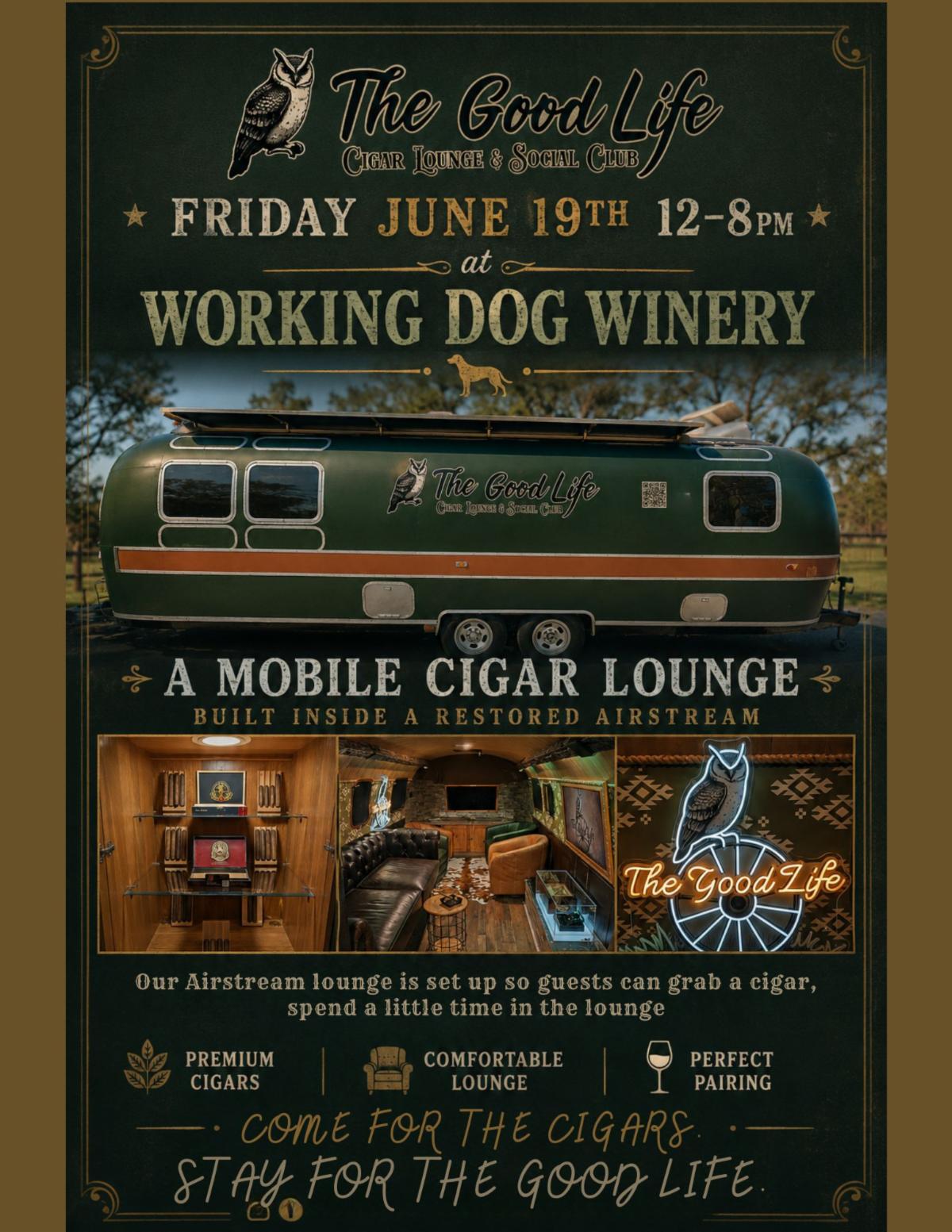
For those looking to celebrate Father’s Day, explore the Wine Trail, discover new wineries, enjoy live music, sample local food, or simply spend an afternoon surrounded by vineyard views, one thing is becoming increasingly clear: New Jersey wine country is having a remarkable moment, and Working Dog Winery is helping lead the way.

As the World Comes to New Jersey, a New Safety Campaign Aims to Keep Fans Off the Road After Drinking

The FIFA World Cup has arrived in the New York-New Jersey region, bringing with it a level of excitement, international attention, and visitor traffic unlike anything the area has experienced in decades. With millions of fans expected to travel throughout the region during the tournament, local businesses, public agencies, hospitality operators, transportation providers, and community organizations are all finding new ways to prepare for one of the largest sporting events on the planet.

While much of the conversation surrounding the World Cup has focused on tourism, economic impact, transportation planning, fan festivals, and matchday operations, another important issue is beginning to receive increased attention: roadway safety.

As New Jersey prepares to welcome hundreds of thousands of visitors during the tournament, a new initiative is seeking to address one of the most persistent public safety concerns associated with major sporting events and large-scale celebrations—impaired driving.

The Kugel Law Firm has announced the launch of a sober ride campaign designed specifically to coincide with World Cup activities throughout the New York-New Jersey region. The initiative aims to encourage fans attending matches, viewing parties, fan festivals, and related events to make transportation plans before consuming alcohol and to avoid getting behind the wheel after drinking.

The campaign centers around a straightforward message that resonates regardless of nationality, language, or team allegiance: celebrate responsibly and get home safely.

The timing of the effort reflects the extraordinary scale of the tournament itself.

New Jersey is not simply hosting a handful of soccer matches. The state sits at the center of what many consider the largest sporting event ever staged in North America. East Rutherford’s MetLife Stadium, temporarily operating under FIFA’s tournament naming conventions, is hosting multiple World Cup matches, including the championship final that will determine the next world champion.

Every match day brings an influx of fans from around the globe. Supporters arrive from Europe, South America, Africa, Asia, and throughout North America. Hotels fill. Restaurants become gathering places. Fan villages come alive. Public transportation systems experience record demand. Sports bars, entertainment districts, and cultural events stretch far beyond the stadium itself.

The World Cup is not merely a sporting event. It becomes a month-long celebration that spreads across entire regions.

For New Jersey communities, that means increased economic activity, increased tourism, and increased opportunities. It also means increased traffic volumes and a greater need for public awareness regarding safe transportation choices.

The sober ride initiative seeks to meet that challenge directly by offering free Uber credits to participating fans who commit to avoiding impaired driving during tournament activities.

While the financial incentive is relatively simple, the larger objective is behavioral. Public safety advocates have long argued that one of the most effective ways to reduce alcohol-related crashes is to remove transportation barriers before they become a problem. When convenient alternatives exist, individuals are more likely to make responsible choices.

The campaign arrives during a period when transportation planning has become a major component of the World Cup experience throughout the region.

Public officials have spent years preparing for the tournament. Infrastructure improvements, transit coordination efforts, public safety planning, emergency management exercises, and crowd-control strategies have all been developed with the goal of creating a safe and successful event for residents and visitors alike.

Transportation remains one of the most important pieces of that equation.

On match days, roads surrounding major venues experience heavy volumes. Fan celebrations continue well beyond final whistles. Restaurants and entertainment districts remain active late into the evening. The combination of excitement, alcohol consumption, unfamiliar roadways, and increased traffic creates circumstances where responsible transportation decisions become especially important.

For New Jersey, the issue extends beyond visitors.

Residents throughout the state are embracing the tournament in unprecedented ways. Community watch parties, restaurant promotions, cultural festivals, international food events, and local celebrations have transformed the World Cup into a statewide experience. Whether someone attends a match in person or watches from a neighborhood gathering, the opportunity for celebration exists almost everywhere.

That broad participation makes public safety messaging even more relevant.

The World Cup represents one of the rare events capable of bringing together millions of people from vastly different backgrounds around a shared experience. Soccer’s global appeal creates a unique atmosphere where communities celebrate side by side regardless of nationality, language, or culture.

New Jersey’s diversity makes it particularly well-positioned to embrace that spirit.

From Newark’s Ironbound district to Jersey City’s international neighborhoods, from Bergen County’s multicultural communities to the state’s growing immigrant populations throughout Central and South Jersey, the World Cup reflects the demographics that have helped define modern New Jersey.

The tournament is being experienced not simply as a sporting event but as a cultural moment.

That cultural significance is evident throughout the state. Fan zones are attracting large crowds. Restaurants representing participating nations are seeing increased business. Local soccer organizations are expanding youth programming. Community groups are organizing events centered around matches and national teams.

At the same time, safety remains a universal concern.

The consequences of impaired driving are well understood. Law enforcement agencies, transportation officials, healthcare providers, and public safety organizations have spent decades working to reduce alcohol-related crashes through education, enforcement, and awareness campaigns.

Major events provide opportunities to reinforce those messages while offering practical solutions.

The sober ride initiative reflects a growing recognition that prevention efforts often work best when they are proactive rather than reactive. Encouraging transportation planning before celebrations begin helps eliminate difficult decisions later in the evening.

For many fans, ride-share services, public transit, designated drivers, hotel accommodations, and organized transportation options have become standard parts of attending large events. Campaigns like this seek to normalize those choices even further.

The broader World Cup experience in New Jersey is expected to leave a lasting legacy long after the tournament concludes. Economic development, tourism exposure, infrastructure improvements, youth soccer investments, and international recognition are all expected to generate benefits that extend well beyond the final match.

Yet some of the most meaningful successes may never appear in attendance reports or economic impact studies.

Every safe ride home. Every impaired driver who chooses another option. Every family spared from a preventable tragedy. Those outcomes matter just as much as any headline generated during the tournament.

As New Jersey continues welcoming the world throughout the World Cup, excitement remains understandably focused on the action unfolding on the pitch. International stars are creating unforgettable moments. Fans are filling stadiums and fan festivals. Communities across the state are embracing a once-in-a-generation opportunity to participate in one of the largest events ever hosted in the region.

But alongside the goals, celebrations, and global attention is another message worth remembering.

The greatest victory at the end of any World Cup matchday is making sure everyone gets home safely.

As the tournament continues and New Jersey remains at the center of the global soccer spotlight, initiatives that promote responsible celebration and safe transportation serve as an important reminder that successful events are measured not only by attendance figures and economic impact but also by the well-being of the communities that host them.

For a state preparing to welcome the world, that may be one of the most important legacies of all.

Canal Crossing Takes Shape: Massive Jersey City Redevelopment Signals a New Era for Bergen-Lafayette

Few places in New Jersey better illustrate the state’s remarkable urban transformation than Jersey City. Once defined by shipping terminals, rail yards, factories, and industrial infrastructure, large sections of the city are now being reimagined as vibrant mixed-use neighborhoods that blend housing, retail, transportation access, public spaces, and economic opportunity. The latest chapter in that ongoing evolution is unfolding in Bergen-Lafayette, where newly released renderings and development plans are offering the clearest glimpse yet into the future of Canal Crossing, one of the most ambitious redevelopment projects currently planned in Hudson County.

The unveiling of additional phases for Canal Crossing provides a significant milestone not only for the project itself but also for the broader revitalization occurring along Jersey City’s southern corridor. For years, the property has represented both the challenges and possibilities associated with transforming former industrial land into thriving residential and commercial communities. Now, with new details emerging, the scale of that vision is becoming increasingly tangible.

Located near the Garfield Avenue Light Rail Station, the Canal Crossing property occupies a strategically important section of Jersey City. The site sits within an area that has undergone substantial change during the last decade, fueled by infrastructure investment, growing demand for housing, improved public transportation access, and a wave of redevelopment extending beyond the city’s traditionally booming waterfront districts.

Unlike many recent developments built on vacant lots or underutilized commercial parcels, Canal Crossing carries a far more complex history. Decades ago, portions of the property were used for industrial manufacturing operations, including chromium production activities that left behind environmental challenges requiring extensive remediation efforts. The site’s transformation from contaminated industrial land into a future mixed-use neighborhood represents one of the most dramatic examples of urban environmental recovery currently underway in New Jersey.

The journey from industrial brownfield to residential destination has required years of planning, environmental cleanup, regulatory approvals, engineering studies, and collaboration among public agencies and private developers. That lengthy process is now beginning to produce visible results.

The first approved phase of Canal Crossing establishes the foundation for what could ultimately become one of Jersey City’s most significant residential developments outside the downtown core. The initial building planned for 900 Garfield Avenue is designed as a ten-story structure containing nearly 300 residential units. Importantly, the project incorporates a meaningful affordable housing component, helping address one of the most pressing challenges facing Jersey City and the broader New Jersey housing market.

Housing affordability continues to dominate discussions throughout the state as population growth, limited inventory, and strong demand place pressure on both renters and buyers. Developments that integrate affordable housing into larger market-rate projects are increasingly viewed as essential tools in addressing these concerns while supporting inclusive neighborhood growth.

Beyond housing, the first phase introduces commercial space designed to activate the streetscape and encourage neighborhood-oriented retail activity. The combination of residential density and ground-floor commercial uses reflects a development philosophy increasingly embraced throughout New Jersey’s transit-accessible communities.

The newly revealed details regarding Canal Crossing’s second phase offer further insight into how the neighborhood will evolve.

The next stage includes a six-story mixed-use residential building featuring more than 200 additional housing units. Similar to the first phase, the project incorporates affordable housing while expanding the site’s overall residential capacity. The unit mix includes a variety of floor plans intended to attract a diverse range of residents, from young professionals and first-time renters to families seeking transit-oriented living options within Jersey City.

The second phase also introduces an expanded amenity package that reflects changing expectations among modern residents. Planned features include fitness facilities, community gathering spaces, rooftop amenities, and outdoor recreational areas designed to create a more complete residential experience. These amenities have become increasingly important as developers seek to build communities rather than simply apartment buildings.

One of the most striking aspects of the newly released renderings is the project’s emphasis on public-facing design. Rather than functioning as isolated residential towers disconnected from the surrounding neighborhood, the buildings are envisioned as components of a larger urban district integrated with streets, public spaces, retail destinations, and transit infrastructure.

That integration could prove particularly important given the site’s proximity to the Hudson-Bergen Light Rail system. Transit-oriented development continues to serve as a central planning objective throughout New Jersey, particularly in locations where growing populations can be accommodated without placing additional strain on road networks.

Easy access to public transportation remains one of Jersey City’s greatest advantages. Residents increasingly seek neighborhoods that offer alternatives to car-dependent lifestyles, and developments positioned near rail stations often experience strong demand as a result.

The broader Canal Crossing vision extends well beyond the first two buildings.

Newly released renderings suggest a much larger master-planned community taking shape across multiple phases. Future structures appear to include additional residential buildings, expanded commercial offerings, pedestrian-friendly public areas, and new streetscapes that would transform what is currently a largely vacant and underutilized section of Bergen-Lafayette.

While specific details regarding future phases remain limited, the images reveal a coordinated development strategy rather than a collection of standalone projects. The long-term goal appears focused on creating an entirely new neighborhood district capable of serving thousands of residents while contributing to the economic growth of the surrounding community.

The project’s timing also coincides with broader momentum throughout Bergen-Lafayette.

Several nearby developments have secured approvals in recent months, signaling increased investor confidence in an area that was often overlooked during earlier waves of Jersey City redevelopment. For years, much of the city’s growth concentrated around the waterfront, Downtown, Journal Square, and portions of the Heights. Today, however, attention is increasingly turning toward southern neighborhoods where significant redevelopment opportunities remain available.

The result is a more geographically diverse pattern of investment that spreads economic activity across a wider portion of the city.

The continuing evolution of Bergen-Lafayette reflects larger trends affecting urban development throughout New Jersey. Communities are increasingly seeking ways to balance housing growth, affordability, economic development, environmental remediation, transportation access, and quality-of-life improvements within a single planning framework.

Canal Crossing embodies many of those objectives simultaneously.

Its environmental restoration story demonstrates how formerly contaminated sites can be transformed into productive community assets. Its housing program addresses growing residential demand while incorporating affordability measures. Its transit-accessible location supports sustainable growth patterns. Its commercial elements create opportunities for business activity and neighborhood services. And its phased approach allows for long-term community building rather than isolated construction projects.

Of course, significant challenges remain. Large-scale redevelopment projects often face changing market conditions, construction costs, financing considerations, regulatory hurdles, and ongoing legal complexities. Questions surrounding future phases, total buildout density, infrastructure improvements, and project timelines will continue to shape discussions as Canal Crossing advances.

Yet despite those uncertainties, the latest renderings offer perhaps the strongest indication to date that this long-discussed redevelopment effort is moving from concept toward reality.

For Jersey City, the implications extend beyond a single project. Canal Crossing represents another step in the city’s ongoing reinvention, demonstrating how former industrial corridors can become thriving mixed-use communities that support residents, businesses, and future generations.

For Bergen-Lafayette, it signals growing momentum and renewed attention as one of Jersey City’s emerging destinations.

And for New Jersey as a whole, it serves as a powerful example of how strategic redevelopment, environmental stewardship, housing investment, and thoughtful urban planning can work together to transform challenges from the past into opportunities for the future.

As new phases continue to emerge and construction gradually reshapes the landscape near Garfield Avenue, Canal Crossing is poised to become far more than another residential project. It has the potential to become one of the defining redevelopment success stories of modern Jersey City and a model for how New Jersey’s post-industrial properties can be reimagined for a new century.

Camden County Honors 101-Year-Old Battleship New Jersey Sailor as the Legacy of the Greatest Generation Continues to Inspire

As New Jersey continues to celebrate its rich military heritage and recognize the men and women who helped shape the course of world history, few stories resonate more deeply than those connected to the legendary Battleship New Jersey. For generations, the massive Iowa-class battleship has stood as both a symbol of American strength and one of the Garden State’s most treasured historic landmarks. Yet behind the steel hull, towering guns, and remarkable wartime record are the individuals who served aboard her during some of the most consequential moments of the twentieth century.

This week, Camden County, local officials, veterans, historians, and community leaders gathered to honor one of those individuals. At 101 years old, Paul Robbins remains one of the last living links to the original wartime crew of the Battleship New Jersey, a sailor whose service helped carry the vessel through the Pacific Theater during World War II and into history.

The ceremony served as both a tribute to Robbins himself and a broader recognition of the thousands of young Americans who answered the call to serve during a time when the future of the world hung in the balance.

When Robbins first stepped aboard the Battleship New Jersey, he was only 18 years old. Like countless members of the Greatest Generation, he was a teenager thrust into extraordinary circumstances. The world was at war, the Pacific remained a brutal and dangerous theater of combat, and America was rapidly expanding its military operations against Imperial Japan.

For many young sailors, deployment meant leaving behind family, hometowns, and any certainty about what the future might hold. Yet they answered the call with determination and courage.

Robbins became part of the original crew that helped transform the USS New Jersey into one of the most decorated and respected battleships in American naval history.

The timing of the recognition carries particular significance because it coincides with the anniversary of one of the most pivotal campaigns in the Pacific War: the Battle of Saipan and the larger Battle of the Philippine Sea.

These operations marked a turning point in the conflict. By mid-1944, Allied forces had shifted from defensive operations to aggressive campaigns designed to move closer to the Japanese mainland. Capturing Saipan was considered strategically vital because it placed American forces within range of Japan itself and established critical bases for future operations.

The Battleship New Jersey played an important role in supporting those efforts.

As part of the formidable American naval force operating throughout the region, the vessel provided protection, firepower, and operational support during some of the war’s most challenging engagements. Sailors aboard the ship witnessed firsthand the scale of the Pacific campaign as Allied forces fought across thousands of miles of ocean and island territories.

The Battle of the Philippine Sea, often referred to by historians as the “Great Marianas Turkey Shoot,” proved especially significant. The confrontation resulted in devastating losses for Japanese naval aviation and dramatically shifted the balance of power in the Pacific. The outcome helped pave the way for subsequent Allied advances and accelerated the path toward victory.

For Robbins and his fellow crew members, however, these events were not yet history. They were daily realities.

The long hours at sea, the constant operational demands, and the uncertainty of wartime service formed the backdrop of their young lives. Their experiences were defined not by historical hindsight but by commitment, discipline, and duty.

That reality is one reason why preserving these stories remains so important.

Today, the Battleship New Jersey serves as one of New Jersey’s premier historical attractions and educational institutions. Docked along the Camden waterfront, the vessel welcomes visitors from around the world while offering an immersive look into naval history, military service, engineering innovation, and American resilience.

Every compartment, deck, gun turret, and passageway tells a story. Yet perhaps the most important stories belong to the people who served aboard the ship.

As veterans of World War II become increasingly rare, opportunities to hear firsthand accounts from sailors like Robbins become even more valuable. Their memories provide a direct connection to an era that shaped modern America and influenced generations that followed.

The recognition ceremony was about more than celebrating longevity. It was about preserving living history.

Officials who gathered for the event emphasized the importance of honoring veterans while they are still able to share their experiences. Robbins represents a generation whose sacrifices extended far beyond military service. Following the war, millions of veterans returned home and helped build communities, businesses, schools, infrastructure, and institutions that continue to benefit Americans today.

Their contributions shaped modern New Jersey in countless ways.

Throughout Camden County and across the state, veterans have long played a central role in civic life. Communities continue to support memorial programs, educational initiatives, military museums, historical preservation efforts, and veteran recognition events designed to ensure these stories are never forgotten.

The Battleship New Jersey remains at the center of many of those efforts.

More than simply a museum, the ship functions as a living classroom where visitors can experience history in a tangible way. Students walk the same decks once occupied by wartime sailors. Families explore the same compartments that served as workspaces and living quarters during combat operations. Veterans share stories that transform historical events into personal experiences.

For younger generations, these encounters provide invaluable context about the price of freedom and the responsibilities that accompany citizenship.

The story of Paul Robbins also highlights the extraordinary longevity of memory and service. At 101 years old, he continues to serve as an ambassador for an entire generation. His presence reminds New Jersey residents that history is not merely something found in textbooks or museums. It lives through people, communities, traditions, and shared remembrance.

As America moves toward future milestones and commemorations, preserving these personal stories becomes increasingly urgent. Every veteran represents a unique perspective on events that shaped the nation and the world.

For New Jersey, the connection is especially meaningful. The Battleship New Jersey is more than a historic vessel. It is a symbol of the state’s contributions to national defense, industrial strength, and military heritage. The ship’s remarkable record spans multiple conflicts and generations, but its legacy remains inseparable from the sailors who brought it to life.

The recognition of Paul Robbins serves as a reminder that behind every historic achievement are ordinary individuals who rose to extraordinary challenges.

At 18 years old, Robbins sailed into one of history’s most consequential conflicts. More than eight decades later, his service continues to inspire new generations who visit the ship, study history, and seek to understand the sacrifices that secured the freedoms enjoyed today.

As Camden County honored one of the last surviving original crew members of the Battleship New Jersey, it also honored something larger: the enduring spirit of service, sacrifice, and patriotism that defines the Greatest Generation.

The battles may have ended decades ago, but the lessons remain timeless. Through veterans like Paul Robbins, the story of the Battleship New Jersey continues to live on—not simply as a chapter in history, but as a legacy that continues to shape New Jersey and the nation.