
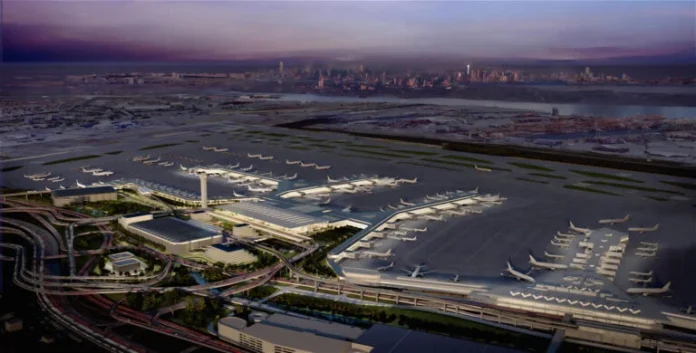

For millions of travelers, Newark Liberty International Airport serves as the front door to New Jersey. It is the first impression many visitors receive of the Garden State and a critical transportation hub connecting the Northeast to destinations across the nation and around the world. While much attention in recent years has focused on the opening of Newark Liberty’s award-winning Terminal A and the long-term vision for the airport’s future, a major investment is now being directed toward one of its most familiar and heavily utilized facilities: Terminal B.
The Port Authority of New York and New Jersey has officially launched a significant modernization initiative that will bring approximately $200 million in upgrades to Terminal B over the next three years. The project represents far more than routine maintenance. It is a comprehensive effort to improve the daily experience of millions of travelers while laying the groundwork for the eventual replacement of the airport’s oldest terminal.
What the Airport Redevelopment Plan Includes
The modernization of Terminal B is only one component of a much larger transformation underway at Newark Liberty International Airport. Over the next decade, the Port Authority’s long-range vision aims to reshape nearly every aspect of the airport experience, from terminal buildings and transportation systems to aircraft operations and regional transit connections.
Key elements of the redevelopment program include:
A New International Terminal Complex
- Plans call for the eventual replacement of the current Terminal B with a next-generation international terminal designed to accommodate growing passenger demand and evolving airline operations.
- Existing Terminal C is also expected to receive enhancements and upgrades to improve efficiency and customer experience.
- These facilities will complement the award-winning Terminal A, which opened in 2023 and has already become a model for modern airport design.
- The long-term goal is to create a unified, world-class terminal system capable of serving millions of additional travelers while providing flexibility for future expansion.
Modernized Aircraft Operations
- Airport planners are redesigning portions of the airfield to improve aircraft movement and reduce delays.
- New taxiway configurations will provide greater operational flexibility and improve efficiency during peak travel periods.
- Additional aircraft parking positions will accommodate larger modern aircraft and increased airline activity.
- Expanded deicing infrastructure will help reduce winter weather disruptions and speed aircraft departures.
- Updated layouts will incorporate enhanced safety features designed to minimize runway crossings and improve overall airport resilience.
Improved Roadways and Passenger Access
- Significant changes are planned for the airport’s roadway system and terminal frontages.
- Expanded pickup and drop-off areas will reduce congestion and provide more space for passengers and transportation providers.
- Roadway improvements will streamline vehicle circulation and simplify navigation throughout the airport campus.
- Passenger walking distances will be reduced wherever possible through more efficient terminal access points.
- Enhanced accommodations for pedestrians, cyclists, ride-share services, buses, and commercial vehicles are also part of the long-term strategy.
A Brand-New AirTrain Newark System
- One of the most visible projects will be the replacement of the existing AirTrain Newark system.
- The new automated people mover will span approximately 2.5 miles and serve growing passenger volumes projected through 2040 and beyond.
- The system will continue connecting travelers to terminals, parking facilities, rental car centers, and regional rail services.
- Airport officials expect the upgraded AirTrain to provide faster, more reliable service while significantly improving the customer experience.
- The replacement project is considered one of the most critical transportation investments supporting the airport’s future growth.
Enhanced Regional Rail Connectivity
- A new access point is being developed at the Newark Liberty International Airport Rail Station on the Northeast Corridor.
- The project will provide improved access for residents of Newark and Elizabeth while strengthening links between the airport and regional transit networks.
- Travelers will benefit from more direct connections to NJ TRANSIT, Amtrak, Newark Penn Station, PATH service, Jersey City, Manhattan, and destinations throughout the Northeast.
- Officials view the project as both an airport improvement and a regional transportation investment that will increase mobility throughout northern New Jersey.
Building a World-Class Gateway for the Region
- The redevelopment strategy is designed to support future passenger growth while improving operational reliability and customer satisfaction.
- Investments are focused on creating a seamless travel experience from arrival at the airport to boarding at the gate.
- The program also aims to strengthen Newark Liberty’s role as one of the nation’s premier international gateways.
- Together with the recently completed Terminal A and the ongoing Terminal B modernization effort, these projects represent one of the largest transportation infrastructure initiatives currently underway in the Northeast.
As Terminal B begins receiving its $200 million facelift, travelers are already seeing the first phase of a much larger vision. The improvements underway today are intended to bridge the gap between Newark Liberty’s historic past and a future that airport officials hope will establish the facility as one of the most advanced, efficient, and passenger-friendly airports in North America.
For New Jersey residents, business travelers, international visitors, and the aviation industry as a whole, the announcement signals another important step in the continuing transformation of one of the region’s most vital transportation assets.
Terminal B has been a fixture at Newark Liberty since opening in 1973. Built during a vastly different era of air travel, the terminal was originally designed to accommodate approximately 6.8 million passengers annually. At the time, few could have imagined the dramatic growth that would reshape both the airline industry and the New York-New Jersey metropolitan region over the following decades.
Today, Terminal B serves approximately 11.5 million passengers annually, handling traffic levels that far exceed what its designers originally envisioned. The result is a facility that has remained functional and operational but increasingly shows the wear and limitations associated with a terminal that has been serving travelers for more than half a century.
The new investment program seeks to address those realities directly.
Rather than waiting for an entirely new terminal to be constructed, airport officials are focusing on tangible improvements that passengers will experience immediately. The strategy acknowledges an important truth about infrastructure: future projects are important, but travelers need quality facilities today.
The first phase of the initiative has already been approved through the Port Authority’s 2026-2035 Capital Plan, with an initial allocation of $75 million dedicated to addressing the most urgent needs throughout the terminal. These early improvements will target the spaces and systems passengers encounter most frequently during their journeys.
Travelers can expect upgraded gate areas featuring modern seating, improved flooring, enhanced lighting, and refreshed passenger waiting spaces. These changes may seem straightforward, but they directly impact comfort and convenience during delays, layovers, and boarding processes.
The modernization effort also includes extensive restroom renovations, an area that consistently ranks among the most important passenger satisfaction indicators at airports worldwide. Improved restroom facilities, better accessibility, and modernized infrastructure will help bring Terminal B more in line with contemporary traveler expectations.
Accessibility improvements are another major component of the project. As airports continue evolving to serve increasingly diverse passenger populations, investments in ADA compliance and universal accessibility have become essential components of modernization efforts. The planned upgrades will improve mobility throughout the terminal while ensuring a more seamless experience for travelers with disabilities and mobility challenges.
The renovation extends beyond cosmetic improvements.
Critical transportation infrastructure throughout the building will receive significant upgrades, including the replacement and modernization of elevators, escalators, and passenger boarding bridges. These systems play an essential role in maintaining efficient passenger movement and operational reliability. Their improvement will not only enhance convenience but also reduce disruptions and maintenance issues that can impact airport operations.
Behind the scenes, major investments are also being made in the systems that travelers rarely see but rely upon every day.
Heating, ventilation, and air conditioning systems will undergo extensive upgrades designed to improve comfort, efficiency, and reliability. Baggage handling infrastructure will also receive modernization, helping support smoother operations and reducing the risk of delays or disruptions associated with aging equipment.
Taken together, these improvements represent a comprehensive refresh of a terminal that has served as a gateway to New Jersey for generations.
The significance of the project extends beyond the passenger experience itself. Newark Liberty International Airport remains one of the most important economic engines in the region. The airport supports thousands of jobs, facilitates billions of dollars in economic activity, and serves as a critical component of New Jersey’s broader transportation and logistics network.
As international tourism, business travel, and global commerce continue evolving, maintaining competitive airport infrastructure becomes increasingly important for economic growth. Modern airports are no longer viewed simply as transportation facilities. They function as economic development assets, tourism gateways, and symbols of regional competitiveness.
The transformation underway at Newark Liberty reflects that broader perspective.
The airport has already experienced one of the most dramatic periods of modernization in its history. The opening of the new Terminal A in 2023 demonstrated what a modern airport experience can look like in New Jersey. The facility received widespread praise for its architecture, technology integration, passenger amenities, operational efficiency, and overall design.
Terminal A’s success raised expectations throughout the airport.
Passengers increasingly compare all travel experiences against newer facilities, making it even more important that older terminals receive meaningful investments while long-term redevelopment plans continue advancing.
Those long-term plans remain ambitious.
Port Authority officials continue working toward the eventual replacement of Terminal B with an entirely new facility expected to open sometime during the mid-2030s. That future terminal will likely represent another transformative milestone for Newark Liberty and the region’s aviation infrastructure.
However, airport leaders have made it clear that future development cannot come at the expense of present-day passenger experiences.
The current modernization initiative reflects a practical and customer-focused approach. Instead of asking travelers to wait a decade for improvements, the Port Authority is investing now to ensure that the millions of passengers using Terminal B each year benefit from meaningful upgrades.
The timing is particularly important as air travel continues experiencing strong demand. Passenger volumes throughout the region remain robust, and Newark Liberty continues serving as a key international gateway for travelers arriving from Europe, Latin America, Asia, and destinations across North America.
As New Jersey prepares for major international events, expanded tourism activity, and continued economic growth, transportation infrastructure will play an increasingly important role in supporting the state’s ambitions.
Airports occupy a unique place in that ecosystem. They are simultaneously transportation hubs, economic catalysts, and public spaces. Every traveler who arrives in New Jersey through Newark Liberty forms an impression based in part on the quality, efficiency, and comfort of that experience.
The modernization of Terminal B is therefore about more than construction projects and capital investments. It is about ensuring that one of New Jersey’s most visible public assets continues evolving to meet the expectations of modern travelers.
For residents who fly regularly, business professionals traveling internationally, tourists visiting the Garden State, and families embarking on vacations, the improvements will gradually become visible throughout the coming years. New seating, brighter spaces, upgraded facilities, enhanced accessibility, and more reliable infrastructure will all contribute to a better travel experience.
While the long-term vision includes an entirely new Terminal B, the investments being made today ensure that the airport’s present remains just as important as its future.
As Newark Liberty International Airport continues its transformation into one of the nation’s premier aviation gateways, the modernization of Terminal B serves as another reminder that infrastructure excellence is not achieved through a single project. It is built through consistent investment, strategic planning, and a commitment to improving the experience of every traveler who passes through New Jersey’s busiest airport.
The next chapter of Terminal B has officially begun, and for millions of passengers who rely on Newark Liberty each year, the changes are poised to make a noticeable difference long before a new terminal ever opens its doors.
















