
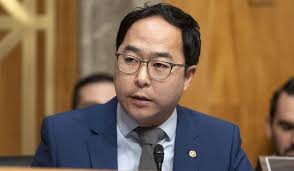

International diplomacy often feels distant from everyday life in New Jersey, unfolding thousands of miles away in foreign capitals, military command centers, and international negotiating rooms. Yet the consequences of those decisions frequently arrive much closer to home, impacting everything from gasoline prices and consumer costs to national security priorities and economic stability. This reality was underscored once again this week as New Jersey Senator Andy Kim delivered a forceful response to reports that the United States and Iran have reached a Memorandum of Understanding aimed at ending a recent period of military conflict and escalating tensions.
The statement from Kim, one of New Jersey’s most closely watched voices on foreign affairs and national security issues, signals the beginning of what is likely to become a significant political and policy debate in Washington. While supporters of the agreement argue that diplomacy remains the best path toward stability in one of the world’s most strategically important regions, critics contend that the terms of the reported understanding raise serious concerns about long-term security, economic consequences, and America’s standing on the global stage.
For New Jersey residents, the discussion extends far beyond foreign policy theory. The Middle East remains one of the most consequential regions for global energy markets, international trade routes, and military strategy. Decisions made there can have direct effects on household budgets, transportation costs, business operations, and economic confidence throughout the Garden State.
Kim’s remarks focused on what he described as the broader costs associated with the conflict and the subsequent diplomatic resolution. According to the senator, the United States paid a substantial price before reaching the reported agreement. He argued that the conflict resulted in American casualties, strained military resources, redirected strategic attention away from other global priorities, and contributed to higher energy costs that affected families and businesses across the country.
The senator’s criticism reflects growing concerns among policymakers about the interconnected nature of modern geopolitics. In today’s global economy, instability in one region can rapidly influence markets and consumers around the world. Energy prices, supply chains, shipping routes, and investment decisions are increasingly tied to international events, making foreign policy decisions more relevant than ever to everyday Americans.
One of the central issues highlighted in the debate is the Strait of Hormuz, one of the most strategically important waterways on the planet. This narrow passage serves as a critical gateway for a substantial portion of the world’s oil and energy shipments. Any disruption to commercial traffic through the region has the potential to send ripple effects throughout global markets, affecting everything from fuel prices to manufacturing costs.
For a state like New Jersey, where millions of residents rely on automobiles for daily commuting and where transportation remains central to commerce and tourism, fluctuations in energy prices can have significant economic consequences. Higher fuel costs influence consumer spending patterns, increase operating expenses for businesses, and contribute to broader inflationary pressures that affect virtually every sector of the economy.
That reality has made energy security an increasingly important component of national security discussions.
Kim’s comments suggest concern that the reported agreement leaves unresolved questions regarding future maritime security and regional stability. Those concerns reflect a broader debate taking place among policymakers who are evaluating whether diplomatic arrangements sufficiently address long-term risks while preventing future conflicts.
The issue also intersects with ongoing discussions about America’s global strategic priorities.
Over the past decade, national security experts have increasingly emphasized the importance of the Indo-Pacific region, citing economic growth, technological competition, and evolving geopolitical dynamics. Many policymakers believe maintaining focus on that region will be critical to American interests throughout the twenty-first century.
Kim argued that military engagement in the Middle East can divert attention and resources away from those broader strategic objectives. That concern is not unique to New Jersey’s junior senator. Similar arguments have emerged across the political spectrum as policymakers seek to balance commitments in multiple regions simultaneously while managing limited resources and competing priorities.
The debate over the agreement also highlights the evolving nature of international diplomacy itself.
Modern foreign policy increasingly requires leaders to navigate complex relationships involving military considerations, economic interests, energy security, technological competition, and humanitarian concerns. Rarely do diplomatic agreements produce unanimous support, particularly when they involve adversaries with long histories of tension and conflict.
Supporters of negotiated settlements generally argue that diplomacy offers the best opportunity to reduce the risk of future violence while creating pathways toward stability. Critics often counter that agreements must be carefully structured to ensure they do not inadvertently strengthen adversaries or create unintended consequences that emerge years later.
Those competing perspectives are now playing out in public as details surrounding the reported understanding continue to emerge.
For New Jersey, the discussion carries particular relevance because of the state’s diverse economy and strategic importance within the Northeast corridor. New Jersey is home to major transportation networks, shipping infrastructure, logistics hubs, financial institutions, pharmaceutical companies, and technology firms that all operate within an increasingly interconnected global marketplace.
International events influence many of these industries directly.
Shipping companies monitor global trade routes. Manufacturers watch energy prices closely. Financial markets respond instantly to geopolitical developments. Businesses making long-term investment decisions evaluate global stability alongside domestic economic conditions.
As a result, debates taking place in Washington often resonate throughout New Jersey’s business community.
The senator’s statement also reflects a broader trend in contemporary politics, where foreign policy discussions are increasingly framed through their domestic economic implications. Rather than focusing solely on military or diplomatic outcomes, elected officials now frequently evaluate international decisions based on their impact on affordability, consumer costs, economic growth, and household finances.
This approach recognizes that voters increasingly connect global events with local consequences.
When fuel prices rise, consumers notice. When supply chains are disrupted, businesses respond. When international uncertainty affects markets, retirement accounts, investment portfolios, and economic confidence can all be influenced. Foreign policy and domestic economics are no longer separate conversations; they have become deeply intertwined.
The coming weeks will likely bring additional scrutiny of the reported agreement as lawmakers, analysts, and international observers assess its potential implications. Congressional leaders from both parties are expected to examine questions related to implementation, enforcement, regional security, and long-term strategic outcomes.
For New Jersey residents, the debate serves as a reminder that global developments often have local consequences. Decisions made on the international stage can influence energy costs, economic conditions, national security priorities, and government spending in ways that ultimately affect communities throughout the Garden State.
Whether the reported agreement ultimately delivers greater stability or generates additional controversy remains to be seen. What is already clear is that the conversation surrounding the agreement has become a significant political issue, drawing attention from lawmakers, business leaders, and citizens seeking to understand what the future may hold.
As New Jersey continues navigating challenges related to affordability, economic competitiveness, infrastructure investment, and energy policy, international developments will remain an important part of the conversation. Senator Andy Kim’s response underscores how closely those issues are connected and why decisions made far beyond New Jersey’s borders can still have profound implications for residents here at home.
The debate over the U.S.-Iran agreement is ultimately about more than diplomacy alone. It is about how America projects power, protects economic interests, secures critical trade routes, supports allies, manages risks, and balances competing priorities in a rapidly changing world. For New Jersey, those questions are not abstract policy exercises. They are part of a larger discussion about security, prosperity, and the future direction of the nation itself.
















