
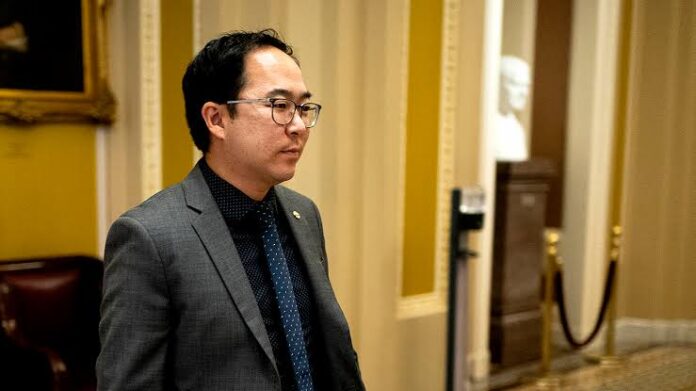

New Jersey Senator Andy Kim has introduced a major new federal health care proposal called the MediKids Act, aiming to establish universal health coverage for every American child and young adult up to age 26. Kim announced the legislation as what he describes as a revolutionary response to a decade high spike in the number of uninsured children nationally, positioning the bill as a genuinely significant departure from how the federal government currently structures children’s health coverage.
Under the proposal, every child would be automatically enrolled in a federal Medicaid system at birth, removing the application process parents currently need to navigate to secure coverage for a newborn. The federal government would cover the full cost of that insurance itself, meaning individual states would not need to absorb any share of the financial burden the way many currently do under existing children’s health programs. The bill’s eligibility structure is notably broad as well, extending coverage to all children and young adults up to age 26 regardless of household income or citizenship status, a provision that marks one of the proposal’s most significant and likely most politically contested features.
Families who prefer private insurance, or who simply don’t want to participate in the federal system, would retain the ability to voluntarily opt out rather than being locked into the program.
Kim has framed MediKids as considerably more than a standalone healthcare bill, describing it as part of a longer term strategic effort to reshape how his party approaches the national healthcare debate more broadly. He has spoken about building what he calls bookends for life, a framework in which the federal government guarantees health coverage during an individual’s most vulnerable years, from birth through age 26 under MediKids, and again from age 65 onward through the existing Medicare program, leaving the working adult years in between covered through the current mix of employer based and marketplace insurance. Kim has also argued that Democrats cannot afford to leave an intellectual vacuum while simply opposing the current Republican led Congress’s spending cuts, urging his party to actively develop concrete policy proposals ready to advance whenever Democrats next hold the White House, rather than waiting until that moment arrives to start building out a legislative agenda. On the economic argument for the bill, Kim contends that expanding children’s medical coverage ultimately saves the federal government money over time, reasoning that healthier children tend to grow into healthier, less costly adults, though that projected long term savings claim remains Kim’s own policy argument rather than an independently verified fiscal outcome, and it’s the kind of claim that will likely face genuine scrutiny and debate as the bill moves through the legislative process, if it advances at all.
It’s worth noting clearly that MediKids remains a proposed piece of legislation rather than enacted law, and given the scale of federal spending it would require along with its expansive eligibility provisions, the bill faces a genuinely uncertain path forward in a Congress currently controlled by Republicans who have shown little appetite for this kind of expanded federal health spending. Whether the proposal advances, gets narrowed through negotiation, or simply serves as a marker for future Democratic policy positioning remains to be seen.
Beyond this national proposal, Kim has continued pursuing more targeted healthcare improvements specifically for New Jersey through his seat on the Senate health committee. He recently submitted Congressionally Directed Spending requests aimed at funding New Jersey specific medical programs, including securing funding to help adults with serious mental illness achieve meaningful psychiatric recovery goals, and separately funding early mental health intervention and mentorship programs specifically tailored for underprivileged New Jersey teenagers. Those more targeted requests reflect a parallel track to Kim’s broader national healthcare ambitions, addressing immediate, localized mental health needs within his own state even as he simultaneously pushes a considerably larger, more structurally ambitious proposal at the federal level.
Taken together, Kim’s healthcare agenda this year spans both the sweeping and the specific, a genuinely ambitious national proposal aimed at guaranteeing coverage for every American child, paired with direct, targeted funding requests addressing mental health needs within New Jersey communities right now. Whether MediKids ultimately gains traction in Congress or remains primarily a policy marker for future debate, it reflects Kim’s broader effort to position children’s healthcare access as a defining issue heading into the next major national conversation on the topic.
















