Home Blog Page 42

Minute by Minute: The Music of Michael McDonald

0

“Minute by Minute: The Music of Michael McDonald” Arrives in New Jersey August 3, Delivering a Masterclass Tribute to One of America’s Most Distinctive Voices

August 3 @ 7:00 PM 11:30 PM

New Jersey’s summer concert slate continues to expand with programming that goes beyond standard touring cycles and into curated, experience-driven performances, and the arrival of Minute by Minute: The Music of Michael McDonald on August 3 stands as one of the most musically refined tributes of the season. Designed as a full-scale celebration of an artist whose voice and songwriting helped define multiple eras of American music, this production brings a level of precision and reverence that aligns with the growing demand for performances that are both nostalgic and musically substantive.

At the center of the show’s concept is the enduring influence of Michael McDonald, a vocalist and composer whose unmistakable baritone became a signature sound across decades of chart success. From his transformative role with The Doobie Brothers to his collaborative work with Steely Dan and his expansive solo catalog, McDonald’s contributions are not simply remembered—they are foundational to the architecture of soft rock, blue-eyed soul, and the broader evolution of adult contemporary music.

This August 3 performance is structured not as a loose tribute, but as a meticulously crafted musical narrative that traces McDonald’s influence across multiple phases of his career. The show’s title, “Minute by Minute,” draws directly from one of the defining albums of The Doobie Brothers’ catalog, signaling a commitment to authenticity and depth. Audiences can expect a setlist that reflects the full spectrum of McDonald’s work, from the polished, groove-driven hits that elevated The Doobie Brothers into a new era, to the intricate, jazz-influenced compositions associated with Steely Dan, and the introspective, soul-infused material that defined his solo output.

Within the broader context of New Jersey’s live music ecosystem, this event represents a distinct category of programming—one that prioritizes musical fidelity, arrangement accuracy, and vocal execution. Explore New Jersey’s ongoing coverage of the state’s music landscape highlights a growing appetite for these types of performances, where the objective is not reinvention but precise recreation. For audiences seeking a deeper connection to the music that shaped previous generations, tribute productions of this caliber offer an experience that is both immersive and technically compelling. The full range of concerts, legacy acts, and curated shows can be explored through the Explore New Jersey music section, where events like this continue to define the state’s cultural rhythm.

What sets “Minute by Minute: The Music of Michael McDonald” apart is its focus on the structural elements that made McDonald’s work so influential in the first place. His music is built on layered harmonies, complex chord progressions, and a rhythmic sensibility that draws equally from R&B and jazz traditions. Recreating that sound in a live setting requires more than surface-level familiarity; it demands a disciplined approach to arrangement and performance. The musicians behind this production operate within that framework, delivering a show that captures not just the songs themselves, but the tonal and emotional nuances that define them.

McDonald’s tenure with The Doobie Brothers marked a pivotal shift in the band’s direction, introducing a smoother, more groove-oriented sound that expanded their audience while maintaining musical integrity. Tracks from that era remain staples of radio and live performance, not simply because of their commercial success, but because of their compositional strength. His work with Steely Dan, meanwhile, reflects a different dimension of his artistry—one that emphasizes precision, subtlety, and an almost architectural approach to songwriting. These dual influences converge in his solo career, where his voice becomes the central instrument, carrying melodies that balance technical sophistication with emotional accessibility.

The August 3 performance brings all of these elements into a single, cohesive experience. For New Jersey audiences, it offers a rare opportunity to engage with a catalog that spans multiple genres and eras, presented in a format that respects its complexity. In a live environment, where dynamics, phrasing, and ensemble interplay become immediately tangible, the music takes on a renewed dimension. It is not simply heard—it is experienced in real time, with all the precision and depth that defines the original recordings.

New Jersey’s continued ability to attract and support programming of this nature speaks to the strength of its live music infrastructure. The state’s venues provide the acoustic environments and production capabilities necessary to deliver performances that meet the expectations of discerning audiences. At the same time, its proximity to major cultural centers ensures a steady flow of artists and productions that contribute to a diverse and evolving concert calendar.

As anticipation builds for “Minute by Minute: The Music of Michael McDonald,” the event stands as a clear reflection of where the live music experience is heading—toward performances that combine technical excellence with emotional resonance, and that treat the source material with both respect and rigor. For longtime fans, it offers a chance to revisit a catalog that has remained consistently relevant. For newer audiences, it provides an entry point into a body of work that continues to influence contemporary music across genres.

In the broader narrative of New Jersey’s summer concert season, August 3 is positioned as more than a date—it is a moment where legacy, musicianship, and audience engagement converge. Through continued coverage and curation, Explore New Jersey remains committed to spotlighting performances that elevate the standard of live music across the state, ensuring that events like this are not only attended, but fully appreciated for the artistry they represent.

Camden County Board of Commissioners

1-866-226-3362

View Organizer Website

Wiggins Waterfront Park

2 Riverside Dr
Camden, New Jersey 08103 United States
+ Google Map
(856) 541-7222
View Venue Website

Boney James

0

Boney James Brings Signature Urban Jazz Sound to New Jersey on July 19 in a Landmark Live Performance

July 19 @ 7:00 PM 11:30 PM

New Jersey’s summer concert season continues to elevate its profile as a premier destination for world-class live music, and the arrival of Boney James on Sunday, July 19 represents a defining moment within that landscape. A Grammy-nominated saxophonist, composer, and producer whose work has reshaped the boundaries of contemporary jazz, Boney James is not simply another touring artist on the calendar—he is a cornerstone figure in the evolution of modern instrumental music, and his upcoming performance stands as one of the most significant jazz events to hit the Garden State this season.

For decades, Boney James has operated at the intersection of jazz, R&B, and hip-hop, crafting a sound that is both technically sophisticated and widely accessible. With more than three million records sold, his catalog reflects a rare combination of commercial success and artistic credibility, positioning him among the most influential instrumentalists of his generation. His music is not confined to traditional jazz frameworks; instead, it pushes forward into a hybridized space where groove, melody, and production converge. This approach has helped define what is now widely recognized as the urban-jazz movement—a style that continues to resonate with audiences across formats, from streaming platforms to live venues.

His July 19 appearance in New Jersey arrives at a moment when live jazz is experiencing a renewed cultural emphasis, driven by audiences seeking immersive, musicianship-driven performances that offer both depth and atmosphere. Within Explore New Jersey’s expanding coverage of the state’s music scene, events like this underscore a broader trend: the re-centering of instrumental artistry within a live context that prioritizes nuance, improvisation, and emotional connection. For those tracking the region’s evolving concert calendar, the full scope of performances shaping the state’s music identity can be explored through the Explore New Jersey music section, where established icons and emerging voices continue to define the rhythm of the season.

Boney James’s artistry is built on precision, but it is his phrasing—his ability to shape tone, space, and rhythm—that distinguishes his work at the highest level. His saxophone becomes more than an instrument; it becomes a narrative voice, capable of conveying both intensity and restraint within a single passage. His compositions often begin with groove-driven foundations, layering rhythmic elements that draw from R&B and hip-hop, before unfolding into melodic lines that retain the harmonic sophistication of jazz. This structural balance allows his music to function across multiple listening environments, from intimate settings to large-scale live performances.

The significance of his influence extends beyond his recordings. Boney James has helped redefine how jazz is marketed, performed, and consumed in the modern era. By integrating contemporary production techniques and collaborating across genres, he has expanded the audience for instrumental music without diluting its core identity. His work has opened pathways for a new generation of artists who operate within similar hybrid frameworks, reinforcing the idea that jazz is not a static genre but an evolving form capable of absorbing and reflecting contemporary culture.

In a live setting, that evolution becomes tangible. Boney James’s performances are characterized by a tight, cohesive band dynamic, where each musician operates with both independence and alignment. The arrangements are structured yet fluid, allowing for moments of improvisation that elevate the experience beyond the recorded versions of his work. For audiences in New Jersey, this translates into a performance that is both technically polished and emotionally immediate—a rare combination that defines the highest tier of live music.

New Jersey’s role in hosting artists of this caliber continues to reinforce its position as a critical node within the national touring circuit. The state’s venues—ranging from intimate theaters to expansive concert spaces—provide an environment where artists like Boney James can deliver performances that are both acoustically rich and culturally resonant. This infrastructure, combined with a diverse and engaged audience base, ensures that events of this magnitude are not only well-attended but deeply impactful.

The July 19 performance also highlights the broader diversity of New Jersey’s music programming. While the state is often associated with rock, pop, and mainstream touring acts, its commitment to jazz and instrumental music remains strong. Events like this serve as a reminder that the region’s musical identity is multifaceted, capable of supporting a wide spectrum of genres while maintaining a consistent standard of quality.

Audience expectations for this performance are naturally elevated, and for good reason. Boney James’s track record speaks to a level of consistency that few artists achieve over the course of a long career. His ability to deliver performances that meet—and often exceed—those expectations is a key factor in his sustained relevance. Whether performing signature tracks that have defined his career or introducing newer material that reflects his ongoing evolution, he approaches each set with a level of discipline and intention that aligns with his reputation.

As anticipation builds for July 19, the event stands as a clear example of what defines New Jersey’s current live music moment: a convergence of legacy, innovation, and audience engagement that positions the state as a destination for meaningful musical experiences. Through continued coverage and curation, Explore New Jersey remains at the forefront of documenting these moments, ensuring that audiences have access to the performances that shape the region’s cultural narrative.

Boney James’s upcoming appearance is not simply another date on the calendar—it is a statement performance, one that encapsulates the depth, versatility, and enduring appeal of contemporary jazz. For those who understand the significance of his work, and for those discovering it in real time, July 19 represents an opportunity to engage with an artist whose influence continues to define the sound of modern instrumental music.

Camden County Board of Commissioners

1-866-226-3362

View Organizer Website

Wiggins Waterfront Park

2 Riverside Dr
Camden, New Jersey 08103 United States
+ Google Map
(856) 541-7222
View Venue Website

Kid ’N Play

0

Kid ’N Play Set to Ignite New Jersey with a High-Energy Return on July 13 as Hip-Hop Icons Bring Their Legacy to the Garden State

July 13 @ 7:00 PM 11:30 PM

New Jersey’s live music calendar continues to build momentum with a summer event that bridges generations of hip-hop fans and cultural enthusiasts alike, as the legendary duo Kid ‘N Play prepares to take the stage on July 13. Known for their unmistakable chemistry, feel-good lyricism, and a cultural footprint that extends far beyond music, the pairing of Christopher “Kid” Reid and Christopher “Play” Martin represents a defining era of late 1980s and early 1990s hip-hop that continues to resonate across audiences today.

As part of the broader surge of live performances shaping the region’s entertainment landscape, this upcoming appearance is more than a nostalgic revival—it is a reaffirmation of the enduring influence of artists who helped redefine the genre’s tone, accessibility, and crossover appeal. Through Explore New Jersey’s ongoing coverage of the state’s thriving live music ecosystem, audiences are increasingly reconnecting with acts that didn’t just contribute to hip-hop’s rise, but actively shaped its cultural identity in real time.

Kid ’N Play emerged during a pivotal moment in hip-hop history, when the genre was expanding beyond its foundational roots and into mainstream consciousness. At a time when lyrical content often leaned toward grit and intensity, the duo carved out a distinct lane built on positivity, humor, and relatability. Their music was celebratory without sacrificing authenticity, offering a sound that was both accessible and rooted in the evolving language of the streets. Tracks like “Rollin’ with Kid ’n Play” and “Funhouse” became synonymous with an era defined by dance, community, and a lighter, more inclusive expression of hip-hop culture.

What set Kid ’N Play apart was not just their music, but their ability to translate that energy into visual and cinematic storytelling. Their starring roles in the House Party film franchise elevated them from recording artists to cultural icons. The films themselves became generational touchstones, blending music, comedy, and youth culture into a format that captured the spirit of a movement. The now-iconic dance sequences, particularly those featuring Kid’s high-top fade and Play’s smooth choreography, became instantly recognizable symbols of the time—moments that continue to circulate across media platforms and influence contemporary artists and performers.

Their return to the stage in New Jersey arrives at a moment when audiences are increasingly drawn to live experiences that offer both authenticity and emotional connection. In an environment saturated with digital content, the opportunity to witness artists like Kid ’N Play perform in real time carries a unique value. It is not simply about revisiting familiar tracks; it is about engaging with a legacy that remains active, relevant, and deeply embedded in the broader narrative of American music.

New Jersey’s role in hosting events of this caliber reflects the state’s ongoing commitment to cultivating a dynamic and inclusive live music scene. From historic theaters to outdoor summer venues, the region continues to attract performers whose impact transcends genre boundaries. Explore New Jersey’s music coverage highlights this diversity, offering audiences a comprehensive view of the performances shaping the state’s cultural calendar. Those interested in exploring more of what’s happening across the scene can access the full lineup of concerts and events through the Explore New Jersey music section, where both emerging acts and established legends converge.

The July 13 performance is expected to draw a wide-ranging audience, from longtime fans who experienced the duo’s rise firsthand to younger listeners discovering their work through streaming platforms and cultural retrospectives. This cross-generational appeal underscores a key aspect of Kid ’N Play’s legacy: their ability to remain relevant without altering the core elements that defined their success. Their music, grounded in rhythm, humor, and a sense of community, continues to translate across time.

Beyond the performance itself, the event represents a broader cultural moment—one that acknowledges the foundational contributions of artists who helped shape hip-hop into a global force. Kid ’N Play’s influence can be traced through multiple layers of the industry, from the integration of music and film to the emphasis on performance as a holistic experience. Their work laid groundwork that contemporary artists continue to build upon, whether through visual storytelling, branding, or audience engagement.

For New Jersey, hosting an act of this significance reinforces its position as a key destination within the national live music circuit. The state’s proximity to major metropolitan hubs, combined with its own rich cultural identity, creates an environment where performances like this can thrive. It is a space where legacy acts are not just remembered—they are actively celebrated, reintroduced, and experienced in new ways.

As July 13 approaches, anticipation continues to build around what promises to be a high-energy, culturally resonant performance. Kid ’N Play’s return is not framed as a comeback, but as a continuation of a legacy that has never truly stepped away. Their presence on stage serves as a reminder that great music, when rooted in authenticity and connection, does not fade—it evolves, adapts, and finds new audiences while retaining its original spirit.

In the context of New Jersey’s ever-expanding live music landscape, this event stands out not only for its star power but for what it represents: a convergence of history, culture, and performance that defines the very essence of live entertainment. Through Explore New Jersey’s ongoing commitment to spotlighting events of this caliber, audiences are given access to experiences that are as meaningful as they are memorable, reinforcing the state’s role as a vibrant and essential hub for music lovers of every generation.

Camden County Board of Commissioners

1-866-226-3362

View Organizer Website

Wiggins Waterfront Park

2 Riverside Dr
Camden, New Jersey 08103 United States
+ Google Map
(856) 541-7222
View Venue Website

Governor Mikie Sherrill Steps Into the Spotlight: Inside New Jersey’s Defining Political Moment as Budget Talks, Federal Tensions, and Leadership Strategy Converge

New Jersey’s political landscape is entering a pivotal phase as Mikie Sherrill approaches the 100-day milestone of her administration with a sharpened agenda, a widening national profile, and a clear willingness to engage directly with both the public and the broader political ecosystem shaping the state’s future. On April 29, Governor Sherrill will take part in a high-visibility, livestreamed conversation with NJ.com, an event that is rapidly becoming one of the most consequential public forums of her early tenure. Positioned at the intersection of fiscal policy, federal-state tensions, and long-term governance strategy, the discussion is expected to provide one of the most comprehensive looks yet at how her administration intends to navigate an increasingly complex political environment.

The timing of this conversation is not incidental. At just over three months into her term, Sherrill faces a convergence of pressures that define modern governance in New Jersey: budget negotiations that will shape economic priorities for years to come, intensifying friction with the federal government under Donald Trump, and a growing expectation that state leadership must operate not just reactively, but proactively, in a rapidly shifting national climate. This moment, therefore, is less about a routine update and more about establishing a governing doctrine—one that clarifies where New Jersey stands and how it intends to act.

At the center of the April 29 conversation will be the state budget, an issue that remains the most immediate and consequential test of any administration. For Sherrill, the budget is not simply a financial document; it is a strategic instrument that reflects priorities across infrastructure, education, healthcare, and public safety. Early signals from her administration suggest a focus on disciplined investment rather than reactive spending, with an emphasis on long-term structural stability. This approach aligns with her broader messaging around systemic problem-solving, a theme she has consistently reinforced in recent appearances and interviews.

That philosophy was on full display during her recent appearance on “The Best People,” hosted by Nicolle Wallace, where Sherrill articulated what she described as a deliberate shift away from superficial political conflicts toward deeper institutional challenges. In that conversation, she outlined what she characterized as a “playbook” for countering the modern GOP under Trump, emphasizing that effective governance requires identifying and addressing structural issues rather than engaging in symbolic or short-term disputes. Her framing was direct and unambiguous: leadership, in her view, is defined by the ability to prioritize systemic change over performative politics.

This distinction is critical in understanding how Sherrill is positioning both herself and New Jersey within the national conversation. While tensions with the Trump administration are expected to be a major topic during the NJ.com livestream, her approach suggests a calculated balance between confrontation and strategy. Rather than framing these tensions purely as partisan conflict, Sherrill has increasingly presented them as a question of state autonomy and governance capacity. Her administration is exploring how states can expand their operational influence in areas where federal policy may be inconsistent, delayed, or misaligned with local priorities.

That perspective reflects a broader trend across the country, where governors are assuming more prominent roles in shaping policy outcomes traditionally dominated by federal authorities. For New Jersey, this shift carries particular significance. As a densely populated, economically diverse state with deep ties to regional and national markets, New Jersey requires a governance model that is both responsive and resilient. Sherrill’s emphasis on expanding state power is not framed as an abstract concept but as a practical necessity—one that could redefine how policy is executed across multiple sectors.

Her willingness to engage directly with federal leadership has also been evident in her public critiques, including her recent comments on Defense Secretary Pete Hegseth, whom she described as emblematic of broader concerns about leadership effectiveness at the national level. These remarks are not isolated soundbites; they are part of a larger narrative in which Sherrill is positioning New Jersey as both a participant in and a counterbalance to federal policy decisions. This dynamic is expected to be explored in greater depth during the upcoming livestream, where questions around federal-state alignment, resource allocation, and policy implementation will likely take center stage.

Equally important is Sherrill’s leadership style, which has quickly become a defining feature of her administration. Frequently described through the lens of practicality and discipline, her approach has been characterized by a focus on execution rather than rhetoric. During her conversation with Wallace, she offered a metaphor that has since gained traction: governing, she suggested, is less about addressing superficial issues—“a patio off the White House that a good bulldozer can deal with in a week”—and more about confronting systemic challenges that require sustained attention and structural solutions. This framing not only reinforces her policy priorities but also signals how she intends to differentiate her administration in an era often dominated by rapid-response politics.

As the April 29 NJ.com event approaches, the stakes extend beyond a single conversation. For Sherrill, this is an opportunity to consolidate her messaging, clarify her policy direction, and engage directly with a public that is increasingly attuned to both state and national dynamics. For New Jersey residents, it represents a rare moment of access—an unfiltered look at how their governor is thinking about the issues that will shape the state’s trajectory.

The broader implications are equally significant. In a media environment where political narratives are often fragmented, a sustained, in-depth discussion offers a chance to reframe the conversation around governance itself. It allows for a more nuanced exploration of how decisions are made, how priorities are set, and how leadership is exercised in real time. For a state like New Jersey, which sits at the crossroads of regional influence and national relevance, that level of clarity is not just valuable—it is essential.

As Sherrill continues to define her administration in these early months, the April 29 livestream stands as a critical marker. It is where policy meets communication, where strategy is tested against public scrutiny, and where the future direction of New Jersey begins to take clearer shape. In a period defined by complexity and rapid change, the ability to articulate a coherent, forward-looking vision may ultimately prove to be one of the most important indicators of leadership.

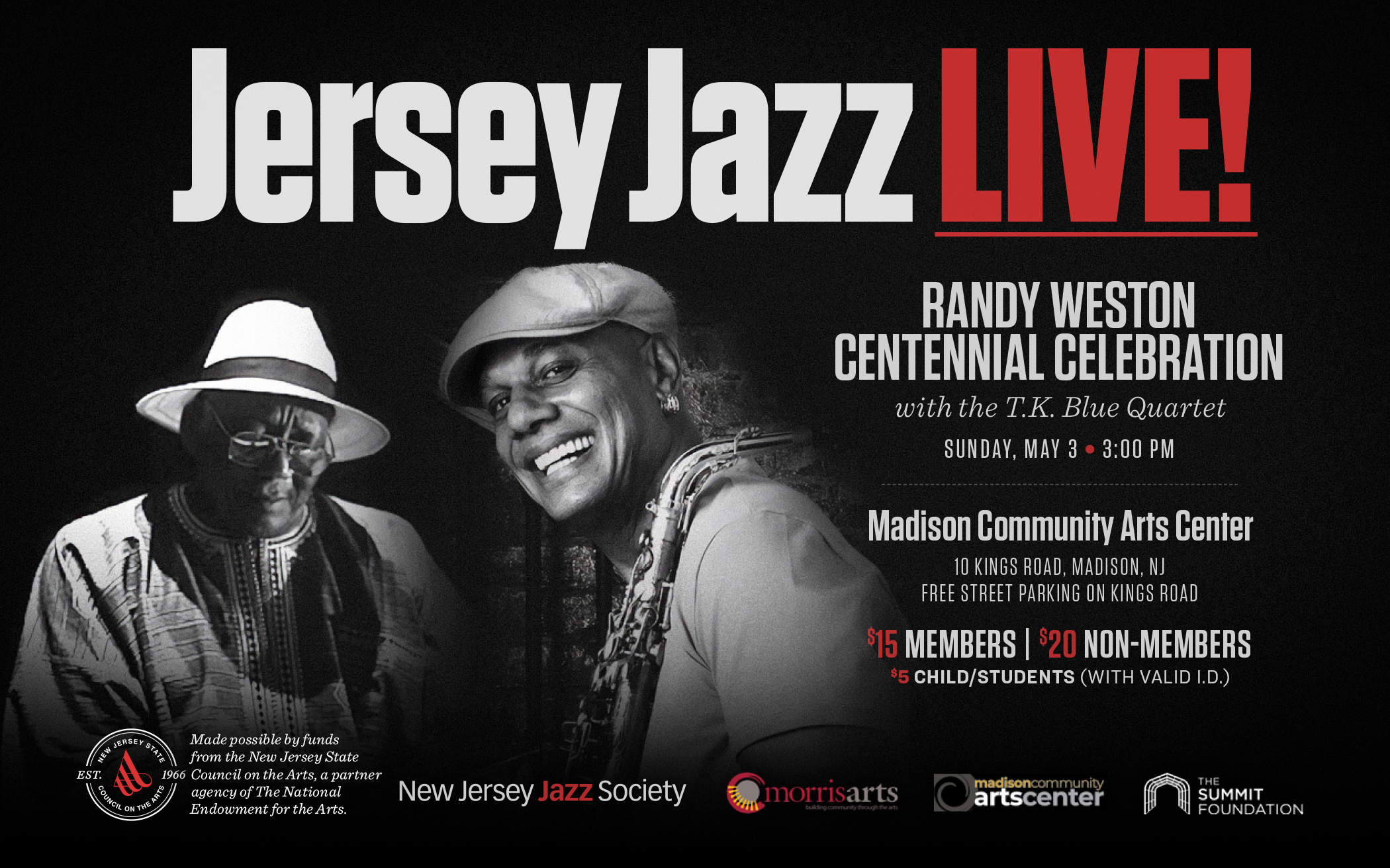
Jersey Jazz LIVE! – T.K. Blue Quartet Celebrates NEA Jazz Master Dr. Randy Weston’s Centennial Birthday

0

Jersey Jazz LIVE! Honors NEA Jazz Master Randy Weston with Centennial Celebration at Madison Community Arts Center

May 3 @ 3:00 PM 10:00 PM

New Jersey’s jazz legacy—deep, influential, and continuously evolving—takes center stage on Sunday, May 3, 2026, as a powerful tribute unfolds in honor of one of the most globally significant figures in jazz history. At Madison Community Arts Center, the Jersey Jazz LIVE! concert series will present an immersive centennial celebration of Randy Weston, the NEA Jazz Master whose work redefined the relationship between American jazz and African musical traditions.

Beginning at 3:00 PM, this event is structured as more than a performance—it is a cultural and intellectual gathering that reflects the depth of Weston’s influence. The program combines scholarship, lived experience, and live music into a single, cohesive experience that captures both the spirit and the substance of Weston’s legacy. At the center of this tribute is T.K. Blue, a longtime collaborator and bandmate of Weston, whose personal connection to the pianist adds a rare level of authenticity and immediacy to the performance.

The afternoon opens with a hybrid conversation between Noal Cohen and T.K. Blue, creating a dynamic dialogue that bridges academic insight with firsthand musical history. Cohen, widely respected for his scholarship on jazz and its global dimensions, frames Weston’s career within a broader historical context, emphasizing the pianist’s unparalleled engagement with the African continent. Weston’s work was never confined to stylistic exploration; it was a deliberate, sustained cultural exchange that reshaped how jazz could function as a global language. As Cohen has articulated, few American musicians have forged a connection to Africa as deeply or as meaningfully as Weston, and this event is designed to unpack that legacy in real time.

Following the discussion, the focus shifts to performance as the T.K. Blue Quartet takes the stage. The ensemble—featuring T.K. Blue on saxophone and flute, Kalimba Santi Debriano on bass, George Coleman Jr. on drums, and Orrin Evans on piano—delivers a program that channels the rhythmic complexity, melodic depth, and cultural resonance that defined Weston’s compositions. Each musician brings a distinct voice to the ensemble, yet the collective sound remains rooted in the expansive, transcontinental vision that Weston championed throughout his career.

This centennial tribute arrives at a moment when New Jersey’s jazz ecosystem continues to assert its relevance within the national and international landscape. From historic venues to emerging performance spaces, the state has long served as both a proving ground and a sanctuary for jazz artists. Events like this reinforce that legacy, demonstrating how New Jersey not only preserves its musical heritage but actively reinterprets it for contemporary audiences.

The choice of venue further enhances the significance of the event. Madison Community Arts Center has established itself as a vital cultural hub, offering a setting that prioritizes both artistic excellence and community accessibility. With its intimate scale and strong connection to local audiences, the space allows for a level of engagement that larger venues often cannot replicate. This is particularly important for a tribute of this nature, where nuance, interaction, and attentiveness are central to the experience.

Accessibility remains a defining feature of the event. With tiered pricing that includes discounted admission for students and children, along with member and non-member options, the organizers have ensured that the celebration remains open to a broad audience. Free street parking along Kings Road further reinforces the event’s community-oriented approach, making it as logistically approachable as it is culturally significant. Given the consistent demand for Jersey Jazz LIVE! performances, early arrival is strongly encouraged, as attendance is expected to be high.

The program’s structure—combining conversation and performance—reflects a growing trend within New Jersey’s arts scene, where audiences are seeking deeper, more contextualized experiences. Rather than presenting music in isolation, events are increasingly designed to provide insight into the creative process, historical background, and cultural implications of the work being performed. This approach aligns seamlessly with the broader direction of Explore New Jersey’s music coverage, which continues to highlight events that offer both artistic excellence and intellectual engagement.

For those familiar with Weston’s work, this centennial celebration offers an opportunity to revisit a catalog that has shaped generations of musicians and listeners. For those encountering his music for the first time, it serves as an entry point into a body of work that transcends genre boundaries and geographic limitations. In either case, the event stands as a testament to the enduring power of jazz as a living, evolving art form.

As the afternoon unfolds on May 3, the convergence of scholarship, performance, and community at Madison Community Arts Center will underscore a simple but profound reality: the legacy of Randy Weston is not confined to history. It continues to resonate, adapt, and inspire, carried forward by artists like T.K. Blue and shared with audiences who understand that jazz, at its highest level, is both a reflection of the past and a blueprint for the future.

New Jersey Jazz Society

View Organizer Website

Wiggins Waterfront Park

2 Riverside Dr
Camden, New Jersey 08103 United States
+ Google Map
(856) 541-7222
View Venue Website

Jersey Shore BlueClaws Return Home with High-Impact Homestand, Community-Focused Programming, and Exclusive Hideki Matsui Youth Clinic

The energy is shifting back to the Jersey Shore as the Jersey Shore BlueClaws prepare to open a highly anticipated six-game homestand beginning Tuesday, April 28, welcoming the Hudson Valley Renegades to town for a week that blends competitive baseball with one of the most expansive fan experience lineups in the region. This series is not simply a return to the field—it represents a full-scale activation of community engagement, youth development, themed entertainment, and accessible family programming that continues to define the BlueClaws as one of New Jersey’s most dynamic live sports properties.

Set against the backdrop of ShoreTown Ballpark, the homestand unfolds as a carefully structured sequence of events designed to appeal to every segment of the fanbase. From first pitch to postgame traditions, the organization has engineered an experience that goes far beyond the game itself, reinforcing its position at the intersection of sports, lifestyle, and regional culture.

The series opens with a 6:35 p.m. first pitch on Tuesday, April 28, immediately establishing the rhythm for a week of evening matchups that continue through Friday. Each night carries its own identity, building momentum toward a weekend slate that expands both in scope and audience reach. By Thursday, April 30, the return of Thirsty Thursday—presented in partnership with 95.9 WRAT and Coors Light—reintroduces one of the ballpark’s most recognizable social traditions, drawing fans for a blend of baseball and nightlife energy that has become a staple of the BlueClaws brand.

Friday night elevates the homestand’s purpose-driven dimension with Mental Health Awareness Night, an initiative that aligns with broader statewide and national conversations around wellness, access, and community support. By integrating this theme into the game environment, the BlueClaws continue to demonstrate how sports platforms can be leveraged to amplify meaningful causes while maintaining a compelling fan experience.

Saturday, May 2, marks a pivotal point in the homestand with a 4:05 p.m. first pitch that transitions into one of the most family-focused days on the calendar. Buster’s Birthday & Touch-Some-Trucks Day transforms the ballpark into an interactive space where younger fans can explore vehicles positioned throughout the concourse and plaza, meet mascot characters, and engage directly with the environment in a way that redefines what a day at the ballpark can be. It is an experiential model that reflects the evolving expectations of live entertainment, particularly for families seeking immersive, multi-layered outings.

That same day, the spotlight intensifies with the arrival of Hideki Matsui, whose presence adds a national-caliber dimension to the homestand. The Yankees legend will host an exclusive youth clinic at the ballpark for players aged 10 to 13, offering a rare opportunity for young athletes to learn directly from one of baseball’s most accomplished figures. Scheduled from 1:30 p.m. to 3:00 p.m., the clinic is structured as both a skills development session and an inspirational experience, connecting the next generation of players with the discipline, knowledge, and perspective of a World Series champion. Entry into the clinic is limited, with a nomination-based selection process that underscores the demand and prestige associated with the event.

Sunday, May 3, closes out the homestand with a 1:05 p.m. first pitch and a comprehensive lineup of community-driven initiatives. Monmouth County Day anchors the afternoon, offering specially priced tickets that reinforce the organization’s commitment to accessibility and local engagement. Programs such as the BlueClaws Kids Club, presented by Casino Pier & Breakwater Beach, and the Silver Sluggers initiative further extend that commitment, ensuring that both younger fans and senior attendees are fully integrated into the game-day experience. The addition of complimentary dining elements through established partnerships enhances the overall value proposition, creating an environment where attendance feels both inclusive and rewarding.

Across the entire homestand, one of the most consistent and anticipated features remains Kids Run the Bases, presented by RWJBarnabas Health. Taking place after games from Thursday through Sunday, this activation transforms the field into a shared space, allowing young fans to step directly onto the diamond and participate in a tradition that has become synonymous with the BlueClaws experience. It is a simple concept, executed with precision, that reinforces the emotional connection between the team and its audience.

Beyond the scheduled events, the infrastructure supporting the homestand reflects a level of operational sophistication that enhances every aspect of the fan journey. Digital integration through the MiLB app streamlines access to tickets, concessions, and in-game updates, while curated guides—from concessions to ballpark beverages—ensure that every detail of the experience is both accessible and optimized. Retail offerings at Claws Cove and flexible ticketing options, including single-game purchases, membership plans, and group outings, provide multiple entry points for engagement, accommodating a wide range of preferences and budgets.

What emerges from this homestand is a clear illustration of how the Jersey Shore BlueClaws continue to evolve within New Jersey’s broader sports and entertainment ecosystem. The organization is not merely hosting games; it is building a platform that integrates athletics, community programming, youth development, and lifestyle experiences into a cohesive, high-impact offering. This approach aligns seamlessly with the trajectory highlighted across Explore New Jersey’s coverage, where the emphasis is increasingly on destinations and events that deliver layered value and sustained engagement.

As the first pitch approaches on April 28, the return of baseball to ShoreTown Ballpark signals more than the start of a new series. It represents a continuation of a model that prioritizes connection, accessibility, and innovation—one that positions the BlueClaws not just as a team, but as a central force within the cultural fabric of the Jersey Shore.

Space To Exhale by Lisa Hurley Earns Gold and Ignites a New Literary Wellness Movement Across New Jersey

New Jersey’s literary and cultural landscape continues to evolve with purpose-driven storytelling that resonates far beyond the page, and few recent works embody that momentum more powerfully than Space To Exhale: A Handbook for Curating a Soft, Centered, Serene Life by Lisa Hurley. Now officially recognized with a Gold Medal from the Nonfiction Authors Association Book Awards on April 27, 2026, the book’s ascent signals more than a successful publication cycle—it marks a defining moment at the intersection of literature, wellness, leadership, and cultural transformation.

The recognition reinforces what has already been building across New Jersey and beyond: Space To Exhale is not simply a book, but a framework for rethinking how individuals, particularly Black women, navigate ambition, identity, and self-preservation in an increasingly demanding world. At a time when productivity culture often dominates both professional and personal narratives, Hurley’s work introduces a counterbalance rooted in intentional rest, clarity, and self-definition. It is a recalibration of priorities that aligns directly with the broader wellness conversations shaping communities throughout the state.

New Jersey has played a critical role in amplifying this message. The book’s official launch event at pocstock HQ on June 21, 2025, was more than a celebration—it was a cultural gathering point that brought together creatives, entrepreneurs, and wellness advocates in one of the state’s most dynamic urban centers. Newark has increasingly positioned itself as a hub for innovation across media, arts, and social impact, and Hurley’s presence within that environment underscores the organic connection between her work and the region’s evolving identity.

The book’s influence has also been felt throughout Jersey City, where local coverage and professional engagement have helped expand its reach within New Jersey’s diverse and highly connected communities. This regional footprint is significant. It demonstrates how a work grounded in personal transformation can scale into a broader cultural conversation when supported by engaged, forward-thinking audiences.

At the center of Space To Exhale is Hurley’s Exhalation Point™ framework—a structured yet deeply human approach to self-discovery that guides readers through the process of knowing, loving, and fully embodying themselves without the constant pressure to perform. It is a philosophy that directly challenges the entrenched norms of hustle culture, offering instead a model built on sustainability, presence, and intentional living. In practical terms, this translates into actionable strategies that readers can integrate into their daily lives, whether they are navigating high-pressure careers, managing personal transitions, or simply seeking a more balanced way of being.

Hurley’s credentials bring additional weight to the work. As a five-time Anthem Award-winning activist, writer, and podcaster, she has consistently operated at the forefront of conversations around equity, mental health, and community care. Her role as the founder of The Great Exhale—a virtual sanctuary dedicated to the wellness of Black women—extends the book’s impact beyond its pages, creating an ongoing ecosystem of support and engagement. This integrated approach reflects a broader trend within New Jersey’s wellness and literary spaces, where authors are increasingly building platforms that merge content, community, and lived experience.

Published by Wiley, Space To Exhale arrives with both institutional backing and grassroots credibility, a combination that has helped it resonate across multiple audiences. Its availability through major retailers and accessibility within local libraries ensures that the book is not confined to a niche readership. Instead, it is positioned as a widely accessible resource, capable of reaching individuals at various stages of their personal and professional journeys throughout New Jersey.

This accessibility is particularly relevant within the context of Explore New Jersey’s ongoing focus on books and literary culture, where the emphasis continues to shift toward works that do more than entertain—they inform, empower, and catalyze meaningful change. Space To Exhale fits squarely within this movement, offering readers a blueprint for redefining success on their own terms while contributing to a larger dialogue about well-being and societal expectations.

The Gold Medal recognition from the Nonfiction Authors Association serves as a formal acknowledgment of the book’s impact, but its true significance lies in how it is being received and applied in real-world contexts. Across New Jersey, readers are not just consuming the material—they are engaging with it, discussing it, and integrating its principles into their lives. This level of interaction transforms the book from a static product into a living, evolving influence.

In a state known for its diversity, resilience, and cultural depth, Space To Exhale arrives at precisely the right moment. It speaks to a population that is increasingly aware of the need for balance, authenticity, and intentional living, while providing the tools to achieve those outcomes. The book’s continued momentum suggests that its reach will only expand, further embedding its principles within New Jersey’s cultural and intellectual fabric.

As the literary and wellness landscapes continue to intersect, works like Hurley’s are setting a new standard for what it means to create impact through storytelling. In New Jersey, that impact is already visible—in conversations, in communities, and in the growing recognition that sometimes the most powerful step forward begins with the simple act of exhaling.

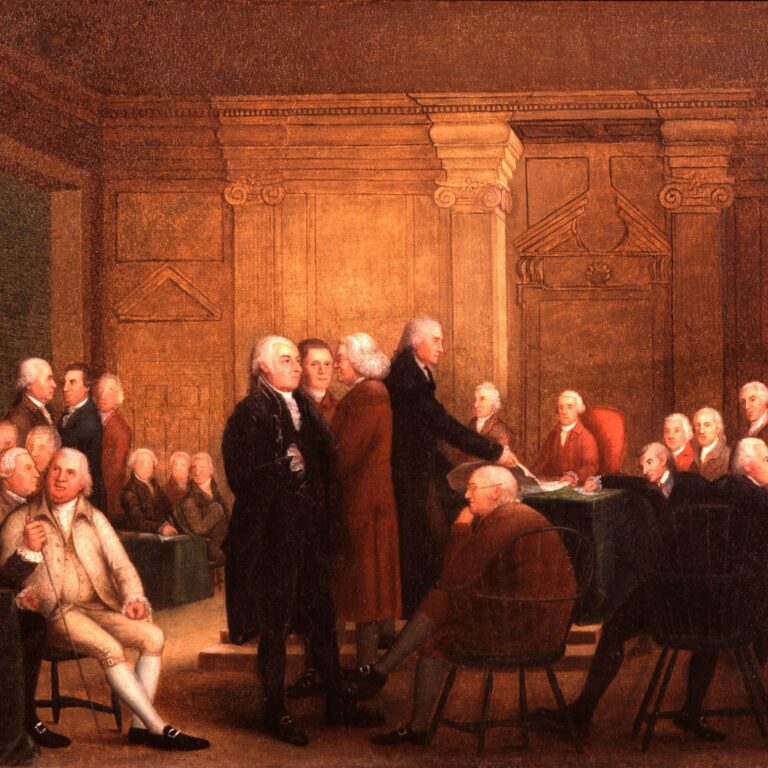
Five Independent Souls: The Signers from New Jersey — A Defining Exhibition Anchoring the State’s 250th Anniversary at Morven Museum & Garden

New Jersey’s role in the founding of the United States is about to be reframed, deepened, and brought into sharper focus with the debut of Five Independent Souls: The Signers from New Jersey, a landmark exhibition opening Sunday, May 3, 2026, at Morven Museum & Garden. Positioned as a central cultural pillar in the state’s commemoration of the Semiquincentennial—the 250th anniversary of American independence—this expansive and meticulously curated exhibition delivers a rare convergence of scholarship, storytelling, and place-based history that elevates New Jersey’s voice within the national narrative.

At its core, the exhibition examines the lives, decisions, and enduring contradictions of the five New Jersey delegates who signed the United States Declaration of Independence: Abraham Clark, John Hart, Francis Hopkinson, Richard Stockton, and John Witherspoon. While their names have long been etched into American history, this exhibition refuses to present them as static icons. Instead, it reconstructs them as fully realized figures navigating the volatile terrain of revolution, loyalty, personal risk, and moral complexity.

This is not a surface-level historical presentation. It is an immersive, interpretive experience designed to challenge assumptions and invite deeper engagement. Through more than 100 rare and significant artifacts—on loan from nationally recognized institutions including the National Gallery of Art and the Museum of the American Revolution—visitors are given unprecedented access to the material culture of the Revolutionary era. Manuscripts, portraits, personal correspondence, and period objects collectively reconstruct a world in flux, revealing not only the public actions of these figures but also the private dimensions of their lives.

What distinguishes Five Independent Souls is its commitment to confronting the full historical record. The exhibition does not shy away from the central contradiction embedded in the founding era: that men who championed liberty and self-governance simultaneously participated in and benefited from systems that denied those same rights to enslaved individuals. By presenting this tension directly and without dilution, the exhibition aligns with a broader evolution in public history—one that prioritizes accuracy, accountability, and intellectual rigor over mythmaking.

The choice of venue amplifies the exhibition’s significance. Morven Museum & Garden is not simply a gallery space; it is itself a living artifact. As the former home of Richard Stockton, Morven stands as the only surviving residence of a New Jersey signer that is open to the public. This singular connection transforms the exhibition from a curated experience into an encounter with history in situ. Visitors are not just observing the past—they are stepping directly into it, occupying the same physical environment where decisions of consequence were made and lived.

The opening weekend is designed to reflect the exhibition’s stature within the state’s broader cultural calendar. On Saturday, May 2, the 250th Exhibition Premiere & Founding Feast will offer an exclusive first look at the exhibition, paired with a curated dining experience that draws inspiration from the era. This benefit gala serves both as a celebratory launch and as a signal of the exhibition’s importance within New Jersey’s Semiquincentennial programming. The following day, Sunday, May 3, marks the official public opening, inviting residents, historians, educators, and visitors from across the region to engage with a redefined understanding of New Jersey’s founding legacy. A dedicated member reception on May 7 further reinforces the institution’s commitment to its community of supporters and patrons.

Beyond its immediate impact, Five Independent Souls positions New Jersey as a leader in how states can approach the 250th anniversary with both ambition and integrity. Rather than defaulting to commemorative nostalgia, this exhibition leverages the moment to reexamine foundational narratives, elevate underexplored perspectives, and create a more inclusive and intellectually honest account of the past. It reflects a broader cultural momentum across the state—one visible throughout the evolving programming found within Explore New Jersey’s coverage of arts and culture, where institutions are increasingly blending historical preservation with contemporary relevance.

For audiences seeking a deeper connection to the origins of the United States, this exhibition offers a rare combination of scholarly depth and experiential resonance. It is as much about the present as it is about the past—an invitation to consider how the ideals articulated in 1776 continue to shape, challenge, and define the nation today. By grounding that exploration in New Jersey’s unique historical footprint, Five Independent Souls ensures that the state is not a footnote in the story of American independence, but a central chapter—one that is now being told with greater clarity, nuance, and authority than ever before.

As the Semiquincentennial unfolds, exhibitions like this will define how history is remembered and understood. At Morven Museum & Garden, that process begins with five individuals whose signatures helped launch a nation—and whose stories, finally, are being told in full.

Kean–NJCU Merger Cleared for Completion, Reshaping the Future of Public Higher Education in New Jersey

New Jersey’s higher education landscape is undergoing a decisive transformation as the long-anticipated merger between Kean University and New Jersey City University moves from concept to execution. With formal approval now secured from the Middle States Commission on Higher Education, the deal has cleared one of its most consequential regulatory hurdles, positioning the combined institution for a targeted July 1 closing that will redefine access, scale, and academic opportunity across the state.

The agreement represents more than an administrative consolidation—it is a strategic recalibration of public higher education in one of New Jersey’s most densely populated and economically dynamic regions. Under the terms of the merger, Kean University will assume operational control of NJCU, integrating its academic programs, faculty, and student body into a unified system designed to serve approximately 24,500 students. Pending final federal review by the U.S. Department of Education, expected later in the summer, NJCU will formally transition into its new identity as “Kean Jersey City,” anchoring a two-campus model with expanded reach and institutional resilience.

This milestone caps over a year of intensive planning, negotiation, and structural design, driven by both urgency and opportunity. NJCU’s financial instability—long a concern among state leaders—accelerated discussions around sustainable solutions. Rather than allowing one of the state’s key urban institutions to falter, policymakers and higher education leadership converged on a model centered on preservation through integration. The result is a merger engineered not only to stabilize NJCU, but to amplify its mission within a stronger, research-driven framework.

The legislative dimension played a critical role in enabling this outcome. Earlier in the year, Governor Phil Murphy signed Senate Bill 4881/Assembly Bill 6212 into law, providing the structural and financial support necessary to facilitate the merger. This intervention underscores a broader policy objective: safeguarding equitable access to public higher education in communities where it serves as a critical economic and social engine. Jersey City, in particular, stands at the intersection of workforce development, urban growth, and educational demand, making the continuity of NJCU’s presence essential.

Institutional leadership has framed the merger as a forward-looking evolution rather than a reactive measure. Kean University President Lamont Repollet characterized the approval as a defining moment, emphasizing the institution’s ability to expand its academic footprint while maintaining a commitment to inclusivity and innovation. His vision reflects Kean’s standing as a Carnegie-classified R2 research university, a designation that signals a growing emphasis on research activity alongside its longstanding role in undergraduate and professional education.

From NJCU’s perspective, the transition is being positioned as both a continuation and an expansion of its legacy. Interim President Andres Acebo articulated a framework in which NJCU’s nearly century-long history is not erased, but extended—embedded within a larger institutional structure capable of delivering broader academic offerings, enhanced student services, and increased institutional stability. The rebranding to Kean Jersey City is expected to reflect this dual identity: honoring local roots while aligning with a statewide academic network.

Behind the scenes, the operational complexity of the merger has been substantial. Fifteen advisory teams spanning both universities have been engaged in aligning academic programs, administrative systems, faculty governance structures, and student services. This level of coordination is essential in higher education consolidations, where the margin for disruption must be minimized to protect student progression, accreditation continuity, and institutional reputation. With accreditation now formally secured, the focus shifts to execution—ensuring that the transition is seamless for current students and staff while laying the groundwork for long-term integration.

State-appointed monitor Henry Amoroso emphasized the broader implications of the agreement, pointing to its role in creating a stable, sustainable path forward that prioritizes student outcomes. His involvement reflects the degree of oversight applied to the process, reinforcing confidence among stakeholders that the merger is being executed with both fiscal discipline and academic integrity.

Leadership at Kean has also highlighted the strategic upside. Board of Trustees Chair Steve Fastook underscored the collaborative nature of the effort, noting that the merger expands the university’s reach while positioning it to serve a broader cross-section of New Jersey’s population. In practical terms, this means increased program diversity, expanded research opportunities, and a more robust infrastructure for student support—factors that collectively enhance institutional competitiveness in a rapidly evolving higher education market.

For students, the implications are immediate and tangible. The combined institution is expected to deliver a wider array of academic pathways, greater access to faculty expertise, and improved support services, all within a system designed to scale efficiently. For faculty and staff, the transition presents both challenges and opportunities, as integration efforts reshape departmental structures and administrative processes. For the state, the merger represents a test case in proactive intervention—demonstrating how strategic consolidation can preserve access while strengthening institutional viability.

At a national level, the Kean–NJCU merger aligns with a growing trend of higher education consolidation driven by financial pressures, demographic shifts, and evolving workforce demands. What distinguishes this case is the deliberate emphasis on maintaining access in an urban center where higher education serves as a critical gateway to upward mobility. Rather than reducing capacity, the merger is designed to expand it—leveraging scale to deliver more, not less.

As the July 1 closing approaches, attention now turns to implementation. Academic alignment, systems integration, and community engagement will define the next phase of the transition. The months that follow will determine how effectively the vision translates into operational reality. If executed as designed, the creation of Kean Jersey City will not only stabilize a legacy institution, but also establish a new model for how public universities in New Jersey—and potentially beyond—adapt to a changing educational and economic landscape.

This is not merely a merger; it is a structural reset with statewide implications. In a sector often defined by incremental change, the Kean–NJCU integration stands out as a decisive move—one that positions New Jersey at the forefront of reimagining public higher education for the next generation.

New Study Reveals the U.S. Counties Most Impacted by Accidental Poisoning Deaths, Underscoring a Growing Public Health Crisis with Direct Implications for New Jersey

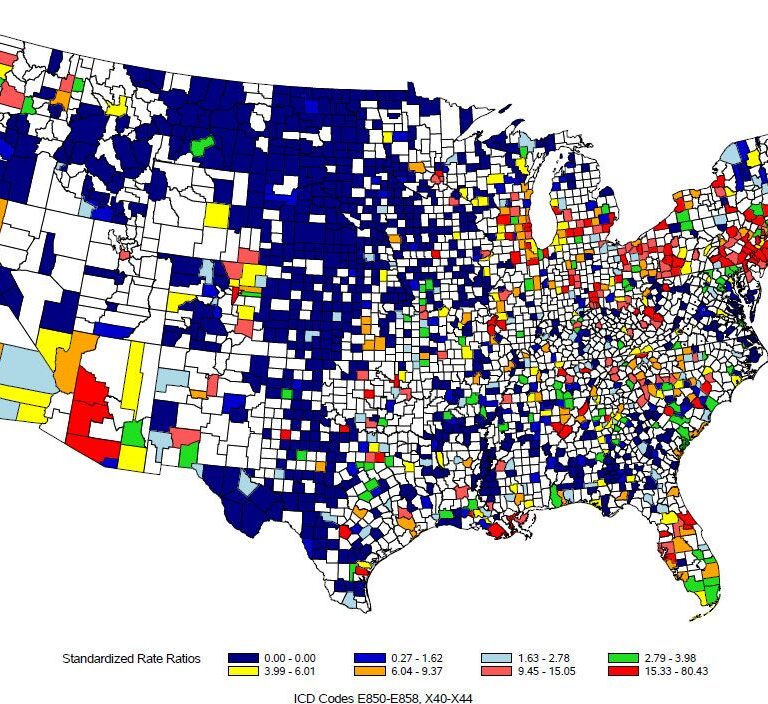
A newly released analysis from Sadaka Law is forcing a sharper national conversation around one of the most persistent and often misunderstood public health challenges in the United States: accidental poisoning deaths. While frequently associated with isolated incidents, the data presents a far more systemic issue, revealing geographic concentrations where fatalities linked to alcohol, narcotics, and medication misuse are occurring at disproportionately high rates. The findings do more than rank counties—they expose patterns that demand a deeper examination of prevention, access to care, and the evolving risks embedded in everyday life.

Across the country, accidental poisoning has steadily climbed into the category of leading causes of injury-related death, a shift driven largely by the intersection of prescription drug availability, illicit substance use, and the widespread normalization of alcohol consumption. What distinguishes this latest data is its precision. By identifying the counties experiencing the highest fatality rates, the study highlights not just where the crisis is most acute, but also where intervention strategies are either failing to keep pace or have yet to be effectively deployed.

This is not a distant issue for New Jersey. In fact, the state sits at a critical crossroads within the broader national trend. With its dense population, extensive transportation networks, and proximity to major metropolitan areas, New Jersey faces a unique set of vulnerabilities that mirror—and in some cases amplify—the conditions seen in the hardest-hit counties. The implications extend well beyond emergency response. They touch healthcare infrastructure, community outreach, mental health services, and the daily decisions individuals make around substance use and medication management.

The data underscores three primary drivers behind accidental poisoning deaths: alcohol-related toxicity, narcotic overdoses, and complications arising from prescription or over-the-counter medications. Each category represents a distinct but interconnected risk profile. Alcohol, often perceived as the most socially acceptable substance, continues to contribute to a significant share of fatalities, particularly when combined with other depressants or used in high quantities over short periods. Narcotics, including both prescription opioids and illicit drugs, remain the most visible component of the crisis, but the study makes clear that they are only part of a much broader equation. Medication-related incidents—ranging from dosage errors to dangerous drug interactions—are emerging as an increasingly significant factor, particularly among older populations and individuals managing multiple health conditions.

For New Jersey residents, these findings align closely with ongoing discussions within the state’s health and wellness ecosystem. Coverage across Explore New Jersey’s health and wellness category has consistently emphasized the importance of preventative care, education, and early intervention. What this study adds is a sense of urgency and specificity. It is no longer sufficient to address substance use as a generalized issue; targeted, data-driven strategies are required to reduce risk at the community level.

One of the most critical takeaways from the report is the role of accessibility—both in terms of substances and healthcare resources. Counties with elevated poisoning death rates often share common characteristics: higher availability of prescription medications, increased presence of illicit drug markets, and gaps in access to addiction treatment or mental health services. In some cases, socioeconomic factors compound these challenges, limiting individuals’ ability to seek help before a crisis occurs. In others, the issue is one of awareness, where individuals underestimate the risks associated with substances they use regularly.

New Jersey’s response framework has evolved in recent years, with expanded access to naloxone, increased public awareness campaigns, and a growing network of treatment providers. However, the study suggests that continued adaptation is essential. The nature of accidental poisoning is constantly changing, influenced by shifts in drug composition, prescribing practices, and consumer behavior. Synthetic opioids, for example, have introduced a level of unpredictability that complicates both prevention and treatment efforts. At the same time, the rise of poly-substance use—where multiple drugs or alcohol are consumed together—has created scenarios where traditional risk assessments may no longer apply.

Beyond the clinical and policy dimensions, there is a cultural component that cannot be ignored. The normalization of certain behaviors, particularly around alcohol and prescription medication use, plays a significant role in shaping outcomes. In many cases, individuals do not perceive themselves to be at risk until it is too late. This disconnect between perception and reality is one of the most challenging barriers to overcome, requiring sustained efforts in education and community engagement.

The Sadaka Law data also highlights the importance of localized solutions. While national trends provide context, effective intervention must be tailored to the specific conditions of each region. For New Jersey, this means leveraging its existing healthcare infrastructure while addressing gaps that may exist in underserved areas. It also means fostering collaboration between public agencies, private organizations, and community groups to create a more cohesive response system.

Technology and data analytics are poised to play an increasingly important role in this effort. Real-time monitoring of overdose incidents, predictive modeling, and improved data sharing between institutions can enhance the ability to identify emerging hotspots and respond proactively. At the same time, these tools must be complemented by human-centered approaches that prioritize trust, accessibility, and cultural competence.

The broader significance of the study lies in its ability to reframe accidental poisoning as a multifaceted issue that extends beyond any single category of substance or behavior. It is a convergence of medical, social, and economic factors, each contributing to an environment where risk can escalate rapidly. Addressing it requires a level of coordination and commitment that matches its complexity.

For readers and communities across New Jersey, the message is clear: awareness alone is not enough. The data demands action, whether through policy changes, community initiatives, or individual choices. The state has already demonstrated a capacity for innovation in health and wellness, and the challenge now is to build on that foundation with strategies that are as dynamic and adaptive as the problem itself.

As this issue continues to evolve, it will remain a central focus within the broader conversation about public health in New Jersey. The findings from Sadaka Law provide a critical benchmark, offering both a warning and an opportunity—to confront the realities of accidental poisoning with clarity, precision, and a renewed commitment to protecting lives across the state.

New Jersey Weather Outlook: Calm Spring Conditions Today Give Way to Rain, Cooler Temperatures, and a Prolonged Shift into an Unsettled Early May Pattern

Across New Jersey, Tuesday, April 28, 2026, is delivering exactly the kind of transitional spring day that often precedes a meaningful pattern change. The atmosphere is stable, the temperatures are moderate, and while cloud cover is gradually building, the state remains dry—for now. Beneath this relatively quiet surface, however, a more dynamic setup is organizing, one that will redefine the region’s weather heading into the final days of April and the opening stretch of May.

Today’s Hourly Forecast

HourSky ConditionTemperatureChance of Rain
10 AMweatherIconMostly cloudy59°F10%
12 PMweatherIconCloudy64°F10%
2 PMweatherIconCloudy64°F10%
4 PMweatherIconCloudy61°F10%
6 PMweatherIconCloudy56°F10%
8 PMweatherIconPartly cloudy52°F5%

Daily Outlook

Day Sky ConditionTemperatureChance of Rain
Tue, Apr 28weatherIconCloudy65°F / 43°F10%
Wed, Apr 29weatherIconLight rain56°F / 47°F75%
Thu, Apr 30weatherIconPartly sunny62°F / 41°F20%
Fri, May 1weatherIconLight rain61°F / 43°F70%

As of this morning, conditions across much of the state are characterized by cloudy skies, temperatures hovering around the mid-50s, and light westerly winds that are barely registering. Humidity levels remain moderate, contributing to a comfortable feel despite the increasing cloud presence. Through the late morning and into the afternoon, temperatures are expected to climb into the mid-60s inland, with coastal areas holding closer to the low 60s, reinforcing the typical spring gradient between interior and shoreline climates.

The hourly progression today remains largely uneventful in terms of precipitation risk. Skies will stay predominantly cloudy, with only minimal breaks possible late in the day. Temperatures will peak in the mid-60s early this afternoon before gradually cooling into the 50s by evening. By nightfall, partial clearing may emerge in some regions, though the broader trend favors lingering cloud cover as the next system begins to approach from the west.

This calm window, however, is limited. Beginning Wednesday afternoon and intensifying into the evening hours, a developing cold front will begin to assert itself across the region. This system is expected to bring a widespread, steady rainfall event that could deliver between half an inch to a full inch of precipitation statewide. While not a severe storm system by classic standards, it is significant in context—particularly given the ongoing concerns surrounding dry ground conditions across parts of New Jersey.

There is also a non-zero risk of embedded thunderstorms Wednesday evening, especially as the frontal boundary interacts with modest instability in the atmosphere. These would likely be scattered and brief, but they underscore the evolving nature of the system as it moves through. Rainfall is expected to continue overnight into early Thursday before gradually tapering off from south to north by late morning.

Behind this system, the broader atmospheric pattern becomes the defining story. Forecast models consistently indicate the establishment of a prolonged trough across the eastern United States, including New Jersey. In practical terms, this means a sustained period of below-average temperatures, increased cloud cover, and a recurring threat of scattered showers rather than singular, large-scale storm events.

This shift is being driven by a series of upper-level disturbances—commonly referred to as “swinging troughs”—that will cycle through the region over the coming days and potentially into the following week. These features allow cooler air aloft to filter downward, reducing atmospheric stability and making it easier for showers to develop during the daytime heating cycle. Unlike the intense, capped environments that produce isolated severe weather, this setup favors frequent, lighter, and more widespread springtime showers.

The result is a classic unsettled spring regime. While temperatures at the surface will still respond to solar heating—especially as the sun angle strengthens heading into May—the presence of cooler air aloft will limit how warm conditions can become. Most high temperatures through the remainder of the week are expected to remain in the low 60s, with some areas struggling to move beyond the upper 50s, particularly in northern elevations.

Looking at the day-by-day breakdown, Wednesday will bring increasing clouds and the onset of rain later in the day, with highs ranging from the mid-50s along the coast to the low-to-mid 60s inland. Thursday begins with lingering rainfall before gradual clearing takes hold, especially across southern portions of the state first. Temperatures will remain subdued, generally in the upper 50s to mid-60s depending on location, with breezy conditions developing as the system exits.

Friday continues the cooler trend, with highs near 60 degrees statewide and a mix of sun and clouds. Winds will remain active early before calming later in the day, reinforcing the transitional feel of the atmosphere as it attempts to stabilize—though only briefly. By the weekend, early indications suggest continued cool conditions, with highs in the mid-50s Saturday and near 60 on Sunday, accompanied by mostly sunny skies but persistent breeziness.

Beyond the weekend, the pattern shows little indication of a rapid warm-up. Instead, the continuation of this trough-dominated setup suggests that early May will lean cooler and wetter than average. However, it is important to contextualize what “wetter” means in this scenario. Rather than large, soaking storm systems, the expectation is for periodic, passing showers—often driven by daytime heating and localized instability. These showers, while scattered, are expected to occur frequently enough to provide meaningful cumulative rainfall.

From a broader environmental perspective, this pattern carries a notable upside. The incoming precipitation—beginning with this midweek system and extending through next week’s intermittent showers—will contribute to alleviating moderate to severe drought conditions that have persisted across parts of the state. Recent rainfall over the past weekend marked the beginning of this recovery trend, and the upcoming stretch of unsettled weather is expected to build upon that progress.

Temperature variability remains a key variable moving forward. If the upper-level troughs remain relatively shallow, daytime highs could push into the mid-to-upper 60s, occasionally touching the low 70s in more favorable inland areas. However, if deeper troughing develops, colder air aloft could suppress temperatures further, keeping highs constrained to the mid-50s to low 60s. This distinction will ultimately depend on the amplitude and frequency of the disturbances moving through the region—an evolving detail that forecasters will continue to refine in the coming days.

For residents across New Jersey, the takeaway is clear: today represents a brief window of stability before a more complex and active spring pattern takes hold. The shift will not bring extreme weather, but it will introduce variability—cooler temperatures, increased cloud cover, and a near-daily chance of passing showers that define the season at its most transitional.

In the balance between inconvenience and necessity, this pattern leans toward the latter. The return of consistent precipitation, even in fragmented form, plays a critical role in stabilizing soil moisture levels, supporting vegetation growth, and resetting the environmental baseline as the state moves deeper into spring.

Statue Stolen from Historic Elks Memorial in Camden Sparks Investigation and Renewed Focus on Cemetery Security

A quiet and deeply troubling act of vandalism has shaken one of Camden City’s most historic resting places, as authorities investigate the apparent theft of a statue from a long-standing fraternal memorial at Harleigh Cemetery. The missing monument, once a defining feature of the Elks Rest section, has been deliberately cut away, leaving behind a physical void and a broader sense of violation that extends far beyond the cemetery grounds.

The statue, which stood as a tribute to members of the Benevolent and Protective Order of Elks—specifically those affiliated with the Camden City Lodge of the Benevolent and Protective Order of Elks—was not simply decorative. It represented decades of civic identity, fraternal tradition, and local history embedded within Camden’s cultural fabric. Its removal, carried out with precision indicative of tools and intent, suggests more than casual vandalism; it points to a calculated act that is now under active review by local law enforcement.

Authorities have confirmed that the statue was not toppled or damaged in place but instead was sawn off and removed entirely, raising immediate concerns about motive, logistics, and the potential for illicit resale or metal salvage. In cases of cemetery thefts, particularly those involving bronze or historically significant materials, investigators often consider whether the crime is opportunistic—targeting scrap value—or part of a more deliberate attempt to traffic stolen artifacts.

What makes this incident particularly unsettling is the location itself. Harleigh Cemetery is not an obscure or neglected site; it is one of New Jersey’s most historically significant burial grounds, home to notable figures and carefully maintained memorial sections. The Elks Rest area has long served as a dedicated space honoring members of a national organization that has played a meaningful role in community service, philanthropy, and civic engagement for generations.

The removal of the statue disrupts not only the visual continuity of the memorial but also the symbolic permanence such monuments are intended to convey. Cemeteries function as both sacred spaces and public archives—places where memory is preserved in physical form. When an artifact is forcibly removed, it is not merely property that is lost, but context, continuity, and respect.

Law enforcement officials are urging anyone with information to come forward, emphasizing that even minor observations—unusual activity, vehicles, or individuals seen in or around the cemetery—could prove critical in reconstructing the timeline of events. Given the nature of the act, investigators are likely examining surveillance coverage in the surrounding area, as well as recent scrap transactions or listings that could correspond to the missing piece.

This incident also raises broader concerns about the vulnerability of historic cemeteries across New Jersey. While many such sites are maintained with care, they often remain open-access environments with limited overnight security. As thefts of metal and statuary have occurred in other regions, municipalities and caretakers are increasingly forced to consider enhanced monitoring, lighting, and preservation strategies to protect irreplaceable monuments.

For Camden, the loss carries additional weight. The city has spent years working to reclaim and reinforce its historical identity, highlighting landmarks like Harleigh Cemetery as essential anchors of its heritage. Acts like this threaten that progress, not because they erase history outright, but because they chip away at the tangible connections that keep it visible and accessible.

Community response is expected to grow in the coming days, particularly among members of the Elks organization and local preservation advocates. Efforts to restore or replace the statue may emerge, but even in the best-case scenario, replication cannot fully substitute for the original artifact and its historical authenticity.

At its core, this case is not just about a missing statue. It is about the intersection of history, respect, and accountability in public spaces that are meant to endure untouched. As the investigation continues, the focus remains on recovery, identification of those responsible, and ensuring that a site dedicated to remembrance does not become a repeated target.

Anyone with information related to the theft is encouraged to contact local authorities, reinforcing a collective responsibility to protect New Jersey’s historic spaces and the legacies they hold.

New Jersey Supreme Court Clarifies Tidelands Authority, Empowering Flexible Waterfront Development Through Landmark Pierhead Line Ruling

A decisive and unanimous ruling from the New Jersey Supreme Court is reshaping the regulatory and legal landscape governing waterfront development across the Garden State, delivering clarity on a long-debated question at the intersection of property rights, environmental oversight, and coastal infrastructure. In a case with far-reaching implications for property owners, developers, and regulators alike, the Court confirmed that the Tidelands Resource Council possesses the authority to establish or modify pierhead lines on a case-by-case basis through individual license applications, rather than being restricted to uniform, island-wide determinations.

The decision, issued in In the Matter of P.T. Jibsail Family Limited Partnership, represents a critical affirmation of regulatory flexibility within New Jersey’s complex tidelands framework. At its core, the ruling reinforces the interpretation that the Tidelands Act—one of the state’s foundational statutes governing the use of submerged lands—was designed to allow adaptive, situational decision-making in response to the realities of waterfront geography, environmental considerations, and evolving land use demands.

The case itself centers on a dispute between neighboring property owners on West Point Island, where questions surrounding a dock extension ultimately escalated into a broader legal challenge with statewide consequences. The respondent, P.T. Jibsail Family Limited Partnership, had secured both a permit from the New Jersey Department of Environmental Protection and a tidelands license to extend a dock from its waterfront property. However, after construction, the extension was found to deviate slightly—approximately 1.7 feet—from the originally permitted alignment, prompting a request for modification to reflect the as-built structure.

That seemingly minor adjustment triggered a formal opposition from an adjacent property owner, the Janine Morris Trust, which argued that the dock extension created navigational concerns and interfered with neighboring access rights. What followed was a multi-year administrative and legal process that would ultimately test the limits of the Tidelands Resource Council’s authority.

After reviewing the application, conducting a public hearing, and evaluating both environmental and navigational considerations, the Tidelands Resource Council approved the modified license. The decision was upheld by the Appellate Division, which found no evidence that the Council had acted in an arbitrary or unreasonable manner. However, the dispute advanced to the state’s highest court, where the central question became one of statutory interpretation: whether the Tidelands Act requires the establishment of uniform pierhead lines around entire islands, or whether it permits individualized determinations tied to specific properties and license applications.

Writing for a unanimous Court, Rachel Wainer Apter delivered a clear and methodical opinion grounded in the statutory text. The Court emphasized that the language of the law authorizes the Council to “fix and establish” pierhead lines “from time to time” and “around or in front of” islands—phrasing that, when read plainly, does not impose a requirement for uniformity across an entire landmass.

Instead, the Court concluded that the statute explicitly allows for the establishment of pierhead lines in front of discrete portions of an island, effectively enabling regulators to tailor decisions to the specific conditions and needs of individual properties. This interpretation not only aligns with the literal wording of the law but also reflects more than a century of administrative practice.

Indeed, the Court underscored that the Tidelands Resource Council has never attempted to create comprehensive, island-wide pierhead maps for all tidal areas in New Jersey. Rather, for decades, the Council has operated under a model of incremental, application-driven decision-making—an approach now definitively validated by the state’s highest judicial authority.

From a policy perspective, the implications of this ruling are both immediate and expansive. By affirming the Council’s ability to adjust pierhead lines in response to individual license applications, the Court has effectively preserved a regulatory framework that balances flexibility with oversight. This is particularly significant in a coastal state like New Jersey, where shoreline conditions, environmental sensitivities, and development pressures vary dramatically from one location to another.

For property owners and developers, the decision introduces a greater degree of predictability and opportunity. Rather than being constrained by rigid, pre-established boundaries that may not reflect current realities, applicants can engage with regulators in a more dynamic process that considers site-specific factors, including environmental protections, navigational safety, and existing infrastructure.

At the same time, the ruling does not diminish the importance of regulatory scrutiny. The involvement of the Department of Environmental Protection remains a critical component of the process, ensuring that any modifications to waterfront structures comply with environmental standards, including protections for subaquatic vegetation and marine ecosystems. In this sense, the decision reinforces a dual-layered system in which flexibility is paired with accountability.

The broader context surrounding this case also reflects ongoing developments in New Jersey’s political and regulatory landscape. As highlighted in continuing coverage across the legislation section, state agencies and governing bodies are increasingly navigating the tension between economic development and environmental stewardship. Decisions like this one illustrate how legal interpretation can serve as a mechanism for reconciling those competing priorities, providing a framework that supports growth while maintaining safeguards for public resources.

For coastal communities across New Jersey, from barrier islands to bayside enclaves, the ruling carries tangible implications. Waterfront access, dock construction, and shoreline modifications are not abstract legal issues—they are central to local economies, property values, and quality of life. By clarifying the rules that govern these activities, the Court has provided a foundation for more efficient and responsive decision-making at the local and state levels.

Equally important is the precedent this decision establishes for future disputes. By rejecting the argument that individualized pierhead line adjustments undermine the structure of the Tidelands Act, the Court has reinforced the durability of a regulatory approach that has been in place for generations. This continuity is critical in a field where long-term planning and investment depend on stable legal interpretations.

What emerges from this ruling is a clear message: New Jersey’s legal and regulatory systems are equipped to adapt to the complexities of modern waterfront management without abandoning the principles that have guided them for more than a century. The ability to “fix and establish” pierhead lines in a targeted, case-specific manner ensures that the state can respond to evolving conditions while maintaining a consistent and enforceable framework.

As the state continues to navigate challenges related to coastal development, climate resilience, and environmental preservation, decisions like this one will play a pivotal role in shaping the path forward. The New Jersey Supreme Court has not only resolved a specific dispute but has also reaffirmed a flexible, pragmatic approach to governance—one that recognizes the unique character of each shoreline while upholding the integrity of the law.

For stakeholders across the spectrum—from individual homeowners to large-scale developers and regulatory agencies—the implications are clear: the future of New Jersey’s waterfront will be guided not by rigid uniformity, but by informed, adaptive decision-making grounded in both legal authority and practical reality.

Atomic Mobile Unveils UsageIQ and Fusion Platforms, Positioning New Jersey at the Center of Next-Generation MVNO Innovation

New Jersey’s reputation as a strategic hub for telecommunications and technology innovation continues to accelerate, and the latest development out of Spring Lake signals a meaningful shift in how mobile virtual network operators approach data intelligence, operational efficiency, and scalable growth. Atomic Mobile, a connectivity and enablement firm focused on modern MVNO infrastructure, has officially introduced two new platforms—UsageIQ and Fusion—designed to fundamentally reshape how telecom operators monitor usage, manage risk, and streamline back-office complexity.

This launch is not simply a product release. It represents a structural evolution in the MVNO ecosystem, one that aligns with broader shifts across the telecommunications industry where real-time intelligence, automation, and compliance integration are no longer optional—they are foundational requirements for survival and expansion.

At the core of this rollout is Atomic UsageIQ, a platform engineered to deliver near real-time visibility into mobile data consumption. Historically, MVNOs have relied on delayed reporting models, often operating on batch-based data that arrives hours—or even days—after usage occurs. That latency has long created a gap between customer behavior and operator response, exposing providers to overage risks, billing discrepancies, and diminished customer experience.

UsageIQ directly addresses that gap by transforming data consumption into a live operational signal rather than a retrospective report. Operators can now observe usage patterns as they unfold, enabling immediate intervention when thresholds are approached or exceeded. This capability introduces a new level of precision into plan management, allowing providers to dynamically adjust controls, deploy alerts, and enforce policies in real time.

From a technical standpoint, the implications are significant. Real-time visibility enables MVNOs to implement proactive throttling strategies, automate customer notifications, and design usage-based plans tailored to highly specific segments. Instead of reacting to issues after they impact billing or service quality, operators gain the ability to anticipate and mitigate problems before they escalate. This not only reduces financial exposure but also enhances customer trust—an increasingly critical factor in a competitive, experience-driven marketplace.

Equally important is UsageIQ’s integration flexibility. Atomic Mobile has positioned the platform to function both as a standalone solution and as part of a broader service stack, allowing operators to incorporate it into existing workflows without requiring a full infrastructure overhaul. That modular approach reflects a clear understanding of the MVNO landscape, where agility and interoperability are essential for growth.

Complementing UsageIQ is Atomic Fusion, a comprehensive back-office solution that addresses one of the most persistent challenges in telecommunications: operational complexity. While front-end innovation often captures attention, it is the back-end systems—billing, taxation, compliance, and customer support—that determine whether an operator can scale efficiently.

Fusion consolidates these critical functions into a unified managed service. Billing operations, tax calculation and remittance, regulatory reporting, and customer support workflows are all handled within a single framework, reducing the need for fragmented systems and manual intervention. For MVNOs navigating increasingly complex regulatory environments, particularly across multiple jurisdictions, this level of integration offers both accuracy and peace of mind.

The strategic value of Fusion lies in its ability to compress time-to-market. By offloading operational burdens, emerging and established MVNOs alike can focus on product development, customer acquisition, and brand differentiation rather than administrative overhead. This shift is particularly relevant in today’s telecom environment, where speed and adaptability often determine market success.

According to Atomic Mobile leadership, the dual launch reflects a clear market demand for both enhanced intelligence and reduced friction. The combination of UsageIQ and Fusion effectively creates a dual-engine model: one focused on real-time decision-making and the other on operational execution. Together, they form a cohesive ecosystem designed to support sustainable growth at scale.

This development also aligns with broader trends highlighted across the region’s evolving technology sector. As explored throughout ongoing coverage in the technology and telecom space, operators are increasingly prioritizing automation, predictive analytics, and integrated compliance frameworks. These priorities are not abstract—they are direct responses to tightening regulatory requirements, rising customer expectations, and the growing complexity of global telecommunications networks. For continued insights into these trends, readers can explore ongoing coverage within the technology section, where industry shifts are tracked in real time.

The timing of Atomic Mobile’s launch is equally strategic. With both platforms expected to become broadly available this summer, the company is positioning itself to capitalize on a period of accelerated transformation within the MVNO sector. Early beta programs are already underway with select partners, indicating a phased rollout designed to refine functionality while demonstrating immediate value in real-world environments.

For New Jersey, this announcement reinforces the state’s growing influence as a center for telecom innovation. The presence of companies like Atomic Mobile underscores a larger narrative: that the Garden State is not merely participating in the future of connectivity—it is actively shaping it. From infrastructure development to software-driven network intelligence, New Jersey continues to emerge as a critical node in the national and global technology ecosystem.

As MVNOs face increasing pressure to deliver more responsive, cost-efficient, and compliant services, solutions like UsageIQ and Fusion are poised to redefine operational standards. Real-time visibility, automated controls, and integrated back-office management are no longer aspirational features—they are becoming the baseline for competitive viability.

Atomic Mobile’s latest move suggests that the next phase of telecommunications will be defined not just by connectivity, but by intelligence and execution working in tandem. And with this launch rooted firmly in New Jersey, the state’s role in that transformation is only set to expand.

2 Pianos, 4 Hands

0

“2 Pianos, 4 Hands” Strikes a High-Impact Return to the New Jersey Stage with a Virtuosic, Laugh-Out-Loud Celebration of Music, Ambition, and the Pursuit of Perfection

December 1 @ 8:00 PM December 21 @ 11:30 PM

New Jersey’s theatre season closes out the year with a production that fuses technical brilliance, comedic precision, and deeply relatable storytelling into a singular live experience that resonates across generations. Running from Tuesday, December 1, 2026 through Sunday, December 20, 2026, 2 Pianos, 4 Hands arrives as a cornerstone event in the state’s late-season cultural calendar, delivering a fast-paced, musically sophisticated performance that captures both the triumph and turbulence of chasing artistic excellence.

Written by Richard Greenblatt and Ted Dykstra and brought to the stage under the direction of Tom Frey, this internationally celebrated production has built its reputation on a deceptively simple premise executed with extraordinary skill. Two performers, two pianos, and a lifetime of experiences unfold in real time, creating a theatrical environment where music and narrative operate in constant dialogue. What emerges is not merely a concert or a comedy, but a tightly constructed performance piece that examines the psychology of ambition through the lens of classical training and artistic aspiration.

Within the broader framework of New Jersey’s theatre ecosystem—continuously elevated through the work documented across Explore New Jersey’s theatre coverage—2 Pianos, 4 Hands represents a refined example of how minimalist staging can deliver maximum impact. The production relies on timing, technical execution, and narrative clarity rather than elaborate design, allowing the performers’ musicianship and storytelling to drive the experience with precision.

At its core, the production traces the parallel journeys of two aspiring pianists, Richard and Ted, from their earliest encounters with the instrument through years of disciplined study, competitive pressure, and evolving self-awareness. What distinguishes the storytelling is its structural agility. The performers seamlessly shift between roles, embodying not only their younger selves but also an entire ensemble of characters—demanding instructors, overbearing parents, eccentric mentors—each rendered with sharp comedic timing and distinct physicality. This rapid-fire character work transforms the stage into a dynamic, ever-changing landscape of memory and perspective.

The musical component is equally integral to the production’s identity. The repertoire spans centuries and genres, moving effortlessly from the technical rigor of Johann Sebastian Bach and Ludwig van Beethoven to the contemporary accessibility of Billy Joel. This range is not incidental; it reflects the evolving relationship between performer and material, illustrating how musical taste, discipline, and identity intersect over time. Each piece is executed with concert-level precision, reinforcing the authenticity of the characters’ journeys while elevating the overall production beyond conventional theatre.

What makes 2 Pianos, 4 Hands particularly effective within the New Jersey market is its universal thematic appeal. While the narrative is rooted in the specific world of classical piano training, its underlying questions—about talent, expectation, sacrifice, and the definition of success—extend far beyond the confines of music. The production speaks directly to anyone who has pursued a goal with intensity, navigated external pressure, or re-evaluated their path in the face of changing circumstances.

The comedic dimension of the performance plays a critical role in its accessibility. The humor is both observational and character-driven, drawing from the absurdities inherent in high-level artistic training while maintaining a sense of empathy for the individuals involved. This balance ensures that the production remains engaging without diminishing the seriousness of its subject matter. The laughter that punctuates the performance is not merely entertainment; it is a mechanism through which the audience processes the complexities of ambition and identity.

Under Frey’s direction, the pacing is calibrated to maintain momentum while allowing key moments to resonate. Transitions between scenes and musical selections are executed with precision, creating a rhythm that mirrors the discipline of the characters’ training. The result is a performance that feels both meticulously structured and organically fluid, capable of sustaining audience engagement from the opening note to the final chord.

The timing of this production within the December calendar further enhances its significance. As audiences seek experiences that combine entertainment with substance during the holiday season, 2 Pianos, 4 Hands offers a compelling alternative to traditional seasonal programming. Its blend of humor, virtuosity, and introspection positions it as a standout option for those looking to engage with theatre that is both intellectually stimulating and broadly accessible.

From a regional perspective, the production reinforces New Jersey’s growing reputation as a destination for high-caliber theatrical work that bridges disciplines and audience demographics. The state’s venues continue to attract productions that prioritize both artistic integrity and audience engagement, and 2 Pianos, 4 Hands exemplifies this dual focus. It is a performance that invites audiences into the process of creation, offering a behind-the-scenes look at the dedication required to achieve mastery while simultaneously questioning the cost of that pursuit.

The interplay between music and narrative also aligns with broader trends within the performing arts, where hybrid formats are increasingly used to expand the boundaries of traditional theatre. By integrating live performance with concert-level musicianship, the production creates a layered experience that appeals to both theatre enthusiasts and music aficionados. This cross-disciplinary approach not only broadens its audience base but also enhances its overall impact.

As the final performances approach, 2 Pianos, 4 Hands stands as a definitive example of what contemporary theatre can achieve when technical skill, narrative clarity, and thematic depth converge. It is a production that does not rely on scale or spectacle to make its mark; instead, it leverages precision, authenticity, and a deep understanding of the human experience to deliver a performance that is as entertaining as it is thought-provoking.

Within the context of New Jersey’s theatre season, this is more than a closing act—it is a statement. A reminder that the most compelling stories are often those told with the greatest clarity, the sharpest insight, and the most unwavering commitment to craft.

George Street Playhouse

(732) 246-7717

View Organizer Website

Wiggins Waterfront Park

2 Riverside Dr
Camden, New Jersey 08103 United States
+ Google Map
(856) 541-7222
View Venue Website

0

Kathryn Grody’s “The Unexpected Third” Transforms the New Jersey Stage Into a Fearless, Funny, and Unfiltered Exploration of Life’s Final Act

October 13 @ 8:00 PM November 1 @ 8:30 PM

New Jersey’s theatre landscape continues to evolve as a destination for bold, intellectually rich, and emotionally resonant storytelling, and this fall, one of the most distinctive voices in American performance arrives with a production that challenges convention while embracing the full complexity of lived experience. Running from Tuesday, October 13, 2026 through Sunday, November 1, 2026, The Unexpected Third brings an unflinching, deeply personal, and unexpectedly humorous examination of aging, identity, and survival to the stage, anchored by the singular presence of Kathryn Grody.

Written by and starring Grody, and directed with precision and sensitivity by Timothy Near, this production resists easy categorization. It is part memoir, part cultural commentary, part philosophical inquiry, and entirely rooted in the immediacy of performance. What unfolds is not a traditional narrative arc but a carefully structured, emotionally layered meditation on what it means to reach what Grody herself describes as the “third act” of life—not as an ending, but as a recalibration of purpose, perception, and presence.

Within the broader context of New Jersey’s thriving theatre ecosystem—continually highlighted through Explore New Jersey’s theatre coverage—The Unexpected Third stands out as a work that prioritizes voice and perspective over spectacle. It is a production that leans into the power of language, timing, and lived experience, creating a direct line between performer and audience that feels both intimate and expansive.

At 79, Grody occupies a space rarely explored with this level of candor on stage. Her performance is not filtered through nostalgia or softened by sentimentality; instead, it is driven by a sharp, observational intelligence that navigates the contradictions of aging with clarity and wit. She confronts the realities of elderhood head-on—the physical changes, the shifting social dynamics, the quiet accumulation of loss—while simultaneously uncovering unexpected sources of vitality, curiosity, and creative energy.

The production’s thematic scope is deliberately wide-ranging. Grody moves fluidly between personal anecdotes and broader societal reflections, addressing everything from the erosion of democratic institutions to the existential weight of climate change, from the evolving nature of relationships to the subtle, often overlooked transformations that occur within the self over time. What unifies these elements is a consistent throughline of inquiry: how does one remain engaged, optimistic, and fully present in a world that is increasingly defined by uncertainty?

This question is not posed rhetorically; it is interrogated in real time, through a series of moments that oscillate between humor and heartbreak. Grody’s comedic instincts are central to the production’s impact, allowing her to disarm audiences before guiding them into more complex emotional territory. The laughter that emerges throughout the performance is not incidental—it is structural, serving as both release and revelation, a mechanism through which difficult truths can be examined without losing their immediacy.

Under Near’s direction, the staging remains intentionally restrained, emphasizing clarity of delivery and emotional authenticity. The absence of elaborate scenic elements places the focus squarely on Grody’s presence, reinforcing the idea that the material itself—her words, her timing, her perspective—is the primary driver of the experience. This approach aligns with a broader trend within New Jersey’s theatre scene, where minimalist staging is increasingly used to foreground performance and narrative over visual spectacle.

What distinguishes The Unexpected Third within the state’s cultural calendar is its refusal to conform to traditional expectations of what a “late-career” performance should be. Rather than offering a retrospective or a summation, Grody presents a work that is actively engaged with the present moment, responsive to current events, and open to the unpredictability of live performance. It is a piece that evolves, that listens, that adapts—qualities that mirror the very themes it seeks to explore.

The production also engages with the concept of identity in a way that feels both deeply personal and broadly applicable. Grody reflects on her roles as a mother, artist, wife, grandmother, and friend, not as fixed categories but as evolving dimensions of selfhood. Each role is examined with a mixture of affection, skepticism, and curiosity, revealing the ways in which identity is both constructed and deconstructed over time.

In this sense, The Unexpected Third operates as a kind of cultural mirror, inviting audiences to consider their own trajectories, their own assumptions about aging, and their own responses to the inevitability of change. It is not a prescriptive work; it does not offer solutions or definitive answers. Instead, it creates space for reflection, for dialogue, and for a deeper understanding of the human condition.

The timing of this production is particularly significant. As demographic shifts continue to reshape societal structures and conversations حول aging become increasingly central to public discourse, works like The Unexpected Third play a critical role in expanding the narrative. They challenge reductive stereotypes, highlight the diversity of experience within older populations, and assert the continued relevance of voices that are often marginalized or overlooked.

For New Jersey audiences, the opportunity to engage with this material in a live theatre setting adds an additional layer of resonance. The state’s venues have become incubators for work that is both locally grounded and globally relevant, and this production exemplifies that dynamic. It is a reminder that some of the most compelling stories are not those that rely on scale or spectacle, but those that are willing to engage with complexity, ambiguity, and truth.

As the fall theatre season unfolds, The Unexpected Third positions itself as one of the most intellectually engaging and emotionally impactful productions on the calendar. It is a work that demands attention, rewards reflection, and ultimately redefines what it means to take the stage—not as a performer seeking applause, but as a human being inviting connection.

George Street Playhouse

(732) 246-7717

View Organizer Website

Wiggins Waterfront Park

2 Riverside Dr
Camden, New Jersey 08103 United States
+ Google Map
(856) 541-7222
View Venue Website

Good Witch/Bad Witch

0

Good Witch/Bad Witch Arrives in New Brunswick as a High-Voltage Broadway Concert Event Redefining New Jersey’s Summer Theatre SeasonTwo Shows at 3PM and 730PM

June 25 @ 2:00 PM 11:30 PM

New Jersey’s theatre calendar continues to expand with ambitious programming that merges Broadway pedigree with immersive live performance, and this summer, one of the most dynamic additions to the state’s cultural lineup takes center stage in New Brunswick. Good Witch/Bad Witch is not a traditional stage production—it is a precision-built, vocal-forward concert experience that distills the emotional intensity, theatrical scale, and musical power of Broadway into a single, electrifying event. Scheduled for two performances on Thursday, June 25, 2026, this limited engagement at New Brunswick Performing Arts Center positions itself as a marquee moment within the region’s evolving live performance landscape.

Presented inside the Elizabeth Ross Johnson Theater, the resident home of George Street Playhouse, the production operates at the intersection of concert and theatre, delivering a curated setlist anchored by some of the most recognizable and vocally demanding songs in modern musical theatre. At its core, Good Witch/Bad Witch draws heavily from the global phenomenon Wicked, while expanding outward to include selections from beloved titles such as Frozen and Funny Girl. The result is a tightly structured performance that blends narrative framing with concert-level vocal showcases, designed to resonate equally with dedicated theatre audiences and casual attendees seeking a high-impact live experience.

What distinguishes this event within New Jersey’s broader theatre ecosystem—continuously documented and expanded through Explore New Jersey’s theatre coverage—is its deliberate focus on character perspective and vocal storytelling. Rather than retelling familiar plots, the production reframes the mythology of Oz through the emotional lens of its most iconic figures, exploring the duality of perception, power, and identity embodied in the archetypes of the “good” and “bad” witch. This thematic approach allows the music itself to drive the narrative, elevating each performance into a standalone dramatic moment while maintaining cohesion across the full program.

The casting further reinforces the production’s authenticity and appeal. Leading the performance are two accomplished Broadway veterans whose histories with Wicked bring immediate credibility and interpretive depth. Ali Mauzey, a former Glinda known for her work in Hello, Dolly!, delivers the technical precision and tonal clarity required for the role’s signature repertoire, balancing comedic timing with vocal agility. Opposite her, Dee Roscioli, a former Elphaba recognized for her commanding stage presence and appearances in productions such as Death Becomes Her, anchors the performance with a powerhouse vocal approach that captures both the intensity and vulnerability central to the character’s identity.

Together, Mauzey and Roscioli create a dynamic interplay that mirrors the thematic tension at the heart of the production. Their performances are structured not merely as individual showcases but as a dialogue—musical, emotional, and interpretive—between two contrasting yet interconnected perspectives. This duality becomes the driving force behind the concert’s pacing, allowing audiences to experience the material through a layered and evolving framework rather than a linear progression.

From a production standpoint, Good Witch/Bad Witch is engineered to maximize impact within the confines of a concert format. The staging prioritizes clarity of sound and vocal delivery, ensuring that each note, phrase, and lyrical nuance is delivered with precision. Lighting and minimal scenic elements are deployed strategically to reinforce mood and thematic transitions, creating a visual environment that complements rather than competes with the performers. The result is an experience that feels both intimate and expansive, capable of filling the theater with energy while maintaining a direct connection between performer and audience.

The scheduling of two performances—one at 3:00 PM and another at 7:30 PM—reflects a deliberate effort to broaden accessibility and accommodate varying audience preferences. With ticket pricing structured between $52 and $92, inclusive of fees, the event positions itself within a range that aligns with the region’s premium theatre offerings while remaining competitive within the broader live entertainment market. This pricing strategy, combined with the limited-run format, underscores the event’s positioning as a high-demand, must-attend experience within the summer season.

Geographically, the production benefits from its placement in New Brunswick, a city that has increasingly solidified its reputation as a cultural hub within New Jersey. The New Brunswick Performing Arts Center serves as a central anchor for this growth, housing multiple resident companies and attracting a diverse array of performances that span genres, disciplines, and audience demographics. Within this context, Good Witch/Bad Witch contributes to a broader narrative of artistic innovation and regional identity, reinforcing New Brunswick’s role as a destination for high-caliber live performance.

Thematically, the production arrives at a moment when reinterpretations of established narratives continue to gain traction across the performing arts. By focusing on the perspectives of characters traditionally defined by binary labels—good versus bad—the concert engages with contemporary conversations, identity, perception, and the fluidity of moral frameworks. This approach aligns with the evolving expectations of modern audiences, who increasingly seek performances that challenge conventional storytelling while maintaining emotional and aesthetic accessibility.

Within the scope of New Jersey’s theatre season, Good Witch/Bad Witch represents more than a standalone event; it is a strategic addition to a growing portfolio of productions that prioritize both artistic excellence and audience engagement. As documented across the state’s theatre ecosystem, the integration of Broadway talent into regional venues continues to elevate the overall standard of performance, creating opportunities for local audiences to experience world-class artistry without leaving the state.

For those tracking the trajectory of live theatre in New Jersey, this production offers a clear indication of where the industry is heading: toward hybrid formats that combine the immediacy of concert performance with the narrative depth of traditional theatre. It is a model that emphasizes flexibility, accessibility, and impact—qualities that are increasingly essential in a competitive entertainment landscape.

As June approaches, Good Witch/Bad Witch stands poised to deliver one of the most compelling and vocally driven events of the season. Its combination of iconic material, accomplished performers, and strategic presentation ensures that it will resonate across multiple audience segments, from dedicated Broadway enthusiasts to those experiencing these songs in a live setting for the first time. Within the broader framework of New Jersey’s cultural calendar, it is a production that not only meets expectations but actively redefines them, setting a new benchmark for what a concert-based theatre experience can achieve.

George Street Playhouse

(732) 246-7717

View Organizer Website

Wiggins Waterfront Park

2 Riverside Dr
Camden, New Jersey 08103 United States
+ Google Map
(856) 541-7222
View Venue Website

My Lord, What a Night

0

A Defining Moment Reimagined on the New Jersey Stage: “My Lord, What a Night” Brings History, Humanity, and Cultural Power to Princeton This Spring

April 28 @ 8:00 PM May 17 @ 11:30 PM

New Jersey’s theatre scene continues to assert itself as one of the most intellectually vibrant and culturally relevant in the country, and this spring’s presentation of My Lord, What a Night stands as a defining example of that momentum. Running from Tuesday, April 28, 2026 through Sunday, May 17, 2026, this production delivers far more than a traditional stage experience—it offers a deeply resonant exploration of history, identity, and the transformative power of human connection, all anchored in a true story that unfolded right here in Princeton.

Written by acclaimed playwright Deborah Brevoort and directed by the esteemed Sheldon Epps, My Lord, What a Night captures a pivotal moment in American cultural history with precision, nuance, and emotional depth. Set in 1937, the play dramatizes the remarkable encounter between two towering figures of the 20th century: Marian Anderson and Albert Einstein. What begins as a moment of exclusion—Anderson being denied lodging due to racial discrimination—transforms into a profound and unlikely friendship when Einstein offers her refuge in his Princeton home.

This production is not simply a retelling of historical events; it is a meticulously crafted theatrical experience that interrogates the social realities of its time while drawing clear, unflinching parallels to the present. In an era defined by segregation and systemic injustice, Anderson’s experience was far from isolated. Yet what distinguishes this story is the intersection of art, intellect, and moral courage. Einstein, already a global icon for his contributions to science, becomes here a symbol of quiet resistance—his actions grounded not in spectacle, but in principle.

The narrative unfolds with a deliberate intimacy, allowing audiences to witness not only the external pressures surrounding Anderson’s career but also the internal dialogue between two individuals navigating fame, responsibility, and the weight of societal expectations. Their conversations—layered with wit, philosophical inquiry, and mutual respect—form the emotional core of the production. It is within these exchanges that the play achieves its greatest impact, presenting history not as a distant abstraction, but as a lived, immediate experience.

The significance of this moment reverberates beyond the walls of Einstein’s home. The events depicted in My Lord, What a Night serve as a precursor to one of the most iconic performances in American history: Anderson’s 1939 concert on the steps of the Lincoln Memorial. That performance, attended by tens of thousands and broadcast to millions, became a defining act of cultural defiance and artistic triumph. By tracing the origins of that moment back to Princeton, this production reinforces New Jersey’s place within the broader narrative of American civil rights and artistic evolution.

Within the context of the state’s thriving performing arts ecosystem, this production aligns seamlessly with the broader initiatives highlighted across Explore New Jersey’s dedicated theatre coverage. The region has increasingly positioned itself as a destination for high-caliber productions that balance entertainment with substance, drawing audiences who seek not only performance but perspective. From historic playhouses to cutting-edge contemporary venues, New Jersey’s theatre landscape is defined by its willingness to engage with complex material—and My Lord, What a Night exemplifies that commitment.

The timing of this production is particularly notable. As conversations around equity, representation, and cultural legacy continue to shape public discourse, the themes explored in Brevoort’s work feel both urgent and enduring. Anderson’s story is not confined to the past; it echoes in ongoing efforts to ensure access, visibility, and respect across all artistic disciplines. By bringing this narrative to the stage, the production invites audiences to reflect on progress made—and the work that remains.

From a performance standpoint, the play demands a high level of precision and emotional intelligence from its cast. Portraying figures as historically significant as Anderson and Einstein requires more than technical skill; it requires an ability to inhabit the psychological and emotional realities of individuals whose lives have been extensively documented and analyzed. Under Epps’ direction, the production emphasizes authenticity over dramatization, allowing the inherent power of the story to drive the experience.

For audiences across New Jersey and the broader tri-state area, this engagement represents a rare opportunity to witness a story of global importance told through a distinctly local lens. Princeton, often associated with academic excellence and intellectual legacy, becomes here the setting for a narrative that bridges disciplines, cultures, and ideologies. The result is a production that feels both expansive in scope and deeply personal in execution.

As part of the ongoing evolution of New Jersey’s cultural identity, My Lord, What a Night reinforces the state’s role as a hub for meaningful artistic expression. It is a reminder that theatre, at its best, does more than entertain—it challenges, informs, and inspires. By revisiting a moment when two extraordinary individuals chose connection over division, this production offers a powerful statement about the enduring impact of empathy and courage.

For those tracking the most compelling theatre experiences across the region, this is not simply another entry on the calendar—it is a cornerstone event. The convergence of historical significance, artistic excellence, and regional relevance positions My Lord, What a Night as one of the most important productions in New Jersey this season, a work that will resonate long after the final curtain falls.

George Street Playhouse

(732) 246-7717

View Organizer Website

Wiggins Waterfront Park

2 Riverside Dr
Camden, New Jersey 08103 United States
+ Google Map
(856) 541-7222
View Venue Website

Governor Mikie Sherrill Launches Aggressive Statewide Housing Initiative to Tackle Affordability Crisis with Executive Order 17

New Jersey’s housing crisis has reached a point where policy can no longer move incrementally, and on April 27, 2026, Governor Mikie Sherrill made that clear with the signing of Executive Order No. 17—an expansive, system-wide directive designed to rapidly increase housing supply, cut through regulatory inertia, and redefine how the state approaches affordability at scale. Positioned as a “whole-of-government” mobilization, the order reflects both urgency and structural ambition, signaling a shift from fragmented initiatives to a coordinated, deadline-driven strategy that touches nearly every level of state governance.

The foundation of this initiative is straightforward but transformative in execution: New Jersey must build significantly more housing, and it must do so faster, more efficiently, and in places where people can realistically live, work, and commute. The administration has acknowledged what residents across the state have been saying for years—that staying in New Jersey is becoming financially unsustainable. Rising home prices, which have surged dramatically over the past five years, combined with stagnant inventory levels, have created a gap that now demands systemic intervention rather than incremental policy adjustments.

Executive Order 17 responds directly to that gap by establishing a centralized Housing Governing Council, a new coordinating body tasked with identifying bottlenecks, aligning agency priorities, and delivering a comprehensive statewide housing strategy by late September 2026. This council, chaired by the state’s Chief Operating Officer, brings together leadership from key institutions including the Department of Community Affairs, the New Jersey Housing and Mortgage Finance Agency, and the Economic Development Authority. The structure is deliberate—placing decision-makers with both regulatory and financing authority in a single operational framework designed to eliminate redundancy and accelerate outcomes.

A defining feature of the order is its aggressive timeline. Within 45 days, the Housing Governing Council must be formally convened and operational. Within 60 days, every relevant state agency is required to submit detailed reports outlining regulatory barriers, budgetary constraints, and actionable strategies to increase housing production. These reports are not abstract exercises; they must identify immediate pathways to reduce bureaucratic friction, streamline approvals, and expand access to housing opportunities across income levels. By 150 days, the council must deliver a fully developed set of recommendations that will form the backbone of a long-term housing blueprint for the state.

Central to the strategy is the repurposing of underutilized and surplus state-owned land. This includes parcels controlled by transportation authorities and other state entities, many of which are located in high-potential areas near existing transit infrastructure. By prioritizing these sites for mixed-income housing development, the administration is attempting to align two critical objectives: increasing supply while simultaneously promoting transit-oriented communities that reduce commuting burdens and support sustainable growth patterns. The emphasis on proximity to public transportation is not incidental; it reflects a broader vision of integrating housing policy with infrastructure planning to create more livable, accessible environments.

Transit-oriented development, as outlined in the order, is expected to play a pivotal role in reshaping regional housing dynamics. By concentrating new construction near rail lines and major transit hubs, the state aims to create walkable, connected neighborhoods that appeal to both renters and buyers. This approach also has the potential to unlock economic activity in areas that have historically been underdeveloped despite their strategic location within the state’s transportation network. The inclusion of these principles within the executive order demonstrates a recognition that housing policy cannot exist in isolation—it must be integrated with transportation, economic development, and environmental planning.

Another critical component of the order is its explicit directive to cut through what the administration has characterized as “red tape.” State agencies are being tasked with conducting comprehensive reviews of their own processes, identifying inefficiencies, and proposing concrete changes to accelerate project timelines. This includes revisiting permitting procedures, zoning constraints, interagency coordination practices, and funding mechanisms that have historically slowed development. The expectation is not merely incremental improvement but measurable acceleration in how housing projects move from concept to completion.

The scale of the challenge is significant. Estimates suggest that New Jersey faces a shortage of between 200,000 and 300,000 housing units, a deficit that has been building over years of constrained supply and rising demand. Addressing this gap will require sustained effort, substantial investment, and a level of coordination that the state has not consistently achieved in the past. Executive Order 17 attempts to create the framework for that coordination, but its success will ultimately depend on execution—how effectively agencies collaborate, how quickly barriers are removed, and how consistently progress is tracked and enforced.

The political and economic implications of this initiative are substantial. Housing affordability is not only a social issue but a defining factor in the state’s long-term competitiveness. Businesses evaluating where to expand or relocate consider housing costs as a critical variable, particularly when assessing workforce stability and recruitment potential. By addressing affordability at scale, the state positions itself to retain talent, attract investment, and maintain its standing within a highly competitive regional economy.

At the same time, the initiative carries clear signals for local governments and developers. Municipalities will likely face increased pressure to align with state-level priorities, particularly in areas where underutilized land presents immediate opportunities for development. For the private sector, the promise of streamlined processes and clearer regulatory pathways could unlock projects that have previously been stalled or deemed financially unviable. The integration of financing authorities within the Housing Governing Council further suggests that access to capital will be a central component of the state’s strategy, not an afterthought.

The inclusion of public figures and administrators at the announcement underscores the administration’s effort to present this initiative as both technically grounded and broadly supported. By framing the housing crisis as a shared challenge requiring coordinated action, the governor is positioning Executive Order 17 as a defining policy effort—one that moves beyond rhetoric and into measurable, time-bound execution.

For residents across New Jersey, the stakes are immediate. The question of affordability is not theoretical; it is reflected in monthly rent payments, mortgage rates, and the increasingly difficult decision of whether to remain in the state or seek more accessible alternatives elsewhere. Executive Order 17 is an acknowledgment of that reality and an attempt to address it with the urgency it demands.

As the deadlines outlined in the order approach—June for initial coordination, late June for agency reporting, and September for comprehensive recommendations—the focus will shift from announcement to implementation. The effectiveness of this initiative will be measured not by its ambition but by its results: how many units are built, how quickly projects move forward, and whether the state can meaningfully close the gap between housing supply and demand.

In the broader context of New Jersey’s policy landscape, this moment represents a significant escalation in how housing is addressed at the state level. It reflects an understanding that affordability is not a peripheral issue but a central determinant of economic stability, community sustainability, and long-term growth. Whether Executive Order 17 ultimately delivers on its promise will depend on sustained commitment, disciplined execution, and the ability to translate policy into tangible outcomes for the people it is intended to serve.

Polluted East Trenton Faces Critical Gap as Sole Lead Tester Departs, Exposing Fragile Public Health Infrastructure Across New Jersey

In a state defined by dense infrastructure, historic industry, and layered environmental challenges, the situation unfolding in East Trenton has become a stark and urgent case study in how vulnerable public health systems can become when even a single point of failure disappears. A neighborhood already carrying the weight of contamination as a designated Superfund site is now confronting a new and immediate threat: the departure of its only dedicated lead screening specialist, leaving residents in a precarious position with limited access to one of the most essential environmental health services available.

East Trenton’s designation under the federal Superfund program reflects decades of industrial legacy—soil contamination, aging infrastructure, and the lingering presence of hazardous substances that have yet to be fully remediated. For families living within this environment, exposure risks are not abstract concerns. They are daily realities, particularly for children, who remain most vulnerable to the neurological and developmental impacts of lead.

The role of consistent, localized testing in such communities cannot be overstated. Lead exposure often presents without immediate symptoms, quietly affecting cognitive development, behavior, and long-term health outcomes. Without accessible testing, early detection becomes unlikely, and intervention arrives too late to prevent lasting harm. The departure of East Trenton’s sole lead tester in May represents more than a staffing change—it signals a breakdown in a critical line of defense for public health.

This situation underscores a broader structural weakness that extends beyond one neighborhood or even one state. Across the country, many environmentally burdened communities operate with minimal redundancy in public health services. When a single specialist carries the responsibility for screening, education, and outreach, the system is inherently fragile. Once that individual exits, whether due to funding limitations, burnout, or career transition, entire populations are left without immediate alternatives.

In New Jersey, where industrial history intersects with dense residential development, these vulnerabilities are particularly pronounced. Communities like East Trenton rely heavily on localized programs to bridge gaps that larger systems have not fully addressed. These programs often function with limited budgets, constrained staffing, and inconsistent funding streams, making continuity difficult to sustain over time. The result is a patchwork approach to environmental health—one that can falter at precisely the moment it is needed most.

The implications extend into multiple layers of governance and accountability. Municipal agencies, state health departments, and federal oversight bodies all play roles in managing contaminated sites and protecting residents. Yet the coordination between these entities is frequently uneven, leading to delays, inefficiencies, and, in cases like this, critical service gaps. The absence of a clear, scalable contingency plan for lead testing in a known high-risk area raises significant questions about preparedness and prioritization.

For residents, the impact is immediate and personal. Parents seeking routine testing for their children may now face logistical hurdles, including travel to distant facilities, extended wait times, or navigating complex healthcare systems that are not designed for rapid, community-based screening. These barriers disproportionately affect low-income households, where access to transportation, flexible work schedules, and healthcare literacy may already be limited. In effect, the communities most at risk are often those least equipped to absorb additional burdens.

The broader environmental justice dimension cannot be ignored. Historically, neighborhoods like East Trenton have borne the cumulative effects of industrial zoning decisions, infrastructure neglect, and underinvestment. The loss of a critical health service within such a context reinforces longstanding inequities, raising concerns about whether sufficient safeguards are truly in place for populations living closest to environmental hazards.

At the same time, this moment presents an inflection point for policy and reform. The visibility of this gap creates an opportunity to reassess how lead screening and environmental health services are structured, funded, and delivered across New Jersey. A more resilient system would incorporate redundancy, ensuring that no single departure can disrupt access to essential care. It would also integrate community-based outreach with scalable support from state and federal agencies, creating a more cohesive and responsive network.

Efforts to strengthen this framework must also prioritize transparency and communication. Residents need clear information about where and how to access testing, what resources are available, and how potential exposures are being addressed. Without consistent messaging, uncertainty can erode trust, further complicating public health efforts.

New Jersey has the institutional capacity and policy infrastructure to respond effectively. The challenge lies in aligning these resources with the realities on the ground, particularly in communities that have historically been underserved. Investments in workforce development, targeted funding for high-risk areas, and stronger interagency coordination can transform this moment of vulnerability into a catalyst for long-term improvement.

Within the broader context of the state’s environmental and public health landscape, East Trenton’s situation reflects a recurring theme: the tension between legacy challenges and modern expectations for safety and accountability. As New Jersey continues to address its industrial past, the need for robust, adaptable public health systems becomes increasingly clear.

The departure of one lead tester should not be enough to destabilize access to critical services for an entire community. Yet in East Trenton, that is precisely the risk now facing residents. Addressing this gap is not simply a matter of replacing a position—it requires a systemic response that acknowledges the complexity of environmental health in contaminated areas and commits to building a structure capable of withstanding both expected and unforeseen challenges.

For Sunset Daily News New Jersey readers tracking the intersection of environmental policy, public health, and community impact, this development stands as a defining moment. It highlights the urgent need for proactive solutions, sustained investment, and a renewed focus on protecting the most vulnerable populations across the state.

Philadelphia’s Playoff Control Tested as Penguins Force Game 6 After Game 5 Collapse

The margin between control and chaos in the Stanley Cup Playoffs has narrowed dramatically for the Philadelphia Flyers, and after a 3–2 loss in Game 5 to the Pittsburgh Penguins on April 27, 2026, what once looked like a definitive first-round statement has turned into a high-pressure, momentum-driven battle. A series that began with Philadelphia dictating pace, structure, and outcomes has now shifted into a volatile contest defined by execution under stress, lineup decisions, and the unpredictable nature of playoff hockey.

Philadelphia still leads the best-of-seven series 3–2, but the narrative has changed. The Penguins have clawed back with consecutive wins, forcing a Game 6 and introducing doubt into a matchup that, just days ago, appeared all but settled. For a franchise working to reestablish its identity as a contender, this moment is less about standings and more about response.

Game 5 told the story of a team fighting to regain control but unable to fully contain momentum swings. The Flyers fell behind early, conceding two goals before stabilizing their play and mounting a second-period push. Rookie forward Alex Bump, inserted into the lineup in a significant coaching decision, delivered immediately—scoring in his playoff debut and providing the exact spark that head coach Rick Tocchet was seeking. Defenseman Travis Sanheim followed with a key equalizer, restoring balance and briefly shifting energy back toward Philadelphia.

But playoff hockey rarely follows clean scripts. The decisive moment came not from a structured sequence, but from a chaotic, unpredictable play. A shot from Kris Letang deflected off the glass, caromed into goaltender Dan Vladar, and slipped across the line in what ultimately stood as the game-winning goal. It was the type of bounce that defines postseason outcomes—one that exposes how thin the margin truly is between advancement and extended series pressure.

The loss itself is not the primary concern. It is the pattern. Philadelphia has now dropped two consecutive games after building a commanding 3–0 series lead, and the psychological dynamic of the matchup has shifted. Closeout games require composure, and the Flyers have yet to deliver that final execution needed to end the series.

One of the most scrutinized decisions from Game 5 was the healthy scratch of rookie phenom Matvei Michkov. In a move that signaled urgency and accountability, Tocchet opted to prioritize immediate energy over long-term upside, inserting Bump into the lineup. The decision yielded mixed but notable results. Bump’s goal validated the coaching staff’s rationale, yet the absence of Michkov’s offensive creativity raised broader questions about balance—specifically, how much risk a team can absorb when removing a high-skill player in a game of this magnitude.

This is where Philadelphia’s roster construction is being stress-tested. The Flyers have built a team capable of grinding out games, but in moments where structure breaks down, elite skill often becomes the differentiator. Whether Michkov returns for Game 6 will be one of the defining storylines heading into the next contest.

Goaltending remains another focal point. Vladar, who has been playing through physical discomfort following an earlier injury scare, delivered a composed performance with 18 saves in Game 5. However, his health continues to be monitored closely. In a series where each game carries increasing weight, durability and reaction time become critical variables. The Flyers are relying not just on Vladar’s ability, but on his resilience.

Defensively, the absence of Emil Andrae continues to impact lineup stability. His upper-body injury, sustained in Game 1, has forced adjustments across the defensive rotation, limiting flexibility and increasing workload for the remaining blue line. Against a Penguins team that thrives on opportunistic offense, depth on defense is not optional—it is essential.

Now, the series shifts back to Philadelphia for Game 6, set for April 29 at Xfinity Mobile Arena. The stakes are unambiguous. This is the Flyers’ third opportunity to close out the series, and the consequences of failure extend beyond a single game. Allowing a Game 7 would not only return the series to Pittsburgh but would fully transfer momentum to a Penguins team that has already demonstrated its ability to adapt and capitalize under pressure.

From a strategic standpoint, Philadelphia must reestablish control in three critical areas: defensive zone exits, neutral zone structure, and finishing efficiency. Turnovers and extended defensive zone time have fueled Pittsburgh’s resurgence, while missed scoring opportunities have prevented the Flyers from putting games out of reach. These are not systemic flaws—they are execution lapses, and they are correctable.

The broader context for this series also matters regionally. For readers following the evolving landscape of Northeast hockey, this matchup represents more than a single playoff round. It reflects two organizations at different stages of competitive cycles—Philadelphia attempting to solidify its resurgence, and Pittsburgh leveraging experience to extend its window. Coverage and ongoing analysis can be found through the <a href=”https://explorenewjersey.org/category/philadelphia-flyers/”>Explore New Jersey Flyers section</a>, where the implications of this series continue to unfold in real time.

Game 6 is no longer just another date on the schedule. It is a defining checkpoint for the Flyers’ season. Close the series, and the narrative returns to progression and control. Fail again, and the conversation shifts to pressure, momentum, and the very real possibility of one of the most dramatic reversals in recent playoff memory.

Devils’ Prospect Market Is Heating Up as Franchise Resets Around Nico Hischier and a New Front Office Vision

The organizational narrative surrounding the New Jersey Devils has shifted decisively. What was once viewed as one of the NHL’s deepest and most dynamic prospect pipelines has matured into a roster built around established, high-impact talent—and that transition has fundamentally changed how the franchise evaluates its future. The “prospect stock market” is no longer about volume. It’s about precision, upside concentration, and identifying which remaining assets can meaningfully influence the next competitive window.

At the center of this moment is a critical development: the Devils have entered preliminary contract extension discussions with captain Nico Hischier. As he approaches the final year of his current deal, the organization is signaling—clearly and deliberately—that stability at the top of the roster is non-negotiable. Hischier is not just a foundational player; he is the structural anchor for everything that follows, from roster construction to prospect deployment.

This is not occurring in isolation. The franchise is navigating a full-spectrum recalibration after a disappointing 2025–26 campaign, and every layer of the organization—from executive leadership to player development—is being reexamined through a sharper, more analytical lens.

A New Market Maker: Sunny Mehta and the Devils’ Analytical Reset

The hiring of General Manager Sunny Mehta marks a significant inflection point in how the Devils intend to operate. Moving on from Tom Fitzgerald was not simply a reaction to results; it was a philosophical pivot. Mehta, with a background rooted in analytics and decision science, represents a deliberate move toward a model that prioritizes efficiency, predictive modeling, and measurable impact.

This matters directly to the prospect system. Under a data-driven regime, development is no longer evaluated through traditional timelines or subjective benchmarks alone. Instead, players are assessed based on projectable NHL translation—zone exit success rates, transition efficiency, defensive retrievals, and offensive creation under pressure. In that context, the Devils’ remaining prospects are being revalued in real time.

The Core Is Set—Now the Pipeline Must Deliver Selectively

With cornerstone pieces like Jack Hughes and Jesper Bratt already established, the Devils are no longer dependent on a wave of prospects to form their identity. That phase has passed. Instead, the current pipeline must complement the core with targeted contributions—depth scoring, cost-controlled defensive reliability, and situational versatility.

This is where names like Salminen and Bennett enter the discussion—not as saviors, but as potential value multipliers. In a mature roster environment, the role of a prospect is less about carrying the team and more about optimizing the margins. Can they provide efficient minutes? Can they drive play in limited roles? Can they outperform their contract value? These are the questions that now define prospect viability in New Jersey.

Defensive Depth and the Luke Hughes Variable

One of the more immediate storylines affecting both the NHL roster and the prospect hierarchy is the status of Luke Hughes, who has been shut down for the remainder of the season to undergo a procedure and begin early rehabilitation ahead of training camp. While the long-term outlook remains optimistic, his absence introduces short-term uncertainty along the blue line.

That uncertainty creates opportunity. Prospects and fringe roster players now have a clearer path to NHL minutes, and in a system increasingly driven by performance metrics, those opportunities are not just auditions—they are data points that will shape roster decisions heading into the 2026–27 season.

Coaching Evaluation and System Fit

The future of head coach Sheldon Keefe remains under evaluation, adding another layer of complexity to the development pipeline. Coaching philosophy directly impacts prospect success rates. A system that emphasizes aggressive transition and puck possession may accelerate the development of certain players while exposing limitations in others.

Mehta’s decision on Keefe will therefore extend beyond the NHL roster—it will influence how prospects are deployed, what skills are prioritized, and how quickly players can integrate into the system. Alignment between front office vision and coaching execution is critical, particularly in a phase where the margin for error has narrowed.

International Recognition Reflects Organizational Depth

Even beyond the roster and prospect pool, the Devils’ organizational strength is being recognized on the international stage. Longtime equipment manager Chris Scoppetto—known throughout the league as “Frosty”—has been selected to join USA Hockey for the 2026 IIHF World Championship.

While not directly tied to on-ice performance, this recognition underscores the professionalism and institutional quality that define successful franchises. Culture, infrastructure, and operational excellence all contribute to player development outcomes, and the Devils continue to demonstrate strength in those areas.

Offseason Strategy: Precision Over Volume

With the team officially out of the Stanley Cup Playoffs, the focus has shifted entirely to the offseason. The priorities are clear and aligned with both the current roster and the evolving prospect landscape.

The Devils are expected to aggressively pursue a top-six forward to complement their existing offensive core while simultaneously addressing structural issues in defensive zone exits—a weakness that has consistently limited transition efficiency. These needs are not abstract; they are measurable deficiencies that a data-driven front office will target with specificity.

Free agency will play a significant role, but so too will internal evaluation. Players like Simon Nemec, who is approaching restricted free agency, represent critical decision points. Retention, role definition, and long-term projection must all be aligned.

The Prospect Market Has Changed—And That’s the Point

The narrative that the Devils’ prospect system has “declined” misses the broader context. What has actually occurred is a successful conversion of potential into production. The pipeline has done its job—graduating elite talent to the NHL level—and now operates in a different capacity.

This is what a healthy organization looks like. The emphasis shifts from accumulation to optimization. Prospects are no longer measured by quantity or hype cycles; they are evaluated by their ability to fill specific roles within a defined competitive window.

For fans and analysts tracking the Devils’ future, the key is not to look for the next wave to replicate the last. That era has already delivered. The focus now is on how effectively the remaining pieces—Salminen, Bennett, and others—can integrate into a roster built to contend.

For continued coverage and deeper analysis on roster construction, player development, and offseason strategy, explore the full Devils section at Explore New Jersey Devils, where the evolving blueprint of this franchise is being documented in real time as it moves toward its next phase of contention.

Philadelphia Flyers One Win from Advancing as Game 5 Showdown in Pittsburgh Becomes a Defining Moment in Their Playoff Resurgence

The 2026 Stanley Cup Playoffs have delivered a defining opportunity for the Philadelphia Flyers, a team that has steadily rebuilt its identity and now stands on the brink of advancing to the second round with a commanding 3–1 series lead over the Pittsburgh Penguins. Tonight’s Game 5 at PPG Paints Arena is more than a chance to close out a series—it is a test of composure, execution, and the kind of resilience that separates emerging contenders from teams still searching for consistency.

For a franchise deeply connected to the New Jersey hockey audience, the stakes resonate beyond Philadelphia. This is a team that has captured attention across the region, blending youth, speed, and veteran leadership into a roster that is beginning to show signs of cohesion at exactly the right time. With a win, the Flyers would advance to face the Carolina Hurricanes, a team that has already asserted itself with a decisive first-round sweep, setting the stage for what would be a high-intensity second-round matchup.

The path to this moment has not been without turbulence. After seizing control of the series with three consecutive victories, the Flyers stumbled in Game 4, dropping a 4–2 decision on home ice. That loss served as a reminder of the volatility inherent in playoff hockey, where momentum can shift quickly and no lead is ever truly secure. Yet it also provides a critical opportunity for Philadelphia to respond, to demonstrate that their earlier success was not situational but structural.

Central to that response will be the play of goaltender Dan Vladar, who is expected to start once again despite dealing with lingering effects from a collision earlier in the series. Vladar’s ability to manage both physical discomfort and the heightened pressure of a potential closeout game will be pivotal. In Game 4, he turned aside 17 of 20 shots, a performance that, while not flawless, kept the Flyers within striking distance. His role tonight is clear: stabilize the defensive effort, control rebounds, and provide the kind of steady presence that allows the rest of the roster to play with confidence.

Offensively, the Flyers continue to benefit from a blend of emerging talent and established contributors. Travis Konecny remains a focal point, bringing energy, creativity, and a willingness to engage in high-pressure moments. Alongside him, rookie Denver Barkey has begun to carve out his own postseason narrative, registering his first career playoff goal and signaling his readiness for the intensity of the NHL’s biggest stage. Their production underscores a broader theme within this roster—the seamless integration of youth into a system that demands both accountability and adaptability.

The projected forward lines reflect this balance. The top unit featuring Barkey, Trevor Zegras, and Owen Tippett combines speed and playmaking, creating a dynamic trio capable of generating scoring chances in transition. The second line, anchored by Konecny, Christian Dvorak, and Porter Martone, offers a mix of physicality and offensive awareness, while the third line of Tyson Foerster, Noah Cates, and Matvei Michkov provides depth scoring and defensive reliability. Even the fourth line, with Luke Glendening, Sean Couturier, and Garnet Hathaway, plays a critical role in maintaining structure and managing matchups against Pittsburgh’s top talent.

The Penguins, however, are far from finished. Led by captain Sidney Crosby, Pittsburgh demonstrated in Game 4 that experience and leadership remain powerful forces in playoff hockey. Crosby’s goal and assist were instrumental in extending the series, and his presence continues to elevate the performance of those around him. The emergence of goaltender Arturs Silovs, who delivered a 28-save performance in his playoff debut, adds another layer of unpredictability to the matchup. For Philadelphia, the challenge is clear: contain Crosby’s influence, maintain offensive pressure, and avoid the lapses that allowed Pittsburgh to capitalize in the previous game.

Injuries remain a factor for the Flyers, with Rodrigo Abols and Nikita Grebenkin sidelined, and defenseman Emil Andrae’s status uncertain after missing the last contest. These absences test the team’s depth, but they also highlight the resilience that has defined Philadelphia’s season. The ability to adapt, to elevate role players, and to maintain structural integrity despite roster disruptions will be essential in a game of this magnitude.

From a broader perspective, this series represents more than a first-round battle. It is a reflection of the Flyers’ ongoing evolution as a franchise. After years of recalibration, the team is beginning to show tangible progress, translating potential into performance and establishing a foundation that can support sustained success. The opportunity to close out the series on the road is a critical step in that process, offering both immediate advancement and long-term validation.

For fans across New Jersey, where the Flyers maintain a strong and passionate following, this moment carries added significance. The proximity to Philadelphia creates a shared regional identity, one that amplifies the stakes of every playoff game. A victory tonight would not only send the Flyers into the second round but would also reinforce their status as a team capable of competing with the league’s elite.

For continued coverage, in-depth game analysis, and the latest updates as the series unfolds, explore more through the official Philadelphia Flyers coverage hub, where every development is tracked with precision as the postseason intensifies.

As the puck drops in Pittsburgh, the narrative is clear. The Flyers have positioned themselves one win away from advancing, but the final step is often the most difficult. Execution, discipline, and composure will determine whether this team can seize the moment or be forced back into a prolonged battle. What happens tonight will not just decide a series—it will shape the perception of a team that is rapidly redefining its place in the NHL landscape.

Philadelphia Eagles Reload with Offensive Precision and Strategic Aggression in a 2026 NFL Draft That Signals Another Championship Push

The 2026 NFL Draft served as a defining checkpoint for the Philadelphia Eagles, a franchise that has built its modern identity on calculated aggression, roster layering, and an unwavering commitment to staying ahead of the league’s competitive curve. This year’s draft was not about patching weaknesses—it was about amplifying strengths, extending windows, and reinforcing a roster already built to contend at the highest level. In doing so, the Eagles once again demonstrated why they remain one of the most forward-thinking organizations in professional football.

The Eagles prioritized adding offensive firepower, notably moving up in the first round via a rare trade with the division-rival Dallas Cowboys.

  • Makai Lemon (WR, USC): The Biletnikoff Award winner was taken at No. 20 overall after the Eagles moved up from 23. He is seen as a potential high-volume slot weapon.
  • Eli Stowers (TE, Vanderbilt): Selected in the second round (No. 54), the John Mackey Award winner is a versatile athlete who can line up in the backfield or slot.
  • Day 3 Sleepers: The Eagles took Cole Payton (QB, North Dakota State) in the fifth round and added an intriguing international prospect, Uar Bernard (DT), via the International Player Pathway program in the seventh.
  • Veteran Move: During the draft, Philadelphia also traded for Pro-Bowl edge rusher Jonathan Greenard to bolster their defense. 

From the outset, Philadelphia made it clear that standing still was not an option. In one of the most notable moves of the first round, the Eagles executed a rare intra-division trade with the Dallas Cowboys, moving up from the 23rd pick to secure a targeted offensive weapon at No. 20 overall. The significance of that move cannot be overstated. Trading within the division is uncommon, and doing so to acquire a player viewed as a foundational offensive piece reflects both conviction and urgency.

That player is Makai Lemon, the Biletnikoff Award-winning wide receiver out of USC, whose arrival in Philadelphia introduces a new dimension to an already potent offensive system. Lemon projects as a high-volume slot weapon with elite route-running precision, spatial awareness, and the ability to consistently create separation in high-traffic areas of the field. His skill set aligns perfectly with the modern NFL’s emphasis on quick-strike passing attacks and tempo control. For the Eagles, Lemon is not simply an addition—he is a multiplier, a player capable of increasing efficiency across the entire passing game while forcing defenses into difficult coverage decisions.

The emphasis on offensive versatility continued into the second round, where the Eagles selected Eli Stowers, the John Mackey Award-winning tight end from Vanderbilt. Stowers embodies the hybrid offensive archetype that has become increasingly valuable in today’s game. His ability to line up in multiple alignments—whether attached to the line, split into the slot, or even positioned in the backfield—creates schematic flexibility that few defenses are equipped to counter consistently. His presence allows the Eagles to disguise intentions, shift personnel groupings without substitutions, and maintain tempo advantages that are critical in high-level competition.

While the early rounds focused on immediate-impact offensive talent, the Eagles’ later selections revealed a continued commitment to depth, development, and long-term upside. In the fifth round, the team selected quarterback Cole Payton out of North Dakota State, adding a developmental prospect with dual-threat capabilities and a proven track record in a winning program. Payton’s addition reflects a strategic approach to the quarterback position, ensuring that the organization maintains depth and flexibility behind its established starter while cultivating future options within its system.

The draft concluded with one of the more intriguing selections of the entire class, as the Eagles added defensive tackle Uar Bernard through the International Player Pathway program in the seventh round. Bernard represents the kind of high-upside investment that has become increasingly common as teams expand their global scouting efforts. While his transition to the NFL will require development, his physical tools and raw potential make him a compelling addition to a defensive front that has consistently prioritized size, strength, and disruption.

Perhaps the most impactful move of the Eagles’ draft weekend, however, did not come in the form of a rookie selection. In a decisive mid-draft transaction, Philadelphia acquired Pro Bowl edge rusher Jonathan Greenard, adding an established pass-rushing presence to a defense already built on pressure and versatility. This move underscores the organization’s dual-track approach: develop through the draft while simultaneously reinforcing the roster with proven talent. Greenard’s arrival immediately elevates the defensive front, providing another layer of pass-rush capability that will be critical in high-stakes matchups.

What emerges from this draft is a clear and cohesive strategy. The Eagles are not chasing trends—they are setting them. By prioritizing offensive firepower, positional flexibility, and defensive reinforcement, they have constructed a roster that is both dynamic and resilient. Every addition serves a purpose, fitting into a broader system designed to maximize efficiency and adaptability.

For fans across New Jersey, where the Eagles maintain a strong and passionate following, this draft represents more than just roster movement. It signals continuity in excellence, a reaffirmation that the organization remains committed to competing at the highest level year after year. The proximity of Philadelphia to the Garden State only deepens that connection, making the team’s success a shared regional experience that resonates far beyond city limits.

The implications for the upcoming season are significant. With an offense that continues to evolve and a defense bolstered by both youth and veteran presence, the Eagles enter the next phase of their competitive cycle with one of the most complete rosters in the league. The additions of Lemon and Stowers alone introduce new layers of unpredictability, while Greenard’s presence ensures that the defense remains a force capable of dictating outcomes.

For continued coverage, in-depth roster analysis, and the latest developments surrounding the team’s pursuit of another championship run, explore more through the official Philadelphia Eagles coverage hub, where every move and milestone is documented as the season approaches.

As rookie minicamps give way to training camp battles and preseason evaluations, the true impact of this draft will begin to take shape on the field. Yet even at this stage, the broader narrative is already established. The Eagles have once again demonstrated an ability to evolve without losing identity, to add without overreaching, and to position themselves firmly within the league’s upper tier. In a sport defined by constant change, that level of sustained excellence is not accidental—it is engineered.

New York Jets Deliver a Franchise-Defining 2026 NFL Draft as Aggressive Strategy Reshapes the Future in East Rutherford

The 2026 NFL Draft will be remembered as the moment the New York Jets stopped operating on potential and began executing with precision, conviction, and long-term vision. In a year where front offices across the league preached patience, the Jets took a markedly different approach—leveraging trades, capital, and timing to assemble one of the most impactful draft classes in recent franchise history. The result is not simply a collection of talented players, but a roster infusion that redefines the competitive outlook for a team deeply rooted in the New Jersey sports landscape.

This was a draft defined by control. Rather than reacting to the board, the Jets dictated it, maneuvering through multiple trades to secure three first-round selections and strategically positioning themselves to address both immediate needs and future development. In doing so, they built a class that balances elite production, rare athleticism, and structural depth—three components that now form the backbone of their roster construction philosophy.

The Jets were “rare winners” of the draft, executing multiple trades to land three first-rounders and a developmental quarterback. 

David Bailey (EDGE, Texas Tech): Selected at No. 2 overall, he is a “ready-now” pass rusher coming off a 14.5-sack season. 


Kenyon Sadiq (TE, Oregon): Taken at No. 16 overall, Sadiq is described as a “freaky athlete” with generational speed (4.39 40-yard dash) for his position. 


Omar Cooper Jr. (WR, Indiana): Selected at No. 30 overall after a trade back into the first round. He provides a productive secondary target for the passing game. 


Cade Klubnik (QB, Clemson): The Jets traded up in the fourth round (No. 110) to select Klubnik as a developmental dual-threat backup behind Geno Smith. 

The foundation of this transformation begins with David Bailey, the edge rusher selected second overall out of Texas Tech. Bailey enters the league with the profile of a high-impact, day-one contributor, coming off a dominant collegiate season that saw him record 14.5 sacks while consistently disrupting opposing offenses at every level. His game is defined by explosion off the line, leverage control, and a relentless motor that translates seamlessly to the professional level. For the Jets, Bailey is not just another defensive addition—he is the centerpiece of a pass rush designed to dictate tempo and force quarterbacks into compromised situations. His presence elevates the entire defensive front, creating opportunities for teammates while establishing a tone that aligns with the physical identity the organization is clearly prioritizing.

The Jets’ second first-round selection further underscores their commitment to dynamic playmaking, this time on the offensive side of the ball. Kenyon Sadiq, the tight end out of Oregon, arrives with a rare athletic profile that has already generated significant attention across scouting circles. Clocking a 4.39-second 40-yard dash, Sadiq possesses wide receiver-level speed in a tight end’s frame, creating immediate matchup challenges for defensive coordinators. His versatility allows him to line up across multiple formations—inline, in the slot, or detached—giving the Jets flexibility in how they deploy him within the offense. In an era where hybrid offensive weapons are redefining positional value, Sadiq represents a forward-looking investment that aligns with modern offensive design.

Not content to stop there, the Jets made a decisive move to reenter the first round, securing wide receiver Omar Cooper Jr. out of Indiana with the 30th overall pick. This acquisition reflects a clear understanding of the importance of depth and diversity within the passing game. Cooper brings proven production, route precision, and the ability to operate as a reliable secondary option who can exploit coverage mismatches. His addition complements the existing offensive structure while providing another critical layer of support for veteran quarterback Geno Smith, whose leadership remains central to the team’s immediate competitive window.

The Jets’ strategic aggression extended beyond the first round, as they once again moved up the board in the fourth round to select quarterback Cade Klubnik out of Clemson. This pick represents a calculated investment in the future, adding a developmental dual-threat quarterback with the tools to eventually grow into a larger role. Klubnik’s mobility, arm talent, and ability to extend plays offer a modern quarterback profile that can be cultivated behind an established starter. The decision to target a developmental quarterback at this stage reflects a front office thinking beyond the present, ensuring continuity and flexibility at the most critical position in the sport.

What makes this draft particularly significant is the cohesion across all selections. Each player addresses a specific need while simultaneously fitting into a broader strategic framework. Bailey strengthens the pass rush and defensive identity. Sadiq introduces a new dimension to the offense. Cooper enhances the receiving corps with reliability and production. Klubnik provides long-term security at quarterback. Together, they form a class that is both immediate in its impact and sustainable in its design.

For fans across New Jersey, the implications are tangible. The Jets are not simply rebuilding—they are recalibrating with purpose. The energy surrounding this draft reflects a franchise that understands the urgency of competing in a division defined by elite quarterback play and high-powered offenses. By prioritizing speed, versatility, and adaptability, the Jets have positioned themselves to meet those challenges head-on.

This momentum also reinforces the team’s connection to the region. Playing in East Rutherford, the Jets remain a central figure in New Jersey’s sports identity, and a draft of this magnitude only strengthens that bond. It signals to the fan base that the organization is fully committed to constructing a contender capable of sustained success, not fleeting moments of promise.

For ongoing analysis, roster updates, and a deeper dive into how this class integrates into the team’s evolving system, explore more through the official New York Jets coverage hub, where every development is tracked as the season approaches.

As offseason programs begin and rookie camps transition into full training camp competition, the next phase will test how quickly this class can translate potential into production. Yet the broader conclusion is already evident. The Jets approached the 2026 NFL Draft with clarity, executed with precision, and emerged with a class that has the potential to redefine the franchise’s trajectory. In a league where margins are thin and windows are fleeting, this was the kind of decisive, high-impact draft that can change everything.

New York Giants Reset the Franchise Trajectory with a Bold 2026 NFL Draft Strategy Built on Power, Speed, and Long-Term Identity

The direction of the New York Giants has been unmistakably redefined following a 2026 NFL Draft that signals not just a roster overhaul, but a philosophical shift at the highest levels of the organization. Armed with two top-10 selections and operating under the vision of new head coach John Harbaugh, the Giants executed a draft strategy rooted in positional value, athletic ceiling, and schematic adaptability—three pillars that now shape the blueprint for the franchise’s next era.

This was not a draft about incremental improvement. It was a deliberate recalibration of identity, one that reflects a front office and coaching staff aligned in their pursuit of building a faster, more physical, and more dynamic football team capable of competing in a rapidly evolving NFC landscape. From the opening pick to late-round depth additions, the Giants approached the draft with clarity and conviction, prioritizing players who can alter games rather than simply fill roles.

The Giants entered with two top-10 picks and focused on high-upside foundational players for new head coach John Harbaugh.

Arvell Reese (LB/EDGE, Ohio State): Selected at No. 5 overall, Reese is a hyper-athletic hybrid compared to Micah Parsons. He ran a 4.46 40-yard dash and is expected to be a versatile “game-wrecker”. 


Francis Mauigoa (OT, Miami): Taken at No. 10 overall, Mauigoa was acquired via the trade of Dexter Lawrence to the Bengals. He is a 330-pound “mauler” who may start at guard before transitioning to tackle. 


Day 2 & 3 Highlights: The Giants traded up into the third round for Malachi Fields (WR, Notre Dame) to give quarterback Jaxson Dart a big-bodied mismatch target. They also added cornerback Colton Hood in the second round. 

At the center of this transformation is Arvell Reese, the hybrid linebacker-edge defender selected fifth overall out of Ohio State. Reese arrives in East Rutherford with rare athletic metrics and positional versatility that immediately places him among the most intriguing defensive prospects in the league. His 4.46-second 40-yard dash at his size underscores a profile that defensive coordinators covet but rarely find—a player capable of collapsing the pocket, chasing down plays in space, and seamlessly transitioning between edge responsibilities and off-ball linebacker duties. Comparisons to elite disruptors are inevitable, but what matters most for the Giants is how Reese fits into a defensive system that now prioritizes speed and multiplicity. His presence alone forces opposing offenses to account for him on every snap, and that kind of gravitational impact reshapes the entire defensive structure.

The Giants’ second top-10 selection further emphasized their commitment to building from the line of scrimmage outward. With the tenth overall pick, the organization selected Francis Mauigoa, a physically imposing offensive lineman from Miami whose arrival was made possible through a significant roster move that sent veteran defensive anchor Dexter Lawrence to Cincinnati. The decision to part with an established presence in exchange for long-term offensive line stability reflects a calculated shift in roster construction philosophy. Mauigoa’s size, power, and finishing ability project him as a foundational piece along the offensive front. While early projections suggest he may begin his career at guard, his long-term trajectory points toward a cornerstone tackle role, anchoring protection schemes and elevating the run game with his ability to dominate at the point of attack.

This dual investment—an explosive defensive playmaker and a foundational offensive lineman—captures the essence of the Giants’ draft: balance with upside. It is a recognition that sustainable success in the NFL is built not only through star power, but through structural integrity across both sides of the ball.

As the draft progressed into its middle rounds, the Giants continued to demonstrate strategic aggression, most notably by trading up into the third round to secure wide receiver Malachi Fields from Notre Dame. This move was not incidental; it was a targeted acquisition designed to support the development of quarterback Jaxson Dart, whose progression remains central to the franchise’s long-term outlook. Fields brings a size-speed combination that introduces a new dimension to the Giants’ passing attack, offering a physical mismatch against defensive backs and a reliable target in contested situations. His addition reflects an understanding that quarterback development is inseparable from surrounding talent, and the Giants have made it clear that Dart will not be left to develop in isolation.

In the secondary, the selection of cornerback Colton Hood in the second round adds another layer to a defense undergoing rapid transformation. Hood’s skill set aligns with modern coverage demands—fluid movement, recovery speed, and the ability to operate in both man and zone schemes. His presence strengthens a unit that is being rebuilt with an emphasis on adaptability and playmaking, qualities that will be essential in countering the diverse offensive systems across the conference.

What distinguishes the Giants’ 2026 draft is not simply the individual talent acquired, but the coherence of the overall strategy. Every selection fits within a broader framework that prioritizes athleticism, versatility, and long-term scalability. This is a roster being constructed with an eye toward sustained competitiveness, not short-term fixes.

For New Jersey fans and followers of the team’s ongoing evolution, the implications are immediate and far-reaching. The Giants are not merely adding players—they are redefining expectations. The infusion of youth, combined with a coaching philosophy rooted in discipline and adaptability, positions the team to accelerate its rebuild and reenter the conversation as a legitimate contender within the division.

The connection between the Giants and the region they represent remains a defining element of the franchise’s identity, and this new chapter carries with it a renewed sense of alignment between team and fan base. The energy surrounding this draft class reflects more than optimism; it reflects belief in a direction that is finally clear and measurable.

For continued coverage, roster analysis, and deeper insights into how this draft class will shape the upcoming season, explore more through the official New York Giants coverage hub, where every development surrounding the team’s transformation is being tracked in real time.

As rookie minicamps approach and training camp battles begin to take shape, the success of this draft will ultimately be determined on the field. Yet even at this early stage, one conclusion is unavoidable: the Giants have executed a draft that aligns talent with vision, and in doing so, they have taken a decisive step toward reclaiming their place among the NFL’s most competitive franchises.

Rutgers Football’s 2026 NFL Draft Class Signals a Program Surge as Scarlet Knights Flood the League Through Draft and UDFA Pipeline

The trajectory of Rutgers Scarlet Knights football has reached a defining inflection point in 2026, not just through draft-day headlines but through the deeper, more telling metric of professional placement across the NFL landscape. While the spotlight initially centered on a single draft selection, the broader story emerging from Piscataway is one of sustained program growth, talent development, and a widening pipeline to the professional level that is now impossible to ignore across New Jersey and the national college football ecosystem.

This year’s NFL Draft marked a historic moment for Rutgers football as quarterback Athan Kaliakmanis became the program’s first signal-caller selected since 2009, taken in the seventh round with the 223rd overall pick by the Washington Commanders. That milestone alone would have been enough to command attention, but what followed in the immediate aftermath of the draft revealed something far more significant: Rutgers is no longer producing isolated NFL talent—it is building a system that consistently feeds the professional ranks.

Kaliakmanis’ selection represents more than a late-round pick; it reflects a culmination of development, system continuity, and quarterback refinement that had been largely absent from the program’s national narrative for over a decade. His path underscores a shift in offensive identity and execution, one that aligns Rutgers more closely with modern pro-style systems and elevates its credibility among NFL evaluators. For a program that has spent years rebuilding its national reputation, this moment carries weight well beyond the draft board.

Yet the true measure of Rutgers’ 2026 class is found in the volume and diversity of players who quickly secured opportunities as undrafted free agents. Across multiple positions and franchises, Scarlet Knights alumni found themselves signing contracts and entering NFL rookie camps within hours of the draft’s conclusion, reinforcing the program’s depth and versatility.

Players from New Jersey Colleges

Player CollegeNFL TeamStatus
Athan Kaliakmanis (QB)RutgersWashington CommandersDrafted (7th Round, 223rd overall)
Kenny Fletcher (TE)RutgersTampa Bay BuccaneersSigned as UDFA
DT Sheffield (WR)RutgersNew York JetsSigned as UDFA
Cam Miller (CB)RutgersCarolina PanthersSigned as UDFA
Eric O’Neill (DL)RutgersDetroit LionsSigned as UDFA
Wesley Bailey (DL)RutgersLos Angeles RamsSigned as UDFA
Rene Konga (DL)RutgersMiami DolphinsSigned as UDFA
Derek Robertson (QB)MonmouthAtlanta FalconsSigned as UDFA

New Jersey Natives Drafted (Out-of-State Colleges) 

Several players originally from New Jersey high schools were drafted from other major programs: 

Chase Bisontis (Guard, Texas A&M/Don Bosco Prep): Selected by the Arizona Cardinals in the second round (34th overall).


Davison Igbinosun (CB, Ohio State/Union HS): Selected by the Buffalo Bills in the second round (62nd overall).


Kyle Louis (LB, Pitt/East Orange Campus): Selected as a projected top NJ alum in the draft. 

Tight end Kenny Fletcher landed with the Tampa Bay Buccaneers, offering a blend of size and blocking versatility that projects well in multi-tight end offensive schemes. Wide receiver D.T. Sheffield joined the New York Jets, remaining in the regional spotlight and entering a competitive receiving corps where route discipline and special teams value will be critical. Defensive back Cam Miller signed with the Carolina Panthers, bringing secondary depth and coverage adaptability that aligns with the evolving demands of NFL defensive packages.

Along the defensive front, Rutgers showcased one of its strongest positional pipelines. Eric O’Neill secured a deal with the Detroit Lions, Wesley Bailey joined the Los Angeles Rams, and Rene Konga signed with the Miami Dolphins. This cluster of defensive linemen entering the league simultaneously highlights the program’s ability to develop trench talent capable of translating to multiple defensive systems, from aggressive front-four schemes to hybrid alignments emphasizing speed and disruption.

Beyond Rutgers itself, the broader New Jersey football footprint also made its presence felt through Monmouth quarterback Derek Robertson, who signed with the Atlanta Falcons. His addition reinforces the growing respect for New Jersey-based college programs as legitimate contributors to the NFL talent pool, further strengthening the state’s reputation as a football development hub.

What distinguishes this year’s class is not simply the number of signings, but the distribution of those players across a wide range of NFL organizations. From the NFC South to the AFC East and beyond, Rutgers alumni are now embedded in multiple franchises, increasing both visibility and long-term opportunity for sustained representation at the professional level. This geographic spread also enhances recruiting leverage, as future prospects can now see clear pathways from Piscataway to virtually every corner of the league.

For fans and followers tracking the evolution of Rutgers athletics, this moment fits squarely into a larger narrative unfolding across the program. Continued investment in facilities, coaching continuity, and recruiting infrastructure has begun to produce measurable outcomes, and the 2026 NFL Draft cycle serves as one of the clearest indicators yet that those efforts are translating into real-world results. The Scarlet Knights are no longer defined by rebuilding—they are now defined by output.

The implications extend directly into the upcoming college football season. With tangible NFL placements now reinforcing the program’s credibility, Rutgers enters the next phase of its competitive cycle with heightened expectations and increased national attention. Player development is no longer theoretical; it is visible, documented, and accelerating.

For a deeper look at ongoing coverage, player updates, and the broader impact of Rutgers athletics across the state, explore more through the official Rutgers Scarlet Knights coverage hub, where the evolving story of New Jersey’s flagship program continues to unfold.

As rookie camps approach and training camp battles begin, the next chapter for this class will shift from opportunity to execution. For Rutgers, however, the takeaway is already clear: the program has firmly reestablished itself as a consistent contributor to the NFL pipeline, and the 2026 class may ultimately be remembered not just for who was drafted, but for how many found their way into the league regardless of where their names were called—or not called at all.

New Jersey’s Next Education Divide Is AI—and the State Is Racing to Define the Future Before It’s Defined for It

New Jersey has spent decades navigating familiar education fault lines—funding disparities, curriculum standards, access to advanced coursework—but a new divide is rapidly emerging, one that is less visible in policy debates yet far more disruptive in its long-term implications. Artificial intelligence is no longer a distant concept or an experimental classroom tool. It is here, embedded in how students research, write, solve problems, and increasingly, how they learn. The question now confronting educators, administrators, and policymakers across the state is not whether AI belongs in the classroom, but who will benefit from it—and who will be left behind.

Across districts from suburban innovation hubs to under-resourced urban systems, the integration of AI technologies is unfolding unevenly. In some schools, students are already engaging with adaptive learning platforms that personalize instruction in real time, offering feedback loops that were unimaginable even a few years ago. In others, access to basic digital infrastructure remains inconsistent, creating a widening gap between those who can leverage AI as a tool for acceleration and those still struggling to meet baseline technological standards. This emerging imbalance is not theoretical. It is structural, and it is accelerating.

The conversation unfolding within New Jersey’s education community reflects a growing recognition that AI is poised to redefine academic expectations. Writing assignments, once a clear measure of individual comprehension, now exist in a landscape where generative AI tools can produce sophisticated responses in seconds. Educators are being forced to rethink assessment models, shifting away from traditional outputs toward process-based evaluation—how students arrive at answers, how they critically engage with information, and how they demonstrate original thought in an environment saturated with machine-generated content.

At the same time, AI presents a transformative opportunity to address long-standing inequities—if deployed strategically. Personalized learning systems can identify gaps in student understanding with precision, allowing for targeted interventions that were previously impractical at scale. For students who have historically fallen through the cracks, this level of responsiveness has the potential to redefine outcomes. Yet without deliberate investment and policy alignment, those same tools risk becoming concentrated in districts that already have the resources to adopt them, reinforcing rather than reducing disparities.

This is where New Jersey’s broader education framework becomes central to the conversation. The state has long positioned itself as a leader in academic performance and curriculum innovation, supported by a dense network of higher education institutions, research initiatives, and public-private partnerships. The integration of AI into this ecosystem is already beginning to take shape, with universities, educators, and technology leaders exploring how to align emerging tools with established standards. The opportunity is significant: to create a model for AI-enabled education that balances innovation with equity, rigor with accessibility.

However, the policy infrastructure required to support that vision is still evolving. Questions surrounding data privacy, algorithmic bias, and ethical use remain unresolved at scale. When AI systems analyze student performance, who owns that data? How is it protected? What safeguards ensure that automated recommendations do not inadvertently reinforce existing biases in educational outcomes? These are not peripheral concerns; they are foundational issues that will determine whether AI becomes a force for inclusion or division.

The workforce implications are equally profound. New Jersey’s economy is deeply tied to sectors that are themselves being reshaped by artificial intelligence, from pharmaceuticals and finance to logistics and media. Preparing students for that reality requires more than exposure to technology; it demands fluency. Coding, data literacy, and computational thinking are rapidly becoming core competencies, not electives. Yet the availability of these programs varies widely across districts, creating a scenario in which some students are graduating with advanced technical skills while others have had little to no interaction with the tools shaping their future careers.

Educators are responding with a mix of urgency and caution. Professional development is emerging as a critical component of the transition, as teachers work to understand not only how to use AI tools, but how to integrate them meaningfully into pedagogy. This is not a simple shift. It requires rethinking lesson design, classroom management, and even the role of the teacher in an AI-enhanced environment. Rather than being replaced, educators are being repositioned as facilitators of critical thinking, guiding students through a landscape where information is abundant but discernment is essential.

Within this evolving framework, local leadership is playing an increasingly important role. School boards, district administrators, and community stakeholders are making decisions in real time, often without a comprehensive roadmap. Some districts are moving aggressively, piloting AI-driven platforms and incorporating digital literacy into core curricula. Others are taking a more measured approach, prioritizing policy development and stakeholder engagement before implementation. This divergence in strategy is contributing to the broader divide, as early adopters gain momentum while others remain in a holding pattern.

The state’s response will ultimately determine whether these disparities widen or narrow. Coordinated investment, clear regulatory guidance, and a commitment to equitable access will be essential. Without them, the risk is clear: a two-tiered education system defined not just by geography or funding, but by technological capability.

What makes this moment particularly significant is its permanence. Unlike previous waves of educational reform, AI is not a discrete initiative that can be implemented and evaluated within a fixed timeline. It is an evolving infrastructure, one that will continue to shape how knowledge is created, distributed, and assessed. Decisions made today—about access, standards, and oversight—will have lasting consequences for an entire generation of students.

For New Jersey, the stakes are both immediate and long-term. The state has the institutional strength, the intellectual capital, and the policy experience to lead in this space. But leadership will require more than incremental change. It will demand a comprehensive strategy that aligns technology with educational equity, ensuring that AI becomes a tool for opportunity rather than a driver of division.

As classrooms across the state adapt to this new reality, one truth is becoming increasingly difficult to ignore: the next defining gap in education will not be measured solely by test scores or graduation rates. It will be measured by access to intelligence itself—who can harness it, who understands it, and who is prepared to thrive in a world where learning is no longer limited by human capacity alone.

Watch the Op-Ed: New Jersey’s next education divide is AI on the NJ Spotlight News.

CD-7 Democrats Intensify Push as Tom Kean Jr. Remains Absent, Turning a Competitive New Jersey District Into a National Political Flashpoint

The race for New Jersey’s 7th Congressional District has entered a volatile and defining phase, one shaped as much by who is not present as by those actively campaigning. As Democratic candidates sharpen their arguments and mobilize voters ahead of the June primary, the prolonged absence of incumbent Congressman Tom Kean Jr. has transformed what was already the state’s most closely watched congressional battleground into a story with national implications.

At the center of the moment is a fundamental political reality: representation is being debated not only through policy positions and campaign messaging, but through visibility itself. During a recent candidate forum, Tina Shah delivered a pointed critique that has since echoed far beyond the room, stating bluntly that Kean “is saying nothing” and “nowhere to be found.” That line, once a campaign jab, has taken on a sharper edge in recent weeks as Kean’s absence from congressional voting activity stretches back to early March.

The explanation offered publicly points to a personal health matter, with assurances from his office that he is expected to make a full recovery and return to duty. Yet the extended silence has created a vacuum—one that has not been filled with clarity. Even within Republican circles familiar with the Kean family legacy in New Jersey politics, there is a noticeable lack of concrete information. That uncertainty has fueled both concern and speculation, raising broader questions about transparency and accountability for elected officials entrusted with federal legislative responsibilities.

In most contexts, personal health remains a private matter. In Congress, however, prolonged absence carries structural implications. Constituents in CD-7—spanning parts of Hunterdon, Morris, Somerset, Sussex, Union, and Warren counties—are effectively without an active voting representative during a critical stretch of legislative activity. For a district already defined by its razor-thin partisan margins, the timing is politically consequential.

This backdrop has created a strategic opening for Democrats, who are actively competing for the opportunity to flip the seat in November. At the recent forum hosted by the Jewish caucus of the Morris County Democratic Committee, four candidates—Tina Shah, Rebecca Bennett, Michael Roth, and Brian Varela—presented their visions on a range of issues, with particular focus on foreign policy, antisemitism, and campaign finance.

Across the board, there was alignment in condemning the rise of antisemitism, with candidates emphasizing that the issue transcends ideological boundaries. Yet within that consensus, distinctions emerged. Shah stood apart in expressing unequivocal support for continued U.S. military aid to Israel without conditions, positioning herself firmly within a traditional pro-Israel framework at a time when that stance is being actively debated within Democratic circles nationwide.

A related question centered on the adoption of the International Holocaust Remembrance Alliance’s definition of antisemitism—a framework that has gained traction globally but has yet to be formally embraced in New Jersey. Shah again distinguished herself as the only candidate to offer clear support for adoption, while the others took a more measured approach. Roth emphasized the need for continued dialogue, suggesting that formal definitions, while important, do not alone resolve deeper societal tensions.

The conversation also extended into the influence of political action committees, particularly in light of recent activity in neighboring districts. The role of the American Israel Public Affairs Committee (AIPAC) in shaping electoral outcomes has become an increasingly visible factor, especially following its involvement in nearby contests. All four candidates expressed opposition to the broader concept of “dark money” in politics and voiced support for overturning the Supreme Court’s Citizens United decision, which opened the door to unlimited outside spending.

Bennett added a nuanced perspective, cautioning that criticism of AIPAC must be carefully framed to avoid crossing into rhetoric that could be perceived as antisemitic. Her approach reflects a broader balancing act within the party—addressing concerns about campaign financing while maintaining sensitivity to the historical and cultural context surrounding pro-Israel advocacy groups.

As the primary approaches, the strategic pathways for each candidate are becoming more defined. Roth has secured endorsements from multiple progressive organizations, signaling an effort to consolidate support from the party’s left flank. Varela is pursuing a similar trajectory, aiming to replicate the kind of grassroots momentum that has fueled unexpected victories in recent elections.

Shah, meanwhile, is leveraging a significant fundraising advantage, reportedly backed by a multi-million-dollar campaign war chest that is already being deployed through direct voter outreach. Her strategy reflects a belief that early and sustained visibility can translate into durable support across the district.

Bennett’s campaign has taken a different approach, emphasizing broad coalition-building. With endorsements from Democratic organizations across multiple counties within the district, she has positioned herself as a candidate focused not only on primary success but on general election viability. Speaking at a recent event in Watchung, she underscored a message that appears to resonate with voters across ideological lines: the overriding priority is winning the seat in November.

Her background—combining military service with experience in the healthcare sector—forms a central pillar of that argument. It is a profile designed to appeal beyond the Democratic base, particularly in a district where Republicans maintain a registration advantage estimated at approximately 20,000 voters. Bennett’s outreach strategy explicitly targets independents and moderate Republicans, reflecting the electoral math required to flip CD-7.

What is unfolding in this race is more than a typical primary contest. It is a convergence of local dynamics and national narratives: questions about congressional accountability, debates over foreign policy within the Democratic Party, and the enduring influence of campaign finance structures. Overlaying all of it is the absence of the incumbent—a factor that continues to reshape the contours of the campaign with each passing week.

For voters across New Jersey’s 7th District, the stakes are increasingly clear. Representation is no longer an abstract concept but a present-tense issue, tied directly to visibility, engagement, and responsiveness. As candidates make their case and the electorate prepares to make its decision, the district stands as a microcosm of broader political currents—where silence, strategy, and scrutiny intersect in real time.

McDonald’s First Jobs Power New Jersey’s Workforce Pipeline, Fueling Skills, Opportunity, and a $1.5 Billion Economic Engine Across the State

Across New Jersey, the idea of a “first job” is undergoing a long-overdue redefinition. What was once casually dismissed as a short-term stepping stone is now being recognized as one of the most critical foundations for workforce development, economic mobility, and long-term career success. At the center of that shift is McDonald’s, whose expansive presence throughout the state is not only shaping individual career paths but actively contributing to the structural strength of New Jersey’s economy.

A new wave of attention surrounding McDonald’s workforce initiatives—including the widely recognized “1 in 8” campaign and the comprehensive Archways to Opportunity platform—has brought renewed focus to the company’s role as one of the largest informal training grounds in the country. The premise is both simple and profound: one in eight Americans has worked at McDonald’s at some point in their lives, representing more than 40 million individuals who began building essential, transferable skills under the Golden Arches.

In New Jersey, that national narrative translates into tangible economic and workforce impact at scale. With more than 250 locations operating across the state, supported by over 40 independent franchise groups, McDonald’s has established itself as the largest fast-food employer in the region. The numbers are not marginal—they are foundational. Approximately 19,000 jobs are supported statewide, spanning restaurant operations, supply chain logistics, and broader consumer-driven economic activity. The company’s contribution to the state’s gross domestic product is estimated at $1.5 billion, with an additional $429 million generated annually in state and local tax revenue. These figures position McDonald’s not just as a recognizable brand, but as a significant economic engine embedded deeply within New Jersey’s commercial ecosystem.

Yet the broader story extends far beyond economic metrics. It is rooted in the development of human capital at the earliest stages of employment. Entry-level roles—often filled by teenagers, students, and first-time workers—are increasingly being reframed as structured environments where critical workplace competencies are introduced and reinforced. These include communication, teamwork, time management, accountability, and problem-solving, all of which remain resilient in an era defined by automation and artificial intelligence.

The operational intensity of a fast-paced restaurant environment creates a unique training ground. Employees are required to manage real-time customer interactions, coordinate across team roles, adapt to shifting demands, and execute tasks with precision under pressure. These are not theoretical exercises; they are applied skills that translate directly into performance across industries, from healthcare and education to technology and entrepreneurship. In this way, McDonald’s has become an early-stage incubator for workforce readiness, equipping individuals with capabilities that extend well beyond the boundaries of food service.

The “1 in 8” campaign has amplified this narrative through storytelling and visibility, highlighting the long-term trajectories of individuals whose careers began in these roles. The initiative reframes first jobs as foundational experiences rather than temporary placeholders, emphasizing that the skills developed in these environments often become the bedrock of future success. This perspective is reinforced by the breadth of individuals who have passed through the system, including leaders across business, entertainment, sports, and public service, demonstrating the universal applicability of these early experiences.

Within New Jersey, the impact is further localized through franchise operators who function as both employers and community stakeholders. Leaders like PJ Fonseca, who oversees one of the largest McDonald’s franchise groups in the New Jersey–New York corridor, exemplify the generational continuity and upward mobility embedded within the system. His organization alone employs more than 1,600 workers across nearly 30 locations, with operations spanning communities such as New Brunswick, Edison, Piscataway, and Jersey City. The growth of this network—from a handful of locations in the 1980s to a regional workforce platform today—reflects a long-term investment in both people and place.

What distinguishes these operations is not simply their scale, but their structural commitment to advancement. A significant percentage of management and leadership positions are filled internally, creating a clear pathway from entry-level roles to supervisory and executive positions. This internal mobility reinforces retention, strengthens organizational culture, and ensures that institutional knowledge is continuously developed from within.

Central to this upward trajectory is the Archways to Opportunity program, which functions as a comprehensive education and career advancement framework. The initiative provides tuition assistance for employees pursuing higher education, offers fully funded pathways to complete a high school diploma, and delivers English language learning through the “English Under the Arches” curriculum. In addition, participants gain access to personalized career advising, with resources extended not only to employees but also to their immediate family members. This multi-layered approach positions education as a core component of workforce development rather than an external pursuit.

The impact of these programs is already measurable within New Jersey. Hundreds of employees annually receive tuition assistance, collectively amounting to hundreds of thousands of dollars in educational investment. Participants are not only completing degrees but also leveraging those credentials to advance within the organization or transition into new industries, reinforcing the program’s role as a catalyst for long-term economic mobility.

At the same time, McDonald’s integration into local supply chains further amplifies its economic footprint. In 2024 alone, the company spent approximately $366 million within New Jersey’s local economy, supporting farmers, distributors, and small businesses. This includes the sourcing of essential ingredients at scale, reinforcing the interconnected nature of the state’s food and agricultural sectors. The result is a multiplier effect, where the economic activity generated by McDonald’s extends far beyond its restaurant walls into broader commercial networks.

Within the context of Explore New Jersey’s broader coverage of workforce development, sports culture, and experiential industries—including the evolving landscape featured across Extreme Sports—the parallels are increasingly clear. Just as athletic environments build discipline, resilience, and performance under pressure, structured first-job experiences are producing a workforce equipped to navigate complexity, adapt to change, and contribute meaningfully to the state’s evolving economy.

The narrative surrounding first jobs is shifting from one of temporary employment to one of foundational development. In New Jersey, that shift is being driven in part by the scale, structure, and sustained investment of McDonald’s and its franchise operators. The combination of job creation, educational access, and skill development is creating a pipeline that feeds directly into the state’s broader economic ecosystem, ensuring that opportunity is not only available but actionable.

As workforce dynamics continue to evolve, particularly in response to technological disruption and changing labor demands, the importance of early-stage skill development will only intensify. Programs that integrate employment with education, mentorship, and advancement pathways are no longer optional—they are essential components of a resilient economy. In this landscape, McDonald’s role is increasingly defined not just by its global brand recognition, but by its capacity to develop people at scale.

Across New Jersey, thousands of careers are beginning in places that many once overlooked. What is now becoming clear is that these starting points are not incidental—they are instrumental. Through structured training, educational investment, and a deeply embedded presence in local communities, McDonald’s is helping to shape a workforce that is prepared, capable, and positioned for long-term success, reinforcing its place as one of the most influential contributors to the state’s economic and human capital development.