

The trajectory of Rutgers Scarlet Knights football has reached a defining inflection point in 2026, not just through draft-day headlines but through the deeper, more telling metric of professional placement across the NFL landscape. While the spotlight initially centered on a single draft selection, the broader story emerging from Piscataway is one of sustained program growth, talent development, and a widening pipeline to the professional level that is now impossible to ignore across New Jersey and the national college football ecosystem.
This year’s NFL Draft marked a historic moment for Rutgers football as quarterback Athan Kaliakmanis became the program’s first signal-caller selected since 2009, taken in the seventh round with the 223rd overall pick by the Washington Commanders. That milestone alone would have been enough to command attention, but what followed in the immediate aftermath of the draft revealed something far more significant: Rutgers is no longer producing isolated NFL talent—it is building a system that consistently feeds the professional ranks.
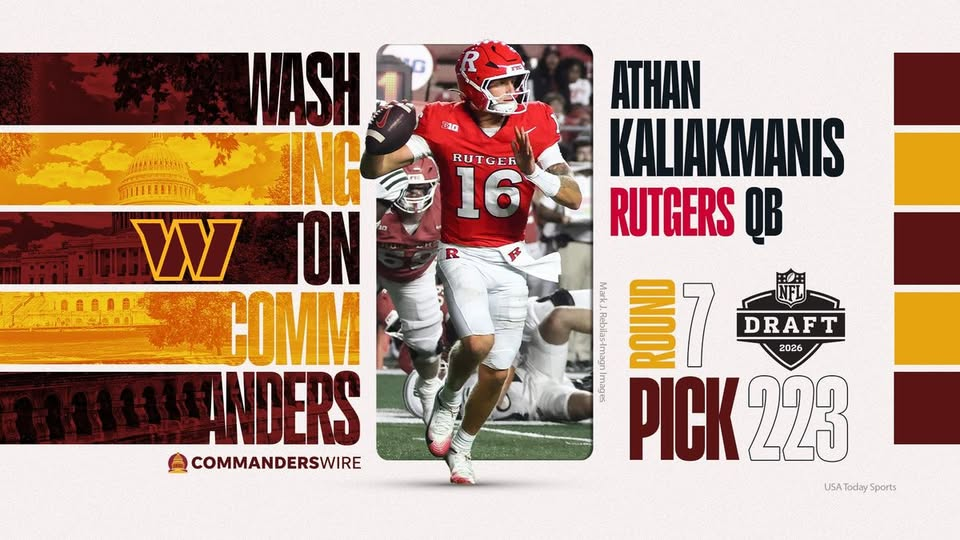
Kaliakmanis’ selection represents more than a late-round pick; it reflects a culmination of development, system continuity, and quarterback refinement that had been largely absent from the program’s national narrative for over a decade. His path underscores a shift in offensive identity and execution, one that aligns Rutgers more closely with modern pro-style systems and elevates its credibility among NFL evaluators. For a program that has spent years rebuilding its national reputation, this moment carries weight well beyond the draft board.
Yet the true measure of Rutgers’ 2026 class is found in the volume and diversity of players who quickly secured opportunities as undrafted free agents. Across multiple positions and franchises, Scarlet Knights alumni found themselves signing contracts and entering NFL rookie camps within hours of the draft’s conclusion, reinforcing the program’s depth and versatility.
Players from New Jersey Colleges
| Player | College | NFL Team | Status |
|---|---|---|---|
| Athan Kaliakmanis (QB) | Rutgers | Washington Commanders | Drafted (7th Round, 223rd overall) |
| Kenny Fletcher (TE) | Rutgers | Tampa Bay Buccaneers | Signed as UDFA |
| DT Sheffield (WR) | Rutgers | New York Jets | Signed as UDFA |
| Cam Miller (CB) | Rutgers | Carolina Panthers | Signed as UDFA |
| Eric O’Neill (DL) | Rutgers | Detroit Lions | Signed as UDFA |
| Wesley Bailey (DL) | Rutgers | Los Angeles Rams | Signed as UDFA |
| Rene Konga (DL) | Rutgers | Miami Dolphins | Signed as UDFA |
| Derek Robertson (QB) | Monmouth | Atlanta Falcons | Signed as UDFA |
New Jersey Natives Drafted (Out-of-State Colleges)
Several players originally from New Jersey high schools were drafted from other major programs:
Chase Bisontis (Guard, Texas A&M/Don Bosco Prep): Selected by the Arizona Cardinals in the second round (34th overall).
Davison Igbinosun (CB, Ohio State/Union HS): Selected by the Buffalo Bills in the second round (62nd overall).
Kyle Louis (LB, Pitt/East Orange Campus): Selected as a projected top NJ alum in the draft.
Tight end Kenny Fletcher landed with the Tampa Bay Buccaneers, offering a blend of size and blocking versatility that projects well in multi-tight end offensive schemes. Wide receiver D.T. Sheffield joined the New York Jets, remaining in the regional spotlight and entering a competitive receiving corps where route discipline and special teams value will be critical. Defensive back Cam Miller signed with the Carolina Panthers, bringing secondary depth and coverage adaptability that aligns with the evolving demands of NFL defensive packages.
Along the defensive front, Rutgers showcased one of its strongest positional pipelines. Eric O’Neill secured a deal with the Detroit Lions, Wesley Bailey joined the Los Angeles Rams, and Rene Konga signed with the Miami Dolphins. This cluster of defensive linemen entering the league simultaneously highlights the program’s ability to develop trench talent capable of translating to multiple defensive systems, from aggressive front-four schemes to hybrid alignments emphasizing speed and disruption.
Beyond Rutgers itself, the broader New Jersey football footprint also made its presence felt through Monmouth quarterback Derek Robertson, who signed with the Atlanta Falcons. His addition reinforces the growing respect for New Jersey-based college programs as legitimate contributors to the NFL talent pool, further strengthening the state’s reputation as a football development hub.
What distinguishes this year’s class is not simply the number of signings, but the distribution of those players across a wide range of NFL organizations. From the NFC South to the AFC East and beyond, Rutgers alumni are now embedded in multiple franchises, increasing both visibility and long-term opportunity for sustained representation at the professional level. This geographic spread also enhances recruiting leverage, as future prospects can now see clear pathways from Piscataway to virtually every corner of the league.
For fans and followers tracking the evolution of Rutgers athletics, this moment fits squarely into a larger narrative unfolding across the program. Continued investment in facilities, coaching continuity, and recruiting infrastructure has begun to produce measurable outcomes, and the 2026 NFL Draft cycle serves as one of the clearest indicators yet that those efforts are translating into real-world results. The Scarlet Knights are no longer defined by rebuilding—they are now defined by output.
The implications extend directly into the upcoming college football season. With tangible NFL placements now reinforcing the program’s credibility, Rutgers enters the next phase of its competitive cycle with heightened expectations and increased national attention. Player development is no longer theoretical; it is visible, documented, and accelerating.
For a deeper look at ongoing coverage, player updates, and the broader impact of Rutgers athletics across the state, explore more through the official Rutgers Scarlet Knights coverage hub, where the evolving story of New Jersey’s flagship program continues to unfold.
As rookie camps approach and training camp battles begin, the next chapter for this class will shift from opportunity to execution. For Rutgers, however, the takeaway is already clear: the program has firmly reestablished itself as a consistent contributor to the NFL pipeline, and the 2026 class may ultimately be remembered not just for who was drafted, but for how many found their way into the league regardless of where their names were called—or not called at all.
















