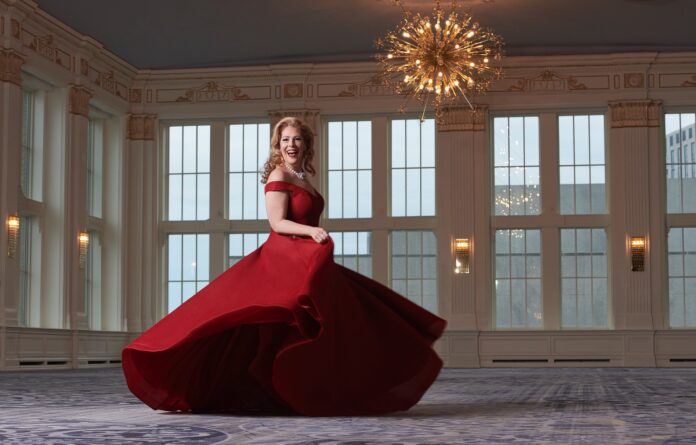

One of the most powerful voices in the modern opera world is coming to New Jersey for what is shaping up to be one of the defining classical music performances of the summer as internationally celebrated soprano Sondra Radvanovsky headlines a spectacular evening of Verdi and Puccini masterworks at the 2026 Princeton Festival on Saturday, June 6. Joined by acclaimed tenor Victor Starsky and the Princeton Symphony Orchestra under the direction of Rossen Milanov, the performance promises to transform Princeton into the center of the operatic world for one unforgettable night filled with soaring arias, emotional intensity, orchestral grandeur, and timeless Italian musical drama.
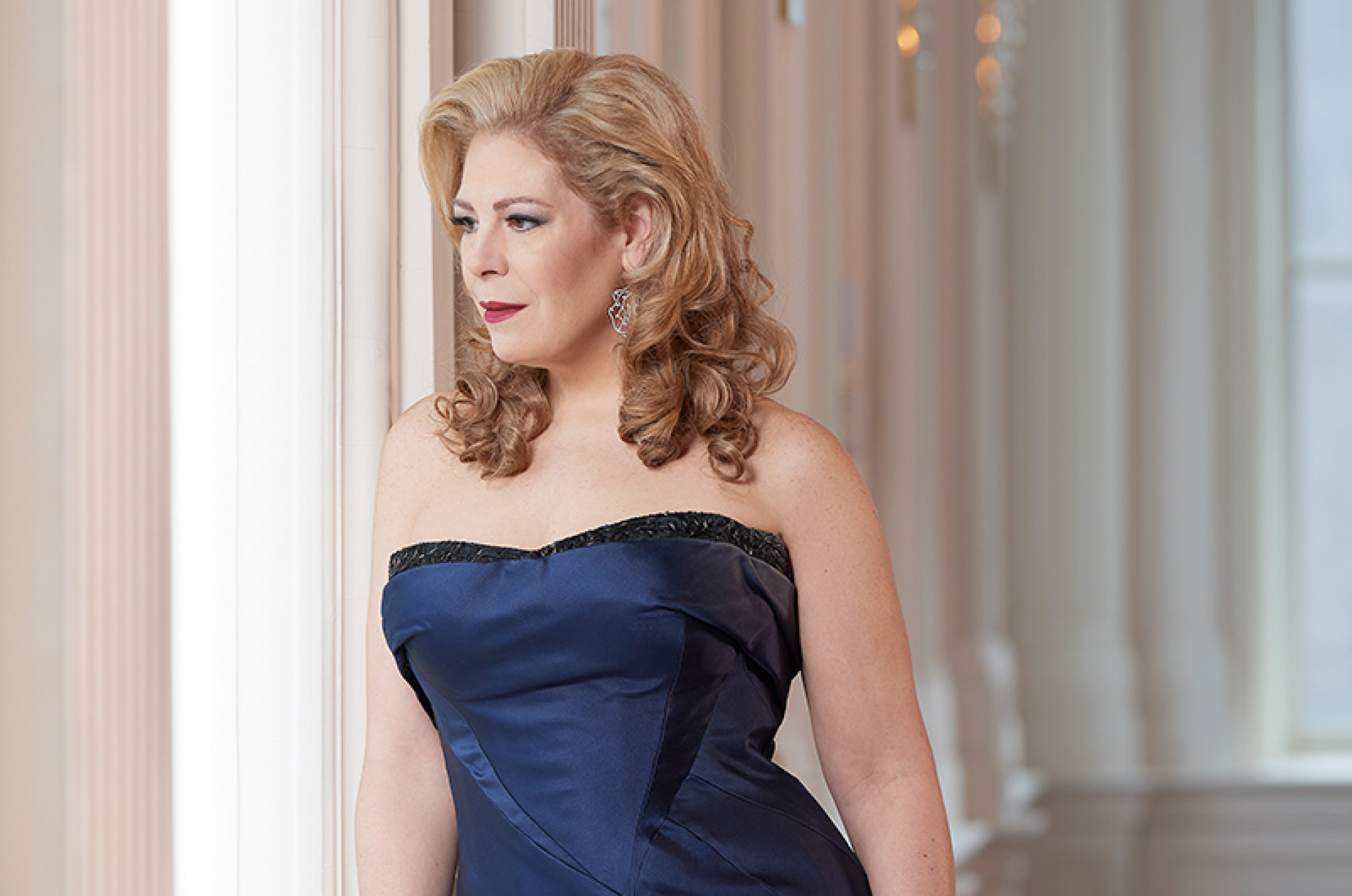
At a time when live arts experiences increasingly compete against fragmented digital entertainment and shortened audience attention spans, major vocal performances like this continue proving why opera remains one of the most emotionally overwhelming forms of live performance ever created. The upcoming Princeton Festival concert is not simply another classical program on a seasonal calendar. It represents the collision of world-class vocal artistry, iconic repertoire, orchestral power, and theatrical emotion delivered in a setting that continues positioning New Jersey as one of the Northeast’s most important cultural destinations.
For audiences throughout the region, the centerpiece attraction is unquestionably Sondra Radvanovsky herself.
Widely regarded as one of the defining dramatic sopranos of her generation, Radvanovsky has spent years commanding the world’s most prestigious opera stages through performances that combine technical precision, emotional force, and remarkable interpretive intelligence. Whether performing at the Metropolitan Opera, Royal Opera House, Teatro alla Scala, or major international festivals, she has built a reputation for bringing enormous emotional depth and vocal authority to some of opera’s most demanding roles.
That reputation follows her directly into Princeton.
The June 6 performance will spotlight many of opera’s most beloved melodies from Giuseppe Verdi and Giacomo Puccini, two composers whose works continue defining the emotional core of Italian opera itself. Radvanovsky is expected to deliver signature interpretations of Puccini’s legendary “Vissi d’arte” from Tosca as well as Verdi’s heartbreaking “Pace, pace, mio Dio” from La forza del destino, arias that require not only immense vocal control but the ability to project devastating emotional vulnerability across a concert hall.
For opera audiences, these are not simply famous songs.
They are towering emotional monologues built around sacrifice, heartbreak, desperation, longing, and spiritual conflict. In the hands of a performer like Radvanovsky, they become complete dramatic worlds unto themselves.
That emotional scale is one of the reasons opera continues resonating so deeply even in modern entertainment culture.
Long before cinema, television, or amplified stadium concerts existed, opera mastered the art of overwhelming audiences emotionally through the combination of voice, orchestra, theatrical narrative, and musical architecture. Verdi and Puccini remain among the greatest practitioners of that tradition because their compositions never merely accompany emotion. They amplify it into something nearly physical.
Saturday’s Princeton Festival concert fully embraces that legacy.
Victor Starsky, a returning Princeton Festival favorite, joins Radvanovsky throughout the evening for several of opera’s most emotionally charged duets, including Puccini’s dramatic “Mario! Mario!” from Tosca and the deeply romantic “Tu, tu, amore? Tu?” from Manon Lescaut. Starsky will also take center stage for one of the most recognizable arias in all of opera, Puccini’s immortal “Nessun Dorma” from Turandot.
Few pieces in classical music carry the same universal cultural recognition.
Even audiences unfamiliar with opera itself instantly recognize the emotional triumph and soaring melodic power of “Nessun Dorma,” particularly after the aria gained massive worldwide visibility through international broadcasts, sporting events, recordings, and crossover performances throughout modern pop culture. Yet live performance remains the definitive way to experience its full emotional force, especially accompanied by a full orchestra.
The Princeton Symphony Orchestra, conducted by Rossen Milanov, will provide that foundation throughout the evening.
Milanov continues building one of New Jersey’s most respected orchestral programs through ambitious programming, international collaborations, educational initiatives, and festival expansion efforts that increasingly position Princeton as a major cultural hub within the Northeast classical music landscape. Under his direction, the Princeton Symphony Orchestra has steadily elevated both its artistic reputation and statewide visibility, particularly through the expanding influence of the Princeton Festival itself.
That growth reflects larger changes happening throughout New Jersey’s arts ecosystem.
For years, discussions surrounding elite classical performance in the Northeast often centered almost exclusively around New York City or Philadelphia. Increasingly, however, New Jersey institutions are building cultural identities powerful enough to command national attention independently. Events like the Princeton Festival demonstrate that world-class classical experiences are no longer limited to traditional metropolitan centers.
Princeton’s emergence as a serious destination for opera, orchestral performance, and multidisciplinary arts programming continues strengthening each season.
The June 6 concert also arrives during a particularly important cultural moment for opera itself.
In recent years, opera companies and orchestras have aggressively worked to expand audiences by reframing opera not as inaccessible elite entertainment, but as emotionally immediate storytelling capable of resonating across generations. Performances centered around iconic repertoire by Verdi and Puccini often play a crucial role in that strategy because the music itself remains extraordinarily accessible even for first-time listeners.
The emotional clarity of these compositions transcends familiarity with opera conventions.
Love, sacrifice, betrayal, grief, longing, redemption, and survival remain universal themes. Verdi and Puccini simply express them with unmatched musical intensity.
The Princeton Festival appears to understand this dynamic exceptionally well.
Rather than approaching classical programming as purely academic or historically distant, the festival increasingly presents opera and orchestral music as living emotional experiences capable of generating the same excitement, anticipation, and communal energy surrounding any major live performance event.
That energy extends beyond the concert hall itself.
Festival organizers are also hosting an Opening Weekend Celebration surrounding the June 6 performance, including a pre-concert dinner and post-performance reception held in the adjacent garden for supporters and attendees. The expanded programming reflects how modern arts institutions increasingly build entire social and cultural experiences around major performances rather than treating concerts as isolated standalone events.
The approach mirrors larger entertainment trends across the live events industry.
Audiences increasingly seek immersive evenings built around atmosphere, dining, social connection, destination experiences, and community participation in addition to the performance itself. Princeton Festival’s evolving structure aligns naturally with that expectation while maintaining the artistic seriousness central to the event’s identity.
Meanwhile, the evening’s thematic focus on Verdi and Puccini creates its own fascinating artistic dialogue.
Opera fans have debated the relative greatness of the two composers for generations. Verdi’s music often emphasizes sweeping political tension, moral conflict, and dramatic architecture rooted in the grand traditions of 19th-century Italian opera. Puccini, meanwhile, pushed opera toward heightened emotional realism, creating deeply intimate character-driven tragedies filled with unforgettable melodic lines and devastating psychological intensity.
Both composers transformed opera permanently. Both continue dominating stages worldwide more than a century later. And both will stand at the center of one remarkable evening in Princeton. The broader significance of events like this for New Jersey’s cultural identity cannot be overstated.
As the state continues investing in arts infrastructure, tourism, live entertainment, and cultural programming, performances featuring internationally recognized artists help reinforce New Jersey’s growing reputation as far more than a secondary market adjacent to New York City. Increasingly, the state itself is becoming a destination for premier artistic experiences capable of attracting audiences from throughout the region.
The Princeton Festival represents that evolution perfectly.
By combining internationally respected artists, ambitious programming, orchestral excellence, educational outreach, and immersive audience experiences, the festival continues helping redefine what high-level cultural programming can look like in New Jersey.
For opera lovers, classical music audiences, and anyone seeking one of the most emotionally powerful live performance experiences available this summer, June 6 now stands as one of the most important dates on New Jersey’s 2026 cultural calendar.
When Sondra Radvanovsky steps onto the stage to deliver the immortal music of Verdi and Puccini alongside Victor Starsky and the Princeton Symphony Orchestra, audiences will not simply be attending another concert.
They will be witnessing the kind of overwhelming live artistic experience that reminds people why opera, at its absolute best, still possesses the power to stop time, silence rooms, and leave audiences emotionally transformed long after the final note disappears.
Giuseppe Verdi (1813-1901)
Verdi’s second opera, Un giorno di regno, was a flop, and the composer vowed never to compose another opera. Fortunately, he was persuaded to write the opera Nabucco, which became his break-out hit!Composers who influenced Verdi’s music include Rossini, Bellini, Meyerbeer, Donizetti, and Mercadante. During his most productive period, Verdi premiered 14 operas in 8 years, including Attila, Macbeth, Luisa Miller, and Rigoletto.Among Verdi’s most popular operas are Il trovatore, La traviata, Aida, Otello and Falstaff.
Giacomo Puccini (1858-1924)
Puccini’s arias are among opera’s greatest tear jerkers.As a student, Giacomo was so poor that he and three friends once had to share a single herring for dinner; hunger sated, he had great source material for La Boheme!Puccini’s aria “Nessun Dorma” (Turandot) was used for the TV coverage of the 1990 FIFA World Cup. Leading ladies, or at least the characters they portrayed, were doomed by Puccini to die gruesome deaths by a suicidal leap (Tosca), fatal dehydration (Manon Lescaut), and disembowelment (Madama Butterfly).