
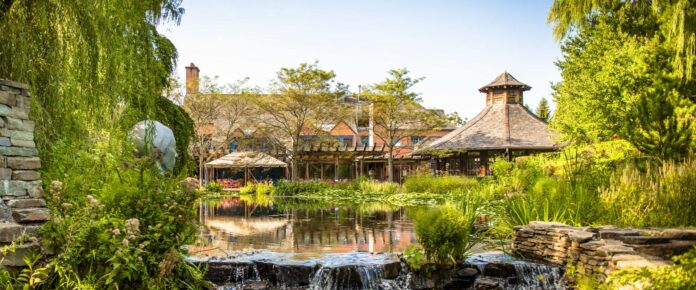

For decades, Grounds For Sculpture in Hamilton Township has existed as one of New Jersey’s most extraordinary artistic experiences, a place where large-scale sculpture, immersive gardens, architecture, fine dining, and natural landscape converge into something that feels far larger than a traditional museum. Visitors do not simply walk through exhibits there. They wander. They discover. They become temporarily absorbed into a world where art exists not behind velvet ropes or sterile gallery walls, but within ponds, pathways, forests, terraces, hidden corners, and carefully orchestrated moments of surprise.

Now, heading deeper into 2026, Grounds For Sculpture is entering one of the most fascinating transitional periods in its modern history. Between a major organizational restructuring, the temporary disappearance of one of the park’s most recognizable visual icons, the unveiling of ambitious new exhibitions, and the arrival of striking contemporary outdoor installations, the celebrated Hamilton arts campus is evolving in ways that are reshaping both its identity and its future.
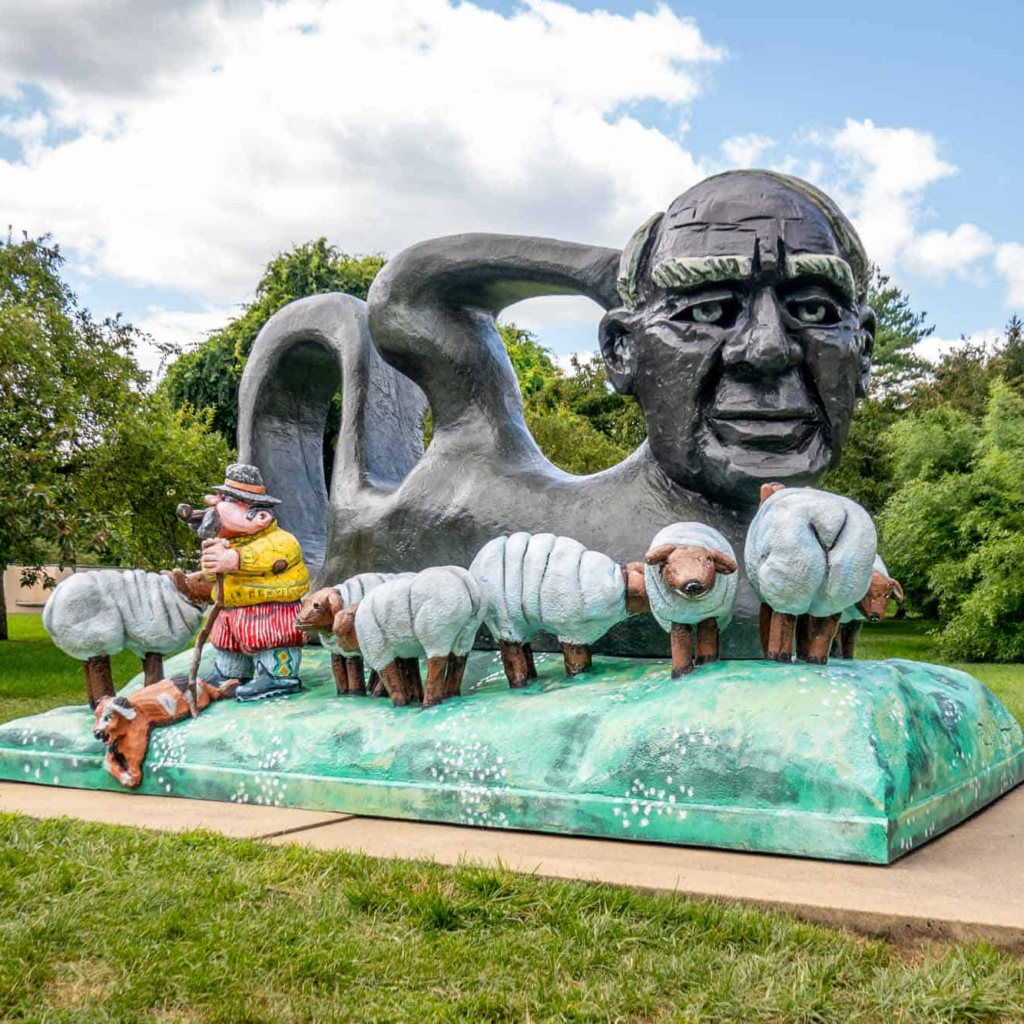
For longtime visitors, repeat members, artists, collectors, and cultural travelers throughout New Jersey and the Northeast, the current moment at Grounds For Sculpture feels especially significant because the changes unfolding across the property are not cosmetic adjustments. They represent a broader reimagining of how the institution preserves its legacy while simultaneously expanding its role within the contemporary arts landscape.
At the center of those changes is one of the most important structural developments in the organization’s history: the formal integration of The Johnson Atelier into Grounds For Sculpture’s core operations. The historic fabrication and conservation studio, originally founded by sculptor and Grounds For Sculpture creator Seward Johnson, has long operated as one of the hidden engines powering large-scale sculptural production both regionally and internationally. For decades, artists from around the world collaborated with the Atelier to fabricate, cast, conserve, engineer, and restore major works of art.
Its influence extended far beyond New Jersey. The Johnson Atelier became internationally respected for its technical mastery and artistic collaboration, serving as an essential resource for museums, institutions, sculptors, and public art projects across the globe. Yet despite its reputation, many casual Grounds For Sculpture visitors remained only vaguely aware of the Atelier’s existence or historical significance.
That separation is now disappearing.
The merger effectively unifies the artistic production legacy of Seward Johnson’s original vision with the public-facing museum and garden experience that Grounds For Sculpture has become today. It also creates new possibilities for education, conservation visibility, archival access, artist development, and behind-the-scenes public engagement that could fundamentally redefine how visitors experience the campus moving forward.
That shift becomes immediately visible through one of the institution’s most intriguing new exhibitions, Opening the Vault: A Look Inside the GFS Collection, which opened in May and runs through December 2026. Rather than functioning as a conventional curated exhibition, the presentation offers audiences a rare glimpse into the institutional archives, artistic apprenticeships, early studio practices, and lesser-seen works connected to artists who developed within the Grounds For Sculpture ecosystem over the years.

For art lovers familiar only with the park’s iconic monumental outdoor works, the exhibition introduces an entirely different dimension of the institution’s identity. Visitors encounter developmental pieces, experimental works, historical materials, and artistic processes that reveal how deeply Grounds For Sculpture has influenced generations of sculptors, fabricators, and contemporary artists. The exhibition effectively transforms the institution inward, allowing audiences to see not only finished masterpieces, but also the hidden artistic infrastructure responsible for producing them.
At the same time, one of Grounds For Sculpture’s most recognizable visual landmarks has temporarily vanished from the landscape, creating a surreal absence that many returning visitors immediately notice upon arrival.
For years, Philip Grausman’s monumental aluminum sculpture Leucantha floated with almost dreamlike serenity within Rat’s Pond, its giant reflective head emerging quietly from the water as one of the park’s defining visual signatures. The sculpture became deeply intertwined with the identity of Grounds For Sculpture itself, photographed endlessly by visitors crossing nearby pathways and dining along the adjacent patios of Rat’s Restaurant.

Now, for the first time in decades, the sculpture is gone.
Supported through a $40,000 National Endowment for the Arts grant, Leucantha was officially deinstalled in May 2026 and has entered a year-long restoration process designed to address decades of environmental exposure, water damage, weathering, and structural deterioration. The highly technical conservation project represents both an artistic and engineering undertaking, requiring careful preservation of a work that has become emotionally iconic to the institution’s audience.
The temporary absence changes the emotional atmosphere surrounding Rat’s Pond in surprisingly powerful ways. Visitors familiar with the sculpture’s tranquil presence immediately feel the void. Yet in many respects, the restoration itself reinforces one of the central realities behind Grounds For Sculpture: maintaining a living outdoor museum of monumental art is an ongoing act of preservation, conservation, and reinvention rather than static exhibition.
Even without Leucantha, the landscape surrounding Rat’s Pond remains one of the most visually striking and romantic environments anywhere in New Jersey, particularly because of the enduring popularity of Rat’s Restaurant, the celebrated French-inspired dining destination integrated directly into the Grounds For Sculpture experience.
Named after the beloved character “Ratty” from The Wind in the Willows, Rat’s Restaurant was personally envisioned by Seward Johnson as a fully immersive artistic environment rather than a standard fine dining establishment. The restaurant’s architecture evokes a 19th-century French country estate, complete with stone facades, lush gardens, warm interiors, antique-inspired décor, and outdoor patios overlooking water features modeled after Claude Monet’s famous Giverny gardens.
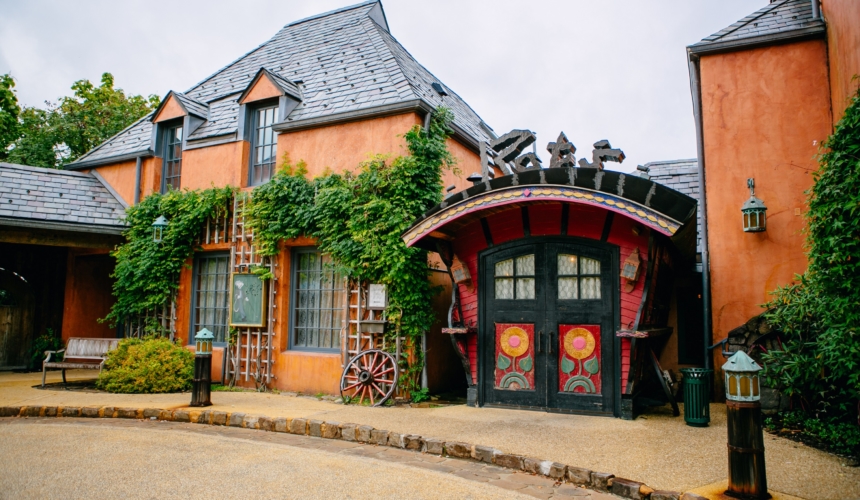
The setting remains among the most transportive dining experiences in the state. Wooden footbridges cross lily-covered ponds while seasonal flowers spill into carefully manicured pathways surrounding the property. During warm evenings, particularly throughout summer and early fall, the restaurant often feels suspended somewhere between Central Jersey and the French countryside.
That atmosphere continues to make Rat’s one of New Jersey’s premier destination restaurants for celebrations, romantic evenings, weddings, arts tourism, and luxury dining experiences connected directly to cultural exploration. Increasingly, visitors build entire day trips around the combination of sculpture garden immersion followed by cocktails or dinner overlooking the pond.
The restaurant’s newly introduced Spring 2026 menu further reinforces its growing culinary reputation. Seasonal seafood programs, refined French bistro influences, locally sourced agricultural ingredients, and elevated comfort dishes now anchor much of the current menu design. Signature favorites including coffee-crusted short ribs, canard à l’orange, fresh seafood preparations, rack of lamb, and sophisticated seasonal starters continue attracting both longtime patrons and first-time culinary travelers seeking upscale dining experiences outside New York City.
Reservations, especially for outdoor patio seating, have become increasingly difficult to secure during peak weekends because of the restaurant’s growing national visibility and immense popularity among Grounds For Sculpture visitors. The combination of high-end dining and immersive artistic atmosphere has positioned Rat’s as one of the defining destination restaurants within the broader Mid-Atlantic cultural tourism landscape.
Beyond preservation and dining, Grounds For Sculpture is simultaneously pushing aggressively into contemporary large-scale installation work through the addition of major new outdoor sculptures that dramatically alter portions of the campus environment.

Among the most visually commanding additions is Kiyan Williams’ Ruins of Empire II, a massive neoclassical-inspired installation recently anchored into the outdoor gardens. The work appears almost as though a monumental historic structure is physically collapsing back into the earth itself, confronting visitors with themes of historical decay, empire, permanence, erosion, and the fragility of institutional power.
The sculpture’s scale and conceptual ambition align perfectly with Grounds For Sculpture’s increasing emphasis on immersive contemporary installations capable of reshaping entire outdoor spaces rather than functioning merely as standalone objects. Williams’ work introduces a more overtly political and historical layer into portions of the garden landscape, reflecting the institution’s broader embrace of contemporary artistic discourse alongside its traditionally accessible visitor experience.
At the same time, Grounds For Sculpture is also finding new ways to broaden accessibility for audiences who may have previously viewed the destination as financially intimidating. One of the most successful recent additions has been the implementation of monthly summer “Golden Hour” admission nights. On the last Friday of each summer month, visitors can access the park from 5:00 PM through 9:00 PM for only $5 admission.
The program has rapidly become one of the state’s best arts values, attracting younger audiences, casual visitors, families, students, photographers, and regional travelers eager to experience the park during sunset hours when the grounds become especially cinematic. The lower admission pricing has also helped reinforce Grounds For Sculpture’s ongoing efforts to expand accessibility while cultivating a broader cultural audience throughout New Jersey.
Timing plays an enormous role in the experience itself. Summer evenings at Grounds For Sculpture possess a uniquely atmospheric quality as changing light conditions transform the appearance of sculptures, pathways, water reflections, and surrounding foliage. During golden hour, many of the installations feel almost entirely different than they do during daytime visits, creating an experience that feels more immersive, emotional, and visually theatrical.
That emotional immersion remains the defining strength of Grounds For Sculpture overall. Unlike many museums where visitors passively observe objects, Grounds For Sculpture encourages exploration, emotional reaction, and environmental participation. Guests encounter monumental figures emerging unexpectedly from trees, surreal scenes unfolding beside pathways, intimate sculptures hidden among flowers, and massive contemporary works interrupting the landscape with startling immediacy.
As New Jersey’s arts and culture sector continues expanding in sophistication and national visibility, Grounds For Sculpture increasingly stands not merely as a regional attraction, but as one of the defining cultural destinations on the East Coast. The institution’s ability to merge visual art, conservation, education, landscape architecture, culinary excellence, public accessibility, and large-scale immersive experience into a single cohesive environment remains remarkably rare.
Now, with archival exhibitions opening hidden histories to the public, major restoration efforts preserving beloved icons, new monumental works reshaping the grounds, and organizational restructuring positioning the institution for its next chapter, Grounds For Sculpture is evolving once again while remaining entirely true to the immersive artistic philosophy that made it iconic in the first place.
For returning visitors, 2026 may ultimately become remembered as one of the most important transitional years in the institution’s history. For first-time guests, it offers an extraordinary opportunity to experience one of New Jersey’s greatest artistic treasures during a moment of visible transformation, creative expansion, and cultural reinvention.
















