
The 2026 NFL Draft will be remembered as the moment the New York Jets stopped operating on potential and began executing with precision, conviction, and long-term vision. In a year where front offices across the league preached patience, the Jets took a markedly different approach—leveraging trades, capital, and timing to assemble one of the most impactful draft classes in recent franchise history. The result is not simply a collection of talented players, but a roster infusion that redefines the competitive outlook for a team deeply rooted in the New Jersey sports landscape.
This was a draft defined by control. Rather than reacting to the board, the Jets dictated it, maneuvering through multiple trades to secure three first-round selections and strategically positioning themselves to address both immediate needs and future development. In doing so, they built a class that balances elite production, rare athleticism, and structural depth—three components that now form the backbone of their roster construction philosophy.
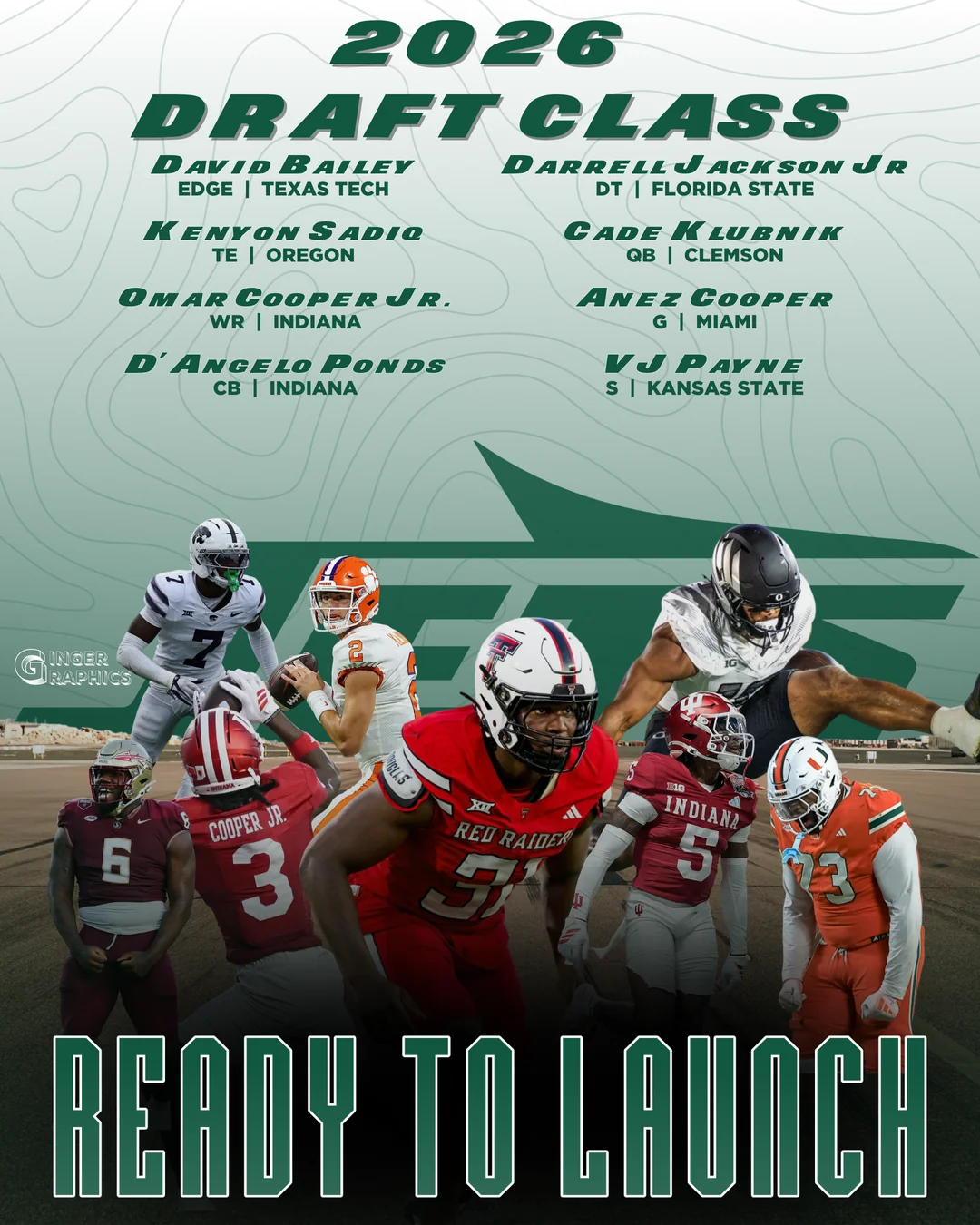
The Jets were “rare winners” of the draft, executing multiple trades to land three first-rounders and a developmental quarterback.
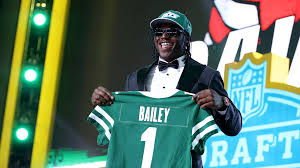
David Bailey (EDGE, Texas Tech): Selected at No. 2 overall, he is a “ready-now” pass rusher coming off a 14.5-sack season.
Kenyon Sadiq (TE, Oregon): Taken at No. 16 overall, Sadiq is described as a “freaky athlete” with generational speed (4.39 40-yard dash) for his position.
Omar Cooper Jr. (WR, Indiana): Selected at No. 30 overall after a trade back into the first round. He provides a productive secondary target for the passing game.
Cade Klubnik (QB, Clemson): The Jets traded up in the fourth round (No. 110) to select Klubnik as a developmental dual-threat backup behind Geno Smith.
The foundation of this transformation begins with David Bailey, the edge rusher selected second overall out of Texas Tech. Bailey enters the league with the profile of a high-impact, day-one contributor, coming off a dominant collegiate season that saw him record 14.5 sacks while consistently disrupting opposing offenses at every level. His game is defined by explosion off the line, leverage control, and a relentless motor that translates seamlessly to the professional level. For the Jets, Bailey is not just another defensive addition—he is the centerpiece of a pass rush designed to dictate tempo and force quarterbacks into compromised situations. His presence elevates the entire defensive front, creating opportunities for teammates while establishing a tone that aligns with the physical identity the organization is clearly prioritizing.
The Jets’ second first-round selection further underscores their commitment to dynamic playmaking, this time on the offensive side of the ball. Kenyon Sadiq, the tight end out of Oregon, arrives with a rare athletic profile that has already generated significant attention across scouting circles. Clocking a 4.39-second 40-yard dash, Sadiq possesses wide receiver-level speed in a tight end’s frame, creating immediate matchup challenges for defensive coordinators. His versatility allows him to line up across multiple formations—inline, in the slot, or detached—giving the Jets flexibility in how they deploy him within the offense. In an era where hybrid offensive weapons are redefining positional value, Sadiq represents a forward-looking investment that aligns with modern offensive design.
Not content to stop there, the Jets made a decisive move to reenter the first round, securing wide receiver Omar Cooper Jr. out of Indiana with the 30th overall pick. This acquisition reflects a clear understanding of the importance of depth and diversity within the passing game. Cooper brings proven production, route precision, and the ability to operate as a reliable secondary option who can exploit coverage mismatches. His addition complements the existing offensive structure while providing another critical layer of support for veteran quarterback Geno Smith, whose leadership remains central to the team’s immediate competitive window.
The Jets’ strategic aggression extended beyond the first round, as they once again moved up the board in the fourth round to select quarterback Cade Klubnik out of Clemson. This pick represents a calculated investment in the future, adding a developmental dual-threat quarterback with the tools to eventually grow into a larger role. Klubnik’s mobility, arm talent, and ability to extend plays offer a modern quarterback profile that can be cultivated behind an established starter. The decision to target a developmental quarterback at this stage reflects a front office thinking beyond the present, ensuring continuity and flexibility at the most critical position in the sport.
What makes this draft particularly significant is the cohesion across all selections. Each player addresses a specific need while simultaneously fitting into a broader strategic framework. Bailey strengthens the pass rush and defensive identity. Sadiq introduces a new dimension to the offense. Cooper enhances the receiving corps with reliability and production. Klubnik provides long-term security at quarterback. Together, they form a class that is both immediate in its impact and sustainable in its design.
For fans across New Jersey, the implications are tangible. The Jets are not simply rebuilding—they are recalibrating with purpose. The energy surrounding this draft reflects a franchise that understands the urgency of competing in a division defined by elite quarterback play and high-powered offenses. By prioritizing speed, versatility, and adaptability, the Jets have positioned themselves to meet those challenges head-on.
This momentum also reinforces the team’s connection to the region. Playing in East Rutherford, the Jets remain a central figure in New Jersey’s sports identity, and a draft of this magnitude only strengthens that bond. It signals to the fan base that the organization is fully committed to constructing a contender capable of sustained success, not fleeting moments of promise.
For ongoing analysis, roster updates, and a deeper dive into how this class integrates into the team’s evolving system, explore more through the official New York Jets coverage hub, where every development is tracked as the season approaches.
As offseason programs begin and rookie camps transition into full training camp competition, the next phase will test how quickly this class can translate potential into production. Yet the broader conclusion is already evident. The Jets approached the 2026 NFL Draft with clarity, executed with precision, and emerged with a class that has the potential to redefine the franchise’s trajectory. In a league where margins are thin and windows are fleeting, this was the kind of decisive, high-impact draft that can change everything.