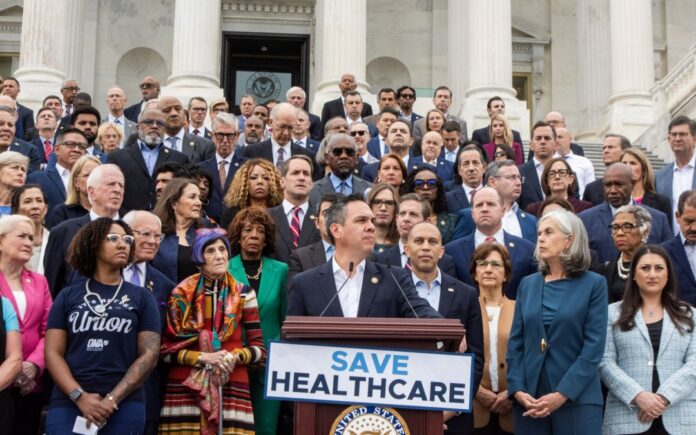

A national health care advocacy organization has launched a pointed new campaign aimed directly at Representative Tom Kean of New Jersey’s Seventh District, part of a broader effort to spotlight what the group describes as the real world consequences of last year’s major federal budget legislation. The campaign, called Faces of the GOP Health Care Crisis, comes from Save My Care, an advocacy organization focused on health care access, and it centers on an interactive, state by state repository of more than 400 personal testimonies from Americans the organization says have been directly affected by changes to Medicaid and Affordable Care Act subsidies.
According to Save My Care, the legislation at the center of the campaign, which the group refers to using the pointed nickname the Big Ugly Law, reduced federal Medicaid and Affordable Care Act spending by more than a trillion dollars and eliminated tax credits the organization says more than 22 million Americans had relied on to help cover the cost of seeing a doctor. Kean voted in favor of that legislation last summer, a vote Save My Care has singled out directly in building its case against him. The organization argues that the resulting savings were used primarily to help fund tax reductions benefiting corporations and higher income individuals, a characterization consistent with how national Democrats and allied advocacy groups have generally described the broader reconciliation package since its passage.
The testimonies collected through the campaign, drawn from television interviews, local news coverage, and opinion columns from across the country, describe families and seniors facing health insurance premiums that Save My Care says have doubled, tripled, or in some cases quadrupled since the legislation took effect, pushing monthly costs from the hundreds of dollars into the thousands for some households. The campaign also raises concern about more than a thousand hospitals the organization describes as being at risk of financial collapse, arguing that reduced Medicaid funding threatens to cut off care access in some communities entirely while also threatening local jobs and regional economic activity tied to those hospital systems.
Brad Woodhouse, president of Save My Care, has been direct in criticizing both the legislation itself and the political rhetoric that accompanied it, arguing that promises the law would lower health care costs have not held up a year later, and pointing to elevated inflation and rising premiums as evidence that the trade-offs built into the law have fallen disproportionately on working families rather than delivering the savings that were promised. Woodhouse’s statement also referenced a comment he attributed to President Trump regarding inflation, and questioned, given Kean’s consistent voting record alongside the president, whether Kean shared that same sentiment about the affordability pressures facing his own constituents. That specific quote attributed to Trump comes from Save My Care’s own campaign materials rather than from independent verification within this article, and readers interested in the original context should consult primary reporting directly.
Save My Care’s campaign also cites several specific statistics to support its broader argument, stating that roughly one in three Americans has had to skip meals or forgo other necessities in order to afford health care costs, that one in six Americans who purchase insurance independently are worried about being able to afford coverage at all heading into 2026, and that more than one million Americans have already dropped health coverage entirely since January, a number the organization expects to continue climbing as premium increases force more households into difficult financial trade-offs.
It’s worth noting clearly that this campaign represents one side of a genuinely contested and highly partisan policy debate, and the material driving this specific push comes directly from an advocacy organization actively working to shape public opinion ahead of future elections rather than from a neutral government or academic source. Kean and other Republican supporters of the underlying legislation have generally defended the broader package as a necessary effort to rein in federal spending and reform entitlement programs they argue had grown fiscally unsustainable, a position that stands in direct tension with Save My Care’s framing of the same legislation as a harmful cut prioritizing corporate tax relief over health care access. This article does not attempt to adjudicate which characterization is more accurate, since that determination depends heavily on contested assumptions about the law’s downstream economic effects, but readers should understand that the testimonies, statistics, and framing presented here originate from an advocacy campaign built specifically to make one side of that argument as persuasively as possible.
For New Jersey voters in Kean’s Seventh District, a genuinely competitive swing district by most measures, campaigns like this one are likely to become an increasingly common feature of the political landscape as the district’s next election cycle approaches, with health care affordability shaping up as one of the central issues both parties intend to fight over directly.