Home Blog Page 14

Carrot and Cucumber Salad: The Garden State’s Perfect Fresh Side Dish for Summer Gatherings, Backyard Dinners, and Healthy Everyday Eating

New Jersey’s culinary identity has always been deeply connected to fresh ingredients. From the fertile farmland stretching across South Jersey to the farmers markets that come alive throughout the state each spring and summer, the Garden State has built its reputation on produce that arrives at the table bursting with flavor, color, and nutrition. While elaborate recipes often grab the spotlight, sometimes the most memorable dishes are the simplest ones—recipes that allow quality ingredients to shine without unnecessary complexity.

That philosophy comes to life beautifully in Carrot and Cucumber Salad, a crisp, vibrant, and refreshingly uncomplicated dish that captures everything people love about seasonal eating. Combining cool cucumbers, naturally sweet carrots, and a light Asian-inspired dressing infused with ginger, sesame, and soy, this salad offers a perfect balance of crunch, brightness, and flavor. It is the kind of dish that feels equally at home at a backyard barbecue, a family dinner, a picnic at the Jersey Shore, or as part of a healthy weekday lunch.

As New Jersey residents increasingly embrace lighter, fresher meals during the warmer months, recipes like this continue to gain popularity because they deliver something many modern home cooks are searching for: maximum flavor with minimal effort.

One of the greatest strengths of Carrot and Cucumber Salad is its versatility. While many salads rely heavily on lettuce as a foundation, this recipe takes a different approach by focusing entirely on vegetables known for their crisp texture and refreshing character. Cucumbers provide a cooling bite that instantly evokes summer, while carrots contribute natural sweetness, vibrant color, and satisfying crunch.

Together, they create a combination that feels both nourishing and exciting.

The dressing elevates the vegetables without overwhelming them. A carefully balanced mixture of olive oil, rice wine vinegar, soy sauce, maple syrup, fresh ginger, and sesame seeds transforms ordinary ingredients into something memorable. The result is a flavor profile that draws inspiration from Asian cuisine while remaining approachable enough to complement an incredibly wide range of meals.

Fresh ginger adds brightness and a subtle zing. Rice vinegar contributes gentle acidity. Soy sauce introduces savory depth, while maple syrup provides just enough sweetness to tie everything together. Sesame seeds add texture and a delicate nutty finish that enhances every bite.

The beauty of the dish lies in its simplicity.

Unlike recipes that require extensive preparation or specialized techniques, Carrot and Cucumber Salad comes together in minutes. The vegetables are sliced, ribboned, or shredded according to personal preference, the dressing is whisked together, and everything is tossed in a single bowl.

Yet despite its simplicity, the finished dish delivers impressive complexity.

Every bite offers contrast. The crispness of the cucumber meets the sweetness of the carrot. The acidity of the vinegar balances the richness of the olive oil. The savory notes of soy sauce mingle with the brightness of fresh ginger. The result is refreshing without being bland, flavorful without being heavy, and sophisticated without requiring complicated preparation.

For New Jersey families looking for healthy meal options, the salad also checks another important box: flexibility.

The recipe adapts effortlessly to different dietary preferences and nutritional goals. Those seeking lighter meals can enjoy it as a standalone lunch or alongside grilled proteins. Home cooks looking for vegetarian options can serve it with plant-based entrees. Gluten-sensitive diners can easily substitute tamari or gluten-free soy sauce. Even those who enjoy sweeter flavors can swap maple syrup for honey without compromising the dish’s overall character.

That adaptability has become increasingly important as more households seek recipes capable of accommodating diverse tastes and dietary needs.

Another reason Carrot and Cucumber Salad has become a favorite among home cooks is its make-ahead convenience. Unlike some salads that quickly lose texture after preparation, this recipe actually improves as it rests. The vegetables absorb the dressing, allowing flavors to deepen and develop over time.

An hour in the refrigerator transforms the salad from a simple side dish into something even more flavorful and cohesive.

For busy families, meal preppers, and summer entertainers, that characteristic is invaluable. The salad can be prepared in advance, stored in the refrigerator, and served when needed without sacrificing quality. In fact, many cooks find that the flavors become even more balanced and enjoyable after a few hours of chilling.

This make-ahead quality makes it particularly attractive for summer entertaining throughout New Jersey.

Whether hosting a graduation celebration, neighborhood cookout, beach gathering, or family reunion, hosts often need dishes that can be prepared ahead of time while still delivering fresh flavor when guests arrive. Carrot and Cucumber Salad fulfills that role beautifully.

The dish also aligns perfectly with the state’s growing interest in healthy eating and locally sourced ingredients.

New Jersey’s agricultural heritage remains one of its greatest strengths. Throughout the summer months, farmers markets and roadside stands offer abundant supplies of fresh vegetables harvested at peak ripeness. Cucumbers and carrots are among the most accessible and versatile ingredients available, making this recipe an excellent way to showcase local produce while supporting New Jersey agriculture.

The connection between fresh ingredients and healthier eating habits is another reason recipes like this continue to resonate.

Modern diners increasingly recognize that healthy food does not need to be complicated or restrictive. Carrot and Cucumber Salad demonstrates how a handful of wholesome ingredients can create something satisfying, flavorful, and visually appealing without relying on excessive calories or heavy dressings.

Its nutritional profile is impressive as well.

Carrots provide valuable vitamins, antioxidants, and fiber. Cucumbers contribute hydration and refreshing texture. Fresh ginger offers natural anti-inflammatory properties. The dressing delivers flavor while remaining lighter than many traditional creamy salad alternatives.

Together, these ingredients create a dish that supports wellness without sacrificing enjoyment.

Perhaps most importantly, Carrot and Cucumber Salad represents the kind of cooking that feels timeless.

It is not driven by trends or social media fads. Instead, it embraces principles that have always defined great food: fresh ingredients, balanced flavors, appealing textures, and uncomplicated preparation.

In a culinary landscape often dominated by over-the-top recipes and increasingly elaborate presentations, there is something refreshing about a dish that succeeds simply by allowing quality ingredients to shine.

As New Jersey enters another season filled with outdoor dining, backyard gatherings, farmers markets, and fresh local produce, recipes like Carrot and Cucumber Salad remind us that some of the best meals begin with the simplest ingredients.

Cool cucumbers. Sweet carrots. Fresh ginger. A handful of pantry staples.

Combined thoughtfully, they create a dish that is colorful, healthy, satisfying, and unmistakably seasonal.

For anyone looking to add more freshness to their table this summer, Carrot and Cucumber Salad delivers exactly what the season calls for—bright flavors, crisp textures, effortless preparation, and a celebration of the simple pleasures that make great food memorable.

Carrot Cucumber Salad – The Carrot and Cucumber Salad is a Jersey Girl Cooks Recipe.

Carrot and Cucumber Salad is a crisp, refreshing side dish with ginger, sesame, and a simple Asian-inspired dressing.
Prep Time 10 minutes mins
Course: salad/side dish
Cuisine: Asian
Servings: 4

Ingredients

  • 1 large English Cucumber
  • 2 small to medium sized carrots
  • 2 tablespoons olive oil
  • 2 tablespoons rice wine vinegar
  • 1 tablespoon soy sauce
  • 1 tablespoon maple syrup
  • 2 teaspoons fresh grated ginger
  • 2 teaspoons sesame seeds
  • salt and pepper to taste

Instructions

  • Wash the cucumber and carrots. Peel the outside layer off the carrpt and trim along with the cucumbers. Peel skin if desired only. Slice the cucumbers and carrots. I use a peeler to get the carrots in long ribbons but cut or slice anyway you’s like.
  • In a large bowl, whisk together the olive oil, vinegar, soy sauce, maple syrup, and grated ginger. Add the cucumbers and carrots. Toss together with the sesame seeds. Season with salt and pepper to taste.

Notes

This salad can be made in advance as it tastes even better if it sits for an hour or two in the fridge before serving.

Substitutions: Any type of cucumbers can be used. Honey can easily be substituted for the maple syrup.

The Carrot and Cucumber Salad is a Jersey Girl Cooks Recipe.

FBI Arrests Man Accused of Threatening ICE Officer and Family During Delaney Hall Unrest: Escalating Newark Standoff Takes Another Serious Turn

As tensions surrounding Newark’s Delaney Hall immigration detention facility continue to dominate political and public debate across New Jersey, federal authorities have announced a significant development that underscores just how volatile the situation has become. According to federal officials, the FBI has arrested an individual accused of making violent threats against a U.S. Immigration and Customs Enforcement officer and members of that officer’s family during the ongoing demonstrations connected to the detention center.

The arrest marks a dramatic escalation in a conflict that has evolved far beyond a local protest. What began as demonstrations over conditions inside the privately operated detention facility has transformed into one of the most politically charged confrontations currently unfolding in New Jersey, drawing the attention of federal agencies, state officials, advocacy organizations, law enforcement personnel, elected leaders, and activists from across the political spectrum.

Federal officials allege that the suspect issued direct threats targeting an ICE officer and the officer’s family members during the height of the demonstrations surrounding Delaney Hall. The arrest was announced by Acting United States Attorney General Todd Blanche, who stated that threats directed at federal law enforcement personnel and their families would be treated as serious criminal matters.

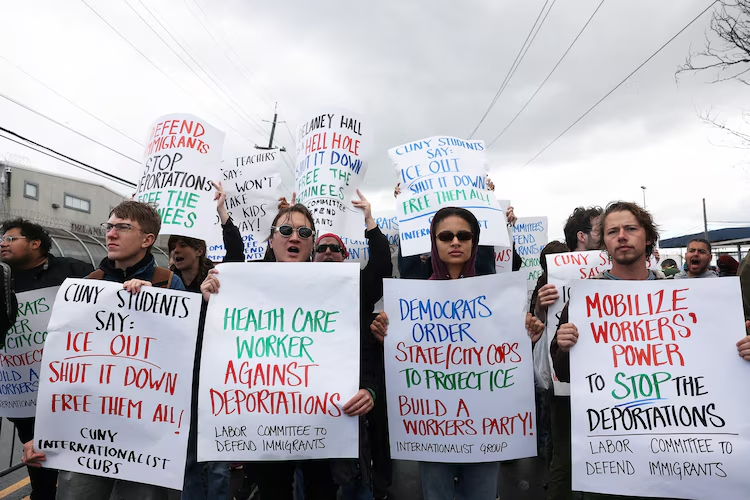
The announcement comes after more than a week of increasingly intense confrontations surrounding the facility, which has become a flashpoint in the national immigration debate. Demonstrations outside Delaney Hall have attracted hundreds of participants, including immigrant-rights advocates, community organizers, elected officials, labor activists, religious leaders, and counter-protesters supporting federal immigration enforcement efforts.

What makes the Delaney Hall situation particularly significant is that it represents the intersection of multiple contentious issues facing New Jersey and the nation simultaneously. Questions surrounding immigration enforcement, detention standards, private prison operations, public safety, protest rights, federal authority, state authority, and community oversight have all converged at a single location in Newark.

The conflict initially intensified after allegations emerged from detainees, family members, and advocacy groups claiming that individuals housed inside the facility were participating in hunger strikes and labor actions to protest conditions. Organizers alleged that detainees were raising concerns about food quality, medical treatment, communication access, and living conditions within the center.

Federal officials and facility operators strongly disputed many of those claims, maintaining that detainees were receiving appropriate care and services in accordance with federal detention standards. The competing narratives quickly fueled a growing confrontation outside the facility as supporters gathered to demand greater transparency and access.

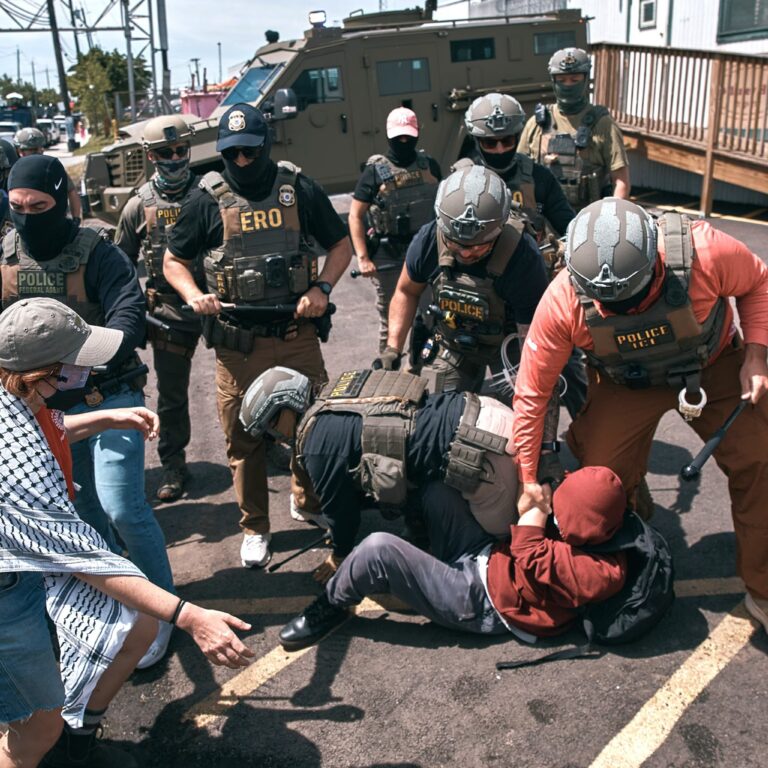
As demonstrations grew larger, the atmosphere surrounding Delaney Hall became increasingly tense. Protesters formed human chains, attempted to block transportation vehicles, and staged continuous demonstrations outside facility entrances. Federal agents responded with enhanced security measures aimed at maintaining access and operations at the site.

Several confrontations resulted in arrests, allegations of excessive force, accusations of obstruction, and claims of misconduct from both sides. Videos and photographs from the scene circulated widely across social media platforms and national news outlets, further amplifying public attention and political polarization surrounding the facility.

The situation eventually reached a point where New Jersey officials sought a different approach to maintaining order around the detention center.

Governor Mikie Sherrill and Attorney General Jennifer Davenport announced measures designed to reduce tensions, including arrangements that shifted primary perimeter security responsibilities away from federal tactical teams and toward the New Jersey State Police. State authorities established designated demonstration zones intended to separate competing groups while preserving the ability to engage in lawful protest.

Those changes followed days of confrontations that had raised concerns about the potential for further violence.

Despite those efforts, the rhetoric surrounding Delaney Hall has remained intense.

Supporters of federal immigration enforcement argue that ICE personnel are carrying out legally authorized responsibilities and deserve protection from threats, intimidation, and interference. They contend that demonstrations crossing into obstruction, harassment, or violence undermine lawful government operations and place officers at risk.

Immigrant-rights advocates, meanwhile, maintain that vigorous public scrutiny remains necessary to ensure accountability, transparency, and humane treatment within detention facilities. They argue that peaceful protest plays a vital role in bringing attention to concerns that might otherwise remain hidden from public view.

The latest arrest illustrates the increasingly difficult challenge facing authorities as they attempt to distinguish between protected political expression and criminal conduct.

The overwhelming majority of individuals participating in demonstrations have engaged in lawful activities protected by constitutional rights of speech and assembly. However, federal officials emphasize that direct threats of violence against public servants and their families fall outside those protections and will be aggressively investigated.

The arrest announcement also highlights a broader trend seen in politically charged disputes throughout the country, where heated rhetoric can sometimes escalate beyond protest and into alleged criminal threats. Law enforcement agencies at every level have increasingly devoted resources toward monitoring and investigating threats directed at public officials, government employees, judges, election workers, and law enforcement personnel.

In the case of Delaney Hall, federal authorities appear determined to send a message that threats targeting officers or family members will result in swift action.

For New Jersey residents following the unfolding situation, the arrest serves as another reminder that the dispute surrounding Delaney Hall has evolved into far more than a localized disagreement over detention operations. It has become a symbol of larger national arguments surrounding immigration policy, public accountability, law enforcement authority, and the role of protest in a democratic society.

The facility itself remains at the center of multiple ongoing controversies. Legal disputes involving operational permits continue to move through the courts. Political leaders continue debating oversight authority and facility access. Advocacy organizations continue pressing for additional transparency regarding conditions inside the detention center. Federal officials continue defending the facility’s operations and security measures.

Meanwhile, state authorities remain focused on preventing further confrontations outside the facility as competing demonstrations continue.

The arrest announced this week does not resolve any of the underlying disagreements that have fueled the Delaney Hall controversy. If anything, it underscores how deeply entrenched those disagreements have become.

What is clear is that the events unfolding in Newark are no longer being viewed as an isolated local issue. They have become part of a much broader national conversation about immigration enforcement, civil liberties, public safety, and political activism.

As investigations continue and legal proceedings move forward, Delaney Hall remains one of the most closely watched and politically significant locations in New Jersey. The latest arrest adds another chapter to a rapidly evolving story that continues to draw attention from state leaders, federal agencies, advocacy groups, and residents across the Garden State.

For now, authorities are urging all participants—regardless of political viewpoint—to exercise their rights peacefully and lawfully as the debate surrounding Delaney Hall continues to unfold.

CD-7 Primary Battle Enters Final Days as Mailers Flood New Jersey’s Most Competitive Democratic Congressional Contest

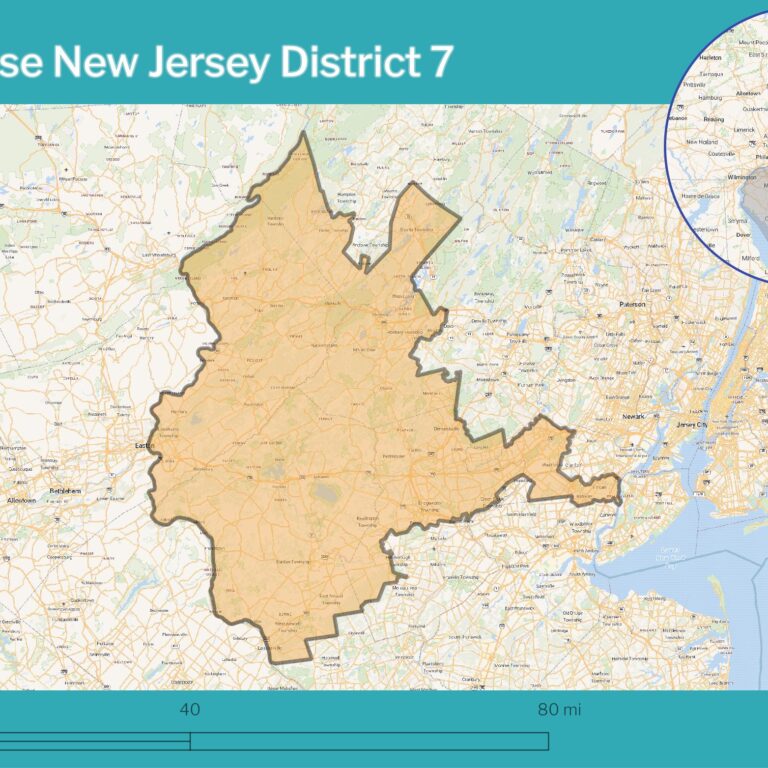
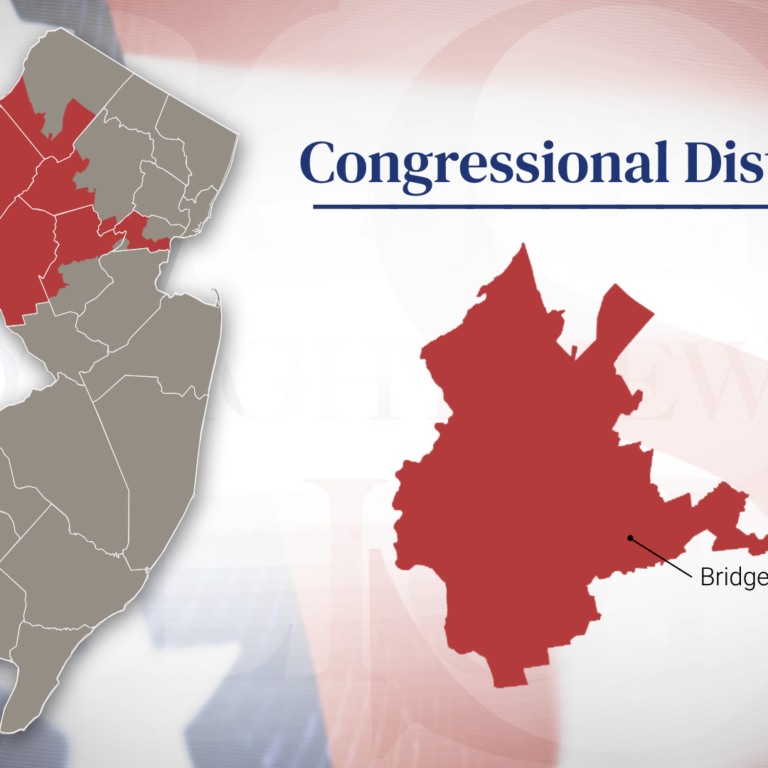
With just days remaining before voters head to the polls, New Jersey’s 7th Congressional District Democratic primary has entered its most intense phase, transforming what began as a competitive campaign into a full-scale political battle defined by aggressive mail campaigns, competing narratives, and escalating efforts to influence undecided voters.

Across communities stretching through portions of Central and Northwest New Jersey, mailboxes have become the latest front line in a race that many political observers view as one of the most important Democratic congressional primaries in the state. Campaign literature is arriving daily, sometimes multiple times a day, as candidates and outside organizations make their final push to shape voter perceptions before Election Day.

The volume of campaign mail has become so significant that it has emerged as a topic of conversation among party activists, volunteers, and voters alike.

At a recent campaign gathering in Warren County, discussion quickly turned away from traditional campaign subjects and toward the flood of political mailers arriving throughout the district. For many local Democrats, the sheer number of pieces arriving in recent weeks has become symbolic of a race entering its decisive stretch.

The contest features a crowded Democratic field seeking to represent one of New Jersey’s most closely watched congressional districts. Among the candidates competing for the nomination are Rebecca Bennett, Tina Shah, Michael Roth, and Brian Varela. While each campaign has attempted to distinguish itself through policy proposals, endorsements, and grassroots outreach, the final days of the race have increasingly been dominated by attacks, counterattacks, and efforts to define opponents before voters make their decisions.

At the center of much of the recent attention is Bennett, who has found herself the target of multiple mail campaigns coming from different directions.

One series of mailers distributed by an organization identified as Real Change has attempted to portray Bennett as being aligned with positions viewed unfavorably by portions of the Democratic electorate. Another campaign has focused on her political background, raising questions about her previous party affiliation and attempting to frame her as insufficiently aligned with Democratic priorities.

The attacks illustrate the reality of modern political campaigns, particularly in races where polling and political momentum suggest one candidate may have established an advantage.

As campaigns move into their final days, opponents frequently seek opportunities to redefine the race by raising doubts, highlighting perceived vulnerabilities, or introducing new issues designed to influence late-deciding voters.

Political strategists often view the closing week of a campaign as the most critical period for persuasion. Voters who have paid only limited attention to a race may encounter campaign messaging for the first time, while highly engaged voters are exposed to repeated communications intended to reinforce existing opinions or generate uncertainty about opponents.

The result is an environment where messaging becomes increasingly aggressive and campaigns devote substantial resources toward direct voter contact.

For Bennett, recent attacks have focused largely on ideological positioning. Mail pieces have questioned her political identity and attempted to portray her as being out of step with core Democratic values. The strategy appears designed to create hesitation among progressive and left-leaning voters who may be evaluating multiple candidates before casting ballots.

Bennett has publicly rejected the allegations and has used campaign platforms to directly address the claims. Rather than ignoring the attacks, her campaign has chosen to respond publicly, arguing that voters deserve accurate information and encouraging supporters to examine the record rather than relying on campaign literature alone.

The exchange highlights a broader trend within contemporary Democratic primaries, where debates increasingly center on questions of authenticity, ideological consistency, and perceived electability.

Unlike general elections, where candidates focus heavily on partisan contrasts, primary contests often involve more nuanced arguments regarding who best represents a party’s priorities, values, and future direction. As a result, issues of political identity frequently become central components of campaign strategy.

The intensity surrounding the 7th District race reflects the district’s broader political significance.

Over the last several election cycles, New Jersey’s 7th Congressional District has become one of the most closely monitored battlegrounds in the state. The district’s diverse mix of suburban communities, growing population centers, and politically engaged voters has made it a key target for both parties and a frequent subject of national political attention.

Winning the Democratic nomination carries substantial importance not only for the candidates themselves but also for party leaders seeking to position themselves effectively for future congressional contests.

Because of the district’s prominence, political observers have closely followed fundraising totals, endorsements, volunteer activity, and polling data throughout the campaign.

While publicly available polling has been relatively limited, the surveys that have emerged have contributed to the perception that Bennett may have established herself as a leading contender. Whether that perception accurately reflects the final outcome remains uncertain, but it has undoubtedly influenced campaign strategies during the closing days.

Historically, candidates perceived as front-runners often become primary targets for both opponents and outside organizations. Campaigns seeking to gain ground frequently focus their resources on the candidate viewed as most likely to win, hoping to alter momentum or create openings among undecided voters.

That dynamic appears increasingly visible in the final days of the CD-7 contest.

Yet political veterans caution against assuming that attack advertising automatically translates into electoral success. While negative messaging can influence voter perceptions, its effectiveness depends on numerous factors including voter engagement, message credibility, media coverage, and the targeted candidate’s ability to respond.

In some cases, repeated attacks can even generate sympathy for the targeted candidate or reinforce perceptions that opponents are acting out of political desperation.

For voters, the final days of a campaign often become an exercise in sorting through competing claims and determining which messages deserve attention. In an environment saturated with campaign advertising, endorsements, social media content, direct mail, and television appearances, many voters ultimately rely on broader impressions rather than individual pieces of campaign literature.

That reality makes grassroots organizing especially important.

Throughout the district, volunteers continue knocking on doors, making phone calls, attending community events, and engaging directly with residents. These face-to-face interactions frequently carry greater weight than campaign mailers because they allow voters to ask questions, discuss concerns, and evaluate candidates through personal conversations.

As Election Day approaches, campaigns are increasingly focused on turnout operations designed to ensure supporters actually cast ballots. Political professionals often note that in primary elections, success depends not only on persuasion but also on participation. Motivating supporters to vote can prove just as important as convincing undecided voters to choose a particular candidate.

The coming days will determine whether the late-stage mail campaigns alter the trajectory of the race or simply become another example of modern campaign tactics failing to overcome established voter preferences.

What is clear is that New Jersey’s 7th Congressional District remains one of the state’s most dynamic political battlegrounds. The flood of campaign mail, the increasingly sharp exchanges between candidates, and the heightened attention from party activists all reflect the importance of a contest that has captured the attention of political observers across the Garden State.

As candidates make their final appeals and voters prepare to cast their ballots, the race enters its final chapter with momentum, uncertainty, and the kind of political intensity that often defines competitive primaries. The mailboxes may briefly grow quiet after Election Day, but the outcome of this contest is likely to influence New Jersey politics long after the last campaign flyer is delivered.

NJ Spotlight News Reports New Jersey’s Public Conversation Through Independent Journalism, In-Depth Reporting, and Statewide Civic Coverage

In an era where news cycles move faster than ever and public trust in media continues to be tested, one New Jersey newsroom has steadily built its reputation around depth, context, accountability, and a commitment to explaining the issues that impact residents across the Garden State. NJ Spotlight News has emerged as one of New Jersey’s most influential and trusted sources for public affairs journalism, providing comprehensive reporting on government, education, healthcare, business, transportation, the environment, public safety, and the policies shaping everyday life.

Operating as the statewide news division of NJ PBS, NJ Spotlight News has become a central part of New Jersey’s media landscape by focusing on stories that often receive limited attention in traditional commercial news environments. Rather than chasing headlines alone, the organization has built its identity around providing context, analysis, and long-form reporting that helps residents better understand how decisions made in Trenton, Washington, county governments, school districts, and local communities directly affect their lives.

At the center of the organization’s television and digital presence is Emmy Award-winning journalist Briana Vannozzi, whose thoughtful interviewing style and deep understanding of state issues have helped elevate NJ Spotlight News into one of the region’s most respected public affairs platforms. Under her leadership, nightly broadcasts have become essential viewing for residents seeking more than quick headlines and political soundbites.

The organization’s influence extends well beyond traditional television broadcasts. NJ Spotlight News has successfully transformed itself into a modern multi-platform newsroom capable of reaching audiences through television, digital streaming, social media, podcasts, newsletters, video-on-demand programming, and mobile platforms. That strategy reflects a changing media environment where audiences increasingly consume news across multiple channels throughout the day.

Weeknight broadcasts air across NJ PBS television stations, providing statewide access to policy-focused reporting and in-depth interviews with elected officials, business leaders, educators, healthcare professionals, advocates, and subject matter experts. Full episodes are also available through digital streaming services and online video platforms, allowing viewers to access coverage whenever and wherever they choose.

The organization’s growing podcast and audio presence has further expanded its reach. Through daily briefings and interview-driven programming, NJ Spotlight News has adapted its reporting to meet audiences who increasingly consume news while commuting, exercising, or navigating busy schedules. These efforts ensure that New Jersey-focused journalism remains accessible to a wide variety of residents regardless of how they prefer to engage with news.

What distinguishes NJ Spotlight News from many other media outlets is its focus on policy-driven journalism. Rather than simply reporting political developments, the newsroom frequently examines how legislation, regulations, court decisions, and government actions affect communities throughout the state. This approach has made the organization a vital resource for understanding some of New Jersey’s most consequential issues.

In recent weeks, one of the most heavily covered stories has been the ongoing controversy surrounding Delaney Hall, the federal immigration detention facility located in Newark. As protests, political demonstrations, allegations regarding detention conditions, and confrontations between activists and federal authorities have intensified, NJ Spotlight News has provided extensive reporting examining the many dimensions of the conflict.

Coverage has explored the experiences of detainees, concerns raised by advocacy groups, responses from federal officials, legal disputes involving the facility, public demonstrations outside the complex, and broader debates regarding immigration policy and detention standards. By examining multiple perspectives and focusing on verifiable developments, the organization has helped residents navigate one of the state’s most complex and politically sensitive stories.

Election coverage remains another cornerstone of NJ Spotlight News reporting. As New Jersey prepares for critical congressional races and statewide political contests, the newsroom has invested significant resources into voter education, candidate analysis, policy discussions, and election-related reporting. Rather than focusing exclusively on campaign rhetoric, reporters frequently examine how candidates’ positions could influence healthcare, education, transportation, housing, taxation, environmental policy, and economic development.

This commitment to civic engagement has become particularly important as voter participation increasingly depends upon access to reliable and understandable information.

Legal and regulatory stories also occupy a significant place within the newsroom’s reporting portfolio. One notable example involves ongoing debates surrounding Bergen County’s long-standing blue laws and their relationship to modern retail development. Questions involving the operation of large-scale commercial destinations, including the American Dream complex, have generated substantial legal and economic discussions. NJ Spotlight News has devoted extensive coverage to explaining the historical origins of these laws, the current legal challenges, and the potential implications for businesses, consumers, and local governments.

Environmental reporting continues to be another area where the organization has established considerable expertise. As New Jersey faces challenges involving climate resilience, flooding, energy infrastructure, renewable energy development, coastal protection, and environmental justice, NJ Spotlight News has provided detailed examinations of how these issues intersect with economic development and community planning.

Recent reporting has focused on emerging conversations surrounding data center expansion and the growing demand for digital infrastructure throughout the region. As artificial intelligence, cloud computing, and digital services drive unprecedented growth in energy consumption, state leaders are increasingly grappling with questions involving environmental safeguards, electrical grid capacity, public safety, and long-term planning. NJ Spotlight News has positioned itself at the forefront of these discussions by helping residents understand both the opportunities and challenges associated with technological growth.

Healthcare remains another critical area of focus. The newsroom regularly examines hospital systems, insurance markets, public health initiatives, mental health services, prescription drug costs, and healthcare accessibility. These stories often receive less sustained attention in traditional media despite their enormous impact on families across the state.

Education reporting similarly reflects the organization’s commitment to public-service journalism. Coverage extends from K-12 schools and higher education institutions to workforce development initiatives, educational equity concerns, and student achievement programs. By exploring both challenges and successes within New Jersey’s education system, the newsroom provides valuable insight into one of the state’s most important public priorities.

Business and economic development reporting also play a major role in the organization’s editorial mission. New Jersey’s economy is shaped by a diverse mix of industries including pharmaceuticals, healthcare, logistics, technology, manufacturing, financial services, renewable energy, and small business entrepreneurship. NJ Spotlight News consistently examines how economic trends influence employment opportunities, investment activity, commercial development, and regional competitiveness.

Transportation coverage remains equally important given New Jersey’s role as a critical transportation hub connecting major metropolitan regions throughout the Northeast Corridor. Issues involving roads, bridges, rail systems, ports, airports, mass transit, and infrastructure funding routinely receive detailed attention as state leaders confront growing demands on transportation networks.

Beyond individual stories, NJ Spotlight News serves an important civic function by creating a space where public policy can be examined thoughtfully and thoroughly. In a media environment often dominated by national political conflict and rapid news cycles, the organization continues to emphasize substance, context, and local relevance.

That mission has helped establish NJ Spotlight News as more than simply a newsroom. It has become a public resource dedicated to helping residents understand the forces shaping New Jersey’s future.

As the state confronts increasingly complex challenges involving housing affordability, economic development, climate adaptation, healthcare access, public safety, education funding, infrastructure modernization, and technological transformation, the need for informed public discourse becomes even more essential.

NJ Spotlight News continues to meet that need through journalism that prioritizes depth over noise, explanation over sensationalism, and public understanding over political theater. In doing so, it has become one of New Jersey’s most valuable institutions for civic engagement and one of the strongest examples of how independent journalism can strengthen communities, inform citizens, and contribute to a healthier democratic society.

For residents seeking thoughtful reporting, meaningful analysis, and comprehensive coverage of the issues that matter most to the Garden State, NJ Spotlight News remains one of the defining voices shaping New Jersey’s public conversation today.

Delaney Hall Standoff Intensifies as Rival Demonstrations Converge in Newark: Immigration Debate, Public Safety Concerns, and Political Tensions Collide in New Jersey

What began as a protest over detention conditions inside Newark’s Delaney Hall Immigration Detention Center has now evolved into one of the most visible and politically charged public demonstrations New Jersey has witnessed in recent years. As hundreds of demonstrators, counter-protesters, elected officials, law enforcement agencies, immigration advocates, and federal authorities continue to clash over the future of the facility, Delaney Hall has become the focal point of a much larger national debate involving immigration policy, detention standards, federal authority, public accountability, and civil liberties.

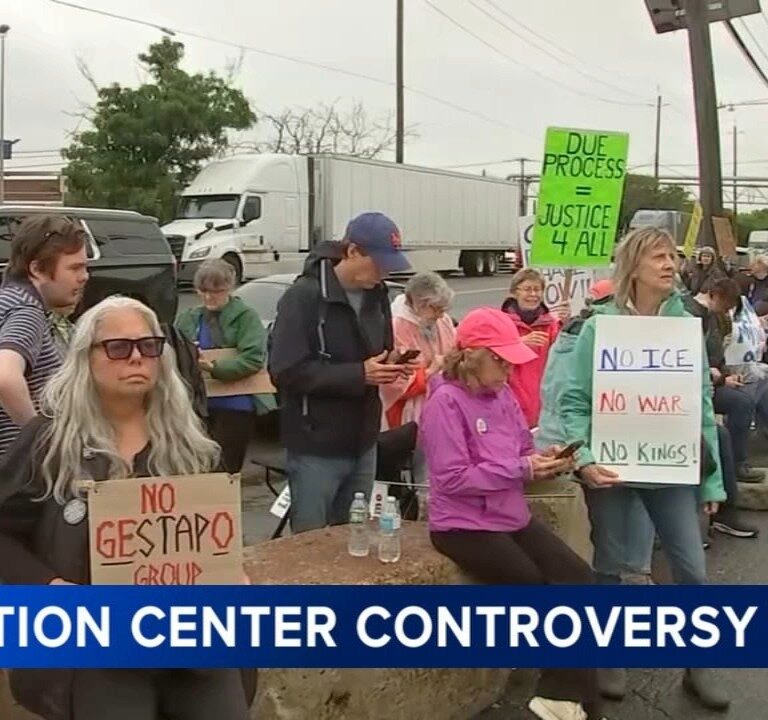
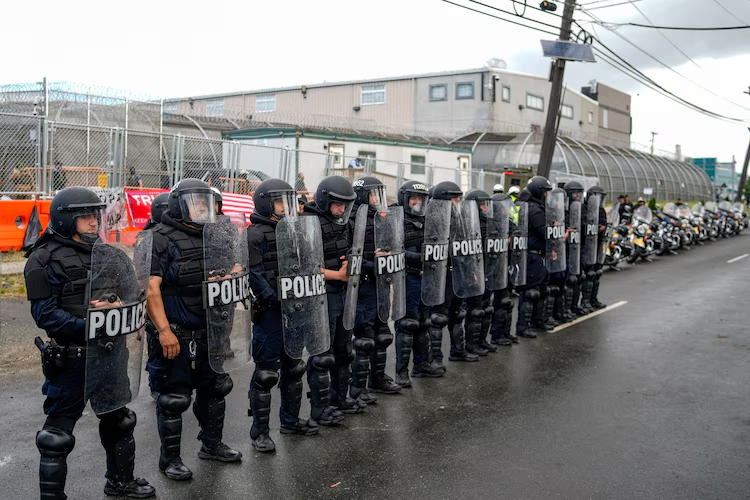
The situation reached a new level of intensity this weekend as rival demonstrations officially materialized outside the facility, transforming a previously tense protest environment into a highly controlled standoff overseen by the New Jersey State Police. By Saturday morning, approximately 200 anti-ICE demonstrators had gathered near the detention center while roughly 75 pro-ICE supporters assembled nearby to express support for federal immigration enforcement efforts. The opposing groups, separated by extensive police barricades and designated protest zones, spent much of the day exchanging chants, slogans, and competing messages across a heavily monitored security perimeter.

The deployment of the New Jersey State Police represents the latest chapter in a week-long escalation that has attracted national media attention and intensified scrutiny of conditions inside the privately operated detention facility. State officials moved aggressively to establish order following several days of confrontations between demonstrators and federal agents, incidents that included arrests, allegations of excessive force, the use of chemical irritants, and growing concerns that the situation could spiral into a larger public safety crisis.

Throughout Saturday, state troopers restricted vehicle traffic along portions of Doremus Avenue while installing extensive metal barricades designed to create physical separation between opposing groups. The strategy reflects an effort by state authorities to prevent direct confrontations while preserving constitutionally protected rights to peaceful assembly and free expression.

Governor Mikie Sherrill and Attorney General Jennifer Davenport ordered the transition to state-controlled public safety operations following negotiations that resulted in federal immigration personnel withdrawing from exterior perimeter duties. Under the arrangement, New Jersey State Police assumed responsibility for crowd management, traffic control, and public safety operations surrounding the facility while federal authorities continued overseeing detention operations inside the complex.

State officials described the newly established demonstration areas as protected zones intended to lower tensions and reduce the likelihood of further violence. The designated spaces provide separate areas for supporters and opponents of federal immigration enforcement while allowing demonstrations to continue under controlled conditions.

Not everyone agrees with the approach.

Some grassroots activists and immigration advocacy organizations argue that the extensive police presence and restricted access zones effectively limit the visibility and impact of their demonstrations. They contend that moving protesters farther away from the facility reduces public awareness of the concerns that originally sparked the movement and makes it more difficult to maintain pressure on federal authorities.

Supporters of the state’s actions, however, argue that the measures were necessary following several days of escalating confrontations that threatened public safety and risked drawing larger crowds into potentially volatile situations.

At the heart of the controversy remains the growing dispute over conditions inside Delaney Hall.

The current unrest traces its origins to allegations made by detainees and advocacy groups during Memorial Day weekend. According to those accounts, hundreds of detained migrants participated in a coordinated hunger and labor strike designed to draw attention to what they described as unacceptable living conditions within the facility. Participants and their supporters cited concerns involving food quality, medical access, ventilation systems, and overall treatment of detainees.

Family members and advocacy organizations quickly amplified those complaints, organizing demonstrations outside the facility and demanding independent inspections.

As public attention intensified, allegations expanded beyond the original concerns. Civil rights advocates and attorneys representing detainees claimed that facility personnel responded to the strike with retaliatory measures that included lockdowns, restrictions on communication privileges, and the use of force against participants.

Those allegations have become central to the ongoing controversy.

The Department of Homeland Security has categorically disputed the accusations, maintaining that Delaney Hall operates in compliance with federal detention standards and receives regular oversight. Federal officials insist that detainees are provided appropriate meals, medical services, and housing conditions. According to DHS statements, reports describing systematic mistreatment are inaccurate and fail to reflect conditions inside the facility.

Federal authorities have also disputed descriptions of the original unrest, characterizing portions of the disturbance as detainee-on-detainee conflicts rather than organized labor actions.

The competing narratives have created an environment in which nearly every development becomes subject to intense political interpretation.

Outside the facility, the emergence of organized counter-protests has further complicated an already volatile situation.

Saturday’s pro-ICE demonstration drew supporters from conservative organizations, immigration enforcement advocates, and individuals who argue that federal agencies are being unfairly criticized while attempting to enforce existing immigration laws. Participants described their presence as a show of support for federal officers operating under increasingly difficult circumstances.

The counter-rally was organized in part by groups advocating stronger border enforcement and stricter immigration policies. Organizers argued that federal personnel deserve public backing and expressed concern that political leaders have increasingly challenged the authority of immigration enforcement agencies.

The appearance of members associated with far-right organizations added another layer of controversy to the day’s events. Reports from multiple media outlets indicated that individuals linked to extremist political groups were present during portions of the demonstration, drawing criticism from immigration advocates and further intensifying political tensions surrounding the facility.

Despite the emotionally charged atmosphere, no significant new violence was reported during Saturday’s demonstrations.

That relative calm stands in contrast to earlier confrontations that generated widespread attention. During previous demonstrations, protesters formed human chains intended to block transport vehicles entering and exiting the facility. Those actions led to forceful dispersal efforts, arrests, and allegations that chemical irritants were used against protesters, journalists, and observers.

The images and video footage from those incidents rapidly circulated across social media platforms and national news outlets, transforming a local protest into a broader national story.

The dispute has also evolved into a significant political conflict involving elected officials at multiple levels of government.

Several Democratic lawmakers have publicly demanded increased transparency regarding conditions inside Delaney Hall and sought access to inspect the facility firsthand. Efforts by elected officials to enter the detention center have become points of contention, with federal authorities and political leaders offering sharply different interpretations regarding access and oversight responsibilities.

The debate extends beyond immediate operational concerns and reflects broader disagreements about immigration enforcement policies, private detention facilities, federal authority, and state oversight powers.

Adding another layer of complexity is an ongoing legal dispute involving the facility itself.

The City of Newark continues pursuing legal challenges related to the reopening and operation of Delaney Hall. Municipal officials argue that the facility resumed operations without securing required local approvals and permits. That litigation remains active, with court-ordered mediation expected to continue in the coming weeks.

The outcome of that legal battle could have significant implications not only for Delaney Hall but also for future relationships between municipalities, private detention operators, and federal immigration agencies.

For now, however, the immediate focus remains on maintaining stability outside the facility while questions surrounding detainee conditions, public accountability, and federal immigration policy continue to generate passionate responses from all sides.

As rival demonstrations continue, state officials face the difficult task of preserving public order while respecting constitutional rights and navigating one of the most politically sensitive issues in modern American public life.

Delaney Hall has become far more than a detention center.

It now stands at the center of a statewide and national conversation about immigration, governance, public transparency, civil liberties, law enforcement authority, and the role communities play in shaping policy debates. Whether the tensions surrounding the facility ultimately subside or continue to escalate, the events unfolding in Newark are likely to remain a defining New Jersey story throughout the summer as policymakers, advocates, residents, and federal officials continue wrestling with questions that extend far beyond the facility’s fences.

New Jersey International Film Festival Returns for Its 31st Year as Independent Cinema, Innovation, and Storytelling Take Center Stage Across the Garden State

As New Jersey continues strengthening its reputation as one of the nation’s most vibrant destinations for independent filmmaking, artistic experimentation, and cinematic discovery, one of the state’s most respected cultural events has once again returned to showcase the next generation of storytellers. The 31st Annual New Jersey International Film Festival is now underway, bringing filmmakers, artists, students, critics, and film enthusiasts together for a celebration of creativity that stretches from May 29 through June 7, 2026.

For more than three decades, the festival has served as an important platform for emerging voices, independent creators, international artists, and experimental filmmakers whose work challenges audiences, expands artistic boundaries, and demonstrates the enduring power of visual storytelling. This year’s edition continues that tradition with a diverse lineup of 36 finalist films representing a wide range of genres, perspectives, cultures, and creative approaches.

Operating in a hybrid format that combines online Video on Demand access with select in-person screenings at Rutgers University’s Voorhees Hall in New Brunswick, the festival reflects both the changing landscape of film exhibition and the enduring value of communal viewing experiences. Audiences can experience groundbreaking cinema from anywhere while still enjoying the unique atmosphere that has made the festival a beloved institution within New Jersey’s arts community.

What makes the New Jersey International Film Festival particularly distinctive is its commitment to showcasing films that often exist outside traditional commercial channels. Rather than focusing on mainstream studio releases, the festival provides a home for innovative projects that might otherwise struggle to find wide audiences. Experimental animation, personal documentaries, international narratives, student productions, independent features, and boundary-pushing short films all share equal footing within the festival’s carefully curated lineup.

The result is a cinematic experience unlike any other in the region.

Each screening becomes an opportunity to encounter new ideas, unexpected perspectives, and fresh artistic voices. Audiences arrive without preconceived expectations and often leave having discovered films, filmmakers, and stories they never would have encountered elsewhere.

Among this year’s most talked-about entries is the animated short “Godzilla’s Day Off,” a project that has already generated enthusiasm among early festival viewers. Combining nostalgic visual influences with playful storytelling, the film embraces a retro-inspired animation style that demonstrates how contemporary filmmakers continue finding inventive ways to reinterpret familiar cultural icons through fresh artistic lenses.

Its presence within the festival highlights one of the event’s greatest strengths: the ability to celebrate both humor and innovation simultaneously.

The lineup also includes “Stew to Eat,” an ambitious dark comedy that blends social commentary, emotional complexity, and visual creativity into a uniquely engaging cinematic experience. The film has attracted attention for its expressive storytelling and distinctive artistic voice, illustrating the kind of bold independent filmmaking that has become synonymous with the festival over its three-decade history.

Meanwhile, audiences seeking emotionally driven narrative work have shown significant interest in “What We Dreamed of Then,” another featured project generating anticipation among festival attendees. Like many films in this year’s lineup, it represents the festival’s ongoing commitment to stories that challenge audiences emotionally while encouraging reflection and conversation.

Yet perhaps no film better captures the spirit of independent creativity and human connection than one of the festival’s most compelling short films, “35 Days.”

Screening as part of the festival’s opening weekend programming, the seven-minute experimental short has emerged as one of the most intriguing and emotionally resonant entries in this year’s competition.

Directed by Heidi Kumao, an artist and professor known for combining innovative visual techniques with deeply personal storytelling, “35 Days” transforms a seemingly simple event into a remarkable meditation on community, persistence, and kindness.

The film tells the true story of Ruben, Kumao’s beloved orange tabby cat, who disappeared for 35 days during the height of the summer 2020 pandemic lockdown in Ann Arbor, Michigan.

What follows is not merely a lost-pet story.

Instead, the film becomes a portrait of a community united by compassion and determination during one of the most isolating periods in recent history.

The search effort was extensive. Flyers appeared throughout neighborhoods. Doors were knocked upon repeatedly. Phone messages poured in from concerned residents. Neighbors reported sightings. Leads were pursued. Hope faded and returned repeatedly.

What might have remained a private family experience instead evolved into a collective act of generosity involving countless individuals willing to devote time and energy toward helping a stranger find a missing companion.

Kumao’s artistic approach elevates the story even further.

Rather than relying on traditional animation techniques, “35 Days” was painstakingly constructed frame by frame using fabric, paper, thread, wool, and handcrafted visual elements. Every movement, every image, and every transition reflects extraordinary attention to detail.

The result is a visual experience that feels both intimate and imaginative.

Adding to the film’s emotional impact is its use of authentic audio recordings gathered during the search effort. Real voice messages left by neighbors become part of the narrative fabric, preserving moments of concern, hope, confusion, and humanity.

Some callers provide detailed reports of possible sightings. Others offer encouragement. Some accidentally create moments of unintended humor. Together, these voices create a portrait of a community coming together during a difficult period.

What emerges is a film that speaks not only about a missing cat but also about the importance of connection during times of uncertainty.

It is precisely the type of project that flourishes within a festival environment.

Independent festivals have always served as incubators for films that challenge conventional definitions of storytelling. They provide opportunities for filmmakers to take risks, experiment with form, and explore subjects that larger commercial productions might overlook.

The New Jersey International Film Festival has built its reputation by embracing those risks.

For thirty-one years, it has consistently highlighted artists willing to push creative boundaries while remaining deeply committed to the craft of storytelling. The festival has become a destination for audiences seeking originality, authenticity, and artistic ambition.

That mission remains particularly important as New Jersey’s film and television industry continues experiencing unprecedented growth.

The Garden State has emerged as one of the nation’s most exciting production hubs. Major studios, streaming services, independent filmmakers, and production companies increasingly view New Jersey as an attractive destination thanks to its diverse locations, talented workforce, supportive infrastructure, and growing creative community.

Large-scale productions may dominate headlines, but festivals like this remind audiences that the future of filmmaking often begins with independent creators working outside traditional systems.

Many of tomorrow’s most influential directors, writers, producers, cinematographers, and animators first gain recognition through festivals exactly like this one.

The New Jersey International Film Festival continues serving as a bridge between emerging talent and future opportunity.

Its educational connections to Rutgers University further reinforce that role by creating an environment where established professionals, aspiring filmmakers, students, and audiences can engage directly with the artistic process.

The festival’s hybrid format also reflects a broader evolution occurring throughout the film industry.

By offering both in-person screenings and online access, organizers have expanded opportunities for participation while preserving the unique energy that comes from experiencing films within a shared audience setting. Viewers can engage with groundbreaking cinema regardless of geographic location while still maintaining a connection to the festival community.

As the festival unfolds over the coming days, audiences will continue discovering films that entertain, challenge, inspire, and provoke discussion.

Some projects will make people laugh. Others will move them emotionally. Some will raise difficult questions. Others will offer unexpected answers.

Together, they represent the extraordinary diversity of contemporary independent filmmaking.

For New Jersey’s creative community, the festival serves as both a celebration and a reminder.

A celebration of artistic achievement, innovation, and storytelling excellence.

A reminder that great cinema does not require massive budgets or blockbuster marketing campaigns. Sometimes the most powerful films emerge from personal experiences, unconventional ideas, and artists willing to take creative risks.

Thirty-one years after its founding, the New Jersey International Film Festival continues proving that independent cinema remains one of the most dynamic and essential forms of artistic expression.

As audiences gather online and in New Brunswick throughout the festival’s run, they are participating in a tradition that has helped shape New Jersey’s cultural landscape for more than three decades. From groundbreaking experimental shorts to emotionally resonant narratives like “35 Days,” this year’s festival once again demonstrates why the Garden State remains an important destination for filmmakers, film lovers, and anyone who believes in the transformative power of storytelling.

The screens may vary. The formats may evolve. The technologies may change.

But the mission remains the same: to discover extraordinary stories and share them with the world.

Avenel Performing Arts Center Welcomes Megan Dolan’s Award-Winning “Not the Right Mom” for a Powerful Day of Laughter, Love, and Life Lessons

New Jersey’s thriving theater scene continues to showcase productions that entertain while creating meaningful conversations, and few performances arriving this season embody that mission more completely than “Not the Right Mom.” On Saturday, May 30, 2026, the Avenel Performing Arts Center will host two special performances of the acclaimed one-woman show written and performed by Megan Dolan, offering audiences a moving, hilarious, and deeply authentic theatrical experience that has resonated with families, caregivers, educators, and theater lovers alike.

With performances scheduled for 3:00 p.m. and 8:00 p.m., the production arrives in New Jersey carrying a reputation for blending sharp comedy, emotional honesty, and extraordinary storytelling into a performance that leaves audiences laughing one moment and reflecting deeply the next. While the subject matter centers around parenting a child with autism, “Not the Right Mom” reaches far beyond a single family’s experience, becoming a universal exploration of motherhood, expectations, identity, resilience, and the unpredictable journey of life itself.

At a time when audiences increasingly seek authentic stories that reflect real human experiences, Megan Dolan’s celebrated production stands as a reminder of why live theater remains one of the most powerful storytelling mediums available. The performance strips away pretense and perfection, inviting audiences into a world that is messy, complicated, funny, heartbreaking, and ultimately inspiring.

What unfolds on stage is not simply a personal memoir. It is a theatrical journey through the realities of parenting when life refuses to follow the script.

Many parents begin their journey with a vision of what family life is supposed to look like. There are milestones anticipated long before they arrive, traditions imagined before they are created, and expectations shaped by everything from culture and family history to movies, books, and social media. Parenthood often arrives wrapped in assumptions about how children will grow, communicate, learn, and experience the world.

Then reality enters the picture.

For Megan Dolan, that reality involved raising a child with autism and navigating a world that often feels unprepared to understand experiences outside conventional expectations. The result is a story that explores not only the practical challenges of parenting but also the emotional transformation that occurs when a parent learns to let go of the life they imagined and embrace the life unfolding in front of them.

“Not the Right Mom” examines that transformation with remarkable honesty.

The production does not attempt to sanitize the challenges. It does not present motherhood through a polished lens or offer easy answers to complex questions. Instead, it embraces the contradictions that define so much of parenting. There are moments of frustration alongside moments of profound joy. There is uncertainty alongside determination. There is heartbreak alongside laughter.

And there is plenty of laughter.

One of the most remarkable aspects of the production is its ability to find humor in situations that many people might otherwise overlook. Everyday routines become comedic adventures. Snack time transforms into a battlefield. Ordinary moments reveal extraordinary absurdities. Through Dolan’s sharp observations and impeccable storytelling instincts, audiences are reminded that humor often becomes one of the most important tools for navigating life’s challenges.

The comedy works because it emerges from truth.

Parents recognize themselves in the stories, even if their circumstances are entirely different. Caregivers recognize the emotional juggling act that comes with supporting loved ones. Anyone who has ever felt overwhelmed by life’s unpredictability finds common ground in the experiences unfolding on stage.

That relatability is one reason the show has connected with such a broad audience.

Although autism serves as an important part of the story’s framework, the production is not limited to a discussion about diagnosis. Instead, it explores themes that touch nearly everyone: self-doubt, perseverance, acceptance, identity, and unconditional love.

The title itself carries tremendous emotional weight.

“Not the Right Mom” captures a feeling familiar to countless parents and caregivers. It reflects the fear that somehow you are not equipped for the challenges before you. It speaks to the moments when expectations collide with reality and confidence begins to crack under pressure.

For parents of neurodivergent children, those feelings can become especially intense. Society often promotes narrow definitions of parenting success, leaving little room for experiences that unfold differently than expected. Comparisons become inevitable. Judgment becomes unavoidable. Self-doubt becomes a frequent companion.

Yet one of the most powerful aspects of the production is how it dismantles those fears.

As Megan’s story unfolds, audiences witness a remarkable evolution. What begins as uncertainty gradually transforms into confidence. What begins as grief becomes acceptance. What begins as questioning eventually becomes understanding.

The show reveals that there is no such thing as the perfect parent.

There is only the parent who shows up, adapts, learns, loves, and continues moving forward.

That message resonates profoundly in today’s world, where social media often creates unrealistic expectations surrounding family life. The pressure to appear perfect can be overwhelming. Parents are frequently bombarded with images of carefully curated success stories that leave little room for vulnerability or authenticity.

“Not the Right Mom” pushes back against those narratives.

Instead of celebrating perfection, it celebrates persistence.

Instead of promoting idealized motherhood, it embraces real motherhood.

Instead of focusing on limitations, it highlights resilience.

The result is a production that feels refreshingly honest and deeply empowering.

For New Jersey audiences, the timing of the performance is particularly meaningful. Conversations surrounding autism awareness, neurodiversity, accessibility, and inclusion continue growing across communities throughout the state. Schools, healthcare providers, advocacy organizations, and families are increasingly working together to build environments where differences are understood, respected, and celebrated.

Theater plays a unique role in that effort.

Facts and statistics can educate. Policy discussions can inform. Advocacy campaigns can raise awareness.

But storytelling creates empathy.

A live performance allows audiences to experience another person’s perspective in a way that feels immediate and personal. It transforms abstract concepts into human experiences. It creates connections that linger long after the curtain falls.

That is precisely what makes “Not the Right Mom” such an important piece of contemporary theater.

The production does not seek sympathy. It seeks understanding.

It does not ask audiences to view autism through a lens of tragedy. Instead, it presents a nuanced portrait of family life that acknowledges challenges while celebrating growth, humor, strength, and love.

This balance is what elevates the production from a personal story to a universally relevant theatrical experience.

The Avenel Performing Arts Center provides an ideal setting for a production of this nature. As one of New Jersey’s premier performance venues, APAC has become known for presenting diverse programming that reflects the richness of contemporary arts and culture. From concerts and comedy performances to dramatic productions and community events, the venue continues serving as an important cultural destination for audiences throughout the region.

Hosting “Not the Right Mom” reinforces that commitment.

The production represents exactly the kind of innovative, thought-provoking theater that has helped strengthen New Jersey’s reputation as a destination for exceptional live entertainment.

For theater lovers, the performance offers an opportunity to experience storytelling at its most intimate and impactful. For parents and caregivers, it provides validation, recognition, and perspective. For anyone navigating life’s uncertainties, it offers reassurance that imperfection is not failure—it is part of being human.

Perhaps most importantly, the show offers permission.

Permission to let go of impossible standards.

Permission to laugh through difficult moments.

Permission to acknowledge struggles without shame.

Permission to embrace life as it is rather than mourning what it is not.

On May 30, audiences attending either performance at the Avenel Performing Arts Center will experience far more than a theatrical production. They will encounter a story filled with honesty, humor, courage, and compassion. Through Megan Dolan’s extraordinary performance, “Not the Right Mom” becomes a celebration of resilience, family, and the countless ways people discover strength when faced with unexpected challenges.

In an era where authentic storytelling matters more than ever, this award-winning production stands as a powerful reminder that some of the most meaningful stories are not about perfection. They are about perseverance, adaptation, and finding joy in places we never expected to look.

For New Jersey theater audiences, “Not the Right Mom” promises an unforgettable afternoon and evening of laughter, reflection, and connection—an experience that demonstrates exactly why live theater continues to remain one of the most powerful forms of human expression.

Café Aroma is A Hoboken Coffee Legacy That Began in a Family Kitchen and Became a Taste of Home for Generations

New Jersey’s food and beverage landscape is filled with remarkable stories of entrepreneurship, family tradition, and cultural heritage, but few brands embody those values quite like Café Aroma. For more than six decades, this family-owned coffee company has represented far more than a morning beverage. It has served as a connection to home, a bridge between generations, and a reminder of the entrepreneurial spirit that has helped shape communities throughout New Jersey and across the nation.

Today, Café Aroma remains one of the most recognizable names in Cuban-style espresso coffee, known for its signature dark-roasted blends, distinctive vacuum-sealed espresso bricks, and unwavering commitment to the traditions that inspired its creation. While the brand celebrates the rich coffee culture of the Caribbean and Latin America, its roots are firmly planted in New Jersey, where a dream that began in a family kitchen evolved into a respected and enduring business operation headquartered in Hoboken.

At a time when consumers increasingly seek authentic brands with genuine stories behind them, Café Aroma stands as an example of how family values, cultural identity, and dedication to quality can create a lasting legacy.

The story begins in 1961 when Roy and Ines, Cuban immigrants seeking opportunity and stability in the United States, arrived with determination, hard work, and a deep appreciation for the coffee traditions they had known throughout their lives.

Like countless immigrant families before them, they recognized a simple but important need within their growing community. Friends, neighbors, and fellow immigrants longed for the familiar flavors and aromas they remembered from home. Coffee was not merely a beverage; it was part of daily life, family gatherings, conversations, celebrations, and cultural identity.

Determined to provide that experience, Roy and Ines began roasting coffee beans in their own kitchen. What started as a small operation quickly became a labor of love.

They personally roasted, packaged, and sold their coffee door-to-door throughout local communities, introducing families to the rich, bold espresso blends that would eventually become synonymous with the Café Aroma name.

The early days were defined by perseverance and personal relationships. Customers were not simply buyers; they were neighbors, friends, and members of a shared cultural community seeking a taste of familiarity in a new country.

As word spread, demand continued to grow.

The quality of the coffee and the authenticity of the experience resonated with consumers who appreciated both the product and the people behind it. What began as a kitchen operation gradually expanded into a thriving family business built upon trust, consistency, and a deep understanding of customer preferences.

More than sixty years later, the company remains family-owned and operated by the founders’ daughters and grandchildren, who continue to uphold the values that guided Roy and Ines from the very beginning.

That continuity has become one of the company’s defining strengths.

In an era where many heritage food brands have been absorbed into larger corporate portfolios, Café Aroma continues to maintain the family-centered approach that helped establish its reputation. The company’s leadership views itself not merely as a business operation but as stewards of a legacy created through hard work, sacrifice, and an enduring commitment to quality.

The result is a brand that feels both timeless and relevant.

For many consumers throughout New Jersey and beyond, Café Aroma represents a daily ritual. Its signature espresso blends have become staples in countless households, offering the bold flavor profile associated with traditional Cuban coffee culture while remaining accessible to coffee lovers from all backgrounds.

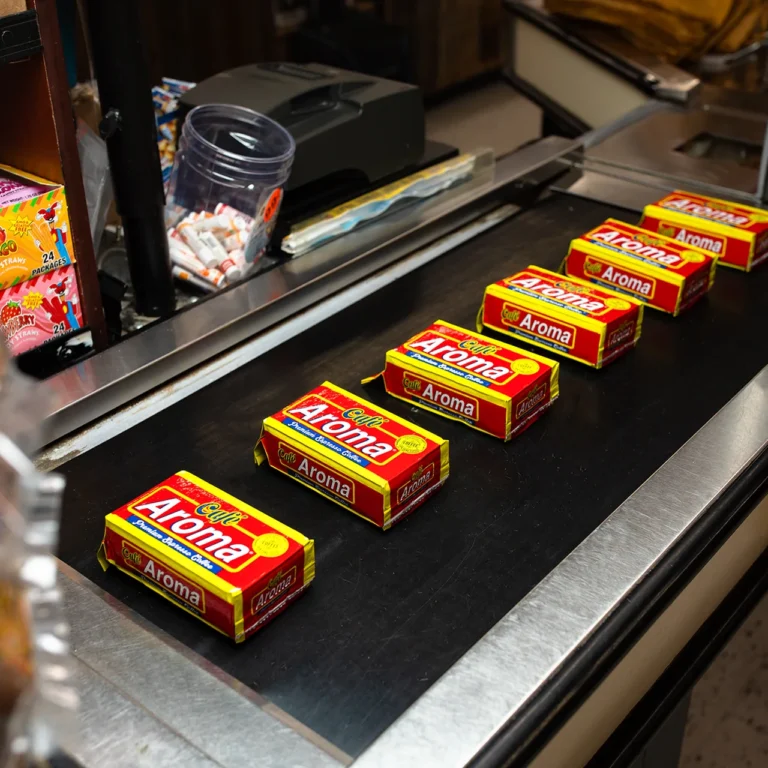
Perhaps the most recognizable product in the lineup is the company’s vacuum-sealed espresso brick, a packaging format that has become familiar to generations of coffee drinkers. The distinctive brick-style package preserves freshness while delivering the rich aroma and robust flavor that customers have come to expect.

The coffee itself reflects a roasting philosophy centered on depth, character, and consistency. Dark-roasted and crafted to produce a strong, full-bodied cup, Café Aroma’s espresso blend is designed for those who appreciate bold coffee experiences. Whether prepared in a traditional stovetop espresso maker, a modern espresso machine, or brewed using alternative methods, the coffee delivers the rich profile that has become the company’s signature.

As consumer tastes have evolved, the brand has successfully maintained its traditional identity while expanding its reach into broader markets.

Today, Café Aroma products can be found in supermarkets, pharmacies, specialty retailers, and online marketplaces throughout the United States. The availability of its products through major retail channels has helped introduce the brand to new generations of consumers while ensuring longtime customers can continue enjoying a coffee they have trusted for decades.

Despite this growth, the company has remained committed to preserving the authenticity that distinguishes it from many competitors.

That authenticity is increasingly valuable in today’s marketplace.

Consumers are paying closer attention to the stories behind the brands they support. They want products that reflect real experiences, genuine craftsmanship, and meaningful connections to community and culture.

Café Aroma’s history offers precisely that.

Its success story reflects broader themes that resonate deeply throughout New Jersey. The Garden State has long served as a gateway for immigrants who arrived with aspirations of building better lives for themselves and future generations. Many of the state’s most successful businesses began with humble origins and grew through determination, innovation, and family dedication.

Café Aroma exemplifies that tradition.

The company’s continued presence in Hoboken adds another layer to its story. Hoboken has become one of New Jersey’s most vibrant and dynamic communities, known for its diverse population, entrepreneurial energy, and rich cultural heritage. As the city continues to evolve, businesses like Café Aroma serve as reminders of the generations of families whose contributions helped shape the community’s identity.

The brand’s connection to Hoboken also highlights New Jersey’s broader role within the food and beverage industry.

The state’s strategic location, diverse population, and extensive transportation infrastructure have made it an important center for food manufacturing, distribution, and specialty products. Companies operating here benefit from access to major metropolitan markets while remaining connected to local communities that value quality and authenticity.

For retailers, Café Aroma’s appeal extends beyond its established customer base.

As consumer interest in specialty coffee continues growing, products with strong heritage stories and authentic cultural roots offer unique opportunities to stand out in increasingly competitive marketplaces. The brand’s combination of tradition, quality, and family ownership aligns well with current consumer preferences for products that feel personal rather than mass-produced.

That opportunity has led Café Aroma to explore partnerships with carefully selected retailers interested in introducing the brand to new audiences while preserving the integrity of its image and mission.

The emphasis on thoughtfully curated retail environments reflects a strategic approach that prioritizes brand alignment over rapid expansion. Rather than pursuing growth at any cost, the company continues focusing on partnerships that complement its values and reinforce its reputation.

That philosophy mirrors the broader approach that has guided the company for more than six decades.

Success has never been solely about volume or market share. It has been about maintaining quality, honoring tradition, and serving customers with the same care that characterized those first kitchen-roasted batches sold door-to-door by Roy and Ines.

In many ways, Café Aroma’s story is ultimately about legacy.

It is about preserving cultural traditions while embracing new opportunities. It is about family entrepreneurship and community connection. It is about building a business that can endure across generations without losing sight of its origins.

As the company moves forward, its commitment to those principles remains evident in every bag, every espresso brick, and every cup brewed by customers who continue to make Café Aroma part of their daily lives.

More than sixty years after two immigrants began roasting coffee in a modest kitchen, Café Aroma remains a remarkable New Jersey success story. It stands as a testament to the power of family, perseverance, and authenticity, proving that sometimes the most enduring brands are built not through massive marketing campaigns or corporate strategies, but through genuine passion, unwavering dedication, and a simple desire to share something meaningful with others.

For coffee lovers throughout New Jersey and across the country, Café Aroma continues to deliver more than just exceptional espresso. It delivers a taste of history, a celebration of heritage, and a reminder that some traditions are worth preserving for generations to come.

New Jersey Delays PACT/REAL Climate Rules as Debate Intensifies Over Flood Protection, Housing Affordability, and Economic Growth

New Jersey’s ongoing effort to prepare for the realities of climate change has entered a new chapter following the decision by the Sherrill administration to delay implementation of the state’s sweeping PACT/REAL climate regulations for one year. The announcement has immediately sparked renewed debate among business leaders, environmental advocates, local governments, developers, and residents about how the Garden State should balance long-term climate resilience with economic growth, housing affordability, infrastructure investment, and community redevelopment.

At the center of the discussion is one of the most significant land-use and environmental regulatory packages ever adopted in New Jersey. Known as the New Jersey Protecting Against Climate Threats initiative, or NJ PACT, and its associated Resilient Environments and Landscapes rules, commonly referred to as REAL, the regulations represent a fundamental shift in how future development projects are planned, reviewed, and constructed across the state.

The Sherrill administration’s decision to postpone implementation until July 2027 is being welcomed by many business organizations and local officials who have argued that additional review is necessary to fully understand the potential economic impacts of the regulations. At the same time, environmental organizations warn that delaying implementation could leave communities exposed to increasing flood risks and climate-related threats at a time when New Jersey continues to experience stronger storms, rising sea levels, and more frequent extreme weather events.

The debate reflects one of the defining public policy challenges facing New Jersey in the coming decades: how to protect communities from climate threats while maintaining economic competitiveness and ensuring that future development remains viable.

The REAL regulations were originally finalized during the final days of the Murphy administration as part of a broader climate resilience strategy intended to modernize state planning requirements. For decades, land-use decisions across New Jersey relied largely on historical weather patterns and flood data when evaluating future development proposals. The new regulations take a dramatically different approach by requiring planners, engineers, developers, and government agencies to incorporate projected future climate conditions into decision-making processes.

Supporters argue that relying on historical data alone no longer reflects the realities of a changing climate. Rising sea levels, stronger precipitation events, expanding flood zones, and increased storm intensity have altered risk calculations throughout the state, particularly in coastal communities and flood-prone inland areas.

The regulations are designed to ensure that new construction and major redevelopment projects account for those realities before ground is broken rather than after disaster strikes.

One of the most widely discussed provisions is the requirement that many new developments located within designated flood-prone areas be elevated four feet above current Federal Emergency Management Agency base flood elevations. Proponents say the requirement reflects scientific projections and helps reduce future damage to homes, businesses, and public infrastructure.

The rules also require planners to consider projected sea-level rise extending through the year 2100. Under the framework established by the regulations, development proposals in certain areas must account for the possibility of approximately five feet of sea-level rise over the coming decades.

For a state with more than 130 miles of coastline, extensive tidal waterways, and thousands of homes and businesses located in vulnerable areas, these projections have significant implications.

The regulations also establish new inundation risk zones based on future flooding scenarios. These zones identify locations that could face permanent or recurring flooding as sea levels continue to rise. Development restrictions within these areas are intended to reduce long-term exposure to environmental hazards and limit future public costs associated with disaster recovery and infrastructure repairs.

Additional provisions strengthen protections for wetlands, marshes, floodplains, riparian corridors, and other natural systems that help absorb stormwater and reduce flooding impacts. Environmental experts often describe these landscapes as natural infrastructure because they provide critical protection against flood events while supporting biodiversity and water quality.

While the environmental goals behind the regulations have received support from many climate scientists and conservation organizations, opposition has emerged from a wide range of stakeholders concerned about economic consequences.

The New Jersey Chamber of Commerce, along with other business organizations and industry groups, has applauded the administration’s decision to delay implementation. Business leaders argue that the regulations could significantly increase development costs at a time when New Jersey is already struggling with housing affordability challenges and rising construction expenses.

Developers note that additional elevation requirements, expanded engineering reviews, redesigns, permitting complexities, and land-use restrictions can substantially increase project costs. Those costs, they argue, ultimately translate into higher housing prices, increased rents, and reduced investment activity.

The concerns are particularly acute in communities facing state affordable housing obligations.

Municipal leaders across New Jersey have expressed concerns that stricter development limitations could reduce the amount of available land suitable for future housing construction. If fewer sites qualify for development, local officials argue that meeting affordable housing requirements could become increasingly difficult.

The debate is especially significant because New Jersey remains one of the most densely populated states in the nation while simultaneously facing ongoing housing shortages in many regions.

Business groups have also raised concerns about redevelopment projects, which have become an increasingly important component of New Jersey’s economic strategy. Many communities are focused on revitalizing former industrial properties, underutilized commercial corridors, and aging infrastructure. Developers involved in those projects argue that additional regulatory burdens could discourage investment and slow revitalization efforts.

Supporters of the delay believe the additional review period creates an opportunity to develop a framework that addresses environmental objectives without unnecessarily restricting economic growth.

Governor Mikie Sherrill’s administration has indicated that the one-year pause will include a sixty-day public review process designed to gather feedback from a broad range of stakeholders. The goal, according to administration officials, is to evaluate potential modifications that preserve climate resilience objectives while addressing concerns raised by municipalities, businesses, property owners, and development professionals.

The announcement has been welcomed by many local government leaders who view the review period as an opportunity to better understand how the regulations would affect specific communities.

New Jersey’s geography varies dramatically from region to region. Coastal towns face different challenges than inland suburbs. Urban redevelopment districts have different priorities than agricultural communities. As a result, many local officials have argued that flexibility and regional considerations should play a larger role in implementation.

Environmental advocates, however, have voiced strong opposition to the delay.

Organizations focused on climate resilience argue that New Jersey is already experiencing many of the impacts the regulations were designed to address. Rising flood insurance costs, recurrent flooding, stronger coastal storms, and infrastructure damage have become increasingly common throughout many parts of the state.

Advocates warn that postponing implementation leaves communities vulnerable at a time when climate risks continue to grow.

For many environmental groups, the regulations represent not merely a planning exercise but a public safety initiative. They argue that stronger standards today can prevent billions of dollars in future losses while protecting homes, businesses, and critical infrastructure from increasingly severe weather events.

The disagreement highlights a broader challenge facing policymakers across the nation.

Climate adaptation often requires significant investments and changes to traditional development practices. While many stakeholders agree on the importance of resilience, debates frequently emerge regarding how quickly changes should be implemented, how costs should be distributed, and how competing priorities should be balanced.

New Jersey occupies a particularly important position within that national conversation.

Few states face the combination of climate risks, development pressure, population density, and infrastructure demands present in the Garden State. Coastal communities continue confronting sea-level rise concerns while inland regions experience increasing flood events associated with stronger rainfall patterns. At the same time, economic growth, housing production, transportation investments, and redevelopment initiatives remain critical priorities.

The coming year is likely to become one of the most consequential periods in the evolution of New Jersey’s climate resilience policies.

Public hearings, stakeholder meetings, technical reviews, and policy discussions will shape the future of regulations that could influence development patterns for decades. Business leaders, environmental advocates, local governments, engineers, planners, developers, and residents will all have opportunities to participate in determining how New Jersey prepares for future climate challenges.

What remains clear is that both sides of the debate recognize the importance of the issues involved.

Few dispute the need to protect communities from environmental threats. Likewise, few dismiss the importance of maintaining economic growth, expanding housing opportunities, and supporting redevelopment efforts. The challenge lies in finding a framework capable of advancing all of those goals simultaneously.

As New Jersey continues navigating the complex intersection of climate resilience, economic development, environmental stewardship, and housing affordability, the delayed implementation of the PACT/REAL regulations marks not an end to the conversation but the beginning of a new and critical phase.

The decisions made over the next year will help define how the Garden State balances environmental responsibility with economic opportunity and how future generations experience life, work, and development in one of America’s most dynamic and densely populated states.

New Jersey Enjoys a Refreshing Spring Weekend as Sunshine Returns, Temperatures Rebound, and Drought Concerns Remain in Focus

After a week that showcased just about every side of late-spring weather, New Jersey is settling into a refreshingly cool, bright, and breezy pattern that serves as a reminder that the calendar may be inching toward summer, but spring still has plenty to say before officially stepping aside.

A dry cold front swept across the Garden State overnight, ushering in crystal-clear air, lower humidity, and a noticeably cooler atmosphere that has transformed conditions from the warmth experienced earlier in the week into something that feels more reminiscent of late September than the final days of May. Across much of New Jersey, residents are waking up to abundant sunshine, excellent visibility, comfortable humidity levels, and northwest winds that are adding a brisk edge to an otherwise beautiful weekend forecast.

For outdoor enthusiasts, gardeners, hikers, cyclists, and anyone looking to spend time outside, the weather pattern setting up across the state may be one of the most pleasant stretches New Jersey has experienced all spring. While beachgoers and pool enthusiasts may wish for a few more degrees of warmth, many residents will likely welcome the break from humidity and the opportunity to enjoy some of the most comfortable outdoor conditions of the season.

The dominant weather story for the weekend is the development of a large-scale atmospheric pattern known as an Omega Block. Meteorologists refer to this setup as one of the more stable weather configurations because the jet stream takes on a shape resembling the Greek letter omega, effectively locking weather systems into place for several days.

For New Jersey, that means cooler and drier northwest airflow continues to circulate across the region, helping maintain low humidity levels while preventing any significant storm systems from moving through the state. The result is a stretch of weather that feels remarkably clean, comfortable, and stable.

Saturday arrives with sunshine dominating much of the day, although temperatures will struggle compared to recent afternoons. High temperatures across most of New Jersey are expected to top out between the mid-60s and upper 60s, with a few southern and western locations briefly touching 70 degrees. While those numbers may seem modest for the end of May, the combination of strong sunshine, dry air, and gusty winds creates an interesting contrast.

In direct sunlight, conditions feel comfortably warm. Step into the shade, however, and the cooler air becomes immediately noticeable. It is the kind of day where a light jacket may be necessary during the morning and evening hours but completely unnecessary during the warmest part of the afternoon.

Northwest winds remain the primary weather factor throughout Saturday. Sustained winds between 15 and 20 miles per hour, accompanied by occasional gusts approaching 40 miles per hour in portions of North Jersey, will keep conditions feeling cooler than the thermometer suggests. These winds are expected to gradually diminish after sunset as high pressure settles directly over the region.

The payoff arrives Saturday night.

As winds relax and skies become completely clear, ideal viewing conditions are expected across much of New Jersey. The exceptionally dry atmosphere and lack of cloud cover should create outstanding visibility for stargazers and skywatchers throughout the state. From the Jersey Shore to the Delaware River communities and from suburban neighborhoods to rural farmland, residents will have an opportunity to enjoy one of the clearest nights of the season.

By Sunday, New Jersey begins a noticeable warming trend.

Temperatures rebound significantly as winds become much lighter and sunshine continues to dominate the forecast. Afternoon highs are expected to climb into the mid-70s across much of the state, with some inland portions of western and southwestern New Jersey potentially approaching the upper 70s and even flirting with the 80-degree mark.

Unlike many summer warmups that arrive alongside oppressive humidity, Sunday’s warmth comes with continued comfort. Relative humidity levels remain manageable, creating what many weather observers consider nearly ideal outdoor conditions.

The Jersey Shore will continue to experience slightly cooler readings thanks to the influence of ocean temperatures, but even coastal communities should enjoy pleasant conditions with temperatures generally reaching the lower to middle 70s.

The favorable weather arrives at an important time for communities throughout New Jersey.

Outdoor festivals, farmers markets, community events, youth sports, recreational activities, and tourism destinations are all benefiting from a stretch of weather that encourages people to spend time outside. Across the state, local businesses, downtown districts, restaurants, parks, and recreation areas stand to benefit from what may be one of the busiest weather-driven weekends of the spring season.

The outlook becomes particularly encouraging when viewed in the broader context of the coming week.

Forecast models indicate that New Jersey will continue gradually warming through early June, transitioning from temperatures in the lower 70s early in the week toward readings in the upper 70s and lower 80s by week’s end. This pattern appears likely to establish itself as June begins, providing residents with increasingly summer-like afternoons while maintaining relatively comfortable overnight conditions.

Monday is expected to feature partly sunny skies with temperatures reaching the lower 70s statewide. Conditions remain largely dry, although a few isolated showers cannot be ruled out in select locations. Tuesday and Wednesday continue the warming trend, with highs climbing into the low and eventually upper 70s while sunshine remains the dominant feature.

The absence of significant rainfall, however, introduces a growing concern that continues to linger beneath the otherwise pleasant forecast.

Despite beneficial precipitation received during the Memorial Day holiday period, meteorologists and agricultural observers continue monitoring developing drought conditions across portions of New Jersey. The recent rainfall helped reduce immediate concerns and provided temporary relief to soils, streams, and vegetation, but long-term water deficits remain an issue.

Groundwater levels, reservoirs, and water tables require sustained precipitation over extended periods to fully recover from previous dry spells. While recent rain events have improved conditions, experts note that additional widespread rainfall will eventually be needed to restore long-term moisture balances throughout the state.

The current forecast offers little assistance on that front.

Aside from isolated showers that may develop at times next week, there are currently no major storm systems or widespread rainmakers visible in the longer-range outlook. Instead, high pressure remains firmly in control, promoting dry weather and continued evaporation.

For New Jersey’s agricultural community, the forecast presents a mixed picture.

The abundant sunshine and moderate temperatures create excellent growing conditions for many crops currently entering critical development stages. Gardeners, landscapers, and farmers can take advantage of ideal working conditions and strong sunlight. However, the continued lack of significant rainfall means irrigation and moisture management will remain important considerations as summer approaches.

The state’s famous agricultural industry, including vegetable farms, nurseries, vineyards, and orchards, will continue watching precipitation forecasts carefully over the coming weeks.

Meanwhile, for residents simply looking to enjoy the outdoors, the forecast delivers an abundance of opportunities.

Parks, hiking trails, boardwalks, golf courses, outdoor dining districts, waterfront promenades, and community events should all experience favorable conditions through much of the weekend and into next week. The combination of low humidity, comfortable temperatures, and plentiful sunshine creates an environment that many New Jerseyans wait all year to experience.

While it may not yet be the classic heat-and-humidity pattern often associated with the height of summer, many weather enthusiasts argue that these are the conditions that define the very best of late spring in the Garden State.

The air feels clean.

The skies appear brighter.

The humidity remains low.

The temperatures stay comfortable.

And perhaps most importantly, residents can enjoy extended stretches outdoors without the extremes that often accompany the months ahead.

As New Jersey transitions from May into June, the state finds itself entering one of the most enjoyable weather periods of the year. Sunshine, seasonal warmth, cool nights, and generally tranquil conditions are expected to dominate the forecast, offering a welcome opportunity to enjoy everything the Garden State has to offer before the more intense heat of summer eventually arrives.

For now, spring is delivering a final reminder of why it remains one of New Jersey’s most beloved seasons—a perfect blend of sunshine, comfort, renewal, and the promise of warmer days still to come.

Preserving the Garden State’s Future: Katelyn Katzer’s Leadership Strengthens Farmland Protection and Agricultural Sustainability Across Somerset County

In a state where development pressures continue to reshape communities, the preservation of working farmland has become one of the most important long-term investments New Jersey can make in its future. From food security and environmental stewardship to economic resilience and quality of life, protecting agricultural land remains a cornerstone of maintaining the character and productivity that have earned New Jersey its well-deserved reputation as the Garden State. At the center of that mission in Somerset County is Katelyn Katzer, whose work as Farmland Preservation Manager and Administrator of the Somerset County Agriculture Development Board has helped advance one of the most critical and forward-looking agricultural preservation efforts in the region.

Recently recognized among New Jersey’s influential women leaders, Katzer’s work represents a growing generation of agricultural and land-use professionals who are helping communities balance growth, conservation, sustainability, and economic opportunity. Her leadership has become increasingly important as Somerset County continues navigating the challenges and opportunities that come with preserving farmland in one of the nation’s most densely populated states.

Farmland preservation often operates behind the scenes, away from the headlines generated by major development projects, political debates, or economic announcements. Yet its impact touches nearly every aspect of life in New Jersey. Every preserved farm represents a commitment to local food production, open space protection, environmental resilience, and the continuation of an agricultural heritage that stretches back generations.

Under Katzer’s leadership, Somerset County has continued strengthening programs designed to ensure that productive farmland remains available for future generations of farmers while supporting landowners seeking to preserve their property’s agricultural future. Her work involves navigating a complex intersection of planning, environmental policy, economic development, land stewardship, public partnerships, and community engagement.

The role requires balancing competing interests while keeping long-term sustainability at the forefront of every decision.

As development pressures continue to increase throughout New Jersey, agricultural land remains one of the state’s most valuable and vulnerable resources. Farms located near expanding suburban and commercial areas often face significant financial pressures as property values rise and development opportunities become increasingly attractive. Farmland preservation programs help provide landowners with alternatives that protect both the economic viability of farming and the long-term integrity of agricultural landscapes.

Somerset County has become one of the state’s leaders in recognizing that preserving farmland is about far more than maintaining scenic views. Agricultural preservation supports local economies, strengthens food supply systems, protects natural resources, reduces environmental impacts associated with unchecked development, and maintains critical open space that contributes to overall community well-being.

Katzer’s work reflects this broader understanding of preservation as a strategic investment rather than simply a conservation initiative.

The Somerset County Agriculture Development Board plays a central role in implementing that vision. Working closely with farmers, state agencies, local governments, conservation organizations, and community stakeholders, the board helps identify preservation opportunities, administer funding programs, oversee easement acquisitions, and support agricultural sustainability efforts throughout the county.

These initiatives require extensive collaboration and long-term planning.

Preserving farmland is rarely a simple transaction. Each property presents unique considerations involving land use, agricultural productivity, environmental features, ownership goals, financial structures, and community priorities. Successfully navigating these factors requires both technical expertise and a deep understanding of the agricultural community.

That ability to build relationships and foster collaboration has become a defining element of Katzer’s leadership approach.

Her work reflects a broader trend occurring across New Jersey as agricultural preservation evolves beyond traditional land conservation models. Today’s preservation efforts increasingly focus on ensuring that farmland remains economically productive, environmentally sustainable, and adaptable to future agricultural needs.

Modern farming faces challenges that previous generations could scarcely imagine. Climate variability, labor shortages, changing consumer preferences, rising operational costs, supply chain disruptions, and evolving market demands all influence the future of agriculture. Preservation programs must therefore support not only land protection but also the long-term viability of farming operations themselves.

This shift toward comprehensive agricultural sustainability has become an important focus throughout Somerset County.

The county’s agricultural sector remains one of its defining assets. From family-owned farms and specialty crop operations to equestrian facilities, nurseries, vineyards, and diversified agricultural enterprises, Somerset County represents a significant component of New Jersey’s broader agricultural economy.

Protecting these resources helps ensure that future generations continue to benefit from local food production, agricultural employment opportunities, and the environmental benefits that working farms provide.

Farmland preservation also plays an increasingly important role in addressing environmental challenges facing New Jersey.

Agricultural lands serve as natural buffers that help manage stormwater, recharge groundwater supplies, reduce flooding risks, preserve wildlife habitat, and protect water quality. As climate resilience becomes a growing priority across the state, preserving open agricultural landscapes offers benefits that extend well beyond farm boundaries.

Working farms contribute to environmental sustainability in ways that often go unnoticed by the public. Preserved agricultural land helps maintain ecosystem services that support both rural and urban communities. By limiting development in key areas, preservation efforts can reduce infrastructure demands while maintaining valuable natural resources.

These environmental considerations have become increasingly significant as New Jersey continues confronting issues related to climate adaptation, land-use planning, and sustainable growth.

At the same time, farmland preservation remains fundamentally about people.

Farm families often have deep connections to their land that span multiple generations. Preservation programs provide opportunities for these families to maintain agricultural traditions while securing the future of their operations. By working directly with landowners, preservation leaders help create pathways that allow farms to remain productive while adapting to changing economic realities.

Community partnerships remain essential to that process.

Katzer’s leadership has emphasized collaboration among government agencies, agricultural organizations, conservation groups, and local stakeholders. These partnerships help maximize resources, identify priorities, and create solutions that benefit both farmers and the broader community.

Recognition as one of New Jersey’s influential women leaders highlights not only individual achievement but also the growing importance of agricultural leadership within public policy and community planning discussions. As issues such as food security, sustainability, environmental stewardship, and responsible growth continue gaining prominence, the professionals guiding farmland preservation efforts are playing an increasingly visible role in shaping the state’s future.

Their work influences decisions that will have lasting impacts for decades to come.

For Somerset County, the preservation of agricultural land represents a commitment to maintaining a balanced and sustainable future. Growth and development will continue to occur, but preserving key agricultural resources ensures that the county retains the qualities that have long distinguished it within New Jersey.

The success of these efforts depends upon thoughtful planning, strong partnerships, and leaders who understand both the practical realities of agriculture and the broader public benefits that farmland preservation provides.

Katelyn Katzer’s work embodies that mission.

Through her leadership as Farmland Preservation Manager and Administrator of the Somerset County Agriculture Development Board, she continues helping protect some of New Jersey’s most valuable resources while advancing policies and partnerships that strengthen agricultural sustainability across the region.

As New Jersey looks toward the future, preserving farmland will remain one of the state’s most important investments. It supports farmers, protects communities, strengthens local economies, enhances environmental resilience, and ensures that future generations inherit a landscape capable of continuing the agricultural traditions that helped define the Garden State.

In Somerset County, that future is being shaped today through strategic preservation efforts, community collaboration, and a shared commitment to responsible land stewardship. The work may not always generate the loudest headlines, but its impact will be felt for generations, preserving not only farmland but also the values, opportunities, and sustainability that continue to make New Jersey’s agricultural heritage worth protecting.

The Metro Conference Begins a New Era: Historic MAAC Rebrand Signals Ambitious Future for New Jersey College Athletics and Atlantic City Championship Tradition

The Metro Atlantic Athletic Conference (MAAC)—which recently announced an official rebranding to become The Metro Conference—comprises 13 full member institutions across the Northeastern United States.

Current MAAC Full Members

Institution LocationAthletic Nickname
Canisius UniversityBuffalo, NYGolden Griffins
Fairfield UniversityFairfield, CTStags
Iona UniversityNew Rochelle, NYGaels
Manhattan UniversityRiverdale, NYJaspers
Marist UniversityPoughkeepsie, NYRed Foxes
Merrimack CollegeNorth Andover, MAWarriors
Mount St. Mary’s UniversityEmmitsburg, MDMountaineers
Niagara UniversityLewiston, NYPurple Eagles
Quinnipiac UniversityHamden, CTBobcats
Rider UniversityLawrenceville, NJBroncs
Sacred Heart UniversityFairfield, CTPioneers
Saint Peter’s UniversityJersey City, NJPeacocks
Siena UniversityLoudonville, NYSaints

Key Conference Realignment & Changes

Name & Identity Rebrand: The conference announced a complete structural rebrand to shift its public moniker away from the MAAC acronym to a modernized identity called The Metro Conference. One of the most recognizable names in Northeast collegiate athletics is preparing to enter a new chapter. After more than four decades competing under the Metro Atlantic Athletic Conference banner, the league announced a sweeping rebrand that will officially transform the MAAC into The Metro Conference beginning July 1, marking one of the most significant identity changes in conference history.

Recent Additions: Both Merrimack College and Sacred Heart University officially joined the MAAC as full members, expanding the league’s competitive footprint in New England.

For New Jersey sports fans, the announcement carries particular importance. The conference is deeply woven into the state’s collegiate athletics landscape through member institutions Rider University and Saint Peter’s University, while Atlantic City remains a centerpiece of the league’s postseason identity through its long-term partnership with Jim Whelan Boardwalk Hall.

The transition represents far more than a logo update or marketing refresh. It reflects a strategic effort to position the conference for a rapidly changing future while preserving the traditions, rivalries, academic values, and athletic excellence that have defined the league for 45 years.

As college athletics continues to evolve through conference realignment, expanded media opportunities, changing recruiting dynamics, and increased national competition for visibility, conference leadership believes the new Metro identity creates a stronger and more recognizable platform for long-term growth.

The announcement follows a comprehensive strategic review process that began in 2023 and involved extensive collaboration among university presidents, athletic directors, coaches, student-athletes, alumni, marketing experts, media professionals, and conference administrators.

At the heart of the rebranding effort was a desire to create a more distinctive identity that accurately reflects the conference’s geographic footprint while reducing longstanding confusion surrounding the MAAC acronym.

For years, fans, broadcasters, recruits, and even casual observers frequently confused the Metro Atlantic Athletic Conference with the Mid-American Conference due to the similarity between the MAAC and MAC abbreviations. While seemingly minor, conference officials viewed that confusion as a significant branding obstacle in an increasingly competitive collegiate sports marketplace.

The decision to adopt “The Metro Conference” immediately creates a cleaner, more memorable identity while maintaining a connection to the league’s historic roots.

The name itself reflects the conference’s position along one of America’s most densely populated and influential regions. Stretching throughout the Northeast Corridor, Metro member institutions are located within major metropolitan areas and vibrant academic communities that collectively represent some of the nation’s most significant educational, cultural, and economic centers.

The conference’s leadership believes that geographic connection provides an important foundation for future growth.

The Metro Conference enters this new era with a membership roster that spans multiple states while maintaining a strong regional identity.

Current member institutions include Canisius University, Fairfield University, Iona University, Manhattan University, Marist University, Merrimack College, Mount St. Mary’s University, Niagara University, Quinnipiac University, Rider University, Sacred Heart University, Saint Peter’s University, and Siena University.

Together, these institutions represent a unique blend of academic excellence, athletic competitiveness, and community engagement.

For New Jersey, Rider University and Saint Peter’s University remain key pillars within the conference structure.

Rider has long been one of the league’s most respected athletic programs, competing consistently across numerous sports while maintaining strong academic standards. The Lawrenceville-based institution has produced generations of student-athletes who have contributed significantly to the conference’s reputation.

Saint Peter’s University occupies an equally important place within Metro history.

The Jersey City institution achieved national prominence through its remarkable NCAA Tournament success and continues to serve as one of the conference’s most visible athletic brands. Its achievements have demonstrated that Metro institutions can compete successfully on college basketball’s biggest stages while showcasing the strength of the conference nationally.

The importance of New Jersey’s connection to the conference extends beyond its member schools.

Atlantic City has become synonymous with Metro championship basketball.

The annual men’s and women’s basketball tournaments at Jim Whelan Boardwalk Hall have evolved into signature events on the conference calendar, creating an atmosphere that combines postseason excitement with one of New Jersey’s most iconic destinations.

The relationship has proven so successful that the conference recently extended its championship partnership with Atlantic City through 2031.

That commitment ensures that Boardwalk Hall will continue serving as the backdrop for some of the most memorable moments in Metro Conference history for years to come.

The extension also reinforces Atlantic City’s growing role as a destination for major sporting events, tournaments, and championship competitions.

Every March, student-athletes, coaches, alumni, families, and fans descend upon the city, generating economic activity while creating a festival atmosphere that highlights both college athletics and the Jersey Shore’s unique appeal.

The continued partnership represents stability during a period when many conferences across the country are undergoing dramatic transformations.

Conference officials believe the new branding will further strengthen the value of those championship events.

A modernized visual identity featuring streamlined design elements, refreshed typography, and updated color applications is intended to create greater consistency across broadcasts, digital platforms, social media channels, recruiting materials, championship branding, and merchandise.

Importantly, the conference is retaining its traditional red and blue color palette while introducing more vibrant, contemporary interpretations designed to improve visibility across modern media formats.

The redesign seeks to create a cohesive look that resonates with current student-athletes and prospective recruits while honoring the conference’s rich history.

That balance between tradition and innovation has become a central theme throughout the rebranding effort.

Conference leaders repeatedly emphasized that the goal was not to abandon the legacy of the MAAC but rather to build upon it.

The Metro Conference remains committed to the values that have guided the organization since its founding. Academic achievement, athletic excellence, personal growth, leadership development, and community engagement continue to serve as defining principles throughout the conference.

That student-centered mission remains especially important in an era when collegiate athletics often focuses heavily on revenue generation and media exposure.

Metro institutions continue to emphasize the holistic development of student-athletes, preparing them for success both during and after their athletic careers.

This commitment has helped distinguish the conference within the broader landscape of Division I athletics.

The timing of the rebrand is particularly noteworthy given recent membership additions that have expanded the conference’s reach.

Merrimack College and Sacred Heart University recently joined the league, strengthening its presence in New England while enhancing competitive depth across multiple sports.

These additions reflect a broader strategy focused on sustainable growth, geographic alignment, and institutional compatibility.

Rather than pursuing expansion for its own sake, conference leadership has prioritized schools that share similar academic missions, athletic ambitions, and cultural values.

That approach has helped preserve the league’s identity even as it adapts to changing circumstances.

The rebranding process itself was highly collaborative.

Marketing specialists worked closely with conference stakeholders to conduct listening sessions, evaluate brand perceptions, test potential names, develop visual concepts, and gather feedback from across the conference community.

The resulting identity seeks to communicate confidence, modernity, competitiveness, and regional pride.

For student-athletes, the new Metro Conference brand offers an opportunity to compete under a banner specifically designed to elevate visibility and recognition.

For coaches, it provides a stronger recruiting tool capable of differentiating the conference within a crowded athletic marketplace.

For alumni, it creates a renewed sense of momentum while preserving the traditions they helped build.

And for fans, it signals the beginning of an exciting new chapter without abandoning the history that made the conference successful in the first place.

Perhaps most importantly, the rebrand arrives at a moment when college athletics continues undergoing unprecedented transformation.

Conferences across the nation are reevaluating their identities, memberships, media strategies, and competitive structures. Amid that uncertainty, The Metro Conference is choosing a path rooted in clarity, purpose, and strategic positioning.

The name may be changing, but the mission remains remarkably familiar. Student-athletes will continue competing for championships. Historic rivalries will continue creating unforgettable moments. Atlantic City will continue serving as a postseason destination. New Jersey institutions will continue playing central roles in the conference’s future. And the values that have guided the organization for nearly half a century will continue shaping its next generation.

Beginning July 1, the Metro Atlantic Athletic Conference officially becomes The Metro Conference. For New Jersey college athletics, for Atlantic City, and for the thousands of student-athletes who have worn conference colors throughout its history, the change represents not an ending but the beginning of an ambitious new era designed to position the conference for success well into the future.

High Performance Systems Redefines Logistics Infrastructure with Advanced Industrial Warehouse Flooring Solutions

As New Jersey continues to strengthen its position as one of the most important logistics, warehousing, and distribution hubs in North America, a new generation of industrial infrastructure is emerging behind the scenes. While conversations about supply chains often focus on ports, highways, automation systems, robotics, and warehouse capacity, one of the most critical components of modern logistics operations is quite literally the foundation beneath every facility. High Performance Systems is helping redefine that foundation through advanced industrial warehouse flooring solutions designed to meet the increasingly demanding needs of modern distribution and fulfillment environments.

The rapid evolution of e-commerce, advanced manufacturing, cold storage, pharmaceutical distribution, and last-mile logistics has fundamentally changed what businesses expect from warehouse facilities. Buildings that once served as simple storage centers have become highly sophisticated operational ecosystems where efficiency, durability, safety, and uptime are directly tied to profitability. Every square foot matters. Every operational interruption matters. Every infrastructure investment must support long-term performance.

In this environment, industrial flooring has become far more than a construction consideration. It has evolved into a strategic operational asset.

High Performance Systems has established itself as a leader in industrial and commercial resinous flooring systems, delivering solutions engineered specifically for the challenges facing modern warehouse operators, logistics providers, manufacturers, and distribution networks. The company’s approach reflects a broader industry shift toward infrastructure designed not simply to withstand daily use but to actively support operational excellence.

Across New Jersey, where industrial development continues to expand from the Meadowlands and Port Newark corridor to Central Jersey’s warehouse belt and South Jersey’s growing logistics network, facility owners are investing heavily in technologies and infrastructure that improve performance while reducing maintenance costs. Flooring systems are increasingly becoming a central component of that strategy.

The reason is straightforward. Today’s warehouses operate under conditions that place extraordinary stress on facility surfaces. Heavy forklifts move continuously throughout the day. Automated guided vehicles navigate precise routes around the clock. Pallet jacks, loading equipment, robotics systems, and high-volume traffic create wear patterns that traditional flooring solutions often struggle to withstand over time.

At the same time, operational expectations have never been higher.

Distribution centers serving next-day and same-day delivery models cannot afford extended downtime. Manufacturing facilities depend on uninterrupted production schedules. Pharmaceutical and food-grade operations require environments that meet rigorous cleanliness and safety standards. Cold storage facilities demand specialized materials capable of performing under extreme temperature fluctuations.

These challenges have created demand for flooring systems engineered specifically for industrial performance.

Advanced resinous flooring technologies offer significant advantages over conventional concrete surfaces. Designed to create seamless, highly durable surfaces, these systems help resist abrasion, chemical exposure, moisture intrusion, impact damage, and long-term deterioration. Their performance characteristics can dramatically extend facility lifespan while reducing maintenance requirements and operational disruptions.

For warehouse operators, those benefits translate directly into measurable business outcomes.

A properly engineered flooring system can improve workplace safety by enhancing traction and visibility. It can reduce repair costs associated with cracking, surface degradation, and equipment wear. It can support sanitation requirements critical to industries ranging from healthcare and pharmaceuticals to food processing and distribution.

Most importantly, it can help facilities maintain continuous operations in environments where downtime can result in significant financial consequences.

The rise of automation has made these considerations even more important.

Modern logistics facilities increasingly rely on robotics, automated storage and retrieval systems, and sophisticated material handling technologies. These systems require highly consistent floor surfaces to operate effectively. Even minor imperfections can affect navigation accuracy, equipment performance, and long-term reliability.

As automation becomes more deeply integrated into warehouse operations, flooring quality becomes directly connected to technological performance.

New Jersey provides a compelling example of why this matters.

The state occupies a unique position within the national supply chain. Its proximity to major population centers, extensive transportation infrastructure, and access to ports, highways, rail networks, and airports have made it one of the nation’s premier logistics destinations. Millions of consumers can be reached within a single day’s drive from facilities located throughout the state.

That strategic advantage has fueled an unprecedented wave of industrial development.

Large-scale fulfillment centers, regional distribution hubs, pharmaceutical facilities, cold storage complexes, and advanced manufacturing operations continue to reshape New Jersey’s commercial landscape. These projects represent billions of dollars in investment and thousands of jobs, creating demand for infrastructure capable of supporting increasingly sophisticated operations.

Companies like High Performance Systems are helping meet that demand by focusing on one of the most overlooked but essential aspects of facility performance.

Their solutions are designed not only for durability but also for adaptability. Different industries face different challenges, and flooring systems must reflect those realities.

A food distribution center requires surfaces that can withstand rigorous cleaning and sanitation procedures. A pharmaceutical facility may need specialized coatings that support contamination control. Manufacturing operations often require resistance to chemicals, impacts, and thermal shock. Logistics centers prioritize durability, traffic resistance, and long-term operational reliability.

Rather than treating industrial flooring as a one-size-fits-all solution, modern systems are increasingly tailored to specific operational environments.

This customized approach reflects a broader trend throughout commercial construction and facility management. Businesses are moving away from generic infrastructure investments and toward solutions specifically engineered to support their operational objectives.

The result is a new generation of industrial facilities that function more efficiently, operate more safely, and maintain higher levels of performance over longer periods.

Sustainability is also playing an increasingly important role in these decisions.

Across New Jersey and throughout the country, developers, property owners, and tenants are pursuing construction practices that reduce environmental impact while improving long-term operational efficiency. Durable flooring systems contribute to these goals by extending service life, reducing material replacement cycles, minimizing waste, and lowering maintenance requirements.

As companies continue prioritizing environmental responsibility alongside operational performance, infrastructure choices that support both objectives are becoming increasingly valuable.

The importance of workforce experience should not be overlooked either.

Modern warehouses employ large numbers of workers who spend entire shifts navigating facility environments. Flooring systems can contribute to workplace safety, cleanliness, visibility, and overall operational comfort. In a labor market where attracting and retaining employees remains a priority, facility quality has become an increasingly important consideration.

Investments in infrastructure therefore benefit not only equipment and operations but also the people responsible for keeping those operations running.

Looking ahead, the future of logistics infrastructure will likely be defined by continued innovation, automation, and operational sophistication. Facilities will become smarter. Supply chains will become faster. Customer expectations will continue rising.

Meeting those demands will require infrastructure designed for the realities of modern commerce.

High Performance Systems’ focus on advanced industrial flooring solutions reflects a broader understanding of how logistics facilities function in today’s economy. Success is no longer determined solely by building size or location. It depends on how effectively every component of a facility supports operational performance.

From distribution centers serving major metropolitan markets to specialized manufacturing facilities driving economic growth, the next generation of industrial infrastructure is being built from the ground up.

In New Jersey, where logistics, manufacturing, and commercial development continue to play a vital role in the state’s economic future, investments in durable, high-performance infrastructure are helping shape that future one facility at a time. The warehouse floor may not always be the most visible part of a logistics operation, but as the industry continues to evolve, it is becoming increasingly clear that some of the most important innovations begin at ground level.

Downtown Wildwood Kicks Off Summer with the Return of the Free Music in the Plaza Concert Series Featuring The Roundhouse Band

Summer at the Jersey Shore is about far more than beaches and boardwalks. It is about community traditions, outdoor entertainment, local businesses coming alive after sunset, and the unmistakable energy that fills shore towns when residents and visitors gather together to celebrate another season along the coast. In Downtown Wildwood, one of the most anticipated traditions of the summer returns on June 18, 2026, as the Music in the Plaza Concert Series officially launches its 2026 season with a free performance by The Roundhouse Band at Byrne Plaza.

For years, Music in the Plaza has become one of the most popular weekly events in Wildwood, transforming the downtown district into an outdoor concert venue, community gathering place, and dance party all rolled into one. Every Thursday evening throughout the summer, Byrne Plaza becomes the center of activity as hundreds of people arrive with lawn chairs, beach blankets, family members, friends, and plenty of enthusiasm for an evening of live music under the South Jersey sky.

Located at 3400 Pacific Avenue in the heart of Downtown Wildwood, Byrne Plaza has evolved into one of the city’s most important public gathering spaces. Surrounded by restaurants, shops, cafés, ice cream parlors, and local businesses, the venue serves as a hub for entertainment and community events throughout the summer season. The Music in the Plaza Concert Series stands as one of its signature attractions, providing free weekly concerts that showcase regional favorites, dance bands, tribute acts, and crowd-pleasing performers capable of keeping audiences engaged from the first note to the final encore.

The 2026 season begins with The Roundhouse Band, a group known throughout the region for delivering energetic performances packed with recognizable favorites, danceable classics, and the kind of crowd interaction that makes outdoor summer concerts memorable. As the official kickoff event for the season, the June 18 performance is expected to draw a large audience eager to celebrate the start of another summer of free entertainment in Wildwood.

The atmosphere surrounding Music in the Plaza is part of what has made the series such a success. Unlike traditional concert venues, Byrne Plaza encourages a relaxed, community-focused experience where attendees can spread out on the lawn, socialize with neighbors, enjoy local dining options, and move freely between the performance area and nearby businesses. Some visitors arrive early for dinner and drinks at one of Downtown Wildwood’s restaurants, while others grab takeout and enjoy an outdoor picnic before the music begins. As showtime approaches, the plaza fills with anticipation as families, couples, seasonal visitors, and longtime residents gather together for a shared experience that captures the spirit of summer at the Jersey Shore.

When the music starts at 7:30 p.m., the plaza quickly transforms. The open lawn becomes an unofficial dance floor, with audience members of all ages getting up to move, sing along, and participate in the celebration. Children dance near the stage while adults reconnect with friends and neighbors. The event creates an atmosphere that feels both intimate and energetic, blending the charm of a small-town gathering with the excitement of a live concert.

The return of the series also reflects the continued growth and revitalization of Downtown Wildwood as a destination beyond the boardwalk. Over the last several years, community events, public programming, festivals, and entertainment initiatives have helped establish the downtown district as an important complement to Wildwood’s traditional tourism attractions. Music in the Plaza plays a significant role in that effort by encouraging visitors to explore local businesses while providing a welcoming environment that highlights the community’s unique character.

The June 18 concert serves as the beginning of an eleven-week summer schedule featuring a diverse lineup of performers. Following The Roundhouse Band’s opening-night appearance, audiences can look forward to a variety of musical styles throughout the season. Chicago 9 takes the stage on June 25, followed by The Juliano Brothers on July 2. The Beat Tells will perform on July 9, while Wrong Way Band brings its signature sound to Byrne Plaza on July 16. Jamison follows on July 23, leading into a July 30 performance from Animal House Band.

August continues the momentum with Legacy on August 6, Winslow on August 13, and 99 Reasons on August 20 before the season concludes on August 27 with The Chatterband. Together, the lineup provides a broad mix of classic rock, pop, dance favorites, party music, and crowd-pleasing hits designed to appeal to audiences of all ages.

The full 2026 Downtown Wildwood Music in the Plaza lineup features 11 different bands performing free weekly outdoor concerts. The performances take place every Thursday night from 7:30 PM to 9:00 PM at Byrne Plaza:

  • June 18: The Roundhouse Band (Season Kick-Off)
  • June 25: Chicago 9
  • July 2: The Juliano Brothers
  • July 9: The Beat Tells
  • July 16: Wrong Way Band
  • July 23: Jamison
  • July 30: Animal House Band
  • August 6: Legacy
  • August 13: Winslow
  • August 20: 99 Reasons
  • August 27: The Chatterband

The diversity of the lineup reflects one of the strengths of the Music in the Plaza series. Organizers have carefully curated a schedule that keeps the experience fresh from week to week while maintaining the upbeat, family-friendly atmosphere that has become synonymous with the event. Whether attendees are dedicated music fans or simply looking for a relaxing evening outdoors, the series offers something for everyone.

The economic impact of events like Music in the Plaza should not be overlooked. Free public concerts bring consistent foot traffic into the downtown district, benefiting restaurants, retail shops, service businesses, and local entrepreneurs. Visitors who come for the music often stay to dine, shop, or explore the surrounding area, creating additional opportunities for economic activity during the busy summer season. For local businesses, Thursday nights have become an important part of the summer calendar thanks to the steady crowds generated by the concert series.

As New Jersey’s shore communities continue enhancing their summer programming, Wildwood has successfully positioned Music in the Plaza as one of the region’s most popular recurring entertainment offerings. The combination of free admission, quality live music, convenient downtown access, and a welcoming community atmosphere has made the series a favorite among both residents and visitors.

For families planning summer vacations, seasonal homeowners returning to the shore, and locals looking for a fun evening close to home, the June 18 kickoff featuring The Roundhouse Band represents the beginning of another memorable season at Byrne Plaza. It is a celebration of live music, community connection, and everything that makes summer in Wildwood special.

As the sun begins to set over the Jersey Shore and the first notes of the season fill the air, Downtown Wildwood will once again become a gathering place where music, community, and summer traditions come together. With eleven weeks of performances scheduled and an enthusiastic audience ready to fill the plaza, the 2026 Music in the Plaza Concert Series is poised to continue one of Wildwood’s most beloved summer traditions while reinforcing the city’s reputation as one of New Jersey’s premier destinations for free outdoor entertainment.

H Mart Expands Access to Affordable Wellness and Nutrition Through New OTC Network® Partnership, Strengthening Health Equity Across New Jersey Communities

Access to healthy food, essential wellness products, and affordable everyday necessities has become one of the most important public health conversations in New Jersey and across the nation. As healthcare providers, insurers, retailers, and community organizations continue searching for innovative ways to improve health outcomes while reducing financial barriers for families, a significant new partnership is creating expanded opportunities for thousands of residents who rely on supplemental health benefits to support their daily lives.

H Mart’s newly announced collaboration with InComm Healthcare to enable OTC Network® card acceptance represents more than a retail technology upgrade. It signals an important step forward in the ongoing effort to connect healthcare benefits directly with nutritious food choices, wellness products, and everyday essentials that can positively impact long-term health outcomes. For New Jersey residents who shop at H Mart locations throughout the state, the partnership introduces a more convenient and accessible way to utilize eligible healthcare benefits while purchasing products that support healthier lifestyles.

As healthcare continues shifting toward preventive care, nutrition-focused wellness programs, and community-based health initiatives, retailers increasingly play a larger role in supporting public health objectives. Grocery stores are no longer viewed simply as places to purchase food. They have become important access points for nutrition, wellness education, culturally relevant products, and health-conscious purchasing decisions. The partnership between H Mart and InComm Healthcare reflects this evolving reality.

For many consumers, particularly older adults, individuals managing chronic conditions, and families participating in Medicare Advantage and supplemental health programs, OTC Network® cards provide valuable assistance for purchasing approved products that contribute to everyday health and wellness. The ability to use those benefits at H Mart creates greater flexibility while expanding access to one of the most diverse grocery shopping experiences available in New Jersey.

The announcement arrives at a time when affordability remains a central concern for households throughout the Garden State. Rising costs associated with groceries, healthcare services, prescription medications, and household necessities have forced many families to make difficult decisions about spending priorities. Programs that allow consumers to maximize healthcare-related benefits while purchasing essential products can provide meaningful relief and support healthier purchasing habits.

H Mart has established itself as one of the most recognized international grocery chains in the United States, known for offering a wide range of fresh produce, seafood, meats, prepared foods, health products, and culturally diverse grocery items. Across New Jersey, H Mart locations serve a broad customer base that reflects the state’s extraordinary diversity. The company’s stores have become destinations not only for Asian grocery products but also for consumers seeking fresh ingredients, specialty foods, organic options, and wellness-focused products.

The integration of OTC Network® card acceptance creates new opportunities for eligible shoppers to purchase approved groceries and wellness items using benefits already available through participating health plans. Rather than navigating separate systems or traveling to different retailers, consumers can now incorporate eligible purchases into their regular shopping routines.

This convenience factor may seem simple on the surface, but healthcare experts increasingly recognize that accessibility and ease of use are critical components of successful wellness programs. Benefits that are difficult to access often go unused. Programs that integrate seamlessly into everyday activities are significantly more likely to generate meaningful results.

New Jersey’s healthcare landscape continues evolving toward preventive care models that emphasize nutrition, healthy living, and proactive wellness management. Medical professionals increasingly acknowledge that access to healthy food can directly influence health outcomes associated with diabetes, heart disease, obesity, hypertension, and numerous other chronic conditions. As a result, insurers and healthcare organizations are investing more heavily in programs that support nutritional wellness alongside traditional medical care.

The partnership also reflects broader trends within the healthcare industry, where food and nutrition are increasingly viewed as essential components of overall treatment strategies. Public health officials frequently point to the connection between diet quality and long-term health outcomes, emphasizing that improved access to healthy food can reduce healthcare costs while improving quality of life.

For many New Jersey communities, particularly those with large immigrant populations and culturally diverse neighborhoods, access to familiar and culturally relevant food options is equally important. H Mart’s extensive inventory provides customers with ingredients and products that reflect a wide range of culinary traditions. By allowing eligible shoppers to use OTC Network® benefits within these environments, the partnership helps ensure that healthcare support aligns with cultural preferences and dietary habits.

The initiative also underscores the growing intersection between technology and healthcare accessibility. Modern benefit programs increasingly rely on digital systems that simplify transactions, verify eligibility, and streamline purchasing experiences. Consumers expect convenience, transparency, and efficiency when utilizing healthcare-related benefits, and retailers capable of integrating these technologies are positioned to play an increasingly important role in community wellness.

InComm Healthcare has built its reputation around developing payment technologies and benefit solutions that connect health plans, retailers, providers, and consumers. By facilitating OTC Network® transactions, the company helps create an ecosystem where healthcare benefits become more practical, accessible, and impactful for everyday users. The addition of H Mart to that network expands the reach of these services while increasing the number of retail locations available to eligible participants.

The benefits extend beyond individual consumers. Communities also stand to gain when residents have improved access to healthy food and wellness products. Public health research consistently demonstrates that healthier populations contribute to stronger local economies, reduced healthcare burdens, and improved quality of life. Programs that encourage preventive wellness can create ripple effects that extend well beyond individual households.

New Jersey has long been recognized as one of the nation’s most diverse states, and that diversity is reflected in its food culture, healthcare needs, and consumer expectations. Partnerships like the one between H Mart and InComm Healthcare demonstrate how retailers can adapt to serve those evolving needs while supporting broader public health objectives.

The timing is particularly significant as healthcare organizations continue exploring innovative approaches to addressing social determinants of health. Factors such as nutrition, food accessibility, transportation, housing stability, and economic security increasingly influence healthcare planning and policy decisions. Retail partnerships that improve access to essential products represent an important component of these larger strategies.

For New Jersey residents who qualify for OTC Network® benefits, the ability to shop for eligible wellness products and groceries at H Mart introduces greater convenience while expanding purchasing choices. For healthcare providers and insurers, the partnership supports ongoing efforts to encourage preventive wellness and healthier lifestyles. For communities, it represents another example of how public health goals can be advanced through collaborative partnerships between healthcare organizations and private-sector businesses.

As healthcare continues moving beyond traditional clinical settings and into everyday environments where people live, shop, and make lifestyle decisions, initiatives like this one are likely to become increasingly important. The future of wellness depends not only on access to doctors and hospitals but also on access to nutritious food, essential products, and practical resources that help people maintain healthier lives every day.

The collaboration between H Mart and InComm Healthcare illustrates how innovative partnerships can create meaningful improvements in accessibility, affordability, and health equity. In a state as dynamic and diverse as New Jersey, where community health remains a priority across urban, suburban, and rural regions alike, the ability to connect healthcare benefits directly to everyday wellness purchases represents a promising step toward a healthier and more inclusive future.

New Jersey’s Craft Beer Summer Is Here: NJ Pint Day, Brewery Festivals, Block Parties, Live Music, and Country Line Dancing Signal a Record Season for the Garden State’s Brewing Industry

New Jersey’s craft beer industry is preparing for one of its most ambitious and community-driven summers in recent memory, as breweries across the state roll out a packed calendar of festivals, special releases, live entertainment, food pairings, outdoor gatherings, charity events, and unique taproom experiences designed to showcase both the creativity of local brewers and the strength of the Garden State’s rapidly expanding craft beverage economy.

From the mountains of Hunterdon County to the beaches of the Jersey Shore, and from intimate brewery taprooms to large-scale outdoor festivals, New Jersey’s brewing community is entering the summer of 2026 with extraordinary momentum. New brewery collaborations, statewide promotions, tourism initiatives, and community-focused events are helping transform local breweries into year-round destinations that offer far more than simply a pint of beer.

The centerpiece of this summer’s calendar is undoubtedly the launch of the inaugural NJ Pint Day, a statewide celebration that represents a significant milestone for New Jersey’s independent brewing industry.

Scheduled for June 4, NJ Pint Day will unite more than 35 breweries under a single statewide promotion designed to celebrate local brewing while strengthening support for the industry’s future growth. Participating breweries will release a limited-edition collectible pint glass featuring the 2026 theme, “Cultivate the Garden State.” The custom artwork, created by New Jersey artist Tom Schmitt, highlights the state bird, the American Goldfinch, carrying a hop leaf, symbolizing the connection between agriculture, craftsmanship, and local brewing traditions.

The initiative carries significance far beyond its collectible appeal. A portion of every glass sold will directly support efforts to promote and advocate for New Jersey’s craft brewing industry, helping strengthen the voice of independent breweries as they continue navigating a competitive marketplace and evolving regulatory landscape.

The timing could not be more appropriate.

Over the last decade, New Jersey has transformed into one of the most dynamic craft beer markets on the East Coast. Breweries have become economic engines for downtown revitalization, tourism development, small business growth, and local agriculture. Across communities large and small, brewery taprooms have emerged as gathering spaces where residents can connect, support local entrepreneurs, and experience products created entirely within the state.

The arrival of NJ Pint Day reflects the growing maturity of New Jersey’s brewing sector while creating a new annual tradition that brewery enthusiasts can rally around for years to come.

The statewide celebration is only the beginning.

Summer 2026 is shaping up as one of the busiest festival seasons ever for New Jersey beer lovers.

In Hunterdon County, the launch of the Hunterdon County Beer Trail Passport initiative represents a major effort to connect regional tourism with local brewing. The kickoff celebration at historic Prallsville Mills in Stockton will combine live music, local food, and craft beverages while encouraging visitors to explore breweries throughout one of New Jersey’s most scenic regions.

Beer tourism continues becoming an increasingly important economic driver throughout the state. Travelers are no longer simply visiting breweries for a single afternoon. Many now plan weekend trips centered around brewery trails, local restaurants, wineries, farm markets, and nearby attractions. Events such as the Hunterdon County Beer Trail help create a more immersive experience that benefits entire local economies.

Meanwhile, along the Jersey Shore, the annual Craft Beer Bash and Chili Cook-Off in West Creek will bring together breweries, community organizations, and food vendors for a day that combines local flavor with charitable giving. Attendees will sample regional craft beers while voting on chili entries from fire companies and independent competitors, creating a uniquely New Jersey blend of community spirit and culinary competition.

The connection between breweries and charitable organizations has become one of the defining characteristics of New Jersey’s craft beer culture. Many breweries regularly host fundraisers, awareness campaigns, and community events that extend their role beyond beverage production and into civic engagement.

That same community spirit continues with Bikes & Beers Hamilton Township, one of the most innovative events on the summer calendar. Combining cycling, outdoor recreation, and craft beer appreciation, the event offers participants multiple route options before culminating in a large-scale brewery celebration at Bent Iron Brewing Company. The concept reflects a broader trend within the craft beverage industry where breweries increasingly serve as hubs for fitness groups, outdoor enthusiasts, cycling clubs, running organizations, and wellness-focused communities.

The festival calendar reaches another level in September when Bolero Snort Brewery hosts its highly anticipated two-day Bolero Block Party in Carlstadt. Featuring major musical performances, food vendors, specialty releases, and thousands of attendees, the event highlights the growing intersection between craft beer and live entertainment. Breweries throughout New Jersey have increasingly embraced music festivals, concert series, and cultural events as part of their identity, helping create memorable experiences that extend well beyond the tasting room.

While the large festivals attract statewide attention, some of the most interesting developments continue happening inside local taprooms.

Across New Jersey, breweries are expanding programming in ways that would have seemed unimaginable just a few years ago.

At King’s Road Brewing Company in Medford, the Burlco Blues, Brews and BBQ series combines live blues music, craft beer, and championship-caliber barbecue, creating an experience that feels equal parts brewery event and summer block party.

Readington Brewery continues pushing creative boundaries with its Law & Porter forensic experience, an interactive event that blends mystery-solving entertainment with carefully selected beer pairings. The concept reflects the growing trend of experiential programming within brewery spaces, where customers increasingly seek unique social experiences alongside quality beverages.

Music Bingo nights, comedy shows, trivia competitions, game nights, artisan markets, and specialty pairing dinners have become staples throughout New Jersey’s brewery scene, helping transform taprooms into versatile entertainment destinations that appeal to a broad range of audiences.

One event generating particular excitement this summer is the Country Line Dancing Party at Sunken Silo Brewery in Lebanon.

Scheduled for June 20, the event represents another example of how breweries are creating distinctive experiences that connect customers through music, culture, and community. Guests can expect an energetic evening filled with country music favorites, dancing, social interaction, and locally crafted beer. Events like these demonstrate how breweries increasingly serve as gathering places where people come not simply to drink beer but to participate in shared experiences.

The popularity of country-themed events has surged across New Jersey in recent years, with line dancing nights, country music festivals, and western-inspired gatherings attracting audiences that extend far beyond traditional country music fans. By embracing these trends, breweries are reaching new customers while creating fresh opportunities for community engagement.

What makes New Jersey’s craft beer scene particularly compelling is its remarkable diversity.

Within a single weekend, visitors can experience farmhouse ales in rural agricultural communities, innovative hazy IPAs in suburban taprooms, traditional lagers inspired by European brewing traditions, barrel-aged specialties, fruit-forward experimental releases, and collaborations that highlight local ingredients grown throughout the Garden State.

Breweries increasingly partner with local farms, food producers, musicians, artists, and nonprofit organizations, creating an interconnected ecosystem that strengthens local economies while promoting regional identity.

That connection to place remains one of the defining characteristics of New Jersey brewing.

Whether overlooking the Delaware River, operating in a revitalized downtown district, occupying a repurposed industrial building, or serving visitors along the Jersey Shore, breweries continue reflecting the unique personality of the communities they call home.

As summer arrives, the combination of NJ Pint Day, regional beer trails, outdoor festivals, brewery block parties, charitable events, live music, food pairings, cycling adventures, comedy nights, and community celebrations signals something larger than a busy events calendar. It reflects the continued evolution of New Jersey’s craft beer industry into one of the state’s most vibrant cultural and economic success stories.

For residents and visitors alike, the months ahead offer countless opportunities to discover new breweries, support local businesses, explore different communities, and experience firsthand why New Jersey has emerged as one of America’s most exciting destinations for craft beer enthusiasts.

From collectible pint glasses and waterfront festivals to country line dancing and award-winning brewery experiences, the Garden State’s brewing community is proving once again that great beer is only the beginning. The real story is the culture, creativity, and community that continue bringing people together one gathering, one event, and one pint at a time.

Southwestern Grilled Chicken Salad Brings Bold Flavor, Fresh Ingredients, and Summer Dining Perfection to New Jersey Tables

As New Jersey enters the heart of the summer season, home cooks and food enthusiasts across the Garden State are once again searching for meals that deliver vibrant flavor without sacrificing freshness. While backyard grilling, farmers markets, and seasonal produce dominate the culinary conversation this time of year, few dishes capture the spirit of summer dining quite as effectively as a well-crafted Southwestern Grilled Chicken Salad.

Combining crisp vegetables, smoky grilled chicken, creamy dressing, bright citrus notes, and layers of texture, this modern Southwest-inspired favorite has become a staple for families looking to enjoy lighter meals without giving up bold flavors. It is a dish that feels equally appropriate for a quick weekday dinner, a backyard gathering, a picnic near the Jersey Shore, or a healthy lunch after a day exploring New Jersey’s parks, beaches, and downtown districts.

What makes this particular Southwestern Grilled Chicken Salad stand out is its balance. Every ingredient serves a purpose, creating a combination of flavors and textures that deliver something exciting in every bite.

The foundation begins with perfectly seasoned grilled chicken breasts. Choosing plump, evenly sized chicken breasts helps ensure consistent cooking while maintaining moisture throughout the grilling process. By lightly pounding the chicken before seasoning, cooks create an even thickness that allows the meat to cook uniformly while remaining tender and juicy.

Southwestern Grilled Chicken Salad: This southwestern grilled chicken salad is loaded with bold Tex Mex flavor, fresh veggies, and creamy lime dressing for dinner.

Prep Time 10 minutes mins
Cook Time 15 minutes mins
Course: entree, lunch, Salad
Cuisine: southwestern
Servings: 4
Calories: 488 kcal

Ingredients

Salad

  • 2 large chicken breasts
  • 1 teaspoon salt
  • ½ teaspoon paprika
  • ½ teaspoon garlic powder
  • ½ teaspoon cumin
  • ½ teaspoon chili powder
  • ¼ teaspoon black pepper
  • 1 tablespoon olive oil
  • 6 large romaine leaves
  • 1 shallot finely chopped
  • ½ cup corn kernels cooked
  • ½ cup shredded cheddar
  • 2 slices bacon cooked and crumbled
  • 8 cherry tomatoes halved
  • 1 avocado peeled and diced
  • ½ cup red kidney beans rinsed
  • 1 jalapeño pepper for serving
  • 1 lime, sliced for serving

Dressing

  • ⅓ cup mayonnaise
  • ⅓ cup sour cream
  • ⅓ cup buttermilk low fat
  • 1 tablespoon lime juice
  • 1 teaspoon Dijon mustard
  • 1 tablespoon fresh chopped cilantro
  • ½ teaspoon paprika
  • ⅓ teaspoon black pepper

Instructions

  • Place the chicken breasts in a plastic bag and lightly pound them to even thickness. Season both sides with salt, paprika, garlic powder, cumin, pepper, and chili. Heat the olive oil in a large skillet over medium heat. Sear the chicken for about 5 minutes per side until golden and chicken is cooked to an internal temperature of 165F.
  • In a separate small bowl, combine all dressing ingredients: mayonnaise, sour cream, buttermilk, lime juice, mustard, cilantro, paprika, and pepper. Whisk the dressing thoroughly until smooth and creamy.
  • Transfer the chicken to a cutting board and let rest for 5 minutes. Slice the rested chicken into thin strips or small cubes.
  • Chop the romaine leaves and place them in a large salad bowl. Add chopped shallot, corn, shredded cheese, crumbled bacon, cherry tomatoes, diced avocado and beans, Toss wekk then top with the chicken. Drizzle generously with the prepared dressing and toss more if desired, Serve topped with sliced jalapeño and lime wedges.

Notes

Dressing can be made in advance and stored in the refrigerator. It is best chilled for at least 15 minutes before serving. You probably will not use all the dressing so also refrigerate leftovers. 

For a lighter dressing, replace mayonnaise with fat free Greek yogurt or swap out the dressing with salsa. 

For an even easier dinner, substitute store bought dressing such as southwest ranch or your favorite. 

Add crushed tortilla chips on top of the salad for crunch. 

Nutrition

Calories: 488kcal | Carbohydrates: 22g | Protein: 35g | Fat: 30g | Saturated Fat: 9g | Polyunsaturated Fat: 5g | Monounsaturated Fat: 13g | Trans Fat: 0.04g | Cholesterol: 104mg | Sodium: 1150mg | Potassium: 1122mg | Fiber: 7g | Sugar: 5g | Vitamin A: 4507IU | Vitamin C: 18mg | Calcium: 198mg | Iron: 3mg

The Southwestern Grilled Chicken Salad is a Jersey Girl Cooks Recipe.

A carefully selected blend of paprika, garlic powder, cumin, chili powder, kosher salt, and black pepper creates the signature Southwest flavor profile. The combination delivers warmth and depth without overwhelming heat, allowing the natural flavor of the chicken to remain the star of the dish. For those seeking additional complexity, smoked paprika can introduce a deeper layer of smoky richness that pairs beautifully with summer grilling.

Once seared until golden and cooked to a safe internal temperature of 165 degrees, the chicken develops a flavorful crust while remaining succulent inside. Allowing the meat to rest before slicing preserves its juices and creates the ideal texture for topping the salad.

Beneath the chicken sits a colorful collection of fresh ingredients that showcase why salads have evolved far beyond simple side dishes.

Crisp romaine lettuce provides a refreshing base, delivering the crunch necessary to support the salad’s more substantial components. Properly washed and dried romaine creates the ideal canvas for the flavors layered above it.

Fresh corn kernels contribute sweetness and texture. Whether sourced from local New Jersey farms, harvested from backyard gardens, or prepared from frozen kernels, corn brings a distinctly seasonal character to the dish. Grilled corn can elevate the flavor profile even further, adding subtle char and smokiness that complement the seasoned chicken.

Red kidney beans add heartiness and nutritional value while helping transform the salad into a complete meal. Their creamy texture balances the crunch of the vegetables and provides a satisfying source of plant-based protein and fiber.

Cherry tomatoes introduce freshness and acidity, brightening every bite with bursts of natural sweetness. Shallots contribute mild onion flavor without overpowering the salad’s more delicate elements.

The addition of avocado introduces a rich, buttery texture that serves as a natural bridge between the crisp vegetables and creamy dressing. Freshly diced avocado not only enhances flavor but also contributes healthy fats that make the dish even more satisfying.

Crisp bacon adds another layer of texture and smoky depth. When cooked until perfectly crisp and crumbled throughout the salad, it provides savory contrast that enhances every other ingredient.

Freshly shredded cheddar cheese rounds out the salad with richness and sharpness, although adventurous cooks may choose alternatives such as pepper jack, Monterey Jack, or cotija cheese depending on their preferred flavor profile.

What truly elevates this Southwestern Grilled Chicken Salad from good to exceptional, however, is the homemade creamy lime dressing.

The dressing combines mayonnaise, sour cream, buttermilk, Dijon mustard, fresh lime juice, cilantro, paprika, and black pepper into a smooth, flavorful sauce that ties the entire dish together. The result is creamy without feeling heavy, tangy without becoming overpowering, and rich while still allowing the fresh ingredients to shine.

The lime juice provides brightness and acidity that cuts through the richness of the dressing while enhancing the fresh vegetables and grilled chicken. Fresh cilantro contributes herbaceous notes that reinforce the Southwestern inspiration behind the dish.

For health-conscious diners, Greek yogurt can easily replace some or all of the mayonnaise and sour cream while maintaining a creamy texture. The versatility of the dressing allows it to adapt to a wide range of dietary preferences without sacrificing flavor.

One reason Southwestern Grilled Chicken Salad continues to grow in popularity is its adaptability.

For those seeking variety, grilled shrimp, sliced steak, turkey breast, or even rotisserie chicken can easily replace the traditional grilled chicken. Vegetarians can substitute grilled vegetables, additional beans, or plant-based protein options while maintaining the dish’s hearty character.

Different bean varieties such as black beans or pinto beans can alter the flavor profile while preserving the salad’s satisfying texture. Additional toppings including tortilla strips, roasted pepitas, extra jalapeños, or fresh salsa can further personalize the experience.

The recipe also aligns perfectly with New Jersey’s agricultural strengths.

Throughout the summer growing season, local farm markets offer abundant supplies of sweet corn, tomatoes, peppers, leafy greens, herbs, and other produce that make this dish especially appealing. Supporting local farms while preparing fresh seasonal meals has become increasingly important for many New Jersey families, and recipes like this showcase the quality and diversity of Garden State agriculture.

Beyond its flavor, the salad also reflects changing dining habits. Consumers increasingly seek meals that deliver nutritional value alongside taste. This Southwestern Grilled Chicken Salad offers a balanced combination of lean protein, healthy fats, fiber-rich vegetables, and fresh ingredients that support a healthier lifestyle without feeling restrictive.

Its versatility makes it equally effective as a family dinner, meal-prep option, picnic centerpiece, or entertaining dish. Leftover ingredients can easily be transformed into wraps, grain bowls, sandwiches, or additional salads throughout the week.

Storage is straightforward as well. Keeping the dressing separate until serving helps maintain the crisp texture of the lettuce and vegetables. Properly stored ingredients remain fresh for several days, making the salad an excellent option for busy households looking to prepare meals ahead of time.

The success of a great summer recipe often comes down to simplicity, freshness, and balance. This Southwestern Grilled Chicken Salad delivers all three in abundance. It combines familiar ingredients with bold flavors, celebrates seasonal produce, and offers enough flexibility to suit a wide variety of tastes and dietary preferences.

As New Jersey residents embrace another summer filled with outdoor dining, backyard gatherings, farmers market visits, and fresh seasonal ingredients, dishes like Southwestern Grilled Chicken Salad continue proving that healthy eating and exceptional flavor can go hand in hand.

From the smoky grilled chicken and crisp vegetables to the creamy lime dressing and vibrant Southwest-inspired seasonings, every element works together to create a meal that feels both satisfying and refreshingly seasonal. It is the kind of recipe that captures everything people love about summer dining in the Garden State—fresh ingredients, bold flavors, and simple preparations that allow quality food to speak for itself.

New Jersey Murder Report: A Week of High-Profile Homicide Cases Highlights Ongoing Public Safety Challenges Across the Garden State

The final week of May delivered a series of disturbing homicide investigations, murder charges, prison killings, cold case breakthroughs, and major criminal court developments across New Jersey, reminding residents that while violent crime rates have declined in many areas over recent decades, law enforcement agencies throughout the state continue to confront some of the most serious and complex criminal cases imaginable.

From Monmouth County to Burlington County, from a decades-old Hudson County homicide finally reaching resolution to prison violence investigations and major murder prosecutions moving through the courts, the past several days have underscored the extraordinary work performed daily by detectives, forensic investigators, prosecutors, medical examiners, and law enforcement officers tasked with seeking justice for victims and their families.

The cases vary dramatically in circumstance and location, yet collectively they paint a sobering portrait of the challenges facing communities throughout New Jersey while also demonstrating the evolving capabilities of modern criminal investigations.

One of the most recent and tragic incidents unfolded in Ocean Township, where authorities announced first-degree murder charges against 67-year-old Michael A. Kless following the death of his wife, 66-year-old Stacy E. Kless.

According to investigators, police responded to emergency calls from the Seward Drive neighborhood on May 27 after reports of a serious incident inside the residence. Upon arrival, officers discovered Stacy Kless deceased inside the home. Authorities later determined that she had suffered severe traumatic injuries.

The case quickly evolved into a homicide investigation involving multiple agencies. Following the discovery, law enforcement officials launched an extensive search for the suspect.

Authorities later located Michael Kless unconscious inside a vehicle at a Garden State Parkway rest area. He remains hospitalized while facing charges that include first-degree murder and weapons-related offenses.

The case has sent shockwaves through the Ocean Township community, where residents are still attempting to process the sudden and violent nature of the incident.

Domestic violence experts frequently note that some of the most dangerous criminal situations occur within family relationships, often unfolding behind closed doors and without warning signs visible to neighbors or friends. While investigators continue examining the circumstances leading up to the tragedy, the case serves as another reminder of the devastating consequences that can emerge from domestic disputes.

Meanwhile, Burlington County authorities continue pursuing justice in another deeply troubling homicide investigation involving the death of 60-year-old Vanessa Sturtevent in Lumberton Township.

The victim was discovered inside her residence after relatives became concerned and checked on her welfare. Investigators quickly determined that the circumstances surrounding her death warranted a homicide investigation.

The Burlington County Medical Examiner later concluded that Sturtevent died from a combination of stab wounds and blunt force trauma.

Authorities subsequently arrested 40-year-old Jason Mutschler of Hainesport and charged him with murder in connection with the case. Investigators identified Mutschler as the victim’s nephew, adding another deeply personal and tragic dimension to the crime.

Cases involving family members often present unique investigative and emotional challenges for law enforcement. The proximity of relationships can create complex timelines, extensive interpersonal histories, and profound impacts on surviving relatives.

As prosecutors prepare their case, investigators continue piecing together the events that led to the fatal confrontation.

Another Burlington County homicide investigation emerged from within New Jersey’s correctional system, where authorities announced murder charges against inmate Xavier Cepin following the death of fellow prisoner Shayne Johns at the Garden State Youth Correctional Facility in Chesterfield.

Correctional facilities operate within highly controlled environments, yet violent incidents can still occur despite extensive security measures.

According to investigators, 28-year-old Shayne Johns was found unresponsive inside a shared housing unit on April 18. Initial emergency responses proved unsuccessful, and the inmate was pronounced dead.

Subsequent autopsy findings determined that Johns died as a result of severe internal neck trauma. Medical examiners classified the death as homicide, prompting a criminal investigation that ultimately led to murder charges against Cepin.

The case highlights the ongoing challenges correctional officials face in balancing inmate safety, institutional security, rehabilitation efforts, and facility management. Prison homicide investigations are often particularly complex because they involve controlled environments, limited populations, surveillance systems, and multiple potential witnesses whose accounts must be carefully verified.

Perhaps the most remarkable development this week involved a homicide investigation dating back nearly four decades.

Authorities announced significant progress in a Hudson County cold case after a Georgia man allegedly walked into a police station and confessed to a murder that had remained unresolved since 1989.

Cold cases occupy a unique place within the criminal justice system. They represent unresolved tragedies that continue affecting families and communities years or even decades after the crimes occurred.

Advances in forensic science, improvements in evidence preservation, evolving investigative techniques, and renewed witness cooperation have led to an increasing number of cold case resolutions nationwide. However, voluntary confessions remain among the rarest developments in such investigations.

The extraordinary nature of this case has attracted considerable attention because it illustrates how some criminal acts continue to weigh heavily on individuals long after the original crime occurred.

Authorities have now extradited the suspect back to New Jersey, where formal proceedings are expected to move forward. For surviving family members, the development represents a long-awaited opportunity to pursue answers after nearly thirty-seven years.

Another major murder case making headlines involves allegations connected to a 2017 double homicide that shocked Burlington County.

According to prosecutors, suspect Nazeer Hameed allegedly fled the United States following the murders of a coworker’s wife and her six-year-old son. Authorities contend the killings were connected to an alleged affair involving the victim’s husband.

The case became one of the region’s most closely watched homicide investigations due to its international dimensions and lengthy pursuit of the suspect.

Cases involving international flight create substantial legal and diplomatic challenges. Investigators often work alongside federal agencies and international partners to locate suspects, secure extradition agreements, and ensure defendants ultimately face prosecution.

The ongoing proceedings demonstrate both the persistence of law enforcement efforts and the increasingly global nature of modern criminal investigations.

Elsewhere in Atlantic County, the courts reached a significant milestone in another homicide case involving a deadly dispute that prosecutors say stemmed from a car insurance conflict.

Two men received lengthy prison sentences after being convicted in connection with the fatal shooting of Jahmil Greenidge.

According to court findings, the defendants allegedly waited outside the victim’s residence for an extended period before carrying out the attack as Greenidge returned home from work.

The sentencing concludes one chapter of a case that prosecutors argued illustrated how relatively minor disputes can escalate into irreversible acts of violence with devastating consequences for families and communities.

Taken together, these investigations reveal the broad spectrum of homicide cases currently moving through New Jersey’s criminal justice system.

Some involve domestic relationships. Others emerge from family conflicts. Some occur within correctional facilities. Others involve decades-old mysteries finally approaching resolution. Each case presents unique investigative challenges while carrying profound consequences for victims, families, communities, and defendants alike.

They also demonstrate the interconnected nature of New Jersey’s law enforcement network. Municipal police departments, county prosecutor’s offices, state agencies, forensic laboratories, correctional investigators, medical examiners, and federal partners frequently work together to build cases that can withstand courtroom scrutiny.

Behind every homicide investigation are thousands of hours of evidence collection, witness interviews, forensic testing, legal review, and investigative analysis. While public attention often focuses on arrests and court appearances, much of the work occurs behind the scenes as investigators meticulously reconstruct events and pursue facts wherever they lead.

For New Jersey residents, the events of this week serve as a reminder of both the tragic reality of violent crime and the ongoing commitment of law enforcement agencies to seeking accountability regardless of how difficult, complicated, or old a case may be.

Whether through rapid investigations into newly reported crimes, complex prosecutions involving multiple jurisdictions, or the resolution of cases that have remained unsolved for generations, the pursuit of justice continues long after headlines fade.

As these investigations proceed through the courts and additional details emerge, communities across New Jersey will continue watching closely, seeking answers, accountability, and ultimately some measure of closure for the victims whose stories now form part of the state’s latest chapter in law enforcement and criminal justice.

New Jersey Devils Mourn the Loss of Claude Lemieux as a Pivotal Offseason Begins for the Franchise

The New Jersey Devils entered the summer of 2026 expecting conversations to revolve around roster construction, player development, international competition, and the direction of a franchise determined to return to Stanley Cup contention. Instead, the organization and the broader hockey community found themselves united in grief following the sudden passing of one of the most important figures in franchise history. The death of Claude Lemieux at the age of 60 has cast a shadow across the Devils organization and prompted an outpouring of memories, tributes, and reflections on a player whose impact on hockey in New Jersey helped shape the identity of the franchise for generations.

For many Devils fans, Claude Lemieux was more than a talented winger. He represented an era. He embodied the edge, competitiveness, resilience, and playoff intensity that transformed the Devils from a struggling organization into one of the NHL’s most respected championship franchises. His name remains permanently linked to the greatest moments in team history, particularly the unforgettable 1995 Stanley Cup championship season that forever altered the perception of hockey in New Jersey.

Lemieux arrived in New Jersey already possessing a reputation as a talented and often controversial player, but it was with the Devils that he cemented his place among the most impactful postseason performers of his generation. Throughout his career, he earned a reputation for elevating his game when the stakes were highest. The regular season might showcase skill and consistency, but the Stanley Cup Playoffs became Claude Lemieux’s stage.

No moment better illustrates that reality than the Devils’ magical 1995 championship run.

During that postseason, Lemieux delivered one clutch performance after another as New Jersey marched through the playoffs toward the first Stanley Cup in franchise history. His combination of scoring ability, physical play, relentless energy, and willingness to embrace pressure situations helped define a championship team that forever changed hockey in the Garden State.

His efforts culminated in one of the highest individual honors available in the sport when he was awarded the Conn Smythe Trophy as the most valuable player of the Stanley Cup Playoffs. For Devils fans, the image of Lemieux raising the Stanley Cup remains one of the defining snapshots in franchise history.

The significance of that championship cannot be overstated.

Prior to 1995, the Devils often operated in the shadow of more established hockey markets. The championship not only delivered a title but also helped establish New Jersey as one of the NHL’s premier organizations. The success created a generation of Devils fans and laid the foundation for the sustained excellence that would produce additional Stanley Cup championships later in the decade and early 2000s.

Lemieux’s role in that transformation ensured his place among the franchise’s most important figures.

As news of his passing spread throughout the hockey world, tributes emerged from former teammates, opponents, executives, coaches, and fans. Many remembered his fierce competitive spirit. Others reflected on his ability to perform when games mattered most. Nearly everyone acknowledged his lasting influence on one of hockey’s great championship eras.

The loss arrives at a particularly significant moment for the Devils organization, which finds itself navigating one of the most important offseasons in recent memory.

Following another season that demonstrated both promise and frustration, the franchise enters the summer with expectations of meaningful roster decisions and strategic adjustments designed to maximize a talented core led by Jack Hughes, Nico Hischier, Jesper Bratt, Timo Meier, Luke Hughes, Jacob Markstrom, and a collection of emerging young players.

The transition to new General Manager Sunny Mehta has intensified interest in every organizational move. Around the league, executives, analysts, and fans continue debating how aggressively New Jersey may pursue upgrades as the franchise seeks to take the next step in a highly competitive Eastern Conference.

One of the biggest offseason storylines continues to center around veteran defenseman Dougie Hamilton.

Despite remaining one of the organization’s most talented blue-liners, Hamilton’s name has surfaced repeatedly in trade speculation as teams across the NHL evaluate their offseason plans. His combination of offensive production, experience, and puck-moving ability would make him attractive to numerous clubs should the Devils choose to explore significant roster changes.

At the same time, many observers believe Hamilton remains a critical piece of New Jersey’s defensive structure and leadership group. Any decision involving a player of his caliber would carry substantial implications for the franchise’s short-term and long-term future.

As discussions continue regarding roster construction, another Devils storyline unfolded on the international stage.

Representing Switzerland at the 2026 IIHF World Championship, Timo Meier found himself at the center of controversy after receiving a one-game suspension for a kneeing incident during competition against Sweden. The ruling forced the Devils forward to miss Switzerland’s semifinal appearance, creating a setback for both the player and his national team.

While the suspension generated headlines overseas, it is unlikely to have any long-term impact on Meier’s standing within the Devils organization. The power forward remains one of New Jersey’s most important offensive weapons and continues to play a significant role in the team’s future plans.

His participation in international competition nevertheless highlights the growing global footprint of the Devils organization. Players throughout the roster continue representing their countries at major tournaments, reflecting both the talent level of the team and the increasingly international nature of modern NHL hockey.

Beyond the NHL roster itself, the Devils also received positive news regarding their player development pipeline.

The organization confirmed the continuation of its affiliation with the Adirondack Thunder, exercising a third-year option that extends the developmental partnership between the two organizations. While such announcements rarely generate the same attention as blockbuster trades or free-agent signings, they represent an important component of long-term organizational success.

Player development remains one of the most critical factors in building sustainable championship contenders. Strong affiliations throughout the minor league system create opportunities for prospects to gain experience, refine their skills, and prepare for eventual NHL opportunities.

For a franchise built around drafting, development, and internal growth, maintaining stability throughout the developmental system remains a priority.

As the Devils move deeper into the offseason, the contrast between past and present becomes particularly striking.

The organization simultaneously finds itself honoring one of its greatest legends while planning for its future. The memory of Claude Lemieux serves as a reminder of what championship hockey looks like in New Jersey. His career stands as a blueprint for the type of competitive intensity, playoff excellence, and commitment required to win at the highest level.

Current players understand that they are attempting to build upon a legacy created by individuals like Lemieux. Every generation of Devils hockey is connected to those championship teams that established the franchise’s identity.

For younger fans, the stories surrounding Claude Lemieux offer a glimpse into a transformative period in team history. For longtime supporters, his passing represents the loss of a player whose contributions helped create some of the greatest moments they have ever experienced as sports fans.

The coming months will undoubtedly bring additional headlines. Trade rumors will intensify. Free agency will reshape rosters across the league. Development camps and training camps will eventually shift focus back toward the pursuit of another Stanley Cup.

Yet throughout those conversations, the memory of Claude Lemieux will remain present.

His name is permanently woven into the fabric of New Jersey Devils history. His accomplishments helped define an era. His playoff heroics remain part of the franchise’s foundation. And his influence continues to resonate through an organization still striving to achieve the championship standard that he helped establish.

As the Devils prepare for another important season, they do so while remembering one of the players most responsible for putting New Jersey hockey on the map. Claude Lemieux’s legacy extends far beyond statistics, awards, or championships. It lives in the identity of the franchise itself—a legacy of toughness, determination, belief, and an unwavering commitment to winning when it matters most.

For the New Jersey Devils and their fans, this offseason has become about more than roster decisions and future possibilities. It has become a moment to celebrate a hockey icon whose impact on the organization will never be forgotten and whose place among the greatest figures in franchise history remains secure forever.

Delaney Hall Crisis Escalates Into National Flashpoint as Protests, Hunger Strikes, and Political Showdowns Intensify in Newark

What began as complaints from detainees inside a federal immigration detention facility has evolved into one of the most volatile and politically charged confrontations unfolding anywhere in New Jersey. Over the course of several days, the area surrounding Delaney Hall in Newark transformed from a site of peaceful demonstrations into the center of a rapidly escalating standoff involving detained immigrants, family members, immigrant rights advocates, federal immigration authorities, elected officials, journalists, and ultimately the New Jersey State Police.

The conflict has drawn national attention not only because of the allegations being raised by detainees and advocacy groups, but because it touches on some of the most contentious issues facing the country today: immigration enforcement, detention conditions, federal versus state authority, government transparency, public protest rights, and the treatment of individuals held in immigration custody.

As demonstrations continued to grow outside the facility, reports of hunger strikes, allegations of retaliation, clashes between protesters and federal agents, arrests, chemical irritants, political intervention, and the deployment of state law enforcement transformed Delaney Hall into a symbol of a much larger national debate.

At the center of the controversy are the detainees themselves.

According to family members, advocacy organizations, attorneys, and individuals communicating from inside the facility, hundreds of detained immigrants launched a coordinated hunger and labor strike during Memorial Day weekend. Participants reportedly sought to draw attention to what they described as deteriorating living conditions and treatment inside the detention center.

Among the complaints repeatedly raised were allegations of spoiled or decaying food, inadequate medical treatment, poor ventilation systems, overcrowded conditions, prolonged detention periods, and concerns regarding access to communication with family members and legal representatives.

Advocates supporting the detainees argued that the strike represented a desperate effort by individuals who felt they had exhausted traditional channels for expressing concerns.

The hunger strike quickly became the catalyst for a much broader confrontation.

Family members gathered outside Delaney Hall seeking information about loved ones inside the facility. Advocacy organizations organized demonstrations demanding greater transparency and independent inspections. Religious leaders, community activists, legal observers, and immigrant rights groups joined the growing crowds.

What began as a solidarity movement soon evolved into a sustained protest presence outside the facility.

According to activists and family members, tensions intensified when reports emerged that detainees believed to be organizing or leading the strike were being transferred to other facilities. Protesters argued that such transfers were intended to weaken the movement and isolate participants from their support networks.

Federal officials have disputed many of the claims being circulated by activists.

The Department of Homeland Security and representatives associated with the facility’s operations denied allegations regarding widespread mistreatment and challenged descriptions of the events unfolding inside Delaney Hall.

Federal authorities have maintained that some of the reported disturbances involved altercations between detainees rather than organized hunger strike activity. Officials have also defended actions taken by facility personnel as necessary responses to maintain order and safety.

Those competing narratives quickly spilled beyond the facility walls.

Outside Delaney Hall, protesters began organizing larger demonstrations and forming human chains near entrances and access points used by law enforcement vehicles and facility personnel.

As crowds grew, so did concerns about potential confrontations.

Witnesses described increasingly tense interactions between demonstrators and federal agents stationed around the facility. Protesters accused authorities of attempting to intimidate participants. Federal officials countered that demonstrators were interfering with operations and creating safety concerns.

The situation reached a breaking point when efforts were made to clear access routes around the detention center.

What followed became some of the most dramatic scenes yet witnessed during the ongoing standoff.

Video footage, eyewitness accounts, and photographs captured chaotic moments as officers and protesters collided. Demonstrators reported being struck with batons, pushed back by riot formations, and exposed to pepper spray and other chemical irritants. Federal authorities argued that force became necessary after protesters blocked operations and allegedly engaged in aggressive behavior toward law enforcement personnel.

The conflicting accounts have become a defining feature of the Delaney Hall controversy.

Activists describe a disproportionate use of force against peaceful demonstrators and community members seeking accountability. Federal officials contend that officers were responding to unlawful actions that endangered safety and interfered with federal operations.

The result was a series of confrontations that generated headlines far beyond New Jersey.

Among the most notable developments was the involvement of elected officials who attempted to gain access to the facility or inspect conditions firsthand.

Several lawmakers publicly criticized what they described as restrictions on oversight efforts and raised concerns regarding access for inspectors and government representatives.

Calls for greater transparency intensified as questions emerged regarding who could enter the facility, what areas could be inspected, and what conditions existed inside.

The political dimensions of the dispute grew substantially when state leaders became directly involved.

Governor Mikie Sherrill joined other elected officials in expressing concern regarding conditions at Delaney Hall and the ongoing confrontations outside the facility. State leaders repeatedly called for greater access, increased transparency, and independent evaluation of conditions being reported by detainees and advocacy groups.

At the same time, state officials found themselves confronting a separate challenge.

The growing crowds, repeated clashes, and increasingly volatile atmosphere raised concerns about public safety.

As tensions continued mounting, New Jersey officials sought a solution capable of preventing further violence while preserving the rights of demonstrators to assemble and express their views.

The result was a significant shift in responsibility around the facility.

Following negotiations between state and federal authorities, the New Jersey State Police assumed a much larger role in managing the perimeter surrounding Delaney Hall.

State Police officers established extensive security zones, erected barricades, created designated protest areas, and worked to physically separate groups supporting different viewpoints.

The move represented an effort to de-escalate a situation that many feared could spiral further out of control.

Yet even with state law enforcement assuming responsibility for the exterior environment, tensions remained extraordinarily high.

Nighttime demonstrations continued.

Crowds remained active.

Protesters vowed to maintain pressure until detainees’ concerns were addressed.

Federal authorities continued defending their actions and policies.

Meanwhile, journalists documenting events found themselves operating in increasingly challenging circumstances.

Several reporters and photographers covering the demonstrations described chaotic conditions as confrontations unfolded around them. One photojournalism student covering events characterized the experience as unlike anything he had previously encountered, describing an atmosphere of uncertainty and fear as law enforcement actions and crowd reactions unfolded simultaneously.

The presence of journalists further underscored the national significance of the story.

What is happening at Delaney Hall has become more than a local issue.

The detention center now sits at the intersection of multiple national conversations involving immigration enforcement, detention practices, protest rights, government accountability, law enforcement tactics, and political oversight.

Supporters of the demonstrations argue that the events expose systemic problems requiring immediate attention. They contend that the allegations raised by detainees deserve independent investigation and that public pressure remains necessary to achieve meaningful reforms.

Federal officials and supporters of current immigration enforcement policies maintain that authorities are carrying out lawful responsibilities and that many criticisms fail to account for operational realities involved in managing detention facilities.

Those opposing viewpoints are unlikely to disappear anytime soon.

If anything, the events of recent days suggest that Delaney Hall may remain a focal point of debate for weeks and potentially months ahead.

The immediate future remains uncertain.

Questions continue regarding the status of detainees participating in hunger strikes. Investigations into clashes outside the facility are ongoing. Legal challenges and political disputes continue to emerge. State and federal officials remain engaged in discussions regarding oversight and facility operations.

What is already clear, however, is that Delaney Hall has become one of the most closely watched locations in New Jersey.

A detention center that once operated largely outside public attention now finds itself at the center of a highly visible and deeply emotional confrontation involving hundreds of people, multiple layers of government, and issues that resonate far beyond Newark’s city limits.

As protesters continue gathering, state police maintain their presence, elected officials demand answers, and detainees press their concerns from inside the facility, Delaney Hall remains a powerful illustration of how local events can quickly evolve into national flashpoints.

For New Jersey, the unfolding situation represents one of the most consequential law-and-order stories of the year, with implications that extend well beyond the fences surrounding a single detention center. It is a story about accountability, authority, public protest, and human dignity—a story whose next chapter is still being written.

G.S. Wilcox & Co.: The New Jersey Commercial Real Estate Finance Firm Helping Shape the Region’s Development Future

New Jersey’s commercial real estate market has long been one of the most dynamic and competitive sectors in the Northeast. From industrial logistics facilities serving global supply chains to multifamily communities, office developments, mixed-use projects, healthcare facilities, and large-scale redevelopment initiatives, the Garden State continues to attract significant investment from developers, institutional investors, and private equity firms seeking opportunities in one of the nation’s most strategically located markets.

Behind many of these transformative projects is a sophisticated financial ecosystem responsible for securing the capital necessary to move developments from vision to reality. Among the firms helping drive that process is G.S. Wilcox & Co., a Morristown-based commercial real estate mortgage banking company that has spent more than three decades connecting borrowers with the capital needed to build, acquire, refinance, and reposition commercial properties throughout New Jersey and the broader tri-state region.

As commercial real estate continues to evolve amid shifting economic conditions, changing market demands, and new development opportunities, firms like G.S. Wilcox play an increasingly important role in helping property owners and developers navigate a complex financing landscape. The company has established itself as one of New Jersey’s most respected commercial real estate finance organizations, known for its ability to structure debt and equity solutions across a broad range of property types and investment strategies.

Founded in 1994 by Gretchen S. Wilcox, the company emerged with a clear mission: provide commercial real estate borrowers with access to competitive financing options while delivering personalized service and deep market expertise. Over the years, that mission has evolved into a full-service commercial mortgage banking platform that works with developers, investors, institutions, and property owners throughout the region.

Today, G.S. Wilcox occupies a unique position within the national real estate finance industry. The firm is recognized as the only independent female-founded commercial mortgage banking company in the United States, a distinction that highlights both its pioneering roots and its continued leadership within a traditionally male-dominated sector.

What began as an entrepreneurial vision has grown into a multi-generational business that remains deeply connected to New Jersey’s commercial real estate community while maintaining relationships with major capital providers across the country.

At its core, G.S. Wilcox serves as a financial intermediary, but that description only scratches the surface of what the company actually does. Commercial real estate financing has become increasingly specialized, requiring extensive market knowledge, lender relationships, and an understanding of how different capital structures can support different business objectives.

Whether a developer is constructing a new apartment community, acquiring an industrial warehouse, refinancing an office portfolio, or repositioning a mixed-use property, securing financing often involves navigating a highly competitive and fragmented marketplace. The company’s role is to identify the most advantageous financing solutions available and connect clients with lenders and investors capable of supporting their projects.

The scale of transactions handled by G.S. Wilcox demonstrates the significance of its role within the market. The firm regularly structures debt and equity packages ranging from approximately $5 million to as much as $250 million, supporting projects that span virtually every major commercial real estate asset class.

Those transactions can include acquisition financing, construction loans, bridge financing, permanent mortgages, recapitalizations, refinancing strategies, and joint-venture equity structures. Each transaction requires a customized approach designed around the unique characteristics of the asset, the market environment, and the borrower’s long-term goals.

The company’s extensive lender network is one of its greatest strengths. Rather than relying on a single source of capital, G.S. Wilcox maintains relationships with a broad range of financial institutions and investment groups. These include commercial banks, life insurance companies, institutional investors, debt funds, commercial mortgage-backed securities lenders, pension fund advisors, and private capital providers.

That diversity creates opportunities for borrowers to access competitive financing terms while ensuring projects are matched with capital sources best suited to their specific needs.

The importance of those relationships becomes particularly evident during periods of market uncertainty. As interest rates fluctuate and lending standards evolve, borrowers increasingly rely on experienced advisors who understand how to navigate changing conditions while identifying financing solutions that remain viable and cost-effective.

Beyond arranging financing transactions, G.S. Wilcox has also developed a significant loan servicing operation. The company currently manages a commercial mortgage servicing portfolio that has reached approximately $1.7 billion, reflecting decades of successful transactions and long-term client relationships.

Loan servicing represents a critical component of commercial real estate finance that often receives less attention than acquisition or construction financing. Once financing has been secured, borrowers continue to require ongoing support, reporting, compliance monitoring, and asset management services throughout the life of a loan. By maintaining a substantial servicing platform, G.S. Wilcox remains actively involved in helping clients manage their financing obligations while preserving lender relationships.

The growth of that servicing portfolio also serves as a reflection of the firm’s reputation and track record within the marketplace. Commercial real estate is fundamentally a relationship-driven business, and long-term success often depends on the ability to deliver consistent results across multiple economic cycles.

That experience has become particularly valuable as New Jersey continues to experience significant development activity across a variety of sectors.

Industrial real estate remains one of the state’s strongest asset classes, fueled by the region’s unparalleled access to major population centers, transportation infrastructure, ports, highways, and distribution networks. Warehousing and logistics facilities have become critical components of modern supply chains, driving demand for large-scale industrial developments throughout the state.

G.S. Wilcox has remained active in this sector, recently arranging a significant $50 million B-note financing transaction for a 500,000-square-foot industrial warehouse property located in Middlesex County. The transaction highlights both the scale of industrial investment occurring across New Jersey and the sophisticated financing structures often required to support these assets.

The Middlesex County market, in particular, has emerged as one of the most sought-after industrial corridors in the country, benefiting from proximity to major transportation routes and access to one of the largest consumer markets in North America.

At the same time, multifamily housing continues to represent another major area of activity. Developers are pursuing residential projects designed to address ongoing housing demand in communities throughout New Jersey, particularly in locations with strong transportation access and employment opportunities.

Office properties, healthcare facilities, hospitality projects, self-storage developments, and mixed-use communities also continue attracting investment as owners and developers adapt to changing market conditions and evolving consumer preferences.

The ability to serve such a diverse range of property types requires more than financing expertise. It requires a deep understanding of local markets, development trends, demographic shifts, and economic drivers that influence investment performance.

That local knowledge remains one of the key advantages of a New Jersey-based firm operating within the communities it serves.

While national lenders and investment firms play an important role in the marketplace, regional advisors often bring a level of market familiarity and relationship depth that can make a meaningful difference during complex transactions.

For developers, investors, and property owners, the financing process is rarely just about securing capital. It is about finding strategic partners who understand the broader vision behind a project and can help position it for long-term success.

Over the past three decades, G.S. Wilcox & Co. has built its reputation on precisely that approach. By combining capital markets expertise with personalized service and strong industry relationships, the firm has helped support projects that contribute to economic growth, job creation, community development, and investment throughout New Jersey and beyond.

As the commercial real estate industry continues evolving, access to capital will remain one of the defining factors influencing which projects move forward and which opportunities become realities. In that environment, experienced mortgage banking firms serve as essential connectors between vision and execution, bringing together developers, investors, lenders, and institutions to create the buildings, infrastructure, and communities that shape the future.

For New Jersey’s commercial real estate sector, G.S. Wilcox & Co. remains a notable example of how local expertise, national relationships, and long-term commitment can help drive development across one of the nation’s most important real estate markets. More than thirty years after its founding, the company continues to demonstrate why commercial real estate finance remains a critical engine of growth for the Garden State and the broader region it serves.

G.S. Wilcox & Co. Strengthens New Jersey Commercial Real Estate Leadership Team with Addition of West Point Graduate and U.S. Army Veteran Ryan Mansbach. New Jersey’s commercial real estate sector continues to evolve as firms position themselves for the next generation of development, investment, and capital markets activity. In a move that reflects both strategic growth and a commitment to leadership excellence, Morristown-based G.S. Wilcox & Co. has announced the addition of Ryan Mansbach as Vice President, bringing a unique combination of military leadership, financial expertise, and capital markets experience to one of the state’s most respected commercial real estate finance organizations.

The appointment comes at a time when New Jersey’s commercial real estate landscape is experiencing significant transformation. From industrial development and multifamily housing to mixed-use redevelopment projects and large-scale infrastructure investments, access to creative financing solutions has become more critical than ever. By adding a professional with a diverse background spanning military service, mergers and acquisitions, capital raising, and corporate development, G.S. Wilcox is positioning itself to continue serving as a key player in helping developers and investors navigate an increasingly sophisticated financial environment.

For more than three decades, G.S. Wilcox & Co. has built a reputation as a trusted advisor to commercial real estate owners, developers, institutional investors, and private equity firms seeking debt and equity financing solutions. Founded in 1994 by Gretchen S. Wilcox, the firm has distinguished itself through a client-centered approach and deep understanding of capital markets. Today, it remains a unique success story within the industry as the only female-founded commercial real estate mortgage banking firm in the United States.

The addition of Mansbach represents more than a staffing announcement. It reflects a broader trend occurring throughout New Jersey’s business community, where organizations increasingly recognize the value of leadership experiences developed both inside and outside traditional corporate environments.

As Vice President, Mansbach will focus on sourcing new debt and equity financing opportunities across multiple commercial real estate asset classes. His responsibilities will include working with developers, investors, and property owners seeking capital solutions that support acquisitions, refinancings, construction projects, and long-term portfolio growth strategies.

His arrival comes with an impressive professional background that combines financial acumen with leadership experience developed under some of the most demanding circumstances imaginable.

Prior to joining G.S. Wilcox, Mansbach served as a corporate development consultant for Four Springs Capital Trust, where he concentrated on capital-raising initiatives and merger-and-acquisition activities. In that role, he gained valuable experience evaluating investment opportunities, structuring transactions, and supporting strategic growth initiatives within the real estate investment sector.

That experience in capital formation and corporate growth aligns naturally with the work performed by G.S. Wilcox, where understanding investor expectations and financing structures is essential to delivering results for clients operating in a rapidly changing marketplace.

What makes Mansbach’s career path particularly notable, however, is the leadership foundation established during his military service.

A graduate of the prestigious United States Military Academy at West Point, Mansbach served as an officer in the United States Army, holding a variety of command and operational leadership positions throughout his military career. His assignments included service as a fire support officer, platoon leader, and staff officer in both the United States and South Korea.

The leadership skills developed in those roles are increasingly recognized as valuable assets within the commercial real estate industry. Military officers are often tasked with managing complex operations, coordinating large teams, adapting to changing circumstances, and making critical decisions under pressure. Those same attributes frequently translate into success within capital markets, development, finance, and investment management.

The transition from military service to business leadership has become an increasingly important conversation across New Jersey and the nation as organizations seek talented professionals capable of leading through uncertainty and complexity.

Mansbach has remained committed to supporting that transition process for others as well.

Beyond his professional responsibilities, he serves as a mentor with American Corporate Partners, an organization dedicated to helping veterans navigate the transition from military service into civilian careers. Through mentorship and guidance, he assists fellow veterans as they build professional networks, identify career opportunities, and successfully enter new industries.

That commitment to service reflects a leadership philosophy that extends beyond business objectives and speaks to the growing emphasis many New Jersey companies place on community engagement, professional development, and workforce support initiatives.

According to company leadership, Mansbach’s combination of financial expertise, leadership experience, and relationship-building skills made him a natural fit for the firm’s continued expansion strategy.

As commercial real estate financing becomes increasingly specialized, firms are seeking professionals capable of understanding not only the technical aspects of transactions but also the broader strategic goals of clients. Whether financing a multifamily housing project, industrial distribution facility, office redevelopment, mixed-use property, or institutional investment portfolio, success often depends on identifying financing structures that align with both market conditions and long-term ownership objectives.

That ability to connect financing solutions with strategic business outcomes has become one of the defining characteristics of successful commercial real estate advisory firms.

The timing of Mansbach’s arrival is particularly significant given the ongoing evolution of New Jersey’s commercial real estate market.

Across the state, developers continue pursuing projects that range from logistics facilities supporting global supply chains to residential communities designed to address housing demand in high-growth regions. Redevelopment initiatives are transforming former industrial sites, while transit-oriented developments are reshaping communities near major transportation corridors.

Each of these projects requires access to capital.

Debt financing, equity investment, bridge loans, construction financing, preferred equity structures, and institutional partnerships all play critical roles in bringing developments from concept to completion. Navigating those options requires experience, relationships, and market insight—qualities that have long been central to G.S. Wilcox’s business model.

For New Jersey’s commercial real estate industry, announcements like this also highlight another important reality: talent continues to be one of the most valuable resources in the marketplace.

While capital availability, economic conditions, and interest rates often dominate headlines, the professionals responsible for structuring transactions and guiding clients through complex financial decisions remain at the heart of successful real estate projects.

The addition of leaders with diverse backgrounds helps strengthen the industry’s ability to adapt to changing market conditions while continuing to create opportunities for growth and investment throughout the region.

As G.S. Wilcox & Co. continues expanding its reach and capabilities, the addition of Ryan Mansbach signals confidence in both the future of the company and the future of New Jersey’s commercial real estate market.

With experience spanning military leadership, corporate development, capital formation, and strategic advisory services, Mansbach brings a multidimensional perspective that aligns with the increasingly sophisticated needs of today’s commercial real estate investors and developers.

In a marketplace where relationships, expertise, and innovative thinking remain critical differentiators, the firm’s newest leadership addition represents another step forward in a legacy that has helped shape commercial real estate finance in New Jersey for more than thirty years.

As development activity continues across the Garden State and investors seek new opportunities in an evolving economic landscape, firms like G.S. Wilcox remain positioned at the center of the conversations that drive growth, investment, and transformation throughout New Jersey’s commercial real estate community.


Compassion at Home: CodaPet Expands In-Home Pet Euthanasia Services in Vineland as New Jersey Continues Advancing Humane End-of-Life Care for Companion Animals

For many New Jersey families, pets are far more than animals. They are companions through life’s milestones, sources of comfort during difficult times, loyal friends who share daily routines, and cherished members of the household whose presence often spans a decade or more. Their lives become deeply intertwined with the people who care for them, making one of the most difficult responsibilities of pet ownership the decision to say goodbye when age, illness, injury, or declining quality of life reaches a point where suffering outweighs comfort.

As conversations surrounding animal welfare, humane treatment, and compassionate veterinary care continue evolving throughout New Jersey, a growing number of pet owners are seeking alternatives to the traditional clinical experience associated with end-of-life care. Increasingly, families are looking for options that allow their beloved companions to remain in familiar surroundings, surrounded by the people who love them most, during their final moments.

That growing need is one reason why the expansion of CodaPet’s in-home pet euthanasia services into the Vineland region represents more than just the arrival of another veterinary service. It reflects a broader shift occurring throughout companion animal care, one focused on dignity, comfort, emotional support, and a more personalized approach to one of the most challenging moments a family can experience.

CodaPet, a veterinarian-owned organization specializing in in-home euthanasia services, has continued expanding its network of veterinary professionals throughout the country. The company’s model centers on helping pet owners navigate the difficult process of saying goodbye in an environment designed to minimize stress, anxiety, and fear for both pets and their families.

For residents of Vineland and surrounding communities in Cumberland County, that means increased access to a service that many families increasingly view as a compassionate alternative to transporting aging or critically ill pets to veterinary clinics during their final hours.

The expansion arrives as New Jersey continues strengthening its reputation as one of the nation’s most animal-conscious states. Throughout the Garden State, animal welfare initiatives, rescue organizations, adoption programs, veterinary advancements, and humane treatment advocacy have become important components of public conversation. Communities across New Jersey have demonstrated growing support for programs that improve quality of life for animals while recognizing the emotional bonds that exist between pets and the families who care for them.

Within that broader framework, end-of-life care has emerged as an increasingly important area of focus.

Advances in veterinary medicine have dramatically extended the lives of companion animals. Dogs and cats are now living longer than ever before due to improved nutrition, preventive healthcare, advanced diagnostics, surgical innovations, and better treatment options for chronic illnesses. While these developments have allowed families to enjoy more years with their pets, they have also created new conversations surrounding aging, palliative care, pain management, and quality-of-life decision making.

As a result, many veterinarians and pet owners are seeking approaches that prioritize comfort and emotional wellbeing alongside medical considerations.

Traditional veterinary euthanasia services have long provided humane and professional care, but the clinical setting can sometimes present challenges. For elderly pets suffering from mobility issues, severe arthritis, advanced cancer, respiratory conditions, or neurological disorders, transportation itself can be physically difficult. For anxious animals, the unfamiliar sights, sounds, smells, and activity of a veterinary office may add stress during an already emotional experience.

In-home services seek to address those concerns by allowing pets to remain in spaces where they feel safe and secure.

Whether that means resting on a favorite bed, lying in a sunny corner of the living room, relaxing in a backyard garden, or being surrounded by family members gathered together at home, the environment becomes part of the care experience itself.

For many families, that distinction carries significant emotional importance.

The home environment allows for a more personal and flexible experience. Family members can take the time they need to say goodbye without the constraints often associated with scheduled clinic appointments. Children can participate in age-appropriate ways. Other household pets can also be present, which some animal behavior specialists believe may help surviving pets better process the absence of a companion.

These considerations reflect a growing understanding that end-of-life care affects not only the animal receiving care but the entire family unit.

The expansion of CodaPet’s services in South Jersey also highlights the changing role of veterinarians in modern animal care. Today’s veterinary professionals increasingly recognize that emotional support and client guidance are essential components of comprehensive care. End-of-life services require a unique blend of medical expertise, communication skills, empathy, and emotional intelligence.

Veterinarians providing in-home euthanasia often spend considerable time helping families evaluate quality-of-life concerns, understand available options, and prepare for the difficult decisions ahead. Rather than focusing exclusively on a medical procedure, the experience becomes centered on supporting both the animal and the people who love them.

That holistic approach aligns closely with broader trends occurring throughout human healthcare as well, where patient-centered care models increasingly emphasize comfort, dignity, emotional support, and individualized experiences.

In many ways, companion animal care is undergoing a similar evolution.

The growing demand for in-home veterinary services extends beyond euthanasia alone. Mobile veterinary practices, home hospice care, wellness visits, and telehealth consultations have all expanded in recent years as pet owners seek more convenient and personalized healthcare options. These services recognize that reducing stress for animals often improves both medical outcomes and overall quality of life.

For rural and suburban communities throughout South Jersey, access also plays an important role.

Regions like Vineland, Millville, Bridgeton, and neighboring communities encompass large geographic areas where transportation can sometimes present challenges. Expanded availability of mobile veterinary services helps ensure that families have access to compassionate care regardless of location or mobility limitations.

The timing is particularly relevant as pet ownership remains at historically high levels. Millions of Americans welcomed new pets into their homes over the past several years, strengthening the role companion animals play within family life. As those pets age, conversations surrounding long-term care, quality of life, and end-of-life planning will likely become increasingly common.

Organizations focused on humane care recognize that supporting families during these moments is a critical component of responsible animal welfare.

The concept of a “good death” has become an important discussion within veterinary medicine. While the phrase may sound difficult, it reflects a commitment to minimizing suffering, preserving dignity, and allowing animals to experience peace during their final moments. For many families, being able to provide that experience becomes one final act of love and responsibility toward a cherished companion.

In-home euthanasia services aim to facilitate exactly that outcome.

Within New Jersey’s broader animal welfare landscape, the expansion of services like those offered by CodaPet reflects a continuing commitment to compassionate care at every stage of an animal’s life. From adoption and rescue programs to preventive healthcare, behavioral support, rehabilitation, senior pet care, and end-of-life services, the focus increasingly centers on treating animals with dignity while supporting the people who care for them.

For families facing difficult decisions, access to compassionate options can make an enormous difference.

The grief associated with losing a beloved pet is profound and deeply personal. While no service can eliminate that pain, thoughtful and humane care can help create an environment where families are able to focus on love, gratitude, and connection rather than stress and anxiety. By bringing veterinary expertise directly into the home, CodaPet’s expansion into Vineland offers another pathway for families seeking a peaceful, respectful, and compassionate farewell.

As New Jersey continues advancing its commitment to animal welfare and humane treatment, services that prioritize comfort, dignity, and emotional support serve as an important reminder of the bond that exists between people and their pets. In the end, the measure of compassionate care is not only how we help animals live, but also how we help them pass peacefully when the time comes. The continued growth of in-home veterinary services demonstrates that for many families, compassion begins at home and, increasingly, it remains there until the very end.

How Modern Construction Management Is Reducing Delays, Preventing Disputes, and Reshaping New Jersey’s Building Industry

Construction projects rarely fail because of a lack of ambition. More often, they encounter difficulties because of breakdowns in communication, unrealistic timelines, shifting project requirements, labor shortages, material delays, permitting complications, weather disruptions, and scheduling conflicts that gradually compound until they become expensive legal disputes. Across New Jersey, where billions of dollars in public infrastructure, residential development, commercial construction, transportation improvements, healthcare facilities, educational campuses, and mixed-use projects are currently underway or planned, scheduling has emerged as one of the most important factors determining whether a project succeeds or becomes mired in costly conflict.

While disputes over budgets, change orders, and contract interpretations frequently dominate headlines, construction professionals increasingly recognize that scheduling problems often sit at the center of many disagreements. Delays can trigger financial penalties, disrupt financing arrangements, strain relationships between contractors and owners, increase labor costs, affect material pricing, and create cascading consequences throughout an entire project. By the time lawyers become involved, the underlying issue frequently traces back to a schedule that was poorly developed, inadequately monitored, or insufficiently communicated from the beginning.

As New Jersey continues experiencing significant growth across construction sectors, industry leaders are increasingly turning to advanced construction management practices to minimize disputes before they occur. Rather than treating scheduling as a static document created at the beginning of a project, modern construction management views scheduling as a dynamic, continuously evolving process that influences every phase of development from planning through completion.

The first major transformation involves creating realistic schedules based on actual project conditions rather than optimistic assumptions. Historically, many construction schedules were developed under intense pressure to meet aggressive deadlines or satisfy financing requirements. While ambitious timelines may appear attractive during project planning, unrealistic schedules often create problems long before construction begins. Modern construction managers now utilize sophisticated forecasting tools, historical project data, workforce availability analysis, weather modeling, permitting timelines, and supply chain assessments to build schedules grounded in reality. By establishing achievable milestones from the outset, project teams dramatically reduce the likelihood of disputes stemming from missed deadlines and unmet expectations.
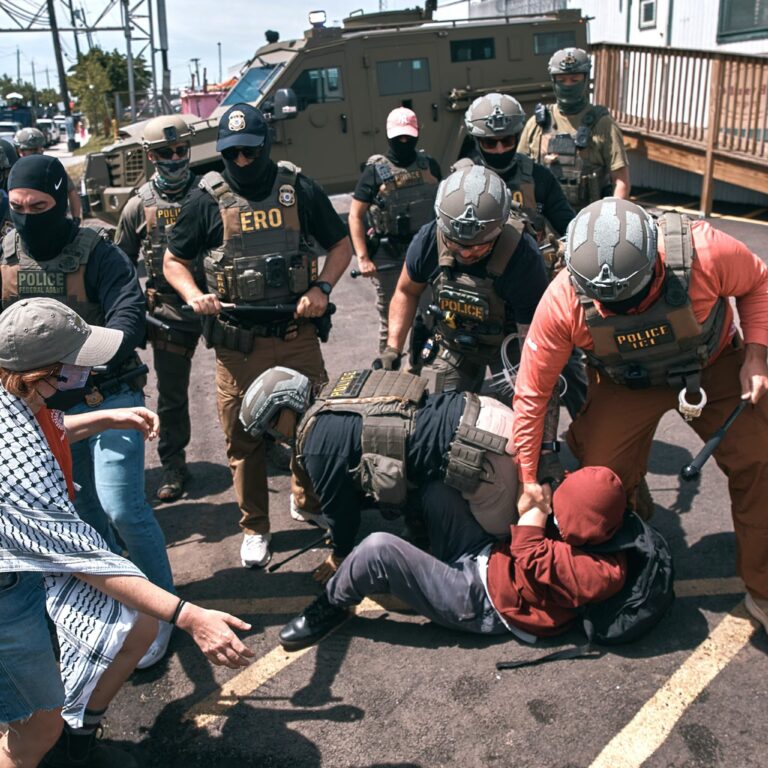
Equally important is the growing emphasis on transparency. Construction projects involve numerous stakeholders, including owners, developers, architects, engineers, contractors, subcontractors, suppliers, lenders, government agencies, and consultants. Each participant plays a role in maintaining project momentum. When schedule information remains siloed or inaccessible, misunderstandings can develop quickly. Modern construction management systems provide real-time visibility into project progress, allowing stakeholders to identify potential concerns before they become major issues. Transparency helps create accountability while reducing speculation and finger-pointing when challenges arise.

Technology has become another powerful tool for reducing scheduling-related disputes. Digital project management platforms now allow construction teams to monitor progress daily, compare actual performance against planned milestones, and identify potential delays in real time. Instead of discovering problems weeks or months after they occur, project managers can respond immediately. This proactive approach allows teams to develop corrective measures before delays begin affecting critical project milestones. Across New Jersey’s rapidly expanding construction market, technology-driven scheduling has become increasingly important as projects grow larger and more complex.

Another critical advancement involves enhanced coordination among trades and subcontractors. Modern construction projects often require dozens of specialized contractors working within tightly coordinated timelines. A delay involving one trade can create a domino effect impacting multiple downstream activities. Advanced construction management practices emphasize collaborative planning sessions where contractors coordinate schedules collectively rather than operating independently. This integrated approach helps identify conflicts early and ensures that resources are available when needed, reducing the likelihood of delays that could eventually lead to claims and litigation.

Risk management has also emerged as a cornerstone of effective scheduling. Every construction project faces uncertainty. Weather events, labor shortages, material availability issues, regulatory changes, and unforeseen site conditions can all affect project timelines. Rather than assuming everything will proceed exactly as planned, experienced construction managers now incorporate contingency planning into scheduling processes. By anticipating potential disruptions and developing response strategies in advance, project teams can maintain momentum even when unexpected challenges arise. This flexibility reduces the adversarial atmosphere that often develops when schedules begin slipping.

Documentation represents another area where construction management can significantly reduce disputes. In many construction claims, the outcome ultimately depends on documentation. Accurate records of schedule updates, delays, weather impacts, change orders, labor availability, material deliveries, and project communications provide an objective foundation for evaluating project performance. Modern construction management systems create detailed digital records that help establish accountability and clarify the causes of delays. When disputes do arise, comprehensive documentation often allows issues to be resolved quickly without escalating into expensive litigation.

Communication remains one of the most underestimated yet powerful tools in construction scheduling. Even the most sophisticated schedule becomes ineffective if project participants do not understand it or receive timely updates. Effective construction managers prioritize regular meetings, progress reports, milestone reviews, and stakeholder communications. By ensuring that everyone remains informed about project status and emerging challenges, teams can work collaboratively to solve problems rather than assigning blame after delays occur. In an industry where relationships often determine future opportunities, strong communication can preserve partnerships even during difficult circumstances.

The integration of data analytics is further reshaping scheduling practices throughout the construction sector. By analyzing historical project performance, labor productivity rates, equipment utilization, weather impacts, and resource allocation trends, construction managers can make more informed decisions about future scheduling strategies. Data-driven planning reduces reliance on assumptions and intuition, creating schedules that are more accurate, reliable, and defensible. As construction projects throughout New Jersey continue growing in scale and complexity, analytics-driven decision-making is becoming a competitive advantage for firms seeking to minimize risk.

Perhaps the most significant shift involves the changing role of construction management itself. Traditionally, many project managers focused primarily on monitoring progress and responding to issues after they occurred. Today’s construction managers increasingly function as strategic planners whose primary objective is preventing problems before they emerge. This proactive mindset transforms scheduling from a reactive administrative task into a powerful project leadership tool. By identifying risks early, facilitating collaboration, improving communication, leveraging technology, and maintaining transparency, construction managers help create environments where disputes become less likely to occur.

The importance of these developments extends far beyond individual projects. Construction disputes can consume enormous financial resources, delay critical infrastructure, increase housing costs, strain public budgets, and discourage investment. Every project that avoids litigation represents savings that can be redirected toward project quality, workforce development, innovation, and future growth. For a state like New Jersey, where construction activity plays a vital role in economic development, reducing disputes benefits not only project stakeholders but also communities, businesses, and taxpayers.

As construction projects become increasingly sophisticated, the industry continues recognizing that successful scheduling is about far more than dates on a calendar. It requires strategic planning, technological innovation, collaboration, transparency, communication, risk management, and leadership. The projects that achieve these objectives are more likely to finish on time, remain within budget, maintain strong stakeholder relationships, and avoid the costly legal battles that have historically plagued the construction sector.

For New Jersey’s builders, developers, public agencies, and construction professionals, the message is becoming increasingly clear. The most effective way to reduce disputes and litigation is not to fight harder after problems emerge. It is to create stronger schedules, better communication, and smarter project management practices from the very beginning. In an industry where every day matters and every delay carries consequences, modern construction management is proving that prevention remains far more valuable than litigation.

Synametrics Technologies Unveils WinSQL Version 21, Expanding Database Connectivity and Global Development Capabilities for a Rapidly Evolving Digital Economy

As businesses across New Jersey and around the world continue accelerating digital transformation initiatives, the demand for powerful, flexible, and universally compatible database management tools has never been greater. From healthcare networks and financial institutions to logistics providers, government agencies, educational organizations, and technology startups, modern enterprises increasingly depend on data-driven decision-making, seamless database administration, and efficient software development environments to remain competitive.

Against that backdrop, Synametrics Technologies Inc. has announced the release of WinSQL Version 21, the latest evolution of its long-established universal database management platform. The new release arrives at a pivotal moment for organizations seeking enhanced database connectivity, broader language support, stronger interoperability, and streamlined access to increasingly diverse data environments.

For technology professionals, database administrators, software engineers, and IT decision-makers, the launch of WinSQL Version 21 represents more than a routine software update. It reflects the continued evolution of database management itself, where businesses must simultaneously support legacy infrastructure, cloud-based platforms, hybrid environments, distributed workforces, and international development teams operating across multiple languages and operating systems.

The modern enterprise runs on data. Every transaction, customer interaction, inventory movement, healthcare record, financial report, website visit, and business process generates information that must be stored, managed, analyzed, and secured. As organizations continue expanding their digital footprints, database environments have become increasingly complex, often spanning multiple vendors, platforms, and technologies simultaneously.

Managing that complexity requires tools capable of bridging disparate systems while maintaining performance, reliability, and accessibility.

That challenge is precisely where WinSQL has built its reputation over the years.

Designed as a universal database management solution, WinSQL has long been recognized for its ability to connect to multiple database platforms through a unified interface. Rather than forcing organizations to adopt separate management tools for different environments, the platform allows users to work across numerous database systems from a centralized workspace, simplifying administration and improving productivity.

Version 21 builds upon that foundation while introducing enhancements designed to meet the realities of today’s increasingly global and interconnected technology landscape.

One of the most significant developments in the latest release is expanded language support, a feature that reflects the growing internationalization of software development and database administration. Modern organizations frequently operate across continents, employ globally distributed teams, and manage databases containing multilingual information. As digital commerce continues crossing geographic boundaries, software platforms must support increasingly diverse user communities and linguistic requirements.

Expanded language compatibility helps organizations maintain consistency across global operations while improving accessibility for development teams, administrators, and business users working in different regions of the world.

The addition also aligns with broader trends in enterprise technology, where localization and internationalization have become essential rather than optional capabilities. Companies serving international customers increasingly require systems that can accurately process, display, and manage information across multiple languages and character sets without sacrificing performance or reliability.

Database connectivity remains another major focus of the WinSQL Version 21 release.

The technology ecosystem has changed dramatically over the past decade. Organizations now maintain information across traditional relational databases, cloud-native platforms, data warehouses, analytics environments, and specialized application databases. Rather than relying on a single database architecture, businesses often deploy multiple technologies simultaneously based on operational requirements, scalability needs, and budget considerations.

This diversification has created both opportunities and challenges.

While organizations benefit from choosing specialized solutions for different workloads, managing those environments can quickly become complicated. IT teams frequently find themselves navigating multiple interfaces, administrative tools, authentication methods, and management platforms.

Enhanced connectivity capabilities help address those challenges by simplifying access across a broader range of database technologies. For database professionals, the ability to interact with multiple environments through a single solution can significantly reduce administrative overhead while improving operational efficiency.

The release also highlights the growing importance of interoperability within modern enterprise environments.

Few organizations today operate entirely within a single technology ecosystem. Mergers, acquisitions, cloud migrations, software upgrades, and evolving business requirements often result in a mixture of legacy systems and modern platforms coexisting within the same organization. Successful technology strategies increasingly depend on solutions that can bridge those environments rather than forcing costly and disruptive infrastructure overhauls.

Tools that facilitate communication between different systems play an essential role in supporting business continuity and long-term digital transformation goals.

For New Jersey’s growing technology sector, developments like WinSQL Version 21 reflect the state’s expanding influence in software development, information technology, data analytics, cybersecurity, and enterprise services. The Garden State continues to serve as home to major corporations, innovative startups, healthcare organizations, financial institutions, research centers, and educational institutions that depend heavily on sophisticated database infrastructure.

From the pharmaceutical corridor stretching through Central New Jersey to financial services operations near Jersey City and technology firms throughout the state’s innovation ecosystem, reliable database management remains a critical component of daily operations.

The increasing importance of data governance further elevates the significance of modern database management tools.

Organizations face mounting pressure to ensure data accuracy, maintain security standards, comply with evolving regulations, and support advanced analytics initiatives. Effective database administration is no longer limited to storing information; it encompasses performance optimization, access management, compliance monitoring, disaster recovery planning, and support for business intelligence initiatives.

As data volumes continue expanding exponentially, organizations require solutions capable of helping teams manage complexity without sacrificing productivity.

The release of WinSQL Version 21 also reflects broader shifts occurring throughout the software industry. User expectations have evolved significantly over the past decade. Modern professionals demand interfaces that are intuitive, efficient, and capable of supporting increasingly sophisticated workflows. Software vendors are responding by prioritizing usability alongside technical functionality, creating platforms that serve both experienced database administrators and newer technology professionals entering the field.

The result is a generation of enterprise tools designed to balance power with accessibility.

For organizations evaluating technology investments, that balance can have meaningful implications for productivity, training costs, and workforce development. Software that reduces complexity while maintaining robust capabilities often delivers value far beyond its technical specifications alone.

Looking ahead, the importance of database management will only continue to grow. Artificial intelligence, machine learning, predictive analytics, automation, cloud computing, and digital transformation initiatives all depend fundamentally on access to reliable, well-managed data. The organizations that succeed in leveraging these technologies will be those capable of effectively organizing, securing, and utilizing the information that drives their operations.

In that environment, advancements in database connectivity, interoperability, language support, and administrative efficiency become increasingly significant.

The launch of WinSQL Version 21 demonstrates how software providers continue adapting to the evolving needs of modern enterprises. As organizations navigate increasingly complex digital environments, solutions that simplify database management while expanding flexibility and connectivity will play an increasingly important role in shaping the future of business technology.

For technology leaders throughout New Jersey and beyond, the release serves as another reminder that innovation often occurs not only through entirely new technologies but also through the continuous refinement of the tools that power the digital economy every day. In a world where data has become one of the most valuable assets any organization possesses, improvements in how that data is managed, accessed, and utilized can have far-reaching impacts across virtually every industry and sector of the modern economy.

New Automotive Technology Arrives in New Jersey as TOPDON USA Introduces AFM Disabler for GM Trucks, SUVs, and Performance Vehicles

New Jersey has long been a state where automotive culture thrives. From weekend car shows and performance gatherings to the thousands of contractors, tradespeople, commuters, towing enthusiasts, and truck owners who rely on their vehicles every day, reliability remains one of the most important factors influencing purchasing decisions. That reality is one reason a newly released automotive technology product from TOPDON USA is generating significant attention among General Motors vehicle owners throughout the Garden State and across North America.

The company has officially introduced its new AFM/DFM Disabler, a plug-and-play device designed specifically for General Motors vehicles equipped with Active Fuel Management (AFM) and Dynamic Fuel Management (DFM) systems. The product arrives at a time when discussions surrounding long-term engine reliability, preventative maintenance, and vehicle longevity continue to dominate automotive forums, repair shops, dealerships, and enthusiast communities.

For many GM owners, the launch represents more than just another aftermarket accessory. It addresses one of the most frequently discussed engineering concerns associated with modern V6 and V8 powertrains found in some of the most popular vehicles on American roads.

From the Chevrolet Silverado and Tahoe to the GMC Sierra and Yukon, and from work trucks to luxury SUVs like the Cadillac Escalade, millions of drivers operate vehicles equipped with cylinder deactivation technology. While these systems were originally engineered to improve fuel economy and meet increasingly stringent emissions standards, many owners and technicians have spent years debating the long-term mechanical consequences associated with constantly transitioning between full-power and reduced-cylinder operation.

TOPDON’s newest product enters that conversation with a straightforward objective: keeping every cylinder operating continuously while preserving factory vehicle programming.

The technology behind AFM and DFM was developed with efficiency in mind. Under light-load driving situations, such as steady highway cruising, the engine automatically shuts down selected cylinders. A V8 engine, for example, may temporarily operate as a four-cylinder powerplant until additional power is required. Once acceleration increases, all cylinders reactivate and normal operation resumes.

On paper, the concept delivers measurable fuel savings.

In practice, however, many vehicle owners have reported concerns ranging from drivability issues to long-term mechanical wear. Over time, repeated transitions between operating modes can place additional demands on specialized internal engine components. Among the most frequently cited concerns are lifter failures, oil consumption issues, carbon buildup, inconsistent throttle response, and vibration during cylinder activation or deactivation cycles.

Automotive repair facilities across the country have become increasingly familiar with these issues, particularly among higher-mileage vehicles.

The new TOPDON AFM/DFM Disabler seeks to eliminate those transitions altogether.

Unlike traditional tuning solutions that require software modifications, ECU flashes, or permanent programming changes, the device connects directly through the vehicle’s OBD-II diagnostic port. Once installed, it communicates with the vehicle’s existing systems and prevents activation of cylinder deactivation modes while leaving factory programming intact.

That distinction is significant for vehicle owners who prefer reversible solutions.

Because the system does not permanently alter factory calibrations, owners can simply remove the device at any time and instantly restore original operating behavior. There are no software downloads, no complicated installation procedures, and no permanent changes to factory settings. The approach provides flexibility while addressing concerns that many drivers have expressed regarding AFM and DFM operation.

For New Jersey drivers, particularly those who rely on their vehicles for work, towing, or long-distance travel, the practical benefits extend beyond engine preservation.

Consistent power delivery remains one of the primary advantages cited by users of cylinder deactivation disablers. Anyone who has experienced the subtle hesitation, vibration, or transmission shudder that can occur when a vehicle transitions between operating modes understands how noticeable those changes can become over thousands of miles.

Maintaining continuous eight-cylinder or six-cylinder operation creates a more predictable driving experience, especially under varying load conditions.

This is particularly relevant in a state like New Jersey where drivers encounter virtually every driving environment imaginable. Daily commutes can involve stop-and-go traffic near Newark, highway travel along the Garden State Parkway, towing boats toward the Jersey Shore, hauling equipment through South Jersey agricultural regions, or navigating mountain roads in Sussex County.

Each scenario places different demands on a vehicle’s drivetrain.

For towing applications, maintaining uninterrupted power delivery becomes even more valuable. Whether pulling trailers, boats, campers, landscaping equipment, or commercial cargo, drivers often prefer consistent engine performance rather than allowing the vehicle to cycle repeatedly between operating modes.

Many enthusiasts also point to reduced engine stress as a significant benefit.

The specialized lifters used in AFM and DFM systems represent some of the most discussed components within modern GM powertrains. By eliminating the constant activation and deactivation cycle, owners hope to reduce wear on these components and potentially extend engine longevity.

Another frequently cited advantage involves combustion consistency.

When cylinders are deactivated for extended periods, conditions inside those cylinders differ from actively firing chambers. Some technicians believe maintaining continuous operation can help reduce carbon accumulation and oil-related issues that may develop over time. While opinions vary throughout the automotive community, the popularity of cylinder deactivation disablers reflects the widespread interest in preventative maintenance strategies.

TOPDON’s engineering team also addressed one concern commonly associated with OBD-connected accessories: battery drain.

The device incorporates a Smart Sleep feature designed to minimize power consumption when the vehicle is turned off. By reducing standby draw to extremely low levels, the system can remain connected without creating unnecessary strain on the vehicle’s battery.

Compatibility is another major selling point.

The AFM/DFM Disabler supports a broad range of General Motors platforms spanning model years from 2005 through 2025. Coverage includes numerous V6 and V8 powertrains found in some of GM’s highest-volume vehicles, making the device relevant to a massive portion of the North American vehicle fleet.

That extensive compatibility means the product appeals to a diverse customer base ranging from daily commuters and family SUV owners to contractors, fleet operators, performance enthusiasts, and recreational vehicle users.

The timing of the release also reflects broader trends within the automotive industry.

As vehicle prices continue rising and replacement costs reach historic levels, consumers are increasingly focused on maximizing the lifespan of existing vehicles. Owners who once traded vehicles every few years are now holding onto them significantly longer. Preventative maintenance, reliability enhancements, and technology solutions designed to protect major drivetrain components have become increasingly attractive investments.

The aftermarket automotive sector has responded accordingly, introducing products focused on preserving factory performance while reducing potential maintenance concerns.

For New Jersey’s automotive community, the arrival of technologies like the TOPDON AFM/DFM Disabler highlights a growing intersection between digital vehicle management and mechanical reliability. Modern vehicles rely more heavily than ever on software-controlled systems, creating new opportunities for products that influence vehicle behavior without permanently altering factory engineering.

As drivers continue seeking ways to balance efficiency, performance, and long-term durability, solutions that offer flexibility and reversibility are likely to attract increasing attention.

Whether viewed as an engine protection tool, a drivability enhancement, a towing upgrade, or simply a preventative maintenance investment, TOPDON USA’s latest release enters a market where demand for reliability-focused automotive technology continues to grow. For thousands of General Motors owners throughout New Jersey and beyond, that combination of simplicity, compatibility, and mechanical peace of mind may prove to be exactly what they have been waiting for.

A Summer Without Peaches: How New Jersey’s Devastating Spring Weather Disaster Could Reshape the Garden State’s Agricultural Season

New Jersey’s agricultural industry has faced droughts, hurricanes, flooding events, labor shortages, supply chain disruptions, rising operating costs, and market volatility throughout its history. Yet many veteran growers are now describing the spring of 2026 as one of the most devastating weather-related disasters they have ever witnessed. Across orchards, vineyards, berry farms, and agricultural operations throughout the Garden State, the effects of an unprecedented April weather event continue to unfold, leaving behind an estimated $300 million in crop losses and raising serious concerns about the future of one of New Jersey’s most important economic sectors.

What began as an unusually warm start to spring quickly transformed into a historic agricultural catastrophe. During a single week in mid-April, temperatures surged into the 90-degree range across portions of New Jersey, creating conditions more typical of midsummer than early spring. Trees, vines, and fruit-bearing plants responded exactly as nature intended. Peach trees burst into bloom. Apple orchards advanced rapidly through early developmental stages. Vineyard vines emerged from dormancy. Berry crops began their seasonal growth cycle.

Then the weather changed.

Almost immediately after the extended heat wave, temperatures plummeted. A prolonged four-day freeze swept across the state, driving overnight readings below 20 degrees in many agricultural regions. The sudden collapse in temperature arrived at precisely the worst possible moment. Crops that had been tricked into believing summer had arrived found themselves exposed during their most vulnerable stage of development.

Agricultural experts are now describing the event as a generational disaster.

The damage has been particularly severe among New Jersey’s iconic tree fruit crops. State officials have warned that consumers should prepare for an almost complete absence of locally grown peaches this summer, a stunning development for a state that has long been recognized as one of the nation’s premier peach-producing regions. For generations, New Jersey peaches have served as both an economic driver and a source of state pride, drawing visitors to roadside farm markets, pick-your-own orchards, and seasonal festivals throughout the summer months.

This year, however, many of those familiar traditions may look dramatically different.

Growers across multiple counties have reported catastrophic losses. Some farms have seen entire peach harvests destroyed before fruit could even begin forming. Asian pear crops have been wiped out in numerous locations. Cherry orchards experienced similarly devastating outcomes. The freeze arrived so suddenly and with such intensity that many growers had little opportunity to implement protective measures capable of preventing widespread damage.

The impact extends far beyond peaches alone.

Throughout South Jersey and the Outer Coastal Plain region, vineyards that typically spend the spring nurturing delicate new growth into future vintages watched as emerging vines were damaged or destroyed. Some vineyard managers report that early-season growth was effectively erased within days. For wineries, the consequences extend well beyond a single growing season. Wine production operates on long timelines, with many products requiring months or even years of aging before reaching consumers. A poor growing season today can influence inventory, production schedules, and financial planning well into the future.

Berry producers also suffered major setbacks. New Jersey’s nationally recognized blueberry industry experienced significant losses, while strawberry growers across the state reported damage that will reduce yields and limit availability during what should be peak harvest periods. Apple orchards, another cornerstone of New Jersey agriculture, sustained substantial injury as blossoms and developing fruit were exposed to temperatures they simply could not survive.

The timing of the freeze explains much of its destructive power.

Cold temperatures alone do not necessarily devastate agricultural crops. Many fruit trees and vines are capable of surviving harsh winters while dormant. The problem occurs when warm weather accelerates development and encourages plants to break dormancy prematurely. Once buds open and flowers emerge, crops become dramatically more vulnerable to temperature swings. A freeze occurring weeks earlier might have produced minimal damage. A freeze arriving after fruit had fully developed might have been less destructive. Instead, New Jersey experienced a worst-case scenario in which vulnerable crops were caught directly between rapid growth and extreme cold.

The consequences are now visible throughout the state.

Farmers who anticipated strong harvests are instead facing empty orchards. Wineries are recalculating production forecasts. Agricultural suppliers, seasonal workers, distributors, and local businesses connected to the farming economy are all preparing for ripple effects that may continue throughout the year.

Compounding the crisis is the reality that this weather disaster arrived amid an already challenging operating environment. Farmers throughout New Jersey have spent recent years contending with rising fuel prices, escalating fertilizer costs, increasing labor expenses, supply chain disruptions, and periods of drought that placed additional stress on crops and irrigation systems. For many operations, the freeze represents not an isolated setback but another major blow layered on top of existing financial pressures.

The economic implications reach far beyond individual farms.

Agriculture remains a critical component of New Jersey’s economy despite the state’s highly developed suburban and urban landscape. The Garden State consistently ranks among the nation’s leading producers of numerous specialty crops, and local agriculture supports thousands of jobs across farming, transportation, processing, tourism, hospitality, and retail sectors. Agritourism alone generates substantial economic activity as visitors travel throughout the state to visit orchards, wineries, farm markets, and seasonal attractions.

A reduced harvest affects all of those interconnected industries.

Governor Mikie Sherrill has responded by formally requesting a federal agricultural disaster designation from the United States Department of Agriculture. Such a designation could unlock emergency assistance programs, low-interest disaster loans, and financial relief mechanisms intended to help stabilize farming operations facing extraordinary losses. Agricultural leaders throughout the state have voiced strong support for federal intervention, arguing that the scale of the disaster exceeds what many farms can absorb independently.

The request reflects the growing recognition that weather volatility is becoming an increasingly significant challenge for agricultural producers nationwide. Climate-related extremes, including sudden temperature swings, prolonged droughts, intense rainfall events, and unseasonable freezes, are creating new risks that traditional farming models were not necessarily designed to withstand.

Yet amid the challenges, New Jersey agriculture remains resilient.

State agricultural officials, industry organizations, and farming advocates are encouraging consumers to support local farms throughout the remainder of the season. While many tree fruits have suffered catastrophic losses, numerous crops remain available. Farmers continue producing fresh vegetables, leafy greens, asparagus, squash, and other seasonal products that remain critical sources of farm revenue.

For wineries, support from consumers may prove particularly important. Many producers maintain inventories from previous harvest years that allow them to continue serving customers despite current growing season losses. Visiting tasting rooms, attending vineyard events, purchasing locally produced wines, and supporting agritourism destinations can help provide essential revenue during a difficult period.

The broader lesson emerging from the spring disaster is one of interconnectedness. New Jersey agriculture is not merely a collection of individual farms. It is a statewide ecosystem that influences local economies, food security, tourism, environmental stewardship, and community identity. When a freeze destroys a peach crop in Mercer County, the impact extends to roadside markets, restaurant menus, seasonal employees, family traditions, and regional tourism destinations throughout the state.

This summer may indeed become known as the summer without peaches. The familiar baskets of Jersey-grown fruit that typically line farm stands and farmers markets may be far scarcer than residents have come to expect. Yet the story of 2026 is larger than a single crop. It is a story about the challenges facing modern agriculture, the increasing unpredictability of weather patterns, and the determination of New Jersey farmers to continue producing despite extraordinary adversity.

As the growing season continues, the state’s agricultural community remains focused not only on recovering from historic losses but also on preserving an industry that has shaped New Jersey’s identity for generations. The orchards may be quieter this year, and the harvests smaller, but the commitment of the farmers who sustain the Garden State remains as strong as ever. Their ability to weather this storm—both literally and economically—may ultimately define the future of New Jersey agriculture for years to come.

Jersey City Construction Boom Accelerates as Krunal Kothari Launches PatchMaster Expansion and Historic Downtown Firehouse Begins Transformation Into New Hospitality Destination

Hudson County’s development surge continues reshaping the architectural, residential, and commercial identity of Jersey City as two major construction-related projects now moving forward underscore the extraordinary pace of urban transformation unfolding throughout one of New Jersey’s fastest-changing regions.

From rapidly growing demand for specialized high-rise property maintenance services to the adaptive reuse of historic downtown structures tied to the city’s industrial and cultural legacy, the latest developments reveal how construction, redevelopment, and infrastructure investment are increasingly driving the next phase of Jersey City’s economic evolution.

This week, construction professional Krunal Kothari officially launched PatchMaster Jersey City & Hoboken, a new operator-led drywall repair and interior painting franchise designed specifically to meet the growing needs of Hudson County’s expanding network of high-rise residential buildings, multifamily communities, property management firms, and large-scale residential operators.

At the same time, major rehabilitation work is now visibly underway at 155 Morgan Street in Jersey City’s rapidly evolving Powerhouse Arts District, where a historic former firehouse once used as the headquarters for Queen Latifah’s Flavor Unit production company is being converted into a future restaurant, banquet hall, and event-driven hospitality space as part of the area’s continuing revitalization.

Taken together, the projects illustrate two interconnected realities currently defining Jersey City’s growth trajectory: the enormous operational demands created by high-density residential expansion and the increasingly aggressive redevelopment of historic urban structures into modern commercial and cultural destinations.

The launch of PatchMaster Jersey City & Hoboken arrives during a period of sustained construction and residential growth throughout Hudson County, where thousands of new residential units continue reshaping skylines across Jersey City, Hoboken, and surrounding communities.

Over the last decade, Jersey City has emerged as one of the most active high-rise development markets in the Northeast, fueled by migration from New York City, expanding corporate presence, transit-oriented development, luxury residential construction, and continued investment in mixed-use urban neighborhoods. Entire sections of Downtown Jersey City, Journal Square, the waterfront corridor, and Hoboken have undergone dramatic physical transformation as towers continue rising across formerly industrial and underutilized properties.

That rapid vertical growth has created a parallel demand for highly specialized property maintenance and interior repair services tailored specifically to dense urban residential environments.

Unlike traditional suburban home repair operations, high-rise communities require service providers capable of operating efficiently within tightly managed residential buildings, condominium associations, luxury apartment towers, and large-scale multifamily portfolios where scheduling precision, rapid turnaround times, minimal disruption, and operational scalability are critical.

PatchMaster’s expansion into Jersey City and Hoboken appears designed directly around those emerging market demands.

The operator-led franchise model emphasizes drywall repair, patching, interior painting, and restoration work geared toward property managers, landlords, condominium operators, residential turnover cycles, and maintenance-intensive multifamily environments where unit preparation and repair timelines significantly impact operational revenue.

In fast-moving urban rental markets like Jersey City, even relatively small interior repair delays can affect occupancy turnover, leasing schedules, tenant retention, and building operations across entire portfolios.

The importance of maintenance infrastructure within rapidly expanding residential markets is often overlooked compared to headline-grabbing tower developments themselves. Yet as Jersey City’s residential inventory continues expanding dramatically, demand for scalable post-construction services, interior restoration, repair management, and ongoing building maintenance continues rising alongside it.

Kothari’s launch reflects a broader shift occurring throughout New Jersey’s urban construction economy where secondary service industries increasingly grow around large-scale residential expansion.

As high-rise development accelerates, entire ecosystems emerge involving specialized contractors, maintenance firms, painting services, drywall operations, infrastructure support providers, smart building technicians, restoration companies, and operational vendors supporting the long-term functionality of modern residential inventory.

Hudson County’s density makes that ecosystem especially important.

Buildings containing hundreds of residential units often require near-constant maintenance coordination involving move-ins, tenant turnovers, renovations, water damage repairs, drywall restoration, painting cycles, and ongoing cosmetic upkeep. Operators capable of responding efficiently inside highly populated urban buildings gain increasing value as residential competition intensifies.

At the same time, Jersey City’s broader development story continues extending beyond new towers alone.

The transformation currently underway at 155 Morgan Street represents another major example of how adaptive reuse and historic redevelopment are becoming central components of Downtown Jersey City’s evolving identity.

Construction crews have now officially begun rehabilitation work on the historic former firehouse property located in the heart of the rapidly changing Powerhouse Arts District. The building, originally constructed in the early 1900s, carries significant architectural and cultural history tied not only to Jersey City’s industrial era but also to its more recent creative and entertainment identity.

The property once served as offices for Queen Latifah’s Flavor Unit production company before remaining largely vacant in recent years.

Now, under ownership tied to Silverman — one of the most influential development groups involved in Jersey City’s downtown revitalization efforts — the structure is being repositioned for a possible future as a restaurant, banquet facility, and event-oriented hospitality venue capable of contributing to the district’s expanding cultural and entertainment ecosystem.

The project represents another major step in the continuing reinvention of the Powerhouse Arts District, which has rapidly evolved from a historically industrial section of Jersey City into one of the region’s most ambitious mixed-use redevelopment corridors blending residential growth, arts investment, entertainment infrastructure, hospitality concepts, adaptive reuse projects, and cultural destination planning.

The neighborhood’s transformation has accelerated dramatically in recent years as developers, investors, artists, hospitality operators, and municipal planners increasingly view the district as one of Jersey City’s most important long-term growth zones.

The rehabilitation work now visible at 155 Morgan Street highlights the increasingly preservation-oriented approach shaping portions of Downtown Jersey City redevelopment.

Rather than demolishing historic structures entirely, developers are increasingly incorporating adaptive reuse strategies that preserve architectural character while modernizing buildings for contemporary commercial and mixed-use functionality. Those efforts often carry enormous complexity due to structural deterioration, code modernization requirements, infrastructure replacement needs, and historical preservation considerations.

Permits filed for the Morgan Street project indicate substantial structural and infrastructure work is already underway.

Current construction includes reconstruction of a structurally compromised masonry wall, installation of new electrical systems, upgraded sewer infrastructure, and a modern fire sprinkler system — all common components of adaptive reuse projects involving century-old urban structures originally built under vastly different engineering and safety standards.

The project is also being developed initially as a “vanilla box” commercial shell under plans prepared by Weckenmann Architecture, suggesting that a final hospitality tenant may not yet be fully secured while core structural rehabilitation proceeds.

The strategic location of the property significantly increases its redevelopment importance.

Situated directly within one of Jersey City’s fastest-growing downtown corridors, the firehouse sits near numerous major residential developments and directly across from the future Jersey City Symphony theater currently under construction. That concentration of cultural, residential, and entertainment investment continues strengthening the district’s emergence as a major regional destination rather than simply another residential expansion zone.

The project also reflects a broader movement throughout Jersey City involving the repurposing of former civic and industrial properties into modern mixed-use assets.

Another former firehouse property located at 244 Bay Street — once home to the historic Jersey City Gong Club site — was recently approved for conversion into residential apartments with ground-floor retail space. Like 155 Morgan Street, the Bay Street structure dates back to the 19th century and represents another example of how Jersey City’s older architectural inventory is increasingly being reintegrated into the city’s next development era rather than erased entirely.

That balance between modernization and preservation has become one of the defining tensions shaping Jersey City’s evolution.

The city continues experiencing extraordinary residential growth, rising property values, infrastructure expansion, commercial investment, and urban densification. Yet simultaneously, increasing efforts are being made to preserve portions of the city’s industrial, civic, and cultural architectural legacy through strategic adaptive reuse projects capable of blending historic identity with modern economic functionality.

The launch of PatchMaster Jersey City & Hoboken and the rehabilitation of the Morgan Street firehouse may initially appear unrelated, but together they reveal the broader mechanics driving Jersey City’s transformation.

One project supports the operational realities of maintaining a rapidly expanding vertical residential city. The other reflects the cultural and architectural reinvention of older urban infrastructure into modern hospitality and entertainment destinations.

Both developments exist because Jersey City itself continues evolving at extraordinary speed.

As Hudson County pushes deeper into a new era defined by high-density living, mixed-use redevelopment, infrastructure modernization, cultural investment, and adaptive urban growth, projects like these increasingly represent the connective tissue holding together one of the most ambitious urban transformations currently unfolding anywhere in New Jersey.

Paterson’s Political Fault Lines Deepen as Fire Officers Union Backs Alex Mendez in High-Stakes Mayoral Race

The political temperature inside Paterson’s mayoral race continues to rise as mayoral candidate Alex Mendez secured a significant endorsement this week from the Paterson Fire Officers Association Local 202, a move that immediately injects new momentum into one of New Jersey’s most closely watched municipal elections. The endorsement arrives at a pivotal moment for the city, where public safety, fiscal stability, municipal leadership, and resident confidence have become defining issues shaping both the campaign narrative and the broader future of Paterson itself.

For Mendez, the backing from Local 202 is more than a symbolic political endorsement. It represents organized support from senior public safety leadership operating on the front lines of one of New Jersey’s largest and most complex urban environments. In a city where emergency response systems, staffing levels, municipal spending, and public trust are increasingly intertwined, endorsements from first responder organizations carry substantial weight with voters evaluating the next phase of leadership at City Hall.

The Paterson Fire Officers Association Local 202 made clear that its endorsement stems from mounting concerns over the direction of the city during the past eight years. According to the organization, ongoing staffing shortages, escalating grievances, unresolved labor disputes, and operational challenges affecting fire personnel have created growing pressure across the department. Union leadership also pointed toward the city’s request for approximately $78 million in state transitional aid, a dramatic increase from the $33 million figure associated with 2025, as a reflection of broader structural and financial concerns facing Paterson government.

That financial backdrop is expected to become one of the defining issues of the election cycle. Across New Jersey, municipalities are facing rising operational costs tied to infrastructure, emergency services, labor agreements, insurance expenses, and public works obligations. In Paterson, however, the debate carries additional urgency because of the city’s size, economic disparities, and longstanding dependence on state assistance. The conversation surrounding transitional aid has therefore become larger than a simple budget line item. It has evolved into a referendum on management, accountability, and whether residents believe City Hall is effectively stewarding taxpayer resources while maintaining core city services.

Mendez has increasingly positioned himself as a candidate focused on operational accountability and restoring confidence in municipal leadership. The endorsement from Local 202 reinforces that messaging because it comes directly from individuals responsible for emergency response coordination and public safety supervision throughout the city. Fire officers are uniquely positioned within municipal government to witness the impact of staffing shortages, equipment concerns, overtime pressures, and administrative delays. Their endorsement signals that segments of the city’s public safety leadership believe change is necessary.

In announcing its support, Local 202 emphasized Mendez’s willingness to engage directly with first responders and address issues affecting frontline personnel. Among the concerns cited were staffing deficiencies, fair contract negotiations, and the need for stronger operational support systems within the fire department. Those issues resonate beyond labor politics because they intersect directly with emergency response times, firefighter readiness, public protection standards, and the city’s overall emergency management capacity.

Public safety has become one of the most politically sensitive subjects in urban New Jersey communities, particularly in cities balancing aging infrastructure, budget limitations, rising service demands, and workforce retention challenges. Paterson is no exception. As one of the state’s largest municipalities, the city faces constant pressure to maintain effective emergency services while managing fiscal realities that continue to strain local government operations. That dynamic has created a political environment where endorsements from police, fire, and emergency personnel organizations can significantly shape voter perception.

Mendez acknowledged the significance of the endorsement by framing it as validation from those who directly understand the challenges facing Paterson residents and emergency personnel alike. He described the support from Local 202 as especially meaningful because of the union members’ firsthand experience operating within the city every day.

“I am honored to receive the endorsement of the Paterson Fire Officers Association Local 202,” Mendez said. “Their support is especially meaningful because these are the men and women who serve on the front lines every day and understand firsthand the challenges facing our city. I thank them for their trust and support, and I remain committed to leadership that strengthens public safety, supports first responders, and delivers the accountability Paterson residents deserve.”

The endorsement also reflects the increasingly central role labor organizations continue to play in local New Jersey politics. Public sector unions remain among the most influential political forces in municipal elections because of their deep community ties, volunteer networks, voter mobilization capabilities, and visibility among residents. In cities like Paterson, where local government operations directly affect everyday quality of life, endorsements from first responder organizations often carry credibility beyond traditional political circles.

Paterson’s mayoral race is unfolding against a larger statewide backdrop in which urban governance, public safety funding, economic development, and fiscal oversight have become dominant political themes. Cities throughout New Jersey continue to wrestle with balancing redevelopment ambitions against service demands and budget realities. Paterson, with its historic industrial identity, diverse population, and complex economic challenges, stands at the center of many of those statewide conversations.

The city itself remains one of New Jersey’s most politically consequential urban centers. Long viewed as both a symbol of resilience and a case study in municipal challenges, Paterson occupies a unique place in the state’s political landscape. Its elections frequently attract regional attention because the issues debated there often mirror broader concerns affecting other major municipalities throughout New Jersey. Questions surrounding economic recovery, neighborhood investment, public safety modernization, and government transparency are no longer isolated local matters. They have become statewide political priorities.

For Mendez, building momentum through endorsements like this may prove critical as Election Day approaches. Campaigns in cities the size of Paterson are rarely won through a single issue. Success typically depends on assembling broad coalitions that include labor support, neighborhood organizations, business stakeholders, public safety advocates, and voters seeking institutional reform or leadership stability. The endorsement from Local 202 strengthens Mendez’s standing within one of the most influential sectors of municipal government while simultaneously reinforcing his broader campaign message centered on accountability and operational change.

The endorsement may also intensify scrutiny surrounding the current administration’s handling of city operations, labor relations, and fiscal management. Political campaigns often become defined not only by what challengers promise, but by how effectively they capitalize on public frustration with existing conditions. By specifically citing staffing shortages, unresolved grievances, and the city’s escalating reliance on transitional aid, Local 202 effectively elevated those concerns into central campaign issues.

As the race advances, Paterson voters are expected to hear increasingly detailed debates regarding municipal spending priorities, emergency service funding, staffing strategies, economic redevelopment, and the future direction of city leadership. Public safety will almost certainly remain near the center of those conversations, particularly as residents evaluate which candidate they believe can most effectively stabilize operations while restoring confidence in city government.

The endorsement from the Paterson Fire Officers Association Local 202 underscores how consequential this election has become for both city employees and residents alike. What is unfolding in Paterson is not simply another local political contest. It is a broader debate over governance, accountability, fiscal direction, and whether city leadership can effectively respond to the mounting pressures facing one of New Jersey’s most important urban communities.

With support continuing to build among public safety advocates and community stakeholders, Mendez’s campaign now enters a new phase where momentum, messaging, and voter turnout could ultimately determine the next chapter in Paterson politics. As Election Day moves closer, the battle over the city’s future is becoming increasingly defined by one central question: which candidate can convince residents that they are prepared to restore operational stability, strengthen public trust, and deliver a stronger future for Paterson and its neighborhoods.

For more New Jersey political coverage and statewide public affairs reporting, visit Sunset Daily News Politics

Rebecca Bennett Fires Back as NJ-7 Democratic Primary Turns Combative: “They Know I’m Going to Kick His Ass”

What began months ago as a competitive but relatively policy-centered Democratic primary in New Jersey’s 7th Congressional District has now escalated into a bruising political fight defined by attack mailers, ideological accusations, outside spending, electability arguments, and increasingly personal attempts to reshape the narrative surrounding the candidates vying to challenge Republican Congressman Tom Kean Jr. this November.

At the center of that political storm now stands Rebecca Bennett.

During a Friday evening meet-and-greet event in Warren County, Bennett directly confronted the growing wave of attacks aimed at her candidacy, using the gathering not simply to reassure supporters, but to frame the escalating negativity as evidence that both Republicans and Democratic rivals increasingly view her as the frontrunner capable of flipping one of New Jersey’s most closely watched congressional districts.

The moment that crystallized the atmosphere came almost immediately after Bennett completed her remarks before supporters gathered inside a private home.

“What about all that crap I’m getting in the mail?” one attendee asked.

The question captured precisely where the Democratic primary now stands.

With the June 2 election approaching rapidly, the four-way race in CD-7 has transformed from a traditional Democratic contest into a politically charged battle over ideology, electability, authenticity, immigration politics, and control of one of the most strategically important congressional seats in New Jersey.

Bennett did not dodge the question.

Instead, she leaned directly into it.

Calling the attacks “ridiculous” and “not true,” Bennett argued that the growing volume of political assaults against her campaign reflects mounting concern among opponents and outside organizations that she has emerged as the candidate most capable of defeating Kean in the general election.

The attacks themselves have arrived from multiple directions simultaneously.

One mail campaign tied to Democratic opponent Tina Shah attempts to connect Bennett to conservative Texas politics by emphasizing that Bennett originally registered as a Republican while living in Texas earlier in her life. Another set of attacks from a group known as Real Change PAC alleges Bennett “stands with ICE,” seeking to paint her as politically out of step with progressive Democratic voters increasingly focused on immigration enforcement reform and opposition to aggressive federal detention policies.

For Bennett, however, the attacks themselves serve as political validation.

She told supporters that both Shah and outside Republican-aligned organizations are converging on her campaign because polling and internal momentum increasingly suggest she has consolidated significant support across the district’s Democratic electorate.

“They are terrified of me being the general election candidate running against Tom Kean Jr. in November,” Bennett told attendees. “Because they know I’m going to kick his ass.”

The bluntness of the statement reflects the broader political mood surrounding New Jersey’s 7th District, where Democratic voters remain intensely focused not simply on ideological alignment, but on selecting a nominee they believe can realistically defeat Kean in a district that has become one of the most important congressional battlegrounds in the Northeast.

That electability question now appears to be dominating the race.

Unlike some Democratic primaries elsewhere in the country that have centered heavily on ideological litmus tests or activist coalition-building, the CD-7 race increasingly revolves around a single core calculation among many voters: who has the strongest path to unseating a Republican incumbent in a high-stakes general election environment likely to attract national attention and substantial outside spending.

That dynamic explains why Bennett’s opponents have intensified scrutiny surrounding her political background, biography, and messaging.

It also explains why Bennett herself continues emphasizing pragmatism, broad coalition-building, and general election viability.

The Texas issue in particular illustrates how modern political identities are increasingly weaponized inside primary campaigns.

Bennett’s earlier Republican voter registration has become a focal point for critics attempting to question her Democratic credentials. Yet Bennett and her supporters argue the attacks intentionally oversimplify personal political evolution while ignoring the reality that many Americans — particularly suburban professionals and moderates — have shifted politically over the past decade amid rising polarization, changing party dynamics, and the transformation of national Republican politics during the Trump era.

In many ways, Bennett’s candidacy itself reflects those broader suburban political realignments reshaping districts across the country.

New Jersey’s 7th Congressional District includes affluent suburban communities, highly educated voters, moderate Democrats, independents, and anti-Trump Republicans whose voting behavior has shifted dramatically over recent election cycles. The district has become emblematic of the national suburban political battleground where Democrats attempt to balance progressive energy with broader crossover appeal necessary for general election victories.

That balancing act remains delicate.

Too progressive, and candidates risk alienating moderates and independents.

Too centrist, and they risk backlash from energized activist wings within the Democratic base.

Bennett now finds herself navigating that precise political terrain.

The ICE-related attacks highlight another major fault line inside Democratic politics nationally.

Immigration enforcement, border policy, detention practices, and the future role of agencies like ICE continue dividing Democratic factions ranging from progressive abolition advocates to more moderate institutional reformers. Accusations that a candidate is insufficiently progressive on immigration have become increasingly common tactical weapons inside Democratic primaries, particularly in races where progressive organizations seek to shape ideological narratives before general elections begin.

Bennett’s response has been to aggressively reject the accusations while simultaneously attempting to re-center the race around defeating Kean rather than ideological purity battles.

Her campaign has reportedly launched a “check the facts” section online specifically designed to rebut claims made in attack mailers and political advertising.

Importantly, the two other Democratic candidates in the race — Michael Roth and Brian Varela — have largely avoided direct personal attacks thus far, creating an unusual split-screen dynamic inside the primary where some candidates continue emphasizing policy and coalition-building while others escalate contrast messaging.

The broader significance of the race extends well beyond district borders.

National Democrats continue targeting districts like NJ-7 as critical components of any future effort to reclaim congressional majorities. Tom Kean Jr., while carrying one of New Jersey’s most recognizable Republican political names, remains vulnerable inside a district where demographic shifts, suburban political evolution, and anti-MAGA sentiment continue reshaping electoral dynamics.

That reality explains why outside organizations have become increasingly active.

It also explains why emotions inside the race continue intensifying.

Warren County itself provided an especially symbolic backdrop for Bennett’s latest remarks. Long considered more conservative territory within the district, the county nevertheless reflects the broader political fluidity now shaping New Jersey suburban politics. Democratic organizations there continue working aggressively to expand turnout operations, recruit moderates disillusioned with national Republican politics, and build coalitions capable of competing in historically difficult territory.

Attendees at the event included Warren County Democratic Chair Charles Boddy, underscoring the degree to which local party infrastructure increasingly recognizes the race’s broader importance.

For many Democratic voters inside the district, however, the escalating negativity also raises concerns about potential damage heading into the general election.

Primary fights can energize voters, sharpen campaign operations, and generate media attention. But prolonged intraparty warfare also risks alienating moderates, depressing enthusiasm, and creating divisions difficult to heal before facing a well-funded incumbent.

That tension now hangs over the final stretch of the race.

At the same time, Bennett’s increasingly forceful posture may actually reflect what many Democratic primary voters currently want: confrontation, confidence, and visible willingness to directly engage Republican opposition without hesitation.

The modern Democratic electorate — particularly in competitive suburban districts — increasingly rewards candidates perceived as politically resilient under attack.

That perception may ultimately become as important as policy positioning itself.

As the June 2 primary approaches, the contest for New Jersey’s 7th Congressional District is rapidly evolving into one of the state’s most closely watched Democratic battles, not only because of who may emerge victorious, but because the race itself reflects broader national tensions reshaping modern Democratic politics: electability versus ideology, pragmatism versus purity, coalition-building versus factional warfare, and the increasingly aggressive role of outside spending in shaping voter perception before ballots are even cast.

For now, Bennett is making clear she believes the attacks validate one central reality.

Her opponents, she argues, would not be coming this hard if they did not believe she was becoming the candidate to beat.

Delaney Hall at the Center of a Growing New Jersey Firestorm: Oversight Battles, Detainee Allegations, Federal Enforcement, and a State Confronting a Defining Immigration Test

What began as a dispute over conditions inside an immigration detention facility has rapidly evolved into one of the most consequential political, legal, and humanitarian flashpoints in New Jersey in recent memory.

At the center of the controversy stands Delaney Hall in Newark, a privately operated federal immigration detention center that has become the focal point of an escalating confrontation involving detainees, immigrant advocacy organizations, elected officials, federal immigration authorities, congressional oversight efforts, community activists, and thousands of New Jersey residents increasingly demanding answers.

Over the course of several weeks, allegations of deteriorating conditions, hunger strikes, labor protests, congressional access disputes, arrests, clashes between demonstrators and federal agents, and growing concerns about transparency have transformed Delaney Hall from a largely unknown detention facility into a national symbol in the broader debate over immigration enforcement in America.

Now, as tensions continue to rise both inside and outside the facility, New Jersey finds itself confronting difficult questions about federal authority, human rights, public accountability, immigration policy, and the future relationship between state leadership and federal enforcement agencies operating within its borders.

The controversy intensified dramatically after reports emerged that approximately 300 detainees inside Delaney Hall had organized a large-scale hunger and labor strike. According to advocates, family members, and detainees communicating with supporters outside the facility, participants were protesting what they described as unsafe and degrading living conditions.

Among the allegations were claims of spoiled food, inadequate medical care, virus outbreaks, poor sanitation, overcrowding, excessive heat, lack of basic necessities, and prolonged delays in access to legal proceedings.

The accounts quickly attracted the attention of advocacy groups, elected officials, and journalists across New Jersey.

What followed was a wave of demonstrations outside the facility that grew larger each day.

Initially peaceful, the protests evolved into a sustained presence outside Delaney Hall as families, activists, clergy members, legal advocates, veterans, community organizers, and concerned residents gathered to support detainees and demand greater transparency regarding conditions inside the facility.

As tensions escalated, the detention center became the focus of repeated visits by elected officials seeking direct oversight.

Among the most vocal has been Representative LaMonica McIver, who has repeatedly visited the facility and positioned herself as one of the leading congressional voices challenging conditions at Delaney Hall.

McIver recently issued a forceful statement condemning what she characterized as escalating abuses against detainees and demonstrators.

According to McIver, advocates and families have reported instances of detainees being pepper sprayed and physically assaulted inside the facility. She has also cited firsthand observations of what she describes as unsanitary conditions, inadequate medical treatment, poor food quality, and unsafe living environments.

McIver’s criticism extends beyond the immediate allegations.

She argues that the broader problem stems from what she views as a systemic lack of accountability within Immigration and Customs Enforcement and the Department of Homeland Security.

Her ongoing efforts have included the introduction of the No Delay for Immigration Oversight Act, legislation designed to strengthen congressional access and oversight authority regarding federal detention facilities.

For McIver, the dispute is fundamentally about ensuring elected representatives retain the ability to inspect facilities, communicate with detainees, and investigate conditions without obstruction.

The congresswoman’s involvement has become especially significant because previous oversight efforts at Delaney Hall led to legal disputes between federal officials and elected representatives, turning the facility into a national debate over the limits of congressional authority and federal enforcement power.

The situation intensified further following the involvement of Senator Andy Kim.

Kim has emerged as another central figure in the unfolding crisis, particularly after describing what he witnessed both inside and outside Delaney Hall during recent visits.

According to the senator, conditions surrounding the facility reached a point where he feared the potential for what he described as “mass violence.”

Kim’s concerns stemmed not only from the conditions allegedly facing detainees but also from increasingly volatile interactions between demonstrators and heavily armed federal personnel stationed outside the facility.

The senator described arriving to find a tense standoff involving protesters, tactical federal agents, armored vehicles, and escalating emotions on both sides.

Drawing upon his experience as a diplomat, Kim reportedly attempted to de-escalate the situation by serving as an intermediary between demonstrators and federal officials.

His efforts ultimately proved unsuccessful as the confrontation intensified.

The resulting clash led to reports of pepper spray deployment, physical confrontations, and multiple injuries.

Kim himself reported experiencing exposure to pepper spray during the confrontation.

Despite that experience, the senator has consistently emphasized that his primary concern remains the treatment of detainees and the growing humanitarian concerns inside the facility.

According to Kim, conversations with detainees revealed a series of troubling allegations involving medical care delays, prolonged detention periods, inadequate food quality, and limited access to meaningful immigration hearings.

Among the cases he described were a pregnant detainee allegedly struggling to obtain necessary medical treatment, a detainee reportedly battling advanced lung cancer, and an eighteen-year-old student detained while her family remained outside advocating for her release.

These stories have fueled growing public concern throughout New Jersey.

Adding to the controversy are allegations involving retaliation against detainees participating in the hunger strike.

Lawmakers who gained access to the facility have reported claims that strike organizers were transferred elsewhere, family visitation privileges were reduced, and communication opportunities were restricted following the labor and hunger actions.

Federal officials dispute many of these allegations.

The Department of Homeland Security has repeatedly denied claims involving unsafe conditions, medical neglect, or improper treatment.

Federal officials maintain that detainees receive adequate food, housing, medical care, and legal processing opportunities.

Secretary Markwayne Mullin has publicly rejected accusations made by critics, arguing that federal personnel are enforcing laws established by Congress and that many detainees are being held because of serious violations of immigration law.

Federal officials have also defended law enforcement actions taken during demonstrations, arguing that officers used only the force necessary to restore order after protesters allegedly blocked access routes and interfered with facility operations.

Those competing narratives have transformed Delaney Hall into one of the most politically charged stories currently unfolding in New Jersey.

The conflict extends beyond detention conditions alone.

It increasingly touches broader debates surrounding immigration enforcement, sanctuary policies, detention contracting practices, constitutional oversight authority, and the role private corporations play in immigration detention.

Particular scrutiny has fallen upon The GEO Group, the private company operating Delaney Hall under federal contract.

Critics argue that profit incentives may contribute to staffing shortages, medical service concerns, and operational decisions that place financial considerations ahead of detainee welfare.

Supporters of the current system counter that private operators provide necessary infrastructure and capacity for federal immigration enforcement efforts.

The debate continues to intensify as additional allegations and inspections emerge.

Governor Mikie Sherrill has also entered the dispute, repeatedly calling for greater transparency regarding facility operations.

After state officials reported being denied unrestricted access to portions of the detention center, the governor renewed calls for accountability and questioned why broader inspections had not been permitted.

Her administration has emphasized that New Jersey remains committed to ensuring constitutional protections and humane treatment standards regardless of immigration status.

The dispute arrives at a particularly significant moment for New Jersey.

The state has long positioned itself as a leader on immigrant rights and protections, while simultaneously serving as a major transportation, logistics, and population hub where federal immigration enforcement activities remain highly visible.

That tension has increasingly placed New Jersey at the center of national immigration debates.

Meanwhile, the implications extend far beyond Delaney Hall itself.

Many immigrant families throughout the state are simultaneously confronting uncertainty surrounding Temporary Protected Status programs, work authorization renewals, asylum processing delays, visa backlogs, and evolving federal immigration policies.

For thousands of New Jersey residents, the events unfolding in Newark are not isolated political disputes. They represent broader concerns about family stability, due process, economic security, and access to legal protections.

As protests continue, investigations expand, and elected officials intensify their demands for answers, Delaney Hall has become much more than a detention facility.

It has become a symbol.

A symbol of competing visions for immigration enforcement.

A symbol of growing conflicts over transparency and accountability.

A symbol of the struggle between federal authority and local oversight.

And perhaps most importantly, a symbol of the human consequences that emerge when national immigration policy intersects with the daily lives of families, communities, and individuals seeking clarity, fairness, and dignity within an increasingly polarized system.

What happens next at Delaney Hall will likely resonate far beyond Newark.

The decisions made by federal agencies, elected officials, courts, advocacy organizations, and community leaders in the weeks ahead may help shape not only the future of this facility, but also New Jersey’s role in the broader national conversation surrounding immigration, civil rights, oversight, and public accountability.

For now, Delaney Hall remains one of the most closely watched locations in New Jersey—a place where policy, politics, law, and humanity continue to collide in real time.