

New Jersey’s agricultural industry has faced droughts, hurricanes, flooding events, labor shortages, supply chain disruptions, rising operating costs, and market volatility throughout its history. Yet many veteran growers are now describing the spring of 2026 as one of the most devastating weather-related disasters they have ever witnessed. Across orchards, vineyards, berry farms, and agricultural operations throughout the Garden State, the effects of an unprecedented April weather event continue to unfold, leaving behind an estimated $300 million in crop losses and raising serious concerns about the future of one of New Jersey’s most important economic sectors.
What began as an unusually warm start to spring quickly transformed into a historic agricultural catastrophe. During a single week in mid-April, temperatures surged into the 90-degree range across portions of New Jersey, creating conditions more typical of midsummer than early spring. Trees, vines, and fruit-bearing plants responded exactly as nature intended. Peach trees burst into bloom. Apple orchards advanced rapidly through early developmental stages. Vineyard vines emerged from dormancy. Berry crops began their seasonal growth cycle.
Then the weather changed.
Almost immediately after the extended heat wave, temperatures plummeted. A prolonged four-day freeze swept across the state, driving overnight readings below 20 degrees in many agricultural regions. The sudden collapse in temperature arrived at precisely the worst possible moment. Crops that had been tricked into believing summer had arrived found themselves exposed during their most vulnerable stage of development.
Agricultural experts are now describing the event as a generational disaster.
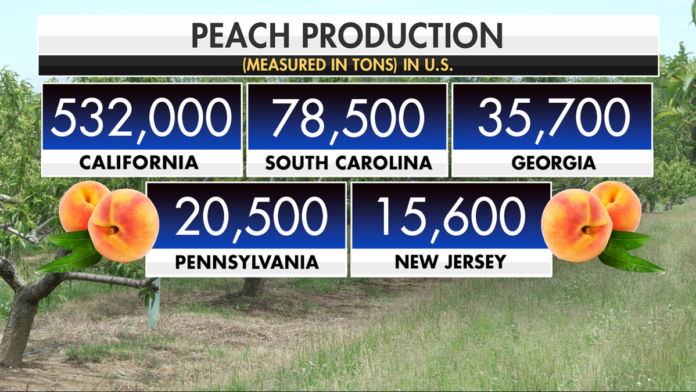
The damage has been particularly severe among New Jersey’s iconic tree fruit crops. State officials have warned that consumers should prepare for an almost complete absence of locally grown peaches this summer, a stunning development for a state that has long been recognized as one of the nation’s premier peach-producing regions. For generations, New Jersey peaches have served as both an economic driver and a source of state pride, drawing visitors to roadside farm markets, pick-your-own orchards, and seasonal festivals throughout the summer months.
This year, however, many of those familiar traditions may look dramatically different.
Growers across multiple counties have reported catastrophic losses. Some farms have seen entire peach harvests destroyed before fruit could even begin forming. Asian pear crops have been wiped out in numerous locations. Cherry orchards experienced similarly devastating outcomes. The freeze arrived so suddenly and with such intensity that many growers had little opportunity to implement protective measures capable of preventing widespread damage.
The impact extends far beyond peaches alone.
Throughout South Jersey and the Outer Coastal Plain region, vineyards that typically spend the spring nurturing delicate new growth into future vintages watched as emerging vines were damaged or destroyed. Some vineyard managers report that early-season growth was effectively erased within days. For wineries, the consequences extend well beyond a single growing season. Wine production operates on long timelines, with many products requiring months or even years of aging before reaching consumers. A poor growing season today can influence inventory, production schedules, and financial planning well into the future.
Berry producers also suffered major setbacks. New Jersey’s nationally recognized blueberry industry experienced significant losses, while strawberry growers across the state reported damage that will reduce yields and limit availability during what should be peak harvest periods. Apple orchards, another cornerstone of New Jersey agriculture, sustained substantial injury as blossoms and developing fruit were exposed to temperatures they simply could not survive.
The timing of the freeze explains much of its destructive power.
Cold temperatures alone do not necessarily devastate agricultural crops. Many fruit trees and vines are capable of surviving harsh winters while dormant. The problem occurs when warm weather accelerates development and encourages plants to break dormancy prematurely. Once buds open and flowers emerge, crops become dramatically more vulnerable to temperature swings. A freeze occurring weeks earlier might have produced minimal damage. A freeze arriving after fruit had fully developed might have been less destructive. Instead, New Jersey experienced a worst-case scenario in which vulnerable crops were caught directly between rapid growth and extreme cold.
The consequences are now visible throughout the state.
Farmers who anticipated strong harvests are instead facing empty orchards. Wineries are recalculating production forecasts. Agricultural suppliers, seasonal workers, distributors, and local businesses connected to the farming economy are all preparing for ripple effects that may continue throughout the year.
Compounding the crisis is the reality that this weather disaster arrived amid an already challenging operating environment. Farmers throughout New Jersey have spent recent years contending with rising fuel prices, escalating fertilizer costs, increasing labor expenses, supply chain disruptions, and periods of drought that placed additional stress on crops and irrigation systems. For many operations, the freeze represents not an isolated setback but another major blow layered on top of existing financial pressures.
The economic implications reach far beyond individual farms.
Agriculture remains a critical component of New Jersey’s economy despite the state’s highly developed suburban and urban landscape. The Garden State consistently ranks among the nation’s leading producers of numerous specialty crops, and local agriculture supports thousands of jobs across farming, transportation, processing, tourism, hospitality, and retail sectors. Agritourism alone generates substantial economic activity as visitors travel throughout the state to visit orchards, wineries, farm markets, and seasonal attractions.
A reduced harvest affects all of those interconnected industries.
Governor Mikie Sherrill has responded by formally requesting a federal agricultural disaster designation from the United States Department of Agriculture. Such a designation could unlock emergency assistance programs, low-interest disaster loans, and financial relief mechanisms intended to help stabilize farming operations facing extraordinary losses. Agricultural leaders throughout the state have voiced strong support for federal intervention, arguing that the scale of the disaster exceeds what many farms can absorb independently.
The request reflects the growing recognition that weather volatility is becoming an increasingly significant challenge for agricultural producers nationwide. Climate-related extremes, including sudden temperature swings, prolonged droughts, intense rainfall events, and unseasonable freezes, are creating new risks that traditional farming models were not necessarily designed to withstand.
Yet amid the challenges, New Jersey agriculture remains resilient.
State agricultural officials, industry organizations, and farming advocates are encouraging consumers to support local farms throughout the remainder of the season. While many tree fruits have suffered catastrophic losses, numerous crops remain available. Farmers continue producing fresh vegetables, leafy greens, asparagus, squash, and other seasonal products that remain critical sources of farm revenue.
For wineries, support from consumers may prove particularly important. Many producers maintain inventories from previous harvest years that allow them to continue serving customers despite current growing season losses. Visiting tasting rooms, attending vineyard events, purchasing locally produced wines, and supporting agritourism destinations can help provide essential revenue during a difficult period.
The broader lesson emerging from the spring disaster is one of interconnectedness. New Jersey agriculture is not merely a collection of individual farms. It is a statewide ecosystem that influences local economies, food security, tourism, environmental stewardship, and community identity. When a freeze destroys a peach crop in Mercer County, the impact extends to roadside markets, restaurant menus, seasonal employees, family traditions, and regional tourism destinations throughout the state.
This summer may indeed become known as the summer without peaches. The familiar baskets of Jersey-grown fruit that typically line farm stands and farmers markets may be far scarcer than residents have come to expect. Yet the story of 2026 is larger than a single crop. It is a story about the challenges facing modern agriculture, the increasing unpredictability of weather patterns, and the determination of New Jersey farmers to continue producing despite extraordinary adversity.
As the growing season continues, the state’s agricultural community remains focused not only on recovering from historic losses but also on preserving an industry that has shaped New Jersey’s identity for generations. The orchards may be quieter this year, and the harvests smaller, but the commitment of the farmers who sustain the Garden State remains as strong as ever. Their ability to weather this storm—both literally and economically—may ultimately define the future of New Jersey agriculture for years to come.
















