
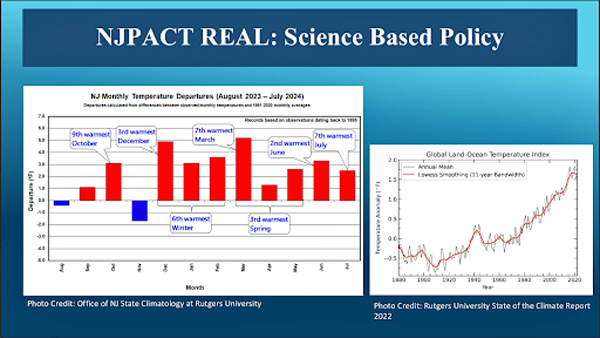

New Jersey’s ongoing effort to prepare for the realities of climate change has entered a new chapter following the decision by the Sherrill administration to delay implementation of the state’s sweeping PACT/REAL climate regulations for one year. The announcement has immediately sparked renewed debate among business leaders, environmental advocates, local governments, developers, and residents about how the Garden State should balance long-term climate resilience with economic growth, housing affordability, infrastructure investment, and community redevelopment.
At the center of the discussion is one of the most significant land-use and environmental regulatory packages ever adopted in New Jersey. Known as the New Jersey Protecting Against Climate Threats initiative, or NJ PACT, and its associated Resilient Environments and Landscapes rules, commonly referred to as REAL, the regulations represent a fundamental shift in how future development projects are planned, reviewed, and constructed across the state.
The Sherrill administration’s decision to postpone implementation until July 2027 is being welcomed by many business organizations and local officials who have argued that additional review is necessary to fully understand the potential economic impacts of the regulations. At the same time, environmental organizations warn that delaying implementation could leave communities exposed to increasing flood risks and climate-related threats at a time when New Jersey continues to experience stronger storms, rising sea levels, and more frequent extreme weather events.
The debate reflects one of the defining public policy challenges facing New Jersey in the coming decades: how to protect communities from climate threats while maintaining economic competitiveness and ensuring that future development remains viable.
The REAL regulations were originally finalized during the final days of the Murphy administration as part of a broader climate resilience strategy intended to modernize state planning requirements. For decades, land-use decisions across New Jersey relied largely on historical weather patterns and flood data when evaluating future development proposals. The new regulations take a dramatically different approach by requiring planners, engineers, developers, and government agencies to incorporate projected future climate conditions into decision-making processes.
Supporters argue that relying on historical data alone no longer reflects the realities of a changing climate. Rising sea levels, stronger precipitation events, expanding flood zones, and increased storm intensity have altered risk calculations throughout the state, particularly in coastal communities and flood-prone inland areas.
The regulations are designed to ensure that new construction and major redevelopment projects account for those realities before ground is broken rather than after disaster strikes.
One of the most widely discussed provisions is the requirement that many new developments located within designated flood-prone areas be elevated four feet above current Federal Emergency Management Agency base flood elevations. Proponents say the requirement reflects scientific projections and helps reduce future damage to homes, businesses, and public infrastructure.
The rules also require planners to consider projected sea-level rise extending through the year 2100. Under the framework established by the regulations, development proposals in certain areas must account for the possibility of approximately five feet of sea-level rise over the coming decades.
For a state with more than 130 miles of coastline, extensive tidal waterways, and thousands of homes and businesses located in vulnerable areas, these projections have significant implications.
The regulations also establish new inundation risk zones based on future flooding scenarios. These zones identify locations that could face permanent or recurring flooding as sea levels continue to rise. Development restrictions within these areas are intended to reduce long-term exposure to environmental hazards and limit future public costs associated with disaster recovery and infrastructure repairs.
Additional provisions strengthen protections for wetlands, marshes, floodplains, riparian corridors, and other natural systems that help absorb stormwater and reduce flooding impacts. Environmental experts often describe these landscapes as natural infrastructure because they provide critical protection against flood events while supporting biodiversity and water quality.
While the environmental goals behind the regulations have received support from many climate scientists and conservation organizations, opposition has emerged from a wide range of stakeholders concerned about economic consequences.
The New Jersey Chamber of Commerce, along with other business organizations and industry groups, has applauded the administration’s decision to delay implementation. Business leaders argue that the regulations could significantly increase development costs at a time when New Jersey is already struggling with housing affordability challenges and rising construction expenses.
Developers note that additional elevation requirements, expanded engineering reviews, redesigns, permitting complexities, and land-use restrictions can substantially increase project costs. Those costs, they argue, ultimately translate into higher housing prices, increased rents, and reduced investment activity.
The concerns are particularly acute in communities facing state affordable housing obligations.
Municipal leaders across New Jersey have expressed concerns that stricter development limitations could reduce the amount of available land suitable for future housing construction. If fewer sites qualify for development, local officials argue that meeting affordable housing requirements could become increasingly difficult.
The debate is especially significant because New Jersey remains one of the most densely populated states in the nation while simultaneously facing ongoing housing shortages in many regions.
Business groups have also raised concerns about redevelopment projects, which have become an increasingly important component of New Jersey’s economic strategy. Many communities are focused on revitalizing former industrial properties, underutilized commercial corridors, and aging infrastructure. Developers involved in those projects argue that additional regulatory burdens could discourage investment and slow revitalization efforts.
Supporters of the delay believe the additional review period creates an opportunity to develop a framework that addresses environmental objectives without unnecessarily restricting economic growth.
Governor Mikie Sherrill’s administration has indicated that the one-year pause will include a sixty-day public review process designed to gather feedback from a broad range of stakeholders. The goal, according to administration officials, is to evaluate potential modifications that preserve climate resilience objectives while addressing concerns raised by municipalities, businesses, property owners, and development professionals.
The announcement has been welcomed by many local government leaders who view the review period as an opportunity to better understand how the regulations would affect specific communities.
New Jersey’s geography varies dramatically from region to region. Coastal towns face different challenges than inland suburbs. Urban redevelopment districts have different priorities than agricultural communities. As a result, many local officials have argued that flexibility and regional considerations should play a larger role in implementation.
Environmental advocates, however, have voiced strong opposition to the delay.
Organizations focused on climate resilience argue that New Jersey is already experiencing many of the impacts the regulations were designed to address. Rising flood insurance costs, recurrent flooding, stronger coastal storms, and infrastructure damage have become increasingly common throughout many parts of the state.
Advocates warn that postponing implementation leaves communities vulnerable at a time when climate risks continue to grow.
For many environmental groups, the regulations represent not merely a planning exercise but a public safety initiative. They argue that stronger standards today can prevent billions of dollars in future losses while protecting homes, businesses, and critical infrastructure from increasingly severe weather events.
The disagreement highlights a broader challenge facing policymakers across the nation.
Climate adaptation often requires significant investments and changes to traditional development practices. While many stakeholders agree on the importance of resilience, debates frequently emerge regarding how quickly changes should be implemented, how costs should be distributed, and how competing priorities should be balanced.
New Jersey occupies a particularly important position within that national conversation.
Few states face the combination of climate risks, development pressure, population density, and infrastructure demands present in the Garden State. Coastal communities continue confronting sea-level rise concerns while inland regions experience increasing flood events associated with stronger rainfall patterns. At the same time, economic growth, housing production, transportation investments, and redevelopment initiatives remain critical priorities.
The coming year is likely to become one of the most consequential periods in the evolution of New Jersey’s climate resilience policies.
Public hearings, stakeholder meetings, technical reviews, and policy discussions will shape the future of regulations that could influence development patterns for decades. Business leaders, environmental advocates, local governments, engineers, planners, developers, and residents will all have opportunities to participate in determining how New Jersey prepares for future climate challenges.
What remains clear is that both sides of the debate recognize the importance of the issues involved.
Few dispute the need to protect communities from environmental threats. Likewise, few dismiss the importance of maintaining economic growth, expanding housing opportunities, and supporting redevelopment efforts. The challenge lies in finding a framework capable of advancing all of those goals simultaneously.
As New Jersey continues navigating the complex intersection of climate resilience, economic development, environmental stewardship, and housing affordability, the delayed implementation of the PACT/REAL regulations marks not an end to the conversation but the beginning of a new and critical phase.
The decisions made over the next year will help define how the Garden State balances environmental responsibility with economic opportunity and how future generations experience life, work, and development in one of America’s most dynamic and densely populated states.
















