Home Blog Page 6

João Bosco Quartet

0

João Bosco at McCarter Theatre Signals a Landmark Night for New Jersey’s Global Music Scene as Brazilian Legend Launches U.S. Tour in Princeton – Opening Set by Gabriele Leite – In association with Brazil LAB 

April 23 @ 8:00 AM 5:00 PM

New Jersey’s music calendar continues to expand in both scope and sophistication, and this weekend, it reaches a rare level of international significance. On Saturday, April 25, the João Bosco Quartet takes the stage at McCarter Theatre Center, marking the official U.S. tour launch of one of the most influential figures in modern Brazilian music. The performance, held inside Matthews Theatre, is more than a concert—it is a cultural moment that connects New Jersey audiences directly to the legacy, evolution, and ongoing vitality of Música Popular Brasileira.

Bosco arrives in Princeton at a milestone point in his career. Celebrating his 80th birthday and more than five decades as a recording artist, composer, and performer, he continues to operate at a level that reflects both mastery and creative momentum. His presence on a New Jersey stage underscores the state’s growing ability to attract globally significant artists, reinforcing its position as a destination for high-caliber international music programming. For audiences following Explore New Jersey’s Music coverage, this performance represents a convergence of legacy and contemporary relevance that rarely occurs in a single evening.

To understand the weight of the moment, it is necessary to place Bosco within the broader arc of Brazilian music history. Recognized with a Latin GRAMMY Lifetime Achievement Award, he stands among the defining figures of Música Popular Brasileira, a genre that has shaped global perceptions of Brazilian culture for decades. His early career was shaped by two of the most influential voices in the genre’s development—Vinicius de Moraes and Antônio Carlos Jobim—figures who recognized in Bosco a distinct musical voice capable of bridging tradition and innovation.

That voice has always been defined by synthesis. Bosco’s music does not adhere to a single style; it moves fluidly between samba and bossa nova, jazz and Afro-American rhythmic structures, while incorporating elements drawn from his Lebanese heritage and other global influences. His guitar playing, known for its intricate rhythmic layering, operates as both a percussive and melodic instrument, creating a foundation that allows his expressive vocal style to move with precision and emotional range. This combination has made his work both technically respected and widely accessible, a balance that few artists maintain over such an extended career.

Central to Bosco’s legacy is his long-standing songwriting partnership with poet Aldir Blanc, a collaboration that produced some of the most enduring compositions in Brazilian music. Their work has been recorded and interpreted by iconic performers, including Elis Regina, whose interpretations helped bring these songs to international prominence. Following Regina’s passing, Bosco stepped more fully into the role of performer, carrying forward the repertoire with a level of authenticity and authority that has sustained his relevance across generations.

The Princeton performance reflects that continuity while also highlighting the collaborative nature of Bosco’s current work. He is joined by a quartet that represents a cross-section of elite musicianship within Brazilian and international jazz circles. Ricardo Silveira brings a complementary guitar voice that expands the harmonic landscape, while Guto Wirtti anchors the ensemble with precision and depth. On drums, Kiko Freitas provides rhythmic structure that aligns seamlessly with Bosco’s complex patterns, creating a cohesive sound that is both technically sophisticated and dynamically engaging.

The evening is structured to provide a full-spectrum experience, beginning with an opening set by Gabriele Leite, a rising figure in classical guitar who has already achieved significant recognition, including placement on the Forbes Under 30 list. Her performance will feature selections from her album Territórios, including works by Heitor Villa-Lobos and Sérgio Assad, composers whose contributions to classical and contemporary guitar repertoire have shaped the instrument’s global identity. The inclusion of Leite at the start of the program creates a generational dialogue, linking the foundational elements of Brazilian music to its emerging voices.

The experience extends beyond the main stage. Following Bosco’s performance, the Lockwood Lobby at McCarter transforms into an interactive cultural space with a live roda de samba led by Samb’in Princeton. This transition from formal concert setting to participatory gathering reflects the communal nature of Brazilian music, where performance and audience engagement are often inseparable. The roda format—musicians gathered around a central table, inviting attendees to sing, clap, and move with the rhythm—creates an environment that dissolves the traditional boundaries between artist and audience.

Samb’in Princeton itself represents a localized expression of that tradition. What began as informal backyard sessions has grown into a recognized community gathering, bringing together musicians and participants in a format that emphasizes inclusion and shared experience. Its presence at McCarter reinforces the idea that global music traditions can be both preserved and reinterpreted within New Jersey’s own cultural framework.

This layered programming is a reflection of how music events in the state are evolving. It is no longer sufficient to present a single performance; the expectation is for a complete experience that engages audiences across multiple levels—technical, emotional, and social. The João Bosco concert meets that expectation, offering a structure that moves from classical interpretation to contemporary performance to communal celebration, all within a single evening.

From an artistic perspective, the significance of Bosco’s appearance lies not only in his past achievements but in his continued relevance. At 80, he remains an active, evolving artist, capable of delivering performances that resonate with both longtime listeners and new audiences. His ability to maintain that connection speaks to the enduring power of his work and the universality of the musical language he has developed.

For New Jersey, the event reinforces a broader narrative about the state’s role in the cultural landscape. By hosting artists of this caliber and creating environments that support both performance and participation, venues like McCarter Theatre Center are contributing to a music ecosystem that is increasingly diverse, internationally connected, and artistically ambitious. The presence of João Bosco in Princeton is not an isolated booking—it is part of a larger pattern that continues to elevate the state’s profile within the global music community.

As the performance approaches, the anticipation reflects more than the arrival of a legendary artist. It reflects the alignment of place, moment, and audience, creating an opportunity for New Jersey to engage directly with a musical tradition that has influenced generations. On April 25, that connection becomes tangible, as one of the defining voices of Brazilian music brings his work, his history, and his ongoing evolution to a stage that continues to expand its reach and significance.

McCarter Theatre Center

609-258-2787

View Organizer Website

McCarter Theatre Center

91 University Place, Princeton, NJ
Princeton, New Jersey 08540 United States
+ Google Map
609-258-2787
View Venue Website

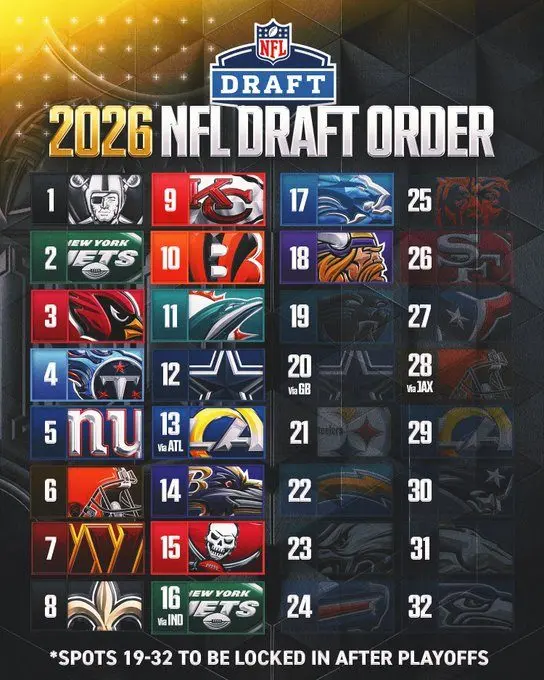
2026 NFL Draft Opens Tonight with New York Giants, New York Jets, and Philadelphia Eagles Positioned to Reshape the Region’s Football Future

The 2026 NFL Draft begins tonight at 8 p.m. ET in Pittsburgh, setting the stage for one of the most consequential first rounds in recent memory for teams tied to the New Jersey and greater regional football landscape. With multiple top-10 selections, aggressive front-office strategies, and a draft class defined by high-impact defensive talent and offensive playmakers, the New York Giants, New York Jets, and Philadelphia Eagles enter the night not as observers, but as central figures who will shape the early trajectory of the board.

This year’s draft carries added weight. It is not simply about roster improvement—it is about identity, direction, and how each organization chooses to position itself within an increasingly competitive NFC landscape. For fans tracking developments through Explore New Jersey’s Football coverage, the first round represents a convergence point where strategy, speculation, and execution meet in real time.

The Giants arrive as the most intriguing storyline of the night, driven by a bold decision that has already redefined their draft capital. The trade sending All-Pro defensive tackle Dexter Lawrence to Cincinnati in exchange for the No. 10 overall pick has transformed their position from passive participant to aggressive architect. Holding both the No. 5 and No. 10 selections, the Giants now control two of the most valuable assets in the draft, creating flexibility that few teams possess.

The strategy is clear in its structure, even as the exact execution remains fluid. General manager Joe Schoen is expected to prioritize defensive reinforcements while simultaneously adding offensive support for second-year quarterback Jaxson Dart. The dual-pick structure allows the Giants to address multiple needs without compromise, and the names connected to those selections reflect a focus on impact players who can contribute immediately.

At No. 5, the expectation centers on elite defensive prospects. Ohio State safety Caleb Downs has emerged as a leading candidate, offering a combination of range, instincts, and physicality that aligns with the Giants’ need for a stabilizing presence in the secondary. Linebacker Sonny Styles, also from Ohio State, presents an alternative path—an athletic, versatile defender capable of influencing multiple phases of the game. Both options signal a commitment to strengthening the defensive core with players who can anchor the unit for years to come.

The No. 10 pick introduces a different dimension, where offensive playmaking becomes a viable priority. Arizona State wide receiver Jordyn Tyson has generated increasing momentum as a potential selection, bringing speed, route precision, and the ability to stretch defenses vertically. For a team looking to maximize the development of its young quarterback, adding a dynamic receiving threat at this stage would represent a calculated investment in offensive balance.

Timing also plays a role. The Giants are projected to make their first selection early in the evening, placing them at the center of the draft’s initial wave of decisions. With two top-10 picks, their choices will not only define their own direction but influence the options available to teams selecting immediately afterward.

The Jets, meanwhile, enter the draft with a different kind of clarity. Holding the No. 2 overall pick, they are positioned to secure one of the premier defensive talents in the class, with the focus firmly on the edge position. The debate has narrowed to two prospects who represent distinct profiles but similar upside.

Arvell Reese of Ohio State is widely viewed as the high-ceiling option, an explosive athlete with the versatility to impact both the pass rush and coverage schemes. His physical tools and range evoke comparisons to some of the league’s most dynamic defensive players, making him an appealing choice for a team looking to elevate its defensive front.

David Bailey of Texas Tech offers a contrasting profile—less projection, more immediate production

Philadelphia Flyers Seize 3-0 Series Lead Over Pittsburgh as Identity Shift Powers Franchise Toward First Playoff Breakthrough in Six Years

The Philadelphia Flyers are no longer searching for identity—they are imposing one. After a commanding 5–2 victory over the Pittsburgh Penguins in Game 3 of the Eastern Conference Quarterfinals, the Flyers have taken a decisive 3-0 series lead and positioned themselves on the edge of their first playoff series win in six years. The moment carries added weight, not only because of the standings, but because of how it is being achieved. For the first time in nearly a decade, playoff hockey has returned to Philadelphia with a team that is not just competing, but dictating pace, tone, and physicality in a way that feels both familiar and newly constructed.

There are inevitable comparisons to the “Broad Street Bullies” era, and they are warranted on the surface. The Flyers are playing with edge, size, and a willingness to engage physically in every zone. But what is happening in this series goes deeper than nostalgia. This is not a replication of the past—it is a modern evolution built for the current game.

The Flyers are not only playing with force; they are skating with speed, executing with structure, and maintaining control of the flow in a way that aligns with today’s highest levels of international competition.

That shift has been building, and it was clear even before the postseason began. The belief that the Flyers needed to evolve into something more aggressive, more unified, and more confident in their style was not abstract. It was direct. The idea was simple: play bigger, skate faster, control the game, and most importantly, enjoy it. That combination—physical presence, speed, and freedom—is now visible in every sequence. The team is operating on all four lines with cohesion, and the results are showing up not just on the scoreboard, but in the way the game is unfolding.

Game 3 was the clearest example yet. The turning point came in the second period, when a massive on-ice scrum—sparked by Travis Konecny—reset the tone of the game entirely. Eleven minor penalties were assessed, and for a moment, nearly half of both rosters were off the ice. What followed was not chaos for the Flyers—it was opportunity. Immediately after the stoppage, the team exploded with three goals on just four shots, a sequence that transformed a competitive game into a controlled outcome.

Trevor Zegras initiated the surge with a power-play one-timer that cut through the Penguins’ defensive structure. Rasmus Ristolainen followed with a goal that reinforced the Flyers’ presence in the offensive zone, and Nick Seeler added another to complete a stretch that effectively broke the game open. This was not random scoring; it was the product of sustained pressure, positioning, and a willingness to capitalize on momentum the moment it shifted.

The depth of the roster continues to be a defining factor. Rookie Porter Martone has made an immediate and measurable impact, recording an assist in Game 3 and becoming one of the few teenagers in recent history to register points in his first three playoff games. His presence adds another layer to a lineup that is already benefiting from increased size, physical engagement, and overall balance. Noah Cates contributed a critical insurance goal in the third period, and Owen Tippett closed the game with an empty-net finish, reinforcing the team’s ability to execute across all situations.

Goaltending has also played a central role in the Flyers’ control of the series. Dan Vladar delivered a strong performance, stopping 28 shots and maintaining a clear edge in net throughout the game. His positioning and composure have allowed the Flyers to play aggressively without sacrificing defensive stability. However, the focus now shifts to his health. Following a third-period collision with Bryan Rust, Vladar was visibly in discomfort, and his status moving forward remains uncertain. Head coach Rick Tocchet acknowledged that the goaltender is “banged up,” and evaluations are ongoing.

In response, the Flyers have already taken proactive steps, recalling multiple players from the Lehigh Valley Phantoms, including goaltender Carson Bjarnason and defenseman Hunter McDonald. These moves reflect both caution and preparation, ensuring that the team is equipped to maintain its level regardless of roster adjustments. Additional injury considerations remain, with Cam York continuing to play through an upper-body issue and Emil Andrae listed as day-to-day.

Despite those concerns, the broader picture remains firmly in the Flyers’ control. What stands out in this series is not just the results, but the way the team is managing the game itself. There are sequences where the pace slows, where positioning becomes precise, and where the flow feels almost deliberate—reminiscent of international play, where control and awareness dictate outcomes. At one point earlier in the series, the Flyers generated a two-on-zero break while shorthanded, a moment that encapsulates both their opportunism and their ability to read the game at a higher level.

This is where the transformation becomes most evident. The Flyers are not reacting—they are anticipating. They are not chasing the game—they are shaping it. They look bigger, stronger, and more composed than their opponent, but they are also faster and more fluid. That combination is what makes this version of the team different from past iterations that relied too heavily on a single dimension.

For those following the team through Explore New Jersey’s Philadelphia Flyers coverage, the shift is clear. This is a roster that has moved beyond rebuilding narratives and into execution. The pieces are no longer theoretical—they are functioning together in real time, delivering results in the most demanding environment the sport offers.

The opportunity now is immediate. With a 3-0 series lead, the Flyers return home with a chance to complete the sweep and secure their first playoff series victory in six years. The stakes are significant, but the approach does not appear likely to change. The identity that has carried them to this point—physical, fast, structured, and confident—has been established through three games, and it is precisely what has put them in position to advance.

What happens next will determine how far this run can go, but one conclusion is already unavoidable. The Flyers are no longer trying to rediscover who they are. They have defined it, they are executing it, and for the first time in years, they are doing it at a level that suggests they can compete with anyone.

Explore New Jersey’s Top Picks for the Weekend Beginning April 23, 2026: A Statewide Showcase of Music, Theatre, Culture, and Live Performance at Its Absolute Peak

New Jersey steps into the final weekend of April 2026 with a schedule that doesn’t just reflect activity—it defines it. Across concert halls, theaters, cultural institutions, and intimate performance spaces, the state delivers a fully realized cross-section of what makes its arts and entertainment ecosystem one of the most dynamic in the country. From globally influenced chamber music and major theatrical productions to nationally recognized touring acts, community-driven performances, and high-level comedy, this weekend presents a rare convergence of scale, diversity, and artistic intent. For audiences across the region, this is not a passive calendar—it’s an invitation to engage with New Jersey at its most alive.

Those looking to track everything unfolding across the state can access the full lineup through Explore New Jersey’s Events Calendar, but what follows is a definitive editorial selection of the most compelling experiences beginning Thursday, April 23 and carrying through Sunday, April 26.

The weekend opens with a refined and globally conscious take on classical performance as Kean University presents “A Musical Mosaic” at Enlow Recital Hall in Hillside. This is not a traditional chamber program; it is a deliberate reimagining of the form, blending cultural influences and stylistic approaches into a single cohesive experience. It reflects a broader trend in New Jersey’s academic and professional arts spaces, where the boundaries of classical music are actively being expanded and redefined for contemporary audiences.

At the same time, the state’s dance community asserts its importance through the Carolyn Dorfman Dance REACH Gala in Maplewood. Hosted at the Maplewood Country Club, this benefit event represents more than performance—it is a cornerstone of arts advocacy and community engagement. Dorfman’s work has long bridged artistic excellence with social impact, and this annual gathering reinforces how New Jersey continues to support organizations that operate at that intersection.

Theater takes on a dominant presence beginning Thursday, led by New Jersey Repertory Company’s production of “Sins of the Mother” in Long Branch. Running through the weekend, the production leans into psychological tension and intimate storytelling, a hallmark of the company’s programming. In parallel, Hackettstown’s Sitnik Theatre presents “Little Women,” offering a fresh interpretation of a literary classic that continues to resonate across generations. Meanwhile, in Williamstown, “Jesus Christ Superstar” returns to the stage, reaffirming its status as one of the most enduring and influential rock operas ever produced. Together, these productions highlight the range of theatrical experiences available within a single state—experimental, classical, and iconic.

Friday introduces a powerful shift toward live music and cultural expression. The String Queens bring their signature blend of orchestral precision and contemporary soul, creating performances that move fluidly between genres and emotional registers. In Tuckerton, Jonatha Brooke delivers a masterclass in songwriting and intimate performance at the Lizzie Rose Music Room, a venue that continues to prove how impactful small-room shows can be when paired with world-class talent.

Princeton’s McCarter Theatre becomes the setting for a landmark moment as Sweet Honey In The Rock celebrates its enduring legacy. Few ensembles carry the historical and cultural weight of this group, and their appearance in New Jersey underscores the state’s ability to attract artists whose work transcends entertainment and enters the realm of cultural preservation.

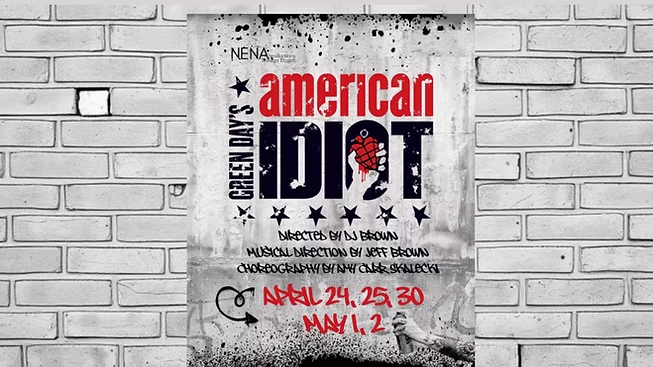
At the State Theatre New Jersey in New Brunswick, Shen Yun’s multi-day run expands the weekend’s global reach. With its focus on classical Chinese dance and storytelling, the production brings international scale and visual spectacle into the state’s already diverse programming landscape. Simultaneously, the Jersey Shore Arts Center in Ocean Grove stages Green Day’s “American Idiot,” a production that channels the energy of punk rock into theatrical form, bridging music and narrative in a way that continues to resonate with modern audiences.

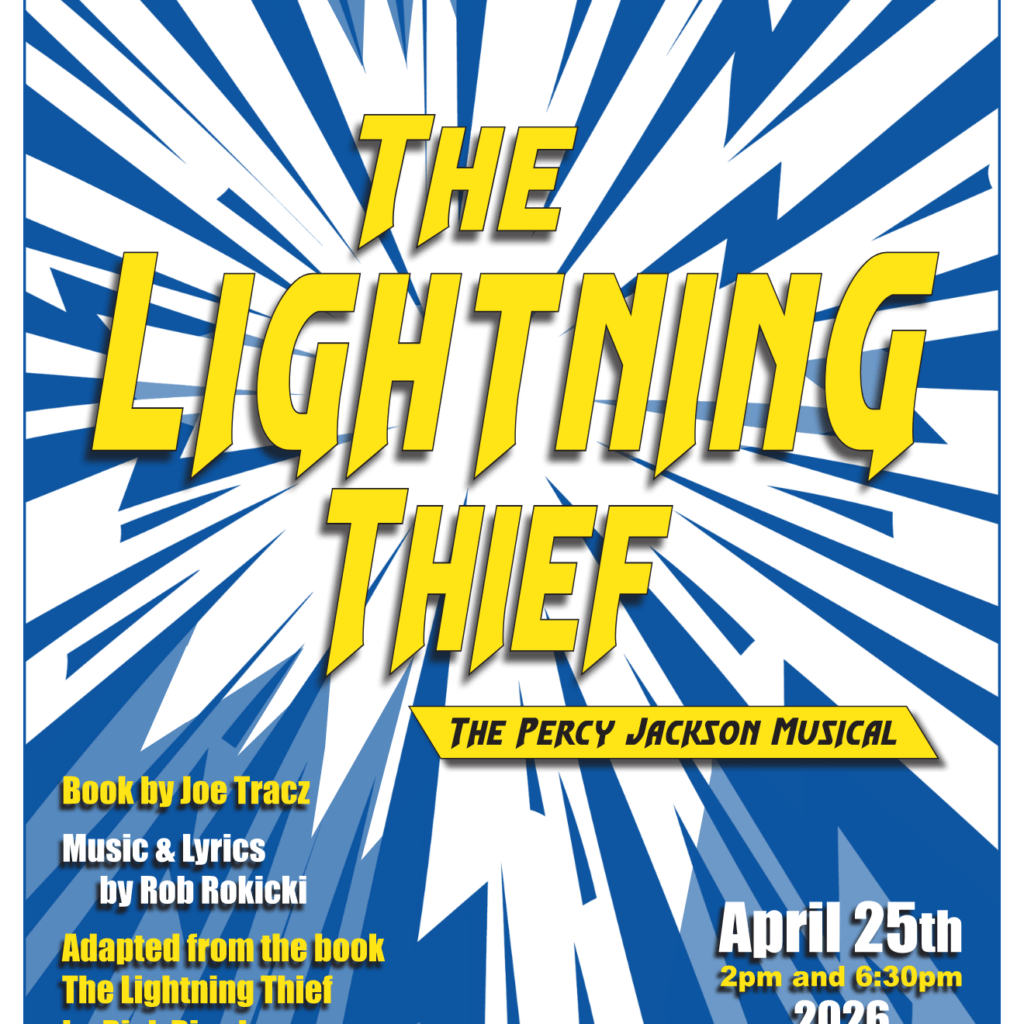
Saturday is where the weekend fully accelerates. The breadth of programming becomes unmistakable, beginning with educational initiatives like composer Garrett Fisher’s workshop at the Morris Museum’s Bickford Theatre. This is a direct investment in the next generation of artists, offering insight into the creative process at a professional level. At the same time, Bordentown Regional High School’s production of “The Lightning Thief: The Percy Jackson Musical” demonstrates the depth of talent being cultivated within New Jersey’s school systems, where student performers are delivering productions of remarkable scale and quality.

Classical music reaches a defining moment in Morristown as Music in the Somerset Hills celebrates its 15th anniversary with Bach’s Mass in B Minor at St. Mary’s Abbey Church. This is not simply another concert—it is a milestone performance of one of the most demanding and revered works in the choral repertoire, positioned within an environment that enhances its emotional and acoustic impact.

Comedy and live entertainment expand the weekend’s reach even further. Preacher Lawson brings his nationally recognized stand-up to Rahway’s Union County Performing Arts Center, while Corey Rodrigues headlines Hackensack Performing Arts Center with a performance that reflects the rising strength of New Jersey’s comedy circuit. These shows complement a music lineup that is equally robust, with Davy Knowles returning to the Lizzie Rose Music Room, Rhett Miller performing in Montclair, and Kashmir: The Spirit of Led Zeppelin delivering a full-scale tribute experience in Newton that celebrates one of rock’s most influential catalogs.

Wayne’s Shea Center for Performing Arts adds another layer with “Harry Chapin’s Greatest Stories Live,” blending storytelling and music into a format that honors legacy while engaging contemporary audiences. Each of these performances contributes to a broader narrative: New Jersey is not reliant on a single genre or audience—it is operating across all of them simultaneously.

Sunday closes the weekend with a focus on community, legacy, and connection. “Puppetonia! The Missing Magician” in Long Branch provides an interactive theatrical experience designed for families, reinforcing the importance of accessible arts programming. The NJ All-State Band Gala in Wayne places the spotlight on student musicians at the highest level, offering a platform that celebrates discipline, talent, and statewide collaboration.

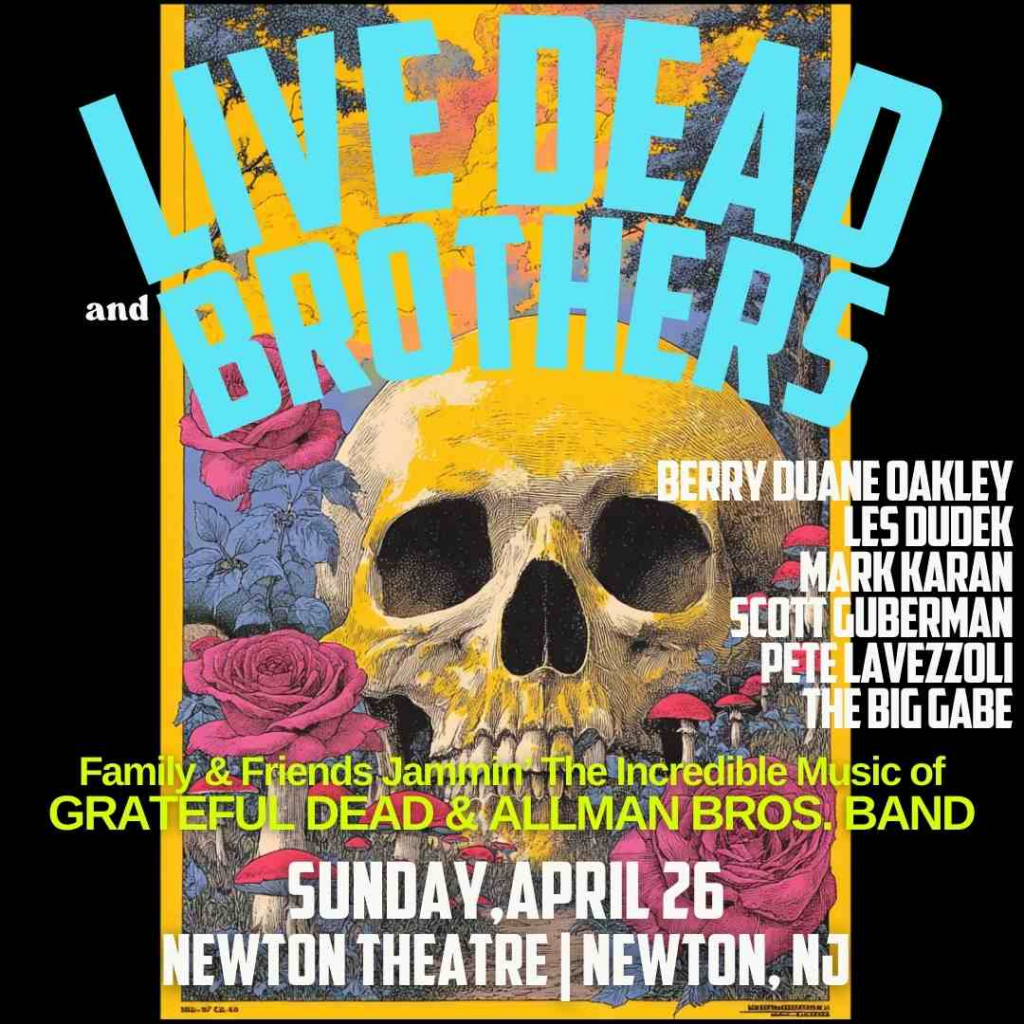
The weekend culminates with two performances that speak directly to the depth of New Jersey’s live entertainment identity. Broadway star Eva Noblezada brings her voice and storytelling to Enlow Recital Hall, delivering a performance that bridges theater and concert performance with remarkable intimacy. At the same time, Live Dead & Brothers take the stage at The Newton Theatre, channeling the improvisational spirit of the Grateful Dead and the Allman Brothers into a live experience that resonates deeply with the state’s long-standing jam-band culture.

Taken together, this weekend is not simply a collection of events—it is a comprehensive demonstration of New Jersey’s cultural infrastructure operating at full capacity. The geographic spread alone—from Princeton to Newton, from Long Branch to Montclair—underscores the accessibility of high-level programming across the state. The diversity of offerings ensures that audiences are not limited by genre, format, or scale. Whether the draw is a globally recognized production, a local theater performance, a major musical act, or an emerging artist workshop, the common thread is quality and intention.

For those planning their weekend, the takeaway is clear: New Jersey is not a secondary market for the arts—it is a destination in its own right. The convergence of talent, venues, and programming this weekend reflects a state that continues to invest in its cultural identity while delivering experiences that stand alongside any major metropolitan center.

Touch-A-Truck Events Take Over New Jersey in 2026 as Communities Turn Hands-On Experiences into One of the State’s Most Engaging Family Attractions

Across New Jersey this spring and into early summer, one of the most effective and widely embraced community event formats is returning with renewed momentum. The 3rd Annual Touch-A-Truck series—now firmly established across multiple municipalities—has evolved into more than a simple family outing. It has become a statewide movement that blends education, accessibility, and interactive entertainment into a format that consistently draws families, local organizations, and public service departments into a shared, high-impact experience.

At its core, the appeal is immediate and tangible. Children are invited to step beyond observation and into direct interaction with the vehicles that shape everyday life—fire engines, police cruisers, construction equipment, sanitation trucks, and specialized municipal machinery. These are not static displays. They are fully immersive environments where participants can sit in driver’s seats, explore controls, and engage directly with the professionals who operate them. That level of access transforms what might otherwise be abstract concepts—public safety, infrastructure, civic services—into something real, visible, and memorable.

The 2026 calendar reflects just how widespread and structured these events have become. In Jersey City, the 3rd Annual Touch-A-Truck event scheduled for April 26 is designed not only as an interactive experience but also as a meaningful community initiative aligned with Autism Acceptance Month. By incorporating face painting, music, crafts, and inclusive programming, the event demonstrates how the format can be adapted to serve broader social and educational goals. It is a model that other municipalities are increasingly adopting, ensuring that accessibility and engagement remain central priorities.

In Hasbrouck Heights, the upcoming May 16 event expands the scale, featuring more than 20 vehicles alongside live demonstrations such as truck lifts and coordinated displays of municipal equipment. The addition of food trucks and structured programming elevates the event into a full-day destination, reinforcing its role as both a community gathering and a regional draw. Burlington Township is similarly leveraging the format through collaboration between police and public works departments, using the event as an opportunity to strengthen relationships between residents and the services that support them.

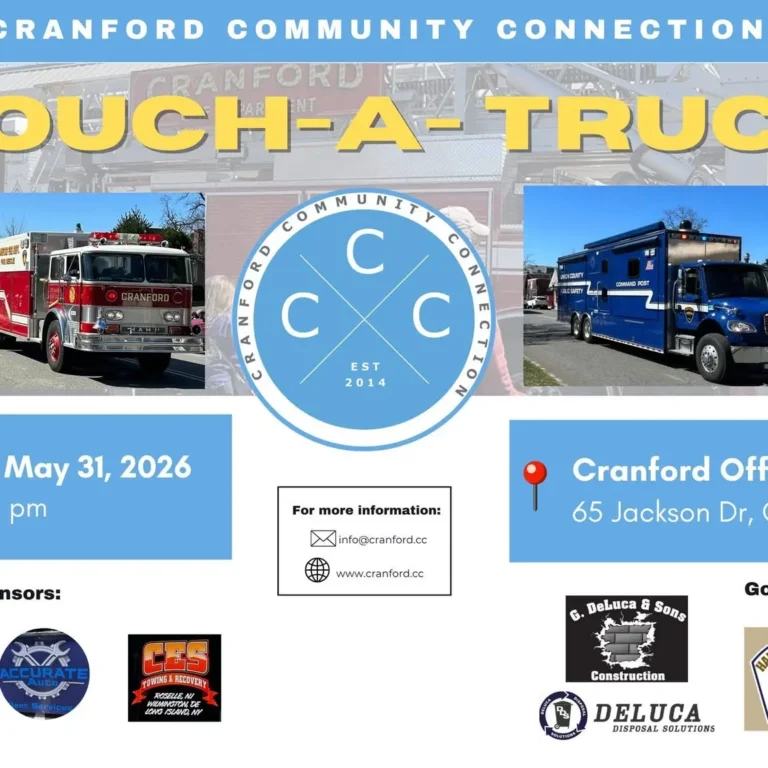
Cranford’s late-May event and Little Falls’ early June edition continue that trajectory, each adding their own layers of programming. In Little Falls, the inclusion of elements like a bounce house and participation from children’s educational organizations introduces an expanded definition of what a Touch-A-Truck event can be. It is no longer limited to vehicles; it becomes a hybrid experience that integrates play, learning, and community engagement into a single, cohesive environment.

Even outside the “official” third annual designations, similar events are reinforcing the format’s momentum across the state. In Wall Township, a large-scale Touch-A-Truck event tied to charitable fundraising demonstrates how these gatherings can support broader causes, while still delivering the interactive experience families expect. In Paterson, the integration of Autism Acceptance programming, free transportation access, and extended event hours reflects a deliberate effort to remove barriers and expand participation across diverse communities.

What distinguishes the 2026 cycle is not just the number of events, but the refinement of the experience itself. Organizers have responded to community feedback by introducing sensory-friendly adaptations, including designated quiet hours where sirens, horns, and flashing lights are minimized. These adjustments are not minor—they represent a fundamental shift toward inclusivity, ensuring that children with sensory sensitivities can participate comfortably. This evolution has broadened the audience significantly, reinforcing the idea that these events are designed for all families, not just a subset.

Cost accessibility also remains a defining characteristic. The majority of Touch-A-Truck events across New Jersey are free to attend, with some encouraging optional donations to local charities or nonprofit organizations. This structure ensures that the events remain widely accessible while still supporting community initiatives, creating a balanced model that benefits both participants and local causes.

From a broader perspective, the rise of Touch-A-Truck events aligns directly with the expanding demand for interactive, experience-driven activities across the state. As highlighted throughout Explore New Jersey’s Activities & Fun coverage, families are increasingly seeking out events that combine entertainment with meaningful engagement. Passive experiences are giving way to participatory formats, where attendees are not just spectators but active participants. Touch-A-Truck fits squarely within that shift, offering a format that is both scalable and adaptable to different communities.

There is also a deeper civic dimension at play. By creating direct interaction between residents and first responders, public works teams, and municipal staff, these events foster a level of familiarity and trust that extends beyond the day itself. Children who climb into a fire truck or speak with a police officer are forming early impressions that can shape their understanding of public service for years to come. For municipalities, that connection is invaluable, reinforcing the role of local institutions as accessible and engaged components of community life.

The continued expansion of these events suggests that they are moving toward permanent status within New Jersey’s annual programming calendar. What began as a novel concept has matured into a reliable, high-impact format that delivers consistent attendance, strong community feedback, and measurable engagement. Each iteration builds on the last, introducing new features, refining logistics, and expanding reach.

As spring transitions into summer, the momentum behind Touch-A-Truck events shows no signs of slowing. With multiple towns hosting their third annual editions and others introducing new variations, the format is firmly embedded within the state’s cultural and recreational landscape. It represents a rare combination of simplicity and effectiveness—an idea that resonates immediately, executes cleanly, and delivers value across multiple dimensions.

In 2026, that combination is translating into one of the most visible and widely embraced community event trends in New Jersey, reinforcing the state’s ability to turn straightforward concepts into meaningful, large-scale experiences that continue to grow year after year.

New Jersey Craft Beer Surges into Spring with Major Festivals, Brewery Milestones, and Industry Shifts Driving Momentum Across the State

New Jersey’s craft beer scene is entering one of its most active and defining stretches of the year, as late April transitions into May with a dense calendar of festivals, milestone celebrations, and meaningful industry developments. Across the state, breweries are not only showcasing new releases and hosting community-driven events, but also navigating ownership changes and broader shifts that continue to reshape the regional brewing landscape. The result is a moment that reflects both the maturity of New Jersey’s craft beer movement and its continued capacity for growth, reinvention, and cultural relevance.

At the center of this week’s activity is a milestone that underscores the longevity and evolution of the state’s brewing sector. River Horse Brewing Co. marks its 30th anniversary this Saturday, April 25, with a large-scale celebration at its Ewing facility. Three decades in operation places River Horse among the foundational names in New Jersey craft beer, and the anniversary event is designed to reflect that legacy while looking forward. The celebration features the release of three new beers, live music, local vendors, and on-site food, creating an environment that blends product innovation with community engagement. In a state where the craft beer market has expanded significantly over the past decade, milestones like this serve as reminders of the early pioneers that helped establish the category.

That same day, the statewide momentum extends into experiential events that combine fitness, entertainment, and craft brewing. The Beer Run 5K & Craft Beer Festival in Farmingdale offers a hybrid format that begins with a run or walk through the historic Allaire Village, followed by a curated tasting experience. Participants receive multiple pours from a selection of New Jersey breweries, including well-known names such as Carton Brewing, Icarus Brewing, and Bolero Snort. Events like this highlight how the craft beer experience has evolved beyond traditional taproom settings, integrating lifestyle elements that broaden audience appeal and deepen consumer engagement.

Looking ahead into May, the scale continues to expand. The Meadowlands Beerfest, scheduled for May 16 at the Meadowlands Racetrack, is positioned as one of the largest upcoming gatherings, with more than 60 breweries and cideries expected to participate. This level of participation reflects both the depth of the state’s brewing ecosystem and the sustained demand for large-format tasting events. Similarly, the Skylands Food Truck & Craft Beer Festival on May 2 at Skylands Stadium combines culinary diversity with a wide-ranging beer selection, reinforcing the connection between New Jersey’s food and beverage sectors as complementary drivers of regional culture.

Equally important are the localized events that define the day-to-day rhythm of the craft beer community. Across New Jersey, individual breweries are maintaining active programming that keeps their taprooms central to local life. In Montclair, Montclair Brewery continues to position itself as both a cultural and social hub, hosting a full weekend of live music that ranges from contemporary bands to performances by established musicians. These events are not incidental—they are a core part of how breweries maintain consistent engagement and differentiate themselves in an increasingly competitive market.

In Jersey City, 902 Brewing Co. is leaning into community-driven programming with accessible events like free karaoke nights, reinforcing the idea that craft breweries are as much about shared experience as they are about the product itself. Meanwhile, in Hammonton, Three 3’s Brewing Company is participating in the broader Wine and Ale Trail initiative, hosting themed “Hoppy Hour” events that connect regional producers and encourage cross-traffic between destinations. In Pennington, Needle Creek Brewery is taking a family-oriented approach with its Touch-A-Tractor weekend, blending agricultural themes, live music, and brewery offerings into a multi-generational event that expands the traditional audience for craft beer venues.

Beyond individual breweries, community festivals continue to play a critical role in shaping the identity of the state’s beer culture. Ales on the Rails returns to Mount Ephraim this Saturday, April 25, transforming the downtown corridor into a full-scale street festival that combines local brewing, live music, and family-friendly programming. The event operates with an accessible structure—free to attend, with optional purchase of tasting packages—and includes performances by regional bands such as Thousand Pound Keg. Its community impact extends further, with a portion of proceeds supporting the Gift of Life Donor Program, illustrating how craft beer events increasingly intersect with philanthropic initiatives.

These events collectively demonstrate how New Jersey’s craft beer scene has become embedded within the broader cultural and economic framework of the state. As highlighted across Explore New Jersey’s Beer & Breweries coverage, the industry’s growth is no longer confined to production metrics or taproom counts. It is reflected in the way breweries function as gathering spaces, event venues, and community anchors that contribute to local identity and economic activity.

At the same time, the industry is undergoing meaningful transitions that signal its ongoing evolution. In South Jersey, Westville Brewery is preparing for a leadership change as the Rossi family assumes ownership this July, ensuring continuity while introducing a new chapter for the business. Nearby in Merchantville, Eclipse Brewing has already completed a full renovation and reopened under new ownership, demonstrating how reinvestment and repositioning can revitalize established locations.

In contrast, the closure of the long-standing Anheuser-Busch Newark Brewery facility earlier this year marks the end of a significant era in the state’s brewing history. After nearly 75 years of operation, the shutdown reflects broader shifts within large-scale commercial brewing, even as the craft segment continues to expand. The juxtaposition of closures at the industrial level and growth within the craft sector underscores a fundamental realignment in how beer is produced, marketed, and consumed.

Taken together, these developments illustrate a craft beer industry that is both mature and dynamic. Established breweries are celebrating longevity while continuing to innovate, newer operators are entering and reshaping the market, and community-driven events are expanding the reach of the category. The integration of festivals, local programming, and statewide initiatives creates a layered ecosystem that supports both producers and consumers, reinforcing New Jersey’s position as a leading destination for craft beer on the East Coast.

As the calendar moves deeper into spring, the density of activity shows no sign of slowing. Each event, whether large-scale or hyper-local, contributes to a broader narrative of growth, resilience, and cultural integration. The New Jersey craft beer scene is not simply active—it is operating at full capacity, driven by a combination of tradition, innovation, and a sustained commitment to community engagement that continues to define its trajectory.

RWJBarnabas Health Red Bulls Performance Center Opens in Morris Township, Establishing New Jersey as a Global Hub for Elite Soccer Development

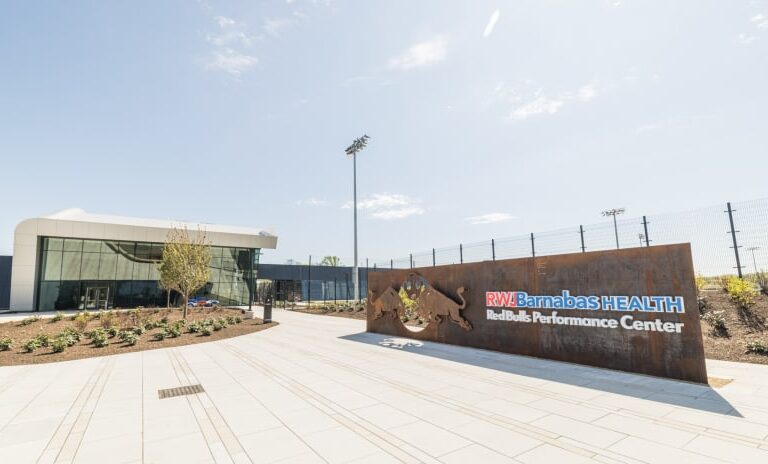
New Jersey’s role in the global game of soccer has entered a new phase of prominence with the official opening of the RWJBarnabas Health Red Bulls Performance Center on April 22, 2026. Situated in Morris Township, the $100 million, 80-acre complex is more than a training facility—it is a comprehensive, integrated development environment that unites every level of the New York Red Bulls organization under a single, purpose-built infrastructure designed to compete with the best in the world.

From its earliest conception more than a decade ago to its completion following nearly two years of construction, the project reflects a long-term commitment to elevating both player development and organizational identity. The new campus serves as the full-time headquarters for the club’s first team, New York Red Bulls II, and its academy system, creating a unified pipeline where talent can progress seamlessly from youth levels to the professional stage. That alignment is not incidental; it is central to the philosophy behind the project, ensuring consistency in training, culture, and performance standards across every tier.

The scale and design of the facility immediately distinguish it within North America. The grounds feature eight full-size outdoor pitches, including five heated natural grass fields engineered to maintain optimal playing conditions year-round. A dedicated match field with seating for academy competitions anchors the competitive side of the campus, while the surrounding layout allows for simultaneous training across multiple squads without compromise. This is infrastructure built not only for daily use but for sustained, high-level performance.

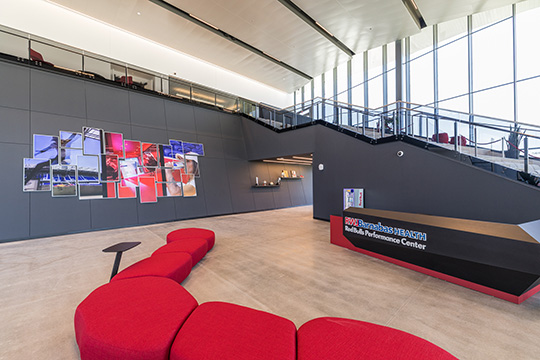
At the center of the campus stands an 88,400-square-foot main building that integrates every aspect of modern player preparation. Inside, the facility houses a professional-grade training environment, including advanced strength and conditioning spaces, a comprehensive medical suite, and an innovation lab focused on sports science and performance analytics. Player care is treated as a foundational priority, with dedicated recovery areas featuring hydrotherapy pools, saunas, and specialized treatment zones designed to optimize both rehabilitation and ongoing physical maintenance.

Nutrition and lifestyle are equally embedded into the structure. A full-service dining hall staffed by professional chefs provides tailored meal planning aligned with performance goals, reinforcing the connection between preparation and results. For academy players, the inclusion of academic and educational spaces ensures that development extends beyond the field, reflecting a holistic approach to athlete growth that balances performance with long-term personal advancement.

Technology is integrated across the entire campus, transforming it into a data-driven environment capable of supporting real-time analysis and continuous improvement. High-speed connectivity and multi-angle camera tracking systems enable detailed performance monitoring, allowing coaches and analysts to evaluate movement, positioning, and decision-making with precision. In a sport increasingly defined by marginal gains, this level of insight provides a competitive advantage that extends from training sessions to match-day execution.

The global significance of the facility has already been established. The campus has been selected as the official training base for the Brazil national football team during the 2026 FIFA World Cup, a designation that places Morris Township at the center of the sport’s most-watched international event. The decision reflects confidence not only in the quality of the infrastructure but in its ability to meet the demands of elite international competition. It also reinforces New Jersey’s position as a strategic location within the broader World Cup footprint.

The opening ceremony itself underscored the magnitude of the moment, drawing prominent figures from across the sport. Jürgen Klopp, now serving as Red Bull’s global head of soccer, emphasized both the opportunity and responsibility that comes with a facility of this caliber. His message was direct: world-class resources eliminate excuses, placing the burden squarely on players and staff to maximize the environment they have been given. Don Garber echoed that sentiment, framing the complex as not only one of the best in North America but comparable to top development centers worldwide.

Club leadership reinforced the long-term vision behind the project. President and general manager Marc de Grandpré described the opening as a defining step in the organization’s evolution, the result of sustained effort, collaboration, and belief in what the club could become. The facility, he noted, is not an endpoint but a foundation—an environment that raises expectations and demands a corresponding level of performance.

The partnership with RWJBarnabas Health adds another critical dimension, integrating advanced medical expertise directly into the daily operations of the club. This collaboration extends beyond injury treatment, encompassing preventative care, performance optimization, and sports science innovation. It also connects the professional environment to the broader community, with initiatives designed to bring youth athletes and families into the experience through educational programs and engagement opportunities.

For New Jersey, the broader implications are significant. The state has long been recognized as a foundational region in American soccer history, and the opening of this facility reinforces that legacy while projecting it forward. The concentration of resources, talent, and infrastructure within a single campus creates a focal point for development that will influence not only the Red Bulls organization but the regional soccer ecosystem as a whole.

This development aligns closely with the ongoing growth and visibility of the sport across the state, as reflected in Explore New Jersey’s New York Red Bulls coverage. The integration of elite training environments with community engagement and youth development programs ensures that the impact of the facility will extend beyond the professional level, shaping the next generation of players and supporters alike.

The timing of the opening, just ahead of the 2026 FIFA World Cup, further amplifies its importance. As global attention turns to the United States, facilities like this will serve as both operational hubs and symbols of the sport’s growth within the country. For the Red Bulls, it represents an opportunity to align their ambitions with the broader momentum of the game, positioning the club as a central figure in that narrative.

Ultimately, the RWJBarnabas Health Red Bulls Performance Center is a statement of intent. It reflects a commitment to excellence that is both structural and cultural, embedding high standards into every aspect of the organization’s operations. The expectation now is not simply to develop talent, but to do so at a level that competes globally, supported by an environment designed to remove limitations and maximize potential.

In Morris Township, that vision is no longer theoretical. It is built, operational, and already influencing the trajectory of one of Major League Soccer’s most ambitious clubs.

Earth Day 2026 in New Jersey Expands into a Statewide Cultural Movement, Blending Environmental Action, Community Festivals, and Public Engagement Across Every Region

Earth Day in New Jersey has evolved far beyond a single day of recognition, and in 2026, that transformation is unmistakable. Officially proclaimed for Wednesday, April 22 under the theme “Our Power, Our Planet,” this year’s observance has extended into a multi-week, statewide activation that merges environmental responsibility with public culture, community participation, and large-scale civic engagement. What began as localized initiatives—tree plantings, park cleanups, and conservation messaging—has expanded into one of the most dynamic seasonal movements across the state’s calendar, positioning sustainability as both a shared value and a lived experience.

The significance of this year’s theme is not abstract. “Our Power, Our Planet” reflects a deliberate emphasis on collective responsibility, placing individuals, communities, and institutions at the center of environmental progress. Across New Jersey, that message has been translated into action, from native forest plantings along the Bayshore to coordinated volunteer efforts in parks, towns, and public spaces that define the state’s environmental identity. These are not isolated gestures. They represent a coordinated, statewide commitment to preservation, resilience, and long-term ecological health.

What distinguishes 2026, however, is the scale and accessibility of the programming. Earth Day has effectively become a season, with major festivals and public events scheduled across multiple weekends, creating sustained engagement that reaches beyond traditional environmental audiences. Communities are not simply observing the day; they are building experiences around it, integrating sustainability into music, food, education, and family-oriented activities that reflect the broader cultural fabric of New Jersey.

Among the largest gatherings, the ACUA Earth Day Festival in Egg Harbor Township stands out as a flagship event, bringing together more than 150 vendors, educational exhibits, and interactive programming designed to engage attendees at every level. The event operates at the intersection of environmental education and community celebration, offering a platform where sustainability is not only discussed but demonstrated in real time through hands-on experiences, product showcases, and live entertainment. Its scale underscores how environmental awareness has moved into the mainstream, supported by infrastructure that can accommodate thousands of participants in a single-day setting.

In North Jersey, the Hoboken Earth Day Celebration & Music Festival reflects a different but equally important dimension of the movement. By integrating live music, local food vendors, and eco-focused activities into a centralized urban setting, the event captures the essence of how sustainability is being woven into everyday life. It is not presented as a separate initiative but as part of a broader lifestyle, aligning with the way residents engage with their communities. The presence of local businesses and artists further reinforces the idea that environmental responsibility and economic vitality are not competing interests but complementary forces.

Elsewhere, Essex County’s Earth Day programming emphasizes direct interaction with the natural environment, offering activities such as canoeing, hiking, and hands-on learning at the Environmental Center in Roseland. These experiences provide a tangible connection to the ecosystems that Earth Day seeks to protect, reinforcing the importance of stewardship through participation rather than abstraction. Similarly, Passaic County’s events at Rifle Camp Park highlight accessibility, with free nature walks and educational workshops designed to bring environmental awareness to a broad audience.

Montclair’s Earth Fest introduces another layer, focusing on innovation and forward-looking solutions. Its “Drive Electric” showcase, combined with live performances and interactive exhibits, positions sustainability within the context of technological advancement and future mobility. This approach reflects a growing recognition that environmental progress is not solely about preservation but also about transformation—rethinking how communities operate, travel, and consume resources in a way that reduces impact while maintaining quality of life.

Beyond the large-scale festivals, the foundation of Earth Day in New Jersey remains rooted in grassroots participation. Volunteer cleanups and local initiatives continue to play a critical role, providing opportunities for residents to engage directly with their surroundings. In places like Ringwood, Rahway, and Somerville, community members are taking part in coordinated efforts to restore parks, remove waste, and contribute to the upkeep of shared spaces. These actions, while smaller in scale than major festivals, are essential to the overall impact, reinforcing the principle that environmental responsibility begins at the local level.

The New Jersey Botanical Garden’s programming further illustrates the integration of education and recreation, offering guided walks and trail experiences that encourage exploration while promoting awareness of native plant life and ecological systems. These initiatives align closely with the state’s broader emphasis on conservation education, ensuring that participants leave not only with an experience but with a deeper understanding of the environment they inhabit.

Morris County’s observance of Earth Day 2026 adds an institutional dimension to the movement, demonstrating how government leadership and community partnerships can translate environmental values into measurable outcomes. The ceremonial planting of Eastern Redbud trees at Morris View Healthcare Center, supported by collaborations between county divisions, healthcare organizations, and community groups, reflects a coordinated approach to sustainability that extends beyond symbolism. It represents a commitment to long-term environmental planning, supported by infrastructure and expertise.

The county’s recognition of the Rutgers Environmental Steward program further reinforces the importance of education and volunteerism in driving environmental progress. With thousands of trained participants, hundreds of completed projects, and tens of thousands of service hours contributed statewide, the program exemplifies how structured initiatives can generate meaningful, lasting impact. Participants are not only educated; they become active contributors to municipal commissions, environmental organizations, and local initiatives that shape policy and practice across New Jersey.

This alignment between grassroots action and institutional support is a defining characteristic of the state’s approach to Earth Day. It ensures that efforts are both immediate and sustainable, addressing current challenges while building capacity for future progress. The Morris County Open Space & Farmland Preservation Trust Fund, which has protected tens of thousands of acres of land, serves as a long-term extension of that philosophy, demonstrating how environmental priorities can be embedded into policy frameworks that endure over decades.

Even outside traditional environmental programming, Earth Day’s influence is evident. Events like the Daffodil Festival in Ridgewood and anniversary celebrations at local establishments such as River Horse Brewing Company illustrate how sustainability is intersecting with broader cultural and community activities. These moments, while not exclusively focused on environmental issues, contribute to the overall visibility and normalization of Earth Day as a central part of the state’s seasonal identity.

Across all of these initiatives, a consistent narrative emerges: Earth Day in New Jersey is no longer confined to awareness—it is defined by participation. The state has successfully expanded the scope of the observance, transforming it into a platform where environmental action, cultural engagement, and community identity intersect. This evolution aligns closely with the themes highlighted throughout Explore New Jersey’s Art & Culture coverage, where public events increasingly serve as vehicles for both expression and impact.

The result is a model that other regions are beginning to mirror. By extending Earth Day into a sustained period of activity, New Jersey has created an environment where individuals can engage at multiple entry points, whether through large-scale festivals, local volunteer efforts, educational programs, or cultural events. This layered approach ensures that the message of sustainability is not only heard but experienced, reinforcing its relevance in everyday life.

As the 2026 Earth Day season continues to unfold, the momentum generated across the state suggests that this model will only grow stronger. Communities have demonstrated both the capacity and the willingness to engage, institutions have provided the structure and support, and the integration of environmental themes into cultural programming has expanded the reach of the movement. What remains is the continued alignment of these elements, ensuring that the energy of Earth Day translates into lasting progress throughout the year and beyond.

New Jersey Devils Enter a Defining Offseason as Front Office Reset, Injury Fallout, and Utica’s Near-Miss Shape the Path Forward

The New Jersey Devils closed the book on the 2025–26 season with a sense of unfinished business that extended far beyond the standings. A 21st-place finish in the NHL was not simply a statistical outcome—it was the culmination of a season derailed by injuries, inconsistency, and structural gaps that ultimately forced the organization into a pivotal reset. When players cleared out their lockers on April 15, 2026, the message was unmistakable: change was not only coming, it was necessary.

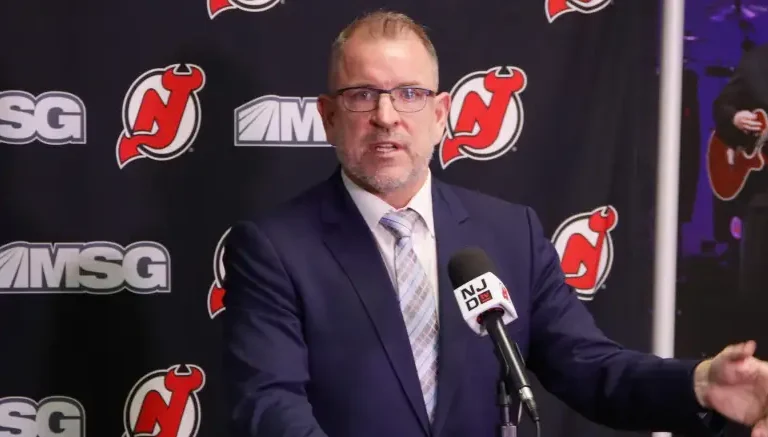
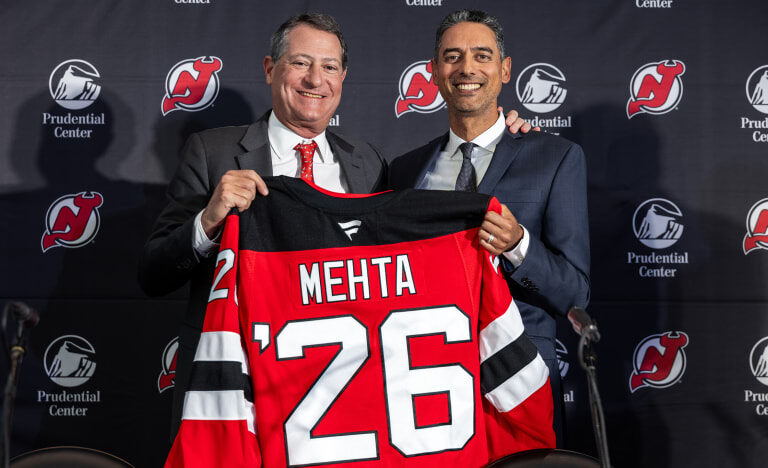
At the center of that change is the arrival of new general manager Sunny Mehta, tasked with reengineering a roster and hockey operations structure that, on paper, carried far more promise than the results suggested. His appointment signals a deliberate shift in philosophy, one that places equal weight on roster construction, durability, and long-term sustainability. For a franchise that has built its identity around speed, skill, and offensive upside, the next phase will require a more complete and resilient blueprint.

The challenges Mehta inherits are clear. Injuries played a defining role in the Devils’ season, with key players sidelined at critical moments. The absence of cornerstone talent disrupted continuity, limited lineup stability, and forced the coaching staff into reactive adjustments rather than proactive deployment. Head coach Sheldon Keefe acknowledged the cumulative impact of those losses, particularly as the season progressed and the margin for error narrowed. When foundational pieces are unavailable, even the most talented rosters can struggle to maintain structure, and the Devils were no exception.

Beyond injuries, the defensive side of the game emerged as a central issue. While the Devils have built a reputation for dynamic offense, the inability to consistently manage defensive zone coverage and transition play proved costly. Addressing that imbalance is expected to be one of Mehta’s primary objectives, whether through personnel changes, system adjustments, or a combination of both. In today’s NHL, teams that contend deep into the postseason are those that can control pace without sacrificing defensive integrity, and that is the standard New Jersey must now meet.

The upcoming NHL Draft presents an immediate opportunity to begin that process. Finishing 21st positions the Devils in a range where impact talent is still available, particularly if the organization targets players who can contribute to structural stability. Draft strategy will be closely watched, not only for the players selected but for what those selections reveal about the new front office’s priorities. Whether the focus leans toward defensive depth, physical presence, or continued skill infusion, the decisions made here will offer the first tangible insight into Mehta’s long-term vision.

At the same time, internal development remains a critical component of the organization’s trajectory, and that is where the story of the Utica Comets becomes especially relevant. The Devils’ AHL affiliate mounted one of the most compelling late-season pushes in the league, only to fall just one point short of a playoff berth. Their final stretch—an impressive 7-1-1-1 run—demonstrated both resilience and growth, qualities that reflect positively on the depth of the system even in the face of disappointment.

Utica’s closing surge was driven by contributions across the lineup. Goaltender Nico Daws delivered steady performances under pressure, while players like Matyas Melovsky, Brian Halonen, and Angus Crookshank provided timely scoring. The team’s ability to defeat top-tier opponents, including the league-leading Providence Bruins, underscored its potential when operating at full capacity. Yet the early-season deficit proved too significant to overcome, a reminder that consistency over the full schedule remains essential.

The narrow miss also highlighted the fine margins that define professional hockey. Utica did everything required down the stretch, including winning its final three games, but ultimately depended on external results that did not break in its favor. Rochester’s ability to secure a single overtime point in its final game was enough to reclaim the last playoff spot, closing the door on what had been a remarkable comeback effort. For the Devils, the takeaway is twofold: the pipeline is producing competitive talent, but the next step is translating that potential into sustained success.

That pipeline is already beginning to feed the NHL roster. Defenseman Topias Vilen’s late-season call-up and debut provided a glimpse into the next wave of contributors, reinforcing the importance of development continuity between Utica and New Jersey. Integrating those players effectively will be a key component of the offseason strategy, particularly as the organization evaluates how to balance youth with established experience.

Individual player performance will also factor heavily into offseason decisions. Jack Hughes remains the centerpiece of the franchise’s long-term outlook, and ensuring his health and maximizing his impact will be central to any competitive plan. Timo Meier’s role and production will likewise be evaluated within the context of the team’s broader offensive structure, as the Devils look to align their top-end talent with a more consistent team identity.

For fans and observers following the team through Explore New Jersey’s Devils coverage, this offseason represents more than routine roster adjustments. It is a structural inflection point. The organization has the pieces to compete, but the path forward requires recalibration—an alignment of talent, system, and durability that can withstand the demands of a full NHL season.

What emerges over the coming months will define not only the Devils’ immediate future but their position within an increasingly competitive Eastern Conference. The combination of a new general manager, a critical draft position, a motivated prospect pool, and a roster seeking redemption creates a complex but promising landscape. Execution, as always, will determine the outcome.

The 2025–26 season exposed vulnerabilities, but it also clarified priorities. With Sunny Mehta now leading the front office, the Devils have an opportunity to turn those lessons into a more complete and competitive identity. The work begins now, and the margin for error has already been defined.

Bettaway Beverage Distributors Earns Premier Service Carrier Recognition from Arrive Logistics for Third Consecutive Year, Reinforcing New Jersey’s Leadership in Food and Beverage Supply Chain Excellence

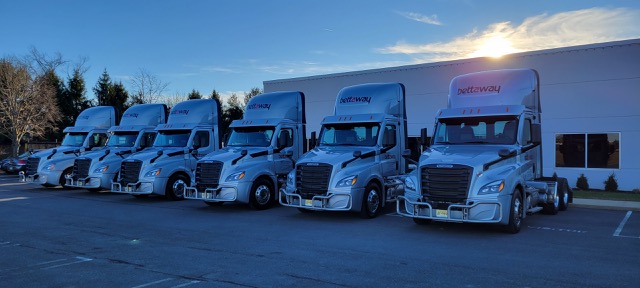
New Jersey’s food and beverage economy continues to distinguish itself not only through its restaurants, producers, and hospitality leaders, but also through the critical logistics networks that ensure products move efficiently from supplier to shelf. That infrastructure took center stage again as Bettaway Beverage Distributors was formally recognized by Arrive Logistics as a Premier Service Carrier for 2025, marking the third consecutive year the company has earned one of the industry’s most competitive performance distinctions.

The recognition is not ceremonial. It reflects measurable, consistent execution across the core pillars that define modern freight and distribution performance: on-time delivery, cost discipline, responsiveness, and operational reliability. In a sector where delays can ripple across retail, hospitality, and event-driven demand cycles, the ability to deliver with precision has become a defining competitive advantage. Bettaway’s continued recognition signals that it has not only met those standards but sustained them under increasingly complex market conditions.

Operating within the beverage distribution segment—a category that includes everything from non-alcoholic products to large-scale commercial beverage supply—requires a high degree of logistical coordination. Temperature sensitivity, inventory turnover, and fluctuating seasonal demand all place additional pressure on transportation partners. Bettaway’s performance in this environment underscores a disciplined operational model that integrates planning, technology, and execution at a level that aligns with the expectations of national logistics platforms like Arrive Logistics.

For New Jersey, the implications extend beyond a single company. The state has long served as a strategic corridor for distribution along the East Coast, supported by proximity to major metropolitan markets, dense transportation infrastructure, and a highly active food and beverage ecosystem. Recognition at this level reinforces the state’s reputation as a hub where supply chain efficiency and product movement are not just functional, but optimized.

The designation of Premier Service Carrier is awarded to a limited group of partners that consistently outperform across key performance indicators. Bettaway’s ability to secure the honor for a third straight year points to a level of operational stability that is increasingly difficult to achieve in a freight environment defined by volatility, labor constraints, and shifting demand patterns. Maintaining that consistency requires more than capacity; it demands real-time adaptability, strong communication channels, and a commitment to continuous process improvement.

Within the broader context of New Jersey’s evolving food and beverage landscape, the role of logistics providers like Bettaway becomes even more central. As highlighted across Explore New Jersey’s Food & Beverage coverage, the region’s culinary sector is expanding in both scale and sophistication. From independent restaurants to regional distributors and large-format retail operations, the expectation is clear: products must arrive on time, in optimal condition, and at a cost structure that supports competitive pricing. That expectation is only achievable when distribution partners operate at a consistently high level.

Bettaway’s model appears to be built around exactly that premise. By prioritizing responsiveness and accountability, the company has positioned itself as a reliable link between producers and end markets. In practice, that means fewer disruptions, tighter delivery windows, and a level of predictability that allows businesses across the food and beverage spectrum to plan with confidence. In an industry where margins can be narrow and timing is critical, those advantages are significant.

The relationship with Arrive Logistics further illustrates the scale at which Bettaway is operating. As a major player in the third-party logistics space, Arrive evaluates carriers based on rigorous performance data, making the Premier Service Carrier designation a meaningful indicator of real-world results. It is not a subjective award; it is earned through consistent execution across a broad portfolio of shipments and operational scenarios.

From a strategic standpoint, the continued recognition positions Bettaway for sustained growth within a sector that is increasingly driven by performance metrics and long-term partnerships. Companies that can demonstrate reliability at scale are more likely to secure high-value contracts, expand their service footprint, and play a larger role in shaping distribution strategies for major brands and retailers.

At the same time, the recognition highlights a broader trend within New Jersey’s economy: the elevation of logistics as a core component of the food and beverage value chain. While consumer-facing elements like dining, retail, and product innovation often receive the most attention, the underlying infrastructure that supports those experiences is just as critical. Efficient distribution is what allows restaurants to maintain consistency, retailers to manage inventory, and producers to reach new markets without compromising quality.

Bettaway’s continued success serves as a case study in how that infrastructure can be executed at a high level. By aligning operational discipline with customer-focused service, the company has demonstrated that logistics excellence is not simply about moving goods—it is about enabling the broader ecosystem to function more effectively.

As New Jersey’s food and beverage sector continues to expand, the demand for high-performance distribution partners will only increase. Recognition like this does more than validate past performance; it sets a benchmark for what the market expects moving forward. Bettaway Beverage Distributors has now established itself firmly within that upper tier, reinforcing both its own position and the state’s standing as a leader in integrated, performance-driven supply chain operations.

The Clinical Group Appoints Dr. Michael Fiorillo as Chief Medical Officer, Signaling a New Phase of Physician-Led Growth in New Jersey’s Health and Wellness Sector

New Jersey’s health and wellness landscape continues to evolve at a rapid pace, driven by the convergence of clinical excellence, patient demand for high-quality aesthetic care, and the increasing sophistication of healthcare real estate platforms. In a move that reflects these broader industry dynamics, The Clinical Group has appointed Dr. Michael Fiorillo as its new Chief Medical Officer, bringing one of the region’s most accomplished plastic surgeons into a leadership role designed to shape both clinical standards and long-term strategic growth.

Dr. Fiorillo arrives with a rare combination of credentials that extend well beyond surgical expertise. As a double board-certified plastic surgeon, he has built a reputation for precision, consistency, and patient-centered outcomes across a wide spectrum of cosmetic and reconstructive procedures. His career, however, has not been limited to the operating room. He has also established himself as a highly effective practice builder, scaling clinical operations with a disciplined approach to quality control, patient experience, and operational efficiency. That dual perspective—clinical and entrepreneurial—positions him uniquely for a role that requires both medical authority and executive-level decision-making.

The appointment is particularly relevant within the context of New Jersey’s expanding health and wellness ecosystem, where demand for advanced aesthetic services continues to grow alongside broader investments in outpatient care, specialty practices, and integrated wellness offerings. Platforms like The Clinical Group are increasingly focused on aligning real estate strategy with clinical performance, ensuring that physical spaces are not only optimized for efficiency but also designed to support high-end patient care. By placing a physician with deep operational experience at the center of that strategy, the organization is making a clear statement about its priorities.

Dr. Fiorillo’s background includes leading a successful practice through a private equity transaction, an experience that provides him with direct insight into the financial and structural considerations shaping modern healthcare platforms. That experience is not merely transactional; it reflects an understanding of how to build value in a clinical setting without compromising standards of care. In an environment where consolidation and investment activity are becoming more common, that balance is critical. His ability to navigate both sides of that equation—clinical integrity and business scalability—will likely play a defining role in how The Clinical Group expands its footprint.

Within New Jersey, where healthcare consumers are increasingly selective and informed, the emphasis on physician-led strategy carries additional weight. Patients are no longer evaluating providers solely on proximity or convenience. They are assessing outcomes, reputation, technology adoption, and the overall experience of care. A Chief Medical Officer with a strong clinical reputation can directly influence those perceptions, not only through policy and oversight but also by establishing a consistent standard across all affiliated practices.

The Clinical Group’s model reflects a broader shift toward integrated health and wellness environments, where medical services are complemented by lifestyle-driven offerings that prioritize prevention, recovery, and long-term well-being. This approach aligns closely with the direction of the regional market, as reflected across platforms like Explore New Jersey’s Health & Wellness coverage, where the focus has increasingly moved toward comprehensive care rather than isolated treatment. The addition of a Chief Medical Officer with both clinical and operational depth reinforces that direction, suggesting a more cohesive and strategically aligned network of services.

Dr. Fiorillo’s influence is expected to extend across multiple dimensions of the organization. On the clinical side, he will oversee standards of care, ensuring consistency across locations while integrating new technologies and techniques that enhance patient outcomes. On the operational side, his experience in scaling practices will inform decisions related to staffing, workflow optimization, and patient engagement. On the strategic side, his familiarity with investment structures and growth planning will contribute to the platform’s ability to expand responsibly while maintaining its clinical identity.

For New Jersey, the implications are notable. The state has long been a competitive market for aesthetic and specialty medical services, with a high concentration of experienced providers and a patient base that values quality and innovation. Leadership moves of this caliber tend to elevate the overall standard of care, as competing practices respond with their own investments in talent, technology, and patient experience. In that sense, this appointment is not an isolated development but part of a broader pattern that continues to shape the region’s healthcare landscape.

At the same time, the integration of clinical leadership into a real estate-driven platform underscores a more nuanced understanding of how healthcare delivery is evolving. Facilities are no longer passive environments; they are active components of the patient experience, influencing everything from efficiency to comfort to perceived quality. Aligning those environments with a clearly defined clinical vision requires leadership that can bridge both domains. Dr. Fiorillo’s career suggests he is well equipped to do exactly that.

As The Clinical Group moves forward with this appointment, the emphasis will likely remain on disciplined growth, clinical consistency, and the continued alignment of infrastructure with patient-centered care. In a market as competitive and sophisticated as New Jersey, those elements are not optional—they are foundational. By bringing in a Chief Medical Officer with a proven track record across surgery, practice development, and strategic execution, the organization is positioning itself to operate at a higher level within an already demanding field.

This development reinforces a central theme across the state’s health and wellness sector: the future belongs to platforms that can integrate expertise, experience, and infrastructure into a cohesive, patient-focused model. With Dr. Michael Fiorillo now guiding its clinical strategy, The Clinical Group is making a deliberate move in that direction, one that is likely to resonate across both the medical community and the broader marketplace it serves.

Bruce Springsteen’s Newark Homecoming Ignites the Prudential Center as the “Land of Hope and Dreams” Tour Turns New Jersey Into the Center of the American Conversation

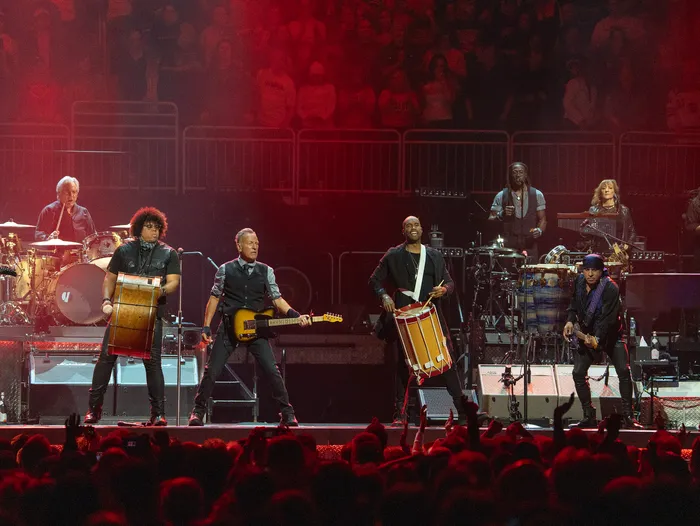
When Bruce Springsteen returns to New Jersey, it is never just another concert. It is a recalibration of place, identity, and purpose, where music becomes something larger than performance and the stage becomes a platform for reflection, urgency, and connection. On April 20, 2026, inside the Prudential Center in Newark, Springsteen and the E Street Band delivered a three-hour set that did exactly that—transforming a homecoming show into one of the most talked-about live music events of the year across New Jersey music.

This was not a nostalgia run. It was not a greatest hits tour dressed up in familiar language. The “Land of Hope and Dreams” American Tour arrived in Newark with intent, and from the opening moments, that intent was unmistakable. The show opened with “War,” immediately setting a tone that was confrontational, direct, and rooted in the present. From there, the energy surged into “Born in the U.S.A.” and “Death to My Hometown,” songs that have long carried weight but felt newly sharpened in this context.

The presence of Tom Morello added a distinct dimension that defined the night. Joining the band for a significant portion of the set, Morello did not simply contribute guitar parts—he injected a different kind of electricity into the performance. His playing brought a sharper edge, a sense of unpredictability, and a tonal contrast that elevated the arrangements without disrupting the identity of the E Street Band. On songs like “The Ghost of Tom Joad” and “American Skin (41 Shots),” his influence was particularly pronounced, turning already powerful compositions into something even more immediate and visceral.

What unfolded over the course of 27 songs was a setlist that leaned heavily into thematic cohesion rather than conventional pacing. This was a show constructed with purpose, where each song contributed to a larger narrative about America, its contradictions, and its possibilities. Tracks like “Streets of Minneapolis” and “Long Walk Home” carried a sense of urgency that extended beyond the music itself, reflecting a willingness to engage directly with the moment rather than retreat into abstraction.

At the same time, Springsteen maintained the balance that has defined his live performances for decades. The intensity of the messaging was countered by moments of connection and release, whether through the communal energy of “Hungry Heart” or the layered storytelling of “The Promised Land.” These transitions were not accidental. They are part of what makes a Springsteen show distinct—the ability to move between reflection and celebration without losing coherence.

Midway through the set, the performance shifted into a more introspective space with a solo acoustic rendition of “House of a Thousand Guitars.” In a venue as large as the Prudential Center, stripping the sound down to its essentials created a moment of focus that drew the entire room inward. It served as a reminder that even within a production of this scale, the core of Springsteen’s work remains rooted in songwriting and delivery.

The latter half of the show built toward a sustained crescendo, with “The Rising,” “Badlands,” and “Land of Hope and Dreams” forming a sequence that felt both expansive and tightly controlled. These are songs that have become pillars of Springsteen’s live catalog, yet in Newark they carried a renewed sense of immediacy, amplified by the context of the tour and the energy of the crowd.

The encore sequence reinforced the dual identity of the performance. “American Land” opened the final stretch with a sense of movement and momentum, followed by “Born to Run,” a song that continues to function as both a signature moment and a communal release. “Dancing in the Dark” brought a shift in tone, lighter but no less engaged, before “Tenth Avenue Freeze-Out” closed the main arc with its traditional tribute to Clarence Clemons and Danny Federici, grounding the night in the band’s history.

The final statement came with “Chimes of Freedom,” a cover that extended the thematic arc of the evening into a broader reflection on resilience and expression. It was a deliberate choice, closing the show not with spectacle, but with a message that aligned with everything that came before it.

What makes this Newark performance particularly significant is not just the execution, but the reaction it generated. The show has sparked a wide range of responses, from those who viewed it as a powerful, focused statement to those who questioned the tension between its themes and the realities of large-scale touring. That divergence is, in many ways, part of the point. Springsteen has never been an artist who operates in a space of consensus. His work invites interpretation, debate, and, at times, discomfort.

Within the arena, however, the response was immediate and unmistakable. The crowd engaged with the performance on multiple levels, from the collective energy of the sing-alongs to the quieter, more reflective moments that drew sustained attention. The sound quality, the pacing, and the interplay between band members all contributed to an experience that felt both expansive and tightly focused.

For New Jersey, the significance of this performance extends beyond a single night. Springsteen’s connection to the state is foundational, and each return carries with it a sense of continuity and evolution. The Prudential Center, as a venue, becomes more than a stage in these moments. It becomes a focal point where local identity and global relevance intersect, where a New Jersey artist continues to shape conversations that extend far beyond state lines.

The timing of the show adds another layer to its impact. Coming in the same week as Springsteen’s appearance at the American Music Honors in West Long Branch, where he engaged in collaborative performances that highlighted his range and influence, the Newark concert serves as a centerpiece in a broader period of visibility and activity.

In the context of New Jersey’s music scene, this performance reinforces the state’s position as a critical node in the national and international touring circuit. It demonstrates that the region is not only capable of hosting major events, but of anchoring them in a way that adds meaning and context. When artists of this scale perform in New Jersey, they are not simply passing through. They are engaging with a place that has its own history, its own audience, and its own expectations.

Springsteen’s April 20 performance at the Prudential Center stands as a reminder of what live music can achieve when it is approached with intention. It is not just about the setlist, the duration, or the scale of the production. It is about the ability to create a shared experience that resonates beyond the confines of the venue, carrying forward into conversation, reflection, and, ultimately, memory.

In Newark, on that night, the music did not exist in isolation. It connected past and present, artist and audience, place and purpose. That is what defines a true homecoming, and it is why this performance will continue to be discussed as one of the most significant moments in New Jersey’s live music calendar this year.

Blue Dog Brunch at iPlay America Brings Family Entertainment and Interactive Dining Together in One of New Jersey’s Most In-Demand Experiences

iPlay America’s 2026 Character Brunch Lineup at The Bistro Becomes One of New Jersey’s Most Complete Family Event Calendars. New Jersey’s entertainment scene continues to evolve with experiences that are no longer confined to a single category, and iPlay America in Freehold has positioned itself at the forefront of that shift. With a fully realized lineup of Character Brunches at The Bistro throughout the first half of 2026, the venue has created a recurring, high-demand series that blends dining, live character interaction, and family engagement into one cohesive experience. For those tracking the most dynamic offerings in New Jersey entertainment, this series has quickly established itself as one of the most consistent and strategically designed programs in the region.

At its core, the Character Brunch concept is built around accessibility and immersion. Hosted primarily on Sundays from 11:00 AM to 2:00 PM, each event transforms The Bistro into a themed environment where children and families can interact directly with recognizable characters while enjoying a full-service brunch experience. The structure is intentionally straightforward yet highly effective. Guests reserve a table, order from a tailored menu, and throughout the meal, characters circulate for meet-and-greets, photos, and spontaneous interactions. This eliminates the need for staged lines or timed appearances, creating a more fluid and personal experience.

New Jersey’s entertainment landscape continues to evolve with experiences that blend dining, live interaction, and family-focused programming into a single destination, and nowhere is that more evident than at iPlay America in Freehold. With the return of its highly anticipated Blue Dog Brunch at The Bistro, the venue is once again redefining what it means to create immersive, family-friendly entertainment that resonates with both children and parents. For those exploring the full scope of New Jersey entertainment, this event stands as a prime example of how thoughtfully curated experiences can transform a simple outing into something memorable and repeatable.

Scheduled for Sunday, May 17, 2026, from 11:00 AM to 2:00 PM, the Blue Dog Brunch is more than a themed meal. It is a structured, interactive environment designed to bring beloved characters to life in a setting that feels both accessible and engaging. Hosted inside The Bistro, the full-service restaurant within iPlay America, the event creates a bridge between dining and entertainment, allowing families to participate in a shared experience that unfolds organically throughout the meal.

At the center of the event is the opportunity for children to meet and interact with characters inspired by the widely recognized Blue Dog and her sister. These meet-and-greet moments are not staged as distant appearances, but as personal interactions that take place directly at the table. This approach removes barriers and creates a level of intimacy that is often missing from larger-scale character events. For children, the experience is immediate and tangible. For parents, it offers a chance to capture genuine moments through photos and shared engagement.

The design of the event extends beyond character interaction into a broader set of themed activities that reinforce the experience. Each child receives a coloring book aligned with the Blue Dog theme, providing a creative outlet that keeps them engaged while also complementing the overall atmosphere. This integration of activity and dining ensures that the experience remains dynamic from start to finish, avoiding the common pitfalls of events where engagement fades after the initial interaction.

The Bistro’s role in this event is critical. As a full-service restaurant, it provides a level of quality and comfort that elevates the brunch beyond a typical event-based meal. The introduction of a specialty kids’ menu tailored specifically for the Blue Dog Brunch adds another layer of customization, ensuring that younger guests are not only entertained but also well served. At the same time, the standard menu offerings remain available, allowing adults to enjoy a more traditional dining experience without compromise. This dual approach reflects a clear understanding of the audience, balancing the needs of children with the expectations of parents.

One of the defining aspects of the Blue Dog Brunch is its accessibility. While the character experience itself does not require a separate admission fee, guests simply pay for their meals, making it a practical option for families seeking high-quality entertainment without the added complexity of ticketed events. This structure lowers barriers to entry while maintaining the perceived value of the experience, a balance that is increasingly important in today’s entertainment economy.

2026_03_Bistro_CharBrunch_Bluey&Bingo_promo

The popularity of the event underscores its success. Reservations are strongly recommended, and for good reason. The combination of limited seating, high demand, and the appeal of the characters creates a sense of urgency that drives early bookings. This demand is not incidental. It reflects a broader trend in New Jersey’s entertainment sector, where experiences that combine interactivity, dining, and convenience are outperforming more traditional formats.

Location plays a significant role in this dynamic. Situated at 108 Schanck Road in Freehold, iPlay America is already established as one of the state’s premier indoor entertainment destinations. By hosting the Blue Dog Brunch within The Bistro, the venue leverages its existing infrastructure while adding a layer of programming that enhances its overall offering. Families can seamlessly transition from brunch to rides, games, and other attractions, creating a full-day experience that maximizes both time and value.

The Blue Dog Brunch is also part of a broader calendar of themed events that keep the programming fresh and varied. Upcoming experiences such as the Super Bros Brunch, Galactic Brunch, and Toy Pals Brunch ensure that there is always a new reason to return, reinforcing iPlay America’s position as a repeat-visit destination. This rotating schedule not only maintains interest but also allows the venue to cater to a wide range of interests, ensuring that different segments of its audience find something that resonates.

From a strategic perspective, the success of events like the Blue Dog Brunch highlights the importance of adaptability in the entertainment industry. Traditional models that separate dining and entertainment are being replaced by integrated experiences that deliver both simultaneously. This shift reflects changing consumer expectations, where convenience, engagement, and quality are no longer optional but essential components of a successful offering.

For New Jersey, this evolution is particularly significant. The state’s proximity to major metropolitan areas, combined with its own rich network of attractions, creates a competitive environment where only the most thoughtfully designed experiences stand out. iPlay America’s ability to consistently deliver events that meet these expectations positions it as a leader in this space, and the Blue Dog Brunch is a clear example of that leadership in action.

What ultimately defines the Blue Dog Brunch is its ability to create moments that feel personal within a larger, highly organized setting. It is not just about meeting a character or enjoying a meal. It is about the combination of those elements in a way that feels cohesive and meaningful. For families, it offers a rare opportunity to step into a shared experience that is both structured and spontaneous, where entertainment unfolds naturally alongside conversation and connection.

As New Jersey continues to expand its reputation as a destination for high-quality, family-oriented entertainment, events like the Blue Dog Brunch play a critical role in shaping that narrative. They demonstrate that innovation does not always require scale, but rather a clear understanding of what audiences value and how to deliver it effectively.

The Bistro at iPlay America has a full schedule of character brunches lined up for the first half of 2026. Most of these events take place on Sundays from 11:00 AM to 2:00 PM and feature free photo opportunities and themed coloring books for kids.

2026 Character Brunch Schedule

Past 2026 Events

If you’re tracking their recurring themes, they have already hosted several others this year:

  • Princess Brunch (March 1).
  • High-Speed Heroes Brunch (March 8).
  • Mountain Family Brunch (March 22): Featuring characters from Encanto.
  • Easter Bunny Brunch (March 28 & 29).
  • Storybook Brunch (April 12): Featuring Winnie the Pooh, Tigger, and Piglet. 

In Freehold, one of New Jersey’s most active entertainment destinations has quietly built one of the most consistent, repeatable, and in-demand family experiences in the state. Inside iPlay America, The Bistro’s Character Brunch series is no longer just an occasional attraction—it is now a fully programmed, high-frequency event calendar that delivers something different almost every week. For families tracking the best recurring experiences in New Jersey entertainment, this lineup stands out not just for its concept, but for its execution, variety, and reliability.

What separates this series from similar offerings is simple: the schedule is real, structured, and loaded with recognizable themes that families actively plan around. These are not vague rotating concepts—they are specific, themed events tied to characters that drive attendance and repeat visits.

The spring and early summer 2026 calendar is already one of the strongest the venue has ever assembled.

The series launches into full stride with the Super Bros Brunch on April 26, bringing together instantly recognizable characters including Mario, Luigi, Peach, and Rosalina. This event taps directly into multi-generational familiarity, making it just as engaging for parents as it is for kids.

That momentum continues the following week with the Galactic Brunch on May 3, where the tone shifts into a completely different universe. Characters inspired by Yoda, Leia, Darth Vader, and Chewbacca transform The Bistro into a themed, immersive environment that blends sci-fi nostalgia with interactive dining.

On May 10, the schedule pivots to the Mother’s Day Brunch Buffet, offering a more traditional, elevated dining experience while still keeping the family-centric atmosphere intact. This event broadens the appeal of the series, proving that The Bistro can deliver both entertainment-driven brunches and classic holiday programming at the same level.

The Blue Dog Brunch on May 17 follows as one of the most anticipated events on the calendar, featuring the beloved blue pup and her sister. This particular brunch consistently draws strong demand, reinforcing its position as a centerpiece within the overall lineup.

Closing out the month, the Ohana Best Friends Brunch on May 31 introduces another high-recognition pairing with Lilo and Stitch, leaning into themes of friendship and family that align perfectly with the event’s structure.

June continues the cadence without slowing down.

The Wonderland Brunch on June 14 shifts into a more whimsical, story-driven experience, bringing Alice and her companions into the spotlight and creating a visually and interactively distinct environment inside The Bistro.

Then, on June 28, the Toy Pals Brunch delivers one of the most universally recognizable themes of the series, featuring characters inspired by a space ranger, cowboy, and cowgirl. This event closes out the first half of the year with a concept that consistently resonates across all age groups.

What makes this lineup even more significant is that it builds on an already active year. Earlier in 2026, iPlay America successfully executed a full run of themed brunches, including the Princess Brunch (March 1), High-Speed Heroes Brunch (March 8), Mountain Family Brunch featuring Encanto (March 22), and the Easter Bunny Brunch held across March 28 and 29. The Storybook Brunch on April 12, featuring Winnie the Pooh, Tigger, and Piglet, further demonstrated the depth of the programming strategy.

2026_03_Bistro_CharBrunch_Bluey&Bingo_promo
2026_03_Bistro_CharBrunch_LiloStitch_promo
2026_03_Bistro_CharBrunch_Wonderland_Promo
2026_03_Bistro_CharBrunch_ToyStory_Promo

This is not a venue experimenting with a concept. This is a venue that has fully operationalized it.

Each event follows a structure that is simple but highly effective. Hosted from 11:00 AM to 2:00 PM, the brunches allow families to reserve tables and enjoy a full-service dining experience while characters move throughout the room for direct interaction. There are no staged lines, no rushed photo stations, and no separation between dining and entertainment. The experience unfolds naturally, with characters engaging guests at their tables.

Children receive themed coloring books tied to each event, reinforcing the concept and keeping engagement consistent throughout the meal. The Bistro complements this with a dedicated kids’ menu tailored to the theme, while still offering its full menu for adults, ensuring the experience works for the entire table.

Another critical factor in the series’ success is accessibility. The character experience itself does not require a separate ticket—guests simply pay for their meal. This removes friction from the planning process and makes the events far more approachable compared to larger, ticketed attractions.

The location amplifies everything. Positioned inside iPlay America at 108 Schanck Road in Freehold, The Bistro allows families to extend their visit beyond brunch into a full day of rides, games, and attractions. This integration transforms a two-hour meal into a broader entertainment experience without requiring additional travel or coordination.

What is happening here is larger than a brunch series. It is a shift in how family entertainment is being delivered in New Jersey. Instead of isolated events, iPlay America has created a programmatic schedule—a reliable, rotating lineup that gives families a reason to return again and again.

And that is the key difference.

These are not one-off experiences. They are part of a system that is designed to build habit, anticipation, and repeat engagement.

In a state where options are everywhere, consistency is what separates good from essential. The Bistro’s 2026 Character Brunch lineup has moved firmly into that essential category, offering one of the most complete, accessible, and well-executed family entertainment programs currently operating anywhere in New Jersey.

New Jersey’s Healthcare Backbone in Focus: Steve Adubato and Holy Name’s Michele Acito Spotlight the Critical Role of Nursing and the Urgent Mission to Rebuild Public Trust

New Jersey’s healthcare system is entering a period of renewed scrutiny, transformation, and recalibration, and at the center of that conversation is a profession that has long carried the weight of patient care with precision, resilience, and unwavering accountability. In a recent segment of State of Affairs with Steve Adubato, a defining discussion unfolded between Steve Adubato and Michele Acito, DNP, Executive Vice President and Chief Nursing Officer of Holy Name, offering a timely and necessary examination of the nursing profession’s role not only as the operational backbone of healthcare, but as the most trusted bridge between medical systems and the communities they serve.

Within the broader context of New Jersey health and wellness leadership, this conversation resonates far beyond a single interview. It reflects a larger reality shaping healthcare across the state and the nation: that the effectiveness of modern medicine is inseparable from the strength, expertise, and credibility of its nursing workforce. What emerges from this exchange is not simply a recognition of nurses as essential contributors, but a reframing of their role as central drivers of patient outcomes, institutional stability, and public trust.

At its core, the discussion underscores a fundamental truth that is often acknowledged but not fully articulated. Healthcare systems do not function in the abstract; they operate through the continuous, hands-on work of nurses who translate medical plans into lived patient experiences. Physicians diagnose and prescribe, but it is nurses who execute, monitor, adapt, and communicate in real time. This dynamic places nurses at the intersection of clinical precision and human connection, a position that carries both responsibility and influence.

Michele Acito’s perspective, grounded in both clinical expertise and executive leadership, brings clarity to this reality. She characterizes nursing not as a supporting function, but as the structural foundation upon which the entire healthcare ecosystem depends. This is not rhetorical framing. It reflects operational reality across hospitals, outpatient facilities, and community care environments. Without nursing, continuity of care breaks down, patient safety is compromised, and the system’s ability to deliver effective treatment is fundamentally weakened.

What elevates this conversation is its focus on trust, a concept that has become increasingly complex in the modern healthcare landscape. Acito identifies a “significant loss in trust” in public health, a challenge that extends beyond institutional performance into the realm of perception, communication, and societal belief systems. In this environment, nurses occupy a uniquely powerful position. They are consistently ranked among the most trusted professionals, a distinction that is earned through direct patient interaction, consistent adherence to evidence-based practices, and a level of accessibility that other roles within the system do not always provide.

This trust is not incidental. It is built through repeated, meaningful interactions where patients rely on nurses not only for clinical care, but for guidance, reassurance, and clarity. In moments of uncertainty—whether during hospitalization or in the transition back to home—nurses serve as interpreters of complex medical information, helping patients and families navigate decisions that carry significant emotional and physical implications. This role as educator and advocate reinforces their credibility, positioning them as the most effective communicators of evidence-based care in an era where misinformation can spread rapidly.

The emphasis on evidence-based practice is particularly significant. Acito’s call for a renewed commitment to science as the foundation of healthcare decision-making reflects a broader need to reestablish alignment between medical expertise and public understanding. In a time when skepticism toward scientific guidance has grown in certain segments of the population, the ability to communicate clearly, consistently, and credibly becomes as important as the care itself. Nurses, by virtue of their proximity to patients and their grounding in clinical protocols, are uniquely equipped to lead this effort.

This leadership, however, extends beyond communication. The segment highlights the evolving role of nurses as strategic contributors within healthcare organizations. As systems become more complex and data-driven, the insights generated at the bedside are increasingly recognized as critical inputs into broader operational decisions. Nurses are not only executing care plans; they are informing them, identifying inefficiencies, and contributing to the continuous improvement of care delivery models. This shift reflects a growing acknowledgment that effective healthcare requires integration across all levels of the system, from executive strategy to frontline execution.

In New Jersey, where healthcare institutions are navigating both demographic changes and evolving regulatory frameworks, this integration is particularly important. The state’s healthcare ecosystem is diverse, encompassing major academic medical centers, community hospitals, and specialized care facilities. Across this spectrum, the ability to maintain consistency in quality and patient experience depends heavily on the strength of the nursing workforce. Leaders like Michele Acito play a critical role in ensuring that this workforce is not only supported, but empowered to operate at the highest level of its capabilities.

The conversation also touches on the broader implications for workforce development and sustainability. As demand for healthcare services continues to grow, the need to attract, train, and retain skilled nurses becomes a strategic priority. This involves not only competitive compensation and professional development opportunities, but also the creation of environments where nurses can practice effectively without unnecessary administrative burden. The goal is to enable them to focus on what they do best—delivering high-quality, patient-centered care.

From a public perspective, the visibility of discussions like this is itself significant. By bringing the realities of nursing and public health into a broader media context, State of Affairs with Steve Adubato contributes to a more informed understanding of how healthcare systems function and where their strengths and vulnerabilities lie. This transparency is an essential component of rebuilding trust, as it allows the public to see not just the outcomes of care, but the processes and professionals behind them.

The intersection of media, healthcare leadership, and public engagement creates an opportunity to reshape narratives around health and wellness in New Jersey. It reinforces the idea that healthcare is not a distant, impersonal system, but a network of professionals working with precision and dedication to support individual and community well-being. Within that network, nurses stand out not only for their technical expertise, but for their ability to connect, communicate, and lead.

As New Jersey continues to position itself as a leader in healthcare innovation and delivery, the insights shared in this conversation serve as both a reflection and a directive. They highlight what is working, identify where challenges remain, and underscore the importance of maintaining a clear, evidence-based approach to care. Most importantly, they reaffirm the central role of nursing in shaping the future of healthcare.

The message is direct and unmistakable. If the goal is to build a healthcare system that is effective, resilient, and trusted, the path forward runs through the nursing profession. In recognizing and investing in that reality, New Jersey is not only strengthening its healthcare infrastructure, but setting a standard for how systems across the country can evolve to meet the demands of a changing world.

New Jersey Confronts a Critical Turning Point in Veterans’ Mental Health—Expanding Support Before Release and Redefining Reentry for Those in the Corrections System

New Jersey is moving into a decisive phase in how it addresses one of the most urgent and complex challenges facing its veteran population: the intersection of mental health, incarceration, and successful reintegration into civilian life. Across the state, a growing consensus is taking shape among policymakers, advocates, and service providers that meaningful progress will not come from reactive measures alone. Instead, it requires a comprehensive, preemptive strategy that begins before release from the corrections system and extends across every dimension of reentry.

The issue is both immediate and deeply layered. Veterans, already navigating the long-term psychological impacts associated with military service, are disproportionately affected when those challenges intersect with the criminal justice system. Conditions such as post-traumatic stress, depression, and substance use disorders often go untreated or under-addressed, creating a cycle in which mental health struggles contribute to incarceration, and incarceration further exacerbates those underlying conditions. Breaking that cycle has become a central focus of New Jersey’s evolving approach.

What is now emerging is a shift from fragmented, post-release intervention toward a fully integrated model of care that begins while individuals are still incarcerated. This model recognizes that reentry does not start at the moment of release; it starts well before that, with structured planning, clinical support, and coordinated services designed to stabilize individuals before they return to their communities. The objective is clear: reduce recidivism, improve long-term mental health outcomes, and create a pathway to sustainable independence.

Within the corrections system, this means expanding access to mental health services that are specifically tailored to the needs of veterans. It involves identifying individuals early, assessing their clinical and social needs, and developing individualized plans that address not only treatment, but also housing, employment, and community integration. These plans are not theoretical frameworks—they are operational roadmaps that follow individuals from incarceration through reentry and beyond.

The emphasis on continuity of care is critical. Historically, one of the most significant gaps in the system has been the disconnect between services provided inside correctional facilities and those available in the community. Without a seamless transition, individuals are often left to navigate a complex network of agencies and programs on their own, at a time when stability is most fragile. New Jersey’s current approach seeks to eliminate that gap by ensuring that support systems are already in place before release occurs, creating a bridge rather than a break in care.

This approach also reflects a broader understanding of what successful reentry actually requires. Mental health treatment, while essential, is only one component. Veterans returning to civilian life after incarceration face a range of challenges that extend into housing security, employment opportunities, access to healthcare, and the rebuilding of social networks. Addressing these factors in isolation is insufficient. The state’s evolving strategy is to treat them as interconnected elements of a single system, each influencing the others and all contributing to long-term outcomes.

For veterans, the stakes are particularly high. The transition from military service to civilian life is already a significant adjustment, and when compounded by incarceration, that transition becomes even more complex. The structure, identity, and support systems associated with military life are often replaced by uncertainty, stigma, and limited access to resources. Without targeted intervention, the risk of falling through the cracks increases substantially.

New Jersey’s response is increasingly focused on closing those gaps through coordinated partnerships between corrections agencies, healthcare providers, veteran service organizations, and community-based programs. These partnerships are designed to ensure that no single entity is responsible for managing the entire process. Instead, responsibility is shared across a network of stakeholders, each contributing expertise and resources to support a unified goal.

The role of data and accountability is also becoming more prominent. As programs expand, there is a growing emphasis on measuring outcomes, identifying what works, and scaling effective models across the state. This includes tracking recidivism rates, monitoring mental health improvements, and evaluating the long-term stability of individuals after reentry. The intention is not only to provide services, but to continuously refine them based on measurable impact.

Within the broader landscape of New Jersey policy and public health, this initiative aligns with a wider recognition that mental health must be treated as a foundational component of community well-being. The challenges faced by veterans in the corrections system are not isolated issues; they are part of a larger conversation about how the state supports vulnerable populations and addresses systemic barriers to stability and success.

The implications extend beyond the individuals directly affected. When reentry is successful, communities benefit from reduced crime, increased workforce participation, and stronger social cohesion. Conversely, when systems fail to provide adequate support, the costs are borne not only by individuals, but by families, neighborhoods, and the state as a whole. Investing in comprehensive reentry strategies is therefore not only a matter of compassion, but of long-term economic and social sustainability.

New Jersey’s approach is also contributing to a broader national dialogue about how states can more effectively support justice-involved veterans. As other regions grapple with similar challenges, the models being developed and implemented here have the potential to serve as a blueprint for more integrated, proactive systems of care. The emphasis on beginning support before release and addressing the full spectrum of reentry needs represents a shift that is likely to influence policy discussions well beyond state lines.

For readers seeking to stay informed on how these initiatives are unfolding and how they intersect with broader policy developments across the state, the latest updates and in-depth coverage can be found in the NJ Spotlight News section, where ongoing reporting continues to examine the evolving landscape of public health, justice reform, and community support systems in New Jersey.

As New Jersey continues to refine and expand its approach, the direction is becoming increasingly clear. Supporting veterans’ mental health—particularly for those within the corrections system—requires more than isolated programs or short-term solutions. It demands a coordinated, sustained effort that begins early, addresses every layer of need, and remains in place long after release. By moving toward that model, the state is not only responding to a critical issue, but actively reshaping what effective reentry and long-term recovery can look like for those who have served.

CARE Gallery Opens in Rockaway with “Gift of Grace,” Establishing a Transformative New Cultural Space in Morris County

New Jersey’s cultural landscape continues to expand with intention and depth, and the arrival of CARE Gallery in Rockaway marks a meaningful addition that reflects both artistic excellence and community-centered purpose. Launching on May 2, 2026, with its inaugural exhibition Gift of Grace: The Art of Cedric Michael Cox, this new visual arts initiative from the Care Center of New Jersey (CCNJ) introduces a space that is as much about human connection as it is about artistic expression. Within the broader context of New Jersey art and culture, CARE Gallery emerges as a distinctive platform where creativity, healing, and storytelling converge.

The opening of CARE Gallery is not simply another gallery debut. It represents a deliberate effort to integrate the visual arts into a larger framework of care, reflection, and engagement. Rooted in the mission of the Care Center of New Jersey, the gallery extends beyond traditional exhibition models by positioning art as a vehicle for dialogue, emotional resonance, and shared experience. In doing so, it reflects a growing recognition across the state that cultural institutions can play a vital role in supporting both individual well-being and collective identity.

The inaugural exhibition, Gift of Grace, introduces audiences to the work of Cedric Michael Cox, an artist whose practice is defined by its emotional clarity, technical precision, and narrative depth. Cox’s work carries a sense of intentionality that aligns seamlessly with the gallery’s founding vision. Each piece operates not only as a visual composition but as an invitation to engage with themes of resilience, transformation, and grace under pressure. The exhibition title itself signals this orientation, framing the collection as both an offering and an experience—one that encourages viewers to slow down, observe closely, and connect on a deeper level.

Cox’s artistic language is rooted in a balance between structure and fluidity, where form and feeling coexist in a way that feels both immediate and enduring. His work often explores the interplay between internal states and external realities, using color, composition, and texture to translate complex emotional landscapes into accessible visual narratives. In the context of CARE Gallery, this approach takes on additional significance. The work does not exist in isolation; it becomes part of a broader conversation about how art can reflect, support, and even shape the human experience.

The choice of Rockaway as the gallery’s home further reinforces its role as a regional cultural anchor. Morris County has long been recognized for its blend of historic character and evolving creative energy, and CARE Gallery adds a new dimension to that identity. By establishing a dedicated space for visual arts within this community, CCNJ is creating opportunities for local engagement while also attracting visitors from across the state. This dual impact—local enrichment combined with broader visibility—positions the gallery as both a neighborhood asset and a destination.

What distinguishes CARE Gallery from more conventional institutions is its underlying philosophy. The integration of art within a care-focused organization introduces a layer of intentionality that extends beyond aesthetics. It suggests that art is not merely to be viewed, but to be experienced as part of a larger process of reflection and connection. This perspective aligns with broader trends in contemporary cultural programming, where interdisciplinary approaches are increasingly valued for their ability to engage diverse audiences in meaningful ways.

The opening exhibition serves as a clear statement of this philosophy. Gift of Grace is not curated as a passive display, but as an immersive experience that invites active participation from its audience. The works are arranged to encourage movement, contemplation, and interaction, creating an environment where viewers can navigate the space at their own pace while forming their own interpretations. This emphasis on experiential engagement reflects a broader shift in how galleries are conceptualized, moving away from static presentation toward dynamic interaction.

At the same time, the exhibition establishes a high standard for artistic quality and curatorial vision. By launching with a solo presentation of Cedric Michael Cox’s work, CARE Gallery signals its commitment to showcasing artists whose work carries both aesthetic merit and conceptual depth. This approach sets the tone for future programming, suggesting that the gallery will prioritize exhibitions that are not only visually compelling but intellectually and emotionally resonant.

The broader impact of CARE Gallery’s opening extends into the evolving identity of New Jersey’s arts ecosystem. Across the state, there is a growing emphasis on creating spaces that are inclusive, accessible, and reflective of diverse perspectives. CARE Gallery contributes to this movement by offering a platform that is both grounded in its local context and open to broader cultural dialogue. It is a space where emerging and established voices can be presented in ways that honor their complexity while remaining accessible to a wide audience.

As New Jersey continues to define itself as a leader in arts and culture, initiatives like CARE Gallery play a critical role in shaping that narrative. They demonstrate that cultural growth is not limited to major urban centers, but can flourish in communities throughout the state. They also highlight the importance of aligning artistic programming with broader social and community goals, creating spaces that are not only culturally significant but socially impactful.

The debut of CARE Gallery and Gift of Grace arrives at a moment when audiences are increasingly seeking experiences that offer both aesthetic engagement and deeper meaning. In this context, the gallery’s approach feels both timely and necessary. It offers a model for how cultural institutions can evolve to meet the needs of contemporary audiences while maintaining a strong commitment to artistic integrity.

For those exploring the depth and diversity of New Jersey’s cultural offerings, the opening of CARE Gallery represents an opportunity to engage with something genuinely new. It is a space defined not just by what is displayed on its walls, but by the intention behind it and the experience it creates. With its inaugural exhibition setting a thoughtful and compelling tone, CARE Gallery enters the state’s cultural landscape not quietly, but with purpose—establishing itself as a place where art, care, and community intersect in meaningful and lasting ways.

Jersey City’s tapyoca Ignites a Global Stage with One World 2026, Positioning New Jersey at the Center of Independent Music Discovery

New Jersey’s influence on the global music landscape is entering a bold new phase, and it is being driven not by legacy infrastructure alone, but by innovation, technology, and a reimagining of how music is discovered and shared. From its base in Jersey City, tapyoca has launched the One World 2026 Global Indie Artist Initiative, a forward-thinking project designed to build an independent, globally sourced soundtrack for the 2026 FIFA World Cup. For those following the evolution of the state’s music ecosystem through Explore New Jersey Music, this initiative represents a defining intersection of culture, technology, and international visibility.

At its core, One World 2026 is more than a compilation project. It is a structural response to a long-standing imbalance in the music industry, where independent artists often struggle to access the same global exposure as major-label acts during large-scale international events. The World Cup, one of the most widely viewed cultural spectacles on the planet, has historically been accompanied by official soundtracks dominated by established global stars. tapyoca’s initiative disrupts that model by creating a parallel platform—one that invites independent artists from across the United States and, ultimately, the world, to contribute to a collective musical identity tied to the tournament.

The timing is deliberate. With the 2026 World Cup set to take place across North America, including key matches in the New York and New Jersey region, the opportunity to embed local and independent music into the fabric of the event is both strategic and symbolic. New Jersey, long recognized for producing influential artists across genres, now finds itself positioned not just as a contributor to music culture, but as a curator of a global sonic experience.

The initiative is currently in its most active phase, with an open call for submissions targeting U.S.-based artists, labels, and managers across all genres. This inclusive approach reflects the diversity that defines both New Jersey and the broader independent music community. There are no artificial constraints on style or format. The objective is to capture authenticity—music that resonates across borders, languages, and cultures. Submissions are being managed through DISCO, a widely adopted industry platform that ensures a professional, streamlined process for artists and curators alike. The submission window closes on May 7, 2026, marking a critical deadline for those seeking to be part of a project with global reach.

What sets One World 2026 apart is not just its curatorial ambition, but its distribution model. tapyoca has built its platform around the FanCard™, a physical NFC-enabled collectible that bridges the gap between tangible and digital music experiences. Fans receive a card that, when tapped against a smartphone, instantly unlocks access to the featured tracks. This approach reintroduces a sense of physical connection to music—something that has been largely diminished in the streaming era—while maintaining the immediacy and accessibility that modern audiences expect.

The scale of this distribution strategy is significant. More than 10,000 FanCards are slated to be deployed across over 85 locations throughout the New York and New Jersey host region, including hotels, restaurants, and high-traffic visitor hubs. This creates a direct pipeline between independent artists and an international audience arriving for one of the world’s largest sporting events. It is not passive exposure. It is targeted, contextual engagement, where music discovery becomes part of the visitor experience.

For artists, the opportunity extends beyond inclusion in a compilation. The initiative includes financial incentives, promotional amplification, and the potential for live performance opportunities tied to the broader World Cup ecosystem. In an industry where visibility often determines trajectory, these elements combine to create a platform that can meaningfully impact careers. The structure is designed to reward not just participation, but excellence, aligning with tapyoca’s broader mission to elevate independent talent through both technology and strategic exposure.

The company behind the initiative reflects the same forward-thinking ethos. Founded in 2023 by CEO Felicia Palmer and developed with support from the NJIT Martin Tuchman School of Management, tapyoca operates at the intersection of music, technology, and experiential design. Its focus on next-generation physical distribution challenges the assumption that music consumption must be entirely digital. Instead, it introduces a hybrid model where physical objects—enhanced by NFC technology—serve as gateways to digital content, creating new touchpoints for engagement and discovery.

This innovation is particularly relevant in a region like New Jersey, where the music scene is both historically rich and dynamically evolving. From iconic venues to emerging grassroots movements, the state has consistently produced artists and experiences that resonate far beyond its borders. Initiatives like One World 2026 build on that legacy by providing infrastructure that connects local creativity to global audiences in real time.

The broader implications for the state’s music economy are substantial. By anchoring a global initiative in Jersey City, tapyoca is contributing to the positioning of New Jersey as a hub for music innovation, not just performance. This distinction matters. As the industry continues to evolve, the ability to create new models for distribution, discovery, and monetization will define which regions lead and which follow. New Jersey, through projects like this, is clearly signaling its intent to lead.

At the same time, the initiative aligns with a growing demand for authenticity in music consumption. Audiences are increasingly seeking out voices that feel genuine, unfiltered, and representative of diverse experiences. By centering independent artists, One World 2026 taps into this shift, offering a soundtrack that is not manufactured for mass appeal, but curated for global resonance.

As the submission deadline approaches, the momentum around the project continues to build. Artists across the country are evaluating the opportunity not just as a contest, but as an entry point into a broader ecosystem that values creativity, innovation, and connection. For fans, the prospect of discovering new music through an interactive, physical medium adds a layer of engagement that traditional platforms rarely provide.

New Jersey’s role in this story is not incidental. It is foundational. From the strategic location within the World Cup host region to the state’s deep-rooted music culture and growing technology sector, the conditions are uniquely aligned to support an initiative of this scale and ambition. tapyoca has recognized that alignment and acted on it, creating a project that is as much about place as it is about music.

In a moment where global attention will be focused on the region, One World 2026 positions New Jersey not just as a backdrop, but as a central player in shaping the cultural narrative of the event. It is a reminder that music, like sport, has the power to connect people across borders—and that the platforms we build to share it can redefine how those connections are made.

Elligint Health Expands Its Vision from New Jersey with Strategic Leadership and a Platform Built to Redefine Value-Based Care

New Jersey’s position as a national hub for healthcare innovation continues to strengthen, and the emergence of Elligint Health as a next-generation clinical technology company is now firmly part of that narrative. Headquartered in Edison and launched in 2024 through the strategic fusion of HealthEC and VirtualHealth, Elligint Health represents a deliberate evolution in how healthcare organizations approach clinical operations, data intelligence, and value-based care delivery. With its rapidly expanding footprint and the recent appointment of Amy Qureshi, RN, as Enterprise Vice President of Product Strategy, the company is accelerating its mission to transform how care is managed, measured, and delivered at scale.

For those following the broader transformation of healthcare across the state through New Jersey health and wellness initiatives, Elligint Health stands out not simply as another technology provider, but as an integrated operating system for modern healthcare organizations navigating the complexity of risk-based models. Its foundation is rooted in two complementary capabilities: the population health analytics strength of HealthEC and the deeply embedded medical management infrastructure of VirtualHealth. The result is a unified platform that addresses one of the industry’s most persistent challenges—fragmentation across clinical, administrative, and financial workflows.

At the center of Elligint Health’s offering is the Helios® Healthcare Intelligence Platform, a cloud-based system engineered to function as a centralized command layer for health plans, managed care organizations, and provider networks. Unlike legacy systems that operate in silos, Helios is designed to consolidate care management, utilization management, analytics, and compliance into a single configurable environment. This integration is not cosmetic. It directly targets inefficiencies that have historically driven up costs, slowed decision-making, and introduced risk into patient care pathways.

The platform’s approach to medical management reflects this philosophy. By unifying Care Management and Utilization Management into a cohesive workflow engine, Helios enables organizations to automate authorizations, standardize clinical protocols, and reduce administrative friction. This has immediate implications for both providers and patients. Clinicians gain access to more actionable data in real time, while patients experience fewer delays and more coordinated care journeys. In an environment where time, accuracy, and accountability are critical, this level of operational cohesion becomes a measurable advantage.

Equally significant is the platform’s use of predictive analytics, which positions Elligint Health at the forefront of data-driven healthcare. By integrating diverse data sources and applying advanced modeling, Helios can identify high-risk individuals earlier in the care continuum, allowing organizations to intervene proactively rather than reactively. This capability extends beyond clinical risk to include financial and operational insights, giving decision-makers a multidimensional view of their populations. In value-based care models, where outcomes and cost efficiency are tightly linked, this predictive intelligence is not optional—it is foundational.

Compliance and quality performance remain central to the platform’s architecture, reflecting the regulatory realities that healthcare organizations must navigate. Helios is built to align with evolving standards, including CMS-driven reforms such as CMS-0057F, while simultaneously tracking key performance indicators like HEDIS measures and Star Ratings. This dual focus ensures that organizations are not only meeting requirements but optimizing their performance within them. In a landscape where reimbursement is increasingly tied to measurable outcomes, the ability to monitor and improve these metrics in real time represents a critical operational capability.

The strategic direction of Elligint Health is further reinforced by its partnerships and financial backing. With investment support from the Labcorp Venture Fund and Edison Partners, the company has both the capital and the strategic alignment necessary to scale its platform and expand its influence. Its growing ecosystem of collaborators, including recent partnerships aimed at automating care coordination tasks, reflects a broader commitment to interoperability and continuous innovation. Rather than attempting to replace every component of the healthcare stack, Elligint Health is positioning itself as the connective tissue that allows those components to function more effectively together.

The appointment of Amy Qureshi, RN, as Enterprise Vice President of Product Strategy signals the next phase of that evolution. With a background that bridges clinical practice and healthcare technology leadership, Qureshi brings a perspective that is both operationally grounded and strategically forward-looking. Her role is not merely to refine existing capabilities, but to drive the ongoing development of the Helios platform in ways that anticipate the needs of an increasingly complex healthcare environment. This includes enhancing user experience for clinicians, expanding analytical capabilities, and ensuring that the platform remains adaptable as regulatory and market conditions continue to shift.

From a New Jersey perspective, Elligint Health’s growth carries broader implications for the state’s role in shaping the future of healthcare. The region has long been associated with pharmaceutical innovation and life sciences leadership, but companies like Elligint are expanding that identity into digital health, data infrastructure, and clinical operations technology. This convergence of disciplines—technology, analytics, and care delivery—positions New Jersey not just as a participant in healthcare transformation, but as a driver of it.

What distinguishes Elligint Health in this competitive landscape is its clarity of purpose. The company is focused on enabling risk-bearing entities—organizations that are financially accountable for patient outcomes—to operate with greater efficiency, precision, and insight. This focus aligns directly with the broader industry shift toward value-based care, where success is defined not by volume, but by outcomes and sustainability. By reducing administrative burden, improving care coordination, and delivering actionable intelligence, Elligint is addressing the core levers that determine success in this model.

As healthcare systems continue to grapple with rising costs, workforce constraints, and increasing regulatory complexity, platforms like Helios represent a blueprint for what modern clinical operations can—and arguably must—become. The integration of data, workflows, and decision-making into a unified environment is no longer a theoretical ideal. It is an operational necessity.

Elligint Health’s trajectory suggests that it understands this reality at a fundamental level. With strong leadership, strategic investment, and a platform built to scale, the company is not simply responding to changes in healthcare—it is helping to define them. From its base in Edison, it is building a model that resonates far beyond New Jersey, positioning itself as a key player in the national shift toward smarter, more connected, and more effective care delivery systems.

Sunny Mehta Returns Home to Lead the New Jersey Devils Into a New Era of Precision, Power, and Possibility

The New Jersey Devils have made a defining statement about their future—and about their identity—by naming Sunny Mehta as the franchise’s sixth general manager, a move that signals not only a shift in leadership but a recalibration of how this organization intends to compete, build, and ultimately win in today’s NHL. For those who follow the team closely through New Jersey Devils coverage, this is more than a front office hire. It is a structural pivot toward a modern, analytically driven, aggressively intelligent approach to roster construction and organizational philosophy.

Mehta’s appointment on April 16, 2026, and his formal introduction at Prudential Center on April 21, marks a rare convergence of personal narrative and professional pedigree. A Wyckoff native and lifelong Devils fan, Mehta returns not as a rising executive, but as a fully formed architect of championship-caliber hockey operations. His recent tenure as assistant general manager of the Florida Panthers—where he played a critical role in back-to-back Stanley Cup championships in 2024 and 2025—positions him as one of the most sought-after and forward-thinking executives in the league. The Devils did not simply hire a general manager. They secured a strategic operator with a proven track record of building winners under pressure.

From the outset, Mehta’s role has been defined with unusual clarity and authority. He is not just the general manager in title; he is the central decision-maker across all hockey operations, effectively absorbing responsibilities typically assigned to a president of hockey operations. This consolidation of power is not accidental. It reflects ownership’s confidence in Mehta’s vision and signals a streamlined chain of command designed to eliminate ambiguity, accelerate decision-making, and establish a unified organizational voice.

What distinguishes Mehta from traditional hockey executives is not just his résumé, but the unconventional path that shaped it. Before entering NHL front offices, he operated in environments that demand probabilistic thinking, emotional discipline, and strategic adaptability: professional poker, derivatives trading at Peak6 Capital Management, and even professional jazz performance. Each of these disciplines reinforces a core competency that now defines his management style—processing incomplete information, identifying inefficiencies, and capitalizing on them before competitors can react. In a league increasingly defined by margins, this is not an abstract advantage. It is a competitive weapon.

That mindset was already evident during Mehta’s first stint with the Devils from 2014 to 2018, when he pioneered the NHL’s first full-time analytics department. At a time when many organizations were still skeptical of data-driven decision-making, Mehta helped institutionalize a model that blended traditional scouting with advanced statistical analysis. The results were not theoretical. They were tangible. His internal models famously identified Jesper Bratt as an elite talent in the 2016 NHL Draft—far earlier than consensus rankings—leading to one of the most successful late-round selections in franchise history. That singular decision now stands as a case study in how information asymmetry can be leveraged into long-term organizational value.

Now, nearly a decade later, Mehta returns to a league where analytics are no longer optional—but where true innovation still separates contenders from champions. The expectation is not that he will replicate his earlier work, but that he will evolve it. The tools are more advanced. The data sets are richer. The competitive landscape is more sophisticated. And Mehta, by all indications, has continued refining his methodologies throughout his tenure in Florida, where the Panthers became known not only for headline-grabbing acquisitions, but for consistently identifying undervalued talent and integrating it into a cohesive, high-performance system.

Yet even with that pedigree, Mehta’s early messaging has been notably disciplined. He has described his current phase as an “assessment period,” a term that carries significant weight. It suggests a deliberate, methodical approach rather than immediate, reactionary change. For a Devils team that features a dynamic young core—including Jack Hughes and Nico Hischier—this is a critical distinction. The objective is not to dismantle, but to diagnose. Not to overhaul for the sake of optics, but to optimize for sustained success.

Among the most pressing issues on Mehta’s desk is the future of the coaching staff, led by head coach Sheldon Keefe. While no definitive decisions have been announced, the lack of immediate endorsement or dismissal reflects a broader pattern: Mehta is gathering information before committing to structural moves. This approach extends across the organization, from player development systems to scouting infrastructure and front office composition. It is a comprehensive audit, not a superficial review.

Roster construction, however, will inevitably accelerate as the offseason calendar advances. The Devils enter this period with approximately $12.18 million in projected salary cap space and a number of consequential decisions looming. Nico Hischier’s contract extension eligibility on July 1 represents a cornerstone negotiation, one that will shape both the team’s salary structure and its leadership core for years to come. At the same time, younger players such as Arseny Gritsyuk and Simon Nemec require immediate contractual clarity, adding layers of complexity to an already intricate cap environment.

This is where Mehta’s experience in Florida becomes particularly relevant. The Panthers’ success was not built on a single philosophy, but on a hybrid model that combined opportunistic blockbuster moves—most notably the acquisition of Matthew Tkachuk—with a relentless focus on uncovering undervalued contributors like Gustav Forsling. The question now is how Mehta will adapt that dual approach to the realities of New Jersey, a market without the tax advantages that Florida enjoys. If anything, this constraint may further amplify his reliance on data, development, and strategic precision.

Equally important will be how Mehta constructs his internal team. With Tom Fitzgerald no longer leading the front office, the opportunity—and expectation—is that Mehta will reshape the organizational hierarchy to reflect his own operational philosophy. This includes not just personnel decisions, but structural ones: how departments communicate, how information flows, and how decisions are ultimately executed. In modern hockey operations, these internal dynamics often determine whether a team can consistently translate talent into results.

Beyond the ice, the broader organizational context adds another layer of significance to this transition. With ongoing discussions surrounding substantial investment into Prudential Center renovations, there is a parallel emphasis on enhancing the overall experience for fans and players alike. While these developments sit outside Mehta’s direct control, they intersect with his mandate to position the Devils as a premier destination within the league—an organization defined not just by its roster, but by its infrastructure, culture, and long-term vision.

For the fanbase, the early response to Mehta’s hiring has been overwhelmingly positive, driven by both his credentials and his authenticity. This is not an external executive parachuting into an unfamiliar market. This is someone who understands the history, the expectations, and the emotional stakes of Devils hockey. That connection, however, comes with its own pressure. Familiarity does not guarantee success. It raises the standard.

What ultimately matters is execution. Press conferences, messaging, and early impressions carry weight, but they do not win games. The real evaluation of Sunny Mehta’s tenure will unfold over months and years—through draft selections, trades, contract negotiations, and the incremental decisions that collectively define a franchise’s trajectory. Early indicators suggest a leader who is composed, calculated, and acutely aware of both the opportunities and the risks ahead.

In a league where parity is relentless and margins are razor-thin, the Devils have made a calculated bet that intelligence, discipline, and innovation can tilt the balance. Sunny Mehta represents that bet in its purest form. For New Jersey, this is not just a new chapter. It is a redefinition of how the story will be written.

Sweet Honey In The Rock

0

Sweet Honey In The Rock Brings “Celebrating 50 & Beyond” to New Jersey: A Landmark Night of Voice, Legacy, and Living History at Matthews Theatre

April 24 @ 8:00 PM 11:30 PM

New Jersey’s live music calendar reaches a rare and meaningful pinnacle this April as Sweet Honey In The Rock arrives for a singular evening that transcends performance and enters the realm of cultural preservation, musical excellence, and generational storytelling. On Friday, April 24, 2026 at 7:30 PM, Matthews Theatre becomes the setting for “Celebrating 50 & Beyond,” a powerful continuation of one of the most influential vocal collectives in modern music history. This is not simply another concert date on the schedule—it is a moment that aligns perfectly with the evolving identity of New Jersey as a destination for deeply intentional, artistically rich live experiences.

As the Garden State continues to strengthen its reputation through its expanding music landscape—spotlighted across the Explore New Jersey music scene—events like this define what it means to engage audiences not just with entertainment, but with purpose, message, and enduring artistry. Sweet Honey In The Rock’s return to the stage represents the intersection of legacy and immediacy, where decades of influence meet the urgency of today’s cultural dialogue.

Founded in Washington, D.C. in 1973, Sweet Honey In The Rock has spent more than fifty years building a body of work that exists beyond conventional genre classification. Their sound is rooted in African American musical traditions, yet it expands outward into a global language of rhythm, harmony, and meaning. Gospel, blues, jazz, and African diasporic influences converge into a seamless vocal tapestry that is instantly recognizable and impossible to replicate. What distinguishes this ensemble, however, is not only the musical precision and tonal depth, but the intellectual and emotional framework that informs every performance.

From its inception, the group was constructed on a foundation that prioritized empowerment, education, and artistic integrity. That mission has not only endured—it has evolved. Today’s lineup, featuring Carol Maillard, Louise Robinson, Aisha Kahlil, Nitanju Bolade Casel, and Rochelle Rice, continues to carry that vision forward with a level of cohesion and clarity that reflects both individual mastery and collective purpose. Their performances are further elevated by bassist Romeir Mendez, whose grounding presence adds dimensional weight to the ensemble’s vocal architecture, and American Sign Language interpreter Barbara Hunt, whose expressive interpretation ensures that the experience remains inclusive, immersive, and accessible to all audiences.

What audiences will experience at Matthews Theatre is not a retrospective performance confined to nostalgia. “Celebrating 50 & Beyond” is deliberately forward-facing, acknowledging the group’s expansive history while reaffirming its continued relevance in a rapidly shifting cultural environment. The themes embedded within their repertoire—civil rights, human dignity, gender equity, love, grief, resilience, and the urgent realities of gun violence—are not treated as abstract concepts. They are delivered with immediacy, clarity, and emotional truth, allowing each song to function as both artistic expression and social commentary.

This is where Sweet Honey In The Rock distinguishes itself from virtually every other ensemble touring today. Their work operates at the intersection of music and movement, where performance becomes a vehicle for dialogue and transformation. The group’s ability to bridge generations is particularly significant in a region like New Jersey, where audiences are as diverse as the communities they represent. From lifelong fans who have followed the ensemble for decades to first-time listeners encountering their work in a live setting, the connective thread is unmistakable: authenticity.

Their global reach reinforces this standing. With appearances at Carnegie Hall spanning more than thirty performances, alongside landmark stages such as the Sydney Opera House, Royal Albert Hall, and Jazz at Lincoln Center, Sweet Honey In The Rock has long been recognized as an institution within the international music community. Yet, despite that scale, their performances retain an intimacy that resonates deeply within theater settings like Matthews Theatre. The result is a uniquely balanced experience—grand in significance, yet deeply personal in delivery.

New Jersey’s role in hosting this performance is not incidental. The state’s evolving music infrastructure continues to support a wide spectrum of live programming, from major arena productions to carefully curated theater engagements that prioritize artistic substance. Events like this reinforce why audiences are increasingly turning to the region not just for entertainment, but for meaningful cultural engagement. The alignment between Sweet Honey In The Rock’s mission and New Jersey’s growing identity as a hub for impactful live performance creates a synergy that elevates the entire experience.

There is also a broader context worth recognizing. As live music continues to reestablish its central role in community life, artists who bring depth, intention, and narrative to the stage are defining the next phase of the industry. Sweet Honey In The Rock has been operating in that space for decades, long before it became a widely discussed priority. Their presence in New Jersey is a reminder that authenticity, when sustained over time, becomes legacy—and that legacy, when actively nurtured, remains a living force.

For those attending on April 24, the evening promises more than a sequence of songs. It offers a fully realized artistic experience that engages the mind as much as the ear, the heart as much as the room itself. The harmonies will be precise, the rhythms deeply rooted, and the messaging unmistakably clear. Every element—from vocal arrangement to interpretive expression—will contribute to an environment where music serves as both reflection and catalyst.

In a landscape often driven by fleeting trends and rapid cycles, Sweet Honey In The Rock stands as a counterpoint: deliberate, enduring, and profoundly relevant. Their appearance at Matthews Theatre is not just a date to mark on the calendar—it is an opportunity to witness a collective that has shaped, and continues to shape, the very definition of what live music can achieve.

New Jersey does not simply host this performance. It becomes part of the story.

McCarter Theatre Center

609-258-2787

View Organizer Website

McCarter Theatre Center

91 University Place, Princeton, NJ
Princeton, New Jersey 08540 United States
+ Google Map
609-258-2787
View Venue Website

Dance Gavin Dance

0

Dance Gavin Dance Brings a Post-Hardcore Power Surge to Asbury Park as the Stone Pony Summer Stage Continues Its Defining 2026 Run

May 29 @ 8:00 PM 11:30 PM

As the momentum of the 2026 summer concert season accelerates along the Jersey Shore, the Stone Pony Summer Stage in Asbury Park positions itself once again at the center of a genre-defining moment with Dance Gavin Dance set to take over the outdoor venue on Friday, May 29. In a lineup engineered for intensity, technical precision, and full-spectrum sonic impact, the evening extends far beyond a standard tour stop—it becomes a statement night for modern post-hardcore, progressive rock, and experimental heavy music within one of New Jersey’s most culturally significant live settings.

From the moment gates open at 5:00 PM through the closing stretch at 10:30 PM, the Summer Stage will transform into a high-energy convergence point for a dedicated and deeply engaged fanbase that understands the nuance and athleticism behind this style of music. Dance Gavin Dance, long regarded as one of the most innovative forces within the post-hardcore movement, arrives in Asbury Park with a reputation built on complexity, contrast, and evolution. Their ability to fuse intricate guitar work, shifting time signatures, melodic hooks, and unfiltered aggression has not only defined their sound but influenced an entire generation of bands operating within and beyond the genre.

Supporting this performance is a lineup that reinforces both legacy and forward progression. The Fall of Troy, whose influence on math rock and experimental post-hardcore remains undeniable, adds a layer of raw, frenetic energy that continues to resonate with longtime fans while still attracting new listeners drawn to their fearless approach. Wolf & Bear contribute a modern, groove-driven take on progressive heavy music, tightening the connection between technical musicianship and accessible rhythm, while Novelist brings an international edge, expanding the night’s scope and demonstrating how global the evolution of this sound has become.

Set against the open-air backdrop of Asbury Park, the Stone Pony Summer Stage provides a uniquely powerful environment for a show of this magnitude. Few venues can match its ability to host large-scale performances while maintaining a sense of proximity between artist and audience. The physical space—anchored on Ocean Avenue with the Atlantic just steps away—creates an atmosphere where sound carries differently, where energy feels amplified, and where the communal experience of live music becomes tangible. For a band like Dance Gavin Dance, whose performances thrive on interaction, unpredictability, and crowd response, this setting is not just appropriate—it is essential.

Within the broader framework of New Jersey’s live music resurgence, this event underscores a critical shift in how the state is programming its summer calendar. No longer confined to a single genre or demographic, venues like the Stone Pony Summer Stage are embracing a wider spectrum of sound, ensuring that audiences across multiple scenes see themselves reflected in the lineup. This strategic diversity is central to the ongoing growth of the state’s music identity, a narrative that continues to unfold across platforms like the Explore New Jersey music section, where fans can track the expanding scope of performances shaping the region.

Dance Gavin Dance’s presence in this context is particularly significant. Their career has been defined by adaptation and reinvention, consistently pushing beyond the limitations of genre labels while maintaining a fiercely loyal following. Each tour becomes an opportunity to reinterpret their catalog, introduce new dynamics, and elevate the live experience in ways that reward both casual listeners and devoted fans. Bringing that approach to Asbury Park ensures that this performance will not be static or predictable; it will be a living, shifting set that reflects the band’s ongoing evolution.

The pacing of the evening is structured to build momentum, with each act contributing to a cumulative rise in intensity that culminates in Dance Gavin Dance’s headlining set. This progression is key to the overall experience, allowing the audience to move through different textures and energies before arriving at the peak. By the time the final notes hit the night air, the performance will have delivered not just a series of sets, but a fully realized arc that captures the breadth of what this genre can achieve in a live setting.

Tickets for the event are available now, and demand is expected to be strong given the combined draw of the headliner and supporting acts. For attendees, the recommendation is clear: arrive early, engage fully, and prepare for a night that prioritizes immersion over convenience. This is not a background concert—it is an all-in experience designed for those who value musicianship, intensity, and the shared language of live sound.

For those looking to expand their summer plans, the broader lineup of events across the state continues to grow, with the Explore New Jersey music platform serving as a central resource for discovering everything from major outdoor shows to intimate venue performances. The inclusion of nights like this within that ecosystem reinforces the depth and versatility of New Jersey’s music culture, proving that the state is not only keeping pace with national trends but actively shaping them.

On May 29, the Stone Pony Summer Stage will not simply host another concert. It will deliver a night that captures the current state of heavy music—complex, emotionally charged, and unapologetically ambitious—anchored by a band that continues to redefine what is possible within its space. Dance Gavin Dance arrives in Asbury Park ready to push limits, and in doing so, elevates the entire season around it.

The Stone Pony

732-502-0600

View Organizer Website

McCarter Theatre Center

91 University Place, Princeton, NJ
Princeton, New Jersey 08540 United States
+ Google Map
609-258-2787
View Venue Website

Shadow of the City

0

Shadow of the City Returns to Asbury Park: Jack Antonoff Reclaims the Shore with a Landmark Summer Gathering at the Stone Pony Summer Stage

May 23 @ 8:00 PM 11:30 PM

On Saturday, May 23, 2026, Asbury Park once again becomes the epicenter of modern music culture as Shadow of the City makes its highly anticipated return to the Stone Pony Summer Stage, transforming Ocean Avenue into a living, breathing celebration of artistry, identity, and community. Curated and headlined by Jack Antonoff and his globally acclaimed project Bleachers, this event is not simply a concert—it is a defining statement about where music is today and where it is headed, anchored firmly in the creative pulse of New Jersey.

From the moment gates open at 3:00 PM through the final notes at 10:30 PM, Shadow of the City will unfold as a meticulously constructed live experience that blends genre, generation, and intention. Antonoff’s vision has always extended beyond performance, and this year’s edition reinforces that ethos with a lineup that captures both the emotional immediacy and sonic diversity shaping the current landscape. Bleachers leads the charge with a sound that merges introspection and scale, while the inclusion of Real Estate brings a distinctly New Jersey indie lineage into focus—lush, reflective, and unmistakably tied to the Shore’s creative DNA. Toadies inject a sharp, alternative edge, adding a layer of raw energy that broadens the day’s tonal spectrum, while Grace Ives, Annie DiRusso, and Bike Routes round out a bill that feels both curated and cohesive, spotlighting emerging voices that carry the future of the scene.

What separates Shadow of the City from the crowded summer calendar is its clarity of purpose. This is an event built with intention, not just in programming but in impact. A portion of every ticket sold contributes directly to The Ally Coalition, reinforcing a commitment to supporting LGBTQ+ youth through tangible action. In an industry where messaging often stops at the surface, this initiative embeds advocacy into the very structure of the event, ensuring that the energy generated on stage translates into meaningful support beyond it.

The choice of the Stone Pony Summer Stage as the setting is both strategic and symbolic. Few venues in the country carry the same historical weight while continuing to evolve at the pace of contemporary culture. As an outdoor extension of one of rock’s most iconic rooms, the Summer Stage has become a cornerstone of New Jersey’s live music infrastructure, capable of hosting large-scale productions without losing the intimacy and authenticity that define Asbury Park. On a late May evening, with the ocean air cutting through the crowd and the skyline of the Shore framing the stage, the environment becomes part of the performance itself.

Within the broader context of the state’s music ecosystem, Shadow of the City stands as a flagship event that reinforces New Jersey’s role as both a proving ground and a destination. Across the region, from established venues to emerging spaces, the momentum around live music continues to accelerate, and platforms like the Explore New Jersey music hub have become essential in capturing and amplifying that movement. This festival aligns seamlessly with that trajectory, offering a high-visibility, high-impact moment that reflects the depth and diversity of what the state now represents musically.

Antonoff’s presence at the center of this event carries additional resonance. As a New Jersey native who has shaped global pop and alternative music from behind the scenes and on stage, his return to Asbury Park is both personal and expansive. It is a reconnection with place, but also a reassertion of the Shore as a creative nucleus capable of hosting ideas and performances at the highest level. Bleachers, in this context, becomes more than a band—it becomes the connective thread between past and present, local roots and international reach.

The structure of the day encourages immersion. This is not a passive, in-and-out concert experience; it is designed as a continuous arc, where each artist contributes to a larger narrative that builds from afternoon into night. The pacing allows for discovery, for unexpected moments, and for the kind of organic crowd energy that only develops over hours of shared experience. By the time Bleachers takes the stage, the audience is not just assembled—it is unified, having moved through a full spectrum of sound and emotion together.

Accessibility remains a core component of the event’s appeal. Tickets are available now, and demand is expected to be significant given the combination of Antonoff’s draw, the strength of the lineup, and the cultural weight the event has carried in previous editions. For those planning to attend, early arrival is not just recommended but essential to fully experience the scope of what Shadow of the City offers.

For audiences looking to expand their view of what’s happening across the state, the Explore New Jersey music platform continues to serve as a central gateway, connecting fans to a wide range of performances, venues, and emerging artists that define the region’s current sound. Shadow of the City does not exist in isolation—it is part of a larger, rapidly evolving ecosystem that is redefining New Jersey’s position on the national music map.

As the 2026 summer season begins to take shape, this event arrives with clarity and impact. Shadow of the City is not simply returning; it is reestablishing itself as one of the most important live music experiences on the East Coast, anchored in Asbury Park and amplified by a vision that understands both the power of music and the responsibility that comes with it. On May 23, the Shore will not just host a festival—it will define a moment.

The Stone Pony

732-502-0600

View Organizer Website

McCarter Theatre Center

91 University Place, Princeton, NJ
Princeton, New Jersey 08540 United States
+ Google Map
609-258-2787
View Venue Website

Joe Russo’s Almost Dead

0

Joe Russo’s Almost Dead Ignites Asbury Park: The Stone Pony Summer Stage Season Opens with a Defining Night of Improvisational Power

May 22 @ 8:00 PM 11:30 PM

As the Jersey Shore prepares to reassert itself as one of the most vital live music corridors in the country, the arrival of Joe Russo’s Almost Dead at the Stone Pony Summer Stage on Friday, May 22, 2026, stands as more than just a concert—it is a seasonal reset, a cultural marker, and a signal that Asbury Park’s outdoor concert circuit is officially alive again. Positioned as the marquee opening night of the Summer Stage calendar, this performance carries both symbolic and sonic weight, setting the tone for what promises to be a defining summer across New Jersey’s thriving music landscape.

Set against the backdrop of Ocean Avenue, where the Atlantic breeze meets one of the most storied venues in American rock history, the Stone Pony Summer Stage has evolved into a premier outdoor destination that blends legacy with scale. It is here that Joe Russo’s Almost Dead will deliver a two-set performance designed not merely to entertain, but to expand, reinterpret, and push the boundaries of a catalog that has already shaped generations. Gates open at 5:30 PM, with the performance stretching into the night, expected to conclude by 10:30 PM—a full-bodied live experience that aligns perfectly with the venue’s open-air energy and the communal spirit of summer on the Shore.

Joe Russo’s Almost Dead has built its reputation on something far more ambitious than tribute. While rooted in the music of the Grateful Dead, the band operates as a fully realized improvisational force, reengineering familiar material into something urgent, intricate, and entirely their own. Anchored by drummer Joe Russo’s explosive rhythmic command, the ensemble—featuring Marco Benevento on keys, Dave Dreiwitz on bass, Tom Hamilton on guitar and vocals, and Scott Metzger on guitar—functions as a dynamic unit that thrives on risk, interplay, and real-time reinvention. Every performance becomes a unique document, shaped by spontaneity and driven by a deep understanding of both structure and freedom.

This is precisely why their appearance in Asbury Park resonates so strongly within the broader context of New Jersey’s music ecosystem. Across the state, from historic theaters to emerging festival spaces, there has been a renewed emphasis on live performance as both a cultural anchor and an economic engine. Through the lens of the Explore New Jersey music platform, this moment fits squarely into a larger narrative: New Jersey is not just hosting shows—it is curating experiences, building scenes, and sustaining a live music identity that continues to evolve year after year.

The Stone Pony Summer Stage itself plays a critical role in that evolution. As an extension of the iconic indoor venue, the outdoor stage expands capacity while preserving the authenticity that has defined the Pony for decades. It is a space where legacy acts, contemporary innovators, and genre-defying performers converge, creating a calendar that reflects both history and forward momentum. Opening that calendar with Joe Russo’s Almost Dead is a deliberate and strategic choice—one that speaks to the band’s ability to draw a dedicated audience while delivering a performance that feels expansive and unpredictable.

For fans, this show represents more than a ticketed event. It is a gathering point for a community that values musicianship, improvisation, and the shared experience of live sound unfolding in real time. JRAD’s audience is known for its engagement, its attentiveness, and its willingness to follow the music wherever it leads. That energy, when placed inside an outdoor setting like the Summer Stage, creates an atmosphere that is immersive and electric, where the boundaries between performer and audience begin to blur.

Tickets for the event are available through Ticketmaster, with general admission pricing beginning in the accessible range, reinforcing the inclusive nature of the experience. As with any live event of this scale, details such as support acts remain subject to change, and venue policies—including the Summer Stage’s e-cigarette-only smoking rule—are in place to ensure a streamlined and enjoyable environment for all attendees.

Beyond the logistics, what ultimately defines this night is its timing and its intent. Positioned at the front end of the summer season, this performance acts as a launch point—not just for the venue, but for the rhythm of live music across the Shore. It is the moment when anticipation turns into action, when calendars fill, and when New Jersey once again asserts itself as a destination for serious live music culture.

Those looking to explore more of what the state has to offer this season can dive deeper into the full landscape of performances, venues, and emerging events through the Explore New Jersey music section, where the ongoing story of the state’s live music scene continues to unfold in real time.

Joe Russo’s Almost Dead arriving at the Stone Pony Summer Stage is not just a date on the calendar. It is a statement performance, a season opener with purpose, and a reminder that when the lights go up in Asbury Park, the entire region is listening.

The Stone Pony

732-502-0600

View Organizer Website

McCarter Theatre Center

91 University Place, Princeton, NJ
Princeton, New Jersey 08540 United States
+ Google Map
609-258-2787
View Venue Website

0

The Sixties Show Brings a Full-Scale, Authentic 1960s Rock Experience to New Jersey in a Landmark Live Music Event

October 22 @ 7:30 PM 11:30 PM

New Jersey’s live music landscape continues to distinguish itself as one of the most comprehensive and culturally rich in the country, and this fall, that reputation is reinforced with the arrival of a production that goes far beyond nostalgia and firmly into the realm of historical recreation. On Thursday, October 22 at 7:30 PM, The Sixties Show takes the stage for a performance that is not simply a concert, but a fully realized theatrical and musical immersion into one of the most transformative decades in modern music history.

As highlighted across Explore New Jersey’s Music platform, the state’s programming continues to balance contemporary touring acts with deeply curated legacy experiences. The Sixties Show stands at the intersection of those two worlds, delivering a production that honors the era’s original sound while presenting it through a modern, high-impact stage environment designed for today’s audiences. This is not a tribute in the conventional sense—it is a meticulously constructed recreation that prioritizes musical accuracy, historical context, and performance integrity at the highest level.

At its core, The Sixties Show is built around a simple but demanding premise: to recreate the music of the 1960s exactly as it was originally performed and recorded. That means no shortcuts, no digital enhancements, and no reliance on prerecorded elements. Every note is played live, using authentic period-correct instruments and equipment that mirror the original recordings. From vintage amplifiers to era-specific guitars and keyboards, the production is engineered to replicate the sonic textures that defined a generation. The result is a sound that is not just reminiscent of the 1960s, but structurally and tonally faithful to it.

This commitment to authenticity extends beyond the music itself. The performers appear in carefully designed mod-era wardrobe, visually aligning the production with the aesthetic identity of the decade. Combined with precise musical execution, this creates a layered experience where sight and sound operate together to transport audiences into a different time. For New Jersey audiences—many of whom have a deep-rooted appreciation for classic rock, soul, and early pop—this level of detail resonates in a way that standard tribute performances simply cannot match.

The musicians behind The Sixties Show bring with them an extraordinary level of credibility. The cast includes current and former members associated with legendary acts such as The Who, The Rascals, John Fogerty’s projects, and Creedence Clearwater Revival. These are not performers interpreting the material from a distance; they are artists who have lived within the ecosystem of the music itself, many of whom have recorded and performed alongside some of the most influential figures in rock history. Their collective experience includes collaborations with Sir Paul McCartney, The Beach Boys, Brian Wilson, The Bee Gees, Mick Jagger, Bruce Springsteen, Walter Becker, and Donald Fagen, among others.

That pedigree translates directly to the stage. The performances are executed with a level of nuance and authority that reflects firsthand familiarity with the genre’s stylistic demands. Whether navigating the harmonic complexity of mid-’60s studio recordings or delivering the raw energy of late-decade rock anthems, the band operates with precision and confidence. This is particularly evident in their approach to deep cuts and B-sides—material that often defines an artist’s catalog but is rarely performed live with this degree of care.

What elevates The Sixties Show even further is its integration of multimedia production elements that contextualize the music within its historical moment. The performance incorporates archival audio, period newsreel footage, and narrative components that frame the songs within the broader cultural and social shifts of the decade. Time-travel-inspired visual effects and a synchronized light show enhance this storytelling approach, creating a production that is as much about the experience of the era as it is about the music itself.

This approach aligns with a broader trend within New Jersey’s performing arts venues, where audiences are increasingly seeking experiences that combine entertainment with depth and context. The state’s venues have responded by programming events that offer more than passive viewing—productions that engage audiences intellectually and emotionally while maintaining a high standard of performance. The Sixties Show fits squarely within that evolution, offering a format that is both accessible and richly detailed.

From an industry perspective, the production’s emphasis on authenticity and live performance also serves as a counterpoint to the increasingly digital nature of modern music. In an era where technology often dominates the live experience, The Sixties Show returns to fundamentals—musicianship, instrumentation, and real-time performance. This not only enhances the credibility of the production but also reinforces the enduring value of live music as a craft.

Ticket availability reflects the anticipated demand for an event of this scale and specificity. Early access begins on April 22 at 10:00 AM for higher-tier members, followed by general public availability on April 24 at 10:00 AM. This structured release underscores both the popularity of the production and the importance of community support in sustaining high-caliber programming across New Jersey’s venues.

As the fall season approaches, The Sixties Show positions itself as one of the most distinctive and compelling live music events on the calendar. It is a production that respects its source material while elevating it through modern staging and performance excellence. For audiences, it offers an opportunity to engage with the music of the 1960s in a way that is immediate, immersive, and deeply authentic.

Within the broader narrative of New Jersey’s music scene—one that continues to bridge past and present with remarkable consistency—this event stands as a powerful example of how legacy can be reintroduced with purpose and precision. It is not simply about revisiting a decade; it is about experiencing it, fully realized, through the hands of musicians who understand its significance and are committed to bringing it to life on stage.

State Theatre New Jersey

732-246-7469

View Organizer Website

McCarter Theatre Center

91 University Place, Princeton, NJ
Princeton, New Jersey 08540 United States
+ Google Map
609-258-2787
View Venue Website

Remember Jones: Songs & Stories

0

Remember Jones Brings “Songs & Stories” to New Jersey for an Intimate Pride Month Celebration of Music, Identity, and Live Performance Excellence

June 12 @ 8:00 PM 11:30 PM

New Jersey’s live music and performing arts landscape continues to evolve with purpose, depth, and cultural relevance, and this June, one of the state’s most dynamic and influential artists returns to the stage for a performance that captures all of those elements in a single evening. On Friday, June 12 at 8:00 PM, Remember Jones presents “Songs & Stories,” a special Studio Series event that transforms the traditional concert format into something far more personal, immersive, and emotionally resonant.

Positioned within the broader momentum of the state’s thriving live music ecosystem—continuously spotlighted across Explore New Jersey’s Music platform—this performance is not simply another date on the calendar. It is a curated artistic experience that aligns with Pride Month, bringing together storytelling, musical craftsmanship, and community connection in a way that reflects both the artist’s identity and New Jersey’s enduring role as a cultural hub.

Remember Jones has steadily built a reputation that transcends genre, format, and expectation. Known for a commanding stage presence that merges theatricality with raw musical power, he has been described as “high-energy… Broadway-ready,” a characterization that only begins to capture the breadth of what he delivers live. His performances are not passive; they are kinetic, emotionally charged, and rooted in a deep understanding of both classic American music traditions and modern performance dynamics.

What distinguishes “Songs & Stories” is its intentional shift toward intimacy. Rather than a large-scale production, this Studio Series engagement places the artist and audience in close proximity, allowing for a level of connection that is rarely achievable in larger venues. Backed by a tightly arranged five-piece band, Remember Jones will guide audiences through a carefully constructed evening of original compositions, reimagined favorites, and personal narratives drawn from years on the road and in the studio. The result is a performance that feels less like a concert and more like a conversation—one that unfolds through music, memory, and shared experience.

The significance of this event is amplified by its timing within Pride Month, positioning it as both a celebration and a reflection. In a state known for its diverse communities and vibrant cultural expression, performances like this underscore the importance of inclusive spaces where art and identity intersect. Remember Jones, a New Jersey native whose career has been shaped by both local roots and national exposure, embodies that intersection. His work resonates across audiences because it is grounded in authenticity, while still delivering the level of polish and professionalism expected from a touring artist of his caliber.

That caliber is further validated by the company he has kept on stage. Over the course of his career, Remember Jones has performed alongside an extraordinary range of artists, including Bruce Springsteen, Dionne Warwick, Darlene Love, Ronnie Spector, George Clinton, Deborah Cox, and Southside Johnny. These collaborations are not incidental; they reflect a versatility and credibility that allow him to move seamlessly between genres, eras, and performance styles. Whether channeling the soul of classic R&B, the grit of rock and roll, or the storytelling tradition of cabaret, he brings a level of commitment that elevates each moment.

The Studio Series format provides a framework that highlights these strengths. By stripping away the scale of a traditional concert environment, the focus shifts entirely to the performance itself—the voice, the arrangements, the stories, and the interaction between artist and audience. This is where Remember Jones excels, drawing listeners into the narrative and sustaining their engagement through a balance of energy and vulnerability. It is a format that rewards attention and offers something increasingly rare in today’s live entertainment landscape: genuine connection.

From an institutional perspective, this event also reflects the continued impact of New Jersey’s performing arts venues in shaping cultural programming that is both accessible and artistically ambitious. Through initiatives like the Studio Series, venues are able to present performances that might not fit within conventional touring frameworks, creating opportunities for artists to experiment and for audiences to experience something distinct. The support structure behind these programs, including membership initiatives and community engagement efforts, plays a critical role in sustaining this level of programming and ensuring that it remains available to a broad audience.

Ticket demand is expected to be strong, with early access opportunities available to higher-tier members beginning April 22 at 10:00 AM, followed by general on-sale on April 24 at 10:00 AM. This tiered approach not only rewards ongoing support but also reinforces the importance of community investment in maintaining a vibrant arts ecosystem. In a state where live performance is both an economic driver and a cultural cornerstone, events like this demonstrate how that ecosystem continues to thrive.

As New Jersey moves deeper into the summer season, “Songs & Stories” stands out as a defining moment within the calendar—a performance that captures the essence of what live music can be when it is approached with intention, authenticity, and artistic vision. It is a reminder that the most impactful performances are not always the largest or the loudest, but those that create space for connection, reflection, and shared experience.

For audiences seeking more than just a night out—for those looking to engage with music in a way that feels immediate, personal, and meaningful—Remember Jones’ return offers exactly that. It is an evening built on storytelling, shaped by experience, and delivered by an artist who continues to redefine what it means to perform live in New Jersey and beyond.

State Theatre New Jersey

732-246-7469

View Organizer Website

McCarter Theatre Center

91 University Place, Princeton, NJ
Princeton, New Jersey 08540 United States
+ Google Map
609-258-2787
View Venue Website

Vandenberg: My Whitesnake Years

0

Vandenberg: My Whitesnake Years Tour Arrives in New Jersey for a Rare, High-Voltage Night of Classic Rock Mastery

August 5 @ 8:00 PM 10:30 PM

New Jersey’s live music calendar continues to assert itself as one of the most dynamic in the country, and this summer adds another major highlight as Adrian Vandenberg brings his “My Whitesnake Years Tour” to the region for a highly anticipated performance on Wednesday, August 5, 2026, at 8:00 PM. Designed as an immersive, career-spanning experience, this all-ages event is far more than a standard concert—it is a curated journey through one of rock’s most defining eras, delivered by the musicians who helped shape it.

Anchored by Adrian Vandenberg himself, the evening assembles an elite lineup featuring Marco Mendoza and Vinnie Moore, creating a rare convergence of talent that collectively touches the legacies of Whitesnake, Thin Lizzy, UFO, Ted Nugent, and beyond. For New Jersey audiences—long recognized for their deep appreciation of guitar-driven rock—this show represents a direct connection to the genre’s golden years, brought forward with precision, authenticity, and contemporary energy.

This event lands squarely within the evolving ecosystem highlighted across the Explore New Jersey Music platform, where legacy acts, touring icons, and emerging performers all converge to reinforce the state’s role as a premier destination for live performance. From historic theaters to modern venues and festival stages, New Jersey’s music infrastructure continues to attract artists with global pedigrees, and Vandenberg’s return underscores that ongoing momentum.

Adrian Vandenberg’s trajectory through rock history is both distinctive and influential. Emerging in the early 1980s with his self-titled band Vandenberg, he quickly established himself as a guitarist with both melodic sensibility and technical authority. The band’s early success, marked by Top 40 hits like “Burning Heart” and “Friday Night,” positioned him for a pivotal transition when David Coverdale recruited him into Whitesnake. What followed was a defining chapter not just for Vandenberg, but for the sound of arena rock itself.

His contribution to Whitesnake extended far beyond performance. Vandenberg delivered the iconic guitar solo on “Here I Go Again,” one of the most enduring tracks of its era, and became a key co-writer during a period that saw the band expand its global reach. His work on releases such as Slip of the Tongue and Restless Heart, along with his presence on live and acoustic recordings including Starkers Live in Tokyo and Live at Donington, cemented his role as a central creative force within the band’s most commercially impactful years. These recordings remain foundational listening for fans of the genre, and this tour revisits that catalog with a level of authenticity that only the original architect can deliver.

Beyond Whitesnake, Vandenberg’s career reflects sustained artistic output and reinvention. His solo catalog spans eight releases, while his work with Vandenberg’s Moonkings introduced a revitalized blues-rock edge that resonated with both longtime fans and new listeners. His recent touring activity—including a co-headlining run with Geoff Tate’s “Operation: Mindcrime” tour and appearances on the Monsters of Rock Cruise—demonstrates not only longevity but continued relevance in a competitive live music landscape.

Joining him on this tour is Marco Mendoza, a bassist and vocalist whose résumé reads like a blueprint of modern hard rock and classic metal collaboration. With more than two decades tied to Thin Lizzy, along with extended tenures in Whitesnake and Ted Nugent’s band, Mendoza brings both technical command and stage presence that elevates every performance. His role in co-founding The Dead Daisies further showcases his ability to bridge legacy and contemporary rock, while his current position as bassist and lead vocalist in the Satch/Vai Band places him at the intersection of virtuosity and innovation.

Completing the lineup is Vinnie Moore, widely regarded as one of the most technically accomplished guitarists of his generation. His 21-year tenure with UFO produced a significant body of work that continues to influence modern rock guitarists, while his solo career—spanning ten albums—demonstrates a level of precision and compositional depth that sets him apart. Moore’s collaborations with artists such as Alice Cooper and Vicious Rumors further reinforce his standing as a player capable of navigating both mainstream and technically demanding musical environments.

Together, this lineup transforms the concert into something more expansive than a retrospective. It becomes a live interpretation of interconnected legacies—where Whitesnake’s arena anthems intersect with Thin Lizzy’s melodic storytelling, UFO’s hard rock foundation, and the broader lineage of guitar-driven music that continues to evolve today. The setlist is expected to draw heavily from these catalogs, offering fans a rare opportunity to experience these songs performed by the very musicians who helped define them.

For New Jersey, a state with a deeply rooted music culture and an audience that consistently shows up for both heritage acts and cutting-edge performers, this event reinforces its position as a key stop on major tours. The region’s proximity to major metropolitan markets, combined with its own rich venue network, allows for performances that feel both intimate and significant—an ideal setting for a show built on legacy and musicianship.

As the summer concert season builds across the state, Vandenberg: My Whitesnake Years stands out as a definitive highlight for rock audiences. It is an evening constructed with intention—bringing together artists whose collective contributions have shaped decades of music, and presenting them in a format that prioritizes both authenticity and performance excellence.

For fans of Whitesnake, Thin Lizzy, UFO, and the broader spectrum of classic and hard rock, this is not simply another tour date. It is a rare alignment of history, talent, and live execution, delivered in a setting that continues to prove why New Jersey remains one of the most important live music markets in the country.

Skylands Performing Arts Center (SkyPAC)

(973) 940-6398

View Organizer Website

McCarter Theatre Center

91 University Place, Princeton, NJ
Princeton, New Jersey 08540 United States
+ Google Map
609-258-2787
View Venue Website

Flyers Seize Control of First-Round Series with Statement Shutout Over Penguins as Playoff Momentum Builds Toward New Jersey Spotlight

The Philadelphia Flyers did not simply win Game 2 of their Eastern Conference First Round matchup—they imposed a structure, a tone, and a level of discipline that is now reshaping expectations across the Metropolitan Division. With a decisive 3-0 shutout over the Pittsburgh Penguins on April 20, 2026, the Flyers have surged to a commanding 2-0 series lead, capturing both opening games on the road and placing themselves in a position that few projected when the postseason began.

For a region deeply connected to the pulse of East Coast hockey, including fans across South Jersey who live within the Flyers’ extended footprint, this performance resonates beyond Philadelphia. It represents a shift in trajectory, one that transforms the Flyers from a perceived underdog into a legitimate playoff disruptor at a moment when the Eastern Conference is widely considered the deepest and most competitive in the league.

The defining force of Game 2 was goaltender Dan Vladar, whose 27-save performance delivered not only a shutout, but his first career postseason clean sheet. Vladar’s control of the crease was not reactive—it was authoritative.

He tracked pucks cleanly through traffic, neutralized second-chance opportunities, and provided the kind of stability that allows a team to play aggressively in front of him.

In a playoff environment where momentum can shift in seconds, that level of composure becomes foundational.

The game itself unfolded with deliberate precision. After a scoreless first period that saw both teams testing structure and pace, the Flyers broke through in the second with a sequence that encapsulated their current identity—efficient, opportunistic, and unrelenting. Nineteen-year-old rookie Porter Martone opened the scoring at 8:21, continuing what is quickly becoming one of the most compelling breakout performances of the postseason. By finding the net in each of his first two playoff games, Martone has entered rare company, becoming one of the youngest players in NHL history to deliver that level of immediate impact.

That goal did more than put Philadelphia ahead. It forced Pittsburgh into a more aggressive posture, which the Flyers exploited with clinical execution. Later in the period, Garnet Hathaway extended the lead with a shorthanded goal, a moment that not only widened the margin but underscored the Flyers’ dominance on special teams. Their penalty kill was flawless on the night, successfully neutralizing all five Penguins power plays while generating offense of its own—a combination that shifts both confidence and tactical leverage in a playoff series.

By the third period, the Flyers were no longer chasing control—they were dictating it. Defensive structure tightened, neutral zone play became more restrictive, and Pittsburgh’s opportunities diminished under sustained pressure. Luke Glendening’s late empty-net goal sealed the outcome, but the result had effectively been determined by the Flyers’ ability to manage the game from the midpoint onward.

The physical edge of the matchup also reached a boiling point in the closing moments, with tensions spilling into a late-game scrum that resulted in misconduct penalties for key Penguins players. That sequence, while secondary to the final scoreline, highlighted another dimension of the Flyers’ approach: they are not only executing strategically, but they are also engaging physically in a way that is wearing down their opponent over time.

What makes this 2-0 series lead particularly significant is the context. Winning the first two games of a playoff series on the road is a rare and valuable achievement, and for the Flyers, it marks the first time they have done so in this matchup since 2012. It is a benchmark that signals not just early success, but a potential shift in series control as the venue now moves to Philadelphia for Games 3 and 4.

As the series transitions to home ice, the energy surrounding the team is expected to intensify. The Flyers will return to a building that has historically amplified playoff momentum, creating an environment where structure and emotion converge. For fans across New Jersey and the broader region, this is where the series becomes tangible—where proximity meets performance, and where the opportunity to witness a pivotal playoff run moves from distant scoreboard watching to direct engagement.

Coverage within the region’s Flyers coverage continues to reflect this growing momentum, capturing not only the results but the evolving identity of a team that is beginning to redefine its ceiling. The Flyers are no longer simply competing; they are asserting a style that is proving difficult to counter—disciplined defensively, opportunistic offensively, and increasingly confident with each passing period.

Looking ahead, the implications extend beyond the current series. Should Philadelphia advance, a likely second-round matchup against the Carolina Hurricanes looms—a team widely regarded as one of the strongest in the Eastern Conference. The Hurricanes’ defensive depth and elite penalty kill present a different level of challenge, but the Flyers’ current form suggests they are building the kind of foundation necessary to compete at that level.

Across the league, the 2026 playoff field is defined by heavyweights. The Colorado Avalanche have set the standard in the Western Conference, while teams like the Buffalo Sabres and Tampa Bay Lightning have reinforced the East’s depth. Yet within that landscape, the Flyers are carving out a distinct narrative. They entered the postseason without the weight of expectation, but through two games, they have replaced that narrative with one of disruption and possibility.

For New Jersey’s hockey audience, this moment carries added significance. The proximity to Philadelphia, the shared regional intensity, and the accessibility of these games create a unique dynamic where the Flyers’ success becomes part of the broader local sports conversation. It is a reminder that playoff hockey in this region is never confined by state lines—it is a collective experience shaped by rivalry, proximity, and performance.

As Game 3 approaches, the focus shifts from establishing control to sustaining it. The Flyers have demonstrated that they can dictate pace, execute under pressure, and capitalize on opportunity. The next phase will test their ability to maintain that standard as expectations rise and adjustments are made.

What is already clear is that this series is no longer unfolding on neutral terms. The Flyers have seized the initiative, and in doing so, they have redefined the trajectory of their postseason. For a team that began as a question mark, the answer is now taking shape—one shutout, one breakout performance, and one commanding lead at a time.

New Jersey Wine Industry at a Turning Point as Major Settlement, New Laws, and Signature Events Drive a Defining Season Across the Garden State

New Jersey’s wine industry is entering one of its most consequential stretches in recent memory, marked by a major financial settlement, evolving legislation, and a surge of high-profile events that collectively underscore the state’s growing prominence as a serious destination for wine culture. As of the week of April 21, 2026, the Garden State’s vineyards, wineries, and stakeholders find themselves navigating both accountability and opportunity, creating a moment that is as transformative as it is dynamic.

At the center of the week’s developments is a significant $10.3 million settlement reached between New Jersey wine wholesalers and the state’s Division of Alcoholic Beverage Control. The agreement, tied to a series of regulatory violations, sends a clear signal that enforcement and compliance remain a priority as the industry expands. While the settlement addresses past issues, its broader impact lies in the message it delivers moving forward: the New Jersey wine market is maturing, and with that growth comes increased scrutiny, higher standards, and a renewed focus on operational integrity.

Simultaneously, the legislative landscape is shifting in ways that directly benefit wineries and consumers alike. The recent signing of bill A5258 introduces a notable enhancement to the on-site experience at qualifying wineries, allowing for by-the-glass sales for on-premises consumption. This change represents more than a regulatory update—it reflects a strategic alignment with consumer expectations, bringing New Jersey closer to the experiential models that have defined leading wine regions across the country. For local vineyards, this opens the door to more immersive tasting room environments, extended visitor engagement, and increased revenue opportunities rooted in hospitality.

These developments arrive at a time when the state’s wine industry is already gaining momentum through a packed calendar of events designed to showcase its diversity and depth. Among the most anticipated is “Sips, Stars & Stripes: A NJ Wine Revolution,” a large-scale celebration scheduled for May 30, 2026, at the historic War Memorial in Trenton. Timed to coincide with the nation’s 250th anniversary, the event is positioned as both a cultural milestone and a statement of intent, highlighting New Jersey’s winemaking heritage while projecting its future ambitions. The scale and symbolism of this gathering reinforce the idea that the state’s wine community is not only growing, but actively defining its identity on a national stage.

Closer to the present, wineries across New Jersey are activating their properties with a series of immediate experiences that reflect the breadth of what the region has to offer. From scenic vineyard tastings to curated culinary pairings and interactive workshops, the current week’s programming illustrates how the industry has evolved beyond traditional tastings into a multifaceted lifestyle experience. Visitors exploring the state’s wine country through Explore New Jersey’s wine & wineries platform will find a landscape rich with opportunity, where each destination offers a distinct interpretation of what a modern winery can be.
In Milford, Alba Vineyard & Winery is welcoming guests for self-guided wine flights, providing a relaxed yet refined introduction to its portfolio. The emphasis on flexibility and personalization reflects a broader trend toward visitor-driven experiences, allowing guests to engage with the wines at their own pace. Meanwhile, in Stockton, Federal Twist Vineyard is aligning its programming with Earth Day, emphasizing sustainability and environmental stewardship—values that are increasingly central to the identity of contemporary winemaking.

Further south, Summit City Farms & Winery in Glassboro is hosting a “Sip Into Spring” gathering, blending social atmosphere with seasonal releases, while Willow Creek Winery & Farm in West Cape May continues to elevate the vineyard experience through live music on its patio, creating an environment where wine, landscape, and performance intersect. In Hightstown, Working Dog Winery is drawing crowds with its “Thirsty Thursday” offerings, combining live entertainment with accessible pricing, reinforcing the idea that wine culture in New Jersey is as inclusive as it is sophisticated.

The programming extends beyond wine itself, as seen in the Goat Milk Soap Making Workshop at Working Dog Winery, where visitors can engage in hands-on creativity while enjoying the vineyard setting. These types of experiences highlight a key evolution within the industry: wineries are no longer solely destinations for tasting, but hubs for lifestyle engagement, education, and community interaction.

Old York Cellars in Ringoes adds another layer to this narrative with its chef-led pairing experiences, where culinary expertise is integrated directly into the wine experience. This approach not only enhances the appreciation of the wines but also positions the winery as a destination for elevated dining, further blurring the lines between vineyard, restaurant, and cultural venue.

Looking ahead, the calendar continues to build with signature events that promise to draw both local and regional audiences. The Down & Derby Wine Festival on May 2 at Cooper River Park introduces a thematic, high-energy format that combines fashion, festivity, and wine tasting, while the Tropicana Wine Festival in Atlantic City on June 6 expands the scale even further, bringing together more than 30 wineries and over 100 selections in a single, immersive event. These gatherings reinforce the state’s ability to host large-scale wine experiences that rival those found in more established regions.

Seasonal programming also plays a key role in sustaining engagement, with the upcoming Mother’s Day Wine Trail Weekend from May 8–10 offering a coordinated, statewide experience that includes live music, exclusive releases, and curated activities. Complementing this, family-oriented events such as the Mother’s Day Planting Make n’ Take at Terhune Orchards demonstrate how wineries and agricultural destinations are broadening their appeal, creating opportunities for visitors of all ages to connect with the land and its products.

Amid this wave of activity, a notable development in Cape May County—a vineyard heading to auction—serves as a reminder that the industry’s growth is not without its challenges. Market pressures, operational complexities, and shifting consumer dynamics continue to shape the landscape, requiring adaptability and resilience from those within it. Yet even this development underscores the sector’s vitality, as transitions often create new opportunities for reinvention and investment.

Taken together, these elements paint a picture of an industry in motion. New Jersey’s wine scene is no longer emerging—it is asserting itself, backed by legislative support, cultural momentum, and a growing base of engaged consumers. The combination of regulatory evolution, high-profile events, and diverse programming signals a maturity that positions the state as a serious contender within the broader American wine conversation.

For those looking to experience this transformation firsthand, there has rarely been a more compelling time to explore what New Jersey has to offer. From intimate tastings to large-scale festivals, from educational workshops to immersive culinary pairings, the state’s wineries are delivering experiences that are as varied as they are memorable. As the season unfolds, the Garden State is not just participating in the wine industry—it is actively shaping its future, one glass, one vineyard, and one experience at a time.

Jersey Artist Registry Exhibition at Oyster Point Hotel Showcases New Jersey’s Expanding Visual Arts Movement in a Landmark Red Bank Presentation

New Jersey’s cultural landscape continues to deepen its influence across the region, and this spring into early summer, that momentum is on full display in Red Bank as the Jersey Artist Registry (JAR) presents a major multi-artist exhibition at The Oyster Point Hotel. Running from May 8 through June 29, 2026, the exhibition brings together more than 50 works from 31 New Jersey-based artists, offering a comprehensive and compelling look at the state’s contemporary visual arts scene in a setting that seamlessly blends hospitality, accessibility, and artistic ambition.

Curated by Ellen Martin, founder of the Jersey Artist Registry, the exhibition is not simply a collection of works—it is a curated statement about the depth, diversity, and evolving identity of New Jersey’s creative community. Martin’s approach reflects a deliberate effort to showcase artists whose work spans a wide range of disciplines, styles, and conceptual frameworks, creating an environment where contrasting perspectives coexist and inform one another.

From the moment visitors enter the public gallery spaces on the first two floors of the hotel, the scope of the exhibition becomes clear. This is not a narrowly themed presentation; it is an expansive survey of artistic expression that moves fluidly between mediums and ideas. Surreal photography, hard-edged geometric abstraction, and intricate fractal compositions are presented alongside one another, each contributing to a broader narrative about how contemporary artists interpret and respond to the world around them.

Among the featured artists, Brian Hallas’ work stands out for its dreamlike visual language, where photography is used not simply to document reality but to reconstruct it through layered imagery and altered perspective. In contrast, Gary Steven Groves’ geometric compositions operate with precision and structure, emphasizing form, balance, and the interplay of color and line. Jodi DiLiberto’s fractal-based pieces introduce a different dimension altogether, drawing on patterns that evoke both natural systems and digital complexity, creating works that feel simultaneously organic and technological.

This diversity is central to the exhibition’s impact. Rather than presenting a singular aesthetic or thematic focus, the show invites viewers to engage with multiple modes of expression, encouraging exploration and interpretation. It reflects a broader truth about New Jersey’s art community—that it is not defined by a single style or movement, but by a willingness to embrace variation and innovation.

The opening reception on Friday, May 8, from 6:00 pm to 8:00 pm, is expected to serve as a focal point for both artists and the public, offering an opportunity to experience the work in a social and interactive context. As a free event, the reception reinforces the accessibility of the exhibition, inviting a wide audience to engage with the arts without barriers. It also highlights the role of spaces like The Oyster Point Hotel in supporting cultural programming, transforming traditional hospitality environments into platforms for artistic presentation.

Located at 146 Bodman Place along the Navesink River, the venue itself contributes to the overall experience. The integration of art within a hotel setting creates a unique dynamic, where visitors can encounter the exhibition as part of a broader environment that includes dining, leisure, and community interaction. The presence of the hotel’s Pearl Restaurant further enhances this experience, with many attendees choosing to extend their visit beyond the gallery spaces, creating an evening that blends cultural engagement with social connection.

At the center of this initiative is the Jersey Artist Registry, an independent, invitational platform that has established itself as a vital link between artists, collectors, and curators. By removing traditional barriers and intermediaries, JAR provides a direct pathway for artists to present their work and for audiences to engage with it in a more immediate and meaningful way. This model reflects a broader shift within the art world, where accessibility and direct connection are increasingly valued alongside traditional gallery systems.

The significance of this exhibition extends beyond its individual components. It represents a coordinated effort to elevate New Jersey’s visual arts profile, positioning local artists within a context that highlights both their individual achievements and their collective impact. In doing so, it contributes to a growing recognition of the state as a center for creative activity, supported by platforms like Explore New Jersey’s art & culture coverage, which continues to document and promote developments across the region’s cultural landscape.

There is also an economic and community dimension to consider. Events of this scale attract visitors, generate local engagement, and create opportunities for artists to connect with new audiences. They reinforce the idea that art is not an isolated pursuit, but an integral part of the community fabric, contributing to both cultural identity and economic vitality.

As the exhibition runs through late June, it offers multiple entry points for engagement. Visitors can experience the work in a quiet, contemplative setting during the day or as part of a more dynamic social atmosphere during events. This flexibility ensures that the exhibition remains accessible and relevant to a wide range of audiences, from dedicated art enthusiasts to those encountering contemporary visual art for the first time.

The Jersey Artist Registry exhibition at The Oyster Point Hotel stands as a clear example of how thoughtful curation, diverse artistic voices, and accessible venues can come together to create an experience that is both impactful and enduring. It reflects a broader movement within New Jersey’s cultural ecosystem—one that values creativity, connection, and the continuous expansion of artistic opportunity.

In bringing together more than 30 artists and over 50 works in a single, cohesive presentation, this exhibition does more than showcase talent. It defines a moment, capturing the energy and direction of a creative community that continues to grow, evolve, and assert its place within the broader cultural conversation.

Rutgers Launches Scarlet Knight Enterprises Board, Signaling a Bold New Era for Scarlet Knights Athletics

Rutgers University has taken a decisive and forward-looking step in reshaping the future of its athletics program with the formal launch of the Scarlet Knight Enterprises Board of Directors, a newly assembled leadership group designed to guide the university through a rapidly evolving college sports landscape. This move represents far more than an administrative adjustment—it is a strategic transformation aimed at positioning Rutgers Athletics as a competitive, revenue-driven, and nationally relevant force within the Big Ten Conference and beyond.

The creation of Scarlet Knight Enterprises reflects a broader shift across collegiate athletics, where traditional models are being redefined by the rise of name, image, and likeness (NIL) opportunities, expanded media rights ecosystems, and increasingly sophisticated partnership structures. Rutgers’ response is both timely and deliberate, consolidating its commercial operations under a unified entity that can operate with agility, focus, and a business-first mindset.

At the center of this initiative is a seven-member Board of Directors composed of leaders from across sports, media, corporate branding, and university governance. The board is chaired in an advisory capacity by Oliver Luck, a seasoned executive with deep experience in both professional and collegiate athletics. In this role, Luck works closely with Rutgers Athletics leadership to identify and develop opportunities across key revenue channels, including corporate sponsorships, multimedia rights, ticketing strategies, and NIL-driven initiatives.

The composition of the board underscores Rutgers’ intent to compete at the highest level. Among its members are Finn Wentworth, a prominent sports and media executive and co-founder of the YES Network; Michael Flaherty, vice president and general manager of Nike Basketball North America; and Kathryn Tappen, a nationally recognized broadcaster with NBC Sports and a Rutgers alumna. Their combined expertise brings a multi-dimensional perspective to the table, blending media strategy, brand development, and audience engagement with a deep understanding of the sports industry.

The inclusion of university leadership further strengthens the board’s alignment with Rutgers’ broader institutional goals. Director of Athletics Keli Zinn, Rutgers Board of Governors Chair Amy Towers, and Executive Vice President and Chief Administration Officer Kimberly Lewis provide continuity between the university’s strategic vision and the operational execution of Scarlet Knight Enterprises. This integration ensures that the initiative is not operating in isolation, but as a core component of Rutgers’ long-term growth strategy.

Zinn has emphasized the significance of this collective expertise, noting that the board’s diverse background in revenue generation, branding, and partnership development will be instrumental in unlocking new resources for the athletics program. That perspective reflects a clear understanding of the challenges facing modern college athletics, where financial sustainability and competitive performance are increasingly interconnected.

The formation of Scarlet Knight Enterprises follows its initial launch, marking a rapid progression from concept to execution. The entity was created to centralize key business functions that have traditionally operated across multiple departments, allowing for a more coordinated and strategic approach to revenue generation. By bringing these functions together, Rutgers aims to streamline decision-making, enhance efficiency, and create a unified platform for growth.

This approach aligns with broader trends across the Big Ten and the national college sports landscape, where institutions are investing heavily in infrastructure, branding, and digital engagement to remain competitive. Rutgers’ decision to formalize this structure signals a recognition that success in this environment requires not only athletic performance, but also a sophisticated understanding of business operations.

Oliver Luck’s leadership adds a layer of credibility and strategic direction that is critical at this stage. His experience navigating complex sports ecosystems provides a foundation for identifying opportunities that extend beyond traditional revenue streams. From expanding corporate partnerships to developing innovative media content and enhancing the fan experience, the board’s mandate is comprehensive in scope.

The emphasis on NIL initiatives is particularly notable. As student-athletes gain greater control over their personal brands, universities must adapt by creating systems that support and amplify those opportunities. Scarlet Knight Enterprises is positioned to play a central role in this effort, providing the infrastructure needed to connect athletes with sponsors, manage partnerships, and ensure compliance within an evolving regulatory framework.

Equally important is the focus on digital and live-event experiences. As fan engagement continues to shift toward interactive and multimedia-driven formats, Rutgers is looking to expand its presence across platforms, creating content and experiences that resonate with both traditional audiences and a new generation of fans. This includes exploring new broadcast opportunities, enhancing in-venue experiences, and leveraging technology to deepen connections between the program and its supporters.

The broader implications of this initiative extend beyond Rutgers itself. Within New Jersey, where collegiate athletics plays a significant role in the state’s cultural and economic landscape, the success of Scarlet Knight Enterprises has the potential to influence how other institutions approach similar challenges. The state’s growing visibility in sports coverage, as reflected in Explore New Jersey’s Rutgers Scarlet Knights platform, highlights the increasing importance of strategic innovation in maintaining relevance and competitiveness.

For Rutgers, this moment represents both opportunity and responsibility. The university is positioning itself to not only adapt to change, but to actively shape it. By assembling a board that brings together expertise from across industries, Rutgers is creating a framework that supports long-term growth while remaining responsive to immediate demands.

As the landscape of college athletics continues to evolve, the launch of Scarlet Knight Enterprises stands as a clear statement of intent. It reflects a commitment to excellence that extends beyond the field of play, encompassing every aspect of the program’s operation. It signals a willingness to invest in the future, to embrace new models, and to build a system that can sustain success over time.

In doing so, Rutgers is not simply reacting to change—it is positioning itself to lead within it, setting a standard for how collegiate programs can navigate the complexities of modern athletics while maintaining a clear and focused vision for what comes next.