

Rutgers University has taken a decisive and forward-looking step in reshaping the future of its athletics program with the formal launch of the Scarlet Knight Enterprises Board of Directors, a newly assembled leadership group designed to guide the university through a rapidly evolving college sports landscape. This move represents far more than an administrative adjustment—it is a strategic transformation aimed at positioning Rutgers Athletics as a competitive, revenue-driven, and nationally relevant force within the Big Ten Conference and beyond.
The creation of Scarlet Knight Enterprises reflects a broader shift across collegiate athletics, where traditional models are being redefined by the rise of name, image, and likeness (NIL) opportunities, expanded media rights ecosystems, and increasingly sophisticated partnership structures. Rutgers’ response is both timely and deliberate, consolidating its commercial operations under a unified entity that can operate with agility, focus, and a business-first mindset.
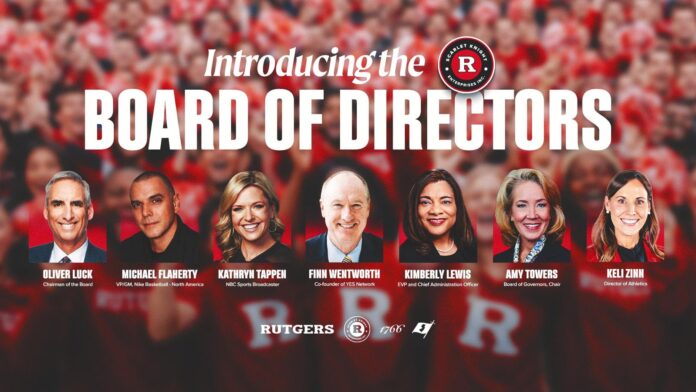
At the center of this initiative is a seven-member Board of Directors composed of leaders from across sports, media, corporate branding, and university governance. The board is chaired in an advisory capacity by Oliver Luck, a seasoned executive with deep experience in both professional and collegiate athletics. In this role, Luck works closely with Rutgers Athletics leadership to identify and develop opportunities across key revenue channels, including corporate sponsorships, multimedia rights, ticketing strategies, and NIL-driven initiatives.
The composition of the board underscores Rutgers’ intent to compete at the highest level. Among its members are Finn Wentworth, a prominent sports and media executive and co-founder of the YES Network; Michael Flaherty, vice president and general manager of Nike Basketball North America; and Kathryn Tappen, a nationally recognized broadcaster with NBC Sports and a Rutgers alumna. Their combined expertise brings a multi-dimensional perspective to the table, blending media strategy, brand development, and audience engagement with a deep understanding of the sports industry.
The inclusion of university leadership further strengthens the board’s alignment with Rutgers’ broader institutional goals. Director of Athletics Keli Zinn, Rutgers Board of Governors Chair Amy Towers, and Executive Vice President and Chief Administration Officer Kimberly Lewis provide continuity between the university’s strategic vision and the operational execution of Scarlet Knight Enterprises. This integration ensures that the initiative is not operating in isolation, but as a core component of Rutgers’ long-term growth strategy.
Zinn has emphasized the significance of this collective expertise, noting that the board’s diverse background in revenue generation, branding, and partnership development will be instrumental in unlocking new resources for the athletics program. That perspective reflects a clear understanding of the challenges facing modern college athletics, where financial sustainability and competitive performance are increasingly interconnected.
The formation of Scarlet Knight Enterprises follows its initial launch, marking a rapid progression from concept to execution. The entity was created to centralize key business functions that have traditionally operated across multiple departments, allowing for a more coordinated and strategic approach to revenue generation. By bringing these functions together, Rutgers aims to streamline decision-making, enhance efficiency, and create a unified platform for growth.
This approach aligns with broader trends across the Big Ten and the national college sports landscape, where institutions are investing heavily in infrastructure, branding, and digital engagement to remain competitive. Rutgers’ decision to formalize this structure signals a recognition that success in this environment requires not only athletic performance, but also a sophisticated understanding of business operations.
Oliver Luck’s leadership adds a layer of credibility and strategic direction that is critical at this stage. His experience navigating complex sports ecosystems provides a foundation for identifying opportunities that extend beyond traditional revenue streams. From expanding corporate partnerships to developing innovative media content and enhancing the fan experience, the board’s mandate is comprehensive in scope.
The emphasis on NIL initiatives is particularly notable. As student-athletes gain greater control over their personal brands, universities must adapt by creating systems that support and amplify those opportunities. Scarlet Knight Enterprises is positioned to play a central role in this effort, providing the infrastructure needed to connect athletes with sponsors, manage partnerships, and ensure compliance within an evolving regulatory framework.
Equally important is the focus on digital and live-event experiences. As fan engagement continues to shift toward interactive and multimedia-driven formats, Rutgers is looking to expand its presence across platforms, creating content and experiences that resonate with both traditional audiences and a new generation of fans. This includes exploring new broadcast opportunities, enhancing in-venue experiences, and leveraging technology to deepen connections between the program and its supporters.
The broader implications of this initiative extend beyond Rutgers itself. Within New Jersey, where collegiate athletics plays a significant role in the state’s cultural and economic landscape, the success of Scarlet Knight Enterprises has the potential to influence how other institutions approach similar challenges. The state’s growing visibility in sports coverage, as reflected in Explore New Jersey’s Rutgers Scarlet Knights platform, highlights the increasing importance of strategic innovation in maintaining relevance and competitiveness.
For Rutgers, this moment represents both opportunity and responsibility. The university is positioning itself to not only adapt to change, but to actively shape it. By assembling a board that brings together expertise from across industries, Rutgers is creating a framework that supports long-term growth while remaining responsive to immediate demands.
As the landscape of college athletics continues to evolve, the launch of Scarlet Knight Enterprises stands as a clear statement of intent. It reflects a commitment to excellence that extends beyond the field of play, encompassing every aspect of the program’s operation. It signals a willingness to invest in the future, to embrace new models, and to build a system that can sustain success over time.
In doing so, Rutgers is not simply reacting to change—it is positioning itself to lead within it, setting a standard for how collegiate programs can navigate the complexities of modern athletics while maintaining a clear and focused vision for what comes next.
















