
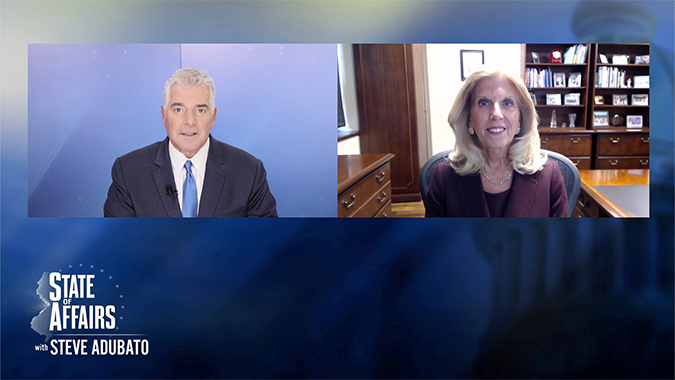

New Jersey’s healthcare system is entering a period of renewed scrutiny, transformation, and recalibration, and at the center of that conversation is a profession that has long carried the weight of patient care with precision, resilience, and unwavering accountability. In a recent segment of State of Affairs with Steve Adubato, a defining discussion unfolded between Steve Adubato and Michele Acito, DNP, Executive Vice President and Chief Nursing Officer of Holy Name, offering a timely and necessary examination of the nursing profession’s role not only as the operational backbone of healthcare, but as the most trusted bridge between medical systems and the communities they serve.
Within the broader context of New Jersey health and wellness leadership, this conversation resonates far beyond a single interview. It reflects a larger reality shaping healthcare across the state and the nation: that the effectiveness of modern medicine is inseparable from the strength, expertise, and credibility of its nursing workforce. What emerges from this exchange is not simply a recognition of nurses as essential contributors, but a reframing of their role as central drivers of patient outcomes, institutional stability, and public trust.
At its core, the discussion underscores a fundamental truth that is often acknowledged but not fully articulated. Healthcare systems do not function in the abstract; they operate through the continuous, hands-on work of nurses who translate medical plans into lived patient experiences. Physicians diagnose and prescribe, but it is nurses who execute, monitor, adapt, and communicate in real time. This dynamic places nurses at the intersection of clinical precision and human connection, a position that carries both responsibility and influence.
Michele Acito’s perspective, grounded in both clinical expertise and executive leadership, brings clarity to this reality. She characterizes nursing not as a supporting function, but as the structural foundation upon which the entire healthcare ecosystem depends. This is not rhetorical framing. It reflects operational reality across hospitals, outpatient facilities, and community care environments. Without nursing, continuity of care breaks down, patient safety is compromised, and the system’s ability to deliver effective treatment is fundamentally weakened.
What elevates this conversation is its focus on trust, a concept that has become increasingly complex in the modern healthcare landscape. Acito identifies a “significant loss in trust” in public health, a challenge that extends beyond institutional performance into the realm of perception, communication, and societal belief systems. In this environment, nurses occupy a uniquely powerful position. They are consistently ranked among the most trusted professionals, a distinction that is earned through direct patient interaction, consistent adherence to evidence-based practices, and a level of accessibility that other roles within the system do not always provide.
This trust is not incidental. It is built through repeated, meaningful interactions where patients rely on nurses not only for clinical care, but for guidance, reassurance, and clarity. In moments of uncertainty—whether during hospitalization or in the transition back to home—nurses serve as interpreters of complex medical information, helping patients and families navigate decisions that carry significant emotional and physical implications. This role as educator and advocate reinforces their credibility, positioning them as the most effective communicators of evidence-based care in an era where misinformation can spread rapidly.
The emphasis on evidence-based practice is particularly significant. Acito’s call for a renewed commitment to science as the foundation of healthcare decision-making reflects a broader need to reestablish alignment between medical expertise and public understanding. In a time when skepticism toward scientific guidance has grown in certain segments of the population, the ability to communicate clearly, consistently, and credibly becomes as important as the care itself. Nurses, by virtue of their proximity to patients and their grounding in clinical protocols, are uniquely equipped to lead this effort.
This leadership, however, extends beyond communication. The segment highlights the evolving role of nurses as strategic contributors within healthcare organizations. As systems become more complex and data-driven, the insights generated at the bedside are increasingly recognized as critical inputs into broader operational decisions. Nurses are not only executing care plans; they are informing them, identifying inefficiencies, and contributing to the continuous improvement of care delivery models. This shift reflects a growing acknowledgment that effective healthcare requires integration across all levels of the system, from executive strategy to frontline execution.
In New Jersey, where healthcare institutions are navigating both demographic changes and evolving regulatory frameworks, this integration is particularly important. The state’s healthcare ecosystem is diverse, encompassing major academic medical centers, community hospitals, and specialized care facilities. Across this spectrum, the ability to maintain consistency in quality and patient experience depends heavily on the strength of the nursing workforce. Leaders like Michele Acito play a critical role in ensuring that this workforce is not only supported, but empowered to operate at the highest level of its capabilities.
The conversation also touches on the broader implications for workforce development and sustainability. As demand for healthcare services continues to grow, the need to attract, train, and retain skilled nurses becomes a strategic priority. This involves not only competitive compensation and professional development opportunities, but also the creation of environments where nurses can practice effectively without unnecessary administrative burden. The goal is to enable them to focus on what they do best—delivering high-quality, patient-centered care.
From a public perspective, the visibility of discussions like this is itself significant. By bringing the realities of nursing and public health into a broader media context, State of Affairs with Steve Adubato contributes to a more informed understanding of how healthcare systems function and where their strengths and vulnerabilities lie. This transparency is an essential component of rebuilding trust, as it allows the public to see not just the outcomes of care, but the processes and professionals behind them.
The intersection of media, healthcare leadership, and public engagement creates an opportunity to reshape narratives around health and wellness in New Jersey. It reinforces the idea that healthcare is not a distant, impersonal system, but a network of professionals working with precision and dedication to support individual and community well-being. Within that network, nurses stand out not only for their technical expertise, but for their ability to connect, communicate, and lead.
As New Jersey continues to position itself as a leader in healthcare innovation and delivery, the insights shared in this conversation serve as both a reflection and a directive. They highlight what is working, identify where challenges remain, and underscore the importance of maintaining a clear, evidence-based approach to care. Most importantly, they reaffirm the central role of nursing in shaping the future of healthcare.
The message is direct and unmistakable. If the goal is to build a healthcare system that is effective, resilient, and trusted, the path forward runs through the nursing profession. In recognizing and investing in that reality, New Jersey is not only strengthening its healthcare infrastructure, but setting a standard for how systems across the country can evolve to meet the demands of a changing world.
















