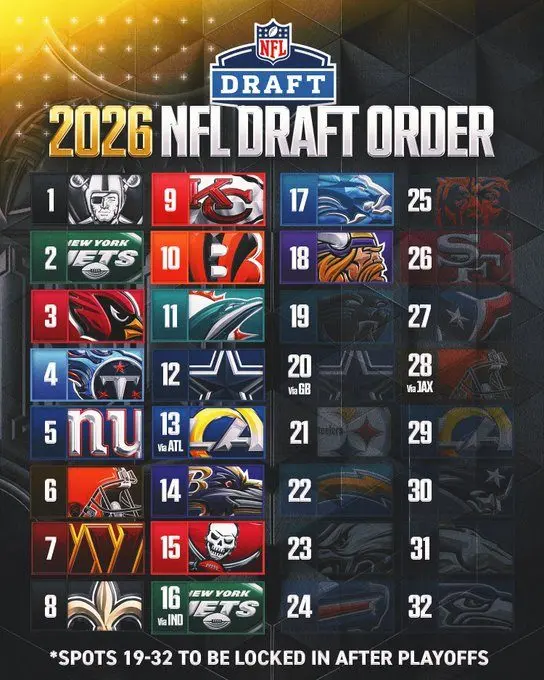

The 2026 NFL Draft begins tonight at 8 p.m. ET in Pittsburgh, setting the stage for one of the most consequential first rounds in recent memory for teams tied to the New Jersey and greater regional football landscape. With multiple top-10 selections, aggressive front-office strategies, and a draft class defined by high-impact defensive talent and offensive playmakers, the New York Giants, New York Jets, and Philadelphia Eagles enter the night not as observers, but as central figures who will shape the early trajectory of the board.
This year’s draft carries added weight. It is not simply about roster improvement—it is about identity, direction, and how each organization chooses to position itself within an increasingly competitive NFC landscape. For fans tracking developments through Explore New Jersey’s Football coverage, the first round represents a convergence point where strategy, speculation, and execution meet in real time.
The Giants arrive as the most intriguing storyline of the night, driven by a bold decision that has already redefined their draft capital. The trade sending All-Pro defensive tackle Dexter Lawrence to Cincinnati in exchange for the No. 10 overall pick has transformed their position from passive participant to aggressive architect. Holding both the No. 5 and No. 10 selections, the Giants now control two of the most valuable assets in the draft, creating flexibility that few teams possess.
The strategy is clear in its structure, even as the exact execution remains fluid. General manager Joe Schoen is expected to prioritize defensive reinforcements while simultaneously adding offensive support for second-year quarterback Jaxson Dart. The dual-pick structure allows the Giants to address multiple needs without compromise, and the names connected to those selections reflect a focus on impact players who can contribute immediately.
At No. 5, the expectation centers on elite defensive prospects. Ohio State safety Caleb Downs has emerged as a leading candidate, offering a combination of range, instincts, and physicality that aligns with the Giants’ need for a stabilizing presence in the secondary. Linebacker Sonny Styles, also from Ohio State, presents an alternative path—an athletic, versatile defender capable of influencing multiple phases of the game. Both options signal a commitment to strengthening the defensive core with players who can anchor the unit for years to come.
The No. 10 pick introduces a different dimension, where offensive playmaking becomes a viable priority. Arizona State wide receiver Jordyn Tyson has generated increasing momentum as a potential selection, bringing speed, route precision, and the ability to stretch defenses vertically. For a team looking to maximize the development of its young quarterback, adding a dynamic receiving threat at this stage would represent a calculated investment in offensive balance.
Timing also plays a role. The Giants are projected to make their first selection early in the evening, placing them at the center of the draft’s initial wave of decisions. With two top-10 picks, their choices will not only define their own direction but influence the options available to teams selecting immediately afterward.
The Jets, meanwhile, enter the draft with a different kind of clarity. Holding the No. 2 overall pick, they are positioned to secure one of the premier defensive talents in the class, with the focus firmly on the edge position. The debate has narrowed to two prospects who represent distinct profiles but similar upside.
Arvell Reese of Ohio State is widely viewed as the high-ceiling option, an explosive athlete with the versatility to impact both the pass rush and coverage schemes. His physical tools and range evoke comparisons to some of the league’s most dynamic defensive players, making him an appealing choice for a team looking to elevate its defensive front.
David Bailey of Texas Tech offers a contrasting profile—less projection, more immediate production