Home Blog Page 11

Inside the Flyers’ Wild Offseason: A Record Offer Sheet, Two Franchise Extensions, and a Rebuild Accelerating Fast

Philadelphia Flyers general manager Danny Briere has turned this offseason into one of the more aggressive rebuilding efforts anywhere in the NHL, headlined by a genuinely historic offer sheet gamble aimed at Anaheim Ducks restricted free agent center Leo Carlsson. Brière offered Carlsson a five-year deal worth $18 million annually, a staggering $90 million total commitment built specifically to pry away a true, franchise-caliber number-one center from a divisional rival. Anaheim ultimately chose to match the offer and keep its young star, meaning Carlsson never actually suited up in orange and black, but the sheer scale of the attempt sent an unmistakable signal to the rest of the league that Philadelphia is sitting on massive salary cap flexibility and is genuinely willing to take monumental risks to speed up its rebuild rather than wait patiently for internal development alone.

With the Carlsson pursuit settled, Brière spent the surrounding days locking down several of the organization’s own core pieces, starting with winger Tyson Foerster’s new eight-year contract extension. Foerster still has one season remaining on his current deal at a $3.75 million average annual value, after which his new extension kicks in for 2027-28 at $7.1 million per year, a genuinely team-friendly number given how the leaguewide salary cap has continued expanding. Foerster’s production makes that value proposition even clearer. He closed the 2024-25 season with nine goals across his final nine games, then opened 2025-26 with ten goals in his first 21 games, a stretch that added up to 19 goals and 24 points across 30 total games, roughly a 50-goal scoring pace if sustained over a full season. A shoulder injury suffered on December 1, 2025 sidelined him for four months, and while he scored again in his return game, he needed most of the stretch run and playoffs to fully rediscover his all-around game, including the defensive detail and board work that round out his offensive talent. Brière has been direct about why the organization prioritized locking Foerster up long-term, describing him as a genuine building block for the franchise’s future, pointing to his growth as a leader, his scoring threat, and his complete 200-foot game as reasons the Flyers were determined to extend him well before he reached unrestricted free agency.

Goaltender Dan Vladar’s five-year extension, which begins in 2027-28 at a $5.5 million average annual value, arrived with considerably less suspense attached, since few around the organization doubted the reigning Bobby Clarke Trophy winner would return on a long-term deal. Brière praised Vladar not just for his on-ice performance but for his presence in the locker room specifically, describing him as a genuine leader who found ways to energize his teammates and consistently push them to want more from themselves, a quality Brière made clear he expects to continue defining Vladar’s role in Philadelphia going forward.

Philadelphia’s remaining moves on the opening day of free agency filled out a genuinely deep supporting cast. Noel Acciari, a 34-year-old veteran center and winger, signed a two-year deal worth $2.8 million annually after a season with the Pittsburgh Penguins that saw him contribute 25 points on 13 goals and 12 assists across 67 games, all while building a reputation as a physical, high-effort checking presence rather than a pure offensive threat. Acciari actually featured in all six games of Pittsburgh’s playoff series against Philadelphia last spring, giving him a firsthand, opposing view of exactly the stingy defensive structure he’s now joining. Speaking with local media shortly after signing, Acciari made clear he sees his role in very direct terms, emphasizing that he wants to contribute wherever he can, whether that’s blocking shots, delivering big hits, or handling the countless smaller details that have defined his career to this point, adding that friends and family had already been telling him how naturally he fits the identity the Flyers have built under head coach Rick Tocchet. Acciari steps directly into the void left by the departures of both Garnet Hathaway and Luke Glendening, bringing Hathaway’s physicality and penalty-killing ability alongside Glendening’s positional flexibility between center and wing. His pedigree extends well beyond checking too, having appeared in 19 playoff games for a Boston Bruins team that reached the 2019 Stanley Cup Final, an experience that included playing alongside veteran leaders like Zdeno Chára and Patrice Bergeron, and he later suited up alongside Sidney Crosby in Pittsburgh, giving him a genuine sense of what winning organizations require on a daily basis. Acciari also addressed a memorable regular-season scrum with Flyers forward Trevor Zegras, in which Zegras tore Acciari’s helmet off during an on-ice tangle, brushing the incident off as something the two will have a good laugh about once they’ve had the chance to talk as teammates.

Beyond Acciari, Philadelphia added checking winger Zach Aston-Reese on a two-year deal structured as a one-way contract worth $850,000 in year one before shifting to a two-way arrangement worth $900,000 at the NHL level and $700,000 in the AHL for year two, bringing a proven, reliable penalty killer who spent his last two seasons within the Columbus Blue Jackets organization after earlier stops with Anaheim, Toronto, and Detroit. The team also re-signed forward Carl Grundstrom, who posted nine goals and 13 points across 47 regular season games last year before adding an assist in three playoff appearances, a re-signing that all but confirms Philadelphia will not bring back veteran forward Luke Glendening for next season. On the younger end of the roster, the Flyers signed 23-year-old Belarusian winger Danila Klimovich, Vancouver’s 2021 second-round pick, to a one-year deal after he spent his entire professional career to date with the AHL’s Abbotsford Canucks, including a 25-goal season in 2024-25 that helped power that team to a Calder Cup championship. Rounding out the day’s moves, Philadelphia added 27-year-old center Jack Studnicka, a productive AHL scorer and legitimate NHL recall option, along with 28-year-old AHL defenseman Cam Dineen, a smaller, mobile puck-mover who also chips in offense from the back end.

With the Carlsson saga now closed and this wave of signings finalized, attention across the league has shifted toward what Brière does next, particularly since Philadelphia still holds four future first-round draft picks and clearly retains real appetite for adding a young, elite center to the organization. Analysts have already floated Columbus Blue Jackets restricted free agent center Adam Fantilli as a plausible next offer sheet target, given the Flyers’ demonstrated willingness to use that rarely deployed roster mechanism aggressively when the right player becomes available. At the same time, insiders widely expect Philadelphia’s immediate priorities to shift toward cheaper depth additions rather than another blockbuster swing, largely because the organization still needs to finalize new deals for restricted free agents Trevor Zegras and Jamie Drysdale, both of whom have already filed for salary arbitration. Brière has consistently expressed confidence that both players want to remain in Philadelphia long-term and that agreements will eventually get done, and much of the roster’s remaining cap flexibility appears to have been deliberately earmarked specifically to get both deals across the finish line.

One storyline that generated plenty of speculation ultimately resolved itself away from Philadelphia entirely. Rumors had circulated about a potential sentimental reunion between the Flyers and former team captain Claude Giroux, but that possibility was officially closed when Giroux chose instead to re-sign with the Ottawa Senators, ending any lingering hope of a homecoming for one of the franchise’s most beloved former players.

Taken together, Philadelphia’s offseason has been defined by a genuine willingness to swing big, even when the biggest swing of all ultimately came up empty. Between locking up Foerster and Vladar for the long haul, adding proven veteran depth in Acciari and Aston-Reese, and still holding real financial and draft-pick ammunition for future moves, the Flyers enter the coming season with a roster that looks considerably more settled than the Carlsson pursuit alone might have suggested, even as the Zegras and Drysdale arbitration cases, and whatever Brière decides to do next in pursuit of that elusive top-end center, remain the two biggest storylines still hanging over the franchise heading into training camp.


New Jersey’s Beer and Brewery Report: Sourstock’s Fifth Anniversary Headlines a Packed Mid-July Calendar

New Jersey’s craft beer scene is firing on every cylinder heading into the middle of July 2026, anchored by a milestone anniversary festival, a wave of brewery celebrations across the state, and a genuinely eclectic mix of live music, celebrity meet-and-greets, and charity events filling out taprooms from Bergen County down to the Pinelands. Whether the plan is a full weekend built around sour beer or a quick Thursday night trivia run, this stretch of the calendar gives New Jersey beer drinkers plenty of reason to plan their next few outings around a brewery rather than a bar.

Sourstock Returns for Its Fifth Year

The single biggest event on this stretch of the calendar is Sourstock, the brewery’s now-annual celebration of everything tart, funky, and fruited, returning for its fifth year this Saturday and Sunday, July 11 and 12. The festival has built its reputation around an increasingly ambitious sour beer lineup, and this year’s taplist delivers more than ten distinct sour beers on draft and in four-packs, alongside the brewery’s usual lager and staple offerings for less adventurous drinkers, hard seltzer for gluten-free guests, and the festival’s now-signature sour beer slushees.

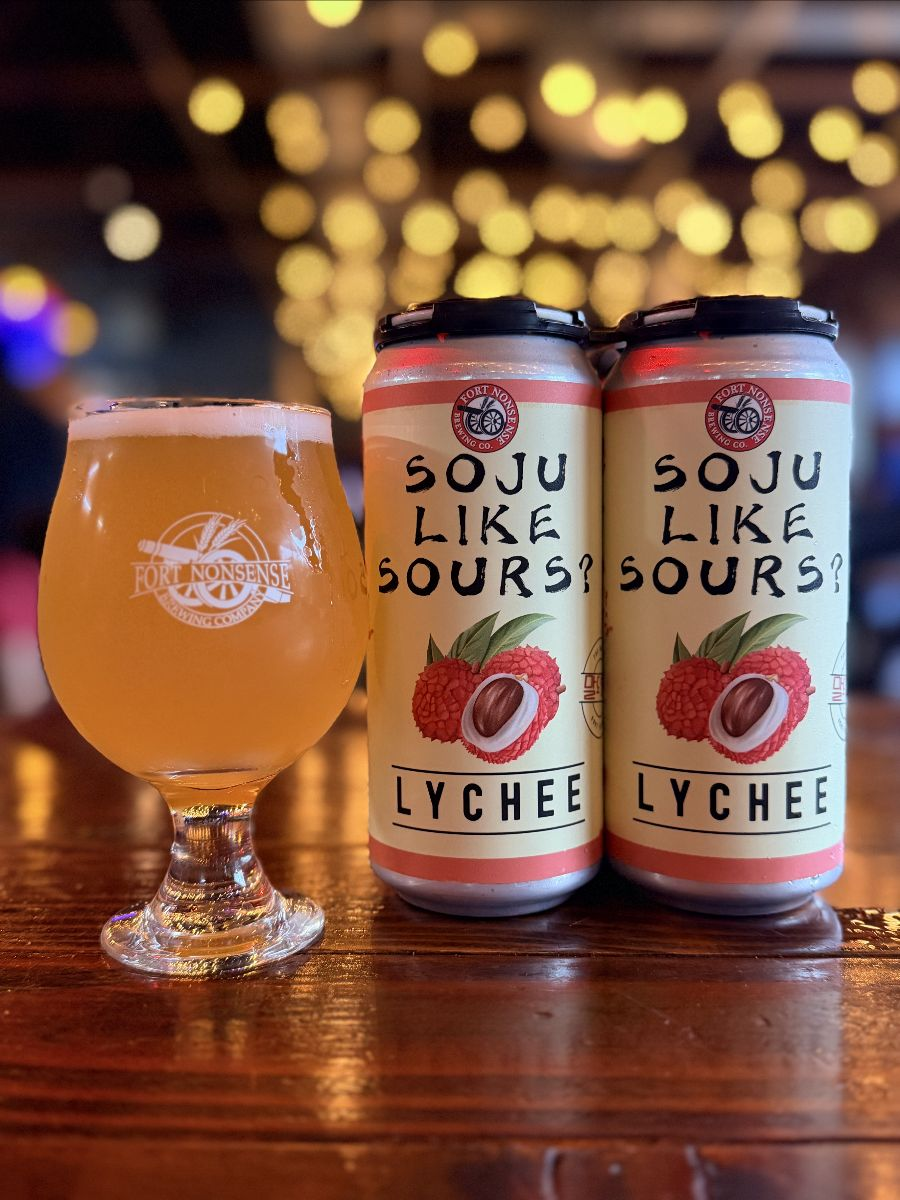
This year’s lineup leans heavily into genuinely inventive combinations. A brand-new Sour Watermelon Marg Gose-Style Sour Ale, brewed with watermelon, lime, and sea salt at 4.2 percent, makes its debut exclusively on tap and available to go in crowlers and growlers. The classic Admiral of the Narrow Seas, a lime and sea salt gose-style sour at 4.5 percent, returns for another year and is expected to anchor the festival’s beer margarita slushee offerings. Wine lovers get their own dedicated pour with the return of Château Du Non-Sens, a Pinot Noir sour ale checking in at a substantial 10.8 percent, alongside the festival’s original fruited sour series, An Overwhelming Surplus of Berries, Stone Fruit, and Tropics, each blending four distinct fruits into an 8.1 percent sour ale. Rounding out the more experimental end of the taplist, a Soju-inspired sour ale arrives in three separate variants, original, lychee, and green grape, at 9 percent, while two hop-forward sour IPAs, Could Be the Move and its rotating-terpene sibling Royal Oil, both check in at 6.7 percent for anyone looking for something closer to a traditional IPA experience within the sour category. All of this weekend’s new releases become available starting at noon on July 11.

Beyond the beer itself, Sourstock has expanded its physical footprint significantly this year, running two full bars simultaneously between the Barrel Room and the Main Taproom, effectively doubling the festival’s air-conditioned indoor space, while also expanding the outdoor beer garden and setting up additional tenting for guests who want to bring their own chairs or blankets for extra room. Live music runs across both days with a noticeably different feel depending on which day guests attend. Saturday leans into high-energy sets built around ska and upbeat rock, featuring Moss Pit from 1 to 4 p.m., The Schwam from 5 to 6:30 p.m., and Backyard Superheroes from 7 to 8:30 p.m. Sunday shifts into a considerably more laid-back register, with Jeiris Cook and Lelica performing from noon to 3 p.m. followed by Jake Roggenkamp from 3:30 to 5:30 p.m. There’s no cover charge for any of the music across either day.

Sourstock Beer Release Lineup

Available Beginning Saturday, July 11 at 12:00 p.m.

This year’s Sourstock lineup features returning fan favorites, exciting new releases, and a wide variety of fruited sours, Gose-style ales, and specialty brews. Whether you’re looking for something crisp and refreshing or bold and fruit-forward, there’s something for every sour beer fan.

Gose-Style Sour Ales

Sour Watermelon Marg (NEW)
Gose-Style Sour Ale brewed with watermelon, lime, and sea salt • 4.2% ABV
A brand-new addition that delivers bright watermelon flavor balanced with citrus and a touch of sea salt. Exceptionally refreshing and made for summer. Available on tap only, with crowlers and growlers available to go.

Admiral of the Narrow Seas
Gose-Style Sour Ale brewed with lime and sea salt • 4.5% ABV
A longtime favorite returns with its signature blend of tart lime and subtle salinity. This classic brew is also the perfect base for the brewery’s popular margarita-inspired slushies. Available on tap and in 16-ounce four-packs.

Wine-Inspired Sour Ale

Château Du Non-Sens – Pinot Noir Edition
Sour Ale with Pinot Noir10.8% ABV
The original king of the Château wine-inspired sour series is back. Rich Pinot Noir character combines with bright sour notes to create one of the brewery’s most celebrated specialty releases. Available on tap and in 12-ounce four-packs.

An Overwhelming Surplus Series

An Overwhelming Surplus of BERRIES
Fruited Sour Ale with strawberry, blueberry, raspberry, and blackberry • 8.1% ABV
The beer that launched the popular series returns with an even bigger burst of mixed berry flavor. Available on tap and in 16-ounce four-packs.

An Overwhelming Surplus of STONE FRUIT
Fruited Sour Ale with peach, plum, apricot, and cherry • 8.1% ABV
Back for its second year, this vibrant sour showcases layers of juicy stone fruit with a refreshing finish. Available on tap and in 16-ounce four-packs.

An Overwhelming Surplus of TROPICS (NEW)
Fruited Sour Ale with pineapple, mango, guava, and passion fruit • 8.1% ABV
The newest member of the series is packed with tropical fruit from start to finish, delivering an intensely juicy drinking experience. Available on tap and in 16-ounce four-packs.

Specialty Sour Releases

Soju Like Sours?
Soju-Inspired Sour Ale9.0% ABV
Inspired by Korea’s iconic spirit, this unique sour is available in three distinct varieties: Original, Lychee, and Green Grape. The Green Grape version offers a nostalgic, grape juice-like flavor that’s sure to stand out. Available on tap and in 16-ounce four-packs.

Sour IPAs

Could Be the Move
Sour IPA brewed with sorrel, ginger, lemon, and Loral hops • 6.7% ABV
Bright citrus, herbal spice, and balanced tartness come together in what may become one of the festival’s standout beers. Available on tap and in 16-ounce four-packs.

Royal Oil
Sour IPA6.7% ABV
Built on the same base recipe as Could Be the Move, this version features rotating terpene profiles throughout the weekend, giving each pour a slightly different aromatic experience. Available on tap, as well as in growlers and crowlers to go.

Join the celebration beginning Saturday, July 11 at noon and experience one of the year’s most diverse collections of sour beers, featuring returning favorites, inventive new recipes, and limited specialty releases while supplies last.

Festival organizers have also built out a genuinely full slate of activities beyond drinking and listening, including a World Cup-themed soccer darts setup available both days, along with mini golf, cornhole, Connect 4, and the usual assortment of classic lawn games. International Dumpling Factory will be serving food on-site both days near the fermenters, though the festival remains bring-your-own-food friendly for anyone who prefers to pack their own snacks. This year’s exclusive merchandise drop centers on an official color-changing Sourstock cup, included automatically with any beer slushee purchase or available as an add-on with a standard 12-ounce pour. Sunday afternoon at 3 p.m. brings back the festival’s beloved Hawaiian Shirt Contest, and while organizers aren’t selling shirts on-site this year, they’re keeping the contest itself alive, inviting guests to enter their own favorite shirts for a chance at a Fort-themed prize.

Practically speaking, Sourstock remains free to enter, with no digital ticketing option available. Instead, anyone planning to drink needs to purchase tickets in person and receive a wristband at the door, and organizers are asking guests to leave outside alcohol at home entirely. Parking attendants will be on-site during peak hours across both days to help manage the crowds. Dogs are welcome throughout the outdoor areas of the festival as long as they remain leashed at all times, making Sourstock a genuinely dog-friendly outing for anyone looking to bring the whole family, four-legged members included.

Brewery Anniversaries and Festivals Across the State

Sourstock isn’t the only milestone being celebrated this month. Icarus Brewing Company in Brick Township is marking its own Brickaversary, celebrating two years at its current flagship facility and nine years in business overall, with a lineup of canned beer releases, two exclusive barrel-aged bottles, and all-day live music, backed by a strong 4.7 rating across 645 reviews. Screamin’ Hill Brewery in Cream Ridge is celebrating 11 years of brewing with a genuinely rural farm-set celebration, pairing specialized drafts with live folk music from The Williamsboy, while carrying its own 4.7 rating from nearly 310 reviewers. Montclair Brewery, meanwhile, is running its ongoing F.A.M. Fest, short for Food, Art, and Music, bringing in food trucks from Kitchen 787 alongside evening performances from Jazzboat and the Bob Lanza Blues Band, giving Essex County beer drinkers a genuinely full weekend of programming at a brewery that’s built a 4.5 rating of its own.

Celebrity Appearances and Trivia Nights

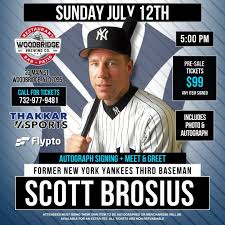
Woodbridge Brewing Co. is hosting one of the more unexpected draws on this month’s calendar, welcoming New York Yankees legends Joe Torre and Scott Brosius for an autograph signing and fan meet-and-greet on Sunday evening, giving baseball fans a genuine reason to visit a taproom that otherwise carries a solid 4.0 rating across more than 900 reviews. For something a bit more brain-teasing, Diamond Spring Brewing Co. in Denville runs its Fast-Paced Pop Culture Trivia every single Thursday night, spread across five competitive interactive rounds, giving regulars a genuinely reliable weekly reason to head back to a brewery that’s built a 4.5 rating from its community.

Live Music and Community Causes

Five Dimes Brewery in Westwood is putting together a late-night rock showcase featuring a performance from Sandy Stones Music, giving Bergen County music fans a solid evening lineup at a brewery holding its own respectable 4.4 rating. Down in Little Egg Harbor Township, Pinelands Brewing Co. is hosting its annual Pedaling for a Cure Cornhole Tournament, with entry fees going directly to benefit the Children’s Cancer Research Fund, giving guests a genuine charitable reason to spend an afternoon at a brewery that has built an outstanding 4.8 rating from its community, among the strongest of any brewery on this month’s calendar.

Looking Ahead: Icarus Brewing’s Babe Brew Release Party

Beer fans planning further out should already be marking their calendars for Saturday, July 25, when Icarus Brewing hosts its Babe Brew Release Party from 11 a.m. to 11 p.m. The event celebrates the release of Babe Brew, a genuinely notable collaboration between Icarus and the Beer Babes Family, marking that organization’s first-ever New Jersey beer collaboration. The beer itself is a refreshing, summery Berliner Weisse brewed with hibiscus and lavender, giving it a distinctly floral, warm-weather profile suited perfectly to a late-July release. A portion of the day’s proceeds will benefit Beer Babes Family, an international organization, giving this release party the same kind of charitable backbone that’s become a genuine hallmark of New Jersey’s brewery calendar this summer.

Taken together, this stretch of programming captures New Jersey’s craft beer scene at its most ambitious, breweries celebrating genuine decade-plus milestones, hosting national sports legends, running weekly trivia traditions, and raising real money for causes like childhood cancer research, all while continuing to push the boundaries of what a sour beer, a gose, or a Berliner Weisse can actually taste like. Whether the plan this month is a full weekend at Sourstock or a quick Thursday trivia night in Denville, New Jersey’s breweries are giving beer drinkers no shortage of reasons to get out and explore.

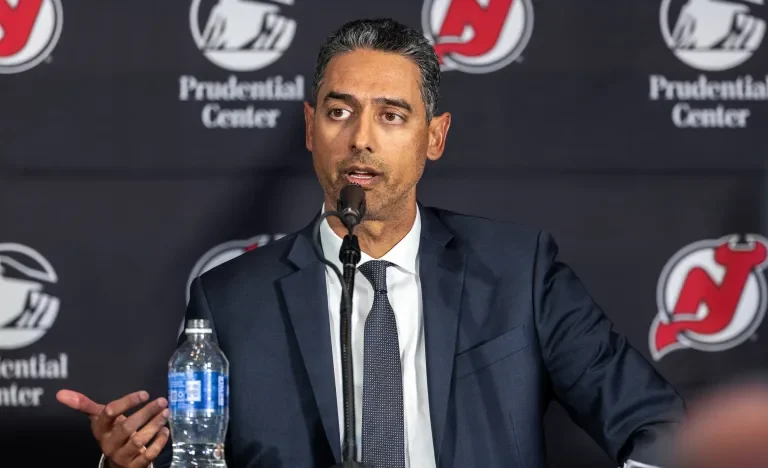
Inside the Devils’ Three-Goalie Gamble, and the Locker Room Culture Sunny Mehta Is Building Around It

New Jersey Devils fans have spent much of this summer debating one specific roster decision more than any other, the front office’s choice to head into the 2026-27 season with three legitimate NHL goaltenders on the depth chart rather than a clear, singular starter backed by a traditional backup. That kind of skepticism is a genuinely normal reaction around the league. Carrying three netminders usually signals that a franchise doesn’t trust any single option to handle a true number-one workload, and the logistics rarely cooperate either, since splitting practice reps across three goalies during morning skates makes it considerably harder for any one of them to find a real rhythm, and it typically eats into a roster spot that could otherwise go to an extra skater.

What’s driving the Devils’ version of this decision, though, looks less like uncertainty and more like a deliberate strategy borrowed from a team that’s already proven it can work. New general manager Sunny Mehta completely rebuilt New Jersey’s goaltending approach this offseason after moving on from Jacob Markström, assembling a low-cost, deliberately high-variance trio built around 35-year-old veteran Jake Allen, who is currently slated to handle the bulk of the starting workload as the team’s 1A option, alongside Nico Daws, the young, homegrown goaltender New Jersey just re-signed specifically to give him a genuine developmental runway at the NHL level, and David Rittich, the 33-year-old veteran brought in on a cheap, one-year free agent deal to serve as experienced insurance behind the other two.

The strategy directly echoes what the Carolina Hurricanes have built over recent seasons, a franchise that has ridden a rotating, committee-style goaltending approach all the way to consistently deep playoff runs rather than leaning on a single, expensive starter. Financially, the math behind New Jersey’s version of that approach is genuinely striking. The entire three-goalie group costs the Devils just $3.9 million combined against the salary cap, a remarkably efficient allocation that freed up substantial cap space for the front office to invest more heavily in upgraded defensive depth elsewhere on the roster, effectively insulating the net through better structure in front of it rather than through star power between the pipes.

The concerns critics have raised aren’t unreasonable, even if the front office appears to have accounted for them deliberately. Because all three goaltenders currently sit on one-way contracts, New Jersey does face genuine risk if it ever needs to send one of them down to the AHL, since one-way deals typically require clearing waivers first, creating a real possibility of losing a goaltender for nothing if a rival team decides to claim him. There’s also the lingering worry that a rotation built from a veteran journeyman, a still-developing young netminder, and a second veteran brought in purely for insurance simply won’t hold up against the kind of high-powered offenses New Jersey will face regularly within a genuinely brutal Metropolitan Division. Whether that skepticism proves warranted will likely come down to health and consistency as much as talent, the same variables that determine whether any goaltending strategy, committee-based or not, actually works over an 82-game season.

Beyond the numbers and the strategy itself, this summer has offered a genuinely revealing look at the culture Mehta and his staff are trying to build around this new-look roster, one that shows up less in press conference soundbites and more in the small, human moments happening away from the cameras. Arseny Gritsyuk, fresh off signing a new contract extension, opened up recently about just how nervous he felt arriving in New Jersey for his first season, a genuinely understandable reaction given he was adjusting to a new country, a new language, and locker room mates he had previously only controlled as digital characters in a hockey video game. What stuck with him most, though, wasn’t the nerves themselves but a small gesture from captain Nico Hischier, who noticed Gritsyuk was still finding his footing early in the season and simply sat down beside him at lunch one day to talk, mostly about life rather than hockey. Gritsyuk described the captain as genuinely good-hearted, and credited that single, unscripted conversation with making him feel like he truly belonged on the team almost immediately, a reminder that leadership in a locker room often looks less like a rousing speech and more like someone choosing to sit in the empty seat next to the new guy.

Gritsyuk offered his own lighter moment as well when asked what he actually misses about New Jersey, giving the genuinely unexpected answer of the region’s notoriously heavy traffic, explaining that Moscow’s traffic is considerably worse by comparison, making him perhaps the first player in franchise history to actually miss sitting on the Turnpike.

That same culture of quiet, unforced hospitality extended to the club’s youngest prospects during Development Camp, when winger Jesper Bratt and his fiancée Nicole invited fellow Swede Alexander Command, still years away from an NHL debut, along with Swedish campmates Sigge Holmgren and Gustav Hillstrom, over to their home for dinner during one of the group’s free evenings. It was a small gesture, but one that speaks to the kind of veteran mentorship the organization has clearly encouraged even among players who have no immediate roster stake in each other’s development. Command himself offered a genuinely charming footnote to his own connection with the franchise, recalling a childhood photo of himself as a twelve or thirteen-year-old wearing a Devils t-shirt at home in Sweden, long before New Jersey ever drafted him, explaining that his family had always followed both New York and New Jersey teams and that he simply gravitated toward the Devils as a kid, an oddly fitting coincidence given how his career has unfolded since. He described sitting through the actual draft moment hoping but not truly expecting his name to be called, which made the selection itself land as a genuine surprise when it finally came.

Newcomer Evan Rodrigues has quickly established himself as one of the more colorful personalities in the room as well, a reputation that only grew after a clip of him being introduced during the Stanley Cup Final in front of a loudly booing Edmonton crowd went viral and turned into a genuine meme, largely because Rodrigues chose to smirk and lean into the moment rather than keep a stoic face. He later explained that he simply tried to embrace the atmosphere in the building rather than fight against it, acknowledging the moment came across a little differently than he’d expected but that he was trying to soak in the experience regardless. Beyond the viral moment, Rodrigues offered a genuinely thoughtful answer when asked what winning back-to-back Stanley Cups actually taught him, pointing not to systems or tactical experience but to the unglamorous discipline of in-season recovery, explaining that modern NHL players competing in what can amount to nearly 100 games a year need to treat their time away from the rink as seriously as their time on the ice, since those small recovery habits compound into one of the biggest differentiators in today’s league. Mehta himself has pointed to exactly that kind of professionalism, along with Rodrigues’ path as an undrafted player who worked his way through multiple stops before establishing himself as a winner, as central reasons why New Jersey targeted him specifically as a veteran leadership piece for this current roster.

Captain Nico Hischier struck a similarly grounded tone during his own media availability this summer, framing his new contract extension not as a finish line but as a renewed commitment to being part of the solution in New Jersey rather than looking elsewhere, expressing genuine excitement to see how the roster continues to take shape before the team reconvenes in October.

Elsewhere in the organization, forward Lenni Hämeenaho closed out a genuinely memorable spring by helping Finland capture gold at the World Championship in late May, an experience he described as so overwhelming in the moment that he nearly blacked out during the on-ice celebration. Having now tasted that level of winning for the first time in his career, Hämeenaho has made clear the feeling has only sharpened his motivation heading into next season, describing a renewed hunger to chase that same feeling again, this time in a Devils uniform.

The organization has also been investing quietly in the developmental side of things well beyond pure hockey skill. During this year’s Development Camp, New Jersey brought in o2X Human Performance, a company specializing in science-based training, coaching, and education around health, resilience, and overall performance. Utica head coach Ryan Parent spoke highly of the presentation, noting how valuable it was for a smaller camp group to work through self-evaluation and leadership exercises together, explaining that a tighter group of twelve to fourteen players allows for considerably more genuine interaction than a larger camp of forty players where teammates might barely get the chance to learn who everyone actually is.

With the 2026-27 NHL schedule set to be released within days, the Devils now head into a genuinely quiet stretch of the offseason calendar, though one shaped by a goaltending gamble built on real financial logic, a locker room culture built on small, unforced acts of veteran leadership, and a rotating cast of new faces, from Gritsyuk’s growing comfort in New Jersey to Command’s unlikely childhood connection to the franchise, all steadily being woven into the same larger story Mehta is building one roster decision at a time. As for whether Jesper Boqvist can emerge as a genuine secret weapon within New Jersey’s bottom six this season, that’s a storyline worth watching closely once training camp actually gets underway, and one this space will keep tracking as the picture becomes clearer heading into October.

Target’s Summer Goals Tour Wraps Up Its National Run at the Clifton, New Jersey Store

Target is closing out its cross-country World Cup celebration right here in New Jersey, choosing the retailer’s Clifton store as the final stop on its 2026 Summer Goals Tour, a free, family-friendly experiential event built to bring the energy of this summer’s global soccer tournament directly into Target’s own parking lots. The Clifton stop is scheduled for Saturday, July 18, 2026, running from 10 a.m. to 5 p.m., and it caps off a multi-city tour that has already made stops in Los Angeles, Houston, and Atlanta over the preceding weeks.

Target’s choice of these four specific cities was far from arbitrary. Each stop on the Summer Goals Tour was deliberately selected to celebrate local communities situated near official World Cup host stadium areas, meaning Clifton’s inclusion on this national itinerary reflects New Jersey’s own genuine role in hosting World Cup activity this summer rather than a random retail marketing stop. For a state whose soccer fans have spent months anticipating this tournament, having the tour’s final national stop land in New Jersey gives local families a proper send-off celebration as the World Cup itself continues to unfold.

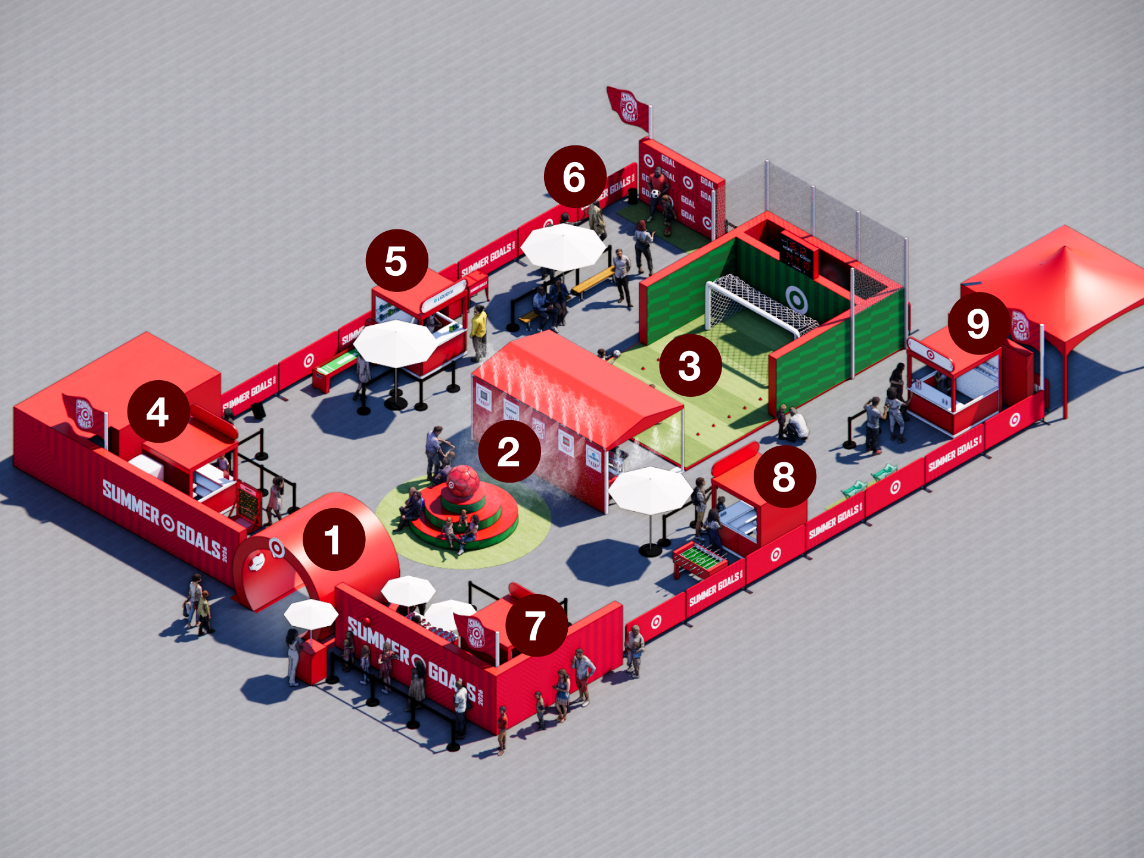
The tour’s design leans heavily into hands-on, physical activity rather than passive spectating, giving visitors of all ages something genuinely interactive to do rather than simply watching from the sidelines. The centerpiece attraction, known as the Play Pitch, challenges visitors to a fast-paced sixty-second target practice session inside a dedicated soccer cage, with every goal tracked live on an actual scoreboard, turning a quick round of shooting practice into a genuine mini-competition for anyone willing to step up and take their shot. Alongside that challenge sits the Center Circle, a physical walk-through tunnel built to replicate the experience of a players’ entrance, complete with real stadium crowd noise piped in through the space, giving fans a surprisingly immersive photo opportunity that captures at least a small taste of what it feels like to walk out onto the pitch at an actual World Cup match.

Beyond the physical challenges, the tour brings a genuinely substantial lineup of brand sampling stations known as Playmaker Booths, where visitors can pick up free snacks, hydration products, and other giveaway items from major national brands including Chobani, Dove, Liquid I.V., and LEGO. That kind of multi-brand sampling setup gives families plenty of reason to make a full afternoon out of the visit rather than a quick fifteen-minute stop, especially with kids likely to gravitate toward the LEGO activation while parents appreciate the hydration and snack offerings on a potentially warm July afternoon. Rounding out the tour’s offerings, an on-site retail setup will sell exclusive, limited-edition merchandise tied specifically to World Cup host cities, giving fans a genuine collector’s item opportunity that won’t be available through Target’s standard in-store or online inventory.

For anyone planning to attend, the logistics couldn’t be more straightforward. The Clifton event is entirely free and open to the general public, with no tickets, reservations, or advance sign-up required of any kind, meaning families can simply show up during the event’s seven-hour window and join in whenever works best for their schedule. The full interactive setup, including the Play Pitch cage, the Center Circle tunnel, and all of the sampling booths, is being constructed directly inside the store’s main parking lot, transforming a familiar retail space into a genuinely immersive soccer-themed pop-up for the day.

Target has framed the broader Summer Goals Tour as a way of translating the excitement surrounding this summer’s global tournament into something families can genuinely experience together, rather than something they only watch unfold on television. By combining high-energy, soccer-inspired physical activities with complimentary snacks, drinks, and exclusive product finds, the tour gives visitors a playful, hands-on way to feel connected to the World Cup while also showcasing the kind of distinctive in-store experiences and brand partnerships Target has increasingly built its retail identity around. With Clifton serving as the tour’s final national stop, New Jersey families now have one last, genuinely free opportunity to take part in exactly the kind of large-scale World Cup celebration that has already drawn crowds in Los Angeles, Houston, and Atlanta over the course of the summer.

Clifton’s Better Team USA Corp. Advances as a National Semifinalist in the SBA’s Freedom 250 Patriot Pitch Competition

A luxury outerwear manufacturer based in Clifton has earned a genuinely rare national distinction, advancing as one of just ten semifinalists nationwide in the U.S. Small Business Administration’s Patriot Pitch Competition, part of the agency’s broader Freedom 250 initiative marking two hundred and fifty years of American free enterprise. Better Team USA Corp.’s selection places the New Jersey company among an elite group chosen from more than a thousand small business submissions representing every state in the country, giving Clifton a genuine seat at the table in a competition built specifically to celebrate the entrepreneurs carrying American manufacturing and innovation forward into its next quarter-millennium.

The scale of this competition reflects just how significant Better Team USA’s advancement really is. Out of 1,182 small businesses that submitted pitches from across the entire nation, only ten made it through district and regional judging to reach semifinalist status, a genuinely competitive filtering process that SBA Administrator Kelly Loeffler has directly credited with surfacing exactly the kind of ingenuity and risk-taking that drives real economic and job growth. Those ten semifinalists now move forward into the next stage of judging, competing for a chance to earn one of five coveted finalist spots at a live event in Washington, D.C. this September, where finalists will pitch directly in front of a panel of celebrity judges and a live audience, competing for a combined prize pool of $1 million funded by Clover Network Inc.

That prize structure carries real financial weight for whichever companies ultimately make the final cut. First place at the September finals will take home $400,000, with second place earning $250,000, third place receiving $150,000, fourth place claiming $125,000, and fifth place still walking away with a substantial $75,000. For a small manufacturing business, that kind of prize money represents a genuinely transformative injection of capital, the sort of resource that can fund new equipment, expanded facilities, or additional hiring well beyond what typical business financing alone might allow.

Contestants throughout this process are being judged against a specific, demanding set of criteria, evaluated on their ability to strengthen American competitiveness, demonstrate strong business performance paired with genuine innovation, generate real economic impact and quality job creation, and show sound business fundamentals paired with readiness to actually execute on their plans. Beyond those performance-based measures, the SBA also conducts a thorough review of each participant’s eligibility, business reputation, legal compliance, and potential conflicts of interest, ensuring that whichever companies eventually reach the finals represent genuinely sound, well-run businesses rather than simply the best pitch presentations.

Better Team USA Corp. itself represents a genuinely compelling manufacturing story built around decades of specialized craftsmanship. According to the company’s own account of its history, the business operates out of a newly developed 16,000-square-foot luxury outerwear manufacturing facility in Clifton, founded by Horacio Di Battista, a garment industry veteran with more than four decades of experience in luxury apparel production. Di Battista’s career traces back to his father’s apparel studio in New York City, where the family business produced some of the fashion industry’s most respected haute couture and prêt-à-porter designs entirely by hand, working with legendary names including Pauline Trigère, Arnold Scaasi, Bob Mackie, Halston, Bill Blass, and Carolina Herrera. That early foundation in genuinely difficult, highly detailed garment construction, particularly for suits, coats, and evening gowns, became the family operation’s defining specialty, a craft tradition Di Battista has now carried forward into Better Team USA’s modern Clifton manufacturing facility.

SBA Atlantic Regional Administrator Matt Coleman highlighted Better Team USA specifically as an example of exactly what authentic American manufacturing should look like, describing the Clifton company as embodying the Made in America ethos the broader Freedom 250 initiative is designed to celebrate. Coleman noted that the Atlantic Region received a genuinely strong pool of nominations this cycle, reflecting real pride among small business owners across the region in the innovation and collaboration they’ve built into their operations, a pool from which Better Team USA managed to distinguish itself enough to reach the national semifinalist stage.

Better Team USA now advances alongside nine other companies representing a genuinely diverse cross-section of American small business innovation, spanning industries and regions from coast to coast. Joining the Clifton manufacturer in the semifinalist round are Compotech Inc. of Brewer, Maine, D. Gillette Industrial Services of Easton, Pennsylvania, Winton Machine of Suwanee, Georgia, MSP Aviation Inc. of Bloomington, Indiana, Maxi Volt Inc. of Amarillo, Texas, Plas-Tech Tooling of Garner, Iowa, Red River of Gillette, Wyoming, VetPowered LLC of San Diego, California, and Goodwinds Composites LLC of Mount Vernon, Washington, a lineup that stretches across advanced manufacturing, aviation, industrial services, and specialized materials industries alike.

As these ten semifinalists move into the next round of judging, Better Team USA Corp. carries New Jersey’s manufacturing reputation directly into a national spotlight built specifically to honor exactly this kind of small business craftsmanship and ambition. Whether or not the Clifton company ultimately earns one of the five finalist slots heading to Washington this September, its advancement this far already represents a genuine milestone for a business built on decades of luxury garment expertise now finding new expression in modern American outerwear manufacturing.

New Jersey Gets a Brief Break From the Storms Before a Major Heat Wave Builds Toward Midweek

New Jersey is finally catching its breath today after a genuinely rough stretch of weather, with several consecutive days of severe thunderstorms having dumped as much as five inches of rain across parts of the state, triggering major flash flooding and even causing a partial roof collapse at a BJ’s Wholesale Club location in Ocean Township. As of this afternoon, conditions across the state sit at a cloudy 72 degrees, with a feels-like temperature closer to 76 thanks to humidity hovering near 94 percent, while light northwest winds move through at just 3 miles per hour. After days of relentless downpours, today marks a genuine, if temporary, reprieve from the heaviest rain, even as a few passing light showers linger through the morning and midday hours before skies work their way toward partly sunny conditions later this afternoon.

Hourly Forecast for Saturday, July 11, 2026

HourSky ConditionTemperatureChance of Rain
7 AM – 10 AMweatherIconCloudy73°F – 79°F10%
11 AMweatherIconLight rain79°F25%
12 PMweatherIconRain showers79°F65%
1 PMweatherIconMostly cloudy78°F10%
2 PM – 7 PMweatherIconPartly sunny77°F – 74°F5%
8 PM – 11 PMweatherIconMostly cloudy73°F – 70°F10%

7-Day Extended Outlook

DaySky ConditionTemperatureChance of Rain
Sat, Jul 11weatherIconLight rain79°F / 67°F65%
Sun, Jul 12weatherIconPartly sunny83°F / 62°F5%
Mon, Jul 13weatherIconPartly sunny86°F / 65°F15%
Tue, Jul 14weatherIconSunny92°F / 69°F5%
Wed, Jul 15weatherIconMostly sunny97°F / 71°F25%
Thu, Jul 16weatherIconPartly sunny90°F / 70°F5%
Fri, Jul 17weatherIconThunderstorm86°F / 70°F40%

That improvement should continue through the rest of the day. Morning hours through mid-morning should stay cloudy with temperatures climbing from the low 70s toward the upper 70s, with only a modest 10 percent chance of rain. Around 11 a.m., a brief period of light rain becomes more likely, and by noon that risk climbs further, with a 65 percent chance of rain showers as temperatures hold near 79 degrees. Once that early afternoon activity clears, conditions should improve steadily, with mostly cloudy skies by 1 p.m. giving way to partly sunny conditions running from 2 through 7 p.m. as temperatures ease back down from the upper 70s into the mid 70s. Skies turn mostly cloudy again heading into the evening, with temperatures gradually cooling from the low 70s down toward 70 degrees between 8 and 11 p.m.

Understanding why today’s break comes exactly when it does requires a quick look at the broader atmospheric pattern driving New Jersey’s weather this month. The jet stream has generally been sitting north of the state, a setup that tends to build ridges of high pressure and warmth, but forecasters have identified a handful of specific windows where the jet stream dips down closer to or just south of New Jersey, creating brief troughs that interrupt the overall hot pattern. One of those brief dips is unfolding right now, running from Saturday into Sunday, with another expected to arrive toward the end of next week. In between those two windows of relief sits a genuinely hot buildup, meaning this weekend’s more comfortable stretch is very much the exception rather than the new normal heading into next week.

Saturday itself won’t be a washout, but it also won’t be entirely storm-free. Rather than scattered storms lingering throughout the day, forecasters expect thunderstorm activity to organize into a single linear band that pushes through New Jersey from northwest to southeast sometime between noon and 5 p.m., with any individual location likely seeing its own local impact window last somewhere around an hour or two at most. During that window, damaging wind gusts and localized flooding rainfall remain possible if any of the storm cells manage to strengthen further, since the atmosphere remains sufficiently unstable to support that kind of intensity. Once that band clears through, though, the rest of Saturday should improve noticeably, with only isolated storm cells possible, if any, and generally light winds out of the north and northeast for the remainder of the day. Saturday’s overnight lows should settle into the 60s, with a few more isolated showers possible into Sunday morning before conditions fully clear out.

Sunday stands out as clearly the best day of the entire stretch. High temperatures should reach the low-to-mid 80s, but with a noticeably drier, more comfortable feel as the same cold front responsible for Saturday’s storm band also sweeps the heaviest humidity out to sea. Skies should turn mostly sunny, with light winds out of the northeast and a slightly breezier feel right along the coast. Overnight lows Sunday night should fall into a genuinely comfortable range, dropping into the upper 50s across northern New Jersey and into the mid 60s farther south, giving residents across the state one clean, low-humidity day to enjoy before the pattern shifts again.

That shift arrives quickly. By Monday, temperatures climb back into the mid-80s, and from there the warming trend accelerates sharply through the week. Tuesday pushes into the low 90s under sunny skies, and Wednesday stands out as the peak of the stretch, with highs approaching a genuinely impressive 97 degrees under mostly sunny conditions, edging into near-record territory for the date. That kind of heat, layered on top of New Jersey’s typical summer humidity, is more than enough to justify real complaint and to reintroduce serious heat exhaustion and heat stroke safety concerns for anyone spending extended time outdoors. Thursday offers a slight step back to a still-hot 90 degrees, before Friday brings a 40 percent chance of thunderstorms as the heat wave finally starts to break.

Those Thursday-into-Friday storm chances tie back into the same broader weather pattern driving this entire stretch, sometimes referred to within meteorological circles as a ring of fire setup, where thunderstorms repeatedly fire along the edge of a strong ridge of high pressure. Forecasters are watching that possibility most closely for the Wednesday-into-Thursday window specifically, with Monday and Tuesday of next week expected to stay warm to hot but largely storm-free. Beyond that specific storm chance, next week overall is shaping up to be a fairly typical, if intense, mid-July stretch for New Jersey, hot and humid without any major large-scale storm systems currently on the radar beyond that one ring-of-fire window.

Looking further out, there’s a genuinely welcome seasonal marker worth watching for as July moves toward its final stretch. At some point on or after July 20, New Jersey typically sees its first solid cold front capable of briefly interrupting the deep mid-summer feel with something closer to an early taste of fall, a shift that can arrive as early as late July or hold off until as late as mid-August depending on the year. It’s a genuinely fleeting sensation, more of a brief reminder that summer won’t last forever than any kind of lasting seasonal change, but it’s the first small signal each year that the calendar has quietly turned past its hottest stretch. From there, as summer gradually gives way toward autumn between August and early October, attention naturally shifts toward tracking tropical development and beginning to look ahead toward what winter 2026-2027 might eventually bring.

For now, though, the message for New Jersey residents is straightforward. Enjoy today’s clearing skies and Sunday’s genuinely pleasant, low-humidity conditions while they last, because a serious heat wave is already building right behind this weekend’s brief break, and it’s set to peak with near-record heat by the middle of next week.

Bergen County Entrepreneur Brings a Single-Ingredient Maple Water to New Jersey Store Shelves

A Bergen County entrepreneur is putting a genuinely simple idea to the test in an increasingly crowded hydration market, launching a canned pure maple water built around exactly one ingredient. Ample Hydration, founded by an Englewood native, has officially completed its flagship product launch and begun rolling the beverage out to retailers, betting that today’s health-conscious shoppers are ready for a genuinely minimalist alternative to the sports drinks, flavored waters, and electrolyte beverages currently crowding store shelves.

The product itself draws on a resource most people associate with breakfast tables rather than beverage coolers. Maple water is not maple syrup, nor a diluted version of it. It is the naturally occurring sap that flows through maple trees long before that sap ever gets boiled down into the thick, intensely sweet syrup familiar from pancake toppings. In its raw, unprocessed state, that sap carries a far lighter, more subtly sweet profile, closer to a naturally flavored water than anything resembling traditional maple syrup.

According to the company, Ample’s maple water breaks down to roughly 98 percent water and 2 percent naturally occurring sugars, while still delivering a genuine dose of naturally occurring electrolytes and minerals, including potassium, calcium, and manganese, all sourced directly from the tree sap itself rather than added during processing. That nutritional profile is central to how Ample is positioning the product within the broader hydration category, marketing it specifically as a clean-label alternative for consumers who have grown increasingly skeptical of long, chemical-heavy ingredient lists on typical sports drinks and flavored waters.

The numbers back up that clean-label positioning in fairly straightforward terms. Each twelve-ounce can contains approximately 35 calories and roughly 8 grams of naturally occurring sugar, with no added sugar of any kind mixed in during production. The full ingredient list, according to the company, consists of nothing beyond organic maple water itself, a level of simplicity that stands out considerably against typical beverage labels packed with preservatives, artificial flavoring, and added sweeteners. Ample has built its entire brand pitch around that simplicity, positioning the product for consumers specifically looking for everyday hydration built on a genuinely short, recognizable ingredient list rather than a beverage engineered in a lab.

The beverage is both sourced and produced entirely within the United States, giving the company a straightforward domestic supply chain story to go along with its minimalist ingredient philosophy. Ample recommends enjoying the drink chilled, positioning it as a refreshing, lightly sweet alternative for anyone looking to switch up their everyday hydration routine without reaching for anything overly processed or artificially flavored.

For New Jersey shoppers curious to try it firsthand, the brand’s retail rollout has already begun close to home, with Healthway Natural Foods in Tenafly among the first retailers in the region carrying Ample’s maple water on its shelves. That local launch point gives Bergen County residents an early opportunity to try a product built by one of their own, as Ample continues expanding its retail footprint further across the broader region in the months ahead. For a beverage market that has spent years layering in more ingredients, more flavors, and more functional additives with every new product launch, Ample’s bet on doing considerably less, just one ingredient, straight from the tree, offers a genuinely different pitch to hydration-conscious consumers looking for something simpler.

Why New Jersey Closed Its Hemp Loophole, and Why a Retired Newark Police Commander Wants Congress to Keep It Shut

New Jersey has spent the past two years methodically shutting down what became known as the hemp loophole, a legal gray area that once allowed highly potent, intoxicating THC products to be sold openly at gas stations, convenience stores, and smoke shops with essentially no age restrictions, safety testing, or meaningful oversight of any kind. That loophole traced its origins back to the federal 2018 Farm Bill, which legalized hemp nationwide on the condition that it contained less than 0.3 percent Delta-9 THC by dry weight, a threshold intended to distinguish industrial hemp from recreational marijuana. Manufacturers quickly discovered they could work around that threshold entirely, either by chemically extracting other intoxicating compounds from hemp or by packing enormous total amounts of THC into heavy-serving products like liquid beverages and oversized brownies, allowing the total THC content per item to climb dramatically even while the THC concentration by dry weight technically stayed under the legal limit. The result was a genuine legal high, sold completely outside New Jersey’s tightly regulated and heavily taxed cannabis dispensary system.

New Jersey moved decisively to close that gap. Following a broader federal tightening of hemp definitions, the state enacted a sweeping regulatory law, P.L.2025, c.215, designed to eliminate the loophole at its root by treating intoxicating hemp essentially the same way it treats recreational marijuana. Under the new framework, any hemp product containing more than 0.3 percent total THC, or any hemp-derived product exceeding 0.4 milligrams of THC per container, is now legally reclassified as cannabis rather than hemp. That reclassification carries real teeth, since cannabis-classified products can no longer be sold at gas stations or standard smoke shops at all, restricting sales exclusively to retailers formally licensed by the New Jersey Cannabis Regulatory Commission. The law also moved immediately to ban the sale of synthetic cannabinoids created through laboratory chemical processes, closing off another avenue manufacturers had used to create intoxicating products that skirted the spirit of hemp legalization even while technically operating within its letter. Enforcement has followed quickly behind the new rules, with unlicensed stores caught selling these products now facing escalating law enforcement action and fines ranging from $100 up to $10,000 per violation, and local authorities have already begun raiding non-compliant smoke shops in counties including Morris County as the new rules take hold.

The state did carve out one notable, time-limited exception for hemp-infused beverages, a category that had built a genuine consumer following as a lower-proof alternative to alcohol. Until November 13, 2026, licensed New Jersey liquor stores and cannabis dispensaries are permitted to continue selling intoxicating hemp beverages, provided those drinks cap their dosage at 5 milligrams of THC per serving and 10 milligrams per container. Once that transition window closes, the exception disappears entirely, and any hemp-derived beverage exceeding the standard 0.4 milligram limit will need to be manufactured by a licensed Class 2 Cannabis Manufacturer and sold exclusively through legal cannabis dispensaries, folding the beverage category fully into the same regulated system governing every other cannabis product in the state.

That New Jersey regulatory framework is precisely what retired Newark Police Lieutenant and Commander Gary Vickers is now urging the state’s congressional delegation to help protect at the federal level. Vickers, who also served as former First Vice President of the Newark Superior Officers’ Association after more than two decades protecting the city, has framed the fight over the hemp loophole in distinctly public safety terms rather than purely regulatory ones, arguing that his years of experience taught him firsthand what happens to a community when harmful products are allowed to circulate without oversight. He is specifically calling on New Jersey’s delegation to defend a federal decision made last November that closed the intoxicating hemp loophole nationally, and to reject a renewed industry push currently underway in Washington to reopen it.

Vickers has pointed to several specific dangers he considers well documented and directly tied to the loophole’s original design. Independent testing of unregulated hemp products, in his account, has repeatedly found synthetic cannabinoids at potency levels far exceeding anything found naturally in the hemp plant, alongside contamination from pesticides, mold, and industrial solvents, meaning many of these products bore little resemblance to what their packaging actually described. What concerned him most, by his own account, was how directly these products appeared to target young people, packaged in bright colors, cartoon-style fonts, and branding deliberately reminiscent of popular candy and snack products, then placed within easy reach of children at store checkout counters. With no federal age restriction in place before the loophole closed, nothing legally prevented a teenager from purchasing these products directly, and nothing prevented a young child from mistaking one for an actual piece of candy. Vickers has cited FDA data indicating that 82 percent of unintentional Delta-8 THC exposures reported to poison control centers involved pediatric patients, with children and teenagers nationally accounting for more than half of all reported exposure cases, and children under age 12 alone making up 41 percent of those incidents.

New Jersey had already begun addressing these concerns at the state level well before this year’s broader law took effect. Legislation passed in September 2024 immediately prohibited selling any hemp product containing a detectable amount of THC to anyone under 21, an early step toward moving these products into the state’s regulated cannabis framework rather than leaving them in an unregulated retail category. That effort continued into January 2026, when the state passed additional legislation specifically banning synthetic cannabinoids and formally aligning New Jersey’s own rules with the federal changes Congress had adopted the previous November.

It is exactly that federal alignment now facing renewed pressure. According to Vickers, the intoxicating hemp industry is actively lobbying Congress to reverse last November’s federal decision, an outcome he argues would undercut everything New Jersey has built at the state level and return the market to the same lack of accountability and child safety protections that originally made the loophole such a public health concern. Industry representatives who favor keeping hemp-derived products more broadly available generally frame their position differently, arguing that overly restrictive regulation risks eliminating legitimate hemp businesses and consumer products alongside the more clearly problematic ones, and that federal rules should distinguish more carefully between responsibly manufactured hemp products and the synthetic, unregulated items critics like Vickers have focused on. That tension between preserving a legitimate hemp marketplace and closing off the specific loopholes bad actors exploited is likely to remain the central fault line as this fight over federal policy continues playing out in Washington.

For Vickers, though, the calculus remains straightforward, shaped directly by decades spent watching how unregulated, unsafe products move through a community and the consequences that follow when nobody is required to answer for them. Having spent his career working to keep Newark safe, he has framed New Jersey’s own regulatory rollback of the hemp loophole as a genuine public safety success story, one he believes the state’s congressional delegation now has a direct responsibility to defend against renewed industry pressure to unwind it at the federal level.

New Jersey’s Kids Online Safety Push Gains Momentum, Anchored by the Kids Code Act and a Parallel Federal Effort

New Jersey lawmakers are advancing a genuinely significant legislative package aimed at reshaping how tech companies handle children online, anchored by the New Jersey Kids Code Act, formally known as Bill S3413 and A4015, alongside a set of companion measures moving through the state Legislature together. Rather than functioning as a single, narrow rule, the package operates more like a comprehensive framework, modeled directly on the internationally recognized Age-Appropriate Design Code that has already reshaped how platforms handle young users in other jurisdictions. The philosophy driving New Jersey’s version is a deliberate shift in responsibility, moving the burden of keeping kids safe online away from parents alone monitoring screens and placing it squarely on the technology companies building the platforms in the first place.

Sponsored by lawmakers including Assemblywoman Andrea Katz and Senator Raj Mukherji, the broader package has already advanced through key legislative committees, reflecting real momentum behind an issue that has increasingly crossed traditional party lines. At the center of the package sits the Kids Code Act itself, which would require online services and social media platforms to build in strict default privacy protections specifically for minors, sharply limiting how much tracking, data collection, and behavioral profiling companies can perform on children using their platforms. Rather than leaving privacy settings buried in menus that a typical teenager or parent might never find, the bill would force platforms to make the safer, more restrictive settings the automatic default for young users.

The package extends well beyond privacy settings alone. A companion measure, A4013, would require social media platforms to display prominent warning labels addressing the potential mental health risks and compulsive usage patterns associated with prolonged app engagement, giving young users and their parents a direct, visible signal about risks that have increasingly become part of the broader public conversation around social media and adolescent mental health. Rounding out the package, A4014 would establish a dedicated Social Media Research Center tasked with actively monitoring how digital platforms affect young people over time, giving state policymakers an ongoing, evidence-based resource to inform future safety legislation rather than relying on one-time studies or federal data alone.

The debate surrounding these bills has drawn genuinely passionate voices on both sides. Groups like the Kids Code Coalition, alongside numerous youth mental health advocates, have thrown their support strongly behind the legislation, arguing that technology companies need to be held legally accountable for building what they describe as deliberately addictive algorithms specifically engineered to capture and hold teenage attention. From that perspective, the legislative package represents a long-overdue correction to a technology industry that has had little external incentive to prioritize adolescent wellbeing over engagement metrics and advertising revenue.

Industry groups have pushed back with equally serious concerns of their own. The Computer and Communications Industry Association has argued that the Kids Code Act relies on vague, subjective standards that could prove genuinely difficult for platforms to implement consistently or predictably. Perhaps more significantly, the organization has raised a pointed privacy concern of its own, warning that requirements forcing websites to verify user ages could inadvertently create a bigger privacy risk than the one lawmakers are trying to solve, since meaningful age verification often requires users to hand over sensitive identification documents to corporate databases that themselves become new targets for data breaches or misuse. That tension, between protecting children from harmful platform design and avoiding the creation of new privacy vulnerabilities through age verification requirements, sits at the very heart of the broader disagreement over how exactly this kind of legislation should be structured.

New Jersey’s push does not exist in isolation. It mirrors a parallel effort currently unfolding at the federal level, where the U.S. House of Representatives recently passed the Kids Internet and Digital Safety Act, commonly referred to as the KIDS Act. New Jersey’s own Representative Frank Pallone has emerged as one of the primary forces behind pushing that broader federal package forward, focusing federal attention specifically on curbing data exploitation targeting minors and restricting potentially harmful interactions between young users and AI chatbots, an emerging concern that has grown alongside the rapid, widespread adoption of conversational AI tools among younger users. Pallone’s backing has been credited with giving fresh life to a federal kids’ online safety effort that had previously stalled, reflecting how state-level momentum in places like New Jersey and federal-level advocacy from the state’s own congressional delegation appear to be reinforcing one another rather than operating on entirely separate tracks.

Taken together, New Jersey’s legislative package and the parallel federal KIDS Act reflect a genuinely bipartisan, multi-level effort to establish clearer guardrails around how minors experience the internet, even as civil liberties organizations and industry groups continue warning that poorly designed age verification and content restriction requirements could create new risks of their own. Whether New Jersey’s Kids Code Act ultimately becomes law in its current form, or gets revised further as it continues moving through the Legislature, the underlying debate it has surfaced, over exactly how much responsibility technology companies should bear for protecting young users, and how to do so without introducing new privacy vulnerabilities in the process, looks likely to remain one of the more closely watched policy fights in Trenton and Washington alike for the foreseeable future.

HLW Taps Christopher Townsend and Erin Vasold to Co-Lead Its New Jersey Studio

Global architecture and design firm HLW has installed new leadership at its New Jersey office, naming Christopher Townsend and Erin Vasold as co-studio directors of the firm’s Madison location. The dual appointment reflects a deliberate leadership philosophy rather than a simple succession, with HLW framing the shared directorship as a genuine commitment to collaborative leadership and innovation, while also making sure the firm’s regional practice stays firmly rooted in the New Jersey market it has served for over a decade.

HLW’s Madison studio has been operating since 2013, and the office currently employs roughly 30 team members according to a firm spokesperson, giving the New Jersey practice a genuinely established footprint within the broader Morris County business landscape rather than functioning as a small satellite outpost. Townsend and Vasold now step into leadership of that studio at a moment when the office’s client roster and project pipeline continue to grow, making the timing of this dual appointment feel less like a transition and more like a deliberate investment in the studio’s next chapter of growth.

HLW Managing Partner Ed Shim has been direct about why both Townsend and Vasold earned this joint role rather than a single director being elevated alone. Shim credited both leaders with playing a central part in shaping the New Jersey office’s identity over the years, pointing specifically to how they’ve helped define the studio’s internal culture, its professional standards, and its broader reputation within the regional marketplace. According to Shim, both leaders have consistently fostered creativity, curiosity, and genuine teamwork across the projects they’ve touched, qualities he expects will carry directly into how they now guide the studio’s next phase of growth as co-directors, working in close partnership with him as HLW continues strengthening its presence across the region.

Townsend brings more than 25 years of experience in base-building and interior architecture to the role, having joined HLW back in 2018 after building a career centered on exactly the kind of large-scale commercial architecture work that has come to define much of the New Jersey studio’s portfolio. As a registered architect, Townsend has built a reputation for close, hands-on collaboration with commercial developers, and HLW has specifically noted his longstanding working relationship with Shim on base-building opportunities across the broader New Jersey marketplace. His project portfolio includes two of the studio’s most prominent recent commissions, Eisai’s headquarters at ON3 in Nutley and the ongoing Haleon project, alongside additional work for Everest and Kering Americas, giving him direct experience across pharmaceutical, life sciences, and luxury retail client sectors within the same relatively compact regional footprint.

Vasold brings a complementary set of strengths built over eight years with the firm and more than 20 years of broader industry experience. Known within HLW for a hands-on, solutions-oriented approach to project leadership, Vasold has guided work from initial concept all the way through final completion across a genuinely wide range of sectors, including commercial, financial, workplace, and life sciences projects. Her client list includes Avantor, Mars Wrigley, and Prudential Financial, reflecting a portfolio that spans consumer goods, financial services, and scientific research clients, a breadth of experience that pairs naturally with Townsend’s own deeper specialization in base-building and developer relationships.

Together, the two leaders are expected to place real emphasis on mentorship and professional development within the New Jersey practice, using their combined experience and existing client relationships to actively drive new business development out of the Madison office. That focus on relationship-driven growth fits naturally with HLW’s broader positioning in the New Jersey market, where the firm has built its regional reputation around architecture and design work spanning corporate campuses and multifamily developments alike. Beyond the Eisai headquarters at ON3, the studio’s featured project list includes Haleon’s bespoke United States headquarters currently under construction at The Park in Berkeley Heights, a high-profile assignment for the GSK spinoff that celebrated its own construction kickoff back in March, giving the public an early look at what the finished space will eventually become.

Townsend and Vasold step into this dual leadership role following the departure of former Managing Director Melissa Strickland, who moved on earlier this summer to join JLL as senior vice president and New Jersey workplace strategy lead. That transition gives HLW’s New Jersey studio a genuinely fresh leadership structure heading into its next phase, one built around shared authority between two leaders who have already spent years shaping the office from within, rather than bringing in outside leadership to redefine its direction from scratch. With Townsend’s deep base-building expertise paired against Vasold’s broad, cross-sector project leadership experience, HLW’s Madison studio enters this new chapter with a leadership team built specifically around complementary strengths rather than redundant ones, a structure the firm is clearly betting will keep its New Jersey practice competitive as major regional projects like the Haleon headquarters continue moving toward completion.

Morris Museum Hosts Public Screening of “The Worst Winter of the Revolution,” Revisiting Jockey Hollow’s Brutal 1779-80 Encampment

Morris County is preparing to revisit one of the most punishing chapters of the American Revolution, as the Morris County 250th Anniversary Celebrations Committee invites the public to a special screening of Drive By History: The Worst Winter of the Revolution: 1779-80 on Tuesday, July 14, at the Morris Museum in Morristown. The event brings a critically acclaimed piece of public television storytelling back to the exact region where its central story actually unfolded, giving local residents a chance to engage directly with the show’s creator and host in a way that a standard television broadcast never could.

The episode itself is not a standalone theatrical film, but rather a special installment of Drive By History, the acclaimed public television series that airs on NJ PBS. Running 26 minutes, the episode was created and hosted by Morris County resident Ken Magos, who built the broader Drive By History series around a simple but genuinely compelling premise, using historical sites and roadside markers scattered across New Jersey and New York as entry points into much larger, often overlooked stories connected to the broader American narrative. To tell those stories with real depth, Magos regularly brings in historians, authors, preservationists, and other subject matter experts, giving each episode a level of scholarly grounding that elevates it well beyond a typical local-interest travel segment.

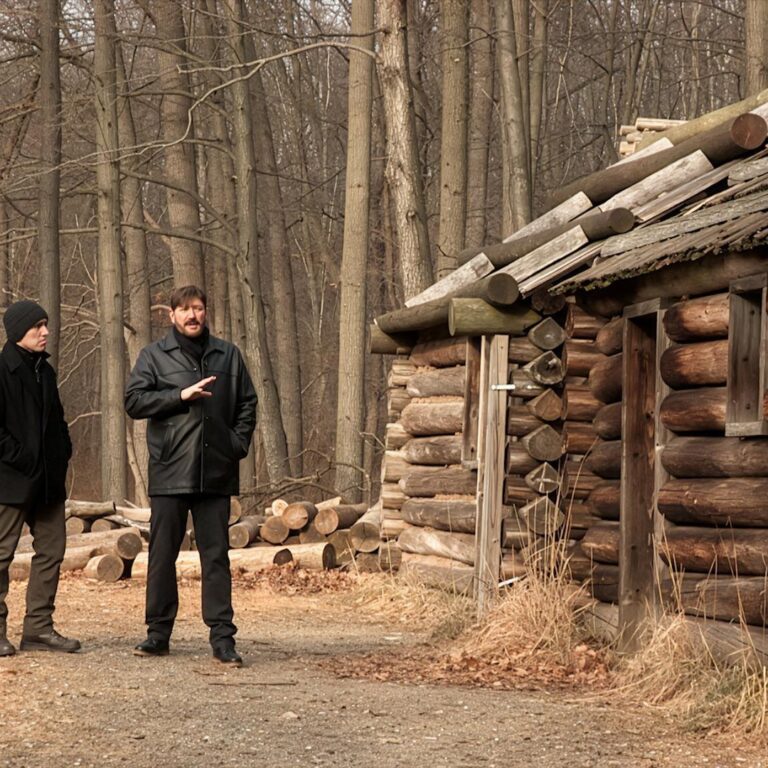
This particular episode centers on Jockey Hollow, the sprawling military encampment in Morristown where General George Washington and the Continental Army endured one of the most physically brutal stretches of the entire Revolutionary War. While Valley Forge has long dominated popular memory as the defining symbol of Revolutionary War hardship, the documentary makes a compelling case, backed by both historians and meteorologists, that the winter Washington’s army spent at Jockey Hollow was actually considerably worse in purely meteorological terms, standing as the coldest and snowiest winter recorded at any point during the war. That reframing matters enormously for how Morris County understands its own role in the Revolution, positioning Jockey Hollow not as a footnote to Valley Forge’s more famous suffering, but as the site of genuinely the harshest winter conditions any Continental Army encampment faced throughout the entire conflict.

The documentary doesn’t shy away from detailing exactly what that suffering looked like on the ground. Soldiers stationed at Jockey Hollow had to survive what has been described as the snowstorm of the century, compounded by severe food shortages, punishing ice and frost, and disease that spread easily through a camp already weakened by cold and hunger. Rather than treating these hardships as background texture, the episode uses them to illustrate just how close the Continental Army came to physical collapse during that winter, and by extension, how precarious the broader fight for American independence actually was at that specific moment in the war, well before any of its eventual outcome was assured.

The July 14 event at the Morris Museum gives attendees considerably more than just a screening. Held at the museum’s location at 6 Normandy Heights Road in Morristown, the evening opens with a ticketed VIP cocktail reception running from 5:30 to 6:30 p.m., priced at $30 and offering attendees a chance to mingle with fellow history enthusiasts ahead of the main program. The screening itself begins at 6:30 p.m. and is free to attend with advance registration, making the core program accessible to anyone interested in the history regardless of whether they opt into the earlier reception. Following the screening, Magos will lead a live discussion and audience question and answer session, giving attendees a genuine opportunity to engage directly with the person who built the episode from the ground up, rather than simply watching it end and walking away.

That post-screening conversation promises real depth beyond a typical Q&A. Magos has indicated he’ll offer behind-the-scenes insight into how the episode itself came together, along with a broader discussion of why preserving and actively sharing Revolutionary War history matters, a theme that carries extra weight given that Morris County is currently commemorating America’s 250th anniversary. Attendees can expect to come away with a clearer understanding of exactly how Washington and his troops endured that historic winter’s extreme cold, heavy snowfall, food shortages, and disease, and why Morris County itself played such a genuinely pivotal role in the broader fight for American independence, a role that events like this screening are working to keep visible as the nation’s milestone anniversary continues to unfold.

Advance registration is required for anyone hoping to attend, and residents and visitors alike are encouraged to secure their spot online ahead of the event. For a county actively working to reintroduce its own Revolutionary War history to a modern audience as part of its broader America 250 programming, this screening offers exactly the kind of direct, engaging format that turns a historical documentary into a genuinely communal evening, one where the story of Jockey Hollow’s brutal winter gets told just a few miles from where it actually happened, by the very storyteller who brought it to public television in the first place.

Blairstown’s Frederick Butcher & Company Brings More Than Four Decades of Trusted Financial Leadership to New Jersey Businesses

New Jersey has long been home to accounting firms that quietly help shape the state’s business community behind the scenes. While entrepreneurs, nonprofit organizations, family-owned businesses, and growing companies often receive the public recognition, the financial professionals who help those organizations navigate tax law, regulatory compliance, business planning, and long-term financial management are equally essential to their success. Their work rarely generates headlines, yet it influences nearly every major business decision, from launching a startup and expanding operations to planning for retirement, transferring ownership, or preserving wealth across generations.

One firm that has built its reputation through decades of consistent service is Frederick Butcher & Company, a full-service certified public accounting practice based in Blairstown, New Jersey. With approximately 45 years of experience serving clients throughout New Jersey and across the United States, the firm has developed a reputation for combining technical expertise with personalized financial guidance that extends far beyond annual tax preparation.

That longstanding commitment to clients recently received additional visibility when Frederick Butcher & Company was featured on Close Up Radio, a nationally distributed interview program highlighting business leaders, entrepreneurs, and respected professionals across a wide range of industries. The appearance reflects not only the firm’s longevity but also the growing recognition of trusted advisors whose work continues supporting businesses during an increasingly complex financial landscape.

Located in the scenic community of Blairstown in Warren County, Frederick Butcher & Company has established itself as a resource for individuals, commercial businesses, nonprofit organizations, estates, and trusts seeking experienced financial guidance tailored to their unique circumstances. Rather than focusing exclusively on a single specialty, the firm has embraced a comprehensive approach that recognizes how taxation, accounting, financial planning, business strategy, and regulatory compliance frequently intersect.

That philosophy has remained central to the firm’s success since its founding.

Managing Partner Frederick Butcher has spent decades helping clients navigate changing tax laws, evolving accounting standards, and increasingly sophisticated business environments. Throughout that time, he has worked alongside longtime partner Connie Buonomo, building a practice centered on long-term relationships rather than transactional services. Many accounting firms measure success by the number of tax returns completed each year. Frederick Butcher & Company has instead focused on becoming an ongoing financial partner capable of supporting clients through every stage of personal and business growth.

That distinction has become increasingly important as financial planning grows more complex.

Today’s business owners face challenges extending well beyond annual tax filings. They must understand changing federal and state tax regulations, payroll compliance, employee benefit requirements, business entity selection, technology integration, financial reporting standards, succession planning, and increasingly sophisticated regulatory expectations. Individuals likewise navigate retirement planning, estate considerations, investment-related tax issues, and changing financial goals that require careful coordination rather than isolated advice.

Frederick Butcher & Company approaches these challenges through a broad portfolio of professional services designed to provide clients with comprehensive financial support throughout the year.

Tax management remains one of the firm’s core practice areas. Individual taxpayers, entrepreneurs, and business owners rely on experienced tax professionals not only for accurate return preparation but also for proactive planning that identifies opportunities to improve financial outcomes while maintaining compliance with federal and state tax laws. Effective tax planning has become an increasingly valuable component of long-term financial management as legislation continues evolving and businesses seek greater certainty in an unpredictable economic environment.

The firm also provides support for clients facing Internal Revenue Service matters, helping individuals and businesses address tax issues while working toward practical resolutions. For many taxpayers, navigating correspondence, audits, payment arrangements, or other IRS matters can be intimidating. Experienced representation provides clarity while helping clients understand available options and responsibilities.

Financial reporting and auditing represent another important component of the firm’s practice.

Reliable financial statements remain essential for businesses seeking financing, attracting investors, maintaining regulatory compliance, or evaluating operational performance. Professional auditing services provide independent verification of financial information while helping organizations strengthen internal controls and improve financial transparency. For nonprofit organizations, corporations, and other entities with reporting obligations, independent audits contribute to stronger governance and increased stakeholder confidence.

Business advisory services have also become increasingly significant as entrepreneurs seek guidance extending beyond traditional accounting functions.

Launching a new company involves decisions that may influence financial performance for years to come. Entity selection, accounting systems, operational planning, technology implementation, cash flow management, and growth strategies all require thoughtful analysis during the earliest stages of business development. Frederick Butcher & Company works with startups and established businesses alike, providing consulting services that help organizations establish strong financial foundations while preparing for future expansion.

Technology continues transforming the accounting profession, and firms capable of integrating modern financial management tools often provide significant advantages to their clients. The practice assists businesses implementing accounting platforms such as QuickBooks, helping organizations automate financial processes, improve reporting accuracy, and streamline day-to-day operations. As cloud-based accounting systems become increasingly common, effective implementation allows businesses to access more timely financial information while improving operational efficiency.

For business owners considering acquisitions, ownership transitions, restructuring, or succession planning, experienced financial guidance becomes even more valuable.

Major business decisions frequently involve complicated tax implications, valuation issues, financing considerations, and regulatory requirements. By participating early in the planning process, accounting professionals help clients evaluate alternatives, anticipate potential challenges, and develop strategies aligned with long-term objectives rather than short-term solutions.

The firm’s services also extend into routine accounting operations that remain fundamental to successful organizations.

Bookkeeping, payroll administration, financial recordkeeping, and ongoing accounting support may not receive significant public attention, yet they provide the financial infrastructure upon which every successful business depends. Accurate records allow owners to evaluate performance, manage expenses, prepare tax filings, secure financing, and make informed strategic decisions throughout the year.

Estate planning represents another important area where financial expertise contributes to long-term stability.

Coordinating estate planning with tax considerations, financial objectives, and family priorities requires careful attention to detail and close collaboration among financial and legal professionals. Proper planning helps individuals preserve assets, simplify future administration, and create orderly transitions designed to protect both financial resources and family interests.

The professional credentials maintained by Frederick Butcher & Company further reinforce the firm’s commitment to technical excellence.

Frederick Butcher holds the designation of Certified Public Accountant, one of the accounting profession’s most respected and widely recognized credentials. CPAs complete extensive education, examination, licensing, and continuing professional education requirements designed to ensure high standards of competence and ethical practice.

In addition to his CPA credential, Butcher also holds the Chartered Global Management Accountant designation. The CGMA credential recognizes professionals with advanced expertise in strategic financial management, business performance, organizational leadership, and management accounting. As businesses increasingly operate within interconnected global markets, these skills help organizations evaluate financial strategy alongside operational decision-making.

The firm’s commitment to professional development is reflected through its membership in respected industry organizations, including the New Jersey Society of Certified Public Accountants, the National Association of Tax Professionals, and the American Institute of Certified Public Accountants. Participation in these organizations supports continuing education while helping practitioners remain informed about legislative changes, evolving accounting standards, regulatory developments, and emerging best practices throughout the profession.

Accessibility has also remained an important part of the firm’s client service philosophy.

Recognizing that business owners frequently maintain demanding schedules, Frederick Butcher & Company operates six days each week, including Saturday availability. Extended office hours provide additional flexibility for entrepreneurs, professionals, and families balancing financial planning with busy personal and business commitments.

The firm’s recent appearance on Close Up Radio introduces its work to an even broader audience.

Produced by CUTV News, Close Up Radio has developed a national following by featuring interviews with accomplished professionals representing industries ranging from healthcare and law to finance, entrepreneurship, publishing, education, and corporate leadership. Through one-on-one conversations, guests share professional insights, discuss industry developments, and explore the experiences that have shaped their careers.


Hosted by veteran broadcaster Doug Llewelyn, widely recognized for his pioneering work on The People’s Court, and award-winning television and radio journalist Jim Masters, the program provides business leaders with an opportunity to discuss the challenges, opportunities, and innovations influencing their professions. Episodes are distributed through major podcast platforms including Apple Podcasts, Spotify, and iHeartRadio, making conversations accessible to audiences throughout the United States and internationally.

For Frederick Butcher & Company, participation in the program reflects more than media recognition. It highlights the continued importance of trusted financial advisors during a period when businesses and individuals face increasingly complex financial decisions. Tax legislation evolves regularly, technology continues reshaping accounting practices, regulatory expectations become more sophisticated, and economic conditions require thoughtful planning supported by reliable professional guidance.

Throughout New Jersey, firms such as Frederick Butcher & Company continue providing that guidance every day. Their work may take place behind office doors rather than on public stages, yet its impact is felt throughout the state’s business community as entrepreneurs launch companies, nonprofits strengthen their missions, families prepare for the future, and organizations make informed financial decisions with confidence.

After more than four decades of serving clients from its Warren County headquarters, Frederick Butcher & Company remains an example of how experience, integrity, technical knowledge, and personalized service continue defining excellence within New Jersey’s accounting profession. As businesses and individuals navigate the financial opportunities and challenges that lie ahead, trusted advisors remain indispensable partners, helping transform sound planning into long-term success while reinforcing the strength of New Jersey’s vibrant business community.

Highland Park’s Arts in the Park Street Fair Returns for Its 20th Anniversary, Celebrating New Jersey’s Creative Community with Art, Music, Food, and Family Fun

Every year, communities across New Jersey transform their downtown districts into vibrant gathering places where art, culture, local businesses, and neighborhood pride come together. Among the state’s most anticipated annual celebrations is the Highland Park Arts in the Park Street Fair, a signature event that has grown into one of Central New Jersey’s premier outdoor arts festivals. Returning for its milestone 20th anniversary in 2026, the festival promises another unforgettable day of creativity, entertainment, and community engagement while continuing a tradition that has become an important showcase for artists, artisans, musicians, local restaurants, and small businesses.

Scheduled for Sunday, September 20, 2026, from 11:30 a.m. until 4:30 p.m., the free event will once again transform downtown Highland Park into a lively pedestrian destination stretching along Raritan Avenue between Second and Fifth Avenues. Organized by Main Street Highland Park, the festival has earned a reputation for combining a professionally juried art exhibition with a welcoming community street fair that appeals to serious collectors, casual shoppers, families, and visitors exploring one of Middlesex County’s most walkable downtown districts.

Admission is free, and the event will take place rain or shine, reflecting the festival’s long-standing commitment to bringing the community together regardless of the weather. Over the past two decades, Arts in the Park has evolved from a neighborhood arts celebration into one of the region’s most recognized cultural events, attracting artists and visitors from throughout New Jersey and neighboring states.

The heart of the festival remains its respected juried art show, which serves as one of the event’s defining attractions. Unlike traditional craft fairs where exhibitors simply reserve space, participating artists are selected through a jury process designed to maintain a consistently high level of artistic quality. This approach has helped establish the festival as a destination for collectors seeking original works while providing talented artists with an opportunity to present their creations before thousands of visitors during a single afternoon.

Throughout Raritan Avenue, professionally designed display tents become temporary galleries featuring an impressive range of artistic disciplines. Visitors can explore original paintings, fine art photography, sculpture, ceramics, handcrafted jewelry, textiles, mixed media creations, woodworking, glass art, pottery, and contemporary crafts created by established and emerging artists alike. Every booth offers an opportunity to meet the creators themselves, learn about their techniques, discuss inspiration behind individual works, and purchase unique pieces directly from the artists.

One of the distinguishing characteristics of Arts in the Park is its commitment to recognizing artistic excellence through competitive judging. A panel of experienced judges evaluates participating artists across multiple categories, awarding cash prizes that acknowledge exceptional craftsmanship, creativity, originality, and technical achievement. Those awards not only celebrate outstanding work but also reinforce the festival’s reputation as one of New Jersey’s more prestigious outdoor art events.

The festival’s commitment to creativity extends well beyond established professionals.

An important feature of the annual celebration is the Youth Art Show, which provides young artists from the local community with an opportunity to display their work alongside accomplished professionals. The dedicated exhibition encourages artistic development while giving students valuable public exposure for their talents. For many young participants, the experience represents their first opportunity to exhibit artwork within a large public event, helping build confidence while inspiring future creative pursuits.

Supporting young artists has become an increasingly important part of cultural festivals throughout New Jersey. Programs such as the Youth Art Show demonstrate how community events can nurture future generations of painters, photographers, designers, sculptors, and creative professionals by providing meaningful opportunities to share their work with the public.

Beyond the artwork itself, Arts in the Park serves as a celebration of Highland Park’s thriving downtown business district.

Throughout the afternoon, visitors can explore local shops, independent retailers, specialty boutiques, bookstores, cafés, bakeries, and restaurants that contribute to the borough’s unique character. Many businesses extend their presence outdoors with sidewalk displays, special promotions, and festival activities that encourage guests to discover everything the downtown district has to offer.

Street vendors and artisan makers further expand the shopping experience by offering handcrafted goods, specialty foods, home décor, personal accessories, gifts, seasonal products, and one-of-a-kind creations unavailable through traditional retail outlets. Shopping directly from local makers not only supports small businesses but also strengthens New Jersey’s growing creative economy, where independent artists and entrepreneurs continue playing an increasingly important role in downtown revitalization efforts.

Food has always been an essential ingredient in successful street festivals, and Arts in the Park is no exception.

Festival guests will find an extensive variety of food vendors representing both Highland Park’s diverse culinary community and visiting specialty vendors from throughout the region. Whether enjoying freshly prepared festival favorites, international cuisine, handcrafted desserts, baked goods, refreshing beverages, or locally inspired specialties, visitors have numerous opportunities to sample the flavors that have helped establish Highland Park as one of Central New Jersey’s most diverse dining destinations.

Families attending the festival will also discover a welcoming environment designed to engage visitors of every age. Children’s activities throughout the event encourage creativity and hands-on participation while providing younger guests with opportunities to create art, explore educational exhibits, and enjoy interactive experiences developed specifically for families. Community organizations, nonprofit groups, and local institutions also maintain information booths that highlight the many programs and services available throughout the borough.

Live entertainment provides the soundtrack for the entire afternoon.

Multiple performance areas positioned throughout Raritan Avenue feature a rotating schedule of musicians, performers, and entertainers representing a broad range of musical styles and artistic traditions. Local bands, solo performers, community ensembles, and other live acts create an energetic atmosphere that transforms the downtown streets into an open-air celebration of New Jersey’s performing arts community.

This combination of visual arts, live music, culinary experiences, and community engagement reflects the evolving role of modern street festivals. Rather than focusing on a single attraction, events like Arts in the Park create immersive cultural experiences where visitors can spend hours exploring, shopping, dining, listening to live performances, and connecting with artists in an environment that encourages conversation and discovery.

The setting itself contributes significantly to the festival’s success.

Highland Park has earned a reputation as one of New Jersey’s most walkable and welcoming downtown communities. Located along the banks of the Raritan River in Middlesex County, the borough combines historic architecture, locally owned businesses, diverse restaurants, and a vibrant arts community within a compact downtown easily explored on foot. Throughout the year, community events, outdoor dining, cultural programming, and neighborhood festivals reinforce Highland Park’s identity as a destination where commerce, culture, and community intersect.

Main Street Highland Park has played an important role in fostering that environment through initiatives designed to strengthen local businesses while creating events that encourage visitors to experience the borough’s unique character. Arts in the Park has become one of the organization’s signature achievements, helping introduce thousands of visitors to downtown Highland Park while supporting local merchants, artists, and nonprofit organizations.

As New Jersey communities continue investing in downtown revitalization, festivals such as Arts in the Park demonstrate the powerful role cultural programming can play in supporting economic development. Visitors attending the event frequently explore local restaurants, cafés, boutiques, and shops before and after the festival, generating economic activity that extends well beyond the event itself while introducing new customers to businesses they may later revisit throughout the year.

For artists, the festival provides direct access to an engaged audience that values original work and personal interaction. For local businesses, it creates increased visibility and expanded customer traffic. For residents, it serves as a celebration of community identity. For visitors, it offers an opportunity to experience one of New Jersey’s most vibrant downtown arts events in a welcoming, family-friendly atmosphere.

As the Highland Park Arts in the Park Street Fair celebrates its twentieth anniversary, it stands as more than an annual festival. It represents two decades of supporting artists, strengthening local businesses, encouraging community participation, and demonstrating how the arts can enrich everyday life. From award-winning artwork and emerging young talent to live music, exceptional food, family activities, and independent shopping, the event continues to embody the creative spirit that makes New Jersey’s downtown communities among the state’s greatest cultural assets.

Whether visitors arrive in search of a unique work of art, an afternoon of live entertainment, exceptional local cuisine, or simply the opportunity to enjoy one of Central New Jersey’s most beloved community celebrations, Highland Park’s Arts in the Park Street Fair offers an experience that captures the creativity, diversity, and welcoming character that continue defining the Garden State’s thriving arts scene.

Collingswood Welcomes Catmosphere, a Cat Café Built on Genuine Rescue Work Rather Than Novelty

Downtown Collingswood has a distinctive new addition to its already lively main strip, as Catmosphere celebrates its official grand opening today, Friday, July 10, 2026, bringing South Jersey its first true cat café and, more importantly, a genuine model for humane animal rescue built directly into a working coffee shop. Located at 557 Haddon Avenue, right in the heart of Collingswood’s downtown corridor, the new space represents far more than a novelty coffee stop dressed up with a few cats wandering around for social media appeal. Catmosphere was built from the ground up around a real, formal partnership with local rescue work, and that distinction shows in nearly every detail of how the business actually operates.

At the center of Catmosphere’s mission is its direct partnership with the Homeward Bound Pet Adoption Center, the well-established animal shelter based in nearby Blackwood that has spent years working to place rescued animals into permanent homes across South Jersey. Rather than keeping cats on-site purely for atmosphere, every cat lounging in Catmosphere’s dedicated space, including current residents Archie, Winter, Melody, and Spudds, is an actual rescue animal still actively looking for a forever home. That distinction matters enormously for anyone who has ever felt uneasy about the broader cat café concept, since it means visitors aren’t simply paying to interact with animals as a form of entertainment. They’re stepping into a genuine, low-stress foster environment designed specifically to let prospective adopters see a cat’s real personality up close, something that’s nearly impossible to gauge from behind the bars of a traditional shelter kennel. By giving these cats room to roam freely in a comfortable, café-like setting, Catmosphere gives both the animals and the humans considering adopting them a far more honest first impression than a typical shelter visit ever could.

The business itself was built by owners Sophia Coello and Marcus Tirado with a second mission running alongside the adoption work, using the space as a genuine teaching tool for the surrounding South Jersey community. Coello and Tirado designed Catmosphere specifically to help visitors understand proper cat behavior and safe, respectful pet interaction, treating every visit as an opportunity to build better habits around how people approach and handle cats generally, not just the specific animals living in the lounge. That educational layer sets Catmosphere apart from a purely transactional pet-and-coffee experience, positioning the café as a genuine community resource for anyone hoping to become a more informed, more responsible pet owner regardless of whether they walk out with an adoption application in hand.

The physical layout of Catmosphere splits cleanly into two distinct experiences under one roof. On one side sits a genuine coffee shop, serving artisanal espresso drinks, coffee, and baked goods sourced from local bakeries, giving visitors a legitimate café experience even if they have no interest in spending time with the cats at all. On the other side sits the dedicated cat lounge itself, accessible through hour-long booked sessions priced at $20 per hour, giving visitors a set block of time to relax inside the space, work quietly on a laptop, or simply spend an hour getting to know Archie, Winter, Melody, Spudds, and whichever other rescue cats happen to be in residence at the time. That structured, ticketed approach to lounge access helps keep the environment calm and manageable for the cats themselves, avoiding the kind of overwhelming foot traffic that could otherwise turn a stress-free foster space into something considerably less comfortable for the animals living there.

For Collingswood, a town that has built its own reputation around a walkable, independently owned downtown business district, Catmosphere fits naturally into that broader identity while adding something genuinely new to the mix. The café gives South Jersey residents a legitimate reason to make the trip to Haddon Avenue beyond the town’s already well-known restaurant and shopping scene, while simultaneously giving Homeward Bound Pet Adoption Center’s rescue cats a meaningfully better shot at finding permanent homes than they’d get sitting in a traditional shelter environment alone. Whether visitors show up purely for the coffee, purely for the cats, or for the increasingly popular combination of both, Catmosphere’s grand opening marks a genuine addition to South Jersey’s small business landscape, one built around a rescue partnership substantial enough to make the difference between a passing gimmick and a business with real, lasting community value.

Dave Portnoy Rolls Into Englewood to Put a Half-Century-Old Pizza Institution to the Test

Barstool Sports founder Dave Portnoy has made a habit out of tracking down the country’s most storied neighborhood pizzerias, and his latest stop brought him to Englewood, New Jersey, for a visit to Crispy Crust Pizza, a shop locals insist has been slinging pies for an astonishing 57 years. The review, part of Portnoy’s long-running One Bite Pizza Reviews series and presented this time by BODYARMOR, gave the Bergen County institution the kind of national attention that has become a genuine rite of passage for pizzerias across the country, one bite, one honest reaction, and a score that can send a small shop’s business into overdrive practically overnight.

Crispy Crust Pizza sits at 44 West Palisade Avenue in the heart of Englewood, a shop that has become woven so thoroughly into the fabric of the town that its own history reads like a genuine only-in-New-Jersey story. While the shop’s own materials describe more than three decades of continuous service, longtime residents place its roots even further back, closer to the 57-year mark Portnoy referenced in his visit, the kind of good-natured local dispute over exact founding dates that tends to follow any pizzeria old enough to have become a genuine neighborhood landmark rather than just another place to grab a slice.

Either way, Crispy Crust has clearly outlasted plenty of competitors in a business where staying power alone counts as its own kind of achievement.

What makes Crispy Crust’s backstory genuinely remarkable, though, has nothing to do with pizza at all. Long before Englewood locals were debating exactly how many decades the shop had been open, a young employee named Big Bank Hank spent his days in 1979 making pies behind the counter, passing the time rapping along to homemade hip-hop tapes while he worked. That same year, Hank became one third of the Sugarhill Gang, and their single “Rapper’s Delight” went on to become widely credited as the record that first popularized hip-hop on a national and international scale, effectively marking the genre’s mainstream birth. It’s a genuinely rare distinction for any pizza shop to claim a direct connection to one of the most significant records in American music history, and it gives Crispy Crust a story that extends well beyond its crust and sauce.

Portnoy’s visit followed the same format that has turned his One Bite series into a genuine cultural phenomenon over the years. Rather than a lengthy sit-down meal or an extended interview, the format sticks to its core premise, a single honest bite, an unfiltered reaction, and a numerical score that pizza shops across the country have come to both dread and hope for in equal measure. For a shop with as much local history as Crispy Crust, earning a strong score carries stakes beyond just bragging rights, since a favorable One Bite review has repeatedly proven capable of sending a modest neighborhood shop’s foot traffic soaring almost overnight, as pizza enthusiasts from well outside the immediate area make the trip specifically because Portnoy gave a place his stamp of approval.

Crispy Crust’s own menu has built a loyal local following over the years independent of any national attention, with regulars pointing specifically to the shop’s Sicilian pizza and mozzarella sticks as standout orders that keep customers coming back well beyond a first visit. That kind of established local reputation is exactly the sort of thing Portnoy’s reviews tend to either validate for a wider audience or, less often, complicate when his own reaction doesn’t fully match the hometown consensus, a tension that has become part of what makes the One Bite format so consistently compelling to watch, even for viewers who have never set foot in whatever town he happens to be visiting that week.

For Englewood, a visit from one of the country’s most-watched pizza reviewers offers a genuine moment in the spotlight for a shop that has spent decades serving the same community without needing outside validation to prove its worth. Whether Portnoy’s verdict lands as high praise or something more mixed, Crispy Crust Pizza’s place in Englewood’s local history, and its unlikely footnote in the origin story of hip-hop itself, was already secure long before Dave Portnoy ever walked through the door.

ShopAppliances Expands New Jersey Operations with New 90,000-Square-Foot Essex County Warehouse to Support Continued Growth

The future of appliance retail continues moving toward faster fulfillment, stronger logistics networks, and improved customer experiences, and one New Jersey-based company is making a major investment to support that evolution. ShopAppliances has announced continued expansion of its operations with the opening of a new 90,000-square-foot warehouse facility in Essex County, strengthening the company’s ability to serve customers, support brand partners, and manage the growing demands of today’s rapidly changing appliance marketplace.

The expansion represents a significant milestone for ShopAppliances as the company continues building its presence within New Jersey’s competitive retail and distribution landscape. By increasing warehouse capacity, improving operational efficiency, and enhancing logistics capabilities, the new facility positions the company for long-term growth while reinforcing its commitment to delivering a seamless experience for customers purchasing major appliances online.

For consumers, the purchase of a major appliance is no longer simply about selecting a refrigerator, washer, dryer, oven, or other household essential. Today’s customers expect a complete experience that includes product availability, accurate inventory information, dependable delivery scheduling, professional handling, and responsive service from the initial purchase through final installation. Behind that experience is a complex network of warehousing, transportation, inventory management, and fulfillment operations that determine how efficiently retailers can meet customer expectations.

ShopAppliances’ investment in expanded warehouse capacity reflects the increasing importance of that infrastructure.

The new 90,000-square-foot facility provides additional space to manage inventory, improve product flow, and support the company’s growing relationships with appliance manufacturers and customers throughout the region. As the appliance industry continues adapting to changing consumer habits, companies with strong distribution capabilities are better positioned to provide the speed, reliability, and service customers now expect.

New Jersey’s location makes it an ideal hub for this type of expansion.

Situated between major metropolitan markets including New York City and Philadelphia, the state has long been recognized as one of the nation’s most important transportation and logistics centers. Its extensive highway network, proximity to major population centers, skilled workforce, and established distribution infrastructure have made New Jersey a preferred location for companies seeking efficient access to millions of consumers throughout the Northeast.

The Essex County warehouse expansion builds upon those advantages while further strengthening ShopAppliances’ ability to operate within one of the country’s most important retail corridors.

The growth also reflects broader changes within the appliance industry. Over the past several years, consumer purchasing patterns have shifted significantly as more shoppers research, compare, and purchase major household products online. Digital commerce has transformed expectations around convenience, transparency, and delivery speed, requiring retailers to invest heavily in technology, inventory management systems, and fulfillment operations.

For appliance retailers, successful e-commerce depends on much more than maintaining an online catalog. Large and complex products require specialized storage solutions, careful transportation planning, experienced logistics teams, and reliable delivery coordination. A new warehouse facility provides the foundation necessary to manage those challenges while creating a stronger connection between manufacturers, retailers, and customers.

ShopAppliances’ expansion demonstrates a commitment to addressing those evolving expectations.

By increasing available warehouse space, the company can better support its growing product selection while maintaining the operational flexibility required in a competitive marketplace. Additional capacity also allows for improved inventory management, helping ensure customers have access to a broader range of appliance options while reducing delays associated with supply chain challenges.

The investment benefits not only customers but also ShopAppliances’ brand partners.

Major appliance manufacturers rely on retail partners capable of representing their products effectively while providing dependable distribution and customer service. A stronger warehouse network allows retailers to support manufacturers through improved inventory coordination, more efficient fulfillment, and a better overall purchasing experience for consumers.

As the appliance market continues becoming more interconnected, these partnerships play an increasingly important role in ensuring products move efficiently from manufacturers to homes.

The expansion also highlights the importance of logistics within New Jersey’s economy.

Warehousing and distribution remain major drivers of employment and economic activity throughout the state. Facilities of this scale require skilled workers across multiple areas, including inventory management, operations, transportation coordination, customer support, and technology systems. As companies expand their physical infrastructure, they contribute to the broader economic ecosystem that supports communities throughout New Jersey.

For ShopAppliances, the new Essex County facility represents more than additional storage space. It represents a strategic investment in the company’s future.

Retail success today requires the ability to combine digital convenience with physical operational strength. Customers may begin their purchasing journey online, but the final experience depends on everything that happens behind the scenes, from product availability and warehouse organization to delivery execution and customer communication. Companies that recognize this connection are better prepared to compete in a marketplace where service quality often determines customer loyalty.

The appliance industry is also experiencing continued innovation as manufacturers introduce smarter, more energy-efficient, and technologically advanced products. Modern appliances increasingly feature connected technology, improved sustainability, enhanced performance, and greater customization options. As product categories continue expanding, retailers require stronger infrastructure to manage a wider variety of inventory while maintaining efficient fulfillment.

ShopAppliances’ warehouse expansion provides additional flexibility to support those industry changes.

The company’s continued growth reflects the increasing demand for reliable appliance purchasing solutions and the importance of businesses investing in the systems necessary to support long-term customer relationships. While online shopping has made product discovery easier than ever, successful companies understand that trust is built through consistent execution after the purchase is completed.

Reliable delivery, accurate order management, and dependable service remain the foundation of customer satisfaction.

The Essex County warehouse project also reinforces New Jersey’s role as a center for innovation, commerce, and modern distribution. From global corporations to growing regional businesses, companies continue choosing the Garden State because of its strategic location and ability to connect businesses with one of the largest consumer markets in the world.

As ShopAppliances moves forward with its expanded operations, the company enters its next phase of growth with greater capacity, stronger logistics capabilities, and a renewed focus on serving customers throughout the region and beyond.

The new 90,000-square-foot warehouse represents a significant step forward in that mission. It reflects the changing nature of retail, where technology, customer expectations, and operational excellence must work together to create a successful modern shopping experience.

For consumers searching for appliances, the most important part of a purchase often happens after the order is placed. Behind every delivered refrigerator, washer, dryer, range, or household appliance is an extensive network of people, technology, and infrastructure working together to make the experience possible.

With its expanded New Jersey warehouse, ShopAppliances is strengthening that network and positioning itself for continued growth in an industry where efficiency, reliability, and customer service define the future of retail.

New Jersey Business Report: Women Influencer Honors, an Executive Promotion, and a Warning Sign in the State’s Competitiveness Rankings

New Jersey’s business community had plenty to talk about today, from a trio of family-business leaders earning national recognition in the office technology world to a Bridgewater security company elevating one of its own into the C-suite, alongside a fresh national honor for a Woodbridge-based staffing entrepreneur and a pointed statement from the state’s largest business advocacy group reacting to New Jersey’s latest slip in a closely watched national competitiveness ranking.

The Cannata Report Names Its 2026 Women Influencers

The Cannata Report, the leading trade publication covering the office technology and document imaging industry, has unveiled its 2026 Women Influencers, honoring Janene Aul, Jocelyn Gorman, and Lauren Hanna in the publication’s signature annual issue celebrating leadership within the office technology dealer channel. What ties this particular class of honorees together is a shared story of second-generation leadership, with all three women now steering family businesses originally built by their fathers, Keith Allison of Systel Business Equipment in North Carolina, Phil Houser of DSI in New Mexico, and Paul Hanna of Blue Technologies in Ohio, into a new era defined far more by digital services than by traditional office hardware.

Each of the three honorees has approached that generational transition differently, but all three describe the same underlying shift away from a hardware-centric business model toward a broader, services-oriented approach built around technology partnership rather than equipment sales alone. Hanna, who oversees Blue Technologies Smart Solutions, the managed IT and technology services arm of the Cleveland-based company, has described recognizing early on that customers needed considerably more than basic hardware support, a realization that led to expanding the business into managed IT services, cybersecurity, cloud communications, workflow automation, compliance, and business continuity solutions, transforming what had been an office equipment provider into a full technology partner for its clients. Aul, who serves as CEO of Systel Business Equipment, has leaned more heavily on strategic acquisitions as a growth lever, using them to strengthen the company’s market presence, expand its technical expertise, and open new expansion opportunities across the Southeast dealer market. Gorman, meanwhile, has been tapped to lead continued growth at DSI, driving transformative technology solutions for businesses across the Southwest as the company navigates the same industry-wide shift toward digital transformation.

The Cannata Report’s recognition of these three leaders continues a pattern the publication’s editorial team has tracked for years now, one where family-owned office technology dealerships are increasingly being modernized and expanded specifically by the daughters and successors who inherited them, adding managed IT, production print, and entirely new business verticals along the way. The 2026 Women Influencers issue also previews an upcoming Legacy Women Influencers Spotlight, a special Q&A panel set to debut online in August featuring past honorees reflecting on their own careers and the broader trends reshaping the channel.

Kim Scott Steps Into the C-Suite at CONTROLTEK

CONTROLTEK, the Bridgewater-based global leader in asset protection, intelligent inventory solutions, and tamper-evident packaging, has promoted Kim Scott to the newly combined role of Chief Marketing Officer and Executive Vice President of Strategy. In her expanded role, Scott will continue overseeing the company’s global marketing organization while taking on considerably broader responsibility for corporate strategy, innovation, strategic partnerships, and the company’s long-term growth initiatives, working directly alongside CONTROLTEK’s executive leadership team to strengthen the company’s overall market position.

Scott’s rise within the organization reflects a steady progression rather than a sudden jump, having previously served as the company’s vice president of strategy and marketing after joining as senior director of marketing. Throughout that trajectory, she has been credited with elevating CONTROLTEK’s brand presence, expanding its thought leadership programs, sharpening its product marketing, and launching integrated go-to-market strategies that have helped position the company as a genuine industry leader across RFID, loss prevention, and cash management solutions. CONTROLTEK CEO Tom Meehan has pointed to Scott’s ability to connect strategic vision with day-to-day execution as central to why the marketing organization has become a genuine growth engine for the broader business, a track record that clearly factored into the decision to expand her authority into corporate strategy alongside her existing marketing leadership.

Before joining CONTROLTEK, Scott built her career across a genuinely varied set of organizations, leading teams and transformative programs at the American Heart Association and working on the Global Marketing and Events team at The Walt Disney Company, where she helped coordinate some of the company’s largest global press events. That blend of nonprofit, entertainment, and now security-industry marketing experience gives Scott a distinctive background as she steps into a role that now spans both brand strategy and broader corporate direction at CONTROLTEK.

Komal Dangi Earns a Spot on ROI-NJ’s Influencers: Women 2026 List

Komal Dangi, founder and CEO of the Edison-based IT staffing and verification company Synkriom, along with its patented product VeriKlick, has been named to ROI-NJ’s prestigious Influencers: Women 2026 list, an honor recognizing more than 300 women leaders across New Jersey whose vision and leadership have meaningfully shaped the state’s business and civic landscape. The recognition highlights Dangi’s excellence across corporate strategy, technology leadership, and community impact, reflecting a career that stretches well beyond her own company’s walls and into broader civic and economic development work across New Jersey.

Beyond her role running Synkriom, Dangi also serves as Vice President of Strategy and Growth at the Asian Indian Chamber of Commerce, where she additionally chairs the organization’s Certification and Technology Committee, driving initiatives aimed at advancing business innovation, professional development, and community impact within the state’s Asian Indian business community. With more than 15 years of experience in information technology and academic credentials that include a master’s degree in computer science alongside an MBA from the New Jersey Institute of Technology, Dangi built Synkriom into a global IT staffing company supporting both onshore and offshore clients since founding it back in 2015, a foundation that eventually led to the development of VeriKlick, a web-based tool designed specifically to combat candidate misrepresentation and fraudulent resumes within the hiring process. Her recognition on this year’s ROI-NJ list adds to a growing string of statewide honors for Dangi, whose name has also appeared among New Jersey’s broader innovation economy leadership circles recognized at events celebrating the state’s technology and entrepreneurial community.

NJ Chamber of Commerce Reacts to New Jersey’s Slide in CNBC’s Business Rankings

Not every piece of business news out of New Jersey today carried the same celebratory tone. The New Jersey Chamber of Commerce issued a pointed statement following the release of CNBC’s 2026 America’s Top States for Business rankings, expressing clear disappointment that New Jersey slipped from 30th to 31st place overall as a state for doing business. The Chamber framed the drop as validation of concerns it has been raising for some time, arguing that economic competitiveness and stronger support for the business community need to become a genuine statewide priority rather than a secondary consideration.

What appears to have stung the most in this year’s rankings wasn’t simply New Jersey’s own decline, but exactly which states landed ahead of it. New York, Pennsylvania, and Connecticut, the three states New Jersey competes with most directly for jobs, business investment, and broader economic growth, all ranked higher than New Jersey in this year’s assessment, a detail the Chamber highlighted as especially troubling given how directly those neighboring states draw from the same regional labor pool and business investment dollars. The Chamber’s statement made clear that continuing to fall behind those specific regional competitors represents a genuine risk to New Jersey’s long-term economic position, framing the rankings not as an abstract national exercise but as a direct measurement of the state’s ability to compete for the same jobs and investment dollars its closest neighbors are actively pursuing.

Taken together, today’s business news out of New Jersey captures both sides of the state’s economic story at once, genuine individual and organizational success stories playing out across the office technology, security, and staffing industries, set against a broader structural warning from the state’s leading business advocacy group about New Jersey’s competitive standing relative to the states it battles most directly for growth. Whether that warning translates into meaningful policy change in Trenton may end up shaping how many more of these individual success stories New Jersey continues producing in the years ahead.

Rutgers Approves $6.2 Billion Budget With Its Smallest Tuition Hike in Four Years

Rutgers University’s Board of Governors has signed off on a $6.2 billion operating budget for the coming academic year, pairing that massive spending plan with a 3 percent tuition increase for both in-state and out-of-state students, a rate that university officials are quick to note is the smallest annual increase Rutgers has approved in four years. The budget arrives at a moment when higher education institutions across the country are grappling with real financial pressure, and Rutgers leadership has framed this year’s plan as evidence of disciplined, deliberate financial management rather than a simple continuation of the steeper increases the university approved in recent years.

That contrast with recent history is significant. Last year’s budget carried a 5 percent tuition increase for in-state students and a 6 percent increase for out-of-state students, meaning this year’s 3 percent hike represents a genuine deceleration in how quickly the cost of attending Rutgers has been climbing. University President William Tate IV, who took over as the school’s 22nd president, framed the new budget as proof that Rutgers can maintain fiscal discipline without compromising the quality of education students receive, even as colleges and universities nationwide continue navigating genuinely difficult financial headwinds and funding uncertainty.

For the typical New Jersey resident enrolled full-time in arts and sciences, that 3 percent increase translates into a $448 jump in tuition, moving the annual cost from $14,933 to $15,381. Out-of-state undergraduates in the same typical arts and sciences track will see a considerably larger increase in dollar terms, with tuition and fees rising $1,190, from $39,649 up to $40,839, reflecting how much steeper the baseline cost already sits for students coming from outside New Jersey. Mandatory fees are also ticking upward for both in-state and out-of-state students alike, rising $117 to reach $4,008 annually. Housing and dining costs are seeing the largest percentage jump of any single line item, climbing 4 percent, or $613, pushing the annual cost for room and board from $15,332 to $15,945.

Board of Governors Chair Amy Towers has been direct in framing these increases against the backdrop of broader inflation, noting that even with this year’s adjustments, Rutgers’ tuition increase remains below the current rate of inflation nationally. Towers, who was recognized as a recipient of the inaugural NJBIZ Board Leadership Awards, has described the budget as a direct response to the fiscal realities facing higher education broadly, pointing specifically to rising operating costs and genuine uncertainty around federal funding as pressures the university had to actively plan around rather than simply absorb. Towers also extended thanks to Governor Mikie Sherrill and the state Legislature for enabling the university to expand its financial aid offerings, a partnership reflected directly in the numbers, since nearly 80 percent of Rutgers undergraduates received some form of financial aid during the 2025-2026 academic year. That level of aid penetration is tied closely to the state’s own budget commitments, with New Jersey’s recently signed Fiscal Year 2027 spending plan including $2.2 billion in direct support for higher education services statewide, according to legislative analysis released earlier this year.

Keeping tuition increases as modest as they were this year required real trade-offs elsewhere in the budget, and Rutgers has been transparent about the cost-cutting measures built into the plan, chief among them an active hiring freeze across the university. That kind of restraint on staffing costs gave Rutgers room to hold tuition growth well below last year’s pace while still funding the university’s core academic and research mission.

Looking at how Rutgers actually allocates its $6.2 billion in spending offers a clearer picture of where the university’s priorities sit. Classroom instruction and academic support make up the single largest share of the budget at 33.1 percent, underscoring that the core teaching mission still commands the biggest piece of university spending by a wide margin. Healthcare and public service functions account for another substantial 21.1 percent, reflecting Rutgers’ significant footprint as a healthcare provider and public-service institution well beyond its traditional academic role. Administration and operations take up 15.8 percent of the budget, while student scholarships, financial aid, and broader student services account for 10.8 percent, a figure that directly supports the financial aid access nearly four in five undergraduates are currently relying on. Sponsored research and other sponsored programs make up 10.4 percent of spending, auxiliary enterprises including housing, dining, and parking account for 5.4 percent, and Division I athletics rounds out the breakdown at 3.4 percent of total university spending.

On the revenue side, tuition and fees remain the single largest funding source for the university, accounting for 28.8 percent of total revenue, followed closely by direct state of New Jersey funding at 21.9 percent. Patient care services, reflecting Rutgers’ extensive healthcare operations, generate 19.8 percent of total revenue, while sponsored research contributes another 12.3 percent. Federal student aid, gifts, endowments, and investment income together make up 10.2 percent of revenue, with the remaining 7 percent coming from miscellaneous sources including the university’s housing, dining, and parking services.

Tate has been candid that reaching this balanced budget required genuinely difficult decisions rather than simple across-the-board adjustments, describing the plan as the product of strategic investments paired with deliberate measures designed to strengthen the university’s long-term financial sustainability, all while preserving Rutgers’ broader commitment to academic excellence, student success, and its public mission as the state’s flagship university. That public mission extends well beyond the university’s own campuses and balance sheet. Earlier this year, Rutgers released an annual report highlighting its estimated $13.3 billion economic impact on New Jersey’s economy during fiscal year 2025, a figure that places the university among the most significant economic engines operating anywhere in the state, and one that adds meaningful context to why state lawmakers continue prioritizing direct financial support for Rutgers and New Jersey’s broader higher education system even amid tighter budgets nationwide.

How Local Governments Are Quietly Powering New Jersey’s Film Boom, According to Clinton Mayor Janice Kovach

New Jersey’s film and television industry has been on a genuine growth streak in recent years, but according to Clinton Mayor and New Jersey Motion Picture and Television Commission Commissioner Janice Kovach, that momentum depends on far more than generous tax incentives or the steady arrival of new soundstages. It depends just as heavily on the working relationship between production companies and the towns that actually host them, a dynamic Kovach explored in depth during a recent conversation on the Garden State Greenlight podcast, produced by ROI-NJ and hosted by multimedia journalist Thomas Philip.

Kovach’s dual role, running a New Jersey municipality as mayor while also serving on the state commission tasked with attracting and supporting film production, gives her a genuinely rare vantage point on exactly where local government and the entertainment industry intersect. Throughout the conversation, she laid out how municipalities across New Jersey can prepare themselves to welcome a film or television production, treating readiness not as an afterthought but as a real competitive advantage when productions are deciding where to set up shop. Central to that preparation, in Kovach’s telling, is consistent, proactive communication between filmmakers and local officials well before cameras ever start rolling, since productions moving into a town need clear answers on everything from permitting and street closures to parking and noise ordinances, and towns that can offer that clarity quickly tend to have a much smoother experience hosting a production than those figuring it out on the fly.

That communication gap is exactly where the New Jersey Motion Picture and Television Commission has carved out its own essential role, functioning as a genuine bridge between government bureaucracy and an entertainment industry that often operates on tight, fast-moving production schedules. Kovach described the commission’s work as something closer to a translation service between two worlds that don’t always speak the same institutional language, helping municipalities understand what a production actually needs on the ground while helping filmmakers navigate the practical realities of working within a local government structure they may not be familiar with.

One of the more underappreciated points Kovach raised during the discussion involved just how far the economic benefits of a film production actually reach beyond the production company’s own budget line items. It’s easy to think of a film shoot’s economic impact purely in terms of permit fees or location payments, but Kovach pointed to a much wider ripple effect that touches an entire local economy. Hotels fill up with cast and crew during a shoot’s run. Restaurants see a genuine surge in business feeding hundreds of production staff working long days. Sign shops, transportation companies, equipment rental businesses, and countless other small, often overlooked local vendors all see real revenue bumps whenever a production sets up in town, turning what might look like a narrow entertainment industry story into something closer to a genuine, if temporary, economic engine for the host community.

The conversation also turned toward exactly why New Jersey has become such an increasingly attractive destination for major film and television projects in the first place. Kovach pointed to the state’s genuinely diverse range of filming locations as one of its clearest advantages, a state small enough to drive across in a few hours but varied enough to double for dense urban environments, quiet suburban towns, rural countryside, and coastline all within relatively short distances of each other. Layered on top of that geographic variety is New Jersey’s rapidly expanding studio infrastructure, giving productions the kind of soundstage capacity that used to be far harder to find outside of established production hubs like New York or Los Angeles. Kovach also emphasized the state’s increasingly concierge-style approach to supporting incoming productions, a hands-on model designed to smooth over the logistical friction that can otherwise slow a shoot down or push a production to consider filming elsewhere.

Looking ahead, Kovach expressed real confidence that New Jersey is well positioned to keep attracting major film and television projects, driven by the combination of location diversity, growing studio capacity, and the kind of local government cooperation she has spent her time on the commission trying to strengthen. She framed that continued growth not just as a win for the entertainment industry itself, but as a genuine opportunity for New Jersey residents, businesses, and communities across the state, the same small businesses and local economies that quietly benefit every time a production rolls into town.

For anyone interested in hearing the full conversation, Garden State Greenlight is available across all the major podcast platforms, including Spotify, Apple Podcasts, Amazon Music, and YouTube, with new episodes continuing to explore the people and policy decisions shaping New Jersey’s fast-growing film and television industry from the ground up.

New Jersey’s Record K-12 Education Funding Is Not Preventing Budget Shortfalls Across School Districts

New Jersey is investing more money in public education than at any other time in its history. For the 2026-2027 school year, the state has committed a record $12.4 billion in K-12 aid, a figure that reflects both the state’s longstanding commitment to public education and the growing costs associated with operating one of the nation’s highest-performing school systems. On paper, the historic investment appears to represent another significant step toward strengthening classrooms, supporting educators, and ensuring every student has access to quality educational opportunities.

Yet across the Garden State, a very different reality is unfolding.

Despite the unprecedented level of state funding, school districts in nearly every region of New Jersey continue grappling with financial pressures that have forced administrators and locally elected school boards to make increasingly difficult decisions. Budget deficits, staff reductions, larger class sizes, delayed capital improvements, reductions in academic and extracurricular programs, and ongoing concerns about long-term financial stability have become common themes during this year’s budget planning process.

The contrast has left many parents, educators, taxpayers, and local officials asking the same question. How can New Jersey be providing more education funding than ever before while so many school districts continue facing serious financial challenges?

The answer lies in a combination of rapidly increasing operational costs, evolving enrollment patterns, contractual obligations, inflationary pressures, transportation expenses, special education costs, employee healthcare expenditures, and continued debate surrounding the state’s school funding formula.

For decades, New Jersey has consistently ranked among the nation’s strongest public education systems. Students routinely perform well on national assessments, graduation rates remain high, and many districts continue earning recognition for academic excellence, arts education, athletics, and college preparation. Those achievements, however, require significant financial investment.

Operating a modern public school system extends far beyond classroom instruction. Districts must fund teacher and staff salaries, healthcare benefits, transportation services, building maintenance, utilities, technology infrastructure, special education programs, school security, counseling services, extracurricular activities, athletics, food services, curriculum development, classroom materials, and ongoing professional development. Nearly every one of those expenses has increased substantially over the past several years.

Inflation has affected virtually every aspect of school operations. Utility costs have risen. Construction materials and facility maintenance have become more expensive. Technology investments continue expanding as schools replace aging equipment while integrating new digital learning tools. Transportation contracts have become increasingly costly due to fuel prices, vehicle maintenance, insurance, and a nationwide shortage of qualified school bus drivers. Food service operations continue experiencing higher supply costs, while insurance premiums and employee healthcare expenses remain among the fastest-growing budget categories for many districts.

Special education represents another significant financial responsibility.

Federal and state laws require school districts to provide appropriate educational services for students with disabilities, often involving individualized instruction, specialized equipment, transportation, therapeutic services, and highly trained personnel. These services are essential and legally mandated, yet they also represent one of the fastest-growing components of many district budgets. Even districts receiving additional aid frequently find those increases absorbed almost immediately by rising special education expenditures.

Personnel costs remain the largest portion of nearly every school budget.

Teachers, administrators, instructional aides, custodians, transportation employees, food service workers, nurses, counselors, librarians, technology specialists, and support staff collectively provide the services that allow schools to operate successfully each day. As negotiated salary agreements, pension contributions, healthcare costs, and other contractual obligations continue increasing, districts face growing financial commitments that often outpace annual revenue growth.

While many districts have received additional state funding this year, those increases frequently do not keep pace with overall cost growth.

At the same time, more than 160 New Jersey school districts are experiencing reductions in state aid under the current funding formula, with decreases generally capped at three percent during this budget cycle. Although the cap prevents larger immediate reductions, even relatively modest aid losses can create significant budget gaps for districts already managing rising operating expenses.

School administrators often describe these reductions as cumulative rather than isolated.

A district losing aid over multiple consecutive years may gradually reach a point where reserves become depleted and meaningful spending reductions become unavoidable. Because the overwhelming majority of district budgets are devoted to personnel, staffing frequently becomes the area where administrators have the greatest ability to reduce expenditures.

As a result, communities throughout New Jersey are seeing announcements involving layoffs, hiring freezes, early retirement incentives, vacant positions remaining unfilled, and organizational restructuring designed to balance budgets without exceeding available revenue.

Those decisions extend well beyond payroll.

When teaching positions are eliminated, remaining educators frequently assume additional responsibilities while class sizes increase. Elective courses may become more limited. Intervention programs can experience reduced staffing. Student support services may become more difficult to expand even when demand continues growing. Extracurricular activities sometimes operate with fewer resources, while building maintenance projects and technology upgrades are often postponed until future budget cycles.

School boards rarely approach these decisions lightly.

Throughout New Jersey, locally elected board members spend months reviewing financial projections, enrollment trends, contractual obligations, state aid calculations, and community priorities before adopting annual budgets. Public hearings often attract concerned parents, educators, students, and taxpayers who recognize that every financial decision ultimately affects classroom experiences.

The challenge becomes particularly complicated because each district operates under unique circumstances.

Enrollment growth in one community may require additional classrooms and staff, while declining enrollment elsewhere creates different financial pressures. Urban districts frequently encounter different operational demands than suburban or rural systems. Transportation costs vary dramatically depending upon geography. Aging school facilities require greater maintenance investments than newer buildings. Student demographics, special education enrollment, multilingual learner populations, and local property tax bases all influence financial planning in different ways.

These differences help explain why statewide funding increases do not produce identical outcomes across every district.

Much of the ongoing discussion centers on New Jersey’s school funding formula, which was designed to distribute state aid according to factors including enrollment, local property wealth, and student needs. Supporters argue that the formula promotes greater equity by directing resources toward districts requiring additional financial assistance. Critics contend that changing enrollment patterns, demographic shifts, and evolving economic conditions have exposed limitations within the current model, particularly for communities experiencing declining aid while facing many of the same fixed operating costs as districts receiving increases.

School buildings do not become significantly less expensive to operate because enrollment declines modestly. Heating systems, roofs, transportation networks, security measures, administrative services, and many instructional costs remain relatively constant regardless of small enrollment fluctuations. Consequently, districts losing aid often argue they cannot reduce expenditures at the same pace funding declines.

The issue has become one of the most closely watched education policy discussions in New Jersey.

Educators, municipal leaders, lawmakers, advocacy organizations, and parents continue debating whether adjustments to the funding formula are necessary to better reflect today’s financial realities while maintaining the state’s commitment to educational equity.

The broader context also deserves consideration.

New Jersey consistently ranks among the nation’s leading states for educational achievement. Students regularly score above national averages in reading, mathematics, and science. Graduation rates remain strong, and many districts offer extensive Advanced Placement courses, career and technical education, performing arts programs, athletics, and specialized academic opportunities that prepare students for college and the workforce.

Maintaining that level of excellence requires continuous investment.

Modern education encompasses far more than traditional classroom instruction. Schools increasingly provide mental health services, career readiness programs, STEM education, cybersecurity instruction, early childhood initiatives, workforce development partnerships, expanded technology integration, school safety enhancements, and individualized learning supports. Each new expectation brings additional financial responsibilities.

The record state investment demonstrates New Jersey’s continued commitment to public education, but it also highlights how rapidly educational costs continue evolving.

For families, the immediate effects often become visible through larger classroom sizes, staffing changes, modified course offerings, or postponed facility improvements. For educators, financial uncertainty can influence recruitment, retention, and long-term planning. For local governments and taxpayers, school funding remains one of the most important public policy issues because of its direct connection to both educational quality and property taxes.

Looking ahead, the conversation surrounding school finance is unlikely to diminish.

Population changes, inflation, labor market conditions, infrastructure needs, technological advancement, and evolving educational expectations will continue shaping budget discussions throughout the state. Policymakers will face the challenge of balancing fiscal responsibility with the investments necessary to preserve one of America’s strongest public education systems.

What remains clear is that record funding alone does not automatically eliminate financial challenges. School finance is ultimately shaped by the relationship between revenue and rapidly changing operational costs. As expenses continue rising across nearly every area of district operations, ensuring long-term financial stability will require ongoing evaluation of funding policies alongside careful local budget management.

New Jersey’s public schools remain among the state’s greatest strengths. The educators, administrators, staff members, and local leaders working through this year’s budget process continue demonstrating an unwavering commitment to students despite increasingly difficult financial circumstances. As discussions surrounding school funding continue in Trenton and in communities across the Garden State, the shared objective remains unchanged: providing every student with access to a high-quality public education while building a funding system capable of supporting that mission for generations to come.

Morris County Commemorates the 250th Anniversary of the Declaration of Independence with a Historic Public Reading That Echoed Across New Jersey and the Nation

On the evening of July 8, 2026, history was not simply remembered in Morris County. It was experienced. Exactly 250 years after the Declaration of Independence was first read aloud to the public in Philadelphia, communities across the United States paused at the same moment to recreate one of the defining events in American history. At the heart of New Jersey’s participation stood the historic Morris County Courthouse, where residents, public officials, historians, veterans, families, and visitors gathered to commemorate the Semiquincentennial of the United States with a ceremony that connected the nation’s founding ideals to the present day.

The event formed part of the nationwide Sharing the Spirit of America initiative, a coordinated observance held simultaneously in all 50 states, Washington, D.C., and the United States territories. At precisely 6:00 p.m. Eastern Daylight Time, public readings of the Declaration of Independence began throughout the country, recreating the historic events of July 8, 1776, when Americans first heard the revolutionary document proclaimed publicly after its adoption by the Continental Congress.

For New Jersey, the anniversary carries special historical importance. While Philadelphia is forever linked to the signing of the Declaration, New Jersey quickly became one of the earliest places where its words were publicly shared. On July 8, 1776, the Declaration was read not only in Philadelphia but also in Trenton, marking one of the earliest public affirmations of American independence within what would become one of the Revolution’s most strategically significant states. Throughout the years that followed, New Jersey earned its place as the “Crossroads of the American Revolution,” witnessing more military engagements than any other colony while serving as a vital corridor connecting the northern and southern theaters of the war.

That remarkable legacy provided the backdrop for Morris County’s commemorative ceremony.

As the evening approached, visitors assembled on the lawn surrounding the historic Morris County Courthouse in Morristown, one of New Jersey’s most significant historic communities. Long before the Declaration was read, the atmosphere reflected the importance of the occasion. Revolutionary-era music filled the air as the Colonial Musketeers Senior Ancient Fife and Drum Corps of Hackettstown performed selections inspired by the nation’s founding period. Their music recreated the sounds that once accompanied colonial militias and patriotic gatherings during the struggle for independence, providing an authentic opening to an event rooted in historical remembrance.

At exactly 5:59 p.m., the bell atop the courthouse rang thirteen times, each toll honoring one of the original thirteen colonies whose representatives chose to declare independence from Great Britain in the summer of 1776. The symbolic ringing served as a powerful reminder that the Declaration represented not only the birth of a new nation but also the collective determination of thirteen separate colonies willing to embrace an uncertain future built upon the principles of liberty and self-government.

When the final bell concluded, silence settled over the assembled crowd.

At precisely six o’clock, Morris County Commissioner Director Stephen H. Shaw stepped to the podium and began reading the opening words that have shaped American history for two and a half centuries.

“When in the Course of human events, it becomes necessary for one people to dissolve the political bands which have connected them with another…”

Those words, first heard publicly 250 years earlier, continue to resonate because they represent more than a declaration of political independence. They articulate enduring principles concerning equality, natural rights, representative government, and the responsibilities of free citizens that continue influencing democratic societies around the world.

As the reading progressed through the Declaration’s carefully crafted grievances against the British Crown and ultimately reached its immortal affirmation that all people are created equal and endowed with the unalienable rights of life, liberty, and the pursuit of happiness, spectators responded with an enthusiastic “Huzzah!” in recognition of one of the most consequential documents in world history.

The ceremony itself reflected another meaningful historical connection.

Rather than assigning the reading to a single individual, Morris County divided the Declaration among thirteen public officials, each representing one of the original colonies. Following Commissioner Director Shaw’s opening remarks, Commissioner Deputy Director John Krickus continued the reading before being joined by Commissioners Christine Myers, Thomas J. Mastrangelo, Deborah Smith, Douglas R. Cabana, and Tayfun Selen.

Additional portions of the Declaration were presented by Surrogate Heather J. Darling, County Clerk Ann F. Grossi, County Administrator Deena Leary, Prosecutor Robert J. Carroll, Sheriff James M. Gannon, and Assignment Judge Stuart A. Minkowitz of the Morris and Sussex Vicinage of the New Jersey Courts. State Senator Anthony M. Bucco also attended the ceremony, underscoring the importance of the anniversary to New Jersey’s civic and governmental institutions.

The participation of officials representing multiple branches of county government reflected the enduring relevance of the Declaration’s principles across every level of public service. Two hundred fifty years after America’s founders established the framework for self-government, today’s elected leaders, judges, constitutional officers, and public servants continue carrying forward the institutions that emerged from those revolutionary ideals.

The location itself added extraordinary historical significance to the event.

Morristown occupies a unique place within American history. During the Revolutionary War, General George Washington selected Morristown as the site of two winter encampments because of its strategic location, defensible terrain, and proximity to critical transportation routes. The city effectively served as the military capital of the Continental Army during some of the war’s most challenging periods, making it one of the most important Revolutionary communities in the United States.

The Morris County Courthouse, completed in 1827, stands as one of New Jersey’s most recognizable civic landmarks. Although constructed decades after the Revolution, it symbolizes the stability and rule of law that emerged from the constitutional government established following American independence. Hosting the Semiquincentennial reading at this historic courthouse created a direct connection between the founding generation and the institutions that continue serving New Jersey residents today.

The celebration extended beyond the Declaration itself.

Visitors also explored the Morris County 250 Traveling Mural, an interactive public art project created by acclaimed artist Dan Fenelon as part of the county’s extensive Semiquincentennial programming. Designed to travel throughout Morris County during the anniversary year, the mural invites residents and visitors to engage with local history while celebrating the communities that continue shaping New Jersey’s identity. Through bold imagery and public participation, the project reflects the idea that American history belongs not only in museums but also within the everyday experiences of the people who continue writing its next chapters.

Following the formal reading, the evening concluded with a simple but memorable gesture as attendees enjoyed complimentary red, white, and blue ice pops while gathering with neighbors, discussing the ceremony, and reflecting upon the significance of the occasion. Moments such as these often become the most enduring memories of civic celebrations because they bring communities together not through spectacle but through shared appreciation of a common history.

The July 8 ceremony also marked the culmination of Morris County’s Light to Unite initiative, which illuminated county buildings in patriotic red, white, and blue beginning on July 2. That date commemorated another often overlooked milestone in American history, when the Second Continental Congress approved the resolution formally declaring the colonies independent from Great Britain before finalizing the text of the Declaration itself several days later. Together, the lighting campaign and public reading created a week-long observance honoring the sequence of events that ultimately established the United States as an independent nation.

The Semiquincentennial celebration will continue throughout Morris County well beyond Independence Day.

Visitors to the historic Morris County Courthouse can experience a special exhibition commemorating the 250th anniversary of the United States while simultaneously launching preparations for another important milestone. In 2027, the courthouse itself will celebrate its bicentennial, marking two hundred years as one of New Jersey’s most important civic institutions.

The free exhibit invites visitors to explore more than 270 years of Morris County’s legal, governmental, and civic history through carefully curated photographs, artifacts, historical documents, and interpretive displays. Guests also have the opportunity to tour the historic courtroom and receive a complimentary copy of the Founding Documents of the United States, including both the Constitution and the Declaration of Independence, providing an opportunity to take home the very documents that continue defining American democracy.

For Explore New Jersey, events such as Morris County’s Declaration of Independence reading represent far more than commemorative ceremonies. They demonstrate how history remains alive within the communities that helped shape the nation itself. While anniversaries naturally encourage reflection, they also provide opportunities to better understand the people, institutions, and principles that continue influencing everyday life throughout the Garden State.

As New Jersey moves through the nation’s 250th anniversary celebration, communities from Cape May to High Point are honoring their unique contributions to the American story. Few places, however, possess the historical depth found in Morristown and Morris County, where the legacy of the Revolution is woven into the streets, buildings, parks, and public institutions that continue serving residents nearly two and a half centuries later.

The bell that rang thirteen times atop the Morris County Courthouse on July 8 echoed far beyond the courthouse lawn. It served as a reminder that the ideals first proclaimed publicly in 1776 remain as relevant today as they were when they inspired a new nation. Through ceremonies like this, New Jersey continues preserving that legacy, ensuring that future generations understand not only the events that shaped American independence but also the enduring values that continue to unite the country 250 years later.

New Jersey Throws Open Its Doors for World Cup Quarterfinal Day, With Four Major Watch Parties Across the State

World Cup fever has taken firm hold of New Jersey, and with a major quarterfinal knockout match kicking off this afternoon, the state’s biggest venues are throwing open their doors for a genuinely impressive slate of free, official watch parties. From a sixty-foot screen set up directly on a professional soccer pitch to a town-wide community celebration built around a single downtown theater, New Jersey fans have no shortage of ways to catch today’s action alongside thousands of fellow supporters rather than watching alone at home.

The Official NYNJ Jersey Fan Hub, Harrison

The single biggest official watch party anywhere in the state is unfolding at Sports Illustrated Stadium, home of the New York Red Bulls, where organizers have installed a massive, state-of-the-art sixty-foot screen directly on the stadium pitch itself. Doors open at 3 p.m., and while admission is completely free, fans are asked to reserve a general admission ticket through the event’s website ahead of time to guarantee entry. Once inside, the experience goes well beyond simply watching the match on a big screen, with a full stadium floor party built around the broadcast, food trucks scattered throughout the grounds, an outdoor beer garden for fans looking to enjoy a drink alongside the action, live DJ sets keeping the energy up between plays, and meet-and-greet opportunities with actual Red Bulls players, giving soccer fans a chance to rub shoulders with the pros while cheering on the knockout round.

World Cup Fan Fest at American Dream, East Rutherford

For fans who want stadium-sized energy without giving up air conditioning, American Dream Mall in East Rutherford, sitting right next door to MetLife Stadium, is running a daily World Cup Fan Fest built specifically for exactly that kind of comfort-first viewing experience. The setup includes massive jumbotrons broadcasting the match throughout the complex, live stage performances keeping the atmosphere lively between games, sponsor gear giveaways for fans looking to walk away with some free World Cup merchandise, and soccer mini-games set up right inside the mall for anyone looking to get in on the action themselves rather than just watching from the sidelines.

Summer of Soccer at Liberty Science Center, Jersey City

Liberty Science Center in Jersey City has built its own official watch party around a slightly different crowd, optimizing the afternoon for families and younger fans as much as diehard soccer supporters. The watch party kicks off just ahead of the match’s 4 p.m. start time, and alongside the live broadcast itself, the science center is running specialized drone soccer matches throughout the afternoon, a genuinely novel twist that blends the day’s soccer theme with the venue’s usual hands-on, science-driven programming. Local food trucks and interactive soccer exhibits round out the afternoon, giving families a full day of activity built around the World Cup rather than a single hours-long sit-and-watch experience.

Rahway Free Community Watch Party, Rahway

Perhaps the most genuinely community-driven event of the day is unfolding in Rahway, where Mayor Raymond A. Giacobbe and the Rahway City Council have partnered with the Union County Performing Arts Center to host a free quarterfinal watch party on UCPAC’s main stage, broadcasting the match on a giant outdoor screen right in the heart of downtown. Local vendors Alfonso’s Catering and Loyalty de Corazon are handling gameday food, with the latter serving up gourmet hot dogs built for exactly this kind of outdoor sports-watching crowd, while cocktails, soft drinks, and snacks remain available for purchase throughout the event for anyone looking for something more. The celebration extends well beyond the screen itself, with a 360-degree fan photo booth for capturing the moment, localized soccer games for fans of all ages to join in on, and special food and drink promotions running at bars and restaurants throughout downtown Rahway for the length of the event. Attendees looking to extend the celebration are encouraged to head to La Chula afterward for the event’s official after party, and anyone visiting the UCPAC box office in person during the watch party can take advantage of a 20 percent discount on upcoming shows at the theater, a nice added incentive for fans already in town for the match. Free parking is available nearby at Hamilton Stage for anyone driving in for the afternoon.

Whether the plan is soaking in the full professional-stadium atmosphere in Harrison, staying cool and comfortable at American Dream, bringing the whole family out to Liberty Science Center, or joining an entire downtown community around a single big screen in Rahway, New Jersey has built out a genuinely full menu of ways to experience today’s quarterfinal knockout match. With free admission at every single one of these events, there is very little reason for any soccer fan in the state to spend this afternoon watching alone.

New Jersey’s Live Entertainment Calendar Explodes This Week, From Opera to Hip-Hop Legends and Everything Between

New Jersey’s live entertainment scene rarely slows down in the middle of summer, and the stretch running from Thursday, July 9 through Wednesday, July 15, 2026 offers about as complete a cross-section of what the state does best as any single week is likely to deliver. Concerts spill out of concert halls and onto beaches and boardwalks, regional theater companies are staging everything from Shakespearean comedy to Disney musicals, and legendary names across genres from hip-hop to opera to outlaw country are all making stops somewhere in the Garden State. Here is the full day-by-day breakdown of the week’s essential picks.

Thursday, July 9

The 39 Steps — Princeton Summer Theater, Hamilton Murray Theater, Princeton Patrick Barlow’s famously inventive stage adaptation asks just four actors to portray roughly 150 characters across a black-box staging built around a plane crash and a sprawling chase across Britain, a genuine technical high-wire act for any company willing to attempt it.

Tab Benoit: Soul of the Swamp — The Newton Theatre, Newton Tab Benoit brings his distinctly Louisiana-born sound to New Jersey for an evening rooted in genuine bayou blues tradition.

ISTA and Yawn Mower — Bradley Beach Brookdale Public Radio’s long-running beach concert series returns to the sand, continuing one of the more beloved seasonal traditions along the Jersey coastline.

The Beat Tells — Wildwood’s Music in the Plaza, Byrne Plaza, Wildwood Part of the 2026 Downtown Wildwood concert series, a free, long-running summer tradition on the boardwalk.

Color Me Badd — Camden County Twilight Concert Series, Cooper River Park, Pennsauken Smooth, early-1990s harmonies headline what has already shaped up as one of the strongest free summer concert lineups the county has put together in recent memory.

Baroque Orchestra of New Jersey — The Back Deck at The Morris Museum, Morristown A program weaving Revolutionary-era music and American history into an evening of classical elegance, especially fitting as the country continues marking its milestone anniversary this year.

The Wedding Singer — Sitnik Theatre, Hackettstown (opens Summerfest 2026, runs through July 19) The high-energy, thoroughly 1980s musical kicks off the theater’s summer season.

Friday, July 10

America’s Wonders: An Immersive 3D Orchestra Experience — ParkStage, Freehold Showgrounds An ambitious production pairing live orchestral music with cinematic technology and sweeping visuals of the American landscape, built to feel closer to a live cinematic event than a traditional concert.

Dead Zep — Legacy Concerts on the Beach, Somers Point Beach A genuinely inventive tribute pairing Grateful Dead and Led Zeppelin music, part of the Shore’s award-winning beach concert series.

Tim McGraw: Pawn Shop Guitar Tour 2026 — PNC Bank Arts Center, Holmdel Another New Jersey stop for an artist who has remained one of country music’s most consistent headliners for more than three decades.

She Loves Me — Misfits Theatre Co., Matawan Regional High School, Aberdeen (runs through July 12) The company’s first full-scale book musical production, marking a significant new chapter for the theater group.

The Little Mermaid — The MAC Players, Middletown Arts Center (runs through July 19) Disney’s classic musical brought to life for a run extending through much of July.

Saturday, July 11

Dio Rules: Tribute to Rainbow, Black Sabbath & Dio — The Newton Theatre, Newton A full-throttle celebration of Ronnie James Dio’s legacy across his work with Rainbow, Black Sabbath, and his own solo output.

Maplewoodstock 2026: Lettuce, Anders Osborne, Slap Dragon, Megan Jean’s Secret Family, More — Maplewood (runs through July 12) New Jersey’s premier free music festival enters its third decade, headlined by Anders Osborne and Lettuce alongside Slap Dragon, Megan Jean’s Secret Family, and more.

Teatro Nuovo: Il Don Giovanni — Alexander Kasser Theater, Montclair State University A landmark bel canto celebration brings Mozart’s classic to New Jersey as part of a broader golden-age-of-Italian-opera showcase.

ArcoStrum — The Back Deck at The Morris Museum, Morristown A boundary-smashing global music experience, continuing the venue’s reputation for pushing well past traditional concert formats.

The Flip Side: An Improv Show — Vivid Stage, Oakes Center, Summit Fast-paced improv comedy built entirely around audience suggestions, in the classic three-chunker style.

Lindsey Stirling: Duality Untamed Summer Tour 2026 — PNC Bank Arts Center, Holmdel Live violin performance blended with movement and visual spectacle, the signature Stirling has built over more than a decade in the spotlight.

Ken Ludwig’s Baskerville: A Sherlock Holmes Mystery — Shakespeare Theatre of New Jersey, Madison (opens tonight, runs through August 4) One of the funniest theatrical experiments in American playwriting this summer, kicking off a run that continues well into August.

Sunday, July 12

Teatro Nuovo: Il Turco in Italia — Alexander Kasser Theater, Montclair State University Rossini’s opera gives Montclair audiences a second major bel canto performance within the same weekend.

TUSK: The Classic Fleetwood Mac Tribute — The Newton Theatre, Newton A full-spectrum revival of one of rock’s most enduring catalogs.

Silverstein & Story of the Year: Camp Screamo Tour — The Stone Pony Summer Stage, Asbury Park A wave of post-hardcore energy at a venue that has spent more than half a century championing exactly this kind of genre-defining live music.

“Weird Al” Yankovic: Bigger & Weirder 2026 Tour — PNC Bank Arts Center, Holmdel The blend of parody, original music, and pure pop culture commentary that has made Yankovic one of the most enduringly popular performers in American entertainment.

Monday, July 13

Flyleaf With Lacey Sturm: 20th Anniversary Tour — The Wellmont Theater, Montclair Two full decades of alternative rock power, celebrated with a set built to honor the band’s defining run in the genre.

Kid ‘N Play — Wiggins Waterfront Park, Camden Hip-hop legends bring their decades-long legacy directly to the Garden State for a high-energy return to the New Jersey stage.

Tuesday, July 14

Lilo & Stitch: Free Summer Movie — State Theatre New Jersey, New Brunswick A community-oriented, no-cost movie night as part of the theater’s free summer film series, built for families, film lovers, and a new generation of Disney fans.

Wednesday, July 15

Shemekia Copeland and Soul Project NOLA — Kennedy Plaza, Atlantic City Boardwalk Blues royalty meets authentic New Orleans soul in a genuine pairing of musical powerhouses on the boardwalk.

The High Kings: Rocky Road to Dublin 2026 Tour — The Newton Theatre, Newton A beloved Irish folk act, continuing New Jersey’s growing embrace of global folk traditions.

How Many Comics Does It Take To Fix Everything? — White Eagle Hall, Jersey City An unfiltered night of stand-up comedy promising exactly the kind of irreverent, high-energy lineup its title suggests.

The Week in Perspective

Taken together, this stretch of programming reflects just how much creative range New Jersey’s live entertainment scene continues to offer within a single week, moving fluidly between opera and hip-hop, Broadway-style musical theater and boardwalk soul music, immersive orchestral cinema and classic tribute acts. Whether the plan is a night at the opera in Montclair, a hip-hop legend’s return to Camden, or a free family movie night in New Brunswick, this week gives New Jersey residents and visitors alike very little excuse to stay home.

New Jersey’s Craft Beer Scene Goes Into Overdrive This Weekend, From Brewery Anniversaries to a South Jersey Comeback

New Jersey’s craft beer community has packed an unusually full calendar into the stretch running from Thursday, July 9 through Sunday, July 12, 2026, with major brewery milestones, a long-awaited South Jersey reopening, and a full slate of summer festivals and taproom events unfolding across the state all at once. Whether the appeal is a decade-plus of brewing history being celebrated in one afternoon, a fresh reopening under new ownership, or something as unexpected as a Yankees legend signing autographs inside a taproom, this weekend gives beer drinkers across New Jersey plenty of reason to plan a road trip.

Major Brewery Milestones and Big Releases

The weekend’s biggest anniversary celebration belongs to Icarus Brewing Company in Brick Township, which kicks off its Brickaversary celebration Saturday, July 11 at 11 a.m., marking both its second year operating out of its current Brick location and its ninth year in business overall. The brewery is marking the occasion with exclusive canned releases alongside two limited barrel-aged bottled beers, backed by a full afternoon of live music, giving fans of the highly rated brewery, which currently holds a 4.7 rating across 644 reviews, a genuine reason to make the trip out.

Screamin’ Hill Brewery in Cream Ridge is hosting its own milestone celebration the same day, marking 11 years of brewing with an event beginning Saturday at 1 p.m. The afternoon combines farm-fresh pours with food trucks and live music from local favorite The Williamsboy, rounding out a celebration built for a brewery that has already earned a strong 4.7 rating from nearly 300 reviewers. On Friday, July 10, enjoy an evening of live music from Sean Cox from 4:00 p.m. to 7:00 p.m. The celebration continues on Saturday, July 11, as the brewery hosts its 11th Anniversary Party from 1:00 p.m. to 6:30 p.m., marking 11 years of “Growin’ Beer” while also celebrating America’s 250th anniversary. The family-friendly event features an Antique Tractor Show, live music by The Williamsboy, delicious food from the Sweet Carolina BBQ food truck, and additional festivities throughout the afternoon. Later in the month, on Friday, July 17, guests can experience a different side of the farm during a Sound Bowl Meditation in the Field from 6:00 p.m. to 7:00 p.m. Set against the peaceful landscape of Bullock Farms, participants are invited to bring a yoga mat, towel, or blanket and unwind as the calming sounds and vibrations of crystal singing bowls create a relaxing outdoor wellness experience designed to quiet the mind and promote relaxation.

Perhaps the most significant development of the weekend for South Jersey drinkers is the return of Brotherton Brewing Co. in Atco, which is officially reopening this weekend under entirely new ownership after closing last year. Operating out of a refurbished former fire station, the reborn taproom is debuting a refreshed guest experience alongside a rotating lineup of ten craft beers that blends established classic styles with brand new creations, giving a brewery that already carries a strong 4.8 rating a real chance to rebuild its following under its new leadership.

Summer Festivals and Pop-Up Events

Beach Haus Brewery in Belmar is hosting its Second Annual Summer Belmar Bazaar on Sunday, July 12, running from noon to 4 p.m. inside its Main Street Beer Hall. The free-admission, all-ages event brings together more than 20 local artisans alongside a mobile bookstore and handcrafted goods, all paired with the brewery’s own craft beer lineup, giving families and beer lovers alike a reason to spend a Sunday afternoon on Main Street.

Beyond individual breweries, the Randolph Freedom Fest at County College of Morris runs Thursday through Saturday as a genuinely massive community celebration, marking its 50th anniversary with mechanical carnival rides, games, nightly fireworks, and a large outdoor community beer garden, making it one of the more family-friendly, all-ages entries on this weekend’s calendar.

Flounder Brewing Co. in Hillsborough Township is pairing wellness and craft beer directly, hosting its popular Beer and Yoga event in its private loft space on Sunday, July 12 from 11 a.m. to noon, followed immediately by a Breakthrough Bakery pop-up market running from 1 to 4 p.m., giving visitors a full morning-into-afternoon reason to stick around a brewery that has built a strong 4.7 rating across nearly 400 reviews.

Unique Taproom Events and Live Music

Woodbridge Brewing Co. is hosting one of the weekend’s more unexpected draws, welcoming New York Yankees legends Joe Torre and Scott Brosius for an autograph signing and fan meet-and-greet on Sunday, July 12 at 5 p.m., giving baseball fans a reason to visit a taproom alongside their usual beer drinkers.

Jersey Girl Brewing in Hackettstown is running a genuinely varied lineup this weekend, opening with a Craft and Sip candle-making night Thursday evening before shifting into Plant Bingo with Roots and Rivers on Sunday, July 12 at 1:30 p.m., where participants play for a chance to win live plants, rounding out a weekend built around hands-on, craft-focused activities rather than beer alone.

MudHen Brewing Company in Wildwood is turning its taproom into a genuine sports-viewing destination, hosting a World Cup watch party on Friday, July 10 at 3 p.m. using its large-scale taproom projector and big screens, complete with a dedicated kids’ activity area that lets parents actually enjoy the match without splitting their attention.

Departed Soles Brewing Company on the Waterfront is offering a free, kid-friendly indoor show Friday, July 10 at 6:30 p.m., featuring live music from Gregory and Max of the Lemonade Band, giving families a low-key, all-ages evening option heading into the weekend.

Newly Announced: A Succulent Workshop at Buena Connection Brewing Company

Rounding out the region’s calendar is a freshly announced event further south in Atlantic County, where Buena Connection Brewing Company is hosting a Succulent Workshop on Thursday, July 30, 2026. The brewery, located at 112 Wheat Road in Buena, has built a reputation across Atlantic County for pairing its craft beer offerings with interactive, community-driven weeknight programming, and this hands-on planting workshop fits squarely into that established pattern. Given the brewery’s normal Thursday taproom hours running from 5 to 9 p.m., workshops like this one typically get underway around 6 or 6:30 p.m., leaving guests plenty of time to complete their planter before the taproom closes for the night.

Guests attending the workshop can expect a genuinely hands-on crafting experience, with organizers providing a custom planter, a selection of live succulents, soil, and decorative toppers such as colored moss, stones, or sand, all under the guidance of an instructor who walks participants through proper planting technique and long-term succulent care. The workshop fee covers those plant materials specifically, while craft beers, hard seltzers, and beer flights remain available for purchase directly at the bar throughout the evening. Because Buena Connection does not operate its own in-house kitchen, the brewery maintains a straightforward bring-your-own-food policy, and guests looking for a hot meal alongside their crafting session can pack their own snacks or grab takeout from nearby local spots like Maurizio’s Pizza Express just down the road. Given how these interactive plant-and-pour workshops depend on organizers ordering a specific quantity of materials ahead of time, advance ticket registration is essentially mandatory, and these sessions have a strong tendency to sell out before the day of the event arrives.

Taken together, this stretch of programming offers something for nearly every kind of New Jersey beer drinker, whether the plan is chasing down a rare anniversary release, welcoming back a beloved South Jersey taproom under new ownership, catching a World Cup match on a big screen, or spending a Thursday evening potting succulents with a cold beer in hand. With breweries across North, Central, and South Jersey all leaning into their own distinct version of summer programming this month, the state’s craft beer scene shows no sign of slowing down as the season heats up.

From East Orange Firehouse to the Essex County Democratic Machine, Akeem Cunningham’s Rapid Rise Reshapes New Jersey Politics

When Mikie Sherrill campaigned for governor last year, she made a point of crediting a specific piece of her political infrastructure back in her home county, the operation known simply as Team Akeem. That nod referred to Akeem Cunningham of East Orange, the organizer who ran Sherrill’s Essex County operation during her gubernatorial run and who has since gone on to take the top operational job at the Essex County Democratic Committee, stepping into the role of executive director under longtime party chairman LeRoy Jones Jr. For a state where county party organizations still wield enormous influence over who wins elections, Cunningham’s ascent into that seat marks one of the more consequential behind-the-scenes moves in New Jersey Democratic politics this year.

Cunningham does not hold elected office himself, and that distinction matters, because it places him squarely in the category of political operator rather than politician, the kind of figure who builds campaigns and shapes outcomes without ever appearing on a ballot. Within New Jersey Democratic circles, he has increasingly been discussed as one of the party’s genuine rising stars, someone whose influence runs through field operations, coalition building, and organizational leadership rather than through elected title. His new role as executive director puts him in charge of the day-to-day operations of one of the most powerful county Democratic committees in the entire state, working directly under Chairman Jones to steer how the organization approaches elections, messaging, and internal party dynamics going forward.

In a recent conversation, Cunningham addressed one of the more consequential structural changes to hit New Jersey politics in years, the elimination of the county line, or ballot bracketing system, that for decades allowed party-favored candidates to appear grouped together in a privileged ballot position. Conventional wisdom around Trenton has generally treated the end of the line as a blow to established county organizations like Essex’s, stripping them of a built-in structural advantage that once made straight-ticket voting the norm. Cunningham pushed back on that framing directly, arguing instead that the change has actually created an opportunity for the organization to grow stronger, precisely because it now has to earn accountability from its elected officials and hold them to a higher standard rather than relying on an automatic ballot advantage. He described how the old system had conditioned voters to simply select an entire party line without individually engaging with each race, whereas the current landscape demands real coalition building and genuine voter engagement in a way the organization historically didn’t need to practice. In his view, that shift has forced a healthier, more demanding version of grassroots politics onto an organization that had grown comfortable leaning on structural advantages rather than persuasion.

That same emphasis on listening rather than assuming carried through into how Cunningham described his broader approach to leading the county committee amid a Democratic Party grappling with a surging progressive wing alongside genuine voter skepticism toward party organizations generally. Rather than positioning himself or the committee as having all the answers, Cunningham committed to conducting listening tours across the county, treating direct engagement with voters as a starting point rather than an afterthought. He framed the diversity of voices within the party, including ones that challenge existing leadership or strategy, as something the organization needs to actively welcome and act upon rather than merely tolerate, arguing that real growth requires putting genuine action behind whatever the party hears from its most engaged and most skeptical voters alike.

Cunningham’s path to this position has been built through a genuinely varied career that blends grassroots organizing, direct public service, and executive government experience in a way that few operators his age can claim. Just months before taking over at the county committee, he stepped into a significant role within state government, joining the New Jersey Department of Community Affairs as Chief of External Affairs and Strategic Initiatives in February 2026. In that capacity, he has led community engagement work centered on affordable housing, rental assistance, and homelessness prevention, giving him direct policy experience on some of the state’s most pressing quality-of-life issues well beyond the campaign trail.

It was the 2025 gubernatorial race, though, that first brought Cunningham’s name into wider political conversation. Serving as regional campaign director for Sherrill’s Essex County operation, he built and ran what became known as Team Akeem, an innovative, youth-driven get-out-the-vote field operation that mobilized young volunteers to knock on more than 60,000 doors across the county. That effort helped deliver historically strong vote margins for Sherrill in Essex, a result significant enough that the candidate herself referenced the operation by name on her way to winning the governorship, cementing Cunningham’s reputation as a field organizer capable of translating grassroots energy into real electoral results.

Cunningham’s roots in East Orange run deep and predate his rise within Democratic Party leadership by well over a decade. At just 23 years old, he ran an underdog campaign for a seat on the East Orange City Council back in 2013, and although he came up short in that race, the campaign was enough to catch the attention of party leaders who recognized his organizing talent early. Long before his political career took shape, Cunningham served his community directly as a professional union firefighter with the East Orange Fire Department, a role that earned him the department’s Firefighter of the Year honor in 2018 and gave him a direct, hands-on relationship with the community he would later organize politically. He went on to serve as Deputy Chief of Staff to East Orange Mayor Ted R. Green, adding municipal government experience to a résumé already built around firefighting and grassroots campaigning. Alongside all of that, Cunningham currently serves as president of the Urban League of Essex County Young Professionals, a civic leadership role that keeps him directly connected to the county’s next generation of community and political leaders even as his own influence continues to grow at the county and state level.

Taken together, Cunningham’s trajectory, from a firehouse in East Orange to a losing city council bid to a defining role in a successful gubernatorial campaign to now running one of New Jersey’s most powerful county party organizations, reflects exactly the kind of ground-up political rise that has become increasingly rare in an era dominated by professional consultants and national party operatives. As Essex County Democrats navigate a political landscape reshaped by the end of the county line and a party base increasingly demanding to be heard rather than simply organized, Cunningham’s stated commitment to listening tours and genuine coalition building will likely be tested quickly, and how he balances that grassroots instinct with the institutional weight of the Essex County machine may end up shaping not just county politics, but the direction of New Jersey’s Democratic Party well beyond it.

How Allaire Community Farm Became One of New Jersey’s Most Inspiring Places for Healing, Hope, and Community

There are countless farms across New Jersey where visitors can spend an afternoon meeting animals, shopping for fresh produce, or enjoying a family outing. Then there is Allaire Community Farm in Wall Township, a place where every rescued animal has a story, every greenhouse harvest serves a greater purpose, and every visitor helps sustain programs that are changing lives throughout the Garden State.

What began during one of the most difficult economic periods in modern American history has grown into one of New Jersey’s most remarkable nonprofit organizations. Today, Allaire Community Farm is recognized not simply as a working farm or a popular destination for families, but as a therapeutic sanctuary where nature, compassion, education, and community come together to create opportunities for healing. Its mission, “Nurture through Nature,” is reflected in every aspect of the organization’s work, from supporting veterans and children with special needs to helping families battling cancer and providing vocational training for adults with intellectual and developmental disabilities.

Located at 1923 Baileys Corner Road in Wall Township, Allaire Community Farm spans approximately 25 acres and welcomes thousands of visitors each year. While many arrive to experience the petting zoo, ride the farm train, or browse the historic farmers market, they quickly discover that every admission ticket, donation, volunteer hour, and purchase directly supports programs that reach far beyond the farm’s fences.

The story of Allaire Community Farm begins with adversity. During the financial crisis of 2008, as the collapse of the real estate market disrupted countless careers across the United States, Sean Burney suddenly found himself without work after building his professional life in real estate. His wife, JoAnn Burney, had previously stepped away from higher education after serving as a dean at Rutgers University to focus on raising their family. Like millions of Americans facing uncertain futures during the recession, they found themselves standing at a crossroads.

Sean had long dreamed of becoming either an attorney or a farmer. Faced with an opportunity to completely redefine his future, he chose agriculture. He rented farmland in Wall Township and began developing an operation centered on rescued animals while exploring traditional farming and innovative greenhouse production. At the same time, JoAnn returned to the workforce as a kindergarten teacher after finding it difficult to reenter higher education.

Neither expected that their separate career paths would soon merge into something that would transform thousands of lives across New Jersey.

As JoAnn spent time teaching young children, she noticed their natural connection with animals and decided to organize school visits to the farm. Those early field trips quickly revealed something extraordinary. Children who struggled socially or emotionally often became noticeably more relaxed around the rescued animals. Students who found communication difficult began interacting more freely. Families recognized changes that extended beyond the farm visit itself.

One experience became a defining moment in the farm’s history.

During a visit, a young boy who had never spoken encountered the Burney family’s gentle dog, Lucky. JoAnn introduced the dog by name, and the boy quietly repeated, “His name is Lucky.” His mother was overcome with emotion because those were the first words she had ever heard her son speak. As the afternoon continued, the child interacted with horses and other animals, and before the visit ended, he was singing the alphabet.

For JoAnn, the experience confirmed something she had begun witnessing repeatedly. Animals possessed a unique ability to create connections, reduce anxiety, encourage communication, and help individuals experience moments of confidence that traditional environments sometimes struggled to provide.

Recognizing the farm’s growing impact, Sean and JoAnn established Allaire Community Farm as a nonprofit organization, expanding its mission to serve individuals and families facing a wide range of challenges. What started as a family farm evolved into one of New Jersey’s most respected therapeutic agricultural programs.

Today, the farm supports people of all ages through carefully designed programs that combine meaningful work, animal interaction, education, and community participation. Every initiative is built upon the belief that time spent in nature can improve emotional well-being, develop practical skills, and strengthen confidence.

Among the organization’s cornerstone initiatives is the HOPE Program, which provides vocational and occupational training for adults and young people with intellectual and developmental disabilities. Rather than focusing solely on classroom instruction, participants develop workplace skills through hands-on responsibilities across the farm. Caring for animals, maintaining gardens, assisting with greenhouse production, supporting public events, and working alongside staff members help participants build independence while preparing for future employment opportunities.

Equally impactful are the farm’s partnerships with local schools serving students facing depression, anxiety, behavioral challenges, and other mental health concerns. These visits offer far more than recreational experiences. Students participate in structured activities that promote responsibility, teamwork, emotional regulation, communication, and self-confidence. The calming environment created by rescued animals and open green spaces often provides an alternative setting where young people feel safe enough to reconnect with themselves and others.

Veterans also find meaningful support through specialized equine programs designed for individuals living with post-traumatic stress disorder. Horseback riding and carriage driving encourage trust, patience, focus, and emotional connection while providing opportunities to rebuild confidence in a peaceful environment. Across the country, therapeutic equine programs continue receiving recognition for their positive effects on many veterans, and Allaire Community Farm has become an important resource for military families throughout New Jersey.

The organization’s commitment to supporting families extends even further through its greenhouse operations. Modern greenhouses produce organic fruits and vegetables that are distributed free of charge to local families experiencing financial hardship or facing cancer diagnoses. Nutritious food becomes one more expression of the farm’s belief that healing involves caring for the whole person, not simply addressing one challenge at a time.

The farm also partners with organizations that expand its reach throughout the region. Weekend food distributions, collaborations with autism advocacy groups, educational partnerships, community inclusion initiatives, and employment readiness programs ensure that services continue reaching families who might otherwise face barriers to support.

What makes this model particularly remarkable is that these therapeutic programs are largely sustained through public participation. Families visiting for a weekend outing are not simply purchasing admission to a petting zoo. They are helping finance vocational training, mental health programming, cancer support initiatives, animal rescue efforts, educational outreach, and community services that operate throughout the year.

Visitors quickly understand why Allaire Community Farm has become one of Monmouth County’s most beloved destinations.

The indoor and outdoor petting zoo introduces guests to a diverse collection of rescued animals, including alpacas, goats, miniature donkeys, horses, cows, pigs, rabbits, sheep, chickens, and many other friendly residents. Every animal has found a permanent home after rescue, creating opportunities for meaningful interactions while reinforcing the farm’s commitment to compassion and responsible animal care.

Children especially enjoy feeding the animals, brushing them, learning about their care, and experiencing close encounters that encourage curiosity and respect for agriculture and wildlife. Unlike larger commercial attractions, the farm emphasizes education alongside recreation, helping visitors understand each animal’s story and the importance of rescue and rehabilitation.

Additional attractions include tractor-drawn wagon rides through the property and a charming miniature farm train that circles many of the animal areas, providing younger visitors with an unforgettable experience while allowing families to enjoy the scenic surroundings together.

One of the property’s most distinctive features is its historic century-old barn, thoughtfully restored as a farmers market filled with locally produced goods, seasonal offerings, baked treats, fresh produce, specialty products, and gifts. The market reflects New Jersey’s rich agricultural tradition while providing another source of financial support for the nonprofit’s growing mission.

Throughout the year, Allaire Community Farm transforms with the seasons. Spring welcomes newborn animals and blooming gardens. Summer brings educational camps, community events, birthday celebrations, and expanded outdoor activities. Autumn celebrates New Jersey’s harvest season with family programming and agricultural experiences. Winter introduces one of the region’s most anticipated holiday attractions as the property becomes a festive Christmas light village complete with seasonal displays, holiday experiences, and visits from Santa Claus that draw families from across the state.

Education remains central to everything the organization does. School field trips combine agricultural learning with lessons in kindness, environmental stewardship, nutrition, animal welfare, teamwork, and community service. Children leave with a deeper appreciation for farming while witnessing firsthand how nonprofit organizations can improve lives through creativity and compassion.

Birthday parties, educational tours, volunteer opportunities, and seasonal festivals have all become popular reasons to visit, yet perhaps the greatest impact comes from the culture intentionally cultivated by the Burney family.

JoAnn Burney often describes the farm as a place where only kindness is welcome. Bullying, negativity, and judgment have no place within the community they have built. Instead, visitors encounter an environment grounded in patience, encouragement, empathy, and respect. That atmosphere benefits not only those enrolled in therapeutic programs but also the hundreds of volunteers whose dedication keeps the farm operating throughout the year.

Volunteerism has become one of the organization’s defining strengths. More than 200 volunteers contribute their time to animal care, gardening, educational programming, maintenance, fundraising, special events, food distribution, and countless daily responsibilities. Their commitment demonstrates the extraordinary level of community support that has developed around the farm’s mission.

From its modest beginnings with two people rebuilding their lives after an economic crisis, Allaire Community Farm has grown into an organization supported by dozens of employees, hundreds of volunteers, countless community partners, and thousands of annual visitors. Its impact extends well beyond Wall Township, serving families from across Monmouth County and throughout New Jersey.

The lessons learned along the way remain surprisingly simple. Material success alone does not define a meaningful life. Lasting fulfillment comes from serving others, strengthening communities, and creating opportunities that allow people to discover hope during difficult times. The Burney family’s willingness to embrace an unexpected new direction transformed personal hardship into one of New Jersey’s most inspiring nonprofit success stories.

For visitors exploring the Jersey Shore region, Allaire Community Farm offers something rarely found in a single destination. It combines agriculture, education, animal rescue, therapeutic programming, environmental stewardship, family recreation, volunteerism, and community service into an experience that leaves a lasting impression long after the visit ends.

Open Monday through Saturday from 10:00 a.m. until 4:00 p.m. and Sundays from noon until 4:00 p.m., the farm remains welcoming and affordable for families, with modest admission prices helping sustain programs that improve lives every day. Visitors can feed rescued animals, explore the historic property, ride the farm train, shop inside the restored barn, and know that their visit directly contributes to vocational education, mental health support, cancer assistance, food distribution, and countless acts of kindness taking place throughout the year.

In a state celebrated for its rich agricultural heritage, vibrant nonprofit community, and commitment to helping neighbors, Allaire Community Farm stands as one of New Jersey’s finest examples of what happens when compassion becomes a mission. It is more than a destination. It is proof that a farm can grow much more than crops. It can cultivate confidence, restore hope, strengthen families, inspire volunteers, rescue animals, nourish communities, and remind us that some of life’s most meaningful transformations begin with a simple act of kindness shared between people and the animals that help bring out the very best in them.

Celebrate Women’s Equality Day at Historic Paulsdale as New Jersey Honors the Legacy of Alice Paul with an Inspiring Community Festival

Every August, New Jersey has an opportunity to celebrate one of the most significant milestones in American democracy while recognizing the remarkable woman whose determination helped reshape the nation’s future. The Women’s Equality Day Festival at Historic Paulsdale in Mount Laurel is far more than a community gathering. It is a living celebration of civic engagement, education, history, culture, and the continuing pursuit of equality that defines one of New Jersey’s most important historic landmarks.

Returning on Saturday, August 22, 2026, from 1:00 p.m. until 5:00 p.m., the annual festival invites visitors from throughout New Jersey and beyond to experience an afternoon where history comes alive through conversation, music, education, family activities, local businesses, and community partnerships. Admission to the event is completely free, making it one of South Jersey’s most accessible summer celebrations while honoring the anniversary of the ratification of the 19th Amendment to the United States Constitution, which guaranteed women the right to vote.

Hosted by the Alice Paul Center for Gender Justice at Historic Paulsdale, the childhood home of legendary suffragist Alice Paul, the festival continues to grow as one of New Jersey’s signature Women’s Equality Day celebrations. By blending historical interpretation with modern conversations surrounding civic participation, leadership, entrepreneurship, education, immigration, culture, and community engagement, the event reflects both the achievements of the past and the work that continues today.

Few places in New Jersey carry the historical significance of Historic Paulsdale. Located in Burlington County, the beautifully preserved farmhouse was where Alice Paul spent her early years before becoming one of the most influential leaders of the American women’s suffrage movement. Her relentless advocacy helped change the course of American history through strategic organizing, public demonstrations, political activism, and unwavering commitment to securing voting rights for women.

Alice Paul distinguished herself as one of the movement’s boldest and most determined voices. After studying reform movements in England and witnessing increasingly direct methods of political activism, she returned to the United States prepared to challenge traditional approaches to advocacy. She organized demonstrations that were unprecedented for their time, including picketing outside the White House, organized marches, and sustained campaigns that demanded immediate political action. Those efforts led to arrests, imprisonment, hunger strikes, and national attention that ultimately increased pressure for constitutional change.

The ratification of the 19th Amendment in 1920 marked one of the defining moments in American democracy, and Alice Paul’s influence did not end there. She continued advocating for equal rights throughout her life, including drafting what would become known as the Equal Rights Amendment, reinforcing her lifelong commitment to expanding legal protections for women in the United States.

Historic Paulsdale preserves that extraordinary legacy by welcoming visitors throughout the year while offering educational programming that connects modern audiences with the people, ideas, and events that transformed the nation. The Women’s Equality Day Festival serves as one of its largest annual public events, inviting thousands of visitors to experience the property not simply as a museum but as an active center for civic education and community dialogue.

The 2026 festival places a special emphasis on storytelling across generations through its featured panel discussion, “Mothers and Daughters: Voices of Resilient Immigrant Women Across Generations.” Presented in collaboration with New Jersey Folklife at Perkins, the discussion explores family traditions, resilience, immigration experiences, identity, and cultural heritage through the voices of women representing multiple generations. By highlighting personal stories alongside historical context, the program reinforces how individual experiences continue shaping communities across New Jersey while connecting modern perspectives with broader themes of equality and inclusion.

The collaboration also extends into a community art-building activity that encourages participants to contribute creatively while reflecting upon the importance of family history, cultural traditions, and shared experiences. Interactive programming such as this has become one of the defining characteristics of the festival, ensuring visitors engage with history through participation rather than observation alone.

Throughout the afternoon, Historic Paulsdale’s grounds will transform into a vibrant marketplace featuring more than 50 vendors representing women-owned businesses, regional artisans, nonprofit organizations, advocacy groups, and community organizations. Visitors will have opportunities to discover handcrafted products, locally produced goods, artwork, specialty gifts, educational resources, and services while directly supporting entrepreneurs and organizations working throughout South Jersey.

Organizations participating in the festival include respected civic groups dedicated to voter education, public engagement, women’s advocacy, and community service. Their presence reflects the festival’s broader mission of connecting historical achievements with ongoing civic participation, reminding attendees that democracy continues to depend upon informed and engaged citizens.

Food remains an important part of the festival experience, with several popular local vendors serving a wide variety of options throughout the afternoon. Guests can enjoy classic New Jersey favorites from D’s Italian Hot Dogs, freshly prepared pizza from MinuteMan Pizza, specialty café selections from The Emerald Lily Cafe, and authentic barbecue from Smokin Ren and Lady Q’s Gourmet BBQ. Together, these locally owned businesses provide visitors with a diverse menu while reinforcing the festival’s commitment to supporting regional entrepreneurs.

Adults attending the celebration can also enjoy a designated beer garden offering locally selected beverages in a relaxed outdoor setting. The addition creates another gathering space where visitors can spend time with friends, enjoy live entertainment, and experience the welcoming atmosphere that has become synonymous with this annual community event.

Live entertainment continues throughout the afternoon, creating an energetic backdrop for the festival’s educational programming and family activities. Among this year’s featured performers are talented young musicians from School of Rock, whose performances showcase the next generation of artists while adding contemporary energy to a celebration rooted in history. Their participation reflects the festival’s commitment to involving younger generations in meaningful community events that celebrate both culture and civic engagement.

Dance also becomes part of the storytelling experience as members of the acclaimed Leah Stein Dance Company present a special site-specific performance created specifically for Historic Paulsdale. Rather than performing within a traditional theater, the dancers use the historic landscape itself as a stage, creating a unique artistic interpretation that connects movement, history, architecture, and public space. These immersive performances allow audiences to experience the historic property from new perspectives while highlighting the relationship between artistic expression and historical interpretation.

Families will find no shortage of activities designed to engage visitors of every age. Children can enjoy crafts, storytelling sessions, interactive games, lawn activities, and educational experiences that introduce important moments in American history through creative participation. These family-friendly opportunities ensure younger visitors experience history as something engaging, accessible, and personally meaningful rather than simply something read in textbooks.

One of the festival’s most unique educational experiences comes through BookSmiles, which will present a rare book show and tell featuring historical volumes that offer visitors a closer look at printed works connected to American history, literature, education, and cultural preservation. The exhibit provides an opportunity to appreciate the importance of books as historical artifacts while encouraging literacy and lifelong learning.

Adding another meaningful dimension to the day, local high school students will present projects connected to Rev250, the nationwide commemoration recognizing the 250th anniversary of the United States. Their presentations demonstrate how younger generations continue researching, interpreting, and sharing history while connecting local communities to the broader story of America’s founding and continuing evolution.

Events such as these illustrate why Historic Paulsdale occupies such an important place within New Jersey’s cultural landscape. The property serves not only as a preserved historic site but also as an educational institution, gathering place, civic resource, and center for public dialogue. Through year-round programming and annual celebrations like the Women’s Equality Day Festival, the Alice Paul Center continues expanding opportunities for people of all backgrounds to engage with history in meaningful and relevant ways.

The festival also highlights Burlington County’s growing reputation as a destination where heritage tourism, arts, education, and community celebrations intersect. Visitors traveling to Mount Laurel often discover that a single afternoon at Historic Paulsdale opens the door to exploring additional parks, museums, historic districts, restaurants, local businesses, and cultural attractions throughout the surrounding region. Events that celebrate local history contribute not only to education but also to tourism, economic development, and community pride.

Women’s Equality Day itself remains one of the nation’s most important civic observances. Commemorated annually on August 26, it recognizes the certification of the 19th Amendment in 1920 while encouraging continued reflection on voting rights, equal opportunity, public service, and civic participation. Communities across the country observe the occasion in different ways, yet few celebrations possess the authenticity of Historic Paulsdale, where one of the movement’s most influential leaders first began the journey that would ultimately transform American democracy.

As the nation continues reflecting on its history during the Semiquincentennial era, events like the Women’s Equality Day Festival remind us that the story of American independence did not conclude in the eighteenth century. Democracy has continued evolving through generations of citizens who challenged existing systems, expanded participation, and worked to ensure greater opportunity for future Americans. Alice Paul’s life represents one of those defining chapters, and Historic Paulsdale remains one of New Jersey’s most powerful places to experience that legacy firsthand.

Admission to the festival is free for everyone. Parking is conveniently available at the Mount Laurel Community Center, where complimentary shuttle service transports visitors directly to Historic Paulsdale throughout the afternoon. Accessible parking on the grounds is reserved for permitted handicap vehicles, ensuring the event remains welcoming and accessible for all attendees.

Whether visitors arrive to learn more about Alice Paul’s extraordinary legacy, support women-owned businesses, enjoy live music, experience engaging educational programs, discover local artists, explore New Jersey history, or simply spend a memorable summer afternoon with family and friends, the 2026 Women’s Equality Day Festival promises an experience that reflects the very best of community, culture, and civic celebration.

For New Jersey residents, Historic Paulsdale continues to stand as one of the state’s most inspiring landmarks, preserving the home of a woman whose determination helped redefine American democracy. Each August, that history comes alive once again through a festival that celebrates not only how far the nation has come but also the enduring importance of civic engagement, education, equality, and community. It is a celebration worthy of Alice Paul’s legacy and one of the most meaningful cultural events on New Jersey’s summer calendar.

Devils GM Sunny Mehta Keeps Swinging, Tendering an Offer Sheet to Utah’s Barrett Hayton While Locking Down a Wave of Roster Pieces

New Jersey Devils general manager Sunny Mehta has spent his first two months on the job proving that he has no interest in a quiet offseason, and his latest move might be the boldest one yet. The Devils have officially tendered a one-year offer sheet worth $4,775,000 to Utah Mammoth center Barrett Hayton, a restricted free agent move that immediately puts pressure on Utah’s front office and adds another layer to what has already been an eventful stretch of roster building for Mehta and his staff. Under section 10.3 of the NHL’s collective bargaining agreement, Utah now has seven days to decide whether to match New Jersey’s offer and keep Hayton on its own roster, or let him walk to New Jersey in exchange for a second-round draft pick as compensation. True to form for a front office trying to stay disciplined during a sensitive negotiation window, the Devils have said they will hold off on any further public comment until Utah makes its decision.

The 26-year-old Hayton brings a genuinely useful two-way profile to whichever roster he ends up on next season. He posted 25 points on 10 goals and 15 assists across 67 games with Utah last year, chipping in four power-play goals along the way, while also setting a career high with 54 penalty minutes, a sign of the physical edge he plays with alongside his offensive contributions. He got a brief taste of postseason hockey too, appearing in one game during Utah’s run in the 2026 Stanley Cup Playoffs. Since making his NHL debut with the Arizona franchise back on October 10, 2019, the 6-foot-1, 200-pound left-handed center has built a career line of 155 points across 358 games, having played parts of four seasons in Arizona before the franchise’s relocation and rebrand into the Utah Mammoth. Whether Hayton ends up staying put or landing in New Jersey, the move underscores just how aggressively Mehta has been willing to use every tool available to him, including one of the league’s rarer roster maneuvers, in service of reshaping this roster on his own terms.

That aggressiveness has been on full display well beyond the Hayton pursuit, with New Jersey locking up a string of depth pieces over the same stretch, several of them tied directly to the trades Mehta has already made this offseason. Goaltender Jakub Malek’s new two-year contract stood out among the group, both for what it signals about the organization’s confidence in a player just completing his first professional season in North America and for the very team-friendly structure attached to it. Malek will earn $850,000 at the NHL level in 2026-27 alongside $175,000 on the AHL side, before stepping up to $900,000 and $275,000, with $300,000 guaranteed, in the second year of the deal. The 24-year-old netminder split last season between Utica of the AHL, where he went 13-14-5 with a .895 save percentage and three shutouts across 31 games, and a brief two-game stint with ECHL affiliate Adirondack. After signing his original entry-level deal with New Jersey back on May 30, 2024, Malek spent the following season on loan with Ilves in Finland’s Liiga, where he strung together a genuinely strong 15-11-6 record with a .910 save percentage. That Finnish loan season followed two full seasons already logged with Ilves, including a standout 2023-24 campaign in which Malek ranked among the league’s top winners and finished sixth in save percentage league-wide, numbers that helped carry Ilves into the postseason. Before his time in Finland, Malek spent parts of four seasons with VHK Vsetín in Czechia’s second-tier league, capped by a 2021-22 season so strong it earned him Best Junior and Best Goaltender honors along with an All-Star Team selection, an underlying track record that goes a long way toward explaining why New Jersey wanted this deal locked in early. Born in Kromeriz, Czechia, Malek was New Jersey’s lone goaltender selection in the 2021 NHL Draft, taken as the seventh netminder off the board that year.

Ben Steeves, one of the pieces New Jersey acquired in the trade that sent Jacob Markstrom to Florida, has already been folded into the organization’s plans with a fresh one-year, two-way contract worth $850,000 at the NHL level and $150,000 in the AHL. Steeves arrived in New Jersey as part of the same June 30 deal that brought in Evan Rodrigues and Jesper Boqvist in exchange for Markstrom and forward Angus Crookshank, joining the Devils just two days after Florida had tendered him a qualifying offer as a restricted free agent. The 24-year-old winger spent his last two-plus seasons with Florida’s AHL affiliate in Charlotte, putting up 45 points on 23 goals and 22 assists last season to go with a physical 100 penalty minutes. Steeves signed with Florida as an undrafted free agent back in March of 2024 following a standout run at the University of Minnesota-Duluth, where he scored 62 points in just 72 collegiate games and earned multiple NCHC all-star recognitions along the way, a résumé that suggests New Jersey inherited a genuinely productive depth prospect as part of the Markstrom deal.

Amadeus Lombardi, another name that has quickly become part of Mehta’s broader philosophy around finding value in undervalued players, has also signed a new two-year contract with New Jersey, structured as a two-way deal worth $850,000 at the NHL level and $175,000 in the AHL for 2026-27, before converting to a one-way contract worth $900,000 the following season. New Jersey originally acquired the 23-year-old center from Detroit on June 25 in exchange for a fourth-round draft pick, pulling him away from an organization where he had spent three full seasons developing with Grand Rapids in the AHL. Lombardi put together back-to-back productive seasons there, tallying 42 points last year and 40 the year before, building toward a career AHL line of 109 points across 163 regular-season games, along with reliable postseason appearances in each of his three years with the Griffins. Born in Newmarket, Ontario, Lombardi was originally a fourth-round pick by Detroit in the 2022 NHL Draft, having previously torched the Ontario Hockey League with Flint, where his 102-point season in 2022-23 ranked third in the entire league in scoring.

Rounding out this stretch of roster moves, New Jersey also added veteran goaltender David Rittich on a one-year, one-way contract worth $1,000,000, giving the organization a genuinely experienced presence to pair alongside its younger goaltending prospects. The 33-year-old Rittich spent last season as the primary backup for the New York Islanders, starting 28 of his 30 appearances and posting a 14-10-3 record with a 2.76 goals-against average and .894 save percentage, marking his fourth consecutive season and seventh career season appearing in at least 20 NHL games. Across a decade in the league split between Calgary, Toronto, Nashville, Winnipeg, Los Angeles, and the Islanders, Rittich has compiled a 122-81-29 record with nine career shutouts, with his best individual season coming back in 2018-19 with Calgary, when he posted a career-high 27 wins and represented the Flames at that year’s NHL All-Star Game. A native of Jihlava, Czechia, Rittich also has international experience representing his home country at the 2018 IIHF World Championship.

Taken together, these moves reflect the same underlying strategy Mehta has described openly since taking the job, a combination of scouting and analytical evaluation aimed at identifying value that other organizations either overlooked or could no longer accommodate on their own rosters. Whether it’s a restricted free agent offer sheet aimed squarely at a divisional rival, a cost-controlled extension for a young goaltender coming off a breakout stretch overseas, or a series of team-friendly deals for players acquired via trade, the through line across all of these transactions is a front office unwilling to sit still. With Utah’s seven-day window on the Hayton offer sheet now ticking and a full slate of new contracts already signed and sealed, New Jersey’s roster is continuing to take shape in real time, and Mehta has made clear he considers the job itself never truly finished, no matter how busy any single stretch of the offseason has already been.

Morris County Invests Nearly $5 Million to Preserve New Jersey’s Historic Legacy Across 35 Landmark Projects

Historic preservation is far more than protecting old buildings. It is an investment in community identity, economic vitality, educational opportunity, tourism, and the stories that continue to shape future generations. Morris County has once again demonstrated why it remains one of New Jersey’s leading advocates for preserving local history by approving nearly $5 million in Historic Preservation Trust Fund grants that will support dozens of significant projects throughout the county.

The Morris County Board of County Commissioners has officially approved $4.92 million in preservation funding that will help restore, document, acquire, and protect 35 historic projects located across 20 municipalities. The investment represents another major milestone in one of New Jersey’s most successful county-level historic preservation programs and reinforces Morris County’s long-standing commitment to safeguarding the places that define its remarkable past.

The latest round of funding follows recommendations from the Morris County Historic Preservation Trust Fund Review Board after its annual evaluation process. Approximately 86 percent of the funding has been dedicated to construction-related preservation work involving 16 historic properties, while the remaining allocation supports 19 additional initiatives focused on preservation planning, architectural documentation, construction preparation, and one strategic acquisition that will ensure an important historic property remains available for public use.

The announcement arrives during an especially meaningful period as communities throughout New Jersey commemorate the 250th anniversary of American independence. Few counties possess the Revolutionary War heritage of Morris County, whose towns, villages, churches, homes, military encampments, transportation corridors, and public spaces played critical roles during the nation’s founding. These preservation investments ensure that the physical reminders of those defining moments will continue educating residents and welcoming visitors for decades to come.

Since voters overwhelmingly supported establishing the Morris County Preservation Trust Fund in 2003, the county has invested more than $61 million toward restoring and protecting 142 historic sites. That extraordinary record illustrates how consistent public investment can transform preservation from a reactive effort into a long-term strategy that strengthens communities while protecting irreplaceable cultural resources.

Unlike one-time restoration projects, the Trust Fund creates lasting momentum by allowing municipalities, nonprofit organizations, and preservation groups to plan comprehensive improvements over multiple years. Historic structures often require phased restoration, detailed architectural studies, engineering assessments, and specialized conservation techniques before construction even begins. Morris County’s program recognizes these realities by funding every stage of the preservation process rather than limiting support solely to construction.

The result is a preservation model that has become one of the strongest examples of local government protecting historic resources while encouraging thoughtful community development. Every restoration project not only stabilizes aging structures but also creates opportunities for heritage tourism, educational programming, public engagement, downtown revitalization, and local economic activity.

Historic preservation continues to prove that protecting the past can also strengthen the future. Restored landmarks frequently become cultural destinations, museums, event spaces, educational centers, community gathering places, and tourism assets that generate sustained economic benefits. Visitors traveling to experience historic districts often support local restaurants, retailers, hotels, and small businesses, extending the impact of preservation well beyond the buildings themselves.

This year’s funding includes several projects that showcase the remarkable diversity of Morris County’s historical landscape.

One of the most intriguing initiatives focuses on Camp Jefferson in Jefferson Township, formerly known as Camp Ranger and later Camp Clifton. The site traces its origins to 1926 when the Boy Rangers of Montclair and Glen Ridge acquired 33 acres to establish a youth camp dedicated to outdoor education and leadership development. The property eventually became Camp Clifton after ownership transferred to the Boys’ Club of Clifton, serving generations of young people before entering a new chapter in its history.

A grant of $101,800 will support preparation of a comprehensive Preservation Plan along with documentation necessary for nomination to the National Register of Historic Places. While preservation planning often receives less public attention than physical restoration, it is one of the most important investments any historic property can receive. Detailed planning identifies significant architectural features, establishes preservation priorities, documents historical significance, and creates a roadmap that guides future restoration while maintaining historical integrity.

Another especially meaningful project centers on the New Jersey Merci Train Boxcar in the Town of Boonton. This remarkable artifact represents far more than a railroad car. It stands as a tangible symbol of international gratitude, humanitarian cooperation, and postwar friendship.

The French “40 & 8” railcar belongs to a unique collection distributed across the United States in 1949 as part of the Merci Train initiative. Following World War II, France presented one railcar to each state and the District of Columbia in appreciation for the American-led Friendship Train, which had delivered desperately needed humanitarian supplies to Europe during the difficult years following the war.

Originally designed to transport either 40 soldiers or eight horses, these military railcars became enduring symbols of resilience and international goodwill. Today, only a limited number survive in preserved condition, making New Jersey’s example an exceptionally valuable piece of transportation and diplomatic history.

The latest grant will fund completion of construction documents needed for comprehensive interior and exterior preservation work, including structural stabilization through steel bracing. The project, led by the United Railroad Historical Society of New Jersey, will help ensure that future restoration efforts preserve one of the state’s most distinctive historical artifacts while allowing future generations to better understand its extraordinary international significance.

Religious history also plays an important role in this year’s preservation funding.

East Hanover Township has received significant support for preserving the historic First Presbyterian Church of Hanover along with its adjoining burial ground. The property represents one of the earliest centers of settlement in Morris County and occupies an important place within New Jersey’s colonial and Revolutionary-era history.

The church’s current sanctuary, constructed in 1835, remains an outstanding example of Greek Revival architecture, reflecting one of America’s defining nineteenth-century architectural movements. Beyond its architectural significance, the church and surrounding cemetery document generations of local families whose lives helped shape the development of Hanover Village and the surrounding region.

A grant of $330,000 supports the township’s acquisition of the church property following its purchase in 2025. Plans call for continued community use through municipal programming and activities serving local senior residents, illustrating how historic preservation and modern community needs can successfully coexist. Rather than allowing an important landmark to lose its public purpose, the investment creates new opportunities for residents to experience history within an active civic setting.

Projects like these illustrate why preservation funding extends well beyond bricks, mortar, stone, and timber. Every restored building protects original craftsmanship that cannot easily be replicated today. Every documented site contributes new historical research. Every stabilized structure prevents irreversible deterioration that would become increasingly expensive or impossible to reverse in the future.

Preservation also serves an educational mission. Historic buildings provide immersive learning environments where students, researchers, families, and visitors encounter history in authentic settings rather than solely through textbooks or photographs. Walking through preserved churches, historic homes, military sites, railroad facilities, schools, civic buildings, and community landmarks creates a deeper understanding of New Jersey’s development and America’s broader story.

For Morris County, this investment reinforces a broader vision that values responsible stewardship alongside continued growth. Communities continue evolving, yet preserving historically significant places ensures that modernization never comes at the expense of losing the physical connections that define local identity.

That philosophy has helped Morris County build one of New Jersey’s strongest preservation records over the past two decades. By combining public investment, expert review, municipal partnerships, nonprofit leadership, and long-range planning, the county has established a sustainable framework capable of protecting hundreds of years of architectural, cultural, military, transportation, religious, agricultural, and civic history.

The impact reaches well beyond individual municipalities. Heritage tourism remains one of the fastest-growing segments of domestic travel, with visitors increasingly seeking authentic experiences rooted in local culture and historical significance. Morris County’s preserved sites contribute to regional tourism while complementing museums, parks, historic downtowns, Revolutionary War landmarks, and cultural institutions throughout northern New Jersey.

As preparations continue nationwide to commemorate America’s Semiquincentennial, Morris County’s latest preservation investment demonstrates that honoring history requires more than celebration. It requires sustained commitment, thoughtful planning, and meaningful financial support that transforms historic preservation into a lasting public responsibility.

The nearly $5 million approved this year represents another chapter in a preservation success story that has already protected more than 140 historic sites across the county. From Revolutionary-era churches and nineteenth-century architecture to rare international artifacts and beloved community landmarks, these projects ensure that Morris County’s rich history remains visible, accessible, and relevant for generations still to come.

Across New Jersey, communities continue searching for ways to balance growth with preservation. Morris County’s Historic Preservation Trust Fund offers a proven example of how strategic investment can accomplish both. By restoring treasured landmarks, encouraging public engagement, supporting heritage tourism, and preserving the stories embedded within every historic structure, the county continues building a legacy that extends far beyond today’s restoration projects.

History is ultimately measured not only by what survives but by what communities choose to protect. Morris County’s latest investment affirms that preserving the past remains one of the strongest commitments any community can make toward shaping a stronger and more connected future.

Matt Rooney Joins Joe Piscopo to Relive His Debate Win and Take Aim at Sherrill’s Budget

Matt Rooney sat down with Joe Piscopo on Wednesday morning for a wide-ranging conversation that covered both a recent political victory and a fresh round of criticism aimed at Governor Mikie Sherrill’s budget priorities, giving listeners a window into how two of New Jersey’s most prominent conservative media voices are framing the state’s current political moment. Rooney used the appearance to walk through his recent debate performance against State Senator Jon Bramnick, a high-profile clash over the future direction of the New Jersey Republican Party, before pivoting into a detailed breakdown of Sherrill’s spending priorities and where he believes the numbers fall short.

Any honest look at this conversation has to start with an understanding of exactly what kind of program it took place on. Neither The Joe Piscopo Show nor The Matt Rooney Show operates as a straight news broadcast, and neither host claims to be a neutral reporter delivering unbiased coverage. Both programs are built explicitly around persuasion, debate, and opinion, occupying a lane of talk radio where the goal is to argue a position convincingly rather than to present competing perspectives in equal measure. Independent media analysts generally place both shows firmly on the right side of the political spectrum, and how listeners interpret that framing tends to split sharply along existing political lines. Supporters of both hosts see them as straight-talking truth-tellers willing to call out government overreach, high taxes, and progressive policy failures that they feel other outlets soften or ignore. Critics counter that the two programs present information selectively, routinely omit counterarguments, and build narratives that consistently favor Republican positions rather than offering a genuinely balanced accounting of state affairs.

Piscopo himself has described his politics as right of center, occasionally comparing his own views to those of an old-school Democrat rather than a modern conservative, and his on-air persona leans heavily into loyalty, particularly toward his friend Donald Trump, filtered through a populist, working-class sensibility that colors how he discusses nearly every current event. Piscopo does not carry a reputation among fact-checkers for fabricating stories outright, but critics have argued that his close personal and political alliances lead him to repeat disputed talking points or gloss over facts that might complicate the narrative around candidates he personally favors.

Rooney brings a notably different style to his own commentary, one shaped heavily by his day job as a practicing attorney. His writing and on-air arguments tend to be built the way a legal brief is built, anchored in real state data, public tax records, and legislative voting histories rather than pure rhetoric. That evidentiary approach gives his commentary a different texture than a typical talk radio segment, and it is a big part of why his supporters view him as a more rigorous, fact-driven voice within conservative media. At the same time, critics note that while Rooney’s underlying facts are usually accurate and traceable to real public records, the headlines and conclusions he draws from that data are frequently delivered with sharp political spin, and his tendency to focus almost exclusively on negative stories involving Democratic officials creates what opponents describe as an unbalanced picture of the state’s actual condition. Mainstream, independent fact-checking organizations do not flag either Piscopo or Rooney as regular sources of fabricated hoaxes or outright fake news, but both men are unmistakably ideological commentators who interpret events through a distinctly conservative lens rather than attempting a multi-sided presentation of the news.

Piscopo’s own New Jersey roots run deep, and the affection is mutual enough that he earned the nickname Jersey Joe long before his induction into the New Jersey Hall of Fame. Rather than chasing a television comeback, Piscopo has built a genuinely successful second act in conservative talk radio, syndication, and live musical performance. His main daily project, The Joe Piscopo Show, airs live every weekday morning from six to ten o’clock Eastern on New York’s AM 970 The Answer, blending political commentary with morning news coverage across a full four-hour broadcast. For listeners outside the station’s broadcast footprint, every episode is chopped into a daily podcast distributed across major platforms, keeping the show accessible well beyond the New York metro area. Salem Media clearly sees long-term value in that reach, having signed Piscopo to a multi-year contract extension that keeps him behind the microphone through at least the end of 2028, recording either from the studio or from a home setup in New Jersey depending on the day.

Piscopo’s on-air identity extends well beyond politics, too. On weekends, he hosts Sundays with Sinatra on 77 WABC Music Radio, a nationally syndicated program built around his genuine, real-life friendship with Frank Sinatra, featuring deep dives into Sinatra’s catalog, behind-the-scenes stories, and live music showcases that give listeners a very different side of Piscopo than his weekday political commentary. His recent public appearances have reflected that same blend of political and entertainment worlds, including a notable moment in April 2026 when Piscopo attended the American Film Institute’s gala honoring his former Saturday Night Live castmate Eddie Murphy, speaking warmly with the press about the two men’s legendary run together on the show during the 1980s. Piscopo has continued touring nationally as well, performing live musical-comedy sets, stand-up, and big-band tribute shows that keep him connected to the entertainment career that first made him a household name.

Rooney’s own profile reflects a similarly layered career, though built around South Jersey’s legal and political institutions rather than entertainment. Beyond his media presence, Rooney hosts The Matt Rooney Show, a weekly program airing Sunday evenings from seven to ten o’clock on Philadelphia’s Talk Radio 1210 WPHT, a station with heavy reach across South Jersey and the greater Philadelphia region. Every episode is archived and widely distributed across major podcast platforms, giving the show a life well beyond its original Sunday night broadcast window. Rooney is arguably best known, though, as the founder and editor-in-chief of Save Jersey, an influential conservative political blog he launched back in 2008 that has since become a genuine daily destination for New Jersey political junkies, covering state tax issues, union politics, and Republican strategy with the kind of granular, insider detail that keeps a dedicated readership coming back.

Unlike many full-time media personalities, Rooney has continued working directly inside New Jersey’s legal and political systems rather than stepping away from them. He practices family law as a shareholder at Rooney Donohue P.C., based in Avalon, and has previously served as a municipal prosecutor and solicitor for multiple South Jersey townships. His legal standing recently expanded further when he took on the presidency of the Camden County Bar Association, adding a layer of institutional legal credibility to his already substantial media footprint. Rooney also serves as executive director for the New Jersey chapter of the America First Policy Institute, a role that places him at the intersection of grassroots conservative media and more formal policy advocacy work. That dual role as both commentator and political operator is exactly what put him on stage against Bramnick in the first place, part of an ongoing, very public argument over whether moderation or a sharper conservative identity offers New Jersey Republicans their best path back to statewide relevance, a debate Rooney has clearly not stopped fighting for, on air or off.