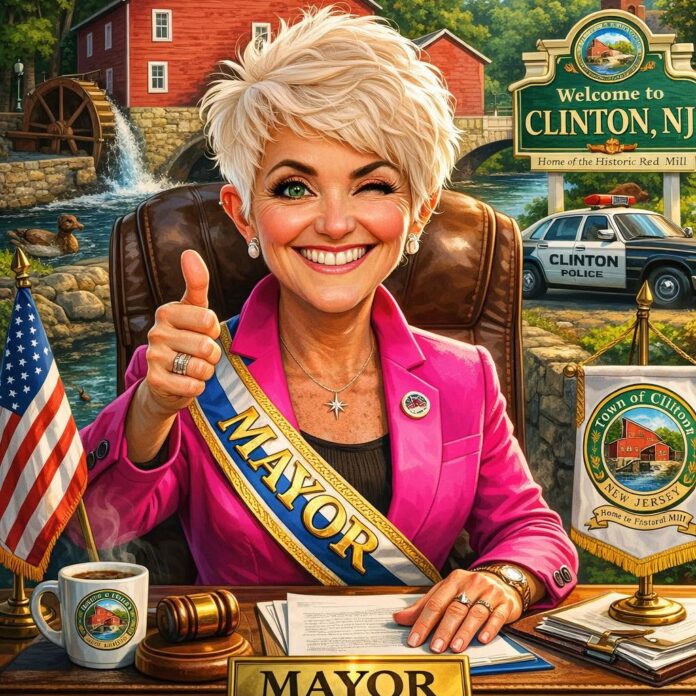

New Jersey’s film and television industry has been on a genuine growth streak in recent years, but according to Clinton Mayor and New Jersey Motion Picture and Television Commission Commissioner Janice Kovach, that momentum depends on far more than generous tax incentives or the steady arrival of new soundstages. It depends just as heavily on the working relationship between production companies and the towns that actually host them, a dynamic Kovach explored in depth during a recent conversation on the Garden State Greenlight podcast, produced by ROI-NJ and hosted by multimedia journalist Thomas Philip.
Kovach’s dual role, running a New Jersey municipality as mayor while also serving on the state commission tasked with attracting and supporting film production, gives her a genuinely rare vantage point on exactly where local government and the entertainment industry intersect. Throughout the conversation, she laid out how municipalities across New Jersey can prepare themselves to welcome a film or television production, treating readiness not as an afterthought but as a real competitive advantage when productions are deciding where to set up shop. Central to that preparation, in Kovach’s telling, is consistent, proactive communication between filmmakers and local officials well before cameras ever start rolling, since productions moving into a town need clear answers on everything from permitting and street closures to parking and noise ordinances, and towns that can offer that clarity quickly tend to have a much smoother experience hosting a production than those figuring it out on the fly.
That communication gap is exactly where the New Jersey Motion Picture and Television Commission has carved out its own essential role, functioning as a genuine bridge between government bureaucracy and an entertainment industry that often operates on tight, fast-moving production schedules. Kovach described the commission’s work as something closer to a translation service between two worlds that don’t always speak the same institutional language, helping municipalities understand what a production actually needs on the ground while helping filmmakers navigate the practical realities of working within a local government structure they may not be familiar with.
One of the more underappreciated points Kovach raised during the discussion involved just how far the economic benefits of a film production actually reach beyond the production company’s own budget line items. It’s easy to think of a film shoot’s economic impact purely in terms of permit fees or location payments, but Kovach pointed to a much wider ripple effect that touches an entire local economy. Hotels fill up with cast and crew during a shoot’s run. Restaurants see a genuine surge in business feeding hundreds of production staff working long days. Sign shops, transportation companies, equipment rental businesses, and countless other small, often overlooked local vendors all see real revenue bumps whenever a production sets up in town, turning what might look like a narrow entertainment industry story into something closer to a genuine, if temporary, economic engine for the host community.
The conversation also turned toward exactly why New Jersey has become such an increasingly attractive destination for major film and television projects in the first place. Kovach pointed to the state’s genuinely diverse range of filming locations as one of its clearest advantages, a state small enough to drive across in a few hours but varied enough to double for dense urban environments, quiet suburban towns, rural countryside, and coastline all within relatively short distances of each other. Layered on top of that geographic variety is New Jersey’s rapidly expanding studio infrastructure, giving productions the kind of soundstage capacity that used to be far harder to find outside of established production hubs like New York or Los Angeles. Kovach also emphasized the state’s increasingly concierge-style approach to supporting incoming productions, a hands-on model designed to smooth over the logistical friction that can otherwise slow a shoot down or push a production to consider filming elsewhere.
Looking ahead, Kovach expressed real confidence that New Jersey is well positioned to keep attracting major film and television projects, driven by the combination of location diversity, growing studio capacity, and the kind of local government cooperation she has spent her time on the commission trying to strengthen. She framed that continued growth not just as a win for the entertainment industry itself, but as a genuine opportunity for New Jersey residents, businesses, and communities across the state, the same small businesses and local economies that quietly benefit every time a production rolls into town.
For anyone interested in hearing the full conversation, Garden State Greenlight is available across all the major podcast platforms, including Spotify, Apple Podcasts, Amazon Music, and YouTube, with new episodes continuing to explore the people and policy decisions shaping New Jersey’s fast-growing film and television industry from the ground up.