
Morris County is preparing to revisit one of the most punishing chapters of the American Revolution, as the Morris County 250th Anniversary Celebrations Committee invites the public to a special screening of Drive By History: The Worst Winter of the Revolution: 1779-80 on Tuesday, July 14, at the Morris Museum in Morristown. The event brings a critically acclaimed piece of public television storytelling back to the exact region where its central story actually unfolded, giving local residents a chance to engage directly with the show’s creator and host in a way that a standard television broadcast never could.
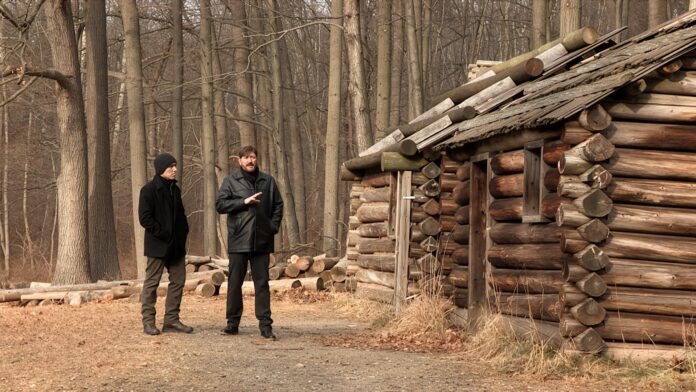
The episode itself is not a standalone theatrical film, but rather a special installment of Drive By History, the acclaimed public television series that airs on NJ PBS. Running 26 minutes, the episode was created and hosted by Morris County resident Ken Magos, who built the broader Drive By History series around a simple but genuinely compelling premise, using historical sites and roadside markers scattered across New Jersey and New York as entry points into much larger, often overlooked stories connected to the broader American narrative. To tell those stories with real depth, Magos regularly brings in historians, authors, preservationists, and other subject matter experts, giving each episode a level of scholarly grounding that elevates it well beyond a typical local-interest travel segment.
This particular episode centers on Jockey Hollow, the sprawling military encampment in Morristown where General George Washington and the Continental Army endured one of the most physically brutal stretches of the entire Revolutionary War. While Valley Forge has long dominated popular memory as the defining symbol of Revolutionary War hardship, the documentary makes a compelling case, backed by both historians and meteorologists, that the winter Washington’s army spent at Jockey Hollow was actually considerably worse in purely meteorological terms, standing as the coldest and snowiest winter recorded at any point during the war. That reframing matters enormously for how Morris County understands its own role in the Revolution, positioning Jockey Hollow not as a footnote to Valley Forge’s more famous suffering, but as the site of genuinely the harshest winter conditions any Continental Army encampment faced throughout the entire conflict.
The documentary doesn’t shy away from detailing exactly what that suffering looked like on the ground. Soldiers stationed at Jockey Hollow had to survive what has been described as the snowstorm of the century, compounded by severe food shortages, punishing ice and frost, and disease that spread easily through a camp already weakened by cold and hunger. Rather than treating these hardships as background texture, the episode uses them to illustrate just how close the Continental Army came to physical collapse during that winter, and by extension, how precarious the broader fight for American independence actually was at that specific moment in the war, well before any of its eventual outcome was assured.
The July 14 event at the Morris Museum gives attendees considerably more than just a screening. Held at the museum’s location at 6 Normandy Heights Road in Morristown, the evening opens with a ticketed VIP cocktail reception running from 5:30 to 6:30 p.m., priced at $30 and offering attendees a chance to mingle with fellow history enthusiasts ahead of the main program. The screening itself begins at 6:30 p.m. and is free to attend with advance registration, making the core program accessible to anyone interested in the history regardless of whether they opt into the earlier reception. Following the screening, Magos will lead a live discussion and audience question and answer session, giving attendees a genuine opportunity to engage directly with the person who built the episode from the ground up, rather than simply watching it end and walking away.
That post-screening conversation promises real depth beyond a typical Q&A. Magos has indicated he’ll offer behind-the-scenes insight into how the episode itself came together, along with a broader discussion of why preserving and actively sharing Revolutionary War history matters, a theme that carries extra weight given that Morris County is currently commemorating America’s 250th anniversary. Attendees can expect to come away with a clearer understanding of exactly how Washington and his troops endured that historic winter’s extreme cold, heavy snowfall, food shortages, and disease, and why Morris County itself played such a genuinely pivotal role in the broader fight for American independence, a role that events like this screening are working to keep visible as the nation’s milestone anniversary continues to unfold.
Advance registration is required for anyone hoping to attend, and residents and visitors alike are encouraged to secure their spot online ahead of the event. For a county actively working to reintroduce its own Revolutionary War history to a modern audience as part of its broader America 250 programming, this screening offers exactly the kind of direct, engaging format that turns a historical documentary into a genuinely communal evening, one where the story of Jockey Hollow’s brutal winter gets told just a few miles from where it actually happened, by the very storyteller who brought it to public television in the first place.