Vikar Technologies has announced a new integration with Plaid that brings the identity verification giant’s industry leading account opening and onboarding capabilities natively into Vikar’s own banking platform, giving the regional banks and credit unions that rely on Vikar a considerably faster, more secure way to fund new accounts and verify customer identities. The partnership represents a meaningful expansion of what Vikar’s platform can already do for the mid tier financial institutions that make up its core customer base.
Founded in 2017 and headquartered in Iselin, Vikar Technologies has built its business around solving a genuinely persistent operational headache within community and regional banking. Traditionally, when a business or individual applies for a complex commercial loan or attempts to open an institutional bank account, the process gets bogged down across fragmented internal systems, slow manual data entry, and days of back and forth compliance paperwork that can frustrate customers and slow down revenue generating relationships alike. Vikar’s platform exists specifically to unify all of those disjointed steps into a single, cloud based digital system, giving banks and credit unions a considerably more efficient way to manage the entire client relationship from first contact through ongoing account management.
The platform’s core functionality spans several genuinely essential banking operations. On the digital onboarding side, Vikar allows both individual retail consumers and multi entity commercial businesses to open and fund new financial accounts entirely digitally, removing much of the paperwork and in person friction that has traditionally defined account opening at smaller institutions. The platform also manages end to end loan origination, covering a loan’s entire lifecycle from the initial application and complex commercial underwriting process through closing, ongoing covenant tracking, and eventual renewal, giving lenders a single connected system rather than juggling separate tools across each stage of a loan’s life.
Compliance represents another core pillar of the platform, with Vikar automating the mandatory federal anti money laundering controls known as Know Your Customer and Know Your Business checks. Those automated compliance checks help institutions mitigate fraud risk securely while meeting federal regulatory requirements without needing to build out a large internal compliance staff dedicated solely to manual verification work. Rounding out the platform, Vikar has built extensive integrations with popular external financial systems, and its new partnership with Plaid stands as the latest and most significant example of that integration strategy in action. Through this new capability, Vikar embeds instant identity verification and real time bank account funding directly into its platform, allowing users to securely link their external bank accounts in a matter of seconds rather than waiting through the delays that have traditionally accompanied account verification and funding processes.
That kind of instant verification and funding capability matters enormously for the specific customer base Vikar has built its business around. The company markets its technology explicitly to mid tier financial institutions, the regional and community banks and credit unions that need to compete directly against massive multinational megabanks despite lacking the multimillion dollar internal software engineering teams those larger competitors can afford to build and maintain. By giving these smaller institutions access to the same caliber of digital onboarding, identity verification, and account funding technology that major national banks have spent years and enormous budgets developing internally, Vikar effectively levels a competitive playing field that has historically favored scale above almost everything else in retail and commercial banking technology.
Several New Jersey based financial institutions already rely on Vikar’s platform to run core parts of their own operations. Peapack Private Bank and Trust utilizes the platform to manage its commercial lending and treasury workflows, while New Jersey based BCB Bank has similarly adopted Vikar’s technology to streamline both its consumer and business account opening processes. These local implementations offer a genuine, real world proof point for exactly the kind of institution Vikar’s platform was designed to serve, community focused banks looking to modernize their digital capabilities without diverting enormous internal resources away from their core lending and deposit business.
With the new Plaid integration now built directly into its platform, Vikar Technologies is positioning its bank and credit union clients to offer exactly the kind of fast, secure, digitally native account opening experience that customers increasingly expect from any financial institution, regardless of its size. For the regional and community banks that make up Vikar’s customer base, that upgraded capability offers a genuine competitive advantage, giving smaller institutions a real shot at matching the digital experience customers have grown accustomed to at the largest national banks, without needing to build that technology from scratch themselves.
One year after bringing an entire product line back to American soil, ENSER Corporation is showing exactly how engineering expertise, hands on innovation, and genuine customization are reshaping the future of LiftTrac material handling equipment, all from a facility rooted in Cinnaminson, Burlington County. Known widely throughout the industry as ENSER Engineers, the company is a privately held industrial engineering, manufacturing, and technical staffing firm that has been in continuous operation since 1947, giving it nearly eight decades of manufacturing experience to draw on as it continues expanding its footprint within New Jersey’s industrial base.
ENSER’s own history traces back to Philadelphia, where the company originally started as a tool design shop before relocating its primary operations across the river into New Jersey in 1972. In the decades since that move, the company has steadily expanded its local infrastructure, building Cinnaminson into a genuine manufacturing and engineering hub rather than simply a regional office location. That deep New Jersey footprint puts the company squarely at the center of the state’s broader industrial identity, a role reinforced by its official status as a Preferred Resource for the New Jersey Manufacturing Extension Program. Through that partnership, ENSER collaborates directly with the state on improving workplace safety standards, strengthening supply chain logistics, and spearheading reshoring initiatives specifically designed to bring manufacturing jobs back into local New Jersey communities rather than watching that work continue drifting overseas or to lower cost states.
ENSER operates as a genuine single source partner for industrial companies, built around three distinct but tightly connected core divisions. The first, turnkey manufacturing and tooling, covers the design, construction, and fabrication of custom industrial tools, specialized manufacturing fixtures, and heavy material handling equipment. This division produced the company’s most visible recent achievement, taking over the LiftTrac product line entirely and successfully reshoring its full manufacturing operation from Arizona directly into New Jersey, a genuinely significant undertaking that required rebuilding an entire production process on new ground rather than simply relocating a few pieces of equipment.
The second division, mechanical engineering and analysis, provides end to end product design, automation engineering, and Finite Element Analysis, a computer simulation process engineers use to test exactly how complex machinery will handle real world physical stress and heat before a single physical unit ever gets built. That kind of predictive engineering work matters enormously for a product line like LiftTrac, since heavy material handling equipment has to reliably perform under genuinely demanding industrial conditions, and catching potential structural or thermal issues during the simulation phase saves considerably more time and cost than discovering them after manufacturing has already begun.
ENSER’s third division reflects something distinctive about the company’s own internal culture, a specialized engineering staffing arm built and run by engineers themselves rather than generalist recruiters. Because the company understands the technical demands of these roles from the inside, its staffing division vets and places contract or permanent mechanical, electrical, and aerospace engineers directly into heavy industry sectors including defense, aviation, energy, and medical devices, giving client companies access to genuinely qualified technical talent evaluated by people who understand exactly what the work actually requires.
The LiftTrac reshoring project brings all three of these divisions together in a single, genuinely compelling case study of what modern American manufacturing can look like when engineering expertise, staffing knowledge, and hands on production capability all operate under one roof. Rather than treating the relocation as a simple change of address, ENSER’s engineers approached the move as a genuine opportunity to re engineer the LiftTrac line for the next generation of material handling needs, applying a full year of iterative design work, customization, and manufacturing refinement to a product line that now carries the benefit of both decades of established engineering knowledge and a fresh, New Jersey based production footprint built specifically around modern manufacturing standards.
That reshoring effort fits naturally within ENSER’s broader relationship with the state’s manufacturing ecosystem. As a Preferred Resource for the New Jersey Manufacturing Extension Program, the company isn’t simply operating within New Jersey’s industrial base, it is actively helping shape the state’s broader push to bring manufacturing jobs back home, working directly alongside state officials on exactly the kind of supply chain and workplace safety improvements that make reshoring projects like LiftTrac genuinely viable in the long term rather than a one time symbolic gesture.
A full year into this reshoring effort, ENSER’s work on LiftTrac stands as a genuine proof point for what New Jersey manufacturers can accomplish when engineering rigor, technical staffing expertise, and physical production capability are all housed under a single company rather than scattered across disconnected vendors. For a firm approaching eight decades in business, the LiftTrac project represents considerably more than a single successful contract. It reflects exactly the kind of forward looking, homegrown industrial capability New Jersey’s broader manufacturing sector continues working to rebuild, one engineered, customized, and locally produced piece of equipment at a time.
New Jersey’s real estate landscape is moving on several fronts at once this month, from a significant leadership change at a growing affordable housing firm in Jersey City, to a statewide residential market defined by relentless bidding wars and surging Shore prices, to a freshly approved luxury apartment community taking shape in downtown Dover.
Restrepo & Associates Promotes James Barnett to Vice President
James Barnett has been promoted to vice president of Restrepo & Associates, stepping into a considerably larger leadership role at the affordable housing and community development firm four years after helping launch the company in the first place. In his new position, Barnett will oversee the firm’s expanding pipeline of mixed income and affordable housing initiatives across New Jersey, including a growing slate of mixed income homeownership projects taking shape in both Jersey City and South Jersey.
For founder John E. Restrepo, the promotion marks both a leadership transition and the natural next chapter of a professional relationship that has existed since the company’s founding. Restrepo has described Barnett as having been with him since the organization’s inception, and views him as representing the future of affordable housing and community development work in the state.
Among the projects Barnett will now help guide is 62 Sackett Street in Jersey City, where the firm recently secured $15 million in financing for a planned 40 unit condominium development. That mixed income project is designed to serve households earning roughly between $75,000 and $150,000 annually, placing it squarely within the income range many middle class families in Jersey City have found increasingly difficult to serve through traditional market rate housing. The firm is also advancing a second, even larger project at 311 Ocean Avenue in Jersey City’s Greenville neighborhood, where Restrepo & Associates has secured a 17,000 square foot site and plans to develop more than 50 mixed income and affordable condominium units.
Together, these two Jersey City projects reflect the firm’s broader philosophy, centered on creating genuine homeownership opportunities rather than simply expanding the rental housing stock, particularly within communities experiencing rapid development pressure and rising housing costs. Barnett has been direct about why he believes homeownership specifically needs to play a larger role in solving the state’s housing crisis, arguing that true progress comes from empowering families through homeownership so they can share directly in local economic growth rather than watching that growth benefit developers alone.
That philosophy is already visible in the firm’s completed Linden Street Homes project in Salem County, where Restrepo & Associates transformed ten abandoned properties on a distressed block into newly constructed, affordably priced homes. According to the company, those completed homes attracted buyers from across the state while returning long vacant properties to genuinely productive use. Barnett views the project as a template other municipalities, particularly across South Jersey, could replicate using their own vacant land and abandoned housing stock to attract new residents, create real homeownership opportunities, and strengthen local economies in the process.
Beyond its own development projects, Restrepo & Associates also partners with nonprofits, housing authorities, and for profit organizations pursuing affordable housing work throughout New Jersey. Barnett, working alongside a two person project management team, recently helped secure a $1.8 million award for the East Orange Housing Authority and a separate $2 million award for New Brunswick Tomorrow, funding that will support affordable housing initiatives both organizations are pursuing independently. Restrepo himself brings more than 25 years of affordable housing and community development experience to the firm, including earlier work with the Garden State Episcopal Community Development Corporation in Jersey City.
As Barnett assumes greater day to day responsibility over the company’s operations and project pipeline, Restrepo will step back into the role of Board chair, focusing his own attention on strategic growth and investment decisions going forward. Restrepo has expressed full confidence in Barnett’s ability to lead the company with both compassion and innovation as it enters this next chapter. With active projects now underway in both North and South Jersey, the leadership transition places Barnett squarely at the center of the firm’s broader effort to expand mixed income housing and homeownership opportunities across the entire state.
New Jersey’s Statewide Housing Market Remains a Bidding War Frenzy
Zooming out to the broader statewide market, New Jersey’s residential real estate scene is currently defined by an intense bidding war frenzy across its suburbs, a genuine price surge along the Jersey Shore, and aggressive new state legislation aimed at converting vacant commercial office space into desperately needed housing. Despite mortgage rates hovering in the 6 percent range, New Jersey remains one of the fastest selling housing markets anywhere in the country, a genuinely remarkable dynamic given how much higher borrowing costs have climbed compared to just a few years ago.
Commuter heavy towns across Essex and Union counties are experiencing genuinely extreme buyer competition as available inventory has effectively evaporated. Properties in towns like Maplewood and South Orange are routinely closing anywhere from 27 to 33 percent over their original asking price, numbers that reflect just how few homes are actually available relative to buyer demand in these particular commuter corridors. Along the coast, affluent buyers appear to be shrugging off elevated interest rates entirely, making Monmouth and Ocean counties the epicenter of the state’s biggest price gains. Fully half of New Jersey’s top 20 zip codes for value appreciation are located in coastal Shore towns, underscoring just how much premium buyers are currently willing to pay for coastal property despite the broader financing environment.
The statewide numbers back up that intensity. New Jersey’s average home value has climbed to $584,681, up roughly 3.3 percent year over year, while the average single family home is selling remarkably quickly, with a median of just 17 to 33 days before a listing goes pending. That kind of speed, layered on top of steep bidding war premiums in specific commuter towns, reflects a market where genuine supply constraints continue overwhelming even meaningfully higher borrowing costs.
State lawmakers have moved directly to address one piece of that supply shortage through groundbreaking legislation targeting economically stagnant commercial real estate. Under the newly advanced rules, owners of vacant suburban office parks of at least 50,000 square feet, or retail strips of at least 15,000 square feet, can now bypass local municipal zoning boards entirely in order to convert their properties into mixed use residential complexes. To qualify for that streamlined, by right conversion process, a commercial property must demonstrate a vacancy rate of at least 25 percent sustained continuously for 18 months, and any resulting development must designate at least 20 percent of its new units as legally protected affordable housing. That framework gives property owners a genuinely powerful new incentive to convert struggling commercial real estate into housing, while simultaneously guaranteeing that conversions contribute directly to the state’s affordable housing stock rather than adding only market rate supply.
On the commercial side, the market for industrial outdoor storage remains genuinely tight, with national firms including Jadian IOS and Legacy Real Estate continuing to aggressively acquire acreage in strategically located transit corridors like Franklin Township in Somerset County and Linden, land increasingly valued for fleet parking and logistics operations rather than traditional warehousing. Retail redevelopment continues moving forward as well, with the transformation of the former Monmouth Mall in Eatontown now underway, anchored by a new Whole Foods location as the centerpiece of that project’s latest phase.
Capodagli Property Company Advances Its Newest Meridia Community in Dover
Rounding out this month’s real estate news, Capodagli Property Company has received approval to move forward with its newest Meridia Living community in downtown Dover, continuing the developer’s long running strategy of building transit oriented apartment communities across New Jersey’s downtown corridors. The new Meridia community will bring luxury apartments, ground floor retail space, and upscale resident amenities to a genuinely walkable stretch of downtown Dover, extending Capodagli’s existing footprint in the Morris County town, where the company’s earlier Meridia Transit Plaza development already sits directly alongside the Dover NJ Transit train station.
That existing Dover project offers a useful preview of what residents can likely expect from this newest addition to the Meridia portfolio, having delivered more than 200 one and two bedroom units, underground parking, ground floor retail space, and amenities including a fitness center, community rooms, and dedicated party spaces, all built around direct rail access into New York City. Capodagli has built its broader Meridia Living brand around exactly this kind of transit oriented, downtown focused development strategy, with similar communities already completed in towns including Rahway, Bound Brook, West New York, Rutherford, Hackensack, Linden, and Wallington. The company’s approach consistently emphasizes walkability, direct transit access, and a genuine sense of community built into each property, a formula that has clearly resonated enough with municipalities and residents alike to justify this latest expansion into Dover’s downtown core.
Taken together, this month’s real estate developments reflect a state moving simultaneously on multiple fronts, expanding affordable homeownership opportunities through firms like Restrepo & Associates, wrestling with a red hot, supply constrained residential market from the suburbs to the Shore, and continuing to invest in exactly the kind of transit oriented downtown housing that developers like Capodagli have built their entire business model around delivering.
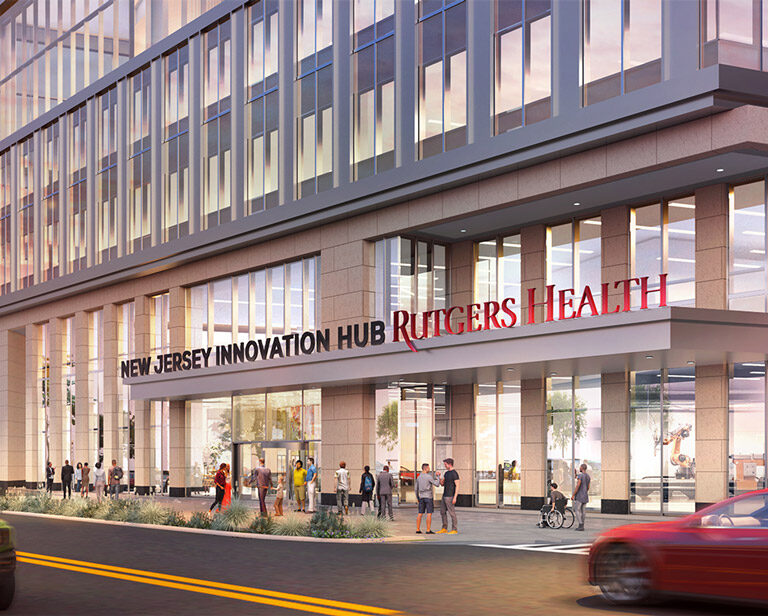
Downtown New Brunswick is now home to the first tangible piece of what may become one of the most significant life sciences developments anywhere in the state, as the New Jersey Innovation Hub officially opened on July 14, 2026, marking the first phase of a massive 1.5 million square foot development known as HELIX. The acronym stands for the Health and Life Science Exchange, and the broader campus has been designed from the ground up to function as a central meeting point where universities, major corporations, startups, and scientists can collaborate directly on medical research, artificial intelligence, and biotechnology, all within a single, purpose built innovation district.
The Innovation Hub itself occupies 30,000 square feet inside the campus’s first completed tower, known as H-1, and functions as a state of the art life sciences incubator managed by Portal Innovations, a venture capital and development firm that specializes in exactly this kind of shared research infrastructure. Rather than requiring an early stage biotech company to spend millions of dollars building out its own laboratory from scratch, startups can instead rent bench space directly inside the hub, gaining access to more than $2 million worth of advanced lab equipment, private office space, and direct connections to venture capital investors actively looking to fund exactly this kind of early stage research.
The hub launched with a genuinely impressive founding cohort of 16 member companies, each working on distinct, cutting edge projects spanning biotechnology, medical software, environmental technology, and life science advocacy. That opening class represents the complete initial roster for this launch phase, with Portal Innovations confirming that all 16 available slots have now been filled, though several additional companies remain in stealth mode and are expected to publicly reveal their specific medical devices and therapeutic compounds as they scale up their own lab operations inside the hub over the coming months.
The 16 founding member companies are a mix of cutting-edge biotechnology startups, medical software creators, green-tech innovators, and life science advocacy groups.
They make up the very first cohort to move into the brand-new Portal Innovations space at HELIX. The officially revealed members include:
BioNJ: New Jersey’s massive life sciences trade association, which just signed on as a primary foundational member.
Scarlet TCR: A biotech firm developing genetically engineered T-cell therapies specifically targeting human papillomavirus (HPV).
PumpKin Baby: A health-tech startup creating a specialized device that preserves frozen breast milk while actively analyzing its nutritional quality.
Thrive Genetics: A genomics company utilizing advanced DNA data to improve addiction care through early risk detection and highly personalized treatment plans.
PFA Solve: An environmental tech company developing new systems to detect, capture, and safely destroy dangerous “forever chemicals” (PFAS contaminants).
Materium Technologies: A sustainable materials company using machine learning and advanced science to develop high-performance nanocomposite films.
LeagueMed: A digital marketplace and network that connects healthcare professionals with private, vetted MedTech and Health IT investment opportunities.
Sampled: A genomics and precision medicine hub focused on helping healthcare organizations unlock the research value of biological samples and data.
Phase 1 Solutions: A clinical support company that provides hands-on guidance for first-in-human and early-stage drug development trials.
PharmaMedic: A specialized medical and regulatory consulting firm helping early biotech companies get their products safely through the FDA pipeline.
Ubuntu Research: A clinical operations company providing trial design and operational strategy support to early-stage pharmaceutical startups.
(Note: Portal Innovations has filled all 16 initial slots for the launch, with the remaining unlisted stealth-mode startups expected to publicly unveil their specific medical devices and therapeutic compounds as they scale up lab operations in the coming months). [1, 2, 3]
Among the officially revealed founding members, BioNJ, the state’s major life sciences trade association, signed on as a primary foundational member, giving the hub immediate institutional credibility within New Jersey’s broader biotech industry. Scarlet TCR is developing genetically engineered T-cell therapies specifically targeting human papillomavirus related cancers, while PumpKin Baby has built a specialized device that preserves frozen breast milk while simultaneously analyzing its nutritional quality, giving new parents a genuinely useful piece of health technology. Thrive Genetics is applying advanced DNA data toward improving addiction care through early risk detection paired with highly personalized treatment plans, and PFA Solve is tackling one of the more pressing environmental health issues of the moment, developing systems specifically designed to detect, capture, and safely destroy dangerous PFAS forever chemicals contaminating drinking water supplies.
Rounding out the founding cohort, Materium Technologies is using machine learning alongside advanced materials science to develop high performance nanocomposite films, while LeagueMed operates as a digital marketplace connecting healthcare professionals directly with vetted MedTech and Health IT investment opportunities. Sampled focuses on genomics and precision medicine, helping healthcare organizations unlock genuine research value from biological samples and associated data, and Phase 1 Solutions provides hands on clinical support specifically for first in human and other early stage drug development trials. PharmaMedic rounds out the regulatory side of the ecosystem, offering specialized medical and regulatory consulting designed to help early biotech companies navigate the FDA approval pipeline safely and efficiently, while Ubuntu Research provides clinical operations support, including trial design and broader operational strategy guidance, for early stage pharmaceutical startups still building out their own internal infrastructure.
The Innovation Hub represents only the very first visible piece of a considerably larger campus vision, one backed by a genuinely substantial public private partnership involving the state of New Jersey, Middlesex County, and several major anchor institutions. Rutgers University is moving its entire Robert Wood Johnson Medical School into this same first tower, bringing advanced Rutgers translational research teams directly into the building alongside the startups housed in the Innovation Hub itself. Perhaps even more significant for the campus’s long term identity, the legendary industrial research company Nokia Bell Labs has broken ground on plans to relocate its entire headquarters, along with a substantial 600,000 square feet of dedicated lab space, into the campus’s planned second phase, known as H-2. Beyond these two anchor tenants, major corporate partners headquartered nearby, including Johnson & Johnson and hospital network RWJBarnabas Health, are deeply embedded throughout the broader HELIX ecosystem, actively mentoring and helping fund the startups working inside the hub.
Given how many of these founding companies operate within biotechnology and medical research, a genuinely important question naturally follows regarding animal testing practices across the cohort. None of the sixteen founding startups engage in any form of testing on wildlife, and the overwhelming majority do not engage in animal testing of any kind whatsoever. Because the Innovation Hub functions primarily as an urban, early stage technology and software incubator, most of its member companies are concentrated heavily around computational data analysis, cell based laboratory research, and environmental engineering, categories of work that simply do not involve living test subjects in the first place.
For a substantial portion of the founding cohort, the absence of animal testing comes down to the basic nature of the technology itself rather than any deliberate ethical policy choice, since the underlying work has nothing to do with injecting or testing on living organisms at all. PFA Solve, for example, works exclusively with chemical systems and advanced filtration technology to safely capture and destroy PFAS contamination in drinking water, an entirely chemistry and engineering based process. Companies like Thrive Genetics and Materium Technologies rely on pure software, artificial intelligence, and existing human genome wide datasets to run virtual machine learning simulations, meaning their core research happens entirely on computers rather than in a traditional wet lab setting. PumpKin Baby similarly focuses on engineering physical hardware designed to safely preserve and analyze human breast milk, a device development process that likewise requires no animal involvement whatsoever.
A smaller subset of the cohort does rely on standard, federally required pre clinical testing methods, a genuinely necessary step for any company developing advanced medicine intended to treat serious human illness. Scarlet TCR’s work modifying human T-cells to aggressively target and destroy cervical cancer tumors represents exactly this kind of case, since verifying that these modified cells actually function correctly and destroy cancer within a complex biological system requires standard pre clinical mouse models during the earliest stages of laboratory research, a requirement the FDA mandates before any such therapy can ever be tested in human patients.
New Jersey’s own state policy reflects a genuine, deliberate priority toward reducing animal testing wherever scientifically possible. Under existing New Jersey law, any form of animal testing specifically for consumer cosmetics products is completely banned outright, one of the clearer statutory signals of the state’s broader position on the issue. Beyond that specific cosmetics ban, the state actively incentivizes startups working within its innovation ecosystem, including those housed at the new Innovation Hub, to adopt advanced non animal testing alternatives whenever federally permitted, including high tech engineered human tissue models, synthetic organoids, and increasingly sophisticated computer based modeling techniques, positioning New Jersey’s newest life sciences hub at the intersection of cutting edge medical research and a genuinely forward looking approach to research ethics.
With Rutgers relocating its medical school into the same building, Nokia Bell Labs preparing its own major campus expansion nearby, and sixteen genuinely diverse startups already at work inside the Innovation Hub itself, HELIX’s opening phase signals considerably more than a single building coming online in downtown New Brunswick. It represents the first visible step in what state and county officials clearly intend to become one of the most significant life sciences and technology hubs anywhere on the East Coast, built on a foundation that pairs genuine scientific ambition with a deliberate commitment to responsible, forward thinking research practices.
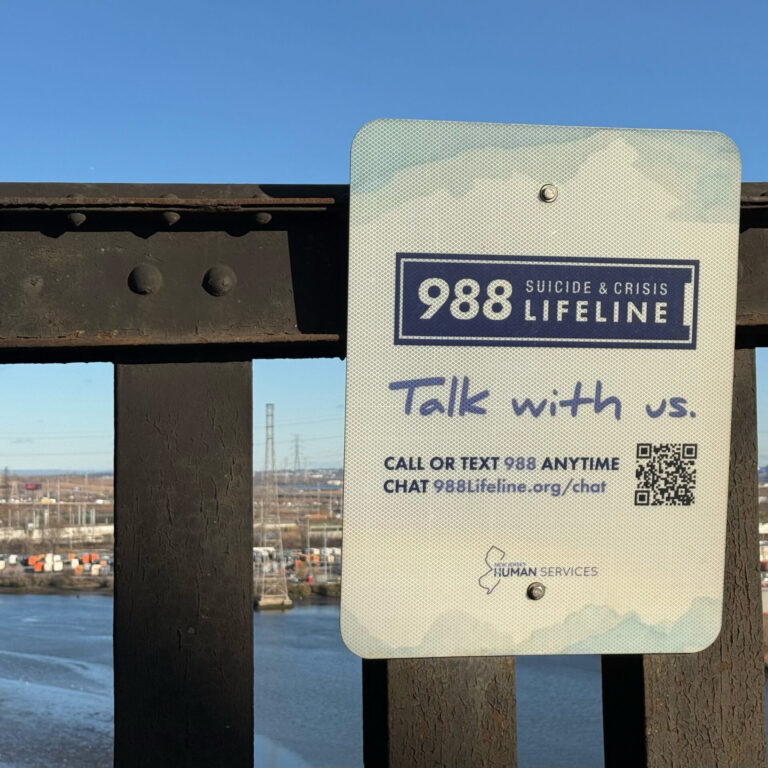
When Governor Mikie Sherrill signed New Jersey’s $60.7 billion budget for the fiscal year beginning July 1, 2026, the state’s 988 crisis hotline received flat funding of roughly $28 million, keeping the program’s existing infrastructure intact without providing any new money to expand it. That funding decision has reignited a genuinely important debate among mental health advocates, lawmakers, and fiscal policymakers over exactly how New Jersey should be paying for crisis mental health services going forward, and whether relying on the state’s annual budget process is even the right approach at all.
Understanding what flat funding actually means in practice requires separating what the $28 million allocation covers from what it deliberately leaves out. That funding represents what advocates describe as the bread and butter of New Jersey’s current 988 operations, ensuring call centers can keep answering the roughly 10,900 local calls they receive every month while also keeping the state’s mobile crisis outreach response teams operating and available. What that flat funding does not provide, though, is any new money to build the crisis stabilization centers many advocates consider the next essential step for the system. These centers would give people experiencing a severe mental health crisis a specialized place to receive care, rather than defaulting to a local hospital emergency room that may be poorly equipped to handle a psychiatric emergency and already strained by unrelated patient volume. Without new funding specifically earmarked for that expansion, New Jersey’s 988 system remains capable of maintaining its current operations but structurally unable to grow into the more comprehensive crisis response network advocates argue the state genuinely needs.
That funding gap has pushed mental health advocates and sympathetic lawmakers toward pursuing an entirely different funding mechanism, one designed to remove 988 from the yearly uncertainty of the general state budget altogether. State Senator Joe Vitale is among the lawmakers backing a pending bill that would establish a 40 cent monthly fee applied to all New Jersey phone lines, a structure deliberately modeled on how the state already funds its 911 emergency system on a permanent, dedicated basis. Under the proposal, that small telecom fee would generate an estimated $67.3 million annually, considerably more than the current flat funded budget allocation, and critically, that revenue would bypass the general state budget entirely, flowing instead into a dedicated 988 trust fund insulated from the annual political negotiations that currently determine the hotline’s funding level year to year.
Despite that funding potential, the bill has stalled amid genuine pushback within the State House. Opponents have characterized the 40 cent fee as effectively a new tax on residents already grappling with New Jersey’s notoriously high cost of living and steep property tax burden, framing even a modest per line monthly charge as one more financial obligation piled onto households already stretched thin. That characterization has proven politically potent enough to keep the bill stuck in both Assembly and Senate committees, particularly with election year dynamics making many lawmakers genuinely hesitant to support anything that could be labeled a new fee or tax, regardless of how directly the revenue would be tied to a specific, widely supported public safety service. Supporters of the bill counter that framing the fee as equivalent to a new tax overlooks how directly comparable it is to the existing 911 funding model that residents have accepted without controversy for years, and argue that a permanent, dedicated funding stream would ultimately serve residents far better than a crisis line that has to renegotiate its budget from scratch every single year.
Stepping back from the funding debate itself, the 988 Suicide and Crisis Lifeline remains the national hotline dedicated specifically to mental health emergencies, substance use crises, and other emotional crisis situations. It launched nationwide in July 2022, replacing the far more cumbersome ten digit National Suicide Prevention Lifeline with a simple, three digit number designed to be considerably easier for anyone in crisis to remember and dial quickly. Callers and texters can reach trained counselors free of charge and entirely confidentially, 24 hours a day, without triggering any automatic law enforcement involvement, a distinction that has made the service considerably more approachable for people who might otherwise hesitate to seek help during a genuine mental health emergency.
The 988 number itself belongs to a broader category of three digit shortcodes the Federal Communications Commission has designated for various forms of public use, often referred to collectively as N11 codes. Beyond 988 and the widely known 911 emergency line, several other N11 numbers serve genuinely useful, distinct purposes worth knowing. Dialing 211 connects callers to community and social services, linking residents with local resources like housing assistance, utility bill support, food pantries, and disaster relief programs. The number 311 handles non emergency municipal service requests, allowing residents to report city level issues like potholes, broken streetlights, graffiti, or missed trash pickup directly to local government without tying up emergency lines. Directory assistance remains available through 411, the traditional line for looking up local business phone numbers or residential addresses, though many providers now charge a fee for that service. Travelers can dial 511 for real time, state specific highway updates, road construction reports, transit delays, and current weather conditions affecting travel. The number 611 automatically routes callers to their own wireless or landline provider’s internal repair and billing help desk, while 711 provides a specialized Telecommunications Relay Service designed to help people who are deaf, hard of hearing, or speech disabled communicate over standard phone lines. Homeowners and contractors planning any excavation work rely on 811, the mandatory Call Before You Dig hotline used to request that underground utility lines be safely marked before digging begins. And 911 itself remains reserved strictly for immediate physical emergencies genuinely requiring police, fire, or ambulance response.
Taken together, New Jersey’s ongoing debate over how to permanently fund 988 sits within a much larger national conversation about how state governments should be building out mental health crisis infrastructure to match the same level of reliability and permanence already built into emergency services like 911. Whether New Jersey ultimately adopts the proposed phone fee, continues relying on annual flat funding, or finds some other path forward, the underlying question, how to build a crisis response system residents can count on regardless of that year’s budget politics, remains very much unresolved heading into the next legislative session.
This is a sensitive topic, and if you or someone you know is personally struggling, please reach out for support. I’m happy to help point you toward the right resources if that would be useful.
South Jersey’s most celebrated beer festival is officially back on the calendar, as the Glassboro Craft Beer Festival returns to Glassboro Town Square on Saturday, September 26, 2026. Presented by Ciconte’s Restaurant Group, the event has built a genuinely impressive national reputation over the years, having been recognized by USA Today as one of the best beer festivals anywhere in the United States, a distinction that places this South Jersey gathering among elite company on a genuinely competitive national list.
This year’s festival keeps the winning formula largely intact, taking place entirely outdoors across Glassboro’s Town Square and bringing together craft beverage enthusiasts, local businesses, and live entertainment for a full afternoon of celebration. The drink lineup itself remains the festival’s central draw, featuring nearly 100 unique craft beers pulled from more than 50 different brands and breweries spanning New Jersey and the broader Tri State region. Beer isn’t the only pour available either, since the festival also showcases local New Jersey wineries and cideries, giving attendees a genuinely well rounded tasting experience regardless of their preferred beverage.
Entertainment runs throughout the day as well, headlined by Shot of Southern, a high energy Philadelphia based country and rock cover band taking over the festival’s live music stage. Surrounding that main stage, a full lineup of regional food trucks and local artisan craft vendors will line the square, giving attendees plenty to explore between drink samples. One important note for anyone planning to attend, the festival maintains a strict 21 and older policy, with no children, toddlers, or pets permitted inside the gates under any circumstances, making this a genuinely adults only event from start to finish.
The festival runs across two distinct sessions to accommodate different types of attendees. VIP ticket holders gain access starting at noon, running through the event’s 5 p.m. close, while standard general admission attendees can enter beginning at 1 p.m., also running through 5 p.m. Organizers have set a firm last entry time of 3:30 p.m. for anyone arriving later in the day, and pouring stops entirely at 4:45 p.m., giving attendees a clear window to plan around whether they’re aiming for the full VIP experience or a shorter general admission visit.
Tickets are available for purchase in advance through the festival’s official online ticket platform, with several distinct options depending on how attendees want to experience the day. VIP tickets, priced around $75, include early entry at noon, allowing ticket holders to beat the lines that typically build up ahead of the general admission start time, along with unlimited two ounce samples across a full five hour window, a commemorative lanyard, and a custom festival pilsner cup to take home. General admission tickets offer standard entry starting at 1 p.m., unlimited two ounce samples across a four hour tasting window, and a complimentary souvenir tasting glass. For anyone attending without plans to drink, whether serving as a designated driver or simply preferring to enjoy the festival’s other offerings, non drinking tickets priced at $20 provide complete access to the festival grounds, live music, food trucks, and craft vendors, though without a tasting glass or any alcohol sampling access included.
With its combination of a nationally recognized reputation, a genuinely deep lineup of nearly 100 craft beers alongside local wine and cider options, and a full day of live music and food trucks surrounding it all, the Glassboro Craft Beer Festival continues to stand out as one of South Jersey’s premier annual gatherings for craft beverage fans. Anyone hoping to attend this September should plan to secure tickets well ahead of time through the official Glassboro Craft Beer Festival ticket platform, particularly given the event’s track record of drawing enthusiastic crowds from across New Jersey and the broader Tri State region year after year.
Glassboro Craft Beer Festival Returns to South Jersey With Award Winning Brews, Live Entertainment, and One of New Jersey’s Premier Fall Events. Every autumn, thousands of craft beverage enthusiasts make their way to Gloucester County for one of New Jersey’s most anticipated beer celebrations. The Glassboro Craft Beer Festival has established itself as one of the Garden State’s signature tasting events, bringing together breweries, wineries, cider producers, local food vendors, artisans, and live entertainment for a full day dedicated to celebrating the region’s thriving craft beverage culture.
Scheduled for Saturday, September 26, 2026, the festival returns to Glassboro Town Square, where the heart of downtown is transformed into an outdoor destination filled with tasting stations, live music, specialty food, and a vibrant community atmosphere. Organized by the Ciconte’s Restaurant Group, the festival has earned a reputation well beyond New Jersey, attracting visitors from throughout the Northeast while receiving national recognition as one of America’s premier craft beer festivals.
What distinguishes the Glassboro Craft Beer Festival is both its scale and its commitment to showcasing a diverse collection of producers. Festival attendees can sample nearly 100 different craft beverages representing more than 50 breweries and beverage makers from New Jersey and across the Tri State region. From hop forward India Pale Ales and crisp lagers to rich stouts, seasonal specialties, barrel aged selections, fruit beers, and limited releases, the event offers something for virtually every palate.
Beer may be the festival’s primary attraction, but it is far from the only one. New Jersey wineries and regional cider producers also participate, giving guests the opportunity to explore locally crafted wines and hard ciders alongside the extensive beer offerings. This broader beverage selection reflects the continued growth of New Jersey’s craft alcohol industry, which has expanded significantly over the past decade and continues to gain national attention for both quality and innovation.
The festival experience extends well beyond the tasting tents. Throughout the afternoon, visitors can enjoy live performances from Shot of Southern, the energetic Philadelphia based country and rock cover band that headlines this year’s entertainment lineup. Their high energy performance helps create an atmosphere that feels as much like an outdoor music festival as a craft beer event, encouraging guests to relax, socialize, and enjoy the day between tastings.
A wide variety of food vendors and food trucks will also line Glassboro Town Square, offering everything from classic festival favorites to gourmet specialties designed to pair perfectly with the day’s beverage selections. Local artisan vendors add another layer to the experience, showcasing handcrafted goods, specialty products, and unique merchandise that celebrates the creativity of South Jersey’s small business community.
For guests seeking the fullest festival experience, VIP admission begins at 12:00 p.m., providing an additional hour of exclusive access before general admission opens. Early entry allows visitors to explore participating breweries with shorter lines while enjoying five hours of unlimited two ounce tasting samples. VIP ticket holders also receive a commemorative festival pilsner glass and event lanyard.
General admission begins at 1:00 p.m., offering four hours of unlimited two ounce tastings along with a souvenir festival tasting glass. Festival organizers encourage guests to arrive early to maximize the experience, as final entry is scheduled for 3:30 p.m., with the final pours concluding at 4:45 p.m.
Recognizing that not every guest intends to sample alcoholic beverages, the festival also offers designated driver and non drinking admission. These tickets provide full access to the festival grounds, live entertainment, artisan vendors, and food offerings while supporting responsible transportation and encouraging groups to attend together safely.
Because the event focuses exclusively on alcoholic beverage tastings, the festival maintains a strict 21 and older admission policy. Children, infants, and pets are not permitted inside the event, helping organizers provide a safe and enjoyable experience for all attendees.
The Glassboro Craft Beer Festival has become an important showcase for New Jersey’s expanding craft beverage industry. Independent breweries, wineries, and cider producers continue to play an increasingly significant role in the state’s tourism economy, drawing visitors who appreciate locally made products, innovative brewing techniques, and opportunities to meet the people behind their favorite beverages. Events like this not only introduce attendees to new producers but also strengthen connections between local businesses and the communities they serve.
Its location in Glassboro adds another dimension to the experience. Easily accessible from throughout South Jersey, Philadelphia, and surrounding communities, the downtown setting creates a walkable festival environment where visitors can explore the town while enjoying one of the region’s largest outdoor tasting events.
Whether you are a longtime craft beer enthusiast, an occasional wine lover, or someone simply looking for one of New Jersey’s premier fall festivals, the Glassboro Craft Beer Festival delivers an outstanding combination of exceptional beverages, live entertainment, local food, artisan vendors, and community spirit. With hundreds of tasting opportunities, an energetic atmosphere, and a reputation built over years of successful events, it continues to stand among the Garden State’s most anticipated annual celebrations and remains one of South Jersey’s signature destinations for craft beverage enthusiasts each autumn.
New Jersey Devils fans have a genuine reason to circle their calendars this week, as the Hughes brothers head to Fanatics Fest NYC alongside a lineup of more than 500 athletes and celebrities descending on the Javits Center for four straight days of live sports culture. Running July 16 through 19, the festival bills itself as the world’s number one sports fan festival, and this year’s edition gives Devils fans a genuinely rare chance to meet their favorite players in person, alongside a franchise legend making a special appearance of his own.
Devils great Ken Daneyko, a three time Stanley Cup champion whose name remains synonymous with the franchise’s championship era, will host a free photo opportunity for fans on Sunday, July 19, giving longtime supporters a chance to meet one of the most beloved figures in team history without needing to buy anything extra to participate. Beyond that appearance, the broader festival promises live podcasts and panel discussions, exclusive merchandise and memorabilia available for purchase, immersive fan activations, and a steady stream of autograph and photo opportunities spread across the full four day run, giving Devils fans plenty of reasons to make the trip into the city alongside supporters of every other major sport and franchise.
The timing of this fan focused celebration could hardly feel more fitting, given just how eventful New Jersey’s offseason has already become under new general manager Sunny Mehta. Since taking over the front office, Mehta has brought a genuinely aggressive, analytics driven approach to roster construction, and the results have made for one of the more chaotic and exciting starts to July that Devils fans have experienced in years.
The single biggest move of the offseason so far was the blockbuster trade sending goaltender Jacob Markstrom and forward Angus Crookshank to the Florida Panthers. In return, New Jersey landed a genuinely substantial package, including forwards Evan Rodrigues and Jesper Boqvist, the latter returning to the organization after previously suiting up for New Jersey, along with prospect Ben Steeves. With Markstrom now gone, the Devils moved quickly to fill the crease, signing veteran goaltender David Rittich to a one year, $1 million contract, setting up a genuinely unconventional three way goaltending rotation alongside Jake Allen and newly extended young netminder Nico Daws.
Beyond the goaltending shakeup, New Jersey moved to lock down its core leadership for the long term, signing captain Nico Hischier to a massive five year contract extension worth $11.7 million annually. That extension cements Hischier as a foundational piece of the franchise’s future, standing alongside fellow young star Jack Hughes as the two players New Jersey is clearly building its next era of competitive hockey around.
The blue line underwent its own genuinely radical transformation as well. In a stunning, high stakes trade, New Jersey dealt young star defenseman Simon Nemec and forward Maxim Tsyplakov to the Calgary Flames, receiving in return two conditional first round draft picks, a 2026 second round pick, and defenseman Etienne Morin. That trade alone reshaped New Jersey’s long term draft capital considerably, giving the front office genuine flexibility to keep reshaping the roster in future seasons. The Devils didn’t stop there on defense either, signing 25 year old defenseman Vladislav Kolyachonok to a one year deal and separately trading for defenseman Declan Chisholm, giving the blue line a genuinely different look heading into the new season compared to where it stood just weeks earlier.
New Jersey’s prospect pipeline received its own significant boost as well, with top defensive prospect Anton Silayev officially signing his entry level contract. The towering six foot six Russian defenseman has generated real anticipation within the organization, and there’s genuine belief that he could see NHL ice time sooner rather than later given the level of talent he’s already shown at a young age.
Perhaps the single most eye catching storyline of the entire offseason, though, was Mehta’s decision to tender a $4.775 million offer sheet to Utah Hockey Club restricted free agent center Barrett Hayton, a genuinely rare and aggressive front office maneuver that sent real shockwaves through the league. Utah ultimately chose to match the offer, keeping Hayton on its own roster rather than letting him head to New Jersey, but the mere attempt proved something important about the direction of the new look Devils front office. Mehta and his staff are clearly willing to play ruthlessly and pursue talent through even the league’s rarest roster building tools, rather than settling for a more conventional, cautious approach to team building.
Taken together, this stretch of moves reflects a franchise genuinely being remade in real time, from a complete overhaul of the goaltending situation to a reshaped blue line, a locked in captain, a promising young prospect officially signed, and a league shaking offer sheet attempt that fell just short. For Devils fans heading into New York City this week for Fanatics Fest, the timing could hardly be better. Between meeting the Hughes brothers, getting a photo with franchise legend Ken Daneyko, and following an offseason that has already delivered this much drama before training camp has even begun, there has rarely been a more exciting moment to be a New Jersey Devils fan.
Philadelphia’s crowd came out in force last night hoping to watch one of their own claim the title, but it was St. Louis Cardinals slugger Jordan Walker who walked away with the crown, outslugging Phillies fan favorite Kyle Schwarber in the final round to win the 2026 Home Run Derby at Citizens Bank Park. Walker’s victory carries genuine historical weight beyond simply winning in front of a hostile road crowd. He became the first player in Cardinals franchise history to win the Home Run Derby, and at his current age, he stands as just the fifth youngest player ever to claim the title in the event’s long history.
Schwarber entered the derby as the unmistakable hometown favorite, and Philadelphia’s crowd made that clear throughout the night, cheering every one of his swings while directing considerably rowdier energy toward the visiting sluggers standing between him and the title. Walker, for his part, showed no signs of being rattled by that hostile environment, methodically working through the bracket and ultimately outlasting Schwarber directly in the championship round, a genuinely difficult feat given how loudly the Citizens Bank Park crowd was pulling against him all night. Schwarber was one of two Phillies representatives who took part in this year’s eight player derby field, giving the home crowd extra reason to invest emotionally in the outcome even after Walker’s win denied them the storybook local finish they were hoping for.
Walker’s win adds a genuinely compelling new chapter to the Home Run Derby’s broader history, a competition that has produced plenty of memorable moments across nearly every era of the sport. Fans still talk about Vladimir Guerrero Jr.’s dramatic 2023 showdown against Randy Arozarena, a back and forth slugfest that remains one of the most electric derby finals in recent memory, while Aaron Judge’s derby performance during his own historic rookie season remains a similarly unforgettable moment for Yankees fans. Every franchise carries its own signature derby memory at this point, and Walker’s win in front of a Philadelphia crowd desperate to see Schwarber take the crown instead now stands as a defining moment for the Cardinals organization specifically.
For fans who wanted to dig deeper into exactly how those long balls were produced, Statcast tracked every single swing throughout the night, providing real time distance and exit velocity metrics for each home run hit across the entire field. That level of granular detail has become a genuine part of the modern derby experience, giving fans watching from home the same kind of advanced data that used to be reserved strictly for team analytics departments, now presented directly alongside the broadcast itself for anyone following along.
This year’s derby also carried its own bit of broadcasting history. Rather than airing through a traditional cable sports network, the event streamed exclusively on Netflix, marking a genuinely significant shift in how one of baseball’s most popular offseason spectacles reaches its audience. That streaming exclusive gave the event a considerably different viewing experience than derbies of years past, and highlights from the night are already being packaged for fans who want to revisit the best moments, including Walker’s own derby clinching swings and Schwarber’s own impressive run through the bracket before ultimately falling just short in the final.
Placed against the full sweep of Home Run Derby history, stretching all the way back to the event’s inaugural running in 1985, this year’s Citizens Bank Park final adds a genuinely fresh chapter to an event that has evolved considerably since its earliest years. What began as a comparatively modest offseason exhibition has grown into one of the most closely watched single night spectacles in the entire sport, complete with Statcast powered analytics, exclusive streaming rights, and now a first ever Cardinals championship courtesy of Jordan Walker’s performance in front of a Philadelphia crowd that came desperately close to seeing one of its own take home the title instead.
2026 T-Mobile Home Run Derby: Stats and Facts
Jordan Walker wins it
Cardinals had zero Derby titles before Monday, and only one previous runner-up finish: Albert Pujols, who lost to Garret Anderson in 2003.
Pujols was on hand Monday night as part of the Netflix broadcast crew.
Walker was 1 year old when Pujols finished second in 2003 (Walker born May 22, 2002).
Walker was 24 years, 52 days old on Monday, making him the 5th-youngest champion in Derby history:
Juan Gonzalez, 1993 — 23 years, 265 days
Juan Soto, 2022 — 23 years, 266 days
Ruben Sierra, 1989 — 23 years, 277 days
Wally Joyner, 1986 — 24 years, 28 days
Jordan Walker, 2026 — 24 years, 52 days
Cardinals were one of 9 franchises without a Derby title. 8 remain heading into 2027 at Wrigley Field: Astros, Braves, Guardians, Padres, Pirates, Rays, Rockies, Royals.
Schwarber nearly becomes hometown hero
Schwarber nearly became the 4th player to win the Derby at his home stadium (last done by teammate Bryce Harper, Nationals, 2018).
Hit 11 home runs in the final round, first to go.
Combined for 30 home runs across three rounds, averaging 417 feet, topping out at 461 feet.
Would have been the 3rd Phillies player to win the Derby, joining Bobby Abreu (2005) and Ryan Howard (2006).
New Jersey came remarkably close to hosting even more of this summer’s FIFA World Cup than it ultimately did. The state actually bid aggressively to host a semifinal match in addition to the final itself, but FIFA reshuffled the tournament bracket during the final scheduling phase, ultimately sending semifinal hosting duties elsewhere. Even without that semifinal slot, though, New Jersey walked away with a genuinely massive share of the tournament. MetLife Stadium, officially rebranded as New York New Jersey Stadium for the duration of the World Cup, secured eight total matches across the tournament, a total tied with Los Angeles and Miami for the second most games hosted by any single stadium anywhere in the world, sitting just one match behind Dallas’s tournament leading slate of nine.
That eight game run built steadily toward this weekend’s ultimate prize. The stadium hosted five group stage matches on June 13, June 16, June 22, June 25, and June 27, followed by a single Round of 32 match on June 30 and a Round of 16 match on July 5. That entire sequence has been building directly toward the World Cup Final itself, scheduled for this Sunday, July 19, at the very same East Rutherford stadium. So while Atlanta and Dallas got to host this week’s midweek semifinal spotlight, New Jersey ultimately lands the tournament’s single biggest stage, the final match and trophy presentation, right here at home this Sunday.
With the actual World Cup Final taking place inside MetLife Stadium itself, New Jersey fans have a genuinely exciting range of ways to soak in the atmosphere without needing to travel far at all. Several well established local spots across the state are stepping up with independent, high energy watch parties built specifically for Sunday’s final, giving fans plenty of reason to celebrate right here in the Garden State.
Baseline Social Redefines the Modern Sports Bar Experience at Fort Monmouth with Dining, Entertainment, and Interactive Games Under One Roof. The evolution of the American sports bar has accelerated in recent years, with guests seeking more than a place to simply watch the game. Today’s visitors want exceptional food, premium cocktails, interactive entertainment, flexible event spaces, and an atmosphere that encourages them to stay long after the final whistle. Few destinations in New Jersey capture that evolution as completely as Baseline Social, the expansive sports bar, restaurant, and entertainment venue located in the heart of the redeveloped Fort Monmouth district in Oceanport.
Occupying more than 17,000 square feet at 675 Oceanport Way, Baseline Social has quickly established itself as one of the state’s premier destinations for sports fans, families, corporate gatherings, and groups looking for an entertainment experience that extends well beyond traditional dining. Designed as a modern social hub, the venue blends high definition sports viewing, interactive gaming, elevated American cuisine, craft cocktails, and flexible event space into a destination that appeals to guests throughout the day and well into the evening.
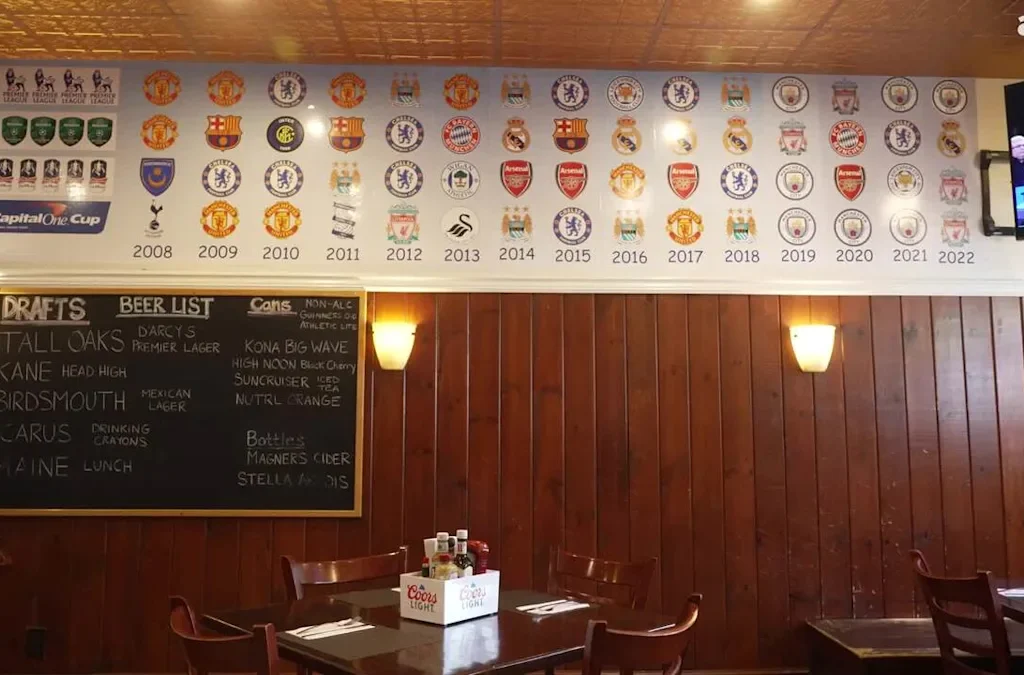
D’Arcy’s Tavern has proudly branded itself as the Jersey Shore’s home to soccer, and Sunday’s final looks set to prove exactly why. The venue is opening every dining room, both indoor bars, and its full outdoor parking lot tent, backed by mobile beverage trailers and outdoor food operations running throughout the entire day, giving fans genuinely comprehensive indoor and outdoor viewing options under one roof.
As anticipation continues building for the 2026 FIFA World Cup Final, D’Arcy’s Tavern is once again preparing to showcase why it has become one of New Jersey’s most respected soccer pubs. With expanded viewing areas, additional food and beverage service, outstanding Irish cuisine, exceptional hospitality, and an atmosphere that captures the excitement of the world’s biggest sporting event, the tavern is poised to deliver an unforgettable championship day experience.
Whether visitors arrive to watch the World Cup, enjoy authentic Irish comfort food, sample an expertly poured pint of Guinness, or simply experience one of the friendliest gathering places along the Jersey Shore, D’Arcy’s Tavern continues to prove that great pubs are defined not only by their food and drinks, but by the communities they bring together.
This well known soccer haven on Brighton Avenue is teaming up with its sister restaurant, Chupacabra Taqueria, to transform the surrounding area into a genuine outdoor block party for the final. Expect outdoor screens paired with food trucks lining the street, giving the match a genuinely festival like atmosphere well beyond a standard bar setup.
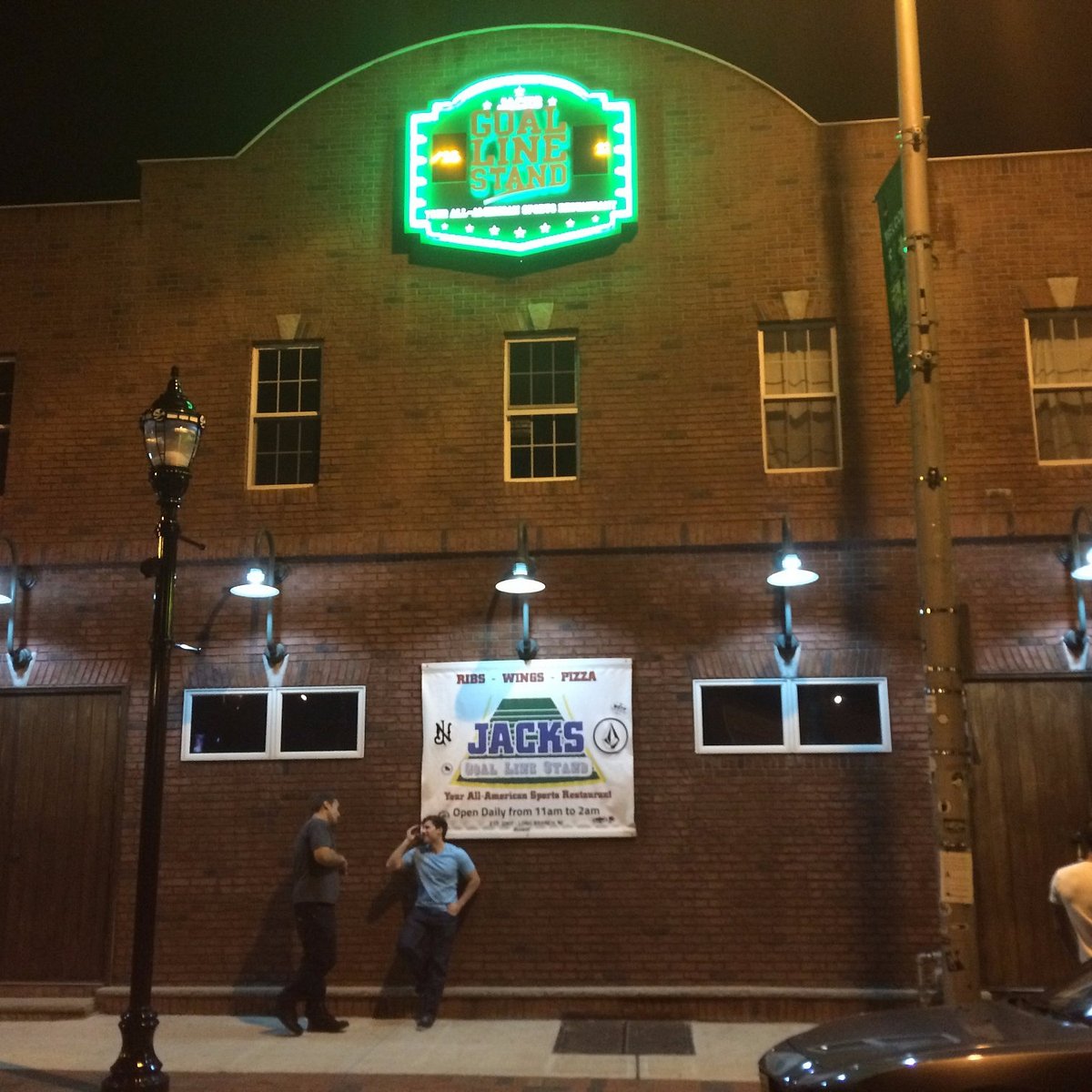
What truly distinguishes Jack’s Goal Line Stand is its ability to transform major sporting events into full scale community celebrations. That tradition continues with this year’s FIFA World Cup Final.
For the championship match, Jack’s is expanding well beyond its already sizable indoor footprint by partnering with neighboring sister restaurant Chupacabra Taqueria to create a large outdoor viewing experience in the heart of Long Branch’s West End district. Mobile bars, outdoor projection screens, additional seating, and local food vendors will help accommodate what is expected to be one of the largest sports gatherings of the summer along the Jersey Shore.
Rather than simply watching a match inside a restaurant, guests become part of an outdoor festival atmosphere where thousands of passionate soccer supporters can celebrate together in one of New Jersey’s most vibrant sports communities. The event reflects how Jack’s continues to evolve while maintaining the welcoming personality that has defined the establishment for years.
For fans who want their World Cup Final experience paired with actual water views, The Pig and Parrot Sandbar is bringing back its specialized LED video truck to its marina property, letting fans watch the match directly on the water in a setting few other local venues can match.
For visitors searching for one of the Jersey Shore’s premier waterfront destinations, The Pig and Parrot Sandbar delivers exactly what many hope to find when visiting the coast. It offers quality dining, vibrant nightlife, outstanding river views, welcoming hospitality, and an unmistakable island inspired atmosphere that makes every visit feel like a small escape. Whether arriving by boat, by car, or simply following the sound of live music along the Manasquan River, guests will discover one of Monmouth County’s most memorable waterfront gathering places, where great food, coastal scenery, and Jersey Shore hospitality come together in one unforgettable setting.
For fans chasing unmatched cultural energy rather than a typical sports bar atmosphere, Paterson’s own soccer corridor offers something genuinely distinctive. Spots like Saj Palestine on Broadway are hosting massive indoor and outdoor viewing parties paired with specialized menu offerings built around the day, backed by exactly the kind of intense, passionate community fan turnout that has made Paterson one of the state’s most authentic soccer watching destinations.
BlueClaws to Host Ocean County’s Official World Cup Final Watch Party, With a Free Soccer Skills Day for Kids
The Jersey Shore BlueClaws are teaming up with Ocean County Tourism to host a genuinely special day at ShoreTown Ballpark this Sunday, July 19, combining a free public watch party for the World Cup Final with a complimentary soccer skills day built specifically for kids between the ages of 6 and 13. Run in partnership with New Jersey Youth Soccer and Every Kick Counts, the event gives Ocean County families a chance to celebrate the tournament’s biggest match of the summer while giving young players a genuine hands on soccer experience earlier in the same afternoon.
The entire event is free to attend, though families hoping to have their child take part in the on field skills clinic specifically need to pre register ahead of time through the event’s registration link. Space in the clinic itself is genuinely limited, and organizers are encouraging interested families to sign up as early as possible rather than waiting until the last minute. Walk ins will only be accepted into the clinic based on whatever availability remains on the day, though every fan is welcome to attend and watch the match itself regardless of whether their child registered for the skills portion. One important logistical note for participating families, cleats of any kind are prohibited on the field, meaning kids taking part in the clinic need to wear sneakers instead.
The clinic itself will be led by instructors from New Jersey Youth Soccer alongside additional coaches from the local area, running through a full rotation of skill building stations covering shooting, passing, dribbling, and juggling, along with a genuinely fun dizzy bat shooting contest designed to add a playful, slightly chaotic twist to the standard drill format. Every participant walks away with a participation medal at the end, giving kids a tangible keepsake from their afternoon on the field regardless of their skill level coming in.
The day’s schedule runs on a tight but well organized timeline. Gates open and the skills day begins at 1 p.m., running through 2:45 p.m., giving young players a solid hour and forty five minutes on the field before the main event takes over. The World Cup Final itself kicks off at 3 p.m., broadcast on the BlueClaws‘ own 1,854 square foot video board, giving fans a genuinely massive screen to watch the tournament’s championship match unfold.
BlueClaws General Manager Bob McLane described the day as a genuinely special moment for the organization, noting how exciting it has been for everyone involved to see the World Cup come to the United States and specifically to the local region, and expressing real enthusiasm about being able to show the final on the team’s own video board. Between the match itself and the skills day running beforehand, McLane framed the combination as shaping up to be an especially memorable day at ShoreTown.
Ocean County Commissioner Jennifer Bacchione echoed that sentiment, framing the World Cup as one of the largest sporting events anywhere in the world and expressing genuine excitement about bringing that same energy directly to Ocean County. Bacchione pointed to the partnership with the BlueClaws as exactly the kind of collaboration that creates real opportunities for residents and visitors alike to come together, celebrate the world’s game, and experience what makes Ocean County such a distinctive destination in its own right. She extended an open invitation to anyone in town for the match or simply spending the weekend at the Shore, expressing hope that the event inspires visitors to explore everything the county has to offer, and looked forward to welcoming fans on July 19 for what she expects to be a genuinely unforgettable evening, one that shows why Ocean County remains a place worth visiting well beyond the final whistle.
Evan Dabby, Chief Executive Officer of New Jersey Youth Soccer, spoke to exactly why this kind of event matters so much for the broader soccer community. Dabby described the partnership with the BlueClaws as a natural fit for bringing World Cup excitement directly to ShoreTown, framing the day as precisely the kind of community celebration that makes the tournament feel special, families coming together, young players getting to see the sport represented on a genuinely big stage, and new fans experiencing soccer in a welcoming, accessible environment. Dabby expressed real enthusiasm about supporting the clinic and helping create a memorable day for players, families, and soccer fans throughout the Jersey Shore region.
Beyond the soccer clinic and the final itself, the day includes plenty of additional entertainment for families looking to make a full afternoon of it. Free inflatable rides and games will be set up around the ballpark’s warning track and portions of the concourse, giving younger siblings or non soccer playing kids their own activities to enjoy throughout the day. Food and drink will be available for purchase at the BlueClaws‘ concession stands, and both the Boardwalk and the BlueClaws Mini Golf Course will remain open throughout the event, with game tickets and mini golf rounds available for purchase for families looking to extend their visit even further.
The BlueClaws have built their reputation as the Jersey Shore’s top destination for affordable, family friendly entertainment, a reputation reinforced by the team’s recent milestone of welcoming its 9 millionth fan through the gates at ShoreTown Ballpark. Tickets for all remaining games throughout the season remain on sale, available either by phone or online. New Jersey Youth Soccer, the organization co hosting Sunday’s skills clinic, brings genuine depth and credibility to the event as well. The 501 c 3 nonprofit, affiliated with both U.S. Youth Soccer and the U.S. Soccer Federation, represents more than 100,000 players ranging from ages 5 to 19, supported by more than 10,000 coaches and thousands of additional volunteers statewide. The organization runs recreational and travel soccer programs across multiple skill levels, operates an Olympic Development Program, hosts major tournaments including the National Championship Series, Presidents Cup, and Challenge Cup, provides coach and referee training and certification, and runs TOPSoccer, a dedicated program designed specifically for children with disabilities.
With a genuinely packed schedule blending hands on youth soccer instruction, a massive video board showing the World Cup Final itself, and a full slate of additional family entertainment, the BlueClaws and Ocean County Tourism have built Sunday’s event into considerably more than a simple watch party. For Ocean County families, July 19 offers a rare chance to combine a meaningful youth soccer experience with the excitement of the tournament’s single biggest match, all within a single afternoon at ShoreTown Ballpark.
World Cup Fever Comes to Bound Brook as Brook Arts Center Hosts Free 2026 FIFA World Cup Final Watch Party. There are few sporting events capable of bringing together entire communities quite like the FIFA World Cup Final. Every four years, billions of viewers around the globe tune in to witness soccer’s biggest championship match, creating a shared experience that transcends borders, languages, and generations. On Sunday, July 19, soccer fans throughout Central New Jersey will have an opportunity to experience that excitement together when the historic Brook Arts Center in Bound Brook opens its doors for a free public watch party celebrating the 2026 FIFA World Cup Final.
Beginning at 3:00 p.m., the Brook Arts Center will transform its historic theater into one of New Jersey’s premier viewing destinations for the world’s most watched sporting event. Instead of watching from home, fans will be surrounded by fellow supporters, creating the electric atmosphere that makes championship matches unforgettable. Every goal, every save, every dramatic moment, and every celebration becomes even more memorable when experienced alongside hundreds of passionate soccer enthusiasts.
The 2026 FIFA World Cup represents a landmark moment in international sports history. Hosted across North America, the expanded tournament has captured unprecedented attention throughout the United States, helping introduce millions of new fans to the excitement, strategy, and global traditions that have made soccer the world’s most popular sport. Communities across New Jersey have embraced the tournament from its opening matches through the knockout rounds, making the championship game one of the most anticipated sporting events of the summer.
The Brook Arts Center provides a unique setting for this community celebration. Located in the heart of downtown Bound Brook, the historic theater has long served as a cultural centerpiece for Somerset County, hosting concerts, theatrical performances, films, comedy shows, community events, and special presentations throughout the year. For one afternoon, its historic auditorium will become a gathering place where sports and community intersect, allowing fans to enjoy the World Cup Final in a venue that offers far more character than a traditional sports bar or living room.
Admission to the event is completely free, making it accessible for families, longtime soccer supporters, casual fans, and anyone interested in experiencing one of the world’s premier sporting spectacles. Whether attendees have followed every match of the tournament or simply want to witness the championship, the event welcomes everyone looking to become part of an energetic and memorable afternoon.
Guests will also have access to a full selection of concessions throughout the event. Snacks, soft drinks, alcoholic beverages, and refreshments will be available for purchase, allowing visitors to settle in comfortably while enjoying every minute of the match. The combination of stadium style excitement, theater seating, and convenient food and beverage options creates an atmosphere designed for an immersive viewing experience from kickoff through the final whistle.
Accessibility is another advantage of the event. Free parking will be available at the Bound Brook Transit Lot, located at 300 East Main Street, only a short walk from the Brook Arts Center. The convenient location makes it easy for residents from throughout Somerset County and neighboring communities to attend without worrying about parking fees or complicated transportation logistics.
One of the defining characteristics of the FIFA World Cup has always been its ability to unite people from every background. Throughout New Jersey, one of the nation’s most culturally diverse states, the tournament carries particular significance. Fans representing countries from every continent proudly wear their national colors, celebrate their heritage, and share in a global event that has become as much about community as competition. Events like this watch party capture that spirit by bringing together neighbors who may support different teams but share the same appreciation for the world’s game.
The atmosphere inside the Brook Arts Center promises to reflect the passion normally found inside the world’s greatest soccer stadiums. Supporters are encouraged to wear their favorite national team jerseys, wave flags, gather with friends and family, and celebrate the championship in a setting designed to showcase every dramatic moment on the big screen. The cheers after a spectacular goal, the tension during a penalty kick, and the excitement of crowning a new world champion are all amplified when shared with an enthusiastic crowd.
For many younger fans, the 2026 FIFA World Cup will serve as the tournament that inspires a lifelong love of soccer. Watching the championship in a theater filled with energy and anticipation creates lasting memories while introducing a new generation to the excitement that has captivated billions of people around the world for decades.
The Brook Arts Center continues to demonstrate its commitment to serving as more than simply a performing arts venue. By opening its doors for major community events like the World Cup Final, the theater reinforces its role as an important gathering place where residents can celebrate cultural milestones, entertainment, and internationally significant moments together.
As the countdown to kickoff continues, the Bound Brook community is preparing for an afternoon that promises excitement, camaraderie, and world class competition. Whether you are a devoted supporter who has followed every match, a casual fan looking to experience the excitement firsthand, or a family searching for a memorable community event, the Brook Arts Center offers an exceptional opportunity to witness soccer history in one of Central New Jersey’s most distinctive venues.
When the final whistle blows and a new world champion is crowned, everyone inside the Brook Arts Center will have experienced more than simply watching a game. They will have shared in one of the greatest traditions in international sports, surrounded by fellow fans in a historic New Jersey landmark that continues to bring communities together through unforgettable events. On July 19, Bound Brook will become one of the Garden State’s gathering places for the world’s biggest sporting celebration, proving once again that great moments are always better when they are experienced together.
The Stone Pony Celebrates Summer at the Jersey Shore With Live Music, Soccer, and Unforgettable Experiences. Summer has always belonged to the Jersey Shore, and few venues have defined that tradition quite like The Stone Pony in Asbury Park. Known internationally as one of New Jersey’s most celebrated live music destinations, The Stone Pony continues to bring together concerts, community events, and unforgettable experiences that attract visitors from across the Garden State and beyond. This summer, the legendary venue adds another exciting chapter to its long history by welcoming soccer fans for a special viewing party celebrating one of the biggest sporting events on the planet while continuing its acclaimed Summer Stage concert season.
Located just blocks from the Atlantic Ocean in the heart of Asbury Park’s entertainment district, The Stone Pony has spent decades serving as a cultural landmark where generations of music fans have discovered emerging artists, celebrated legendary performers, and created lasting memories. Today, it remains one of New Jersey’s premier destinations for live entertainment, combining its historic indoor venue with the expansive Summer Stage that transforms warm weather evenings into signature Jersey Shore experiences.
On Sunday, July 19, 2026, The Stone Pony expands its summer programming by hosting a Soccer Finals Viewing Party that invites fans to experience the championship match in one of the state’s most energetic entertainment settings. Doors open at 1:00 p.m., giving guests plenty of time to settle in before the match begins at 3:00 p.m. Whether visitors arrive wearing the colors of their favorite national team or simply want to experience the excitement alongside fellow supporters, the event promises an atmosphere filled with anticipation, celebration, and community spirit.
The viewing party is being presented in partnership with the North to Shore Festival and Welcome the World Foundation, creating an event that combines international sports with local community engagement. Beyond providing a memorable setting to watch one of the world’s most anticipated sporting events, the gathering also supports an important charitable cause. A portion of ticket proceeds will benefit Growing Healthy Pantries, a statewide collaborative dedicated to improving food security throughout New Jersey. The partnership allows attendees to enjoy an afternoon of world class competition while contributing to programs that strengthen communities across the state.
The Stone Pony has long demonstrated that entertainment can bring people together in meaningful ways. Hosting international sporting events alongside nationally recognized concerts reflects the venue’s continuing evolution while preserving the welcoming atmosphere that has made it one of New Jersey’s most recognizable gathering places. The Soccer Finals Viewing Party extends that tradition by offering fans an opportunity to celebrate a global event in one of America’s most famous music venues.
While soccer takes center stage for the afternoon, live music remains the heartbeat of The Stone Pony throughout the summer season. The Summer Stage continues to attract nationally touring artists representing rock, alternative, country, pop, Americana, reggae, punk, indie, and countless other genres. Concertgoers flock to Asbury Park each year to experience performances beneath the summer sky in an environment that captures the unmistakable energy of the Jersey Shore. The combination of outstanding live music, walkable downtown attractions, nearby restaurants, beaches, and boardwalk entertainment makes every visit part of a larger destination experience.
Part of what makes The Stone Pony unique is its ability to appeal to multiple generations. Longtime fans return because of the venue’s remarkable history and legendary performances, while first time visitors discover why it continues to hold such an important place in New Jersey’s cultural landscape. The atmosphere remains authentic, energetic, and welcoming, whether guests are attending a sold out concert, discovering a rising artist, or joining thousands of fans for a major sporting event.
Visitors can also explore the venue’s latest merchandise collection, including the new Pony Football Club apparel that celebrates the summer’s global soccer excitement while adding another distinctive piece to The Stone Pony’s growing lineup of branded merchandise. It offers fans another way to commemorate both the championship event and their visit to one of New Jersey’s most iconic entertainment destinations.
Beyond the concerts and special events, The Stone Pony continues to play a significant role in Asbury Park’s thriving arts and entertainment community. Its presence has helped establish the city as one of the East Coast’s premier destinations for live music, attracting visitors who often spend the day exploring local shops, restaurants, galleries, breweries, and the beachfront before returning for an evening performance. That combination of entertainment, hospitality, and coastal atmosphere makes every visit feel like a complete Jersey Shore experience rather than simply attending a single event.
For soccer supporters, music lovers, and anyone looking to experience one of New Jersey’s signature summer destinations, The Stone Pony offers an exceptional reason to visit this season. The Soccer Finals Viewing Party provides an exciting opportunity to celebrate one of the world’s biggest sporting events while supporting an important charitable initiative, and the venue’s continuing Summer Stage schedule ensures that live music remains at the center of the experience throughout the season.
As another unforgettable summer unfolds along the Jersey Shore, The Stone Pony continues to demonstrate why it remains one of the state’s most enduring entertainment landmarks. Whether cheering during the Soccer Finals, enjoying a concert under the stars, discovering new music, or simply soaking in the vibrant atmosphere that has defined generations of unforgettable nights, visitors will find that few places capture the spirit of New Jersey quite like The Stone Pony.
Whether the plan is watching from a marina deck in Brielle, a block party street setup in Long Branch, a turf side kickoff party in Oceanport, or the culturally rich viewing scene in Paterson, New Jersey fans have no shortage of genuinely excellent ways to experience Sunday’s final without ever leaving the state. With the tournament’s biggest match of the entire summer unfolding right in East Rutherford, there has never been a better weekend to celebrate the World Cup the Jersey way, right here at home.
New Jersey is heading into one of the more genuinely dangerous stretches of summer weather the state has seen in recent memory, with heat advisories and extreme heat warnings now issued statewide as feels like temperatures track toward a punishing range between 100 and 109 degrees. Current conditions remain relatively mild by comparison, with partly sunny skies, an average temperature near 80 degrees, humidity sitting at 64 percent, and gentle southwest winds moving at around 9 miles per hour. That relative calm will not last long. A Heat Advisory takes effect today, followed by a considerably more serious Extreme Heat Warning on Wednesday specifically for central and coastal counties, as rising temperatures combine with high humidity to create genuine safety risk for anyone spending extended time outdoors. The strain on the region’s infrastructure is already visible as well, with PJM, the regional power grid operator, placing utility crews on a hot weather alert in anticipation of sharply increased electricity demand as air conditioning use spikes across the state.
New Jersey 7-Day Forecast
Day
Sky Condition
Temperature
Chance of Rain
Tue, Jul 14
Sunny
93°F / 69°F
5%
Wed, Jul 15
Partly sunny
97°F / 73°F
5%
Thu, Jul 16
Light rain
94°F / 69°F
25%
Fri, Jul 17
Partly sunny
89°F / 70°F
10%
Sat, Jul 18
Rain
80°F / 71°F
75%
Sun, Jul 19
Scattered thunderstorms
89°F / 72°F
35%
Mon, Jul 20
Partly sunny
90°F / 74°F
10%
Important Weather Notes
The Peak of the Heat (Wednesday): Wednesday will be oppressive. Ambient highs will reach 97°F, but high humidity will push heat indices past 100°F–105°F+ across the state. Limit time outdoors and stay hydrated.
Midweek Front: A cold front will pass through late Wednesday night. This will break the worst of the heat for Thursday and Friday, bringing temperatures down into the more manageable upper 80s and low 90s.
Unsettled Weekend: A slow-moving system moves in on Saturday, dropping temperatures to 80°F but bringing a heavy 75% chance of rain and widespread thunderstorms that could lead to localized flash flooding.
Looking at the week ahead, Tuesday, July 14 brings sunny skies with highs near 93 degrees and lows dropping to 69, with only a slim 5 percent chance of rain. Wednesday, July 15 marks the peak of the entire stretch, with partly sunny skies, highs reaching 97 degrees, and lows near 73, again carrying just a 5 percent rain chance despite the oppressive heat. Thursday, July 16 offers a modest step back, with light rain possible, highs near 94, and lows around 69, alongside a 25 percent chance of precipitation. Friday, July 17 continues that gradual cooling trend, with partly sunny skies, highs near 89, lows around 70, and a 10 percent rain chance. The weekend brings a genuinely significant shift in the pattern, with Saturday, July 18 turning unsettled entirely, dropping to a high of just 80 degrees but carrying a heavy 75 percent chance of rain. Sunday, July 19 continues that unsettled theme with scattered thunderstorms, a high near 89, a low around 72, and a 35 percent rain chance, before Monday, July 20 returns to a more typical summer pattern with partly sunny skies, a high of 90, a low of 74, and just a 10 percent chance of rain.
Wednesday stands out as the single most dangerous day of the entire stretch. While the ambient high is expected to reach 97 degrees, the combination of that heat with high humidity will push the actual heat index well past 100 degrees, potentially climbing into the 105 degree range or higher across parts of the state. Anyone spending time outdoors on Wednesday should genuinely limit their exposure and prioritize staying hydrated throughout the day, since heat index values in that range carry real risk of heat exhaustion and heat stroke, particularly for children, older adults, and anyone working outdoors. Relief does arrive shortly after that peak, as a cold front is expected to pass through late Wednesday night, breaking the worst of the heat and bringing Thursday and Friday temperatures back down into the more manageable upper 80s and low 90s. That relief proves short lived, though, as a slow moving weather system arrives Saturday, dropping temperatures to around 80 degrees but bringing a considerably higher 75 percent chance of rain and widespread thunderstorm activity across the region.
The broader atmospheric pattern driving this entire stretch traces back to a ridge of high pressure setting up over the northern Plains and the Dakotas this week. That ridge positions the upper level atmospheric flow directly over the Great Lakes and toward New Jersey and much of the northern Mid Atlantic and New England, a setup that tends to lock in exactly this kind of prolonged heat and humidity. That pattern is expected to hold firmly in place until a weak trough attempts to backfill into the eastern United States late Saturday night into Sunday, effectively acting as the cold front and storm system responsible for breaking the heat heading into the weekend. Forecasters are watching closely for any storm activity that might develop along what’s sometimes referred to as the ring of fire storm corridor earlier in the week, though the stormiest days of the entire stretch currently look to be concentrated in the Friday through Saturday window, with Sunday offering a genuine, if brief, reprieve from both the heat and the humidity. Otherwise, heat and humidity are expected to dominate the region right up until those weekend storms finally arrive to begin breaking the pattern down. Unfortunately, that relief looks likely to last only a day or two before the same hot, humid pattern appears poised to reload again heading into the following week.
Breaking the week down day by day, Monday, July 13 saw high temperatures max out in the 80s under mostly sunny skies with manageable humidity, light winds out of the south, and overnight lows falling back into the comfortable 60s, giving the state one more genuinely pleasant midsummer night before the heat began building in earnest. Tuesday, July 14 pushes highs into the mid to upper 90s across most of New Jersey away from the immediate coastline, with coastal areas holding closer to 90 degrees thanks to typical ocean moderation, under mixed skies leaning more sunny than cloudy and a genuinely humid feel throughout the day, with light winds out of the southwest and overnight lows staying just above 70 statewide.
Wednesday, July 15 brings the week’s most extreme conditions, with high temperatures reaching or slightly exceeding 100 degrees across many New Jersey locations, particularly across central and southern New Jersey away from the coast and closer to the Philadelphia to Trenton stretch along the I-95 corridor. Coastal areas will see somewhat more moderate conditions, still pushing well into the 90s, under mixed skies with a persistently humid feel and winds running light to breezy out of the west and southwest. Overnight lows will again hold just above 70 degrees statewide, with only the higher elevations of northern New Jersey potentially dipping into the upper 60s.
Thursday, July 16 offers genuine, if modest, relief, with high temperatures reaching into the 90s across most of the state, noticeably less intense than the Tuesday through Wednesday peak but still genuinely hot and humid, under mixed skies with light winds out of the west and southwest, and overnight lows falling into the 60 to 70 degree range from north to south. Friday, July 17 continues that gradual cooldown, with highs reaching around 90 degrees or just above for many locations, starting the day with more sun than clouds before afternoon and evening thunderstorms become possible, alongside light winds out of the west and northwest that could turn slightly breezier across southern New Jersey. Overnight lows Friday night should fall into the 65 to 73 degree range, with isolated thunderstorm activity possible continuing into Saturday morning.
Looking ahead to the weekend of July 18 and 19, forecasters are anticipating more 90 degree heat paired with genuinely unsettled thunderstorm activity, though Sunday specifically looks considerably less humid than Saturday, offering residents a real sense of relief after what promises to be a genuinely brutal week of sustained heat and oppressive humidity across the entire state.
I have driven my bike across the Benjamin Franklin Bridge a handful of times over the years, though I had never once walked it, until this past Sunday, when I finally made the crossing on foot rather than on two wheels. That small personal milestone happened to fall right on the heels of something considerably bigger, as an estimated 50,000 people took over the bridge on Saturday, July 11, 2026, to celebrate its official 100th anniversary and, for one remarkable day, experience a piece of regional infrastructure most of us only ever see from behind a windshield.
Organized jointly by the Delaware River Port Authority alongside the cities of Philadelphia and Camden, the centennial celebration shut the bridge down to vehicular traffic entirely, the first time it had closed to cars in decades. That closure gave pedestrians, runners, and families a genuinely rare opportunity most residents of the region will likely never get again, the chance to walk directly across the bridge’s main multi lane highway rather than simply driving over it without a second thought.
From 8:30 a.m. to 4 p.m., every vehicle lane sat closed, and a massive sea of people flooded onto the span instead, walking the full 1,750 foot main suspension section, stopping constantly for selfies, and taking in genuinely panoramic, car free views of the Delaware River below. For a structure most people cross in under two minutes at highway speed, spending an unhurried afternoon walking its length gave visitors an entirely different appreciation for its scale and the sheer engineering ambition required to build it in the first place.
The main celebration itself unfolded on the Camden side near the toll plazas, where organizers built out a genuinely full festival atmosphere around the bridge walk. Live bands kept the crowd entertained throughout the day, a fleet of food trucks lined the grounds, carnival rides added a genuine sense of celebration for younger attendees, and a dedicated family fun zone gave the day a distinctly community centered feel rather than a purely ceremonial one. The Delaware River Port Authority also curated a temporary pop up history museum for the occasion, showcasing a full century’s worth of architectural blueprints, vintage toll collection equipment, and historical photographs documenting the bridge’s evolution since it first opened. Perhaps the most striking unveiling of the day was a newly restored, original Winged Victory statue, one of the ornamental pieces that decorated the bridge back when it first debuted a century ago, giving visitors a direct, physical link to the structure’s earliest days.
The day’s civic centerpiece arrived when Philadelphia Mayor Cherelle Parker and Camden Mayor Victor Carstarphen met together on the New Jersey side to address the assembled crowd, framing the bridge as considerably more than a piece of transportation infrastructure. Both mayors emphasized the span’s role as a genuine physical symbol of regional unity, civic equity, and economic connection between two cities and two states that have depended on this single crossing for a hundred years of shared history, commerce, and daily life.
Understanding why this particular structure earned such a significant celebration requires looking back at its genuinely remarkable origin story. When it officially opened on July 1, 1926, under the original name Delaware River Bridge, it held the title of the longest single span suspension bridge anywhere in the world, a genuine engineering milestone for its era. The timing of that opening was no accident either, since the bridge was built specifically to help handle the enormous traffic expected for the United States Sesquicentennial Exposition, the massive celebration marking the country’s 150th birthday that same year. Behind that engineering achievement stood chief engineer Ralph Modjeski, a legendary Polish American infrastructure designer whose work helped define large scale bridge construction throughout the early twentieth century. During Saturday’s celebration, the Polish Heritage Society of Philadelphia paid direct tribute to that legacy, laying a memorial wreath on the Pennsylvania side of the bridge in Modjeski’s honor.
A few other details from the bridge’s history add genuine texture to its hundred year story. When President Calvin Coolidge formally opened the bridge back in 1926, the toll for a single vehicle crossing was just 18 cents. A full century later, that same crossing now costs $6, a striking illustration of just how much the cost of infrastructure, and the dollar itself, has changed across a hundred years of American history. The bridge didn’t even carry its current name for most of that history either. It operated as the Delaware River Bridge for nearly three decades before finally being renamed the Benjamin Franklin Bridge in 1955, a change prompted specifically by the construction of the Walt Whitman Bridge just a few miles south, which made a more distinctive name necessary to avoid ongoing confusion between the region’s two major Delaware River crossings.
Thousands of people traveled the span entirely on foot this past Saturday, celebrating the deep social, economic, and cultural connections that have linked New Jersey and Pennsylvania across an entire century of shared use. According to Delaware River Port Authority officials, the centennial celebration cements the legacy of what remains a genuinely signature piece of American public infrastructure, one that has quietly carried generations of commuters, commerce, and connection between Camden and Philadelphia since the same year the country itself was celebrating a milestone birthday of its own. For anyone who has only ever known the bridge from behind a steering wheel or, in my own case, from the seat of a bicycle, this past weekend offered a rare, genuinely unforgettable chance to finally meet it on foot.
New Jersey is officially spending more money than it expects to collect in tax revenue this year, a structural gap that state lawmakers have chosen to close by pulling directly from the state’s multibillion dollar reserve fund rather than raising income or sales taxes on residents. Governor Mikie Sherrill signed a $60.7 billion state budget into law, one built around a $1.35 billion structural deficit that lawmakers decided to cover through a deliberate drawdown of New Jersey’s cash reserves. Even after that withdrawal, the state’s projected surplus still sits at a genuinely healthy $6.08 billion, giving officials a real financial cushion even as they intentionally spend down a portion of what had been an even larger reserve.
That budgetary decision has generated real debate in Trenton over whether it represents sound fiscal management or a risky long term habit. One Republican assemblyman offered a pointed characterization of the state’s reserve strategy, arguing plainly that a fund lawmakers keep draining by well over a billion dollars each year hardly qualifies as a good savings account in the first place. That criticism reflects a broader concern among fiscal watchdogs and some lawmakers that repeatedly tapping the surplus to cover recurring expenses, rather than reserving it strictly for genuine emergencies, could leave the state considerably more exposed the next time an actual crisis hits. Supporters of the approach, including the governor’s office, have countered that the surplus remains substantial enough to absorb this year’s spending decisions without meaningfully threatening the state’s overall fiscal stability, framing the drawdown as a deliberate, responsible tradeoff rather than reckless spending.
For anyone tracking New Jersey’s housing market, this budget fight carries real, direct relevance well beyond the abstract world of state fiscal policy. The single biggest reason this year’s budget grew so large in the first place is that the state redirected a record $4.1 billion directly into property tax relief programs, including ANCHOR, Senior Freeze, and Stay NJ. That direct injection of cash keeps meaningful money in homeowners’ pockets across the state, and it carries a genuinely important secondary effect for the housing market itself, making it considerably easier for seniors to remain in their homes rather than being forced into a sudden property sale simply because rising property taxes had become unaffordable on a fixed income.
The expansion of the Stay NJ program stands out as one of the most consequential pieces of this year’s budget for homeowners specifically. Lawmakers used the state’s surplus to significantly broaden the program, and seniors earning $100,000 or less annually are now eligible for a substantial $6,500 annual property tax credit. Lowering that effective tax burden for older homeowners does more than provide simple financial relief. It also helps preserve stability across New Jersey’s suburban neighborhoods, since fewer seniors being pushed out of longtime homes by unaffordable property taxes means fewer of those homes suddenly entering the market at once, which in turn helps keep already tight local housing inventory from loosening in ways that could otherwise happen if large numbers of older residents were forced to sell simultaneously.
The budget also extends real support toward the opposite end of the housing market, with lawmakers increasing funding allocations specifically for first time homebuyer assistance programs. That expanded funding translates directly into structural down payment grants designed to help entry level buyers compete more effectively in New Jersey’s famously fierce bidding wars, where all cash investors and buyers with substantial existing equity have historically held a significant structural advantage over first time buyers relying entirely on financing. By strengthening down payment assistance, the state is attempting to level that playing field at least somewhat, giving first time buyers a genuine fighting chance in a market that has made homeownership increasingly difficult for anyone without substantial savings already in hand.
Fiscal experts have raised real concerns about whether this approach can hold up over the longer term, even while acknowledging the immediate benefits it delivers to homeowners today. Continually dipping into the state surplus to fund what are fundamentally recurring, ongoing tax credit programs, rather than genuine one time expenses, creates a structural pattern that becomes considerably harder to sustain the longer it continues. If the state’s surplus drops too far over the next two years, future lawmakers could find themselves forced into a considerably less pleasant choice, either sharply cutting back the very housing and property tax relief programs residents have come to rely on, or enacting the kind of broad tax increases this year’s budget was specifically designed to avoid in the first place.
Taken together, this year’s budget represents a genuinely consequential bet for New Jersey homeowners and the broader housing market alike. In the short term, record property tax relief funding and an expanded Stay NJ program deliver real, tangible benefits, helping seniors stay in their homes and giving first time buyers a better shot at competing in a genuinely difficult market. Whether that approach proves sustainable, though, depends heavily on how state lawmakers manage the surplus going forward, and whether this year’s drawdown turns out to be a one time, strategically timed decision or the beginning of a pattern that leaves considerably less cushion available the next time New Jersey faces a genuine fiscal emergency.
The New Jersey Supreme Court has issued a significant ruling reshaping how defendants can access information about facial recognition technology used against them during criminal investigations, establishing that such discovery requests must be evaluated on a case by case basis rather than through a single, uniform checklist applied automatically to every case involving the technology. The decision, handed down in State v. Tybear Miles on June 24, 2026, clarifies a legal question that had grown increasingly urgent as facial recognition tools become a more common feature of law enforcement investigations across New Jersey and the rest of the country.
The case itself grew out of a fatal shooting in Jersey City that led a grand jury to charge defendant Tybear Miles with first degree murder along with related weapons offenses. During their investigation, police worked with a confidential informant who reviewed surveillance footage captured near the scene, identifying two individuals by their nicknames and providing Instagram usernames connected to each of them. Investigators then ran a facial recognition search against the Instagram profile photograph associated with one of those individuals, a search that returned Miles as a match alongside several other possible candidates. Police subsequently interviewed Miles’s sister, his former girlfriend, and two additional individuals, each of whom identified him after viewing video and still images pulled from separate nearby surveillance footage. Notably, that surveillance footage showed multiple men in the area, none of it actually captured the shooting itself, and no witness ever identified Miles as the person who fired the fatal shots.
Given the central role facial recognition technology played in connecting Miles to the investigation in the first place, his defense team moved to compel discovery related to that technology, relying on the precedent set in State v. Arteaga, a 2023 Appellate Division decision that had granted a defendant in a similar situation access to thirteen specific categories of information regarding the facial recognition system used against him, including proprietary details like the technology’s underlying source code. The trial judge in Miles’s case applied that same Arteaga framework and granted the defense motion in full. The State responded by providing only limited discovery and then sought leave to appeal that ruling, an appeal the Appellate Division ultimately declined to hear.
The New Jersey Supreme Court took up the matter and issued a unanimous decision, authored by Justice Douglas Fasciale, that both reversed and affirmed different portions of the trial court’s original order. Central to the Court’s reasoning was a rejection of applying Arteaga mechanically to every case simply because facial recognition technology happened to be involved. Instead, the justices determined that what a defendant is entitled to receive through discovery depends heavily on the specific facts and circumstances of that particular case, rather than defaulting automatically to the same fixed thirteen item list regardless of context. As Justice Fasciale explained, this kind of discovery cannot be reduced to a rigid checklist, since what a given defendant is entitled to necessarily varies based on the specifics of their individual case.
Applying that case specific framework to the facts before it, the Court determined that the State was required to produce two particular categories of discovery. The first covers information identifying exactly which facial recognition tools and materials investigators actually used during the case, information the Court found directly relevant to building a fuller record regarding how reliable that particular technology actually is in this context. The second covers discovery related to precisely how the State used those specific tools and materials in the course of prosecuting Miles, information the justices found could prove relevant for challenging the reliability of witness identifications, scrutinizing the overall investigation, or even supporting an argument that someone other than Miles committed the crime. According to the Court’s opinion, this baseline information will, in the great majority of cases, represent the minimum a defendant needs in order to safeguard their constitutional right to a fair trial, even though the justices declined to establish a fixed checklist covering every possible scenario.
Where the Supreme Court parted ways with the trial judge’s original ruling involved the more sensitive, proprietary side of the facial recognition technology itself. The justices found that compelling the State to hand over proprietary information, including the actual source code underlying the software, was premature at this stage of the proceedings. Justice Fasciale explained that whether this kind of proprietary information ultimately needs to be disclosed is a question that has to wait until the case develops a more complete factual record, noting that even Miles’s own defense team had acknowledged they did not yet know whether that proprietary information would actually prove necessary to mount his defense.
Throughout its opinion, the Court was careful to acknowledge the genuinely unique challenges that come with seeking discovery of proprietary technology, recognizing that facial recognition software often involves commercially sensitive trade secrets that companies developing the technology have a legitimate interest in protecting. At the same time, the justices made clear that protecting those proprietary interests cannot come at the expense of a defendant’s constitutional right to challenge evidence used against them, striking a careful balance between those two competing concerns rather than resolving the tension entirely in favor of either side.
The Miles decision carries meaningful implications well beyond this single Jersey City case, since it establishes the framework New Jersey courts will now apply anytime facial recognition technology plays a role in a criminal investigation. Rather than granting defendants automatic access to a fixed list of thirteen categories of information simply because their case happens to involve facial recognition software, courts must now conduct a genuinely individualized analysis in each case, weighing what specific information is actually relevant to that defendant’s circumstances against what’s truly necessary to guarantee a fair trial. As facial recognition technology continues expanding its role in law enforcement investigations across New Jersey, this ruling gives both prosecutors and defense attorneys a considerably clearer, though still fact dependent, roadmap for how these discovery disputes are likely to be resolved going forward.
New Jersey’s legal industry continues to evolve as leading firms expand their capabilities to meet the increasingly sophisticated needs of businesses, developers, financial institutions, and entrepreneurs operating throughout the region. Reflecting that continued growth, Chiesa Shahinian & Giantomasi PC (CSG Law) has announced the addition of accomplished commercial litigator Jonathan Jemison as a member of the firm’s Litigation Group, further reinforcing one of the state’s most established and respected litigation practices.
The appointment represents another strategic investment by the Roseland based firm as it continues to expand the depth and breadth of its litigation team. Bringing more than twenty five years of legal experience to CSG Law, Jemison has built a distinguished career representing major domestic and international corporations, closely held businesses, emerging companies, and entrepreneurs in complex commercial disputes across New Jersey and New York.
As commercial litigation becomes increasingly multifaceted, businesses require legal counsel capable of navigating complicated contractual relationships, evolving regulatory environments, partnership conflicts, and high value business disputes. Jemison’s extensive experience across these areas positions him to immediately contribute to CSG Law’s already comprehensive litigation practice.
Throughout his career, Jemison has represented clients in a wide range of sophisticated commercial matters involving business torts, commercial real estate disputes, restrictive covenant litigation, partnership and joint venture disagreements, estate related litigation, and other complex business controversies. His work frequently involves high stakes matters where significant financial interests, corporate relationships, and long term business objectives are at issue.
Commercial litigation today extends well beyond traditional courtroom advocacy. Modern litigators must evaluate business strategy, risk management, contractual interpretation, regulatory compliance, and alternative dispute resolution while helping clients minimize disruption to ongoing operations. Jemison’s broad experience reflects that evolving role, combining courtroom advocacy with practical legal guidance designed to protect business interests throughout every stage of a dispute.
In announcing the addition, CSG Law emphasized the value Jemison brings to its growing litigation practice. Adam Derman, Chair of the firm’s Litigation Group, described him as an outstanding addition whose extensive experience and versatility will further strengthen the level of representation available to the firm’s clients.
Jemison likewise expressed enthusiasm about joining the firm and collaborating with its team of experienced attorneys while continuing to serve the litigation needs of clients throughout the region.
One area where Jemison brings particularly valuable experience is construction litigation, an increasingly important practice area as New Jersey continues to experience significant commercial, residential, mixed use, and infrastructure development. Construction projects often involve multiple parties, intricate contractual obligations, and substantial financial investments, creating legal disputes that require attorneys familiar with both the construction industry and commercial litigation.
During his career, Jemison has represented developers, property owners, contractors, and other construction professionals in disputes arising from large scale projects. These matters have included construction delays, alleged defects, payment disputes, contract termination issues, and other complex claims requiring detailed factual analysis and sophisticated legal strategy. His experience allows him to understand both the legal and operational realities that frequently accompany major construction projects.
Beyond traditional courtroom litigation, Jemison also represents clients before domestic arbitration panels, reflecting the growing importance of alternative dispute resolution within commercial practice. Arbitration continues to play a significant role in resolving business conflicts efficiently while allowing companies greater flexibility than conventional litigation. His experience in both litigation and arbitration provides clients with multiple pathways toward resolving disputes based upon the specific circumstances of each matter.
His practice spans both state and federal courts in New Jersey and New York, two of the country’s most active commercial litigation jurisdictions. Businesses operating throughout the Northeast frequently require legal counsel capable of navigating proceedings across multiple jurisdictions, particularly when commercial transactions, real estate holdings, or corporate operations extend beyond state boundaries. Jemison’s cross jurisdictional experience further enhances the firm’s ability to represent clients throughout the metropolitan region.
The move also reflects broader trends shaping New Jersey’s legal landscape. As businesses continue expanding throughout the state, law firms increasingly seek attorneys with multidisciplinary experience capable of advising clients across numerous industries and dispute types. Complex commercial litigation often intersects with real estate, construction, corporate governance, employment law, and financial transactions, making versatility an increasingly valuable asset for modern litigators.
CSG Law has long maintained a reputation as one of New Jersey’s premier full service law firms, representing clients across a broad range of industries including real estate, financial services, healthcare, manufacturing, technology, construction, energy, and higher education. The addition of an accomplished commercial litigator with extensive courtroom and arbitration experience further strengthens the firm’s ability to address increasingly sophisticated legal challenges facing today’s business community.
Before joining CSG Law, Jemison served as a partner at a global law firm, where he practiced from offices in both New Jersey and New York. That experience provided him with exposure to complex national and international commercial matters while representing clients in some of the region’s most significant business disputes.
His transition to CSG Law represents more than a personnel announcement. It reflects the continued growth of New Jersey’s legal community and the ongoing investment leading firms are making in experienced attorneys capable of delivering strategic, results driven representation across a wide range of commercial matters.
As businesses continue navigating an increasingly competitive and regulated environment, experienced litigators remain essential partners in protecting corporate interests, resolving disputes efficiently, and helping organizations manage legal risk while pursuing long term growth. Jonathan Jemison’s arrival at Chiesa Shahinian & Giantomasi reinforces that commitment and further strengthens one of New Jersey’s most respected litigation teams.
For businesses, developers, entrepreneurs, and organizations seeking experienced commercial litigation counsel, the addition of Jemison underscores CSG Law’s continued focus on providing sophisticated legal representation across New Jersey, New York, and the broader business community.
New Jersey’s housing market enters the middle of 2026 defined by a genuine paradox, a structural inventory shortage that continues to favor sellers even as price growth finally shows real signs of moderating after two years of hyper volatile conditions. According to recent data from New Jersey Realtors and major national index trackers, the state remains a firmly seller favored market, but one shifting gradually toward healthier, more sustainable transaction conditions compared to the frenzied baseline that defined 2024 and 2025.
The Statewide Numbers
The statewide median sale price across all residential property types now sits at $516,833, with standalone single family homes commanding a meaningful premium at a median of $592,000. Annual price appreciation has moderated into a considerably healthier 3 to 5 percent range, a notable cooldown from the intense 8 percent plus surges the state experienced in recent years. Demand, however, remains genuinely tight. Sellers continue receiving between 100.3 and 100.6 percent of their original list price on average, and more than 52 percent of all homes sold statewide continue closing above their initial asking price, a clear signal that buyer competition has not meaningfully eased even as raw price growth slows. Properly priced homes are also moving remarkably fast, with a median of roughly 17 days on market before a property goes under a pending contract, underscoring just how quickly well positioned listings continue attracting serious offers.
That speed and competition trace directly back to New Jersey’s persistent inventory shortage. Active listings statewide hover near 25,700, translating into roughly 2.2 to 3.2 months of available supply across the state’s major counties. A genuinely balanced market typically requires 4 to 6 months of supply, meaning New Jersey remains well below standard equilibrium even as other conditions soften. That supply constraint intersects with a considerably more painful affordability problem tied directly to financing costs. With average 30 year fixed mortgage rates sitting near 6.1 percent, buying a state median priced home now requires an annual income somewhere between $140,000 and $157,000 once principal, interest, and New Jersey’s notably high local property taxes are all factored in. That figure vastly exceeds the state’s actual median household income of approximately $97,000, creating a genuine affordability gap that has reshaped where the market’s fiercest competition actually plays out. Rather than spreading evenly across price points, that income gap has pushed the most intense bidding wars into the entry level tier under $400,000, where the largest pool of buyers who can actually qualify for financing continues competing over a shrinking supply of available homes.
Regional patterns across the state continue diverging in genuinely distinct ways. The northern corridor, encompassing counties closest to Manhattan like Bergen, Hudson, and Essex, continues posting the state’s highest price appreciation at 4 to 5 percent annually, driven heavily by out of state buyers relocating away from New York City’s famously high rental costs. Central New Jersey markets, including Somerset, Hunterdon, and Middlesex counties, are experiencing a modest influx of new construction and emerging inventory, a development that appears to be flattening some of the more extreme bidding escalations seen in recent years. Several specific markets stand out as genuine regional hotspots right now. Newark recently led the entire nation in metropolitan price growth, posting a striking 6.7 percent increase, while Bayonne has emerged as a genuinely commuter friendly haven for first time buyers priced out of pricier neighboring markets, and Long Branch continues seeing significant luxury coastal expansion along its oceanfront.
Policy makers have also moved to address the underlying supply crisis directly. Executive Order 17, signed by the governor, formally establishes a unified state Housing Governing Council specifically tasked with combating New Jersey’s ongoing inventory shortage. Under the order, state agencies now face strict deadlines running through September 2026 to cut administrative bureaucracy slowing housing approvals, audit surplus state owned land for potential development, and accelerate affordable housing production statewide. While the order is not expected to meaningfully lower home values within 2026 itself, it is already shaping the state’s longer term commercial and multifamily development pipeline heading into future years.
Long Branch’s Atlantic Club Residences Reaches a Major Construction Milestone
Against that broader statewide backdrop, one project along the Jersey Shore has reached a genuinely significant milestone of its own. The Atlantic Club Residences in Long Branch celebrated its topping off this summer, marking the completion of the full structural framework for its two residential towers rising at 390 Ocean Avenue North. Stillman Development International achieved that construction milestone on June 24, following the project’s original 2024 groundbreaking, and developers now anticipate welcoming the first residents as the calendar turns to 2027.
The project will ultimately transform four acres of oceanfront property, and its design draws directly from Miami’s iconic Fontainebleau hotel, a deliberate choice by designer Shore Point Architecture aimed at bringing what the developer describes as a distinctly Miami style luxury sensibility to the Jersey Shore. The Atlantic Club Residences will include 132 total condominiums, 128 of which offer direct waterfront views, with layouts ranging from one to five bedrooms spanning roughly 993 to 4,246 square feet, alongside two dedicated penthouse units. The project has already made real waves in the local luxury market, with its last available penthouse selling for nearly $6 million back in May 2024, setting a genuine condo price record for the area. Remaining inventory currently begins at $1.5 million.
More than 75,000 square feet of amenities round out the development’s overall living experience, including a fitness center with dedicated studios for spinning, yoga, and meditation, a full luxury spa alongside a separate dedicated pet spa, a private cinema, a virtual reality room, a sports simulator, a billiards and poker lounge, and a private music practice room. Outdoor amenities include an expansive pool deck equipped with sunbeds, fire pits, and barbecue grills, along with a dedicated rooftop sun terrace. The building’s double height lobby draws design inspiration from the Chanel flagship store in Paris, and plans call for the space to feature curated, gallery quality art installations by Cristina Grajales, including bespoke glasswork by Christophe Côme. Notably, Stillman has confirmed that The Atlantic Club Residences will not include any public restaurant or commercial space, a deliberate choice the developer says preserves elite privacy and ensures exclusive access reserved strictly for residents and their invited guests.
Roy Stillman, president of Stillman Development International, described the topping off as considerably more than a routine construction milestone, framing it instead as the realization of a genuine vision to deliver a new caliber of luxury real estate along this particular stretch of the Atlantic Coast, located just 45 minutes from New York City. Stillman credited the project’s world class partners for their precise, sustained execution throughout the process, crediting their shared commitment to delivering an exceptional waterfront lifestyle for the project’s progress to date. Long Branch and the broader Monmouth County region have increasingly become fertile ground for this kind of condominium investment, driven by a genuinely undersupplied local market, a growing regional economy anchored partly by Netflix’s continued build out at nearby Fort Monmouth, and sustained institutional interest in Jersey Shore luxury real estate more broadly. The Atlantic Club Residences expects buyer move ins to begin sometime in 2026, with final project delivery slated for early 2027.
Bayonne Weighs a 165 Unit Development Along Route 440
Farther north, Bayonne officials are preparing to consider a genuinely significant new residential proposal for a vacant tract of land sitting in the shadow of Route 440. The application arrives at a notable moment for the city’s local government, marking one of the first major planning matters to come before Bayonne’s Planning Board since Mayor Sharon Ashe Nadrowski and a newly elected City Council took office on July 1.
The proposal, submitted by The Alessi Organization for approximately one acre of land at 75 to 87 East 31st Street, envisions an eight story building rising 90 feet at its tallest point. Designed by MHS Architects, the development has been dubbed Peninsula View in paperwork submitted to the city. Though the site carries frontage along Route 440, actual access to the property runs through East 31st Street, East 32nd Street, and Prospect Avenue instead. As proposed, Peninsula View would include 165 total residential units alongside 188 parking spaces and 83 dedicated bicycle spots, with the building’s first two floors dedicated entirely to vehicle parking and the remaining floors housing the residential units and building amenities.
Those amenities include a genuinely substantial third floor centerpiece, a 6,148 square foot outdoor courtyard featuring a pool and dedicated theater facility, alongside a 3,200 square foot fitness center, a co working space, and a game lounge. The building’s roof would add an additional 1,600 square feet of amenity space, giving residents multiple distinct areas to gather and relax throughout the building. Exterior design calls for a mostly brick veneer facade, and the application is seeking several minor variances and zoning deviations related to curb cuts, maximum retaining wall height, and required parking screening.
The Alessi Organization brings decades of development history to Bayonne, having previously built prominent local projects including South Cove Commons. The company has also drawn recent attention for a considerably more controversial transaction, a land sale tied to the planned expansion of the New Jersey Turnpike Extension. According to reporting on that earlier deal, the company netted a $20 million profit on a property near Route 78 by allowing the New Jersey Turnpike Authority to acquire the parcel, which had previously been home to the former Marist High School. Alessi had purchased that 9.5 acre property for $11.4 million back in 2021, a year after the Catholic school originally closed its doors.
The Peninsula View application is scheduled to be heard by Bayonne’s Planning Board during its July 14 meeting, set to begin at 6 p.m. inside the Dorothy E. Harrington Council Chambers at City Hall, giving residents and city officials their first formal opportunity to weigh in on a project that could meaningfully reshape a currently vacant stretch of land along one of the city’s major roadways.
What These Two Projects Say About New Jersey’s Broader Market
Taken together, the Atlantic Club Residences and Bayonne’s proposed Peninsula View development offer a genuinely useful snapshot of how New Jersey’s real estate market continues evolving even amid a statewide inventory shortage and stubborn affordability gap. Long Branch’s ultra luxury oceanfront condo tower reflects the continued appetite for high end coastal development along the Jersey Shore, while Bayonne’s considerably more modestly scaled, mixed amenity residential proposal reflects the kind of denser, transit adjacent housing many North Jersey municipalities are increasingly turning to as they attempt to chip away at the same structural supply shortage state officials are now targeting directly through measures like Executive Order 17. Whether through luxury coastal towers or urban infill development, New Jersey’s real estate market continues finding new ways to expand supply even as broader affordability challenges show no sign of resolving on their own anytime soon.
Hunterdon County’s most immersive summer gathering is officially back on the calendar, as organizers of the Soulstice Music and Arts Festival announced the full 2026 daily lineup on July 13, confirming a three day celebration of folk, bluegrass, jam band, and experimental sounds set to take over the historic Red Mill Museum Village in Clinton from Friday, July 31 through Sunday, August 2. Now entering its second year, Soulstice has grown into considerably more than a straightforward concert series, positioning itself instead as a genuinely immersive cultural weekend blending live music with wellness programming, interactive art, and a distinctly community driven atmosphere.
This year’s musical lineup carries real weight within the regional jam and roots rock scene. Todd Sheaffer, frontman of the beloved band Railroad Earth, headlines the weekend alongside the popular roots music group Yarn, giving the festival two genuinely well established anchors capable of drawing dedicated fans from well beyond Hunterdon County itself. Sheaffer will perform with a full backing lineup billed as Todd Sheaffer and Friends, appearing alongside the Bobby Syvarth Band, which features Tim Carbone, rounding out a headlining slate built around musicians with deep, overlapping roots throughout the Northeast’s jam band community. Beyond these headliners, the full weekend brings together more than 25 bands across its three day run, giving the festival a genuinely substantial musical footprint for an event still in just its second year.
Saturday’s schedule stands out as a particularly packed day of programming. The lineup includes performances from Joe Cirotti, featured in a special two part collaborative live set called Handpicked, alongside sets from Adventures of Matte Black, CC Coletti, and Alyce Drive, before the day winds down into a late night DJ set from Black Meridian, giving the festival a genuine range of live instrumentation during the day that shifts into electronic energy once the sun goes down.
Friday night opens the weekend with a genuinely unique piece of programming beyond the live music itself, the official premiere of Soulstice, The Film, an immersive documentary built as a kind of time capsule covering the chaotic, behind the scenes reality of building and performing at the festival’s inaugural year. For attendees who caught last year’s debut event, the screening offers a rare chance to revisit that first year’s energy through a proper cinematic lens, while newcomers get an insider’s look at exactly what goes into pulling off a festival of this scale before they ever step onto the festival grounds themselves.
Music and film represent just one dimension of what organizers have built into this year’s weekend. Soulstice has deliberately curated a genuinely holistic experience well beyond its concert schedule, anchored by a dedicated health and wellness component that includes guided yoga sessions, specialized breathwork classes, and a full on site holistic wellness center for attendees looking to balance the weekend’s musical energy with something more restorative. Food and drink offerings round out the grounds as well, with artisan food vendors, regional craft beers, cocktails, and local New Jersey wines giving festivalgoers plenty of options to refuel between sets. The festival also incorporates interactive, structural art installations throughout the grounds, giving attendees genuine visual and physical art to explore between performances rather than confining the festival’s creative programming to the stage alone, and a designated kids zone ensures the weekend remains genuinely accessible for families rather than skewing exclusively toward an adult crowd.
The festival takes place at the iconic Red Mill Museum Village, located at 56 Main Street in Clinton, a historic setting easily accessible from both Route 78 and Route 31, giving the weekend a genuinely picturesque backdrop well suited to its blend of music, art, and wellness programming. Admission to Friday night’s film premiere is completely free, giving anyone curious about the festival a low commitment way to experience part of the weekend before deciding whether to attend the full paid programming. Paid passes covering Saturday and Sunday’s full lineup are available through the festival’s official Eventbrite ticket portal, and families will be glad to know that children under the age of 12 get in free for the entire weekend, reinforcing just how central family accessibility has become to the festival’s overall identity.
This year’s event is presented by the Pattenburg House and The Peace Love Music Movement, two organizations whose involvement helps explain the festival’s distinctly community centered, wellness forward atmosphere compared to a typical single genre music festival. With a headlining lineup anchored by Todd Sheaffer and Yarn, a genuinely packed Saturday schedule, a documentary premiere honoring the festival’s own origin story, and a full slate of wellness and interactive art programming layered throughout the weekend, the second annual Soulstice Music and Arts Festival looks positioned to build meaningfully on its inaugural year, giving Hunterdon County a genuinely distinctive summer destination that treats music as just one part of a much broader cultural experience.
Soulstice Music & Arts Festival Returns to Clinton for Three Days of Live Music, Wellness, Art, and Community at the Historic Red Mill Museum Village
July 31
@
10:00 AM
–
August 2
@
10:00 PM
One of New Jersey’s most distinctive summer festivals is preparing to return with an expanded celebration of music, creativity, wellness, and community. The 2026 Soulstice Music & Arts Festival will take place from Friday, July 31 through Sunday, August 2, transforming the historic Red Mill Museum Village in Clinton into a vibrant gathering place where live performances, immersive art, outdoor recreation, and personal wellness come together for an unforgettable weekend.
With its official daily lineup now announced, Soulstice continues to establish itself as far more than a traditional music festival. While exceptional live performances remain at the heart of the event, the festival has developed a broader identity centered on bringing people together through artistic expression, mindfulness, local culture, and the natural beauty of one of New Jersey’s most recognizable historic landmarks.
Set against the backdrop of the iconic Red Mill Museum Village, the festival offers visitors an experience unlike any other in the Garden State. Located along the South Branch of the Raritan River in the picturesque town of Clinton, the venue combines centuries of New Jersey history with modern live entertainment. The setting alone creates an atmosphere that elevates every performance, with the historic mill, stone architecture, wooded surroundings, and flowing river providing one of the state’s most scenic festival environments.
The newly announced musical lineup reflects Soulstice’s commitment to presenting artists whose performances emphasize musicianship, storytelling, improvisation, and authentic connections with audiences. Rather than focusing on a single genre, the festival embraces a diverse collection of performers spanning folk, Americana, bluegrass, roots rock, jam music, and experimental sounds, creating a weekend that encourages musical discovery as much as celebration.
Leading this year’s lineup is Todd Sheaffer, the acclaimed singer, songwriter, and frontman of Railroad Earth. Widely respected throughout the Americana and jam music communities, Sheaffer has built a career defined by thoughtful songwriting, compelling live performances, and a unique ability to blend traditional American musical influences with contemporary improvisation. His appearance gives the 2026 festival one of its strongest headlining performances to date.
Joining the weekend’s featured performers is Yarn, a celebrated roots music band known for blending Americana, country, folk, and rock into emotionally rich live performances. Their reputation for engaging audiences through both songwriting and musicianship makes them an ideal fit for Soulstice’s artistic vision.
Saturday’s schedule continues that momentum with an impressive lineup that includes Joe Cirotti, whose special two part “Handpicked” collaborative performance promises to be one of the weekend’s most anticipated sets. Also appearing throughout the day are Adventures of Matte Black, CC Coletti, Alyce Drive, and an energetic late night performance from Black Meridian, bringing electronic rhythms into the festival’s otherwise organic musical landscape and demonstrating the event’s willingness to embrace stylistic diversity.
Before the music fully begins, Friday evening introduces something entirely different. The festival opens with the official premiere of Soulstice: The Film, an immersive documentary capturing the creation of the inaugural festival. More than a simple concert recap, the film offers viewers an inside look at the challenges, creativity, friendships, and behind the scenes moments that transformed an ambitious idea into one of New Jersey’s emerging cultural gatherings. Admission for Friday night’s premiere is free, making it an inviting way for newcomers to experience the festival before the full weekend begins.
Music, however, represents only one part of the Soulstice experience. Organizers have intentionally developed the event as a holistic cultural gathering where visitors are encouraged to participate, explore, and reconnect with themselves as much as with the performances taking place around them.
Throughout the weekend, guests can participate in guided yoga sessions, breathwork workshops, and wellness programming designed to promote physical and mental well being. The festival’s wellness center brings together practitioners offering experiences focused on mindfulness, relaxation, movement, and personal health, creating opportunities for attendees to balance the excitement of live entertainment with moments of reflection and renewal.
The visual arts play an equally important role. Interactive installations positioned throughout the festival grounds invite guests to engage directly with artwork rather than simply observe it. These creative spaces encourage exploration and conversation while adding another dimension to the overall experience. Every corner of the venue offers something unexpected, reinforcing Soulstice’s identity as an immersive arts festival rather than simply a concert series.
Families remain an important part of the festival’s mission. A dedicated children’s area offers activities designed specifically for younger visitors, allowing parents to enjoy performances while children explore creative programming in a safe and welcoming environment. Children under the age of twelve receive free admission throughout the weekend, making Soulstice one of New Jersey’s more accessible family oriented music festivals.
Food and beverage offerings further celebrate the Garden State’s vibrant culinary community. Local artisan food vendors will serve a wide variety of fresh meals, snacks, and specialty items, while regional craft breweries, cocktail selections, and New Jersey wineries provide beverages that showcase the state’s growing reputation for locally produced beer, wine, and spirits. The emphasis remains on supporting regional businesses while giving festivalgoers a true taste of New Jersey.
Hosting the event at the Red Mill Museum Village also adds historical significance to the weekend. The museum complex has long served as one of Hunterdon County’s most recognizable landmarks, attracting visitors interested in history, architecture, photography, and heritage tourism. During Soulstice, that historic setting becomes a living cultural space where New Jersey’s past and present intersect through music, art, education, and community engagement.
Its convenient location near Routes 31 and Interstate 78 also makes the festival easily accessible for visitors traveling from throughout New Jersey, Pennsylvania, and the greater New York metropolitan area. Whether arriving for a single day or planning an entire weekend, attendees can experience one of the state’s most scenic destinations while enjoying an event designed to foster genuine human connection.
As music festivals continue evolving across the country, Soulstice has distinguished itself by focusing less on spectacle and more on authenticity. Every aspect of the weekend reflects an effort to build community through creativity, encourage meaningful interaction, celebrate local artists and businesses, and create an environment where visitors leave feeling inspired rather than simply entertained.
The announcement of the official 2026 lineup marks another important milestone as anticipation continues to build for what promises to be the festival’s most ambitious edition yet. With nationally respected musicians, immersive art experiences, wellness programming, outstanding local food and beverages, family activities, and one of New Jersey’s most picturesque historic venues, Soulstice Music & Arts Festival continues to establish itself as one of the Garden State’s premier summer cultural events.
Those planning to attend can enjoy free admission on Friday evening for the premiere of Soulstice: The Film, while weekend passes for Saturday and Sunday are available through the festival’s official ticketing platform.
For additional information about performances, tickets, schedules, and festival activities, visit the Soulstice Music & Arts Festival.
Neptune Township voted Monday to prohibit both large scale data centers and immigration detention facilities operated by Immigration and Customs Enforcement within its municipal borders, placing the township at the center of two of New Jersey’s most actively contested local policy debates at once. The vote makes Neptune the 25th municipality in the state to formally ban data centers, joining a rapidly growing list of towns that includes Andover Township, Millville, Red Bank, and Warren Township, all of which have adopted similar prohibitions in recent months as concerns over the industry’s local impact continue spreading statewide.
Neptune Township Deputy Mayor Derel Stroud framed the dual ban as a direct expression of the township’s governing priorities, arguing that both data centers and ICE facilities raise serious concerns spanning resource consumption, environmental impact, due process, and public safety. Stroud characterized the ordinance as a concrete test of a phrase many elected officials use freely but rarely back with actual policy, arguing that putting people first needs to translate into binding local law rather than remaining a talking point.
Neptune officials developed the ordinance in direct partnership with the Climate Revolution Action Network New Jersey, a Gen Z led environmental organization that has positioned itself at the forefront of the statewide push to block new AI data center development. Ben Dziobek, the organization’s executive director, described the Neptune vote as part of a broader national pattern of communities pushing back against data center development in their own backyards, arguing that residents nationwide are increasingly showing up to stop these facilities before they ever break ground. According to Dziobek, Neptune’s decision reflects local officials’ understanding that data centers contribute directly to rising utility bills, air pollution, and strain on local water supplies, concerns that have become a genuinely common thread running through similar bans passed across New Jersey over the past year. Dziobek was also candid that his organization sees individual town by town bans as an incomplete solution on their own, calling instead for the state legislature to pass a comprehensive moratorium on AI data center development across all of New Jersey rather than leaving each municipality to fight the same battle independently.
Neptune’s decision to pair its data center ban with a prohibition on ICE detention facilities places the township within a considerably more politically charged debate, one that touches directly on questions of immigration enforcement and the limits of local government authority over federal immigration policy. Dziobek explicitly linked the two prohibitions together as part of the same underlying fight, framing both as fundamentally about a town’s right to decide what gets built within its own borders and what does not. That framing reflects the perspective of Neptune’s officials and the advocacy organization that helped shape the ordinance, though it’s worth noting that bans on ICE detention facilities specifically have generated real legal and political debate in municipalities and states around the country, with critics of such measures generally arguing that immigration enforcement falls under federal rather than local jurisdiction, and supporters countering that local governments retain genuine authority over land use and zoning decisions within their own borders regardless of a facility’s federal purpose. That broader legal tension is likely to continue playing out well beyond Neptune Township as more municipalities across the country consider similar measures.
The rapid growth in New Jersey’s data center ban count, now standing at 25 municipalities and continuing to climb, reflects a genuinely significant statewide trend that shows no clear sign of slowing. Towns adopting these bans have consistently pointed to similar underlying concerns, the strain large data center campuses place on local electric grids and utility rates, the substantial water consumption required for cooling equipment, and broader worries about noise and neighborhood character in communities never built to accommodate large scale industrial infrastructure. With Neptune’s vote, that municipal level pushback has now expanded to explicitly include immigration enforcement infrastructure as well, signaling that at least some New Jersey towns increasingly view local zoning authority as a tool for shaping community identity and values on a genuinely broad range of issues, extending well beyond traditional land use concerns like housing density or commercial development.
North Jersey homeowners have a new option for painting and property improvement work, as That 1 Painter Essex officially announced its entry into the regional home services market on July 13, 2026. The new franchise location brings a corporate structured, nationally recognized painting brand directly into Essex, Morris, Union, and Somerset counties, giving local homeowners and business owners access to a service model built around the kind of standardized systems and accountability that can be genuinely difficult to find within the traditionally fragmented, independently run painting contractor industry.
The Essex branch is locally owned and operated by entrepreneur Jeff Plotkin, whose overall business strategy blends genuine local accountability with the uniform operating standards, backend scheduling software, and broader corporate infrastructure of the nationwide That 1 Painter brand. That combination gives Plotkin’s business a distinctive position within the local market, pairing the kind of personal, face to face relationship a homeowner typically expects from a neighborhood contractor with the consistency and structure more commonly associated with a national franchise operation. For homeowners who have grown wary of unpredictable quality or inconsistent communication from independent painting contractors, that franchise backed structure offers a genuinely reassuring layer of standardization.
The business offers a genuinely comprehensive range of residential and commercial property improvement services. On the painting side, that includes both interior and exterior painting for homes and businesses throughout the four county service area, along with specialized cabinet refinishing and painting for homeowners looking to update kitchens or bathrooms without the cost of a full renovation. The company also handles drywall repair, giving customers a single point of contact for wall damage alongside their broader painting needs rather than requiring a separate contractor. Beyond interior work, the business extends into a range of exterior services as well, including pressure washing, limewash painting for homeowners chasing a specific aesthetic finish, and deck and fence staining, rounding out a service list built to handle a genuinely wide range of property improvement needs under one company.
What distinguishes That 1 Painter Essex most clearly within its local market, though, is the specific set of brand standards and guarantees built into how the franchise operates. Central to that approach is the brand’s Best House Guest policy, a customer service model built around a strict code of conduct requiring crews to maintain clean, organized, and genuinely respectful workspace management while working inside a customer’s home. That kind of formalized standard addresses one of the most common frustrations homeowners report with contractors generally, the disruption and mess that can accompany even a straightforward painting job, by making respectful, tidy work practices a core brand commitment rather than something left entirely to individual crew members’ discretion.
The company backs its work with a three year transferable warranty on all completed projects, giving customers genuine long term protection on their investment and adding real value for homeowners who may eventually sell their property, since the warranty transfers directly to a new owner rather than expiring at the point of sale. That transferability detail matters more than it might initially seem, since it effectively turns a completed painting project into a documented asset that can be marketed as part of a home sale rather than simply a cosmetic improvement with no lasting paper trail.
Beyond its commercial operations, That 1 Painter Essex also participates in the broader company’s Paint It Forward charity initiative, a corporate program that provides free home painting makeovers to regional families genuinely in need. That participation connects the local Essex franchise directly to a nationwide community give back effort, giving Plotkin’s business a meaningful charitable dimension alongside its standard commercial and residential contract work, and reflecting the kind of corporate social responsibility that has become an increasingly important differentiator for franchise brands competing in local home services markets.
With its combination of standardized service quality, a genuinely comprehensive scope of painting and property improvement offerings, a meaningful long term warranty, and an active charitable program, That 1 Painter Essex enters the North Jersey market with a business model built specifically to address the reliability concerns that have long defined homeowners’ hesitation around hiring painting contractors. For residents and business owners across Essex, Morris, Union, and Somerset counties, the new franchise offers a genuinely structured alternative to the traditionally unpredictable experience of hiring an independent painting crew, backed by the systems and accountability of a national brand while still remaining locally owned and operated.
A new book from a Chester, New Jersey based wealth advisor is quickly making a name for itself well beyond the Garden State, climbing best seller lists within days of its release and resonating with readers looking for a genuinely different approach to personal and financial development. The Pink Code, written by wealth advisor, entrepreneur, and author Jessica Weaver, officially launched on July 9, 2026, and its rapid rise onto national best seller lists reflects just how strongly its core message has connected with readers since publication.
Weaver built The Pink Code specifically around women navigating the intersection of personal identity, financial independence, and long held family expectations, using the book as a direct challenge to old, limiting generational narratives that have historically told women to prioritize caution and sacrifice over ambition and growth. Rather than treating personal development and financial literacy as separate subjects requiring separate books, Weaver weaves both together throughout, arguing that genuine confidence in one area naturally reinforces confidence in the other.
The book is structured around several core pillars designed to help women approach their own lives with greater intentionality. One central theme, faith and purpose, encourages readers to move away from what Weaver describes as playing small, instead choosing bold possibilities even when doing so feels genuinely uncomfortable or unfamiliar. A second pillar centers on financial confidence, merging wealth building principles directly with leadership development and broader personal growth, treating financial literacy as inseparable from a woman’s overall sense of agency and self worth. A third major theme involves overcoming what Weaver calls practicality, directly challenging the deeply ingrained cultural notion that women must constantly prioritize security and self sacrifice over pursuing their own larger, more ambitious goals. Taken together, these pillars give the book a genuinely holistic framework, one that treats faith, financial empowerment, and personal ambition as three deeply interconnected pieces of the same larger project of building an intentional life.
Given how quickly The Pink Code has climbed the best seller charts, it’s worth noting for anyone researching the title online that the name itself is not entirely unique. Readers searching for more information should be aware that several earlier, entirely unrelated books share the exact same title. One is The Pink Code, Thirty Days of Self Development for Teen Girls, a 2020 confidence building daily journal written by Daneile Hicks Burnett and aimed specifically at teenage readers rather than adult women navigating career and financial questions. Another is a 2021 fiction novel also titled The Pink Code, subtitled Love Travel Diary, a drama following a young woman’s transformational journey across a month long trip abroad. A third, published in 2023 by Stefanie Honold, carries the related title PINK Colon CODE, subtitled The Eight Keys to Unlocking the Secret of Unlimited Success in Network Marketing, a business focused guide aimed at a completely different audience within the direct sales industry. None of these earlier titles have any connection to Weaver’s new release, and readers should also take care not to confuse the book’s title with Code Pink, an entirely unrelated term used in hospitals as a medical emergency alert specifically announcing an infant or child abduction, a phrase that has also lent its name to several unrelated medical mystery novels over the years.
With that distinction clarified, Weaver’s version of The Pink Code stands on its own as a genuinely timely entry within the broader personal finance and empowerment genre, one clearly striking a chord with readers given its swift climb onto national best seller lists so soon after its July 9 release. For a New Jersey based author, that kind of rapid national traction represents a genuinely significant milestone, positioning Weaver alongside a growing wave of finance focused authors using their own professional expertise as wealth advisors to reach readers hungry for a message that treats financial confidence and personal purpose as inseparable parts of the same larger conversation about how women choose to build their lives.
Project 201, a New Jersey based nonprofit built around youth development and mentorship, is entering a genuinely significant new chapter of growth, expanding its reach across the state through new certifications, a fresh grant from the New York Giants Foundation, and an increasingly sophisticated approach to youth programming that pairs sports training with real mental health education. Founded in 2022 by Shawn Kelly, widely known throughout the communities he serves as Coach Kellz, the organization has built its entire model around using athletic discipline, behavioral support, and character development to guide young people through some of the most formative and vulnerable years of their lives.
The organization’s name carries genuine meaning rooted in its origins. Project 201 takes its name from the original telephone area code covering northern New Jersey, particularly Paterson, the city where Kelly’s initial vision for the program first took shape. Since its founding, the organization has expanded its footprint considerably, now operating programs across Hudson, Passaic, Essex, Morris, and Burlington counties, reaching a genuinely wide cross section of New Jersey communities well beyond its original home base.
Kelly’s approach to mentorship grew directly out of his own professional background as a former Hudson County corrections officer, a role that exposed him firsthand to a genuinely heartbreaking pattern among the incarcerated individuals he encountered. Time and again, Kelly heard the same regret from people already caught up in the justice system, a wish that someone, anyone, had stepped in as a positive role model or trusted adult presence before their lives took the turn that eventually led them behind bars. That recurring realization became the foundation of Project 201’s entire prevention first philosophy, built around the belief that reaching young people early, before a difficult moment escalates into a genuine crisis, matters far more than trying to intervene after the fact. The organization has built its outreach around meeting kids wherever they actually are, in schools, in the streets, and within the justice system itself, rather than waiting for young people to seek help on their own.
Project 201 carries out that mission through five distinct program branches, each built around a different combination of athletic discipline and personal accountability. The 201 Sports branch offers professional level athletic preparation, focusing on speed development, physical literacy, body control, and agility coaching, giving young athletes access to genuinely high caliber training regardless of their family’s financial circumstances. The 201 Boxing branch takes a more specialized approach, using controlled, USA Boxing registered coaching to teach participants deep self respect, physical discipline, and healthy emotional outlet management, channeling difficult emotions into structured physical training rather than allowing them to build up unaddressed. The Mentorship Circle branch provides genuinely individualized counseling, pairing each young participant with a trusted adult leader who helps set weekly routine calendars, work through behavior journals, and track progress toward concrete personal goals. School Programs extend that same philosophy directly into the classroom, with Project 201 partnering closely with teachers and school boards to run structured recess periods, manage the often difficult behavioral transition between school and home, and host athletic assemblies that bring the organization’s broader message directly to student bodies. Finally, the Summer Academies branch fills the gap left when school lets out, running specialized summer camps designed to keep kids active, structured, and genuinely safe throughout the months when regular school routines disappear entirely.
Recent developments reflect just how quickly Project 201 continues evolving beyond its original athletic training roots. The organization has partnered with national media networks to formally integrate mental health and emotional intelligence education directly into its athletic training curriculum, giving youth coaches across all five program branches the tools to better recognize and address trauma, anxiety, and broader social disparities while they work with young athletes on physical skill development. That integration reflects a genuinely thoughtful evolution in how the organization approaches its mission, treating emotional wellbeing and physical training not as separate concerns requiring separate specialists, but as two deeply connected pieces of the same overall goal of raising healthier, more resilient young people.
Alongside that curriculum expansion, Project 201 has also secured new certifications and a fresh grant from the New York Giants Foundation, resources that together position Coach Kellz and his team to reach considerably more young people across New Jersey than the organization’s original footprint ever allowed. That kind of institutional backing from a major professional sports franchise’s charitable arm carries real significance, both as a financial resource and as a genuine vote of confidence in the organization’s growing track record within the communities it serves.
For families, educators, or community members interested in learning more about Project 201’s active program locations or exploring how to support the organization’s continued growth, the organization maintains both an official web portal and an active community presence on Facebook, giving supporters multiple ways to connect directly with Coach Kellz’s team. As Project 201 continues expanding across Hudson, Passaic, Essex, Morris, and Burlington counties, the organization’s growing blend of elite athletic training and genuine mental health support offers a genuinely compelling model for how youth mentorship can evolve well beyond a simple after school sports program, into something considerably closer to a full support system built to reach young people before crisis ever has the chance to take hold.
Lake Hopatcong became the setting for one of Morris County’s most memorable community gatherings of the summer on Saturday, July 11, 2026, when a massive patriotic boat parade transformed New Jersey’s largest freshwater lake into a genuine celebration of the nation’s Semiquincentennial. The Lake Hopatcong Flotilla, organized jointly by the Morris County 250th Anniversary Celebrations Committee and the Lake Hopatcong Foundation, drew more than 130 decorated, star spangled vessels and hundreds of flag waving passengers, turning an ordinary summer Saturday into a genuinely striking display of community pride spread across the entire lake.
The celebration unfolded across three distinct, carefully synchronized events on the water, each drawing a different segment of the boating community into the day’s festivities. The Motorboat Parade kicked things off at 11 a.m., launching from Nolan’s Point and led by a genuinely impressive lineup that included the Miss Lotta cruise boat, the Lake Hopatcong Foundation’s own Floating Classroom, Jefferson Township’s Defender fireboat, and several beautifully maintained antique wooden crafts, giving the parade’s opening stretch a real sense of both scale and historical character. Just half an hour later, the All Fleet Sail brought dozens of local sailboats together in front of the Lake Hopatcong Yacht Club before the group set out on a run from Bertrand Island to Halsey Island, adding a quieter, wind powered counterpoint to the motorboat parade that preceded it. At noon, the Paddler Flotilla rounded out the day’s water based programming, sending a genuine wave of human powered watercraft, including kayaks, canoes, and stand up paddleboards, launching from Lakeshore Village and giving even the lake’s most low key boaters a direct way to take part in the celebration.
Beyond the sheer scale of the flotilla itself, several standout moments gave Saturday’s celebration a genuinely memorable character. A historical reenactor portraying General George Washington joined the procession aboard his own vessel, waving to spectators along the parade route in a touch that tied the day’s modern celebration directly back to the Revolutionary War history the Semiquincentennial exists to honor in the first place. Along the shoreline, local residents, businesses, and community organizations transformed the entire coast of the lake, decorating docks, storefronts, and lake houses in red, white, and blue, turning the lake’s edge into its own extension of the parade rather than simply a viewing gallery. The Hopatcong Fire Department added its own moment of community spectacle, parking emergency engines directly on the River Styx Road bridge and sounding their sirens in salute as the fleet passed beneath them, a gesture that drew genuine appreciation from boaters and spectators alike.
Safety and civic presence played a real role in the day’s success as well. Local mayors, county commissioners, and Morris County Sheriff James Gannon personally patrolled the waters alongside local police departments, working together to ensure that a crowd of this size, spread across open water rather than a single fixed location, remained safe throughout the day’s festivities. That kind of visible, hands on civic involvement reflected just how seriously Morris County’s leadership approached the responsibility of hosting an event this large on a body of water rather than dry land, where crowd management naturally carries its own distinct set of logistical challenges.
The Lake Hopatcong Flotilla did not exist as a standalone event, but rather as one especially prominent entry within a much broader, year long calendar of Morris County America 250 programming, an initiative built specifically to highlight northern New Jersey’s genuinely significant role in Revolutionary War history. Framed against that broader mission, Saturday’s flotilla offered something considerably more meaningful than a simple summer boat parade. It gave an entire lake community, from motorboat owners to sailors to paddlers to the residents decorating their own docks and lake houses, a shared, hands on way to participate directly in a milestone anniversary that belongs to the whole country, celebrated right on the water of one of New Jersey’s most treasured natural landmarks.
A newly released industry report is putting fresh attention on a problem that quietly affects a genuinely staggering share of American households, mold growth inside the home. According to the report, mold now impacts roughly one in four homes across the country, a statistic that indoor air quality expert Matt Gorbacz has been working to reframe for homeowners as fundamentally a moisture problem rather than a cleanliness issue. That distinction matters enormously, since it shifts the entire conversation away from blame and toward prevention, and it carries particular weight for New Jersey families, whose homes face a distinctive combination of humid summers, coastal moisture, and increasingly tight, energy efficient construction that can trap dampness indoors more easily than older, more naturally ventilated homes ever did.
Understanding why mold takes hold in the first place starts with a simple biological reality. Mold is a type of fungus, and like any living organism, it needs specific conditions to survive and spread, namely moisture, oxygen, and a food source such as drywall, wood, or carpet fibers. Once established, it spreads by releasing microscopic spores into the surrounding air, spores that can trigger both genuine health complications and, left unchecked, genuinely expensive structural damage to a home over time.
What makes mold such a persistent, easy to overlook problem is that its spores are essentially everywhere already, floating harmlessly through both outdoor and indoor air at all times. The danger only emerges once those spores land on a wet surface. Mold simply cannot establish itself without moisture present, which means that any active mold problem in a home is really a water problem wearing a different name. Several everyday household conditions tend to create exactly the moisture mold needs to take hold, including high indoor humidity generated by everyday activities like showering, cooking, or air drying laundry indoors, leaky water pipes, roofs, or window seals, flooding or persistently damp basements and crawlspaces, and poor ventilation that traps humid air inside rather than letting it escape.
The consequences of letting that moisture linger extend across two genuinely serious categories. On the health side, breathing in mold spores can trigger allergic reactions, persistent coughing, eye irritation, skin rashes, and in more severe cases, dangerous asthma attacks for individuals with existing respiratory sensitivities. On the property side, mold causes damage that goes well beyond a cosmetic stain, since it actively consumes organic building materials as part of its growth process. Left untreated over time, it can rot wood framing, ruin drywall entirely, and destroy carpeting throughout a home, turning what began as a small, contained moisture issue into a genuinely costly structural repair.
Catching mold early requires relying on more than just a visual scan for dark spots, since mold can present in several different ways depending on the surface and conditions involved. A persistent musty, earthy odor, often compared to old gym socks or a damp basement smell, is frequently the very first sign that mold is growing somewhere out of sight, even before any visible evidence appears. Visually, mold can look fuzzy, slimy, or powdery, and contrary to popular assumption, it isn’t always black. It can just as easily appear white, green, gray, or brown depending on the species and the surface it’s growing on. Physical changes to a home’s surfaces offer another important clue, since bubbling, peeling, or cracking paint and wallpaper often indicates that moisture has become trapped underneath, creating exactly the conditions mold needs even before any growth becomes visible on the surface itself.
Fortunately, protecting a home from mold largely comes down to actively controlling the moisture levels within it, and the report outlines several practical strategies homeowners can put into place immediately. Keeping indoor humidity levels between 30 and 50 percent represents one of the single most effective preventive steps, and homeowners can track this easily using an inexpensive tool called a hygrometer, which displays real time humidity readings. Running exhaust fans consistently also makes a genuine difference, with bathroom fans ideally running throughout a shower and kitchen hood fans running throughout cooking, with both left on for roughly 20 additional minutes afterward to fully clear out lingering humid air. Acting quickly on any water exposure matters enormously as well, since cleaning and fully drying spills, plumbing leaks, or flooded areas within 24 to 48 hours can prevent mold from ever establishing itself in the first place, given that mold generally needs a sustained 48 hour window of constant moisture to begin actively growing. Keeping air circulating throughout the home rounds out the prevention strategy, which can be as simple as pulling furniture slightly away from walls to allow airflow behind it, alongside regularly cleaning air ducts and changing HVAC filters on schedule.
For homeowners looking to take an even more proactive approach, a couple of accessible household tools can make ongoing moisture control considerably easier to manage. A dehumidifier works well for actively pulling excess moisture out of the air in damp basements or naturally humid rooms, and homeowners shopping for one should look for a unit rated appropriately for their specific room’s square footage, ideally with either an auto shutoff feature or a direct drain hose to minimize daily maintenance. A hygrometer serves as the simpler, complementary tool of the pair, offering a real time, visual way to track indoor temperature and humidity levels on an ongoing basis. Most models are digital, genuinely budget friendly, and compact enough to sit unobtrusively on a shelf or countertop while still delivering the kind of consistent monitoring that makes early moisture detection possible.
For New Jersey families specifically, this guidance carries extra relevance given the state’s particular climate and housing stock. Between humid summer months, coastal moisture exposure along the Shore, and the increasingly airtight construction methods used in modern energy efficient homes, New Jersey properties face a genuinely elevated risk of trapped indoor moisture compared to homes built under older, more naturally ventilated construction standards. That combination makes proactive humidity management considerably more important here than it might be in a drier climate, reinforcing why experts like Gorbacz are pushing New Jersey homeowners specifically to treat moisture control as an ongoing, year round priority rather than a problem to address only after visible mold has already appeared.
New Jersey’s coastline offers something genuinely rare among East Coast beach destinations, a real concentration of playgrounds built directly on the sand or right alongside the boardwalk, giving parents a way to let kids burn off energy on the swings and slides while still keeping the ocean or bay in full view. From universally accessible play spaces near Long Branch to quiet bayside hideaways near Barnegat Bay, the state’s beach towns have quietly built out one of the more impressive playground networks anywhere along the Jersey Shore.
North & Central Coast: Monmouth and Middlesex Counties
Tony’s Place at Seven Presidents Oceanfront Park — Long Branch
Tony’s Place has become one of the most beloved playgrounds anywhere on the New Jersey coast, and for good reason. Built as a fully universally accessible play space, the park combines ramps, climbing structures, and inclusive play equipment designed so that children of every ability level can genuinely play together rather than watching from the sidelines. The playground sits just a few feet from the ocean waves themselves, and its wheelchair-friendly surfacing paired with Braille signage make it a genuine standout for families with kids who have mobility or visual impairments, holding a strong 4.7 rating from nearly 70 reviewers.
Belmar Beach Playgrounds — Belmar
Belmar has built its own reputation around a series of bright, custom-themed play structures placed directly into the beach sand itself. The 12th Avenue Playground stands out in particular, built around a pirate ship and sea creature theme right off the boardwalk, with the added convenience of nearby beach showers and restrooms, making it easy to transition straight from a sandy play session into an actual beach day without much hassle.
Rachel D’Avino Playground — Asbury Park
Set right on the Asbury Park beachfront, this vividly purple, dragonfly-themed playground is part of the broader Sandy Ground Project, with play structures anchored directly into the sand rather than sitting on a separate paved surface. The park’s distinctive theming and beachfront location give it a genuinely memorable feel that stands apart from a typical municipal playground.
Old Bridge Waterfront Park — Laurence Harbor
Situated directly on Raritan Bay, Old Bridge Waterfront Park offers a genuinely expansive play area built to accommodate both toddlers and older kids within the same space. The playground sits adjacent to a 1.3-mile boardwalk and a sandy bay beach, giving families the option to extend their visit into a proper waterfront stroll, and it’s earned a solid 4.4 rating across an impressive 2,600 reviews.
Ocean County and Bayside Playgrounds
Alexandra’s Playground at Butler Beach — Bayville
Tucked into a beautifully secluded, quiet stretch of bay-facing beach, this community-built playground offers clean swings and slides set directly along soft white sand. Its lower profile compared to some of the Shore’s more heavily trafficked beach playgrounds makes it a genuine find for families looking for a calmer, less crowded bayside afternoon, reflected in its strong 4.7 rating.
Windward Beach Park — Brick Township
Tucked along the sandy banks of the Metedeaconk River, Windward Beach Playground offers a spacious, fully fenced-in play area with dedicated sections built specifically for toddlers and older children alike. Its location right next to a working crabbing and fishing pier gives families an easy way to turn a playground visit into a broader afternoon of water-based activity, and the park has built a strong following with a 4.6 rating across roughly 1,400 reviews.
Forked River Beach Bay Front Park — Forked River
Known for arguably the most scenic setting of any playground on this list, Forked River Bay Front Park sits on a clean, grassy peninsula extending right up against the bay water. Beyond its updated play elements, the park features an actual telescope that lets kids spot the Barnegat Lighthouse across the water, a genuinely unique touch that turns a routine playground stop into a small lesson in local geography. The park’s 4.8 rating across more than 400 reviews reflects just how well-loved this particular spot has become.
South Jersey Shore: Atlantic and Cape May Counties
Scoop Taylor Park and Wildwood Crest Playground — Wildwood Crest
Located just steps from Wildwood Crest’s completely free public beach, this vibrant playground pairs modern slides and play structures with a public splash pad, giving kids a way to cool off without needing to head straight into the ocean. A nearby grassy area makes it easy to set up a beachside picnic before or after playtime, and the park has earned a solid 4.5 rating from local families.
Benjamin Wheeler Playground — Ocean City
Set inside one of the Jersey Shore’s most iconic family resort towns, this fenced-in playground sits close to the ocean waves and features a soft, cushioned ground surface built for safety, along with climbing walls for older kids. The playground carries real emotional weight as well, honoring the young Sandy Hook victim it’s named for through drawings created in his memory displayed throughout the space, giving the park a meaningful story behind its cheerful design.
C Sure Children’s Park — Ventnor City
Tucked along the quieter seashore of Ventnor City, this padded-ground playground offers a wooden play castle, bridges, and a sandbox filled with authentic beach sand, giving younger children a genuinely tactile, imaginative play environment. Its small but perfect 5.0 rating suggests the families who’ve found it consider it a hidden gem well worth seeking out.
33rd Avenue Playground — Longport
Rounding out the South Jersey Shore list, this ideal oceanside play space sits grounded entirely in beach sand, equipped with slides, swings, and a shaded gazebo where parents can relax while keeping an eye on the Atlantic Ocean just beyond the play area. Its unassuming, low-key setting makes it a genuinely relaxing stop for families looking to avoid the crowds of the Shore’s more heavily trafficked boardwalk destinations.
Planning Your Beachfront Playground Trip
Taken together, these beachfront playgrounds give New Jersey families a genuinely comprehensive set of options stretching from Monmouth County down through Cape May, whether the priority is a fully accessible play space at Tony’s Place, a scenic bayside telescope view at Forked River, or a quiet, sand-anchored castle at Ventnor’s C Sure Children’s Park. Each offers its own distinct character, but all share the same defining feature that makes New Jersey’s coastline genuinely special for families with young kids, a swing set or slide close enough to the water that the beach day and the playground visit become one seamless afternoon rather than two separate stops.
A Parsippany-based hospitality technology agency has introduced a genuinely comprehensive new answer to one of the industry’s most persistent headaches, managing the gap between what actually happens inside a hotel and what eventually gets posted about it online. Lodging Interactive has officially launched Commingle360, an end-to-end reputation management service built specifically for hotels, resorts, restaurants, and hospitality management companies, designed to give these businesses a coordinated way to handle both real-time, on-property guest feedback and the sprawling universe of public online reviews simultaneously, rather than treating the two as entirely separate problems requiring separate tools.
The service works by combining two of Lodging Interactive’s existing offerings into a single, unified ecosystem rather than asking properties to juggle multiple disconnected systems. On the internal side, the CruVu module gives properties an on-site private feedback tool built around simple QR code technology, allowing guests to share candid feedback, flag an immediate service issue, or recognize a specific staff member for outstanding service, all while they’re still on property and before they ever consider posting anything publicly. On the external side, the Commingle module puts a dedicated team of human experts to work monitoring and responding to public reviews across more than 140 global review platforms on behalf of the property, covering everything from major travel sites to niche dining review platforms that a single in-house team would struggle to track consistently on its own.
Because Commingle360 has only just launched, long-term case studies specific to the service aren’t yet publicly available, but the underlying logic behind its dual-action design targets several genuinely persistent pain points that have plagued hospitality reputation management for years. The most immediate benefit lies in preventing negative public reviews before they ever get posted in the first place. By using the CruVu QR code system to surface complaints while a guest is still in-house, hotel staff gain a real opportunity to deploy immediate service recovery, resolving the issue directly and keeping the complaint private rather than watching it turn into a public one-star review days after the guest has already checked out and moved on.
Brand consistency represents another core advantage built into the service’s design. Rather than leaning on automated AI chatbots, which can occasionally produce factual errors or generate responses that read as noticeably robotic, Commingle360 relies on professional, human-written responses for every public review it addresses. Each response gets customized specifically to match the individual property’s own brand voice, and critically, every single response requires management approval before it ever gets posted publicly, giving hotel leadership genuine oversight and control over exactly how their brand communicates with the public rather than handing that responsibility over to an unsupervised algorithm.
The service also promises real, measurable improvement in a property’s public star ratings over time, built on the actionable intelligence generated by combining internal staff tracking data with external review data. That combined dataset allows managers to pinpoint precisely which departments or specific staff members need additional coaching, creating a direct, traceable line between internal performance management and the public star ratings that ultimately shape how prospective guests perceive a property before they ever book a room. Rather than reacting to public reviews after the fact with no clear sense of which underlying issue actually caused the complaint, managers using Commingle360 gain a genuinely data-driven view connecting internal service quality directly to external reputation outcomes.
Beyond the qualitative benefits, Commingle360 offers a genuinely practical labor and time-saving advantage for hospitality teams already stretched thin. Manually tracking guest sentiment across more than 140 different travel and dining review platforms is an enormously time-consuming task for any on-site team to handle consistently on top of their regular guest-facing responsibilities. By outsourcing that ongoing monitoring and response work to a dedicated external team, properties free up their own on-site staff to focus their attention entirely on the guests physically in front of them, rather than splitting their time between serving guests in person and monitoring a constantly shifting landscape of online review platforms.
Taken together, Commingle360 represents a genuinely thoughtful attempt to solve hospitality’s reputation management challenge from both directions at once, catching problems privately on property before they ever become public complaints, while simultaneously ensuring that whatever reviews do end up online receive a thoughtful, brand-consistent, human response rather than silence or a robotic auto-reply. For hotels, resorts, restaurants, and hospitality management companies already juggling the competing demands of guest service, staff management, and an increasingly review-driven booking landscape, Lodging Interactive’s new service offers a genuinely coordinated answer to a problem that has historically required piecing together multiple disconnected tools and processes.
Every year, NJBIZ rolls out its widely followed People to Watch and Power List features, a running series designed to spotlight the professionals quietly driving major results inside New Jersey’s biggest industries well before they earn broader statewide name recognition. Rather than focusing purely on established executives already sitting atop the state’s largest companies, these lists deliberately look toward emerging leaders and behind-the-scenes innovators, the people making genuinely significant contributions to their organizations right now, often years before the wider business community starts paying close attention. Because NJBIZ publishes multiple versions of these lists throughout the year, each tied to a specific industry sector, the honorees change constantly, offering an ongoing, real-time snapshot of exactly where New Jersey’s business talent is concentrated at any given moment.
Healthcare has produced some of the more compelling recent additions to this recognition. Dr. Monifa Brooks has earned recognition as Senior Medical Officer at Kessler Institute for Rehabilitation in Lyndhurst, a role that places her directly at the center of one of New Jersey’s most respected rehabilitation medicine institutions, guiding clinical strategy for a facility that plays an outsized role in the state’s broader healthcare landscape. Alongside her, Kristy Alfano has stepped into recognition as Interim CEO and President of Hunterdon Health in Flemington, taking on the considerable responsibility of leading a regional health system through a leadership transition, exactly the kind of high-stakes, high-visibility role NJBIZ’s healthcare-focused list was built to highlight.
The publication’s finance-focused recognitions tell their own story about where New Jersey’s financial sector leadership is heading. John Allen IV has earned a spot on the list as President and CEO of Ascendia Bank in Glen Rock, leading an institution that continues carving out its own niche within New Jersey’s competitive regional banking landscape. Michael Keevey earned his own recognition in a considerably different corner of the finance world, serving as Senior Vice President of State and Federal Programs at RWJBarnabas Health, a role that sits at the genuinely complex intersection of healthcare policy, government funding, and large-scale institutional finance, reflecting just how broadly NJBIZ defines financial leadership beyond traditional banking roles alone.
NJBIZ’s broader Looking Ahead feature takes a wider lens still, spotlighting C-suite executives and directors the publication considers central to driving the region’s biggest business growth heading into the coming year. Sam Brill earned recognition in this category as CEO of Ascend Wellness Holdings, leading a company operating within one of the more closely watched and rapidly evolving sectors in the entire state’s economy. Debbie Hart was recognized in her role as CEO of BioNJ, the state’s leading life sciences trade organization, a position that gives her direct influence over how New Jersey continues positioning itself within the broader biotechnology and pharmaceutical industry nationally. Rounding out this year’s Looking Ahead honorees, Adam Kleinman earned recognition as New Jersey Commercial Market Executive at Wells Fargo, a role that places him at the center of how one of the country’s largest financial institutions approaches commercial lending and business growth specifically within the New Jersey market.
Taken together, these honorees across healthcare, finance, and broader business leadership offer a genuinely useful cross-section of where New Jersey’s professional talent is concentrated right now, spanning rehabilitation medicine, regional health systems, community banking, healthcare policy finance, cannabis industry leadership, life sciences advocacy, and large-scale commercial banking all at once. NJBIZ continues expanding this recognition framework well beyond these specific sectors too, with additional People to Watch and Power List features covering real estate, technology, and numerous other industries throughout the year. Readers looking to browse the full, continuously updated collection of honorees can explore the complete archive of recognitions, offering an ongoing view of exactly which professionals are shaping New Jersey’s economic future long before most of the state has learned their names.
New Jersey’s utility companies have spent the past several days pulling off what state industry leaders are calling one of the most successful large-scale power restoration efforts in the state’s history, working around the clock to bring electricity back to hundreds of thousands of residents in the wake of a record-breaking heat wave followed almost immediately by a violent line of storms. The sequence of events left the state’s grid facing pressure from two directions at once, first from blistering, record-setting heat and then from the kind of severe, tree-toppling storms that turn a stressed grid into a genuinely widespread outage crisis.
The heat itself set records across New Jersey, with temperatures climbing past 100 degrees and combining with suffocating humidity intense enough to force the cancellation or postponement of Independence Day celebrations in communities throughout the state. That same oppressive heat helped fuel the severe thunderstorms that developed shortly afterward, sweeping across New Jersey, New York, Pennsylvania, and the broader Mid-Atlantic region. The storms slammed into New Jersey on the Friday night of the July 4th holiday weekend, toppling trees, snapping power lines, and leaving nearly 800,000 customers without electricity at the peak of the outages. The system tracked from the northern and central parts of the state down toward the Jersey Shore after 9 p.m., driving wind gusts that reached a genuinely destructive 70 miles per hour at both Newark Liberty International Airport and Perth Amboy, with gusts elsewhere across the state still reaching a substantial 64 to 67 miles per hour.
Despite the scale of that initial damage, New Jersey’s utilities have made remarkably steady progress restoring service in the days since. As of the morning of July 10, only 868 customers statewide remained without power, representing just 0.1 percent of all customers, a genuinely striking recovery given the size of the initial outage. The New Jersey Utilities Association reported that the state’s utility companies had roughly 15,000 workers engaged in restoration efforts around the clock, operating on a 24-hour, seven-day-a-week schedule to get the lights back on as quickly as possible.
Rich Henning, president and CEO of the New Jersey Utilities Association, credited much of that rapid turnaround to the mutual aid partnerships that bring in additional out-of-state utility workers during large-scale outage events. According to Henning, that kind of mutual aid multiplies available workforce capacity and meaningfully speeds up restoration timelines, a difference that matters enormously during extreme heat, when demand for electricity is running at its absolute highest and every additional hour without power carries real risk for vulnerable residents. In Henning’s assessment, that mutual aid response transformed what could have been a top-ten storm event by damage standards into one of the most successful large-scale power restoration efforts the state has ever completed, reinforcing the simple but essential principle that neighbors helping neighbors becomes genuinely critical once the grid comes under this kind of sustained stress.
Individual utility companies each mounted their own substantial restoration campaigns to reach that overall result. PSE&G restored power to more than 380,000 customers between July 1 and July 5 alone, a restoration effort that required replacing or repairing approximately 700 utility poles and clearing more than 1,500 trees just to safely access damaged equipment in the first place. The utility deployed 170 dedicated tree crews specifically to handle that clearing work, reflecting just how much of the storm’s damage came down to fallen trees tangled directly in power infrastructure rather than equipment failure alone.
Jersey Central Power & Light, a subsidiary of FirstEnergy Corp., mounted an even larger restoration operation, ultimately restoring power to more than 400,000 customers. The utility mobilized roughly 5,700 personnel to accomplish that, drawing on outside support from other FirstEnergy utilities, contracted crews, and mutual assistance partners from beyond New Jersey’s borders. That workforce included nearly 2,900 line workers alongside 1,400 foresters, and crews addressed more than 1,500 separate forestry work orders, many of which involved multiple downed trees tangled together at a single location. The physical scale of the damage JCP&L crews repaired was genuinely substantial, requiring the replacement of more than 500 broken utility poles and nearly 600 transformers, alongside the installation of more than 163,000 feet of new wire, just short of 31 total miles, giving a real sense of how much of the utility’s physical infrastructure needed to be rebuilt rather than simply repaired.
Atlantic City Electric moved quickly as well, restoring service to roughly 26,000 customers within the very first 24 hours following the storm, all while simultaneously responding to additional emergent issues created by the extreme heat itself straining portions of the local grid separately from the storm damage. The company confirmed that every customer whose service was affected by the weekend’s severe weather had power fully restored by Monday evening, a genuinely quick turnaround given the dual pressures of heat-related grid stress and storm damage happening simultaneously.
Rockland Electric Company, whose service territory spans both New Jersey and neighboring New York, restored power to more than 50,000 customers across its footprint, drawing on more than 150 mutual aid crew members brought in specifically to provide additional restoration support. The utility confirmed that every customer affected by the July 4th storm had service fully restored by Tuesday, closing out its portion of the broader statewide recovery effort within days of the initial damage.
Taken together, the speed and scale of this restoration effort across PSE&G, JCP&L, Atlantic City Electric, and Rockland Electric reflects a genuinely coordinated statewide response to back-to-back climate stresses arriving within days of each other. With record heat straining the grid’s capacity and a violent storm system following almost immediately behind it, New Jersey’s utilities leaned heavily on mutual aid partnerships, thousands of additional workers, and around-the-clock crews to bring outages down from nearly 800,000 customers to just a few hundred within roughly a week, a recovery timeline that industry leaders are already pointing to as a genuine model for how the state’s utility infrastructure can respond when extreme weather events compound on top of one another.
Greens and Grains has quietly built itself into one of South Jersey’s most recognizable names in plant-based dining, growing from a single storefront concept into a genuine regional chain spanning Camden, Gloucester, Atlantic, and Cape May counties. The brand’s entire mission centers on making vegan food feel accessible and craveable rather than restrictive, built around a creative menu of cold-pressed juices, smoothies, grain bowls, wraps, salads, and plant-based sandwiches that draws in vegans and omnivores alike. Every single item on the menu is completely free of meat, dairy, eggs, and animal byproducts, yet the brand has managed to build a loyal following well beyond the strictly plant-based crowd by leaning on genuinely craveable comfort food reinventions rather than austere health food.
That reach across South Jersey now spans a genuinely comprehensive footprint. In Camden County, Greens and Grains operates locations in Cherry Hill, tucked inside the Ellisburg Shopping Center at 1596 Kings Highway North, Unit 25, and in Voorhees at 1120 White Horse Road, Unit 132, both open daily from 10 a.m. to 8 p.m. Gloucester County is home to the Glassboro location at 320 Rowan Boulevard, situated right in the heart of the Rowan University campus district and open daily from 11 a.m. to 8 p.m., giving college students a genuinely accessible plant-based option within walking distance of campus.
The brand’s presence stretches further toward the Jersey Shore as well, with locations in Mays Landing at 4215 Black Horse Pike, Suite 340, open daily from 10 a.m. to 8 p.m., in Ventnor at 5028 Wellington Avenue, also open daily from 10 a.m. to 8 p.m., and in Northfield at 331 Tilton Road, Suite 15, which opens earliest of the group at 8 a.m. and runs until 8 p.m. daily. Cape May County rounds out the brand’s permanent footprint with a location in Cape May Court House at 5 Court House South Dennis Road, open daily from 10 a.m. to 8 p.m. Beyond these year-round storefronts, Greens and Grains has also expanded into the Jersey Shore’s seasonal rhythm with pop-up outposts in beach towns like Stone Harbor, giving summer beachgoers a chance to grab a smoothie or grain bowl without leaving their vacation town.
Beyond the food itself, Greens and Grains has built its Voorhees and Cherry Hill locations into genuine neighborhood gathering spots through a running calendar of live music and community events. Frost & Fire returns for its second show tomorrow, July 13, running from 6 to 7:30 p.m., bringing an evening built around two talented musicians paired with the restaurant’s own plant-based menu, giving diners a reason to linger over dinner rather than grab a quick bite and leave. The following night, Tuesday, July 14, brings something even more festive, as the beloved local performer known simply as Michaelsongs returns for a Birthday Bash Celebration starting at 6 p.m., an event organizers are already billing as a genuinely can’t-miss evening for regulars who have caught his previous shows at the restaurant.
On the food side, Voorhees and Cherry Hill are currently featuring two standout specials worth making the trip for on their own. The Crabcake Sandwich reimagines a South Jersey classic entirely in plant-based form, built around a hearts of palm crabcake breaded in panko breadcrumbs and lightly fried, then served with chipotle remoulade, lettuce, tomato, and pickle on a vegan brioche bun, priced at $15 and available as a combo with an extra side of sauce for anyone who wants more of that chipotle kick. Alongside it, the new Super Greens Salad delivers a genuinely nutrient-dense superfood option, built around marinated kale topped with pepitas, avocado, spring onions, cucumber, cashew pesto, and a new tahini kale blend finished with sesame seeds, also priced at $15. Guests looking to keep the dish fully gluten-free can simply skip the pita, and the kitchen specifically recommends pairing the salad with its sesame ginger dressing for the best overall flavor combination.
Those two current specials sit alongside a broader menu that has built plenty of its own devoted local following over the years. Regulars consistently gravitate toward the chain’s build-your-own chopped salads and bowls, loaded with options like falafel, house-made hummus, roasted vegetables, quinoa, and dairy-free feta, giving diners genuine flexibility to customize a meal around their own preferences. The panini and wrap lineup includes standouts like the Pesto Caprese and a Buffalo “Chicken” wrap built entirely around plant-based protein, giving fans of classic comfort food flavors a fully vegan version without sacrificing taste. Rounding out the menu, the smoothie bar offers cold-pressed juices like the kale and green apple Revive, along with acai bowls topped with fresh fruit and granola, giving customers a quick, nutrient-packed option for anyone stopping in on the way to work or the beach.
For anyone looking to share the experience with friends or family, Greens and Grains also offers gift cards, giving recipients the flexibility to choose their own favorites across the full menu rather than committing to a single dish. Between its expanding county-by-county footprint, its seasonal Shore pop-ups, and its growing calendar of live music nights at its Voorhees and Cherry Hill locations, Greens and Grains has positioned itself as considerably more than just a quick vegan lunch spot. It has become a genuine community fixture across South Jersey, one grain bowl, smoothie, and live acoustic set at a time.
New Jersey rarely gets credited as a cradle of visual art, yet a remarkable number of the most influential photographers in world history were born and raised within the state’s borders. From the defining images of the Great Depression to the birth of fine-art photography itself, from the glossy pages of Vogue to the raw urgency of the AIDS crisis, New Jersey natives have shaped nearly every major movement photography has passed through over the last century. Tracing that lineage reveals a genuinely remarkable cross-section of documentary, fine art, fashion, photojournalism, and street culture, all rooted in towns most people would never associate with visual innovation.
The story arguably begins with Dorothea Lange, born in Hoboken, whose work as a documentary photojournalist reshaped how Americans understood their own country during its darkest economic moment. Lange’s 1936 photograph Migrant Mother has become the defining visual symbol of the Great Depression, a haunting portrait that transformed an anonymous displaced farmworker into an enduring emblem of American hardship and resilience. Beyond that single iconic image, Lange’s broader body of work, including her searing documentation of Japanese-American internment camps during World War II, brought a level of raw empathy to political photography that fundamentally changed what the medium was capable of accomplishing as a tool of social conscience.
Hoboken produced a second towering figure in Alfred Stieglitz, a photographer whose influence runs so deep that he is often credited as the literal founder of fine-art photography as a discipline. Working in the late 1800s and early 1900s, at a time when photography was viewed almost exclusively as a mechanical tool for recording facts rather than a genuine artistic medium, Stieglitz set out to prove otherwise. He founded the Photo-Secession movement, ran groundbreaking galleries in New York City that gave photography the same cultural legitimacy as painting and sculpture, and famously married the painter Georgia O’Keeffe, whom he photographed extensively throughout their relationship in images that remain some of the most studied portrait work in the medium’s history.
Fashion photography found its own defining New Jersey native in Irving Penn, born in Plainfield, who spent more than five decades shooting covers and high-fashion editorial spreads for Vogue magazine. Penn’s genuinely revolutionary contribution was subtraction rather than addition, stripping away the elaborate sets and complex backgrounds that had defined fashion photography before him and instead placing his subjects, from working models to cultural icons like Pablo Picasso and Truman Capote, against plain grey or white backdrops. That stark simplicity forced total attention onto form, personality, and presence, a stylistic choice that continues to influence portrait and fashion photography nearly a century later.
Where Penn brought fashion photography into its modern era, Ramsey native Ryan McGinley became the defining photographic voice of twenty-first-century youth culture. In 2003, at just 25 years old, McGinley became one of the youngest artists ever to receive a solo show at the Whitney Museum of American Art, an extraordinary milestone for a photographer working in candid, atmospheric imagery of skate culture, youthful hedonism, and raw teenage subcultures. His ethereal, unguarded photographic style made him a genuine icon for an entire generation of viewers who saw their own restless energy reflected back at them for the first time in a museum setting.
Conceptual photography found its most celebrated practitioner in Cindy Sherman, born in Glen Ridge, now recognized as one of the most important and commercially valuable contemporary artists working anywhere in the world. Sherman built her reputation on the conceptual self-portrait, most famously through her Untitled Film Stills series produced between 1977 and 1980, in which she photographed herself inhabiting a rotating cast of stereotypical Hollywood B-movie female archetypes, the femme fatale, the naive runaway, the isolated housewife. That body of work fundamentally reshaped how the broader art world critiques gender, identity, and media representation, cementing Sherman’s place at the very center of contemporary art discourse.
Montclair native Joe McNally built his own legendary career at the intersection of photojournalism and technical mastery, serving as a staff photographer for Life magazine and shooting some of the most memorable covers in National Geographic’s long history. McNally’s most emotionally resonant project, Faces of Ground Zero, produced in 2001, brought together a haunting collection of life-size, giant-format Polaroid portraits of September 11th first responders, a body of work that raised millions of dollars for relief funds while giving a devastating national tragedy an unforgettable human face.
Red Bank native David Wojnarowicz emerged as a towering, uncompromising figure within the 1980s New York City avant-garde and East Village art scenes, using raw, confrontational photography alongside stencil work and collage to document both the gritty realities of city street life and the devastating human toll of the AIDS crisis. His most iconic photographic series, Arthur Rimbaud in New York, produced between 1978 and 1979, followed subjects wandering through derelict, abandoned city locations while wearing a paper mask of the French poet’s face, creating a haunting visual meditation on urban isolation that remains one of the most studied bodies of work from that entire era of American art.
Arthur Tress, born in Brooklyn but raised in Lakewood, pioneered an entirely different photographic sensibility, breaking from traditional street photography in the late 1960s and 1970s to construct deliberately staged, dreamlike imagery often described as magical realism. His most celebrated project, The Dream Collector, produced in 1972, involved interviewing children about their actual nightmares and then meticulously staging and photographing those unsettling scenarios using surreal props inside abandoned spaces, creating images that blur the line between documentary honesty and constructed fantasy in a way few photographers before him had attempted.
Bringing the story into the present day, New Jersey native Miles Diggs, known professionally as Diggzy, has become the defining paparazzi and celebrity fashion photographer of the Gen Z era, fundamentally changing how modern celebrity street style gets captured and consumed online. Rather than treating paparazzi photography as opportunistic and unpolished, Diggzy approaches every shoot with the lighting precision and compositional care of a high-fashion editorial, an approach that earned him global recognition after he captured Rihanna’s now-iconic 2022 pregnancy reveal photos on the snowy streets of Harlem, images that instantly circulated worldwide and redefined what paparazzi photography could look like in the social media age.
Taken together, these ten photographers reveal a genuinely remarkable pattern hiding in plain sight within New Jersey’s cultural history. From Lange’s Depression-era documentary work and Stieglitz’s founding of fine-art photography as a legitimate discipline, through Penn’s fashion minimalism, McGinley’s youth-culture breakthrough, Sherman’s conceptual reinvention of self-portraiture, McNally’s photojournalism and Ground Zero tribute, Wojnarowicz’s confrontational East Village avant-garde work, Tress’s staged surrealism, and now Diggzy’s reinvention of digital-age celebrity photography, New Jersey’s fingerprints appear across nearly every major photographic movement of the last hundred years. Few states of any size can claim a comparable concentration of artists who didn’t just participate in photography’s evolution but actively defined entire chapters of it.