Home Blog Page 13

New Jersey-Based IgA Nephropathy Foundation Launches National “Are You IgAN Aware?” Campaign as Rare Kidney Disease Awareness Movement Expands Across Major League Baseball Stadiums

Across the modern healthcare landscape, some of the most dangerous diseases are not always the ones that arrive suddenly or dramatically. Increasingly, physicians and medical researchers are sounding alarms about chronic illnesses capable of progressing quietly for years while patients remain completely unaware significant damage is already occurring inside the body.

Few diseases represent that reality more clearly than IgA Nephropathy.

Known medically as IgAN and sometimes referred to as Berger’s Disease, the rare autoimmune kidney disorder often develops gradually and silently, with symptoms that can easily be overlooked, misinterpreted, or dismissed until substantial kidney damage has already taken place. For many patients, diagnosis does not arrive until the disease has advanced significantly, creating long-term complications that can permanently alter quality of life.

Now, one New Jersey-based organization is attempting to change that reality on a national scale.

The Wall Township-headquartered IgA Nephropathy Foundation is marking its 22nd anniversary by launching the first major nationwide awareness initiative in the organization’s history — a large-scale public service campaign titled “Are You IgAN Aware?” that is designed to dramatically increase visibility surrounding one of the most misunderstood and underrecognized kidney diseases in modern medicine.

Officially unveiled May 1, 2026, the campaign represents a major escalation not only for the foundation itself, but for the broader movement surrounding rare kidney disease advocacy across the United States.

What makes the initiative especially significant is its scope.

Rather than relying exclusively on traditional nonprofit outreach channels, the Foundation is pushing aggressively into mainstream public visibility through digital media, social campaigns, connected television advertising, live public events, and one of the most culturally recognizable platforms in American life: Major League Baseball.

Under the companion theme “Strike Out IgAN,” the campaign is expanding into 22 MLB ballparks throughout the United States and Canada during the month of May, bringing awareness events, educational outreach, patient advocacy gatherings, and public-facing medical information directly into some of the country’s largest public venues.

The approach reflects a growing reality within modern healthcare advocacy.

Awareness campaigns increasingly succeed not simply by distributing information, but by embedding themselves inside existing cultural spaces where large audiences already gather naturally. Sports partnerships, live events, digital streaming visibility, and highly shareable media campaigns now play enormous roles in shaping public health awareness efforts, particularly for diseases that historically operated outside mainstream public conversation.

For the IgA Nephropathy Foundation, that visibility matters enormously because IgAN remains widely misunderstood despite its potentially devastating long-term consequences.

The disease occurs when an antibody known as immunoglobulin A builds up inside the kidneys, causing inflammation that gradually damages the organs’ filtering systems. Over time, the condition can lead to progressive kidney deterioration, chronic kidney disease, hypertension, and, in severe cases, eventual kidney failure requiring dialysis or transplantation.

One of the greatest dangers surrounding IgAN is how quietly it can progress.

Many early warning signs appear deceptively minor or intermittent. Patients may experience cola-colored urine, foamy urine, elevated blood pressure, swelling, fatigue, or subtle changes in kidney function that initially seem unrelated to a larger systemic illness. In other cases, symptoms remain virtually invisible for years before diagnosis finally occurs during unrelated medical testing.

That delayed recognition has become one of the central issues driving the Foundation’s new awareness push.

The “Are You IgAN Aware?” campaign specifically emphasizes the importance of early testing, encouraging individuals to pay closer attention to potential kidney-related symptoms while also reinforcing the value of routine blood and urine screenings capable of detecting early abnormalities before irreversible damage develops.

Importantly, the campaign also reflects a much broader transformation currently happening throughout the rare disease advocacy world itself.

For years, many rare disease organizations operated with limited public visibility and relatively small research ecosystems. But advances in digital outreach, patient registries, biotech research partnerships, and online advocacy communities have dramatically expanded the ability of nonprofit foundations to organize globally, recruit participants for clinical studies, and accelerate research collaboration.

The IgA Nephropathy Foundation is positioning itself directly inside that evolving healthcare landscape.

A major component of the new campaign centers around increasing participation in the organization’s newly launched IgAN Hope Patient Registry, an international clinical data initiative designed to help researchers gather larger pools of patient information capable of accelerating treatment development and future therapeutic research.

Patient registries have become increasingly critical in modern rare disease research because many conditions simply do not affect enough people in concentrated geographic areas for traditional research recruitment methods to work efficiently. Large-scale international databases help researchers identify trends, treatment outcomes, disease progression patterns, and potential clinical trial candidates much more rapidly.

For IgAN patients specifically, those advancements carry enormous emotional weight.

Many individuals diagnosed with rare autoimmune kidney disorders often describe long periods of uncertainty, isolation, delayed diagnosis, and difficulty finding accessible information about the disease itself. National awareness campaigns help reduce that isolation by creating greater public recognition and encouraging broader conversation around symptoms, diagnosis, and long-term treatment pathways.

The Foundation’s decision to center the campaign around baseball also carries symbolic significance beyond visibility alone.

Baseball remains one of the few truly intergenerational public spaces in American culture where families, communities, healthcare initiatives, and large-scale public engagement naturally intersect. Stadium awareness nights and public advocacy partnerships have increasingly become powerful vehicles for medical organizations seeking to humanize complex diseases in environments that feel accessible and communal rather than clinical or intimidating.

Inside those ballparks this month, the “Strike Out IgAN” campaign will feature educational materials, patient advocacy gatherings, awareness graphics displayed on stadium video boards, and direct outreach efforts designed to connect with audiences who may have never previously heard of the disease.

That level of exposure could prove especially important given how many kidney diseases remain substantially underdiagnosed nationwide.

Healthcare professionals across the nephrology community have increasingly warned that many chronic kidney conditions continue progressing unnoticed because early symptoms often appear manageable or easily dismissed. Public education surrounding warning signs and preventative testing has therefore become one of the most important tools available in reducing long-term disease progression.

For New Jersey specifically, the campaign also highlights the state’s growing influence within healthcare advocacy, nonprofit medical leadership, and patient-centered public health initiatives.

Organizations based throughout the Garden State continue playing major roles in research support, healthcare policy, medical technology, and disease-awareness outreach that extends far beyond state borders. The IgA Nephropathy Foundation’s expansion into a nationally visible campaign reinforces how organizations rooted in New Jersey are increasingly helping shape broader national conversations surrounding healthcare access, education, and chronic disease awareness.

The timing of the initiative also aligns with a larger shift happening throughout modern medicine itself.

Patients today are more proactive, digitally connected, and information-driven than at any point in healthcare history. Advocacy organizations increasingly serve not only as support networks, but as educational platforms, research facilitators, policy voices, and large-scale public awareness engines capable of influencing everything from early diagnosis rates to funding priorities.

The “Are You IgAN Aware?” campaign reflects that evolution directly.

It is not simply an anniversary celebration for the Foundation.

It is an attempt to fundamentally change how people recognize, discuss, and respond to a disease that too often remains invisible until major damage has already occurred.

For Explore New Jersey readers following developments in healthcare, medical advocacy, and public wellness initiatives across the state, the launch of this campaign stands as an important reminder that some of the most impactful healthcare movements begin not inside hospital systems or pharmaceutical boardrooms, but inside community-driven organizations determined to make overlooked diseases impossible to ignore.

And this month, from Wall Township to Major League ballparks across North America, the IgA Nephropathy Foundation is attempting to do exactly that.

$10.5 Million George Washington Bridge Settlement Places New Focus on Infrastructure Safety, Public Liability, and Transportation Risk Across the New York–New Jersey Corridor

A major personal injury settlement involving one of the busiest transportation crossings in the United States is drawing renewed attention to infrastructure safety, roadway maintenance liability, and the enormous operational responsibilities attached to aging regional transportation systems after Brach Eichler Injury Lawyers secured a reported $10.5 million settlement tied to a serious roadway debris incident on the George Washington Bridge.

The case, resolved with the Port Authority of New York and New Jersey, centers on injuries allegedly caused by hazardous debris conditions on the heavily traveled interstate crossing linking northern New Jersey with Manhattan, a transportation artery carrying enormous strategic importance for regional commuting, freight movement, interstate commerce, tourism, and national logistics infrastructure.

While settlement agreements often conclude quietly, the scale and visibility of this case have intensified broader conversations surrounding roadway safety accountability and the immense challenges associated with maintaining critical transportation infrastructure operating under relentless daily stress.

The George Washington Bridge is not merely another roadway structure.

It stands among the most heavily trafficked bridges in the world, serving as one of the primary transportation gateways connecting New Jersey and New York City. Millions of passenger vehicles, commercial trucks, buses, emergency responders, and regional commuters rely on the bridge annually, making its operational integrity central not only to mobility but also to regional economic stability.

Any incident involving serious injuries on infrastructure of that scale immediately raises larger questions concerning inspection standards, maintenance procedures, hazard mitigation, emergency response coordination, and public-agency liability exposure.

Although detailed factual specifics surrounding the debris incident itself remain limited publicly, the settlement’s magnitude suggests the underlying injuries and legal claims were substantial enough to create significant litigation risk for the Port Authority.

Roadway debris cases occupy a uniquely complicated area within transportation and infrastructure law.

Unlike ordinary vehicle collisions involving individual drivers, infrastructure-related injury litigation frequently centers on questions involving notice, maintenance obligations, inspection procedures, engineering standards, operational oversight, hazard foreseeability, and governmental responsibility for public safety conditions.

In cases involving bridges, tunnels, highways, or large-scale transportation systems, attorneys often examine whether agencies responsible for infrastructure management knew — or reasonably should have known — about dangerous conditions before injuries occurred.

Those legal disputes can become extraordinarily technical.

Engineering reports, maintenance records, surveillance footage, inspection schedules, contractor responsibilities, operational protocols, and prior incident histories may all become central evidence in determining whether public entities exercised reasonable care under applicable legal standards.

The Port Authority, because of its unique interstate structure and operational scale, faces especially complex liability considerations.

Created as a bi-state agency overseeing major transportation infrastructure throughout the New York metropolitan area, the organization manages some of the most operationally demanding public assets in the country, including bridges, tunnels, airports, seaports, rail systems, bus terminals, and logistics infrastructure essential to the broader Northeast economy.

Maintaining those systems involves enormous engineering, financial, and operational challenges.

Much of the region’s transportation infrastructure was constructed decades ago under dramatically different traffic volumes and engineering assumptions. Today, those same structures face relentless wear tied to modern freight movement, population density, environmental stress, climate impacts, and sustained commuter demand far exceeding original design expectations.

The George Washington Bridge itself represents one of the clearest examples of that strain.

Opened in 1931, the bridge remains an engineering landmark but also functions under constant pressure from contemporary transportation realities. Tens of millions of vehicles cross annually, placing extraordinary demands on structural systems, roadway surfaces, maintenance schedules, inspection operations, and traffic management infrastructure.

As a result, infrastructure maintenance throughout the New York–New Jersey corridor has become not only a transportation issue but also a public safety issue carrying significant legal and political implications.

The settlement secured by Brach Eichler arrives during a period of increasing national concern surrounding infrastructure reliability overall.

Across the United States, aging bridges, highways, tunnels, transit systems, and public transportation assets continue requiring major modernization and maintenance investment. Federal infrastructure spending initiatives have accelerated in recent years precisely because many transportation systems nationwide face mounting operational and structural pressures after decades of deferred maintenance and underinvestment.

New Jersey sits directly at the center of those national infrastructure conversations.

The state operates within one of the most densely populated and heavily trafficked transportation networks in America. Interstate highways, commuter rail systems, freight corridors, ports, tunnels, bridges, airports, and public transit infrastructure throughout the region support not only local mobility but also national commerce and East Coast supply chains.

That interconnectedness means infrastructure failures or hazardous conditions can create consequences extending far beyond isolated incidents.

The legal significance of large infrastructure settlements also extends into broader public-agency risk management.

When major settlements occur involving public transportation infrastructure, agencies frequently reevaluate operational procedures, inspection practices, maintenance prioritization, contractor oversight, and hazard response systems in order to reduce future liability exposure.

Risk management has become increasingly important as transportation agencies confront rising litigation costs alongside escalating infrastructure maintenance demands.

For personal injury firms, infrastructure-related cases also represent one of the most technically demanding areas of civil litigation.

Unlike more straightforward accident claims, cases involving public infrastructure frequently require multidisciplinary legal strategies incorporating engineering analysis, governmental immunity law, transportation regulations, accident reconstruction, maintenance documentation, structural oversight review, and public-agency operational procedures.

Brach Eichler LLC has long maintained a prominent presence within New Jersey’s legal landscape, particularly across litigation and injury law sectors. High-profile infrastructure-related settlements further reinforce the growing importance of specialized litigation expertise involving transportation systems and public-agency liability.

The case also highlights how infrastructure litigation increasingly intersects with broader public discussions surrounding accountability.

Modern transportation systems operate under enormous public trust.

Drivers crossing bridges, entering tunnels, boarding trains, or using major highways generally assume those systems are being maintained safely and monitored consistently. When severe injuries allegedly result from roadway hazards or infrastructure conditions, public confidence can quickly become part of the broader conversation surrounding transportation governance itself.

That dynamic becomes even more sensitive when incidents occur on iconic infrastructure carrying symbolic importance beyond transportation alone.

The George Washington Bridge functions not only as a commuter corridor but also as a defining piece of the New York–New Jersey metropolitan identity. It represents engineering ambition, regional interconnectedness, economic movement, and daily life for millions of residents throughout the tri-state area.

Infrastructure failures or injury claims tied to such highly visible assets naturally attract greater public scrutiny.

The settlement also arrives amid accelerating infrastructure investment throughout the region overall.

Major projects including the Gateway Program, Portal North Bridge replacement, NJ Transit modernization initiatives, airport upgrades, tunnel rehabilitation efforts, and highway reconstruction programs all reflect growing recognition that maintaining Northeast transportation systems requires sustained long-term capital investment alongside rigorous operational oversight.

Yet even with major modernization efforts underway, maintaining aging infrastructure while simultaneously handling immense daily transportation demand remains extraordinarily difficult.

The tension between operational continuity and infrastructure maintenance defines much of modern transportation management throughout the Northeast Corridor. Agencies must keep systems functioning continuously while also repairing, upgrading, inspecting, and modernizing structures carrying nonstop traffic volumes.

That operational reality helps explain why infrastructure liability cases continue emerging nationwide despite significant maintenance investment efforts.

The broader implications of the George Washington Bridge settlement therefore extend beyond one lawsuit alone.

The case reinforces how infrastructure safety, transportation reliability, public accountability, engineering oversight, and legal liability have become increasingly interconnected within modern urban environments dependent on aging but essential transportation systems.

For New Jersey residents, the incident also serves as another reminder of just how deeply infrastructure shapes daily life throughout the region.

Every commute, freight delivery, emergency response route, transit connection, and interstate crossing depends on the safe and reliable functioning of transportation systems often operating under extraordinary pressure.

When those systems fail — even momentarily — the consequences can become life-altering.

And as New Jersey and the broader metropolitan region continue investing billions into transportation modernization, infrastructure accountability will likely remain one of the defining public policy and legal issues shaping the future of mobility throughout the Northeast corridor.

South Jersey Financing Firm Committed to Capital Expands Access to Growth Funding as Small Businesses Navigate Tight Credit Markets and Economic Uncertainty

As small businesses, startups, and mid-sized companies across New Jersey continue navigating one of the most financially complex operating environments in recent years, a growing number of entrepreneurs are searching for something increasingly difficult to secure in today’s economy: accessible capital.

Against that backdrop, Committed to Capital, headquartered in Pitman, New Jersey, has announced an expanded push to help businesses identify and secure funding solutions through a more advisor-driven financing model focused on working capital access, SBA guidance, growth funding strategies, and customized lending pathways tailored to companies operating under increasingly volatile market conditions.

The expansion effort reflects a much broader economic reality now reshaping the small-business landscape throughout New Jersey and across the United States.

While inflation pressures have moderated somewhat compared to previous years, businesses continue facing elevated borrowing costs, cautious lending standards, supply chain unpredictability, workforce expenses, insurance increases, and operational uncertainty tied to interest rates and broader economic fluctuations. For startups and growing firms in particular, access to flexible financing has become one of the defining variables separating expansion opportunities from stagnation.

Committed to Capital’s strategy appears designed around helping businesses navigate that increasingly fragmented funding environment.

Rather than functioning solely as a traditional loan broker or transactional lender referral platform, the company emphasizes an advisory-based approach intended to help entrepreneurs compare multiple financing structures, evaluate working capital strategies, understand SBA lending pathways, and align funding options with operational growth goals.

That distinction is becoming increasingly important in modern business finance.

Small-business funding itself has undergone dramatic transformation over the past decade.

Historically, many companies relied primarily on local banks for commercial loans and lines of credit. Today, however, the financing landscape has become far more decentralized and complex, involving SBA programs, alternative lenders, fintech platforms, merchant cash advances, revenue-based financing, equipment lending, short-term capital products, bridge financing, private credit networks, and specialized growth-funding vehicles tailored to specific industries or operational needs.

For many entrepreneurs, navigating those options has become overwhelming.

Different funding products carry dramatically different repayment structures, underwriting requirements, collateral expectations, interest models, operational risks, and long-term implications for business stability. Companies seeking expansion capital often struggle to determine which financing structures align best with their revenue cycles, growth trajectories, or cash-flow realities.

That challenge becomes especially pronounced for startups and emerging firms lacking extensive financial infrastructure or long-term institutional banking relationships.

Committed to Capital’s expansion appears specifically targeted at filling that advisory gap.

The firm says it aims to help entrepreneurs compare funding pathways more strategically while improving access to both SBA-related guidance and broader working capital solutions for companies at varying stages of development.

The timing is significant for New Jersey’s business environment overall.

The state continues experiencing substantial entrepreneurial activity across sectors including logistics, healthcare, construction, hospitality, retail, technology, home services, professional services, food operations, transportation, manufacturing, and e-commerce. Yet simultaneously, many businesses remain under financial pressure from rising operational costs and increasingly competitive economic conditions.

South Jersey in particular has seen a growing push toward small-business development and entrepreneurial expansion as regional economies diversify beyond traditional industrial and suburban retail models.

Communities throughout Gloucester County, Camden County, Atlantic County, Burlington County, and surrounding areas continue attracting smaller firms, service providers, independent operators, logistics businesses, healthcare ventures, construction companies, and startup operations seeking proximity to major Northeast markets without the significantly higher operational costs associated with larger urban centers.

Pitman itself has increasingly emerged as part of that evolving South Jersey business ecosystem.

Located within Gloucester County, the borough sits near expanding regional transportation networks, suburban commercial growth zones, and broader economic corridors linking South Jersey with Philadelphia and Central Jersey markets. Financing firms operating in these environments increasingly play important roles helping smaller regional companies access the capital necessary to compete and scale effectively.

The broader small-business financing market remains highly challenging despite strong entrepreneurial demand.

Banks nationwide continue tightening portions of their lending standards amid ongoing economic uncertainty, regulatory pressure, and interest rate sensitivity. Startups and younger firms often face especially difficult approval environments because lenders prioritize operational history, revenue consistency, collateral strength, and demonstrated financial stability.

As a result, many entrepreneurs increasingly turn toward advisory-focused funding intermediaries capable of helping identify alternative capital pathways or structure financing strategies more effectively.

SBA-backed lending continues playing a particularly important role within that ecosystem.

Programs supported through the U.S. Small Business Administration remain among the most significant funding tools available for small businesses because they can help reduce lender risk while improving borrowing access for qualifying companies. SBA loan structures often offer longer repayment terms, lower down payments, and more favorable financing conditions than certain conventional commercial lending products.

However, the SBA application process itself can be highly technical and document-intensive.

Many entrepreneurs struggle with eligibility requirements, underwriting preparation, documentation standards, business-plan expectations, financial projections, and lender matching considerations associated with SBA programs. Advisor-led firms frequently position themselves as navigational partners helping businesses move more efficiently through that process.

Working capital access has also become critically important in today’s operating environment.

Even profitable companies increasingly face short-term liquidity pressures tied to delayed receivables, inventory costs, payroll cycles, expansion timing, equipment investment, project mobilization, vendor obligations, or seasonal revenue fluctuations. Flexible capital solutions can therefore become essential not only for growth but also for maintaining operational continuity during unpredictable economic periods.

The rise of advisor-driven financing models reflects another major shift occurring throughout business services industries overall.

Entrepreneurs increasingly expect consultative guidance rather than purely transactional service relationships. Whether dealing with financing, accounting, marketing, technology infrastructure, legal operations, or insurance planning, businesses now often seek partners capable of helping interpret complex systems rather than simply processing isolated transactions.

That consultative trend has accelerated alongside the broader digitization of financial services.

Fintech platforms and automated lending technologies have dramatically expanded funding access in some respects, but they have also created a far more crowded and confusing financing marketplace. Business owners now face thousands of funding products and financing offers varying widely in quality, transparency, repayment risk, and long-term sustainability.

Trusted advisory guidance therefore becomes increasingly valuable.

For New Jersey’s broader economy, expanded capital access remains central to long-term growth strategy.

Small businesses collectively represent one of the largest employment engines throughout the state, supporting local job creation, commercial corridor activity, tax revenue generation, real estate utilization, regional supply chains, and entrepreneurial innovation. Ensuring that emerging businesses can secure operational funding therefore affects far more than individual companies alone.

It influences the broader economic resilience of entire communities.

The expansion announced by Committed to Capital also aligns with larger statewide conversations surrounding economic competitiveness, entrepreneurship, and business development under the current administration. New Jersey leaders have increasingly emphasized supporting innovation ecosystems, startup formation, small-business growth, and regional economic diversification as part of broader efforts to strengthen the state’s long-term economic positioning.

Access to financing sits at the center of all those objectives.

Businesses cannot hire employees, expand facilities, purchase equipment, launch services, stabilize cash flow, modernize operations, or scale growth without reliable access to capital infrastructure. Yet for many entrepreneurs, particularly smaller firms and first-time founders, obtaining financing remains one of the most difficult operational hurdles they encounter.

That reality helps explain why advisor-focused financing firms continue gaining traction throughout regional economies.

In many ways, companies like Committed to Capital are responding to a structural gap created by the increasing complexity of modern business finance itself — a world where entrepreneurs must simultaneously navigate banking systems, federal lending programs, fintech platforms, underwriting expectations, cash-flow modeling, and growth forecasting while also managing the daily realities of operating a business.

As economic conditions continue evolving and competition intensifies across nearly every industry, the ability to secure the right financing at the right time may increasingly determine which companies successfully scale and which struggle to survive.

And in New Jersey’s fast-moving business environment, where startups, service firms, contractors, logistics operators, healthcare ventures, and regional entrepreneurs continue searching for growth opportunities amid financial uncertainty, access to strategic funding guidance may prove just as important as access to capital itself.

New Jersey Craft Beer Erupts Into One of the Biggest Weekends of the Year as Festivals, Global Awards, Live Music, and Brewery Culture Take Over the State

New Jersey Craft Beer Culture Explodes Into Memorial Day Season as Buena Connection Brewing and Breweries Across the State Turn Taprooms Into True Community Destinations

There was a time when New Jersey breweries were viewed primarily as production spaces built around tasting flights, weekend can releases, and small batches aimed at hardcore craft beer fans. That version of brewery culture still exists, but it is no longer the full story of what is happening across the Garden State.

In 2026, New Jersey’s brewery scene has evolved into something significantly larger, more sophisticated, and far more deeply connected to everyday community life. Independent breweries are now functioning as social anchors for neighborhoods, entertainment hubs for local residents, gathering places for families and friends, and cultural spaces where live music, food, recreation, charity work, and local identity all intersect under one roof.

That transformation is visible statewide this weekend as New Jersey’s brewery calendar fills with large-scale beer festivals, live music showcases, cycling events, charity tournaments, and recurring taproom traditions that continue redefining what independent brewery culture actually looks like in the modern era.

One of the clearest examples of that community-first evolution is unfolding every Friday at Buena Connection Brewing Company, where the brewery’s TGIF Specials and Teacher Appreciation Fridays have quietly become one of South Jersey’s most welcoming and genuinely local recurring brewery traditions.

Held weekly at the Buena-based brewery, the Friday program offers guests $1 off pours from 3:00 PM through 6:00 PM while also extending a 10% discount for educators throughout the evening as part of the brewery’s Teacher Appreciation initiative.

What makes the event stand out is not simply the discount structure itself. It is the atmosphere surrounding it.

Rather than presenting the promotion as a loud nightlife gimmick or generic happy hour concept, Buena Connection Brewing has created something that feels intentionally rooted in local community culture. Teachers finishing the school week, groups meeting after work, longtime regulars, and casual first-time visitors all move through the same relaxed taproom environment where conversation and familiarity matter just as much as the beer being poured.

That distinction says a lot about where New Jersey brewery culture is heading overall.

Consumers increasingly want spaces that feel approachable, social, and authentic rather than overly manufactured or trend-driven. The breweries succeeding most consistently across the state are often the ones building loyal local followings through recurring community engagement rather than simply chasing hype releases or social media visibility.

Buena Connection Brewing appears to understand that dynamic exceptionally well.

Teacher Appreciation Fridays in particular add a layer of genuine local meaning to the brewery’s weekly programming. Educators remain among the most important but often least publicly recognized contributors inside many New Jersey communities, especially in suburban and South Jersey towns where schools, athletics, local events, and civic identity remain closely connected. A brewery acknowledging that role directly helps create an atmosphere that feels more personal and community-oriented instead of purely transactional.

That kind of programming has become increasingly important as the state’s brewery industry matures.

The early years of the craft beer boom focused heavily on expansion, experimentation, and novelty. Breweries competed aggressively through oversized taprooms, extreme flavor experimentation, and constant release schedules designed to attract attention. But today, long-term success increasingly depends on something much harder to manufacture artificially: consistency, atmosphere, and meaningful local connection.

New Jersey breweries are rapidly becoming what sociologists often refer to as “third spaces” — environments outside work and home where people naturally gather, socialize, and build recurring community interaction. In an era dominated by remote work, digital communication, and fragmented social routines, spaces that encourage real in-person connection have become significantly more valuable.

Independent breweries fill that role remarkably well because they combine casual accessibility with extended social interaction. Unlike louder nightlife environments or more formal restaurants, breweries tend to encourage people to stay longer, converse more naturally, and return regularly.

That shift is visible everywhere throughout New Jersey this weekend.

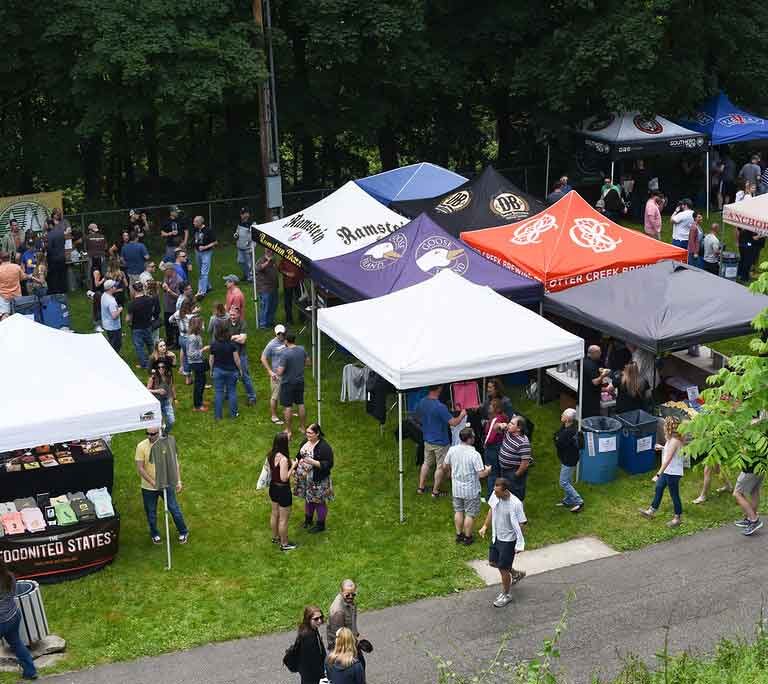
At the Meadowlands Racetrack Beer Fest, one of the largest annual craft beer gatherings in the region, more than sixty breweries and beverage producers will converge alongside live racing, music, and Preakness Stakes simulcast coverage in an event that now feels as much like a statewide cultural festival as a traditional beer tasting.

The event reflects how deeply integrated breweries have become within New Jersey’s broader entertainment landscape. Beer festivals are no longer isolated niche gatherings aimed exclusively at dedicated craft beer enthusiasts. They increasingly overlap with sports culture, tourism, live music, food experiences, and large-scale public entertainment.

The same trend continues across the state during this weekend’s Bikes & Beer Festival programming, where cyclists will launch directly from breweries including Cape May Brewing Company, MudHen Brewing Company, and Bent Iron Brewing before returning for live music, outdoor gatherings, and post-ride celebrations.

Events like these demonstrate how brewery culture has shifted dramatically away from outdated stereotypes centered solely around drinking. Modern breweries increasingly align themselves with recreation, wellness culture, outdoor tourism, local exploration, and social activity built around experience rather than excess.

That broader lifestyle positioning has helped breweries become deeply embedded within the identity of many New Jersey communities.

Throughout South Jersey, breweries now regularly host charity fundraisers, artisan markets, live music nights, trivia competitions, paint-and-sip events, adoption drives, and seasonal outdoor gatherings that function almost like modern versions of traditional town social spaces.

This weekend’s Bags, Brews, & Barks fundraiser perfectly captures that shift. The cornhole tournament fundraiser supporting Jersey Dog Rescue combines live music, outdoor social spaces, local beer, and rescue dog meet-and-greets inside a brewery setting designed entirely around community interaction.

That level of integration matters because breweries increasingly serve as flexible public gathering infrastructure for local organizations and nonprofits that might otherwise struggle to find accessible event space.

Meanwhile, taprooms throughout New Jersey continue evolving into highly active entertainment venues in their own right.

In Asbury Park, Wild Air Beerworks is hosting live multi-band programming that reinforces the city’s deep connection to independent music culture, while nearby breweries continue pairing local performers with highly social taproom environments built around Shore nightlife energy and creative communities.

Along the Delaware River, breweries such as Invertase Brewing Company are leaning into acoustic performances and Americana-inspired programming that merges riverfront atmosphere with New Jersey’s longstanding jam-band and folk traditions.

South Jersey breweries are also increasingly carving out their own distinct identity separate from North Jersey’s more urban-adjacent scenes. Taprooms throughout Atlantic, Cumberland, Gloucester, and Cape May counties often emphasize familiarity, local relationships, outdoor gathering culture, and recurring neighborhood events over large-scale industrial aesthetics.

That regional personality has become one of the strongest characteristics of New Jersey’s brewery ecosystem overall.

At the same time, New Jersey breweries are continuing to earn significant international recognition for the quality of their brewing itself.

The recent 2026 World Beer Cup results reinforced that reality once again as breweries including Wander Back Beerworks in Vineland and MudHen Brewing Company in Wildwood captured major honors on one of the world’s most competitive brewing stages.

Those awards matter because they validate something New Jersey beer fans have understood for years: the state is no longer an emerging brewery market trying to gain credibility. It is now firmly established as one of the East Coast’s most respected and culturally influential craft beer regions.

But what may matter even more than the medals is the culture surrounding the breweries themselves.

The strongest breweries in New Jersey are not succeeding solely because they produce good beer. They are succeeding because they have become woven directly into the rhythms of local life. Friday gatherings after work. Weekend festivals. Community fundraisers. Outdoor concerts. Cycling events. Local music showcases. Seasonal celebrations. Charity nights. Neighborhood traditions.

That is exactly why recurring programs like Buena Connection Brewing’s TGIF Specials and Teacher Appreciation Fridays resonate so naturally within the broader direction of New Jersey brewery culture.

They feel local.

They feel approachable.

And most importantly, they feel real.

For Explore New Jersey readers tracking the continued growth of the Garden State’s brewery industry, this weekend serves as another major reminder that New Jersey breweries are no longer simply competing on what is inside the glass.

They are competing on atmosphere, connection, experience, and community identity.

Increasingly, the breweries thriving most successfully are the ones building spaces where people genuinely want to return week after week.

And every Friday afternoon in Buena, that process starts all over again the moment the first pours hit the bar.

“Echoes over the Hudson” at ACC Gallery Positions Tenafly at the Center of New Jersey’s Expanding Contemporary Korean Art Movement

Every great regional arts scene eventually reaches a moment where it stops functioning merely as a local creative ecosystem and begins evolving into something much larger — a cultural crossroads where international perspectives, migration stories, artistic experimentation, and community identity all begin intersecting at once.

In northern New Jersey, that transformation has been quietly accelerating for years.

Now, one of the clearest examples of that evolution is unfolding inside Bergen County as ACC Gallery in Tenafly presents “Echoes over the Hudson,” a major contemporary exhibition running May 5 through May 23, 2026, that brings together a dynamic group of Korean artists working throughout the New York Tri-State region.

On the surface, the exhibition functions as a contemporary group showcase centered around painting, mixed media, photography, installation, and interdisciplinary artistic practice.

But culturally, the exhibition represents something much bigger.

“Echoes over the Hudson” reflects the continuing emergence of New Jersey — particularly Bergen County and the Fort Lee–Tenafly corridor — as one of the most important hubs for Korean-American artistic expression anywhere on the East Coast.

That distinction matters enormously right now because New Jersey’s arts landscape is changing rapidly.

For decades, discussions surrounding major contemporary art movements in the Northeast remained overwhelmingly centered around Manhattan, Brooklyn, or Philadelphia institutions. Increasingly, however, New Jersey galleries are establishing their own distinct cultural identities built around accessibility, international diversity, immigrant narratives, experimental programming, and hyper-regional creative communities that operate outside the traditional blue-chip gallery system.

ACC Gallery has become one of the clearest examples of that shift.

Located in Tenafly and originally established in Fort Lee in 2002, ACC Gallery has steadily evolved into a highly respected contemporary exhibition space specializing in modern international art while maintaining especially strong ties to Korean and Korean-American creative communities throughout the Tri-State area.

Its programming consistently balances emerging talent with globally connected contemporary perspectives, creating a space where artistic practice becomes deeply intertwined with questions of identity, memory, migration, language, geography, and cultural hybridity.

“Echoes over the Hudson” may ultimately become one of the gallery’s most significant exhibitions to date precisely because it captures those intersections so clearly.

The title itself carries layered symbolic meaning.

The Hudson River has long functioned as more than a physical divide between New Jersey and New York. It represents movement, transition, immigration, commerce, reinvention, ambition, and cultural exchange. For generations of artists, the river has symbolized both separation and connection simultaneously — a fluid corridor linking communities while also marking emotional and psychological boundaries.

Inside this exhibition, those ideas become central thematic anchors.

The participating artists explore what it means to create work between worlds — between countries, languages, generations, artistic traditions, urban environments, and personal histories. Many of the works reportedly engage directly with themes of displacement, adaptation, inherited memory, family migration narratives, and evolving identity within contemporary metropolitan life.

That perspective resonates powerfully within New Jersey itself.

Bergen County, Fort Lee, Palisades Park, Tenafly, and neighboring communities have become nationally recognized centers of Korean-American life and entrepreneurship over the past several decades. Restaurants, cafés, cultural organizations, markets, churches, schools, and artistic institutions throughout the region now form one of the most vibrant Korean-American cultural corridors anywhere in the United States.

The exhibition reflects that reality not as sociology, but as living artistic language.

The featured artists — including Minji Seo, Eunchong Kim, Jinhong Kim, Jinsook Lee, and Agnes Woo — represent multiple generations and creative disciplines while collectively exploring how personal and cultural identity evolves inside rapidly changing contemporary environments.

Their works reportedly span painting, drawing, photography, multimedia installation, and conceptual approaches that blur traditional categorical boundaries.

That multidisciplinary approach is particularly important because it reflects the current state of contemporary art itself.

Increasingly, younger artists reject rigid medium definitions entirely. Painting intersects with digital projection. Sculpture merges with performance documentation. Photography becomes installation. Sound, memory, text, architecture, and geography overlap freely inside exhibition spaces. The result is a more immersive artistic experience where viewers are encouraged not simply to observe objects, but to navigate emotional and conceptual environments.

ACC Gallery’s physical scale and curatorial structure make it especially effective for this type of exhibition.

Unlike overwhelming institutional museums that can sometimes distance audiences emotionally from contemporary work, smaller regional galleries often allow for more intimate encounters with art. Visitors move through spaces more slowly. Conversations emerge naturally. The work feels closer, more immediate, and less filtered through institutional formality.

That intimacy aligns perfectly with “Echoes over the Hudson.”

The exhibition appears designed not only as a visual showcase, but as an exploration of personal narrative and shared cultural experience.

Themes of migration and hybridity especially carry enormous relevance in 2026 because conversations surrounding identity, belonging, displacement, and cultural continuity remain central across virtually every artistic discipline right now. Contemporary artists increasingly examine how globalization reshapes memory itself — how traditions survive, evolve, fragment, or transform across generations living between multiple cultural realities simultaneously.

For Korean-American artists working in the New York metropolitan region, those questions often carry particularly layered emotional complexity.

Northern New Jersey’s Korean-American communities have helped reshape the state’s economic, culinary, educational, and cultural identity over the last several decades. Yet contemporary visual art tied to those communities has not always received the same level of sustained regional visibility as other industries or cultural sectors.

Exhibitions like “Echoes over the Hudson” help change that.

They position Korean-American contemporary art not as niche programming, but as a central and increasingly influential part of New Jersey’s broader cultural evolution.

That broader transformation is becoming increasingly visible throughout the state.

Across New Jersey, smaller galleries, artist-run spaces, educational institutions, nonprofit arts organizations, and regional museums are building more globally connected programming while still remaining rooted deeply in local communities. Increasingly, New Jersey’s arts scene feels less like an extension of New York and more like its own independent cultural ecosystem with distinct perspectives, audiences, and creative identities.

ACC Gallery embodies that shift exceptionally well.

Its long-standing focus on international contemporary art while maintaining strong local community engagement reflects where modern regional galleries are heading overall. Audiences today increasingly seek exhibitions that feel intellectually engaging while still emotionally accessible. They want cultural experiences connected to real communities rather than detached luxury-market spectacle.

“Echoes over the Hudson” appears positioned precisely within that space.

Importantly, the exhibition also arrives during a period of enormous momentum for New Jersey’s broader arts and culture sector overall.

From expanding theater programming and literary festivals to outdoor arts events, multicultural exhibitions, public installations, independent film growth, and increasingly sophisticated regional gallery networks, New Jersey’s cultural infrastructure is becoming significantly more visible both nationally and internationally.

Bergen County specifically has become a fascinating creative region because of how strongly it reflects the demographic and cultural complexity of modern New Jersey itself.

Artists working there increasingly operate within multilingual, transnational, digitally connected communities shaped simultaneously by local geography and global influence. That dynamic creates uniquely layered artistic perspectives impossible to replicate elsewhere.

The work emerging from those communities often feels deeply personal while also internationally resonant.

That combination gives exhibitions like “Echoes over the Hudson” their emotional power.

The exhibition is not simply documenting cultural identity.

It is actively participating in its ongoing evolution.

And in many ways, that may be the defining characteristic of New Jersey’s contemporary arts scene right now overall.

The state is no longer functioning merely as a supporting player orbiting larger nearby cultural capitals. Increasingly, New Jersey itself is becoming a primary site of artistic innovation, multicultural storytelling, and contemporary creative experimentation.

For Explore New Jersey readers following the state’s expanding arts and culture landscape, “Echoes over the Hudson” stands as another major reminder that some of the most compelling contemporary artistic conversations happening in the Northeast are unfolding directly inside local communities throughout the Garden State.

Inside galleries like ACC, art is no longer separated from community identity, migration history, regional transformation, or cultural memory.

It becomes part of the living fabric of New Jersey itself.

And in Tenafly this month, that fabric is being explored through contemporary Korean artistic voices whose work echoes far beyond the Hudson River.

The Turkey Reuben Revival: How the “Rachel” Sandwich Is Becoming New Jersey’s Ultimate Modern Deli Comfort Food

There are few food experiences more deeply woven into New Jersey culture than walking into a great neighborhood diner, corner deli, or old-school luncheonette and ordering a hot sandwich stacked high enough to barely fit between two slices of rye bread.

In New Jersey, sandwiches are not simply meals.

They are identity markers.

They represent neighborhoods, family traditions, late-night comfort food rituals, shore-town lunches, commuter grab-and-go culture, diner nostalgia, Jewish deli influence, Italian-American food heritage, and the state’s uniquely aggressive commitment to doing casual food better than almost anywhere else in America.

And now, quietly but very noticeably, another sandwich is beginning to reclaim space inside the evolving Garden State comfort-food conversation.

The Turkey Reuben. AKA the Rachel, this turkey reuben sandwich is warm, melty, and packed with classic deli flavor in a lighter, family-friendly easy twist. Perfect to use up some leftover turkey. The Turkey Reuben Sandwich is a Jersey Girl Cooks Recipe.

Prep Time – 10minutes mins
Cook Time – 10minutes mins
Course: dinner, lunch
Cuisine: American Comfort Food
Servings: 1
Calories: 507kcal

Ingredients

  • 1 – 2 tablespoons Thousand Island dressing
  • 2 slices rye bread
  • 3 ounces thin sliced turkey can be leftover or deli turkey
  • ¼ cup sauerkraut
  • 2 slices swiss cheese
  • ½ tablespoon butter softened

Again, widely known as the Rachel. At first glance, the sandwich may appear like a lighter spin on the legendary corned beef Reuben that has dominated diner menus and delicatessen counters for generations. But the modern Turkey Reuben has evolved into something much more important than a substitute. Across New Jersey’s expanding food culture — from diners and gastropubs to cafés, breweries, brunch spots, and elevated sandwich shops — the Rachel is increasingly becoming one of the most versatile and satisfying comfort-food sandwiches on the menu.

It delivers everything people crave about traditional deli food while fitting much more naturally into modern eating habits focused on balance, freshness, convenience, and bold flavor without overwhelming heaviness.

The formula itself remains beautifully simple.

Tender sliced turkey layered onto hearty rye bread. Melted Swiss cheese stretching between crisp toasted slices. Tangy sauerkraut bringing acidity and crunch. Thousand Island or Russian dressing adding creamy richness. Butter-seared bread creating that unmistakable diner-style golden crust.

Every component works together with near-perfect balance.

The sandwich retains the spirit of the classic Reuben while introducing a lighter, more approachable flavor profile that appeals to a wider range of diners and home cooks alike.

That shift matters enormously right now because New Jersey’s food scene is in the middle of a major comfort-food evolution.

Across the state, diners and restaurants increasingly blend nostalgia-driven menu concepts with updated ingredients, fresher preparations, and slightly healthier execution. Customers still want indulgence. They still want flavor. They still want the emotional familiarity tied to classic American comfort foods. But many diners also want meals that feel less overwhelming than the oversized, salt-heavy restaurant culture that dominated earlier eras.

The Turkey Reuben fits that exact moment perfectly.

Unlike traditional corned beef, turkey brings a cleaner, leaner flavor that allows the surrounding ingredients to breathe differently. The Swiss cheese becomes nuttier and more pronounced. The sauerkraut feels brighter rather than purely acidic. The dressing no longer competes with heavily cured meat flavors. Even the rye bread itself gains additional character because the sandwich carries slightly less overall weight and density.

The result is a sandwich that still feels deeply satisfying while remaining surprisingly balanced.

That balance helps explain why variations of the Rachel are increasingly appearing across New Jersey restaurant menus far beyond traditional Jewish delis.

Modern gastropubs now serve turkey Reubens with house-made Russian dressing and artisan rye. Shore-town cafés pair them with hand-cut fries or cucumber salads during summer lunch rushes. Breweries feature elevated Rachel melts alongside craft lagers and pilsners. Diners continue preserving the classic version with thick marble rye, crispy edges, and overflowing deli turkey sliced directly behind the counter.

The sandwich’s flexibility makes it uniquely adaptable to New Jersey’s incredibly diverse food ecosystem.

And unlike trend-driven social-media foods built more around visuals than flavor, the Turkey Reuben succeeds because it genuinely delivers every single time.

The textures alone explain much of its staying power.

The exterior crunch from butter-grilled rye bread gives way immediately to melted cheese and warm turkey while sauerkraut cuts through the richness with sharp acidity. The dressing binds everything together without becoming overwhelming. Every bite carries crispness, warmth, salt, creaminess, and tang in almost perfect proportion.

It is comfort food engineered with remarkable precision.

The sandwich also carries strong historical connections that align naturally with New Jersey’s broader food identity.

While the original Reuben’s exact origins remain debated between New York and Omaha claims, the Rachel emerged later as a turkey-centered variation designed to preserve the structure of the classic while softening some of its heavier cured-meat intensity. Over time, the Rachel quietly developed its own following among diners who preferred turkey’s milder profile or simply wanted an alternative to corned beef.

In New Jersey, where diner culture evolved around customization and menu flexibility, the Turkey Reuben became a natural fit.

This is, after all, the state where menus regularly span twenty pages and every customer has a preferred modification.

Swap pastrami for turkey.

Add coleslaw instead of sauerkraut.

Use sourdough rather than rye.

Add pickles.

Use provolone instead of Swiss.

New Jersey diners have always understood that personalization is part of comfort food itself.

That adaptability has helped fuel the Rachel’s modern resurgence.

At home, the sandwich has also become increasingly popular because it solves several practical cooking problems at once. It works beautifully with leftover holiday turkey. It comes together quickly for weeknight dinners. It feels indulgent without requiring complicated preparation. And it transforms simple refrigerator ingredients into something that tastes genuinely restaurant-quality.

The rise of elevated home cooking over the last several years has only accelerated that popularity further.

More people now understand how important details like bread texture, cheese melt, sauerkraut moisture, and skillet heat actually are when building a truly great sandwich. Home cooks increasingly approach sandwiches with the same seriousness previously reserved for larger dinner recipes.

The Turkey Reuben rewards that attention.

Properly draining sauerkraut becomes critical to maintaining crisp bread texture. Thinly sliced turkey allows even heating without toughness. Medium skillet heat creates ideal browning while giving Swiss cheese enough time to fully melt. Even something as simple as softened butter spread carefully onto rye bread dramatically changes the finished result.

The sandwich is simple.

But it is not careless.

And that distinction reflects something much larger happening throughout New Jersey’s culinary landscape right now.

Across the state, comfort food is becoming more intentional without losing emotional accessibility. Diners still want recognizable classics. But they increasingly appreciate freshness, ingredient quality, preparation details, and balance alongside nostalgia.

The Turkey Reuben embodies that evolution perfectly.

It still feels like diner food.

It still feels like something you crave during cold weather, long workdays, rainy afternoons, football Sundays, or quick lunches between errands.

But it also feels adaptable to modern eating habits in ways older sandwich constructions sometimes do not.

The Rachel pairs equally well with French fries, vinegar slaw, refrigerator pickles, cucumber salad, kettle chips, soups, or lighter side salads. It works as comfort food without demanding total food-coma commitment afterward.

That versatility may ultimately explain why the sandwich continues growing beyond its traditional deli roots.

In many ways, the Turkey Reuben now represents exactly where modern New Jersey comfort food culture is heading overall.

Classic foundations.

Updated execution.

Bold flavor.

Balanced structure.

Deep nostalgia without feeling frozen in time.

As Explore New Jersey continues tracking the state’s evolving food culture — from iconic diners and historic delis to emerging fast-casual innovators, brewery kitchens, neighborhood cafés, and chef-driven comfort-food concepts — the Turkey Reuben stands as another reminder that some of the most satisfying culinary experiences remain rooted in simplicity executed exceptionally well.

Because sometimes the best meals are not built around reinvention.

Sometimes they come from refining classics until they feel timeless all over again.

And in New Jersey, few things will ever feel more timeless than a perfectly grilled sandwich served hot off the skillet, stacked on rye bread, with melted Swiss stretching across every bite.

The Turkey Reuben Sandwich is a Jersey Girl Cooks Recipe.

Exit Zero Jazz Festival 2026 Expands Cape May Into America’s Ultimate Seaside Jazz City as Legends, Rising Stars, Brass Bands, and Cultural History Take Over the Jersey Shore

For three extraordinary days every spring and fall, Cape May stops behaving like a traditional seaside town and begins operating like one of the most vibrant live music destinations anywhere in America.

The Victorian architecture remains. The ocean air still drifts across Beach Avenue. The historic hotels, restaurants, bars, and storefronts continue glowing beneath the shoreline skyline. But something dramatically different overtakes the city itself during Exit Zero Jazz Festival weekend. Music spills into every corridor. Brass bands parade through downtown streets. Jazz fans move from ballroom performances to deck stages and intimate late-night club rooms. Musicians carrying instruments walk alongside tourists, longtime locals, students, photographers, collectors, and first-time festival visitors discovering Cape May through music instead of simply summer tourism.

That transformation officially returns May 15 through May 17 as the Exit Zero Jazz Festival once again takes over Cape May for what has evolved into one of New Jersey’s defining cultural institutions and one of the most respected destination jazz festivals on the East Coast.

For Explore New Jersey readers tracking the state’s expanding music ecosystem, arts culture, and live entertainment identity, the 2026 edition of Exit Zero may represent one of the strongest demonstrations yet of how deeply New Jersey has established itself as a legitimate national arts destination far beyond the traditional arena-tour circuit.

This is no longer simply a regional jazz festival.

It is now a full-scale cultural migration.

Anchored by Festival Central at Cape May Convention Hall along Beach Avenue, the 2026 spring edition delivers one of the festival’s most ambitious and historically layered lineups to date, blending Miles Davis centennial celebrations, Coltrane tributes, jazz fusion innovators, brass ensembles, Afro-global experimentation, Latin jazz, vocal legends, student engagement, second-line processions, and immersive community-centered nightlife into a weekend that transforms the entire city into a living soundtrack.

The key to Exit Zero’s success remains its refusal to separate music from environment.

Unlike many large festivals that isolate audiences behind gates and parking lots disconnected from surrounding communities, Exit Zero integrates itself directly into the architectural, social, and emotional identity of Cape May itself. The result feels less like attending a scheduled event and more like temporarily entering a parallel version of the city where jazz becomes the operating language of everyday life.

That distinction matters enormously.

People do not simply arrive for concerts.

They inhabit the atmosphere.

Coffee shops become discussion spaces for improvised solos and rare recordings. Restaurants transform into post-show gathering points packed with conversations about setlists, arrangements, and performances. Historic hotel porches fill with musicians exchanging stories late into the evening. Beachfront walkways pulse with brass rhythms drifting from nearby stages. Small rooms inside Carney’s erupt into packed crowds dancing only feet away from performers. The line between audience and environment begins disappearing entirely.

That immersive quality is precisely why Exit Zero continues growing into one of the most emotionally distinctive music festivals anywhere along the Atlantic coastline.

The 2026 lineup reinforces the festival’s artistic ambitions immediately.

Friday evening’s centerpiece performance — The Miles Davis Centennial Celebration featuring The Miles Electric Band — arrives as one of the most important bookings in the festival’s modern history. Scheduled for May 15 from 8:30 PM to 10:00 PM inside Cape May Convention Hall, the performance honors the 100th anniversary of one of the most transformative figures in modern music while simultaneously exploring the continuing ripple effects of jazz fusion itself.

Miles Davis did not simply influence jazz.

He permanently altered the trajectory of modern music.

From modal experimentation and electric fusion to improvisational philosophy and genre deconstruction, Davis shaped virtually every musical conversation connected to artistic reinvention during the twentieth century. Bringing a centennial celebration of his work into Cape May elevates the festival into a much larger national conversation about jazz legacy and evolution.

The inclusion of The Miles Electric Band also reinforces Exit Zero’s broader artistic philosophy.

This festival consistently avoids nostalgia for nostalgia’s sake.

Instead, it treats jazz history as active creative fuel still capable of expansion, reinterpretation, and emotional immediacy in the present day.

That same approach carries directly into Saturday evening’s major performance when José James presents “Facing East: The Music of John Coltrane.”

Few artists in American music history carry the same spiritual and artistic gravity as John Coltrane. His catalog remains foundational not only because of technical innovation, but because of the emotional and philosophical depth embedded within his music. José James, known for blending jazz, soul, hip-hop, spoken word, and contemporary improvisation into highly personal performance styles, brings a modern interpretive perspective to Coltrane’s work that feels perfectly aligned with Exit Zero’s evolving identity.

The Coltrane thread deepens even further Sunday afternoon with Ravi Coltrane taking the Convention Hall stage.

That booking may ultimately become one of the weekend’s most symbolically powerful moments.

As the son of both John and Alice Coltrane, Ravi represents a living continuation of one of jazz’s most influential artistic bloodlines. Yet he has simultaneously built his own deeply respected identity as a contemporary saxophonist, composer, and bandleader. His presence creates a remarkable bridge between jazz history and contemporary evolution occurring directly inside the same festival weekend.

That multi-generational continuity defines Exit Zero beautifully.

The festival never treats jazz as static historical preservation.

It presents the genre as a living cultural organism still evolving through younger performers, new interpretations, global influences, and cross-generational dialogue.

Throughout the rest of the lineup, that philosophy appears everywhere.

Walter Smith III opens Friday evening with one of contemporary jazz’s most respected tenor saxophone voices. Jeremy Pelt Quintet delivers modern hard-bop sophistication Sunday afternoon. Carmen Lundy continues representing one of jazz vocal performance’s most enduring artistic presences. Sarah Hanahan, Ekep Nkwelle, and Will Calhoun’s Mali Project all inject younger-generation experimentation, Afro-global rhythms, and genre-bending exploration into the weekend schedule.

Meanwhile, Orrin Evans Trio Plays Monk featuring Gary Bartz may become one of the festival’s defining performances among serious jazz audiences.

The combination of Evans, Bartz, Robert Hurst, and Jeff “Tain” Watts effectively assembles a powerhouse ensemble rooted deeply within modern jazz excellence and improvisational history. The Thelonious Monk-centered format adds another layer of historical depth to a weekend already heavily connected to jazz lineage and transformation.

Importantly, however, Exit Zero refuses to become academically rigid or culturally exclusionary.

That accessibility remains one of the festival’s greatest strengths.

Throughout the weekend, high-energy performances spread across Carney’s Main Room, Carney’s Other Room, the Convention Hall Deck Stage, and Clemans Theater for the Arts ensure the atmosphere remains celebratory, social, and welcoming even for audiences unfamiliar with deeper jazz scholarship.

The High & Mighty Brass Band immediately injects New Orleans-style energy into the festival with multiple appearances including the David Clemans Second Line procession Saturday morning. Bloco Funk adds percussion-heavy movement and dance rhythms directly into the shoreline atmosphere. Davina & The Vagabonds bring powerful genre-crossing vocal performance styles into packed late-day sets. Black Buttafly, Juice, Hoppin’ John Orchestra, Swift Technique, Deborah Smith Quartet, and Eddie Morgan Rek’d 4 Jazz all contribute to the broader ecosystem of movement, nightlife, improvisation, and communal energy that separates Exit Zero from more traditional seated concert festivals.

Edgardo Cintron’s celebration of Tito Puente further expands the festival’s cultural reach.

Latin jazz has always been deeply interconnected with the evolution of American jazz itself, and performances honoring Puente reinforce the festival’s understanding that jazz history has always been multicultural, rhythmic, border-crossing, and globally interconnected. The Tito Puente tribute promises one of the weekend’s most dance-oriented and rhythmically explosive experiences.

One of the festival’s most important qualities, however, exists beyond the lineup entirely.

The Cape May Jazz Festival Foundation continues operating year-round educational outreach initiatives that increasingly position Exit Zero as one of New Jersey’s strongest music advocacy organizations.

That work matters profoundly.

While many festivals function solely as ticketed entertainment businesses, the Cape May Jazz Festival Foundation invests directly into music education, artist residencies, in-school performances, youth engagement programs, and student ensemble opportunities throughout the year. More than 2,000 students reportedly participated in educational outreach initiatives during 2025 alone.

Programs such as the David O. Clemans Music Connects Big Band and youth performance opportunities ensure jazz remains accessible to future generations rather than confined to institutional nostalgia.

That investment becomes increasingly important as arts education nationwide continues facing budget reductions and structural instability.

Exit Zero’s long-term educational commitment fundamentally changes the meaning of the festival itself.

This is not simply entertainment.

It is cultural stewardship.

The physical geography of Cape May also remains central to the festival’s emotional impact.

Festival Central at Cape May Convention Hall — located directly along the beachfront — creates one of the most visually distinctive jazz settings anywhere in the country. Visitors picking up passes or attending performances move between ocean views, historic architecture, late-night venues, and intimate streetscapes while remaining continuously immersed in music.

The town itself becomes an extension of the stage.

That intimacy helps explain why audiences return repeatedly.

Unlike massive urban festivals dominated by exhausting logistics and overwhelming crowds, Exit Zero feels navigable, human-scaled, and emotionally connected. Attendees can move organically between venues while still maintaining proximity to performers, conversations, restaurants, hotels, and the ocean itself.

For New Jersey’s broader music culture, Exit Zero now represents something increasingly important.

The state’s artistic identity has historically been dominated by rock history, Shore bar circuits, punk scenes, arena concerts, and club culture. Exit Zero demonstrates just how sophisticated, globally connected, and culturally ambitious New Jersey’s jazz ecosystem has become as well.

Cape May is no longer simply a vacation town during festival weekends.

It becomes one of America’s most immersive music cities.

And as the 2026 spring edition prepares to begin, Exit Zero Jazz Festival once again stands ready to prove that some of the most meaningful live music experiences in the country are unfolding directly along the shores of New Jersey.

Exit Zero Jazz Festival 2026

0

Exit Zero Jazz Festival 2026 Returns to Cape May as New Jersey’s Most Immersive Seaside Music Experience Blends Jazz Legends, Cultural History, and Shore Town Energy

May 15 May 17

Every spring and fall, something extraordinary happens at the southernmost edge of New Jersey.

The Victorian streets of Cape May begin transforming into something entirely different from a traditional beach destination. The town becomes a living music village. Jazz drifts through ocean air. Brass bands move through downtown corridors. Historic ballrooms pulse with improvisation. Outdoor decks fill with late-night jam sessions. Grammy-winning performers walk the same streets as student musicians and first-time festivalgoers. Restaurants, bars, theaters, beachfront venues, and sidewalks all merge into a single immersive cultural experience unlike anything else happening anywhere along the East Coast.

That transformation officially returns May 15 through May 17 as the Exit Zero Jazz Festival once again takes over Cape May for what has evolved into one of the most important and respected live music festivals in New Jersey.

For Explore New Jersey readers tracking the state’s rapidly expanding arts and entertainment landscape, the Exit Zero Jazz Festival now stands as far more than another seasonal music gathering.

It has become one of the defining cultural institutions of the Jersey Shore itself.

Hosted throughout Cape May with Festival Central anchored at the Cape May Convention Hall on Beach Avenue, the 2026 spring edition arrives with one of the strongest and most historically significant lineups the festival has assembled in years. The weekend combines internationally recognized jazz legends, modern innovators, rising stars, brass ensembles, Latin jazz, soul fusion, educational outreach, second-line performances, and deeply rooted American music traditions into a three-day experience that feels simultaneously sophisticated, communal, historic, and unmistakably New Jersey.

Unlike many large-scale festivals that isolate audiences inside fenced entertainment grounds disconnected from surrounding communities, Exit Zero has built its identity around total integration with Cape May itself.

That distinction matters enormously.

The festival does not merely take place in Cape May. It transforms Cape May.

Coffee shops become jazz corridors. Restaurants evolve into late-night gathering points. Historic hotels fill with musicians and fans. Beachfront venues pulse with music from morning into night. Crowds move between stages carrying drinks, stories, recommendations, and spontaneous conversations. The entire town becomes part of the experience.

That atmosphere is precisely why Exit Zero continues expanding its reputation nationally.

The festival’s ability to merge world-class jazz programming with the relaxed intimacy of a historic seaside town creates something increasingly rare in modern live entertainment — authenticity.

The 2026 edition may ultimately become one of the most artistically ambitious spring lineups in festival history.

Headlining the opening Friday evening inside Cape May Convention Hall is one of the weekend’s most anticipated performances: The Miles Davis Centennial Celebration featuring The Miles Electric Band. Scheduled for May 15 from 8:30 PM to 10:00 PM, the performance honors one of the most transformative musicians in modern music history while simultaneously celebrating the continuing evolution of jazz fusion itself.

Miles Davis remains foundational not only to jazz, but to virtually every modern genre touched by improvisation, experimentation, and musical reinvention. Bringing a centennial celebration of his work to Cape May reinforces the festival’s broader mission of balancing reverence for jazz history with contemporary reinterpretation and forward movement.

That philosophy continues throughout the weekend lineup.

On Saturday night, acclaimed vocalist and composer José James presents “Facing East: The Music of John Coltrane,” another performance carrying enormous historical and emotional weight for jazz audiences. Scheduled for May 16 at Cape May Convention Hall, the concert promises one of the weekend’s deepest artistic moments as James reinterprets Coltrane’s towering catalog through his own genre-blending contemporary perspective.

Coltrane’s influence on jazz — and American music broadly — remains immeasurable. Few artists carry the same spiritual, experimental, and emotional legacy inside the genre. José James’ involvement immediately elevates the performance into something far more significant than a standard tribute concert.

The Coltrane connection deepens even further Sunday when Ravi Coltrane takes the stage at Convention Hall.

The appearance of Ravi Coltrane creates one of the weekend’s most symbolically powerful bookings because it links multiple generations of jazz evolution directly inside one festival schedule. As both an acclaimed saxophonist and the son of John and Alice Coltrane, Ravi occupies a uniquely important space in contemporary jazz culture where legacy and innovation continuously intersect.

That multi-generational continuity reflects the broader identity of Exit Zero itself.

The festival consistently succeeds because it treats jazz not as museum preservation, but as a living, evolving, culturally active art form still capable of reinvention and expansion.

The supporting lineup reinforces that approach everywhere.

Walter Smith III opens Friday evening with one of the most respected contemporary saxophone performances currently touring the jazz world. Jeremy Pelt Quintet brings modern hard-bop sophistication to Sunday afternoon programming. Carmen Lundy continues representing one of jazz vocal performance’s most enduring and influential voices. Sarah Hanahan, Ekep Nkwelle, and Will Calhoun’s Mali Project further expand the festival’s range into younger-generation innovation, Afro-fusion exploration, and globally influenced improvisation.

The legendary Gary Bartz joining the Orrin Evans Trio for a Monk-focused performance may become one of the weekend’s most critically celebrated sets among serious jazz followers. The combination of Evans, Robert Hurst, Jeff “Tain” Watts, and Bartz effectively assembles an all-star ensemble rooted deeply within modern jazz excellence.

At the same time, Exit Zero deliberately avoids becoming inaccessible or academically rigid.

That balance remains one of the festival’s greatest strengths.

The event understands that jazz culture thrives most powerfully when it remains socially alive rather than institutionally isolated. Throughout the weekend, brass bands, dance-oriented performances, Latin jazz sets, second-line processions, and high-energy crossover acts keep the atmosphere communal, celebratory, and welcoming even for casual audiences unfamiliar with deeper jazz traditions.

Edgardo Cintron’s Tito Puente celebration exemplifies that energy perfectly.

By incorporating Latin jazz traditions directly into the core programming, the festival acknowledges the enormous cultural interconnectedness that has always existed throughout jazz history itself. Tito Puente’s rhythmic influence continues shaping countless genres today, and performances like this reinforce the festival’s broad musical inclusivity.

The same applies to the High & Mighty Brass Band, Bloco Funk, Davina & The Vagabonds, Black Buttafly, and Hoppin’ John Orchestra performances spread across Carney’s venues and secondary stages throughout the weekend.

These acts inject movement, celebration, improvisation, and nightlife energy directly into the fabric of the festival experience.

Importantly, Exit Zero also continues positioning itself as one of New Jersey’s strongest year-round music education and arts advocacy organizations.

That component deserves enormous attention.

While the festival weekends receive the highest public visibility, the Cape May Jazz Festival Foundation operates continuously throughout the year supporting music education initiatives, artist residencies, school performances, student ensemble opportunities, and youth outreach programming. More than 2,000 students reportedly participated in educational initiatives during 2025 alone.

That commitment fundamentally changes the meaning of the festival itself.

Exit Zero is not simply selling tickets to concerts.

It is actively cultivating future musicians, future audiences, and future artistic communities across New Jersey.

Programs such as the David O. Clemans Music Connects Big Band and student performance opportunities ensure younger generations experience jazz as something alive, accessible, and relevant rather than distant historical material.

That investment matters enormously at a time when arts education nationwide continues facing financial pressure and declining institutional support.

The physical structure of the festival also remains central to its success.

Festival Central inside Cape May Convention Hall serves as both operational headquarters and symbolic anchor for the entire weekend. Located directly on Beach Avenue overlooking the shoreline, the venue creates a uniquely coastal atmosphere rarely associated with major jazz festivals elsewhere in America.

Visitors arriving for pass pickup or performances immediately enter a setting where oceanfront scenery and live music culture merge seamlessly together.

Around it, Cape May itself becomes the perfect supporting environment.

Unlike larger urban music festivals dominated by overwhelming scale and logistical exhaustion, Exit Zero allows attendees to move comfortably between venues, restaurants, hotels, bars, and outdoor spaces while remaining fully immersed in the musical atmosphere. The intimacy creates stronger audience connection not only to the artists, but to the town itself.

That emotional accessibility helps explain why so many attendees return year after year.

The festival increasingly feels less like a commercial event and more like a recurring cultural migration where audiences temporarily inhabit an alternate version of Cape May centered entirely around music, conversation, creativity, and artistic discovery.

For New Jersey’s broader music ecosystem, the continued growth of Exit Zero also carries major significance.

The state’s live music identity has historically been associated heavily with rock, punk, club culture, arena tours, and Shore bar circuits. Festivals like Exit Zero demonstrate how deeply sophisticated and globally respected New Jersey’s jazz and arts communities have become as well.

Cape May now stands alongside major national jazz destinations each spring and fall.

And the 2026 edition may reinforce that standing more powerfully than ever.

From Miles Davis centennial celebrations and Coltrane tributes to brass-band processions, Latin jazz, orchestral experimentation, educational outreach, beachside performances, and late-night club energy, Exit Zero Jazz Festival continues proving that some of the most culturally significant live music experiences in America are happening directly inside New Jersey’s coastal communities.

For Explore New Jersey readers planning the upcoming weekend, Cape May is once again preparing to become far more than a beach town.

For three days, it becomes one of the most vibrant music villages anywhere on the East Coast.

Artists

2026FBartistsSIMPLE_MILES.jpg

THE MILES DAVIS CENTENNIAL CELEBRATION WITH THE MILES ELECTRIC BAND / FRIDAY, MAY 15 / Cape May Convention Hall / 8:30-10:00 PM

2026FBartistsSIMPLE_JJ.jpg

JOSE´ JAMES PRESENTS: FACING EAST, THE MUSIC OF JOHN COLTRANE / SATURDAY, MAY 16 / Cape May Convention Hall / 9:00-10:30 PM

2026FBartistsSIMPLE_RAVI.jpg

RAVI COLTRANE / SUNDAY, MAY 17 / Cape May Convention Hall / 2:45-4:00 PM

19A0D239-D822-42B2-B430-AB3816D83F45.jpeg

WALTER SMITH III / FRIDAY, MAY 15 / Cape May Convention Hall / 6:00-7:15 PM

2026FBartist_ORRIN.jpg

ORRIN EVANS TRIO PLAYS MONK, feat. GARY BARTZ (EVANS, ROBERT HURST, JEFF “TAIN” WATTS / SATURDAY, MAY 16 / Cape May Convention Hall / 7:00-8:15 PM

2026FBartistsSIMPLE_PELT.jpg

JEREMY PELT QUINTET / SUNDAY, MAY 17 / Cape May Convention Hall / 12:30-1:45PM

2026FBartist_CINTRON.jpg

EDGARDO CINTRON PLAYS THE MUSIC OF TITO PUENTE / FRIDAY, MAY 15 /CAPE MAY CONVENTION HALL, 4:00-5:15 & CAPE MAY CONVENTION HALL DECK STAGE, 7:15 -8:15 PM

2026FBartistsSIMPLE_CARMEN.jpg

CARMEN LUNDY / SATURDAY, MAY 16 / Cape May Convention Hall / 3:30-4:45 PM

2026FBartist_EKEPrev.jpg

EKEP NKWELLE / SATURDAY, MAY 16/ CLEMANS THEATER FOR THE ARTS, 4:30 & 6:30 PM / CAPE MAY CONVENTION HALL DECK STAGE, SUNDAY, SUNDAY, MAY 17, 11:30 & 1:45 PM

2026FBartistsSIMPLE_HMBB.jpg

HIGH & MIGHTY BRASS BAND / Carney’s, May 15, 7:10 & 9:30 PM / David Clemans Second Line, Saturday, May 16, 11:00 AM

2026FBartist_MALI.jpg

WILL CALHOUN MALI PROJECT / SATURDAY, MAY 16 / Cape May Convention Hall / 1:30-2:45 PM

2026FBartist_REVCHRISrev.jpg

REV CHRIS & LES GARCONS CRASSEUX / Sunday, May 17 / Carney’s Main Room, 12:30 & 2:40 PM

2026FBartist_GREENEL.jpg

STEVE GREEN & the ELEVATORS / FRIDAY, MAY 15 / Carney’s Other Room, 6:00 & 8:20 PM

2026FBartist_DAVINArev.jpg

DAVINA & THE VAGABONDS / SATURDAY, MAY 16 / CARNEY’S MAIN ROOM, 4:20 & 6:30 PM

BDA434B9-23C8-4362-B505-E7121729AF25.jpeg

HOPPIN’ JOHN ORCHESTRA / SUNDAY, MAY 17 / Carney’s Main Room, 4:30 & 6:20 PM

2026FBartist_HANAHAN.jpg

SARAH HANAHAN / SATURDAY, MAY 16 / CLEMANS THEATER, 12:00 & 2:00 PM

2026FBartist_COMMODORES.jpg

U.S. NAVY BAND COMMODORES /FREE SHOW SATURDAY, May 16 / Cape May Convention Hall, 11:30-12:40

2026FBartist_EMORGAN.jpg

EDDIE MORGAN REK’D 4 JAZZ / Carney’s Other Room / Sunday, May 17, 11:30 AM & 1:40 PM

2026FBartist_BUTTAFLY.jpg

BLACK BUTTAFLY / Carney’s Other Room / Saturday, May 16, 5:30 & 8:00 PM

2026FBartist_JUICE.jpg

JUICE / SATURDAY, MAY 16 / Carney’s Main Room, 8:40 & 10:20 PM

2026FBartistsSIMPLE_BLOCO.jpg

BLOCO FUNK / SA TURDAY, MAY 16 / Cape May Convention Hall Deck STAGE, 12:30 & 2:40 PM

2026FBartist_DEBSMITH.jpg

DEBORAH SMITH QUARTET / SATURDAY, MAY 16 / Carney’s Other Room, 12:30 & 2:30

2026FBartist_SWIFTTECH.jpg

SWIFT TECHNIQUE / SATURDAY, MAY 16 / CARNEY’S MAIN ROOM, 11:45AM & 1:30PM

Cape May Jazz Festival Foundation

View Organizer Website

Cape May Convention Hall

643 Washington Street
Cape May, New Jersey 08204
+ Google Map
609-884-9525
View Venue Website

Memorial Day Weekend 2026 in New Jersey Is Shaping Up as One of the State’s Biggest Celebrations of Summer, Community, Music, and American Tradition

Every year, Memorial Day Weekend arrives carrying two distinct identities across New Jersey at the exact same time.

It is simultaneously one of the most solemn and meaningful weekends on the American calendar — dedicated to honoring fallen military heroes and remembering generations of sacrifice — while also serving as the emotional launch point for summer itself throughout the Garden State. No other holiday weekend captures New Jersey’s identity quite like Memorial Day. Shore towns awaken fully for the season. Boardwalks surge back to life. Downtown festival streets reopen. Families flood parks and beaches. Live music echoes across outdoor venues. Food trucks line community gathering spaces. Small towns organize patriotic parades. Veterans groups prepare remembrance ceremonies. And nearly every county in the state transforms into a living calendar of public events, festivals, and communal celebration.

That atmosphere is expected to reach another major level during Memorial Day Weekend 2026, running Friday, May 22 through Monday, May 25, as communities throughout New Jersey prepare one of the busiest statewide holiday schedules of the year.

From the Jersey Shore to South Jersey river towns, from suburban downtown districts to large-scale outdoor entertainment venues, the upcoming weekend is quickly becoming a full-scale statewide celebration blending food, music, nightlife, family entertainment, patriotic ceremonies, athletic events, and traditional hometown gatherings.

For Explore New Jersey readers tracking the state’s expanding activities and entertainment landscape, Memorial Day Weekend increasingly functions as more than a holiday alone.

It has evolved into New Jersey’s unofficial statewide opening ceremony for summer culture itself.

Across the state, organizers are preparing a massive lineup of food festivals, live outdoor concerts, beer gardens, carnivals, boardwalk celebrations, themed nightlife events, family amusement gatherings, and public commemorations designed to draw enormous crowds into local downtowns and waterfront districts.

The scale of the weekend reflects something fundamental about New Jersey itself.

Few states compress such dramatically different experiences into one holiday period. Within a single day, residents can move from solemn veterans ceremonies to beach concerts, from small-town patriotic parades to waterfront nightlife, from family amusement rides to craft beer festivals, all while traveling only short distances between communities.

That diversity is exactly what makes Memorial Day Weekend uniquely powerful throughout the Garden State.

Food and music festivals once again sit at the center of the holiday weekend atmosphere.

Throughout New Jersey, municipalities and private event organizers are leaning heavily into outdoor entertainment programming combining gourmet food vendors, live local bands, craft beverage gardens, artisan marketplaces, family activity zones, and open-air concert energy. These festivals have become increasingly important economic and cultural drivers for local communities because they simultaneously boost tourism, support small businesses, activate public gathering spaces, and create highly shareable social experiences that define modern summer culture.

The food-truck festival scene especially continues exploding statewide.

What once operated primarily as small niche gatherings has evolved into major regional attractions drawing thousands of visitors over multi-day stretches. Modern New Jersey food festivals increasingly blend global cuisine, local restaurant partnerships, craft cocktails, beer gardens, dessert vendors, live DJs, lawn games, and full concert-style staging into immersive outdoor entertainment environments.

That evolution reflects how consumer expectations surrounding festivals have fundamentally changed.

Audiences no longer simply want isolated food vendors or small local performances. They increasingly seek experience-based events combining atmosphere, entertainment, visual appeal, social interaction, and community identity into a single destination environment.

Memorial Day Weekend naturally amplifies that demand because it carries enormous emotional energy tied directly to the beginning of summer.

Across shore communities especially, the holiday serves as the first true seasonal population explosion of the year.

Boardwalk towns including those throughout Cape May County, Atlantic County, Monmouth County, and Ocean County are already preparing for major visitor surges as beaches, nightlife districts, amusement piers, bars, restaurants, and entertainment venues shift fully into peak-season operations. The psychological transition matters almost as much as the tourism itself. For many New Jersey residents, Memorial Day Weekend represents the moment summer emotionally begins regardless of the calendar.

That seasonal shift is especially visible through the return of outdoor live music culture.

Throughout the state, parks, brewery spaces, outdoor stages, waterfront venues, downtown plazas, and entertainment districts are preparing expanded live performance schedules ranging from cover bands and tribute acts to local touring artists, DJs, orchestral performances, and community concert series.

Music increasingly functions as the connective tissue of Memorial Day Weekend itself.

It fills the spaces between festivals, beach crowds, parades, food events, and nightlife gatherings while reinforcing the highly communal atmosphere that defines New Jersey summers. Even smaller local performances now often attract substantial turnout because audiences continue prioritizing outdoor social experiences following years of shifting entertainment habits.

The family entertainment side of the weekend also continues growing significantly.

Carnivals, amusement rides, holiday-themed parties, inflatable attractions, midway games, and boardwalk events remain central components of the Memorial Day experience throughout many suburban and shore communities. Organizers increasingly recognize that multi-generational programming drives larger attendance and longer visitor engagement across entire weekends rather than isolated single-day events.

Holiday nightlife programming is expected to surge as well.

Parades & Memorial Services: On Memorial Day itself (Monday, May 25, 2026), local communities will hold traditional solemn ceremonies and parades to honor fallen military heroes:

  • Riverside 5K & Parade: Features a morning Memorial Day 5K run at 8:00 AM followed by a community-wide parade through town at 9:00 AM.
  • Sea Isle City Ceremony: Mayor Leonard Desiderio hosts the official municipal Sea Isle City Memorial Day Ceremony at Veterans Park starting at 10:00 AM.
  • Beach Haven Parade & Service: A regional parade starting at 9:40 AM moving toward Veterans Park on Engleside Avenue for a formal wreath-laying ceremony.
  • Mount Holly Joint Veterans Service: Organized jointly by local VFW and American Legion posts, this solemn community ceremony kicks off at 9:00 AM sharp at Veterans Memorial Park.

Bars, rooftop lounges, casinos, beach clubs, and waterfront entertainment venues throughout New Jersey are preparing major Memorial Day weekend lineups featuring DJs, dance parties, themed events, and extended late-night schedules. Particularly throughout Atlantic City and the Shore, the weekend remains one of the most economically important nightlife periods of the early summer season.

Yet despite all the celebration and entertainment, Memorial Day itself continues anchoring the weekend emotionally.

Across New Jersey on Monday, May 25, communities throughout the state will pause for traditional remembrance ceremonies honoring fallen military service members. These gatherings remain deeply important parts of local civic identity and continue drawing strong participation from veterans organizations, local governments, schools, marching bands, first responders, and residents.

In Riverside, the day begins with one of the region’s longstanding traditions: the Memorial Day 5K at 8:00 AM followed immediately by a full community parade through town at 9:00 AM. Events like these reflect the uniquely local character of many New Jersey Memorial Day observances where athletic events, civic participation, and patriotic commemoration merge into longstanding annual rituals passed down through generations.

At the Jersey Shore, Sea Isle City will once again host its official municipal Memorial Day Ceremony at Veterans Park beginning at 10:00 AM under the leadership of Mayor Leonard Desiderio. Shore town ceremonies often carry especially emotional resonance because many of these communities maintain deep military family traditions tied directly to local civic culture.

Beach Haven’s ceremony similarly continues one of Long Beach Island’s important annual traditions.

The regional parade begins at 9:40 AM before proceeding toward Veterans Park on Engleside Avenue where participants gather for a formal wreath-laying ceremony honoring fallen service members. Events like these preserve the deeply ceremonial roots of Memorial Day even amid the broader entertainment atmosphere surrounding the weekend.

In Burlington County, Mount Holly’s Joint Veterans Service — organized collaboratively by local VFW and American Legion posts — continues another longstanding tradition beginning sharply at 9:00 AM at Veterans Memorial Park. Community-led veterans services remain among the most emotionally significant Memorial Day gatherings because they are often organized directly by those with personal military experience and deep local connections.

That duality ultimately defines Memorial Day Weekend in New Jersey more than anything else.

The state uniquely balances celebration with remembrance in ways that feel culturally authentic rather than contradictory. Families attend parades before heading to beaches. Veterans ceremonies take place alongside food festivals and concerts. Communities honor military sacrifice while simultaneously gathering publicly to enjoy the freedoms that sacrifice helped preserve.

That emotional layering is part of what makes the weekend so deeply woven into New Jersey’s identity itself.

It is not simply about tourism or entertainment.

It is about collective ritual.

Every summer, Memorial Day Weekend reintroduces New Jersey to itself again. The beaches reopen emotionally. Downtowns refill with energy. Outdoor music returns. Communities gather publicly after months indoors. Local traditions resume. And thousands of residents move between ceremonies, festivals, boardwalks, concerts, and parks participating in a shared statewide experience unlike anything else on the calendar.

For Explore New Jersey readers planning the upcoming holiday weekend, 2026 is shaping up to deliver one of the largest and most diverse statewide Memorial Day schedules in recent years.

From solemn remembrance ceremonies and military tributes to food festivals, waterfront concerts, beach celebrations, nightlife events, carnivals, parades, athletic races, and open-air community gatherings, New Jersey once again appears ready to fully embrace the arrival of summer while honoring the deeper meaning that defines Memorial Day itself.

Tahini’s Targets New Jersey Expansion as Canada’s Viral Mediterranean Fast-Casual Powerhouse Prepares Major U.S. Growth Push

New Jersey’s restaurant scene is about to become even more competitive as one of Canada’s fastest-growing and most digitally dominant fast-casual food chains officially targets the Garden State for aggressive expansion. Tahini’s, the rapidly scaling Mediterranean and Middle Eastern fusion restaurant brand founded by brothers Omar and Aly Hamam, is now positioning New Jersey as one of the centerpiece markets in its broader American growth strategy — a move that could significantly reshape the state’s already thriving Mediterranean fast-casual landscape over the next several years.

For Explore New Jersey readers following emerging restaurant trends, franchise expansion, viral food culture, and the future of modern fast-casual dining, Tahini’s arrival represents far more than another chain entering the regional market.

It reflects the growing convergence of global street food, social media-driven restaurant branding, fusion cuisine innovation, late-night dining culture, and highly scalable digital-first restaurant operations now redefining the modern restaurant industry itself.

Founded in London, Ontario, the company has transformed from a single independent Mediterranean restaurant into one of the fastest-expanding food brands anywhere in Canada. What began as a traditional shawarma-focused operation has evolved into a multi-layered fast-casual empire operating more than 75 locations across major Canadian markets including Ontario, British Columbia, and Alberta.

Now the company is turning its attention toward the United States — and New Jersey sits directly near the top of that expansion map.

The significance of that decision cannot be overstated.

New Jersey already possesses one of the most sophisticated and competitive Mediterranean and Middle Eastern food ecosystems in the country. From independently owned falafel counters and Lebanese bakeries to Turkish grills, Palestinian restaurants, Israeli street-food concepts, Egyptian cafés, Persian kitchens, and high-end modern Mediterranean dining rooms, the state’s food culture already maintains deep familiarity with the flavors and culinary traditions Tahini’s is entering the market to serve.

That means Tahini’s will not succeed here simply because shawarma and rice bowls are trendy.

The brand appears to understand that reality clearly.

Instead of relying purely on authenticity marketing alone, Tahini’s has built its identity around something much more modern and commercially aggressive: fusion-forward Mediterranean fast food engineered specifically for the digital era.

The company’s slogan, “Eat Unbland,” effectively summarizes the entire strategy.

Tahini’s combines traditional Middle Eastern proteins and preparation techniques with globally inspired fast-food hybrids designed to maximize visual appeal, flavor intensity, social media engagement, and younger consumer curiosity. The result is a menu that feels simultaneously rooted in Mediterranean street-food traditions while heavily influenced by contemporary internet food culture.

Classic menu staples remain central to the concept.

Chicken shawarma, beef shawarma, gyro, falafel wraps, customizable rice bowls, and fresh saj bread preparations still anchor the brand’s culinary identity. But Tahini’s increasingly differentiates itself through highly stylized fusion creations built specifically to stand out inside crowded social feeds and food-delivery marketplaces.

Items such as Butter Chicken Shawarma, Jamaican Jerk bowls, loaded Mediterranean fries, shawarma poutines, and globally influenced protein mashups represent a very intentional business model designed around flavor experimentation and viral visibility.

That strategy appears to be working at extraordinary scale.

Tahini’s has become one of the most successful restaurant social media brands in North America, reportedly generating more than two billion views and building a combined following exceeding five million users across TikTok, YouTube, and other platforms.

That kind of digital presence fundamentally changes how restaurant expansion works.

Traditionally, restaurant chains entering new states relied heavily on expensive advertising campaigns, local awareness-building, and gradual word-of-mouth growth. Tahini’s instead arrives in markets with an already established internet audience familiar with its branding, menu hacks, food videos, and online personality.

In many cases, younger consumers may already recognize the brand before ever seeing a physical storefront.

That creates a massive strategic advantage in today’s restaurant economy where visibility often matters almost as much as food quality itself.

The company’s social-media-first approach also reflects a broader transformation happening throughout fast-casual dining.

Modern restaurant brands increasingly operate as entertainment entities as much as food-service operations. Viral menu launches, influencer collaborations, visual food presentation, short-form video marketing, and internet-driven product hype now directly influence expansion success. Restaurants capable of generating sustained digital engagement build customer loyalty and cultural relevance far faster than traditional advertising models alone.

Tahini’s appears exceptionally aware of that shift.

One of the clearest examples may be the company’s recent Shawarma Ramen launch — a highly unconventional menu item combining rich broth, noodles, mozzarella cheese, and seasoned shawarma chicken into a hybrid comfort-food bowl specifically engineered for online attention and social sharing.

Whether customers view such creations as culinary innovation or internet-era excess almost becomes secondary.

The key is that people talk about them.

That ability to remain culturally visible represents one of the defining characteristics separating modern fast-casual success stories from interchangeable chain restaurants increasingly struggling for relevance.

New Jersey’s inclusion within Tahini’s U.S. expansion strategy also makes enormous business sense geographically.

The state’s dense population, highly diverse demographics, strong commuter economies, late-night food culture, and sophisticated delivery infrastructure create ideal conditions for scalable fast-casual concepts built around portability, speed, customization, and digital ordering.

Additionally, New Jersey consumers already possess unusually strong familiarity with Mediterranean flavors compared to many American regions. That reduces the educational barrier many chains face when introducing shawarma, falafel, tahini, saj bread, or Middle Eastern spice profiles into mainstream suburban markets.

Importantly, however, Tahini’s is not positioning itself purely as “traditional” Mediterranean dining.

The brand appears far more interested in occupying the same cultural territory currently dominated by modern fast-casual disruptors — places where food, branding, internet culture, customization, and lifestyle identity all merge together into a single consumer experience.

That positioning may resonate particularly strongly with younger New Jersey diners already deeply engaged with delivery platforms, late-night ordering habits, food influencers, and hybrid global comfort-food culture.

The company’s operational model reinforces that strategy even further.

Tahini’s has aggressively embraced delivery infrastructure, streamlined ordering systems, franchising scalability, and alternative retail formats. Beyond standalone restaurants, the company has already launched smaller-format “Tahini’s Kitchen” operations inside Canadian FreshCo supermarket locations while simultaneously selling branded sauces through retail grocery channels.

That diversification matters enormously in the modern restaurant industry.

Increasingly, successful restaurant brands no longer depend solely on dine-in traffic alone. They evolve into broader food ecosystems involving packaged goods, ghost kitchens, retail licensing, digital engagement, and multi-channel consumer interaction.

Tahini’s appears to be building exactly that kind of vertically integrated brand structure.

The company’s first major New Jersey-area development currently underway in Budd Lake along Route 46 signals the beginning of what insiders suggest may become a far larger statewide rollout. Franchise recruitment materials reportedly identify New Jersey as a major priority market, particularly because of its combination of suburban density, commuter corridors, college populations, and highly active food-delivery culture.

North Jersey especially may prove fertile territory for expansion.

Areas throughout Bergen County, Passaic County, Essex County, Hudson County, Middlesex County, and Morris County already support highly active fast-casual dining ecosystems where consumers regularly engage with globally influenced restaurant concepts. The challenge for Tahini’s will not be introducing Mediterranean flavors themselves — it will be differentiating its internet-driven fusion identity from the region’s already deeply established independent Mediterranean operators.

That competition may ultimately benefit consumers most.

New restaurant entrants often force innovation across entire dining sectors. Existing restaurants evolve menus, improve service models, strengthen branding strategies, and elevate digital engagement when highly visible competitors enter surrounding markets.

For Explore New Jersey readers tracking restaurant openings, franchise growth, food culture evolution, and the future of fast-casual dining, Tahini’s expansion represents another sign that New Jersey remains one of the most strategically valuable food markets anywhere in North America.

The Garden State continues attracting ambitious concepts precisely because its consumers are knowledgeable, adventurous, highly diverse, digitally connected, and deeply engaged with restaurant culture itself.

Tahini’s now appears ready to test whether its fusion-heavy, social-media-powered, Mediterranean fast-casual model can thrive inside one of the country’s most competitive food environments.

And if the company’s explosive Canadian growth trajectory is any indication, New Jersey may soon become one of the most important battlegrounds in the next phase of the brand’s North American expansion story.

Cancer Survivor and Retired Medford Police Officer Perry Parks Honors Surgeon Who Saved His Life by Donating Rescue K9 to Virtua Hospital

Some stories transcend traditional news categories because they capture something far more human than a headline alone can convey. They become stories about survival, loyalty, service, second chances, and the deeply personal relationships that quietly shape communities long after the public moments have passed.

That is exactly what is unfolding in Camden City, where a highly trained Belgian Malinois named K9 Meslin is preparing to join the security team at a Virtua Health hospital under circumstances that feel less like a standard institutional announcement and more like a full-circle moment of gratitude, resilience, and human connection.

At the center of the story is retired Medford Police Officer Perry Parks — a veteran law enforcement professional, experienced dog trainer, cancer survivor, and South Jersey resident whose life was profoundly changed by colorectal surgeon Dr. Keith Meslin of Virtua Health.

Now, Parks has chosen to honor the physician he credits with saving his life in the most meaningful way he knew how: by donating a professionally trained rescue K9 named directly after the surgeon himself.

The result is one of the most emotionally powerful and uniquely New Jersey healthcare-community stories to emerge this year.

K9 Meslin, a Belgian Malinois rescue trained extensively for hospital and security deployment work, will officially become part of the security operations team at Virtua’s Camden City hospital campus. But reducing the story to a simple K9 donation barely scratches the surface of what makes this moment resonate so deeply across South Jersey.

This is not merely about a dog entering service.

It is about the convergence of healthcare, survival, law enforcement, rehabilitation, emotional recovery, community investment, and the extraordinary bonds formed when one life changes another permanently.

For Explore New Jersey readers following stories connected to healthcare innovation, community wellness, public service, and the evolving relationship between hospitals and public safety, the arrival of K9 Meslin represents something much larger than institutional expansion.

It reflects the increasingly human-centered role modern hospitals now play inside local communities.

Healthcare systems today are no longer viewed solely as treatment centers where patients arrive, receive care, and leave. Increasingly, hospitals function as emotional, psychological, and civic anchors within their surrounding regions. The best institutions now understand that healing extends beyond procedures and prescriptions into trust, security, emotional reassurance, and human connection itself.

The addition of trained K9 units to healthcare environments reflects that broader transformation.

Across the country, hospitals have increasingly expanded security infrastructure in response to rising concerns surrounding workplace violence, emergency preparedness, patient protection, behavioral health incidents, and overall campus safety. Yet many institutions are simultaneously attempting to humanize that security presence rather than creating environments that feel cold, militarized, or intimidating.

Properly trained K9 units often bridge that gap uniquely well.

Belgian Malinois in particular are among the most respected working dogs in modern law enforcement and security operations because of their intelligence, focus, athleticism, loyalty, trainability, and situational awareness. These dogs operate at elite levels within police departments, military units, detection teams, and specialized security environments worldwide.

But K9 Meslin’s story carries another dimension entirely because of his origins as a rescue dog.

That detail matters profoundly.

Rescue animals entering high-level professional service roles symbolize something powerful about rehabilitation itself — the idea that overlooked or displaced lives can still evolve into meaningful service, purpose, and extraordinary contribution. In many ways, the dog’s journey mirrors the broader emotional themes surrounding the people connected to this story.

Second chances. Recovery. Survival. Reinvention.

Perry Parks’ own journey through cancer treatment sits directly at the center of that emotional architecture.

As a retired police officer and longtime K9 trainer, Parks spent much of his life operating within environments built around discipline, readiness, and public protection. Yet cancer introduces an entirely different form of vulnerability — one that strips away professional certainty and places individuals into profoundly personal battles centered around mortality, trust, fear, and survival.

According to the story surrounding the donation, Parks credits Dr. Keith Meslin with saving his life during that battle.

For many patients, especially those confronting serious illnesses like colorectal cancer, the relationship with a surgeon becomes deeply personal in ways difficult to fully articulate publicly. Surgeons often occupy a unique emotional role because they exist at the intersection of technical mastery and intimate human trust. Patients place their futures, families, fears, and survival directly into another person’s hands.

That reality creates bonds extending far beyond routine medical care.

Parks reportedly wanted to find a way to honor Dr. Meslin that reflected not only gratitude, but service — something meaningful, lasting, and beneficial to the broader community itself.

The decision to train and donate a working rescue dog in the surgeon’s name ultimately transforms private gratitude into public impact.

K9 Meslin will now serve not simply as a symbolic tribute, but as an active contributor to hospital safety and daily operations inside Camden City.

That location adds another important layer to the story.

Camden has spent years undergoing a complex and highly visible transformation involving healthcare investment, infrastructure redevelopment, institutional partnerships, public safety initiatives, and broader community stabilization efforts. Healthcare institutions in the city increasingly function as foundational pillars supporting not only medical treatment, but economic activity, employment, public trust, and neighborhood investment.

Virtua’s Camden campus therefore occupies a role extending far beyond healthcare delivery alone.

The addition of K9 Meslin reinforces the hospital’s broader commitment to security, community presence, and operational readiness while simultaneously carrying an emotional narrative rooted in humanity rather than bureaucracy.

Stories like this resonate particularly strongly because they cut through increasingly impersonal healthcare conversations dominated by insurance systems, administrative structures, policy battles, staffing shortages, and institutional complexity.

At its core, this story remains intensely personal.

A man survived cancer.

A doctor changed his life.

A rescue dog found purpose.

And a hospital community gained both protection and a symbol of resilience.

That combination creates something extraordinarily powerful.

It also highlights the evolving role of K9 programs themselves within modern public institutions.

Working dogs are increasingly valued not solely for enforcement capability, but for their broader psychological impact on environments under stress. Trained K9s can help de-escalate tension, provide emotional reassurance, improve public comfort, and create calmer atmospheres in settings where anxiety often runs high.

Hospitals especially benefit from that dynamic because healthcare environments inherently involve fear, uncertainty, vulnerability, and emotional strain for patients, visitors, and staff alike.

A disciplined, highly trained dog presence can simultaneously reinforce security while softening emotional tension inside high-pressure environments.

The symbolism surrounding the name “K9 Meslin” also cannot be overlooked.

Naming the dog after Dr. Keith Meslin transforms the animal into a living extension of the surgeon’s legacy inside the institution itself. Every interaction, patrol, training exercise, or security response connected to the dog will quietly carry that recognition forward.

It is an unusually meaningful form of tribute because it continues serving others rather than existing purely as ceremonial acknowledgment.

For South Jersey communities, the story also reinforces something fundamental about the region’s identity itself.

New Jersey’s strongest stories often emerge not from celebrity spectacle or national headlines, but from deeply interconnected local relationships between healthcare workers, first responders, educators, coaches, volunteers, small-business owners, and ordinary residents whose lives intersect in profoundly meaningful ways.

Those relationships form the invisible infrastructure holding communities together.

This story captures that dynamic perfectly.

A retired police officer, a surgeon, a rescue dog, and a hospital security team may initially sound like separate pieces of unrelated systems. Yet together they form a narrative about how service, healing, and gratitude can ripple outward into entire communities.

For Explore New Jersey readers, K9 Meslin’s arrival in Camden City ultimately represents more than another hospital security enhancement.

It stands as a reminder that some of the most meaningful acts of public service begin as deeply personal acts of thanks.

And in a healthcare landscape often dominated by statistics, policy debates, and institutional complexity, stories like this restore attention to the people, relationships, and acts of humanity that still sit quietly at the center of medicine itself.

INNOVATE100 Celebration Highlights New Jersey’s Emergence as a National Innovation Powerhouse as Hundreds of Leaders Gather in New Brunswick

New Jersey’s rapidly expanding innovation economy took center stage in New Brunswick as more than 300 executives, entrepreneurs, researchers, educators, technology leaders, investors, nonprofit innovators, and public-sector decision-makers gathered for the third annual INNOVATE100 celebration, an increasingly influential statewide initiative recognizing the individuals helping redefine the future of business, technology, healthcare, research, and economic development across the Garden State.

Held at the historic State Theatre New Jersey, the annual event has quickly evolved into one of the most visible showcases of New Jersey’s modern innovation ecosystem, reflecting the state’s growing ambition to position itself not merely as a regional business center, but as a globally recognized hub for advanced technology, life sciences, research infrastructure, healthcare innovation, financial technology, artificial intelligence, telecommunications, energy modernization, and cross-sector collaboration.

Organized by Innovation+ and founded by its CEO James Barrood, INNOVATE100 was created with a broader mission than most traditional corporate awards programs.

Rather than focusing exclusively on high-profile chief executives or Fortune 500 leadership, the initiative was intentionally designed to identify and elevate innovators operating throughout every level of New Jersey’s economic landscape — including emerging founders, internal organizational leaders, academic researchers, healthcare pioneers, nonprofit visionaries, government collaborators, and “Innovators to Watch” representing the next generation of transformative leadership.

That broader philosophy has become one of the defining characteristics separating INNOVATE100 from more conventional business recognition programs.

The initiative reflects a growing understanding that innovation economies are rarely built by executives alone.

Instead, they emerge through interconnected ecosystems involving universities, startups, investors, laboratories, engineers, educators, policymakers, healthcare systems, research institutions, infrastructure developers, and operational leaders working collectively across sectors to generate long-term economic momentum.

New Jersey increasingly sees itself through precisely that lens.

For decades, the state has quietly housed many of the structural ingredients necessary for a world-class innovation economy: global pharmaceutical leadership, advanced healthcare infrastructure, elite universities, one of the nation’s strongest concentrations of scientists and engineers, strategic transportation corridors, telecommunications history, financial sector proximity, and dense population access connecting New York City and Philadelphia.

Now, however, New Jersey is becoming far more aggressive about branding and organizing those assets into a unified statewide innovation identity.

The timing of the 2026 INNOVATE100 celebration carries particular significance because it arrives during what many economic leaders view as a transformational period for the state’s innovation infrastructure.

Much of the conversation surrounding this year’s event centered around the imminent debut of the Health & Life Science Exchange, commonly known as HELIX, the ambitious multi-billion-dollar redevelopment initiative reshaping portions of downtown New Brunswick into a next-generation life sciences, healthcare, and research corridor.

The HELIX project has increasingly become symbolic of New Jersey’s larger innovation aspirations.

Combining research institutions, academic partnerships, medical infrastructure, biotechnology investment, workforce development, and advanced commercial space, HELIX is designed to position New Brunswick as one of the Northeast’s most important centers for health sciences innovation and interdisciplinary collaboration.

Its emergence also reflects how dramatically New Brunswick itself has evolved over the past two decades.

Once viewed primarily as a regional city anchored by Rutgers University and healthcare institutions, New Brunswick has steadily transformed into one of New Jersey’s most dynamic redevelopment and innovation hubs, attracting investment tied to life sciences, education, healthcare, research commercialization, technology development, and mixed-use urban growth.

James Barrood emphasized that transformation directly during this year’s celebration, describing New Jersey as a state now actively expanding upon its historic innovation legacy while growing its profile as a global innovation center.

That historical legacy is substantial.

New Jersey’s innovation history stretches back generations and includes foundational contributions to telecommunications, pharmaceuticals, chemistry, electronics, computing, healthcare, transportation, and industrial research. Institutions like Nokia Bell Labs remain deeply connected to the state’s scientific identity, while major pharmaceutical and biotechnology firms continue maintaining significant operational footprints throughout the region.

The difference now is that New Jersey appears increasingly committed to organizing those assets into a cohesive statewide innovation economy strategy rather than relying solely on isolated institutional success stories.

The broad industry representation present at INNOVATE100 illustrates that shift.

Honorees came from sectors spanning technology, healthcare, banking, academia, manufacturing, government, legal services, finance, energy, life sciences, nonprofit leadership, marketing, and even sports-related innovation, underscoring how innovation itself is no longer viewed narrowly through the lens of Silicon Valley-style software startups alone.

Modern innovation economies increasingly depend on interdisciplinary convergence.

Artificial intelligence now intersects with healthcare diagnostics. Financial technology reshapes banking infrastructure. Energy modernization relies on software engineering and environmental science. Advanced manufacturing integrates automation and robotics. Universities increasingly function as commercialization engines. Healthcare systems evolve into data-driven technology ecosystems.

New Jersey’s economic structure positions it uniquely well for that convergence.

The state’s density, institutional concentration, transportation infrastructure, educational assets, and proximity to major financial markets create unusually fertile conditions for collaborative innovation networks capable of spanning multiple industries simultaneously.

INNOVATE100’s emphasis on collaboration reflects that reality directly.

Organizers describe the initiative not simply as an awards ceremony but as an ecosystem-building platform intended to strengthen relationships between startups, corporations, universities, nonprofits, investors, government agencies, and emerging innovators throughout the state.

That collaborative approach has become increasingly important as states nationwide compete aggressively for innovation-driven economic growth.

Technology, biotechnology, artificial intelligence, life sciences, and advanced manufacturing sectors are now central battlegrounds in interstate economic competition. Governors, economic development agencies, universities, venture capital firms, and corporate leaders increasingly recognize that attracting innovation industries requires more than tax incentives alone.

Successful innovation ecosystems require talent pipelines, research infrastructure, venture funding access, institutional partnerships, transportation systems, urban development, housing availability, educational strength, and collaborative networking environments capable of accelerating commercialization and long-term growth.

New Jersey’s challenge historically has not been a lack of intellectual capital or institutional strength.

Rather, it has often struggled to market itself cohesively against larger innovation brands associated with Silicon Valley, Boston, Austin, Seattle, or New York City.

Events like INNOVATE100 appear designed partly to change that perception.

The institutional backing supporting the initiative is itself revealing.

Organizations including Rutgers University, Valley Bank, Citrin Cooperman, Bell Works, and Nokia Bell Labs all participated in supporting the event, reflecting the increasingly interconnected nature of New Jersey’s business, educational, financial, and research sectors.

Bell Works in particular has become emblematic of New Jersey’s broader innovation reinvention story.

The redevelopment of the former Bell Labs complex into a modern mixed-use innovation campus symbolizes how the state continues repurposing historic industrial and research infrastructure into contemporary entrepreneurial and technological ecosystems.

At the same time, the INNOVATE100 initiative’s focus on “Innovators to Watch” signals another important priority: long-term talent cultivation.

Innovation economies ultimately depend on sustaining future leadership pipelines. Recognizing emerging founders, researchers, operators, and rising professionals helps reinforce a broader culture of innovation participation extending beyond established corporate leadership circles.

That may become especially important as artificial intelligence, automation, biotechnology, cybersecurity, digital healthcare, quantum computing, and clean energy sectors continue reshaping workforce demands nationwide.

New Jersey’s ability to compete globally will likely depend not only on retaining existing corporate giants, but also on successfully cultivating younger innovators capable of launching the next generation of companies, technologies, and research breakthroughs inside the state itself.

The 2026 INNOVATE100 celebration therefore represented more than a networking event or recognition ceremony.

It reflected a state increasingly aware of its own potential.

A state recognizing that innovation is no longer confined to isolated laboratories or corporate boardrooms, but instead emerges through broad ecosystems where universities, entrepreneurs, engineers, healthcare leaders, financial institutions, researchers, government agencies, and private industry collectively shape economic transformation.

And as New Jersey continues investing heavily in life sciences infrastructure, healthcare research corridors, advanced technology systems, transportation modernization, educational partnerships, and entrepreneurial development, initiatives like INNOVATE100 are becoming part of a much larger narrative.

A narrative positioning New Jersey not simply as a participant in the modern innovation economy — but as one of the places increasingly determined to lead it.

Honorees

Technology

Amit Sevak, CEO, ETS
Prasanna Gopalakrishnan, Global Chief Product and AI Officer, ADP
Ritu Lamba, Cyber Security WW GTM Leader, Microsoft
Liz Almeida, CHRO, Panasonic
Rakesh Shah, President/CFO, Compunnel
Hadi Chaudhry, President, CareCloud
Corey Sanders, SVP, Product, Coreweave
Shane Higby, SVP, Home Entertainment, Samsung
Rami Douenias, Head, AI Solutions, SHI
Simin Cai, President/CEO, Go!Foton
Komal Dangi, CEO, Synkriom/VeriKlick
Dean Guida, CEO, Infragistics
Tod Sizer, VP, Optical Systems and Devices Research Lab, Nokia Bell Labs
Matthew Andrews, Dept Head, Modelling/Optimization Research, Nokia Bell Labs
Jinfeng Du, Dept Head, Radio Systems Research, Nokia Bell Labs
Todd Rossin, CEO, TechDemocracy
Sanjay Goradia, CEO, Santor Technologies
Glenn Booth, CEO, Kiswe
Zack Rosenberg, CEO, Qortex
Deepen Sinha, CEO, ATC Labs
Siva Surendira, CEO, Lyzr.ai
Felix Knoll, COO/CRO, Cranium.ai
Ryan Patterson, SAE, Uber AI Solutions
Jen Oon, SVP, Sales, DAX US
Priscilla Amiraj, Global Head, Digital Product Engineering & Delivery, IEEE
Dave Rapaport, Head, Research & Collaboration-US, Siemens Corporation
Rich Friedman, CFO, Noom
Rita Gurevich, CEO, Sphere
Matt Patel, COO, Malbek
Jeff Weinstein, CEO, TranscendAP
Beth Herbert, Director for State, Local and Higher Ed – NJ, Slalom
James Titus, VP, Cons. Services; State/Local Sector Leader, CGI
John Wojcik, VP, Brother International Corporation
Anika Sharma, Head, Advisor Relations-Americas, LTM
Anand Rai, AI Engineer, Verizon; Faculty, Stevens
Peter Boumenot, CPO, CentralReach
Madhu Kumar, CEO, Amadis Technologies
Chieh Huang, CEO, Pelgo
Amos Winbush III, CEO, bckrs.ai

Banking/Investors

Nick Lachman, Head of AI & Data Science, Valley Bank
Scott Leff, Head of Product Engineering, Valley Bank
Raffique Barbour, SVP, Director of Solution Engineering & Integration, Valley Bank
William Taranto, President, GHIF, Merck
Andrew Gollach, Partner, HAX/SOSV
Aaron Block, MP, MetaProp
Josh McCallen, MP, Accountable Equity
Andrea Hoffman, CEO, Culture Shift Labs
Robert Wolk, founder, Princeton Alumni Angels
Deepak Batheja, Operating Partner, Lee Equity
Veneeta Singal, Executive Director, J.P. Morgan Wealth Advisory
Robert Kilgour, SVP, OceanFirst Bank
Karan Mehta, CFO, Cross River
David DiStefano, FSVP/NJ Regional President, FirstBank
Michael Wiley, VP, Foundation Venture Capital Group
Jossy Harrington, Senior Associate, Tech Council Ventures
Dan Van Tran, Member, Jumpstart NJ Angel Network
Atul Prasher, CEO, SAVA360 Ventures
Pravin Patil, MP, Prana Tech Ventures
Michael Connallon, MP, Garden State Venture Partners
Jay Shah, founder, VentureF0rth

Life Sciences

June Lanoue, Oncology President, US Hematology, J&J
Suhas Krishna, Global Head, Product Dev., Devices & Packaging, Sanofi
Jot Chahal, VP, Global Digital Health, J&J
Teshtar Elavia, CTO, Integra LS
Shantanu Baruah, President, Hexaware
James Simon, Distinguished Professor of Plant Biology, Rutgers University
Scott Kachlany, Associate Professor, Rutgers University School of Dental Medicine
Victor Shengkan Jin, Professor, Rutgers University
Ray Chen, President, Life Sciences Group, GenScript
Ryan Saadi, CEO, Tevogen Bio
Sangita Tripathi, Head, Integration-Americas, L’Oreal
Syed Husain, CEO, Made Scientific
Fernando Muzzio, President, Integra CMS, AcumenBiopharma; Faculty, Rutgers
Raghu Rao, CEO, Sonnet BioTherapeutics
Raj Devalapalli, President, Manufacturing, Ingenus Pharmaceuticals LLC
Donna Konicek, Sr. Director, Research, Insmed
Bob Rossilli, CCO, Kedrion Biopharma
Tyler Bryk, Head of AI, PTC Therapeutics
Vinod Das, Associate Director, Bayer
Christopher Whitfield, CEO, Antigenix Therapeutics
Louise Liu, CEO, Hill Research
Melindah Sharma, Managing Director – Life Sciences, Manatt Health

Healthcare

Beth McCombs, EVP/CTO, BD
Warren Moore, President/COO, Inspira
Debbie Hart, CEO, BioNJ
Edward Maule, CIO / CISO, Advocare, LLC
Arvind Gurnani, CEO, Synergy Medical Laboratory
Michael Sheldon, Sr. Director, Research Collaborations, Sampled
Amy Murtha, Dean, Rutgers RWJMS
Shawna Hudson, Vice Chancellor, DIS, Rutgers RWJMS
David Alland, Professor of Medicine & Director PHRI, Rutgers
Balpreet Grewal-Virk, SVP, RWJ Barnabas Health
Adam Alonso, CSO, Hudson Regional Health
Jennifer D’Angelo, COO; EVP, Healthcare, NJII, NJIT
Kedar Ganta, Chief Product, Technology & AI Officer, Caregility
Naveena Yanamala, Translational AI, Rutgers RWJMS
Gloria Vanderham, Managing Director, Highwire Health
Kamya Elawadhi, Cofounder/President, Doceree
Sandi Ko, VP HR & Chief Compliance Officer, Springpoint Senior Living
Geeta Fofandi, CEO, Faith Home Healthcare
Bryan Price, founder, Top Mental Health
Shiv Bhavnani, Partner, GIMBHI/evio.vc
Natanya Wachtel, founder, New Solutions Network

Academia

Rutgers: Wendie Cohick, Vice Chancellor for Research
Dunbar Birnie, Faculty
Eusebio Pires, Sr. Manager, Technology Transfer

Rowan: Neal Lemon, AVP, Innovation
Cortney Bolden, Rowan College of South Jersey
George Lecakes, Jr., Director, Dreamscape Learn

FDU: Annie Rohan, Dean, Henry Becton College of Nursing and Allied Health
Hyunah Cho, Professor and ED, Health innovation and Strategy, FDU Health
Carolynn Julien, Associate Provost, Grants and Sponsored Programs

Princeton: Tom Griffiths, Director, AI Lab
Edgar Choueiri, Faculty
Nena Golubovic, Director of Innovation
Stevens: Edmund Synakowski, Vice Provost for Research and Innovation
Jennifer Kang Mieler, Chair, Biomed Eng. Dept/Director, Semcer Center
Marouane Temimi, Professor, Dept of Civil, Env. and Ocean Engineering

NJIT: John Pelesko, Provost
Senjuti Basu Roy, Panasonic Chair in Sustainability
Tom Villani, VP, AI and Learning, NJII

Hilary Link, President, Drew University
David Birdsell, Provost/SVP Academic Affairs, Kean University
Scott Shaw, President, Lincoln Educational Services Corp.
Mary Kate Naatus, Associate Provost, Seton Hall University
Lori Tarke, Executive Director, Latino Institute, Seton Hall University
Emily Vandalovsky, Dean, Math, Sci, Tech, Bergen Community College
Valerie Aloe, Director, Strategic Planning, Feliciano Center Montclair State
Marc Austin, Vice Provost/Managing Director, Montclair Unbound, Montclair
David McGee, Faculty, TCNJ; cofounder, Vector Scribe
Margaret McMenamin, President, Union County College
Augustine Boakye, President Essex County College
Eric Friedman, President, Bergen Community College
Barbara Gaba, President, Atlantic Cape Community College
Linda Scherr, Chief Academic Officer, NJ Council of County Colleges
Elvira Vieira, Dean of Community, Essex County College
Michelle Van Noy, Director, Education & Employment Research Center, Rutgers
Jonathan Hart, Superintendent, Readington Township School District
Rosetta Treece, Superintendent, Hopewell Valley Regional School District

Government

John Pulomena, County Administrator, Middlesex County
Beth Rooney, Port Director, Port Authority NY/NJ
Nicol Nicola, Director of Economic & Demographic Research, NJDOL
Erica Breiterman, Director, Manufacturing Partnerships, NJEDA
Doug MacDonald, Partnerships, NJ Tech Innovations, NJEDA
Mathew Abraham, MD, Manufacturing Partnership, Incentives & Tax Credits, NJEDA
Pavithra Lakshminarayan, Sector Strategist – Industry Partnerships, NJDOL
Kai Feder, COO, New Jersey Innovation Authority
Jen Lenhardt, Interim CEO/Chief Administrative Officer, Choose NJ
Jessica Paolini, Director of Economic Development, Somerset County
Andre Sayegh, Mayor, Paterson
Shashi Yellambhatla, CIO, NJ Department of Education
Tammy Molinelli, ED, Bergen County Workforce Development Board

Energy

Kim Hanemann, President, PSEG
Stacy Ho Richardson, Deputy Director, Clean Energy, NJ BPU
Doug Mokoid, President, FirstEnergy New Jersey
Raghu Menon, Head, HYCO Syngas Global, Matheson/Nippon Sanso Holdings
Steven Cocchi, SVP/COO, South Jersey Industries
Deepak Chandran, President, Iris Energy
Andrew Hendry, Region President, Atlantic City Electric
Jacqueline Shea, SVP/CIO, New Jersey Natural Gas
Joe Wilson, SVP, Trinity Solar
James Toomey, Head of Commercial Innovation, Turtle
Angela Fasnacht, COO, Princeton Critical Minerals
Jamar Tyndale, Senior Manager, PSEG

Food

Linda Doherty, President, NJ Food Council
Adam San Miguel, CEO, Cortaditos Coffee
Lily Angelico, cofounder, Angelico Winery
Juan Salinas, founder/CEO, Pnuff
Alexa La Barbiera, founder/CEO, Pastamalfi
Kun Yang, founder/CEO, Pricklee

Manufacturing

John Huang, CEO, TheWell Bioscience Inc.
Jim Davis, CEO, Whirl Construction
Taylor Scicchitano, Marketing Manager, COIM USA
Bill Scull, Continuous Improvement Manager, South Jersey Glass
Ted Toth, Sr. Technical Advisor, Rosenberger NA
Nathaniel Banks, CEO, PolyGone Systems
Steve Tice, VP Operations, Lamatek
Ricardo Guerrero, Director of Manufacturing Operations, Safer Textiles

Finance/Accounting

John Genz, Senior Tax Partner, Citrin Cooperman
Annette Tolentino, Director, Citrin Cooperman
Arda Ural, Americas Sector Leader for Life Sciences, EY
Tom Angelo, CEO, HBK CPAs & Consultants
Michael Hadjiloucos, Natl Pharma/Med Devices Leader, EisnerAmper
Matthew Walsh, Partner, Withum
Paul Peterson, Managing Partner, Wiss & Company
Chenelle Manley, Partner, PwC
Gary Berletti, Global CISO, KPMG
Alexander Gero, Chief Financial Officer, Port53 Technologies Team
Brian Kirkpatrick, VP, Admin/Finance, NJCU
Diane Campagna, Principal, The Green Group
Robert Dunn, President/MP, Novi Wealth
Brian Feeney, Director, Tyton Partners
Don Ayers, CEO, Innovative Wealth Partners

Legal

Frank Giantomasi, Member, CSG Law
Christopher Costa, Co-Chair, Real Estate, Stevens & Lee
Jayashree Mitra, IP Lawyer, Carlton Fields
Kathryn Van Deusen Hatfield, Partner, Hatfield Schwartz Law
Patricia Kolaras, CEO, PLK Law Group
Derrick Maultsby Jr., Managing Associate
Neer Gupta, Managing Associate General Counsel, Verizon
Min Kim, Partner, Chugh, LLP
Tom Onder, Chair, Shopping Center & Retail Development, Stark & Stark
Lou Magazzu, Managing Member, Louis Magazzu Law Office
Marc Citron, Partner, Saul Ewing

Real Estate

Peter Bronsnick, Executive Regional Director for NJ, PA, DE, Cushman & Wakefield
Moshe Gross, CEO, Reset Locations
Greg Dell’Aquila, CEO, JDA Group
Nancy Kelley, CEO, Nancy J. Kelley + Associates
Paul Silverman, Principal, SILBERMAN
Ryan McAndrew, Associate, NAI James E. Hanson

Architecture/Design

Edgar Jimenez, Senior Associate, Gensler
Tarek Khouri, CEO, Hydro Tech Engineering
Michael Mudalel, Managing Partner, MFS Engineers
Yogesh Mistry, founder, Mistry Design LLC
Won Hee Ko, Faculty, Hillier College of Architecture & Design, NJIT
Mohab Hussein, State Geotechnical Engineer, NJ Department of Transportation

Insurance

Carol Voorhees, President/CEO, NJM Insurance Group
Bob Bastian, Chief Data & AI Officer, Prudential Financial
Jim Weiss, Div Chief Risk Officer, Commercial & Executive, Crum & Forster
Julie Lane, Head, Customer Experience & Marketing, Chubb
Luis Alamo, CEO, Alamo Insurance Group
Melissa Cooke, Director of Sales, Rue Insurance

Sports

Keli Zinn, Director of Athletics, Rutgers University
Lenny Kaplan, Vice President of Athletics, NJIT
Carly Gruenberg, VP, Marketing, FIFA World Cup 26 NYNJ
Roswell Hobbs, VP, Operations, Collectors
Pat Toland, founder, RecruitingTape.com
Bill Larson, Announcer, Philadelphia Eagles

Marketing/PR

Joseph Perello, CEO, Props
Phil Swibinski, COO, VMMI
Beth Brody, founder, BrodyPR/River Communications Group
Madhan Gounder, HCP Marketing, Otsuka US
Jack Pires, CEO, SocialJack Media
Daniel Johnson, Account Director, Violet PR

Nonprofits

David Bishop, CEO, Pillar Care Continuum
Kiran Gaudioso, CEO, United Way of Northern New Jersey
Laura Houston, Executive Director, Animal Welfare Association
James Steward, Director, Princeton Art Museum
Danielle Gletow, CEO, One Simple Wish
Gary Schneider, CEO, Grounds For Sculpture
Althea D. Ford, VP, Government Affairs, NJBIA
Melissa Tenzer, CEO, Dress for Success Central NJ
Kep Short, Director, GOTrenton! EV Rideshare, Isles, Inc.
Bruce Morgan, President, NAACP, New Brunswick Area Chapter
Laura Silverstein, CEO, Rising Kitchens
Natalia Osorio Quintero, COO, HISPA
Nina Moukova, Operations Director, Seeds to Sew International
Nicole McGrath Barnes, CEO, KinderSmile Foundation
Kyle Matthys, CEO, TRIIBE

Community Leaders

Rajeev Krishna, President, Asian Indian Chamber of Commerce
Lisa Falbo, Partner, Media First Group; ONNJ
Michel Boufadel, Director, Center for Natural Resources, NJIT
Sho Islam, Director, Business Engagement, Middlesex County
Tyler Lange, Director, NJ Plug and Play
Lucy Partman, Tech Innovation Partnerships, NJEDA
Ari Fox, Head of Economic Impact, Audible
Albert Chun, CEO, AI Circle
Adam Connors, founder, NetWorkWise
Christy Johnson, cofounder, The Haven Collection
Skip Carter, Director, Rutgers Makerspaces
Peter Weedfald, CEO, Gen One Ventures
Mary Jane Durkin, Director, Venture Studio, NJII, NJIT
Raphael Husbands, Organizer, NJ Code and Coffee
Janet Alicea, Director, TechWalk Jersey City
Tiffany Aliche, founder, The Budgetnista
Timothy Eatman, Dean, Honors Living-Learning Community, Rutgers-Newark
Elisa Charters, founder, Juegos AI Lab
Jeffrey Oakman, Strategic Manager, New Jersey AI Hub
Don Grust, Organizer, Quantum Driven New Jersey Meetup
Peter Chmiel, Team Leader, Founder Institute
Valerie Mason-Robinson, Board Member, Girl Scouts of Central NJ
Brian Kurisky, ED, Collaborative Center for Community Engagement, Rutgers
Tiffany Slowinski, Publisher, Garden State City Lifestyle
Jessica Vattima, Director, Center for Innovation & Entrepreneurship, Rowan
Trifon Liakopoulos, PSMA; Eneira LLC
Ramon Ray, Head, Zone of Genius
Marcellis Counts, founder, Apiary in the Sky
Sumitra Kanungo, Co-Chair, TiE Women, TiE New Jersey
Anna Payanzo-Cotton, COO, Center for Family Services

Innovators to Watch

Ashlyn Lackey, Director, Emerging Tech & Innovation, Prudential Financial
Kwaku Agyemang, Growth Strategist, Google; cofounder, BrownMill Co.
Amanda Blake, Associate Director, HCP Marketing, Otsuka US
Emily Wacha, General Manager, EWR9, Amazon
Gregg Lester, Co-CEO, Balcony
Daniel Silverman, Co-CEO, Balcony
Tina Onikoyi, CEO, Wellness Meets World
Rebecca Neill, COO, Verasoni
Kelly Outing, Chief Programming & Community Officer, EqualSpace
Millie Peralta, Chief of Staff, NJCU
Laura Bustamante, Chief of Staff, Jersey City Mayor
Tiolora Lumbantoruan, Fellow, Economic Recovery Corps
Matt Wells, Regional Director, NJSBDC, Fairleigh Dickinson University
Tyler Simays, Director of Marketing, KrellTech
Aashish Khandelwal, Head of Engineering, PCM
Tejas Kaushik, Product Manager, Capital One
Zachary Johnson, Founding Partner, ProfVal LLC
Archana Raghuraman, founder/CEO, CarnaticON
Sohini Sarkar, Research Engineer, Nokia Bell Labs
Andre Cepeda, CEO, Lotus
Nadia Bodkin, CEO, Rare Love Ventures
Ojobo Agbo Eje, Lead, AI Initiatives, Rutgers University–Camden
Michael Skinnider, Assistant Professor, Princeton University
Graham Simpson, Data & Policy Director, New Jersey Innovation Authority
Daniel Weinstein, CEO, Lura Health
Jeffrey Palermo, General Manager, At Earth’s End
Max Notis, founder, CoMission
Sharde Singleton, Product Innovation Manager, Verizon
Russ Abdrakhmanov, CEO, Nekey Technologies
Davidson Hang, Head, BD, Untap Your Sales Potential
Anya Dillard, Writer/Director, Jenevesque Media
Daniel Kopp, cofounder/CEO, Queens Carbon
Joe Colangelo, founder/CEO, Boxcar
Garrett Blitz, Senior Project Manager, DEVCO
Genoa Warner, Assistant Professor, Chemistry & Environmental Science
Jorge Villar, Senior Accountant, Withum

New Jersey Supreme Court Set to Hear Major School Segregation and District Autonomy Case That Could Reshape Send-Receive Education Relationships Statewide

A closely watched education and civil rights dispute now heading before the Supreme Court of New Jersey could carry sweeping implications for school district autonomy, racial balance policies, public education funding, and the future of long-standing send-receive relationships throughout New Jersey as the state’s highest court prepares to examine whether a local school district can legally sever ties with another district when demographic impacts become central to the decision-making process.

The case, formally titled Board of Education of the City of Absecon v. Board of Education of the City of Pleasantville, centers on an effort by the Board of Education of the City of Absecon to terminate its long-standing sending-receiving relationship with the Board of Education of the City of Pleasantville and instead redirect its high school students to the Greater Egg Harbor Regional School District.

At first glance, the dispute may appear to involve a relatively localized administrative disagreement between South Jersey school systems.

In reality, however, the case touches some of the most politically and legally sensitive issues embedded within New Jersey’s education structure: racial equity, school segregation, demographic balance, district independence, state oversight authority, educational opportunity, municipal identity, and the enduring legacy of socioeconomic division within public education.

The legal questions now before the New Jersey Supreme Court could ultimately influence how future send-receive severance petitions are evaluated statewide and may help define the extent of authority the Commissioner of Education possesses when balancing local district preferences against broader demographic and public policy concerns.

The dispute dates back to August 30, 2019, when Absecon formally petitioned the state Commissioner of Education seeking permission to terminate its existing send-receive relationship with Pleasantville for high school students.

Under New Jersey’s send-receive system, smaller municipalities lacking their own secondary schools frequently send students to neighboring districts through long-established educational agreements. These arrangements have historically served as important structural mechanisms within New Jersey’s fragmented municipal education system, where many communities operate independent K-8 districts but rely on regional or neighboring high schools for secondary education.

Absecon sought to redirect its students instead toward Greater Egg Harbor Regional School District, arguing that the transition would not create substantial negative educational, financial, or racial impacts.

The district submitted feasibility studies supporting its application, asserting that severing the relationship would not significantly harm Pleasantville’s operational stability or student outcomes.

Importantly, Pleasantville itself initially opposed the severance request but later withdrew its objection, allowing the matter to proceed before the Commissioner as an uncontested case under New Jersey administrative regulations.

That procedural shift made the Commissioner’s eventual rejection of the severance request especially significant.

In May 2022, the Commissioner of Education issued a final decision denying Absecon’s petition despite acknowledging that the proposed separation would not create substantial negative educational or financial consequences for Pleasantville.

Instead, the denial centered overwhelmingly on racial composition concerns.

The Commissioner concluded that removing Absecon students from Pleasantville High School would substantially alter the racial makeup of the student body because Absecon’s students represented a significant portion of the school’s white student population.

Although the total number of white students at Pleasantville High School was relatively small overall, the Commissioner determined that the loss of Absecon students would effectively eliminate as much as 80% of the school’s gross white student population, creating what the state considered a substantial negative racial impact under the governing statute.

That finding immediately transformed the case into a much broader legal and philosophical debate surrounding race, integration, and educational policy in modern New Jersey.

At the heart of the dispute lies interpretation of N.J.S.A. 18A:38-13, the state law governing severance applications involving send-receive relationships.

The statute, as amended in 1986, states that the Commissioner “shall grant” a severance petition if no substantial negative impact would result concerning educational prospects, financial stability, or racial composition among affected districts.

The legal conflict now before the Supreme Court centers largely on how that language should be interpreted and applied.

Absecon has argued that the Commissioner exceeded statutory authority by applying what the district characterizes as an effectively impossible racial standard — one that would prevent predominantly white sending districts from ever severing relationships with predominantly minority receiving districts whenever demographic reductions occur.

The district contends that the Commissioner’s decision created an arbitrary and unreasonable precedent not clearly supported by the underlying statute itself.

According to Absecon, the state improperly expanded its own role beyond what lawmakers intended when crafting the severance law.

The district also argued that its phased withdrawal approach and supporting studies demonstrated that no substantial harmful impact would occur sufficient to justify blocking the severance request.

The Appellate Division, however, rejected those arguments and upheld the Commissioner’s ruling.

The appeals court concluded that substantial credible evidence supported the state’s finding that removing Absecon students would negatively impact racial balance at Pleasantville High School. The court further ruled that the Commissioner acted within the scope of her authority and that the decision was neither arbitrary nor unreasonable under existing legal standards.

The Appellate Division’s affirmation effectively reinforced the state’s broad discretion when evaluating racial impact within school district restructuring decisions.

Now, with the New Jersey Supreme Court granting certification, the case enters a far more consequential stage.

The justices have agreed to examine whether the Commissioner exceeded statutory authority under N.J.S.A. 18A:38-13, whether the decision aligned properly with existing case law, and whether the denial of severance was arbitrary, capricious, or unreasonable.

The implications extend well beyond Absecon and Pleasantville themselves.

New Jersey operates one of the most fragmented educational systems in the United States, with hundreds of highly localized school districts often divided along municipal, socioeconomic, and demographic lines. Questions surrounding racial segregation, district boundary structure, school funding inequities, and regionalization have shaped education policy debates in the state for decades.

Many of New Jersey’s send-receive relationships exist within precisely those demographic realities.

Some smaller suburban or majority-white communities send students into larger urban or majority-minority districts under arrangements originally created decades ago. Efforts to sever those relationships can therefore trigger highly sensitive racial balance concerns, particularly when departing student populations materially affect demographic composition within receiving schools.

The Supreme Court’s eventual ruling could significantly influence how difficult it becomes for districts to exit those arrangements moving forward.

A ruling strengthening the Commissioner’s authority may reinforce the state’s ability to preserve demographic diversity and limit district fragmentation based on racial impact concerns. Conversely, a ruling favoring Absecon could expand local district autonomy and make future severance petitions easier to obtain even when racial composition changes substantially.

The broader political and educational context surrounding the case is equally important.

New Jersey continues confronting longstanding debates over school segregation and educational equity despite often ranking among the nation’s top-performing public education systems overall. Civil rights advocates, education reform groups, suburban districts, urban school systems, and state policymakers have repeatedly clashed over how aggressively the state should intervene to address racial and socioeconomic separation across district lines.

The state’s school segregation issues gained renewed national attention following major lawsuits and advocacy efforts arguing that New Jersey operates among the most segregated public education systems in America despite lacking formal segregation policies.

Against that backdrop, the Absecon-Pleasantville case becomes more than an administrative severance dispute.

It represents another chapter in New Jersey’s ongoing struggle to balance local control with statewide equity goals inside an educational system deeply shaped by municipal fragmentation and demographic inequality.

The case also raises difficult philosophical questions without easy answers.

Should local communities retain broad authority to determine where students attend school if operational and financial concerns favor separation? Or does the state possess a broader obligation to preserve racial diversity and prevent demographic fragmentation even when districts themselves support restructuring?

Can demographic shifts alone justify blocking district autonomy requests?

And how should courts define “substantial negative impact” in modern educational contexts where race, funding, municipal identity, and school quality remain deeply interconnected?

The Supreme Court’s eventual answers may establish important precedent not only for future send-receive relationships but also for broader state authority over educational integration policy itself.

For now, oral arguments have not yet been scheduled.

But as New Jersey’s highest court prepares to hear the case, education leaders, municipal officials, civil rights advocates, attorneys, and school districts statewide will be watching closely.

Because whatever the Court ultimately decides could reshape the legal boundaries governing school district relationships across New Jersey for years — and potentially decades — to come.

Devils and Flyers Send Next Generation of Talent to the Global Stage as 2026 IIHF World Championship Becomes Major Showcase for Metropolitan Division Rivals

Even though the Stanley Cup Playoffs are continuing without either New Jersey or Philadelphia still alive in the bracket, the rivalry between the Devils and Flyers is quietly extending far beyond the NHL postseason this spring as both organizations send an intriguing blend of established stars, emerging young talent, and future cornerstone players to the 2026 IIHF Men’s World Championship beginning May 15 in Zurich and Fribourg.

For fans across the Northeast corridor, this year’s tournament carries a distinctly Metropolitan Division flavor.

The Devils arrive heavily represented by internationally proven NHL talent and veteran leadership figures, while the Flyers enter the tournament cycle showcasing something very different: the organization’s rapidly evolving youth movement and next generation of high-ceiling prospects now beginning to emerge onto the world stage.

Taken together, the tournament effectively becomes an early international preview of where both franchises may be heading in the years ahead.

For New Jersey specifically, the 2026 IIHF World Championship arrives carrying a mixture of pride, unfinished business, and long-term organizational optimism. While the Devils failed to extend their NHL season into a deeper playoff run, the franchise’s global footprint remains remarkably strong as several key members of the roster immediately transition into major international responsibilities.

At the center of that storyline sits Team Switzerland.

As one of the host nations for this year’s championship tournament, Switzerland enters the event under enormous national pressure and expectation, and the Devils will once again form the backbone of that effort. Captain Nico Hischier and power winger Timo Meier are both preparing to represent the host country in front of passionate home crowds expected to transform Zurich and Fribourg into some of the loudest hockey environments anywhere outside the Stanley Cup Playoffs themselves.

For Hischier, the tournament represents more than another international appearance.

He has increasingly become one of the defining faces of modern Swiss hockey. Calm, disciplined, intelligent, and relentlessly reliable in all three zones, Hischier embodies the exact identity Switzerland has worked years to establish internationally — a nation capable of developing elite NHL-caliber talent while competing structurally and mentally with traditional world hockey powers.

The emotional weight of competing on home ice only amplifies that significance.

International hockey inside Europe carries an entirely different atmosphere than NHL competition. The crowds are louder, more rhythmic, more nationalistic, and deeply emotionally invested. Every game feels closer to a soccer-style national sporting event than a standard professional league matchup. For Swiss fans especially, this tournament represents another opportunity to prove their hockey program now belongs permanently among the world’s elite.

Meier, meanwhile, enters the tournament with an opportunity to further cement his reputation as one of Switzerland’s most dangerous offensive weapons.

His blend of speed, physicality, shot power, and aggressive puck-driving ability often becomes even more dangerous in international tournament settings where larger ice surfaces and open transition play can create additional offensive space. When engaged physically, Meier remains one of the hardest forwards in hockey to contain because of his ability to attack defenders with force while still maintaining elite-level finishing ability.

The Swiss roster, however, will notably miss Devils defenseman Jonas Siegenthaler, who is sitting out tournament play because of a lingering late-season injury. Despite being unavailable on the ice, reports indicate Siegenthaler will remain around the Swiss camp in a supportive leadership role throughout the event, underscoring the tight chemistry that has increasingly become central to Switzerland’s international success.

That continuity and familiarity remain enormous advantages for the Swiss program.

Unlike some countries that assemble temporary all-star collections each spring, Switzerland increasingly operates like a deeply connected long-term hockey ecosystem built around players who have spent years developing together internationally. The Devils’ strong Swiss presence therefore reflects more than coincidence — it reflects New Jersey’s broader commitment to high-IQ, internationally developed talent capable of thriving within structured systems.

Meanwhile, Team Canada will feature another major Devils storyline through forward Dawson Mercer.

Mercer’s late addition to the Canadian roster further reinforces how highly respected his game continues becoming internationally. Even after a frustrating Devils season overall, Mercer remains viewed as one of the NHL’s most versatile young forwards because of his ability to contribute across virtually every game situation imaginable.

His value to Team Canada likely stems from exactly that flexibility.

Mercer can play with skilled offensive players, pressure aggressively defensively, forecheck relentlessly, and adapt quickly to different line combinations — all critical traits in compressed international tournament formats where chemistry must develop almost immediately. Canada rarely lacks high-end talent; the challenge instead becomes balancing roles, pace, and structure inside short tournament windows.

Mercer’s game naturally fits that environment.

Joining him on Team Canada is veteran NHL forward Connor Brown, adding another layer of familiarity and professional experience inside the Canadian camp as the country once again attempts to reclaim gold-medal dominance.

For Team USA, the Devils will also have representation through physical forward Paul Cotter, who earned a spot on the preliminary American roster.

Cotter brings a much different dimension compared to many of the Devils’ finesse-oriented international representatives. His game revolves around energy, forechecking pressure, physical disruption, straight-line speed, and momentum-changing physical play. International hockey often becomes surprisingly aggressive emotionally, especially during medal-round competition, making players with Cotter’s style particularly valuable in emotionally charged tournament settings.

While the Devils bring established NHL names and international veterans to the championship, the Philadelphia Flyers arrive telling a very different story — one centered almost entirely around youth, development, and the organization’s increasingly aggressive rebuilding timeline.

Philadelphia’s representation at the 2026 IIHF World Championship heavily emphasizes the future of the franchise rather than its veteran core.

Most notably, the Flyers will feature rising sensation Porter Martone on Team Canada.

Martone’s inclusion instantly becomes one of the most fascinating storylines involving any Metropolitan Division prospect entering the tournament. Still only 19 years old, Martone has experienced one of the most chaotic and accelerated developmental stretches in recent memory, moving across multiple levels of hockey within an incredibly compressed timeframe.

Over the course of a single year, Martone has navigated the Ontario Hockey League, NCAA competition at Michigan State, and even a 10-game NHL postseason stint following Philadelphia’s playoff push before ultimately accepting Team Canada’s invitation after the Flyers’ second-round elimination against Carolina.

That trajectory alone highlights how aggressively Philadelphia’s organizational timeline may be accelerating.

Martone already projects as one of the franchise’s most important long-term pieces because of his combination of size, offensive instincts, competitive edge, and high-end skill. International tournaments like the World Championship often become critical developmental environments for players transitioning from elite junior competition into professional hockey because they expose prospects directly to NHL veterans, Olympic-level systems, and high-pressure elimination games.

For Flyers fans, Martone’s inclusion may therefore serve as an early glimpse of the player Philadelphia hopes eventually becomes a franchise centerpiece.

The Flyers will also have representation through center prospect Jack Berglund, who earned a place on Team Sweden’s senior national roster.

Berglund’s selection speaks volumes about how highly regarded he remains inside Sweden’s developmental pipeline. Swedish hockey continues producing some of the world’s most polished two-way centers because of its emphasis on skating intelligence, positional discipline, puck support, and tactical structure. Berglund entering the senior national environment this early in his development suggests Philadelphia’s prospect system may possess more long-term upside than many outside observers fully recognize yet.

Interestingly, Philadelphia’s veteran NHL core is largely absent from this year’s tournament.

Players such as Travis Konecny and Travis Sanheim reportedly declined international invitations following an exhausting 82-game regular season and an emotionally draining 10-game playoff run. That decision reflects how physically demanding modern NHL seasons have become, especially for players carrying heavy minutes and leadership responsibilities throughout deep playoff pushes.

The contrast between New Jersey and Philadelphia’s tournament representation therefore becomes fascinating.

The Devils arrive internationally anchored by current NHL stars already carrying major leadership responsibilities for their countries. The Flyers arrive showcasing the future — younger prospects, developmental upside, and the next wave of organizational identity beginning to emerge.

In many ways, the 2026 IIHF World Championship becomes an unofficial continuation of the Metropolitan Division rivalry itself.

Both franchises enter the offseason attempting to answer different questions.

New Jersey is trying to reestablish itself as a consistent playoff contender capable of maximizing a talented but still maturing core. Philadelphia continues building toward long-term sustainability through aggressive prospect development and youth integration.

The international stage now offers both organizations another proving ground.

For fans across New Jersey and Philadelphia, the tournament also provides something invaluable during the NHL postseason absence: meaningful, emotionally charged hockey involving players who will directly shape the future of both franchises.

And as Zurich and Fribourg prepare to host one of hockey’s premier international showcases, the Devils and Flyers once again find themselves connected — this time not through divisional standings or playoff battles, but through the global evolution of the sport itself.

New Brunswick Approves $175 Million Middlesex County Administration Complex as Downtown Redevelopment and Government Infrastructure Expansion Accelerate Across Central New Jersey

The skyline and civic infrastructure of New Brunswick continue evolving at a rapid pace as city officials have formally approved plans for a massive new $175 million Middlesex County administration complex that will transform a long-utilized surface parking site into a major government office hub at the center of one of New Jersey’s fastest-growing redevelopment corridors.

The project, approved by the New Brunswick Planning Board, will bring an eight-story, 218,000-square-foot office building to a site bordered by New Street and Redmond Street, further reinforcing the city’s emergence as one of the most aggressively developing urban centers in the state.

Developed by AST New Brunswick LLC, the new structure is expected to house hundreds of Middlesex County employees and serve as a significant new administrative anchor within downtown New Brunswick’s expanding institutional, commercial, and mixed-use landscape.

The approval marks another major milestone in the broader redevelopment transformation unfolding throughout Middlesex County as government agencies, private developers, healthcare institutions, educational organizations, and infrastructure planners continue reshaping the region around dense urban growth, transit-oriented investment, and expanded civic infrastructure.

At the center of the project is a dramatic physical reinvention of land that has spent years functioning primarily as surface parking after previous office and residential structures occupying the property were demolished.

That transition from low-density parking inventory to a major public-sector office complex reflects a much larger trend now redefining development strategy across New Jersey’s urban cores.

Cities increasingly view surface parking lots as underutilized assets capable of supporting significantly higher economic, institutional, residential, and operational value through vertical redevelopment. Particularly in transit-accessible downtown environments like New Brunswick, land scarcity and rising demand for dense mixed-use infrastructure are accelerating efforts to repurpose parking-heavy parcels into more active economic and civic uses.

The new Middlesex County Administration Building will stand as a highly visible example of that redevelopment philosophy.

According to approved site plans, the structure will feature a prominent “Middlesex County Administration” presence integrated directly into the building façade and surrounding streetscape, reinforcing the project’s role not only as an office development but also as a symbolic expansion of county government infrastructure within the urban center of New Brunswick.

The building’s first floor is expected to include public-facing county service space, while floors two through eight will house administrative offices tied to Middlesex County operations.

Although county officials have not yet disclosed detailed departmental occupancy plans, reports indicate that hundreds of employees are expected to relocate into the new facility once completed, potentially reshaping portions of county administrative operations and downtown workforce activity simultaneously.

The scale of the project itself is substantial.

With an at-grade footprint of approximately 27,000 square feet, the development will incorporate surface parking, landscaped areas, pedestrian sidewalks, and broader site improvements intended to integrate the project into the surrounding urban fabric. The project’s engineering and environmental planning were handled by Langan Engineering and Environmental Services Inc., while the concept plan for the redevelopment agreement was developed by Jarmel Kizel Architects and Engineers Inc..

The project’s approval under the New Redmond II Redevelopment Plan further highlights how aggressively New Brunswick continues leveraging redevelopment frameworks to guide long-term urban growth.

The redevelopment plan, adopted last year by the New Brunswick City Council, was specifically designed to stimulate new commercial opportunity, job creation, and broader economic development throughout the city.

Importantly, project engineers noted that the administration complex fully conforms to the redevelopment plan and does not require any zoning variances, a detail that significantly streamlined the approval process and suggests strong alignment between municipal planning priorities and the project’s design parameters.

That alignment reflects the increasingly coordinated nature of redevelopment strategy throughout New Brunswick.

For years, the city has operated as one of New Jersey’s most active urban redevelopment laboratories, balancing major institutional expansion with transit-oriented growth, residential density increases, healthcare infrastructure investment, educational development, hospitality growth, and commercial modernization.

The city’s transformation has been fueled in large part by the presence of powerful regional institutions including Rutgers University, the expanding healthcare corridor surrounding Robert Wood Johnson University Hospital, and a growing network of biotech, pharmaceutical, educational, and research-driven economic activity.

Now, Middlesex County itself appears increasingly committed to strengthening its physical footprint within the city center.

The administration complex represents more than simply another office building. It reflects the growing centralization of governmental infrastructure within New Brunswick’s evolving urban ecosystem.

That carries significant economic implications.

Large concentrations of government workers generate daily pedestrian activity, support surrounding retail and food-service businesses, increase daytime population density, strengthen transit utilization, and contribute to broader downtown economic stability. Public-sector office concentration often functions as an important stabilizing force within urban redevelopment zones because government occupancy tends to remain relatively durable even during broader commercial real estate volatility.

That stability may become increasingly valuable given the changing dynamics currently affecting office markets nationwide.

Many cities across the country continue struggling with elevated office vacancy rates tied to remote work trends, hybrid employment structures, and shifting workplace strategies following the pandemic era. Yet government, healthcare, educational, and institutional office uses have generally remained more resilient than purely private-sector speculative office development.

By anchoring the building around county administrative operations, the New Brunswick project may avoid some of the occupancy uncertainty affecting portions of the broader office sector nationally.

The location itself further strengthens the project’s strategic significance.

Situated within one of the most rapidly evolving portions of New Brunswick, the development will exist near major transportation infrastructure, expanding residential density, educational institutions, and growing commercial corridors. The city’s direct rail connectivity into New York City and broader Northeast Corridor transit access continue making downtown New Brunswick highly attractive for dense institutional and mixed-use investment.

Transit-oriented development remains one of the dominant forces shaping urban redevelopment across New Jersey.

Municipalities increasingly prioritize projects capable of concentrating employment, housing, services, and economic activity near existing transportation infrastructure in order to maximize land efficiency and reduce dependence on automobile-centered suburban sprawl patterns.

The Middlesex County administration project fits squarely within that broader planning philosophy.

At the same time, the project highlights the continuing role public-sector investment plays in sustaining New Jersey’s construction economy.

Major government-backed infrastructure and administrative projects continue generating substantial activity for architects, engineers, environmental consultants, construction firms, site planners, legal teams, and labor sectors throughout the region. In an environment where interest rates and financing pressures have complicated portions of private development activity, public and institutional projects increasingly provide important stability for segments of the construction industry.

The redevelopment also underscores how dramatically New Brunswick’s identity has changed over the past several decades.

Once known primarily as a post-industrial city struggling with economic transition, New Brunswick has increasingly repositioned itself as a major regional center for healthcare, education, government operations, biotechnology, research, housing, and mixed-use urban growth.

The city’s skyline, population density, institutional footprint, and development profile have all expanded significantly as investment continues flowing into both public and private redevelopment initiatives.

Projects like the new Middlesex County Administration Building reinforce that trajectory.

The decision to place a major county office hub directly within downtown New Brunswick reflects confidence not only in the city’s current economic strength but also in its long-term role as one of New Jersey’s most important urban centers moving forward.

The transformation of a former parking lot into a major civic office complex may appear, on the surface, like a straightforward redevelopment story.

But at a broader level, it reflects multiple forces simultaneously reshaping New Jersey’s urban future: institutional consolidation, transit-oriented planning, government infrastructure modernization, downtown revitalization, land-use intensification, and the continuing reinvention of older cities into highly integrated regional economic hubs.

As construction planning advances and redevelopment activity accelerates throughout Middlesex County, the new administration building stands poised to become another major piece of the rapidly changing New Brunswick landscape — a project that blends government expansion, urban redevelopment, economic strategy, and long-term civic investment into one of Central Jersey’s most ambitious ongoing transformation efforts.

NJ Transit Cuts FIFA World Cup Transportation Fare Below $100 as New Jersey Finalizes Massive Transit Strategy for Global Sporting Event

New Jersey is intensifying preparations for one of the largest international sporting events ever staged in the region as NJ Transit announced a major reduction in round-trip transportation pricing for the upcoming FIFA World Cup matches scheduled at the NY/NJ Stadium complex, lowering fares to $98 while simultaneously unveiling a broader operational strategy designed to handle the enormous transportation demands expected during the global tournament.

The move, announced under the direction of Mikie Sherrill, represents both a logistical and political balancing act as state leaders attempt to deliver efficient transportation infrastructure for hundreds of thousands of international visitors without shifting financial burdens onto New Jersey taxpayers or everyday NJ Transit commuters.

The revised $98 roundtrip fare — now reduced below the symbolic $100 threshold — applies to transportation for all eight FIFA World Cup matches being hosted in the region and will be available exclusively through NJ Transit’s newly redesigned mobile application.

State officials say the reduced fare was made possible through expanded advertising and corporate sponsorship revenue, allowing NJ Transit to offset transportation costs without relying on additional taxpayer subsidies or broader fare increases affecting regular riders throughout the statewide system.

The announcement reflects the extraordinary scale of operational planning now underway across New Jersey as the region prepares to host millions of visitors during what is expected to become one of the most heavily attended sporting spectacles in global history.

The FIFA World Cup represents far more than a sports tournament.

For New Jersey and the broader New York metropolitan region, the event functions as a massive international infrastructure stress test involving transportation systems, public safety operations, hospitality capacity, logistics coordination, crowd management, tourism infrastructure, emergency preparedness, and real-time mobility planning at unprecedented scale.

Transit infrastructure sits directly at the center of that challenge.

The NY/NJ Stadium complex — located in East Rutherford near the Meadowlands Sports Complex — was never originally designed to independently accommodate the sheer volume of simultaneous global tourism traffic associated with modern World Cup operations. As a result, NJ Transit’s rail network has become one of the most critical operational components determining whether the region can move hundreds of thousands of spectators efficiently while minimizing disruption to ordinary commuter activity.

Governor Sherrill framed the fare reduction within a broader policy philosophy emphasizing fiscal protection for New Jersey residents while still ensuring the state can successfully host a major international event.

Her remarks directly referenced ongoing frustrations surrounding FIFA’s refusal to absorb transportation costs despite the organization’s massive expected revenue generation from the tournament itself, estimated at approximately $13 billion globally.

That tension has become one of the more politically sensitive aspects of the region’s World Cup preparations.

Public officials throughout New Jersey have faced increasing pressure to demonstrate that hosting the tournament will generate long-term economic and international visibility benefits without forcing local taxpayers to subsidize private event infrastructure costs disproportionately.

By using private advertising partnerships to reduce ticket pricing, the administration appears intent on presenting the transportation strategy as financially responsible while also improving public accessibility for fans attending the matches.

The transportation operation itself will be extraordinarily complex.

NJ Transit expects hundreds of thousands of riders to utilize rail services connected to the eight World Cup matches being staged at the stadium. The agency’s transportation blueprint relies heavily on timed boarding systems, mobile-only ticketing, advance capacity management, controlled passenger flow, and highly coordinated rail transfers centered around Secaucus Junction and Penn Station New York.

Under the current plan, all World Cup transportation tickets must be purchased in advance through NJ Transit’s redesigned mobile application, which now serves as a central operational tool within the broader World Cup transit strategy.

The agency has confirmed that tickets will not be sold through traditional station ticket offices or vending machines, a decision likely intended to reduce congestion, streamline crowd management, and centralize rider coordination through digital systems capable of handling real-time capacity controls.

The mobile-first strategy reflects how dramatically large-scale event transportation planning has evolved in recent years.

Modern transit agencies increasingly rely on app-based ecosystems not only for ticket sales but also for crowd analytics, service updates, boarding coordination, passenger communication, GPS integration, emergency alerts, and operational flexibility during large-scale events.

For NJ Transit specifically, the World Cup will effectively function as a global demonstration of the agency’s broader modernization efforts, including its recently launched redesigned mobile platform and expanding digital infrastructure systems.

Officials say tickets will be capped at approximately 40,000 per matchday, reinforcing the highly controlled operational structure being implemented to avoid overcrowding and preserve system reliability during tournament operations.

Ticket holders will also be assigned designated boarding windows, with pre-boarding ticket checks occurring before passengers are allowed onto stadium-bound trains.

Fans traveling from New York City and all five boroughs will be required to use Penn Station New York as their departure point for direct rail travel into the stadium area on matchdays.

Meanwhile, New Jersey riders departing from regional rail stations will utilize timed mobile boarding systems and transfer through Secaucus Junction before connecting to stadium service.

That operational structure highlights the enormous importance of Secaucus Junction within New Jersey’s transportation ecosystem.

Long viewed as one of the state’s most strategically important transit hubs, Secaucus will now become a central gateway not only for regional commuters but also for international visitors traveling into the Meadowlands during the tournament.

The pressure on NJ Transit’s infrastructure during the event cannot be overstated.

The agency has spent years confronting criticism surrounding delays, aging equipment, overcrowding, communication failures, and operational reliability concerns. Hosting the World Cup therefore carries significant reputational implications for both NJ Transit and the broader state government.

A successful transportation operation could strengthen confidence in New Jersey’s transit modernization efforts and showcase the state’s ability to manage large-scale international infrastructure demands.

Operational failures, however, would likely generate immediate global visibility and criticism.

That reality helps explain the aggressive focus now being placed on digital coordination, rider communication, crowd flow management, and operational predictability throughout the planning process.

Priya Jain emphasized that protecting everyday NJ Transit commuters remains a major priority while still delivering safe and efficient transportation for World Cup attendees.

That balance remains politically essential.

Millions of New Jersey residents rely daily on NJ Transit for work commutes, school travel, business operations, and regional mobility. State officials appear acutely aware that ordinary commuters would likely react negatively if World Cup transportation planning disrupted already strained daily transit operations or created new financial burdens through broader systemwide fare pressure.

NJ Transit President and CEO Kris Kolluri also highlighted the role corporate sponsors played in helping offset transportation costs while framing those partnerships as both branding opportunities and broader community investments tied to the tournament.

The corporate sponsorship model itself reflects another growing trend in large-scale transportation and infrastructure financing.

Public agencies increasingly rely on advertising partnerships, naming rights agreements, sponsorship programs, and private-sector collaborations to supplement operational funding during major events or infrastructure initiatives. For NJ Transit, leveraging World Cup visibility to generate additional advertising revenue represents a strategic effort to monetize the global attention surrounding the tournament without further burdening taxpayers.

The transportation announcement also arrives during a larger period of modernization for NJ Transit overall.

The agency continues working through multiple long-term capital projects including the near-completed Portal North Bridge replacement, fleet modernization involving hundreds of new railcars and buses, expanded digital infrastructure initiatives, and broader customer experience upgrades involving safety, accessibility, station modernization, and real-time information systems.

The World Cup may ultimately become a defining operational moment for those broader modernization efforts.

Beyond transportation logistics, the tournament carries enormous economic implications for New Jersey.

Hotels, restaurants, retail centers, entertainment venues, transportation providers, tourism operators, hospitality groups, and local businesses throughout the region are expected to experience significant economic activity tied to the influx of global visitors. State officials continue promoting the event as a major international showcase capable of elevating New Jersey’s visibility on a worldwide stage.

The challenge, however, remains ensuring that economic opportunity does not come at the expense of public infrastructure stability or taxpayer exposure.

That tension is visible throughout nearly every aspect of the current transportation strategy.

By reducing ticket prices below $100 through private partnerships while centralizing operations around digital infrastructure and tightly managed capacity controls, the Sherrill administration appears determined to project both fiscal discipline and operational competence simultaneously.

The coming weeks will now test whether the state’s transit systems are truly prepared for the scale of what lies ahead.

Because when millions of international visitors arrive for the FIFA World Cup, NJ Transit will no longer function simply as a regional commuter agency.

For a brief moment, it will become one of the most visible transportation systems on Earth.

Sherrill Administration Expands Statewide Business Outreach Campaign as New Jersey Economic Strategy Centers on Employer Engagement, Regional Growth, and Competitive Reinvention

The Mikie Sherrill administration is intensifying its effort to reshape New Jersey’s economic positioning through an ambitious statewide business outreach initiative that is rapidly becoming one of the defining operational strategies of the governor’s first months in office.

At the center of the effort is a sweeping 21-county business listening tour designed to place state leadership in direct conversation with employers, industry leaders, regional business organizations, chambers of commerce, economic development advocates, and local stakeholders throughout New Jersey as the administration works to establish what it describes as a more responsive, collaborative, and growth-oriented relationship between government and the state’s private sector economy.

The initiative has drawn significant support from major business organizations including the New Jersey Chamber of Commerce, whose president and CEO Thomas A. Bracken publicly described the administration’s early outreach efforts as one of the most encouraging developments for New Jersey’s business climate in recent years.

The statewide tour represents far more than a symbolic political exercise.

It reflects a growing recognition within Trenton that New Jersey’s long-term economic competitiveness increasingly depends on whether state leadership can successfully rebuild trust, communication, and strategic alignment with the employers, entrepreneurs, manufacturers, logistics operators, technology firms, healthcare organizations, financial institutions, construction companies, and small businesses driving much of the state’s economic activity.

For decades, New Jersey has faced a complicated business identity.

The state possesses extraordinary structural advantages including geographic proximity to New York City and Philadelphia, one of the most educated workforces in the country, powerful transportation infrastructure, globally significant logistics corridors, world-class pharmaceutical and healthcare sectors, a massive consumer base, and dense concentrations of financial, technological, and professional expertise.

Yet despite those strengths, New Jersey has also spent years battling perceptions surrounding high taxation, regulatory complexity, affordability concerns, operational costs, energy pressures, infrastructure strain, and business migration risks.

The Sherrill administration appears increasingly focused on confronting those concerns directly rather than defensively.

By physically traveling across all 21 counties and meeting with employers inside their own regional economies, the administration is signaling that it views economic policy not as a purely statewide abstraction, but as a highly localized challenge requiring different conversations depending on geography, industry, workforce conditions, infrastructure realities, and regional growth opportunities.

That distinction matters significantly in a state as economically diverse as New Jersey.

The concerns facing logistics operators near Port Newark differ substantially from the priorities of pharmaceutical firms in Central Jersey, tourism businesses along the Shore, agricultural producers in South Jersey, technology startups in Hoboken and Jersey City, or manufacturers operating throughout Morris, Somerset, Bergen, and Monmouth counties.

A statewide business strategy increasingly requires micro-regional understanding.

The business outreach initiative appears designed specifically around that philosophy.

According to business leaders participating in the process, the administration has worked closely with local chambers of commerce, regional economic organizations, trade associations, and industry groups to identify meeting locations and structure discussions around localized business realities rather than generic statewide talking points.

The New Jersey Chamber of Commerce has reportedly played a significant coordination role in helping connect the governor’s office with business communities throughout the state.

For business advocates like Tom Bracken, the significance of the tour extends beyond the meetings themselves.

The outreach effort signals that economic growth, employer retention, investment attraction, and private-sector competitiveness are being elevated as central governing priorities early in the Sherrill administration rather than secondary policy discussions.

That positioning may prove politically and economically important as New Jersey navigates an increasingly competitive regional economy.

States across the Northeast continue aggressively competing for corporate investment, logistics expansion, data center development, advanced manufacturing growth, healthcare infrastructure, clean energy deployment, financial services operations, and technology-sector expansion. At the same time, remote work trends, migration shifts, AI-driven economic restructuring, and changing corporate location strategies continue reshaping traditional economic assumptions nationwide.

New Jersey’s ability to remain economically competitive increasingly depends on how effectively state government responds to those changing realities.

The administration’s business outreach strategy also reflects a broader national political trend in which governors increasingly position themselves not only as policymakers but also as active economic ambassadors responsible for directly cultivating relationships with industry leaders and regional employers.

Economic development today often functions as an ongoing relationship-management exercise rather than a purely transactional incentives-based model.

Business leaders increasingly want predictable communication, responsive government coordination, regulatory transparency, workforce development support, infrastructure reliability, and evidence that state leadership understands operational realities affecting employers daily.

The Sherrill administration appears intent on establishing that perception early.

The timing of the initiative is particularly significant given the broader economic uncertainty currently affecting many sectors nationwide.

Businesses continue navigating inflationary pressure, workforce shortages, interest rate volatility, AI disruption, cybersecurity concerns, supply chain restructuring, insurance cost increases, energy market fluctuations, transportation challenges, and shifting federal policy conditions. Simultaneously, employers are being forced to rethink long-term operational strategies involving automation, hybrid work, talent recruitment, digital infrastructure, and regional expansion planning.

For New Jersey specifically, those pressures intersect with longstanding structural challenges surrounding affordability and operational costs.

The administration’s statewide outreach campaign therefore functions partly as an intelligence-gathering exercise intended to better understand which barriers employers view as most urgent and where state government may need to prioritize reforms or targeted support strategies.

Importantly, the initiative also suggests that the administration recognizes economic growth as deeply interconnected with nearly every other major policy issue facing New Jersey.

Transportation infrastructure, housing affordability, public safety, workforce education, energy policy, healthcare systems, permitting processes, broadband access, taxation, environmental regulation, and regional planning all directly influence the state’s economic competitiveness.

Business leaders increasingly evaluate states not simply on tax incentives alone but on broader ecosystem stability and operational quality-of-life conditions affecting both employers and employees.

New Jersey’s strengths remain formidable.

The state continues serving as one of the nation’s most important logistics and distribution hubs due to the Port Newark-Elizabeth corridor, Newark Liberty International Airport, extensive rail infrastructure, and highway connectivity. Its pharmaceutical and biotech sectors remain among the strongest in the world. Financial services, healthcare, telecommunications, technology, higher education, and life sciences continue driving major portions of the regional economy.

But maintaining that competitive position requires constant adaptation.

The administration’s listening-tour approach suggests a recognition that economic growth strategies cannot remain static while national business conditions continue evolving rapidly.

The broader political implications are also substantial.

Governors increasingly rise or fall politically based on economic perception. Public confidence surrounding affordability, job creation, wage growth, infrastructure modernization, and business investment directly shapes voter attitudes regarding leadership competence and long-term state direction.

By placing economic engagement at the forefront early in the administration, Sherrill appears positioning business development as a defining component of her governing identity.

At the same time, the tour may help strengthen political relationships extending beyond traditional partisan structures.

Economic development conversations often create opportunities for collaboration between business groups, labor organizations, municipal governments, educational institutions, and regional planning entities even within politically divided environments. Building those relationships early may provide operational advantages later as the administration advances broader economic or infrastructure initiatives requiring cross-sector support.

The business outreach campaign is unfolding alongside a rapidly evolving New Jersey political environment overall.

Simultaneously, NJ Spotlight News and other political observers continue tracking important statewide developments including ongoing U.S. Senate primary positioning and shifting regional political alliances. Among the latest developments, Republican Senate candidate Bob Lebovics recently secured endorsement backing from the influential Lakewood Vaad, highlighting the continued importance of coalition-building and regional organizational support within New Jersey’s broader political ecosystem.

That political backdrop further reinforces why economic positioning remains so important.

As both parties compete to define New Jersey’s future direction, issues surrounding affordability, business competitiveness, infrastructure modernization, workforce opportunity, taxation, public safety, and economic growth increasingly dominate public discourse across suburban, urban, and regional communities statewide.

The Sherrill administration’s outreach strategy therefore represents more than a series of business meetings.

It reflects an attempt to redefine how state government interacts with New Jersey’s economic engine itself.

Whether the initiative ultimately produces measurable policy reforms, regulatory modernization, infrastructure acceleration, or broader economic gains remains to be seen. But the administration’s early emphasis on direct employer engagement signals an important shift in tone and operational philosophy — one centered on the idea that sustainable economic growth requires continuous dialogue between government leadership and the industries responsible for driving investment, innovation, hiring, and long-term regional stability.

In a state where economic complexity often mirrors the diversity of its geography and industries, that approach may ultimately prove essential.

Because New Jersey’s future competitiveness will likely depend not only on the policies written in Trenton, but on whether state leadership can successfully align itself with the evolving realities facing businesses operating across every corner of the Garden State.

Morris County Honors National Police Week 2026 as Law Enforcement Leaders Reflect on Sacrifice, Public Service, and the Enduring Legacy of Fallen Officers Across New Jersey

Morris County formally recognized National Police Week 2026 with an emotional public tribute honoring the service, sacrifice, and enduring legacy of law enforcement officers who have protected communities throughout New Jersey and across the nation, as county officials, prosecutors, sheriff’s officers, detectives, and local public safety leaders gathered to commemorate those who dedicated — and in many cases gave — their lives in service to others.

During a public meeting of the Morris County Board of County Commissioners, Commissioner Director Stephen Shaw presented an official proclamation to James M. Gannon recognizing National Police Week and Peace Officers Memorial Day, part of a nationwide observance honoring law enforcement personnel killed or injured in the line of duty while also recognizing the continuing risks carried daily by officers serving communities throughout the country.

The annual observance arrives during a period of enormous complexity for law enforcement agencies nationwide as departments continue navigating rising public scrutiny, evolving public safety threats, mental health crises, technological transformation, staffing shortages, community trust challenges, and increasingly unpredictable operational environments.

Yet despite those pressures, Morris County officials emphasized that National Police Week remains fundamentally rooted in remembrance — remembrance not only for those currently serving but also for the officers, detectives, firefighters, emergency responders, and public safety personnel who made the ultimate sacrifice protecting their communities.

Observed nationally from May 10 through May 16, National Police Week traces its origins to 1962, when President John F. Kennedy formally designated May 15 as Peace Officers Memorial Day and established the surrounding week as National Police Week to honor law enforcement officers killed in the line of duty.

More than six decades later, the observance continues carrying enormous emotional significance throughout law enforcement communities nationwide.

During the Morris County ceremony, county leadership emphasized the broader historical role policing has played throughout American civic life since the nation’s founding nearly 250 years ago. Commissioner Director Shaw noted that law enforcement officers have consistently served as protectors of public order, defenders of communities, and frontline responders to danger under circumstances often involving extraordinary personal risk.

That recognition carried particular weight in Morris County, which continues maintaining one of the strongest public safety reputations in New Jersey and nationally.

County officials highlighted that Morris County regularly ranks among the safest counties in the United States, with violent crime rates consistently well below national averages. Local leaders credited that public safety record not simply to enforcement activity alone, but to longstanding cooperation between the Sheriff’s Office, Prosecutor’s Office, municipal police departments, emergency services agencies, and community partnerships operating throughout the county.

The ceremony also coincided with another deeply significant law enforcement milestone: the 30th anniversary of the Police Unity Tour, one of the most respected and emotionally powerful memorial traditions in American policing.

Founded in 1997 in Florham Park by Police Officer Patrick Montuore, the Police Unity Tour began modestly as an 18-member bicycle ride from New Jersey to the National Law Enforcement Officers Memorial in Washington, D.C. Over the past three decades, however, the event has evolved into a nationwide movement involving thousands of riders from departments across the country who travel to honor fallen officers and support surviving families.

The Morris County ceremony specifically reflected on the tragedy that helped inspire the tour’s creation.

In July 1975, Florham Park police officers Detective Frank Dailey and Patrolman Robert Hauptman were killed during a marijuana interdiction operation when their aircraft crashed, a devastating event that profoundly affected Morris County’s law enforcement community and became permanently embedded within local public safety history.

Sheriff Gannon spoke emotionally about the significance of the Police Unity Tour tradition and the deep camaraderie that emerges throughout the journey to Washington.

He described the overwhelming emotional experience riders encounter upon arriving at the National Law Enforcement Officers Memorial, where surviving families, fellow officers, and communities gather annually to remember those lost in service.

For many officers, the event transcends ceremony alone.

The Police Unity Tour has increasingly become a symbolic representation of law enforcement solidarity across jurisdictions, agencies, and generations, reinforcing the idea that the sacrifices carried by fallen officers continue resonating far beyond individual departments or local communities.

National Police Week itself now exists at the intersection of remembrance, public reflection, and evolving conversations surrounding the role of law enforcement in modern society.

Police departments today face an extraordinarily difficult operational environment.

Officers are routinely expected to function simultaneously as law enforcement professionals, mental health crisis responders, domestic violence intervention specialists, traffic safety managers, emergency medical support personnel, anti-terrorism coordinators, narcotics investigators, cybercrime responders, and community relationship builders. Modern policing increasingly demands broad multidisciplinary skills under conditions that often involve intense scrutiny and escalating personal risk.

Morris County Prosecutor Robert Carroll acknowledged those realities directly during remarks tied to the observance.

Carroll emphasized that officers routinely confront individuals actively seeking to commit harm against others and willingly place themselves in dangerous situations in order to protect residents and preserve public safety. He urged residents to show appreciation and respect toward law enforcement officers whose responsibilities frequently require accepting risks most civilians never encounter directly.

The prosecutor’s comments reflected broader concerns increasingly voiced by public safety leaders nationwide regarding officer morale, recruitment challenges, operational fatigue, and the emotional toll associated with modern policing.

Deputy Chief of Detectives Jan-Michael Monrad and Captain Joseph Costello attended the ceremony on behalf of the Morris County Prosecutor’s Office, symbolizing the continued partnership between prosecutorial leadership and county law enforcement operations.

That partnership has become increasingly important as criminal investigations grow more technologically sophisticated and operationally complex.

Modern law enforcement now routinely involves cybercrime investigations, digital evidence analysis, financial fraud enforcement, organized narcotics operations, domestic extremism monitoring, multi-jurisdictional intelligence sharing, and increasingly advanced forensic capabilities. Countywide collaboration between prosecutors, sheriffs, detectives, and municipal agencies is often essential for maintaining effective public safety infrastructure.

Still, the emotional center of National Police Week remains remembrance.

One of the most solemn aspects of Morris County’s observance involved recognition of the 43 police officers, firefighters, and emergency responders memorialized on the 200 Club of Morris County monument located at the Morris County Public Safety Training Academy in Parsippany-Troy Hills.

Among them are 30 law enforcement officers whose names remain permanently etched into the county’s public safety history.

The memorial honors officers dating back more than a century, beginning with Boonton Police Department officer Patrick Guiton in 1918 and extending through more recent sacrifices involving New Jersey State Police troopers, local police officers, firefighters, Port Authority police officers, federal agents, rescue squad personnel, and emergency responders from departments throughout the region.

The list itself tells the story of public safety service across generations of New Jersey history.

It includes officers lost during aviation operations, narcotics investigations, emergency response calls, line-of-duty incidents, terrorism-related service connected to September 11, firefighting emergencies, highway incidents, and countless other dangerous circumstances encountered while protecting the public.

The inclusion of Port Authority Police officers Liam Callahan, Gregg Froehner, and Anthony Infante Jr., all killed in the September 11 attacks, underscores how deeply national tragedies intersect with local law enforcement history throughout New Jersey.

The memorial also reflects the extraordinary breadth of public safety professions represented within Morris County’s emergency response community, extending beyond policing alone to firefighters, rescue personnel, and federal law enforcement officers who collectively form the broader network protecting local communities.

For many families, National Police Week remains intensely personal.

Behind every name engraved on memorial walls exists a family forever changed by loss — spouses, children, parents, siblings, friends, and colleagues whose lives continue carrying the weight of sacrifice long after headlines fade and ceremonies conclude.

That emotional reality remains central to why observances like National Police Week continue carrying such significance within both law enforcement culture and the communities officers serve.

In an era where conversations surrounding policing frequently become politicized or polarized, Morris County’s ceremony emphasized a more enduring and universal truth: the recognition that public safety professionals willingly enter uncertain, dangerous, and emotionally difficult situations in service to others every day.

The event also reinforced the idea that honoring fallen officers does not solely involve remembering death, but also recognizing decades of service, dedication, professionalism, and sacrifice that helped protect communities across generations.

As Morris County marked National Police Week 2026, the ceremony ultimately became more than a formal proclamation or annual observance.

It served as a reminder that behind every badge exists a human being operating within one of society’s most difficult professions — and behind every fallen officer’s name exists a legacy permanently woven into the history of the communities they served.

RPG Acoustical Systems Launches Advanced “Invisible” Sound-Control Technology as Demand Explodes for High-Performance Architectural Acoustics

As modern architecture continues evolving toward open-concept design, minimalist aesthetics, glass-heavy construction, collaborative workspaces, and large-scale mixed-use interiors, one problem has quietly intensified across commercial buildings everywhere: noise.

Corporate offices echo. Restaurants become unintelligible. University lecture halls struggle with speech clarity. Performance spaces fight acoustic inconsistency. Healthcare facilities face growing concerns surrounding sound-related stress and patient recovery environments. Even luxury hospitality projects increasingly confront a difficult balancing act between visual elegance and functional acoustic performance.

That growing challenge is exactly where RPG Acoustical Systems, LLC is positioning its newest innovation.

The company, widely recognized as one of the leading manufacturers of architectural sound-control products, has officially launched the Perfecto® Micro Quick Ship Program, an advanced line of high-performance acoustical wall and ceiling panels engineered to absorb sound waves while preserving the visual appearance of luxury wood millwork.

What makes the system especially notable is that much of its acoustic technology is effectively invisible.

At first glance, the panels appear almost indistinguishable from premium solid wood architectural surfaces commonly found throughout high-end offices, performance venues, universities, hospitality environments, and executive interiors. But beneath that refined appearance sits an extraordinarily complex sound-management system built around microscopic laser perforation engineering.

Each 4-foot by 8-foot panel reportedly contains more than 700,000 laser-drilled perforations measuring roughly 0.4 millimeters wide — openings so small they become nearly imperceptible to the human eye at normal viewing distance.

Those microscopic perforations fundamentally transform how the surface interacts with sound.

Rather than reflecting sound waves back into a room — the primary cause of echo, reverberation, speech distortion, and acoustic fatigue — the perforated system captures and absorbs sound energy with remarkably high efficiency. According to the product specifications, the panels achieve a Noise Reduction Coefficient rating of up to 0.95, meaning they can absorb as much as 95 percent of the sound energy striking the surface.

Within the architectural acoustics industry, that level of performance places the system among the highest-functioning commercial acoustic treatment solutions currently available.

For Explore New Jersey readers following innovation, engineering, architecture, commercial development, and emerging building technologies, the launch reflects a much larger shift currently reshaping modern interior design and construction itself.

Acoustics are no longer treated as secondary technical concerns hidden behind decorative finishes or retrofitted after project completion.

They are increasingly becoming central design priorities integrated directly into the earliest stages of architectural planning.

That transformation is happening because contemporary building design has fundamentally changed how sound behaves indoors.

For years, modern architecture prioritized openness, reflective materials, exposed ceilings, hard surfaces, and expansive shared environments designed to maximize natural light and spatial flexibility. While visually striking, many of those spaces unintentionally created severe acoustic problems. Glass, concrete, polished wood, steel, and open-floor layouts frequently amplify reverberation while reducing speech intelligibility and increasing cognitive fatigue.

As workplace culture, wellness research, and educational design continue evolving, architects and developers are placing much greater emphasis on sound quality as a core component of human experience inside buildings.

Acoustics now directly influence productivity, stress levels, communication clarity, concentration, hospitality comfort, educational performance, and even long-term employee satisfaction.

RPG Acoustical Systems’ new Perfecto® Micro QSP line appears engineered specifically around that intersection between acoustic science and visual design sophistication.

The key breakthrough may not simply be sound absorption alone.

It is the ability to achieve extremely high acoustic performance without visually disrupting premium interior aesthetics.

Historically, many commercial acoustic treatments carried an obvious visual identity. Foam panels, exposed absorptive materials, visible perforations, or industrial-looking sound treatments often forced architects into aesthetic compromises. Designers frequently faced difficult decisions between preserving a clean luxury visual environment or implementing the acoustic control necessary for functional comfort.

The Perfecto® Micro system attempts to eliminate that tradeoff entirely.

From standard viewing distances, the panels reportedly maintain the appearance of uninterrupted high-end wood surfaces while simultaneously functioning as sophisticated acoustic absorbers. That combination allows designers to preserve minimalist visual continuity without sacrificing sound performance.

The timing of the launch is particularly significant because demand for acoustically optimized interiors is accelerating rapidly across multiple industries.

Corporate office design increasingly prioritizes acoustic wellness as companies attempt to improve collaboration without creating distraction-heavy environments. Universities and lecture halls continue investing heavily in speech intelligibility systems tied directly to learning outcomes. Hospitality developers now recognize that sound quality significantly influences guest perception inside restaurants, hotels, and luxury gathering spaces.

Performance venues, meanwhile, continue seeking solutions capable of balancing aesthetic sophistication with precision acoustic control.

The “Quick Ship Program” component of the launch may ultimately prove just as important commercially as the technology itself.

Traditionally, custom architectural wood acoustics involve lengthy fabrication schedules, specialized production timelines, and extended delivery delays that can disrupt fast-track construction schedules. High-end acoustic millwork frequently requires months of lead time, particularly for projects involving customized specifications or complex architectural integration.

RPG’s QSP designation reportedly reduces that timeline dramatically.

According to launch specifications, the company can manufacture and ship the ready-to-install panel systems within approximately two weeks of order placement — an unusually fast turnaround for high-performance architectural acoustical products.

That acceleration matters enormously within today’s construction economy.

Commercial development schedules increasingly operate under aggressive completion demands driven by financing structures, tenant timelines, labor coordination, and rising project costs. Delays tied to specialty materials can ripple through entire construction schedules. Products capable of combining premium customization aesthetics with rapid fulfillment become highly attractive to architects, developers, contractors, and project managers operating under compressed deadlines.

The system’s field-cutting flexibility further strengthens its appeal.

One of the long-standing frustrations surrounding many acoustical panel systems is that they often lose structural integrity or acoustic effectiveness when modified on-site. Standard panels can crack, crumble, chip, or become visually compromised during installation adjustments.

The Perfecto® Micro QSP reportedly addresses that issue through a proprietary Flex core MDF backing allowing contractors to safely cut and trim panels directly on-site without damaging performance integrity.

That capability may sound technical, but within construction and architectural installation environments it represents a major operational advantage.

Real-world job sites rarely align perfectly with idealized architectural dimensions. Contractors routinely encounter unexpected field conditions requiring material adjustments, corner modifications, ceiling transitions, or wall refinements during installation. Materials capable of adapting to those realities without failure save both time and labor cost while reducing installation risk.

The environmental and regulatory components of the system also reflect broader trends reshaping modern building specification standards.

The panels reportedly utilize sustainable reconstituted wood veneers available in SoniQ™ White Oak and SoniQ™ Walnut finishes, aligning with growing demand for environmentally conscious architectural materials. Additionally, the use of ultra-low emitting formaldehyde cores meeting strict California air-quality and fire-safety standards reflects increasing emphasis on indoor environmental health throughout commercial construction.

That focus on environmental compliance and material safety continues growing particularly important in healthcare, education, government, and wellness-oriented development sectors.

The visual finish options themselves also align strongly with current architectural design trends.

White oak aesthetics continue dominating contemporary commercial and hospitality interiors due to their warm modern appearance, while walnut finishes remain associated with executive environments, luxury hospitality spaces, and darker contemporary design palettes. By aligning acoustic technology with current luxury finish preferences, RPG appears intentionally positioning the system not merely as technical infrastructure but as a design-forward architectural product.

The launch also reflects New Jersey’s continued role within advanced manufacturing, engineering innovation, and building technology development.

While the public conversation surrounding innovation often focuses heavily on consumer electronics or software platforms, enormous technological advancement continues happening inside industrial engineering sectors tied to architecture, materials science, acoustics, environmental systems, and commercial infrastructure.

Products like the Perfecto® Micro QSP demonstrate how deeply specialized engineering increasingly shapes everyday human experience inside buildings.

Most occupants may never consciously notice microscopic acoustic perforation systems embedded within luxury wood panels. Yet they immediately experience the results through clearer conversation, lower fatigue, reduced echo, improved focus, and more comfortable spatial environments.

That invisible performance may ultimately be the product’s defining achievement.

For Explore New Jersey readers following cutting-edge innovation, architectural technology, commercial design, and the future of intelligent building systems, RPG Acoustical Systems’ newest launch represents more than another construction material announcement.

It reflects the growing realization that modern buildings must now function not only visually, but psychologically and acoustically as well.

And in an era increasingly dominated by open environments, collaborative workspaces, immersive public interiors, and experience-driven architecture, the ability to engineer silence without sacrificing beauty may become one of the most valuable design technologies of all.

New Jersey Law Firm CEO William Barrett Challenges Modern Business Culture in New Book “Authentic”

At a time when modern business culture increasingly revolves around automation, personal branding algorithms, remote networking, digital optimization, and transactional online relationships, New Jersey attorney and business leader William S. Barrett is making a deliberate argument for something many executives believe corporate America has quietly lost: authentic human connection.

That philosophy sits at the center of Authentic: An Old-School Approach to Building a Full Life, Successful Business, and Real Relationships, the newly released leadership and personal development book authored by Barrett, the Chief Executive Officer of Roseland-based law firm Mandelbaum Barrett PC.

Officially published May 12, 2026, the book enters the business leadership conversation during a period of enormous cultural and professional reevaluation across industries nationwide. Companies continue navigating the long-term effects of remote work expansion, AI-driven communication systems, shifting workplace identity, declining in-person interaction, and increasing concerns surrounding burnout, isolation, and transactional networking culture.

Barrett’s central argument directly challenges many of those trends.

Rather than presenting another productivity-hack manifesto or hyper-optimized entrepreneurial framework, Authentic instead advocates for what Barrett describes as an “old-school” approach rooted in resilience, trust, relationship-building, integrity, and face-to-face investment. The book positions genuine interpersonal connection not as nostalgic sentimentality, but as a strategic and sustainable foundation for long-term personal and professional success.

That message appears intentionally countercultural within today’s business climate.

Much of modern leadership literature increasingly emphasizes speed, scalability, audience growth, passive systems, automation, digital reach, and rapid transactional efficiency. Barrett’s approach instead centers on slower, relationship-driven business development models built around trust accumulation, personal reputation, emotional reliability, and local community connection.

For Explore New Jersey readers following the evolving intersection of business, leadership culture, entrepreneurship, and personal development, Authentic represents an especially interesting addition to the state’s growing ecosystem of executive thought leadership emerging directly from New Jersey-based companies and professionals.

Importantly, Barrett is not approaching these themes from outside corporate leadership structures.

As CEO and Co-Chair of the Corporate Practice Group at Mandelbaum Barrett PC, Barrett operates within one of New Jersey’s most established legal and business advisory environments. His career has involved direct exposure to mergers, acquisitions, negotiations, partnerships, entrepreneurial development, corporate structuring, and the often intensely interpersonal realities underlying business growth itself.

That experience appears central to the book’s credibility.

Rather than offering purely theoretical motivational commentary, Barrett frames his ideas around years of observing how relationships, reputation, communication style, and trust influence real business outcomes. The book’s core thesis argues that many contemporary professional environments have become overly dependent on transactional efficiency while undervaluing the human relationships that ultimately sustain meaningful long-term success.

That tension increasingly defines modern professional culture itself.

Across industries, professionals continue debating how technology-driven communication and remote infrastructure have reshaped workplace identity, mentorship structures, networking behavior, and emotional connection inside organizations. While digital tools have increased flexibility and scalability, many business leaders simultaneously report growing concerns surrounding isolation, weakened mentorship dynamics, reduced interpersonal loyalty, and increasingly superficial professional relationships.

Barrett’s book appears to directly address that cultural shift.

According to the book’s official release materials, Authentic argues that sustainable success requires rebuilding deeper forms of interpersonal investment often associated with earlier generations of business culture. Rather than dismissing modern technology entirely, the book instead questions whether excessive dependence on digital communication has eroded essential relationship-building instincts historically central to successful leadership.

That perspective likely resonates strongly with many executives currently navigating hybrid workplace environments where company culture, employee engagement, and long-term organizational trust have become increasingly difficult to maintain.

One of the most compelling aspects of the book appears to be its personal foundation.

Barrett reportedly credits much of the philosophy behind Authentic to lessons learned directly from his father, who grew up poor in the Bronx and emphasized values centered around work ethic, resilience, loyalty, humility, and personal accountability. That generational influence gives the book a more grounded emotional framework than many contemporary leadership titles built primarily around personal branding or optimization theory.

The emphasis on “old-school” values is not presented as resistance to progress itself.

Instead, Barrett appears to argue that modern professionals risk abandoning foundational human principles in pursuit of speed, convenience, and transactional advancement. Trust, consistency, reputation, and genuine relationship-building, according to the book’s philosophy, remain irreplaceable competitive advantages even within increasingly digitized industries.

That argument becomes especially interesting within the legal and corporate advisory sectors where reputation and long-term trust relationships often determine career sustainability more than short-term visibility alone.

The book also reportedly emphasizes actionable business principles rather than purely abstract motivational language.

Among the core takeaways outlined in launch materials are strategies centered around building localized trust, approaching business relationships with abundance rather than scarcity, converting setbacks into defining career opportunities, and outperforming competitors without sacrificing personal life stability.

Those themes reflect another growing shift within leadership literature.

Increasingly, business audiences appear less interested in aggressive “hustle culture” frameworks glorifying burnout, relentless optimization, and performative overwork. Instead, professionals are searching for more sustainable models balancing career achievement with personal fulfillment, emotional health, family life, and meaningful social connection.

Barrett’s emphasis on building a “full life” alongside professional success positions Authentic directly within that broader cultural conversation.

The book’s release also highlights New Jersey’s increasingly significant role within the national leadership, entrepreneurship, and professional-services ecosystem.

For decades, New Jersey’s corporate identity was often overshadowed nationally by neighboring New York and Philadelphia. Yet the state has steadily evolved into one of the country’s most influential centers for healthcare, legal services, finance, logistics, biotechnology, pharmaceuticals, real estate, and entrepreneurial development.

Leadership voices emerging from those industries increasingly contribute to national conversations surrounding workplace culture, business ethics, organizational structure, and professional identity.

Roseland-based Mandelbaum Barrett itself represents part of that broader evolution.

Modern law firms increasingly operate not merely as legal service providers, but as multidisciplinary advisory institutions influencing business strategy, healthcare operations, mergers and acquisitions, risk management, succession planning, and entrepreneurial development. Leaders within those environments often possess unusually broad visibility into how modern businesses actually function beneath public-facing branding narratives.

That perspective appears deeply embedded within Barrett’s writing approach.

The book’s title — Authentic — itself reflects a growing cultural preoccupation with sincerity, transparency, and emotional credibility within professional environments increasingly saturated by digital performance and curated personal branding.

Consumers, employees, and business partners now frequently evaluate leaders not only by technical competence, but by perceived trustworthiness, consistency, emotional intelligence, and personal integrity. That cultural shift has fundamentally changed expectations surrounding leadership communication itself.

Barrett’s argument appears to suggest that authenticity is no longer merely a moral virtue.

It is becoming a competitive necessity.

The book’s emphasis on making business “personal” again also aligns with broader trends happening throughout entrepreneurship and regional economic development across New Jersey. Particularly among smaller and mid-sized businesses, relationship-driven local trust networks remain enormously important despite the rise of national digital marketplaces.

In many industries, personal referrals, long-term reputation, community integration, and face-to-face credibility continue driving business growth more effectively than algorithmic visibility alone.

That reality may explain why Barrett’s message resonates particularly strongly right now.

Professionals increasingly operate inside environments where technological efficiency continues accelerating while emotional connection simultaneously becomes more fragile. Many executives and entrepreneurs now openly acknowledge concerns about loneliness, detachment, weakened mentorship, shallow networking culture, and the psychological cost of constant digital performance.

Books like Authentic gain traction because they address those anxieties directly.

Rather than promising overnight transformation, Barrett appears to advocate for slower, deeper, relationship-centered growth models built around trust accumulation and human consistency.

That perspective may ultimately be what distinguishes the book most sharply from much of today’s crowded business-literature marketplace.

For Explore New Jersey readers following leadership culture, entrepreneurship, executive development, and the state’s expanding influence within national business conversations, Authentic arrives as both a personal philosophy book and a broader cultural critique of modern professional life itself.

And in an era increasingly defined by automation, remote interaction, and transactional digital communication, Barrett’s argument is ultimately striking in its simplicity:

Long-term success may still depend less on mastering systems than on mastering relationships.

New Jersey’s Senate Health Committee Advances High-Profile Healthcare Shield Bill as Emotional Statehouse Hearing Reveals Deep Political and Cultural Divisions

One of the most politically charged healthcare debates unfolding anywhere in New Jersey this year intensified dramatically this week as the New Jersey Senate Health Committee voted 5–2 along party lines to advance Senate Bill 2260, a sweeping healthcare “shield law” designed to expand legal protections for patients and providers connected to abortion access and gender-affirming medical care.

The Monday, May 11 committee hearing lasted more than two hours and quickly evolved into one of the most emotionally intense legislative sessions of the current Statehouse calendar. Medical professionals, LGBTQ+ advocates, parents, religious organizations, legal experts, healthcare workers, and conservative opposition groups packed testimony sessions that reflected just how nationally significant New Jersey’s healthcare policy direction has become.

At the center of the debate sits a broader question increasingly shaping political battles across the United States: how far individual states are willing to go to protect healthcare services that remain legal within their borders while other states continue imposing new restrictions, investigations, and legal penalties connected to reproductive healthcare and transgender medical treatment.

New Jersey’s Democratic leadership is making it increasingly clear that the state intends to position itself as one of the country’s strongest legal protection zones for both categories of care.

Sponsored by Senate President Nick Scutari and Senate Majority Leader Teresa Ruiz, Senate Bill 2260 significantly expands protections originally established under executive actions issued in 2023. Supporters argue the legislation is necessary because executive orders alone can be reversed by future administrations, whereas statutory law provides stronger long-term legal durability.

The proposed legislation now moving through the Legislature would establish a broad series of legal, privacy, insurance, and enforcement protections tied directly to reproductive and gender-affirming healthcare services.

Perhaps the most consequential component involves interstate legal protections.

Under the bill, New Jersey law enforcement agencies and state authorities would be prohibited from cooperating with out-of-state investigations, subpoenas, or extradition efforts targeting individuals who travel to New Jersey either to receive or provide reproductive healthcare or gender-affirming medical treatment that remains legal under New Jersey law.

That provision places New Jersey directly within the growing national movement of “shield law” states attempting to insulate healthcare providers and patients from increasingly conflicting interstate legal systems.

The issue has become especially significant as abortion restrictions and transgender healthcare laws continue diverging dramatically between states following recent federal legal and political shifts. Supporters of the legislation argue that healthcare providers increasingly face uncertainty regarding potential liability exposure, licensing concerns, legal harassment, and cross-state investigations even when operating fully within New Jersey law.

The bill also creates a new criminal offense specifically targeting interference with reproductive or gender-affirming healthcare services.

That section addresses activities including blocking entrances to healthcare facilities, intimidating patients, obstructing access, or recording individuals within one hundred feet of medical facilities providing protected care. Supporters characterize the provision as a modernization of healthcare access protections designed to respond to increasingly confrontational protest tactics and heightened security concerns surrounding politically sensitive medical services.

Another major component involves insurance regulation.

The legislation would prohibit health insurance providers from denying, limiting, or restricting coverage related to medically necessary services connected to abortion care, gender transition, or gender identity treatment. Advocates argue the provision is essential because insurance access increasingly determines whether legal healthcare remains practically accessible for many patients.

Privacy protections within the bill have also emerged as one of the most heavily debated elements.

Senate Bill 2260 would expand definitions surrounding protected medical information and place tighter restrictions on the disclosure of treatment records without explicit written patient consent. Supporters argue those safeguards are necessary to protect patients and providers from politically motivated investigations or public targeting campaigns tied to legally protected healthcare services.

Opponents, however, argue the expanded protections could complicate legitimate oversight, malpractice review, or interstate legal cooperation.

Those competing interpretations became sharply visible throughout Monday’s hearing.

Supporters framed the legislation as an urgent response to a rapidly shifting national healthcare landscape. Advocacy groups including Garden State Equality argued repeatedly that New Jersey must proactively strengthen legal protections before federal or interstate conflicts intensify further.

Several advocates and healthcare professionals testified that fear surrounding legal retaliation and professional exposure has already begun affecting provider behavior inside New Jersey itself. According to testimony presented during the hearing, some hospitals and healthcare systems have reportedly become more cautious regarding transgender patient intake or public visibility surrounding certain services due to growing political scrutiny nationally.

For supporters, the bill functions not simply as symbolic legislation, but as a practical attempt to stabilize healthcare access within an increasingly fragmented national legal environment.

Transgender youth and LGBTQ+ advocates delivered some of the hearing’s most emotional testimony, describing fears surrounding future access to care and concerns about whether providers may gradually retreat from offering services under mounting political pressure.

Medical professionals meanwhile emphasized concerns regarding provider recruitment, retention, and institutional uncertainty.

Opponents of the legislation presented an equally forceful counterargument.

Republican lawmakers and conservative organizations including New Jersey Right to Life criticized both the scope and speed of the legislation’s advancement. Several opponents argued the bill risks creating legal barriers that could obstruct legitimate interstate cooperation tied to healthcare oversight, parental disputes, or malpractice concerns.

Some critics also objected strongly to what they described as last-minute amendments added to portions of the bill language prior to committee review. Others argued the legislation could encourage New Jersey to become a destination for out-of-state medical travel connected to politically contentious procedures, increasing national attention and interstate legal friction surrounding the state.

The hearing itself revealed just how emotionally charged healthcare policy debates have become throughout the country.

At multiple points, testimony moved beyond technical legislative language into broader cultural and philosophical arguments surrounding parental rights, bodily autonomy, medical ethics, privacy, federalism, and the role of state governments in defining healthcare access boundaries.

In many ways, the hearing reflected the broader national fragmentation currently reshaping healthcare law in the United States.

States increasingly operate not merely as administrative jurisdictions, but as fundamentally different legal ecosystems with sharply divergent approaches to abortion access, transgender healthcare, privacy protections, insurance mandates, and provider liability. That divergence has elevated interstate legal conflicts into one of the defining constitutional and political issues now confronting legislatures nationwide.

New Jersey’s Democratic leadership appears fully aware that Senate Bill 2260 carries national significance beyond state borders alone.

The legislation’s rapid movement through committee signals strong momentum within the Democratic-controlled Legislature. A companion Assembly version, A2218, is already scheduled for an immediate hearing before the Assembly Health Committee on Thursday, May 14, suggesting leadership intends to advance the proposal quickly through the legislative process.

If both chambers ultimately approve the bill, it would then head to Governor Mikie Sherrill for final signature consideration.

The broader political implications are substantial.

New Jersey has increasingly positioned itself as one of the Northeast’s strongest legal protection states regarding reproductive rights and LGBTQ+ healthcare access. Senate Bill 2260 represents another major step in codifying that identity directly into statutory law rather than relying primarily on executive policy frameworks.

At the same time, the controversy surrounding the legislation reflects how healthcare policy itself has become deeply intertwined with larger national debates surrounding federalism, state sovereignty, civil rights protections, and cultural identity.

For Explore New Jersey readers following the evolving intersection of healthcare, law, politics, and public policy throughout the Garden State, the Senate Health Committee hearing demonstrated that these issues are no longer abstract national conversations happening elsewhere.

They are now unfolding directly inside New Jersey’s legislative chambers, healthcare systems, court structures, and local communities.

And as Senate Bill 2260 continues moving through the Statehouse, New Jersey increasingly finds itself operating at the center of one of the country’s most consequential and emotionally divisive healthcare policy battles.

Hackensack Technology Firm Paperclip Enters New AI and Cybersecurity Era With Major Executive Restructuring and Expanding Focus on Secure Data Infrastructure

As artificial intelligence rapidly reshapes the future of financial services, insurance technology, healthcare systems, and enterprise automation worldwide, one long-established New Jersey technology company is positioning itself for a major new phase of growth centered on one of the most valuable commodities in the modern economy: secure, trustworthy, interoperable data.

Paperclip Inc., the Hackensack-based cloud security and document management company founded in 1991, has announced a sweeping executive leadership transition designed to accelerate the company’s evolution into what it describes as an AI-ready secure data infrastructure platform serving highly regulated industries across the United States.

The company named Ron Alexander as its new chief executive officer while also appointing Amy Jeffryes as its first-ever chief product officer, marking one of the most significant leadership restructurings in Paperclip’s more than three decades of operation.

Meanwhile, co-founder and longtime CEO William Weiss will remain deeply involved with the organization as both chief financial officer and chairman of the board, maintaining continuity while signaling that the company’s next chapter will focus heavily on scaling artificial intelligence integration, secure interoperability, workflow automation, and encrypted enterprise data management at a time when cybersecurity and AI infrastructure concerns are rapidly colliding across nearly every major business sector.

The transition arrives during a transformative moment not only for Paperclip itself but also for the broader technology economy.

Artificial intelligence has fundamentally altered how companies view data infrastructure, document management, compliance systems, encryption architecture, and digital interoperability. Organizations are increasingly discovering that AI systems are only as effective as the security, structure, accessibility, and integrity of the data powering them.

For companies operating inside highly regulated sectors like healthcare, insurance, banking, and financial services, that challenge becomes exponentially more complicated.

Those industries manage enormous volumes of highly sensitive personal information governed by strict compliance standards, privacy regulations, cybersecurity mandates, and operational risk requirements. Yet simultaneously, they face enormous pressure to modernize operations through AI-driven automation, predictive analytics, intelligent workflows, digital onboarding systems, and advanced data processing capabilities.

Paperclip’s entire business model increasingly sits at the center of that tension.

Founded in Hackensack in 1991, the company has quietly evolved into a major enterprise content and secure data infrastructure provider specializing in the management, protection, processing, and exchange of sensitive digital information. Over the past 35 years, Paperclip has built a client network connecting more than 1,500 enterprise organizations, including approximately 150 distributors, 50 insurance carriers, and nine of the top ten life insurance companies operating in the United States.

The scale of the company’s backend infrastructure is substantial.

Paperclip reportedly processes more than 70 million secure data and document exchanges annually across industries where security failures, privacy breaches, or interoperability breakdowns can create enormous legal, financial, operational, and reputational consequences.

The company’s growth reflects the increasing centrality of data infrastructure within the modern economy.

What once may have been viewed primarily as document management software has evolved into a much broader enterprise ecosystem involving encryption, AI-ready data architecture, workflow automation, secure communications, digital compliance, e-signatures, interoperability systems, and intelligent document processing.

Among Paperclip’s most notable proprietary technologies is Paperclip SAFE, an encryption-in-use platform designed to allow companies to search, analyze, and interact with fully encrypted databases without first decrypting the underlying information.

That capability has become especially important in the emerging AI era.

One of the largest unresolved tensions surrounding enterprise AI adoption involves balancing data accessibility with cybersecurity protection. Companies increasingly want to leverage AI models to extract insights, automate workflows, and improve operational efficiency, but many remain deeply concerned about exposing sensitive information to security vulnerabilities, unauthorized access, or compliance violations.

Encryption-in-use technologies like SAFE aim to address that challenge by preserving data protection while still allowing intelligent computational activity to occur.

As cyber threats continue escalating globally and AI systems require ever-larger datasets for optimization, secure encrypted interoperability may become one of the most important competitive battlegrounds in enterprise technology.

Paperclip’s broader product ecosystem reflects that strategic positioning.

Its Mojo platform uses AI-powered automation and transcription technologies to convert handwritten documents and forms into digital workflows with extremely high accuracy rates, helping organizations modernize paper-intensive operational environments. The company’s Virtual Client Folder system functions as a foundational secure digital filing and workflow management infrastructure designed for enterprise-scale document organization and compliance.

Meanwhile, technologies like eM4 and Paperclip SIGN focus on secure encrypted communication pipelines and integrated e-signature systems, both increasingly essential within highly regulated digital transaction environments.

The leadership transition announced by the company appears specifically designed to accelerate expansion across those AI and interoperability opportunities.

Ron Alexander arrives at Paperclip after serving as chief growth officer at Agenium.ai and brings extensive experience throughout insurance technology, fintech, and financial services infrastructure markets. His background includes leadership positions at companies connected to life insurance distribution, financial technology systems, and enterprise growth operations — sectors where Paperclip’s secure data architecture increasingly intersects with broader AI modernization demands.

Alexander’s public comments following the appointment strongly emphasized the strategic importance of trusted data infrastructure in the AI economy.

He framed data integrity as a foundational competitive advantage while stressing the need for “absolute trust and seamless connectivity” throughout enterprise ecosystems increasingly dependent on AI-powered operations.

That positioning reflects a broader industry realization now reshaping enterprise technology investment priorities.

Many organizations rushed initially into AI experimentation without fully understanding the enormous backend infrastructure requirements necessary to support safe, compliant, interoperable, enterprise-grade AI deployment. Increasingly, companies are discovering that modernizing data governance, encryption architecture, interoperability systems, and workflow infrastructure is often prerequisite to successful AI implementation itself.

Paperclip appears determined to position itself as part of that foundational layer.

The appointment of Amy Jeffryes as the company’s first chief product officer further reinforces the emphasis on product integration, scalability, and user accessibility.

Jeffryes brings operational and insurance technology experience from leadership positions at Rare Growth, MassMutual, Covr Financial Technologies, Memorial Hermann Health System, and other organizations operating at the intersection of regulated industries and digital transformation.

Her appointment is especially significant because it signals that Paperclip increasingly views product strategy as central to its next growth stage rather than merely an operational support function.

According to the company, the newly created chief product officer role is intended to help bridge security functionality with usability and accessibility, two areas becoming increasingly critical as enterprise customers demand more intuitive digital systems without sacrificing compliance or cybersecurity protection.

Jeffryes specifically emphasized removing barriers to secure data exchange and interoperability while making enterprise-grade infrastructure more accessible across organizations of varying sizes.

That messaging reflects another major trend reshaping enterprise technology markets.

Historically, highly secure enterprise systems often carried reputations for operational complexity, rigid interfaces, and difficult user experiences. Modern enterprise buyers increasingly expect the same intuitive functionality, design simplicity, and interoperability standards found throughout consumer technology ecosystems.

The challenge for companies like Paperclip involves delivering those user-friendly experiences while maintaining the extraordinarily high security standards required within insurance, banking, healthcare, and financial sectors.

The leadership restructuring also highlights New Jersey’s continuing role within the broader technology economy.

While Silicon Valley, New York, Austin, Seattle, and Boston often dominate national technology conversations, New Jersey continues hosting a substantial network of enterprise technology, healthcare technology, cybersecurity, financial infrastructure, telecommunications, logistics technology, and insurance technology firms operating quietly but significantly throughout the state.

Hackensack in particular has increasingly benefited from its proximity to New York’s financial sector while maintaining access to New Jersey’s broader corporate infrastructure ecosystem.

Paperclip’s longevity itself is notable within the technology industry.

Founded in 1991, the company has survived multiple eras of technological disruption, including the rise of the internet economy, cloud computing, digital transformation cycles, cybersecurity escalation, mobile technology revolutions, and now the emergence of enterprise AI infrastructure.

Its ability to evolve repeatedly alongside changing enterprise priorities may ultimately become one of its greatest strategic strengths.

Now, as artificial intelligence, encrypted interoperability, digital compliance, workflow automation, and secure enterprise data architecture increasingly converge into a single competitive landscape, Paperclip appears intent on positioning itself not simply as a document management provider, but as a foundational infrastructure company operating at the center of the AI-driven enterprise economy.

For New Jersey’s technology sector, the transition also represents another example of how longstanding regional companies are adapting aggressively to one of the most consequential technological shifts in modern business history.

The AI revolution is not only creating new companies. It is fundamentally forcing established technology firms to redefine themselves around data security, interoperability, intelligent automation, and trust architecture capable of supporting increasingly autonomous digital systems.

Paperclip’s leadership changes suggest the company believes that transformation is no longer approaching.

It is already here.

Christina Baker Kline’s “The Foursome” Brings a Forgotten American Story Back to Life Through One of 2026’s Most Ambitious Historical Novels

New Jersey’s literary community is once again finding itself at the center of a major national publishing moment as bestselling author Christina Baker Kline returns with what may become one of the most discussed historical fiction releases of 2026. Her newly released novel, The Foursome, arrives carrying all the hallmarks of a major literary event: a true story stranger than fiction, morally layered historical complexity, emotionally charged family dynamics, hidden American history, and a deeply personal connection tying the narrative directly back to the author herself.

But what makes the novel especially significant for New Jersey readers is that its story is now inseparable from the state’s evolving literary identity.

Although The Foursome unfolds primarily in nineteenth-century North Carolina, the novel’s cultural launch has been deeply rooted in New Jersey through Christina Baker Kline’s longstanding connection to Montclair, one of the state’s most influential literary and arts communities. The book officially entered the national spotlight following a major early release event at the Montclair Literary Festival, hosted in partnership with the Montclair Public Library as part of the region’s growing “Open Book/Open Mind” cultural programming.

That launch immediately positioned the novel not only as a national publishing release, but also as a defining moment within New Jersey’s expanding literary and intellectual landscape.

For Explore New Jersey readers following the state’s arts and culture scene, The Foursome represents something larger than another successful book release. It reflects the continuing emergence of New Jersey — particularly communities like Montclair — as major contributors to contemporary literary culture, author development, and nationally relevant storytelling.

Kline herself remains one of the most recognizable literary voices associated with the region.

Best known internationally for the blockbuster novel Orphan Train, Christina Baker Kline has spent years building a reputation as a writer uniquely skilled at uncovering overlooked histories, emotionally buried narratives, and deeply human stories existing just beyond the edges of mainstream historical memory. Her work frequently explores themes of displacement, identity, family fracture, social marginalization, and forgotten lives hidden beneath more familiar versions of American history.

That artistic instinct appears to reach perhaps its most ambitious form yet in The Foursome.

Released nationally through Mariner Books on May 12, 2026, the novel reimagines the astonishing real-life story of sisters Sarah and Adelaide Yates, who married the world-famous conjoined twins Chang and Eng Bunker — the historical figures whose names and public identities ultimately became linked forever to the phrase “Siamese twins.”

At first glance, the premise alone feels almost impossible to fictionalize responsibly.

The historical reality surrounding Chang and Eng Bunker already occupies an unusual place within American cultural history. Born in Siam, now Thailand, the brothers were brought into the Western entertainment world during the nineteenth century and became global curiosities through exploitative exhibition culture. Yet their lives evolved far beyond public spectacle. They eventually settled in North Carolina, became wealthy landowners, married sisters, raised large families, and navigated decades of shifting American political and social upheaval.

What Kline recognized, however, was that the emotional center of the story may never have belonged solely to the famous brothers themselves.

Instead, The Foursome focuses heavily on Sarah and Adelaide Yates — two women who largely disappeared from historical accounts despite living at the center of one of the most unusual family structures in American history.

That decision fundamentally reshapes the narrative.

Historical documentation surrounding the wives remained sparse. They did not leave behind extensive personal archives, newspaper interviews, or detailed correspondence collections capable of fully reconstructing their emotional experiences. Kline reportedly described this absence directly during her Montclair Literary Festival appearance, emphasizing her fascination with stories that survive “in the margins” of more publicly visible history.

That absence became the novel’s opportunity.

Rather than retelling the already sensationalized mythology surrounding Chang and Eng, Kline instead attempts to imagine what life may have actually felt like inside these marriages — emotionally, psychologically, socially, and domestically.

The result becomes far more than a historical curiosity.

It evolves into a layered examination of identity, intimacy, loyalty, gender expectations, family pressure, race, class structure, and survival within one of the most rigidly constrained periods in American history.

Set beginning in 1839 and spanning five decades, The Foursome follows the sisters as they become entangled in the Bunkers’ extraordinary lives while navigating a rapidly transforming America moving toward Civil War, abolition, and enormous social upheaval.

Adelaide emerges as bold, ambitious, and eager to reclaim security and social standing following family scandal, while Sarah appears quieter, more observant, and emotionally cautious. The tension between those personalities reportedly becomes central to the emotional structure of the novel itself.

That complexity matters enormously because Kline appears intentionally resisting the temptation to simplify these historical figures into romanticized symbols or one-dimensional victims of circumstance.

Instead, the novel reportedly confronts the deeply uncomfortable realities embedded within the family’s historical situation.

Chang and Eng Bunker themselves eventually became slave owners in North Carolina, introducing profound moral contradictions into the story. Kline has openly acknowledged the difficulty of navigating those realities while writing the book, reportedly wrestling for years with questions surrounding historical ownership, perspective, revisionism, and narrative responsibility.

That struggle may ultimately be one of the novel’s greatest strengths.

Historical fiction often fails when it attempts to flatten moral ambiguity into simplified contemporary messaging. The most compelling historical novels instead acknowledge the emotional and ethical contradictions of the past without attempting to erase them.

By all indications, The Foursome embraces that complexity directly.

The personal dimension of the project deepens the story even further.

Kline herself reportedly discovered that the Yates sisters were distant relatives within her own family lineage, transforming the novel from a purely intellectual historical exercise into something far more intimate and emotionally personal. That family connection appears to have intensified her commitment to uncovering the women’s inner lives and emotional realities rather than allowing them to remain invisible footnotes within someone else’s public narrative.

One of the novel’s most emotionally revealing inspirations reportedly came when Kline visited the Bunker family graveyard in North Carolina.

There, she discovered that Sarah was buried separately — not alongside the twins and her sister, but instead with her daughters and formerly enslaved individuals connected to the household. That detail reportedly sparked Kline’s realization that significant emotional tension and separation may have existed beneath the outward public image of the family itself.

Moments like that demonstrate why historical fiction continues holding such cultural importance.

Facts alone rarely capture emotional truth fully. Fiction allows writers to explore the psychological interior spaces history often leaves undocumented — especially for women, marginalized individuals, or people excluded from official records altogether.

That thematic approach also explains why Kline’s work resonates so strongly with modern audiences.

Readers increasingly seek historical fiction that feels emotionally investigative rather than merely decorative or nostalgic. They want novels that interrogate buried histories, recover overlooked voices, and challenge inherited assumptions about how the past functioned privately beneath public mythology.

The Foursome appears positioned squarely within that evolving literary movement.

Its release also reinforces New Jersey’s expanding role within contemporary literary culture itself.

Communities like Montclair have become increasingly influential hubs for authors, festivals, independent bookstores, public-library programming, literary discussions, and intellectual arts culture throughout the Northeast. The Montclair Literary Festival in particular continues growing into one of the region’s most respected public literary gatherings, regularly attracting nationally recognized authors and major publishing attention.

Kline’s launch event there underscores how deeply connected New Jersey has become to the modern publishing ecosystem.

For Explore New Jersey readers, the novel’s emergence also highlights something broader about the state’s arts identity. Increasingly, New Jersey is not merely serving as a commuter extension of New York or Philadelphia cultural scenes. It is developing stronger recognition as a standalone creative environment producing nationally significant writers, artists, musicians, festivals, and intellectual programming in its own right.

Books like The Foursome reinforce that evolution.

The novel’s combination of hidden American history, emotionally complex storytelling, multigenerational family dynamics, and moral ambiguity places it directly within the larger contemporary conversation surrounding historical memory itself — particularly which stories are preserved publicly and which are allowed to disappear.

Kline’s work suggests that many of the most compelling stories in American history still exist buried beneath the surface, waiting to be reexamined through fresh emotional and literary perspectives.

And through the lens of Sarah and Adelaide Yates — two women history nearly forgot — The Foursome appears determined to bring one of America’s strangest, most complicated, and most emotionally layered family stories fully back into public consciousness.

For New Jersey’s literary community, it is also another reminder that some of the nation’s most important storytelling voices continue emerging directly from within the Garden State’s own evolving arts and culture landscape.

Trenton’s 35th Annual Mill Hill Garden Tour Transforms the Capital City Into a Living American Revolution Experience for 2026

New Jersey’s capital city is preparing to host one of its most ambitious and culturally immersive public events in years as the 35th Annual Mill Hill Garden Tour returns to Trenton with a dramatically expanded format designed to merge art, architecture, urban gardens, Revolutionary War history, and community storytelling into one citywide celebration unlike anything else happening in the region this summer.

Presented by the Old Mill Hill Society, the 2026 edition of the beloved event arrives under a new theme — “Seeds of Liberty: A Moving History Experience” — transforming what has traditionally been one of Trenton’s most respected neighborhood garden tours into a large-scale interactive historical and cultural journey timed to coincide with the broader lead-up to America’s 250th anniversary celebrations.

Scheduled for Saturday, June 6, 2026 from 12:00 PM through 5:00 PM, rain or shine, the event will once again center itself within Trenton’s historic Mill Hill neighborhood while dramatically expanding outward through a narrated shuttle route connecting visitors directly to some of the most historically significant Revolutionary War landmarks in New Jersey.

What emerges is not simply a garden tour.

It becomes a moving portrait of Trenton itself — a city where hidden courtyards, preserved row homes, independent arts spaces, colonial-era cemeteries, Revolutionary War landmarks, and community preservation efforts all intersect inside one of the most historically layered urban environments anywhere in the Northeast.

For Explore New Jersey readers following the state’s evolving arts and cultural landscape, the Mill Hill Garden Tour now represents something much larger than a seasonal neighborhood event. It has evolved into one of the clearest examples of how New Jersey communities are reimagining public history experiences in ways that feel immersive, accessible, emotionally engaging, and deeply connected to place itself.

That transformation is especially important right now.

As the nation moves closer toward the 250th anniversary of the American Revolution, communities across New Jersey are increasingly reevaluating how history is presented publicly. Rather than relying exclusively on static exhibits or isolated museum interpretation, many organizations are embracing experiential storytelling models capable of connecting audiences emotionally to historical landscapes through movement, participation, performance, architecture, and direct sensory engagement.

The 2026 Mill Hill Garden Tour embraces that philosophy completely.

At its core, the event still preserves the intimate neighborhood character that has defined the tour for decades. Visitors will gain access to more than 25 private gardens, backyard sanctuaries, courtyards, and hidden green spaces tucked behind the historic facades of Trenton’s Mill Hill district — one of the city’s most architecturally significant and visually distinctive neighborhoods.

That alone would make the event one of New Jersey’s premier urban garden tours.

Mill Hill remains one of the state’s strongest examples of preserved 19th-century urban residential architecture, filled with brick row homes, restored historic properties, alleyways, ironwork, artistic landscaping, and tightly woven neighborhood streetscapes that create an atmosphere almost entirely distinct from suburban garden culture elsewhere in New Jersey.

The gardens themselves vary dramatically in style and personality.

Some emphasize dense floral arrangements and traditional preservation aesthetics. Others blend modern artistic design with historic architecture. Hidden patios, layered stonework, vertical greenery, sculpture gardens, pollinator habitats, decorative pathways, and urban courtyard transformations all contribute to a visual experience that feels simultaneously personal and historically resonant.

What makes the Mill Hill tour especially compelling is that these are not staged commercial properties or institutional showcases.

They are lived-in spaces maintained by residents deeply invested in preserving and reimagining Trenton’s historic core. The event offers a rare glimpse into how urban preservation, artistic identity, and community stewardship intersect inside one of New Jersey’s oldest cities.

But the 2026 edition expands the experience far beyond neighborhood gardens alone.

This year’s “Seeds of Liberty” concept introduces a continuous hop-on, hop-off historical shuttle system connecting the Mill Hill district directly to some of Trenton’s most historically significant cultural landmarks. The narrated loop effectively transforms the event into a citywide moving museum experience where gardens, Revolutionary War sites, and arts institutions become part of one interconnected historical narrative.

The shuttle route includes stops at Artworks Trenton, the Mercer Cemetery at Trenton, the 1719 William Trent House Museum, and the Old Barracks Museum — all sites carrying enormous significance within both New Jersey and American history.

Artworks Trenton serves as the central orientation hub and symbolic anchor for the event. Located in Everett Alley, the organization has become one of the city’s most important independent arts institutions, functioning as both a creative incubator and a public cultural space supporting visual arts, community programming, exhibitions, and local artistic development.

Positioning Artworks at the center of the event reinforces a key idea driving the entire 2026 experience: Trenton’s history is not frozen in the past. It remains actively alive through contemporary art, preservation efforts, storytelling, and community engagement.

The historical component becomes even more immersive through the inclusion of live narration from historical interpreter Bill Agress portraying General George Washington throughout the shuttle experience.

Rather than offering generic historical summaries, Agress reportedly uses authentic letters, military records, and documented Revolutionary War communications to narrate portions of the journey directly from Washington’s historical perspective. That theatrical storytelling element significantly deepens the emotional texture of the event because visitors are not merely viewing historical sites passively — they are traveling through a narrative tied directly to the Revolution itself.

Few cities in America possess Revolutionary War significance equal to Trenton’s.

The Battle of Trenton remains one of the defining turning points in the Revolutionary War, fundamentally altering morale, momentum, and international perception surrounding the Continental Army. Washington’s crossing and subsequent victories in Trenton became foundational moments within American historical mythology itself.

The inclusion of the Old Barracks Museum and the William Trent House Museum directly connects visitors to that legacy.

The Old Barracks stands among the nation’s most important surviving colonial military structures and remains one of New Jersey’s most respected Revolutionary War interpretation sites. The William Trent House, meanwhile, provides a window into early colonial Trenton and the city’s emergence as both a political and economic center during the colonial era.

Meanwhile, Mercer Cemetery introduces another layer of historical depth through its role as both a burial ground and historical preservation landscape connected to Revolutionary War memory and early New Jersey civic identity.

The physical movement between these spaces is what ultimately makes the event so distinctive.

Rather than isolating gardens from history or separating cultural tourism from community identity, the Mill Hill Garden Tour physically links them together through transportation, storytelling, architecture, and live interpretation. Visitors move continuously through different eras, visual environments, and emotional atmospheres while remaining grounded inside the same city.

That immersive structure reflects larger shifts happening throughout public cultural programming nationwide.

Modern audiences increasingly seek experiences rather than passive observation alone. They want movement, interaction, layered storytelling, visual immersion, social atmosphere, and opportunities to engage with history and culture in ways that feel tangible and emotionally memorable. “Seeds of Liberty” appears intentionally designed around those evolving expectations.

The inclusion of collectible “Seeds of Liberty Passports” further reinforces the event’s experiential emphasis.

Visitors will collect custom commemorative stamps throughout the route, transforming the tour into something resembling both a historical scavenger hunt and a personalized keepsake journey. The passport system also encourages attendees to experience the full citywide loop rather than concentrating solely inside one neighborhood.

That broader geographic movement matters enormously for Trenton itself.

Events like the Mill Hill Garden Tour play a significant role in reshaping public perception surrounding New Jersey’s capital city. Too often, Trenton’s national image becomes reduced to political headlines or outdated narratives disconnected from the city’s actual cultural richness, architectural significance, artistic energy, and historical importance.

The tour directly challenges those perceptions by inviting visitors into spaces many may never otherwise experience.

They see preserved row-home neighborhoods. They engage with active arts communities. They move through Revolutionary War history physically embedded within the urban landscape itself. They discover hidden gardens, independent businesses, and preservation efforts unfolding in real time.

That kind of experiential exposure can fundamentally alter how audiences understand cities.

The atmosphere surrounding the event also extends beyond formal touring itself. Food trucks, open gathering areas, local vendors, and a private beer garden create a more festival-like energy that balances historical interpretation with social enjoyment and community interaction.

Importantly, the event remains highly accessible.

Tickets are priced at $20 per person, an intentionally approachable cost considering the scale of programming, transportation access, historical interpretation, and private-site admissions included throughout the afternoon. The Old Barracks Museum will also offer discounted admission opportunities connected directly to tour participation.

For Explore New Jersey readers following the state’s rapidly evolving arts and cultural landscape, the 35th Annual Mill Hill Garden Tour represents one of the strongest examples of how local organizations are redefining public history experiences for modern audiences.

It merges architecture, storytelling, preservation, art, gardens, performance, transportation, and Revolutionary War interpretation into one fluid citywide event capable of appealing simultaneously to history enthusiasts, garden lovers, architecture fans, artists, families, preservation advocates, and cultural tourists alike.

Most importantly, it places Trenton itself at the center of the experience.

Not as a backdrop.

Not as a forgotten historical footnote.

But as a living, evolving American city whose streets, homes, gardens, landmarks, and communities continue telling stories that remain deeply connected to both New Jersey’s identity and the larger story of the nation itself.

Governor Mikie Sherrill Unveils Sweeping NJ Transit Rapid Action Plan as State Pushes Major Modernization of Digital Infrastructure, Safety, Accessibility, and Rider Experience

New Jersey’s long-strained public transportation system is entering what state officials describe as a major modernization phase as Governor Mikie Sherrill officially unveiled NJ Transit’s new Rapid Action Plan alongside the launch of a redesigned mobile application intended to fundamentally improve how millions of commuters, riders, and travelers interact with the state’s sprawling transit network.

The initiative represents one of the most aggressive customer-focused operational overhauls attempted by NJ Transit in years and arrives during a period when the agency continues confronting enormous pressure surrounding reliability, aging infrastructure, rider confidence, commuter expectations, technological modernization, and long-term transportation competitiveness throughout the Northeast corridor.

State officials say the Rapid Action Plan is designed to directly address the daily frustrations experienced by riders across New Jersey’s rail, bus, and light rail systems through targeted investments centered on four major priorities: digital experience modernization, cleanliness upgrades, accessibility improvements, and expanded public safety infrastructure.

For commuters throughout New Jersey, the announcement signals an acknowledgment from state leadership that the modern transit experience now extends far beyond simply moving trains and buses on schedule. Riders increasingly expect real-time communication, seamless digital integration, safer station environments, cleaner facilities, stronger accessibility infrastructure, and technology-driven convenience standards comparable to those found throughout modern consumer platforms and transportation systems globally.

The centerpiece of the initial rollout is the launch of a newly redesigned NJ Transit mobile application intended to streamline how riders receive service information, trip updates, schedules, and transit alerts across the statewide network.

Digital functionality has become one of the most heavily scrutinized components of modern public transportation systems nationally.

Commuters increasingly rely on mobile ecosystems for nearly every aspect of daily travel, including trip planning, ticket purchasing, service tracking, platform updates, delay alerts, and multimodal route integration. In densely populated commuter regions like New Jersey — where millions of residents depend heavily on rail and bus connectivity into New York City, Newark, Hoboken, Jersey City, Trenton, and Philadelphia — even relatively minor communication breakdowns can create cascading disruptions affecting entire commuting patterns.

NJ Transit’s modernization effort appears specifically designed to address those concerns.

One of the most ambitious elements of the Rapid Action Plan involves the development of NJT LiveView, a proposed real-time GPS-based tracking system intended to provide significantly improved arrival information, live service updates, and more accurate operational data across train and light rail systems.

The platform would centralize real-time vehicle location information into a unified system capable of supporting station displays, mobile application integration, customer notifications, operational alerts, and potential third-party service integrations.

For riders, the implications could be substantial.

One of the most persistent frustrations surrounding public transportation systems nationally involves uncertainty — uncertainty surrounding delays, train locations, arrival times, service interruptions, platform changes, and operational disruptions. Real-time GPS integration has increasingly become a baseline expectation among transit riders accustomed to the precision and immediacy offered through rideshare platforms, aviation tracking tools, navigation applications, and digitally integrated mobility services.

NJ Transit’s effort to unify real-time operational visibility under a centralized platform reflects broader national trends reshaping public transportation technology infrastructure.

The digital modernization effort extends well beyond the mobile app alone.

State officials say NJ Transit also plans to expand Wi-Fi availability across portions of the statewide bus fleet, improve MyBus and MyLightRail tracking systems, modernize the agency’s broader web infrastructure, and upgrade digital passenger displays throughout stations and transit facilities.

Those improvements collectively signal an attempt to reposition NJ Transit as a more technologically responsive transit agency during a period when commuter expectations continue evolving rapidly.

The challenge facing NJ Transit is particularly significant because New Jersey operates one of the largest and most operationally complex statewide transportation systems in the nation.

The agency serves hundreds of thousands of daily riders across rail lines, bus routes, light rail systems, park-and-ride operations, airport connections, and interstate commuter corridors linking New Jersey to New York City and Philadelphia. Much of the system’s infrastructure dates back decades, creating ongoing maintenance pressures and modernization challenges that continue complicating service reliability and operational consistency.

For years, riders have expressed frustration over delays, communication failures, outdated station conditions, inconsistent service information, overcrowding, and aging infrastructure.

The Rapid Action Plan appears intended to directly confront those long-standing public concerns while simultaneously modernizing the agency’s operational image.

Cleanliness improvements also form a major component of the new initiative.

NJ Transit officials announced expanded station cleaning operations, targeted rail and bus sanitation programs, and the rollout of broader Station Care Team coverage designed to improve conditions not only at major commuter hubs but also at outlying stations often criticized for inconsistent maintenance standards.

The emphasis on cleanliness reflects how dramatically public transportation priorities shifted following the pandemic era.

Riders now place significantly greater importance on sanitation, facility appearance, maintenance visibility, and overall environmental conditions when evaluating transit systems. Public transportation agencies nationwide have increasingly recognized that cleanliness directly influences public confidence, ridership recovery, and overall perception of safety.

NJ Transit’s strategy focuses heavily on high-ridership and high-visibility locations while expanding rotating service models intended to reach smaller stations more consistently throughout the system.

Accessibility modernization represents another major pillar of the Rapid Action Plan.

Officials say upgrades will focus on elevators, escalators, stairs, signage systems, wayfinding improvements, boarding accessibility, and expanded navigation tools for visually impaired riders throughout NJ Transit-owned facilities.

The accessibility component reflects both evolving federal compliance expectations and broader recognition that transit systems must serve increasingly diverse rider populations with varying physical mobility and navigation needs.

Many NJ Transit stations and facilities were originally constructed under entirely different accessibility standards decades before modern ADA requirements reshaped transportation design philosophy nationwide. Retrofitting older transit infrastructure for full accessibility remains one of the most difficult and expensive modernization challenges facing legacy transportation systems throughout the Northeast.

Still, pressure to accelerate those improvements continues mounting as accessibility advocates increasingly push for more equitable transit access across all rider demographics.

Public safety enhancements also feature prominently within the modernization roadmap.

NJ Transit plans to establish a Real Time Crime Center while simultaneously expanding surveillance infrastructure, improving camera systems, and implementing targeted lighting and visibility upgrades throughout stations and facilities statewide.

Transit safety has become an increasingly high-profile issue nationally as public transportation agencies navigate rising public concern surrounding crime, disorder, fare evasion, mental health incidents, and rider security within major urban transit environments.

The planned Real Time Crime Center signals NJ Transit’s growing emphasis on technology-driven public safety operations capable of integrating surveillance systems, incident monitoring, operational response coordination, and rapid information sharing across the transit network.

Lighting improvements and expanded visibility measures may appear operationally simple, but transit planners increasingly recognize that environmental design heavily influences rider perception surrounding safety, comfort, and usability within stations and surrounding public areas.

The Rapid Action Plan also arrives during a period of substantial long-term infrastructure investment already underway throughout NJ Transit’s broader capital program.

Major projects currently progressing include the near completion of the long-awaited Portal North Bridge replacement — one of the most significant rail infrastructure upgrades in the Northeast Corridor — alongside the acquisition of 374 new Multilevel III railcars and approximately 1,400 new buses intended to modernize large portions of the agency’s aging fleet infrastructure.

Those capital projects are essential because customer experience modernization cannot succeed independently without parallel infrastructure reliability improvements.

New digital tools and cleaner stations alone cannot fully resolve commuter frustration if underlying operational infrastructure continues struggling with delays, aging equipment, bottlenecks, and service instability. State officials appear increasingly aware that modernization must occur simultaneously across both customer-facing technology and core transportation infrastructure itself.

Governor Sherrill framed the initiative around a broader vision of rebuilding public confidence in statewide transit systems while emphasizing that New Jersey residents deserve transportation infrastructure that is not only functional but also safe, clean, reliable, and easy to navigate.

That framing carries political significance as well.

Transportation performance remains one of the most visible and emotionally charged governance issues affecting daily life throughout New Jersey. Millions of residents interact with transit infrastructure regularly, making commuter frustration highly politically sensitive. Delays, overcrowding, poor communication, station conditions, and operational failures quickly translate into broader public dissatisfaction surrounding state leadership and infrastructure investment priorities.

The Rapid Action Plan therefore functions not only as an operational roadmap but also as a political statement that transit modernization remains a central priority for the Sherrill administration.

NJ Transit officials say portions of the plan are already being implemented and that priority actions will begin rolling out within 45 days under Executive Order No. 16.

For riders, however, the long-term success of the initiative will likely be judged not by policy announcements or app redesigns alone, but by whether the daily lived experience of commuting throughout New Jersey measurably improves in practical terms.

Commuters want trains that arrive on time. They want reliable real-time updates. They want cleaner stations, safer platforms, better communication, functional elevators, easier navigation, stronger digital integration, and infrastructure capable of handling modern transportation demands without constant operational strain.

The scale of the challenge facing NJ Transit remains enormous.

Yet the Rapid Action Plan signals a growing recognition within state government that modern public transportation systems must now compete not only on mobility, but on user experience itself.

And in a state where transportation infrastructure remains inseparable from economic growth, regional mobility, workforce access, and quality of life, the stakes surrounding that modernization effort could hardly be higher.

Andre Sayegh Makes Paterson Political History With Third Consecutive Mayoral Victory as Power Structure in New Jersey’s Silk City Enters New Era

Paterson Mayor Andre Sayegh secured a historic political victory Tuesday night, winning reelection to a third consecutive four-year term and becoming the first mayor in the city’s modern history to achieve that milestone in one of New Jersey’s most politically volatile and ethnically complex urban battlegrounds.

The victory represents more than another successful reelection campaign. It solidifies Sayegh’s transformation from a once-struggling citywide candidate into one of the most durable and strategically disciplined municipal political figures in the state, a leader who spent two decades carefully constructing alliances across Paterson’s deeply fragmented political, ethnic, and neighborhood networks before ultimately building a coalition powerful enough to survive repeated electoral warfare inside one of New Jersey’s most difficult political environments.

Sayegh defeated longtime rival and City Council nemesis Alex Mendez by a margin of roughly 6,400 votes to 5,800, while also overcoming challenges from First Ward Councilman Mike Jackson and former Second Ward Councilman Mohammed Akhtaruzzaman.

The election outcome not only preserves Sayegh’s control over City Hall but also fundamentally reshapes Paterson’s political history.

For decades, Paterson has operated as one of the most unpredictable and factionalized political arenas in New Jersey politics, where coalition instability, shifting ethnic alliances, regional rivalries, and deeply personal political feuds routinely disrupt incumbencies and fracture governing power structures. The city’s electoral landscape is notoriously difficult to navigate because no single demographic or political bloc dominates the electorate consistently enough to guarantee long-term political security.

That reality makes Sayegh’s third consecutive victory especially significant.

Paterson’s political structure has historically punished incumbents. Mayors often find themselves trapped between competing ethnic constituencies, rival council factions, neighborhood-based political organizations, labor interests, business concerns, religious networks, and county-level political influence operations. Surviving one term can be difficult. Winning reelection is rarely simple. Capturing three straight four-year victories is unprecedented.

Sayegh’s political path makes the accomplishment even more remarkable.

Long before becoming mayor, Sayegh spent years building institutional credibility through local governance and community organizing. He first emerged politically through service on the Paterson Board of Education before transitioning into municipal government as the city’s Sixth Ward councilman. Those early years proved critical in helping him develop the extensive personal relationships and neighborhood-level political infrastructure that would later become central to his mayoral success.

Yet his rise was far from immediate.

Before finally capturing the mayor’s office in 2018, Sayegh suffered two unsuccessful citywide campaigns that exposed both the opportunities and brutal realities of Paterson’s fractured political ecosystem. Rather than disappearing politically after those defeats, however, he continued strengthening alliances, cultivating community relationships, and expanding his reach across multiple constituencies throughout the city.

That long-term political patience ultimately became one of his defining advantages.

By the time he won the mayoralty in 2018, Sayegh had assembled a uniquely broad coalition capable of competing across multiple demographic groups simultaneously. His reelection victory in 2022 further strengthened his political footing, but this latest win may ultimately represent his most important political achievement yet because it occurred under far more complicated electoral conditions.

This year’s race exposed significant vulnerabilities within several of the mayor’s traditional support structures.

The Bengali community — a growing and increasingly influential force within Paterson politics — appeared internally divided throughout portions of the campaign, weakening what had previously been a more consolidated base of support. At the same time, some prominent African American political leaders reportedly approached the election with greater caution and less unified enthusiasm than in previous cycles.

Under ordinary circumstances, those fractures could have proven politically fatal in a city where coalition instability often determines electoral outcomes.

Instead, Sayegh adapted by strengthening support within portions of Paterson’s Latino electorate, particularly among Dominican and broader Hispanic voting blocs where divisions reportedly emerged between some longtime Mendez supporters and the councilman’s current political operation.

That recalibration ultimately became central to the mayor’s survival strategy.

Paterson’s demographic complexity means successful citywide candidates must constantly balance relationships across multiple communities simultaneously while navigating shifting alliances capable of changing dramatically between election cycles. The city’s political map is rarely static, and Sayegh’s ability to offset softening support in some areas with gains elsewhere demonstrated the level of coalition management now required to maintain power in modern Paterson politics.

The mayor also benefited heavily from the continued strength of his governing alliance inside city government itself.

Council President Lilisa Mimms and Council Vice President Maritza Davila remained deeply integrated into Sayegh’s political structure throughout the campaign, reinforcing organizational strength at a moment when municipal governing coalitions often fracture under electoral pressure.

Both Mimms and Davila appeared positioned to secure reelection to their at-large council seats as part of the broader Sayegh-aligned political operation.

Meanwhile, one of the night’s more notable council contests involved Paula Alford overtaking incumbent Councilman Forid Uddin after trailing earlier in the evening, eventually opening a substantial advantage estimated at approximately 5,200 votes to 3,600.

The broader election results suggest that while Paterson politics remains deeply competitive and factionalized, Sayegh’s governing coalition retains substantial structural strength throughout key portions of the city.

Another important factor in the mayor’s reelection effort involved his increasingly close relationship with Mikie Sherrill, whose political endorsement last week provided both symbolic and operational reinforcement heading into the campaign’s closing days.

Sherrill’s appearance at Bonfire in Paterson to formally endorse Sayegh carried substantial political weight.

The endorsement not only strengthened the mayor’s ties to statewide Democratic leadership but also reinforced his growing role within the broader power structure of New Jersey Democratic politics. As urban political influence remains enormously important within statewide coalition building, maintaining strong relationships with major city mayors continues carrying significant strategic value for governors and statewide officeholders alike.

For Sayegh, the alliance with Sherrill signals increasing integration into higher-level Democratic leadership circles beyond purely municipal politics.

The mayor’s victory also reflects the continuing evolution of Paterson itself.

Long known historically as Silk City, Paterson remains one of New Jersey’s most culturally diverse urban centers, with large Arab American, Bengali, Latino, African American, and immigrant populations shaping the city’s political identity. Electoral campaigns within the city increasingly revolve around extraordinarily complicated demographic coalitions rather than traditional ideological divides alone.

That complexity makes sustained political dominance exceptionally difficult.

Successful candidates must simultaneously navigate local governance issues, ethnic representation concerns, neighborhood-level rivalries, economic development pressures, public safety debates, housing challenges, school system frustrations, immigration politics, infrastructure concerns, and deeply personal political loyalties that often transcend party labels or policy platforms.

Sayegh’s ability to maintain enough cross-demographic support to survive repeated electoral cycles suggests that his political operation has evolved into one of the more resilient urban coalitions currently operating in New Jersey municipal politics.

The emotional significance of the victory was also reflected in comments issued by First Lady Farhanna Balgahoom Sayegh following the election results.

Describing the moment as a “historic day for Paterson,” she acknowledged both the difficulty of securing three consecutive terms and the continuing pressure residents place on city leadership to deliver results. Her remarks emphasized gratitude for public trust while simultaneously signaling that the administration views the reelection not as an endpoint but as a mandate for continued governance and political work.

That messaging may prove important moving forward.

Winning reelection in Paterson does not eliminate the governing pressures facing City Hall. The city continues confronting serious challenges involving crime, economic inequality, infrastructure demands, housing pressure, education concerns, downtown redevelopment, public trust, and municipal service expectations. The same coalition-building skills that helped Sayegh win reelection will likely remain necessary throughout his next term as competing constituencies continue demanding results from local government.

Still, the historical significance of the election cannot be overstated.

For the first time in Paterson history, a mayor has successfully captured three straight four-year terms, a feat that many longtime political observers once considered nearly impossible within the city’s notoriously turbulent political environment.

After twenty years of relationship-building, strategic patience, electoral setbacks, coalition management, and relentless municipal campaigning, Andre Sayegh has now firmly established himself not simply as Paterson’s current mayor, but as one of the most consequential political figures in the city’s modern era.

And in a city where political survival itself often becomes an achievement, that may ultimately be the clearest measure of how profoundly Paterson’s political landscape has changed under his leadership.

New Jersey Faces Growing Weather and Water Concerns as Climatologists Warn Prolonged Rainfall Deficits Could Trigger Expanding Environmental and Infrastructure Problems Across the State

New Jersey may currently be enjoying an unusually cool and comfortable stretch of May weather that feels more like late October than the doorstep of summer, but climatologists and weather analysts are increasingly warning that beneath the pleasant temperatures lies a far more serious long-term concern: the state’s ongoing struggle with below-average rainfall patterns that continue raising alarms about drought vulnerability, groundwater stress, agricultural impacts, wildfire risks, and broader environmental instability throughout the region.

Current Conditions

  • Feels Like: 56°F
  • Wind Speed: 10 mph South
  • Humidity: 73%
  • UV Index: 0

Daily Weather Forecast

DaySky ConditionTemperatureChance of Rain
Wed, May 13weatherIconMostly cloudy73°F / 55°F10% (Day) / 45% (Night)
Thu, May 14weatherIconMostly cloudy65°F / 49°F20% (Day) / 10% (Night)
Fri, May 15weatherIconPartly sunny66°F / 50°F15% (Day) / 5% (Night)
Sat, May 16weatherIconSunny80°F / 54°F0%
Sun, May 17weatherIconPartly sunny87°F / 62°F20%
Mon, May 18weatherIconPartly sunny90°F / 65°F5%
Tue, May 19weatherIconPartly sunny93°F / 69°F20%

Hourly Forecast (Today)

Hour [, 2, 3, 4, 5]Sky ConditionTemperature
8 AMweatherIconPartly sunny59°F
10 AMweatherIconPartly sunny67°F
12 PMweatherIconPartly sunny72°F
2 PMweatherIconPartly sunny73°F
4 PMweatherIconCloudy71°F
6 PMweatherIconCloudy67°F
8 PMweatherIconCloudy63°F
10 PMweatherIconLight rain60°F

Marine Advisory

The National Weather Service has issued a Gale Warning for Western Atlantic Marine Zones from Sandy Hook to New York Harbor. South winds will reach 15 to 25 knots with gusts up to 35 knots, creating dangerous nearshore sea conditions.

While the immediate forecast points toward a coming transition into warmer temperatures and a prolonged stretch of above-average warmth beginning later this week, experts say the larger issue facing the Garden State is not simply temperature fluctuation but the increasingly inconsistent nature of precipitation itself — particularly across South Jersey, where some areas have now experienced approximately 21 consecutive months of below-normal rainfall totals.

The concern is not necessarily that New Jersey is entering an immediate catastrophic drought emergency. Instead, climatologists emphasize that the state is gradually accumulating long-term moisture deficits that could become increasingly problematic if steady, sustained precipitation patterns fail to normalize over time.

That distinction matters enormously.

Modern climate behavior throughout the Northeast is increasingly defined not by the complete absence of rainfall, but by the growing imbalance between occasional heavy downpours and the regular, moderate precipitation patterns ecosystems, groundwater systems, agriculture, forests, reservoirs, and infrastructure networks actually depend upon to remain healthy and stable.

In practical terms, one intense thunderstorm delivering several inches of rain over a short period often does far less long-term good than multiple steady rainfall events distributed consistently across weeks and months.

Much of New Jersey’s landscape cannot effectively absorb sudden extreme precipitation efficiently enough to fully replenish depleted groundwater systems. Instead, excessive rainfall delivered too quickly often increases runoff, flash flooding, drainage overflow, erosion, and stormwater pressure without meaningfully resolving underlying soil moisture deficits.

That is increasingly becoming one of the defining weather and climate challenges facing the region.

South Jersey remains particularly vulnerable due to its geography, sandy soils, agricultural concentration, aquifer dependency, pine forest ecosystems, and growing development pressures. Large portions of the region rely heavily on groundwater recharge systems that depend on sustained rainfall patterns over extended periods rather than isolated storm events.

When below-average precipitation persists month after month, those systems begin gradually weakening even if occasional storms temporarily improve short-term surface conditions.

Climatologists warn that the cumulative effects of prolonged rainfall deficits can eventually ripple across multiple sectors simultaneously.

Agriculture becomes increasingly stressed as soil moisture declines. Groundwater recharge slows. Reservoirs and streams become more vulnerable during hotter summer stretches. Wildfire risks intensify, particularly within the Pinelands region. Tree health deteriorates. Municipal water systems face growing long-term pressure. Ecological stability weakens. Heat impacts become more severe due to reduced moisture retention in soils and vegetation.

Many of those risks develop slowly and quietly long before residents recognize the seriousness of the underlying trend.

The concern is especially significant because New Jersey’s climate appears increasingly prone to volatility rather than stability.

Weather analysts monitoring current atmospheric patterns note that the state has recently experienced an unusual setup characterized by persistent troughing patterns delivering cooler-than-normal temperatures despite seasonal solar angles more typical of midsummer conditions. Residents across the state have experienced conditions that feel remarkably similar to late autumn, with cool mornings, crisp air masses, and daytime temperatures struggling to escape the 60s in many locations.

The atmospheric pattern responsible for that cool stretch is now expected to shift dramatically beginning this weekend.

Meteorologists indicate that the persistent trough configuration influencing the Northeast is finally preparing to eject eastward, allowing warmer southwest flow to establish itself across the region by Saturday morning. Once that transition occurs, forecasters expect a prolonged period of above-average temperatures capable of pushing much of New Jersey into sustained 70s and 80s patterns for an extended stretch.

The warming trend itself is not unusual for mid-May.

What concerns climatologists more is whether the anticipated warmer regime will deliver sufficiently regular precipitation to offset the longer-term rainfall deficits that continue accumulating beneath the surface.

Current projections suggest at least some additional rain opportunities may continue accompanying the warmer pattern, but experts remain cautious given how inconsistent precipitation distribution has become across portions of the Mid-Atlantic and Northeast during recent years.

The near-term forecast highlights the atmospheric transition currently underway.

Temperatures Tuesday are expected to remain relatively subdued statewide, with much of New Jersey topping out only in the 60s under mostly sunny skies and light west-to-northwest winds. Elevated areas and immediate coastal sections may struggle to move beyond the lower 60s while inland regions push into the upper 60s before overnight temperatures settle into the 40s and 50s statewide.

Wednesday begins introducing the more unsettled conditions tied to the departing trough pattern. High temperatures should recover into the mid-to-upper 60s statewide, with portions of Central and South Jersey potentially briefly touching the lower 70s near the Turnpike corridor. Meteorologists expect increasing cloud cover alongside passing showers and isolated thunderstorms as southerly flow strengthens throughout the region.

The potential for “boomers” — isolated thunderstorm activity — remains possible during both daytime and overnight periods as atmospheric instability increases ahead of the approaching transition zone.

Thursday’s pattern remains somewhat unsettled, though improving conditions are expected by afternoon as cooler northwest flow gradually begins reestablishing itself behind the departing system. Temperatures should remain largely in the mid-60s while lingering isolated showers remain possible into early Friday morning.

By Friday, the atmosphere begins transitioning more decisively toward the coming warm regime.

Temperatures are expected to rebound into the upper 60s and lower 70s across much of the state beneath mixed sun and clouds, with northwest winds gradually easing later in the day before warmer southwest flow establishes itself over the weekend.

Meteorologists now anticipate a significantly warmer and drier weekend statewide.

Current projections suggest both Saturday and Sunday should feature increasingly pleasant conditions alongside rising temperatures that may mark the beginning of a much more summer-like weather pattern across New Jersey. Forecasters note that after the current cool stretch ends, there may be relatively few opportunities for widespread sub-70-degree temperatures away from immediate coastal areas before autumn eventually returns later in the year.

The larger issue, however, remains precipitation consistency.

Climatologists increasingly emphasize that New Jersey’s long-term weather concerns are becoming less about individual storms and more about the changing reliability of seasonal rainfall patterns themselves.

The state has already experienced multiple years in which precipitation arrives in highly concentrated bursts separated by prolonged dry intervals. That pattern creates simultaneous flood risks and drought stress — a paradox becoming increasingly common throughout portions of the Northeast as climate volatility intensifies.

New Jersey’s infrastructure systems were largely designed around older precipitation assumptions involving steadier and more evenly distributed seasonal rainfall behavior.

Today’s increasingly erratic weather patterns challenge those systems in multiple ways simultaneously.

Heavy downpours overwhelm drainage systems and increase flooding risks, while prolonged dry periods strain water supplies, agriculture, vegetation health, and ecological stability. Municipal planners, environmental agencies, farmers, transportation officials, and utility managers throughout the state are increasingly forced to adapt to both extremes occurring within the same broader climate cycle.

South Jersey remains particularly exposed because of its unique environmental composition.

The region’s sandy soils drain rapidly and retain less moisture than denser northern soils. Large portions of the Pine Barrens ecosystem depend on delicate hydrological balance. Agricultural operations throughout Cumberland, Salem, Atlantic, and Burlington counties rely heavily on stable precipitation patterns and groundwater availability. Wildfire vulnerability also rises significantly when extended dry periods combine with warming temperatures and dense forest fuel conditions.

New Jersey already experienced multiple concerning wildfire events in recent years that forced evacuations, roadway closures, air quality concerns, and major firefighting operations throughout portions of the Pinelands region.

Meteorologists and climatologists alike stress that no immediate statewide crisis currently exists. Reservoir systems remain generally stable, and the upcoming pattern may still deliver periodic rain opportunities. But the persistence of long-term rainfall deficits continues raising concern among environmental experts monitoring broader hydrological trends beneath the surface.

The challenge moving forward may ultimately center on whether New Jersey can return to more reliable precipitation consistency rather than continuing oscillations between dry stretches and isolated heavy rainfall events.

As warmer temperatures prepare to return across the Garden State beginning this weekend, residents may understandably welcome the arrival of more traditional spring and summer conditions. Yet behind the comfortable forecast lies a growing environmental question that climatologists increasingly believe will define New Jersey’s long-term weather future: not whether rain falls, but whether it falls often enough, steadily enough, and consistently enough to sustain the increasingly stressed systems that depend upon it.

Morris County Reopens Gaston Road Bridge Weeks Ahead of Schedule as Infrastructure Modernization Efforts Continue Expanding Across New Jersey Transportation Network

A major local transportation connection in Morris Township has officially reopened ahead of schedule following the successful completion of a county-funded bridge replacement project that county officials say reflects the growing emphasis on infrastructure modernization, traffic safety improvements, and long-term transportation reliability throughout Morris County and across New Jersey.

The County of Morris announced the full reopening of Gaston Road after completing replacement work on the Gaston Road Bridge approximately three weeks earlier than originally projected while also remaining within the project’s approved construction budget. The achievement arrives at a time when infrastructure performance, roadway resiliency, and transportation investment continue dominating public policy discussions statewide as counties and municipalities work to modernize aging transportation systems originally built generations ago.

Located approximately midway along Gaston Road in Morris Township, the newly completed bridge project restores full traffic flow along an important local connector roadway linking Washington Valley Road and Sussex Turnpike. While relatively modest in scale compared to major highway expansions or large-scale state transportation projects, county officials and transportation planners emphasize that projects like the Gaston Road replacement represent some of the most essential infrastructure investments occurring throughout suburban New Jersey.

Small and mid-sized bridge structures often serve as critical arteries within local transportation systems, carrying commuter traffic, emergency services access, school transportation, utility operations, and daily residential movement across communities that rely heavily on roadway connectivity.

The Gaston Road corridor itself functions as a highly important local route within Morris Township despite spanning only about one mile in total length. The roadway provides direct regional circulation between two heavily utilized local transportation corridors while helping disperse commuter traffic throughout portions of Morris County that continue experiencing significant residential and commercial movement pressures.

For residents navigating the area daily, the reopening marks the end of several months of detours and temporary traffic rerouting that began after construction officially launched on March 2, 2026.

County officials framed the project’s early completion as evidence of strong coordination between engineering teams, contractors, and municipal leadership during a period when public infrastructure agencies increasingly face pressure to deliver projects efficiently while minimizing disruption to local communities.

Morris County Commissioner Director Stephen Shaw emphasized the county’s broader infrastructure investment strategy while acknowledging the cooperation required to accelerate the bridge replacement timeline successfully.

That timeline acceleration is particularly notable within the current infrastructure environment, where supply chain volatility, labor shortages, material cost fluctuations, permitting complexity, and unpredictable weather conditions continue affecting public construction projects nationwide.

The fact that the Gaston Road project remained both ahead of schedule and within budget reflects a growing priority among county governments to demonstrate fiscal discipline and operational efficiency as taxpayers increasingly scrutinize infrastructure spending and project management practices.

The bridge itself underwent a substantial modernization process designed not only to replace deteriorating infrastructure but also to improve long-term roadway functionality and safety standards.

The completed structure now features a four-sided precast concrete culvert system with stone-faced walls and a white picket-style railing intended to visually complement the surrounding Morris Township landscape. The design reflects a broader trend throughout suburban New Jersey infrastructure projects where counties increasingly seek to balance engineering modernization with aesthetic considerations preserving local community character.

In many affluent and historically sensitive suburban communities throughout Morris County, infrastructure upgrades are expected not merely to function effectively but also to integrate visually into residential and environmental surroundings without compromising neighborhood appearance.

The transportation improvements extend beyond aesthetics alone.

One of the most important operational upgrades involved expanding the roadway width across the bridge structure to 26 feet, creating two full 13-foot travel lanes intended to improve both traffic flow and driver safety. Wider lane configurations can significantly reduce bottlenecks, improve maneuverability for larger vehicles, enhance emergency response access, and minimize conflict points on local connector roads carrying consistent commuter traffic.

The expanded roadway dimensions may appear relatively minor on paper, but transportation engineers frequently note that even modest width improvements can substantially improve long-term operational safety and traffic efficiency, particularly along suburban connector routes where lane constriction near aging bridge structures often contributes to congestion or accident risk.

The bridge replacement was ultimately deemed necessary after years of deterioration affecting the previous concrete slab structure spanning a tributary of the Whippany River.

County officials indicated that repeated repair efforts had become increasingly unsustainable as the aging structure continued deteriorating despite ongoing maintenance work. In many cases throughout New Jersey, transportation agencies face difficult decisions regarding whether aging bridges should undergo repeated rehabilitation cycles or full structural replacement.

Increasingly, counties are determining that complete replacement offers the most cost-effective long-term solution, particularly when older structures no longer align with modern safety standards, hydraulic requirements, or future traffic expectations.

The Gaston Road project reflects that larger statewide reality.

New Jersey possesses one of the oldest transportation infrastructures in the nation, with thousands of bridges, culverts, roadways, drainage systems, and transportation corridors originally constructed decades ago during entirely different traffic, population, and environmental conditions. Many suburban counties now face accelerating pressure to replace aging infrastructure before structural deterioration creates larger public safety or operational risks.

Morris County in particular maintains an extensive network of county-owned bridges and roadway structures requiring continuous monitoring, rehabilitation, and replacement planning.

As suburban traffic volumes continue increasing and climate-related weather volatility places additional stress on infrastructure systems, local governments throughout the region are prioritizing resiliency-focused transportation investments capable of supporting long-term operational reliability.

The incorporation of a precast concrete culvert system at the Gaston Road site also reflects modern engineering preferences emphasizing durability, hydraulic performance, streamlined installation timelines, and reduced long-term maintenance requirements.

Precast systems are increasingly favored in bridge replacement projects because they allow faster construction schedules, improved quality control, and greater structural longevity compared to many older bridge configurations. Their use has expanded significantly across New Jersey transportation projects as counties seek to modernize smaller bridge structures more efficiently.

Environmental considerations also continue playing a growing role in bridge replacement planning statewide.

Because the Gaston Road structure spans a tributary of the Whippany River, hydraulic performance and stormwater management capacity likely factored heavily into the project’s engineering design. Flood resiliency and water flow management have become increasingly important components of transportation infrastructure planning throughout New Jersey following years of severe storm events, flash flooding incidents, and climate-related infrastructure strain.

Modern bridge replacements now frequently incorporate upgraded drainage performance, erosion mitigation systems, and flood-resilient engineering standards designed to improve infrastructure survivability during extreme weather events.

The project’s successful completion by CMS Construction of Plainfield further highlights the continued importance of experienced regional contractors within New Jersey’s infrastructure modernization economy. Public infrastructure investment continues generating substantial economic activity throughout the construction, engineering, transportation, materials, and environmental services sectors statewide.

The Gaston Road Bridge replacement, completed under a county-funded budget totaling approximately $641,487, represents the type of targeted local infrastructure spending increasingly viewed as essential to maintaining transportation reliability without waiting for larger state or federal intervention.

While billion-dollar highway expansions and major transit projects often dominate statewide headlines, local bridge replacements like Gaston Road frequently carry equally important practical impacts for residents navigating daily life across suburban New Jersey communities.

Reliable local infrastructure directly influences commute times, emergency response efficiency, school transportation operations, residential connectivity, property values, and broader regional mobility systems. When smaller transportation links fail or deteriorate, the effects can ripple across entire communities despite the relatively localized nature of the infrastructure itself.

That reality has increasingly pushed county governments to accelerate infrastructure assessment and replacement planning as deferred maintenance risks continue mounting nationwide.

The reopening of Gaston Road therefore represents more than the completion of a single bridge project. It reflects the ongoing effort throughout New Jersey to modernize aging transportation systems while balancing fiscal responsibility, community impact, engineering resiliency, and long-term operational performance.

For Morris Township residents, the restored roadway immediately improves local circulation and eliminates months of construction detours. But at a broader level, the project also serves as another example of how county governments throughout New Jersey are quietly undertaking the difficult and often expensive work of rebuilding infrastructure systems that form the foundation of everyday life.

As transportation demands continue evolving across the state, projects like the Gaston Road Bridge replacement underscore the increasingly important role local infrastructure investment will play in maintaining safety, mobility, economic stability, and quality of life throughout New Jersey’s suburban communities for years to come.

Camden County’s 2026 Twilight Concert Series Turns Cooper River Park Into One of New Jersey’s Biggest Free Summer Music Destinations

Every summer, New Jersey proves once again that some of the state’s most memorable live music experiences are not confined to stadium tours, casino headliners, or massive amphitheaters. They happen in public parks, beside rivers and lakes, beneath open skies where communities gather with lawn chairs, picnic blankets, food trucks, and generations of music fans all sharing the same soundtrack together. That tradition returns in a major way this season as the Camden County Board of Commissioners officially unveils the 2026 Twilight Concert Series lineup at Jack Curtis Stadium in Cooper River Park, once again transforming Pennsauken into one of the region’s most vibrant summer entertainment destinations.

The 2026 season reflects exactly why the Twilight Concert Series has evolved into one of South Jersey’s defining live music traditions. The schedule blends pop nostalgia, classic rock history, orchestral performance, interactive entertainment, family-oriented cultural celebrations, and iconic artists into a free public concert series that increasingly rivals paid entertainment calendars across the Northeast.

All performances begin at 8:00 PM on select Thursday evenings throughout the summer and remain completely free to the public, reinforcing Camden County’s growing reputation as one of New Jersey’s strongest supporters of accessible arts and entertainment programming.

This year’s lineup opens June 4 with one of the most commercially recognizable packages of the summer: the Pop 2000s Tour featuring Chris Kirkpatrick of *NSYNC alongside O-Town, LFO, and Ryan Cabrera. The concert immediately positions the Twilight Concert Series at the center of one of entertainment’s most dominant ongoing trends — the continued resurgence of early-2000s pop culture.

The Y2K revival is no longer a temporary nostalgia cycle. It has become a full-scale entertainment movement fueled by audiences who grew up during the TRL era and now actively seek immersive live experiences connected to the music that defined adolescence, summer radio, mall culture, MTV countdowns, and the final years before streaming permanently changed the industry.

What makes events like this especially powerful in a setting such as Cooper River Park is the atmosphere itself.

Unlike arena concerts where audiences remain fixed inside tightly packed seating configurations, the Twilight Concert Series creates something much more communal and distinctly local. Fans arrive hours early. Families spread picnic blankets across the lawn. Groups of friends set up folding chairs along the grass as the sun begins setting over the Cooper River corridor. Food vendors and local community energy become part of the experience itself. The result feels less like a corporate concert product and more like a large-scale summer gathering built around shared cultural memory.

That community-driven atmosphere has become one of the defining strengths of the series.

One week later, on June 11, the series pivots dramatically into classic rock territory with Max Weinberg’s Jukebox, one of the most interactive and musically respected live touring concepts currently operating in the United States. Weinberg, globally recognized as the longtime drummer for Bruce Springsteen and the E Street Band, has built the show around spontaneity and audience participation. Fans effectively create the setlist in real time, calling out songs spanning The Beatles, Bruce Springsteen, The Rolling Stones, Tom Petty, and other major rock standards while Weinberg and his band improvise the evening’s musical direction live onstage.

For New Jersey audiences, Weinberg’s appearance carries even deeper cultural significance.

The relationship between New Jersey and Bruce Springsteen’s musical legacy remains foundational to the identity of the state’s live music culture itself. Even outside a formal E Street Band performance, the appearance of one of its defining members immediately transforms the evening into something emotionally resonant for longtime New Jersey music fans.

Importantly, the inclusion of artists like Weinberg also demonstrates how seriously Camden County approaches the credibility of its programming. The Twilight Concert Series is not relying entirely on generic tribute acts or novelty nostalgia packages. It continues booking artists with genuine musical history, cultural legitimacy, and deep connections to American music itself.

The summer schedule continues July 9 with Color Me Badd, bringing one of the most recognizable harmony-driven vocal catalogs of the 1990s to Cooper River Park. Their combination of R&B, pop, and crossover radio hits remains deeply familiar across multiple generations, making the performance one of the most likely crossover crowd draws of the season.

What is especially interesting about the current state of live entertainment is how artists from the late-1980s, 1990s, and early-2000s are increasingly experiencing renewed cultural relevance through streaming algorithms, social media rediscovery, nostalgic playlists, and generational crossover exposure. Songs once associated with cassette tapes, CD collections, or radio countdowns now circulate constantly across digital platforms, introducing younger audiences to artists they may never have experienced live previously.

The Twilight Concert Series benefits directly from that trend because it attracts audiences spanning multiple age groups simultaneously.

Parents introduce music from earlier decades to children and teenagers. Younger attendees discover live performance traditions connected to earlier eras of pop and rock culture. Older fans reconnect emotionally with music tied to specific memories and moments in their own lives. That intergenerational energy helps create the uniquely communal atmosphere that increasingly defines outdoor summer concerts throughout New Jersey.

Perhaps the most emotionally significant event of the entire season arrives July 16 when Al Jardine & The Pet Sounds Band take the stage in Pennsauken.

Jardine, a founding member of The Beach Boys, represents a direct living connection to one of the most influential groups in the history of American music. His performances blend beloved surf-rock classics with material tied deeply to Brian Wilson’s songwriting legacy and the enduring artistic impact of albums like Pet Sounds, which continues ranking among the most respected recordings ever created.

For New Jersey audiences — particularly those along the Shore and throughout South Jersey — Beach Boys music carries extraordinary emotional resonance. The connection between summer culture, coastal identity, and surf-rock harmony remains deeply embedded within the state’s broader music history. Hearing those songs performed outdoors during peak summer season beside the Cooper River creates exactly the kind of experiential concert environment modern audiences increasingly seek.

These performances become more than nostalgia.

They become living celebrations of American songwriting history itself.

By August, the series expands beyond traditional concert structures entirely. The August 13 Paradise Island Luau transforms the venue into a larger immersive cultural event blending tropical rhythms, dance traditions, interactive entertainment, and family-oriented summer celebration. Themed cultural nights have become increasingly important within county entertainment programming because they attract audiences who may not attend conventional concerts while simultaneously broadening the social and communal reach of public arts initiatives.
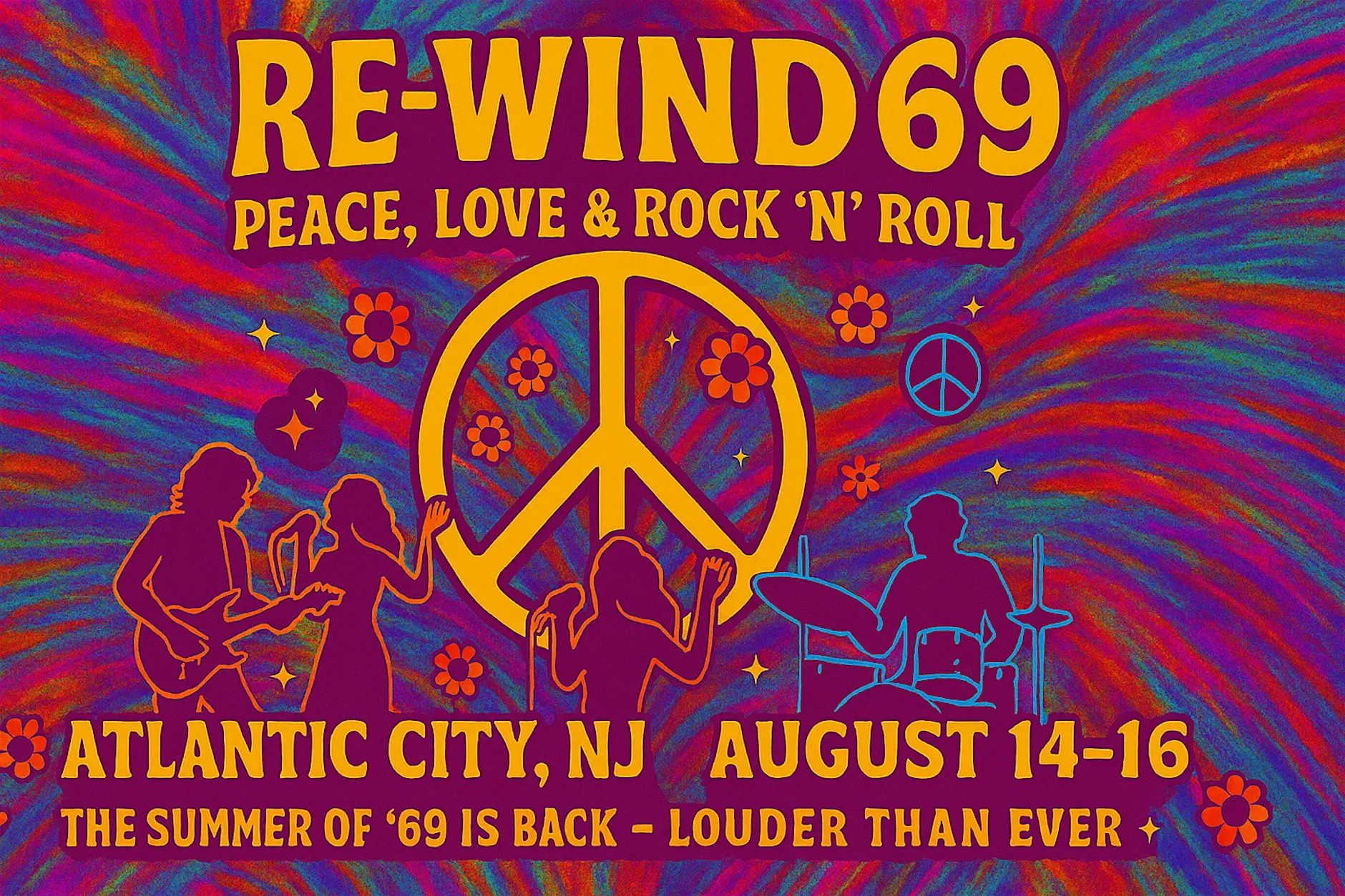
The season concludes August 27 with the South Jersey Pops Orchestra delivering what is expected to be one of the largest and most cinematic performances of the summer.

Outdoor orchestral performances possess a completely different emotional texture than standard concert formats. Film scores, Broadway arrangements, orchestral standards, and crossover compositions take on added atmosphere in open-air environments where sound moves naturally through large public spaces. Along the Cooper River corridor, those performances often feel almost cinematic themselves, particularly as night settles over the venue and large crowds gather beneath the summer sky.

The Twilight Concert Series also reflects a much larger transformation currently occurring throughout New Jersey’s entertainment economy.

Increasingly, counties and municipalities are becoming major cultural programming leaders in ways that extend well beyond parks departments or seasonal recreation initiatives. Local governments are now actively shaping regional entertainment ecosystems by funding, organizing, and promoting large-scale public events capable of attracting thousands of attendees while simultaneously supporting tourism, small business traffic, food vendors, hospitality industries, and local economic development.

Programs like the Twilight Concert Series now function as serious regional attractions.

They generate restaurant traffic before and after events. They encourage community park utilization. They strengthen local identity. They create accessible entertainment opportunities during a period when ticket prices throughout the live music industry continue escalating aggressively nationwide.

That affordability component matters enormously.

In an entertainment economy increasingly dominated by dynamic pricing, secondary resale markets, parking fees, service charges, and premium seating structures, free large-scale public concerts have become increasingly valuable culturally and economically. Families can attend without financial barriers. Younger audiences gain exposure to live performance culture. Communities gather together without the transactional pressure now attached to many large-scale entertainment experiences.

Jack Curtis Stadium itself has become central to the success of the series.

Positioned within Cooper River Park along North Park Drive in Pennsauken Township, the venue offers an ideal balance between accessibility and atmosphere. The open-lawn format keeps the concerts relaxed and community-oriented while still allowing substantial audience capacity. Attendees are encouraged to bring lawn chairs and picnic blankets, reinforcing the informal, welcoming nature of the series itself.

The setting also allows the concerts to feel distinctly South Jersey.

Unlike heavily commercialized entertainment districts, Cooper River Park retains a strong community identity connected directly to the surrounding neighborhoods and county culture. That authenticity helps explain why the Twilight Concert Series continues resonating so strongly with audiences year after year.

For Explore New Jersey readers tracking the evolving landscape of live music, arts programming, and regional entertainment throughout the state, the 2026 Twilight Concert Series stands as one of the strongest examples of how local public programming can compete directly with major commercial entertainment options while still preserving a deeply personal community atmosphere.

From Y2K pop revival energy and classic rock history to orchestral finales, tropical celebration nights, and multigenerational crowd experiences, Camden County’s summer concert calendar captures the full spectrum of what New Jersey live music culture has become.

And as audiences once again gather beside the Cooper River this summer, the Twilight Concert Series will continue proving something New Jersey music fans have always understood instinctively: some of the best concerts are not necessarily the most expensive or exclusive ones.

Sometimes the most memorable nights happen outdoors, beneath the stars, inside a county park where the music feels connected not only to the artists onstage, but to the communities surrounding them.

Violence, Fraud, Public Corruption, and Domestic Crime Cases Intensify Across New Jersey as Latest Multi-County Crime Reports Reveal Mounting Public Safety Pressures Statewide

A disturbing wave of violent crime, public corruption investigations, domestic homicide allegations, major financial fraud prosecutions, and escalating public safety incidents across multiple New Jersey counties is once again drawing attention to the increasingly complex law enforcement landscape unfolding throughout the state as authorities continue confronting a broad spectrum of criminal activity impacting communities from Paterson to Atlantic County and deep into South Jersey.

The latest statewide developments highlight not only the persistence of violent street crime in several urban corridors, but also the growing range of cases now dominating criminal investigations across New Jersey, including white-collar fraud schemes, corruption inside local government systems, domestic violence homicides, armed public disturbances, and vehicle theft incidents involving children placed directly in harm’s way.

Together, the incidents paint a sobering picture of the pressures facing law enforcement agencies, prosecutors, courts, and local communities statewide as New Jersey continues navigating rising concerns surrounding violence, accountability, mental health, public trust, organized fraud activity, and institutional integrity.

Among the most alarming incidents reported this week was a deadly Mother’s Day shooting in Paterson that left two people dead and four others wounded during a late-night burst of gunfire on a city street. Authorities say the shooting unfolded around 9 p.m. in Passaic County, sending shockwaves through the community and once again placing renewed focus on persistent gun violence challenges facing several densely populated North Jersey cities.

The Paterson shooting immediately became one of the state’s highest-profile violent crime investigations of the week, not only because of the number of victims involved but also because the attack occurred during what should have been a family-centered holiday evening. Multi-victim shootings continue placing enormous pressure on local police departments already managing ongoing concerns tied to illegal firearms trafficking, gang-related activity, retaliatory violence patterns, and strained investigative resources in some urban communities.

Paterson in particular has spent years confronting complicated public safety challenges linked to population density, economic stress, organized criminal activity, and recurring violent crime spikes. While city leaders and law enforcement officials have repeatedly emphasized progress in targeted enforcement operations and violence intervention strategies, incidents like the Mother’s Day shooting underscore the volatility that still exists within portions of the city.

The broader emotional impact of shootings involving multiple victims also continues affecting public confidence across affected neighborhoods, where residents increasingly express frustration over recurring violence disrupting daily life, community stability, and perceptions of safety.

At the same time, another deeply troubling incident in Atlantic County further highlighted the unpredictable and often dangerous situations law enforcement officers continue encountering during routine public safety responses.

Authorities arrested a man accused of pointing a firearm at a dog inside a New Jersey market before police physically intervened and wrestled the weapon from his possession. According to investigators, officers were forced into direct physical confrontation inside the store in order to disarm the suspect and prevent the situation from escalating further.

The incident reflects a broader pattern of increasingly volatile encounters law enforcement agencies report facing statewide, particularly involving individuals displaying erratic or dangerous behavior in public spaces. Police departments throughout New Jersey continue emphasizing the rising complexity of calls involving firearms, mental health concerns, emotional instability, and rapidly escalating confrontations occurring inside businesses, retail environments, and residential neighborhoods.

Such incidents often unfold within seconds and place both officers and civilians at enormous risk.

The Atlantic County case also highlights the continued importance of rapid response policing and de-escalation training as departments navigate public safety situations where firearms are introduced into highly populated environments capable of producing mass casualty outcomes if not quickly contained.

Meanwhile, in Camden County, prosecutors are pursuing a highly emotional domestic violence homicide case involving a man accused of fatally stabbing his wife inside Gloucester Township. Authorities allege the defendant became increasingly obsessed with his wife’s cellphone activity in the weeks leading up to the killing, an accusation that has once again intensified statewide conversations surrounding domestic violence escalation, coercive control behavior, and warning signs that often precede intimate partner homicide cases.

The accused was denied pretrial release as the case proceeds through the criminal justice system.

Domestic violence remains one of the most persistent and difficult public safety crises confronting New Jersey communities, often unfolding behind closed doors long before incidents become visible to law enforcement or the public. Prosecutors and victim advocacy organizations throughout the state have repeatedly emphasized that obsessive monitoring behavior, escalating jealousy, emotional isolation, digital surveillance, and controlling conduct frequently emerge as precursors to lethal domestic violence situations.

The Gloucester Township case adds to a growing number of deeply disturbing domestic homicide prosecutions statewide that continue forcing renewed examination of prevention systems, intervention resources, restraining order enforcement, and mental health support accessibility.

At the same time, authorities in Cumberland County are continuing the search for a suspect accused of stealing a vehicle from a Bridgeton Wawa convenience store while two children remained inside the car during the early morning hours of May 5.

The alleged theft, which reportedly occurred around 1:20 a.m., instantly transformed what might otherwise have been categorized as a vehicle crime into a potentially catastrophic child endangerment situation. Incidents involving stolen vehicles containing children often trigger large-scale emergency responses due to the immediate threat posed to vulnerable occupants during unpredictable criminal flight situations.

Law enforcement agencies throughout New Jersey have repeatedly warned about the dangers associated with leaving vehicles running or unattended even briefly, particularly outside convenience stores, gas stations, and retail locations during overnight hours.

The Bridgeton incident also highlights the unpredictable convergence between opportunistic property crimes and far more serious public safety consequences when children become involved.

While violent crime cases continue drawing enormous public attention, financial crime and public corruption investigations are simultaneously exposing another layer of criminal activity unfolding across the state.

In Monmouth County, a former CEO was sentenced to prison for his role in a massive $212 million investment fraud scheme after previously pleading guilty to conspiracy charges. The case represents one of the more substantial financial crime prosecutions involving New Jersey defendants in recent years and reflects the continued aggressive pursuit of white-collar criminal enforcement actions involving investor fraud, financial deception, and organized economic crimes.

Large-scale fraud cases frequently devastate victims financially while eroding public trust in investment systems, business leadership, and financial oversight mechanisms. Prosecutors nationwide have increasingly prioritized complex financial investigations as fraud schemes grow more technologically sophisticated and increasingly interconnected across multiple jurisdictions.

The Monmouth County sentencing also reinforces the enormous legal exposure corporate executives now face when participating in fraudulent investment operations capable of impacting hundreds or even thousands of victims.

Simultaneously, another corruption-related case emerging from Passaic County further intensified concerns surrounding institutional integrity and abuse of public office within local government systems.

Authorities announced that a New Jersey zoning inspector and alleged accomplices admitted participating in a bribery scheme involving forged building permits tied to activities occurring between late 2020 and early 2022. According to investigators, the defendants accepted bribes in exchange for fraudulent permit activity connected to local development and inspection processes.

Public corruption investigations involving zoning, permitting, inspections, and development approvals often carry especially significant consequences because they strike directly at the integrity of municipal governance systems responsible for public safety oversight, building standards, and community trust.

Corruption inside construction and permitting processes can create cascading risks involving unsafe development practices, code violations, fraudulent inspections, and compromised infrastructure oversight. Prosecutors throughout New Jersey have increasingly targeted municipal corruption investigations as part of broader efforts to strengthen public confidence in local government operations and regulatory systems.

Taken together, the latest crime developments spanning multiple New Jersey counties reveal the extraordinary diversity and complexity of modern law enforcement challenges throughout the state.

Violent street crime, domestic violence homicides, child endangerment incidents, armed public disturbances, financial fraud conspiracies, and corruption prosecutions each demand vastly different investigative resources, prosecutorial strategies, forensic expertise, and community response systems.

At the same time, these cases collectively reinforce growing public concerns surrounding safety, accountability, institutional trust, and the long-term social pressures contributing to criminal activity across both urban and suburban communities.

New Jersey law enforcement agencies now operate in an environment where public expectations continue rising even as criminal investigations grow more technologically sophisticated, emotionally volatile, and operationally demanding. Police departments, prosecutors, courts, and community organizations increasingly face pressure not only to solve crimes but also to address broader root causes involving mental health instability, economic stress, domestic conflict escalation, illegal firearms access, organized fraud networks, and corruption vulnerabilities.

The incidents emerging across Passaic, Atlantic, Camden, Cumberland, and Monmouth counties this week illustrate just how wide-ranging those challenges have become.

From deadly street violence in Paterson to corruption inside municipal permit systems, from financial fraud schemes worth hundreds of millions of dollars to deeply personal acts of domestic violence, the evolving public safety landscape across New Jersey continues demanding aggressive enforcement, institutional accountability, and sustained community engagement simultaneously.

As investigations continue unfolding statewide, the latest cases serve as another stark reminder that New Jersey’s law enforcement environment remains defined not by a single crime trend, but by a broad and rapidly shifting spectrum of public safety threats affecting communities in profoundly different ways across the state.