Home Blog Page 41

Carolyn Dorfman Dance’s REACH Gala 2026 Set to Transform Maplewood Into a Center of Movement, Community, and Cultural Impact

New Jersey’s performing arts scene continues to thrive on the strength of organizations that understand the power of connection—where performance is not only presented but felt, shared, and extended into the community. On April 23, 2026, Carolyn Dorfman Dance will once again elevate that mission with its highly anticipated annual benefit, REACH, an evening that brings together artistry, philanthropy, and regional leadership in one of the state’s most compelling cultural gatherings. Hosted at the Maplewood Country Club, this event is positioned as both a celebration of dance and a vital engine for sustaining arts education and outreach programs that impact communities across New Jersey.
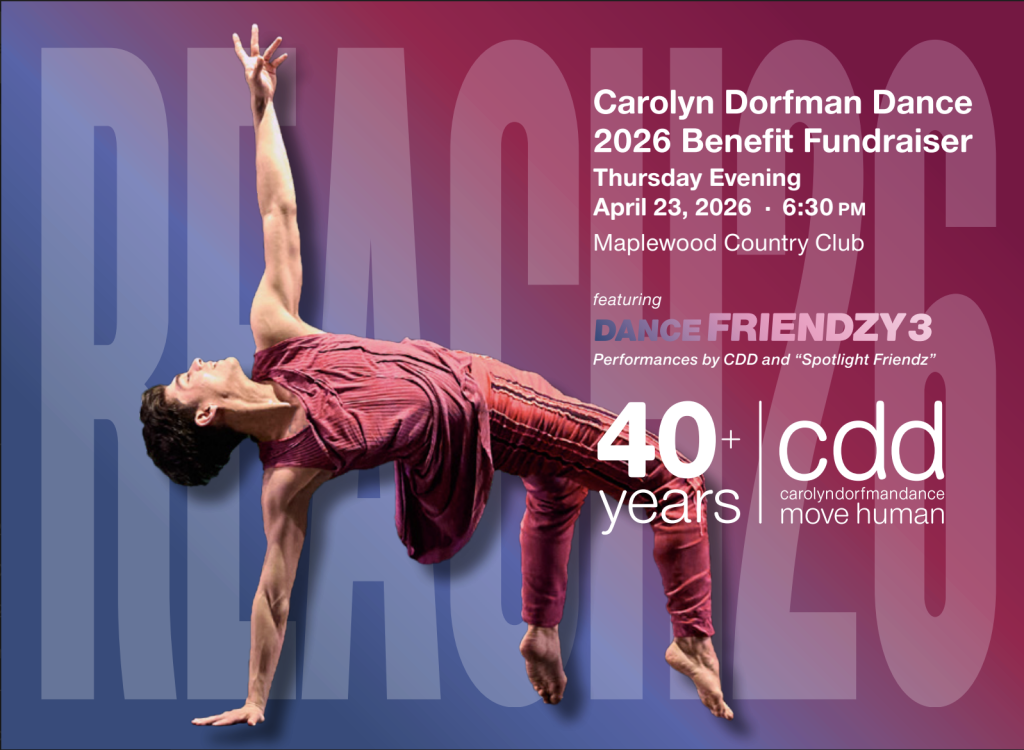
Beginning at 6:30 p.m., REACH is designed as a fully immersive experience that captures the essence of Carolyn Dorfman Dance’s identity—bold, expressive, and deeply rooted in human connection. The evening unfolds in a setting that reflects both tradition and accessibility, as Maplewood Country Club offers a distinctive backdrop that blends historic charm with modern sophistication. Located in the heart of Maplewood Village, just steps from transit and the town’s vibrant downtown core, the club stands as more than a venue; it is a reflection of the kind of community-centered environment that aligns seamlessly with the company’s values.

Founded in the early twentieth century and evolving into a premier family-oriented destination, Maplewood Country Club is known for its meticulously maintained grounds, dynamic programming, and exceptional hospitality. Its 18-hole championship golf course, active tennis facilities with rare red clay courts, and resort-style pool environment speak to its breadth as a lifestyle destination, while its dining and event spaces provide the perfect setting for an evening of cultural significance. For REACH, the club transforms into a stage where art, advocacy, and celebration converge.

At the heart of the evening is a powerful lineup of performances that underscore the artistic excellence of Carolyn Dorfman Dance. Guests will experience a curated selection of works including “Love Suite Love,” a nuanced exploration of relationships through movement; “Mayne Mentshn,” a piece that delves into cultural identity and memory; and the high-energy “Boogie Woogie Bugle Boy,” which brings rhythm, theatricality, and a sense of joy to the program. These works collectively demonstrate the company’s range—emotionally resonant, technically refined, and universally engaging.

The program expands beyond traditional repertory with the inclusion of Dance FRIENDZY3!, a signature collaborative showcase that highlights the interconnected nature of the arts community. This segment features not only Carolyn Dorfman Dance performers but also an impressive roster of “Spotlight Friendz,” individuals whose contributions to both the arts and broader community reflect the spirit of the evening. Among them are Ronnie Carney, a Newark Arts High School dance faculty member; Jill Ford of New Brunswick, whose distinguished career in the technology sector underscores the intersection of innovation and creativity; Lara Friedman-Kats, a former Carolyn Dorfman Dance performer now shaping young artists at Bard High School; Betsy Sobo of West Orange, a respected independent fundraising consultant; and Phil and Ennis Carter of Philadelphia, founders of Social Impact Studios and members of the musical group The FlipCharts.

Recognition is a defining element of REACH, and the 2026 gala places a well-deserved spotlight on individuals whose influence has been instrumental in sustaining and expanding the reach of the arts. Ennis Carter, Director of Social Impact Studios, will receive the prestigious Encore Award, honoring decades of work dedicated to fostering collaboration, creativity, and cultural engagement. Her leadership in building Social Impact Studios into a hub for artistic and social innovation reflects the very ethos that Carolyn Dorfman Dance champions. In addition, Helen Davis and Janel Brown will be presented with Special Recognition Awards, acknowledging their continued support and meaningful contributions to the organization and the broader arts ecosystem.

The evening’s program will be guided by emcee Kitab Rollins, whose presence brings both energy and cohesion to the event. Guests will enjoy an open bar and a thoughtfully curated buffet dinner, creating an atmosphere that is both celebratory and refined. Enhancing the experience further is the inclusion of signed artwork by James Yang, the acclaimed illustrator behind the “Love 2026 Forever” stamp, adding a unique visual dimension that bridges the worlds of dance and design.

While the performances and honors provide the centerpiece, the deeper significance of REACH lies in its impact. Carolyn Dorfman Dance has long been recognized for its commitment to community engagement, delivering programs that extend far beyond the stage. Through workshops, residencies, and inclusive initiatives, the organization brings the transformative power of movement to schools, underserved populations, and diverse communities throughout New Jersey. These programs are designed not only to teach dance but to foster empathy, confidence, and connection—values that resonate far beyond the studio.

Support for the REACH Gala directly fuels these initiatives, ensuring that access to the arts remains broad, equitable, and impactful. Attendees and supporters have the opportunity to contribute through sponsorships, ticket purchases, and targeted donations to their favorite “Spotlight Friendz,” creating a layered approach to giving that reflects the collaborative spirit of the event. The result is a fundraising model that feels personal, participatory, and deeply aligned with the organization’s mission.

Within the broader context of New Jersey’s performing arts landscape, Carolyn Dorfman Dance continues to stand as a leading force—an organization that exemplifies how artistic excellence and community engagement can coexist and thrive. As highlighted across Explore New Jersey’s dedicated theatre coverage, the state’s cultural vitality is driven by institutions that are willing to innovate, collaborate, and lead with purpose. REACH is a direct extension of that ethos, offering a platform where art becomes a vehicle for connection and progress.

Accessibility remains a priority for the organization, with Carolyn Dorfman Dance welcoming all audiences and offering accommodations to ensure an inclusive experience for every attendee. This commitment reinforces the company’s broader mission: to create spaces where everyone can engage with the arts in a meaningful and empowering way.

As anticipation builds for April 23, the REACH Gala emerges as more than a date on the calendar—it is a defining moment for New Jersey’s arts community. It is an evening where movement tells stories, where recognition honors impact, and where every contribution helps extend the reach of creativity into the lives of others. Carolyn Dorfman Dance is not only presenting a performance; it is inviting New Jersey to be part of something larger, a collective effort to sustain and elevate the arts as a cornerstone of community life.
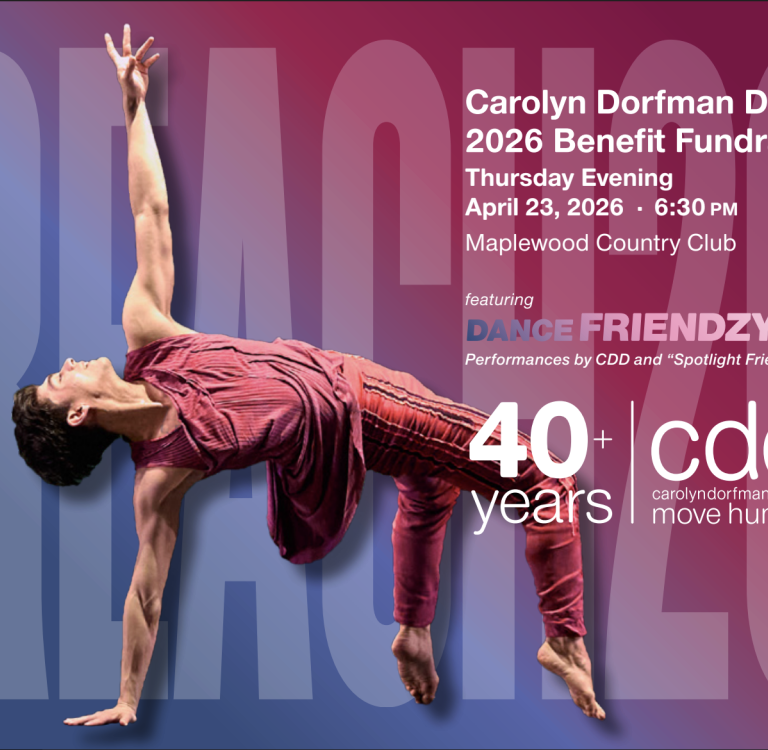

Carolyn Dorfman Dance 2026 Benefit Fundraiser

0

Carolyn Dorfman Dance’s REACH Gala Returns to Maplewood: A Signature New Jersey Arts Event Driving Community Impact and Cultural Excellence

April 23 @ 8:00 PM 11:30 PM

New Jersey’s performing arts landscape continues to define itself through institutions that not only present compelling work on stage, but actively invest in the communities around them. This spring, one of the state’s most respected dance companies steps forward once again with a marquee event that blends performance, philanthropy, and cultural leadership. Carolyn Dorfman Dance will host its annual gala benefit, REACH, on Thursday, April 23, 2026, at the Maplewood Country Club—an evening designed to celebrate artistic achievement while directly supporting transformative arts education and community engagement programs across the region.

Positioned at the intersection of performance and purpose, REACH has evolved into more than a fundraising event. It stands as a defining moment on New Jersey’s cultural calendar, drawing artists, supporters, educators, and civic leaders into a shared experience that underscores the value of the arts as a force for connection, inclusion, and long-term impact. This year’s gathering, set to begin at 6:30 p.m. at the Maplewood Country Club on Baker Street, promises a fully immersive evening that reflects both the creative legacy of Carolyn Dorfman Dance and the forward momentum of its mission.

At its core, Carolyn Dorfman Dance has built a reputation for producing emotionally resonant, socially aware work that speaks to a broad audience. The REACH Gala amplifies that identity through a carefully curated program of performances that highlight the company’s signature style—dynamic, expressive, and deeply human. Attendees will experience selections including “Love Suite Love,” a work that captures the complexities of relationships through movement; “Mayne Mentshn,” which explores cultural memory and identity with striking physicality; and the high-energy “Boogie Woogie Bugle Boy,” a crowd-favorite that brings rhythm and nostalgia together in a vibrant, theatrical presentation.

Expanding beyond traditional repertory, the evening will also feature Dance FRIENDZY3!, a collaborative showcase that reinforces the company’s commitment to creative partnership and artistic dialogue. This segment brings together Carolyn Dorfman Dance performers alongside “Spotlight Friendz,” including Ronnie Carney and Jill Ford, creating a layered performance environment that celebrates both individual artistry and collective expression. The result is an experience that feels both intimate and expansive—an authentic reflection of New Jersey’s diverse and interconnected arts community.

Recognition remains a central pillar of the REACH Gala, and this year’s honorees represent the depth of influence that extends beyond the stage. Ennis Carter will receive the Encore Award, acknowledging sustained contributions and dedication to the arts. In addition, Janel Brown and Helen Davis will be presented with Special Recognition Awards, honoring their meaningful support and impact within the broader cultural ecosystem. These acknowledgments reinforce the essential role that individuals and advocates play in sustaining the vitality of New Jersey’s performing arts sector.

The evening itself is designed to match the significance of its mission. Guests will be welcomed into a refined yet inviting atmosphere featuring an open bar, a full buffet dinner, and a program emceed by Kitab Rollins, whose presence brings both energy and cohesion to the event. The setting at Maplewood Country Club provides an ideal backdrop—elegant, accessible, and rooted within one of New Jersey’s most culturally active communities. It is a space where celebration and purpose align seamlessly, allowing attendees to engage fully with both the artistic and philanthropic dimensions of the night.

Beyond the performances and honors, the true impact of the REACH Gala lies in what it enables. Carolyn Dorfman Dance has long prioritized outreach initiatives that bring movement, creativity, and storytelling into schools, underserved communities, and diverse populations throughout New Jersey. These programs are not ancillary—they are central to the organization’s identity. Through workshops, residencies, and inclusive programming, the company creates access points for individuals who might otherwise never encounter live dance or artistic expression in a meaningful way. The funds raised through REACH directly support these efforts, ensuring that the reach of the arts continues to expand across geographic, economic, and cultural boundaries.

This commitment aligns with the broader strength of New Jersey’s theatre and performing arts scene, where organizations consistently blend artistic excellence with community relevance. Platforms like Explore New Jersey’s dedicated theatre coverage continue to spotlight the venues, companies, and creators who are shaping the state’s cultural identity in real time. Within that ecosystem, Carolyn Dorfman Dance stands as a cornerstone—an organization that not only produces compelling work but also models what it means to lead with purpose.

As the April 23 event approaches, the REACH Gala represents a timely opportunity for audiences to engage directly with one of New Jersey’s most impactful arts organizations. Sponsorships and ticket opportunities are available through the official event channels, and additional support can be extended through the company’s fundraising initiatives, including its 99Pledges campaign. Participation in any form—attendance, sponsorship, or donation—contributes to a larger narrative about the role of the arts in building stronger, more connected communities.

In an era where the value of live performance continues to be rediscovered and redefined, events like REACH serve as both celebration and catalyst. They remind audiences that the arts are not static—they are living, evolving forces that depend on engagement, investment, and shared belief. Carolyn Dorfman Dance’s annual gala does more than showcase choreography; it activates a network of support that sustains creativity at every level.

For New Jersey, this is what cultural leadership looks like: a night where performance meets purpose, where recognition meets responsibility, and where every movement on stage echoes far beyond the room.

Maplewood Country Club

28 Baker Street, , NJ
Maplewood, New Jersey 07040 United States
+ Google Map
973.762.2100
View Venue Website

Morris Family Justice Center Marks 10 Years of Transformative Impact in Morris County as Leaders Unite to Recognize a Decade of Survivor-Centered Support

A decade after opening its doors with a singular, urgent mission, the Morris Family Justice Center stands today as one of New Jersey’s most effective and collaborative responses to domestic violence, dating abuse, and sexual assault—an integrated model of care that has fundamentally reshaped how survivors access safety, justice, and long-term stability. This week’s 10th anniversary commemoration at the Morris County Administration and Records Building in Morristown was not simply a ceremonial milestone; it was a powerful affirmation of a system that has matured into a critical pillar of the county’s public safety and human services infrastructure.

County leadership, state representatives, law enforcement officials, and frontline service providers gathered to recognize the center’s evolution and enduring impact. Commissioner Director Stephen Shaw and Commissioner Christine Myers formally presented a proclamation on behalf of the Morris County Board of County Commissioners, underscoring the center’s role as a model of coordinated, survivor-focused care that eliminates fragmentation and reduces barriers for those in crisis. Their remarks reinforced a central truth that has defined the center’s first decade: meaningful outcomes are achieved not through isolated efforts, but through sustained, strategic collaboration across agencies and disciplines.

From its inception in 2016, the Morris Family Justice Center was designed to address a systemic failure that had long defined the survivor experience—navigating a disjointed and often overwhelming network of services spread across multiple locations and institutions. By consolidating critical resources under one roof, the center introduced a streamlined, trauma-informed approach that prioritizes both accessibility and dignity. Today, survivors can access legal advocacy, counseling, protective services, and child-focused support in a single, secure environment, significantly reducing the logistical and emotional burden traditionally associated with seeking help.

This integrated “one safe place” model, now widely recognized as a national best practice, is anchored by a robust network of partners including the Morris County Prosecutor’s Office, Sheriff’s Office, Superior Court, Legal Services of Northwest Jersey, and a wide range of community-based organizations. The result is a unified response system that not only accelerates access to services but also ensures consistency in care, accountability in process, and continuity in recovery pathways.

The anniversary event provided a platform to reflect on the leadership and vision that made the center possible. JBWS, the organization that operates the facility, remains at the core of its success. Under its stewardship, the center has become more than a service hub—it has evolved into a comprehensive advocacy ecosystem. JBWS itself is marking a significant milestone this year, celebrating 50 years of service and innovation in supporting individuals and families impacted by domestic violence. What began as a grassroots helpline supported by volunteers offering refuge in private homes has grown into a sophisticated, multi-layered support network that continues to expand its reach and capabilities.

Speakers at the event highlighted how this growth trajectory directly contributed to the creation of the Family Justice Center. Former Morris County Commissioner Kathy DeFillippo, whose early leadership helped bring the concept to fruition, was recognized for her role in advancing the initiative during its formative stages. The development of the center also benefited from the contributions of legal and judicial leaders, including Chief Assistant Prosecutor Tia Monachio and Superior Court Judge Marcy McMann, whose work within the Morris County Domestic Violence Working Group laid the groundwork for a more coordinated and effective response system.

The program included a detailed presentation outlining the center’s measurable impact over the past decade, illustrating how its integrated approach has improved outcomes for survivors across multiple dimensions—legal resolution, emotional recovery, family stabilization, and long-term independence. These outcomes are not abstract; they are reflected in the lived experiences of individuals who have transitioned from crisis to stability through the center’s services.

State-level recognition further elevated the significance of the occasion. Assemblywomen Aura Dunn and Marisa Sweeney presented a legislative citation acknowledging the center’s contributions within the 25th Legislative District, while a message from the Governor’s office reinforced the broader statewide importance of this model. Dunn’s remarks captured the urgency and unpredictability of crisis response work, emphasizing that no two cases are alike and that the center’s strength lies in its ability to meet individuals exactly where they are—often at their most vulnerable—and guide them toward a path of recovery.

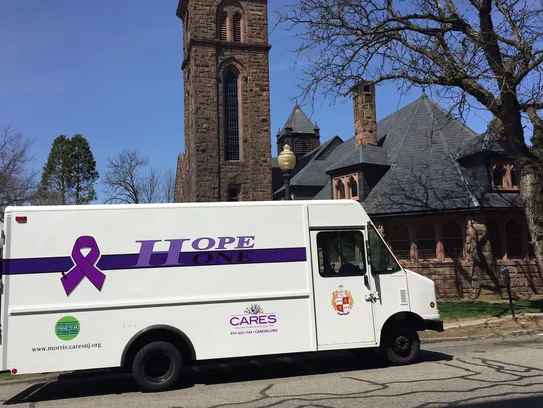
The event also highlighted the broader ecosystem of support services operating throughout Morris County, reinforcing the idea that the Family Justice Center is part of a larger, interconnected framework. Programs such as the Morris County Sexual Assault Center, operated through Atlantic Behavioral Health, and the Sheriff’s Hope One mobile outreach initiative demonstrate how the county has invested in both stationary and mobile solutions to reach residents in need. Together, these programs form a comprehensive continuum of care that extends beyond the walls of any single facility.

What distinguishes the Morris Family Justice Center at this 10-year mark is not only its operational success but its adaptability. Over the past decade, the nature of domestic violence and related crimes has evolved, influenced by technology, economic pressures, and shifting social dynamics. The center has responded by continuously refining its services, expanding partnerships, and integrating new approaches to advocacy and intervention. This forward-looking posture ensures that it remains not only relevant but essential in addressing both current and emerging challenges.

As Morris County looks ahead, the Family Justice Center is positioned to deepen its impact even further. Continued investment in infrastructure, expanded outreach, and enhanced coordination with regional and state partners will be critical in sustaining momentum. The recent development of additional supportive resources, including innovative housing solutions and expanded counseling services, signals a commitment to long-term growth that aligns with the center’s founding principles.

For Sunset Daily News New Jersey readers tracking developments in public safety, legal advocacy, and community-based services, the 10th anniversary of the Morris Family Justice Center represents more than a retrospective milestone—it is a case study in how strategic alignment, institutional commitment, and community-driven leadership can produce lasting, measurable change. As the region continues to confront complex social challenges, the center’s model offers a clear and proven blueprint for delivering effective, compassionate, and coordinated care at scale.

For continued coverage and in-depth reporting on law enforcement, public safety initiatives, and justice system developments across the state, explore the latest updates in the Law & Order section of Sunset Daily News New Jersey, where ongoing stories reflect the evolving landscape of safety, accountability, and community resilience.

Our Picks for the Weekend: Pink Talking Fish, The Little Mermaid Auditions, Nimesh Patel, The Atlantic City Beer Fests Rare Beer Fest, Itzhak Perlman, More!

The-Cake-460X316

The Cake

April 10 @ 20:00 – April 11 @ 23:30

Bergen County Players 298 Kinderkamack Road, Oradell

“The Cake” at the Center of New Jersey Theatre: A Powerful, Timely Production Blending Humor, Humanity, and Cultural Reflection New Jersey’s theatre scene continues to assert itself as one of […]

The Little Mermaid Auditions

Little-Mermaid-Auditions_FB.jpg
Slot Machine

April 10 @ 16:00

The Middletown Arts Center 36 Church Street, NJ, Middletown

The MAC Players Bring Disney’s The Little Mermaid to Life at Middletown Arts Center with Open Auditions and a Full-Scale Summer Production on the Horizon New Jersey’s theater scene continues […]

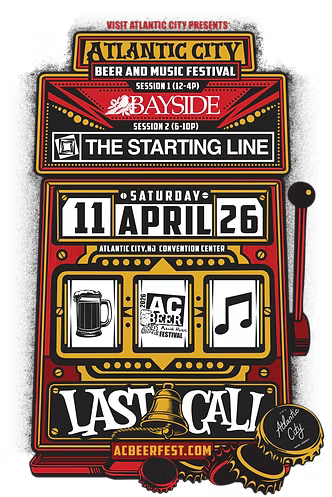
The Atlantic City Beer Fests Rare Beer Fest

April 10 @ 17:00

Anchor Rock Club 247 S. New York Ave, Atlantic City

Atlantic City’s Most Exclusive Pour: Inside the Rare Beer Fest at Anchor Rock Club Hidden just beneath the surface of Atlantic City Beer Fest weekend is an event designed for […]

Niko Moon

niko-moon-tickets_04-10-26_17_68f24de1f1e68

April 10 @ 17:30

Starland Ballroom 570 Jernee Mill Rd, Sayreville

Niko Moon Brings Sunshine and Positivity to Starland Ballroom This April Country music fans have a reason to celebrate this spring as Niko Moon, the Texas-born singer-songwriter known for his […]

Nimesh Patel: With All Due Disrespect Tour

a92026df-52c6-4649-90ba-6a620b98f52d

April 10 @ 20:00

State Theatre New Jersey 15 Livingston Avenue , NJ, New Brunswick

Nimesh Patel Brings “With All Due Disrespect” Tour to State Theatre New Jersey Comedy fans in New Jersey have a reason to mark their calendars as Nimesh Patel, one of […]

April 10 @ 20:00

The Warped Tour Band

The Wellmont Theater 5 Seymour St, Montclair

Emo Night Lives Again: A High-Voltage Pop-Punk Revival Is About to Shake New Jersey There was a time when studded belts, Vans sneakers, and eyeliner ruled concert crowds, when heartfelt […]

66917b4ecc794

Grungefest – A Tribute to Pearl Jam & Chris Cornell

18ac1c22-6635-45db-b79a-7cde148574fc

April 10 @ 20:00

sins 300x300 (1)_1773165746

The Newton Theatre 234 Spring St, , NJ, Newton

GRUNGEFEST: A Tribute to Pearl Jam & Chris Cornell Set to Ignite New Jersey with a Powerful Night of ‘90s Legacy Rock New Jersey’s live music circuit continues to prove […]

Sins of the Mother

April 10 @ 20:00 – April 12 @ 23:30

New Jersey Repertory Company 179 Broadway, Long Branch

New Jersey Repertory Company Presents Sins of the Mother, A Taut Psychological Drama Opening April 10 in Long Branch New Jersey’s theatre scene continues to assert its depth with intimate, […]

2026-0411-1

NJ Ballet Free Public Performanceat UCPAC’s Main Stage

April 11 @ 13:00

Union County Performing Arts Center (UCPAC) 1601 Irving St., Rahway

New Jersey Ballet Announces Free Public Performance at UCPAC Featuring Landmark Works by Twyla Tharp and Justin Peck New Jersey’s performing arts calendar continues to expand its accessibility and artistic […]

Gala-Ticket-Image-I77A2474-scaled

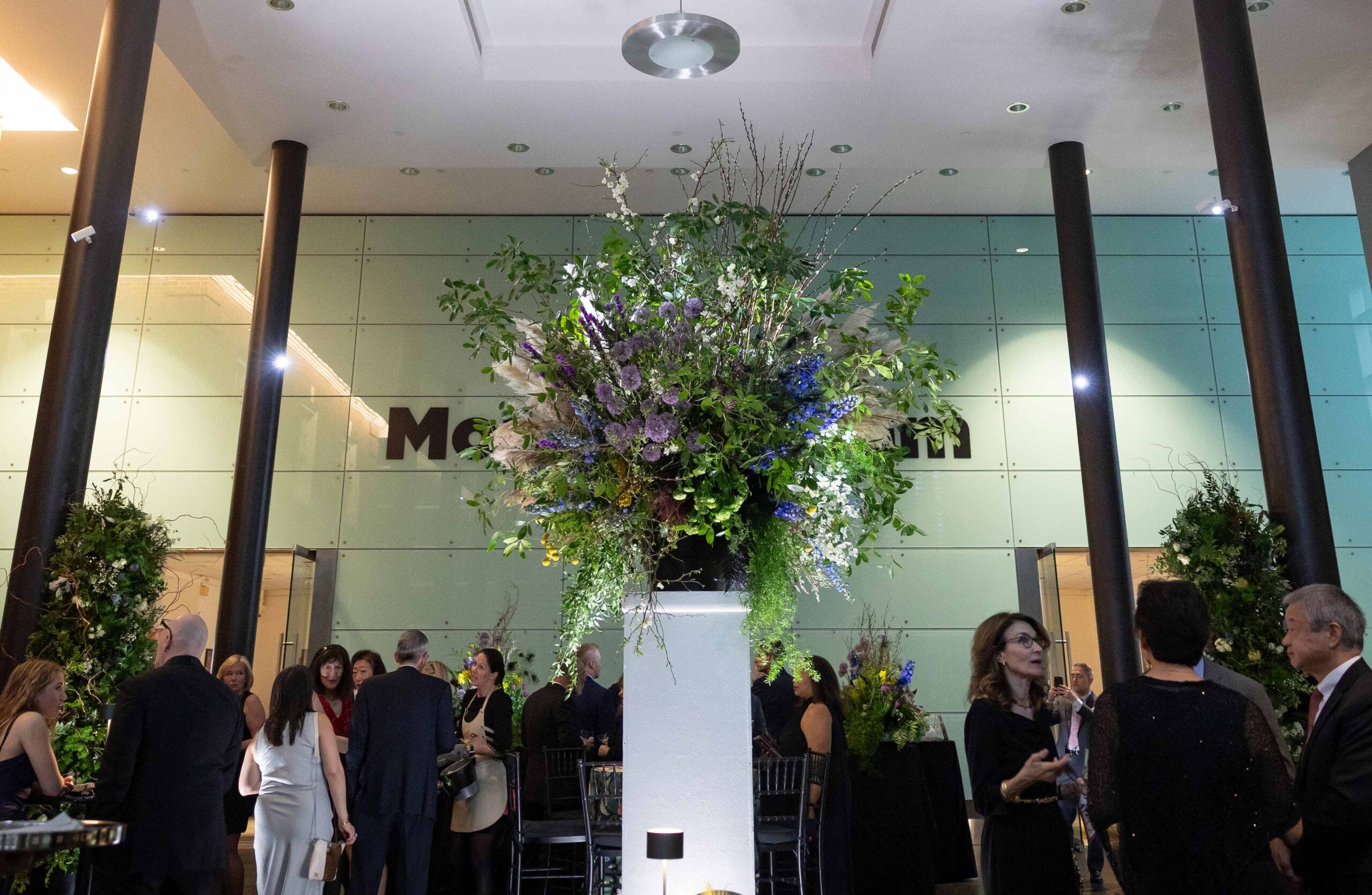
Morris Museum Annual Gala Museum in Motion

April 11 @ 15:00

Bickford Theatre at Morris Museum 6 Normandy Heights Road , NJ, Morristown

An Evening of Art in Motion: Morris Museum Gala Honors a Legacy of Live Performance On Saturday, April 11, the Morris Museum will open its doors for its most anticipated […]

FY26_GALA_SaveTheDate_Horn

Gala 2026

April 11 @ 15:30

Richardson Auditorium 68 Nassau Street, Princeton

A Touch of Brass Brings an Elevated Evening of Music, Culture, and Celebration to New Jersey On Saturday, April 11, 2026, one of New Jersey’s most refined and anticipated cultural […]

Gala-2026-desktop

Simon Mandal Returns to Host the Morris Museum Gala

April 11 @ 16:00

Bickford Theatre at Morris Museum 6 Normandy Heights Road , NJ, Morristown

prine-feature-1

World-Class Mentalist Simon Mandal Returns to Host the Morris Museum Gala on April 11 as New Jersey Celebrates a Premier Night of Performing Arts and Cultural Excellence MORRIS TOWNSHIP, NJ […]

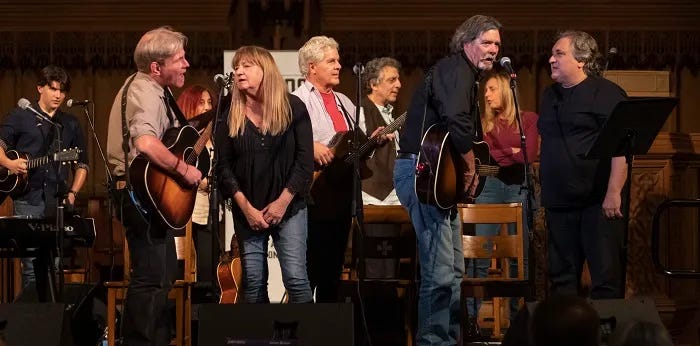
Tribute to John Prine

April 11 @ 17:00

Outpost in the Burbs 40 South Fullerton Avenue (First Congregational Church), Montclair

Montclair to Host a Powerful Tribute to John Prine: Outpost in the Burbs and Montclair Film Unite for an Unforgettable Day of Music and Storytelling on April 11, 2026 New […]

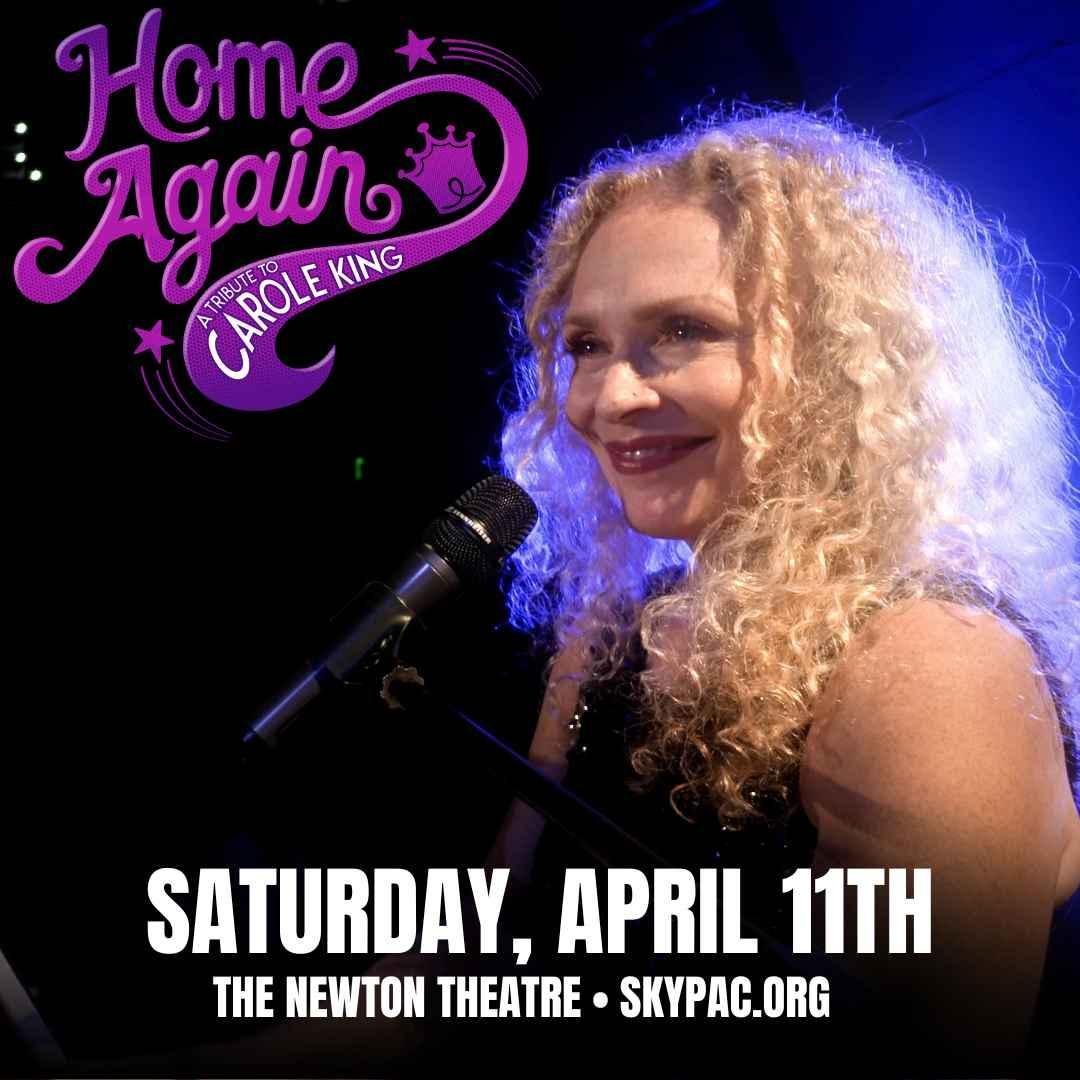
Home_Again._2026_Square

Home Again – A Tribute to Carole King

April 11 @ 17:30

The Newton Theatre 234 Spring St, , NJ, Newton

Home Again: Celebrating Carole King’s Timeless Legacy in Newton Music lovers in New Jersey have a special reason to mark their calendars this spring. On Saturday, April 11th, the Newton […]

6908daaf403f5

Boys Like Girls

43ecf278-331b-498f-814d-8f1df064395b

April 11 @ 18:00

The Wellmont Theater 5 Seymour St, Montclair

Boys Like Girls Return to New Jersey with “The Soundtrack of Your Life” Tour Featuring iDKHOW and Arrows in Action Fans of early 2000s rock anthems have reason to celebrate […]

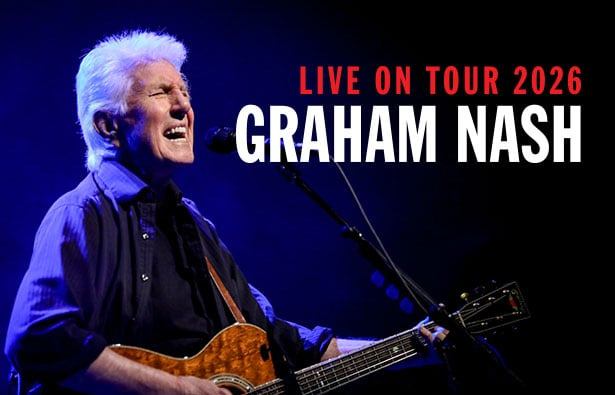
Graham Nash – Live on Tour 2026

April 11 @ 20:00

State Theatre New Jersey 15 Livingston Avenue , NJ, New Brunswick

24_02_24_itzhakperlman1_615x395-a9093c74ed-gae0Xm

Graham Nash Brings Six Decades of Musical Legacy to New Jersey on 2026 Tour New Jersey music fans have a rare opportunity to witness one of the true legends of […]

Itzhak Perlman In Recital

April 12 @ 00:00

State Theatre New Jersey 15 Livingston Avenue , NJ, New Brunswick

15 Livingston Avenue New Brunswick, NJ 08901

An Opera Celebration

April 12

An-Opera-Celebration-NV1Mfw.tmp_

Deadline: Submit to The MAC One-Acts 2026!

MAC-One-Act_FB.png

April 12 @ 12:00

The Middletown Arts Center 36 Church Street, NJ, Middletown

New Jersey Playwrights Take Center Stage as The MAC ONE-ACTS Festival Opens Submissions for 2026 New Jersey’s theatre scene has always thrived on proximity to New York, but its true […]

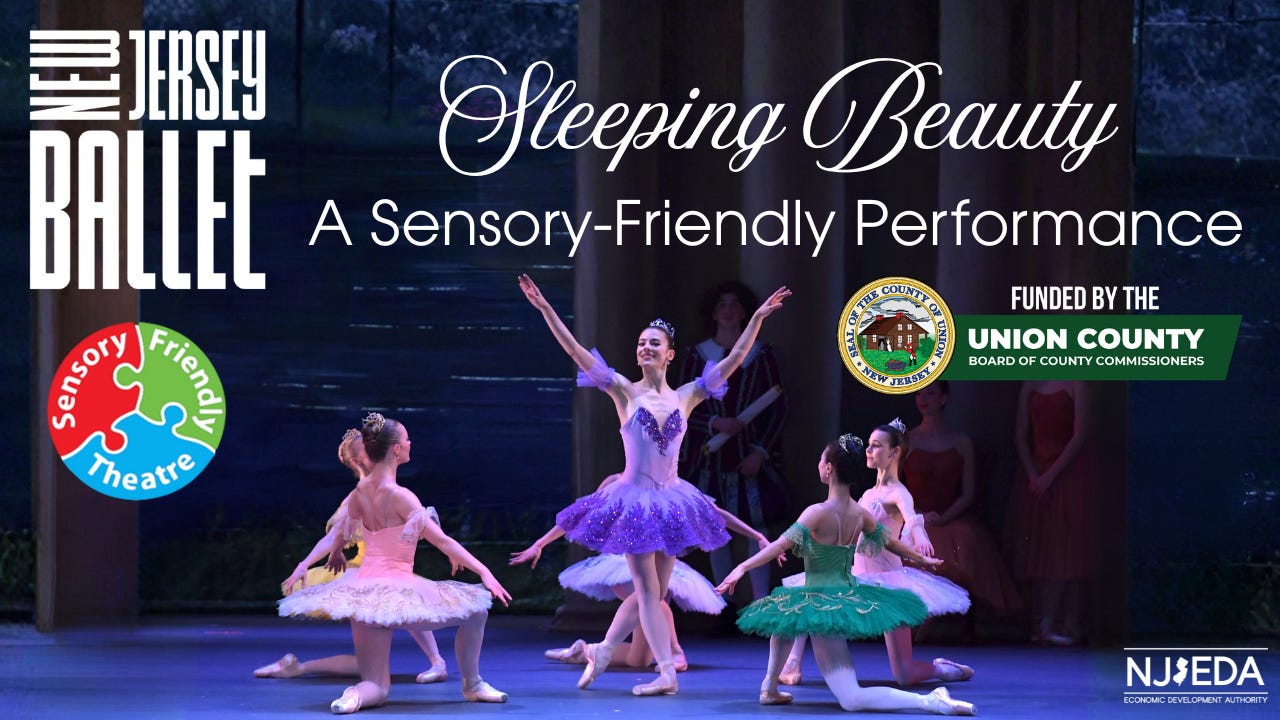
2026-0412-2

NJ Ballet: Sleeping BeautyA Sensory Friendly Theater Performanceat UCPAC’s Main Stage

April 12 @ 13:00

Union County Performing Arts Center (UCPAC) 1601 Irving St., Rahway

New Jersey Ballet Presents Sensory-Friendly Sleeping Beauty at UCPAC, Expanding Access to Classical Performance Across New Jersey New Jersey’s performing arts landscape continues to evolve with a growing emphasis on […]

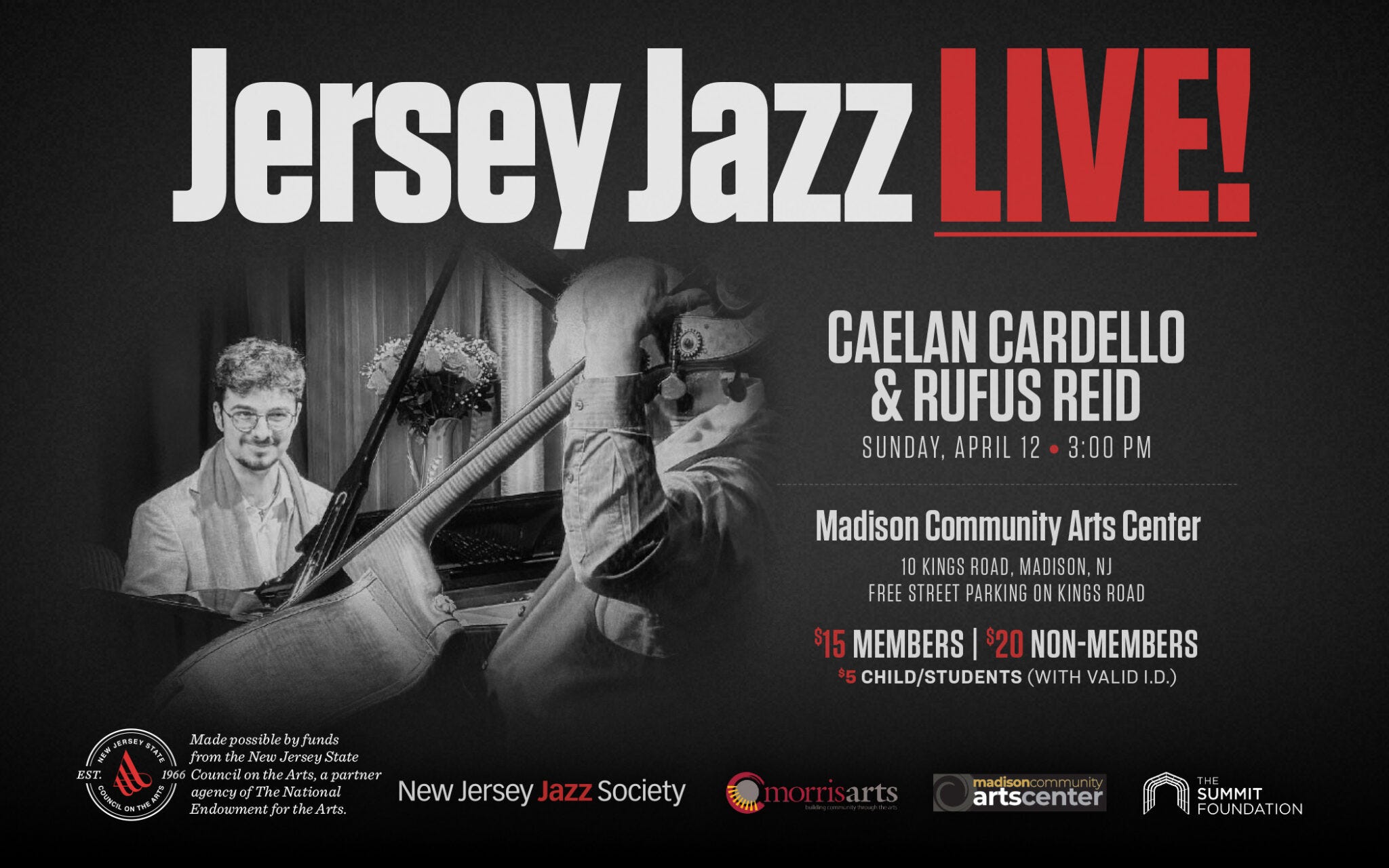
JJ_03_MAR26_FINAL_web-35-2048x1280

Jersey Jazz LIVE! – Caelan Cardello & Rufus Reid

3232ef33-8696-4f02-99a3-ee15ff5f8cea

April 12 @ 15:00

Madison Community Arts Center 10 Kings Rd, Madison

Jersey Jazz LIVE! Brings Two Generations Together in Madison as Caelan Cardello and Rufus Reid Deliver a Rare, Must-See Performance New Jersey’s jazz legacy continues to evolve in real time, […]

Itzhak Perlman In Recital along with Rohan De Silva on Piano

April 12 @ 16:00

State Theatre New Jersey 15 Livingston Avenue , NJ, New Brunswick

Itzhak Perlman In Recital – A Masterful Afternoon of Classical Music in New Jersey Event Date: Sunday, April 12, 2026 at 3:00 PM Venue: State Theatre New Jersey, New […]

655d10d5-cad7-4b8b-a4d2-5eeb740a72c3

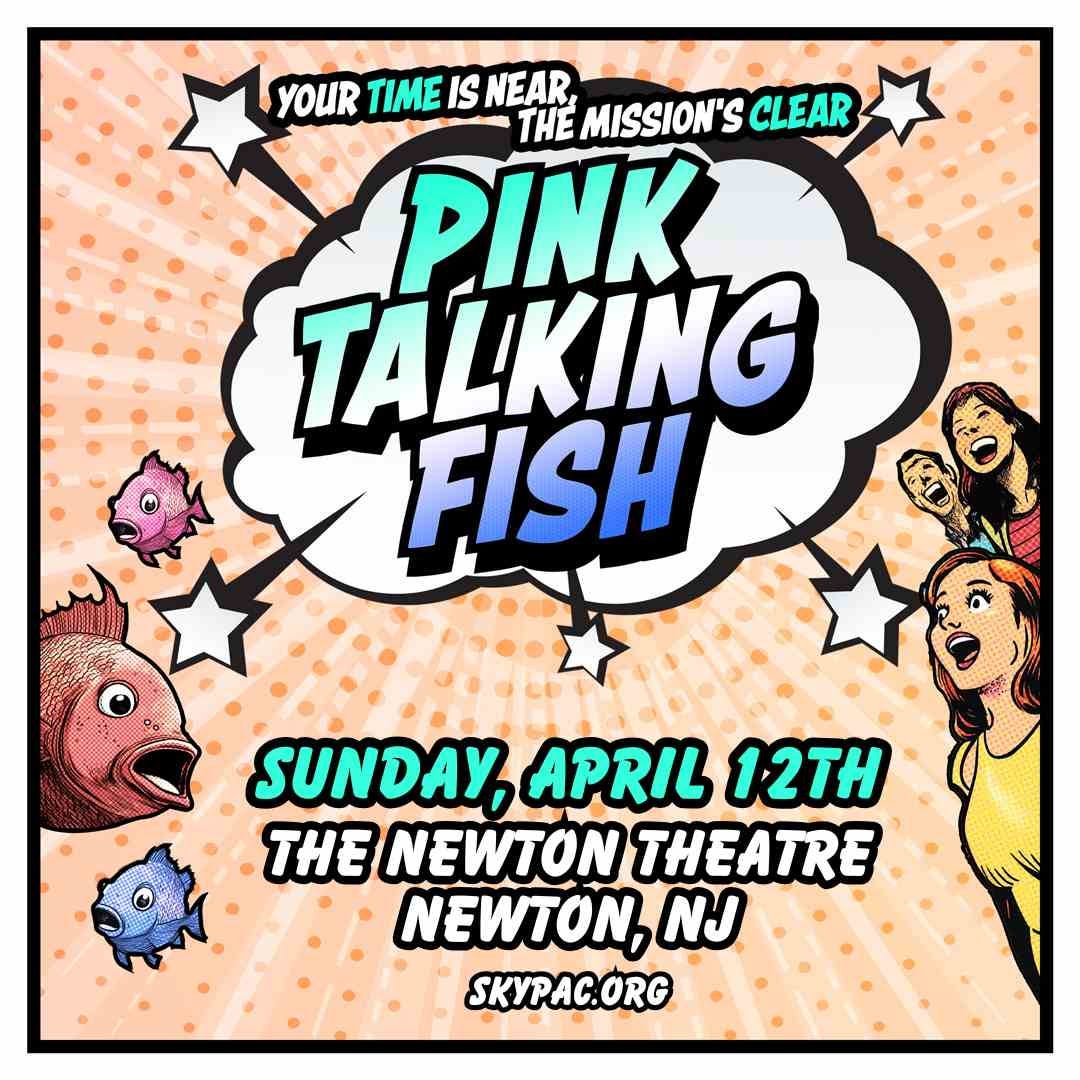
Pink Talking Fish

April 12 @ 20:00

The Newton Theatre 234 Spring St, , NJ, Newton

Pink Talking Fish Brings a Genre-Bending Live Experience to New Jersey with a One-Night Fusion of Pink Floyd, Talking Heads, and Phish New Jersey’s reputation as one of the most […]

$2.3 Million Investment Expands Access to Care in Newark as Community Health Infrastructure Advances

A major investment in Newark’s healthcare landscape is set to expand access, capacity, and long-term community impact as New Jersey Community Capital (NJCC) delivers a $2.3 million construction loan to Newark Community Health Centers (NCHC). The funding will support critical tenant improvements for a new 4,500-square-foot medical facility, positioning NCHC to significantly increase its reach and serve up to 55,000 patients annually across one of the state’s most densely populated and medically underserved regions.

This development reflects a broader movement across New Jersey’s health & wellness sector, where targeted investments are being deployed to close gaps in access, modernize infrastructure, and strengthen the delivery of essential care. In Newark, where demand for affordable and comprehensive healthcare continues to rise, this expansion represents both a strategic response and a long-term commitment to community stability.

Founded in 1986, Newark Community Health Centers has established itself as a cornerstone provider for residents who often face systemic barriers to care. As a Federally Qualified Health Center, NCHC operates with a mission that prioritizes accessibility, affordability, and quality, delivering services that span primary care, dental treatment, and preventive health for patients of all ages. Its existing network of seven medical centers across Newark, East Orange, Irvington, and Orange has created a foundation of trust and reliability within the communities it serves.

The addition of this new facility builds on that foundation, expanding both physical capacity and service delivery. Tenant improvements funded through the NJCC loan will allow NCHC to design and equip the space to meet modern healthcare standards, ensuring that patients receive care in an environment that supports efficiency, privacy, and comprehensive treatment. The increase in patient capacity is particularly significant, as it addresses a growing need for primary care services in areas where healthcare access has historically been limited.

At a structural level, the investment underscores the role of community development financial institutions in shaping healthcare outcomes. NJCC, founded in 1987, operates with a model that integrates financial capital with strategic expertise, directing resources toward projects that generate measurable social and economic impact. By financing healthcare infrastructure, NJCC is not only supporting individual organizations but also contributing to the broader ecosystem that underpins community well-being.

Leadership perspectives reinforce the importance of this approach. Access to healthcare is increasingly recognized as a fundamental driver of economic and social stability, influencing everything from workforce participation to educational outcomes. Investments that expand healthcare access therefore extend beyond clinical impact, shaping the long-term trajectory of communities by improving quality of life and reducing systemic inequities.

For Newark Community Health Centers, the expansion aligns directly with its mission to serve populations that are often overlooked within traditional healthcare systems. By increasing capacity and enhancing facilities, NCHC is better positioned to meet the needs of uninsured and medically underserved residents, ensuring that essential services remain within reach. This includes not only treatment but also preventive care, which plays a critical role in reducing long-term healthcare costs and improving overall population health.

The geographic footprint of NCHC’s operations further amplifies its impact. Serving multiple municipalities within Essex County, the organization functions as a regional provider, addressing disparities across interconnected communities. The new facility in Newark strengthens this network, creating additional access points and reducing barriers related to distance, availability, and scheduling.

From a broader policy perspective, the investment highlights the importance of integrating healthcare expansion with community development strategies. Facilities like the one supported by NJCC are not isolated projects; they are components of a larger framework that includes housing, education, and economic development. By aligning these elements, organizations can create more resilient communities where access to essential services is both consistent and sustainable.

The scale of the project also reflects the increasing complexity of healthcare delivery. Modern facilities must accommodate a wide range of services, technologies, and patient needs, requiring investments that go beyond basic construction. Tenant improvements funded through this loan will ensure that the new space is equipped to deliver high-quality care while maintaining operational efficiency, a balance that is essential for long-term viability.

As the healthcare landscape continues to evolve, partnerships between organizations like NJCC and NCHC will play a critical role in shaping outcomes. These collaborations bring together financial resources, operational expertise, and community insight, creating a model that is both adaptive and impactful. In Newark, this model is already demonstrating its value, with the new facility serving as a tangible example of how targeted investment can drive meaningful change.

The expansion of Newark Community Health Centers is not simply an increase in square footage or patient capacity; it is a reinforcement of a mission that has been in place for decades. It reflects a commitment to ensuring that healthcare is not a privilege but a fundamental resource available to all members of the community.

As construction progresses and the facility moves toward completion, the impact of this investment will become increasingly visible. More patients will gain access to care, more services will be delivered, and the overall health of the community will be strengthened. In a state where healthcare access remains a critical issue, this project stands as a clear example of how strategic investment and mission-driven leadership can come together to create lasting, measurable progress.

New Jersey Real Estate at a Crossroads: Life Sciences Demand Holds Strong, Newark Loft Market Surges, and Shoreline Redevelopment Sparks New Debate

New Jersey’s real estate and construction landscape is entering a defining phase—one shaped by the convergence of institutional investment, adaptive reuse, infrastructure-driven housing demand, and increasingly complex redevelopment conversations along the state’s most visible corridors. From the steady resilience of the life sciences sector to the reemergence of architecturally distinctive urban inventory in Newark and a controversial new proposal along the Ocean Grove boardwalk, the state’s property market is demonstrating both strength and friction as it recalibrates for the next cycle of growth.

Across the state, industry analysis continues to confirm that New Jersey remains one of the most strategically important life sciences hubs in the world. Often referred to as the “Medicine Chest of the World,” the state is home to eight of the ten largest global life sciences companies, a concentration that continues to anchor demand even as macroeconomic pressures reshape leasing behavior. According to the latest market outlook, tenant demand remains fundamentally positive despite rising vacancy rates, signaling a sector that is not retreating, but rather recalibrating.

The drivers behind that sustained demand are deeply structural. New Jersey offers a unique combination of geographic advantage, proximity to major metropolitan markets, and a workforce density that is unmatched nationally. The state leads the country in scientists and engineers per square mile and maintains one of the largest and fastest-growing pharmaceutical manufacturing labor pools. These factors create a self-reinforcing ecosystem where research, development, and production coexist within a tightly integrated network.

Even as vacancy has edged upward—from 14.4 percent to 14.9 percent statewide—the underlying narrative is not one of decline, but of transition. Nationally, vacancy rates have climbed more sharply, reflecting broader shifts in capital markets and tenant expansion strategies. Yet within New Jersey, the concentration of available lab space in a limited number of large blocks suggests that the market is not oversaturated, but rather awaiting the next wave of targeted occupancy.

Key leasing activity continues to illustrate this dynamic. Companies such as Legend Biotech have secured significant footprints, while innovation-driven platforms like Portal Innovations are establishing a presence within emerging hubs such as the HELIX development in New Brunswick. These moves are not speculative—they reflect long-term commitments to a region that continues to deliver both talent and infrastructure.

At the same time, capital investment remains robust. With hundreds of millions of dollars flowing from federal research funding and venture capital sources, New Jersey’s life sciences sector is positioned for continued evolution. The arrival of major facilities, including Kenvue’s global headquarters in Summit and Aurobindo Pharma’s manufacturing expansion in Mercer County, reinforces the state’s role as both a research center and a production powerhouse.

Emerging trends further support a forward-looking outlook. The integration of artificial intelligence into research workflows, the reshoring of pharmaceutical manufacturing, and improving public market valuations are all contributing to a sense of stabilization after a period of contraction. As covered across the Real Estate section of Sunset Daily, these indicators point toward a market that is not only resilient but increasingly strategic in how it allocates space and capital.

While the institutional side of the market continues to evolve, New Jersey’s residential sector is telling a parallel story—one defined by scarcity, character, and location-driven demand. Nowhere is this more evident than in Newark, where a rare top-floor loft at the historic Button Factory has entered the market, capturing attention as a standout example of adaptive reuse meeting modern urban living.

Located at 61 New Jersey Railroad Avenue, Unit 13 represents a distinct category of inventory that is increasingly difficult to find. The loft’s defining feature—soaring cathedral ceilings—creates a sense of volume and architectural presence that sets it apart from conventional residential offerings. Combined with exposed brick, original beams, and multiple exposures that flood the space with natural light, the unit embodies a level of authenticity that cannot be replicated in new construction.

Currently configured as a one-bedroom, the layout offers significant flexibility, allowing for reconfiguration into additional sleeping or workspace areas. This adaptability is particularly relevant in today’s market, where buyers are prioritizing multifunctional environments that can accommodate remote work, creative pursuits, and evolving lifestyle needs.

The property’s location further enhances its appeal. Positioned just one block from Newark Penn Station, the loft offers direct access to Manhattan with a commute time of approximately 20 minutes, while also maintaining close proximity to Newark Liberty International Airport. The surrounding area continues to benefit from cultural and entertainment anchors such as the Prudential Center, the New Jersey Performing Arts Center, and the Ironbound district’s renowned dining scene. With a Walk Score of 90 and a Transit Score of 96, the property exemplifies the type of transit-oriented living that is driving demand across the region.

Priced at $700,000, the unit reflects both its uniqueness and its strategic positioning within a market that increasingly values character and connectivity. Additional features, including private storage, in-unit laundry, and access to a landscaped courtyard, further elevate the offering, making it a compelling option for buyers seeking something beyond standard condominium inventory.

While urban markets continue to attract investment and interest, New Jersey’s coastal regions remain a focal point for both opportunity and controversy. In Ocean Grove, a new proposal has emerged for the redevelopment of the North End site known as “#4 Boardwalk,” a property that has remained vacant since a devastating fire in 2019 destroyed the former White Whale structure.

The site, located directly along the beachfront, has now been acquired by a New Jersey-based developer with plans to construct a 40,000-square-foot pavilion designed to reestablish the location as a destination for residents and visitors. The proposal emphasizes a blend of community engagement and commercial activity, positioning the development as both a revitalization effort and a continuation of the site’s historic role.

However, the plan has also raised significant questions. The property’s unique positioning—situated on the beach rather than a traditional street—introduces regulatory complexities that will require careful navigation. Approval processes, zoning considerations, and environmental factors are all likely to play a role in determining whether the project moves forward.

Community response is expected to be a critical factor. Ocean Grove has long been defined by its architectural heritage and coastal character, and any large-scale development within this context is likely to generate both support and scrutiny. The reference to the North End Redevelopment Plan further underscores the layered history of the site and the expectations surrounding its future use.

What ties these three narratives together—life sciences, urban residential, and coastal redevelopment—is a broader theme of transformation. New Jersey’s real estate market is not moving in a single direction; it is evolving across multiple fronts simultaneously, each with its own set of drivers, challenges, and opportunities.

Institutional sectors are adapting to new economic realities while maintaining long-term confidence in the state’s core strengths. Urban residential markets are rediscovering the value of character and connectivity, offering properties that blend history with modern functionality. Coastal developments are navigating the delicate balance between revitalization and preservation, reflecting the complexities of building in highly visible and historically significant locations.

As these dynamics continue to unfold, one constant remains: New Jersey’s ability to attract investment, talent, and attention across a diverse range of real estate categories. The state’s strategic location, infrastructure, and economic base provide a foundation that continues to support growth, even as the market adjusts to new conditions.

In this environment, the most successful projects and sectors will be those that align vision with execution—leveraging New Jersey’s inherent advantages while responding to the realities of a changing market. Whether through cutting-edge research facilities, thoughtfully designed urban residences, or carefully considered redevelopment initiatives, the next chapter of New Jersey real estate is already taking shape, defined by both ambition and accountability.

Devils Eliminated from Playoff Contention as Season Unravels, Organization Faces Defining Offseason

The New Jersey Devils’ 2025–26 season reached its official breaking point at Prudential Center, where a 5–2 loss to the Pittsburgh Penguins not only sealed the outcome of a single game but closed the door on postseason aspirations. For a team that entered the year with expectations of progression and stability, the result underscores a campaign defined less by one moment and more by a steady accumulation of missed opportunities, defensive breakdowns, and organizational instability.

As the final stretch of the season unfolds, the focus shifts rapidly from playoff positioning to evaluation, accountability, and the direction of the franchise. For full team coverage and ongoing developments, follow the latest updates on the New Jersey Devils.

The loss itself reflected many of the recurring issues that have defined the Devils’ season. Despite an early surge in shot volume and offensive pressure, the team once again failed to convert momentum into control. An opening stretch that saw New Jersey generate a significant shot advantage quickly unraveled following a defensive lapse that allowed Pittsburgh to capitalize on its first opportunity. That sequence set the tone for a night—and a season—where structural inconsistencies outweighed flashes of promise.

Pittsburgh’s veteran core executed with precision. Evgeni Malkin delivered both a goal and an assist, while Sidney Crosby orchestrated the attack with two assists, securing the Penguins’ postseason berth in the process. For New Jersey, the contrast was stark. Where Pittsburgh demonstrated cohesion and situational awareness, the Devils struggled with coverage, communication, and execution in key moments.

The second period offered a brief glimpse of resilience. A well-timed transition play resulted in a breakaway finish that evened the score, and a later offensive sequence brought the Devils within striking distance again. Yet each push was met with an immediate response from Pittsburgh, exposing the Devils’ inability to sustain momentum or stabilize defensively. Quick-strike goals against, particularly following turnovers and missed assignments, reinforced a pattern that has persisted throughout the year.

By the third period, the outcome felt inevitable. Another defensive breakdown led to an extended Penguins lead, and a late empty-net goal confirmed the result. Beyond the scoreboard, the underlying metrics told a similar story—limited offensive generation over the final two periods and a consistent inability to create high-danger opportunities when it mattered most.

This loss drops the Devils to 40–36–3, placing them seventh in the Metropolitan Division and mathematically eliminating them from playoff contention. More revealing than the record itself is the team’s performance within the division. A 7–17–2 mark against Metropolitan opponents highlights a critical deficiency, particularly when contrasted with significantly stronger results against teams outside the division. In a structure where divisional success is essential, this imbalance proved decisive.

As the season winds down, attention is increasingly focused on organizational changes already underway. The departure of General Manager and President Tom Fitzgerald on April 6 signals a major shift at the executive level. Speculation surrounding potential replacements, including high-profile candidates, suggests that ownership is preparing for a recalibration of both strategy and leadership philosophy.

On the roster side, the decision to shut down defenseman Luke Hughes for the remainder of the season due to an upper-body procedure reflects a long-term outlook, prioritizing health and development over short-term availability. His absence also underscores the challenges faced by a defensive unit that has struggled with consistency and growth throughout the year.

Amid these transitions, there are still individual recognitions that speak to the character within the locker room. Brenden Dillon’s nomination for the Bill Masterton Memorial Trophy by the New Jersey chapter of the Professional Hockey Writers Association highlights perseverance and dedication, particularly following offseason neck surgery. It is a reminder that even in a difficult season, individual contributions and resilience remain part of the team’s identity.

The remaining schedule—matchups against the Detroit Red Wings, Ottawa Senators, and Boston Bruins—now serves a different purpose. With playoff implications removed, these games become opportunities for evaluation, development, and assessment. Decisions regarding lineup composition, ice time distribution, and player roles will carry increased significance as the organization looks ahead to the offseason.

Beyond the immediate results, the broader narrative of the Devils’ season is one of unrealized potential. There were stretches where the team demonstrated the ability to compete at a high level, generating offense and controlling play against strong opponents. However, those moments were consistently offset by lapses in defensive structure, inconsistent special teams, and an inability to adapt within games.

Coaching and system execution will inevitably be part of the offseason conversation. Questions surrounding defensive-zone coverage, player development, and overall tactical identity have grown more pronounced as the season has progressed. The performance of the defensive group, in particular, has drawn scrutiny, with multiple players experiencing regression or stagnation.

For a franchise that has invested heavily in building a competitive core, the stakes of this offseason are significant. The decisions made in the coming months—at both the front office and roster levels—will shape not only the immediate future but the long-term trajectory of the team.

The elimination from playoff contention is not simply an endpoint; it is a pivot point. It marks the transition from expectation to reflection, from projection to accountability. For the New Jersey Devils, the path forward will require clarity, decisiveness, and a willingness to address the structural issues that have defined this season.

As the final games are played and the offseason approaches, the focus will remain on what comes next—how the organization responds, how it recalibrates, and how it positions itself to return to contention. In a league defined by parity and momentum, the margin between success and disappointment is often narrow. For the Devils, closing that gap will be the central challenge of the months ahead.

Syd Millevoi Heads Into The Voice Live Semifinals on Monday as Stakes Reach Their Highest Point

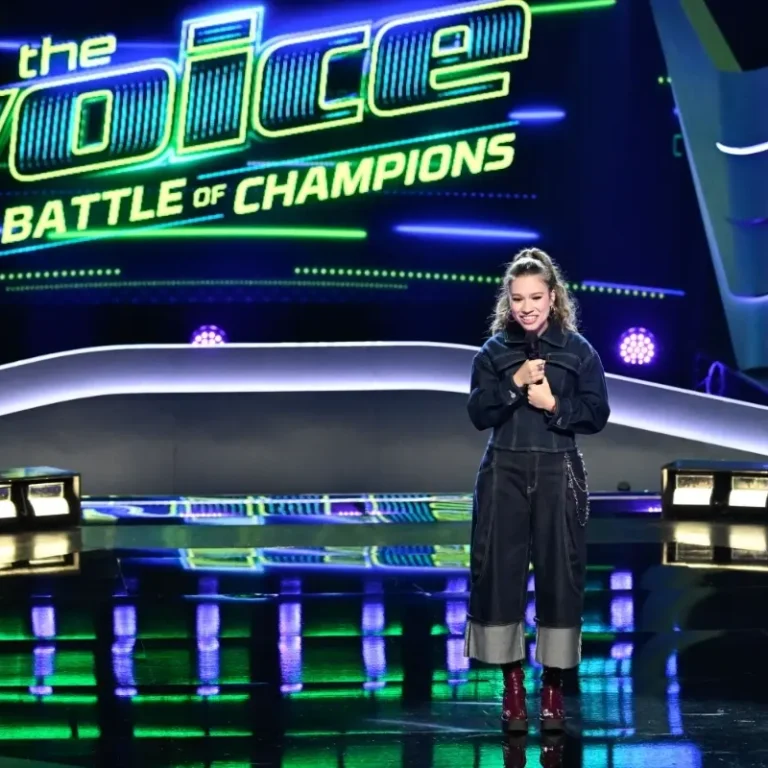
New Jersey’s presence on the national entertainment stage continues as Sydney “Syd” Millevoi prepares for her first live semifinal performance on NBC’s The Voice on Monday, April 13, 2026 at 9:00 PM ET. With the competition now narrowed to the Top 9, this next phase represents a decisive turning point—one where performance, precision, and audience impact converge in real time. As part of the growing momentum surrounding New Jersey talent featured across Explore New Jersey’s film & TV coverage, Millevoi’s upcoming live appearance positions her at the center of one of the season’s most critical moments.

The transition into the live semifinals fundamentally changes the structure of the competition. Earlier rounds allowed for controlled production environments where performances could be refined before broadcast. That framework is now removed. The live stage introduces immediacy, where every vocal decision, every shift in phrasing, and every moment of emotional delivery is executed without revision. For Millevoi, whose performances have been defined by technical consistency and controlled delivery, this shift presents both a test and an opportunity.

Her placement in the Top 9 was secured during the Knockout rounds, where her performance of Demi Lovato’s “Tell Me You Love Me” demonstrated a level of discipline and clarity that separated her from the field. That performance was not built on excess or unpredictability; it was constructed with intention, allowing vocal control and emotional precision to carry the moment. As the competition moves into a live format, those same qualities become essential. Consistency is no longer an advantage—it is a requirement.

The April 13 broadcast marks Millevoi’s first appearance in this live environment, and with it comes a different level of visibility. Live episodes shift the dynamic from coach-driven advancement to audience-influenced outcomes, increasing the importance of immediate connection. The performance must resonate not only in technical terms but in its ability to engage viewers in the moment. For an artist grounded in structure and control, the challenge lies in maintaining that foundation while expanding the emotional reach of the performance.

This moment also represents a broader intersection between New Jersey’s music talent and national television exposure. As highlighted across Explore New Jersey’s film & TV platform, programs like The Voice continue to serve as key entry points for artists moving from regional recognition to national visibility. Millevoi’s progression into the live semifinals reflects both individual preparation and the strength of the environment that shaped her, bringing a distinctly New Jersey-developed artist into a high-profile broadcast setting.

Her background reinforces that trajectory. With formal training at New Jersey City University and extensive live performance experience within the state, Millevoi enters the semifinals with a foundation that extends beyond the competition itself. This preparation becomes particularly relevant in a live format, where technical reliability and performance awareness are critical. The ability to deliver under pressure—without the safety net of post-production—defines success at this stage.

From a stylistic perspective, Millevoi’s approach remains grounded in pop and R&B, with an emphasis on vocal clarity, phrasing, and controlled dynamics. This structure has carried her through each phase of the competition, allowing her to build a consistent performance profile. As the semifinals begin, the question is no longer whether she can deliver at a high level, but whether she can elevate that delivery within the constraints and demands of live television.

The significance of April 13 extends beyond a single performance. It marks the point where trajectory becomes outcome, where preparation is measured against execution in real time. For Millevoi, this is an opportunity to translate her steady progression into a defining moment—one that reinforces her position within the competition while expanding her presence beyond it.

For New Jersey audiences, the upcoming broadcast represents a clear point of connection. A locally developed artist, shaped by the state’s music and performance infrastructure, is now competing at one of the highest levels of televised entertainment. As the live semifinals begin, Sydney “Syd” Millevoi carries both her individual momentum and the broader representation of New Jersey’s creative output onto the national stage, with April 13 positioned as one of the most important performances of her career to date.

Sydney “Syd” Millevoi Advanced to Top 9 on The Voice with New Jersey Watching Closely. New Jersey’s music scene continues to assert its presence on the national stage as Sydney “Syd” Millevoi, the 23-year-old vocalist from Secaucus, prepares for her first live semifinal performance on NBC’s The Voice next week. Having already secured her place in the Top 9 during the Knockout rounds, Millevoi now enters the most visible and demanding phase of the competition, where live performance, audience connection, and consistency determine who advances. As part of the growing wave of artists highlighted across Explore New Jersey’s music coverage, her progression represents a defining moment not only for her career but for the state’s ongoing influence in national music talent development.

Clarifying the current stage of the competition, Millevoi did not perform during the most recent Monday, April 6 episode. That broadcast focused on completing the final Knockout matchups and introduced a special “All-Star Showdown” featuring returning winners. Millevoi’s advancement had already been secured the prior week, when her performance of Demi Lovato’s “Tell Me You Love Me” delivered the level of control, phrasing, and emotional precision required to earn her position among the Top 9. That performance remains a key benchmark in her run, demonstrating her ability to execute under pressure while maintaining technical discipline.

Her journey to this point has been defined by structure and progression. From her Blind Audition, where her performance of “Mamma Knows Best” established her as a serious contender, to her advancement through the Battles and Knockouts under the guidance of John Legend, Millevoi has demonstrated a clear command of her craft. Her ability to maintain vocal clarity while navigating emotionally demanding material has been a consistent factor in her success, positioning her as one of the more technically reliable performers in the competition.

That reliability is grounded in a strong New Jersey foundation. Millevoi’s development through High Tech High School and her current pursuit of a Master of Music in Vocal Performance at New Jersey City University provide a technical framework that is evident in her performances. Her widely viewed 2024 National Anthem performance further reinforced her ability to deliver under pressure, combining precision with audience engagement in a high-visibility setting.

Equally important is her experience within the state’s live performance circuit. Prior to her national breakthrough, Millevoi worked extensively as a professional vocalist, including performances at events and in staged productions. This background contributes directly to her stage presence, allowing her to approach live television with a level of composure that extends beyond formal training alone. It is this combination of education and real-world performance that defines her current trajectory.

Musically, Millevoi operates within a pop and R&B framework influenced by artists known for both vocal strength and control. Her approach is measured and intentional, emphasizing phrasing and tonal consistency rather than relying on excess. This style has proven effective within the competition, where sustained performance quality often outweighs isolated standout moments. As she enters the live semifinals, this consistency becomes a critical asset.

Outside of the competition, Millevoi continues to build her identity as a recording artist. Her debut album Everything I Couldn’t Say and her latest EP You Wanted Me First! provide a foundation that extends beyond the show, offering original material that reflects her vocal style and artistic direction. These releases position her not only as a contestant but as an emerging artist with a developing catalog.

Within the broader context of New Jersey’s music ecosystem, Millevoi’s advancement underscores the strength of the state’s talent pipeline. As consistently reflected across Explore New Jersey’s music platform, artists emerging from the region are increasingly equipped to compete at a national level, supported by a combination of training, performance opportunities, and a culture that values both discipline and execution. Millevoi’s presence in the Top 9 is a direct reflection of that system.

As Monday, April 13 approaches, the focus shifts to the live semifinal performance—an environment where preparation meets immediacy. For New Jersey audiences, this is the moment to watch closely. A homegrown artist, built through the state’s music infrastructure, is now stepping into one of the most critical stages of the competition. Sydney “Syd” Millevoi’s next performance will not only determine her path forward on The Voice, but will further define her emergence as one of the most promising vocal talents to come out of New Jersey’s current generation.

As Sydney “Syd” Millevoi enters the high-stakes Live Rounds on Season 29 of The Voice, here is everything you need to follow her journey and listen to her original music.

The Voice Performance Schedule

Syd has successfully advanced to the Top 9 as a member of Team Legend.

  • Next Episode: Monday, April 13, 2026.
  • Time: 9:00 PM ET/PT (8:00 PM CT).
  • Where to Watch: Airs live on NBC; available for streaming the following day on Peacock.
  • Round: Live Semifinal Performances. As part of the Top 9, Syd will now perform live for America’s vote.

Original Music & Discography

Before her time on The Voice, Syd established herself as a prolific independent artist. You can find her music on Spotify and Apple Music.

Latest Releases

  • You Wanted Me First! (EP, 2025): Her most recent project featuring the title track and fan favorites like “Butterfly Kisses” and “Dandelion” (feat. Jvon Lawrence).
  • Everything I Couldn’t Say (Album, 2024): Her debut full-length project which includes the acoustic version of her early hit, “Morning Coffee“.

Notable Singles

  • Woman” (2025).
  • Fallin’” (2025).
  • Drown in my Sins” (2024).

Linking Faith to Climate Action: A Growing Movement in New Jersey Reframes Environmental Responsibility as a Moral Imperative

Across New Jersey, a meaningful shift is taking place at the intersection of faith, community, and environmental stewardship—one that is redefining how individuals and organizations approach the urgency of climate change. At a recent event, Dr. Elizabeth Cerceo presented a compelling framework that positions climate action not simply as a scientific or political issue, but as a deeply rooted moral and spiritual responsibility. Her message reflects a broader movement gaining traction throughout the state, where faith-based communities are increasingly stepping forward as influential voices in the effort to address environmental challenges.

Within the evolving landscape of New Jersey’s lifestyle and civic engagement initiatives, this approach introduces a powerful new dimension to the conversation. Rather than relying solely on data-driven appeals or policy-focused arguments, it connects environmental responsibility to values that resonate on a personal and communal level—care, stewardship, accountability, and compassion.

Dr. Cerceo’s perspective centers on a fundamental idea: that caring for the environment is not separate from spiritual life, but an extension of it. By framing climate action as a form of stewardship, she emphasizes the responsibility individuals have to protect and preserve the natural world—not only for themselves, but for future generations. This approach aligns with longstanding principles found across many faith traditions, where the concept of caring for creation is embedded within broader teachings about responsibility and interconnectedness.

What distinguishes this movement is its ability to translate these principles into tangible action. Faith-based organizations are uniquely positioned to mobilize communities at scale, bringing together individuals who share not only beliefs, but a commitment to collective action. Through sermons, community programs, educational initiatives, and service projects, these groups are creating pathways for engagement that extend beyond awareness into meaningful, sustained impact.

In New Jersey, where diverse communities and traditions coexist, this approach has particular relevance. The state’s faith-based organizations represent a wide range of perspectives, yet many are finding common ground in the shared goal of environmental responsibility. This convergence is creating opportunities for collaboration that transcend individual institutions, fostering a sense of unity around a cause that affects all communities equally.

Dr. Cerceo’s presentation highlighted the importance of reframing climate change in a way that resonates emotionally as well as intellectually. While scientific data remains essential, it is often the personal connection—the sense of duty, the recognition of impact, the desire to protect—that drives action. By integrating these elements into the conversation, faith-based initiatives are expanding the reach of climate advocacy, engaging individuals who may not have previously seen themselves as part of the movement.

This shift is also influencing how environmental issues are discussed within communities. Rather than positioning climate change as a distant or abstract concern, it is being brought into everyday life, connected to local experiences and immediate realities. Issues such as air quality, access to clean water, and the impact of extreme weather events are being framed not only as environmental challenges, but as matters of community well-being and justice.

The emphasis on justice is particularly significant. Faith-based approaches to climate action often incorporate a focus on equity, recognizing that the effects of environmental degradation are not distributed evenly. Vulnerable communities frequently bear the greatest burden, making climate action not only an environmental issue, but a social one. By addressing these disparities, faith-based initiatives are contributing to a more comprehensive understanding of what meaningful climate action entails.

Education plays a central role in this movement. Through workshops, discussions, and community outreach, organizations are equipping individuals with the knowledge and tools needed to take action in their own lives. This includes everything from energy conservation and sustainable practices to advocacy and community engagement. The goal is not only to inform, but to empower—creating a sense of agency that encourages ongoing participation.

At the same time, these efforts are reinforcing the importance of collective action. While individual choices matter, the scale of the challenge requires coordinated efforts that bring together communities, institutions, and leaders. Faith-based organizations, with their established networks and strong community ties, are well-positioned to facilitate this coordination, serving as both conveners and catalysts for broader initiatives.

The growing involvement of faith communities in climate action also reflects a broader cultural shift. As conversations around sustainability and environmental responsibility become more prominent, there is an increasing recognition that addressing these issues requires engagement from all sectors of society. By entering this space, faith-based groups are contributing perspectives that enrich the conversation, adding depth and dimension to the ways in which solutions are developed and implemented.

For New Jersey, this movement represents an opportunity to lead by example. The state’s diverse population, combined with its strong tradition of community engagement, creates an environment where innovative approaches to complex challenges can take root. By integrating faith-based perspectives into the broader climate conversation, New Jersey is demonstrating how values-driven initiatives can complement scientific and policy-based efforts, creating a more holistic approach to environmental stewardship.

Dr. Cerceo’s message serves as both a reflection of this emerging movement and a call to action. It challenges individuals and communities to reconsider their relationship with the environment, to see it not as a separate concern, but as an integral part of their values and responsibilities. In doing so, it opens the door to a more inclusive and impactful approach to climate action—one that is grounded in both conviction and community.

As this movement continues to grow, its influence is likely to extend beyond individual events and organizations, shaping the way climate action is understood and pursued across New Jersey. By linking faith to environmental responsibility, it offers a framework that is both accessible and profound, inviting individuals from all backgrounds to engage with one of the most pressing challenges of our time in a way that is both meaningful and sustainable.

World Cup Security Funding Debate Intensifies in New Jersey as State Leaders Reassess Tax Strategy and Resource Allocation Ahead of 2026

As New Jersey prepares to play a pivotal role in the global spotlight surrounding the 2026 FIFA World Cup, a growing policy debate is taking shape in Trenton—one that cuts to the core of fiscal strategy, public safety planning, and the balance between preparedness and overreach. At the center of that debate is a proposed sales tax increase tied to World Cup-related security funding, a measure now facing heightened scrutiny following a key acknowledgment from the state’s Attorney General that additional funding may not be necessary to meet current security demands.

This development has introduced a new layer of complexity into an already high-stakes conversation. With MetLife Stadium set to host matches during one of the largest international sporting events ever staged across North America, New Jersey’s role in the World Cup is both an economic opportunity and a logistical challenge. However, the question now confronting lawmakers is whether the financial mechanisms being proposed align with the actual needs on the ground—or whether they risk overextending taxpayers in pursuit of redundant preparedness.

The proposed sales tax adjustment, backed in part by gubernatorial candidate Mikie Sherrill, was initially framed as a proactive measure to ensure that New Jersey could meet the heightened security requirements associated with hosting a global event of this scale. The rationale was straightforward: large-scale international gatherings bring increased risks, and robust funding would enable law enforcement agencies to coordinate effectively, deploy advanced resources, and maintain a secure environment for visitors and residents alike.

Yet the Attorney General’s recent remarks have shifted the narrative. By indicating that existing funding levels and resource allocations are sufficient to support World Cup security operations, the state’s top law enforcement official has effectively challenged the premise underlying the proposed tax increase. This position suggests that New Jersey’s current infrastructure—both in terms of personnel and interagency coordination—may already be equipped to handle the demands of the event without additional fiscal measures.

This divergence between political strategy and operational assessment is now driving a broader examination of how New Jersey approaches large-scale event planning. It raises critical questions about the role of precautionary funding versus evidence-based budgeting, and whether the state’s existing systems have reached a level of maturity that reduces the need for reactive financial policies.

Coverage across the New Jersey Resources section of Sunset Daily has consistently highlighted the state’s evolving approach to infrastructure, public safety, and resource management. Within that context, the current debate can be seen as part of a larger trend toward more disciplined, data-driven decision-making—where funding proposals are increasingly expected to align with demonstrable needs rather than hypothetical scenarios.

From a security standpoint, New Jersey is not starting from scratch. The state has extensive experience managing high-profile events, particularly in and around major venues like MetLife Stadium. Coordination between state police, local law enforcement, federal agencies, and private security entities has been refined through years of planning and execution. These existing frameworks are likely a key factor in the Attorney General’s assessment that additional funding may not be required.

At the same time, the global scale of the World Cup introduces variables that extend beyond traditional event management. International travel, heightened media attention, and the convergence of diverse audiences create a unique operational environment. The challenge for policymakers is to determine whether these factors justify additional investment or whether they can be effectively managed within the current system.

The economic dimension of the debate is equally significant. Hosting World Cup matches is expected to generate substantial revenue through tourism, hospitality, and related industries. For many stakeholders, the focus is on maximizing that economic impact while ensuring that the costs associated with hosting do not outweigh the benefits. A sales tax increase, even if temporary, has the potential to influence consumer behavior and public perception, making it a politically sensitive tool.

Sherrill’s proposal, in this context, reflects a broader effort to position New Jersey as fully prepared and proactively engaged in the World Cup process. However, the Attorney General’s comments have introduced a counterpoint that emphasizes efficiency over expansion—arguing that the state’s existing capabilities may already meet the necessary threshold for security and operational readiness.

This tension between preparedness and prudence is likely to shape the legislative process in the months ahead. Lawmakers will need to weigh the credibility of law enforcement assessments against the perceived risks of underfunding, all while navigating the political dynamics associated with taxation and public spending.

For residents and businesses across New Jersey, the outcome of this debate carries tangible implications. Beyond the immediate question of tax policy, it speaks to how the state prioritizes resources, manages large-scale events, and communicates its strategy to the public. Transparency and clarity will be critical in maintaining confidence, particularly as the World Cup draws closer and preparations intensify.

The broader takeaway is that New Jersey’s approach to the 2026 FIFA World Cup is entering a more nuanced phase—one where the focus is shifting from broad planning to targeted execution. The state is no longer simply preparing for the event; it is refining how that preparation is funded and implemented.

As discussions continue in Trenton, the intersection of policy, economics, and public safety will remain at the forefront. The decisions made in this moment will not only shape New Jersey’s World Cup experience but also set a precedent for how the state approaches future large-scale events. In an environment where both opportunity and responsibility are amplified, the ability to align strategy with reality will define the success of the effort.

What is clear is that New Jersey is positioned to play a significant role on the global stage. The question now is how it chooses to support that role—through expanded funding mechanisms or through a more measured reliance on the systems already in place.

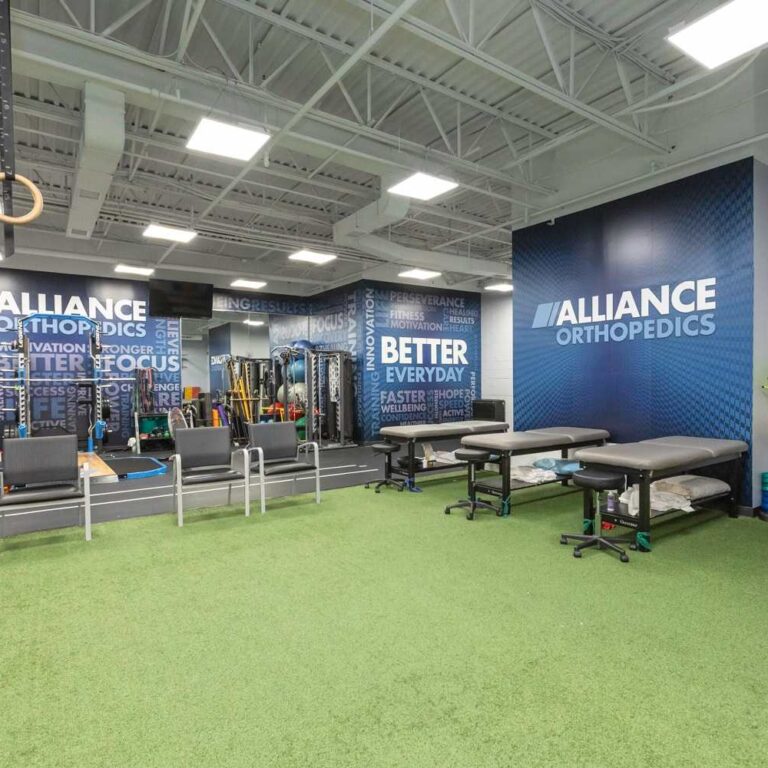
Alliance Orthopedics and Alliance Performance Set a New Standard in Fair Lawn with Grand Opening Event on May 9

On May 9, 2026, Fair Lawn will take a significant step forward in advancing modern healthcare and performance-driven wellness as Alliance Orthopedics and Alliance Performance officially unveil their new facility with a grand opening event that signals more than expansion—it marks the arrival of a comprehensive, integrated approach to musculoskeletal care and human performance in New Jersey.

As the state continues to evolve as a hub for forward-thinking healthcare solutions, this launch aligns seamlessly with the broader momentum seen across New Jersey’s growing health & wellness landscape. The introduction of a facility that combines clinical orthopedic expertise with performance optimization reflects a shift in how care is delivered, moving beyond traditional treatment models into a more holistic, patient-centered framework.

Alliance Orthopedics has built its reputation on delivering advanced, non-surgical solutions for a wide range of conditions affecting the spine, joints, and overall mobility. By integrating diagnostic precision with innovative therapies, the organization has consistently emphasized outcomes that prioritize long-term health, functionality, and quality of life. With the addition of Alliance Performance under the same roof, that philosophy expands into a dual-focus model—one that not only treats injury but enhances physical capability and resilience.

The Fair Lawn location represents a deliberate evolution of this model. Designed to serve both patients and performance-focused individuals, the facility bridges the gap between rehabilitation and athletic development. This integrated approach is particularly relevant in today’s healthcare environment, where the distinction between recovery and performance is increasingly blurred. Individuals are no longer seeking care solely to address pain—they are seeking pathways to improved strength, mobility, and overall physical capacity.

The May 9 grand opening event will serve as both an introduction and an invitation, offering attendees the opportunity to experience the facility firsthand while engaging with the professionals who define its approach. It is expected to draw a diverse audience, including patients, athletes, fitness enthusiasts, and members of the local community, all interested in exploring how this new model of care can support their individual goals.

At the core of Alliance Orthopedics’ philosophy is a commitment to precision and personalization. Treatment plans are developed with a focus on the specific needs of each patient, utilizing advanced diagnostic tools and evidence-based methodologies to ensure accuracy and effectiveness. This level of attention extends into Alliance Performance, where training and recovery programs are tailored to the individual, emphasizing measurable progress and sustainable results.

The integration of these services within a single facility creates a seamless continuum of care. Patients transitioning from injury recovery to performance training can do so without interruption, maintaining consistency in both methodology and oversight. This continuity is a critical component of achieving optimal outcomes, reducing the risk of re-injury while supporting long-term physical development.

From a broader perspective, the opening of this facility reflects a larger trend within New Jersey’s healthcare ecosystem. There is a growing emphasis on preventative care, performance optimization, and the use of advanced technologies to support both treatment and training. Facilities that embrace this integrated approach are positioning themselves at the forefront of a new standard—one that prioritizes not only recovery, but the ongoing enhancement of physical health.

Fair Lawn, as the location for this expansion, benefits directly from this shift. The introduction of a facility that combines clinical expertise with performance-driven programming enhances the community’s access to high-level care, reducing the need for patients and athletes to seek services outside the region. It also contributes to the local economy and reinforces the area’s role as a destination for specialized healthcare services.

The significance of the May 9 grand opening extends beyond the immediate event. It represents a commitment to innovation within the healthcare and wellness sectors, demonstrating how organizations can evolve to meet the changing needs of their communities. By bringing together orthopedics and performance under a unified vision, Alliance Orthopedics and Alliance Performance are setting a precedent for what modern care can look like.

As New Jersey continues to expand its reputation for excellence across multiple industries, the healthcare and wellness sector remains a key area of growth and innovation. The opening of this Fair Lawn facility stands as a clear example of how that growth is being realized—through strategic investment, forward-thinking design, and a dedication to delivering meaningful outcomes for patients and clients alike.

On May 9, the doors will open to more than just a new location. They will open to a model of care that reflects the future of health and performance in New Jersey, offering a comprehensive approach that supports individuals at every stage of their physical journey.

Lawsuit Filed After Passaic County Technical-Vocational School Shooting: Legal Action Raises Urgent Questions About Campus Security, Accountability, and Preventable Risk

A newly filed lawsuit stemming from a shooting incident at Passaic County Technical-Vocational School is rapidly becoming a focal point in New Jersey’s evolving conversation around school safety, institutional responsibility, and the legal thresholds for preventable harm. The complaint, centered on an incident that left two students seriously injured, alleges that critical security failures allowed an expelled former student to gain access to a school event—an outcome plaintiffs argue could and should have been avoided.

The case introduces a complex intersection of liability, policy, and operational oversight, with implications that extend well beyond a single institution. As developments continue to unfold, coverage across the Law & Order section of Sunset Daily reflects a broader pattern emerging across New Jersey: increased scrutiny of how schools manage access control, enforce disciplinary boundaries, and respond to evolving threat environments.

At the center of the lawsuit is a core assertion that the incident was not an unforeseeable act of violence, but rather the result of identifiable and correctable breakdowns in security protocol. According to the complaint, the individual responsible for the shooting had previously been expelled, a status that should have triggered heightened restrictions on campus access. Instead, the lawsuit alleges that lapses in oversight and event management created an opportunity for unauthorized entry, ultimately culminating in a violent confrontation that caused catastrophic injuries.

This framing is critical. In legal terms, the distinction between an unpredictable act and a preventable one determines the scope of institutional liability. The plaintiffs’ argument positions the school not merely as the site of an incident, but as a potentially responsible party whose systems and safeguards failed at multiple levels. That claim will likely hinge on a detailed examination of security policies, enforcement practices, and whether existing protocols were sufficient—and properly executed—given the known risk factors.

The incident itself has already intensified discussions around how schools manage large-scale events, where increased foot traffic and community participation can complicate access control. Events that are designed to be inclusive and open can inadvertently introduce vulnerabilities if security measures are not scaled appropriately. The lawsuit appears to focus on this precise tension, questioning whether adequate planning and staffing were in place to monitor entry points, verify identities, and prevent unauthorized individuals from entering the premises.

Beyond the immediate circumstances, the case also highlights a broader issue facing educational institutions: the challenge of translating policy into practice. Many schools maintain formal security guidelines, including visitor screening procedures, coordination with local law enforcement, and threat assessment protocols. However, the effectiveness of these measures depends on consistent implementation, real-time decision-making, and the ability to adapt to dynamic conditions. The allegations in this lawsuit suggest that while policies may have existed, their execution fell short at a critical moment.

For the families of the injured students, the legal action represents both a pursuit of accountability and a mechanism for ensuring that similar failures do not occur in the future. Catastrophic injuries, by definition, carry long-term consequences—medical, emotional, and financial—that extend far beyond the initial incident. The lawsuit seeks to address those impacts while also establishing a precedent for how responsibility is assigned in cases involving school-based violence.

Within the broader legal landscape, cases of this nature are increasingly shaping how courts evaluate duty of care in educational settings. Schools are not expected to eliminate all risk, but they are required to take reasonable steps to protect students from foreseeable harm. Determining what constitutes “reasonable” in an era of heightened security concerns is an evolving standard, influenced by prior incidents, available technology, and the expectations of parents and communities.

This case may also influence how school districts approach risk management moving forward. Enhanced security infrastructure, including controlled access points, surveillance systems, and real-time communication tools, is becoming more common. However, infrastructure alone is not sufficient. Training, coordination, and accountability mechanisms are equally critical, ensuring that personnel are equipped to identify and respond to potential threats before they escalate.

The involvement of an expelled former student introduces an additional layer of complexity. Disciplinary actions such as expulsion are intended to mitigate risk, but their effectiveness depends on follow-through. Ensuring that individuals who have been removed from the school environment do not regain access requires coordination between administrative staff, security personnel, and, in some cases, law enforcement. The lawsuit’s emphasis on this point suggests that gaps in that coordination may have played a role in the incident.

From a policy perspective, the case arrives at a time when New Jersey schools are under increasing pressure to balance openness with security. Educational institutions serve as community hubs, hosting events that bring together students, families, and local residents. Preserving that sense of openness while implementing robust safety measures is a delicate balance, one that requires continuous evaluation and adjustment.

The legal proceedings will likely examine not only what happened on the day of the incident, but also the broader context in which it occurred. This includes prior incidents, if any, the school’s history of security enforcement, and whether warning signs were identified and addressed. These factors will shape the narrative of foreseeability, a central element in determining liability.

As the case progresses, it is expected to draw significant attention from legal professionals, educators, and policymakers alike. Its outcome could influence how similar cases are litigated and how institutions structure their security frameworks to withstand both real-world threats and legal scrutiny.

What is clear at this stage is that the lawsuit has already elevated the conversation around school safety in New Jersey. It underscores the reality that security is not a static checklist but an ongoing process that requires vigilance, investment, and a willingness to adapt. In an environment where the stakes are measured in human lives, the margin for error is effectively nonexistent.

The Passaic County Technical-Vocational School incident, and the legal action that has followed, represents more than a single case—it is a reflection of the challenges facing modern educational institutions and the expectations placed upon them. As New Jersey continues to navigate these complexities, the resolution of this case will likely serve as a benchmark for how accountability, prevention, and protection are defined in the years ahead.

Three Decades Later: Camden County Cold Case Breakthrough Identifies Killer in 1990s Murders, Redefining Justice Through DNA Innovation

In a landmark development that underscores the evolving power of forensic science and the persistence of modern law enforcement, the Camden County Prosecutor’s Office has officially identified Francis T. Schooley of Mantua Township as the individual responsible for two brutal murders that haunted South Jersey for more than 30 years. The cases—long considered among the region’s most troubling unsolved crimes—have now been definitively linked through advanced DNA analysis and investigative genetic genealogy, closing a chapter that remained unresolved since the early 1990s.

The announcement represents a pivotal moment not only for the families of Marebeth Welsh and Jennifer Persia, but for the broader trajectory of cold case investigations in New Jersey. It signals a new era in which time is no longer the barrier it once was, and where technological advancement is rewriting the limits of what is solvable. As ongoing reporting across the Law & Order section of Sunset Daily continues to highlight, law enforcement agencies across the state are increasingly turning to science-driven methodologies to revisit cases once thought beyond reach.

Francis T. Schooley, who died by suicide in 2000 at the age of 39, has now been conclusively identified as the perpetrator in both killings. While his death prevents prosecution, authorities have made clear that, based on the strength of the evidence, he would have faced multiple charges including murder had he been alive today. For investigators, the identification is not simply symbolic—it is a legally and scientifically supported conclusion that delivers long-awaited answers in cases defined by uncertainty and loss.

The victims, Marebeth Welsh and Jennifer Persia, were young women whose lives were cut short under deeply violent circumstances. Welsh, 24 years old at the time, was discovered in November 1993 on a Camden sidewalk, the victim of strangulation and sexual assault. Months later, in April 1994, 16-year-old Jennifer Persia was found inside her Magnolia home, having suffered both stabbing and strangulation. Despite intensive investigations at the time, both cases remained unsolved, leaving behind unanswered questions and a lingering sense of injustice that spanned generations.

What ultimately changed the trajectory of these investigations was the formation of a dedicated cold case unit within the Camden County Prosecutor’s Office—an initiative designed specifically to reexamine legacy cases through the lens of modern forensic capabilities. Central to this effort was the application of investigative genetic genealogy, a method that combines traditional DNA profiling with genealogical research to identify suspects through familial connections.

The breakthrough began with renewed analysis of physical evidence from the Welsh case. Clothing recovered at the scene, preserved for decades, was subjected to advanced DNA testing last year, yielding a viable genetic profile. That profile was then matched to an unknown DNA sample previously collected in connection with the Persia homicide. For the first time, investigators had a definitive link between the two cases, confirming that a single individual was responsible for both crimes.

From there, the investigation moved into the realm of kinship analysis. By comparing the DNA profile to samples obtained from Schooley’s family members, including a parent and sibling, forensic experts were able to establish a conclusive biological connection. This step transformed what had been a statistical association into a confirmed identification, meeting the evidentiary standards required for law enforcement to formally name a suspect.

The case was further strengthened by investigative findings that placed Schooley in proximity to both victims. Authorities confirmed that he had performed construction work at the home of Jennifer Persia’s stepfather, establishing a direct connection to the location of one of the crimes. Additionally, witnesses had reported seeing him in the company of Marebeth Welsh prior to her death, adding a critical layer of circumstantial evidence that aligned with the forensic conclusions.

Taken together, the DNA evidence, genealogical analysis, and corroborating investigative details form a comprehensive case that leaves little ambiguity. For prosecutors and investigators, this represents the culmination of years of work, both past and present, bridging the gap between initial investigations in the 1990s and the technological capabilities available today.

Beyond the specifics of this case, the implications are far-reaching. The successful resolution of these murders demonstrates the transformative potential of integrating forensic science with strategic investigative frameworks. It validates the investment in cold case units and highlights the importance of preserving evidence, even when immediate leads have been exhausted. In an era where data and biology intersect, cases once considered dormant are increasingly being reactivated with measurable results.

For the families of Marebeth Welsh and Jennifer Persia, the identification of Schooley brings a measure of closure that had long seemed unattainable. While it cannot undo the loss, it replaces decades of uncertainty with clarity, affirming that the pursuit of justice did not end with the passage of time. It also reinforces a broader message—that law enforcement’s commitment to solving violent crimes extends indefinitely, adapting to new tools and methodologies as they become available.

Within New Jersey’s evolving law enforcement landscape, this case stands as a defining example of how legacy investigations can be successfully revisited. It reflects a growing emphasis on collaboration between forensic scientists, genealogists, and investigators, as well as a willingness to invest in specialized units capable of handling the complexities of cold case work. As more jurisdictions adopt similar approaches, the number of unresolved cases is expected to decline, reshaping the narrative around long-term criminal investigations.

The identification of Francis T. Schooley closes a painful chapter in Camden County’s history, but it also opens a new one—one defined by capability, accountability, and the understanding that even after decades, the truth can still be uncovered. In the broader context of public safety and justice, it serves as a powerful reminder that the evolution of technology is not just advancing industries—it is restoring answers, delivering accountability, and redefining what justice looks like in the modern era.

Safeway Moving Named #1 Best National Moving Company in 2026: How a Veteran-Owned New Jersey-Based Carrier Redefined Trust, Transparency, and Technology in the Moving Industry

In a national marketplace often defined by inconsistency, pricing ambiguity, and uneven customer experiences, Safeway Moving has emerged as a clear outlier—and now, officially, a leader. The company has been named the #1 Best National Moving Company in the 2026 Newsweek Readers’ Choice Awards, a distinction that places the veteran-owned carrier at the forefront of a highly competitive industry spanning all 48 contiguous United States. More than a recognition of operational scale, the award underscores a broader shift in what customers now demand from moving services: clarity, accountability, and a fundamentally better experience.

For New Jersey’s business ecosystem, this recognition carries particular significance. Safeway Moving’s rise reflects the growing influence of regional companies that are not only competing on a national stage but actively reshaping industry standards through innovation and disciplined execution. As covered across the Business section of Sunset Daily, the state continues to produce companies that blend entrepreneurial agility with enterprise-level infrastructure, and Safeway Moving stands as a prime example of that evolution in motion.

At the core of Safeway Moving’s success is a model built around flat-rate pricing, a structural decision that directly addresses one of the most persistent pain points in the moving industry. For decades, customers have faced unpredictable cost escalations tied to weight estimates, hourly labor fluctuations, and last-minute adjustments. By committing to a flat-rate system, Safeway has effectively removed that uncertainty, offering clients a clearly defined cost structure that aligns expectations from the outset. This approach not only enhances transparency but also establishes a foundation of trust that is critical in a service category where customers are placing their most valuable possessions—and often their timelines—into the hands of a third party.

Complementing this pricing model is the company’s investment in barcode-based inventory tracking, a technological layer that introduces precision and accountability into every phase of the moving process. Each item is cataloged, scanned, and monitored throughout transit, significantly reducing the risk of loss or misplacement while providing customers with real-time visibility into the status of their belongings. In an industry that has historically relied on manual tracking methods and fragmented documentation, this system represents a meaningful upgrade in operational integrity.

Safeway Moving’s veteran-owned identity is not simply a branding element—it is a defining component of its internal culture and external reputation. The company’s leadership philosophy emphasizes discipline, reliability, and a mission-oriented approach to service delivery, values that resonate strongly with both employees and customers. This cultural framework has translated into a workforce that prioritizes consistency and accountability, two attributes that are often cited as differentiators in customer feedback and industry evaluations.

The national scope of Safeway’s operations further amplifies its impact. Serving all 48 contiguous states, the company has built a logistics network capable of handling moves across varying geographies, regulatory environments, and customer needs. This scale requires not only infrastructure but also a standardized approach to service that can be replicated without compromising quality. Safeway’s ability to maintain high performance across such a broad footprint speaks to the strength of its operational systems and the clarity of its service model.

Recognition through the Newsweek Readers’ Choice Awards is particularly notable because it reflects direct consumer sentiment rather than purely industry-based evaluation. In this context, the award serves as a validation of Safeway Moving’s customer-first philosophy, confirming that its emphasis on transparency, technology, and service consistency is resonating with the people it serves. It also signals a broader shift in consumer expectations, where traditional metrics like cost and speed are now accompanied by demands for communication, reliability, and a seamless overall experience.

Within New Jersey’s broader business landscape, Safeway Moving’s achievement aligns with a growing emphasis on companies that leverage innovation to solve longstanding industry challenges. The state’s proximity to major metropolitan markets, combined with its diverse economic base, creates an environment where businesses must operate at a high level to remain competitive. Safeway’s ability to not only compete but lead at a national level reinforces New Jersey’s position as a hub for forward-thinking enterprises.

Looking ahead, the implications of this recognition extend beyond a single award cycle. As Safeway Moving continues to expand its reach and refine its service offerings, it is likely to influence how other companies in the industry approach pricing, technology integration, and customer engagement. The adoption of flat-rate pricing models, enhanced tracking systems, and service-oriented cultures may increasingly become benchmarks rather than differentiators, raising the overall standard for the industry.

For consumers, this evolution represents a tangible benefit. The moving process, often associated with stress and uncertainty, is being redefined through models that prioritize clarity and control. Companies like Safeway Moving are demonstrating that operational excellence and customer satisfaction are not mutually exclusive, but rather interconnected outcomes of thoughtful design and execution.

As the 2026 recognition cements Safeway Moving’s position at the top of the national rankings, it also highlights a larger narrative unfolding within New Jersey’s business community—one where companies are not only participating in their industries but actively reshaping them. In doing so, they are setting new expectations for what customers can and should demand, transforming everyday services into experiences defined by trust, transparency, and measurable performance.

In an industry long overdue for modernization, Safeway Moving’s ascent is not just a milestone—it is a signal of where the future is headed, and a clear indication that the companies willing to lead with integrity and innovation will define the next era of American business.

Norberto Garcia to Lead New Jersey State Bar Association: A Defining Moment for Legal Leadership, Advocacy, and the Future of Law in New Jersey

In a development that signals both continuity and forward momentum within New Jersey’s legal community, Blume Forte partner Norberto Garcia is set to be installed as President of the New Jersey State Bar Association during its 2026 Annual Meeting—an appointment that carries significant weight not only within the profession but across the broader legal, civic, and public policy landscape of the state. His elevation to this role represents more than a ceremonial transition; it marks a pivotal moment for the direction of legal advocacy, professional standards, and access to justice initiatives throughout New Jersey.

Garcia’s ascent comes at a time when the legal profession is navigating a complex convergence of issues, from evolving courtroom technologies and shifting regulatory frameworks to the growing urgency around equitable access to legal services. As President, Garcia will assume leadership of one of the state’s most influential legal organizations, representing thousands of attorneys across diverse practice areas, while serving as a central voice in shaping policy, ethics, and professional development statewide.

Blume Forte’s announcement underscores not only Garcia’s professional accomplishments but also the firm’s longstanding reputation for producing leaders who operate at the intersection of litigation excellence and public service. Known for its deep bench in personal injury and complex litigation, the firm has consistently contributed to the advancement of legal standards in New Jersey, and Garcia’s appointment reinforces that legacy at the highest organizational level.

Garcia’s career has been defined by a combination of courtroom credibility, institutional involvement, and a sustained commitment to strengthening the legal profession from within. Over the years, he has built a reputation as a strategic litigator with a nuanced understanding of both trial dynamics and appellate frameworks, while also dedicating significant time to bar association leadership, committee work, and mentorship initiatives that shape the next generation of attorneys.

His presidency arrives at a moment when organizations like the New Jersey State Bar Association are increasingly called upon to serve as stabilizing forces within a rapidly changing legal ecosystem. The pressures facing the profession are multifaceted: rising costs of legal services, disparities in representation, increased demand for pro bono work, and the integration of digital tools that are transforming how legal work is conducted. Garcia’s leadership is expected to address these dynamics with a focus on practical solutions, institutional collaboration, and forward-thinking governance.

Within New Jersey, the role of the State Bar Association extends well beyond internal professional matters. It plays a critical function in legislative advocacy, judicial evaluation, and the protection of legal independence—areas that have become increasingly prominent in public discourse. Garcia’s tenure is anticipated to reinforce these functions while expanding engagement with both policymakers and the communities most impacted by legal system outcomes.

The timing of this leadership transition also aligns with broader developments across New Jersey’s law and order landscape, where conversations around criminal justice reform, civil litigation standards, and community-based legal interventions continue to evolve. Coverage across the Law & Order section of Sunset Daily has consistently highlighted how leadership within legal institutions directly influences these conversations, and Garcia’s presidency is expected to play a meaningful role in shaping that trajectory.

At the core of Garcia’s leadership philosophy is a recognition that the legal profession must remain both adaptable and grounded. Adaptable in its willingness to embrace new technologies, procedural efficiencies, and alternative dispute resolution mechanisms; grounded in its commitment to ethical practice, client advocacy, and the foundational principles of justice that define the profession. This dual focus will likely define the priorities of his administration, particularly as younger attorneys enter the field with different expectations around work structure, diversity, and professional engagement.

Garcia’s appointment also carries symbolic significance. As the legal profession continues to confront questions of representation and inclusivity, leadership that reflects the diversity of the communities it serves becomes increasingly important. His presidency is expected to further ongoing efforts within the association to expand outreach, support underrepresented attorneys, and foster a more inclusive professional environment that better mirrors the state’s population.

From an operational standpoint, the New Jersey State Bar Association under Garcia’s leadership will likely intensify its focus on continuing legal education, member services, and strategic partnerships. These areas are critical not only for maintaining professional competency but also for ensuring that attorneys across the state remain equipped to navigate an increasingly complex legal environment. Enhancing these offerings will be essential in sustaining the association’s relevance and value to its membership.

Blume Forte’s role in this moment cannot be understated. The firm’s support of Garcia’s leadership reflects a broader culture of engagement that extends beyond casework into the structural development of the legal profession itself. By contributing leadership at this level, the firm reinforces its position not just as a participant in the legal system, but as an architect of its future direction.

As the 2026 Annual Meeting approaches, the installation of Norberto Garcia as President of the New Jersey State Bar Association stands as a defining milestone—one that encapsulates both the achievements of a distinguished legal career and the evolving demands of a profession in transition. His leadership will be closely watched, not only by members of the bar but by anyone invested in the integrity, accessibility, and future trajectory of the legal system in New Jersey.

In a state where law, policy, and community impact are deeply interconnected, this transition represents more than a change in leadership. It signals a renewed commitment to advancing the profession with purpose, precision, and a clear vision for what comes next.

Gala 2026

0

A Touch of Brass Brings an Elevated Evening of Music, Culture, and Celebration to New Jersey

April 11 @ 3:30 PM 11:30 PM

On Saturday, April 11, 2026, one of New Jersey’s most refined and anticipated cultural events returns with Gala 2026: A Touch of Brass, an evening that seamlessly blends live music, formal elegance, and community engagement within one of the state’s most distinguished settings. Hosted at Jasna Polana, this black-tie event has already reached capacity—an indication not only of its popularity, but of the growing demand for immersive, high-caliber experiences that merge artistic excellence with social sophistication.

Positioned within the broader scope of New Jersey’s vibrant music and cultural landscape, Gala 2026 reflects a continued commitment to presenting events that go beyond traditional performances. It is not simply a gathering; it is a curated experience designed to celebrate the intersection of music, philanthropy, and community, bringing together audiences who value both artistry and atmosphere.

From the moment guests arrive at Jasna Polana, the tone is set for an evening defined by elegance and intention. The venue itself, known for its architectural grandeur and expansive grounds, provides a setting that enhances every aspect of the event. The black-tie format underscores the evening’s significance, creating an environment where presentation and experience are elevated in equal measure.

The structure of the evening is carefully designed to unfold as a cohesive journey. Guests are welcomed with cocktails, offering an opportunity to connect and engage within a relaxed yet refined atmosphere. This opening segment transitions into a formal dinner, where the focus shifts to both culinary excellence and the shared experience of gathering around the table. Each element of the evening is paced to allow for both interaction and appreciation, ensuring that the event maintains a sense of flow while allowing each component to stand on its own.

At the center of Gala 2026 is its musical presentation, featuring a special performance by musicians of the Princeton Symphony Orchestra. This performance serves as both a highlight and a defining element of the evening, showcasing the depth of talent within one of the region’s most respected ensembles. The program is expected to reflect the theme of A Touch of Brass, emphasizing the power, warmth, and expressive range of brass instrumentation while integrating the broader orchestral context that defines the ensemble’s sound.

The inclusion of live orchestral performance within a gala setting reinforces a broader trend within New Jersey’s cultural programming, where music is not treated as a background element, but as a central component of the experience. It is a recognition that live performance has the ability to shape the atmosphere of an event, creating moments that resonate long after the evening concludes.

Leadership plays a key role in shaping the identity of Gala 2026. With Sue Howard serving as Honorary Co-Chair and Erin Forrey and Catherine Hilton guiding the event as Co-Chairs, the gala reflects a collaborative effort that brings together vision, organization, and a shared commitment to excellence. Their involvement ensures that the event maintains both its artistic integrity and its role as a meaningful community initiative.

The response to this year’s gala—reaching full capacity well in advance—speaks to its established reputation and the value it offers to attendees. For those unable to secure tickets, the availability of a waitlist provides an opportunity to participate should additional seats become available, underscoring the event’s continued accessibility even within the context of high demand.

Beyond its immediate appeal, Gala 2026 represents a broader statement about the role of cultural events within New Jersey. It highlights the importance of creating spaces where music, community, and shared experience intersect, offering audiences an opportunity to engage with the arts in a setting that is both intimate and expansive. It also reflects a growing recognition that events of this nature contribute to the state’s cultural identity, reinforcing its position as a destination for programming that is both sophisticated and inclusive.

As the evening unfolds on April 11, guests will experience more than a series of scheduled moments—they will participate in an event that has been carefully constructed to balance elegance with authenticity, tradition with innovation, and performance with connection. Through its combination of setting, programming, and presentation, Gala 2026: A Touch of Brass stands as a defining example of how New Jersey continues to elevate its cultural offerings.

In a landscape where audiences are increasingly seeking experiences that are both meaningful and memorable, this gala delivers on every level, offering an evening that reflects the very best of what the state’s music and arts community has to offer.

Princeton Symphony Orchestra

info@princetonsymphony.org

View Organizer Website

Maplewood Country Club

28 Baker Street, , NJ
Maplewood, New Jersey 07040 United States
+ Google Map
973.762.2100
View Venue Website

Hope One at Nine: How Morris County Built a National Model for Addiction Recovery, Mental Health Outreach, and Community Reintegration

In a state that has spent the better part of a decade confronting the devastating ripple effects of opioid addiction, Morris County has quietly engineered one of the most effective, human-centered public health interventions in New Jersey—and increasingly, one of the most closely watched models in the country. The Morris County Sheriff’s Office marked the ninth anniversary of its Hope One initiative in Morristown with a renewed sense of urgency, purpose, and measurable progress, transforming what began as a grassroots outreach experiment into a sophisticated, data-driven ecosystem of care.

What distinguished this year’s anniversary was not just the milestone itself, but the evolution of the program’s public interface. Rather than a traditional symposium, county leadership reimagined the event as a full-scale community resource fair hosted at Calvary Baptist Church—an intentional shift that mirrors the program’s core philosophy: accessibility over formality, action over discussion, and connection over commentary. More than 30 service providers, alongside county staff and law enforcement, created a real-time network of support where residents could engage directly with critical services ranging from addiction recovery and mental health counseling to housing assistance and harm reduction education.

At the center of the event were Morris County Commissioner Director Stephen H. Shaw, Sheriff James M. Gannon, and Prosecutor Robert J. Carroll—three figures whose coordinated leadership has helped define the county’s approach to law enforcement as a conduit for public health rather than a barrier to it. Their presence underscored a broader institutional alignment that has become a defining characteristic of Hope One’s success.

When Hope One launched in 2017, it did so without precedent. Built out of a repurposed vehicle and guided more by necessity than by established framework, the program introduced a radical shift in how local government approached addiction and mental health crises. Instead of waiting for individuals to seek help, Hope One moved directly into communities—parking outside libraries, faith centers, shopping areas, and public spaces—to meet people where they were, both geographically and emotionally. The approach was intentionally stigma-free, eliminating the traditional barriers that often prevent individuals from accessing care.

Nine years later, the results are both expansive and deeply tangible. The program has made more than 71,700 community contacts, a figure that translates to a new interaction approximately every 6.19 minutes. It has distributed over 13,600 naloxone kits, equipping residents with the tools to reverse opioid overdoses in real time. More than 2,100 referrals to treatment and support services have been facilitated, and in 193 documented cases, naloxone provided through the program has been used in life-saving interventions.

These are not abstract metrics—they represent lives interrupted at the brink of crisis and redirected toward recovery.

The financial architecture supporting this work has also matured. Over the past two years, Morris County has strategically allocated more than $820,000 in opioid settlement funding to expand prevention initiatives, recovery pathways, and public education efforts. The county’s 2026 budget reinforces that commitment with an additional $300,000 dedicated to addressing homelessness and $150,000 earmarked specifically for prevention. These investments signal a broader understanding that addiction, mental health, and housing instability are interconnected challenges requiring coordinated solutions.

Hope One’s operational model is equally intentional. Each mobile unit is staffed by a multidisciplinary team that includes a plainclothes sheriff’s officer, a certified peer recovery specialist, and a licensed mental health professional. This composition is critical. It allows individuals to engage with law enforcement in a non-threatening context while simultaneously receiving clinical support and lived-experience guidance from recovery specialists. The result is a trust-based engagement model that has proven far more effective than traditional enforcement-first approaches.

Beyond the mobile unit itself, Hope One has catalyzed a broader ecosystem of programs that extend its impact across multiple touchpoints in the community. The Hope Hub, launched in 2021, operates as a weekly coordination platform involving 83 social service organizations. It focuses on high-risk cases where individuals or families face imminent harm, achieving a 97 percent reduction in acute risk across 856 referrals. This level of inter-agency collaboration represents a structural innovation rarely seen at the county level.

The Police Assisted Addiction and Recovery Initiative (PAARI), introduced in 2019, further expands access by integrating 26 police departments into a unified referral network, ensuring that individuals encountering law enforcement have immediate pathways to treatment rather than incarceration. Meanwhile, the Sheriff’s Office Identification Card Program addresses a less visible but equally critical barrier—documentation. Since its inception, it has issued 1,688 identification cards to individuals who would otherwise be unable to access housing, employment, or healthcare services.

Community Connections, another outgrowth of Hope One established in partnership with the Morris County Prosecutor’s Office and Superior Court, has helped nearly 800 justice-involved individuals navigate access to services, reinforcing the idea that recovery and reintegration must be embedded within the judicial process itself.

What makes Hope One particularly significant in the broader New Jersey landscape is its replicability. The program’s success has not gone unnoticed. Nine other counties across the state have launched similar mobile outreach initiatives modeled after Morris County’s framework, effectively transforming a local solution into a statewide blueprint.

The human element remains at the core of this expansion. During the anniversary event, Sheriff Gannon recognized Cpl. Chelsea Whiting, who now leads the initiative following the retirement of longtime program architect Erica Valvano, as well as Madine Despeine-Udoh of the Mental Health Association. Both are set to receive recognition from the New Jersey Office of the Attorney General, a testament to the program’s leadership and sustained excellence in community engagement.

The continued evolution of Hope One reflects a deeper shift in how public safety is defined. It is no longer limited to enforcement metrics or crime statistics; it is measured in lives stabilized, families supported, and communities strengthened through proactive intervention. By embedding recovery services directly into the fabric of everyday life, Morris County has effectively redefined what it means to serve and protect.

For readers following broader developments in public safety, addiction recovery, and community-based intervention strategies, additional coverage and ongoing reporting can be found through the Health & Welness section of Explore New Jersey, where emerging models like Hope One continue to shape the future of policy and practice across New Jersey.

As Hope One enters its tenth year, it does so not as an experimental program, but as a proven, scalable system—one that has demonstrated that when government, law enforcement, and community organizations align around a shared mission, meaningful and measurable change is not only possible, it is sustainable.

Compagnie HERVÉ KOUBI Sol Invictus

0

Compagnie Hervé Koubi Brings Sol Invictus to New Jersey: A Powerful Fusion of Dance, Identity, and Human Connection at State Theatre New Jersey

October 6 @ 8:00 PM 11:30 PM

On Tuesday, October 6, 2026, at 7:30 PM, State Theatre New Jersey will host one of the most visually arresting and intellectually compelling performances of the season as Compagnie Hervé Koubi presents Sol Invictus. This is not simply a dance performance—it is a multidisciplinary work that merges movement, narrative, and cultural exploration into a singular experience that challenges perception and expands the boundaries of contemporary performance.

As New Jersey continues to assert itself as a destination for elevated live programming, events of this caliber reinforce the state’s growing influence across the broader music and performing arts landscape. The arrival of Compagnie Hervé Koubi signals a commitment to presenting work that is both globally significant and deeply resonant, offering audiences access to productions that engage with ideas as much as they do with form.

Compagnie Hervé Koubi occupies a distinct space within the world of contemporary dance. Drawing from a wide range of disciplines—including urban dance, capoeira, martial arts, and classical movement traditions—the company constructs performances that feel both grounded and otherworldly. The physical language of the dancers is defined by fluid transitions, explosive energy, and an apparent defiance of gravity, creating moments that feel suspended between athleticism and abstraction.

At the center of this work is Hervé Koubi himself, a choreographer whose personal journey informs the artistic direction of the company. His discovery of his Algerian heritage led to a transformative period of exploration, during which he traveled to Algeria and collaborated with dancers from across the Mediterranean region. This process resulted in a body of work that reflects not only technical innovation but also a deep engagement with questions of identity, origin, and connection.

Sol Invictus, named after the ancient concept of the “invincible sun,” builds upon these themes with a focus on resilience, unity, and the enduring capacity for human connection. The work positions light—not only as a visual element but as a symbolic force—at the center of its narrative. Through movement and staging, the performance explores how individuals and communities navigate fracture and division, ultimately arriving at a sense of shared purpose and collective strength.

The choreography itself is structured to emphasize both individuality and cohesion. Dancers move between moments of intense solo expression and tightly synchronized group sequences, creating a visual dialogue that reflects the tension between personal identity and collective belonging. The transitions between these states are seamless, reinforcing the idea that these elements are not in opposition, but in constant interaction.

The musical composition further enhances this dynamic. Featuring original work by Swedish composer Mikael Karlsson alongside excerpts from Steve Reich and digital compositions by Maxime Bodson, the score provides a layered sonic environment that supports the emotional and physical arc of the performance. The interplay between music and movement is precise, with each element informing the other in a way that elevates the overall experience.

Visually, Sol Invictus is defined by its use of space, light, and contrast. The staging is minimalist yet impactful, allowing the dancers’ movements to take center stage while strategic lighting design shapes the atmosphere. Shadows and illumination are used to create depth and dimension, reinforcing the thematic focus on light as both a literal and metaphorical presence.

What distinguishes this performance is its ability to operate on multiple levels simultaneously. On one level, it is a display of extraordinary physical skill, with dancers executing movements that push the limits of balance, control, and coordination. On another, it is a meditation on cultural identity and shared humanity, offering a narrative that is both personal and universal. This duality is central to Koubi’s work, allowing audiences to engage with the performance in ways that are both immediate and reflective.

For audiences in New Jersey, the presentation of Sol Invictus represents a rare opportunity to experience a company that has garnered international acclaim for its originality and impact. It is a chance to engage with a form of dance that extends beyond traditional frameworks, incorporating elements that speak to a globalized, interconnected world while maintaining a strong sense of artistic integrity.

State Theatre New Jersey provides an ideal setting for this type of performance. The venue’s scale and technical capabilities allow for a fully realized presentation, ensuring that the nuances of movement, lighting, and sound are delivered with clarity and precision. As one of the state’s premier cultural institutions, it continues to attract productions that demand both attention and engagement, making it a fitting stage for a work of this complexity.

As New Jersey’s cultural programming continues to expand, events like this highlight the importance of diversity within the performing arts. They demonstrate a commitment to presenting work that challenges audiences while offering meaningful and memorable experiences. Compagnie Hervé Koubi’s Sol Invictus stands as a testament to the power of dance as a medium for storytelling, exploration, and connection.

On October 6, audiences will encounter a performance that transcends conventional expectations, delivering a work that is as intellectually engaging as it is visually stunning. Through movement, music, and design, Sol Invictus offers a vision of unity and resilience that resonates far beyond the stage, reaffirming the role of the performing arts as a vital component of New Jersey’s cultural identity.

State Theatre New Jersey

732-246-7469

View Organizer Website

Maplewood Country Club

28 Baker Street, , NJ
Maplewood, New Jersey 07040 United States
+ Google Map
973.762.2100
View Venue Website

Samara Joy & Her Septet

0

Samara Joy & Her Septet Arrive in New Jersey: A Defining Voice in Modern Jazz Takes the Stage at State Theatre New Jersey

October 4 @ 8:00 PM 11:30 PM

On Sunday, October 4, 2026, at 7:00 PM, New Jersey’s live music calendar reaches a moment of rare artistic significance as Samara Joy & Her Septet bring one of the most compelling voices in contemporary jazz to State Theatre New Jersey. This performance represents more than a tour stop—it is the arrival of a generational talent whose rapid ascent has reshaped expectations around jazz vocal performance, positioning her as both a steward of tradition and a defining force for its future.

Within the broader framework of New Jersey’s evolving music landscape, this event stands as a clear indicator of the state’s commitment to presenting artists whose work carries both historical resonance and forward momentum. Samara Joy’s presence on this stage reflects a growing recognition that jazz, when delivered at the highest level, remains one of the most vital and expressive forms in modern music.

Joy’s rise has been both swift and substantive, grounded not in fleeting attention but in a depth of artistry that has earned sustained critical and audience acclaim. Her voice—rich, controlled, and deeply expressive—recalls the lineage of jazz’s most revered vocalists while maintaining a clarity and individuality that sets her apart. It is a sound that feels familiar without ever being derivative, rooted in the phrasing, tone, and interpretive nuance that define the genre’s golden era, yet unmistakably contemporary in its execution.

Her musical foundation reflects a convergence of influences that extend beyond jazz alone. Raised in the Bronx within a family deeply connected to gospel and R&B traditions, Joy’s early exposure to music was both immersive and formative. Her grandparents led the Philadelphia-based gospel group the Savettes, while her father, Antonio McLendon, built a career as a composer and arranger. This environment instilled in her a sense of musical discipline and emotional authenticity that continues to inform her work.

It was during her time at SUNY Purchase that Joy fully engaged with the jazz tradition, an exploration that would quickly yield national recognition. Her victory at the 2019 Sarah Vaughan International Jazz Vocal Competition served as a pivotal moment, introducing her to a wider audience and signaling the arrival of a new voice capable of carrying forward the legacy of artists such as Sarah Vaughan, Betty Carter, Abbey Lincoln, and Carmen McRae. What distinguished her even at that early stage was not only technical proficiency, but an ability to inhabit the emotional core of each piece she performed.

Her recorded output has followed a similarly deliberate trajectory. Her 2021 debut established a foundation, but it was her 2022 release Linger Awhile that marked a defining breakthrough, earning widespread acclaim and multiple Grammy Awards, including Best Jazz Vocal Album and Best New Artist. The recording demonstrated not only vocal excellence, but a thoughtful approach to arrangement and interpretation, positioning Joy as an artist with a clear and evolving vision.

Subsequent releases have reinforced that trajectory. Projects such as A Joyful Holiday and her latest album Portrait have expanded her artistic scope while maintaining a consistent level of quality and intent. Portrait, co-produced with acclaimed trumpeter Brian Lynch, highlights the chemistry between Joy and her touring ensemble, presenting a body of work that feels both cohesive and exploratory. The album’s recognition, including major industry awards, reflects a broader acknowledgment of her role in shaping the current landscape of jazz.

What makes the October 4 performance particularly compelling is the presence of her septet, a configuration that allows for both intimacy and complexity. In this format, the interplay between musicians becomes a central element of the performance, with arrangements that emphasize both individual expression and collective cohesion. The septet setting provides the flexibility to move between tightly structured compositions and more open, improvisational passages, creating a dynamic experience that evolves in real time.

In a live setting, Joy’s artistry takes on an added dimension. Her phrasing, already precise on record, becomes even more nuanced, responding to the energy of the room and the interaction with her band. There is a sense of immediacy in her performances—a feeling that each note is being shaped in the moment rather than simply reproduced. This quality is central to the jazz tradition and is one of the defining characteristics that sets her apart as a performer.

State Theatre New Jersey provides an ideal environment for this type of performance. The venue’s acoustics and scale allow for both clarity and depth, ensuring that the subtleties of Joy’s voice and the intricacies of the ensemble’s arrangements are fully realized. As one of the state’s premier cultural institutions, it continues to attract artists whose work demands both technical precision and an engaged audience, making it a fitting stage for an artist of Joy’s caliber.

For New Jersey audiences, this event offers a rare opportunity to witness an artist at a pivotal moment in her career—one where recognition, creativity, and momentum converge. It is a chance to experience jazz not as a historical artifact, but as a living, evolving form, shaped by artists who understand its roots while pushing its boundaries.

As the state continues to expand its reputation as a destination for high-level live performance, events like this reinforce a broader commitment to artistic excellence. Samara Joy’s appearance is not simply a highlight of the season—it is a statement about the kind of music that continues to define New Jersey’s cultural identity.

On October 4, the stage at State Theatre New Jersey will host a voice that carries both history and possibility, delivering a performance that reflects the enduring power of jazz and its ability to connect across generations.

State Theatre New Jersey

732-246-7469

View Organizer Website

Maplewood Country Club

28 Baker Street, , NJ
Maplewood, New Jersey 07040 United States
+ Google Map
973.762.2100
View Venue Website

Herb Alpert & The Tijuana Brass & Other Delights

0

Herb Alpert & The Tijuana Brass Return to New Jersey: A Defining American Sound Reclaims the Stage at State Theatre New Jersey

July 30 @ 8:00 PM 11:30 PM

On Thursday, July 30, 2026, at 7:30 PM, New Jersey welcomes one of the most influential figures in modern music history as Herb Alpert & The Tijuana Brass arrive at State Theatre New Jersey for a rare and deeply anticipated performance. This event is not simply a concert—it is a living archive of American pop innovation, presented by an artist whose impact spans generations, genres, and the very structure of the music industry itself.

Within the broader context of New Jersey’s thriving music scene, the arrival of Herb Alpert represents a moment of cultural alignment between legacy and contemporary relevance. As venues across the state continue to elevate their programming, hosting an artist of this magnitude reinforces New Jersey’s position as a destination for performances that carry both historical significance and enduring appeal.

Herb Alpert’s career is defined by a rare combination of artistic achievement and industry influence. As the architect behind the unmistakable sound of The Tijuana Brass, he introduced a style that blended jazz, pop, Latin rhythms, and orchestral sensibilities into something entirely original. The result was a series of recordings that not only achieved commercial success but reshaped the sonic expectations of mainstream audiences. Tracks such as “The Lonely Bull,” “Spanish Flea,” “A Taste of Honey,” “Tijuana Taxi,” and “What Now My Love” became cultural fixtures, their melodies instantly recognizable and their arrangements emblematic of a distinct era in American music.

This upcoming performance revisits that catalog with precision and intention, delivered by Alpert alongside a newly assembled Tijuana Brass ensemble—his first touring configuration under that banner in more than three decades. The significance of this cannot be overstated. It marks a return not only to a sound, but to a format that helped define his career, offering audiences the opportunity to experience these compositions in a live setting that honors their original spirit while benefiting from decades of artistic refinement.

The timing of this tour adds further depth to its importance. In 2025, Alpert reached the milestone age of 90 while simultaneously celebrating the 60th anniversary of Whipped Cream & Other Delights, an album that remains one of the most iconic releases in pop history. Its visual identity alone has become part of cultural lore, but it is the music—elegant, playful, and meticulously arranged—that continues to resonate. Bringing this legacy to the stage in 2026 transforms the performance into a celebration not just of longevity, but of sustained creative excellence.

What distinguishes this concert experience is its structure. Rather than adhering to a rigid format, the performance unfolds as a dynamic and interactive event. Alpert’s approach invites the audience into the narrative of his career, incorporating moments of reflection and direct engagement. He speaks openly about his work, his collaborations, and the evolution of his sound, creating an atmosphere that feels both intimate and expansive. This conversational element adds a layer of depth rarely found in performances of this scale, offering insight into a career that has shaped multiple facets of the music industry.

The production itself further enhances this experience. A large-scale video presentation accompanies the performance, featuring archival imagery, rare footage, and visual elements that trace the arc of Alpert’s career. These visuals are not simply decorative—they function as a contextual framework, allowing audiences to connect the music with the moments and milestones that defined its creation. It is a comprehensive presentation that bridges sound and story, reinforcing the significance of each piece within a broader historical narrative.

Alpert’s achievements extend far beyond his work as a performer. As co-founder of A&M Records alongside Jerry Moss, he played a central role in shaping the careers of some of the most influential artists of the past half-century. The label became synonymous with quality and innovation, introducing audiences to a diverse roster that included Carole King, Cat Stevens, The Carpenters, Sting, Janet Jackson, Peter Frampton, Quincy Jones, Joe Cocker, and many others. This dual identity—as both artist and industry leader—positions Alpert as a uniquely influential figure whose contributions extend across multiple dimensions of music.

His personal catalog reflects a similar breadth. With more than 50 albums recorded and over 72 million records sold worldwide, Alpert’s body of work demonstrates both consistency and evolution. He holds the rare distinction of achieving a number one instrumental hit with “Rise” and a number one vocal hit with “This Guy’s In Love With You,” underscoring his versatility as both a musician and a vocalist. His accolades—including nine Grammy Awards, numerous gold and platinum certifications, and a legacy of chart success—serve as formal recognition of a career that has continually set new standards.

For New Jersey audiences, the July 30 performance offers a rare convergence of history, artistry, and live execution. It is an opportunity to experience music that has shaped the sound of multiple generations, performed by the artist who created it and continues to refine it. In a live setting, these compositions take on renewed dimension, their arrangements unfolding with clarity and energy that recordings alone cannot fully capture.

State Theatre New Jersey provides an ideal setting for this event, combining historic architecture with modern production capabilities to create an environment that enhances both the musical and visual elements of the performance. As one of the state’s premier venues, it continues to attract artists whose work demands both technical precision and an engaged audience—qualities that align seamlessly with Alpert’s approach to performance.

As New Jersey continues to strengthen its role within the national touring landscape, events of this caliber reinforce the state’s commitment to presenting artists whose work carries lasting significance. Herb Alpert’s return to the stage is not simply a celebration of past achievements—it is a continuation of a career that remains active, relevant, and deeply connected to the audience.

On July 30, audiences will experience more than a collection of songs. They will witness the ongoing evolution of a sound that helped define an era, delivered by an artist whose influence continues to shape the direction of music itself.

State Theatre New Jersey

732-246-7469

View Organizer Website

Maplewood Country Club

28 Baker Street, , NJ
Maplewood, New Jersey 07040 United States
+ Google Map
973.762.2100
View Venue Website

The SpongeBob Movie: Search for SquarePants Free Summer Movie!

0

The SpongeBob Movie: Search for SquarePants Anchors New Jersey’s Free Summer Movie Series with a High-Energy Family Event at State Theatre New Jersey

August 4 @ 8:00 PM 11:30 PM

New Jersey’s summer lineup continues to deliver accessible, large-scale entertainment experiences, and on Tuesday, August 4, 2026, State Theatre New Jersey brings one of the most recognizable animated franchises in the world to the big screen with a free presentation of The SpongeBob Movie: Search for SquarePants. As part of the venue’s ongoing Free Summer Movies Series, this event is designed to go beyond a traditional screening, offering a fully immersive, family-focused experience that reflects the continued growth and relevance of New Jersey’s film & tv programming.

At a time when audiences increasingly consume content in isolated, on-demand environments, State Theatre New Jersey continues to reestablish the value of shared cinematic experiences. This series has become a cornerstone of the state’s seasonal cultural offerings, providing audiences with an opportunity to engage with beloved films in a setting that emphasizes scale, atmosphere, and community participation. The August 4 screening stands as a prime example of how this model continues to evolve, pairing a globally recognized title with thoughtful programming that enhances the overall experience.

The SpongeBob Movie: Search for SquarePants builds upon a franchise that has maintained cultural relevance for more than two decades, delivering a new chapter that combines humor, adventure, and character-driven storytelling. At the center of the film is SpongeBob’s determination to prove himself, embarking on a seafaring journey alongside Patrick in an effort to demonstrate courage and capability. Their adventure introduces audiences to new environments and characters, including the enigmatic Flying Dutchman, while maintaining the signature tone that has defined the series—fast-paced comedy layered with moments of sincerity and imagination.

The film’s structure is particularly well-suited for a theatrical environment. Its visual style, comedic timing, and energetic pacing benefit from the scale of a large screen, where details and animation can be fully appreciated. In the context of State Theatre New Jersey’s presentation capabilities, these elements are amplified, transforming the viewing experience into something that is both immersive and communal. The venue’s expansive 46-foot screen ensures that every frame is delivered with clarity and impact, while the state-of-the-art sound system captures the full range of the film’s audio design, from subtle comedic cues to dynamic action sequences.

The event is designed to begin well before the film itself, reinforcing its role as a complete evening experience. For the 6:30 PM screening, families are encouraged to arrive at 5:30 PM to participate in free, movie-themed arts and crafts. Hosted in the theater’s accessible Studio space, this pre-show component provides an interactive entry point for younger attendees, allowing them to engage creatively with the themes of the film before taking their seats. This approach reflects a broader shift in event programming, where engagement is extended beyond the primary presentation to create a more holistic and memorable experience.

Accessibility remains a defining feature of the Free Summer Movies Series. Admission is entirely free, ensuring that the event is open to a wide range of attendees without financial barriers. Group reservations for parties of ten or more further enhance accessibility, making the screening an ideal option for camps, youth organizations, and extended families seeking a shared outing. Additionally, all films in the series include Spanish subtitles, reinforcing a commitment to inclusivity and ensuring that the experience resonates with New Jersey’s diverse communities.

The inclusion of The SpongeBob Movie: Search for SquarePants within this series highlights a programming strategy that prioritizes both cultural recognition and broad appeal. Few animated properties carry the same level of cross-generational familiarity, making this screening a natural fit for a community-focused event. It offers something for every segment of the audience, from children experiencing the character for the first time to adults who have followed the franchise since its earliest days.

From a broader perspective, events like this underscore the evolving role of historic venues in the modern entertainment landscape. State Theatre New Jersey continues to demonstrate that legacy spaces can serve as platforms for contemporary programming, combining architectural significance with cutting-edge presentation technology. This dual identity allows the venue to remain both culturally relevant and deeply rooted in the state’s history, creating an environment where tradition and innovation coexist.

For New Jersey, the continued expansion of initiatives like the Free Summer Movies Series reinforces its position as a leader in accessible cultural programming. These events are not simply about entertainment; they are about creating shared experiences that bring communities together while maintaining a high standard of presentation and organization. They reflect a broader commitment to ensuring that quality entertainment remains available to all, regardless of background or circumstance.

On August 4, The SpongeBob Movie: Search for SquarePants will take audiences on a journey filled with humor, adventure, and the unmistakable energy that has defined the franchise for years. Within the walls of State Theatre New Jersey, that journey becomes something larger—a collective experience that captures the essence of what makes summer programming in the state both meaningful and memorable.

State Theatre New Jersey

732-246-7469

View Organizer Website

Maplewood Country Club

28 Baker Street, , NJ
Maplewood, New Jersey 07040 United States
+ Google Map
973.762.2100
View Venue Website

How to Train Your Dragon Free Summer Movie!

0

How to Train Your Dragon Lights Up New Jersey’s Free Summer Movie Series with a Cinematic Family Event at State Theatre New Jersey

July 28 @ 8:00 PM 11:30 PM

New Jersey’s summer programming continues to raise the standard for accessible, high-quality entertainment, and on Tuesday, July 28, 2026, State Theatre New Jersey delivers one of the most anticipated family film events of the season with a free screening of How to Train Your Dragon. As part of the venue’s widely embraced Free Summer Movies Series, this presentation represents more than a complimentary movie night—it is a fully realized cinematic experience designed to engage audiences across generations while reinforcing New Jersey’s growing influence within the film & tv space.

Positioned at the intersection of storytelling, community engagement, and large-scale presentation, this event reflects a broader shift in how audiences are reconnecting with film in shared environments. While streaming platforms continue to dominate everyday viewing, events like this reestablish the importance of gathering spaces—venues where stories are not simply watched, but experienced collectively. State Theatre New Jersey has emerged as a leader in this approach, leveraging its historic setting and modern capabilities to deliver events that feel both elevated and accessible.

The featured film, How to Train Your Dragon, arrives in its live-action reimagining, bringing renewed depth and visual scale to a story that has already secured its place as one of the most beloved narratives in contemporary family entertainment. At its core is the journey of Hiccup, a young Viking who defies tradition by forming an unlikely bond with a dragon named Toothless. What begins as a quiet act of curiosity evolves into a transformative relationship that challenges long-held beliefs, ultimately reshaping the future of both humans and dragons.

The story’s enduring appeal lies in its balance of spectacle and substance. While the film delivers visually striking sequences and expansive world-building, its emotional foundation remains rooted in themes of empathy, courage, and the power of understanding across differences. These elements resonate strongly within a live theater setting, where the scale of the visuals and the depth of the sound design combine to create a fully immersive experience.

State Theatre New Jersey enhances this immersion through its technical presentation. The screening will be projected on the venue’s expansive 46-foot screen, supported by a state-of-the-art sound system that captures the full range of the film’s audio landscape—from sweeping orchestral moments to the subtle emotional cues that define its quieter scenes. The theater’s historic architecture adds an additional layer of atmosphere, transforming the act of watching a film into a shared cultural event.

The evening is structured to begin well before the film itself, reinforcing the event’s role as a complete family experience. For the 6:30 PM screening, attendees are invited to arrive at 5:30 PM to participate in free, movie-themed arts and crafts. Hosted in the theater’s accessible Studio space, this pre-show programming introduces an interactive component that engages younger audiences while setting the tone for the evening. It reflects a broader trend in live event design, where engagement is extended beyond the primary presentation to create a more holistic experience.

Accessibility remains a central pillar of the Free Summer Movies Series. Admission is entirely free, ensuring that families and community members can participate without financial barriers. Group reservations for parties of ten or more further expand access, making the event an ideal option for camps, youth organizations, and extended family gatherings. Additionally, all screenings include Spanish subtitles, reinforcing the series’ commitment to inclusivity and ensuring that the experience is welcoming to a diverse audience.

The selection of How to Train Your Dragon within this series is both strategic and meaningful. As a story centered on connection, transformation, and coexistence, it aligns naturally with the goals of a community-focused event. It is a film that encourages conversation while delivering entertainment, making it particularly well-suited for a setting where audiences experience it together rather than in isolation.

From a broader perspective, events like this illustrate the evolving role of historic venues within the modern entertainment landscape. State Theatre New Jersey is not simply preserving its legacy—it is actively redefining it, creating programming that meets contemporary expectations while maintaining the character and significance that define the space. This approach positions the venue as both a cultural landmark and a forward-thinking platform for film and live events.

For New Jersey, the continued success of initiatives like the Free Summer Movies Series reinforces the state’s position as a leader in accessible cultural programming. It demonstrates a commitment to creating experiences that are both high-quality and inclusive, attracting audiences who value not only the content being presented but the environment in which it is experienced.

On July 28, How to Train Your Dragon will unfold on one of the region’s most impressive screens, surrounded by an audience brought together by a shared interest in storytelling and community. It is an opportunity to experience a modern classic in a setting that amplifies its impact, offering a reminder that the power of film is often strongest when it is experienced together.

State Theatre New Jersey

732-246-7469

View Organizer Website

Maplewood Country Club

28 Baker Street, , NJ
Maplewood, New Jersey 07040 United States
+ Google Map
973.762.2100
View Venue Website

Zootopia 2 Free Summer Movie!

0

Zootopia 2 Comes to New Jersey as a Free Summer Movie Event at State Theatre New Jersey, Expanding Family Film Experiences Across the Region

July 21 @ 8:00 PM 11:30 PM

New Jersey’s summer entertainment calendar continues to evolve with purpose, accessibility, and scale, and on Tuesday, July 21, 2026, State Theatre New Jersey will once again take center stage with a major community-driven film event: a free screening of Zootopia 2 as part of its highly anticipated Free Summer Movies Series. Positioned as both a family-friendly outing and a high-quality cinematic presentation, this event reflects the continued growth of New Jersey as a destination for immersive and inclusive film programming.

At a time when audiences are redefining how and where they experience movies, events like this underscore the importance of shared viewing environments. Within the broader context of New Jersey’s expanding film & tv landscape, State Theatre New Jersey has emerged as a key venue bridging traditional theatrical exhibition with modern expectations for accessibility, engagement, and community connection.

The July 21 presentation centers on Zootopia 2, a continuation of one of Disney’s most successful animated worlds, reintroducing audiences to the dynamic partnership of Judy Hopps and Nick Wilde. This new installment builds on the original film’s balance of humor, action, and social commentary, placing its central characters into a more complex and layered narrative. As detectives navigating a rapidly shifting metropolis, Judy and Nick are drawn into a case that challenges not only their investigative skills but the strength of their partnership, as they pursue a mysterious new arrival whose presence disrupts the carefully balanced ecosystem of Zootopia.

The storytelling approach behind Zootopia 2 reflects a broader trend in modern animated filmmaking, where narratives are designed to resonate across multiple age groups simultaneously. While younger audiences are drawn to the film’s visual energy and character-driven humor, older viewers engage with its thematic depth—explorations of trust, identity, and societal structure that elevate the material beyond conventional animation. This dual-layer appeal makes the film particularly well-suited for a large-scale, community-focused screening environment.

State Theatre New Jersey enhances that experience through its venue capabilities and programming strategy. The screening will take place on the theater’s expansive 46-foot screen, supported by a state-of-the-art sound system that ensures the film’s audio design is delivered with clarity and impact. This level of presentation transforms the viewing experience into something immersive and cinematic in the fullest sense, offering audiences a compelling alternative to at-home streaming.

The event is structured to extend beyond the film itself. For the 6:30 PM screening, attendees are encouraged to arrive at 5:30 PM for a pre-show experience that includes free, movie-themed arts and crafts for children. Hosted in the theater’s accessible Studio space, this component introduces an interactive element that engages younger audiences before the film begins, reinforcing the event’s role as a complete evening experience rather than a single activity. It reflects a broader shift in venue programming, where engagement begins well before the lights dim and continues beyond the screen.

Accessibility remains a defining feature of the Free Summer Movies Series. Admission is completely free, removing financial barriers and allowing a wider cross-section of the community to participate. Group reservations for parties of ten or more further expand access, making the event ideal for camps, organizations, and extended families. Additionally, all screenings include Spanish subtitles, ensuring that the experience is inclusive and reflective of New Jersey’s diverse population.

The selection of Zootopia 2 also signals a deliberate programming approach that prioritizes relevance and cultural impact. By featuring a contemporary release with strong cross-generational appeal, State Theatre New Jersey positions the event as both current and accessible, drawing in audiences who are eager to experience new content in a theatrical setting while maintaining the welcoming, community-driven atmosphere that defines the series.

From a broader industry perspective, events like this highlight the ongoing transformation of the theatrical experience. As digital platforms continue to reshape viewing habits, venues that emphasize scale, quality, and shared engagement are redefining their role within the entertainment ecosystem. State Theatre New Jersey exemplifies this evolution, offering audiences not just a place to watch films, but a space to experience them collectively.

For New Jersey, the significance extends beyond a single event. The continued success and expansion of initiatives like the Free Summer Movies Series reinforce the state’s position as a leader in accessible cultural programming. It demonstrates that high-quality entertainment can be both inclusive and elevated, attracting audiences who value both the content and the context in which it is presented.

On July 21, Zootopia 2 will arrive not just as a film, but as part of a larger experience—one that combines storytelling, community engagement, and technical excellence within one of New Jersey’s most respected venues. For families, film enthusiasts, and anyone seeking a meaningful summer outing, this event offers a compelling reason to return to the theater and rediscover the power of shared cinematic moments.

State Theatre New Jersey

732-246-7469

View Organizer Website

Maplewood Country Club

28 Baker Street, , NJ
Maplewood, New Jersey 07040 United States
+ Google Map
973.762.2100
View Venue Website

Lilo & Stitch Free Summer Movie!

0
Free Summer Movie Series in New Jersey Returns with Lilo & Stitch at State Theatre New Jersey: A Community Event Built for Families, Film Lovers, and a New Generation of Moviegoers

July 14 @ 8:00 PM 11:30 PM

New Jersey’s summer cultural calendar continues to expand in both scale and accessibility, and this July, one of the state’s most respected historic venues opens its doors once again for a signature community experience that blends film, family, and immersive presentation. On Tuesday, July 14, 2026, State Theatre New Jersey will host a special free screening of Lilo & Stitch as part of its widely anticipated Free Summer Movies Series, delivering a full evening of programming designed to engage audiences of all ages while reinforcing the state’s growing role as a destination for accessible, high-quality film experiences.

This event is not positioned as a simple screening. It is a curated, venue-driven experience that reflects the broader evolution of New Jersey’s film & tv landscape, where historic theaters are increasingly redefining how audiences connect with cinema in a live setting. With free admission, structured programming, and a family-first approach, the July 14 presentation represents a model for how community engagement and cinematic presentation can operate together at a high level.

The featured film, Lilo & Stitch, arrives in its live-action adaptation format, reintroducing a globally recognized story to a new generation while maintaining the emotional core that made the original 2002 release a defining entry in Disney’s catalog. At its center is a narrative that blends humor, science fiction, and emotional storytelling, following the unlikely connection between a young Hawaiian girl and a genetically engineered alien fugitive. What begins as a story of chaos and escape quickly evolves into a deeper exploration of belonging, identity, and the meaning of family—captured in the now-iconic concept of “ohana,” where no one is left behind or forgotten.

This thematic foundation makes Lilo & Stitch particularly well-suited for a community-driven screening environment. It is a film that resonates across age groups, offering both visual entertainment for younger viewers and emotional depth that connects with adults. In a live theater setting, these elements are amplified, transforming the viewing experience into something collective rather than individual.

State Theatre New Jersey enhances that experience through its physical and technical capabilities. The venue’s expansive 46-foot screen and advanced sound system elevate the presentation beyond what audiences typically encounter in standard viewing environments, allowing the film’s visual detail and audio design to fully translate in a large-scale format. The historic architecture of the theater itself adds an additional layer of atmosphere, creating a setting where the act of watching a film becomes an event rather than a routine activity.

The evening’s programming begins well before the film itself. For the 6:30 PM screening, families are encouraged to arrive at 5:30 PM for a pre-show experience that includes free, movie-themed arts and crafts. Hosted in the theater’s accessible Studio space, this component transforms the event into a full evening outing rather than a single screening, offering children an opportunity to engage creatively with the themes of the film before taking their seats. This approach reflects a broader shift in how venues are designing programming—moving toward experiences that are interactive, inclusive, and community-centered.

Accessibility remains a central focus throughout the event. All screenings in the Free Summer Movies Series include Spanish subtitles, ensuring that the experience is welcoming to a wider audience and reflective of New Jersey’s diverse communities. Additionally, the availability of group reservations for parties of ten or more allows organizations, camps, and extended families to participate together, reinforcing the event’s role as a shared cultural moment.

The decision to present Lilo & Stitch within this series also speaks to a broader programming strategy that balances familiarity with renewed relevance. By selecting a title that carries both nostalgic value and contemporary appeal, State Theatre New Jersey creates an entry point for multiple audience segments, ensuring that the event resonates across generations. This is not simply about revisiting a known story; it is about recontextualizing it within a live, communal environment where its themes can be experienced collectively.

Within the larger context of New Jersey’s cultural infrastructure, events like this play a critical role in shaping how audiences engage with film. As streaming platforms continue to dominate at-home viewing, venues like State Theatre New Jersey are redefining the value of the theatrical experience by emphasizing scale, quality, and community interaction. The Free Summer Movies Series stands as a clear example of this approach, offering audiences a reason to return to physical spaces for shared experiences that cannot be replicated elsewhere.

The July 14 screening of Lilo & Stitch is expected to draw a broad and diverse audience, from families seeking accessible summer activities to film enthusiasts interested in experiencing a beloved story in a fully realized theatrical setting. With tickets available at no cost, demand is anticipated to be high, making early reservations a key consideration for those planning to attend.

As New Jersey continues to expand its presence within the film and entertainment sectors, initiatives like this reinforce the importance of accessibility and community engagement alongside high-quality presentation. They demonstrate that meaningful cultural experiences do not have to be exclusive or cost-prohibitive, and that historic venues can continue to play a vital role in connecting audiences with the stories that define both past and present.

On July 14, State Theatre New Jersey will once again transform into a gathering place for shared storytelling, where families, friends, and communities come together to experience a film that has already left a lasting mark on audiences worldwide. Through thoughtful programming, technical excellence, and a commitment to inclusivity, this event stands as a defining example of what summer entertainment in New Jersey can—and should—be.

State Theatre New Jersey

732-246-7469

View Organizer Website

Maplewood Country Club

28 Baker Street, , NJ
Maplewood, New Jersey 07040 United States
+ Google Map
973.762.2100
View Venue Website

Buckethead

0

Buckethead Live in New Jersey: The Most Prolific Guitar Virtuoso in Modern Music Brings His Singular Universe to the Stage

May 17 @ 8:00 PM 11:30 PM

On Sunday, May 17, 2026, at 8:00 PM, New Jersey will host one of the most unconventional and technically extraordinary live performances on the contemporary music circuit as Buckethead takes the stage for an all-ages event that defies genre, expectation, and traditional definitions of what a concert experience can be. For audiences attuned to innovation, virtuosity, and boundary-pushing artistry, this performance stands as a rare opportunity to witness a musician whose output and identity remain unmatched in modern music.

Within the evolving ecosystem of New Jersey’s music landscape, the inclusion of an artist like Buckethead signals a commitment to presenting not only established icons, but also those who operate entirely outside conventional industry frameworks. His arrival is not simply another tour date—it is the introduction of a fully realized creative universe, one built on discipline, experimentation, and an unwavering dedication to artistic independence.

Buckethead’s career is defined first and foremost by scale. With a catalog exceeding 700 studio recordings—more than virtually any artist in recorded history—his output alone places him in a category that transcends comparison. The majority of these releases exist within his expansive “Pike” series, a continuously evolving collection of albums that document his creative process in real time. This body of work is not static or retrospective; it is a living archive of ideas, techniques, and sonic exploration that continues to expand at a pace rarely seen in any genre.

What makes this volume of work remarkable is not just its quantity, but its diversity. Buckethead’s music traverses progressive metal, funk, blues, jazz, bluegrass, and avant-garde composition with fluidity, often blending these elements within a single piece. His approach to genre is not additive—it is integrative. Each influence is absorbed and recontextualized, resulting in compositions that feel both familiar and entirely new. This ability to move seamlessly across stylistic boundaries is central to his identity as an artist and is a defining element of his live performances.

Technically, Buckethead is widely recognized as one of the most accomplished guitarists of his generation. His precision, speed, and control have earned him recognition as one of the greatest shredders in modern music, while his phrasing and compositional sensibility extend far beyond technical display. Publications and critics have consistently highlighted his role in advancing the language of electric guitar, crediting him with pushing the instrument into new territory through both technique and imagination.

Yet, to understand Buckethead solely through technical metrics is to miss the broader scope of his artistry. His live performances are built around a carefully constructed persona—one that merges visual theater with musical execution. Historically appearing with a bucket on his head and an expressionless white mask, he has created a character that exists somewhere between mythology and performance art. While the specifics of that presentation have evolved over time, the core concept remains intact: a deliberate separation between the individual and the art, allowing the music and the experience to take precedence over identity.

This theatrical dimension is not incidental; it is integral. Buckethead’s performances often incorporate elements that extend beyond traditional musicianship, including choreographed movement, interactive moments with the audience, and unexpected visual components. These elements are not distractions—they are extensions of the same creative impulse that drives his music. The result is a performance environment where unpredictability becomes part of the structure, and where each show carries its own distinct energy.

Collaboration has also played a significant role in shaping Buckethead’s career. Over the years, he has worked with a wide range of influential artists across multiple genres, including Bootsy Collins, Bill Laswell, Les Claypool, Bernie Worrell, Iggy Pop, Serj Tankian, Mike Patton, and others. These collaborations reflect both his versatility and his willingness to engage with different musical perspectives, further expanding the reach and complexity of his work.

In a live setting, Buckethead’s performances are known for their intensity and fluidity. Whether appearing solo or within a small ensemble configuration, he maintains a level of focus and technical execution that allows for both precision and spontaneity. Extended improvisational passages, rapid transitions between styles, and moments of quiet, melodic introspection are all part of the experience, creating a performance that unfolds dynamically rather than following a rigid structure.

For New Jersey audiences, this event represents a distinct departure from traditional concert formats. It offers a chance to engage with music as a process rather than a product, to witness an artist whose work is defined not by commercial cycles but by continuous creation. In a landscape often driven by predictability, Buckethead’s approach stands as a reminder of what is possible when artistic freedom is prioritized above all else.

As New Jersey continues to expand its reputation as a destination for diverse and high-caliber live performances, the inclusion of artists like Buckethead reflects a broader commitment to showcasing the full spectrum of musical expression. These are not just performances—they are experiences that challenge, engage, and ultimately redefine audience expectations.

On May 17, Buckethead will bring his expansive catalog, his technical mastery, and his singular artistic vision to the stage, offering a performance that exists entirely on its own terms. For those seeking something beyond the conventional, this is not simply a concert—it is an immersion into one of the most prolific and distinctive musical minds of our time.

Skylands Performing Arts Center (SkyPAC)

(973) 940-6398

View Organizer Website

Maplewood Country Club

28 Baker Street, , NJ
Maplewood, New Jersey 07040 United States
+ Google Map
973.762.2100
View Venue Website

The Wailers — 50 Years of Positive Vibrations

0
The Wailers Bring 50 Years of Positive Vibrations to New Jersey: A Landmark Reggae Celebration Arrives This May

May 16 @ 8:00 PM 11:30 PM

On Saturday, May 16, 2026, at 8:00 PM, New Jersey will host one of the most culturally significant live music events of the year as The Wailers arrive with their “50 Years of Positive Vibrations” tour—an expansive and deeply resonant celebration of reggae’s global impact and enduring message. This all-ages performance is more than a concert; it is a living continuation of a musical legacy that has shaped generations and continues to influence audiences across continents.

Within the broader framework of New Jersey’s dynamic music landscape, the arrival of The Wailers represents a moment where history, culture, and contemporary performance converge. The state has long been a destination for artists whose work carries both artistic and social weight, and few bands embody that intersection as profoundly as The Wailers.

At the heart of this tour is the 50th anniversary of Rastaman Vibration, the landmark 1976 album that helped propel reggae into the global mainstream while reinforcing its role as a vehicle for expression, resistance, and unity. The album’s significance extends far beyond its release period. It marked a turning point where reggae’s core messages—rooted in spirituality, identity, and social consciousness—reached audiences on an international scale with clarity and urgency. Songs such as “Positive Vibration,” “Roots, Rock, Reggae,” and “War” became defining statements, not only within the genre but within the broader cultural dialogue of the time.

This upcoming performance in New Jersey will draw directly from that legacy, presenting selections from Rastaman Vibration alongside the timeless catalog that has come to define The Wailers’ place in music history. The result is a setlist designed not only to entertain, but to reconnect audiences with the foundational ideas that made reggae a global force—ideas that remain strikingly relevant in today’s cultural and social climate.

Guiding this modern incarnation of The Wailers is Aston Barrett Jr., whose leadership carries both musical authority and personal lineage. As the son of Aston “Familyman” Barrett—the legendary bassist whose work helped define the rhythmic backbone of The Wailers’ sound—Barrett Jr. brings a level of authenticity that cannot be replicated. His role is not simply that of a bandleader, but of a steward, ensuring that the integrity of the music remains intact while allowing it to evolve for contemporary audiences.

On stage, that authenticity is amplified by vocalist Mitchell Brunings, whose commanding presence and vocal depth bring renewed energy to the band’s repertoire. Brunings does not imitate; he interprets, delivering performances that honor the original recordings while adding his own dimension to the material. Together, the ensemble creates a live experience that is both faithful to its origins and dynamically present, bridging the gap between reggae’s golden era and its ongoing evolution.

The cultural reach of this tour extends beyond music alone. Aston Barrett Jr.’s recent portrayal of his father in the 2024 biographical film Bob Marley: One Love introduced a new layer of connection between the band’s history and its present. His performance in the film added a level of realism grounded in personal experience, reinforcing the authenticity that defines the current lineup’s approach to both performance and storytelling.

While the tour is rooted in the celebration of a historic album, The Wailers are far from operating as a legacy act. Their recent releases, including One World and Evolution, both of which received Grammy nominations, demonstrate a continued commitment to creating new work that reflects the band’s core values while engaging with contemporary production and global influences. Evolution, produced by Emilio Estefan Jr., exemplifies this balance, blending traditional reggae structures with modern sonic elements to create music that resonates across generations and geographic boundaries.

For New Jersey audiences, this performance offers a rare opportunity to experience reggae in its most authentic and fully realized form. The live setting allows for a deeper connection to the music’s rhythmic complexity and emotional depth—elements that are often only partially captured in recorded formats. It is an immersive experience where the pulse of the bass, the interplay of instrumentation, and the collective energy of the performance create something that transcends the stage.

As New Jersey continues to assert itself as a key destination within the national touring circuit, events like this reinforce the state’s commitment to presenting artists whose work carries both historical significance and contemporary relevance. The Wailers’ presence is not just a highlight of the season—it is a defining moment that reflects the caliber of programming audiences have come to expect.

The “50 Years of Positive Vibrations” tour stands as a powerful reminder of music’s ability to unify, to inspire, and to endure. It is a celebration of a sound that has traveled across decades without losing its meaning, and of a band that continues to carry that message forward with clarity and purpose.

On May 16, New Jersey will not simply host a concert—it will become part of a global celebration of reggae’s past, present, and future. Through rhythm, message, and performance, The Wailers will deliver an experience that resonates far beyond the stage, reaffirming why their music remains one of the most influential and enduring forces in modern history.

Skylands Performing Arts Center (SkyPAC)

(973) 940-6398

View Organizer Website

Maplewood Country Club

28 Baker Street, , NJ
Maplewood, New Jersey 07040 United States
+ Google Map
973.762.2100
View Venue Website

Lita Ford

0

Lita Ford Storms New Jersey This May: The Queen of Rock Guitar Returns with Power, Legacy, and a New Era on the Horizon

May 9 @ 8:00 PM 11:30 PM

On Saturday, May 9, 2026, at 8:00 PM, New Jersey’s live music calendar takes on a distinctly electrified edge as Lita Ford—one of the most influential figures in rock and heavy metal—arrives for an all-ages performance that is equal parts legacy showcase and forward-driving force. This is not a retrospective appearance. It is the continuation of a career that has consistently redefined what it means to lead, innovate, and endure in one of music’s most demanding genres.

Within the broader context of New Jersey’s thriving music scene, the arrival of Lita Ford underscores the state’s ongoing role as a destination for artists whose impact extends far beyond chart positions and album cycles. This is a performance rooted in history, but driven by an artist who remains fully engaged in shaping what comes next.

Lita Ford’s journey into rock history began in 1976 as the lead guitarist of The Runaways, a band that did far more than challenge expectations—it dismantled them entirely. At a time when the rock landscape was overwhelmingly male-dominated, The Runaways emerged with a sound and attitude that demanded attention. Tracks like “Cherry Bomb,” “Queens of Noise,” and “Wasted” did not simply introduce a new band; they signaled a shift in who could occupy space within hard rock and punk. The band’s influence has only grown with time, reaching new audiences decades later when “Cherry Bomb” was prominently featured in Guardians of the Galaxy, reintroducing their sound to a global audience and reinforcing their cultural relevance.

When The Runaways disbanded in 1979, Ford faced a pivotal moment—one that would define the next phase of her career. Rather than retreat, she recalibrated. What followed was a reinvention that would ultimately position her as one of the most recognizable and respected figures in hard rock and heavy metal. Her aesthetic, from leather-driven stage presence to her adoption of the now-iconic B.C. Rich Warlock guitar, became a visual and sonic blueprint that would influence an entire generation of artists, including bands like Mötley Crüe and W.A.S.P. This was not imitation; it was authorship.

Ford’s solo career officially launched in 1983 with Out for Blood, a debut that established her technical prowess and artistic direction. It was with Dancin’ on the Edge in 1984, however, that her presence began to solidify commercially, delivering the hit “Gotta Let Go” and earning critical recognition, including a Grammy nomination. By the time she released her self-titled album in 1988, she had crossed into mainstream recognition. That record—produced by Mike Chapman—delivered “Kiss Me Deadly,” a defining anthem of the era, and “Close My Eyes Forever,” her duet with Ozzy Osbourne, which achieved sustained chart success and remains one of the most enduring power ballads in rock history.

Throughout the 1990s, Ford continued to expand her catalog with releases such as Stiletto, Dangerous Curves, and Black, each contributing to a body of work that balanced commercial appeal with uncompromising musical identity. Tracks like “Hungry,” “Playin’ with Fire,” and “Shot of Poison” reinforced her ability to evolve without losing the core elements that defined her sound—precision guitar work, commanding vocals, and a sense of control over both performance and production.

Her influence extends beyond recordings and touring. Ford has been recognized across multiple dimensions of the industry, from being the first female artist featured on the cover of RIP Magazine—a milestone that speaks to her impact within rock media—to receiving honors such as the Guitar Player Lifetime Achievement Award and induction into the Guitar Player Hall of Fame. Her recognition as the First Lady of Rock Guitar at the She Rocks Awards further solidifies her role not just as a performer, but as a foundational figure in the genre.

Beyond music, Ford has maintained a presence across film, television, and publishing, with her memoir Living Like a Runaway achieving national bestseller status and earning critical recognition for its candid and detailed account of her career. Even her instruments carry historical weight; her signature B.C. Rich Warlock guitar now resides within the Rock & Roll Hall of Fame’s permanent collection, a testament to the lasting significance of both her sound and her image.

What makes the May 9 performance particularly compelling is its placement within an active and evolving phase of her career. Ford is not simply revisiting past material—she is continuing to build. With a new album scheduled for release in 2026, she enters this performance cycle with renewed creative momentum. The upcoming project brings together a range of respected collaborators, including Gary Hoey and Max Norman, and features a duet with Jean Beauvoir, signaling a record that is both collaborative and deeply aligned with her established sound.

For audiences in New Jersey, this performance offers a rare convergence of past, present, and future. It is an opportunity to experience a catalog that has defined generations of rock fans while also witnessing an artist who continues to push forward with intent and energy. The live setting amplifies what has always set Ford apart—her command of the guitar, her connection with the audience, and her ability to deliver performances that are both technically sharp and emotionally resonant.

As New Jersey continues to position itself as a central player in the national touring circuit, hosting artists like Lita Ford reinforces a broader narrative about the state’s commitment to high-caliber live entertainment. These are not passive performances; they are events that contribute to the cultural fabric of the region, attracting audiences who understand the value of witnessing artists whose work has shaped the direction of modern music.

On May 9, Lita Ford will take the stage not as a legacy act, but as a continuing force—an artist whose influence is measurable, whose catalog remains relevant, and whose future output promises to add yet another chapter to an already extraordinary career. For those who understand the power of rock music at its most authentic and uncompromising, this is a performance that stands as essential viewing in New Jersey’s 2026 live music calendar.

Skylands Performing Arts Center (SkyPAC)

(973) 940-6398

View Organizer Website

Maplewood Country Club

28 Baker Street, , NJ
Maplewood, New Jersey 07040 United States
+ Google Map
973.762.2100
View Venue Website

The Lovin’ Spoonful

0
The Lovin’ Spoonful Bring Their Defining Sound of the 1960s Back to New Jersey for a One-Night Celebration of American Pop History

May 8 @ 8:00 PM 11:30 PM

On Friday, May 8, 2026, at 8:00 PM, one of the most influential and enduring bands of the 1960s returns to the stage as The Lovin’ Spoonful arrive in New Jersey for an all-ages performance that reconnects audiences with a catalog that helped define the sound of an era. This is not simply a nostalgic revival—it is a living continuation of a musical legacy that shaped American pop, folk-rock, and radio culture at a time when the industry itself was undergoing seismic change.

For New Jersey’s thriving live entertainment scene, this performance reinforces the state’s role as a premier destination for artists whose impact transcends generations. Across the broader music landscape, New Jersey continues to host events that merge cultural history with present-day performance, and few groups embody that intersection as powerfully as The Lovin’ Spoonful.

Formed in New York City’s Greenwich Village in 1965, The Lovin’ Spoonful emerged from a creative environment that was rapidly becoming the epicenter of American musical innovation. The band—originally led by John Sebastian, alongside Steve Boone, Joe Butler, and Zal Yanovsky—quickly distinguished itself with a sound that blended folk sensibilities, pop accessibility, and a distinctly American perspective at a time when British acts were dominating global charts. Their rise was immediate and undeniable. In a remarkably short span, their first seven singles each broke into Billboard’s Top 10, establishing a commercial and cultural footprint that few bands have matched.

At the core of that success was songwriting that felt both effortless and deeply crafted. The Lovin’ Spoonful specialized in songs that captured everyday emotion with clarity and warmth, creating music that was instantly relatable while remaining musically sophisticated. Tracks like “Do You Believe in Magic,” which served as their breakthrough single, became more than hits—they became generational touchstones, setting the tone for a catalog that would continue to expand with consistency and impact.

What followed was an extraordinary run of releases that defined mid-1960s American pop: “Daydream,” “Younger Girl,” “You Didn’t Have to Be So Nice,” “Did You Ever Have to Make Up Your Mind,” and the era-defining “Summer in the City,” a track that not only topped the charts but captured the tension and energy of urban life with a sound that still resonates decades later. Additional songs such as “Darling Be Home Soon,” “Nashville Cats,” “Rain on the Roof,” and “Jug Band Music” further demonstrated the band’s versatility, moving seamlessly between introspective ballads, upbeat pop, and genre-blending experimentation.

The cultural reach of The Lovin’ Spoonful extended well beyond radio airplay. Their presence on major television platforms of the time—including The Ed Sullivan Show, Hullabaloo, and Shindig!—cemented their visibility and influence, placing them directly in the living rooms of millions during a defining moment in entertainment history. Their music did not simply reflect the times; it helped shape them.

Perhaps most telling is the recognition they received from their peers. Artists such as Paul McCartney and Brian Wilson have cited The Lovin’ Spoonful as a source of inspiration, while John Lennon famously referred to them as “tunesmiths,” a nod to the band’s exceptional songwriting craftsmanship. This level of respect from some of the most revered figures in music history underscores the band’s importance not just as performers, but as architects of sound and style during one of the most competitive and creatively rich periods in popular music.

Today’s touring lineup carries that legacy forward with both precision and authenticity. Featuring founding member Steve Boone alongside Jeff Alan Ross, Bill Cinque, Rob Bonfiglio, and Mike Auturi, the current incarnation of The Lovin’ Spoonful remains committed to preserving the spirit and integrity of the original recordings while delivering performances that feel immediate and alive. There is a deliberate balance at play—honoring the past without reducing it to a static recreation. The result is a live experience that resonates with longtime fans while remaining accessible to new audiences discovering the music for the first time.

Their induction into the Rock and Roll Hall of Fame in 2000 stands as formal recognition of a career that helped define an era, but the true measure of their impact is found in the continued relevance of their songs. These are compositions that have endured not because of nostalgia alone, but because of their structure, melody, and emotional clarity. They remain as effective today as they were at the height of their original release cycle.

For New Jersey audiences, the May 8 performance offers more than a retrospective—it provides a direct connection to a foundational chapter in American music history. In a live setting, these songs take on renewed dimension, allowing listeners to experience the nuances of arrangement and performance that recordings alone cannot fully capture. It is an opportunity to hear a body of work that helped define the sound of the 1960s, performed by musicians who understand both its origins and its enduring appeal.

As the state continues to solidify its position as a key player in the national live music circuit, events like this highlight the importance of presenting artists whose influence extends far beyond their original moment. The Lovin’ Spoonful represent a rare combination of commercial success, critical respect, and lasting cultural impact—qualities that align perfectly with the expectations of New Jersey’s audiences and the standards of its venues.

On May 8, the stage will belong to a band whose music helped shape the direction of American pop at a pivotal moment in history. Decades later, that music continues to resonate, not as a relic of the past, but as a living, breathing expression of creativity that remains as compelling now as it was when it first captured the world’s attention.

Skylands Performing Arts Center (SkyPAC)

(973) 940-6398

View Organizer Website

Maplewood Country Club

28 Baker Street, , NJ
Maplewood, New Jersey 07040 United States
+ Google Map
973.762.2100
View Venue Website

The Sixties Show

0

The Sixties Show Brings a Full-Scale 1960s Musical Time Machine to New Jersey This May

May 2 @ 8:00 PM 11:30 PM

On Saturday, May 2, 2026, at 8:00 PM, New Jersey audiences will have the rare opportunity to experience one of the most immersive and meticulously crafted live music productions touring today as The Sixties Show arrives for a one-night performance that promises far more than a concert—it delivers a fully realized journey into one of the most transformative decades in modern music history.

Emerging from New York City with a reputation built on precision, authenticity, and scale, The Sixties Show has steadily established itself as a defining live recreation of 1960s music culture. This is not a tribute act in the conventional sense. It is a rigorously researched, musically exacting, and theatrically enhanced production that reconstructs the sound, energy, and cultural pulse of the era with striking accuracy. Every note, vocal harmony, and arrangement is executed with a level of discipline that reflects the original recordings, while still capturing the spontaneity and electricity that defined the live performances of the time.

For New Jersey audiences, this performance represents a convergence of nostalgia and musicianship at the highest level, reinforcing why the Garden State remains a central destination for live entertainment and cultural programming. As highlighted across the broader music landscape in New Jersey, events like this continue to elevate the region’s standing as a hub where legacy artistry and contemporary production meet on equal footing.

What separates The Sixties Show from other era-based productions is its commitment to going beyond the obvious hits. While audiences can expect iconic songs that shaped a generation, the show also dives deeper—bringing B-sides and album cuts to life with the same care and attention. This approach resonates with both casual listeners and serious music fans, offering something layered and substantial rather than surface-level nostalgia.

The production itself is engineered as a multi-sensory experience. Rather than presenting a straightforward setlist, the performance unfolds as a narrative-driven journey, enhanced by multimedia elements that include archival footage, period-specific audio, and historically grounded visual design. Time-travel-inspired staging techniques, synchronized lighting, and immersive effects transform the stage into a living snapshot of the 1960s, allowing audiences to feel as though they are stepping directly into the era rather than simply observing it.

This level of production ambition is matched by the caliber of the musicians involved. The performers behind The Sixties Show are not only seasoned professionals but individuals whose careers intersect with some of the most influential figures in music history. Collectively, members of the ensemble have performed and recorded alongside artists such as The Who, Paul McCartney, The Beach Boys, Brian Wilson, The Bee Gees, The Rascals, Mick Jagger, John Fogerty, Bruce Springsteen, and Steely Dan’s Walter Becker and Donald Fagen. Their experience extends across the world’s most iconic venues, including Madison Square Garden, the Hollywood Bowl, Wembley Stadium, The Grand Rex in Paris, and the Budokan in Tokyo.

That pedigree is evident in every aspect of the performance. The instrumentation is period-accurate. The vocal arrangements are meticulously layered. Even the tonal qualities—down to the textures of amplifiers and recording-era nuances—are replicated with a level of detail that reflects both technical mastery and deep respect for the source material.

For New Jersey’s live entertainment ecosystem, hosting a production of this scale reinforces a broader trend: audiences are increasingly seeking experiences that combine authenticity with immersion. The success of The Sixties Show across major theaters and performing arts centers underscores that demand. It is a production that appeals across generations—those who lived through the decade, those who grew up influenced by its legacy, and younger audiences discovering its impact for the first time.

The timing of this performance also aligns with a continued resurgence of interest in analog-era music culture. In an age dominated by digital consumption, there is a renewed appreciation for the craftsmanship, songwriting, and cultural significance that defined the 1960s. Shows like this serve as both entertainment and preservation, keeping the spirit and influence of that era alive in a format that is both accessible and deeply engaging.

As the New Jersey live music calendar continues to expand, events of this caliber play a critical role in shaping the identity of the region’s cultural offerings. They provide not just a night out, but a meaningful connection to music history—delivered through performance, storytelling, and production design that meets the expectations of modern audiences without compromising authenticity.

On May 2, The Sixties Show will deliver exactly that: a high-energy, large-scale, and meticulously executed return to a decade that continues to define the sound and spirit of popular music. For those looking to experience something beyond a typical concert, this is an opportunity to step into a fully realized moment in time—one that remains as influential today as it was more than half a century ago.

Skylands Performing Arts Center (SkyPAC)

(973) 940-6398

View Organizer Website

Maplewood Country Club

28 Baker Street, , NJ
Maplewood, New Jersey 07040 United States
+ Google Map
973.762.2100
View Venue Website

America’s Big Birthday Parade: Middletown Leads New Jersey’s Semiquincentennial Celebration with “Red, White & You”

As the United States approaches a historic milestone, New Jersey is stepping forward as one of the most culturally significant stages for reflection, celebration, and community engagement. In Middletown, a centerpiece event is set to capture that spirit in full scale with “America’s Big Birthday Parade: Red, White & You,” a sweeping, immersive celebration honoring the 250th anniversary of the nation’s founding. This Semiquincentennial event is more than a parade—it is a living tribute to American identity, local heritage, and the enduring power of shared civic pride.

Positioned within the broader cultural programming highlighted across Explore New Jersey’s art & culture coverage, this event represents a defining moment for the state. New Jersey’s deep historical roots, particularly its role in the American Revolution, make it a natural focal point for commemorations of this magnitude. Middletown’s ambitious 2.3-mile parade, beginning at 12:30 PM, reflects both the scale of the anniversary and the community’s commitment to honoring it with authenticity and energy.

The structure of the parade itself is designed to be both expansive and immersive, transforming the route into a dynamic corridor of storytelling. Attendees can expect a continuous flow of vibrant floats, live performances, and participating organizations, each contributing to a layered narrative that connects the nation’s founding to the region’s own historical legacy. This is not a static procession; it is a curated experience that brings together visual spectacle, music, and historical interpretation in a way that engages audiences of all ages.

Central to the event is its dual focus on national and local history. While the Semiquincentennial marks the signing of the Declaration of Independence in 1776, Middletown’s celebration also places significant emphasis on New Jersey’s role in the Revolutionary War, particularly the legacy of the Battle of Monmouth. This integration of local history adds depth and specificity to the event, reminding attendees that the story of American independence was shaped in communities just like theirs.

The parade’s design reflects a broader trend in cultural programming across New Jersey, where events are increasingly structured to provide both entertainment and education. Floats and performances are expected to highlight key moments, figures, and themes from the Revolutionary era, while also incorporating contemporary elements that connect past and present. This balance ensures that the event resonates not only as a historical commemoration but also as a celebration of modern American identity.

Community participation plays a central role in bringing this vision to life. Local organizations, schools, cultural groups, and civic institutions are all contributing to the parade, creating a sense of collective ownership that enhances its impact. This collaborative approach reflects the values at the heart of the Semiquincentennial: unity, engagement, and a shared commitment to honoring the nation’s history while looking toward its future.

The scale of the 2.3-mile route underscores the ambition of the event, offering ample space for a diverse array of participants and ensuring that the experience unfolds with a sense of progression and discovery. As spectators move along the route, they encounter a series of thematic segments, each offering a different perspective on the American story. This structure encourages exploration and sustained engagement, transforming the parade into a journey rather than a single moment.

Live performances are expected to be a defining feature of the event, adding rhythm and energy to the visual elements. From marching bands to performance groups, these contributions create a multisensory experience that captures the celebratory spirit of the occasion. Music, in particular, serves as a unifying force, bridging generational and cultural divides while reinforcing the event’s overarching themes of pride and connection.

The visual design of the parade—anchored in the iconic red, white, and blue—reinforces its identity as a national celebration while allowing for creative interpretation. Participants are encouraged to bring their own perspectives and artistic expressions to the theme, resulting in a diverse and visually engaging presentation that reflects the richness of American culture.

Beyond the immediate spectacle, “Red, White & You” serves as a platform for deeper reflection on the meaning of the Semiquincentennial. The 250th anniversary of the nation’s founding is not only a moment to celebrate achievements but also an opportunity to consider the ongoing evolution of the American story. Events like this create space for that reflection, using art, performance, and community engagement to explore the values and ideals that continue to shape the country.

For New Jersey, the significance of this event extends beyond Middletown. It reinforces the state’s role as a cultural and historical leader, capable of hosting large-scale celebrations that resonate both locally and nationally. The integration of historical context, community involvement, and contemporary creativity positions the parade as a model for how the Semiquincentennial can be commemorated across the country.

From an audience perspective, the event offers a rare opportunity to engage with history in a way that is both accessible and impactful. The combination of scale, variety, and thematic depth ensures that there is something for everyone, whether attendees are drawn by the historical elements, the performances, or the overall atmosphere of celebration.

As the date approaches, anticipation continues to build for what promises to be one of the most significant cultural events in New Jersey’s 2026 calendar. “America’s Big Birthday Parade: Red, White & You” is poised to deliver an experience that captures the essence of the Semiquincentennial—honoring the past, celebrating the present, and inspiring a shared vision for the future.

In Middletown, the nation’s 250th anniversary will be marked not just with ceremony, but with creativity, collaboration, and a powerful sense of community. It is a celebration that reflects the enduring spirit of America, brought to life through the people and places that continue to define it.