
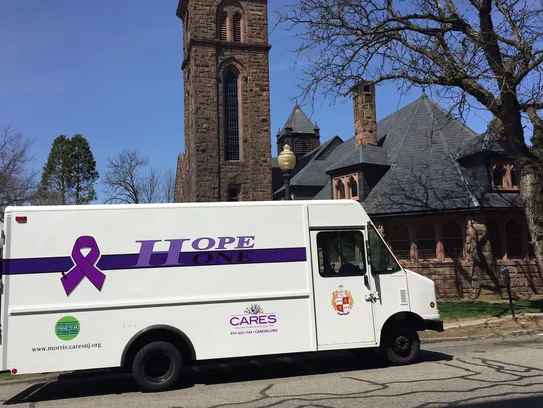

In a state that has spent the better part of a decade confronting the devastating ripple effects of opioid addiction, Morris County has quietly engineered one of the most effective, human-centered public health interventions in New Jersey—and increasingly, one of the most closely watched models in the country. The Morris County Sheriff’s Office marked the ninth anniversary of its Hope One initiative in Morristown with a renewed sense of urgency, purpose, and measurable progress, transforming what began as a grassroots outreach experiment into a sophisticated, data-driven ecosystem of care.
What distinguished this year’s anniversary was not just the milestone itself, but the evolution of the program’s public interface. Rather than a traditional symposium, county leadership reimagined the event as a full-scale community resource fair hosted at Calvary Baptist Church—an intentional shift that mirrors the program’s core philosophy: accessibility over formality, action over discussion, and connection over commentary. More than 30 service providers, alongside county staff and law enforcement, created a real-time network of support where residents could engage directly with critical services ranging from addiction recovery and mental health counseling to housing assistance and harm reduction education.
At the center of the event were Morris County Commissioner Director Stephen H. Shaw, Sheriff James M. Gannon, and Prosecutor Robert J. Carroll—three figures whose coordinated leadership has helped define the county’s approach to law enforcement as a conduit for public health rather than a barrier to it. Their presence underscored a broader institutional alignment that has become a defining characteristic of Hope One’s success.
When Hope One launched in 2017, it did so without precedent. Built out of a repurposed vehicle and guided more by necessity than by established framework, the program introduced a radical shift in how local government approached addiction and mental health crises. Instead of waiting for individuals to seek help, Hope One moved directly into communities—parking outside libraries, faith centers, shopping areas, and public spaces—to meet people where they were, both geographically and emotionally. The approach was intentionally stigma-free, eliminating the traditional barriers that often prevent individuals from accessing care.
Nine years later, the results are both expansive and deeply tangible. The program has made more than 71,700 community contacts, a figure that translates to a new interaction approximately every 6.19 minutes. It has distributed over 13,600 naloxone kits, equipping residents with the tools to reverse opioid overdoses in real time. More than 2,100 referrals to treatment and support services have been facilitated, and in 193 documented cases, naloxone provided through the program has been used in life-saving interventions.
These are not abstract metrics—they represent lives interrupted at the brink of crisis and redirected toward recovery.
The financial architecture supporting this work has also matured. Over the past two years, Morris County has strategically allocated more than $820,000 in opioid settlement funding to expand prevention initiatives, recovery pathways, and public education efforts. The county’s 2026 budget reinforces that commitment with an additional $300,000 dedicated to addressing homelessness and $150,000 earmarked specifically for prevention. These investments signal a broader understanding that addiction, mental health, and housing instability are interconnected challenges requiring coordinated solutions.
Hope One’s operational model is equally intentional. Each mobile unit is staffed by a multidisciplinary team that includes a plainclothes sheriff’s officer, a certified peer recovery specialist, and a licensed mental health professional. This composition is critical. It allows individuals to engage with law enforcement in a non-threatening context while simultaneously receiving clinical support and lived-experience guidance from recovery specialists. The result is a trust-based engagement model that has proven far more effective than traditional enforcement-first approaches.
Beyond the mobile unit itself, Hope One has catalyzed a broader ecosystem of programs that extend its impact across multiple touchpoints in the community. The Hope Hub, launched in 2021, operates as a weekly coordination platform involving 83 social service organizations. It focuses on high-risk cases where individuals or families face imminent harm, achieving a 97 percent reduction in acute risk across 856 referrals. This level of inter-agency collaboration represents a structural innovation rarely seen at the county level.
The Police Assisted Addiction and Recovery Initiative (PAARI), introduced in 2019, further expands access by integrating 26 police departments into a unified referral network, ensuring that individuals encountering law enforcement have immediate pathways to treatment rather than incarceration. Meanwhile, the Sheriff’s Office Identification Card Program addresses a less visible but equally critical barrier—documentation. Since its inception, it has issued 1,688 identification cards to individuals who would otherwise be unable to access housing, employment, or healthcare services.
Community Connections, another outgrowth of Hope One established in partnership with the Morris County Prosecutor’s Office and Superior Court, has helped nearly 800 justice-involved individuals navigate access to services, reinforcing the idea that recovery and reintegration must be embedded within the judicial process itself.
What makes Hope One particularly significant in the broader New Jersey landscape is its replicability. The program’s success has not gone unnoticed. Nine other counties across the state have launched similar mobile outreach initiatives modeled after Morris County’s framework, effectively transforming a local solution into a statewide blueprint.
The human element remains at the core of this expansion. During the anniversary event, Sheriff Gannon recognized Cpl. Chelsea Whiting, who now leads the initiative following the retirement of longtime program architect Erica Valvano, as well as Madine Despeine-Udoh of the Mental Health Association. Both are set to receive recognition from the New Jersey Office of the Attorney General, a testament to the program’s leadership and sustained excellence in community engagement.
The continued evolution of Hope One reflects a deeper shift in how public safety is defined. It is no longer limited to enforcement metrics or crime statistics; it is measured in lives stabilized, families supported, and communities strengthened through proactive intervention. By embedding recovery services directly into the fabric of everyday life, Morris County has effectively redefined what it means to serve and protect.
For readers following broader developments in public safety, addiction recovery, and community-based intervention strategies, additional coverage and ongoing reporting can be found through the Health & Welness section of Explore New Jersey, where emerging models like Hope One continue to shape the future of policy and practice across New Jersey.
As Hope One enters its tenth year, it does so not as an experimental program, but as a proven, scalable system—one that has demonstrated that when government, law enforcement, and community organizations align around a shared mission, meaningful and measurable change is not only possible, it is sustainable.
















