Home Blog Page 10

Bergen County Baseball Championship Brings New Jersey Powerhouses Together as Don Bosco Prep and Ramapo Battle for County Supremacy

Few things in New Jersey high school sports carry the electricity, pressure, and statewide attention of championship baseball in Bergen County, and this year’s title game has all the ingredients of an instant classic. Two of the state’s strongest programs, two dramatically different storylines, one of the most tradition-rich county tournaments in the country, and a championship atmosphere intensified by Memorial Day weekend weather chaos are all colliding as Don Bosco Prep and Ramapo square off for the 67th Bergen County Baseball Tournament crown.

With the New Jersey state tournament beginning next week, this game feels much larger than a county final. It feels like a statement game for two elite programs entering the postseason with momentum, confidence, and championship ambitions. The matchup between No. 4 Don Bosco Prep and No. 14 Ramapo represents the kind of high-level baseball that continues to make New Jersey one of the premier high school baseball states in America.

The championship game, originally scheduled for Northern Valley Demarest High School, was ultimately shifted because of severe Memorial Day weekend weather that disrupted athletic schedules throughout the region. Tournament officials moved the final to the Wood-Ridge Athletic Complex, ensuring the game could be played on reliable turf and under optimal conditions despite the relentless rain that impacted fields across North Jersey throughout the weekend. First pitch is scheduled for 2 p.m., and the game is expected to draw massive crowds as well as a substantial statewide streaming audience.

For baseball fans throughout New Jersey, the Bergen County Tournament is not merely another county championship. It is one of the sport’s defining annual stages. Bergen County baseball has long been synonymous with powerhouse programs, elite coaching, Division I prospects, deep postseason runs, and an intensely competitive culture that mirrors the pressure of state playoff baseball long before official state brackets even begin.

This year’s championship matchup perfectly reflects that reputation.
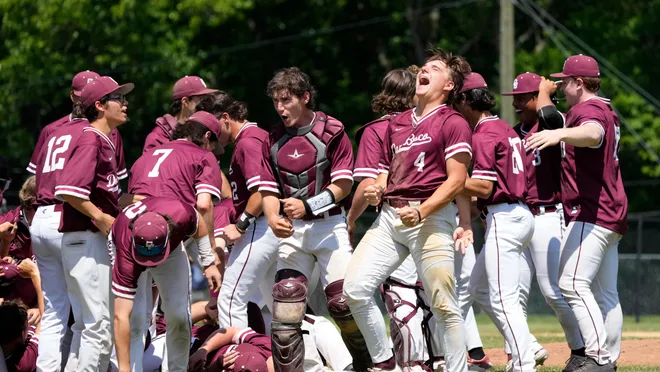
Don Bosco Prep enters the final as the defending Bergen County Tournament champion and arguably the hottest team in New Jersey baseball. The Ironmen arrive carrying a remarkable 16-game winning streak, turning what was already expected to be a strong season into a dominant stretch that has elevated the Ramsey-based powerhouse into legitimate statewide championship discussion. Head coach Mike Rooney has once again built a team defined by discipline, pitching depth, situational execution, and relentless competitiveness.

Within New Jersey baseball circles, Rooney’s approach to the Bergen County Tournament has become well known. He treats the county championship with the same intensity and significance as a state title run, understanding exactly what winning this tournament means within the state’s baseball landscape. For Don Bosco Prep, county championships are not secondary accomplishments. They are foundational parts of the program’s identity.

The Ironmen have played like a team fully embracing that pressure throughout the tournament. Their pitching staff has been sharp, their lineup timely, and their defensive execution consistently elite. Earlier this season, Don Bosco sent a powerful message when it shut out Ramapo 7-0 on April 1, a result that undoubtedly remains fresh in the minds of both programs entering this championship rematch.

Yet Ramapo arrives in this final carrying a different kind of momentum — the momentum of a program returning to the Bergen County championship stage after years of chasing relevance within one of the nation’s toughest baseball regions.

The Green Raiders are making their first Bergen County Tournament final appearance since 2011 and are seeking their first county championship since 1997. For longtime followers of Bergen County baseball, Ramapo’s return to this level feels significant. Under co-head coaches Garrison Ward and Mike Esposito, the program has steadily rebuilt itself into one of North Jersey’s most dangerous and battle-tested teams.
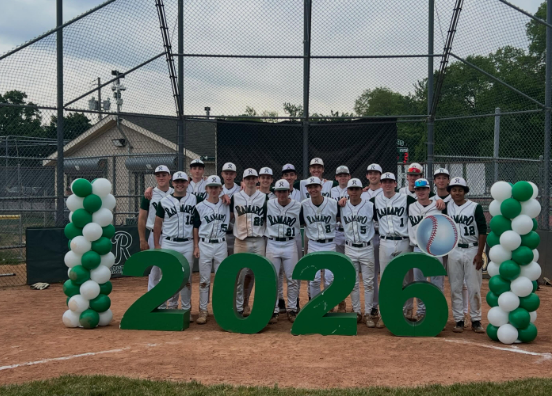
Ramapo’s path to the championship game has showcased resilience, composure, and the ability to win high-pressure games against elite competition. Their dramatic 3-2 semifinal victory over St. Joseph Regional demonstrated the kind of tight-game toughness necessary to survive deep postseason baseball. That win alone signaled that this team is not intimidated by pressure moments or powerhouse opponents.

The Green Raiders also enter the championship after securing major statement victories against some of the strongest programs in New Jersey, including an eye-opening win over perennial statewide contender Seton Hall Prep. Those performances transformed Ramapo from a respected tournament participant into a legitimate championship threat capable of challenging anybody remaining on the schedule.

That is precisely what makes this Bergen County final so compelling. It is not merely a matchup between favorites and underdogs. It is a collision between two programs playing exceptional baseball at exactly the right time.

The setting only heightens the atmosphere surrounding the championship. Wood-Ridge Athletic Complex has increasingly become a reliable destination for major North Jersey baseball games because of its turf capabilities and ability to withstand difficult weather conditions. With so many fields across the region impacted by rain, the move ensures that one of the state’s biggest county finals will be played under championship-caliber conditions rather than reduced by weather-related complications.

The result should be an intense postseason environment packed with scouts, alumni, families, students, coaches, and baseball fans from across Bergen County and beyond. In New Jersey high school sports culture, baseball county finals possess a unique energy distinct from football or basketball championships. The pace may be slower, but the tension often feels heavier. Every pitch matters. Every defensive play can shift momentum. Every baserunner carries enormous weight.

For Don Bosco Prep, the opportunity is about defending dominance and continuing one of the state’s most impressive late-season surges. A Bergen County championship would further cement the Ironmen as perhaps the most dangerous overall team entering the state tournament. Their combination of experience, pitching, coaching, and confidence makes them a terrifying postseason opponent for anyone remaining on the bracket.

For Ramapo, the championship represents something equally powerful — the opportunity to restore a proud baseball tradition and announce the program’s return to elite status within Bergen County. Winning a county title after nearly three decades would instantly become one of the most meaningful moments in modern program history.

The game also reflects the broader strength of New Jersey high school baseball in 2026. Across the state this spring, county tournaments have once again demonstrated the extraordinary depth of talent within New Jersey’s baseball ecosystem. Major league scouts, college recruiters, and baseball insiders consistently view New Jersey as one of the nation’s most competitive high school baseball environments because of the quality of coaching, the intensity of regional competition, and the ability of programs to produce fundamentally polished players prepared for higher levels.

Bergen County, in particular, remains one of the sport’s most demanding proving grounds. Programs routinely face playoff-level competition throughout the regular season, making county tournament runs feel closer to mini-state tournaments than local championships. Simply reaching the Bergen County final requires surviving multiple rounds against nationally respected programs and highly ranked opponents.

That reality is why the Don Bosco-Ramapo championship carries so much significance statewide. This is not a novelty matchup. This is elite New Jersey baseball at its highest county tournament level.

The statewide attention surrounding the game has become large enough that live coverage is being streamed for subscribers unable to attend in person, allowing fans across New Jersey to follow one of the state’s marquee baseball events in real time. As high school sports continue evolving in the digital era, expanded streaming access has dramatically increased visibility for major county and state matchups, helping elevate local athletes and programs onto larger platforms.

Still, for those attending in person, the experience will undoubtedly feel different. Championship baseball in North Jersey carries a certain emotional texture impossible to replicate digitally. The sound of metal cleats on turf, dugouts erupting after key hits, coaches pacing the foul line, nervous energy building pitch by pitch, and packed bleachers reacting to every moment all contribute to the atmosphere that makes county championship baseball so memorable.

By Monday evening, one team will leave Wood-Ridge holding one of the most prestigious trophies in New Jersey high school baseball. One program will add another chapter to its history. The other will begin turning its attention toward unfinished business in the state tournament.

But regardless of the outcome, this Bergen County Tournament final already represents exactly what makes New Jersey high school sports special — tradition, intensity, elite competition, community pride, and championship moments that resonate far beyond the final score.
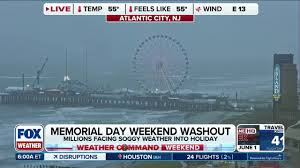

Memorial Day Weekend in New Jersey Becomes a Test of Resilience as Storms, Safety Warnings, and Shore Crackdowns Reshape the State’s Unofficial Start to Summer

For generations across New Jersey, Memorial Day weekend has represented far more than a three-day holiday. It is the emotional gateway into summer, the moment when boardwalk lights fully return, beach badges come out of drawers, marinas awaken, restaurants double their staff, and millions of residents psychologically pivot from spring into shore season. From Cape May to Sandy Hook, Memorial Day weekend has traditionally operated as both an economic engine and a cultural ritual deeply woven into the identity of the Garden State.

But the opening weekend of summer 2026 arrived under dramatically different circumstances.

Instead of sun-soaked beaches, packed boardwalks, and overflowing outdoor dining patios, much of New Jersey spent the holiday weekend battling relentless rain, powerful coastal winds, dangerous ocean conditions, and heightened public safety concerns that transformed the atmosphere across many of the state’s most iconic shore communities. What should have been a celebratory seasonal launch instead became a weekend defined by weather alerts, law enforcement mobilization, economic anxiety, and a renewed conversation about how New Jersey’s shore towns are evolving under mounting social, environmental, and operational pressures.

The weather itself became the dominant storyline almost immediately.

A stubborn and slow-moving coastal storm system parked itself across the Mid-Atlantic region just as millions of residents prepared to head toward the Jersey Shore. By Friday afternoon, conditions had already deteriorated substantially, with thick cloud cover, soaking rain, unusually cold marine air, and persistent onshore winds creating conditions that felt far more like late March than late May.

Throughout the weekend, temperatures across much of the Jersey Shore struggled to climb much beyond the upper 50s and low 60s. Heavy easterly winds whipped through beach communities from Monmouth County to Cape May County, while repeated waves of rain battered boardwalks, emptied outdoor entertainment districts, and forced cancellations or scaling back of numerous seasonal kickoff events.

In towns like Asbury Park, Point Pleasant Beach, Seaside Heights, Wildwood, Ocean City, and Cape May, the economic consequences became visible almost instantly.

Restaurants that normally rely on packed holiday crowds saw significant declines in foot traffic. Beachfront retailers watched pedestrian activity collapse during peak weekend hours. Boardwalk vendors, arcades, and seasonal operators who traditionally depend on Memorial Day momentum to establish early summer revenue found themselves staring at sparsely populated streets instead of the anticipated surge of tourists.

For many Jersey Shore businesses, Memorial Day weekend is not simply symbolic. It often determines hiring schedules, staffing confidence, inventory purchasing, seasonal cash flow, and expectations for the remainder of the summer tourism season.

A rainy weekend can create ripple effects lasting weeks.

The timing could hardly have been worse.

Coming after years of inflationary pressures, labor shortages, rising insurance costs, increased utility expenses, and continued operational uncertainty facing hospitality businesses statewide, the washout weekend represented another difficult hurdle for shore economies still attempting to stabilize in a rapidly changing tourism environment.

Yet even as the rain dominated headlines, ocean safety concerns quickly became equally urgent.

State and local officials throughout New Jersey issued repeated warnings regarding dangerous surf conditions and elevated rip current risks generated by the same storm system hammering the coastline. Strong easterly wind flow, rough surf, and turbulent wave action created highly hazardous swimming conditions along many beaches just as the summer season officially opened.

Emergency management officials, beach patrols, and weather agencies spent much of the weekend urging residents and visitors to stay entirely out of the water unless lifeguards were actively present.

That warning carried particular importance because Memorial Day weekend historically attracts large numbers of early-season swimmers despite ocean temperatures remaining dangerously cold. Combined with powerful rip currents, reduced visibility, and rough surf conditions, officials feared the potential for serious rescues or fatalities if beachgoers ignored advisories.

Across coastal New Jersey, municipalities emphasized that beaches being “open” for the season does not automatically mean ocean conditions are safe.

The distinction matters.

Rip currents remain one of the deadliest recurring coastal hazards facing the Jersey Shore every year. Fast-moving channels of water capable of pulling swimmers away from shore can form rapidly during turbulent weather patterns like the one impacting New Jersey throughout the weekend. Even strong swimmers can become exhausted within moments when caught inside powerful current systems.

Local officials repeatedly stressed a simple message throughout the holiday weekend: if lifeguards are not on duty, residents should stay entirely out of the ocean.

That heightened safety posture extended beyond the beaches themselves.

Law enforcement agencies throughout several shore communities entered Memorial Day weekend operating under aggressive crowd-management strategies shaped heavily by chaotic incidents that unfolded during previous summers. Municipal officials across parts of the Jersey Shore have spent months preparing for the possibility of unauthorized “pop-up parties,” social-media-organized gatherings, and disruptive teen crowd events that strained local police resources during prior holiday weekends.

This year, authorities moved early.

In Wildwood, prosecutors and municipal officials reportedly issued proactive cease-and-desist measures targeting social media influencers and online organizers attempting to promote unsanctioned mass gatherings ahead of the holiday weekend. Officials sought to prevent large-scale crowd convergence before it could materialize, signaling a far more assertive enforcement approach than in prior years.

Meanwhile, in Long Branch, police agencies deployed substantial manpower in anticipation of possible crowd-control situations. More than 100 officers reportedly participated in operations aimed at dispersing unauthorized gatherings before tensions could escalate into violence, vandalism, or widespread public disorder.

The increased police presence reflected a broader strategic shift occurring across numerous Jersey Shore communities.

Municipal leaders increasingly face the difficult balancing act of preserving the Shore’s longstanding reputation as an open and accessible summer destination while simultaneously managing modern social-media-driven crowd behavior capable of overwhelming local infrastructure within hours.

Unlike previous generations of tourism patterns, where crowds arrived more organically through traditional travel planning, today’s shore towns increasingly contend with viral online organizing capable of drawing thousands of people to specific locations with little warning or formal event coordination.

That shift has fundamentally altered public safety planning across New Jersey’s coastal communities.

Police departments, emergency management teams, transportation agencies, and local governments now operate within an environment where crowd dynamics can change instantly based on social media trends, influencer activity, and rapidly spreading online promotion.

The Memorial Day weekend crackdown efforts reflected how seriously shore communities now take those threats.

Yet despite the weather chaos and security concerns, Memorial Day itself continued to carry its deeper emotional meaning across New Jersey.

Throughout the state, communities still gathered for ceremonies honoring fallen military service members. Veterans organizations, local officials, fire departments, schools, civic groups, and residents participated in memorial events reminding New Jerseyans that the holiday ultimately exists to honor sacrifice, service, and remembrance.

Even amid rain-soaked streets and stormy skies, those traditions endured.

Parades marched through smaller crowds.

Flags still lined downtown streets.

Ceremonies still unfolded in parks, cemeteries, memorial plazas, and town centers across the state.

The contrast itself felt deeply New Jersey.

A state simultaneously navigating economic anxiety, unpredictable weather, public safety challenges, political tensions, and logistical pressures while still maintaining strong civic traditions rooted in community identity and shared history.

That resilience has long defined New Jersey’s shoreline communities.

Because while this Memorial Day weekend may ultimately be remembered for rain, dangerous surf, and disrupted tourism, longtime residents understand that the Jersey Shore has always existed in tension with unpredictability. Storms, economic cycles, changing tourism trends, and evolving cultural dynamics have continuously reshaped coastal New Jersey for generations.

And yet every summer, the shore returns.

The businesses reopen.

The boardwalks refill.

The ferries run.

The beaches recover.

The crowds come back.

By early next week, forecasters expect conditions across New Jersey to improve substantially. Warmer temperatures, increasing sunshine, and calmer conditions are projected to return heading into the final days of May and early June, potentially giving shore businesses an opportunity to recover some of the momentum lost during the holiday weekend washout.

Still, Memorial Day weekend 2026 may linger in memory not simply because of bad weather, but because it revealed how interconnected the modern Jersey Shore economy has become with climate volatility, public safety management, tourism pressure, infrastructure resilience, and rapidly changing social behavior.

The weekend exposed both vulnerabilities and strengths simultaneously.

It highlighted the economic fragility of seasonal tourism.

It underscored the growing importance of coordinated emergency management.

It demonstrated how aggressively municipalities are now approaching public safety.

And it reinforced how deeply weather itself can shape the financial and emotional pulse of New Jersey.

For the Shore, summer technically begins with Memorial Day.

This year, however, the season arrived carrying storm clouds, warnings, enforcement operations, and hard reminders about the increasingly complicated realities facing one of New Jersey’s most important cultural and economic regions.

Across New Jersey, Memorial Day Ceremonies, Gold Star Tributes, and “Taps Across America” Remind Communities That the Holiday Is About Sacrifice, Service, and the Families Forever Changed by War

Even beneath gray skies, steady rain, and weather-driven cancellations across parts of the state, communities throughout New Jersey are still gathering this Memorial Day to honor the nation’s fallen service members with solemn ceremonies, emotional remembrances, wreath layings, and the haunting sound of “Taps” echoing across cemeteries, parks, memorial grounds, and town centers.

From South Jersey borough halls to veterans memorials in Camden County, from quiet cemetery observances in Cumberland County to public tributes recognizing Gold Star families who continue living with unimaginable loss, Memorial Day 2026 is unfolding across New Jersey not as a celebration, but as a deeply personal statewide act of remembrance.

While rain forced several outdoor events to shift indoors, the spirit of the day has remained unchanged. In communities large and small, veterans organizations, township officials, military families, volunteers, students, civic leaders, and residents are coming together to preserve the original meaning of Memorial Day at a moment when many Americans increasingly associate the holiday primarily with beaches, barbecues, retail sales, and the unofficial beginning of summer.

Across New Jersey this year, the message from veterans groups and Gold Star families has been clear: Memorial Day is ultimately about those who never returned home.

That reality has been especially visible in moving tributes involving Gold Star mothers and families who have publicly shared deeply personal stories about sons and daughters lost during military service. Their testimonies have become some of the most emotionally powerful moments of the holiday throughout the region, grounding public ceremonies in lived experience rather than symbolism alone.

For many of those families, Memorial Day is not abstract patriotism or ceremonial pageantry. It is grief carried across decades. It is birthdays missed. Empty chairs at holidays. Folded flags displayed inside living rooms. Voicemails saved permanently on phones. The annual return of a date that forces painful memories back to the surface while also reaffirming a commitment to ensuring fallen service members are never forgotten by the communities they once called home.

Those emotions have shaped ceremonies throughout the state as municipalities adapt to difficult weather conditions while refusing to cancel tributes altogether. In Haddonfield, where rain forced the community’s Memorial Day parade plans indoors, ceremonies relocated to the Borough Hall Auditorium rather than being abandoned entirely. Residents still gathered to honor veterans and fallen military personnel, demonstrating how deeply rooted these traditions remain within New Jersey communities regardless of weather or logistical challenges.

That determination has been repeated throughout Camden County and beyond. Cherry Hill, Winslow Township, Pennsauken, and numerous additional municipalities have continued with rain-or-shine memorial observances centered around wreath-laying ceremonies, flag presentations, military honors, and public reflection. In many towns, local veterans organizations worked throughout the weekend preparing memorial sites despite forecasts calling for poor conditions, reinforcing the belief that honoring fallen service members should never depend upon convenience.

The atmosphere at many of these events has been notably intimate and reflective rather than celebratory. Veterans standing beneath umbrellas beside war memorials, residents gathering quietly around monuments engraved with names from conflicts spanning generations, and families placing flowers beside markers all contribute to a version of Memorial Day that feels increasingly focused on remembrance rather than spectacle.

One of the most emotionally resonant moments unfolding across New Jersey this year is participation in “Taps Across America,” the growing national initiative encouraging musicians, veterans, civilians, and volunteers to perform “Taps” simultaneously across the country during Memorial Day observances. Communities throughout New Jersey have embraced the movement as a way of connecting local ceremonies to a larger national moment of reflection.

In Vineland, the ceremony at Siloam Cemetery has become part of that coordinated tribute, with participants joining Americans nationwide in sounding “Taps” in unison. The familiar bugle call, simple yet devastatingly emotional, continues to hold extraordinary symbolic weight more than 160 years after its creation during the Civil War. The melody’s sparse structure somehow captures grief, gratitude, loss, and reverence all at once, making it one of the most enduring ceremonial traditions in American military history.

Across cemeteries and memorial grounds throughout New Jersey, the sound of “Taps” this Memorial Day is serving as both tribute and reminder. It reminds communities that behind every engraved name exists an unfinished life story — a person who once walked these same streets, attended these same schools, worked these same jobs, and belonged to these same neighborhoods before military service ultimately demanded the highest possible sacrifice.

That local connection remains especially important throughout New Jersey, a state with deep military history and longstanding ties to veterans communities. From Joint Base McGuire-Dix-Lakehurst to generations of service members connected to the state’s urban centers, suburbs, and shore towns, New Jersey has long maintained a powerful relationship with military service and remembrance traditions.

Memorial Day ceremonies across the state frequently reflect that intergenerational connection. Elder veterans from Korea and Vietnam stand beside younger veterans from Iraq and Afghanistan. Children place miniature flags beside memorial markers while older residents remember classmates and relatives who never returned from war decades earlier. The continuity between generations reinforces the idea that Memorial Day is not confined to one era or one conflict. It remains an evolving act of collective memory stretching across American history.

The continued participation of younger residents has become particularly meaningful for organizers concerned about preserving the historical significance of Memorial Day traditions in an increasingly fast-moving digital culture. Many municipalities throughout New Jersey now incorporate students, scout troops, youth musicians, and school organizations directly into ceremonies to ensure that remembrance traditions continue beyond older generations of veterans and civic leaders.
That educational component has taken on renewed urgency as surviving veterans from World War II continue disappearing and the living memory of earlier wars grows increasingly distant. Community leaders throughout New Jersey have emphasized that Memorial Day ceremonies now serve not only as tributes, but as opportunities to pass historical understanding and civic responsibility to younger generations who may have limited direct connection to military service.
Even smaller ceremonies this year have carried profound emotional significance precisely because they remain local and personal. In many towns, memorial observances are not built around massive crowds or national media attention. They are built around neighbors gathering together to honor people whose names they recognize personally. That intimacy gives New Jersey’s Memorial Day traditions a uniquely powerful emotional texture.

The weather itself has almost added to the reflective mood surrounding many events. Gray skies, damp memorial grounds, and quiet rain-soaked ceremonies have created atmospheres more solemn than festive, reinforcing the seriousness of the occasion. Rather than discouraging attendance, the poor weather in many communities appears to have strengthened the determination of participants to show up regardless of conditions.

For veterans organizations throughout the state, that continued attendance matters enormously. Many local American Legion posts, VFW halls, and community groups spend months organizing Memorial Day observances that depend heavily on volunteers and local participation. Seeing residents continue attending despite cancellations, relocations, or rain sends an important message that the purpose behind these ceremonies still resonates deeply within communities.

The broader Memorial Day landscape throughout New Jersey also reflects the evolving ways Americans publicly process military sacrifice. Alongside traditional wreath-laying ceremonies and parades, modern observances increasingly incorporate storytelling, family testimony, mental health awareness, historical education, and public discussions about the long-term impacts of war on both service members and their families.

Gold Star families in particular have become central voices in that conversation. Their participation transforms Memorial Day from an abstract patriotic holiday into something deeply human and immediate. Hearing mothers describe the loss of sons or daughters who never returned home forces audiences to confront the true cost behind military sacrifice in ways statistics and speeches alone never can.

That emotional honesty may ultimately be what keeps Memorial Day traditions meaningful for future generations. The holiday survives not because of ceremonial obligation alone, but because communities continue finding authentic ways to connect remembrance with real human stories.

Across New Jersey today, whether inside borough auditoriums, beside rain-soaked memorial stones, within cemetery grounds, or beneath lowered American flags, those stories are being carried forward once again.

The ceremonies may vary from town to town. Some are large. Some are quiet. Some include parades while others center only around a handful of veterans and families gathered beside a monument. But collectively they form something larger — a statewide reaffirmation that remembrance still matters, sacrifice still matters, and the names engraved across New Jersey’s memorials will not be allowed to fade into silence.

This Memorial Day, even under difficult skies, New Jersey is still standing together to remember.

Big Rusty Is Becoming One of New Jersey’s Most Unforgettable Art Landmarks as Thomas Dambo’s Giant Eco-Troll Transforms an Abandoned Industrial Site into a Surreal Environmental Destination

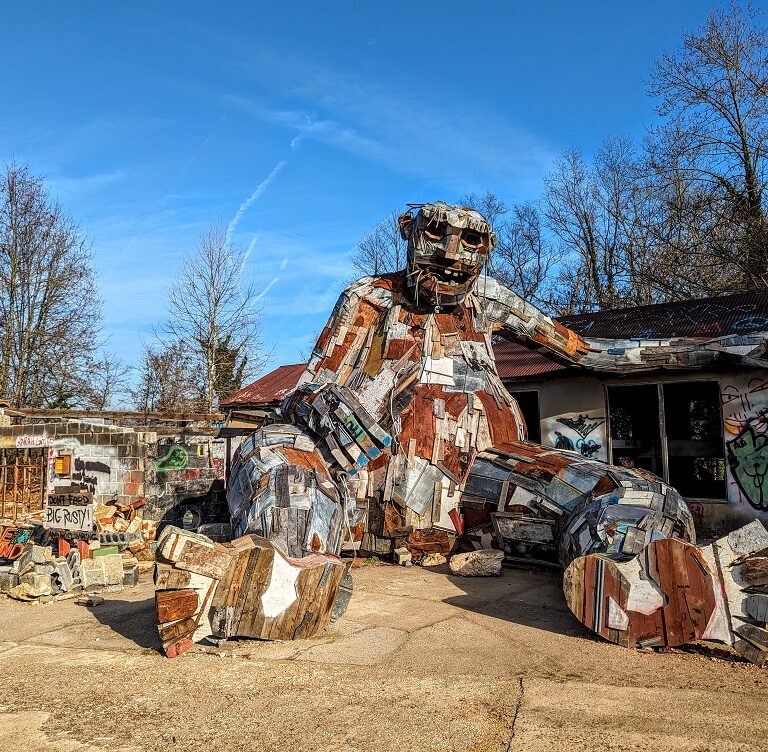
Hidden quietly within the woods of Burlington County beside the winding edges of the Rancocas Creek, a gigantic rust-colored troll now sits among the remnants of an abandoned industrial property, grinning mischievously as visitors emerge through the trees to encounter one of the most unusual public art installations anywhere in New Jersey. Towering roughly 20 feet high and constructed almost entirely from salvaged industrial debris, Big Rusty has rapidly evolved from a curious regional attraction into one of the most photographed, discussed, and symbolically powerful works of public environmental art in the state.

Located in Hainesport Township just off Route 38, Big Rusty is not simply a sculpture. She is a statement about waste, recycling, forgotten spaces, environmental responsibility, and the strange beauty that can emerge when discarded materials are transformed through imagination and artistic vision. Since her completion during the summer of 2023, the giant eco-troll has become a destination for photographers, families, environmental advocates, road-trip travelers, public art enthusiasts, and curious New Jersey explorers seeking something entirely different from the traditional museum experience.

The sculpture’s growing popularity also reflects a larger cultural shift happening throughout New Jersey, where immersive outdoor art experiences are increasingly becoming major tourism draws in their own right. Across the state, visitors are searching for artistic destinations that feel interactive, discoverable, visually dramatic, and deeply connected to place. Big Rusty embodies all of those qualities simultaneously while adding an unmistakable sense of myth, fantasy, and industrial surrealism to the surrounding South Jersey landscape.

The mastermind behind the project is internationally celebrated Danish artist Thomas Dambo, whose monumental recycled-material troll sculptures have become global cultural phenomena over the last decade. Known for constructing enormous troll installations from salvaged and discarded materials, Dambo has placed more than 120 giant sculptures across forests, parks, abandoned landscapes, and hidden outdoor settings throughout the world. His work intentionally blurs the line between environmental activism, fantasy storytelling, folk mythology, and large-scale sculptural engineering.

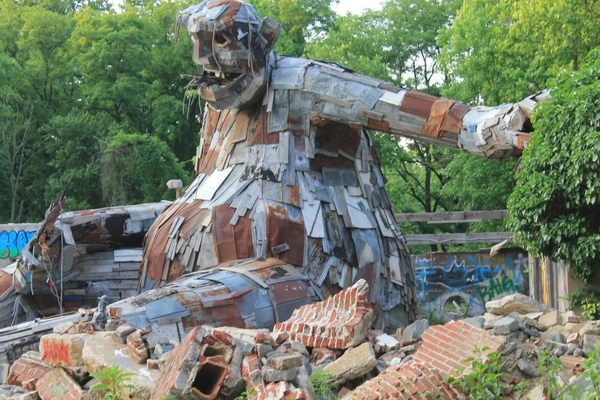
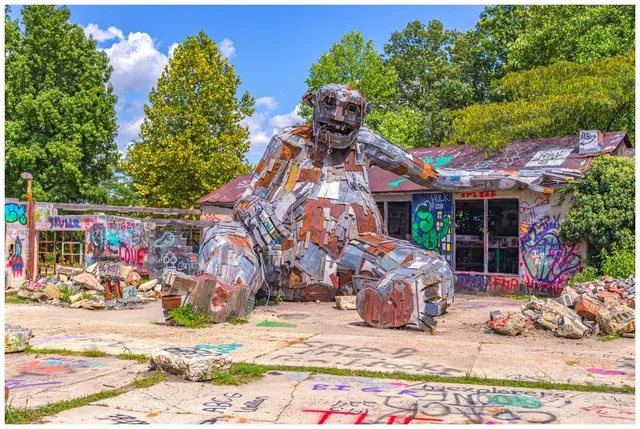
Big Rusty represents one of the most distinctive creations in Dambo’s entire international portfolio because of both her construction materials and her environment. While most of Dambo’s famous trolls are primarily built from reclaimed wood, Big Rusty relies heavily on salvaged industrial metal and debris harvested directly from the nearby abandoned Creek Turn Ceramic Supply factory where the sculpture now resides. The result gives the troll an entirely different visual identity from her global counterparts. Instead of appearing rustic or woodland-inspired, Big Rusty feels industrial, weathered, post-apocalyptic, and deeply intertwined with the history of the abandoned property itself.

That connection is central to Dambo’s artistic philosophy. One of his defining creative principles is the phrase “you are what you eat,” meaning every troll should physically embody the materials and environmental history surrounding its location. Big Rusty follows that rule literally. Her massive body was assembled using over 100 square meters of rusted corrugated roofing, discarded plywood salvaged from factory attics, concrete fragments, drywall, broken pallets, rebar, wiring conduit, and countless pieces of abandoned industrial waste collected directly from the site.

Nothing about the sculpture feels artificially polished or detached from its environment. Big Rusty appears almost as though she emerged organically from the ruins themselves. Sitting casually against the graffiti-covered remains of the former factory, the troll leans backward with a giant toothy grin stretched across her face while tangled electrical wires hang from her mouth as though she has been feeding directly on the discarded debris surrounding her.

The imagery is intentionally unsettling while remaining playful enough to invite curiosity rather than fear. Dambo’s trolls often function simultaneously as whimsical fantasy creatures and environmental warnings, using humor and scale to encourage audiences to think differently about waste, pollution, and humanity’s relationship with the natural world. Big Rusty may appear friendly at first glance, but the symbolism beneath the sculpture is unmistakable.

A poetic plaque installed beside the troll reinforces that message with eerie simplicity: “For every piece of trash she eats, she grows so big and thick. So careful to not feed the beast, one day she might grow sick.” The wording transforms Big Rusty into a metaphor for environmental excess itself, suggesting that unchecked consumption and careless waste eventually create consequences too massive to ignore.

That layered storytelling helps explain why Big Rusty resonates far beyond traditional public art audiences. Visitors are not simply looking at a sculpture. They are stepping into a narrative environment where abandoned industrial history, environmental commentary, fantasy mythology, and immersive outdoor exploration all collide within a single experience.

The location itself contributes enormously to that atmosphere. Unlike conventional roadside attractions designed for instant visibility from highways or commercial districts, Big Rusty remains intentionally hidden from immediate view. Thomas Dambo strongly prefers installations that require visitors to physically engage with outdoor environments rather than simply observing artwork from parking lots or roadside overlooks. As a result, finding Big Rusty becomes part of the artistic experience itself.

Travelers heading eastbound along Route 38 in Hainesport must look carefully for a modest gravel drive located just beyond milepost 14. After parking near the entrance area, visitors continue down a short dirt trail weaving through wooded terrain before suddenly emerging into the clearing containing the abandoned factory ruins and the giant sculpture herself. That gradual reveal dramatically enhances the emotional impact of the installation. The moment Big Rusty finally appears among the industrial remains feels cinematic, unexpected, and strangely surreal.

The setting also reflects broader themes connected to adaptive reuse and environmental reclamation. Rather than demolishing every trace of the industrial property’s past, the site now exists in a transitional state where abandoned infrastructure, public art, environmental restoration, and future redevelopment coexist simultaneously. Big Rusty effectively transforms the former factory grounds into a new kind of cultural landscape where industrial decay becomes part of the artistic narrative rather than something hidden or erased.

The sculpture’s popularity has already produced significant ripple effects throughout Burlington County. Following the attention generated by Big Rusty’s installation, local leaders and arts advocates launched a broader “Troll Trek” initiative designed to expand public art experiences throughout regional parks and outdoor recreation spaces. Smaller companion sculptures and troll-inspired installations have since been discussed and developed as part of a growing effort to position the county as a destination for immersive environmental art tourism.

That development reflects a larger trend happening throughout New Jersey as municipalities increasingly recognize the economic and cultural power of large-scale public art installations. Once viewed primarily as decorative additions, ambitious outdoor sculptures are now functioning as tourism anchors capable of driving regional visitation, supporting local businesses, encouraging outdoor recreation, and strengthening community identity.

Big Rusty accomplishes all of those goals while also remaining deeply accessible. Unlike many large cultural institutions requiring admission fees, formal reservations, or structured programming, the troll exists freely within an open natural environment where visitors can experience the artwork on their own terms. Families, photographers, students, hikers, artists, and travelers all interact with the space differently, allowing the sculpture to operate simultaneously as landmark, conversation piece, educational tool, and recreational destination.

Photographers in particular have embraced the location because of the constantly changing environmental conditions surrounding the sculpture. Morning fog drifting through the woods, dramatic sunset lighting reflecting off the rusted metal surfaces, snowfall covering the industrial ruins, and overgrown summer vegetation all dramatically alter Big Rusty’s appearance throughout the year. Social media imagery from the site has helped accelerate the sculpture’s popularity, turning the troll into one of South Jersey’s fastest-growing visual landmarks.

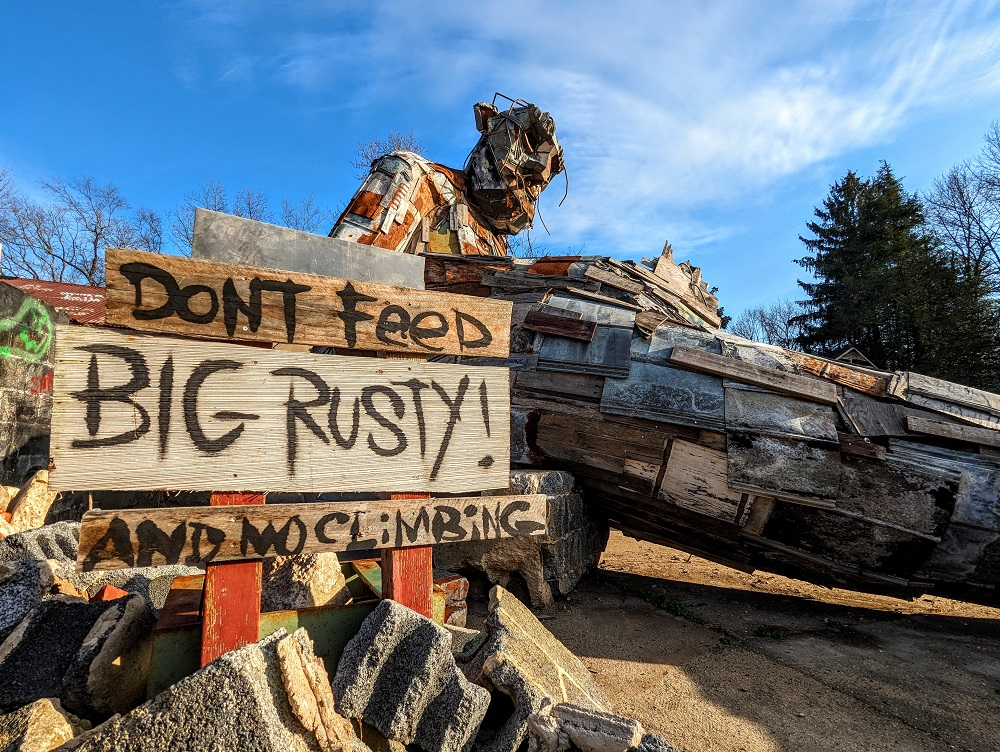
Despite the playful atmosphere surrounding the installation, preservation concerns remain important. Because Big Rusty is built from salvaged materials and exposed continuously to outdoor weather conditions, visitors are strongly discouraged from climbing on the structure. The sculpture’s framework, while massive in scale, remains vulnerable to physical damage, particularly given the complex combination of reclaimed industrial materials used throughout the construction process.

The long-term future of the surrounding site also continues evolving as plans tied to the future Creek Turn Park development gradually move forward. As environmental restoration, public recreation, and cultural programming continue expanding in the area, Big Rusty increasingly appears positioned to become a permanent centerpiece within a larger regional arts and recreation corridor.

What makes the sculpture especially compelling within New Jersey’s cultural landscape is how completely unexpected it feels. Few visitors anticipate discovering a giant rust-covered troll hidden beside abandoned factory ruins in Burlington County. Yet that sense of surprise has always been part of New Jersey’s creative identity. Some of the state’s most memorable destinations emerge precisely because they defy expectations, blending art, history, landscape, eccentricity, and reinvention into experiences that feel impossible to duplicate anywhere else.

Big Rusty now belongs firmly within that tradition.

At a time when so much contemporary development feels polished, commercialized, and predictable, the giant troll beside the Rancocas Creek offers something refreshingly strange, imaginative, and emotionally resonant. She transforms discarded waste into art, forgotten industrial space into cultural destination, and environmental warning into public spectacle without sacrificing humor, accessibility, or visual wonder.

As more visitors continue making the trek through the woods to encounter her enormous grin rising from the abandoned ruins, Big Rusty is quickly becoming more than a public sculpture. She is evolving into one of New Jersey’s most unforgettable modern landmarks, proving that some of the state’s most powerful cultural experiences are still waiting quietly off the highway, hidden among the trees, rusting beautifully beside the water.

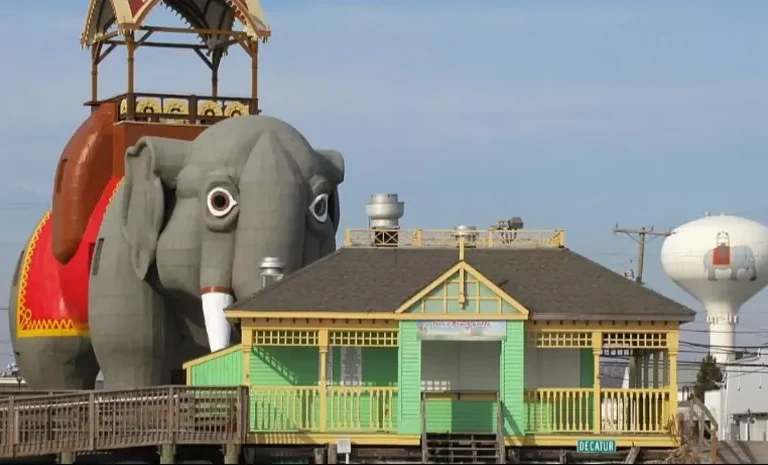
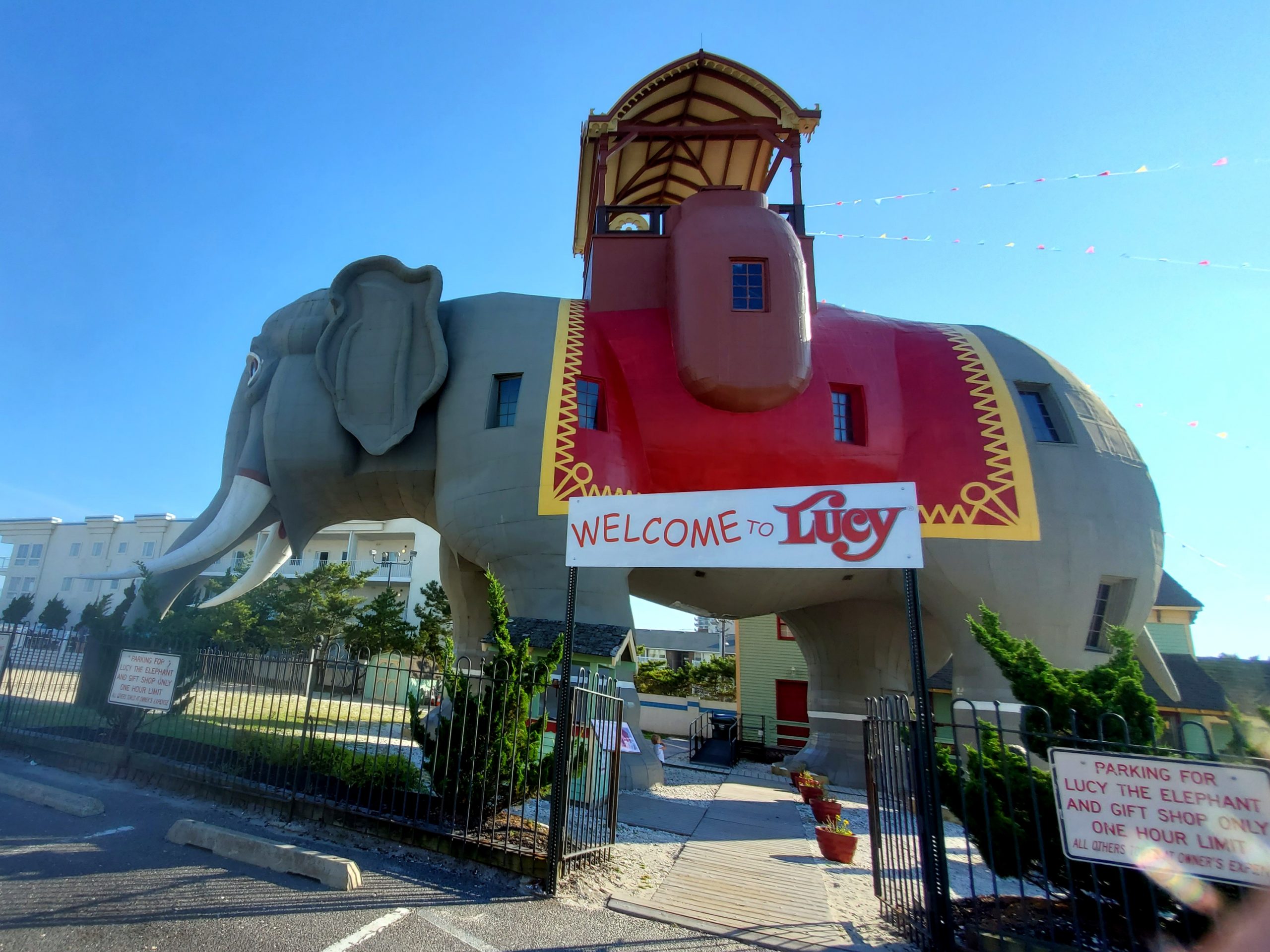
Lucy the Elephant Still Towers Over the Jersey Shore as America’s Oldest Roadside Attraction Enters a New Era of Preservation, Tourism, and Cultural Identity

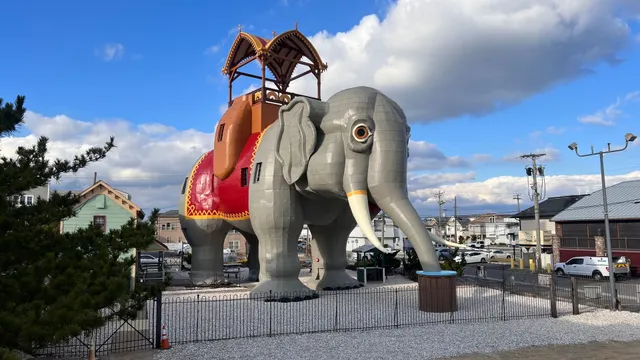
Long before the Jersey Shore became synonymous with sprawling casinos, towering boardwalk rides, beach concerts, luxury resorts, and modern tourism campaigns, one gigantic elephant standing along the coastline in Margate City was already redefining what American roadside entertainment could become. Rising 65 feet above the sand and weighing approximately 90 tons, Lucy the Elephant remains one of the strangest, most beloved, and most historically important landmarks not only in New Jersey, but anywhere in the United States.

More than 140 years after her construction in 1881, Lucy continues to attract visitors from around the world who arrive at the southern New Jersey shoreline expecting to see a novelty attraction and instead discover something much larger: a living symbol of American imagination, eccentricity, preservation, tourism history, architectural experimentation, and the enduring personality of the Jersey Shore itself.

In an era where countless roadside attractions have vanished beneath redevelopment, hurricanes, neglect, or changing travel habits, Lucy’s survival feels almost impossible. She has endured salt air, economic downturns, abandonment, structural decay, demolition threats, relocation, restoration campaigns, and multiple reinventions while somehow remaining one of the most instantly recognizable figures in New Jersey culture.

Today, Lucy the Elephant exists simultaneously as a National Historic Landmark, a functioning museum, a tourism icon, an architectural curiosity, a preservation success story, and one of the most photographed attractions anywhere along the Atlantic coastline. Yet what makes Lucy especially remarkable is not merely her survival, but the bizarre and deeply American story behind why she was built in the first place.

The origins of Lucy begin with ambition, speculation, and pure spectacle.

During the late 19th century, southern New Jersey’s coastline remained largely undeveloped, consisting of vast stretches of sandy terrain waiting for investors, developers, and entrepreneurs eager to capitalize on the rapidly expanding tourism economy connected to rail travel from Philadelphia and other northeastern cities. One of those visionaries was James V. Lafferty, an eccentric engineer, inventor, and land developer whose imagination dramatically exceeded conventional real estate marketing strategies.

Lafferty owned significant parcels of land in what was then called South Atlantic City, the community eventually renamed Margate City. Like many developers of the era, he needed a way to convince wealthy Victorian-era travelers and homebuyers that the undeveloped coastline represented an exciting investment opportunity. Unlike most developers, however, Lafferty believed the solution involved constructing an enormous elephant-shaped building directly along the shore.

The idea was outrageous.

It was also brilliant.

Lafferty patented his elephant-building concept in 1882 and quickly turned Lucy into one of the earliest examples of novelty architecture in American history. Prospective buyers would travel down from Philadelphia by railroad before climbing a spiral staircase located inside Lucy’s massive hind leg. Once reaching the top viewing platform, known traditionally as a howdah, visitors could survey the coastline while Lafferty pointed toward available oceanfront lots below.

The structure functioned simultaneously as observation tower, advertising campaign, conversation piece, and tourism magnet. Long before modern billboards, viral marketing, or destination branding existed, Lucy was already accomplishing exactly what contemporary attractions still attempt to achieve today: making people stop, stare, talk, photograph, and remember.

And they did.

Over time, Lucy became far more than a real estate gimmick. She evolved into a permanent landmark woven directly into the emotional identity of the Jersey Shore itself.

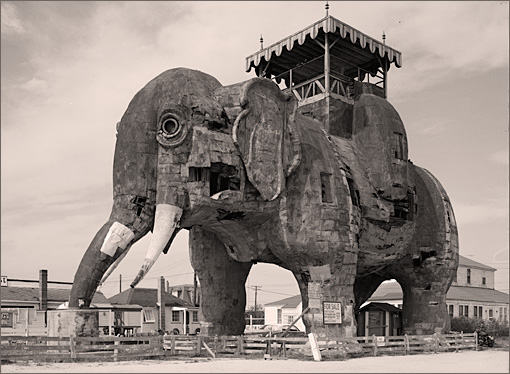
Her architecture alone remains astonishing even by modern standards. Constructed primarily from wood and covered in tin, the colossal elephant contains nearly 12,000 square feet of timber framework engineered decades before contemporary structural technology existed. The interior resembles an intricate cathedral of beams, braces, curved supports, and handcrafted construction techniques that continue astonishing architects, engineers, and preservation experts who study the building today.

Standing inside Lucy’s body feels less like entering a traditional tourist attraction and more like walking inside a massive handcrafted sculpture. The internal structure reveals the remarkable ambition and craftsmanship required to construct something so unusual at a time when neither modern engineering software nor advanced fabrication systems existed.

But Lucy’s story became even stranger after her original real estate purpose faded.

Throughout the 20th century, the giant elephant cycled through multiple bizarre second lives that only deepened her folklore. In 1902, she was purchased by the Gertzen family, officially given the name “Lucy,” and transformed into a tavern operating during the years before Prohibition. Local legends still persist claiming bootleggers once used Lucy’s giant eyes to signal offshore ships carrying illegal alcohol during the Prohibition era.

Later, for one memorable summer, a wealthy family actually leased the structure and attempted to use Lucy as a seasonal residence. The family outfitted portions of the interior with living accommodations, including a bathtub, despite lacking running water throughout the building. The idea of living inside a six-story elephant along the Jersey Shore sounds almost surreal today, yet it perfectly reflects the kind of eccentric Americana Lucy has always embodied.

More than a century later, that strange residential history unexpectedly resurfaced again during the modern vacation-rental era when Lucy briefly became one of the most talked-about overnight listings on Airbnb in 2020. The limited overnight opportunity generated national attention, with visitors eager for the chance to sleep inside one of America’s most unusual surviving landmarks.

Despite her popularity, Lucy’s existence has never been guaranteed.

By the late 1960s, decades of relentless Atlantic salt air, moisture exposure, coastal storms, and structural deterioration had pushed the building dangerously close to collapse. The once-celebrated landmark had fallen into severe disrepair and was officially condemned. Plans emerged to demolish the elephant entirely, potentially erasing one of the nation’s oldest surviving roadside attractions forever.

What happened next permanently transformed Lucy from novelty architecture into preservation legend.

In response to the demolition threat, local residents, historians, preservationists, and community advocates united to form the Save Lucy Committee, launching one of New Jersey’s earliest and most significant grassroots historic preservation campaigns. Rather than allowing the building to disappear, the group organized efforts to physically relocate the massive structure approximately two blocks away onto city-owned property where restoration efforts could begin.

The move itself became one of the most dramatic moments in Jersey Shore preservation history.

In 1970, workers carefully transported the gigantic elephant through Margate streets in an operation that captured enormous public attention. Watching a 90-ton elephant structure slowly move across town instantly entered local folklore and reinforced Lucy’s emotional importance to the surrounding community.

That relocation ultimately saved her life.

Since then, preservation has remained a constant battle. Maintaining a wooden and metal structure exposed year-round to ocean air, humidity, storms, and seasonal temperature shifts requires continuous conservation work, structural monitoring, and extensive fundraising. Lucy’s survival is not passive. It is the result of decades of ongoing intervention, restoration, and community commitment.

Recent preservation efforts have been especially ambitious.

Lucy recently underwent a massive exterior restoration project replacing sections of her aging tin skin with advanced rust-resistant nickel-copper alloy materials designed to better withstand coastal weather conditions. Additional funding has supported interior plaster restoration, historic flooring improvements, upgraded climate control systems, and new HVAC technology intended to reduce internal condensation capable of damaging the massive timber framework hidden beneath the exterior shell.

Those preservation investments are critical because Lucy’s importance extends far beyond nostalgia. She occupies a unique position within American architectural history as the oldest surviving roadside tourist attraction in the nation. Long before giant dinosaurs, oversized diners, neon motel signs, themed restaurants, or roadside entertainment complexes spread across America’s highways, Lucy established the basic concept that architecture itself could become spectacle.

That influence continues shaping American tourism culture even today.

Yet perhaps the most fascinating aspect of Lucy’s survival is how emotionally attached people remain to her. Visitors do not experience Lucy merely as a historical artifact. They treat her almost like a living character embedded within the personality of the Jersey Shore itself. Families return generation after generation. Vacation photos repeat across decades. Children who once climbed Lucy’s staircases now bring grandchildren back to experience the same views overlooking the Atlantic Ocean.

That emotional continuity matters deeply at a time when much of the Jersey Shore continues rapidly modernizing through redevelopment, luxury construction, and shifting tourism trends. Lucy represents something increasingly rare: a direct surviving connection to the strange, playful, imaginative spirit that originally defined American shore tourism culture.

Today’s visitor experience allows guests to explore nearly every dimension of Lucy’s history firsthand. Guided tours lead visitors through the internal museum spaces showcasing historic blueprints, preservation artifacts, architectural materials, and photographs documenting Lucy’s remarkable journey across nearly a century and a half of American history.

Climbing through the interior remains one of the most memorable parts of the experience. Visitors eventually emerge inside Lucy’s howdah viewing platform, where sweeping panoramic views stretch across Margate City, the Atlantic Ocean, and the distant Atlantic City skyline. Looking outward through Lucy’s giant porthole-style eyes creates one of the most unique visual perspectives anywhere along the Jersey coastline.

The surrounding area has also evolved into a broader tourism destination anchored partially by Lucy’s continued presence. Visitors frequently pair tours with beach trips, boardwalk excursions, dining experiences, and broader exploration throughout Atlantic County and the southern Jersey Shore region.

As New Jersey continues investing heavily in cultural tourism, heritage preservation, arts programming, and experiential travel destinations, Lucy the Elephant increasingly stands not merely as a quirky roadside attraction, but as one of the state’s most important surviving cultural landmarks. Her story touches architecture, engineering, tourism history, preservation activism, Americana, and coastal identity all at once.

More importantly, Lucy still accomplishes the exact thing James V. Lafferty originally intended back in 1881.

She makes people stop.

She makes people curious.

She makes people gather.

She makes people remember.

People can gaze at her from the Bar Patio next door.

More than 140 years after wealthy Victorian travelers first climbed her staircases overlooking undeveloped shoreline property, Lucy the Elephant remains one of the great surviving symbols of American imagination standing proudly above the Jersey Shore, still watching over the coastline, still astonishing first-time visitors, and still proving that sometimes the strangest ideas become the most enduring landmarks of all.

Grounds For Sculpture Enters a Transformational New Era as Major Restorations, Monumental Installations, and Rare Archive Exhibitions Reshape One of New Jersey’s Greatest Cultural Destinations

For decades, Grounds For Sculpture in Hamilton Township has existed as one of New Jersey’s most extraordinary artistic experiences, a place where large-scale sculpture, immersive gardens, architecture, fine dining, and natural landscape converge into something that feels far larger than a traditional museum. Visitors do not simply walk through exhibits there. They wander. They discover. They become temporarily absorbed into a world where art exists not behind velvet ropes or sterile gallery walls, but within ponds, pathways, forests, terraces, hidden corners, and carefully orchestrated moments of surprise.

Now, heading deeper into 2026, Grounds For Sculpture is entering one of the most fascinating transitional periods in its modern history. Between a major organizational restructuring, the temporary disappearance of one of the park’s most recognizable visual icons, the unveiling of ambitious new exhibitions, and the arrival of striking contemporary outdoor installations, the celebrated Hamilton arts campus is evolving in ways that are reshaping both its identity and its future.

For longtime visitors, repeat members, artists, collectors, and cultural travelers throughout New Jersey and the Northeast, the current moment at Grounds For Sculpture feels especially significant because the changes unfolding across the property are not cosmetic adjustments. They represent a broader reimagining of how the institution preserves its legacy while simultaneously expanding its role within the contemporary arts landscape.

At the center of those changes is one of the most important structural developments in the organization’s history: the formal integration of The Johnson Atelier into Grounds For Sculpture’s core operations. The historic fabrication and conservation studio, originally founded by sculptor and Grounds For Sculpture creator Seward Johnson, has long operated as one of the hidden engines powering large-scale sculptural production both regionally and internationally. For decades, artists from around the world collaborated with the Atelier to fabricate, cast, conserve, engineer, and restore major works of art.

Its influence extended far beyond New Jersey. The Johnson Atelier became internationally respected for its technical mastery and artistic collaboration, serving as an essential resource for museums, institutions, sculptors, and public art projects across the globe. Yet despite its reputation, many casual Grounds For Sculpture visitors remained only vaguely aware of the Atelier’s existence or historical significance.

That separation is now disappearing.

The merger effectively unifies the artistic production legacy of Seward Johnson’s original vision with the public-facing museum and garden experience that Grounds For Sculpture has become today. It also creates new possibilities for education, conservation visibility, archival access, artist development, and behind-the-scenes public engagement that could fundamentally redefine how visitors experience the campus moving forward.

That shift becomes immediately visible through one of the institution’s most intriguing new exhibitions, Opening the Vault: A Look Inside the GFS Collection, which opened in May and runs through December 2026. Rather than functioning as a conventional curated exhibition, the presentation offers audiences a rare glimpse into the institutional archives, artistic apprenticeships, early studio practices, and lesser-seen works connected to artists who developed within the Grounds For Sculpture ecosystem over the years.

For art lovers familiar only with the park’s iconic monumental outdoor works, the exhibition introduces an entirely different dimension of the institution’s identity. Visitors encounter developmental pieces, experimental works, historical materials, and artistic processes that reveal how deeply Grounds For Sculpture has influenced generations of sculptors, fabricators, and contemporary artists. The exhibition effectively transforms the institution inward, allowing audiences to see not only finished masterpieces, but also the hidden artistic infrastructure responsible for producing them.

At the same time, one of Grounds For Sculpture’s most recognizable visual landmarks has temporarily vanished from the landscape, creating a surreal absence that many returning visitors immediately notice upon arrival.

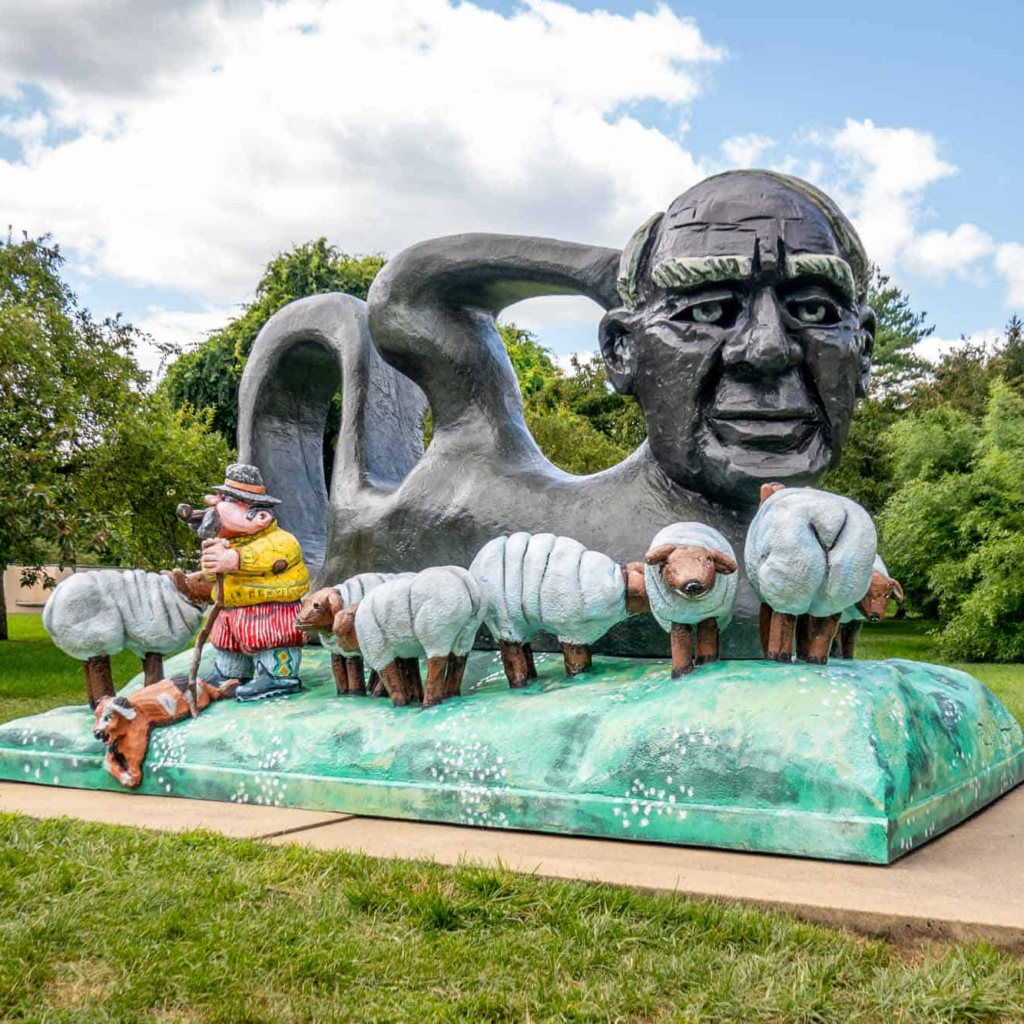
For years, Philip Grausman’s monumental aluminum sculpture Leucantha floated with almost dreamlike serenity within Rat’s Pond, its giant reflective head emerging quietly from the water as one of the park’s defining visual signatures. The sculpture became deeply intertwined with the identity of Grounds For Sculpture itself, photographed endlessly by visitors crossing nearby pathways and dining along the adjacent patios of Rat’s Restaurant.

Now, for the first time in decades, the sculpture is gone.

Supported through a $40,000 National Endowment for the Arts grant, Leucantha was officially deinstalled in May 2026 and has entered a year-long restoration process designed to address decades of environmental exposure, water damage, weathering, and structural deterioration. The highly technical conservation project represents both an artistic and engineering undertaking, requiring careful preservation of a work that has become emotionally iconic to the institution’s audience.

The temporary absence changes the emotional atmosphere surrounding Rat’s Pond in surprisingly powerful ways. Visitors familiar with the sculpture’s tranquil presence immediately feel the void. Yet in many respects, the restoration itself reinforces one of the central realities behind Grounds For Sculpture: maintaining a living outdoor museum of monumental art is an ongoing act of preservation, conservation, and reinvention rather than static exhibition.

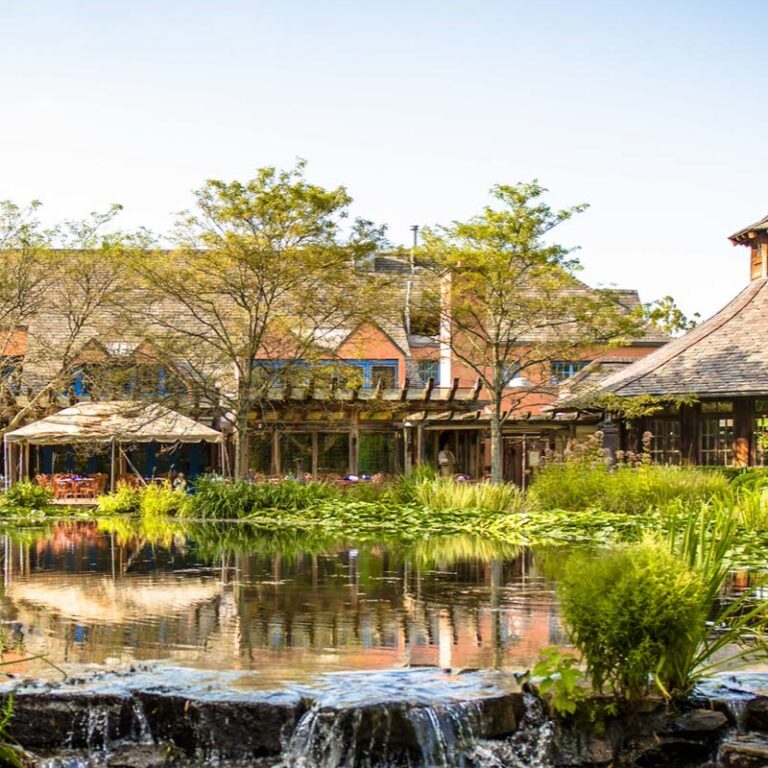
Even without Leucantha, the landscape surrounding Rat’s Pond remains one of the most visually striking and romantic environments anywhere in New Jersey, particularly because of the enduring popularity of Rat’s Restaurant, the celebrated French-inspired dining destination integrated directly into the Grounds For Sculpture experience.

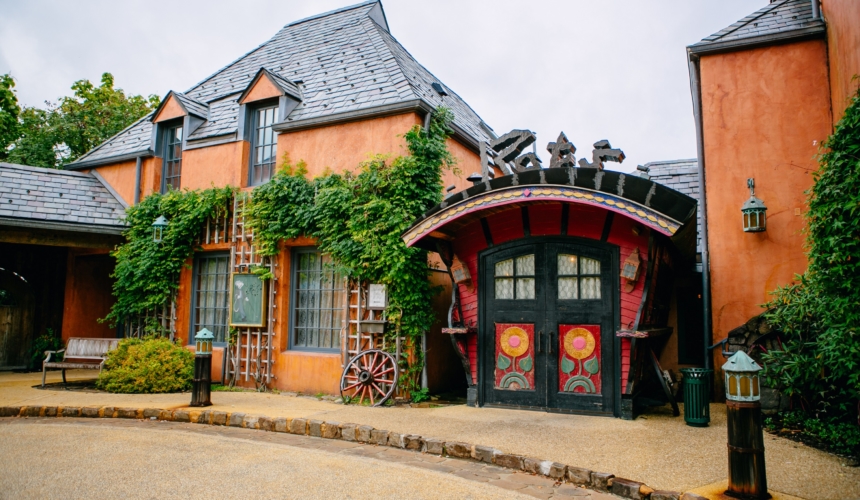
Named after the beloved character “Ratty” from The Wind in the Willows, Rat’s Restaurant was personally envisioned by Seward Johnson as a fully immersive artistic environment rather than a standard fine dining establishment. The restaurant’s architecture evokes a 19th-century French country estate, complete with stone facades, lush gardens, warm interiors, antique-inspired décor, and outdoor patios overlooking water features modeled after Claude Monet’s famous Giverny gardens.

The setting remains among the most transportive dining experiences in the state. Wooden footbridges cross lily-covered ponds while seasonal flowers spill into carefully manicured pathways surrounding the property. During warm evenings, particularly throughout summer and early fall, the restaurant often feels suspended somewhere between Central Jersey and the French countryside.

That atmosphere continues to make Rat’s one of New Jersey’s premier destination restaurants for celebrations, romantic evenings, weddings, arts tourism, and luxury dining experiences connected directly to cultural exploration. Increasingly, visitors build entire day trips around the combination of sculpture garden immersion followed by cocktails or dinner overlooking the pond.

The restaurant’s newly introduced Spring 2026 menu further reinforces its growing culinary reputation. Seasonal seafood programs, refined French bistro influences, locally sourced agricultural ingredients, and elevated comfort dishes now anchor much of the current menu design. Signature favorites including coffee-crusted short ribs, canard à l’orange, fresh seafood preparations, rack of lamb, and sophisticated seasonal starters continue attracting both longtime patrons and first-time culinary travelers seeking upscale dining experiences outside New York City.

Reservations, especially for outdoor patio seating, have become increasingly difficult to secure during peak weekends because of the restaurant’s growing national visibility and immense popularity among Grounds For Sculpture visitors. The combination of high-end dining and immersive artistic atmosphere has positioned Rat’s as one of the defining destination restaurants within the broader Mid-Atlantic cultural tourism landscape.

Beyond preservation and dining, Grounds For Sculpture is simultaneously pushing aggressively into contemporary large-scale installation work through the addition of major new outdoor sculptures that dramatically alter portions of the campus environment.

Among the most visually commanding additions is Kiyan Williams’ Ruins of Empire II, a massive neoclassical-inspired installation recently anchored into the outdoor gardens. The work appears almost as though a monumental historic structure is physically collapsing back into the earth itself, confronting visitors with themes of historical decay, empire, permanence, erosion, and the fragility of institutional power.

The sculpture’s scale and conceptual ambition align perfectly with Grounds For Sculpture’s increasing emphasis on immersive contemporary installations capable of reshaping entire outdoor spaces rather than functioning merely as standalone objects. Williams’ work introduces a more overtly political and historical layer into portions of the garden landscape, reflecting the institution’s broader embrace of contemporary artistic discourse alongside its traditionally accessible visitor experience.

At the same time, Grounds For Sculpture is also finding new ways to broaden accessibility for audiences who may have previously viewed the destination as financially intimidating. One of the most successful recent additions has been the implementation of monthly summer “Golden Hour” admission nights. On the last Friday of each summer month, visitors can access the park from 5:00 PM through 9:00 PM for only $5 admission.

The program has rapidly become one of the state’s best arts values, attracting younger audiences, casual visitors, families, students, photographers, and regional travelers eager to experience the park during sunset hours when the grounds become especially cinematic. The lower admission pricing has also helped reinforce Grounds For Sculpture’s ongoing efforts to expand accessibility while cultivating a broader cultural audience throughout New Jersey.

Timing plays an enormous role in the experience itself. Summer evenings at Grounds For Sculpture possess a uniquely atmospheric quality as changing light conditions transform the appearance of sculptures, pathways, water reflections, and surrounding foliage. During golden hour, many of the installations feel almost entirely different than they do during daytime visits, creating an experience that feels more immersive, emotional, and visually theatrical.

That emotional immersion remains the defining strength of Grounds For Sculpture overall. Unlike many museums where visitors passively observe objects, Grounds For Sculpture encourages exploration, emotional reaction, and environmental participation. Guests encounter monumental figures emerging unexpectedly from trees, surreal scenes unfolding beside pathways, intimate sculptures hidden among flowers, and massive contemporary works interrupting the landscape with startling immediacy.

As New Jersey’s arts and culture sector continues expanding in sophistication and national visibility, Grounds For Sculpture increasingly stands not merely as a regional attraction, but as one of the defining cultural destinations on the East Coast. The institution’s ability to merge visual art, conservation, education, landscape architecture, culinary excellence, public accessibility, and large-scale immersive experience into a single cohesive environment remains remarkably rare.

Now, with archival exhibitions opening hidden histories to the public, major restoration efforts preserving beloved icons, new monumental works reshaping the grounds, and organizational restructuring positioning the institution for its next chapter, Grounds For Sculpture is evolving once again while remaining entirely true to the immersive artistic philosophy that made it iconic in the first place.

For returning visitors, 2026 may ultimately become remembered as one of the most important transitional years in the institution’s history. For first-time guests, it offers an extraordinary opportunity to experience one of New Jersey’s greatest artistic treasures during a moment of visible transformation, creative expansion, and cultural reinvention.

Orpheus Chamber Players: Nocturnal Serenade

0

Orpheus Chamber Players Bring “Nocturnal Serenade” to Morris Museum’s Back Deck for a Late-Summer Evening of Chamber Music Excellence

July 25 @ 7:30 PM 11:30 PM

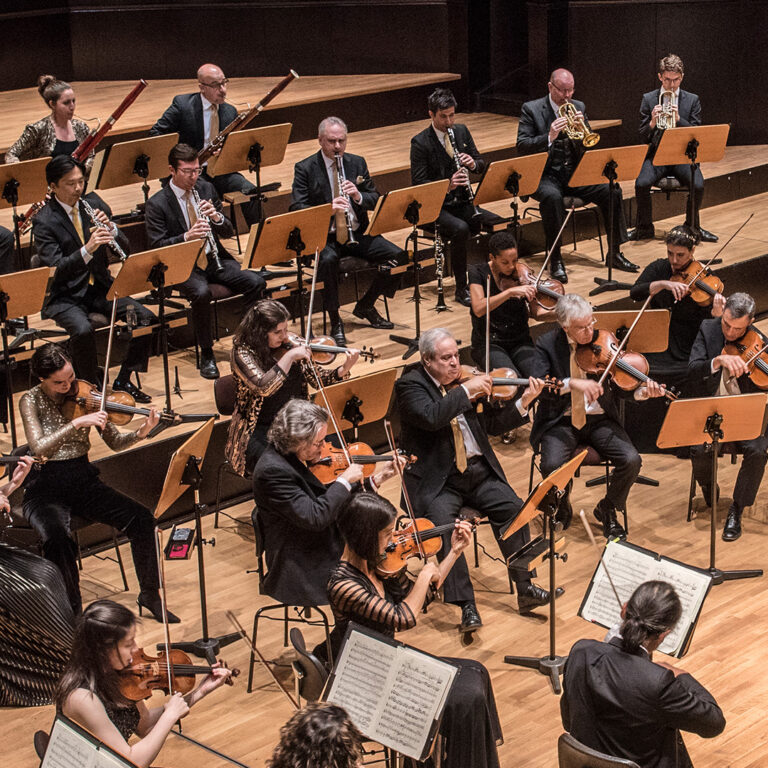
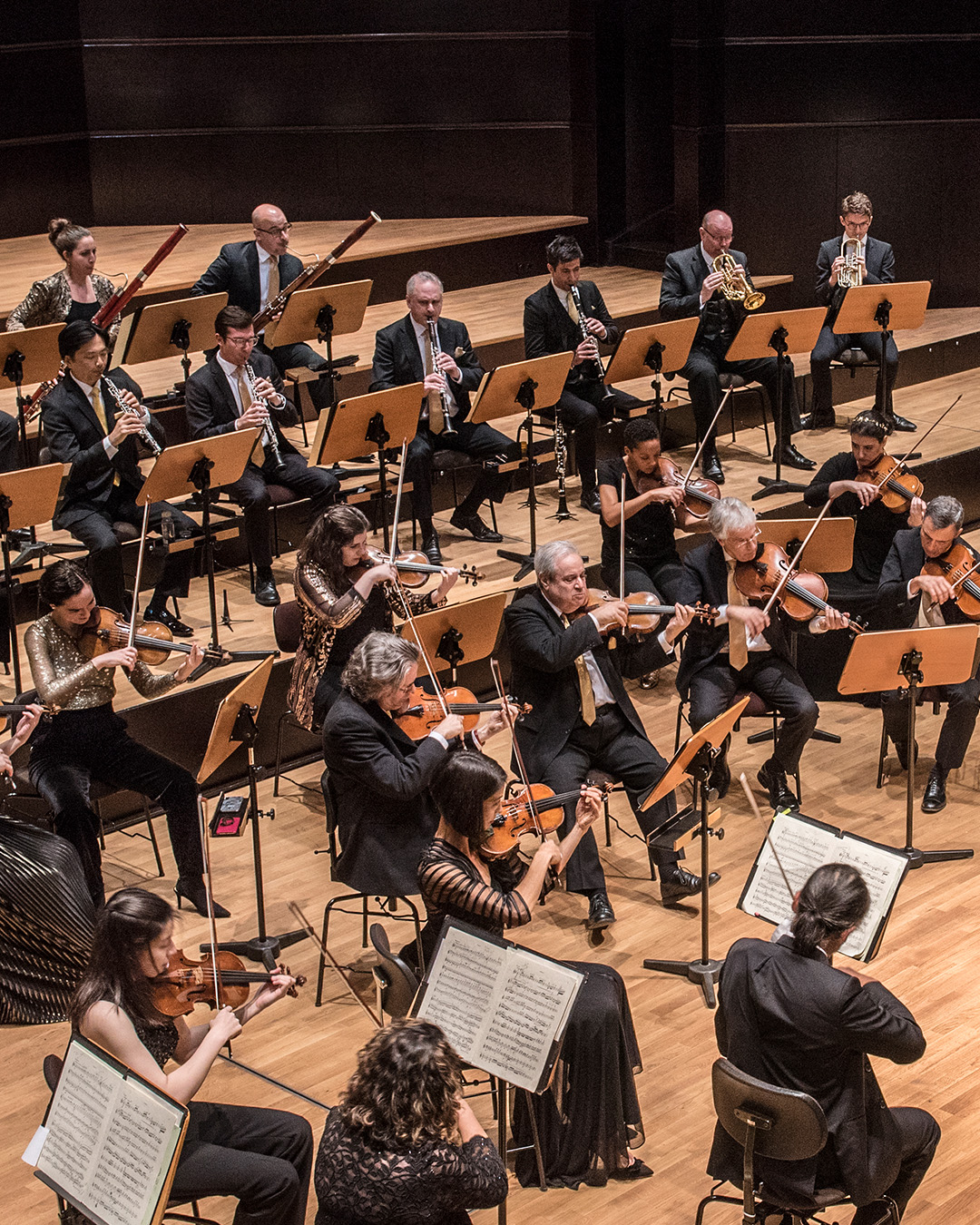
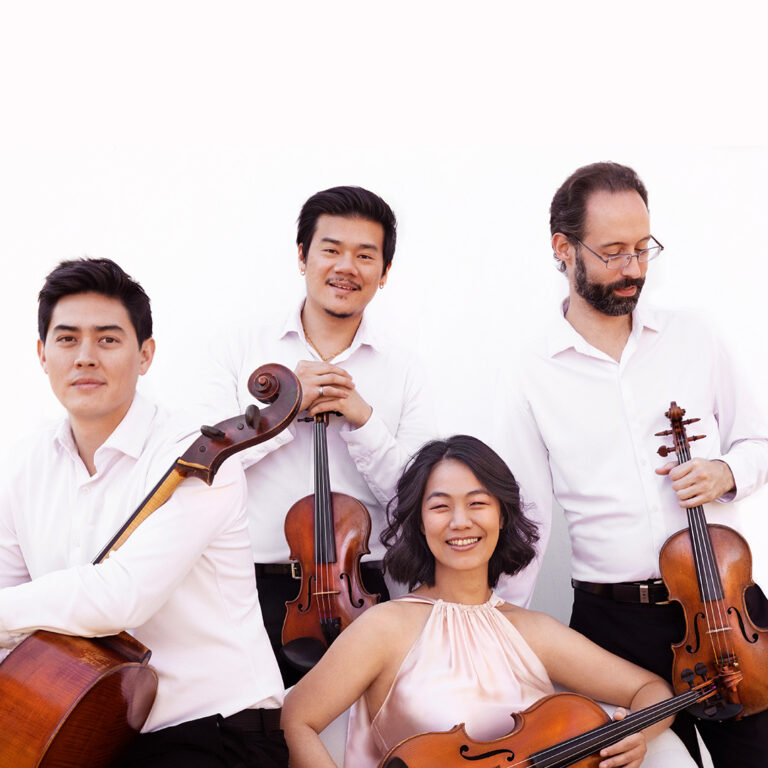
New Jersey’s summer arts season continues expanding far beyond traditional outdoor concerts and mainstream festival lineups, and few events capture that evolution more elegantly than the upcoming presentation of Nocturnal Serenade featuring members of the internationally celebrated Orpheus Chamber Orchestra. Scheduled for Saturday, July 25, 2026 at 7:30 PM as part of the acclaimed Back Deck concert series at the Morris Museum, the performance promises to transform a summer evening in Morristown into an immersive celebration of chamber music, atmosphere, artistic collaboration, and the enduring power of live performance.

Over the last several years, the Back Deck series has quietly become one of New Jersey’s most distinctive outdoor music experiences, blending sophisticated programming with an intimate social atmosphere unlike anything else in the region. What began during the summer of 2020 as an inventive response to changing live performance realities has now evolved into a permanent and highly respected fixture within the state’s cultural landscape. Since its launch, the series has welcomed more than 11,000 patrons across over 72 performances while attracting internationally respected musicians, rising stars, and adventurous ensembles eager to perform in one of the Northeast’s most creatively designed seasonal venues.

Positioned atop the Morris Museum’s elevated parking structure, the Back Deck has become known for elegant picnic-style seating, sunset skyline views, carefully curated programming, and an atmosphere that merges high-level musicianship with the relaxed energy of a summer gathering. Audiences arrive early carrying wine, refreshments, gourmet picnic spreads, and lawn chairs before settling into reserved viewing blocks while twilight slowly settles across Morristown. By the time the music begins, the environment itself becomes part of the performance.

That setting feels especially appropriate for Nocturnal Serenade, a program built around atmosphere, texture, natural imagery, and the conversational intimacy that defines great chamber music. Featuring musicians from the legendary Orpheus Chamber Orchestra, the evening will center around famous quartets and trios while weaving together themes inspired by forests, insects, landscapes, and the emotional mystery associated with nighttime performance traditions. The result is expected to feel cinematic, immersive, and deeply transportive within the open-air environment of the Back Deck.

The appearance also represents a major moment for New Jersey’s classical music scene because Orpheus Chamber Orchestra remains one of the most influential and respected chamber ensembles in the world. For more than five decades, Orpheus has operated according to an artistic philosophy that fundamentally challenged traditional orchestral hierarchy. Founded in 1972 by cellist Julian Fifer, the ensemble emerged during an era of experimentation and artistic independence when younger musicians sought alternatives to rigid institutional structures dominating the classical music world.

Rather than functioning under the direction of a traditional conductor, Orpheus developed a collaborative model where leadership responsibilities rotate organically among the musicians themselves. Rehearsals function through dialogue, collective interpretation, and mutual trust rather than top-down instruction. The ensemble effectively performs orchestral repertoire with the flexibility, responsiveness, and emotional interaction typically associated with chamber groups. That radical approach transformed Orpheus into one of the defining artistic success stories in contemporary classical music.

Within only a decade of formation, the orchestra had established Carnegie Hall as its home base while simultaneously becoming an international touring phenomenon through acclaimed performances across Europe, Asia, and North America. Over time, Orpheus built a global reputation not simply because of technical excellence, but because audiences could feel the unusual level of communication happening between musicians on stage. Every performance carried an uncommon sense of spontaneity, risk, responsiveness, and shared artistic investment.

That philosophy becomes even more powerful within smaller chamber presentations like Nocturnal Serenade, where every phrase, transition, dynamic shift, and emotional gesture depends entirely upon active listening and musical conversation between performers. In a venue like the Back Deck, audiences are close enough to experience those interactions in unusually intimate detail. Rather than observing a distant stage production, listeners become immersed inside the living mechanics of ensemble performance itself.

The evening’s repertoire has been specifically designed to complement that atmosphere. Mozart’s celebrated Oboe Quartet anchors part of the program with its extraordinary blend of lyricism, elegance, and emotional subtlety. The piece remains one of the defining chamber works of the Classical era, showcasing Mozart’s remarkable ability to create music that feels simultaneously refined and emotionally immediate. Its melodic warmth and delicate interplay should resonate beautifully within the outdoor summer setting.

The concert will also feature Dohnányi’s virtuosic Serenade, a work celebrated for its technical brilliance, rich harmonic textures, and vivid emotional contrasts. Known for combining Romantic expressiveness with dazzling instrumental writing, the piece allows performers to showcase both individual virtuosity and collective ensemble precision. Within the context of Nocturnal Serenade, the work adds dramatic momentum and sweeping emotional depth to the evening’s broader thematic arc.

Nature itself plays a central role throughout the programming concept. Music inspired by forests, insects, landscapes, and natural imagery has long occupied a unique place within chamber repertoire because of its ability to create atmosphere without requiring visual spectacle. Instead of overwhelming audiences with production effects, these compositions invite listeners to imagine spaces, environments, and emotional states internally through sound alone. That imaginative quality becomes especially effective outdoors, where the surrounding evening air, fading sunlight, and ambient summer atmosphere naturally blur the line between performance space and emotional landscape.

For the Morris Museum and the broader New Jersey arts community, the continued growth of the Back Deck series represents something larger than a successful concert brand. It reflects the increasing sophistication and ambition of the state’s cultural infrastructure overall. New Jersey audiences no longer need to travel into Manhattan or Philadelphia to experience world-class chamber music programming presented at an elite level. Increasingly, institutions across the state are developing unique artistic identities capable of attracting internationally respected performers while cultivating deeply loyal regional audiences.

The Back Deck has become a prime example of that evolution. Rather than attempting to replicate traditional concert hall experiences, the series intentionally embraces the social, architectural, and seasonal qualities unique to New Jersey summers. Patrons are encouraged to arrive early, socialize, picnic, and treat the evening as both a musical event and a communal gathering. The environment removes much of the intimidation sometimes associated with classical performance while preserving complete artistic seriousness and musical integrity.

That balance has helped the series attract audiences that extend beyond traditional chamber music circles. Younger listeners, first-time attendees, families, casual arts supporters, and longtime classical enthusiasts all coexist comfortably within the same atmosphere. The result is a cultural experience that feels inclusive without sacrificing sophistication, accessible without becoming diluted, and relaxed without losing artistic credibility.

For Nocturnal Serenade, that atmosphere should prove especially powerful because chamber music thrives on emotional immediacy. Unlike massive orchestral presentations where audiences often experience music from significant physical distance, chamber ensembles create an almost conversational relationship between performers and listeners. Every breath, pause, glance, and phrasing decision becomes part of the storytelling process. In the open-air intimacy of the Back Deck, those details gain extraordinary emotional clarity.

The July 25 performance also continues a season that has positioned the Back Deck as one of New Jersey’s most ambitious multidisciplinary arts destinations. The 2026 lineup blends jazz, chamber music, genre-crossing ensembles, visual art integrations, and experimental programming designed to challenge expectations surrounding what outdoor summer arts events can become. That curatorial vision has increasingly elevated the series beyond a regional attraction into a destination-level cultural experience attracting audiences from throughout the Northeast corridor.

Tickets for Nocturnal Serenade are currently available in two reserved viewing formats. Guests may purchase an 8’x8’ viewing block accommodating up to two patrons for $63 or an individual block for $33, both including handling fees. Concertgoers are encouraged to arrive beginning at 6:30 PM to enjoy refreshments and picnics before the 7:30 PM performance start time. In the event of inclement weather, the concert will move indoors to the Morris Museum’s Bickford Theatre.

As summer arts programming across New Jersey continues growing in both scale and sophistication, events like Nocturnal Serenade demonstrate how deeply the state’s cultural identity has evolved. This is no longer simply a region adjacent to larger metropolitan arts capitals. Increasingly, New Jersey itself is becoming home to uniquely curated, nationally respected cultural experiences capable of standing entirely on their own artistic merit.

On July 25, the Back Deck will once again transform into something more than a concert venue. Beneath the summer night sky in Morristown, audiences will experience world-class musicianship, chamber music intimacy, and one of the state’s most distinctive live performance environments coming together for an evening designed not merely to entertain, but to fully immerse listeners inside the emotional and atmospheric power of music itself.

The Morris Museum

(973) 971-3700

View Organizer Website

The Back Deck at The Morris Museum

6 Normandy Heights Road , NJ
Morristown, New Jersey 07960 United States
+ Google Map
(973) 971-3700
View Venue Website

Amani: The Music of Burt Bacharach

0

Amani Brings the Timeless Music of Burt Bacharach to New Jersey’s Celebrated Back Deck Concert Series for an Elegant Summer Evening of Songwriting Perfection

July 16 @ 7:30 PM 11:30 PM

Few songwriters in modern music history created melodies capable of instantly transporting listeners across generations quite like Burt Bacharach. His music carried sophistication without pretension, emotional depth without melodrama, and pop accessibility without sacrificing compositional brilliance. Decades after first reshaping the sound of American popular music, Bacharach’s catalog continues to resonate because the songs themselves remain astonishingly alive — graceful, vulnerable, cinematic, romantic, melancholy, hopeful, and endlessly human. On Thursday, July 16, 2026 at 7:30 PM, New Jersey audiences will have the opportunity to experience those timeless compositions in a uniquely intimate setting when Amani performs The Music of Burt Bacharach as part of the acclaimed Back Deck Concert Series.

Set against one of the state’s most distinctive outdoor arts environments, the evening promises far more than a nostalgic tribute concert. Instead, it arrives as a sophisticated reexamination of one of America’s greatest songwriting legacies through the lens of contemporary musicianship, elegant vocal arrangements, and emotionally nuanced live performance.

At a time when much of popular music increasingly prioritizes immediacy over craftsmanship, the enduring brilliance of Burt Bacharach’s songwriting feels almost revolutionary.

The complexity hidden inside his music remains extraordinary.

Unusual time signatures.

Unexpected chord changes.

Sophisticated orchestration.

Melodies that drift between heartbreak and optimism within the same phrase.

Songs that sound effortless while being compositionally intricate beneath the surface.

That delicate balance between accessibility and musical sophistication helped define Bacharach’s legendary career and transformed classics like “Walk On By,” “Alfie,” “I Say a Little Prayer,” “The Look of Love,” and “What the World Needs Now Is Love” into permanent pillars of American music culture.

Amani approaches that catalog with precisely the kind of care it deserves.

Known for their smooth harmonies, polished musicianship, and emotionally rich interpretations, the ensemble brings warmth and contemporary elegance to Bacharach’s music without stripping away the emotional intimacy that made the songs iconic in the first place. Rather than simply recreating familiar recordings note-for-note, the group reimagines the material through refined arrangements that allow audiences to rediscover the emotional architecture beneath the melodies.

That distinction matters.

Too many tribute performances rely entirely on imitation. Amani instead understands that the power of Bacharach’s work lives not merely in recognition, but in emotional interpretation. The group’s performances illuminate the sophistication of the songwriting itself while allowing the songs to breathe naturally within a live setting.

The result feels simultaneously nostalgic and fresh.

That duality has become increasingly important in modern live entertainment.

Audiences today are not simply searching for reminders of the past. They are looking for experiences that reconnect them emotionally to music that once shaped important parts of their lives while still feeling artistically relevant in the present moment. Bacharach’s music continues thriving precisely because the emotional truths inside those compositions remain universal.

Heartbreak.

Longing.

Romance.

Isolation.

Hope.

Regret.

Joy.

The complicated emotional uncertainty that exists between love and loss.

Bacharach understood how to compose emotions as much as melodies.

Amani’s interpretations lean directly into that emotional sophistication.

The ensemble’s vocal blend and understated elegance create an atmosphere perfectly suited for the Back Deck environment itself, which has quietly become one of New Jersey’s most distinctive summer cultural destinations. Since its launch in 2020, the Back Deck Concert Series has evolved into far more than an outdoor performance venue. The elevated setting, elegant picnic atmosphere, and carefully curated artistic programming have transformed the series into a uniquely immersive live arts experience where audiences engage with music in a relaxed yet deeply attentive environment.

That atmosphere feels especially ideal for Bacharach’s music.

These are songs built for emotional closeness rather than spectacle. The open-air intimacy of the Back Deck allows every lyric, harmonic shift, and melodic phrase to land with unusual clarity. As summer twilight settles across the venue, audiences will experience the songs not as distant cultural artifacts, but as living emotional conversations unfolding in real time.

The setting itself has become part of the series’ identity.

Patrons arrive early, bringing chairs, refreshments, and picnic-style setups that create an environment blending sophistication with accessibility. Unlike formal concert hall experiences that can sometimes feel emotionally rigid, the Back Deck encourages audiences to settle into the music organically. Conversations flow before performances. Sunset becomes part of the scenery. The atmosphere invites reflection, connection, and emotional openness.

That human warmth mirrors the emotional spirit of Bacharach’s catalog perfectly.

The songwriter’s greatest compositions always possessed a remarkable conversational quality. Even amid sweeping orchestration and complex harmonic structures, the songs remained emotionally intimate. Whether delivered by Dionne Warwick, Dusty Springfield, Tom Jones, Aretha Franklin, or countless others over the decades, Bacharach’s music consistently sounded deeply personal — as though the singer were confiding directly to the listener.

Amani captures that same emotional intimacy.

Their approach emphasizes phrasing, atmosphere, and emotional storytelling over theatrical excess. Every song becomes less about vocal grandstanding and more about mood, interpretation, and emotional honesty. That restraint ultimately makes the performances more powerful because the emotional richness emerges naturally from the material itself.

And the material remains extraordinary.

Bacharach’s influence stretches across virtually every corner of modern music history. His songwriting shaped pop, soul, jazz, adult contemporary, film music, orchestral arrangement, and even modern indie composition. Artists ranging from Elvis Costello and Oasis to Alicia Keys, The White Stripes, and R.E.M. have cited his work as foundational influence. Few composers managed to combine commercial accessibility and musical sophistication at such a consistently elite level.

His music also remains profoundly cinematic.

Many Bacharach compositions feel visually expansive even when stripped down to their simplest arrangements. There is movement inside the melodies, emotional tension inside the chord structures, and narrative depth inside the lyrics. Listening to his songs often feels less like hearing pop music and more like stepping briefly into a beautifully written film scene.

That cinematic quality becomes especially powerful within live performance.

As Amani moves through the evening’s repertoire, audiences will likely find themselves reconnecting not only with the songs themselves, but with personal memories, emotional moments, and entire eras of life attached to them. Great songwriting creates emotional time travel, and few catalogs accomplish that more effortlessly than Bacharach’s.

The evening also reinforces something larger happening across New Jersey’s cultural landscape.

Increasingly, the state’s arts programming is embracing performances that value depth, intimacy, musicianship, and immersive experience over pure spectacle. The Back Deck series has become a major part of that evolution by presenting world-class artists in environments that encourage genuine emotional engagement rather than passive consumption.

Leadership support from Will and Mary Leland and founding donor F. Gary Knapp, alongside support from Gary’s Wine & Marketplace and the Morris County Tourism Bureau, has helped elevate the series into one of the region’s premier outdoor arts destinations. Over the years, the venue has welcomed more than 11,000 patrons while building a reputation for sophisticated programming that consistently balances accessibility with artistic ambition.

Amani’s tribute to Burt Bacharach fits seamlessly within that larger artistic mission.

This is music that rewards close listening.

Music built around emotional nuance rather than volume.

Music that values melody, craftsmanship, and sincerity.

Music that reminds audiences how powerful songwriting can become when elegance and vulnerability coexist inside the same composition.

And on a summer evening beneath the open New Jersey sky, those timeless songs may feel more emotionally resonant than ever.

Fluid.

Global.

Immersive.

Emotionally immediate.

Fearlessly hybrid.

And under the open summer sky at the Back Deck, audiences will experience a performance that does not merely cross musical boundaries, but completely dissolves them.

The Morris Museum

(973) 971-3700

View Organizer Website

The Back Deck at The Morris Museum

6 Normandy Heights Road , NJ
Morristown, New Jersey 07960 United States
+ Google Map
(973) 971-3700
View Venue Website

ArcoStrum

0

ArcoStrum Brings a Boundary-Smashing Global Music Experience to New Jersey’s Acclaimed Back Deck Concert Series

July 11 @ 7:30 PM 11:30 PM

New Jersey’s summer arts calendar continues evolving far beyond traditional concert formats, and one of the season’s most ambitious and visually immersive performances may arrive on Saturday, July 11, 2026, when ArcoStrum takes over the celebrated Back Deck Concert Series for an evening that promises to completely redefine audience expectations surrounding chamber music, instrumental performance, and genre fusion. Beginning at 7:30 PM, the groundbreaking duo will transform the elevated outdoor venue into a cinematic, cross-cultural musical journey where classical masterworks, tango, instrumental rock, Chinese folk traditions, film music, jazz influences, and modern virtuosity collide in one of the most daring live music programs currently touring anywhere in the country.

At a time when audiences increasingly crave experiences that feel immersive, emotionally unpredictable, and artistically fearless, ArcoStrum arrives as a perfect reflection of where contemporary instrumental performance is heading. Rather than treating classical music as a carefully preserved artifact, the ensemble approaches music as a living, evolving language capable of absorbing global influences, modern technology, visual storytelling, and contemporary energy without sacrificing sophistication or technical brilliance.

That philosophy sits at the very center of The ArcoStrum Experience.

The performance itself is intentionally designed to blur boundaries between genres, cultures, eras, and performance traditions. Throughout the evening, audiences will hear Astor Piazzolla’s emotionally charged contemporary tango masterpieces collide with Antonio Vivaldi’s timeless Four Seasons, while Chinese folk traditions featuring erhu and dizi intertwine seamlessly with classical guitar, electric guitar, cinematic orchestration, and modern progressive instrumental rock.

The result is not simply crossover music.

It is something far more ambitious.

ArcoStrum creates an entirely new musical environment where centuries of artistic influence coexist naturally inside one performance space, allowing audiences to hear familiar compositions in ways that feel startlingly fresh, emotionally immediate, and culturally expansive.

That spirit of reinvention feels especially important within today’s arts landscape.

For decades, audiences often experienced classical music through rigid institutional frameworks that unintentionally created emotional distance between performers and listeners. ArcoStrum completely dismantles that approach. Their concerts operate more like immersive artistic experiences than traditional recitals. Humor, storytelling, visual production, virtuoso musicianship, and emotional accessibility all become essential components of the performance itself.

By the time the opening notes begin, audiences are not simply watching musicians execute compositions.

They are entering an atmosphere.

Leading the performance are Strauss Shi and TY Zhang, two musicians whose instrumental versatility alone reflects the project’s extraordinary ambition. Shi performs violin, erhu, and dizi, while Zhang seamlessly shifts between classical and electric guitar, allowing the duo to move fluidly between entirely different musical traditions without losing emotional coherence.

That instrumental diversity becomes one of the evening’s defining strengths.

The haunting emotional resonance of the erhu — often referred to as the Chinese two-string fiddle — creates breathtaking contrasts against the sharp rhythmic complexity of electric guitar passages and the elegance of classical violin phrasing. Meanwhile, the dizi’s airy bamboo flute tones introduce moments of serenity and atmosphere that dramatically expand the emotional palette of the performance.

Instead of presenting these instruments as isolated cultural novelties, ArcoStrum integrates them organically into the musical architecture itself.

The evening’s program reflects that same adventurous philosophy from beginning to end.

Piazzolla’s Primavera Porteña and Invierno Porteño bring contemporary tango energy and emotional tension into direct conversation with Vivaldi’s Summer and Winter from The Four Seasons, creating fascinating parallels between Baroque virtuosity and twentieth-century Argentine passion. Elsewhere, Chinese compositions like Ink Orchid Pavilion and Horse Racing introduce entirely different textures and rhythmic structures that deepen the performance’s global scope.

Then the evening takes another dramatic turn entirely.

Polyphia’s Playing God enters the program as a bold reminder that modern instrumental rock has become every bit as technically sophisticated and compositionally complex as traditional classical performance. By incorporating progressive contemporary material alongside Mozart-era composition and twentieth-century tango, ArcoStrum demonstrates how musical virtuosity transcends stylistic labels altogether.

Perhaps most remarkably, none of it feels forced.

That may be ArcoStrum’s greatest artistic achievement.

Many genre-fusion projects struggle because they feel conceptually clever but emotionally disconnected. ArcoStrum succeeds because the musicians fully commit to emotional storytelling first. Every transition between genres feels purposeful, natural, and dramatically effective rather than gimmicky. The audience is never asked to intellectually “understand” the fusion. They simply experience it emotionally.

That emotional accessibility is one reason the group continues building momentum within contemporary performance circles.

The inclusion of John Williams’ Theme from Schindler’s List adds another deeply emotional dimension to the evening, bringing cinematic orchestration and profound human vulnerability into the larger musical conversation. Meanwhile, inventive arrangements like Michael Jackson Meets Scarlatti reveal the ensemble’s playful willingness to dismantle traditional artistic hierarchies altogether.

Baroque composition.

Modern pop.

Contemporary instrumental rock.

Chinese folk music.

Argentine tango.

Film scores.

Inside ArcoStrum’s world, all of it belongs together.

The setting itself makes the performance even more compelling.

Since launching in 2020, the Back Deck Concert Series has emerged as one of New Jersey’s most innovative outdoor arts experiences, transforming an elevated parking structure into an unexpectedly elegant and intimate live performance destination. Over the years, the series has welcomed more than 11,000 patrons while presenting dozens of critically acclaimed artists in an environment that merges world-class performance with relaxed summer atmosphere.

Audiences bring their own chairs, refreshments, and picnic-style setups, creating a communal environment that feels dramatically different from formal concert hall traditions. The atmosphere encourages conversation, emotional openness, and immersive engagement with the performance itself.

For a performance like ArcoStrum, that environment feels ideal.

Their music thrives on intimacy, surprise, and audience immersion. The openness of the Back Deck setting allows listeners to fully absorb not only the technical brilliance of the musicianship, but also the emotional atmosphere surrounding the evening itself — the changing sky, the summer air, the energy of the crowd, and the visual dimension of the performance all becoming part of the experience.

Adding another layer to the evening, ticketholders also gain access to a special pre-concert walking tour of the outdoor sculpture exhibition Common Ground: NJ Artists Think Monumental led by Museum Associate Curator Bryant Small. Beginning at 5:30 PM prior to concert check-in, the tour further reinforces the evening’s larger artistic mission by connecting live music with visual art, public space, and contemporary cultural dialogue.

That multidisciplinary spirit increasingly defines New Jersey’s evolving arts identity.

Across the state, institutions are embracing more immersive, hybrid cultural programming that moves beyond passive entertainment and toward fully experiential artistic engagement. The Back Deck series continues leading that evolution by presenting concerts that feel like cultural events rather than isolated performances.

Support from organizations including Gary’s Wine & Marketplace and the Morris County Tourism Bureau has helped position the series as one of the region’s premier summer arts destinations, while leadership support from Will and Mary Leland and founding donor F. Gary Knapp continues fueling its remarkable artistic growth.

As New Jersey’s cultural landscape becomes increasingly adventurous and internationally influenced, ArcoStrum’s July 11 performance represents something larger than a single concert date.

It reflects where live performance itself is heading.

Fluid.

Global.

Immersive.

Emotionally immediate.

Fearlessly hybrid.

And under the open summer sky at the Back Deck, audiences will experience a performance that does not merely cross musical boundaries, but completely dissolves them.

The Morris Museum

(973) 971-3700

View Organizer Website

The Back Deck at The Morris Museum

6 Normandy Heights Road , NJ
Morristown, New Jersey 07960 United States
+ Google Map
(973) 971-3700
View Venue Website

Baroque Orchestra of New Jersey

0

Baroque Orchestra of New Jersey Brings Revolutionary-Era Music, American History, and Classical Elegance to New Jersey’s Acclaimed Back Deck Concert Series

July 9 @ 7:30 PM 11:30 PM

As New Jersey continues preparing for the nationwide America 250 commemoration, one of the state’s most respected orchestral ensembles is set to deliver a performance that blends music, history, patriotism, and cultural reflection into a uniquely immersive summer arts experience. On Thursday, July 9, 2026 at 7:30 PM, the Baroque Orchestra of New Jersey arrives at the celebrated Back Deck Concert Series for a special America’s 250 presentation that promises to transport audiences directly into the emotional and musical atmosphere of Revolutionary-era America while showcasing the timeless beauty of classical masterworks under the open summer sky.

At a moment when New Jersey is increasingly reclaiming its historic identity as one of the most important regions of the American Revolution, performances like this carry unusual significance. While many America 250 celebrations understandably focus on reenactments, historical exhibits, and political history, the Baroque Orchestra of New Jersey concert offers something deeper and more emotionally immersive: the opportunity to hear the kinds of sounds, melodies, harmonies, and orchestral traditions that shaped the cultural world surrounding the birth of the United States itself.

That approach transforms the evening from a standard classical concert into a living historical experience.

The centerpiece of the performance will be Maestro Robert Butts’ Lafayette Suite, a specially commissioned composition created to honor Morristown’s direct connections to America’s 250th anniversary celebrations. The work reflects not only the historical importance of the Marquis de Lafayette within the American Revolution, but also New Jersey’s central role throughout the war itself. Morristown served as one of George Washington’s most important military encampments and strategic centers during the Revolutionary War, making the region inseparable from the nation’s founding story.

By incorporating Lafayette Suite into the evening’s programming, the concert bridges centuries of musical expression while connecting contemporary audiences directly to New Jersey’s own revolutionary legacy.

That emotional and historical connection feels especially meaningful within today’s cultural climate.

As America approaches its 250th anniversary, many communities across the country are reexamining the ideals, contradictions, ambitions, and complexities surrounding the nation’s founding. Music offers one of the most powerful ways to explore those themes because it allows audiences to emotionally inhabit history rather than merely study it intellectually. The sounds of the eighteenth century carry atmosphere, mood, tension, elegance, spirituality, and humanity in ways written history alone cannot fully capture.

The Baroque Orchestra of New Jersey has spent years building a reputation for bringing precisely that kind of emotional immediacy to historically rooted performance.

Known for its sophisticated interpretations of classical and Baroque repertoire, the ensemble consistently balances historical authenticity with emotional accessibility, allowing audiences to experience centuries-old compositions not as distant museum pieces, but as living, emotionally relevant works of art. Their performances capture the elegance and precision associated with classical music while remaining deeply expressive and human.

That balance makes the ensemble particularly well suited for a setting like the Back Deck.

Since launching in 2020, the Back Deck Concert Series has steadily transformed itself into one of New Jersey’s most celebrated outdoor arts destinations by creating an environment where elite artistic performance meets intimacy, atmosphere, and community connection. Over the past several years, the series has hosted more than 72 performances and welcomed over 11,000 patrons while establishing itself as one of the state’s most innovative cultural success stories.

What separates the Back Deck from traditional performance venues is the immersive nature of the experience itself.

Audiences are invited to bring their own chairs, refreshments, and picnic-style setups while gathering outdoors beneath the summer evening sky. Rather than creating emotional distance between performers and audience, the setting encourages closeness, atmosphere, conversation, and communal artistic engagement. Over time, the elevated deck evolved into far more than a venue. It became a cultural destination where audiences seek not only performances, but memorable shared experiences.

For classical music especially, the setting creates something unexpectedly powerful.

Historically, orchestral and chamber performances have often been associated with rigid formality and institutional environments. The Back Deck changes that dynamic entirely. Music unfolds naturally within the atmosphere of the evening itself — the changing sky, summer air, audience energy, and physical openness all becoming part of the artistic experience. That environment makes classical music feel emotionally immediate rather than ceremonially distant.

The July 9 program is particularly ambitious because it combines multiple layers of historical and musical storytelling.

In addition to Lafayette Suite, the evening will feature works by Haydn, Handel, Mozart, and William Billings alongside songs from the late eighteenth century that audiences living during Revolutionary America may have recognized themselves. This combination creates a fascinating musical portrait of the era surrounding the nation’s founding, allowing listeners to hear the European classical traditions influencing elite society alongside the evolving American musical identity beginning to emerge during the Revolutionary period.

That programming reflects the broader cultural complexity of the late eighteenth century itself.

America’s founding era was not artistically isolated. Colonists remained deeply connected to European musical traditions while simultaneously developing uniquely American forms of expression shaped by geography, politics, religion, and rapidly changing social structures. The concert captures that transitional moment beautifully, offering audiences both the sophistication of European classical masters and the emerging character of early American music.

William Billings’ inclusion in the program feels especially important in that context.

Often regarded as one of America’s earliest important composers, Billings helped establish a distinctly American musical voice during the Revolutionary era. His compositions reflected both spiritual tradition and the growing independent identity developing throughout the colonies. Hearing his music alongside European giants like Handel, Mozart, and Haydn creates a fascinating conversation between the old world and the emerging new nation.

The timing of the performance also aligns perfectly with New Jersey’s expanding role within national America 250 celebrations.

Increasingly, the state is embracing its extraordinary Revolutionary history not simply as historical tourism, but as an essential part of its modern cultural identity. From Princeton and Morristown to Monmouth County and beyond, New Jersey remains filled with sites, stories, and institutions directly connected to the struggle that shaped the United States itself.

Performances like this help bring that history to life in emotionally resonant ways.

Rather than simply commemorating dates and events, the concert invites audiences to experience the emotional texture of the era through sound, atmosphere, and live artistic interpretation. Music becomes a bridge between centuries, allowing modern listeners to feel connected to the humanity, tension, beauty, and uncertainty of the Revolutionary generation.

Support from organizations including Gary’s Wine & Marketplace and the Morris County Tourism Bureau continues strengthening the Back Deck’s role as one of the state’s premier cultural destinations, while leadership support from Will and Mary Leland and founding donor F. Gary Knapp has helped sustain the series’ remarkable artistic growth.

As New Jersey’s summer arts calendar becomes increasingly competitive and sophisticated, the July 9 Baroque Orchestra of New Jersey performance stands out because it offers far more than simply another evening of classical music.

It offers historical immersion.

It offers atmosphere.

It offers reflection.

And beneath the summer sky, surrounded by music connected to the birth of the nation itself, audiences will experience an evening where art, history, patriotism, and live performance converge into something uniquely meaningful.

At a time when audiences increasingly crave experiences that feel emotionally authentic and culturally significant, this special America 250 concert promises to become one of the defining artistic evenings of New Jersey’s 2026 summer season.

The Morris Museum

(973) 971-3700

View Organizer Website

The Back Deck at The Morris Museum

6 Normandy Heights Road , NJ
Morristown, New Jersey 07960 United States
+ Google Map
(973) 971-3700
View Venue Website

Alexis Morrast

0

Alexis Morrast Brings a Stunning New Generation of Jazz, Soul, and Gospel Power to New Jersey’s Acclaimed Back Deck Concert Series

July 2 @ 7:30 PM 11:30 PM

As New Jersey’s summer music calendar continues expanding into one of the most culturally exciting outdoor arts seasons anywhere in the Northeast, the celebrated Back Deck Concert Series is preparing to welcome one of the brightest young vocal talents currently emerging in contemporary jazz. On Thursday, July 2, 2026 at 7:30 PM, Alexis Morrast will take the stage for an evening that promises to combine jazz sophistication, gospel-rooted emotionality, soul-infused storytelling, and intimate open-air atmosphere into one of the summer’s most unforgettable live music experiences.

For audiences searching for artists capable of blending timeless vocal tradition with fresh contemporary energy, Alexis Morrast represents exactly the kind of performer redefining where modern jazz vocals are heading. Still early in what increasingly appears destined to become a major career, Morrast has already established herself as one of the most compelling young singers working today through a rare combination of technical elegance, emotional sincerity, spiritual depth, and natural charisma that immediately captures audience attention.

What makes Morrast especially remarkable is how effortless her performances feel.

Many young vocalists possess strong technical ability. Far fewer understand how to emotionally inhabit a song in ways that feel deeply personal and authentic. Morrast performs with the kind of emotional honesty typically associated with artists decades older and far more seasoned. Her phrasing never feels forced. Her tone remains warm, expressive, and inviting. Every lyric arrives with clarity and emotional intention, allowing audiences to feel directly connected to the music rather than simply observing a performance from a distance.

That emotional accessibility has quickly become one of her defining artistic strengths.

A two-time Apollo winner, Morrast has already demonstrated an extraordinary ability to connect across generations and musical audiences. The Apollo Theater has long served as one of America’s most important proving grounds for emerging talent, historically launching careers that would later reshape jazz, soul, rhythm and blues, gospel, and popular music itself. Winning there once commands attention. Winning twice signals the arrival of an artist with rare instincts and genuine emotional command over live audiences.

Morrast carries that confidence naturally onto the stage.

Her performances move fluidly between jazz standards, soulful ballads, gospel-infused moments, and uplifting interpretations that feel simultaneously classic and contemporary. There is a purity to her voice that immediately stands out, but what truly elevates her performances is the emotional warmth underneath the technique. She understands restraint, pacing, and atmosphere in ways many singers spend years trying to master.

That sophistication makes her appearance at the Back Deck especially fitting.

Since first launching in 2020, the Back Deck Concert Series has evolved into one of New Jersey’s most distinctive and respected outdoor music destinations by creating an environment centered around intimacy, artistry, atmosphere, and emotional connection. What initially emerged as an innovative outdoor performance concept quickly transformed into a full-fledged cultural institution that has now hosted more than 72 performances, welcomed over 11,000 attendees, and become one of the defining summer arts experiences in the state.

Unlike traditional concert venues built around formality and distance, the Back Deck creates an atmosphere that feels immersive and communal from the moment audiences arrive.

Guests are encouraged to bring their own chairs, refreshments, and picnic-style setups while gathering beneath the open summer sky to experience world-class performances in one of the region’s most unique artistic environments. Over time, the elevated deck became far more than simply a stage for performances. It became a destination for audiences seeking experiences that feel emotionally present, culturally sophisticated, and genuinely memorable.

For jazz and vocal music especially, the environment creates something uniquely powerful.

Jazz thrives in intimacy. The best vocal performances depend on subtle emotional communication, nuanced phrasing, spontaneous interaction, and atmosphere that allows audiences to fully absorb the emotional texture of the music. Large venues often dilute that connection. The Back Deck enhances it. Every performance feels closer, warmer, and more emotionally immediate because audiences remain physically and emotionally connected to the artists throughout the evening.

Alexis Morrast’s vocal style seems almost tailor-made for that kind of environment.

Her voice carries remarkable versatility while remaining grounded in emotional clarity. Gospel influence shapes her delivery with spiritual sincerity and soulful depth, while her jazz phrasing demonstrates sophistication well beyond her years. She can glide effortlessly through standards with classic elegance before shifting into emotionally powerful interpretations filled with warmth and vulnerability.

That combination reflects a broader resurgence happening within contemporary jazz itself.

Increasingly, younger audiences are rediscovering jazz not through rigid academic presentation, but through artists capable of reconnecting the music to its emotional and cultural roots. Jazz historically existed as living, emotionally direct music deeply connected to storytelling, spirituality, improvisation, struggle, joy, and human connection. Alexis Morrast belongs to a generation of artists helping restore that emotional immediacy to modern audiences.

Importantly, she accomplishes this without sounding nostalgic or trapped by tradition.

Her performances honor classic vocal lineage while remaining contemporary, vibrant, and emotionally accessible. She understands the timeless qualities of jazz phrasing while allowing her own personality and generational perspective to remain fully present. That balance gives her performances unusual freshness. Longtime jazz fans hear sophistication and discipline. Younger audiences hear honesty, warmth, and emotional relatability.

That broad appeal helps explain why Morrast’s profile continues rising so rapidly.

At a moment when much of the entertainment world feels increasingly dominated by digital noise, overproduction, and disposable trends, audiences continue responding powerfully to performers capable of creating genuine emotional presence. Alexis Morrast’s performances feel human in the deepest sense of the word. They slow audiences down. They create stillness. They encourage listening rather than distraction.

That emotional quality aligns perfectly with the broader identity the Back Deck series has cultivated over the past several years.

The series has consistently distinguished itself not simply through artist bookings, but through atmosphere and intentionality. Every performance feels carefully curated to create emotional immersion rather than passive entertainment. Whether presenting internationally acclaimed chamber ensembles, legendary jazz artists, emerging vocalists, or adventurous contemporary performers, the Back Deck consistently prioritizes artistry capable of creating genuine audience connection.

Support from organizations including Gary’s Wine & Marketplace and the Morris County Tourism Bureau has helped strengthen the series’ role as one of New Jersey’s most important cultural destinations, while leadership support from Will and Mary Leland and founding donor F. Gary Knapp continues helping attract exceptional artists from across the national music landscape.

For New Jersey audiences, the July 2 Alexis Morrast performance represents an opportunity to experience an artist at precisely the moment her national profile appears poised for major expansion.

Historically, some of the most memorable live music experiences occur before artists fully cross into mainstream recognition — when audiences can still experience extraordinary talent within intimate environments where emotional connection remains central to the performance itself. The Back Deck has increasingly become one of the rare places where those moments continue happening organically.

Under the open summer night sky, surrounded by one of New Jersey’s most sophisticated outdoor arts audiences, Alexis Morrast will bring a voice filled with soul, elegance, gospel fire, jazz intelligence, and emotional honesty to a venue perfectly designed for exactly that kind of musical experience.

In an era increasingly dominated by distraction and superficial entertainment, evenings like this continue reminding audiences why live music still matters at its highest level.

It creates intimacy.

It creates atmosphere.

It creates emotional memory.

And when an extraordinary young artist steps into her moment surrounded by listeners fully ready to hear her, the result becomes far more than a concert.

It becomes the kind of night audiences remember long after summer disappears.

The Morris Museum

(973) 971-3700

View Organizer Website

Nat Adderley, Jr. Quartet

0

Nat Adderley Jr. Quartet Brings Jazz Royalty, Soulful Storytelling, and Intimate Summer Atmosphere to New Jersey’s Acclaimed Back Deck Concert Series

June 20 @ 7:30 PM 11:30 PM

As New Jersey’s outdoor music scene continues evolving into one of the most exciting cultural movements anywhere on the East Coast, the celebrated Back Deck Concert Series is preparing to welcome one of the most sophisticated and emotionally resonant performers of the summer season. On Saturday, June 20, 2026 at 7:30 PM, the legendary Nat Adderley Jr. Quartet arrives at the Back Deck for an evening that promises to blend jazz mastery, soul history, intimate musicianship, and elegant summer atmosphere into one of the season’s most refined live music experiences.

For audiences familiar with American music history, Nat Adderley Jr. occupies a uniquely important place within the evolution of modern jazz, rhythm and blues, soul, and contemporary American songwriting. While many listeners immediately recognize him for his decades-long role as music director, arranger, pianist, and creative partner for Luther Vandross, Adderley’s musical identity stretches far deeper into the foundations of American jazz itself. He is not merely connected to jazz history. He was born directly into one of its most important bloodlines.

As the son of legendary cornetist Nat Adderley Sr. and nephew of iconic saxophonist Cannonball Adderley, Nat Adderley Jr. inherited a musical legacy that helped define modern jazz during the twentieth century. The Adderley family name carries enormous significance throughout jazz history because it represents not only technical brilliance, but emotional accessibility, groove, blues-rooted improvisation, and the uniquely American ability to fuse sophistication with soulfulness.

That tradition remains deeply embedded within Nat Adderley Jr.’s artistry today.

Unlike performers who approach jazz primarily as intellectual exercise or technical exhibition, Adderley performs with warmth, melodic clarity, emotional openness, and deeply human storytelling instincts. His piano playing never feels cold or detached. Instead, every phrase carries the kind of lived emotional depth that comes from decades spent navigating multiple musical worlds at the highest possible level.

That emotional sophistication became especially visible during his historic collaboration with Luther Vandross.

For years, Adderley helped shape the sound, arrangements, and emotional architecture behind some of the most beloved soul and R&B performances of the modern era. As Vandross’ longtime music director and arranger, he became instrumental in crafting the lush, elegant musical environments that elevated Vandross into one of the most respected vocalists in contemporary music history. That experience sharpened Adderley’s extraordinary sense of phrasing, atmosphere, pacing, and emotional nuance — qualities that continue defining his live performances today.

What makes the upcoming Back Deck appearance especially compelling is how perfectly the environment aligns with Adderley’s artistic personality.

The Back Deck has quietly transformed itself into one of New Jersey’s most unique and culturally significant outdoor music destinations since launching in 2020. Originally conceived as an innovative outdoor arts experience, the series has now hosted more than 72 performances, welcomed over 11,000 attendees, and earned widespread acclaim for creating an atmosphere that combines world-class artistry with intimacy, elegance, and accessibility.

Unlike traditional formal concert venues, the Back Deck experience feels intentionally immersive and human-scaled. Audience members bring their own chairs, arrive early with refreshments and picnic setups, settle into carefully designed seating blocks, and experience performances under open summer skies surrounded by one of the region’s most distinctive cultural environments. Over time, the elevated parking deck transformed into far more than a performance venue. It became a gathering space for audiences seeking meaningful artistic experiences that feel personal rather than transactional.

That emotional closeness is precisely what makes jazz performances thrive.

Jazz, perhaps more than any other American art form, depends on intimacy. It requires listening, spontaneity, communication, emotional vulnerability, and trust between musicians and audience alike. The best jazz performances often feel conversational rather than performative, unfolding organically in real time through subtle interaction, dynamic shifts, improvisational risks, and emotional responsiveness.

Nat Adderley Jr.’s quartet embodies that philosophy beautifully.

Rather than relying on spectacle or excessive theatricality, the ensemble creates atmosphere through precision, restraint, groove, harmony, and emotional sophistication. The music breathes naturally, allowing audiences to sink into the texture of each composition rather than simply consume it passively. Every performance feels rooted in storytelling — the kind of storytelling that comes from artists who fully understand the emotional architecture behind American music traditions.

That understanding becomes especially powerful considering Adderley’s place within jazz lineage itself.

The Adderley family helped define an era when jazz expanded beyond small audiences and entered mainstream American cultural consciousness. Cannonball Adderley’s work with Miles Davis and his own groundbreaking ensembles helped fuse hard bop, soul jazz, gospel influence, and accessible melodic improvisation into a sound that resonated far beyond traditional jazz audiences. Nat Adderley Sr. likewise became celebrated for combining technical brilliance with blues-rooted emotional immediacy.

Nat Adderley Jr. carries that spirit forward while adding his own contemporary emotional perspective.

His performances blend jazz sophistication with gospel warmth, blues feeling, soulful lyricism, and understated virtuosity. There is no unnecessary flash. No ego-driven overplaying. Instead, the quartet creates a polished, elegant sound that prioritizes communication, atmosphere, melody, and emotional resonance over technical excess.

That approach feels increasingly valuable within today’s entertainment landscape.

Modern audiences are constantly bombarded with overstimulation, digital distraction, hyper-edited content, and algorithm-driven noise. Experiences like the Back Deck series succeed because they offer the exact opposite. They provide space for concentration, emotional presence, community, atmosphere, and genuine human connection through live performance.

Nat Adderley Jr.’s music fits perfectly within that environment because it invites audiences to slow down and actually feel something.

The June 20 performance also reinforces the increasingly important role New Jersey continues playing within the national arts ecosystem. For decades, much of the state’s cultural identity existed overshadowed by neighboring New York and Philadelphia. Increasingly, however, New Jersey’s own institutions, festivals, venues, museums, and concert series are developing distinctive artistic identities capable of attracting world-class talent and sophisticated audiences entirely on their own terms.

The Back Deck series represents one of the strongest examples of that transformation.

Its programming consistently balances established legendary performers with rising contemporary artists while maintaining a uniquely curated atmosphere that feels elegant without becoming inaccessible. That balance has allowed the series to become one of the state’s defining cultural success stories over the past several summers.

Support from organizations including Gary’s Wine & Marketplace and the Morris County Tourism Bureau has further helped position the series as both an artistic achievement and an important contributor to regional cultural tourism. Leadership support from Will and Mary Leland alongside founding donor F. Gary Knapp continues reinforcing the series’ commitment to bringing exceptional artists into intimate community-centered environments.

For audiences attending the June 20 performance, the evening promises far more than simply hearing great musicians play jazz standards or sophisticated arrangements.

It offers the chance to experience one of American music’s great living storytellers performing within an environment specifically designed to maximize intimacy, atmosphere, and emotional connection. Under the open sky, surrounded by fellow music lovers, Nat Adderley Jr. and his quartet will deliver the kind of nuanced, soulful performance that lingers long after the final chord fades into the summer night.

In an entertainment world increasingly dominated by distraction and disposable experiences, evenings like this continue reminding audiences why live music still matters so deeply.

It creates memory.

It creates atmosphere.

It creates connection.

And on June 20, the Back Deck will once again transform into one of New Jersey’s most unforgettable stages for exactly that kind of experience.

The Morris Museum

(973) 971-3700

View Organizer Website

The Back Deck at The Morris Museum

6 Normandy Heights Road , NJ
Morristown, New Jersey 07960 United States
+ Google Map
(973) 971-3700
View Venue Website

Telegraph Quartet

0

Telegraph Quartet Brings World-Class Chamber Music, Monumental Art, and Elevated Summer Culture to New Jersey’s Acclaimed Back Deck Series

June 11 @ 7:30 PM 11:30 PM

As New Jersey’s outdoor arts scene continues evolving into one of the Northeast’s most exciting cultural movements, the acclaimed Back Deck Concert Series is preparing to launch its 2026 season with a performance that perfectly captures the sophistication, intimacy, and artistic ambition that have transformed the series into one of the state’s premier summer destinations for live music lovers. On Thursday, June 11, 2026 at 7:30 PM, the internationally celebrated Telegraph Quartet will bring its emotionally powerful musicianship and globally respected artistry to the Back Deck stage for an evening that promises to merge chamber music excellence, outdoor atmosphere, visual art, and elevated cultural experience into one unforgettable night.

Since first launching in 2020, The Back Deck has steadily become one of the most distinctive live music environments anywhere in the region. What began as an innovative outdoor performance solution during a difficult moment for the arts has evolved into a full-scale cultural phenomenon that has already presented more than 72 performances, welcomed over 11,000 attendees, and earned praise from both regional and national media outlets. More importantly, the series has helped redefine what outdoor classical and chamber music experiences can look like in modern America.

Rather than presenting formal concerts inside rigid traditional settings, The Back Deck created something far more immersive and emotionally engaging. Elegant outdoor seating, skyline sunsets, curated picnic-style experiences, close artist-audience interaction, and adventurous programming have all combined to create an atmosphere that feels simultaneously refined and relaxed. Over time, the venue’s elevated parking deck transformed into one of New Jersey’s most unique cultural gathering spaces, where world-class performers meet an audience eager for meaningful live experiences beyond the conventional concert hall model.

The arrival of the Telegraph Quartet only reinforces how artistically important the series has become.

Formed in 2013, the Telegraph Quartet quickly established itself as one of the most compelling chamber ensembles performing today through a combination of technical brilliance, emotional depth, adventurous repertoire selection, and fearless interpretive creativity. Comprised of Eric Chin and Joseph Maile on violin, Pei-Ling Lin on viola, and Jeremiah Shaw on cello, the ensemble approaches chamber music with equal commitment to the classical canon and contemporary works, allowing them to bridge traditional repertoire with modern artistic innovation in ways few ensembles accomplish as successfully.

Critics have repeatedly praised the quartet’s extraordinary balance between precision and emotional intensity. The San Francisco Chronicle famously described the ensemble as “an incredibly valuable addition to the cultural landscape” while highlighting their ability to perform with “a combination of brilliance and subtlety.” That duality has become one of the group’s defining artistic characteristics. Their performances never feel emotionally distant or technically clinical. Instead, they combine astonishing musical control with warmth, vulnerability, energy, and expressive depth.

Those qualities helped propel the Telegraph Quartet toward major international recognition.

The ensemble earned the prestigious Walter W. Naumburg Chamber Music Award as well as the Grand Prize at the Fischoff Chamber Music Competition, two honors that positioned them among the most respected young chamber ensembles in the world. Since then, the quartet has performed throughout the United States and internationally in some of the most revered venues in contemporary classical music, including Carnegie Hall, Lincoln Center, Town Hall in New York City, San Francisco’s Herbst Theatre, Philharmonie de Paris, and major festivals spanning Napa Valley, Chautauqua, Interlochen, Emilia Romagna, and Kneisel Hall.

The quartet’s academic and artistic residencies further underscore their importance within the modern chamber music landscape. After serving as Quartet-in-Residence at the San Francisco Conservatory of Music between 2017 and 2024, the ensemble now holds residency at the University of Michigan, continuing its commitment to artistic mentorship and the future development of chamber music performance.

Their collaborative résumé is equally impressive.

Throughout its career, the Telegraph Quartet has worked alongside celebrated artists including Leon Fleisher, Simone Dinnerstein, Theo Bleckmann, Stephen Prutsman, Norman Fischer, Bonnie Hampton, Ian Swensen, the St. Lawrence Quartet, and the internationally renowned Henschel Quartett. During the upcoming 2026-27 season, the quartet will also collaborate with acclaimed pianist Awadagin Pratt, further cementing its position among the leading chamber ensembles of its generation.

For New Jersey audiences, however, what matters most is the rare opportunity to experience artists of this caliber within an intimate open-air setting designed specifically for emotional connection and immersive listening.

That atmosphere becomes especially important when considering the evening’s carefully curated program.

The concert opens with Jerome Kern’s timeless “The Way You Look Tonight,” immediately establishing a mood of elegance, nostalgia, and melodic warmth before transitioning into Eleanor Alberga’s String Quartet No. 3, a contemporary work celebrated for its rhythmic complexity, emotional intensity, and sophisticated harmonic language. The juxtaposition between classic American songwriting and modern chamber composition reflects the adventurous spirit that increasingly defines major contemporary chamber ensembles.

The evening culminates with Claude Debussy’s legendary String Quartet in G minor, Op. 10, one of the defining masterpieces of late nineteenth-century chamber music.

Debussy’s quartet remains revolutionary more than a century after its composition because of its astonishing color, texture, atmosphere, and emotional fluidity. The work constantly shifts between urgency, lyricism, mystery, tenderness, rhythmic drive, and explosive passion, making it an ideal showcase for an ensemble like Telegraph that excels at balancing technical detail with emotional immediacy.

Experiencing music like this outdoors creates an entirely different relationship between audience and performance.

Inside traditional concert halls, classical music can sometimes feel distant or ceremonial. The Back Deck changes that dynamic completely. Audiences are encouraged to arrive early, bring their own chairs, enjoy picnics, relax into the summer evening atmosphere, and experience the performance communally rather than formally. The result feels less like attending a conventional concert and more like participating in a curated cultural event where music becomes integrated into the larger sensory experience of the evening itself.

That atmosphere becomes even richer thanks to one of the season’s most exciting additions.

Before the concert begins, ticketholders will have exclusive access to a special guided walking tour of Common Ground: NJ Artists Think Monumental led by the museum’s Associate Curator Bryant Small. Running from 5:30 PM to 6:15 PM, the tour offers audiences the chance to experience large-scale outdoor sculpture and contemporary visual art before transitioning directly into the musical performance later that evening.

The integration of visual art and chamber music reflects a much larger evolution currently reshaping arts programming nationwide.

Modern audiences increasingly seek interdisciplinary cultural experiences where music, visual art, architecture, atmosphere, food, conversation, and social interaction coexist naturally rather than remaining separated into isolated artistic categories. The Back Deck has embraced that evolution exceptionally well, transforming itself into a destination where multiple forms of creativity intersect within a single evening.

That broader experiential approach helps explain why the series has resonated so strongly throughout New Jersey’s cultural community.

The Back Deck is no longer simply presenting concerts. It is building atmosphere, memory, intimacy, and artistic immersion in ways that feel increasingly rare within today’s fragmented entertainment environment. In an era dominated by streaming platforms, digital distraction, and disposable content cycles, audiences continue craving live experiences that feel physically present, emotionally authentic, and impossible to replicate online.

The Telegraph Quartet represents that kind of authenticity perfectly.

Their performances demand concentration, emotional openness, and active listening in ways that remind audiences why live chamber music continues to matter so deeply. Every dynamic shift, phrase, silence, and emotional turn unfolds in real time between performers and audience together. Nothing is automated. Nothing is filtered. Nothing is artificial.

That immediacy remains one of the great powers of live music itself.

The June 11 performance also reinforces New Jersey’s growing national importance within the arts world more broadly. For decades, much of the region’s cultural identity existed in the shadow of New York and Philadelphia. Increasingly, however, New Jersey’s own institutions, festivals, outdoor venues, museums, and performing arts organizations are establishing distinctive artistic voices capable of drawing world-class talent and sophisticated audiences without relying on proximity to larger cities.

The Back Deck stands at the center of that transformation.

By combining elite international performers, adventurous programming, immersive outdoor presentation, interdisciplinary artistic experiences, and sophisticated hospitality into one cohesive environment, the series continues proving that New Jersey has become one of the Northeast’s most compelling destinations for live arts experiences.

On June 11, that evolution continues when the Telegraph Quartet arrives for what promises to be one of the summer’s most emotionally resonant and artistically rewarding evenings of live music anywhere in the state.

The Morris Museum

(973) 971-3700

View Organizer Website

The Back Deck at The Morris Museum

6 Normandy Heights Road , NJ
Morristown, New Jersey 07960 United States
+ Google Map
(973) 971-3700
View Venue Website

From Global Boardrooms to Eatontown’s Future: Ali Mehdaoui Expands His Influence Across Business, Media, Wellness, and Civic Leadership

In an era where entrepreneurial success increasingly intersects with public influence, community engagement, and personal branding, few emerging New Jersey figures are building a portfolio as multidimensional as Ali Mehdaoui. Operating at the crossroads of business strategy, media development, wellness advocacy, and civic leadership, Mehdaoui has steadily evolved into one of Monmouth County’s more intriguing modern executives — a figure whose work reflects the increasingly blended worlds of corporate leadership, digital visibility, public service, and lifestyle entrepreneurship.

From international business experience and media ventures to local advocacy and wellness initiatives, Mehdaoui’s expanding footprint represents a distinctly modern model of leadership emerging across New Jersey’s next generation of business operators. Rather than remaining confined to a single industry lane, his trajectory reflects the broader shift occurring throughout today’s economy, where executives increasingly function simultaneously as entrepreneurs, communicators, brand architects, investors, and community-facing personalities.

That evolution has become especially visible in places like Monmouth County, where rapid economic transformation, demographic shifts, real estate investment, and expanding lifestyle industries continue reshaping how influence is built and maintained.

For Mehdaoui, that influence appears rooted in a philosophy centered on interconnected growth — professionally, personally, and civically.

His growing profile spans multiple sectors that increasingly overlap in today’s economy: media production, executive strategy, wellness culture, entrepreneurship, branding, and local engagement. While many executives historically remained behind the scenes operating quietly inside traditional corporate structures, the current business environment increasingly rewards leaders capable of simultaneously building companies, cultivating audiences, and maintaining authentic community visibility.

That hybrid leadership model has become particularly powerful across New Jersey’s evolving suburban business corridors, where younger entrepreneurs and executives are redefining what regional leadership looks like outside traditional Manhattan-centered corporate ecosystems.

Eatontown itself represents part of that larger story.

Long viewed primarily through the lens of retail development, military history, and suburban commercial corridors, the borough has increasingly become part of Monmouth County’s broader reinvention narrative. Economic diversification, healthcare expansion, infrastructure investment, hospitality growth, mixed-use redevelopment, and lifestyle-oriented business ventures continue transforming the region into a far more dynamic economic environment than many outsiders realize.

Entrepreneurs operating within that landscape increasingly understand that success requires more than simply generating revenue.

It requires cultural fluency.

It requires digital adaptability.

It requires public trust.

And it increasingly requires the ability to bridge industries that once operated independently from one another.

Mehdaoui’s expanding role across business, wellness, and media reflects precisely that broader convergence.

His professional positioning aligns with one of the defining economic realities shaping the post-pandemic business environment: audiences now place enormous value on leaders who appear multidimensional, accessible, and connected to real-world community concerns rather than operating exclusively inside distant corporate hierarchies.

That shift has altered how entrepreneurs build credibility.

Today’s business leaders are expected not only to manage operations effectively, but also to communicate vision publicly, participate locally, understand digital ecosystems, navigate wellness conversations, and maintain visible civic awareness. The old separation between executive leadership and public-facing engagement has largely disappeared.

In many ways, Mehdaoui’s expanding portfolio reflects this new business archetype.

His involvement in wellness initiatives arrives at a time when health optimization, mental performance, lifestyle management, and holistic personal development have become deeply integrated into executive culture. Across New Jersey and nationally, wellness is no longer viewed strictly as a consumer trend disconnected from business strategy. It now functions as a major economic sector influencing everything from workplace productivity and branding to hospitality, healthcare, real estate, media, and technology.

That integration has accelerated significantly following the pandemic years, when personal well-being, flexibility, burnout prevention, and mental health discussions fundamentally reshaped both consumer behavior and workplace expectations.

Business leaders who understand those shifts increasingly position themselves not only as operators, but as advocates for broader quality-of-life conversations connected to professional performance and sustainable growth.

At the same time, media itself has become central to entrepreneurial expansion.

Modern executives are no longer dependent solely on traditional press structures to build visibility. Digital platforms, podcast ecosystems, branded content strategies, community engagement campaigns, and personal media development now allow entrepreneurs to cultivate audiences directly while shaping their own narratives.

For regional business leaders throughout New Jersey, that evolution has created entirely new opportunities to establish influence beyond conventional corporate channels.

Mehdaoui’s involvement across media and communications reflects that changing environment, where visibility itself has become a strategic business asset.

The rise of hybrid executives — part entrepreneur, part communicator, part community figure — increasingly defines leadership throughout emerging suburban economic hubs across the Northeast.

And New Jersey remains uniquely positioned within that evolution.

The state’s proximity to New York City, combined with its own expanding ecosystem of startups, healthcare networks, logistics firms, financial services, media operations, wellness brands, and technology ventures, continues creating fertile ground for entrepreneurial diversification.

Monmouth County in particular has become increasingly attractive to executives and entrepreneurs seeking to operate inside high-growth regional markets without fully depending on Manhattan’s traditional business infrastructure.

That broader transformation continues fueling new leadership models centered around flexibility, multi-industry engagement, and community integration.

Public service and civic participation also appear increasingly central to Mehdaoui’s growing profile.

That matters because trust, authenticity, and local credibility remain enormously valuable in a fragmented media environment where audiences often distrust purely transactional branding. Entrepreneurs who engage visibly with their communities, participate in civic conversations, and demonstrate investment beyond profit generation increasingly differentiate themselves from competitors operating solely through marketing campaigns.

This is especially true in suburban New Jersey communities where relationships, reputation, and regional visibility still carry substantial weight.

The modern business environment increasingly rewards individuals capable of navigating both corporate strategy and human connection simultaneously.

That balancing act may ultimately define the next generation of influential regional leaders.

As New Jersey’s economy continues evolving through redevelopment, infrastructure investment, demographic shifts, and digital transformation, the state is producing a growing class of entrepreneurs whose influence extends well beyond singular industries. These leaders increasingly operate across interconnected ecosystems involving media, business development, wellness, technology, real estate, and community engagement.

Mehdaoui’s trajectory reflects many of those same trends.

His expanding influence across multiple sectors signals more than simple entrepreneurial diversification. It illustrates how leadership itself is changing — particularly in high-density, economically dynamic regions like Monmouth County where visibility, adaptability, and cross-sector engagement increasingly determine long-term relevance.

For New Jersey’s broader business community, figures like Mehdaoui represent a growing shift away from narrowly defined executive identities toward more integrated public-facing leadership models that combine commerce, communication, advocacy, and community presence.

That evolution is unlikely to slow.

If anything, the next decade will likely accelerate it further.

As the boundaries between media, entrepreneurship, public engagement, and lifestyle branding continue dissolving, leaders capable of operating fluently across those spaces may become some of the most influential voices shaping New Jersey’s economic and cultural future.

From global business experience to local civic visibility, Ali Mehdaoui’s expanding role inside that evolving landscape suggests that his ambitions are no longer confined to a single boardroom, industry category, or professional title.

In today’s interconnected economy, influence itself has become multidisciplinary.

And increasingly, so has leadership.

New Jersey and the Northeast Enter Summer 2026 With Some of America’s Tightest Housing Markets as Sun Belt Boomtowns Continue Cooling

As much of the country’s once-explosive pandemic housing boom continues deflating across major Sun Belt metros and formerly overheated migration hotspots, the Northeast — including New Jersey — is heading into the summer 2026 real estate season with a dramatically different problem: there are still not nearly enough homes available to satisfy demand.

The divide now reshaping the American housing market is becoming increasingly stark.

In many Southern and Mountain West regions that dominated the pandemic-era migration frenzy, buyers are finally regaining leverage after years of runaway pricing, speculative competition, and aggressive investor activity. But across New Jersey and much of the Northeast and Midwest, inventory remains historically constrained, prices remain elevated, and the structural imbalance between supply and demand continues exerting enormous pressure on buyers entering the market this summer.

The contrast highlights how uneven the national housing correction has become.

Markets like Austin, Texas, Punta Gorda, Florida, Phoenix, Nashville, and parts of the broader Sun Belt experienced extraordinary pandemic-era appreciation as remote workers, investors, and relocating households flooded into lower-tax and lower-density regions between 2020 and 2023. Those migration surges sent prices skyrocketing far beyond what many local wage structures could sustainably support.

Now, however, the economic dynamics underpinning those booms have shifted significantly.

Domestic migration has slowed. Mortgage rates remain elevated. Affordability has deteriorated nationally. Investor enthusiasm has cooled. And critically, many Southern markets now have far more new housing inventory entering the system than Northeastern states like New Jersey.

That inventory surge is fundamentally changing buyer leverage in many Sun Belt regions.

Builders throughout the South and Mountain West increasingly offer incentives, mortgage rate buy-downs, price cuts, closing assistance, and upgrade packages to maintain sales velocity. New construction pipelines that expanded aggressively during the pandemic boom are now colliding with softer demand conditions, placing downward pressure on both new-build pricing and surrounding resale markets.

The Northeast, however, exists inside an entirely different housing reality.

New Jersey in particular remains trapped inside one of the tightest inventory environments in the United States.

Unlike many fast-growth Sun Belt metros, New Jersey never experienced the same scale of speculative overbuilding during the pandemic years. The state also did not rely nearly as heavily on inbound migration waves to sustain demand. Instead, New Jersey’s housing market remains supported by deeply entrenched structural drivers that continue limiting supply while maintaining buyer competition.

Land scarcity remains a defining issue.

Dense development patterns, longstanding suburban zoning structures, environmental protections, infrastructure limitations, and political resistance to higher-density construction all continue constraining large-scale housing expansion throughout much of the state.

At the same time, demand remains remarkably durable.

New Jersey’s strategic location between New York City and Philadelphia, its transportation infrastructure, high-income employment base, established suburban communities, public school systems, healthcare access, and proximity to major economic corridors continue making the state one of the country’s most consistently desirable housing markets despite affordability pressures.

That dynamic has become increasingly evident entering the summer 2026 market.

Across much of New Jersey, buyers continue competing aggressively for relatively limited inventory while sellers maintain substantial pricing power. Even as mortgage rates remain far higher than pandemic-era lows, demand has not collapsed the way many analysts once predicted.

Instead, the market has shifted into what many housing economists now describe as a “frozen inventory” environment.

Millions of homeowners nationwide locked into ultra-low mortgage rates during the pandemic years and now remain reluctant to sell because moving would require financing replacement homes at significantly higher borrowing costs. That phenomenon has become especially pronounced throughout the Northeast, where long-term homeownership patterns, aging housing stock, and limited new construction already constrained turnover before rates increased.

The result is a market where many potential sellers simply stay put.

That further restricts available supply.

And in New Jersey, restricted supply continues reinforcing upward pricing pressure despite broader national housing uncertainty.

The numbers increasingly reflect that reality.

Median home values across large portions of the state continue climbing, particularly for single-family housing. Inventory gains remain modest compared to many Southern regions. And unlike some Sun Belt markets now experiencing noticeable price softness, New Jersey home values remain relatively resilient because supply remains fundamentally inadequate relative to demand.

The Midwest faces similar conditions for many of the same reasons.

Many Northeastern and Midwestern markets never experienced the same speculative migration bubble that reshaped parts of Florida, Texas, Arizona, Nevada, and the Carolinas. As a result, those regions avoided some of the extreme pandemic-era overbuilding now contributing to inventory corrections elsewhere.

Ironically, the absence of massive construction booms may now be protecting home values in the Northeast and Midwest even while simultaneously worsening affordability challenges.

New Jersey’s situation is especially complex because the state faces multiple overlapping housing pressures simultaneously.

Affluent suburban counties continue attracting high-income buyers priced out of New York City. Urban redevelopment continues expanding throughout Jersey City, Newark, Hoboken, New Brunswick, and other transit-oriented hubs. Shore communities remain intensely competitive. Retirement migration inside South Jersey and Ocean County continues fueling adult-community demand. And younger households still seek entry-level ownership opportunities despite rising costs.

Meanwhile, construction pipelines remain insufficient to meaningfully close the supply gap.

The state’s broader affordability crisis therefore continues deepening even as inventory rises slightly.

For first-time buyers, the situation remains particularly punishing.

Starter homes remain scarce. Mortgage rates continue straining purchasing power. Property taxes remain among the highest in the country. Insurance costs continue rising in many regions. And wage growth has not remotely kept pace with cumulative home appreciation over the past several years.

Many younger New Jersey residents increasingly find themselves confronting difficult choices: remain renters indefinitely, leave the state entirely, move farther from employment centers, rely on family support for home purchases, or dramatically stretch household finances to secure ownership opportunities before prices climb even higher.

Those pressures increasingly affect employers as well.

Housing affordability now directly influences workforce recruitment, retention, commuting patterns, healthcare staffing, education systems, municipal planning, and long-term economic competitiveness throughout the region.

Yet despite those challenges, the underlying strength of Northeast housing markets also reflects broader confidence in the region’s long-term stability.

While pandemic migration patterns created dramatic short-term booms across parts of the South, many Northeastern housing markets remain supported by slower-moving but more deeply rooted economic fundamentals: established infrastructure, institutional employment, finance, healthcare, higher education, transportation networks, and dense regional connectivity.

That stability continues insulating many Northeastern markets from the sharper corrections now emerging elsewhere.

The national housing market entering summer 2026 therefore no longer behaves as a single unified system.

Instead, America increasingly resembles two separate real estate economies operating simultaneously.

One consists of formerly overheated Sun Belt boomtowns where inventory has expanded rapidly and buyers now possess growing leverage.

The other includes regions like New Jersey, where inventory remains constrained, construction remains limited, and demand continues significantly outpacing available supply despite elevated borrowing costs.

For buyers hoping that falling national headlines automatically translate into cheaper New Jersey housing, the reality remains frustratingly different.

The Northeast’s housing shortage is not primarily cyclical.

It is structural.

And structural shortages do not disappear quickly.

As summer 2026 begins, that reality continues defining nearly every aspect of New Jersey’s housing landscape — from pricing pressure and affordability challenges to inventory competition, construction debates, suburban redevelopment battles, and the growing urgency surrounding long-term housing policy solutions.

The pandemic housing boom may be over nationally.

In New Jersey, however, the fight over limited housing supply is still very much alive.

South Bound Brook Food Truck & Music Fest Returns with Gourmet Street Food, Live Music, Family Entertainment, and One of Central New Jersey’s Biggest Community Celebrations of the Summer

As food truck culture continues evolving from a niche culinary movement into one of the defining social and entertainment trends shaping modern community events across New Jersey, the South Bound Brook Food Truck & Music Fest is preparing to once again transform Memorial Park into a massive all-day celebration of food, music, local culture, and family entertainment. Scheduled for Saturday, May 30, 2026, the rapidly growing festival has become one of Central New Jersey’s most anticipated spring community gatherings by combining gourmet street food, live performances, craft beverages, carnival-style attractions, charitable fundraising, and small-town atmosphere into a single high-energy destination event capable of drawing crowds from throughout Somerset County and beyond.

Running from 11:00 AM through 7:00 PM at Memorial Park in South Bound Brook, the festival represents far more than simply another food truck gathering on the increasingly crowded New Jersey events calendar. It has evolved into a full-scale community experience designed to blend culinary exploration, local fundraising, outdoor recreation, family activity, and live entertainment into an immersive daylong environment that reflects the broader cultural transformation currently reshaping food and beverage events across the state.

That transformation has become impossible to ignore.

Food truck festivals throughout New Jersey are no longer viewed merely as temporary gatherings centered around casual dining. They increasingly function as major tourism drivers, regional social attractions, family entertainment hubs, and economic engines for host communities looking to activate public spaces while supporting local organizations, vendors, musicians, and small businesses simultaneously. The South Bound Brook Food Truck & Music Fest embodies that evolution particularly well because it successfully combines upscale food culture with grassroots community identity.

The event’s location inside Memorial Park helps establish the tone immediately.

Positioned in the heart of South Bound Brook at 78 Elizabeth Street, the park transforms during the festival into an expansive open-air entertainment complex packed with food vendors, live music stages, family attractions, craft beverage stations, community organizations, games, and activity zones spread throughout the grounds. The atmosphere intentionally embraces accessibility and inclusiveness, creating an environment where families, food enthusiasts, local residents, and regional visitors can spend an entire day moving between entertainment experiences without ever exhausting the event’s offerings.

The food itself remains the centerpiece of the festival.

Organizers expect approximately 18 gourmet food trucks to participate, representing one of the strongest collections of mobile culinary vendors assembled in the region this season. The lineup reflects the diversity that has helped New Jersey emerge as one of the country’s strongest food truck markets, with menus spanning multiple culinary traditions, comfort-food styles, and contemporary street-food trends.

Guests can expect everything from empanadas, tacos, seafood dishes, and specialty burgers to wood-fired pizza, gourmet desserts, handheld comfort foods, festival classics, and creative fusion offerings designed specifically for high-volume outdoor events. The diversity of the lineup allows the festival to appeal simultaneously to adventurous food audiences and families simply looking for a fun day outdoors with broad dining options.

That culinary variety has become central to why food truck festivals continue expanding in popularity.

Unlike traditional restaurant dining, food truck events create an atmosphere built around exploration and spontaneity. Guests move constantly between vendors, sampling different cuisines, sharing dishes socially, discovering smaller culinary brands, and engaging directly with chefs and operators. The result feels considerably more communal and interactive than conventional dining experiences.

The South Bound Brook festival leans heavily into that energy.

Throughout the day, live music performances will provide a continuous soundtrack across the park, helping maintain the high-energy atmosphere that has become essential to successful outdoor food and beverage events. Local bands and performers are expected to rotate throughout the afternoon and evening, reinforcing the festival’s identity as both a culinary and entertainment destination.

The adult beverage garden adds another major component to the experience.

Restricted to guests 21 and older, the beverage area will feature craft beer selections, margaritas, sangria, frozen cocktails, daiquiris, and additional specialty drinks designed to complement the festival’s summer atmosphere. Regional breweries and beverage brands increasingly play an important role within New Jersey’s outdoor festival economy, and the South Bound Brook event fully embraces that growing integration between food culture and craft beverage tourism.

Importantly, the event balances its nightlife-style energy with a strong emphasis on family programming.

The family activity lineup has expanded into one of the most ambitious components of the festival itself, transforming Memorial Park into a full-scale recreational environment packed with attractions for younger audiences and families. Organizers have assembled a massive collection of interactive entertainment experiences including pony rides, a petting zoo, inflatables, mini golf, face painting, sand art, knockerball, a bungee trampoline, a climbing wall, and multiple oversized carnival-style attractions designed to keep the atmosphere active throughout the entire day.

Several of the larger installations elevate the event beyond traditional local street festivals.

The inclusion of a ninja warrior course, toxic meltdown attraction, zip line experiences, rock wall climbing, and large-scale inflatable challenges reflects how aggressively community festivals are evolving to compete with larger entertainment events throughout the region. Rather than operating as passive vendor markets, modern food festivals increasingly position themselves as fully immersive recreational experiences capable of entertaining guests for hours.

That broader entertainment strategy also helps strengthen the event’s economic and charitable impact.

The South Bound Brook Food Truck & Music Fest serves as a fundraiser benefiting the South Bound Brook Fire Company, reinforcing the strong community-centered identity that continues distinguishing many of New Jersey’s most successful local festivals. Organizers are additionally encouraging attendees to bring non-perishable food donations for local food pantry initiatives, helping extend the event’s impact beyond entertainment alone.

That charitable component matters significantly within the modern festival economy.

Increasingly, communities are using large-scale food and entertainment events not only to drive tourism and social activity, but also to strengthen local fundraising, civic engagement, and community visibility. The South Bound Brook festival succeeds particularly well because it maintains authentic local identity even while expanding into a large regional attraction.

The event’s dog-friendly policy further reinforces its accessible atmosphere.

Guests are encouraged to bring leashed dogs, helping the festival embrace the increasingly pet-oriented culture surrounding outdoor community events throughout New Jersey. Combined with open park space, live music, lawn-chair seating, and all-day programming, the environment feels intentionally designed to encourage long, relaxed visits rather than quick transactional attendance.

Organizers are also encouraging guests to bring lawn chairs and blankets since grass seating areas will remain open throughout the event.

That small detail contributes significantly to the atmosphere itself. Families settle in for hours, groups spread out across the park, music drifts throughout the grounds, children move between attractions, and the entire environment takes on the feel of a large-scale communal summer gathering rather than a conventional ticketed festival.

Operationally, the event remains refreshingly accessible.

Admission is priced at just five dollars per person, with children under five admitted free, making the festival one of the more affordable large-scale outdoor entertainment events anywhere in the region. The affordability helps reinforce the festival’s identity as a true community gathering rather than an exclusive premium experience.

At the same time, organizers maintain clear event standards designed to support vendors and ensure operational efficiency. Outside food, drinks, and coolers are prohibited, allowing participating food trucks and beverage vendors to remain central to the festival experience itself.

That vendor support remains critical to the broader ecosystem surrounding New Jersey’s mobile food economy.

Food truck operators increasingly rely on large regional events like South Bound Brook’s festival to build brand visibility, establish repeat customer bases, and participate directly in the rapidly growing outdoor dining and entertainment market that now stretches across the state throughout spring, summer, and fall.

In many ways, the South Bound Brook Food Truck & Music Fest represents the modern evolution of community festivals in New Jersey.

What once may have operated as relatively small neighborhood gatherings have evolved into sophisticated entertainment-driven public events combining food culture, tourism, live music, craft beverages, recreation, charitable fundraising, and social media-friendly atmosphere into full-day destination experiences capable of drawing audiences from far outside their host communities.

The result is an event that feels considerably larger than its municipal footprint.

For one full day, Memorial Park becomes a living showcase of modern New Jersey community culture — diverse, energetic, family-oriented, food-obsessed, socially connected, and deeply invested in supporting local organizations while creating memorable public experiences.

And on May 30, South Bound Brook is once again preparing to turn that vision into one of Central Jersey’s biggest outdoor celebrations of the season.

Governor Mikie Sherrill Escalates Pressure Over Delaney Hall as New Jersey Immigration Detention Debate Intensifies

New Jersey’s long-running battle over immigration detention, private prison operations, federal oversight, and detainee treatment conditions has entered a far more confrontational phase following Governor Mikie Sherrill’s sharply worded public condemnation of conditions inside Delaney Hall, the controversial Newark detention facility that has increasingly become a flashpoint in the state’s broader political and humanitarian conflict over immigration enforcement.

In a forceful statement released May 24, Governor Sherrill declared herself “deeply disturbed” by reports surrounding living conditions inside the facility, describing allegations of unsafe, inhumane, and unconstitutional treatment as “completely unacceptable” while reaffirming her longstanding opposition to privately operated detention centers.

The statement immediately elevated Delaney Hall from an ongoing activist and legal concern into one of the most politically combustible issues now unfolding inside New Jersey’s relationship with federal immigration authorities.

Sherrill’s comments also signal what may become a much broader escalation between Trenton and federal immigration enforcement agencies at a time when immigration policy remains one of the most polarizing issues in national politics.

“I have long opposed private detention facilities and advocated against them,” the governor said. “I will continue to call for the closure of Delaney Hall because of reports like these.”

The language matters.

Governors often choose cautious wording when discussing federal detention infrastructure due to the complicated overlap between state authority and federal immigration jurisdiction. Sherrill, however, moved well beyond generalized concern. Her statement directly challenged both the operational legitimacy of the facility and the broader system enabling private immigration detention within New Jersey.

Equally significant was her disclosure that she had contacted ICE directly seeking access to the facility.

That step transforms the issue from symbolic political positioning into an active executive oversight confrontation involving federal agencies, immigration advocates, civil rights organizations, and New Jersey’s own political leadership apparatus.

Her office confirmed it remains in “close coordination” with members of New Jersey’s federal delegation as well as advocacy groups monitoring conditions inside the detention center and pressing for accountability from the Department of Homeland Security.

The bilingual release of the governor’s statement — issued simultaneously in English and Spanish — also underscores the political and demographic significance of the issue throughout New Jersey’s large immigrant communities, particularly in Essex County, Hudson County, Union County, Passaic County, Middlesex County, and other heavily diverse regions where immigration enforcement policy remains deeply personal for many residents.

Delaney Hall itself has long occupied a controversial place inside New Jersey’s immigration detention landscape.

Located in Newark, the facility has faced years of criticism from immigrant rights advocates, legal organizations, detainee families, and civil liberties groups who argue the detention center represents a broader system prioritizing incarceration logistics over humanitarian standards and constitutional protections.

Reports surrounding conditions inside immigration detention facilities nationwide have repeatedly triggered scrutiny over sanitation, medical care, overcrowding, mental health support, detainee treatment, legal access, nutrition, and environmental safety.

Now, those broader national concerns are converging directly inside New Jersey politics.

Sherrill’s intervention also reflects the continuing transformation of immigration politics within Democratic leadership circles nationwide. Where earlier eras often featured more cautious rhetoric surrounding detention infrastructure, many Democratic governors, mayors, and congressional leaders now openly challenge the operational legitimacy of private detention systems themselves.

That shift has accelerated amid growing public pressure from immigration advocacy organizations demanding stronger state-level resistance to federal detention practices.

New Jersey already occupies a unique position nationally regarding immigration detention policy.

The state has repeatedly attempted to restrict or phase out private immigration detention operations through legislation and legal challenges, generating ongoing battles involving state authority, federal supremacy arguments, private prison contractors, and constitutional litigation.

Those conflicts have made New Jersey one of the central battlegrounds in the national debate over whether states can meaningfully restrict private immigration detention contracts operating under federal authority.

Delaney Hall increasingly sits at the center of that legal and political storm.

For critics, the facility symbolizes the dangers of privatized detention systems where operational incentives may conflict with detainee welfare and constitutional protections. For supporters of stronger federal enforcement infrastructure, however, detention facilities remain necessary operational components of immigration processing and removal systems.

The broader political backdrop only intensifies the controversy.

Immigration enforcement has become one of the defining fault lines of American politics heading into the 2026 election cycle. Across the country, Republican leaders continue pushing for expanded detention capacity, stronger border enforcement, and more aggressive deportation operations, while many Democratic officials increasingly advocate detention reduction, expanded legal protections, and humanitarian reforms.

Inside New Jersey, those national tensions intersect with deeply local realities.

The state’s immigrant population forms a critical part of New Jersey’s workforce, small business economy, healthcare sector, logistics infrastructure, education system, and cultural identity. Newark itself remains one of the nation’s most diverse urban centers, making any controversy involving immigration detention especially politically charged.

Sherrill’s statement therefore operates on multiple levels simultaneously.

It is a humanitarian response.

It is an executive oversight challenge.

It is a political signal to immigrant communities.

And it is an unmistakable declaration that her administration intends to maintain aggressive scrutiny over detention operations occurring within state borders.

Importantly, her statement repeatedly invokes constitutional language rather than merely political disagreement.

By describing reported conditions as potentially “unconstitutional,” Sherrill frames the issue not simply as a policy dispute, but as a matter involving civil liberties, due process, and legal standards that transcend partisan debate.

That framing may prove especially important as advocacy groups continue pursuing legal challenges involving detention conditions nationwide.

At the same time, the governor’s remarks will almost certainly intensify criticism from immigration hardliners who argue federal detention operations remain necessary for immigration enforcement, public safety management, and border security infrastructure.

That political divide is unlikely to soften anytime soon.

In many ways, Delaney Hall now represents something larger than a single facility.

It has become a symbolic battleground over competing visions of immigration policy, state sovereignty, humanitarian accountability, privatization, federal enforcement authority, and the evolving role governors are willing to play in directly confronting federal immigration systems operating within their states.

The growing visibility of detention-related controversies also reflects changing public awareness surrounding how immigration infrastructure actually functions inside the United States.

For years, detention facilities often operated largely outside mainstream political consciousness unless major scandals emerged. Today, however, immigration advocates, journalists, legal organizations, and elected officials increasingly monitor detention operations in real time, rapidly elevating allegations regarding conditions, treatment, and oversight failures into major public controversies.

That heightened scrutiny appears unlikely to diminish.

Sherrill’s office made clear the administration intends to continue monitoring developments closely while working alongside advocacy organizations and federal representatives pushing for accountability measures and transparency regarding conditions inside Delaney Hall.

Whether that pressure ultimately results in operational reforms, expanded oversight access, legal action, or renewed calls for permanent closure remains uncertain.

What is clear is that the political stakes surrounding Delaney Hall have now escalated dramatically.

And with immigration expected to remain one of the defining issues of the national political environment heading into 2026, New Jersey may once again find itself positioned at the forefront of one of America’s most contentious and emotionally charged policy battles.

An Evening of Dance American Repertory Ballet + Princeton Symphony Orchestra

0

American Repertory Ballet and Princeton Symphony Orchestra Unite for “An Evening of Dance” at the Princeton Festival in a Spectacular Celebration of Movement, Music, and Live Performance

May 24 @ 8:00 AM 5:00 PM

One of New Jersey’s premier cultural collaborations will take center stage at the Princeton Festival on Sunday, June 7, as American Repertory Ballet joins forces with the Princeton Symphony Orchestra for “An Evening of Dance,” a sweeping summer performance designed to showcase the emotional power, athletic beauty, and artistic sophistication of live dance accompanied by a full orchestra. Set inside the Festival’s elegant outdoor Performance Pavilion, the event is shaping up to become one of the defining performing arts experiences of the 2026 season, bringing together two of New Jersey’s most respected artistic institutions for a night devoted entirely to movement, music, and visual storytelling.

At a moment when audiences increasingly crave immersive live experiences capable of transcending digital entertainment culture, performances like this continue demonstrating why dance and orchestral music remain among the most emotionally immediate art forms ever created. “An Evening of Dance” is not simply another ballet performance or symphonic concert added to a crowded seasonal schedule. It represents the convergence of choreography, live musicianship, theatrical atmosphere, physical expression, and artistic collaboration in a setting specifically designed to heighten the sensory impact of performance itself.

That collaborative energy sits at the core of the evening’s appeal.

Dance and orchestral music have always shared a uniquely intertwined relationship. Long before cinema or amplified entertainment dominated public culture, ballet and symphonic performance evolved together as complementary forms of emotional communication — one physical, one musical, each amplifying the emotional force of the other. When performed at the highest level, the combination creates an experience capable of feeling almost cinematic in emotional scale while remaining entirely live and immediate.

That is precisely what audiences can expect from American Repertory Ballet and the Princeton Symphony Orchestra.

For decades, American Repertory Ballet has stood among New Jersey’s most respected dance institutions, earning national recognition for productions that combine classical ballet technique with contemporary artistic vitality. Known for balancing traditional repertoire with innovative programming, the company has steadily expanded its role not merely as a performing arts organization, but as one of the state’s foundational cultural institutions supporting dance education, artistic outreach, and community engagement throughout the region.

The company’s appearance at the Princeton Festival reinforces that broader cultural importance.

As New Jersey continues evolving into an increasingly influential arts destination within the Northeast corridor, collaborations between major in-state institutions are becoming more significant both artistically and economically. Rather than functioning independently within isolated disciplines, organizations like American Repertory Ballet and the Princeton Symphony Orchestra increasingly represent interconnected pillars of the state’s growing live arts infrastructure.

The Princeton Festival itself has become one of the clearest examples of that evolution.

What once operated primarily as a traditional music-focused festival has steadily transformed into a multidimensional cultural destination encompassing opera, dance, orchestral music, cabaret, theatrical performance, chamber works, and multidisciplinary programming capable of attracting audiences from throughout the Northeast. Events like “An Evening of Dance” demonstrate how fully the festival now embraces the broader performing arts ecosystem.

Importantly, the setting itself plays a major role in shaping the emotional atmosphere surrounding the event.

The Princeton Festival’s Performance Pavilion offers an environment considerably different from conventional indoor theaters or large urban concert halls. The open-air structure creates a uniquely immersive experience where summer atmosphere, natural surroundings, live orchestral resonance, and physical movement all interact in ways impossible to fully replicate inside traditional venues.

That intimacy becomes especially important for dance.

Unlike film or digital streaming, dance depends entirely upon physical presence. The audience experiences movement not as edited imagery, but as real human bodies communicating emotion, tension, beauty, discipline, vulnerability, and narrative through physical motion unfolding in real time. Every leap, extension, lift, turn, and moment of stillness carries heightened impact when experienced live.

When paired with a live orchestra, that effect intensifies dramatically.

Rather than dancing to prerecorded tracks, performers respond dynamically to live musical interpretation, creating a fluid artistic dialogue between conductor, musicians, and dancers. The Princeton Symphony Orchestra’s participation therefore transforms the evening into something far greater than accompaniment alone. The orchestra becomes an active emotional engine driving the entire performance experience.

That artistic synergy remains one of live dance’s greatest strengths.

Modern entertainment increasingly relies on digital precision, editing, visual effects, and technological manipulation. Ballet and orchestral performance remain profoundly human by comparison. Every note is played in the moment. Every movement exists only once. Every emotional interaction between music and choreography unfolds organically before the audience with no opportunity for correction, revision, or artificial enhancement.

That sense of risk and immediacy is precisely what continues drawing audiences toward live performance experiences.

And in New Jersey, interest in large-scale performing arts events continues growing rapidly.

Over the past decade, the state’s cultural economy has expanded significantly as arts organizations, regional festivals, museums, theaters, orchestras, and entertainment venues increasingly position New Jersey not as a secondary extension of New York or Philadelphia, but as a major destination capable of supporting world-class artistic programming independently. The Princeton Festival has become one of the clearest beneficiaries of that cultural momentum.

Its programming increasingly reflects the ambition of a festival seeking national stature rather than merely regional relevance.

By presenting internationally respected vocalists, large orchestral productions, dance collaborations, and genre-crossing performances within carefully curated environments, the festival has steadily developed a reputation for delivering artistic experiences that feel both elevated and emotionally accessible.

“An Evening of Dance” fits perfectly within that identity.

The performance also arrives during a period of renewed public appreciation for ballet and contemporary dance more broadly. In recent years, younger audiences have increasingly rediscovered interest in movement-based performance through crossover collaborations, cinematic choreography, social media exposure, documentary storytelling, and broader conversations surrounding physical discipline, artistry, and emotional expression.

Yet nothing replaces witnessing elite dancers perform live.

The physical precision required at the professional ballet level remains almost difficult to comprehend from a distance. Behind every effortless movement lies years of rigorous training, physical sacrifice, repetition, endurance, and artistic refinement. Great ballet performers combine athleticism with emotional communication in ways few other art forms demand simultaneously.

American Repertory Ballet has long excelled at presenting that balance.

The company’s productions frequently emphasize both technical excellence and emotional immediacy, making performances accessible even for audiences without extensive prior exposure to ballet itself. That accessibility aligns naturally with the Princeton Festival’s broader approach toward arts programming — serious artistic ambition delivered without unnecessary exclusivity or intimidation.

For audiences attending on June 7, the evening is likely to feel less like a formal recital and more like a complete immersive summer arts experience.

The combination of orchestral music, live dance, open-air atmosphere, Princeton’s historic cultural setting, and the festival’s increasingly sophisticated production identity creates the kind of event that transcends traditional category labels. It becomes not simply a ballet or concert, but a full-scale celebration of live performance itself.

That matters profoundly in today’s entertainment landscape.

As audiences become increasingly overwhelmed by digital saturation, algorithm-driven media consumption, and fragmented attention economies, live arts experiences capable of generating emotional immersion and communal focus continue gaining cultural value. Events like “An Evening of Dance” remind audiences of the irreplaceable power of shared artistic experience unfolding collectively in physical space.

For a few hours, distractions disappear.

Music becomes physical.

Movement becomes emotional language.

And audiences reconnect with forms of beauty that require nothing more than extraordinary human talent performed live before them.

As American Repertory Ballet and the Princeton Symphony Orchestra prepare to take the stage together inside the Princeton Festival pavilion, New Jersey’s expanding cultural identity once again takes center stage alongside them.

The result promises to be one of the most visually and emotionally compelling live arts experiences of the summer — a performance where grace, discipline, orchestral richness, and artistic collaboration converge beneath the summer sky in a way only live performance can truly deliver.

Princeton Symphony Orchestra

info@princetonsymphony.org

View Organizer Website

The Back Deck at The Morris Museum

6 Normandy Heights Road , NJ
Morristown, New Jersey 07960 United States
+ Google Map
(973) 971-3700
View Venue Website

Sierra Boggess

0

Sierra Boggess Returns to the Princeton Festival for an Intimate Cabaret Evening Celebrating Broadway, Storytelling, and the Power of Live Vocal Performance

June 5 @ 8:00 PM 11:30 PM

One of Broadway’s most celebrated voices is returning to New Jersey for what promises to be one of the most emotionally intimate and artistically captivating performances of the 2026 Princeton Festival season as Sierra Boggess takes the stage for a special cabaret-style evening on Friday, June 5 at Morven Museum & Garden’s Performance Pavilion. Known internationally for her unforgettable performances in productions including The Little Mermaid, The Phantom of the Opera, and School of Rock, Boggess will headline a rare concert experience designed to place audiences remarkably close to one of modern musical theater’s most expressive and technically gifted performers.

At a time when large-scale arena tours, amplified spectacle, and digital entertainment increasingly dominate the live performance landscape, evenings like this have become increasingly valuable precisely because they move in the opposite direction. Rather than overwhelming audiences through scale and production excess, the Princeton Festival performance promises something considerably more personal — a stripped-down musical environment built around storytelling, emotional connection, lyrical interpretation, and the extraordinary power of a singular voice commanding a room through pure artistry.

That intimacy is central to the appeal.

Unlike Broadway productions driven by elaborate staging, ensemble choreography, costume design, and theatrical spectacle, cabaret performance places nearly all focus directly on the performer herself. Every vocal nuance, every emotional inflection, every pause, every interpretation of lyric and melody becomes magnified within the smaller concert environment. For audiences, the result often feels less like attending a formal theatrical production and more like sharing space inside the emotional architecture of the performer’s artistry itself.

Few contemporary Broadway performers are better suited for that format than Sierra Boggess.

For years, Boggess has occupied a uniquely respected position within musical theater and crossover vocal performance circles because of her ability to combine remarkable technical precision with emotional authenticity that never feels overly theatrical or forced. Critics and audiences alike have consistently praised her ability to inhabit songs naturally rather than merely perform them, creating interpretations that feel emotionally lived-in rather than technically displayed.

That emotional accessibility has become one of the defining characteristics of her career.

Whether portraying Christine Daaé in The Phantom of the Opera, Ariel in The Little Mermaid, or performing concert material outside traditional theater productions, Boggess consistently brings an unusual warmth and conversational humanity to performances that could easily become dominated by technical virtuosity alone. Her voice carries tremendous control and range, but audiences frequently connect most strongly to the emotional sincerity underneath the vocal brilliance.

The Princeton Festival concert appears intentionally designed to highlight exactly those strengths.

Accompanied only by pianist Zina Goldrich, Boggess will perform a selection of Broadway classics and beloved melodies within the open-air setting of Morven Museum & Garden’s Performance Pavilion. The minimalist structure of the evening removes nearly all theatrical barriers between performer and audience, creating the kind of atmosphere where songs can breathe emotionally and storytelling takes precedence over spectacle.

That setting matters enormously.

Morven Museum & Garden has steadily become one of New Jersey’s most compelling cultural venues precisely because it combines artistic programming with historical atmosphere and architectural intimacy rarely found in larger entertainment complexes. Performances there often feel less commercial and more experiential, allowing audiences to engage with music, theater, and live arts within an environment that encourages reflection, connection, and immersion rather than distraction.

For the Princeton Festival, events like this continue reinforcing the festival’s expanding cultural identity.

While large orchestral performances and major opera productions remain central pillars of the festival’s programming, the inclusion of intimate vocal evenings featuring internationally recognized artists demonstrates the organization’s increasingly multidimensional artistic vision. Rather than functioning solely as a traditional classical music festival, the Princeton Festival continues evolving into a broader live arts destination capable of bridging opera, Broadway, orchestral performance, cabaret, chamber music, and multidisciplinary cultural programming.

That evolution reflects larger changes happening throughout the performing arts industry itself.

Modern audiences increasingly seek emotional immediacy from live performance. They want access to artists not only as distant performers operating behind layers of production, but as interpreters, storytellers, and human beings capable of generating genuine connection within shared physical spaces. Cabaret performance has experienced something of a renaissance in recent years precisely because it offers that sense of intimacy so many audiences now crave.

Sierra Boggess has mastered that dynamic exceptionally well.

Even within massive Broadway productions, she has long been known for performances that somehow retain emotional intimacy despite enormous theatrical scale. Her vocal delivery often carries a conversational quality that draws audiences inward emotionally rather than simply projecting outward for dramatic effect. In smaller concert environments, those qualities become even more powerful.

That interpretive depth helps explain why Boggess continues commanding such loyalty among theater audiences worldwide.

Broadway itself has changed dramatically over the past two decades, with productions increasingly emphasizing cinematic spectacle, franchise branding, and large-scale visual presentation. Yet performers capable of creating genuine emotional vulnerability through song remain the foundation of musical theater’s enduring power. Boggess belongs firmly within that tradition.

Importantly, the Princeton Festival performance also highlights New Jersey’s growing significance within the broader Northeast performing arts ecosystem.

For years, audiences seeking elite vocal performance or major Broadway-adjacent programming often defaulted almost exclusively to Manhattan venues. Increasingly, however, institutions throughout New Jersey are presenting world-class artists in environments that many audiences now actually prefer — less crowded, more intimate, more accessible, and often artistically adventurous in ways larger commercial markets struggle to accommodate.

The Princeton Festival continues benefiting from that shift.

By attracting internationally recognized performers while maintaining a carefully curated atmosphere centered around artistic seriousness and audience experience, the festival has steadily positioned itself as one of New Jersey’s most important annual cultural events. Performances like Sierra Boggess’s cabaret evening reinforce that reputation further.

The inclusion of Zina Goldrich as accompanist adds another important artistic dimension to the evening.

Cabaret performance depends heavily upon musical chemistry between vocalist and pianist, particularly when performances lean heavily into storytelling and emotional interpretation. Goldrich’s reputation as both composer and pianist makes her especially well-suited for the conversational musical environment this type of concert requires. The partnership allows for spontaneity, emotional responsiveness, and interpretive flexibility often impossible within larger orchestral productions.

The result should create an evening driven as much by atmosphere as repertoire itself.

Audiences attending the June 5 performance are unlikely to experience rigid theatrical structure or overproduced concert mechanics. Instead, they can expect an emotionally fluid evening where Broadway standards, beloved melodies, vocal storytelling, and personal connection merge into something considerably more intimate and immediate.

That intimacy increasingly represents one of the most valuable qualities in live performance today.

In an era dominated by screens, streaming platforms, algorithm-driven entertainment feeds, and digitally fragmented attention spans, performances built around human presence, voice, emotional honesty, and shared physical experience carry heightened cultural significance. Events like this remind audiences why live performance continues mattering in ways no recording or digital stream can fully replicate.

You cannot duplicate the emotional atmosphere of a live room.

You cannot digitally recreate the feeling of a singer holding an audience completely silent through a single lyric.

And you cannot stream the collective emotional energy generated when extraordinary performers connect directly with audiences in real time.

That is exactly the kind of experience Sierra Boggess is expected to deliver at the Princeton Festival.

For New Jersey theater audiences, Broadway fans, arts supporters, and anyone seeking a summer performance defined by elegance, emotional warmth, and extraordinary vocal artistry, June 5 is quickly becoming one of the most anticipated nights of the Princeton Festival season.

As Sierra Boggess steps onto the stage at Morven Museum & Garden accompanied only by piano and song, audiences will experience something increasingly rare in modern entertainment — an evening where pure musical storytelling becomes more than enough to completely captivate a room.

And in the hands of a performer of her caliber, that kind of simplicity becomes its own form of magic.

Princeton Symphony Orchestra

info@princetonsymphony.org

View Organizer Website

The Back Deck at The Morris Museum

6 Normandy Heights Road , NJ
Morristown, New Jersey 07960 United States
+ Google Map
(973) 971-3700
View Venue Website

Sondra Radvanovsky, Victor Starsky, and the Princeton Symphony Orchestra Bring Verdi and Puccini Masterpieces to the Princeton Festival in One of New Jersey’s Most Anticipated Classical Music Events of 2026

One of the most powerful voices in the modern opera world is coming to New Jersey for what is shaping up to be one of the defining classical music performances of the summer as internationally celebrated soprano Sondra Radvanovsky headlines a spectacular evening of Verdi and Puccini masterworks at the 2026 Princeton Festival on Saturday, June 6. Joined by acclaimed tenor Victor Starsky and the Princeton Symphony Orchestra under the direction of Rossen Milanov, the performance promises to transform Princeton into the center of the operatic world for one unforgettable night filled with soaring arias, emotional intensity, orchestral grandeur, and timeless Italian musical drama.

At a time when live arts experiences increasingly compete against fragmented digital entertainment and shortened audience attention spans, major vocal performances like this continue proving why opera remains one of the most emotionally overwhelming forms of live performance ever created. The upcoming Princeton Festival concert is not simply another classical program on a seasonal calendar. It represents the collision of world-class vocal artistry, iconic repertoire, orchestral power, and theatrical emotion delivered in a setting that continues positioning New Jersey as one of the Northeast’s most important cultural destinations.

For audiences throughout the region, the centerpiece attraction is unquestionably Sondra Radvanovsky herself.

Widely regarded as one of the defining dramatic sopranos of her generation, Radvanovsky has spent years commanding the world’s most prestigious opera stages through performances that combine technical precision, emotional force, and remarkable interpretive intelligence. Whether performing at the Metropolitan Opera, Royal Opera House, Teatro alla Scala, or major international festivals, she has built a reputation for bringing enormous emotional depth and vocal authority to some of opera’s most demanding roles.

That reputation follows her directly into Princeton.

The June 6 performance will spotlight many of opera’s most beloved melodies from Giuseppe Verdi and Giacomo Puccini, two composers whose works continue defining the emotional core of Italian opera itself. Radvanovsky is expected to deliver signature interpretations of Puccini’s legendary “Vissi d’arte” from Tosca as well as Verdi’s heartbreaking “Pace, pace, mio Dio” from La forza del destino, arias that require not only immense vocal control but the ability to project devastating emotional vulnerability across a concert hall.

For opera audiences, these are not simply famous songs.

They are towering emotional monologues built around sacrifice, heartbreak, desperation, longing, and spiritual conflict. In the hands of a performer like Radvanovsky, they become complete dramatic worlds unto themselves.

That emotional scale is one of the reasons opera continues resonating so deeply even in modern entertainment culture.

Long before cinema, television, or amplified stadium concerts existed, opera mastered the art of overwhelming audiences emotionally through the combination of voice, orchestra, theatrical narrative, and musical architecture. Verdi and Puccini remain among the greatest practitioners of that tradition because their compositions never merely accompany emotion. They amplify it into something nearly physical.

Saturday’s Princeton Festival concert fully embraces that legacy.

Victor Starsky, a returning Princeton Festival favorite, joins Radvanovsky throughout the evening for several of opera’s most emotionally charged duets, including Puccini’s dramatic “Mario! Mario!” from Tosca and the deeply romantic “Tu, tu, amore? Tu?” from Manon Lescaut. Starsky will also take center stage for one of the most recognizable arias in all of opera, Puccini’s immortal “Nessun Dorma” from Turandot.

Few pieces in classical music carry the same universal cultural recognition.

Even audiences unfamiliar with opera itself instantly recognize the emotional triumph and soaring melodic power of “Nessun Dorma,” particularly after the aria gained massive worldwide visibility through international broadcasts, sporting events, recordings, and crossover performances throughout modern pop culture. Yet live performance remains the definitive way to experience its full emotional force, especially accompanied by a full orchestra.

The Princeton Symphony Orchestra, conducted by Rossen Milanov, will provide that foundation throughout the evening.

Milanov continues building one of New Jersey’s most respected orchestral programs through ambitious programming, international collaborations, educational initiatives, and festival expansion efforts that increasingly position Princeton as a major cultural hub within the Northeast classical music landscape. Under his direction, the Princeton Symphony Orchestra has steadily elevated both its artistic reputation and statewide visibility, particularly through the expanding influence of the Princeton Festival itself.

That growth reflects larger changes happening throughout New Jersey’s arts ecosystem.

For years, discussions surrounding elite classical performance in the Northeast often centered almost exclusively around New York City or Philadelphia. Increasingly, however, New Jersey institutions are building cultural identities powerful enough to command national attention independently. Events like the Princeton Festival demonstrate that world-class classical experiences are no longer limited to traditional metropolitan centers.

Princeton’s emergence as a serious destination for opera, orchestral performance, and multidisciplinary arts programming continues strengthening each season.

The June 6 concert also arrives during a particularly important cultural moment for opera itself.

In recent years, opera companies and orchestras have aggressively worked to expand audiences by reframing opera not as inaccessible elite entertainment, but as emotionally immediate storytelling capable of resonating across generations. Performances centered around iconic repertoire by Verdi and Puccini often play a crucial role in that strategy because the music itself remains extraordinarily accessible even for first-time listeners.

The emotional clarity of these compositions transcends familiarity with opera conventions.

Love, sacrifice, betrayal, grief, longing, redemption, and survival remain universal themes. Verdi and Puccini simply express them with unmatched musical intensity.

The Princeton Festival appears to understand this dynamic exceptionally well.

Rather than approaching classical programming as purely academic or historically distant, the festival increasingly presents opera and orchestral music as living emotional experiences capable of generating the same excitement, anticipation, and communal energy surrounding any major live performance event.

That energy extends beyond the concert hall itself.

Festival organizers are also hosting an Opening Weekend Celebration surrounding the June 6 performance, including a pre-concert dinner and post-performance reception held in the adjacent garden for supporters and attendees. The expanded programming reflects how modern arts institutions increasingly build entire social and cultural experiences around major performances rather than treating concerts as isolated standalone events.

The approach mirrors larger entertainment trends across the live events industry.

Audiences increasingly seek immersive evenings built around atmosphere, dining, social connection, destination experiences, and community participation in addition to the performance itself. Princeton Festival’s evolving structure aligns naturally with that expectation while maintaining the artistic seriousness central to the event’s identity.

Meanwhile, the evening’s thematic focus on Verdi and Puccini creates its own fascinating artistic dialogue.

Opera fans have debated the relative greatness of the two composers for generations. Verdi’s music often emphasizes sweeping political tension, moral conflict, and dramatic architecture rooted in the grand traditions of 19th-century Italian opera. Puccini, meanwhile, pushed opera toward heightened emotional realism, creating deeply intimate character-driven tragedies filled with unforgettable melodic lines and devastating psychological intensity.

Both composers transformed opera permanently. Both continue dominating stages worldwide more than a century later. And both will stand at the center of one remarkable evening in Princeton. The broader significance of events like this for New Jersey’s cultural identity cannot be overstated.

As the state continues investing in arts infrastructure, tourism, live entertainment, and cultural programming, performances featuring internationally recognized artists help reinforce New Jersey’s growing reputation as far more than a secondary market adjacent to New York City. Increasingly, the state itself is becoming a destination for premier artistic experiences capable of attracting audiences from throughout the region.

The Princeton Festival represents that evolution perfectly.

By combining internationally respected artists, ambitious programming, orchestral excellence, educational outreach, and immersive audience experiences, the festival continues helping redefine what high-level cultural programming can look like in New Jersey.

For opera lovers, classical music audiences, and anyone seeking one of the most emotionally powerful live performance experiences available this summer, June 6 now stands as one of the most important dates on New Jersey’s 2026 cultural calendar.

When Sondra Radvanovsky steps onto the stage to deliver the immortal music of Verdi and Puccini alongside Victor Starsky and the Princeton Symphony Orchestra, audiences will not simply be attending another concert.

They will be witnessing the kind of overwhelming live artistic experience that reminds people why opera, at its absolute best, still possesses the power to stop time, silence rooms, and leave audiences emotionally transformed long after the final note disappears.

Giuseppe Verdi (1813-1901)
Verdi’s second opera, Un giorno di regno, was a flop, and the composer vowed never to compose another opera. Fortunately, he was persuaded to write the opera Nabucco, which became his break-out hit!Composers who influenced Verdi’s music include Rossini, Bellini, Meyerbeer, Donizetti, and Mercadante. During his most productive period, Verdi premiered 14 operas in 8 years, including Attila, Macbeth, Luisa Miller, and Rigoletto.Among Verdi’s most popular operas are Il trovatore, La traviata, Aida, Otello and Falstaff.

Giacomo Puccini (1858-1924)
Puccini’s arias are among opera’s greatest tear jerkers.As a student, Giacomo was so poor that he and three friends once had to share a single herring for dinner; hunger sated, he had great source material for La Boheme!Puccini’s aria “Nessun Dorma” (Turandot) was used for the TV coverage of the 1990 FIFA World Cup. Leading ladies, or at least the characters they portrayed, were doomed by Puccini to die gruesome deaths by a suicidal leap (Tosca), fatal dehydration (Manon Lescaut), and disembowelment (Madama Butterfly).

State Theatre New Jersey’s “A Night In Lights” Silent Auction Turns Arts Fundraising Into One of the Most Exciting Entertainment and Experience Events of the Summer

New Jersey’s arts community is preparing for one of its most important fundraising nights of the year as State Theatre New Jersey launches the silent auction component of its 2026 “A Night In Lights” Annual Benefit Gala, transforming philanthropy into a high-energy celebration of travel, entertainment, luxury experiences, dining, sports, and community investment. With bidding officially underway and the auction scheduled to close on May 30 at 6:45 PM, supporters across the region are being invited to compete for unforgettable experiences while directly supporting arts education, community engagement initiatives, and affordable public access to live performance throughout New Jersey.

At a moment when arts organizations throughout the country continue navigating rapidly changing economic realities, shifting audience habits, rising operational costs, and increased pressure on nonprofit cultural institutions, events like “A Night In Lights” have evolved into something far more significant than traditional fundraising galas. Increasingly, they operate as major community-wide cultural investment campaigns designed not only to raise financial support, but to reinforce the importance of preserving accessible arts infrastructure within the social and economic identity of New Jersey itself.

That larger mission sits at the center of everything surrounding this year’s State Theatre New Jersey gala and silent auction initiative.

Rather than limiting participation solely to gala attendees, organizers have expanded the event into a broader public engagement experience through online bidding access, allowing supporters throughout the region to participate remotely in the auction while still contributing directly to the theater’s long-term programming and educational efforts. The strategy reflects how arts fundraising itself has evolved in recent years, increasingly blending digital participation, community accessibility, and experiential entertainment into hybrid philanthropic events capable of engaging audiences well beyond a traditional ballroom setting.

This year’s auction lineup is especially expansive.

From luxury travel packages and golf outings to live entertainment experiences, sports packages, dining opportunities, sailing classes, brewery tours, and family attractions, the silent auction reads almost like a curated showcase of lifestyle experiences spanning both New Jersey and major travel destinations beyond the state. The variety itself feels intentional, designed to reflect the broad demographic reach State Theatre New Jersey continues cultivating through its year-round programming.

Among the headline packages drawing major early attention is the “Jackson Hole, Wyoming Adventure,” one of the auction’s most ambitious travel offerings and a reflection of how modern nonprofit fundraising increasingly leans into aspirational lifestyle experiences capable of generating competitive bidding momentum. The inclusion of destination-based travel experiences also underscores how New Jersey cultural institutions continue attracting donor engagement that extends beyond purely local entertainment offerings.

Closer to home, however, many of the most intriguing packages directly connect to New Jersey’s entertainment, sports, and hospitality culture.

The “Fiddler’s Elbow Golf Outing for 4” quickly emerged as one of the auction’s strongest early performers, while the “Day at the Races — Monmouth Park Parterre Box for 8” package reinforces the continuing importance of Monmouth Park within the state’s broader summer entertainment landscape. The inclusion of Jersey Shore BlueClaws experiences, Liberty Science Center packages, Long Beach Island family experiences, and George Street Playhouse dining pairings collectively create a distinctly New Jersey-centered fundraising ecosystem that highlights the state’s increasingly diverse tourism and entertainment economy.

That regional emphasis matters enormously.

State Theatre New Jersey has long functioned as more than simply a performing arts venue. Located in the heart of New Brunswick, the institution increasingly operates as one of the central anchors within New Jersey’s larger cultural infrastructure, helping support economic activity, educational access, tourism, hospitality traffic, local business development, and downtown revitalization efforts connected directly to live performance and public arts programming.

Events like “A Night In Lights” help sustain those broader impacts.

Every winning bid directly supports State Theatre New Jersey’s educational and community engagement mission, including programs designed to expand arts accessibility for students, families, schools, underserved populations, and emerging audiences throughout the state. Organizers have consistently emphasized that the fundraising effort is not simply about maintaining entertainment programming, but about preserving access to transformational cultural experiences that might otherwise remain unavailable to many communities.

That educational mission has become increasingly important as arts funding conversations continue evolving nationally.

For many nonprofit arts organizations, the challenge is no longer merely presenting performances. The larger challenge involves demonstrating measurable social, educational, and economic value capable of justifying continued community investment. State Theatre New Jersey’s programming strategy increasingly reflects that reality through expanded outreach initiatives, educational workshops, student engagement programs, and broader efforts to integrate the performing arts into community development itself.

The gala’s structure also highlights how dramatically fundraising culture has changed within the arts sector.

Traditional charity auctions once centered largely around luxury goods, collectible items, or elite donor exclusivity. Today’s fundraising audiences increasingly gravitate toward experiential packages — moments, destinations, performances, memories, access, and social experiences capable of creating emotional value beyond material ownership. The 2026 “A Night In Lights” auction embraces that shift aggressively.

Experiences dominate the lineup.

Private craft beer tastings and brewery tours. Deluxe wine tastings. Sailing classes. Concert and dining pairings. Family entertainment packages. Sports outings. Weekend adventures. The auction increasingly resembles a curated roadmap through modern leisure culture itself, blending entertainment, travel, hospitality, and social activity into one large-scale philanthropic event.

That approach also aligns naturally with New Jersey’s broader economic evolution.

Over the past decade, the state’s tourism, dining, entertainment, arts, and experiential industries have become increasingly interconnected. Live entertainment venues no longer operate in isolation. They now function as catalysts for restaurant traffic, hotel occupancy, nightlife activity, tourism spending, transportation utilization, and broader downtown economic ecosystems.

State Theatre New Jersey sits directly within that reality.

New Brunswick itself has undergone significant transformation during the theater’s modern era, evolving into one of New Jersey’s most important educational, healthcare, dining, and cultural hubs. Institutions like State Theatre New Jersey play a central role within that identity, helping position the city as a year-round destination for entertainment and live arts experiences.

The auction’s entertainment-related packages reinforce that connection strongly.

Items like the “STNJ Concert Package with Seafood Dining Experience for 4” specifically pair live performance with surrounding hospitality experiences, effectively highlighting how arts attendance increasingly functions as part of a larger nightlife and lifestyle ecosystem rather than a standalone activity. That integrated approach mirrors broader trends throughout the entertainment industry, where audiences increasingly seek complete social experiences rather than isolated events.

Music memorabilia and celebrity-related packages are also generating substantial attention.

One especially notable item includes “The Beach Boys’ Mike Love Autograph Package,” connecting classic American music nostalgia with fundraising engagement in a way likely to resonate strongly among longtime concertgoers and collectors. Such offerings help broaden auction participation beyond traditional donor communities by incorporating pop culture appeal and entertainment history into the event itself.

Importantly, organizers have also ensured that participation remains highly accessible.

Supporters do not need to attend the physical gala in order to win auction items, reinforcing the event’s broader community-centered approach. Remote participation, automatic payment integration, and online bidding functionality collectively reflect how arts organizations increasingly use digital tools to expand fundraising reach and democratize participation.

At the same time, the gala itself still maintains an important symbolic role.

“A Night In Lights” represents more than just an annual fundraiser. It functions as a public reaffirmation of the role performing arts continue playing within New Jersey’s civic and cultural identity. At a time when digital entertainment dominates daily life, live arts institutions remain among the few spaces capable of creating shared in-person emotional experiences across generations, backgrounds, and communities.

That communal value remains difficult to quantify financially, but impossible to ignore culturally.

Every theater production, educational workshop, student performance, community partnership, touring concert, family event, or cultural showcase supported by organizations like State Theatre New Jersey contributes to a larger social ecosystem built around creativity, public gathering, artistic expression, and civic participation.

The silent auction ultimately becomes an extension of that same philosophy.

It invites supporters not simply to purchase experiences, but to actively invest in preserving New Jersey’s broader cultural future. Whether bidding on travel adventures, golf outings, theater packages, brewery tours, concerts, or family entertainment experiences, participants are simultaneously helping fund educational programs, public arts access, and community engagement initiatives that continue shaping the state’s cultural landscape long after the gala itself concludes.

As bidding intensifies toward the May 30 closing deadline, “A Night In Lights” is increasingly positioning itself not merely as a fundraiser, but as one of New Jersey’s signature cultural celebration events — a night where entertainment, philanthropy, tourism, hospitality, and the performing arts all converge in support of something considerably larger than a single evening.

For State Theatre New Jersey, the message surrounding this year’s gala feels unmistakably clear.

The arts are not standing still.

And neither is New Jersey’s commitment to keeping them alive, accessible, ambitious, and deeply connected to the communities they continue serving every day.

Experimental Cinema, Dream Logic, Environmental Storytelling, and Global Independent Film Converge at the 2026 New Jersey International Film Festival in New Brunswick

The 31st Annual New Jersey International Film Festival is preparing to once again transform Rutgers University and downtown New Brunswick into one of the most ambitious hubs for independent cinema in the Northeast as filmmakers, artists, documentarians, experimental creators, animators, students, and audiences from around the world gather between May 29 and June 7, 2026 for a sweeping celebration of contemporary independent film. Organized by the Rutgers Film Co-op, this year’s festival arrives with one of its most artistically adventurous lineups yet, featuring global premieres, environmental documentaries, surrealist experimental works, student showcases, hybrid screenings, and a deeply eclectic collection of narrative and non-narrative filmmaking selected from more than 680 submissions worldwide.

As New Jersey’s film culture continues expanding beyond studio production and streaming infrastructure into a fully realized creative ecosystem, the New Jersey International Film Festival has increasingly positioned itself as one of the state’s most important artistic institutions for filmmakers working outside commercial entertainment formulas. The festival’s 2026 edition reinforces that reputation aggressively, embracing films that challenge audiences emotionally, visually, politically, philosophically, and structurally rather than simply delivering conventional cinematic comfort.

That spirit becomes immediately apparent during the festival’s opening night programming on Friday, May 29. Opening Weekend Screenings:

  • Friday, May 29, 2026 (7:00 PM): The festival opens with a mix of features and shorts, including Vincent Turturro’s independent feature Sonia and Lisa on Mushrooms. It screens alongside the shorts Impivaara, Bottom Feeder, and Nate Dorr’s experimental documentary Chemical Meadows, which explores the New Jersey Meadowlands.
  • Saturday, May 30, 2026 (12:00 AM VOD): A virtual-only block featuring Lana Delaroche’s documentary Phenomenon of Ivan Marchuk paired with Theater of the Absurd.
  • Saturday, May 30, 2026 (7:00 PM): A live and virtual feature block showcasing Pavan Moondi’s Middle Life, starring musicians Leah Fay Goldstein and Peter Dreimanis. This block also features the films Sundays and Counterfeit Kids.
  • Saturday, May 30, 2026 (7:00 PM – Parallel Block): Shorts Program #1 screens a large collection of brief works including Godzilla’s Day Off, Paper Crane, 35 Days, I Exist, Pizza Man, Prison and Time, Dustsceawung, and Miracle Under 34th Street.

The opening evening represents an especially fascinating collision of independent storytelling styles, pairing narrative features with highly experimental short films that collectively establish the tone for the entire festival. Among the most talked-about selections are the shorts “Bottom Feeder” and “Impivaara,” two visually distinctive projects that embody the festival’s longstanding embrace of artistic risk and unconventional cinematic language.

“Bottom Feeder,” directed by Los Angeles filmmaker Vito Trabucco, arrives as one of the festival’s most visually hypnotic experimental works. Shot in black and white on 16mm film and framed in an intentionally claustrophobic square 4:3 aspect ratio, the film operates less like traditional narrative storytelling and more like an immersive psychological descent into subconscious symbolism, fragmented memory, surreal imagery, and emotional disorientation. The film follows a woman named Pageant through a dreamlike environment filled with fractured spaces, symbolic objects, mysterious reflections, unsettling silences, and shifting perceptions of identity and reality.

The imagery itself becomes central to the emotional experience.

A front door appears broken and destabilized. A doll hangs suspended in desire and loneliness. Reflections transform into confrontations with selfhood. Domestic spaces feel simultaneously intimate and alien. Throughout the film, Trabucco intentionally blurs the line between dream and reality while exploring how isolation, subconscious fear, desire, identity, and emotional fragmentation can manifest visually through symbolic cinematic language.

The title itself carries deeper thematic resonance.

Within marine ecosystems, bottom feeders survive in the deepest and darkest regions beneath the visible surface. Trabucco extends that metaphor toward the human subconscious, suggesting that psychological darkness, suppressed memory, emotional damage, and unseen instincts often exist beneath everyday social performance in similarly hidden ways. The result is a film that feels simultaneously abstract and emotionally intimate, forcing viewers into a space where interpretation itself becomes part of the cinematic experience.

For the New Jersey International Film Festival, programming films like “Bottom Feeder” reflects the larger identity that has defined the event for more than three decades.

Rather than prioritizing celebrity visibility or commercially safe selections, the festival consistently champions filmmakers willing to experiment formally and emotionally. That curatorial philosophy has helped establish the event as one of the most respected showcases for independent and avant-garde cinema operating within the university and regional arts landscape.

The opening night lineup additionally includes Vincent Turturro’s feature “Sonia and Lisa on Mushrooms,” another example of independent filmmaking unconcerned with mainstream convention. Paired alongside Nate Dorr’s “Chemical Meadows,” an experimental documentary exploring the ecological, industrial, and visual complexity of the New Jersey Meadowlands, the opening evening creates a remarkably layered portrait of contemporary independent cinema’s willingness to explore both inner and external landscapes simultaneously.

Highlighted Festival Premieres. Exact dates for the remaining schedule vary, but these confirmed titles will screen during the two-week run:

What We Dreamed of Then: A feature film by Canadian filmmaker Taylor Olson.
Greenfield: A profile documentary on environmental activist Robin Greenfield, directed by Rob Herring.
Los Tres: A film by Yehuda Sharim highlighting three Mexican American artists.
Salt Marsh: Tom Bell’s reflective documentary focusing on art and the environment.

That environmental focus continues throughout the broader festival lineup as well.

Films such as “Greenfield,” directed by Rob Herring, examine environmental activism through the life and philosophy of Robin Greenfield, while Tom Bell’s reflective documentary “Salt Marsh” explores the relationship between art, ecology, preservation, and landscape. These projects align naturally with New Jersey’s own evolving cultural conversations surrounding environmental sustainability, land use, industrial history, and climate consciousness, particularly within regions shaped heavily by urbanization and shoreline vulnerability.

The festival’s international perspective also remains central to its identity.

Projects like “Los Tres” by filmmaker Yehuda Sharim bring attention to Mexican American artistic voices and cultural identity, while Lana Delaroche’s documentary “Phenomenon of Ivan Marchuk” explores artistic legacy through the lens of internationally recognized Ukrainian painter Ivan Marchuk. The inclusion of such globally diverse work reinforces the festival’s broader mission of treating cinema as an international artistic dialogue rather than a narrowly American commercial industry.

At the same time, the New Jersey International Film Festival remains deeply connected to local filmmaking communities and emerging student artists.

One of the festival’s most compelling components is its dedicated showcase of Rutgers-connected filmmakers and regional student creators, highlighting how New Jersey’s academic institutions continue helping cultivate the next generation of independent storytellers. Shorts such as “My Plastic Lung” by Nicholas Diodato, “Frankie’s Okay” directed by Kat Lindsay, “Bajo el Sol (Under the Sun)” by Jamilli Pacheco-Urquiza, and the dark comedy “The Clam Guy” by Jen Nista and Max Beckerman collectively demonstrate the enormous range of talent currently emerging from the region’s educational and independent arts communities.

These films vary dramatically in tone and style.

“My Plastic Lung” follows a teenager living with artificial lungs, using science-fiction themes to examine vulnerability, isolation, and bodily identity. “Frankie’s Okay” transforms a simple game night into a psychologically escalating portrait of anxiety and panic. “Bajo el Sol” examines tourism and cultural tension along Mexico’s Oaxacan Coast through emotionally grounded observational storytelling. Meanwhile, “The Clam Guy” leans into surreal dark comedy and unsettling humor, reflecting the growing influence of absurdist independent filmmaking among younger creators.

Collectively, the lineup illustrates how dramatically independent cinema continues evolving beyond traditional genre definitions.

Modern filmmakers increasingly move fluidly between documentary realism, experimental abstraction, social commentary, surrealism, psychological horror, environmental reflection, and deeply personal autobiographical storytelling. The New Jersey International Film Festival embraces that fluidity fully rather than attempting to separate projects into rigid categories.

That openness extends into the festival’s hybrid format as well.

Most screenings remain available virtually through 24-hour Video on Demand windows beginning at midnight Eastern Time on their scheduled screening dates, while select live screenings continue taking place inside Voorhees Hall on the Rutgers University campus in New Brunswick. The hybrid structure reflects the evolving realities of contemporary film culture while still preserving the irreplaceable communal energy of theatrical viewing.

That communal aspect remains enormously important to the festival’s identity.

Independent cinema often thrives through conversation, interpretation, discomfort, emotional challenge, and shared discovery. Watching unfamiliar work alongside strangers inside a theater environment fundamentally changes how audiences engage with difficult, abstract, or emotionally unconventional films. The Rutgers setting additionally reinforces the festival’s intellectual atmosphere, positioning cinema not merely as entertainment but as artistic inquiry and cultural examination.

The affordability of the event also continues making the festival unusually accessible compared to many contemporary film showcases.

General admission remains priced at $15 per screening block, while in-person student tickets are available for $10. An all-access festival pass grants audiences entry to the full lineup for $120, reinforcing the festival’s longstanding emphasis on accessibility, education, and community participation rather than exclusivity.

As New Jersey’s broader entertainment and media landscape continues expanding through studio investment, streaming production growth, and independent arts development, the New Jersey International Film Festival increasingly represents something essential within the state’s cultural identity. It demonstrates that New Jersey’s creative future will not be defined solely by large-scale commercial production infrastructure, but also by institutions willing to nurture unconventional voices, experimental storytelling, regional filmmakers, and fearless artistic exploration.

For two weekends in New Brunswick, audiences will once again step into a cinematic environment where dream logic, political reflection, environmental storytelling, surreal imagery, personal vulnerability, visual experimentation, and global artistic dialogue all coexist together.

That willingness to embrace uncertainty, challenge convention, and elevate independent artistic voices remains exactly why the New Jersey International Film Festival continues standing as one of the most important cultural events operating anywhere in the state.

31st Annual New Jersey International Film Festival

0

The 31st Annual New Jersey International Film Festival Returns to Rutgers with Global Independent Cinema, Experimental Storytelling, and One of the State’s Most Important Creative Showcases

June 5 @ 6:00 PM June 7 @ 11:30 PM

As New Jersey continues expanding its cultural influence across film, media, arts, and independent creative production, one of the state’s longest-running and most respected cinematic institutions is once again preparing to transform New Brunswick into a major destination for international independent filmmaking. The 31st Annual New Jersey International Film Festival officially returns from May 29 through June 7, 2026, bringing together filmmakers, students, artists, cinephiles, experimental creators, documentarians, animators, and audiences from around the world for an ambitious two-week celebration of independent cinema curated through one of the region’s most competitive film selection processes.

Organized by the Rutgers Film Co-op and hosted on the Rutgers University College Avenue Campus, the festival has steadily evolved into one of the Northeast’s most respected showcases for emerging and established independent filmmakers operating outside the increasingly commercialized structures dominating mainstream film distribution. At a moment when major studio filmmaking continues consolidating around franchise properties, algorithm-driven streaming formulas, and risk-averse production models, the New Jersey International Film Festival remains deeply committed to cinema as artistic exploration, cultural dialogue, experimentation, and personal storytelling.

That mission feels increasingly important in 2026.

This year’s festival received more than 680 submissions from filmmakers across the globe, ultimately selecting 36 finalist works representing a wide spectrum of genres, voices, visual styles, production philosophies, and artistic perspectives. The final lineup includes narrative features, documentaries, short films, animation showcases, experimental cinema, student productions, and multidisciplinary visual projects that collectively reflect the enormous creative diversity currently reshaping independent filmmaking worldwide.

Importantly, the festival has never positioned itself merely as a passive screening series.

For more than three decades, the New Jersey International Film Festival has functioned as an active cultural incubator for independent artists whose work often exists outside traditional commercial distribution systems. That role has become even more significant as digital media fragmentation continues reshaping how audiences discover films, engage with creators, and define cinematic storytelling itself. Rather than competing with mainstream Hollywood infrastructure, the festival embraces a different philosophy entirely — one centered around originality, artistic risk, intellectual engagement, and direct community interaction between filmmakers and audiences.

That spirit continues defining the 2026 edition.

The festival operates through a hybrid structure blending virtual accessibility with in-person cinematic experience, reflecting how film culture itself has evolved during the streaming era while still preserving the irreplaceable communal energy of live screenings. Most films become available online through Video on Demand beginning at midnight Eastern Standard Time on their scheduled screening day, remaining accessible for a precisely timed 24-hour viewing window. At the same time, select live screenings will continue taking place throughout the festival at Rutgers University’s Voorhees Hall, Room 105, located at 71 Hamilton Street in New Brunswick.

Programming unfolds exclusively across Fridays, Saturdays, and Sundays during the two-week schedule, creating a concentrated festival atmosphere that allows audiences to fully immerse themselves in the cinematic experience without the fragmented pacing often associated with larger commercial festivals.

For New Jersey itself, the festival represents something much larger than an academic arts program.

The state’s film identity has been undergoing a dramatic renaissance during recent years as production incentives, studio development, streaming expansion, independent filmmaking, and media infrastructure investment continue accelerating throughout the region. Major productions increasingly view New Jersey as both a filming destination and creative ecosystem capable of supporting long-term industry growth. Simultaneously, grassroots independent film communities throughout Newark, Jersey City, Asbury Park, Princeton, Montclair, Atlantic City, and New Brunswick continue expanding the state’s reputation as a legitimate creative hub rather than merely an extension of New York’s entertainment economy.

The New Jersey International Film Festival occupies a foundational role within that larger evolution.

Long before streaming platforms democratized distribution opportunities and before independent content creation exploded through digital media, the festival was already creating space for unconventional filmmaking voices operating outside commercial expectations. Over the years, it developed a reputation for championing formally adventurous work, politically engaged storytelling, experimental visual language, and emerging directors willing to challenge audience assumptions about narrative structure and cinematic possibility.

That curatorial philosophy remains central to the festival’s identity under the leadership of Executive Director Albert Gabriel Nigrin.

Rather than chasing celebrity culture or red-carpet spectacle, the festival consistently prioritizes artistic merit, originality, and intellectual engagement. The result is a programming environment where audiences may encounter avant-garde animation alongside socially conscious documentary filmmaking, deeply personal autobiographical shorts beside globally focused political cinema, and visually experimental projects next to emotionally intimate character studies.

This year’s lineup continues that tradition while also emphasizing New Jersey’s expanding educational and creative pipeline.

One of the major highlights of the 2026 festival arrives on June 6 with a dedicated showcase celebrating Rutgers-connected student and alumni filmmakers, reinforcing the university’s growing role as a significant contributor to the state’s evolving creative economy. That emphasis matters enormously because independent cinema increasingly depends on regional artistic ecosystems capable of supporting emerging creators before they are absorbed into larger industry structures.

Rutgers University continues becoming one of those ecosystems.

The university’s growing influence across film studies, digital storytelling, visual arts, media production, and interdisciplinary creative education aligns naturally with New Jersey’s broader ambitions surrounding entertainment infrastructure and cultural development. Events like the New Jersey International Film Festival help solidify the relationship between academic creativity and professional artistic opportunity while simultaneously bringing global cinematic perspectives directly into New Jersey communities.

The festival’s dedicated animation programming further highlights how dramatically modern independent cinema has evolved beyond traditional genre categories.

Contemporary animation increasingly functions as one of the most innovative and emotionally sophisticated forms within global filmmaking, allowing artists to explore memory, trauma, surrealism, politics, abstraction, and psychological interiority in ways often impossible through live action alone. By spotlighting short-form animation alongside narrative and documentary cinema, the festival acknowledges the expanding visual language shaping twenty-first-century filmmaking itself.

That willingness to embrace experimentation distinguishes the festival from more commercially oriented regional showcases.

Many contemporary festivals increasingly prioritize marketability, industry visibility, celebrity attendance, and distribution potential. The New Jersey International Film Festival instead maintains a stronger emphasis on cinema as art form, intellectual inquiry, and cultural exchange. Audiences attending screenings are not simply consuming entertainment products. They are participating in conversations surrounding storytelling, identity, technology, politics, aesthetics, memory, and the evolving role of independent artistic expression in an increasingly digitized society.

The in-person experience itself remains essential to that mission.

Despite the convenience of virtual accessibility, live screenings continue carrying enormous emotional and cultural value because independent cinema thrives through communal engagement. Sitting inside a theater with strangers, collectively responding to unfamiliar stories, remains one of the defining powers of film culture itself. The Rutgers campus setting further enhances that atmosphere by creating an environment rooted in intellectual curiosity and artistic openness rather than commercial spectacle.

The festival’s affordability also reflects its broader commitment to accessibility.

General admission passes remain priced at $15 per program block, with discounted student admission available for in-person screenings at $10. An all-access festival pass covering the entire lineup is available for $120, reinforcing the festival’s effort to remain accessible to students, local audiences, artists, and serious film enthusiasts rather than becoming prohibitively exclusive.

That accessibility helps explain why the festival has endured for more than thirty years while so many independent arts programs have struggled to survive.

The New Jersey International Film Festival understands that independent film culture survives through community engagement, educational connection, artistic integrity, and long-term audience development rather than corporate spectacle alone. Each edition of the festival becomes both a cinematic event and a reaffirmation of why independent storytelling continues mattering in an increasingly homogenized entertainment landscape.

As New Jersey strengthens its identity within the national film and media conversation, festivals like this continue proving the state’s creative ecosystem extends far beyond tax incentives and production facilities. The real strength of New Jersey’s artistic future lies in institutions willing to support emerging voices, unconventional storytelling, experimental artistry, and genuine cultural dialogue.

For filmmakers, students, artists, and audiences preparing to gather in New Brunswick this summer, the 31st Annual New Jersey International Film Festival represents far more than a screening calendar. It represents one of the state’s clearest demonstrations that independent cinema remains alive, ambitious, globally connected, intellectually fearless, and deeply necessary.

For two weekends, Rutgers University will once again become a meeting ground for international creativity, cinematic experimentation, and the kind of fearless storytelling that continues pushing film forward long after commercial trends fade away.

The Rutgers Film Co-op/New Jersey Media Arts Center

908-239-3481

View Organizer Website

The Back Deck at The Morris Museum

6 Normandy Heights Road , NJ
Morristown, New Jersey 07960 United States
+ Google Map
(973) 971-3700
View Venue Website

31st Annual New Jersey International Film Festival

0

The 31st Annual New Jersey International Film Festival Returns to Rutgers with Global Independent Cinema, Experimental Storytelling, and One of the State’s Most Important Creative Showcases

May 29 @ 6:00 PM May 31 @ 11:30 PM

As New Jersey continues expanding its cultural influence across film, media, arts, and independent creative production, one of the state’s longest-running and most respected cinematic institutions is once again preparing to transform New Brunswick into a major destination for international independent filmmaking. The 31st Annual New Jersey International Film Festival officially returns from May 29 through June 7, 2026, bringing together filmmakers, students, artists, cinephiles, experimental creators, documentarians, animators, and audiences from around the world for an ambitious two-week celebration of independent cinema curated through one of the region’s most competitive film selection processes.

Organized by the Rutgers Film Co-op and hosted on the Rutgers University College Avenue Campus, the festival has steadily evolved into one of the Northeast’s most respected showcases for emerging and established independent filmmakers operating outside the increasingly commercialized structures dominating mainstream film distribution. At a moment when major studio filmmaking continues consolidating around franchise properties, algorithm-driven streaming formulas, and risk-averse production models, the New Jersey International Film Festival remains deeply committed to cinema as artistic exploration, cultural dialogue, experimentation, and personal storytelling.

That mission feels increasingly important in 2026.

This year’s festival received more than 680 submissions from filmmakers across the globe, ultimately selecting 36 finalist works representing a wide spectrum of genres, voices, visual styles, production philosophies, and artistic perspectives. The final lineup includes narrative features, documentaries, short films, animation showcases, experimental cinema, student productions, and multidisciplinary visual projects that collectively reflect the enormous creative diversity currently reshaping independent filmmaking worldwide.

Importantly, the festival has never positioned itself merely as a passive screening series.

For more than three decades, the New Jersey International Film Festival has functioned as an active cultural incubator for independent artists whose work often exists outside traditional commercial distribution systems. That role has become even more significant as digital media fragmentation continues reshaping how audiences discover films, engage with creators, and define cinematic storytelling itself. Rather than competing with mainstream Hollywood infrastructure, the festival embraces a different philosophy entirely — one centered around originality, artistic risk, intellectual engagement, and direct community interaction between filmmakers and audiences.

That spirit continues defining the 2026 edition.

The festival operates through a hybrid structure blending virtual accessibility with in-person cinematic experience, reflecting how film culture itself has evolved during the streaming era while still preserving the irreplaceable communal energy of live screenings. Most films become available online through Video on Demand beginning at midnight Eastern Standard Time on their scheduled screening day, remaining accessible for a precisely timed 24-hour viewing window. At the same time, select live screenings will continue taking place throughout the festival at Rutgers University’s Voorhees Hall, Room 105, located at 71 Hamilton Street in New Brunswick.

Programming unfolds exclusively across Fridays, Saturdays, and Sundays during the two-week schedule, creating a concentrated festival atmosphere that allows audiences to fully immerse themselves in the cinematic experience without the fragmented pacing often associated with larger commercial festivals.

For New Jersey itself, the festival represents something much larger than an academic arts program.

The state’s film identity has been undergoing a dramatic renaissance during recent years as production incentives, studio development, streaming expansion, independent filmmaking, and media infrastructure investment continue accelerating throughout the region. Major productions increasingly view New Jersey as both a filming destination and creative ecosystem capable of supporting long-term industry growth. Simultaneously, grassroots independent film communities throughout Newark, Jersey City, Asbury Park, Princeton, Montclair, Atlantic City, and New Brunswick continue expanding the state’s reputation as a legitimate creative hub rather than merely an extension of New York’s entertainment economy.

The New Jersey International Film Festival occupies a foundational role within that larger evolution.

Long before streaming platforms democratized distribution opportunities and before independent content creation exploded through digital media, the festival was already creating space for unconventional filmmaking voices operating outside commercial expectations. Over the years, it developed a reputation for championing formally adventurous work, politically engaged storytelling, experimental visual language, and emerging directors willing to challenge audience assumptions about narrative structure and cinematic possibility.

That curatorial philosophy remains central to the festival’s identity under the leadership of Executive Director Albert Gabriel Nigrin.

Rather than chasing celebrity culture or red-carpet spectacle, the festival consistently prioritizes artistic merit, originality, and intellectual engagement. The result is a programming environment where audiences may encounter avant-garde animation alongside socially conscious documentary filmmaking, deeply personal autobiographical shorts beside globally focused political cinema, and visually experimental projects next to emotionally intimate character studies.

This year’s lineup continues that tradition while also emphasizing New Jersey’s expanding educational and creative pipeline.

One of the major highlights of the 2026 festival arrives on June 6 with a dedicated showcase celebrating Rutgers-connected student and alumni filmmakers, reinforcing the university’s growing role as a significant contributor to the state’s evolving creative economy. That emphasis matters enormously because independent cinema increasingly depends on regional artistic ecosystems capable of supporting emerging creators before they are absorbed into larger industry structures.

Rutgers University continues becoming one of those ecosystems.

The university’s growing influence across film studies, digital storytelling, visual arts, media production, and interdisciplinary creative education aligns naturally with New Jersey’s broader ambitions surrounding entertainment infrastructure and cultural development. Events like the New Jersey International Film Festival help solidify the relationship between academic creativity and professional artistic opportunity while simultaneously bringing global cinematic perspectives directly into New Jersey communities.

The festival’s dedicated animation programming further highlights how dramatically modern independent cinema has evolved beyond traditional genre categories.

Contemporary animation increasingly functions as one of the most innovative and emotionally sophisticated forms within global filmmaking, allowing artists to explore memory, trauma, surrealism, politics, abstraction, and psychological interiority in ways often impossible through live action alone. By spotlighting short-form animation alongside narrative and documentary cinema, the festival acknowledges the expanding visual language shaping twenty-first-century filmmaking itself.

That willingness to embrace experimentation distinguishes the festival from more commercially oriented regional showcases.

Many contemporary festivals increasingly prioritize marketability, industry visibility, celebrity attendance, and distribution potential. The New Jersey International Film Festival instead maintains a stronger emphasis on cinema as art form, intellectual inquiry, and cultural exchange. Audiences attending screenings are not simply consuming entertainment products. They are participating in conversations surrounding storytelling, identity, technology, politics, aesthetics, memory, and the evolving role of independent artistic expression in an increasingly digitized society.

The in-person experience itself remains essential to that mission.

Despite the convenience of virtual accessibility, live screenings continue carrying enormous emotional and cultural value because independent cinema thrives through communal engagement. Sitting inside a theater with strangers, collectively responding to unfamiliar stories, remains one of the defining powers of film culture itself. The Rutgers campus setting further enhances that atmosphere by creating an environment rooted in intellectual curiosity and artistic openness rather than commercial spectacle.

The festival’s affordability also reflects its broader commitment to accessibility.

General admission passes remain priced at $15 per program block, with discounted student admission available for in-person screenings at $10. An all-access festival pass covering the entire lineup is available for $120, reinforcing the festival’s effort to remain accessible to students, local audiences, artists, and serious film enthusiasts rather than becoming prohibitively exclusive.

That accessibility helps explain why the festival has endured for more than thirty years while so many independent arts programs have struggled to survive.

The New Jersey International Film Festival understands that independent film culture survives through community engagement, educational connection, artistic integrity, and long-term audience development rather than corporate spectacle alone. Each edition of the festival becomes both a cinematic event and a reaffirmation of why independent storytelling continues mattering in an increasingly homogenized entertainment landscape.

As New Jersey strengthens its identity within the national film and media conversation, festivals like this continue proving the state’s creative ecosystem extends far beyond tax incentives and production facilities. The real strength of New Jersey’s artistic future lies in institutions willing to support emerging voices, unconventional storytelling, experimental artistry, and genuine cultural dialogue.

For filmmakers, students, artists, and audiences preparing to gather in New Brunswick this summer, the 31st Annual New Jersey International Film Festival represents far more than a screening calendar. It represents one of the state’s clearest demonstrations that independent cinema remains alive, ambitious, globally connected, intellectually fearless, and deeply necessary.

For two weekends, Rutgers University will once again become a meeting ground for international creativity, cinematic experimentation, and the kind of fearless storytelling that continues pushing film forward long after commercial trends fade away.

The Rutgers Film Co-op/New Jersey Media Arts Center

908-239-3481

View Organizer Website

The Back Deck at The Morris Museum

6 Normandy Heights Road , NJ
Morristown, New Jersey 07960 United States
+ Google Map
(973) 971-3700
View Venue Website

New Jersey Housing Market Shows Signs of Rebalancing as Inventory Climbs and Prices Continue Rising Across the State

After years of relentless inventory shortages, bidding wars, shrinking affordability, and unprecedented pricing pressure, New Jersey’s housing market may finally be entering a new transitional phase — though for many buyers, affordability remains painfully out of reach despite modest signs of stabilization beginning to emerge across parts of the state.

According to newly released April market data from New Jersey Realtors, statewide housing inventory posted a measurable year-over-year increase while home values across nearly every residential category continued climbing, reinforcing the reality that New Jersey’s real estate market remains one of the most competitive, expensive, and structurally constrained housing environments in the Northeast.

The numbers reveal a market attempting to normalize after years of post-pandemic distortion, yet still operating under extraordinary demand pressure driven by migration patterns, limited developable land, infrastructure concentration, high-income regional employment, and ongoing supply shortages that continue reshaping both suburban and urban communities throughout the Garden State.

The statewide median sales price across all housing categories reached $515,000 in April, representing a 3.1% increase year over year. Single-family homes continued leading the market in price acceleration, climbing to a median sales price of $575,000 — a 4% annual increase and the strongest growth rate among all residential sectors tracked in the report.

Townhouses and condominiums posted a median sales price of $420,000, increasing a modest 0.5%, while adult communities rose to a median value of $368,000, up 0.8%.

Perhaps most significantly, however, overall inventory finally moved upward.

New Jersey recorded 19,023 homes for sale in April, marking a 5.4% year-over-year increase and offering one of the clearest signs yet that sellers may gradually be re-entering the market after years of historically constrained housing supply.

Still, the broader reality facing New Jersey residents remains deeply complicated.

While inventory gains may signal slight relief for buyers exhausted by hypercompetitive market conditions, the state remains trapped inside a long-running affordability crisis that continues placing extraordinary financial pressure on first-time buyers, working families, renters attempting to transition into ownership, and even upper-middle-income households increasingly priced out of historically accessible communities.

The housing pressures are not isolated to luxury markets alone.

They now stretch across nearly every corner of New Jersey.

From Bergen County to Ocean County, from Jersey City to Gloucester County, from suburban commuter towns to shore communities, housing demand continues outpacing supply in ways fundamentally altering how residents live, move, invest, and plan their futures.

The April data reveals that despite inventory gains, sellers still maintain enormous leverage.

Homes statewide received 100.6% of list price on average, meaning bidding wars and above-asking-price purchases remain widespread even as the market shows early signs of cooling from the frenzied peaks of recent years.

The percentage represents a slight decline from prior periods, but the larger message remains unmistakable: demand continues overwhelming available supply.

At the same time, homes are taking marginally longer to sell.

Average days on market increased to 46 days, up 9.5% year over year, suggesting buyers are becoming more selective, financing conditions are tightening, and the era of near-instantaneous home sales may finally be easing — at least slightly.

But “easing” in New Jersey’s housing market does not necessarily mean “affordable.”

Far from it.

The state continues confronting multiple overlapping structural housing pressures simultaneously.

Mortgage rates remain elevated compared to the ultra-low borrowing conditions that fueled pandemic-era buying surges. Construction costs continue pressuring developers. Insurance premiums remain volatile in coastal areas. Property taxes continue ranking among the nation’s highest. Zoning battles slow higher-density development. And infrastructure limitations restrict expansion in already-congested suburban regions.

Meanwhile, demand drivers remain incredibly strong.

New Jersey’s geographic positioning between New York City and Philadelphia continues making the state one of the country’s most strategically desirable residential corridors. Hybrid work structures permanently altered migration behavior following the pandemic, encouraging many buyers to prioritize suburban space while still maintaining access to metropolitan job markets.

That trend dramatically accelerated price appreciation in many counties beginning in 2020 — and the effects continue reverberating today.

Single-family housing in particular remains under immense demand pressure.

The April median price of $575,000 for detached homes reflects not only persistent buyer demand, but also a broader societal shift toward long-term residential stability, flexible work-from-home configurations, multigenerational living arrangements, and lifestyle prioritization among families seeking more interior space and community amenities.

Adult communities also remain an increasingly important component of New Jersey’s real estate ecosystem.

Their continued growth in both listings and closed sales underscores another major demographic reality shaping the state: New Jersey’s aging population continues driving demand for lower-maintenance housing environments offering accessibility, community integration, healthcare proximity, and simplified living arrangements.

That trend is especially important in counties where retirement migration patterns and downsizing behavior are actively reshaping local housing inventories.

At the same time, younger buyers continue struggling to enter the market.

Many millennials and Gen Z professionals face a punishing combination of high monthly mortgage costs, elevated down payment requirements, student debt burdens, insurance increases, and historically constrained starter-home inventory.

Even with slightly rising supply, the broader affordability gap remains severe.

For many prospective buyers, particularly in North Jersey and high-demand commuter zones, homeownership increasingly feels less like a traditional middle-class milestone and more like a luxury financial threshold accessible only through dual-income households, inherited wealth, family assistance, or unusually high salaries.

That reality continues fueling broader political and economic debates throughout the state surrounding housing policy, zoning reform, affordable development mandates, infrastructure expansion, transit-oriented growth, and long-term planning strategies.

Developers, municipalities, housing advocates, and policymakers all recognize the same underlying issue: New Jersey simply does not have enough housing inventory to satisfy current and projected demand.

The consequences extend beyond real estate itself.

Housing availability now directly impacts workforce retention, economic competitiveness, school enrollment stability, transportation planning, healthcare staffing, municipal tax structures, and long-term population sustainability.

Employers increasingly struggle recruiting workers into regions where housing costs consume disproportionate percentages of income. Young professionals leave for lower-cost states. Essential workers face longer commutes. Families delay homeownership. Older residents struggle finding downsized alternatives within their own communities.

All of those pressures now intersect simultaneously inside New Jersey’s evolving housing market.

Yet despite the challenges, the April numbers also suggest resilience.

Even amid elevated interest rates and affordability concerns, buyers continue competing aggressively for homes. Inventory growth, while modest, signals possible market normalization. Sellers remain confident. Construction activity continues in many counties. And New Jersey’s long-term desirability as a place to live, work, invest, and raise families remains remarkably strong.

That enduring demand may ultimately explain why the market continues defying repeated predictions of major correction.

Unlike overheated speculative markets elsewhere in the country, New Jersey’s housing economy rests on deeper structural fundamentals: dense population corridors, limited land availability, powerful regional employment centers, established transportation infrastructure, strong public school systems, and proximity to major economic hubs.

Those fundamentals continue supporting home values even during periods of broader economic uncertainty.

What happens next will likely depend on several converging forces.

Mortgage rate movement remains critical. Additional inventory growth could ease competition further. Broader economic conditions may influence buyer confidence. New construction activity could help relieve pressure in key regions. And federal monetary policy will continue shaping financing conditions nationwide.

But for now, April’s housing data paints a picture of a New Jersey market attempting to transition from extreme scarcity toward cautious stabilization without losing the underlying momentum that has defined the state’s real estate sector for years.

The frenzy may be cooling slightly.

The competition has not disappeared.

And the battle over affordability, accessibility, and the future of housing across New Jersey appears far from over.

Morven Museum & Garden’s “Five Independent Souls” Exhibition Reexamines New Jersey’s Revolutionary Founders Through Liberty, Contradiction, and the Untold Human Stories Behind Independence

As New Jersey continues expanding its role within the nationwide commemoration of America’s 250th anniversary, one of the most intellectually ambitious and historically significant exhibitions currently unfolding anywhere in the state is now transforming Morven Museum & Garden into a centerpiece of the national conversation surrounding the founding of the United States. “Five Independent Souls: The Signers from New Jersey” is far more than a traditional museum exhibition celebrating Revolutionary-era patriotism. Instead, the landmark presentation offers a deeply layered and emotionally complex examination of the five New Jersey delegates who signed the Declaration of Independence, exploring not only their contributions to American independence, but also the contradictions, moral failures, political tensions, personal ambitions, and enslaved lives intertwined with the nation’s founding.

Now on view through January 17, 2027, at historic Morven Museum & Garden in Princeton, the exhibition represents the first major museum effort dedicated specifically to Abraham Clark, John Hart, Francis Hopkinson, Richard Stockton, and John Witherspoon collectively as New Jersey’s signers of the Declaration of Independence. Featuring more than 100 rare artifacts, paintings, manuscripts, furnishings, personal belongings, and Revolutionary-era objects gathered from prestigious institutions throughout the country, the exhibition positions New Jersey directly within the center of America’s evolving historical reassessment of its own founding narrative.

Importantly, the exhibition refuses simplistic mythology.

That may ultimately define why “Five Independent Souls” feels so timely, so relevant, and so necessary during the semiquincentennial era. Rather than presenting sanitized heroic portraits disconnected from historical complexity, the exhibition embraces the difficult realities surrounding America’s founding generation. Visitors encounter both the extraordinary courage required to vote for independence in 1776 and the profound contradictions embedded within a nation proclaiming liberty while simultaneously maintaining systems of enslavement and exclusion.

The result is one of the most important historical exhibitions currently operating anywhere in New Jersey.

Morven Museum & Garden itself provides the perfect setting for such an undertaking because the building is not merely displaying Revolutionary history — it is Revolutionary history. Originally constructed during the 1750s for Richard Stockton, one of New Jersey’s Declaration signers, Morven remains the only surviving public home connected directly to a New Jersey signer still accessible to visitors today. The estate occupies a uniquely powerful position within Princeton’s colonial landscape, standing not only as an architectural landmark but as a physical witness to the birth of the nation itself.

That authenticity gives the exhibition unusual emotional weight.

Walking through the galleries becomes something fundamentally different when visitors recognize they are standing inside a structure connected directly to the events being explored. Morven itself survived the turbulence of the Revolution, including British occupation after Stockton was captured and held as a prisoner of war. The exhibition continuously reinforces that physical immediacy, collapsing the distance between modern audiences and the volatile uncertainty of 1776.

The story begins during one of the most consequential moments in American history.

In June of 1776, New Jersey’s provincial congress selected five new delegates and sent them to Philadelphia with explicit instructions to vote for independence from Great Britain. At the time, such a vote amounted to open treason against the Crown. These men were not celebrities, mythical icons, or universally celebrated political masterminds. They were individuals shaped by varied professions and backgrounds — farmers, lawyers, surveyors, ministers, landowners, husbands, and fathers who collectively raised fifty children among them.

What united them was not sameness, but conviction.

The exhibition carefully examines how these five men, despite vastly different personalities and political identities, ultimately aligned around the belief that separation from Britain had become necessary. Yet the museum simultaneously refuses to flatten them into uncomplicated heroes. Instead, each gallery reveals the personal ambitions, fears, contradictions, privileges, and blind spots that shaped their decisions.

That complexity becomes especially visible in the exhibition’s treatment of slavery.

One of the most striking and intellectually honest aspects of “Five Independent Souls” is its willingness to confront the uncomfortable reality that these men who risked their lives advocating liberty simultaneously denied those same freedoms to enslaved people living within their households and communities. The exhibition directly explores the lives of enslaved men, women, and children connected to the signers, restoring visibility to individuals historically erased from traditional patriotic narratives.

That approach fundamentally changes the emotional experience of the exhibition.

Rather than existing as background context, the realities of bondage become central to understanding the contradictions embedded within America’s founding itself. Visitors encounter discussions surrounding deleted anti-slavery language originally debated within the Declaration of Independence, as well as the broader limitations surrounding who the founders believed deserved the “unalienable Rights” articulated within the document.

The exhibition makes clear that freedom in Revolutionary America was never universally applied.

This tension gives the exhibition remarkable modern relevance as the country continues debating how to commemorate the founding era honestly while still recognizing the courage and historical significance of the Revolution itself. “Five Independent Souls” refuses simplistic political framing. It neither blindly glorifies nor reductively condemns its subjects. Instead, it presents them as deeply human figures operating within a turbulent and morally compromised historical moment whose consequences continue shaping the nation today.

The artifact collection itself is extraordinary.

Visitors encounter an unusually intimate and diverse range of Revolutionary-era materials rarely displayed publicly, including original paintings by Charles Willson Peale, John Trumbull, Rembrandt Peale, and other renowned artists associated with early American portraiture. Historic manuscripts, personal correspondence, furniture, clocks, books, decorative arts, and family objects collectively create a remarkably immersive portrait of colonial life and Revolutionary politics.

Among the exhibition’s most fascinating objects are deeply personal relics rarely associated with textbook history.

A preserved lock of John Hart’s hair offers an almost haunting physical connection to one of New Jersey’s signers. John Witherspoon’s towering eighteenth-century clock anchors another section of the exhibit with striking visual presence. Visitors can examine one of the first American Bibles dedicated not to King James, but “to the Readers,” symbolizing the shifting ideological identity of the emerging nation.

There is also an unusually human dimension to many of the objects displayed.

One especially captivating artifact is a flirtatious letter written by George Washington to Annis Boudinot Stockton, revealing moments of personality and emotional life often absent from formal Revolutionary narratives. Another remarkable piece includes an August 1776 London magazine printing the complete Declaration of Independence for British readers, illustrating how news of rebellion reverberated internationally almost immediately.

The exhibition also carefully situates New Jersey within the broader military and political landscape of the Revolution.

Visitors are reminded that by the summer of 1776, British naval forces had already arrived off Staten Island, heightening fears of imminent conflict. The Lenni-Lenape people are acknowledged as part of the region’s deeper pre-Revolutionary history, further widening the exhibition’s perspective beyond narrow patriotic storytelling.

This broader contextualization matters enormously because New Jersey itself played a uniquely pivotal role during the Revolutionary War.

Often overshadowed by Boston, Philadelphia, and Virginia in popular memory, New Jersey functioned as one of the Revolution’s primary battlegrounds and strategic corridors. Princeton, Morristown, Trenton, Monmouth, and surrounding communities became central sites of military movement, political organization, ideological conflict, and wartime survival. “Five Independent Souls” helps restore New Jersey’s foundational importance within the larger Revolutionary narrative while simultaneously examining the imperfect individuals operating inside that history.

As America approaches its 250th anniversary, museums nationwide are struggling with how to present Revolutionary history responsibly in an era increasingly demanding historical honesty and inclusivity. Morven Museum & Garden appears to understand that audiences no longer want simplistic patriotic reenactments disconnected from historical truth. Visitors want nuance. They want intellectual rigor. They want institutions capable of embracing complexity without abandoning historical significance.

“Five Independent Souls” succeeds precisely because it trusts audiences to engage with that complexity thoughtfully.

The exhibition does not weaken the significance of the Declaration of Independence by acknowledging contradiction. If anything, it deepens the emotional power of the founding itself by revealing how unfinished many of those ideals remained — and, arguably, still remain today.

For New Jersey residents, historians, students, educators, and visitors exploring the state’s expanding America 250 programming, the exhibition represents one of the most substantial and meaningful cultural experiences currently available anywhere in the region. It functions simultaneously as historical scholarship, civic reflection, artistic presentation, and cultural reckoning.

Most importantly, it restores humanity to figures too often reduced either to untouchable myth or simplistic criticism.

These were independent souls indeed — flawed, ambitious, courageous, privileged, fearful, idealistic, compromised, and profoundly consequential. Through rare artifacts, difficult conversations, emotional storytelling, and deeply researched interpretation, Morven Museum & Garden has created an exhibition that not only examines New Jersey’s role in America’s founding, but challenges modern audiences to reconsider what liberty, equality, citizenship, and freedom truly meant in 1776 — and what they should mean now.

America’s Wonders An Immersive 3D Orchestra Experience

0

“America’s Wonders” Brings a Massive Immersive 3D Orchestra Experience to New Jersey as Live Music, Cinematic Technology, and National Landscapes Converge in One of the Summer’s Most Ambitious Performance Events

July 10 @ 7:30 PM 11:30 PM

As New Jersey’s summer performing arts calendar continues expanding into increasingly immersive territory, one upcoming production is preparing to blur the boundaries between symphonic performance, cinematic storytelling, large-scale digital technology, and American cultural celebration in a way few live events currently attempt. On Friday, July 10 at 7:30 PM, audiences will experience “America’s Wonders,” an ambitious immersive 3D orchestra production combining live orchestral performance with towering LED visual environments, cinematic travel imagery, patriotic musical composition, and technologically advanced stage design engineered to transport audiences directly into some of the most breathtaking landscapes and iconic destinations across the United States.

Presented as a large-scale musical and visual voyage through America’s national parks, historic landscapes, and celebrated cities, “America’s Wonders” arrives at a moment when live entertainment itself is rapidly evolving beyond traditional concert formats into multi-sensory experiential productions designed to surround audiences emotionally, visually, and sonically. The event is being positioned not simply as another orchestral performance, but as a fully immersive theatrical environment where music, technology, cinematography, and storytelling operate together simultaneously.

That evolution reflects broader changes happening throughout the entertainment industry itself.

Audiences increasingly seek experiences rather than passive performances. The modern live-event economy now prioritizes immersion, emotional scale, technological innovation, visual spectacle, and sensory engagement alongside artistic execution. Productions capable of merging classical artistry with contemporary presentation technology are increasingly drawing wider and younger audiences who want cultural experiences that feel cinematic, emotionally expansive, and physically transporting.

“America’s Wonders” appears specifically designed around that philosophy.

Co-produced by Princeton Entertainment Group and Academy Award-nominated MacGillivray Freeman Films, the production combines live orchestral music with a patented three-dimensional LED visual system engineered to create the sensation that audiences are physically traveling through the environments unfolding onscreen. Massive scenic imagery, cinematic aerial perspectives, environmental landscapes, and digitally enhanced visual depth are synchronized directly with the orchestra itself, transforming the performance into something far closer to an immersive national journey than a conventional concert hall presentation.

The scope of the production is intentionally expansive.

Audiences will move visually through towering redwood forests, fly across the Grand Canyon, experience Yellowstone’s geothermal landscapes, and encounter some of America’s most recognizable natural wonders through a combination of cinematic imagery and live musical interpretation. Rather than functioning as background projections, the visuals become central narrative elements interacting directly with the orchestra’s emotional pacing and compositional structure.

That cinematic scale aligns naturally with MacGillivray Freeman Films’ legacy.

The company has long been associated with large-format visual storytelling centered around exploration, environmental grandeur, natural landscapes, and visually immersive filmmaking experiences. Bringing that sensibility into a live orchestral environment significantly expands the traditional expectations surrounding symphonic performance itself.

At the same time, the production remains deeply rooted in American musical tradition.

The score incorporates movements from Ferde Grofé’s legendary “Grand Canyon Suite,” alongside interpretations of “Shenandoah” and newly commissioned compositions developed by a team of American composers led by Don Hart. The musical selections are designed to evoke both geographic scale and emotional connection to the American landscape, blending orchestral tradition with cinematic emotional storytelling.

That balance between classic Americana and modern immersive production technology may ultimately become one of the event’s greatest strengths.

The show does not treat orchestral music as museum culture isolated from contemporary audiences. Instead, it presents symphonic performance as emotionally immediate, visually dynamic, and fully integrated into twenty-first century entertainment aesthetics. Productions like this increasingly reflect how orchestras and live music organizations are adapting to changing audience expectations while preserving artistic sophistication.

Act II of the performance expands the emotional reach even further by incorporating award-winning tenor Adam Fisher into the experience. Fisher’s live vocal performances will include beloved American classics such as “Carolina in My Mind,” “City of New Orleans,” and “I Left My Heart in San Francisco,” adding a deeply nostalgic and emotionally accessible layer to the broader visual and orchestral production.

Those selections matter because they reinforce the event’s larger thematic identity.

“America’s Wonders” is not solely focused on physical landscapes. It is equally interested in emotional geography — the songs, memories, cultural touchstones, and shared artistic experiences that collectively shape American identity itself. The production therefore operates simultaneously as travel experience, patriotic celebration, cinematic showcase, orchestral performance, and cultural reflection.

The timing of the production also connects directly to the accelerating momentum surrounding America250 programming nationwide.

As the United States approaches the 250th anniversary of the Declaration of Independence, arts organizations throughout the country are increasingly developing large-scale cultural projects designed to celebrate American history, identity, creativity, innovation, and artistic achievement. Princeton Entertainment Group’s role as a National Producing Partner of America250 positions “America’s Wonders” directly within that broader national cultural movement.

Importantly, however, the production appears more interested in emotional unity and artistic wonder than overt political messaging.

Instead of approaching patriotism through historical reenactment or ideological framing, the event leans into shared experiences of landscape, music, exploration, and artistic appreciation. The result feels designed to appeal broadly across generations and audiences by emphasizing beauty, creativity, movement, and emotional connection to place.

For New Jersey’s arts and entertainment landscape, productions like this also reinforce the state’s increasingly important role within large-scale live performance innovation.

New Jersey’s entertainment economy has expanded dramatically beyond traditional theater and concert presentations in recent years, embracing immersive experiences, multimedia productions, experiential technology, cinematic concerts, interactive installations, and cross-disciplinary arts programming. Audiences throughout the region increasingly support events capable of delivering both artistic depth and large-scale sensory spectacle.

That shift has helped reshape how live cultural programming itself is produced and marketed.

Events are no longer competing solely against other concerts or theater productions. They are competing against streaming platforms, immersive digital media, gaming environments, cinematic blockbusters, social media culture, and evolving audience attention patterns. Productions like “America’s Wonders” succeed precisely because they recognize that modern audiences want live experiences capable of feeling emotionally overwhelming in ways digital entertainment cannot fully replicate.

The patented 3D LED system appears central to creating that effect.

Unlike standard concert projections, the technology reportedly creates a visual illusion that extends environmental depth directly into audience sightlines, producing the sensation of physical immersion within landscapes rather than merely observing them from a distance. That distinction transforms the production from passive viewing into something more psychologically transportive.

Critics and audiences elsewhere have already responded enthusiastically.

The production has been described as “breathtaking,” “powerful,” and “an artistic marvel that raises the bar on the immersive experience,” signaling that the event’s appeal extends well beyond traditional orchestral audiences. The emotional accessibility of the visuals, familiar musical selections, cinematic pacing, and large-scale presentation likely contribute significantly to that crossover appeal.

For New Jersey audiences attending the July 10 performance, the event represents something increasingly rare within modern entertainment: a large-scale live experience designed not around distraction or spectacle alone, but around wonder itself.

Wonder at the scale of American landscapes.

Wonder at the emotional force of live orchestral music.

Wonder at the merging of art and technology.

Wonder at the possibility that a concert can still feel transporting in every sense of the word.

As immersive entertainment continues redefining the future of live performance, “America’s Wonders” may ultimately represent exactly where the industry is heading — toward experiences where music, cinema, storytelling, technology, emotion, and physical space merge into something larger than any individual medium alone.

For one summer night, audiences in New Jersey will not simply watch a performance unfold from their seats.

They will travel through it.

Count Basie Center for the Arts

732.842.9000

View Organizer Website

The Back Deck at The Morris Museum

6 Normandy Heights Road , NJ
Morristown, New Jersey 07960 United States
+ Google Map
(973) 971-3700
View Venue Website

We’ve Got Soul: A Tribute To Soul Train

0

Juneteenth Arts Celebration 2026 Brings the Spirit of Soul Train, 1970s Fashion, Live Music, and Black Cultural Celebration to South Jersey’s Historic Grand Theatre

June 19 @ 8:00 PM June 20 @ 11:30 PM

As Juneteenth celebrations continue expanding across New Jersey through music, theater, dance, visual arts, and community-driven cultural programming, one South Jersey production is preparing to transform an already energetic holiday weekend into a full-scale retro soul celebration rooted in rhythm, style, movement, and the enduring cultural power of Black music history. For two nights only on June 19 and June 20, The Grand Theatre in Williamstown will become the center of a high-energy tribute to one of the most influential music and television institutions in American culture with “We’ve Got Soul: A Tribute To Soul Train,” a large-scale Juneteenth Arts Celebration blending live performance, dance, nostalgia, fashion, and immersive audience participation into what promises to become one of the region’s most vibrant cultural events of the summer season.

Presented by The Road Company at The Grand Theatre, the production is designed not simply as a stage show, but as a living celebration of the sound, style, energy, and cultural legacy that transformed generations of American music and entertainment. Inspired by the iconic Soul Train era that helped define Black artistry, dance culture, television visibility, fashion expression, and musical innovation throughout the 1970s and beyond, the event aims to capture the emotional electricity of a period that continues influencing modern music, nightlife, pop culture, and performance aesthetics nearly half a century later.

The concept feels especially powerful within the context of Juneteenth itself.

Across New Jersey, Juneteenth celebrations have increasingly evolved into multifaceted artistic showcases honoring Black freedom, cultural achievement, creative expression, historical reflection, and community identity. Music has remained central to many of those celebrations because Black musical traditions have long functioned as both artistic expression and historical storytelling throughout American history. “We’ve Got Soul” embraces that connection directly by centering its production around one of the most culturally transformative music platforms ever created.

Soul Train was never simply a television show.

It became a national cultural institution that introduced millions of viewers to Black music, Black dance, Black fashion, Black creativity, and Black artistic excellence at a time when mainstream entertainment industries frequently marginalized or excluded those voices entirely. The program created visibility for generations of artists while simultaneously shaping the visual language of funk, disco, soul, R&B, and dance culture throughout America.

That influence remains enormous today.

Modern pop stars, hip-hop artists, choreographers, fashion designers, concert producers, and television creators continue drawing inspiration from the visual style, movement, musical energy, and cultural confidence that Soul Train helped popularize. The aesthetics of the era continue appearing throughout music videos, touring productions, fashion campaigns, streaming performances, award shows, and social media culture because the period itself represented one of the most explosively creative moments in modern entertainment history.

The Grand Theatre production appears determined to fully embrace that spirit.

According to event organizers, audiences are encouraged to arrive dressed in their finest 1970s-inspired fashion, turning the two-night engagement into something closer to an immersive cultural experience than a passive seated performance. Bell bottoms, platform shoes, sequins, wide collars, flashy suits, glitter, disco-era glamour, and vintage soul style are all expected to become part of the atmosphere as guests effectively step into a reimagined version of the classic Soul Train era itself.

That interactive component matters because nostalgia-driven entertainment has increasingly become one of the most powerful forces in live performance culture.

Audiences today do not simply want to watch retro tributes from a distance. They want to participate emotionally and visually in the experience itself. Productions that create immersive environments where audiences feel transported into another cultural era tend to generate stronger emotional connections, communal energy, and repeat attendance. “We’ve Got Soul” appears specifically designed around that immersive philosophy.

The location itself also adds another important layer to the production’s identity.

The Grand Theatre in Williamstown continues building a growing reputation throughout South Jersey as a regional performance destination capable of blending community arts programming with larger-scale theatrical entertainment experiences. Events like this further strengthen South Jersey’s expanding role within New Jersey’s overall arts ecosystem, which increasingly stretches far beyond the better-known cultural centers traditionally associated with North Jersey and the Jersey Shore.

In recent years, arts and entertainment activity throughout Gloucester County and surrounding South Jersey communities has grown steadily through live theater, tribute productions, local festivals, independent music programming, cultural events, and community-driven performance initiatives. Productions like “We’ve Got Soul” demonstrate how regional theaters are increasingly embracing ambitious experiential programming designed to appeal simultaneously to longtime theater audiences, music fans, families, nostalgic audiences, and younger attendees discovering these cultural touchstones for the first time.

The timing of the event also positions it squarely within New Jersey’s broader summer entertainment season.

As temperatures rise and festival season accelerates statewide, audiences throughout New Jersey increasingly seek live experiences that feel celebratory, communal, and emotionally uplifting. Juneteenth weekend itself has rapidly become one of the most active cultural weekends on the calendar as communities organize concerts, educational events, artistic showcases, parades, food festivals, dance performances, and public celebrations centered around Black history and cultural achievement.

“We’ve Got Soul” fits naturally within that momentum while offering something uniquely theatrical and music-driven.

The production’s focus on movement, rhythm, and audience participation may ultimately become one of its strongest draws. Soul Train itself was revolutionary partly because dance became just as important as the music. The dancing reflected identity, confidence, self-expression, individuality, and joy. Entire generations learned dances, fashion trends, performance styles, and musical tastes directly from the program’s influence.

Recreating that atmosphere live onstage carries enormous emotional power for audiences who either lived through the era firsthand or inherited its influence culturally through family, music history, and modern pop culture.

Importantly, the event also reflects the continued commercial and artistic strength of tribute entertainment itself.

Across New Jersey and nationally, tribute productions have evolved far beyond simplistic impersonation acts. Modern audiences increasingly support high-production-value theatrical experiences that celebrate entire musical movements, historical eras, or cultural identities rather than merely recreating isolated songs. Productions succeed when they capture emotional atmosphere as much as technical accuracy.

That broader emotional celebration appears central to “We’ve Got Soul.”

Rather than functioning as a museum-piece recreation of the past, the event seems designed to celebrate the ongoing vitality of soul music, funk, disco culture, Black artistry, and communal dance traditions that continue influencing music and entertainment today. The spirit of the production is not about preserving nostalgia under glass. It is about bringing that energy fully back to life inside a modern theater environment.

For New Jersey audiences, especially throughout South Jersey, the event also represents another example of how local arts organizations continue expanding the scale and ambition of regional entertainment programming. Productions once limited primarily to larger metropolitan markets are increasingly appearing in community-centered venues capable of creating more intimate and emotionally connected audience experiences.

As Juneteenth celebrations continue evolving statewide, events like “We’ve Got Soul” help demonstrate how music, theater, dance, fashion, and cultural history can merge into experiences that feel simultaneously celebratory, educational, immersive, and deeply joyful. The production honors the legacy of Soul Train not merely by replaying songs from the past, but by embracing the larger cultural energy that made the era transformative in the first place.

For two nights in Williamstown, The Grand Theatre will not simply host another performance.

It will become a full-scale celebration of soul music, Black cultural influence, 1970s artistry, communal dance culture, and the enduring power of live entertainment to bring generations together through rhythm, nostalgia, movement, and shared joy.

And judging by the excitement already surrounding the production, South Jersey may be more than ready to climb aboard the Groove Train once again.

The Road Company Theater Group

(856) 728-2120

View Organizer Website

The Back Deck at The Morris Museum

6 Normandy Heights Road , NJ
Morristown, New Jersey 07960 United States
+ Google Map
(973) 971-3700
View Venue Website

New Research Reexamines Ernest Hemingway’s Mental Decline, Suggesting Chronic Depression and Undiagnosed Lead Poisoning May Have Altered the Final Decades of America’s Literary Giant

Few American literary figures continue generating the level of fascination, analysis, mythology, and cultural obsession surrounding Ernest Hemingway. More than six decades after his death, the legendary author remains one of the most dissected figures in modern literary history, with scholars, historians, psychologists, biographers, and physicians continuing to revisit nearly every aspect of his life in an effort to better understand the brilliance, contradictions, trauma, physical decline, and psychological unraveling that shaped one of the most influential writers of the twentieth century. Now, a newly discussed article is reigniting debate over Hemingway’s long-documented mental health deterioration by arguing that his chronic depression by the winter of 1936 may have been significantly worsened by undiagnosed lead poisoning connected to a little-known family hobby dating back to his childhood.

The theory introduces a compelling and deeply unsettling new dimension into decades of conversation surrounding Hemingway’s mental and physical decline. While historians have long explored the author’s depression, alcoholism, head trauma, paranoia, and eventual suicide, the possibility that chronic lead exposure may have contributed neurologically and psychologically to his deterioration reframes portions of Hemingway’s later life through a dramatically different medical lens.

At the center of the discussion is Hemingway’s father, Clarence Edmonds Hemingway, whose passion for hunting and firearms included an indoor bullet-casting hobby rarely emphasized in mainstream Hemingway scholarship. According to the emerging analysis, Clarence Hemingway frequently melted and cast lead bullets indoors, potentially exposing family members to prolonged lead inhalation and contamination inside the household environment during Ernest Hemingway’s developmental years.

That detail matters because modern medicine now understands lead poisoning far differently than researchers did during Hemingway’s lifetime.

Today, chronic lead exposure is associated with a wide range of neurological, emotional, and cognitive symptoms, including depression, mood instability, aggression, memory impairment, fatigue, irritability, anxiety, reduced executive functioning, and neurological degeneration. Long-term exposure can produce cumulative effects that slowly intensify over decades, particularly when exposure begins during childhood and continues intermittently through adulthood.

The emerging Hemingway theory therefore raises a provocative question that literary historians are now increasingly willing to explore more seriously: how much of Hemingway’s psychological collapse may have been compounded not solely by emotional trauma and alcoholism, but by underlying neurological damage that went entirely undiagnosed throughout his life?

That possibility fundamentally alters the emotional framework surrounding Hemingway’s later years.

By the winter of 1936, scholars widely acknowledge that Hemingway was already showing signs of worsening depression and emotional instability despite remaining publicly productive and professionally celebrated. This period coincided with the writing of some of his most enduring work, including material eventually connected to “The Snows of Kilimanjaro” and the broader creative momentum leading toward “For Whom the Bell Tolls.” Yet beneath the literary success, biographers increasingly describe a man already battling emotional exhaustion, self-destructive behavior, identity fragmentation, physical decline, and profound psychological volatility.

The new medical interpretation suggests those struggles may not have been entirely psychological in origin.

Instead, lead exposure may have quietly intensified symptoms already triggered by trauma, war correspondence, repeated concussions, alcoholism, physical injuries, and family history. Hemingway endured numerous severe head traumas throughout his life, including wartime injuries, automobile accidents, plane crashes, boxing injuries, and heavy drinking patterns that likely compounded neurological stress. If chronic lead toxicity also existed underneath those visible factors, the cumulative neurological burden may have been far greater than previously understood.

The implications extend beyond Hemingway himself.

The theory also reshapes understanding of an entire era in American life when lead exposure was astonishingly common across households, industries, hunting culture, gasoline, paint, ammunition production, and manufacturing. Millions of Americans experienced prolonged lead exposure before modern toxicology fully recognized its devastating neurological consequences. Hemingway’s story may therefore represent not only an individual literary tragedy, but also part of a broader historical blind spot regarding environmental toxicity and mental health.

For literary scholars, the renewed discussion adds another layer to the long-running effort to separate Hemingway the public myth from Hemingway the vulnerable human being.

For decades, Hemingway cultivated one of the most aggressively masculine public identities in American cultural history. Hunting expeditions, bullfighting, war reporting, fishing adventures, boxing, safari travel, heavy drinking, physical toughness, and emotional stoicism all became central components of the “Hemingway persona” that both elevated and ultimately trapped him. Yet behind that carefully constructed mythology existed a man increasingly consumed by depression, paranoia, anxiety, insecurity, physical deterioration, and emotional collapse.

The contrast became particularly tragic during the final years of his life.

By the late 1950s and early 1960s, Hemingway’s mental health had deteriorated catastrophically. He suffered from severe depression, delusions, memory problems, paranoia regarding surveillance, difficulty writing, and profound emotional instability. He underwent electroconvulsive therapy treatments that many historians believe further impaired his cognitive functioning and damaged his confidence as a writer. In 1961, Hemingway died by suicide at his home in Ketchum, Idaho.

At the time, much of the public still viewed depression through deeply stigmatized cultural frameworks, especially among men associated with traditional ideals of strength and masculinity. Modern reexaminations of Hemingway increasingly attempt to contextualize his struggles through more compassionate and medically informed perspectives.

The lead poisoning theory fits directly into that evolving reassessment.

Rather than romanticizing Hemingway’s suffering as part of tortured artistic genius, newer scholarship increasingly examines the complex interplay between biology, trauma, addiction, environment, family history, physical injury, and cultural pressure. The image of Hemingway as simply a self-destructive literary icon is gradually being replaced by a more layered understanding of a man whose brilliance coexisted alongside untreated psychological and neurological decline.

That broader cultural reassessment has become especially relevant in today’s mental health conversations.

Modern audiences increasingly revisit historical figures through the lens of neurological science, trauma studies, addiction medicine, and emotional wellness rather than simplistic mythology. Hemingway’s life, once celebrated almost entirely through the aesthetics of rugged masculinity and artistic toughness, now resonates differently in an era more willing to discuss depression, emotional vulnerability, and the hidden medical dimensions of psychological suffering.

The renewed interest in Hemingway’s condition also underscores how literary scholarship itself continues evolving far beyond traditional textual analysis. Today’s researchers increasingly incorporate medicine, neuroscience, environmental history, toxicology, psychology, sociology, and trauma studies into literary interpretation. Hemingway’s body and brain are now being studied alongside Hemingway’s prose.

That interdisciplinary approach reflects the enormous cultural weight Hemingway still carries within American literature itself.

Despite decades of criticism, reinterpretation, and evolving social attitudes, Hemingway remains foundational to twentieth-century American writing. His minimalist prose style transformed modern fiction. His influence remains visible across journalism, war reporting, memoir writing, literary realism, travel writing, and modern masculine archetypes throughout global culture. Few writers continue inspiring both admiration and controversy at such sustained levels generations after their deaths.

Part of that fascination stems from the fact that Hemingway’s work itself frequently explored emotional survival beneath outward toughness. Loneliness, fear, psychological damage, existential exhaustion, mortality, and suppressed vulnerability appear repeatedly throughout his fiction, often hidden beneath sparse dialogue and understated prose. The emerging medical interpretations therefore deepen rather than diminish the emotional complexity already embedded within the work itself.

If anything, the possibility of chronic neurological damage makes Hemingway’s artistic output even more extraordinary.

The idea that he may have battled accumulating neurological toxicity while simultaneously producing some of the most influential literature in American history adds another layer of tragic brilliance to his legacy. It also forces modern readers to reconsider how many historical figures may have suffered from untreated environmental exposure long before medical science possessed the tools to properly identify its effects.

For readers, historians, and literary communities throughout New Jersey and beyond, the renewed Hemingway discussion reflects something larger than one author alone. It speaks to the evolving relationship between literature, medicine, psychology, and historical understanding itself. The myths surrounding iconic cultural figures continue changing as science advances, social awareness evolves, and new generations revisit old narratives with different questions.

Ernest Hemingway once represented the ultimate image of artistic toughness and masculine endurance. Today, his story increasingly feels like something far more human: a portrait of genius, trauma, vulnerability, physical decline, emotional suffering, and the devastating complexity of a mind that may have been fighting battles neither he nor the world around him fully understood.

New Jersey Educator Danielle Puzzo and the Rise of Play-Based Learning: How The Manipulative Mama Is Reframing Early Childhood Education for Modern Families

At a moment when parents, educators, and school systems across New Jersey continue grappling with the long-term academic and developmental consequences of screen dependency, learning disruption, shrinking attention spans, and mounting classroom pressure, a growing number of families are beginning to search for something that feels increasingly rare in modern education: meaningful human connection inside the learning process itself.

That shift is helping propel a broader movement throughout early childhood education centered around tactile learning, emotional confidence-building, literacy integration, sensory engagement, and hands-on developmental experiences that prioritize curiosity over memorization. In New Jersey, one of the educators increasingly associated with that movement is Danielle Puzzo, the Bernardsville-based educational consultant, literacy specialist, instructional coach, and founder of the.manipulative.mama LLC, whose work is now drawing wider national recognition for its emphasis on experiential learning and family-centered educational support.

Puzzo’s growing visibility accelerated further after being featured by Influential Women, a professional platform spotlighting women leaders making an impact across education, entrepreneurship, advocacy, and business development. The recognition reflects not only the expansion of her consulting platform, but also the growing cultural conversation surrounding how young children learn best in an increasingly digital and overstimulated world.

The foundation of Puzzo’s philosophy begins with a word that often causes initial confusion for people unfamiliar with educational terminology: “manipulative.”

Within educational practice, manipulatives are not psychological tactics or deceptive tools. They are physical learning objects — blocks, counting beads, magnetic letters, textured materials, sensory tools, STEM components, puzzles, counters, sorting games, and interactive learning pieces children physically touch, organize, move, stack, compare, and explore while developing literacy, mathematical reasoning, spatial awareness, language development, and problem-solving skills.

That distinction sits at the heart of Puzzo’s broader educational mission.

Her platform argues that many children do not learn most effectively through passive information absorption alone. Instead, they build deeper understanding through movement, repetition, tactile engagement, experimentation, play structures, storytelling, and emotionally safe learning environments that reduce anxiety while increasing curiosity and confidence.

It is an educational philosophy increasingly resonating with overwhelmed parents attempting to navigate modern childhood development inside a world saturated with devices, fragmented attention, accelerated academic expectations, and constant digital stimulation.

Across New Jersey, educators continue confronting difficult post-pandemic realities inside classrooms. Teachers report widening developmental gaps among younger learners, increased emotional regulation struggles, literacy setbacks, socialization difficulties, and growing concern surrounding excessive screen exposure during formative years. Those challenges have intensified conversations about whether modern educational systems have drifted too far from experiential learning foundations that historically helped children develop naturally through interactive exploration.

Puzzo’s work positions itself directly inside that conversation.

With more than 15 years of experience as a certified literacy specialist, special education teacher, and early childhood educator throughout New Jersey, she has developed a framework centered around reducing intimidation surrounding childhood learning while simultaneously helping parents understand that educational engagement does not necessarily require expensive products, rigid tutoring structures, or overwhelming curriculum schedules.

Instead, her approach focuses on embedding intentional learning moments into ordinary daily life.

Kitchen counters become math stations. Grocery shopping becomes vocabulary development. Blocks become engineering lessons. Movement games become literacy reinforcement. Household routines become opportunities for sequencing, communication, categorization, and cognitive development.

The broader idea is not simply academic acceleration.

It is educational accessibility.

One reason the.manipulative.mama platform continues attracting attention is because it reframes educational support in ways that feel achievable for ordinary families. Rather than presenting learning as something exclusively controlled by institutions, expensive enrichment programs, or rigid academic systems, the model emphasizes how parents themselves can create powerful developmental experiences through consistency, engagement, and interactive play.

That message has gained significant traction nationally as parents increasingly question how to balance technology with childhood development.

The explosion of tablets, phones, streaming media, educational apps, AI-assisted learning systems, and digital entertainment has fundamentally altered the environment in which children grow up. While technology offers undeniable advantages, many educators and developmental specialists continue warning about the consequences of replacing physical exploration, interpersonal interaction, and sensory learning with prolonged passive screen engagement during critical developmental stages.

Puzzo’s work does not position itself as anti-technology.

Rather, it advocates for restoring balance.

That distinction matters increasingly within modern educational discourse.

Many early childhood specialists now argue that young learners require more opportunities for tactile interaction precisely because modern environments have become so digitally dominated. Physical manipulatives help children visualize abstract concepts, develop motor coordination, improve memory retention, strengthen communication skills, and build emotional resilience through trial-and-error learning experiences.

For children with learning differences or developmental challenges, those approaches can become even more important.

Puzzo’s background in special education additionally shapes much of her instructional philosophy. Her work emphasizes educational equity, differentiated instruction, and adaptive learning strategies that recognize children process information differently depending on developmental needs, communication styles, emotional regulation patterns, and cognitive strengths.

That broader inclusivity helps explain why her platform increasingly resonates not only with parents of struggling learners, but also with families simply searching for more emotionally grounded educational experiences.

The growing popularity of hands-on learning models additionally reflects changing cultural attitudes toward childhood itself.

For years, educational systems across the country experienced mounting pressure to accelerate academic benchmarks earlier and earlier into childhood development. Kindergarten increasingly became structured around measurable performance metrics. Preschool environments adopted more formal academic expectations. Play itself often became secondary to performance outcomes.

Now, however, many educators and developmental experts are revisiting whether some of those shifts unintentionally undermined long-term learning confidence, creativity, emotional development, and intrinsic curiosity.

New Jersey remains deeply invested in educational performance and academic competitiveness, but conversations surrounding social-emotional learning, sensory integration, experiential instruction, and developmental balance continue growing louder across districts, universities, and family communities alike.

That environment creates fertile ground for educational entrepreneurs and instructional specialists capable of translating complex developmental ideas into practical tools families can realistically implement.

Puzzo’s rise also illustrates how educational leadership itself continues evolving.

Traditional classroom teaching remains foundational, but many modern educators now operate across multiple ecosystems simultaneously: coaching parents, consulting with schools, developing instructional resources, creating digital learning communities, conducting workshops, supporting neurodiverse learners, and building entrepreneurial educational brands capable of reaching audiences far beyond a single classroom.

The.manipulative.mama platform exists inside that expanding educational landscape where instruction, advocacy, coaching, content creation, and family support increasingly intersect.

Recognition from organizations like Influential Women further signals how educational entrepreneurship itself is becoming a larger part of the national conversation surrounding innovation and community impact.

Importantly, Puzzo’s growing visibility also reflects broader demand for educators capable of humanizing learning again during a period where many families feel overwhelmed by constant performance pressure, technological saturation, and institutional uncertainty.

Parents increasingly want practical guidance that feels supportive rather than judgmental.

They want educational systems that recognize emotional development alongside academic achievement.

They want learning experiences that build confidence rather than fear.

And they increasingly want educators who understand that children are not standardized systems to optimize, but developing human beings whose curiosity, imagination, emotional security, and sense of self matter just as much as measurable performance outcomes.

That cultural shift continues reshaping educational conversations throughout New Jersey and across the country.

As schools, families, and policymakers continue debating the future of childhood learning in an AI-driven, digitally accelerated era, the work being done by educators like Danielle Puzzo represents a growing counterbalance emphasizing tactile engagement, developmental intentionality, emotional safety, and hands-on learning experiences rooted in human connection.

In many ways, that may be precisely why her message is resonating now.

Because amid all the algorithms, screens, data metrics, automation systems, and technological disruption transforming modern life, more families are rediscovering something education researchers have understood for generations: children often learn best when they can physically touch the world around them, experiment without fear, and feel genuinely connected to the process of discovery itself.