
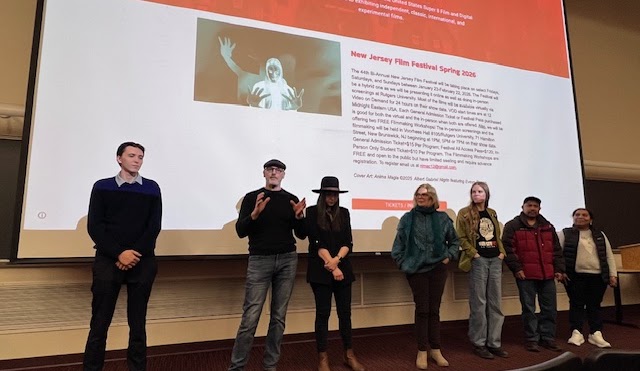

The 31st Annual New Jersey International Film Festival is preparing to once again transform Rutgers University and downtown New Brunswick into one of the most ambitious hubs for independent cinema in the Northeast as filmmakers, artists, documentarians, experimental creators, animators, students, and audiences from around the world gather between May 29 and June 7, 2026 for a sweeping celebration of contemporary independent film. Organized by the Rutgers Film Co-op, this year’s festival arrives with one of its most artistically adventurous lineups yet, featuring global premieres, environmental documentaries, surrealist experimental works, student showcases, hybrid screenings, and a deeply eclectic collection of narrative and non-narrative filmmaking selected from more than 680 submissions worldwide.
As New Jersey’s film culture continues expanding beyond studio production and streaming infrastructure into a fully realized creative ecosystem, the New Jersey International Film Festival has increasingly positioned itself as one of the state’s most important artistic institutions for filmmakers working outside commercial entertainment formulas. The festival’s 2026 edition reinforces that reputation aggressively, embracing films that challenge audiences emotionally, visually, politically, philosophically, and structurally rather than simply delivering conventional cinematic comfort.
That spirit becomes immediately apparent during the festival’s opening night programming on Friday, May 29. Opening Weekend Screenings:
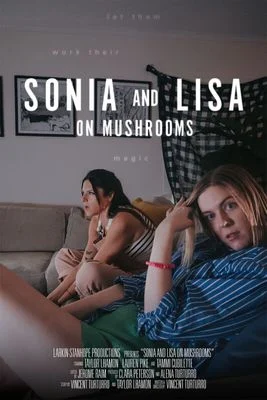
- Friday, May 29, 2026 (7:00 PM): The festival opens with a mix of features and shorts, including Vincent Turturro’s independent feature Sonia and Lisa on Mushrooms. It screens alongside the shorts Impivaara, Bottom Feeder, and Nate Dorr’s experimental documentary Chemical Meadows, which explores the New Jersey Meadowlands.
- Saturday, May 30, 2026 (12:00 AM VOD): A virtual-only block featuring Lana Delaroche’s documentary Phenomenon of Ivan Marchuk paired with Theater of the Absurd.
- Saturday, May 30, 2026 (7:00 PM): A live and virtual feature block showcasing Pavan Moondi’s Middle Life, starring musicians Leah Fay Goldstein and Peter Dreimanis. This block also features the films Sundays and Counterfeit Kids.
- Saturday, May 30, 2026 (7:00 PM – Parallel Block): Shorts Program #1 screens a large collection of brief works including Godzilla’s Day Off, Paper Crane, 35 Days, I Exist, Pizza Man, Prison and Time, Dustsceawung, and Miracle Under 34th Street.
The opening evening represents an especially fascinating collision of independent storytelling styles, pairing narrative features with highly experimental short films that collectively establish the tone for the entire festival. Among the most talked-about selections are the shorts “Bottom Feeder” and “Impivaara,” two visually distinctive projects that embody the festival’s longstanding embrace of artistic risk and unconventional cinematic language.
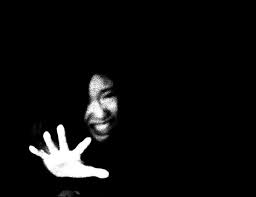
“Bottom Feeder,” directed by Los Angeles filmmaker Vito Trabucco, arrives as one of the festival’s most visually hypnotic experimental works. Shot in black and white on 16mm film and framed in an intentionally claustrophobic square 4:3 aspect ratio, the film operates less like traditional narrative storytelling and more like an immersive psychological descent into subconscious symbolism, fragmented memory, surreal imagery, and emotional disorientation. The film follows a woman named Pageant through a dreamlike environment filled with fractured spaces, symbolic objects, mysterious reflections, unsettling silences, and shifting perceptions of identity and reality.
The imagery itself becomes central to the emotional experience.
A front door appears broken and destabilized. A doll hangs suspended in desire and loneliness. Reflections transform into confrontations with selfhood. Domestic spaces feel simultaneously intimate and alien. Throughout the film, Trabucco intentionally blurs the line between dream and reality while exploring how isolation, subconscious fear, desire, identity, and emotional fragmentation can manifest visually through symbolic cinematic language.
The title itself carries deeper thematic resonance.
Within marine ecosystems, bottom feeders survive in the deepest and darkest regions beneath the visible surface. Trabucco extends that metaphor toward the human subconscious, suggesting that psychological darkness, suppressed memory, emotional damage, and unseen instincts often exist beneath everyday social performance in similarly hidden ways. The result is a film that feels simultaneously abstract and emotionally intimate, forcing viewers into a space where interpretation itself becomes part of the cinematic experience.
For the New Jersey International Film Festival, programming films like “Bottom Feeder” reflects the larger identity that has defined the event for more than three decades.
Rather than prioritizing celebrity visibility or commercially safe selections, the festival consistently champions filmmakers willing to experiment formally and emotionally. That curatorial philosophy has helped establish the event as one of the most respected showcases for independent and avant-garde cinema operating within the university and regional arts landscape.
The opening night lineup additionally includes Vincent Turturro’s feature “Sonia and Lisa on Mushrooms,” another example of independent filmmaking unconcerned with mainstream convention. Paired alongside Nate Dorr’s “Chemical Meadows,” an experimental documentary exploring the ecological, industrial, and visual complexity of the New Jersey Meadowlands, the opening evening creates a remarkably layered portrait of contemporary independent cinema’s willingness to explore both inner and external landscapes simultaneously.
Highlighted Festival Premieres. Exact dates for the remaining schedule vary, but these confirmed titles will screen during the two-week run:
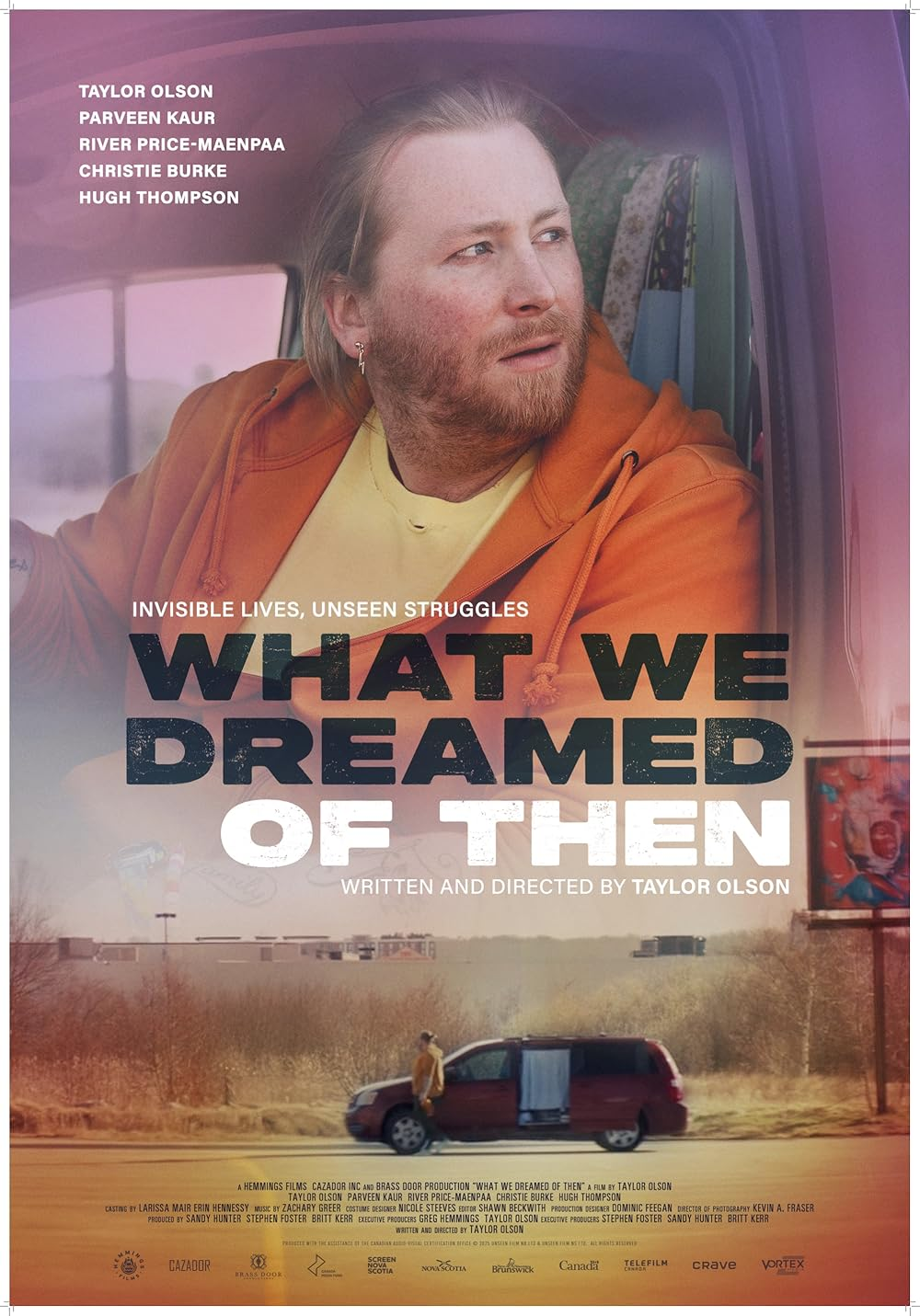
What We Dreamed of Then: A feature film by Canadian filmmaker Taylor Olson.
Greenfield: A profile documentary on environmental activist Robin Greenfield, directed by Rob Herring.
Los Tres: A film by Yehuda Sharim highlighting three Mexican American artists.
Salt Marsh: Tom Bell’s reflective documentary focusing on art and the environment.
That environmental focus continues throughout the broader festival lineup as well.
Films such as “Greenfield,” directed by Rob Herring, examine environmental activism through the life and philosophy of Robin Greenfield, while Tom Bell’s reflective documentary “Salt Marsh” explores the relationship between art, ecology, preservation, and landscape. These projects align naturally with New Jersey’s own evolving cultural conversations surrounding environmental sustainability, land use, industrial history, and climate consciousness, particularly within regions shaped heavily by urbanization and shoreline vulnerability.
The festival’s international perspective also remains central to its identity.
Projects like “Los Tres” by filmmaker Yehuda Sharim bring attention to Mexican American artistic voices and cultural identity, while Lana Delaroche’s documentary “Phenomenon of Ivan Marchuk” explores artistic legacy through the lens of internationally recognized Ukrainian painter Ivan Marchuk. The inclusion of such globally diverse work reinforces the festival’s broader mission of treating cinema as an international artistic dialogue rather than a narrowly American commercial industry.
At the same time, the New Jersey International Film Festival remains deeply connected to local filmmaking communities and emerging student artists.
One of the festival’s most compelling components is its dedicated showcase of Rutgers-connected filmmakers and regional student creators, highlighting how New Jersey’s academic institutions continue helping cultivate the next generation of independent storytellers. Shorts such as “My Plastic Lung” by Nicholas Diodato, “Frankie’s Okay” directed by Kat Lindsay, “Bajo el Sol (Under the Sun)” by Jamilli Pacheco-Urquiza, and the dark comedy “The Clam Guy” by Jen Nista and Max Beckerman collectively demonstrate the enormous range of talent currently emerging from the region’s educational and independent arts communities.
These films vary dramatically in tone and style.
“My Plastic Lung” follows a teenager living with artificial lungs, using science-fiction themes to examine vulnerability, isolation, and bodily identity. “Frankie’s Okay” transforms a simple game night into a psychologically escalating portrait of anxiety and panic. “Bajo el Sol” examines tourism and cultural tension along Mexico’s Oaxacan Coast through emotionally grounded observational storytelling. Meanwhile, “The Clam Guy” leans into surreal dark comedy and unsettling humor, reflecting the growing influence of absurdist independent filmmaking among younger creators.
Collectively, the lineup illustrates how dramatically independent cinema continues evolving beyond traditional genre definitions.
Modern filmmakers increasingly move fluidly between documentary realism, experimental abstraction, social commentary, surrealism, psychological horror, environmental reflection, and deeply personal autobiographical storytelling. The New Jersey International Film Festival embraces that fluidity fully rather than attempting to separate projects into rigid categories.
That openness extends into the festival’s hybrid format as well.
Most screenings remain available virtually through 24-hour Video on Demand windows beginning at midnight Eastern Time on their scheduled screening dates, while select live screenings continue taking place inside Voorhees Hall on the Rutgers University campus in New Brunswick. The hybrid structure reflects the evolving realities of contemporary film culture while still preserving the irreplaceable communal energy of theatrical viewing.
That communal aspect remains enormously important to the festival’s identity.
Independent cinema often thrives through conversation, interpretation, discomfort, emotional challenge, and shared discovery. Watching unfamiliar work alongside strangers inside a theater environment fundamentally changes how audiences engage with difficult, abstract, or emotionally unconventional films. The Rutgers setting additionally reinforces the festival’s intellectual atmosphere, positioning cinema not merely as entertainment but as artistic inquiry and cultural examination.
The affordability of the event also continues making the festival unusually accessible compared to many contemporary film showcases.
General admission remains priced at $15 per screening block, while in-person student tickets are available for $10. An all-access festival pass grants audiences entry to the full lineup for $120, reinforcing the festival’s longstanding emphasis on accessibility, education, and community participation rather than exclusivity.
As New Jersey’s broader entertainment and media landscape continues expanding through studio investment, streaming production growth, and independent arts development, the New Jersey International Film Festival increasingly represents something essential within the state’s cultural identity. It demonstrates that New Jersey’s creative future will not be defined solely by large-scale commercial production infrastructure, but also by institutions willing to nurture unconventional voices, experimental storytelling, regional filmmakers, and fearless artistic exploration.
For two weekends in New Brunswick, audiences will once again step into a cinematic environment where dream logic, political reflection, environmental storytelling, surreal imagery, personal vulnerability, visual experimentation, and global artistic dialogue all coexist together.
That willingness to embrace uncertainty, challenge convention, and elevate independent artistic voices remains exactly why the New Jersey International Film Festival continues standing as one of the most important cultural events operating anywhere in the state.
















