Home Blog Page 77

Firkin Fest 2026 Returns to Butler: Ramstein Brewery Brings Real Ale Tradition Back to New Jersey for a One-Day Cask Celebration

In a state where the craft beer movement continues to evolve at an extraordinary pace, one North Jersey brewery is once again doubling down on tradition. Firkin Fest 2026 is officially set for Saturday, March 7, 2026, from 2:00 PM to 6:00 PM at Ramstein Brewery, also known as High Point Brewing Company, located at 22 Park Place in Butler.

Back by popular demand and positioned as one of the most distinctive beer events in the region, Firkin Fest is more than just a tasting event. It is a celebration of “real ale” culture—an old-world brewing tradition that continues to captivate serious beer enthusiasts across New Jersey and beyond.

Greg from Ramstein Brewery confirmed the return of this fan-favorite festival, inviting the community to gather for what he describes as a “very special treat.” The formula is straightforward yet powerful: free admission, a curated lineup of the brewery’s most sought-after firkins from throughout the year, and a communal atmosphere that embodies the spirit of New Jersey craft beer. Beer will be available for purchase by the glass while supplies last, reinforcing the limited, specialty nature of cask-conditioned releases.

What Makes Firkin Fest Different?

To understand why Firkin Fest commands such anticipation, you have to understand the firkin itself. A firkin is a small cask—typically holding approximately 10.8 gallons—used for cask-conditioned ale. Unlike standard kegs that are force-carbonated with CO₂, cask ales undergo a secondary fermentation inside the cask. This natural carbonation process creates a softer mouthfeel, more nuanced carbonation, and a depth of flavor that is often described as layered, rounded, and expressive.

Because these beers are unfiltered and unpasteurized, they deliver a living, evolving drinking experience. Each pour can subtly shift as the cask breathes and empties. For seasoned craft beer drinkers, this is the essence of “real ale”—a format that emphasizes authenticity over uniformity.

Firkin Fest 2026 assembles the brewery’s “Greatest Hits” lineup in one place, offering attendees the rare opportunity to sample some of the most popular firkins from the past year simultaneously. If you missed a special release during the year, this is your opportunity to revisit—or finally experience—it.

The 2026 Firkin Lineup: A Showcase of Innovation

This year’s confirmed firkin selections underscore Ramstein’s range, creativity, and technical command:

Bourbon Barrel Cherry Winter Wheat – A layered wheat beer conditioned with cherry and rested in bourbon barrels, merging soft malt sweetness with oak, vanilla, and fruit-driven brightness.

Picklebach Pilsner – A playful twist on traditional pilsner craftsmanship, delivering crisp lager character with an unexpected, briny edge that sparks conversation.

Toasted Pecan Oktoberfest – A nut-forward adaptation of a classic Märzen profile, balancing caramel malt structure with roasted pecan complexity.

Pineapple Habanero Blonde – Tropical fruit sweetness meets subtle heat, creating a dynamic contrast that evolves sip after sip.

Chocolate Peanut Butter Black Lager – Dark, smooth, and indulgent, this black lager integrates cocoa and peanut butter notes without sacrificing drinkability.

These selections demonstrate how cask conditioning can elevate both traditional styles and experimental concepts. The softer carbonation amplifies aromatics and deepens flavor integration, turning each beer into a distinct sensory experience.

A Pillar in the New Jersey Craft Beer Landscape

New Jersey’s craft beer scene has experienced explosive growth over the past decade, with breweries across the state redefining local drinking culture. From coastal taprooms to urban brewing collectives and rural farmhouse operations, the diversity is staggering. Explore New Jersey has consistently spotlighted the state’s thriving beer ecosystem, and events like Firkin Fest illustrate why the Garden State continues to gain recognition among serious beer travelers.

Ramstein Brewery, long respected for its German-inspired brewing roots, bridges tradition and innovation. While many breweries experiment heavily with modern hop trends and adjunct-driven releases, Ramstein’s commitment to traditional European techniques—particularly with lagers and wheat beers—sets it apart. Firkin Fest adds another dimension to that identity by embracing classic British-style cask service while applying it to contemporary flavor profiles.

Free Admission, Community Atmosphere, and Local Flavor

Firkin Fest 2026 remains accessible to the broader community with free admission. This inclusive approach reinforces Ramstein’s reputation as a community-centered brewery rather than an exclusive, ticket-gated experience. Attendees simply arrive, explore the lineup, and purchase beers by the glass while supplies last.

Complementing the beer program is the Foodie Call Food Truck, providing on-site dining options designed to pair seamlessly with the firkin offerings. The marriage of thoughtfully crafted beer and locally served food underscores the collaborative spirit that defines New Jersey’s small business culture.

Why Cask Ale Matters in 2026

In an era increasingly driven by flashy releases, limited drops, and rapid distribution cycles, cask-conditioned beer stands apart as something intentionally analog. It demands patience from brewers and attentiveness from drinkers. It cannot be rushed, and it cannot be replicated exactly from batch to batch.

That authenticity resonates with today’s craft beer audience, many of whom are seeking deeper connection to process, place, and tradition. Firkin Fest is not just about tasting beer—it is about experiencing brewing in its most traditional form, served as it was centuries ago, yet interpreted through modern creativity.

Mark Your Calendar

Firkin Fest 2026 takes place Saturday, March 7, 2026, from 2:00 PM to 6:00 PM at Ramstein Brewery, 22 Park Place, Butler, NJ 07405. With no admission fee and a highly anticipated lineup available only while supplies last, early arrival is strongly advised.

For craft beer enthusiasts across North Jersey and beyond, this event represents one of the most authentic seasonal gatherings on the calendar. It brings together tradition, innovation, community, and craftsmanship under one roof for a single afternoon dedicated to real ale excellence.

Explore New Jersey will continue to spotlight the breweries, festivals, and makers that shape the state’s vibrant beer culture. Firkin Fest 2026 stands as a testament to how New Jersey continues to honor brewing heritage while confidently pushing the craft forward.

Rutgers Athletics Update: Scarlet Knights Fight for Big Ten Positioning as Women’s Lacrosse Opens 2026 Campaign at SHI Stadium

March momentum is building in Piscataway as Rutgers Scarlet Knights athletics delivers high-stakes competition across two marquee programs. From a dramatic men’s basketball victory with Big Ten implications to the highly anticipated season opener for women’s lacrosse at SHI Stadium, Rutgers enters the week with urgency, visibility, and postseason positioning at the forefront.

For Explore New Jersey readers tracking the evolving landscape of collegiate sports in the Garden State, this moment reflects both competitive resilience and institutional momentum.

Men’s Basketball: A Critical Win with Big Ten Tournament Stakes

The Rutgers Scarlet Knights men’s basketball secured a crucial conference victory over Maryland Terrapins men’s basketball — a game that nearly unraveled after Rutgers surrendered most of a 20-point lead.

What began as a dominant performance shifted into a tense late-game battle, testing the Scarlet Knights’ composure and defensive discipline. Maryland’s second-half surge exposed lapses in transition defense and shot selection, but Rutgers ultimately stabilized in the closing minutes, preserving the win.

The result carries significant implications:

• Strengthens Rutgers’ positioning in the Big Ten standings
• Keeps the program in contention for a coveted Big Ten Tournament first-round bye
• Reinforces the team’s ability to close high-pressure conference games

In March, style points are irrelevant. Execution matters. Rutgers demonstrated the capacity to absorb momentum swings and still secure the outcome — a trait essential for postseason viability.

Big Ten Tournament Implications

With conference seeding tightening, every late-season win reshapes the bracket landscape. A first-round bye in the Big Ten Tournament offers:

• Reduced game fatigue entering deeper rounds
• Additional preparation time
• Improved matchup leverage
• Increased probability of NCAA Tournament résumé strength

For Rutgers, the Maryland victory functions as more than a single-game result. It reestablishes control in a tightly packed middle tier of the conference.

Defensive Identity Under Pressure

The near-collapse also serves as a reminder of Rutgers’ long-standing defensive identity. When the Scarlet Knights defend with discipline, they can compete with any Big Ten opponent. When they allow pace to dictate play, vulnerabilities emerge.

March basketball in the Big Ten is unforgiving. Teams that advance do so through composure, rebounding consistency, and late-game shot management. Rutgers’ performance against Maryland displayed both fragility and resolve — a combination that defines tournament basketball.

Women’s Lacrosse: 2026 Season Opens Against Ranked Army

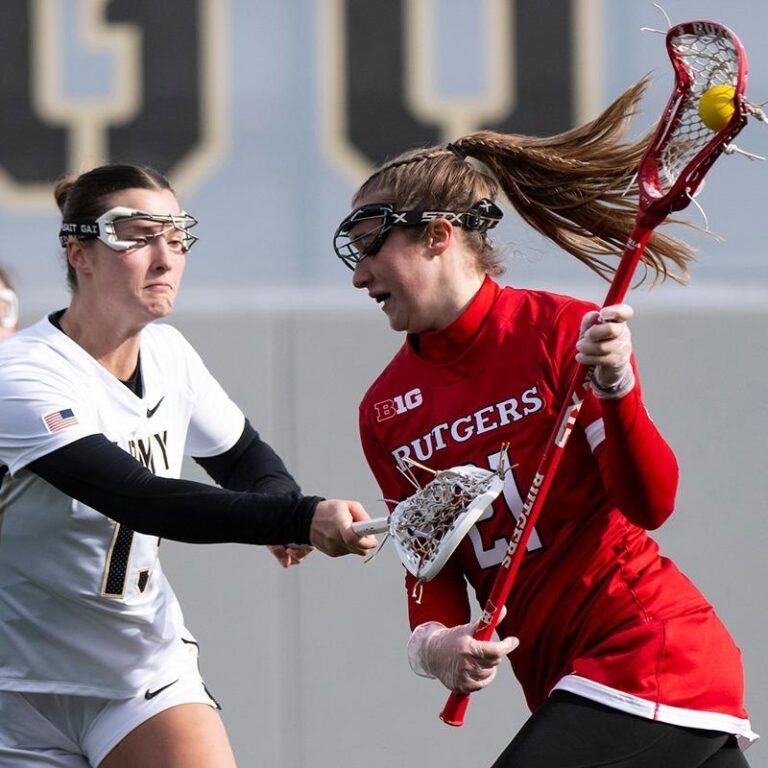
While men’s basketball sharpens its postseason focus, Rutgers Scarlet Knights women’s lacrosse officially launches its 2026 season Friday evening against #21 Army Black Knights women’s lacrosse at SHI Stadium.

Rutgers Women’s Lacrosse Earns Big Ten Recognition as Three Scarlet Knights Named 2026 Players to Watch

Momentum is building in Piscataway as Rutgers Scarlet Knights women’s lacrosse enters the 2026 season with conference-wide recognition and unfinished business.

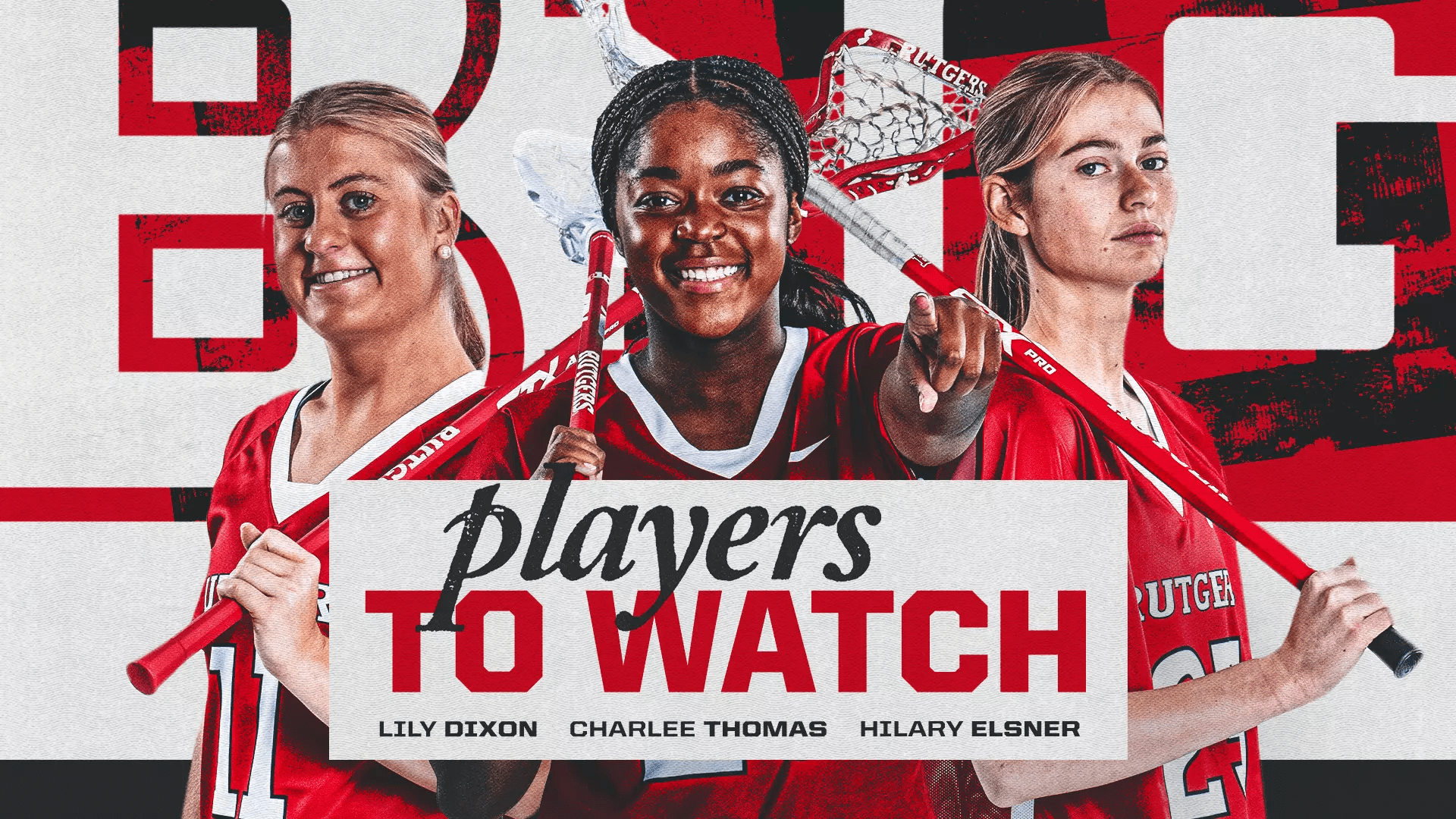
Three Scarlet Knights — Lily Dixon, Hilary Elsner, and Charlee Thomas — have been named 2026 Big Ten Players to Watch, the conference announced Wednesday. The preseason honors reinforce Rutgers’ continued ascent within one of the most competitive women’s lacrosse leagues in the nation.

In addition to individual accolades, Rutgers was selected to finish seventh in the nine-team Big Ten preseason coaches’ poll — a projection that sets the stage for a program eager to outperform expectations.

Big Ten Preseason Coaches’ Poll: Rutgers Slotted Seventh

The 2026 Big Ten Women’s Lacrosse Preseason Coaches’ Poll reads as follows:

  1. Northwestern (unanimous)
  2. Maryland
  3. Johns Hopkins
  4. Michigan
  5. Penn State
  6. USC
  7. RUTGERS
  8. Ohio State
  9. Oregon

The poll reflects the conference’s depth and national stature. Northwestern and Maryland remain perennial powers, while Michigan, Penn State, and USC continue to push the competitive ceiling.

Rutgers’ seventh-place projection places the Scarlet Knights squarely in the league’s middle tier — but history suggests that positioning may underestimate the program’s trajectory.

Under head coach Melissa Lehman, Rutgers has advanced to the Big Ten Tournament for five consecutive seasons, establishing postseason consistency in a conference defined by elite programs.

Lily Dixon: A Senior Leader and Offensive Catalyst

Lily Dixon enters her senior campaign as one of the most productive scorers in the Big Ten.

Through 50 career games, Dixon has amassed:

• 111 career points
• 72 assists
• 39 goals

She became the 28th player in program history to surpass 100 career points — a milestone that places her among the most accomplished offensive players Rutgers has produced.

Her 2025 season was particularly impactful:

• Team-high 50 points
• 33 assists
• 17 goals
• 31 draw controls
• 28 ground balls
• 20 caused turnovers

Dixon’s versatility separates her from traditional attackers. She is not simply a scorer — she contributes in transition, defensive disruption, and possession control.

As Rutgers seeks to climb the Big Ten standings, Dixon’s senior leadership will be central to both scoring output and locker room stability.

Hilary Elsner: Sophomore Surge After Breakout Freshman Year

Hilary Elsner earned her Players to Watch designation following an impressive freshman campaign.

Appearing in 15 games as a true freshman, Elsner recorded:

• 17 points
• 15 goals
• 2 assists

She produced three multi-goal performances, including a four-goal breakout in a 19–7 victory over Temple. Elsner found the net in 10 separate contests, demonstrating consistency and finishing ability rarely seen from first-year players.

Entering her sophomore season, Elsner represents one of Rutgers’ most promising offensive weapons. Her development trajectory suggests increased responsibility within the attacking unit.

Charlee Thomas: Defensive Anchor in the Making

Charlee Thomas provides balance to the Scarlet Knights’ trio of honorees.

Starting all 18 games as a true freshman on defense, Thomas recorded:

• 16 ground balls
• 4 draw controls
• 3 caused turnovers

She collected multiple ground balls four times last season, including a career-high three against Northwestern — the unanimous preseason No. 1.

Thomas’ ability to handle top-tier competition early in her career underscores her importance to Rutgers’ defensive structure. As Big Ten offenses continue to evolve in speed and spacing, Thomas’ growth will be critical to limiting high-efficiency scoring opportunities.

Building on 2025: Ranked Wins and Tournament Consistency

Rutgers concluded the 2025 season with eight victories, including ranked wins over No. 16 Stony Brook and No. 21 Ohio State. The Scarlet Knights faced 11 opponents who appeared in the IWLCA Coaches Poll last season — a strength-of-schedule reality that hardens programs for postseason environments.

Five straight Big Ten Tournament appearances under Melissa Lehman demonstrate institutional stability. In a conference where national contenders routinely emerge, sustained qualification is an achievement in itself.

The challenge for 2026 is not simply maintaining that standard — it is breaking through.

The Competitive Landscape: Big Ten Stars to Watch

The Big Ten’s Players to Watch list highlights the caliber of competition Rutgers faces.

Among the notable honorees across the conference:

• Ava Angello (Johns Hopkins)
• Kori Edmondson (Maryland)
• Madison Taylor (Northwestern)
• Grace Callahan (Michigan)
• Sydney Manning (Penn State)
• Camryn Callaghan (Ohio State)
• Hannah Barron (USC)

The depth of elite attackers, midfielders, and goalkeepers underscores why preseason rankings alone rarely dictate final standings.

Rutgers’ trio — Dixon, Elsner, and Thomas — places the Scarlet Knights firmly within that elite conversation.

Rutgers’ Path Forward in 2026

For Rutgers to exceed its seventh-place preseason projection, several factors must align:

• Offensive efficiency in conference play
• Defensive communication against top-ranked opponents
• Depth scoring beyond primary attackers
• Draw control consistency
• Goalkeeping stability in late-game situations

With Dixon’s senior presence, Elsner’s upward trajectory, and Thomas’ defensive reliability, the framework is in place.

The Big Ten remains one of the nation’s most demanding women’s lacrosse conferences. Every week presents a ranked-caliber challenge.

Yet Rutgers has demonstrated resilience against ranked opponents and postseason qualification pressure.

Why This Matters for New Jersey Lacrosse

Rutgers’ recognition on the national stage reinforces New Jersey’s broader lacrosse culture. The state has long been a pipeline for collegiate talent, and sustained Big Ten competitiveness strengthens in-state recruiting and youth development visibility.

For Explore New Jersey readers following the Scarlet Knights, this preseason recognition signals both validation and opportunity.

Rutgers enters 2026 not as an under-the-radar program, but as one with established postseason credibility and multiple players recognized among the conference’s elite.

The preseason poll may place the Scarlet Knights seventh.

The season itself will determine whether that projection holds — or whether Rutgers once again reshapes expectations in the nation’s most competitive lacrosse conference.

Opening against a nationally ranked opponent immediately elevates the stakes.

This matchup offers:

• An early benchmark for national competitiveness
• Strength-of-schedule résumé building
• A high-visibility home opener in front of Rutgers supporters

SHI Stadium, typically associated with football Saturdays, transforms into a dynamic lacrosse venue — reinforcing Rutgers’ investment in multi-sport excellence and broad athletic infrastructure.

Program Trajectory and Competitive Outlook

Rutgers women’s lacrosse has steadily built momentum in recent seasons, focusing on:

• Defensive communication
• Speed in transition
• Midfield depth
• Structured offensive spacing

Facing a ranked Army squad on opening night will test those pillars immediately.

Season openers often set tone and identity. A strong performance — win or competitive showing — positions Rutgers as a program capable of competing in high-profile non-conference contests.

Expanding the Women’s Sports Spotlight in New Jersey

Women’s lacrosse continues to grow statewide in participation and fan engagement. Rutgers’ high-profile home opener contributes to that trajectory, showcasing elite collegiate competition within New Jersey’s largest public university setting.

For Explore New Jersey’s Art & Culture and Sports audiences alike, this intersection of athletic excellence and community visibility reflects broader investment in women’s sports programming across the state.

SHI Stadium as a Multi-Sport Anchor

Located in Piscataway, SHI Stadium has become more than a football venue. It functions as a year-round athletics hub, hosting diverse sporting events that draw regional attention.

For women’s lacrosse, the stadium environment provides:

• Enhanced fan experience
• Elevated recruiting visibility
• Institutional branding consistency
• Statewide exposure

The decision to open the season there reinforces Rutgers’ commitment to parity in facilities and promotion.

A Defining Week for Rutgers Athletics

Across both programs, the week reflects competitive urgency and forward momentum.

Men’s Basketball enters March with tangible postseason implications and a renewed defensive focus after surviving a late-game scare.

Women’s Lacrosse begins its campaign under the spotlight, facing a ranked opponent in a high-visibility home environment.

Together, these storylines underscore Rutgers Athletics’ broader narrative:

• Competitive resilience
• Conference positioning ambition
• Multi-sport excellence
• Institutional investment in high-profile home events

For the Scarlet Knights, March is not a transition month. It is a proving ground.

As postseason brackets form and spring schedules intensify, Rutgers remains central to New Jersey’s collegiate sports conversation — delivering drama on the hardwood and launching new campaigns on the turf.

In Piscataway this week, momentum is not theoretical. It is unfolding in real time.

Artificial Intelligence vs. The American Dream: How AI Is Reshaping New Jersey’s Housing Market in 2026

In New Jersey, artificial intelligence is no longer a distant Silicon Valley storyline. It is embedded directly into the mechanics of rent pricing, property tax assessments, mortgage underwriting, power infrastructure, and even the long-term stability of suburban home values.

Across Jersey City high-rises, suburban tax offices, Secaucus data centers and executive neighborhoods along the I-287 corridor, AI is colliding with housing economics in ways that are transforming the state’s real estate ecosystem.

What was once a technology story is now a property story. And in the Garden State—where real estate, taxation and density intersect more intensely than almost anywhere in America—the stakes are uniquely high.

The Crackdown on Algorithmic Rent Setting

At the center of the controversy is algorithmic rent pricing software used by large landlords to determine monthly lease rates. Companies such as RealPage and Yardi offer AI-driven platforms that analyze market data, occupancy rates, and regional trends to recommend rent increases.

New Jersey is now part of a sweeping multi-state investigation examining whether these tools enable what critics call “algorithmic rent fixing.” The legal theory suggests that if competing landlords feed private occupancy data into the same pricing system, the software could produce coordinated rent hikes that resemble collusion—without landlords ever directly communicating.

In high-density cities like Jersey City and Hoboken, where corporate landlords control significant inventory, renters have experienced double-digit increases in recent cycles. Tenant advocates argue that these spikes are less about local supply and demand and more about AI-driven pricing models optimizing profit.

Landlords counter that algorithmic tools merely reflect market realities and improve efficiency. Regulators, however, are probing whether shared data inputs distort competition.

For renters, the outcome of these investigations could directly influence affordability in one of the nation’s most densely populated states.

Data Centers vs. Residential Power: The Energy Collision

Northern New Jersey—particularly Secaucus and Edison—is one of the world’s most concentrated data center hubs. These facilities power cloud computing, AI training models, and enterprise-scale digital operations.

But AI requires immense electricity.

As demand for AI processing grows, data centers consume increasing amounts of power, placing pressure on the regional electrical grid. Utility infrastructure upgrades are expensive, and delivery charges can ripple outward to residential ratepayers.

Beyond grid strain, data centers compete for prime industrial land that might otherwise be used for residential development. In a state already constrained by limited buildable acreage, the land-use implications are profound.

New Jersey’s projected $29.6 billion capital investment pipeline for 2026 includes infrastructure upgrades designed to support growth, but the tension between digital infrastructure and housing supply remains unresolved.

Accelerated Property Tax Assessments: Accuracy or Shock?

New Jersey already carries the highest property tax burden in the United States. Now, municipalities are experimenting with AI-powered Computer-Assisted Mass Appraisal (CAMA) systems to modernize property assessments.

Traditionally, reassessments lag behind market activity. With AI integration, algorithms analyze real-time sales data, comparable transactions, and neighborhood trends to produce dynamic valuations.

On paper, this increases fairness and accuracy.

In practice, it can trigger “tax shock.”

In gentrifying areas like Asbury Park and Newark, AI models may detect rising property values before a human assessor would conduct a physical review. Long-time residents—particularly seniors on fixed incomes—could see rapid tax increases based on algorithmic recalibration.

Supporters argue that modernized assessments prevent inequities. Critics warn that sudden spikes could destabilize communities already facing affordability pressures.

Mortgage Markets and AI Bias Concerns

New Jersey’s diversity makes it a testing ground for another AI battleground: automated underwriting.

Mortgage lenders increasingly rely on algorithmic decision systems to assess creditworthiness, evaluate risk, and price loans. While these systems increase processing speed and reduce administrative costs, concerns persist about embedded bias within data models.

The New Jersey Division on Civil Rights is monitoring how AI underwriting platforms might unintentionally “redline” neighborhoods by incorporating zip-code-based risk modeling.

Cities such as Paterson and Camden have historically faced lending discrimination. If AI systems replicate or amplify those patterns through algorithmic inputs, the legal and ethical consequences could be significant.

The intersection of fair housing law and machine learning is becoming one of the most consequential real estate compliance issues of the decade.

Executive Home Vulnerability and AI Workforce Shifts

New Jersey’s economy relies heavily on pharmaceuticals, finance and telecommunications—sectors deeply exposed to AI-driven restructuring.

Corporate corridors along the Garden State Parkway and I-287 belt host high-income professionals whose purchasing power supports the state’s executive-style suburban housing market.

If AI automation reduces white-collar employment in these sectors, demand for high-end homes could soften. A contraction at the upper tier would not only impact luxury real estate values but also strain municipal tax bases that depend heavily on those properties.

Housing demand in New Jersey has historically been tied to commuter proximity and corporate density. As AI transforms corporate staffing models, ripple effects may extend into residential stability.

A Legislative and Legal Crossroads

New Jersey lawmakers and regulators are navigating overlapping challenges:

• Investigating algorithmic rent-setting practices
• Monitoring AI-driven mortgage underwriting for discriminatory impact
• Modernizing property tax assessment systems
• Balancing data center expansion with residential infrastructure needs
• Anticipating employment shifts that affect housing demand

Each issue intersects with real estate in distinct but interconnected ways.

In a state where housing affordability, taxation and density already drive political debate, AI has introduced a new variable into the equation.

Real Estate Coverage at Sunset Daily News

As artificial intelligence reshapes property markets, Sunset Daily News is expanding its reporting across New Jersey’s evolving housing landscape. From development trends and zoning policy to investment shifts and market volatility, our Real Estate section delivers in-depth analysis for homeowners, investors and policymakers alike.

The convergence of technology and housing is no longer theoretical. It is affecting rent checks, tax bills, mortgage approvals and utility statements today.

New Jersey sits at the epicenter of this transformation.

For residents, landlords, developers and regulators, the message is clear: the future of housing in the Garden State will not be shaped by market forces alone. It will also be shaped by algorithms.

Celebrate Women’s History Month at Historic New Bridge Landing: A Revolutionary Performance at the 1752 Steuben House

Bergen County’s cultural calendar takes a powerful turn this March as the Bergen County Historical Society presents A Celebration of Women’s History at Historic New Bridge Landing. The centerpiece of the afternoon is a live performance of Margaret’s Diary During a Revolution, written and performed by acclaimed historian and playwright Gayle Stahlhuth, staged at 2:30 p.m. inside the state historic 1752 Steuben House.

Originally scheduled for February 22, 2026, the event has been rescheduled to March 8 due to snow — an adjustment that now places it squarely within Women’s History Month, adding deeper resonance to an already compelling program.

For Explore New Jersey readers who follow the state’s art and culture scene, this event exemplifies how live performance, archival storytelling, and immersive historic environments converge to bring the past into sharp contemporary focus.

A Revolutionary Voice: The Story of Margaret Morris

At the heart of the afternoon is Margaret Morris — a widow with four children living in Burlington during the American Revolution. On December 6, 1776, Morris began recording detailed entries in her diary as Hessian forces advanced into New Jersey.

While many fled in fear of invasion, she stayed.

She observed.
She documented.
She preserved her perspective in real time.

Margaret’s Diary During a Revolution transforms those writings into living theater. Through Gayle Stahlhuth’s performance, audiences step directly into the emotional and political tension of late 1776 New Jersey. The production does more than recount events; it restores agency to a woman whose firsthand account provides invaluable insight into civilian life during wartime.

The performance underscores an essential truth often overlooked in traditional Revolutionary narratives: women were not passive observers. They were record-keepers, caretakers, strategists, and witnesses to upheaval.

In staging this performance within the Steuben House — itself a site steeped in Revolutionary history — the Bergen County Historical Society reinforces the power of place in historical interpretation.

The 1752 Steuben House: History as Living Architecture

Located at Historic New Bridge Landing in River Edge, the Steuben House stands as one of Bergen County’s most significant surviving 18th-century structures.

Its walls have witnessed: Military movements during the American Revolution, Colonial domestic life, Shifts in New Jersey’s political landscape

Hosting Margaret’s Diary During a Revolution within this setting is not incidental. The architecture becomes a silent collaborator in the storytelling, reinforcing the authenticity of the lived experience being portrayed.

For visitors exploring New Jersey’s art and culture offerings, this fusion of site-specific performance and archival material represents one of the most immersive historical programming models in the state.

New Exhibits Spotlight Women Who Shaped Bergen County

Beyond the featured performance, guests will encounter new exhibitions on display inside the Steuben House, including Women Who Made a Difference in Bergen County. These curated installations highlight the often underrepresented contributions of women in shaping the region’s civic, social, and political development.

In addition, Revolutionary War artifacts and other objects from the society’s extensive collection are available for viewing, offering tangible connections to the stories explored on stage.

Together, the performance and exhibits create a multi-layered educational experience that appeals to historians, students, families, and cultural enthusiasts alike.

Living History in Action: Jersey Dutch Culinary Traditions

The programming extends beyond static exhibits.

Visitors can step into the society’s authentic Jersey Dutch out-kitchen, where interpreters will be cooking a roast over a pot of root vegetables and baking traditional thirded bread. This live culinary demonstration connects attendees to the region’s colonial foodways, illustrating how daily life unfolded in 18th-century Bergen County.

Seasonal refreshments will also be available for purchase inside the tavern, offering guests an opportunity to linger and engage more deeply with the site’s atmosphere.

These experiential components reinforce Historic New Bridge Landing’s commitment to active interpretation rather than passive display.

Family-Friendly Activities and Interactive Exploration

The Bergen County Historical Society has designed the afternoon to be welcoming across generations.

Families can participate in Weaving potholders using traditional techniques & a QR code-based scavenger hunt that guides visitors through the 13-acre landmark site using cell phones

This balance of tactile crafts and digital engagement reflects a thoughtful approach to audience development — honoring tradition while embracing modern accessibility tools.

Visitor Information and Accessibility

Free parking is available on site. Visitors may also take NJ Transit’s Pascack Valley Line to the “New Bridge Landing” station, making the event accessible to those traveling by train.

Dogs are permitted on site when leashed, though not inside the historic houses.

For ticket reservations and complete event details, attendees are encouraged to visit the Bergen County Historical Society’s official website.

Looking Forward: A Capital Campaign for the Future of History

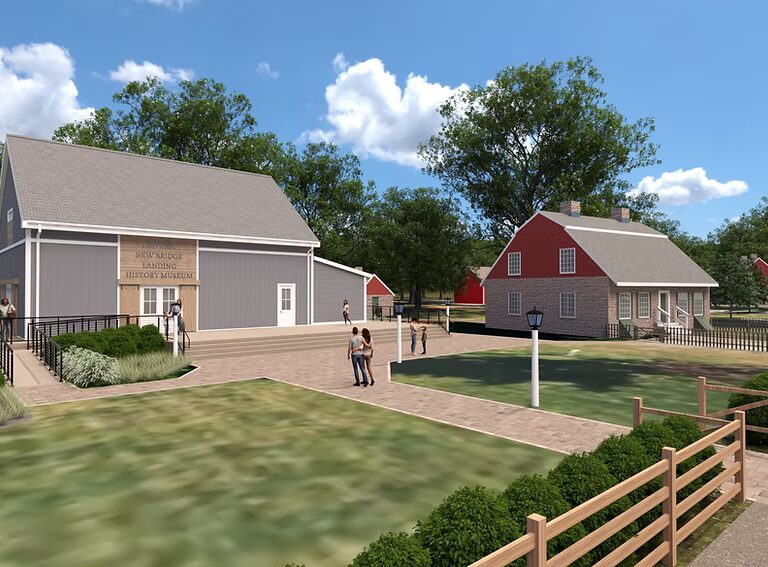
This celebration arrives at a pivotal moment for Historic New Bridge Landing. The Bergen County Historical Society’s capital campaign is actively underway to construct a 3,750-square-foot state-of-the-art Visitor Center that will serve as the gateway to the 13-acre landmark site.

The new facility aims to Introduce guests to the site’s enduring significance, Enhance educational programming capacity, Improve visitor flow and accessibility, Support expanded exhibition opportunities

Historic New Bridge Landing is widely recognized for its pivotal role in The American Revolution, Jersey Dutch colonial history, The histories of Indigenous peoples, The lives of enslaved individuals, free Black residents, and indentured servants connected to the site

The proposed Visitor Center will allow the society to present these interconnected narratives with greater depth and inclusivity.

Community members are invited to contribute to the campaign and help shape the next chapter of Bergen County’s historical preservation efforts.

Why This Event Matters in 2026

Women’s History Month provides an annual opportunity to examine how historical narratives are constructed — and who is included in them.

By centering Margaret Morris’s diary within a live theatrical framework, the Bergen County Historical Society challenges audiences to reconsider the Revolutionary era through a civilian woman’s lens. In doing so, it strengthens public understanding of how history is recorded, remembered, and interpreted.

For Explore New Jersey readers invested in the state’s art and culture landscape, this event stands out for its layered execution:

• Live theatrical storytelling grounded in primary sources
• Authentic 18th-century architectural setting
• Curated exhibits spotlighting regional women leaders
• Interactive culinary and craft demonstrations
• Digital scavenger hunt engagement
• Active preservation and expansion initiatives

Historic programming of this caliber reinforces Bergen County’s reputation as a cultural anchor within New Jersey.

On March 8, as visitors gather at the Steuben House, they will not simply attend a performance. They will enter a conversation across centuries — one that elevates women’s voices, honors regional heritage, and affirms that history remains alive when communities commit to telling it fully.

New Jersey Craft Beer at a Crossroads as King’s Road Brewing Company Expands to Moorestown’s Historic Community House — Launching New Jersey’s First Educational-Based Microbrewery

New Jersey’s craft beer landscape is evolving at an accelerated pace, and one of its most ambitious projects is preparing to open its doors in Burlington County. King’s Road Brewing Company is targeting an early 2026 debut for its third location inside the historic Community House of Moorestown — a project that will house the state’s first educational-based microbrewery in partnership with Rowan College at Burlington County.

A Historic Setting Reimagined

The Community House of Moorestown is a century-old civic landmark known for its architectural character and cultural significance. Rather than retrofit a generic industrial shell, King’s Road is integrating its taproom directly into the building’s historic library room on the first floor.

The design plan preserves original book stacks and architectural details, blending craft brewing with historic ambiance. Guests will experience:

  • Restored woodwork and vintage design elements
  • A taproom environment rooted in community identity
  • A layout that honors the building’s original function

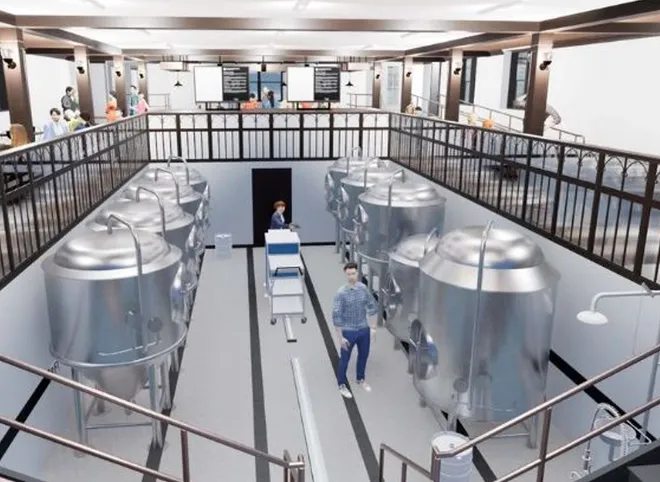
Below the taproom, in a space that once housed the Community House’s indoor pool, a fully operational brewing facility is being installed. The juxtaposition is intentional — past and present intersecting through adaptive reuse.

This approach reflects a broader New Jersey trend: breweries increasingly serving as anchors within repurposed historic spaces.

The State’s First Educational-Based Microbrewery

What distinguishes Community House Brewery most is its academic partnership. In collaboration with Rowan College at Burlington County, the Moorestown location will function as a hands-on training laboratory for students pursuing brewing sciences and hospitality careers.

This educational integration allows students to:

  • Participate in recipe development
  • Gain experience in production systems
  • Learn taproom management
  • Develop hospitality and customer engagement skills
  • Understand regulatory and compliance frameworks

Unlike purely theoretical coursework, this model embeds students within a live commercial operation. It strengthens workforce pipelines in a rapidly expanding industry while reinforcing New Jersey’s position as a serious craft beer state.

For King’s Road Brewing Company, this partnership also reinforces long-term sustainability — cultivating talent directly within its operational ecosystem.

Early Momentum and Private Sneak Peeks

As of late February 2026, Community House Brewery has hosted limited private preview events. These early gatherings have offered glimpses into the space’s layout and the brewing system’s capabilities while final permitting processes continue.

Full public operation is expected once the brewing system is fully functional and regulatory approvals are finalized. The early 2026 target opening places the Moorestown expansion at a pivotal moment in the state’s beer calendar.

The Broader New Jersey Craft Beer Context

The Moorestown launch arrives during a transformative period for New Jersey brewing.

A Major Closure

The iconic Anheuser-Busch brewery in Newark is set to close in early 2026 after 75 years of operation. The 3.2 million-square-foot facility has been sold for industrial and logistics repurposing.

The closure marks the end of an era in legacy mass-production brewing within the state. Yet it simultaneously underscores the resilience and rise of smaller, independent craft operations.

New Openings and Expansions

The craft segment continues to expand aggressively:

  • The Rose Court Brewery has announced plans for a European-inspired concept in Moorestown.
  • Five Dimes Brewery is developing a third location in Point Pleasant Beach projected for summer 2026.
  • Bay Ave Brewery is under construction in Somers Point with a fall 2026 timeline.
  • Montclair Brewery is planning a second location in East Orange to significantly increase production capacity.

King’s Road’s Moorestown expansion fits squarely within this wave of innovation — but distinguishes itself through academic collaboration and historic integration.

Community Integration: More Than Beer

King’s Road Brewing Company has built its brand on community-centered programming. The Moorestown site reinforces that ethos by embedding itself within a civic landmark.

Expect:

  • Community events
  • Educational showcases
  • Student-led brewing projects
  • Rotating tap lists tied to seasonal coursework
  • Collaborative releases highlighting academic milestones

In doing so, the brewery extends beyond traditional taproom culture. It becomes a multi-dimensional community asset.

Events Driving 2026 Momentum

New Jersey’s beer calendar is equally dynamic.

The Warren County Grapes & Grains Trail launched a passport-style rewards program in late February 2026, incentivizing visits to participating breweries and wineries through May.

Meanwhile, the Atlantic City Beer and Music Festival has announced that its April 11, 2026 event will mark its 20th and final year — signaling both celebration and transition within the state’s festival circuit.

Against this backdrop, King’s Road’s expansion feels strategically timed. As large-scale beer culture shifts, hyper-local, educational, and experience-driven breweries are poised to define the next era.

Why Moorestown Matters

Moorestown’s demographic profile, walkable downtown core, and proximity to major South Jersey corridors position it as an ideal market for a hybrid brewery model.

The Community House location enhances:

  • Downtown foot traffic
  • Destination tourism
  • Culinary cross-pollination with nearby restaurants
  • Regional identity as a craft beer hub

By choosing Moorestown — rather than a conventional warehouse district — King’s Road reinforces its emphasis on integration rather than isolation.

A Model for the Future of Craft Brewing

Community House Brewery represents more than geographic expansion. It illustrates how breweries can evolve beyond tasting rooms into educational institutions, workforce incubators, and cultural preservation partners.

The Moorestown site achieves:

  • Adaptive reuse of historic infrastructure
  • Academic-industry partnership
  • Community programming integration
  • Experiential hospitality design
  • Technical brewing instruction

In a competitive landscape, differentiation is essential. King’s Road is not simply increasing production capacity; it is redefining operational structure.

Looking Ahead to Early 2026

With final permitting underway and brewing systems nearing full activation, anticipation continues to build. When doors open to the public, Community House Brewery will stand as:

  • King’s Road Brewing Company’s third location
  • New Jersey’s first educational-based microbrewery
  • A restored historic space repurposed for modern craft production
  • A collaborative venture between industry and academia

For Explore New Jersey readers following beer, breweries, and hospitality innovation across the Garden State, this Moorestown launch deserves close attention.

New Jersey Craft Beer at a Crossroads: Historic Closures, Major Expansions, and a Defining Moment for 2026

March 2026 will be remembered as a pivotal stretch for New Jersey’s brewing industry. In a single news cycle, the Garden State is witnessing the closure of a 75-year industrial brewing landmark, the expansion of multiple independent craft breweries, the launch of a regional tourism passport program, and the sunset of one of the state’s most iconic beer festivals.

For readers of Explore New Jersey tracking the evolution of beer and breweries across the state, this is not incremental movement. It is structural transformation.

The End of an Industrial Era in Newark

The most symbolic development is the closure of the Anheuser-Busch brewery in Newark, scheduled for early 2026 after 75 years of operation. The massive 3.2 million-square-foot facility has been sold to the Goodman Group and will be repurposed for industrial and logistics use.

For generations, the Newark plant represented large-scale, legacy brewing — high-volume production, national distribution, and a workforce model rooted in post-war American manufacturing.

Its closure marks:

• The end of a major macro-brewing presence in New Jersey
• A significant shift in the state’s industrial employment landscape
• The symbolic conclusion of a mid-20th-century brewing chapter

However, while one era closes, another is expanding rapidly.

Independent Breweries Accelerate Across the State

Across New Jersey, independent breweries are not retreating. They are growing — geographically, operationally, and strategically.

Moorestown Emerges as a Craft Beer Destination

In Moorestown, aside from Community House Brewery, The Rose Court Brewery has announced its upcoming European-inspired concept, positioning itself as a stylistically diverse addition to the local scene.

Moorestown is no longer simply a residential township with strong retail corridors. It is becoming a structured craft beverage hub.

Shore Growth Continues: Point Pleasant Beach

Five Dimes Brewery is expanding with a third location in Point Pleasant Beach, projected to open in summer 2026.

The Shore market presents a unique economic model:

• High seasonal tourism volume
• Intense summer foot traffic
• Competitive hospitality density
• Strong offseason local loyalty requirements

A third location signals confidence in sustained demand and brand durability within one of New Jersey’s most competitive hospitality environments.

Somers Point Construction Underway

In Somers Point, Bay Ave Brewery is under active construction, targeting a fall 2026 opening.

Somers Point’s proximity to Atlantic County tourism corridors makes it strategically valuable. The development reinforces the geographic diversification of craft brewing across South Jersey rather than concentration solely in North Jersey urban centers.

Production Scaling in Essex County

Montclair Brewery is planning a second location in East Orange, a move that will triple its production capacity.

This is not simply retail expansion. It is infrastructure scaling.

The East Orange project enables:

• Increased distribution potential
• Larger batch production
• Greater brand penetration beyond taproom-only sales
• Long-term operational resilience

In contrast to the macro closure in Newark, this expansion demonstrates how smaller breweries are building scalable systems without abandoning craft identity.

Craft Tourism Gains Momentum

Breweries are no longer isolated retail destinations. They are integrated into regional tourism ecosystems.

The Warren County Grapes & Grains Trail launched a passport-style program in late February 2026, encouraging visitors to explore 10 participating breweries and wineries through May.

Participants receive:

• Passport stamps at each stop
• Promotional discounts
• Incentive-based rewards

This model drives:

• Inter-county travel
• Extended weekend tourism
• Cross-industry collaboration between breweries and wineries
• Increased visibility for rural craft beverage producers

New Jersey’s craft beer industry is becoming structurally aligned with destination marketing.

The Final Chapter of a Festival Era

The Atlantic City Beer and Music Festival has announced that its April 11, 2026 event will be its 20th and final installment.

For two decades, the festival served as:

• A statewide craft beer showcase
• A tourism driver for Atlantic City
• A meeting ground for regional and national breweries
• A cultural anchor event in New Jersey’s beer calendar

Its conclusion represents the end of a large-format festival era.

In its place, the market appears to be shifting toward:

• Smaller, curated brewery-hosted events
• Community-centered taproom festivals
• Collaborative releases tied to local partnerships
• Hyper-regional experiential programming

The industry is fragmenting in scale but intensifying in local engagement.

What This Means for New Jersey Brewing in 2026

Taken together, March 2026 developments reveal clear industry patterns:

• Macro industrial brewing presence is contracting.
• Independent breweries are expanding into new municipalities.
• Production capacity is scaling at the craft level.
• Tourism-based beverage programming is increasing.
• Legacy mega-festivals are sunsetting.

This is not contraction. It is redistribution.

Large-scale centralized production is giving way to decentralized, community-driven brewing models.

The Structural Pivot

The Newark closure and statewide expansions illustrate a broader pivot:

Industrial brewing emphasized volume, distribution, and national brand uniformity.
Craft brewing emphasizes locality, experience, storytelling, and community integration.

New Jersey is not losing beer production. It is redefining it.

Breweries are becoming:

• Educational institutions
• Adaptive reuse redevelopment anchors
• Tourism drivers
• Cultural event hosts
• Workforce incubators

The Garden State’s brewing future will likely be more diversified, more regionally distributed, and more experience-oriented than ever before.

March 2026 is not simply a news cycle. It is an inflection point.

And for Explore New Jersey readers who care about beer, business development, tourism strategy, and hospitality innovation, this is the moment when the state’s craft industry clearly steps into its next era — one built on independence, collaboration, and sustained regional growth. And, as legacy industrial brewing contracts and independent operations rise, projects like this will shape the next chapter of New Jersey craft beer — one rooted in education, preservation, and community-driven growth.

2026 Employment Law & Compliance in New Jersey: Business Leaders Confront AI, Pay Transparency, Hybrid Work and Wage Pressures

New Jersey employers are entering 2026 facing one of the most complex employment law environments in recent memory. From rising minimum wage thresholds and pay transparency mandates to remote work compliance, independent contractor scrutiny and artificial intelligence integration, business leaders across the Garden State are recalibrating strategy in real time.

At the center of this evolving landscape was the Feb. 25 NJBIZ Employment Law & Compliance Panel Discussion, a 90-minute virtual roundtable moderated by Editor Jeffrey Kanige. The panel brought together leading voices in law, staffing and human resources, including Monte Block, CEO of East Brunswick-based Equiliem; Brigette Eagan, partner at Newark’s Genova Burns LLC; Mariya Gonor of Norris McLaughlin PA in Bridgewater; and David Pearson, chief human resources officer at ExtensisHR in Iselin.

The conversation underscored a clear message: 2026 is not a year for passive compliance. It is a year for active strategy.

A Shift in Hiring Power

The employment pendulum has swung. Following the post-pandemic labor crunch and the “Great Resignation,” workers once held the upper hand, leveraging higher pay demands, flexible schedules and expanded benefits. Employers, desperate to attract and retain talent, responded with aggressive compensation packages and enhanced perks.

Now, hiring is slowing. Layoffs are ticking upward. Employers are regaining leverage.

Panelists described larger companies conducting incremental workforce reductions to remain below WARN Act notification thresholds, while smaller employers grapple with cost containment and retention pressures. Executive-level talent remains competitive and well-compensated, but at mid-level and entry tiers, organizations are reassessing staffing structures.

For New Jersey businesses, this recalibration intersects with one of the nation’s most dynamic regulatory climates. Employers must manage workforce strategy while navigating statutory obligations that change annually—and sometimes more frequently.

Artificial Intelligence Reshaping Workforce Planning

Artificial intelligence is no longer a theoretical disruptor. It is being integrated across industries, from back-office automation to customer service analytics and operational modeling.

Panelists acknowledged that many employers anticipate workforce reductions once AI systems are fully implemented. At the same time, companies are investing heavily in technology to remain competitive.

This presents a dual compliance challenge. Employers must prepare for potential layoffs with appropriate notice requirements, while also upskilling employees to fill evolving roles. Skills development and transferable competencies are becoming central to retention strategy.

Several participants emphasized that proactive cross-training and structured transition programs can mitigate disruption. Staffing firms are even developing retiree recall programs—allowing early retirees to be brought back temporarily during peak demand cycles, balancing budget constraints with institutional knowledge retention.

Minimum Wage Adjustments and Ongoing Cost Pressures

New Jersey’s minimum wage reached $15 per hour in 2024 and now adjusts annually based on the Consumer Price Index. As of Jan. 1, 2026, the minimum wage stands at $15.92 for most employees, with separate phased rates for seasonal and agricultural workers.

While these increases were expected, panelists noted that many employers remain unaware of the latest adjustments. For small and mid-sized businesses, each incremental wage increase triggers downstream effects: merit adjustments, pay compression issues, and recalibration of pricing models.

Organizations must determine whether to absorb higher labor costs, pass them along to clients, or restructure operations to preserve margins. Regular payroll audits and consultation with legal and accounting partners are now considered baseline governance practices.

Pay Transparency and Equity Audits

Effective June 2025, New Jersey’s Pay and Benefit Transparency Act introduced sweeping disclosure requirements. Employers with 10 or more employees must include wage or salary ranges and general benefit descriptions in all job postings and internal transfer announcements.

The law also requires employers to notify current staff of promotional opportunities before making hiring decisions, reinforcing internal transparency.

This shift toward openness has exposed pay compression issues within long-tenured workforces. Employees hired decades ago may now earn less than newly posted salary floors. Without regular pay equity assessments, organizations risk reputational and legal exposure.

Human resource leaders are increasingly conducting compensation philosophy reviews, aligning ranges with internal equity and documenting rationale behind pay decisions.

Remote Work and Multi-State Compliance Complexity

The debate over remote, hybrid and in-office work models continues well into 2026. While some employers are urging a return to office culture, many employees remain committed to flexibility.

Remote work, however, introduces regulatory complexity. When a New Jersey-based company employs a worker residing in Colorado, Florida or elsewhere, it may trigger multi-state tax, wage, and employment law obligations.

Panelists emphasized the importance of clearly written remote work policies, geographic limitations, and documentation of approvals. Unauthorized remote relocation can expose companies to unanticipated compliance risks.

Employers are advised to draft structured digital workplace policies, define approved jurisdictions, and consult legal counsel before expanding remote footprints.

Family Leave Expansion: A Structural Shift

New legislation expanding the New Jersey Family Leave Act represents one of the most consequential compliance changes in 2026.

Beginning July 17, the employer threshold drops from 30 to 15 workers, eventually reaching five employees by 2028. Employee eligibility requirements are reduced to three months of tenure and 250 hours worked. Reinstatement protections have been strengthened, requiring employers to return workers to equivalent roles following leave.

For small businesses, this expansion requires advance planning. Cross-training strategies, temporary staffing partnerships and budget forecasting for leave coverage are becoming operational necessities.

Independent Contractor Classification Under Scrutiny

Independent contractor classification remains a high-risk compliance area in New Jersey. While Gov. Mikie Sherrill recently instituted a 90-day pause on proposed tightening of the ABC test, enforcement of misclassification violations remains aggressive.

Panelists warned that treating workers as contractors without strict adherence to statutory criteria can result in substantial penalties, including multimillion-dollar assessments for unpaid overtime, taxes and benefits.

Employers are urged to conduct internal audits—particularly where individuals have worked six months or longer under contractor designation. If a role resembles employment in function and supervision, regulators may classify it accordingly.

Diversity Initiatives and Policy Drafting Precision

Diversity, equity and inclusion initiatives continue to evolve amid shifting federal policy signals. Panelists cautioned that regardless of political rhetoric, employment decisions based solely on protected characteristics have always been unlawful.

The focus, therefore, should remain on structured policy drafting. Companies are advised to emphasize inclusive recruitment and development practices while documenting objective hiring and promotion criteria.

Precision in language matters. Clear documentation of merit-based decision-making provides protection in the event of regulatory review.

Economic Outlook: Strategic Adaptation Required

New Jersey’s business community operates within one of the most competitive regional economies in the United States. With proximity to New York City markets, a dense professional workforce and an evolving technology sector, employment compliance intersects directly with economic resilience.

Employers are balancing inflationary cost pressures, capital investments, workforce restructuring and regulatory compliance simultaneously. The path forward requires partnership—with legal advisors, payroll providers, accounting firms and HR strategists.

Business Coverage at Sunset Daily News

As employment law continues to shift in New Jersey, Sunset Daily News is expanding its coverage across the state’s evolving corporate landscape. From regulatory developments and wage adjustments to AI workforce integration and executive compensation trends, our Business section delivers in-depth reporting tailored to decision-makers.

2026 is not defined by a single legislative change. It is defined by convergence—technology adoption, transparency mandates, wage indexing, leave expansion and contractor classification scrutiny colliding at once.

For New Jersey employers, the message from industry leaders is consistent: stay informed, document decisions, conduct regular audits and plan strategically. Compliance is no longer reactive. It is a continuous operational discipline.

In a state where employment law evolves rapidly and enforcement remains robust, preparedness is not optional—it is competitive advantage.

Devils Week Ahead: Trade Deadline Turbulence, Olympic Gold Momentum, and a Homestand That Could Define the Season

The New Jersey Devils enter the first week of March in a position few projected when the 2025–26 campaign began. With the March 6 NHL trade deadline looming and the club sitting near the bottom of the Eastern Conference standings, the coming days may prove decisive not just for this season, but for the organization’s long-term blueprint.

As of March 2, the Devils stand at 29–29–2 through 60 games, holding 60 points and sitting seventh in the Metropolitan Division. The playoff math is unforgiving. With reported odds hovering around 0.6%, the focus has shifted from chasing improbable postseason scenarios to evaluating assets, accelerating development, and positioning the franchise for a calculated reset.

And yet, the story is not one of surrender. It is one of recalibration.

A Losing Streak Ends — And a Spark Returns

February was punishing. The Devils closed the month with a 1–4–0 stretch that intensified scrutiny around roster construction, depth scoring, and defensive consistency. But on Saturday, February 28, the club delivered a much-needed 3–1 victory over the St. Louis Blues — snapping the skid and restoring some stability inside the locker room.

The scoring reflected the franchise’s leadership core:
Timo Meier found the net.
Dougie Hamilton added a goal from the blue line.
Captain Nico Hischier sealed the effort with composure emblematic of his steady presence all season.

The win did not erase the broader standings reality, but it reinforced a critical point: this roster still competes. It has not fractured. And in the days before a trade deadline, that matters.

Jack Hughes: Olympic Gold, National Spotlight, and Star Power

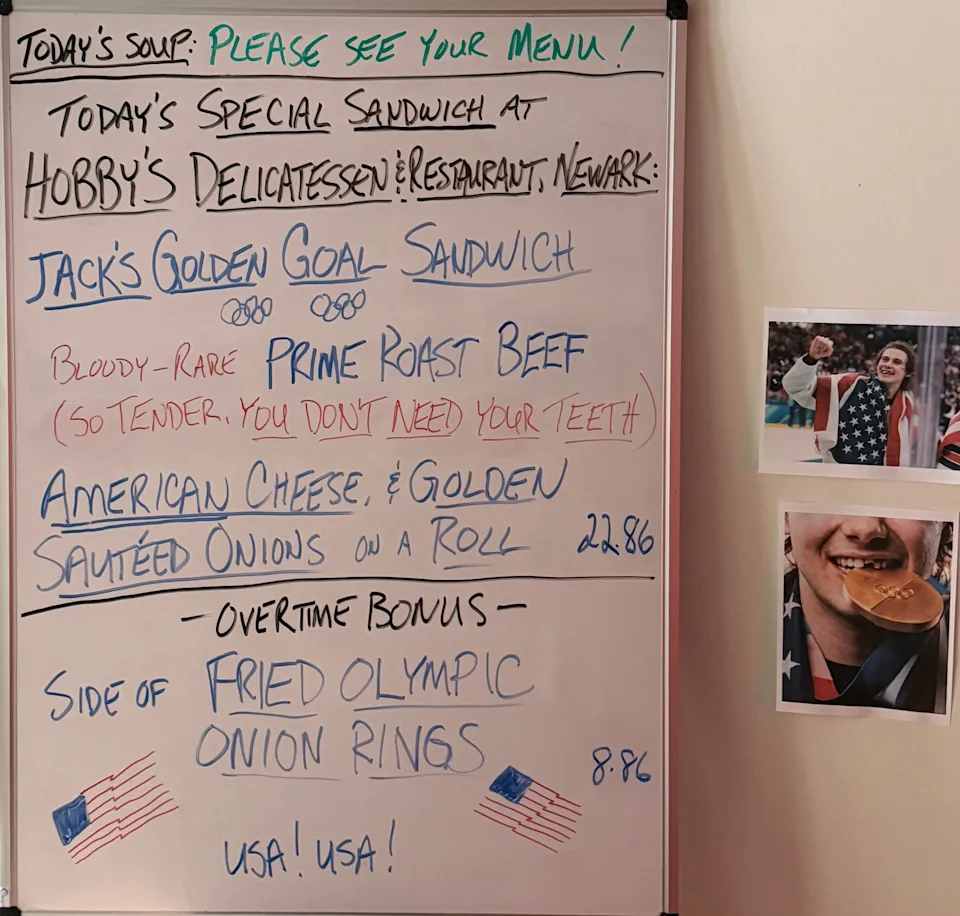
Few NHL players have commanded more cross-platform attention over the past two weeks than Jack Hughes. Fresh off an Olympic Gold Medal win with Team USA in February, Hughes transitioned seamlessly from international triumph to American mainstream visibility.

His $100,000 charity shot on The Pat McAfee Show underscored both skill and personality. A cameo appearance on Saturday Night Live on February 28 cemented his cultural footprint beyond hockey.

For the Devils, this spotlight carries organizational implications. Hughes is not simply a franchise player — he is a brand catalyst. His Olympic performance reaffirms his status as one of the NHL’s elite young talents, even as the team navigates an uneven season.

In a week defined by trade speculation, Hughes remains untouchable. He is the foundation.

Luke Hughes Returns — A Blue Line Recalibrated

On February 28, defenseman Luke Hughes was activated from injured reserve following recovery from a shoulder injury. His return injects speed, puck movement, and transitional dynamism into a defensive group that has struggled with consistency.

The younger Hughes’ activation provides immediate benefits:
Improved breakout efficiency.
Power-play quarterback depth.
Enhanced puck possession under pressure.

With Dougie Hamilton already logging heavy minutes, the reintegration of Luke Hughes could stabilize defensive rotations during the upcoming homestand.

Injury Report: Navigating Depth Challenges

While Luke Hughes’ return is a boost, depth concerns remain.

Stefan Noesen is currently on injured reserve with a knee injury, with an expected return around March 14. Zack MacEwen is out for the remainder of the season following knee surgery, eliminating a physical presence from the forward rotation.

In a season where one-goal games have tilted the wrong direction too often, these absences have tangible impact.

The Seven-Game Homestand Begins

The Devils now pivot to a critical stretch: a seven-game homestand beginning Tuesday, March 3, against the Florida Panthers at the Prudential Center.

This homestand is more than a scheduling convenience. It is an opportunity.

Home ice offers:
Matchup control.
Last change advantage.
Familiar routines.
Fan-driven momentum.

If the Devils are to salvage respectability — or create leverage ahead of the trade deadline — performance in Newark must set the tone.

Trade Deadline: Sellers, Buyers, or Strategic Hybrids?

March 6 at 3 p.m. represents a crossroads.

Insiders suggest the Devils may explore “seller” dynamics, potentially dangling core pieces to accelerate a retool. Names circulating in league discussions include Dawson Mercer and Dougie Hamilton — players with significant value and term.

At the same time, reports indicate General Manager Tom Fitzgerald may not fully abandon a competitive posture. There are whispers of interest in adding a veteran presence capable of reinforcing the long-term core. One name floated in speculation circles: Steven Stamkos.

The calculus is complex.

Selling signals reset.
Buying signals belief.
Standing pat signals measured patience.

The Devils’ front office must weigh:
Cap flexibility.
Prospect pipeline depth.
Draft capital.
Competitive window projections.

This is not merely about 2026. It is about 2027, 2028, and the sustainability of the Hughes–Hischier era.

Metropolitan Division Reality Check

Through 60 games, the standings present hard truth.

29 wins.
29 losses.
2 overtime losses.
60 points.
Seventh in the Metropolitan Division.

Consistency has eluded the club. Defensive lapses in transition, uneven goaltending stretches, and secondary scoring droughts have compounded into the current record.

But context matters. The Devils remain competitive in underlying metrics, and the core remains young. Unlike aging teams facing structural decline, New Jersey’s challenges are tactical, not existential.

What to Watch This Week

  1. Trade Deadline Signals: Are Mercer or Hamilton truly available? Does Fitzgerald surprise the league?
  2. Homestand Energy: Can the Prudential Center crowd influence a momentum shift?
  3. Special Teams Efficiency: Power-play conversion rates must improve.
  4. Defensive Pair Stability: Luke Hughes’ integration will be telling.
  5. Captain’s Leadership: Nico Hischier’s two-way impact remains essential.

Organizational Identity at a Crossroads

The Devils are not rebuilding from scratch. They are recalibrating expectations amid an underperforming season. The Olympic glow surrounding Jack Hughes contrasts sharply with the standings table — a reminder that elite talent exists within this roster.

The next week will define narrative trajectory:
Are the Devils sellers repositioning for future dominance?
Are they aggressive opportunists seizing undervalued assets?
Or are they a resilient group ready to challenge probabilities?

March hockey in Newark will supply answers.

For Explore New Jersey readers tracking the franchise’s arc, this moment feels transitional. Not catastrophic. Not triumphant. Transitional.

And in professional sports, transition often precedes transformation.

Portal Bridge Chaos: Montclair Commuters Navigate “Train-ageddon” as $1.8 Billion Upgrade Nears Completion

Portal Bridge Chaos: Montclair Commuters Navigate “Train-ageddon” as $1.8 Billion Upgrade Nears Completion

New Jersey commuters are calling it “Train-ageddon.” Others have dubbed it the “Portal Pivot” or the “Hoboken Shuffle.” Whatever the nickname, the disruption is real—and for thousands of daily riders traveling from New Jersey into Manhattan, the past several weeks have been defined by reroutes, reduced service, and unexpected detours.

At the center of the storm is the long-anticipated Portal North Bridge project over the Hackensack River in Kearny, a $1.8 billion infrastructure overhaul entering its final construction phase. To complete the cutover to the new bridge, NJ Transit temporarily halted direct service for some trains into Penn Station and reduced the total number of trains running into New York City through March 15.

For commuters accustomed to a single-seat ride into Manhattan, the shift has meant diversions to Hoboken Terminal, mandatory transfers to PATH trains operated by the Port Authority of New York and New Jersey, and longer overall travel times—especially during the evening rush.

As if the rerouting alone were not disruptive enough, a track fire last Friday suspended all PATH service in and out of Hoboken during the evening commute, compounding delays and leaving commuters scrambling for alternatives.

A Century-Old Bottleneck Nearing Retirement

The original Portal Bridge has been one of the most notorious chokepoints on the Northeast Corridor for decades. Built 116 years ago, the swing-span bridge must open for marine traffic and close again before trains can resume service. Mechanical failures and alignment issues have repeatedly triggered cascading delays across the region’s busiest rail corridor.

The new Portal North Bridge, constructed 50 feet higher above the river, eliminates the need for movable components entirely. Once fully operational, the modern fixed-span bridge is expected to deliver significantly improved reliability for the entire Northeast Corridor.

A spokesperson for NJ Transit emphasized that replacing a century-old bridge while keeping trains running requires carefully staged infrastructure transitions—cutting over tracks, overhead wires, signal systems, and switches with precision. The agency maintains that while the four-week adjustment is inconvenient, the result will be fewer delays, greater consistency, and a stronger transportation backbone for the region.

Commuter Reality: Longer Nights, Earlier Mornings

For riders, daily logistics remain front and center.

Mike Searls, a Montclair resident commuting to Midtown Manhattan for the past two years, says his morning ride has been manageable—sometimes even preferable through Hoboken. The return trip, however, has proven far more frustrating. PATH train schedules often fail to align with NJ Transit departures back to New Jersey, stretching his commute home significantly. The temporarily free PATH rides have helped offset inconvenience, but time—not cost—remains the bigger issue.

Josh Crandall, also of Montclair, knows the grind well. A technology professional who has been commuting into New York for more than 20 years, he created Clever Commute in 2006 after one particularly brutal evening of delays. At the time, transit agencies were not issuing robust digital alerts. Crandall built a rider-driven information network, starting with an email list on the Montclair-Boonton line. It grew into a website and eventually a comprehensive mobile app covering NJ Transit, Metro-North, and the Long Island Rail Road.

Today, Clever Commute provides real-time service alerts, crowd-sourced updates, and premium features such as predictive analytics for Penn Station track assignments—designed to help commuters position themselves strategically before the platform announcement chaos begins.

Crandall’s advice during the current Portal Bridge disruption is straightforward: leave earlier than usual, even if that means boarding a 6:30 a.m. train. He also points to alternative transportation options, including NJ Transit Park & Ride facilities such as Allwood Road in Clifton. Private bus services like Boxcar offer reserved seating but at a higher price point. Ferry routes from Hoboken to Manhattan remain viable for some commuters, particularly those working downtown.

For those able to reach Secaucus Junction, the Northeast Corridor and North Jersey Coast lines continue operating direct service into Manhattan, albeit with reduced schedules. The key, Crandall notes, is flexibility. Some riders are shifting work hours. Others are incorporating hybrid schedules. Many are simply adapting day by day.

Infrastructure Investment at a Historic Scale

The Portal North Bridge is not an isolated project. New Jersey is projected to see $29.6 billion in capital investments for 2026, with major initiatives targeting the Newark Bay Bridge and substantial improvements to the Garden State Parkway. These investments reflect a statewide commitment to modernizing transportation systems that support economic growth, regional mobility, and commuter efficiency.

The Portal Bridge replacement alone carries immense strategic importance. The Northeast Corridor is the busiest passenger rail line in the United States, connecting Boston, New York, Philadelphia, and Washington, D.C. When the old bridge malfunctioned, delays rippled far beyond New Jersey’s borders.

By raising the bridge high enough to eliminate movable spans, engineers have effectively removed one of the corridor’s most chronic mechanical vulnerabilities. The question for commuters is whether the long-term payoff will outweigh the short-term pain.

Construction and Transportation Coverage at Sunset Daily

As New Jersey accelerates its infrastructure modernization, Sunset Daily News is expanding its in-depth reporting across both construction and transportation sectors. From billion-dollar bridge replacements to highway upgrades and transit modernization, these projects reshape not only commute times but economic corridors and property development patterns statewide.

Readers can explore ongoing project analysis, commuter updates, and capital investment coverage in our Sunset Daily News section, with dedicated reporting focused on construction progress and transportation system evolution across the Garden State.

The Bigger Picture for Commuters

The Portal North Bridge is expected to begin carrying commuter trains this spring. If performance matches projections, chronic delays tied to mechanical bridge failures could become a thing of the past.

Until then, New Jersey commuters are navigating one of the most disruptive transitional periods in recent memory—juggling reroutes, leveraging technology, and adjusting routines in real time.

Infrastructure transformation rarely happens without temporary friction. For now, the Hoboken Shuffle continues. But when the final switch is thrown and trains roll smoothly across the new span, the state’s transportation network may finally leave one of its most notorious bottlenecks behind.

New Jersey Faith Leader Hegumen Abraam Sleman Releases The Oneness and Trinity: A Biblical Perspective, A Grounded and Timely Study Rooted in Jersey City

New Jersey’s literary and faith communities continue to intersect in powerful ways, and this spring brings a significant addition to the Garden State’s theological bookshelf. Hegumen Abraam Sleman, rector and senior priest of the Coptic Orthodox Church of St. Mark in Jersey City, has released his latest book, The Oneness and Trinity: A Biblical Perspective, on March 1, 2026.

For decades, Hegumen Sleman has faithfully served the Jersey City community from St. Mark’s parish at 427 West Side Avenue. Now, with this new 20-chapter volume, he offers a biblically rigorous, pastorally sensitive, and intellectually disciplined study of one of Christianity’s most foundational doctrines: the oneness of God revealed as Father, Son, and Holy Spirit.

This is not an abstract academic exercise. It is a work born from ministry in New Jersey — shaped by parish life, catechetical teaching, theological dialogue, and the lived spiritual questions of families, students, clergy, and seekers throughout the tri-state area.

A New Jersey Voice in Theological Publishing

Explore New Jersey’s Books category has consistently highlighted authors whose work is anchored in community, scholarship, and cultural depth. Hegumen Sleman’s newest publication stands squarely within that tradition.

Unlike detached theological treatises written for academic institutions alone, The Oneness and Trinity: A Biblical Perspective emerges directly from pastoral service. It is designed to equip:

  • Local clergy navigating doctrinal questions in an increasingly pluralistic society
  • Seminary students and theology scholars seeking clarity rooted in Scripture
  • Parishioners desiring a deeper understanding of historic Christian faith
  • Readers throughout New Jersey and beyond who seek a coherent, biblically grounded explanation of the Trinity

This is a Jersey City-authored theological work with national relevance.

Examining the Oneness of God Through Scripture

At the heart of the book lies a careful exploration of the “Oneness of God.” Hegumen Sleman approaches this subject not as a speculative philosopher, but as a biblical exegete and Church historian.

The text unfolds through a structured, 20-chapter progression that integrates:

  • Close reading of Old and New Testament passages
  • Analysis of key Greek theological terminology
  • Engagement with early Church Fathers
  • Clarification of doctrinal developments leading to the Nicene formulation of faith

Rather than reducing the Trinity to abstract metaphysical language, Sleman grounds his presentation in Scripture itself.

One of the book’s most compelling theological frameworks is drawn from John 15 — the image of the True Vine. In this analogy:

  • The Father is presented as the eternal Source
  • The Son is understood as the Word and Self-expression of the Father
  • The Holy Spirit is described as the living Breath and divine power

This biblical imagery offers a relational and organic understanding of divine unity — preserving monotheism while articulating personal distinction.

Addressing Modern and Historical Misunderstandings

The doctrine of the Trinity has historically been misunderstood, misrepresented, and sometimes caricatured. Hegumen Sleman confronts these issues directly.

The book carefully distinguishes historic Christian orthodoxy from:

  • Tritheism — the mistaken belief that Christianity teaches three separate gods
  • Modalism — the idea that God merely appears in different forms or modes rather than existing eternally as Father, Son, and Holy Spirit

By engaging these theological pitfalls, the text reaffirms the Nicene faith while providing accessible clarity. Readers are not left navigating abstract creeds alone; they are guided step by step through scriptural foundations and patristic testimony.

For a generation often exposed to fragmented online theology or oversimplified social media debates, this level of doctrinal precision is both necessary and refreshing.

The Early Church Fathers and the Continuity of Faith

A defining strength of The Oneness and Trinity: A Biblical Perspective is its integration of early Church teaching. The book does not isolate Scripture from history. Instead, it demonstrates how the earliest Christian thinkers articulated and defended the unity of God in response to heresy and misunderstanding.

By weaving together biblical exegesis and patristic wisdom, Sleman shows that the doctrine of the Trinity did not emerge centuries later as philosophical invention. Rather, it developed as faithful interpretation and defense of apostolic teaching.

For readers in New Jersey’s diverse Christian communities — Orthodox, Catholic, Protestant, and beyond — this historical grounding invites renewed appreciation for the shared theological heritage that shapes global Christianity today.

Rooted in Jersey City: Ministry as the Source

It is impossible to separate this book from its local context.

Hegumen Abraam Sleman has served the Jersey City community for decades. His parish, St. Mark Coptic Orthodox Church, is a prominent and vibrant spiritual center on West Side Avenue. Many of his previous studies and materials have been published or distributed directly through the parish, reflecting a community-based publishing model that prioritizes spiritual formation over commercial ambition.

This pastoral grounding matters.

The questions addressed in this book are not hypothetical. They arise from real conversations:

  • Youth asking how God can be one and three
  • Adults seeking deeper catechesis
  • Interfaith discussions within New Jersey’s religiously diverse environment
  • Clergy striving to teach faithfully in a complex cultural climate

The book is therefore both theological and practical — designed to be studied, taught, discussed, and applied within parish life.

A Prolific Body of Work Focused on the Trinity

The Oneness and Trinity: A Biblical Perspective builds on an already substantial theological library authored by Hegumen Sleman.

Related titles include:

  • The Heavenly Father: A Biblical Perspective (3rd edition released February 2026)
  • The Holy Spirit: A Biblical Perspective
  • Encounters with Christ: Seeing the Father in Jesus

Taken together, these works form a cohesive theological trilogy centered on the persons of the Trinity. Each volume approaches a distinct dimension of divine revelation, yet they collectively reinforce a unified vision of God’s nature as revealed in Scripture.

For New Jersey readers who have followed his ministry over the years, this latest release represents both continuity and culmination — a mature synthesis of decades of pastoral reflection and doctrinal study.

Why This Book Matters Now

The question of God’s nature is not a relic of ancient councils. It remains central to Christian identity, worship, and spiritual formation.

In a time when:

  • Religious literacy is declining
  • Doctrinal confusion is amplified through digital platforms
  • Interfaith conversations are more common than ever in New Jersey
  • Younger generations seek intellectually coherent faith

A biblically grounded, historically faithful articulation of the Trinity is urgently relevant.

Hegumen Sleman’s work offers clarity without aggression, depth without obscurity, and tradition without rigidity. It provides a model for how local ministry can produce scholarship that serves both church and wider community.

Strengthening New Jersey’s Literary and Faith Landscape

Explore New Jersey continues to spotlight authors whose contributions shape the intellectual and cultural fabric of the state. With this latest release, Jersey City adds another meaningful voice to New Jersey’s diverse publishing ecosystem.

The intersection of local authorship, theological depth, and community impact makes The Oneness and Trinity: A Biblical Perspective more than a book launch. It is a testament to the enduring vitality of faith communities in New Jersey — communities that continue to write, teach, publish, and engage the world thoughtfully.

For clergy, theology students, Christian educators, and serious readers across the Garden State, this volume offers a comprehensive, scripturally anchored exploration of the unity of God revealed as Father, Son, and Holy Spirit.

And for Jersey City, it stands as a reminder that some of the most significant theological contributions are not always born in distant seminaries or publishing hubs — but in parish halls, classrooms, and sanctuaries right here at home.

St. Mark Coptic Orthodox Church in Jersey City: America’s First Coptic Orthodox Parish Continues to Anchor Faith, Education, and Community in New Jersey

In the heart of Hudson County stands a historic institution whose influence stretches far beyond its neighborhood streets. As the first Coptic Orthodox Church established in the United States, St. Mark Coptic Orthodox Church remains a cornerstone of Orthodox Christianity in America and a defining spiritual presence in Jersey City.

Under the pastoral leadership of Hegumen Abraam Sleman and the parish clergy, St. Mark continues to serve as a vibrant center of worship, theological formation, youth development, and humanitarian outreach. For New Jersey residents seeking a deeper understanding of ancient Christian tradition lived in modern community, this historic parish offers a living testimony to faith rooted in continuity, structure, and service.

For Explore New Jersey readers who follow the evolving intersection of books, faith, and cultural institutions across the Garden State, St. Mark represents something rare: a religious community that preserves one of Christianity’s oldest liturgical traditions while simultaneously engaging contemporary American life with confidence and clarity.

A Historic Foundation: The First Coptic Orthodox Church in the United States

St. Mark’s distinction as the first Coptic Orthodox parish in America is not merely symbolic. It represents the beginning of a movement that has since grown across the country, serving generations of Coptic Orthodox Christians and welcoming countless others interested in the Church’s apostolic heritage.

From its location on West Side Avenue in Jersey City, the parish has functioned for decades as both a spiritual home and a cultural bridge — connecting Egyptian Christian tradition with the American religious landscape.

Today, under the guidance of Hegumen Abraam Sleman, the church continues to strengthen that legacy with structured worship, educational depth, and expansive community programming.

Liturgical Life: Ancient Worship in a Modern World

At the heart of St. Mark’s life is its unwavering commitment to the ancient liturgical rhythm of the Coptic Orthodox Church. Worship is not occasional or informal; it is structured, reverent, and theologically rich.

Divine Liturgy

The Divine Liturgy is celebrated multiple times each week, including Sunday mornings and select weekdays. These services follow the historic Coptic rite, preserving prayers and hymns that trace their origins to the earliest centuries of Christianity.

For those unable to attend in person, many services are broadcast live through the parish’s digital platforms, including its Facebook page and St. Mark TV. This hybrid accessibility allows parishioners throughout New Jersey and the broader tri-state area to remain connected to their spiritual home.

Vespers and Midnight Praises

Saturday evenings are dedicated to preparation for the Sunday Liturgy through Vespers and Midnight Praises. These services cultivate spiritual attentiveness and reflection, reinforcing the Orthodox understanding that worship is a holistic rhythm rather than a single weekly event.

Holy Week and Great Lent

The parish follows the Coptic liturgical calendar meticulously. During Great Lent and Holy Week, the church maintains an extensive schedule of services that draw congregants into a deeply immersive spiritual journey. These seasons are marked by heightened participation, extended prayer, and theological reflection grounded in Scripture and tradition.

For the most current service times, parishioners and visitors are encouraged to review the official church schedule or contact the parish office directly.

A Culture of Education: Formation for Every Age

If worship is the heartbeat of St. Mark, education is its framework. The parish operates a comprehensive religious education structure that addresses every stage of life.

Sunday School: From Pre-K to Graduate Level

Sunday School at St. Mark is not an afterthought. It is a carefully organized, age-specific program that spans from Pre-K children through college and graduate students. Instruction is tailored to developmental levels while maintaining doctrinal continuity.

In an era when many faith communities struggle to sustain youth engagement, St. Mark’s long-standing educational infrastructure demonstrates strategic investment in generational formation.

Saturday Bible Study

Following Vespers on Saturday nights, Bible study sessions provide deeper theological engagement. Youth from Pre-K through high school receive structured spiritual instruction, while adults participate in their own guided study and discussion.

This layered approach ensures that scriptural literacy is not confined to clergy but cultivated throughout the congregation.

Hymnology and Deacon Classes

One of the distinctive strengths of Coptic Orthodox worship is its liturgical music. Weekly hymnology and deacon classes on Saturday afternoons train youth to learn traditional Coptic hymns and liturgical responses. This preserves not only theological content but also sacred musical heritage.

The integration of language, chant, and ritual reinforces continuity with early Christian worship practices.

Servants Preparation Program

Leadership development is embedded in parish life through the Servants Prep program. Designed for high school juniors, seniors, and adults, this specialized initiative trains future church leaders and servants.

Rather than relying solely on clergy, St. Mark intentionally cultivates lay leadership — preparing individuals to teach, mentor, and guide within the parish and broader community.

Youth, Fellowship, and Community Cohesion

A thriving parish requires more than liturgy and study; it requires fellowship structures that foster belonging.

Youth Meetings and Fellowship Groups

Dedicated meetings for college students, graduates, and newly married couples create space for spiritual dialogue, mentorship, and service coordination. These fellowships strengthen peer relationships while reinforcing shared values.

Coptic Scouts

The Coptic Scouts program operates as a nonprofit youth association focused on physical, spiritual, and leadership development. Through structured activities, participants build discipline, teamwork, and faith-centered identity.

This integration of physical development and spiritual formation reflects the Orthodox understanding that growth is holistic.

Humanitarian Commitment: St. Abraam’s Ministry

Beyond parish boundaries, St. Mark extends its mission through St. Abraam’s Ministry, its humanitarian arm.

This outreach initiative provides:

  • Financial aid
  • Food assistance
  • Clothing distribution

Support reaches persecuted families and individuals in need both locally in New Jersey and internationally in Egypt. In doing so, the parish embodies the Orthodox principle that worship must be accompanied by tangible acts of mercy.

For Explore New Jersey readers attentive to nonprofit engagement and faith-based service initiatives, St. Mark’s outreach represents a meaningful model of structured compassion.

The Annual Festival: Tradition Meets Community Celebration

Each fall, typically in September or October, St. Mark hosts its annual festival — a celebration that welcomes both parishioners and the broader Jersey City community.

The festival features:

  • Traditional Coptic cuisine
  • Church tours
  • Educational exhibits
  • Family-friendly activities

This event provides an accessible introduction to Coptic Orthodox heritage while strengthening neighborhood connections.

In a city defined by cultural diversity, the festival reinforces Jersey City’s identity as a mosaic of faith traditions and immigrant histories.

Digital Engagement and Accessibility

St. Mark’s commitment to live-streamed liturgies and digital communication reflects its adaptation to contemporary expectations without compromising liturgical integrity.

The parish’s online presence allows:

  • Homebound members to remain connected
  • Prospective visitors to observe services before attending
  • Families outside New Jersey to maintain spiritual ties

This blend of ancient worship and modern technology underscores the parish’s forward-looking approach.

A Defining Institution in New Jersey’s Religious Landscape

As Explore New Jersey continues to document institutions that shape the cultural and spiritual fabric of the state, St. Mark Coptic Orthodox Church stands as one of the most historically significant and structurally comprehensive religious communities in the region.

Its distinction as the first Coptic Orthodox Church in America is matched by its ongoing vitality:

  • A robust liturgical calendar
  • Multi-tiered educational programming
  • Leadership development pathways
  • Youth formation initiatives
  • Humanitarian outreach
  • Community-wide cultural events

Under Hegumen Abraam Sleman’s leadership, the parish continues to integrate doctrinal depth, organizational discipline, and community engagement.

For residents of Jersey City, Hudson County, and the greater New Jersey region, St. Mark remains more than a historic landmark. It is a living, structured, and mission-driven spiritual institution — one that continues to shape faith, foster service, and preserve a tradition that has endured for nearly two millennia.

Those seeking current service schedules or additional information may contact the parish office at (201) 333-0004 or consult the official church calendar through its digital platforms.

A Historic Command: Jeanne Hengemuhle Nominated as First Female Superintendent of the New Jersey State Police

New Jersey has entered a defining chapter in its law enforcement history. For the first time in more than a century, the New Jersey State Police will be led by a woman.

On February 25, 2026, Governor Mikie Sherrill nominated Jeanne Hengemuhle to serve as Superintendent of the New Jersey State Police, marking a transformative milestone for one of the state’s most storied institutions. Hengemuhle assumed the role of Acting Superintendent on February 26 and now awaits formal confirmation by the New Jersey Senate.

Her appointment is historic on multiple levels. Hengemuhle becomes not only the first woman to lead the NJSP in its 104-year history, but also the first openly gay person to hold the position. In a state that has long balanced tradition with progress, the nomination signals both institutional evolution and a renewed emphasis on leadership shaped by experience, accountability, and modernization.

The New Jersey State Police was founded in 1921 and has grown into one of the nation’s most respected statewide law enforcement agencies. With approximately 3,000 enlisted members, the NJSP oversees highway safety, criminal investigations, homeland security operations, disaster response, and statewide law enforcement coordination. Its superintendent plays a pivotal role not only in operational command but in shaping policy, culture, and public trust.

Hengemuhle brings 26 years of service within the ranks of the agency she now leads. Originally retiring in 2024 as a Lieutenant Colonel, she returns to command with deep institutional knowledge and operational credibility. During her career, she previously led the Administration Branch, where she oversaw recruitment, strategic training initiatives, and internal systems modernization—areas that have become increasingly central to public scrutiny and reform dialogue.

Her educational credentials reinforce that foundation. Hengemuhle is a graduate of The College of New Jersey and completed advanced leadership training through the FBI National Academy, one of the nation’s premier executive law enforcement development programs. That combination of state-level service and federal-level leadership preparation positions her at the intersection of operational command and policy innovation.

The leadership transition follows a period of interim stewardship. Hengemuhle succeeds Lt. Col. David Sierotowicz, who had been serving in an interim capacity since January 1, 2026, after the retirement of longtime Superintendent Colonel Patrick Callahan. The shift comes at a consequential time for the agency, as it continues to navigate public scrutiny related to allegations of internal discrimination and racial profiling.

Those issues have not defined the NJSP’s century-long history, but they have undeniably shaped recent public discourse. As Acting Superintendent, Hengemuhle now assumes command at a moment when institutional transparency, recruitment diversification, and training modernization are front and center.

Observers across New Jersey’s law enforcement and political landscape recognize that this appointment extends beyond symbolism. It represents a recalibration of leadership identity within an agency traditionally perceived as rigidly hierarchical and historically male-dominated.

For decades, the image of the New Jersey State Police trooper has been iconic: the campaign hat, the distinctive uniform, the structured command chain. Hengemuhle’s elevation does not replace that legacy; it expands it.

Her prior oversight of recruitment strategy is particularly relevant as the agency faces generational shifts in workforce composition. Law enforcement agencies nationwide are grappling with recruitment challenges, retention pressures, and heightened public expectations. By selecting a leader who has directly managed training and recruitment, the administration signals that talent pipeline development and institutional culture will be strategic priorities.

Public safety in New Jersey spans urban corridors, suburban communities, and expansive rural terrain. The NJSP operates at all levels—supporting municipal departments, leading major criminal investigations, managing statewide emergency responses, and safeguarding transportation infrastructure. In that context, superintendent leadership is both administrative and deeply operational.

Hengemuhle’s command begins amid a broader statewide focus on law and order, accountability, and modernization. Readers can follow related developments and in-depth coverage in our Law & Order section, where Sunset Daily News continues to track major public safety transitions and institutional reforms across New Jersey.

The Senate confirmation process will serve as the next formal step. Historically, superintendent confirmations have examined command experience, policy positions, and commitment to constitutional policing. Given the public attention surrounding this nomination, legislative questioning is expected to explore recruitment reform, bias mitigation training, and data transparency initiatives.

Leadership at this level carries symbolic weight—but it also carries measurable responsibility. The superintendent sets tone, enforces standards, and determines how policy is operationalized on the ground. In an era where law enforcement agencies are increasingly evaluated through public accountability metrics, the position demands strategic clarity.

For many within the ranks, Hengemuhle’s return may also represent continuity. Having risen through the NJSP’s internal structure over more than two decades, she understands its procedural frameworks, command culture, and operational rhythms. That familiarity may ease transitional friction while enabling structural change from within.

At the same time, her historic identity as the first woman and first openly gay superintendent marks a significant moment for representation in state-level policing leadership. Representation alone does not resolve systemic challenges, but it can reshape institutional aspiration and expand pathways for future leaders.

The New Jersey State Police has weathered wars, civil rights transformations, technological revolutions, and evolving public safety mandates over its 104-year history. Each superintendent leaves an imprint shaped by the pressures of their time. Jeanne Hengemuhle now steps into that lineage during an era defined by transparency demands, recruitment recalibration, and shifting community expectations.

As confirmation proceedings advance and policy priorities emerge, Sunset Daily News will continue delivering comprehensive coverage of leadership developments affecting law enforcement, governance, and public safety across the Garden State.

New Jersey is watching. The institution is evolving. And history has already been made.

CD-7 in the Spotlight: Congressman Tom Kean Jr. at Center of Flight Safety Bill Collapse as Hunterdon Democrats Rally Behind Navy Veteran Rebecca Bennett

New Jersey’s 7th Congressional District is once again emerging as one of the most closely watched battlegrounds in the state, as a bipartisan aviation safety measure stalls in the U.S. House and local Democrats formally consolidate behind a new challenger to incumbent Congressman Tom Kean Jr..

In a dramatic sequence of events that is already reshaping the political narrative in CD-7, legislation focused on strengthening flight safety standards cleared the United States Senate with bipartisan support, only to falter in the House after the Pentagon withdrew its backing. While the bill’s defeat involves multiple institutional factors, critics and Democratic organizers are pointing to Congressman Kean’s role in the outcome, arguing that his position proved pivotal in preventing the measure from advancing.

At the same time, Hunterdon County Democrats have made their move. In a convention that signals both strategic discipline and renewed energy, retired Navy helicopter pilot Rebecca Bennett secured the official backing of the Hunterdon County Democratic Committee in her campaign to represent the party in the 7th District. The vote unfolded at the Stangl Factory following a weather-related postponement and culminated in a runoff that underscored both competitiveness and consolidation within the party.

The intersection of federal legislative controversy and local party mobilization is now placing CD-7 at the center of New Jersey’s 2026 political landscape.

Flight Safety Legislation Stalls in the House

The aviation safety bill at issue moved efficiently through the Senate, reflecting bipartisan recognition of emerging safety vulnerabilities across commercial and defense-linked aviation systems. While the full legislative text covered a range of technical reforms—spanning pilot training standards, safety oversight mechanisms, and operational transparency—its central thrust was clear: modernize and reinforce flight safety protocols amid increased air traffic, aging infrastructure, and evolving risk environments.

Initial signals suggested that House passage was plausible. However, once the Department of Defense rescinded its support, momentum shifted sharply. Without Pentagon backing, several Republican members reportedly reconsidered their positions, leading to the bill’s failure to clear the House floor.

Congressman Tom Kean Jr. has not issued a detailed public explanation beyond standard legislative positioning, but political observers note that his alignment during this phase of the debate became a flashpoint. CD-7 includes suburban communities with a strong commuter base, proximity to major airports, and a sizable population connected to transportation and defense industries. In that context, flight safety is not an abstract policy issue—it carries tangible local resonance.

The collapse of the measure now raises broader questions about federal-state coordination, defense policy influence over civil aviation standards, and the role of moderate Republican lawmakers in shaping bipartisan legislation.

For Democrats seeking to reframe the 2026 contest, the bill’s defeat provides a narrative pivot: safety, oversight, and accountability.

Hunterdon Democrats Consolidate Behind Rebecca Bennett

While legislative maneuvering unfolded in Washington, political momentum was building in Hunterdon County.

Rebecca Bennett, a retired Navy helicopter pilot from Bridgewater, secured the official backing of the Hunterdon County Democratic Committee in her bid to represent the party in CD-7. The convention, held at the Stangl Factory, brought together five candidates seeking to challenge Congressman Kean in November.

After an initial vote that revealed a tightly clustered field—Bennett at 29%, Brian Varela at 25%, Michael Roth at 22.5%, Megan O’Rourke at 20.9%, and Tina Shah at 2.2%—no candidate achieved a majority. The process moved to a runoff between Bennett and businessman Brian Varela. Bennett prevailed decisively, 94–76, capturing 55% of the vote to Varela’s 44%.

Hunterdon County Democratic Chairman Michael Drulis confirmed that the committee did not pre-screen candidates, signaling an open and competitive process rather than a pre-ordained endorsement. That procedural openness adds credibility to Bennett’s victory and reinforces the perception that her support emerged organically from the committee’s voting members.

Bennett’s military background is likely to feature prominently in the general election narrative. As a former Navy helicopter pilot, she enters the race with firsthand experience in aviation operations and safety protocols—an ironic but politically potent contrast given the flight safety bill controversy surrounding her prospective opponent.

CD-7: A Strategic Battleground

New Jersey’s 7th Congressional District has consistently drawn national attention. Encompassing parts of Hunterdon, Somerset, Union, Morris, and Warren counties, the district blends affluent suburban communities with more rural constituencies. It is a district where moderate Republican branding has historically performed well—but demographic and political shifts have tightened margins in recent cycles.

Congressman Tom Kean Jr. has maintained a disciplined political posture, positioning himself as pragmatic and solutions-oriented. Yet Democrats argue that key votes and legislative alignments, including the recent flight safety controversy, reveal sharper partisan edges than campaign rhetoric might suggest.

For Bennett and county-level Democrats, the strategy is becoming clearer: emphasize competence, service record, and safety oversight; contrast that with what they frame as wavering support for bipartisan measures; and mobilize suburban voters concerned with governance stability.

Aviation Safety as Political Symbol

Aviation policy rarely dominates electoral discourse. However, in a district with commuting professionals, proximity to Newark Liberty International Airport, and economic ties to transportation networks, safety legislation carries symbolic weight.

The bill’s Senate passage suggests broad recognition of risk management needs. Its House failure—particularly after Pentagon reversal—injects a new layer of debate: how defense policy considerations intersect with civilian regulatory frameworks.

For voters evaluating representation, the question becomes less about a single bill and more about legislative posture. Does their representative prioritize bipartisan compromise when public safety is implicated? Or does institutional realignment shift priorities at critical moments?

These are the themes likely to animate campaign messaging as primary season advances and general election positioning intensifies.

Convention Energy and Organizational Discipline

The Hunterdon convention’s rescheduling due to inclement weather did little to dampen turnout or engagement. In fact, the delay may have amplified anticipation. Five candidates appeared, reflecting a field that was both diverse and competitive.

The final tally demonstrates consolidation rather than fragmentation. Bennett’s runoff victory indicates that a majority of voting members coalesced around her candidacy once initial preferences were tested.

Political strategists note that early county endorsements can shape fundraising trajectories, volunteer mobilization, and media narratives. In a district where margins are often narrow, organizational efficiency matters.

What Comes Next in CD-7

The coming months will determine whether the flight safety bill becomes a defining campaign issue or a footnote in broader debates over federal governance. Bennett’s background provides Democrats with a thematic bridge between military service, aviation expertise, and oversight credibility.

Meanwhile, Congressman Kean retains the advantages of incumbency: fundraising networks, name recognition, and established constituent services infrastructure. His campaign is likely to frame the legislative dispute within broader fiscal and defense policy contexts.

As the general election approaches, CD-7 voters will evaluate competing narratives: bipartisan cooperation versus strategic alignment, military service versus legislative seniority, and localized priorities versus national party dynamics.

For ongoing political analysis, campaign updates, and in-depth coverage of New Jersey’s evolving congressional landscape, readers can explore the latest reporting in our Politics section.

CD-7 is no longer simply a competitive district—it is a proving ground. The convergence of federal policy decisions and grassroots mobilization ensures that this race will be among the most scrutinized contests in New Jersey this cycle.

New Jersey Chefs Take the National Stage: David Viana and Britt Rescigno Compete on Food Network’s Tournament of Champions VII

Tonight, New Jersey’s culinary reputation steps into the spotlight on a national stage.

Two of the Garden State’s most accomplished chefs — David Viana and Britt Rescigno — are officially among the 32 elite competitors on Season 7 of Tournament of Champions (TOC VII), premiering Sunday, March 1, 2026, at 8:00 PM ET/PT on Food Network.

For New Jersey’s dining community, this is more than a television moment. It is validation of a culinary movement that has been building across the state for years — from Asbury Park to Aberdeen, from Old Bridge to Beach Haven. The Garden State is no longer an emerging food scene. It is a national contender.

For readers tracking the state’s most influential kitchens and restaurant leaders, Explore New Jersey continues comprehensive coverage across the Restaurants section, spotlighting the chefs and concepts redefining what it means to dine in New Jersey.

David Viana: Precision, Heritage, and Culinary Authority

Chef David Viana enters TOC VII with both pedigree and momentum.

As executive chef and owner of Lita and La Otra, as well as a driving force behind Heirloom Kitchen, Viana has become synonymous with modern Iberian and globally influenced cuisine executed with technical precision.

A James Beard Award nominee, Viana earned his place in this season’s bracket through a high-stakes qualifying round in 2025 — a testament to both competitive grit and consistent culinary excellence.

His cooking style blends:

• Iberian coastal influences
• Seasonal, locally driven ingredients
• Refined plating techniques
• Bold flavor architecture

In a competition defined by unpredictability, Viana’s technical control and calm intensity may prove decisive.

Britt Rescigno: A Jersey Shore Powerhouse Returns

Chef Britt Rescigno brings experience — and unfinished business — into the TOC VII arena.

A Jersey Shore veteran formerly of Delaware Avenue Oyster House, Rescigno previously powered her way to the Final Four in an earlier season of Tournament of Champions, establishing herself as one of the fiercest competitors in the field.

Rescigno’s culinary identity is grounded in:

• Coastal seafood mastery
• Ingredient-driven menus
• Creative risk-taking
• Competitive composure

Her ability to think quickly under pressure, particularly when handling seafood or unfamiliar ingredient combinations, makes her a formidable presence in bracket-style battles.

For New Jersey viewers, she represents a powerful continuation of the state’s growing national culinary recognition.

The Stakes: $150,000 and the Championship Belt

Hosted by Guy Fieri, Tournament of Champions has become one of the most intense food competitions on television.

The format is uncompromising:

• 32 chefs
• Single-elimination bracket
• 30-minute head-to-head cookoffs
• Blind judging
• A $150,000 grand prize and the TOC championship belt

Every round is dictated by the infamous “Randomizer,” a machine that selects mandatory ingredients, equipment, and cooking styles. Competitors must adapt instantly — whether that means transforming a comfort ingredient into fine dining or executing unfamiliar techniques under extreme time pressure.

This season introduces an additional twist: the top seeds are four surprise culinary icons whose identities will be revealed only as they enter the arena.

For chefs like Viana and Rescigno, preparation can only go so far. Adaptability will define success.

Why This Moment Matters for New Jersey’s Restaurant Scene

New Jersey’s culinary landscape has evolved dramatically over the last decade.

What was once seen nationally as a commuter dining market has matured into a destination-driven food culture anchored by chef-owned concepts, regionally sourced ingredients, and ambitious culinary storytelling.

From the revitalization of downtown dining corridors to the rise of destination restaurants in Monmouth and Middlesex counties, the state has cultivated an ecosystem where chefs are no longer just operators — they are innovators.

David Viana’s Iberian-forward concepts in Aberdeen and Old Bridge reflect a growing appetite for globally influenced fine dining outside Manhattan. Britt Rescigno’s Shore-based experience highlights the state’s deep connection to coastal cuisine and seasonality.

Their presence on TOC VII reinforces a simple truth: New Jersey produces nationally competitive culinary talent.

The Competitive Landscape

Tournament of Champions is structured like a sports playoff bracket. Every matchup is sudden death.

Key variables include:

• Mandatory ingredients that may conflict stylistically
• Equipment limitations that challenge technique
• Style requirements that force creative pivots
• Blind judging panels that remove brand bias

The blind format ensures reputation alone cannot carry a competitor. Execution determines advancement.

For Viana, whose technique-driven plating and layered flavors often shine in composed environments, speed and adaptability will be key.

For Rescigno, whose bold flavor instincts and competitive history give her comfort under pressure, the bracket could again become a deep run.

Where to Watch

Premiere: Sunday, March 1, 2026
Time: 8:00 PM ET/PT
Network: Food Network

Streaming availability begins Monday on HBO Max and Discovery+.

Given the growing intersection of streaming and live culinary programming, expect significant social engagement around tonight’s premiere — particularly within New Jersey’s restaurant and hospitality communities.

A Broader Culinary Narrative

The rise of chefs like Viana and Rescigno aligns with broader food trends across the Garden State:

• Increased demand for chef-driven concepts
• Regional ingredient sourcing
• Elevated casual dining
• Cross-cultural menu innovation
• Community-centered restaurant development

New Jersey’s dining public has become more adventurous, more informed, and more supportive of homegrown talent.

When local chefs succeed nationally, it strengthens the entire ecosystem — from line cooks and pastry chefs to farmers and suppliers.

What This Means for 2026

As Season 7 unfolds, New Jersey viewers will not just be watching a television competition. They will be watching representatives of their state’s culinary identity compete against some of the best chefs in America.

A championship run would be historic. But even participation at this level reinforces New Jersey’s credibility in national food culture.

Search interest in “New Jersey chefs on Food Network,” “David Viana TOC VII,” and “Britt Rescigno Tournament of Champions” is already surging ahead of the premiere.

Tonight, the spotlight turns toward the Garden State.

Whether through Iberian precision in Aberdeen or Shore-driven seafood expertise, New Jersey’s chefs are stepping into the culinary arena — and they are not arriving quietly.

Takeaways from the Devils’ 3–1 Victory in St. Louis: Signs of Life, Structural Shifts, and Olympic Markstrom Emerging at the Right Time

For all intents and purposes, the season narrative surrounding the New Jersey Devils had begun to tilt toward frustration. A five-game losing streak, uneven defensive execution, and offensive conservatism had many questioning whether the stretch run would be more about evaluation than pursuit.

Then came Saturday night in St. Louis.

In a 3–1 victory over the St. Louis Blues at Enterprise Center, the Devils delivered arguably their most structurally complete performance in weeks. It was not flawless. It was not dominant wire-to-wire. But it was intentional, aggressive, and anchored by elite goaltending at critical moments.

With roughly 20 games remaining and the March 6 trade deadline approaching, this was more than two points. It was a statement that the Devils are not ready to fade quietly.

For continued Devils coverage, analysis, and standings updates, visit Explore New Jersey’s dedicated New Jersey Devils page.

First Period: Sloppy Execution, But Survive and Adjust

The opening 20 minutes were disjointed.

The Devils generated only three high-danger chances and were charged with seven official giveaways, including miscues from Dawson Mercer, Connor Brown, Nick Bjugstad, Nico Hischier, Simon Nemec, and Timo Meier. Puck management was inconsistent, and zone exits lacked rhythm.

A particularly instructive sequence occurred on the penalty kill after Dougie Hamilton was whistled for tripping. Luke Hughes made an outstanding read, intercepting a pass in the defensive zone and skating the puck out with confidence. After crossing center ice, Hughes fed Nick Bjugstad, triggering a controlled entry with Jesper Bratt. But an extra pass between Bjugstad and Bratt killed the shooting lane and resulted in a counterattack the other way.

This play symbolized a recurring Devils theme: a tendency toward over-perfection. Hughes has the skating and hands to attack himself in that scenario. When the defenseman makes a read like that, the coaching staff should encourage assertiveness, not deference.

The first period ended scoreless, but not because of dominance. It ended because the Devils absorbed pressure without breaking.

Second Period: The Best 20 Minutes in Months

If the first period was uncertain, the second was authoritative.

The Devils flipped the territorial battle entirely, posting overwhelming five-on-five metrics:

• 72.97% Corsi For
• 14–3 shot advantage
• 19–2 scoring chances
• 8–0 high-danger chances
• 94.11% expected goals share

That is not a good period. That is territorial control at an elite level.

Jesper Bratt drew an early penalty, though the first power-play unit struggled to establish rhythm without its typical personnel combinations. Timo Meier’s early look from the slot was turned aside by Jordan Binnington, but the pressure continued.

Moments later, Meier delivered the breakthrough.

Coming down the right wing with pace, Meier roofed a shot over Binnington’s blocker for a 1–0 lead. It was a pure difference-maker’s goal: speed, confidence, and decisive execution.

The second goal followed a pattern Devils fans have wanted to see more often. After Dougie Hamilton initiated a neutral-zone drop pass to Jack Hughes, Hughes circled the net to create a passing lane before teeing up Hamilton for a one-timer that ripped past Binnington on the power play.

The Devils were not playing cautiously. They were attacking below the dots, cycling three and sometimes four skaters deep in the zone. The conservative perimeter approach that has plagued much of the season was replaced by layered pressure.

And crucially, they wore the Blues down.

St. Louis registered 15 “extra long” shifts compared to 10 for the Devils. The second period shift battle tilted heavily toward New Jersey. Instead of fading late, they forced the Blues into fatigue.

That tactical reversal mattered.

Third Period: Controlled Containment and a Goalie Who Looked Elite

The Devils did dial back their aggressiveness in the third, sitting deeper in their structure and prioritizing shot lanes.

Jack Hughes took an uncharacteristic delay-of-game penalty early, but the penalty kill remained composed. Nick Bjugstad even generated a shorthanded opportunity during the kill.

As the Blues pressed with the extra attacker, the Devils’ structure held firm. Nico Hischier won critical defensive-zone draws. Connor Brown elevated a puck high into the neutral zone to relieve pressure. And in the final moments, Bratt bypassed an empty-net opportunity to set up Hischier for the sealing goal.

The lone blemish came when Jacob Markstrom attempted a full-length empty-net clearance and was scored on by Pavel Buchnevich after contact prevented him from returning cleanly to the crease. The Devils chose not to challenge for goaltender interference, avoiding the risk of a delay-of-game penalty.

Still, Markstrom’s night was exceptional.

He stopped 25 of 26 shots with 1.67 expected goals against and came 1:18 away from a shutout.

Olympic Markstrom Has Arrived

For much of the season, goaltending inconsistency has hovered over this roster. But since returning from international play with Team Sweden, Markstrom has looked transformed.

In two games since Milan, he is 1–1–0 with a .935 save percentage. Over his last four NHL appearances dating back to January 29, he carries a .931 save percentage and a goals-against average just over 2.00.

This version of Markstrom — decisive, square, composed — changes the equation entirely.

If he sustains this level, the Devils are not simply competitive. They become dangerous.

Luke Hughes Returns, and the Offensive Identity Evolves

Another critical development: Luke Hughes returned to the lineup after missing 10 games with a shoulder injury and recorded an assist.

Hughes’ transition ability and offensive instincts fundamentally alter the team’s ceiling. When combined with Hamilton and Nemec activating from the blue line, the Devils can generate layered attack waves.

The key is commitment.

Saturday’s second period showed what happens when the Devils attack with conviction below the dots instead of hovering above the faceoff circles waiting for perfect deflections.

The risks exist. Jonas Siegenthaler’s scorpion-style kick block late in the first period was necessary because Hamilton had pinched aggressively. But that is modern hockey. Mobile defensemen must activate to unlock scoring depth.

The difference Saturday was execution.

Standings Reality and Trade Deadline Pressure

As of March 1, the Devils sit seventh in the Metropolitan Division with 60 points at 29–29–2.

Metropolitan Division Snapshot:
Carolina Hurricanes – 82 pts
Pittsburgh Penguins – 73 pts
New York Islanders – 73 pts
Washington Capitals – 69 pts
Columbus Blue Jackets – 66 pts
Philadelphia Flyers – 65 pts
New Jersey Devils – 60 pts
New York Rangers – 53 pts

Metropolitan Division Standings (as of March 1, 2026)

Team GPWLOTLPTS
Carolina Hurricanes593815682
Pittsburgh Penguins5830151373
New York Islanders603421573
Washington Capitals623124769
Columbus Blue Jackets582921866
Philadelphia Flyers5927211165
New Jersey Devils602929260
New York Rangers592329753

The Devils remain outside a wildcard spot, but not eliminated. Approximately 20 games remain.

The March 6 trade deadline looms large. Speculation continues regarding whether management should stand pat or explore movement involving depth pieces like Evgenii Dadonov or even Dawson Mercer. Numerous no-trade clauses complicate flexibility.

But Saturday’s performance complicates the narrative.

If this structural shift is real — if the second-period aggression becomes standard and Markstrom sustains elite form — the Devils are not sellers. They are contenders clawing back into relevance.

The Bigger Takeaway

This was not simply a win.

It was a template.

Aggressive cycling below the dots.
Blue-line activation with confidence.
Dominant second-period shift control.
Elite goaltending at key moments.

The Devils snapped a five-game losing streak not by surviving, but by asserting themselves for one crucial 20-minute stretch and then defending it intelligently.

For a team hovering between evaluation and escalation, that matters.

The season was not over when they boarded the flight west. It was waiting for a performance like this to redefine its trajectory.

If this version of the Devils persists, March may look very different than February.

New Jersey College Sports Enter Championship Mode: Rutgers Travels to Maryland, Monmouth Celebrates Senior Day, and Postseason Pressure Builds Statewide

March has arrived in the Garden State, and with it comes the most intense stretch of the college sports calendar. As winter regular seasons conclude and conference tournaments loom, New Jersey’s NCAA Division I and Division III programs are shifting from positioning to postseason urgency.

Today’s spotlight features two pivotal matchups: Rutgers Scarlet Knights men’s basketball traveling to face Maryland Terrapins men’s basketball at 12:00 PM, and Monmouth Hawks women’s basketball hosting Hofstra Pride women’s basketball at 3:00 PM for Senior Day.

Major New Jersey college sports programs are finishing their winter regular seasons and entering postseason play as of March 1, 2026.

NCAA Division I: Men’s Basketball

Most teams competed on Saturday, February 28, in critical conference matchups. 

Team OpponentResultKey Performance
Seton Hallat No. 6 UConnL, 67–71AJ Staton-McCray led with 20 points.
Princetonvs. DartmouthW, 82–61Jackson Hicke scored 22 points.
Rutgersat No. 9 NebraskaL, 68–80Rienk Mast (NEB) scored 26 points.
Fairleigh Dickinsonat LIUL, 60–74Taeshaud Jackson led FDU with 19 points.

NCAA Division I: Women’s Basketball

The regular season concluded for many teams yesterday, Feb 28. 

Team OpponentResultNote
No. 25 Princetonat HarvardW, 62–49Fadima Tall led with 19 points and 9 rebounds.
Rutgersat NebraskaL, 52–93Final regular season game; Zachara Perkins scored 23.
Monmouthvs. HofstraL, 65–71Senior Day; Alexis Andrews tallied 19 points.

NCAA Division III: NJAC Championships

The New Jersey Athletic Conference (NJAC) held several championship events on Saturday, Feb 28. 

  • Men’s Basketball ChampionshipTCNJ defeated No. 6 Montclair State with a final score of 83–81 to secure the conference title.
  • Women’s LacrosseKean defeated Hartwick 15–5.
  • BaseballMontclair State narrowly lost to Salve Regina 5–6Rutgers-Camden fell to Haverford 3–8.
  • Women’s TennisTCNJ defeated Franklin and Marshall 4–3.

Across the state, major programs are finalizing regular-season resumes and preparing for conference tournament play. For full ongoing updates, rankings, and postseason breakdowns, Explore New Jersey continues comprehensive coverage across College Sports, tracking every development from the Big Ten to the NJAC.

Rutgers Men’s Basketball Faces Maryland in Critical Road Test

Rutgers enters Sunday’s matchup at Maryland following a challenging road contest at No. 9 Nebraska, where the Scarlet Knights fell 80–68. Despite strong stretches of defensive intensity, Rutgers struggled to contain Nebraska’s interior efficiency, as Rienk Mast poured in 26 points for the Cornhuskers.

The Scarlet Knights now pivot to another high-stakes conference test. Facing Maryland at noon presents both opportunity and urgency. With the Big Ten regular season winding down, every possession carries implications for seeding and tournament momentum.

Rutgers has shown flashes of defensive toughness throughout conference play, but consistency on the offensive end will be critical. Road environments in late February and early March amplify execution demands—shot selection, transition defense, and late-clock composure become magnified.

For Rutgers, this contest is about more than a single result. It is about sharpening identity heading into postseason play.

Monmouth Women’s Basketball Hosts Hofstra for Senior Day

At 3:00 PM, Monmouth takes the floor in West Long Branch to host Hofstra in a Senior Day matchup that blends celebration with competitive stakes.

Senior Day is never just ceremonial. It is emotional. It marks the final regular-season home appearance for student-athletes who have carried the program through recruiting cycles, roster transitions, and conference battles.

In their most recent contest, Monmouth fell to Hofstra 71–65 despite a 19-point effort from Alexis Andrews. The Hawks showed offensive rhythm but struggled to string together defensive stops in critical stretches.

Sunday’s rematch offers redemption and momentum heading into tournament play. Expect intensity from the opening tip, particularly from upperclass leaders determined to close their home careers with authority.

In NJAC postseason play, Rowan University men’s basketball earned the No. 5 seed and is set to host a critical conference quarterfinal matchup, reinforcing the program’s steady rise within one of Division III’s most competitive leagues. The Profs have built their season around disciplined half-court execution, defensive intensity, and balanced scoring—traits that translate well in tournament settings where possessions tighten and experience matters. Hosting a playoff game in Glassboro provides a meaningful edge, as Rowan’s home environment has consistently energized late-season pushes. With NJAC tournament implications tied directly to NCAA Division III qualification pathways, this quarterfinal represents more than a single elimination game—it is an opportunity for Rowan to assert itself as a legitimate championship contender and continue strengthening its postseason résumé within the conference landscape.

Division I Snapshot: February 28 Results Across New Jersey

As regular-season finales unfolded on Saturday, February 28, several New Jersey programs delivered statement performances—while others faced difficult setbacks.

Men’s Basketball

Seton Hall Pirates men’s basketball traveled to No. 6 UConn and pushed the Huskies to the brink before falling 71–67. AJ Staton-McCray led the Pirates with 20 points, demonstrating perimeter resilience against one of the nation’s elite programs.

Princeton Tigers men’s basketball delivered a decisive 82–61 win over Dartmouth. Jackson Hicke paced the Tigers with 22 points, reinforcing Princeton’s offensive balance heading into Ivy League postseason play.

Fairleigh Dickinson Knights men’s basketball dropped a 74–60 contest at LIU despite 19 points from Taeshaud Jackson. For FDU, defensive adjustments will be central as tournament brackets approach.

Women’s Basketball

Princeton Tigers women’s basketball, ranked No. 25 nationally, capped its regular season with a 62–49 road victory at Harvard. Fadima Tall led the way with 19 points and nine rebounds, showcasing Princeton’s defensive discipline and rebounding edge entering Ivy League tournament play.

Rutgers Scarlet Knights women’s basketball concluded its regular season with a loss at Nebraska, 93–52. Zachara Perkins scored 23 points in the finale, providing a bright spot as Rutgers turns toward conference postseason competition.

Monmouth’s narrow loss to Hofstra set the stage for Sunday’s Senior Day rematch—a storyline that adds narrative weight to today’s matchup.

Division III Spotlight: NJAC Championships Deliver High Drama

While Division I programs wrap up regular-season play, Division III athletes have already stepped into championship environments.

The New Jersey Athletic Conference (NJAC) hosted multiple championship events on February 28, highlighting the depth of talent across the state’s smaller institutions.

Men’s Basketball Championship

The College of New Jersey secured the NJAC men’s basketball title in dramatic fashion, defeating No. 6 Montclair State University 83–81. The two-point margin underscores the competitive parity within the conference and sends TCNJ into the NCAA Division III tournament with momentum.

Women’s Lacrosse

Kean University dominated Hartwick 15–5 in championship play, signaling strong early-season form.

Baseball

Montclair State narrowly fell to Salve Regina 6–5, while Rutgers University–Camden dropped an 8–3 decision to Haverford. Early-season baseball contests serve as foundational tone-setters as teams prepare for conference series play.

Women’s Tennis

TCNJ edged Franklin & Marshall 4–3, continuing its tradition of competitive excellence across multiple sports.

The March Shift: From Regular Season to Tournament Pressure

March in New Jersey college athletics is defined by transition. Regular-season narratives give way to elimination stakes. Rotations shorten. Defensive intensity rises. Coaching adjustments become magnified.

For Division I programs like Rutgers, Seton Hall, Princeton, Monmouth, and FDU, conference tournament seeding now dominates strategic focus.

For Division III institutions competing in the NJAC, championship results translate directly into NCAA tournament opportunities.

The state’s college sports ecosystem is uniquely dense. Within a few square miles, fans can find Big Ten matchups, Ivy League clashes, mid-major conference battles, and Division III championship drama. Few states offer that layered collegiate sports experience.

What to Watch This Week

• Rutgers’ execution in road environments as tournament positioning tightens
• Monmouth’s emotional and competitive response on Senior Day
• Princeton’s national ranking momentum entering Ivy postseason play
• NJAC champions building NCAA tournament resumes
• Defensive adjustments across Big Ten and CAA matchups

Search trends already reflect the urgency: “Rutgers vs Maryland game time,” “Monmouth Senior Day basketball,” “Princeton Ivy League tournament outlook,” and “NJAC championship results” are surging across New Jersey sports audiences.

New Jersey’s College Sports Identity

The Garden State’s collegiate athletics culture blends power-conference ambition with mid-major resilience and Division III pride. It is a state where:

Big Ten arenas demand physicality.
Ivy League programs emphasize precision and efficiency.
Mid-major schools cultivate hunger and discipline.
Division III athletes compete with unfiltered passion.

As March 1, 2026 unfolds, New Jersey programs stand at the threshold of postseason opportunity. Some will chase automatic bids. Others will fight for at-large consideration. All are competing in the most consequential stretch of the calendar.

Explore New Jersey will continue delivering in-depth analysis, performance breakdowns, and postseason projections as conference tournaments begin and NCAA brackets take shape.

The road to March glory runs directly through the Garden State—and it is just getting started.

New Jersey High School Sports Update: Bergen Catholic Extends Wrestling Dynasty to 36 Years as Girls’ Basketball Playoffs Deliver Drama Across the State

Championship season in New Jersey high school sports continues to define what competitive excellence looks like at the scholastic level. From wrestling district dominance in North Jersey to hard-fought NJSIAA girls’ basketball playoff battles in Central and South Jersey, the 2025–26 winter postseason has once again reinforced why high school athletics remain one of the most compelling narratives in the Garden State.

New Jersey high school sports are currently in the peak of the winter postseason as of March 1, 2026. Below are the key results from the NJSIAA state basketball tournaments and wrestling district championships held on February 28.

Basketball: NJSIAA Sectional Tournament Results

The following results are from the quarterfinal rounds of various sectional brackets:

Boys Basketball ScoreGirls BasketballScore
No. 6 Plainfield vs. Bayonne85–58Morristown vs. Parsippany Hills60–53 (OT)
Marlboro vs. Sayreville78–68Mendham vs. South Plainfield58–19
Piscataway vs. Columbia72–51North Hunterdon vs. Fort Lee57–22
Cranford vs. North Plainfield64–52Millburn vs. Orange72–36
Montgomery vs. Trenton70–60Rumson-Fair Haven vs. Pt. Boro59–46
Glen Rock vs. Pascack Valley(Win)Manasquan vs. Spotswood54–34

Wrestling: NJSIAA District Championship Highlights

Individual district tournaments concluded yesterday, determining which wrestlers advance to the regions. 

  • District 7Bergen Catholic extended its team title streak to 36 consecutive years, crownining 13 individual champions.
  • District 24Greg Parani (Point Pleasant Boro) won the 106 lb title with a pin in 1:37, while Vincenzo Baldino (Allentown) took the 113 lb title.
  • District 31Delsea dominated the finals with champions including Adam Froehlich (106), Dante DePaul (126), and Anthony DePaul (144).
  • District 4Pascack Valley sent 10 wrestlers to the regional round after crowning 5 individual champions.
  • District 18St. Joseph (Met.) saw multiple champions including Morgan Schwarz (190) and Tyler Whitford (215).

Bowling: State Team Finals

  • Boys Group 4Monroe made history by defeating Bergen Tech to win its first-ever state championship.
  • Girls BowlingColonia secured a 2–0 victory over Phillipsburg in recent action.

Swimming: Meet of Champions (MOC)

  • The Boys Swimming Top 20 rankings were finalized following a championship finish that saw new teams climb to top honors as they prepare for individual MOC events. 

As district wrestling results roll in and basketball brackets tighten, two storylines rise above the rest: Bergen Catholic extending its extraordinary wrestling team title streak to 36 consecutive years, and a series of dramatic girls’ basketball playoff performances—including Lenape’s advancement in South Group 4 and a narrow Central Jersey Group II showdown between Robbinsville and Metuchen.

For comprehensive statewide coverage of teams, rankings, and postseason developments, Explore New Jersey continues to spotlight the latest updates across High School Sports, capturing the pulse of competition from Bergen County to Burlington County and beyond.

Wrestling: Bergen Catholic Extends Historic 36-Year Team Title Streak

When discussing high school wrestling dynasties in America, one program consistently stands at the top of the conversation: Bergen Catholic High School.

With district results now finalized, Bergen Catholic has officially extended its wrestling team title streak to an astonishing 36 consecutive years. In an era defined by parity and competitive balance, sustaining that level of dominance across decades is nothing short of historic.

The Crusaders’ wrestling program has long been synonymous with discipline, depth, and championship expectations. Generations of wrestlers have passed through its practice rooms, many advancing to collegiate and national prominence. Yet the defining feature of Bergen Catholic’s success remains continuity—coaching stability, development pipelines, and a culture that treats district championships not as goals, but as standards.

Thirty-six years represents more than a streak. It is institutional excellence across eras, rule changes, shifting classifications, and evolving competitive landscapes. In New Jersey wrestling—arguably the strongest state for high school wrestling nationwide—maintaining such a run places Bergen Catholic in rare air.

As postseason brackets move toward regional and state tournaments, the Crusaders once again position themselves as championship contenders, carrying the weight of history with confidence.

Girls’ Basketball: Lenape Advances in South Group 4

In South Jersey, momentum continues to build for Lenape High School, which has advanced in the NJSIAA South Group 4 quarterfinals.

Lenape’s progression through the bracket underscores the depth of girls’ basketball talent in Burlington County and across the South Jersey region. Group 4 competition consistently features some of the most athletic and disciplined teams in the state, and advancing at this stage signals both roster maturity and postseason composure.

Lenape’s run reflects the broader trend in New Jersey girls’ basketball: increasing parity, elite guard play, defensive intensity, and a growing pipeline of athletes moving on to collegiate programs.

As the South Group 4 bracket narrows, Lenape stands as a program to watch closely in the coming rounds.

Central Jersey Group II: Metuchen Edges Robbinsville in Fourth Quarter Thriller

If one game encapsulated the razor-thin margins that define playoff basketball, it was the Central Jersey Group II second-round matchup between Robbinsville High School and Metuchen High School at Mercer County Community College.

The 12th-seeded Ravens of Robbinsville entered the contest carrying resilience forged through adversity. After losing 1,158-career-point scorer Ava Aldarelli to an off-season injury, Robbinsville endured a 6-10 start before rallying late in the season with a 7-4 surge that reshaped its identity.

Head coach Justin Schmid’s young roster—composed largely of underclass contributors—found cohesion and confidence down the stretch. By tournament time, the Ravens were playing their best basketball.

Against 13th-seeded Metuchen, the matchup proved evenly contested from the opening tip.

Game Flow and Key Performances

Metuchen struck first, taking a 7-6 lead after the first quarter. By halftime, the Bulldogs had extended that advantage to 22-17 behind senior forward Victoria Zaniecki, who would finish as the game’s high scorer with 16 points. Junior swing player Sammie Powers added 10 critical points, providing balance to Metuchen’s offense.

The third quarter belonged to Robbinsville.

Sparked by five points apiece from junior forward Keira Pierini and sophomore guard Emma Napierkowski, the Ravens surged with a 15-8 rally, flipping the momentum and carrying a 32-30 lead into the final eight minutes.

Freshman forward Alexa “Lexi” Boss—who has emerged as a key starter this season—delivered a team-high nine points in the contest, showcasing poise beyond her years.

But playoff basketball often hinges on closing execution.

Metuchen outscored Robbinsville 7-2 in the fourth quarter, tightening defensively and capitalizing on late possessions to secure a 37-34 victory.

Final Score

Metuchen 37
Robbinsville 34

With the win, Metuchen (15-13) advanced, while Robbinsville concluded its season at 13-14—just one game off its 13-13 finish from the previous campaign.

Growth Beyond the Scoreboard

Though the Ravens’ season ended one step shy of a quarterfinal berth against top-seeded Manasquan, the trajectory of the program remains promising.

Keira Pierini, the team’s leading scorer, reflected on the season’s development arc—emphasizing chemistry, growth, and perspective. For a roster featuring a core of underclass players, the postseason experience carries long-term value.

Lexi Boss, the younger of two sisters on the roster, embodied that growth mindset. Her emergence as a freshman contributor illustrates the depth Robbinsville can build upon heading into 2026–27.

The Ravens’ turnaround from a 6-10 start to a late-season 7-4 surge demonstrates adaptability—a critical trait in competitive high school athletics.

Why High School Sports Matter in New Jersey

Few states rival New Jersey’s high school sports intensity.

Wrestling programs produce nationally ranked athletes.
Girls’ basketball continues to generate Division I recruits.
Playoff atmospheres draw packed gyms and entire communities.

From Bergen County wrestling rooms to Mercer County hardwood courts, scholastic sports serve as both developmental platforms and civic touchstones.

Bergen Catholic’s 36-year wrestling streak reflects sustained excellence. Lenape’s postseason advancement showcases regional strength. Robbinsville’s resilience illustrates growth through adversity.

Each storyline contributes to the broader narrative of New Jersey high school athletics—where competition is fierce, expectations are high, and community pride runs deep.

Looking Ahead

As district wrestling champions prepare for regional tournaments and girls’ basketball brackets tighten statewide, attention turns toward sectional finals and potential state championship matchups.

Will Bergen Catholic extend its dominance into regional and state hardware once again?
Can Lenape continue its South Group 4 march?
Which underdog program will capture the next headline in Central Jersey?

Explore New Jersey will continue delivering in-depth coverage, postseason analysis, and athlete spotlights throughout the winter sports calendar.

For fans searching “NJ wrestling district results,” “Bergen Catholic wrestling streak,” “Lenape girls basketball playoffs,” or “Central Jersey Group II basketball,” this season is already delivering unforgettable moments—and the best may still be ahead.

“A League Apart” at Camden City Hall: A Powerful, Free Exhibit Honoring Negro Leagues History in South Jersey and Philadelphia

New Jersey’s baseball story runs deeper than box scores and ballparks. It stretches into civic halls, neighborhood sandlots, and generations of athletes who reshaped the game under extraordinary circumstances. That legacy is now on full display in Camden with “A League Apart,” a free, self-guided exhibition at Camden City Hall celebrating the history and enduring impact of the Negro Leagues—specifically through the lens of South Jersey and Philadelphia.

Open through March 2026, this compelling exhibit invites residents, students, baseball fans, and historians alike to engage directly with one of the most important chapters in American sports history.

For those exploring the Garden State’s rich baseball culture—spotlighted regularly in Explore New Jersey’s Baseball coverage—this exhibition is not simply an event. It is an essential experience.

Where to Visit: Exhibit Details and Access

“A League Apart” is located on the fourth floor of Camden City Hall, just outside the Mayor’s Office at 520 Market Street in Camden, New Jersey.

Exhibit Details:
Location: Camden City Hall, 4th Floor
Address: 520 Market Street, Camden, NJ
Dates: Open through March 2026
Hours: Monday–Friday, 8:30 AM to 4:30 PM
Admission: Free and open to the public

Its placement inside City Hall underscores the exhibit’s civic significance. This is not a temporary pop-up tucked away in a gallery—it is a public acknowledgment of the athletes who transformed baseball and challenged systemic racial barriers.

Produced by Preservationists of Baseball Culture

The exhibit was produced by Carolyn Quick alongside Brian Michael, owner of Shibe Vintage Sports. Michael’s work preserving Philadelphia baseball heritage adds authenticity and curatorial depth to the experience. Together, they have assembled an exhibition grounded in original memorabilia, archival photography, and immersive storytelling.

The goal is not nostalgia. It is recognition.

The Negro Leagues were born out of exclusion from Major League Baseball, but they evolved into institutions of excellence, innovation, and community pride. “A League Apart” highlights that excellence while centering the regional figures who made South Jersey and Philadelphia vital parts of the movement.

What You Will See: Authentic Artifacts and Interactive History

Visitors move through the exhibit at their own pace, engaging with authentic memorabilia and photographs that bring the Negro Leagues era into sharp focus. Artifacts are paired with contextual storytelling that traces the broader arc of segregation, resistance, and athletic brilliance.

Key elements include:

• Original memorabilia connected to Negro Leagues teams and players
• Archival photography capturing the era’s atmosphere and impact
• Story panels detailing the rise of local teams and pioneers
• QR codes linking to curated video content for deeper historical context
• Complimentary “Barrier Breakers” baseball cards available for visitors

The integration of QR-linked video content modernizes the exhibit. Visitors are not limited to static displays; they can access layered narratives that expand on the artifacts in front of them. For educators and students, this hybrid format enhances historical retention and engagement.

The complimentary baseball card set depicting “Barrier Breakers” adds an interactive takeaway—especially meaningful for younger visitors discovering this history for the first time.

Spotlight on Local Legends

“A League Apart” is rooted in regional pride. The exhibit elevates figures whose stories deserve broader recognition.

Among them is Octavius Catto, a Philadelphia civil rights leader and baseball pioneer whose activism extended beyond the diamond. The exhibit also highlights the Philadelphia Stars, one of the premier franchises of the Negro National League, whose roster included elite players that competed at a level equal to, and often surpassing, their Major League counterparts.

The exhibition bridges history to modern baseball culture by recognizing contemporary barrier-breakers like Mo’ne Davis, the Philadelphia native who captivated national audiences during the Little League World Series and redefined visibility for young women in baseball.

This continuum—from 19th-century pioneers to 21st-century trailblazers—reinforces the exhibit’s central theme: the struggle for equality in baseball is inseparable from the broader American story.

Why Camden City Hall?

The exhibit launched during Black History Month, intentionally aligning baseball’s integration history with the broader narrative of civil rights in America. Its presence in Camden City Hall serves a symbolic purpose.

Camden, a city with deep cultural roots and complex social history, stands as a fitting host for an exhibition about resilience, pride, and community memory. Organizers have emphasized the importance of preserving the “collective history” of the region—not just the stories found in record books, but those carried through families and neighborhoods.

By placing the exhibit in a public building rather than a private institution, the city signals that this history belongs to everyone.

The Negro Leagues and New Jersey’s Baseball Identity

New Jersey has long existed within the gravitational pull of Philadelphia and New York baseball culture. While franchises like the Yankees, Mets, and Phillies dominate headlines, the region’s baseball DNA includes barnstorming teams, community leagues, and players who navigated segregation with extraordinary skill and perseverance.

The Negro Leagues were not a footnote in baseball history—they were parallel institutions that shaped the sport’s evolution. Many Negro Leagues players eventually integrated Major League Baseball, forever changing its competitive and cultural landscape.

Exhibits like “A League Apart” help contextualize that transition. They remind visitors that integration was not a gift; it was the result of relentless excellence and undeniable talent.

Why This Exhibit Matters in 2026

As Major League Baseball continues to confront questions about diversity, representation, and inclusion, historical reflection becomes increasingly urgent. The Negro Leagues were formally recognized by MLB as major leagues in 2020, a long-overdue acknowledgment of their competitive legitimacy.

“A League Apart” reinforces that recognition at a local level. It grounds abstract conversations about equality in tangible artifacts and human stories.

For students, it provides educational depth.
For longtime baseball fans, it restores overlooked narratives.
For Camden residents, it offers civic pride.

Planning Your Visit

Because the exhibit operates during standard municipal hours, it is easily accessible for weekday visits. Families, educators planning field trips, and history enthusiasts can incorporate the exhibition into broader Camden itineraries, including waterfront attractions and regional cultural sites.

There is no admission fee, eliminating barriers to entry and reinforcing the exhibit’s mission of accessibility.

Visitors are encouraged to move through the display thoughtfully, scan QR codes for expanded video content, and reflect on the stories behind the artifacts. The free baseball card giveaway adds a tangible connection to the experience.

Connecting Past and Present

Baseball remains one of the most mythologized American sports. But mythology can obscure reality. The Negro Leagues were not merely an alternative league—they were a crucible of innovation, style, and community resilience.

“A League Apart” ensures that the athletes who built that legacy are not relegated to margins. It restores them to the center of the baseball narrative.

For anyone searching “Negro Leagues exhibit New Jersey,” “Camden baseball history,” “free baseball museum NJ,” or “Black History Month sports events,” this exhibition stands as one of the most meaningful cultural offerings in the state this year.

Through March 2026, Camden City Hall becomes more than a government building. It becomes a gallery of memory, a classroom of lived history, and a tribute to players who proved that excellence could not be segregated.

Explore New Jersey will continue to spotlight events that preserve, celebrate, and elevate the Garden State’s rich baseball heritage. “A League Apart” is not just an exhibit—it is a powerful reminder that the game’s greatest stories are often the ones that fought hardest to be told.

Things To Do with Kids in New Jersey: The Ultimate March 2026 Family Activity Guide

New Jersey continues to raise the bar when it comes to family-friendly programming, and March 2026 is shaping up to be one of the most dynamic months of the season. From sensory-inclusive museum experiences to large-scale maker festivals, from St. Patrick’s Day parades along the Shore to hands-on science institutions that define educational entertainment, families across the Garden State have no shortage of options.

This comprehensive Explore New Jersey feature delivers a fully curated guide to upcoming kids’ events, immersive workshops, cultural celebrations, and year-round attractions that make New Jersey one of the best states in the country for family activities.

Sensory-Friendly Programming That Puts Families First

At Your Own Pace: A Sensory-Friendly Tour

At Macculloch Hall Historical Museum in Morristown, families are invited to experience history in a calm, welcoming environment designed specifically for children and teens who thrive in sensory-friendly spaces.

The “At Your Own Pace” Sensory-Friendly Tours take place on select Saturday mornings, offering early-access entry before general museum hours. This intentional scheduling creates a quieter atmosphere with adjusted lighting and sound, reduced crowds, and hands-on engagement that allows families to explore comfortably and confidently.

The interactive experience goes beyond passive observation. Families can move through exhibits at their own rhythm, participate in guided touchpoints, and engage directly with historical artifacts and storytelling designed to meet a wide range of sensory needs. For many New Jersey families, this program represents not just an outing, but an essential inclusive cultural experience.

Morristown itself remains a family-friendly destination hub, particularly during March as the town prepares for one of the state’s most recognized St. Patrick’s Day parades. Pairing a sensory-friendly museum morning with lunch and a stroll through downtown creates a well-rounded family day in Morris County.

A Celebration of Creativity: MOMI Maker Day in Newark

MOMI Maker Day – March 21, 2026 | Newark, NJ

In celebration of NJ Makers Day, Museum of Makers + Innovators (MOMI) is hosting one of the most exciting free family events of the month.

MOMI Maker Day transforms Newark into a hands-on innovation playground. This immersive experience invites children and adults to explore building, tinkering, crafting, and creative experimentation in an environment centered on joyful learning.

Highlights include:
• Building large-scale cardboard forts
• “Planting” a collaborative clay flower garden
• Toy hacking and mechanical experimentation
• Open-ended maker stations designed for all ages

Unlike passive museum visits, Maker Day is fully interactive. Children are encouraged to test ideas, build prototypes, experiment with materials, and collaborate with other young creators. It is STEM education reimagined as playful discovery.

Registration via Eventbrite is required due to capacity limitations, and early sign-up is strongly encouraged. For families looking for free educational events in Newark, this is one of the top opportunities of March 2026.

March 2026: Seasonal Events and Family Festivals Across New Jersey

March marks the transition from winter to spring, and the statewide calendar reflects that energy shift. Indoor workshops remain strong, but outdoor celebrations begin to emerge, particularly around St. Patrick’s Day and multicultural spring festivals.

Alice’s Spring Wonderland – Millville

At the Levoy Arts and Education Center, “Alice’s Spring Wonderland” runs daily throughout March. This immersive theatrical experience invites children into a whimsical environment filled with puppetry, storytelling, and interactive tea parties. It’s an ideal South Jersey family outing that blends live arts education with playful participation.

St. Patrick’s Day Parades – Jersey Shore & Beyond

New Jersey’s St. Patrick’s Day parades are legendary, and 2026 continues that tradition.

• Atlantic City – March 7 on the Boardwalk
• Asbury Park – March 8 on the Boardwalk
• Morristown – March 14 in Morris County
• Clinton – March 15 featuring pipe bands and step dancers

These parades are multi-generational celebrations complete with floats, marching bands, Irish step dancing, and family-friendly vendor zones. Boardwalk parades in Atlantic City and Asbury Park offer the added benefit of oceanfront views and space for strollers and young children.

Holi Color Fest – March 7 | Woodbridge

Woodbridge hosts one of the state’s most vibrant multicultural events with its annual Holi Color Fest. Families can experience Bollywood music, dance performances, food vendors, and the joyful color-throwing celebration that marks the Hindu festival of spring. It’s a powerful opportunity to introduce children to global cultural traditions in a lively, outdoor environment.

Cowboy Boogie Festival – March 20 | Newfield

South Jersey’s Cowboy Boogie Festival blends Western-themed entertainment with family-friendly programming. Expect trail rides, bonfires, live music, and outdoor fun that signals the return of warmer days. For families looking for something unique beyond traditional festivals, this event stands out.

Year-Round Family Attractions That Anchor New Jersey

Beyond special events, New Jersey’s permanent attractions continue to deliver high-impact educational entertainment year-round.

Liberty Science Center

A cornerstone of STEM learning in the region, Liberty Science Center offers rotating exhibits, interactive labs, and one of the largest planetariums in the Western Hemisphere. Located in Jersey City with Manhattan skyline views, it remains one of the most visited family attractions in the state.

Edelman Fossil Park & Museum

Perfect for dinosaur enthusiasts, Edelman Fossil Park provides immersive prehistoric reconstructions and fossil scavenger hunts. Its hands-on excavation opportunities make it one of the most distinctive science destinations in the Mid-Atlantic.

New Jersey State Museum

Located in the capital city, the New Jersey State Museum blends natural history, fine art, archaeology, and cultural exhibitions. Multiple hands-on stations ensure younger visitors stay engaged throughout the experience.

Makerspace March & Hands-On Workshops

At the Museum of Early Trades & Crafts, Makerspace March offers collaborative workshops for children ages 5–12. These programs focus on hands-on problem-solving, historical craft exploration, and creative thinking tied to early American trades.

Meanwhile, maple sugaring tours are underway at environmental centers statewide. Locations like Lorrimer Sanctuary provide interactive demonstrations of how sap becomes syrup, often including tastings and outdoor woodland walks.

Public libraries across communities such as Franklin Township and East Brunswick continue to host themed story times, Seuss-inspired readings, and St. Patrick’s Day craft sessions that offer free enrichment for younger children.

Why March Is One of the Best Months for Family Activities in New Jersey

March sits at a unique intersection. Indoor science centers and museums remain ideal for unpredictable weather, while parades and outdoor festivals begin to return. Families can choose structured educational programs, high-energy cultural events, or nature-based experiences depending on age and interest.

New Jersey’s geographic diversity also works in families’ favor. Within a short drive, residents can experience boardwalk parades, suburban maker workshops, rural maple sugaring tours, and urban innovation festivals. That density of opportunity is rare nationally.

For parents searching online for “things to do with kids in New Jersey this weekend,” “March 2026 family events NJ,” “sensory-friendly activities in New Jersey,” or “free kids events Newark,” the options this month are not just plentiful—they are exceptional.

Planning Tips for Families

• Register early for maker events and museum workshops, as capacity fills quickly.
• Monitor weather forecasts for outdoor parades and festivals.
• Consider combining nearby attractions into a full-day itinerary.
• Look for sensory-friendly or early-access hours if your child benefits from quieter environments.
• Check local library and township calendars for additional free programming.

New Jersey’s family activity calendar continues to evolve, but March 2026 stands out as a particularly rich month of opportunity. Whether exploring history at Macculloch Hall, building inventions at MOMI Maker Day, celebrating Irish heritage along the Shore, or tapping maple trees in North Jersey woodlands, families have a remarkable range of choices.

Explore New Jersey will continue delivering the most comprehensive coverage of kids’ events, seasonal festivals, and educational attractions across the state—ensuring that when families ask what to do next, the answer is always close to home.

New Jersey Spotlight News Reporters Roundtable: Rising Tensions Abroad, Anxiety at Home — Officials Respond As Communities Brace for Impact — Cory Booker Condemns Trump’s Iran Strikes

In a week shaped by seismic geopolitical developments, New Jersey finds itself squarely in the national spotlight. The joint United States and Israeli military strikes on Iran have reverberated globally and are triggering profound concern within diverse communities across the Garden State. What began as a strategic military operation overseas has quickly become a catalyst for heightened anxiety, urgent public safety responses, and vigorous political debate here at home.

Welcome to this Sunset Daily News New Jersey Special Edition Reporters Roundtable, where seasoned local journalists unpack the latest headlines, explore community impacts, and dissect the political and social ripples of international conflict on New Jersey’s streets and institutions.

Anxiety Mounts Among Iranian and Jewish Communities Across New Jersey

Across cities and towns from Jersey City to Cherry Hill, leaders within both the Iranian and Jewish communities report a palpable sense of unease following the military strikes that erupted late last week. These sentiments stem not only from the direct implications of the overseas conflict but from fears of potential backlash — social, cultural, and physical — that could arise here at home.

Families with loved ones abroad are grappling with anxiety about safety and stability in Iran. Community events have shifted toward careful communication, prayer vigils, and gatherings aimed at solidarity, reassurance, and mutual support. At the same time, Jewish communities, historically vigilant in the face of geopolitical developments in the Middle East, are monitoring the situation with acute concern. For many, the news reinforces long-standing fears over escalation and instability that could translate into localized tensions.

Throughout New Jersey, governing officials are closely tracking these community sentiments and reinforcing that, while there are no known specific threats to the state at this time, the perception of risk is real and consequential.

State Leaders and Officials Call for Calm While Enhancing Safety Posture

In response to these global dynamics, New Jersey’s senior leadership has proactively addressed safety and security concerns. A statement from Attorney General Jennifer Davenport emphasized that the state is actively adjusting security protocols and coordinating with federal partners to ensure preparedness and community protection without inciting fear.

Governor Mikie Sherrill — drawing on her military background — underscored that “the safety and security of New Jerseyans is my number-one responsibility.” She affirmed that law enforcement agencies have been instructed to increase patrols at houses of worship and other designated sensitive locations as a precautionary measure. Sherrill’s office reiterated that these actions reflect an abundance of caution rather than a response to any credible, imminent threat.

Across the state, mayors, police chiefs, and county prosecutors have echoed this sentiment, emphasizing that heightened vigilance is intended to protect all residents and uphold the civil liberties of communities regardless of background.

Expanded Patrols at Houses of Worship and Other “Sensitive Areas”

One of the most visible responses has been the bolstering of patrols around religious, cultural, and community centers. Synagogues, mosques, and other faith-based institutions throughout New Jersey have reported increased law enforcement presence during services and community events. These moves mirror broader actions taken in neighboring states and cities, such as enhanced patrols in New York City, which have deployed additional counterterrorism officers to sensitive sites out of precaution following the conflict announcement.

Community leaders — both spiritual and civic — have expressed a mix of reassurance and concern about the optics and implications of these measures. Faith organizations are working closely with law enforcement to strike a balance between visibility, safety, and preserving an open, welcoming atmosphere.

Political Responses Reflect Complex Local Dynamics

On the political front, New Jersey’s congressional delegation and state officials have offered a range of perspectives on the strike and its broader implications. Statements from leaders like U.S. Rep. Josh Gottheimer praised the military action as decisive and necessary for national security, while others, including Sen. Andy Kim, voiced apprehension about escalating violence without clear evidence of imminent threat.

Within the Roundtable discussions, reporters noted that these divergent responses reflect long-standing bipartisan debates over foreign policy, national defense strategy, and New Jersey’s role in shaping public discourse. The strained geopolitical context has amplified those debates, pushing them into the state’s local headlines.

Community Voices: Fears, Resilience, and Leadership

Amid political rhetoric and public safety planning, residents across New Jersey are organizing community conversations, interfaith dialogues, and support networks. Leaders from both Iranian-American and Jewish organizations are urging residents to remain vigilant but calm, to support one another, and to report any suspicious activity to local authorities rather than acting on rumor or fear.

The common refrain among community organizers is clear: connection, communication, and compassion are essential as New Jersey navigates this moment. By sharing accurate information and fostering respectful dialogue, residents aim to strengthen the social fabric that binds diverse communities across the state.

Cory Booker Condemns Trump’s Iran Strikes: New Jersey Senator Demands Congressional Oversight as Middle East Tensions Escalate

In a forceful rebuke that is reverberating from Capitol Hill to communities across the Garden State, U.S. Senator Cory Booker (D-NJ), a senior member of the Senate Foreign Relations Committee, has sharply criticized President Donald Trump over what he describes as unconstitutional and strategically reckless military strikes against Iran. The statement, delivered amid intensifying geopolitical instability, positions New Jersey squarely within the national debate over war powers, executive authority, and America’s role in the Middle East.
Booker’s response reflects a defining political moment not only for Washington but for New Jersey’s political leadership landscape. As global markets react, oil prices fluctuate, and regional allies brace for retaliation, the constitutional and strategic questions raised by the senator are quickly becoming central to American foreign policy discourse.

“Strong and Smart”: Booker’s Core Message on National Security
Booker opened his remarks with a phrase that encapsulates his argument: America must be “strong and smart.” He made clear that he does not believe the president’s decision meets either standard. His criticism is not rooted in sympathy for the Iranian regime; on the contrary, Booker unequivocally labeled it one of the most destabilizing forces in the Middle East. He cited its support of terrorist proxies, its brutal suppression of domestic dissent, and its status as the world’s largest state sponsor of terrorism.
Yet for Booker, acknowledging those realities does not negate constitutional guardrails. The crux of his argument centers on Article I of the Constitution: Congress alone holds the power to declare war and authorize the use of military force. According to Booker, the president launched “massive and ongoing” strikes without congressional authorization, without meaningful consultation, and without articulating a coherent end-state strategy.

Constitutional Authority and the War Powers Debate
Booker’s remarks re-ignite one of the most enduring tensions in American governance: executive war-making authority versus congressional oversight. Over the past two decades, military interventions have often been justified under broad Authorizations for Use of Military Force (AUMFs), leaving Congress in a reactive posture. Booker argues that this pattern erodes constitutional balance and concentrates too much authority in the Oval Office.
His call for immediate congressional briefings on intelligence, legal justification, objectives, and long-term strategy signals an effort to reassert legislative oversight. For New Jersey voters, this debate is not abstract. The state is home to thousands of active-duty service members, reservists, National Guard members, and military families whose lives are directly affected by overseas deployments and escalation scenarios.

Strategic Uncertainty: “No Plan for What Comes After the Bombs”
A central pillar of Booker’s critique is strategic vacuum. In a structured list that underscored his urgency, the senator pointed to what he described as a lack of planning for:
• Managing a potential regime collapse
• Securing nuclear material
• Preventing humanitarian catastrophe
• Protecting U.S. troops and diplomats
• Coordinating with suddenly imperiled neighboring nations
• Addressing the long-term financial and human cost
The absence of a publicly articulated post-strike framework, Booker argues, risks repeating lessons from prolonged Middle East conflicts over the last twenty years. Without clearly defined objectives and exit strategies, military engagement can metastasize into protracted instability.

Impact on New Jersey’s Political Landscape
New Jersey’s political community is closely watching the fallout. As one of the most internationally connected states in the country — with major ports, global commerce hubs, and diverse immigrant communities — developments in the Middle East often resonate locally. Security postures at transportation centers, houses of worship, and public gathering spaces are influenced by geopolitical volatility.
Within the broader political discourse covered in the Sunset Daily News Politics section, debates around national security, executive authority, and constitutional governance frequently intersect with state-level leadership perspectives. Booker’s statement aligns with a pattern among New Jersey Democrats who emphasize congressional oversight and diplomatic engagement alongside military readiness.

Iran, Nuclear Risk, and Regional Stability
Booker did not minimize the threat posed by a nuclear-armed Iran, describing it as intolerable to U.S. interests and global security. However, he asserted that military action alone cannot resolve Iran’s nuclear challenge. He referenced prior claims by the administration that earlier strikes had “completely obliterated” Iran’s nuclear capabilities — assertions that subsequent intelligence assessments challenged.
The senator’s argument reflects a broader strategic debate: can precision strikes meaningfully dismantle nuclear infrastructure, or do they risk accelerating proliferation efforts underground and fragmenting regional alliances? Foreign policy analysts remain divided, but Booker’s position underscores caution against what he characterizes as impulsive escalation.

Regional Risk and Troop Safety
For Booker, the most immediate concern is the safety of American personnel. Tens of thousands of U.S. troops, contractors, and diplomats operate across a region now on heightened alert. Retaliatory threats from proxy groups, cyber operations, and asymmetric warfare tactics present complex risks.
In expressing gratitude for service members while criticizing presidential decision-making, Booker sought to draw a clear distinction: support for troops does not equate to uncritical endorsement of executive strategy. This framing is politically significant in a state with a strong veteran community and robust military presence.

Congressional Briefings and Next Steps
Booker has called for immediate classified briefings detailing the intelligence basis for the strikes, the administration’s legal rationale, and contingency plans. His demand reflects a broader congressional push for transparency and structured debate.
Whether Congress moves toward formal war powers resolutions or legislative constraints remains uncertain. What is clear is that New Jersey’s senior senator is positioning himself as a leading voice in the national argument over constitutional authority and strategic prudence.

New Jersey at the Crossroads of Global and Domestic Politics
As this story continues to unfold, New Jersey remains deeply engaged in the implications. From policy discussions in Washington to conversations in Trenton and town halls across the state, the intersection of global conflict and domestic governance is immediate and consequential.

As Headlines Evolve, New Jersey Stands Alert and Engaged

From the halls of Trenton to the streets of Newark, from cultural centers in Paterson to suburban congregations in South Jersey, New Jersey’s response to international events is both highly practical and deeply human. Officials are recalibrating safety postures, residents are seeking reassurance, and journalists are working round the clock to provide clarity in an uncertain moment.

This edition of the Sunset Daily News Reporters Roundtable underscores that national and global tensions — even when thousands of miles distant — have real resonance in our communities. New Jersey’s strength lies in its diversity, its leadership, and its ability to bring voices together to confront fear with informed action, and anxiety with community resilience.

Stay with Sunset Daily News as this developing story continues to unfold across New Jersey and beyond. Sunset Daily News will continue delivering comprehensive, in-depth coverage of this evolving situation — examining federal developments, state responses, and the broader geopolitical landscape shaping America’s next chapter.

Josh Joplin and Jeffrey Gaines

0

Outpost in the Burbs Presents Josh Joplin and Jeffrey Gaines for a Powerful Co-Bill at Montclair’s First Congregational Church

March 21 @ 5:00 PM 11:30 PM

Montclair’s reputation as one of New Jersey’s most vibrant live music destinations continues on Saturday, March 21, 2026, as Outpost in the Burbs presents an extraordinary co-bill featuring Josh Joplin in a rare solo performance, with acclaimed singer-songwriter Jeffrey Gaines opening the evening. Showtime is 8:00 p.m. at the First Congregational Church of Montclair, a venue long celebrated for its intimate acoustics and attentive audiences.

For fans of thoughtful songwriting, emotional storytelling, and masterful live performance, this event stands as one of the most compelling nights on New Jersey’s March music calendar.

Outpost in the Burbs: A Montclair Music Institution

Outpost in the Burbs has established itself as a cornerstone of the Garden State’s independent music scene, consistently bringing nationally respected artists into an intimate, community-driven environment. The organization’s programming emphasizes musicianship, authenticity, and connection—values that align perfectly with the artists headlining this special co-bill.

The First Congregational Church of Montclair, with its warm acoustics and seated listening-room atmosphere, transforms concerts into shared experiences rather than background entertainment. For artists like Joplin and Gaines—whose work thrives on nuance and lyrical depth—the setting is ideal.

Josh Joplin: From Breakout Success to Reflective Reinvention

Josh Joplin’s career trajectory is a testament to longevity and reinvention. In 2001, his breakout single “Camera One” became the first independently released song to reach #1 at Triple A Top 40, a landmark achievement that propelled the Josh Joplin Group onto Artemis Records. The label’s eclectic roster included artists such as J. Mascis, Warren Zevon, The Pretenders, and The Baha Men—placing Joplin in diverse musical company during a pivotal moment in early-2000s alternative pop.

“Camera One” further cemented its cultural footprint with placement on the television series Scrubs, introducing Joplin’s songwriting to a broader audience.

He followed with The Future That Was (2002), produced by Rob Gal, and continued building critical credibility with albums such as Jaywalker, Among the Oak & Ash, and Devil Ship. Throughout these releases, Joplin refined a style rooted in melodic sophistication and lyrical introspection.

Now, he arrives in Montclair performing solo and celebrating his newest release, GpYr (“gap year”). The album has been praised as a collection of pop-infused songs that blend the raw immediacy of his earlier work with the layered perspective of an artist who has grown into his craft.

Produced with Lorenzo Wolff—known for work on landmark pop projects—GpYr functions as what Joplin describes as a sonic scrapbook. The album chronicles a formative period in which friendship, purpose, and redemption intersected during an unforgettable summer mission to help a friend reclaim autonomy and freedom.

This narrative core gives the record emotional gravity that translates powerfully in a stripped-down live setting. With only his voice and guitar, Joplin’s performance promises to spotlight storytelling over spectacle.

At the same time, the Josh Joplin Group marks the 25th anniversary of Useful Music, the album many fans credit as the foundation of his early breakthrough. That duality—honoring past milestones while embracing new artistic evolution—defines this phase of his career.

Jeffrey Gaines: A Master of the Live Experience

Opening the night is Jeffrey Gaines, a performer widely recognized for his soul-searching lyrics and commanding stage presence.

Since releasing his self-titled debut album in 1992, Gaines has built a career anchored in authenticity and emotional resonance. His breakout track “Hero in Me” established him as a formidable songwriter capable of blending introspection with melodic immediacy.

Subsequent albums including Somewhat Slightly Dazed and Galore expanded his audience, while Always Be (2001) delivered a surprise hit with his heartfelt interpretation of Peter Gabriel’s “In Your Eyes.”

Gaines’ career has spanned more than three decades, and his touring history includes supporting roles alongside Tom Petty & The Heartbreakers, Tracy Chapman, and Stevie Nicks with Sheryl Crow. His live albums—Jeffrey Gaines Live and Live in Europe—capture the rapport he consistently builds with audiences worldwide.

His most recent studio release, Alright, recorded in Los Angeles with Chris Price and members of Elvis Costello’s Imposters, showcases an artist fully comfortable in his voice and perspective.

Yet for Gaines, the live performance remains paramount. His philosophy is simple: show up, connect, let the audience elevate the experience.

In the intimate Montclair setting, that ethos will resonate deeply.

Why This Co-Bill Matters for New Jersey Music Fans

New Jersey’s live music scene thrives on diversity. From arena tours at the Prudential Center to small listening rooms in Montclair and Asbury Park, the state offers performance environments tailored to every scale.

What distinguishes the March 21 show is its emphasis on songwriting craftsmanship. Both Joplin and Gaines represent artists whose catalogs reward attentive listening. In an era of high-production spectacle, this evening promises something rarer: lyrical clarity, acoustic immediacy, and genuine artist-audience dialogue.

For those following Explore New Jersey’s coverage of the state’s evolving music landscape, events like this highlight why Montclair remains a hub for discerning listeners.

The Experience at First Congregational Church of Montclair

Doors open 30 minutes before the 8:00 p.m. start time, and performances begin promptly. The venue’s layout ensures clear sightlines and immersive acoustics, making even subtle vocal inflections audible throughout the space.

Attendees can expect:

  • A focused listening environment
  • Minimal distractions
  • Acoustic depth and clarity
  • Direct engagement between performer and audience

All sales are final, reinforcing the commitment to intentional attendance and a fully engaged audience experience.

A March Night Worth Marking

As spring approaches and New Jersey’s cultural calendar accelerates, March 21 stands out as a night for reflection, connection, and music rooted in authenticity.

Josh Joplin’s solo set promises introspective storytelling and melodic nuance. Jeffrey Gaines’ opening performance offers seasoned artistry and emotional range. Together, they create a co-bill that bridges generations of singer-songwriter craft.

For Montclair, for Outpost in the Burbs, and for New Jersey’s broader music community, this show exemplifies why intimate performance spaces continue to matter.

In a world of digital playlists and streaming metrics, nights like this remind audiences of the irreplaceable energy of live music—one voice, one guitar, one room, and a shared moment that exists only once.

Explore New Jersey will continue spotlighting performances that elevate the Garden State’s standing as a premier destination for meaningful live music experiences.

Outpost in the Burbs

973-744-6560

View Organizer Website

Outpost in the Burbs

40 South Fullerton Avenue (First Congregational Church)
Montclair, New Jersey 07042-3396 United States
+ Google Map
973-744-6560
View Venue Website

Desi Comedy Fest

0

America’s Biggest South Asian Comedy Festival Expands to the East Coast, Takes the Stage at New Brunswick Performing Arts Center

March 20 @ 5:00 PM 11:30 PM

New Jersey’s live entertainment landscape is about to experience a cultural and comedic milestone. Desi Comedy Fest, widely recognized as America’s biggest South Asian comedy festival, is continuing its historic East Coast expansion with a highly anticipated performance on March 20 at the New Brunswick Performing Arts Center (NBPAC).

For a state long celebrated for its cultural diversity, thriving arts scene, and deep South Asian community roots, this event is more than a tour stop. It represents the convergence of representation, mainstream comedy, and East Coast stage prominence.

The arrival of Desi Comedy Fest at NBPAC signals a defining moment in New Jersey’s evolving stand-up comedy ecosystem.

A Festival With National Impact

Desi Comedy Fest has built its reputation by spotlighting South Asian comedians who blend cultural nuance, immigrant narratives, generational humor, and sharp observational comedy into performances that resonate across audiences.

The festival has grown into a national platform that showcases emerging and established talent, drawing crowds across major U.S. cities. Its East Coast debut marks a significant geographic expansion and positions New Jersey at the forefront of that growth.

Comedy rooted in cultural specificity often achieves universal reach. That dynamic has powered Desi Comedy Fest’s rise and continues to drive demand in new markets.

Why New Brunswick?

The New Brunswick Performing Arts Center has rapidly emerged as a premier venue for live entertainment in Central New Jersey. Its modern design, acoustically refined auditorium, and downtown accessibility make it an ideal stage for nationally touring productions.

New Brunswick itself has long served as a cultural crossroads — home to Rutgers University, a diverse residential population, and a dynamic arts corridor that includes theaters, music venues, and independent restaurants.

Bringing Desi Comedy Fest to NBPAC reinforces New Brunswick’s growing identity as a destination for culturally significant live performance.

New Jersey’s Stand-Up Comedy Renaissance

As documented in Explore New Jersey’s ongoing coverage of the state’s stand-up comedy scene, the Garden State has cultivated an increasingly vibrant comedy circuit. From Atlantic City’s major headliners to intimate club performances in Hoboken, Montclair, and Jersey City, live comedy continues to expand across the region.

Desi Comedy Fest’s presence at NBPAC reflects that momentum.

New Jersey audiences are not passive consumers of entertainment. They are discerning, engaged, and culturally fluent. The festival’s East Coast expansion recognizes the state’s appetite for diverse voices and globally influenced humor.

Representation on a Mainstage

South Asian comedians have steadily gained prominence in mainstream American entertainment, but large-scale festival platforms dedicated specifically to South Asian talent remain rare.

Desi Comedy Fest provides that platform.

The March 20 show at NBPAC is expected to feature a lineup of comedians whose material spans themes such as:

  • First-generation immigrant experiences
  • Cross-cultural relationships
  • Family dynamics
  • Professional identity
  • Modern South Asian American life

These narratives resonate deeply in New Jersey, where South Asian communities contribute significantly to the state’s cultural and economic fabric.

The Power of Shared Laughter

Comedy serves as both mirror and bridge. It reflects lived experience while connecting audiences across differences.

In a diverse state like New Jersey, that function becomes especially powerful.

The ability to fill a performing arts center with humor rooted in South Asian identity — while welcoming audiences of all backgrounds — underscores the universal appeal of strong storytelling.

For attendees, the experience extends beyond punchlines. It becomes communal affirmation.

Economic and Cultural Impact

Events of this scale also contribute to local economic activity. Downtown New Brunswick businesses benefit from increased foot traffic. Restaurants, bars, and hotels often experience elevated patronage on show nights.

Large-scale comedy festivals create ripple effects that extend beyond ticket sales.

NBPAC’s continued booking of nationally touring productions reinforces its status as a cultural anchor in Central Jersey, attracting audiences from across Middlesex County and beyond.

Comedy as Cultural Evolution

The expansion of Desi Comedy Fest to the East Coast reflects a broader evolution in American comedy.

Audiences increasingly seek authentic perspectives. They respond to specificity over stereotype. They appreciate humor that challenges assumptions while remaining accessible.

South Asian comedians have been at the forefront of that shift, blending satire, self-awareness, and social commentary with rapid-fire wit.

New Jersey provides fertile ground for that evolution to flourish.

March 20 at NBPAC: What to Expect

Attendees can expect a high-energy, tightly curated lineup delivering sharp sets that balance cultural insight with universal relatability.

The New Brunswick Performing Arts Center offers an intimate yet elevated setting, ensuring that the connection between performer and audience remains immediate.

For those familiar with Desi Comedy Fest’s West Coast roots, the East Coast debut represents a new chapter — one shaped by a different audience energy and regional sensibility.

For those discovering the festival for the first time, it promises an evening of intelligent, culturally resonant comedy.

A Milestone for New Jersey’s Live Arts Scene

Explore New Jersey’s commitment to spotlighting diverse performance arts aligns directly with events like this. As the state continues to diversify its cultural programming, moments like the Desi Comedy Fest debut reinforce that New Jersey is not merely a stop between New York and Philadelphia.

It is a destination.

The presence of America’s largest South Asian comedy festival at NBPAC confirms that the Garden State remains central to the future of inclusive live entertainment.

The East Coast Debut That Signals More to Come

Desi Comedy Fest’s March 20 performance is not simply an isolated event. It represents momentum — a signal that nationally recognized cultural productions view New Jersey as a priority market.

As audiences fill NBPAC for this milestone performance, they participate in something larger than a comedy show.

They participate in expansion. In representation. In the continued elevation of diverse voices on major stages.

For New Jersey’s comedy fans and cultural observers alike, March 20 stands as a date that reflects how far the scene has evolved — and how much further it can go.

Explore New Jersey will continue covering major developments in stand-up comedy, live performance, and cultural programming across the state as New Jersey strengthens its place on the national entertainment map.

New Brunswick Performing Arts Center (NBPAC)

732.745.8000

View Organizer Website

Outpost in the Burbs

40 South Fullerton Avenue (First Congregational Church)
Montclair, New Jersey 07042-3396 United States
+ Google Map
973-744-6560
View Venue Website

New Jersey Leaders and Residents React to U.S.–Israeli Strike on Iran as Protests Emerge in Princeton–President Donald Trump Urges Iranian People to “Take Over Your Government”

New Jersey’s political landscape shifted into high alert following the joint U.S.–Israeli military strike on Iran, with congressional leaders, state officials, and residents voicing sharply divided reactions. As Washington debates the scope and implications of the operation, the ripple effects are being felt across the Garden State — from Capitol Hill statements to demonstrations on the streets of Princeton.

New Jersey Reacts to U.S.–Israeli Strike on Iran as Congressional Divide Deepens and Protests Erupt in Princeton. President Donald Trump Urges Iranian People to “Take Over Your Government” Following Joint U.S.–Israeli Strikes as New Jersey Leaders React

Global tensions escalated dramatically Saturday as President Donald Trump confirmed that the United States had begun what he described as “major combat operations in Iran,” carried out in coordination with Israel. In a direct message to the Iranian people posted to social media, Trump issued a striking appeal: “Take over your government. It will be yours to take.”

The statement marks a sharp rhetorical escalation alongside an already volatile military situation. Reports indicate that the first apparent strike occurred near the offices of Iran’s Supreme Leader, Ayatollah Ali Khamenei, in central Tehran. Smoke was seen rising over the capital as Iranian media reported multiple strikes nationwide.

For New Jersey residents and political leaders, the developments immediately triggered reactions across party lines, reinforcing a broader debate over military engagement, executive authority, and the long-term implications of expanded conflict in the Middle East.

What We Know So Far

According to statements released by U.S. officials and Israeli leadership, targets included military facilities, intelligence assets, and symbols of government infrastructure. Israeli Defense Minister Israel Katz described the campaign as an effort “to remove threats,” though details remain limited.

President Trump stated that Iran has continued to advance its nuclear program and was pursuing missile capabilities capable of reaching U.S. targets. He framed the strikes as a necessary step after diplomatic efforts failed to produce an agreement constraining Tehran’s nuclear ambitions.

It remains unclear whether the 86-year-old Khamenei was present at the targeted location at the time of the initial blast. Iranian state television acknowledged explosions near his compound but provided no immediate casualty figures.

Simultaneously:

• Iran shut down its airspace and cut mobile phone services.
• Iraq closed its airspace in response to regional instability.
• Israel activated nationwide sirens and emergency protocols.
• Hospitals in Israel moved patients and surgeries to underground facilities.

The Israeli military issued proactive alerts warning of potential missile retaliation toward Israel.

Iran has previously warned that U.S. military personnel and bases in the region would be considered targets in the event of direct conflict.

President Trump’s Direct Appeal

Trump’s call for the Iranian people to “take over your government” introduces a political dimension beyond the military operation itself. The message suggests an attempt to capitalize on domestic unrest inside Iran, where the government has faced nationwide protests and growing internal dissent in recent years.

The administration has long sought a revised nuclear agreement with Iran, but negotiations stalled over uranium enrichment limits, long-range missile development, and Iran’s support for armed groups in the region.

By framing the strikes as both strategic and transformative, Trump appears to be signaling a broader objective — one that goes beyond military deterrence and enters the realm of regime pressure.

New Jersey’s Political Response

The developments quickly reverberated across New Jersey’s congressional delegation.

Republican leaders in the state largely expressed support for the operation, citing national security concerns and alliance commitments. They emphasized deterrence and the necessity of preventing further nuclear escalation.

On the Democratic side, caution remains prominent.

U.S. Senator Andy Kim has previously raised concerns about entering another prolonged foreign conflict without explicit congressional authorization and clearly defined strategic endpoints. While statements continue to evolve as details emerge, many Democrats in New Jersey are urging oversight, transparency, and restraint.

The political divide mirrors national trends but carries unique resonance in the Garden State, home to a highly engaged electorate and one of the most diverse populations in the country.

Protests and Public Reaction in Princeton

Even before the latest presidential remarks, residents in Princeton gathered to protest the military strikes. Demonstrators expressed concern over escalation, civilian harm, and the risk of a drawn-out conflict.

Princeton has historically served as a hub for policy debate and civic activism, and the protest signals broader mobilization potential in New Jersey communities.

Organizers indicated that demonstrations were coordinated with similar actions planned in New York City, underscoring the regional intensity of the response.

The Geopolitical Stakes

The strike occurs against a backdrop of heightened regional military positioning. The United States had assembled fighter jets and naval assets in the region as diplomatic negotiations faltered.

Key questions now facing policymakers include:

• Will Iran retaliate directly against U.S. or Israeli targets?
• How will regional allies respond?
• Could energy markets experience immediate volatility?
• Will Congress seek formal authorization or hold emergency hearings?

For New Jersey, the stakes extend beyond politics.

The state hosts major port facilities, pharmaceutical production hubs, financial institutions, and a significant population of active-duty service members and veterans. Global instability often translates into tangible economic and security considerations locally.

Energy price fluctuations, market shifts, and national guard readiness are not abstract concepts here — they affect families and businesses directly.

Constitutional and Strategic Debate

At the heart of the unfolding situation is a longstanding constitutional debate: the balance between executive authority to conduct military operations and Congress’s power to declare war.

Supporters argue that swift executive action is sometimes necessary to respond to imminent threats. Critics warn that sustained military campaigns require legislative authorization and public debate.

New Jersey’s delegation will likely face pressure from constituents on both sides of the issue as more information becomes available.

Regional Escalation Risks

Iran’s warnings about potential retaliation against American personnel and bases add uncertainty to the next phase of this conflict.

Israel’s nationwide airspace closure and activation of missile alert systems signal preparation for possible counterstrikes. Hospitals relocating patients underground reflect a serious security posture.

The broader Middle East remains highly interconnected militarily and politically. Any escalation could involve multiple actors.

What Comes Next

As of this writing, casualty information remains unconfirmed. Airspace closures continue, and communication disruptions persist in Tehran.

Congress is expected to demand classified briefings in the coming days. Diplomatic channels may attempt emergency backdoor engagement to prevent further escalation.

President Trump’s call to the Iranian people adds an unpredictable variable. If internal unrest intensifies, geopolitical calculations could shift rapidly.

For New Jersey readers, this is not a distant headline. It is a developing global event with direct political, economic, and civic implications.

Sunset Daily News New Jersey will continue comprehensive, real-time coverage as events unfold — tracking congressional responses, regional reactions, protest activity, and the strategic trajectory of what has quickly become one of the most consequential foreign policy developments of the year.

New Jersey is once again at the center of a national foreign policy debate, as congressional leaders, advocacy groups, and residents respond to the joint U.S.–Israeli military strike on Iran. The operation has triggered immediate reactions across party lines, with Republicans in the state largely supporting the action as a measure of strength and deterrence, while many Democrats are urging caution and warning against the risks of entering another prolonged foreign conflict.

The response from New Jersey’s congressional delegation reflects a broader national divide — but here in the Garden State, where political engagement runs deep and global affairs often intersect with local communities, the debate has taken on a distinctly regional intensity.

Congressional Leaders Speak Out

Within hours of the strike being confirmed, members of New Jersey’s congressional delegation began issuing public statements. Republican lawmakers framed the operation as a strategic move to protect U.S. interests and reinforce longstanding alliances. Supporters argue that decisive action sends a message to adversaries in an increasingly unstable Middle East and underscores America’s commitment to its security partnerships.

On the Democratic side, the tone has been more cautious.

U.S. Senator Andy Kim expressed concern about the implications of entering another foreign conflict without clear congressional authorization or a defined long-term strategy. Kim, who has previously worked in national security roles and has firsthand experience in U.S. foreign policy environments, emphasized the importance of transparency, oversight, and constitutional war powers.

His remarks underscore a tension that has shaped American politics for decades: the balance between executive authority in military operations and Congress’s constitutional role in authorizing war.

For New Jersey voters, particularly in politically competitive suburban districts, that distinction matters.

Why This Debate Resonates in New Jersey

New Jersey is uniquely positioned in moments of international tension. The state is home to one of the most diverse populations in the country, with vibrant Jewish, Middle Eastern, and immigrant communities who often have personal, cultural, or familial connections to events unfolding overseas.

The state also plays a critical economic role in national infrastructure. With major port facilities, pharmaceutical research hubs, financial institutions, and logistics corridors, global instability can translate into tangible economic consequences here at home — from energy prices to market volatility.

When foreign policy shifts occur, New Jersey does not experience them as distant headlines. The impact is felt in:

• Local community discussions
• Faith-based institutions
• University campuses
• Small business networks
• National Guard and military families

The political divide in Washington is mirrored in conversations taking place across Essex County, Bergen County, Morris County, and beyond.

Protests in Princeton Signal Grassroots Mobilization

The most visible public response emerged in Princeton, where a crowd gathered to protest the military strike. Demonstrators carried signs calling for de-escalation, diplomacy, and congressional approval before any further military action.

Princeton has long served as a center for civic activism, academic debate, and international policy discussion. Protests there often serve as a barometer for broader progressive mobilization in the state.

Organizers indicated that the demonstration was part of a larger wave of coordinated activism, echoing similar protests planned in neighboring New York City.

The tone of the Princeton protest was urgent but peaceful, with participants expressing concern about escalation, regional destabilization, and the potential for unintended consequences.

Political Implications for New Jersey’s Delegation

The Iran strike arrives at a politically sensitive time. New Jersey is already navigating heated debates over economic priorities, immigration policy, infrastructure spending, and public safety. Foreign policy now enters that conversation in a meaningful way.

For members of Congress, the issue may become a defining moment — particularly for those representing swing districts where independent voters play an outsized role in determining outcomes.

Key questions shaping the debate include:

• Was Congress adequately briefed prior to the strike?
• What are the strategic objectives and exit criteria?
• How does this action affect ongoing diplomatic efforts?
• What are the risks of retaliation or regional escalation?

For Republicans who support the strike, the message is one of strength and alliance reinforcement. For Democrats expressing concern, the emphasis is on preventing a repeat of extended overseas conflicts that have historically carried high human and economic costs.

The Broader National Security Context

Supporters argue that the joint operation was necessary to counter emerging threats and reinforce deterrence in a volatile region. They contend that visible resolve is critical in maintaining strategic stability.

Critics caution that military escalation could trigger retaliatory responses, disrupt energy markets, and entangle the United States in another open-ended commitment.

For New Jersey residents, the implications extend beyond abstract policy analysis. Fuel prices, market performance, and military deployment considerations are practical concerns that affect families directly.

New Jersey’s Tradition of Foreign Policy Engagement

The Garden State has a long history of political engagement on national security issues. Lawmakers from New Jersey have served on key congressional committees overseeing intelligence, armed services, and foreign relations.

Public discourse in the state often reflects a sophisticated understanding of global affairs, shaped in part by its dense network of universities, think tanks, and policy institutions.

As this situation unfolds, town halls, community forums, and campus discussions are expected to intensify. Advocacy groups on both sides of the debate are mobilizing supporters.

What Happens Next

Congress is expected to demand additional briefings in the coming days. Questions surrounding authorization, strategic objectives, and risk assessment will dominate committee discussions.

New Jersey’s delegation will be closely watched for how they frame the issue moving forward — particularly Senator Andy Kim and other lawmakers representing politically balanced districts.

The protests in Princeton may represent the beginning of broader statewide activism if escalation continues or if further military actions are announced.

A Moment That Extends Beyond Party Lines

The joint U.S.–Israeli strike on Iran has become more than a foreign policy headline. In New Jersey, it has sparked an immediate and visible civic response.

Republican leaders emphasize strength and deterrence. Democratic leaders, including Senator Andy Kim, stress caution and oversight. Residents in Princeton and beyond are taking to the streets to voice their concerns.

In a state where political engagement is high and national issues quickly become local conversations, this debate is likely to continue evolving.

Sunset Daily News New Jersey will continue comprehensive coverage of congressional developments, community responses, and the broader implications of this unfolding situation — ensuring that New Jersey readers remain fully informed as events progress.

Mild Weather Pattern Detected Across New Jersey as Spring Tease Builds Toward 70 Degrees in Early March

New Jersey is about to experience a dramatic atmospheric pivot — one that shifts us from snowpack, freezing fog, and Arctic intrusions into what could be the first legitimate taste of spring in 2026. A mild weather pattern is now firmly detected across the Garden State, and while a brief cold snap still stands in the way, the broader setup points toward a multi-day warm surge that could send temperatures soaring into the 60s and possibly even 70 degrees between March 5 and March 12.

For residents tracking the seasonal transition — and for industries ranging from real estate and retail to recreation and infrastructure — this evolving pattern is significant.

Friday and Saturday: The Warm-Up Phase

As of mid-afternoon Friday, February 27, temperatures have climbed into the mid-40s statewide, with several inland locations touching 50 degrees. Immediate coastal areas remain cooler, lingering in the mid-to-upper 30s due to marine influence.

Skies are mostly sunny and winds have shifted light out of the southwest — a subtle but important signal. Southwest flow introduces warmer air aloft, and that warm advection over remaining snowpack is creating overnight visibility concerns.

Overnight lows Friday into early Saturday will dip into the 20s and lower 30s statewide. Freezing fog is possible, especially in areas where residual snowpack remains. Reduced visibility and refreezing surfaces may produce slick conditions late night into early morning.

Saturday, February 28, marks the true beginning of the mild push.

High temperatures should reach the low-to-mid 50s statewide, with interior Central and South Jersey potentially flirting with 60 degrees. The southwest flow remains light, skies trend mostly sunny after any early fog burns off, and the remaining snowpack — outside of larger plowed mounds — will largely disappear.

Overnight lows Saturday night fall into the upper 20s to mid-30s. Fog and freezing fog remain possible once again due to the temperature gradient between surface snow remnants and warmer air above.

Sunday Cold Front: One Last Arctic Reminder

Sunday, March 1, brings transitional energy as a cold front sweeps west to east across New Jersey between roughly 7am and 2pm.

Precipitation will accompany the frontal passage, but impacts are expected to remain minor overall.

Regional breakdown:

  • South of I-78: Primarily rain.
  • Between I-78 and I-80: Wintry mix transitioning to rain.
  • North of I-80 and northwest of I-287: Snow and sleet mix possible, with trace-to-light accumulations.

Accumulation concerns remain minimal outside portions of Northwest New Jersey, where light coatings may create temporary slick roads.

High temperatures Sunday will range from the mid-30s in North Jersey to upper 40s in South Jersey before dropping sharply behind the front. Winds shift from light southwest to breezy northwest by evening.

Sunday night temperatures plunge into the 10–20 degree range statewide, with lower teens common inland and near 20 along the immediate coast. Monday, March 2, will likely be the final “cold cold” day of this stretch, with some locations struggling to reach freezing.

Late Monday Into Tuesday: A Brief Wintry Window

Meteorological models indicate a disturbance moving in late Monday night into Tuesday morning.

Initial precipitation could fall as light wintry mix or wet snow before transitioning to rain statewide by Tuesday afternoon. Accumulations, if any, appear minimal due to rapid warming after sunrise Tuesday.

The primary concern window for travel impacts would be before 8am Tuesday. After that, rising temperatures should eliminate accumulation potential quickly.

From a broader perspective, this system appears weak and short-lived from a winter standpoint.

Midweek Calm Before the Warm Surge

Wednesday into early Thursday returns to quieter conditions. Highs will moderate into the 40s — a near-seasonal profile — and skies should remain generally dry.

Then comes the pattern shift.

Thursday Rain and the Onset of Prolonged Warmth

Another disturbance is likely Thursday morning, primarily rain statewide. But the larger significance is what follows.

Upper-level dynamics indicate a zonal flow pattern transitioning into a meridional ridge beneath the jet stream. This configuration allows warmer air masses to expand northward into the Mid-Atlantic.

The result: surface temperatures building into the 60s — and potentially 70 degrees — across New Jersey during the March 5–12 window.

This is not a one-day spike. It appears to be a sustained multi-day warm period.

For perspective, temperatures in the 60s and 70s in early March represent a substantial departure from climatological averages. Golf courses will reopen tee sheets quickly. Outdoor dining reservations will surge. Real estate showings increase significantly during early spring warmth. Even seasonal retail patterns respond almost immediately to these temperature swings.

From a health standpoint, warmer stretches often correlate with increased outdoor activity and seasonal illness circulation. The interplay between late-winter viruses and early spring mobility is a well-documented phenomenon.

A “Teaser Spring” — But Watch the Polar Vortex

While early March warmth is likely, long-range signals suggest a return to more realistic temperature profiles after March 12.

Climatology reminds us that March remains volatile in New Jersey. The polar vortex, though weakened compared to midwinter strength, can still influence the Northeast in late-season episodes. Early spring snow events, while rare, are not unprecedented.

The second half of March will require monitoring for:

• High-latitude blocking patterns
• Sudden stratospheric warming events
• Renewed Arctic intrusions

New Jersey’s weather history includes several late-season snow surprises. Baseball season extends into late March, and atmospheric volatility does not adhere to the calendar.

What This Means for New Jersey Residents

This upcoming mild stretch presents opportunities and cautions.

Opportunities:
• Accelerated snowmelt and reduced ice hazards
• Outdoor recreation revival
• Construction and infrastructure acceleration
• Early spring landscaping preparation

Cautions:
• Freezing fog through Saturday morning
• Brief slick road potential Sunday north of I-80
• Possible early Tuesday morning travel impacts
• Overconfidence in “winter being over”

New Jersey’s transitional seasons are notoriously deceptive. Warm surges can be powerful but temporary.

The Broader Pattern Outlook

From a meteorological standpoint, the key development is the evolution from zonal flow to meridional ridging. That ridge formation beneath the jet stream allows warmer continental air to advect northward without immediate suppression by Arctic high pressure.

If sustained, this pattern supports above-average temperatures statewide for at least one week.

After March 12, model ensembles suggest a return to seasonal averages, possibly dipping below average if polar dynamics reassert themselves.

For now, the dominant signal is clear: winter’s grip is loosening.

The Bottom Line for New Jersey

Friday and Saturday bring welcome mildness.
Sunday delivers one last cold front reminder.
Monday is sharply cold.
Tuesday morning could feature minor wintry travel issues.
Midweek stabilizes.
Then warmth surges in — potentially into the 60s and 70s.

It’s a classic late-winter transition pattern: volatility followed by reward.

New Jersey residents should prepare for fog hazards in the short term, remain cautious Sunday north of I-80, and keep an eye on early Tuesday morning conditions.

Beyond that, the state may be on the verge of its first true spring preview of 2026.

And while winter may not be fully finished, the atmosphere is clearly signaling that its dominance is weakening.

Sunset Daily News New Jersey will continue monitoring polar vortex indicators, frontal boundary developments, and temperature anomalies as we move deeper into March.

“Jack’s Golden Goal” Sandwich Arrives & the New Jersey Devils Look to Reset in St. Louis as Trade Deadline Looms and Luke Hughes Returns

The New Jersey Devils are in St. Louis tonight for a critical matchup against the St. Louis Blues, searching for momentum and stability after a difficult post-Olympic stretch. Consecutive losses to the Buffalo Sabres and Pittsburgh Penguins have amplified concerns about consistency, playoff viability, and the direction of the roster as the March 6 NHL trade deadline approaches.

For a team that entered the season with elevated expectations, the current moment represents a pivot point. With a 28-29-2 record and 58 points, the Devils sit near the bottom of the Metropolitan Division standings. While mathematically alive, the margin for error has narrowed significantly.

This road game in St. Louis is not just another regular season contest. It is a test of identity.

Luke Hughes Returns to the Blue Line

One of the most significant developments heading into tonight’s matchup is the return of defenseman Luke Hughes, who has been activated from Injured Reserve and is expected to suit up against the Blues. Hughes had been sidelined since mid-January with a shoulder injury, leaving a noticeable gap in the Devils’ transition game and puck-moving depth.

Hughes’ return provides more than just defensive reinforcement. It restores mobility to the back end and adds offensive activation from the blue line, a dimension that has been inconsistent during his absence.

The Devils’ system relies heavily on quick zone exits and controlled entries. Hughes excels in both areas. His presence should help stabilize defensive pairings and support a faster pace through the neutral zone.

Jack Hughes Returns with Olympic Momentum

Adding to the emotional backdrop of this stretch is the return of Jack Hughes, who rejoined the lineup after delivering a “Golden Goal” performance for Team USA at the Winter Olympics. Scoring the championship-winning goal elevated his national profile and reinforced his status as one of the NHL’s premier offensive talents.

Now back in Devils red and black, Hughes carries that international momentum into a team environment that needs offensive ignition.

The challenge will be translating Olympic intensity into consistent NHL production. The Devils’ recent losses exposed scoring droughts at key moments. With Hughes back at full throttle, the expectation is increased creativity, faster puck movement, and a sharper power play.

Roster Moves Signal Tactical Adjustments

The Devils have made several roster adjustments to accommodate returning players and optimize lineup balance.

Colton White was assigned to the Utica Comets of the AHL to make room for Luke Hughes’ activation. Meanwhile, forward Dylan Wendt was sent to the Adirondack Thunder in the ECHL earlier this week.

These moves reflect both cap management considerations and strategic roster flexibility. The Devils’ depth pipeline remains active, but the focus now shifts to maximizing the current NHL roster’s performance window.

Long-Term Injury Challenges Continue

The team continues to navigate long-term injuries that have reshaped the lineup.

Zack MacEwen remains out for the season following ACL surgery, eliminating a physical presence that once provided bottom-six grit and board strength. Stefan Noesen is on long-term injured reserve after knee surgery, further thinning forward depth.

Injuries are part of every NHL season, but for a team hovering below .500, lineup continuity becomes even more critical.

Trade Deadline Strategy: Buyer, Seller, or Stand Pat?

With the NHL trade deadline set for March 6, 2026, the Devils find themselves in an unusual strategic position.

High preseason expectations envisioned this roster as a playoff contender within the Metropolitan Division. Instead, they enter deadline week near the bottom of the conference standings with limited leverage.

Management faces three options:

Aggressive buying to chase a late playoff push
Strategic selling of expiring contracts
Standing pat and preserving future assets

The complication is structural. The Devils do not have many high-value expiring contracts to move, limiting seller flexibility. At the same time, their position in the standings makes aggressive buying risky.

Reports suggest management may “sit this one out,” choosing roster stability over deadline fireworks.

The Nick Bjugstad Addition

One notable pre-break move was the acquisition of veteran forward Nick Bjugstad from St. Louis just before the Olympic break. Now centering a line with Paul Cotter and Maxim Tsyplakov, Bjugstad adds size, faceoff reliability, and veteran experience to the forward group.

Ironically, tonight’s matchup against the Blues places Bjugstad against his former team. His performance could influence narrative momentum heading into deadline week.

If that line generates secondary scoring, it could provide the Devils with the depth contribution that has been inconsistent all season.

Metropolitan Division Reality Check

The Metropolitan Division standings underscore the urgency.

Carolina Hurricanes: 80 points
Pittsburgh Penguins: 73 points
New York Islanders: 71 points
Washington Capitals: 69 points
Columbus Blue Jackets: 65 points
Philadelphia Flyers: 65 points
New Jersey Devils: 58 points
New York Rangers: 53 points

The Devils trail multiple teams and face a compressed playoff race where sustained winning streaks are essential.

Breaking Out of the Post-Olympic Slump

The consecutive losses to Buffalo and Pittsburgh have sharpened internal scrutiny. Defensive breakdowns, inconsistent goaltending stretches, and power play inefficiencies surfaced at critical times.

Tonight’s contest against the Blues provides an opportunity to recalibrate.

St. Louis enters with its own challenges at 21-28, but road games in the Western Conference are rarely forgiving. Execution in all three zones will determine whether the Devils regain traction or deepen the slump.

Identity and Response

At this stage of the season, performance is not just about points — it is about response.

How does a team with high expectations handle adversity?

How does a roster infused with young stars and emerging leaders recalibrate under deadline pressure?

Luke Hughes’ return, Jack Hughes’ Olympic heroics, and the integration of Bjugstad create the ingredients for a mid-season reset. The question is whether those pieces coalesce quickly enough.

The Bigger Picture for New Jersey Hockey

For fans across the Garden State, the Devils represent more than standings. They embody the trajectory of a franchise balancing youth, star power, and competitive urgency.

Explore New Jersey continues to cover every dimension of the team’s evolution, from roster development to playoff positioning, at our dedicated New Jersey Devils hub.

As the trade deadline approaches and postseason odds fluctuate, each game becomes a referendum on direction.

Tonight in St. Louis, the Devils are not just chasing two points.

They are chasing clarity.

A strong performance could reignite belief. Another setback could accelerate difficult decisions.

The margin is thin. The stakes are rising.

And the season’s next chapter begins on the road.

“Jack’s Golden Goal” Sandwich Becomes Newark Sensation as Hobby’s Delicatessen Honors Devils Star Jack Hughes

In New Jersey, hockey moments don’t just live on highlight reels — they land on plates.

This week in Newark, just steps from the Prudential Center, Hobby’s Delicatessen has transformed Olympic history into a deli masterpiece with the launch of the “Jack’s Golden Goal” Sandwich. The tribute celebrates New Jersey native and New Jersey Devils superstar Jack Hughes, who scored the overtime game-winning goal for Team USA on February 22, 2026, delivering the nation its first Olympic gold medal in men’s hockey in 46 years.

The result? A sandwich that’s as bold as the moment that inspired it — and a Newark food phenomenon that has quickly become a local sensation.

A Golden Goal That Echoed From Milan to Newark

When Jack Hughes buried the puck at the 1:41 mark of overtime against Canada in Milan, sealing a 2-1 victory, the hockey world erupted. The goal instantly entered Olympic lore. It elevated Hughes into a national spotlight beyond the NHL and cemented his status as one of the sport’s defining young stars.

The moment transcended hockey. It became cultural.

Hughes received a standing ovation in Pittsburgh earlier this week. He has reportedly been invited to the White House. Across New Jersey, Devils fans embraced the achievement as a point of state pride.

Now, Newark’s most iconic deli has immortalized the moment in its own uniquely Jersey way.

Inside the “Jack’s Golden Goal” Sandwich

Hobby’s Delicatessen officially introduced the sandwich on February 24, just days after Hughes’ golden moment. The creation is unapologetically classic, deeply indulgent, and unmistakably local.

The sandwich features:

  • Bloody rare prime roast beef
  • American cheese
  • Golden sautéed onions
  • Served on a soft roll

The tagline? “So tender, you don’t need teeth.”

The slogan is a direct and humorous nod to Hughes losing his two front teeth after taking a high stick during the gold medal game — a gritty detail that only added to the legend of the goal.

The deli has also introduced an upgrade option: add a side of “Fried Olympic Onion Rings” and transform the meal into the “Overtime Special.”

It’s playful. It’s clever. And it’s authentically Newark.

A Permanent Addition to Newark’s Hockey Culinary Legacy

Hobby’s owners Marc and Michael Brummer have confirmed that “Jack’s Golden Goal” is not a limited-time novelty. It will remain a permanent menu item, joining other Devils-themed staples such as the beloved “Chico Reuben,” named after Devils broadcasting icon Chico Resch.

For decades, Hobby’s has served as a pregame and postgame institution for Devils fans. Located just one block from the Prudential Center at 32 Branford Place, it is woven into the fabric of Newark hockey culture.

With the introduction of this sandwich, the deli has once again demonstrated how deeply sports and local business intersect in New Jersey.

Jack Hughes: From Newark Draft Pick to Olympic Hero

Jack Hughes’ journey from first-overall draft pick to Olympic gold medal hero has unfolded in front of Devils fans year after year.

Since being selected in 2019, Hughes has developed into the franchise centerpiece. His speed, creativity, and offensive instincts have redefined the Devils’ identity in the modern NHL era.

Now, after scoring one of the most iconic goals in recent American hockey history, his reach extends far beyond the Metropolitan Division.

For New Jersey fans, the pride runs deeper. Hughes isn’t just an NHL All-Star. He’s a Jersey success story.

The Intersection of Food and Sports in Newark

The rapid popularity of the “Jack’s Golden Goal” Sandwich underscores something uniquely New Jersey: sports celebrations here are communal, and food is central to that community.

Newark’s culinary scene has long been intertwined with Devils hockey. From arena vendors to neighborhood restaurants, big moments ripple outward into local businesses.

When Hughes scored in overtime in Milan, Newark felt it.

Within 48 hours, that feeling had a flavor.

Why This Matters for Devils Nation

As covered extensively in our New Jersey Devils section at Explore New Jersey, the Devils’ evolution has been one of growth, resurgence, and renewed expectations. Hughes’ Olympic heroics only amplify that narrative.

For a franchise building toward sustained competitiveness, having its star become a national hero reinforces brand visibility and cultural relevance.

For fans, it reinforces connection.

For local businesses like Hobby’s, it creates opportunity.

It is a rare alignment: athletic achievement, state pride, and small business creativity converging in real time.

The Golden Goal’s Lasting Impact

Hughes’ overtime strike was not just a win. It was a statement — for Team USA, for New Jersey, and for the next generation of American hockey players.

Moments like that shift perception. They inspire youth players across the Garden State. They elevate local heroes into national icons.

The fact that a Newark deli responded immediately reflects how tightly knit the hockey and community ecosystems remain.

From Milan to Newark — One Block from The Rock

For fans heading to the Prudential Center, Hobby’s sits just a short walk away. On game nights, it’s easy to imagine tables packed with Devils jerseys, Olympic highlights replaying on screens, and trays of “Golden Goal” sandwiches being served with pride.

In many ways, the sandwich is more than a tribute. It’s a snapshot of a week when New Jersey hockey captured the world stage.

The Legacy of a Goal, The Legacy of a Deli

Jack Hughes’ golden moment will live in Olympic history. It will live in Devils franchise lore. And now, it will live on a menu in Newark.

“Jack’s Golden Goal” is a reminder that in New Jersey, sports triumphs are shared, celebrated, and seasoned with creativity.

It is rare that a single play can unite a state, energize a fan base, and inspire a culinary creation in under 72 hours.

But that’s exactly what happened.

In Newark this week, victory tastes like prime roast beef, melted American cheese, and golden onions.

And for Devils fans, it tastes even better knowing it belongs to one of their own.

Analilia Mejia Secures Major Labor Endorsement in NJ-11 as Union Backing Intensifies Ahead of April Special Election

The race for New Jersey’s 11th Congressional District is accelerating, and the political alignment lines are becoming sharper. In a significant development that signals growing momentum among organized labor, Analilia Mejia, the Democratic nominee in the NJ-11 special election, has secured the endorsement of the Eastern Atlantic States Regional Council of Carpenters — one of the nation’s largest and most influential building trades unions.

The endorsement represents more than a symbolic nod. It signals institutional labor strength entering the race in a district that has historically been politically competitive and economically diverse. The special general election is set for April 16, 2026, and the stakes extend far beyond party control — this is a contest framed around working-class advocacy, fiscal priorities, and the broader ideological direction of New Jersey politics.

A Major Building Trades Endorsement in NJ-11

The Eastern Atlantic States Regional Council of Carpenters (EASRCC) represents more than 15,000 members across New Jersey and thousands more throughout the region. Its footprint spans commercial construction, infrastructure projects, and public works — sectors that directly intersect with federal policy on labor standards, infrastructure spending, and wage protections.

By endorsing Mejia, the union aligns itself with a candidate whose professional background is rooted in organized labor. Before entering the congressional arena, Mejia spent a decade as a union organizer with 32BJ SEIU, UNITE HERE, and UFCW. She has also been closely associated with advocacy efforts that led to New Jersey’s $15 minimum wage and paid sick leave expansions.

In accepting the endorsement, Mejia emphasized economic justice and wage protections, positioning herself as a continuation of labor-focused legislative priorities. The endorsement from EASRCC builds on an expanding coalition of union support that already includes 32BJ SEIU, 1199 SEIU, the SEIU New Jersey State Council, AFSCME, CWA District 1, CWA Local 1037, Rutgers AAUP-AFT, and the Rutgers Adjunct Faculty Union.

In modern New Jersey politics, labor endorsements carry structural weight. They mobilize ground operations, activate membership networks, and influence turnout in tightly contested districts.

Understanding NJ-11: Why This Seat Matters

New Jersey’s 11th Congressional District encompasses portions of Morris, Essex, and Passaic counties. It blends suburban commuter communities with working-class towns and small business corridors. The district reflects the broader tensions shaping New Jersey’s political landscape: high property taxes, infrastructure concerns, school funding debates, and public safety issues.

For labor organizations, NJ-11 represents a strategic opportunity to solidify pro-union representation at the federal level. For fiscal conservatives and government reform advocates, it represents a battleground over state and federal spending priorities.

Mejia’s campaign messaging has centered on raising wages, protecting worker rights, and building what she describes as an economy that works for all families. The carpenters’ endorsement strengthens her credibility in construction and infrastructure sectors that are heavily influenced by federal funding streams.

The Expanding Role of Organized Labor in New Jersey Elections

New Jersey has long been a labor-strong state, particularly in public sector unions and building trades. Endorsements from large unions often shape primary elections — but in a special general election, they can also influence swing voters who prioritize economic stability and job creation.

The Eastern Atlantic States Regional Council of Carpenters, under the leadership of Executive Secretary-Treasurer William Sproule, framed its endorsement as a reflection of Mejia’s alignment with middle-class job growth and economic justice.

Building trades unions traditionally focus on infrastructure investment, project labor agreements, apprenticeship programs, and prevailing wage enforcement. These priorities intersect directly with federal appropriations and congressional oversight.

With billions in federal infrastructure funding flowing through New Jersey, the composition of the state’s congressional delegation carries real economic consequences.

The Broader Political Climate: Protests and Policy Debates

Mejia’s endorsement announcement comes amid a politically charged environment in New Jersey.

Recent protests in Princeton drew crowds opposing military strikes, mirroring demonstrations in neighboring New York City. Meanwhile, over 1,500 residents and advocates are protesting a proposed ICE detention center in Roxbury that would convert a 470,000-square-foot warehouse into a facility for up to 1,500 detainees.

These developments underscore the heightened political engagement across suburban New Jersey communities. Immigration policy, federal enforcement, and civil liberties are front and center in public discourse.

In addition, fiscal spending priorities have become flashpoints in statewide debates. Critics have pointed to controversial expenditures including:

• Recreation center expansion projects featuring pickleball courts and Olympic-size pools
• Offshore wind investments that have drawn scrutiny over rising utility costs
• Funding allocations to politically connected districts
• Education funding formula disputes affecting Highlands communities
• Cultural investments such as the proposed Pompidou art museum
• Universal preschool expansion debates amid ongoing K-12 funding equity concerns

These issues shape the broader narrative voters will carry into the NJ-11 special election.

Labor endorsements, therefore, are not operating in isolation. They intersect with public debates over spending discipline, infrastructure investment, school funding fairness, and economic growth strategy.

Economic Justice Versus Fiscal Scrutiny

The contrast in NJ-11 is likely to revolve around two overarching themes:

• Expanding worker protections and public investment
• Demanding stricter fiscal oversight and prioritization

Mejia’s background as a union organizer positions her firmly within the pro-labor investment framework. Her campaign messaging emphasizes raising wages, strengthening collective bargaining protections, and safeguarding worker benefits.

Opponents and fiscal watchdogs are expected to counter with arguments centered on state spending discipline, energy policy scrutiny, and taxpayer accountability.

For voters in Morris and Essex counties — where property taxes remain a constant pressure point — economic messaging must resonate beyond party lines.

Why the Carpenters’ Endorsement Is Strategically Significant

Building trades unions carry particular weight in districts with substantial construction, infrastructure, and redevelopment activity.

New Jersey continues to experience:

• Transit-oriented development expansion
• Highway and bridge modernization projects
• School construction initiatives
• Mixed-use redevelopment in suburban downtowns

Federal representation influences how infrastructure funds are allocated and how labor standards are enforced on those projects.

The carpenters’ endorsement signals that major segments of the building trades see Mejia as aligned with their economic interests.

In close elections, turnout among union households can determine outcomes.

April 16, 2026: A High-Stakes Special Election

Special elections often produce unpredictable turnout patterns. With the general election scheduled for April 16, 2026, mobilization efforts will intensify in the coming weeks.

Union endorsements typically translate into door-knocking operations, phone banking, and coordinated messaging campaigns targeting member households.

For NJ-11 voters, the race represents a referendum not only on candidate ideology but also on the broader trajectory of New Jersey’s economic and political priorities.

Will voters prioritize expanded labor protections and federal investment alignment? Or will fiscal restraint and spending oversight dominate the conversation?

What This Means for New Jersey’s Political Landscape

The endorsement of Analilia Mejia by the Eastern Atlantic States Regional Council of Carpenters solidifies labor’s early positioning in NJ-11. It reinforces the role of organized labor as a central force in New Jersey congressional races.

At the same time, the broader climate — from ICE detention center protests in Roxbury to debates over offshore wind and school funding — ensures that this election will not occur in a vacuum.

It will unfold against a backdrop of economic anxiety, policy disputes, and deeply engaged suburban communities.

For NJ-11, April 16 is more than a date. It is a defining moment in how New Jersey’s suburban districts navigate labor priorities, fiscal debates, and federal representation in a politically charged era.

Sunset Daily News New Jersey will continue comprehensive coverage as the special election approaches, tracking endorsements, policy positions, and voter engagement shaping the future of the 11th Congressional District.

New Jersey Real Estate Market Set to Heat Up in 2026 as NYC Overflow Intensifies and Bayonne Breaks Ground on First Affordable Housing in 40 Years

If you live in New Jersey, the prediction probably feels less like a forecast and more like confirmation. The Garden State is once again being identified as one of the housing markets most likely to heat up in 2026, particularly along the outskirts of New York City. Northern New Jersey is being grouped alongside Long Island, the Hudson Valley, and Fairfield County, Connecticut — the familiar ring of regions that absorb demand when Manhattan tightens.

But this cycle is different.

This isn’t just about price arbitrage. It’s about structural migration patterns, return-to-office mandates, quality-of-life recalibration, and a steady reshaping of the regional housing ecosystem. And for those paying attention — homeowners, buyers, developers, and policymakers — 2026 may mark one of the most competitive years New Jersey has seen in recent memory.

The Return-to-Office Effect Is Real

For a brief period, the “work from anywhere” model changed everything. Buyers pushed further west, further south, further into lower-density areas because commuting didn’t matter.

Now it does again.

More companies across finance, tech, media, and healthcare are requiring employees to return to the office at least part-time. That recalibration immediately elevates the value of commuter-friendly towns with direct rail access, ferry service, or manageable drive times into Manhattan.

Enter Northern New Jersey.

Towns with Midtown Direct train lines, PATH access, or strategic highway positioning are poised for renewed buyer pressure. This includes markets in:

• Bergen County
• Hudson County
• Essex County
• Union County
• Morris County

Buyers want space and stability — but they also need realistic commuting logistics. New Jersey uniquely balances both.

New Jersey as the Practical Alternative to New York City

New Jersey consistently appears on “hot market” lists not because it’s trendy, but because it’s structurally advantageous.

We sit directly adjacent to one of the largest economic engines in the world. We offer:

• Larger homes at comparatively lower price per square foot
• Suburban neighborhoods with urban access
• High-performing public and private school systems
• Proximity to beaches, mountains, and metropolitan centers

Even though New Jersey is the most densely populated state in the nation, it still offers a sense of breathing room that many buyers no longer feel inside New York City.

Beyond logistics, lifestyle factors are accelerating outmigration from NYC. Residents cite rising costs, political fatigue, public safety concerns, school debates, and what some commentators are calling the “Mamdani factor” — shorthand for frustration over city governance and policy direction.

Regardless of political framing, the pattern is clear: people are voting with their feet.

And many are landing in New Jersey.

What This Means for Homeowners and Buyers

If you already own property in Northern New Jersey, the forecast likely signals upward pressure on home values, particularly in commuter-friendly municipalities.

Inventory remains constrained. New listings are not keeping pace with buyer demand. If migration intensifies in 2026, multiple-offer scenarios may become even more common in desirable towns.

For buyers, especially first-time entrants, competition is expected to increase. Strategic timing, mortgage readiness, and decisive negotiation will matter more than ever.

For developers and investors, land acquisition in transit-oriented locations may represent one of the strongest positioning strategies heading into 2026.

New Jersey’s Dual Narrative: Luxury Demand and Affordable Housing Expansion

While the high-demand commuter suburbs capture headlines, a parallel and equally important development is unfolding in Hudson County.

Construction is now underway on Bayonne’s first fully affordable housing complex in 40 years.

The project, known as the Bayonne Senior and Supportive Services affordable housing development, recently broke ground at 7 Oak Street under the leadership of the Bayonne Housing Authority. The six-story building will rise on a formerly vacant lot that once housed a power-generating station.

This marks a generational milestone for Bayonne.

The development will create 40 affordable units, split evenly between senior housing and supportive housing for individuals with disabilities. The project is financed through the federal Low-Income Housing Tax Credit program, with administration through the New Jersey Housing and Mortgage Finance Agency.

The Bayonne Housing Authority is partnering with the Bergen County United Way on the initiative, and completion is projected for early 2027.

This project reflects a broader dynamic in New Jersey real estate: growth must be balanced.

While suburban demand rises, municipalities must also address housing accessibility, aging populations, and supportive housing needs.

Bayonne’s Long-Awaited Affordable Development

Bayonne, often referred to as the Peninsula City, has seen significant transformation over the past two decades, particularly along its waterfront corridors. Yet fully affordable housing developments have lagged.

The groundbreaking at 7 Oak Street represents the first new supportive and senior-focused affordable housing construction in decades.

The six-story building will include:

• 40 affordable units
• 20 units designated for seniors
• 20 units designated for supportive housing
• 30 interior garage parking spaces

The parcel, formerly owned by PSE&G, had sat vacant for years before acquisition by the Bayonne Housing Authority.

Chair Vincent Lombardo noted that the project fulfills a long-standing objective to serve vulnerable populations within the community, particularly seniors and individuals with disabilities.

As suburban markets heat up, developments like this illustrate the state’s ongoing effort to maintain housing diversity and community stability.

Transit-Oriented Living Remains King

Whether discussing commuter-driven demand in Bergen County or affordable expansion in Bayonne, one theme connects everything: proximity to transportation.

In Northern New Jersey, access to:

• NJ Transit rail lines
• PATH stations
• Ferry terminals
• Major highways

directly influences pricing power and buyer urgency.

Bayonne’s strategic location near light rail access and its evolving infrastructure footprint position it well for both market-rate growth and community-based development.

The Strategic Advantage of Geography

New Jersey’s enduring advantage is geography.

We are close enough to New York City to benefit from its economic gravity, yet far enough to offer lifestyle alternatives. This dynamic has repeated itself through multiple real estate cycles — from the early 2000s boom to the post-2008 recovery to the pandemic surge.

Each time, New Jersey has functioned as the release valve when demand spills outward.

But what makes 2026 unique is the combination of:

• Return-to-office mandates
• Lifestyle-driven migration
• Limited housing inventory
• Infrastructure improvements
• Renewed suburban preference

The convergence of these factors suggests sustained, not temporary, heat.

Northern New Jersey’s Outlook for 2026

If the forecasts prove accurate, expect heightened activity in:

• Towns with direct Manhattan rail access
• Municipalities with strong school ratings
• Waterfront communities in Hudson County
• Emerging secondary commuter markets in Morris and Union counties

For sellers, preparation will be key. For buyers, readiness will be essential. For municipalities, infrastructure planning will become even more critical.

New Jersey’s real estate market does not heat up because it is fashionable. It heats up because it works.

It works for commuters.
It works for families.
It works for retirees.
It works for people seeking space without isolation.

As 2026 approaches, the Garden State once again finds itself at the intersection of demand, practicality, and geographic inevitability.

From the commuter suburbs of Northern New Jersey to the groundbreaking at 7 Oak Street in Bayonne, one reality is becoming increasingly clear:

New Jersey is not just absorbing overflow.

It is redefining the regional housing landscape.

NGA Group Inc. Relaunches MovingLabor.com Nationwide, Positioning North Brunswick as a National Hub for Hybrid Moving Technology

North Brunswick, New Jersey is once again proving that innovation in relocation services doesn’t only come from Silicon Valley or Manhattan. On February 27, 2026, NGA Group Inc., the relocation technology firm headquartered in Middlesex County, officially relaunched MovingLabor.com as a fully redeveloped, nationwide marketplace dedicated exclusively to labor-only moving services.

This is not a cosmetic refresh. It is a strategic national expansion that reflects a structural shift in how Americans move — and it firmly places New Jersey at the center of the next phase of relocation infrastructure.

The relaunch follows a strategic acquisition and complete platform rebuild. The objective is clear: create a scalable, technology-driven marketplace that serves the fast-growing segment of “DIY” movers — consumers who handle their own transportation but rely on professional labor for the heavy lifting.

For New Jersey’s real estate ecosystem — from residential brokers and property managers to developers and investors — this matters.

And it matters now.

The Rise of Hybrid Moving in a Changing Housing Market

Across New Jersey and nationwide, moving patterns have evolved. Housing costs, interest rate fluctuations, and increased consumer cost-consciousness have driven a shift toward hybrid moving models.

Consumers are increasingly choosing to:
• Rent trucks from companies like U-Haul
• Use portable storage solutions such as PODS
• Coordinate logistics themselves

But they are no longer willing to risk injury, damage, or inefficiency when it comes to lifting heavy furniture, navigating stairwells, or loading containers properly.

The result? A sharp rise in demand for labor-only moving services.

That is the exact niche MovingLabor.com now dominates.

A Nationwide Marketplace Built for the DIY Era

The newly rebuilt MovingLabor.com platform functions as a structured marketplace connecting customers with licensed, professional movers who provide labor-only services. The company has repositioned the brand around three core service pillars:

Loading and Unloading
Customers renting trucks or containers can hire professionals specifically to load or unload — minimizing damage risk and maximizing space efficiency.

Packing and Unpacking
Professional packing services reduce breakage claims and speed up transitions between properties.

In-Home Moves
Heavy furniture rearrangement, staging support, internal relocations, and downsizing logistics are now on-demand.

For New Jersey homeowners preparing to list properties — or buyers transitioning between closings — this fills a critical operational gap.

Integration with Movers.com Strengthens the Ecosystem

One of the most significant strategic advantages behind the relaunch is its integration with Movers.com, NGA Group’s long-standing marketplace for full-service moving companies.

Rather than competing internally, the two platforms now operate as complementary infrastructure:

Movers.com serves customers seeking full-service, transportation-inclusive moves.
MovingLabor.com serves customers who control transportation but require professional labor support.

Together, the platforms form a comprehensive relocation marketplace ecosystem.

This dual-market approach positions NGA Group to capture both ends of the moving spectrum — full-service and hybrid — under a unified technological umbrella.

Leadership Vision: Building a Comprehensive Moving Infrastructure

CEO Vidyadhar Garapati has framed the relaunch as part of a broader vision to create what he describes as a “comprehensive moving services infrastructure.”

That language is deliberate.

This is not simply a listing directory. It is a structured, scalable, tech-enabled marketplace designed to:

• Reduce friction in relocation transactions
• Improve consumer transparency
• Formalize the labor-only segment
• Provide licensed professionals with structured digital exposure

The hybrid moving model is no longer a niche — it is a growing category fueled by economic pragmatism and consumer control.

By rebuilding the platform from the ground up, NGA Group is positioning itself not as a participant in that trend, but as the infrastructure layer supporting it.

Why This Matters for New Jersey Real Estate Professionals

The real estate industry and relocation services are inseparable. Transaction velocity, buyer confidence, and seller timelines are directly influenced by move logistics.

For New Jersey’s housing market — particularly in high-density regions such as:

• North Brunswick
• Jersey City
• Hoboken
• Montclair
• Princeton

The demand for flexible moving solutions continues to expand.

Labor-only moving services support:

• Staging transitions
• Short-term storage swaps
• Lease-to-close timing gaps
• Downsizing and estate transitions
• Condo building elevator scheduling constraints

As more consumers seek cost-effective moving solutions, platforms like MovingLabor.com introduce scalable support without requiring a full-service contract.

That flexibility can accelerate transactions — and in real estate, acceleration matters.

Technology as the Differentiator

The redevelopment of MovingLabor.com was not incremental. It was comprehensive.

Modern consumers expect:

• Transparent pricing structures
• Streamlined booking workflows
• Verified service providers
• Scalable national coverage

The rebuilt platform reflects these expectations. Rather than operating as a fragmented regional listing, it now functions as a national marketplace with standardized digital processes.

For a New Jersey-based company to execute a national relaunch of this magnitude signals the maturation of relocation technology outside traditional coastal tech corridors.

North Brunswick’s Growing Role in Relocation Innovation

New Jersey has long been a logistical powerhouse due to its port access, highway density, and proximity to major metropolitan centers.

Now it is becoming something more.

By anchoring its operations in North Brunswick, NGA Group reinforces the region’s expanding identity as a relocation technology hub.

This development aligns with broader economic patterns in Middlesex County, where infrastructure, logistics, and tech-enabled service platforms continue to intersect.

As national housing mobility trends evolve, companies that bridge digital marketplaces with physical service networks will shape the next decade of relocation.

MovingLabor.com positions New Jersey squarely in that conversation.

The Consumer Shift Driving the Market

Why is labor-only moving growing?

Three macro drivers:

Cost Control
Full-service moves can be expensive. Hybrid models allow consumers to allocate spending more precisely.

Flexibility
DIY transportation enables schedule control, especially during tight closing windows.

Risk Management
Consumers increasingly prefer licensed labor professionals over informal gig arrangements to reduce liability and property damage.

MovingLabor.com formalizes that middle ground.

It creates a marketplace where consumers maintain autonomy without sacrificing professional support.

A Strategic Signal to the Industry

The February 27, 2026 relaunch is more than a product update.

It is a strategic declaration that the labor-only segment is no longer secondary — it is foundational.

By integrating MovingLabor.com with Movers.com, NGA Group is building layered infrastructure that accommodates every major moving scenario:

• Full-service relocation
• Hybrid truck rental models
• Container-based transitions
• Internal property shifts

Few companies operate with that breadth.

Even fewer do so from New Jersey.

What Comes Next

The relaunch marks the beginning of national scaling, not its conclusion.

As consumer housing mobility continues to respond to economic variables, relocation platforms that offer modular services will outperform rigid legacy providers.

New Jersey’s real estate market — already competitive, diverse, and geographically strategic — stands to benefit from this infrastructure.

For property owners, brokers, relocation coordinators, and housing professionals, the message is clear:

Hybrid moving is not temporary.
It is structural.
And it is expanding.

With the national relaunch of MovingLabor.com, NGA Group has positioned North Brunswick at the forefront of that transformation.

For Sunset Daily News New Jersey, this is more than a business story.

It is a signal that relocation technology innovation is happening here — and it is scaling nationwide.

HMG ePublishing Announces Author and Historian David J. Mason to Sign Books at 100th Annual Black History Month Luncheon

Literary events become historic when they intersect with cultural milestones. That convergence will take place as HMG ePublishing announces that author and historian David J. Mason will sign copies of his powerful historical work, Return to Southampton County, during the 100th Annual Black History Month Luncheon — a centennial gathering that reflects a century of remembrance, scholarship, and community reflection.

The announcement is more than a book signing. It represents a moment where historical research, public memory, and contemporary dialogue meet in one room.

Return to Southampton County: Reclaiming a Narrative of Emancipation and Service. The return to Southampton County examines the turbulent era of emancipation, the contributions of the United States Colored Troops, and the enduring struggle for freedom that continued long after the Civil War’s official end. Mason’s work delves into the lived realities of African Americans navigating the fragile promises of Reconstruction and the uneven march toward equality.

At its core, the book investigates the transition from bondage to citizenship — not as a singular moment, but as a prolonged and contested process.

By revisiting Southampton County, Mason explores how local histories illuminate national truths. His narrative highlights how communities shaped by enslavement, resistance, military service, and systemic exclusion built new identities under extraordinary pressure.

For readers across New Jersey, particularly those engaged in historical scholarship, civic dialogue, and cultural preservation, the book resonates beyond geography. It offers insight into the broader American experience of emancipation and the structural barriers that followed.

The Significance of the 100th Annual Black History Month Luncheon. The 100th Annual Black History Month Luncheon is a milestone celebration hosted by the Association for the Study of African American Life and History (ASALH), the organization founded by Carter G. Woodson. ASALH | The Founders of Black History Month

While the luncheon itself is not in New Jersey, several related centennial events are happening throughout the state this February. 

Event Details: 100th Annual Luncheon

  • Location: Washington, D.C. at the JW Marriott, 1331 Pennsylvania Ave NW.
  • Date & Time: Saturday, February 28, 2026, from 12:00 PM to 4:00 PM EST.
  • Theme: “A Century of Black History Commemorations,” marking 100 years since Woodson established “Negro History Week” in 1926.
  • Keynote Speaker: Dr. Karsonya Wise Whitehead, delivering a message titled “You Can’t Stop Black History”. ASALH | The Founders of Black History Month +4

“100 Years” Events in New Jersey

Because 2026 marks the centennial of the national observance, multiple New Jersey organizations are hosting their own “100th-anniversary” celebrations: 

  • Rutgers University Centennial Gala: A gala titled the “Black History Month Centennial Gala” was held on February 26, 2026, at Trayes Hall in New Brunswick, NJ.
  • Hamilton Township Commemoration: A “100th Anniversary of Black History Month” event took place on February 24, 2026, at the Social Profit Center in Hamilton Township, NJ.
  • Hackensack BHM Luncheon: The Hackensack Recreation Department is hosting a Black History Month Luncheon on March 6, 2026, for residents aged 18+.
  • Montclair Public Library: Hosting a series titled “Come Celebrate With Me: 100 Years of Honoring Black History” throughout February. 

Black History Month observances have evolved over decades from local commemorations into nationally recognized celebrations of African American achievement, resilience, and cultural influence. A 100th annual luncheon marks not only continuity but legacy — a testament to sustained commitment to remembrance.

Mason’s participation underscores the event’s scholarly dimension. The luncheon becomes both celebration and classroom.

By signing copies of Return to Southampton County, Mason provides attendees with the opportunity to engage directly with a historian who frames emancipation not as closure, but as an ongoing civic responsibility.

United States Colored Troops: Expanding the Historical Lens is one of the central themes of Mason’s work is the service of the United States Colored Troops. These regiments, formed after the Emancipation Proclamation, played a decisive role in the Union war effort. Their participation challenged deeply entrenched racial assumptions and redefined the meaning of citizenship in wartime America.

Yet their post-war experiences reveal the unfinished nature of freedom. Many veterans returned home to face systemic discrimination, economic marginalization, and political resistance.

By centering the USCT within his narrative, Mason emphasizes that military service did not guarantee equality — it demanded further struggle.

For modern readers, this perspective reframes traditional Civil War narratives and highlights the enduring relationship between service, sacrifice, and civil rights.

Historical Scholarship and Contemporary Relevance. Explore New Jersey’s Books coverage regularly spotlights authors who connect historical context with modern relevance. Return to Southampton County aligns with that editorial focus by demonstrating how archival research and narrative storytelling can illuminate present-day conversations about race, justice, and citizenship.

The themes Mason explores — emancipation, military service, systemic resistance, and community rebuilding — continue to shape discussions around educational access, voting rights, economic opportunity, and cultural preservation.

Historical inquiry is not static. It informs civic engagement.

Book signings and public lectures serve as bridges between scholarship and community. They transform reading from solitary reflection into collective dialogue.

For attendees at the 100th Annual Black History Month Luncheon, Mason’s presence offers:

  • Direct engagement with historical research
  • Opportunities for questions and discussion
  • Personalized signed copies of a significant work
  • Expanded understanding of Reconstruction-era narratives

These interactions deepen the reading experience and anchor historical texts within living communities.

Literary Culture in New Jersey maintains a vibrant literary culture shaped by independent publishers, university presses, local authors, and community organizations. Events like this luncheon reinforce the state’s role as a platform for serious historical conversation.

Explore New Jersey’s ongoing Books coverage highlights how literary events across the state connect readers with authors exploring subjects ranging from regional history to national civil rights movements.

The inclusion of Mason’s work within this context underscores the importance of publishing houses like HMG ePublishing in amplifying historically grounded narratives.

The Unfinished Struggle for Freedom is perhaps the most compelling dimension of Return to Southampton County is its framing of emancipation as incomplete.

While the Civil War formally ended enslavement, Reconstruction-era policies and post-war realities revealed persistent structural inequities. Mason’s research traces how newly freed individuals navigated economic instability, social hostility, and political retrenchment.

The book invites readers to consider:

  • What does freedom require beyond legal declaration?
  • How does military service shape claims to citizenship?
  • What responsibilities do communities carry in preserving historical memory?

These questions remain deeply relevant.

The Role of Historical Memory in 2026 in a digital age marked by rapid information cycles and polarized discourse, historically rigorous scholarship offers grounding. Works like Return to Southampton County reinforce the value of archival research, documented narratives, and disciplined interpretation.

Public commemorations such as the 100th Annual Black History Month Luncheon amplify that grounding by connecting scholarship to shared civic reflection.

The Future of Community-Centered Publishing is a great concept. HMG ePublishing’s announcement also highlights the evolving landscape of independent and specialized publishing. By bringing historians directly into community spaces, publishers expand the reach of scholarly works beyond academic institutions.

Author signings create accessibility. They position books not as distant academic artifacts but as living contributions to cultural dialogue.

Explore New Jersey will continue spotlighting events and publications that elevate historical understanding and foster community engagement.

As David J. Mason signs copies of Return to Southampton County at this landmark luncheon, attendees will not simply receive a book. They will engage with a narrative that challenges, informs, and invites deeper reflection on America’s evolving promise of freedom.

In a year that marks a century of Black History Month observances within this particular community, the act of gathering, reading, and remembering carries profound significance.

History is not confined to archives. It lives in conversation. It moves through communities. And through works like Return to Southampton County, it continues to shape the path forward.

MediDepot Expands Fast-Ship Medical Equipment Availability Across the Continental U.S. & Hudson Regional Health Extends Emergency Department Operations at Heights University Hospital

Access to certified medical equipment is no longer just a matter of inventory — it is a matter of timing, logistics precision, and structured fulfillment systems. MediDepot’s newly announced expansion of fast-ship medical equipment services across the continental United States represents a strategic step forward in healthcare supply chain efficiency, with significant implications for patients, caregivers, and providers in New Jersey.

As healthcare delivery increasingly moves beyond hospital walls and into homes, outpatient centers, rehabilitation facilities, and community clinics, the need for rapid deployment of durable medical equipment has intensified. MediDepot’s expansion strengthens its structured fulfillment infrastructure, enabling faster nationwide delivery while maintaining compliance standards and product certification integrity.

For New Jersey residents and healthcare providers navigating post-acute recovery, chronic care management, or mobility challenges, this development is particularly meaningful.

Why Fast-Ship Medical Equipment Matters in 2026

The healthcare landscape has shifted dramatically over the last decade. Hospitals are discharging patients earlier. Home healthcare programs are expanding. Telehealth consultations are more common. At the same time, supply chain disruptions in recent years exposed vulnerabilities in equipment distribution models.

When a patient requires a hospital bed, mobility aid, oxygen concentrator, or rehabilitation device, delays can directly impact recovery outcomes and quality of life.

MediDepot’s fast-ship model is designed to reduce that gap between prescription and delivery.

Structured Fulfillment as a Competitive Advantage

The key differentiator in MediDepot’s expansion is not simply speed — it is structured fulfillment architecture.

Structured fulfillment refers to a systematic logistics model that integrates inventory tracking, compliance verification, packaging protocols, and carrier coordination into a unified process. By refining these operational layers, MediDepot is able to:

  • Accelerate order processing timelines
  • Reduce shipping errors
  • Maintain equipment certification standards
  • Improve inventory forecasting
  • Enhance nationwide coverage consistency

This approach is especially important in the medical equipment sector, where regulatory compliance and product integrity cannot be compromised in pursuit of faster delivery.

For healthcare providers across New Jersey, dependable fulfillment reduces administrative burden and increases confidence in equipment reliability.

Meeting the Needs of Home-Based Healthcare

Explore New Jersey’s ongoing coverage of regional health and wellness trends consistently highlights the growing shift toward home-centered care models. From remote monitoring technologies to in-home rehabilitation programs, the demand for durable medical equipment delivered directly to patients has expanded dramatically.

Fast-ship capabilities support:

  • Post-surgical recovery at home
  • Chronic disease management
  • Senior mobility support
  • Temporary injury rehabilitation
  • Respiratory therapy needs

In many cases, medical equipment must arrive within days — sometimes within hours — to ensure continuity of care.

MediDepot’s expansion addresses that urgency.

Certified Equipment and Compliance Standards

Speed without certification is meaningless in healthcare distribution. MediDepot emphasizes that its expanded shipping infrastructure continues to support certified medical equipment that meets regulatory and safety standards.

For patients and providers, certification ensures:

  • Product durability
  • Compliance with federal safety regulations
  • Insurance eligibility alignment
  • Long-term usability

In a healthcare environment where insurance claims and documentation requirements are increasingly complex, maintaining certification standards is essential.

New Jersey’s Healthcare Ecosystem and Distribution Efficiency

New Jersey’s dense population and proximity to major metropolitan healthcare hubs make efficient distribution networks particularly important. The state’s healthcare system includes large hospital networks, outpatient surgical centers, rehabilitation facilities, senior living communities, and home healthcare agencies.

An expanded fast-ship infrastructure serving the continental U.S. naturally enhances availability for New Jersey patients and providers as part of that national network.

Timely equipment delivery supports discharge planning teams, case managers, and physical therapists who depend on reliable vendor partnerships to coordinate patient transitions from hospital to home.

Reducing Supply Chain Friction

Healthcare supply chain management has become a central topic in policy and operational discussions nationwide. Equipment shortages, delayed shipments, and fragmented distribution networks can create bottlenecks that affect patient care.

By strengthening its fulfillment model, MediDepot contributes to reducing friction in the broader healthcare supply chain.

Faster shipping can help:

Minimize extended hospital stays
Prevent readmission due to equipment delays
Support continuity of rehabilitation programs
Reduce emergency replacement orders

In practical terms, this translates into improved patient experience and cost containment.

Digital Ordering and Operational Transparency

Modern medical equipment distribution increasingly relies on digital platforms that allow providers and patients to track orders in real time. Structured fulfillment processes often integrate technology that enhances visibility across the shipping lifecycle.

For healthcare administrators, this level of transparency reduces uncertainty and enables proactive planning.

In a state like New Jersey, where healthcare providers operate within competitive and high-demand markets, reliable order tracking can streamline coordination between discharge teams, insurance providers, and caregivers.

Supporting Aging Populations

New Jersey’s aging population continues to grow, intensifying demand for mobility devices, home safety equipment, and long-term care solutions.

Fast access to:

  • Wheelchairs
  • Hospital beds
  • Lift chairs
  • Walkers
  • Oxygen equipment

The expansion of fast-ship availability ensures that older residents are not left waiting extended periods for equipment essential to daily living.

Economic and Operational Implications

Beyond patient care, improved distribution networks contribute to economic efficiency within healthcare systems. When equipment arrives on schedule, administrative costs decline. Fewer delays mean fewer emergency procurement orders and less reliance on temporary workarounds.

Healthcare systems benefit from predictable supply cycles, while patients benefit from continuity.

In a competitive healthcare market like New Jersey, operational excellence in logistics becomes part of the broader standard of care.

Aligning With Broader Health and Wellness Trends

Explore New Jersey’s Health & Wellness coverage regularly spotlights innovations improving accessibility, preventative care, and patient-centered services across the state.

MediDepot’s expanded shipping capacity aligns directly with these trends by addressing one of the most practical aspects of healthcare delivery — physical equipment access.

As care models evolve, infrastructure must evolve alongside them. Logistics may not always receive headline attention, but it plays a foundational role in healthcare quality.

A National Expansion With Local Impact

Although MediDepot’s announcement emphasizes continental U.S. availability, the local impact is immediate for New Jersey residents and providers.

With strengthened fulfillment operations and faster delivery timelines, the pathway from prescription to patient becomes more efficient.

For families coordinating post-surgical care, for caregivers managing chronic conditions, and for healthcare professionals overseeing rehabilitation plans, time matters.

MediDepot’s expansion represents a structural improvement in how certified medical equipment reaches those who depend on it most.

Hudson Regional Health Extends Emergency Department Operations at Heights University Hospital Amid Financial Crisis and State Scrutiny

Hudson Regional Health announced Friday that it will extend operations at the Emergency Department at Heights University Hospital into March, temporarily delaying a previously announced Feb. 28 suspension. The two-week extension moves the anticipated closure date to March 14, 2026, offering a brief reprieve for residents of Jersey City’s Heights neighborhood while intensifying debate over the future of emergency care access in the area.

The facility, formerly Christ Hospital, has become the center of a widening financial and regulatory conflict involving Hudson Regional Health leadership, Jersey City officials, state lawmakers, and the New Jersey Department of Health.

A Two-Week Extension Amid Growing Pressure

According to Hudson Regional Health, the decision to extend emergency services comes after direct requests from Jersey City officials and discussions with state health authorities. Chairman Yan Moshe agreed to personally cover approximately $1 million in operating costs during the extension period, a move the system describes as a good-faith effort to provide continuity while broader funding solutions are explored.

However, the system maintains that without additional state funding or alternative financial support, emergency services at Heights University Hospital are expected to be suspended on March 14.

The announcement does not resolve the long-term viability question — it postpones it.

Financial Losses and Systemwide Risk

Hudson Regional Health reports steep financial losses at the facility despite significant post-acquisition investment. After acquiring the hospital out of bankruptcy, the system says it invested more than $100 million into revitalization efforts. Nevertheless, it absorbed $74 million in losses and projects another $30 million deficit this year.

The financial strain is attributed to several compounding factors:

Medicaid reimbursement reductions
Reduced Charity Care funding
Rising numbers of uninsured patients
Lower-than-expected emergency room utilization

HRH leadership argues that continued losses at Heights University Hospital threaten care delivery across its broader network, including facilities in Secaucus, Bayonne, and Hoboken.

For a health system operating in an increasingly complex reimbursement environment, leadership frames the potential ER suspension as a sustainability measure rather than a retreat.

Local Leaders Push Back

The possibility of losing emergency services has drawn strong criticism from Jersey City officials and local representatives who argue that access to emergency care is non-negotiable for Heights residents.

In a joint statement issued Feb. 27, Mayor James Solomon, Councilmember Tom Zuppa, and Councilmember Ephros acknowledged that the two-week extension represents progress. However, they emphasized that it does not fulfill the long-term commitment they say HRH made to provide high-quality healthcare in the Heights community.

The group pledged continued collaboration with Gov. Mikie Sherrill, the New Jersey Department of Health, and Jersey City Health and Human Services to identify a permanent solution that guarantees emergency care access — whether through HRH or another provider.

The tone from city leadership is clear: temporary relief is not structural security.

Regulatory Compliance Questions

Adding another layer to the issue, the New Jersey Department of Health has publicly stated that Heights University Hospital remains out of compliance with state regulatory requirements.

Acting Health Commissioner Dr. Raynard Washington confirmed that while the Department was notified of the two-week extension, the hospital’s Certificate of Need application — filed in fall 2025 — remains under review. Under state law, emergency department closures require formal approval.

According to the Department of Health, shuttering all but the emergency department without legally required authorization places HRH in regulatory violation.

The state signaled it will continue exercising available enforcement options to protect public resources and ensure statutory compliance.

This regulatory backdrop introduces legal uncertainty into the timeline of any potential closure.

What Happens if Services Are Suspended?

If emergency services are suspended on March 14, Hudson Regional Health states it plans to implement transitional measures designed to reduce immediate impact:

Relocating affected staff within the broader health system
Stationing an ambulance outside the facility for two weeks
Deploying a Mobile Health Unit after the ambulance phase
Exploring redevelopment plans for a financially sustainable hospital model in Jersey City

While these measures may offer short-term support, critics argue that mobile and temporary solutions cannot replace a fully operational emergency department in a densely populated neighborhood.

Access to Emergency Care in New Jersey’s Urban Corridors

Explore New Jersey’s ongoing coverage in our Health & Wellness section consistently highlights the structural importance of accessible emergency services in urban communities.

Jersey City’s Heights neighborhood is home to thousands of residents who rely on proximity-based emergency response. Travel time to alternative emergency departments could increase during peak hours, particularly given regional traffic patterns and hospital capacity constraints.

Emergency department access directly influences:

Stroke and cardiac response outcomes
Trauma stabilization windows
Pediatric emergency intervention
Mental health crisis management

Healthcare infrastructure in Hudson County operates within a tightly interconnected system. Removing even one node can shift pressure onto surrounding facilities.

Broader Healthcare System Strain

The situation at Heights University Hospital reflects larger national and state-level pressures facing community hospitals. Medicaid reimbursement models, shifts in patient volume, rising operational costs, and capital investment demands have created sustainability challenges, particularly for facilities serving high numbers of uninsured patients.

New Jersey’s Charity Care funding structure has historically supported safety-net hospitals, but funding reductions combined with inflationary cost pressures are reshaping viability calculations.

In this context, the Heights situation represents both a localized crisis and a broader policy conversation.

Balancing Fiscal Responsibility and Public Access

Hudson Regional Health leadership frames the potential ER suspension as a difficult but financially necessary decision designed to preserve systemwide stability. City officials and residents frame it as a matter of essential public service access.

The two perspectives intersect at a central question: how should emergency care be funded in communities where reimbursement fails to match operational cost?

This debate extends beyond Jersey City. It touches on statewide healthcare infrastructure strategy and public-private healthcare partnerships.

What Comes Next

Between now and March 14, negotiations and regulatory reviews will likely intensify. State intervention, emergency funding mechanisms, or alternative operational partnerships remain possible, though no definitive solution has been announced.

For Heights residents, the coming weeks are critical.

For Hudson Regional Health, the decision carries implications for financial sustainability across its network.

For the State of New Jersey, the situation tests regulatory authority, funding frameworks, and public trust in healthcare governance.

Explore New Jersey will continue monitoring developments in this evolving healthcare story as stakeholders seek a path that balances fiscal realities with community access to emergency care.

The stakes are not theoretical. They are immediate, measurable, and deeply connected to the health and safety of one of New Jersey’s most vibrant urban communities.

Explore New Jersey will continue monitoring developments in healthcare infrastructure, patient access innovations, and wellness initiatives shaping the future of care across the Garden State.


Public Libraries Counting on Bill to Combat Huge Cost of E-Books

New Jersey’s public libraries are stepping into one of the most consequential policy battles in the modern publishing era. At stake is not simply the price of digital books — it is the sustainability of public access to knowledge in an age increasingly defined by e-books and audiobooks.

Across the state, library directors, trustees, and advocates are backing legislation designed to curb what they describe as unfair pricing and restrictive licensing practices imposed by major publishers. The issue is gaining urgency as digital content continues to consume a larger portion of library acquisition budgets, straining resources that once focused almost exclusively on physical collections.

The push is centered on New Jersey Senate Bill S1674/S4520, introduced by Sen. Andrew Zwicker, which would make it a violation of the state’s consumer fraud law for publishers to charge libraries more for digital content than what the general public pays for the same titles. In simple terms, the bill targets a pricing structure that often forces libraries to pay up to five times the consumer price for a single e-book license.

For institutions whose mission is universal access, that pricing disparity has become unsustainable.

The Hidden Economics of Digital Lending

Unlike printed books, which libraries can purchase once and lend repeatedly without expiration, digital titles operate under licensing agreements governed by publisher terms. These agreements frequently impose “metered” access limits — restrictions that cap the number of checkouts or set expiration dates after a fixed period, often two years or as few as 26 borrows.

When the license expires, the library must repurchase the same title to continue offering access.

That model transforms what was historically a one-time acquisition into a recurring expense. Library administrators report spending significant portions of annual budgets simply replacing expired high-demand digital titles instead of expanding collections or investing in new programming.

Nationally, digital content accounted for approximately 27% of library acquisition budgets in 2024. In some communities, up to 20% of annual budgets are consumed by repurchasing titles that were already paid for once.

For taxpayers, that means repeated spending on identical materials.

Why New Jersey’s Bill Matters

The proposed New Jersey legislation seeks to rebalance that equation by prohibiting pricing practices that exceed what consumers pay for digital books. By framing excessive digital pricing as a consumer protection issue, the bill aims to align library access with the broader public interest.

In addition to pricing reforms, similar legislation in other states addresses additional barriers embedded in digital contracts:

Metered Access Limits
Bills seek to prohibit publishers from imposing arbitrary checkout caps or short-term expiration windows that force frequent repurchasing.

Non-Disclosure Clauses
Some digital contracts prevent library staff from disclosing pricing or licensing terms. Reform efforts would bar these provisions, increasing transparency and collective bargaining leverage.

Operational Restrictions
Libraries sometimes face limitations that restrict interlibrary loans or prevent staff from reading digital titles aloud during storytime. Proposed reforms aim to restore these traditional functions in the digital environment.

The Connecticut Model and Collective “Trigger” Clauses

New Jersey’s effort does not exist in isolation. Connecticut passed Senate Bill 1234 in 2025, creating a model for digital library reform nationwide. That law prohibits contracts requiring libraries to repurchase digital books after a set number of checkouts or time limits.

However, to address potential legal challenges from large publishing companies, Connecticut’s law includes a “trigger” clause. It only takes effect once other states representing a combined population of at least seven million people enact similar legislation. This collective activation mechanism strengthens bargaining power while reducing the likelihood of isolated legal battles.

New Jersey’s legislation could become a critical part of that national coalition.

Digital Access and the Future of Reading in New Jersey

Explore New Jersey’s ongoing coverage of the state’s literary and cultural ecosystem consistently highlights the role public libraries play in community life. From children’s literacy programs to workforce development resources, libraries remain essential civic institutions.

As detailed in our Books section at Explore New Jersey, the transformation of reading habits toward digital platforms has reshaped how libraries operate. E-book lending platforms now serve readers who may never physically visit a branch. Audiobooks expand accessibility for visually impaired patrons and commuters. Digital collections extend reach into underserved areas.

Yet that expansion comes at a cost.

The question confronting lawmakers is whether public institutions should be subject to licensing structures that effectively treat them as premium customers rather than community service providers.

Publishers argue that digital copies do not degrade like physical books and therefore require different pricing structures to protect revenue streams. Libraries counter that public access historically fuels book discovery, author visibility, and long-term sales.

The Economic Ripple Effect

The stakes extend beyond library budgets.

If digital pricing remains unchecked, smaller municipal libraries could face difficult tradeoffs — reducing hours, limiting programming, or scaling back physical acquisitions to accommodate digital licensing expenses.

For communities across New Jersey, particularly in suburban and rural counties where libraries serve as educational hubs, that impact could be substantial.

At the same time, equitable digital access supports:

Student research and academic achievement
Job seekers relying on online learning platforms
Senior citizens accessing audiobooks
Residents without personal e-book subscriptions

Ensuring sustainable digital lending is not a niche policy debate. It is a question of educational equity and fiscal responsibility.

Balancing Innovation with Public Good

The publishing industry is navigating its own transformation as streaming-style subscription services, direct-to-consumer sales, and global digital platforms reshape revenue models. Publishers argue that licensing limits protect intellectual property and sustain author compensation.

Libraries, however, emphasize that their purchasing model already compensates publishers at higher rates than consumer sales. The issue is not payment, but proportionality and permanence.

The proposed reforms aim to modernize the balance between intellectual property rights and public access obligations.

New Jersey’s Legislative Moment

With bipartisan attention growing nationally around digital licensing reform, New Jersey stands at a pivotal moment. If Senate Bill S1674/S4520 advances, it could signal a broader shift toward redefining how digital content is treated within public institutions.

The outcome will influence not only pricing models, but also transparency standards and contractual norms in digital publishing.

For residents across the Garden State, the debate underscores a fundamental question: In an era when reading increasingly happens on screens rather than pages, how should public access be preserved?

Public libraries are not seeking special treatment. They are seeking sustainability.

As digital consumption continues to expand, New Jersey’s legislative response may determine whether libraries can continue fulfilling their mission — not just as repositories of books, but as dynamic, accessible gateways to knowledge in the digital age.

Explore New Jersey will continue monitoring this evolving story as lawmakers, libraries, and publishers navigate one of the most important policy debates shaping the future of reading in our state.
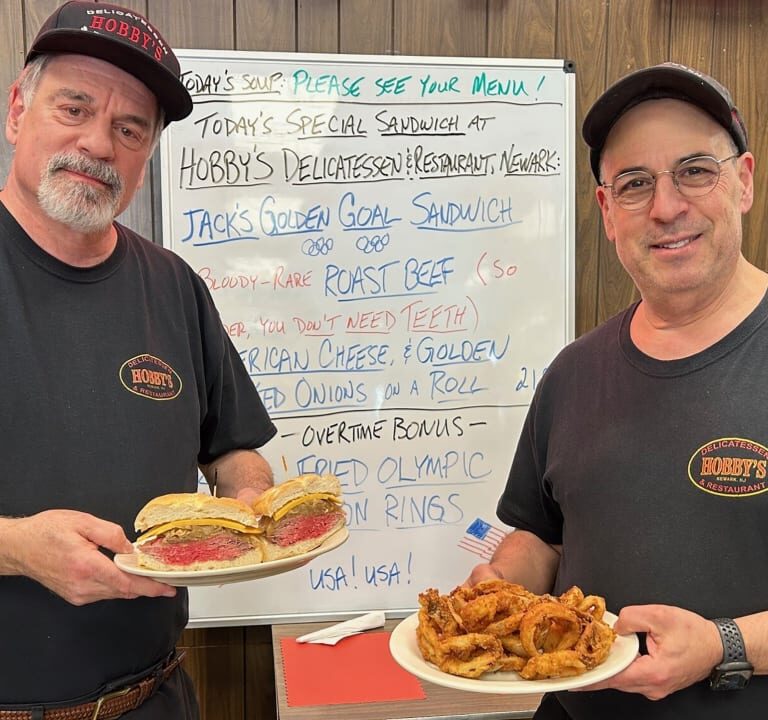
Sunset Daily News New Jersey — Technology Report—New Smart City Protocol Version Further Increases Interoperability Through DALI D4i and TALQ Zhaga Profiles

In a significant advancement for global urban technology standards, the TALQ Consortium has released Version 2.7.0 of its Smart City Protocol — a major update to the internationally recognized interface standard that continues to redefine interoperability across smart city infrastructure systems.

Announced from Piscataway, New Jersey, the latest release strengthens integration between outdoor lighting networks, IoT devices, and central management systems through enhanced support for DALI D4i and Zhaga profiles. This development reinforces TALQ’s mission to create an open, scalable ecosystem that allows cities, utilities, and infrastructure operators to deploy smart technology without being locked into proprietary systems.

Version 2.7.0 represents not just a technical update, but a strategic shift toward deeper cross-platform compatibility — a move that directly impacts municipalities investing in intelligent urban infrastructure.
What the TALQ Smart City Protocol Does

The TALQ Smart City Protocol serves as a standardized communication interface between Central Management Systems (CMS) and Outdoor Device Networks (ODN). In practical terms, it allows various smart city components — streetlights, sensors, traffic management devices, environmental monitors — to communicate seamlessly, even when produced by different manufacturers.

By maintaining an open interface architecture, TALQ empowers cities to:

• Avoid vendor lock-in
• Integrate multiple hardware ecosystems
• Scale infrastructure over time
• Modernize legacy systems gradually
• Maintain operational flexibility

The result is a unified smart city framework capable of evolving with technological innovation rather than being constrained by it.

What’s New in Version 2.7.0

The defining enhancement in Version 2.7.0 is the expanded interoperability support for DALI D4i and Zhaga profiles.

DALI D4i is a digital lighting interface specification that enables detailed performance reporting and diagnostics for luminaires and connected components. It provides structured data related to energy consumption, asset performance, runtime metrics, and maintenance indicators. By incorporating DALI D4i more comprehensively, the TALQ protocol strengthens real-time monitoring capabilities and improves predictive maintenance modeling.

Zhaga profiles, meanwhile, standardize the mechanical and electrical interfaces of LED modules and connected lighting components. This ensures interchangeability between manufacturers and supports modular smart lighting design. By embedding Zhaga profile alignment into Version 2.7.0, TALQ enhances plug-and-play compatibility across hardware vendors.

Together, these updates significantly increase:

• Device-level transparency
• Asset lifecycle management
• Data harmonization across networks
• Future-proofing of urban lighting systems

For cities building or upgrading connected infrastructure, this interoperability layer reduces long-term risk and expands procurement flexibility.

Why Interoperability Matters More Than Ever

As municipalities across the United States accelerate smart city initiatives, fragmentation remains one of the biggest obstacles to long-term success. Systems installed by different vendors often operate on isolated platforms, creating inefficiencies and limiting cross-network intelligence.

TALQ’s continued development addresses that challenge directly.

Interoperability ensures that:

• Lighting systems can integrate with environmental sensors
• Traffic networks can communicate with energy management platforms
• Infrastructure investments remain upgradeable
• Data silos are reduced
• Public resources are optimized

The release of Version 2.7.0 reinforces the principle that smart city technology must operate as a coordinated ecosystem rather than a collection of disconnected solutions.

New Jersey’s Strategic Position in Smart Infrastructure

With the TALQ Consortium headquartered in Piscataway, New Jersey, the state remains positioned at the center of global smart city standards development. New Jersey’s dense urban corridors, transportation networks, and energy infrastructure make it an ideal proving ground for scalable smart city implementation.

Local governments across the state are actively exploring:

• Smart street lighting upgrades
• IoT-enabled environmental monitoring
• Integrated traffic management systems
• Energy-efficient municipal infrastructure

The evolution of the TALQ protocol directly supports these initiatives by providing a structured, vendor-neutral communication framework.

For New Jersey municipalities, adopting interoperable standards is not just a technological choice — it is a financial and operational safeguard.

The Business and Economic Implications

Beyond technical advancement, Version 2.7.0 also carries economic implications.

Open standards create competitive markets. Competitive markets reduce costs and stimulate innovation.

When cities can source compatible hardware from multiple manufacturers, procurement becomes more strategic. Maintenance contracts become more flexible. Technology upgrades become less disruptive.

This fosters:

• Increased supplier competition
• Improved pricing transparency
• Reduced integration risk
• Accelerated deployment timelines

In the broader smart city economy, interoperability translates into measurable fiscal efficiency.

Smart Cities, Sustainability, and Long-Term Vision

Modern smart city deployments increasingly center on sustainability goals — energy efficiency, carbon reduction, and intelligent resource management.

By integrating DALI D4i data reporting into the protocol, municipalities gain access to granular energy consumption analytics. That data supports climate action reporting, infrastructure benchmarking, and operational optimization.

Zhaga-based modularity also reduces waste by enabling component-level upgrades rather than full system replacements.

The 2.7.0 release therefore aligns directly with global sustainability objectives while reinforcing technical adaptability.

A Future-Proof Urban Framework

The pace of technological change demands standards that evolve continuously. The release of Version 2.7.0 signals that the TALQ Consortium remains committed to refining the architecture that underpins smart city ecosystems worldwide.

For New Jersey and beyond, the implications are clear:

Interoperability is no longer optional.
Vendor neutrality is no longer theoretical.
Scalable infrastructure is no longer aspirational.

It is operational.

As cities continue to modernize lighting systems, deploy IoT devices, and integrate digital infrastructure, standardized communication protocols will determine whether those investments deliver long-term value or short-term complexity.

With Version 2.7.0, the TALQ Smart City Protocol strengthens the foundation upon which tomorrow’s connected cities will be built.

For continued coverage of New Jersey technology innovation and infrastructure modernization, visit the Technology & Tech section at Sunset Daily News.