
Cultural preservation organizations often face a difficult challenge in the modern media environment. Attention spans have shortened, digital content moves at extraordinary speed, and meaningful historical storytelling frequently gets buried beneath viral trends, political noise, and fragmented online discourse. Yet throughout New Jersey, a growing number of arts, heritage, and educational organizations are finding new ways to preserve cultural history while adapting to modern audiences increasingly consuming information in condensed digital formats.
One of the strongest examples emerging from the Garden State is the continuing expansion of the Italian American One Voice Coalition’s “The One Voice Minute©” series, a short-form educational video initiative designed to spotlight major Italian American contributions to science, arts, politics, entertainment, sports, and world history.
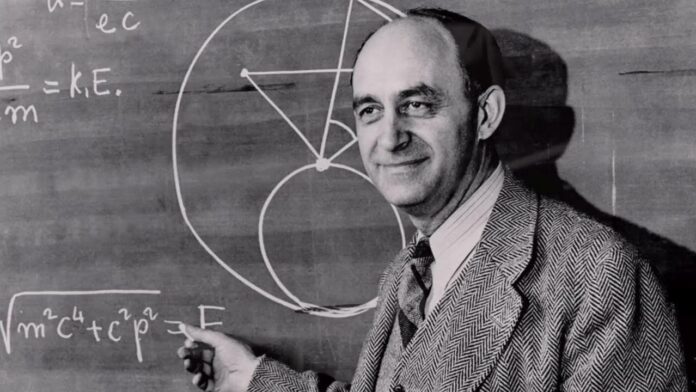
The organization’s newest edition focuses on one of the most consequential scientific minds of the twentieth century: physicist Enrico Fermi, widely recognized as “The Architect of the Atomic Age.”
Produced by the Northvale, New Jersey-based Italian American One Voice Coalition, the latest installment continues the organization’s broader effort to celebrate Italian American achievement while combating stereotypes, historical erasure, and cultural oversimplification through concise, accessible educational storytelling.
Importantly, the project is not designed as political commentary or military advocacy despite the intensity surrounding Fermi’s historical association with nuclear science and the Manhattan Project.
Instead, the video functions primarily as a cultural history spotlight examining the enormous scientific influence of an Italian-born physicist whose work fundamentally reshaped modern civilization.
That distinction matters.
The title “Architect of the Atomic Age” naturally carries dramatic historical weight because Fermi’s scientific breakthroughs helped unlock humanity’s understanding of nuclear chain reactions and atomic energy. But the purpose of the “One Voice Minute©” episode is not to glorify warfare or focus narrowly on nuclear weapons development. Rather, it places Fermi within the broader context of Italian American achievement and scientific innovation.
In doing so, the video reflects the larger mission of the Italian American One Voice Coalition itself.
The IAOVC has steadily become one of the most visible Italian American advocacy organizations operating in the United States, particularly regarding issues tied to representation, historical education, cultural preservation, and anti-bias initiatives. Headquartered in Bergen County, the organization has increasingly expanded its digital media footprint through projects designed to make Italian American history more visible and accessible to broader audiences.
“The One Voice Minute©” series represents one of the coalition’s most effective modern outreach tools because it condenses complex historical narratives into highly digestible short-form video segments without sacrificing educational substance.
That format has become increasingly valuable in today’s media landscape.
Educational organizations throughout New Jersey and nationally are recognizing that historical literacy increasingly depends on meeting audiences where they already consume information — on social platforms, streaming feeds, mobile devices, and short-form digital video channels. Long-form documentaries and academic publications remain important, but shorter educational formats now play a critical role in introducing younger audiences to historical figures they might otherwise never encounter.
The Fermi episode demonstrates exactly how powerful that approach can be.
Enrico Fermi’s contributions to modern science remain almost impossible to overstate. Born in Italy in 1901, Fermi became one of the foundational figures in nuclear physics and theoretical science during a period when modern physics itself was undergoing revolutionary transformation. His work ultimately led to the development of the world’s first self-sustaining nuclear reactor, Chicago Pile-1, achieved in 1942 beneath the University of Chicago’s football stadium.
That breakthrough fundamentally altered the trajectory of modern science, energy research, warfare, engineering, and global geopolitics.
Fermi’s research also became deeply connected to the Manhattan Project during World War II, the massive American-led scientific initiative responsible for developing the first atomic bomb. While that aspect of his career remains historically controversial because of the devastating implications of nuclear weaponry, Fermi’s scientific importance extends far beyond military history alone.
His work laid foundational groundwork for modern nuclear energy, particle physics, reactor science, radiation medicine, and countless scientific disciplines that continue shaping modern society today.
The IAOVC’s decision to feature Fermi reflects a broader effort to showcase Italian American influence in fields often overlooked in mainstream cultural discussions.
Italian American representation in media has historically leaned heavily toward entertainment stereotypes or narrow cultural archetypes that frequently ignore the enormous contributions Italian Americans have made across science, medicine, education, engineering, literature, and public service. Organizations like the IAOVC have increasingly worked to broaden public understanding of that history by spotlighting figures whose achievements transcend simplistic cultural narratives.
Fermi represents one of the strongest possible examples of that effort.
The story behind his immigration to the United States also adds important historical depth to the episode itself. After winning the Nobel Prize in Physics in 1938, Fermi chose not to return permanently to Fascist Italy because of Mussolini’s anti-Semitic racial laws targeting Jewish citizens, including his wife Laura Capon Fermi. Instead, he emigrated to America, where his scientific career would permanently alter world history.
That personal dimension adds enormous emotional and historical significance to his legacy.
Fermi was not simply a scientist working in isolation. He was also a refugee intellectual fleeing authoritarianism during one of the darkest periods of modern European history. His journey reflects broader themes surrounding immigration, political persecution, scientific freedom, and the role immigrant scholars played in shaping twentieth-century American advancement.
For New Jersey audiences, the project also carries strong regional relevance.
The Italian American One Voice Coalition itself remains deeply rooted in New Jersey’s Italian American community, particularly throughout Bergen County and North Jersey where Italian American cultural organizations, advocacy groups, religious institutions, and heritage societies continue playing major civic roles. The organization’s leadership, including IAOVC President Andre DiMino and longtime media figure Frank Cipolla, has become increasingly active in promoting educational initiatives tied to Italian American history and representation.
Cipolla’s involvement as producer adds additional credibility and polish to the series.
A longtime New Jersey media veteran familiar to audiences throughout the region, Cipolla brings professional storytelling experience and broadcast sensibility to the project, helping elevate the videos beyond simple informational clips into more polished educational media presentations.
That production quality matters because heritage-focused educational content increasingly competes inside a highly crowded digital environment dominated by algorithm-driven entertainment content and rapid-fire news cycles.
Projects like “The One Voice Minute©” succeed when they combine clarity, accessibility, historical accuracy, and strong storytelling in formats audiences actually engage with.
The Fermi installment also arrives during a broader cultural moment in which public interest in scientific history, technological ethics, and twentieth-century geopolitical history continues intensifying. Discussions surrounding artificial intelligence, nuclear energy, scientific responsibility, and technological advancement frequently lead audiences back toward historical figures whose discoveries reshaped civilization in earlier eras.
Fermi’s legacy sits directly at the center of those conversations.
At the same time, the IAOVC’s approach deliberately keeps the emphasis rooted in cultural education rather than political polarization or historical sensationalism. The series functions less as ideological commentary and more as a celebration of achievement, resilience, innovation, and historical contribution.
That educational tone helps make the content accessible to a much broader audience.
For Explore New Jersey readers following the state’s arts, culture, and heritage landscape, the continuing expansion of “The One Voice Minute©” reflects something increasingly important about modern cultural preservation itself. Heritage organizations are no longer confined to banquet halls, archives, or annual celebrations alone. Increasingly, they are evolving into digital storytellers capable of bringing overlooked historical narratives directly into modern media ecosystems.
And through projects like the Enrico Fermi episode, New Jersey-based organizations are proving that even one minute of thoughtful storytelling can still spark curiosity, preserve history, and reconnect audiences with the individuals whose ideas helped shape the modern world.