Home Blog Page 9

New Jersey’s Weather Swings Turn Dramatic Again as Heat, Severe Storm Risks, and a Rare Omega Block Reshape the Forecast

New Jersey’s atmosphere has become a study in meteorological extremes over the last several weeks, with the state swinging violently between record-setting cold and near-triple-digit heat in a pattern that has forecasters increasingly focused on the unstable upper-air configuration developing across North America. One week has delivered unusually chilly afternoons struggling to escape the 50s, while another has produced dangerous heat surging toward the upper-90s under oppressive humidity. The result has been one of the most erratic late-spring weather stretches New Jersey has experienced in years, a pattern now evolving again as forecasters track the development of a large-scale Omega Block expected to dominate conditions heading into the weekend.

The rapidly changing setup has created an atmosphere where New Jersey residents have struggled to establish any consistent seasonal rhythm. Air conditioning systems that sat idle during cool rain events were suddenly forced into full operation during the recent heat surge, only for cooler Canadian air masses to return days later. Meteorologists say those abrupt reversals are becoming increasingly tied to larger atmospheric disruptions taking shape across the Pacific and North America, including the strengthening influence of a developing Super El Niño pattern capable of amplifying temperature volatility and disrupting traditional jet stream behavior.

Despite the long-range uncertainty surrounding the evolving seasonal pattern, forecasters say confidence remains relatively high regarding the next seven days as a classic Omega Block configuration begins establishing itself across the continental United States. The setup, named after the Greek Omega symbol due to the shape it forces into the jet stream, is expected to play a major role in determining New Jersey’s immediate weather outlook.

Under the developing configuration, an upper-level low pressure system over the Northwestern United States will pair with another upper-level low over the Northeast while a pronounced ridge of high pressure strengthens across the central portion of the continent and extends northward into Canada. That arrangement forces the jet stream to arch dramatically northward before plunging back down into the eastern United States, producing the recognizable Omega-shaped atmospheric pattern that often leads to prolonged weather regimes and unusually stable conditions.

For New Jersey, the setup initially means one more significant push of heat and humidity before the pattern flips sharply cooler and considerably more comfortable by late week.

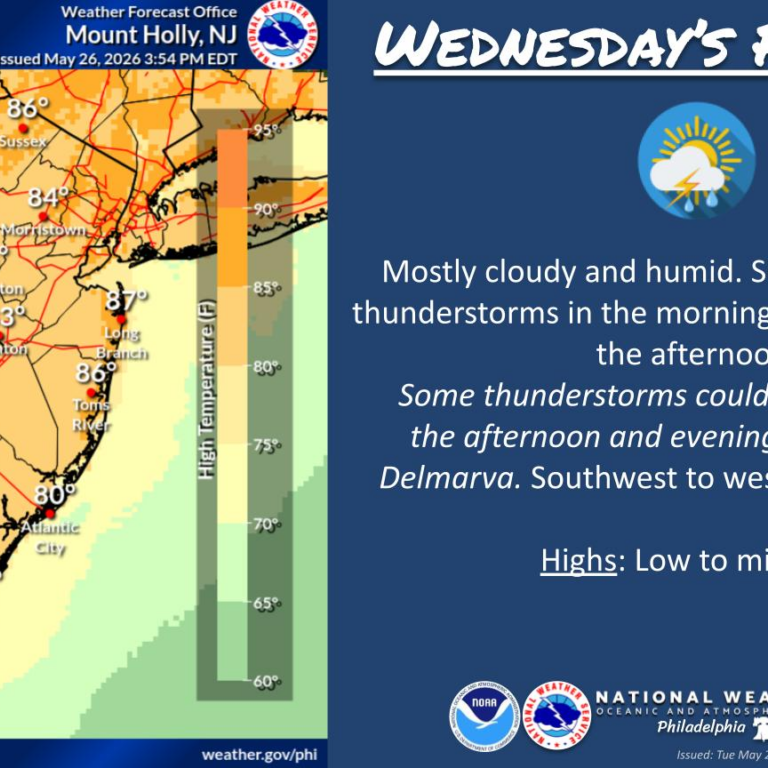
Temperatures already began climbing across much of the state Tuesday as warm, moisture-rich air expanded northward ahead of the approaching trough. Along the Interstate 95 corridor and New Jersey Turnpike region, temperatures climbed above 80 degrees while shore communities remained substantially cooler thanks to marine influence and persistent southeasterly flow coming off the Atlantic Ocean. Forecasters noted scattered showers lingering throughout portions of the state Tuesday evening as humidity levels continued rising overnight.

The atmosphere is expected to reach peak instability Wednesday as the warmest and most humid air of the week settles directly over New Jersey. Inland sections of the state are forecast to climb well into the 80s, with isolated areas potentially approaching 90 degrees away from the coastline. Coastal communities should remain somewhat moderated, with highs generally holding in the 70s due to ocean temperatures and persistent marine flow.

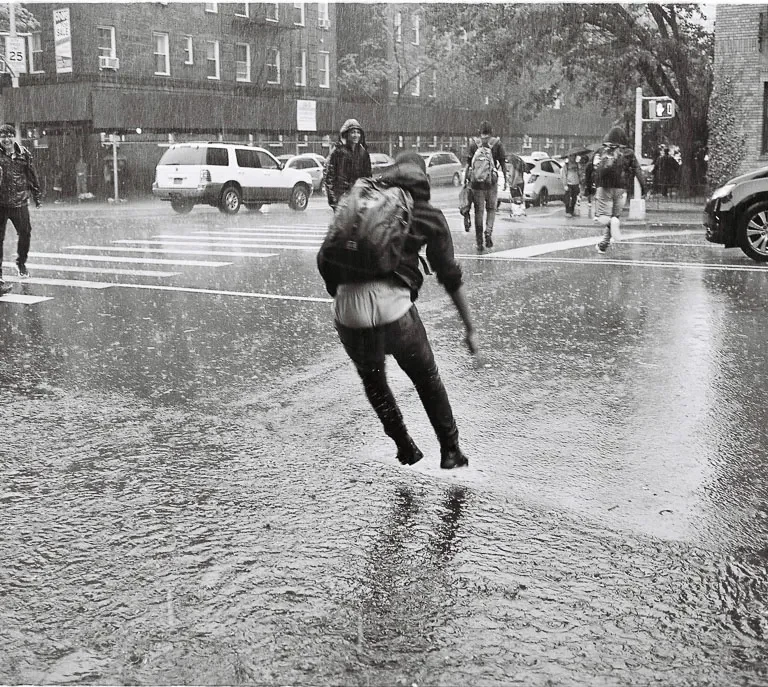
However, the growing heat and humidity are also expected to fuel widespread thunderstorm development Wednesday afternoon and evening as the advancing upper-level disturbance collides with the unstable air mass already in place. Meteorologists warn that some storms could become severe, particularly across interior portions of the state where atmospheric dynamics appear strongest.

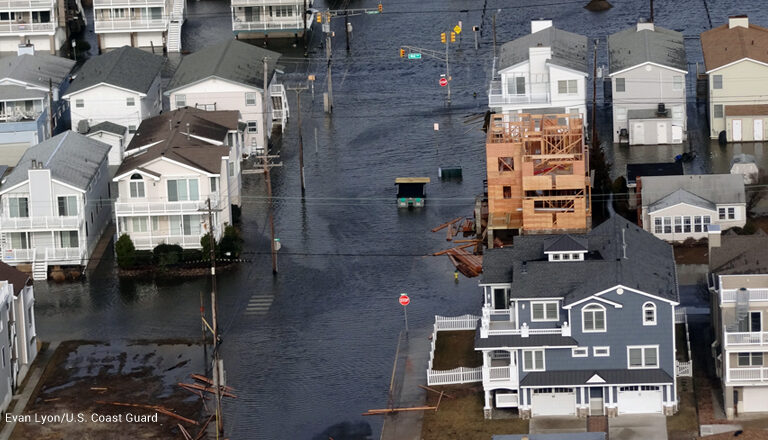
The primary threats include damaging wind gusts, hail, intense lightning activity, and torrential downpours capable of briefly reducing visibility and creating localized flooding issues. Although New Jersey may avoid the most intense severe weather dynamics projected farther west, forecasters caution that isolated severe thunderstorms remain entirely possible statewide as the cold front moves through during peak daytime heating hours.

The timing of the storms may prove particularly disruptive given the ongoing increase in late-spring travel activity throughout the state. Commuters, outdoor workers, event organizers, and Jersey Shore businesses are all being advised to monitor conditions closely Wednesday afternoon and evening as rapidly developing thunderstorm cells could create dangerous travel conditions with little warning.

Once the storm line clears the region, however, the broader Omega Block pattern is expected to dramatically reshape the state’s weather heading into the latter half of the week.

Behind the departing front, noticeably cooler and significantly less humid air is forecast to spill southward into the Northeast, replacing the muggy summerlike atmosphere with what many residents may consider ideal late-spring conditions. Temperatures Thursday through Sunday are expected to settle primarily into the low-to-mid 70s during daytime hours, while overnight lows may dip into the upper 40s and low 50s across portions of North and Central Jersey.

Meteorologists stress that while those readings technically fall below seasonal averages for late May, the conditions are expected to feel exceptionally pleasant compared to the oppressive humidity and heat experienced earlier in the week. Sunshine levels are also forecast to increase substantially after Wednesday’s storms, with Thursday and Friday in particular expected to feature abundant sunshine, lower humidity, light northwest winds, and far more stable atmospheric conditions.

Thursday’s forecast currently calls for temperatures ranging through the 70s statewide with only isolated locations near the urban corridor briefly approaching 80 degrees. Winds shifting northwest behind the front will help usher in the drier air mass while skies gradually clear throughout the day. By Friday, conditions may become even more comfortable as widespread sunshine combines with highs in the upper 70s and relatively low humidity levels rarely seen during recent stretches of volatile spring weather.

The developing weekend outlook similarly points toward calm, seasonably mild conditions as the Omega Block continues anchoring cooler air over the Northeast. Forecast models currently indicate daytime highs remaining primarily in the low-to-mid 70s while nighttime temperatures fall into the upper 40s and lower 50s. More importantly for residents exhausted by the recent humidity swings, forecasters expect largely dry conditions and relatively stable skies through the weekend period.

Meteorologists caution, however, that the same blocking pattern responsible for the pleasant weekend conditions also reflects the broader atmospheric instability beginning to emerge globally under the strengthening El Niño influence. Blocking patterns can become stubborn and difficult to break down, occasionally locking regions into extended periods of unusual temperature departures, stalled storm tracks, or repetitive weather extremes.

The recent volatility already witnessed across New Jersey offers a preview of how unpredictable the broader warm-season pattern may become. Within just weeks, the state has experienced near-record cold afternoons struggling to climb beyond the upper 50s followed almost immediately by dangerous heat nearing 100 degrees in some interior locations. Those dramatic reversals are increasingly challenging traditional forecasting models and raising concerns about how the summer pattern itself may evolve as oceanic influences continue strengthening.

Still, forecasters believe New Jersey may finally begin stabilizing into a more seasonable regime by next week as the Omega Block gradually weakens and temperatures return closer to long-term late-spring averages. Early projections suggest highs could begin consistently climbing back into the upper 70s and low 80s by the end of next week, signaling a more sustainable warm-weather pattern after one of the most chaotic spring stretches in recent memory.

Until then, New Jersey residents are preparing for yet another abrupt atmospheric shift — one more reminder that the state’s 2026 weather pattern has become anything but predictable. In the span of only a few days, residents may once again move from severe thunderstorm alerts and oppressive humidity to crisp overnight lows, open-window weather, and bright sunshine under one of the most fascinating large-scale weather patterns currently shaping the American atmosphere.


Camden County’s Transformation of Hopkins Pond Signals a Larger Vision for the Future of Community Parks in South Jersey

Public parks are often discussed in terms of acreage, playgrounds, walking paths, athletic fields, or municipal budgets, but the reality is that truly successful parks become something far more meaningful than recreational space. They evolve into emotional landmarks within a community. They become gathering places where generations overlap, where families reconnect with nature, where children form lifelong memories, where residents decompress from the pace of modern life, and where neighborhoods rediscover a shared civic identity. That is precisely why the latest improvements unveiled at Hopkins Pond in Haddonfield represent something far more important than a standard park renovation project. What Camden County has accomplished through its $325,000 enhancement initiative is the continuation of a broader regional movement toward reimagining public green spaces as fully integrated community destinations designed for accessibility, wellness, environmental appreciation, and year-round public engagement.

Located within one of South Jersey’s most historic and community-oriented boroughs, Hopkins Pond has long occupied a special place within Camden County’s parks network. The pond itself carries an atmosphere that feels distinctly different from larger regional recreation complexes or heavily commercialized outdoor destinations. Hopkins Pond has always offered something quieter and more intimate — a balance of wooded tranquility, reflective water views, accessible walking paths, birdlife, and neighborhood-scale accessibility that makes it feel deeply personal to local residents. For many in Haddonfield and surrounding communities, the park is not merely a destination people visit occasionally. It functions as part of their daily lives.

Now, through the county’s continuing Parks Alive 2025 initiative, Hopkins Pond has received a substantial upgrade intended to both modernize the park experience and preserve the natural character that has made the location beloved for decades. The completed improvements include a newly constructed pavilion area, expanded hardscaping, refreshed landscaping, and enhanced access to walking trails that connect visitors more fluidly to the park’s surrounding wilderness environment. While those upgrades may initially sound straightforward on paper, the broader impact becomes far more apparent when examining how these enhancements reshape the entire rhythm and functionality of the park itself.

The addition of the pavilion fundamentally changes how Hopkins Pond can now serve the community. Rather than functioning solely as a passive recreational area for walkers and nature observers, the park gains a flexible civic gathering space capable of supporting educational programming, wellness events, environmental workshops, outdoor performances, family celebrations, seasonal festivals, senior activities, youth programming, and community-led initiatives that extend beyond casual visitation. In many ways, the pavilion transforms the park from a scenic backdrop into a true social anchor.

That shift matters tremendously at a time when communities throughout New Jersey are increasingly searching for ways to strengthen public interaction outside purely commercial environments. Modern suburban development patterns have often reduced opportunities for organic public gathering spaces that are not centered around spending money. Parks like Hopkins Pond help reverse that trend by providing accessible environments where residents can simply exist together in a shared public setting connected by nature rather than commerce.

The hardscaping and landscaping improvements also represent more than cosmetic upgrades. Thoughtful hardscape design dramatically improves accessibility, safety, and navigational flow throughout public parks, especially for seniors, parents with strollers, visitors with mobility challenges, and residents seeking more stable walking surfaces during seasonal weather fluctuations. Meanwhile, enhanced landscaping plays an equally critical role in environmental stewardship, stormwater management, visual cohesion, ecological preservation, and overall visitor experience. Successful park design today increasingly depends on creating spaces that feel simultaneously functional and restorative, and the Hopkins Pond improvements appear intentionally aligned with that philosophy.

Perhaps most importantly, the project deepens connectivity between the park’s core gathering areas and its surrounding walking trail systems. Residents have repeatedly emphasized how valuable access to nature trails has become within the borough, particularly in a region where suburban density often limits opportunities for immersive outdoor recreation without traveling significant distances. The upgraded trail access enhances Hopkins Pond’s role not merely as a neighborhood park, but as an accessible gateway into a broader woodland and waterfront environment that encourages exercise, reflection, photography, wildlife observation, and mental wellness.

That connection between public parks and mental health has become increasingly significant in recent years. Across New Jersey and throughout the country, municipal leaders and county planners have begun recognizing that green space investment is no longer simply about aesthetics or recreation. It is directly tied to public wellness infrastructure. Access to walkable outdoor environments has measurable effects on stress reduction, physical activity, emotional health, and overall community quality of life. Projects like Hopkins Pond therefore represent investments not just in land, but in public well-being itself.

The improvements also arrive during a larger period of renewed focus on Camden County’s park system as a whole. Through initiatives like Parks Alive 2025, county officials have increasingly prioritized modernization projects that preserve historic park identities while adapting facilities for contemporary community use. Rather than replacing natural spaces with overbuilt development, the emphasis has largely centered on thoughtful enhancement — improving usability, accessibility, programming capacity, and infrastructure without sacrificing the environmental character that makes these spaces meaningful in the first place.

That balance is particularly important in a place like Haddonfield, where historical preservation and community identity remain deeply valued. Hopkins Pond is not the type of location residents want transformed into an overly commercialized entertainment venue. Its appeal lies precisely in its quieter atmosphere, wooded serenity, and neighborhood intimacy. The county’s approach appears to recognize that reality, enhancing the park’s utility while respecting its existing personality and environmental character.

Local reaction to the improvements has reflected that appreciation. Residents have consistently emphasized how important the enhanced park access and upgraded facilities will be for community events, educational gatherings, family activities, and year-round public use. The project is being viewed not simply as an infrastructure improvement, but as an investment in strengthening communal life itself.

That perspective becomes especially important when considering the broader role parks now play within modern suburban communities. Increasingly, successful municipalities are defined not only by schools, housing values, and commercial development, but by the quality of their shared public spaces. Parks create social cohesion in ways digital environments cannot replicate. They provide physical places where communities become visible to themselves. Children play together. Neighbors interact. Seniors walk familiar trails. Artists photograph landscapes. Families picnic beside the water. Runners, cyclists, birdwatchers, and dog walkers all occupy the same ecosystem simultaneously.

Hopkins Pond has long provided that kind of communal overlap. The latest improvements strengthen its ability to continue doing so for years ahead.

There is also something especially important about the timing of these investments. As development pressures continue reshaping portions of South Jersey and suburban expansion increasingly alters open land throughout the region, preserving and enhancing accessible green space becomes more urgent. Public parks are no longer luxuries within rapidly growing suburban counties. They are essential civic infrastructure. They preserve ecological balance, create environmental education opportunities, support public health, and provide desperately needed breathing room within increasingly fast-paced residential environments.

For visitors unfamiliar with Hopkins Pond, the upgrades now make the park even more appealing as a destination for outdoor exploration within Camden County. The combination of scenic water views, accessible trails, wooded surroundings, upgraded gathering areas, and community-focused design gives the location a versatility that appeals to a broad range of visitors. Families seeking a peaceful afternoon outdoors, walkers searching for accessible nature paths, photographers chasing reflective pond landscapes, or residents simply looking for a quiet place to decompress all find something valuable within the park’s atmosphere.

Ultimately, the significance of Hopkins Pond’s transformation extends beyond a single improvement project. It reflects a larger understanding that public spaces still matter deeply in modern life. In an era increasingly dominated by screens, isolation, rapid development, and transactional environments, places like Hopkins Pond remind communities of the enduring importance of shared outdoor experiences grounded in nature, accessibility, and local identity.

Camden County’s investment in the park is therefore not simply about beautification. It is about reinforcing the idea that community spaces deserve care, attention, and long-term vision. Hopkins Pond now enters its next chapter not merely as a preserved historic park, but as a revitalized centerpiece for recreation, reflection, environmental appreciation, and community connection in the heart of South Jersey.

New Jersey’s Restraining Order System Faces Growing Scrutiny as Advocates Demand Faster Protections for Domestic Violence Survivors

For thousands of domestic violence and sexual assault survivors across New Jersey, a restraining order represents far more than a legal document. It is often the only immediate barrier standing between safety and escalating danger, between survival and catastrophe. Yet despite New Jersey maintaining some of the nation’s strongest domestic violence statutes on paper, advocates, survivors, legal experts, and victim service organizations are increasingly warning that the system responsible for protecting vulnerable residents remains too inconsistent, too reactive, and too difficult to navigate during moments of crisis.

The growing debate surrounding restraining order accessibility and enforcement has intensified following a series of tragic cases that advocates say exposed serious procedural gaps within New Jersey’s domestic violence response infrastructure. At the center of those concerns is an uncomfortable reality confronting lawmakers, courts, law enforcement agencies, and advocacy organizations alike: protections intended to prevent violence are too often activated only after abuse has already escalated to life-threatening levels.

Under New Jersey’s Prevention of Domestic Violence Act, survivors can seek temporary restraining orders and permanent Final Restraining Orders designed to prohibit contact, remove abusers from shared residences, and establish legal accountability through court oversight. Final restraining orders in New Jersey are notably powerful compared to many other states because they remain permanent unless later modified by the court. On the surface, the law appears robust, comprehensive, and survivor-centered.

Advocates argue, however, that the lived reality inside courtrooms, police departments, and emergency response systems often tells a very different story.

Survivors seeking protection frequently encounter procedural barriers that can delay intervention during the most dangerous phases of escalating abuse. Those obstacles may include limited after-hours court accessibility, inconsistent interpretation of non-physical abuse allegations, uneven enforcement practices across jurisdictions, and confusing evidentiary standards that place enormous pressure on traumatized individuals navigating legal systems while simultaneously attempting to protect themselves and their families.

Organizations working directly with survivors say one of the most persistent structural problems involves how domestic violence itself is understood within institutional systems. Abuse patterns involving coercive control, stalking, intimidation, threats, financial isolation, surveillance, psychological manipulation, and obsessive monitoring often fail to receive the same urgency as visible physical violence despite overwhelming evidence showing those behaviors frequently precede severe assaults or homicides.

That disconnect has become central to the broader conversation now unfolding throughout New Jersey’s legal and advocacy communities.

Experts in domestic violence prevention increasingly emphasize that abuse rarely begins with catastrophic violence. Instead, it often escalates gradually through intimidation, emotional domination, repeated threats, stalking behavior, and controlling conduct that may appear less immediately visible to courts or responding officers. When systems focus too narrowly on physical injury as the primary indicator of danger, advocates warn that survivors facing imminent risk may be left without meaningful intervention until violence becomes irreversible.

Those concerns became painfully visible in the killing of Lauren Semanchik, a homicide case that continues reverberating throughout New Jersey’s domestic violence prevention community. According to advocates and public reporting surrounding the case, Semanchik repeatedly sought help from law enforcement while attempting to navigate the restraining order process against a former partner. Questions surrounding delays, procedural confusion, and systemic limitations have since intensified calls for reform as advocates argue the system failed to intervene quickly enough to prevent tragedy.

For organizations serving survivors statewide, cases like Semanchik’s are not viewed as isolated incidents but rather as indicators of larger systemic vulnerabilities requiring structural modernization.

180 Turning Lives Around, one of New Jersey’s major survivor support organizations, has become increasingly vocal about the need for broader reforms centered around prevention rather than reaction. The organization’s leadership argues that restraining order systems must evolve to better reflect the realities of modern abuse patterns and the speed at which danger can escalate inside coercive relationships.

At the heart of the reform debate is a growing push to make restraining orders faster to obtain, easier to enforce, and more responsive to the early warning signs of escalating abuse. Advocates point to several states that have adopted more streamlined emergency protection frameworks allowing survivors to secure temporary restraining orders more rapidly, sometimes based primarily on sworn testimony rather than extensive evidentiary requirements during initial emergency proceedings.

States such as California, New York, and Texas have implemented emergency order systems designed to prioritize immediate safety during high-risk situations. Tennessee’s adoption of Savanna’s Law, which established a domestic violence offender registry for repeat abusers, has similarly drawn national attention from advocates exploring new approaches to offender accountability and public safety transparency.

While New Jersey advocates are not necessarily calling for direct replication of those systems, many argue the state can no longer ignore how other jurisdictions are modernizing survivor protections through expanded access, technological flexibility, and broader recognition of coercive abuse behaviors.

Among the most frequently proposed reforms are expanded remote access to restraining order filings, broader after-hours court availability, standardized statewide training for judges and law enforcement officers, improved recognition of coercive control and stalking patterns, and more aggressive enforcement protocols designed to reduce the burden placed on survivors to monitor compliance themselves.

Advocates also continue raising concerns about disparities in how domestic violence cases are handled across different counties and municipal jurisdictions throughout New Jersey. Inconsistent interpretation of abuse indicators, differing law enforcement response cultures, and uneven judicial approaches can create dramatically different outcomes depending on where a survivor seeks help.

That inconsistency becomes particularly dangerous during the earliest stages of intervention when survivors are often making high-risk decisions under extreme emotional and psychological pressure. Domestic violence experts consistently identify the period immediately following separation or attempted separation as one of the most dangerous phases within abusive relationships, increasing the urgency surrounding rapid protective intervention.

At the same time, New Jersey’s broader political climate has increasingly elevated conversations surrounding victim protections, public safety, constitutional rights, and institutional accountability. Lawmakers across party lines continue debating how legal systems can better respond to evolving forms of abuse while balancing due process protections and judicial oversight responsibilities.

The conversation surrounding restraining order reform also intersects with larger national discussions about how courts, law enforcement agencies, and public institutions interpret trauma itself. Survivors often present evidence, testimony, and behavior patterns shaped by fear, prolonged intimidation, emotional exhaustion, and psychological distress. Advocates argue that without specialized trauma-informed training, institutional systems may unintentionally misinterpret those responses as inconsistency or unreliability rather than symptoms of abuse.

As New Jersey continues evaluating its domestic violence response infrastructure, advocates insist that meaningful reform requires moving beyond reactive systems designed primarily to document harm after escalation has already occurred. Instead, they argue the state must build intervention systems capable of identifying risk earlier, responding faster, and prioritizing survivor safety before threats become irreversible.

The broader challenge now confronting policymakers is whether New Jersey’s existing legal framework can evolve quickly enough to match the realities survivors face in real time. While the state’s domestic violence laws remain among the strongest statutorily, advocates increasingly argue that legal language alone cannot guarantee protection without equally strong enforcement mechanisms, accessible court systems, consistent institutional training, and emergency response structures capable of acting with urgency.

For survivors navigating dangerous relationships, those distinctions are not theoretical policy debates. They are life-altering realities unfolding under enormous emotional pressure, often during the most vulnerable moments of their lives. As public attention surrounding domestic violence prevention continues growing, pressure is mounting on New Jersey institutions to demonstrate that the systems designed to protect survivors can function not merely as legal processes, but as effective tools capable of interrupting violence before tragedy occurs.

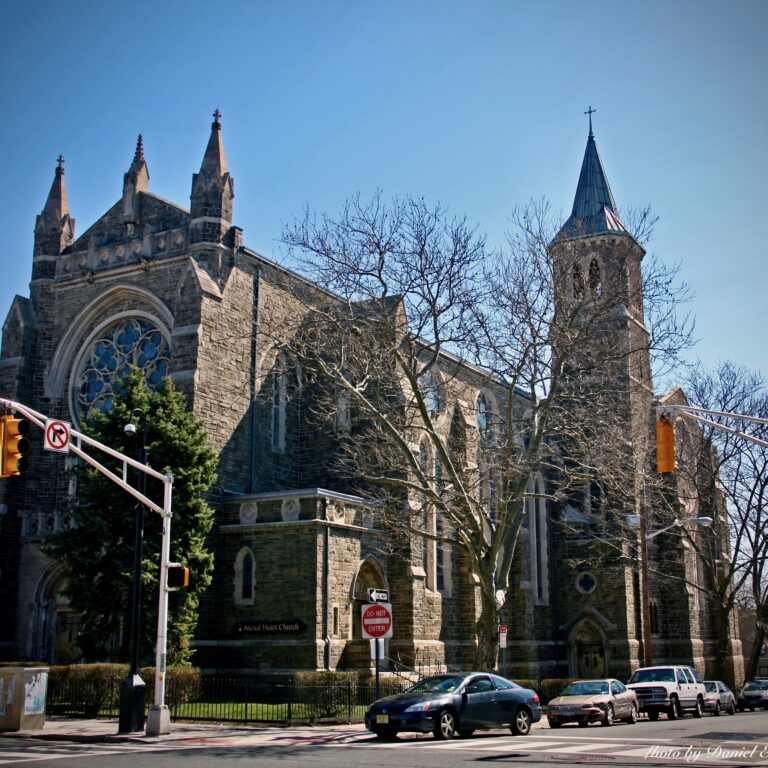
Jersey City Advances Historic Sacred Heart Redevelopment as Long-Closed Greenville Church Campus Begins Major Transformation

A long-dormant religious landmark in Jersey City’s Greenville section is officially entering a new era after city officials approved the first major phase of an ambitious adaptive reuse project designed to transform the former Sacred Heart of Jesus campus into a large-scale mixed-use residential community while preserving one of the neighborhood’s most historically recognizable properties. The newly approved phase marks the first tangible construction movement in a redevelopment effort that has been discussed for years and could ultimately reshape a significant portion of Bayview Avenue through a combination of historic preservation, residential expansion, educational investment, and community-centered redevelopment.

The approval by the Jersey City Planning Board signals the beginning of a broader revitalization effort known as The Enclave at Sacred Heart of Jesus, a sweeping redevelopment proposal centered around the former church campus located at 183 Bayview Avenue. The property has remained largely inactive since Sacred Heart closed in 2005, although portions of the campus have continued operating through a private school that remains active on-site. For nearly two decades, the complex stood as one of Greenville’s most visible symbols of institutional decline, with its historic structures largely shuttered despite their architectural significance and longstanding role within the community.

Now, after years of planning, zoning modifications, redevelopment negotiations, and conceptual redesigns, the first component of the campus overhaul has officially secured approval, pushing the project from vision into implementation. The initial redevelopment phase focuses on the former Priory building, a historic structure that once functioned as a religious dormitory connected to the church complex. Under the approved plan, the building will be transformed into a 14-unit multifamily residential development while preserving much of its original architectural character.

The redevelopment strategy reflects a growing trend across Jersey City and the broader Northeast corridor where historic religious institutions, many struggling with declining congregations and aging infrastructure, are being reimagined through adaptive reuse projects that blend preservation with urgently needed housing development. In the case of Sacred Heart, the approach attempts to balance neighborhood history with modern residential demand while avoiding wholesale demolition of the campus’ most architecturally important structures.

Designed by Weckenmann Architecture, the approved first phase intentionally limits exterior alterations to preserve the Priory’s historic identity. Rather than dramatically altering the building footprint or adding modern additions that could compromise the original design, the redevelopment plan focuses on restoration, modernization, and interior repurposing. Existing openings will receive updated windows while the structure itself undergoes preservation work intended to maintain its historic appearance within the surrounding streetscape.

One of the project’s most distinctive features involves the adaptive reuse of the Priory’s double-height chapel space, which developers intend to convert into a shared amenity area for future residents. The decision reflects a broader architectural philosophy increasingly common in adaptive religious reuse projects where sacred gathering spaces are preserved architecturally even as their functions evolve to support contemporary residential lifestyles.

The approved residential mix includes ten one-bedroom apartments alongside four two-bedroom residences, slightly reducing the original proposal from 16 units to 14. While relatively modest in size compared to the broader redevelopment vision for the campus, the first phase serves as a critical proof of concept for the larger Sacred Heart transformation now gradually taking shape in Greenville.

The project notably excludes vehicle parking during this initial phase, a planning decision that aligns with Jersey City’s increasing emphasis on transit-oriented urban development and reduced automobile dependency in dense residential corridors. Instead, the development includes bicycle parking accommodations, pedestrian improvements, refreshed landscaping, restored fencing, and upgraded sidewalk infrastructure intended to integrate the property more effectively into the surrounding neighborhood fabric.

Beyond the immediate residential conversion, the Sacred Heart redevelopment carries far larger long-term implications for Greenville’s future growth trajectory. The broader master plan envisions the campus evolving into a multi-component mixed-use complex featuring residential housing, educational facilities, event space, community infrastructure, and modernized public-facing amenities. If fully realized, the redevelopment could become one of the most substantial preservation-driven neighborhood transformations currently underway in Jersey City.

Future phases outlined in the larger redevelopment proposal include the conversion of the main church structure into a multi-use event venue, potentially giving the historic sanctuary a second life as a gathering destination capable of hosting community functions, cultural programming, and private events. Additional plans include transforming the still-active school building into a separate 12-unit residential property while constructing a new 96-unit residential building on the site currently occupied by the gymnasium parking lot.

The larger proposal also previously included plans for a newly constructed multi-story Sacred Heart School facility totaling approximately 34,000 square feet, demonstrating that educational infrastructure remains intertwined with the broader redevelopment vision despite the campus’ transition toward mixed residential use.

The scale of the redevelopment highlights how aggressively Jersey City continues evolving amid sustained development pressure, population growth, and rising housing demand throughout Hudson County. While waterfront luxury towers and downtown high-rise construction often dominate headlines, projects like Sacred Heart represent a different category of urban transformation — one centered on reinvestment into historically overlooked neighborhoods through adaptive preservation instead of wholesale redevelopment.

Greenville, in particular, has increasingly become a focal point for redevelopment conversations as city officials, developers, and community stakeholders seek ways to channel investment into sections of Jersey City that historically received less development attention than the booming waterfront districts. Projects involving historic institutional properties carry added sensitivity because they often involve deeply embedded neighborhood landmarks tied to generations of community identity and cultural memory.

Sacred Heart itself occupies a significant place within that local history. Portions of the campus date back to 1924, making the property one of the more historically established institutional sites within the neighborhood. Even after the church’s closure, the complex remained visually prominent due to its size, architecture, and longstanding role within Greenville’s civic landscape. Its revival therefore carries symbolic weight extending beyond the housing units themselves.

The redevelopment also reflects the increasing complexity of modern urban preservation economics. Maintaining aging religious campuses in dense urban areas often becomes financially unsustainable without introducing revenue-generating residential or mixed-use components capable of supporting restoration costs. Adaptive reuse projects like Sacred Heart attempt to solve that equation by allowing historic preservation and economic redevelopment to coexist within the same framework.

Jersey City officials have increasingly embraced that redevelopment philosophy in recent years as the city navigates simultaneous pressures surrounding housing shortages, affordability concerns, historic preservation battles, and infrastructure modernization. The Sacred Heart redevelopment sits directly at the intersection of those debates, combining historic reuse, increased housing density, neighborhood revitalization, and long-term land use transformation inside one highly visible project.

Although no official groundbreaking date has yet been announced for the first construction phase, Planning Board approval represents the most significant milestone yet for a redevelopment effort years in the making. For Greenville residents who have watched the campus sit mostly dormant since the mid-2000s, the approval signals that one of the neighborhood’s most recognizable properties may finally be entering a new chapter rather than fading further into deterioration.

As Jersey City continues redefining itself through waves of redevelopment and population growth, the Sacred Heart project illustrates a broader evolution occurring across urban New Jersey — one where preservation, housing demand, infrastructure modernization, and adaptive reuse are increasingly intertwined. Rather than erasing the past entirely, projects like The Enclave at Sacred Heart of Jesus attempt to fold historic architecture into the next generation of city growth, creating developments that preserve neighborhood memory while introducing new residential life into aging institutional spaces long left behind by changing urban realities.

Mikie Sherrill Pushes New Jersey’s Global Spotlight as Welcome World Rewards Program Launches Ahead of World Cup Surge

With the countdown to the first FIFA World Cup matches in New Jersey now measured in weeks instead of months, Governor Mikie Sherrill is accelerating the state’s effort to transform one of the biggest sporting events on the planet into a long-term economic engine for local businesses, tourism growth, international visibility, and community engagement across New Jersey. Standing outside a newly opened fusion restaurant on Main Street, the governor unveiled the state’s new Welcome World Rewards Program, a statewide digital initiative designed to connect global soccer excitement directly to neighborhood businesses, independent restaurants, cultural destinations, and community events throughout the Garden State.

The launch arrives at a pivotal moment for New Jersey as anticipation surrounding the 2026 FIFA World Cup continues building rapidly across the region. With major matches approaching and international tourism expected to surge into the New York-New Jersey corridor, state officials are increasingly focused not simply on hosting games, but on ensuring New Jersey captures the full economic, cultural, and commercial impact of the global tournament. The Welcome World Rewards Program represents one of the clearest examples yet of how the state intends to turn worldwide attention into measurable local economic activity.

Speaking to reporters and local business owners, Sherrill framed the World Cup as more than a sports event. She described it as a rare international showcase capable of placing New Jersey at the center of a global cultural moment. The governor emphasized that soccer already has deep roots inside communities throughout the state, pointing to the sport’s accessibility, diversity, and universal appeal across generations and backgrounds.

According to Sherrill, the World Cup creates an unprecedented opportunity for New Jersey to introduce itself to international visitors not merely as a neighboring extension of New York City, but as a destination with its own identity, culture, business ecosystem, culinary diversity, and local experiences. That broader strategy appears central to the rollout of the rewards initiative, which encourages residents and visitors alike to actively explore participating businesses and attractions statewide throughout the tournament period.

The Welcome World Rewards Program functions as an interactive digital engagement platform allowing users to check in at participating businesses, community events, restaurants, and attractions in exchange for points redeemable for exclusive experiences, merchandise, and potential World Cup-related rewards. State officials say the platform is designed not only to encourage tourism spending, but to spread visitor traffic into local downtowns and independently owned establishments that might otherwise be overlooked amid the massive international focus surrounding the tournament itself.

More than 550 businesses have already joined the initiative, signaling substantial early participation from merchants hoping to capitalize on what could become one of the largest tourism events in modern regional history. The businesses span restaurants, retailers, cultural destinations, hospitality venues, entertainment sites, and local attractions positioned throughout New Jersey’s diverse geographic regions.

The setting chosen for the announcement itself was highly intentional. The governor appeared outside The Chapped Cheese, a newly opened halal street-food restaurant blending classic New York chopped cheese sandwich culture with Pakistani-inspired flavors and South Asian culinary influences. The restaurant reflects exactly the kind of multicultural identity state officials increasingly view as one of New Jersey’s strongest tourism assets entering the World Cup cycle.

New Jersey’s unmatched culinary diversity is expected to become a major component of the state’s international branding efforts throughout the tournament. Officials and local business leaders alike recognize that global visitors arriving for soccer will also be seeking authentic cultural experiences, regional food destinations, and local flavor extending beyond the stadium itself. That reality places immigrant-owned businesses, ethnic restaurants, and independently operated food establishments at the center of the broader tourism strategy now unfolding statewide.

Assemblywoman Ellen Park, who also attended the event, underscored the economic importance of New Jersey’s Asian-American and Pacific Islander business communities while discussing the broader role immigrant entrepreneurship plays across the state economy. The World Cup, in many ways, offers those communities a rare opportunity to present New Jersey’s multicultural identity to a truly global audience.

The broader economic implications tied to the tournament continue growing as officials prepare for a dramatic increase in tourism activity, hospitality demand, transportation traffic, entertainment spending, and international media attention. Economists and tourism experts expect the World Cup to inject substantial revenue into restaurants, hotels, bars, retailers, transit systems, and entertainment districts throughout the region. State officials are clearly attempting to ensure those financial benefits extend beyond large corporate operators and directly reach local businesses embedded inside New Jersey communities.

The timing of the initiative also reflects growing competition among regional destinations seeking to maximize their share of World Cup-related economic activity. While stadium events may draw the primary headlines, the surrounding visitor economy—including dining, lodging, transportation, nightlife, shopping, and cultural tourism—often generates equally significant financial impact. By building a statewide engagement platform months ahead of the largest tournament traffic, New Jersey officials appear focused on positioning local communities as active participants rather than passive spectators.

The digital structure of the rewards platform further reflects evolving trends in tourism marketing and experiential consumer engagement. Rather than relying solely on traditional advertising campaigns, the state is creating an interactive ecosystem encouraging repeated consumer participation, localized discovery, and social engagement tied directly to physical visitation patterns. In practice, the program functions simultaneously as a tourism promotion tool, small-business support initiative, statewide branding campaign, and fan engagement system.

The broader symbolism surrounding the World Cup’s arrival in New Jersey is also politically and culturally significant. Soccer’s explosive growth in the United States has increasingly reshaped sports culture across suburban, urban, and immigrant communities alike. New Jersey, with its dense population, international demographics, youth soccer infrastructure, and proximity to global transportation hubs, is uniquely positioned to benefit from that momentum.

Sherrill repeatedly emphasized the emotional and generational connection many families already have with the sport, noting how deeply soccer participation cuts across communities throughout the state. That widespread familiarity gives the World Cup a different kind of cultural reach compared to many major sporting events, potentially allowing it to resonate far beyond traditional sports audiences.

Inside the restaurant before addressing reporters, the governor sampled menu offerings and casually joked about skipping the French fries because it was still too early in the day. The lighter moment contrasted with the much larger economic and political ambitions surrounding the announcement itself. Behind the informal atmosphere stood a serious statewide effort to leverage one of the world’s largest entertainment events into long-term tourism growth, small-business visibility, and expanded international recognition for New Jersey.

As the first World Cup kickoff in New Jersey rapidly approaches, state leaders are increasingly treating the tournament not simply as a sports event, but as a defining economic and cultural opportunity capable of reshaping how millions of global visitors perceive the Garden State. Through initiatives like the Welcome World Rewards Program, officials are betting that the world’s attention can translate into lasting economic momentum for local businesses, downtown districts, immigrant entrepreneurs, and community destinations long after the final match concludes.

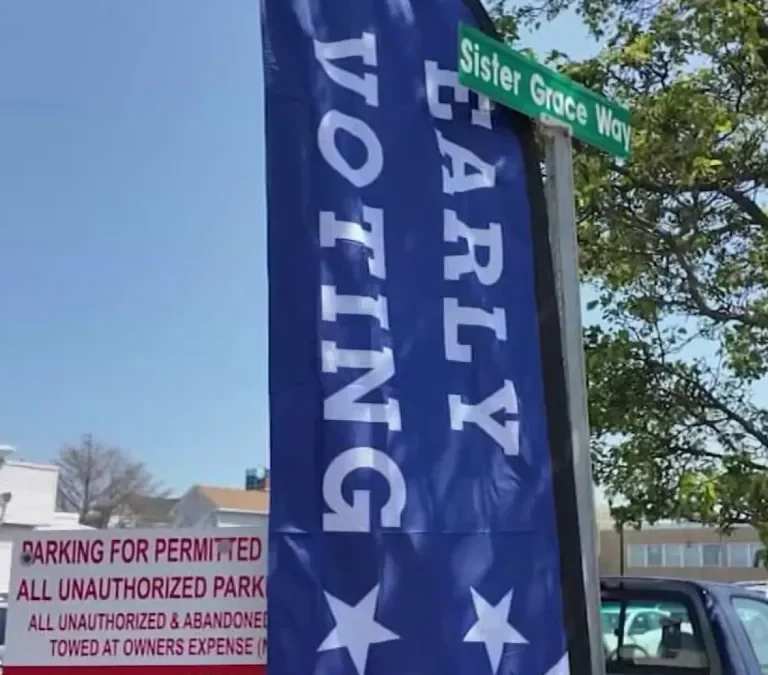
New Jersey’s Congressional Primary Season Officially Begins as Early In-Person Voting Opens Across the State

New Jersey’s 2026 congressional primary season officially entered a critical new phase today as early in-person voting locations opened statewide, launching what is expected to become one of the most closely watched and politically consequential midterm election cycles the state has experienced in years. Voters across New Jersey can now begin casting ballots ahead of the June primary elections that will ultimately determine which Democratic and Republican nominees advance into the high-stakes November congressional contests.

The opening of early voting marks far more than a procedural milestone in the election calendar. It represents the beginning of an intense final stretch in a political cycle already defined by aggressive campaigning, ideological battles, rapidly escalating advertising wars, competitive district-level races, and mounting national attention focused squarely on New Jersey’s congressional map.

With control of the U.S. House continuing to hang on a razor-thin margin nationally, several New Jersey congressional districts are now viewed as major battlegrounds capable of influencing the broader balance of power in Washington. Political strategists from both parties are pouring enormous financial and organizational resources into the state as primary voters prepare to shape the general election landscape that will unfold later this fall.

The start of early voting also reflects the continuing transformation of how New Jersey residents participate in elections. What was once a system overwhelmingly centered around traditional Election Day turnout has evolved into a far more extended voting process involving early in-person voting, vote-by-mail participation, expanded ballot access, and prolonged campaign mobilization strategies. Campaigns now operate under entirely different timelines, with candidates increasingly treating the opening of early voting as the functional beginning of the final election push rather than merely a preliminary administrative step.

Across New Jersey, county election officials have spent weeks preparing polling locations, staffing operations, processing mail ballots, updating voter systems, and coordinating security measures ahead of what many expect to be unusually strong turnout for a midterm primary cycle. Political organizations on both sides have simultaneously intensified outreach operations aimed at persuading undecided voters and maximizing turnout among reliable supporters before Election Day arrives.

This year’s congressional primary environment is unfolding against an especially volatile political backdrop. National debates over immigration, inflation, reproductive rights, federal spending, public safety, healthcare costs, education policy, energy development, and the future direction of both major political parties are all feeding directly into local New Jersey races. Candidates throughout the state are attempting to balance district-specific issues with broader national political messaging as they compete for increasingly polarized electorates.

Several districts are already attracting substantial statewide and national attention due to the competitiveness of their primaries. Democratic contests in multiple congressional districts have become especially intense, featuring ideological divisions between progressive and moderate factions, disputes over electability, clashes regarding immigration policy and federal enforcement, and growing tensions surrounding campaign financing and outside political spending. Republican primaries meanwhile continue reflecting broader national debates over party identity, populism, institutional conservatism, and alignment with national leadership figures.

The opening of early voting effectively shifts these campaigns from persuasion-heavy messaging toward turnout-focused operations. Campaigns now face the reality that ballots are actively being cast, meaning every day between now and primary day carries heightened urgency. Advertising, endorsements, public appearances, grassroots organizing, social media messaging, and voter outreach efforts are all expected to accelerate dramatically over the coming days.

The increasingly nationalized nature of congressional politics has also elevated the importance of New Jersey’s primary contests well beyond state borders. National political committees, advocacy organizations, labor unions, business groups, ideological PACs, and independent expenditure organizations are closely monitoring races throughout the state, particularly in districts considered vulnerable or potentially competitive in November. Outside spending is expected to intensify further as early voting progresses and polling data sharpens.

For voters themselves, the expansion of early voting continues reshaping civic participation habits statewide. Supporters of early voting argue that the system improves accessibility, reduces scheduling barriers, increases flexibility for working families, and allows broader participation among residents who may struggle to vote on a single designated Election Day. Critics, however, continue raising concerns nationally regarding prolonged election calendars, campaign misinformation cycles, and the operational complexity associated with extended voting periods.

Regardless of those debates, early voting has now become a firmly established component of New Jersey’s electoral infrastructure. Campaigns increasingly build entire operational strategies around banking votes early, identifying turnout patterns in real time, and adjusting messaging dynamically as ballots are cast throughout the voting window.

This year’s congressional races are also unfolding during a period of major political transition inside New Jersey itself. Redistricting changes, demographic shifts, suburban political realignment, evolving voter coalitions, and changing turnout dynamics continue reshaping the state’s political landscape. Once reliably predictable districts are becoming more competitive, while some historically contested regions are hardening politically in new directions.

Suburban voters remain especially central to many of the state’s most competitive races. Concerns surrounding affordability, taxes, housing costs, transportation infrastructure, healthcare access, public education, and economic stability are likely to play enormous roles in determining turnout patterns and candidate performance across multiple congressional districts. At the same time, younger voters, immigrant communities, urban turnout blocs, and independent voters are expected to significantly influence several closely watched primary outcomes.

The broader atmosphere surrounding the 2026 midterm cycle has also become increasingly charged nationally as both parties frame the election as a referendum on the country’s direction. That intensity is spilling directly into New Jersey’s congressional contests, where candidates are frequently tying local campaigns to larger national narratives regarding democracy, economic policy, immigration enforcement, institutional trust, public accountability, and federal governance.

Election officials throughout the state are encouraging voters to confirm polling locations, review voting procedures, and familiarize themselves with ballot options as turnout activity begins increasing. Campaigns meanwhile are entering what is traditionally considered the most operationally important period of the election cycle, where organization, turnout execution, voter contact operations, and ground-game effectiveness often become decisive.

As early in-person voting officially begins, New Jersey’s congressional primaries now move from speculation into active electoral reality. Ballots are being cast, campaigns are intensifying, outside groups are escalating involvement, and the state’s political future is beginning to take shape in real time. Over the coming days and weeks, New Jersey voters will help determine not only the nominees who advance into November’s general elections, but potentially the broader balance of power in Congress itself as one of the nation’s most politically watched states moves deeper into a pivotal midterm season.

New Jersey Supreme Court Reshapes Auto Injury Litigation With Major PIP Ruling on Future Medical Expenses

The New Jersey Supreme Court has issued a major decision that could significantly alter how automobile injury lawsuits are litigated across the state for years to come, clarifying that future medical expenses covered under Personal Injury Protection insurance cannot be presented to juries during personal injury trials as long as those benefits remain available within a claimant’s coverage limits. The unanimous ruling in Lakita D. Murray v. Christopher B. Punina delivers one of the most important recent interpretations of New Jersey’s no-fault auto insurance framework and reinforces the state judiciary’s continuing effort to preserve the original structure and intent behind New Jersey’s complex PIP system.

The decision arrives at a critical moment for New Jersey’s legal, insurance, and healthcare sectors as courts continue grappling with the growing costs of automobile injury litigation, rising medical treatment expenses, expanding jury awards, and the increasingly complicated interaction between insurance coverage and tort-based recovery. By firmly defining future medical expenses as “collectible” under the state’s automobile insurance statute when PIP benefits remain available, the Court has now narrowed the scope of economic damages plaintiffs may present during trial in many motor vehicle injury cases.

At the center of the case was plaintiff Lakita Murray, who sustained injuries in a 2016 automobile accident while riding as a passenger in a vehicle involved in a collision. Following the accident, Murray obtained Personal Injury Protection benefits through the New Jersey Property-Liability Insurance Guaranty Association under the Unsatisfied Claim and Judgment Fund. That coverage entitled her to up to $250,000 in medical expense benefits under New Jersey’s no-fault insurance structure, and the medical treatment she received prior to trial did not exhaust those available benefits.

The legal dispute ultimately evolved into a broader question with major statewide implications: whether anticipated future medical treatment costs that had not yet been incurred could still be considered “collectible” under New Jersey’s automobile insurance laws and therefore barred from being introduced at trial.

Murray’s medical expert testified that her future medical treatment could cost anywhere between $42,000 and $160,000. A jury ultimately awarded her $250,000 in non-economic damages along with an additional $100,000 specifically for future medical expenses. However, the Appellate Division later reversed that portion of the judgment, concluding that the future treatment expenses should never have been presented to the jury because they fell within available PIP coverage.

The New Jersey Supreme Court has now affirmed that interpretation in a decision expected to reverberate throughout personal injury litigation statewide.

Writing on behalf of the Court, Justice Douglas Fasciale concluded that future medical expenses which remain payable through available PIP coverage limits are legally considered “collectible” under New Jersey statute N.J.S.A. 39:6A-12 and therefore cannot be introduced as evidence during automobile negligence trials against alleged tortfeasors.

The Court’s reasoning centered heavily on the language and legislative intent behind New Jersey’s No-Fault Act, which was designed decades ago to move medical expense disputes away from prolonged fault-based litigation and instead route those costs through first-party insurance coverage systems. According to the Court, interpreting the statute narrowly to exclude future medical expenses simply because treatment had not yet occurred would undermine the foundational structure of New Jersey’s entire no-fault insurance framework.

The opinion emphasized that the Legislature intentionally used broad language when drafting the statute, specifically choosing the term “collectible” rather than limiting exclusion only to expenses already paid or previously incurred. The Court concluded that if future treatment is reasonably expected to be covered by available PIP benefits, then those costs are by definition collectible under the statute’s meaning.

That distinction may appear technical on the surface, but its practical consequences for litigation strategy, insurance exposure, settlement negotiations, and jury trials are enormous.

For plaintiffs’ attorneys, the ruling substantially limits the ability to present certain categories of anticipated medical damages to juries when PIP coverage remains intact. Future surgeries, rehabilitation costs, scar revision procedures, therapeutic care, and other anticipated medical expenses may now be excluded from trial evidence if those costs fall within available PIP limits. That restriction could significantly reduce the size of economic damage claims presented during many automobile negligence trials throughout New Jersey.

For defense attorneys and insurance carriers, the ruling provides greater predictability and potentially narrows exposure to overlapping medical damage awards. The Court specifically warned against interpretations that could effectively create duplicative recovery situations where plaintiffs recover expenses from both first-party PIP coverage and separate tort litigation involving the same future treatment costs.

The Court also tied its reasoning directly to the broader legislative purpose behind New Jersey’s no-fault insurance structure. Under the state’s system, PIP coverage was created specifically to ensure that medical expenses resulting from automobile accidents would generally be handled quickly and efficiently through insurance coverage rather than becoming prolonged courtroom battles over fault and damages. Allowing future medical expenses covered by available PIP benefits to be litigated separately in tort actions, according to the Court, would gradually erode that system and shift medical cost disputes back into traditional negligence litigation.

Importantly, however, the ruling does not completely eliminate the possibility of recovering future medical expenses in automobile injury cases. The Court strongly suggested that once PIP benefits are exhausted, future treatment costs could still potentially become recoverable in appropriate cases. That nuance is expected to become a major focus in future litigation as attorneys and courts continue defining exactly where those boundaries exist.

The decision is also likely to affect settlement negotiations across the state. Attorneys evaluating the value of motor vehicle injury claims will now need to account more carefully for available PIP coverage when calculating potential trial exposure. Cases involving catastrophic injuries or treatment costs exceeding PIP limits may continue producing substantial economic damage claims, while cases with future treatment expenses falling comfortably within coverage limits may now face narrower recoverable damage ranges during trial.

Beyond its immediate legal implications, the ruling highlights the increasingly complex economic pressures shaping New Jersey’s automobile insurance environment overall. Medical inflation, rising healthcare costs, expanding treatment technologies, and growing litigation expenses have all intensified pressure on the state’s no-fault system for years. Courts are increasingly being asked to interpret statutes written decades ago within a dramatically different medical and economic landscape.

The Murray decision therefore represents more than simply a technical procedural ruling. It is part of a larger judicial effort to define how New Jersey’s no-fault insurance system operates in practice amid evolving litigation strategies and rising economic pressures.

The case also underscores how central PIP disputes have become within New Jersey’s broader legal ecosystem. Questions involving medical necessity, treatment authorization, reimbursement limits, future care projections, coverage exhaustion, and economic loss recovery continue generating extensive litigation statewide. The Supreme Court’s latest clarification now provides trial courts with stronger guidance regarding the admissibility of future medical evidence when available insurance benefits remain accessible.

For accident victims, attorneys, insurers, healthcare providers, and trial courts alike, the ruling will almost certainly influence litigation strategy moving forward. Plaintiffs may face greater scrutiny regarding remaining PIP coverage before introducing future treatment projections, while defense teams are likely to challenge future medical damage evidence more aggressively in cases involving available benefits.

The decision ultimately reinforces a core principle underlying New Jersey’s no-fault system: medical expenses arising from automobile accidents are intended, whenever possible, to remain within the insurance framework designed to absorb them rather than becoming expanded battlegrounds for jury verdicts in civil negligence trials.

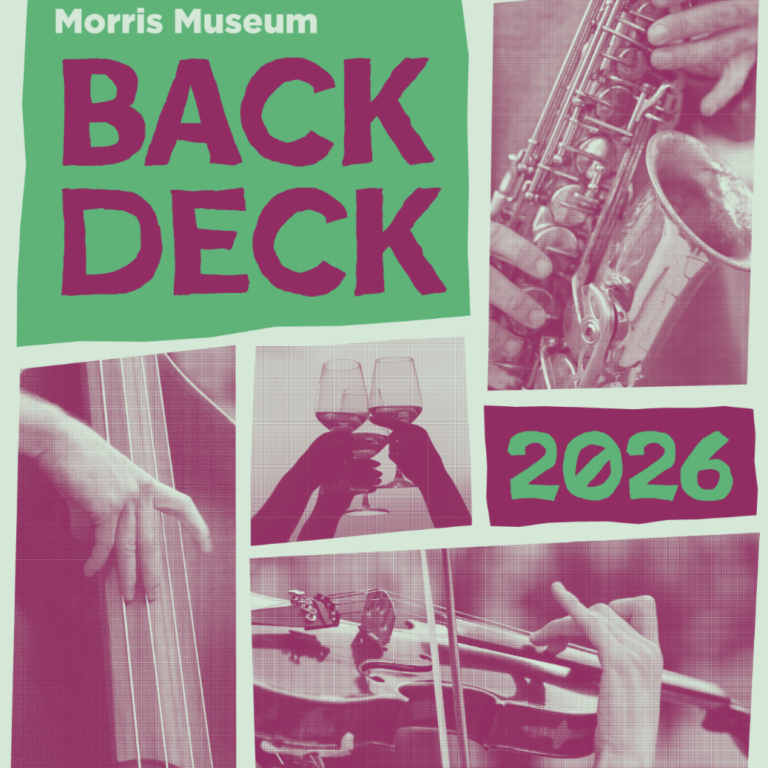
The Morris Museum’s Back Deck Returns for 2026 With Its Most Ambitious Season Yet, Transforming Summer Nights in New Jersey Into a Full-Scale Cultural Experience

There are summer concert series, and then there are experiences that slowly evolve into defining cultural traditions for an entire region. Over the past several years, the Morris Museum’s celebrated Back Deck series has transformed from an innovative outdoor performance concept into one of New Jersey’s most distinctive artistic destinations, creating an atmosphere where world-class music, open-air elegance, community gathering, visual art, food, conversation, and summer nightlife all converge on a rooftop unlike anywhere else in the state. Now, the Back Deck returns for 2026 with what may be its most ambitious and fully realized season to date — a sweeping lineup of acclaimed performers paired with immersive new experiences that further cement the series as one of the premier outdoor arts events in the Northeast.

Set atop the Morris Museum in Morristown, the Back Deck has become synonymous with sophisticated but relaxed summer evenings where audiences arrive carrying folding chairs, picnic baskets, charcuterie boards, wine, desserts, and anticipation for performances that span jazz, chamber music, Latin music, orchestral works, swing, soul, contemporary fusion, and globally inspired artistic collaborations. Since launching in 2020, the series has hosted more than 72 performances, welcomed over 11,000 attendees, and received widespread praise from both regional and national arts communities for redefining what an outdoor concert series can become.

What separates the Back Deck from countless other seasonal concert offerings is not simply the quality of the musicians, although the 2026 roster certainly delivers on that front. The true distinction lies in the environment itself. The series never feels like a traditional concert venue. It feels curated. Intentional. Cinematic. Audiences are not shuffled into anonymous seats beneath fluorescent lighting or buried inside oversized amphitheaters. Instead, they become active participants in an elevated communal experience where music unfolds beneath the open sky against the backdrop of sunset, warm summer air, and the relaxed intimacy of rooftop gathering culture.

For 2026, the Morris Museum is expanding that philosophy significantly by introducing new immersive experiences that push the Back Deck beyond music programming alone and further into the territory of multidisciplinary cultural destination. Among the most exciting additions are exclusive exhibition tours connected directly to the museum’s major outdoor art installation, Common Ground: NJ Artists Think Monumental. On June 11 and July 11, ticket holders will gain access to guided exhibition experiences that deepen the connection between the museum’s visual arts programming and the live musical performances taking place later that evening. Rather than functioning as separate entities, the visual arts and concert components are now intentionally intertwined, creating a fuller artistic immersion for attendees.

Another major addition this season involves elevated culinary integration through a special menu created in partnership with Gary’s Wine & Marketplace. Unlike standard venue concessions, audience members will now be able to enjoy curated food selections delivered directly to their reserved seating blocks during performances. The result pushes the Back Deck experience even further toward the atmosphere of a sophisticated European summer arts festival where dining, conversation, and performance coexist naturally rather than functioning as isolated activities.

The season will also feature a uniquely interdisciplinary artistic collaboration during Lynette Sheard’s August 29 performance, Echoes of Bird & Dinah, where acclaimed muralist and public artist Monet Sheard will create a live painting throughout the concert itself. The inclusion of live visual art creation during a jazz performance exemplifies the broader identity the Back Deck has embraced — not simply presenting concerts, but building immersive evenings centered around artistic interaction and atmosphere.

At the core of the 2026 season remains a remarkably diverse and ambitious lineup that balances internationally recognized performers, returning audience favorites, rising contemporary artists, genre-bending collaborations, and uniquely curated thematic programs. The season opens June 11 with the acclaimed Telegraph Quartet, a chamber ensemble praised by the San Francisco Chronicle as “an incredibly valuable addition to the cultural landscape.” Winners of both the Walter W. Naumburg Chamber Music Award and the Fischoff Chamber Music Competition Grand Prize, the quartet brings technical brilliance and emotional nuance that immediately establishes the artistic caliber of the summer ahead.

On June 20, legendary pianist and arranger Nat Adderley Jr. arrives with his quartet, bringing decades of musical storytelling shaped by his iconic work alongside Luther Vandross. Adderley’s performances carry a unique blend of jazz sophistication, gospel-rooted warmth, and lyrical elegance that aligns perfectly with the intimate rooftop environment the Back Deck cultivates.

The early July programming introduces one of the season’s breakout vocal talents as Alexis Morrast takes the stage July 2. A two-time Apollo winner whose voice carries maturity and emotional depth far beyond her years, Morrast represents the kind of emerging artist the Back Deck has become increasingly known for spotlighting before broader mainstream recognition arrives.

July 9 marks one of the season’s most historically resonant performances as the Baroque Orchestra of New Jersey presents a special America’s 250th-themed concert featuring Maestro Robert Butts’ Lafayette Suite, commissioned specifically to celebrate Morristown’s deep historical ties to the nation’s founding era. Featuring works by Haydn, Handel, Mozart, William Billings, and music familiar to late eighteenth-century American audiences, the evening blends historical scholarship with live orchestral artistry in a setting uniquely suited for reflective summer performance.

Only two days later, the series pivots dramatically stylistically with ArcoStrum on July 11, perhaps one of the season’s boldest genre-defying presentations. Combining the tango innovations of Astor Piazzolla, Vivaldi’s Four Seasons, Chinese traditional instruments including the dizi and erhu, classical guitar, electric guitar, and even modern instrumental rock influences inspired by Polyphia, the performance represents the increasingly boundaryless direction contemporary live music programming is embracing.

Throughout the remainder of July and August, the season continues unfolding like a carefully curated survey of global musical traditions and contemporary artistry. Amani’s tribute to Burt Bacharach on July 16 promises lush harmonies and reimagined interpretations of timeless pop standards, while the Orpheus Chamber Players return July 25 for Nocturnal Serenade, blending famous quartets and trios inspired by forests, insects, and the natural world.

August becomes especially rich with jazz, soul, Latin rhythms, funk, and swing influences. Master percussionist Little Johnny Rivero brings Afro-Caribbean energy and Latin jazz intensity on August 1, followed by Lance Bryant & SHOUT on August 6, whose fusion of jazz, gospel, and blues channels spiritual uplift alongside improvisational fire. Two nights later, The Fumos arrive with a horn-heavy celebration of 1970s funk, soul, rock, and jazz classics spanning artists like Kool & The Gang, Stevie Wonder, Steely Dan, and Average White Band.

The jazz programming deepens further throughout August with GRAMMY-winning New Jersey drummer Evan Sherman returning August 13 alongside special guests, followed by the soulful and deeply expressive artistry of Grammy-nominated vocalist Carla Cook on August 20. Canadian trumpeter and vocalist Bria Skonberg arrives August 26 bringing a dazzling combination of technical virtuosity, charismatic performance energy, and contemporary jazz innovation that has made her one of the most celebrated artists in modern traditional jazz revival circles.

The emotionally rich August 29 performance featuring Lynette Sheard, legendary bassist John Lee, and live painter Monet Sheard may ultimately become one of the season’s most multidimensional evenings. Celebrating the music of Charlie Parker and Dinah Washington while visual art unfolds simultaneously beside the stage, the performance embodies the Back Deck’s broader evolution into interdisciplinary arts presentation.

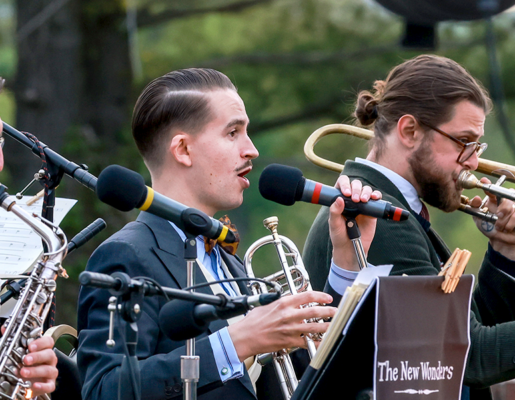
September closes the season with two especially atmospheric programs. Orpheus Chamber Players return September 3 for Night Revels, blending works by Beethoven, Dvořák, Valerie Coleman, Paquito d’Rivera, and Darius Milhaud in a globally inspired evening of woodwind virtuosity and dance-centered storytelling. Finally, on September 10, Blanc Après Labor Day featuring Mike Davis and the New Wonders transforms the rooftop into a roaring Jazz Age celebration complete with hot jazz standards, vintage elegance, and prohibition-era atmosphere designed as one final glamorous farewell to summer.

What becomes increasingly clear when examining the full scope of the 2026 season is that the Back Deck is no longer simply an outdoor concert series. It has evolved into a seasonal cultural ecosystem. Music remains central, but visual arts, culinary presentation, social gathering, fashion, historical storytelling, and immersive atmosphere now all function together as equally important components of the experience.

In a state overflowing with summer entertainment options, the Back Deck has carved out something genuinely distinctive by refusing to settle for formula. Instead of chasing sheer scale, it prioritizes intimacy. Instead of focusing solely on nostalgia, it balances tradition with innovation. Instead of presenting concerts as isolated performances, it builds complete evenings around artistic immersion and communal experience.

That evolution is precisely why the Back Deck has become one of New Jersey’s most compelling summer cultural traditions. It understands that audiences increasingly want more than passive entertainment. They want atmosphere. Connection. Discovery. Memory-making. They want nights that feel transportive rather than transactional.

The 2026 season appears fully prepared to deliver exactly that.

Blanc Aprés Labor Day with Mike Davis and the New Wonders

0

“Blanc Après Labor Day” Brings the Roaring Twenties Back to Life as Mike Davis and the New Wonders Transform the Morris Museum’s Back Deck Into a Jazz Age Celebration

September 10 @ 7:30 PM 11:30 PM

As summer slowly begins its final descent and Labor Day fades into memory, the Morris Museum’s celebrated Back Deck concert series is preparing one final elegant toast to the season with a performance designed to transport audiences nearly a century backward into the golden age of American nightlife, jazz clubs, dance halls, and prohibition-era sophistication. On Thursday, September 10, 2026, the Back Deck welcomes Mike Davis and the New Wonders for Blanc Après Labor Day, a spirited evening devoted to the glamour, energy, and timeless musical brilliance of the Jazz Age.

Part concert, part cultural time machine, and part rooftop celebration beneath the late-summer New Jersey sky, Blanc Après Labor Day promises far more than nostalgic novelty. The performance is positioned as a fully immersive tribute to the roaring musical landscape of the 1920s and early swing era, reviving not only the sounds of classic hot jazz but the atmosphere, elegance, style, and communal joy that originally made the music revolutionary. Audience members are encouraged to lean fully into the spirit of the evening, arriving in linen, seersucker, white attire, and vintage-inspired fashion as the Morris Museum rooftop transforms into something resembling an elevated Manhattan speakeasy from another era.

In many ways, the concert feels perfectly suited for the evolving identity of the Back Deck series itself. Since launching in 2020, the Morris Museum’s rooftop venue has steadily become one of the most distinctive live music experiences anywhere in New Jersey, blending world-class performance with relaxed social atmosphere, scenic outdoor staging, and unusually intimate audience interaction. What initially emerged as an innovative outdoor performance solution quickly developed into a defining regional arts destination that now regularly attracts major jazz artists, chamber ensembles, vocalists, global musicians, and interdisciplinary performers throughout the summer season.

More than 72 performances and over 11,000 attendees later, the Back Deck has become synonymous with evenings that feel simultaneously sophisticated and accessible. Audiences arrive early carrying folding chairs, wine, charcuterie boards, picnic dinners, and desserts while settling into reserved rooftop seating blocks overlooking the surrounding landscape as live music unfolds against sunsets and open skies. Unlike rigid concert hall environments that sometimes place emotional distance between performers and audiences, the Back Deck encourages a more communal and immersive atmosphere where the audience becomes part of the experience itself.

Blanc Après Labor Day appears built specifically for that environment because Jazz Age music was never intended to exist as static museum material. This was social music. Dance music. Celebration music. Music that once poured from crowded Harlem clubs, Manhattan hotel ballrooms, hidden speakeasies, riverboats, neighborhood dance halls, and smoky basement bars during one of the most culturally transformative periods in American history.

At the center of the evening stands Mike Davis, a trumpeter whose artistry has earned increasing recognition among jazz historians, traditional swing enthusiasts, and younger audiences rediscovering the emotional immediacy of early American jazz styles. Described by the Wall Street Journal as an “eloquent trumpet prodigy,” Davis has built a reputation not merely for technical excellence, but for his uncanny ability to channel the emotional atmosphere and tonal language of classic jazz eras without sounding artificial or imitative.

That distinction matters enormously. Many contemporary revivalist acts fall into the trap of treating vintage jazz as reenactment rather than living music. Davis approaches the tradition differently. His playing does not feel like parody or historical cosplay. Instead, it feels deeply inhabited. There is emotional realism within the phrasing, rhythmic looseness, tonal warmth, and conversational spontaneity that defined the original jazz pioneers whose recordings continue influencing generations of musicians nearly a century later.

A graduate of the Manhattan School of Music, Davis began studying trumpet at age nine under Jerry Oram in Seattle before later continuing his development with the legendary Laurie Frink during his collegiate years. Both mentors encouraged his fascination with early jazz traditions, an interest that would ultimately shape the trajectory of his career in profound ways. Rather than chasing more commercially dominant contemporary jazz trends, Davis immersed himself in the rhythmic language, tonal phrasing, and emotional atmosphere of early American swing and hot jazz.

That dedication helped him quickly become one of the central younger figures within New York City’s thriving traditional jazz revival scene. Today, he performs regularly throughout the city both as leader of the New Wonders and alongside respected acts including Dandy Wellington, Emily Asher’s Garden Party, Glenn Crytzer, Terry Waldo, Dan Levinson, Baby Soda, and numerous other artists devoted to preserving and evolving vintage jazz traditions for contemporary audiences.

Davis has also become a familiar presence at the famed jam sessions at Mona’s Bar, one of the city’s most important gathering spaces for traditional jazz musicians. That environment is significant because jam session culture remains central to understanding authentic jazz tradition itself. Jazz developed through live communal interaction, spontaneous collaboration, rhythmic experimentation, and collective improvisation. Musicians learned not simply through formal instruction but through shared performance spaces where styles evolved organically in real time.

That spirit of communal spontaneity appears likely to define Blanc Après Labor Day as well. While the evening promises familiar standards and beloved Jazz Age classics, the emotional power of live traditional jazz always emerges through interpretation rather than strict replication. The New Wonders are not recreating history mechanically. They are reviving the emotional electricity that once made these songs feel urgent, dangerous, joyful, romantic, and culturally transformative.

The title of the event itself cleverly captures both seasonal transition and Jazz Age elegance. “Blanc Après Labor Day” humorously references the old fashion rule warning against wearing white after Labor Day while simultaneously embracing the exact opposite philosophy. Instead of quietly surrendering summer, the concert becomes a final glamorous rooftop celebration of warmth, style, music, and collective enjoyment before autumn fully arrives.

That aesthetic pairing of fashion and music is not accidental. During the original Jazz Age, visual style and musical culture were deeply intertwined. Jazz was modernity. It represented urban sophistication, rebellion against social rigidity, youthful energy, and rapidly evolving cultural identity. Clothing, nightlife, dance, and music all became interconnected expressions of changing American social life. Events like Blanc Après Labor Day succeed because they understand that the music itself was never isolated from the larger atmosphere surrounding it.

The Morris Museum’s rooftop venue amplifies that feeling beautifully. As audiences gather beneath September skies dressed in white linen and summer evening attire while hot jazz fills the air, the environment itself becomes part of the storytelling. The music does not merely play in the background. It shapes the emotional architecture of the evening.

Importantly, the concert also reflects a broader cultural resurgence surrounding traditional jazz and swing-era music among younger audiences. Across New York, New Jersey, Chicago, and other major cultural centers, vintage jazz scenes have experienced notable revival over the past decade as younger musicians and listeners rediscover the rhythmic vitality, improvisational freedom, and communal joy embedded within early American jazz traditions. In an increasingly digital and fragmented entertainment landscape, live traditional jazz offers something uniquely physical and emotionally immediate.

You hear breath inside brass instruments. You hear rhythmic conversation between players. You hear swing not as abstract concept but as something physically felt throughout the body. That visceral energy explains why even audiences unfamiliar with specific compositions often respond instinctively to great traditional jazz performances.

Blanc Après Labor Day is likely to tap directly into that emotional immediacy. The concert’s programming promises both famous favorites and overlooked gems from the jazz age, allowing audiences to experience not just iconic standards but lesser-known material that reveals the astonishing richness and diversity of early twentieth-century American music. Jazz, swing, ragtime, blues, and early popular song all intersected during this period in ways that permanently reshaped global music culture.

For the Back Deck series itself, the evening also serves as another example of how successfully the Morris Museum has blurred the boundaries between formal arts presentation and immersive cultural experience. The venue has never operated like a traditional concert hall. Instead, it functions almost like a curated social gathering built around exceptional artistry. The result is a concert environment that feels both elevated and emotionally relaxed — sophisticated without pretension.

As summer edges toward its close, Blanc Après Labor Day appears poised to become one of the season’s defining rooftop events. Between the skyline atmosphere, the vintage elegance, the roaring trumpet lines, the communal energy, and the timeless spirit of Jazz Age celebration, the evening promises to transform the Morris Museum rooftop into a dazzling collision of music history and contemporary cultural revival.

For one final summer night in Morristown, audiences will have the chance to step directly into the heartbeat of another era — an era where swing ruled the night, dance floors stayed crowded until dawn, and jazz redefined what American music could become.

The Morris Museum

(973) 971-3700

View Organizer Website

The Back Deck at The Morris Museum

6 Normandy Heights Road , NJ
Morristown, New Jersey 07960 United States
+ Google Map
(973) 971-3700
View Venue Website

Orpheus Chamber Players: Night Revels

0

Orpheus Chamber Players Bring “Night Revels” to the Morris Museum’s Back Deck for a Global Celebration of Rhythm, Dance, and Chamber Music Under the Stars

September 3 @ 7:30 PM 11:30 PM

As the Morris Museum’s celebrated Back Deck concert series moves toward the close of another critically acclaimed summer season, one of the most ambitious and musically adventurous programs of 2026 is preparing to arrive in Northern New Jersey. On Thursday, September 3, audiences will gather atop the museum’s now-iconic rooftop venue for Night Revels, an immersive evening of chamber music performed by members of the legendary Orpheus Chamber Orchestra. More than a conventional classical concert, the performance promises a sweeping musical journey through centuries of rhythm, storytelling, folk traditions, jazz influence, and global cultural exchange, all unfolding beneath the late-summer sky in one of New Jersey’s most unique outdoor arts environments.

Scheduled for 7:30 PM as part of Back Deck 2026, Night Revels places woodwind virtuosity at the center of an expansive musical narrative that stretches from the courts of Renaissance Provence to the pulse of Afro-Cuban jazz, from European dance traditions to distinctly American musical innovation. The evening’s repertoire embraces composers whose works transformed folk melodies, vernacular rhythms, improvisation, and regional identity into sophisticated concert music while never losing the emotional immediacy that made those sounds powerful in the first place.

In many ways, the concert reflects the defining spirit of the Orpheus Chamber Orchestra itself. For more than fifty years, Orpheus has occupied a singular place in the global classical music world not simply because of technical excellence, but because of the radically collaborative philosophy underpinning the ensemble’s existence. Founded in 1972 by cellist Julian Fifer, Orpheus emerged during a cultural era increasingly skeptical of rigid hierarchies and institutional structures. Instead of following the traditional orchestral model centered around a permanent conductor, Orpheus developed as a collective built on rotating artistic leadership, deep ensemble communication, and shared interpretive responsibility.

That experiment could easily have collapsed under the practical demands of coordinating large-scale orchestral performance without centralized authority. Instead, it became one of the most respected and internationally recognized chamber orchestras in the world. Within its first decade, Orpheus established a home at Carnegie Hall, launched major international tours, and built a reputation for performances that combined technical precision with unusual emotional vitality and spontaneity. Critics and audiences alike became fascinated not only by how the orchestra sounded, but by how it functioned.

The reason that approach matters so deeply for a program like Night Revels is because the concert itself is fundamentally about conversation between musical traditions, cultural identities, and emotional landscapes. The absence of rigid top-down orchestral hierarchy within Orpheus often creates performances that feel more fluid, responsive, and intimate than conventional classical presentations. Individual musicians listen differently. Ensemble interaction becomes more conversational. Rhythmic phrasing breathes more naturally. Those qualities become especially powerful in repertoire centered around dance forms, folk traditions, jazz textures, and cross-cultural storytelling.

The Night Revels program is built precisely around those intersections. Rather than presenting a narrow stylistic survey, the concert embraces musical movement across geography, era, and genre. Audiences can expect a repertoire that weaves together the lyrical elegance of Ludwig van Beethoven, the colorful rhythmic experimentation of Darius Milhaud, the folk-inspired emotional richness of Antonín Dvořák, the contemporary fire and American innovation of Valerie Coleman, the theatrical energy of Jim Parker, and the explosive Afro-Cuban jazz influence of Paquito D’Rivera.

That range gives the evening unusual emotional scope. One moment may evoke aristocratic European dance halls centuries ago, while the next channels jazz-soaked American urban energy or Latin rhythmic intensity. Yet the connective tissue throughout the program is movement itself — physical movement, emotional movement, cultural movement, and the restless evolution of music across time.

Milhaud’s presence within the repertoire is especially fitting for a concert like this because few classical composers embraced jazz influence with greater enthusiasm during the early twentieth century. Deeply inspired by his travels and exposure to American jazz culture, Milhaud incorporated syncopation, rhythmic looseness, blues influence, and urban energy into compositions that challenged traditional European classical expectations. His work often feels simultaneously sophisticated and playful, elegant and restless.

Dvořák’s music similarly reflects a lifelong fascination with folk tradition and regional musical identity. His compositions consistently drew upon vernacular rhythms and melodic structures while transforming them into emotionally expansive concert works. During his years in America, Dvořák became deeply interested in the possibility of creating a distinctly American classical sound rooted in folk traditions, spirituals, and regional musical language. That artistic curiosity helped permanently reshape conversations surrounding national identity within classical composition.

Valerie Coleman’s inclusion adds another important contemporary dimension to the evening. Widely regarded as one of today’s most important American composers and performers, Coleman has built a career exploring the intersections of classical structure, African American musical traditions, urban rhythm, and modern social identity. Her music often carries kinetic momentum and emotional immediacy while remaining compositionally intricate and sophisticated. Within the context of Night Revels, her work represents not only contemporary innovation but the ongoing evolution of chamber music itself.

Then there is Paquito D’Rivera, whose music brings an entirely different kind of energy into the program. Few artists have fused classical virtuosity and Afro-Cuban jazz tradition more successfully than D’Rivera. His compositions pulse with rhythmic complexity, improvisational spirit, and vibrant melodic color while still demanding extraordinary technical precision from performers. Including his work within the program underscores the concert’s broader commitment to crossing stylistic boundaries without apology.

What ultimately emerges from all of this is a concert built around movement and transformation rather than static tradition. Night Revels does not treat chamber music as delicate historical artifact preserved behind glass. Instead, it presents classical performance as living cultural dialogue — dynamic, rhythmically alive, emotionally accessible, and globally interconnected.

The setting itself amplifies that feeling enormously. Since launching in 2020, the Back Deck series has steadily evolved into one of New Jersey’s defining summer arts experiences. Situated atop the Morris Museum parking deck, the venue creates an atmosphere that feels simultaneously casual and elevated, intimate and expansive. Audiences arrive carrying folding chairs, picnic baskets, wine, and small dinners while overlooking the surrounding landscape as live music unfolds beneath the open sky.

What initially emerged during the pandemic era as an adaptive outdoor performance concept has matured into a full-fledged cultural destination. Over 72 performances and more than 11,000 patrons later, the Back Deck now attracts audiences seeking experiences that feel both artistically serious and socially engaging. The venue has become known not only for booking acclaimed performers, but for fostering a distinctly communal atmosphere that traditional concert halls often struggle to achieve.

That atmosphere matters especially for chamber music. Unlike massive symphonic productions built around scale and spectacle, chamber performance thrives on nuance, communication, and intimacy. Audiences hear the subtle interactions between players. They observe musicians reacting physically to one another in real time. The open-air environment of the Back Deck allows those details to feel immediate rather than distant.

For Night Revels, that intimacy should become particularly powerful because the repertoire itself revolves around rhythm, storytelling, and emotional immediacy. The audience is not merely attending a formal recital. They are entering an environment where centuries of musical traditions collide organically within a living, breathing communal space.

The logistics surrounding the event continue the Back Deck’s signature format. Concertgoers are encouraged to arrive beginning at 6:30 PM to enjoy refreshments and picnics before the performance begins. Ticket options include reserved 8’x8’ seating blocks accommodating either one or two patrons, allowing groups to personalize their evening while maintaining the elegant rooftop atmosphere the series has become known for. In the event of inclement weather, performances move indoors to the Morris Museum’s Bickford Theatre.

Support from organizations including Gary’s Wine & Marketplace, the Morris County Tourism Bureau, Will and Mary Leland, and founding Lot of Strings donor F. Gary Knapp continues helping the series evolve into one of the region’s most distinctive arts initiatives. Their involvement reflects a broader recognition that events like Back Deck are not simply entertainment offerings, but meaningful contributions to New Jersey’s cultural identity and artistic infrastructure.

By the time Orpheus Chamber Players take the stage on September 3, the Back Deck season will already have delivered months of jazz, classical, global music, and contemporary performance. Yet Night Revels feels poised to stand apart because it so completely captures the larger mission of the series itself. It combines artistic excellence with accessibility, global perspective with local atmosphere, and historical depth with contemporary energy.

Under the stars above Morristown, audiences will experience chamber music not as distant formality, but as something vibrant, rhythmic, emotionally alive, and deeply human — a celebration of movement, storytelling, and collective artistry spanning centuries while remaining entirely present in the moment.

The Morris Museum

(973) 971-3700

View Organizer Website

The Back Deck at The Morris Museum

6 Normandy Heights Road , NJ
Morristown, New Jersey 07960 United States
+ Google Map
(973) 971-3700
View Venue Website

Lynette Sheard with John Lee

0

Lynette Sheard, John Lee, and a Living Celebration of Jazz History Headline the Morris Museum’s Back Deck Finale With “Echoes of Bird & Dinah”

August 29 @ 7:30 PM

The closing stretch of the Morris Museum’s acclaimed Back Deck 2026 concert season is set to deliver one of its most emotionally layered, culturally rich, and artistically ambitious evenings yet when Lynette Sheard returns to the stage on Saturday, August 29, 2026, for a special performance titled Echoes of Bird & Dinah. Far more than a standard tribute concert, the evening promises to become a sweeping multi-generational celebration of jazz history, vocal power, visual art, Newark cultural legacy, and the enduring influence of two giants whose birthdays happen to share the exact same date: Charlie Parker and Dinah Washington.

Set against the increasingly iconic backdrop of the Morris Museum’s elevated rooftop venue, the performance brings together a remarkable combination of talent. Sheard will be joined by legendary bassist John Lee, a towering figure in international jazz whose résumé spans decades of collaborations with some of the most important artists in modern music history. Simultaneously, accomplished New Jersey muralist and public artist Monet Sheard will create a live painting during the concert itself, transforming the evening into a hybrid experience where music and visual storytelling evolve together in real time.

What makes Echoes of Bird & Dinah particularly compelling is that it does not approach jazz history as distant nostalgia or museum-piece preservation. Instead, the concert appears designed to demonstrate how these musical traditions continue to breathe, evolve, and emotionally resonate through contemporary performers whose own artistry has been shaped by that lineage. In many ways, the entire structure of the evening reflects the original spirit of jazz itself — improvisational, collaborative, emotionally immediate, and deeply communal.

Lynette Sheard stands at the center of that vision. Long respected throughout New Jersey and the broader regional arts scene as one of the area’s most versatile and commanding vocalists, Sheard has built a career that extends far beyond conventional genre boundaries. Her work encompasses jazz, blues, gospel, soul, R&B, pop, theater, education, advocacy, and production, allowing her to move fluidly between musical worlds without ever sounding disconnected from any of them. That flexibility gives her performances unusual emotional depth because she approaches songs not merely as technical vocal exercises but as dramatic storytelling experiences.

Her background in theater has clearly shaped that instinct. Sheard’s stage credits include principal performances in productions such as Dreamgirls, Smokey Joe’s Cafe, and Ragtime, productions that demand emotional nuance, vocal range, and commanding stage presence simultaneously. Critics have long recognized that power, with Broadway World notably declaring that “she is fabulous with a voice that shakes the rafters.” Yet what makes Sheard especially effective in jazz settings is that she balances vocal strength with interpretive sensitivity. She understands restraint as well as force. She knows when to soar and when to let a lyric quietly linger.

That emotional intelligence becomes especially important when honoring artists as influential and stylistically distinct as Charlie Parker and Dinah Washington. Parker’s revolutionary improvisational brilliance transformed modern jazz forever, while Washington’s phrasing, emotional realism, and vocal sophistication permanently altered the possibilities of jazz and blues singing. Attempting to celebrate both artists within the same evening requires performers capable of navigating radically different emotional and musical terrain.

John Lee’s presence elevates the entire project even further. Within jazz circles, Lee occupies a rare level of respect not simply because of longevity but because of the extraordinary breadth of his career. From 1984 through 1993, he served as bassist for Dizzy Gillespie, performing and recording in multiple Gillespie ensembles including the Dizzy Gillespie Quintet, Dizzy Gillespie Big Band, and the Grammy Award-winning United Nation Orchestra. That alone would represent a historically significant career. Yet Lee’s influence extends well beyond those years.

Following Gillespie’s passing, Lee was personally entrusted by the Gillespie family to continue preserving and advancing Dizzy’s musical legacy through the creation of the Dizzy Gillespie All-Stars and related ensembles. Since then, Lee has performed around the globe while simultaneously building an extraordinary reputation as a Grammy-winning producer, engineer, label founder, and musical director. His collaborations read like a condensed encyclopedia of modern jazz and soul history, including work with Aretha Franklin, Sonny Rollins, McCoy Tyner, Roy Hargrove, James Moody, Miriam Makeba, and many more.

Importantly, Lee represents a direct living connection to the foundational generations of modern jazz innovation. Audiences attending Echoes of Bird & Dinah are not simply hearing reinterpretations filtered through academic distance. They are witnessing artists who carry authentic personal and professional relationships to the music’s living history itself. That depth matters because jazz remains one of the few art forms where oral tradition, mentorship, collaboration, and direct lineage still profoundly shape performance culture.

The addition of Monet Sheard’s live painting component gives the evening another fascinating dimension. Public art and live music have historically intersected in powerful ways, particularly within urban cultural movements, but it remains relatively rare to see visual art creation fully integrated into jazz performance environments in ways that feel organic rather than gimmicky. Monet Sheard’s artistic reputation makes the collaboration especially intriguing because her work consistently emphasizes emotional atmosphere, color storytelling, civic identity, and imaginative engagement with public space.

Based in West Orange, New Jersey, Monet has become increasingly recognized for large-scale installations that transform everyday environments into immersive visual experiences. Her acclaimed mural Imagine, created for West Orange’s Imagination Alley initiative, helped establish her as one of the region’s most compelling public artists. Additional installations at Newark Liberty International Airport and the Newark Visitors Center have further expanded her presence throughout the state’s evolving arts landscape.

Her live painting during the concert effectively turns the evening into a dialogue between sound and image. Rather than audiences simply observing a static performance, they will watch multiple forms of artistic interpretation unfold simultaneously. Jazz improvisation will meet visual improvisation. Musical atmosphere will become visual atmosphere. Rhythm, phrasing, emotional tension, and audience energy may all ultimately appear on canvas in real time.

That multidisciplinary approach perfectly aligns with the larger evolution of the Back Deck series itself. Since launching in 2020, the Morris Museum’s rooftop concert venue has steadily distinguished itself from more conventional outdoor concert experiences by curating performances that feel immersive, intimate, and culturally ambitious rather than merely recreational. What initially could have been dismissed as a temporary outdoor pandemic-era adaptation has evolved into one of New Jersey’s most distinctive arts destinations.

Now more than 72 performances and over 11,000 attendees later, the Back Deck has become a genuine part of the regional cultural landscape. Audiences arrive early carrying chairs, refreshments, picnic dinners, and wine while settling into personalized viewing areas before sunset performances begin. The atmosphere feels sophisticated without becoming rigidly formal. It allows world-class artistry to exist within environments that remain emotionally relaxed and socially engaging.

That balance is particularly important for jazz. Historically, jazz thrived in environments where conversation, atmosphere, improvisation, nightlife, social energy, and communal experience naturally coexisted. The Back Deck’s design unintentionally recaptures much of that spirit. Music unfolds beneath open skies rather than inside sealed auditoriums. Audiences engage with performances physically and emotionally rather than passively observing from distance.

Echoes of Bird & Dinah feels uniquely suited for that atmosphere because the evening itself is built around emotional warmth, celebration, memory, improvisation, and artistic dialogue. The timing adds another layer of resonance as well. August 29 marks the birthdays of both Charlie Parker and Dinah Washington, making the concert function not merely as tribute but as a kind of communal anniversary gathering honoring two artists whose influence continues shaping contemporary music across countless genres.

Parker’s revolutionary innovations permanently changed jazz improvisation, harmonic structure, and rhythmic complexity. Dinah Washington helped redefine jazz and blues vocal phrasing through emotional realism, conversational intimacy, and interpretive precision. Their influence reaches far beyond jazz itself, extending deeply into R&B, soul, rock, hip-hop, and contemporary vocal traditions. Nearly every modern vocalist and improviser operates within artistic territory they helped create.

The concert’s title, Echoes of Bird & Dinah, captures that beautifully because the influence of these artists truly does echo continuously through generations of musicians rather than remaining frozen within archival recordings. Sheard and Lee are not attempting impersonation. They are continuing conversation.

As the Back Deck season approaches its conclusion, the Morris Museum appears to have positioned this performance as both celebration and culmination. It combines jazz history, New Jersey artistry, global musical lineage, visual storytelling, and contemporary performance culture into a single evening that feels larger than any one genre classification. It reflects the increasingly sophisticated cultural programming emerging across New Jersey itself, where venues are no longer simply hosting performances but curating meaningful artistic experiences.

On August 29, audiences gathering atop the Morris Museum will not simply attend another summer concert. They will step into a living intersection of music history, storytelling, improvisation, visual art, and community — an evening where the voices of past legends resonate through contemporary artists still pushing the culture forward beneath the late-summer New Jersey sky.

The Morris Museum

(973) 971-3700

View Organizer Website

The Back Deck at The Morris Museum

6 Normandy Heights Road , NJ
Morristown, New Jersey 07960 United States
+ Google Map
(973) 971-3700
View Venue Website

Bria Skonberg

0

Bria Skonberg Brings Award-Winning Jazz Brilliance and Modern Swing Energy to the Morris Museum’s Back Deck 2026 Concert Series

August 26 @ 7:30 PM 11:30 PM

The modern jazz world is filled with technically gifted musicians, but only a select few possess the rare ability to bridge eras, generations, and audiences with genuine ease. Fewer still can simultaneously command a stage as a world-class instrumentalist, charismatic vocalist, accomplished songwriter, and engaging bandleader while making the music feel accessible to seasoned jazz purists and first-time listeners alike. That rare combination of sophistication, energy, and approachability defines Bria Skonberg, whose upcoming appearance at the Morris Museum’s Back Deck 2026 concert series is shaping up to become one of the signature jazz events of the New Jersey summer season.

Scheduled for Wednesday, August 26, 2026 at 7:30 PM, Skonberg’s performance continues the Back Deck’s remarkable evolution into one of the Northeast’s most compelling outdoor live music destinations. Over the last several years, the Morris Museum’s elevated rooftop concert venue has steadily developed a reputation for presenting internationally respected performers within an atmosphere that feels simultaneously elegant, relaxed, intimate, and culturally vibrant. For an artist like Skonberg, whose music thrives on audience connection, rhythmic vitality, and live interaction, the setting feels almost custom-built.

Skonberg arrives at the Back Deck carrying one of the most impressive résumés in contemporary jazz. A Juno Awards winner, ten-time DownBeat Rising Star recipient, recipient of the Society for the Preservation of the Great American Songbook’s Legend Award, and a 2025 nominee for the prestigious Académie du Jazz honors, Skonberg has become one of the defining voices of modern swing-infused jazz performance. Critics have consistently praised not only her musicianship but her ability to reinvigorate classic jazz traditions with fresh energy, personality, and modern perspective.

The acclaim surrounding her career has been strikingly consistent across both mainstream and specialist music circles. The The New York Times famously referred to her as the “shining hope of hot jazz,” while The Wall Street Journal described her as “one of the most versatile and imposing musicians of her generation.” Those descriptions are not exaggerated marketing language. They reflect a musician who has successfully balanced technical virtuosity with broad audience appeal in ways few contemporary jazz artists manage.

What makes Skonberg especially compelling is her refusal to treat jazz history like fragile museum material. Many artists working within traditional jazz vocabulary approach the genre with excessive reverence, preserving stylistic authenticity at the expense of spontaneity or emotional immediacy. Skonberg instead embraces the living spirit of jazz itself. Her performances channel the excitement, humor, energy, improvisation, and rhythmic joy that originally made swing and early jazz such culturally explosive forms of music in the first place.

As both a trumpeter and vocalist, Skonberg occupies a particularly unique artistic position. Jazz history contains legendary instrumentalists and legendary vocalists, but true dual-threat performers capable of excelling at both disciplines simultaneously remain relatively rare. The demands are enormous. Trumpet performance alone requires extraordinary breath control, endurance, precision, phrasing discipline, and technical mastery. Vocal interpretation demands emotional communication, lyrical sensitivity, rhythmic flexibility, and storytelling instinct. Skonberg moves fluidly between both worlds with remarkable confidence.

Her trumpet work combines classic swing-era influences with contemporary phrasing sophistication. There are echoes of traditional New Orleans energy, big-band swagger, and classic jazz vocabulary throughout her playing, yet her improvisational voice remains unmistakably modern. As a vocalist, she brings warmth, wit, rhythmic playfulness, and emotional intelligence to every performance. That versatility allows her concerts to unfold dynamically rather than feeling stylistically static.

Importantly, Skonberg’s artistry also reflects the broader resurgence of audience interest in jazz performance that feels joyful, energetic, and socially engaging rather than academically distant. Across the country, younger audiences and longtime jazz listeners alike have increasingly embraced artists capable of presenting sophisticated musicianship without sacrificing entertainment value or emotional accessibility. Skonberg has emerged as one of the most important figures within that movement because her performances remind audiences that jazz was originally dance music, social music, nightlife music, and communal music long before it became institutionalized as high art.

That energy should translate beautifully to the Back Deck environment, which has become one of New Jersey’s most distinctive outdoor cultural experiences. Since launching in 2020, the series has welcomed more than 11,000 attendees across over 72 performances, transforming the Morris Museum’s elevated rooftop parking structure into an unlikely but remarkably successful arts destination. Guests arrive early with chairs, wine, refreshments, and picnic setups before settling into personalized viewing spaces as sunset transitions into evening skyline atmosphere. The environment encourages conversation, relaxation, and communal experience before the first note is even played.

That atmosphere fundamentally changes how live music is experienced. Concerts become immersive summer evenings rather than rigidly formal performances observed from emotional distance. Audiences remain attentive yet relaxed. Musicians feel closer. Improvisation feels more conversational. Rhythm feels more physical. Swing feels more alive.

For Skonberg specifically, that setting aligns perfectly with her performance style because she thrives on audience interaction and emotional immediacy. Her concerts rarely feel stiff or overly rehearsed. Instead, they carry the loose sophistication of artists who deeply understand both the mechanics and spirit of live performance. She possesses the rare ability to make technically complex music feel effortless, welcoming, and celebratory.

Her appearance also reinforces the Back Deck’s increasingly ambitious curatorial vision. The 2026 season has already featured an eclectic range of chamber ensembles, jazz innovators, orchestral performers, Latin music projects, crossover artists, and genre-defying collaborations. Skonberg’s inclusion highlights the series’ understanding that jazz itself contains enormous stylistic diversity and emotional range. Her work sits comfortably between vintage swing traditions, contemporary jazz sophistication, vocal cabaret energy, and modern songwriting sensibility.

That stylistic openness has helped her build an unusually broad audience within the jazz world. Traditional jazz fans appreciate her respect for swing-era vocabulary and improvisational authenticity, while newer audiences respond to her charisma, stage presence, accessibility, and genre-fluid sensibility. She avoids the trap of reducing jazz into either nostalgic reenactment or abstract experimentation disconnected from audience experience.

Instead, Skonberg represents a much healthier and more sustainable artistic model for modern jazz performance — one where historical knowledge, technical mastery, and genuine entertainment value coexist naturally. That balance explains why she has become such a sought-after presence across festivals, concert halls, jazz clubs, and major international stages.

Her arrival at the Morris Museum also speaks to New Jersey’s increasingly important role within the broader live music ecosystem. For years, audiences often assumed that world-class jazz experiences required traveling into Manhattan or Philadelphia. Venues like the Back Deck have helped fundamentally shift that perception by presenting artists of international caliber within uniquely New Jersey cultural environments. Increasingly, the state is no longer functioning merely as a satellite audience market for neighboring cities but as a serious destination for sophisticated arts programming in its own right.

The practical structure surrounding the concert continues the Back Deck’s audience-friendly approach. Ticket blocks are available for either one or two attendees, allowing guests to create comfortable personalized viewing areas. Concertgoers are encouraged to arrive beginning at 6:30 PM to enjoy picnics and refreshments before the 7:30 PM start time. Should weather conditions require adjustment, performances relocate indoors to the Morris Museum’s Bickford Theatre while maintaining the evening’s programming.

The Back Deck’s continued growth has also been supported through strong donor and community partnerships, including backing connected to the Lot of Strings Concert Series, Gary’s Wine & Marketplace, and the Morris County Tourism Bureau. Those partnerships reflect the increasingly recognized cultural value the series contributes to New Jersey’s broader arts identity and regional tourism economy.

By the time Skonberg takes the stage on August 26, audiences will already have experienced an entire summer of acclaimed performances across the Back Deck season. Yet her appearance carries the distinct feeling of a celebratory late-summer centerpiece. Her music naturally captures the atmosphere of warm evenings, social gathering, rhythmic movement, and joyful musical exchange. Swing rhythms feel particularly alive outdoors. Brass resonates differently beneath open skies. Vocal phrasing carries emotional intimacy across summer air in ways indoor acoustics rarely replicate.

Ultimately, Bria Skonberg’s Back Deck performance represents far more than a single concert date on a seasonal calendar. It reflects the ongoing vitality of jazz itself — a genre constantly evolving while remaining rooted in groove, improvisation, storytelling, emotional connection, and communal experience. Skonberg embodies that balance beautifully. She honors the tradition without becoming trapped inside it, bringing technical brilliance, charismatic performance energy, and contemporary perspective into every note she plays and sings.

For one August evening atop the Morris Museum, the Back Deck will once again become exactly what the best live music spaces aspire to be: a place where artistry, atmosphere, audience connection, rhythm, sophistication, and pure musical joy merge together beneath the New Jersey summer sky.

The Morris Museum

(973) 971-3700

View Organizer Website

The Back Deck at The Morris Museum

6 Normandy Heights Road , NJ
Morristown, New Jersey 07960 United States
+ Google Map
(973) 971-3700
View Venue Website

Carla Cook

0

Grammy-Nominated Jazz Vocalist Carla Cook Brings Soulful Elegance and Emotional Depth to the Morris Museum’s Back Deck 2026 Concert Series

August 20 @ 7:30 PM 11:30 PM

The greatest jazz vocalists understand that interpretation is every bit as important as technical ability. Beautiful tone alone is never enough. What ultimately separates extraordinary singers from merely gifted performers is the ability to inhabit a lyric, reshape familiar melodies with emotional intelligence, and create the feeling that audiences are hearing a song unfold in real time rather than simply listening to a polished repetition of something already known. That rare quality defines the artistry of Carla Cook, whose upcoming appearance at the Morris Museum’s Back Deck concert series promises to deliver one of the summer’s most intimate and musically sophisticated evenings.

Scheduled for Thursday, August 20, 2026 at 7:30 PM, Cook’s performance arrives as part of the increasingly celebrated Back Deck 2026 lineup, a concert series that has rapidly evolved into one of New Jersey’s premier destinations for world-class live music under the open sky. Over the last several years, the Morris Museum’s elevated outdoor venue has built a reputation not only for booking extraordinary talent, but for pairing artists with an atmosphere uniquely capable of amplifying the emotional power of live performance itself. In the case of Carla Cook, that setting feels especially appropriate because intimacy has always been central to her artistry.

Cook’s voice carries a remarkable combination of sophistication, warmth, precision, and humanity. Her performances draw deeply from the traditions of jazz, gospel, rhythm and blues, and soul music while remaining unmistakably individual in phrasing and emotional approach. Audiences familiar with her work understand immediately that she is not interested in empty vocal gymnastics or over-sung theatrics. Instead, Cook approaches songs as living emotional narratives, uncovering subtle nuances within lyrics and melodies that many performers overlook entirely.

That ability has made her one of the most respected jazz vocalists of her generation. Across an acclaimed recording career and decades of live performance, Cook has consistently earned praise for her musical intelligence, elegant phrasing, and remarkable ability to move fluidly between swinging jazz standards, deeply soulful ballads, gospel-infused textures, and modern contemporary influences without ever sounding stylistically fragmented. Her voice possesses both technical control and emotional elasticity, allowing her to shift naturally between playful wit, romantic tenderness, spiritual reflection, and rhythmic sophistication.

Importantly, Cook’s artistry also reflects the broader evolution of jazz vocal performance itself. Jazz singers have historically occupied a uniquely challenging position within the genre because they must balance two competing artistic demands simultaneously. On one hand, they are expected to honor melody, storytelling, and lyrical communication. On the other, they must function as improvisers capable of interacting dynamically with instrumentalists and reshaping musical structures spontaneously during live performance. The finest jazz vocalists navigate those demands seamlessly, and Cook has long demonstrated mastery of that balance.

Her performances often feel conversational in the best possible sense. Rather than projecting outward mechanically, she creates the impression of genuine emotional exchange with audiences. That quality becomes especially powerful in intimate performance settings like the Back Deck, where the physical closeness between artist and audience enhances every nuance of phrasing, timing, and expression.

The Morris Museum’s Back Deck series has increasingly become one of New Jersey’s most culturally significant live music environments precisely because it encourages that kind of connection. Since launching in 2020, the series has welcomed more than 11,000 patrons while presenting over 72 performances featuring acclaimed jazz musicians, chamber ensembles, vocalists, orchestral artists, and genre-crossing performers. What distinguishes the series from traditional concert presentations is the atmosphere itself. Guests arrive early carrying chairs, refreshments, picnic spreads, and wine before settling into personalized viewing spaces atop the museum’s elevated rooftop deck. As evening light transitions into nightfall, performances unfold against a backdrop that feels both sophisticated and relaxed.

That environment dramatically changes the audience experience. Concerts no longer feel confined within rigid theatrical formality. Instead, they become immersive social evenings where music exists naturally within shared communal space. For jazz specifically, that atmosphere matters enormously because jazz has always thrived most powerfully within environments where listeners feel emotionally present rather than formally distant.

Carla Cook’s appearance also reinforces the Back Deck’s commitment to presenting artists whose work bridges multiple traditions within American music. Cook’s sound is deeply rooted in jazz vocabulary, yet gospel phrasing, soul inflection, and rhythm-and-blues warmth consistently shape her interpretations. That crossover sensibility reflects the actual historical development of jazz itself, which has always evolved through dialogue with adjacent genres rather than existing inside rigid stylistic boundaries.

Her ability to merge those influences so naturally gives her performances remarkable emotional accessibility without sacrificing musical sophistication. Experienced jazz listeners appreciate her phrasing precision, harmonic sensitivity, and rhythmic command, while audiences less familiar with jazz traditions respond instinctively to the emotional honesty and warmth in her delivery. That balance is extraordinarily difficult to achieve because many vocalists lean too heavily either toward technical complexity or toward commercial simplicity. Cook consistently manages to preserve both artistic integrity and emotional immediacy.

The emotional atmosphere surrounding her performances becomes even more compelling in outdoor summer settings like the Back Deck. Jazz ballads gain additional intimacy beneath evening skies. Up-tempo standards feel looser and more celebratory in open-air environments. Soul-infused grooves resonate differently when audiences are gathered socially rather than seated rigidly in darkened auditoriums. The combination of Cook’s interpretive depth and the Back Deck’s atmosphere creates the potential for a concert experience that feels simultaneously elegant and deeply personal.

The Morris Museum’s broader success with the Back Deck series also reflects something increasingly important within New Jersey’s evolving cultural identity. For decades, audiences throughout the state often looked toward New York or Philadelphia as the primary destinations for serious live arts experiences. That dynamic has shifted substantially in recent years as New Jersey venues, museums, and arts organizations have developed increasingly ambitious programming capable of standing confidently on its own merits. The Back Deck has become one of the clearest examples of that transformation.

Rather than functioning as a secondary regional alternative, the series now actively attracts internationally respected performers while cultivating a distinct atmosphere unavailable anywhere else in the region. The venue’s combination of artistic quality, architectural uniqueness, audience intimacy, and seasonal ambiance has allowed it to carve out an identity entirely its own. Artists frequently perform there not simply because it is another booking opportunity, but because the setting itself creates a genuinely memorable performance environment.

Cook’s appearance continues that trajectory. Her artistry aligns perfectly with the kind of emotionally intelligent, musically refined programming the Back Deck has increasingly championed. She represents a tradition of jazz vocal performance rooted not in spectacle, but in communication, storytelling, and nuanced emotional connection.

The practical structure surrounding the concert maintains the Back Deck’s now familiar audience-centered format. Tickets are sold in designated blocks accommodating either one or two attendees, allowing guests to create personalized seating areas for the evening. Patrons are encouraged to arrive beginning at 6:30 PM to enjoy picnics and refreshments before the 7:30 PM performance begins. In the event of inclement weather, performances transition indoors to the Morris Museum’s Bickford Theatre.

The continued growth and stability of the series has also been supported through major cultural partnerships and donor leadership, including contributions connected to the Lot of Strings Concert Series, Gary’s Wine & Marketplace, and the Morris County Tourism Bureau. That sustained investment reflects the growing recognition that events like the Back Deck are not simply entertainment offerings but important contributors to New Jersey’s broader cultural ecosystem.

Carla Cook’s performance arrives during a particularly strong era for jazz audiences overall. Across the country, there has been renewed appreciation for vocalists and musicians capable of balancing classic tradition with contemporary emotional relevance. Audiences increasingly seek live performances that feel authentic, human, and emotionally substantial rather than over-produced or disconnected. Cook’s artistry fits directly within that cultural moment because her performances prioritize sincerity, musicality, and emotional communication above all else.

For audiences attending the August 20 concert, the evening promises far more than a standard jazz recital. It offers an opportunity to experience one of contemporary jazz’s most expressive vocalists within one of New Jersey’s most distinctive live music settings. The combination of Cook’s soulful phrasing, emotional depth, and interpretive sophistication with the Back Deck’s relaxed summer atmosphere creates the kind of concert environment that lingers with audiences long after the final song concludes.

As the Morris Museum’s rooftop fills with evening light, conversation, and anticipation, Carla Cook will bring precisely the kind of artistry that defines why live jazz remains so enduringly powerful. Her music does not simply ask audiences to listen. It invites them to feel every lyric, every phrase, every rhythmic turn, and every emotional shade contained within the songs themselves. On a summer night designed for intimacy, reflection, groove, and connection, that invitation may become one of the most memorable musical experiences of the entire Back Deck 2026 season.

The Morris Museum

(973) 971-3700

View Organizer Website

The Back Deck at The Morris Museum

6 Normandy Heights Road , NJ
Morristown, New Jersey 07960 United States
+ Google Map
(973) 971-3700
View Venue Website

Evan Sherman

0

New Jersey’s Own Evan Sherman Returns to the Back Deck for a World-Class Summer Jazz Evening at the Morris Museum

August 13 @ 7:30 PM 11:30 PM

There are moments when a musician’s career trajectory moves so quickly that even longtime jazz audiences find themselves stopping mid-performance to fully process what they are witnessing. That phenomenon surrounds Evan Sherman right now. Although still only in his thirties, the New Jersey-born drummer, bandleader, arranger, and GRAMMY-winning performer has already assembled a résumé that many jazz musicians spend entire lifetimes attempting to build. On Thursday, August 13, 2026, Sherman brings that extraordinary momentum back home to New Jersey as part of the Morris Museum’s acclaimed Back Deck 2026 concert series for what promises to be one of the summer’s premier live jazz performances.

The concert immediately stands out as more than simply another stop on a seasonal outdoor schedule. Sherman’s return represents the intersection of New Jersey roots, elite contemporary jazz artistry, and the increasingly important role the Morris Museum’s Back Deck series now occupies within the state’s cultural landscape. Over the last several years, the Back Deck has evolved into one of New Jersey’s most respected outdoor performance environments, presenting artists who are not merely touring musicians, but major contributors shaping the future of jazz, chamber music, fusion, Latin music, and contemporary performance culture itself.

Sherman fits that mission perfectly because his career embodies both tradition and forward momentum simultaneously. His musicianship is deeply grounded in classic jazz vocabulary, yet his career path reflects the modern global reality of elite jazz performance in the twenty-first century. He is equally comfortable driving a small acoustic ensemble, powering a large jazz orchestra, supporting iconic legends, arranging for vocalists, or performing in front of massive international audiences across multiple continents.

What makes Sherman especially compelling for New Jersey audiences is the fact that his ascent feels genuinely local in origin while simultaneously international in scope. Before he became associated with some of the biggest names in contemporary jazz and vocal performance, Sherman was simply a young musician from New Jersey whose talent became impossible to ignore. That regional connection adds emotional weight to performances like this because audiences are not merely watching a touring artist stop through town. They are watching one of New Jersey’s own return after emerging onto the world stage.

Sherman began playing professionally as a teenager, a detail that immediately reveals the seriousness of his talent and discipline from an early age. Jazz drumming at a professional level requires far more than technical coordination or raw speed. It demands musical maturity, dynamic sensitivity, deep listening ability, rhythmic sophistication, stylistic versatility, and the capacity to elevate every musician sharing the stage. Great jazz drummers do not merely keep time. They shape atmosphere, control momentum, guide transitions, build tension, create release, and establish the emotional architecture of live performance itself.

Those qualities became evident quickly enough that Sherman earned a Presidential Scholarship to attend the Manhattan School of Music in 2011. Yet perhaps the most revealing detail about his rise is that before graduating in 2015, he had already been personally hired by towering jazz figures including Ron Carter, Roy Hargrove, Jimmy Heath, Branford Marsalis, Wynton Marsalis, Cyrus Chestnut, and John Lee.

That list alone places Sherman within extraordinarily rare company. These are not casual collaborations or brief industry encounters. They are endorsements from some of the most respected and discerning musicians in jazz history. In jazz culture, especially at the highest professional level, trust is everything. Legendary artists do not hand over rhythmic control of their music to drummers incapable of handling the responsibility. Sherman earned that trust extraordinarily young.

His work alongside Ron Carter particularly helped solidify his reputation among serious jazz audiences. Critics praised Sherman’s playing on the 2017 release Masters Legacy, with observers marveling at how a drummer still in his twenties could perform with the maturity, confidence, and restraint associated with veteran masters decades older. That reaction reflects one of Sherman’s defining artistic strengths: his playing never feels forced or over-performed. He possesses the ability to generate immense energy and sophistication while maintaining elegance, patience, and groove.

In recent years, Sherman’s profile has expanded even further through his ongoing work with Samara Joy, one of the most important breakout vocalists in contemporary jazz. Beginning in 2022, Sherman joined Joy’s rapidly ascending international touring and recording orbit, performing across five continents at some of the world’s most prestigious venues and festivals. That global schedule included appearances at Carnegie Hall, Royal Albert Hall, the Montreux Jazz Festival, the Newport Jazz Festival, and the Monterey Jazz Festival alongside major television appearances on the Grammy Awards, The Tonight Show, The Late Show, Today, 60 Minutes, and additional national broadcasts.

That level of visibility reflects not only technical excellence but adaptability. Modern jazz musicians increasingly operate across multiple worlds simultaneously. Sherman moves seamlessly between traditional jazz performance, contemporary vocal accompaniment, orchestral arrangement, television production environments, recording studios, and international touring circuits. That versatility has become one of the defining characteristics of elite modern jazz careers.

Importantly, Sherman’s artistry extends beyond sideman work. His own projects increasingly showcase his vision as both a bandleader and composer. His 2021 debut quintet album Sidewalkin’ introduced audiences to a broader picture of his musical identity beyond accompaniment roles alone. The recording demonstrated Sherman’s understanding of ensemble architecture, melodic pacing, rhythmic storytelling, and modern jazz presentation while preserving the swing traditions foundational to the music itself.

For the Morris Museum audience, that broader artistic identity is exactly what makes this Back Deck appearance so intriguing. Promoted as “Evan Sherman & Friends,” the evening carries the sense of openness and spontaneity that often defines the best jazz performances. Rather than rigidly scripted presentation, audiences can likely expect the kind of collaborative interplay, musical conversation, improvisational energy, and ensemble chemistry that transforms great jazz concerts into singular experiences unique to that exact evening.

The Back Deck itself provides an ideal environment for that kind of performance. Since debuting in 2020, the series has become one of New Jersey’s most distinctive outdoor concert destinations by rejecting the stiffness often associated with traditional concert halls while preserving artistic seriousness. Guests arrive early with chairs, refreshments, picnic spreads, and wine before settling into designated viewing spaces atop the Morris Museum’s elevated parking deck. The atmosphere blends sophistication with relaxed summer intimacy, creating an environment where audiences feel simultaneously connected to the performers and socially immersed within the evening itself.

Jazz thrives within spaces like this because the music depends heavily on atmosphere, audience energy, and human interaction. Outdoor summer performances naturally encourage a different kind of listening experience than formal theater seating. Conversations happen before the music begins. Sunset shifts across the skyline. Audiences settle into communal rhythms. By the time the band takes the stage, the environment already feels emotionally alive.

For Sherman specifically, the setting allows audiences to appreciate the full scope of his musicianship in a way large festival stages sometimes cannot. Drummers are often physically positioned behind ensembles, making their influence felt more than visually centered. Yet in intimate performance settings, audiences gain a clearer understanding of how profoundly great drummers shape musical flow. Sherman’s ability to guide momentum, sculpt dynamics, and generate rhythmic elasticity becomes especially compelling in close listening environments.

The concert also reinforces New Jersey’s increasingly important position within the national jazz ecosystem. Historically overshadowed by New York’s larger institutional scene, New Jersey has quietly developed an extraordinarily rich arts infrastructure built around festivals, museums, educational institutions, regional venues, and artist communities. Performers like Sherman demonstrate how deeply the state continues contributing to the broader evolution of American jazz culture.

The practical structure surrounding the concert maintains the now familiar Back Deck format. Ticket blocks are available for one or two attendees, encouraging guests to create personalized seating areas for the evening. Concertgoers are welcome to arrive beginning at 6:30 PM to enjoy picnics and refreshments before the 7:30 PM start time. Should weather conditions require adjustment, performances relocate indoors to the Morris Museum’s Bickford Theatre.

The continued growth of the Back Deck series itself remains one of New Jersey’s most impressive arts success stories of the last several years. Since launching during the uncertain cultural landscape of 2020, the series has welcomed more than 11,000 attendees while presenting over 72 performances featuring internationally acclaimed artists, emerging stars, chamber ensembles, jazz innovators, and genre-crossing performers. The elevated rooftop venue has evolved into something much larger than a seasonal concert series. It has become a signature regional arts destination capable of attracting audiences seeking sophisticated live performance experiences without leaving New Jersey.

Evan Sherman’s return represents exactly the kind of artist the series was designed to showcase: technically elite, artistically ambitious, culturally relevant, and deeply connected to both tradition and innovation. His career already spans collaborations with legendary jazz masters, international touring acclaim, major television appearances, award-winning recordings, and rapidly growing recognition as both a drummer and creative force.

On August 13, the Back Deck audience will not simply witness a talented drummer returning home. They will experience one of contemporary jazz’s most accomplished young musicians performing within one of New Jersey’s most unique live music environments, combining world-class artistry with the unmistakable atmosphere of a summer evening built around rhythm, improvisation, collaboration, and the enduring power of live jazz performance.

The Fumos

0

The Fumos Bring Horn-Driven Funk, Soul, and Vintage Groove Energy to the Morris Museum’s Back Deck 2026 Concert Series

August 8 @ 7:30 PM 11:30 PM

There are certain live bands that do not simply perform music so much as ignite an atmosphere. Before the first full song even settles into rhythm, audiences already understand the assignment: this is not going to be a quiet evening spent politely observing from a distance. It is going to be a night built around movement, groove, brass, rhythm, improvisation, nostalgia, musicianship, and the kind of joyous collective energy that only truly great live bands can generate. That spirit sits directly at the heart of what makes The Fumos such a perfect addition to the Morris Museum’s celebrated Back Deck 2026 concert season.

Scheduled for Saturday, August 8, 2026 at 7:30 PM, The Fumos arrive at the Back Deck carrying the sound and spirit of classic 1970s horn-driven funk, soul, jazz fusion, and dance music while channeling it through the perspective of seasoned New York City live musicians who understand exactly how to turn an outdoor summer concert into a full-scale party. Their appearance continues the Morris Museum’s increasingly ambitious and culturally rich Back Deck programming strategy, which has transformed the series into one of New Jersey’s most distinctive live music experiences.

What separates The Fumos from countless retro revival acts is that their performances are not built around imitation alone. Instead, the band approaches the great catalog of funk, soul, jazz-rock, and rhythm-heavy classics with the loose confidence and musical chemistry that only develops among musicians deeply embedded in live performance culture. Their concerts feel organic rather than scripted. The grooves breathe. The horns punch through arrangements with explosive warmth. Solos stretch naturally. Rhythms lock into place with effortless fluidity. Audiences are invited into an environment that feels celebratory, spontaneous, and deeply alive.

That energy matters enormously right now because audiences increasingly crave authenticity in live music experiences. In an era dominated by hyper-programmed production, digital backing tracks, algorithmic playlists, and overly choreographed arena spectacles, bands rooted in actual musicianship and ensemble chemistry stand out immediately. The Fumos operate within a tradition where rhythm sections drive momentum in real time, horn arrangements create emotional lift, and audiences respond instinctively to groove rather than spectacle alone.

The band’s musical DNA draws heavily from some of the most influential artists and eras in modern American music history. Their repertoire channels the spirit of legendary acts including Kool & The Gang, Maceo Parker, Average White Band, B.T. Express, Stevie Wonder, Steely Dan, Jeff Beck, and The Band. That range alone says everything about the group’s musical philosophy. The Fumos are not confined to one narrowly defined genre lane. Instead, they embrace the interconnected history of groove-oriented American music where jazz, funk, soul, rock, rhythm and blues, fusion, and dance traditions constantly overlap.

The result is a show that feels both nostalgic and refreshingly current at the same time. Audiences familiar with the original recordings immediately recognize the timelessness of the songwriting, while younger listeners discover just how foundational these grooves remain to contemporary music culture. Much of modern pop, hip-hop, neo-soul, jam-band culture, and even electronic music still relies heavily on rhythmic and harmonic structures pioneered during the funk and soul explosion of the 1970s.

The Fumos understand this lineage instinctively. Their performances celebrate that musical history without becoming trapped inside it. Rather than functioning as a museum piece dedicated solely to replication, the band approaches the material with the looseness and confidence of players who genuinely love the music and understand how to keep it emotionally alive for modern audiences.

That authenticity is reinforced by the band’s lineup itself, which features veterans of New York City’s fiercely competitive live music scene. Guitarist Jack Walsh, keyboardist George Wurzbach, tenor saxophonist Tony Orbach, alto saxophonist Paul Vercesi, trumpeter Kevin Bachelor, bassist Charlie Sands, and drummer Gary Ciuzio collectively bring decades of performance experience to the stage. In cities like New York, musicians survive and thrive only through adaptability, technical excellence, chemistry, and the ability to connect with audiences night after night across wildly different environments. That experience becomes immediately visible during live performance.

The Fumos’ rhythm section serves as the engine room for the entire show, laying down deep, danceable grooves that allow the horn section to soar above the arrangements with power and precision. Horn-driven music carries a unique physicality in live settings because brass instruments cut through open-air environments with enormous energy and emotional immediacy. When paired with a tight rhythm section and outdoor summer atmosphere, the effect can feel almost cinematic.

That dynamic makes the Morris Museum’s Back Deck especially ideal for a band like The Fumos. Since launching in 2020, the Back Deck has evolved into one of New Jersey’s premier outdoor arts destinations by creating an atmosphere unlike traditional concert venues. Guests arrive early carrying lawn chairs, refreshments, picnic spreads, and wine while settling into personalized viewing spaces across the museum’s elevated rooftop deck. The setting encourages social interaction, relaxed gathering, and communal enjoyment before the performance even begins.

As twilight settles over the venue and the skyline atmosphere shifts into evening, concerts naturally become immersive social experiences rather than passive performances observed from a distance. Funk and soul music thrive within precisely that kind of communal environment. These genres were never intended to remain emotionally static or formally restrained. They were built around release, movement, joy, groove, dancing, and connection.

The Back Deck’s evolution into a cultural institution within New Jersey’s arts landscape also reflects the broader maturation of the state’s live entertainment scene itself. Increasingly, New Jersey audiences no longer need to travel exclusively into New York or Philadelphia to experience sophisticated, high-level arts programming. Venues throughout the state have begun developing their own identities, audiences, and artistic ecosystems capable of standing on their own merits. The Morris Museum’s programming exemplifies that transformation.

The 2026 Back Deck season has already featured an impressively eclectic lineup spanning chamber ensembles, jazz innovators, orchestral projects, crossover performers, Latin jazz artists, vocal showcases, and genre-defying experimental musicians. The inclusion of The Fumos demonstrates the series’ continued understanding that great arts programming should remain expansive rather than rigidly hierarchical. Funk, soul, jazz fusion, and groove music belong within serious artistic spaces because the musicianship required to perform them at a high level is immense.

Importantly, this concert also taps directly into New Jersey’s longstanding relationship with dance music and live groove culture. The state’s musical identity has always been shaped by its geographic position between New York and Philadelphia, creating fertile crossover territory for jazz clubs, funk bands, soul acts, dance venues, boardwalk performance circuits, and nightclub culture. Across generations, New Jersey audiences have consistently embraced live music rooted in rhythm, movement, and strong ensemble performance.

That tradition continues through events like this one. The Fumos are not arriving merely to play recognizable songs. They are bringing an entire musical atmosphere built around celebration and collective energy. Their shows create the kind of environment where audiences stop checking phones, stop overthinking, and simply allow themselves to enjoy live music in its purest communal form.

The logistical details surrounding the concert continue the Back Deck’s now signature audience-friendly approach. Tickets are sold in personalized blocks designed for either one or two attendees, allowing guests to curate their own viewing spaces comfortably. Patrons are encouraged to arrive beginning at 6:30 PM to enjoy picnics and refreshments before the performance begins at 7:30 PM. In the event of inclement weather, performances transition indoors to the Morris Museum’s Bickford Theatre while maintaining the event itself.

The series continues receiving substantial support from leadership donors and regional cultural organizations, including the Lot of Strings Concert Series, Gary’s Wine & Marketplace, and the Morris County Tourism Bureau. That support reflects how significant the Back Deck has become not only as an entertainment venue but also as an important contributor to New Jersey’s broader cultural and tourism economy.

Since its launch, the Back Deck has presented more than 72 performances while welcoming over 11,000 patrons. The venue has steadily earned recognition from local and national media alike while helping establish northern New Jersey as a serious destination for innovative live arts programming. Its continued success lies largely in its refusal to become formulaic. Each event feels intentionally curated around atmosphere, setting, artist compatibility, and audience experience.

The Fumos embody that philosophy perfectly. Their music captures the timeless chemistry between rhythm, horns, groove, and communal joy that has powered dance floors, concert halls, clubs, festivals, and outdoor gatherings for generations. Their performance promises not merely a concert but a full-scale summer celebration rooted in the enduring power of live musicianship.

For one August night atop the Morris Museum, the Back Deck will once again transform into exactly what great live music spaces are meant to become: a gathering place where rhythm, nostalgia, artistry, movement, and shared experience merge into something unforgettable beneath the New Jersey summer sky.

The Morris Museum

(973) 971-3700

View Organizer Website

The Back Deck at The Morris Museum

6 Normandy Heights Road , NJ
Morristown, New Jersey 07960 United States
+ Google Map
(973) 971-3700
View Venue Website

Lance Bryant and SHOUT!

0

Lance Bryant and SHOUT! Bring the Spirit of Classic Soul, Funk, and R&B to the Morris Museum’s Back Deck 2026 Concert Series

August 6 @ 7:30 PM 11:30 PM

New Jersey’s summer concert calendar has become increasingly crowded over the last decade, but very few series have managed to establish a genuine identity beyond simply booking talented artists outdoors. What separates the truly memorable concert experiences from routine seasonal entertainment is atmosphere, curation, setting, and emotional connection. Audiences want more than background music while sitting outside with a drink. They want performances that feel immersive, communal, celebratory, and deeply alive. That exact formula has helped transform the Morris Museum’s acclaimed Back Deck concert series into one of the most respected and culturally distinctive live music destinations anywhere in the region.

Now entering another ambitious season in 2026, the Back Deck continues its evolution as a genre-spanning showcase for world-class musicianship presented in one of New Jersey’s most unique outdoor venues. Perched atop the Morris Museum’s elevated parking structure, the series has steadily built a reputation for combining sophisticated artistic programming with relaxed summer-night atmosphere, elegant tailgating culture, and close artist-audience intimacy rarely possible in larger venues. Over the years, the series has welcomed chamber ensembles, jazz innovators, crossover performers, orchestral musicians, vocalists, and internationally recognized artists while maintaining an environment that feels welcoming rather than formal or inaccessible.

One of the most energetic and crowd-pleasing performances of the 2026 season is expected to arrive when Lance Bryant and SHOUT! take the stage for an explosive evening celebrating the timeless legacy of soul, funk, rhythm and blues, and classic dance music. Their appearance at the Morris Museum’s Back Deck continues the series’ commitment to programming artists capable of transforming an outdoor concert into a full-scale communal experience built around rhythm, emotional release, nostalgia, musicianship, and audience participation.

The performance also reflects something larger happening throughout New Jersey’s live music landscape right now. Audiences increasingly crave authenticity and musicianship in an era where so much entertainment feels hyper-digitized, algorithm-driven, and emotionally disconnected. Soul and R&B traditions continue thriving because they remain rooted in direct emotional communication. These songs were built around melody, groove, storytelling, tension, release, vulnerability, joy, heartbreak, resilience, and celebration. When performed properly by experienced live musicians, the music still carries enormous emotional force regardless of generation.

That emotional immediacy has become central to Lance Bryant’s reputation as a performer. Bryant’s stage presence is grounded in the traditions of classic soul entertainers who understood that a concert should feel less like passive observation and more like collective experience. The best soul performances have always functioned as emotional exchanges between artists and audiences, fueled by rhythm sections, vocal power, call-and-response energy, improvisation, and the kind of undeniable groove that physically transforms the atmosphere of a room — or in this case, an open-air rooftop concert venue beneath a New Jersey summer sky.

SHOUT! is expected to bring exactly that energy to the Back Deck stage. The group’s reputation has been built around dynamic live performance rooted in the great traditions of American soul music while remaining contemporary enough to resonate with audiences far beyond nostalgia circuits. Their shows blend classic R&B structures with funk, dance rhythms, horn-driven arrangements, and the timeless architecture of songs designed to move people both emotionally and physically.

That tradition matters enormously within the broader history of American music itself. Soul and rhythm and blues are not isolated genres sitting neatly inside museum categories. They are foundational musical languages that helped shape rock and roll, funk, disco, hip-hop, gospel crossover, pop music, jazz fusion, and countless contemporary genres that dominate modern culture today. The influence of artists like Stevie Wonder, Marvin Gaye, Otis Redding, Aretha Franklin, Earth, Wind & Fire, and countless others still echoes throughout virtually every corner of contemporary popular music.

Performances like Bryant and SHOUT! therefore function on multiple levels simultaneously. For longtime fans, the concert serves as a celebration of timeless songwriting and musicianship. For younger audiences, it offers direct connection to musical traditions that continue influencing modern artists across hip-hop, neo-soul, pop, and contemporary R&B. Most importantly, it creates a live experience centered around human energy rather than technological spectacle.

The Back Deck itself remains uniquely suited for this kind of performance. Since launching in July 2020, the series has steadily become one of the state’s defining outdoor cultural destinations precisely because it refuses to operate like a standard amphitheater or rigid concert hall. Guests arrive early, often around 6:30 PM, carrying chairs, wine, refreshments, picnic setups, and a relaxed sense of social participation. Rather than forcing audiences into sterile rows of fixed seating, the environment encourages conversation, gathering, and shared experience before performances begin at 7:30 PM.

That social atmosphere aligns perfectly with soul and funk traditions, which have always thrived in communal settings. This is music built around movement, rhythm, emotional release, and collective participation. Unlike genres that rely heavily on detached performance distance, soul music invites engagement. Even audience members sitting quietly often find themselves physically responding to the groove structure almost involuntarily. Rhythm becomes connective tissue between strangers sharing the same space.

That dynamic becomes even more powerful within the open-air setting of the Morris Museum rooftop. As daylight fades into evening, the venue itself begins contributing to the emotional rhythm of the concert experience. Summer air, city lights, conversation, dancing, and live instrumentation create the kind of atmosphere increasingly rare within heavily commercialized entertainment environments.

Importantly, the Morris Museum’s programming philosophy continues demonstrating remarkable artistic range. The Back Deck 2026 season has already featured internationally respected chamber ensembles, jazz vocalists, orchestral projects, Latin jazz innovators, experimental crossover artists, and genre-defying performers. The inclusion of Lance Bryant and SHOUT! reinforces the idea that sophisticated arts programming should not be narrowly defined by traditional institutional hierarchies separating “high art” from popular music traditions. Soul, funk, and R&B are among the most emotionally sophisticated musical forms America has ever produced, built on extraordinary vocal control, rhythmic complexity, arrangement skill, and emotional storytelling.

The performance also speaks to New Jersey’s own musical identity. The state has long served as a crucial corridor for soul, funk, jazz, and R&B culture due to its proximity to New York, Philadelphia, and the broader East Coast music circuit. Countless legendary performers toured through New Jersey clubs, theaters, boardwalk venues, and dance halls throughout the twentieth century, helping establish the region as a vital live music territory where audiences deeply appreciated musicianship and stagecraft. Events like this continue that lineage while reintroducing these traditions to new generations of listeners.

The broader Back Deck series itself has now become a meaningful cultural institution within the state’s arts ecosystem. More than 11,000 patrons have attended performances since the series began, and national as well as regional media have increasingly recognized the venue’s unique atmosphere and programming ambition. Several artists who appeared early in the series later gained wider national recognition, reinforcing the Back Deck’s growing reputation not simply as a venue, but as a serious curatorial platform capable of identifying compelling performers across genres.

The logistical structure surrounding the concert remains consistent with the Back Deck’s now well-established audience experience. Ticket blocks are available for either one or two patrons, creating personalized viewing spaces throughout the rooftop venue. Guests are encouraged to arrive early, settle in, socialize, and enjoy the evening organically as part of a full summer-night experience. Should weather conditions become unfavorable, performances transition indoors to the Morris Museum’s Bickford Theatre while preserving the event itself.

Support for the series continues through major arts leadership contributions, including backing from the Lot of Strings Concert Series, longtime donor partnerships, Gary’s Wine & Marketplace, and the Morris County Tourism Bureau. That combination of arts investment, regional tourism partnership, and cultural development support reflects how significant the series has become within New Jersey’s broader cultural landscape.

What ultimately makes Lance Bryant and SHOUT! such an ideal fit for the Back Deck is the same thing that makes great soul music endure decade after decade: emotional honesty paired with musical craftsmanship. These songs were built to connect people. They were designed for live spaces where rhythm could physically transform atmosphere, where audiences could feel the bassline in their chest, where horns could cut through summer air, and where a vocalist could command emotional attention through sheer presence and authenticity.

In an entertainment era increasingly dominated by distraction, fragmentation, and artificial polish, concerts centered around genuine musicianship and communal joy feel more important than ever. Lance Bryant and SHOUT! are not simply arriving at the Morris Museum to perform a setlist. They are bringing an entire musical tradition rooted in groove, humanity, celebration, and emotional connection.

For one summer evening atop one of New Jersey’s most distinctive outdoor stages, the Back Deck will once again become exactly what it was designed to be: a gathering place where great live music, atmosphere, culture, and community converge into something audiences remember long after the final encore fades into the night.

The Morris Museum

(973) 971-3700

View Organizer Website

The Back Deck at The Morris Museum

6 Normandy Heights Road , NJ
Morristown, New Jersey 07960 United States
+ Google Map
(973) 971-3700
View Venue Website

Little Johnny Rivero & His Giants

0

Little Johnny Rivero & His Giants Bring the Spirit of Latin Jazz, Salsa, and Afro-Caribbean Rhythm to Back Deck 2026 at the Morris Museum

August 1 @ 7:30 PM 11:30 PM

Summer concert series have become an essential part of New Jersey’s cultural identity, especially when they successfully blend world-class musicianship with intimate atmosphere, regional character, and a setting that feels genuinely connected to the audience experience. Over the past several years, the Back Deck concert series at the Morris Museum has evolved into exactly that kind of destination. What began as an innovative outdoor performance experiment during a difficult cultural period has transformed into one of the most respected and creatively ambitious live music series in the state. Now entering another major season in 2026, the series continues expanding its artistic reach with performances that move fluidly between classical music, jazz, global traditions, chamber ensembles, crossover experimentation, and genre-defying contemporary artists.

One of the most anticipated performances of the entire season arrives on Saturday, August 1, 2026, when legendary percussionist Little Johnny Rivero and His Giants headline the Back Deck with a special presentation titled Tribute to our Legends of Jazz & Latin Jazz. Scheduled for 7:30 PM at the Morris Museum’s celebrated outdoor performance space, the concert promises to deliver an electrifying fusion of Afro-Caribbean rhythm, salsa energy, jazz improvisation, and deeply rooted musical tradition in one of New Jersey’s most unique live music environments.

For audiences familiar with Latin jazz history, Little Johnny Rivero represents far more than simply another accomplished percussionist appearing on a summer concert calendar. He is one of the living connective figures to an entire era of groundbreaking Latin music innovation that helped redefine jazz, salsa, and Afro-Caribbean fusion across generations. His career spans decades of collaboration with some of the most influential names in Latin music history, most notably his celebrated tenure with piano legend Eddie Palmieri, whose fearless fusion of jazz complexity and Afro-Caribbean rhythm transformed Latin jazz into one of the most adventurous musical forms of the twentieth century.

Rivero’s reputation has long been built on more than technical skill alone. Countless percussionists can play quickly. Very few can command rhythm with the authority, emotional intuition, and cultural depth that Rivero brings to the stage. His playing reflects generations of Afro-Caribbean musical lineage while remaining remarkably alive, contemporary, and improvisational. That combination is precisely what has allowed Latin jazz to endure for decades without becoming frozen as a museum piece or nostalgia act. At its best, the genre remains living music built on movement, spontaneity, communication, and collective energy.

That spirit should feel especially powerful within the Back Deck environment itself. Since launching in July 2020, the Morris Museum’s elevated outdoor concert series has steadily established itself as one of New Jersey’s most imaginative cultural venues. Located atop the museum’s parking structure and transformed into a sophisticated open-air performance setting, the Back Deck has now hosted more than seventy performances while welcoming over 11,000 attendees. What initially made the series stand out was its atmosphere. Rather than presenting audiences with rigid formal concert structures, the Back Deck encouraged a more relaxed but still deeply attentive listening experience built around elegant outdoor gatherings, picnics, sunset performances, and close artist-audience connection.

That atmosphere becomes especially meaningful for music built around rhythm and communal energy. Latin jazz has always thrived in spaces where audiences feel connected not just to performers, but to each other. The music depends on interaction. It breathes through conversation between instruments, spontaneous rhythmic dialogue, improvisation, call-and-response dynamics, and emotional momentum that expands outward from the stage into the crowd itself. Unlike some musical forms built primarily around stillness and restraint, Latin jazz invites physical reaction. Even audiences sitting quietly often feel the rhythm internally, pulled into the groove structure whether consciously or not.

Rivero’s performance is expected to channel exactly that kind of immersive experience. The evening’s Tribute to our Legends of Jazz & Latin Jazz concept positions the concert not simply as a standard live set, but as a celebration of the musicians, traditions, and cultural movements that shaped the evolution of Afro-Cuban jazz, salsa, and Latin improvisational music over the last century. That legacy stretches through countless foundational artists whose innovations permanently altered American music itself, influencing jazz, funk, soul, rock, hip-hop, and contemporary global fusion genres in ways many listeners may not even fully realize.

The roots of Latin jazz extend back to the powerful musical intersections between Cuban rhythm traditions and American jazz during the mid-twentieth century, particularly in New York City where immigrant communities, jazz musicians, and experimental composers collided creatively. The result was a revolutionary fusion that combined sophisticated jazz harmony and improvisation with polyrhythmic percussion structures rooted in Afro-Caribbean musical traditions. Artists like Tito Puente, Machito, Mongo Santamaría, Dizzy Gillespie, Eddie Palmieri, and countless others helped create a musical language that remains among the most rhythmically sophisticated forms of modern music.

Rivero emerged directly from that ecosystem, absorbing its traditions while helping carry them forward into new eras. His performances are known for explosive rhythmic energy balanced with disciplined musical communication, allowing percussion to function not merely as accompaniment, but as narrative force. Congas, timbales, hand percussion, syncopated accents, groove structures, and ensemble interplay become emotional storytelling devices as much as rhythmic foundations.

What makes Rivero particularly compelling as a performer is his ability to bridge generations of listeners simultaneously. Longtime Latin jazz fans recognize the authenticity and historical depth of his musicianship. Younger audiences increasingly drawn toward global rhythm traditions, jazz fusion, and groove-centered live music often discover how modern and contemporary these sounds still feel. The rhythmic sophistication of Latin jazz has aged remarkably well precisely because it was never built around trend cycles. The music is fundamentally physical, emotional, and communal.

The Back Deck setting should further amplify that emotional accessibility. One reason the series has become such an important part of New Jersey’s arts landscape is because it successfully eliminates much of the stiffness that can sometimes discourage newer audiences from engaging with jazz, chamber music, or global music traditions. Patrons arrive early, often beginning their evenings around 6:30 PM to enjoy wine, small picnics, and social gathering before performances begin. Guests bring chairs, refreshments, and their own sense of relaxed participation, transforming the concert into a complete summer evening experience rather than a narrowly structured performance event.

That communal atmosphere aligns naturally with the emotional core of Latin jazz itself. Salsa, rumba, mambo, Afro-Cuban jazz, and related traditions were never designed purely as intellectual exercises. They are deeply social forms of music rooted in gathering, movement, release, storytelling, improvisation, and emotional exchange. Rivero’s appearance at the Back Deck therefore feels less like a standard booking and more like a perfect cultural fit between artist and venue identity.

Importantly, the concert also continues the Morris Museum’s larger commitment to presenting stylistically diverse programming that reflects the breadth of contemporary cultural life in New Jersey itself. The state has long served as a crossroads for immigrant communities, global musical traditions, and multicultural artistic exchange. Latin music in particular has become inseparable from New Jersey’s cultural fabric across generations, influencing local club scenes, festivals, dance culture, jazz education, and regional performance circuits throughout the state.

The broader Back Deck 2026 season reflects that same diversity. From chamber ensembles and crossover classical artists to jazz vocalists, experimental global fusion performers, orchestral presentations, and genre-blending collaborations, the series increasingly resembles a curated snapshot of modern musical pluralism rather than a narrowly defined concert schedule. Rivero’s performance stands out not only because of his legendary status, but because it embodies the series’ willingness to embrace rhythm-driven music traditions with the same seriousness and artistic respect often reserved for more traditionally institutional concert forms.

The logistical structure surrounding the event remains consistent with the overall Back Deck experience. Tickets are sold in designated outdoor blocks accommodating either one or two attendees, allowing audiences to create personalized viewing spaces throughout the elevated concert environment. Concertgoers are encouraged to arrive early, settle into the atmosphere, and experience the performance as part of a full evening rather than a rushed entertainment stop. In the event of inclement weather, performances shift indoors to the Morris Museum’s Bickford Theatre, preserving the event regardless of conditions.

Support for the Back Deck series itself also reflects the increasing recognition of its importance within New Jersey’s arts ecosystem. Leadership support continues through the Lot of Strings Concert Series along with contributions from longtime arts patrons and regional business partners including Gary’s Wine & Marketplace and the Morris County Tourism Bureau. That combination of cultural investment, tourism partnership, and community engagement demonstrates how seriously the series has become integrated into the state’s broader arts identity.

By the time Little Johnny Rivero and His Giants take the stage on August 1, the Back Deck season will already have delivered weeks of acclaimed performances across genres and traditions. Yet Rivero’s appearance may ultimately become one of the most emotionally charged and physically exhilarating evenings of the entire summer. Latin jazz, at its highest level, creates a uniquely immersive live experience because it collapses the distance between technical virtuosity and emotional immediacy. Audiences do not need academic understanding to feel its power. The rhythm itself communicates directly.

That is precisely why artists like Rivero continue to matter so profoundly within live music culture. They preserve tradition without treating it as static. They honor musical history while still performing with urgency, vitality, and improvisational life. And in an era where so much modern entertainment feels increasingly digital, isolated, and fragmented, performances built around live rhythm, collective energy, and shared physical experience feel more valuable than ever.

On a warm August evening atop the Morris Museum’s celebrated outdoor stage, surrounded by summer air, conversation, movement, and world-class musicianship, Little Johnny Rivero & His Giants are poised to deliver exactly the kind of unforgettable live music experience that continues making the Back Deck one of New Jersey’s most important and distinctive cultural destinations.

The Morris Museum

(973) 971-3700

View Organizer Website

The Back Deck at The Morris Museum

6 Normandy Heights Road , NJ
Morristown, New Jersey 07960 United States
+ Google Map
(973) 971-3700
View Venue Website

New Jersey International Film Festival Delivers One of Its Most Compelling Nights of 2026 with a Triple-Feature Program Exploring Childhood, Memory, Identity, and Midlife Reinvention

Independent cinema has always thrived when filmmakers are willing to explore emotional territory larger studios often avoid. The most memorable festival programming rarely depends on explosions, franchise branding, or celebrity spectacle. Instead, it succeeds by presenting audiences with stories that feel deeply personal, emotionally complicated, stylistically daring, and unmistakably human. That spirit has defined the long-running success of the New Jersey International Film Festival for more than three decades, and one of the strongest examples of that curatorial philosophy arrives on Saturday, May 30, 2026, with an ambitious triple-feature lineup that moves through childhood memory, fractured families, social class, nostalgia, emotional isolation, and the existential absurdities of adulthood.

Presented by the Rutgers Film Co-op at Rutgers University in New Brunswick, the 31st Annual New Jersey International Film Festival continues its reputation as one of the Northeast’s most respected showcases for independent film, experimental storytelling, emerging directors, and international cinema. This year’s festival drew more than 680 submissions from around the globe before narrowing the field to just 36 finalist selections, creating a highly curated event that consistently punches far above the profile of many regional film festivals.

The Saturday evening lineup on May 30 may ultimately emerge as one of the defining programs of the entire 2026 festival. The evening combines three radically different works — Counterfeit Kids, Sundays, and Middle Life — into a cohesive emotional journey examining memory, identity, dysfunction, alienation, youth, and the surreal emotional distortions that shape how people experience their lives. Though stylistically distinct, the films complement each other remarkably well, creating a full evening of cinema that moves fluidly between dark comedy, experimental animation, psychological reflection, and absurdist drama.

The night begins with Counterfeit Kids, an 11-minute short film written and directed by filmmaker James Sclafani. Set against the backdrop of 1980 Baltimore, the film follows an eccentric neighborhood group of children navigating social class divides, difficult family environments, toxic parental figures, and the strange emotional confusion that often defines childhood long before people have the language to understand it. The film mixes humor, melancholy, nostalgia, and emotional unease in a way that feels both deeply specific and broadly relatable.

What makes Counterfeit Kids especially fascinating within the independent film landscape is the unusual path that led to its creation. The project originated indirectly from a larger feature screenplay Sclafani previously wrote titled King of Counterfeit, which was sold directly to Hollywood icon Bill Murray. Rather than adapting scenes directly from that feature script, Sclafani instead used the opportunity to develop an entirely original short-form proof of concept exploring similar emotional terrain while establishing his own voice as a director.

The Bill Murray connection immediately adds industry intrigue to the project, but the real substance lies in the deeply personal emotional foundation behind the production itself. During development and filming, Sclafani’s father was terminally ill. According to festival interviews surrounding the project, his father strongly encouraged him to complete the film and even visited the set during production before later watching the finished cut as an honest critic shortly before his passing. That emotional backdrop gives the project additional resonance, particularly considering the film’s themes surrounding memory, family dysfunction, emotional inheritance, and the complicated emotional worlds children absorb from adults around them.

The production itself also overcame major obstacles before cameras even rolled. Just one week prior to filming, the actress originally cast to portray the toxic mother figure, Trisha, dropped out because of scheduling conflicts. Through a last-minute connection facilitated by Sclafani’s cousin, television writer Elizabeth Beckwith, the production secured actress Clodagh Boyer, whose recent work in Irish cinema had already begun attracting international attention after appearing in a film shortlisted for Academy Award consideration.

Music also plays a central role in establishing the atmosphere and emotional authenticity of Counterfeit Kids. The soundtrack heavily incorporates material tied directly to Sclafani’s own family history. His uncle, Joe “TV” Guido, was a founding member of influential punk and glam rock group The Brats, and the film prominently features several of the band’s original songs, including “Right on the Money” and “Rock Candy.” Combined with additional licensed tracks including Joey Ramone performances and period-specific music selections, the soundtrack helps immerse viewers in a gritty, emotionally charged vision of early-1980s East Coast youth culture.

Thematically, Counterfeit Kids explores the unsettling realization many children eventually experience: the understanding that adults are often unstable, flawed, emotionally destructive, and deeply confused themselves. That emotional undercurrent gives the film far more depth than a standard nostalgic coming-of-age short. Beneath its dark humor and eccentricity lies a deeply observant portrait of children learning to interpret a chaotic adult world through fragmented emotional understanding.

Following Counterfeit Kids comes Sundays, an 11-minute experimental animated short directed by David Suchar. While dramatically different stylistically, the film continues the evening’s emotional exploration of childhood perspective and fractured family experience. Sundays approaches those themes through highly abstract visual language, using collage-style animation and fragmented imagery to visualize the emotional memory of a child processing divorced parents and weekend visitation routines.

Rather than relying on traditional narrative structure, Sundays functions almost like emotional memory itself. Images blur together. Moments repeat. Familiar spaces become distorted. Emotional associations override linear storytelling. The result is a deeply immersive psychological experience that reflects how children often internalize family instability not through concrete understanding, but through recurring sensory impressions, emotional discomfort, confusion, and lingering emotional atmospheres.

Experimental animation remains one of independent cinema’s most underappreciated art forms because it allows filmmakers to visualize internal emotional states in ways live-action filmmaking often cannot. Sundays appears to embrace that freedom completely, using abstract visual composition not simply as artistic style, but as emotional storytelling language. The film reportedly examines how memory reshapes experience over time, particularly memories tied to family separation and emotional uncertainty.

That transition from Counterfeit Kids into Sundays creates one of the evening’s most intelligent programming decisions. Both films examine childhood perspective and emotional instability, but they approach those themes through radically different cinematic languages. One uses grounded dark comedy and nostalgic realism. The other moves into surreal abstraction and emotional fragmentation. Together, they create a fascinating dialogue about memory, family, and emotional perception.

The evening’s centerpiece then arrives with Middle Life, an 81-minute Australian feature film directed by David Throssell making its international festival premiere at the New Jersey International Film Festival. While the earlier shorts focus largely on childhood perspective and emotional development, Middle Life shifts attention toward adulthood, aging, identity crisis, and existential anxiety.

The premise itself immediately signals the film’s absurdist sensibility. The story centers on a middle-aged suburban accountant who wakes up one day to discover that he has literally shrunk in physical size. What begins as a bizarre high-concept comedic premise gradually unfolds into something more psychologically revealing and emotionally reflective. The protagonist’s physical diminishment becomes a literal manifestation of emotional irrelevance, middle-aged invisibility, personal stagnation, and the fear of losing significance within modern adult life.

Absurdist cinema works best when the surreal premise exposes recognizable emotional truths, and Middle Life appears positioned squarely within that tradition. Rather than treating the shrinking concept as simple fantasy gimmickry, the film reportedly uses it as a metaphor for the ways adulthood can gradually erode confidence, visibility, ambition, and identity. The suburban setting further reinforces the emotional landscape many middle-aged adults quietly navigate — careers that plateau, routines that calcify, emotional isolation hidden beneath ordinary life, and the slow realization that youthful expectations no longer align with reality.

What makes the overall triple-feature lineup especially impressive is how naturally the films speak to each other emotionally despite their wildly different styles. Counterfeit Kids examines children learning that adulthood is unstable. Sundays explores the emotional fragmentation family instability creates within childhood memory. Middle Life then examines adulthood itself collapsing inward under emotional and existential pressure. Together, the films create an unexpectedly unified meditation on identity formation, emotional inheritance, family tension, memory, and personal reinvention.

The hybrid presentation format also continues one of the festival’s most audience-friendly modern adaptations. Viewers can either attend in person at Rutgers University’s Voorhees Hall #105 in New Brunswick or stream the full program virtually through the festival’s Eventive platform. Virtual access opens at 12:01 AM on May 30 and remains available until 11:59 PM the same evening, giving audiences flexibility while preserving the event-based exclusivity that makes film festivals feel special.

For those attending in person, the evening begins with early gathering and check-in opportunities starting at 5:00 PM before screenings officially begin at 7:00 PM. After all three films conclude, festival director Al Nigrin will host a live filmmaker Q&A session expected to feature James Sclafani alongside members of the cast and creative teams. These post-screening discussions have long been one of the defining strengths of the New Jersey International Film Festival, offering audiences direct insight into creative process, production challenges, thematic interpretation, and independent filmmaking realities rarely accessible within mainstream theatrical environments.

The festival’s continued ability to attract ambitious independent filmmakers from across the United States and internationally speaks to the reputation Rutgers and the New Jersey International Film Festival have built over the years. While many regional festivals increasingly chase celebrity headlines or streaming acquisition attention, NJIFF continues prioritizing distinctive voices, artistic experimentation, emerging directors, and emotionally driven storytelling.

That curatorial commitment is precisely what makes a lineup like this possible. A darkly funny Baltimore childhood drama with connections to Bill Murray. An emotionally abstract animated meditation on divorce and memory. An Australian absurdist feature about physical shrinkage as existential metaphor. On paper, the films may sound wildly disconnected. In practice, they create one of the most emotionally layered and intellectually engaging evenings of the festival season.

For audiences willing to embrace independent cinema at its most personal, stylistically adventurous, and emotionally reflective, the May 30 triple-feature program represents exactly what film festivals are supposed to offer: not simply entertainment, but perspective, conversation, emotional confrontation, artistic discovery, and the reminder that cinema still possesses the power to explore the complicated realities of human experience in ways no other medium can fully replicate.

Lagerfest 2026 at Icarus Brewing Is Becoming One of New Jersey’s Premier Summer Craft Beer Celebrations

New Jersey’s craft beer scene has evolved dramatically over the past decade, transforming from a small but passionate regional movement into one of the most creative and respected brewing communities on the East Coast. Breweries across the state are no longer simply producing beer; they are building destinations, cultivating loyal fanbases, collaborating with culinary culture, supporting local charities, and creating immersive events that turn taprooms into all-day community experiences. Few breweries embody that modern evolution more completely than Icarus Brewing Company, and this summer the brewery’s highly anticipated Lagerfest 2026 is set to become one of the defining beer events of the entire Jersey Shore season.

Scheduled for Saturday, June 20, 2026, Lagerfest returns to Brick Township for an ambitious twelve-hour celebration dedicated entirely to one of brewing’s most technically demanding and culturally beloved styles: lager beer. Running from 11:00 AM until 11:00 PM at Icarus Brewing’s expansive taproom and outdoor beer garden on Route 88, the event represents much more than another casual brewery party. Lagerfest has evolved into a full-scale showcase of brewing craftsmanship, collaboration culture, live music, culinary pairing, and the increasingly sophisticated palate of New Jersey beer drinkers.

For years, lagers occupied an unfair reputation within American craft beer culture. During the height of the IPA explosion, many consumers mistakenly associated lagers exclusively with mass-market light beer. But serious brewers always understood the truth. Brewing a great lager is extraordinarily difficult. Unlike heavily hopped styles that can sometimes hide imperfections behind bitterness or adjunct flavors, lagers expose everything. They require precision, patience, fermentation discipline, clean technique, temperature control, and a mastery of balance that separates experienced brewers from trend-chasers.

That philosophy sits at the heart of Lagerfest itself. Icarus Brewing has built this annual event specifically around crisp, refined, highly drinkable beers designed for summer weather, long afternoons, and communal outdoor drinking culture. The brewery’s entire tap system will be transformed for the occasion, featuring more than twenty house-made lagers alongside a curated lineup of collaborative releases brewed with some of the most respected independent breweries operating throughout New Jersey and the surrounding region.

The result is shaping up to be one of the most ambitious lager-focused taplists assembled anywhere in the Northeast this summer.

Among the most anticipated releases is Sailors Delight, a Czech-style Polotmavé collaboration brewed alongside Kane Brewing Company. Half-dark lagers remain relatively uncommon within the American craft scene despite their deep roots in traditional European brewing culture, making this collaboration especially intriguing for serious beer enthusiasts. Rich malt character, restrained bitterness, toasted bread notes, subtle caramelization, and a remarkably smooth finish are expected to define the beer, positioning it as one of the festival’s showcase pours.

Equally compelling is Fern & Feather, an inventive rice lager collaboration developed with Wild Fern Brewing. Fermented using sake yeast, the beer promises an ultra-dry profile layered with delicate aromatics and refined texture, bridging Japanese brewing influences with modern American craft experimentation. In an era where brewers increasingly blur traditional stylistic boundaries, this collaboration appears poised to become one of the event’s most talked-about specialty pours.

The festival’s commitment to stylistic range continues with Forkliftin’, a classic American Pilsner created alongside Beach Haus Brewery. At just 4.9% ABV, the beer embraces the old-school philosophy of approachable, repeatable drinking designed for long summer afternoons rather than palate fatigue. Crisp bitterness, balanced malt structure, and a refreshing finish make it the exact kind of beer many craft drinkers have increasingly gravitated back toward after years dominated by heavier, aggressively hopped styles.

One of the more adventurous offerings arriving for Lagerfest is A Little TLC, a rustic farmhouse lager brewed with The Movement Brewing Company and conditioned on chamomile. The beer reflects the ongoing movement within craft brewing toward hybrid fermentation techniques and botanical experimentation while still maintaining lager drinkability at its core. Chamomile additions can often create floral softness and subtle herbal character without overwhelming the base beer, making this collaboration especially suited for warm-weather outdoor consumption.

Additional collaborations further reinforce how seriously Icarus approaches the festival itself. Zodiac Shift, brewed with Alternate Ending Beer Co., delivers a German-style Schwarzbier emphasizing roasted malt character while maintaining crisp drinkability. High Tide, developed alongside Last Wave Brewing Company, leans directly into Jersey Shore summer culture through a beach-ready Mexican-style amber lager designed to be served with fresh lime wedges directly at the tap.

Meanwhile, Canopy Cruiser may become a sleeper favorite among traditionalists. Brewed with lager specialists Birdsmouth Beer, the collaboration is described as a classic German Helles conditioned for an extended eight-week maturation process. That lengthy lagering timeline signals a brewery willing to prioritize refinement and patience over rapid production turnover — a philosophy respected deeply within serious brewing circles.

Then there is Bramble Hop, a dry-hopped New Zealand Pilsner developed alongside Source Brewing. Featuring Motueka hops known for producing white wine grape, citrus, and tropical berry characteristics, the beer reflects the increasingly global influence shaping contemporary lager development across American craft brewing.

Yet Lagerfest 2026 extends well beyond beer itself.

Part of what makes modern New Jersey brewery culture so compelling is how these events increasingly function as complete lifestyle experiences rather than isolated drinking destinations. Icarus Brewing clearly understands that evolution. Throughout the day, the brewery grounds will transform into a rotating outdoor entertainment space featuring live music, local food vendors, community gathering spaces, and a changing atmosphere that evolves organically from relaxed afternoon beer garden energy into a more nightlife-oriented evening experience.

Musician Tyler Veit opens the outdoor entertainment schedule with a live afternoon performance running from 1:00 PM until 4:00 PM, creating the ideal soundtrack for daytime drinking sessions and casual food truck exploration. As the sun begins to set over Brick Township, The Mile Markers take over from 6:00 PM until 10:00 PM, bringing a more energetic evening atmosphere as the event transitions into its adults-only nighttime programming.

That transition represents another smart element of Lagerfest’s structure. Earlier portions of the day maintain a family-friendly environment welcoming broader community participation, while the event officially shifts to strictly 21-and-over access beginning at 6:00 PM. That approach allows the brewery to balance community accessibility with the more mature nightlife atmosphere many adult attendees seek later in the evening.

Food also plays an essential role throughout the festival experience. Local food trucks stationed throughout the property will provide pairings specifically suited to the festival’s clean lager-heavy taplist. Unlike intensely bitter or palate-dominating beer styles, lagers pair remarkably well with a broad range of cuisines, making the event especially appealing for attendees interested in combining beer exploration with serious food culture.

Importantly, Lagerfest also reinforces how breweries like Icarus have become central cultural anchors within their communities rather than simple manufacturing spaces. The brewery’s 2026 calendar reveals a business heavily invested in charitable fundraising, regional tourism, and outdoor recreation culture alongside beer production itself.

On May 30, the brewery hosts Brews & Bites, a charity-driven beer and food truck fundraiser benefiting A Need We Feed, a nonprofit organization focused on addressing food insecurity within local communities. Later in the summer, Icarus becomes the headquarters for Bikes & Beers Ocean County on August 22, a massive cycling and craft beer festival expected to draw riders from throughout the Mid-Atlantic region.

That cycling event reflects another fascinating evolution within craft beer culture nationally. Increasingly, breweries have become hubs for outdoor recreation communities, integrating biking, hiking, running clubs, yoga events, and environmental activism directly into their business models. Participants at Bikes & Beers Ocean County will choose between 15-mile, 30-mile, and 45-mile scenic coastal routes before returning to Icarus Brewing for a large-scale post-ride festival complete with live music, food trucks, giveaways, and complimentary beer.

The registration packages themselves are extensive, including fully marked GPS-supported routes, stocked rest stations, event merchandise, commemorative glassware, complimentary beer, and raffle entry opportunities for premium cycling gear packages. Portions of registration proceeds will support cycling advocacy and environmental charities throughout the region, further reinforcing how these brewery-centered festivals increasingly function as civic and cultural events rather than isolated commercial promotions.

Taken together, Lagerfest 2026 represents something much larger than a one-day beer festival in Ocean County. It reflects the maturation of New Jersey’s independent brewing industry itself. Breweries like Icarus are no longer simply competing on beer quality alone. They are creating full experiential ecosystems where music, food, outdoor culture, tourism, craftsmanship, and community identity merge together into singular regional destinations.

For beer lovers, Lagerfest offers one of the most exciting specialty taplists of the summer. For casual attendees, it provides an all-day Jersey Shore social experience built around live entertainment and community atmosphere. For New Jersey’s craft brewing scene overall, it stands as another example of how far the state’s independent breweries have evolved from niche operations into major cultural institutions shaping regional identity in real time.

And perhaps most importantly, Lagerfest celebrates the very thing great lagers have always represented at their best: balance, patience, craftsmanship, and the simple pleasure of gathering together over exceptionally well-made beer during the height of summer in New Jersey.

Inside “Counterfeit Kids”: How James Sclafani Turned Personal Loss, Punk Rock Energy, and a Bill Murray Connection Into One of the Most Intriguing Films at the 2026 New Jersey International Film Festival

Independent filmmaking has always thrived on urgency, improvisation, personal obsession, and the willingness to create something meaningful before the opportunity disappears. That spirit sits at the center of Counterfeit Kids, the emotionally layered new short film from writer and director James Sclafani that arrives as one of the most talked-about selections in the 2026 New Jersey International Film Festival. Ahead of its May 30 screening in New Brunswick, the film is already drawing significant attention not only because of its cinematic style and deeply personal storytelling, but because of the remarkable story behind how the project came to life in the first place.

The film will screen during the second night of the festival as part of a major Saturday evening showcase at Rutgers University’s Voorhees Hall, where audiences will experience Counterfeit Kids alongside the animated short Sundays and the feature film Middle Life. Yet even within a lineup filled with ambitious independent productions, Counterfeit Kids stands apart because of the unusual combination of Hollywood connections, family tragedy, underground punk influence, and autobiographical emotional weight that helped shape its creation.

At its core, Counterfeit Kids is an 11-minute short set during a sweltering Baltimore summer in 1980, following a group of neighborhood children navigating class divides, fractured households, emotional confusion, and the strange, often uncomfortable realities of childhood perspective. The film’s atmosphere appears dreamlike and nostalgic at first glance, but beneath that surface sits a darker emotional current involving family instability, economic tension, and the way children quietly absorb the chaos surrounding them.

That emotional realism is precisely what gives the project its resonance. Rather than romanticizing childhood through sanitized nostalgia, Sclafani appears far more interested in exploring how memory actually functions — fragmented, emotionally contradictory, funny one moment and painful the next. The children in Counterfeit Kids exist in a world where social status, family dysfunction, and neighborhood dynamics collide constantly, yet they continue navigating that reality with the strange resilience only children seem capable of possessing.

What makes the film’s backstory even more fascinating is that Counterfeit Kids was never originally supposed to exist at all.

The project emerged indirectly from a much larger screenplay titled King of Counterfeit, a feature-length script written by Sclafani that eventually caught the attention of legendary actor and cultural icon Bill Murray. According to details revealed during a major interview conducted by New Jersey International Film Festival Director Albert Gabriel Nigrin, Murray ultimately purchased the feature screenplay directly from Sclafani, launching a long development process that remains ongoing.

However, independent film development timelines can stretch endlessly, particularly when larger studios, financing structures, scheduling logistics, and international casting become involved. Rather than simply waiting for the feature project to move forward, Sclafani approached Murray with an entirely different idea. He asked permission to create an original short film functioning as a personal proof of concept and directorial showcase separate from the feature screenplay itself.

That distinction matters because Counterfeit Kids is not a condensed version of King of Counterfeit. None of its scenes are directly lifted from the larger screenplay. Instead, the short became an entirely independent creative exercise designed to establish Sclafani’s filmmaking voice and demonstrate his instincts as a director.

Murray reportedly supported the effort enthusiastically behind the scenes. Beyond receiving a “Special Thanks” credit in the film, the Hollywood legend allegedly became actively involved in helping the production navigate logistical obstacles, even personally contacting a major production company while attempting to help secure an international visa for one of the filmmakers’ desired actors. It is the kind of behind-the-scenes mentorship that rarely becomes public but often plays an enormous role in helping independent filmmakers survive the brutal realities of production.

Yet the emotional center of Counterfeit Kids ultimately reaches far beyond celebrity involvement or industry connections. The film became deeply intertwined with one of the most painful periods of Sclafani’s personal life.

During production, the filmmaker’s father was terminally ill. According to Sclafani, his father strongly encouraged him to complete the film and remained emotionally invested throughout the entire process despite his declining health. He reportedly visited the set during filming and later watched the completed cut of the movie before passing away.

Those details reshape the emotional context surrounding the project entirely. Suddenly, Counterfeit Kids becomes more than an independent short film screening at a respected regional festival. It becomes part memorial, part creative survival story, and part artistic promise fulfilled under impossible emotional circumstances.

There is something profoundly human about the image of a father serving as a “tough critic” while simultaneously encouraging his son to finish the work before time runs out. That emotional layer inevitably changes how audiences will experience the film itself because the themes of memory, childhood, family instability, and emotional inheritance now feel inseparable from the real-life circumstances surrounding its creation.

The production itself also faced major instability before cameras even rolled. Just one week before filming began, the actress originally cast to portray the character Trisha — the film’s emotionally volatile mother figure — unexpectedly exited the production because of a scheduling conflict. For most independent shorts operating on limited budgets and compressed timelines, losing a lead actor days before filming can destroy the project entirely.

Instead, Sclafani’s cousin, television writer Elizabeth Beckwith, stepped in to help save the film by connecting the production with actress Clodagh Boyer, who had recently appeared in an Irish feature earning Oscar-shortlist attention. Boyer ultimately joined the production at the last minute and now anchors one of the film’s most emotionally important performances.

That kind of improvisational problem-solving has long defined independent filmmaking at its highest level. Productions survive not because everything unfolds perfectly, but because filmmakers remain adaptable enough to recover from disasters in real time. In many ways, Counterfeit Kids seems built from exactly that spirit.

Music also plays a critical role in establishing the film’s emotional identity and sense of place. Rather than treating the soundtrack as simple background decoration, Sclafani uses music as an extension of the film’s personality and atmosphere. The movie draws heavily from the energy of 1980s punk and glam culture, particularly through the inclusion of songs connected directly to Sclafani’s own family history.
His uncle, Joe “TV” Guido, was a founding member of the influential punk and glam band The Brats, whose music appears prominently throughout the film. Songs including Right on the Money and Rock Candy inject the production with raw energy and period authenticity while simultaneously grounding the story in a very personal musical lineage.

Additional soundtrack choices, including Joey Ramone recordings and Money Changes Everything, further reinforce the restless emotional tension running throughout the film. The soundtrack does not merely recreate 1980 Baltimore aesthetically. It captures the emotional unpredictability of the era itself — rebellious, messy, loud, uncertain, and emotionally volatile beneath the surface.

All of this now converges at the 2026 New Jersey International Film Festival, which continues strengthening its reputation as one of the region’s most important showcases for ambitious independent filmmaking. Organized by the Rutgers Film Co-op, the festival’s hybrid format allows audiences to experience films both in person and through virtual streaming access, expanding its reach far beyond New Jersey while still preserving the communal energy that makes festival screenings special.

Counterfeit Kids screens Saturday, May 30 at 7:00 PM at Rutgers University’s Voorhees Hall #105 in New Brunswick as part of a triple-feature program that also includes Sundays and Middle Life. Festival attendees arriving early will be able to participate in pre-show gatherings beginning at 5:00 PM before the evening screening block officially begins.

Following the screenings, Festival Director Albert Gabriel Nigrin will host a live Q&A session featuring Sclafani and members of the cast, giving audiences additional insight into both the production process and the deeply personal experiences that shaped the project.

The film will also stream virtually for a single 24-hour window beginning at 12:01 AM on May 30 and expiring later that evening, continuing the festival’s commitment to making independent cinema accessible to wider audiences while still preserving the urgency and exclusivity associated with festival screenings.

For Explore New Jersey readers following the state’s growing film culture, Counterfeit Kids represents the exact kind of project that reminds audiences why film festivals still matter. The movie is not simply content engineered for algorithms or disposable streaming consumption. It is personal filmmaking created under emotional pressure, built from lived experience, artistic instinct, family memory, and creative risk.

The New Jersey International Film Festival has long served as an incubator for exactly these kinds of voices — filmmakers still discovering themselves publicly while simultaneously creating work capable of resonating far beyond local audiences. Counterfeit Kids arrives carrying all the unpredictability, emotional honesty, and artistic ambition that define the best independent cinema.

And perhaps that is what makes the story surrounding the film feel so compelling. Beneath the Bill Murray connection, the punk soundtrack, the production chaos, and the festival attention sits something much simpler and far more powerful: a filmmaker determined to finish the work, a father determined to see it completed, and a deeply personal story now finding its audience under the lights of one of New Jersey’s most respected independent film festivals.

Ammune.ai Unveils New Runtime AI Governance Platform as Businesses Race to Contain the Growing Threat of Shadow AI

Artificial intelligence adoption inside corporate America is accelerating at a pace few organizations are fully prepared to manage, and a new technology platform entering the market this week is attempting to address one of the industry’s fastest-growing concerns: the rise of “Shadow AI” operating beyond the visibility and control of enterprise leadership teams. Ammune.ai has officially launched what it describes as the industry’s first runtime AI governance platform designed to discover, map, monitor, and analyze AI activity across enterprise environments in real time without disrupting operations or requiring intrusive deployment methods.

The launch comes during a period of extraordinary uncertainty across the technology sector as businesses aggressively integrate generative AI tools, autonomous systems, API-connected machine learning platforms, and large language model services into daily workflows faster than most governance structures can evolve to control them. The result is a rapidly expanding ecosystem of unsanctioned AI usage occurring inside companies worldwide, where employees, contractors, departments, and third-party vendors are quietly deploying AI tools outside formal IT oversight.

That phenomenon has become known throughout the cybersecurity and enterprise technology world as Shadow AI, and it is quickly emerging as one of the defining operational and security risks of the AI era.

Much like the earlier rise of “Shadow IT,” where employees adopted unauthorized software and cloud platforms without approval from internal technology departments, Shadow AI refers to the growing use of unmonitored artificial intelligence systems operating beneath the surface of enterprise infrastructure. Employees are using generative AI applications to summarize confidential reports, upload internal data into public AI tools, automate business decisions, analyze customer records, generate code, create financial models, draft legal language, and interact with sensitive corporate information without organizations fully understanding where that data is going or how those systems are functioning.

In many companies, executives simply do not know how much AI activity is already taking place inside their own networks.

That uncertainty is precisely the problem Ammune.ai appears to be targeting.

The company’s newly launched runtime governance platform is designed to function as a real-time discovery and monitoring layer capable of identifying AI-related activity throughout enterprise ecosystems. According to the company’s positioning, the platform operates non-intrusively, meaning organizations can map AI usage without disrupting workflows, forcing employee behavior changes, or requiring heavy operational restructuring during deployment.

That approach could prove particularly attractive to large enterprises already struggling with the complexity of modern digital infrastructure. Businesses today operate across sprawling environments involving cloud applications, SaaS ecosystems, APIs, remote work platforms, AI integrations, collaborative tools, mobile devices, third-party vendors, and hybrid computing systems. Attempting to manually track where AI is being used inside those environments has become nearly impossible.

The scale of the issue is staggering.

Across nearly every industry, employees are independently experimenting with generative AI tools in an effort to improve productivity, reduce repetitive work, accelerate coding, automate communication, or analyze information faster. In many cases, those tools are adopted long before legal departments, compliance teams, security officers, or executive leadership establish governance policies. Organizations therefore face a dangerous visibility gap where artificial intelligence is already deeply embedded into operational workflows before oversight mechanisms are even in place.

That gap introduces enormous risk.

Sensitive intellectual property can unintentionally be exposed to third-party AI systems. Proprietary data may be uploaded into platforms with unclear retention policies. AI-generated code may create security vulnerabilities. Autonomous workflows can make business decisions without sufficient human oversight. Regulatory compliance obligations may be compromised unknowingly. In heavily regulated industries such as healthcare, banking, legal services, insurance, government contracting, and defense, the consequences of uncontrolled AI deployment could become severe.

Ammune.ai’s launch reflects the growing realization that AI governance itself is rapidly becoming one of the most important sectors in enterprise technology.

For years, most corporate discussions surrounding artificial intelligence focused almost entirely on capability and productivity. Companies wanted to know how quickly AI could automate operations, improve analytics, reduce labor costs, accelerate software development, personalize customer engagement, or increase efficiency. But as adoption expands, the conversation is evolving beyond capability alone toward control, accountability, transparency, and risk management.

Businesses are beginning to understand that they cannot manage what they cannot see.

That reality is creating demand for runtime visibility platforms capable of identifying AI activity dynamically as it occurs across enterprise environments. Traditional cybersecurity tools were largely built to monitor applications, users, endpoints, networks, and infrastructure. AI systems introduce an entirely different operational layer requiring specialized visibility and governance frameworks.

The timing of Ammune.ai’s release is particularly notable because regulators around the world are moving rapidly toward stricter AI oversight. Governments across the United States, Europe, and Asia are developing frameworks focused on AI accountability, transparency requirements, data privacy protections, automated decision-making oversight, and algorithmic risk management. Enterprises increasingly recognize that unmanaged AI usage could evolve from an operational nuisance into a major regulatory liability.

At the same time, AI adoption inside organizations is becoming unavoidable.

Employees are embracing AI because the productivity gains are real. Developers use generative systems to accelerate software creation. Marketing departments automate content workflows. Analysts summarize large data sets. Human resources teams streamline recruiting processes. Customer support groups integrate AI chat systems. Sales organizations leverage AI-generated outreach and forecasting tools. Executives use AI-powered analytics for strategic planning. The technology is spreading organically throughout business environments regardless of whether governance frameworks are fully prepared.

That tension between innovation and oversight is now shaping the next phase of enterprise AI adoption.

Companies want the benefits of artificial intelligence, but they also need visibility into how it is being used, where data flows, what models are interacting with corporate systems, who is deploying tools, and whether those tools comply with internal security standards and external regulations.

Ammune.ai’s platform appears positioned directly within that emerging governance layer.

Its emphasis on runtime monitoring rather than static policy management is especially important because AI ecosystems are evolving continuously. Employees frequently test new tools, APIs shift dynamically, integrations change rapidly, and autonomous workflows can emerge organically inside large organizations. Governance systems therefore need to operate continuously rather than relying on periodic audits or manual oversight reviews.

The launch also highlights the increasingly strategic role API security is playing in the AI economy. Modern AI systems are deeply interconnected through APIs, allowing models, platforms, databases, and applications to exchange information constantly. Those integrations create enormous efficiency but also expand attack surfaces dramatically. Organizations now require visibility not only into applications themselves but into how AI-driven services communicate across digital ecosystems.

For the broader technology sector, the emergence of runtime AI governance platforms signals the beginning of a much larger infrastructure buildout around artificial intelligence oversight. Much of the public conversation surrounding AI still focuses on chatbots, generative imagery, automation, and consumer-facing tools. Behind the scenes, however, enterprises are quietly constructing an entirely new layer of operational governance dedicated specifically to controlling, monitoring, auditing, securing, and regulating AI behavior inside complex organizations.

That governance economy is likely to expand rapidly over the next several years.

As businesses integrate more autonomous systems into core operations, executives will require increasingly sophisticated tools capable of delivering real-time visibility into AI behavior, data usage, compliance exposure, operational risks, and model interactions. The organizations that successfully balance innovation with oversight will likely gain significant competitive advantages as AI becomes more deeply embedded across every major industry.

Ammune.ai’s entrance into the market underscores how quickly that balancing act is becoming one of the defining technology challenges of the decade. The AI revolution is no longer simply about building smarter systems. It is now equally about governing them responsibly, securing them effectively, and understanding precisely where they exist before they spiral beyond enterprise control.

New Jersey Tech Firm Pushes Enterprise Document Management Into the AI Era as Docsvault Version 18 Launches With Faster Search, Smarter Capture, and Expanded PDF Control

The race to modernize enterprise document management is accelerating rapidly, and a New Jersey technology company is positioning itself directly in the middle of that transformation. Easy Data Access LLC, the Linwood-based developer behind the long-running Docsvault document management platform, has officially launched Docsvault Version 18, introducing a sweeping collection of AI-powered workflow upgrades, significantly faster enterprise search capabilities, expanded PDF functionality, and intelligent document capture tools designed to streamline the increasingly chaotic realities of modern business operations.

The release represents far more than a routine software update. It reflects a much larger shift occurring across enterprise technology as organizations of every size struggle to manage exploding volumes of digital information while simultaneously attempting to improve operational speed, security, compliance, and employee productivity. Businesses are generating and storing more files, contracts, invoices, emails, reports, scanned records, forms, and collaborative documents than ever before, and the ability to organize, retrieve, secure, and process that information efficiently has become a central competitive advantage.

For companies operating in heavily regulated industries such as healthcare, legal services, construction, finance, insurance, government administration, logistics, engineering, and real estate, document management is no longer viewed as a back-office IT function. It has become mission-critical infrastructure.

Docsvault Version 18 enters the market during a period when artificial intelligence is rapidly redefining expectations for workplace software. Businesses increasingly expect systems not merely to store information but to understand it, classify it, retrieve it intelligently, automate repetitive processes, and reduce the friction employees face when navigating massive repositories of data. The newest release from Easy Data Access appears designed specifically around those evolving expectations.

Among the headline features is the platform’s new AI-powered document capture capability, which aims to dramatically improve how organizations ingest and process incoming files. Traditional document management systems often required substantial manual indexing and organization, forcing employees to spend significant time naming files, assigning categories, entering metadata, and routing documents into the correct workflows. AI-driven capture technology fundamentally changes that process by automatically recognizing, categorizing, extracting, and organizing information directly from documents as they enter the system.

For businesses handling thousands of invoices, contracts, applications, compliance records, or customer files every month, the implications are enormous. Reducing manual entry not only improves efficiency but also minimizes human error, accelerates workflows, and creates more consistent data management standards across organizations.

The upgraded search functionality may ultimately prove even more impactful for enterprise users. As digital archives continue growing exponentially, employees often lose substantial amounts of productive time simply attempting to locate information buried across sprawling file systems and disconnected storage environments. Faster enterprise search is no longer merely a convenience feature. It directly affects productivity, decision-making speed, customer response times, and operational efficiency.

Docsvault Version 18 reportedly delivers major improvements in search performance, allowing users to retrieve files, metadata, and indexed content far more quickly across large-scale document environments. In practical terms, that means businesses can access critical information faster during audits, legal reviews, customer support interactions, project management tasks, financial reporting cycles, and collaborative operations.

The growing importance of intelligent search also reflects broader workplace changes taking shape throughout the economy. Hybrid work environments, remote collaboration, distributed teams, and cloud-connected operations have dramatically increased reliance on centralized digital systems capable of making information instantly accessible regardless of physical location. Employees today expect enterprise software to function with the same speed and intuitiveness they experience in consumer technology platforms.

The expanded PDF functionality introduced in Version 18 addresses another important operational reality. PDF documents remain the backbone of enterprise communication and archival storage across virtually every industry despite ongoing digital transformation initiatives. Contracts, compliance records, engineering plans, proposals, medical forms, legal filings, invoices, and government submissions are still overwhelmingly managed in PDF format.

As organizations seek to reduce dependency on multiple disconnected software products, integrated PDF editing, annotation, management, and workflow tools are becoming increasingly valuable. Businesses want fewer software silos, fewer licensing costs, and more unified operational environments. By expanding its native PDF capabilities, Docsvault is clearly positioning itself as a more comprehensive productivity platform rather than simply a storage repository.

The launch also highlights how New Jersey continues maintaining a significant presence within the national business technology ecosystem. While Silicon Valley often dominates headlines surrounding artificial intelligence and enterprise software innovation, companies throughout the Northeast corridor continue developing specialized platforms that serve critical infrastructure roles across corporate America. New Jersey’s strategic location between major financial, healthcare, logistics, legal, pharmaceutical, and media industries has long made the region fertile ground for enterprise technology development.

Easy Data Access appears to be leveraging that environment effectively by focusing on practical business infrastructure rather than purely consumer-facing technology trends. The company’s emphasis on productivity enhancement, workflow automation, document security, and operational control aligns closely with where many enterprise software budgets are now heading.

The timing of the release is also notable because businesses are increasingly confronting a difficult balancing act between rapid AI adoption and growing concerns about data governance, compliance, cybersecurity, and operational oversight. Organizations want the efficiency gains AI can deliver, but they also require systems capable of maintaining strong control over sensitive information. Enterprise document management platforms therefore occupy an especially important position within the current AI transition because they sit directly at the intersection of automation, data security, compliance management, and operational intelligence.

That reality is particularly relevant as regulatory scrutiny surrounding digital information continues intensifying globally. Businesses face mounting pressure to manage retention schedules, audit trails, access permissions, privacy protections, and compliance obligations more carefully than ever before. Intelligent document management systems capable of automating portions of those responsibilities can provide substantial operational and legal advantages.

The introduction of AI-powered capture and retrieval tools also reflects the broader movement toward workflow simplification occurring throughout enterprise software markets. Employees across industries increasingly suffer from what many analysts describe as “digital fatigue,” where workers spend excessive time navigating fragmented systems, duplicate data environments, repetitive manual processes, and disconnected applications. Businesses are therefore prioritizing platforms capable of consolidating workflows and reducing operational friction.

Docsvault Version 18 appears strategically aligned with that demand. Faster search, intelligent ingestion, expanded PDF management, and automation-driven workflows collectively aim to reduce the number of steps employees must take to complete routine tasks. In modern enterprise environments, even modest reductions in workflow friction can generate substantial productivity gains when scaled across entire organizations.

For the broader document management industry, the release underscores how rapidly expectations are changing. Businesses no longer view document repositories as static storage vaults. They increasingly expect these systems to function as intelligent operational hubs capable of understanding information contextually, assisting decision-making, accelerating workflows, and integrating seamlessly into broader digital ecosystems.

That evolution is likely only beginning.

As AI capabilities continue advancing, document management platforms are expected to become increasingly predictive, autonomous, and context-aware. Systems may eventually anticipate user needs, automate increasingly complex workflows, surface critical information proactively, and integrate deeply with enterprise analytics and operational planning systems.

Docsvault Version 18 represents another step toward that future. For Easy Data Access and the broader New Jersey technology sector, the launch signals continued momentum in one of the most important and rapidly evolving segments of enterprise software infrastructure.

Lodging Interactive Launches Major New Social Media Storytelling Initiative as Hotels Fight for Visibility in an AI-Driven Travel Economy

The hospitality industry is entering a new era of digital competition, and New Jersey-based Lodging Interactive is making a calculated move to help hotels adapt to a marketplace increasingly dominated by storytelling, authenticity, and social media engagement rather than traditional advertising alone. The company’s newly announced educational blog series centered on organic social media storytelling for branded hotels reflects a much larger transformation underway across the travel sector, where guest behavior, booking patterns, and online discovery habits are evolving at remarkable speed.

At its core, the initiative is designed to help hotel operators rethink how they present themselves online. Instead of relying exclusively on polished corporate messaging, static amenity lists, or interchangeable marketing language, the series focuses on helping hotels create stronger emotional connections with travelers by showcasing the individuality of each property, its local culture, guest experiences, surrounding neighborhoods, culinary identity, architectural personality, and day-to-day atmosphere. The timing of the launch is significant because hotels are facing mounting pressure to stand out in a crowded digital environment where consumers increasingly make travel decisions based on what they see in their social media feeds long before they ever search a booking engine.

For years, many branded hotels approached social media primarily as a promotional tool. Feeds were often filled with professionally staged room photos, generic hospitality slogans, seasonal discounts, and standardized corporate branding. That formula worked during an earlier stage of digital marketing, but the online behavior of travelers has changed dramatically. Today’s travelers want authenticity, immersion, and personality. They want to understand what makes a property unique before they commit to a reservation. They are increasingly drawn to content that feels spontaneous, local, and experience-driven rather than carefully manufactured.

Lodging Interactive’s new series appears to recognize that modern hospitality marketing is no longer simply about advertising available rooms. It is about building a recognizable identity capable of creating emotional engagement and long-term loyalty. Platforms such as Instagram and Facebook have become visual search engines for travel inspiration, where a hotel’s digital personality can influence booking decisions just as strongly as pricing or location. Travelers scrolling through social feeds are often responding to atmosphere and emotion first. A rooftop at sunset, a chef preparing a regional specialty, a concierge highlighting neighborhood culture, or a behind-the-scenes glimpse into the daily rhythm of a property can generate stronger engagement than traditional promotional messaging.

The launch also underscores how artificial intelligence is changing the economics of online visibility throughout the hospitality sector. As AI-generated content becomes more widespread across digital marketing, consumers are becoming increasingly sensitive to content that feels generic or overly automated. Hotels that depend entirely on templated language or repetitive promotional posts risk blending into an online landscape already saturated with algorithmically generated material. In response, authenticity itself is becoming a competitive advantage. Real stories, real experiences, and genuinely localized content now carry greater weight because travelers are searching for signals that feel human and trustworthy.

That shift is especially important in hospitality-heavy regions connected to New Jersey’s tourism economy. Hotels throughout Atlantic City, Newark, Jersey City, Hoboken, Princeton, Cape May, Asbury Park, and the broader Jersey Shore are operating in an intensely competitive marketplace where digital perception can directly impact occupancy rates. Properties are no longer competing solely against nearby hotels. They are competing for attention against every travel destination appearing in a consumer’s feed at any given moment. In that environment, social storytelling becomes a strategic business function rather than a secondary marketing exercise.

The educational focus of Lodging Interactive’s initiative also reflects broader changes taking place across the hotel industry’s internal operations. Marketing teams are increasingly expected to function as content creators, community builders, brand strategists, and engagement specialists simultaneously. Hotels that once depended heavily on third-party booking platforms are now placing far greater emphasis on direct relationships with consumers. Organic social media storytelling plays an important role in that effort because it allows properties to build familiarity and trust over time while reducing reliance on costly paid advertising campaigns and commission-heavy booking channels.

Equally important is the growing recognition that travelers are purchasing more than accommodations. Modern guests are seeking experiences that align with their personal identities, lifestyles, and aspirations. A hotel’s ability to communicate its atmosphere, local integration, and experiential value online has therefore become central to brand positioning. Travelers increasingly want to know what it feels like to stay somewhere, not simply what the room dimensions are or whether the property has a fitness center. They want to see how a hotel interacts with its community, how it reflects its surroundings, and how it differentiates itself culturally and emotionally from competitors.

Lodging Interactive’s strategy appears particularly aligned with the broader transformation currently reshaping travel media itself. Traditional advertising models are losing some of their influence as consumers rely more heavily on creators, influencers, peer recommendations, experiential visuals, and social discovery platforms. In many cases, a traveler’s first interaction with a destination now occurs passively through scrolling rather than intentionally through search. Hotels capable of capturing attention in those moments often gain a significant advantage in long-term brand recognition.

The company’s focus on organic storytelling rather than purely paid promotion is also notable because it emphasizes sustainability in digital engagement. Paid campaigns can generate temporary visibility, but authentic storytelling creates longer-lasting audience relationships. A compelling social presence encourages repeat interaction, audience sharing, user-generated content, and stronger community identification. Over time, those factors contribute to stronger direct engagement and increased customer retention, both of which have become increasingly valuable as acquisition costs continue climbing across the hospitality sector.

For the broader travel industry, the launch of this new educational series reflects an important reality about where hospitality marketing is heading next. Hotels are no longer simply physical destinations competing on amenities and location. They are now media brands competing for attention in an always-on digital ecosystem where narrative identity matters enormously. The properties that succeed over the next decade are likely to be the ones that understand how to combine hospitality operations with compelling digital storytelling capable of making travelers feel connected before they ever arrive.

Lodging Interactive’s latest initiative positions the company squarely within that evolving conversation. As hotels continue searching for ways to maintain visibility, strengthen guest loyalty, and stand apart from increasingly commoditized competitors, the ability to tell authentic, experience-driven stories may become one of the most valuable tools in hospitality marketing. In an industry where emotional connection often determines consumer behavior, storytelling is no longer a luxury addition to branding strategy. It is rapidly becoming the foundation of it.

Delaney Hall Standoff Pushes Newark Into National Spotlight as Protesters, Federal Agents, and Political Leaders Clash Over ICE Detention Crisis

The confrontation surrounding Delaney Hall in Newark escalated into one of the most politically explosive and emotionally charged scenes New Jersey has witnessed in years as protesters, federal immigration authorities, elected officials, and activists collided outside the privately operated ICE detention facility during a chaotic Memorial Day demonstration that continued well into the evening hours.

What began as an organized protest tied to allegations of deteriorating detention conditions inside the facility rapidly evolved into a volatile standoff involving barricades, crowd-control deployments, chemical agents, armored vehicles, blocked transportation routes, and a growing constitutional showdown between New Jersey political leaders and federal immigration enforcement authorities.

By late Monday night and into Tuesday morning, Delaney Hall had become far more than a local protest site.

It had transformed into a symbol of the widening national divide surrounding immigration enforcement, federal detention operations, protest rights, state oversight authority, and the increasingly combustible political atmosphere surrounding ICE facilities across the country.

Throughout the day, demonstrators gathered outside the Newark detention center demanding improved treatment for detainees and calling for the permanent closure of the facility. Protest organizers accused ICE and private facility operators of maintaining unsafe living conditions while retaliating against detainees who had reportedly launched hunger and labor strikes inside the complex.

Activists claimed approximately 300 detainees had participated in various forms of protest over healthcare access, air conditioning failures, sanitation concerns, and alleged due process violations.

Federal officials disputed multiple aspects of those claims.

But tensions intensified dramatically after reports emerged that ICE tactical teams were preparing to transfer detainee organizer Martin Alonso Soto Hernandez from Delaney Hall to another detention location. Demonstrators attempted to physically block the transfer operation by forming barricades and human chains outside the facility entrances.

As the confrontation escalated, scenes outside the facility grew increasingly chaotic.

Federal agents reportedly deployed less-lethal crowd-control tactics, including pepper ball projectiles and chemical irritants, as protesters attempted to obstruct vehicle movement around the facility perimeter. Videos circulating across social media showed pushing, shouting, running confrontations, and heavily armed federal personnel attempting to secure transport corridors amid swelling crowds.

The optics immediately fueled political outrage throughout New Jersey.

The situation escalated even further after U.S. Senator Andy Kim became caught in chemical spray deployed during the confrontation while attempting to intervene between demonstrators and federal officers. Images of volunteers flushing the senator’s eyes with water bottles spread rapidly online, transforming the Newark protest into a nationally watched political incident almost instantly.

“It’s sad, it’s a sad day,” Kim reportedly told reporters while receiving treatment outside the facility.

The remarks reflected the increasingly emotional and politically charged atmosphere surrounding Delaney Hall.

At the same time, competing narratives surrounding the confrontation emerged almost immediately.

Federal officials and supporters of the enforcement operation characterized portions of the protest as unlawful obstruction efforts aimed at interfering with legitimate immigration enforcement activity. DHS officials defended federal personnel, arguing that officers repeatedly issued lawful orders for demonstrators to clear operational areas before crowd-control measures were deployed.

Some critics went further, describing the blockade attempts and crowd tactics as dangerous efforts to undermine federal law enforcement authority.

Meanwhile, immigrant advocacy groups, civil liberties organizations, and Democratic lawmakers described the scene very differently.

To them, Delaney Hall represented a disturbing escalation of militarized immigration enforcement tactics occurring within New Jersey communities under increasingly secretive and aggressive operational conditions. The use of armored vehicles, masked officers, chemical agents, and crowd-control munitions outside a detention facility in Newark became politically explosive imagery throughout progressive political circles.

The controversy deepened after Governor Mikie Sherrill was reportedly denied access to the facility earlier in the day while attempting to conduct oversight activities connected to the growing detainee protest movement.

That denial further inflamed tensions between state leaders and federal authorities.

For New Jersey Democrats, the incident reinforced longstanding concerns regarding transparency, accountability, and federal operational conduct inside privately run immigration detention facilities. For federal authorities, however, the growing protest activity represented increasingly dangerous interference with active law enforcement operations.

The clash exposed how rapidly immigration enforcement disputes can evolve into broader constitutional and political confrontations.

Delaney Hall now sits directly at the center of one of New Jersey’s most consequential modern battles over federal power, civil liberties, immigration policy, and state sovereignty.

The political timing could hardly be more volatile.

Governor Sherrill’s administration has already spent months aggressively positioning New Jersey against what state officials describe as unaccountable federal immigration overreach. Earlier this year, the administration signed legislation aimed at restricting masked federal enforcement activity inside the state while strengthening protections tied to constitutional accountability and public transparency.

At the time, critics accused the administration of inflammatory rhetoric.

Now, however, the scenes unfolding outside Delaney Hall appear to have intensified the Governor’s position considerably.

The visual symbolism surrounding the confrontation became impossible to ignore.

Masked federal agents.

Pepper spray clouds.

Barricaded streets.

Armored transport vehicles.

Protesters screaming outside detention fences.

Elected officials demanding access.

And federal tactical personnel attempting to maintain operational control while crowds surged around the facility.

Those images now define the Delaney Hall controversy politically.

At the same time, the incident reflects a broader transformation occurring nationally regarding immigration enforcement protests and federal-state confrontations. Across the country, ICE facilities increasingly serve as flashpoints where local activism, national immigration policy, constitutional law, public safety concerns, and political polarization intersect in highly visible and emotionally charged ways.

New Jersey has rapidly emerged as one of the most aggressive states challenging federal immigration operational tactics.

That reality virtually guarantees Delaney Hall will remain a focal point for both activism and political escalation moving forward.

Calls for investigations are already intensifying.

Democratic lawmakers are demanding answers regarding the use of chemical agents, detainee treatment, access denials, and crowd-control tactics deployed outside the facility. Civil rights organizations are calling for expanded federal oversight and possible litigation tied to protest response measures.

Meanwhile, federal authorities continue defending their actions while warning against interference with immigration operations.

The legal and political questions surrounding the confrontation remain enormous.

Can state officials compel access to federal detention operations?

What authority do states possess over masked federal officers operating inside state borders?

At what point does protest activity become unlawful obstruction?

How should private detention facilities be regulated when operating within politically hostile jurisdictions?

And perhaps most importantly, how sustainable is the current trajectory of increasingly militarized political confrontations surrounding immigration enforcement operations?

Those questions now loom over New Jersey politics in a major way.

For Newark specifically, the Delaney Hall standoff underscores the city’s continued role as a central battleground in national debates over immigration, policing, protest rights, detention policy, and federal authority. Long recognized as both an immigrant hub and progressive political stronghold, Newark once again finds itself at the epicenter of a national ideological struggle far larger than any single protest.

What happened outside Delaney Hall during Memorial Day weekend will likely reverberate politically for months.

The confrontation touched nearly every major political nerve currently shaping American public life: immigration, state power, federal enforcement, protest rights, civil liberties, police tactics, public accountability, executive authority, and constitutional interpretation.

And unlike many political controversies that dissipate quickly, this one appears only to be intensifying.

As lawmakers return to the facility, activists continue mobilizing, and federal officials dig in defensively, Delaney Hall is rapidly becoming one of the defining political and legal flashpoints in New Jersey.

What began as a detention protest has now become something much larger.

A struggle over who controls enforcement power.

A battle over transparency and constitutional authority.

And increasingly, a defining test of how far state leaders are willing to go in confronting federal immigration operations they believe violate both public trust and fundamental democratic principles.

Delaney Hall Erupts Into National Flashpoint as Senator Andy Kim Is Hit With Chemical Agents During Newark ICE Protest Clash

What began as a localized demonstration outside a privately operated immigration detention facility in Newark has now exploded into one of the most politically volatile confrontations in New Jersey this year, drawing in the Governor’s Office, members of Congress, federal immigration authorities, civil rights activists, and an increasingly furious coalition of Democratic lawmakers demanding answers, oversight, and potentially the permanent closure of Delaney Hall itself.

The confrontation outside Delaney Hall on Monday, May 25, transformed rapidly from a protest into a dramatic and nationally watched standoff involving chemical agents, armored vehicles, federal tactical teams, hunger-striking detainees, blocked government access, and one of New Jersey’s sitting United States senators caught directly in the middle of the chaos.

By Tuesday morning, the political fallout was accelerating across every level of government.

At the center of the escalating controversy is U.S. Senator Andy Kim, who was struck by chemical irritants and pepper spray deployed by federal ICE officers during a tense confrontation between demonstrators and federal agents outside the Newark detention facility. Video footage from the scene quickly circulated online, showing volunteers and protesters pouring water over the senator’s face as he attempted to recover from exposure to the chemical agents.

“It’s sad, it’s a sad day,” Kim reportedly told reporters while receiving first aid outside the facility.

The images immediately ignited outrage throughout New Jersey’s political establishment.

The clash itself unfolded against the backdrop of growing unrest inside Delaney Hall, where an estimated 300 detainees have reportedly launched hunger and labor strikes protesting conditions inside the privately run detention center. Demonstrators and immigrant advocacy organizations have alleged severe problems involving poor healthcare access, inadequate ventilation, lack of air conditioning, due process concerns, and deteriorating living conditions inside the facility.

Federal officials have disputed several of those allegations.

But the situation escalated dramatically Monday when federal tactical teams reportedly arrived with armored vehicles to transfer detainee organizer Martin Alonso Soto Hernandez — described by activists as one of the central organizers behind the hunger strike movement — to another detention facility.

Protesters quickly attempted to block the transfer operation.

Demonstrators formed human chains outside the facility gates while chanting against ICE and demanding greater transparency regarding detainee conditions. Tensions rose rapidly as federal agents moved to clear access routes surrounding the armored vehicles.

According to multiple accounts emerging from the scene, ICE officers deployed batons, chemical irritants, and less-lethal pepper ball projectiles as the confrontation intensified.

It was during that escalating moment that Senator Kim reportedly stepped between federal officers and demonstrators in what witnesses described as an attempt to calm the situation and reduce the possibility of further violence.

Instead, the confrontation deteriorated further.

The deployment of chemical agents against a sitting United States senator immediately transformed the protest into a national political crisis.

Within hours, lawmakers throughout New Jersey were condemning federal authorities while demanding investigations into ICE tactics, detainee treatment, operational transparency, and the denial of oversight access to elected officials attempting to inspect the facility.

The political pressure intensified even further after reports emerged that Governor Mikie Sherrill herself had been denied entry into Delaney Hall earlier Monday during efforts to inspect conditions inside the facility.

That development infuriated Democratic officials throughout the state.

Governor Sherrill, who has built much of her administration’s immigration posture around opposing private detention systems and expanding state-level protections for immigrants, has repeatedly criticized Delaney Hall and other detention operations tied to aggressive federal enforcement policies.

Her administration earlier this year signed legislation aimed at restricting masked federal enforcement activity and strengthening state-level accountability measures surrounding immigration operations.

Now, Delaney Hall has become the defining battleground for that broader political fight.

The denial of gubernatorial access immediately raised larger constitutional and legal questions about federal authority, state oversight powers, and the operational secrecy surrounding privately managed detention facilities operating within New Jersey.

Senator Kim was reportedly only able to gain entry into the facility after personally contacting DHS Secretary Markwayne Mullin to intervene directly with federal officials.

That detail alone intensified the political optics surrounding the incident.

To critics of the detention center, the situation reinforced concerns that meaningful oversight of federal detention operations is increasingly obstructed even when elected officials attempt direct inspections. To supporters of federal enforcement efforts, however, the protests represented unlawful interference with ongoing immigration operations requiring tactical response measures.

The Department of Homeland Security quickly issued a statement defending federal actions.

DHS officials denied claims that a formal hunger strike was occurring inside the facility and rejected accusations regarding improper detainee treatment. The department also defended the tactical response outside Delaney Hall, arguing that officers issued repeated lawful orders to disperse crowds obstructing federal law enforcement operations.

Federal officials described portions of the crowd as “rioters” interfering with lawful detention procedures.

But those explanations did little to calm the political firestorm unfolding across New Jersey.

Representative Rob Menendez quickly announced plans to return to Delaney Hall to demand further answers regarding the use of chemical agents, the handling of protesters, and broader allegations involving detainee conditions.

Meanwhile, a growing coalition of Democratic lawmakers began openly demanding the permanent closure of the facility.

What makes the Delaney Hall conflict especially politically explosive is how many major national issues have now converged into a single location.

Immigration enforcement.

Federal-state power struggles.

Private detention facilities.

Civil liberties.

Police tactics.

Protest rights.

Executive authority.

Transparency.

Oversight.

And increasingly, the role of militarized federal operations inside densely populated civilian communities.

For New Jersey Democrats, Delaney Hall is rapidly becoming symbolic of broader concerns surrounding federal immigration policy under Donald Trump’s administration. Progressive lawmakers throughout the state increasingly portray the facility as evidence of unchecked federal overreach operating without sufficient accountability or humanitarian oversight.

Governor Sherrill’s administration has already framed the confrontation in explicitly constitutional language.

Earlier this year, when signing legislation aimed at restricting masked federal enforcement activity, Sherrill argued that anonymous federal agents operating in public spaces undermine democratic accountability and public trust.

The images emerging from Delaney Hall over the past 24 hours have only intensified that argument politically.

Masked officers.

Armored vehicles.

Chemical agents.

Blocked inspections.

Federal tactical teams confronting protesters and elected officials.

The visuals themselves have become politically radioactive.

At the same time, federal authorities and immigration enforcement supporters argue that increasingly confrontational protest tactics create dangerous operational environments requiring crowd-control responses and enhanced officer protection measures.

That divide now sits squarely at the center of New Jersey’s political landscape.

And the implications extend well beyond Newark.

The Delaney Hall confrontation arrives during a period of rising national tensions surrounding immigration enforcement, sanctuary policies, detention practices, and state resistance to federal immigration operations. Progressive states like New Jersey continue attempting to expand protections for immigrants while limiting cooperation with aggressive federal enforcement initiatives.

Federal agencies, meanwhile, continue asserting broad operational authority under immigration law regardless of local political opposition.

The result is a constitutional collision course increasingly visible across the country.

And now nowhere more dramatically than outside Delaney Hall.

What may have once remained a localized protest outside a detention facility has instead evolved into a defining political confrontation involving some of New Jersey’s highest-ranking elected officials, federal enforcement agencies, and increasingly energized activist networks.

The next phase of the conflict may prove even more consequential.

Calls for investigations are growing louder.

Demands for federal accountability continue expanding.

Pressure for facility closure is intensifying.

And questions surrounding the legality of federal operational tactics, state oversight rights, and detainee treatment are unlikely to disappear anytime soon.

For New Jersey, Delaney Hall has become far more than an immigration facility controversy.

It is now a live political battlefield where questions involving constitutional authority, public accountability, federal power, protest rights, immigration policy, and state sovereignty are colliding in real time under national scrutiny.

And after the events of Monday, the political temperature surrounding that battle has risen dramatically.

Leon Rose’s Vision Has Completely Rebuilt the New York Knicks

With complete honesty, I have never considered myself a hardcore NBA person in the way some fans consume basketball year-round. I follow the league, I pay attention to the major players and storylines, and once the playoffs arrive, my interest level rises significantly because the games begin to matter on a different level. Growing up in South Jersey, I was always more connected to the Philadelphia 76ers than the New York Knicks, and like a lot of people from this region, my sports identity was spread across multiple leagues and Baskettball in the NCAA rather than centered exclusively on NBA basketball. Still, every once in a while, a story develops that becomes impossible not to admire, even from a distance. What Leon Rose has accomplished with the New York Knicks has become one of those stories.

There is also a personal layer to this for me because Leon Rose is not simply some anonymous executive sitting in a luxury suite at Madison Square Garden. He is from Cherry Hill, New Jersey. He grew up in the same town where I grew up. We attended the same overnight camp for years, even though he is older than I am, and I knew his brother back in college. We went to rival high schools, he attended Cherry Hill East while I stayed at Cherry Hill West largely because of baseball and the fact I drove at that time, but despite the school rivalry, there was always an awareness that Leon Rose was an exceptional basketball player long before he became one of the most powerful figures in the NBA.

And to be clear, that reputation was earned.

At Pine Forest Overnight Camp, where summer basketball games were taken surprisingly seriously, Leon and his brother were known for having outstanding left-handed jump shots from virtually anywhere on the court. They were legitimate players. I was never on that level in basketball terms, so there was no confusion about the difference. Even then, you could tell that certain people simply understood the sport differently. Looking back now, it feels obvious that the same basketball intelligence that made him stand out as a player eventually became the foundation for his success as an executive. I am not at all suprised about what Leon could have done and has done for the world. He also was great with people and had a J.D. Degree to back it all.

What makes Rose’s rise particularly fascinating is how unlikely his path into modern NBA power actually was. Before becoming President of Basketball Operations for the New York Knicks in March of 2020, Rose had already built one of the most influential careers in professional sports as an attorney and agent. Born in Cherry Hill in 1961, he played varsity basketball at Cherry Hill East and was later inducted into the school’s Basketball Hall of Fame. He attended Dickinson College, where he earned a political science degree while continuing to play basketball, before eventually graduating from Temple University’s Beasley School of Law.

Long before Madison Square Garden entered the picture, Rose’s roots remained firmly tied to New Jersey basketball. He coached at Cherry Hill East from 1983 through 1986 and later coached at Rutgers-Camden before transitioning fully into law. He began his legal career at the Camden County Prosecutor’s Office and eventually became a longtime partner at the South Jersey law firm Sherman, Silverstein, Kohl, Rose & Podolsky. During that period, he slowly built a sports representation business that would eventually become one of the most powerful agencies in basketball.

Ironically, one of the earliest relationships of Rose’s career would later become central to the Knicks’ transformation. His very first major client was Rick Brunson, the former Temple guard who carved out a lengthy NBA career after entering the league undrafted. Today, of course, Rick Brunson is better known as the father of Knicks superstar Jalen Brunson, but the relationship between the Brunson family and Leon Rose stretches back decades.

By the mid-2000s, Rose had become one of the NBA’s most influential agents. His practice eventually merged into Creative Artists Agency, where he rose to become co-head of CAA’s basketball division. At the height of his representation career, Rose represented an extraordinary list of elite NBA talent including LeBron James, Allen Iverson, Chris Paul, Carmelo Anthony, Dwyane Wade, Joel Embiid, Karl-Anthony Towns, Devin Booker, and many others. For years, he quietly operated behind the scenes as one of the most connected and respected figures in basketball.

That was the version of Leon Rose most NBA fans knew before he took over the Knicks.

For me personally, some of those years also produced one of the funniest examples of how surreal Rose’s rise had become. I remember watching Entourage years ago during one of the LeBron James scenes where LeBron, playing himself, is walking toward a private jet surrounded by agents, lawyers, and executives. Even though none of those surrounding figures had actual speaking roles, I remember joking at the time that one of those guys was basically Leon Rose. Technically, it was not literally him, but it also kind of was. My rationale was simple, if LeBron’s agents and lawyers were traveling with him in Entourage, then in real life, that would have been Leon Rose somewhere in that circle. Rose had become one of those behind-the-scenes power figures operating at the absolute highest level of sports business, the kind of executive whose influence was enormous even if casual fans never recognized his face.

That is part of what makes his transition into front-office management so impressive.

Then the Knicks hired him.

At the time, the franchise was viewed as one of the league’s most dysfunctional organizations. Madison Square Garden remained iconic, but the basketball operation itself had become synonymous with instability, poor roster construction, failed coaching hires, impatient rebuilds, and endless disappointment. Free agents routinely avoided New York. National media treated the Knicks more like a punchline than a contender. The organization cycled through executives and philosophies without any real continuity or identity.

Leon Rose inherited all of that.

What makes his tenure impressive is not simply that the Knicks improved, but how methodically and intelligently they improved. They almost did it quietly, so to speak, because I myself had no clue about the magnitude of what Jalen Brunson would become and that, to me, speaks directly to Leon Rose’s vision. Rose did not immediately chase splashy headlines or attempt reckless superstar acquisitions simply to dominate sports talk shows. Instead, he focused on culture, structure, and basketball fit. His first foundational move was hiring Tom Thibodeau as head coach in 2020. While some criticized the hire as predictable, Thibodeau immediately established accountability, defensive discipline, and toughness. The Knicks stopped looking disorganized almost overnight.

Still, the move that truly altered the trajectory of the franchise was the signing of Jalen Brunson.

And honestly, this is where I will admit I underestimated both Brunson and Rose’s vision entirely.

Like many people, I remembered Brunson primarily as a terrific Villanova college player who lacked elite NBA athleticism. Yes, he was a national champion. Yes, he won major college basketball awards. But plenty of outstanding college guards never become dominant NBA stars. In Dallas, Brunson often looked like a very good secondary piece next to Luka Dončić rather than a future franchise centerpiece.

Then he arrived in New York and became one of the best players in basketball.

I now understand that transformation did not happen by accident. Leon Rose clearly saw something deeper in Brunson’s game that many others either overlooked or undervalued. He understood Brunson’s pace, decision-making, toughness, leadership, footwork, and efficiency could scale upward dramatically if placed in the right system and surrounded by the right infrastructure. When the Knicks signed Brunson to a four-year, $104 million contract in 2022, many analysts criticized the deal as excessive. In hindsight, it now looks like one of the smartest free-agent signings of the modern NBA era.

The Brunson relationship also demonstrated something important about Rose’s overall philosophy. Basketball is not simply about talent accumulation. Trust matters. Familiarity matters. Stability matters. Rose hired Rick Brunson as an assistant coach shortly before free agency opened, creating an environment where Jalen Brunson felt comfortable both personally and professionally. The NBA eventually penalized the Knicks for tampering because the connections between Rose, the Brunson family, and the organization were so obvious, but the larger point remained clear, Rose understood exactly how to build an ecosystem where players could succeed.

Since then, he has continued constructing the roster with remarkable consistency. The acquisitions of Josh Hart, OG Anunoby, Mikal Bridges, and Karl-Anthony Towns were not random moves designed merely to create headlines. Each addition strengthened the identity Rose and Thibodeau wanted the Knicks to embody which is toughness, versatility, defensive intensity, professionalism, and playoff resilience. The Knicks no longer resemble a desperate organization chasing relevance. They look like a serious basketball team built with long-term vision.

That transformation starts at the top.

What stands out most about Leon Rose’s success is that he rarely seeks attention for it. Unlike many modern executives, he does not dominate media cycles or constantly position himself as the public face of the franchise. He operates quietly, strategically, and patiently, which honestly feels very reflective of South Jersey itself. There is a certain mentality here that values substance over noise. Less talking. More building.

And whether people fully realized it or not, Rose has become one of the most important executives in professional basketball because of that approach.

As someone who grew up watching the NBA from the perspective of a Sixers fan, it still feels strange admitting how impressive the Knicks have become. But credit belongs where it is earned. Leon Rose inherited one of the league’s most unstable organizations and transformed it into a legitimate contender through intelligence, patience, relationships, and vision. They are now 4 wins away from an NBA Championship ring. More than anything, he recognized what Jalen Brunson could become before the rest of basketball fully understood it, and that decision fundamentally changed the trajectory of the franchise.

For somebody who started out playing basketball in Cherry Hill gyms, the JCC while also spending summers at camp in Pennsylvania, and eventually navigating the sports agent world at the highest level imaginable, the story feels almost surreal. Yet at the center of it remains a very simple truth, the Knicks are winning again because Leon Rose built them to win.

And honestly, if the trajectory continues, perhaps one day the ultimate ending would involve Rose eventually bringing that same vision back home to Philadelphia and the 76ers organization itself. In modern professional sports, impossible ideas tend to become reality much faster than anyone expects.

The best thing about it all is that it helped me gain an interest in seeing the Knicks win and, moreover, they talk about the Knicks all the time on Morning Joe, so I get daily updates through them. At the same time, I honestly cannot remember ever hearing them mention the name Leon Rose. Maybe now they will have to.

Downtown Toms River’s “Kids Markets” Are Turning Summer in the Street Into One of New Jersey’s Most Inspiring Young Entrepreneur Showcases

In a summer season filled with food truck festivals, boardwalk concerts, outdoor beer gardens, street fairs, and Shore tourism events, one of the most original and genuinely uplifting experiences returning to New Jersey in 2026 may also be one of the simplest: giving kids the chance to become business owners for a day.

That is exactly what will happen when the Kids Markets return as part of Downtown Toms River’s massive Summer in the Street Festival on Saturday, July 18, transforming the Toms River Town Hall Courtyard into a high-energy marketplace completely powered by young entrepreneurs ages 5 through 17.

At first glance, the concept sounds charming and family-friendly — and it absolutely is. But the deeper significance of the event reveals something far more important happening inside one of Ocean County’s most active downtown revitalization efforts. The Kids Markets are not simply arts-and-crafts tables placed beside a summer festival. They are functioning mini-businesses operated by children and teenagers learning firsthand how creativity, communication, salesmanship, confidence, branding, and entrepreneurship actually work in the real world.

In an era increasingly dominated by screens, algorithms, and digital isolation, Downtown Toms River is creating a live, public environment where young people interact face-to-face with customers, build products with their own hands, manage transactions, pitch ideas, and experience the excitement and pressure of presenting their work directly to the community.

That makes the Kids Markets one of the most compelling additions to New Jersey’s growing landscape of community-driven experiential events.

The marketplace will take place outdoors at the Toms River Town Hall Courtyard at 33 Washington Street, running from 2 p.m. through 8 p.m. as part of the larger Summer in the Street Festival organized by the Downtown Toms River Business Improvement District. Throughout the afternoon and evening, visitors will be able to browse booths operated entirely by children and teenagers showcasing handmade crafts, artwork, jewelry, baked goods, custom products, creative inventions, collectibles, fashion items, and countless other entrepreneurial ideas.

The atmosphere is expected to blend the excitement of a traditional downtown street festival with the unpredictability and creativity that only young entrepreneurs can bring.

That unpredictability is part of what makes the event so appealing. Unlike corporate vendor festivals where booths often feel polished and repetitive, the Kids Markets carry a level of authenticity that instantly changes the energy of the event. Every table represents imagination in motion. Some participants arrive with carefully developed mini-businesses complete with logos and packaging. Others show up simply excited to sell handmade bracelets, paintings, candles, slime creations, baked treats, or artistic experiments they created at home.

The result is a marketplace filled not only with products, but with personality.

Parents, shoppers, and local business owners consistently describe youth entrepreneurship markets as uniquely energizing because visitors are not merely purchasing items — they are directly encouraging confidence, ambition, and creativity in young people willing to put themselves out publicly and try something new.

That emotional connection often transforms the experience into something far more meaningful than ordinary shopping.

For Downtown Toms River, the Kids Markets also fit naturally into the broader evolution of Summer in the Street itself, which has steadily grown into one of Ocean County’s most recognizable warm-weather downtown festivals. The event already draws substantial crowds with its combination of live music, food trucks, street vendors, children’s attractions, rides, beer and wine gardens, and community entertainment spread throughout the downtown corridor.

But the addition of the Kids Markets introduces a completely different dimension to the festival experience.

Rather than positioning children merely as attendees or spectators, the event places them directly at the center of the festival economy itself. Young participants become vendors, creators, and entrepreneurs actively contributing to the atmosphere and energy of the day. In doing so, the event subtly changes how families experience the festival as a whole.

Parents are not simply bringing children to an event. In many cases, children become the reason families attend.

That distinction matters because it reflects a growing shift in how communities across New Jersey are thinking about local festivals and downtown engagement. Increasingly, successful events are not just about entertainment consumption. They are about participation, interaction, creativity, and creating experiences that feel personal rather than passive.

The Kids Markets accomplish that exceptionally well.

For many participants, the event may become their first genuine experience operating a business in a public setting. Young vendors learn quickly how to greet customers, explain products, discuss pricing, organize inventory, make change, display merchandise attractively, and adapt when certain ideas succeed more than others. Those lessons are practical, immediate, and impossible to replicate fully inside a classroom environment.

Parents often describe seeing dramatic confidence growth in children who participate in these types of markets. Kids who may initially feel nervous speaking with strangers gradually become comfortable pitching products, answering questions, and interacting socially in ways that build real-world communication skills.

Teenagers participating in the market frequently approach the event with even larger ambitions. Some use it as a launchpad for photography businesses, clothing brands, art commissions, jewelry lines, baking ventures, social media shops, or custom merchandise concepts they hope to continue building after the festival ends.

That entrepreneurial spirit aligns naturally with the ongoing revitalization efforts happening throughout Downtown Toms River itself.

Over the last several years, the downtown district has continued evolving into a more active cultural and entertainment destination within Ocean County. Festivals, outdoor events, restaurants, breweries, local retail businesses, live entertainment, and community-driven programming have all helped reshape the area into a more dynamic year-round gathering space rather than simply a traditional municipal center.

Summer in the Street represents one of the clearest examples of that evolution.

The festival increasingly functions as a celebration of downtown identity itself — blending local commerce, entertainment, food culture, arts programming, family activities, and community interaction into one large-scale public event. The Kids Markets strengthen that identity by emphasizing local creativity at its most grassroots level.

The event also reflects a broader national rise in youth entrepreneurship culture.

Across the country, younger generations are increasingly interested in creating independent brands, monetizing hobbies, launching online businesses, and developing creative side ventures at earlier ages than previous generations. Social media platforms, online marketplaces, and creator culture have normalized entrepreneurship in ways that make business ownership feel more accessible to younger audiences than ever before.

Events like the Toms River Kids Markets translate that digital entrepreneurial energy into a real-world community setting.

Instead of likes and followers, participants experience actual customer interaction. Instead of virtual storefronts alone, they physically design booths, arrange displays, and engage directly with shoppers. That transition from online creativity to face-to-face commerce provides a level of practical experience that many adults do not encounter until much later in life.

For visitors attending Summer in the Street, the Kids Markets are also likely to become one of the festival’s emotional highlights. There is something inherently compelling about watching young creators proudly explain products they designed themselves or seeing children experience the excitement of earning money through their own ideas and effort.

That enthusiasm becomes contagious throughout the festival environment.

The larger Summer in the Street Festival itself will ensure the marketplace remains surrounded by activity all day long. Live music performances, local food trucks, beer and wine gardens, family attractions, rides, and street vendors will keep downtown Toms River buzzing from afternoon through evening. The blend of entertainment and entrepreneurship creates a uniquely layered festival atmosphere capable of appealing simultaneously to families, food lovers, music fans, and community supporters.

Importantly, the Kids Markets remain entirely free for the public to attend and explore, reinforcing the event’s strong community orientation. Families interested in participating as vendors can register directly through the official Kids Markets registration system, while local residents are encouraged simply to attend, shop, and support the next generation of creators and business owners.

At a time when many communities struggle to create meaningful public experiences that feel genuinely hopeful and community-driven, Downtown Toms River appears to have found something refreshingly authentic.

The Kids Markets are not built around celebrity appearances, corporate spectacle, or manufactured viral trends. They are built around imagination, ambition, creativity, and local connection. In many ways, that simplicity may be exactly what makes the event resonate so strongly.

On July 18, the future business owners, artists, designers, inventors, restaurateurs, and entrepreneurs of New Jersey will not simply be walking around Summer in the Street.

They will be running it.

New Jersey Devils’ Rumored “Hometown Remix” Jersey Could Launch a Bold New Era of Identity, Style, and State Pride Across the NHL

The NHL appears ready to enter a major new chapter in hockey branding and alternate uniforms, and early reports suggest the New Jersey Devils may once again become one of the league’s most closely watched franchises when the highly anticipated “Hometown Remix” jersey program officially launches ahead of the 2026-27 season.

What began as online speculation and uniform rumor chatter has quickly evolved into one of the most talked-about developments in hockey culture, especially after trusted jersey insiders began revealing details surrounding the Devils’ expected contribution to the league-wide initiative. According to multiple reports circulating throughout the hockey design community, the Devils are preparing a dramatic new black-based alternate uniform that will serve as part of the NHL’s ambitious “Hometown Remix” collection — a project many insiders already describe as hockey’s answer to Major League Baseball’s wildly successful City Connect uniforms and the NBA’s constantly evolving City Edition program.

For the Devils, the timing could not be more fascinating.

The organization officially retired its polarizing yet commercially successful black “Jersey” alternate uniform following the conclusion of the 2025-26 season, seemingly signaling the end of one of the franchise’s boldest modern visual experiments. That jersey, which replaced the traditional crest with diagonal “Jersey” script lettering, sparked years of intense debate throughout the fanbase. Some supporters viewed it as a sleek, modern evolution of the Devils brand, while others considered it a departure too far from one of hockey’s most iconic and historically clean visual identities.

Regardless of opinion, the retirement of the “Jersey” uniform immediately triggered speculation about what would come next for one of the NHL’s most style-conscious franchises.

Now, if early reports prove accurate, the Devils are not abandoning black jerseys at all. Instead, they may be doubling down on the aesthetic while attempting something far more ambitious: creating a uniform that blends statewide identity, franchise history, modern design culture, and fan nostalgia into a single alternate look designed specifically for the next era of NHL merchandising and storytelling.

The NHL’s “Hometown Remix” initiative appears positioned to become much larger than a simple alternate jersey rollout. League insiders increasingly view the program as a major strategic branding effort designed to deepen emotional connections between teams and their regional identities while simultaneously generating enormous merchandise demand among younger fans and collectors.

In many ways, the NHL has watched other leagues successfully transform alternate uniforms from occasional novelty pieces into year-round cultural events. NBA City Editions routinely dominate social media conversations and drive apparel sales far beyond traditional basketball audiences. MLB’s City Connect program generated similar momentum by embracing hyper-local storytelling, city symbolism, unconventional color palettes, and regional culture.

The NHL’s Reverse Retro program under Adidas proved hockey fans were equally eager for creative reinterpretations of classic identities. Some Reverse Retro designs became instant collector favorites, while others generated intense online debate that only increased visibility and engagement. The success of those releases likely convinced league officials and Fanatics that the appetite exists for an even larger, more immersive jersey initiative.

That appears to be exactly what “Hometown Remix” is becoming.

For the Devils specifically, the program carries unusual creative potential because few NHL franchises possess a regional identity as unique and visually flexible as New Jersey’s. Unlike teams tied directly to singular cities, the Devils represent an entire state — a state filled with competing identities, cultures, aesthetics, histories, and symbols. That statewide branding creates opportunities for designers to explore themes far beyond traditional hockey visuals.

The most significant confirmed detail so far is the return of a black primary base. That decision alone immediately shifts the conversation because black uniforms have increasingly become associated with the Devils’ modern identity, especially among younger fans. The black alternates of recent years created an entirely separate visual lane for the franchise — one more aggressive, fashion-forward, and streetwear-oriented than the classic red-and-black home uniforms.

Reports indicating that the “Hometown Remix” jersey will continue utilizing black suggest the organization recognizes how commercially powerful that aesthetic has become.

At the same time, however, the mystery surrounding the crest remains the most compelling part of the rollout.

That secrecy has already triggered massive speculation across hockey social media communities, particularly among Devils fans who remain deeply invested in the franchise’s visual identity. On platforms like Reddit, X, and hockey design forums, supporters are actively debating what the front logo could ultimately become.

One of the most popular fan theories centers around the oversized black-and-red crest used during the Devils’ wildly successful 2024 Stadium Series appearance. That logo, enlarged dramatically across the chest, became one of the most commercially successful and visually celebrated uniforms in recent franchise history. Many supporters now hope the “Hometown Remix” program revisits that aggressive oversized branding approach, potentially using a darker, fully blacked-out variation for maximum impact.

Others believe the Devils could finally revisit the organization’s original red-and-green heritage palette in a more modernized way. The franchise’s early-era colors remain beloved by longtime fans and collectors, and many supporters have spent years asking the organization to reintroduce those elements more aggressively into alternate designs. A black uniform infused with retro red-and-green accents could potentially bridge multiple generations of Devils fandom at once.

The “Hometown Remix” concept itself also opens fascinating possibilities unique to New Jersey culture.

Unlike many NHL franchises tied directly to singular downtown identities, the Devils represent a state often defined by contrast. Industrial cities, suburban neighborhoods, boardwalk culture, turnpike grit, punk rock history, diners, shipping ports, dense forests, music scenes, hockey culture, and blue-collar resilience all coexist inside New Jersey’s complicated identity. Designers could theoretically draw from any number of those influences while building a jersey intended to represent the entire state rather than one municipality.

Early leaks surrounding youth versions of other teams’ uniforms reportedly revealed hometown names embedded subtly into collar interiors or sublimated detailing. If the Devils follow that approach, even small design elements could become important storytelling devices for fans eager to see how deeply the franchise leans into New Jersey symbolism.

That matters because modern hockey jerseys are no longer simply uniforms. They are fashion statements, collector pieces, social media content, identity markers, and cultural products that increasingly exist beyond the rink itself.

The NHL has spent years trying to expand younger audience engagement, and alternate uniforms have become one of the league’s most effective entry points into broader pop culture relevance. Younger fans who may not purchase traditional game jerseys often still buy limited-edition alternates, hoodies, hats, and crossover apparel tied to visually bold designs.

The Devils, perhaps more than many NHL franchises, already understand this dynamic.

Over the past several seasons, the organization has steadily evolved into one of the league’s strongest hockey lifestyle brands. The combination of a rising young core, strong social media engagement, aggressive merchandise strategy, and connections to New Jersey’s broader music, fashion, and street culture has positioned the franchise differently than during earlier eras dominated purely by defensive dynasty branding.

The timing of the “Hometown Remix” launch also coincides with Fanatics officially taking over NHL on-ice uniform production, making the program one of the first truly major league-wide branding initiatives of the new apparel era. That alone increases pressure surrounding the rollout. Fans remain deeply skeptical of Fanatics because of quality-control concerns surrounding replica merchandise over the years, meaning the company will likely treat the “Hometown Remix” collection as a critical opportunity to prove credibility with hardcore hockey audiences.

For the Devils, expectations are already extraordinarily high.

Few fanbases obsess over uniforms quite like hockey fans, and New Jersey supporters in particular remain fiercely protective of one of the NHL’s most iconic core identities. The classic Devils logo is widely considered one of the cleanest and strongest marks in professional sports, meaning any significant remix immediately becomes controversial territory.

But controversy is often exactly what drives successful alternate jersey launches in modern sports culture.

The NHL understands that bold uniform conversations generate attention far beyond traditional hockey audiences. Whether fans love or hate a design, debate fuels visibility, merchandise discussion, and social engagement. In that sense, the “Hometown Remix” initiative may be less about creating universally beloved uniforms and more about creating emotionally charged cultural moments around hockey identity itself.

For New Jersey, that approach may work perfectly.

The Devils are not simply unveiling another alternate jersey. They appear ready to unveil a new interpretation of what New Jersey hockey culture looks like in 2026 — one built around state pride, visual experimentation, historical references, and the evolving intersection between sports and lifestyle branding.

When the full collection officially launches in September, the Devils’ “Hometown Remix” uniform will almost certainly become one of the NHL’s most dissected releases. Until then, the speculation itself has already accomplished something important: it has hockey fans talking passionately about the Devils long before opening night even arrives.

Davenport Condemns Delaney Hall Protest Response as Political and Constitutional Battle Intensifies Across New Jersey

The growing political and legal confrontation surrounding Delaney Hall in Newark escalated dramatically this week after New Jersey Attorney General Jennifer Davenport publicly condemned the treatment of demonstrators and questioned the federal government’s actions outside the controversial detention facility, deepening what has rapidly become one of the most explosive civil liberties flashpoints in the state’s political landscape.

What began as an immigration enforcement dispute has now evolved into a broader collision involving state sovereignty, constitutional protections, federal authority, public accountability, protest rights, immigration policy, and the increasingly volatile relationship between New Jersey officials and federal immigration operations tied to ICE enforcement activities under the Trump administration.

At the center of the latest controversy are allegations that heavily armed federal immigration agents operating outside Delaney Hall used masks to conceal their identities while engaging in aggressive crowd-control tactics against protesters gathered outside the Newark detention facility. Witness accounts, activist organizations, elected officials, and state leaders described scenes involving pepper spray, forceful confrontations, blocked access, and escalating tensions between demonstrators and federal personnel operating around the facility perimeter.

The political implications immediately reverberated throughout New Jersey.

Attorney General Davenport issued one of the strongest statements yet from a senior state official regarding the ongoing Delaney Hall controversy, saying she was “deeply troubled” both by reported conditions inside the facility and by the treatment of protesters and public officials attempting to monitor the situation.

Her remarks came only hours after Governor Mikie Sherrill reportedly was denied access to the facility while attempting to conduct oversight activities tied to mounting allegations regarding detention conditions and federal operational conduct.

The denial intensified an already combustible political environment.

“This follows on the heels of the facility’s refusal to allow Governor Sherrill to access Delaney Hall this morning,” Davenport stated. “We will continue to work alongside Governor Sherrill and her administration to protect the rights of New Jerseyans and ensure that everyone in our state is treated with the basic dignity the law requires.”

That language matters politically.

The statement represented not simply criticism of a single law enforcement operation, but an unmistakable signal that New Jersey’s highest-ranking legal officials are increasingly framing the Delaney Hall situation as part of a broader constitutional and civil liberties conflict involving federal overreach, accountability, transparency, and state authority.

The confrontation also revived national attention surrounding New Jersey’s controversial anti-mask legislation signed earlier this year by Governor Sherrill.

The legislation, championed by the administration as a public accountability measure, specifically targeted anonymous law enforcement activity and sought to prohibit federal immigration agents operating in New Jersey from concealing their identities while conducting enforcement operations. The Governor argued at the time that masked federal agents operating without visible identification undermined constitutional norms, public trust, and democratic accountability.

“We’re not going to allow masked fed agents to terrorize our state,” Sherrill declared during the March signing ceremony for the legislation. “We’ve all seen them in videos — unknown, unnamed, unaccountable, chasing after citizens. Again — not here in the United States of America.”

At the time, critics dismissed the rhetoric as politically charged messaging aimed at energizing progressive voters ahead of a contentious political cycle.

Now, however, the Delaney Hall confrontation has thrust those warnings directly into the center of a real-world political and legal battle unfolding in real time.

Activists and protesters outside the facility alleged that federal agents arrived heavily armed and masked while aggressively controlling demonstrators gathered near the detention center gates. Videos and eyewitness reports circulating online fueled outrage among immigrant rights organizations and civil liberties advocates, many of whom accused federal authorities of escalating tensions unnecessarily while intentionally concealing agent identities from public scrutiny.

The visual symbolism itself became politically explosive.

Masked officers confronting protesters outside a detention facility in New Jersey created precisely the kind of imagery state officials had warned about earlier in the year when arguing for expanded oversight and restrictions on anonymous federal enforcement operations.

For Governor Sherrill’s administration, the Delaney Hall incident now represents a defining test of whether the state is willing — or able — to meaningfully challenge federal immigration operations it considers unconstitutional or dangerous.

For federal authorities and ICE officials, the situation underscores the increasingly hostile political environment facing immigration enforcement agencies operating in progressive states that have openly resisted Trump-era deportation policies and detention practices.

The dispute also reflects a much larger national political struggle unfolding far beyond Newark.

Across the country, immigration enforcement facilities have increasingly become flashpoints for broader debates surrounding federal authority, civil liberties, due process, detention conditions, protest rights, and executive power. Progressive states and cities continue pushing back against aggressive federal immigration operations, while federal officials argue that immigration enforcement falls squarely under national jurisdiction regardless of local political resistance.

New Jersey has emerged as one of the central battlegrounds in that larger fight.

Under Governor Sherrill, the state has aggressively expanded its opposition to private detention facilities, increased scrutiny of ICE cooperation agreements, strengthened immigrant protections, and positioned itself as one of the most outspoken state governments challenging federal immigration enforcement practices.

That posture has made facilities like Delaney Hall highly symbolic.

To supporters of the administration, Delaney Hall represents the dangers of privatized detention systems operating with insufficient oversight and accountability. To critics, state officials are interfering with legitimate federal enforcement responsibilities while politicizing immigration operations for ideological gain.

The intensity of the rhetoric on both sides continues escalating.

Civil rights groups, immigrant advocacy organizations, and progressive activists increasingly describe federal immigration operations using language associated with authoritarian enforcement tactics, citing masked agents, unidentified personnel, aggressive detentions, and restricted oversight access.

Meanwhile, federal officials and conservative critics argue that state-level resistance undermines immigration law enforcement while placing officers and operational security at risk.

The legal questions surrounding the anti-mask legislation itself remain deeply unsettled.

Constitutional scholars continue debating whether states possess authority to regulate how federal officers present themselves while performing federal duties. Questions involving federal supremacy, state police powers, officer safety protections, and constitutional jurisdiction are likely to produce significant litigation if New Jersey attempts to directly enforce provisions restricting federal agent conduct.

The Delaney Hall confrontation may accelerate those legal challenges dramatically.

At the same time, the political consequences are already unfolding.

The issue arrives during a highly charged election cycle where immigration, federal authority, civil liberties, and public safety remain dominant political issues both nationally and across New Jersey. Democratic leaders throughout the state increasingly view aggressive opposition to ICE enforcement tactics as central to energizing progressive coalitions, immigrant communities, younger voters, and civil rights activists.

Republicans, meanwhile, continue framing Democratic resistance as dangerous interference with federal law enforcement and border security efforts.

That polarization ensures Delaney Hall will not fade quietly from public attention.

Instead, the facility is rapidly becoming symbolic of a much larger ideological struggle over what kind of relationship states can maintain with federal enforcement agencies during periods of intense political division.

For Newark specifically, the controversy places the city once again at the center of national debates involving immigration, policing, protest rights, and federal power. The city’s longstanding role as both an immigrant hub and progressive political stronghold has made it a recurring focal point for major immigration battles spanning multiple presidential administrations.

And for New Jersey overall, the Delaney Hall confrontation underscores how deeply national political conflicts now penetrate local governance, law enforcement operations, and state-level policymaking.

What might once have been viewed as a localized detention dispute has instead evolved into a constitutional, political, and symbolic struggle involving competing visions of law enforcement, state sovereignty, civil liberties, and democratic accountability.

The images emerging from Delaney Hall — masked agents, angry protesters, denied oversight access, pepper spray allegations, and escalating rhetoric from top officials — now stand as some of the most politically charged visuals yet in New Jersey’s increasingly confrontational relationship with federal immigration enforcement.

Whether the confrontation ultimately produces litigation, legislative escalation, federal-state standoffs, or broader political fallout remains uncertain.

What is already clear, however, is that Delaney Hall has become far more than a detention facility debate.

It has become a defining political battleground in New Jersey’s ongoing fight over immigration policy, constitutional authority, public accountability, and the limits of federal power inside the Garden State.

As Sea Levels Rise and “Sunny-Day Flooding” Increases, New Jersey’s Shore Communities Face a Collision Between Coastal Growth, Climate Reality, and the Future of Development

The Jersey Shore has always lived with water. Generations of residents, business owners, vacationers, developers, fishermen, and local officials built entire communities around the Atlantic Ocean, tidal bays, barrier islands, and inland waterways that define coastal New Jersey. Water has always been part of the identity, economy, beauty, and risk of life along the Shore. But across New Jersey in 2026, conversations surrounding coastal development are becoming increasingly urgent as rising sea levels, chronic flooding, aggressive redevelopment, and new environmental regulations force communities to confront difficult questions about what the future of the Shore is supposed to look like.

At the center of the growing debate is a dramatic contradiction unfolding in real time across coastal New Jersey. Even as scientists, environmental officials, and state agencies warn about worsening tidal flooding, stronger storms, and accelerating sea-level rise, development along the Shore continues at an extraordinary pace. New luxury homes continue rising on elevated pilings. Older bungalows are being demolished and replaced by larger multi-story properties. Waterfront construction remains active across barrier islands and bayfront communities. Real estate values in many Shore towns continue climbing despite increasing climate concerns.

At the exact same time, New Jersey is preparing to implement major new environmental regulations beginning in July that will significantly reshape how future coastal construction projects are reviewed, approved, elevated, and engineered in flood-prone areas.

The result is a growing statewide debate that cuts directly into the identity of the Jersey Shore itself.

For environmental planners and climate scientists, the new rules represent a necessary response to increasingly visible environmental realities already impacting coastal communities. For many Shore officials, developers, homeowners, and local leaders, however, the regulations represent what they view as government overreach built around projections too far into the future to justify immediate development restrictions.

That tension is now defining one of the most consequential conversations happening anywhere in New Jersey.

Across numerous Shore communities, “sunny-day flooding” has become one of the clearest visible signs of changing coastal conditions. Unlike traditional storm flooding caused by hurricanes or major nor’easters, sunny-day flooding occurs during ordinary high tides, often without rain, wind, or severe weather. Roads that remained dry decades ago now routinely take on water during tidal cycles. Parking lots flood temporarily. Storm drains back up. Saltwater pushes farther inland. Residents increasingly structure daily routines around tide charts that once mattered primarily to boaters and fishermen.

In some Shore communities, the phenomenon has shifted from occasional inconvenience to persistent reality.

The concern among scientists and environmental regulators is not merely the flooding people see today, but what those patterns suggest about the decades ahead. Rising ocean levels, sinking land in certain coastal areas, increasingly volatile storms, and aging infrastructure are creating long-term vulnerability projections that state agencies argue can no longer be ignored during planning and permitting decisions.

Beginning in July, updated environmental regulations are expected to tighten standards for development in vulnerable coastal zones, requiring more extensive flood planning, elevation considerations, and resilience analysis for future projects. The broader goal is to reduce long-term property damage, infrastructure failures, emergency costs, and future disaster exposure by ensuring new development better reflects projected environmental conditions rather than historical assumptions.

Supporters argue the changes are overdue.

They point to repeated flooding events, increasingly expensive storm recovery efforts, rising insurance costs, and mounting evidence that many coastal areas are becoming more environmentally fragile. In their view, continuing to approve large-scale coastal development without accounting for future flooding risks simply guarantees larger problems later.

Yet many local leaders throughout Shore communities see the issue very differently.

For municipal officials already balancing tourism economies, property tax pressures, housing demand, and post-pandemic redevelopment surges, the new regulations arrive at a moment when Shore real estate remains one of New Jersey’s most economically powerful sectors. Local officials in many towns argue that aggressive new restrictions could slow investment, complicate rebuilding efforts, increase construction costs, and place burdens on property owners already struggling with affordability and insurance pressures.

Some Shore leaders have openly questioned whether state planners are focusing too heavily on long-range climate modeling without sufficiently accounting for present-day economic realities facing coastal communities.

That argument resonates strongly in areas where rebuilding and redevelopment have become central parts of the modern Shore economy. In many towns devastated by Superstorm Sandy more than a decade ago, rebuilding did not slow coastal development — it transformed it. Older properties were elevated, expanded, modernized, and replaced with significantly larger homes designed to meet newer flood standards. Entire sections of the Shore experienced dramatic construction booms as investors, second-home buyers, and developers poured money into waterfront real estate despite long-term environmental concerns.

That building boom has fundamentally reshaped the visual and economic landscape of the Jersey Shore.

Across barrier islands and bayfront communities, towering new homes now sit where modest cottages once stood. Elevated luxury properties dominate many streetscapes. Real estate values in certain towns have surged dramatically. Waterfront demand remains extraordinarily high even as flood maps, insurance costs, and climate concerns become more prominent.

For many buyers, the attraction of Shore living continues outweighing long-term environmental uncertainty.

That reality creates a politically and emotionally complicated debate. The Jersey Shore is not merely an environmental issue. It is a cultural identity, economic engine, tourism destination, retirement dream, and generational tradition deeply woven into New Jersey life. Conversations about limiting development or imposing stricter construction rules inevitably collide with questions about property rights, local control, affordability, economic survival, and the emotional attachment people feel toward coastal living.

The tourism economy only intensifies the stakes. Shore communities rely heavily on summer visitors, seasonal business activity, hospitality industries, restaurants, rentals, entertainment districts, and real estate markets that collectively generate billions of dollars annually throughout New Jersey’s economy. Local officials fear policies perceived as anti-development could ripple outward into broader economic consequences for towns dependent upon continued investment and tourism growth.

At the same time, environmental advocates argue that failing to address rising coastal vulnerability ultimately threatens the long-term survival of those same communities.

That conflict between short-term economic priorities and long-term environmental planning increasingly defines coastal policy discussions not only in New Jersey, but throughout the country. What makes New Jersey especially significant is the density, economic value, and cultural importance concentrated along its relatively small coastline.

The Shore represents far more than vacation destinations. It includes year-round communities, working-class neighborhoods, fishing industries, transportation infrastructure, public recreation spaces, protected wetlands, wildlife habitats, and historic towns already experiencing visible environmental change.

Many residents no longer view sea-level rise as an abstract future concern. They see it during king tides. They experience it during routine flooding events. They navigate road closures, drainage failures, and increasingly expensive flood insurance realities. For some homeowners, the future being debated by policymakers already feels present.

Insurance pressures have become especially important within the broader conversation. Rising premiums, shifting flood maps, and growing concerns about long-term insurability are beginning to affect homeowners and buyers throughout vulnerable coastal areas. Even affluent property owners are increasingly forced to consider whether future insurance costs and repeated flooding risks could reshape property values over time.

Still, demand for Shore property remains remarkably resilient.

That contradiction may be one of the defining realities of coastal New Jersey in 2026. The environmental warnings are growing louder. The scientific projections are becoming more detailed. Flooding events are becoming more common. Yet investment and development continue accelerating across many Shore communities.

The new regulations arriving in July are unlikely to end that tension. Instead, they may intensify it.

Developers, local governments, environmental agencies, engineers, homeowners, planners, and residents are all now navigating a future where climate adaptation is no longer theoretical policy language. It is becoming embedded directly into zoning battles, construction permits, infrastructure planning, real estate economics, and municipal politics.

For New Jersey, the stakes extend far beyond architecture or permitting procedures. The broader question emerging along the Shore is whether coastal communities can continue evolving economically while simultaneously adapting to environmental conditions that are changing faster than many communities were originally designed to handle.

That question has no easy answer because the Shore itself has always been defined by contradiction. It is both permanent and fragile. Wealthy and vulnerable. Historic and constantly rebuilding. Celebratory during summer weekends and anxious during hurricane season. The same ocean that fuels the Shore economy also threatens it.

What is becoming increasingly clear, however, is that New Jersey has entered a new phase of the coastal conversation. The debate is no longer centered solely around recovery from singular storms like Sandy. It is increasingly focused on chronic environmental change unfolding gradually but persistently over time.

The future of the Jersey Shore may ultimately depend on how successfully New Jersey balances those competing realities: preserving economic vitality and cultural identity while preparing for environmental conditions that are already reshaping the coastline one tide at a time.

Watch the NJ Spotlight News Live every weekday.