

Blanc Aprés Labor Day with Mike Davis and the New Wonders
“Blanc Après Labor Day” Brings the Roaring Twenties Back to Life as Mike Davis and the New Wonders Transform the Morris Museum’s Back Deck Into a Jazz Age Celebration
September 10 @ 7:30 PM – 11:30 PM
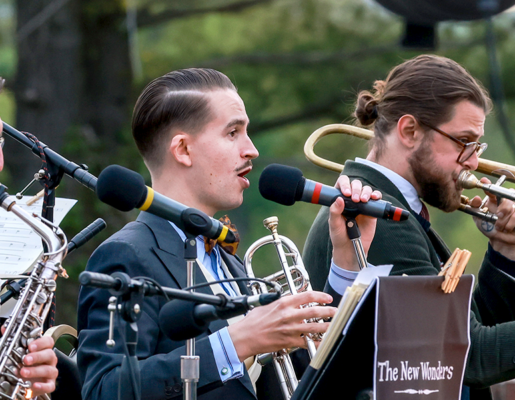
As summer slowly begins its final descent and Labor Day fades into memory, the Morris Museum’s celebrated Back Deck concert series is preparing one final elegant toast to the season with a performance designed to transport audiences nearly a century backward into the golden age of American nightlife, jazz clubs, dance halls, and prohibition-era sophistication. On Thursday, September 10, 2026, the Back Deck welcomes Mike Davis and the New Wonders for Blanc Après Labor Day, a spirited evening devoted to the glamour, energy, and timeless musical brilliance of the Jazz Age.
Part concert, part cultural time machine, and part rooftop celebration beneath the late-summer New Jersey sky, Blanc Après Labor Day promises far more than nostalgic novelty. The performance is positioned as a fully immersive tribute to the roaring musical landscape of the 1920s and early swing era, reviving not only the sounds of classic hot jazz but the atmosphere, elegance, style, and communal joy that originally made the music revolutionary. Audience members are encouraged to lean fully into the spirit of the evening, arriving in linen, seersucker, white attire, and vintage-inspired fashion as the Morris Museum rooftop transforms into something resembling an elevated Manhattan speakeasy from another era.
In many ways, the concert feels perfectly suited for the evolving identity of the Back Deck series itself. Since launching in 2020, the Morris Museum’s rooftop venue has steadily become one of the most distinctive live music experiences anywhere in New Jersey, blending world-class performance with relaxed social atmosphere, scenic outdoor staging, and unusually intimate audience interaction. What initially emerged as an innovative outdoor performance solution quickly developed into a defining regional arts destination that now regularly attracts major jazz artists, chamber ensembles, vocalists, global musicians, and interdisciplinary performers throughout the summer season.
More than 72 performances and over 11,000 attendees later, the Back Deck has become synonymous with evenings that feel simultaneously sophisticated and accessible. Audiences arrive early carrying folding chairs, wine, charcuterie boards, picnic dinners, and desserts while settling into reserved rooftop seating blocks overlooking the surrounding landscape as live music unfolds against sunsets and open skies. Unlike rigid concert hall environments that sometimes place emotional distance between performers and audiences, the Back Deck encourages a more communal and immersive atmosphere where the audience becomes part of the experience itself.
Blanc Après Labor Day appears built specifically for that environment because Jazz Age music was never intended to exist as static museum material. This was social music. Dance music. Celebration music. Music that once poured from crowded Harlem clubs, Manhattan hotel ballrooms, hidden speakeasies, riverboats, neighborhood dance halls, and smoky basement bars during one of the most culturally transformative periods in American history.
At the center of the evening stands Mike Davis, a trumpeter whose artistry has earned increasing recognition among jazz historians, traditional swing enthusiasts, and younger audiences rediscovering the emotional immediacy of early American jazz styles. Described by the Wall Street Journal as an “eloquent trumpet prodigy,” Davis has built a reputation not merely for technical excellence, but for his uncanny ability to channel the emotional atmosphere and tonal language of classic jazz eras without sounding artificial or imitative.
That distinction matters enormously. Many contemporary revivalist acts fall into the trap of treating vintage jazz as reenactment rather than living music. Davis approaches the tradition differently. His playing does not feel like parody or historical cosplay. Instead, it feels deeply inhabited. There is emotional realism within the phrasing, rhythmic looseness, tonal warmth, and conversational spontaneity that defined the original jazz pioneers whose recordings continue influencing generations of musicians nearly a century later.
A graduate of the Manhattan School of Music, Davis began studying trumpet at age nine under Jerry Oram in Seattle before later continuing his development with the legendary Laurie Frink during his collegiate years. Both mentors encouraged his fascination with early jazz traditions, an interest that would ultimately shape the trajectory of his career in profound ways. Rather than chasing more commercially dominant contemporary jazz trends, Davis immersed himself in the rhythmic language, tonal phrasing, and emotional atmosphere of early American swing and hot jazz.
That dedication helped him quickly become one of the central younger figures within New York City’s thriving traditional jazz revival scene. Today, he performs regularly throughout the city both as leader of the New Wonders and alongside respected acts including Dandy Wellington, Emily Asher’s Garden Party, Glenn Crytzer, Terry Waldo, Dan Levinson, Baby Soda, and numerous other artists devoted to preserving and evolving vintage jazz traditions for contemporary audiences.
Davis has also become a familiar presence at the famed jam sessions at Mona’s Bar, one of the city’s most important gathering spaces for traditional jazz musicians. That environment is significant because jam session culture remains central to understanding authentic jazz tradition itself. Jazz developed through live communal interaction, spontaneous collaboration, rhythmic experimentation, and collective improvisation. Musicians learned not simply through formal instruction but through shared performance spaces where styles evolved organically in real time.
That spirit of communal spontaneity appears likely to define Blanc Après Labor Day as well. While the evening promises familiar standards and beloved Jazz Age classics, the emotional power of live traditional jazz always emerges through interpretation rather than strict replication. The New Wonders are not recreating history mechanically. They are reviving the emotional electricity that once made these songs feel urgent, dangerous, joyful, romantic, and culturally transformative.
The title of the event itself cleverly captures both seasonal transition and Jazz Age elegance. “Blanc Après Labor Day” humorously references the old fashion rule warning against wearing white after Labor Day while simultaneously embracing the exact opposite philosophy. Instead of quietly surrendering summer, the concert becomes a final glamorous rooftop celebration of warmth, style, music, and collective enjoyment before autumn fully arrives.
That aesthetic pairing of fashion and music is not accidental. During the original Jazz Age, visual style and musical culture were deeply intertwined. Jazz was modernity. It represented urban sophistication, rebellion against social rigidity, youthful energy, and rapidly evolving cultural identity. Clothing, nightlife, dance, and music all became interconnected expressions of changing American social life. Events like Blanc Après Labor Day succeed because they understand that the music itself was never isolated from the larger atmosphere surrounding it.
The Morris Museum’s rooftop venue amplifies that feeling beautifully. As audiences gather beneath September skies dressed in white linen and summer evening attire while hot jazz fills the air, the environment itself becomes part of the storytelling. The music does not merely play in the background. It shapes the emotional architecture of the evening.
Importantly, the concert also reflects a broader cultural resurgence surrounding traditional jazz and swing-era music among younger audiences. Across New York, New Jersey, Chicago, and other major cultural centers, vintage jazz scenes have experienced notable revival over the past decade as younger musicians and listeners rediscover the rhythmic vitality, improvisational freedom, and communal joy embedded within early American jazz traditions. In an increasingly digital and fragmented entertainment landscape, live traditional jazz offers something uniquely physical and emotionally immediate.
You hear breath inside brass instruments. You hear rhythmic conversation between players. You hear swing not as abstract concept but as something physically felt throughout the body. That visceral energy explains why even audiences unfamiliar with specific compositions often respond instinctively to great traditional jazz performances.
Blanc Après Labor Day is likely to tap directly into that emotional immediacy. The concert’s programming promises both famous favorites and overlooked gems from the jazz age, allowing audiences to experience not just iconic standards but lesser-known material that reveals the astonishing richness and diversity of early twentieth-century American music. Jazz, swing, ragtime, blues, and early popular song all intersected during this period in ways that permanently reshaped global music culture.
For the Back Deck series itself, the evening also serves as another example of how successfully the Morris Museum has blurred the boundaries between formal arts presentation and immersive cultural experience. The venue has never operated like a traditional concert hall. Instead, it functions almost like a curated social gathering built around exceptional artistry. The result is a concert environment that feels both elevated and emotionally relaxed — sophisticated without pretension.
As summer edges toward its close, Blanc Après Labor Day appears poised to become one of the season’s defining rooftop events. Between the skyline atmosphere, the vintage elegance, the roaring trumpet lines, the communal energy, and the timeless spirit of Jazz Age celebration, the evening promises to transform the Morris Museum rooftop into a dazzling collision of music history and contemporary cultural revival.
For one final summer night in Morristown, audiences will have the chance to step directly into the heartbeat of another era — an era where swing ruled the night, dance floors stayed crowded until dawn, and jazz redefined what American music could become.











