Home Blog Page 87

Gateway Tunnel Showdown Intensifies as New Jersey and New York Warn of Imminent Construction Shutdown

With billions in federal funding frozen, state leaders call the halt politically driven and vow legal action to protect jobs, commuters, and the region’s transportation future

New Jersey’s largest and most consequential transportation project is now at the center of a rapidly escalating legal and political confrontation, as state officials warn that active construction on the $16 billion Gateway rail tunnel could grind to a halt as early as February 6 if frozen federal funding is not released.

Governor Mikie Sherrill, joined by acting Attorney General Jennifer Davenport, delivered a blunt message during a press conference in Newark this week: the suspension of federal funds threatens not only one of the nation’s most important rail infrastructure projects, but also thousands of jobs and the daily commute of hundreds of thousands of New Jersey and New York residents.

The Gateway Tunnel project, designed to construct a new Hudson River rail tunnel and rehabilitate the existing century-old infrastructure linking New Jersey to Manhattan, is widely regarded as the backbone of the Northeast Corridor. The corridor carries the highest volume of passenger rail traffic in the United States and is essential to the economic stability of the entire Northeast megaregion.

According to state officials and the Gateway Development Commission, the project is now facing an operational cliff. Construction activity is being scaled down as contractors prepare for the possibility that funding will remain inaccessible. Project leadership has warned that without immediate access to federal dollars already committed to the project, work must stop within days.

Governor Sherrill described the funding freeze as a deliberate political act rather than an administrative or compliance issue.

She said the project carries deep personal and regional significance, noting that her own family depends on reliable trans-Hudson rail service. She warned that the loss of momentum on Gateway would reverse years of planning and investment meant to finally deliver a modern, dependable one-seat ride into New York City for New Jersey commuters.

Sherrill said she raised the issue directly with President Donald Trump in recent days and underscored the broader implications of the decision.

She characterized the freeze as the cancellation of funding that had already been approved, appropriated, and prepared for deployment, and said New Jersey is now using every legal tool available to keep the funding pipeline open, workers on the job, and the project moving forward.

Standing beside the governor, acting Attorney General Jennifer Davenport said the state’s legal case is straightforward.

New Jersey and New York jointly filed a lawsuit in the U.S. District Court for the Southern District of New York on February 3, seeking to compel the U.S. Department of Transportation to restore the suspended funding. The filing asserts that the federal government is unlawfully withholding billions of dollars owed to the Gateway project and violating statutory and administrative requirements governing federal transportation grants.

The lawsuit followed a separate action filed one day earlier by the Gateway Development Commission itself. In that case, the commission’s project manager alleges breach of contract and warns that the funding freeze makes it impossible to continue construction operations under existing agreements.

Davenport said the funding pause, which has been in place since October, violates federal law in multiple ways and fails to meet basic requirements that agencies must provide valid, lawful reasons for major funding decisions.

She further alleged that the suspension reflects an improper attempt to punish political rivals by targeting a critical regional infrastructure investment, adding that public statements by the president describing the project as “terminated” support the claim that the freeze is politically motivated.

Davenport thanked New York officials for their partnership in the litigation and said both states are united in demanding that the federal government immediately reverse course.

Governor Sherrill echoed that position, saying there is no credible explanation for the prolonged delay other than what she described as political maneuvering and shifting justifications.

She pointed to statements made by the president criticizing Democratic leadership and linking that criticism to the decision to withhold funding, arguing that the remarks make clear the true motive behind the freeze.

Sherrill said the state will continue pursuing both legal action and federal advocacy, emphasizing that members of New Jersey’s congressional delegation are actively negotiating to unlock the funds and avoid a shutdown that would ripple across the region’s economy.

Among those leading that effort is U.S. Representative Josh Gottheimer of New Jersey’s 5th Congressional District, who held a separate media call to outline what he described as a bipartisan push among New Jersey and New York lawmakers to resolve the impasse.

Gottheimer said the legal challenges are necessary but not sufficient on their own. He stressed that negotiations must continue in parallel, warning that the consequences of allowing the project to stall are far too severe for both states and the nation’s transportation system.

He said lawmakers from both parties are attempting to bring all sides back to the table to protect years of planning, bipartisan commitments, and construction progress that is already underway.

Gottheimer described himself as baffled by the administration’s decision to jeopardize a project with such clear economic, public safety, and workforce benefits. He said he sees no rational policy basis for the freeze and suggested that politics appears to be the primary driver behind the decision.

He added that the Gateway project supports thousands of union construction jobs, engineering positions, and professional services roles across the region, and that a shutdown would immediately impact families, small businesses, and contractors who rely on the steady flow of work generated by the project.

The Trump administration has cited concerns related to the project’s Disadvantaged Business Enterprise program as the basis for freezing funds. However, New Jersey officials and congressional leaders argue that the issue could have been addressed through standard compliance processes rather than a sweeping suspension of federal support.

Gottheimer said the explanation does not align with the scale of the action taken and argued that regulatory questions should never be used to derail a nationally significant infrastructure program.

Beyond the courtroom and Capitol Hill, the looming shutdown has triggered growing concern among regional planners, labor organizations, and business leaders who view Gateway as foundational to the long-term competitiveness of the New York–New Jersey metropolitan area.

The new tunnel is designed to eliminate one of the most severe bottlenecks in the national rail network, reduce cascading delays throughout the Northeast Corridor, and provide redundancy in the event of system failures affecting the existing Hudson River tunnels, which were heavily damaged during Superstorm Sandy.

Transportation economists have repeatedly warned that a prolonged failure of the current tunnels—without the Gateway replacement in place—could cut trans-Hudson rail capacity by as much as 75 percent, severely restricting access to Manhattan’s employment centers and triggering far-reaching economic losses throughout northern New Jersey.

With contractors now preparing contingency plans and live construction activity under threat, the Gateway Tunnel has become an urgent test case for how large-scale infrastructure programs are protected from political disruption.

State officials say the outcome will shape not only the future of this project, but also investor and contractor confidence in federally supported transportation initiatives nationwide.

As legal filings proceed and negotiations continue, New Jersey leaders insist they will not allow the project to collapse under what they describe as an unlawful funding freeze, warning that the region cannot afford to lose momentum on a project that is central to both economic growth and public mobility.

Continued coverage of the Gateway Tunnel and other large-scale transportation and infrastructure initiatives will remain a major focus of Sunset Daily News’ regional construction reporting across New Jersey and the greater metropolitan corridor.
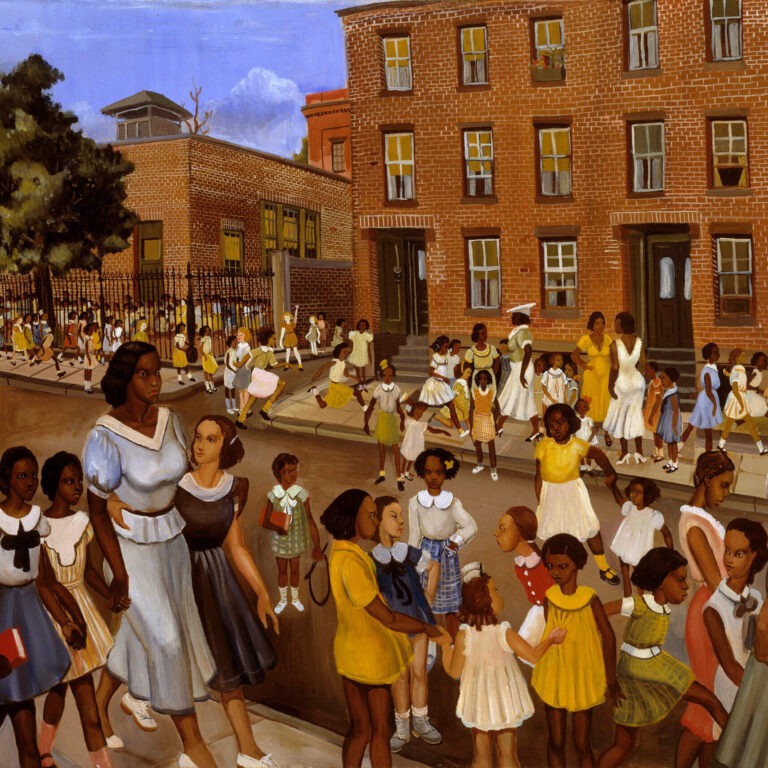

How Allan Rohan Crite’s Neighborhood Vision Comes Home to New Jersey

A new exhibition at the Zimmerli Art Museum at Rutgers–New Brunswick is bringing a powerful New Jersey story back into focus—one rooted not in spectacle, but in streets, stoops, sanctuaries, and the quiet heroism of everyday life. Allan Rohan Crite: Neighborhood, opening February 11 and continuing through July 31, 2026, presents a wide-ranging portrait of an artist whose work transformed ordinary moments into enduring records of Black life in twentieth-century urban America.

Born in North Plainfield, New Jersey, in 1910 and raised in Boston, Allan Rohan Crite built a career that bridged fine art, social history, and community memory. While his professional reputation extended well beyond any single city, the perspective that shaped his artistic voice was formed early, grounded in a lived understanding of what it meant to grow up within tight-knit neighborhoods defined by shared faith, cultural resilience, and collective survival.

The Zimmerli exhibition offers the most comprehensive regional look in years at Crite’s lifelong commitment to documenting Black communities as they existed on their own terms—joyful, complex, faithful, political, and deeply human. Spanning more than six decades of creative work, the exhibition traces how Crite became not only a painter and printmaker, but also a visual chronicler of American social life during a period marked by segregation, migration, war, civil rights activism, and shifting urban landscapes.

What makes Allan Rohan Crite: Neighborhood especially compelling for New Jersey audiences is the way it reconnects the artist’s national legacy to the state where his story began. Though Crite spent most of his adult life in Boston, his New Jersey roots are central to understanding how his art evolved. Growing up within a family that valued education, church life, and cultural continuity, Crite developed an early sensitivity to the rhythms of communal life—who gathered, who cared for one another, and how daily rituals held deeper meaning beneath the surface.

That sensibility would become the defining feature of his artistic career. Rather than centering his work on dramatic historical moments alone, Crite repeatedly turned his attention to everyday scenes: children playing in the street, neighbors talking on front steps, families attending church, workers navigating city life, and friends lingering in familiar public spaces. In doing so, he rejected the limited narratives that often defined Black life in mainstream American art during the twentieth century.

The Zimmerli presentation positions Crite as a storyteller whose visual language resisted both romanticization and erasure. His figures are neither anonymous nor idealized. They are portrayed with dignity, humor, fatigue, devotion, and emotional depth. Whether rendered in oil, watercolor, drawing, or print, Crite’s compositions reveal an unwavering belief that everyday life itself deserves artistic permanence.

One of the exhibition’s most important contributions is how it highlights the spiritual dimension that runs through much of Crite’s work. Faith was not simply a background element in his imagery; it was a central organizing force in the communities he documented. Church processions, choir gatherings, religious festivals, and moments of prayer appear throughout his career, not as symbols of abstraction but as lived practices that anchored families and neighborhoods through decades of social change.

This attention to spiritual life also allowed Crite to portray Black communities as self-sustaining cultural ecosystems. The exhibition carefully situates his work within broader historical movements, including the Great Migration, the rise of Black political organizing in northern cities, and the emergence of community institutions that supported housing, education, and artistic development. Viewers are invited to see how his visual storytelling evolved alongside these transformations, becoming more layered and socially reflective as the twentieth century progressed.

Importantly, Allan Rohan Crite: Neighborhood does not treat the artist as an isolated figure working apart from his surroundings. Instead, the exhibition underscores how deeply embedded he was in the communities he portrayed. His neighbors were often his subjects. His friends and fellow congregants became recurring figures in his compositions. This proximity gave his work a rare authenticity—an insider’s record shaped by long-standing relationships rather than distant observation.

The Zimmerli installation places particular emphasis on Crite’s commitment to accessibility and community education. Alongside his studio practice, he devoted significant energy to teaching, mentoring, and participating in local cultural initiatives. He believed that art should circulate within the same communities that inspired it, not remain confined to institutional walls. That philosophy aligns powerfully with the exhibition’s title, Neighborhood, which speaks as much to Crite’s worldview as it does to the scenes he painted.

For Rutgers and the broader New Jersey arts community, the exhibition reinforces the state’s enduring role in shaping nationally significant cultural voices. It also expands the public’s understanding of what constitutes American modernism by foregrounding an artist whose career unfolded largely outside the commercial art centers that typically dominate historical narratives.

Visitors moving through the exhibition will encounter works that reflect both consistency and quiet evolution. Early pieces reveal Crite’s careful attention to composition and narrative clarity, while later works demonstrate increasing confidence in color, movement, and symbolic layering. Across every period, however, the same guiding principle remains: a refusal to let everyday Black experience be reduced to stereotype, tragedy, or historical footnote.

The timing of this exhibition also feels especially resonant. As conversations about representation, memory, and cultural authorship continue to shape museums and academic institutions nationwide, Crite’s career offers a model for how artists can serve simultaneously as creators, historians, and community witnesses. His work does not attempt to summarize Black life. Instead, it preserves fragments of lived reality—moments of connection that collectively form a deeper, more durable historical record.

For New Jersey residents, the exhibition is also an opportunity to reclaim a native son whose artistic achievements deserve wider local recognition. North Plainfield may appear only briefly in the arc of Crite’s biography, but its presence is foundational. It represents the beginning of a perspective that would later resonate across cities, generations, and social boundaries.

The Zimmerli Art Museum’s commitment to presenting this expansive view of Crite’s career strengthens the region’s cultural landscape and affirms Rutgers–New Brunswick as a critical hub for scholarship and public engagement in the visual arts. Readers interested in exploring additional exhibitions, artist profiles, and cultural programming across the state can discover more through Explore New Jersey’s art and culture coverage, which highlights the institutions and creators shaping the Garden State’s creative identity.

Allan Rohan Crite: Neighborhood ultimately asks visitors to reconsider how history is recorded—and who is entrusted to record it. Through scenes of ordinary life rendered with extraordinary care, Crite built a visual archive that honors presence, resilience, and collective memory. More than a retrospective, the Zimmerli exhibition functions as a homecoming, reconnecting a nationally significant artist to the New Jersey roots that quietly helped shape one of the most meaningful visual chronicles of twentieth-century urban Black life.

Haddon Township Secures $10 Million Financing Plan to Modernize Aging Water Infrastructure Along Cuthbert Boulevard

Major investment targets lead service replacement, system reliability, and long-term public health protection for residents and businesses

Haddon Township is preparing to move forward with a comprehensive $10 million water infrastructure initiative aimed at strengthening the community’s drinking water system and accelerating the replacement of aging service lines along one of the municipality’s most heavily traveled corridors.

Municipal officials have confirmed that the township will utilize low-interest financing through the New Jersey Infrastructure Bank to fund a multi-phase program focused on inspecting, upgrading, and replacing lead and galvanized steel residential service connections, as well as a major section of water main running beneath Cuthbert Boulevard.

The project represents one of the township’s most significant utility investments in recent years and comes as municipalities across South Jersey continue to confront the long-term consequences of aging underground infrastructure installed decades before modern water quality and reliability standards were established.

Under the proposed financing plan, township engineers will begin a systematic inspection and verification program for private and publicly owned water service lines serving homes and businesses along the Cuthbert Boulevard corridor. Where lead or galvanized steel piping is identified, the township will coordinate full replacements designed to meet current state and federal drinking water standards.

Local officials say the program is structured to prioritize both public health protection and long-term system resilience. Lead and galvanized service lines, which remain in older housing stock throughout the region, are known to degrade over time and pose risks to water quality if left unaddressed. The planned work will eliminate those materials entirely and replace them with modern piping designed to improve flow, pressure stability, and long-term durability.

In addition to individual service connections, the project will also replace an aging water main segment beneath Cuthbert Boulevard, a key east–west transportation route that supports daily commuter traffic, local businesses, and emergency response operations. Township engineers have cited recurring maintenance concerns and limited capacity in the existing main as factors driving the replacement schedule.

By pairing service line upgrades with a full water main reconstruction, the township expects to significantly reduce the likelihood of future breaks, unplanned shutdowns, and roadway disruptions. Officials also anticipate improved fire flow capability along the corridor, an important public safety benefit for commercial properties and multi-family residences in the surrounding area.

The financing structure through the New Jersey Infrastructure Bank allows the township to spread the cost of the improvements over time while securing interest rates substantially lower than traditional municipal bond offerings. Township administrators said the approach helps shield local taxpayers from large short-term rate increases while ensuring critical infrastructure work can move forward without delay.

Haddon Township’s investment reflects a broader statewide push to modernize buried utility systems and eliminate legacy materials that no longer meet current safety expectations. New Jersey communities have increasingly turned to state-backed financing programs as federal and state regulatory standards continue to tighten around lead exposure, water system transparency, and asset management.

Municipal leaders emphasized that the project will be coordinated carefully to limit disruptions to residents and businesses along Cuthbert Boulevard. Construction scheduling, traffic control plans, and phased utility shutdowns are expected to be released publicly ahead of the start of field work. Township officials also plan to conduct direct outreach to affected property owners to explain how private service line inspections and replacements will be handled.

Beyond water quality improvements, the project is also expected to generate short-term economic activity through engineering services, construction contracts, materials procurement, and project management roles. Local officials noted that infrastructure programs of this scale contribute to workforce stability in the regional utility and heavy civil construction sector.

The initiative also aligns with Haddon Township’s broader capital improvement strategy, which prioritizes proactive maintenance over emergency response. Township administrators have increasingly focused on replacing assets before failure rather than absorbing the higher long-term costs associated with emergency repairs, roadway reconstruction, and repeated service interruptions.

For residents, the upgrades promise more than just regulatory compliance. The improvements are expected to deliver stronger system reliability, better water pressure consistency, and enhanced confidence in the township’s drinking water supply. Officials say that eliminating outdated service materials will also improve the township’s ability to meet future testing and reporting requirements without costly retrofits.

As planning advances, the Cuthbert Boulevard initiative is poised to become one of the township’s most visible infrastructure projects and a benchmark for how small and mid-sized communities can leverage state financing to modernize essential utilities.

Ongoing coverage of local infrastructure and utility investment—including projects like this major water system overhaul—will continue as part of Sunset Daily News’ regional construction reporting across South Jersey and the greater Camden County area.

New Jersey Unveils Public ICE Monitoring Portal as Lawmakers Clash Over Enforcement, Funding, and Officer Safety

Governor Sherrill’s new upload platform signals a sharp policy shift as civil rights groups and Republicans warn of deepening political and legal conflict

New Jersey has entered a new and highly charged phase in the national immigration debate after Governor Sherrill announced the launch of a statewide online portal that allows residents to upload video footage of Immigration and Customs Enforcement activity, a move framed by the administration as a tool for transparency and community oversight—but criticized by opponents as politically driven and potentially dangerous.

The new system encourages residents to document federal immigration operations in real time, with the governor publicly urging communities to “get your phone out” when ICE activity is observed. Administration officials say the platform is designed to improve accountability, provide a clearer public record of federal enforcement practices, and allow the state to track patterns that may raise civil rights concerns.

The initiative immediately ignited a fierce response inside the Legislature, where partisan divisions over immigration enforcement and public safety are now widening. Republican leaders have accused the administration of effectively placing federal officers under public surveillance while simultaneously limiting the state’s cooperation with federal authorities.

At the center of the legislative pushback is state Senator Jon Bramnick of the 21st Legislative District, who has announced plans to introduce legislation that would criminalize federal immigration officers who conceal their identities during enforcement operations. The proposal would impose jail time on officers who wear face coverings while conducting official duties, a practice that supporters of the bill argue undermines public trust and accountability.

Bramnick has positioned the proposal as a civil liberties measure, arguing that residents deserve to know who is exercising enforcement authority in their neighborhoods. Democratic leadership, however, has signaled firm resistance to the bill, warning that it could interfere with federal operations and expose officers to personal risk.

The standoff is unfolding as Democratic lawmakers simultaneously move to restrict New Jersey’s cooperation with federal immigration enforcement and to block or redirect state-level funding connected to homeland security partnerships that involve ICE. Legislative leaders backing the governor’s strategy argue that the state has an obligation to protect immigrant communities from what they describe as increasingly aggressive federal tactics.

Supporters of the new monitoring portal say public documentation is necessary at a time when immigration enforcement is becoming more visible across urban and suburban communities alike. They argue that video evidence provides an important layer of protection for residents, witnesses, and even officers themselves by offering an objective record of what takes place during encounters.

But law enforcement advocates and several Republican officials warn that encouraging residents to film active enforcement operations risks escalating already tense situations and could place bystanders, officers, and families in danger. They also contend that the portal sends a signal that federal agents should be treated as adversaries rather than public servants carrying out lawful duties.


Civil rights and immigrant advocacy organizations, while welcoming the portal, say the governor’s initiative does not go far enough. Several groups issued statements following the announcement asserting that public video uploads alone will not prevent what they characterize as large-scale deportation campaigns that are expanding across the region. According to advocates, enforcement actions have increased in both visibility and frequency, particularly in working-class communities and areas with large immigrant populations.

These organizations are calling for additional state-level protections, including expanded legal defense funding for immigrants, tighter restrictions on data-sharing between state agencies and federal authorities, and formal limits on when and how local law enforcement can coordinate with ICE.

The political battle now unfolding in Trenton reflects a broader recalibration of New Jersey’s immigration posture under Governor Sherrill, who has made community oversight and state independence from federal enforcement priorities a defining feature of her early administration. Her allies describe the portal as part of a wider effort to restore public confidence in government oversight, while opponents see it as a symbolic move that risks undermining interagency cooperation.

Behind the political rhetoric, business leaders and municipal officials are also watching the situation closely, warning that prolonged conflict between state and federal authorities could ripple into workforce stability, regional investment, and the overall economic climate. Industries that rely heavily on immigrant labor—including construction, logistics, hospitality, healthcare support services, and food distribution—have repeatedly cautioned that uncertainty surrounding enforcement policy can disrupt hiring pipelines and employer planning across New Jersey’s regional economy.

Those broader implications have increasingly pulled immigration enforcement into the state’s wider conversation about growth, development, and the regulatory environment affecting employers, a dynamic now shaping ongoing legislation coverage across the state.

As Democrats move forward with efforts to limit homeland security funding linked to federal enforcement and Republicans prepare legislation aimed at officer identification and accountability, the future of New Jersey’s relationship with ICE appears set for prolonged legal and political confrontation.

For immigrant communities and advocacy groups, the new public upload portal represents a symbolic acknowledgment of long-standing concerns—but not a comprehensive solution. For lawmakers and law enforcement professionals, it marks a dramatic departure from past practice that could permanently alter how immigration enforcement unfolds in New Jersey’s cities and neighborhoods.

With mass deportation efforts escalating nationally and political pressure rising on both sides of the aisle, New Jersey’s approach is now becoming a closely watched test case for how far a state can go in monitoring and challenging federal immigration operations without triggering significant legal and operational backlash.

Morris County Chamber to Spotlight Four Standout Employers and a Community Icon at 105th Annual Business Gathering

Morris County’s flagship business event will celebrate innovation, leadership, and workforce impact as regional employers take center stage in Whippany

The Morris County Chamber of Commerce will place the spotlight squarely on business leadership, workforce innovation, and community impact when it convenes its 105th Annual Meeting on Friday, February 12, 2026, honoring four organizations whose work has helped shape the region’s economic and civic landscape.

The Chamber’s 2026 Business Catalyst Awards will be presented to Delta Dental of New Jersey Inc. of Parsippany, Guided Parenting Support (GPS) of Morristown, Marotta Controls Inc. of Montville, and SESI Consulting Engineers of Parsippany. The awards recognize companies that demonstrate exceptional business performance while also delivering measurable value to employees, clients, and the broader Morris County community.

This year’s honorees reflect the diversity and depth of the county’s modern economy, spanning healthcare services, family and behavioral support, advanced manufacturing and aerospace systems, and professional engineering and infrastructure consulting. Chamber officials said the recipients were selected for their ability to pair sustained organizational growth with leadership that strengthens local talent pipelines, professional development, and regional resilience.

The 105th Annual Meeting will take place from 11 a.m. to 1:45 p.m. at the Hanover Marriott Hotel in the Whippany–Parsippany area, bringing together business owners, executives, nonprofit leaders, municipal officials, and economic development partners from across Morris County and northern New Jersey.

Beyond the presentation of awards, the event serves as one of the Chamber’s most important annual forums for setting priorities, evaluating regional economic trends, and strengthening collaboration between the private and public sectors. Attendees will also hear the Chamber’s annual State of the Chamber address, outlining organizational initiatives, advocacy priorities, and strategic investments for the year ahead, followed by the State of the County address, offering a broader snapshot of Morris County’s economic, infrastructure, and workforce outlook.

A featured highlight of the program will be a keynote presentation by Seth Mattison, a nationally recognized futurist and workplace strategy expert, who will deliver a forward-looking session titled “The Future-Ready: Strategies for Leading the Future of Work.” His presentation is expected to focus on how organizations can adapt to accelerating technological change, generational shifts in the workforce, evolving leadership models, and the growing demand for flexible, purpose-driven workplaces.

Chamber leadership said the keynote was intentionally selected to align with the Business Catalyst Award theme, which emphasizes not only performance and profitability, but also adaptability, talent retention, and organizational culture in an increasingly competitive labor market.

In addition to the Business Catalyst Awards, the Chamber will present the Saint Clare’s Health William P. Huber Award for outstanding community leadership to Gary Fisch, founder of Gary’s Wine & Marketplace. The honor recognizes individuals whose entrepreneurial success is matched by long-standing civic engagement, philanthropy, and support for regional nonprofit organizations and community initiatives.

For more than a century, the Morris County Chamber of Commerce has played a central role in convening employers, advocating for infrastructure investment, supporting small businesses, and promoting the county as one of New Jersey’s most business-friendly regions. The 105th Annual Meeting continues that tradition by highlighting organizations that represent the future direction of the local economy while reinforcing the Chamber’s long-standing commitment to community-centered growth.

This year’s Business Catalyst honorees were cited for their ability to build resilient business models while remaining closely connected to the people they serve. From expanding access to healthcare and family services, to engineering solutions that support public safety and transportation networks, to designing systems that power mission-critical industries, the 2026 recipients demonstrate how Morris County companies continue to compete at a national level without losing their local roots.

Chamber officials also emphasized that the award recipients share a common focus on workforce development, whether through employee training, leadership mentoring, flexible workplace policies, or partnerships with educational institutions. That focus has become increasingly critical as employers across northern New Jersey face tight labor markets, skills gaps, and rapid shifts in job requirements.

The annual meeting is expected to draw a full audience of business and civic leaders, and online registration is scheduled to close several days prior to the event, in keeping with past attendance trends.

As Morris County continues to evolve into a hub for healthcare services, advanced manufacturing, professional services, and technology-driven enterprises, events such as the Chamber’s annual gathering provide a rare opportunity to examine the region’s economic trajectory through the lens of real-world employers and community partners.

Coverage of the Chamber’s annual meeting and its award recipients will be featured as part of Sunset Daily News’ ongoing business reporting, which focuses on the companies, leaders, and workforce trends shaping New Jersey’s economic future.

All Aboard History: Morristown Families Step Into Lincoln’s Secret Journey at Macculloch Hall

This Presidents’ Day weekend, one of Morristown’s most treasured historic sites is transforming into a living, breathing rail line of American history, inviting families to follow the hidden footsteps of a president on the brink of destiny. At Macculloch Hall Historical Museum, a special family-centered experience will place young explorers directly inside the dramatic and little-known story of Abraham Lincoln’s perilous 1861 journey to Washington, D.C., offering an immersive afternoon that blends hands-on learning, storytelling, and real historical intrigue.

The program, titled Lincoln’s Whistle-stop Tour, is designed to turn a pivotal moment in national history into a fast-moving, interactive mystery for children and parents alike. Rather than simply listening to a lecture or touring a gallery, participants become investigators, tracing the actual route Lincoln traveled from Springfield, Illinois, to the nation’s capital as he prepared to take the oath of office and assume leadership of a deeply divided country.

For many families, Lincoln’s presidency is most familiar through classroom lessons on the Civil War or the Emancipation Proclamation. This experience focuses instead on the tense days before he ever reached the White House—when the nation’s future was uncertain and the president-elect faced credible threats to his safety before he could even be sworn in. Through a creative mix of travel cards, clue-based activities, and guided discussion, children follow the same railroad path that carried Lincoln through multiple cities and states, uncovering why secrecy, timing, and careful coordination were essential to protecting him.

What elevates the program beyond a traditional history workshop is its emphasis on the real people who stood quietly behind the scenes to keep Lincoln alive. Families learn about Allan Pinkerton, the pioneering private detective whose work would eventually help shape modern investigative practices, and Kate Warne, one of the first female detectives in American history. Their efforts to identify and disrupt assassination plots are presented as a story of strategy, observation, and courage, giving young visitors a powerful look at how history is shaped not only by presidents, but by problem-solvers who work in the shadows.

The experience is structured as a collaborative challenge, encouraging children to work together, compare clues, and piece together the journey one stop at a time. Each card reveals new information about the railroad route, the social climate in different regions, and the dangers Lincoln faced as tensions between North and South escalated. By the time families complete the final leg of the tour, children leave with a clearer understanding of how fragile the early days of Lincoln’s presidency truly were—and how close the country came to losing its leader before he could even take office.

The program will be offered on two dates in February 2026. Families can attend on Thursday, February 12, from 3:30 p.m. to 5:00 p.m., or on Saturday, February 14, from 10:00 a.m. to 11:30 a.m. The experience is recommended for children ages 7 through 12 and is structured to remain engaging for both younger and older elementary-level learners. Admission is $10 for adults and $5 per child. Pre-registration is required, and adults are asked to remain with their children throughout the program to support participation and discussion.

The setting itself adds another powerful layer to the experience. Located at 45 Macculloch Avenue in Morristown, Macculloch Hall Historical Museum offers an intimate, community-focused environment that allows educators to connect personally with families and adjust activities to the interests and energy of each group. The museum’s historic atmosphere reinforces the feeling of stepping back into another era, making the story of Lincoln’s journey feel immediate rather than distant.

While the whistle-stop program serves as a centerpiece for Presidents’ Day programming, the museum’s broader educational mission continues well beyond this event. Throughout the year, Macculloch Hall offers youth and family programs that explore national history through a distinctly local lens. One of the most popular themes focuses on Thomas Nast, the influential political cartoonist who lived in Morristown and famously illustrated Abraham Lincoln. Nast’s work played a major role in shaping public perception during the Civil War and helped define the visual language of American political commentary, making him a natural extension of the museum’s Lincoln-related storytelling.

By weaving Nast’s artistic legacy together with Lincoln’s political journey, the museum gives children a fuller picture of how words, images, and ideas traveled across the country during one of its most turbulent periods. It also helps young learners recognize that New Jersey’s own communities were directly connected to national events that reshaped the future of the United States.

For families planning a winter weekend outing, the Lincoln’s Whistle-stop Tour offers an experience that balances fun, movement, and meaningful learning. It speaks to a growing demand among parents for programming that goes beyond passive observation and instead invites children to think critically, ask questions, and interact with real historical challenges. The format also supports multi-generational participation, making it an ideal activity for grandparents, parents, and children to share together.

Events like this continue to highlight how regional museums across the state are redefining what family entertainment looks like, blending culture, history, and creative engagement in ways that resonate with today’s audiences. Readers looking to discover more performances, exhibits, and hands-on programs across the Garden State can explore a wider range of upcoming experiences through Explore New Jersey’s entertainment coverage, which features family-friendly attractions and cultural events throughout the year.

At a time when digital distractions dominate so much of children’s attention, Lincoln’s Whistle-stop Tour offers something increasingly rare—a chance to hold history in your hands, follow a real journey across a divided nation, and experience the suspense, teamwork, and discovery that shaped one of the most important chapters in American leadership. In Morristown this February, a train route from 1861 becomes a living classroom, and Abraham Lincoln’s race to reach Washington safely becomes a story families will not soon forget.

How Dr. Elizabeth R. Henry’s New Book Is Rewriting the Playbook on Youth Trust and Connection

New Jersey has quietly become the launchpad for one of the most timely and emotionally resonant parenting and education books of the year, as bestselling author and pediatrician Dr. Elizabeth R. Henry—widely known throughout the state as “Dr. Liz”—introduces her newest release, SPARK: A Pediatrician’s Guide to Rebuilding Trust, Restoring Connection, and Igniting Youth Potential. Released in December 2025, the book is already drawing attention far beyond the Garden State, but its roots—and its message—are deeply grounded in the communities where Dr. Henry has spent her career serving children, families, and educators.

For New Jersey parents and professionals navigating an era shaped by social media pressure, academic stress, mental health concerns, and growing disconnection between generations, SPARK arrives as both a practical guide and a cultural reset. Rather than framing youth well-being solely through diagnosis and crisis response, Dr. Henry centers the everyday moments that define how young people experience safety, belonging, and self-worth. The book argues that trust is not a soft concept or a secondary concern—it is the foundation that determines whether children feel empowered to grow, communicate, and take healthy risks in learning and life.

What makes SPARK especially meaningful for local readers is that the framework presented throughout the book is not theoretical. It was developed through years of hands-on medical practice and community-based work in New Jersey. Dr. Henry is a board-certified pediatrician based in North Brunswick and the founder of Dr. Liz Consulting in Somerset, where she continues to work directly with schools, families, organizations, and youth-serving institutions across the state. Before launching her consulting practice, she spent 16 years caring for patients with the New Brunswick Pediatric Group, building long-standing relationships with families whose children are now navigating adolescence and early adulthood.

Her professional influence extends into academic medicine as well. Dr. Henry currently serves as a volunteer Clinical Assistant Professor at Rutgers Robert Wood Johnson Medical School, where she contributes to the education of future physicians and health professionals, reinforcing the human side of pediatric care that often gets overshadowed by clinical training alone. She is also an alumna of Princeton University, a connection that continues to inform her work at the intersection of education, leadership, and youth development.

SPARK draws heavily on these layered experiences, presenting what Dr. Henry describes as a practical, relationship-centered framework designed for parents, educators, counselors, school leaders, and pediatric providers alike. The book focuses on rebuilding communication pathways that have been strained by fast-paced lifestyles, digital distraction, and the emotional fallout of prolonged social disruption. Instead of offering generic advice, the narrative moves through real-world scenarios that families recognize immediately—homework conflicts, emotional shutdowns, behavioral challenges, social anxiety, and the quiet withdrawal that so many adults now observe in children who once seemed more expressive and engaged.

At the core of the book is the idea that connection is not an optional enhancement to development—it is the mechanism through which confidence, resilience, and motivation are formed. Dr. Henry’s approach emphasizes listening practices, emotional validation, co-regulation strategies, and age-appropriate empowerment techniques that help young people regain a sense of agency over their own growth. In doing so, SPARK reframes youth support as an active partnership between adults and children, rather than a system built solely on compliance, performance, or crisis intervention.

That message carries particular weight in New Jersey, where youth mental health and suicide prevention have become urgent statewide priorities. Dr. Henry was appointed by the Speaker of the New Jersey General Assembly to serve on the New Jersey Youth Suicide Prevention Advisory Council, a role that placed her directly inside policy discussions shaping how the state responds to rising emotional distress among adolescents. Her participation in this work has influenced the preventative, relationship-driven lens that runs through SPARK, positioning trust-building as an essential early intervention rather than a reactive tool.

Her leadership and advocacy have not gone unnoticed locally. Dr. Henry has been recognized by NJBIZ as both a Healthcare Hero and one of New Jersey’s Top 50 Women in Business, reflecting the rare blend of clinical credibility, entrepreneurial leadership, and community impact that defines her career. She is also a familiar voice to many New Jersey households through frequent appearances on local television and radio outlets, including News 12 New Jersey and WCTC, where she addresses topics ranging from adolescent mental health to parenting challenges in the digital age.

Beyond media appearances, Dr. Henry maintains a strong presence across New Jersey’s higher education and community institutions. She regularly conducts professional development workshops and public programs at locations such as Kean University and Raritan Valley Community College, offering educators and administrators actionable strategies for improving school culture, communication, and emotional safety. These same principles form the backbone of SPARK, making the book a natural extension of the work she already leads in classrooms, auditoriums, and conference rooms across the state.

The release of SPARK also reinforces New Jersey’s growing influence in the national conversation around youth development, mental health, and educational reform. Readers interested in discovering additional authors and thought leaders shaping these discussions can explore more statewide and regional literary coverage through Explore New Jersey’s dedicated book features and author spotlights, which continue to highlight voices driving meaningful change in education, wellness, and family life.

While there are currently no publicly listed New Jersey book-signing dates for February 2026, Dr. Henry remains actively engaged in promoting SPARK through her Somerset-based practice and ongoing community partnerships. Her official events channels and social media platforms regularly preview upcoming workshops, speaking engagements, and school-based programs scheduled throughout the year, including several described as “in development” for 2026.

Families, educators, and organizations seeking to connect with Dr. Henry for local seminars, private workshops, or bulk book programs can reach out directly through her consulting practice in Somerset, which continues to serve as the operational hub for her statewide initiatives. Based on her recent event history, future SPARK-related appearances are most likely to take place in familiar community-centered settings such as public libraries—including venues like the Princeton Public Library—university partnerships at Rutgers Robert Wood Johnson Medical School and Princeton University, and community centers throughout Somerset and North Brunswick.

For readers eager to participate in New Jersey’s broader literary and cultural calendar, several notable author-focused events are also scheduled across the state later this month, including the Black Authors’ Showcase at Art House Productions in Jersey City on February 22, 2026, celebrating contemporary Black voices in literature, and an author workshop and talk at the Highland Park Public Library on February 26, 2026, featuring thriller writer Rowana Miller.

Yet for many local families and professionals, SPARK stands apart because of its deeply personal connection to New Jersey’s classrooms, clinics, and living rooms. Dr. Elizabeth R. Henry’s message is not built around quick fixes or trendy wellness language. It is grounded in decades of listening to young people and the adults who care for them—and in recognizing that rebuilding trust is not a single conversation, but a sustained, intentional practice.

In a state where innovation in health care and education often leads national change, SPARK positions New Jersey once again at the forefront of a growing movement that treats emotional connection as a measurable driver of success. As Dr. Henry’s work continues to reach families across the country, the foundation of that impact remains firmly rooted in the communities that shaped her career—and in the belief that every child’s potential begins with being truly seen and heard.

New Jersey’s Health Economy at a Crossroads: Accountability, Innovation, and a New Wave of Patient-Centered Care

New Jersey has long been a national center of gravity for pharmaceutical research, medical innovation, and health-care leadership. This winter, that identity is being tested and reshaped at the same time. From a sweeping state lawsuit targeting alleged price manipulation in the generic drug market to grassroots practitioners building alternative wellness networks, the state’s health landscape is entering a period defined by transparency, trust, and a recalibration of how patients, families, and providers connect with care.

At the heart of the most consequential development is a newly filed state lawsuit against Novartis and its generic-drug subsidiary, Sandoz, accusing the companies of participating in a far-reaching price-fixing scheme involving more than 30 commonly prescribed generic medications. According to state officials, the alleged conduct artificially inflated the cost of drugs that millions of patients rely on for chronic and acute conditions, placing additional financial pressure on families, insurers, and public health programs across New Jersey.

While the litigation will unfold over months or years, its significance is immediate. Generic medications are designed to be the affordable backbone of modern health care. When pricing structures are distorted, the effects ripple through hospitals, pharmacies, long-term care facilities, and state-funded programs that serve vulnerable populations. New Jersey’s action signals an increasingly aggressive posture toward pharmaceutical accountability at a time when patients are demanding clearer explanations for why everyday medications still carry unexpectedly high price tags.

Health policy experts in the region note that this lawsuit is part of a broader national reckoning with the systems that govern drug pricing, market competition, and manufacturer relationships. But for New Jersey residents, the issue is not abstract. It touches prescription counters in suburban strip malls, hospital discharge instructions in urban medical centers, and budget decisions for seniors trying to stretch fixed incomes. The state’s case frames the question simply: whether the promise of affordable generics has been undermined by practices that run counter to the very purpose of competition in health care.

At the same time that regulators and attorneys focus on corporate accountability, another movement is quietly reshaping how wellness services are organized and accessed. Dr. Garcia, a long-time advocate of biomagnetism-based wellness practices, announced that his national practitioner directory has reached 100 listed professionals across the United States and select international locations. For a modality that has traditionally operated through word-of-mouth referrals and small independent clinics, the milestone represents a meaningful shift toward professional infrastructure, consumer visibility, and standardized discovery.

The Biomagnetism Practitioner Directory was created to help patients locate trained providers and better understand what services are being offered in their communities. In New Jersey, where interest in integrative and complementary care has grown steadily alongside conventional medicine, the directory reflects a broader trend toward diversified health options. Patients increasingly want tools that allow them to explore wellness approaches while still maintaining clear expectations around practitioner training, transparency, and professional accountability.

The expansion of this network also mirrors a larger conversation about how technology platforms can help bring structure to previously fragmented sectors of health care. Digital directories, searchable credentialing tools, and standardized profiles are becoming essential for patients navigating everything from physical therapy and mental health services to alternative wellness programs. In a state with one of the densest health-care ecosystems in the nation, centralized access points are quickly becoming just as important as the services themselves.

Trust, however, remains one of the most critical and fragile currencies in health care, particularly when it comes to children and adolescents. That challenge is directly addressed in a newly released book by pediatrician and bestselling author Dr. Elizabeth R. Henry, widely known as Dr. Liz. Her latest work, SPARK: A Pediatrician’s Guide to Rebuilding Trust, Restoring Connection, and Igniting Youth Potential, arrives at a moment when families, educators, and clinicians are grappling with rising rates of anxiety, social disconnection, and emotional burnout among young people.

Drawing on clinical experience and years of community advocacy, Dr. Henry focuses on the emotional architecture of health care itself. She explores how rushed appointments, fragmented care models, and digital distractions have unintentionally eroded the relational foundations that allow children to feel safe, heard, and supported. The book emphasizes practical strategies for parents and professionals alike, highlighting how meaningful connection can serve as both a protective factor and a catalyst for long-term development.

In New Jersey, where school districts and pediatric practices continue to rebuild post-pandemic support systems, the themes resonate deeply. Youth mental health has become a statewide priority, and clinicians are increasingly searching for frameworks that bridge medical expertise with emotional literacy and family engagement. Dr. Henry’s work contributes to a growing body of literature aimed at restoring confidence in the care process itself, particularly for families navigating complex behavioral, developmental, or social challenges.

The shifting relationship between patients and providers is also influencing the business side of health care delivery. MediDepot, a medical equipment supplier serving providers and institutional clients, has introduced a new price match guarantee designed to promote fairness and transparency in medical equipment procurement. The policy establishes a structured pricing review process intended to standardize how competing quotes are evaluated and to reduce inconsistencies that can complicate purchasing decisions for clinics, hospitals, and home-care organizations.

In practice, medical equipment procurement is often more complex than consumers realize. Purchasing teams must balance clinical requirements, budget constraints, supply chain availability, and compliance standards. Price disparities across vendors can introduce inefficiencies and, in some cases, delay access to essential tools. By formalizing a price-matching framework, MediDepot aims to reduce friction in procurement cycles while offering customers clearer expectations around pricing consistency.

For New Jersey’s health-care facilities, many of which operate within tightly managed reimbursement environments, cost control remains inseparable from care quality. Even modest reductions in equipment spending can translate into reinvestment in staffing, training, and patient services. Policies that support competitive fairness in vendor relationships may ultimately play a role in stabilizing operational budgets at a time when labor shortages and rising operational costs continue to challenge providers statewide.

Taken together, these developments illustrate how New Jersey’s health sector is being reshaped on multiple fronts at once. Legal action against major pharmaceutical manufacturers underscores a renewed emphasis on ethical market behavior and consumer protection. Expanding practitioner networks reflect changing patient expectations and the demand for accessible, organized wellness resources. New leadership voices in pediatric medicine are reframing how trust and connection influence outcomes. And procurement reforms are redefining how institutions manage the economic realities of delivering care.

For readers seeking deeper coverage of wellness trends, clinical innovation, and public health developments shaping communities across the state, Explore New Jersey continues to spotlight evolving stories within its health and wellness reporting, offering a broader lens into how policy, practice, and personal well-being intersect in everyday life.

New Jersey’s position as a national health-care hub has never been static. What makes this moment distinctive is the convergence of accountability, innovation, and renewed attention to the human experience of care. Whether through courtroom battles over drug pricing, digital tools that connect patients to new forms of support, or physicians challenging the culture of rushed medicine, the state is redefining what leadership in health care can look like. In an environment where trust, access, and affordability are no longer optional ideals but essential benchmarks, New Jersey’s next chapter in health innovation is being written in real time.

Pinelands-Bred Republican Justin Murphy Launches New Jersey Senate Bid, Framing Campaign Around Parental Rights, Economic Freedom, and Military Service

Veteran attorney positions himself as a culture-driven challenger to Sen. Cory Booker in a rapidly shifting New Jersey political landscape

In a race that is already reshaping the contours of New Jersey’s 2026 U.S. Senate contest, Tabernacle attorney and military veteran Justin Murphy has formally entered full campaign mode, seeking the Republican nomination and a direct general-election challenge to incumbent U.S. Senator Cory Booker.

Murphy, a lifelong South Jersey resident who describes himself as a “son of the Pinelands,” is pitching his candidacy as both a cultural and economic reset for a state long dominated by Democratic leadership at the federal level. His campaign message is rooted in voter re-engagement, particularly among conservative and independent residents who, he argues, remain under-mobilized despite growing frustration with federal leadership and national policy direction.

Murphy has publicly pointed to the political energy generated during former President Donald Trump’s 2024 appearance in Wildwood as evidence that New Jersey’s Republican base is far larger—and more persuadable—than conventional political narratives suggest. In his view, the challenge is not turnout potential, but inspiration and infrastructure.

That motivation, Murphy says, is now being fueled by a wave of new county party leadership across the state. He credits several recently elected county chairs with pushing organizational reform and culture change inside the state Republican Party, creating what he believes is a viable foundation for a competitive statewide campaign.

Murphy is not a first-time candidate. He previously sought the Republican nomination for the U.S. Senate in 2024, a campaign that introduced him to a broader statewide audience and helped build early donor and grassroots networks. This cycle, his campaign is more sharply defined, more ideologically explicit, and far more focused on policy architecture rather than broad political rhetoric.

At the core of Murphy’s personal narrative is military service. He enlisted in the United States Navy at just 17 years old and served a four-year active-duty term aboard the USS Comte de Grasse, including deployment during the Iran-Iraq War in the Arabian and Persian Gulf. He was honorably discharged, an experience he routinely cites as the foundation of his views on national security, public service, and civic responsibility.

Following his military career, Murphy entered local government and Republican Party leadership. He was elected to the Tabernacle Township Committee in 2000 and served a three-year term, while simultaneously building a long résumé inside Burlington County Republican politics. His work included leadership roles with the Burlington County Young Republicans, county-level campaign coordination for the 1996 Dole-Kemp presidential ticket, service on the county committee, and later leadership of the Tabernacle Republican Organization. He also worked as a volunteer and organizer on statewide tax reform initiatives and gubernatorial campaigns in the early 2000s.

Since 2006, Murphy has practiced law, concentrating in estate planning, real estate transactions, contract law, energy consulting, and EB-5 economic development projects—professional experience that now shapes much of his economic and regulatory agenda.

Murphy’s campaign platform is organized around an expansive policy pledge that he says will serve as a written contract with New Jersey voters. His campaign, he emphasizes, is formally dedicated to active-duty service members and veterans.

On taxation, Murphy advocates dismantling the federal income tax system entirely, proposing the elimination of the Internal Revenue Code and the establishment of a flat national income tax in the range of 10 to 12 percent. His proposal also includes full repeal of capital gains taxes, estate and inheritance taxes, and the alternative minimum tax. He frames the overhaul as a structural correction designed to rebuild middle-class security, improve upward mobility, and increase domestic investment.

Housing policy has emerged as one of the central planks of his economic platform. Murphy argues that widespread homeownership is inseparable from political liberty and economic stability. He warns that an expanding concentration of residential property ownership among institutional investors risks transforming working families into permanent renters. His stated objective is to create labor and interest-rate conditions that allow middle-class households to enter and remain in homeownership, positioning housing equity as a primary driver of generational wealth.

Education policy and parental authority sit at the center of Murphy’s cultural agenda. He characterizes parental rights as the defining civil rights issue of the current era and calls for an expansion of school choice models and competitive funding structures across public, private, and charter systems. Murphy proposes abolishing the U.S. Department of Education and redistributing its annual federal budget directly to local school districts and school-choice programs. He argues that such decentralization would significantly reduce New Jersey’s reliance on property taxes for school funding while restoring local control over curriculum and policy.

On national security, Murphy supports maintaining a military capable of fighting and winning two simultaneous major conflicts. He identifies China, Iran, and North Korea as principal geopolitical threats and advocates removing diversity, equity, and inclusion policies from military command structures. His security platform emphasizes readiness, deterrence, and rapid response capacity.

Immigration and border enforcement remain another defining issue for his campaign. Murphy supports the completion of physical border infrastructure, expansion of visa-tracking systems, enforcement partnerships between local law enforcement and federal immigration authorities, and the withholding of federal funding from jurisdictions that declare sanctuary policies. He also supports deploying U.S. military resources to the southern border as part of a long-term security strategy.

Murphy describes himself as firmly pro-life, supporting legal protections for unborn children with exceptions for the life of the mother and cases of rape or incest. He also backs parental notification requirements, restrictions on late-term procedures, and expanded adoption programs, while opposing the use of public funds for abortion services.

Public safety and urban revitalization form another major component of his platform. Murphy links crime trends, homelessness, narcotics trafficking, and population out-migration to what he calls weak enforcement policies and inconsistent prosecutorial standards. His plan emphasizes border security, fentanyl interdiction, deportation of criminal non-citizens, and expanded federal prosecution authority when local systems fail to enforce existing criminal statutes.

Healthcare policy under Murphy’s campaign is centered on what he calls medical freedom. While he supports universal access to healthcare coverage, he rejects government-run healthcare systems and federal mandates. His proposals include universal ownership of portable Health Savings Accounts, a fully nationalized insurance marketplace allowing consumers to purchase coverage across state lines, and the creation of a specialized Medicare and Medicaid fraud enforcement unit. He estimates that tens of billions of dollars lost annually to fraud and waste could be reinvested directly into stabilizing entitlement programs.

Murphy is also a vocal supporter of Second Amendment protections, pledging to oppose firearm restrictions at both the domestic and international level and endorsing constitutional carry legislation.

On energy policy, he calls for aggressive expansion of domestic oil, gas, and nuclear production, arguing that energy independence would generate tens of thousands of union jobs and strengthen national security. He supports environmental safeguards but insists that nuclear energy must play a significantly expanded role in the country’s long-term power strategy.

Fiscal discipline rounds out his platform. Murphy supports making the federal Department of Government Efficiency a permanent operation and backs a constitutional balanced-budget amendment.

In a closing message that reflects both his faith-driven worldview and personal background, Murphy says his candidacy is rooted in a simple motivation: concern for the country’s security, culture, healthcare system, economic opportunity, and the future of American families. He also highlights environmental stewardship of the New Jersey Pinelands, opposition to offshore wind development near the Jersey Shore, and expanded protections for seniors and Medicare beneficiaries as state-specific priorities.

Murphy holds a bachelor’s degree in political science from Rowan University, a Juris Doctor from Widener University School of Law in Wilmington, Delaware, graduate-level political science coursework at Villanova University, and an LL.M. in Energy and Natural Resources Law from the University of Oklahoma College of Law. He is also the author of the 2021 book The Silent Crisis – How Judicial Activism Denigrates America’s Constitutional Republic.

With New Jersey having not elected a Republican to the U.S. Senate since 1972, Murphy is framing his campaign as a generational inflection point rather than a conventional partisan contest. His team says the campaign will emphasize grassroots organizing, small-business outreach, veteran advocacy, and sustained engagement with suburban and South Jersey voters who feel increasingly disconnected from Washington.

As the race develops, Murphy’s challenge to the state’s long-standing political order is expected to become a defining test for New Jersey’s evolving electoral identity within the broader national politics environment.

Riverfront Landmark in Secaucus Trades for $47.8 Million, Reinforcing Hudson County’s Next Wave of Mixed-Income Development

The Waverton’s sale highlights investor confidence in transit-connected, amenity-rich housing along the Hackensack River corridor

A prominent riverfront residential community in Secaucus has quietly reset expectations for the local multifamily market, as The Waverton—a 116-home community overlooking the Hackensack River—has officially changed ownership in a $47.8 million transaction that underscores the accelerating strength of New Jersey’s real estate market, particularly in high-access, transit-oriented locations.

The riverfront landmark in Secaucus that recently traded for $47.8 million is 

The Waverton, a 116-unit multifamily apartment community situated along the Hackensack River. 

Transaction Details

  • Property Name: The Waverton
  • Sale Price: $47.8 million
  • Date of Sale: Announced in late January 2026
  • Sellers: A joint venture between Woodmont PropertiesPIRHL, and Canoe Brook Development
  • Buyer: Undisclosed, though Canoe Brook Development retained a minority ownership stake
  • Brokerage: CBRE led the transaction 

Property Features and Significance

Completed in 2022, the development at 1631 Paterson Plank Road reinforces the trend of mixed-income growth in Hudson County: 

  • Mixed-Income Model: Approximately 20% of the units (roughly 23 apartments) are designated as affordable housing.
  • Tax Incentives: The property operates under a 30-year PILOT (Payment in Lieu of Taxes) agreement.
  • Amenities: Luxury features include a 191-space parking garage, a fitness center with a yoga studio, coworking spaces, and an outdoor lounge with river views.
  • Location: Situated seven miles northwest of Manhattan, it offers direct access to the American Dream complex and commute times to New York City of approximately 30 minutes. 

Completed in 2022 and located at 1631 Paterson Plank Road, The Waverton occupies a rare stretch of waterfront along one of Hudson County’s most strategically positioned commuter corridors. The property benefits from a long-term 30-year payment-in-lieu-of-taxes agreement, providing operational stability for ownership while preserving predictable municipal revenue for Secaucus. Approximately 20 percent of the community’s residences are designated as affordable apartments, placing the project squarely within the state’s broader push for inclusive, mixed-income housing.

The sale was brokered by CBRE’s Institutional Properties team, which represented the seller, a joint venture that includes Canoe Brook as a minority partner. As part of the transaction, Canoe Brook will retain its ownership stake in the property, signaling continued long-term confidence in the asset and in the surrounding riverfront submarket.

Industry professionals involved in the transaction described The Waverton as a rare combination of premium design, community-oriented planning, and waterfront positioning—an increasingly scarce mix within northern New Jersey. The property’s views of the Hackensack River and immediate access to outdoor recreation infrastructure were repeatedly cited as key differentiators during the marketing process.

From a residential standpoint, The Waverton was designed to compete directly with larger, institutional-grade Class A developments across Hudson and Bergen counties. The 116 residences feature expansive open-concept floor plans, contemporary kitchens with stainless steel appliances and quartz countertops, in-home washer and dryer units, and elevated finishes intended to meet the expectations of today’s renter demographic—particularly professionals seeking quality without sacrificing proximity to New York City.

The building’s amenity portfolio extends well beyond standard offerings. Residents have access to a fully equipped fitness center paired with a dedicated yoga and wellness studio, multiple coworking lounges and conference rooms designed for hybrid and remote professionals, and a resident social lounge featuring billiards and shuffleboard. Outdoors, the community offers a curated gathering environment with fire pits, grilling stations, and a large open-air television, creating year-round social programming opportunities and strengthening on-site resident engagement.

One of the project’s most distinctive features is its immediate adjacency to the Secaucus Greenway, a growing recreational asset that provides pedestrian and cycling connectivity through the Meadowlands region. For residents seeking a balance between urban access and outdoor activity, the location delivers a rare blend of both.

Transportation connectivity continues to play a decisive role in the asset’s appeal. The Waverton sits minutes from Route 3, offering direct vehicular access into the Lincoln Tunnel and major regional highways. NJ Transit bus service provides a streamlined commute into Manhattan, making the community especially attractive to renters who want proximity to New York City while avoiding the pricing and density pressures of the city’s core housing stock.

The transaction arrives at a pivotal moment for Hudson County and the greater Meadowlands corridor, where municipalities are actively re-evaluating underutilized commercial and industrial parcels for residential and mixed-use redevelopment. Secaucus, in particular, has emerged as a strategic focal point due to its transportation infrastructure, employment access, and evolving residential profile.

The inclusion of affordable housing within The Waverton further strengthens its position within the region’s long-term planning framework. As municipalities throughout northern New Jersey continue to face mounting pressure to expand housing supply while preserving socioeconomic diversity, projects that successfully integrate affordability with market-rate design and amenities are increasingly viewed as models rather than exceptions.

Market observers note that stabilized, recently constructed communities with tax-advantaged structures and waterfront exposure remain among the most aggressively pursued assets by institutional and private investors alike. The Waverton’s relatively young construction timeline, combined with its amenity-driven leasing strategy and mixed-income component, places it at the intersection of several high-demand investment criteria.

The sale also reflects a broader recalibration underway across the Hudson River commuter belt, where residents are prioritizing flexibility, work-from-home infrastructure, and neighborhood-scale amenities as much as traditional proximity to transit hubs. Developments that can provide coworking environments, wellness programming, and outdoor social spaces within a single residential footprint are increasingly outperforming conventional rental communities.

As investor attention continues to shift toward high-functioning suburban and edge-urban markets, transactions like The Waverton’s reinforce the growing perception that Secaucus and the surrounding Meadowlands corridor are no longer secondary alternatives to waterfront markets in Jersey City or Hoboken—but competitive destinations in their own right within the broader New Jersey real estate landscape covered by Sunset Daily News’ ongoing reporting on regional housing and development trends.

Puppy Bowl Fever Takes Over Jersey City as Liberty Science Center Hosts a Live, Tail-Wagging Celebration of America’s Favorite Canine Showdown

As Super Bowl Sunday approaches, one of New Jersey’s most family-friendly and heart-warming traditions is returning to Jersey City with a unique, interactive twist. Liberty Science Center is once again welcoming guests for its second annual Puppy Bowl experience, bringing the playful spirit of the national broadcast directly into a live, in-person setting that blends entertainment, education, and community impact.

Inside the science center’s stadium-style space, visitors can watch teams of energetic puppy “players” face off in short, fast-paced games lasting approximately 20 minutes each. The format mirrors the fun and spectacle of the televised Puppy Bowl, but the real magic is happening just a few feet away from the action. The puppies participating in Liberty Science Center’s event are visiting from The Seeing Eye, a New Jersey-based nonprofit organization internationally recognized for its work training dogs to assist people who are blind or visually impaired.

The event turns a lighthearted competition into a meaningful opportunity to spotlight service-dog training, animal welfare, and the extraordinary bond between humans and working dogs. For many families, the live Puppy Bowl experience becomes a powerful first introduction to how puppies grow into life-changing companions.

The timing of Liberty Science Center’s celebration is no coincidence. Puppy Bowl XXII will air nationally on Sunday, February 8, 2026, serving as the ultimate pre-game event ahead of Super Bowl LX. The broadcast has become a cultural staple in its own right, offering viewers an uplifting and joyful alternative to traditional sports programming while showcasing the life-saving work of shelters and rescue organizations.

This year’s Puppy Bowl is the largest ever produced.

A record-setting 150 adoptable dogs from 72 shelters across 30 states, Puerto Rico, and the British Virgin Islands will take part in the televised event. The scale of participation reflects the growing reach of animal-rescue partnerships and the increasing national spotlight placed on shelter adoption and special-needs animals.

The on-air festivities begin with the kickoff show at 1 p.m. Eastern, followed by the main event from 2 to 5 p.m. Viewers can watch across multiple networks, including Animal Planet, Discovery Channel, TBS, and truTV, with streaming available on both Max and discovery+.

At the center of the competition once again are the two beloved teams, Team Ruff and Team Fluff, battling for the coveted Lombarky Trophy. This year introduces a brand-new highlight: the Pro-Dog Halftime Showdown, an exhibition game featuring senior dogs on Team Oldies and Team Goldies. The segment is designed to celebrate older rescue dogs and encourage adoption of pets often overlooked in traditional shelter environments.

The 2026 broadcast also continues its commitment to representing dogs of all abilities. Fifteen of this year’s puppy athletes have special needs, including Wynonna, a three-legged Miniature American Shepherd, and Eleanor, who is both deaf and visually impaired. Their participation sends a clear message that disability does not diminish playfulness, personality, or the ability to thrive in a loving home.

Fans can also take part in the Pupularity Playoffs by voting online for the “Most Pupular” dog, with the winner announced on February 7, adding an interactive element that extends excitement beyond the television screen.

Among the featured four-legged stars this year, Team Fluff includes standouts such as Benito, Showgirl, and Chappell Bone, while Team Ruff brings its own roster of crowd favorites, including Lobster Roll, Brûlée, and Miso. Each pup represents a rescue story, a shelter community, and a second chance.

For New Jersey, this year’s Puppy Bowl carries special regional significance.

Two Garden State shelters are represented on the national stage. The Animal Welfare Association in Voorhees Township is sending Finch to compete on Team Fluff, while Ziva Dog Rescue in Chatham is represented by Lilah, also playing for Team Fluff. Their participation places New Jersey directly into one of the most widely watched animal-adoption showcases in the country.

Beyond state lines, the Northeast remains a major contributor to the Puppy Bowl roster. Shelters from Pennsylvania and New York are sending multiple dogs into the game, including Harley’s Haven Dog Rescue in Perkasie, Phoenix Animal Rescue in Chester Springs, Providence Animal Center in Media, Nickel City Canine Rescue in Buffalo, and Brandywine Valley SPCA in West Chester and Delaware. Together, they account for a large share of the puppies competing this year, reinforcing the region’s deep commitment to rescue and rehabilitation.

The national scope of the event stretches even further. From the Midwest, shelters in Indiana and Michigan are represented, while the South and Southeast contribute pups from Virginia, Kentucky, and Florida. The West Coast joins in through rescue organizations in Los Angeles and Rancho Santa Fe, California.

International and island partners add another meaningful dimension to this year’s broadcast. The Sato Project, which rescues dogs from Puerto Rico and facilitates adoptions through its Brooklyn base, is represented by fan favorite Benito. The Humane Society of the British Virgin Islands makes history this year with Miss Coco, the first Puppy Bowl participant ever to come from outside the United States and Puerto Rico.

While Puppy Bowl has become a beloved television tradition, Liberty Science Center’s live event gives New Jersey families something truly unique: an up-close encounter with puppies who are already beginning a journey toward service, therapy, and lifelong partnership.

The collaboration with The Seeing Eye highlights a powerful local connection, reminding visitors that some of the most impactful work in animal training and accessibility happens right here in New Jersey. Guests learn how puppies are selected, socialized, and prepared for the rigorous training required to become guide dogs, offering an educational experience layered beneath the excitement of the games themselves.

For sports fans looking for a lighter side of competition during Super Bowl weekend, Puppy Bowl continues to serve as a joyful counterpoint to high-stakes football. Those following both sides of the weekend spectacle—from championship grids to canine touchdowns—can find more coverage of New Jersey’s broader game-day culture and events through Explore New Jersey’s football coverage, which connects professional matchups, fan experiences, and community celebrations across the state.

From national television screens to an interactive stadium inside Liberty Science Center, Puppy Bowl weekend in New Jersey has evolved into something much bigger than a novelty event. It is a celebration of rescue, training, compassion, and community—and a reminder that sometimes the most memorable plays come with wagging tails, muddy paws, and a whole lot of heart.

Championship Season Meets Signing Day in New Jersey as Winter High School Sports Hit Full Throttle Across the State

Early February has become one of the most electric moments on New Jersey’s high school sports calendar, and this week perfectly captures why. While National Signing Day placed the spotlight on the next generation of college-bound football talent, winter postseason races across basketball, wrestling, bowling, and indoor track intensified statewide, creating a rare convergence of future promise and present-day championship pressure.

For student-athletes across the Garden State, the timing could not be more symbolic. College futures are being finalized at the same moment league titles, sectional seeding, and historic individual milestones are unfolding inside packed gyms and fieldhouses from Bergen County to South Jersey.

Across the state, fans tracking the latest postseason matchups and recruiting developments continue to follow the rapidly evolving winter landscape through Explore New Jersey’s high school sports coverage, which has become a central destination for statewide scores, features, and championship previews.

The basketball spotlight this week is firmly fixed on one of the most compelling Non-Public matchups of the winter. On Thursday, February 5, ninth-ranked Rutgers Prep welcomes third-ranked Gill St. Bernard’s in a game that carries far more weight than a typical regular-season meeting. Gill enters the contest riding a dominant 14-game winning streak, having steadily established itself as one of the most complete and disciplined programs in the state this season. Rutgers Prep, meanwhile, remains a perennial postseason threat on its home floor, and this clash offers both programs a late-season measuring stick as sectional and state tournament positioning takes shape.

Elsewhere on the hardwood, individual history was made in North Jersey earlier this week when Waldwick senior Kopczynski surpassed the 1,000-point milestone in a postseason victory over Ridgewood, a win that also propelled Waldwick into the Bergen Jamboree quarterfinals. Reaching four digits in a career remains one of the most meaningful personal achievements in high school basketball, and accomplishing it during a tournament run only adds to its significance.

As rankings continue to tighten, Bergen Catholic currently holds the top position in boys basketball with a 16–3 record, while Morris Catholic remains the standard on the girls side, sitting atop the regional rankings at 13–5. Both programs have navigated challenging schedules and now appear firmly positioned for deep postseason runs.

On the wrestling mats, the state’s postseason machinery is moving at full speed. The cutoff for the NJSIAA team tournament arrives this Saturday, February 7, with official seeding scheduled for February 10 and sectional competition set to begin on February 16. Programs across the state are jockeying for favorable brackets, knowing that a single result in the final week can dramatically alter a championship path.

Several New Jersey wrestlers continue to command national attention. Delbarton standout Jayden James is currently ranked No. 1 in the country at 165 pounds, while Christian Brothers Academy’s Paul Kenny sits third nationally at 126 pounds. Their consistency throughout the season has not only elevated their own profiles but also strengthened the reputation of New Jersey as one of the nation’s most competitive wrestling states.

The postseason calendar received a late adjustment as well. The individual state championships in Atlantic City have been pushed back one week and will now run from March 12 through March 14, allowing Boardwalk Hall to accommodate the MAAC basketball tournament. While the shift compresses preparation time slightly for some athletes, it preserves the prestige of one of the most celebrated wrestling championships in the country.

South and Central Jersey programs delivered a wave of statement performances this week, led by Hopewell Valley, which closed its Colonial Valley Conference dual meet season with an emphatic 63–17 victory over Lawrence. The match was headlined by Scott Mangan’s pin at 190 pounds, avenging a narrow loss from the CVC championship finals just days earlier. Hopewell Valley also collected multiple first-period pins and finished the regular-season dual slate with a remarkable 16–1 record. Even more impressive, the Bulldogs now carry a 55-match conference winning streak into next season, one of the most dominant runs in recent league history.

Hightstown followed with a convincing win over Nottingham behind powerful upper-weight performances, while Burlington Township, Delran, Rancocas Valley, Pennsauken, and New Egypt all posted meaningful victories that helped solidify their positioning entering the sectional phase. Across multiple conferences, rivalry matchups delivered the intensity expected in February, with several bouts decided by late falls and momentum-shifting technical scores.

Beyond basketball and wrestling, the winter championship picture continues to expand in other sports as well. In girls bowling, Brick Township and undefeated Burlington Township have emerged as two of the most formidable programs heading into the highly anticipated “New Jersey Super Bowl” tournament, which begins this week. Burlington Township’s perfect 21–0 record has placed a target on its back, while Brick’s consistent lineup has quietly built one of the strongest résumés in the field.

Indoor track is also entering its most decisive stretch. Sectional championships are approaching quickly, and underclassmen across the state—particularly a strong sophomore class—have delivered several eye-opening performances at recent meets. Coaches and recruiters alike are already identifying this group as a potential historic class, with multiple athletes trending toward elite statewide times in both sprint and distance events.

While winter championships dominate gymnasiums and arenas, today, February 4, 2026, also marks National Signing Day for high school football players making their college commitments official. Although the majority of top prospects signed during the early period in December, this regular signing window remains a crucial opportunity for student-athletes finalizing Division I, II, and III opportunities.

Several New Jersey players formally announced their commitments today, representing programs across every region of the state.

Glassboro’s Amari Sabb, a versatile three-star athlete, finalized his decision to join Alabama after producing more than 1,700 total yards during his senior campaign. Passaic running back Justin Griffin, one of the school’s most productive rushers in program history and a standout track athlete, signed with Monmouth University. Offensive lineman Ian Asaeli Ngaue-Stephenson became the lone player to join Rutgers during the February window, adding to a class that was largely secured during the early signing period. Central Regional edge rusher Elijah Reeder completed his late recruiting surge by officially committing to Penn State after rising to four-star status in the closing weeks of the process.

Earlier in the cycle, New Jersey’s top overall prospect in the 2026 class, edge rusher Luke Wafle of The Hun School, signed with USC during the December window, headlining what has been another strong year for Garden State talent on the national recruiting stage.

The February signing class also included a broad group of Division II and Division III commitments, including Dom Canzano to Kutztown, Dylan DeNobile and Marco Green to Bentley, Mason James to Indiana University of Pennsylvania, and Abdoul Traore to Franklin Pierce, underscoring the depth of football talent across the state beyond the Power Five spotlight.

The convergence of college commitments and postseason competition is what makes this time of year uniquely powerful for New Jersey high school athletics. For seniors, it represents both closure and transition. For underclassmen, it serves as motivation, offering a clear glimpse of what sustained development and opportunity can produce.

From sold-out basketball gyms and tightly contested wrestling mats to signing tables and scholarship announcements, New Jersey’s winter sports season has reached a point where every performance carries meaning. Championships are on the line. College dreams are being realized. And across the state, the next wave of athletic stories is already beginning to take shape.

New Jersey Revisits the Bicentennial as the State Museum Opens a Landmark ‘Spirit of ’76’ Exhibition for America’s 250th Birthday

As the nation prepares to mark its 250th birthday, New Jersey is choosing a deeply reflective and uniquely meaningful way to begin the Semiquincentennial year—by looking back at how Americans once celebrated a milestone that helped define a generation.

On Saturday, February 14, 2026, the New Jersey State Museum in Trenton will open a major new exhibition, Spirit of ’76: The Bicentennial, launching a year-long exploration of how the country—and especially New Jersey—experienced the historic 200th anniversary of the United States in 1976. The exhibition will remain on view through February 21, 2027, offering residents, educators, families, and visitors a rare opportunity to step directly into the cultural atmosphere of the Bicentennial era.

Timed to coincide with the nationwide Semiquincentennial, the exhibition creates a powerful bridge between two defining anniversaries of American independence, inviting the public to reflect not only on the Revolutionary past, but also on how Americans in the 1970s chose to remember and reinterpret it.

The exhibition is drawn entirely from the New Jersey State Museum’s own extensive collections, allowing curators to present an unusually authentic and locally grounded portrait of the Bicentennial. Rather than recreating a generalized national narrative, Spirit of ’76 focuses on the distinctive look, tone, and civic energy that characterized 1970s America through a New Jersey lens.

From graphic design and fine art to decorative objects and everyday memorabilia, the exhibition recreates the visual and emotional environment of the Bicentennial years, when red, white, and blue imagery saturated public life and patriotic symbolism was woven into classrooms, neighborhoods, civic celebrations, and family gatherings across the state.

Among the exhibition’s most significant artistic features are selections from the Kent Bicentennial Portfolio, a nationally recognized body of work created to commemorate the 1976 anniversary. The portfolio includes striking pieces by influential American artists such as Jacob Lawrence and Robert Indiana, whose bold graphic language and social perspective helped shape how the nation visually interpreted its own history during that moment.

These works are presented alongside an extraordinary range of historical artifacts, many of which are rarely displayed to the public. Visitors will encounter New Jersey–manufactured flags produced specifically for the Bicentennial, commemorative medallions, license plates issued during the anniversary year, and finely crafted ceramic works from some of Trenton’s most renowned manufacturers, including Cybis, Boehm, and Lenox. Together, these objects document how industry, craftsmanship, and design became part of the Bicentennial celebration itself.

One of the exhibition’s most personal and locally resonant pieces is a handcrafted cotton album quilt created by a Princeton quilting class specifically for the 1976 anniversary. The quilt reflects how civic pride and historical memory were often expressed through community-based art projects, blending personal storytelling with national identity in a way that feels remarkably contemporary.

Spirit of ’76 also places strong emphasis on the deeper historical roots that made New Jersey central to the American Revolution. Works honoring the “Ten Crucial Days” of 1776 and 1777—when George Washington’s daring crossing of the Delaware River and subsequent victories altered the course of the war—anchor the exhibition in the state’s extraordinary Revolutionary legacy.

That legacy remains central to New Jersey’s identity today. Known as the “Cockpit of the Revolution,” the state witnessed more battles than any other during the War for Independence, and that history now forms the foundation for a sweeping statewide commemoration planned throughout 2026.

The opening of Spirit of ’76 signals the beginning of an ambitious calendar of public programs, historical exhibitions, educational initiatives, and cultural events designed to engage residents of every age. From large-scale waterfront celebrations to small-town lectures and hands-on heritage programming, New Jersey’s Semiquincentennial is being built as a truly statewide experience.

Major Statewide & Regional Events

  • Sail4th 250 (July 4): A massive flotilla of tall ships will gather in the Port of New York and New Jersey, featuring public tours, cultural performances, and fireworks.
  • NJ State Parks Celebrate 250 Challenge: A year-long invitation to explore New Jersey’s 41 state parks and 50+ historic sites to honor the milestone.
  • Revolutionary Lives Traveling Exhibit: This exhibit is touring various locations, including Chatham (April 29–May 13) and Boonton (August 17–31). 

Upcoming Local Highlights

Date EventLocation
Feb 5Lecture: Hunterdon’s Jacob Francis (Free Black Revolutionary)American Baptist Church, Flemington
Feb 21Lecture: Weapons of the War of IndependenceSummit Library, Summit
Mar 29RevNJ Revolutionary Race SeriesCedar Bridge Tavern, Barnegat
Apr 18Revolutionary Trail DaySummit
Apr 22Planting a Liberty Tree (Arbor Day)Ocean County
May 22Hometown Heroes Banners CeremonyEwing Township
Jul 3Salute to Independence ParadeOcean County

Among the most anticipated regional highlights is Sail4th 250 on July 4, when a massive gathering of historic tall ships will arrive in the Port of New York and New Jersey. The multi-day event will feature public ship tours, cultural performances, and waterfront festivities, creating one of the largest maritime commemorations in the region’s history.

The state is also launching the New Jersey State Parks Celebrate 250 Challenge, a year-long invitation for residents and visitors to explore all 41 state parks and more than 50 historic sites. The initiative encourages participants to discover battlefields, historic homes, archaeological sites, and natural landscapes that shaped New Jersey’s Revolutionary story.

A traveling exhibition titled Revolutionary Lives will tour communities across the state during the year, including stops in Chatham and Boonton, offering local audiences a closer look at the diverse individuals whose experiences shaped the fight for independence.

Local programming throughout the winter and spring will further expand the reach of the commemoration. Lectures examining figures such as Jacob Francis, a free Black Revolutionary soldier from Hunterdon County, will bring overlooked narratives into public focus. Additional talks will explore the weapons and technology of the Revolutionary era, while outdoor heritage programs such as Revolutionary Trail Day and the planting of Liberty Trees in honor of Arbor Day will connect history with community participation and environmental stewardship.

Hometown Heroes banner ceremonies, local parades, and youth-focused educational events will continue throughout the summer, ensuring that the Semiquincentennial is not confined to museums alone, but becomes part of everyday life across New Jersey’s towns and counties.

Several ongoing exhibitions across the state will also complement the Trenton museum’s flagship presentation. In Burlington County, Burlington County Joins the Revolution at the Warden’s House Gallery in Mount Holly will explore the county’s Revolutionary involvement, while Hunterdon County’s Revolution and Remembrances exhibition will continue at the Millburn Free Public Library through late winter.

While historical interpretation remains at the heart of the statewide celebration, the Semiquincentennial is also being shaped through creative expression, live performance, and contemporary storytelling. Residents interested in how history is being explored on stage and through live programming can follow New Jersey’s growing slate of theatrical and performance-driven commemorative projects through Explore New Jersey’s theatre coverage, which continues to spotlight productions inspired by the state’s cultural and historical heritage.

At the center of all of this activity, the New Jersey State Museum’s Spirit of ’76 exhibition stands as a powerful point of entry into the year-long commemoration. By focusing on how Americans in 1976 experienced their own national milestone, the exhibition encourages visitors to consider how historical memory evolves—and how each generation leaves its own imprint on the story of the nation.

Equally important, the exhibition reinforces New Jersey’s role not simply as a backdrop to American history, but as one of its primary stages. From Revolutionary battlefields to Bicentennial art studios and community classrooms, the state has repeatedly shaped how Americans understand freedom, identity, and civic responsibility.

Admission to the New Jersey State Museum is typically free, making Spirit of ’76 accessible to families, students, and visitors from across the region. Special programs, lectures, and educational activities connected to the exhibition are expected throughout its year-long run, further expanding its impact.

As the United States prepares to mark 250 years since independence, New Jersey is choosing to begin the conversation by remembering how Americans once celebrated their past—and by inviting today’s audiences to reflect on what history, community, and shared identity mean in the present. Through Spirit of ’76, the state opens not only an exhibition, but a doorway into a year of discovery, remembrance, and renewed connection to the stories that continue to define the Garden State.

RENT in Concert

0

Musical in Concert | Produced by AMP Worldwide

RENT Comes to Life in Symphonic Concert at Alexander Kasser Theater

February 22 @ 3:00 PM 6:00 PM

A Symphonic Reimagining of a Broadway Classic Comes to New Brunswick as RENT in Concert Takes Over State Theatre New Jersey

One of the most influential and emotionally powerful musicals in modern theatre history is returning to New Jersey in a striking new form when RENT in Concert arrives at State Theatre New Jersey in New Brunswick on Thursday, February 19, 2026, for a 7:30 p.m. performance that reshapes Jonathan Larson’s landmark score into a sweeping live orchestral event.

Rather than presenting RENT as a fully staged production, this special concert tour places the music front and center, allowing the full emotional architecture of the show to unfold through voice and orchestra. The result is an immersive symphonic experience that honors the raw heart of the original musical while offering audiences a fresh and dramatically elevated way to hear one of Broadway’s most celebrated scores.

This Broadway concert presentation brings together an accomplished cast of vocalists whose performances are designed to highlight both the intimacy and urgency that have defined RENT for nearly three decades. Kris Carrasco leads the ensemble as Angel, bringing warmth, humor, and deep emotional generosity to one of the show’s most beloved characters. Ruchir Khazanchi appears as Benny, navigating the tension between loyalty and ambition that runs through the story. Candice Woods steps into the role of Joanne, while Tommy Kaiser portrays the restless and observant filmmaker Mark. Alex Lugo brings fearless theatricality to Maureen, paired with Jasiana Caraballo as Mimi, whose vulnerability remains central to the show’s emotional gravity. Will Hastreiter takes on the role of Roger, capturing both the guarded pain and creative longing of the struggling songwriter, and Terrance Johnson embodies the gentle wisdom and humanity of Tom Collins.

Together, the company performs the complete score of RENT, allowing audiences to experience every musical moment that has made the show a global phenomenon. From the explosive energy of the title number and the rebellious joy of “La Vie Bohème,” to the emotional honesty of “I’ll Cover You” and “Without You,” the concert format gives each song space to breathe and resonate. The production’s signature ensemble moment, “Seasons of Love,” becomes a powerful centerpiece of the evening, carried by layered harmonies and the full force of live orchestration.

What distinguishes this tour is the musical collaboration behind it. Orchestral accompaniment is provided by Contemporaneous, the acclaimed New York City-based ensemble widely recognized for its bold, immersive, and forward-thinking approach to live performance. Their involvement transforms the familiar rock-influenced score into a cinematic soundscape, expanding the emotional reach of Larson’s music without losing its gritty authenticity. The concert is directed by Sara Brians and conducted by Heidi Joosten, bringing together theatrical storytelling and musical leadership in a unified artistic vision.

For New Jersey audiences, this performance represents a major cultural moment in the state’s ongoing relationship with touring Broadway and concert theatre productions. Fans who regularly follow major stage events and touring presentations can continue to explore what is coming to venues across the state through Explore New Jersey’s theatre coverage, which highlights both classic works and innovative new interpretations arriving in local venues.

RENT in Concert arrives at State Theatre New Jersey as part of the venue’s Broadway Series, reinforcing New Brunswick’s reputation as one of the state’s most important hubs for large-scale touring productions. The historic theater’s acoustics and intimate sightlines make it uniquely suited for a concert experience of this scale, where the power of live voices and orchestration can be fully appreciated without theatrical distractions.

The evening runs approximately two hours and ten minutes, including an intermission, giving audiences the opportunity to experience the entire musical journey in a single, uninterrupted narrative arc. Tickets are currently on sale, with prices beginning at fifty-eight dollars, including fees.

Set in New York City’s East Village, RENT remains a story about artists, outsiders, and chosen family trying to survive, create, and love in the face of uncertainty. The musical follows a tight-knit group of young filmmakers, musicians, and performers struggling to define their identities and hold onto their dreams while living on the margins of a rapidly changing city. Beneath the humor, romance, and rebellion, the show confronts the realities of illness, loss, and social isolation, particularly under the shadow of HIV and AIDS.

At the center of the story are Roger, Mimi, Tom, and Angel, whose lives are deeply shaped by both the physical and emotional toll of the disease. Around them, friendships fracture and reconnect. Romantic relationships are tested. Personal ambition clashes with loyalty. Maureen uses performance art as both expression and escape, while Joanne wrestles with what commitment truly means. Benny, once part of the same struggling artistic circle, has chosen financial security and corporate success, creating painful divisions between past ideals and present realities. Mark, documenting everything through his camera, often feels disconnected from life itself, caught between observation and participation.

Inspired in part by Giacomo Puccini’s La Bohème, RENT reimagines that classic story through the lens of late twentieth-century New York, infusing it with rock music, political urgency, and deeply personal storytelling. Its impact has been lasting and transformative. The musical earned both the Tony Award for Best Musical and the Pulitzer Prize for Drama, and its influence continues to shape contemporary musical theatre, popular culture, and live performance.

What makes RENT in Concert especially meaningful for today’s audiences is how directly its message still speaks to the present. Community, creativity, compassion, and the courage to live truthfully remain at the heart of the show. In a world still defined by social divisions, economic uncertainty, and cultural change, the voices of these characters continue to feel unmistakably current.

By presenting the full score in a symphonic setting, this tour places renewed focus on the emotional storytelling embedded in the music itself. Every lyric, harmony, and musical transition becomes part of a shared experience between performers and audience, inviting reflection as much as celebration.

When the orchestra swells and the cast unites in song at State Theatre New Jersey this February, RENT in Concert will offer more than nostalgia. It will deliver a powerful reminder of why this musical has endured for generations, and why its call to live boldly, love deeply, and stand together continues to matter now more than ever.

State Theatre New Jersey

732-246-7469

View Organizer Website

State Theatre New Jersey

15 Livingston Avenue , NJ
New Brunswick, NJ 08901 United States
+ Google Map
(732) 246-7469
View Venue Website

RENT in Concert

0

A New Way to Feel RENT: A Symphony-Driven Concert Event Brings Jonathan Larson’s Masterpiece to Life at Mayo Performing Arts Center

February 20 @ 5:00 PM 11:30 PM

The revolutionary spirit of RENT is returning to New Jersey in a bold new form, and it is arriving with the full emotional force of a live symphony behind it. Rent in Concert on Tour transforms one of the most beloved and influential musicals of the modern era into a powerful, large-scale concert experience—one that places the music, the voices, and the story’s timeless message at the very center of the evening.

Rather than staging the show as a traditional production, this reimagined concert presentation strips the experience down to its emotional core and rebuilds it with cinematic musical depth. Every iconic song and defining moment from Jonathan Larson’s landmark score is performed live by a stellar touring cast, accompanied by the sweeping sound of a full symphony orchestra. The result is not simply a concert and not quite a musical—it is a fully immersive celebration of one of Broadway’s most enduring cultural touchstones.

At its heart, RENT remains a story about artists, outsiders, chosen family, and the courage to love fiercely in uncertain times. This symphonic concert format heightens those themes by allowing the music itself to lead the storytelling. From the opening pulses of “Rent” to the luminous collective reflection of “Seasons of Love,” audiences are invited to experience the score in a way that feels both intimate and grand.

The touring cast assembled for Rent in Concert brings together a dynamic group of performers whose voices and emotional authenticity mirror the urgency and vulnerability that made the original show resonate around the world.

Kris Carrasco steps into the role of Angel, bringing warmth, humor, and radiant compassion to one of the most beloved characters in contemporary musical theatre. Ruchir Khazanchi portrays Benny, navigating the complex tensions between ambition, loyalty, and community that anchor the story’s central conflict. Candice Woods brings clarity and strength to Joanne, while Tommy Kaiser captures Mark’s restless idealism and emotional honesty.

Alex Lugo embodies Maureen’s rebellious energy and theatrical unpredictability, paired beautifully with Jasiana Caraballo’s deeply expressive Mimi, whose journey remains one of the emotional anchors of the show. Will Hastreiter’s Roger channels both vulnerability and creative longing, while Terrance Johnson’s Tom Collins brings grace, wisdom, and gentle resilience to one of RENT’s most quietly powerful roles.

Supporting the principals is a versatile and emotionally charged ensemble featuring Chachi Delgado, Joseph DePietro, Rodney McKinner, Nisa Mercado, and Neema Muteti. Their presence allows the concert to maintain the communal heartbeat that defines RENT, reinforcing the idea that this story has always belonged to a collective rather than a single voice.

What distinguishes this concert experience is its commitment to presenting the complete musical narrative. Every major number from Larson’s score is performed, allowing audiences to travel through the full emotional arc of the story. High-energy favorites such as “La Vie Bohème” and “Take Me or Leave Me” deliver the exhilarating theatrical electricity fans expect, while more intimate moments like “I’ll Cover You” and “Without You” unfold with striking emotional clarity under orchestral arrangements that deepen each lyric and melodic turn.

The centerpiece of the evening, “Seasons of Love,” becomes something truly transcendent in this format. With the full cast joining in luminous harmony and the orchestra lifting the familiar melody into new emotional territory, the song’s reflection on time, connection, and meaning feels newly urgent for today’s audiences.

This touring production arrives at a moment when RENT’s central message feels especially relevant. The show’s enduring call for empathy, creative freedom, and human connection continues to resonate across generations. In an era shaped by social change, cultural division, and artistic reinvention, RENT reminds audiences that compassion and community remain acts of resistance—and hope.

For New Jersey’s theatre community, this symphonic presentation stands as a major cultural moment. It represents the continued evolution of how iconic stage works can be reimagined for contemporary audiences while honoring their original emotional power. Fans who regularly follow major touring productions and performance events across the state can discover more about upcoming stage experiences and theatrical programming through Explore New Jersey’s dedicated theatre coverage, which continues to spotlight the region’s most compelling live performance offerings.

The performance takes on added significance at Mayo Performing Arts Center, a venue that has become synonymous with artistic excellence and community connection in Northern New Jersey. Since opening its doors in 1994, the Morristown-based performing arts center has served as a cultural anchor for the region, hosting world-class touring productions, concerts, and community-driven programming that consistently elevate the local arts landscape.

Mayo Performing Arts Center is more than a theatre. It is a gathering place where audiences come together to be inspired, entertained, and uplifted by the transformative power of live performance. Its commitment to accessibility, education, and artistic diversity has helped shape generations of arts patrons throughout the region, making it an ideal home for a production as emotionally resonant and socially conscious as RENT.

In the intimate yet acoustically refined setting of the venue, the full symphonic score will surround audiences with sound, allowing the layered harmonies and instrumental textures to unfold with clarity and impact. The concert-style staging places the performers front and center, drawing attention to vocal nuance, emotional expression, and the collaborative energy that drives the entire company.

Rent in Concert on Tour offers longtime fans a new way to reconnect with a story that shaped modern musical theatre, while also welcoming first-time audiences into a world defined by courage, creativity, and radical compassion. It honors Jonathan Larson’s legacy not by replicating the past, but by reimagining how his music can continue to move hearts in the present.

As the orchestra swells and the cast lifts their voices in unity, this symphonic celebration of RENT promises to be more than a night of familiar songs. It is a shared reminder that art still has the power to connect strangers, amplify unheard voices, and help us measure our lives not by time—but by love.

Mayo Performing Arts Center (MPAC)

973.539.8008

View Organizer Website

State Theatre New Jersey

15 Livingston Avenue , NJ
New Brunswick, NJ 08901 United States
+ Google Map
(732) 246-7469
View Venue Website

Princeton Cybersecurity Leader Gains National Voice as Blueclone CEO Joins Todyl Advisory Council

Appointment positions New Jersey-based MSP at the center of industry strategy shaping next-generation cyber defense platforms

PRINCETON — A New Jersey technology firm is gaining a direct seat at the table of one of the fast-rising cybersecurity platform providers in the country, as Blueclone confirmed that its chief executive, Milan Baria, has been selected to serve on Todyl’s prestigious Partner Advisory Council.

The invitation places Baria — and Blueclone’s Princeton-based leadership team — among a limited group of national partners tasked with advising Todyl on product direction, service innovation and long-term platform strategy at a time when the managed services and cybersecurity market is undergoing rapid transformation.

Blueclone, a regional managed service provider and cybersecurity consultancy serving organizations across New Jersey and the Northeast, said the appointment reflects its expanding role in shaping how modern cloud-delivered security solutions are deployed for small and mid-sized businesses.

The advisory council brings together a select group of managed service providers and security specialists from across the United States who work directly with Todyl’s executive and engineering teams. Council members are expected to provide operational insight from the front lines of customer environments, contribute feedback on real-world threat conditions and help guide the future development of integrated security and networking tools.

For Baria, the appointment signals growing national recognition of the firm’s experience navigating today’s rapidly evolving technology and cybersecurity landscape.

“Our clients are dealing with far more than traditional IT support issues,” Baria said in a statement. “They are confronting ransomware, identity-based attacks, regulatory pressure and remote workforce vulnerabilities at the same time. Being part of this advisory council gives us the opportunity to influence how new security platforms are designed to meet those realities.”

Todyl’s Partner Advisory Council is designed to function as a working group rather than a ceremonial board. Members collaborate with product leadership on roadmap planning, user experience, integration priorities and emerging threat detection capabilities. In practice, that means council participants help test early features, validate deployment workflows and identify gaps that affect real customers operating in healthcare, financial services, professional services, education and government environments.

For New Jersey businesses, Blueclone’s participation offers a strategic advantage, company leaders say. As a regional provider, Blueclone is able to bring local regulatory requirements, industry compliance challenges and infrastructure constraints directly into national platform discussions.

New Jersey organizations face some of the most complex compliance and data protection obligations in the country, particularly in healthcare, legal, insurance and public sector markets. Advisory council participation allows Blueclone to advocate for practical solutions that support those regulated industries without adding unnecessary complexity or cost.

The cybersecurity sector has become increasingly dominated by unified platforms that combine secure networking, endpoint protection, identity security and cloud monitoring into a single architecture. Todyl’s platform model reflects that shift, focusing on consolidating multiple tools into an integrated service stack that managed service providers can deploy and operate more efficiently.

Baria’s role on the council will involve helping shape how those platforms support day-to-day operations for MSPs — including alert management, response automation, customer reporting and compliance documentation.

Industry analysts say that advisory councils are playing a larger role in the development of security products as vendors move faster to respond to new attack methods and regulatory pressure. Instead of building solutions in isolation, providers increasingly rely on partners who actively manage customer environments to validate what features are most urgently needed.

Blueclone’s leadership said the invitation underscores the firm’s evolution from a traditional IT services provider into a security-focused consultancy with deep expertise in network architecture, cloud security and incident response planning.

The Princeton-based company has expanded its cybersecurity operations in recent years, responding to rising demand from mid-market organizations seeking outsourced security operations, continuous monitoring and strategic risk assessments. Clients increasingly look to managed service providers not only to maintain infrastructure, but to serve as trusted security advisors capable of navigating both technical and regulatory challenges.

Baria noted that the advisory role will also provide early visibility into emerging security capabilities that can be piloted and refined locally before broader national deployment.

“This is about making sure the tools we rely on every day are built for how businesses actually operate,” he said. “Our responsibility is to represent the real needs of our clients — not just theoretical use cases.”

The appointment comes at a pivotal moment for the cybersecurity industry, as managed detection and response services, secure access platforms and zero-trust architectures continue to replace traditional perimeter-based defenses. With hybrid and remote work now permanently embedded in most business environments, service providers are under pressure to deliver faster deployment, simpler management and stronger resilience against increasingly automated attacks.

For Blueclone, participation in Todyl’s advisory council reinforces the firm’s growing national profile while keeping its operational focus firmly rooted in New Jersey’s business community.

Company leaders say the goal is to translate national-level product influence into practical, measurable benefits for local organizations — from improved threat detection and response times to more predictable compliance support and long-term cybersecurity planning.

As cybersecurity continues to move from a technical back-office function to a core business and governance priority, Blueclone’s presence on a national advisory platform positions Princeton — and New Jersey — squarely within the conversation shaping how next-generation security services will be delivered.

Jersey City Greenlights 33 Pacific Avenue Project, Unlocking New Housing and Retail in Bergen-Lafayette

Eight-story mixed-use building brings 99 apartments, affordable units, neighborhood retail and new momentum to one of the city’s last major redevelopment zones

JERSEY CITY — A long-dormant industrial parcel in Bergen-Lafayette is officially poised for transformation after the Jersey City Planning Board approved a new mixed-use development at 33 Pacific Avenue, clearing a key hurdle for a project city officials and neighborhood stakeholders say could help accelerate reinvestment in one of the community’s most underutilized corridors.

The approval, granted at the board’s January 13 meeting, authorizes an eight-story, 90-foot-tall residential and commercial building designed to introduce new housing, street-level retail and affordable units to a half-acre site that has remained largely inactive for years.

The redevelopment site, located at 33 Pacific Avenue, was acquired in 2020 for $2.315 million by GND Pacific Holdings LLC, a Morganville-based holding company. The property sits within the Canal Crossing Redevelopment Plan area, one of the last large redevelopment zones in Jersey City that has yet to experience the wave of construction reshaping other parts of Bergen-Lafayette.

City planners have long viewed the district as a critical piece of the neighborhood’s broader real estate strategy, intended to transition former industrial parcels into mixed-income, transit-accessible residential and commercial uses.

Designed by Monteforte Architectural Studio, the building will feature an industrial-inspired exterior that reflects the area’s manufacturing past while introducing modern residential amenities. Once completed, the project will deliver a total of 99 residential units above a ground-floor commercial base and an internal parking structure.

Under the approved plan, 15 of the 99 apartments will be designated as affordable housing, utilizing the Affordable Housing Overlay provisions included in the Canal Crossing Redevelopment Plan. City officials have emphasized that this mechanism is intended to encourage new construction while ensuring that long-time residents and working families have opportunities to remain in the neighborhood as investment increases.

The residential mix spans a wide range of unit types, offering four studio apartments, 39 one-bedroom units, 46 two-bedroom residences and 10 three-bedroom homes. Project planners say the diversity of unit sizes is meant to accommodate singles, couples and families seeking larger floor plans—an increasingly scarce option in new construction throughout Jersey City.

At street level, the project introduces 5,188 square feet of new retail space along Pacific Avenue, divided into three individual storefronts. The ground-floor commercial component is intended to activate the streetscape, support neighborhood-scale businesses and improve walkability in a section of Bergen-Lafayette that remains defined by vacant lots and light industrial buildings.

The building’s interior program includes 29 parking spaces located within a ground-floor garage, as well as 56 dedicated bicycle storage spaces, reflecting the city’s broader push toward multimodal transportation and reduced reliance on personal vehicles in transit-served neighborhoods.

Above the residential floors, the rooftop will be developed as a shared amenity level, featuring a covered deck, fitness center, outdoor patio and resident lounge. Developers presented the amenity program as a way to enhance livability while remaining competitive with newer projects elsewhere in the city, particularly as Bergen-Lafayette continues to position itself as an emerging residential destination.

The Planning Board granted minor variances for the project related to the number of driveways and curb-cut widths along the site frontage. Officials noted that the requested deviations were limited in scope and aligned with the redevelopment plan’s broader objectives for site circulation and pedestrian safety.

The location places the project within walking distance of the Garfield Avenue Hudson-Bergen Light Rail station, providing direct transit connections to Downtown Jersey City, Bayonne and Hoboken. City planners have repeatedly emphasized the importance of concentrating new housing near transit infrastructure as demand continues to grow across the regional housing market.

While a formal construction timeline has not yet been announced, the approval positions 33 Pacific Avenue as one of the first major residential developments to move forward inside the Canal Crossing area in recent years.

The neighborhood surrounding the site has already begun to show signs of gradual reinvestment. A large charter school is currently under construction nearby, and several destination businesses—including 902 Brewing Company—have established a foothold in the district. Even so, much of the immediate area remains characterized by vacant industrial properties and low-density commercial uses.

Local redevelopment officials view the 33 Pacific Avenue project as a potential catalyst that could help unlock additional private investment throughout the corridor, particularly as infrastructure improvements and institutional development continue to take shape.

For Bergen-Lafayette, the approval represents more than a single building. It marks a shift toward realizing a long-stalled redevelopment vision that seeks to balance new residential density with affordability, neighborhood-serving retail and transit-oriented growth—while preserving the industrial character that defines the area’s identity.

As Jersey City continues to confront housing supply constraints and rising rents, projects such as 33 Pacific Avenue are increasingly viewed as essential components of the city’s long-term growth strategy, offering a blend of market-rate and affordable homes in neighborhoods that have historically been left behind during earlier development cycles.

New Jersey Leaders Mobilize Against Trump Push to Federalize Elections, Warn of Growing Threat to State Authority

Legal experts, local officials and civil rights advocates across the state say the president’s latest remarks cross a constitutional line and demand a unified response

NEW JERSEY — Political leaders and voting-rights advocates across New Jersey are sounding an urgent alarm after President Donald Trump publicly suggested that Republicans should “nationalize” elections following a high-profile state legislative defeat in Texas, a proposal that legal experts say would upend the constitutional framework that places election administration primarily in the hands of the states.

The reaction in New Jersey was swift and unusually unified, cutting across municipal government, election administration and civil rights circles. Many see the president’s remarks as part of a broader pattern of escalating rhetoric and federal overreach that now places the mechanics of American democracy squarely at the center of state and national politics.

The president’s comments followed a surprise Democratic victory in a Texas State Senate district that Trump had carried comfortably in the previous presidential election. The Democratic candidate won by a wide margin in a district once considered safely Republican, intensifying internal political pressure within Trump’s party.

In public remarks and media appearances after that loss, Trump argued that Republicans should take control of election systems in selected jurisdictions and suggested that voting operations should be placed under federal authority in what he characterized as politically “hostile” areas.

In New Jersey, the statements were interpreted not as idle political venting but as a direct challenge to the constitutional role of the states.

Longtime constitutional attorney and legal analyst Joe Hayden, who has spent decades practicing criminal defense and civil rights law, said the proposal would collapse immediately under legal scrutiny.

“The president can say whatever he wants on a podcast or at a rally,” Hayden said. “But the federal government does not have the legal authority to simply seize control of state elections. The Constitution is very clear about where that power resides.”

Hayden, who marched for civil rights in Selma during the 1960s, said the danger lies less in whether such a proposal could ultimately succeed and more in what persistent public pressure against election systems does to public confidence.

“When you attack elections themselves, you weaken the structure that holds the country together,” he said. “You cannot govern a democracy by delegitimizing the vote.”

Election law specialists in New Jersey echoed that warning. Rajiv Parikh, a veteran elections attorney, said that any attempt to impose federal control over state and local election operations would require sweeping legislative changes at both the federal and state levels, along with likely constitutional litigation that would stretch for years.

“There are different election systems operating under different constitutional grants of authority,” Parikh said. “To nationalize elections would require a massive legal and legislative overhaul. It is not something that can be done through executive action.”

The issue has taken on added urgency in New Jersey because of what many officials describe as a parallel escalation in federal enforcement activity under the Trump administration, particularly the expanded role of Immigration and Customs Enforcement in local communities.

Advocates and municipal leaders argue that the convergence of aggressive federal enforcement tactics and rhetoric about controlling elections creates a climate of intimidation that could discourage civic participation, especially in immigrant and minority communities.

Several New Jersey officials said privately this week that they fear the deployment of heavily armed federal agents in public spaces could eventually intersect with election periods in ways that chill voter turnout.

Plainfield Mayor Adrian Mapp, who is running for Congress in New Jersey’s 12th District following the retirement of U.S. Rep. Bonnie Watson Coleman, said the president’s comments reflect a long-standing hostility toward electoral accountability.

“We have been hearing this for years,” Mapp said. “He has repeatedly suggested that if elections do not go his way, then the system itself must be flawed. That is not how a constitutional republic works.”

Mapp said the nation is witnessing what he described as a slow and deliberate erosion of democratic norms.

“This is not just about one election cycle,” he said. “This is about whether we allow the foundation of free and fair elections to be weakened through repetition and fear.”

State lawmakers also voiced concern that the rhetoric is designed to justify future federal intervention in voting processes, particularly in areas where the president and his political allies face declining support.

State Sen. Joe Cryan of Union County said the strategy mirrors voter suppression efforts that have historically targeted communities perceived as politically unfavorable.

“When leaders start talking about taking control of elections in places they don’t win, that’s not reform,” Cryan said. “That’s an attempt to reshape the rules of democracy itself.”

Trump’s renewed focus on election control comes as he continues to publicly revisit his loss in the 2020 presidential election to former President Joe Biden and to single out states such as Georgia, where Republican election officials certified the results despite intense pressure from the White House.

New Jersey election administrators say the state’s decentralized structure is specifically designed to prevent exactly the type of centralized control the president now advocates.

Somerset County Clerk Steve Peter said New Jersey’s system relies on a deliberate division of responsibilities between county clerks, boards of elections and superintendents of elections. Vote-by-mail ballots, polling place operations and tabulation duties are separated among different offices, and bipartisan boards oversee critical stages of the process.

“It’s a system of checks and balances,” Peter said. “No single office controls the entire process. That design is intentional.”

He said that the state’s structure significantly reduces the likelihood of large-scale or systemic manipulation and makes coordinated wrongdoing exceedingly difficult.

New Jersey officials also pushed back against repeated national claims that the state has experienced widespread election fraud. Peter noted that high-profile cases often cited in national political debates typically involve alleged misconduct by individual candidates or campaign operatives, not failures or corruption within election administration itself.

Governor Mikie Sherrill, during recent public remarks, framed the issue as a defining challenge for modern democratic governance.

She drew direct historical parallels between today’s political climate and the grievances outlined in the Declaration of Independence, including the concentration of power, interference with courts and the presence of standing armed forces without legislative consent.

“This state understands what happens when executive power grows unchecked,” Sherrill said. “Public service exists to serve the people, not to insulate politicians from accountability.”

Across New Jersey, civic groups and grassroots organizations have begun organizing voter education campaigns, legal observer programs and public forums focused on election security and constitutional protections. Organizers say the goal is not only to increase turnout but to rebuild confidence in how elections are administered at the local level.

Hayden said public engagement will be critical in the months ahead.

“We cannot afford political exhaustion,” he said. “The Constitution only works if people insist on it working.”

For New Jersey’s elected officials, clerks and advocates, the message this week was consistent and unmistakable: the administration of elections is not a partisan weapon, and it is not a federal bargaining chip. It is a constitutional responsibility of the states—and one that New Jersey leaders say they are prepared to defend, publicly and persistently, against any attempt to centralize control over the American vote.

New Jersey’s 2026 Job Market Stumbles as Nearly 2,000 Layoffs Hit Workers Statewide – Walmart to Relocate or Eliminate 100 Corporate Roles in Hoboken

Retail, telecom and logistics employers drive an early-year employment shock across North Jersey and beyond

New Jersey’s labor market opened 2026 under renewed strain, with nearly 2,000 layoffs disclosed by nine employers in the first month of the year, underscoring a widening wave of corporate restructuring that is rippling through the state’s retail corridors, technology operations and large-scale distribution hubs.

The workforce reductions span multiple industries and regions, signaling that the current slowdown is not limited to a single sector. State labor filings show that the layoffs touch everything from mall-based retail anchors to national wireless providers and some of the largest logistics and fulfillment operations in the country, reshaping the outlook for New Jersey’s broader business climate as the year begins.

Among the most visible cuts are at Macy’s, once one of the dominant department store chains in the state’s suburban retail landscape. The company has announced a combined 89 layoffs affecting three New Jersey locations in Paramus, Ramsey and Livingston.

Two of those locations — the Ramsey store and the Livingston store — are scheduled to close entirely. The Livingston location has long served as an anchor tenant at the Livingston Mall, which has struggled with declining foot traffic and tenant turnover in recent years. A third Macy’s site in Paramus will be relocating, rather than closing outright, as part of the company’s broader real estate and store-optimization strategy.

Following these moves, Macy’s will be left with approximately 26 operating locations statewide, a sharp contrast to the chain’s historical footprint across New Jersey’s suburban shopping centers.

For many retail workers, the closures reflect more than corporate restructuring. Employees affected by the shutdowns are now entering a job market where traditional brick-and-mortar retail positions continue to disappear, replaced by automation, reduced staffing models and consolidation into fewer, higher-volume locations.

Telecommunications giant T-Mobile USA has also disclosed a series of workforce reductions in New Jersey, with 78 layoffs planned across multiple sites between April and September. The Washington State–based wireless provider has not publicly detailed how the affected New Jersey positions will be redistributed, but the layoffs follow ongoing national efforts by major telecom companies to streamline operations, consolidate customer service functions and accelerate digital service platforms.

Industry analysts note that even relatively modest workforce reductions in the telecommunications sector can have outsized local impact, particularly in communities where corporate offices and support centers provide higher-paying, professional and technical jobs that anchor local economies.

By far, the largest contributor to New Jersey’s early-year layoffs is Amazon, with multiple facilities across the state impacted. While company filings indicate that the reductions span several locations, the total number of workers affected by Amazon alone accounts for a substantial portion of the nearly 2,000 layoffs reported statewide so far.

Amazon’s New Jersey footprint is among the largest on the East Coast, with massive fulfillment centers, last-mile delivery hubs and sorting facilities concentrated along major transportation corridors in Central and North Jersey. The current reductions appear to be part of broader operational adjustments following aggressive expansion during the pandemic and subsequent shifts in consumer purchasing behavior.

Local economic development officials say the scale and geographic spread of Amazon’s layoffs are particularly concerning because many of the impacted facilities serve as employment anchors for surrounding municipalities, often employing hundreds or thousands of residents within short commuting distances.

New Jersey began 2026 with almost 2,000 notable layoffs disclosed by nine employers in just the first month, according to public workforce notices. The pace of early filings has raised concern among workforce development agencies and municipal leaders who fear that additional announcements could follow as corporations continue to reassess long-term growth forecasts.

Economists tracking New Jersey’s labor trends point to a convergence of factors driving the cuts: slowing consumer spending, pressure on retail margins, rising operating costs, corporate real estate consolidation and continued investment in automation and artificial intelligence tools that reduce demand for administrative and warehouse support roles.

Retail, once one of New Jersey’s most accessible employment sectors, is undergoing its most significant structural shift in decades. Mall-based stores, in particular, face mounting pressure as national chains concentrate operations into fewer flagship locations and smaller-format storefronts. The closures in Ramsey and Livingston reflect a growing trend in which underperforming suburban centers lose anchor tenants, accelerating declines in surrounding inline stores and service businesses.

For municipalities, the loss of an anchor retailer often creates a cascading effect. Reduced foot traffic impacts restaurants, salons and small retailers. Property tax revenues can be affected if vacancies persist. Redevelopment efforts frequently take years to materialize, leaving large, highly visible commercial properties underutilized.

In the logistics and fulfillment sector, workforce reductions are being driven by a mix of softer demand growth and rapid productivity gains. Automated picking systems, robotics-assisted sorting and algorithm-driven scheduling are now common across large distribution facilities, allowing companies to process similar volumes with fewer workers.

Telecom and technology-related layoffs, meanwhile, reflect another major shift in corporate employment strategies. Companies continue to centralize operations, eliminate redundant regional functions and move customer service operations to digital platforms. For New Jersey, which has long marketed itself as a hub for corporate offices, call centers and technical operations, the trend raises new questions about how the state attracts and retains future employers.

Workforce development organizations across the state are urging displaced workers to pursue retraining and certification programs in high-demand fields such as healthcare support, advanced manufacturing, cybersecurity, data analytics and skilled trades. Several county-based employment agencies report a growing influx of retail and warehouse workers seeking help transitioning into more stable sectors.

At the same time, labor advocates stress that retraining alone cannot offset the immediate financial strain many families now face. For workers in areas such as Livingston, Ramsey and parts of North Jersey’s logistics corridor, the layoffs arrive amid already high housing costs and persistent inflation pressures on everyday expenses.

State officials have not yet indicated whether additional relief programs or targeted workforce initiatives will be announced in response to the early 2026 layoffs. However, economic planners say the concentration of workforce cuts across such diverse industries makes this moment particularly important for long-term policy decisions related to infrastructure investment, workforce training and small business development.

Walmart to Relocate or Eliminate 100 Corporate Roles in Hoboken as Office Consolidation Accelerates. Retail giant says most impacted employees are expected to remain with the company as work shifts to Arkansas and California hubs

HOBOKEN — Walmart is preparing to eliminate or relocate 100 corporate positions tied to its Hoboken office, marking the latest adjustment in the company’s multi-year effort to consolidate its white-collar workforce and centralize operations at a smaller number of major corporate campuses.

In a formal notice filed with the New Jersey Department of Labor and Workforce Development, the retail giant disclosed that the employment changes affecting the Hoboken location are expected to take effect by May 1.

Company officials emphasized that the move does not represent a traditional round of layoffs. Instead, Walmart said the positions will either be eliminated or reassigned to other corporate offices as part of its broader restructuring and workforce consolidation strategy.

The impacted roles are primarily connected to corporate functions, and company representatives said the majority of affected employees are expected to continue working for Walmart, either by relocating to another office or remaining with the company in a different role.

The changes are part of a nationwide realignment that has reshaped Walmart’s corporate footprint over the past year, as the retailer works to streamline internal operations and bring teams together in fewer locations in order to drive efficiency, faster decision-making and cross-department collaboration.

According to company communications provided to state officials and Hoboken Mayor Emily Jabbour, most of the relocations tied to the Hoboken filing will move employees to Walmart’s headquarters in Bentonville, Arkansas, or to corporate offices in the San Francisco Bay Area. Walmart also confirmed that some of the employees associated with the Hoboken site currently work remotely and are formally assigned to the New Jersey office despite not being physically based there.

The new filing follows a broader restructuring initiative that Walmart launched roughly nine months ago. At that time, the company disclosed plans to reduce its U.S. corporate workforce by approximately 1,500 positions as it reevaluated organizational layers and support functions across the enterprise.

That earlier announcement was paired with a directive encouraging workers at several smaller corporate locations to relocate to core hubs in Arkansas and California. Company leadership said the consolidation would allow teams to operate more closely together and improve execution across its technology, merchandising and operational divisions.

Walmart executives have repeatedly described the strategy as necessary to strengthen “collaboration, innovation and speed” inside the organization—key priorities as the company faces intensifying competition from online and omnichannel retailers and continues to invest heavily in automation, artificial intelligence and digital infrastructure.

The Hoboken notice is also part of a much larger pattern of corporate workforce shifts that continue to reshape New Jersey’s white-collar business landscape.

Since February 2025, Walmart has flagged a total of 668 positions associated with its Hoboken office through state worker-notification filings. It remains unclear how many of those employees ultimately left the company versus relocating to other Walmart offices across the country.

Despite the repeated workforce disclosures, Walmart said it remains committed to maintaining a presence in Hoboken. Company officials pointed to ongoing improvements at its Waterfront Corporate Center office, a major corporate facility along the Hudson River, where renovations and upgrades are expected to be completed later this year.

Local economic development officials say the investment in the Hoboken office signals that the company does not intend to abandon the city altogether, even as it reduces the number of positions formally tied to the site.

Walmart and Amazon remain the two largest private employers in the United States, with workforces of approximately 1.6 million and 1.1 million employees, respectively. The continued restructuring at Walmart underscores how even the nation’s largest and most financially stable retailers are rethinking how and where corporate work gets done.

The company’s latest disclosure comes as New Jersey experiences a fresh wave of corporate job realignments and downsizing across the retail and logistics sectors.

Just days earlier, Amazon notified state officials that more than 870 jobs will be eliminated in New Jersey as part of a sweeping organizational overhaul that affects roughly 16,000 positions nationwide. The scale and timing of the two announcements have renewed concerns among regional workforce planners about the stability of corporate and technology-focused employment in the state.

In Hoboken, where the local economy is heavily influenced by office employment and commuter-based professional jobs, the continued repositioning of large corporate employers carries significant implications for commercial real estate, small businesses and municipal tax revenue.

Walmart officials said the changes tied to the Hoboken filing should be viewed primarily as position eliminations or relocations connected to corporate consolidation—not a localized workforce exit.

For employees affected by the May 1 transition, the decision often comes down to whether relocation to Arkansas or California is feasible, particularly for workers who have established families, housing and professional networks in the New York–New Jersey region.

As Walmart continues to narrow its corporate footprint to a handful of strategic hubs, Hoboken’s role within the company’s national operations appears to be shifting—away from serving as a major standalone corporate center and toward functioning as a smaller, more specialized office within a tightly centralized corporate network.

What is clear is that New Jersey’s job market has entered 2026 with renewed uncertainty. Nearly 2,000 workers across the state are now confronting abrupt career disruptions, and communities from suburban shopping districts to industrial logistics hubs are being forced to adapt quickly to a changing employment landscape that shows little sign of slowing its transformation.

Hoboken Mayor Warns ICE Enforcement Is Fracturing Community Trust Across North Jersey

As fear spreads through mile-square Hoboken and neighboring cities, local leaders push sweeping state legislation to curb cooperation with federal immigration raids

HOBOKEN — The mayor of Hoboken delivered a sharp rebuke of recent federal immigration enforcement activity this week, warning that expanded Immigration and Customs Enforcement operations are “not making our community safer” and are instead driving fear into classrooms, neighborhoods, and civic life across North Jersey.

In a city barely one square mile in size, the impact has been immediate and deeply personal. Families are quietly adjusting their daily routines. Students who once walked to school with friends now wait for rides or stay home when no adult is available to accompany them. Community gatherings that typically draw packed rooms — cultural celebrations, nonprofit meetings, and local business events — are reporting visible drops in attendance.

“This is what public safety looks like when trust collapses,” the Hoboken mayor said in a statement circulated among local officials. “You don’t create security by pushing families into hiding.”

The concerns are not isolated to Hoboken. Leaders in Newark and Jersey City have joined the call for urgent statewide action following recent enforcement sweeps that advocates say were carried out with little advance notice and in close proximity to schools, transit hubs, and densely populated residential areas.

The mayors of both cities are urging Governor Mikie Sherrill and state lawmakers to fast-track comprehensive state-level legislation that would prohibit state and local agencies from participating in, assisting with, or facilitating federal immigration enforcement operations except where required by law.

Local officials argue that current policies leave too much ambiguity for municipal departments, school administrators, and public safety agencies, creating confusion that can undermine both community trust and operational clarity.

“This is about defining clear boundaries,” one senior municipal official said. “New Jersey cities should not be placed in a position where routine public services become intertwined with federal immigration enforcement.”

In Hoboken, a compact and walkable city where nearly every block is densely populated, the ripple effects of fear have been particularly pronounced. Residents report seeing parents escorting children door-to-door for short trips that were once routine. Some families are reportedly keeping children home from after-school programs altogether.

According to multiple community advocates working in Hudson and Essex counties, residents across North Jersey have begun carrying passport cards and other identification documents with them at all times, even for short trips to the grocery store or school drop-offs, out of concern that they may be questioned or detained during an enforcement action.

While ICE officials maintain that operations are targeted and focused on individuals with criminal histories, local leaders say the broader atmosphere created by large-scale enforcement activity tells a different story.

“When people are afraid to report crimes, afraid to speak to police officers, and afraid to walk into public buildings, that weakens public safety for everyone,” the Hoboken mayor said.

Educators in the region have echoed those concerns privately, noting that student anxiety has risen in recent weeks. Teachers and counselors report children asking whether it is safe for their parents to pick them up after school and whether family members will still be home when they return.

In a city known for its tightly knit neighborhoods and visible street life, even small shifts in behavior are noticeable. Local business owners say foot traffic has dipped during evening hours in certain areas, and organizers of neighborhood festivals and outreach events are quietly scaling back programming due to lower expected turnout.

Newark and Jersey City leaders say the issue extends far beyond any single community. With North Jersey serving as one of the most diverse regions in the state — home to large immigrant populations who contribute significantly to the workforce, small-business economy, healthcare sector, and construction and service industries — municipal leaders warn that fear-driven disengagement could have lasting economic and social consequences.

The proposed state legislation would formally limit cooperation between state and municipal agencies and federal immigration authorities, including restrictions on data sharing, use of public facilities for civil immigration enforcement, and participation in joint operations that are not tied to criminal investigations.

Advocates say similar policies in other states and cities have helped stabilize community relationships and improve crime reporting among immigrant populations, particularly in neighborhoods where residents historically distrust government institutions.

Civil rights groups across New Jersey are now pressing lawmakers to act quickly, framing the legislation as a necessary response to what they describe as an escalating climate of fear following recent enforcement activity in densely populated urban corridors.

“This is not an abstract policy debate,” said one community organizer working with families in Hudson County. “We’re talking about children who are scared to walk to school and parents who are scared to attend school meetings. That’s the real impact.”

The Hoboken mayor said the city will continue reviewing its own policies to ensure municipal staff, public safety officers, and public service employees are operating within clearly defined boundaries when it comes to federal immigration matters.

“We will not allow our schools, our libraries, or our community centers to become places of fear,” the mayor said. “If people do not feel safe accessing basic services, then we are failing the very purpose of local government.”

As pressure mounts in Trenton, local leaders across North Jersey are urging state lawmakers to move swiftly, arguing that clarity at the state level is now essential to prevent further erosion of trust between immigrant communities and the institutions meant to serve them.

For Hoboken — a city small in size but deeply interconnected — the message from City Hall is clear: public safety cannot be measured solely by enforcement statistics, but by whether residents feel secure enough to participate fully in daily life.

Alan Cumming: Uncut

0

Unfiltered, Unscripted, and Unmistakably Alan: A Daring Cabaret Experience Arrives with Uncut

February 5 @ 5:30 PM 11:30 PM

Few performers can command a room with nothing more than a song, a story, and an unshakable sense of self. Even fewer can turn a lifetime of art, activism, and reinvention into a live experience that feels both deeply personal and wildly entertaining. That is precisely what audiences can expect when Alan Cumming brings his newest cabaret production, Uncut, to the stage.

This is not a retrospective. It is not a greatest-hits showcase. And it is certainly not a carefully polished celebrity presentation.

Uncut is exactlyM, revealing, fearless, and unmistakably alive in the moment—a performance designed to strip away the distance between audience and artist. The show invites the crowd directly into Cumming’s world, blending music, confession, humor, and theatrical storytelling into a format that feels more like a late-night conversation than a formal concert.

Musical direction for the production is provided by Henry Koperski, whose longtime creative partnership with Cumming anchors the show with subtle, responsive arrangements that allow each moment to breathe. Rather than overpowering the stories being told, the music becomes an emotional guide, shifting tone as effortlessly as the performer at its center.

For New Jersey audiences, this engagement offers something increasingly rare: a major international performer choosing intimacy over spectacle, vulnerability over branding, and connection over polish.

Cumming’s career has never fit into a single lane. His theatre legacy alone spans some of the most demanding and transformative roles in modern stage history, from his iconic turn as the Emcee in Cabaret to his daring, multi-character interpretations of Shakespearean work, including productions of Macbeth that redefined how classical performance could live in contemporary spaces. At the same time, he has built a global reputation as a touring cabaret artist, performing solo shows that fuse Broadway-level technique with nightclub immediacy.

Yet Uncut deliberately moves beyond résumé.

The show reframes his extraordinary career not as a series of professional milestones, but as a lived journey—one shaped by identity, survival, curiosity, and a refusal to be boxed into expectations. Audiences encounter stories that are funny, raw, occasionally uncomfortable, and always deeply human. Cumming leans into the contradictions that have defined his path, using humor as both shield and spotlight.

The format allows for spontaneity, audience interaction, and tonal shifts that reflect the unpredictable rhythm of real life. One moment may deliver a sharp comedic observation about fame or relationships. The next might dissolve into a reflective musical passage exploring fear, aging, or self-acceptance. The show does not rush to resolution. It allows emotional complexity to linger.

That artistic bravery mirrors a screen career that has never been guided by category or comfort. Cumming’s television work spans courtroom drama, political satire, genre storytelling, and unscripted entertainment, including his acclaimed role in The Good Wife and his recent cultural resurgence as the Emmy-winning host of The Traitors. In each case, he brings an unmistakable point of view—playful, subversive, and emotionally intelligent.

Film audiences know him just as well for his ability to move fluidly between large-scale studio productions and intimate independent projects, often choosing roles that explore power, sexuality, and identity in unconventional ways.

But Uncut places the spotlight somewhere different.

This show belongs entirely to the voice behind the roles.

Beyond entertainment, Cumming has spent much of his life using his platform for activism and advocacy. His work supporting animal rights, LGBTQ+ organizations, mental health initiatives, sex education, and reproductive freedom is woven quietly throughout the show—not as a lecture, but as lived experience. His participation in the recent HBO documentary Chimp Crazy brought renewed attention to the ethics of animal captivity and exploitation, further reinforcing how deeply his personal values intersect with his creative choices.

Uncut also reflects Cumming’s ongoing commitment to building cultural spaces that uplift marginalized voices. He is the owner of Club Cumming, his downtown New York cabaret venue that has become a haven for queer artists, emerging performers, and experimental storytelling. Internationally, he also serves as artistic director of the Pitlochry Festival Theatre in Scotland, guiding one of the country’s most respected cultural institutions toward a future rooted in accessibility, diversity, and artistic risk.

For fans of live performance in New Jersey, this production lands squarely within a growing movement toward experiential comedy and storytelling that blends traditional stand-up, music, and theatrical structure. Audiences who follow the evolution of live humor, character-driven storytelling, and hybrid performance can explore more of that creative landscape through Explore New Jersey’s coverage of stand-up comedy and live performance, which continues to spotlight artists redefining what modern comedy and cabaret can be.

What makes Uncut especially compelling is its refusal to flatten Cumming into a brand.

Instead, the show presents him as a working artist still questioning, still discovering, and still pushing against the boundaries of what audiences expect from a celebrity figure. There is joy here—plenty of it—but also grief, vulnerability, and a candid examination of how success can coexist with insecurity.

In an entertainment industry increasingly dominated by tightly controlled narratives and image management, Uncut feels quietly radical. It suggests that honesty itself can be theatrical. That contradiction can be entertaining. And that a performer does not need to hide complexity in order to captivate an audience.

For New Jersey audiences seeking a night that delivers laughter without triviality, music without formula, and storytelling without artifice, this cabaret event offers a rare opportunity to witness a master performer working at full emotional range. Alan Cumming Uncut is not about revelation for shock value. It is about presence—about inviting the audience to share in a lived, evolving story that continues to unfold in real time.

In a cultural moment hungry for authenticity, this performance arrives as both celebration and challenge, reminding us that the most powerful stage moments are often the ones that allow a performer to be fully, unapologetically themselves.

Mayo Performing Arts Center (MPAC)

973.539.8008

View Organizer Website

State Theatre New Jersey

15 Livingston Avenue , NJ
New Brunswick, NJ 08901 United States
+ Google Map
(732) 246-7469
View Venue Website

Umphrey’s McGee

0

Umphrey’s McGee Brings a Night of Precision, Power, and Improvisation to Morristown’s Mayo Performing Arts Center

February 4 @ 5:00 PM 11:30 PM

Morristown becomes one of the most important stops on the regional live-music map tonight as Umphrey’s McGee takes the stage at the Mayo Performing Arts Center for a 7:30 p.m. performance that promises far more than a standard rock concert. For longtime fans and first-time listeners alike, this show represents a rare opportunity to experience one of the most technically sophisticated and creatively fearless touring bands in America inside one of New Jersey’s premier intimate theater venues.

For more than two decades, Umphrey’s McGee has carved out a singular space in modern live music. The band is often loosely associated with the jam-band scene, but that label only scratches the surface of what audiences actually experience in the room. Their shows are built around precision musicianship, rapid-fire genre shifts, and improvisational structures that blur the line between progressive rock, metal, jazz fusion, funk, and straight-ahead arena-ready hooks. No two performances are ever the same, and that unpredictability is exactly what continues to draw a fiercely loyal national following.

Tonight’s Morristown stop fits perfectly into the group’s reputation for delivering high-impact performances in thoughtfully selected theaters rather than oversized arenas. The Mayo Performing Arts Center offers exceptional acoustics, sightlines that keep fans connected to the musicians onstage, and a layout that allows the intricacy of the band’s playing to truly breathe. In a genre where sonic clarity matters as much as volume, the venue becomes part of the experience rather than simply a backdrop.

For New Jersey’s live music community, this show also highlights the state’s growing role as a destination for nationally recognized touring acts seeking venues that offer both prestige and atmosphere. As part of the broader spotlight on regional concerts and touring performances across the Garden State, fans can continue discovering upcoming shows, artist features, and venue highlights through Explore New Jersey’s dedicated music coverage.

What separates Umphrey’s McGee from many touring acts is the depth of their live catalog. Their setlists routinely blend fan-favorite compositions with spontaneous, in-the-moment musical detours that evolve differently from night to night. A tightly structured progressive anthem can dissolve into an extended instrumental conversation, only to resurface minutes later in a completely reimagined form. The band’s willingness to abandon predictable patterns keeps even seasoned fans guessing, and it is precisely that creative risk-taking that has allowed the group to remain culturally relevant long after many of their contemporaries faded.

The musicianship at the heart of the group is not simply impressive on a technical level. It is collaborative in a way that feels increasingly rare in modern touring acts. Each member is given space to lead, respond, and reshape the direction of a performance in real time. Guitar lines can suddenly trade roles with keyboard motifs. Rhythm sections push tempos forward or pull them back without breaking cohesion. Entire segments of a show can be built spontaneously around subtle cues that only seasoned players recognize in the moment.

For audiences inside Mayo Performing Arts Center tonight, the experience will likely feel immersive rather than observational. Umphrey’s McGee performances are designed to be shared events, shaped as much by the energy of the crowd as by the band’s internal chemistry. The room itself becomes part of the musical conversation, reacting to shifts in tone, unexpected transitions, and moments of explosive release.

Morristown, in particular, offers an ideal setting for this type of performance. The town’s vibrant downtown district, filled with restaurants, bars, and walkable streets, has quietly become one of North Jersey’s most appealing pre- and post-show destinations. Concertgoers arriving early will find no shortage of places to gather before doors open, while the area’s compact layout makes it easy to continue the evening after the final encore.

From a broader cultural perspective, tonight’s show also reflects how deeply New Jersey audiences continue to support live performance at a time when touring economics remain challenging for artists nationwide. Theater-sized venues like Mayo Performing Arts Center provide a sustainable model for artists who value production quality, audience connection, and sound integrity over sheer capacity. For fans, the payoff is undeniable. The distance between performer and audience shrinks. Subtle musical details become audible. The energy in the room feels concentrated rather than diluted.

Umphrey’s McGee thrives in that environment.

Fans attending tonight should expect a performance that balances technical mastery with raw spontaneity. The band’s ability to pivot seamlessly between intricate composed sections and extended improvisational explorations is what makes each show feel exclusive to the audience experiencing it. Even songs that have appeared on countless setlists are rarely delivered the same way twice.

This Morristown performance also arrives during a period of renewed creative momentum for the group, as their recent touring cycles have leaned heavily into adventurous arrangements and deeper improvisational stretches. Longtime followers often describe these eras as peaks in the band’s evolution, when familiarity with their catalog allows for greater freedom to experiment onstage.

For newcomers, the show offers a compelling entry point into a world where musicianship and entertainment are not treated as separate priorities. The band’s catalog includes soaring melodic passages, aggressive guitar-driven sections, and groove-centered interludes that invite even casual listeners into the experience. It is a rare performance environment where complexity never feels exclusionary.

As the lights dim tonight at 7:30 p.m., Mayo Performing Arts Center will transform into a space where precision and spontaneity coexist, and where New Jersey’s live-music audience once again demonstrates why the state remains an essential stop for artists who value engaged, passionate crowds.

In a touring landscape increasingly dominated by massive production spectacles, Umphrey’s McGee continues to prove that artistry, improvisation, and genuine connection still define the most memorable nights in live music. Morristown is about to experience exactly why.

Mayo Performing Arts Center (MPAC)

973.539.8008

View Organizer Website

State Theatre New Jersey

15 Livingston Avenue , NJ
New Brunswick, NJ 08901 United States
+ Google Map
(732) 246-7469
View Venue Website

A Season at a Crossroads in Newark: Devils Return Home Searching for Answers, Urgency, and Identity Against the Islanders

The New Jersey Devils return to Prudential Center on Thursday night carrying far more than a box score into their matchup with the New York Islanders. With the calendar turning toward the stretch run and the standings tightening around the Eastern Conference wild-card picture, this game has become a snapshot of where the franchise stands right now and how fragile the margin for error has become.

New Jersey enters the night at 28-26-2, still within reach but increasingly squeezed by inconsistency, injuries, and a style of play that has failed to translate skill into sustained offense. The Devils are coming off a discouraging 3-0 home loss to the Columbus Blue Jackets, a game that exposed the same issues that have quietly followed this roster for weeks: stagnant puck movement, an ineffective power play, and an alarming inability to elevate their play when the pressure is highest.

The most glaring absence remains Jack Hughes. Without their dynamic centerpiece in the lineup, the Devils’ offensive identity has flattened. What was once a team built around speed through the middle of the ice and aggressive puck retrieval has drifted into a perimeter-based attack that struggles to create interior chances or chaos in front of opposing goaltenders. For a club designed around pace and creativity, the current version feels cautious and reactive.

The frustration surrounding the Blue Jackets loss was not rooted in being outclassed. It came from watching a winnable game slowly slip away in a building that should be a clear home-ice advantage. For long stretches, the Devils controlled early possession and limited Columbus’ looks, but their inability to convert opportunities and sustain pressure set the stage for a familiar late collapse.

Jacob Markstrom once again kept the game within reach. His first period was calm and controlled, including an early moment of controversy when Columbus appeared to score on a chaotic crease scramble. The goal was overturned following a coach’s challenge, offering New Jersey an early lifeline. Instead of building momentum, however, the Devils struggled to generate anything resembling offensive rhythm. Their second shot on goal did not arrive until more than twelve minutes into the opening frame, a troubling statistic for a team that prides itself on tempo.

Timo Meier provided one of the few dangerous looks of the period with a glove-side attempt that produced a rebound, but no Devil arrived with urgency to capitalize. Simon Nemec later rang a shot off the post after a sharp setup from Jesper Bratt, a sequence that briefly hinted at what this roster is still capable of when it attacks with purpose.

That glimpse never fully materialized.

The Devils’ power play, already a point of concern for weeks, once again failed to generate momentum. Even with elite offensive personnel available, entries were disorganized, puck movement remained slow, and shooting lanes were predictable. A late first-period opportunity produced only a single clean look, and even that chance never forced Columbus’ goaltender into sustained difficulty.

The second period mirrored the first, but with less energy and far more defensive zone time. New Jersey struggled to exit cleanly, frequently resorting to soft clears and uncontrolled flips into neutral ice. While the Blue Jackets were not overwhelming in volume, the Devils were forced to defend for extended sequences, burning valuable energy and preventing any real offensive flow.

The most alarming stretch came during another power play that looked completely disconnected. Columbus generated as many dangerous rushes as New Jersey managed shots, reinforcing a growing concern that the Devils’ man advantage has become more of a liability than a weapon. Even when New Jersey found its best chance of the night on a rush attempt from Connor Brown, the release came a fraction too late, and the play evaporated.

By the time the game reached the third period scoreless, it felt less like opportunity and more like a warning. This season, tied games late have not been a comfort zone for the Devils.

That pattern continued.

An early third-period power play failed to produce traction, and moments later a defensive breakdown sent Columbus in alone. Although New Jersey escaped that sequence without damage, the shift in momentum was unmistakable. The Devils began to chase the game rather than dictate it.

The breakthrough came on a perimeter shot that found its way through traffic and past Markstrom, a goal that symbolized the night. It was not a defensive collapse as much as a momentary lapse in structure and awareness, the type of mistake that often defines games when teams struggle to manufacture offense.

The second goal arrived quickly after, off a transition sequence where New Jersey lost inside positioning and failed to recover. Down 2-0, the Devils finally showed desperation, pulling their goaltender with nearly five minutes remaining. What followed was extended six-on-five possession without real danger, capped by a turnover at the blue line and a broken-stick infraction that resulted in an automatic penalty goal and sealed the 3-0 loss.

The underlying numbers only deepen the concern. New Jersey controlled play early but steadily lost territorial advantage as the game wore on, particularly in the third period when urgency should have favored the home team. Instead, the Devils were hemmed in, outworked on retrievals, and unable to reset their offensive structure once Columbus established its defensive shell.

This has become a troubling trend.

Across multiple recent games, New Jersey has struggled to generate sustained five-on-five offense late. When trailing or tied entering the third period, their ability to create meaningful pressure has fallen off sharply. The visual evidence matches the data. Zone time shrinks, shot quality deteriorates, and far too many possessions end along the boards without a second layer of support arriving in the slot.

Coaching decisions are now firmly under the microscope. The Devils’ offensive system has become rigid, with limited motion below the goal line and little use of low-to-high rotations that could open shooting lanes for mobile defenders. Too often, the attack stalls along the perimeter before a hopeful wrist shot is funneled into traffic.

For a roster built around high-skill forwards and mobile blue-liners, the absence of deception and pace is striking. Players like Nico Hischier, Jesper Bratt, Timo Meier, and Dougie Hamilton should be able to stress defensive coverage. Instead, the structure places heavy emphasis on control rather than creativity, producing long shifts that drain energy without creating danger.

The power play, in particular, has become one of the defining weaknesses of the Devils’ second half. Since early December, New Jersey has converted at a rate well below league standards despite continuing to dress elite offensive talent. Zone entries remain inconsistent, puck support on retrievals is late, and shooting threats are easily anticipated. In today’s NHL, where special teams frequently swing playoff races, that inefficiency is no longer survivable.

There is also a growing sense that younger, more aggressive players may be needed to inject life into a lineup that has become predictable. Arseny Gritsyuk has shown flashes of creativity and willingness to attack the middle of the ice, a quality that has been otherwise scarce. With the Olympic break approaching, roster evaluation will become unavoidable.

Veteran depth forwards have struggled to produce, and their impact at five-on-five has diminished. The Devils’ bottom-six rotation has not consistently tilted the ice or relieved pressure when the top lines are neutralized. For a team fighting to remain relevant in the playoff conversation, the lack of secondary scoring and forechecking presence has become a significant obstacle.

The Islanders now arrive in Newark as a very different kind of test. Structured, patient, and comfortable playing low-event hockey, they represent exactly the type of opponent that has frustrated New Jersey this season. For the Devils to reverse the narrative, they will need more than improved execution. They will need to rediscover a willingness to attack uncomfortable areas of the ice, commit to faster puck movement, and accept the risk that comes with aggressive offensive play.

There is still talent here. There is still a foundation capable of producing meaningful hockey in March and April. But the margin is shrinking, and the room for stylistic stubbornness has disappeared.

For fans tracking every shift, every lineup decision, and every ripple in the standings, the urgency surrounding this stretch is unmistakable. Anyone following the broader storylines surrounding the club this season through Explore New Jersey’s dedicated New Jersey Devils coverage understands just how pivotal the next few weeks will be in determining whether this year becomes a missed opportunity or the start of a late resurgence.

Thursday night is not simply another home game.

It is a test of adaptability, leadership, and belief.

If the Devils are going to salvage momentum in a season drifting toward frustration, the response must begin now, on their own ice, against a divisional opponent built to punish hesitation.

A Valentine’s Weekend Worth Toasting: Working Dog Winery Unveils Retriever 2023 With Wine, Chocolate, Barrel Tastings, and a Creative Glass Workshop

Romance, craftsmanship, and one of central New Jersey’s most respected wineries come together this February as Working Dog Winery prepares to debut its highly anticipated Retriever 2023 vintage during a multi-day Valentine’s weekend celebration designed for both serious wine lovers and couples looking for something refreshingly different to do.

Set in Hightstown within East Windsor Township, the estate has built a loyal following for its thoughtful winemaking and relaxed, welcoming atmosphere—and this winter release weekend promises to be one of its most memorable seasonal events. Guests can explore the story behind the winery, its vineyard-driven philosophy, and the full experience of the property through Working Dog Winery’s dedicated destination page on Explore New Jersey, which highlights why the winery continues to stand out among the state’s premier wine destinations.

The centerpiece of the weekend is the official launch of Retriever 2023, a reserve, estate-grown blend crafted entirely from fruit grown on the winery’s own vineyards. The wine brings together an equal blend of Cabernet Franc and Merlot, two grapes that thrive in New Jersey’s evolving vineyard landscape and consistently deliver structure, depth, and expressive aromatics when handled with precision.

Working Dog Winery’s Retriever series has become a flagship for the estate, known for its bold profile and polished structure. Previous vintages have earned significant recognition in the wine world, helping establish the Retriever label as one of the most reliable and age-worthy offerings produced at the property. The 2023 release continues that tradition, offering guests the opportunity to experience the newest expression of the blend at the very moment it enters the winery’s public portfolio.

From Thursday, February 12 through Sunday, February 15, 2026, visitors will be among the first to sample the newly released vintage as part of a Valentine’s-themed weekend built around tasting, discovery, and indulgent pairings. The atmosphere is designed to be festive but unpretentious—perfect for couples, small groups of friends, and longtime supporters of New Jersey wine.

One of the most distinctive features of the release weekend is the winery’s educational barrel tasting experience. Guests who purchase an educational tasting will receive a complimentary sample of the upcoming 2025 vintage drawn directly from the barrel. It is a rare opportunity to experience the wine in its developmental stage, allowing guests to compare how structure, texture, and aroma evolve from barrel to bottle. For anyone curious about how Working Dog’s wines are shaped before release, the barrel tasting provides a behind-the-scenes look into the winemaking process that is usually reserved for cellar staff and winemakers.

Adding a layer of indulgence to the weekend, Working Dog Winery will also offer special wine and chocolate pairing flights. For an additional $30, guests can enhance any three-glass wine flight with a curated trio of chocolate pairings designed to complement the flavor profiles of the wines being poured. The pairing experience transforms a casual tasting into a sensory exploration—highlighting how sweetness, tannin, acidity, and texture interact when wine and chocolate are thoughtfully matched.

While the Retriever 2023 release anchors the Valentine’s celebration, the winery is also offering a creative, hands-on experience the weekend prior that blends art, relaxation, and wine culture into one memorable afternoon.

On Sunday, February 7, 2026, Working Dog Winery will host a Crushed Glass Resin Suncatcher Workshop, inviting guests to spend a peaceful afternoon designing and crafting a custom, light-catching piece of art. Participants will select one laser-cut wooden suncatcher design, measuring 12 inches at its widest point, and personalize it using a wide spectrum of crushed glass colors that are sealed in resin for a vibrant, glass-like finish.

Before the crushed glass is applied, each piece is painted a solid base color, allowing guests to fully customize both the background and the glass details. The workshop is intentionally designed for beginners as well as experienced crafters—no prior artistic experience is required. All materials are included, and step-by-step guidance is provided throughout the session, making it an ideal creative break for couples, friends, and anyone looking to try something new in a relaxed vineyard setting.

Two sessions are available on February 7 to accommodate different schedules. The first runs from 11:00 a.m. to 1:00 p.m., followed by an afternoon session from 2:00 p.m. to 4:00 p.m. The cost to participate is $40 per person, and wine will be available for purchase during the workshop.

Guests can choose from four seasonal and Valentine-inspired design options when purchasing tickets. Available designs include a snowman face, a snowflake, a heart window pane, and a heart of hearts. Quantities for each design are limited, and selections must be made at the time of ticket purchase. Once a design reaches capacity, it will no longer be available.

The workshop reflects Working Dog Winery’s broader approach to hospitality—creating experiences that extend beyond the tasting bar and invite visitors to slow down, connect, and enjoy the property in new ways.

The winery’s setting plays a significant role in the appeal of both events. Located in Hightstown within East Windsor, the property blends rural charm with easy accessibility for visitors traveling from across central and northern New Jersey. During the winter season, the tasting room and patio offer a cozy retreat for adults seeking a refined but relaxed atmosphere.

Working Dog Winery operates under a 21-and-over policy for indoor and patio seating on Thursdays and Fridays. On weekends, the winery’s outdoor lawn areas remain family-friendly and dog-friendly, allowing visitors to bring children and well-behaved pets to enjoy the open space while still respecting adult-only areas indoors.

Together, the release of Retriever 2023 and the creative suncatcher workshop form a two-weekend stretch that showcases the winery’s versatility—balancing serious winemaking with approachable, community-centered programming.

For wine lovers, the Valentine’s release weekend offers early access to one of the winery’s most anticipated vintages, rare barrel tastings of future releases, and thoughtfully designed chocolate pairings that elevate the entire tasting experience. For those looking for a more hands-on escape, the February 7 workshop delivers a relaxing, artistic afternoon in a vineyard setting, complete with wine available for purchase and a handmade keepsake to take home.

Whether you are planning a romantic weekend outing, searching for a distinctive Valentine’s date idea, or simply looking to reconnect with New Jersey’s growing wine culture, Working Dog Winery’s February lineup delivers an experience that blends craftsmanship, creativity, and celebration—one glass, one project, and one shared moment at a time.

Bringing the Second Line to Morristown: Thaddeus Exposé Ignites a Mardi Gras Celebration at the Morris Museum

Winter in New Jersey rarely sounds like Bourbon Street, but for one electric night in February, the rhythms, colors, and unstoppable joy of New Orleans arrive in Morristown as Thaddeus Exposé returns to the stage with a full-scale Mardi Gras celebration that promises to turn a concert hall into a living, breathing Second Line parade.

On Saturday, February 7, 2026, at 7:30 p.m., audiences will experience far more than a standard jazz performance. This is a high-energy cultural tribute led by a true New Orleans native whose life and career have been shaped by the music, movement, and traditions of the Crescent City. For fans who follow New Jersey’s ever-expanding live performance scene through Explore New Jersey’s music coverage, this concert stands out as one of the most immersive and culturally rich events of the winter season.

Thaddeus Exposé does not simply perform New Orleans music. He embodies it.

Raised in the neighborhoods and rhythms of New Orleans, Exposé grew up inside the traditions that gave the world early jazz, brass bands, parade culture, and the unmistakable groove of the Second Line. His musical journey echoes the historic path taken by many of the genre’s legends, moving from New Orleans to Chicago and eventually into New York’s fiercely creative jazz community. Along the way, he absorbed modern influences while staying fiercely loyal to the spirit and storytelling of his hometown.

That balance between tradition and evolution defines his work today. As a bassist, bandleader, and cultural ambassador, Exposé has built a reputation for concerts that feel less like formal recitals and more like neighborhood celebrations. His performances invite audiences into the heart of Mardi Gras culture, where music is participatory, communal, and designed to lift the entire room.

This Morristown appearance brings together an exceptional ensemble of artists whose collective experience spans traditional jazz, contemporary improvisation, and soul-infused vocal performance. The band features Evan Christopher on clarinet, Marty Eigen on saxophone, Wallace Roney Jr. on trumpet, Peter Lin on trombone, Bernard Elliott on piano, Gordon Lane on drums, Thaddeus Exposé on bass, and the dynamic Ayana Lowe on vocals.

Together, they create the layered sound that defines authentic New Orleans performance. Clarinet and horn lines weave through rolling rhythmic patterns, trombone accents punch through the groove, and piano fills give the music harmonic lift and emotional shading. The rhythm section anchors everything with a deep, danceable pulse that makes standing still nearly impossible.

At the center of the experience is the unmistakable energy of the Second Line.

In New Orleans, a Second Line is more than a rhythm or dance style. It is a living tradition tied to social clubs, neighborhood parades, and community gatherings that celebrate both life and remembrance. It is joyful, defiant, expressive, and deeply rooted in shared experience. Thaddeus Exposé has built his concerts around that spirit, encouraging audiences to clap, move, respond, and fully engage with the performance rather than observe it from a distance.

Vocalist Ayana Lowe brings a powerful emotional dimension to the evening. Her delivery bridges classic jazz phrasing with contemporary soul expression, allowing the program to move fluidly between exuberant dance numbers and more reflective moments that honor the deeper emotional threads of New Orleans music. Her presence helps turn the concert into a true narrative journey, rather than a collection of standalone songs.

Exposé’s leadership is subtle but unmistakable. From his place on bass, he controls the flow and pacing of the ensemble, creating space for extended improvisation while keeping the groove anchored in the traditions that define the city’s sound. His musical direction ensures that every solo, every call-and-response phrase, and every rhythmic shift serves the larger story being told on stage.

That story is one of heritage.

New Orleans music is inseparable from its cultural history, and Exposé is known for honoring that lineage in performance. The concert draws inspiration from early jazz pioneers, street brass bands, rhythm-and-blues traditions, and the modern creative voices that continue to redefine the city’s sound today. What audiences hear is not nostalgia, but a living, evolving expression of a culture that has always thrived on reinvention.

For New Jersey audiences, the concert offers something rare. It delivers a deeply authentic regional tradition without diluting it for mainstream presentation. Instead, it invites listeners to experience the raw joy and collective energy that defines Mardi Gras at its core. Whether you arrive as a seasoned jazz enthusiast or someone discovering New Orleans music for the first time, the show is designed to be accessible, joyful, and unforgettable.

The performance also anchors a broader and remarkably diverse season of music, dance, and film programming at the Morris Museum, underscoring its growing role as one of northern New Jersey’s most important cultural hubs.

Following Thaddeus Exposé’s Mardi Gras celebration, audiences will find an ambitious lineup that reflects the museum’s commitment to presenting global culture, genre-spanning music, and visually compelling performance. Highlights in the coming weeks include a special documentary screening exploring the life and artistic legacy of Italian painter Giuseppe Pellizza da Volpedo, an internationally acclaimed guitar duo from Australia, and the return of Nimbus Dance, known for its physically demanding and visually striking contemporary choreography.

The season continues with a jazz-age birthday tribute to pioneering cornetist and composer Bix Beiderbecke, a major exhibition-on-screen film celebrating the intertwined legacies of Turner and Constable, and a landmark collaboration between the Morris Museum and WBGO featuring the unmistakable tenor sound of Kirk Whalum in a special All That Jazz presentation.

Classical and chamber music take center stage later in the spring with appearances by the Galvin Cello Quartet, a performance by the Orpheus Chamber Orchestra alongside celebrated pianist Jeremy Denk, and the Cerus Quartet, whose mission focuses on expanding the expressive possibilities of the modern saxophone quartet.

The museum’s film programming continues to anchor the visual arts portion of the season with screenings dedicated to Jean-Michel Basquiat, Claude Monet, and Frida Kahlo, offering audiences cinematic journeys into the lives and creative revolutions of some of the most influential artists of the last two centuries.

Local pride also plays a meaningful role when Morristown’s own Rio Clemente celebrates his 88th birthday with a performance of original compositions, followed by a special evening with Chris Martin IV of C.F. Martin & Co., sharing stories and music tied to one of the world’s most iconic guitar makers.

Against this expansive cultural backdrop, Thaddeus Exposé’s Mardi Gras concert stands out as a vibrant opening chapter—an event that immediately sets the tone for a season built on artistic excellence and meaningful cultural exchange.

For one winter night, the sounds of New Orleans will roll through Morristown like a parade down a narrow French Quarter street. Brass will rise, rhythms will pulse, voices will soar, and the unmistakable joy of Mardi Gras will take over the room.

The invitation is simple.

Come ready to listen. Come ready to move. And most of all, come ready to join the Second Line.

Celebrate Mardi Gras with Thaddeus Exposé!

0

From Bourbon Street to the Garden State: Thaddeus Exposé Brings a Full Mardi Gras Second Line Experience to New Jersey

February 7 @ 8:00 PM 11:30 PM

New Jersey’s winter calendar gets a serious dose of heat, rhythm, and Crescent City soul when Thaddeus Exposé returns to the stage on Saturday, February 7, 2026, at 7:30 p.m. with a high-energy Mardi Gras celebration built to move both hearts and feet. More than a concert, this performance is designed as a living tribute to New Orleans tradition—where brass, swing, vocals, and spontaneous joy collide in a sound that feels just as much like a street parade as it does a polished jazz showcase.

For audiences across the state who follow New Jersey’s thriving live performance scene through Explore New Jersey’s music coverage, this event stands out as a rare opportunity to experience an authentic Second Line–inspired production brought to life by musicians deeply rooted in the culture that created it.

At the center of the evening is Thaddeus Exposé himself—a native of New Orleans whose life and musical journey mirrors the great lineage of jazz artists who carried the sound of the city northward, first through Chicago and eventually into the creative engine of New York. Like so many of the pioneers before him, Exposé has spent his career absorbing, refining, and honoring the traditions of the Big Easy while shaping a voice that belongs firmly to the present.

That heritage becomes the backbone of the band he leads, widely known for transforming concert halls into full-scale Mardi Gras celebrations. His ensemble—often performing under the banner of Thaddeus Exposé and the Gumbo Players—draws directly from the spirit of neighborhood parades, social aid and pleasure clubs, and the deep-rooted communal energy that defines New Orleans music culture.

This New Jersey appearance brings together an all-star lineup of seasoned jazz and soul performers who channel that legacy with technical brilliance and joyful spontaneity. The group features clarinetist Evan Christopher, saxophonist Marty Eigen, trumpeters Wallace Roney Jr. and Steven Paul Pilcher, trombonists Peter Lin and Juanga Lakunza, pianist Bernard Elliott, drummers Gordon Lane and Joe Rizzolo, bassist Thaddeus Exposé, and vocalist Ayana Lowe. While the exact onstage configuration may shift as the night unfolds, the collective sound remains focused on one goal—capturing the unmistakable rhythm, swagger, and emotional warmth of New Orleans music.

What separates this performance from a traditional jazz concert is the way the music is presented. Rather than remaining seated and structured, the show intentionally encourages audience movement, call-and-response moments, and the joyful chaos that defines a true Second Line experience. In New Orleans, the Second Line is not simply a style of rhythm—it is a living cultural tradition, rooted in community, resilience, and celebration. It is the soundtrack of street parades, weddings, memorials, and neighborhood gatherings, where music becomes a shared language between musicians and crowd.

Thaddeus Exposé has built his career around bringing that tradition beyond Louisiana without diluting its meaning. His arrangements reflect the layered musical history of the city—blending early jazz phrasing, traditional brass band energy, Caribbean and African rhythmic influence, blues storytelling, and the joyful theatricality of Mardi Gras.

Vocals play a major role in shaping the emotional arc of the evening, and Ayana Lowe’s presence adds an expressive dimension that bridges classic soul, jazz phrasing, and modern performance sensibilities. Her voice becomes a guiding force throughout the program, weaving together exuberant dance numbers and reflective ballads that honor both celebration and heritage.

Instrumentally, the ensemble is built for dynamic interaction. Clarinet and saxophone lines glide over rolling drum patterns, while trumpet and trombone voices answer each other with bright, punchy phrasing that echoes the sound of street brass bands moving through narrow neighborhood blocks. The piano anchors the harmony, allowing space for improvisation and playful exchanges between players—an essential ingredient in keeping the performance alive and unpredictable.

Exposé’s role as bassist and bandleader quietly shapes the entire production. His playing locks the rhythm section into a groove that drives the music forward without overpowering the ensemble, giving the soloists freedom while maintaining the unmistakable pulse that makes New Orleans music instantly recognizable.

The cultural story behind the performance is just as important as the music itself.

Raised in New Orleans, Thaddeus Exposé grew up surrounded by the traditions of Mardi Gras, second lines, and community-based performance. That upbringing instilled not only a musical vocabulary, but a sense of responsibility—to preserve and share the deeper meaning behind the sound. His later move through Chicago and into New York expanded his musical language, exposing him to modern jazz structures and diverse stylistic influences, but his creative identity has always remained anchored to the rhythms and stories of his hometown.

This upcoming concert reflects that philosophy. It is designed as a musical journey through the neighborhoods, parades, and dance halls of New Orleans—filtered through musicians who understand that tradition as something lived, not studied.

For New Jersey audiences, the evening offers something refreshingly different from conventional winter programming. Rather than subdued recital-style performances, this Mardi Gras celebration invites full participation. It encourages clapping, dancing in the aisles, and—if the moment feels right—joining an impromptu Second Line inside the venue itself.

That spirit of shared experience is what makes this performance especially well-suited to audiences who crave connection as much as technical excellence. Whether you arrive as a longtime jazz enthusiast or simply curious about New Orleans culture, the show provides an accessible entry point into one of America’s most influential musical traditions.

The concert takes place on Saturday, February 7, 2026, at 7:30 p.m. Tickets may be purchased through the box office, and patrons who prefer to order by phone can call 973-971-3706 for assistance. Ticket prices include a non-refundable three-dollar service fee, and, as with any live performance, program and personnel details are subject to change.

In a season when New Jersey stages are often filled with familiar touring acts and tribute productions, Thaddeus Exposé’s Mardi Gras celebration offers something more immersive—a living, breathing cultural event rooted in heritage, community, and joy.

For one winter night, the sound of Nawlins, the pulse of parade drums, and the unmistakable swing of Crescent City brass will travel north and take over a New Jersey stage—inviting everyone in the room to rise, dance, and carry the Second Line spirit home with them.

The Morris Museum

(973) 971-3700

View Organizer Website

State Theatre New Jersey

15 Livingston Avenue , NJ
New Brunswick, NJ 08901 United States
+ Google Map
(732) 246-7469
View Venue Website

Satellite Snow Blanket and Arctic Pattern Put New Jersey Back in a Classic Winter Grip

Brief midweek thaw offers only short relief as another Arctic surge, light snow rounds, and coastal flooding concerns shape the week ahead across the Garden State

A sweeping satellite view of the eastern United States this week tells a striking story about winter’s persistence across New Jersey and much of the Northeast.

Recent NOAA GOES satellite imagery reveals an unusually broad and continuous snow cover stretching from the Mid-Atlantic through the Northeast and into the central Plains—an expanse that remains firmly in place after successive winter systems and an extended stretch of Arctic air. With last weekend’s snowpack still largely intact and fresh winter weather having affected the southern Mid-Atlantic over the weekend, the region now resembles a mid-season winter landscape more typical of earlier decades.

For New Jersey, the imagery serves as a visual reminder that the state is still fully capable of delivering a classic, high-impact winter—despite recent milder seasons.

So far this winter, temperatures have averaged below normal statewide, while snowfall has finished well above seasonal expectations in most areas. North Jersey remains the standout, running more than 10 inches above average in several communities. Central New Jersey is generally tracking around five inches above normal. South Jersey, while less extreme, is still coming in one to three inches above average for seasonal snowfall.

Those numbers are the product of a remarkably active stretch of winter weather dating back to mid-December.

A widespread storm on December 13 and 14 delivered a general four to eight inches across the state. On December 27, a warm air advection event produced another three to six inches in parts of North Jersey. The pattern intensified again during the January 16 through 18 period, when a two-part weekend system brought three to six inches to North Jersey on Friday as a shortwave rode an Arctic boundary, followed by two to five inches across much of Central and South Jersey on Sunday from a weak coastal low.

The winter reached its most disruptive point last weekend, when a powerful snow-to-ice system slammed the state. Totals ranged from 12 to 16 inches in North Jersey, eight to 12 inches in Central Jersey, and four to eight inches in South Jersey. In the days since, a few narrow snow bands narrowly missed portions of southeastern New Jersey that could easily have added another one to four inches. Instead, most locations only saw scattered snow showers and flurries with little accumulation.

Layered on top of those larger events were multiple “nickel-and-dime” systems—fast-moving clippers and lake-effect driven snow showers—that frequently coated roads and sidewalks, keeping snow cover fresh and persistent.

After nearly three straight weeks of near-constant storm tracking and deep cold, residents across the state are finally seeing a short break.

Today, Tuesday, February 3, marks the first meaningful pause in a nine-day Arctic freeze. Temperatures across South Jersey, including the Cherry Hill area, have climbed just above freezing under partly sunny skies. Afternoon highs are reaching the mid-30s, with a noticeably less biting feel compared to the sub-20-degree readings that dominated much of the past week.

Tonight turns mostly cloudy, with lows settling near 20 degrees.

That temporary moderation will continue through Thursday. Afternoon temperatures are expected to rise above freezing during peak daytime hours, offering a much-needed opportunity for crews and property owners to chip away at stubborn ice and refreeze-prone runoff left behind by last weekend’s storm.

Still, winter is far from finished.

Two weak snow-producing systems are expected to pass through New Jersey before the next Arctic outbreak arrives.

The first system arrives late tonight and continues into early Wednesday morning. It is a weak disturbance and is expected to favor South Jersey. Most areas will see little more than flurries or a light dusting, but isolated spots could approach an inch. With colder overnight temperatures, snow-to-liquid ratios will be higher, meaning even light precipitation could accumulate more efficiently than usual. While significant impacts are not anticipated, slick spots may develop for the Wednesday morning commute.

The second system arrives on Friday in the form of a fast-moving clipper and accompanying Arctic front. While forecast confidence on exact placement and intensity will improve over the next several days, the current expectation points to scattered snow showers and snow squalls across much of the state. Gusty winds of 30 to 40 miles per hour are also possible, creating brief visibility reductions and localized travel disruptions.

Neither system is expected to trigger widespread closures or major delays. However, both have the potential to produce quick coatings that could catch drivers off guard—particularly early Wednesday morning and again during the day Friday.

More concerning than the snow itself is what follows.

Another surge of Arctic air is poised to spill into New Jersey behind Friday’s clipper. By Saturday and Sunday, daytime highs are expected to struggle to reach the teens. Wind chills may drop as low as 15 degrees below zero in some locations, creating dangerously cold conditions for anyone spending extended time outdoors.

The cold air is expected to linger into early next week.

Along the coast, the cold pattern is being paired with elevated tidal concerns. The National Weather Service has issued a coastal flood advisory for portions of the Jersey Shore, citing the potential for minor flooding during high-tide cycles early this week. While significant storm surge is not expected, repeated minor flooding can still affect low-lying roadways, bayside neighborhoods, and parking areas near marinas and inlets.

Meteorologists are also closely monitoring larger-scale atmospheric signals that could influence the second half of February.

A recent sudden stratospheric warming event in the upper atmosphere has disrupted the polar circulation aloft, increasing the likelihood of a split in the polar vortex in the coming days. Historically, these stratospheric disruptions often take one to two weeks to translate into colder and more active weather patterns closer to the surface. That timing aligns closely with the return of Arctic air this weekend and supports the idea of an active and wintry pattern continuing into the Valentine’s Day time frame.

In plain terms, New Jersey is entering a brief window of relative calm rather than a true seasonal shift.

Temperatures will moderate into the low and mid-30s during the afternoons through Thursday, while still dropping below freezing each night. The overall pattern remains mostly dry, aside from two chances for light snow—late tonight into early Wednesday, mainly across South Jersey, and again on Friday statewide.

Neither event currently appears disruptive enough to force closures or widespread schedule changes, but both could generate enough light snow to produce slick travel during peak periods.

By late Friday and into the weekend, Arctic air returns in force, setting up another stretch of bitterly cold weather across the Garden State.

Winter may be showing brief signs of easing, but the satellite picture, snow totals, and large-scale atmospheric signals all point to a season that is still very much alive—and capable of delivering more true winter weather in the days ahead. For continuing updates and localized tracking, readers can follow Sunset Daily’s ongoing weather report coverage throughout the week.

Tim Hause

0

A Night of Storytelling and Sound on the Shore: Tim Hause Brings His Intimate Folk-Pop Craft to Lizzie Rose Music Room

February 6 @ 6:00 PM 11:30 PM

One of New Jersey’s most beloved small venues is set to host a night built for listeners who value lyrics, vulnerability, and real connection between artist and audience. On Friday, February 6, 2026, the Lizzie Rose Music Room will welcome acclaimed Philadelphia singer-songwriter Tim Hause for an evening performance that promises the kind of emotional, stripped-down musical experience that has quietly become the hallmark of this intimate Tuckerton stage.

The show begins at 7:30 p.m., with New Jersey-based act Mindful Melodies opening the night and setting the tone for an evening focused on heartfelt songwriting, acoustic textures, and immersive atmosphere. For fans searching for meaningful live performances rather than arena-scale spectacle, this concert represents exactly why small venues continue to define the soul of the region’s live scene.

The Lizzie Rose Music Room has built its reputation as a listening room in the truest sense of the term. Nestled in Ocean County and widely recognized for its candlelit ambiance, pristine acoustics, and attentive crowds, the venue attracts artists who rely on storytelling and nuance as much as melody. It is a space where subtle arrangements and honest lyrics are not lost in crowd noise or cavernous rooms, but instead become the central focus of the night.

That environment aligns perfectly with Tim Hause’s musical identity.

A longtime fixture of the Philadelphia songwriter circuit, Hause has steadily earned recognition for his emotionally grounded folk-pop style, weaving introspective themes with warm acoustic arrangements and understated production. His songwriting draws heavily from lived experience, often exploring relationships, mental health, personal growth, and the quiet moments that define everyday life. The result is music that resonates deeply with listeners who value authenticity over trend-driven polish.

Over the years, Hause has developed a loyal following through both his studio recordings and his reputation as a compelling live performer. On stage, he blends gentle humor, candid storytelling, and thoughtful pacing between songs, creating a relaxed and conversational atmosphere that feels more like a shared gathering than a conventional concert. That connection is precisely what makes his upcoming appearance at Lizzie Rose Music Room so well suited for the venue’s intimate design.

For New Jersey music fans, this performance offers more than a single night of entertainment. It reflects the ongoing strength of the regional singer-songwriter community that thrives just outside the national spotlight but continues to produce artists with depth, professionalism, and creative integrity. Concerts like this remain a cornerstone of the state’s live performance ecosystem and continue to anchor the broader local and touring landscape highlighted across Explore New Jersey’s live music coverage.

Opening the evening will be Mindful Melodies, a New Jersey-based project known for its calming acoustic sound and reflective songwriting. Their music emphasizes atmosphere, gentle harmonies, and lyrical optimism, making them an ideal complement to Hause’s emotionally driven set. For early arrivals, the opening performance provides an opportunity to experience another emerging voice in the region’s growing acoustic and folk-influenced scene.

The timing of the show also makes it especially appealing for audiences seeking a meaningful winter escape along the Jersey Shore. February in coastal New Jersey offers a quieter, more personal version of its beach towns—perfect for intimate venues, relaxed evenings, and community-centered performances. A night at Lizzie Rose Music Room often becomes as much about the shared experience of being in the room as it is about the artist on stage.

Hause’s catalog reflects a consistent evolution rather than abrupt stylistic shifts. His recent material leans further into layered acoustic textures and restrained pop sensibilities, allowing lyrical content to remain front and center. Listeners can expect a carefully balanced set that blends earlier fan favorites with newer songs that showcase his continued growth as both a songwriter and performer.

What sets Hause apart in a crowded singer-songwriter field is his ability to translate deeply personal stories into universally relatable moments. His lyrics often center on themes of vulnerability, emotional resilience, and self-reflection, delivered without theatrical excess. Instead, his performances rely on clarity, sincerity, and emotional precision—qualities that thrive in a room designed for listening rather than spectacle.

The Lizzie Rose Music Room, which has hosted an impressive range of touring and regional artists across folk, Americana, blues, and acoustic pop, has become a trusted destination for audiences who value curated programming and artist-forward presentation. Its small capacity allows every seat to feel close to the stage, and its attentive audiences create a respectful environment that encourages artists to take creative risks and share new material.

For fans of songwriter-driven music, the February 6 performance offers a rare opportunity to see Tim Hause in a setting that amplifies everything his work represents: honest expression, musical craftsmanship, and genuine human connection.

As New Jersey continues to assert itself as a vital hub for independent touring artists and grassroots venues, nights like this reinforce the importance of community-based stages in sustaining creative culture across the state. Whether you are a longtime supporter of acoustic and folk music or someone discovering this corner of the live scene for the first time, this show stands as a reminder that some of the most memorable performances happen far from massive theaters and festival fields.

Tim Hause’s appearance at Lizzie Rose Music Room, supported by the reflective sounds of Mindful Melodies, promises an evening where music is not simply heard, but felt—an experience shaped by shared stories, quiet moments, and the unmistakable warmth of live performance in one of New Jersey’s most intimate and respected music spaces.

Lizzie Rose Music Room

609-276-6758

View Organizer Website

State Theatre New Jersey

15 Livingston Avenue , NJ
New Brunswick, NJ 08901 United States
+ Google Map
(732) 246-7469
View Venue Website

Why February Is Now the Most Critical Month for New Jersey Contractors Planning Heavy Equipment Sales in 2026

From tax strategy to fleet optimization, owners across the Garden State are using the winter slowdown to position assets before the next construction cycle begins

February has quietly become one of the most strategic months of the year for heavy equipment owners across New Jersey who are preparing to sell, replace, or restructure their fleets ahead of the 2026 building season.

For contractors, fleet managers, and independent equipment owners operating throughout the state, the timing is no longer accidental. February sits at the precise intersection of slowed winter job activity, early spring bidding cycles, and financial planning deadlines that increasingly influence how and when major equipment decisions are made.

Across New Jersey’s highway, infrastructure, utility, and private development markets, many firms use this narrow winter window to take a hard look at aging assets, underutilized machines, and shifting job requirements tied to upcoming construction projects.

The result is a growing trend: February is becoming the decision month, even if the actual sale or trade does not occur until later in the year.

Industry professionals say the shift is being driven by three overlapping pressures—capital efficiency, changing project profiles, and tighter competition for high-quality used equipment.

Unlike late fall, when equipment owners are still closing out jobs, or early spring, when crews and machines are already redeploying, February offers rare operational clarity. Most winter work in New Jersey is limited to emergency utility projects, select municipal contracts, and indoor or weather-resistant construction. That lull allows owners to assess utilization data without the noise of daily production demands.

For many firms, this is when fleet audits take place.

Equipment managers evaluate machine hours, maintenance histories, downtime trends, and telematics data to determine which assets are no longer aligned with upcoming work. In 2026 planning cycles, that review is increasingly influenced by the nature of new contracts, which are shifting toward infrastructure rehabilitation, energy upgrades, warehouse development, and transit-oriented construction rather than large-scale greenfield builds.

Machines that were once essential for heavy site development—such as large scrapers or specialized earthmoving equipment—may no longer match the mix of bridge rehabilitation, utility replacement, and urban redevelopment work that now dominates much of New Jersey’s project pipeline.

February is also when financial planning teams begin locking in tax and capital expenditure strategies tied to the upcoming fiscal year.

Owners looking to sell equipment before placing orders for newer machines are using February to model depreciation schedules, capital gains exposure, and reinvestment timing. With financing conditions remaining more selective and interest costs higher than pre-2023 levels, timing the sale of large assets has become an operational decision rather than a simple disposal exercise.

Many New Jersey-based contractors are now aligning equipment sales with early equipment reservations for late 2025 and early 2026 deliveries, especially for machines affected by longer manufacturer lead times.

Another factor driving February’s importance is market visibility.

By late winter, auction platforms, private dealers, and broker networks have clearer insight into buyer demand for the coming season. Equipment owners who begin positioning assets in February are often able to enter the market before supply increases in late spring, when many companies attempt to offload similar machines simultaneously.

That early positioning can materially affect pricing.

Used equipment buyers—particularly out-of-state contractors and infrastructure firms operating in southern and western markets—frequently begin sourcing in the first quarter to secure inventory ahead of their own seasonal work. New Jersey equipment that enters the marketplace in February is often exposed to a broader pool of buyers before competition intensifies.

Fleet managers also point to maintenance economics as a reason February has become a trigger point.

Machines coming out of winter storage or limited winter use typically require service inspections before full redeployment. For equipment nearing major maintenance thresholds—such as undercarriage replacement, hydraulic rebuilds, or emissions system upgrades—owners must decide whether to invest additional capital or sell while the asset still carries strong market appeal.

Selling before high-cost maintenance milestones can significantly improve net recovery value, especially on older Tier 4 machines where emissions-related repairs continue to escalate.

Labor availability is another subtle driver.

With technician shortages affecting service departments across New Jersey, extended repair timelines can delay equipment readiness just as spring schedules ramp up. Owners who sell underperforming or maintenance-heavy units in February avoid the risk of having capital tied up in machines that are still in the shop when work resumes.

The February planning window is also increasingly tied to changes in how construction projects are structured in the state.

Public infrastructure funding, utility modernization programs, and transit-related developments are creating more fragmented job schedules, tighter site constraints, and higher compliance requirements. Contractors are prioritizing more versatile machines—compact equipment, low-emission units, and technology-enabled platforms—over large single-purpose assets.

That shift is forcing companies to rebalance fleets well before bid awards are finalized.

Rather than waiting to see which contracts are secured, firms are using February to prepare their fleets to compete more effectively, replacing heavier legacy equipment with more flexible and compliant machines that can operate in dense urban environments, environmentally sensitive zones, and active traffic corridors.

Technology is also influencing February decision-making.

Telematics data, predictive maintenance systems, and utilization dashboards now give owners a clear picture of which machines generate consistent revenue and which assets quietly drain operational resources. By winter, those analytics reveal full-year patterns that make sell-or-hold decisions far more objective than in the past.

For independent owner-operators and small contractors—who make up a substantial share of New Jersey’s construction workforce—February offers a practical window to exit equipment before insurance renewals, registration costs, and spring staffing commitments compound financial pressure.

Just as important, February is when buyers begin to engage.

Dealers and brokers report that qualified buyers are more active earlier in the year as they seek to lock in machines ahead of rising demand and potential price movement. Sellers who enter the market in February are often able to negotiate with less urgency and greater leverage than those listing during peak construction months.

The growing importance of February does not mean all equipment must be sold immediately.

Instead, industry advisors say the real advantage lies in preparation. Owners who begin valuation discussions, documentation reviews, compliance checks, and asset marketing plans during February are positioned to execute transactions efficiently once market conditions align.

In today’s tighter, more competitive equipment market, waiting until spring to begin planning can mean missing the strongest pricing window.

For New Jersey’s heavy equipment owners navigating a complex 2026 outlook shaped by infrastructure investment, labor constraints, and evolving job types, February has quietly become the month that determines whether next year’s fleet is a competitive advantage—or a costly legacy.

Princeton-Based Nearsite Redefines Corporate Housing in 2026 as AI Platform Solves Workforce Mobility Crunch

New leadership, enterprise integrations and automation-driven sourcing position New Jersey firm at the center of a rapidly shifting corporate housing market

A growing shortage of flexible, high-quality corporate housing is reshaping how major employers, insurers and relocation firms move talent across the country—and a Princeton-based technology company is emerging as one of the most closely watched solutions in that market.

As of early 2026, Nearsite is scaling its AI Copilot platform to meet surging demand for furnished, short-term housing for enterprise workforces, catastrophe response teams and large-scale infrastructure projects. The company’s technology-driven model is designed to replace the fragmented, manual housing procurement process that has dominated corporate relocations for decades.

Nearsite’s approach has quickly drawn attention across the national business landscape, where rising rental costs, limited inventory and unpredictable staffing cycles have made temporary housing one of the most complex operational challenges facing large organizations.

The platform is built around a predictive workforce intelligence layer that converts project timelines and staffing forecasts into concrete housing demand months before employees are deployed.

For industries such as data center construction, life sciences expansion, infrastructure modernization and large commercial buildouts, workforce size can swing dramatically between planning, engineering, installation and commissioning phases. Nearsite’s AI models translate those shifting headcounts into forward-looking housing needs, allowing employers to secure appropriate inventory well ahead of peak demand.

Company leaders say this predictive workforce mapping is particularly valuable for capital-intensive projects where delays in housing availability can directly affect labor availability and construction schedules.

The second major engine inside the platform is Nearsite’s automated sourcing marketplace.

Instead of relying on broker-driven spreadsheets, disconnected vendor lists and manual RFP cycles, Nearsite uses an AI-powered inventory engine to surface vetted, furnished properties in real time. The system evaluates location, quality standards, availability windows, lease terms and proximity to job sites or corporate offices.

This capability becomes especially critical during sudden workforce surges, such as disaster recovery operations and insurance catastrophe deployments. During peak CAT season, adjuster and inspection teams often need housing in large volumes within days. Nearsite’s platform is designed to respond to those spikes in demand without the bottlenecks typically associated with short-term housing procurement.

A defining feature of Nearsite’s model is its direct-to-doorstep sourcing structure.

By bypassing traditional intermediaries and negotiating directly with property owners and operators, the company reports that clients can reduce overall housing costs by approximately 20 to 30 percent. For enterprises managing thousands of short-term placements annually, those savings translate into meaningful reductions in operating expense at a time when urban and suburban rental markets remain highly competitive.

Equally important for corporate real estate and human resources teams is budget transparency. Nearsite’s contract structure allows decision-makers to track unit-level pricing, location premiums and length-of-stay costs in real time—helping companies maintain financial control as deployment volumes fluctuate.

The platform also reflects a broader shift toward what Nearsite describes as a human-centric mobility ecosystem.

Rather than focusing solely on proximity to job sites, the AI layer incorporates lifestyle and retention factors into housing recommendations. The system prioritizes access to schools, parks, public transportation and essential services, aligning housing placement with employee well-being and long-term retention strategies—an increasingly important consideration in a hybrid and mobile workforce environment.

Nearsite positions this approach as a response to what many corporate planners now describe as a geographic mismatch between where talent lives and where projects or offices are located.

In 2026, corporate housing demand is increasingly concentrated in dense urban centers and fast-growing technology corridors, driven by return-to-office initiatives, AI infrastructure development and large-scale digital transformation projects. Rather than relying on new construction, Nearsite’s platform mobilizes existing residential inventory to rapidly absorb demand spikes without waiting for additional housing supply to come online.

The company’s expansion strategy received an additional boost with the appointment of industry veteran Jacq Johnson as Senior Director, tasked with scaling North American sales and enterprise partnerships.

Johnson brings deep experience across corporate housing, workforce mobility and enterprise services, and will lead Nearsite’s efforts to expand relationships with Fortune 1000 employers, national insurers and relocation providers. Company leadership says the appointment reflects a strategic push to align enterprise sales with the platform’s rapidly expanding technical capabilities.

Behind the scenes, Nearsite operates on a SaaS-plus-transaction pricing model designed specifically for high-volume corporate users.

Enterprises subscribe to the AI Copilot platform for workforce forecasting, automated sourcing and operational analytics. Transactional sourcing fees are embedded directly into housing agreements with property partners. Nearsite says this structure is intentionally designed to be cost-neutral by offsetting platform costs with the savings generated through direct-to-landlord sourcing and reduced broker involvement.

From a systems perspective, Nearsite’s technology has been built to integrate directly into enterprise human resources workflows.

The platform synchronizes with leading Human Resource Information Systems, including Workday and SAP SuccessFactors. When a new project assignment, relocation event or temporary deployment is created within a company’s HR system, Nearsite’s automation layer can immediately initiate a housing search for the affected employees.

This integration removes the lag between workforce planning and housing procurement, allowing mobility teams to operate as an extension of HR operations rather than a downstream administrative function.

Nearsite’s growth in New Jersey is unfolding alongside parallel expansion by other AI-driven service providers in the state’s digital economy.

Edison-based Zuztec Media, for example, is scaling modular AI marketing and commerce infrastructure that complements workforce and housing platforms through predictive analytics, automation and enterprise integrations. While the two companies operate in different segments, both reflect a broader trend toward platform-driven operational efficiency across corporate services.

Zuztec Media’s modular pricing model allows enterprise clients to adopt individual AI engines—such as predictive analytics or automated customer support—without committing to full agency retainers. Its marketplace integrations feed AI-generated content and dynamic pricing into Shopify and Amazon systems through direct administrative connections, supporting rapid go-to-market execution for growing brands.

Together, Nearsite in Princeton and Zuztec Media in Edison illustrate how New Jersey is becoming an increasingly strategic base for applied artificial intelligence platforms that solve real operational bottlenecks for national enterprises.

For corporate leaders navigating workforce mobility in 2026, the message is becoming clear.

As housing availability tightens, projects scale faster and employee expectations evolve, the ability to predict demand, automate sourcing and integrate mobility directly into HR systems is no longer a competitive advantage—it is becoming a baseline requirement.

With its AI Copilot platform, direct-sourcing marketplace and newly expanded North American leadership, Nearsite is positioning New Jersey at the center of a new generation of enterprise housing infrastructure—one built for speed, transparency and a workforce that is more mobile than ever before.