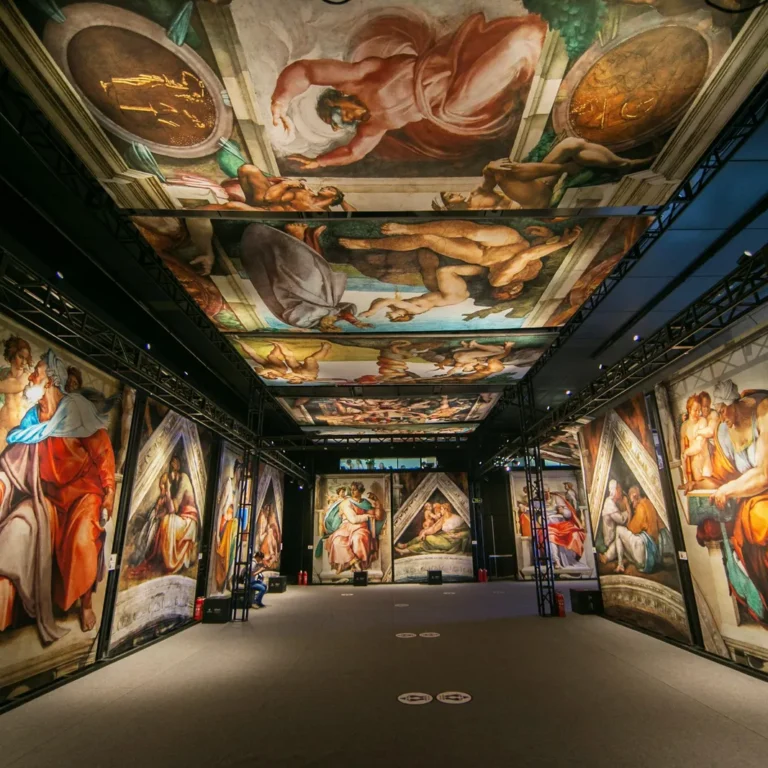
New Jersey’s cultural landscape continues to expand in bold and unexpected ways, and one of the most compelling examples of that evolution is now open to the public at Westfield Garden State Plaza. Sistine Chapel: The Exhibition offers a rare opportunity to experience one of the most revered artistic achievements in human history—not from a distance, but up close, at eye level, and with a level of access that fundamentally reshapes how audiences engage with Michelangelo’s work.
For generations, the Sistine Chapel ceiling has stood as a pinnacle of artistic accomplishment, drawing millions of visitors to Vatican City each year. Yet the very nature of that experience—viewing the frescoes from far below, often in crowded conditions—has limited the ability to fully absorb the detail, narrative complexity, and technical brilliance embedded within each panel. This exhibition, now installed in North Jersey, redefines that encounter entirely, transforming what has traditionally been a distant observation into an immersive, highly personal exploration.
At Westfield Garden State Plaza, visitors are invited to walk among life-sized reproductions of all 34 frescoes that comprise Michelangelo’s ceiling. These meticulously recreated panels are displayed at eye level, allowing for a clarity and intimacy that is virtually impossible to achieve in the original setting. The result is a viewing experience that feels both expansive and immediate, where each brushstroke, contour, and compositional decision can be examined with unprecedented precision.
This approach does more than enhance visibility—it fundamentally alters the relationship between viewer and artwork. Without the constraints of architectural distance or time-limited access, guests are free to move at their own pace, to revisit sections, and to engage with the imagery in a way that encourages deeper understanding. The exhibition becomes not just a presentation of art, but a space for reflection, where the scale and ambition of Michelangelo’s vision can be fully appreciated.
Central to the experience is the narrative dimension of the frescoes themselves. Each panel contributes to a larger story drawn from biblical themes, rendered with a level of dramatic intensity and anatomical mastery that has defined Western art for centuries. By presenting these works in a format that prioritizes accessibility and context, the exhibition allows visitors to trace these narratives with greater clarity, uncovering connections and details that might otherwise remain obscured.
The educational component of the exhibition further enhances its impact. Informational displays accompany the visual presentation, providing insight into the historical, cultural, and artistic significance of each fresco. These elements are carefully integrated to support, rather than distract from, the visual experience, offering visitors the tools to deepen their engagement without overwhelming the sensory impact of the artwork itself.
One of the defining characteristics of Sistine Chapel: The Exhibition is its camera-friendly environment, a deliberate departure from the restrictions typically associated with viewing the original works. This feature reflects a broader shift in how cultural experiences are designed, acknowledging the role of personal documentation in modern engagement while maintaining the integrity of the presentation. Visitors are encouraged to capture and share their experience, extending the reach of the exhibition beyond its physical location and into the broader cultural conversation.
The choice of Westfield Garden State Plaza as the exhibition’s host site is both strategic and symbolic. As one of the region’s most prominent destinations, the venue provides accessibility to a wide and diverse audience, bridging the gap between high art and everyday experience. This placement reinforces the idea that cultural engagement does not need to be confined to traditional museum spaces, but can instead be integrated into the rhythms of daily life, making it more approachable and inclusive.
This exhibition also reflects the broader trajectory of New Jersey’s art and culture scene, which continues to evolve through innovative programming and expanded access to world-class experiences. By hosting an exhibition of this caliber, North Jersey further establishes itself as a destination where global artistic achievements can be explored within a local context. It is a development that aligns with the state’s growing reputation for delivering cultural experiences that are both high-quality and widely accessible.
For those seeking to explore the full spectrum of artistic and cultural offerings across the region, Explore New Jersey’s art and culture coverage provides a comprehensive guide to exhibitions, installations, and events that define the state’s creative identity. From immersive experiences like this to traditional gallery presentations, the platform captures the diversity and depth of New Jersey’s cultural landscape.
Sistine Chapel: The Exhibition stands as more than a replication of a historic masterpiece—it is a reimagining of how that masterpiece can be experienced in the modern world. By bringing Michelangelo’s work into a format that emphasizes proximity, accessibility, and narrative clarity, the exhibition offers something genuinely rare: the chance to engage with one of history’s greatest artistic achievements on entirely new terms.
In doing so, it transforms a once-in-a-lifetime destination into an experience that is not only reachable, but deeply personal, reinforcing the idea that great art is not defined solely by where it resides, but by how it is experienced.
The Morris Museum is set to elevate New Jersey’s cultural landscape with the announcement of its upcoming exhibition, Henri Matisse: Beyond Color, a major presentation that reexamines one of the most celebrated figures in modern art through a lens that goes far deeper than his iconic use of vibrant palette. Opening next month, this exhibition brings together a significant collection of Matisse’s drawings, offering audiences a rare and intellectually rich opportunity to engage with the foundational elements of an artist whose influence continues to shape visual culture worldwide.
While Henri Matisse is often associated with bold color and expressive composition, this exhibition shifts the focus to the underlying structure of his work—line, form, and the disciplined simplicity that defined his artistic evolution. By centering on drawings, the Morris Museum invites visitors into a more intimate dialogue with Matisse’s process, revealing the deliberate choices and refined techniques that underpin his most recognizable works. It is a perspective that transforms familiarity into discovery, encouraging audiences to reconsider what they thought they knew about one of the 20th century’s most enduring artistic figures.
The significance of Beyond Color lies not only in the works themselves but in the curatorial intent behind the exhibition. Rather than presenting Matisse as a static icon, the show positions him as a dynamic thinker whose exploration of form was as rigorous as it was innovative. Each drawing serves as both a standalone work and a piece of a larger narrative, illustrating how Matisse continually refined his approach to composition, stripping away excess to arrive at a visual language that is both immediate and profound.
This emphasis on drawing as a primary medium underscores a critical aspect of Matisse’s practice that is often overshadowed by his later, more widely recognized works. The exhibition reveals how line functioned as a vehicle for expression, capable of conveying movement, emotion, and structure with remarkable economy. In doing so, it highlights the artist’s ability to achieve complexity through simplicity, a hallmark of his work that continues to resonate with contemporary audiences and practitioners alike.
The Morris Museum’s role in bringing this exhibition to New Jersey reflects a broader commitment to presenting art that challenges, educates, and inspires. As one of the state’s leading cultural institutions, the museum has consistently demonstrated an ability to curate exhibitions that connect global artistic movements to local audiences. Henri Matisse: Beyond Color builds on that legacy, offering a program that is both accessible and deeply engaging, appealing to seasoned art enthusiasts as well as those encountering Matisse’s work for the first time.
This exhibition also contributes to the ongoing evolution of New Jersey’s art and culture scene, which continues to expand in both scope and ambition. By hosting a show of this caliber, the Morris Museum reinforces the state’s position as a destination for high-quality cultural experiences, where internationally significant works can be explored within a thoughtfully curated environment. It is part of a larger ecosystem that includes galleries, performance spaces, and community-driven initiatives, all of which contribute to a vibrant and diverse artistic landscape.
The timing of the exhibition adds another layer of relevance, arriving at a moment when audiences are increasingly seeking experiences that offer depth and meaning. In an era defined by rapid consumption of visual content, Beyond Color provides a counterpoint—a space where viewers can slow down, observe, and engage with art on a more reflective level. The focus on drawing, with its emphasis on line and form, encourages a kind of looking that is both attentive and rewarding, revealing nuances that might otherwise go unnoticed.
For visitors, the experience of the exhibition is designed to be both immersive and contemplative. The presentation of the drawings allows for close examination, inviting viewers to trace the movement of the artist’s hand and to consider the decisions that shape each composition. This proximity to the work creates a sense of connection that is often absent in larger, more expansive exhibitions, reinforcing the idea that the most powerful artistic experiences are often the most direct.
The impact of Henri Matisse: Beyond Color extends beyond the walls of the Morris Museum, contributing to a broader conversation about the role of art in contemporary life. It serves as a reminder that even the most familiar names in art history continue to offer new insights when approached with fresh perspective. By focusing on an aspect of Matisse’s work that is both foundational and underexplored, the exhibition opens the door to new interpretations and deeper understanding.
For those looking to explore more of what New Jersey’s cultural landscape has to offer, Explore New Jersey’s art and culture coverage provides a comprehensive guide to exhibitions, performances, and events that define the state’s creative identity. From major museum presentations to emerging local initiatives, the platform captures the full spectrum of artistic expression across the region.
As anticipation builds for the opening of Henri Matisse: Beyond Color, the Morris Museum stands ready to deliver an exhibition that is both intellectually rigorous and visually compelling. It is an experience that invites audiences to look beyond the surface, to engage with the essence of artistic creation, and to rediscover the work of a master through a lens that is as enlightening as it is transformative.
In a decisive affirmation of regulatory strength and institutional credibility, the New Jersey Department of Banking and Insurance has secured reaccreditation from the National Association of Insurance Commissioners, marking a critical milestone that underscores the state’s continued leadership in financial oversight, consumer protection, and insurance market stability. The achievement positions New Jersey at the forefront of regulatory excellence at a time when the financial services landscape is undergoing rapid transformation, heightened scrutiny, and increasing complexity.
This reaccreditation is not a procedural formality. It is the result of a rigorous, multi-layered evaluation conducted on a five-year cycle, designed to ensure that state insurance regulators meet and exceed nationally recognized benchmarks for solvency oversight, operational integrity, and enforcement capability. The process examines every dimension of regulatory performance, from financial analysis and examination practices to legal authority and inter-state coordination. For New Jersey, successfully navigating this comprehensive review sends a clear signal to markets, institutions, and consumers alike: the state’s regulatory infrastructure is both resilient and trusted at the highest levels.
At the core of the accreditation framework is the principle of reliance. When a state agency earns accreditation from the NAIC, it enables regulators across the country to depend on that state’s oversight of insurance companies operating beyond its borders. In practical terms, this means that insurers domiciled in New Jersey can operate with a level of national credibility that reduces redundancy, enhances efficiency, and strengthens the broader regulatory ecosystem. It is a designation that carries both operational significance and reputational weight, reinforcing New Jersey’s position as a key jurisdiction within the national insurance marketplace.
Leadership within the department has emphasized the broader implications of the reaccreditation, framing it as a reflection of sustained commitment rather than a singular achievement. Acting Commissioner Susan Ochs has highlighted the role of departmental staff in maintaining the standards required to meet national benchmarks, pointing to a culture of diligence, expertise, and accountability that underpins the agency’s day-to-day operations. This internal capacity—often unseen by the public—forms the backbone of a regulatory system that must continuously adapt to evolving risks, emerging technologies, and shifting economic conditions.
The reaccreditation also arrives within a broader context of institutional validation for the department. In December 2025, its banking division achieved a parallel milestone, securing reaccreditation from the Conference of State Bank Supervisors. Together, these dual recognitions establish a comprehensive endorsement of New Jersey’s regulatory framework across both insurance and banking sectors, creating a unified standard of excellence that spans the state’s financial oversight responsibilities.
For businesses operating in New Jersey, the implications are substantial. A strong regulatory environment provides a foundation for market confidence, enabling insurers and financial institutions to operate within a framework that is both predictable and aligned with national standards. This stability is particularly critical in an era defined by economic uncertainty, where regulatory clarity can influence investment decisions, operational strategies, and long-term planning. Companies domiciled in New Jersey benefit not only from the state’s geographic and economic advantages, but also from the credibility conferred by a regulatory system that meets the highest national benchmarks.
Consumers, meanwhile, experience the benefits in more direct and tangible ways. The department’s mandate extends beyond oversight to active protection, ensuring that insurance products are both financially sound and fairly administered. Accreditation reinforces the mechanisms that safeguard policyholders, from solvency monitoring that prevents insurer failures to enforcement actions that address unfair practices. In a state where millions of residents rely on insurance for health, property, and financial security, the importance of this regulatory assurance cannot be overstated.
The timing of the reaccreditation is particularly noteworthy given the accelerating pace of change within the financial services industry. Technological innovation, including the rise of digital insurance platforms and data-driven underwriting models, is reshaping how products are developed and delivered. At the same time, emerging risks—from climate-related events to cybersecurity threats—are introducing new challenges that require sophisticated regulatory responses. In this environment, accreditation serves as both a validation of current capabilities and a benchmark for future readiness, ensuring that the department is equipped to navigate the complexities of a rapidly evolving landscape.
From a broader economic perspective, the recognition enhances New Jersey’s competitiveness as a hub for financial services. States that demonstrate strong regulatory performance are better positioned to attract and retain businesses, particularly in industries where oversight and compliance are integral to operations. The reaccreditation sends a clear message to the market: New Jersey offers not only opportunity, but also a stable and well-regulated environment in which to pursue it.
Within the context of the state’s business ecosystem, this development aligns with a wider narrative of resilience and forward momentum. As New Jersey continues to balance growth with oversight, the role of institutions like the Department of Banking and Insurance becomes increasingly central. Their ability to maintain high standards while adapting to new realities is a defining factor in the state’s economic trajectory, influencing everything from consumer confidence to corporate strategy.
The reaccreditation is, ultimately, a reflection of sustained excellence rather than a singular moment of achievement. It represents years of consistent performance, continuous improvement, and a commitment to meeting the evolving demands of both the industry and the public. In an environment where trust is a critical currency, the New Jersey Department of Banking and Insurance has reaffirmed its standing as a guardian of that trust, ensuring that the systems underpinning the state’s financial landscape remain strong, reliable, and aligned with the highest national standards.
The New Jersey Devils are once again commanding attention across the Garden State—not because of where they sit in the standings, but because of how they are playing when expectations have largely faded. At 36-32-2, the Devils find themselves in a complicated position: a team showing flashes of elite offensive capability while simultaneously navigating the reality of a postseason outlook that remains all but out of reach. Yet within that tension lies one of the most compelling storylines in New Jersey sports right now—a late-season surge that raises as many questions as it answers.
Coming off an emphatic 6-4 road victory over the Dallas Stars, one of the league’s top teams, the Devils have injected life into what had previously been a frustrating and inconsistent campaign. That win did not exist in isolation; it is part of a broader stretch of improved play since the Olympic break that has seen the team rediscover offensive rhythm, confidence, and identity. As they continue their Central Division road swing with a stop in Nashville before heading to Carolina and then back home to the Prudential Center, the Devils are playing a brand of hockey that looks far closer to preseason expectations than anything seen during the midseason collapse.
New Jersey Devils Continue Critical Road Stretch in Nashville as Late-Season Identity Takes Shape. The New Jersey Devils move deeper into a defining stretch of their season tonight as they take the ice against the Nashville Predators at Bridgestone Arena, a matchup that carries significance far beyond the standings. With the puck set to drop at 8:00 PM ET, this road contest represents another opportunity for a team that has rediscovered its offensive rhythm to continue building momentum, sharpen its identity, and establish a foundation that extends beyond the final weeks of the 2025–26 campaign.
This game arrives at a pivotal moment in the Devils’ schedule, positioned squarely within a road trip that has already delivered one of the team’s most compelling performances of the season. Their recent victory over Dallas was not just a win—it was a statement that, even in a year defined by inconsistency, the Devils possess the capability to compete with elite opponents when their core players are operating at full capacity. The challenge now is sustaining that level of play against a Nashville team known for its structured defensive approach and disciplined execution.
The Devils’ resurgence has been driven by a noticeable shift in offensive philosophy, one that has allowed the team’s skill players to operate with greater freedom and creativity. The transition game has become more aggressive, with an emphasis on generating opportunities off the rush rather than relying solely on set-zone play. This adjustment has unlocked production across the lineup, with the team’s top contributors once again leading the charge. The result has been a more dynamic and unpredictable offense, capable of producing scoring bursts that were largely absent during the midseason slump.
Central to this transformation is the continued impact of Jack Hughes, whose recent stretch of play has reestablished him as one of the most dangerous offensive forces in the league. His ability to dictate tempo, create space, and finish scoring chances has elevated the performance of those around him, turning individual brilliance into collective momentum. When Hughes is engaged at this level, the Devils’ entire system appears more fluid, more confident, and more capable of sustaining pressure against opposing defenses.
Support from key players such as Nico Hischier, Jesper Bratt, and Timo Meier has reinforced the idea that this is a team built around high-end offensive talent. Each brings a distinct element to the lineup—Hischier’s two-way reliability, Bratt’s playmaking vision, and Meier’s physical presence—creating a balance that, when functioning cohesively, gives the Devils the ability to control the pace of play. The recent uptick in scoring is not the result of isolated performances but a reflection of this group operating in sync.
Defensively, the Devils continue to navigate a more complex landscape. While recent games have shown improvement in limiting high-danger chances, consistency remains a concern. The goaltending tandem has delivered moments of stability but has yet to reach a level that can consistently compensate for defensive breakdowns. As the team faces Nashville, a club that thrives on capitalizing on mistakes, maintaining defensive discipline will be as critical as sustaining offensive pressure.
Injuries have also influenced the team’s structure, forcing adjustments that have tested depth and flexibility. The absence of key contributors has required players to step into expanded roles, creating both challenges and opportunities. How effectively the Devils manage these shifts will play a role in determining not only the outcome of this game but the trajectory of the remaining schedule.
Beyond the immediate matchup, tonight’s game is part of a broader evaluation period for the organization. With playoff positioning no longer a realistic objective, the focus shifts toward assessing systems, player development, and overall team cohesion. Each performance becomes a data point, informing decisions that will shape the offseason and, ultimately, the direction of the franchise moving forward.
This context adds a layer of importance to every shift, every possession, and every adjustment. The Devils are not simply playing out the schedule; they are defining what kind of team they intend to be. The recent stretch of improved play suggests a group that is capable of executing a more open, aggressive style, one that aligns with the strengths of its roster. The question is whether that approach will be embraced as a long-term identity or viewed as a situational adjustment.
For fans across New Jersey, this phase of the season offers a different kind of engagement. The stakes may not be tied to playoff qualification, but they are no less meaningful. Watching the team evolve, identifying emerging patterns, and anticipating how those elements will translate into the next season creates a narrative that extends beyond wins and losses.
The return home following this road trip will provide another opportunity for the Devils to connect with their fan base, bringing this evolving identity back to the Prudential Center. But before that, the focus remains on Nashville, where the team will look to build on its recent success and continue refining the elements that have fueled its resurgence.
For comprehensive coverage of the Devils’ season, including game analysis, roster developments, and ongoing updates, Explore New Jersey’s New Jersey Devils coverage remains the definitive resource for following every development surrounding the team.
As the Devils take the ice tonight, the objective is clear: sustain the momentum, reinforce the identity, and carry forward the lessons of a season that, while challenging, continues to reveal the potential of a team still very much in the process of becoming what it was built to be.
At the center of this resurgence is Jack Hughes, whose post-Olympic performance has elevated him from cornerstone player to undeniable engine of the team. Fresh off a gold medal performance on the international stage, Hughes has returned to NHL play with a level of urgency and creativity that has translated directly into production. With 12 points in his last six games and over 20 goals for the fifth consecutive season, he has not only driven the offense but redefined its pace and structure. His ability to generate chances off the rush has become a defining feature of the Devils’ recent success, and it is no coincidence that the team’s scoring output has surged alongside his return to form.
This offensive uptick is measurable and meaningful. Since the Olympic break, the Devils are averaging more than 3.5 goals per game, a dramatic improvement over their season-long struggles that had placed them near the bottom of the league in scoring. Contributions from key players such as Timo Meier, Nico Hischier, and Jesper Bratt have reinforced the idea that when the Devils’ top talent is engaged and producing, the team can compete with anyone. The chemistry among the top lines has improved, the transition game has opened up, and the overall pace has shifted toward a more aggressive, attack-oriented approach.
However, the broader context cannot be ignored. Despite this recent stretch, the Devils remain seventh in the Metropolitan Division with 74 points, sitting well outside the playoff picture with limited time remaining. The margin for error that once existed earlier in the season has long since disappeared, replaced by the reality that this late push is more about evaluation and momentum than postseason positioning.
Defensively, the picture is more nuanced. The Devils have allowed fewer than three goals per game in this recent stretch, suggesting improvement, but the goaltending remains inconsistent. Jacob Markstrom has carried the bulk of the workload, posting numbers that reflect marginal improvement but not the level of dominance required to elevate the team into contention. Jake Allen has shown flashes of reliability, but the overall stability in net has not been sufficient to offset the defensive lapses that have defined much of the season.
Injuries have also played a role in shaping the team’s trajectory. The absence of key contributors such as Brett Pesce and Stefan Noesen, along with uncertainty surrounding Arseny Gritsyuk, has forced adjustments that have at times disrupted continuity. While injuries are an unavoidable part of any NHL season, they do not fully explain the prolonged periods of underperformance that plagued the Devils through December and January. Even as players returned to the lineup, the inconsistencies persisted, pointing to deeper structural and strategic issues.
What makes the current moment particularly significant is the contrast between what the Devils are now and what they were just weeks ago. The team that struggled to generate offense, that endured extended scoring droughts, and that often appeared disconnected has been replaced—at least temporarily—by a group that is playing with confidence and purpose. This transformation raises an essential question for the organization: which version of the Devils is the real one?
The answer is likely somewhere in between, and that ambiguity is precisely what makes this stretch so critical. There is a risk that a strong finish to a lost season could create a false sense of resolution within the organization. Decision-makers—from ownership to the front office to the coaching staff—must determine whether the recent improvement reflects a sustainable identity or a temporary surge driven by reduced pressure and favorable circumstances.
This evaluation carries significant implications for the offseason. The Eastern Conference remains one of the most competitive environments in professional hockey, and standing still is not an option. The Devils’ roster construction, particularly within the top six forward group, continues to present questions that have yet to be fully addressed. The departure of key offensive contributors in recent seasons has left gaps that have not been adequately filled, and relying on internal improvement alone may not be sufficient to close that gap.
Coaching philosophy will also come under scrutiny. The shift toward a more open, aggressive system has clearly benefited the team in recent weeks, allowing players to leverage their speed and skill more effectively. The question moving forward is whether that approach will be sustained when games carry higher stakes, or whether a return to a more conservative structure will once again limit offensive potential. The timing of these adjustments—arriving deep into the season rather than earlier—adds another layer of complexity to the evaluation process.
For fans across New Jersey, the frustration lies in the inconsistency. The Devils have shown, repeatedly, that they are capable of playing at a high level, delivering performances that suggest a team on the verge of contention. Yet those moments have been offset by stretches of ineffectiveness that undermine that potential. It is this oscillation between promise and disappointment that defines the current state of the franchise.
Still, there is value in what is happening now. Winning games, even in a season where the playoffs are unlikely, matters. It builds confidence, reinforces habits, and provides a foundation upon which future success can be constructed. The Devils are not playing for draft positioning; they are playing for identity, for cohesion, and for a sense of direction that can carry into the next season.
As the team continues its schedule with matchups in Nashville, Carolina, and a return home to face Chicago, each game becomes part of a larger narrative about who the Devils are and who they intend to become. The results themselves may not alter the standings in a meaningful way, but the process—how they play, how they respond, how they evolve—will shape the decisions that define the offseason.
For those following every development surrounding the franchise, Explore New Jersey’s New Jersey Devils coverage remains the central destination for in-depth analysis, updates, and insight into one of the state’s most closely watched teams.
The Devils’ late-season surge is not about salvaging the present; it is about informing the future. It is a stretch that demands clarity, not complacency, and one that will ultimately determine whether this team is positioned to take the next step or destined to repeat the cycle that has defined its recent past.
A significant opportunity is emerging in New Jersey’s fast-moving real estate market as Max Spann Real Estate & Auction Co. prepares to bring a curated portfolio of residential and commercial properties to auction, positioning buyers, developers, and investors to capitalize on a market defined by constrained inventory, rising demand, and strategic repositioning across key regions of the state. The upcoming multi-parcel online auction, scheduled to conclude on April 22, 2026, reflects not only the continued evolution of real estate transactions in New Jersey, but also the growing role of accelerated auction platforms as a primary mechanism for unlocking value in both residential and commercial sectors.
At a time when traditional listing cycles are increasingly challenged by fluctuating interest rates, competitive bidding environments, and limited supply, auction-driven sales are gaining traction as a transparent and efficient alternative. Max Spann’s latest offering underscores this shift, presenting a portfolio designed to attract a wide range of buyers—from first-time homeowners seeking entry into competitive local markets to seasoned investors targeting income-producing assets and redevelopment opportunities.
The properties included in this April auction represent a strategic cross-section of New Jersey’s diverse real estate landscape. Residential offerings are expected to appeal to buyers navigating tight housing conditions, where inventory shortages have placed upward pressure on pricing across suburban and commuter-friendly communities. Meanwhile, the commercial components of the auction introduce opportunities for repositioning and adaptive reuse, a trend that has become increasingly prominent as businesses recalibrate their physical footprints in response to changing economic conditions and consumer behavior.
What distinguishes this auction is not simply the assets themselves, but the timing and structure of the offering. Conducted entirely online, the process reflects a broader digital transformation within the real estate industry, where accessibility, speed, and data-driven decision-making are redefining how transactions are executed. Prospective bidders can engage with the properties remotely, review due diligence materials, and participate in competitive bidding environments that compress what would traditionally be a months-long sales cycle into a matter of weeks.
For New Jersey, this model aligns with a market that is both highly localized and regionally interconnected. From commuter corridors feeding into New York City to emerging suburban hubs experiencing renewed interest, the state’s real estate dynamics are shaped by a combination of proximity, infrastructure, and evolving lifestyle preferences. Auctions such as this one provide a mechanism for aligning property availability with buyer demand in real time, creating a marketplace that is both responsive and efficient.
The April 22 event also arrives at a moment when investor sentiment toward New Jersey real estate remains strong. Despite broader economic uncertainties, the state continues to benefit from its strategic location, robust transportation networks, and diverse economic base. Residential demand remains supported by migration patterns that favor suburban and exurban communities, while commercial real estate is undergoing a period of recalibration, with opportunities emerging in sectors such as mixed-use development, logistics, and adaptive reuse.
Max Spann’s approach leverages these conditions, positioning its auction platform as a conduit for both liquidity and discovery. By aggregating multiple properties into a single event, the firm creates a competitive environment that can drive pricing transparency while also attracting a broader pool of participants. This multi-parcel format allows buyers to evaluate opportunities across different asset classes and geographic areas within a unified framework, enhancing both efficiency and strategic decision-making.
The implications extend beyond individual transactions. Auctions of this scale contribute to market signaling, providing insight into pricing trends, buyer behavior, and the relative strength of different property types. For developers and investors, the outcomes can inform future acquisition strategies, while for sellers, they offer a pathway to expedited transactions without the prolonged uncertainty often associated with traditional listings.
In the context of New Jersey’s broader real estate ecosystem, the April auction represents a microcosm of larger shifts underway. The integration of digital platforms, the emphasis on speed and transparency, and the diversification of property offerings all point to a market that is adapting to new realities while maintaining its core strengths. As demand continues to outpace supply in many areas, mechanisms that facilitate efficient transactions will play an increasingly important role in shaping the trajectory of the market.
For buyers, the opportunity is both immediate and strategic. Participation in the auction provides access to properties that may not otherwise be available through conventional channels, along with the ability to compete in a structured environment where timelines are clear and outcomes are decisive. For sellers, the model offers a way to bring assets to market with momentum, leveraging competitive dynamics to achieve value in a compressed timeframe.
As April 22 approaches, the focus will turn to how the market responds—how bidders engage, how pricing unfolds, and how these transactions reflect the broader currents influencing New Jersey real estate. In a state where location, accessibility, and adaptability remain defining factors, the Max Spann auction stands as a clear indicator of where the market is heading: toward greater efficiency, increased transparency, and a more dynamic interplay between buyers and sellers in an increasingly competitive landscape.
A major transformation in how people move through one of the nation’s busiest transportation hubs is now underway in New Jersey, as the Port Authority of New York and New Jersey begins real-world testing of autonomous vehicle technology at Newark Liberty International Airport. The initiative, unfolding throughout the spring of 2026, represents a pivotal step in redefining airport mobility, infrastructure efficiency, and the passenger experience across the region.
This is not a conceptual pilot or a distant vision. It is a live, operational test environment designed to evaluate how fleets of electric, self-driving shuttles can function within one of the most complex and high-pressure transit ecosystems in the country. At stake is more than convenience. The program is directly tied to the broader, multi-billion-dollar redevelopment of Newark Liberty, positioning autonomous transportation as a foundational component of the airport’s future.
The Port Authority’s approach is methodical and ambitious. Three separate technology companies—each with distinct engineering philosophies and system architectures—have been selected to deploy and test autonomous shuttle fleets in controlled zones across airport property. These vehicles are not being introduced casually; they are being stress-tested under simulated real-world conditions, including multi-vehicle coordination, dynamic routing, and high passenger throughput scenarios.
The first phase is already underway with Oceaneering, a company known for advanced mobility and robotics systems. Later in the testing cycle, Ohmio will introduce its own autonomous shuttle platform, followed by Glydways, which is expected to bring a more infrastructure-integrated transit model into the evaluation process. Each testing window runs for approximately two weeks, allowing the Port Authority to analyze performance across a range of operational variables, from navigation precision to passenger flow efficiency.
What makes this initiative particularly significant is its integration into a much larger infrastructure overhaul. Newark Liberty is currently in the midst of a sweeping redevelopment that began with the opening of Terminal A in 2023 and continues with plans for a new Terminal B and extensive upgrades to Terminal C. At the center of this transformation is the $3.5 billion replacement of the AirTrain Newark system, a project launched in October 2025 and scheduled for completion by 2030. The new AirTrain alignment is designed to eliminate long-standing inefficiencies, including the current disconnect that forces passengers into extended walks between transit access points and terminal entrances.
Autonomous shuttles are being evaluated as a critical connective layer within this evolving ecosystem. Rather than functioning as a standalone novelty, they are intended to bridge gaps between terminals, parking facilities, and transit nodes, creating a seamless, high-frequency circulation network that reduces congestion and enhances accessibility. In practical terms, this could mean significantly shorter transfer times, more predictable passenger movement, and a reduction in the bottlenecks that have long defined the Newark airport experience.
The technology itself reflects the rapid evolution of autonomous systems over the past several years. Most of the vehicles being tested operate at what is known as Level 4 autonomy, meaning they are capable of fully managing driving functions within a defined, geofenced environment. Airports are uniquely suited to this level of automation. Their controlled roadways, predictable traffic patterns, and limited variables create an ideal testing ground for systems that require precision without the unpredictability of open-road conditions.
However, the transition to full autonomy remains a staged process. Many of the current shuttle models include onboard attendants—not drivers in the traditional sense, but trained personnel who monitor system performance, assist passengers, and intervene if necessary. This hybrid approach reflects both regulatory realities and the ongoing need to build public trust in autonomous mobility. At the same time, the industry is moving rapidly toward fully driverless operations, with next-generation vehicles designed without steering wheels or manual controls already on the horizon.
Federal policy is also beginning to catch up with technological advancement. Legislative efforts such as the proposed SELF DRIVE Act of 2026 aim to establish a national regulatory framework that would allow autonomous vehicles to operate commercially without traditional human-centric safety requirements. If enacted, such measures could accelerate deployment timelines and expand the use of autonomous systems beyond controlled environments like airports into broader urban and suburban networks.
For New Jersey, the implications extend well beyond Newark Liberty. The state’s transportation infrastructure is deeply interconnected, linking air travel, rail systems, highways, and regional transit corridors into a single economic engine. Innovations introduced at the airport level often ripple outward, influencing how mobility solutions are developed and deployed across the region. The Port Authority’s investment in autonomous technology signals a strategic commitment to modernization that aligns with broader trends in smart infrastructure, sustainability, and digital integration.
The environmental dimension of the initiative is equally significant. The shuttles being tested are zero-emissions vehicles, aligning with long-term goals to reduce the carbon footprint of major transportation hubs. As airports face increasing pressure to balance growth with environmental responsibility, electrified autonomous fleets offer a pathway to achieving both operational efficiency and sustainability targets.
From a passenger perspective, the shift promises a fundamentally different airport experience. The traditional friction points—long walks, crowded shuttle buses, inconsistent wait times—are being reimagined through a system designed for continuous, responsive movement. The goal is not simply to move people, but to do so in a way that feels intuitive, reliable, and integrated into the broader journey from curb to gate.
For the Port Authority, this initiative builds on years of incremental progress. The agency has been exploring autonomous technology since at least 2022, including successful trials of bus platooning and lane-keeping systems in the Lincoln Tunnel’s Exclusive Bus Lane. Those early experiments laid the groundwork for the more advanced, passenger-facing applications now being deployed at Newark Liberty.
What is unfolding in 2026 is a convergence of infrastructure investment, technological maturity, and strategic vision. The testing of autonomous shuttles is not an isolated experiment; it is a preview of how transportation systems are likely to function in the near future—connected, automated, and designed around the movement of people at scale.
As redevelopment continues and the new AirTrain system takes shape, the role of autonomous mobility will only become more central. The decisions made during this testing phase will influence not just how Newark Liberty operates, but how airports and transit systems across the country approach the integration of emerging technologies.
In New Jersey, where transportation is both a necessity and a defining characteristic of daily life, the significance of this moment is clear. The state is not simply adapting to the future of mobility—it is actively helping to build it, one autonomous shuttle at a time.
The political landscape in New Jersey’s 7th Congressional District has entered a decisive new phase, as the candidate field consolidates and the contours of one of the nation’s most closely watched House races begin to sharpen. Following the latest filing deadline, two Democratic contenders have exited the race, transforming what was once a crowded and fluid contest into a more focused battle among a smaller group of candidates now vying for the opportunity to challenge incumbent Republican Thomas Kean Jr. in November.
Stretching across Hunterdon, Morris, Somerset, Sussex, Union, and Warren counties, CD-7 remains a district defined by geographic diversity and political complexity. It is a region where suburban growth, rural identity, and commuter economics intersect, creating a competitive environment that has consistently drawn national attention. While the district leans Republican by a measurable margin, recent election cycles have demonstrated that it remains firmly in play under the right conditions, making the Democratic primary not just a procedural step, but a strategic proving ground for viability in a general election.
The departure of Beth Adubato and Megan O’Rourke marks a turning point in the race. Adubato’s campaign never fully gained traction, hampered by limited engagement and an inconsistent presence across key county conventions. O’Rourke’s exit, however, carries more strategic weight. A climate scientist with a professional background shaped by federal service, she positioned herself as a candidate capable of bridging ideological and geographic divides within the district. Her emphasis on rural engagement and agricultural concerns signaled an effort to expand Democratic appeal into traditionally Republican-leaning areas such as Warren County. Despite securing a local endorsement, her campaign ultimately failed to achieve the organizational momentum required to sustain a district-wide operation, culminating in her decision not to file the necessary nominating petition.
With those departures, the Democratic field has effectively crystallized around a smaller group of contenders, each bringing a distinct profile and pathway to potential nomination. Among them, Rebecca Bennett has emerged as a formidable presence, consolidating institutional support across multiple counties. Her endorsements from Hunterdon, Morris, Somerset, and Union counties represent a significant organizational advantage, providing both structural backing and a signal of confidence from party leadership. Bennett’s background as a former Navy helicopter pilot introduces a narrative of service and discipline that has proven electorally resonant in New Jersey politics, inviting comparisons to prior successful candidates who leveraged similar credentials to build broad-based appeal.
Brian Varela, meanwhile, has carved out a different lane, emphasizing visibility, grassroots engagement, and a willingness to confront contentious issues directly. Based in Long Valley, Varela has been a consistent presence at rallies and demonstrations, particularly those centered on immigration enforcement and local concerns surrounding federal detention infrastructure. His campaign has leaned into a message of accessibility and responsiveness, positioning him as a candidate willing to engage where others may not. With O’Rourke’s departure, Varela has also gained additional support in Warren County, strengthening his foothold in a region that often plays a pivotal role in district-wide outcomes.
Michael Roth represents yet another dimension of the race, combining policy experience with a message centered on momentum and electability. A former official with the U.S. Small Business Administration, Roth has highlighted his near-win at the Morris County convention as evidence of growing support and organizational strength. Securing approximately 48 percent of the vote in that contest, he has framed his campaign as one on the rise, emphasizing grassroots energy and the ability to compete effectively in one of the district’s most influential counties. His messaging reflects a broader effort to position himself as both a pragmatic policymaker and a candidate capable of unifying disparate factions within the party.
Also remaining in the race is Tina Shah, an ICU physician from Westfield, whose candidacy underscores the diversity of professional backgrounds represented in the field. While she has yet to secure significant institutional endorsements, her continued presence introduces an additional variable into a race that, while narrowing, remains dynamic. In a district where voter sentiment can shift rapidly, particularly in response to national developments, even candidates without early organizational advantages can find opportunities to gain traction as the campaign progresses.
The evolving Democratic primary is unfolding against the backdrop of an incumbent who has demonstrated a consistent electoral strategy centered on discipline and message control. Kean’s approach, characterized by limited media engagement and a focus on targeted voter outreach, has proven effective in prior cycles. In a district with a Republican registration advantage of roughly 20,000 voters, that strategy has allowed him to secure victories without overexposure, maintaining a controlled narrative while avoiding the risks associated with high-profile public confrontations.
However, the broader political environment continues to introduce new variables into the equation. Issues such as immigration policy, federal infrastructure decisions, and economic pressures are increasingly shaping voter priorities across CD-7. Local debates, including concerns surrounding proposed federal facilities and their impact on communities, have begun to intersect with national political dynamics, creating a layered context in which the eventual Democratic nominee will need to operate. The ability to translate local engagement into district-wide resonance will likely prove निर्णative in determining not only the outcome of the primary, but the competitiveness of the general election.
As the June 2 primary approaches, the race is transitioning from a phase of exploration to one of consolidation and contrast. Candidates are no longer simply introducing themselves; they are defining their differences, refining their messages, and building the coalitions necessary to secure victory in a district that demands both breadth and depth of support. Organizational strength, geographic reach, and narrative clarity are emerging as the key metrics by which campaigns will be judged in the weeks ahead.
For New Jersey and for national observers, CD-7 remains a district to watch—not only because of its competitive history, but because of what it represents in the broader political landscape. It is a microcosm of the challenges facing both parties: how to connect with diverse constituencies, how to navigate shifting voter expectations, and how to translate policy positions into electoral success. With the field now more clearly defined, the race has entered its most consequential stage, setting the stage for a contest that will carry implications well beyond the boundaries of the district itself.
In the evolving landscape of North and South Jersey’s craft beverage scene, few destinations are building momentum with the same authenticity, accessibility, and community-first energy as Buena Connection Brewing Company. Located in Buena, New Jersey, this rapidly rising brewery has transformed from a local startup into one of the most talked-about craft beer destinations in the state, blending high-quality brewing with a dynamic calendar of events, themed nights, and meaningful community engagement that extends far beyond the taproom.
At the center of Buena Connection Brewing’s growing identity is its ability to create a consistent weekly rhythm that invites both regulars and first-time visitors into an experience that feels both celebratory and personal. Its standout TGIF Special and Teacher Appreciation Friday program exemplifies this approach, turning the traditional end-of-week wind-down into something more intentional and inclusive. Every Friday from 3:00 PM to 6:00 PM, guests can enjoy $1 off pours across the tap list, setting the tone for a relaxed, welcoming start to the weekend. At the same time, the brewery extends a meaningful gesture to educators through its Teacher Appreciation offering, providing 10% off their entire tab throughout the evening. It is a simple concept executed with genuine purpose, reinforcing the brewery’s commitment to recognizing the people who contribute to the fabric of the community.
That sense of appreciation extends beyond educators. Buena Connection Brewing has also established itself as a strong supporter of first responders, offering dedicated weekly discounts that acknowledge the service and sacrifice of those who keep communities safe. These initiatives are not positioned as marketing tactics but as ongoing expressions of gratitude, embedded into the brewery’s operational culture and reflected in the way it engages with its patrons.
The physical space itself plays a critical role in shaping the experience. Situated at 112 Wheat Road, the brewery occupies a reimagined former fitness center, now transformed into a multi-level destination that balances scale with intimacy. The expansive main taproom provides an energetic, social atmosphere, while an upstairs mezzanine—often described as a speakeasy-style retreat—offers a more relaxed, conversational setting for smaller gatherings. Outdoors, a spacious patio invites guests to extend their visit, complete with lawn games and an open-air environment that enhances the sense of community connection. The space is designed to be flexible and inclusive, accommodating everything from casual meetups to organized events.
Buena Connection Brewing’s recognition as one of the Top 10 New Breweries in the Country by USA Today in 2025 reflects not only the quality of its product but the strength of its overall concept. The brewery’s approach to beer is rooted in diversity, drawing inspiration from the multicultural backgrounds of its ownership, which includes Colombian, Irish, French, American, and Italian influences. This perspective is evident across the tap list, where traditional styles are reinterpreted with a distinctive edge. From hop-forward IPAs like Backroads IPA to darker, more layered offerings such as the Hopeful Undertone Stout, the selection is designed to appeal to a wide range of palates while maintaining a consistent level of craftsmanship.
A notable aspect of the brewery’s identity is its commitment to incorporating local South Jersey ingredients into its offerings. By sourcing elements such as blueberries and honey from nearby producers, Buena Connection Brewing not only enhances the flavor profile of its beers but also reinforces its connection to the surrounding region. This emphasis on locality extends to the overall experience, creating a sense that each visit is rooted in place, reflecting both the character of Buena and the broader South Jersey community.
Beyond its beverage program, Buena Connection Brewing has developed a robust schedule of recurring events that position it as more than just a brewery—it is a full-scale social and cultural hub. Friday nights continue to build energy with line dancing sessions from 7:00 PM to 10:00 PM, transforming the space into a lively, interactive environment where guests can engage directly with the entertainment. Wellness-focused offerings such as “Bends & Brews” yoga sessions introduce a different dimension, blending physical activity with social connection in a format that appeals to a diverse audience. Pop-up artisan markets further expand the experience, bringing local creators into the space and reinforcing the brewery’s role as a platform for small businesses and independent makers.
The operational model is intentionally designed to maximize accessibility. With hours that extend into the evening on weekends and a family-friendly atmosphere that welcomes a broad demographic, the brewery creates an environment where visitors can tailor their experience. Guests are encouraged to bring their own food, adding flexibility to the visit, while amenities such as free Wi-Fi, board games, and arcade machines contribute to a relaxed, approachable setting. Even details like dog-friendly outdoor spaces reflect a thoughtful understanding of how people gather and socialize in modern environments.
What distinguishes Buena Connection Brewing within the broader New Jersey craft scene is its ability to balance quality, creativity, and community engagement without compromising any one element. It is not simply a place to sample beer; it is a destination where experiences are curated, relationships are built, and local culture is actively supported. This approach aligns with the broader evolution of New Jersey’s hospitality and entertainment sectors, where venues are increasingly expected to deliver more than a single offering, instead creating layered experiences that resonate with a wide audience.
For those exploring the full scope of destinations and experiences across the region, Explore New Jersey’s North Jersey coverage continues to highlight the businesses and venues that are shaping the state’s cultural and social identity. While Buena Connection Brewing is rooted in South Jersey, its influence and appeal extend across the state, drawing visitors from multiple regions who are seeking something that feels both authentic and elevated.
As the brewery continues to expand its programming and refine its offerings, it stands as a clear example of how local businesses can achieve national recognition while maintaining a deeply personal connection to their community. Buena Connection Brewing is not following trends—it is setting a standard, demonstrating that when quality, creativity, and genuine engagement come together, the result is something far greater than the sum of its parts.
As the partial shutdown of the Department of Homeland Security enters its 41st day on March 26, 2026, the political battle consuming Washington has moved far beyond a conventional funding dispute. What began as a budget impasse has now escalated into a high-stakes ideological confrontation linking national security operations, election law, and social policy into a single legislative flashpoint. At the center of the crisis is President Donald Trump, who has drawn a hard line by conditioning the restoration of pay for tens of thousands of federal workers on the passage of sweeping new voting restrictions and broader policy demands that are reshaping the contours of the debate.
The immediate human impact of the shutdown is being felt most acutely by approximately 50,000 Transportation Security Administration employees, many of whom have now missed multiple paychecks. As frontline personnel responsible for maintaining aviation security across the United States, these workers occupy a critical role in the nation’s infrastructure. Yet the prolonged absence of compensation has triggered widespread absenteeism, with callout rates at major airports reportedly reaching as high as 40 to 50 percent. The operational consequences have been severe. At key travel hubs, including those serving the New York metropolitan region, passengers are encountering unprecedented wait times, in some cases stretching beyond four hours, fundamentally disrupting both business travel and everyday mobility.
The administration has responded to the staffing shortfall with an extraordinary measure: the deployment of Immigration and Customs Enforcement personnel to assist with airport operations. While framed as a stopgap solution to maintain order and throughput at security checkpoints, the move has generated significant concern among aviation professionals and policymakers. ICE agents are not trained to perform TSA screening functions, and their presence has raised questions about both the effectiveness and the optics of blending immigration enforcement with domestic transportation security. For critics, the decision underscores the depth of the operational strain and highlights the risks associated with prolonged federal workforce instability.
At the heart of the standoff is the proposed SAVE America Act, a legislative package that would fundamentally reshape federal election requirements. The bill mandates proof of citizenship for voter registration and imposes a nationwide photo identification requirement at the polls. Additional provisions under discussion would restrict mail-in voting to narrow categories such as military service, illness, or verified travel, while also requiring the use of paper ballots in federal elections. Supporters argue that these measures are necessary to restore confidence in the electoral system and ensure the integrity of the vote. Opponents, including a unified bloc of Democratic lawmakers, have characterized the legislation as a sweeping voter suppression effort that would disproportionately impact marginalized communities.
The political calculus surrounding the bill has intensified in recent days. On March 22, President Trump publicly urged congressional Republicans to reject any funding agreement that would restore DHS operations without securing concessions on voting legislation. This directive effectively transformed the shutdown into a leverage point, linking the livelihoods of federal workers to the outcome of a deeply contested policy agenda. The strategy has drawn sharp criticism from across the political spectrum, with some lawmakers questioning the precedent of tying essential government functions to unrelated legislative demands.
Efforts to break the deadlock have so far failed to gain traction. A bipartisan Senate proposal led by John Thune sought to restore funding for non-immigration components of DHS, including the TSA, while deferring more contentious issues to subsequent negotiations. The proposal was ultimately rejected by the White House, reinforcing the administration’s position that any resolution must include substantive policy concessions. Meanwhile, John Cornyn has advanced legislation aimed at eliminating expedited security privileges for members of Congress, requiring lawmakers to navigate the same extended airport lines as the general public until the shutdown is resolved. The measure, framed as a “commonsense” accountability step, reflects growing frustration within Congress over the real-world consequences of the impasse.
Beyond voting policy, the administration has expanded its list of demands to include a range of social and immigration-related provisions. These include prohibitions on transgender women participating in women’s sports, restrictions on gender-affirming care for minors, and the preservation of full funding for ICE enforcement operations. The inclusion of these issues has further complicated negotiations, introducing additional points of contention that extend well beyond the original scope of DHS funding. For congressional Republicans, the challenge has become one of navigating competing pressures: aligning with the administration’s priorities while addressing mounting public concern over the disruption to air travel and federal services.
In response, lawmakers have begun exploring a two-track legislative strategy designed to separate immediate operational needs from longer-term policy objectives. Under this framework, Congress would pass a targeted funding bill to restore DHS operations and stabilize airport security, followed by a separate reconciliation package that could address broader policy priorities on a party-line basis. While this approach has gained some traction as a potential compromise, it remains uncertain whether it will satisfy the administration’s insistence on linking the issues.
The implications of the shutdown extend well beyond Washington. In New Jersey and the broader Northeast corridor, where major airports serve as critical economic arteries, the disruption is being felt across multiple sectors. Business travel delays, tourism impacts, and logistical challenges for freight and cargo operations are creating ripple effects that underscore the interconnected nature of federal policy and regional economies. For travelers, the experience has become a tangible manifestation of political gridlock, with long security lines and uncertain wait times serving as daily reminders of the unresolved crisis.
As the standoff continues, the question facing policymakers is no longer simply how to fund a federal agency, but how to reconcile fundamentally different visions of governance, electoral policy, and the role of federal authority. The longer the shutdown persists, the greater the strain on both the workforce and the systems that depend on it. In this moment, the CURE of the crisis lies not in temporary fixes or stopgap measures, but in a resolution that addresses both the operational realities of national security and the broader political forces shaping the debate.
Morris County has once again positioned itself at the forefront of fiscal governance in New Jersey, formally adopting its 2026 budget with a decisive and unanimous vote that underscores both stability and forward-thinking investment. In a climate where municipalities across the region continue to navigate rising operational costs, Morris County has achieved a rare and notable milestone—holding the county tax rate flat for the seventh consecutive year while simultaneously expanding funding across critical sectors that directly impact residents’ quality of life. This latest budget not only reinforces the county’s reputation for disciplined financial management but also highlights its strategic commitment to long-term growth across North Jersey.
At the center of the adopted plan is a $407.3 million budget, a figure that reflects an expanded financial framework due in part to the early authorization of $24.3 million in grant funding. When adjusted, the operational budget aligns closer to $383 million, with the additional grant allocations serving as a proactive measure that does not affect the county tax levy. This distinction is critical, illustrating how Morris County continues to leverage external funding opportunities without transferring additional financial burden onto taxpayers.
The broader financial health of the county remains a defining strength. The fund balance has risen to $77.4 million, marking an increase of more than $8 million from the prior year. This upward trajectory has played a key role in preserving Morris County’s prestigious AAA bond rating, a designation it has maintained for more than 50 years from both Moody’s and Standard & Poor’s. That rating is not simply a point of pride; it is a financial advantage that enables the county to secure the most favorable borrowing rates available, ultimately reducing long-term costs for residents while maintaining the flexibility to invest in critical infrastructure and services.
Public safety continues to stand at the forefront of the county’s priorities, with $86 million allocated in 2026—an increase of $3 million over the previous year. This investment reflects a comprehensive approach that extends beyond traditional policing to include emergency medical support, advanced communication systems, and enhanced digital evidence capabilities. As technology continues to reshape the landscape of law enforcement and emergency response, Morris County is positioning its agencies to operate with both efficiency and adaptability, ensuring that residents benefit from modernized, responsive public safety systems.
Equally significant is the county’s continued commitment to health and human services, with $40.7 million dedicated to programs that directly support vulnerable populations. This includes sustained funding for County Emergency Assistance, which has doubled to $300,000, as well as a targeted $150,000 allocation for homeless prevention initiatives. These investments reflect a broader understanding that economic stability and community well-being are deeply interconnected, requiring both immediate support mechanisms and long-term planning.
Education and workforce development remain central pillars of the 2026 budget, reinforcing Morris County’s role as a leader in preparing residents for the demands of a rapidly evolving economy. Increased funding includes a $930,000 boost for the County College of Morris and an additional $175,000 for the Morris County Vocational School District. These investments are already yielding measurable results, with enrollment in vocational programs rising more than 30 percent following the opening of the Career Training Center in 2025. The expansion of educational infrastructure continues with the recent launch of the Center for Entrepreneurship & Culinary Science and the ongoing development of a new Center for Health Professions, both of which are supported by substantial county funding and designed to align academic pathways with real-world career opportunities.
Infrastructure and capital improvements also play a critical role in the county’s forward-looking strategy. The 2026 capital plan totals $50 million, with $37 million funded directly by the county and an additional $13 million secured through grants. More than 60 percent of this funding is directed toward infrastructure projects, including road improvements, facility upgrades, and long-term asset maintenance. These investments ensure that Morris County’s physical framework continues to support both economic activity and daily life for residents across the region.
The Morris County Park Commission, steward of the largest county park system in New Jersey, receives nearly $9.4 million in funding, reinforcing the importance of open space and recreation within the county’s identity. With more than 20,000 acres of parkland, 39 facilities, and over 264 miles of trails—including the recently opened Pompton Valley Rail Trail—the system represents both a quality-of-life asset and a key component of regional tourism and environmental stewardship.
What distinguishes the 2026 budget is not simply its individual allocations, but the balance it achieves across competing priorities. It reflects a model of governance that prioritizes fiscal responsibility without sacrificing investment, ensuring that residents continue to receive a high level of service while maintaining one of the lowest average county tax burdens in the state. This balance is particularly significant within the broader context of North Jersey, where economic pressures and population density often create complex challenges for local governments.
Morris County’s approach offers a clear example of how strategic planning, disciplined budgeting, and targeted investment can coexist within a single framework. It is a model that reinforces the county’s leadership role within the region while contributing to the broader narrative of New Jersey as a state capable of delivering both economic stability and high-quality public services.
For those following developments across the region, Explore New Jersey’s North Jersey coverage continues to provide comprehensive insight into the policies, projects, and initiatives shaping the future of communities throughout the area.
As Morris County moves forward with its 2026 budget, the emphasis remains clear: maintain stability, invest with intention, and continue building a foundation that supports both current residents and future growth. In doing so, the county not only meets the demands of the present but sets a benchmark for what effective, forward-looking governance can achieve across New Jersey.
The center of gravity for graduation season in New Jersey is not a campus quad or a football field—it’s a single, high-capacity venue that has quietly become one of the most important ceremonial stages in the region. Each year, as caps and gowns replace textbooks and final exams give way to defining life moments, the CURE Insurance Arena transforms into a multi-week hub of achievement, hosting thousands of students and families from across New Jersey and neighboring Pennsylvania. In 2026, that role expands even further, reinforcing the arena’s position as the premier destination for large-scale academic milestones in Mercer County and beyond.
The
CURE Insurance Arena in Trenton, NJ, is a primary host for high school and college graduation ceremonies across Mercer, Middlesex, and Bucks counties. During a typical June season, the venue hosts approximately 14 high school graduations, welcoming over 40,000 graduates and guests.
2026 High School Graduation Schedule
The following ceremonies are currently scheduled for June 2026:
Set along the Delaware River in Trenton, the arena has evolved into far more than a concert or sports venue. It is now a logistical anchor for graduation season, capable of accommodating the scale, structure, and ceremonial gravitas required for modern commencements. During a typical June cycle, the venue hosts approximately fourteen high school graduations, welcoming more than 40,000 graduates and guests through its doors. That volume is not incidental—it reflects a deliberate shift by school districts toward centralized venues that can deliver consistency, accessibility, and production-level execution that smaller school facilities simply cannot match.
The 2026 graduation calendar underscores the arena’s regional reach. Schools from Mercer, Middlesex, and Bucks counties converge on Trenton across a tightly scheduled sequence of ceremonies that span nearly the entire month of June. The season begins on June 1 with Archbishop Ryan High School, followed by a steady cadence of institutions including Notre Dame High School on June 7 and Bucks County Technical High School on June 11. By mid-month, local New Jersey schools take center stage, with Ewing High School on June 17, followed by Steinert and Nottingham High Schools on June 18 in a dual-ceremony format that reflects the arena’s capacity for rapid turnover and operational precision.
As the calendar advances, the scale intensifies. Monroe Township High School arrives on June 23, followed by one of the most logistically complex days of the season on June 24, when West Windsor-Plainsboro High School North and South hold back-to-back ceremonies. The final stretch includes East Brunswick High School on June 25, with additional ceremonies from Hightstown, South Brunswick, and Trenton Central High Schools extending the venue’s role into the closing days of June. These events are not isolated occurrences—they represent a coordinated regional migration toward a shared ceremonial infrastructure that elevates the graduation experience across districts.
Before the high school ceremonies begin, the arena also serves as a commencement stage for higher education. Rider University anchors the academic calendar with its May 16, 2026 ceremonies, beginning with graduate and doctoral candidates in the morning, followed by undergraduate students in the afternoon. This dual-format commencement exemplifies the arena’s versatility, accommodating both intimate academic recognition and large-scale celebratory production within the same day.
What distinguishes the CURE Insurance Arena during graduation season is not just its size, but its operational ecosystem. The venue is engineered for throughput, security, and accessibility at a scale that aligns with contemporary event management standards. Attendees are advised to arrive at least one hour prior to ceremony start times, particularly during weekday events when Trenton’s traffic patterns intersect with peak commuting hours. Parking is structured to handle high-volume inflow, with pre-paid options often integrated into school-specific logistics and, in some cases, distributed directly to graduating students.
Security protocols mirror those of major entertainment venues. All guests pass through metal detectors, with bag checks standard across all events. Restrictions on tripods and professional camera equipment are consistently enforced, ensuring both safety and unobstructed sightlines throughout the arena. These measures are not merely procedural—they are part of a broader commitment to maintaining a controlled, high-quality environment for ceremonies that carry significant emotional and cultural weight.
Inside the arena, the experience is designed to balance scale with comfort. The facility is fully ADA accessible, offering designated seating and mobility accommodations that ensure inclusivity for all attendees. Strollers are permitted but managed through designated concourse areas to maintain clear pathways within seating sections. Many schools also coordinate interpretation services, reinforcing a commitment to accessibility that extends beyond physical infrastructure.
From a broader perspective, the rise of centralized graduation venues like the CURE Insurance Arena reflects a shift in how educational milestones are celebrated. These ceremonies are no longer confined to local boundaries; they are produced as regional events, drawing together communities from multiple districts into a shared space that amplifies both the spectacle and the significance of the moment. For students, the experience is elevated—walking across a professionally staged platform in front of thousands. For families, it offers clarity, comfort, and the assurance that every detail has been engineered for scale.
In Trenton, this transformation is visible not just in the numbers, but in the atmosphere. Each ceremony carries its own identity, yet collectively they create a sustained season of celebration that defines early summer in the capital city. Hotels, restaurants, and local businesses experience the ripple effects, as graduation weekends bring a steady influx of visitors. The arena becomes a cultural engine, turning academic achievement into a regional event economy.
As June 2026 approaches, the CURE Insurance Arena stands ready to once again host one of the most significant annual gatherings in New Jersey’s educational calendar. It is where preparation meets culmination, where communities converge, and where the transition from student to graduate is marked not just with a diploma, but with an experience scaled to match the magnitude of the achievement.
University Commencements: The arena also hosts major university ceremonies earlier in the season:
Rider University: Scheduled for Saturday, May 16, 2026. The Graduate/Doctoral ceremony begins at 9:30 AM, followed by the Undergraduate ceremony at 2:00 PM. Rider University
Spectator Information
Traffic & Arrival: Local authorities recommend arriving at least one hour early and planning for heavy traffic, particularly during weekday afternoon rush hours.
Parking: Costs vary by event, but pre-paid parking is often available. For some school-sanctioned events, specific parking passes may be distributed to graduates in advance.
Security: All guests must pass through metal detectors. Bags will be searched, and items like tripods or professional cameras are typically restricted.
Amenities: Strollers are permitted but must be parked on the concourse. The arena is fully ADA accessible, with designated seating and interpretation services often arranged by the individual schools.
New Jersey’s rise as a destination for high-performance competition continues to accelerate, and on Saturday, May 2, 2026, that momentum will be on full display as the Jiu Jitsu World League Finals East arrives for a full-scale day of elite grappling action. Beginning at 9:00 AM, with doors opening at 7:00 AM, this event brings together athletes from across the region and beyond for a competition that reflects the growing prominence of Brazilian Jiu Jitsu as both a sport and a discipline rooted in technical mastery, strategy, and endurance.
The World League Finals East is not simply another tournament on the calendar—it represents a culminating stage within a structured competitive circuit that draws some of the most dedicated practitioners in the sport. Competitors arrive having advanced through regional qualifiers and seasonal events, each match representing not just a test of skill, but the result of months, often years, of disciplined training. This is where preparation meets pressure, and where the smallest technical detail can determine the outcome.
Brazilian Jiu Jitsu has experienced a significant evolution over the past decade, transitioning from a niche martial art into a globally recognized competitive sport with a rapidly expanding participant base. Events like the World League Finals East highlight that transformation, showcasing a level of professionalism and organization that reflects the sport’s maturation. Divisions are structured to accommodate a wide range of skill levels, from youth competitors to seasoned black belts, ensuring that the event captures the full spectrum of the discipline.
At its core, Jiu Jitsu is defined by its emphasis on technique over brute force. Athletes rely on leverage, positioning, and timing to control opponents, creating a style of competition that is as cerebral as it is physical. Matches unfold as dynamic exchanges of strategy, where each movement is calculated and each transition carries potential consequences. For spectators, this creates a uniquely engaging experience, where the tension builds not through spectacle alone, but through the unfolding narrative of each bout.
The Finals East format elevates this experience by concentrating high-level competition into a single, intensive day. Multiple mats operate simultaneously, allowing for a continuous flow of matches that keeps the energy of the event consistently high. As the day progresses, the stakes increase, culminating in championship rounds that determine divisional winners and solidify rankings within the league. These final matches often feature the most technically refined athletes, delivering performances that exemplify the highest standards of the sport.
Beyond the competition itself, the event serves as a gathering point for the broader Jiu Jitsu community. Coaches, training partners, families, and fans converge to support athletes and share in the collective experience. This sense of community is a defining characteristic of the sport, where respect, discipline, and mutual growth are emphasized alongside competition. The environment is both intense and supportive, reflecting the dual nature of Jiu Jitsu as both a personal journey and a shared pursuit.
Logistically, the event is structured to accommodate both participants and spectators with efficiency. Early door access ensures that athletes have ample time to prepare, while the 9:00 AM start time allows for a full day of competition that unfolds in a carefully managed sequence. Parking availability and venue access are designed to support the scale of the event, ensuring that the focus remains on the competition itself.
The inclusion of events like the Jiu Jitsu World League Finals East within New Jersey’s broader sports programming underscores the state’s commitment to hosting diverse and high-caliber competitions. While traditional sports continue to draw large audiences, there is a growing recognition of disciplines that push the boundaries of physical and mental performance in new ways. Jiu Jitsu, with its emphasis on strategy, adaptability, and technical precision, fits squarely within this evolving landscape.
This event also aligns with the increasing visibility of combat sports within the region, where training academies and competitive circuits continue to expand. New Jersey has become a hub for practitioners seeking both high-quality instruction and opportunities to compete at advanced levels. The presence of a major event like the Finals East further reinforces this status, attracting talent and attention from across the broader East Coast.
For those interested in exploring similar high-intensity competitions and athletic events throughout the state, Explore New Jersey’s extreme sports coverage provides an in-depth look at the activities and experiences that define this rapidly growing segment of the sports world. From martial arts tournaments to other adrenaline-driven competitions, the platform captures the full scope of what New Jersey has to offer.
As May 2 approaches, anticipation continues to build around what promises to be one of the most compelling grappling events of the year. The Jiu Jitsu World League Finals East stands as a testament to the discipline, dedication, and evolving sophistication of the sport, offering a stage where athletes can demonstrate not only their physical capabilities but their strategic intelligence. In bringing this event to New Jersey, the state once again affirms its role as a premier destination for competition at the highest level, where athletes and audiences alike can engage with sports that challenge, inspire, and redefine expectations.
New Jersey’s high school sports landscape continues to expand beyond traditional fields and courts, embracing disciplines that demand equal measures of athleticism, artistry, and precision. On Saturday, March 28, 2026, the All Out Championships Tri-State Nationals returns to the CURE Insurance Arena in Trenton, delivering one of the most significant competitive cheerleading and dance events in the region. More than a one-day competition, this event represents a culminating moment in the season for youth and high school teams across the Tri-State area, offering a national-caliber stage where preparation, discipline, and performance converge.
Produced by All Out Brands, an Orlando-based organization recognized for its boutique-style, high-energy events, the Tri-State Nationals has established itself as a cornerstone competition within the cheer and dance circuit. The event’s structure is intentionally designed to mirror the intensity and prestige of a national championship, giving teams a final opportunity to measure their progress against top-tier competition just ahead of the spring transition. This timing is strategic, creating an environment where athletes are performing at peak readiness, having spent months refining routines that demand synchronization, strength, and technical accuracy.
From the moment doors open at 7:00 AM, the atmosphere inside the CURE Insurance Arena is defined by anticipation and focus. By 8:00 AM, the competition floor becomes a stage where routines unfold with a level of precision that reflects both the physical demands of the sport and the creative vision behind each performance. Teams arrive representing a wide spectrum of schools and programs, each bringing a distinct style shaped by their coaching philosophy, musical selection, and choreography. The result is a dynamic progression of performances that showcase the diversity and depth of talent within the region.
The significance of this event extends well beyond the immediate competition. As a sanctioned event under major governing bodies such as the U.S. All Star Federation (USASF) and the Youth Cheer and Dance Alliance (YCADA), the Tri-State Nationals adheres to nationally recognized standards for scoring, safety, and judging. This alignment ensures that athletes are competing within a framework that reflects the highest levels of the sport, providing both credibility and consistency. For high school programs in particular, this level of sanctioning reinforces the legitimacy of cheerleading and dance as serious athletic pursuits, demanding the same level of preparation and commitment as more traditional sports.
At the center of the competition is the pursuit of advancement. Teams are not only competing for titles within their divisions but also for bids to some of the most prestigious events in the country. Chief among these are the coveted Paid and At-Large bids to The ONE Prime Finals in Orlando, a championship that represents the pinnacle of the All Out Brands competitive pathway. Additional opportunities, including invitations to events such as the NLN Florida Finale and Splash Bash, further elevate the stakes, ensuring that each performance carries implications that extend far beyond a single day.
Recognition within the Tri-State Nationals is comprehensive and thoughtfully structured. Every participating team receives a banner, reinforcing the event’s commitment to acknowledging the dedication required to reach this level of competition. Beyond participation, standout performances are celebrated through a range of awards, including participant gifts, champion gifts, level champion honors, and specialty awards that highlight excellence in specific aspects of performance. This layered approach to recognition creates an environment where achievement is both celebrated and contextualized, encouraging continued growth and development.
The CURE Insurance Arena serves as a fitting venue for an event of this magnitude. With a capacity exceeding 8,000, the arena provides the scale necessary to accommodate both the competitive field and the audience that supports it. Its location in Trenton positions it as a central gathering point for teams and families traveling from across New Jersey, New York, and Pennsylvania, reinforcing the event’s role as a regional focal point. The venue’s infrastructure supports the technical requirements of the competition, from staging and sound to spectator visibility, ensuring that every routine is presented in a professional and impactful manner.
For spectators, the Tri-State Nationals offers an experience that is both engaging and accessible. Ticketing is available through standard platforms, with policies in place that reflect the family-oriented nature of the event, including complimentary admission for children aged three and under. The allowance for personal photography and video capture further enhances the experience, enabling families to document performances that often represent years of training and commitment, while maintaining guidelines that preserve the integrity of the competition environment.
This event also underscores the broader evolution of high school sports in New Jersey, where disciplines like cheerleading and dance are gaining increased recognition for their athletic and artistic demands. These sports require a unique combination of strength, flexibility, timing, and mental focus, with athletes performing under conditions that demand both individual excellence and collective cohesion. Competitions like the Tri-State Nationals bring these attributes into sharp focus, offering a platform where the full scope of the sport can be appreciated.
Within the wider context of New Jersey’s sports ecosystem, the All Out Championships Tri-State Nationals reflects a commitment to diversity in programming and opportunity. It highlights the state’s ability to host events that not only attract high-level competition but also foster community engagement and support for emerging athletes. For those seeking to stay connected to the evolving landscape of scholastic athletics across the region, Explore New Jersey’s high school sports coverage provides a comprehensive resource, capturing the stories, events, and achievements that define this dynamic sector.
As March 28 approaches, the Tri-State Nationals stands as a defining moment in the season for countless athletes. It is a day where preparation meets performance, where individual effort contributes to collective success, and where the pursuit of excellence is both visible and celebrated. In hosting this event, New Jersey once again affirms its role as a premier destination for high-level competition, offering a stage where the next generation of athletes can perform, compete, and be recognized at the highest level.
New Jersey’s music landscape continues to expand beyond borders, genres, and languages, positioning itself as a vital crossroads for global touring artists whose impact reaches far beyond the stage. As Los Tigres del Norte carry their monumental 2026 “Los Tigres del Mundo” tour across North America, the scale, cultural significance, and production ambition behind this run signal something far greater than a traditional concert series. Produced by Zamora LIVE, one of the most influential forces in the U.S. Hispanic live entertainment market, this tour represents a defining moment in contemporary Latin music—one that resonates deeply with audiences across the country, including the vibrant and ever-growing Hispanic communities throughout New Jersey.
At the center of this expansive touring operation is Zamora LIVE, led by entrepreneur Pedro Zamora, whose company has become synonymous with high-impact, culturally driven concert production. Known for delivering premium live experiences that merge cutting-edge technology with deeply rooted storytelling, Zamora LIVE has redefined what large-scale Latin music tours can achieve in the United States. Their collaboration with Los Tigres del Norte is not incidental—it is strategic, aligning one of the most iconic groups in regional Mexican music with a production vision designed to elevate their message and legacy for a modern audience.
Los Tigres del Norte themselves occupy a singular position in global music. For decades, they have functioned not only as performers but as chroniclers of lived experience, translating stories of migration, identity, resilience, and community into songs that resonate across generations. Their music, grounded in the traditions of norteño while constantly evolving in presentation and reach, has made them cultural ambassadors whose influence extends far beyond the boundaries of genre. The “Los Tigres del Mundo” tour builds on that foundation, presenting a program that is both celebratory and reflective, honoring their past while engaging directly with the present.
The 2026 tour schedule underscores the scale of this undertaking, spanning major markets across the United States and Canada. Beginning in late March and moving through key cities including St. Louis, Memphis, Vancouver, Kennewick, St. Paul, Milwaukee, Boise, and Salt Lake City, the tour demonstrates a carefully structured route designed to reach diverse audiences. Later dates in Tampa and San Diego further extend the tour’s geographic reach, reinforcing its national scope and sustained momentum. Each stop is more than a performance—it is an event that brings together communities through shared cultural expression.
What distinguishes this tour is not only its breadth but its production philosophy. Zamora LIVE has invested heavily in creating an immersive environment that enhances the storytelling at the heart of Los Tigres del Norte’s music. Advanced audiovisual design, large-scale staging, and synchronized visual elements are all employed not as distractions, but as extensions of the narratives being told. Every song is treated as a chapter, every visual as a complement to the themes of migration, identity, and perseverance that define the group’s work. The result is a concert experience that feels cinematic in scope while remaining grounded in authenticity.
This emphasis on storytelling aligns closely with the broader evolution of live music experiences, where audiences increasingly seek performances that offer both emotional connection and technical sophistication. In this context, the “Los Tigres del Mundo” tour stands as a benchmark, demonstrating how legacy artists can continue to innovate without losing the essence of what made them influential in the first place.
For New Jersey, a state whose cultural fabric is enriched by a diverse and dynamic Hispanic population, tours like this carry particular significance. They reflect a growing recognition of Latin music’s central role in the national and global entertainment landscape, as well as the demand for high-caliber productions that speak directly to these communities. While the current routing highlights major markets across North America, the impact of such tours is felt well beyond the cities listed, influencing programming decisions, audience expectations, and the overall direction of live music within regions like New Jersey.
This broader influence is evident across the state’s venues, where Latin music events continue to draw strong audiences and contribute to an increasingly inclusive and representative entertainment ecosystem. From arena-scale productions to more intimate performances, New Jersey has positioned itself as a key player in hosting and supporting artists whose work reflects a wide range of cultural perspectives. For those looking to stay connected to this evolving landscape, Explore New Jersey’s music coverage offers a comprehensive view of the performances and artists shaping the state’s live music identity.
The partnership between Zamora LIVE and Los Tigres del Norte ultimately represents a convergence of vision, legacy, and execution. It is a model for how large-scale tours can maintain artistic integrity while embracing the technological and experiential demands of modern audiences. More importantly, it reinforces the idea that music remains one of the most powerful vehicles for cultural expression, capable of bridging distances, languages, and experiences.
As the “Los Tigres del Mundo” tour continues its journey through 2026, it carries with it a message that extends far beyond any single performance. It is a reminder that the stories told through music—stories of struggle, celebration, identity, and belonging—remain as vital as ever. In bringing those stories to stages across North America, Zamora LIVE and Los Tigres del Norte are not only delivering concerts; they are creating moments that resonate deeply within the communities they reach, including those right here in New Jersey, where the appetite for meaningful, world-class live music continues to grow.
New Jersey’s entertainment landscape continues to prove that it is not only a destination for world-class music and theater, but also a hub for immersive, audience-driven experiences that blur the line between spectator and participant. On Friday, May 1, 2026, the State Theatre New Jersey will host one of the most recognizable and interactive live productions in the country as The Price Is Right Live™ arrives for a one-night engagement that transforms a beloved television institution into a fully realized, high-energy stage event. With an 8:00 PM start time and ticket pricing beginning at $34, this production brings together nostalgia, excitement, and real-time audience engagement in a way few touring shows can match.
For generations, The Price Is Right has stood as one of the most enduring and widely recognized game shows in television history, built on a format that combines suspense, strategy, and pure entertainment. The live stage adaptation preserves the core elements that have made the show iconic while reimagining them within a theatrical environment that amplifies both scale and immediacy. This is not a passive viewing experience; it is a dynamic, participatory event where the audience becomes an essential part of the action from the moment the doors open.
At the center of the experience is host Todd Newton, whose commanding stage presence and natural rapport with audiences drive the energy of the show. Newton brings a blend of charisma, humor, and timing that aligns seamlessly with the spirit of the original format while adding a distinct live-performance dimension. His ability to engage with contestants and the broader audience ensures that every moment feels spontaneous, unscripted, and fully alive.
The structure of The Price Is Right Live™ mirrors the elements that have defined the show’s legacy, offering a lineup of games that are instantly recognizable yet newly electrified in a live setting. Audience members selected at random have the opportunity to step into the spotlight and participate in classic challenges such as spinning the Big Wheel™, navigating the suspense of Cliffhangers™, or testing their instincts on Plinko™. Each segment builds toward the ultimate prize: the Showcase, where contestants compete for high-value rewards that can include luxury vacations, state-of-the-art electronics, and even a brand-new car.
What distinguishes this production is the immediacy of the stakes. Unlike televised formats where the audience remains at a distance, the live version places participants directly at the center of the action. Every spin, every guess, and every reveal unfolds in real time, creating a shared experience that resonates throughout the theater. The collective energy of the crowd becomes a defining element of the show, transforming individual moments into communal celebrations.
The opportunity to participate extends beyond those who ultimately make it to the stage. Attendees have the chance to register for contestant selection prior to the show, reinforcing the sense that anyone in the room could become the next participant. This open-access approach reflects the inclusive spirit that has long defined The Price Is Right, ensuring that the excitement is not limited to a select few but shared across the entire audience.
The State Theatre New Jersey provides an ideal venue for this type of large-scale interactive production. Its ability to accommodate both the technical demands of the show and the energy of a live audience makes it a natural fit for an event that relies as much on atmosphere as it does on structure. The theater’s role as a central fixture in the state’s entertainment ecosystem continues to expand, hosting a diverse range of programming that spans music, theater, and experiential events like this one.
This performance also highlights the broader evolution of New Jersey’s entertainment offerings, where traditional categories are increasingly intersecting to create new forms of live engagement. The inclusion of interactive productions alongside concerts and theatrical performances reflects a growing demand for experiences that are not only observed but actively lived. It is a shift that positions New Jersey at the forefront of a changing entertainment landscape, one that values connection, participation, and immediacy.
For those exploring the full scope of events and experiences available throughout the state, Explore New Jersey’s entertainment coverage continues to serve as a comprehensive guide, highlighting productions that define and elevate the region’s cultural identity. From legacy formats reimagined for the stage to emerging forms of live performance, the platform captures the diversity and momentum of New Jersey’s entertainment scene.
As May 1 approaches, anticipation builds around what promises to be one of the most engaging and unpredictable nights of the season. The Price Is Right Live™ offers more than a show; it delivers an experience where the boundary between audience and performer disappears, replaced by a shared sense of excitement and possibility. For those in attendance, the familiar call of “Come on down!” is no longer something heard through a screen—it becomes a real invitation, one that could transform an ordinary evening into a moment of unforgettable, high-stakes fun.
New Jersey’s performing arts landscape continues to expand its global reach, and from April 24 through April 26, 2026, the State Theatre New Jersey will become the stage for one of the most visually ambitious and culturally expansive productions to tour the world today. Presented by Traditional Culture Reviving Center, Inc., Shen Yun arrives for a multi-day engagement that promises to transform the theater into a portal through time, offering audiences a sweeping, immersive encounter with 5,000 years of Chinese civilization expressed through dance, music, and storytelling at the highest level of artistic execution.
This engagement is not simply another touring production passing through the state; it represents a rare opportunity for New Jersey audiences to experience a performance that has built an international reputation for scale, precision, and cultural depth. Shen Yun’s approach is rooted in classical Chinese dance, one of the most comprehensive and expressive dance systems in the world, yet it is elevated through a multidisciplinary framework that integrates live orchestration, cutting-edge digital backdrops, and meticulously designed costumes. The result is a performance that operates on multiple levels simultaneously, appealing to both the senses and the intellect while maintaining a clear and cohesive narrative thread.
At the core of Shen Yun’s appeal is its ability to translate vast historical and philosophical traditions into a series of vivid, accessible scenes. Each segment unfolds like a living tableau, drawing from dynastic history, folklore, and spiritual themes that have shaped Chinese culture for millennia. Audiences are transported from imperial courts to rural landscapes, from mythological realms to moments of personal reflection, all rendered with a level of visual clarity and artistic discipline that reinforces the production’s global standing.
The integration of a live orchestra further distinguishes Shen Yun from other large-scale productions. By blending traditional Chinese instruments with a Western symphonic foundation, the music creates a sonic landscape that is both familiar and distinctly unique. This East–West fusion mirrors the production’s broader artistic philosophy, bridging cultural traditions while maintaining the integrity of each. The score does not simply accompany the dance; it actively shapes the emotional trajectory of the performance, guiding audiences through moments of grandeur, introspection, and exhilaration.
Equally significant is Shen Yun’s use of patented animated backdrops, a technological innovation that allows performers to interact seamlessly with digital environments. This element expands the boundaries of the stage, creating transitions that move effortlessly between physical and imagined spaces. The effect is not one of spectacle for its own sake, but of enhanced storytelling, where visual design serves to deepen the audience’s engagement with the narrative.
The thematic foundation of the production centers on the idea of cultural continuity and spiritual exploration. Through its choreography and storytelling, Shen Yun revisits a time when artistic expression was closely tied to philosophical inquiry and a sense of harmony with the natural and spiritual worlds. The performance invites audiences to consider these themes not as distant historical concepts, but as living ideas that continue to resonate in contemporary contexts. It is this ability to connect past and present that gives the production its enduring relevance.
The State Theatre New Jersey provides an ideal setting for an experience of this magnitude. Known for hosting a wide spectrum of performances ranging from classical music to contemporary touring acts, the venue offers both the technical capabilities and the architectural presence necessary to support Shen Yun’s ambitious staging. Its role as a cultural hub within the state continues to grow, and events like this reinforce its position as a destination for productions that bring global artistry to local audiences.
This engagement also reflects the broader evolution of New Jersey’s arts and music programming, where international productions increasingly complement the state’s already robust lineup of local and national performers. The ability to present experiences of this scale speaks to the strength of the region’s cultural infrastructure and its capacity to attract world-class talent across disciplines. For audiences seeking to explore the full range of live performance opportunities available throughout the state, Explore New Jersey’s music coverage remains a vital resource, offering insight into events that define the region’s artistic identity.
As Shen Yun takes the stage from April 24 through April 26, it brings with it more than a performance—it delivers a fully realized artistic vision that merges history, technology, and human expression into a cohesive and compelling experience. For New Jersey audiences, this engagement represents a rare alignment of global artistry and local accessibility, offering a chance to witness a production that continues to captivate viewers around the world.
In a cultural environment that increasingly values both innovation and authenticity, Shen Yun stands as a powerful example of what can be achieved when tradition is not only preserved but reimagined with intention and precision. Its arrival in New Jersey is not just an event; it is a statement about the possibilities of live performance and the enduring power of art to connect, inspire, and transform.
New Jersey’s cultural calendar reaches a moment of profound artistic significance on Sunday, April 19, 2026, when the New Jersey Symphony returns to the State Theatre New Jersey with a program that transcends performance and enters the realm of shared human experience. Anchored by Mozart’s Requiem, one of the most revered and emotionally charged works in the classical canon, this afternoon concert at 2:00 PM represents not only a centerpiece event for the state’s performing arts community but a defining statement about the enduring power of orchestral music in a modern cultural landscape.
Under the direction of Xian Zhang, whose tenure has elevated the New Jersey Symphony to new levels of artistic precision and national recognition, the program unfolds as a carefully constructed emotional arc. Rather than presenting Mozart’s Requiem in isolation, the performance situates it within a broader narrative that explores themes of reflection, longing, and transcendence. The result is a program that invites audiences to engage with music not as a series of individual compositions, but as a continuous dialogue about the human condition.
The afternoon opens with Gabriel Fauré’s Pavane, a work that embodies restraint, elegance, and quiet emotional depth. Originally composed as a piano piece and later expanded into an orchestral and choral arrangement, the Pavane offers a meditative entry point into the program. Its graceful melodic lines and subtle harmonic shifts create an atmosphere of introspection, preparing listeners for the more expansive emotional terrain that follows. In the hands of the New Jersey Symphony, the piece becomes more than a prelude; it is an invitation to listen closely, to attune to nuance, and to enter the space where music communicates beyond language.
From there, the program moves into Gustav Mahler’s Songs of a Wayfarer, a song cycle that stands as one of the composer’s most personal and evocative works. Drawing on themes of heartbreak, displacement, and the search for meaning, Mahler’s writing transforms individual experience into something universally recognizable. The orchestration, rich yet carefully balanced, allows the vocal line to emerge with clarity, supported by textures that mirror the emotional complexity of the narrative. In this performance, the interplay between soloist and orchestra becomes a central element, with each phrase contributing to a larger story that unfolds with both intensity and restraint.
The culmination of the program arrives with Mozart’s Requiem, a work that has long occupied a unique position within the classical repertoire. Composed in the final months of Mozart’s life and left unfinished at the time of his death, the Requiem carries with it a sense of both urgency and mystery. Its movements move seamlessly between moments of solemn reflection and dramatic intensity, creating a structure that feels both cohesive and expansive. The music’s ability to convey themes of mortality, redemption, and spiritual continuity has ensured its place as one of the most frequently performed and deeply felt works in orchestral literature.
This performance brings together an exceptional roster of vocalists, each contributing a distinct voice to the Requiem’s intricate choral and solo passages. Soprano Mei Gui Zhang, mezzo-soprano Taylor Raven, tenor Eric Ferring, and baritone Dashon Burton form a quartet that balances technical mastery with expressive depth, ensuring that each movement is delivered with both precision and emotional clarity. Their collaboration with the Montclair State University Chorale, under the direction of Heather J. Buchanan, adds a powerful choral dimension that is essential to the work’s impact. The chorale’s ability to navigate the Requiem’s demanding passages with cohesion and sensitivity reinforces the performance’s overall sense of unity.
The State Theatre New Jersey serves as an ideal venue for this program, offering an acoustic environment that supports both the grandeur of full orchestral forces and the subtlety of chamber-like passages. Its role within the state’s cultural infrastructure continues to expand, hosting performances that range from contemporary acts to classical masterworks, all while maintaining a commitment to accessibility and artistic excellence. Events like this underscore the theater’s importance as a gathering place for audiences seeking meaningful engagement with the arts.
This concert also reflects the broader strength and diversity of New Jersey’s music scene, which continues to evolve through a combination of institutional excellence and community-driven programming. The presence of the New Jersey Symphony within this landscape is particularly significant, serving as both a cultural anchor and a catalyst for continued growth. By presenting programs that balance tradition with thoughtful curation, the orchestra ensures that classical music remains both relevant and accessible to contemporary audiences.
For those following the full spectrum of live music and performance across the state, Explore New Jersey’s music coverage provides an essential resource, highlighting events that define the region’s cultural identity. From orchestral performances of this magnitude to more intimate musical experiences, the platform captures the breadth of opportunities available to audiences throughout New Jersey.
As April 19 approaches, Mozart’s Requiem stands as more than the centerpiece of a concert—it becomes the focal point of an experience that invites reflection, connection, and a deeper understanding of music’s capacity to articulate what words cannot. In bringing together a program of such depth and intention, the New Jersey Symphony reaffirms its role as one of the state’s most vital cultural institutions, offering a performance that resonates not only within the walls of the State Theatre but far beyond, in the shared memory of those who attend.
New Jersey’s reputation as a premier destination for live music is built not only on its ability to showcase what’s next, but on its unwavering commitment to honoring the artists and eras that shaped modern sound. On Saturday, April 18, 2026, that legacy takes center stage in a major way as the State Theatre New Jersey hosts an extraordinary four-act ‘60s Rock ’n Roll Revival, bringing together Jay and the Americans, The Grass Roots, The Lovin’ Spoonful, and The Brooklyn Bridge for a night that transcends nostalgia and reasserts the enduring power of one of music’s most transformative decades.
Set for a 7:00 PM start and running approximately three and a half hours including intermission, this event is not simply a concert—it is a fully immersive journey through the foundational sounds that defined a generation and continue to influence artists across genres today. With four legendary acts sharing one stage, the evening offers a rare convergence of hitmakers whose collective output helped shape the cultural and musical identity of the 1960s and early 1970s.
Jay and the Americans bring a catalog that remains one of the most recognizable in classic pop and rock history. Guided by founding members Sandy Deanne and Marty Sanders, alongside longtime lead vocalist Jay Reincke and additional powerhouse performers, the group continues to deliver the signature harmonies and theatrical vocal presence that defined their rise. Their string of chart successes—including “Come a Little Bit Closer,” “Cara Mia,” “This Magic Moment,” and “Walkin’ in the Rain”—represents a period when vocal groups dominated the airwaves with richly arranged, emotionally direct recordings. Their induction into the Vocal Group Hall of Fame is not simply a marker of past success, but a reflection of their continued relevance and ability to connect with audiences across generations.
The Grass Roots add another dimension to the evening, bringing with them a sound that seamlessly bridged rock, pop, and soul influences. With more than 20 million records sold worldwide and a remarkable run of chart success that includes multiple Top 10 and Top 40 hits, their music captures the spirit of an era defined by both musical experimentation and mainstream accessibility. Songs such as “Let’s Live for Today,” “Midnight Confessions,” and “Temptation Eyes” remain staples of classic rock radio, not because of nostalgia alone, but because of their enduring craftsmanship and universal appeal. Their historic performance on the National Mall in front of more than half a million fans stands as a testament to the scale of their impact, yet it is in intimate theater settings like this where the nuances of their sound can be fully appreciated.
Few groups encapsulate the joy and melodic ingenuity of the 1960s quite like The Lovin’ Spoonful. With a run of seven consecutive Top 10 hits, their influence extended far beyond commercial success, helping to define a distinctly American approach to pop songwriting that emphasized warmth, wit, and musical sophistication. Tracks like “Do You Believe in Magic,” “Summer in the City,” and “What a Day for a Daydream” continue to resonate because they capture a sense of optimism and immediacy that feels as relevant now as it did at the height of their popularity. Their induction into the Rock and Roll Hall of Fame in 2000 further solidified their place among the most important contributors to the era’s musical evolution.
Rounding out the lineup is The Brooklyn Bridge, a group whose origins reflect the collaborative spirit that defined much of the decade’s most innovative music. Formed through the merging of established vocal and instrumental forces, the band brought together the powerful voice of Johnny Maestro with the dynamic backing of seasoned musicians and vocalists. Their performances continue to celebrate not only their own hits—such as “The Worst That Could Happen” and “Welcome Me Love”—but also the broader legacy of the artists and traditions from which they emerged. Their ability to blend doo-wop, pop, and orchestral elements into a cohesive sound remains a defining characteristic of their appeal.
The significance of this event extends beyond the individual acts. It represents a curated experience that captures the breadth and diversity of 1960s rock and pop, presenting it in a format that allows audiences to engage with the music in a meaningful and uninterrupted way. Over the course of the evening, listeners are invited to move through multiple stylistic landscapes, from lush vocal harmonies to rhythm-driven rock arrangements, all unified by a shared commitment to songwriting excellence.
The State Theatre New Jersey provides an ideal setting for such an event, offering both the scale and acoustical precision necessary to support a multi-act production of this magnitude. Its role within the state’s cultural ecosystem cannot be overstated, serving as a hub for performances that range from contemporary acts to legacy artists whose work continues to shape the musical conversation. Events like this reinforce the venue’s position as a cornerstone of New Jersey’s live entertainment infrastructure.
This concert also reflects the broader strength of New Jersey’s music programming, where audiences are given access to a wide spectrum of experiences that honor both past and present. The state’s ability to present legendary performers alongside emerging talent creates a dynamic environment that supports continuous engagement with live music. For those looking to stay connected to this evolving landscape, Explore New Jersey’s music coverage offers a comprehensive view of the performances and artists defining the region.
As April 18 approaches, anticipation continues to build around what promises to be one of the most significant live music events of the season. The ‘60s Rock ’n Roll Revival is more than a tribute—it is a reaffirmation of the songs, voices, and creative breakthroughs that laid the groundwork for everything that followed. In bringing together four iconic acts for a single evening, the State Theatre New Jersey is not only celebrating history, but ensuring that it remains alive, vibrant, and fully accessible to today’s audiences.
New Jersey’s live entertainment landscape continues to evolve in ways that extend far beyond traditional concerts and nightlife programming, and nowhere is that more evident than in the growing emphasis on high-quality, family-focused cultural experiences. On Saturday, April 18, 2026, the State Theatre Studio will host a standout edition of its celebrated Milk & Cookies Series, featuring internationally recognized “kindie” music artist Mike Messer in a performance designed to engage, inspire, and energize audiences of all ages. With an accessible ticket price of just $5 and a thoughtfully curated runtime of approximately 40 minutes, this event represents a model for how live performance can be both artistically meaningful and widely inclusive.
At its core, the Milk & Cookies Series has become one of New Jersey’s most effective entry points for young audiences experiencing live theater and music for the first time. The format is deceptively simple but remarkably effective: a welcoming, intimate setting; a performance tailored specifically to children ages three to eight; and an environment that encourages participation rather than passive observation. The result is an experience that not only entertains but actively cultivates an early appreciation for the performing arts, reinforcing the idea that music and storytelling are shared, communal experiences.
Mike Messer’s role in this program elevates the entire event. As a veteran of the kindie music movement—a genre that merges the accessibility of children’s entertainment with the musical sophistication of contemporary songwriting—Messer brings a level of professionalism and creativity that resonates equally with children and adults. His approach is rooted in engagement, transforming each performance into an interactive journey where the audience becomes an integral part of the show. Rather than performing at his audience, Messer performs with them, inviting participation through rhythm, movement, and call-and-response elements that keep the energy dynamic and inclusive from start to finish.
Messer’s background reinforces his authority within this space. As the lead singer and guitarist of the widely acclaimed Dirty Sock Funtime Band, he has helped shape the modern landscape of children’s music, bringing a sense of innovation and authenticity that has earned recognition across multiple platforms. His appearances on Nick Jr.’s Jack’s Big Music Show introduced his work to a national audience, while his vocal contributions to programs such as Wonder Pets, Sesame Street, and Super Wings further solidified his presence within the broader ecosystem of children’s entertainment. This combination of live performance experience and media visibility positions Messer as a uniquely effective communicator, capable of connecting with young audiences in ways that feel both immediate and lasting.
The performance itself promises a high-energy blend of original compositions and reimagined classics, spanning genres and styles in a way that keeps the experience fresh and unpredictable. There is a deliberate effort to create a sense of momentum throughout the show, with each song serving as an invitation for children to move, sing, and engage. This approach transforms the performance into something closer to a communal celebration than a traditional concert, with the boundaries between performer and audience intentionally blurred.
A defining feature of the Milk & Cookies Series is its attention to inclusivity, and this particular event underscores that commitment with a sensory-friendly performance scheduled for 12:00 PM. Designed specifically for children on the autism spectrum or those with sensory sensitivities, this version of the show incorporates adjustments to lighting, sound levels, and overall environment to create a space that is both comfortable and welcoming. This initiative reflects a broader shift within New Jersey’s cultural institutions toward accessibility and thoughtful programming, ensuring that live performance experiences are available to as many families as possible.
The post-show experience further enhances the event’s appeal, with each child receiving a cookie and a carton of milk, reinforcing the series’ emphasis on warmth, community, and shared enjoyment. While simple in concept, this detail contributes to a holistic experience that extends beyond the performance itself, creating lasting memories that associate live theater with comfort and joy.
The State Theatre Studio serves as an ideal venue for this type of programming. Its intimate scale allows for a level of interaction and visibility that larger venues cannot replicate, ensuring that every child feels connected to the performance. This environment supports the series’ broader mission of introducing young audiences to the performing arts in a way that is both approachable and impactful.
This event also highlights the broader strength of New Jersey’s music and arts programming, which continues to expand in both scope and sophistication. From major concert venues to community-driven performance spaces, the state offers a wide range of opportunities for audiences to engage with live entertainment across genres and age groups. The inclusion of family-focused programming within this ecosystem is particularly significant, as it ensures the development of future audiences who will continue to support and sustain the arts for years to come.
For families seeking to explore the full range of live music and cultural experiences available throughout the state, Explore New Jersey’s music coverage provides a comprehensive and continually updated resource, highlighting events that reflect the diversity and vitality of the region’s artistic community.
As April 18 approaches, the Milk & Cookies Series featuring Mike Messer stands out as more than just a children’s event—it is a carefully constructed introduction to the power of live performance, delivered by an artist who understands both the responsibility and the opportunity that comes with engaging young audiences. In a state known for its musical heritage, this event represents the next generation of that legacy, offering a glimpse into how New Jersey continues to innovate, adapt, and inspire through the universal language of music.
New Jersey’s music scene has always thrived on authenticity—the kind that can’t be manufactured, only lived—and on Saturday, May 16, 2026, that ethos will be fully realized when James Maddock & Band take the stage for a performance that embodies decades of craft, resilience, and unmistakable artistic identity. In a state where rock and roll history is both deeply rooted and constantly evolving, Maddock stands as a bridge between eras, delivering a sound that is as timeless as it is immediate, as grounded in tradition as it is forward-facing.
For audiences across the Garden State, this is more than a date on the calendar; it is an opportunity to engage with an artist whose career has unfolded in parallel with the very scenes that have defined New Jersey’s musical reputation. British-born but Jersey Shore forged, James Maddock represents a rare hybrid—an artist whose sensibilities carry the emotional directness of classic American songwriting while retaining the melodic sophistication and lyrical nuance often associated with the UK’s great storytellers. His journey, which began in the 1980s, has been marked by a steady evolution rather than fleeting trends, positioning him as one of the region’s most enduring and respected voices.
Maddock’s work is built on a foundation that blends rock, folk, and classic pop into a cohesive, unmistakable signature. His voice—raw yet controlled, weathered yet expressive—serves as the central instrument through which his stories unfold. There is an immediacy to his delivery that draws listeners in, but it is his narrative instinct that keeps them there. Each song operates as a vignette, a moment captured with clarity and intention, often reflecting themes of movement, longing, and the quiet complexities of everyday life.
What sets Maddock apart within the broader landscape of contemporary songwriting is his refusal to dilute his artistic voice. Over the years, he has remained committed to a form of storytelling that prioritizes substance over spectacle, crafting songs that reward repeated listening and deeper engagement. This approach has earned him a devoted following, particularly in New Jersey, where audiences have long demonstrated an appreciation for artists who bring both credibility and emotional honesty to the stage.
The upcoming performance by James Maddock & Band is expected to showcase the full breadth of that artistry. Backed by a tight, dynamic ensemble, Maddock’s live shows are known for their balance of precision and spontaneity. The band’s interplay allows each song to expand beyond its recorded form, creating a sense of immediacy that transforms familiar material into something newly alive in the moment. It is in this live context that Maddock’s work often reveals its deepest layers, with arrangements that breathe, stretch, and respond to the energy of the room.
This event also reinforces the continued vitality of New Jersey’s live music circuit, where artists of Maddock’s caliber find not just a platform, but a community that understands the value of sustained artistry. Across venues throughout the state—from intimate listening rooms to larger theaters—the emphasis remains on connection, both between performer and audience and among the audiences themselves. It is a culture that has helped define New Jersey as one of the most important live music regions in the country, and performances like this serve as a reminder of why that distinction remains well-earned.
For those tracking the evolving rhythm of the state’s music landscape, Explore New Jersey’s music coverage continues to provide a comprehensive view of the artists, venues, and events shaping the scene. From emerging voices to established performers like Maddock, the platform reflects a commitment to documenting and amplifying the full spectrum of live music experiences available throughout the region.
As May 16 approaches, anticipation builds around what promises to be a standout evening. James Maddock’s presence on stage is not defined by excess or theatrics, but by a quiet confidence rooted in years of experience and a deep understanding of the craft. It is the kind of performance that resonates long after the final note, not because of scale, but because of its authenticity.
In a musical era often dominated by fleeting moments, James Maddock & Band offer something far more substantial—a performance grounded in history, shaped by evolution, and delivered with a level of integrity that continues to define the very best of New Jersey’s live music tradition.
New Jersey’s live music calendar continues to distinguish itself as one of the most thoughtfully curated and artistically rich ecosystems in the region, and on May 16, 2026, Ocean Grove will once again take center stage with a performance that reflects both the legacy and forward motion of modern Americana. That evening, the Jersey Shore Arts Center’s Palaia Theater will host Grammy-nominated singer-songwriter Kim Richey, joined by special guest Sharon Lasher, for a performance that promises depth, musical precision, and a rare level of emotional connectivity that defines the highest tier of contemporary songwriting.
Set for an 8:00 PM start, with tickets priced at $30 in advance and $35 on the day of the show, the event is emblematic of what continues to elevate New Jersey’s music landscape—intimate venues presenting nationally recognized artists in environments where the integrity of the music remains intact. Ocean Grove’s Palaia Theater, known for its exceptional acoustics and immersive audience experience, provides the ideal setting for a songwriter of Richey’s caliber, where every lyric and melodic nuance can be fully realized.
Kim Richey arrives in New Jersey at a particularly compelling moment in her career. With nearly three decades of influential work behind her, she remains one of the most respected voices in the Americana, country, and folk continuum. Her songwriting has long been characterized by a rare ability to distill complex emotional states into concise, resonant lines—work that has been embraced not only by audiences but by some of the most prominent artists in contemporary music. Songs written by Richey have been recorded by Brooks & Dunn, Patty Loveless, and Mary Chapin Carpenter, among others, reinforcing her position as a songwriter’s songwriter within the industry.
Her voice itself—often described as luminous, precise, and emotionally immediate—has become one of her defining instruments. It has been sought out for collaborations across genres, appearing on landmark recordings by Jason Isbell, Trisha Yearwood, Ryan Adams, Reba McEntire, and even extending into unexpected cultural territory with contributions to projects such as William Shatner’s Has Been. That breadth of collaboration underscores not just versatility, but a deep trust placed in her artistry by peers operating at the highest levels of the craft.
In 2024, Richey expanded her catalog with the release of her tenth studio album, Every New Beginning, a project that both honors the throughline of her career and introduces new layers of sonic and thematic exploration. Recorded in Nashville and produced by Doug Lancio, the album brings together longtime collaborators and fresh creative voices, resulting in a collection that feels both rooted and forward-looking. The record’s title, drawn from a line that resonated with Richey during the making of the documentary King Coal, encapsulates a philosophy that runs throughout her work—an understanding that transformation and continuity are inseparable in both life and art.
The album’s compositions move seamlessly between introspective balladry and more expansive, rhythm-driven arrangements, reflecting Richey’s ability to navigate multiple emotional registers without losing cohesion. There is a distinct sense of narrative control throughout the project, a testament to her experience as both a writer and performer who understands not just how to craft a song, but how to build a body of work that sustains attention from start to finish.
Her recent appearances further underscore her enduring relevance and influence. A standout moment came during a high-profile songwriter’s round at Brandi Carlile’s Girls Just Wanna Weekend festival, where Richey shared the stage with Carlile, Mary Chapin Carpenter, and Brandy Clark. The performance, often described as a convergence of Americana’s most respected voices, highlighted both her legacy status and her continued integration into the genre’s evolving landscape. Sharing space with artists who cite her as an influence while simultaneously being recognized as a peer reflects a unique position that few artists achieve.
Joining Richey for the Ocean Grove performance is Sharon Lasher, whose presence adds another dimension to an already compelling evening. Known for her own work as a songwriter and performer, Lasher brings a complementary sensibility that aligns with the evening’s emphasis on authenticity and musical craftsmanship. Together, the pairing promises a cohesive and engaging program that speaks directly to audiences who value substance, storytelling, and musicianship.
The Jersey Shore Arts Center continues to play a pivotal role in shaping experiences like this, reinforcing its reputation as a cornerstone of the region’s cultural infrastructure. Located in the heart of Ocean Grove, the venue has become synonymous with thoughtfully curated programming that prioritizes artistic integrity while remaining accessible to a broad audience. Its commitment to presenting artists in a setting that enhances, rather than distracts from, their work has made it a destination for both performers and listeners seeking something more meaningful than a standard concert experience.
This performance also reflects the broader vitality of New Jersey’s music scene, where venues of varying scales contribute to a diverse and interconnected network of live performance opportunities. From the Shore to North Jersey and beyond, the state continues to support a wide spectrum of musical expression, ensuring that audiences have access to both emerging voices and established artists operating at the peak of their craft. For those following the evolving landscape of live music across the state, Explore New Jersey’s music coverage remains an essential gateway to discovering performances that define the region’s cultural momentum.
As spring transitions into summer, May 16 stands out as a defining date for those who understand the value of experiencing music in its most direct and unadorned form. Kim Richey’s performance at the Jersey Shore Arts Center is not simply another tour stop—it is an opportunity to engage with an artist whose work has shaped and continues to influence the trajectory of Americana and contemporary songwriting. With Sharon Lasher setting the tone and the Palaia Theater providing the ideal acoustic environment, the evening promises a level of depth and connection that is increasingly rare.
In a landscape often dominated by scale and spectacle, events like this reaffirm the enduring power of a well-written song delivered with intention and clarity. Ocean Grove will host more than a concert—it will host a moment that reflects the ongoing dialogue between artist and audience, a reminder that the most impactful musical experiences are often the most intimate, and a testament to New Jersey’s continued role as a vital center for live music.
The New Jersey live music landscape continues to assert itself as one of the most dynamic and culturally rich scenes in the Northeast, and this spring, a singular night in Ocean Grove is poised to capture that spirit in full. On April 18, 2026, the historic Jersey Shore Arts Center will host an intimate, high-caliber performance from one of contemporary folk music’s most revered voices, Lucy Kaplansky, joined by New Jersey’s own Dave Vargo. This is not simply another date on the calendar—it is a convergence of legacy artistry, regional talent, and the enduring power of songcraft delivered in one of the Shore’s most atmospheric venues.
Set inside the Palaia Theater, a space known for its acoustical warmth and close audience connection, the evening offers a rare opportunity to experience Kaplansky’s work in the format it was meant to be heard: direct, personal, and unfiltered. With tickets priced accessibly at $35 in advance and $40 at the door, the event underscores a broader movement across New Jersey’s music ecosystem—bringing world-class performers into intimate, community-driven spaces where the music takes precedence over spectacle.
Lucy Kaplansky arrives in Ocean Grove with a catalog and reputation that place her among the most respected singer-songwriters of her generation. Her voice, unmistakable in its clarity and emotional precision, has long been celebrated for its ability to translate deeply personal narratives into universally resonant experiences. Over the course of nine critically acclaimed albums, she has crafted a body of work that bridges traditional folk sensibilities with contemporary storytelling, earning recognition from major cultural institutions and critics alike. Her recordings have consistently demonstrated a refined balance between lyrical intimacy and melodic accessibility, a combination that has sustained her presence across decades of shifting musical landscapes.
Her role in the folk supergroup Cry Cry Cry alongside Dar Williams and Richard Shindell remains a defining chapter in modern folk history, with their collaborative work achieving both commercial success and critical acclaim. That project’s legacy continues to influence a new generation of artists navigating the intersection of harmony-driven performance and narrative songwriting. Kaplansky’s interpretive reach extends beyond her own compositions as well, with her widely streamed rendition of “More Than This” introducing her voice to a global audience far beyond the traditional folk circuit.
Her most recent releases further reinforce her position as an artist in constant evolution. The 2022 album Last Days of Summer was widely praised for its emotional depth and compositional maturity, while her 2025 double album The Lucy Story—a collection of unreleased material, demos, and rare recordings spanning nearly five decades—serves as both an archival treasure and a living document of artistic longevity. Featuring contributions from an impressive roster of collaborators including Shawn Colvin, Richard Shindell, Dar Williams, and others, the project’s ascent to the top of the Folk Alliance International Folk Chart underscores its cultural impact and continued relevance.
Sharing the stage is Dave Vargo, a New Jersey-based musician whose career reflects both technical mastery and a deep-rooted commitment to authentic songwriting. A graduate of Berklee College of Music, Vargo’s musical journey has been shaped by a wide array of experiences, from solo recordings to high-profile collaborations and touring engagements. His work with artists such as Whitney Houston, Phoebe Snow, Rupert Holmes, and Vonda Shepard speaks to a versatility that few performers achieve, while his current focus as a singer-songwriter reveals a more personal and grounded artistic voice.
Vargo’s sound draws from a broad palette of Americana, folk, country, and rock influences, resulting in a style that feels both familiar and distinctly his own. His connection to New Jersey’s musical fabric adds an additional layer of significance to the evening, reinforcing the state’s role not only as a destination for touring artists but as a breeding ground for serious musical talent.
The Jersey Shore Arts Center itself plays a crucial role in shaping the experience. Located in Ocean Grove, a town with deep cultural and artistic roots, the venue has become a cornerstone of the region’s performing arts scene. Its programming consistently reflects a commitment to quality and diversity, bringing together artists across genres while maintaining a strong emphasis on community engagement. The Palaia Theater, in particular, offers an environment where audiences are not just spectators but participants in the musical exchange, creating moments that linger long after the final note.
This event also highlights the broader vitality of New Jersey’s music scene, which continues to expand through a combination of historic venues, emerging artists, and a dedicated audience base. From the Shore to North Jersey and beyond, the state’s live music infrastructure supports a wide spectrum of performances, from large-scale arena shows to intimate acoustic evenings like this one. For those looking to stay connected to what’s happening across the region, Explore New Jersey’s music coverage remains an essential resource, offering ongoing insight into performances, venues, and artists shaping the local and national landscape.
For those planning their spring calendar, April 18 stands out as an essential date. Lucy Kaplansky’s performance at the Jersey Shore Arts Center is not merely a concert—it is a rare alignment of artistry, venue, and audience that reflects the very best of what live music can offer. With Dave Vargo opening the evening, the program promises a cohesive and compelling journey through contemporary folk and Americana, grounded in musicianship and elevated by storytelling.
In a time when live performance continues to reclaim its place at the center of cultural life, nights like this serve as a reminder of why intimate venues and authentic voices matter. Ocean Grove will host more than a show—it will host a moment, one that speaks to the enduring connection between artist and audience and the timeless relevance of a well-crafted song.
In a move that underscores the fluid, high-stakes nature of modern football coaching pipelines, veteran assistant Mike Sullivan has made a rapid transition from Rutgers University to the Las Vegas Raiders, accepting the role of quarterbacks coach in a decision that reverberates from Piscataway to the professional ranks. Announced on March 24, 2026, the hire comes just days after Sullivan had joined Rutgers as a senior offensive assistant, creating a sudden shift for one of New Jersey’s most closely watched college football programs while simultaneously strengthening an NFL staff preparing to build around a franchise quarterback.
The timing of the move is as notable as the hire itself. Sullivan had been brought into Rutgers on March 12 to contribute to head coach Greg Schiano’s offensive structure, stepping into a program that has been steadily reestablishing its identity within the Big Ten. His arrival was viewed as a calculated addition—an experienced offensive mind with deep NFL roots who could help elevate quarterback development and overall offensive efficiency. Yet less than two weeks later, the opportunity to return to the NFL proved decisive, illustrating both the demand for seasoned quarterback specialists and the increasingly blurred line between collegiate and professional coaching ecosystems.
For the Raiders, the hire addresses a critical gap. When the organization initially unveiled its 2026 coaching staff, the absence of a designated quarterbacks coach stood out, particularly given the team’s positioning at the top of the upcoming draft. By bringing in Sullivan, the Raiders are making a clear statement about their priorities—namely, the development of their anticipated No. 1 overall pick, Heisman-winning quarterback Fernando Mendoza. In a league where quarterback performance dictates franchise trajectory, the decision to secure a veteran voice with a proven track record reflects a strategic commitment to long-term success.
Sullivan’s relationship with new head coach Klint Kubiak adds another layer of continuity and trust to the move. The two previously worked together within the Denver Broncos organization, and that familiarity is expected to accelerate integration within the Raiders’ offensive system. In an environment where cohesion and communication are essential, particularly in the development of a young quarterback, this prior collaboration provides a valuable foundation.
From a New Jersey perspective, the ripple effects are immediate and significant. Rutgers, a cornerstone of the state’s football identity, now faces the challenge of recalibrating its offensive staff just as spring preparations intensify. The program is expected to elevate offensive assistant Jeff Carpenter into a larger role, a move that reflects both necessity and internal confidence. While transitions of this nature are not uncommon, the speed of Sullivan’s departure highlights the competitive pressures facing college programs as they contend with the constant pull of the NFL.
Sullivan’s résumé explains why that pull remains so strong. With more than two decades of NFL experience, he brings a depth of knowledge that spans multiple organizations and roles. His tenure includes two Super Bowl championships with the New York Giants, where he worked closely with Eli Manning during some of the franchise’s most successful seasons. He has also served as offensive coordinator for both the Tampa Bay Buccaneers and the Giants, as well as quarterbacks coach for teams including the Pittsburgh Steelers and Denver Broncos. This breadth of experience positions him as a stabilizing and influential presence within any offensive structure, particularly one centered on quarterback development.
The broader significance of this move extends beyond individual programs and organizations. It reflects a larger trend within football, where the exchange of coaching talent between college and professional levels is becoming increasingly dynamic. Programs like Rutgers are investing in NFL-caliber expertise to elevate their competitiveness, while NFL teams continue to seek out coaches with diverse backgrounds who can adapt to evolving offensive philosophies.
Within New Jersey’s football landscape, this moment reinforces the state’s ongoing connection to the highest levels of the sport. Coverage and engagement through platforms like Explore New Jersey football continue to highlight how local programs, from high school to collegiate levels, are intertwined with the broader national narrative. Moves like Sullivan’s serve as a reminder that New Jersey is not operating in isolation—it is part of a larger ecosystem that shapes and is shaped by the game’s evolution.
For Rutgers, the focus now shifts to continuity and adaptation. The program has made measurable strides under Schiano, emphasizing discipline, development, and a renewed commitment to competing within one of college football’s most demanding conferences. Maintaining that trajectory will require not only tactical adjustments but also a reaffirmation of the culture that has driven recent progress.
For the Raiders, the addition of Sullivan represents a calculated investment in the future. The development of a young quarterback is one of the most complex and consequential challenges in professional football, and the decision to entrust that process to an experienced coach signals a clear organizational vision. If executed effectively, it has the potential to define the franchise’s direction for years to come.
As the 2026 season approaches across both college and professional levels, this move stands as a compelling example of how quickly the landscape can shift. It is a story of opportunity, adaptation, and the constant pursuit of competitive advantage—elements that define football at every level.
In New Jersey, where the sport continues to inspire and connect communities, the impact of such decisions is felt not only within locker rooms and coaching offices but across a fan base that remains deeply invested in the game’s future.
Bruce Springsteen’s music has always lived at the intersection of identity, storytelling, and national dialogue, and now one of his most recognizable works is stepping into a new cultural moment. “Born in the U.S.A.,” a song that has long carried layered meaning far beyond its iconic sound, is being used in a national campaign centered on birthright citizenship, marking another instance where Springsteen’s artistry intersects with issues that shape the American experience. For New Jersey, this moment is more than a headline—it is a reaffirmation of the state’s profound and ongoing influence on the cultural and musical landscape of the country.
Springsteen, whose legacy is inseparable from New Jersey’s identity, has built a career defined not only by commercial success but by a deep commitment to storytelling that reflects the complexities of everyday life. His decision to allow the use of “Born in the U.S.A.” in this context underscores the enduring relevance of his work, demonstrating how music created decades ago continues to resonate within contemporary conversations. The track, often misunderstood as a straightforward anthem, has always carried a more nuanced message—one that examines the realities of working-class life, national identity, and the promises and contradictions embedded within the American narrative.
The inclusion of the song in a national campaign introduces it to a new generation while reframing its significance within a modern context. It highlights how music can function as both art and dialogue, capable of transcending its original release to become part of ongoing societal conversations. For Springsteen, whose catalog consistently explores themes of resilience, struggle, and belonging, this development aligns naturally with the broader arc of his career.
Within New Jersey, where Springsteen’s influence remains deeply embedded, the moment carries additional weight. The state has long been a breeding ground for artists who blend authenticity with cultural impact, and Springsteen stands as the definitive example of that tradition. From the boardwalks of Asbury Park to global stages, his journey reflects a uniquely New Jersey narrative—one rooted in grit, ambition, and an unfiltered connection to place. His continued presence in national discourse reinforces the idea that New Jersey’s music scene is not only historically significant but actively shaping conversations today.
This development also arrives at a time when interest in the state’s music culture continues to expand, with platforms like Explore New Jersey music documenting and amplifying the artists, venues, and movements that define the region. From legacy acts to emerging voices, the ecosystem is vibrant and evolving, drawing attention from audiences who recognize New Jersey as a cornerstone of American music history. Springsteen’s continued relevance only strengthens that perception, serving as both a foundation and a catalyst for what comes next.
The use of “Born in the U.S.A.” in a national campaign also speaks to the broader power of music as a unifying force. Songs that endure do so because they capture something essential—an emotion, a perspective, or a truth that remains relevant across generations. In this case, the track’s ability to spark conversation decades after its release is a testament to its depth and to Springsteen’s ability to articulate experiences that resonate far beyond their original context.
For fans, the moment offers an opportunity to revisit the song with fresh perspective, to engage with its themes in a way that reflects the present while acknowledging its origins. For new listeners, it serves as an entry point into a body of work that has consistently challenged and inspired audiences around the world. In both cases, the result is the same: a renewed appreciation for an artist whose influence continues to evolve.
As the campaign unfolds, it reinforces a larger truth about New Jersey’s role in shaping cultural dialogue. The state’s contributions to music are not confined to the past; they are active, influential, and deeply connected to the present moment. Springsteen’s participation in this initiative is a clear example of that ongoing impact, illustrating how artists from New Jersey continue to engage with issues that extend far beyond the stage.
This moment is not about reinvention—it is about continuation. Bruce Springsteen’s voice, both literal and symbolic, remains a powerful force in American culture, and “Born in the U.S.A.” continues to serve as a vehicle for expression, reflection, and conversation. For New Jersey, it is another chapter in a story that is still being written, one that underscores the state’s enduring presence at the heart of the nation’s musical and cultural identity.
A new generation of student-athletes is emerging across New Jersey, and they are not stepping onto traditional fields or courts—they are logging in, competing at elite levels, and earning life-changing opportunities through organized esports. At the center of this movement is Garden State Esports, a rapidly expanding league that is redefining what high school competition looks like in the modern era while opening the door to scholarships, career pathways, and institutional recognition that rivals more traditional athletic programs.
What was once viewed as a casual pastime has evolved into a structured, high-performance environment where students are training, strategizing, and competing with the same discipline and intensity found in established sports. Across high schools throughout the state, esports programs are becoming integral components of extracurricular offerings, drawing participation from students who may not have previously engaged in athletics but are now finding a competitive outlet that aligns with their strengths.
Garden State Esports has positioned itself as a leader in this transformation, building one of the largest junior esports leagues in the United States and creating a framework that connects high school competition directly to collegiate opportunities. With scholarships reaching as high as $30,000, the stakes are no longer symbolic—they are tangible, impactful, and increasingly influential in shaping students’ futures. For families and educators, this represents a significant shift in how academic and athletic achievement can intersect in the digital age.
The structure of the league mirrors that of traditional high school sports, with scheduled matches, team-based play, coaching oversight, and postseason competition. Students represent their schools, develop team chemistry, and engage in strategic gameplay that requires communication, adaptability, and critical thinking. These are not isolated gaming sessions; they are organized competitions that demand preparation, discipline, and a deep understanding of both individual roles and team dynamics.
This evolution aligns closely with broader developments across <a href=”https://explorenewjersey.org/high-school-sports/”>New Jersey high school sports</a>, where innovation is expanding the definition of athletic participation. Schools are increasingly recognizing that competitive gaming offers not only engagement but also educational value, fostering skills that translate into academic and professional success. From problem-solving and teamwork to digital literacy and time management, esports programs are equipping students with competencies that extend far beyond the screen.
The rise of esports in New Jersey also reflects a larger cultural shift in how competition is perceived. Traditional barriers to entry—such as physical requirements or access to specialized facilities—are less pronounced in esports, allowing for broader participation across diverse student populations. This inclusivity is one of the league’s most compelling attributes, creating opportunities for students who may not have previously seen themselves as athletes to excel in a competitive environment.
Garden State Esports has capitalized on this inclusivity while maintaining a high standard of competition. The league’s infrastructure supports everything from regular-season play to championship events, creating a full competitive ecosystem that mirrors established sports leagues. Coaches and program coordinators play a critical role, guiding students through both the technical aspects of gameplay and the interpersonal dynamics that define successful teams.
Beyond competition, the league is actively shaping pathways into higher education and professional careers. Colleges and universities are increasingly investing in esports programs, offering scholarships and dedicated facilities that rival those of traditional athletic departments. For New Jersey students, participation in Garden State Esports provides direct visibility into these opportunities, creating a pipeline that connects high school performance with collegiate recruitment.
The economic implications of this growth are also significant. As esports continues to expand globally, it is generating new career avenues in areas such as game design, broadcasting, event management, and digital marketing. Students involved in high school esports programs are gaining early exposure to these industries, positioning themselves for future roles in a rapidly evolving job market. In this sense, the league is not only fostering competition but also serving as a launching point for long-term professional development.
Community engagement is another defining element of the movement. Esports events, whether held in school facilities or broadcast online, are drawing audiences that include peers, families, and broader communities. This visibility is helping to normalize competitive gaming as a legitimate form of athletics, while also creating new forms of school pride and identity. Just as traditional sports have long served as a unifying force, esports is beginning to play a similar role, particularly among younger audiences who are deeply connected to digital culture.
The growth of Garden State Esports also underscores the importance of infrastructure and support. Schools that invest in dedicated equipment, training spaces, and program leadership are seeing the most success, highlighting the need for continued development in this area. As demand increases, there is a growing opportunity for partnerships between educational institutions, technology providers, and community organizations to further expand access and enhance program quality.
For New Jersey, this movement represents more than a trend—it is a strategic evolution in how the state approaches youth development, education, and competition. By embracing esports, schools are acknowledging the realities of a digital-first world while providing students with meaningful opportunities to excel within it. The result is a more inclusive, forward-thinking model of student athletics that reflects the interests and abilities of today’s generation.
As Garden State Esports continues to grow, its impact is becoming increasingly visible across the state. Students are not only competing—they are achieving, earning recognition, and redefining what it means to be a student-athlete. The combination of scholarship opportunities, skill development, and community engagement is creating a powerful ecosystem that is reshaping high school sports in New Jersey.
This is a moment of transformation, where tradition meets innovation and new pathways are being forged in real time. For students across the Garden State, the message is clear: the future of competition has arrived, and it is being played out on screens, in classrooms, and on stages that extend far beyond the boundaries of the traditional field.
New Jersey’s policy landscape is entering a period of heightened complexity and consequence, as a convergence of economic strain, political intensity, environmental scrutiny, and legal battles reshapes the direction of the state in real time. From warnings of a destabilizing cycle within public employee health plans to an unprecedentedly crowded congressional primary field, and from offshore environmental regulation debates to renewed challenges surrounding immigration detention facilities, the issues dominating the current moment reflect a state navigating both immediate pressures and long-term structural questions.
At the center of the economic conversation is growing concern over the sustainability of public school employee health benefits, with analysts and officials warning of what has been described as a potential “death spiral.” This term, increasingly used in policy discussions, refers to a cycle in which rising premiums drive participants out of the system, leaving behind a smaller, higher-cost pool that further accelerates premium increases. For New Jersey’s education system, the implications are significant. School districts already operating under tight fiscal constraints are facing escalating healthcare costs that threaten to crowd out funding for classroom instruction, staffing, and essential student services.
The challenge is not isolated to any single district but reflects a systemic issue that has been building over time. As healthcare expenses continue to rise nationwide, New Jersey’s public sector is experiencing amplified effects due to the scale of its workforce and the structure of its benefits programs. Policymakers are now confronted with difficult decisions about how to stabilize these plans without undermining the benefits that educators and staff rely on. The outcome of these discussions will have lasting consequences for both the financial health of school systems and the broader education landscape across the state.
Simultaneously, the political arena in New Jersey is becoming increasingly crowded and competitive, with the 2026 congressional primary field drawing an extraordinary number of candidates. With dozens of individuals vying for a limited number of seats, the primary is shaping up to be one of the most contested in recent memory. This level of participation reflects both the high stakes of federal representation and the growing interest among candidates seeking to influence national policy from a New Jersey platform.
The sheer size of the candidate pool introduces new dynamics into the electoral process. Voter engagement, campaign strategy, and messaging are all likely to be affected as candidates work to distinguish themselves in a crowded field. For voters, the abundance of choices presents both an opportunity and a challenge, requiring careful evaluation of platforms, experience, and priorities in order to navigate an increasingly complex ballot.
Beyond economics and politics, environmental concerns are also taking center stage, particularly in relation to offshore development and whale protection efforts. State officials are actively addressing regulatory frameworks designed to safeguard marine life while balancing the demands of energy development and economic growth. The debate highlights the delicate balance between environmental stewardship and infrastructure expansion, a theme that has become increasingly prominent as New Jersey advances its renewable energy goals.
Whale protection has emerged as a focal point within this broader conversation, drawing attention from environmental advocates, industry stakeholders, and policymakers alike. The issue underscores the interconnected nature of ecological preservation and economic planning, as decisions made in one domain inevitably influence outcomes in the other. As regulatory discussions continue, the state’s approach will serve as a benchmark for how coastal regions navigate similar challenges in the years ahead.
At the same time, legal battles surrounding proposed Immigration and Customs Enforcement detention facilities are adding another layer of complexity to the state’s policy environment. These challenges reflect ongoing tensions between federal immigration enforcement priorities and New Jersey’s approach to community relations and local governance. The outcome of these cases will have significant implications for how immigration policies are implemented within the state, as well as for the broader relationship between state and federal authorities.
The intersection of these issues—healthcare sustainability, political competition, environmental regulation, and immigration policy—illustrates the multifaceted nature of governance in New Jersey today. Each area carries its own set of challenges, yet they are deeply interconnected, influencing one another in ways that shape the overall trajectory of the state.
Coverage and analysis within NJ Spotlight News continue to provide a comprehensive view of these developments, offering insight into how policy decisions are unfolding and what they mean for residents across New Jersey. As these stories evolve, they reveal a state grappling with both immediate demands and long-term strategic considerations, striving to balance competing priorities while maintaining stability and progress.
For residents, the implications of these developments are far-reaching. Rising healthcare costs may affect local school budgets and property taxes, while the outcomes of congressional primaries will influence representation at the national level. Environmental regulations will shape the state’s coastal future, and immigration policies will impact communities and local economies. Together, these issues form a complex tapestry that defines the current moment in New Jersey’s history.
What emerges from this convergence is a picture of a state in transition, where decisions made today will have lasting effects on its economic resilience, political landscape, environmental health, and social fabric. New Jersey’s ability to navigate these challenges will depend on the effectiveness of its leadership, the engagement of its citizens, and the willingness of stakeholders to collaborate in pursuit of sustainable solutions.
As the state moves forward, the focus will remain on addressing these issues with a combination of urgency and foresight. The challenges are significant, but so too are the opportunities for innovation, reform, and progress. In this environment, New Jersey continues to demonstrate its capacity to adapt and evolve, positioning itself as a key player in shaping the future of policy and governance in the United States.
The New York Yankees step into the 2026 Major League Baseball season with more than just expectations—they arrive with a recalibrated identity shaped by leadership, perspective, and a renewed sense of purpose that begins at the top with Aaron Judge. As Opening Day unfolds at Oracle Park against the San Francisco Giants, the narrative surrounding this team extends beyond lineup construction and pitching rotations. It is about a cultural reset, one that has quietly taken shape during the offseason and now defines how the Yankees approach the year ahead.
For a franchise synonymous with tradition, pressure, and championship standards, every season carries weight. Yet 2026 feels distinctly different. The Yankees are not simply chasing wins; they are reestablishing the foundation of what it means to compete at the highest level in modern baseball. At the center of that evolution is Judge, whose influence reaches far beyond his role as one of the game’s premier power hitters. His leadership has become more nuanced, more grounded, and more reflective—qualities that teammates and coaches have increasingly pointed to as the driving force behind the team’s early cohesion.
Part of that transformation stems from an unexpected source. During the offseason, Judge embraced a quieter, more personal shift in lifestyle—one that included time away from the spotlight and a renewed focus on balance. Even the simple addition of a companion, his dog, has become emblematic of that change, offering a glimpse into a more centered version of a player who has long carried the weight of the Yankees’ expectations. While it may seem like a small detail, within the context of a demanding professional environment, it represents something far more significant: the ability to reset mentally and return with clarity.
That clarity is already influencing the clubhouse dynamic. The Yankees enter the season with a roster that blends established stars with emerging contributors, and the tone set by Judge has created an environment where accountability and composure coexist. This is a team that understands the scrutiny it faces, particularly in a media market that leaves little room for inconsistency. Yet there is a noticeable shift in how that pressure is being managed—less reactive, more deliberate, and increasingly focused on long-term execution rather than short-term narratives.
Opening Day at Oracle Park provides an immediate test. Facing the Giants on the road, in one of baseball’s most iconic venues, offers both challenge and opportunity. It is a setting that demands precision, particularly for a lineup that must adjust to the park’s unique dimensions and environmental conditions. For the Yankees, it is also a chance to establish rhythm early, to demonstrate that the internal adjustments made during the offseason are translating into on-field performance.
The broader significance of this moment extends into the regional baseball landscape as well, where interest in the sport continues to grow across New Jersey and the surrounding areas. Coverage and fan engagement through platforms like Explore New Jersey baseball reflect a deepening connection between local audiences and the game’s biggest stages. The Yankees, long a focal point for fans throughout the state, remain central to that conversation, with each season serving as both a sporting event and a cultural touchpoint.
What makes this year particularly compelling is the sense that the Yankees are redefining how they measure success. While postseason aspirations remain non-negotiable, there is an increased emphasis on sustainability—on building a team that can endure the length of a demanding season while maintaining consistency. This approach is evident in the way the roster has been constructed, prioritizing versatility, depth, and adaptability over singular reliance on star power.
Judge’s role in that framework cannot be overstated. His presence provides both stability and momentum, serving as a constant in a sport defined by variability. More importantly, his evolution as a leader signals a shift in how the Yankees operate internally. The emphasis is no longer solely on performance metrics but on creating an environment where players can perform at their highest level consistently, supported by a culture that values preparation, resilience, and focus.
As the first pitch of the 2026 season is delivered, the Yankees are not just beginning another campaign—they are unveiling a refined version of themselves. The offseason adjustments, both visible and subtle, have positioned the team to approach the year with a different mindset, one that balances ambition with discipline.
The road ahead will be long, filled with the inevitable highs and lows that define baseball. But if the early indicators hold true, this is a Yankees team that is better equipped to navigate that journey, anchored by leadership that has embraced growth in all its forms.
In a season where every detail matters, even the smallest changes can have a lasting impact. For Aaron Judge and the Yankees, those changes have already begun to reshape the narrative, setting the stage for a year that promises not only competition, but transformation.
As spring awakens across New Jersey, one of the state’s most distinctive seasonal traditions is once again drawing families, visitors, and experience-seekers to the banks of the Delaware River. The Delaware River Railroad Excursions in Phillipsburg is bringing back its highly anticipated Easter Bunny Train Ride and Easter Egg Hunt for 2026, transforming a historic rail journey into a fully immersive, multi-sensory celebration that blends heritage, entertainment, and family fun into one of the region’s most memorable springtime events.
Scheduled across two consecutive weekends—March 28 and 29, followed by April 4 and 5—this event is far more than a simple train ride. It is a curated experience designed to capture the imagination of children while offering adults a rare opportunity to step into a living piece of New Jersey history. Departing from the Historic District at 38 Market Street in Phillipsburg, the excursion invites guests aboard a vintage train that winds its way along the scenic Delaware River, offering views that underscore the natural beauty and historical depth of the region.
The journey itself is a defining feature of the experience. As the train rolls toward Carpentersville, passengers are transported through a landscape shaped by centuries of industry and nature, culminating at the site of the area’s iconic lime kilns—structures that date back more than 150 years and stand as enduring symbols of New Jersey’s industrial heritage. This setting provides a dramatic and authentic backdrop for the event’s centerpiece: an interactive Easter egg hunt that unfolds in a wooded glade just beyond the historic kilns.
For children, the egg hunt is both a highlight and a carefully orchestrated adventure. Candy-filled eggs are hidden throughout the glade, encouraging exploration and discovery in a safe, engaging environment. Most participants leave with a collection of four to six eggs, but the real takeaway is the experience itself—a moment of excitement, curiosity, and connection that defines the event’s family-first approach.
What elevates this excursion beyond traditional seasonal offerings is its commitment to live, in-motion entertainment. Throughout the ride, performers move through the train cars, bringing an element of spontaneity and theatrical charm to the journey. From juggling hobos to roaming musicians and the uniquely styled “Wrong Direction” singing group, the entertainment is intentionally unconventional, adding character and humor that resonates with both children and adults. This dynamic atmosphere transforms the train into a rolling stage, where every car offers a slightly different experience.
At the heart of the event is the Easter Bunny—referred to here as Mr. E. Bunny—who interacts with passengers throughout the ride and is available for photos at the destination. This personal interaction adds a layer of authenticity and warmth, reinforcing the event’s focus on creating lasting memories rather than simply delivering a scripted attraction.
Ticketing is structured to make the experience accessible, with adult fares set at $20, children ages 2 to 12 at $14, and lap sitters under two years old admitted for $4. Multiple departure times—11:00 AM, 12:30 PM, 2:00 PM, and 3:30 PM—allow families to select a schedule that fits their day, though demand for the event continues to grow each year, making early planning essential.
Beyond the core experience, visitors have the option to enhance their day with additional activities, including gemstone panning at the nearby Susquehanna Mining Company. For a modest additional fee, guests can engage in a hands-on activity that adds an educational and exploratory dimension to the visit, further reinforcing the event’s blend of entertainment and enrichment.
Importantly, the Delaware River Railroad Excursions operates as a living museum, and every ticket purchased contributes directly to the preservation and restoration of historic rail equipment. This means that attendees are not only participating in a family-friendly event but also supporting the ongoing effort to maintain and celebrate a vital piece of New Jersey’s transportation and industrial history. It is a model that merges recreation with preservation, ensuring that future generations can continue to experience these historic journeys.
The return of the Easter Bunny Train Ride aligns seamlessly with the broader landscape of seasonal attractions highlighted across New Jersey’s activities and family experiences, where immersive, experience-driven events are increasingly defining how residents and visitors engage with the state. From outdoor adventures to interactive cultural programming, New Jersey continues to position itself as a destination where tradition and innovation intersect.
Phillipsburg, in particular, has emerged as a focal point for this type of experiential tourism. Its combination of historic charm, scenic geography, and accessible location makes it an ideal setting for events that draw audiences from across the region, including neighboring states. The Delaware River Railroad Excursions plays a central role in that identity, offering programming that evolves with the seasons while remaining grounded in authenticity.
As families plan their spring outings, the Easter Bunny Train Ride stands out as a rare offering that delivers both nostalgia and novelty. It is an experience that invites participants to slow down, engage with their surroundings, and connect with one another in a setting that feels both timeless and immediate.
In a landscape where entertainment options are increasingly digital and disconnected from physical space, this event offers something fundamentally different—a chance to step aboard a moving piece of history, to explore a natural environment shaped by generations, and to participate in a celebration that feels genuinely rooted in place.
With its combination of scenic travel, interactive activities, live performance, and historical significance, the Delaware River Railroad Excursions’ Easter event continues to define what a seasonal experience can be when it is thoughtfully designed and authentically executed. As the trains prepare to depart once again this spring, they carry with them not just passengers, but a tradition that continues to grow in both scale and meaning across New Jersey.
New Jersey’s position as one of the most diverse and economically dynamic states in the nation is once again at the center of a complex and evolving conversation, as new estimates highlight the concentration of undocumented immigrant populations across key counties. With urban hubs in Northern and Central Jersey continuing to serve as primary destinations, the data underscores both the scale of the population and the broader implications for labor markets, public policy, and law enforcement strategies throughout the state.
At the forefront of this landscape is Hudson County, which remains the jurisdiction with the largest estimated undocumented population in New Jersey. With figures ranging into the tens of thousands, Hudson’s status reflects its unique combination of dense urban infrastructure, proximity to New York City, and longstanding immigrant communities that have shaped the region’s identity for generations. The county’s demographic composition illustrates a global cross-section, with individuals arriving from countries including India, Mexico, Guatemala, El Salvador, and Ecuador, contributing to a multicultural environment that continues to evolve.
Middlesex County follows closely behind, emerging as another major center of immigrant population growth. Its strategic location, robust transportation networks, and expanding residential developments have made it an attractive destination for families and workers alike. Essex County, home to Newark, further reinforces the trend, combining historic migration patterns with ongoing economic activity that draws individuals seeking opportunity in one of the state’s most significant urban centers.
Bergen, Union, and Passaic counties round out the list of areas with the highest estimated undocumented populations, each contributing to a broader regional pattern that reflects New Jersey’s role as a gateway state. These counties are characterized by diverse communities and strong economic integration, where immigrant populations—both documented and undocumented—play a vital role in supporting industries ranging from construction and hospitality to healthcare and logistics.
Statewide, estimates suggest that New Jersey is home to between roughly half a million and more than 600,000 undocumented immigrants, placing it among the states with the largest such populations in the country. This scale has far-reaching implications, particularly when considering the workforce. In several counties, foreign-born workers account for a substantial share of the labor force, often exceeding 40 percent when both documented and undocumented individuals are included. This level of participation highlights the integral role that immigrant communities play in sustaining economic activity and meeting labor demands across multiple sectors.
The diversity of origins within New Jersey’s undocumented population further adds to the complexity of the issue. While Mexico remains a leading country of origin, significant populations also come from Guatemala, Honduras, India, and other nations, reflecting a shift toward a more globally representative demographic profile. This diversity is mirrored in local communities, where cultural influences are evident in everything from small businesses and restaurants to community organizations and educational institutions.
These demographic realities intersect directly with ongoing policy discussions at both the state and federal levels. Lawmakers and officials continue to grapple with how best to balance enforcement priorities, economic needs, and humanitarian considerations. The debate often centers on questions of resource allocation, public safety, and the role of local jurisdictions in cooperating with federal immigration authorities.
Within New Jersey, this conversation is shaped by a distinct policy environment that emphasizes both community engagement and measured enforcement approaches. The state has implemented guidelines that limit certain forms of cooperation between local law enforcement and federal immigration agencies, aiming to foster trust within immigrant communities while maintaining public safety. Supporters argue that such policies encourage individuals to report crimes and cooperate with investigations without fear, while critics contend that they complicate enforcement efforts and create challenges for federal authorities.
Coverage across the law & order landscape continues to track how these policies are applied and debated, particularly as national attention remains focused on immigration as a defining issue. The intersection of local demographics and federal policy creates a dynamic environment in which decisions made in Washington have immediate and tangible effects on communities throughout New Jersey.
From an economic perspective, the presence of a large immigrant population—regardless of legal status—has become deeply intertwined with the state’s growth and stability. Industries that rely heavily on labor-intensive work often depend on a workforce that includes immigrants, contributing to the state’s competitiveness and ability to meet demand. At the same time, this reliance raises questions about long-term sustainability, workforce development, and the need for comprehensive immigration reform that addresses both labor needs and legal pathways.
For local governments, the concentration of undocumented populations in specific counties presents both opportunities and challenges. Public services, including education, healthcare, and housing, must adapt to meet the needs of diverse communities, often under tight budget constraints. School districts, in particular, play a critical role in integrating immigrant families, providing educational opportunities that can shape the next generation of New Jersey residents.
The law enforcement dimension of this issue remains equally significant. Agencies across the state must navigate the complexities of maintaining public safety while operating within the framework of state and federal policies. This includes addressing concerns related to crime, community relations, and resource allocation, all while ensuring that enforcement efforts are consistent with legal and constitutional standards.
As New Jersey continues to evolve, the conversation surrounding immigration is unlikely to diminish. Instead, it will remain a central component of broader discussions about identity, economic growth, and governance. The data highlighting county-level concentrations provides a clearer picture of where these dynamics are most pronounced, offering valuable insight for policymakers, community leaders, and residents alike.
In this context, New Jersey stands as a microcosm of the national immigration debate—diverse, complex, and deeply interconnected with the forces shaping modern society. The state’s approach, balancing economic realities with policy considerations, will continue to influence how these issues are addressed in the years ahead, ensuring that immigration remains a defining element of New Jersey’s ongoing story.
The New Jersey Devils delivered one of their most electrifying performances of the season with a high-tempo 6–4 victory over the Dallas Stars at American Airlines Center, a result that not only energized the roster but also reinforced a growing narrative—this team is finding its identity at exactly the right time. While the standings may not yet reflect a dominant position, the trajectory is unmistakable. The Devils, now sitting at 36-34-2 with 74 points as of March 25, 2026, are beginning to resemble a dangerous, offensively dynamic group capable of shifting the balance in the Eastern Conference as the season enters its most critical stretch.
What unfolded in Dallas was more than just a win—it was a blueprint for how the Devils intend to compete down the stretch. Speed, depth scoring, and relentless pressure defined the night, with Jack Hughes once again proving to be the catalyst behind the team’s offensive engine. His two-goal performance marked his 19th and 20th of the season, further cementing his status as one of the NHL’s most impactful young stars. Since returning from the international spotlight of the Winter Olympics—where he delivered a defining golden goal for Team USA—Hughes has elevated his game, bringing both confidence and urgency back to a Devils lineup that thrives when he dictates tempo.
Support across the lineup was equally critical. Jesper Bratt, continuing his evolution into one of the league’s most consistent playmakers, added to the scoring effort, while Connor Brown, Timo Meier, and Dougie Hamilton each found the back of the net in a balanced offensive display that overwhelmed Dallas at key moments. This kind of distributed scoring is precisely what the Devils need as they navigate a tightly contested Metropolitan Division, where every point carries postseason implications.
The victory comes during a demanding road trip that will further test the team’s resilience and cohesion. Next up is a matchup against the Nashville Predators, followed by a critical game against the Carolina Hurricanes—two opponents that will challenge both the Devils’ defensive structure and their ability to sustain offensive pressure. These games are no longer routine stops on the schedule; they are defining opportunities for a team attempting to convert momentum into meaningful standings movement.
Within the broader context of the season, the Devils’ recent surge reflects a team that has chosen internal belief over external noise. At the March 6 trade deadline, management opted to stand firm with its core rather than pursue sweeping changes. While additions like Maxim Tsyplakov and Nick Bjugstad provided depth, the overarching strategy was clear—trust the existing foundation. That decision is now being validated by a team that appears more cohesive, more aggressive, and more confident with each passing game.
There are, however, challenges that cannot be ignored. Arseny Gritsyuk’s early exit from the Dallas game introduces uncertainty, with further evaluation needed to determine the extent of his injury. Meanwhile, the loss of Stefan Noesen for the remainder of the season and the unclear status of Brett Pesce continue to test the team’s depth and defensive stability. These are the types of variables that can define a season, particularly for a team operating on the margins of playoff contention.
Yet even amid adversity, the Devils are showing signs of maturity. Jesper Bratt’s recent milestone—reaching 500 career NHL points—serves as both a personal achievement and a reflection of the organization’s ability to develop elite talent. It also highlights the continuity that exists within this roster, a factor that often becomes decisive during late-season pushes.
For fans and observers tracking the pulse of hockey across the Garden State, the implications of this win extend beyond a single game. The Devils are not just competing—they are evolving. The speed of their transition game, the confidence in their offensive zone execution, and the willingness to play an up-tempo style against high-caliber opponents all point to a team that is beginning to align its potential with performance.
This resurgence is unfolding at a time when interest in the team continues to grow across the state, with coverage and fan engagement expanding through platforms like Explore New Jersey Devils coverage, where the team’s journey is being followed with increasing intensity. The connection between on-ice performance and off-ice enthusiasm is becoming more pronounced, reinforcing the Devils’ role as a central figure in New Jersey’s sports and entertainment landscape.
As the season progresses, the margin for error will narrow, but the Devils have given themselves something invaluable—momentum backed by belief. The victory over Dallas is not an endpoint; it is a signal. A signal that this team, once viewed as inconsistent, is beginning to stabilize into a legitimate contender capable of disrupting expectations and making a meaningful run.
The path ahead remains demanding, but the formula is now visible. If the Devils continue to execute with the same pace, depth, and confidence displayed in Dallas, they will not only remain in the conversation—they will redefine it.