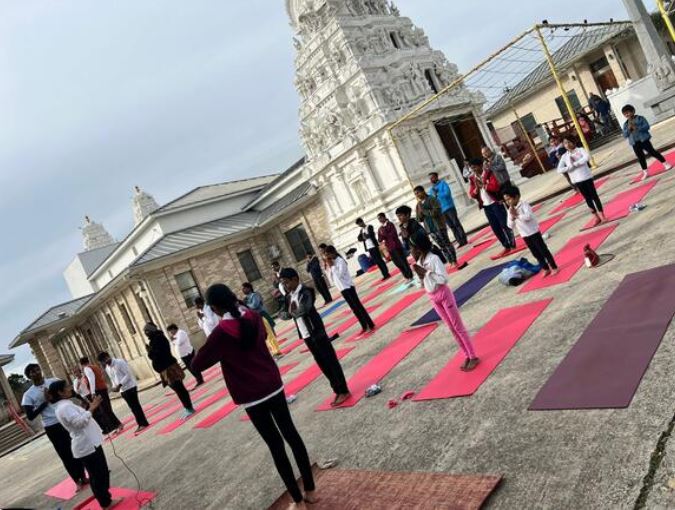
New Jersey’s wellness community continues to play a defining role in a growing national movement centered on mindfulness, physical health, and collective purpose, and the latest Health for Humanity Yogathon stands as a powerful example of that momentum in action. Spanning from January 14 through February 1, 2026, this year’s initiative brought together participants across the United States in a coordinated effort that combined personal wellness with a broader humanitarian mission, culminating in an extraordinary total of 911,340 sun salutations performed nationwide.
With strong participation anchored in communities like Rockaway, New Jersey, the Yogathon continues to expand its footprint as both a physical and cultural event, drawing individuals, families, and organizations into a shared practice rooted in discipline, focus, and intentional movement. Now in its 19th year, the annual event has evolved into a cornerstone of wellness programming, reflecting a sustained commitment to promoting holistic health while fostering a sense of unity that extends beyond geographic boundaries.
At the center of the Yogathon is the practice of Surya Namaskar, or sun salutations, a sequence of movements that integrates breath, flexibility, and strength into a continuous flow. While widely recognized within yoga traditions, the scale at which these movements were performed during the event transforms an individual practice into a collective achievement, reinforcing the idea that wellness can be both deeply personal and broadly communal. The cumulative total of more than 911,000 sun salutations is not only a testament to the dedication of participants but also an indicator of the growing interest in structured, purpose-driven wellness initiatives.
In New Jersey, the event’s impact is particularly significant, aligning with a statewide expansion of yoga and wellness programming that continues to gain traction across communities. Through resources like the Explore New Jersey yoga directory, residents have increasing access to studios, instructors, and events that support both beginners and experienced practitioners. The Yogathon fits naturally within this landscape, offering an entry point for participation that emphasizes inclusivity and accessibility while maintaining a clear focus on discipline and personal growth.
The Health for Humanity framework adds an additional layer of meaning to the event, positioning yoga not only as a physical practice but as a vehicle for broader social impact. Participants engage not just for individual benefit but as part of a coordinated effort to support humanitarian causes, reinforcing the connection between personal well-being and collective responsibility. This dual focus has become a defining characteristic of the Yogathon, distinguishing it from traditional fitness events and elevating it into a platform for meaningful engagement.
The structure of the event encourages participation at multiple levels, allowing individuals to set personal goals while contributing to a larger national total. This flexibility is key to its continued growth, enabling participants of varying skill levels to engage in a way that is both challenging and achievable. For some, the Yogathon represents an opportunity to deepen an existing practice; for others, it serves as an introduction to yoga within a supportive and goal-oriented environment.
New Jersey’s role in hosting and supporting this initiative reflects a broader trend within the state’s wellness sector, where community-based programming is increasingly integrated into everyday life. Studios, community centers, and local organizations have embraced events like the Yogathon as a way to bring people together around shared goals, creating spaces where physical activity and social connection intersect. This alignment between local infrastructure and national initiatives is a key factor in the sustained success of programs like Health for Humanity.
The timing of the Yogathon, beginning in mid-January and extending into early February, also reinforces its positioning as a catalyst for new-year wellness commitments. By providing a structured, time-bound challenge, the event offers participants a clear framework for building consistency and accountability, two elements that are often critical to establishing long-term habits. The collective nature of the challenge further enhances this effect, creating a sense of momentum that carries participants through the duration of the program.
Beyond the physical benefits, the Yogathon emphasizes mental clarity and focus, encouraging participants to approach the practice with intention and awareness. The repetitive nature of sun salutations, combined with controlled breathing, creates a meditative rhythm that supports both physical endurance and mental resilience. This integration of mind and body is central to the philosophy behind the event, reinforcing the idea that wellness extends beyond measurable outcomes into the realm of sustained balance and well-being.
The scale of participation in the 2026 Yogathon underscores the growing recognition of yoga as a foundational element of modern wellness culture. What was once considered a niche practice has become a widely embraced discipline, supported by a network of studios, instructors, and community initiatives that continue to expand its reach. In New Jersey, this evolution is particularly evident, with an increasing number of residents incorporating yoga into their daily routines and seeking out opportunities to engage with the practice in both structured and informal settings.
As the 19th annual Yogathon concludes, its impact resonates not only in the impressive total of sun salutations performed but in the broader sense of connection and purpose it has fostered among participants. In communities across New Jersey and beyond, the event has reinforced the idea that wellness is not an isolated pursuit but a shared endeavor, one that thrives on participation, intention, and collective effort.
New Jersey’s 11th Congressional District has officially entered one of the most complex and strategically layered political cycles in recent memory, and the fallout from this week’s filing deadline has only deepened the intrigue. What should have been a routine transition following the departure of a high-profile incumbent has instead become a multi-front contest defined by overlapping elections, intra-party tensions, and a rapidly evolving narrative that is capturing attention across the state’s political landscape. For voters across Essex, Morris, and Passaic counties, CD-11 is no longer just another congressional seat—it is a live case study in how modern electoral dynamics, messaging, and timing collide.
At the center of this unfolding story is a rare dual-election structure that is reshaping campaign strategy on both sides of the aisle. The April 16 special election will determine who fills the remainder of the current congressional term through 2026, while the June primary launches an entirely separate contest for the full term beginning in January 2027. This bifurcated timeline has created a scenario where candidates are simultaneously competing in different political realities, forcing campaigns to calibrate their messaging, resources, and voter outreach with unusual precision.
Democrat Analilia Mejia enters the April special election as the clear front-runner, backed by a substantial voter registration advantage that continues to define the district’s electoral math. CD-11, once more competitive, shifted further toward Democrats following the 2020 Census, reinforcing a trend that began with Mikie Sherrill’s decisive victories dating back to 2018. Despite occasional narratives suggesting Republican resurgence, the underlying numbers tell a more consistent story: Democrats hold a structural advantage exceeding 60,000 registered voters, a margin that significantly shapes the strategic ceiling for any Republican challenger.
That challenger, Republican Joe Hathaway, is approaching the race with a sharply defined contrast strategy. A former Randolph mayor and councilman, Hathaway is positioning himself as a pragmatic, experienced alternative while framing Mejia as ideologically out of step with the district. His messaging has focused on portraying Mejia as aligned with progressive policies that he argues do not reflect the priorities of suburban voters. It is a familiar playbook in competitive districts, but one that must overcome both demographic realities and recent voting patterns that have consistently favored Democrats.
Mejia, for her part, has largely dismissed these attacks as predictable partisan rhetoric, choosing instead to lean into the coalition that propelled her to an unexpected primary victory in a crowded field. Her campaign narrative emphasizes grassroots support and a connection to everyday voters rather than institutional party backing, a positioning that has allowed her to maintain momentum even amid internal Democratic scrutiny. That scrutiny intensified when Mejia declined an early debate invitation from the League of Women Voters, a decision that raised eyebrows not only among Republicans but within her own party. The optics of bypassing a traditionally nonpartisan forum created a temporary vulnerability, offering Hathaway an opportunity to question her willingness to engage in open dialogue.
However, the political calculus shifted again when both campaigns agreed to participate in a rescheduled debate sponsored by the New Jersey Globe, now set for April 1 at 4 p.m. The timing adjustment, made to accommodate the first night of Passover, reflects the kind of logistical nuance that can influence voter engagement in a district as diverse as CD-11. The confirmation of a debate has effectively neutralized some of the earlier criticism directed at Mejia, while setting the stage for a high-visibility confrontation that could shape late-stage voter perceptions heading into the special election.
Yet even as the April race commands immediate attention, the June primary introduces an entirely separate layer of complexity—one that is almost entirely internal to the Democratic Party. Former Morristown mayor Donald Cresitello and political newcomer Justin Strickland have both filed to challenge Mejia for the full-term nomination, creating a scenario in which the party’s presumed frontrunner must defend her position just weeks after potentially winning the special election. This dynamic is highly unusual and underscores a broader uncertainty within segments of the Democratic base regarding Mejia’s long-term viability.
Cresitello’s candidacy reflects a more traditional intra-party critique, centered on ideological positioning and electability. He has openly questioned whether Mejia’s policy orientation aligns with the district’s broader electorate, signaling a potential divide between progressive energy and moderate pragmatism. Strickland, meanwhile, is advancing a data-driven argument rooted in the February primary results, noting that a majority of voters supported candidates other than Mejia. While that statistic is technically accurate, it coexists with the fundamental reality that Mejia secured the largest share of votes in a crowded field—a distinction that remains politically decisive.
On the Republican side, the absence of a June primary challenger to Hathaway is equally telling. It suggests both confidence in his candidacy and a pragmatic recognition of the district’s electoral landscape. CD-11 presents a steep climb for Republicans under current conditions, particularly against the backdrop of national political headwinds that continue to influence local races. Economic concerns, including persistent pressure from energy costs and broader geopolitical instability, are expected to factor into campaign messaging, but whether those issues can override the district’s structural partisan lean remains an open question.
What makes this moment particularly significant is how these overlapping dynamics are converging to create a fluid and unpredictable environment. The outcome of the April special election will not only determine immediate representation but could also reshape the narrative heading into June. A strong performance by Mejia would likely consolidate her position within the party, discouraging further challenges and reinforcing her status as the Democratic standard-bearer. Conversely, any signs of underperformance could embolden her primary opponents, transforming the June race into a referendum on both ideology and electability.
This layered electoral structure is also amplifying the importance of voter engagement across multiple timelines. Campaigns must now operate with dual objectives: mobilizing turnout for an off-cycle special election while simultaneously laying the groundwork for a traditional primary contest. The logistical and strategic demands of this approach are significant, requiring disciplined messaging, targeted outreach, and a deep understanding of voter behavior across different electoral contexts.
For Sunset Daily News readers tracking New Jersey’s political landscape, CD-11 represents a defining contest that extends beyond a single race. It is a microcosm of broader trends shaping state and national politics, from shifting district demographics to the evolving balance between grassroots movements and institutional influence. Those looking to follow ongoing developments, candidate positioning, and policy debates can explore additional coverage through the Sunset Daily News politics section, where continuous reporting is capturing the real-time evolution of races like this one.
As the April 16 special election approaches and the June primary looms just weeks behind it, one thing is certain: CD-11 is no longer a predictable district operating on a standard electoral calendar. It is a high-stakes, multi-layered battleground where timing, strategy, and narrative will determine not just who wins, but how the next chapter of representation in northern New Jersey is defined.
Red Bank Comedy Theatre Event: “Bragging Rights Sketch Comedy” Brings NYC’s Hottest Competitive Comedy Show to the Basie Center on March 28
March 27
@
8:00 AM
–
5:00 PM
New Jersey’s theatre and live comedy scene continues to evolve as a destination for innovative, high-energy performance, and on March 28, 2026, at 8:00 p.m., Red Bank becomes the epicenter of that momentum with the arrival of “Bragging Rights Sketch Comedy” at the Hackensack Meridian Health Theatre. Priced accessibly between $15 and $20, this event represents more than a night of laughs—it introduces a competitive, audience-driven format that redefines how sketch comedy is experienced, blending theatrical performance with the unpredictability of live competition.
Hosted at the Basie Center Theatre, one of New Jersey’s most respected cultural venues, this production reflects the continued expansion of the state’s performing arts landscape, where traditional theatre, stand-up, and experimental comedy formats intersect to create something entirely new. The Basie Center, located in the heart of Red Bank, has built its reputation on presenting a diverse range of programming that appeals to both dedicated theatre audiences and those seeking fresh, contemporary entertainment. “Bragging Rights Sketch Comedy” fits squarely within that mission, delivering a format that is as interactive as it is entertaining.
Created by Matt Algozzini, the show arrives with a proven track record as one of New York City’s longest-running and most talked-about sketch comedy competitions. Its transition into New Jersey signals a significant moment for the region’s comedy scene, bringing a format that has thrived in one of the most competitive entertainment markets in the world directly to local audiences. Unlike traditional sketch comedy, which follows a linear performance structure, “Bragging Rights” introduces a dynamic, head-to-head competition where performers are divided into two teams and tasked with winning over both the audience and a panel of guest judges.
This competitive structure transforms the theatre into an active arena of creativity, where each sketch becomes a strategic play in a larger battle for comedic dominance. The influence of fantasy sports and live competition formats is evident, with the drafting of performers into teams adding an element of unpredictability before the first sketch even begins. As the show unfolds, the energy builds with each performance, culminating in a final decision where one team claims victory and earns the title of sketch comedy champions for the month.
What sets this production apart is its emphasis on immediacy and audience engagement. The outcome is not predetermined; it is shaped in real time by the reactions and votes of those in attendance. This creates a feedback loop between performers and audience that heightens the stakes of every moment, ensuring that each sketch is delivered with maximum energy and precision. It is theatre that thrives on responsiveness, where timing, delivery, and originality are not just artistic choices but competitive advantages.
The lineup for this performance reflects a diverse group of comedic voices, each bringing their own perspective and style to the stage. Featuring Matt Algozzini alongside Tommy Biggiani, Dan Conroy, Daniel Michael Gregory, Sierra Joy, Juan Carlos Merino, Sean Newman, Obi O’Brien, Martyna Reczka, Nikki Shah, Taylor Simon, Michael Wien, and Audrey Yeoman, the ensemble represents a cross-section of emerging and established talent. This diversity is central to the show’s appeal, allowing for a wide range of comedic approaches that keep the performance fresh and unpredictable from start to finish.
Within the broader context of New Jersey’s theatre ecosystem, events like “Bragging Rights Sketch Comedy” highlight the increasing demand for programming that breaks from convention while maintaining a strong connection to live performance. Through platforms like the Explore New Jersey theatre directory, audiences can discover a growing number of events that push the boundaries of traditional theatre, incorporating elements of competition, improvisation, and audience participation. This evolution reflects a shift toward more immersive and interactive experiences, where the line between performer and spectator becomes increasingly fluid.
The Basie Center Theatre’s role in hosting this production reinforces its position as a leader in presenting forward-thinking programming. By bringing a New York-based concept into the New Jersey market, the venue not only expands its own offerings but also contributes to the broader cultural dialogue, positioning the state as a space where innovative performance formats can thrive. This alignment between venue and production is a key factor in the continued growth of New Jersey’s reputation as a destination for cutting-edge live entertainment.
At its core, “Bragging Rights Sketch Comedy” is about more than competition—it is about creativity under pressure, collaboration within constraints, and the ability to connect with an audience in real time. The show’s format demands quick thinking, strong ensemble work, and a willingness to take risks, all of which contribute to a performance that feels alive and constantly evolving. For audiences, this translates into an experience that is both engaging and unpredictable, where no two shows are exactly the same.
As March 28 approaches, Red Bank is set to host an event that captures the energy and innovation driving today’s comedy scene. “Bragging Rights Sketch Comedy” brings with it the excitement of competition, the artistry of sketch performance, and the communal experience of live theatre, all within one cohesive production. At the Basie Center Theatre, this event stands as a testament to the continued evolution of New Jersey’s performing arts landscape, offering an evening that is as dynamic as it is entertaining.
Morris County is no longer just evolving—it is recalibrating at scale, and the newly released 2025 Development Activity Report makes that reality unmistakably clear. Presented by the Morris County Office of Planning and Preservation during a public session of the Board of County Commissioners in Morristown, the report delivers a data-rich, forward-facing snapshot of how one of New Jersey’s most economically influential regions is reshaping its housing stock, commercial footprint, and long-term land use strategy. What emerges is not a story of incremental growth, but one of structural transformation driven by shifting demographics, changing workplace dynamics, and an increasingly urgent demand for housing across multiple price points.
At the center of the report is a dramatic surge in multi-family and mixed-use development, signaling a decisive pivot away from traditional suburban expansion toward denser, transit-oriented, and integrated community models. In 2025, the Morris County Planning Board reviewed 26 applications for multi-family and mixed-use projects totaling 2,028 proposed residential units—more than double the 923 units proposed just one year earlier. This sharp escalation is not evenly distributed; rather, it is concentrated in a handful of large-scale developments that collectively account for the majority of new housing volume. Four projects alone generated more than 60 percent of all proposed units, underscoring a development environment increasingly defined by high-impact, high-density proposals rather than smaller, fragmented builds.
This trend is not occurring in isolation. It is directly aligned with broader statewide and national patterns in real estate, where demand for flexible living environments, proximity to transportation infrastructure, and access to mixed-use amenities continues to intensify. Municipalities with direct connectivity to major highways and commuter rail lines are absorbing the bulk of this growth, reinforcing the long-standing relationship between mobility and real estate value. Hanover Township, for example, emerged as a focal point in 2025, leading the county with 405 proposed housing units and illustrating how strategic location continues to dictate development momentum.
At the same time, the report reinforces a persistent and increasingly complex challenge: housing affordability. Despite the surge in new construction, cost pressures remain firmly entrenched across both ownership and rental markets. The median sales price for new single-family attached homes approached $774,000, while detached homes surpassed the $1 million threshold, reaching a median of over $1.01 million. On the rental side, the median monthly cost for a two-bedroom apartment climbed to $2,216, with nearly half of renters allocating more than 30 percent of their income to housing expenses. These figures underscore a critical imbalance between supply expansion and price accessibility, raising important questions about how future development strategies can more effectively address affordability without constraining growth.
The composition of new housing also reflects a nuanced response to demographic shifts. Approximately 14 percent of proposed units in 2025 were designated for age-restricted or assisted living communities, indicating a growing emphasis on accommodating an aging population while maintaining independence and access to services. This segment of development is becoming an essential component of the broader housing ecosystem, particularly in counties like Morris where long-term residents are seeking to remain within their communities while transitioning into different stages of life.
Beyond residential construction, the report highlights a substantial acceleration in non-residential development activity, driven largely by the logistics and industrial sectors. Submissions for new commercial and industrial projects reached approximately 1.8 million square feet in 2025, a significant increase from just over 726,000 square feet in 2024. A single project—the redevelopment of the Riverdale Quarry—accounts for nearly 1.2 million square feet of proposed warehouse space, illustrating the outsized influence of major redevelopment initiatives on annual totals. This surge reflects the continued expansion of distribution networks and last-mile logistics infrastructure, as well as the strategic repositioning of underutilized land assets to meet evolving economic demands.
Equally important is the ongoing transformation of obsolete office campuses and aging commercial properties into dynamic mixed-use environments. As hybrid and remote work models continue to redefine how space is utilized, large-scale office complexes that once anchored suburban business corridors are being reimagined as multi-dimensional developments that integrate residential units, retail offerings, flexible office space, and light industrial components. This adaptive reuse strategy is not only revitalizing underperforming properties but also contributing to a more resilient and diversified local economy.
While density and redevelopment are on the rise, the report confirms that traditional suburban subdivision activity continues its long-term decline. Only 23 new single-family residential lots were created through major subdivisions in 2025, extending a downward trajectory that predates the temporary uptick seen during the pandemic-era housing surge of 2021 and 2022. This sustained contraction reflects both market realities and planning priorities, as municipalities increasingly favor redevelopment and infill projects over greenfield expansion.
In total, the Morris County Planning Board reviewed 235 building-related applications in 2025, a slight decrease from the previous year’s 244 submissions. However, the modest dip in application volume is offset by a significant increase in project scale and complexity. Parsippany-Troy Hills once again led all municipalities with 26 submissions, followed by Randolph Township with 18 and Hanover Township with 17, reinforcing their roles as key development hubs within the county.
Over a longer horizon, the cumulative impact of these trends becomes even more pronounced. Between 2016 and 2025, nearly 17,500 multi-family housing units have been reviewed across Morris County, with the highest concentrations consistently emerging in areas with strong transportation access. This sustained pipeline of development signals a fundamental redefinition of the county’s residential landscape, moving away from low-density suburban patterns toward a more interconnected, mixed-use framework designed to support modern lifestyles.
What distinguishes the 2025 Development Activity Report is not simply the volume of data it presents, but the clarity with which it captures a county in transition. Morris County is actively navigating the intersection of growth, affordability, infrastructure, and economic adaptation, and the decisions being made today will shape its trajectory for decades to come. The increasing dominance of large-scale mixed-use projects, the intensification of industrial redevelopment, and the persistent challenge of housing costs all point to a region that is both thriving and confronting the complexities that accompany that success.
For readers tracking the evolution of New Jersey’s real estate landscape, this report is essential context. It provides a grounded, data-driven understanding of where development is accelerating, where pressures are mounting, and where opportunities are emerging. Those looking to explore broader coverage and ongoing analysis of regional housing and development trends can access additional reporting through the Sunset Daily News real estate section, where continued updates on projects, market dynamics, and policy shifts are shaping the future of communities across the state.
Morris County’s latest report does more than document a year of activity—it defines a pivotal moment in the region’s ongoing transformation, offering a clear view into how one of New Jersey’s most important counties is building its next chapter.
Red Bank Concert Event: Gipsy Kings Featuring Tonino Baliardo Bring the “Historia Tour” to the Basie Center Theatre on March 29
March 27
@
8:00 AM
–
5:00 PM
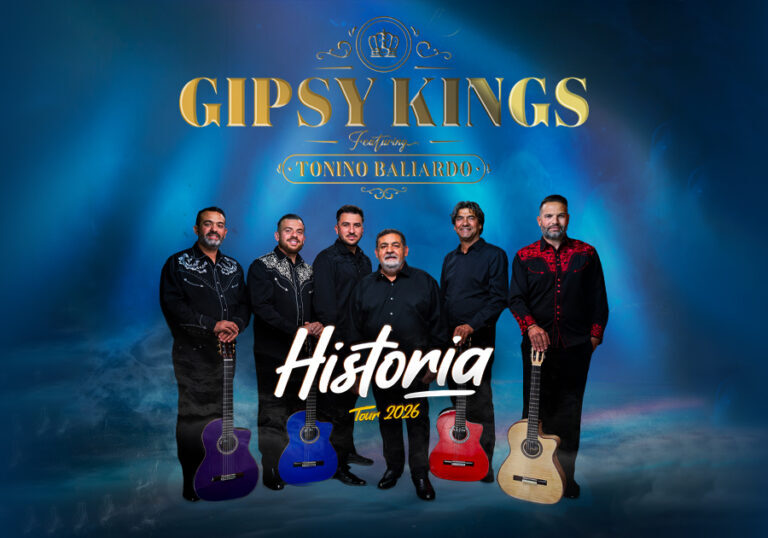
New Jersey’s global music footprint continues to expand as internationally celebrated artists bring world-class performances to stages across the state, and on March 29 at 7:00 p.m., Red Bank will host one of the most distinctive and culturally resonant concerts of the season. The Gipsy Kings, led by founding member Tonino Baliardo, arrive at the Hackensack Meridian Health Theatre at the Basie Center Campus with their “Historia Tour,” delivering a performance that blends decades of musical legacy with the enduring power of flamenco-infused rhythms that have captivated audiences worldwide.
Set inside the Basie Center Theatre at 99 Monmouth Street, with doors opening at 6:00 p.m., the evening is positioned as more than a concert—it is a celebration of a musical movement that has transcended borders, genres, and generations. The Basie Center continues to stand as one of New Jersey’s premier destinations for live performance, offering a stage where globally recognized acts can connect with audiences in a setting known for its acoustic clarity and intimate atmosphere. Hosting the Gipsy Kings further reinforces the venue’s role as a cultural anchor within the state’s evolving music landscape.
At the center of this performance is Tonino Baliardo, a guitarist, composer, and visionary whose work has defined the sound and identity of the Gipsy Kings for more than three decades. As the creative force behind some of the group’s most iconic songs, including “Bamboleo” and “Djobi Djoba,” Baliardo has shaped a musical style that seamlessly merges traditional gypsy influences with contemporary global sounds. His approach to composition and performance is rooted in authenticity while remaining forward-looking, allowing the music to evolve without losing its cultural foundation.
The Gipsy Kings’ impact on the global music scene is both extensive and enduring. With more than 20 million albums sold and a catalog that has achieved gold, platinum, and diamond certifications, the group has established itself as a defining presence in world music. Their accolades include a Grammy Award for Best World Music Album for “Savor Flamenco,” a recognition that underscores both their artistic excellence and their ability to bring a deeply rooted musical tradition to an international audience. Their work has also extended into film and popular culture, from reinterpretations like their rendition of “Hotel California” to contributions to major motion pictures, further expanding their reach and influence.
The “Historia Tour” is designed to encapsulate this journey, offering audiences a curated experience that spans the breadth of the group’s career while highlighting the evolution of their sound. It is a performance that moves fluidly between classic hits and newer material, creating a narrative that reflects both legacy and progression. The music itself—driven by intricate guitar work, rhythmic precision, and passionate vocal delivery—creates an atmosphere that is both celebratory and deeply immersive, inviting audiences to engage not just as listeners but as participants in a shared cultural experience.
A defining element of the current iteration of the Gipsy Kings is the emphasis on family and continuity. Baliardo is now joined on stage by his sons, Mikaël and Cosso, bringing a new generation into the fold while preserving the traditions that have defined the group’s identity. This dynamic adds a layer of depth to the performance, reinforcing the idea that the music is not static but living, evolving, and being passed forward with intention and care. It is this balance between heritage and innovation that has allowed the Gipsy Kings to remain relevant across decades, appealing to audiences both familiar with their catalog and those discovering it for the first time.
The group’s global touring history further underscores the significance of their appearance in Red Bank. Having performed at some of the world’s most prestigious venues, including Radio City Music Hall, the Hollywood Bowl, the Greek Theatre in Los Angeles, the Royal Albert Hall in London, and the Olympia in Paris, the Gipsy Kings bring a level of experience and professionalism that elevates every performance. Their presence in New Jersey reflects the state’s growing ability to attract and host internationally acclaimed artists, positioning it as a key destination within the broader live music circuit.
Within the context of New Jersey’s diverse music ecosystem, events like this highlight the state’s commitment to showcasing a wide range of genres and cultural influences. Through platforms like the Explore New Jersey music directory, audiences can discover performances that span everything from local acts to global icons, reinforcing the depth and accessibility of the region’s live music offerings. The inclusion of a world music powerhouse like the Gipsy Kings adds another dimension to this landscape, broadening the scope of what audiences can experience within the state.
The appeal of the “Historia Tour” lies not only in its musical excellence but in its ability to create a sense of connection that transcends language and geography. Baliardo himself has often emphasized that music has no borders, a philosophy that is evident in every performance. The rhythms, melodies, and energy of the Gipsy Kings’ music resonate on a universal level, drawing audiences into a shared experience that feels both personal and expansive.
As March 29 approaches, the Basie Center Theatre is set to host an evening that reflects the very best of what live music can offer—technical mastery, cultural richness, and an unmistakable sense of authenticity. The Gipsy Kings featuring Tonino Baliardo bring with them not just a catalog of globally recognized hits, but a living musical tradition that continues to evolve while staying true to its roots. In Red Bank, this performance stands as a powerful reminder of the enduring impact of music that is both deeply rooted and universally embraced, reinforcing New Jersey’s place as a destination for world-class live entertainment.
Red Bank Comedy Event: Heather McMahan Brings “The Bamboozled Tour” to the Basie Center Theatre on March 28
March 28
@
5:00 PM
–
11:30 PM
New Jersey’s comedy scene continues to surge with nationally recognized talent, and on March 28 at 8:00 p.m., Red Bank becomes a prime destination for live stand-up as Heather McMahan brings her highly anticipated “The Bamboozled Tour” to the Hackensack Meridian Health Theatre at the Basie Center Campus. Known for her commanding stage presence, sharp observational humor, and deeply relatable storytelling, McMahan arrives at one of New Jersey’s premier venues with a performance that reflects both her meteoric rise and her ability to connect with audiences on a personal, unfiltered level.
Set at 99 Monmouth Street in the heart of Red Bank, the Basie Center Theatre continues to define the standard for live entertainment in the region, seamlessly hosting top-tier comedy, music, and theatrical performances in a space designed for both intimacy and scale. With doors opening at 7:00 p.m. and showtime set for 8:00 p.m., the evening is positioned to deliver a full-length, high-energy stand-up experience that aligns with the venue’s reputation for presenting nationally touring headliners in an environment that enhances both performance and audience engagement.
Heather McMahan’s trajectory in comedy has been nothing short of remarkable. With two breakout stand-up specials—“Son I Never Had” on Netflix and “Breadwinner” on Hulu—both reaching top 10 streaming status for consecutive days, she has solidified her place as one of the most compelling voices in contemporary comedy. Her material, often drawn from personal experiences, relationships, and the complexities of modern life, resonates with audiences because it is delivered with authenticity, precision, and a fearless comedic voice that refuses to hold back.
“The Bamboozled Tour” represents McMahan’s third national tour and builds on the momentum of her previous sold-out runs, bringing a new layer of storytelling that reflects both her evolving career and her expanding audience. Her ability to move seamlessly between self-deprecating humor and sharply observed cultural commentary creates a performance style that feels both polished and spontaneous, allowing each show to maintain a sense of immediacy that keeps audiences fully engaged from start to finish.
Beyond the stage, McMahan has cultivated a multi-platform presence that extends her brand far beyond stand-up. Her podcast, “Absolutely Knot,” has become a defining element of her connection with fans, offering an unfiltered look into her personality and perspective while reinforcing the comedic voice that audiences experience live. This connection was further amplified through her “Absolutely Knot” comedy cruise, a four-day immersive event that brought thousands of fans together for a curated experience blending stand-up, entertainment, and lifestyle programming. This level of engagement speaks to her ability to build not just an audience, but a community centered around her unique comedic identity.
Her reach extends into television and hosting, where she has become a recognizable presence as a red carpet correspondent and personality for E!, showcasing a versatility that complements her work in stand-up. This cross-platform visibility has contributed to her rapid ascent, positioning her as a performer who can command both live audiences and digital viewership with equal impact.
The Red Bank performance offers fans more than a standard stand-up set. A VIP add-on experience provides exclusive access to a post-show Q&A talkback with McMahan, creating an opportunity for deeper engagement with her creative process and perspective. The package also includes a VIP lanyard and an autographed tour poster, adding a collectible element to the evening while reinforcing the premium nature of the experience. For audiences seeking a more interactive connection with the performer, this offering enhances the overall event and reflects the growing demand for immersive live entertainment experiences.
Within the broader context of New Jersey’s comedy landscape, events like this highlight the state’s ability to attract top-tier talent while maintaining a strong connection to local audiences. Through platforms like the Explore New Jersey comedy directory, residents and visitors can navigate a diverse range of performances, from emerging comedians to nationally recognized headliners. McMahan’s appearance at the Basie Center is a clear example of how the state continues to position itself as a key stop on major comedy tours, offering audiences access to performers who are shaping the future of the genre.
The Basie Center Theatre’s role in hosting events of this caliber reinforces its standing as a cultural anchor in Red Bank and across New Jersey. Its ability to consistently present high-profile performances across multiple disciplines ensures that audiences have access to a wide spectrum of live entertainment, all within a venue that prioritizes both quality and experience.
As March 28 approaches, “The Bamboozled Tour” stands as one of the most anticipated comedy events in the region, bringing Heather McMahan’s distinctive voice and dynamic performance style to a stage that has become synonymous with excellence. In Red Bank, audiences can expect an evening that blends humor, storytelling, and personality into a cohesive and unforgettable live experience—one that reflects not only McMahan’s rising influence but the continued strength of New Jersey’s live comedy scene.
Red Bank Live Music Spotlight: “Best of the Eagles” Delivers a Premier Tribute Experience at the Basie Center Theatre on March 27
March 27
@
5:30 PM
–
11:30 PM
New Jersey’s live music scene continues to thrive as one of the most vibrant and diverse in the region, and on March 27 at 7:30 p.m., Red Bank becomes a focal point for that momentum as “Best of the Eagles” takes over the Hackensack Meridian Health Theatre at the Basie Center Campus. This performance is not simply another stop on the tribute circuit—it is a fully realized concert experience that captures the sound, spirit, and legacy of one of America’s most influential bands with remarkable precision and authenticity.
Set within the Basie Center Theatre at 99 Monmouth Street, a venue long recognized for its exceptional acoustics and rich performance history, the evening is structured to deliver a complete live music experience from the moment doors open at 6:30 p.m. to the first notes at showtime. The Basie Center has consistently positioned itself as a cornerstone of New Jersey’s cultural infrastructure, hosting a wide range of performances that reflect the state’s evolving music landscape. Events like this reinforce its role as a destination where audiences can engage with high-caliber productions that resonate across generations.
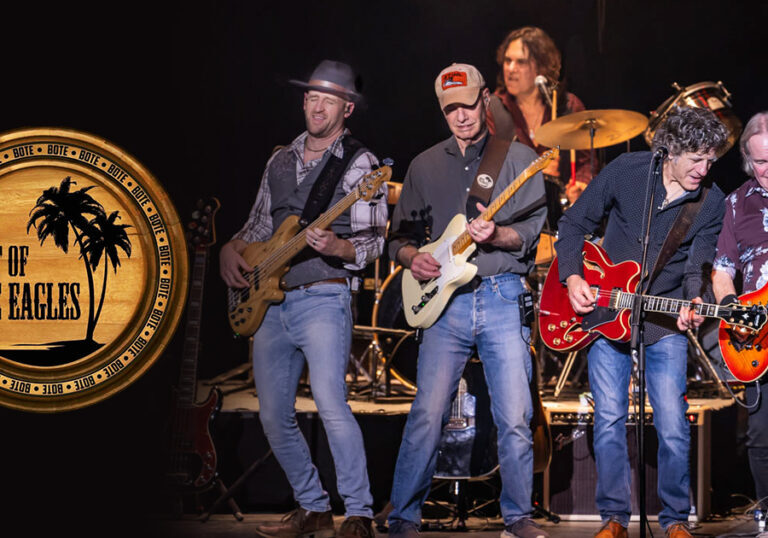
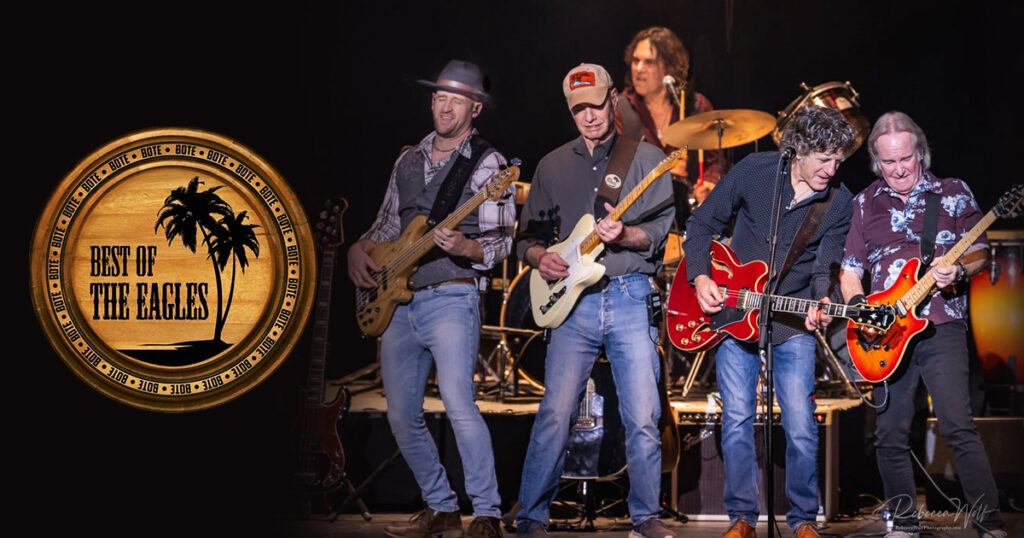
“Best of the Eagles” was formed in 2012 by a collective of veteran musicians rooted in central New Jersey, each bringing a deep familiarity with the intricate arrangements and vocal layering that define the Eagles’ signature sound. Rather than approaching the material as a simple tribute, the group has built its reputation on delivering a faithful and technically precise recreation of the band’s catalog, drawing primarily from “Their Greatest Hits Volumes 1 and 2,” albums that collectively represent one of the highest-selling compilations in music history. The performance also extends into the Joe Walsh era and incorporates select solo material from Glenn Frey and Don Henley, creating a setlist that feels both comprehensive and thoughtfully curated.
What distinguishes this production is its commitment to vocal integrity. With six members contributing lead and harmony vocals, the ensemble is able to replicate the layered harmonies that are central to the Eagles’ identity, achieving a level of cohesion that is rarely matched in tribute performances. This vocal precision is supported by disciplined instrumentation, where every guitar line, keyboard texture, and rhythmic detail is executed with a focus on authenticity. The result is a sound that does not merely reference the original recordings but brings them to life in a way that feels immediate and immersive.
For this Red Bank performance, the production is elevated even further through the addition of a horn section and a violinist, expanding the sonic palette and introducing new dimensions to the live experience. These elements are designed to echo the scale and richness of the Eagles’ “Farewell 1 Tour,” one of the band’s most ambitious live presentations, allowing audiences to experience the music in a format that goes beyond the standard tribute framework. This attention to detail transforms the concert into a multi-layered performance that honors the original material while enhancing it for a contemporary audience.
A dedicated tribute to Glenn Frey adds emotional depth to the evening, integrating visual components with live performance to create a moment of reflection within the broader set. This segment not only acknowledges Frey’s role in shaping the Eagles’ sound but also reinforces the enduring impact of his songwriting and artistry. It is a carefully constructed element that balances reverence with performance, ensuring that the tribute feels both meaningful and seamlessly integrated into the show.
The lineup behind “Best of the Eagles” reflects a high level of musicianship and cohesion. Featuring Anthony Krizan on drums and vocals, Dan “Dano” Miller on bass and vocals, Jerry Steele on guitars, pedal steel, and vocals, Dave “Squiggy” Biglin on keyboards and vocals, Joe Vadala on guitars and vocals, and John Bushnell on guitars and vocals, the group operates with the precision of a seasoned touring act. Each member contributes to the overall sound with a clear understanding of the material, resulting in a performance that is both technically refined and energetically engaging.
Within the broader context of New Jersey’s music ecosystem, events like this highlight the state’s ability to support a wide spectrum of live performance, from emerging artists to established tribute productions that celebrate iconic catalogs. Through platforms like the Explore New Jersey music directory, audiences can explore the depth of this scene, discovering events that reflect the diversity and vitality of the region’s cultural offerings. “Best of the Eagles” fits squarely within this landscape, offering a performance that bridges nostalgia and contemporary live music production.
The appeal of this event extends beyond fans of the Eagles themselves. It speaks to a broader audience that values craftsmanship, musicianship, and the communal experience of live performance. In a time where digital access to music is ubiquitous, concerts like this reaffirm the unique energy of a live setting, where sound, space, and audience interaction combine to create something that cannot be replicated elsewhere.
As March 27 approaches, the Basie Center Theatre is set to host an evening that encapsulates the strength of New Jersey’s live music scene. “Best of the Eagles” delivers not only a faithful recreation of a legendary band’s catalog but a fully immersive concert experience that honors the past while engaging the present. In Red Bank, this performance stands as a testament to the enduring power of great music and the continued evolution of live entertainment across the state.
Long Branch Theatre Event: “Shake Rag Hollow” Staged Reading Brings a Powerful Story of Family, Trauma, and Redemption to the West End Arts Center on March 30
March 30
@
4:00 PM
–
11:30 PM
New Jersey’s theatre landscape continues to deepen its reputation as a destination for serious, story-driven work, and on March 30 at 7:00 p.m., Long Branch becomes the focal point for a compelling new staged reading that underscores the emotional power and artistic importance of live theatre in its most essential form. Taking place at the West End Arts Center, “Shake Rag Hollow” arrives as an intimate and gripping theatrical experience that places language, performance, and human complexity at the forefront.
Hosted inside the West End Arts Center Auditorium at 132 West End Avenue, this staged reading represents more than a single-night event—it reflects the continued momentum of New Jersey’s theatre community as a space where new work is explored, developed, and presented with purpose. With tickets priced between $15 and $20, the evening offers audiences access to a high-caliber performance experience while maintaining the accessibility that has become a defining strength of the region’s arts programming.
At the center of “Shake Rag Hollow” is Denise, a woman returning home after serving eighteen years in prison for the murder of her uncle. What unfolds from that moment is not a simple story of release, but a layered and emotionally charged confrontation between past and present. Denise’s return forces her into direct conflict with the two people most affected by her absence—her daughter Laurel, who carries a deep sense of anger and betrayal, and her mother Pauline, whose inability to forgive has hardened into a defining emotional barrier.
The narrative is driven by the tension between these three women, each representing a different generation shaped by the same traumatic event. As the story progresses, memories resurface and long-buried truths begin to emerge, challenging each character’s perception of what really happened and what responsibility they carry. The play does not rely on spectacle or distraction; instead, it leans into the rawness of its subject matter, allowing the emotional stakes to build organically through dialogue and performance.
This is where the staged reading format becomes especially powerful. Stripped of elaborate production elements, the focus remains entirely on the actors and the text, creating a direct and unfiltered connection between the story and the audience. It is a format that demands attention and rewards it, offering a level of intimacy that fully staged productions often cannot replicate. For a work like “Shake Rag Hollow,” that intimacy is essential, drawing audiences into the emotional core of the story and inviting them to engage with its themes on a deeper level.
The inclusion of this event within the broader New Jersey theatre ecosystem reflects a continued commitment to supporting new voices and complex storytelling. Through platforms like the <a href=”https://explorenewjersey.org/theatre/”>Explore New Jersey theatre directory</a>, audiences are increasingly discovering that the state’s theatre offerings extend far beyond traditional productions, encompassing readings, workshops, and developmental work that shape the future of the stage. “Shake Rag Hollow” stands firmly within that movement, representing the kind of work that challenges audiences while contributing to the ongoing evolution of contemporary theatre.
The West End Arts Center, in collaboration with New Jersey Repertory Company, has established itself as a key venue for this type of programming. Its focus on new work and artist development has made it a cornerstone of the region’s cultural infrastructure, attracting audiences who are interested not only in polished productions but in the creative process itself. Hosting “Shake Rag Hollow” reinforces that identity, positioning the venue as a place where important stories are given the space and attention they deserve.
At its core, the play is an exploration of accountability, memory, and the possibility of healing in the aftermath of trauma. Denise’s return is not framed as a resolution but as a catalyst—an event that forces each character to confront what has been left unsaid for nearly two decades. Laurel’s anger, Pauline’s refusal to forgive, and Denise’s attempt to reconcile with both are presented without simplification, creating a narrative that feels both authentic and deeply human.
For audiences, the experience offers more than passive observation. It is an opportunity to witness a story in its formative stage, to engage with its themes in real time, and to become part of the conversation that surrounds it. This level of engagement is a defining characteristic of New Jersey’s theatre scene, where the relationship between artist and audience is increasingly collaborative rather than distant.
As March 30 approaches, “Shake Rag Hollow” stands as a clear example of the kind of work that continues to elevate the state’s cultural profile. It is thoughtful, challenging, and rooted in a commitment to storytelling that does not shy away from difficult truths. In Long Branch, at the West End Arts Center, audiences will encounter a performance that is as emotionally resonant as it is artistically significant—an evening of theatre that reflects exactly why New Jersey remains a vital and evolving force in the performing arts.
Free Family Puppet Show in Long Branch: “Puppetonia! – Animal Safari” Brings Wild Adventure to the West End Arts Center on March 29
March 29
@
1:00 PM
–
7:00 PM
New Jersey’s theatre scene continues to expand its reach and impact with programming that doesn’t just entertain—it introduces young audiences to the magic of live performance in ways that are imaginative, accessible, and unforgettable. On March 29 at 2:00 p.m., the West End Arts Center in Long Branch becomes the stage for exactly that kind of experience as “Puppetonia! – Animal Safari” arrives for a free, family-friendly performance that blends storytelling, puppetry, and playful education into a vibrant afternoon event on the Jersey Shore.
Set inside the West End Arts Center Auditorium at 132 West End Avenue, this production transforms a traditional theatre setting into a lively safari of creativity, where children and families are invited to explore the animal kingdom through movement, character, and narrative. Presented at no cost, the event reflects a growing commitment across New Jersey’s performing arts landscape to ensure that high-quality cultural experiences remain accessible to all communities, reinforcing the state’s reputation as a destination where the arts are both celebrated and shared.
“Puppetonia! – Animal Safari” centers on a whimsical journey led by Lucky Duck, a curious and engaging character who discovers that adventure doesn’t require distant travel—it can be found in the smallest details of the natural world. From earthworms beneath our feet to the towering presence of dinosaurs in imagination, the performance unfolds as a dynamic exploration of animals both familiar and fantastical. Through a sequence of imaginative encounters, young audiences are guided into a world where learning and entertainment are seamlessly intertwined, encouraging curiosity, empathy, and a deeper appreciation for the diversity of life.
The production’s structure is carefully designed to captivate younger viewers while maintaining a level of theatrical sophistication that resonates with families. Puppetry, as an art form, occupies a unique space within the performing arts, combining visual storytelling, physical performance, and narrative clarity in a way that is immediately engaging. In “Animal Safari,” this tradition is elevated through expressive characters, interactive moments, and a pacing that keeps audiences fully immersed from beginning to end. It is theatre that meets children where they are—energetic, inquisitive, and eager to participate.
A highlight of the performance is its adaptation of “The Lion and the Mouse,” one of Aesop’s most enduring fables. Reimagined through puppetry, the story introduces timeless themes of kindness, humility, and unexpected strength in a format that is both accessible and memorable for young viewers. By integrating classic storytelling into a contemporary performance framework, the production bridges generations, offering parents a familiar narrative while presenting it in a fresh and engaging way for children experiencing it for the first time.
Events like this are a reflection of the broader momentum within New Jersey’s theatre community, where organizations and venues are increasingly focused on cultivating the next generation of arts audiences. Through platforms like the <a href=”https://explorenewjersey.org/theatre/”>Explore New Jersey theatre directory</a>, families and residents can discover a wide range of performances, workshops, and cultural events that span the state, from large-scale productions to intimate community experiences. The inclusion of accessible programming such as “Puppetonia! – Animal Safari” underscores the importance of early exposure to the arts, ensuring that creativity becomes a foundational part of a child’s development.
The West End Arts Center continues to play a pivotal role in this ecosystem, serving as a venue where artistic innovation and community engagement intersect. By hosting events that are both professionally produced and family-oriented, the center reinforces its position as a cultural anchor in Long Branch, offering residents and visitors alike a consistent pipeline of meaningful programming. Its collaboration with organizations like New Jersey Repertory Company further enhances its ability to bring diverse performances to the region, creating a dynamic environment where theatre thrives.
The decision to offer this event free of charge is particularly significant in today’s cultural landscape. Accessibility remains one of the defining challenges for arts organizations, and removing financial barriers ensures that participation is driven by interest and enthusiasm rather than limitation. For families seeking enriching activities that combine entertainment with educational value, opportunities like this are both rare and impactful, providing a gateway into the world of live performance without the constraints often associated with ticketed events.
From a broader perspective, “Puppetonia! – Animal Safari” represents more than a single afternoon of entertainment—it is part of a larger movement that positions New Jersey as a leader in community-driven arts programming. By prioritizing inclusivity, creativity, and engagement, events like this contribute to a cultural environment where the arts are not confined to traditional spaces but are actively integrated into everyday life. They create moments of connection, spark imagination, and lay the groundwork for a lifelong appreciation of theatre.
For those planning to attend, the performance begins at 2:00 p.m., with seating available on a first-come basis given the free admission. Families are encouraged to arrive early to secure their place and fully experience the welcoming atmosphere that defines events at the West End Arts Center. Additional information, including directions and contact details, can be accessed through the venue’s official site, ensuring a seamless and enjoyable visit.
As March 29 approaches, Long Branch is set to host an event that captures the essence of what makes New Jersey’s arts scene so compelling—an ability to blend creativity, community, and accessibility into experiences that resonate across generations. “Puppetonia! – Animal Safari” stands as a vivid example of how storytelling, when brought to life through performance, can transform a simple afternoon into something truly memorable, inviting audiences of all ages to step into a world where imagination leads the way.
Free Youth Theatre Workshop in Long Branch: Classical Theatre of Harlem Brings “Fearless Creativity” to the Jersey Shore on March 28
April 18
@
11:00 AM
–
4:00 PM
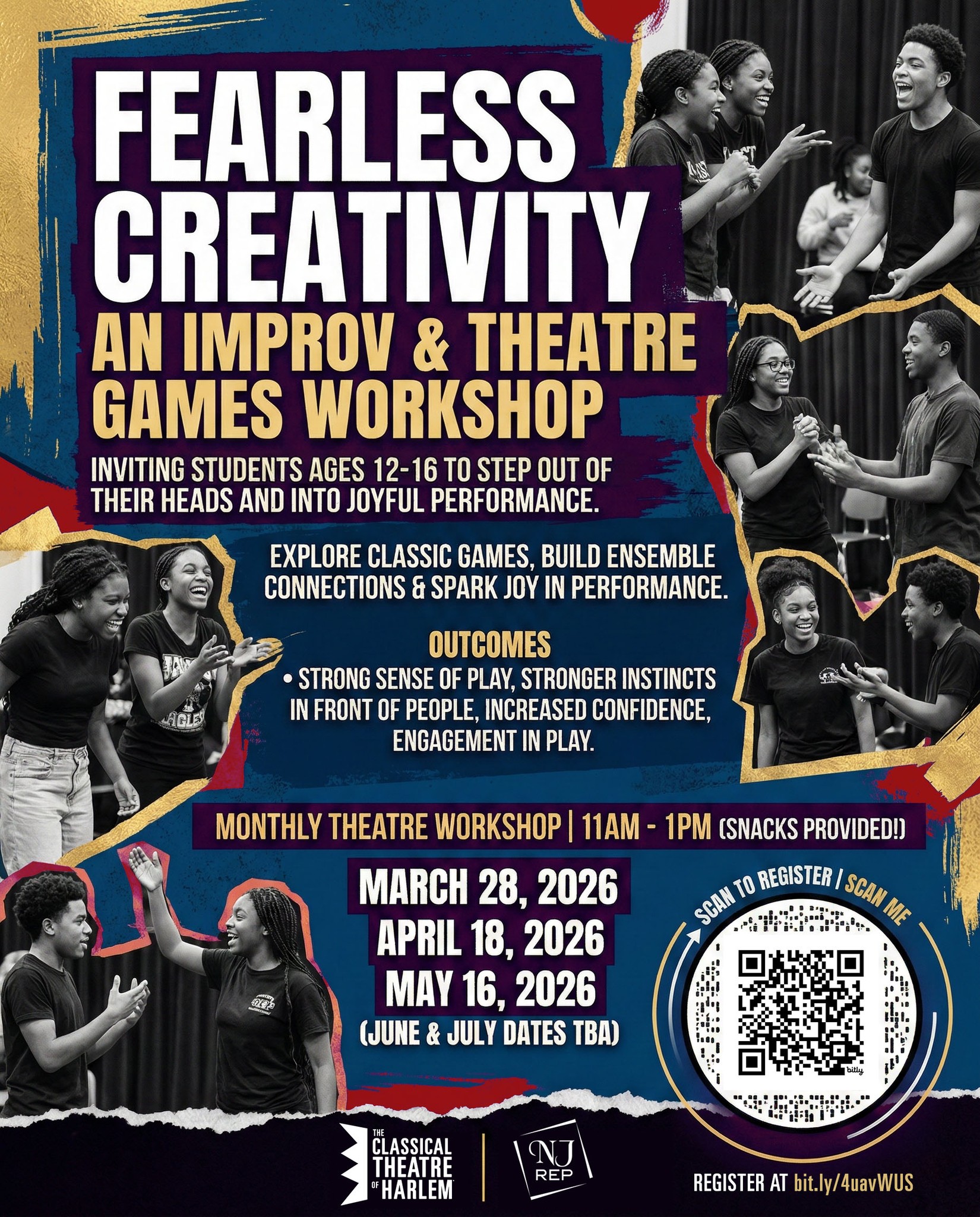
New Jersey’s cultural landscape continues to evolve as a destination not just for world-class performances, but for transformative arts education—and this spring, a powerful new opportunity arrives on the Jersey Shore that underscores exactly why the state’s theatre ecosystem is gaining national attention. On March 28 at 11:00 a.m., the West End Arts Center in Long Branch becomes the setting for an immersive, youth-focused theatrical experience as the Classical Theatre of Harlem brings its acclaimed “Fearless Creativity” workshop to New Jersey, offering a dynamic, no-cost program designed to unlock confidence, imagination, and authentic performance skills in the next generation of artists.
Hosted inside the West End Arts Center Auditorium, located at 132 West End Avenue in Long Branch, this two-hour session from 11:00 a.m. to 1:00 p.m. is more than just a workshop—it is a carefully structured creative intervention aimed at empowering students ages 12 through 16 through the language of theatre, improvisation, and ensemble storytelling. With limited class capacity and a focused curriculum built on participation and connection, the event represents a rare opportunity for young performers to engage directly with one of the most respected theatre organizations in the country, right here in New Jersey.
The Classical Theatre of Harlem has long been recognized for its commitment to artistic excellence and community engagement, producing bold reinterpretations of classic works while cultivating emerging talent through outreach initiatives like this one. Bringing that ethos to Long Branch is a meaningful extension of their mission, aligning seamlessly with New Jersey’s growing reputation as a hub for accessible, high-impact arts programming. For families, educators, and aspiring performers, this workshop arrives as a timely invitation to step into a creative environment that prioritizes expression over perfection and collaboration over competition.
At the core of “Fearless Creativity” is a philosophy rooted in removing barriers—the internal ones that often hold young performers back. Through a curated series of improvisational exercises and theatre games, participants are guided to step outside of self-consciousness and into a space of playful exploration. These aren’t passive activities; they are active, ensemble-driven experiences designed to build trust, sharpen instincts, and encourage spontaneous creativity. Students learn to listen, react, and support one another, developing not only performance skills but also interpersonal awareness that extends far beyond the stage.
This type of programming is especially significant within the broader context of New Jersey’s theatre scene, which continues to expand beyond traditional productions into educational and community-based initiatives. Platforms like the Explore New Jersey theatre directory have become essential gateways for discovering these experiences, connecting audiences with everything from professional productions to grassroots workshops that nurture future talent. The inclusion of a program like this further reinforces the state’s commitment to cultivating a vibrant, inclusive arts culture that reaches across generations.
The decision to offer the workshop free of charge speaks volumes about its intent. Accessibility remains one of the most critical challenges in arts education, and by removing financial barriers, the Classical Theatre of Harlem ensures that participation is driven by curiosity and passion rather than circumstance. Snacks are provided, creating a welcoming and supportive atmosphere that encourages students to settle in, engage fully, and focus on the creative process. It’s a small but meaningful detail that reflects a deeper understanding of what it takes to foster genuine participation.
For Long Branch, the event also highlights the continued importance of venues like the West End Arts Center, which serve as cultural anchors within their communities. By hosting programming that blends professional artistry with educational outreach, the center reinforces its role as more than just a performance space—it becomes a place where creativity is actively cultivated and shared. This alignment between venue and programming is exactly what drives the momentum behind New Jersey’s arts renaissance, positioning towns like Long Branch as key players in the regional cultural conversation.
The structure of the workshop is intentionally designed to maximize engagement within its two-hour window. Participants move through a sequence of exercises that gradually build complexity, starting with foundational games that encourage presence and awareness before advancing into more collaborative improvisational work. The emphasis is on process rather than outcome, allowing students to experiment freely without the pressure of performance expectations. This approach not only fosters creativity but also builds resilience, teaching participants to embrace uncertainty and view mistakes as opportunities for growth.
Parents and guardians considering enrollment will find that the workshop offers benefits that extend well beyond theatre. Confidence-building, communication skills, and the ability to think on one’s feet are all outcomes that translate into academic, social, and future professional environments. In an era where adaptability and emotional intelligence are increasingly valued, experiences like this provide a meaningful advantage, equipping young people with tools that support both personal and creative development.
Registration for the workshop is being managed directly through the Classical Theatre of Harlem, with advance sign-up required due to limited class size. Interested participants are encouraged to secure their spots promptly, as demand for programs of this caliber—particularly those offered at no cost—tends to be strong. Additional details, including venue information and contact resources, are available through the New Jersey Repertory Company, further integrating this event into the broader network of performing arts organizations across the state.
As New Jersey continues to assert itself as a destination for both premier performances and impactful arts education, events like “Fearless Creativity” stand out as defining moments in that trajectory. They represent a shift toward inclusivity, accessibility, and community-driven engagement that ensures the arts remain not only relevant but essential. For those exploring opportunities through the state’s growing theatre network, including the expanding offerings highlighted on Explore New Jersey, this workshop is a clear example of what’s possible when visionary organizations bring their expertise directly to local communities.
On March 28, the stage at the West End Arts Center won’t be set for a traditional performance—it will be alive with possibility, discovery, and the kind of fearless creativity that has the power to shape not just future artists, but confident, expressive individuals ready to engage with the world around them.
Free Youth Theatre Workshop in Long Branch: Classical Theatre of Harlem Brings “Fearless Creativity” to the Jersey Shore on March 28
March 28
@
11:00 AM
–
4:00 PM
New Jersey’s cultural landscape continues to evolve as a destination not just for world-class performances, but for transformative arts education—and this spring, a powerful new opportunity arrives on the Jersey Shore that underscores exactly why the state’s theatre ecosystem is gaining national attention. On March 28 at 11:00 a.m., the West End Arts Center in Long Branch becomes the setting for an immersive, youth-focused theatrical experience as the Classical Theatre of Harlem brings its acclaimed “Fearless Creativity” workshop to New Jersey, offering a dynamic, no-cost program designed to unlock confidence, imagination, and authentic performance skills in the next generation of artists.
Hosted inside the West End Arts Center Auditorium, located at 132 West End Avenue in Long Branch, this two-hour session from 11:00 a.m. to 1:00 p.m. is more than just a workshop—it is a carefully structured creative intervention aimed at empowering students ages 12 through 16 through the language of theatre, improvisation, and ensemble storytelling. With limited class capacity and a focused curriculum built on participation and connection, the event represents a rare opportunity for young performers to engage directly with one of the most respected theatre organizations in the country, right here in New Jersey.
The Classical Theatre of Harlem has long been recognized for its commitment to artistic excellence and community engagement, producing bold reinterpretations of classic works while cultivating emerging talent through outreach initiatives like this one. Bringing that ethos to Long Branch is a meaningful extension of their mission, aligning seamlessly with New Jersey’s growing reputation as a hub for accessible, high-impact arts programming. For families, educators, and aspiring performers, this workshop arrives as a timely invitation to step into a creative environment that prioritizes expression over perfection and collaboration over competition.
At the core of “Fearless Creativity” is a philosophy rooted in removing barriers—the internal ones that often hold young performers back. Through a curated series of improvisational exercises and theatre games, participants are guided to step outside of self-consciousness and into a space of playful exploration. These aren’t passive activities; they are active, ensemble-driven experiences designed to build trust, sharpen instincts, and encourage spontaneous creativity. Students learn to listen, react, and support one another, developing not only performance skills but also interpersonal awareness that extends far beyond the stage.
This type of programming is especially significant within the broader context of New Jersey’s theatre scene, which continues to expand beyond traditional productions into educational and community-based initiatives. Platforms like the Explore New Jersey theatre directory have become essential gateways for discovering these experiences, connecting audiences with everything from professional productions to grassroots workshops that nurture future talent. The inclusion of a program like this further reinforces the state’s commitment to cultivating a vibrant, inclusive arts culture that reaches across generations.
The decision to offer the workshop free of charge speaks volumes about its intent. Accessibility remains one of the most critical challenges in arts education, and by removing financial barriers, the Classical Theatre of Harlem ensures that participation is driven by curiosity and passion rather than circumstance. Snacks are provided, creating a welcoming and supportive atmosphere that encourages students to settle in, engage fully, and focus on the creative process. It’s a small but meaningful detail that reflects a deeper understanding of what it takes to foster genuine participation.
For Long Branch, the event also highlights the continued importance of venues like the West End Arts Center, which serve as cultural anchors within their communities. By hosting programming that blends professional artistry with educational outreach, the center reinforces its role as more than just a performance space—it becomes a place where creativity is actively cultivated and shared. This alignment between venue and programming is exactly what drives the momentum behind New Jersey’s arts renaissance, positioning towns like Long Branch as key players in the regional cultural conversation.
The structure of the workshop is intentionally designed to maximize engagement within its two-hour window. Participants move through a sequence of exercises that gradually build complexity, starting with foundational games that encourage presence and awareness before advancing into more collaborative improvisational work. The emphasis is on process rather than outcome, allowing students to experiment freely without the pressure of performance expectations. This approach not only fosters creativity but also builds resilience, teaching participants to embrace uncertainty and view mistakes as opportunities for growth.
Parents and guardians considering enrollment will find that the workshop offers benefits that extend well beyond theatre. Confidence-building, communication skills, and the ability to think on one’s feet are all outcomes that translate into academic, social, and future professional environments. In an era where adaptability and emotional intelligence are increasingly valued, experiences like this provide a meaningful advantage, equipping young people with tools that support both personal and creative development.
Registration for the workshop is being managed directly through the Classical Theatre of Harlem, with advance sign-up required due to limited class size. Interested participants are encouraged to secure their spots promptly, as demand for programs of this caliber—particularly those offered at no cost—tends to be strong. Additional details, including venue information and contact resources, are available through the New Jersey Repertory Company, further integrating this event into the broader network of performing arts organizations across the state.
As New Jersey continues to assert itself as a destination for both premier performances and impactful arts education, events like “Fearless Creativity” stand out as defining moments in that trajectory. They represent a shift toward inclusivity, accessibility, and community-driven engagement that ensures the arts remain not only relevant but essential. For those exploring opportunities through the state’s growing theatre network, including the expanding offerings highlighted on Explore New Jersey, this workshop is a clear example of what’s possible when visionary organizations bring their expertise directly to local communities.
On March 28, the stage at the West End Arts Center won’t be set for a traditional performance—it will be alive with possibility, discovery, and the kind of fearless creativity that has the power to shape not just future artists, but confident, expressive individuals ready to engage with the world around them.
New Jersey Ballet Takes Center Stage at UCPAC with a Free Public Performance Showcasing Iconic Works and Contemporary Brilliance
New Jersey’s performing arts community continues to expand its reach and deepen its cultural impact, and this April, one of the state’s most respected artistic institutions opens its doors to audiences in a way that is both generous and transformative. On Saturday, April 11, the New Jersey Ballet will present a free public performance on the Main Stage at UCPAC, offering an afternoon of world-class dance that underscores the state’s commitment to accessibility, artistic excellence, and community engagement. With doors opening at 1:00 PM and the performance beginning at 2:00 PM, this event is expected to draw a wide and diverse audience, united by the rare opportunity to experience premier ballet without financial barriers. Registration is required, and interest is already building as word spreads across the region. For those tracking the evolution of live performance across the state, the Explore New Jersey theatre hub continues to highlight the growing depth of programming that defines New Jersey’s cultural identity.
This performance is made possible through support from the New Jersey Economic Development Authority’s A.R.T. – Phase II Grant Program, a critical initiative designed to strengthen the arts sector by expanding access and supporting organizations that bring high-quality programming to the public. The impact of this funding is immediately evident in the scope and ambition of the New Jersey Ballet’s presentation, which combines iconic repertory with contemporary works that reflect the evolving language of dance. By removing the financial barrier to entry, the event not only broadens audience participation but also reinforces the idea that exceptional art should be experienced by all, not just a select few.
At the heart of the program is Twyla Tharp’s “Nine Sinatra Songs,” a work that has achieved near-legendary status within the dance world for its seamless fusion of classical technique and social dance traditions. Set to the unmistakable voice of Frank Sinatra, the piece unfolds as a series of duets that explore romance, elegance, and the nuanced dynamics of human connection. Tharp’s choreography is both sophisticated and accessible, balancing technical precision with a sense of playfulness that invites audiences into the emotional core of each vignette. The result is a performance that feels timeless, bridging eras and artistic styles in a way that resonates with both seasoned dance enthusiasts and first-time viewers.
Complementing this classic is Justin Peck’s “In Creases,” a strikingly modern work that captures the energy and momentum of contemporary ballet. Known for his innovative approach to movement and structure, Peck delivers a piece that is both visually dynamic and intellectually engaging. The choreography emphasizes speed, pattern, and musicality, creating a kinetic experience that reflects the forward trajectory of the art form. Where “Nine Sinatra Songs” offers intimacy and narrative, “In Creases” delivers abstraction and exhilaration, together forming a program that showcases the full spectrum of what ballet can achieve.
Beyond these marquee works, the performance includes additional repertory that highlights the New Jersey Ballet’s versatility and depth. The company’s ability to transition seamlessly between stylistic approaches speaks to its technical strength and artistic vision, qualities that have solidified its reputation as a cornerstone of the state’s cultural landscape. Each piece in the program contributes to a larger narrative—one that celebrates movement as both an art form and a means of connection.
The setting of UCPAC’s Main Stage further elevates the experience, providing a venue that is both intimate and technically equipped to support a production of this caliber. Its role as a community-centered performance space aligns perfectly with the mission of this event, creating an environment where audiences can engage with the arts in a way that feels immediate and personal. The combination of a respected company, a thoughtfully curated program, and a welcoming venue creates a synergy that is rarely achieved in a single performance.
What distinguishes this event within New Jersey’s broader arts ecosystem is its intentional focus on inclusion. By offering free admission through registration, the performance removes a significant barrier that often limits access to live dance. This approach not only expands the audience base but also fosters a sense of shared cultural ownership, encouraging individuals and families to explore the arts without hesitation. It is a model that reflects a broader shift within the industry toward accessibility and community engagement, one that is increasingly shaping how performances are conceived and delivered.
The timing of this performance also positions it as a key moment in the spring arts season, offering a compelling alternative to more traditional entertainment options. For families, students, and arts enthusiasts, it provides an opportunity to experience a professionally produced ballet in a setting that is both accessible and inviting. For the New Jersey Ballet, it represents a chance to connect with new audiences while reaffirming its commitment to artistic excellence.
As anticipation builds, this free public performance stands as a powerful example of what can be achieved when artistic vision is paired with community-focused support. It is not simply an afternoon of dance but a statement about the role of the arts in shaping a vibrant, inclusive cultural landscape. For those seeking an experience that combines beauty, innovation, and accessibility, this event offers a rare and compelling opportunity to witness the very best of New Jersey’s performing arts scene in motion.
Marion Meadows Returns to New Jersey for a Signature Night of Smooth Jazz as WBGO’s “All That Jazz” Series Takes Over Hamilton Stage
April 4
@
8:00 PM
–
11:30 PM
New Jersey’s live music calendar continues to assert itself as one of the most dynamic and culturally rich in the region, and this spring, the spotlight turns to an artist whose sound has defined contemporary smooth jazz for decades. On Saturday, April 4, acclaimed saxophonist Marion Meadows returns to Union County Performing Arts Center’s Hamilton Stage for an evening that blends refined musicianship, visual artistry, and the unmistakable atmosphere of a WBGO-curated experience. With two performances scheduled at 5 PM and 8 PM, this engagement stands as a premier event within the celebrated “All That Jazz” concert series, a collaboration that underscores the enduring strength of New Jersey’s jazz ecosystem.
Presented by WBGO in partnership with UCPAC and Smooth Jazz NJ, “All That Jazz” has become synonymous with elevated programming—carefully curated performances that bring world-class talent into intimate settings where the nuance of live jazz can be fully appreciated. The return of Marion Meadows by popular demand signals not only his lasting appeal but also the appetite among New Jersey audiences for sophisticated, emotionally resonant live music experiences. This is not simply a concert; it is an immersive cultural evening designed to engage audiences from the moment the doors open.
The experience begins well before the first note is played on stage. Guests are invited to arrive early and step into the WBGO Piano Lounge, where the evening unfolds with an elegant prelude of live piano performed by Leonieke Scheuble on a Fazioli instrument known for its rich tonal clarity and expressive depth. The lobby opens one hour prior to each showtime—4 PM and 7 PM respectively—transforming the venue into a gathering space where cocktails, conversation, and curated ambiance set the tone. Complementing the music is a visual dimension: an exhibit of Marion Meadows’ own artwork, offering audiences a rare opportunity to engage with the artist’s creative vision beyond sound. It is a deliberate layering of sensory experiences that reflects WBGO’s commitment to presenting jazz not just as a genre, but as a living, evolving art form.
The evening’s performances will be hosted by Lenny Green, the iconic voice behind “Quiet Storm” on WBLS, whose presence adds another layer of authenticity and connection to the tradition of late-night jazz and R&B radio. His role as host reinforces the lineage of the music being presented—bridging generations of listeners while grounding the event in the cultural legacy that continues to shape contemporary jazz.
At the center of it all is Marion Meadows, an artist whose journey into music began with classical foundations before expanding into the expressive world of jazz. Starting on clarinet at the age of nine, Meadows’ early training instilled a discipline and technical precision that would later inform his distinctive voice on both tenor and soprano saxophone. By the time he reached high school and college, his musical path had broadened significantly, encompassing performances in disco, R&B, and jazz ensembles—each contributing to the stylistic fluidity that defines his sound today.
Meadows’ formative years as a sideman proved instrumental in shaping his artistry. Performing alongside legendary figures such as Brook Benton, Eartha Kitt, Phyllis Hyman, Jean Carne, The Temptations, Michael Bolton, Angela Bofill, and Will Downing, among others, he developed a versatility and musical intuition that cannot be taught in classrooms alone. As he has often reflected, those years on stage provided an education far beyond academia—an immersive, real-world apprenticeship that refined both his technical command and his emotional storytelling.
Since launching his solo career in 1990, Marion Meadows has built a catalog that stands as a cornerstone of modern smooth jazz. Albums such as For Lovers Only and Keep It Right There helped define the genre’s evolution through the 1990s and beyond, establishing Meadows as a leading voice capable of balancing accessibility with artistic depth. His latest release, Soul Traveler, marks a new chapter—an ambitious project that begins a broader conceptual trilogy, further expanding his sonic palette while remaining rooted in the melodic sensibility that has made his work so enduring.
What distinguishes Meadows in today’s musical landscape is not only his technical mastery, but his ability to translate personal expression into a universally resonant language. His performances are characterized by warmth, phrasing that feels conversational yet precise, and a tonal clarity that allows each note to carry intention. In an intimate venue like Hamilton Stage, those qualities are magnified, offering audiences a rare proximity to the subtle dynamics that define great jazz performance.
This event also reflects a broader narrative unfolding across the state. Through platforms like Explore New Jersey’s music coverage, it is increasingly clear that New Jersey is not simply a pass-through market for touring acts—it is a destination with its own identity, its own audience, and its own deep-rooted connection to live performance. From historic theaters to modern performance spaces, the state continues to cultivate an environment where artists and audiences meet in meaningful ways, and where genres like jazz are not only preserved but actively reimagined.
The partnership between WBGO and UCPAC exemplifies this momentum. By combining the credibility of one of the nation’s premier jazz radio stations with the accessibility and intimacy of a community-centered venue, the series creates a blueprint for how live music can thrive in a contemporary context. It is about more than booking talent—it is about curating experiences that resonate on multiple levels, from artistic excellence to audience engagement.
For those attending, the evening promises a seamless progression—from the refined atmosphere of the piano lounge to the immersive energy of the main performance. With all-in ticket pricing ranging from $67 to $77, the event positions itself as both accessible and premium, reflecting the quality of the experience without compromising its reach. It is an invitation not only to hear great music, but to be part of a larger cultural moment that continues to define New Jersey’s evolving arts landscape.
As April 4 approaches, the anticipation surrounding Marion Meadows’ return continues to build, fueled by the artist’s enduring reputation and the proven success of the “All That Jazz” series. For longtime fans, it is an opportunity to reconnect with a familiar voice that has shaped the soundtrack of their lives. For new listeners, it is an introduction to an artist whose work embodies the sophistication, soul, and expressive depth that define the very best of contemporary jazz.
In a region where live music is both heritage and forward momentum, this event stands as a clear statement: New Jersey remains a vital stage for artistry at the highest level, and nights like this—where music, visual art, and atmosphere converge—are exactly why audiences continue to show up, listen closely, and come back for more.
Meredith Willson’s The Music Man Marches Into State Theatre New Jersey for a Landmark Broadway Series Engagement This May
May 10
@
8:00 PM
–
11:30 PM
New Jersey’s theatre scene continues to deliver marquee-caliber productions that rival the energy and polish of Broadway itself, and this May, one of the most celebrated musical comedies in American stage history arrives with renewed brilliance as Meredith Willson’s The Music Man takes over State Theatre New Jersey from May 8 through May 10, 2026. Positioned as a centerpiece of the venue’s prestigious Broadway Series, this limited engagement represents a defining moment in the state’s spring cultural calendar—an opportunity for audiences to experience a timeless production that has captivated generations while reaffirming New Jersey’s role as a premier destination for live theatre. For those following the full scope of productions shaping the region’s performing arts landscape, the Explore New Jersey theatre hub continues to highlight the breadth and quality of stage programming across the state.
Few productions carry the enduring legacy and cross-generational appeal of The Music Man, a six-time Tony Award-winning musical that has remained firmly embedded in the American theatrical canon since its debut. At its core, the story unfolds in River City, Iowa, where Harold Hill, a charismatic and fast-talking traveling salesman, arrives with a scheme that is as ambitious as it is deceptive. Convincing the townspeople to invest in instruments and uniforms for a boys’ band he has no intention—or ability—to lead, Hill’s confidence and charm initially carry him forward without resistance. Yet what begins as a calculated con gradually transforms into something far more complex as he encounters Marian Paroo, the town’s perceptive and principled librarian, whose presence challenges both his motives and his identity.
This narrative framework provides the foundation for a production that seamlessly blends humor, romance, and social commentary, all delivered through a score that remains among the most recognizable in musical theatre history. Songs such as “Seventy-Six Trombones,” “Trouble,” “’Til There Was You,” “Pickalittle,” and “Gary, Indiana” are not merely musical numbers but cultural touchstones that have transcended the stage to become part of the broader American songbook. Each piece contributes to the show’s rhythmic momentum, driving the story forward while offering audiences moments of both exuberance and introspection.
What distinguishes this latest staging within the Broadway Series is its ability to honor the original production’s legacy while presenting it with a level of immediacy and relevance that resonates with contemporary audiences. The revival has been widely praised for its scale, precision, and emotional depth, described as both “grand and glorious” and “totally enchanting,” reflecting a production that fully embraces the spectacle of classic musical theatre while maintaining an intimate connection with its audience. This balance is critical in ensuring that The Music Man continues to feel vital rather than nostalgic, inviting both longtime fans and first-time viewers to engage with the material on equal footing.
State Theatre New Jersey provides an ideal setting for this engagement, offering a venue that combines historic significance with modern production capabilities. Its Broadway Series has consistently attracted high-caliber touring productions, creating a pipeline that brings nationally recognized performances directly to New Jersey audiences without requiring travel into New York City. This accessibility has played a significant role in expanding the state’s theatre-going community, allowing families, students, and dedicated enthusiasts to experience world-class productions within their own region.
The timing of this run further enhances its appeal, arriving during a season when audiences are actively seeking shared cultural experiences that bridge generations. The Music Man is uniquely positioned to fulfill that role, offering a narrative and musical structure that appeals equally to children discovering live theatre for the first time and adults who carry a long-standing appreciation for the genre. Its themes—community, transformation, and the unexpected power of connection—are universally accessible, making it an ideal choice for group outings, family gatherings, and educational experiences.
Accessibility remains a key component of this production’s presentation, with a limited number of large print and braille programs available for the Saturday, May 9 at 2:00 PM performance. This inclusion reflects a broader commitment within New Jersey’s theatre community to ensure that live performance is not only available but genuinely welcoming to all audiences. By integrating these accommodations into a major Broadway Series event, the production reinforces the importance of equitable access as a standard rather than an exception.
As anticipation builds for this three-day engagement, The Music Man stands as more than a revival—it is a reaffirmation of the enduring relevance of musical theatre and its ability to bring communities together through shared storytelling. In an entertainment landscape increasingly shaped by digital consumption, the opportunity to experience a production of this caliber in a live setting carries a distinct and irreplaceable value. The energy of the orchestra, the precision of choreography, and the immediacy of performance create an environment that cannot be replicated elsewhere.
For New Jersey audiences, this event represents a convergence of tradition and excellence, a moment where one of the most beloved musicals of all time is presented with the full force of contemporary production standards. It is an invitation to step into River City, to be swept up in its rhythms and relationships, and to rediscover the joy of live theatre at its most vibrant and compelling.
Jim Breuer Brings “Find The Funny” Tour to State Theatre New Jersey for a High-Energy Night of Stand-Up Comedy on May 2, 2026
May 2
@
8:00 PM
–
11:30 PM
New Jersey’s comedy circuit continues to assert itself as one of the most dynamic and consistently engaging in the country, and this spring, that reputation is further solidified with the arrival of Jim Breuer’s “Find The Funny” tour at State Theatre New Jersey. Scheduled for Saturday, May 2, 2026, with an 8:00 PM start time, the performance is already generating significant anticipation as audiences prepare for a night driven by one of stand-up’s most recognizable and enduring comedic voices. With tickets starting at $46 including fees and currently on sale, the event stands as a major highlight in the state’s live entertainment calendar, reinforcing New Jersey’s position as a premier destination for top-tier comedy experiences. Those tracking the broader momentum of stand-up performances across the region can explore the evolving landscape through the Explore New Jersey stand-up comedy hub, which continues to spotlight the depth and diversity of talent moving through venues statewide.
Jim Breuer’s return to a New Jersey stage carries particular weight given his longstanding connection to the Northeast and his ability to consistently evolve while maintaining the raw, authentic energy that first propelled him into the national spotlight. Widely recognized for his unforgettable tenure on Saturday Night Live, where his “Goat Boy” character became an instant cultural touchstone, Breuer has spent more than three decades refining a comedic style that blends physicality, storytelling, and sharp observational humor into a uniquely immersive live experience. His ability to command a room is not simply a function of experience but of instinct—an intuitive understanding of timing, audience dynamics, and the rhythm of laughter that separates seasoned performers from true masters of the craft.
“Find The Funny” represents the latest chapter in Breuer’s ongoing evolution as a performer, and it arrives at a moment when his reach extends far beyond traditional stand-up audiences. The tour is built around a high-energy format that seamlessly integrates personal narratives, everyday absurdities, and spontaneous crowd interaction, creating a performance environment that feels both structured and unpredictable. Breuer’s storytelling leans heavily into relatable life experiences—family dynamics, aging, health scares, and the quirks of modern living—yet it is delivered with a heightened sense of theatricality that transforms familiar scenarios into unforgettable comedic set pieces.
Central to Breuer’s continued relevance is his ability to bridge generational gaps in comedy consumption. His viral routines, including “Party in My Stomach,” “I Look High All the Time,” “The Love for the Word Science,” and “My First Kidney Stone,” have collectively amassed hundreds of millions of views across digital platforms. These clips have introduced his work to younger audiences who may not have experienced his earlier television and film appearances, effectively expanding his fanbase while reinforcing his status as a comedian capable of adapting to the shifting media landscape. In an era where attention is fragmented and fleeting, Breuer’s ability to translate long-form stand-up into shareable, high-impact moments speaks to both his creativity and his understanding of audience behavior.
Beyond the stage, Breuer’s presence in the broader comedy ecosystem continues to grow through his appearances on influential podcasts such as The Joe Rogan Experience, The Howard Stern Show, and This Past Weekend with Theo Von. These platforms have allowed him to showcase a more introspective and conversational side, revealing the thought processes behind his comedy while deepening his connection with audiences. His own podcast, “Jim Live,” further extends this engagement, blending humor with candid discussions that explore both personal and cultural themes. This multifaceted approach to content creation positions Breuer not just as a performer, but as a fully realized media personality operating across multiple channels.
The May 2 performance at State Theatre New Jersey is further elevated by the inclusion of opening act Bryan McKenna, whose presence adds an additional layer of comedic depth to the evening. As audiences settle in for the night, McKenna’s set will serve as both a primer and a complementary counterpoint to Breuer’s headlining performance, creating a well-rounded program that reflects the collaborative nature of live comedy.
From a venue perspective, State Theatre New Jersey continues to play a critical role in hosting performances that balance mainstream appeal with artistic integrity. Its ability to attract nationally recognized talent while maintaining a strong connection to local audiences has made it a cornerstone of the state’s cultural infrastructure. Events like “Find The Funny” not only draw significant attendance but also contribute to the ongoing vitality of New Jersey’s live entertainment economy, supporting a network of artists, producers, and venues that collectively shape the region’s creative identity.
As the date approaches, the significance of this performance extends beyond a single night of entertainment. It represents a convergence of legacy and momentum—a seasoned comedian at the height of his craft, a venue with deep cultural roots, and an audience eager for connection through shared laughter. In a landscape where live experiences continue to reclaim their importance, Jim Breuer’s “Find The Funny” tour stands as a clear reminder of comedy’s enduring power to unite, entertain, and provide perspective.
For those seeking a standout night within New Jersey’s expanding stand-up scene, this event delivers on every level. It is not simply another tour stop; it is a fully realized comedic experience shaped by decades of expertise, amplified by modern reach, and anchored in the unmistakable energy of live performance.
Milk & Cookies Series Welcomes TAHIRA to New Jersey for an Unforgettable Family Storytelling Experience at State Theatre Studio
March 27
@
8:00 AM
–
5:00 PM
New Jersey’s live arts landscape continues to evolve in ways that are both culturally rich and deeply accessible, and this spring, one of the most meaningful and engaging family-focused events arrives with the highly anticipated appearance of TAHIRA as part of the beloved Milk & Cookies Series. Taking place on Saturday, May 2, 2026, at the State Theatre Studio, this special performance represents far more than a traditional children’s show—it is a thoughtfully designed, immersive storytelling experience that brings together music, folklore, and community in a way that resonates across generations.
At just $5 per ticket and with a runtime of approximately 40 minutes, the event is positioned as one of the most accessible and high-value cultural offerings currently available in New Jersey. With tickets already on sale and demand expected to grow as the date approaches, this performance is quickly becoming a standout moment in the state’s family entertainment calendar. For those following the pulse of live arts across the region, the broader landscape of performances and cultural programming can be explored through the Explore New Jersey music hub, which continues to spotlight experiences that blend creativity, education, and community engagement.
TAHIRA’s work stands at the intersection of storytelling tradition and contemporary performance, drawing deeply from folktales rooted in the African Diaspora. These stories—often animated by animals, humor, and timeless moral themes—are not simply told but shared in a dynamic, participatory format that invites audiences to become part of the narrative itself. Through call-and-response techniques and gentle musical accompaniment on guitar, TAHIRA creates an environment where children are not passive observers but active participants, engaging with rhythm, language, and imagination in real time.
What distinguishes this performance is its intentional design as a welcoming entry point into live theater. For many young attendees, particularly those between the ages of three and eight, this may represent their first experience in a theater setting. The format is carefully calibrated to reduce barriers, maintain engagement, and foster a sense of comfort and belonging. Parents and caregivers will immediately recognize the value in a production that respects the developmental needs of young audiences while still delivering a polished and artistically meaningful performance.
TAHIRA’s credentials underscore the depth and credibility behind the experience. As the recipient of the 2021 New Jersey Governor’s Award for Distinguished Teaching Artist, she has been formally recognized for her exceptional contributions to arts education. Her designation as a Master Fellow with the Delaware Division of the Arts—the highest individual honor awarded by the state—further reinforces her standing as a leading figure in the field. Through her organization, TAHIRA Productions, Inc., she has built a national presence, developing storytelling programs, residencies, and community-based initiatives that extend far beyond the stage and into schools, museums, festivals, and cultural institutions across the country.
The Milk & Cookies Series itself has become a defining component of family programming at the State Theatre, offering a consistent platform for young audiences to experience live performance in an engaging and approachable format. The inclusion of a cookie and a carton of milk for every child following the show is more than a simple perk—it reflects a broader commitment to creating a full, memorable experience that blends performance with hospitality and joy. These details matter, particularly in shaping positive early impressions of the arts.
Equally important is the inclusion of a sensory-friendly performance scheduled for the 12:00 PM show. This thoughtful adaptation ensures that children on the autism spectrum or those with sensory sensitivities can participate in a safe, supportive environment. Adjustments to lighting, sound, and overall atmosphere are carefully implemented to reduce overstimulation while maintaining the integrity of the performance. In doing so, the event sets a standard for inclusivity that aligns with evolving expectations in the live entertainment industry.
From an economic and accessibility standpoint, the decision to waive State Theatre New Jersey transaction fees for this performance further enhances its appeal. It signals a deliberate effort to remove financial friction and encourage broader participation, reinforcing the idea that high-quality arts experiences should be within reach for all families.
As New Jersey continues to position itself as a destination for innovative and inclusive cultural programming, events like TAHIRA’s appearance in the Milk & Cookies Series play a critical role in shaping that narrative. They reflect a shift toward experiences that are not only entertaining but also educational, community-driven, and deeply human. In a time when digital distractions often dominate attention, the opportunity to gather in a shared physical space, engage with live storytelling, and connect across generations carries renewed significance.
For families seeking a meaningful, enriching, and genuinely joyful introduction to live theater, this event stands out as one of the most compelling opportunities of the season. It is not simply a performance—it is an invitation to participate, to listen, to respond, and to experience the enduring power of story in its most communal form.
A volatile series of town council meetings in Toms River, New Jersey has pushed one of the state’s most consequential local housing debates into crisis, exposing deep fractures in municipal leadership while placing the township’s development future in legal and economic jeopardy. What should have been a procedural process to finalize an affordable housing compliance plan has instead devolved into a public spectacle marked by personal attacks, procedural deadlock, and mounting uncertainty over what comes next.
At the center of the conflict is Mayor Daniel Rodrick, whose ongoing clashes with a majority bloc of the township council have escalated far beyond policy disagreement into open hostility during public sessions. In recent meetings, the tone has shifted from contentious to combustible, with verbal exchanges crossing into profanity and personal insults delivered from the dais. The mayor has publicly referred to council members in sharply derogatory terms, while members of the council have responded in kind, creating an atmosphere that residents and observers have described as chaotic, unproductive, and increasingly detached from the responsibilities of governance.
Beneath the rhetoric lies a substantive and high-stakes issue: how Toms River will meet its state-mandated affordable housing obligations. Like municipalities across New Jersey, the township is required to adopt a housing plan that satisfies court-defined benchmarks for affordable unit development. Failure to do so carries significant legal consequences, including the potential loss of local zoning control through what is known as the “builder’s remedy,” a mechanism that allows developers to bypass municipal restrictions and pursue high-density projects directly through the courts.
The urgency of the situation became clear in mid-March, when the township council failed to pass critical zoning amendments required to advance the housing plan. In a pivotal vote, the council split in a way that prevented approval—three members voted in favor, two opposed, and two abstained—resulting in a deadlock that halted progress. Days later, the township missed a key state deadline to finalize its compliance strategy, immediately raising the stakes and prompting legal action.
In response to the missed deadline, Toms River petitioned the Superior Court for an extension, seeking additional time to resolve internal disagreements and complete its housing plan. As of late March, that request remains pending, leaving the township in a precarious position where both time and leverage are diminishing. The outcome of that request will likely determine whether the municipality retains control over its development future or faces externally driven projects that could reshape the community at scale.
Complicating the situation further is the collapse of a previously negotiated component of the housing strategy. A key agreement involving the Hope’s Crossing complex, which would have extended affordability restrictions for an additional 30 years, fell apart shortly before final approval when the developer withdrew. That breakdown removed a critical piece of the compliance framework, forcing the administration to identify alternative sites and reigniting debate over where and how new housing should be developed.
Mayor Rodrick has proposed rezoning township-owned land along Route 9, as well as parcels near the Lake Ridge community, as potential replacement sites. These proposals, however, have met with immediate resistance from both council members and residents. Concerns range from increased traffic and infrastructure strain to broader questions about preserving community character and managing growth responsibly. Local organizations, including civic and community groups, have voiced strong opposition, amplifying the political pressure surrounding the decision.
The public response to the council meetings themselves has added another layer of complexity. Residents attending recent sessions have expressed frustration not only with the substance of the debate but with the manner in which it is being conducted. Reports of shouting, interruptions, and even threatening language from attendees underscore a growing sense of instability in what is traditionally a structured civic forum. For many, the meetings have become emblematic of a governance process that is struggling to maintain both order and focus.
From a real estate and development perspective, the implications are profound. If the township fails to secure court approval for an extension or cannot reach consensus on a compliant housing plan, it opens the door to builder’s remedy lawsuits that could dramatically alter the local landscape. Under such scenarios, developers may seek approval for projects that significantly exceed current zoning limitations, potentially introducing thousands of new residential units into areas not originally designated for such density. Estimates suggest that as many as 8,000 units could be at stake, a figure that would represent a transformative shift in the township’s housing profile.
This potential outcome highlights the broader tension at play in New Jersey’s housing policy: the balance between local control and statewide obligations. Municipalities are tasked with meeting affordable housing requirements, but the mechanisms for doing so often generate conflict at the local level, where decisions about land use, density, and community impact are most immediate. Toms River’s current situation illustrates how quickly that tension can escalate when political divisions prevent coordinated action.
The economic dimension cannot be overlooked. Housing availability and affordability are central to New Jersey’s long-term growth, influencing everything from workforce stability to regional competitiveness. Municipal delays or failures in meeting housing obligations can ripple outward, affecting not only local markets but also broader state-level planning efforts. At the same time, the introduction of large-scale developments through builder’s remedy actions can create sudden shifts in supply that challenge infrastructure, services, and community cohesion.
As the legal process unfolds and the township awaits a decision on its extension request, the path forward remains uncertain. What is clear, however, is that the stakes extend far beyond the immediate dispute between the mayor and council. The outcome will shape the future of development in Toms River, influence how similar conflicts are navigated across the state, and serve as a case study in the complexities of modern municipal governance.
In a moment where policy, personality, and public pressure have collided, Toms River finds itself at a crossroads. The decisions made in the coming weeks will determine whether the township can regain control of its housing strategy or whether that control will shift to the courts and the development market. Either way, the events of March 2026 have already left a lasting imprint on the community, redefining both the conversation around affordable housing and the expectations for how local leadership must rise to meet it.
The 2026 New Jersey high school baseball season is not simply another turn of the calendar—it is shaping up to be one of the most talent-rich, storyline-driven campaigns the state has seen in years, where future Division I standouts, MLB prospects, and legendary coaches all converge in a season defined by both legacy and emergence. Across North Jersey and beyond, the game is entering a moment where tradition meets transformation, and every inning carries implications that stretch far beyond the high school diamond.
Returning 2025 All-State First Team Players (2026 Season)
Zach Geertsma — SS — Governor Livingston — Mississippi State
Jason Amalbert — SS/RHP — DePaul Catholic — Oklahoma
Sal Garcia — SS — Delbarton — Virginia
Mickey Gilligan — C — Passaic Tech — Rutgers
Other Key Returning All-State Players
Braeden Lipoff — C — Gloucester Catholic — East Carolina
Sean Loggie — LHP — Christian Brothers Academy — Virginia
Alex Weingartner — OF/RHP — St. Augustine — Penn State
Josh Hale — 1B/OF — Jefferson
Jake Dolan — OF — Ridge — Seton Hall
Top 10 MLB Prospects (NJ Class of 2026)
Alex Weingartner — OF/RHP — St. Augustine — Penn State
Sean Loggie — LHP — Christian Brothers Academy — Virginia
Jason Amalbert — SS/RHP — DePaul Catholic — Oklahoma
Sal Garcia — SS — Delbarton — Virginia
Zach Geertsma — SS — Governor Livingston — Mississippi State
Mickey Gilligan — C — Passaic Tech — Rutgers
Braeden Lipoff — C — Gloucester Catholic — East Carolina
Tyler Shinn — RHP — Northern Burlington — Duke
Jake Dolan — OF — Ridge — Seton Hall
Joey Erace — OF — La Salle (PA/NJ resident) — Oregon
New Jersey All-Time Coaching Wins Leaders (Top 10)
Ken Frank — Toms River South — 934 — Retired (2024)
Mike Sheppard Jr. — Seton Hall Prep / West Orange — 893 — Active
Marty Kenney — Christian Brothers Academy — 832 — Retired (2019)
Sam Tropiano — Bishop Eustace / St. Augustine — 791 — Active
Tony Ferrainolo — Memorial (WNY) — 754 — Deceased
Harry Shatel — Morristown — 752 — Deceased
Rich Bender — Delran — 672 — Retired
Lee Ware — Woodstown — 671 — Retired
Bob Brewster — Westfield — 655 — Retired
Ray Korn — Elizabeth — 651 — Retired
Active Coaching Milestones (2026 Season)
Mike Sheppard Jr. — Seton Hall Prep — 893 wins (approaching 900)
Sam Tropiano — St. Augustine — 791 wins (approaching 800)
Tim Byron — Old Tappan — 591 wins (approaching 600)
Bruce Shatel — Delbarton — 450 wins
Joe Drulis — Notre Dame — 396 wins
Highest Career Winning Percentages
Dennis Barth — Gloucester Catholic — .828 — 604 wins
Frank Salvano — St. Joseph (Montvale) — .777 — 630 wins
Key Games (March 30 – April 4, 2026)
March 30 — Seton Hall Prep vs. Millburn — 4:00 PM
April 1 — Delbarton vs. St. Augustine — 4:15 PM
April 4 — Christian Brothers Academy vs. Middletown South — 11:00 AM
Notable Schools / Programs
Governor Livingston
DePaul Catholic
Delbarton
Passaic Tech
Gloucester Catholic
Christian Brothers Academy
St. Augustine Prep
Ridge
Jefferson
Seton Hall Prep
Millburn
Middletown South
Northern Burlington
La Salle (PA / NJ resident player)
At the center of this season’s narrative is an extraordinary concentration of returning elite talent, led by four players who earned All-State First Team honors in 2025 and now return as senior anchors for their respective programs. These are not simply standout high school athletes—they are nationally recognized prospects, already committed to major Power Five programs and widely projected as future professional players. Their presence elevates the competitive standard across the state, turning routine matchups into must-watch events and positioning New Jersey once again as a pipeline for top-tier baseball development.
Zach Geertsma of Governor Livingston enters the season as one of the most complete infielders in the region, combining offensive production with defensive reliability and a proven ability to lead a program deep into undefeated territory. His performance last season set a tone that continues to resonate, and his return adds immediate credibility to any discussion of championship contenders. Jason Amalbert of DePaul Catholic brings a different dimension—a dual-threat presence as both a power-hitting shortstop and a right-handed pitcher capable of influencing the game on multiple levels. Sal Garcia of Delbarton stands out for his extraordinary offensive consistency, having delivered one of the most efficient hitting seasons in recent memory, while Mickey Gilligan of Passaic Tech anchors the field from behind the plate, widely regarded as the top defensive catcher in the state with a bat that continues to evolve.
Beyond these four, the depth of talent extends across every region, with a wave of second- and third-team All-State returners poised to define the competitive landscape. Braeden Lipoff of Gloucester Catholic returns as one of South Jersey’s most decorated players, bringing championship pedigree and offensive firepower. Sean Loggie of Christian Brothers Academy commands attention not only for his imposing 6’6” frame but for a fastball that consistently reaches the mid-90s, placing him firmly on MLB draft boards. Alex Weingartner of St. Augustine Prep, ranked among the top overall players in the state, offers a rare combination of athleticism and versatility, while players like Josh Hale and Jake Dolan round out a class that is as deep as it is dynamic.
What makes this season particularly compelling is not just the presence of elite individual talent, but the density of high-level matchups that will occur from opening week through the postseason. Early-season games are already drawing heightened attention, with contests such as Seton Hall Prep versus Millburn carrying historical weight as head coach Mike Sheppard Jr. begins his pursuit of the 900-win milestone. Sitting just seven victories away from joining one of the most exclusive clubs in New Jersey baseball history, every game becomes part of a larger narrative—one that blends individual achievement with institutional excellence.
Sheppard’s pursuit is part of a broader storyline that highlights the enduring impact of coaching in New Jersey baseball. The all-time wins leaderboard remains topped by Ken Frank, whose 934 victories stand as a benchmark of sustained success. Yet the 2026 season places several active coaches within reach of significant milestones. Sam Tropiano of St. Augustine Prep is closing in on 800 career wins, while others across the state approach the 600- and 500-win marks, reinforcing the idea that New Jersey’s baseball excellence is as much about leadership as it is about talent.
This intersection of elite players and legendary coaches creates a competitive environment where every game carries layered significance. Matchups like Delbarton versus St. Augustine are not just games—they are previews of potential state championship showdowns, featuring some of the highest-ranked prospects in the country competing head-to-head. Meanwhile, traditional rivalries and conference battles continue to provide the emotional backbone of the season, drawing communities together and reinforcing the deep-rooted connection between high school sports and local identity.
From an experiential standpoint, the 2026 season also reflects the broader cultural fabric of New Jersey. High school baseball games across the state are more than athletic contests; they are community events, where families, alumni, and local supporters gather to celebrate not only the sport but the shared experience it creates. The atmosphere—whether at a North Jersey powerhouse field or a Shore Conference diamond—captures the essence of what makes the state’s sports culture so distinctive: accessible, passionate, and deeply connected.
This cultural dimension aligns closely with the broader storytelling captured through Explore New Jersey’s art and culture coverage, where sports are recognized as an integral part of the state’s identity. The 2026 baseball season fits squarely within that narrative, illustrating how athletic competition can serve as both a reflection of and a contributor to community life.
As the season unfolds, attention will inevitably turn toward the future—specifically, the MLB Draft implications for many of these senior players. Scouts will be a constant presence, evaluating not only raw ability but consistency, adaptability, and performance under pressure. For players like Weingartner, Loggie, and Amalbert, the path from high school standout to professional prospect is already taking shape, adding another layer of intrigue to every at-bat and every pitch.
At the same time, the season serves as a proving ground for teams seeking to establish themselves within the state’s competitive hierarchy. Championships are not won on paper, and while individual accolades draw headlines, it is the collective performance of each roster that ultimately defines success. The balance between star power and team cohesion will be tested repeatedly, particularly as the postseason approaches and the margin for error narrows.
What distinguishes the 2026 New Jersey high school baseball season is its completeness—a convergence of elite talent, historic milestones, and meaningful competition that elevates the entire landscape. It is a season where every level of the game, from individual performance to coaching legacy, contributes to a narrative that is both immediate and enduring.
For those following the sport closely, this is a year that demands attention. For those discovering it for the first time, it offers an entry point into one of the most vibrant and competitive high school baseball environments in the country. And for New Jersey itself, it stands as a powerful reminder that the future of the game is not somewhere else—it is here, unfolding inning by inning across fields that continue to produce some of the most compelling stories in sports today.
A defining moment in New Jersey’s nonprofit and civic leadership landscape has officially taken shape as the National Council of Jewish Women, Essex County Section (NCJW/Essex) announces its transition to an independent nonprofit organization, marking a strategic and forward-looking evolution that will culminate in a new identity: Tovah. The announcement, made in Roseland on March 25, 2026, signals not only a name change but a comprehensive reimagining of how one of the state’s most enduring advocacy organizations will operate, grow, and serve communities across New Jersey moving forward.
For more than a century, NCJW/Essex has stood as a pillar of service, advocacy, and volunteerism, rooted in a legacy that dates back to its founding in 1912. As part of the broader National Council of Jewish Women network—originally established in 1893—the Essex County section has built a reputation for translating values into action, consistently delivering meaningful programs and championing causes that directly impact women, children, and families. Now, with the transition to Tovah, the organization is embracing a structure that allows for greater autonomy, increased flexibility, and an even sharper focus on the specific needs of the communities it serves.
The name “Tovah,” meaning “good,” is both symbolic and intentional. It encapsulates the organization’s enduring mission while reinforcing a renewed commitment to measurable impact. This is not a departure from its past, but rather a refinement of purpose—an effort to align identity with action in a way that resonates across generations and communities. Powered by a deeply engaged volunteer base and supported by experienced leadership, Tovah is positioned to expand its reach while maintaining the integrity of its foundational work.
Leadership within the organization has made it clear that this transition is rooted in strength, not necessity. With a solid financial foundation, a dedicated board, and a committed professional staff, the move to independence reflects confidence in the organization’s ability to chart its own course. It is a calculated step designed to enhance responsiveness, allowing Tovah to address emerging issues with greater speed and precision while continuing to build on a legacy of proven success.
At the heart of this transition is a commitment to continuity in programming—ensuring that the initiatives that have defined NCJW/Essex for decades remain not only intact but strengthened. The Back 2 School Store, one of the organization’s most widely recognized and impactful programs, will continue to provide an empowering and dignified shopping experience for nearly 1,000 children each year. By equipping students with clothing, school supplies, and essential resources, the program addresses immediate needs while fostering confidence and readiness for the academic year ahead.
Equally central to the organization’s mission is its Center for Women, a vital resource that supports hundreds of individuals as they navigate employment pathways and career development. Through counseling, skills training, and ongoing guidance, the center plays a critical role in helping women achieve economic independence and long-term stability. Under the Tovah name, this work will not only continue but evolve, reflecting the changing dynamics of the workforce and the increasing demand for accessible, high-quality support services.
Beyond direct service, Tovah’s advocacy agenda remains a cornerstone of its identity, with a renewed emphasis on coalition-building and statewide impact. The organization will continue to engage on key issues including reproductive justice, voting rights, and gun violence prevention, aligning with partners and stakeholders to advance policies that promote equity, safety, and opportunity. This advocacy is not conducted in isolation but as part of a broader network of voices working to shape New Jersey’s legislative and social landscape.
The transition also opens the door for expanded engagement opportunities, particularly for members and volunteers seeking meaningful ways to contribute. Tovah is committed to creating new pathways for participation that reflect the diverse interests and capacities of its community, ensuring that involvement is both accessible and impactful. This focus on connection—across generations, backgrounds, and perspectives—reinforces the organization’s role as not just a service provider, but a hub for civic engagement and collective action.
From a governance perspective, the decision to become an independent nonprofit was driven by a clear assessment of long-term sustainability and effectiveness. The organization’s Board of Directors identified independence as the most strategic path forward, enabling Tovah to align its resources, priorities, and operations more closely with the needs of its members and the communities it serves. The recent approval of 501(c)(3) status by the IRS formalizes this shift, providing the structural foundation necessary for continued growth and innovation.
The process of transition will continue through the coming months, with a formal membership vote on the name change scheduled for June 2026. Full disaffiliation from NCJW, Inc. is expected by the summer, marking the official launch of Tovah as a standalone entity. Throughout this period, the organization remains focused on maintaining stability while preparing for the opportunities that lie ahead.
This development represents more than an internal organizational change; it reflects a broader evolution within New Jersey’s nonprofit sector, where legacy institutions are adapting to meet contemporary challenges with renewed clarity and purpose. Tovah’s emergence underscores the importance of local leadership in driving meaningful change, demonstrating how organizations can honor their history while positioning themselves for the future.
Explore New Jersey continues to highlight these pivotal moments through its comprehensive art and culture coverage, capturing the intersection of community, advocacy, and cultural identity that defines the state’s dynamic landscape. The transition from NCJW/Essex to Tovah stands as a powerful example of that intersection in action, illustrating how institutions can evolve to better serve the people and causes at the heart of their mission.
As Tovah prepares to take its place as an independent force within New Jersey, it does so with a clear vision and a strengthened capacity to deliver impact. The organization’s commitment to doing good—expressed through service, advocacy, and connection—remains unwavering, now supported by a structure designed to amplify its reach and effectiveness. In a time when communities are seeking both stability and progress, Tovah emerges as a model of how thoughtful transformation can lead to lasting, meaningful change.
A new legal player has entered New Jersey’s rapidly evolving immigration landscape, signaling both opportunity and urgency in a field increasingly defined by complexity, policy shifts, and high-stakes outcomes. Found Immigration P.C. has officially opened its doors in Englewood, New Jersey, introducing a boutique law firm model led by founding attorney Linda Chan Attreed, whose experience and strategic approach are positioning the firm as a targeted solution for individuals and businesses navigating the U.S. immigration system.
The firm’s launch on March 25, 2026 arrives at a moment when immigration law is not only one of the most technically demanding areas of legal practice, but also one of the most consequential. Policy changes, shifting enforcement priorities, and increasing demand for global talent mobility have created an environment where both individuals and corporations require highly specialized guidance. Found Immigration is entering this space with a clear mandate: to move beyond standardized legal processes and deliver tailored, proactive strategies that align with each client’s long-term goals.
At the center of this approach is Attreed’s professional background, which spans more than a decade of immigration law practice, including experience at a global firm where cross-border legal coordination and complex case management were integral to daily operations. Her academic credentials, including degrees from Syracuse University and St. John’s University School of Law, are complemented by dual licensure in New York and New Jersey, enabling her to operate across two of the most active legal markets in the country. This combination of technical expertise and regional access provides a foundation for a practice that is both locally grounded and nationally relevant.
The firm’s service model reflects the breadth of modern immigration needs. On the family-based side, Found Immigration offers comprehensive support for green card applications through marriage and family sponsorship, adjustment of status processes, fiancé visas, and naturalization pathways. These services address some of the most personal and time-sensitive aspects of immigration law, where precision and timing can significantly impact outcomes. By emphasizing individualized planning, the firm aims to reduce uncertainty and provide clients with a clearer roadmap through what is often an opaque and emotionally charged process.
Equally critical is the firm’s focus on employment-based immigration, an area that has become central to economic growth and workforce development in New Jersey and across the United States. Found Immigration provides guidance on a wide range of visa categories, including H-1B for specialized workers, O-1 for individuals with extraordinary ability, L-1 for intracompany transferees, and employment-based green card pathways such as EB-1 and EB-2 National Interest Waivers. The firm also supports employers through the PERM labor certification process, a key step in securing long-term employment authorization for foreign workers.
This dual focus—serving both individuals and businesses—positions the firm at a critical intersection of personal and economic mobility. In a state like New Jersey, where industries ranging from healthcare and pharmaceuticals to finance and technology rely heavily on international talent, the ability to navigate immigration pathways efficiently is not just a legal matter, but a strategic imperative. Firms like Found Immigration play a pivotal role in enabling that process, acting as both advisors and facilitators in an increasingly interconnected global economy.
What distinguishes Found Immigration within a crowded legal marketplace is its emphasis on redefining client expectations. Attreed has articulated a vision that moves away from transactional, one-size-fits-all services toward a model centered on long-term planning and active engagement. This approach recognizes that immigration is rarely a single event; it is a continuum that often spans years, involving multiple applications, evolving regulations, and changing personal or professional circumstances. By adopting a proactive stance, the firm aims to anticipate challenges before they arise, positioning clients for success rather than reacting to complications after the fact.
The choice of Englewood as the firm’s headquarters is both strategic and symbolic. Located in Bergen County, the city offers proximity to New York City while maintaining its own identity as a hub for diverse communities and growing businesses. This location allows Found Immigration to serve a broad client base, from local residents seeking family-based solutions to multinational companies managing complex workforce needs. It also reflects the demographic and economic realities of the region, where immigration is not an abstract policy issue, but a lived experience that shapes communities and drives growth.
Beyond its immediate services, the firm’s launch highlights broader trends within the legal and immigration landscape. As federal policies continue to evolve and enforcement priorities shift, the demand for specialized legal counsel is increasing. Clients are seeking not only compliance, but clarity—guidance that helps them understand not just what is required, but what is possible. Boutique firms with focused expertise are uniquely positioned to meet this demand, offering a level of attention and customization that larger, more generalized practices may struggle to provide.
For New Jersey, the emergence of firms like Found Immigration reinforces the state’s role as a gateway for global talent and a center for legal innovation. The ability to attract and retain skilled professionals from around the world is closely tied to the availability of effective legal infrastructure, and the expansion of specialized practices contributes directly to that capacity. In this context, the firm’s opening is not just a business development, but a reflection of the state’s ongoing evolution as a dynamic, globally connected economy.
As immigration continues to shape both individual lives and broader economic trajectories, the need for informed, strategic legal guidance will only intensify. Found Immigration enters this environment with a clear vision and a defined approach, offering a model that aligns with the realities of modern immigration while setting a new standard for client engagement and service delivery. In doing so, it positions itself not only as a legal resource, but as a partner in navigating one of the most complex and consequential systems affecting New Jersey residents and businesses today.
New Jersey’s role in the global digital economy continues to expand as Aquablue, a rapidly scaling communications infrastructure firm, officially opens its new headquarters in Morristown, New Jersey, marking a defining moment for both the company and the state’s evolving business landscape. The move, completed on March 25, 2026, follows a year of extraordinary growth that saw the company increase its operational footprint and workforce by more than 40 percent, positioning it as a rising force in the increasingly critical world of global connectivity and enterprise network engineering.
Aquablue’s expansion is not simply a relocation—it is a strategic investment in a region that has quietly become one of the most important nodes in the modern data economy. By choosing to scale within New Jersey rather than relocate to a traditional tech hub, the company is reinforcing a broader shift in how infrastructure-driven technology firms evaluate geography, talent, and proximity to key industries. Morristown, with its access to financial institutions, pharmaceutical leaders, and a highly skilled workforce, offers a uniquely advantageous environment for a company operating at the intersection of telecommunications, cloud computing, and global enterprise services.
At the core of Aquablue’s business model is its role as a communications aggregator, a concept that is rapidly gaining traction among multinational corporations seeking to simplify and optimize their digital infrastructure. In an era where businesses operate across continents, the complexity of managing multiple network providers, cloud platforms, and connectivity solutions has become a significant operational challenge. Aquablue addresses this by acting as a centralized orchestrator, consolidating disparate services—ranging from dark fiber and satellite links to advanced cloud connectivity—into a single, managed ecosystem.
This approach fundamentally redefines how large organizations build and maintain their networks. Instead of negotiating with multiple telecommunications providers across different countries, companies can rely on Aquablue as a single point of contact, streamlining both procurement and ongoing support. The model is often compared to a general contractor in construction, but applied to the digital world: Aquablue designs, sources, integrates, and manages the infrastructure that enables global communication, allowing its clients to focus on core business operations rather than the intricacies of network management.
The company’s rapid growth in 2025 can be directly attributed to this model, particularly as enterprises accelerate their transition to cloud-based environments and adopt more flexible, “work-from-anywhere” operating structures. As organizations distribute their workforce and data across multiple locations, the demand for seamless, low-latency connectivity has surged. Aquablue’s ability to engineer high-performance network routes—optimized for speed, reliability, and scalability—has positioned it as a critical partner for industries where milliseconds matter, including finance, healthcare, and advanced technology.
In practical terms, the company’s work involves far more than reselling bandwidth. Aquablue’s engineering teams design and implement custom network architectures that prioritize efficiency and performance, often leveraging software-defined wide area networking (SD-WAN) to create intelligent, adaptive systems. These networks can dynamically route traffic based on real-time conditions, ensuring that data moves along the fastest and most reliable paths available. For clients operating in high-stakes environments such as Wall Street trading or global pharmaceutical research, this level of precision can translate directly into competitive advantage.
The Morristown headquarters serves as both a command center and a symbol of the company’s ambitions. From this location, Aquablue will coordinate complex, multinational projects that involve everything from securing local permits in foreign jurisdictions to overseeing the physical installation of infrastructure in remote locations. This end-to-end project management capability is a defining feature of the company’s offering, enabling clients to expand globally without the logistical burdens that typically accompany such efforts.
New Jersey’s role in this equation is particularly noteworthy. The state’s strategic location between New York City and Philadelphia, combined with its robust transportation networks and access to major markets, has long made it a hub for logistics and commerce. Now, it is increasingly becoming a center for digital infrastructure as well. Companies like Aquablue are leveraging these advantages to build operations that are both globally connected and locally grounded, contributing to a broader economic narrative that positions New Jersey as a key player in the next phase of technological development.
The decision to remain in-state while upgrading facilities also reflects confidence in New Jersey’s talent pipeline. The region’s universities, combined with its proximity to major metropolitan areas, provide a steady stream of skilled professionals in engineering, information technology, and business operations. For a company whose success depends on both technical expertise and strategic execution, access to this talent pool is a critical factor.
Beyond its immediate business impact, Aquablue’s expansion highlights a larger transformation within the telecommunications and technology sectors. As digital services become increasingly integral to everyday life—from streaming platforms and remote work tools to emerging artificial intelligence applications—the infrastructure that supports these services is becoming just as important as the applications themselves. Companies that can design, manage, and optimize this infrastructure are emerging as essential players in the global economy.
Aquablue’s growth trajectory suggests that the demand for such services will continue to accelerate. As enterprises seek to simplify their networks, reduce latency, and enhance reliability, the role of connectivity aggregators is likely to expand, creating new opportunities for innovation and investment. The company’s presence in Morristown places it at the center of this evolution, where technological capability meets strategic geography.
The opening of the new headquarters is, in many ways, a reflection of where the industry is heading. It represents a shift toward integrated solutions, centralized management, and a focus on performance at scale. For New Jersey, it is another signal that the state is not just participating in the digital economy, but actively shaping it, attracting companies that are building the backbone of global connectivity and redefining how the world communicates.
A high-stakes legal and political confrontation is rapidly unfolding between state and federal authority as the Department of Homeland Security has formally declared it will not comply with New Jersey’s newly enacted law prohibiting on-duty law enforcement officers from wearing masks during public interactions. The dispute, centered on legislation signed into law by Mikie Sherrill, is poised to become one of the most consequential federalism battles in the country, raising fundamental questions about constitutional authority, law enforcement transparency, and the limits of state power in regulating federal operations.
At the core of the conflict is New Jersey’s S3114 statute, a measure designed to require law enforcement officers—across local, state, and federal agencies—to visibly identify themselves during public-facing actions, including arrests and detentions. The law explicitly prohibits the use of face coverings such as masks or gaiters that obscure identity, with limited exceptions for undercover operations, medical necessity, or environmental hazards. The intent, as articulated by state leadership, is to reinforce public trust, ensure accountability, and eliminate ambiguity in situations where individuals are confronted by armed officers whose identities may otherwise be concealed.
Federal officials, however, have responded with unequivocal resistance. DHS has framed the law as a direct violation of the Supremacy Clause of the U.S. Constitution, arguing that states cannot regulate the conduct of federal agents performing official duties. According to the agency, the requirement that federal officers remove face coverings during operations interferes with established protocols designed to protect personnel, particularly in the context of immigration enforcement activities that have become increasingly contentious and, in some cases, volatile.
The safety argument advanced by DHS is rooted in a growing concern over doxxing—the public dissemination of personal information about law enforcement officers. Federal officials contend that the use of face coverings is a necessary precaution to shield agents from targeted harassment, threats, and potential harm to themselves and their families. In recent months, the agency has pointed to a documented increase in hostility directed toward immigration enforcement personnel, particularly amid expanded deportation initiatives and heightened public scrutiny.
New Jersey’s position, by contrast, emphasizes the principle of transparency as a cornerstone of lawful policing. Governor Sherrill has characterized masked enforcement actions as undermining public confidence, arguing that individuals have a right to know who is exercising authority over them in moments of detention or arrest. The law’s requirement for officers to present valid identification is intended to eliminate uncertainty and prevent scenarios in which individuals may be unable to distinguish between legitimate law enforcement and unauthorized actors.
The clash extends beyond the mask provision itself. The legislation is part of a broader package of immigration-related reforms enacted simultaneously, reflecting a coordinated effort by the state to redefine its relationship with federal enforcement agencies. Among these measures is a warrant requirement that prohibits state and local law enforcement from sharing an individual’s immigration status or personal information with federal authorities unless presented with a judicial warrant. This provision aims to establish a clear legal threshold for cooperation, reinforcing the role of the judiciary in authorizing such exchanges.
A second component targets workplace practices, barring employers from using immigration enforcement mechanisms as a tool of coercion during labor disputes. By restricting the use of E-Verify and similar tactics as leverage against workers, the legislation seeks to address concerns about exploitation and intimidation in employment settings, particularly among vulnerable populations.
Together, these measures represent a comprehensive attempt to reshape the legal and operational landscape surrounding immigration enforcement within New Jersey. They also significantly expand the scope of the current dispute, as DHS has signaled its intention to challenge not only the mask ban but the entire legislative framework in federal court.
Legal experts anticipate that the case will hinge on well-established constitutional doctrines governing the relationship between state and federal authority. The Supremacy Clause provides that federal law generally takes precedence over conflicting state statutes, particularly in areas where the federal government holds primary jurisdiction, such as immigration enforcement. However, states retain significant authority over their own law enforcement agencies and may impose conditions on how those agencies interact with federal counterparts. The boundary between these domains is often contested, and this case is likely to test those limits in a highly visible way.
Recent precedent suggests that courts may take a nuanced approach. In similar cases, federal judges have blocked state laws that directly interfere with federal operations while allowing provisions that regulate state-level conduct or impose procedural requirements. The outcome in New Jersey will likely depend on how the court interprets the practical impact of the law on federal agents and whether it constitutes an impermissible intrusion into federal authority.
The anticipated legal challenge is expected to be filed in the U.S. District Court for the District of New Jersey, where the federal government will likely seek an injunction to prevent enforcement of the law against its agents while the case proceeds. Such an injunction, if granted, would temporarily preserve existing federal practices while the courts evaluate the broader constitutional questions at stake.
Beyond the courtroom, the implications of this standoff are far-reaching. For law enforcement agencies operating within New Jersey, the dispute introduces a layer of uncertainty that could affect coordination, operational planning, and interagency relationships. For communities, it raises questions about how enforcement actions will be conducted and how accountability will be maintained in the absence of clear, uniform standards.
At a national level, the case is poised to become a defining moment in the ongoing debate over immigration policy, states’ rights, and the balance of power within the federal system. As states increasingly assert their own policy priorities in areas traditionally dominated by federal authority, conflicts of this nature are becoming more frequent and more consequential.
In New Jersey, the passage of S3114 and its companion measures signals a deliberate effort to chart an independent course, one that prioritizes transparency, worker protections, and judicial oversight. The federal response, grounded in constitutional authority and operational necessity, sets the stage for a legal battle that will not only determine the fate of this specific law but also shape the broader framework governing the interaction between state and federal enforcement in the years ahead.
Singer-Songwriter of Cape May Returns in 2026: A Landmark Revival of New Jersey’s Premier Music Conference and Showcase
March 27
–
March 28
After a prolonged and deeply felt absence, one of New Jersey’s most influential and artist-driven music gatherings is officially set to return, restoring a cornerstone of the state’s live music and creative community. The Singer-Songwriter of Cape May, long regarded as a defining platform for emerging and established artists alike, will make its highly anticipated comeback on March 27–28, 2026, reestablishing Cape May as a focal point for songwriting excellence, industry collaboration, and grassroots musical discovery.
Originally launched in 2008, the Singer-Songwriter of Cape May quickly evolved into far more than a traditional showcase event. It became a fully integrated music ecosystem—part conference, part performance circuit, and part professional incubator—bringing together artists, producers, booking agents, label representatives, and media voices within one of New Jersey’s most iconic coastal destinations. At its peak, the event transformed the historic downtown district into a living, breathing network of music, with more than 130 performers appearing across 16 venues while over 80 industry professionals contributed to panels, mentoring sessions, and keynote discussions.
That momentum was abruptly halted in 2020, just as the event was preparing for its 13th annual edition, a milestone year that was poised to expand its reach even further. The cancellation left a noticeable void—not just in Cape May, but across the broader New Jersey music landscape. For independent artists, particularly those working within the singer-songwriter tradition, the event had become one of the few spaces where artistry and industry intersected in a meaningful, accessible way. Its absence underscored how vital platforms like this are to sustaining a vibrant and connected creative community.
The 2026 return signals more than a revival; it represents a recalibration of purpose and an opportunity to build on a legacy that was already deeply embedded in the region’s cultural identity. Anchored once again at Congress Hall’s Grand Ballroom and the Harrison Conference Center, the conference component will deliver a robust and forward-looking program designed to meet the realities of today’s music industry. Over the course of two days, artists will have direct access to panels, workshops, clinics, and mentoring sessions led by more than 50 professionals spanning every corner of the business—from songwriting and production to branding, touring, publishing, and digital distribution.
This conference environment is engineered to be practical rather than theoretical, offering participants real-world insights that can be immediately applied to their careers. It is an approach that has always distinguished the Singer-Songwriter of Cape May from more passive industry events, emphasizing engagement, dialogue, and tangible opportunity. Artists are not simply attendees; they are active participants in a collaborative process that extends beyond the stage and into the mechanics of building a sustainable career in music.
Equally central to the event’s identity is its showcase program, which will once again bring live performances to venues throughout Cape May’s historic district. Selected through a submission process that opens in September 2025, artists will have the opportunity to perform in front of both public audiences and industry professionals in settings that prioritize authenticity and connection. Unlike traditional ticketed festivals, all showcase performances will remain free and open to the public, reinforcing the event’s commitment to accessibility and community engagement.
This open-access model is critical to the event’s impact. By removing barriers between performers and audiences, the Singer-Songwriter of Cape May fosters an environment where discovery happens organically. It allows local residents, visitors, and industry insiders to experience new music side by side, creating a shared cultural moment that benefits both artists and listeners. For performers, it offers exposure that is both immediate and meaningful; for audiences, it provides a curated yet unfiltered window into the evolving landscape of contemporary songwriting.
The significance of this return extends well beyond the confines of Cape May. It reflects a broader resurgence within New Jersey’s live music ecosystem, where independent venues, festivals, and artist-driven initiatives are reclaiming their role as essential components of the state’s cultural infrastructure. Events like this not only showcase talent but also contribute to the economic and creative vitality of the communities that host them, driving tourism, supporting local businesses, and reinforcing the state’s reputation as a destination for serious music engagement.
Explore New Jersey continues to document and amplify these developments through its comprehensive music coverage, highlighting the events, venues, and artists that define the state’s evolving soundscape. The return of the Singer-Songwriter of Cape May stands out as a defining moment within that narrative, signaling a renewed commitment to nurturing artistry at every level.
For artists, the event represents a rare convergence of opportunity—performance exposure, professional development, and direct access to decision-makers within the industry. For Cape May, it marks the reactivation of a cultural engine that once transformed the town into a hub of creative energy each spring. For New Jersey as a whole, it reinforces the state’s position as a place where music is not only performed but cultivated, supported, and celebrated.
As March 2026 approaches, the anticipation surrounding the return of the Singer-Songwriter of Cape May continues to build, fueled by the recognition that this is more than a comeback. It is the reemergence of a platform that has consistently elevated voices, created pathways, and strengthened the connective tissue of the music community. In a landscape that is constantly shifting, its return offers something increasingly valuable: a space where the craft of songwriting remains at the center, and where the next chapter of New Jersey’s music story is ready to be written.
2026 Event Highlights
Headline Artists: The 2026 conference features keynote addresses and performances by Pete Mroz (Friday, March 27) and Maya de Vitry (Saturday, March 28).
Daytime Conference: Held at Congress Hall’s Grand Ballroom and the Harrison Conference Center, the conference includes music business panels, clinics, and workshops led by over 50 industry professionals.
Evening Showcases: Over 15 local venues will host free live performances starting after 7:00 PM each night. Participating venues traditionally include the Brown Room, The Rusty Nail, and The Inn of Cape May.
Radio Coverage: Community radio station WCFA 101.5 FM will broadcast live interviews and music from the event on both days.
Attendance and Pricing
Conference Pass: Limited two-day conference passes are available for $135.
Headliner Concerts: Tickets for Pete Mroz are $24, while Maya de Vitry tickets are $30.
Showcases: Most evening performances are free and open to the public.
while there are over 130 acts performing during the Singer-Songwriter of Cape May 2026 (March 27–28), here is a breakdown of the primary artists and industry participants.
Keynote Artists & Headliners
Pete Mroz: Nashville-based singer-songwriter and The Voice alum; performing Friday, March 27, at 7:30 PM in the Congress Hall Ballroom.
Maya de Vitry: Nashville-based multi-instrumentalist and former member of The Stray Birds; performing Saturday, March 28, at 7:30 PM in the Congress Hall Ballroom.
Showcase Performers
The following artists are scheduled for 40-minute sets at various local venues:
Brody Bond, Mikki Zip, Jenn DeSantis, and Chip Greene (Saturday radio interviews/showcases)
Industry Participants & Speakers
More than 50 industry professionals are attending as mentors, speakers, and talent scouts. Notable names involved in the event’s organization and panels include:
John Harris: Event co-creator, talent buyer, and production manager.
In a case that has drawn sustained attention across South Jersey and raised complex questions about accountability, intent, and the boundaries of criminal liability, a jury has found Luke Humphrey, a teenager from Collingswood, not guilty of all charges in connection with the death of Oron Carl “Snook” Beebe Jr. of Mount Ephraim. The verdict, delivered after deliberation by a 12-member jury, brings a decisive conclusion to a legal process that has unfolded over the course of two years, marking a pivotal moment not only for the individuals involved but also for the broader conversation surrounding youth, conflict, and the justice system in New Jersey.
The case centered on an incident that occurred in a Walgreens parking lot, where a physical altercation resulted in Humphrey striking Beebe. The prosecution advanced the argument that the punch constituted a criminal act that led directly to Beebe’s death, pursuing a manslaughter charge along with potential lesser offenses. The defense, in contrast, focused on the circumstances surrounding the encounter, challenging the assertion that the action met the legal threshold for criminal culpability under New Jersey law. Ultimately, the jury rejected the prosecution’s case in its entirety, declining to convict on manslaughter or any related charge.
The outcome reflects the high evidentiary standard required in criminal proceedings, particularly in cases involving questions of intent and causation. Manslaughter charges hinge not only on the occurrence of a fatal outcome but also on the ability to demonstrate beyond a reasonable doubt that the defendant’s actions meet specific legal criteria, including recklessness or negligence of a criminal degree. In this instance, the jury’s verdict indicates that those standards were not met to a level sufficient to sustain a conviction.
For the Camden County legal community, the case represents a notable example of how juries navigate complex fact patterns involving sudden altercations and unintended consequences. Incidents that occur in public settings, often without premeditation, present unique challenges for prosecutors and defense attorneys alike. They require jurors to assess not only what happened, but how it aligns with statutory definitions of criminal behavior—an exercise that demands careful consideration of both evidence and legal instruction.
The acquittal also underscores the role of jury deliberation as a cornerstone of the justice system. In high-profile cases, public perception and emotional response can diverge significantly from the legal standards applied in court. Jurors are tasked with filtering out external narratives and focusing exclusively on the evidence presented and the burden of proof required for conviction. The unanimous decision to acquit suggests a clear consensus that the prosecution did not establish its case to the level required under the law.
Within the communities of Collingswood, New Jersey and Mount Ephraim, New Jersey, the case has resonated deeply, reflecting the close-knit nature of South Jersey towns where incidents of this magnitude carry both personal and collective impact. The legal resolution brings closure to the judicial process, but the broader effects—on families, communities, and local discourse—are likely to continue shaping conversations in the months ahead.
From a law enforcement and legal standpoint, the case highlights the importance of thorough investigation, precise charging decisions, and the careful presentation of evidence in court. Prosecutors must balance the pursuit of accountability with the obligation to meet stringent legal standards, while defense counsel must ensure that the rights of the accused are fully protected throughout the process. The outcome in this case serves as a reminder of the checks and balances inherent in the system, where the burden of proof rests squarely on the state.
At a broader level, the case contributes to ongoing discussions about how the legal system addresses incidents involving young individuals. Questions surrounding judgment, impulse, and the capacity for understanding consequences are often central to such cases, requiring courts to navigate not only legal frameworks but also broader societal considerations. While the verdict resolves the legal question of guilt, it also reinforces the complexity of cases where outcomes are severe but intent remains contested.
The conclusion of this trial marks the end of a significant chapter within New Jersey’s recent legal landscape. It stands as a case study in the application of criminal law, the function of jury deliberation, and the enduring principle that a conviction requires proof beyond a reasonable doubt. In delivering a full acquittal, the jury has reaffirmed that standard, closing a case that has been closely followed and widely discussed across the region.
New Jersey’s cultural landscape continues to expand in bold and unexpected ways, and one of the most compelling examples of that evolution is now open to the public at Westfield Garden State Plaza. Sistine Chapel: The Exhibition offers a rare opportunity to experience one of the most revered artistic achievements in human history—not from a distance, but up close, at eye level, and with a level of access that fundamentally reshapes how audiences engage with Michelangelo’s work.
For generations, the Sistine Chapel ceiling has stood as a pinnacle of artistic accomplishment, drawing millions of visitors to Vatican City each year. Yet the very nature of that experience—viewing the frescoes from far below, often in crowded conditions—has limited the ability to fully absorb the detail, narrative complexity, and technical brilliance embedded within each panel. This exhibition, now installed in North Jersey, redefines that encounter entirely, transforming what has traditionally been a distant observation into an immersive, highly personal exploration.
At Westfield Garden State Plaza, visitors are invited to walk among life-sized reproductions of all 34 frescoes that comprise Michelangelo’s ceiling. These meticulously recreated panels are displayed at eye level, allowing for a clarity and intimacy that is virtually impossible to achieve in the original setting. The result is a viewing experience that feels both expansive and immediate, where each brushstroke, contour, and compositional decision can be examined with unprecedented precision.
This approach does more than enhance visibility—it fundamentally alters the relationship between viewer and artwork. Without the constraints of architectural distance or time-limited access, guests are free to move at their own pace, to revisit sections, and to engage with the imagery in a way that encourages deeper understanding. The exhibition becomes not just a presentation of art, but a space for reflection, where the scale and ambition of Michelangelo’s vision can be fully appreciated.
Central to the experience is the narrative dimension of the frescoes themselves. Each panel contributes to a larger story drawn from biblical themes, rendered with a level of dramatic intensity and anatomical mastery that has defined Western art for centuries. By presenting these works in a format that prioritizes accessibility and context, the exhibition allows visitors to trace these narratives with greater clarity, uncovering connections and details that might otherwise remain obscured.
The educational component of the exhibition further enhances its impact. Informational displays accompany the visual presentation, providing insight into the historical, cultural, and artistic significance of each fresco. These elements are carefully integrated to support, rather than distract from, the visual experience, offering visitors the tools to deepen their engagement without overwhelming the sensory impact of the artwork itself.
One of the defining characteristics of Sistine Chapel: The Exhibition is its camera-friendly environment, a deliberate departure from the restrictions typically associated with viewing the original works. This feature reflects a broader shift in how cultural experiences are designed, acknowledging the role of personal documentation in modern engagement while maintaining the integrity of the presentation. Visitors are encouraged to capture and share their experience, extending the reach of the exhibition beyond its physical location and into the broader cultural conversation.
The choice of Westfield Garden State Plaza as the exhibition’s host site is both strategic and symbolic. As one of the region’s most prominent destinations, the venue provides accessibility to a wide and diverse audience, bridging the gap between high art and everyday experience. This placement reinforces the idea that cultural engagement does not need to be confined to traditional museum spaces, but can instead be integrated into the rhythms of daily life, making it more approachable and inclusive.
This exhibition also reflects the broader trajectory of New Jersey’s art and culture scene, which continues to evolve through innovative programming and expanded access to world-class experiences. By hosting an exhibition of this caliber, North Jersey further establishes itself as a destination where global artistic achievements can be explored within a local context. It is a development that aligns with the state’s growing reputation for delivering cultural experiences that are both high-quality and widely accessible.
For those seeking to explore the full spectrum of artistic and cultural offerings across the region, Explore New Jersey’s art and culture coverage provides a comprehensive guide to exhibitions, installations, and events that define the state’s creative identity. From immersive experiences like this to traditional gallery presentations, the platform captures the diversity and depth of New Jersey’s cultural landscape.
Sistine Chapel: The Exhibition stands as more than a replication of a historic masterpiece—it is a reimagining of how that masterpiece can be experienced in the modern world. By bringing Michelangelo’s work into a format that emphasizes proximity, accessibility, and narrative clarity, the exhibition offers something genuinely rare: the chance to engage with one of history’s greatest artistic achievements on entirely new terms.
In doing so, it transforms a once-in-a-lifetime destination into an experience that is not only reachable, but deeply personal, reinforcing the idea that great art is not defined solely by where it resides, but by how it is experienced.
The Morris Museum is set to elevate New Jersey’s cultural landscape with the announcement of its upcoming exhibition, Henri Matisse: Beyond Color, a major presentation that reexamines one of the most celebrated figures in modern art through a lens that goes far deeper than his iconic use of vibrant palette. Opening next month, this exhibition brings together a significant collection of Matisse’s drawings, offering audiences a rare and intellectually rich opportunity to engage with the foundational elements of an artist whose influence continues to shape visual culture worldwide.
While Henri Matisse is often associated with bold color and expressive composition, this exhibition shifts the focus to the underlying structure of his work—line, form, and the disciplined simplicity that defined his artistic evolution. By centering on drawings, the Morris Museum invites visitors into a more intimate dialogue with Matisse’s process, revealing the deliberate choices and refined techniques that underpin his most recognizable works. It is a perspective that transforms familiarity into discovery, encouraging audiences to reconsider what they thought they knew about one of the 20th century’s most enduring artistic figures.
The significance of Beyond Color lies not only in the works themselves but in the curatorial intent behind the exhibition. Rather than presenting Matisse as a static icon, the show positions him as a dynamic thinker whose exploration of form was as rigorous as it was innovative. Each drawing serves as both a standalone work and a piece of a larger narrative, illustrating how Matisse continually refined his approach to composition, stripping away excess to arrive at a visual language that is both immediate and profound.
This emphasis on drawing as a primary medium underscores a critical aspect of Matisse’s practice that is often overshadowed by his later, more widely recognized works. The exhibition reveals how line functioned as a vehicle for expression, capable of conveying movement, emotion, and structure with remarkable economy. In doing so, it highlights the artist’s ability to achieve complexity through simplicity, a hallmark of his work that continues to resonate with contemporary audiences and practitioners alike.
The Morris Museum’s role in bringing this exhibition to New Jersey reflects a broader commitment to presenting art that challenges, educates, and inspires. As one of the state’s leading cultural institutions, the museum has consistently demonstrated an ability to curate exhibitions that connect global artistic movements to local audiences. Henri Matisse: Beyond Color builds on that legacy, offering a program that is both accessible and deeply engaging, appealing to seasoned art enthusiasts as well as those encountering Matisse’s work for the first time.
This exhibition also contributes to the ongoing evolution of New Jersey’s art and culture scene, which continues to expand in both scope and ambition. By hosting a show of this caliber, the Morris Museum reinforces the state’s position as a destination for high-quality cultural experiences, where internationally significant works can be explored within a thoughtfully curated environment. It is part of a larger ecosystem that includes galleries, performance spaces, and community-driven initiatives, all of which contribute to a vibrant and diverse artistic landscape.
The timing of the exhibition adds another layer of relevance, arriving at a moment when audiences are increasingly seeking experiences that offer depth and meaning. In an era defined by rapid consumption of visual content, Beyond Color provides a counterpoint—a space where viewers can slow down, observe, and engage with art on a more reflective level. The focus on drawing, with its emphasis on line and form, encourages a kind of looking that is both attentive and rewarding, revealing nuances that might otherwise go unnoticed.
For visitors, the experience of the exhibition is designed to be both immersive and contemplative. The presentation of the drawings allows for close examination, inviting viewers to trace the movement of the artist’s hand and to consider the decisions that shape each composition. This proximity to the work creates a sense of connection that is often absent in larger, more expansive exhibitions, reinforcing the idea that the most powerful artistic experiences are often the most direct.
The impact of Henri Matisse: Beyond Color extends beyond the walls of the Morris Museum, contributing to a broader conversation about the role of art in contemporary life. It serves as a reminder that even the most familiar names in art history continue to offer new insights when approached with fresh perspective. By focusing on an aspect of Matisse’s work that is both foundational and underexplored, the exhibition opens the door to new interpretations and deeper understanding.
For those looking to explore more of what New Jersey’s cultural landscape has to offer, Explore New Jersey’s art and culture coverage provides a comprehensive guide to exhibitions, performances, and events that define the state’s creative identity. From major museum presentations to emerging local initiatives, the platform captures the full spectrum of artistic expression across the region.
As anticipation builds for the opening of Henri Matisse: Beyond Color, the Morris Museum stands ready to deliver an exhibition that is both intellectually rigorous and visually compelling. It is an experience that invites audiences to look beyond the surface, to engage with the essence of artistic creation, and to rediscover the work of a master through a lens that is as enlightening as it is transformative.
In a decisive affirmation of regulatory strength and institutional credibility, the New Jersey Department of Banking and Insurance has secured reaccreditation from the National Association of Insurance Commissioners, marking a critical milestone that underscores the state’s continued leadership in financial oversight, consumer protection, and insurance market stability. The achievement positions New Jersey at the forefront of regulatory excellence at a time when the financial services landscape is undergoing rapid transformation, heightened scrutiny, and increasing complexity.
This reaccreditation is not a procedural formality. It is the result of a rigorous, multi-layered evaluation conducted on a five-year cycle, designed to ensure that state insurance regulators meet and exceed nationally recognized benchmarks for solvency oversight, operational integrity, and enforcement capability. The process examines every dimension of regulatory performance, from financial analysis and examination practices to legal authority and inter-state coordination. For New Jersey, successfully navigating this comprehensive review sends a clear signal to markets, institutions, and consumers alike: the state’s regulatory infrastructure is both resilient and trusted at the highest levels.
At the core of the accreditation framework is the principle of reliance. When a state agency earns accreditation from the NAIC, it enables regulators across the country to depend on that state’s oversight of insurance companies operating beyond its borders. In practical terms, this means that insurers domiciled in New Jersey can operate with a level of national credibility that reduces redundancy, enhances efficiency, and strengthens the broader regulatory ecosystem. It is a designation that carries both operational significance and reputational weight, reinforcing New Jersey’s position as a key jurisdiction within the national insurance marketplace.
Leadership within the department has emphasized the broader implications of the reaccreditation, framing it as a reflection of sustained commitment rather than a singular achievement. Acting Commissioner Susan Ochs has highlighted the role of departmental staff in maintaining the standards required to meet national benchmarks, pointing to a culture of diligence, expertise, and accountability that underpins the agency’s day-to-day operations. This internal capacity—often unseen by the public—forms the backbone of a regulatory system that must continuously adapt to evolving risks, emerging technologies, and shifting economic conditions.
The reaccreditation also arrives within a broader context of institutional validation for the department. In December 2025, its banking division achieved a parallel milestone, securing reaccreditation from the Conference of State Bank Supervisors. Together, these dual recognitions establish a comprehensive endorsement of New Jersey’s regulatory framework across both insurance and banking sectors, creating a unified standard of excellence that spans the state’s financial oversight responsibilities.
For businesses operating in New Jersey, the implications are substantial. A strong regulatory environment provides a foundation for market confidence, enabling insurers and financial institutions to operate within a framework that is both predictable and aligned with national standards. This stability is particularly critical in an era defined by economic uncertainty, where regulatory clarity can influence investment decisions, operational strategies, and long-term planning. Companies domiciled in New Jersey benefit not only from the state’s geographic and economic advantages, but also from the credibility conferred by a regulatory system that meets the highest national benchmarks.
Consumers, meanwhile, experience the benefits in more direct and tangible ways. The department’s mandate extends beyond oversight to active protection, ensuring that insurance products are both financially sound and fairly administered. Accreditation reinforces the mechanisms that safeguard policyholders, from solvency monitoring that prevents insurer failures to enforcement actions that address unfair practices. In a state where millions of residents rely on insurance for health, property, and financial security, the importance of this regulatory assurance cannot be overstated.
The timing of the reaccreditation is particularly noteworthy given the accelerating pace of change within the financial services industry. Technological innovation, including the rise of digital insurance platforms and data-driven underwriting models, is reshaping how products are developed and delivered. At the same time, emerging risks—from climate-related events to cybersecurity threats—are introducing new challenges that require sophisticated regulatory responses. In this environment, accreditation serves as both a validation of current capabilities and a benchmark for future readiness, ensuring that the department is equipped to navigate the complexities of a rapidly evolving landscape.
From a broader economic perspective, the recognition enhances New Jersey’s competitiveness as a hub for financial services. States that demonstrate strong regulatory performance are better positioned to attract and retain businesses, particularly in industries where oversight and compliance are integral to operations. The reaccreditation sends a clear message to the market: New Jersey offers not only opportunity, but also a stable and well-regulated environment in which to pursue it.
Within the context of the state’s business ecosystem, this development aligns with a wider narrative of resilience and forward momentum. As New Jersey continues to balance growth with oversight, the role of institutions like the Department of Banking and Insurance becomes increasingly central. Their ability to maintain high standards while adapting to new realities is a defining factor in the state’s economic trajectory, influencing everything from consumer confidence to corporate strategy.
The reaccreditation is, ultimately, a reflection of sustained excellence rather than a singular moment of achievement. It represents years of consistent performance, continuous improvement, and a commitment to meeting the evolving demands of both the industry and the public. In an environment where trust is a critical currency, the New Jersey Department of Banking and Insurance has reaffirmed its standing as a guardian of that trust, ensuring that the systems underpinning the state’s financial landscape remain strong, reliable, and aligned with the highest national standards.
The New Jersey Devils are once again commanding attention across the Garden State—not because of where they sit in the standings, but because of how they are playing when expectations have largely faded. At 36-32-2, the Devils find themselves in a complicated position: a team showing flashes of elite offensive capability while simultaneously navigating the reality of a postseason outlook that remains all but out of reach. Yet within that tension lies one of the most compelling storylines in New Jersey sports right now—a late-season surge that raises as many questions as it answers.
Coming off an emphatic 6-4 road victory over the Dallas Stars, one of the league’s top teams, the Devils have injected life into what had previously been a frustrating and inconsistent campaign. That win did not exist in isolation; it is part of a broader stretch of improved play since the Olympic break that has seen the team rediscover offensive rhythm, confidence, and identity. As they continue their Central Division road swing with a stop in Nashville before heading to Carolina and then back home to the Prudential Center, the Devils are playing a brand of hockey that looks far closer to preseason expectations than anything seen during the midseason collapse.
New Jersey Devils Continue Critical Road Stretch in Nashville as Late-Season Identity Takes Shape. The New Jersey Devils move deeper into a defining stretch of their season tonight as they take the ice against the Nashville Predators at Bridgestone Arena, a matchup that carries significance far beyond the standings. With the puck set to drop at 8:00 PM ET, this road contest represents another opportunity for a team that has rediscovered its offensive rhythm to continue building momentum, sharpen its identity, and establish a foundation that extends beyond the final weeks of the 2025–26 campaign.
This game arrives at a pivotal moment in the Devils’ schedule, positioned squarely within a road trip that has already delivered one of the team’s most compelling performances of the season. Their recent victory over Dallas was not just a win—it was a statement that, even in a year defined by inconsistency, the Devils possess the capability to compete with elite opponents when their core players are operating at full capacity. The challenge now is sustaining that level of play against a Nashville team known for its structured defensive approach and disciplined execution.
The Devils’ resurgence has been driven by a noticeable shift in offensive philosophy, one that has allowed the team’s skill players to operate with greater freedom and creativity. The transition game has become more aggressive, with an emphasis on generating opportunities off the rush rather than relying solely on set-zone play. This adjustment has unlocked production across the lineup, with the team’s top contributors once again leading the charge. The result has been a more dynamic and unpredictable offense, capable of producing scoring bursts that were largely absent during the midseason slump.
Central to this transformation is the continued impact of Jack Hughes, whose recent stretch of play has reestablished him as one of the most dangerous offensive forces in the league. His ability to dictate tempo, create space, and finish scoring chances has elevated the performance of those around him, turning individual brilliance into collective momentum. When Hughes is engaged at this level, the Devils’ entire system appears more fluid, more confident, and more capable of sustaining pressure against opposing defenses.
Support from key players such as Nico Hischier, Jesper Bratt, and Timo Meier has reinforced the idea that this is a team built around high-end offensive talent. Each brings a distinct element to the lineup—Hischier’s two-way reliability, Bratt’s playmaking vision, and Meier’s physical presence—creating a balance that, when functioning cohesively, gives the Devils the ability to control the pace of play. The recent uptick in scoring is not the result of isolated performances but a reflection of this group operating in sync.
Defensively, the Devils continue to navigate a more complex landscape. While recent games have shown improvement in limiting high-danger chances, consistency remains a concern. The goaltending tandem has delivered moments of stability but has yet to reach a level that can consistently compensate for defensive breakdowns. As the team faces Nashville, a club that thrives on capitalizing on mistakes, maintaining defensive discipline will be as critical as sustaining offensive pressure.
Injuries have also influenced the team’s structure, forcing adjustments that have tested depth and flexibility. The absence of key contributors has required players to step into expanded roles, creating both challenges and opportunities. How effectively the Devils manage these shifts will play a role in determining not only the outcome of this game but the trajectory of the remaining schedule.
Beyond the immediate matchup, tonight’s game is part of a broader evaluation period for the organization. With playoff positioning no longer a realistic objective, the focus shifts toward assessing systems, player development, and overall team cohesion. Each performance becomes a data point, informing decisions that will shape the offseason and, ultimately, the direction of the franchise moving forward.
This context adds a layer of importance to every shift, every possession, and every adjustment. The Devils are not simply playing out the schedule; they are defining what kind of team they intend to be. The recent stretch of improved play suggests a group that is capable of executing a more open, aggressive style, one that aligns with the strengths of its roster. The question is whether that approach will be embraced as a long-term identity or viewed as a situational adjustment.
For fans across New Jersey, this phase of the season offers a different kind of engagement. The stakes may not be tied to playoff qualification, but they are no less meaningful. Watching the team evolve, identifying emerging patterns, and anticipating how those elements will translate into the next season creates a narrative that extends beyond wins and losses.
The return home following this road trip will provide another opportunity for the Devils to connect with their fan base, bringing this evolving identity back to the Prudential Center. But before that, the focus remains on Nashville, where the team will look to build on its recent success and continue refining the elements that have fueled its resurgence.
For comprehensive coverage of the Devils’ season, including game analysis, roster developments, and ongoing updates, Explore New Jersey’s New Jersey Devils coverage remains the definitive resource for following every development surrounding the team.
As the Devils take the ice tonight, the objective is clear: sustain the momentum, reinforce the identity, and carry forward the lessons of a season that, while challenging, continues to reveal the potential of a team still very much in the process of becoming what it was built to be.
At the center of this resurgence is Jack Hughes, whose post-Olympic performance has elevated him from cornerstone player to undeniable engine of the team. Fresh off a gold medal performance on the international stage, Hughes has returned to NHL play with a level of urgency and creativity that has translated directly into production. With 12 points in his last six games and over 20 goals for the fifth consecutive season, he has not only driven the offense but redefined its pace and structure. His ability to generate chances off the rush has become a defining feature of the Devils’ recent success, and it is no coincidence that the team’s scoring output has surged alongside his return to form.
This offensive uptick is measurable and meaningful. Since the Olympic break, the Devils are averaging more than 3.5 goals per game, a dramatic improvement over their season-long struggles that had placed them near the bottom of the league in scoring. Contributions from key players such as Timo Meier, Nico Hischier, and Jesper Bratt have reinforced the idea that when the Devils’ top talent is engaged and producing, the team can compete with anyone. The chemistry among the top lines has improved, the transition game has opened up, and the overall pace has shifted toward a more aggressive, attack-oriented approach.
However, the broader context cannot be ignored. Despite this recent stretch, the Devils remain seventh in the Metropolitan Division with 74 points, sitting well outside the playoff picture with limited time remaining. The margin for error that once existed earlier in the season has long since disappeared, replaced by the reality that this late push is more about evaluation and momentum than postseason positioning.
Defensively, the picture is more nuanced. The Devils have allowed fewer than three goals per game in this recent stretch, suggesting improvement, but the goaltending remains inconsistent. Jacob Markstrom has carried the bulk of the workload, posting numbers that reflect marginal improvement but not the level of dominance required to elevate the team into contention. Jake Allen has shown flashes of reliability, but the overall stability in net has not been sufficient to offset the defensive lapses that have defined much of the season.
Injuries have also played a role in shaping the team’s trajectory. The absence of key contributors such as Brett Pesce and Stefan Noesen, along with uncertainty surrounding Arseny Gritsyuk, has forced adjustments that have at times disrupted continuity. While injuries are an unavoidable part of any NHL season, they do not fully explain the prolonged periods of underperformance that plagued the Devils through December and January. Even as players returned to the lineup, the inconsistencies persisted, pointing to deeper structural and strategic issues.
What makes the current moment particularly significant is the contrast between what the Devils are now and what they were just weeks ago. The team that struggled to generate offense, that endured extended scoring droughts, and that often appeared disconnected has been replaced—at least temporarily—by a group that is playing with confidence and purpose. This transformation raises an essential question for the organization: which version of the Devils is the real one?
The answer is likely somewhere in between, and that ambiguity is precisely what makes this stretch so critical. There is a risk that a strong finish to a lost season could create a false sense of resolution within the organization. Decision-makers—from ownership to the front office to the coaching staff—must determine whether the recent improvement reflects a sustainable identity or a temporary surge driven by reduced pressure and favorable circumstances.
This evaluation carries significant implications for the offseason. The Eastern Conference remains one of the most competitive environments in professional hockey, and standing still is not an option. The Devils’ roster construction, particularly within the top six forward group, continues to present questions that have yet to be fully addressed. The departure of key offensive contributors in recent seasons has left gaps that have not been adequately filled, and relying on internal improvement alone may not be sufficient to close that gap.
Coaching philosophy will also come under scrutiny. The shift toward a more open, aggressive system has clearly benefited the team in recent weeks, allowing players to leverage their speed and skill more effectively. The question moving forward is whether that approach will be sustained when games carry higher stakes, or whether a return to a more conservative structure will once again limit offensive potential. The timing of these adjustments—arriving deep into the season rather than earlier—adds another layer of complexity to the evaluation process.
For fans across New Jersey, the frustration lies in the inconsistency. The Devils have shown, repeatedly, that they are capable of playing at a high level, delivering performances that suggest a team on the verge of contention. Yet those moments have been offset by stretches of ineffectiveness that undermine that potential. It is this oscillation between promise and disappointment that defines the current state of the franchise.
Still, there is value in what is happening now. Winning games, even in a season where the playoffs are unlikely, matters. It builds confidence, reinforces habits, and provides a foundation upon which future success can be constructed. The Devils are not playing for draft positioning; they are playing for identity, for cohesion, and for a sense of direction that can carry into the next season.
As the team continues its schedule with matchups in Nashville, Carolina, and a return home to face Chicago, each game becomes part of a larger narrative about who the Devils are and who they intend to become. The results themselves may not alter the standings in a meaningful way, but the process—how they play, how they respond, how they evolve—will shape the decisions that define the offseason.
For those following every development surrounding the franchise, Explore New Jersey’s New Jersey Devils coverage remains the central destination for in-depth analysis, updates, and insight into one of the state’s most closely watched teams.
The Devils’ late-season surge is not about salvaging the present; it is about informing the future. It is a stretch that demands clarity, not complacency, and one that will ultimately determine whether this team is positioned to take the next step or destined to repeat the cycle that has defined its recent past.
A significant opportunity is emerging in New Jersey’s fast-moving real estate market as Max Spann Real Estate & Auction Co. prepares to bring a curated portfolio of residential and commercial properties to auction, positioning buyers, developers, and investors to capitalize on a market defined by constrained inventory, rising demand, and strategic repositioning across key regions of the state. The upcoming multi-parcel online auction, scheduled to conclude on April 22, 2026, reflects not only the continued evolution of real estate transactions in New Jersey, but also the growing role of accelerated auction platforms as a primary mechanism for unlocking value in both residential and commercial sectors.
At a time when traditional listing cycles are increasingly challenged by fluctuating interest rates, competitive bidding environments, and limited supply, auction-driven sales are gaining traction as a transparent and efficient alternative. Max Spann’s latest offering underscores this shift, presenting a portfolio designed to attract a wide range of buyers—from first-time homeowners seeking entry into competitive local markets to seasoned investors targeting income-producing assets and redevelopment opportunities.
The properties included in this April auction represent a strategic cross-section of New Jersey’s diverse real estate landscape. Residential offerings are expected to appeal to buyers navigating tight housing conditions, where inventory shortages have placed upward pressure on pricing across suburban and commuter-friendly communities. Meanwhile, the commercial components of the auction introduce opportunities for repositioning and adaptive reuse, a trend that has become increasingly prominent as businesses recalibrate their physical footprints in response to changing economic conditions and consumer behavior.
What distinguishes this auction is not simply the assets themselves, but the timing and structure of the offering. Conducted entirely online, the process reflects a broader digital transformation within the real estate industry, where accessibility, speed, and data-driven decision-making are redefining how transactions are executed. Prospective bidders can engage with the properties remotely, review due diligence materials, and participate in competitive bidding environments that compress what would traditionally be a months-long sales cycle into a matter of weeks.
For New Jersey, this model aligns with a market that is both highly localized and regionally interconnected. From commuter corridors feeding into New York City to emerging suburban hubs experiencing renewed interest, the state’s real estate dynamics are shaped by a combination of proximity, infrastructure, and evolving lifestyle preferences. Auctions such as this one provide a mechanism for aligning property availability with buyer demand in real time, creating a marketplace that is both responsive and efficient.
The April 22 event also arrives at a moment when investor sentiment toward New Jersey real estate remains strong. Despite broader economic uncertainties, the state continues to benefit from its strategic location, robust transportation networks, and diverse economic base. Residential demand remains supported by migration patterns that favor suburban and exurban communities, while commercial real estate is undergoing a period of recalibration, with opportunities emerging in sectors such as mixed-use development, logistics, and adaptive reuse.
Max Spann’s approach leverages these conditions, positioning its auction platform as a conduit for both liquidity and discovery. By aggregating multiple properties into a single event, the firm creates a competitive environment that can drive pricing transparency while also attracting a broader pool of participants. This multi-parcel format allows buyers to evaluate opportunities across different asset classes and geographic areas within a unified framework, enhancing both efficiency and strategic decision-making.
The implications extend beyond individual transactions. Auctions of this scale contribute to market signaling, providing insight into pricing trends, buyer behavior, and the relative strength of different property types. For developers and investors, the outcomes can inform future acquisition strategies, while for sellers, they offer a pathway to expedited transactions without the prolonged uncertainty often associated with traditional listings.
In the context of New Jersey’s broader real estate ecosystem, the April auction represents a microcosm of larger shifts underway. The integration of digital platforms, the emphasis on speed and transparency, and the diversification of property offerings all point to a market that is adapting to new realities while maintaining its core strengths. As demand continues to outpace supply in many areas, mechanisms that facilitate efficient transactions will play an increasingly important role in shaping the trajectory of the market.
For buyers, the opportunity is both immediate and strategic. Participation in the auction provides access to properties that may not otherwise be available through conventional channels, along with the ability to compete in a structured environment where timelines are clear and outcomes are decisive. For sellers, the model offers a way to bring assets to market with momentum, leveraging competitive dynamics to achieve value in a compressed timeframe.
As April 22 approaches, the focus will turn to how the market responds—how bidders engage, how pricing unfolds, and how these transactions reflect the broader currents influencing New Jersey real estate. In a state where location, accessibility, and adaptability remain defining factors, the Max Spann auction stands as a clear indicator of where the market is heading: toward greater efficiency, increased transparency, and a more dynamic interplay between buyers and sellers in an increasingly competitive landscape.
A major transformation in how people move through one of the nation’s busiest transportation hubs is now underway in New Jersey, as the Port Authority of New York and New Jersey begins real-world testing of autonomous vehicle technology at Newark Liberty International Airport. The initiative, unfolding throughout the spring of 2026, represents a pivotal step in redefining airport mobility, infrastructure efficiency, and the passenger experience across the region.
This is not a conceptual pilot or a distant vision. It is a live, operational test environment designed to evaluate how fleets of electric, self-driving shuttles can function within one of the most complex and high-pressure transit ecosystems in the country. At stake is more than convenience. The program is directly tied to the broader, multi-billion-dollar redevelopment of Newark Liberty, positioning autonomous transportation as a foundational component of the airport’s future.
The Port Authority’s approach is methodical and ambitious. Three separate technology companies—each with distinct engineering philosophies and system architectures—have been selected to deploy and test autonomous shuttle fleets in controlled zones across airport property. These vehicles are not being introduced casually; they are being stress-tested under simulated real-world conditions, including multi-vehicle coordination, dynamic routing, and high passenger throughput scenarios.
The first phase is already underway with Oceaneering, a company known for advanced mobility and robotics systems. Later in the testing cycle, Ohmio will introduce its own autonomous shuttle platform, followed by Glydways, which is expected to bring a more infrastructure-integrated transit model into the evaluation process. Each testing window runs for approximately two weeks, allowing the Port Authority to analyze performance across a range of operational variables, from navigation precision to passenger flow efficiency.
What makes this initiative particularly significant is its integration into a much larger infrastructure overhaul. Newark Liberty is currently in the midst of a sweeping redevelopment that began with the opening of Terminal A in 2023 and continues with plans for a new Terminal B and extensive upgrades to Terminal C. At the center of this transformation is the $3.5 billion replacement of the AirTrain Newark system, a project launched in October 2025 and scheduled for completion by 2030. The new AirTrain alignment is designed to eliminate long-standing inefficiencies, including the current disconnect that forces passengers into extended walks between transit access points and terminal entrances.
Autonomous shuttles are being evaluated as a critical connective layer within this evolving ecosystem. Rather than functioning as a standalone novelty, they are intended to bridge gaps between terminals, parking facilities, and transit nodes, creating a seamless, high-frequency circulation network that reduces congestion and enhances accessibility. In practical terms, this could mean significantly shorter transfer times, more predictable passenger movement, and a reduction in the bottlenecks that have long defined the Newark airport experience.
The technology itself reflects the rapid evolution of autonomous systems over the past several years. Most of the vehicles being tested operate at what is known as Level 4 autonomy, meaning they are capable of fully managing driving functions within a defined, geofenced environment. Airports are uniquely suited to this level of automation. Their controlled roadways, predictable traffic patterns, and limited variables create an ideal testing ground for systems that require precision without the unpredictability of open-road conditions.
However, the transition to full autonomy remains a staged process. Many of the current shuttle models include onboard attendants—not drivers in the traditional sense, but trained personnel who monitor system performance, assist passengers, and intervene if necessary. This hybrid approach reflects both regulatory realities and the ongoing need to build public trust in autonomous mobility. At the same time, the industry is moving rapidly toward fully driverless operations, with next-generation vehicles designed without steering wheels or manual controls already on the horizon.
Federal policy is also beginning to catch up with technological advancement. Legislative efforts such as the proposed SELF DRIVE Act of 2026 aim to establish a national regulatory framework that would allow autonomous vehicles to operate commercially without traditional human-centric safety requirements. If enacted, such measures could accelerate deployment timelines and expand the use of autonomous systems beyond controlled environments like airports into broader urban and suburban networks.
For New Jersey, the implications extend well beyond Newark Liberty. The state’s transportation infrastructure is deeply interconnected, linking air travel, rail systems, highways, and regional transit corridors into a single economic engine. Innovations introduced at the airport level often ripple outward, influencing how mobility solutions are developed and deployed across the region. The Port Authority’s investment in autonomous technology signals a strategic commitment to modernization that aligns with broader trends in smart infrastructure, sustainability, and digital integration.
The environmental dimension of the initiative is equally significant. The shuttles being tested are zero-emissions vehicles, aligning with long-term goals to reduce the carbon footprint of major transportation hubs. As airports face increasing pressure to balance growth with environmental responsibility, electrified autonomous fleets offer a pathway to achieving both operational efficiency and sustainability targets.
From a passenger perspective, the shift promises a fundamentally different airport experience. The traditional friction points—long walks, crowded shuttle buses, inconsistent wait times—are being reimagined through a system designed for continuous, responsive movement. The goal is not simply to move people, but to do so in a way that feels intuitive, reliable, and integrated into the broader journey from curb to gate.
For the Port Authority, this initiative builds on years of incremental progress. The agency has been exploring autonomous technology since at least 2022, including successful trials of bus platooning and lane-keeping systems in the Lincoln Tunnel’s Exclusive Bus Lane. Those early experiments laid the groundwork for the more advanced, passenger-facing applications now being deployed at Newark Liberty.
What is unfolding in 2026 is a convergence of infrastructure investment, technological maturity, and strategic vision. The testing of autonomous shuttles is not an isolated experiment; it is a preview of how transportation systems are likely to function in the near future—connected, automated, and designed around the movement of people at scale.
As redevelopment continues and the new AirTrain system takes shape, the role of autonomous mobility will only become more central. The decisions made during this testing phase will influence not just how Newark Liberty operates, but how airports and transit systems across the country approach the integration of emerging technologies.
In New Jersey, where transportation is both a necessity and a defining characteristic of daily life, the significance of this moment is clear. The state is not simply adapting to the future of mobility—it is actively helping to build it, one autonomous shuttle at a time.