Home Blog Page 5

The Quiet Office in Bloomfield Running America’s Tax Season

Most people have never heard of QX Accounting Services. Most people never will. But if you’ve had your taxes done by a CPA firm in the last few years, there’s a decent chance QXAS touched your return without you ever knowing it.

The company runs out of a modest office at 18 Broad Street in Bloomfield — the U.S. headquarters for QX Global Group, a global outsourcing firm. From here, QXAS coordinates a network that helps CPA firms and enrolled agents survive the one problem that wrecks every accounting practice at the same time every year: tax season.

Here’s the math firms are stuck with. Demand triples for three months. Then it craters. Hire enough staff to cover January through April, and you’re paying salaries for people with nothing to do in July. Don’t hire enough, and your best people burn out chasing deadlines nobody had time to prepare for.

QXAS’s answer isn’t complicated. Global talent. Nearshore and onshore staffing. Cloud-based workflows. The pitch: absorb the spike without permanently growing payroll. It’s worked well enough that mid-market firms — plenty of them backed by private equity now — treat QXAS less like a vendor and more like a growth partner.

The service list reads long. Tax prep, from simple 1040s to gnarly cross-border returns. Bookkeeping. Payroll. Audit support — the unglamorous working-papers grind that eats hours nobody notices until it’s late.

But the real story isn’t the staffing. It’s the software.

QXAS built ROBO1040, a platform designed to gut the most tedious parts of individual tax prep — data entry, document sorting, digging up taxpayer records — and it plugs straight into the tools firms already use: GoSystem Tax RS, Lacerte, ProConnect, ProSeries, Drake. The company says it cuts prep time by 40%. Review time drops by half. Whether or not you take those numbers at face value, the direction is clear: fewer humans touching each return before it goes out the door.

The company’s latest move sharpens that trend. ROBO1040 now integrates with K1x, a platform built to digitize K-1s, 1099s, W-2s, and 990 forms. Anyone who’s manually keyed Schedule K-1 data into a return knows exactly how much time this saves — and exactly how many junior staffers used to earn their stripes doing precisely that work.

That’s the part worth sitting with. For years, tedious data entry was also training. Grinding through K-1s and building returns line by line was how new accountants learned the mechanics of the job before they were trusted with anything harder. Automate that step away, and firms get faster, cleaner returns — but they also lose a rung on the ladder junior staff used to climb.

QXAS isn’t hiding what it’s building toward: firms handling more returns, more complexity, tighter deadlines, without adding headcount. For overstretched CPA firms, that’s close to irresistible.

Whether it’s good for the profession’s next generation is a separate question — and one the industry hasn’t really answered yet.

A Statewide Flood Watch Takes Hold as New Jersey Splits Into Two Very Different Storm Zones

New Jersey’s weather is about to get very interesting. A fairly broad area of low pressure has taken up residence over the state, generating a flood watch from Sussex County to Cape May that covers nearly the entire state in a single weather advisory. And this system is particularly noteworthy because New Jersey is basically seeing two different storms at once, featuring different threats and different timing.

Statewide 5-Day Outlook

The entire state will remain locked under this unstable, wet pattern until a cold front finally pushes it out to sea at the end of the week.

RegionTuesday, Jul 28Wednesday, Jul 29Thursday, Jul 30Friday, Jul 31
North Jersey🌧️ Heavy Rain / Storms (77°F)🌦️ AM Showers (78°F)🌧️ Lingering Rain (78°F)☀️ Sunny & Clear (84°F)
Central Jersey⛈️ Severe Thunderstorms (77°F)🌦️ Scattered Storms (81°F)☁️ Mostly Cloudy (78°F)☀️ Mostly Sunny (85°F)
South Jersey🌊 Continuous Downpours (77°F)⛈️ PM Thunderstorms (83°F)🌦️ Isolated Showers (79°F)☀️ Clear Skies (86°F)

The big difference between the northern and central parts of the state, bound by the cities of Newark, Jersey City, and New Brunswick to the south and the New York state line to the north, is that right now, the wind is the story, not the rain. The National Weather Service has issued a warning for damaging gusts tonight as storms move through the area, with isolated reports of tree damage and power outages possible through the region. As winds die down on Tuesday, rain becomes the new story, as the band of showers pushing through the area on Tuesday afternoon threatens to cause flash floods on the already saturated ground. The threat of sudden and dangerous flooding is greatest on the main commuter roads through the region, including I-95, Route 1, and Route 22, with 3″ of rain possible in some places by Tuesday afternoon. For drivers on these routes, the combination of heavy rain and wet ground could easily turn minor puddles into major road hazards within a few hours.

Meanwhile, to the south in South Jersey, the band of showers pushing through the region is arriving later in the day and peaking after dark, covering an area bound by the cities of Cherry Hill, Atlantic City, and Vineland with a generally more moderate storm. The biggest difference between South and North Jersey is that while the wind isn’t a huge threat in South Jersey, the rain has a much higher possibility to cause flooding, particularly on Tuesday afternoon. On Tuesday morning, a formal flood watch will be issued for South Jersey as persistent rain falls over the region, soaking the ground throughout the day. Rainfall rates of over 2″ per hour are possible by Tuesday afternoon, enough to overwhelm some urban storm drains and cause isolated streams to rise over their banks before the storm finally moves out to sea.

For perspective, this storm is basically the same system affecting all of New Jersey for the next five days, with the entire state turning gradually more unsettled through the week before finally clearing up on the weekend as a cold front pushes the entire system out to sea. The peak conditions are set to occur on Tuesday, with North Jersey seeing heavy rain and thunderstorms around 77 degrees, Central Jersey seeing large areas of severe thunderstorms pushing through similar temperatures later in the day, and South Jersey seeing sheets of rain falling at nearly tropical storm rates around the same temperature.

On Wednesday, the improvement will continue, with conditions generally milder than Tuesday across the state, although still featuring plenty of moisture. North Jersey will see morning showers pushing through the region around 78 degrees, while Central Jersey should see scattered thunderstorms developing with similar temperatures and South Jersey seeing another round of afternoon thunderstorms pushing through the state around 83 degrees.

On Thursday, the trend to drier conditions will continue, with North Jersey seeing scattered rain holding around 78 degrees, Central Jersey turning more cloudy with isolated showers pushing through the state, and South Jersey cutting back to only a few showers holding around 79 degrees. This pattern will largely hold up on Friday, with the state finally seeing a return to generally dry and sunny conditions after several days of rain. North Jersey should be the coolest at 84 degrees under clear skies, while Central Jersey turns mostly sunny with slightly warmer temperatures of 85 degrees, and South Jersey sees the best conditions of the week, with 86 degrees of largely cloudless summer air.

For residents of New Jersey, conditions look very different depending on which part of the state they’re in, but there are some general guidelines for dealing with the upcoming weather. Drivers in North and Central Jersey should be especially wary of flash flooding concerns on Tuesday afternoon, particularly on the main thoroughfares through the region, while residents of South Jersey should be bracing for heavier than average rain to fall through the region throughout the day on Tuesday, threatening to overwhelm storm drains and small waterways rather than causing immediate damage to large trees or structures like lightning would in a severe thunderstorm. Either way, the entire state should see conditions notably drier on Friday morning, and residents can expect several days of generally clear, dry weather as this weather pattern moves out to sea.

IDEMIA’s Reach Into New Jersey Goes Far Beyond the Voter Rolls, and That’s Becoming the Real Story

While most of the coverage of New Jersey’s noncitizen registration debacle has focused on the 6,600 people erroneously added to the voter rolls, another set of figures is proving far more tantalizing to observers of the controversy. While the company responsible, French-owned Idemia, is set to lose the state contract related to the registration fiasco, state spending documents reveal that in addition to the aformentioned 6,600 voters, the company currently has three distinct contracts in place in the state of New Jersey, for which the company has earned a total of approximately 61.1 million dollars thus far.

The contract that has drawn the most attention, due to its involvement with the registration problem, is also the shortest in duration. The agreement, made in January 2010, wither expire in January 2027 and thus far has earned Idemia 35.7 million dollars. This is the contract that allowed for the implementation of the automated registration system responsible for adding thousands of noncitizens to the voter rolls between June 2023 and June 2024, and which Governor Mikie Sherrill’s administration has stated its intent to cancel following the incident.

Meanwhile, the other two contracts with Idemia, which have thus far earned the company an additional 3.8 and 21.6 million dollars respectively, have received little to no attention. The first of these is a contract, dated January 2019 and set to expire in January 2027, for the development of an electronic fingerprint system used by the New Jersey State Police. The second is a more expansive agreement, dated May 2019 and set to expire in May 2027, which allows Idemia to provide “electronic fingerprinting services for non-criminal justice agencies, including but not limited to background checks, and other non-criminal justice uses.” Combined with the soon-to-be-canceled motor vehicle contract, these two additional agreements grant Idemia a far-reaching foothold in the state’s identification management system, extending far beyond the single contract involved in the current registration scandal.

A spokesperson for Governor Sherrill has confirmed that she intends to cancel the motor vehicle contract, but has not responded to inquiries regarding the status of the other two agreements, an omission which has also proven politically contentious. Assemblywoman Dawn Fantasia, a Republican representing Sussex County and one of the instigators of the bipartisan legislative effort to investigate the registration scandal, has accused Sherrill’s people of “not wanting to sever the lucrative contracts for State Police and background check services altogether,” suggesting that doing so only for the motor vehicle contract involved in the registration fiasco is at best “hypocrisy,” and at worst “willful blindness.”

Meanwhile, Idemia has denied any responsibility for the registration debacle, arguing that it serves only as a conduit for the information provided by drivers, and that any errors are the responsibility of the Division of Elections, which failed to exercise proper oversight. In one particularly pointed response to criticism, a company spokesperson went so far as to argue that the company’s system does not “glitch” at all and merely follows instructions, whether those instructions come from citizens registering for the first time or from the Division of Elections.

The controversy has since spilled over into the federal government, where New Jersey Congressman Josh Gottheimer has written to the federal General Services Administration and Office of Management and Budget to investigate Idemia’s contracts with the federal government, arguing that due to the company’s pervasiveness within the federal government, its influence could extend to a “wide range of federal programs, including TSA PreCheck.” Gottheimer’s letters to the agencies suggest that he views New Jersey’s problems with Idemia as only the “tip of the iceberg” and has expressed an intent to investigate whether the company’s “reach extends well beyond state voter rolls and driver’s licenses,” touching on “critical areas such as biometrics and national security.”

Beyond the general consternation at the mere fact that the state’s ability to verify voters was even delegated to a private contractor in the first place, the debate over Idemia’s role in New Jersey is largely divided along party lines. Republicans argue that the scandal reveals a far greater problem, namely that New Jersey has been far too reliant on outsourced voter management software in general and(Idemia in particular, as the company’s involvement also comes with the state’s decision to permit undocumented immigrants to obtain driver’s licenses, which they were barred from doing prior to the 2016 law).Democrats respond by arguing that the problem lies exclusively in the specific circumstances of the scandal in question and that, save for the single faulty registration system, the rest of the state’s management apparatus proved reliable when the issue arose, enabling the proper removal of illegal voters and registration errors before they could cause further damage.

The likelihood of either party attempting to repeal the other contracts with Idemia depends entirely on the extent of the political pressure applied, particularly on the federal level, due to Gottheimer’s intervention. The prospect of a state-level legislative audit of the company’s involvement in the registration fiasco and the prospect of an official federal investigation into the company’s other contracts also play a role, as does the general antipathy towards Idemia’s involvement with state affairs in general. With the cancellation of the motor vehicle contract only confirming the suspicions of critics, the future of the other two contracts remains a major topic of debate and speculation, which has little to do with the original voter registration scandal itself and everything to do with the larger system of privatized voter roll management.

The Phillies Have One Week to Fix What Inaction Created

The Philadelphia Phillies face the August 3 trade deadline knowing the organization made a colossal error in judgment that cost the club its manager, and the front office knows what caused the problem. The first order of business for manager Rob Thomson was to lead the team through the playoffs after a deep postseason run last year, and the front office did nothing while the cracks slowly formed until the club’s 9-19 start to this year ended his tenure. By the time Dave Dombrowski fired him, the damage was done to the team’s early season. Now his replacement, Don Mattingly, has just enough time to address all of the holes that have appeared in the roster during Thomson’s 51-game managerial stint, and the front office knows it has to be among the most aggressive buyers at this year’s deadline.

It says everything about the Phillies’ poor positioning in the NL East standings that Dombrowski has barely had an opportunity to stand pat after last year’s 106-win campaign. The team trails the NL East-leading Braves and finds itself right around the Wild Card area with no room for error, and the front office knows it can only afford to make one more move before the deadline to address this year’s concerns. The Phillies have shown they can contend in 2024, but they do not yet have the makeup of a true world champion, and their most recent brush with the elite competition served as a helpful wake-up call. The team lost two tough ones to the Yankees and two more to the defending NL champions, the Dodgers. Even the one win against New York didn’t appear as the harbinger of good things to come, as the Phillies’ bullpen blew a 1-0 lead in the ninth inning by allowing four runs. It is not a unique occurrence this season, as the relievers have consistently failed to hold leads, and now nobody expects the team to make a meaningful playoff run without addressing the rotation.

Philadelphia’s rotation is still reasonably strong, as Zack Wheeler, Cristopher Sanchez, and Jesus Luzardo all remain top-of-the-rotation arms, but the production drops-off drastically at fourth starter. Aaron Nola has been especially disappointing, throwing up a 5.82 ERA this year, and nobody expected much from rookie Andrew Painter before he was outright released to Triple-A. The results show it all; when a starter other than the trio of starters named above takes the hill, the Phillies are 14-32, and that is not a record the club can improve upon at the deadline.

It is what has linked the Phillies to Tarik Skubal, the Blue Jays’ flame-throwing right-hander whose entire season has been derailed by a minor elbow procedure. He has bounced back quickly and has been absolutely dominant since his return, and Skubal fits the need for a proven postseason-ready starter. It is not like his acquisition would come cheap, as Toronto’s skid has cooled just slightly, and the price could be prohibitively high for Philadelphia. Skubal is the clear top prize for the club and would fill the need at fifth starter for most of the season and be a valuable asset in the postseason, but teams with similar needs could also try to acquire him.

On the other hand, the Phillies have options if Skubal’s price tag proves too high or if the Tigers refuse to deal. Kevin Gausman fits the need for a frontline starter, and he can carry a heavy workload for a team needing innings in the postseason. He is on a fielding 110 million dollar contract in his final season with the Blue Jays, and he offers another reliable option. The team could look for something smaller in his place, as well, if the price proves too steep. Both Robbie Ray and Brady Singer appear as more affordable options, though the latter would be a middle innings arm who could eat up 6-7 innings per game at a discount.

The bullpen presents another area of concern for the Phillies, with its current construction featuring a strong combination of closer Domingo Acevedo in the eighth inning and high-octane fireman Jhoan Duran in the ninth. However, the middle of the bullpen lacks any arms strong enough to eat up the sixth or seventh innings against the best offenses, and Philadelphia has no depth in case of an emergency. The key acquisition in the offseason, Brad Keller, went on IRR with a season-ending UCL tear, and lefty specialist Jose Alvarado has not been anywhere near the top of his game all season.

The result of these failures has been a leaky middle innings that has forced Mattingly to use his best arms in far too many high-leverage situations. Perhaps the best fit for the Phillies would be a reunion with another former member of the club, Jeff Hoffman. He finds himself with the Blue Jays after his last tenure with the Phillies ended prematurely, but Hoffman could step right back in the seventh or eighth inning role without missing a beat. There are other options in the league, as well, including Mason Miller, a closer-type reliever the San Diego Padres appear to have no intention of using in the postseason. He can be had for a package of the Phillies’ top prospects, as he has been absolutely dominant this year and will provide a ton of value for a team with championship aspirations. A more affordable option would be Camilo Doval, who has been lights-out for most of the year, but his leash has been cut short in several high-leverage games. He would provide a significant upgrade in the bullpen without demanding as many top prospects in return.

Finally, the offense has a serious shortage of production from right field, and although Brandon Marsh has done his part, the rest of the outfield has mostly been a group of young players who have not produced consistently against left-handed pitching. Dombrowski has a history of chasing impact bats at the deadline, and names like Daulton Varsho, Heliot Ramos, and Byron Buxton could all factor into the offense’s improvement against lefties. It is unlikely the Phillies will be able to upgrade their corner defense, as they already have plenty of positional needs, but a move for one of these impact batters would certainly help the offense’s chances against a deep postseason field. A third base upgrade has also surfaced in recent days, but it would appear to be a distant third priority to the other needs across the roster.

Most of the available impact players to the Phillies come from just a few teams, and it is clear who the hot sellers are at this year’s trade deadline. The Angels, Giants, and Tigers figure to be the teams shopping at the deadline, and with a new front office in Anaheim that has made it clear the Angels have no intention of rebuilding, Reid Detmers, Jose Soriano, Zach Neto, and CJ Abrams from Washington all enter the conversation as impact players available in the coming days. Luis Arraez in San Francisco figures to be the most attractive bat available on the short-term market, as the soon-to-be free agent has put together a fantastic season with the Giants after years of disappointment in Milwaukee.

With just one week left before the deadline, Philadelphia sports radio remains up in arms regarding just how far Dombrowski will go to improve the team. The majority want the front office to keep its best prospects in-house and only upgrade the team with the players the Phillies are likely to lose at the end of the season anyway. There are others, however, who believe the Phillies have shown themselves to be a championship contender, and the only way the front office could have made a bigger mistake this year was to do nothing at all during the offseason.

Paramount and Warner Bros. Discovery Freeze Their $110 Billion Merger as New Jersey Sues in Twelve State Antitrust Coalition

A merger worth 110 billion dollars, one of the largest deals in the history of the media industry, was officially halted this past Friday afternoon, July 24th, when Paramount and Warner Bros. Discovery agreed to voluntarily pause all efforts to combine the two companies. This means that both media giants will remain separate and competitive entities until either the federal antitrust trial or the June 1, 2027 deadline, whichever comes first, and it marks a major early victory for the twelve states who have sued to stop the merger deal altogether on antitrust grounds.

The state of New Jersey is at the forefront of this group, which includes California, New York, Massachusetts, Washington, and several others, and is suing to stop the merger under the antitrust laws of the federal government. The states argue that such a merger would create exactly the kind of media conglomerate that the Clayton Act was designed to stop, with the combined entity controlling roughly one third of the theatrical film distribution market and a similar amount of the basic cable programming market. In other words, the states argue that a merger between Paramount and Warner Bros. Discovery would create a media titan with an absolutely unreasonable amount of influence over the film and television industry, far beyond anything that is acceptable under current antitrust laws.

The states have mounted three different arguments in favor of this position, each of which is aimed at a different group of stakeholders who would be negatively affected by a merger between the two studios. The first argument is aimed directly at consumers, who would be negatively impacted by the merger in several ways. Paramount and Warner Bros. Discovery’s combined influence over the film and television industry would allow them to dictate prices in ways that would almost certainly lead to increases in the prices of basic cable subscriptions and movie tickets, as competition between studios is a major factor in keeping these costs low. The second argument is aimed at the film and television industry itself, which would also be negatively affected by having to operate within the framework of a single, dominant studio. The merger would lead to a significant decrease in the number of film and television projects produced, as well as the number of different ways in which they could be distributed, and it would also reduce the incentive for either company to take creative risks in the wake of such a merger. The third argument is aimed at the labor market for writers, actors, and other members of the film and television industries, many of whom belong to unions and have a strong voice in how production companies operate. These workers would see a reduction in their job opportunities as well as their pay and negotiating power if either of the two major studios were to dominate the industry.

New Jersey Attorney General Jennifer Davenport has joined in this coalition in an effort to both protect the consumers within the state and promote the film and television production industry, which has seen a significant boom within the state in recent years. Davenport has made it very clear that New Jersey will not stand for monopolistic behavior by major corporations, saying that the state will not allow corporate monopolies to take over the film and television industries and rob New Jersey consumers of their choice while also increasing their expenses. This consumer protection argument is closely linked to the second reason why New Jersey filed a lawsuit against the merger between Paramount and Warner Bros. Discovery. As mentioned previously, New Jersey has worked very hard in recent years to make itself a desirable location for major film and television production companies to operate within, and it has greatly expanded its tax incentive programs in order to attract major projects and secure them within the state. This effort has placed the state in direct competition with other major production hubs such as California and Georgia, and it has paid off in the form of an increased number of television and film projects being produced within New Jersey. A merger between Paramount and Warner Bros. Discovery would significantly reduce the competition between major production companies, and it could also undermine the incentive programs that New Jersey has put in place, as a company with significantly more resources and influence at its disposal would be better able to dictate terms to independent producers and take advantage of the state’s generous tax incentives. Davenport’s argument in favor of blocking the merger on these grounds is based on her desire to ensure that New Jersey’s recent efforts to promote and protect its own film and television industries do not come to naught because of a merger that the state had no direct role in.

It is also worth noting that New Jersey’s intervention in the merger between Paramount and Warner Bros. Discovery comes in spite of the fact that it has already received approval from several federal regulators. Both the U.S. Department of Justice and the European Union have officially approved the merger, which suggests that federal and international regulators do not believe that it violates any antitrust laws. This is an important nuance, one which demonstrates that state officials have the power to intervene in major mergers and acquisitions even when they have already received federal approval. This is yet another reason why New Jersey’s intervention in the Paramount-Warner Bros. Discovery merger is so significant, as it highlights the fact that state attorneys general have substantial power when it comes to blocking mergers that they believe to be harmful to their own states, even when those mergers have already been approved by federal regulators.

It should also be noted that Paramount and the state coalition have agreed to forgo a preliminary injunction hearing and move directly to a full antitrust trial, which will allow both sides to present their arguments in court in greater detail. This is an important development, one that demonstrates that both sides are willing to invest significant resources into this trial in order to ensure that their position is heard and that the merger is either blocked or allowed to proceed. A full antitrust trial will have to determine whether or not the merger between Paramount and Warner Bros. Discovery violates federal antitrust laws, and it will also have to decide whether or not the merger should be blocked altogether.

The financial stakes of this trial are extremely high, but they are almost exclusively one-sided in terms of who is negatively impacted by a merger being blocked. The merger agreement between Paramount and Warner Bros. Discovery includes several “ticking fees” that are designed to compensate Warner Bros. Discovery’s shareholders for the costs associated with a merger being delayed or cancelled, and these fees could become extremely expensive if the merger is blocked. If the merger is cancelled with the trial reaching the June 2027 deadline, Warner Bros. Discovery will be owed as much as 1.7 billion dollars in compensation, which represents a major financial risk for Paramount. This risk will almost certainly encourage Paramount to want to see the trial end as quickly as possible, but it does not appear as though the states who have filed a lawsuit against the merger are willing to accept a settlement that would allow it to proceed.

For now, Paramount and Warner Bros. Discovery remain two completely separate, competitive entities, as a federal court considers one of the largest and most significant merger deals in the history of the media industry. The outcome of this trial will have major implications for both companies, but it will also set an important precedent for how state attorneys general can intervene in merger deals that take place within their own states, regardless of whether or not they have received federal approval.

How Steven Spielberg’s “Disclosure Day” Used New Jersey As Six Different Locations

Steven Spielberg has been returning to New Jersey to capture the magic of the sky opening up and changing everything for the better, and his latest work “Disclosure Day” is no exception in the most astonishing ways. The alien discovery thriller, which hits the theaters nationwide on June 12 and is set to become available for rental and purchase on July 21, utilized New Jersey as an alternative filming location in ways that the filmmakers found surprising, as they found at least six different areas in the state that could double for Kansas, Missouri, and Maryland.

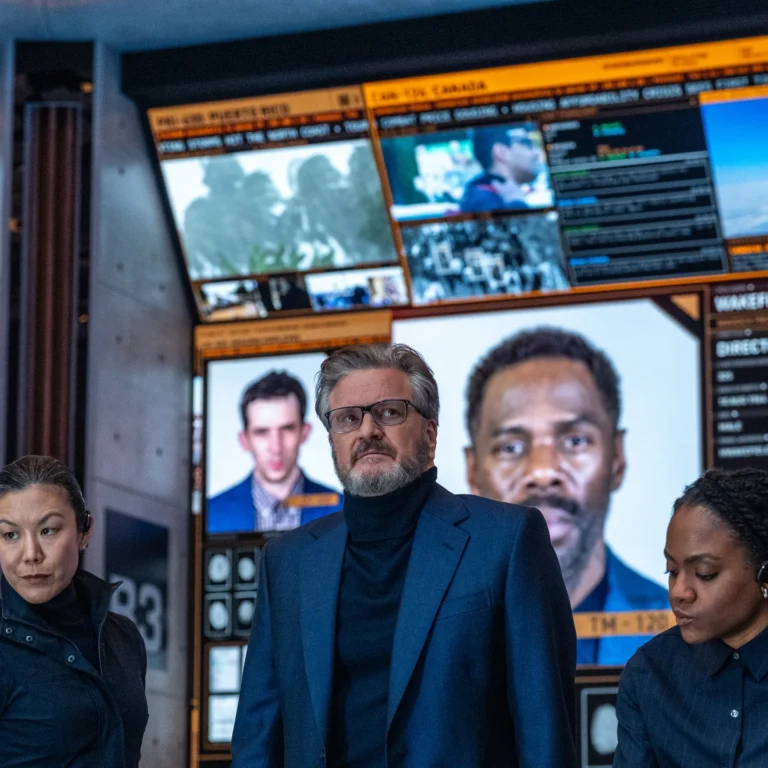
Set in the near future, “Disclosure Day” follows cybersecurity expert Daniel Kellner (Josh O’Connor), who becomes tangled in interstellar politics when he steals documents from defense contractor Wardex, revealing humanity is not alone in the universe. He connects with television weathercaster Margaret Fairchild (Emily Blunt), who finds herself in the crosshairs of the hunt for extraterrestrial life after her on-air segment inadvertently exposes the alien transmissions. The film also stars Colin Firth, Eve Hewson, Colman Domingo, and Elizabeth Marvel, as Steven Spielberg revisits the well-worn sci-fi territory he previously explored as a young director with the seminal “Close Encounters of the Third Kind” (1977). “Disclosure Day” replaces the government conspiracy at the heart of Spielberg’s earlier work with a modern-day look at who profits most from the discovery of life beyond Earth.

Spielberg’s collaborators on “Disclosure Day” were also worth noting, as the filmmaker worked again with his closest collaborators, including cinematographer Janusz Kaminski and editor Michael Kahn, and convinced John Williams to return to the franchise, with his score being his most outstanding work since “Jaws” and “Jurassic Park” defined his early years. Notably, David Koepp’s screenplay, which was based on a treatment by Spielberg himself, was also well received, with critics praising Emily Blunt’s performance and the film’s generally upbeat tone. The film currently has an excellent Rotten Tomatoes score of 80 percent, with the critical consensus highlighting Blunt’s performance and the film’s overall optimism.

Despite the overwhelmingly positive critical reception, “Disclosure Day” was a financial disappointment, as the box office performance serves as a cautionary tale about theatrical distribution. The film had a strong debut, grossing $44.5 million from 3,824 North American theaters, which was well above the $35 million, according to many box office analysts. It had a steep drop of 62 percent in its second weekend, and it continued to underperform in the following weeks, with just 1,288 theaters statewide by mid July. Disclosure Day made $113.2 million domestically and $119.7 million overseas when it became available for online rental and purchase, which is a healthy if unspectacular result for a film with an $232.9 million worldwide total. The film had a production budget of $115 million marketing budget and $80 million production budget, so most industry observers expect it to turn a profit worldwide, but its overall performance was merely mediocre for such a prominent film.

Those who want to see “Disclosure Day” should be able to do so on demand, as it will be available for rental for $19.99 and purchase for $24.99 on platforms like Amazon Prime Video and Apple TV. Additionally, exhibitors who have physical media inventory will be able to acquire 4K, Blu-ray, and DVD copies of the film on August 25. Those who have a subscription to streaming services may have to wait until sometime in September to see the film, as it is set to arrive on Peacock, its expected proprietary streaming home, but Universal Pictures has yet to announce an exact window.

The reason why “Disclosure Day” is of particular interest in New Jersey is because of the extent to which the state was used to depict other locations, which speaks volumes about the state’s film production infrastructure. Filmmakers utilized resources in ten different municipalities in the state, including Atlantic, Cape May, Essex, Hudson, Middlesex, and Morris counties, for 23 days of principal photography. It generated a $34 million economic impact on the state, with over 1,800 jobs created, and a 12 million tax credit from the state for qualified in-state production expenditures, which is an incentive for local film and television production.

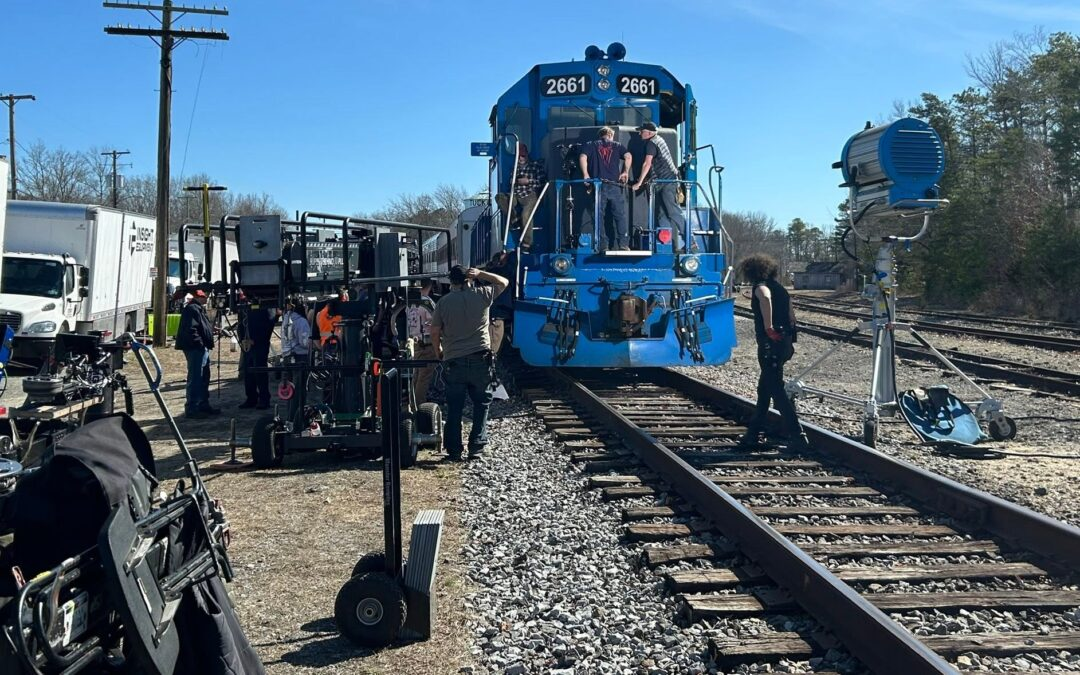
The places where “Disclosure Day” was filmed are also interesting, as they highlight the lengths to which the production team went to make the state look like other locations. The filmmakers used the Cape May Seashore Lines, a private railroad, to depict the large-scale freight train collision that occurs in the film, which the state’s film commission knows will be challenging to recreate elsewhere due to the private ownership of the rails. The production team also transformed the New Jersey Institute of Technology campus in Newark into a television newsroom, creating a look similar to what Emily Blunt’s character would see on a daily basis. Other locations include a Dick’s Sporting Goods store at Woodbridge Center and a former airfield in Whippany, Hanover Township, for the look of military installations, and the film crew also used the streets of Jersey City, with footage appearing in scenes that were filmed on Montgomery Street and Bergen Avenue, to depict urban life.

NJEDA Chief Executive Officer Evan Weiss said the production was proof that New Jersey is becoming a bigger player in the film industry, and it was exciting to see Steven Spielberg back in the state making a sci-fi film. He added that the state’s film tax incentive program played a vital role in helping to create jobs throughout the local economy during the production. Jon Crowley, the Managing Director of NJMPTVC, also spoke about the effort that went into landing the production, noting that it was always intended to shoot elsewhere before the state’s film commission was able to convince the production that New Jersey could meet all of its needs, including the private railway.

It is not the first time that Spielberg has been in New Jersey, as the famed auteur has been returning to his home state to film whenever the location was necessary. He was previously in the state to shoot some of the locations for his 2005 film “War of the Worlds,” which was set in Bayonne, Newark, and Howell Township, and his 2021 remake of “West Side Story” was also largely filmed in New Jersey, with Paterson and Newark standing in for the city streets of 1950s New York. Spielberg has also been in the state to shoot “Catch Me If You Can” in 2002, so “Disclosure Day” is just the latest installment in his long-standing relationship with the state. It is partly practical, as he often chooses New Jersey when its variety of environments is necessary for the film, but there is also likely to be a sentimental reason, as he spent part of his childhood in Haddon Township.

Inside Sterling Hill’s Rainbow Tunnel, where a closed zinc mine takes on the form of a neon cave every summer afternoon

The small borough of Ogdensburg, NJ is one that few people stop to see, but that sits atop one of the world’s most scientifically interesting features. For years, the public has been able to see inside one of these mines, as the Sterling Hill Mining Museum has had its entrance inside the heart of a mine that once produced some of the world’s highest quality zinc (and eventually shut down in 1986) open to the public. Instead of the mine’s history fading away underground, it was decided that the mine had scientific value that could be used; the museum now sees regular visitors from outside of New Jersey every summer.

What sets this particular mine, along with it’s sister Franklin, in the nearby Sterling Hill area aside is the sheer amount and type of minerals that could be found there. Known as the Fluorescent Mineral Capital of the World, the area takes pride in the fact that over 350 different types of minerals have been identified, with almost 90 being able to fluoresce when struck by an ionizing source such as UV light. Even on the surface, it would be a startling sight to see minerals that are able to put on such a dazzling show, but seeing it in a mine two hundred feet underground would be a sight to behold.

This dazzling show is what the museum has dubbed the Rainbow Tunnel, where in the 1987 a group of museum organizers excavated a 240 foot long tunnel to specifically show off the fluorescent minerals that are found in the area. When walking through the tunnel, museum guides will turn off the standard lights, and instead turn on bright shortwave UV lights that make the tunnel walls put on a show. In a matter of seconds, the dull grey rock on the walls seemed to be set on fire, as the minerals within it all glowed with a bright array of colors. From the fiery red calcite to the vibrant green willemite (one of the primary zinc ores), the tunnel looked less like a cave and more like a glowing aquarium.

The discovery of this peculiar glow is actually something that the workers of the mine had stumbled upon before the organizers ever thought to make a show of it (the mine had actually been noted to have these peculiar properties even before it started being worked). In the deep tunnels the workers would occasionally see, when sparks from their equipment would strike the tunnel walls, strange flashes of color lighting up their faces. After the spark had run out, the glow would fade as well, leaving the miners to wonder what the cause of it was. Even today, the same kind of flash would light up the tunnels, though now it was done intentionally when workers and organizers wanted a show for the visitors.

Getting to see the show inside the Rainbow Tunnel is part of a larger guided experience that the mine has to offer, as the two hour underground walking tour is actually closer to an educational experience as well. The 1.3 mile (approximately 1,300 feet long) tunnel that houses the tour is mostly straightforward, with the only hazards of the tour being the uneven ground. None of the usual mine tour tropes of mine cars, ladders, or rocky floors are to be found on the trail, instead being replaced by a wide open, generally flat trail that is easily navigated by wheel-chair or stroller-friendly paths. In this respect, the underground tour has a sort of accessibility to it that most similar experiences in the area lack, as it is more family-friendly than most. The temperature inside the mine is kept to an average of 56 degrees Fahrenheit year-round, meaning that it functions almost like an air-conditioned room during the hottest parts of the summer (though in practice visitors are still encouraged to bring a light jacket even during the hottest times of year).

The tour itself actually emphasizes more on the actual history of the mine, not the fluorescent minerals. Along the trail, guides show off various pieces of mining equipment used in the 20th century, and the tour goes through some of the old underground lamp rooms and looks down to see some of the larger areas of the main shaft station, which was the heart of operations underground at the mine. The trail winds through galleries that were first excavated as early as the 1830s, and one of the more interesting parts of the tour is the Zobel Hall, the changing room for the workers. Here, wire baskets are still suspended from the ceiling by chains, in the same manner that water-drenched clothes had been hung to dry before the workers went back into the tunnels. These little glimpses into the day to day life of miners who had to brave these conditions add a much needed grounding into the experience rather than just the mineral and engineering displays.

The guided tour ends when visitors exit back to the surface, but the museum complex is home to the Warren Museum of Fluorescence, where over 700 types of minerals, crystal, and even other objects that had been found to fluoresce were displayed in various shows using specialized lighting. While inside the mine the minerals had been able to dazzle, this collection serves as a chance to see what else can glow with the help of ultraviolet lighting (in addition to showing some of the other uses for the property of fluorescence). For those hoping to take something from this experience home with them, the visitors of the mine have the option to visit the Mine Run Dump, where some of the old industrial rock piles from the processing areas were available to dig through for any interesting minerals. A separate outdoor building housed a darkroom, allowing rock hounds to have a chance to test out the minerals they had found using specialized ultraviolet lights to confirm that they would glow when at home.

For most families who decide to visit, there is actually very little to worry about in regards to getting tickets or tours. As the mine tours are popular on warm summer weekends, the most important recommendation for most who want to visit is arriving fifteen to thirty minutes early in order to get tickets. Unlike most other museums and attractions, it is not possible to reserve tickets online and the public entrance is only opened at the visitor’s center when the tours begin, making that extra time especially important.

Few museums in New Jersey can offer the kind of insight into industrial history that the Sterling Hill Mining Museum is able to, and the ability to create such an underground display of fluorescent minerals is what has kept people coming back thirty years after the mine was shut down and its zinc reserves officially depleted. This former site of industry has seen a rebirth of sorts, as it has found itself transformed into a subterranean classroom for both mineralogy and history. In the present day, the mine still has the ability to transform, with the press of a switch, its walls into a dazzling neon display of color.

TruGolf Links Brings Its First Flagship Golf Entertainment Venue to Cherry Hill, With Up to 40 More to Follow

Cherry Hill’s Plaza at Cherry Hill shopping center has a new anchor tenant, and it isn’t the first time that this Route 38 retail thoroughfare has seen unconventional new retail concepts arrive on the scene. Last week saw the opening of TruGolf Links, a golf simulator-based entertainment venue created by simulator technology purveyor TruGolf, in the heart of the mall. The venue represents a local debut for a business model that blends elite-level indoor golf simulation with full-service dining and bar inside a single 6,045 square foot space, as well as a critical first step for a franchise that hopes to see up to 40 links-themed venues throughout New Jersey and Pennsylvania. The venue is set to become a proving ground for the concept, with as many as 40 similar venues slated for the region.

The venue proper was built upon five premium simulator bays, including a flagship “Horizon” bays with a seventeen-foot screen and stadium-style seating for the ultimate in cinematic viewing. At the center of the action are TruGolf’s overhead Apogee launch monitors, which utilize proprietary technology to capture club and ball impact data without the need for specialized or marked balls to operate, a crucial difference from some of its competitors. Meanwhile, the software allows golfers to play over 17,000 real-world golf courses around the world, including popular local courses in Pennsauken, Rancocas, and Medford Lake.

Meanwhile, the other critical difference between TruGolf Links and some of the other simulator-based golf娱乐 venues is that TruGolf Links does not actually require golfers to play golf in order to enjoy themselves. Alongside its five premium simulator bays, the venue also boasts a full fifteen-seat bar, as well as a high-top dining area that opens to the general public, allowing those unwilling to pay for a simulator bay to still enjoy chef-curated cuisine, handcrafted cocktails, and a wine and beer list with something for every palate.

At the center of the venture is Nick Reimondo, a veteran in the food and beverage space who spent over a year planning the project before leasing the space from Urban Edge Properties last summer. Reimondo himself has framed the project as ideally suited to offer an upscale multi-generational entertainment option, one that could host both casual family meals within a sport-themed multi-sport arcade, intimate first dates within the stadium-style simulator bays, corporate entertainment packages at the bar, and even structured group golfing options. Such an outlook is critical for a venue as young and unproven as TruGolf Links, where the ability to attract multiple types of customers to a single space is paramount in ensuring any given bay rental is maximized.

TruGolf Links itself is only just getting started, with the company announcing its intent to open up to 40 similar venues throughout New Jersey, New York, and Illinois since launching the TruGolf Links brand last August. As expected, Cherry Hill’s TruGolf Links represents the first real-world example of this particular regional expansion plan, one that has so far largely existed on paper. According to TruGolf Links chief development officer Ben Litalien, the prominence of the venue as a retail destination was a major factor in choosing the Plaza at Cherry Hill for the company’s first venue, while the company president Nick Larsen similarly praised the ability of Reimondo and his team to create a venue that balances first-rate simulator tech with a fine dining and bar experience, as opposed to a golf simulator bay rental business with a subpar attached restaurant.

The venue also boasts the benefit of being located within the larger retail-centric Plaza at Cherry Hill complex, which has seen its share of profile-boosting tenants come and go over the years. In its present state, the shopping center anchors around big-box retailers like Aldi, Total Wine, and Red Robin, with family-friendly entertainment options like Chuck E. Cheese and Dick’s Sporting Goods anchoring the complex. In turn, these tenants also represent a steady source of foot traffic for TruGolf Links, as the simulator-based golf entertainment venue looks to capitalize on the large number of shoppers that already frequent the retail destination. The complex also boasts a diverse cross-section of local families, many of which can be found visiting the nearby grocery stores and restaurants that comprise this particular anchor complex, while also offering a ready pool of potential golfers for TruGolf Links to serve.

With the official opening slated for later this month, the venue has seen soft openings in the interim, with an official ribbon-cutting ceremony set to take place later this month with Cherry Hill mayor David Fleisher. Meanwhile, a two-day grand opening celebration is set to take place on August 7th and 8th, which will see the arrival of PXG’s mobile club-fitting van, with opportunities for fittings available from 10 a.m. to 2 p.m. on both days. Giveaways, food and drink specials, simulator discounts, and a raffle for tickets to an Ed Sheeran concert are also set to take place over the weekend. In the meantime, the venue will offer walk-ins, hourly simulator bay rentals, and monthly memberships, including individual off-peak passes and pooled passes for a group of friends, as the venue works to find its footing.

As a retail-centric shopping complex, Plaza at Cherry Hill has seen its share of novel retail concepts arrive on its turf, but few have attempted to occupy the space between Topgolf-style driving ranges and a traditional full-service restaurant, let alone succeeded in doing so. With TruGolf Links’ debut, South Jersey now has a major entertainment option that combines the best elements of Topgolf-style entertainment with an upscale dining and bar-focused atmosphere, all within the privacy of an enclosed simulator bay. With up to 40 similar venues set to follow if the concept proves itself viable, the success of Cherry Hill’s flagship TruGolf Links is sure to dictate the trajectory of the rest of the company’s regional expansion efforts.

The Voodoo Bunkers of Sandy Hook Are Slowly Losing Their Fight With the Tide

Urban explorers and history buffs have once again flocked to a secluded stretch of eroding beach within the Gateway National Recreation Area, where two World War II era concrete structures hidden in the dunes have seen a spike in popularity just in time for peak summer exploration. An updated entry on travel sites and the reappearance of a few old videos this month have helped put this mysterious piece of forgotten coastal infrastructure back into the public eye, but the real draw has always been the strange murals found deep within the two Voodoo Bunkers on this desolate stretch of beach.

The bunkers themselves were built to be invisible, as reinforced concrete storage units for dynamite and other ordnance for the coastal defense batteries that once dotted the entrance of Sandy Hook from a then-urgent need to protect the nearby harbor and New York City from German U-Boats. They were largely constructed to be buried, and for this purpose, the two large concrete blocks were placed strategically along the dunes as to best conceal their presence from prying eyes.

Decades of shifting sands and relentless tides have so far proven successful against this attempt at concealment, as the bunker-like structures now stand fully exposed on the shoreline of Sandy Hook Bay, taking the brunt of every wave that comes crashing onto the beach. The same tides and shifting sands that unearthed the bunker complex from its self-imposed exile from the world, now threaten to swallow it whole as erosion begins to claim the concrete structures as well.

What has proved considerably more interesting to both urban explorers and the general public alike has not been the bunker’s purpose or its long history of serving as storage for the ordnance of the U.S. military, but rather the strange murals found by early explorers who first stumbled across the bunkers. Covering the walls of both structures in spray paint are large-scale drawings that bear a striking resemblance to the works of pre-Columbian tribes, with six foot long depictions of winged human beings taking up much of the square footage. Said humanoid figures are accompanied by a large-scale drawing of a chicken-man hybrid and a horse with an abundance of human faces drawn into its stomach; the latter is more or less the first thing most people describe upon talking about the murals within the bunker. Despite the sheer size and detail of the work, no artist has ever formally claimed responsibility for any part of the mural, which has been a subject of considerable debate since its discovery.

This particular mystery has aided the bunker in its reputation as the Voodoo Bunkers, as some of the earlier reported finds within the structure pointed to the possibility that it may have once been a place of dark practice. Some of the reported finds within the inner sanctums of the bunker include remnants of ritual slaughter consistent with the practice of Santeria. Whether or not this was the case, the moniker has since cemented these structures as a place steeped in mystery and intrigue, and is one partly responsible for the popularity of the bunker’s appearances in popular media. This reputation has been further solidified by the presence of a long series of weirdnj.com coverage, which has served as the primary source of information for anyone curious about the strange and mysterious bunkers complex, for as long as the website has existed.

Though the bunker has certainly been able to withstand the passage of time, it is less equipped to deal with the tides that have so kindly unearthed it in the first place. The concrete floorboards within the structure have cracked, and now serve to impede the passage of those seeking to see the strange displays of mankind’s early artistic endeavors that have drawn so many to the complex in recent months. High tides have begun to flood the complex entirely, turning a simple journey inside the complex into a treacherous endeavor through knee-deep water while navigating the broken concrete floor. The National Park Service manages the trail that leads to the bunker complex, but the structures themselves are unfortunately considered outside the jurisdiction of the Service, left to weather the storm of encroaching tides on their own. The same currents that revealed the Voodoo Bunkers, will inevitably reclaim them in due time.

Despite the tides that threaten to swallow the strange murals within the bunker complex, they have so far held strong enough to continue fueling the intrigue and wonder so many feel towards the mysterious complex. It should be noted that this recent wave of popularity has in turn helped reinvigorate the status of the Voodoo Bunkers in modern mystery culture. Whether or not the site will retain the same appeal and mystique despite the tides reclaiming the structures will be up for debate, but only time will tell if the Voodoo Bunkers will survive to see another day.

Inside the Enchanted Mini Theater, the Cherry Hill Stage Turns Toddlers Into the Main Event

It is a genuine ask for most young kids to sit still through an entire theater production, one that often ends in fussiness sometime during the second act. Enchanted Mini Theater in Cherry Hill was founded on a totally different idea, one where the fidgeting, singing, and dancing tendencies of a one to six year old were not seen as something to manage but were viewed as exactly what the show was all about. It’s a real children’s theater, interactive experience, and one of the more popular things to do in South Jersey, and it has become so popular by almost reimagining what a children’s production is supposed to be.

The production is by KN Dance and Entertainment, a local company owned by Broadway performer Katie Nanni whose own professional performance experience is evident in the high level of detail in every session. Nanni developed the idea for the Enchanted Mini Theater with a mommy and me type of idea in mind, focusing on a one to six year old range, something traditional theater does little with and often gets wrong. Instead of asking toddlers to sit as an adult might sit, the model is turned on it’s head, asking them to be a part of a show written around their length of attention, energy level, and need to move.

It’s the interaction that’s really what makes the show stand out from all the rest. Each session is about an hour in length, going between dance sequences, singing and dancing by characters, moving about with the children and then ending with story time, along with pictures with the cast of characters. No part of this experience is intended to be passive, with the children up and moving, singing, and engaging with the cast of characters.

The scripts are designed to incorporate literacy skills, as well as social connection and creative learning, but that part can sometimes be missed by those enjoying the show, but the children don’t need to miss out on the enjoyment of the show.

To keep things interesting, there’s a new theme every month. Last and upcoming shows include Pete the Cat and Sleeping Beauty, a Cinderella story and If You Give a Mouse a Cookie, and a couple of sessions around Toy Story. That gives the show, and the children, plenty of reasons to come back time after time. That’s also because the theater rotates through both the classic fairytale characters and the more modern, popular storybook stories, which is a blend that usually appeals to the variety of interests of a typical toddler and preschool-aged children of the same family.

The performances occur inside a studio at the ZZ Dance location at 2091 Springdale Road in Cherry Hill, which adds to the intimate experience and sense of participation rather than a traditional theater-style auditorium. Families will be asked to provide their own yoga mats or blankets, since most of the performance takes place on the studio floor, a small indicator of how much of the show involves being at floor level with the children.

Tickets are also reasonably priced at around $15 for each child, but free admission is given to the adults or to those under 1 year of age, so it can be an affordable option for parents with more than one child, such as bringing a toddler along with an older child.

Most of the performances are scheduled on weekdays during the day, with one show set for 10 a.m. on Wednesdays, which is a time that caters to the schedules and circadian rhythms of stay-at-home parents, working parents, and nannies, who all tend to have more time during the earlier part of the day when children are more alert and willing to participate than they are in the evening.

The tickets are also sold in advance via Eventbrite because the venue is kept small to ensure an intimate experience with more interaction, which has led to most sessions selling out in the show’s growing popularity in South Jersey.

Overall, the concept, execution, themes, and overall concept of the Enchanted Mini Theater are all very different than most other children’s shows, as every aspect of the performance, from its studio setting with the audience sitting at floor level to the rotation of different fairytale and storybook stories to its Broadway-trained artistic director, is designed around the specific developmental nature of children in a young age group.

The result for Cherry Hill parents and South Jersey families is a recurring activity that has evolved from a standard show to be an experience that feels more interactive and more participatory to the point of treating a room full of young children not as an audience to be entertained and to remain seated but as the focus of a very unique performance.

Why 75,000 Noncitizens a Year Get Called for Jury Duty in New Jersey, and What That Reveals About the State’s Data Problem

New Jersey’s ongoing voter registration controversy has already forced state officials to answer hard questions about who ends up on the state’s voter rolls. Now a related but separate revelation is pulling New Jersey’s court system into the same conversation. According to state judiciary data, roughly 75,000 noncitizens are summoned for jury duty in New Jersey every year, a figure that on its surface sounds alarming, but one that court officials insist is actually proof that the state’s screening process is functioning exactly as designed, catching ineligible jurors before they ever reach a courtroom rather than letting them slip through.

The connection between the two stories runs directly through New Jersey’s underlying data infrastructure. Jury pools in New Jersey are not drawn from a single source list. Instead, the state pulls potential jurors from a combination of voter registration rolls, tax records, and Motor Vehicle Commission data, the very same overlapping data sets now under scrutiny following the disclosure that a year long MVC software glitch mistakenly added roughly 6,600 noncitizens to New Jersey’s voter registration rolls between June 2023 and June 2024. Because those same compromised data streams feed directly into jury selection, thousands of noncitizens end up receiving a jury summons in the mail each year, triggering a separate screening process that operates entirely downstream of the original registration problem.

That screening process, according to Pete McAleer, a spokesman for the New Jersey Administrative Office of the Courts, begins the moment someone is randomly selected for potential service. Every prospective juror receives a mandatory qualification questionnaire, and citizenship status is one of the very first things it asks. Anyone who indicates they do not meet the state’s statutory eligibility requirements, whether due to citizenship status or another disqualifying factor, is filtered out of the process at that stage. McAleer noted that roughly 20 percent of all respondents to the qualification questionnaire report failing to meet at least one eligibility requirement, and that citizenship issues account for close to a quarter of those disqualifications, translating to an average of about 75,000 people annually over a recent three year stretch. For anyone who somehow advances past that initial questionnaire, the safeguards do not stop there. Jurors who continue toward service are reminded of the eligibility requirements again during jury orientation, walk through a training video that explicitly covers the citizenship requirement, and are then directly questioned about their citizenship status during jury selection itself, both by the presiding judge and, where permitted, by the attorneys handling the case. Taken together, McAleer’s account describes a layered system with several distinct points where an ineligible juror is supposed to be caught well before ever being seated in the jury box, and the judiciary maintains there is no indication any noncitizen has actually served on a New Jersey jury since these additional safeguards were put in place.

Even so, the sheer scale of the number has become its own kind of political flashpoint, arriving as it did just days after Governor Mikie Sherrill’s administration publicly acknowledged the separate MVC registration failure. Micah Rasmussen, director of the Rebovich Institute of New Jersey Politics at Rider University, captured the concern many observers have raised, framing the jury duty figures as evidence that the underlying data problem is considerably broader than a single isolated glitch confined to one state agency. When a data quality issue is significant enough to ripple into an entirely separate function of government, in this case the judiciary’s jury selection process, it becomes much harder to characterize the original registration failure as a contained, one time software bug rather than a symptom of a more fundamental weakness in how New Jersey’s state agencies collect, share, and cross reference resident data in the first place.

Critics of the current safeguard system have pushed that argument further, arguing that a process built primarily on self reporting is not the kind of rigorous verification the moment calls for. The core objection is straightforward. A safeguard, by definition, is supposed to catch errors even when the underlying records are wrong or when an individual chooses not to disclose accurate information voluntarily. Asking someone to simply state whether they are eligible, these critics argue, is fundamentally a trust based system rather than a verification based one, and after a year in which state officials have already had to walk back assurances about the integrity of the voter rolls, that same trust based approach applied to jury selection strikes some observers as an inadequate response to a demonstrated pattern of data failure rather than a genuine fix.

The judiciary’s position and its critics’ skepticism are not, in practice, mutually exclusive. It is possible for the citizenship questionnaire, orientation reminder, and in-court judicial questioning to function reasonably well as a final backstop while the deeper problem, meaning why tens of thousands of noncitizens are entering the jury summons pipeline in the first place, remains unresolved. That distinction, between a downstream safeguard that appears to be working and an upstream data source that clearly is not, has become the central point of legislative pressure building in Trenton. Lawmakers already scrutinizing the MVC’s role in the voter registration failure are now facing calls to widen that inquiry to cover how the Motor Vehicle Commission, the Statewide Voter Registration System, and the judiciary’s own juror source lists interact with one another, since all three evidently share enough flawed underlying data to produce two separate, publicly disclosed problems within the same news cycle.

For a state judiciary system that has operated its citizenship screening safeguards quietly in the background since the 1990s without controversy, the sudden spotlight is a direct byproduct of timing rather than any new failure specific to the courts themselves. The jury system did exactly what it was designed to do. What the moment has exposed instead is how deeply interconnected New Jersey’s various government databases actually are, and how a single flawed data feed at one agency can surface as a headline grabbing statistic in an entirely different branch of government months or years later. Whether the eventual legislative response focuses narrowly on the Motor Vehicle Commission or expands into a broader overhaul of how the state’s agencies verify and share resident data across the board is likely to be one of the more consequential policy questions to come out of this entire episode.

Tyler Henry: An Evening of Hope and Healing

0

Tyler Henry Brings An Evening of Hope and Healing to Morristown, Offering an Unforgettable Live Experience Focused on Connection, Comfort, and the Mysteries Beyond

July 26 @ 8:00 AM 5:00 PM

Some live events entertain, some inspire, and a select few leave audiences reflecting long after the lights come up. This summer, one of the most recognizable names in modern psychic mediumship will bring exactly that kind of experience to New Jersey as Tyler Henry presents An Evening of Hope and Healing at Mayo Performing Arts Center in Morristown. Known to millions through his television appearances and live performances across the country, Henry’s event promises an evening built around personal stories, audience participation, thoughtful conversation, and the enduring human search for meaning, remembrance, and hope.

Scheduled for Thursday, July 30, 2026, at 8:00 p.m., the performance offers New Jersey audiences an opportunity to experience Tyler Henry in an intimate theater environment rather than through a television screen. His appearances have become some of the most talked about live events in the country, attracting longtime followers of his work as well as those who simply enjoy exploring questions surrounding spirituality, memory, grief, and the possibility of life beyond death.

For many people, Tyler Henry first became a household name through the hit E! television series Hollywood Medium with Tyler Henry. The program introduced viewers to his work conducting readings for celebrities while simultaneously sharing deeply personal moments that resonated with audiences well beyond Hollywood. Since then, his reach has expanded significantly through bestselling books, national tours, private readings, and more recently through Netflix productions that introduced his work to an even broader international audience.

His latest projects have continued to showcase a style that differs from many performers within the field. Rather than approaching mediumship as spectacle alone, Henry has consistently emphasized compassion, empathy, and emotional healing. Whether speaking with celebrities, everyday families, or live theater audiences, his presentations often focus less on prediction and more on remembrance, validation, and helping people process grief in meaningful ways.

The Morristown performance follows that same philosophy. Rather than functioning as a scripted stage production, An Evening of Hope and Healing unfolds organically through conversation, storytelling, audience interaction, and live readings. Every show develops differently because the audience itself helps shape the evening. That unpredictability has become one of the defining characteristics of Tyler Henry’s touring performances, making each stop unique.

Audience members can expect Henry to discuss the origins of his remarkable abilities, how he believes communication with the other side occurs, and the experiences that have defined his career over the past decade. Throughout the evening he explains the mental impressions, symbols, emotions, and imagery that guide his readings while also answering questions from attendees about his work, his experiences, and the larger questions surrounding consciousness and the afterlife.

One of the most anticipated aspects of every performance is the possibility of spontaneous audience readings. While not every attendee will receive a reading, those selected become part of an experience that unfolds naturally before the entire theater. These moments often become deeply emotional, balancing joy, remembrance, humor, and heartfelt reflection in ways that have become synonymous with Tyler Henry’s live appearances.

His approach has earned attention because it emphasizes comfort rather than fear. Henry regularly explains that his objective has never been to sensationalize loss but instead to help people find peace, understanding, and acceptance. That philosophy has resonated with audiences navigating the universal experiences of losing parents, grandparents, spouses, siblings, children, close friends, and beloved family members.

Tyler Henry’s journey began long before television cameras entered his life. Growing up in Hanford, California, he has spoken openly about experiencing vivid mental impressions from an early age. At just ten years old, he experienced what he describes as a profound intuitive event involving his grandmother’s passing, an experience that shaped his understanding of his abilities and influenced the direction of his life.

As a teenager, Henry envisioned a career in hospice nursing because he believed helping individuals and families during life’s final stages aligned closely with his personal calling. While pursuing that path academically, he also began conducting private readings in his local community. What started as modest appointments at a neighborhood bookstore quickly developed into growing public recognition as word spread about his abilities.

Eventually, referrals reached Los Angeles, where entertainers and public figures sought private readings. Those sessions ultimately led to opportunities in television, beginning with Hollywood Medium, where viewers watched Henry interact with actors, musicians, athletes, and television personalities while demonstrating what he described as his intuitive process. The show’s popularity helped transform him into one of the most recognized psychic mediums in the world.

More recently, Netflix introduced audiences to Life After Death with Tyler Henry and the groundbreaking live special Live From the Other Side, which showcased unscripted readings broadcast in real time. These productions further expanded his audience while reinforcing the conversational, compassionate style that has defined his career from the beginning.

Regardless of one’s personal beliefs regarding mediumship, Tyler Henry’s events consistently attract remarkably diverse audiences. Some attend out of deep spiritual conviction. Others arrive driven by curiosity or skepticism. Many simply appreciate hearing stories centered on hope, remembrance, and the enduring emotional connections people maintain with those they have loved and lost. That wide appeal has helped his live performances become successful in theaters across North America.

The setting at Mayo Performing Arts Center is particularly well suited to this kind of presentation. Known as one of New Jersey’s premier performing arts venues, the theater provides an intimate atmosphere where audience engagement becomes a central part of the evening. Unlike arena productions or large stadium events, the environment encourages conversation and creates a stronger sense of personal connection between performer and audience.

The production itself focuses on authenticity rather than elaborate stage effects. The emphasis remains on Tyler Henry’s interaction with the audience, his storytelling, and the spontaneous nature of each reading. Because no two performances follow the same path, attendees experience an evening that cannot simply be replicated from one city to the next.

For visitors planning an evening in Morristown, the performance also presents an opportunity to explore one of New Jersey’s most vibrant downtown districts. The surrounding area offers an outstanding collection of restaurants, cafés, specialty shops, and historic attractions, making it easy to turn the event into a complete night out before arriving at the theater.

Tickets are available in multiple seating levels, with pricing ranging from $79 to $169. The venue has adopted all inclusive pricing, meaning listed ticket prices include applicable service fees, allowing guests to better understand the full cost before completing a purchase. Guests are encouraged to arrive early, particularly those utilizing prepaid parking, to ensure sufficient time for entry before the performance begins.

Whether attendees are longtime followers of Tyler Henry’s television career, readers of his books, or simply individuals interested in exploring one of life’s most enduring mysteries, An Evening of Hope and Healing offers an experience unlike a traditional stage production. It combines conversation, storytelling, audience participation, and moments of genuine emotion into an evening centered on compassion, remembrance, and the possibility that the bonds between people may extend beyond what can be seen.

As Tyler Henry continues to bring his live tour across the country, his Morristown appearance represents another opportunity for New Jersey audiences to witness one of today’s most recognizable figures in contemporary mediumship. Regardless of where individual beliefs may fall, the evening promises thoughtful discussion, heartfelt moments, and an atmosphere devoted to hope, healing, and the universal connections that continue to shape the human experience.


Mayo Performing Arts Center (MPAC)

973.539.8008

View Organizer Website

Mayo Performing Arts Center (MPAC)

100 South Street , NJ
Morristown, New Jersey 07960 United States
+ Google Map
973-539-8008
View Venue Website

0

Hindley Street Country Club Brings a Global Celebration of Classic Hits to New Jersey

July 29 @ 7:00 PM 11:00 PM

Some bands become famous through years of touring, while others find worldwide audiences through radio and streaming. Hindley Street Country Club has accomplished something remarkably different. Beginning as a passion project among a group of accomplished musicians in Adelaide, Australia, the ensemble transformed a series of professionally produced live cover performances into one of the most successful independent music stories on YouTube. Today, with more than one million subscribers, well over 590 million YouTube views, and more than one billion views across social media platforms, Hindley Street Country Club has become an international touring sensation whose performances continue to captivate audiences across multiple continents.

For music lovers in New Jersey, the opportunity to experience Hindley Street Country Club live represents far more than a concert built around familiar songs. It is a chance to witness an ensemble whose extraordinary musicianship, vocal precision, and live production have earned an international reputation for breathing new life into some of the greatest recordings ever made. Whether revisiting timeless classics from the 1970s or celebrating unforgettable hits from the 1980s, HSCC has built its success by honoring legendary songs while presenting them with fresh arrangements, exceptional performances, and remarkable attention to detail.

The story of Hindley Street Country Club began in 2017 when arranger, producer, and musician Constantine Delo assembled an exceptional collection of Adelaide’s finest performers. Rather than attempting to recreate songs note for note, the group focused on developing sophisticated arrangements that highlighted each musician’s strengths while remaining faithful to the spirit of the original recordings. Their videos, recorded live and released weekly on social media, quickly attracted attention from viewers who appreciated the band’s commitment to authentic musicianship.

What started as a local recording project soon evolved into an international phenomenon. Viewers from around the world discovered the group’s remarkable performances through Facebook and YouTube, sharing videos that consistently showcased extraordinary instrumental talent, polished vocal harmonies, and an unmistakable passion for classic popular music. The audience continued to grow with every release, eventually reaching millions of music fans across North America, Europe, Asia, South America, Australia, and beyond.

One of the qualities that distinguishes Hindley Street Country Club from countless other cover bands is its unwavering commitment to live performance. Every recording is performed in a single continuous take with the musicians playing together in the same room. Rather than relying on extensive editing, layered studio production, or digital enhancements, the band emphasizes genuine musicianship and ensemble chemistry. This approach captures the energy and spontaneity that define truly outstanding live music while allowing each performer to contribute naturally to the finished recording.

Recording in this manner requires extraordinary preparation and technical precision. Every musician must execute their performance flawlessly while maintaining constant communication with fellow band members throughout the song. Vocalists utilize professional in ear monitoring systems that allow engineers to isolate each microphone for superior sound quality without sacrificing the feeling of a genuine live performance. The result is a production style that combines studio quality audio with the authenticity and excitement of a concert.

The band’s distinctive name also carries an interesting piece of Australian musical history. Hindley Street sits in the heart of Adelaide and has long served as one of the city’s most active entertainment districts. Throughout the 1970s, 1980s, and 1990s, countless musicians built their careers performing in the area’s clubs, pubs, theaters, and live music venues. The phrase “Country Club” was intentionally paired with Hindley Street as an inside joke, contrasting the refined image of a traditional country club with one of Adelaide’s busiest and most colorful nightlife districts. There has never actually been a country club located on Hindley Street, making the name a clever reflection of the band’s personality and sense of humor.

While their online presence continues to expand every week through new video releases, Hindley Street Country Club has become equally respected as a touring act. Their concerts have taken them throughout Australia and neighboring New Zealand before expanding into Southeast Asia, where audiences enthusiastically embraced their performances at major events including the Singapore Grand Prix. Successful appearances throughout the Philippines further demonstrated the group’s growing international popularity.

The band’s global reach has only accelerated in recent years. Extensive touring throughout the United States introduced American audiences to the remarkable musicianship that had already earned millions of online followers. Additional performances across Brazil and South America expanded their international footprint even further, while new tours throughout Eastern Europe, the United Kingdom, Japan, and Southeast Asia continue to showcase the universal appeal of classic popular music performed at an exceptionally high level.

Part of the band’s remarkable success lies in its carefully selected repertoire. Rather than focusing exclusively on one genre, Hindley Street Country Club celebrates an era when popular music crossed stylistic boundaries with remarkable creativity. Audiences can expect unforgettable rock anthems, soulful ballads, sophisticated pop classics, disco favorites, soft rock staples, rhythm and blues standards, and timeless radio hits that defined an entire generation of music. Every performance reflects meticulous preparation while preserving the emotional connection that made these songs enduring classics in the first place.

Equally important is the extraordinary collection of musicians and vocalists who bring these arrangements to life. The rotating lineup features accomplished performers with extensive professional experience, allowing each song to showcase specialists whose individual talents perfectly complement the material. This collaborative approach gives every performance a distinctive character while maintaining the consistently high standards that audiences have come to expect from Hindley Street Country Club.

The band’s weekly video releases remain central to its identity. Every Friday, new performances continue to appear online, giving longtime followers fresh content while introducing new audiences to the ensemble’s ever expanding catalog of classic songs. This consistent schedule has helped build an unusually loyal international community of music lovers who eagerly anticipate each new release and frequently discover forgotten favorites through the band’s thoughtful interpretations.

For New Jersey audiences, Hindley Street Country Club offers something increasingly uncommon in today’s concert landscape. Their performances celebrate exceptional musicianship above spectacle, placing the songs themselves at the center of the experience. Rather than relying on elaborate production or nostalgia alone, the band demonstrates why these recordings have remained beloved for decades through performances that balance technical excellence with genuine emotion.

As live music continues to thrive throughout New Jersey, Hindley Street Country Club stands out as one of the most compelling international acts celebrating the golden era of popular music. Their remarkable journey from a modest Adelaide recording project to a globally recognized touring ensemble serves as a testament to the enduring power of outstanding musicianship, authentic live performance, and timeless songwriting.

Whether you first discovered Hindley Street Country Club through one of their viral online videos or have followed their remarkable rise from the very beginning, experiencing the band in person offers an entirely new appreciation for the talent that has captivated millions around the world. For anyone who loves the unforgettable soundtrack of the 1970s and 1980s, their concerts deliver an evening filled with extraordinary performances, world class musicianship, and a celebration of classic music that continues to connect generations of listeners across every corner of the globe.

Mayo Performing Arts Center (MPAC)

973.539.8008

View Organizer Website

Mayo Performing Arts Center (MPAC)

100 South Street , NJ
Morristown, New Jersey 07960 United States
+ Google Map
973-539-8008
View Venue Website

Free Summer Event: Country Line Dancing with Paul Stoddard

0

Free Country Line Dancing Returns to Morristown as Paul Stoddard Brings an Evening of Music, Movement, and Community to Pioneer Park

July 28 @ 7:00 PM 11:00 PM

Summer evenings in New Jersey are made for outdoor entertainment, community gatherings, and discovering new experiences, and one of Morristown’s most anticipated free seasonal events is making its return. Back by popular demand, Country Line Dancing with Paul Stoddard invites dancers of every experience level to Pioneer Park at Headquarters Plaza for an energetic evening filled with classic country favorites, contemporary hits, easy to follow instruction, and a welcoming atmosphere that celebrates music, movement, and community. Presented as part of the Arts in the Community series, this free event continues to highlight the power of live arts programming while creating opportunities for residents and visitors alike to gather for an unforgettable summer evening.

Scheduled for Tuesday, July 28, 2026, beginning at 6:00 p.m., this free public event offers far more than a traditional dance lesson. It combines live entertainment, professional instruction, social interaction, and one of the most enjoyable ways to experience country music in an outdoor setting. Whether you have spent years mastering line dances or have never stepped onto a dance floor before, the evening is designed to make everyone feel comfortable joining the fun.

Leading the festivities is Paul Stoddard, one of the Northeast’s most respected names in country dancing. Throughout more than three decades of teaching, Paul has built an outstanding reputation for introducing thousands of people to country line dancing and partner dancing through a teaching style that emphasizes patience, clarity, encouragement, and fun. His approachable personality and ability to break down even the most challenging dance patterns into manageable steps have helped more than 10,000 students discover a lifelong appreciation for country dance.

Paul’s experience extends well beyond the classroom. While his instructional career has made him a familiar face throughout the regional dance community, he has also become a highly sought after country music DJ, bringing his extensive understanding of dance floor energy and musical pacing to audiences throughout the region. Since expanding into DJ performances, he has become known for creating playlists that blend timeless country classics with today’s biggest country hits, carefully reading the crowd and adjusting the music to keep dancers engaged throughout every event.

That combination of instructor and DJ creates a uniquely enjoyable experience. Rather than simply playing music, Paul understands how each song interacts with dancers on the floor. His years of teaching allow him to anticipate the needs of beginners while still providing enough variety and excitement to keep experienced dancers challenged and entertained. The result is an evening that feels welcoming from the very first song until the final dance.

Country line dancing has experienced remarkable growth over the past several years, attracting participants from every age group and background. Unlike many forms of dance that require a partner or previous experience, line dancing allows individuals to participate independently while still sharing the experience with everyone around them. The synchronized movement creates an immediate sense of connection, making it one of the most accessible and social forms of dance available.

Throughout the evening, participants can expect a lively mix of traditional country favorites alongside contemporary country hits that have become staples of today’s dance floors. Beginners will receive clear guidance as new dances are introduced, while experienced dancers will appreciate the opportunity to enjoy familiar choreography and challenge themselves with more advanced routines. The emphasis remains on enjoyment rather than perfection, allowing everyone to participate at their own comfort level.

The event takes place at Pioneer Park at Headquarters Plaza, one of Morristown’s premier outdoor gathering spaces. Located in the heart of downtown, the venue provides an inviting setting where music, dancing, and community come together against the backdrop of one of New Jersey’s most vibrant downtown districts. In the event of inclement weather, activities will move indoors to the Terrace Ballroom at the Hyatt Regency Morristown, ensuring the evening proceeds regardless of weather conditions.

Beyond his instructional and DJ work, Paul Stoddard also serves as one of the driving forces behind the Big Apple Country Dance Festival, one of the Northeast’s premier country dance events. The annual festival has earned recognition for bringing together dancers from across the region for several days of workshops, competitions, social dancing, performances, and educational programming focused on country partner dancing, line dancing, and West Coast Swing. His leadership in organizing events of that scale reflects the depth of his commitment to growing and supporting the country dance community throughout New Jersey and beyond.

The evening also reflects the broader mission of the Arts in the Community initiative, which continues to expand access to cultural programming outside traditional performance venues. By bringing professional artists, instructors, musicians, and performers directly into public spaces, the program creates opportunities for residents to experience the arts in relaxed, accessible settings. These events strengthen local communities while encouraging participation from people who may be attending an arts program for the very first time.

Support for the Arts in the Community series helps ensure that high quality programming remains available without admission fees, allowing families, friends, visitors, and local residents to participate regardless of budget. Free events like Country Line Dancing with Paul Stoddard demonstrate how public arts programming can create meaningful experiences that encourage physical activity, social interaction, lifelong learning, and community engagement all within a single evening.

For those who have always wanted to try line dancing but never knew where to begin, this event offers the ideal introduction. There is no pressure, no previous experience required, and no expectation beyond having a willingness to learn and enjoy the music. Experienced dancers will likewise find an enthusiastic community of fellow participants eager to share the dance floor while enjoying expertly selected country music throughout the evening.

As summer continues across New Jersey, few events capture the spirit of community quite like an outdoor evening of music and dancing under the open sky. Combining professional instruction, outstanding music, welcoming hospitality, and the relaxed atmosphere that defines summer in Morristown, Country Line Dancing with Paul Stoddard promises another memorable gathering that celebrates both the joy of dance and the strength of community connections.

Whether you arrive wearing cowboy boots or comfortable sneakers, attend with friends or come on your own, this free evening offers an opportunity to learn new skills, meet fellow music lovers, enjoy outstanding country music, and become part of one of Morristown’s most enjoyable summer traditions. With an experienced instructor leading every step, an energetic soundtrack filling Pioneer Park, and an atmosphere built around fun and inclusion, Country Line Dancing with Paul Stoddard continues to prove why it remains one of the standout events on New Jersey’s summer calendar.

Mayo Performing Arts Center (MPAC)

973.539.8008

View Organizer Website

Mayo Performing Arts Center (MPAC)

100 South Street , NJ
Morristown, New Jersey 07960 United States
+ Google Map
973-539-8008
View Venue Website

Hallmark Stars Live presented by Michaels

0

Hallmark Stars Live Brings the Magic of Christmas Movies to New Jersey for an Unforgettable Evening at MPAC

July 26 @ 7:00 PM 11:00 PM

For millions of viewers, Hallmark Channel has become synonymous with heartfelt storytelling, uplifting characters, memorable romances, and the holiday movies that have become an annual tradition in homes across America. Every season, audiences eagerly anticipate the latest collection of Christmas premieres, reconnecting with familiar faces who have become part of their holiday celebrations. This year, fans in New Jersey will have a rare opportunity to step beyond the television screen as Hallmark Stars Live presented by Michaels arrives at the Mayo Performing Arts Center in Morristown for an interactive evening unlike anything Hallmark audiences have experienced before.

Rather than a traditional stage performance or scripted presentation, Hallmark Stars Live is designed as an immersive, audience driven experience that allows fans to spend an evening with many of the actors who have helped define the Hallmark Channel’s signature style of entertainment. Hosted by longtime Hallmark favorite Nikki DeLoach, the event brings together a celebrated lineup that includes Ashley Williams, Andrew Walker, Tamera Mowry Housley, and Jonathan Bennett, offering guests an opportunity to hear personal stories, behind the scenes memories, career reflections, and candid conversations rarely shared during television interviews.

For Hallmark fans, the appeal extends well beyond celebrity appearances. The network has built an extraordinarily loyal audience by creating films centered on optimism, family, friendship, romance, and community. Those themes have transformed many of its leading actors into recognizable personalities whose annual holiday films have become part of countless family traditions. Hallmark Stars Live celebrates that connection by creating an intimate atmosphere where audiences become active participants rather than simply spectators.

Throughout the approximately ninety minute presentation, attendees will enjoy a lively mix of storytelling, audience questions, interactive discussions, and spontaneous moments that make each performance unique. Fans will hear firsthand accounts of what happens during the filming of Hallmark productions, discover how favorite holiday movies come together behind the cameras, and gain insight into the friendships that often develop among the actors who return to work together year after year.

Hosting the evening is Nikki DeLoach, one of Hallmark’s most recognizable performers and a familiar face to audiences through more than twenty Hallmark original films. Her warm personality and natural rapport with fellow cast members make her an ideal guide for an event built around conversation, humor, and genuine connection. As host, she helps move the evening seamlessly between entertaining stories, thoughtful discussions, and moments of audience participation that create an experience impossible to duplicate from one city to the next.

Ashley Williams has earned a devoted following through her blend of humor, warmth, and heartfelt performances, becoming one of Hallmark’s most beloved leading ladies. Andrew Walker has likewise become a staple of the network’s holiday programming, appearing in numerous fan favorite films that have helped define the Hallmark Christmas season. Tamera Mowry Housley brings decades of television experience along with her own Hallmark success, while Jonathan Bennett continues to delight audiences with performances that blend charm, humor, and genuine enthusiasm for the network’s signature storytelling style.

Together, this accomplished group represents many of the personalities that viewers have welcomed into their homes every holiday season. Their conversations promise to explore not only favorite movie moments, but also the personal experiences that shaped their careers, the friendships built while filming, and the creative process behind producing some of television’s most successful holiday programming.

One of the defining features of Hallmark Stars Live is its emphasis on audience interaction. Rather than presenting a rehearsed script from beginning to end, the performers engage directly with fans through live questions and conversations that often lead to unexpected stories and memorable moments. Every audience brings its own personality, ensuring that no two performances are exactly alike. That sense of spontaneity gives attendees an authentic opportunity to experience the actors beyond the characters they portray on screen.

The timing of the tour also offers a refreshing twist by bringing the warmth and spirit of the holiday season into the middle of the year. While Christmas may still be months away, Hallmark Stars Live invites audiences to trade summer weather for festive memories, creating an atmosphere filled with the optimism, joy, and emotional storytelling that have become trademarks of the Hallmark brand. For longtime viewers, it serves as an early celebration of the holiday movie season that so many eagerly anticipate each year.

The Mayo Performing Arts Center provides an ideal setting for an event built around conversation and connection. Widely recognized as one of New Jersey’s premier performing arts venues, MPAC has earned a reputation for presenting nationally acclaimed artists, touring productions, concerts, comedians, family entertainment, and unique live events that appeal to audiences of every generation. Its intimate theater environment allows guests to enjoy a closer connection with performers than would be possible in a much larger arena, making it particularly well suited for a presentation centered on storytelling and audience engagement.

Hallmark’s remarkable popularity continues to grow because its programming offers something increasingly rare in today’s entertainment landscape, stories that emphasize kindness, hope, resilience, and meaningful human relationships. While countless productions compete through spectacle or controversy, Hallmark has built its reputation by consistently delivering uplifting narratives that resonate across generations. That enduring appeal explains why its holiday movies have become annual viewing traditions for millions of households and why its leading actors continue to enjoy such passionate support from audiences around the world.

Hallmark Stars Live extends that connection beyond television, allowing fans to experience the personalities behind the performances while gaining a deeper appreciation for the creativity, collaboration, and dedication required to bring these beloved films to life. The evening offers laughter, heartfelt moments, fascinating behind the scenes stories, and opportunities for genuine interaction that simply cannot be replicated through a television screen.

For Hallmark enthusiasts throughout New Jersey and the surrounding region, this event represents far more than a celebrity appearance. It is an opportunity to celebrate the movies, traditions, and performers that have become part of countless holiday memories while enjoying a unique live experience alongside fellow fans who share the same appreciation for Hallmark’s distinctive style of storytelling.

As Hallmark Stars Live presented by Michaels arrives at the Mayo Performing Arts Center, audiences can look forward to an evening filled with warmth, laughter, personal stories, audience participation, and the unmistakable holiday spirit that has made Hallmark Channel one of television’s most beloved destinations. Whether you have followed these actors for years or recently discovered the joy of Hallmark’s signature films, this memorable live experience promises an entertaining celebration of the stories and stars that continue to make every holiday season feel a little brighter.

Mayo Performing Arts Center (MPAC)

973.539.8008

View Organizer Website

Mayo Performing Arts Center (MPAC)

100 South Street , NJ
Morristown, New Jersey 07960 United States
+ Google Map
973-539-8008
View Venue Website

Inside NJ Spotlight News’s Reporters Roundtable Deep Dive on New Jersey’s “Votergate” Controversy, and How to Catch Every Encore

New Jersey’s political press corps rarely gets a story with this much simultaneous weight in Trenton, Washington, and the state’s local news cycle all at once, and NJ Spotlight News built its entire July 24 edition of Reporters Roundtable around it. Host Joanna Gagis led a special episode devoted almost exclusively to the controversy already being referred to around the State House as Votergate, the discovery that a year long software failure inside New Jersey’s Motor Vehicle Commission mistakenly registered 6,600 noncitizens to vote. For viewers who missed Friday’s original broadcast, NJ PBS is running the episode back throughout the weekend, and the full program remains available on demand through several official platforms for anyone who wants to watch or listen on their own schedule.

The core of the episode walked through exactly what Governor Mikie Sherrill’s administration disclosed. The glitch itself ran between June 2023 and June 2024, and it stemmed from a flaw in the MVC’s automated registration system, the same process that allows New Jersey drivers to register to vote while applying for or renewing a license or state identification card. Even applicants who explicitly told the system they were not U.S. citizens and did not wish to register ended up added to the voter rolls regardless. What turned the panel’s discussion from a bureaucratic malfunction into a genuine political flashpoint was the follow up data. State officials confirmed that roughly 400 of the 6,600 improperly registered individuals went on to actually cast ballots in recent New Jersey elections, a number small enough that Sherrill’s office has said there is no evidence any specific election outcome was altered, but large enough to guarantee the story would not stay contained to a single news cycle.

The panel devoted significant time to the political fallout that followed the disclosure, and state Republicans wasted little time treating it as validation of arguments they have made for years about New Jersey’s automatic motor voter registration system. GOP lawmakers are now pushing hard for the legislature to establish a special committee equipped with actual subpoena power, arguing that only a formal investigative body with the authority to compel documents and testimony can determine how far the failure actually extended and whether anyone inside state government recognized the problem earlier than they have publicly admitted. That demand fits into a broader national pattern that has emerged since Sherrill’s announcement, with Republican officials in Washington and Trenton alike framing the episode as proof that concerns about noncitizen voting deserve to be taken far more seriously than Democrats have historically allowed, even as the available evidence so far points to an unintentional technical failure rather than any organized effort to manipulate the rolls.

Sherrill’s administration, for its part, has moved to frame its own response around transparency rather than defensiveness, a distinction the roundtable panel examined closely. The governor has publicly stated that the failure did not occur on her watch but that accountability for fixing it starts now, and her office has already launched an independent investigation into the full scope of what happened, while state agencies work through the process of purging the invalid registrations from New Jersey’s voter rolls entirely. Beyond the immediate cleanup, the Motor Vehicle Commission has also updated its digital signature pads to display citizenship and registration prompts in five languages, a direct response intended to reduce the kind of procedural confusion that may have contributed to the original failure in the first place. Whether that specific fix addresses the root cause of the software error itself, or simply reduces one contributing factor among several, was among the sharper points of debate the panel raised.

That kind of pointed, cross examining discussion is exactly what Reporters Roundtable is built to deliver, and this episode benefited from a particularly well matched panel. Colleen O’Dea brought NJ Spotlight News’s own investigative depth on state government accountability, Matt Friedman offered the kind of granular Trenton insider read that Politico’s New Jersey coverage has built its reputation on, and Charlie Stile contributed the seasoned political analysis that has made his column at The Record a fixture of state political coverage for years. Together, the three provided the kind of multi angle scrutiny a story this consequential demands, weighing both the legitimate accountability questions raised by a year long undetected system failure and the broader, more charged national debate over noncitizen voting that Sherrill’s disclosure inevitably fed into.

For New Jersey residents who want to watch the full breakdown rather than rely on secondhand summaries, NJ PBS has built a generous encore schedule around the episode. A morning replay airs Sunday at 10 a.m. Eastern, and the program continues to loop through select weeknight and weekend slots at 6:30 a.m., 6 p.m., 7:30 p.m., and 11 p.m. Eastern. Viewers who would rather stream on their own timeline can pull up the complete July 24 episode directly through the NJ Spotlight News video portal or the PBS video app, and anyone who prefers audio can find the fully produced episode through the NJ Spotlight News podcast feed on Spotify.

As New Jersey heads deeper into a legislative fight over subpoena power, voter roll integrity, and the broader question of what state officials knew and when, Reporters Roundtable’s July 24 episode stands as one of the more thorough single sources for understanding how the story actually unfolded, delivered by three journalists whose collective coverage of Trenton politics gives the discussion a level of institutional memory that a single reporter working alone would struggle to match.

A Century Old Westfield Theater Gets a $43 Million Second Act, and It Says Something Bigger About How New Jersey Funds the Arts

For nearly a hundred years, the Rialto Theater has stood on Westfield’s main commercial strip as a quiet fixture of small town memory, the kind of building longtime residents pass without quite noticing until someone announces plans to bring it back to life. That moment has now arrived. The New Jersey Economic Development Authority’s board has approved a tax credit award of up to 43.3 million dollars to transform the century old movie house into the Rialto Center for Creativity, a full scale reinvention that will turn a single screen relic of early twentieth century entertainment into a modern performing arts, education, and gallery hub serving Union County and the broader region.

The scope of what is planned inside the building goes well beyond a cosmetic refresh. The project calls for a complete adaptive reuse and gut renovation, reconfiguring the first floor into a flexible performance and event space capable of holding 450 people, alongside a proper lobby and ticketing area, a catering kitchen and cafe, dressing rooms for performers, and dedicated gallery space for visual art.

The second floor is being converted into four multi use classrooms intended for arts education, workshops, and rehearsal use, along with administrative offices and an additional gallery.

Beyond the visible renovation, the building is also getting a substantial infrastructure upgrade, including new mechanical systems, a geothermal wellfield, modern heating, ventilation, and air conditioning, and the addition of an elevator, the kind of unglamorous but essential work that determines whether a historic building can actually function as a year round public venue rather than an occasional event space propped up by temporary fixes.

What makes this project particularly notable is the funding mechanism behind it. The award comes through New Jersey’s Cultural Arts Facilities Expansion program, known as CAFE, a relatively new state initiative modeled conceptually on the federal New Markets Tax Credit program but purpose built to redirect that kind of development financing tool specifically toward cultural institutions rather than general commercial real estate. New Jersey is among a fairly small group of states willing to structure tax credit programs explicitly around the arts, a distinction that matters because it treats cultural infrastructure the same way a state might treat a manufacturing plant or a corporate headquarters relocation, as a legitimate driver of local economic activity rather than a philanthropic afterthought. Eligible CAFE applicants can receive credits covering up to the full cost of a project, capped at 75 million dollars, which gives the state real leverage to attract ambitious cultural redevelopment projects that might otherwise stall out for lack of private financing willing to take on a historic renovation of this complexity.

NJEDA Chief Executive Officer Evan Weiss framed the award as part of a broader strategy tying cultural investment directly to economic development, describing the arts and culture sector as a genuine economic driver that supports local businesses and job creation across the state. That framing lines up with how the Rialto’s operating plan has been designed from the outset. Rather than positioning itself as a premium venue accessible mainly to those who can afford top tier ticket prices, the theater’s model is built around sliding scale rental fees, scholarship opportunities, and discounted ticketing meant to keep the space genuinely open to the surrounding community. Plans also include dedicated youth programming and partnerships with organizations serving individuals with cognitive and mobility challenges, positioning the Rialto as something closer to a civic gathering space than a conventional commercial theater.

Westfield Mayor Jeremy Berman has described the Rialto as one of the town’s most cherished historic landmarks, and the timing of its revival carries a certain symbolic weight given the town’s outsized creative pedigree. Westfield has produced or been home to an unusually notable list of figures across entertainment and popular culture, including Charles Addams, the cartoonist behind The Addams Family, Kevin Feige, the president of Marvel Studios and one of the most influential figures in modern blockbuster filmmaking, and John Rzeznik, the lead singer and guitarist of the Goo Goo Dolls. A town with that kind of creative lineage reclaiming its own century old theater as a working arts institution reads less like a coincidence and more like a natural continuation of a local identity that has quietly shaped mainstream American culture for decades.

There is also a broader cultural argument embedded in a project like this one, beyond the renovation specs and financing structure. A hundred year old single screen theater reinventing itself for a very different entertainment landscape than the one it was built for speaks to a need that has become increasingly visible in towns across the country, which is the demand for genuine third spaces, places outside of home and work where residents of every age can gather, create, and take part in something communal rather than purely transactional. Movie theaters built in the 1920s were designed to serve exactly that function for their era, and the Rialto’s transformation into a multi use performance, education, and gallery space suggests the same basic instinct, community gathering built around shared cultural experience, translating naturally into a twenty first century format built for live performance, art exhibition, and hands on arts education rather than passive film screenings alone.

The Rialto’s award was not an isolated action either. The same NJEDA board meeting also approved a separate CAFE tax credit of up to 24.8 million dollars for a Front of House renovation project at the Paper Mill Playhouse in nearby Millburn, a theater founded in 1938 that stands as the largest producing theater in New Jersey and serves a statewide audience of more than 200,000 people annually, including 40,000 students. That project focuses on rebuilding the theater’s entrance and lobby to correct long standing accessibility and circulation problems, replacing outdated restrooms with modern, Americans with Disabilities Act compliant facilities and upgrading mechanical, electrical, and plumbing systems that Executive Director Mike Stotts has described as severely outdated. Taken together, the two awards signal that the state’s CAFE program is not simply funding isolated passion projects but actively investing in a cluster of cultural anchors across Union and Essex counties, each designed to draw visitors, support surrounding small businesses, and extend meaningful access to underserved communities and students.

For Westfield specifically, the implications extend well past the theater’s front doors. Bill Crandall, president of the Rialto’s board of trustees, has framed the restoration as an effort to rebuild more than a single building, describing it instead as creating a home where creativity can genuinely take root and where the community can come together around it. That kind of framing, paired with a state funding mechanism built specifically to treat cultural infrastructure as economic infrastructure, suggests the Rialto’s reopening will be measured by more than attendance figures. It represents a bet that a century old theater, restored with modern systems and a genuinely accessible operating model, can once again function as the kind of anchor institution that shapes a downtown’s identity for the next hundred years, much as it did for the last one.

Inside The Usual Suspects, the Raritan Bar Turning a Half Century Old Watering Hole into Somerset County’s Newest Nightlife Destination

Some bars announce themselves. The Usual Suspects, tucked into 46 Thompson Street in Raritan, New Jersey, does the opposite. There is no marked entrance to signal you have arrived, just a glow of pink neon and the kind of quiet confidence that comes from a venue that knows its regulars will find it anyway. That understated approach belies what is actually happening inside, where a completely reimagined space has taken the bones of a beloved, decades old neighborhood institution and rebuilt it into one of Central Jersey’s most talked about bar and lounge concepts.

The building itself carries real local history. For more than fifty years, the same address housed Michael’s Inn, a fixture of the Raritan bar scene that generations of locals treated as a familiar, unpretentious gathering spot. When that chapter closed in late 2025, the space did not sit vacant or get carved up into something generic. Instead, it was completely remodeled and relaunched as The Usual Suspects, a bar and lounge concept that manages a genuinely difficult balancing act, retaining the neighborhood warmth that made the previous bar a staple while layering in a level of design ambition that would not feel out of place in a much larger market than Raritan.

That design ambition shows up the moment you step inside. The ceiling is mirrored with a rotating collage inspired by the pages of Vogue magazine, turning what would normally be an overlooked architectural detail into one of the room’s most photographed features. A hot pink private room offers a distinct, more intimate atmosphere for parties looking to separate themselves from the main floor energy, while massive pop art murals from local artist Chad Fandel give the space a genuinely local creative signature rather than the kind of generic decor that tends to get shipped in wholesale for bar renovations. The overall effect lands somewhere between a neighborhood bar you have known for years and a design forward lounge you would expect to find in a much bigger city, which is precisely the tension the space seems built to hold.

The food program matches that same instinct to elevate familiar comfort rather than reinvent it entirely. The kitchen has built its identity around a double patty smash burger that regulars have taken to customizing with a fried egg on top, along with traditional homemade meatballs built from a family recipe rather than a standardized commercial base. It is an approachable, unfussy menu executed with more care than the price point might suggest, and the kitchen’s willingness to stay open late rather than shutting down early alongside the dinner crowd has become one of the venue’s defining features among people who tend to eat well after a typical dinner hour. For anyone who would rather enjoy the menu from home, the full offering is also available for local delivery through Uber Eats.

What genuinely sets The Usual Suspects apart, though, is how deliberately its weekly calendar has been built around distinct nights rather than a single static identity. Tuesday evenings, running from six to eight, are reserved for a business networking gathering aimed at local entrepreneurs and professionals looking to make connections over food and drinks in a setting far more relaxed than a typical after work mixer. Wednesdays shift the energy entirely with a karaoke night hosted by DJ Melly Mel, running with no cover charge and a kitchen that stays open until ten, giving performers and spectators alike plenty of runway for a proper night out. Thursdays belong to a ladies night built around half price drink pours and free entry for women, a format that has become a dependable draw for the back half of the work week. Fridays are dedicated entirely to espresso martini culture, with a mixology focused menu built around the cocktail rather than treating it as an afterthought on a broader drink list. On game days, the bar becomes a full sports viewing destination, screening major live events across every television in the house, including recent World Cup coverage, paired with half price appetizer specials that run for the duration of the broadcast.

Beyond the structured weekly programming, the physical layout itself invites lingering. A patio outfitted with string lights and teal stools stays open for both lunch and dinner service, giving guests a lower key alternative to the main room’s louder energy, complete with a television for anyone who wants to keep an eye on a game while eating outside. Parking around the building is straightforward, and the pink neon glow near the entrance functions as the only real signage guests need once they know to look for it.

Since opening, The Usual Suspects has quickly built a reputation as one of Somerset County’s more distinctive nightlife additions, a venue that treats its late night hours with the same seriousness as its early evening service rather than letting quality drop off once the dinner rush ends. For a town like Raritan, more often defined by quiet residential streets than a buzzing bar scene, replacing a fifty year institution with something this ambitious was always going to be a gamble. Based on the packed weekly calendar and the steady stream of regulars finding their way through that unmarked door, it appears to be paying off.

LeBron James Picks Philadelphia, and Bryce Harper Knows Exactly How That Feels

Philadelphia has seen plenty of jaw dropping free agency news over the years, but few moments have carried the sheer disbelief of watching LeBron James, at 41 years old and entering his twenty fourth NBA season, choose the 76ers as what he has called his final decision in the league. James agreed to a two year, eight million dollar veteran’s minimum contract with a player option, walking away from a Los Angeles Lakers payout worth roughly 53 million dollars to chase one more championship in a city that has waited a long time for this kind of superstar arrival. It is, by any reasonable measure, one of the most calculated and audacious roster gambles the league has witnessed in a generation, and the ripple effects are still being felt across both the basketball world and the city itself.

Following LeBron James’ decision to sign a two-year deal with Philadelphia, the Philadelphia 76ers depth chart features one of the most star-studded starting lineups in modern NBA history.

The roster overhaul orchestrated by the front office has established a clear, defined rotation across all five positions:

PositionStarterSecond UnitDeep Bench / Two-Way
PGTyrese MaxeyLabaron Philon Jr.Caleb Love (Two-Way)
SGVJ EdgecombeAnfernee SimonsDalen Terry
SFJaylen BrownJustin EdwardsJabari Walker
PFLeBron JamesDean WadeDominick Barlow
CJoel EmbiidAdem BonaAriel Hukporti / Johni Broome

Depth Chart Breakdown

  • The Starting Five: Nick Nurse’s opening lineup boasts five total MVP and Finals MVP awards. Maxey handles the primary scoring engine, Edgecombe steps into a high-athleticism defensive guard role, and Jaylen Brown anchors the two-way wing brigade alongside LeBron James.
  • The Backcourt Relief: Rookie draft pick Labaron Philon Jr. and veteran shotmaker Anfernee Simons serve as the primary ball-handlers off the bench to ease the structural burden on Maxey.
  • Frontcourt Size: Dean Wade, Dominick Barlow, and Adem Bona offer valuable interior insurance and physical rim-protection to preserve Joel Embiid’s health over the course of the long 82-game regular season.

None of this happened in a vacuum. Mike Gansey, the Sixers’ new President of Basketball Operations, engineered an offseason overhaul that reshaped the franchise’s ceiling before James ever entered the picture. Philadelphia stunned the league by sending Paul George and additional assets to the Boston Celtics in exchange for Jaylen Brown, instantly pairing a proven, two way wing scorer with the core Gansey had already built around All NBA guard Tyrese Maxey, former MVP Joel Embiid, and rookie riser VJ Edgecombe. That combination of talent, timing, and cap flexibility created exactly the kind of low risk, high reward opportunity that could convince a player of James’s stature to walk away from significantly more guaranteed money elsewhere. For a 41 year old chasing a championship rather than a paycheck, joining a roster this deep for practically nothing represented a genuinely rational bet, one that speaks to how thoroughly Gansey reshaped the organization’s outlook in a single summer.

On paper, the fit looks close to ideal, and much of the optimism traces back to a blueprint James already proved out on the international stage. Head coach Nick Nurse is expected to deploy James not as a primary scoring option but as a pass first, cerebral point forward, essentially recreating the facilitator role he played for Team USA during the Paris Olympics. That framing matters enormously for a player his age, because it shifts the physical burden away from him and onto younger legs. With Embiid anchoring the interior and drawing defensive attention in the paint, Maxey and Brown are freed up to attack downhill aggressively, while James can conserve his energy, pick his moments, and orchestrate an offense stacked with players fully capable of creating and finishing on their own. It is a role tailor made for a player entering the twilight of his career while still surrounded by enough talent to make every possession count.

Governor Josh Shapiro captured the statewide reaction about as clearly as anyone could, going so far as to declare an official LeBron James Day in Pennsylvania in the hours after the signing became official, a symbolic gesture that underscored just how significant the moment felt beyond the confines of the arena. That kind of civic enthusiasm reflects a fan base that has spent years craving exactly this sort of transformative addition, and for a few days at least, Philadelphia’s basketball conversation has been almost entirely about possibility rather than the usual tempered skepticism that follows the city’s teams.

Still, no roster gamble of this magnitude comes without serious risk, and two factors in particular will determine whether this experiment produces a championship or an expensive, star studded disappointment. The first is health, and it is not a small concern. Relying on a 41 year old James across an 82 game season, let alone a deep playoff run, is already a considerable bet on its own, and pairing that bet with Embiid’s long documented history of injury issues means the Sixers’ entire championship ceiling is effectively dictated by the training room rather than the box score. If either superstar breaks down by the time May rolls around, the whole structure the front office built this summer collapses regardless of how well everything else fits together.

The second concern is structural rather than medical. Because the Sixers are operating under a hard cap tied to the mid level exception rules they used this offseason, fitting James’s 3.9 million dollar cap hit under the first tax apron required real maneuvering, and the roster building has not stopped there. Philadelphia has had to waive guaranteed contracts and work out smaller trades simply to make the math work, leaving a depth chart that, outside of role players like Dean Wade and Anfernee Simons, is unusually thin for a team with championship aspirations. That thinness means the star core, James included, will almost certainly be asked to play heavier minutes than a typical contender would prefer, compounding the very health risk that already looms over the entire arrangement.

Reaction across the league and among Philadelphia’s notoriously passionate fan base has been swift and largely centered on one question, which is how James and Brown will actually share the floor together on a nightly basis. Analysts broadly agree that the sheer accumulation of star power alone has already reshaped the Eastern Conference’s power balance before a single regular season game has been played, even as they debate exactly how the offensive touches and defensive matchups will sort themselves out over an 82 game grind.

Perhaps no one in Philadelphia understands the emotional whiplash of this moment quite like Bryce Harper. Long before James agreed to join the Sixers, Harper lived through a strikingly similar experience when he signed a thirteen year, 330 million dollar contract with the Phillies back in February 2019, a deal that sent the city into an immediate frenzy. The Phillies sold one hundred thousand tickets within hours of that announcement, followed by another eighty thousand the very next day, numbers the organization has described as the fastest ticket sales it had ever recorded. Speaking before a series opener against the Yankees, Harper reflected on watching Philadelphia embrace another transformative star arrival, noting simply that the city is on fire about it, and acknowledging that four members of that Sixers starting lineup are likely feeling something close to what he felt six years earlier. Harper admitted that in the actual chaos of his own free agency, he had not fully processed the magnitude of what his signing would mean for the franchise, but looking back, he credits that decision with reshaping the Phillies’ entire trajectory over the years that followed, opening the door for other stars like Kyle Schwarber, Trea Turner, and J.T. Realmuto to eventually follow him to Philadelphia. For a city that has now watched two generational free agents choose it over more lucrative or more conventional destinations, Harper’s perspective offers a useful reminder that the full impact of a signing like James’s rarely reveals itself in the moment. It tends to show up years later, in the shape of everything that decision makes possible afterward.

What Did Phil Murphy Know? Inside the Timeline Fueling New Jersey’s Noncitizen Voter Registration Controversy

When Governor Mikie Sherrill stood before reporters at the State House and announced that roughly 6,600 noncitizens had been mistakenly registered to vote in New Jersey, the disclosure landed as a genuine bombshell, but the number itself was only part of the story. The far more politically charged question that emerged in the days that followed was not whether the error happened, since Sherrill’s administration had already confirmed that, but whether Phil Murphy, the governor under whom the glitch originated and persisted for a full year, knew about it, should have known about it, or simply let it sit unresolved as his term wound down.

The underlying facts are not seriously in dispute. Sherrill’s office traced the problem to a software error inside the New Jersey Motor Vehicle Commission’s automated registration system, one that ran from June 2023 until it was finally identified and patched in June 2024. The mechanism was straightforward and, in hindsight, almost absurdly simple to have gone uncorrected for a full year. When applicants visited the MVC to obtain a driver’s license or state identification card, a keypad prompt asked whether they wished to register to vote. Some applicants indicated they were not U.S. citizens and were therefore ineligible, yet the system registered them to vote regardless. Sherrill’s administration identified the vendor responsible for the flawed software as Idemia and has since moved to replace the company with Thales, a French technology firm, while promising continued public updates as the investigation proceeds. Of the 6,600 people improperly added to the rolls, fewer than 400 are believed to have actually cast a ballot, and Sherrill has said there is no evidence at this point that the error changed the outcome of any election. Those registered spanned the political spectrum, enrolling as Democrats, Republicans, and unaffiliated voters alike, undercutting any suggestion that the glitch was somehow engineered to favor one party.

What has turned this from a bureaucratic embarrassment into a full blown political controversy is the timeline. Murphy remained governor for roughly eighteen months after the error was finally caught and fixed in June 2024, meaning his administration had ample opportunity, at least in theory, to investigate the scope of the problem, disclose it publicly, or quietly hand it off to the incoming Sherrill administration. Critics, several Republican state lawmakers, and election integrity advocates have built their case around three specific arguments for why Murphy’s team should be scrutinized rather than given the benefit of the doubt.

The first argument centers on direct administrative oversight. The MVC operates as a state agency whose leadership answers to the governor’s office, and the automated system at the center of the glitch was built specifically to manage a significant piece of state policy, the process by which noncitizens can obtain driver’s licenses in New Jersey. Critics argue that a systemic coding failure of this scale, one active for an entire year within an agency reporting directly to the governor, points to a genuine breakdown in executive branch oversight rather than a forgivable technical hiccup that simply slipped past everyone’s notice.

The second argument focuses on how many separate parts of state government the flawed data had to pass through before landing on the voter rolls. The automated pipeline connected the MVC, which collected the applicant information at the counter, the Office of Information Technology, which processed that data on a statewide basis, and the Department of State, which ultimately manages New Jersey’s actual voter rolls. Because the technical failure cut across three separate cabinet level departments rather than staying contained within a single office, critics have argued it strains credulity that no agency chief or IT director within that chain ever flagged the escalating discrepancy to anyone in the governor’s inner circle over the course of a full year.

The third argument is simply the calendar itself. With the error running from June 2023 to June 2024 and Murphy remaining in office until January 2026, his administration had roughly a year and a half between the glitch being fixed internally and the governorship changing hands to either investigate the full scope of the 6,600 improper registrations and disclose it, or to leave the matter unresolved and effectively siloed until Sherrill’s team discovered it independently and went public.

Murphy’s team has pushed back directly on the implication that he was aware of the problem and sat on it. Three days after Sherrill’s announcement, Murphy’s spokesman issued the former governor’s first public comment on the matter, stating plainly that prior to Sherrill’s press conference, Murphy had no knowledge of any software glitch at the Motor Vehicle Commission that resulted in noncitizens being inadvertently added to the voter rolls. The statement went on to note that Murphy applauds Sherrill for initiating a review and looks forward to seeing what the investigation finds, a response that neither confirms nor forecloses the possibility that officials somewhere beneath him in the administration were aware of the issue without it reaching his desk. Sherrill’s office, for its part, has not directly responded to Murphy’s statement, and Sherrill has been notably pointed in her own public remarks, saying she finds it unacceptable that no one in the previous administration brought the issue to light or demanded accountability once the software error was identified and corrected internally.

The dispute has quickly become entangled in a much larger national argument over noncitizen voting, one that predates this specific incident by years. The White House and congressional Republicans have seized on New Jersey’s disclosure as validation of their broader push for stricter voter identification and citizenship verification requirements, pointing to it as evidence that noncitizen registration, while rare, is not the impossibility that some Democrats have previously claimed. State Senate Republican leader Tony Bucco called for a transparent and independent investigation, while other GOP lawmakers have used the episode to renew calls for statewide voter identification requirements. The Justice Department has separately demanded that Sherrill’s administration turn over the identities and records of the noncitizens who were improperly registered, a request Sherrill’s office has indicated it does not intend to fully comply with, raising the possibility of a further legal standoff layered on top of the original controversy.

It is worth noting, for the sake of context rather than deflection, that New Jersey is far from the first state to encounter this exact kind of motor voter registration failure. Pennsylvania uncovered a strikingly similar glitch tied to its own driver’s license system years earlier, one that had gone undetected since the mid 1990s and eventually led the state to send confirmation letters to more than eleven thousand voters. Illinois, Colorado, and Oregon have each dealt with comparable automated registration errors of their own in recent years, typically traced to data handling mistakes between motor vehicle agencies and election officials rather than any deliberate scheme. In nearly every one of those cases, officials described the root cause the same way New Jersey has, as an unintentional software or data transfer failure rather than an orchestrated effort to inflate the rolls, and in most instances only a small fraction of those mistakenly registered ever went on to actually vote.

That broader pattern does not resolve the specific question hanging over Trenton, which is not really whether the glitch itself was malicious, since even Sherrill has not alleged that it was, but whether Murphy’s administration treated a year long, cross agency data failure with the seriousness it deserved once it was caught, or allowed it to sit quietly until a new administration stumbled onto it and made it public. Sherrill has ordered her chief counsel to investigate the full scope of what happened and has pledged to release the findings once the review is complete, and until that investigation concludes, the question of what Murphy and his senior staff actually knew, and when, remains the central unresolved thread in a story that has already reached the White House and is unlikely to fade from New Jersey politics anytime soon.

Inside Reset Locations, the Lakewood Company Quietly Fueling New Jersey’s Film Production Boom

Every time a production crew needs a hospital corridor, a mid century ranch house, or an empty corporate office park to double as a fictional world on screen, someone has to find that space, vet it, and get it into a producer’s hands fast enough to keep a shooting schedule intact. In New Jersey, a growing share of that work now runs through Reset Locations, a Lakewood Township based scouting agency that has positioned itself as one of the state’s most active bridges between property owners and the film, television, and commercial production crews increasingly choosing the Garden State over Manhattan and Brooklyn soundstages.

Reset Locations was built by CEO Moshe Gross, whose path into the location scouting business did not begin in entertainment at all. Gross came up through commercial real estate, and his formative professional experience involved work on the development of Bell Works in Holmdel, the sprawling adaptive reuse project that transformed the former Bell Labs headquarters into one of New Jersey’s most recognizable mixed use campuses. That project gave Gross a front row seat to a pattern he would later build an entire company around, which is that production crews are constantly hunting for physical space, and that property owners sitting on underused square footage, whether that is a vacant office floor, a warehouse, or simply a distinctive looking suburban home, can generate meaningful revenue by opening those spaces to film crews without ever signing a long term lease. That insight became the founding thesis of Reset Locations, a business model built entirely around matching supply that already exists with demand that is increasingly hard to satisfy through conventional means.

What Reset Locations has built since then is, at its core, a heavily organized database. Headquartered in Lakewood, the company maintains a categorized catalog of Tri-State area properties that spans an unusually wide range of settings, including hospitals, corporate office buildings, warehouses, private suburban homes, and architecturally distinctive sites that would be difficult or impossible to reproduce on a soundstage. That breadth matters because modern film and television production increasingly demands specificity. A script calling for a 1970s era hospital wing or a mid century modern home with a particular kind of window light is not a request a generic backlot can satisfy, and agencies like Reset Locations exist precisely to close that gap between what a script describes and what actually exists, sitting mostly unused, somewhere within driving distance of a production’s base camp.

The timing of the company’s growth is not incidental. New Jersey has spent the past several years aggressively expanding its film tax incentive programs, and the results have been difficult to miss for anyone paying attention to where major productions are actually shooting. Apple TV’s “Severance,” one of the most talked about television series of the past few years, filmed extensively in New Jersey rather than the Manhattan office towers its plot might suggest, and the Bob Dylan biopic “A Complete Unknown” similarly leaned on New Jersey locations rather than defaulting to a New York City shoot. Those are not isolated examples so much as evidence of a broader migration, one where productions that once treated New York as the only viable regional base are now crossing the Hudson River specifically because New Jersey offers a combination of tax credits, available space, and proximity to New York talent and crews that is difficult to match anywhere else in the region.

That shift has been reinforced by serious capital investment in physical production infrastructure. New mega studio projects, including 1888 Studios in Bayonne and a Netflix facility at the former Fort Monmouth site, represent exactly the kind of long term commitment that signals New Jersey’s film ambitions extend well beyond opportunistic tax credit chasing. When a company the size of Netflix commits to building permanent production infrastructure inside a state, it validates the entire surrounding ecosystem, from soundstage construction crews to catering companies to, notably, location scouting agencies like Reset Locations that need a steady pipeline of productions actively shooting in state in order to justify their own growth.

Reset Locations is far from the only player in this space, and the broader location scouting ecosystem in New Jersey has expanded in step with the productions themselves. The Scout Source, headquartered on Central Avenue in Montclair, has operated since 1997 and maintains an extensive database representing hundreds of urban, suburban, and rural residential properties, with a particular specialty in matching North and Central Jersey homes and buildings with commercial shoots, print photography sessions, and television productions. On the directory side, ProductionHUB maintains a New Jersey specific location scout guide that functions less like a single agency and more like an industry wide index, connecting producers with independent, union, and non union scouts working throughout the state.

Government resources play a substantial role in this ecosystem as well, and in some ways function identically to a private listing agency, just without the commercial layer. The New Jersey Motion Picture and Television Commission, based at One Gateway Center in Newark, maintains an official searchable film location photo library, and the submission process is notably accessible. Any New Jersey resident or commercial property owner can submit photographs of their property to the state’s database at no cost, giving Hollywood productions scouting the region a direct, free channel to discover spaces without ever going through a private intermediary. In South Jersey, a regional cooperative performs a similar function for the state’s southern counties, actively marketing local diners, wineries, sports complexes, and corporate office space directly to scouting executives working on behalf of incoming productions.

Perhaps the most distinctive piece of New Jersey’s location infrastructure is a program called Film Ready NJ, which takes a fundamentally different approach than either the private agencies or the state’s photo library. Rather than cataloging individual properties, the program certifies entire municipalities as shoot ready, a designation earned when a town appoints a local liaison to map out its municipal buildings, parks, and participating private properties into an organized library that scouts can access quickly once they know a given town has already done the legwork of identifying what is available and securing cooperation from local property and business owners. Jersey City, Newark, Asbury Park, Atlantic City, and Cranford have all emerged as particularly active, certified film ready communities under this framework, and each has seen a corresponding rise in production activity as crews learn they can move faster and with fewer logistical headaches in towns that have already done the preparatory work.

Taken together, this layered infrastructure, spanning private agencies like Reset Locations and The Scout Source, industry directories like ProductionHUB, state and regional government resources, and the Film Ready NJ municipal certification program, explains why New Jersey has been able to absorb such a significant share of production activity that once would have defaulted to New York or Los Angeles almost automatically. A production looking for space in New Jersey today has multiple, overlapping paths to finding it, whether through a specialized private database, a free state submitted photo library, or a town that has already organized its own inventory of shoot ready sites. Reset Locations sits squarely inside that ecosystem, built on Moshe Gross’s original observation that idle commercial and residential real estate represents an underused asset class, and expanding alongside a state film industry that shows no sign of slowing its growth.

It is also worth noting, purely for the sake of clarity, that the word “reset” surfaces in several unrelated New Jersey contexts that have nothing to do with film production, and readers searching more generally may be looking for one of those instead. Several wellness and spa businesses across the state use some version of the name, including a head spa in Red Bank, a lymphatic drainage focused studio in Ramsey, and a massage therapy practice in Wall Township. Separately, retail industry coverage has used the word “reset” to describe a format overhaul at five New Jersey Container Store locations, including Cherry Hill, Paramus, and Princeton, as those stores integrate a new co-branded layout with Bed Bath and Beyond. And in an entirely different corner of state government, New Jersey business owners sometimes use the term “reset” informally to describe the process of reinstating an LLC or corporation through the Division of Revenue after its charter has been revoked or voided over missed annual filings. None of those uses have any connection to Reset Locations or the film industry, but given how often the word appears across unrelated New Jersey business contexts, it seemed worth drawing the distinction clearly.

For property owners and producers alike, though, the throughline is straightforward. New Jersey’s film industry has grown fast enough, and its tax incentive structure has proven durable enough, that an entire support industry built around finding, vetting, and matching physical locations has taken root and is still expanding. Reset Locations, born out of a commercial real estate insight rather than an entertainment industry background, has become one of the more visible names inside that infrastructure, and its growth from a single founder’s observation about underused space into a functioning Tri-State database mirrors the trajectory of the broader New Jersey production boom it now helps sustain.

Lambertville Author Mary K. Ott Lands Amazon Best-Seller Status Alongside Jack Canfield in “The Heart of Success”

A small river town on the Delaware has just added a bestselling author to its list of distinctions. Mary K. Ott, a Lambertville, New Jersey resident, has achieved Amazon best-seller status as a co-author of “The Heart of Success,” a newly released collaborative book featuring legendary motivational speaker Jack Canfield, best known worldwide as the co-creator of the Chicken Soup for the Soul franchise and a figure who has spent decades shaping how millions of readers think about personal achievement. The book’s marketplace debut and the press attention that followed were anchored directly in Lambertville, giving the Hunterdon County community a direct tie to a title now circulating in business and leadership circles well beyond New Jersey’s borders.

“The Heart of Success” was published under the SuccessBooks imprint, a publisher that has built a niche around exactly this kind of multi-author collaboration, bringing together entrepreneurs, coaches, and thought leaders from around the world under a single unifying theme and pairing them with a marquee name like Canfield to anchor the collection. The book made its official debut on July 16, 2026, and moved quickly once it hit the market, climbing to a number three ranking among Amazon’s New Release charts and breaking into the top best-seller positions across several genuinely competitive categories, including Sales and Selling, Entrepreneurship, and Business Development. Reaching that kind of cross-category visibility on Amazon is not a small feat, particularly in categories as saturated with business and self-help titles as these, and it reflects both the pulling power of Canfield’s name recognition and the strength of the individual stories the book’s contributors brought to the project.

Ott’s contribution to the collection comes in the form of her own chapter, titled “Inner Harmony Soulutions,” a deeply personal entry that sets her apart even within a book built entirely around personal narrative. Rather than offering the kind of polished, victory lap business advice readers might expect from a book positioned in the entrepreneurship and sales categories, Ott chose to write from a place of real loss. Her chapter recounts two of the most difficult chapters of her own life, a devastating house fire that upended her sense of stability and the sudden, unexpected death of her brother, and uses both experiences as the foundation for a broader argument about what success actually means once the external markers of it are stripped away. Rather than treating those events as simple background color, Ott builds her chapter around the idea that authentic resilience, the kind forged by surviving genuine hardship rather than performing confidence for an audience, is a far more durable foundation for a meaningful life than any title, income figure, or public accolade could ever provide.

That distinction matters, because it places Ott’s chapter in conversation with a broader shift happening across the personal development and business publishing world, one Canfield himself has been closely associated with for years. Readers and authors alike have grown increasingly skeptical of success literature that reduces achievement to a checklist of financial milestones, and “The Heart of Success” appears to have been assembled with that skepticism directly in mind, prioritizing contributors willing to write honestly about pain, loss, and the messier parts of building a meaningful career or life. Ott’s willingness to center her chapter on a home fire and a brother’s death, rather than a more conventional entrepreneurial origin story, fits squarely into that reframing, and it likely played no small part in the kind of reader response that helped push the book into best-seller territory so quickly after launch.

For Lambertville, a town more commonly associated with its antique shops, its riverside charm, and its steady stream of weekend visitors crossing over from New Hope, Pennsylvania, Ott’s achievement adds an unexpected literary credit to the borough’s identity. Small New Jersey towns rarely get to claim a direct connection to a bestselling collaboration involving one of the most recognized names in modern self-help publishing, and the fact that the launch and its accompanying press coverage were rooted specifically in Lambertville rather than a larger media market gives local readers a genuine, tangible link to a project now reaching audiences nationally and internationally.

Beyond the local color, Ott’s story fits into a familiar but consistently compelling pattern in business publishing, one where the authors who resonate most with readers are rarely the ones with the cleanest success stories. A best-seller ranking across categories as competitive as entrepreneurship and sales suggests that “The Heart of Success” found an audience hungry for something more honest than another list of productivity hacks or scaling strategies, and Ott’s chapter, built around grief, loss, and the slow work of rebuilding a sense of purpose afterward, appears to have been exactly the kind of contribution that gave the collection its emotional weight. For a Lambertville resident whose name will now sit on Amazon’s business best-seller lists alongside Jack Canfield’s, that is a distinction worth noting well beyond the borders of Hunterdon County.

New Jersey Lawmakers Move to Become First in the Nation to Outlaw Online Microbetting

Eight years after New Jersey helped open the floodgates on legal online sports betting, a bipartisan group of state lawmakers is now trying to slam one narrow but consequential door shut. A pair of companion bills moving through Trenton, Senate Bill 2160 and Assembly Bill 3258, would make New Jersey the first state in the country to ban online microbetting outright, a decision that could reshape how millions of dollars move through the state’s sportsbooks and set a precedent that other states watch closely as they weigh their own gambling regulations.

To understand why lawmakers are targeting this particular corner of the industry, it helps to understand what microbetting actually is and how it differs from the sports wagering New Jersey legalized back in 2018. Traditional sports betting revolves around outcomes that unfold over the course of an entire game, things like the final score, the point spread, or a season long total. Even standard proposition bets, the kind that ask whether a player will score a certain number of points or a team will cover a spread, still require some depth of sports knowledge and unfold over a meaningful stretch of time. Microbetting strips all of that away. It allows a bettor to wager on the outcome of the very next play, resolved in a matter of seconds. A bettor might place money on whether the next pitch in a baseball game will be called a ball or a strike, whether an upcoming football play will be a run or a pass, whether that play gains more than six yards, or whether a basketball player sinks the free throw he is about to shoot. None of it requires sports expertise so much as the willingness to keep clicking, over and over, for the entire length of a game.

That repetitive, split second structure is exactly what has alarmed the bill’s sponsors and the gambling addiction advocates pushing alongside them. State Senator Paul Moriarty, a Democrat representing the 4th District and a prime sponsor of the Senate measure, has been blunt about his skepticism that microbetting is even a legitimate form of wagering. He has argued publicly that bettors placing money on the next pitch or the next offensive possession are not truly invested in who wins the underlying game at all, and that the product functions less like sports betting and more like a rapid fire slot machine dressed up in athletic branding. Assemblyman Cody Miller, a co-sponsor of the companion Assembly bill, has made a related point about how quickly the industry outran the expectations lawmakers had when New Jersey first legalized online sports betting, noting that few in Trenton anticipated a product capable of driving people toward financial ruin at the pace microbetting now does. Assemblyman Dan Hutchison, the third prime sponsor, has framed the bill as an attempt to get ahead of a compulsive behavior pattern before it metastasizes further, arguing that while microbetting remains a comparatively small share of the market today, waiting to act would only let the problem gain momentum.

Much of the legislative momentum behind the bill traces back to a policy briefing held at the New Jersey State House, where the advocacy group known as the Campaign for Fairer Gambling released a detailed report making the case for a total ban. The findings are difficult to dismiss as exaggeration. The report found that 78 percent of people who engage in microbetting meet the clinical criteria for problem gambling, a striking figure that suggests the product is not simply attracting a few vulnerable users but functioning as a near direct pipeline into disordered gambling behavior for the large majority of its regular users. The same research links in-play, rapid resolution betting to markedly higher rates of anxiety, depression, impulse control difficulties, and substance abuse compared with bettors who stick to traditional wagers. Since New Jersey legalized online sports betting in 2018, calls to the state’s problem gambling helpline network have climbed by nearly 300 percent, a trend line advocates argue tracks closely with the rise of exactly this kind of fast paced, continuously resolving wager.

The public health stakes extend well past the individual bettor. According to the Campaign for Fairer Gambling’s analysis, New Jersey’s overall problem gambling rate now sits at 5.7 percent, nearly three times the national average, translating to roughly 570,000 residents currently coping with problem gambling and an estimated 3.4 million more affected indirectly through a family member or loved one’s habit. The report ties that burden to elevated risks of suicide, domestic violence, child maltreatment, and food insecurity, and it singles out younger adults as a demographic disproportionately drawn to microbetting’s quick, game like rhythm, alongside growing concern about underage exposure to gambling advertising more broadly. Researchers and clinicians who study gambling disorder have echoed the legislative argument on largely diagnostic grounds. Harry Levant, director of gambling policy at the Public Health Advocacy Institute, has pointed out that microbetting’s structure checks off much of the clinical criteria used to diagnose gambling addiction almost by design, describing it as a product built specifically to hook users and keep them hooked. Isaac Rose-Berman, a gambling research and policy fellow at the American Institute for Boys and Men, has drawn a sharper distinction still, arguing that while conventional sports betting can genuinely deepen a fan’s connection to a team or a player, microbetting severs that emotional tie entirely and reduces the sport itself to a mechanism no different from a slot machine. Rob Minnick, founder of the recovery organization ODAAT Gambling Awareness and himself a recovering gambling addict, has made a similar case from lived experience, noting that microbetting requires no actual sports knowledge to participate meaningfully, since no amount of expertise helps a bettor predict whether the next pitch will be a ball or a strike.

The legislation itself carries real teeth. As drafted, any casino or mobile sportsbook operator, including the major national platforms that dominate New Jersey’s online betting market, would commit a disorderly persons offense for offering or accepting a microbet within the state, with fines ranging from 500 to 1,000 dollars per violation. That enforcement structure is significant because it targets operators directly rather than individual bettors, placing the compliance burden squarely on the sportsbooks themselves to strip microbetting markets out of their platforms or face repeated financial penalties.

Not everyone in Trenton or across the gaming industry views a total ban as the right remedy, and the debate over the bill has surfaced a genuine policy tension rather than a one sided argument. Industry representatives and some skeptics of prohibition have warned that an outright ban risks pushing New Jersey bettors toward unregulated offshore sportsbooks or across state lines to place the same wagers through jurisdictions with looser rules, a shift that would strip away consumer protections entirely while still costing New Jersey meaningful tax revenue in the process. Supporters of the ban have pushed back on that framing, noting that microbetting still represents only a modest slice of overall sports betting revenue in the state, and arguing that the long term public costs of treatment, lost productivity, and family disruption tied to problem gambling far outweigh whatever tax benefit the product currently generates.

For now, the bill’s sponsors are treating the legislation as a top priority heading into the fall session, with a vote on final passage expected once lawmakers reconvene. If it clears both chambers, New Jersey would become the first state in the nation to draw a hard legal line between traditional sports betting, which the state helped legitimize on a national scale less than a decade ago, and the faster, more compulsive product that has grown up alongside it. Whatever happens in Trenton, other states weighing their own regulatory response to microbetting are almost certainly watching New Jersey’s next move as a test case for what comes next.

Oaklyn Names Colby Bryszewski Interim Police Chief, Setting Up a Seven Month Audition for Camden County’s Newest Top Cop

Small town police departments rarely get the luxury of a long, drawn out search when a chief walks away. In Oaklyn, a compact Camden County borough of roughly seven tenths of a square mile, that reality is now playing out in real time. Following the retirement of Chief Jayne Jones, who closed out a 27 year law enforcement career this past June as the first woman to ever lead the Oaklyn Police Department and the first to lead any police department in Camden County, the borough has turned to a familiar face rather than an outside search. Lieutenant Colby Bryszewski, a 12 year veteran of the department, has been named interim police chief and officer in charge, and he now has seven months to prove he belongs behind that desk permanently.

The appointment came by way of a resolution from the Oaklyn Borough Council, which formally installed Bryszewski as the department’s interim leader and gave him day to day command of the agency the moment Chief Jones’s retirement became official. It is a structure increasingly common in small municipal departments across New Jersey, where a promotion from within tends to be favored over a lengthy, costly outside search, particularly when the internal candidate already commands the trust of both the ranks below him and the council above him. For Oaklyn, a department with only 14 sworn members, continuity was clearly the priority, and Bryszewski’s rise through nearly every rank in the department made him the logical choice to hold the line while the borough decides on a permanent hire.

Bryszewski’s path to this moment has been a steady, unglamorous climb rather than a meteoric one, which is precisely the kind of resume small town police commissions tend to reward. He joined the Oaklyn force as a patrolman and worked his way up to sergeant before being promoted to lieutenant in 2024, a rank he held right up until Chief Jones’s departure created the vacancy at the top. Along the way, he built a reputation for community facing work that went beyond routine patrol duties, earning recognition from the New Jersey Office of the Attorney General as an “Officer of the Week” for outreach efforts that endeared him to residents well before he ever wore captain’s or chief’s insignia. That kind of grassroots visibility matters in a borough as small and tightly knit as Oaklyn, where residents are far more likely to know their patrol officers by name than in a sprawling city department, and where a chief’s credibility is built one interaction at a time rather than through a title alone.

Now that he is running the department, Bryszewski has been candid about what he intends to accomplish during his interim window, and his priorities read like a blueprint for exactly the kind of leadership a small department needs during a transition period. Chief among them is squeezing more operational value out of a 14 person roster, a staffing level that leaves almost no room for inefficiency and demands sharper scheduling, smarter deployment of patrol shifts, and a command structure that keeps officers visible in the community rather than buried in administrative overhead. For a department this size, every shift assignment carries outsized weight, and getting that balance right is often the difference between a borough that feels adequately protected and one that does not.

Just as central to his stated vision is a commitment to building a department that mirrors the community it serves, a goal that speaks to broader shifts happening across policing in small and mid sized New Jersey towns as demographics continue to change. Bryszewski has framed this not as an abstract diversity initiative but as a practical matter of trust and effectiveness, arguing that a department whose composition and outreach reflect the borough’s residents is simply better equipped to do its job well. That kind of framing tends to resonate in towns like Oaklyn, where police legitimacy is built through daily, face to face contact rather than press conferences, and where residents expect their officers to understand the neighborhoods they patrol on a personal level.

The seven month clock now running on Bryszewski’s tenure is not a formality. It functions as a genuine probationary period, one in which the borough council and residents alike will be watching to see whether his handling of scheduling, staffing, and community relations translates into a department that runs more smoothly than it did before. If it does, Bryszewski has made clear that his goal is to shed the interim label entirely and step into the full time chief’s role early next year, a natural conclusion for an officer who has spent essentially his entire career inside this one department and who has already been entrusted with command during one of its more consequential transitions. The Oaklyn Police Department’s official roster has already been updated to list him as the active commander at headquarters, a small administrative detail that nonetheless signals just how fully the reins have already changed hands.

What makes this transition worth following extends beyond Oaklyn’s borders. Camden County’s smaller municipalities have watched a wave of long tenured chiefs retire in recent years, and how each department handles that turnover, whether through promotion from within or an external search, offers a small but telling window into how suburban South Jersey policing is evolving. Chief Jones’s departure closes out a chapter defined by a genuine first for both her department and her county. Bryszewski’s interim chapter, by contrast, is really an audition, one built on efficiency, community alignment, and the kind of quiet, incremental trust building that rarely makes headlines but tends to define whether a small town police department succeeds or struggles. For Oaklyn residents, the next seven months will answer a fairly simple question with real stakes attached, which is whether the officer they have watched rise through the ranks for over a decade is ready to lead the department he has spent his career serving.

Comfort Keepers Launch Regional Food Drive to Fight Senior Hunger Across North Jersey

On a busy weekday, a daughter like Sarah may leave work thinking about dinner, her children’s schedules, and the mother she checks on every evening. What she may not realize is that her mother’s cabinets are thinner than they used to be, not because her mother forgot to shop, but because the choice between filling a prescription and filling a grocery cart has quietly become a monthly reality. That tension, playing out in kitchens across Bergen and Hudson counties, is the exact problem the Comfort Keepers Food Drive for Seniors was built to address. Officially launched on July 24, 2026, by the Secaucus and Rochelle Park regional offices of Comfort Keepers, the initiative is a community donation effort aimed squarely at elder malnutrition, hunger, and the isolation that so often travels alongside them.

The timing is not incidental. New Jersey’s senior population is aging faster than its infrastructure for feeding it. State health data show that in 2023 alone, roughly 203,000 New Jersey residents aged 60 and older were living in food insecure households, a figure equal to 8.8 percent of the state’s senior population. That single statistic ranked New Jersey nineteenth among all states for senior food insecurity, a surprising and uncomfortable distinction for a state that otherwise posts some of the lowest overall hunger rates in the country. Advocacy groups tracking the issue put the number even higher when older adults aged 50 and above are included, estimating that close to 340,000 residents in that broader age bracket struggle with consistent access to food, a share expected to grow substantially as New Jersey’s over-60 population climbs toward a quarter of the state by 2030. Local hunger relief organizations have also documented a troubling trend line, with the number of food insecure seniors in New Jersey rising by roughly 26 percent in a single recent year, nearly three times the growth rate seen among the general population. For a state accustomed to strong social safety nets, that kind of acceleration is a warning sign, and it is precisely the warning sign that prompted Comfort Keepers to act at the local level rather than wait on broader policy solutions.

The Secaucus and Rochelle Park offices designed the drive as a natural extension of Comfort Keepers’ core mission, which centers on non-medical in-home care for aging adults who want to remain independent and safe in their own homes. Rather than operate as a stand-alone charity event, the food drive functions as an embedded piece of the franchise’s ongoing outreach, one that treats nutrition as inseparable from the broader work of caregiving. The collection effort focuses specifically on non-perishable goods, chosen because they hold up well in home pantries and can be distributed efficiently to homebound seniors who may not have reliable transportation to a grocery store or a food pantry. The population the drive is built around is a familiar one to anyone who has worked in elder care: low-income seniors who, month after month, are forced to weigh nutritious groceries against essential prescriptions, utility bills, or rent, and who often quietly choose to go without food rather than fall behind on a medical need.

That trade-off carries consequences that extend well beyond an empty refrigerator. Clinical research on aging populations has repeatedly linked food insecurity to worse chronic disease outcomes, slower recovery from illness or surgery, higher rates of depression, and greater difficulty managing conditions like diabetes and hypertension that require stable, consistent nutrition. Malnutrition in older adults can also mimic or worsen cognitive symptoms, contributing to the kind of fatigue, confusion, and disorientation that families sometimes mistake for the early stages of dementia when the underlying cause is simply an empty stomach or chronic dehydration. Recognizing this overlap is central to how Comfort Keepers frames the drive. The organization has made a deliberate effort to educate adult children and family caregivers on the subtle, easily missed warning signs of senior hunger and dehydration, from unexplained weight loss and low energy to sudden shifts in mood or memory that families often attribute to age rather than nutrition. By naming these signs explicitly, the campaign gives families a practical tool for catching a problem early, before it escalates into a medical crisis or an emergency room visit.

There is also a quieter, less clinical goal running underneath the food collection itself, and that is connection. Many of the seniors this drive is designed to reach live alone, and isolation compounds every other risk factor tied to poor nutrition. A volunteer dropping off a bag of shelf-stable groceries is rarely just delivering food. More often, that visit becomes a check-in, a few minutes of conversation, and a small but meaningful signal to an isolated older adult that someone outside their immediate family is paying attention. For the adult children juggling careers, their own households, and the emotional weight of watching a parent age, the drive also offers something they rarely get enough of, which is a structured, low-effort way to plug into a support system that already exists rather than trying to solve their parent’s needs alone at eleven o’clock at night.

The launch also lands at a moment when Comfort Keepers has been drawing national recognition for the quality of its care. The organization was recently named to Newsweek’s America’s Best of the Best rankings in the home care category, an honor determined through an independent survey of more than 190,000 customer evaluations measuring trust, customer service, value, and overall experience. It marked the second consecutive year Comfort Keepers earned that distinction, a repeat recognition that speaks to consistency rather than a single strong year. That kind of validation matters in an industry where families are often choosing a caregiver during one of the most stressful and vulnerable periods of their lives, and it lends additional credibility to the Secaucus and Rochelle Park offices as they ask their communities to trust them with a mission as sensitive as feeding the elderly.

Geographically, the drive is structured around the two regional hubs that anchor it. The Secaucus and Rochelle Park offices are coordinating donation drop-off locations and awareness efforts across a footprint that includes Secaucus, Rochelle Park, Bayonne, Jersey City, and Hoboken, along with the surrounding towns that make up North Jersey’s densely populated Hudson and Bergen county corridor. That coverage area was chosen deliberately, reflecting both the concentration of aging residents in these communities and the logistical reality that urban and inner suburban seniors in this part of the state often face unique barriers to consistent nutrition, including limited access to full-service grocery stores, reliance on public transportation, and higher costs of living that eat into fixed incomes faster than in less densely populated parts of the state.

For families in these communities who want to get involved, the path is straightforward. Residents can locate a nearby donation barrel, request information on nutritional resources for an aging parent, or schedule a free in-home care consultation by reaching out directly to the Comfort Keepers Secaucus office or the Rochelle Park network. Those same contact points also serve as an entry point for anyone who suspects a loved one may already be experiencing the early, easy to miss signs of hunger or malnutrition and wants guidance on what to do next, whether that means connecting with SNAP benefits, congregate meal programs, or simply a caregiver trained to notice changes in appetite and energy during regular home visits.

What makes this drive worth watching is not just the pounds of canned goods it collects, though that matters, but the broader model it represents. It treats hunger among the elderly not as a separate social issue to be handled by food banks alone, but as a core part of what it means to care for an aging population, woven directly into the daily work of an in-home care provider that already sees these seniors face to face. In a state where nearly one in eleven seniors goes without consistent access to food, and where that number is climbing faster than almost anywhere else in the country, a hyperlocal effort rooted in two North Jersey offices may end up mattering far more than its size suggests. For a daughter like Sarah, checking in on her mother after a long day at work, that is precisely the kind of quiet, practical support that makes the difference between managing alone and having somewhere to turn.

New Jersey’s Late Summer and Early Fall Calendar Overflows With Cultural Festivals

New Jersey’s cultural calendar is entering one of its richest stretches of the year, with a genuinely diverse lineup of heritage, arts, and music festivals spanning late summer into early fall 2026. From waterfront seafood celebrations to Bengali classical dance performances, the coming months give residents across the state a genuinely wide range of ways to celebrate community, culture, and tradition.

The season opens with the Highlands 31st Annual Clam Fest, a three day waterfront seafood spectacular organized by the Highlands Business Partnership, running Friday, July 31 through Sunday, August 2 at Huddy Park. The festival remains completely free to enter, offering fresh clams and lobster rolls alongside a specialized landlubber menu for anyone less inclined toward seafood, plus a full rotation of food trucks. Friday evening runs from 6 to 11 p.m., Saturday stretches from noon to 11 p.m. and culminates in fireworks over Snug Harbor Beach at 10 p.m., and Sunday winds down the weekend from noon to 8 p.m. The festival features live concerts each day, including a Saturday night set from The Discoteks, alongside carnival games, Lions Club funnel cakes, and a dedicated beer, wine, and sangria garden, with admission and parking free throughout the entire weekend.

Just days later, the Italian American Association of the Township of Ocean marks a genuinely significant milestone with its 50th Anniversary Italian Festival, running Wednesday, August 5 through Sunday, August 9 at Joe Palaia Park in Oakhurst. Functioning as a major scholarship fundraiser for the organization, the festival runs from 5 to 11 p.m. Wednesday through Saturday and 4 to 10 p.m. on Sunday, offering authentic street vendor fare including zeppoles, sausage and peppers, and wood fired pizza, alongside a substantial kids’ midway zone and a full slate of entertainment throughout its five day run.

That same weekend brings the New Jersey Wine and Tomato Festival to Demarest Farms in Hillsdale, running Saturday, August 8 and Sunday, August 9 from noon to 5 p.m. each day, giving visitors a genuinely seasonal celebration of local wine and the peak of tomato harvest season at one of North Jersey’s beloved working farms. That same Saturday, the New Brunswick Heart Festival brings its own free, family friendly celebration to State Theatre New Jersey starting at 2 p.m., honoring the arts, diverse local culture, and history of Middlesex County through a full afternoon of live music and dance performances.

Family focused fairs continue rolling through the middle of August as well. The Hillsborough Rotary Fair runs a full five days, from Tuesday, August 11 through Saturday, August 15, at the Hillsborough Promenade, featuring more than 22 amusement rides, a bustling marketplace of local business vendors, food trucks, and a substantial fireworks display capping off Friday night at 10 p.m. That same Saturday, August 15, Highlands hosts its one time Trudy Fest Centenary Celebration at Veterans Park from 3 to 8 p.m., a special heritage festival marking the 100th anniversary of Gertrude Ederle becoming the first woman to swim the English Channel, an achievement she trained for right in Highlands. The celebration includes food trucks, a live DJ, and dedicated kids’ beach activities, giving visitors already planning a Clam Fest trip a genuine reason to return to the same stretch of shoreline just two weeks later.

Later in August, the calendar shifts toward causes and heritage with genuine depth behind them. The Women’s Equality Day Festival takes over the Alice Paul Center for Gender Justice in Mount Laurel Township on Saturday, August 22 starting at 9:30 a.m., commemorating the 19th Amendment with live music, craft vendors, a beer garden, panel discussions specifically centered on immigrant women’s folklife, and local food trucks, all offered as free community programming. The following Saturday, August 29, brings a genuinely packed day of cultural celebration statewide. The New Jersey Folk Festival takes over Davidson’s Mill Pond Park in North Brunswick Township starting at 11 a.m., offering a massive annual celebration of the state’s own diverse folklife traditions, spanning traditional crafts, contemporary folk music, and cultural heritage practices native to New Jersey, all with free community admission. That same day and time, Newark’s Military Park hosts the One Love Music Fest, branded as Newark’s Caribbean Explosion, bringing a genuinely energetic celebration of Caribbean culture through live musical sets, performance art, dance workshops, and ethnic merchandise and food vendors, with free registration required in advance.

The following day, Sunday, August 30, brings the NJ Taiwan Yes! Market to Bridgewater Commons starting at noon, a massive Taiwanese style night market event specifically expanded this year to align with America’s upcoming Semiquincentennial celebrations, featuring authentic street food, traditional carnival games, and cultural performances, all free to attend.

Moving into September, the St. Demetrios Greek Orthodox Church in Union hosts its 49th Annual Greek Festival beginning Thursday, September 10 at 6 p.m., a beloved multi day community celebration offering authentic Greek hospitality, homemade pastries, traditional live Greek music, and folk dancing, available for a modest $2 entry fee.

The season’s cultural calendar closes out in mid October with Durga Pujo 2026, hosted by the Indian Cultural Center of South Jersey in Marlton beginning Friday, October 16 at 5 p.m. The three day Bengali Hindu cultural festival brings genuine depth and tradition to the calendar, showcasing elaborate classical dance performances, Rabindra Sangeet musical tradition, traditional folk rituals including the dhunuchi naach, and authentic Bengali cuisine, giving South Jersey’s Bengali community, and anyone curious to experience the tradition firsthand, a genuinely immersive multi day cultural celebration to close out the season.

Taken together, this stretch of New Jersey’s calendar offers something for practically every interest and community, seafood and small town fairs, Italian and Greek heritage celebrations, Caribbean and Taiwanese cultural festivals, a milestone swimming anniversary, and deeply rooted South Asian religious and cultural tradition, all within roughly ten weeks. Whether the plan is a single weekend outing or working through the entire calendar one festival at a time, New Jersey’s late summer and early fall lineup gives residents genuine reason to get out and explore the full breadth of culture the state has to offer.

The MVC Voter Registration Scandal Widens, Straining Relationships From Trenton to Washington

New Jersey’s voter registration scandal has continued escalating in the days since Governor Mikie Sherrill first disclosed that a Motor Vehicle Commission software error improperly registered roughly 6,600 noncitizens to vote, with new developments now touching everything from the governor’s relationship with her own predecessor to a formal federal investigation and a corporate ownership change at the vendor responsible for the underlying software.

According to Politico NJ, the fallout has notably chilled the relationship between Governor Sherrill and former Governor Phil Murphy, since the underlying registration error occurred during Murphy’s own administration, spanning June 2023 through June 2024, even though it fell to Sherrill to disclose and address the problem after taking office this past January. NorthJersey.com has directly framed that dynamic as Sherrill now needing to fix a scandal that technically originated on her predecessor’s watch, a genuinely awkward position for any incoming governor to inherit. New Jersey Monitor has reported that the scandal has landed as a significant setback specifically for Murphy’s own administration and legacy, even though he is no longer in office to respond to it directly.

President Trump has weighed in forcefully on the matter as well, according to NJ.com, sharply criticizing New Jersey Democrats over the registration error as part of a broader national conversation about voter roll accuracy. That national attention has escalated into formal federal action, with the Department of Justice opening a probe into the registration errors, according to NJ Spotlight News. The Wall Street Journal has reported that tensions between the state and the Justice Department continue growing as that investigation proceeds, and Politico NJ has reported that a DOJ official has indicated the noncitizens who did cast ballots could potentially face criminal prosecution, raising the stakes considerably beyond the administrative correction Sherrill’s office has already undertaken.

The vendor at the center of the controversy has pushed back directly on how blame has been assigned. According to Politico NJ, IDEMIA, the software contractor Sherrill has publicly blamed for the registration error, has disputed that characterization, asserting instead that the fault lies with state agencies rather than with the company’s own systems. That dispute has unfolded even as IDEMIA has separately finalized a $1.4 billion corporate sale, according to the New Jersey Globe, giving the controversy a notable corporate backdrop as the company’s ownership changes hands amid the ongoing scrutiny.

Politically, the scandal has proven genuinely consequential heading into the fall election season. NJ Spotlight News has described the registration glitch as delivering Republicans a significant advantage in the broader elections fight, and SaveJersey has reported that GOP demands for criminal scrutiny of the underlying scandal continue intensifying as the story develops. That said, not every expert assessment of the situation supports the broader policy conclusions some are drawing from it. According to the New Jersey Globe, at least one elections expert has argued that the registration glitch itself makes no meaningful case for the SAVE Act, the proposed federal legislation that would impose universal proof-of-citizenship requirements for voter registration nationally, suggesting the technical failure at the MVC reflects a specific software and oversight problem rather than evidence supporting a considerably broader legislative response.

Providing some additional context for the scale of the underlying system, NJ Spotlight News has reported that the Motor Vehicle Commission processed nearly 2.5 million total voter registrations over the three year period in question, meaning the roughly 6,600 improperly registered individuals represent a genuinely small fraction of the overall registration volume the system handled during that stretch, even as that smaller number has generated outsized political and legal attention in the weeks since Sherrill’s initial disclosure.

Taken together, these developments reflect a genuinely fast-moving and multifaceted story, one now spanning strained relationships between current and former state leadership, a formal federal investigation with potential criminal implications, a direct dispute between the state and its own former software vendor, and a broader national political fight over voter roll security playing out well beyond New Jersey’s own borders. With the DOJ probe still active and IDEMIA disputing the state’s account of what went wrong, this story shows no sign of resolving quickly, and further developments are likely as both the investigation and the broader political debate continue unfolding in the weeks ahead.

From Revolutionary Documents to Dinosaur Digs, New Jersey State Museum Offers a Full Summer of History

The New Jersey State Museum in Trenton is hosting a genuinely rich slate of new historical exhibitions this summer, timed to build anticipation for the nation’s upcoming Semiquincentennial, the 250th anniversary of American independence, while keeping its regular summer programming for families and history enthusiasts in full swing alongside it.

Chief among the museum’s current offerings is The Power to Change: Revolutionary Stories from the New Jersey State Archives, on view through January 10, 2027. The exhibition represents a genuine landmark partnership, showcasing rarely seen foundational state and federal charters, documents, and unique artifacts that illuminate the core ideals driving the Revolutionary War era, giving visitors direct access to primary historical material not typically displayed publicly.

Featured Exhibitions

The Power to Change: Revolutionary Stories from the New Jersey State Archives

  • Dates: On view through January 10, 2027
  • Details: A landmark partnership showcasing rarely seen foundational state and federal charters, documents, and unique artifacts illuminating the core ideals of the Revolutionary War era.

Spirit of ’76: The Bicentennial

  • Details: A nostalgia-driven exhibition exploring how America celebrated its 200th birthday 50 years ago. Drawn entirely from the museum’s permanent collections, it features 1970s artifacts ranging from pinball machines to platform shoes.

The Civil War Flag Collection of New Jersey

  • Location: Main Building, South Gallery (1st Floor)
  • Details: An up-close display of the historic, rare battle flags carried by New Jersey regiments during the Civil War.

Upcoming & Ongoing Events

Fossil Collecting Trip with Dr. Dana Ehret

  • Date & Time: Saturday, August 29, 2026 | 10:00 AM – 12:00 PM
  • Location: Big Brook Fossil Preserve, Colts Neck, NJ
  • Cost: $15 per person (Museum Member discounts available; advance registration required via Humanitix)

Summer Crafts Drop-in Program

  • Schedule: Weekdays throughout August | 1:00 PM – 3:00 PM
  • Location: Imagination Studio
  • Cost: Free
  • Details: Daily rotating, family-friendly hands-on arts and crafts activities.

Free Summer Storytime

  • Schedule: Every Thursday through August 27 | 11:00 AM – 12:00 PM
  • Location: Discovery Den
  • Cost: Free
  • Details: Interactive story readings paired with a themed craft project for children ages 2 to 8.

Lunchtime Learning Gallery Talks

  • Schedule: Third Tuesday of every month | 12:00 PM – 12:45 PM
  • Details: Informal educational presentations led by museum curators inside the museum’s galleries.

Pairing naturally alongside that Revolutionary era exhibit is Spirit of ’76: The Bicentennial, a genuinely nostalgic exhibition exploring how the country celebrated its 200th birthday exactly 50 years ago. Drawn entirely from the museum’s own permanent collection, the exhibit features authentic 1970s artifacts ranging from pinball machines to platform shoes, giving visitors a genuinely fun, tangible sense of how an earlier generation marked its own milestone national anniversary, a fitting companion piece as the state now looks ahead to the 250th.

Rounding out the museum’s featured historical offerings, The Civil War Flag Collection of New Jersey occupies the Main Building’s South Gallery on the first floor, offering an up-close look at the rare, historic battle flags carried by New Jersey regiments during the Civil War, a genuinely moving display for anyone interested in the state’s own military history.

Beyond its exhibition galleries, the museum keeps a genuinely active calendar of hands-on programming running throughout the summer. On Saturday, August 29, from 10 a.m. to noon, the museum hosts a Fossil Collecting Trip with Dr. Dana Ehret at Big Brook Fossil Preserve in Colts Neck, giving participants a genuine hands-on paleontology experience in the field. The trip costs $15 per person, with discounts available for museum members, and registration is required in advance through Humanitix.

Families with younger children have plenty to explore closer to home as well. The museum’s Summer Crafts Drop-in Program runs weekdays throughout August from 1 to 3 p.m. in the Imagination Studio, offering free, varying hands-on art and craft activities each day, giving families a reliable, no-cost activity to build a museum visit around throughout the month. Every Thursday through August 27, the museum also hosts Free Summer Storytime in the Discovery Den from 11 a.m. to noon, pairing a story reading with an interactive craft project specifically tailored for children ages 2 to 8.

For adult visitors looking for a more focused educational experience, the museum’s Lunchtime Learning Gallery Talks run the third Tuesday of each month from noon to 12:45 p.m., offering a genuinely casual, accessible educational session led directly by museum curators inside the primary galleries, giving visitors direct access to expert insight without needing to commit to a full guided tour.

The museum’s planetarium rounds out its offerings with public shows running every weekend, featuring a rotating lineup including We Are Guardians and Dinosaurs of Antarctica at noon, The Great Solar System Adventure at 1 p.m., Messengers of Time and Space at 2 p.m., and the One Sky Project at 3 p.m. Visitors should note that the planetarium will be temporarily closed for necessary equipment upgrades from September 1 through September 4, 2026, so anyone planning a visit specifically around a planetarium show should plan their trip either before or after that brief closure window.

With Revolutionary era documents, a nostalgic look back at the Bicentennial, Civil War history, hands-on paleontology, and a full planetarium lineup all running simultaneously, the New Jersey State Museum offers genuinely something for nearly every visitor this summer, whether the goal is serious historical research, a fun family outing, or simply a low-cost, engaging way to spend an afternoon in Trenton.

Next Day Access of Bergen County Opens, Bringing Mobility and Accessibility Solutions to North Jersey

Next Day Access of Bergen County officially launched on July 24, 2026, bringing a new local franchise location dedicated to customized residential and commercial mobility and accessibility solutions to North Jersey. Managed by local owner Aaisha Bhuiyan, the business joins Next Day Access’s national network as its newest location, giving Bergen County families and businesses a direct local resource for the kind of home modification and mobility equipment that can meaningfully improve safety and independence for people of every age.

The company’s core mission centers on improving safety, independence, and overall quality of life through specialized medical and home modification equipment, addressing needs that span from everyday mobility challenges to serious accessibility barriers within a home or commercial space. On the mobility side, the business offers modular wheelchair ramps, custom railings, and slip-resistant outdoor entrance systems, giving clients options built to fit their specific property layout rather than relying on generic, one-size-fits-all installations. Their lift systems lineup covers a genuinely wide range of needs as well, including indoor and outdoor stair lifts, vertical platform lifts, pool lifts, and vehicle lifts, addressing mobility challenges across nearly every part of daily life, from simply navigating a staircase to safely accessing a swimming pool or vehicle. Rounding out the product offering, the company provides home and bathroom safety solutions, including strategically placed safety grab bars, specialized patient lifts, and fully customized bathroom safety installations specifically designed to minimize fall risk, one of the most common and genuinely dangerous hazards facing older adults and individuals with mobility limitations at home.

The business operates on a genuinely thorough, client-focused model from start to finish. Every engagement begins with a free, on-site home evaluation, during which the company’s team maps out and measures the structural dimensions needed to properly plan customized equipment for a client’s specific space, ensuring installations actually fit rather than requiring costly adjustments after the fact. Once a plan is finalized, all delivery and installation work is handled directly by factory-trained, certified installation experts, giving clients confidence that their equipment has been set up correctly and safely by professionals genuinely trained on that specific product line.

Beyond permanent installations, Next Day Access of Bergen County also offers flexible, month-to-month equipment rental options alongside its standard purchase offerings, a genuinely valuable choice for clients navigating a temporary need rather than a permanent one. That flexibility makes the service a practical option for individuals recovering from an unexpected injury or surgery who need mobility equipment for a defined recovery period, as well as for anyone hosting a one-off event that requires accessible equipment on a short-term basis, without needing to commit to a permanent purchase for a temporary situation.

While the franchise operates out of a hub in Carlstadt, its on-site consulting, delivery, and installation services extend across Bergen County and the surrounding North Jersey communities, giving residents throughout the region direct access to the company’s full range of mobility and accessibility solutions regardless of exactly where in the area they call home.

With its combination of free in-home consultations, factory-certified installation, and flexible rental options alongside permanent equipment purchases, Next Day Access of Bergen County gives North Jersey families and businesses a genuinely comprehensive local resource for navigating mobility and accessibility needs, whether that need is a short-term recovery situation or a permanent home modification built to support long-term independence and safety.

With $5 Million in Cap Space Remaining, Devils GM Sunny Mehta Isn’t Done Tinkering This Summer

Following a genuinely eventful stretch of roster moves, New Jersey Devils general manager Sunny Mehta still has roughly $5 million in remaining salary cap space to work with, leaving real room for additional offseason maneuvering as training camp approaches. Having already traded away Simon Nemec and Jacob Markstrom while signing veteran forward Anthony Mantha, Mehta’s front office now appears to be turning its attention toward cap-strapped rivals and general roster cleanup as August draws closer.

Analysts expect Mehta to leverage that remaining cap flexibility by targeting a team facing genuine salary constraints of its own, potentially extracting a useful middle-six forward in the process. Speculation within hockey circles has pointed specifically to Anaheim, where the Ducks are reportedly facing tight cap spacing following substantial long-term commitments to Leo Carlsson and Cutter Gauthier. Outlets covering the Devils closely have floated names like Matthew Knies of Toronto as a potential trade candidate, describing him as a younger, physically imposing option who could add genuine top-nine utility if New Jersey were able to work out a deal. It’s worth emphasizing that these names remain speculative trade targets circulating within hockey media rather than confirmed negotiations, the kind of offseason rumor mill activity that surrounds every team with available cap space this time of year.

Beyond potential incoming additions, New Jersey may also look to trim its own roster depth. The Devils currently carry roughly 14 capable NHL forwards, a genuine logjam that has fueled speculation the team could look to move veteran depth pieces specifically to recoup mid-to-late round draft capital rather than simply carrying excess bodies into training camp. Freeing up that kind of cap space would also give the front office genuine flexibility to maneuver aggressively at the 2027 trade deadline, positioning New Jersey to add difference-making talent midseason rather than entering the deadline with limited room to work.

A longer-term storyline has continued gaining seasonal traction among fans and analysts as well, the strictly speculative possibility of eventually uniting all three Hughes brothers in New Jersey. While that remains firmly a fan-driven and analytical talking point rather than anything approaching an active pursuit, insiders have noted that Mehta’s genuinely disciplined financial approach this summer is preserving an estimated $26 million to $30 million in flexible cap space heading into next season, giving the organization real long-term assets available should an elite piece ever become genuinely available on the open market.

Beyond external trade speculation, Mehta’s more immediate operational priority involves locking down organizational depth from within. The front office is expected to spend the remaining weeks of summer signing unsigned prospects throughout the system to entry-level contracts, strengthening the pipeline feeding both the Devils and their AHL affiliate, the Utica Comets, ahead of the coming season.

That broader offseason picture builds on a genuinely active summer already in the books. Captain Nico Hischier locked in his long-term future with the franchise, signing a five-year contract extension worth an average annual value of $11.7 million, keeping the premier two-way center as the face of the organization through 2032. In a significant shakeup to the goaltending room, the Devils traded Jacob Markstrom and Angus Crookshank to the Florida Panthers, acquiring veteran forwards Evan Rodrigues and Jesper Boqvist along with prospect Ben Steeves in return. To provide depth behind Jake Allen and Nico Daws, Mehta signed veteran netminder David Rittich to a one-year, $1 million contract. Up front, the team added genuine size by signing 6-foot-5 winger Anthony Mantha to a two-year, $9.5 million contract carrying a $4.75 million average annual value, while also locking up restricted free agent winger Arseny Gritsyuk to a three-year bridge deal worth $3.25 million annually.

Beyond the roster itself, the NHL has also released New Jersey’s full 2026-27 regular season schedule, giving fans several notable dates to circle at Prudential Center. The Devils will host a special back-to-back set immediately following Thanksgiving, facing the Calgary Flames on Black Friday before turning around to host the Columbus Blue Jackets that Saturday. The home schedule remains genuinely fan-friendly overall, featuring 15 weekend dates, split between two Friday games, nine Saturday contests, and four Sunday matchups, seven of which are scheduled as afternoon matinees. On the road, New Jersey faces its toughest single stretch of the season with seven consecutive road games split around the NHL All-Star break, beginning in Edmonton on January 28 and concluding in Florida on February 18.

With the roster already substantially reconstructed heading into the new season, players are set to report to Newark for training camp in mid-September, where they’ll compete for spots within a forward and defensive depth chart that looks considerably more crowded, and considerably more talented, than it did at this same point a year ago. Whether Mehta ultimately spends that remaining $5 million in cap space before camp opens, or holds it in reserve for a bigger swing down the road, the Devils enter the coming season with genuine flexibility still on the table, a rare position for a team already this active over a single offseason.