
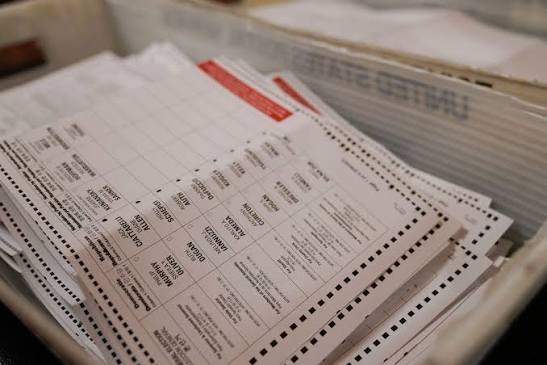

The New Jersey county line ballot was one of the most effective instruments of political machine control available to any county organization in the United States, and its elimination — formalized after a federal court ruling and subsequent legislative action in 2024, taking effect for Democratic primaries in 2026 — was celebrated by good-government reformers as one of the most significant expansions of democratic competition in the state’s modern political history. The old system placed party-endorsed candidates in a visually prominent row on the primary ballot, physically adjacent to the top of the ticket, while insurgents and unendorsed candidates were shuffled to separate, less visible columns whose ballot real estate was guaranteed to attract fewer eyes. Running without the line in New Jersey had been, for most of the county Democratic machines’ operational lifetimes, a near-certain path to defeat regardless of candidate quality, fundraising, or actual voter preference. Abolishing the system was the structural precondition for competitive primary elections at the local level, and the June 2026 primary delivered compelling early evidence that the county line’s death has genuinely opened space that was previously foreclosed.
The evidence is visible in specific races across multiple counties. In Essex County, a candidate affiliated with the Essex County Reform Democrats — a political group that formed in the wake of the county line’s elimination — ran for one of the nine seats on the county commissioner board that controls a $900 million budget, a position representing roughly 15 percent of local taxpayers’ dollars. She finished third in a field of six Democrats, advancing to November’s general election. Two of the candidates she defeated were backed by the Essex County Democratic Committee, the organization that had spent decades using ballot position to predetermine outcomes in exactly these local races. “It felt great. We beat the machine,” she said after the results were announced. Leroy Jones, who chairs the Essex County Democratic Committee, said after the result that he intended to support her campaign heading into November — a posture of accommodation from a county organization that, under the old system, would have been unable to imagine an endorsement-defying result of this kind. In Piscataway, Middlesex County, a township council candidate named Shantell Cherry — a single mother of six, school board vice president, and Girl Scout troop leader who had never previously run for elected office — defeated Frank Uhrin, an incumbent with the backing of the powerful Middlesex County Democrats. The primary was for a seat in a town that voted Democratic by 50 percentage points in the last presidential election, suggesting that the outcome was less about partisan ideology than about the electorate’s capacity, once freed from the ballot architecture that had constrained it, to make choices that the county organization had not authorized.
Antoinette Miles, state political director for the New Jersey Working Families Party, characterized what these results represent at the structural level with appropriate directness: without county organizations being able to put the thumb on the scale and predetermine who the election winner is, there is an ability for those who are either anti-establishment or reformers or simply different from the county-backed candidate to actually win. That observation is accurate, and it is also the beginning of a more complicated story rather than its resolution. The county line’s elimination removed one form of institutionalized advantage from the ballot. It did not remove the phenomenon of ballot position advantage. It may, in fact, have concentrated it.
The research literature on ballot order effects is substantial and consistent in its core finding: in low-information electoral environments — primaries for local offices that most voters know little about, where candidate names are unfamiliar and campaign spending is modest — the candidate whose name appears first on the ballot receives a measurable advantage over candidates listed below them. The academic literature calls the underlying behavior satisficing: voters who lack the information or motivation to carefully evaluate a full slate of candidates tend to mark the first name they encounter that meets a minimum threshold of acceptability, effectively making the ballot’s visual hierarchy into a crude decision-making substitute for the deliberative process that democratic theory assumes. Studies have documented first-ballot-position advantages ranging from 2 to 10 percentage points in low-profile races — a margin that is routinely decisive in competitive primaries where the difference between winning and losing is measured in hundreds rather than thousands of votes.
Under the county line system, this dynamic was largely subsumed by the far stronger effect of party endorsement and ballot position working together: being on the county line gave the endorsed candidate both the visual prominence and the endorsement signal that drove most primary outcomes. When the line is abolished and replaced by a neutral office block ballot — which groups all candidates for a given office alphabetically or by random draw — ballot position becomes the primary remaining structural variable that voters can use as a low-effort heuristic. The county that pulls the first position in a random draw for a local commissioner race has effectively reassigned the advantage that the county line previously bestowed, transferring it from the endorsed candidate to whoever happens to have their name drawn first. The endorsement advantage disappears. The position advantage remains.
This transition is what the New Jersey Globe’s post-primary analysis identified in its review of outcomes across Essex, Mercer, and Cumberland Counties, where insurgent candidates without party organization backing succeeded in local races in patterns correlated with their ballot position. The cases are not individually conclusive — a single primary cycle cannot definitively separate ballot position effects from the genuine changes in voter behavior that a more open ballot system would be expected to generate over time — but the pattern is coherent with what the research literature would predict, and it has been noticed by legislators and voting rights advocates who are now grappling with whether the office block reform’s benefits can be preserved while the position advantage it inadvertently concentrated is addressed.
The legislative response to the ballot order question arrived in the form of a bill introduced in the weeks following the June primary, which would authorize county clerks to rotate candidate names on primary election ballots — presenting different voters with different candidate orderings, such that every candidate receives roughly equal exposure in the top position across the full electorate. Name rotation is the mechanism that multiple states and municipalities have adopted to address exactly this dynamic, and the research supporting its effectiveness is consistent with the research documenting the problem it solves: when position is randomly varied across ballots, the first-position advantage is diluted across candidates rather than concentrated in a single name. The proposal has received a mixed reception from the voting rights and elections reform community in New Jersey, and the specific conditions under which rotation would be triggered in the bill have drawn the sharpest scrutiny. Critics have noted that versions of the proposal would make rotation contingent on requests from local party leaders — a structure that would, in the critics’ framing, create a mechanism through which county organizations could selectively deploy rotation to disadvantage specific insurgent candidates in specific races, reasserting influence over candidate placement through an ostensibly neutral procedural tool. Whether that critique accurately describes the bill’s intent or likely effect, or whether it overstates the potential for manipulation, is a question that the legislative debate will need to resolve explicitly.
The underlying tension the ballot order debate exposes is one that procedural reform in electoral systems routinely encounters: every ballot design creates some form of structural advantage, and the elimination of a specific well-documented form of advantage does not eliminate the phenomenon of structural advantage, it merely reassigns it. The county line system gave party organizations the power to predetermine outcomes. The office block ballot transferred meaningful influence over outcomes to the random draw that determines candidate position. Name rotation would distribute that position advantage more equitably, but the specific mechanism of that distribution creates its own potential for manipulation if the conditions governing rotation are not designed carefully. The voters whose interests all of these reforms claim to serve — the ones who show up to a primary for a county commissioner seat, encounter an unfamiliar list of names, and mark a ballot — are making choices whose relationship to their actual preferences is mediated at every level by design decisions that most of them have no awareness of and no input into.
What the 2026 New Jersey primary demonstrated is that the county line’s elimination is working as its advocates intended: candidates who would previously have been unable to compete meaningfully against organization-backed opponents are now winning races, giving Essex County Reform Democrats and Piscataway progressives and similar insurgent candidates across the state access to outcomes that the county line structure had foreclosed. The open question, which the ballot order research literature makes impossible to dismiss, is whether some of those victories reflect the electorate’s genuine informed preference or are partially attributable to the specific position on the ballot that a random draw assigned to the winning candidate. New Jersey’s election reformers spent decades arguing that the county line was producing outcomes that didn’t reflect voter preference. The ballot order effect suggests that the office block ballot may be doing something similar, through a less visible mechanism, in the specific subset of low-profile local races where voter information is thinnest and position effects are strongest. Solving one problem while creating another is the normal course of electoral reform. The measure of a reform’s success is not whether it introduces new complications, but whether it produces a net improvement in the quality of democratic outcomes and the accountability of those who win them.
















