
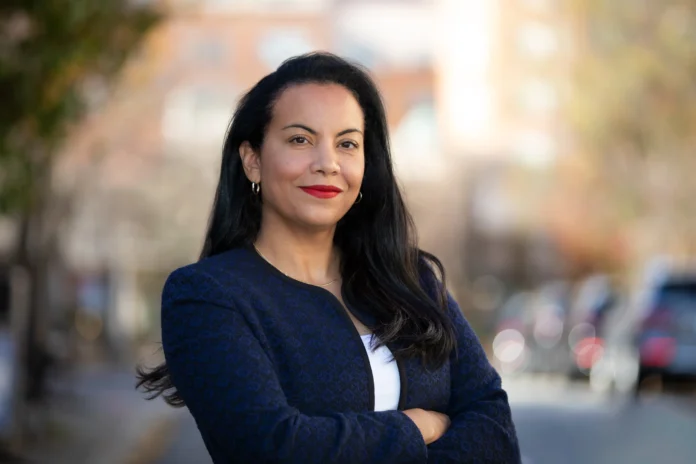

For a state built on entrepreneurship, family-owned businesses, innovation, and local economic growth, representation on the House Small Business Committee carries significant importance. From neighborhood restaurants and retail shops to construction firms, technology startups, manufacturers, logistics operators, professional service companies, and independent contractors, small businesses remain one of the primary engines driving New Jersey’s economy. Now, New Jersey’s 11th Congressional District will gain an additional voice in the federal conversations that directly shape the future of those businesses.
Congresswoman Analilia Mejia has officially been appointed to the U.S. House of Representatives Committee on Small Business, a key congressional panel responsible for overseeing federal policies, programs, and agencies that impact millions of small business owners across the nation. The appointment comes following a recommendation from the U.S. House Democratic Steering and Policy Committee and marks Mejia’s second committee assignment since entering Congress, complementing her existing role on the House Committee on Homeland Security.
The appointment represents more than a routine congressional assignment. For New Jersey businesses navigating inflation, workforce challenges, rising operating costs, supply chain concerns, access to capital issues, and evolving regulatory requirements, the committee serves as one of the most influential bodies in Washington when it comes to shaping economic opportunities for entrepreneurs and business owners.
Throughout New Jersey, small businesses form the backbone of local communities. They employ residents, sponsor youth sports teams, support charitable causes, occupy downtown storefronts, generate tax revenue, and create the distinctive character that defines towns and cities across the Garden State. Whether in suburban business districts, urban commercial corridors, or rural communities, small businesses remain central to New Jersey’s economic identity.
Mejia’s appointment arrives at a time when small business concerns have become increasingly prominent in political discussions at both the state and federal levels. Business owners continue to navigate the lingering effects of inflationary pressures, labor shortages, rising insurance costs, commercial real estate challenges, and evolving economic conditions that have reshaped operating environments throughout the country.
Supporters of the appointment point to Mejia’s longstanding advocacy for working families, economic opportunity, and workforce development as qualities that could prove valuable on a committee tasked with addressing issues affecting entrepreneurs and business owners nationwide.
House Democratic Leader Hakeem Jeffries praised the selection, highlighting Mejia’s record of engagement on issues affecting workers and local economies. His support underscores the significance Democratic leadership places on the committee’s role in shaping economic policy and supporting business growth throughout the country.
For Mejia, the appointment offers an opportunity to bring New Jersey-specific concerns directly into national policy discussions. The 11th Congressional District includes communities with diverse economic profiles, ranging from established suburban commercial centers to growing entrepreneurial ecosystems. Business owners throughout the district face challenges that mirror broader statewide concerns while also reflecting the unique dynamics of New Jersey’s economy.
In announcing her appointment, Mejia emphasized her commitment to representing the interests of small business owners throughout the district. She noted that conversations with entrepreneurs repeatedly reveal common themes, including concerns about rising costs, inflationary pressures, and access to resources needed to sustain growth and competitiveness.
Those concerns are hardly unique to one district. Across New Jersey, small businesses continue adapting to rapidly changing market conditions. While many companies have demonstrated remarkable resilience, owners frequently cite cost management, workforce recruitment, financing access, and regulatory compliance as ongoing challenges.
The House Small Business Committee occupies a unique position within Congress because its jurisdiction extends directly into issues that affect daily business operations. The committee oversees the U.S. Small Business Administration and monitors how federal programs support entrepreneurs, startups, family-owned businesses, minority-owned enterprises, women-owned businesses, and emerging companies seeking growth opportunities.
Its responsibilities include conducting hearings, overseeing federal lending programs, examining contracting opportunities, reviewing regulatory impacts, evaluating workforce development initiatives, and ensuring federal agencies effectively serve small business communities. In many cases, recommendations and findings generated by the committee help shape legislation and policy initiatives that influence economic development nationwide.
For New Jersey, committee representation is particularly significant given the state’s entrepreneurial diversity. New Jersey consistently ranks among the nation’s most economically productive states, supported by sectors including healthcare, biotechnology, pharmaceuticals, logistics, advanced manufacturing, finance, technology, construction, hospitality, agriculture, and professional services. Small businesses play an integral role across virtually every one of those industries.
The appointment also comes during a period of increasing national focus on entrepreneurship and innovation. Policymakers continue debating how best to encourage business formation, expand access to capital, strengthen workforce pipelines, reduce administrative burdens, and support economic growth while maintaining appropriate consumer and worker protections.
Since arriving in Congress, Mejia has already engaged in legislative efforts related to small business concerns. Among those efforts was participation alongside Congressman Emanuel Cleaver and dozens of congressional colleagues in seeking financial relief mechanisms for businesses affected by tariff-related policies. That involvement reflects a broader emphasis on addressing economic issues that directly affect business owners and employers.
For New Jersey communities, the committee assignment may provide additional opportunities to elevate local concerns within federal policymaking discussions. Business owners often cite the need for greater access to financing, workforce training support, infrastructure improvements, technology investment assistance, and regulatory predictability. Committee membership can help create additional channels for those concerns to reach national decision-makers.
The significance of the appointment extends beyond politics. Small businesses account for a substantial portion of employment throughout New Jersey and serve as a critical source of economic mobility for residents seeking to build careers, create wealth, and contribute to their communities. Policies affecting entrepreneurship frequently have direct consequences for job creation, local investment, and long-term economic stability.
As New Jersey continues to position itself for future growth in sectors ranging from artificial intelligence and clean energy to advanced manufacturing and healthcare innovation, ensuring that small businesses can participate in and benefit from those opportunities remains an important objective. Federal programs and policies often play a role in determining how effectively entrepreneurs can access resources needed to compete and grow.
The appointment of Congresswoman Analilia Mejia to the House Small Business Committee therefore represents more than an individual achievement. It places New Jersey’s economic interests in a strategic position within one of Congress’s most important business-focused committees at a time when entrepreneurship, innovation, and small business growth remain central to the state’s future.
As committee work begins and legislative priorities continue to evolve, business owners throughout New Jersey will be watching closely. The issues before the committee—access to capital, workforce development, federal contracting opportunities, regulatory reform, and economic competitiveness—are not abstract policy debates. They are the day-to-day realities facing entrepreneurs striving to build successful businesses in one of the nation’s most dynamic and competitive economic environments.
For New Jersey’s small business community, the appointment signals another opportunity to ensure that the voices of local entrepreneurs, family-owned companies, startups, and job creators are represented as federal policymakers shape the economic landscape of tomorrow.
















